US4783844A - Apparatus for transmitting and recording signals - Google Patents
Apparatus for transmitting and recording signalsDownload PDFInfo
- Publication number
- US4783844A US4783844AUS06/870,345US87034586AUS4783844AUS 4783844 AUS4783844 AUS 4783844AUS 87034586 AUS87034586 AUS 87034586AUS 4783844 AUS4783844 AUS 4783844A
- Authority
- US
- United States
- Prior art keywords
- signal
- channel
- unit
- code signal
- transmitter
- Prior art date
- Legal status (The legal status is an assumption and is not a legal conclusion. Google has not performed a legal analysis and makes no representation as to the accuracy of the status listed.)
- Expired - Lifetime
Links
- 238000004891communicationMethods0.000claimsabstractdescription47
- 230000005236sound signalEffects0.000claimsabstractdescription17
- 230000005540biological transmissionEffects0.000claimsabstractdescription15
- 230000008859changeEffects0.000claimsdescription11
- 230000004044responseEffects0.000claimsdescription5
- 238000000034methodMethods0.000claimsdescription3
- 230000008054signal transmissionEffects0.000abstractdescription5
- 239000008186active pharmaceutical agentSubstances0.000description5
- 230000009977dual effectEffects0.000description4
- 238000001514detection methodMethods0.000description3
- 238000010586diagramMethods0.000description2
- 230000006870functionEffects0.000description2
- 230000010355oscillationEffects0.000description2
- 238000006243chemical reactionMethods0.000description1
- 239000013078crystalSubstances0.000description1
- 230000007547defectEffects0.000description1
- 230000006872improvementEffects0.000description1
- 238000012986modificationMethods0.000description1
- 230000004048modificationEffects0.000description1
- 238000001228spectrumMethods0.000description1
Images

Classifications
- H—ELECTRICITY
- H04—ELECTRIC COMMUNICATION TECHNIQUE
- H04M—TELEPHONIC COMMUNICATION
- H04M1/00—Substation equipment, e.g. for use by subscribers
- H04M1/72—Mobile telephones; Cordless telephones, i.e. devices for establishing wireless links to base stations without route selection
- H04M1/725—Cordless telephones
- H04M1/727—Identification code transfer arrangements
- H—ELECTRICITY
- H04—ELECTRIC COMMUNICATION TECHNIQUE
- H04M—TELEPHONIC COMMUNICATION
- H04M1/00—Substation equipment, e.g. for use by subscribers
- H04M1/72—Mobile telephones; Cordless telephones, i.e. devices for establishing wireless links to base stations without route selection
- H04M1/725—Cordless telephones
- H04M1/72502—Cordless telephones with one base station connected to a single line
- H04M1/72505—Radio link set-up procedures
- H04M1/72511—Searching for available channels
Definitions
- cordless telephonealso presents certain difficulties.
- there are a limited number of channels available for the radio communication between the handset and the base unittherefore, if several cordless telephones are being used within the same general area there is a good chance that the signal transmitted from one handset unit to its own base unit may be picked up by the base unit of a neighboring cordless telephone, leading to crosstalk interference.
- the signal Su that was transmitted from handset unit 1is received at base unit 2 by an antenna 200 and is supplied through a bandpass filter 221, which has a pass band including the upper frequency channel, and through a high-frequency amplifier 222 to a mixing circuit 223.
- the mixing circuit 223receives a local oscillation signal having a predetermined frequency from a local oscillator 224, whereby signal Su is converted to an intermediate frequency signal.
- This intermediate frequency signalis supplied through an intermediate frequency (IF) amplifier 225 to an FM demodulator 226, wherein it is demodulated to produce the audio signal St.
- the audio signal Stis delivered to the telephone network line 3a through an audio frequency amplifier 227 and the signal transmission circuit comprising a two-line to four-line converting circuit, that is, a hybrid circuit 231 and a relay 232.
- the signal NSQis derived from detecting circuit 162 to set control circuit 140 in the check mode to check the identifying code ID transmitted by the base unit.
- the identifying code IDis derived from the received signal in the MSK demodulator 163 and CPU 141 checks for exact correspondence between the received identifying code ID and the stored identifying code D, which was entered into RAM 143 by switches 154. If the two ID codes are not identical, the control signal TX disables frequency modulation circuit 113, and the telephone remains in the standby mode.
- the signal Smis received and the identifying code ID is derived in the MSK demodulator 163 and is supplied to control circuit 140 which checks whether the correct identifying code ID has been received by handset unit 1. If it is received correctly, the identifying code ID is transmitted from the handset unit 1 as described above.
- the reception channel of base unit 2becomes the same as the new channel of handset unit 1 at time t 4 , the identifying code ID from handset unit 1 is received by base unit 2 and if this identifying code ID is correctly received, the reception channel of the base unit 2 is fixed to the corresponding channel by the signal CH after a next time point t 5 and the following, as represented at step 312 in FIG. 6B. Also, the transmission channel is fixed to the corresponding channel, and the transmission of the signal Sd is allowed by the signal TX and the identifying code ID is transmitted, as represented at step 308 in FIG. 6B. Further, the amplifier 227 is released from muting by the signal MUTE.
Landscapes
- Engineering & Computer Science (AREA)
- Computer Networks & Wireless Communication (AREA)
- Signal Processing (AREA)
- Mobile Radio Communication Systems (AREA)
- Transceivers (AREA)
Abstract
Description
1. Field of the Invention
This invention relates generally to apparatus for transmitting and receiving signals and, more particularly, is directed to an apparatus for transmitting and receiving signals as found in a so-called cordless telephone.
2. Description of the Background
The standard telephone consists of a base unit and a handset unit connected to each other by an electrical cord. The base unit is connected by another cord to the telephone line network that is essentially worldwide. Although it is possible to speak with someone almost anyplace in the world it is necessary to stay within the electrical cord length of base unit. The simple fact that there is always a continuous physical connection between the person making the phone call and the fixed base unit can be a great inconvenience. This brought about the advent of the cordless telephone, which represents a significant improvement over the standard telephone.
In the cordless telephone, the handset and the base unit are not connected by a wire or cord but are connected only by radio waves. Thus, the only limitation on the movement between the base unit and the handset is the ability to maintain radio contact and, of course, applicable statutes and rules governing public communications.
Nevertheless, the cordless telephone also presents certain difficulties. In particular, there are a limited number of channels available for the radio communication between the handset and the base unit, therefore, if several cordless telephones are being used within the same general area there is a good chance that the signal transmitted from one handset unit to its own base unit may be picked up by the base unit of a neighboring cordless telephone, leading to crosstalk interference.
Accordingly, in such case, it is necessary to change the radio communication channel that was initially assigned to that particular cordless telephone. In order to change the communication channel established between the handset and the base unit, the operator has to change-over channel switches provided in both the handset and the base unit. Furthermore, because the handset and the base unit are usually distant from each other, it is very inconvenient and cumbersome to change the communication channel by operating the switches of the handset and the base unit of the cordless telephone system. In addition, even if the communication channel is changed, it is frequently the case that the communication link will still not be satisfactory, in which case it is necessary for the user to again change both the switches of the handset and the base unit at the same time.
Accordingly, it is an object of the present invention to provide an improved apparatus for transmitting and receiving signals that can eliminate the above-noted defects inherent in the systems known heretofore.
Another object of this invention is to provide an apparatus for transmitting and receiving signals so that telephone communication can be carried out satisfactorily without any cross-talk interference.
A further object of this invention is to provide apparatus for transmitting and receiving signals in which when cross-talk interference is detected, a vacant communication channel is searched for and the communication carried out through this new communication channel.
A still further object of this invention is to provide apparatus for transmitting and receiving signals is particularly applicable to a so-called cordless telephone.
In accordance with an aspect of the present invention there is provided apparatus for transmitting and receiving signals between first and second transmitter-receivers over a communication channel in which the first transmitter-receiver includes a first transmitter for transmitting a code signal and a first receiver for receiving a code signal and the second transmitter-receiver includes a second transmitter for transmitting a code signal and a second receiver for receiving a code signal, wherein when the first transmitter-receiver does not correctly receive the code signal, a communication channel which is not then occupied by the first transmitter-receiver is searched for and the signal is then transmitted and received over this new communication channel.
The above and other objects, features, and advantages of the present invention will become apparent from the following detailed description of the preferred embodiment taken in conjunction with the accompanying drawings, in which like reference numerals designate like elements and parts.
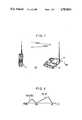
FIG. 1 is a pictorial representation of a cordless telephone system to which the present invention is applicable;
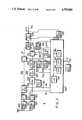
FIG. 2 is a schematic in block diagram form of a circuit for a handset unit of at unit of the cordless telephone system in FIG. 1 according to the present invention;
FIG. 3 is a schematic in block diagram form of a circuit for a base unit of the cordless telephone system shown in FIG. 1 according to the present invention;
FIG. 4 is a plot of the frequency spectrum of the code signals and audio signals used in an embodiment of this invention;
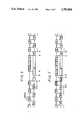
FIG. 5 is a timing chart useful in explaining a method of checking the occurence of cross-talk interference using a check signal;
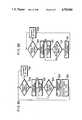
FIGS. 6A and 6B are flow charts useful in explaining the operation of the handset unit and the base unit, respectively; and
FIG. 7 is a timing chart useful in explaining the operation of changing the communication channel when cross-talk interference occurs.
FIG. 1 is a pictorial representation of a conventionalcordless telephone system 10 to which this invention can be applied. Thiscordless telephone system 10 includes ahandset unit 1 and abase unit 2.Base unit 2 is connected by atelephone cord 3 to an outlet or receptacle in a wall, telephone pole, or another fixed structure, so that it may both receive and transmit message signals through atelephone network line 3a and also may be powered thereby. Accordingly, the telephone subscriber can make telephone calls and receive them just as in a conventional telephone.
In the conventional cordless telephone,base unit 2 is still connected to the receptacle on the wall or the like bycord 3 so that message signals fromtelephone network line 3a may be received and transmitted, however,handset unit 1 ofcordless telephone system 10 is an independently operating unit, from which calls may be made and by which calls may be received with no physical connection tobase unit 2. Instead,base unit 2 andhandset unit 1 ofcordless telephone system 10 communicate with each other over a communication channel established by the transmission and reception of electromagnetic waves, more particularly, by radio waves.Handset unit 1 may be taken anywhere within a specified service area, which may involve distances of up to about 300 meters frombase unit 2, while still making and receiving telephone calls. The frequencies of the radio waves transmitted betweenhandset unit 1 andbase unit 2 are typically 49 MHz in th upper link and 46 MHz in the lower link of the dual communication channel. There are usually ten duplex or dual channels permitted for each system by the Federal Communications Commission (FCC), but each individual set is usually only provided with two different duplex channels because of the cost of the crystals used in the oscillator.
Referring to FIGS. 2 and 3, important portions of the circuitry contained within thehandset unit 1 and thebase unit 2, respectively are therein illustrated. Handset unit 1 (FIG. 2) includes atransmitter 110, including elements 111 to 115, and areceiver 120, includingelements 121 to 128. The base unit 2 (FIG. 3) similarly includes atransmitter 210, includingelements 212 to 215, and areceiver 220, includingelements 221 to 227.Base unit 2 also includes a signal transmission circuit, havingelements transmitter 110 andreceiver 120 totelephone network line 3a. In the illustrated embodiment, the signals are transmitted over a selected one of two duplex channels in the system, each containing an upper channel and a lower channel, so-called because of the relative frequencies assigned thereto.
When transmitting a signal fromhandset unit 1 tobase unit 2 and ontonetwork line 3a, an audio signal St from a microphone 111 ofhandset unit 1 is supplied through anaudio frequency amplifier 112 to a frequency modulatingcircuit 113, in which it is converted to an FM signal Su in the upper frequency channel of a selected one of the available duplex channels. The signal Su is supplied through a high-frequency power amplifier 114 to abandpass filter 115, which has a pass band centered on this upper frequency channel, to anantenna 100, by which it is transmitted as a radio frequency wave tobase unit 2.
Referring now to FIG. 3, the signal Su that was transmitted fromhandset unit 1 is received atbase unit 2 by anantenna 200 and is supplied through abandpass filter 221, which has a pass band including the upper frequency channel, and through a high-frequency amplifier 222 to amixing circuit 223. Themixing circuit 223 receives a local oscillation signal having a predetermined frequency from alocal oscillator 224, whereby signal Su is converted to an intermediate frequency signal. This intermediate frequency signal is supplied through an intermediate frequency (IF)amplifier 225 to anFM demodulator 226, wherein it is demodulated to produce the audio signal St. The audio signal St is delivered to thetelephone network line 3a through anaudio frequency amplifier 227 and the signal transmission circuit comprising a two-line to four-line converting circuit, that is, ahybrid circuit 231 and arelay 232.
Therelay circuit 232 can include a relay to make and break the connection between thebase unit 2 and thetelephone network line 3a and a hold relay, which can hold a connection with thetelephone network line 3a after it is connected to thebase unit 2, so as to allow the telephone communication between thebase unit 2 and thetelephone network line 3a to be temporarily interrupted, while keeping the incoming call available on thetelephone network line 3a.
When incoming message signals are received bybase unit 2 fromtelephone network line 3a, an audio signal Sr is supplied throughrelay circuit 232, throughhybrid converting circuit 231, and through anaudio frequency amplifier 212 to a frequency modulation (FM)circuit 213, in which it is converted to an FM signal Sd in the lower frequency channel of the same duplex channel as signal Su. TheFM modulator 213 is supplied with a channel selecting signal CH for this purpose. Signal Sd is supplied through a high-frequency power amplifier 214 and abandpass filter 215, which has a pass band centered on the lower frequency channel, toantenna 200 by which it is transmitted tohandset unit 1.
FIG. 2 showshandset 1 at which the signal Sd frombase unit 2 is received byantenna 100 and is supplied through abandpass filter 121, which has a pass band centered on the lower frequency channel, and through a high-frequency amplifier 122 to a mixing circuit 123. Mixing circuit 123 is supplied with a local oscillation signal having a predetermined frequency from a local oscillator 124 that also receives the channel selecting signal CH, so that the signal Sd is frequency-converted to an FM intermediate frequency signal. This FM signal is supplied through an intermediate frequency (IF)amplifier 125 to an FM demodulation circuit 126, wherein it is demodulated to an audio signal St and supplied through an audio frequency amplifier 127 to the electro-audio transducer or loudspeaker 128 inhandset unit 1.
In accordance with an important aspect of the present invention,handset unit 1, as shown in FIG. 2, further contains acontrol circit 140 andbase unit 2, as shown in FIG. 3, similarly contains acontrol circuit 240. These control circuits are advantageously comprised of a respective microprocessor or microcomputer, each contained on a single integrated chip.Control circuit 140 is a one-chip type microcomputer and includes a central processing unit (CPU) 141, which may be adapted for 4-bit parallel processing, a read only memory (ROM) 142, which stores control programs for controlling the operation ofCPU 141, a random access memory (RAM) 143 serving as a work and storage area, and an input/output (I/O) port 144.
Similarly, inbase unit 2,control circuit 240 includes aCPU 241, aROM 232, aRAM 243 and an I/O port 244, each performing a function corresponding to that of the element of thecontrol circuit 140.
Further,switch 153 is of the non-lock type push switch to change the communication channel being used. ID codeselect switches 154 are used to select the identifying code (ID) that is fed to controlcircuit 140 and may be advantageously embodied as a dual in-line package (DIP) switch that has a number of switches contained in one unit. The respective outputs from these keys and switches 151 to 154 are supplied to controlcircuit 140 for processing.
A minimum shift keying (MSK)modulation circuit 161 is connected to controlcircuit 140 for converting binary signals supplied thereto bycontrol circuit 140 to an MSK signal Sm in the audio frequency band. Minimum shift keying is a special form of frequency shift keying (FSK) in which the frequency shift in modulation is set to one-half the bit rate frequency. The binary signals that are input toMSK modulator 161 include the identifying code ID, which will be described in greater detail hereinbelow, and a dial signal DS corresponding to the telephone number entered throughkeypad 151. The MSK signal Sm is then supplied toaudio frequency amplifier 112 for transmission tobase unit 2 in the manner already described.Base unit 2 of FIG. 3 also contains a similarMSK modulating circuit 261 for encoding the identifying code ID, the dial signal DS, and other signals fromcontrol circuit 240 into signal Sm to be transmitted frombase unit 2 tohandset unit 1.
The output of FM demodulating circuit 126 is also supplied to areception detecting circuit 162 for detecting the presence or absence of the signal Sd in the output. As is well known, the frequency components of the output from demodulating circuit 126 are different depending on the presence or absence of the signal Sd. A detection signal NSQ generated by thereception detecting circuit 162 when the signal Sd is present, and detection signal NSQ is fed to controlcircuit 140. Inhandset unit 1 anMSK demodulation circuit 163 is supplied with the output of FM demodulating circuit 126 to demodulate the identifying code ID and other informational signals encoded in the MSK signal Sm. The signals demodulated by MSK demodulator are fed to controlcircuit 140.
When an incoming call is detected inbase unit 2 and signal Sd is transmitted tohandset unit 1, signal NSQ is supplied to controlcircuit 140 byreception detection circuit 162, and an appropriate signal is supplied to a call tone generator 164 for generating a bell signal (ring tone signal). The signal from call tone generator 164 is fed to a ringer 165 to generate a bell sound, thus, the telephone rings.
Thecontrol circuit 140 also generates the channel selecting signal CH and a control signal TX both of which are fed tofrequency modulation circuit 113 to control whether FM signal Su is output therefrom. This is in accordance with an aspect of the present invention wherein the communication channel is established only when there is detected an identity between identifying codes stored inbase unit 2 andhandset unit 1. As will be explained further, when such identity is detected, signal TX enables thefrequency modulation circuit 113 to output signal Su, whereas if no identity is detected, signal TX disables thefrequency modulation circuit 113.
Also, inbase unit 2 ID codeselect switches 254 and thecircuits 261 to 264 are similar in operation to ID codeselect switches 154 and thecircuits 161 to 164 ofhandset unit 1, so that a detailed explanation thereof can be omitted. In this case, however, thecircuit 264 that corresponds to tone generating circuit 164 generates a tone encode signal TE corresponding to the telephone number entered for an outgoing call. Signal TE is supplied toaudio frequency amplifier 227 and thence tocircuit 231 for transmission onto thetelephone network line 3a.
A bell sound signal detecting circuit 265 is connected totelephone network line 3a to detect a ring signal indicating an incoming call, and the output BL of bell signal detecting circuit 265 is supplied to controlcircuit 240.
When an outgoing call is to be made usinghandset unit 1, the operation of thecordless telephone system 10 is controlled by thecontrol circuits ROMs contract 152a is set to the talk or fixed contact T, and an indication thereof is sent toCPU 141 and control signal TX is generated to enablefrequency modulating circuit 113 to transmit a signal, which at this initial time in the operation is an unmodulated carrier signal.CPU 141 then derives an identifying signal ID fromRAM 143, which had been previously generated and stored during an operation which will be described in detail hereinafter. The identifying code ID is supplied toMSK modulating circuit 161, which converts it to the MSK signal Sm and supplies it toFM modulator 113 throughamplifier 112. Because FM modulator 113 has been enabled by signal TX to transmit signals, the identifying code ID is transmitted tobase unit 2 in the FM signal Su.
When the FM signal Su is received bybase unit 2,reception detecting circuit 262 generates the signal NSQ in response to the presence of the signal Su, and in response to signalNSQ control circuit 240 enters a check mode to check for identity between the received identification code and the stored identification code. The signal Sm is derived from the received signal Su inFM demodulator 226 and the identifying code ID in the signal Sm is derived inMSK demodulator 263 and fed toCPU 241.CPU 241 then reads an identifying code ID, which was previously stored inRAM 243 by setting the switches inselector 254, and determines whether or not the two identifying codes are the same. If they are not identical, this usually means that the telephone call is being made by the handset of a different cordless telephone set and signal TX is adjusted to disable theFM demodulator 213 so that further signal transmission is cut off and thecordless telephone system 10 remains in the standby mode. On the other hand, if the identification codes ID are determined to be the same, FM modulator 213 remains enabled and transmits the signal Sd to establish the communication channel. In such case,control circuit 240 stops producing the muting signal MUTE andamplifier 227 is released from its muting state, so that the desired conversation can take place. Furthermore, since the signal Sd is transmitted back tohandset unit 1 after the identity of the identifying codes has been detected inbase unit 2, the signal NSQ inhandset unit 1 is supplied to controlcircuit 140, which produces the signal TX so as to enableFM modulator 113, and which stops producing the muting signal MUTE to release audio frequency amplifier 127 from its muting state. Thus,handset unit 1 is also enabled.
At this time, when ten-key keypad 151 ofhandset 1 is operated to select the telephone number to be called, a dial signal DS corresponding to that telephone number is generated inCPU 141. This dial signal DS is then supplied toMSK modulator 161 for conversion to the MSK signal Sm, which is then transmitted to thebase unit 2. When signal Sm, which is formed as signal Su, is received bybase unit 2, the dial signal DS is derived by theMSK demodulating circuit 263. In response thereto, thecontrol circuit 240 causes thetone generating circuit 264 to generate the tone encode signal TE, which corresponds to the number of the telephone to be called, and is transmitted throughaudio frequency amplifier 227,hybrid converting circuit 231, andrelay circuit 232 totelephone network line 3a.
Accordingly, the telephone unit to be called is obtained through the telephone system by this tone encode signal TE and, when this outgoing call is received, the communication channel is established as described. The subsequent operation of thecordless telephone system 10 in transmitting and receiving the telephone message signals is as described above and such description need not be repeated.
In operation of thecordless telephone system 10 when an incoming call is received, assuming that themovable contact 152a of thetalk switch 152 is at the contact S, thecordless telephone system 10 is in the standby mode ready to receive a call. When an incoming message signal on thetelephone network line 3a is received bybase unit 2, the bell sound signal BL is derived from bell sound detector 265 and supplied toCPU 241 ofbase unit 2. The signal TX is generated bycontroller 240 to enableFM modulator 213 to transmit the FM signal Sd. The identifying code ID read fromRAM 243 is converted to the signal Sm by MSK modulator 61 and supplied toaudio frequency amplifier 212, so that the identifying code ID is transmitted by way of signal Sd tohandset unit 1.
Continuing this operational example, when the signal Sd is received inhandset unit 1, the signal NSQ is derived from detectingcircuit 162 to setcontrol circuit 140 in the check mode to check the identifying code ID transmitted by the base unit. The identifying code ID is derived from the received signal in theMSK demodulator 163 andCPU 141 checks for exact correspondence between the received identifying code ID and the stored identifying code D, which was entered intoRAM 143 byswitches 154. If the two ID codes are not identical, the control signal TX disablesfrequency modulation circuit 113, and the telephone remains in the standby mode. If the two identifying codes are identical,frequency modulation circuit 113 remains enabled, and the signal Su is transmitted tobase unit 2, which derives the signal NSQ, so thatbase unit 2 remains enabled and the communication channel is established. Bell tone generator 164 inhandset 1 produces a bell sound signal, which is supplied to ringer 165 to announce the incoming call. Thereafter, ifhandset unit 1 is picked up, and talkbutton 152 is set to talk contact T, loudspeaker 128 stops ringing,amplifiers 127 and 227 are released from the muting mode, andhandset unit 1 receives the incoming call.
In accordance with the teaching of the present invention, the ID or check signal is alternately transmitted and received by the respective units with a timing shown in FIG. 5 under the control of the operational instructions stored in theROMs
The operations ofhandset unit 1 andbase unit 2, as determined by the respective operational instructions, are represented in the flow charts forming FIGS. 6A and 6B.
During communication, the identifying code ID for the channel set in the handset is derived in control circuit 40, supplied toMSK modulator 161, and converted therein to the MSK signal Sm. The MSK signal Sm is supplied toamplifier 112, in which it is frequency-multiplexed with the audio signal St from microphone 111 and transmitted tobase unit 2 as the FM signal Su. This frequency multiplexing relationship is shown clearly in FIG. 4. As an example in this case, the transmission rate of the identifying code ID is 110 bps and the duration of time identifying code ID in of signal Sm is 330 ms, as shown in FIG. 5.
The signal Sm is received bybase unit 2 and the identifying code is derived byMSK demodulator 263 and fed to thecontrol circuit 240 to determine whether the correct identifying code ID has been received. When the correct identifying code ID has been determined to be received bybase unit 2, the identifying code ID is similarly formed bycontrol circuit 240 and supplied toMSK modulator 261, in which the signal Sm based on the identifying code ID is frequency multiplexed with the audio signal Sr from the incoming call and is then transmitted tohandset unit 1 as the signal Sd. This frequency multiplexing relationship is shown in FIG. 4.
Then, inhandset unit 1 the signal Sm is received and the identifying code ID is derived in theMSK demodulator 163 and is supplied to controlcircuit 140 which checks whether the correct identifying code ID has been received byhandset unit 1. If it is received correctly, the identifying code ID is transmitted from thehandset unit 1 as described above.
When the identifying code ID is received correctly, that is, no cross-talk interference takes place, as shown over a period of time T1 in FIG. 5,handset unit 1 receives the identifying code ID frombase unit 2,handset unit 1 transmits the identifying code ID tobase unit 2, and vice versa. In other words, the identifying code ID is alternately transmitted and received back and forth between the two units to monitor the receiving state.
This continuous interrogation is represented in FIGS. 6A and 6B and, referring specifically to FIG. 6A, whenhandset unit 1 receives the correct identifying code ID from thebase unit 2, as represented by a YES atdecisional step 300,handset unit 1 is instructed to transmit the identifying code ID atstep 301. Similarly in FIG. 6B, whenbase unit 2 receives the correct identifying code ID fromhandset unit 1, as represented by a YES atdecisional step 307,base unit 2 transmits the identifying code ID atstep 308.
If cross-talk interference occurs at some time t1 as shown in FIG. 5, so that thebase unit 2 does not receive the correct identifying code ID, the transmission of the identifying code ID frombase unit 2 tohandset unit 1 is interrupted, as represented atstep 309 in FIG. 6B and as shown by a broken line in FIG. 5, andamplifier 227 is muted by the signal MUTE fromcontroller 240. Becausehandset unit 1 can know the timing at which afterhandset unit 1 has transmitted the identifying code ID tobase unit 2 thebase unit 2 should transmit the corresponding identifying code ID, if that corresponding identifying code ID transmitted bybase unit 2 is not obtained by handset at the correct time point, the transmission of the identifying code ID fromhandset unit 1 tobase unit 2 will be interrupted, as represented atstep 302 in FIG. 6A, by the signal TX and then from a time point t2, the reception channel of the signal Sd is sequentially changed by signal CH fed to the FM modulator, as represented atstep 303 in FIG. 6A. This sequential change occurs channel-by-channel throughout the available channels and after every change, the signal NSQ is used to check whether or not the newly selected reception channel is the one being used. If it is used, the reception channel is changed again to the next channel, as represented as YES atstep 304 in FIG. 6A. At that time, the muting is also applied to amplifier 127 by the signal MUTE. It is noted that although the FCC makes available ten different dual channels, commercial cordless telephones usually only have two different channels.
The reception channel is sequentially changed until a vacant channel is found at some time t3 in FIG. 5. Thereafter, the reception channel is fixed to the corresponding vacant channel by the signal CH fromcontroller 140, and the transmission channel is fixed to the corresponding vacant channel, as represented atstep 305 in FIG. 6A, andFM modulator 113 is enabled by the signal TX to transmit the signal Su, and the identifying code ID is repeatedly transmitted through this new channel, as represented atstep 306 in FIG. 6A.
On the other hand, because thebase unit 2 also knows the timing at which, afterbase unit 2 has transmitted the identifying code ID,handset unit 1 should transmit back the corresponding identifying code ID, if that corresponding identifying code ID is not transmitted fromhandset unit 1 at the corresponding correct time point t1, the transmission of the identifying code ID frombase unit 2 tohandset unit 1 is interrupted by the signal TX, as represented atstep 309 in FIG. 6B, and a reception channel for receiving the signal Su is sequentially changed at the time point t2 of FIG. 5, as represented atstep 310 in FIG. 6B. In this case, each time the reception channel is changed channel-by-channel, it is checked whether or not the identifying code ID fromhandset unit 1 is received bybase unit 2. If it is not received, the reception channel is changed to the next successive channel, as represented atstep 311 in FIG. 6B.
When the reception channel ofbase unit 2 becomes the same as the new channel ofhandset unit 1 at time t4, the identifying code ID fromhandset unit 1 is received bybase unit 2 and if this identifying code ID is correctly received, the reception channel of thebase unit 2 is fixed to the corresponding channel by the signal CH after a next time point t5 and the following, as represented atstep 312 in FIG. 6B. Also, the transmission channel is fixed to the corresponding channel, and the transmission of the signal Sd is allowed by the signal TX and the identifying code ID is transmitted, as represented atstep 308 in FIG. 6B. Further, theamplifier 227 is released from muting by the signal MUTE.Handset unit 1 receives this identifying code ID frombase unit 2 so that thereafter amplifier 127 is released from muting by the signal MUTE and in a situation similar to that shown during the period T1, the identifying code ID is alternately transmitted and received betweenhandset unit 1 andbase unit 2. Accordingly, the telephone call can be made without the cross-talk interference from the time t5 on.
Even if thecontrol circuit 140 judges the absence of the cross-talk interference because the identifying code ID is transmitted and received correctly between thehandset unit 1 and thebase unit 2, it frequently is the case that the operator detects the presence of some cross-talk interference. In such case, if the operator manually actuateschannel switch 153, the communication channel will be changed. More specifically, as shown in FIG. 7, ifchannel switch 153 is actuated at a desired time t10, at time t11 when the identifying code ID is to be next transmitted from thehandset unit 1, instead of that identifying code ID, a code CHNG indicative of the change of the communication channel is transmitted in the state of signal Sm. When this code CHNG is received bybase unit 2, an answer code ACKN indicating the reception of the code CHNG is transmitted tohandset unit 1, again in the form of the signal Sm. Then, from time t12 at the end of this code ACKN,handset unit 1 starts searching for a vacant channel. The operations at time t12 and the following are exactly the same as those of time t2 and following, hence, time t12 to t15 correspond to the time points t2 to t5 of FIG. 5. In other words, when the vacant channel is found at time t13, the identifying code ID is thereafter transmitted fromhandset unit 1 through the above-mentioned vacant channel. Whenbase unit 2 receives the corresponding identifying code ID at time t14, the identifying code ID is transmitted and received at time t15 and the following, and the communication channel is established again.
According to the invention as set forth above, when the communication channel is established, the check signal based on the identifying code ID is alternately transmitted and received back and forth between the handset unit and the base unit to monitor or check whether or not cross-talk interference occurs. When the occurrence of the cross-talk interference is detected by an incorrectly received code signal, a vacant channel is searched for automatically, or manually if the operator actuates a specific switch, and the communication channel is established again through this vacant channel. Thus, it is possible to always maintain communications of good quality without cross-talk interference. In addition, it is not necessary for the operator holding the handset to go to the base unit and then manually to change the communication channel thereof. Also, the operations ofcircuits 161 to 163 andcircuits 261 to 263 can be realized by a software implementation, and also the telephone number to be called can be transmitted by dial pulses. Furthermore, this invention can be applied not only to the cordless telephone but also to a transceiver, or a carrier-type interphone using a commercially available AC power source line and the like.
The above description is given on a single preferred embodiment of the invention, but it will be apparent that many modifications and variations could be effected by one skilled in the art without departing from the spirit or scope of the novel concepts of the invention, which should be determined by the appended claims.
Claims (5)
1. Apparatus for transmitting and receiving audio signals between remote locations, comprising:
first and second transmitter-receiver units, each having a plurality of channels for transmitting and receiving audio signals, each said unit respectively including means for producing a code signal for transmission and reception between said first and second units, each of said units further comprising means for detecting correct reception of said code signal and setting said first and second transmitter-receiver units to the same one of said plurality of channels upon a detected correct reception and producing an interrupt signal when said code signal is not correctly received, means for searching for a vacant one of said plurality of channels in response to said interrupt signal, and means for selecting a vacant one of said plurality of channels as a communication channel for transmission and reception of said audio signals, said first and second transmitter-receiver units including means for repeatedly transmitting said code signal with said audio signals during communication over said communication channel, said means for detecting detecting incorrect reception of said code signal and producing said interrupt signal so that another vacant channel is searched for, whereby said audio signal and said code signal are then transmitted and correctly received by each of said first and second transmitter-receiver units over said another vacant channel.
2. Apparatus according to claim 1, in which said means for detecting correct reception of said code signal includes a minimum shift key demodulator for producing a demodulated identification signal therefrom, a memory having a selected identification signal recorded therein and a comparison means for comparing said demodulated identification signal and said selected identification signal for producing a signal indicating a correct reception of said transmitted code signal.
3. Apparatus according to claim 1, in which said first transmitter-receiver unit is formed as a portable unit.
4. A method for use with two transmitter-receiver units that form a system for transmitting and receiving communication signals between two spaced-apart locations over a selected one of a plurality of communication channels, in which both units have the same selected identification code, comprising the steps of:
transmitting and receiving an identification code signal alternately from one unit to the other unit;
detecting at each unit whether the identification code signal is correctly received and producing an indication of an incorrect reception of the code signal;
disabling a transmitter at each unit in response to the indication that the identification code signal is incorrectly received during the respective time period;
searching at each unit for an unused one of said plurality of channels;
changing the transmission channel at each unit to an unused channel and designating said unused channel as the communication channel;
enabling the transmitter at each unit and resuming alternate transmission and reception of the identification code signal over the newly selected channel;
continuously transmitting said communication signals and said identification code signals during communication over said designated communication channel;
continuously detecting correct reception of said identification code signal during communication over said designated communication channel; and
repeating the steps of searching, changing, and enabling upon said indication of an incorrect reception of said identification code signal.
5. A method according to claim 4, including the further steps of manually selecting an unused channel at one of said units, generating and transmitting a change signal CHNG to the other of said units, generating and transmitting an acknowledge signal ACKN to said one of said units upon receipt of said change signal, and transmitting and receiving the identification code signal over the manually selected unused channel.
Applications Claiming Priority (2)
| Application Number | Priority Date | Filing Date | Title |
|---|---|---|---|
| JP60-135182 | 1985-06-20 | ||
| JP60135182AJPH0761029B2 (en) | 1985-06-20 | 1985-06-20 | Transceiver |
Publications (1)
| Publication Number | Publication Date |
|---|---|
| US4783844Atrue US4783844A (en) | 1988-11-08 |
Family
ID=15145751
Family Applications (1)
| Application Number | Title | Priority Date | Filing Date |
|---|---|---|---|
| US06/870,345Expired - LifetimeUS4783844A (en) | 1985-06-20 | 1986-06-04 | Apparatus for transmitting and recording signals |
Country Status (5)
| Country | Link |
|---|---|
| US (1) | US4783844A (en) |
| JP (1) | JPH0761029B2 (en) |
| CA (1) | CA1247705A (en) |
| GB (1) | GB2176974B (en) |
| HK (1) | HK72294A (en) |
Cited By (24)
| Publication number | Priority date | Publication date | Assignee | Title |
|---|---|---|---|---|
| US4817126A (en)* | 1988-02-26 | 1989-03-28 | Signal Communications Corporation | Call box |
| US4837802A (en)* | 1986-09-18 | 1989-06-06 | Sony Corporation | Radio communication method and system |
| US4951279A (en)* | 1987-10-20 | 1990-08-21 | Nec Corporation | Transceiver for use in earth station in satellite communications system |
| US5029234A (en)* | 1987-05-15 | 1991-07-02 | Nissan Motor Company, Limited | System and method for communicating a vehicle with a calling party |
| US5197093A (en)* | 1990-04-13 | 1993-03-23 | Phonemate, Inc. | Enviromental adaptive mechanism for channel utilization in cordless telephones |
| WO1993009493A1 (en)* | 1991-11-08 | 1993-05-13 | Teknekron Communications Systems, Inc. | A wireless communication system |
| US5212808A (en)* | 1991-11-08 | 1993-05-18 | Teknekron Communications Systems, Inc. | Method and an apparatus for re-establishing wireless communication between a base unit and a remote unit |
| US5258995A (en)* | 1991-11-08 | 1993-11-02 | Teknekron Communications Systems, Inc. | Wireless communication system |
| US5418839A (en)* | 1990-04-13 | 1995-05-23 | Phonemate, Inc. | Environmental adaptive mechanism for channel utilization in cordless telephones |
| US5533010A (en)* | 1993-12-14 | 1996-07-02 | Uniden Corporation | Channel switching control method and a cordless telephone system using the same |
| US5758292A (en)* | 1994-09-30 | 1998-05-26 | Sony Corporation | Telephone and cordless telephone capable of suppressing spurious interference |
| US5842122A (en)* | 1992-02-06 | 1998-11-24 | Motorola, Inc. | Apparatus and method for alternative radiotelephone system selection |
| US5963848A (en)* | 1996-04-24 | 1999-10-05 | Motorola, Inc. | Method and apparatus for assigning a channel to a mobile unit in a wireless communication system |
| US6085070A (en)* | 1994-01-27 | 2000-07-04 | Canon Kabushiki Kaisha | Radio communicating apparatus |
| US6208889B1 (en) | 1993-03-19 | 2001-03-27 | Peter G. Gorman | Biomedical response exercise equipment which avoids interference effects |
| US6549778B1 (en)* | 1996-01-31 | 2003-04-15 | Motorola, Inc. | Method of communication mode change notification |
| US20040127802A1 (en)* | 2001-07-17 | 2004-07-01 | Gmp Companies, Inc. | Wireless ECG system |
| US6897788B2 (en) | 2000-04-18 | 2005-05-24 | Motorola, Inc. | Wireless system protocol for telemetry monitoring |
| US6987965B2 (en) | 2000-04-18 | 2006-01-17 | Motorola, Inc. | Programmable wireless electrode system for medical monitoring |
| US7197357B2 (en) | 2001-07-17 | 2007-03-27 | Life Sync Corporation | Wireless ECG system |
| US7215991B2 (en) | 1993-09-04 | 2007-05-08 | Motorola, Inc. | Wireless medical diagnosis and monitoring equipment |
| US7272428B2 (en) | 2000-07-18 | 2007-09-18 | Motorola, Inc. | Wireless electrocardiograph system and method |
| US7933642B2 (en) | 2001-07-17 | 2011-04-26 | Rud Istvan | Wireless ECG system |
| CN101111033B (en)* | 2007-08-31 | 2013-10-02 | 华为技术有限公司 | Crosstalk detecting method, network side equipment and terminal |
Families Citing this family (9)
| Publication number | Priority date | Publication date | Assignee | Title |
|---|---|---|---|---|
| JPH0622339B2 (en)* | 1987-11-12 | 1994-03-23 | 日本電気株式会社 | Amplitude companding single sideband communication device |
| JPH01170135A (en)* | 1987-12-24 | 1989-07-05 | Sharp Corp | Mobile communication equipment |
| JPH0748900B2 (en)* | 1987-12-25 | 1995-05-24 | シャープ株式会社 | Wireless phone |
| GB2254225A (en)* | 1991-03-05 | 1992-09-30 | Nat Semiconductor Corp | Cordless telephone security coding |
| GB2268370B (en)* | 1991-05-29 | 1995-07-05 | Video Tech Eng | Digital cordless telephone apparatus |
| JPH06268579A (en)* | 1993-03-16 | 1994-09-22 | Rohm Co Ltd | Radio communications equipment |
| WO1995019084A1 (en)* | 1994-01-05 | 1995-07-13 | Thomson Consumer Electronics, Inc. | Clear channel selection system for a cordless telephone |
| GB9417600D0 (en) | 1994-09-01 | 1994-10-19 | British Telecomm | Navigation information system |
| JP4627723B2 (en)* | 2005-12-23 | 2011-02-09 | アルパイン株式会社 | FM audio output frequency automatic adjustment method and apparatus |
Citations (9)
| Publication number | Priority date | Publication date | Assignee | Title |
|---|---|---|---|---|
| GB2124454A (en)* | 1982-07-02 | 1984-02-15 | Fidelity Radio Plc | Cordless telephone system |
| GB2138656A (en)* | 1983-04-07 | 1984-10-24 | Sony Corp | Cordless telephone systems and methods of preventing interference in such systems |
| GB2155280A (en)* | 1984-02-27 | 1985-09-18 | Tad Avanti | Cordless telephone system |
| GB2162404A (en)* | 1984-07-25 | 1986-01-29 | Racal Res Ltd | Portable radio telephones |
| GB2163323A (en)* | 1984-08-15 | 1986-02-19 | British Telecomm | Improvements to cordless telephones |
| US4639550A (en)* | 1984-04-20 | 1987-01-27 | Sony Corporation | Cordless telephone |
| US4639549A (en)* | 1984-01-31 | 1987-01-27 | Sony Corporation | Cordless telephone |
| US4640987A (en)* | 1984-04-23 | 1987-02-03 | Keizo Tsukada | Cordless telephone |
| US4650928A (en)* | 1984-06-07 | 1987-03-17 | Sony Corporation | Signal transmitting and/or receiving apparatus |
Family Cites Families (4)
| Publication number | Priority date | Publication date | Assignee | Title |
|---|---|---|---|---|
| JPS5411607A (en)* | 1977-06-27 | 1979-01-27 | Fujitsu Ltd | Selection system for radio line |
| JPS5762640A (en)* | 1980-10-02 | 1982-04-15 | Nec Corp | Mobile radio communication system |
| JPS59140728A (en)* | 1983-01-31 | 1984-08-13 | Matsushita Electric Works Ltd | Wireless interphone system |
| US4731813A (en)* | 1983-12-30 | 1988-03-15 | Motorola, Inc. | Address encoding system for portable battery-operated devices |
- 1985
- 1985-06-20JPJP60135182Apatent/JPH0761029B2/ennot_activeExpired - Lifetime
- 1986
- 1986-06-04USUS06/870,345patent/US4783844A/ennot_activeExpired - Lifetime
- 1986-06-04CACA000510785Apatent/CA1247705A/ennot_activeExpired
- 1986-06-06GBGB8613761Apatent/GB2176974B/ennot_activeExpired - Lifetime
- 1994
- 1994-07-28HKHK72294Apatent/HK72294A/ennot_activeIP Right Cessation
Patent Citations (9)
| Publication number | Priority date | Publication date | Assignee | Title |
|---|---|---|---|---|
| GB2124454A (en)* | 1982-07-02 | 1984-02-15 | Fidelity Radio Plc | Cordless telephone system |
| GB2138656A (en)* | 1983-04-07 | 1984-10-24 | Sony Corp | Cordless telephone systems and methods of preventing interference in such systems |
| US4639549A (en)* | 1984-01-31 | 1987-01-27 | Sony Corporation | Cordless telephone |
| GB2155280A (en)* | 1984-02-27 | 1985-09-18 | Tad Avanti | Cordless telephone system |
| US4639550A (en)* | 1984-04-20 | 1987-01-27 | Sony Corporation | Cordless telephone |
| US4640987A (en)* | 1984-04-23 | 1987-02-03 | Keizo Tsukada | Cordless telephone |
| US4650928A (en)* | 1984-06-07 | 1987-03-17 | Sony Corporation | Signal transmitting and/or receiving apparatus |
| GB2162404A (en)* | 1984-07-25 | 1986-01-29 | Racal Res Ltd | Portable radio telephones |
| GB2163323A (en)* | 1984-08-15 | 1986-02-19 | British Telecomm | Improvements to cordless telephones |
Non-Patent Citations (3)
| Title |
|---|
| European Patent Application, 148 458, Jul. 17, 1985.* |
| PCT International Application 83/02380, Jul. 7, 1983.* |
| PCT International Application 84/00455, Feb. 2, 1984.* |
Cited By (30)
| Publication number | Priority date | Publication date | Assignee | Title |
|---|---|---|---|---|
| US4837802A (en)* | 1986-09-18 | 1989-06-06 | Sony Corporation | Radio communication method and system |
| US5029234A (en)* | 1987-05-15 | 1991-07-02 | Nissan Motor Company, Limited | System and method for communicating a vehicle with a calling party |
| US4951279A (en)* | 1987-10-20 | 1990-08-21 | Nec Corporation | Transceiver for use in earth station in satellite communications system |
| US4817126A (en)* | 1988-02-26 | 1989-03-28 | Signal Communications Corporation | Call box |
| US5418839A (en)* | 1990-04-13 | 1995-05-23 | Phonemate, Inc. | Environmental adaptive mechanism for channel utilization in cordless telephones |
| US5197093A (en)* | 1990-04-13 | 1993-03-23 | Phonemate, Inc. | Enviromental adaptive mechanism for channel utilization in cordless telephones |
| US5398258A (en)* | 1991-11-08 | 1995-03-14 | Teknekron Communications Systems, Inc. | Wireless communication system |
| US5258995A (en)* | 1991-11-08 | 1993-11-02 | Teknekron Communications Systems, Inc. | Wireless communication system |
| US5212808A (en)* | 1991-11-08 | 1993-05-18 | Teknekron Communications Systems, Inc. | Method and an apparatus for re-establishing wireless communication between a base unit and a remote unit |
| WO1993009493A1 (en)* | 1991-11-08 | 1993-05-13 | Teknekron Communications Systems, Inc. | A wireless communication system |
| US5842122A (en)* | 1992-02-06 | 1998-11-24 | Motorola, Inc. | Apparatus and method for alternative radiotelephone system selection |
| US6332094B1 (en) | 1993-03-19 | 2001-12-18 | Peter Gregory Gorman | Personal monitor and method using identification to minimize interference |
| US6208889B1 (en) | 1993-03-19 | 2001-03-27 | Peter G. Gorman | Biomedical response exercise equipment which avoids interference effects |
| US6304774B1 (en)* | 1993-03-19 | 2001-10-16 | Peter Gregory Gorman | Personal monitor and method for measuring heart rate |
| US8771184B2 (en) | 1993-09-04 | 2014-07-08 | Body Science Llc | Wireless medical diagnosis and monitoring equipment |
| US7215991B2 (en) | 1993-09-04 | 2007-05-08 | Motorola, Inc. | Wireless medical diagnosis and monitoring equipment |
| US5533010A (en)* | 1993-12-14 | 1996-07-02 | Uniden Corporation | Channel switching control method and a cordless telephone system using the same |
| US6085070A (en)* | 1994-01-27 | 2000-07-04 | Canon Kabushiki Kaisha | Radio communicating apparatus |
| US5758292A (en)* | 1994-09-30 | 1998-05-26 | Sony Corporation | Telephone and cordless telephone capable of suppressing spurious interference |
| US6549778B1 (en)* | 1996-01-31 | 2003-04-15 | Motorola, Inc. | Method of communication mode change notification |
| US5963848A (en)* | 1996-04-24 | 1999-10-05 | Motorola, Inc. | Method and apparatus for assigning a channel to a mobile unit in a wireless communication system |
| US6897788B2 (en) | 2000-04-18 | 2005-05-24 | Motorola, Inc. | Wireless system protocol for telemetry monitoring |
| US6987965B2 (en) | 2000-04-18 | 2006-01-17 | Motorola, Inc. | Programmable wireless electrode system for medical monitoring |
| US7171166B2 (en) | 2000-04-18 | 2007-01-30 | Motorola Inc. | Programmable wireless electrode system for medical monitoring |
| US7272428B2 (en) | 2000-07-18 | 2007-09-18 | Motorola, Inc. | Wireless electrocardiograph system and method |
| US20040127802A1 (en)* | 2001-07-17 | 2004-07-01 | Gmp Companies, Inc. | Wireless ECG system |
| US7197357B2 (en) | 2001-07-17 | 2007-03-27 | Life Sync Corporation | Wireless ECG system |
| US7933642B2 (en) | 2001-07-17 | 2011-04-26 | Rud Istvan | Wireless ECG system |
| US8255041B2 (en) | 2001-07-17 | 2012-08-28 | Lifesync Corporation | Wireless ECG system |
| CN101111033B (en)* | 2007-08-31 | 2013-10-02 | 华为技术有限公司 | Crosstalk detecting method, network side equipment and terminal |
Also Published As
| Publication number | Publication date |
|---|---|
| JPS61293028A (en) | 1986-12-23 |
| GB2176974B (en) | 1990-01-17 |
| HK72294A (en) | 1994-08-05 |
| JPH0761029B2 (en) | 1995-06-28 |
| CA1247705A (en) | 1988-12-28 |
| GB8613761D0 (en) | 1986-07-09 |
| GB2176974A (en) | 1987-01-07 |
Similar Documents
| Publication | Publication Date | Title |
|---|---|---|
| US4783844A (en) | Apparatus for transmitting and recording signals | |
| US4650928A (en) | Signal transmitting and/or receiving apparatus | |
| US4694485A (en) | Cordless telephone | |
| US4640987A (en) | Cordless telephone | |
| US4768219A (en) | Cordless telephone | |
| US4679225A (en) | Signal transmission apparatus for a multiple channel system and method for using the same | |
| US4650931A (en) | Cordless telephone | |
| AU700705B2 (en) | Communicating on a direct mode channel | |
| US4262171A (en) | Telephone system in which communication between stations is controlled by computers at each individual station | |
| CA1207030A (en) | Communication set and method | |
| EP0218450B2 (en) | Control system of a radio telephone apparatus | |
| CA1262755A (en) | Radio telephone system control apparatus and method | |
| US5040205A (en) | Multi-channel cordless telephone system with a plurality of handset units and base units | |
| KR930002793Y1 (en) | Transceiver | |
| JP2601245B2 (en) | Transceiver | |
| JPH0681095B2 (en) | Cordless telephone | |
| JPS6324726A (en) | Transmitter-receiver | |
| JPH0683137B2 (en) | Cordless telephone | |
| JPH0347019B2 (en) | ||
| JPH0753322Y2 (en) | Signal transmission control device in cordless telephone | |
| JPH0787608B2 (en) | Cordless telephone | |
| JPH09247041A (en) | Wireless telephone system | |
| JPS61289735A (en) | Transmitter-receiver | |
| JPH04267646A (en) | Cordless telephone set | |
| JPS61161039A (en) | Cordless telephone set |
Legal Events
| Date | Code | Title | Description |
|---|---|---|---|
| AS | Assignment | Owner name:SONY CORPORATION, 7-35 KITASHINAGAWA-6 SHINAGAWA-K Free format text:ASSIGNMENT OF ASSIGNORS INTEREST.;ASSIGNORS:HIGASHIYAMA, MITSUO;KOMATSUBARA, MICHIMASA;YAMAGATA, MASATO;REEL/FRAME:004560/0005 Effective date:19860602 Owner name:SONY CORPORATION,JAPAN Free format text:ASSIGNMENT OF ASSIGNORS INTEREST;ASSIGNORS:HIGASHIYAMA, MITSUO;KOMATSUBARA, MICHIMASA;YAMAGATA, MASATO;REEL/FRAME:004560/0005 Effective date:19860602 | |
| STCF | Information on status: patent grant | Free format text:PATENTED CASE | |
| FEPP | Fee payment procedure | Free format text:PAYOR NUMBER ASSIGNED (ORIGINAL EVENT CODE: ASPN); ENTITY STATUS OF PATENT OWNER: LARGE ENTITY | |
| FPAY | Fee payment | Year of fee payment:4 | |
| FPAY | Fee payment | Year of fee payment:8 | |
| FPAY | Fee payment | Year of fee payment:12 |