US4661093A - Method for aspirating secreted fluids from a wound - Google Patents
Method for aspirating secreted fluids from a woundDownload PDFInfo
- Publication number
- US4661093A US4661093AUS06/618,828US61882884AUS4661093AUS 4661093 AUS4661093 AUS 4661093AUS 61882884 AUS61882884 AUS 61882884AUS 4661093 AUS4661093 AUS 4661093A
- Authority
- US
- United States
- Prior art keywords
- sleeve
- wound
- tube
- drain
- tissue
- Prior art date
- Legal status (The legal status is an assumption and is not a legal conclusion. Google has not performed a legal analysis and makes no representation as to the accuracy of the status listed.)
- Expired - Lifetime
Links
- 239000012530fluidSubstances0.000titleclaimsabstractdescription30
- 238000000034methodMethods0.000titleclaimsabstractdescription19
- 230000028327secretionEffects0.000claimsabstractdescription56
- 230000000694effectsEffects0.000claimsabstractdescription9
- 230000001939inductive effectEffects0.000claimsdescription3
- 238000003780insertionMethods0.000abstract1
- 230000037431insertionEffects0.000abstract1
- 206010052428WoundDiseases0.000description26
- 208000027418Wounds and injuryDiseases0.000description26
- 210000001519tissueAnatomy0.000description19
- 239000004033plasticSubstances0.000description12
- 239000011888foilSubstances0.000description11
- 238000005259measurementMethods0.000description6
- 238000000926separation methodMethods0.000description4
- 206010018852HaematomaDiseases0.000description3
- 230000015572biosynthetic processEffects0.000description3
- 230000006978adaptationEffects0.000description2
- 244000052616bacterial pathogenSpecies0.000description2
- 230000001419dependent effectEffects0.000description2
- 230000001681protective effectEffects0.000description2
- 206010040102SeromaDiseases0.000description1
- 230000003321amplificationEffects0.000description1
- 230000005540biological transmissionEffects0.000description1
- 210000000988bone and boneAnatomy0.000description1
- 238000011109contaminationMethods0.000description1
- 230000001934delayEffects0.000description1
- 238000010586diagramMethods0.000description1
- 229920001971elastomerPolymers0.000description1
- 208000015181infectious diseaseDiseases0.000description1
- 230000036512infertilityEffects0.000description1
- 239000002184metalSubstances0.000description1
- 238000012986modificationMethods0.000description1
- 230000004048modificationEffects0.000description1
- 238000003199nucleic acid amplification methodMethods0.000description1
- 230000035515penetrationEffects0.000description1
- 238000005086pumpingMethods0.000description1
- 229920002379silicone rubberPolymers0.000description1
Images


Classifications
- F—MECHANICAL ENGINEERING; LIGHTING; HEATING; WEAPONS; BLASTING
- F04—POSITIVE - DISPLACEMENT MACHINES FOR LIQUIDS; PUMPS FOR LIQUIDS OR ELASTIC FLUIDS
- F04B—POSITIVE-DISPLACEMENT MACHINES FOR LIQUIDS; PUMPS
- F04B43/00—Machines, pumps, or pumping installations having flexible working members
- F04B43/12—Machines, pumps, or pumping installations having flexible working members having peristaltic action
- F04B43/1253—Machines, pumps, or pumping installations having flexible working members having peristaltic action by using two or more rollers as squeezing elements, the rollers moving on an arc of a circle during squeezing
- A—HUMAN NECESSITIES
- A61—MEDICAL OR VETERINARY SCIENCE; HYGIENE
- A61M—DEVICES FOR INTRODUCING MEDIA INTO, OR ONTO, THE BODY; DEVICES FOR TRANSDUCING BODY MEDIA OR FOR TAKING MEDIA FROM THE BODY; DEVICES FOR PRODUCING OR ENDING SLEEP OR STUPOR
- A61M1/00—Suction or pumping devices for medical purposes; Devices for carrying-off, for treatment of, or for carrying-over, body-liquids; Drainage systems
- A61M1/71—Suction drainage systems
- A61M1/74—Suction control
- A—HUMAN NECESSITIES
- A61—MEDICAL OR VETERINARY SCIENCE; HYGIENE
- A61M—DEVICES FOR INTRODUCING MEDIA INTO, OR ONTO, THE BODY; DEVICES FOR TRANSDUCING BODY MEDIA OR FOR TAKING MEDIA FROM THE BODY; DEVICES FOR PRODUCING OR ENDING SLEEP OR STUPOR
- A61M27/00—Drainage appliance for wounds or the like, i.e. wound drains, implanted drains
- A—HUMAN NECESSITIES
- A61—MEDICAL OR VETERINARY SCIENCE; HYGIENE
- A61M—DEVICES FOR INTRODUCING MEDIA INTO, OR ONTO, THE BODY; DEVICES FOR TRANSDUCING BODY MEDIA OR FOR TAKING MEDIA FROM THE BODY; DEVICES FOR PRODUCING OR ENDING SLEEP OR STUPOR
- A61M2205/00—General characteristics of the apparatus
- A61M2205/82—Internal energy supply devices
- A61M2205/8206—Internal energy supply devices battery-operated
Definitions
- the inventionrelates to a method for aspirating secreted fluids from a wound, including a method of placement for the drain that accepts the secreted fluid.
- Sterile systemsconsisting of a drain, connecting tube, and an evacuated secretion receptacle. Secreted fluids are aspirated from wounds with the aid of this system. Because of the negative pressure in the secretion receptacle, a continuous suction effect is present at the drain, the intensity of which has its maximum at the beginning of the aspiration process and becomes smaller as the container becomes more and more full. In many cases when the secretion aspiration takes place in this manner, the formation of a hemotoma is expected and accepted. It is true that through massage a hematoma reduction can be achieved, but the hematoma formation delays the patient reaching the mobilization phase.
- the object of the inventionis to create a method for aspirating secreted fluids out of a wound that makes it possible to avoid negative effects on the patient to the maximum extent possible.
- the formation of a hematoma or seromacan be avoided by controlling the suction effect between a minimum value and a maximum value according to the quantity of secreted fluid to be aspirated.
- the suction capacitycan thus be selected to be less than the quantity of occurring secreted fluid when this is desirable for medicinal purposes for the type of wound. This would be the case, for example, for drainages in a bone cavity.
- the drainis placed, i.e., introduced into the wound, in the manner defined in claim 2, then causative organisms are reliably prevented from entering the wound because organisms present on the skin surface can only come into contact with the end section of the sleeve, which projects out of the skin surface and is introduced through the tissue from the inside to the outside, and cannot come into contact with the drain, which is introduced into the wound through the sleeve from the outside, but which thereby can only contact the sterile inner wall of the sleeve and not the potentially infected outer side. Since the sleeve is removed outward from the inside out of the tissue, whereby it is drawn away over the tube, organisms on the skin surface can also not get into the tissue or the wound during this phase of the method.
- the method according to claim 2 with an embodiment according to claim 3makes it possible to use a closed suction system, i.e., a unit comprising the drain, the receptacle for secreted fluid and the tube connecting the drain to the receptacle.
- a closed suction systemi.e., a unit comprising the drain, the receptacle for secreted fluid and the tube connecting the drain to the receptacle.
- a closed suction systemi.e., a unit comprising the drain, the receptacle for secreted fluid and the tube connecting the drain to the receptacle.
- the sleeveis drawn from the tissue, it is cut along its longitudinal direction and removed from the tube so that the sleeve does not need to be continuously arranged on the tube.
- Passing the sleeve through the tissueis preferably performed with the aid of a sterile needle detachably connected to the front end of the sleeve.
- the sleeve and the needleare separated as soon as the front end of the sleeve projects sufficiently far out of the surface of the skin.
- the inventionhas as a further object the creation of an apparatus by means of which the method according to the invention can be performed without difficulty.
- the embodiment of the secretion aspiration and collection devicemakes possible not only the adaptation of the suction capacity to the quantity of secreted fluid to be aspirated. It also permits the use of a closed, sterile system consisting of the drain, tube, and receptacle, because the tube of this system can be placed into the tube pump without having to be cut. In addition, the tube pump prevents the secreted fluid from standing still or running back.
- a further advantageis that sacks or bags having a relatively large volume can be used as receptacles, so that an exchange thereof is unnecessary. In contrast, in the known systems an exchange, with an associated opening of the system, is necessary every 16 to 24 hours.
- the appearance thereofindicates whether the wound is sealed or unsealed
- the secretion sensoris preferably arranged on the section of the tube lying between the tube pump and the drain. The shorter the distance thereof from the drain, the earlier the secretion sensor can recognize the occurrence of secretion fluid or the end of a secretion of fluid.
- the secretion sensoris a capacitive or inductive sender, in order for the secretion sensor to be able to operate without direct contact, which is important for hygenic reasons.
- the capacitance or inductivityis dependent on whether secretion fluid is located in the tube, which can be made of either plastic or rubber.
- the two electrodessurround a portion of the circumference of the tube like a shell.
- a second secretion sensoris arranged on the tube in a preferred embodiment and is displaced relative to the first secretion sensor in the direction of flow, thus preventing a switching of the tube pump to the minimum force by the first secretion sensor when air bubbles carried along in the secretion occur.
- thisis achieved with the use of identically formed secretion sensors by means of the fact that the signals of the two sensors necessary to release such a switching are joined with each other by a logic circuit.
- a switching of the pump to its minimum forcethen only takes place when both secretion sensors find no secretion fluid. If the distance between the secretion sensors is selected to be larger than the length of an air bubble, then an air bubble can no longer lead to a switching of the pump to its minimum force.
- each present capacitive or inductive secretion sensorlies in the oscillating circuit of an oscillator, the output voltage of which is dependent on the sensor signals with respect to its amplitude.
- the output voltage of the oscillator or oscillatorscan then be used after a rectification and amplification to control a power stage which delivers the energy necessary for the operation of the pump.
- the interval controlhas adjusting elements for a variable adjustment of the size of the minimum and maximum suction force of the tube pump.
- adjusting elementscan be, for example, dials.
- a foil keyboardby means of which, for example, various rates of rotation of the tube pump can be given, would also be feasible.
- the tube pumpis arranged on the outside of a housing containing the interval control.
- the secretion sensor or secretion sensorscan also be located in this housing, whereby free lying connection lines from the sensor or sensors to the interval control, that were necessary when the sensor or sensors were arranged on the tube at a distance from this housing, are eliminated.
- the arrangement of the sensor or sensors in the housing of the interval controlalso offers the advantage of being able to better shield the sensors from disruptive influences than if it were located outside the housing.
- an insertis advantageously provided which can be introduced into the housing of the interval control and is provided with a holder for the tube, so that only the insert, together with the tube, needs to be introduced into the housing in order to allow the sensors to become effective.
- This insertneed not be formed such that the tube must first be attached to it. Rather, the insert can also be part of the one-way system which is discarded after use.
- a holderis also provided for the attachment of the tube in the tube pump.
- This holderwhich together with the tube attached thereto are inserted into a receiving location in the housing of the tube pump, can also be a reusable element or a part of a one-way system.
- a pin which can be inserted into the sleeveis provided in a preferred embodiment on the rear of the needle. This pin can be connected with the sleeve by means of a bayonet connection.
- a protective sleeveis arranged on the pin of the needle in a preferred embodiment, to which a deformable collar is joined being formed in one piece therewith, which collar overlaps the forward end section of the sleeve and completely covers the outside thereof.
- This protective sleeve and the collar connected thereto, together with the needle,are separated from the sleeve, so that its end section only becomes exposed after this separation.
- a needle with a collar of this typecan advantageously be employed even in situations when no sleeve is used, but rather where the rear end of the drain, which is separated from the tube, is pressed through the tissue from the side facing the wound.
- the collarassures that the end of the drain to be connected with the tube cannot come into contact with causative organisms present on the surface of the skin, i.e., remains sterile.
- the sleeveIn order to be able to easily remove the sleeve from the tube despite a simple and economical embodiment after it has been withdrawn from the tissue subsequent to placement of the drain, it is preferably made of plastic and is provided with a slit which extends over its entire length as well as a film hinge lying diametrically opposite said slit. The two halves of the sleeve then only need be opened in order to be able to be removed from the tube. In order not to have to provide any closure elements on the sleeve to hold the sleeve closed while it is introduced into the tissue, it is wrapped over at least a portion of its length in a preferred embodiment by a thin tube of a plastic susceptible to being cut. This tube then only need be cut through with the scalpel in the longitudinal direction in order to open the sleeve and be able to remove it from the tube leading from the drain to the pump.
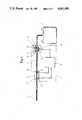
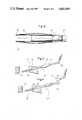
- FIG. 1is a schematic illustration of the aspiration device
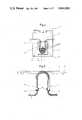
- FIG. 2is a front view of the control device and the secretion aspiration pump
- FIG. 3is a perspective view of the control device and the secretion aspiration pump
- FIG. 4is a top view of the control device and the secretion aspiration pump
- FIG. 5is a top view of the tube section to be placed into the secretion aspiration pump, together with the holder;
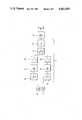
- FIG. 6is the circuit diagram of the aspiration device
- FIG. 7is a schematic illustration of a first embodiment of a needle with a sleeve coupled thereto after the sleeve has been presssed through the tissue adjacent a wound;
- FIG. 8is a schematic illustration of the sleeve having been pressed through the tissue and of a drain at the beginning of its introduction into the sleeve;
- FIG. 9is a schematic illustration of the position of the drain after having passed through the sleeve and after withdrawal of the sleeve from the tissue;
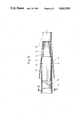
- FIG. 10is an enlarged, partially illustrated longitudinal section through the sleeve and the needle according to the first embodiment
- FIG. 11is a section according to the line XI--XI of FIG. 10;
- FIG. 12is a partially illustrated longitudinal section of a needle according to a second embodiment in connection with a sleeve
- FIG. 13is a schematic illustration of a drain having passed through tissue by means of a needle according to FIG. 12;
- FIG. 14is a schematic illustration of the drain placed according to FIG. 13 after separation of the needle and the subsequently completed connection with a tube.
- An aspiration device for aspirating secreted fluid out of a woundconsists, as shown in FIG. 1, of a drain 1 to be placed in the wound, a tube 3 running from the drain to a receptacle 2, a tube pump 4, a control device 5 which controls the pump, and a sensor device 6.
- the control device 5 and the sensor device 6 in the exemplary embodimentare located in a housing 7, on which the tube pump 4 is arranged.
- the receptacle 2is preferably a plastic bag.
- the tube 3 in the exemplary embodimentis also made of plastic, with the exception of the section 3' to be attached in the tube pump 4, which is a silicon rubber tube.
- the tube 3is nondetachably connected with the receptacle 2 and the drain 1, the drain 1, the tube 3 and the receptacle 2 form a closed system, the elements of which that come into contact with the wound and the wound's secreted fluid can be kept sterile and which does not have to be separated for use or during use.
- the tube pump 4includes a pump head 8 arranged on a rotatably mounted drive axis.
- This pump head 8comprises, in the exemplary embodiment, a support 9 which is rigidly connected with the drive axis and in the exemplary embodiment is star-shaped, as well as respective rollers 10 arranged on each of the four arms of the support 9. These rollers 10 project over the arm ends and are rotatably mounted on and symmetric to axes lying parallel to the drive axis.
- a plastic, channel-like holder 11is provided, which is provided at both ends with an elastic clamping element 12 that grasps the tube.
- the holder 11is either formed as a reusable part of the tube pump or as a part of the throw-away system that always remains connected with the section 3'.
- the holder 11 together with the section 3' of the tube 3is bent into the U-shaped illustrated with solid lines in FIG. 5 and then placed into a holder 13 (FIG. 4) of a pump housing 14, which supports the pump head 8, whereby the holder 13 supports the U-shaped, bent holder 11 on its dies opposite the tube section 3'.
- Detent elements(not shown) secure the holder 11 against any shifting in its longitudinal direction.
- the pump head 8is driven via a transmission by an electric motor 15, which is formed in a known manner and is therefore shown only schematically (FIG. 6), the rotational speed of which is variable.
- the adjustment of the rotational speed of the electric motor 15takes place by means of the control device 5, which forms an interval control which is connected to two capacitive secretion sensors 16 and 17.
- the control device 5has two oscillators 18, 18', behind which are connected voltage rectifiers 19, 19', which rectify the output voltage of the oscillators.
- the output of these two voltage rectifiersis connected to the input of respective amplifiers 20, 20'.
- These two amplifiers as well as the two voltage rectifiers and the two oscillatorsare identical.
- the output of the amplifier 20is connected to one input and the output of the other amplifier 20' is connected to the other input of a logic circuit 21, in which an OR switch follows.
- the output voltage of the logic circuit 21is led to the input of a power amplifier 22, which lies in the energy supply line of the electric motor 15 of the tube pump 4.
- the first capacitive secretion sensor 16lies in the oscillating circuit of one oscillator 18 and the second capacitive secretion sensor 17 lies in that of the oscillator 18'.
- Both secretion sensorshave two electrodes 23 and 24 (FIG. 1), between which lie two spaced tube sections running in the longitudinal direction of the tube. This distance of the two electrode pairs from each other is greater than the usual length of air bubbles carried along in the secreted fluid.
- a plastic measurement chamber insert 25is provided, which, as shown in FIG. 3, has a U-shaped outer form as well as a thickness that is adapted to the diameter of the tube 3.
- the side surfaces of the measurement chamber insert 25 bordering the outer shapeform a channel to receive a section of the tube 3 lying between the drain 1 and the section 3'.
- Respective shaped clamping elements 26hold the tube 3 in contact against the measurement chamber insert 25, which can be led through an opening in the rear wall of the housing 7 into the measurement chamber provided in the inside of the housing 7.
- the two electrode pairs 23 and 24are arranged in such a manner that one or the other of the shanks of the tube 3 that are bent into a U-shape by the abutment against the insert 25, lie between them. Since the measurement chamber insert 25 is an inexpensive plastic element, at the end of the aspiration it can be pulled out of the housing 7 and thrown away together with the tube 3. Of course, it would also be possible to release the tube 3 from the insert 25 and reuse it.
- the two secretion sensors 16 and 17hold the oscillators 18, 18' in a condition in which their output voltage has a low level.
- the two output voltages, which are joined with each other in the logic circuit 12, because of their low levels,provide the result that the power amplifier 13 yields such a small voltage that the electric motor 15 connected thereto operates at a selectable rotational speed which corresponds to a desired minimum suction force.
- a foil keyboard 27(FIG. 2) is provided on the front plate of the housing 7 to adjust various minimum rotational speeds.
- the output voltage of one of the two oscillators 18 or 18'reaches a high enough level that the output voltage of the logic circuit 21 effects an output voltage of the power amplifier 22 which leads to an increased rotational speed of the electric motor 15 and thereby to increased force in the tube pump 14.
- the increased rotational speed of the electric motor 15can be selected by means of a second foil keyboard 29, which is also provided on the front of the housing 7. And of course this keyboard could also be replaced by other adjusting means, such as a dial.
- a second control light 30 in the front platelights up while the electric motor 15 operates with the increased rotational speed.
- the increased power of the tube pump 4is selected such that it is sufficient to be able to deliver the maximum rate of occurring secretion into the receptacle 2.
- Air bubbles carried with the secretion fluiddo indeed result in the first secretion sensor 16 initially, and somewhat later the second secretion sensor 17 effecting a lower level of output voltage of the associated oscillator 18, 18'. But since by the time the second secretion sensor recognizes an air bubble the bubble has already left the effective area of the first secretion sensor, and therefore the level of the output voltage of the oscillator controlled by the first secretion sensor is already back to the higher level, the electric motor 15 continues to operate with the higher rotational speed. A switching of the tube pump to the minimum power is not released by the two secretion sensors 16 and 17 until both detect only air or a reduced quantity of secretion. The tube pump 4 remains in this operating condition until, once again, at least one of the sensors 16 and 17 recognizes a secretion quantity that requires a switching to the higher power level.
- the housing 7Normally, the energy for the operation of the electric motor 15 and for the operation of the control device 5 is drawn from the public power supply via a power supply connection line 31 (FIG. 2).
- the housing 7also contains an emergency battery which takes over the energy supply in case of a loss of power.
- a third control light 32provided in the front plate of the housing 7 is illuminated.
- another power switchis provided in the front plate.
- a sterile, plastic sleeve 35is used, the inside diameter of which is somewhat larger than the outside diameter of the drain 1. This sleeve 35 is pressed into the tissue 37 adjacent the wound from the inside with the aid of a metal needle 36, and is pressed through this tissue 37 until the sleeve 35 projects somewhat out of the skin surface 34.
- the sleeve 35is provided with a longitudinal slot 38 which extends over its entire length. Diametrically opposite the longitudinal slot 38 is a recess 39 which also extends over the entire length and forms a film hinge. A thin foil tube 40 made of a plastic foil that is easy to cut is drawn over the sleeve 35 and holds the longitudinal slot 38 closed.
- a displaced pin 41is coaxially threaded to the rear end of the needle 36.
- a plastic conical bushing 42is pushed onto the smaller diameter portion of this pin adjacent to the end of the needle.
- the outside diameter of this conical bushing 42 at the end bordering on the needle 36is equal to the outside diameter of the cylindrical lance and uniformly increases toward the other end until it reaches a value somewhat larger than the outside diameter of the sleeve 35.
- a collar 43At this end there is joined thereto, in one piece therewith, a collar 43, the wall thickness of which is selected to be small enough that the collar 43 can easily be deformed. As shown in FIG.
- the needle 36is rotated relative to the sleeve 35 in the direction of release for a bayonet closure and it is then removed from the end of the sleeve together with the pin 41, the conical bushing 42, and the collar 43.
- the collar 43the end of the sleeve 35 projecting out of the skin surface 34 has not come into contact with the surface of the skin 34 over a sufficiently large length so that when the drain 1 is then introduced into the outwardly extending end of the sleeve 35, the drain safely does not come into contact with the portions of the sleeve 35 that are contaminated, i.e., have come into contact with the surface of the skin 34.
- the sleeve 35is drawn out of the tissue 37 over the drain or the tube 3, as shown in FIG. 9.
- the tube pumpis first placed into operation at the low suction rate. It then automatically increases the suction force when necessary due to the secretion sensors 16 and 17.
- FIG. 12A modified embodiment of a needle is illustrated in FIG. 12 which is distinguished from the above-described needle illustrated particularly in FIG. 10 only in that in the area of its end section opposite the conical bushing, the collar 43' of the conical bushing 42' placed on the rear needle end lies closely against the outer surface of the foil tube 40 and is glued thereto. This reliably excludes the possibility of causative organisms being able to enter the section of the sleeve 35 and of the foil tube 40 overlapped by the collar 43'. Because of further details concerning the embodiment of the needle 36', the conical bushing 42', and the connection of s the needle 36' with the sleeve 35, reference will be made to FIG. 10 and the associated text to the extent that there are no differences.
- the needle 36' with its conical bushing 42' and the collar 43' formed in one piece therewithcan also be used to advantage in the placement of a drain even when the sleeve 35 has not previously been pressed through the tissue 37 adjacent the wound.
- Both the collar 43 and the collar 43'namely enclose the end section of the drain 101 to be connected with the needle 36 and thereby prevent this end section from coming into contact with causative organisms on the surface of the skin 34 as the skin is penetrated. If a needle 36' with a collar 43' is used, the free end section of which is secured to the end of the drain, then the end section 43" securely connected with the drain 101 is separated from the remaining portion of the collar 43' by a cut with a scalpel before the needle 36' is separated from the drain 101. The separation of the needle from the drain is easily performed with the use of a needle 36 with a collar 43. The end section of the drain 0 101 no longer covered by the collar 43 or 43' is free of germs. Therefore, no germs can enter the system from this area if the drain 101 is then coupled with a tube 103, as illustrated in FIG. 14.
Landscapes
- Health & Medical Sciences (AREA)
- Engineering & Computer Science (AREA)
- Heart & Thoracic Surgery (AREA)
- Animal Behavior & Ethology (AREA)
- Public Health (AREA)
- Anesthesiology (AREA)
- Hematology (AREA)
- Life Sciences & Earth Sciences (AREA)
- Veterinary Medicine (AREA)
- General Health & Medical Sciences (AREA)
- Biomedical Technology (AREA)
- Otolaryngology (AREA)
- Mechanical Engineering (AREA)
- General Engineering & Computer Science (AREA)
- Vascular Medicine (AREA)
- External Artificial Organs (AREA)
- Media Introduction/Drainage Providing Device (AREA)
- Massaging Devices (AREA)
- Infusion, Injection, And Reservoir Apparatuses (AREA)
Abstract
Description
The invention relates to a method for aspirating secreted fluids from a wound, including a method of placement for the drain that accepts the secreted fluid.
Sterile systems are known consisting of a drain, connecting tube, and an evacuated secretion receptacle. Secreted fluids are aspirated from wounds with the aid of this system. Because of the negative pressure in the secretion receptacle, a continuous suction effect is present at the drain, the intensity of which has its maximum at the beginning of the aspiration process and becomes smaller as the container becomes more and more full. In many cases when the secretion aspiration takes place in this manner, the formation of a hemotoma is expected and accepted. It is true that through massage a hematoma reduction can be achieved, but the hematoma formation delays the patient reaching the mobilization phase. Furthermore, with the use of this type of sterile system there is always the danger that, despite the complete sterility of the system, causative organisms can enter the wound. This danger is caused by the fact that the drain must be introduced from the outer surface of the body or from the wound opening, so that any causative organisms located on the surface of the skin can come into contact with the drain in the outer skin layers and thereby get into the wound.
The object of the invention is to create a method for aspirating secreted fluids out of a wound that makes it possible to avoid negative effects on the patient to the maximum extent possible.
The formation of a hematoma or seroma can be avoided by controlling the suction effect between a minimum value and a maximum value according to the quantity of secreted fluid to be aspirated. In addition, by this means it is possible to adapt the suction capacity to the type of wound being treated. The suction capacity can thus be selected to be less than the quantity of occurring secreted fluid when this is desirable for medicinal purposes for the type of wound. This would be the case, for example, for drainages in a bone cavity. This adaption of the suction effect to the quantity of secreted fluid, which takes place even before the beginning of the aspiration process, also prevents damage to the tissue. Additional advantages may be seen from the fact that with this method of aspiration, independence from the position of the tube is assured and a stagnation or even a backflow of the secreted fluid into the wound is prevented, even when the patient moves, thus significantly reducing the likelihood of infection.
If the drain is placed, i.e., introduced into the wound, in the manner defined in claim 2, then causative organisms are reliably prevented from entering the wound because organisms present on the skin surface can only come into contact with the end section of the sleeve, which projects out of the skin surface and is introduced through the tissue from the inside to the outside, and cannot come into contact with the drain, which is introduced into the wound through the sleeve from the outside, but which thereby can only contact the sterile inner wall of the sleeve and not the potentially infected outer side. Since the sleeve is removed outward from the inside out of the tissue, whereby it is drawn away over the tube, organisms on the skin surface can also not get into the tissue or the wound during this phase of the method. Above all, the method according to claim 2 with an embodiment according toclaim 3 makes it possible to use a closed suction system, i.e., a unit comprising the drain, the receptacle for secreted fluid and the tube connecting the drain to the receptacle. Such a unit does not need to be opened or become separated either during placement of the drain or during operation.
In a preferred embodiment, after the sleeve is drawn from the tissue, it is cut along its longitudinal direction and removed from the tube so that the sleeve does not need to be continuously arranged on the tube.
Passing the sleeve through the tissue is preferably performed with the aid of a sterile needle detachably connected to the front end of the sleeve. The sleeve and the needle are separated as soon as the front end of the sleeve projects sufficiently far out of the surface of the skin.
The invention has as a further object the creation of an apparatus by means of which the method according to the invention can be performed without difficulty.
The embodiment of the secretion aspiration and collection device according toclaim 6 makes possible not only the adaptation of the suction capacity to the quantity of secreted fluid to be aspirated. It also permits the use of a closed, sterile system consisting of the drain, tube, and receptacle, because the tube of this system can be placed into the tube pump without having to be cut. In addition, the tube pump prevents the secreted fluid from standing still or running back. A further advantage is that sacks or bags having a relatively large volume can be used as receptacles, so that an exchange thereof is unnecessary. In contrast, in the known systems an exchange, with an associated opening of the system, is necessary every 16 to 24 hours. There is also the additional advantage that with an embodiment of the receptacle as a plastic bag, the appearance thereof indicates whether the wound is sealed or unsealed
The secretion sensor is preferably arranged on the section of the tube lying between the tube pump and the drain. The shorter the distance thereof from the drain, the earlier the secretion sensor can recognize the occurrence of secretion fluid or the end of a secretion of fluid. In one preferred embodiment the secretion sensor is a capacitive or inductive sender, in order for the secretion sensor to be able to operate without direct contact, which is important for hygenic reasons. In such a secretion sensor, the capacitance or inductivity is dependent on whether secretion fluid is located in the tube, which can be made of either plastic or rubber. With a capacitive secretion sensor, for example, the two electrodes surround a portion of the circumference of the tube like a shell.
Since air bubbles can be contained in the secreted fluid and the sensor, when it recognized such air bubbles, would switch the tube pump to its minimum force, which would lead in an undesired manner to a continual switching of the pump between its minimum force and the increased force, a second secretion sensor is arranged on the tube in a preferred embodiment and is displaced relative to the first secretion sensor in the direction of flow, thus preventing a switching of the tube pump to the minimum force by the first secretion sensor when air bubbles carried along in the secretion occur. Preferably this is achieved with the use of identically formed secretion sensors by means of the fact that the signals of the two sensors necessary to release such a switching are joined with each other by a logic circuit. A switching of the pump to its minimum force then only takes place when both secretion sensors find no secretion fluid. If the distance between the secretion sensors is selected to be larger than the length of an air bubble, then an air bubble can no longer lead to a switching of the pump to its minimum force.
The signals produced by the secretion sensor or secretion sensors can be evaluated in various ways for the switching of the tube pump. In one embodiment which is advantageous because of its simplicity and reliability, each present capacitive or inductive secretion sensor lies in the oscillating circuit of an oscillator, the output voltage of which is dependent on the sensor signals with respect to its amplitude. The output voltage of the oscillator or oscillators can then be used after a rectification and amplification to control a power stage which delivers the energy necessary for the operation of the pump.
In a preferred embodiment the interval control has adjusting elements for a variable adjustment of the size of the minimum and maximum suction force of the tube pump. An optimal adaptation of the suction force to the given requirements is then possible. These adjusting elements can be, for example, dials. But a foil keyboard by means of which, for example, various rates of rotation of the tube pump can be given, would also be feasible.
In a preferred embodiment the tube pump is arranged on the outside of a housing containing the interval control. The secretion sensor or secretion sensors can also be located in this housing, whereby free lying connection lines from the sensor or sensors to the interval control, that were necessary when the sensor or sensors were arranged on the tube at a distance from this housing, are eliminated. The arrangement of the sensor or sensors in the housing of the interval control also offers the advantage of being able to better shield the sensors from disruptive influences than if it were located outside the housing. In order to still be able to bring the section of the tube monitored by the sensor or sensors into the immediate vicinity of the sensor or sensors without difficulty, an insert is advantageously provided which can be introduced into the housing of the interval control and is provided with a holder for the tube, so that only the insert, together with the tube, needs to be introduced into the housing in order to allow the sensors to become effective. This insert need not be formed such that the tube must first be attached to it. Rather, the insert can also be part of the one-way system which is discarded after use.
Preferably, a holder is also provided for the attachment of the tube in the tube pump. This holder which together with the tube attached thereto are inserted into a receiving location in the housing of the tube pump, can also be a reusable element or a part of a one-way system.
The penetration of the sleeve through the tissue, by means of which the drain is introduced into the wound, takes place by means of a needle the rear end of which is attached to the sleeve. In order to reliably connect the sleeve with this needle, and yet still make it simple to disconnect the same, a pin which can be inserted into the sleeve is provided in a preferred embodiment on the rear of the needle. This pin can be connected with the sleeve by means of a bayonet connection.
In order to reliably prevent the end of the sleeve projecting beyond the surface of the skin from coming into contact with the skin surface and perhaps causative organisms thereon, a protective sleeve is arranged on the pin of the needle in a preferred embodiment, to which a deformable collar is joined being formed in one piece therewith, which collar overlaps the forward end section of the sleeve and completely covers the outside thereof. This protective sleeve and the collar connected thereto, together with the needle, are separated from the sleeve, so that its end section only becomes exposed after this separation. If the free end section of the collar lies closely against the sleeve or is firmly connected therewith, for example by being glued thereto, which is also possible, and an even better protection against contamination of the forward end of the sleeve results, then prior to the separation of the needle from the sleeve one need only separate the secured end section of the collar from the remaining portion of the collar by a cut with a scalpel.
A needle with a collar of this type can advantageously be employed even in situations when no sleeve is used, but rather where the rear end of the drain, which is separated from the tube, is pressed through the tissue from the side facing the wound. Here too, the collar assures that the end of the drain to be connected with the tube cannot come into contact with causative organisms present on the surface of the skin, i.e., remains sterile.
In order to be able to easily remove the sleeve from the tube despite a simple and economical embodiment after it has been withdrawn from the tissue subsequent to placement of the drain, it is preferably made of plastic and is provided with a slit which extends over its entire length as well as a film hinge lying diametrically opposite said slit. The two halves of the sleeve then only need be opened in order to be able to be removed from the tube. In order not to have to provide any closure elements on the sleeve to hold the sleeve closed while it is introduced into the tissue, it is wrapped over at least a portion of its length in a preferred embodiment by a thin tube of a plastic susceptible to being cut. This tube then only need be cut through with the scalpel in the longitudinal direction in order to open the sleeve and be able to remove it from the tube leading from the drain to the pump.
The invention is described in greater detail below with the aid of exemplary embodiments illustrated in the drawings. Shown are:
FIG. 1 is a schematic illustration of the aspiration device;
FIG. 2 is a front view of the control device and the secretion aspiration pump;
FIG. 3 is a perspective view of the control device and the secretion aspiration pump;
FIG. 4 is a top view of the control device and the secretion aspiration pump;
FIG. 5 is a top view of the tube section to be placed into the secretion aspiration pump, together with the holder;
FIG. 6 is the circuit diagram of the aspiration device;
FIG. 7 is a schematic illustration of a first embodiment of a needle with a sleeve coupled thereto after the sleeve has been presssed through the tissue adjacent a wound;
FIG. 8 is a schematic illustration of the sleeve having been pressed through the tissue and of a drain at the beginning of its introduction into the sleeve;
FIG. 9 is a schematic illustration of the position of the drain after having passed through the sleeve and after withdrawal of the sleeve from the tissue;
FIG. 10 is an enlarged, partially illustrated longitudinal section through the sleeve and the needle according to the first embodiment;
FIG. 11 is a section according to the line XI--XI of FIG. 10;
FIG. 12 is a partially illustrated longitudinal section of a needle according to a second embodiment in connection with a sleeve;
FIG. 13 is a schematic illustration of a drain having passed through tissue by means of a needle according to FIG. 12; and
FIG. 14 is a schematic illustration of the drain placed according to FIG. 13 after separation of the needle and the subsequently completed connection with a tube.
An aspiration device for aspirating secreted fluid out of a wound consists, as shown in FIG. 1, of adrain 1 to be placed in the wound, atube 3 running from the drain to a receptacle 2, atube pump 4, acontrol device 5 which controls the pump, and asensor device 6. Thecontrol device 5 and thesensor device 6 in the exemplary embodiment are located in ahousing 7, on which thetube pump 4 is arranged. The receptacle 2 is preferably a plastic bag. Thetube 3 in the exemplary embodiment is also made of plastic, with the exception of the section 3' to be attached in thetube pump 4, which is a silicon rubber tube. Because thetube 3 is nondetachably connected with the receptacle 2 and thedrain 1, thedrain 1, thetube 3 and the receptacle 2 form a closed system, the elements of which that come into contact with the wound and the wound's secreted fluid can be kept sterile and which does not have to be separated for use or during use.
Thetube pump 4 includes apump head 8 arranged on a rotatably mounted drive axis. Thispump head 8 comprises, in the exemplary embodiment, asupport 9 which is rigidly connected with the drive axis and in the exemplary embodiment is star-shaped, as well asrespective rollers 10 arranged on each of the four arms of thesupport 9. Theserollers 10 project over the arm ends and are rotatably mounted on and symmetric to axes lying parallel to the drive axis.
Referring now to FIG. 3, in order to bring the section 3' of thetube 3, on which therollers 10 must act to achieve the pumping effect, comfortably into the correct position with respect to thepump head 8 and to also hold it in this position, a plastic, channel-like holder 11 is provided, which is provided at both ends with anelastic clamping element 12 that grasps the tube. Theholder 11 is either formed as a reusable part of the tube pump or as a part of the throw-away system that always remains connected with the section 3'.
From the extended position illustrated with broken lines in FIG. 5, theholder 11 together with the section 3' of thetube 3 is bent into the U-shaped illustrated with solid lines in FIG. 5 and then placed into a holder 13 (FIG. 4) of apump housing 14, which supports thepump head 8, whereby theholder 13 supports the U-shaped,bent holder 11 on its dies opposite the tube section 3'. Detent elements (not shown) secure theholder 11 against any shifting in its longitudinal direction.
Thepump head 8 is driven via a transmission by anelectric motor 15, which is formed in a known manner and is therefore shown only schematically (FIG. 6), the rotational speed of which is variable.
The adjustment of the rotational speed of theelectric motor 15 takes place by means of thecontrol device 5, which forms an interval control which is connected to twocapacitive secretion sensors control device 5 has twooscillators 18, 18', behind which are connectedvoltage rectifiers 19, 19', which rectify the output voltage of the oscillators. The output of these two voltage rectifiers is connected to the input ofrespective amplifiers 20, 20'. These two amplifiers as well as the two voltage rectifiers and the two oscillators are identical. The output of theamplifier 20 is connected to one input and the output of the other amplifier 20' is connected to the other input of alogic circuit 21, in which an OR switch follows. The output voltage of thelogic circuit 21 is led to the input of apower amplifier 22, which lies in the energy supply line of theelectric motor 15 of thetube pump 4.
The firstcapacitive secretion sensor 16 lies in the oscillating circuit of oneoscillator 18 and the secondcapacitive secretion sensor 17 lies in that of the oscillator 18'. Both secretion sensors have twoelectrodes 23 and 24 (FIG. 1), between which lie two spaced tube sections running in the longitudinal direction of the tube. This distance of the two electrode pairs from each other is greater than the usual length of air bubbles carried along in the secreted fluid.
Because the two electrode pairs 23 and 24 are arranged inside thehousing 7, a plasticmeasurement chamber insert 25 is provided, which, as shown in FIG. 3, has a U-shaped outer form as well as a thickness that is adapted to the diameter of thetube 3. The side surfaces of themeasurement chamber insert 25 bordering the outer shape form a channel to receive a section of thetube 3 lying between thedrain 1 and the section 3'. Respective shaped clampingelements 26 hold thetube 3 in contact against themeasurement chamber insert 25, which can be led through an opening in the rear wall of thehousing 7 into the measurement chamber provided in the inside of thehousing 7. In the measurement chamber the two electrode pairs 23 and 24 are arranged in such a manner that one or the other of the shanks of thetube 3 that are bent into a U-shape by the abutment against theinsert 25, lie between them. Since themeasurement chamber insert 25 is an inexpensive plastic element, at the end of the aspiration it can be pulled out of thehousing 7 and thrown away together with thetube 3. Of course, it would also be possible to release thetube 3 from theinsert 25 and reuse it.
As long as there is no secretion fluid or only a very small quantity of secretion so that between theelectrodes tube 3 and air and possibly only a small amount of secretion, the twosecretion sensors oscillators 18, 18' in a condition in which their output voltage has a low level. The two output voltages, which are joined with each other in thelogic circuit 12, because of their low levels, provide the result that thepower amplifier 13 yields such a small voltage that theelectric motor 15 connected thereto operates at a selectable rotational speed which corresponds to a desired minimum suction force. A foil keyboard 27 (FIG. 2) is provided on the front plate of thehousing 7 to adjust various minimum rotational speeds. However, something such as a dial could also be used in place of such a keyboard. As long as theelectric motor 15 operates at its low rotational speed, a control light 28 provided above thefoil keyboard 27 is illuminated. In addition, the key of thefoil keyboard 27 that was activated to adjust the rotational speed is illuminated.
As soon as one of the twosecretion sensors oscillators 18 or 18' reaches a high enough level that the output voltage of thelogic circuit 21 effects an output voltage of thepower amplifier 22 which leads to an increased rotational speed of theelectric motor 15 and thereby to increased force in thetube pump 14. The increased rotational speed of theelectric motor 15 can be selected by means of asecond foil keyboard 29, which is also provided on the front of thehousing 7. And of course this keyboard could also be replaced by other adjusting means, such as a dial. Asecond control light 30 in the front plate lights up while theelectric motor 15 operates with the increased rotational speed. The increased power of thetube pump 4 is selected such that it is sufficient to be able to deliver the maximum rate of occurring secretion into the receptacle 2.
Air bubbles carried with the secretion fluid do indeed result in thefirst secretion sensor 16 initially, and somewhat later thesecond secretion sensor 17 effecting a lower level of output voltage of the associatedoscillator 18, 18'. But since by the time the second secretion sensor recognizes an air bubble the bubble has already left the effective area of the first secretion sensor, and therefore the level of the output voltage of the oscillator controlled by the first secretion sensor is already back to the higher level, theelectric motor 15 continues to operate with the higher rotational speed. A switching of the tube pump to the minimum power is not released by the twosecretion sensors tube pump 4 remains in this operating condition until, once again, at least one of thesensors
Normally, the energy for the operation of theelectric motor 15 and for the operation of thecontrol device 5 is drawn from the public power supply via a power supply connection line 31 (FIG. 2). In order to prevent theelectric motor 15 from stopping during a failure in the power supply, thehousing 7 also contains an emergency battery which takes over the energy supply in case of a loss of power. When the emergency battery is in use, a third control light 32 provided in the front plate of thehousing 7 is illuminated. In addition, another power switch is provided in the front plate.
In order to prevent causative organisms found on the skin surface 34 (FIG. 7) from entering the the wound during placement of thedrain 1, a sterile,plastic sleeve 35 is used, the inside diameter of which is somewhat larger than the outside diameter of thedrain 1. Thissleeve 35 is pressed into thetissue 37 adjacent the wound from the inside with the aid of ametal needle 36, and is pressed through thistissue 37 until thesleeve 35 projects somewhat out of theskin surface 34.
As shown in FIG. 11, thesleeve 35 is provided with alongitudinal slot 38 which extends over its entire length. Diametrically opposite thelongitudinal slot 38 is arecess 39 which also extends over the entire length and forms a film hinge. Athin foil tube 40 made of a plastic foil that is easy to cut is drawn over thesleeve 35 and holds thelongitudinal slot 38 closed.
As shown in FIG. 10, a displacedpin 41 is coaxially threaded to the rear end of theneedle 36. A plasticconical bushing 42 is pushed onto the smaller diameter portion of this pin adjacent to the end of the needle. The outside diameter of thisconical bushing 42 at the end bordering on theneedle 36 is equal to the outside diameter of the cylindrical lance and uniformly increases toward the other end until it reaches a value somewhat larger than the outside diameter of thesleeve 35. At this end there is joined thereto, in one piece therewith, acollar 43, the wall thickness of which is selected to be small enough that thecollar 43 can easily be deformed. As shown in FIG. 10, thecollar 43 has a conical shape so that it forms an extension of theconical bushing 42 which overlaps a portion of the end of thesleeve 35 adjacent theconical bushing 42 as well as the associated end section of thefoil tube 40. The larger diameter section of thepin 41 has an outside diameter adapted to the inside diameter of thesleeve 35, so that thesleeve 35 can be pushed over this section of thepin 41 until it abuts the end of theconical bushing 42. Two diametrically oppositeradial projections 44 on the portion of thepin 41 containing thesleeve 35, together with respective bent-angle slots 45 on the end section adjacent theconical bushing 42 form a bayonet closure by means of which thesleeve 35 can be form-fittingly connected with theneedle 36 via thepins 41 and can be easily separated from the needle by a simple rotation. After thesleeve 35, with the aid of theneedle 36, has been pushed from the inside through thetissue 37 to the point that the full length of thecollar 43 is exposed, theneedle 36 is rotated relative to thesleeve 35 in the direction of release for a bayonet closure and it is then removed from the end of the sleeve together with thepin 41, theconical bushing 42, and thecollar 43. Thanks to thecollar 43, the end of thesleeve 35 projecting out of theskin surface 34 has not come into contact with the surface of theskin 34 over a sufficiently large length so that when thedrain 1 is then introduced into the outwardly extending end of thesleeve 35, the drain safely does not come into contact with the portions of thesleeve 35 that are contaminated, i.e., have come into contact with the surface of theskin 34.
After thedrain 1 has been placed in the wound, thesleeve 35 is drawn out of thetissue 37 over the drain or thetube 3, as shown in FIG. 9. One need then only cut through thefoil tube 40 in the longitudinal direction with the scalpel in order to be able to open thesleeve 35 and remove it from thetube 3. After closure of the wound the tube pump is first placed into operation at the low suction rate. It then automatically increases the suction force when necessary due to thesecretion sensors
A modified embodiment of a needle is illustrated in FIG. 12 which is distinguished from the above-described needle illustrated particularly in FIG. 10 only in that in the area of its end section opposite the conical bushing, the collar 43' of the conical bushing 42' placed on the rear needle end lies closely against the outer surface of thefoil tube 40 and is glued thereto. This reliably excludes the possibility of causative organisms being able to enter the section of thesleeve 35 and of thefoil tube 40 overlapped by the collar 43'. Because of further details concerning the embodiment of the needle 36', the conical bushing 42', and the connection of s the needle 36' with thesleeve 35, reference will be made to FIG. 10 and the associated text to the extent that there are no differences.
As shown in FIGS. 13 and 14, the needle 36' with its conical bushing 42' and the collar 43' formed in one piece therewith can also be used to advantage in the placement of a drain even when thesleeve 35 has not previously been pressed through thetissue 37 adjacent the wound.
This is also true, of course, for theneedle 36 with itsconical sleeve 42 and thecollar 43.
Both thecollar 43 and the collar 43' namely enclose the end section of thedrain 101 to be connected with theneedle 36 and thereby prevent this end section from coming into contact with causative organisms on the surface of theskin 34 as the skin is penetrated. If a needle 36' with a collar 43' is used, the free end section of which is secured to the end of the drain, then theend section 43" securely connected with thedrain 101 is separated from the remaining portion of the collar 43' by a cut with a scalpel before the needle 36' is separated from thedrain 101. The separation of the needle from the drain is easily performed with the use of aneedle 36 with acollar 43. The end section of the drain 0 101 no longer covered by thecollar 43 or 43' is free of germs. Therefore, no germs can enter the system from this area if thedrain 101 is then coupled with atube 103, as illustrated in FIG. 14.
Although only preferred embodiments are specifically illustrated and described herein, it will be appreciated that many modifications and variations of the present invention are possible in light of the above teachings and within the purview of the appended claims without departing from the spirit and intended scope of the invention.
Claims (8)
1. A method for aspirating secreted fluid out of a wound comprising the steps of:
(a) connecting a drain via a tube with a secretion aspiration and collection device to form a sterile system;
(b) placing said drain into the wound through tissue adjacent the wound;
(c) closing said wound;
(d) placing said secretion aspiration and collection device into operation, said secretion aspiration and collection device having a suction effect controlled between a minimum value and a maximum value;
(e) sensing the amount of fluid secreted by the wound; and
(f) varying said suction effect by means of a tube pump on the basis of the quantity of secreted fluid sensed in the wound to be aspirated.
2. The method according to claim 1 further comprising the steps of:
(a) introducing a sterile sleeve into the tissue adjacent the wound from the wound side of the tissue;
(b) pushing said sterile sleeve outward through the tissue toward a body surface defining an outward surface of the tissue in such a manner that a forward end of said sleeve projects above said body surface and a rear end of said sleeve still lies in the wound;
(c) introducing said drain into the wound through said sleeve; and
(d) withdrawing said sleeve outwardly from the tissue.
3. The method according to claim 2 wherein said drain is introduced into the wound through said sleeve from the forward end of said sleeve.
4. The method according to claim 3 further comprising the steps of:
(a) parting said sleeve longitudinally after withdrawing said sleeve from the tissue; and
(b) removing said sleeve from said tube connecting said drain with said secretion aspiration and collection device.
5. The method according to claim 4 further comprising the steps of:
(a) using a sterile needle detachably connected to the forward end of said sleeve to facilitate said step of introducing said sleeve into said tissue; and
(b) detaching said sleeve from said needle.
6. The method of claim 1 further including the steps of providing sensing means for measuring the quantity of fluid in the wound.
7. The method of claim 6 wherein said sensing means is a capacitive or inductive sender.
8. The method of claim 6 wherein said sensing means is positioned on the section of tube between a tube pump and said drain.
Applications Claiming Priority (2)
| Application Number | Priority Date | Filing Date | Title |
|---|---|---|---|
| DE3321151 | 1983-06-11 | ||
| DE3321151ADE3321151C2 (en) | 1983-06-11 | 1983-06-11 | Device for aspirating secretions |
Related Child Applications (1)
| Application Number | Title | Priority Date | Filing Date |
|---|---|---|---|
| US07/004,485DivisionUS4792328A (en) | 1983-06-11 | 1987-01-20 | Method and appparatus for aspirating secreted fluids from a wound |
Publications (1)
| Publication Number | Publication Date |
|---|---|
| US4661093Atrue US4661093A (en) | 1987-04-28 |
Family
ID=6201245
Family Applications (3)
| Application Number | Title | Priority Date | Filing Date |
|---|---|---|---|
| US06/618,828Expired - LifetimeUS4661093A (en) | 1983-06-11 | 1984-06-08 | Method for aspirating secreted fluids from a wound |
| US07/004,485Expired - LifetimeUS4792328A (en) | 1983-06-11 | 1987-01-20 | Method and appparatus for aspirating secreted fluids from a wound |
| US07/393,063Expired - LifetimeUS4936834A (en) | 1983-06-11 | 1989-08-04 | Apparatus for aspirating secreted fluids from a wound |
Family Applications After (2)
| Application Number | Title | Priority Date | Filing Date |
|---|---|---|---|
| US07/004,485Expired - LifetimeUS4792328A (en) | 1983-06-11 | 1987-01-20 | Method and appparatus for aspirating secreted fluids from a wound |
| US07/393,063Expired - LifetimeUS4936834A (en) | 1983-06-11 | 1989-08-04 | Apparatus for aspirating secreted fluids from a wound |
Country Status (5)
| Country | Link |
|---|---|
| US (3) | US4661093A (en) |
| EP (1) | EP0128388B1 (en) |
| JP (2) | JPS607851A (en) |
| AT (1) | ATE36242T1 (en) |
| DE (2) | DE3321151C2 (en) |
Cited By (94)
| Publication number | Priority date | Publication date | Assignee | Title |
|---|---|---|---|---|
| US4714464A (en)* | 1986-10-27 | 1987-12-22 | Entravision, Inc. | Mechanism for coupling the aspirant line of an irrigation/aspiration machine to the pressure monitoring section |
| WO1991006325A1 (en)* | 1989-10-27 | 1991-05-16 | Nestle S.A. | Fluid handling method and system and fluid interface apparatus usable therewith |
| US5176641A (en)* | 1991-07-08 | 1993-01-05 | Infusaid, Inc. | Implantable drug infusion reservoir having fluid impelling resilient foam member |
| US5201711A (en)* | 1987-09-30 | 1993-04-13 | Sherwood Medical Company | Safety interlock system for medical fluid pumps |
| US5334183A (en)* | 1985-08-28 | 1994-08-02 | Valleylab, Inc. | Endoscopic electrosurgical apparatus |
| US6013057A (en)* | 1996-04-10 | 2000-01-11 | Baxter International Inc. | Volumetric infusion pump |
| WO2000007653A1 (en)* | 1998-08-07 | 2000-02-17 | Hill-Rom, Inc. | Wound treatment apparatus |
| WO2000072747A1 (en)* | 1999-05-31 | 2000-12-07 | Gambro Lundia Ab | Arrangement for measuring a property of a fluid present in a tube |
| WO2001047581A1 (en)* | 1999-12-28 | 2001-07-05 | Hospal Ag | Method and device for monitoring the access to the cardiovascular system of a patient |
| US6336924B1 (en)* | 1997-12-17 | 2002-01-08 | Nmt Neurosciences Implants S.A. | External biological fluid drainage device |
| US20020161346A1 (en)* | 2000-11-29 | 2002-10-31 | Lockwood Jeffrey S. | Vacuum therapy and cleansing dressing for wounds |
| US20020183702A1 (en)* | 1999-11-29 | 2002-12-05 | Henley Alan Wayne | Wound treatment apparatus |
| US20030014022A1 (en)* | 2001-07-12 | 2003-01-16 | Lockwood Jeffrey S. | Control of vacuum level rate of change |
| US20030093041A1 (en)* | 2001-10-11 | 2003-05-15 | Risk James R. | Waste container for negative pressure therapy |
| US20030194894A1 (en)* | 2002-04-10 | 2003-10-16 | Ramesh Wariar | Access disconnection systems and methods |
| US20030195454A1 (en)* | 2002-04-10 | 2003-10-16 | Ramesh Wariar | Access disconnection systems and methods |
| US20030195453A1 (en)* | 2002-04-10 | 2003-10-16 | James Han | Access disconnection systems and methods |
| US20030208149A1 (en)* | 2000-05-22 | 2003-11-06 | Coffey Arthur C. | Combination sis and vacuum bandage and method |
| US20030225347A1 (en)* | 2002-06-03 | 2003-12-04 | Argenta Louis C. | Directed tissue growth employing reduced pressure |
| US6685681B2 (en) | 2000-11-29 | 2004-02-03 | Hill-Rom Services, Inc. | Vacuum therapy and cleansing dressing for wounds |
| US20040030304A1 (en)* | 2000-05-09 | 2004-02-12 | Kenneth Hunt | Abdominal wound dressing |
| US20040039391A1 (en)* | 2002-08-23 | 2004-02-26 | Argenta Louis C. | Bone treatment employing reduced pressure |
| US20040122434A1 (en)* | 2002-08-23 | 2004-06-24 | Argenta Louis C. | Bone treatment employing reduced pressure |
| US6770061B2 (en) | 2000-12-19 | 2004-08-03 | Hill-Rom Services, Inc. | Low exposure waste disposal suction system and associated method |
| US20050004534A1 (en)* | 2001-12-26 | 2005-01-06 | Lockwood Jeffery S | Vented vacuum bandage and method |
| US20050010153A1 (en)* | 2001-12-26 | 2005-01-13 | Lockwood Jeffrey S | Vaccum bandage packing |
| US20050070858A1 (en)* | 2002-04-10 | 2005-03-31 | Lockwood Jeffrey S | Access openings in vacuum bandage |
| US20050085795A1 (en)* | 2002-02-28 | 2005-04-21 | Lockwood Jeffrey S. | External catheter access to vacuum bandage |
| US20050090787A1 (en)* | 1999-11-29 | 2005-04-28 | Risk James R.Jr. | Wound treatment apparatus |
| US7168334B1 (en) | 2000-05-30 | 2007-01-30 | Gambro Lundia Ab | Arrangement for measuring a property of a fluid present in a tube |
| WO2007013049A1 (en)* | 2005-07-24 | 2007-02-01 | Carmeli Adahan | Wound closure and drainage system |
| US20070032762A1 (en)* | 2005-08-08 | 2007-02-08 | Vogel Richard C | Wound irrigation device |
| US7198046B1 (en) | 1991-11-14 | 2007-04-03 | Wake Forest University Health Sciences | Wound treatment employing reduced pressure |
| US20070117010A1 (en)* | 2002-04-10 | 2007-05-24 | Baxter International Inc. | Conductive polymer materials and applications thereof including monitoring and providing effective therapy |
| US20070179460A1 (en)* | 2006-02-01 | 2007-08-02 | Carmeli Adahan | Suctioning system, method and kit |
| US20070219494A1 (en)* | 2006-03-20 | 2007-09-20 | Gao Shawn X | Surgical cassette with bubble separating structure |
| US20080004549A1 (en)* | 2006-06-12 | 2008-01-03 | Anderson Paul J | Negative pressure wound treatment device, and methods |
| GB2442132A (en)* | 2006-09-21 | 2008-03-26 | Tyco Healthcare | Testing system for negative pressure wound therapy apparatus |
| US20080208171A1 (en)* | 2007-02-23 | 2008-08-28 | Argenta Louis C | Device and method for removing edema |
| US20080208147A1 (en)* | 2007-01-10 | 2008-08-28 | Argenta Louis C | Apparatus and method for wound treatment employing periodic sub-atmospheric pressure |
| WO2009052498A1 (en)* | 2007-10-18 | 2009-04-23 | Convatec Inc. | Aspiration system for removing liquid other than urine and discharged by the human body |
| US20090157016A1 (en)* | 2005-07-24 | 2009-06-18 | Carmeli Adahan | Suctioning system, method and kit |
| US20090187259A1 (en)* | 2007-10-10 | 2009-07-23 | Argenta Louis C | Devices and methods for treating spinal cord tissue |
| US7608066B2 (en) | 2005-08-08 | 2009-10-27 | Innovative Therapies, Inc. | Wound irrigation device pressure monitoring and control system |
| US20100049134A1 (en)* | 2008-08-21 | 2010-02-25 | Schuman Jr Peter J | Pump device, tube device and method for movement and collection of fluid |
| US20100063483A1 (en)* | 2007-05-07 | 2010-03-11 | Carmeli Adahan | Suction system |
| US7723560B2 (en) | 2001-12-26 | 2010-05-25 | Lockwood Jeffrey S | Wound vacuum therapy dressing kit |
| US7763000B2 (en) | 1999-11-29 | 2010-07-27 | Risk Jr James R | Wound treatment apparatus having a display |
| US20100211713A1 (en)* | 2009-02-17 | 2010-08-19 | Tyco Healthcare Group Lp | Portable and programmable medical device |
| US20110000832A1 (en)* | 2003-11-05 | 2011-01-06 | Baxter International Inc. | Dialysis system with enhanced features |
| US20110015585A1 (en)* | 2009-07-14 | 2011-01-20 | Pal Svedman | Method and device for providing intermittent negative pressure wound healing |
| US20110015589A1 (en)* | 2009-07-14 | 2011-01-20 | Pal Svedman | Disposable therapeutic device |
| US20110015593A1 (en)* | 2009-07-14 | 2011-01-20 | Pal Svedman | Pump leak monitor for negative pressure wound therapy |
| US20110015619A1 (en)* | 2009-07-16 | 2011-01-20 | Pal Svedman | Wound dressings for negative pressure therapy in deep wounds and method of using |
| US20110015590A1 (en)* | 2009-07-14 | 2011-01-20 | Pal Svedman | Disposable therapeutic device |
| US7896856B2 (en) | 2002-08-21 | 2011-03-01 | Robert Petrosenko | Wound packing for preventing wound closure |
| US7931651B2 (en) | 2006-11-17 | 2011-04-26 | Wake Lake University Health Sciences | External fixation assembly and method of use |
| US20110112490A1 (en)* | 2009-07-14 | 2011-05-12 | Vogel David C | Releasably Sealable Wound Dressing for NPWT |
| US20110112574A1 (en)* | 2009-09-11 | 2011-05-12 | Svedman Pal Paul | Device for manual traction wound closure |
| US20110112495A1 (en)* | 2009-10-29 | 2011-05-12 | Pal Svedman | Adhesive Flange Attachment Reinforcer for Suction Port |
| US20110168857A1 (en)* | 2010-01-08 | 2011-07-14 | Pal Svedman | Adapter for portable negative pressure wound therapy device |
| US20120041403A1 (en)* | 2010-08-12 | 2012-02-16 | John A. Bennett | Integrated Contoured Negative Pressure Bandages |
| US8267960B2 (en) | 2008-01-09 | 2012-09-18 | Wake Forest University Health Sciences | Device and method for treating central nervous system pathology |
| AU2010328436B2 (en)* | 2009-12-08 | 2014-03-06 | Alcon Inc. | Phacoemulsification hand piece with integrated aspiration pump |
| US8834451B2 (en) | 2002-10-28 | 2014-09-16 | Smith & Nephew Plc | In-situ wound cleansing apparatus |
| US8998866B2 (en) | 2010-07-02 | 2015-04-07 | Smith & Nephew Plc | Provision of wound filler |
| US9126219B2 (en) | 2013-03-15 | 2015-09-08 | Alcon Research, Ltd. | Acoustic streaming fluid ejector |
| US9198801B2 (en) | 2004-04-05 | 2015-12-01 | Bluesky Medical Group, Inc. | Flexible reduced pressure treatment appliance |
| US9289193B2 (en) | 2008-07-18 | 2016-03-22 | Wake Forest University Health Sciences | Apparatus and method for cardiac tissue modulation by topical application of vacuum to minimize cell death and damage |
| US9342996B2 (en) | 2004-12-02 | 2016-05-17 | The United States Of America, As Represented By The Secretary Of The Army | Trauma training system |
| US9498326B2 (en) | 2004-02-02 | 2016-11-22 | Visiogen, Inc. | Injector for intraocular lens system |
| US9545337B2 (en) | 2013-03-15 | 2017-01-17 | Novartis Ag | Acoustic streaming glaucoma drainage device |
| US9693896B2 (en) | 2013-03-15 | 2017-07-04 | Novartis Ag | Systems and methods for ocular surgery |
| US9750638B2 (en) | 2013-03-15 | 2017-09-05 | Novartis Ag | Systems and methods for ocular surgery |
| USD809909S1 (en) | 2013-03-15 | 2018-02-13 | Cook Medical Technologies Llc | Tubing clips |
| US9915274B2 (en) | 2013-03-15 | 2018-03-13 | Novartis Ag | Acoustic pumps and systems |
| US9962288B2 (en) | 2013-03-07 | 2018-05-08 | Novartis Ag | Active acoustic streaming in hand piece for occlusion surge mitigation |
| US10058642B2 (en) | 2004-04-05 | 2018-08-28 | Bluesky Medical Group Incorporated | Reduced pressure treatment system |
| US10113542B2 (en) | 2012-05-24 | 2018-10-30 | Cook Medical Technologies Llc | Peristaltic pump tubing securing system |
| US10182940B2 (en) | 2012-12-11 | 2019-01-22 | Novartis Ag | Phacoemulsification hand piece with integrated aspiration and irrigation pump |
| US10207035B2 (en) | 2004-05-21 | 2019-02-19 | Smith & Nephew, Inc. | Flexible reduced pressure treatment appliance |
| US10537657B2 (en) | 2010-11-25 | 2020-01-21 | Smith & Nephew Plc | Composition I-II and products and uses thereof |
| US10583228B2 (en) | 2015-07-28 | 2020-03-10 | J&M Shuler Medical, Inc. | Sub-atmospheric wound therapy systems and methods |
| US10835414B2 (en) | 2011-01-20 | 2020-11-17 | Scott Stephan | Therapeutic treatment pad |
| US20210085853A1 (en)* | 2018-03-01 | 2021-03-25 | University Of Washington | Systems and methods for automated assessment and monitoring of bodily fluids |
| US11007082B2 (en) | 2014-07-23 | 2021-05-18 | Innovative Therapies Inc. | Foam laminate dressing |
| US11160917B2 (en) | 2020-01-22 | 2021-11-02 | J&M Shuler Medical Inc. | Negative pressure wound therapy barrier |
| US11460021B2 (en) | 2017-06-29 | 2022-10-04 | Matthews International Corporation | Fluid delivery system and method |
| US20230001069A1 (en)* | 2016-05-24 | 2023-01-05 | Somavac Medical Solutions, Inc. | Portable device with disposable reservoir for collection of internal fluid after surgery from a plurality of sites simultaneously |
| US11638780B1 (en)* | 2022-03-29 | 2023-05-02 | Robert Howard | Medical drainage pump |
| US11638666B2 (en) | 2011-11-25 | 2023-05-02 | Smith & Nephew Plc | Composition, apparatus, kit and method and uses thereof |
| US11931226B2 (en) | 2013-03-15 | 2024-03-19 | Smith & Nephew Plc | Wound dressing sealant and use thereof |
| US11938231B2 (en) | 2010-11-25 | 2024-03-26 | Smith & Nephew Plc | Compositions I-I and products and uses thereof |
| US12350129B2 (en) | 2013-03-15 | 2025-07-08 | Smith & Nephew Plc | Wound dressing sealant and use thereof |
Families Citing this family (75)
| Publication number | Priority date | Publication date | Assignee | Title |
|---|---|---|---|---|
| DE3321151C2 (en)* | 1983-06-11 | 1986-09-18 | Walter Küsnacht Beck | Device for aspirating secretions |
| DE3441893A1 (en)* | 1984-11-16 | 1986-05-28 | Walter Küsnacht Beck | METHOD AND DEVICE FOR SUCTIONING SECRETARY LIQUID FROM A Wound |
| DE3441891A1 (en)* | 1984-11-16 | 1986-05-28 | Walter Beck | METHOD AND DEVICE FOR SUCTIONING SECRETARY LIQUID FROM A Wound |
| US4988340A (en)* | 1989-04-26 | 1991-01-29 | Christopher Kitchin | Tubular drainage device |
| GB2235877A (en)* | 1989-09-18 | 1991-03-20 | Antonio Talluri | Closed wound suction apparatus |
| DE4002373A1 (en)* | 1990-01-27 | 1991-08-01 | Laabs Walter | Medical suction instrument - has lateral ports with vacuum-operated valve |
| US5484399A (en)* | 1992-02-27 | 1996-01-16 | Sloan-Kettering Institute For Cancer Research | Process and device to reduce interstitial fluid pressure in tissue |
| US5342325A (en)* | 1992-12-07 | 1994-08-30 | Dlp, Incorporated | Introducer needle and catheter assembly |
| US5431661A (en)* | 1993-11-02 | 1995-07-11 | Bipore, Inc. | Adapter and mating trocar element for use in trocar assembly |
| US6010495A (en)* | 1995-03-17 | 2000-01-04 | Tilton, Jr.; Eugene B. | Instrumentation for endoscopic surgical insertion and application of liquid, gel and like material |
| US6416506B1 (en) | 1995-03-17 | 2002-07-09 | Eugene B. Tilton, Jr. | Instrumentation for endoscopic surgical insertion and application of liquid, gel and like material |
| US5797899A (en)* | 1995-03-17 | 1998-08-25 | Tilton, Jr.; Eugene B. | Instrumentation for laparoscopic surgical endoscopic insertion and application of liquid, gel and like material |
| US7867222B1 (en) | 1995-03-17 | 2011-01-11 | Tilton Jr Eugene B | Instrumentation for endoscopic surgical insertion and application of liquid, gel and like material |
| US6458117B1 (en)* | 2000-01-19 | 2002-10-01 | Kevin Daniel Pollins, Sr. | Intraosseous infusion assembly and method for intraosseous infusion |
| US10155082B2 (en) | 2002-04-10 | 2018-12-18 | Baxter International Inc. | Enhanced signal detection for access disconnection systems |
| JP4584708B2 (en)* | 2002-06-11 | 2010-11-24 | シーエムエス サージカル、 リミテッド ライアビリティ カンパニー | Efficient body cavity discharge device |
| US7846141B2 (en) | 2002-09-03 | 2010-12-07 | Bluesky Medical Group Incorporated | Reduced pressure treatment system |
| US6979324B2 (en)* | 2002-09-13 | 2005-12-27 | Neogen Technologies, Inc. | Closed wound drainage system |
| US7520872B2 (en)* | 2002-09-13 | 2009-04-21 | Neogen Technologies, Inc. | Closed wound drainage system |
| CA2523863C (en) | 2003-04-24 | 2012-01-17 | Imp B.V. | Device for inserting a drain and handle for such a device |
| GB0325129D0 (en)* | 2003-10-28 | 2003-12-03 | Smith & Nephew | Apparatus in situ |
| GB0518826D0 (en)* | 2005-09-15 | 2005-10-26 | Smith & Nephew | Apparatus with actives from tissue - exudialysis |
| GB0409443D0 (en)* | 2004-04-28 | 2004-06-02 | Smith & Nephew | Apparatus |
| GB0518804D0 (en) | 2005-09-15 | 2005-10-26 | Smith & Nephew | Exudialysis tissue cleanser |
| US11298453B2 (en) | 2003-10-28 | 2022-04-12 | Smith & Nephew Plc | Apparatus and method for wound cleansing with actives |
| US8758313B2 (en) | 2003-10-28 | 2014-06-24 | Smith & Nephew Plc | Apparatus and method for wound cleansing with actives |
| GB0325120D0 (en) | 2003-10-28 | 2003-12-03 | Smith & Nephew | Apparatus with actives |
| GB0325126D0 (en) | 2003-10-28 | 2003-12-03 | Smith & Nephew | Apparatus with heat |
| GB0518825D0 (en)* | 2005-09-15 | 2005-10-26 | Smith & Nephew | Apparatus with actives from tissue - sai |
| GB0325130D0 (en)* | 2003-10-28 | 2003-12-03 | Smith & Nephew | Apparatus with scaffold |
| US7776028B2 (en) | 2004-04-05 | 2010-08-17 | Bluesky Medical Group Incorporated | Adjustable overlay reduced pressure wound treatment system |
| US7708724B2 (en) | 2004-04-05 | 2010-05-04 | Blue Sky Medical Group Incorporated | Reduced pressure wound cupping treatment system |
| GB0508528D0 (en)* | 2005-04-27 | 2005-06-01 | Smith & Nephew | SAI with macrostress |
| US7753894B2 (en) | 2004-04-27 | 2010-07-13 | Smith & Nephew Plc | Wound cleansing apparatus with stress |
| GB0508529D0 (en)* | 2005-04-27 | 2005-06-01 | Smith & Nephew | Sai with microstress |
| GB0508531D0 (en) | 2005-04-27 | 2005-06-01 | Smith & Nephew | Sai with ultrasound |
| GB0409444D0 (en)* | 2004-04-28 | 2004-06-02 | Smith & Nephew | Apparatus |
| GB0424046D0 (en)* | 2004-10-29 | 2004-12-01 | Smith & Nephew | Apparatus |
| GB0409446D0 (en) | 2004-04-28 | 2004-06-02 | Smith & Nephew | Apparatus |
| US8529548B2 (en) | 2004-04-27 | 2013-09-10 | Smith & Nephew Plc | Wound treatment apparatus and method |
| US20090158855A1 (en)* | 2005-05-09 | 2009-06-25 | Holden Hugo R | Aspiration tube vacuum sensor,connector and connector assembly |
| CN101296719B (en)* | 2005-08-25 | 2011-08-31 | 德翁·胡安·福里 | Needle device for low-vacuum wound drainage system |
| CA2949821C (en) | 2005-09-06 | 2021-05-18 | Smith & Nephew, Inc. | Self contained wound dressing with micropump |
| GB0524027D0 (en)* | 2005-11-25 | 2006-01-04 | Smith & Nephew | Fibrous dressing |
| JP4468889B2 (en)* | 2005-12-26 | 2010-05-26 | 日本シャーウッド株式会社 | Medical needle reinforcement |
| US8235939B2 (en) | 2006-02-06 | 2012-08-07 | Kci Licensing, Inc. | System and method for purging a reduced pressure apparatus during the administration of reduced pressure treatment |
| US20070219585A1 (en) | 2006-03-14 | 2007-09-20 | Cornet Douglas A | System for administering reduced pressure treatment having a manifold with a primary flow passage and a blockage prevention member |
| US9456860B2 (en)* | 2006-03-14 | 2016-10-04 | Kci Licensing, Inc. | Bioresorbable foaming tissue dressing |
| US7779625B2 (en) | 2006-05-11 | 2010-08-24 | Kalypto Medical, Inc. | Device and method for wound therapy |
| US8338402B2 (en)* | 2006-05-12 | 2012-12-25 | Smith & Nephew Plc | Scaffold |
| US8083712B2 (en)* | 2007-03-20 | 2011-12-27 | Neogen Technologies, Inc. | Flat-hose assembly for wound drainage system |
| GB0712763D0 (en) | 2007-07-02 | 2007-08-08 | Smith & Nephew | Apparatus |
| GB0715259D0 (en) | 2007-08-06 | 2007-09-12 | Smith & Nephew | Canister status determination |
| US9408954B2 (en) | 2007-07-02 | 2016-08-09 | Smith & Nephew Plc | Systems and methods for controlling operation of negative pressure wound therapy apparatus |
| GB0712739D0 (en) | 2007-07-02 | 2007-08-08 | Smith & Nephew | Apparatus |
| GB0712764D0 (en) | 2007-07-02 | 2007-08-08 | Smith & Nephew | Carrying Bag |
| GB0712757D0 (en)* | 2007-07-02 | 2007-08-08 | Smith & Nephew | Pressure control |
| GB0712736D0 (en)* | 2007-07-02 | 2007-08-08 | Smith & Nephew | Apparatus |
| US12121648B2 (en) | 2007-08-06 | 2024-10-22 | Smith & Nephew Plc | Canister status determination |
| GB0722820D0 (en) | 2007-11-21 | 2008-01-02 | Smith & Nephew | Vacuum assisted wound dressing |
| ES2715605T3 (en) | 2007-11-21 | 2019-06-05 | Smith & Nephew | Wound dressing |
| EP2214612B1 (en) | 2007-11-21 | 2019-05-01 | Smith & Nephew PLC | Wound dressing |
| GB0723876D0 (en) | 2007-12-06 | 2008-01-16 | Smith & Nephew | Apparatus and method for topical negative pressure therapy |
| US8366692B2 (en) | 2008-01-08 | 2013-02-05 | Richard Scott Weston | Sustained variable negative pressure wound treatment and method of controlling same |
| AU2009223037A1 (en) | 2008-03-12 | 2009-09-17 | Smith & Nephew Plc | Negative pressure dressing and method of using same |
| US20090299306A1 (en)* | 2008-05-27 | 2009-12-03 | John Buan | Control unit with pump module for a negative pressure wound therapy device |
| CA2746525C (en) | 2008-12-31 | 2017-12-12 | Kci Licensing, Inc. | Manifolds, systems, and methods for administering reduced pressure to a subcutaneous tissue site |
| EP2419157A4 (en) | 2009-04-17 | 2018-01-03 | Kalypto Medical, Inc. | Negative pressure wound therapy device |
| US9061095B2 (en) | 2010-04-27 | 2015-06-23 | Smith & Nephew Plc | Wound dressing and method of use |
| DE102010037662B4 (en)* | 2010-09-20 | 2016-03-17 | Apex Medical Corp. | Actuator for a vacuum wound therapy system |
| AU2011368701A1 (en) | 2011-05-24 | 2013-12-12 | Smith & Nephew, Inc. | Device with controller and pump modules for providing negative pressure for wound therapy |
| US9058634B2 (en) | 2011-05-24 | 2015-06-16 | Kalypto Medical, Inc. | Method for providing a negative pressure wound therapy pump device |
| US9067003B2 (en) | 2011-05-26 | 2015-06-30 | Kalypto Medical, Inc. | Method for providing negative pressure to a negative pressure wound therapy bandage |
| PL225073B1 (en)* | 2014-10-24 | 2017-02-28 | Vimex Spółka Z Ograniczoną Odpowiedzialnością | Peristaltic pump |
| CN106039527B (en)* | 2016-07-11 | 2022-03-29 | 郑州迪奥医学技术有限公司 | High-flow anti-blocking flushable drainage catheter for orthopedics department |
Citations (18)
| Publication number | Priority date | Publication date | Assignee | Title |
|---|---|---|---|---|
| US1955140A (en)* | 1928-12-31 | 1934-04-17 | Mckesson Elmer Isaac | Wound treatment |
| US3680562A (en)* | 1971-04-26 | 1972-08-01 | Becton Dickinson Co | Surgical drainage apparatus for bladder |
| US3742952A (en)* | 1971-04-28 | 1973-07-03 | Alpha Ind Inc | Surgical suction pump assembly |
| US3860000A (en)* | 1973-07-12 | 1975-01-14 | Lear Siegler Inc | Medical apparatus and method for feeding and aspirating |
| US3961622A (en)* | 1970-07-24 | 1976-06-08 | Edwards Donald W | Aspirator method |
| US3963027A (en)* | 1974-08-16 | 1976-06-15 | Health Technology Labs, Inc. | Medical/surgical suction equipment |
| US4052987A (en)* | 1976-04-01 | 1977-10-11 | Cavitron Corporation | Automatic aspiration apparatus |
| FR2371202A1 (en)* | 1976-11-23 | 1978-06-16 | Anvar | Logic controlled blood pump - has cannula with liq. detector and pressure monitor operating pump within safe limits |
| US4135515A (en)* | 1975-12-03 | 1979-01-23 | Health Technology Laboratories, Inc. | Medical/surgical suction equipment |
| US4186740A (en)* | 1978-02-06 | 1980-02-05 | Guerra Romeo E | Method and apparatus for regulating intravenous flow of a liquid |
| US4240433A (en)* | 1977-07-22 | 1980-12-23 | Bordow Richard A | Fluid aspiration device and technique for reducing the risk of complications |
| US4280508A (en)* | 1979-12-27 | 1981-07-28 | Barrada M Ismail | Method for positioning a fluid withdrawing means by detecting local temperature |
| US4291694A (en)* | 1979-10-29 | 1981-09-29 | Chai S | Apparatus and method for performing a thoracic operation |
| US4291692A (en)* | 1979-10-09 | 1981-09-29 | University Of Utah | Closed-loop infusion system, both method and apparatus, based on real time urine measurement |
| US4395258A (en)* | 1980-11-03 | 1983-07-26 | Cooper Medical Devices | Linear intra-ocular suction device |
| US4429693A (en)* | 1980-09-16 | 1984-02-07 | Blake L W | Surgical fluid evacuator |
| US4494950A (en)* | 1982-01-19 | 1985-01-22 | The Johns Hopkins University | Plural module medication delivery system |
| US4529402A (en)* | 1980-07-08 | 1985-07-16 | Snyder Laboratories, Inc. | Closed wound suction evacuator with rotary valve |
Family Cites Families (29)
| Publication number | Priority date | Publication date | Assignee | Title |
|---|---|---|---|---|
| US31855A (en)* | 1861-03-26 | G Weiland | Straw-carrier for threshing-machines | |
| US3115138A (en)* | 1960-07-14 | 1963-12-24 | Mcelvenny | Evacuator |
| US3295527A (en)* | 1964-04-10 | 1967-01-03 | Sheridan Corp | Intercostal catheter |
| US3384089A (en)* | 1966-03-11 | 1968-05-21 | Shriner Walter | Surgical wound drain having an inner collapsible tube preventing reverse flow into the wound |
| DE1910634C3 (en)* | 1968-03-21 | 1978-09-14 | Licentia Patent-Verwaltungs-Gmbh, 6000 Frankfurt | Superconducting power transmission line (cable) and method of making the same |
| GB1244113A (en)* | 1968-06-24 | 1971-08-25 | Sherwood Medical Ind Inc | Disposable fluid transfer device |
| DE1766793A1 (en)* | 1968-07-19 | 1971-10-07 | Ritter Ag | Suction device for medical or dental purposes |
| CH499328A (en)* | 1968-11-06 | 1970-11-30 | Wettstein Max | Automatic suction-drainage device |
| US3640281A (en)* | 1970-01-02 | 1972-02-08 | Jack R Robertson | Method of inserting a suprapubic catheter |
| SE351785B (en)* | 1970-02-02 | 1972-12-11 | Astra Meditec Ab | |
| US3840008A (en)* | 1972-04-18 | 1974-10-08 | Surgical Corp | Safety hypodermic needle |
| US3861343A (en)* | 1974-01-03 | 1975-01-21 | Jr Jack W Fretwell | Device for launching and dousing light sails such as spinnakers |
| US4051852A (en)* | 1975-06-26 | 1977-10-04 | The Kendall Company | Aspirating device |
| CH595847A5 (en)* | 1975-08-08 | 1978-02-28 | Ginier Ami | |
| DE2626179A1 (en)* | 1976-06-11 | 1977-12-22 | Karl Storz | RECTOSCOPE, IN PARTICULAR FOR AIR INFLATION AND METHOD OF APPLYING THE SAME |
| DE2637681A1 (en)* | 1976-08-20 | 1978-02-23 | Reiner Dipl Phys Thedieck | Liq. flow monitor handling irregular flow - employs sensor which responds to head of liq. and generates alarm signal |
| US4167439A (en)* | 1976-12-14 | 1979-09-11 | Rohm And Haas Company | Non-ionic, water-soluble polymers for improving the dry-strength of paper |
| US4299541A (en)* | 1977-11-29 | 1981-11-10 | Nikkiso Co., Ltd. | Infusion solution injecting pump |
| DE2820517B2 (en)* | 1978-05-11 | 1980-09-18 | Sterimed Gesellschaft Fuer Medizinischen Bedarf Mbh, 6600 Saarbruecken | Suction bottle for aspirating secretions from wound cavities |
| DE2826033C2 (en)* | 1978-06-14 | 1982-04-15 | Messerschmitt-Bölkow-Blohm GmbH, 8000 München | Infusion pump |
| USRE31855F1 (en) | 1978-12-01 | 1986-08-19 | Tear apart cannula | |
| GB2044105B (en)* | 1979-02-07 | 1983-08-17 | Airco Inc | Suction device for withdrawing fluids from patients |
| JPS56109670A (en)* | 1980-02-04 | 1981-08-31 | Senko Med Instr Mfg | Sucker for blood |
| DE8010779U1 (en)* | 1980-04-19 | 1980-08-28 | Karrenbauer, Leo, 6601 Heusweiler | PRESSURE INDICATOR FOR WIND DRAINAGE SUCTION BOTTLES |
| US4412832A (en)* | 1981-04-30 | 1983-11-01 | Baxter Travenol Laboratories, Inc. | Peelable catheter introduction device |
| DK148312C (en)* | 1981-09-11 | 1985-12-02 | Christian Overland | HOLE SURGICAL SINGLE NECK, REDON TYPE PRESENT |
| SE428088B (en)* | 1981-10-14 | 1983-06-06 | Meteve Ab | trocar |
| EP0091895B1 (en)* | 1982-04-14 | 1986-05-28 | Dirk Alfons August Wildemeersch | Device for the suprapubic drainage of the bladder introduced through the urethra |
| DE3321151C2 (en)* | 1983-06-11 | 1986-09-18 | Walter Küsnacht Beck | Device for aspirating secretions |
- 1983
- 1983-06-11DEDE3321151Apatent/DE3321151C2/ennot_activeExpired
- 1984
- 1984-05-16EPEP84105553Apatent/EP0128388B1/ennot_activeExpired
- 1984-05-16ATAT84105553Tpatent/ATE36242T1/ennot_activeIP Right Cessation
- 1984-05-16DEDE8484105553Tpatent/DE3473229D1/ennot_activeExpired
- 1984-06-08USUS06/618,828patent/US4661093A/ennot_activeExpired - Lifetime
- 1984-06-11JPJP59118403Apatent/JPS607851A/enactiveGranted
- 1987
- 1987-01-20USUS07/004,485patent/US4792328A/ennot_activeExpired - Lifetime
- 1989
- 1989-08-04USUS07/393,063patent/US4936834A/ennot_activeExpired - Lifetime
- 1991
- 1991-06-25JPJP3152924Apatent/JPH04261670A/enactiveGranted
Patent Citations (18)
| Publication number | Priority date | Publication date | Assignee | Title |
|---|---|---|---|---|
| US1955140A (en)* | 1928-12-31 | 1934-04-17 | Mckesson Elmer Isaac | Wound treatment |
| US3961622A (en)* | 1970-07-24 | 1976-06-08 | Edwards Donald W | Aspirator method |
| US3680562A (en)* | 1971-04-26 | 1972-08-01 | Becton Dickinson Co | Surgical drainage apparatus for bladder |
| US3742952A (en)* | 1971-04-28 | 1973-07-03 | Alpha Ind Inc | Surgical suction pump assembly |
| US3860000A (en)* | 1973-07-12 | 1975-01-14 | Lear Siegler Inc | Medical apparatus and method for feeding and aspirating |
| US3963027A (en)* | 1974-08-16 | 1976-06-15 | Health Technology Labs, Inc. | Medical/surgical suction equipment |
| US4135515A (en)* | 1975-12-03 | 1979-01-23 | Health Technology Laboratories, Inc. | Medical/surgical suction equipment |
| US4052987A (en)* | 1976-04-01 | 1977-10-11 | Cavitron Corporation | Automatic aspiration apparatus |
| FR2371202A1 (en)* | 1976-11-23 | 1978-06-16 | Anvar | Logic controlled blood pump - has cannula with liq. detector and pressure monitor operating pump within safe limits |
| US4240433A (en)* | 1977-07-22 | 1980-12-23 | Bordow Richard A | Fluid aspiration device and technique for reducing the risk of complications |
| US4186740A (en)* | 1978-02-06 | 1980-02-05 | Guerra Romeo E | Method and apparatus for regulating intravenous flow of a liquid |
| US4291692A (en)* | 1979-10-09 | 1981-09-29 | University Of Utah | Closed-loop infusion system, both method and apparatus, based on real time urine measurement |
| US4291694A (en)* | 1979-10-29 | 1981-09-29 | Chai S | Apparatus and method for performing a thoracic operation |
| US4280508A (en)* | 1979-12-27 | 1981-07-28 | Barrada M Ismail | Method for positioning a fluid withdrawing means by detecting local temperature |
| US4529402A (en)* | 1980-07-08 | 1985-07-16 | Snyder Laboratories, Inc. | Closed wound suction evacuator with rotary valve |
| US4429693A (en)* | 1980-09-16 | 1984-02-07 | Blake L W | Surgical fluid evacuator |
| US4395258A (en)* | 1980-11-03 | 1983-07-26 | Cooper Medical Devices | Linear intra-ocular suction device |
| US4494950A (en)* | 1982-01-19 | 1985-01-22 | The Johns Hopkins University | Plural module medication delivery system |
Cited By (204)
| Publication number | Priority date | Publication date | Assignee | Title |
|---|---|---|---|---|
| US5334183A (en)* | 1985-08-28 | 1994-08-02 | Valleylab, Inc. | Endoscopic electrosurgical apparatus |
| US4714464A (en)* | 1986-10-27 | 1987-12-22 | Entravision, Inc. | Mechanism for coupling the aspirant line of an irrigation/aspiration machine to the pressure monitoring section |
| US5201711A (en)* | 1987-09-30 | 1993-04-13 | Sherwood Medical Company | Safety interlock system for medical fluid pumps |
| US6017326A (en)* | 1987-09-30 | 2000-01-25 | Sherwood Services, Ag | Safety interlock system for medical fluid pumps |
| WO1991006325A1 (en)* | 1989-10-27 | 1991-05-16 | Nestle S.A. | Fluid handling method and system and fluid interface apparatus usable therewith |
| US5041096A (en)* | 1989-10-27 | 1991-08-20 | Nestle, S.A. | Fluid handling method and system and fluid interface apparatus usable therewith |
| US5176641A (en)* | 1991-07-08 | 1993-01-05 | Infusaid, Inc. | Implantable drug infusion reservoir having fluid impelling resilient foam member |
| US7216651B2 (en) | 1991-11-14 | 2007-05-15 | Wake Forest University Health Sciences | Wound treatment employing reduced pressure |
| US7198046B1 (en) | 1991-11-14 | 2007-04-03 | Wake Forest University Health Sciences | Wound treatment employing reduced pressure |
| US6013057A (en)* | 1996-04-10 | 2000-01-11 | Baxter International Inc. | Volumetric infusion pump |
| US6336924B1 (en)* | 1997-12-17 | 2002-01-08 | Nmt Neurosciences Implants S.A. | External biological fluid drainage device |
| US6458109B1 (en) | 1998-08-07 | 2002-10-01 | Hill-Rom Services, Inc. | Wound treatment apparatus |
| US7276051B1 (en) | 1998-08-07 | 2007-10-02 | Hill-Rom Services, Inc. | Wound treatment apparatus |
| US7794438B2 (en) | 1998-08-07 | 2010-09-14 | Alan Wayne Henley | Wound treatment apparatus |
| US8540687B2 (en) | 1998-08-07 | 2013-09-24 | Kci Licensing, Inc. | Wound treatment apparatus |
| WO2000007653A1 (en)* | 1998-08-07 | 2000-02-17 | Hill-Rom, Inc. | Wound treatment apparatus |
| WO2000072747A1 (en)* | 1999-05-31 | 2000-12-07 | Gambro Lundia Ab | Arrangement for measuring a property of a fluid present in a tube |
| US6755807B2 (en) | 1999-11-29 | 2004-06-29 | Hill-Rom Services, Inc. | Wound treatment apparatus |
| US20020183702A1 (en)* | 1999-11-29 | 2002-12-05 | Henley Alan Wayne | Wound treatment apparatus |
| US8021348B2 (en) | 1999-11-29 | 2011-09-20 | Kci Medical Resources | Wound treatment apparatus |
| US20050090787A1 (en)* | 1999-11-29 | 2005-04-28 | Risk James R.Jr. | Wound treatment apparatus |
| US7763000B2 (en) | 1999-11-29 | 2010-07-27 | Risk Jr James R | Wound treatment apparatus having a display |
| US6800074B2 (en) | 1999-11-29 | 2004-10-05 | Hill-Rom Services, Inc. | Wound treatment apparatus |
| US7678090B2 (en) | 1999-11-29 | 2010-03-16 | Risk Jr James R | Wound treatment apparatus |
| US20030036719A1 (en)* | 1999-12-28 | 2003-02-20 | Sara Giacomelli | Method and device for monitoring the access to the cardiovascular system of a patient |
| WO2001047581A1 (en)* | 1999-12-28 | 2001-07-05 | Hospal Ag | Method and device for monitoring the access to the cardiovascular system of a patient |
| AU777466B2 (en)* | 1999-12-28 | 2004-10-21 | Baxter Healthcare Sa | Method and device for monitoring the access to the cardiovascular system of a patient |
| US6932786B2 (en) | 1999-12-28 | 2005-08-23 | Gambro Hospal | Method and device for monitoring the access to the cardiovascular system of a patient |
| US20040030304A1 (en)* | 2000-05-09 | 2004-02-12 | Kenneth Hunt | Abdominal wound dressing |
| US20030208149A1 (en)* | 2000-05-22 | 2003-11-06 | Coffey Arthur C. | Combination sis and vacuum bandage and method |
| US8747887B2 (en) | 2000-05-22 | 2014-06-10 | Kci Medical Resources | Combination SIS and vacuum bandage and method |
| US7910791B2 (en) | 2000-05-22 | 2011-03-22 | Coffey Arthur C | Combination SIS and vacuum bandage and method |
| US7168334B1 (en) | 2000-05-30 | 2007-01-30 | Gambro Lundia Ab | Arrangement for measuring a property of a fluid present in a tube |
| US6685681B2 (en) | 2000-11-29 | 2004-02-03 | Hill-Rom Services, Inc. | Vacuum therapy and cleansing dressing for wounds |
| US6752794B2 (en) | 2000-11-29 | 2004-06-22 | Hill-Rom Services, Inc. | Vacuum therapy and cleansing dressing for wounds |
| US6855135B2 (en) | 2000-11-29 | 2005-02-15 | Hill-Rom Services, Inc. | Vacuum therapy and cleansing dressing for wounds |
| US8246592B2 (en) | 2000-11-29 | 2012-08-21 | Kci Medical Resources | Vacuum therapy and cleansing dressing for wounds |
| US7867206B2 (en) | 2000-11-29 | 2011-01-11 | Kci Licensing, Inc. | Vacuum therapy and cleansing dressing for wounds |
| US7988680B2 (en) | 2000-11-29 | 2011-08-02 | Kci Medical Resources | Vacuum therapy and cleansing dressing for wounds |
| US10357404B2 (en) | 2000-11-29 | 2019-07-23 | Kci Medical Resources Unlimited Company | Vacuum therapy and cleansing dressing for wounds |
| US20020161346A1 (en)* | 2000-11-29 | 2002-10-31 | Lockwood Jeffrey S. | Vacuum therapy and cleansing dressing for wounds |
| US6770061B2 (en) | 2000-12-19 | 2004-08-03 | Hill-Rom Services, Inc. | Low exposure waste disposal suction system and associated method |
| US7022113B2 (en) | 2001-07-12 | 2006-04-04 | Hill-Rom Services, Inc. | Control of vacuum level rate of change |
| US20030014022A1 (en)* | 2001-07-12 | 2003-01-16 | Lockwood Jeffrey S. | Control of vacuum level rate of change |
| US20030093041A1 (en)* | 2001-10-11 | 2003-05-15 | Risk James R. | Waste container for negative pressure therapy |
| US7927318B2 (en) | 2001-10-11 | 2011-04-19 | Risk Jr James Robert | Waste container for negative pressure therapy |
| US7896864B2 (en) | 2001-12-26 | 2011-03-01 | Lockwood Jeffrey S | Vented vacuum bandage with irrigation for wound healing and method |
| US7195624B2 (en) | 2001-12-26 | 2007-03-27 | Hill-Rom Services, Inc. | Vented vacuum bandage with irrigation for wound healing and method |
| US7723560B2 (en) | 2001-12-26 | 2010-05-25 | Lockwood Jeffrey S | Wound vacuum therapy dressing kit |
| US7534927B2 (en) | 2001-12-26 | 2009-05-19 | Hill-Rom Services, Inc. | Vacuum bandage packing |
| US8350116B2 (en) | 2001-12-26 | 2013-01-08 | Kci Medical Resources | Vacuum bandage packing |
| US20050010153A1 (en)* | 2001-12-26 | 2005-01-13 | Lockwood Jeffrey S | Vaccum bandage packing |
| US20050004534A1 (en)* | 2001-12-26 | 2005-01-06 | Lockwood Jeffery S | Vented vacuum bandage and method |
| US7338482B2 (en) | 2002-02-28 | 2008-03-04 | Hill-Rom Services, Inc. | External catheter access to vacuum bandage |
| US20050085795A1 (en)* | 2002-02-28 | 2005-04-21 | Lockwood Jeffrey S. | External catheter access to vacuum bandage |
| US20060116623A1 (en)* | 2002-04-10 | 2006-06-01 | James Han | Access disconnection systems and methods |
| US20030195453A1 (en)* | 2002-04-10 | 2003-10-16 | James Han | Access disconnection systems and methods |
| US7022098B2 (en) | 2002-04-10 | 2006-04-04 | Baxter International Inc. | Access disconnection systems and methods |
| US8168848B2 (en) | 2002-04-10 | 2012-05-01 | KCI Medical Resources, Inc. | Access openings in vacuum bandage |
| US7682328B2 (en) | 2002-04-10 | 2010-03-23 | Baxter International Inc. | Access disconnection systems and methods |
| US8801646B2 (en) | 2002-04-10 | 2014-08-12 | Baxter International Inc. | Access disconnection systems with arterial and venous line conductive pathway |
| US7138088B2 (en) | 2002-04-10 | 2006-11-21 | Baxter International Inc. | Access disconnection system and methods |
| US20070117010A1 (en)* | 2002-04-10 | 2007-05-24 | Baxter International Inc. | Conductive polymer materials and applications thereof including monitoring and providing effective therapy |
| US7959594B2 (en) | 2002-04-10 | 2011-06-14 | Baxter International Inc. | Access disconnection systems and methods |
| US8529490B2 (en) | 2002-04-10 | 2013-09-10 | Baxter International Inc. | Systems and methods for dialysis access disconnection |
| US20050070858A1 (en)* | 2002-04-10 | 2005-03-31 | Lockwood Jeffrey S | Access openings in vacuum bandage |
| US8137300B2 (en) | 2002-04-10 | 2012-03-20 | Baxter International Inc. | Access disconnection systems and methods using conductive contacts |
| US20030194894A1 (en)* | 2002-04-10 | 2003-10-16 | Ramesh Wariar | Access disconnection systems and methods |
| US8920356B2 (en) | 2002-04-10 | 2014-12-30 | Baxter International Inc. | Conductive polymer materials and applications thereof including monitoring and providing effective therapy |
| US8708946B2 (en) | 2002-04-10 | 2014-04-29 | Baxter International Inc. | Access disconnection systems using conductive contacts |
| US20030195454A1 (en)* | 2002-04-10 | 2003-10-16 | Ramesh Wariar | Access disconnection systems and methods |
| US20100185132A1 (en)* | 2002-04-10 | 2010-07-22 | Baxter International Inc. | Access disconnection systems and methods using conductive contacts |
| US20030225347A1 (en)* | 2002-06-03 | 2003-12-04 | Argenta Louis C. | Directed tissue growth employing reduced pressure |
| KR101007625B1 (en) | 2002-06-03 | 2011-01-12 | 웨이크 포리스트 유니버시티 헬스 사이언시즈 | Induced Tissue Growth Using Decompression |
| US7896856B2 (en) | 2002-08-21 | 2011-03-01 | Robert Petrosenko | Wound packing for preventing wound closure |
| US20040039391A1 (en)* | 2002-08-23 | 2004-02-26 | Argenta Louis C. | Bone treatment employing reduced pressure |
| US20040122434A1 (en)* | 2002-08-23 | 2004-06-24 | Argenta Louis C. | Bone treatment employing reduced pressure |
| US9387126B2 (en) | 2002-10-28 | 2016-07-12 | Smith & Nephew Plc | Apparatus for aspirating, irrigating and cleansing wounds |
| US8834451B2 (en) | 2002-10-28 | 2014-09-16 | Smith & Nephew Plc | In-situ wound cleansing apparatus |
| US10842678B2 (en) | 2002-10-28 | 2020-11-24 | Smith & Nephew Plc | Apparatus for aspirating, irrigating and cleansing wounds |
| US9205001B2 (en) | 2002-10-28 | 2015-12-08 | Smith & Nephew Plc | Apparatus for aspirating, irrigating and cleansing wounds |
| US10278869B2 (en) | 2002-10-28 | 2019-05-07 | Smith & Nephew Plc | Apparatus for aspirating, irrigating and cleansing wounds |
| US9844473B2 (en) | 2002-10-28 | 2017-12-19 | Smith & Nephew Plc | Apparatus for aspirating, irrigating and cleansing wounds |
| US9844474B2 (en) | 2002-10-28 | 2017-12-19 | Smith & Nephew Plc | Apparatus for aspirating, irrigating and cleansing wounds |
| US9039648B2 (en) | 2003-11-05 | 2015-05-26 | Baxter International Inc. | Dialysis system with enhanced features |
| US9550020B2 (en) | 2003-11-05 | 2017-01-24 | Baxter International Inc. | Dialysis system with a varying rate ultrafiltration profile |
| US20110000832A1 (en)* | 2003-11-05 | 2011-01-06 | Baxter International Inc. | Dialysis system with enhanced features |
| US9498326B2 (en) | 2004-02-02 | 2016-11-22 | Visiogen, Inc. | Injector for intraocular lens system |
| US10058642B2 (en) | 2004-04-05 | 2018-08-28 | Bluesky Medical Group Incorporated | Reduced pressure treatment system |
| US10105471B2 (en) | 2004-04-05 | 2018-10-23 | Smith & Nephew, Inc. | Reduced pressure treatment system |
| US10350339B2 (en) | 2004-04-05 | 2019-07-16 | Smith & Nephew, Inc. | Flexible reduced pressure treatment appliance |
| US10363346B2 (en) | 2004-04-05 | 2019-07-30 | Smith & Nephew, Inc. | Flexible reduced pressure treatment appliance |
| US10842919B2 (en) | 2004-04-05 | 2020-11-24 | Smith & Nephew, Inc. | Reduced pressure treatment system |
| US9198801B2 (en) | 2004-04-05 | 2015-12-01 | Bluesky Medical Group, Inc. | Flexible reduced pressure treatment appliance |
| US11730874B2 (en) | 2004-04-05 | 2023-08-22 | Smith & Nephew, Inc. | Reduced pressure treatment appliance |
| US10207035B2 (en) | 2004-05-21 | 2019-02-19 | Smith & Nephew, Inc. | Flexible reduced pressure treatment appliance |
| US9342996B2 (en) | 2004-12-02 | 2016-05-17 | The United States Of America, As Represented By The Secretary Of The Army | Trauma training system |
| US10347157B2 (en) | 2004-12-02 | 2019-07-09 | The United States Of America, As Represented By The Secretary Of The Army | Trauma training system |
| US9248222B2 (en) | 2005-07-24 | 2016-02-02 | Carmeli Adahan | Wound closure and drainage system |
| US20090157016A1 (en)* | 2005-07-24 | 2009-06-18 | Carmeli Adahan | Suctioning system, method and kit |
| WO2007013049A1 (en)* | 2005-07-24 | 2007-02-01 | Carmeli Adahan | Wound closure and drainage system |
| US8506554B2 (en) | 2005-07-24 | 2013-08-13 | Carmeli Adahan | Wound closure and drainage system |
| US8858534B2 (en) | 2005-07-24 | 2014-10-14 | Carmeli Adahan | Wound closure and drainage system |
| US20090264837A1 (en)* | 2005-07-24 | 2009-10-22 | Carmeli Adahan | Wound closure and drainage system |
| US20070299411A1 (en)* | 2005-08-08 | 2007-12-27 | Vogel Richard C | Wound Irrigation Device |
| US8142405B2 (en) | 2005-08-08 | 2012-03-27 | Vogel Richard C | Wound irrigation device pressure monitoring and control system |
| US20090069761A1 (en)* | 2005-08-08 | 2009-03-12 | Vogel Richard C | Wound irrigation device pressure monitoring and control system |
| US7837673B2 (en) | 2005-08-08 | 2010-11-23 | Innovative Therapies, Inc. | Wound irrigation device |
| US7532953B2 (en) | 2005-08-08 | 2009-05-12 | Innovative Therapies, Inc. | Wound irrigation device |
| US20070299412A1 (en)* | 2005-08-08 | 2007-12-27 | Vogel Richard C | Wound Irrigation Device |
| US20070032762A1 (en)* | 2005-08-08 | 2007-02-08 | Vogel Richard C | Wound irrigation device |
| US20070299563A1 (en)* | 2005-08-08 | 2007-12-27 | Vogel Richard C | Wound Irrigation Device |
| US7608066B2 (en) | 2005-08-08 | 2009-10-27 | Innovative Therapies, Inc. | Wound irrigation device pressure monitoring and control system |
| US20100106112A1 (en)* | 2005-08-08 | 2010-04-29 | Vogel Richard C | Wound irrigation device |
| US20070179460A1 (en)* | 2006-02-01 | 2007-08-02 | Carmeli Adahan | Suctioning system, method and kit |
| US20090198201A1 (en)* | 2006-02-01 | 2009-08-06 | Carmeli Adahan | Suctioning system, method and kit |
| US7503910B2 (en) | 2006-02-01 | 2009-03-17 | Carmeli Adahan | Suctioning system, method and kit |
| US8235972B2 (en) | 2006-02-01 | 2012-08-07 | Carmeli Adahan | Suctioning system, method and kit |
| US7604615B2 (en)* | 2006-03-20 | 2009-10-20 | Alcon, Inc. | Surgical cassette with bubble separating structure |
| US20070219494A1 (en)* | 2006-03-20 | 2007-09-20 | Gao Shawn X | Surgical cassette with bubble separating structure |
| US20080004549A1 (en)* | 2006-06-12 | 2008-01-03 | Anderson Paul J | Negative pressure wound treatment device, and methods |
| US12151059B2 (en) | 2006-06-12 | 2024-11-26 | Wound Care Technologies, Inc. | Negative pressure wound treatment device, and methods |
| US9839727B2 (en) | 2006-06-12 | 2017-12-12 | Wound Care Technologies, Inc. | Negative pressure wound treatment device, and methods |
| US8992492B2 (en) | 2006-06-12 | 2015-03-31 | Wound Care Technologies, Inc. | Negative pressure wound treatment device, and methods |
| US8025650B2 (en) | 2006-06-12 | 2011-09-27 | Wound Care Technologies, Inc. | Negative pressure wound treatment device, and methods |
| US7862339B2 (en) | 2006-09-21 | 2011-01-04 | Tyco Healthcare Group Lp | Negative wound pressure therapy test system |
| GB2442132A (en)* | 2006-09-21 | 2008-03-26 | Tyco Healthcare | Testing system for negative pressure wound therapy apparatus |
| US20080077091A1 (en)* | 2006-09-21 | 2008-03-27 | Tyco Healthcare Group Lp | Negative wound pressure therapy test system |
| GB2442132B (en)* | 2006-09-21 | 2011-04-20 | Tyco Healthcare | Negative wound pressure therapy test system |
| US9050136B2 (en) | 2006-11-17 | 2015-06-09 | Wake Forest University Health Sciences | External fixation assembly and method of use |
| US8454603B2 (en) | 2006-11-17 | 2013-06-04 | Wake Forest University Health Sciences | External fixation assembly and method of use |
| US7931651B2 (en) | 2006-11-17 | 2011-04-26 | Wake Lake University Health Sciences | External fixation assembly and method of use |
| US20080208147A1 (en)* | 2007-01-10 | 2008-08-28 | Argenta Louis C | Apparatus and method for wound treatment employing periodic sub-atmospheric pressure |
| US9737455B2 (en) | 2007-01-10 | 2017-08-22 | Wake Forest Univeristy Health Sciences | Apparatus and method for wound treatment employing periodic sub-atmospheric pressure |
| US8377016B2 (en) | 2007-01-10 | 2013-02-19 | Wake Forest University Health Sciences | Apparatus and method for wound treatment employing periodic sub-atmospheric pressure |
| US20080208171A1 (en)* | 2007-02-23 | 2008-08-28 | Argenta Louis C | Device and method for removing edema |
| US8317774B2 (en) | 2007-05-07 | 2012-11-27 | Carmeli Adahan | Suction system |
| US20100063483A1 (en)* | 2007-05-07 | 2010-03-11 | Carmeli Adahan | Suction system |
| EP2216057A2 (en) | 2007-05-07 | 2010-08-11 | Carmeli Adahan | Suction system |
| US20090187259A1 (en)* | 2007-10-10 | 2009-07-23 | Argenta Louis C | Devices and methods for treating spinal cord tissue |
| US8834520B2 (en) | 2007-10-10 | 2014-09-16 | Wake Forest University | Devices and methods for treating spinal cord tissue |
| EP2252359A4 (en)* | 2007-10-18 | 2013-11-20 | Convatec Technologies Inc | Aspiration system for removing liquid other than urine and discharged by the human body |
| US20100211029A1 (en)* | 2007-10-18 | 2010-08-19 | Convatec Technologies Inc. | Aspiration system for removing liquid other than urine discharged by the human body |
| WO2009052498A1 (en)* | 2007-10-18 | 2009-04-23 | Convatec Inc. | Aspiration system for removing liquid other than urine and discharged by the human body |
| US8764794B2 (en) | 2008-01-09 | 2014-07-01 | Wake Forest University Health Sciences | Device and method for treating central nervous system pathology |
| US8267960B2 (en) | 2008-01-09 | 2012-09-18 | Wake Forest University Health Sciences | Device and method for treating central nervous system pathology |
| US10076318B2 (en) | 2008-07-18 | 2018-09-18 | Wake Forest University Health Sciences | Apparatus and method for cardiac tissue modulation by topical application of vacuum to minimize cell death and damage |
| US9289193B2 (en) | 2008-07-18 | 2016-03-22 | Wake Forest University Health Sciences | Apparatus and method for cardiac tissue modulation by topical application of vacuum to minimize cell death and damage |
| US20100049134A1 (en)* | 2008-08-21 | 2010-02-25 | Schuman Jr Peter J | Pump device, tube device and method for movement and collection of fluid |
| US11045592B2 (en) | 2008-08-21 | 2021-06-29 | Sur-Real Industries, Inc. | Pump device, tube device and method for movement and collection of fluid |
| US9078964B2 (en) | 2008-08-21 | 2015-07-14 | Sur-Real Industries, Inc. | Pump device, tube device and method for movement and collection of fluid |
| US8055830B2 (en) | 2009-02-17 | 2011-11-08 | Tyco Healthcare Group Lp | Portable and light programmable medical device system |
| US8051236B2 (en) | 2009-02-17 | 2011-11-01 | Tyco Healthcare Group Lp | Portable and magnetically programmable medical device system |
| US20110022763A1 (en)* | 2009-02-17 | 2011-01-27 | Tyco Healthcare Group Lp | Portable and light programmable medical device system |
| US7873772B2 (en) | 2009-02-17 | 2011-01-18 | Tyco Healthcare Group Lp | Portable and programmable medical device |
| US20100211713A1 (en)* | 2009-02-17 | 2010-08-19 | Tyco Healthcare Group Lp | Portable and programmable medical device |
| US20110022762A1 (en)* | 2009-02-17 | 2011-01-27 | Tyco Healthcare Group Lp | Portable and magnetically programmable medical device system |
| US20110015585A1 (en)* | 2009-07-14 | 2011-01-20 | Pal Svedman | Method and device for providing intermittent negative pressure wound healing |
| US20110112490A1 (en)* | 2009-07-14 | 2011-05-12 | Vogel David C | Releasably Sealable Wound Dressing for NPWT |
| US20110015589A1 (en)* | 2009-07-14 | 2011-01-20 | Pal Svedman | Disposable therapeutic device |
| US20110015592A1 (en)* | 2009-07-14 | 2011-01-20 | Pal Svedman | Diffuser disk for negative pressure wound therapy |
| US20110015590A1 (en)* | 2009-07-14 | 2011-01-20 | Pal Svedman | Disposable therapeutic device |
| US8444613B2 (en) | 2009-07-14 | 2013-05-21 | Richard Vogel | Pump leak monitor for negative pressure wound therapy |
| US20110015593A1 (en)* | 2009-07-14 | 2011-01-20 | Pal Svedman | Pump leak monitor for negative pressure wound therapy |
| US20110112494A1 (en)* | 2009-07-14 | 2011-05-12 | Pal Svedman | Method and device for providing intermittent negative pressure wound healing |
| US20110015619A1 (en)* | 2009-07-16 | 2011-01-20 | Pal Svedman | Wound dressings for negative pressure therapy in deep wounds and method of using |
| US20110112574A1 (en)* | 2009-09-11 | 2011-05-12 | Svedman Pal Paul | Device for manual traction wound closure |
| US20110112495A1 (en)* | 2009-10-29 | 2011-05-12 | Pal Svedman | Adhesive Flange Attachment Reinforcer for Suction Port |
| US9861522B2 (en) | 2009-12-08 | 2018-01-09 | Alcon Research, Ltd. | Phacoemulsification hand piece with integrated aspiration pump |
| AU2010328436B2 (en)* | 2009-12-08 | 2014-03-06 | Alcon Inc. | Phacoemulsification hand piece with integrated aspiration pump |
| US20110168857A1 (en)* | 2010-01-08 | 2011-07-14 | Pal Svedman | Adapter for portable negative pressure wound therapy device |
| US8066243B2 (en) | 2010-01-08 | 2011-11-29 | Richard C. Vogel | Adapter for portable negative pressure wound therapy device |
| US9801761B2 (en) | 2010-07-02 | 2017-10-31 | Smith & Nephew Plc | Provision of wound filler |
| US8998866B2 (en) | 2010-07-02 | 2015-04-07 | Smith & Nephew Plc | Provision of wound filler |
| US20120041403A1 (en)* | 2010-08-12 | 2012-02-16 | John A. Bennett | Integrated Contoured Negative Pressure Bandages |
| US8795247B2 (en)* | 2010-08-12 | 2014-08-05 | Oakwell Distribution, Inc. | Integrated contoured negative pressure bandages |
| US20140343520A1 (en)* | 2010-08-12 | 2014-11-20 | Oakwell Distribution, Inc. | Integrated Negative Pressure Bandages |
| US11938231B2 (en) | 2010-11-25 | 2024-03-26 | Smith & Nephew Plc | Compositions I-I and products and uses thereof |
| US11730876B2 (en) | 2010-11-25 | 2023-08-22 | Smith & Nephew Plc | Composition I-II and products and uses thereof |
| US10537657B2 (en) | 2010-11-25 | 2020-01-21 | Smith & Nephew Plc | Composition I-II and products and uses thereof |
| US10835414B2 (en) | 2011-01-20 | 2020-11-17 | Scott Stephan | Therapeutic treatment pad |
| US11638666B2 (en) | 2011-11-25 | 2023-05-02 | Smith & Nephew Plc | Composition, apparatus, kit and method and uses thereof |
| US10113542B2 (en) | 2012-05-24 | 2018-10-30 | Cook Medical Technologies Llc | Peristaltic pump tubing securing system |
| US10182940B2 (en) | 2012-12-11 | 2019-01-22 | Novartis Ag | Phacoemulsification hand piece with integrated aspiration and irrigation pump |
| US9962288B2 (en) | 2013-03-07 | 2018-05-08 | Novartis Ag | Active acoustic streaming in hand piece for occlusion surge mitigation |
| US9545337B2 (en) | 2013-03-15 | 2017-01-17 | Novartis Ag | Acoustic streaming glaucoma drainage device |
| USD809909S1 (en) | 2013-03-15 | 2018-02-13 | Cook Medical Technologies Llc | Tubing clips |
| US12350129B2 (en) | 2013-03-15 | 2025-07-08 | Smith & Nephew Plc | Wound dressing sealant and use thereof |
| US9126219B2 (en) | 2013-03-15 | 2015-09-08 | Alcon Research, Ltd. | Acoustic streaming fluid ejector |
| US9915274B2 (en) | 2013-03-15 | 2018-03-13 | Novartis Ag | Acoustic pumps and systems |
| US11931226B2 (en) | 2013-03-15 | 2024-03-19 | Smith & Nephew Plc | Wound dressing sealant and use thereof |
| US9750638B2 (en) | 2013-03-15 | 2017-09-05 | Novartis Ag | Systems and methods for ocular surgery |
| US9693896B2 (en) | 2013-03-15 | 2017-07-04 | Novartis Ag | Systems and methods for ocular surgery |
| US11007082B2 (en) | 2014-07-23 | 2021-05-18 | Innovative Therapies Inc. | Foam laminate dressing |
| US10583228B2 (en) | 2015-07-28 | 2020-03-10 | J&M Shuler Medical, Inc. | Sub-atmospheric wound therapy systems and methods |
| US12364625B2 (en) | 2015-07-28 | 2025-07-22 | J&M Shuler Medical, Inc. | Sub-atmospheric wound therapy systems and methods |
| US20230001069A1 (en)* | 2016-05-24 | 2023-01-05 | Somavac Medical Solutions, Inc. | Portable device with disposable reservoir for collection of internal fluid after surgery from a plurality of sites simultaneously |
| US12151057B2 (en)* | 2016-05-24 | 2024-11-26 | Somavac Medical Solutions, Inc. | Portable device with disposable reservoir for collection of internal fluid after surgery from a plurality of sites simultaneously |
| US11460021B2 (en) | 2017-06-29 | 2022-10-04 | Matthews International Corporation | Fluid delivery system and method |
| US20210085853A1 (en)* | 2018-03-01 | 2021-03-25 | University Of Washington | Systems and methods for automated assessment and monitoring of bodily fluids |
| US11766514B2 (en) | 2020-01-22 | 2023-09-26 | J&M Shuler Medical Inc. | Negative pressure wound therapy barrier |
| US11160917B2 (en) | 2020-01-22 | 2021-11-02 | J&M Shuler Medical Inc. | Negative pressure wound therapy barrier |
| US12168090B2 (en) | 2020-01-22 | 2024-12-17 | J&M Shuler Medical Inc. | Barrier to prevent or reduce ingrowth of tissue |
| US11638780B1 (en)* | 2022-03-29 | 2023-05-02 | Robert Howard | Medical drainage pump |
Also Published As
| Publication number | Publication date |
|---|---|
| JPH04261670A (en) | 1992-09-17 |
| JPH0529469B2 (en) | 1993-04-30 |
| JPS607851A (en) | 1985-01-16 |
| DE3473229D1 (en) | 1988-09-15 |
| DE3321151A1 (en) | 1984-12-13 |
| EP0128388A3 (en) | 1985-05-29 |
| EP0128388B1 (en) | 1988-08-10 |
| DE3321151C2 (en) | 1986-09-18 |
| EP0128388A2 (en) | 1984-12-19 |
| US4936834A (en) | 1990-06-26 |
| US4792328A (en) | 1988-12-20 |
| ATE36242T1 (en) | 1988-08-15 |
| JPH0375184B2 (en) | 1991-11-29 |
Similar Documents
| Publication | Publication Date | Title |
|---|---|---|
| US4661093A (en) | Method for aspirating secreted fluids from a wound | |
| KR100867345B1 (en) | Vacuum assisted tissue treatment system | |
| US4475904A (en) | Fast response vacuum aspiration collection system | |
| US4713051A (en) | Cassette for surgical irrigation and aspiration and sterile package therefor | |
| US4201406A (en) | Spike connector for solution bag | |
| US5336193A (en) | Apparatus for sanitary removal of indwelling tubes | |
| US4715849A (en) | Method for easily drawing blood from arm or leg | |
| JP2003210512A (en) | Perfusate suction equipment | |
| GB2125296A (en) | Wound irrigator | |
| US4452253A (en) | Collection bag | |
| JPS62137036A (en) | Blood sampling apparatus | |
| US4313447A (en) | Collection bag | |
| EP1365820A1 (en) | Dialysis machine blood circulating circuit fitting | |
| GB2126899A (en) | Breast pump | |
| JPH0424021A (en) | Adaptor and blood collecting instrument | |
| WO2020146178A1 (en) | Controlling blood flow | |
| JPH0630999A (en) | Cleaning and suction catheter | |
| CN211634825U (en) | Hemodialysis catheter sheath | |
| JPH10263079A (en) | Indwelling needle | |
| SU1607823A1 (en) | Device for phonoelectrophoresis | |
| HK1061982B (en) | Vacuum assisted tissue treatment system | |
| UA23084A (en) | Universal disposable system for blood taking and suction of blood components | |
| HK1143097A (en) | Vacuum assisted tissue treatment system | |
| HK1110812B (en) | Vacuum assisted tissue treatment system | |
| HK1110812A1 (en) | Vacuum assisted tissue treatment system |
Legal Events
| Date | Code | Title | Description |
|---|---|---|---|
| AS | Assignment | Owner name:BECK, WALTER CH-8700 KUSNACHT Free format text:ASSIGNMENT OF ASSIGNORS INTEREST.;ASSIGNORS:BECK, WALTER;BERGER, SIEGFRIED;WERNER, HEINZ-PETER;REEL/FRAME:004271/0977 Effective date:19840503 Owner name:WERNER, MARGRIT D-6500 MAINZ Free format text:ASSIGNMENT OF ASSIGNORS INTEREST.;ASSIGNORS:BECK, WALTER;BERGER, SIEGFRIED;WERNER, HEINZ-PETER;REEL/FRAME:004271/0977 Effective date:19840503 | |
| STCF | Information on status: patent grant | Free format text:PATENTED CASE | |
| CC | Certificate of correction | ||
| FEPP | Fee payment procedure | Free format text:PAYOR NUMBER ASSIGNED (ORIGINAL EVENT CODE: ASPN); ENTITY STATUS OF PATENT OWNER: LARGE ENTITY | |
| FPAY | Fee payment | Year of fee payment:4 | |
| FEPP | Fee payment procedure | Free format text:PAT HLDR NO LONGER CLAIMS SMALL ENT STAT AS INDIV INVENTOR (ORIGINAL EVENT CODE: LSM1); ENTITY STATUS OF PATENT OWNER: LARGE ENTITY | |
| FPAY | Fee payment | Year of fee payment:8 | |
| FPAY | Fee payment | Year of fee payment:12 |