US4619337A - Electric balance with scale on top - Google Patents
Electric balance with scale on topDownload PDFInfo
- Publication number
- US4619337A US4619337AUS06/716,082US71608285AUS4619337AUS 4619337 AUS4619337 AUS 4619337AUS 71608285 AUS71608285 AUS 71608285AUS 4619337 AUS4619337 AUS 4619337A
- Authority
- US
- United States
- Prior art keywords
- pin
- balance
- scale
- load receiver
- electric balance
- Prior art date
- Legal status (The legal status is an assumption and is not a legal conclusion. Google has not performed a legal analysis and makes no representation as to the accuracy of the status listed.)
- Expired - Fee Related
Links
Images

Classifications
- G—PHYSICS
- G01—MEASURING; TESTING
- G01G—WEIGHING
- G01G21/00—Details of weighing apparatus
- G01G21/23—Support or suspension of weighing platforms
- G—PHYSICS
- G01—MEASURING; TESTING
- G01G—WEIGHING
- G01G21/00—Details of weighing apparatus
- G01G21/28—Frames, Housings
Definitions
- the inventionis related to an electric balance having a housing and a metallic balance scale which is located over the housing.
- the metallic balanceis supported in a removable manner by at least one pin through at least one perforation in the housing on at least one metallic load receiver of a measuring system.
- Balances of this typeare generally known.
- DE-OS No. 31 36 049teaches such a balance with a measuring system based on the principle of the electromagnetic compensation of force.
- the balance scale and the load receiver of the measuring systemare usually metallically connected to one another and to the balance housing in order to prevent an electrostatic charging of the balance scale.
- thishas the disadvantage that high-frequency electromagnetic alternating fields in the vicinity of the balance are picked up by the balance scale acting as an antenna and conducted directly into the measuring system. This can disturb the electronic components of the measuring system.
- the inventionhas the task of connecting the balance scale to the load receiver in such a manner that high-frequency electromagnetic alternating fields penetrate as little as possible to the load receiver without hindering the conductive discharge of static charges.
- the measures necessary for thisshould be integrated as much as possible into the customary design of the balance and not make it more difficult to remove the balance scale.
- a layer of insulationis positioned between the metallic balance scale and the metallic load receiver which is bridged by a resistor located in the pin.
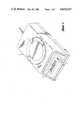
- FIG. 1shows a perspective view of the electric balance.
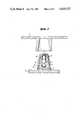
- FIG. 2shows the pin between the balance scale and the load receiver in a first embodiment.
- FIG. 3shows the pin between the balance scale and the load receiver in a second embodiment.
- FIG. 4shows the pin between the balance scale and the load receiver in a third embodiment.
- FIG. 5shows the pin between the balance scale and the load receiver in a fourth embodiment.
- FIG. 1shows housing 1, balance scale 2, display 3 and tare key 4 of the electric balance.
- Balance scale 2is manufactured from metal, e.g., high-grade steel.
- Housing 1is likewise manufactured from metal or from plastic which is metallized on one or on both sides in order to achieve a screening action against electrical interference.
- a perforationis present underneath balance scale 2 in housing 1 and balance scale 2 is supported by a pin in a removable manner on a load receiver of the measuring system. This support is shown in detail in various embodiments in FIGS. 2 to 5, whereby balance scale 2 is raised somewhat for the sake of clarity.
- load receiver 5comprises a pin 7 in the form of a truncated cone-like elevation.
- Blind hole 12is centrally located in pin 7.
- Pin 7is covered by an approximately thimble-shaped cap 8 consisting of an insulating material, e.g. plastic.
- This plastic cap 8comprises a short centering tube 10 which holds resistor 6 at a distance from metallic pin 7 of load receiver 5.
- the lower connection wire 13 of resistor 6is bent in such a manner that when it is introduced into blind hole 12 it contacts its wall in an elastic manner, therewith establishing the electric contact with load receiver 5.
- FIG. 3shows another embodiment.
- the load receiver 5comprises a truncated cone-like cavity 15 into which pin 17 attached to the bottom of balance scale 2 can enter.
- Pin 17comprises insulating layer 18 on its jacket surface and a blind hole 16 is once again present in the center of pin 17 for receiving resistor 6.
- Resistor 6is fixed in this embodiment by casting resin or an appropriate sealing compound. The contacts of resistor 6 are established as was done in the embodiment of FIG. 2.
- pin 27is constructed as a separate construction element and fits with one end into conical cavity 15 in load receiver 5 and with the other end into conical cavity 25 on the bottom of balance scale 2.
- the insulating layeris in the form of a plastic cap 28 on the top of pin 27.
- Resistor 6rests partially in blind hole 20 in pin 27 and partially in round recess 34 in plastic cap 28.
- the upper connection wire of resistor 6ends in metallic disk 21 on plastic cap 28. This holds resistor 6 in plastic cap 28. Both parts are pushed together during assembly from above onto pin 27 and fixed as described for FIG. 2.
- a thin, V-shaped leaf spring 22is soldered to the lower connection wire of resistor 6 which establishes the contact with pin 27 in an elastic manner.
- Another leaf spring 26is attached to the bottom of balance spring 2 which establishes the contact with disk 21 when balance scale 2 is put on the upper part of pin 27.
- the pinconsists of a truncated cone-like plastic part 29 which is screwed fast, e.g., by screws 31 to load receiver 5 and is centered by a small tubular extension 33 in blind hole 32 of load receiver 5.
- Resistor 6lies loosely in hole 24 of plastic pin 29.
- the one connection wire 23 of resistor 6ends shortly above the cover surface of plastic pin 29 and establishes the electric connection to leaf spring 26 on balance scale 2 when balance scale 2 is put on.
- the lower end of resistor 6is conductively connected to the load receiver by small coil spring 30.
- the resistance of resistor 6is approximately between 100 and 10,000 ohms, preferably between 500 and 1,000 ohms, depending on the requirement.
- the insulating layerIn an electric balance in which the balance scale is supported on account of its size by several pins on the load receiver or load receivers of the measuring system, the insulating layer must naturally be present on all pins, while the resistor could be built into only one pin.
Landscapes
- Physics & Mathematics (AREA)
- General Physics & Mathematics (AREA)
- Elimination Of Static Electricity (AREA)
- Measurement Of Force In General (AREA)
- Measurement Of Levels Of Liquids Or Fluent Solid Materials (AREA)
- Glass Compositions (AREA)
- Surgical Instruments (AREA)
- Dry Shavers And Clippers (AREA)
Abstract
Description
The invention is related to an electric balance having a housing and a metallic balance scale which is located over the housing. The metallic balance is supported in a removable manner by at least one pin through at least one perforation in the housing on at least one metallic load receiver of a measuring system. Balances of this type are generally known. For example, DE-OS No. 31 36 049 teaches such a balance with a measuring system based on the principle of the electromagnetic compensation of force. The balance scale and the load receiver of the measuring system are usually metallically connected to one another and to the balance housing in order to prevent an electrostatic charging of the balance scale. However, this has the disadvantage that high-frequency electromagnetic alternating fields in the vicinity of the balance are picked up by the balance scale acting as an antenna and conducted directly into the measuring system. This can disturb the electronic components of the measuring system.
The invention has the task of connecting the balance scale to the load receiver in such a manner that high-frequency electromagnetic alternating fields penetrate as little as possible to the load receiver without hindering the conductive discharge of static charges. In addition, the measures necessary for this should be integrated as much as possible into the customary design of the balance and not make it more difficult to remove the balance scale.
The invention achieves this task as follows: A layer of insulation is positioned between the metallic balance scale and the metallic load receiver which is bridged by a resistor located in the pin.
Advantageous embodiments are presented in the subclaims.
The invention is described below with reference made to the schematic drawings.
FIG. 1 shows a perspective view of the electric balance.
FIG. 2 shows the pin between the balance scale and the load receiver in a first embodiment.
FIG. 3 shows the pin between the balance scale and the load receiver in a second embodiment.
FIG. 4 shows the pin between the balance scale and the load receiver in a third embodiment.
FIG. 5 shows the pin between the balance scale and the load receiver in a fourth embodiment.
FIG. 1 showshousing 1,balance scale 2, display 3 and tarekey 4 of the electric balance.Balance scale 2 is manufactured from metal, e.g., high-grade steel.Housing 1 is likewise manufactured from metal or from plastic which is metallized on one or on both sides in order to achieve a screening action against electrical interference. A perforation is present underneathbalance scale 2 inhousing 1 andbalance scale 2 is supported by a pin in a removable manner on a load receiver of the measuring system. This support is shown in detail in various embodiments in FIGS. 2 to 5, wherebybalance scale 2 is raised somewhat for the sake of clarity.
In FIG. 2load receiver 5 comprises apin 7 in the form of a truncated cone-like elevation.Blind hole 12 is centrally located inpin 7.Pin 7 is covered by an approximately thimble-shaped cap 8 consisting of an insulating material, e.g. plastic. Thisplastic cap 8 comprises ashort centering tube 10 which holdsresistor 6 at a distance frommetallic pin 7 ofload receiver 5. Thelower connection wire 13 ofresistor 6 is bent in such a manner that when it is introduced intoblind hole 12 it contacts its wall in an elastic manner, therewith establishing the electric contact withload receiver 5. Upper connection wire 9 is introduced into a recess ofplastic cap 8 and projects somewhat above its surface so that whenbalance scale 2 is put on, it elastically contacts itsmetallic cone 11 and establishes the elctric contact withbalance scale 2.Plastic cap 8 is adhered topin 7 and/or held fast by asmall bead 14 which fits into a corresponding groove inpin 7.
FIG. 3 shows another embodiment. Here, theload receiver 5 comprises a truncated cone-like cavity 15 into whichpin 17 attached to the bottom ofbalance scale 2 can enter.Pin 17 comprisesinsulating layer 18 on its jacket surface and ablind hole 16 is once again present in the center ofpin 17 for receivingresistor 6.Resistor 6 is fixed in this embodiment by casting resin or an appropriate sealing compound. The contacts ofresistor 6 are established as was done in the embodiment of FIG. 2.
A third embodiment is shown in FIG. 4. Here,pin 27 is constructed as a separate construction element and fits with one end intoconical cavity 15 inload receiver 5 and with the other end intoconical cavity 25 on the bottom ofbalance scale 2. The insulating layer is in the form of aplastic cap 28 on the top ofpin 27.Resistor 6 rests partially inblind hole 20 inpin 27 and partially inround recess 34 inplastic cap 28. The upper connection wire ofresistor 6 ends inmetallic disk 21 onplastic cap 28. This holdsresistor 6 inplastic cap 28. Both parts are pushed together during assembly from above ontopin 27 and fixed as described for FIG. 2. A thin, V-shaped leaf spring 22 is soldered to the lower connection wire ofresistor 6 which establishes the contact withpin 27 in an elastic manner. Anotherleaf spring 26 is attached to the bottom ofbalance spring 2 which establishes the contact withdisk 21 whenbalance scale 2 is put on the upper part ofpin 27.
In the embodiment of FIG. 5 the pin consists of a truncated cone-likeplastic part 29 which is screwed fast, e.g., byscrews 31 to loadreceiver 5 and is centered by a smalltubular extension 33 inblind hole 32 ofload receiver 5.Resistor 6 lies loosely inhole 24 ofplastic pin 29. The oneconnection wire 23 ofresistor 6 ends shortly above the cover surface ofplastic pin 29 and establishes the electric connection toleaf spring 26 onbalance scale 2 whenbalance scale 2 is put on. The lower end ofresistor 6 is conductively connected to the load receiver bysmall coil spring 30.
The resistance ofresistor 6 is approximately between 100 and 10,000 ohms, preferably between 500 and 1,000 ohms, depending on the requirement.
The various embodiments explained above are given only as possible examples. The various fastening modes of the resistor, the various manners of establishing contact and the various arrangements of the pin can of course also be combined in another manner.
In an electric balance in which the balance scale is supported on account of its size by several pins on the load receiver or load receivers of the measuring system, the insulating layer must naturally be present on all pins, while the resistor could be built into only one pin.
Claims (9)
1. Electric balance having a housing and a metallic balance scale which is located over the housing and is supported in a removable manner by at least one pin through at least one perforation in the housing on at least one metallic load receiver of a measuring system, characterized in that an insulating layer (8, 18, 28, 29) is located between the metallic balance (2) and the metallic load receiver (5) insulating the scale from the receiver, the insulation is bridged by a resistor means (6) located on the pin (7, 17, 27), the resistor means prevents electrostatic charging of the scale while also preventing electromagnetic alternating fields from affecting the balance.
2. Electric balance according to claim 1, characterized in that the pin (7) is located on the top of the load receiver (5) and extends into a corresponding cavity (11) on the bottom of the balance scale (2).
3. Electric balance according to claim 1, characterized in that the pin (17) is located on the bottom of the balance scale (2) and extends into a corresponding cavity (15) on the top of the load receiver (5).
4. Electric balance according to claim 1, characterized in that the pin (27) is constructed as a separate construction element and extends into a cavity (15,25) on the top of the load receiver and into a cavity on the bottom of the balance scale (2).
5. Electric balance according to either claims 1, 2, 3 or 4, characterized in that the pin (7, 17, 27) comprises a truncated cone-like end area.
6. Electric balance according to claim 5, characterized in that the pin (7, 17, 27) is manufactured from an electrically conductive material and the insulating layer (8, 18, 28) is located on the surface of the pin.
7. Electric balance according to claim 5, characterized in that the pin is manufactured at least partially from an insulating material.
8. Electric balance according to claim 5, characterized in that the resistor means (6) located on the pin is located in an approximately cylindrical, vertical hollow chamber (12, 16, 20, 34 24) of the pin.
9. Electric balance according to claim 5, characterized in that the resistor means (6) located in the pin has a resistance between 100 and 10,000 ohms.
Applications Claiming Priority (2)
| Application Number | Priority Date | Filing Date | Title |
|---|---|---|---|
| DE3411550 | 1984-03-29 | ||
| DE19843411550DE3411550A1 (en) | 1984-03-29 | 1984-03-29 | UPPER-SHELL ELECTRICAL SCALE |
Publications (1)
| Publication Number | Publication Date |
|---|---|
| US4619337Atrue US4619337A (en) | 1986-10-28 |
Family
ID=6231939
Family Applications (1)
| Application Number | Title | Priority Date | Filing Date |
|---|---|---|---|
| US06/716,082Expired - Fee RelatedUS4619337A (en) | 1984-03-29 | 1985-03-26 | Electric balance with scale on top |
Country Status (6)
| Country | Link |
|---|---|
| US (1) | US4619337A (en) |
| JP (1) | JPH0629764B2 (en) |
| CH (1) | CH665905A5 (en) |
| DE (1) | DE3411550A1 (en) |
| FR (1) | FR2562245B1 (en) |
| GB (1) | GB2157001B (en) |
Cited By (17)
| Publication number | Priority date | Publication date | Assignee | Title |
|---|---|---|---|---|
| US4836293A (en)* | 1988-11-21 | 1989-06-06 | Eastman Kodak Company | Shielding method for use with electromagnetic balance |
| US4878552A (en)* | 1988-11-21 | 1989-11-07 | Eastman Kodak Company | Shielding means for use with electromagnetic balance |
| US4986376A (en)* | 1989-12-01 | 1991-01-22 | Ncr Corporation | Weigh plate quick release mount |
| US5033562A (en)* | 1989-12-01 | 1991-07-23 | Ncr Corporation | Weigh plate quick release mount |
| US5264666A (en)* | 1992-11-12 | 1993-11-23 | Measurement Systems International | Cargo hook with weighing scale |
| US5773767A (en)* | 1996-08-27 | 1998-06-30 | Ncr Corporation | Scale with reset extender bar |
| WO2002073143A1 (en)* | 2001-03-14 | 2002-09-19 | Harro Höfliger Verpackungsmaschinen GmbH | Scale for weighing blister packs that contain powder |
| US20030010541A1 (en)* | 2001-07-13 | 2003-01-16 | Sartorius Ag | Balance with antenna for querying weighed objects having transponders |
| US20080110681A1 (en)* | 2006-11-11 | 2008-05-15 | Mettler-Toledo Ag | Method of monitoring and/or determining the condition of a force-measuring device, and force-measuring device |
| USD579808S1 (en)* | 2007-06-15 | 2008-11-04 | Mettler-Toledo Ag | Balance |
| US20080314650A1 (en)* | 2005-11-21 | 2008-12-25 | Wipotec Wiege- Und Positioniersysteme Gmbh | Weighing Cell for Moving Goods |
| US20090008158A1 (en)* | 2005-11-21 | 2009-01-08 | Theo Duppre | Holding fixture for a drive unit of a conveying device |
| USD599692S1 (en) | 2008-08-25 | 2009-09-08 | Mettler-Toledo Ag | Balance |
| US20110017521A1 (en)* | 2009-07-23 | 2011-01-27 | Mettler-Toledo Ag | Gravimetric measuring instrument with releasable load receiver |
| US20140291043A1 (en)* | 2011-11-04 | 2014-10-02 | A&D Company, Limited | Measurement device |
| CN107014469A (en)* | 2015-10-06 | 2017-08-04 | 梅特勒-托莱多有限公司 | Payload reception device with snap-lock connector |
| US20210190576A1 (en)* | 2019-12-19 | 2021-06-24 | James Bradley | Device and Method for measuring the mass of a polarisable fluid in a container |
Families Citing this family (3)
| Publication number | Priority date | Publication date | Assignee | Title |
|---|---|---|---|---|
| KR910004264B1 (en)* | 1986-09-26 | 1991-06-25 | 도오꾜오 덴끼 가부시끼가이샤 | Electronic appliance |
| JPH0684901B2 (en)* | 1987-08-01 | 1994-10-26 | 株式会社石田衡器製作所 | Combination weighing device |
| KR102577539B1 (en)* | 2021-04-09 | 2023-09-12 | (주)포인트엔지니어링 | The Electro-conductive Contact Pin and Manufacturing Method thereof |
Citations (5)
| Publication number | Priority date | Publication date | Assignee | Title |
|---|---|---|---|---|
| US3968850A (en)* | 1974-10-31 | 1976-07-13 | International Electronics Limited | Electromagnet weighing balance |
| US3973637A (en)* | 1975-04-15 | 1976-08-10 | Mettler Instruments Ag | Precision balance with resiliently mounted weighing pan |
| US4039036A (en)* | 1975-02-04 | 1977-08-02 | Mettler Instrumente Ag | Weighing apparatus of the electromagnetic load compensation type including filter means |
| US4090575A (en)* | 1976-04-01 | 1978-05-23 | Mettler Instrumente Ag | Weighing apparatus of the electromagnetic load compensation type including protective shield means |
| US4341275A (en)* | 1980-04-03 | 1982-07-27 | Sartorius Gmbh | Measuring apparatus with electromagnetic force compensation and capacitive position sensor |
Family Cites Families (3)
| Publication number | Priority date | Publication date | Assignee | Title |
|---|---|---|---|---|
| US3780345A (en)* | 1972-09-14 | 1973-12-18 | E Earman | Static electricity deshocker |
| DE7730465U1 (en)* | 1977-10-01 | 1978-02-23 | Sartorius-Werke Gmbh (Und Vormals Goettinger Praezisionswaagenfabrik Gmbh), 3400 Goettingen | WINDSHIELD FOR TOP-PANEL FINE SCALES |
| DE3136049A1 (en)* | 1981-09-11 | 1983-03-24 | Sartorius GmbH, 3400 Göttingen | Electrical balance |
- 1984
- 1984-03-29DEDE19843411550patent/DE3411550A1/enactiveGranted
- 1985
- 1985-03-26USUS06/716,082patent/US4619337A/ennot_activeExpired - Fee Related
- 1985-03-28FRFR858504673Apatent/FR2562245B1/ennot_activeExpired - Lifetime
- 1985-03-28CHCH1364/85Apatent/CH665905A5/ennot_activeIP Right Cessation
- 1985-03-28GBGB08508152Apatent/GB2157001B/ennot_activeExpired
- 1985-03-29JPJP60063998Apatent/JPH0629764B2/ennot_activeExpired - Lifetime
Patent Citations (5)
| Publication number | Priority date | Publication date | Assignee | Title |
|---|---|---|---|---|
| US3968850A (en)* | 1974-10-31 | 1976-07-13 | International Electronics Limited | Electromagnet weighing balance |
| US4039036A (en)* | 1975-02-04 | 1977-08-02 | Mettler Instrumente Ag | Weighing apparatus of the electromagnetic load compensation type including filter means |
| US3973637A (en)* | 1975-04-15 | 1976-08-10 | Mettler Instruments Ag | Precision balance with resiliently mounted weighing pan |
| US4090575A (en)* | 1976-04-01 | 1978-05-23 | Mettler Instrumente Ag | Weighing apparatus of the electromagnetic load compensation type including protective shield means |
| US4341275A (en)* | 1980-04-03 | 1982-07-27 | Sartorius Gmbh | Measuring apparatus with electromagnetic force compensation and capacitive position sensor |
Cited By (30)
| Publication number | Priority date | Publication date | Assignee | Title |
|---|---|---|---|---|
| US4836293A (en)* | 1988-11-21 | 1989-06-06 | Eastman Kodak Company | Shielding method for use with electromagnetic balance |
| US4878552A (en)* | 1988-11-21 | 1989-11-07 | Eastman Kodak Company | Shielding means for use with electromagnetic balance |
| WO1990005898A1 (en)* | 1988-11-21 | 1990-05-31 | Eastman Kodak Company | Shielding means for use with electromagnetic balance |
| US4986376A (en)* | 1989-12-01 | 1991-01-22 | Ncr Corporation | Weigh plate quick release mount |
| US5033562A (en)* | 1989-12-01 | 1991-07-23 | Ncr Corporation | Weigh plate quick release mount |
| US5264666A (en)* | 1992-11-12 | 1993-11-23 | Measurement Systems International | Cargo hook with weighing scale |
| US5773767A (en)* | 1996-08-27 | 1998-06-30 | Ncr Corporation | Scale with reset extender bar |
| WO2002073143A1 (en)* | 2001-03-14 | 2002-09-19 | Harro Höfliger Verpackungsmaschinen GmbH | Scale for weighing blister packs that contain powder |
| US20040055792A1 (en)* | 2001-03-14 | 2004-03-25 | Harro Hofliger Verpackungsmaschinen Gmbh | Scale for weighing blister packs that contain powder |
| US6965083B2 (en) | 2001-03-14 | 2005-11-15 | Harro Hofliger Verpackungsmaschinen Gmbh | Scale for weighing blister packs that contain powder |
| US20030010541A1 (en)* | 2001-07-13 | 2003-01-16 | Sartorius Ag | Balance with antenna for querying weighed objects having transponders |
| US6777625B2 (en)* | 2001-07-13 | 2004-08-17 | Sartorius Aktiengesellschaft | Balance with antenna for querying weighed objects having transponders |
| US20080314650A1 (en)* | 2005-11-21 | 2008-12-25 | Wipotec Wiege- Und Positioniersysteme Gmbh | Weighing Cell for Moving Goods |
| US20090008158A1 (en)* | 2005-11-21 | 2009-01-08 | Theo Duppre | Holding fixture for a drive unit of a conveying device |
| US8304669B2 (en) | 2005-11-21 | 2012-11-06 | Wipotec Wiege-Und Positioniersysteme Gmbh | Holding fixture for a drive unit of a conveying device |
| US8138431B2 (en)* | 2005-11-21 | 2012-03-20 | Wipotec Wiege-Und Positioniersysteme Gmbh | Weighing cell having a plug-type connection for receiving a conveyor system |
| US7569780B2 (en)* | 2006-11-11 | 2009-08-04 | Mettler-Toledo Ag | Sensing RF and EM interference of a force-measuring device and adjusting operation accordingly |
| US20080110681A1 (en)* | 2006-11-11 | 2008-05-15 | Mettler-Toledo Ag | Method of monitoring and/or determining the condition of a force-measuring device, and force-measuring device |
| USD587609S1 (en) | 2007-06-15 | 2009-03-03 | Mettler-Toledo Ag | Balance |
| USD579808S1 (en)* | 2007-06-15 | 2008-11-04 | Mettler-Toledo Ag | Balance |
| USD587608S1 (en) | 2007-06-15 | 2009-03-03 | Mettler-Toledo Ag | Balance |
| USD599692S1 (en) | 2008-08-25 | 2009-09-08 | Mettler-Toledo Ag | Balance |
| US20110017521A1 (en)* | 2009-07-23 | 2011-01-27 | Mettler-Toledo Ag | Gravimetric measuring instrument with releasable load receiver |
| US8426753B2 (en)* | 2009-07-23 | 2013-04-23 | Mettler-Toledo Ag | Gravimetric measuring instrument with releasable load receiver |
| US20140291043A1 (en)* | 2011-11-04 | 2014-10-02 | A&D Company, Limited | Measurement device |
| US9285263B2 (en)* | 2011-11-04 | 2016-03-15 | A&D Company, Limited | Measurement device |
| CN107014469A (en)* | 2015-10-06 | 2017-08-04 | 梅特勒-托莱多有限公司 | Payload reception device with snap-lock connector |
| US10139266B2 (en) | 2015-10-06 | 2018-11-27 | Mettler-Toledo Gmbh | Load receiver with snap-locking connector |
| CN107014469B (en)* | 2015-10-06 | 2020-09-04 | 梅特勒-托莱多有限公司 | Load receiver with snap lock connector |
| US20210190576A1 (en)* | 2019-12-19 | 2021-06-24 | James Bradley | Device and Method for measuring the mass of a polarisable fluid in a container |
Also Published As
| Publication number | Publication date |
|---|---|
| DE3411550C2 (en) | 1990-07-19 |
| GB2157001A (en) | 1985-10-16 |
| JPH0629764B2 (en) | 1994-04-20 |
| CH665905A5 (en) | 1988-06-15 |
| FR2562245A1 (en) | 1985-10-04 |
| DE3411550A1 (en) | 1985-10-10 |
| GB2157001B (en) | 1987-09-16 |
| JPS60219520A (en) | 1985-11-02 |
| FR2562245B1 (en) | 1990-11-23 |
| GB8508152D0 (en) | 1985-05-01 |
Similar Documents
| Publication | Publication Date | Title |
|---|---|---|
| US4619337A (en) | Electric balance with scale on top | |
| US5345823A (en) | Accelerometer | |
| EP0323694B1 (en) | Thermal air flow meter | |
| US5448249A (en) | Antenna device | |
| US4590614A (en) | Dipole antenna for portable radio | |
| US4703652A (en) | Piezoelectric type liquid level sensor and fabricating method thereof | |
| JPH05322629A (en) | Capacitance type level sensor | |
| KR20010013934A (en) | Capacitive pressure transducer with improved electrode support | |
| US4964090A (en) | Ultrasonic fluid level sensor | |
| US6293830B1 (en) | Terminal connecting device having a restraining structure | |
| EP0352240B1 (en) | A very-high-pressure transducer, particularly for detecting the pressure of a hydraulic fluid | |
| US6005527A (en) | RF coupler for concealed mobile telecommunications systems utilizing window-mounted antennas and systems using same | |
| US6100606A (en) | High frequency switching device | |
| US5170885A (en) | Insulating housing structure with an improved bushing for a conductor | |
| US4430009A (en) | Arrangement for securing and electrically contacting a battery in a watch | |
| US6321600B1 (en) | Acceleration detecting device | |
| US3553482A (en) | Acceleration switch | |
| US2953696A (en) | Piezoelectric crystal unit | |
| US6065336A (en) | Oil level detector mounting arrangement | |
| US4329733A (en) | Capacitor combined shield case | |
| US4386244A (en) | Electromagnetic transducer | |
| JP3336921B2 (en) | Piezoelectric resonance components | |
| KR100299153B1 (en) | Antenna used for radio of car | |
| US4841493A (en) | Electronic acoustic signal emitter | |
| US5548094A (en) | Mounting base for an inductive proximity switch |
Legal Events
| Date | Code | Title | Description |
|---|---|---|---|
| AS | Assignment | Owner name:SARTORIUS GMBH, WEENDER LANDSTR. 94-108, 3400 GOTT Free format text:ASSIGNMENT OF ASSIGNORS INTEREST.;ASSIGNORS:BEHREND, LOTHAR;OBER, JURGEN;KNOTHE, ERICH;AND OTHERS;REEL/FRAME:004418/0499 Effective date:19850520 Owner name:SARTORIUS GMBH,GERMANY Free format text:ASSIGNMENT OF ASSIGNORS INTEREST;ASSIGNORS:BEHREND, LOTHAR;OBER, JURGEN;KNOTHE, ERICH;AND OTHERS;REEL/FRAME:004418/0499 Effective date:19850520 | |
| FPAY | Fee payment | Year of fee payment:4 | |
| FPAY | Fee payment | Year of fee payment:8 | |
| REMI | Maintenance fee reminder mailed | ||
| LAPS | Lapse for failure to pay maintenance fees | ||
| FP | Lapsed due to failure to pay maintenance fee | Effective date:19981028 | |
| STCH | Information on status: patent discontinuation | Free format text:PATENT EXPIRED DUE TO NONPAYMENT OF MAINTENANCE FEES UNDER 37 CFR 1.362 |