This is a continuation-in-part of our earlier filed co-pending U.S. patent application Ser. No. 373,635, filed on Apr. 30, 1982, now U.S. Pat. No. 4,435,853.
The present invention relates to a novel voice prosthesis device which is insertable through a fistula to connect and channel air directly from the lungs through the trachea to the esophagus for voice restoration after a total laryngectomy.
In the past, voice prosthesis devices have been suggested for insertion into a fistula to connect the tracheostoma with the esophagus to channel air from the lungs to the esophagus to permit alaryngeal speech by the patient or user. One such voice prosthesis device is disclosed,in our co-pending application Ser. No. 316,055, filed on Oct. 29, 1981, and entitled "Method and Apparatus for a Tracheal Valve", and in a paper entitled "An Endoscopic Technique for Restoration of Voice After Laryngectomy", Annals of Otology, Rhinology and Laryngology, 1980, Vol. 89, No. 6. However, the elongated hollow tube or duck-bill type valve slit in the elongated hollow tube requires approximately 90 centimeters of water pressure before the duck-bill type valve opens to permit air to enter the esophagus for speaking. Additionally, a voice prosthesis device, known as the Panje device, is a shorted criss-crossed slitted duck-bill device, which includes self-retaining flanges which abut against each side of the tracheoesophageal wall to hold the device in the fistula. However, the Panje type device requires approximately 400 centimeters of water pressure before voice sounds are achieved, a pressure which is totally unsatisfactory for most, if not all, patients or users. Because a normal larynx requires approximately 35 centimeters of water pressure for speech, it can be seen that a voice prosthesis device, which closely approximates normal voice pressure, is highly desirable and has been unattained by the duck-bill type prior art devices.
Additionally, U.S. Pat. No. 3,747,127 discloses a fistula valve FA which is merely a check valve mounted on the outside of the exterior proximal end of a tubular extension. Because the valve opens and closes from the top of the proximal end and is unprotected because it is not in a recessed position within the tube, such a structure is unsatisfactory in communicating between the trachea and the esophagus because the valve is readily exposed to the esophageal contents, and liquids and matter therein may penetrate the valve from the esophagus with resultant aspiration into the lungs of the user or patient. Also, because the valve is unprotected, its operation can be affected by the surrounding tissue. Accordingly, such devices have found no application in restoring speech to patients having a total laryngectomy.
It is an object of the present invention to provide a low-pressure voice prosthesis device which includes valve means positioned therein which approximates the valvular resistance to air flow presented by the larynx.
It is another object of the present invention to provide a voice prosthesis device with a low-pressure valvular design that is internalized in the distal end of the prosthesis device to protect the valve opening and closing excursion from becoming impeded by tissue or esophageal contents.
It is a further object of the present invention to provide novel voice prosthesis device which is reliable in operation and which is a minature one-way valved tube readily positioned in a patient having a total laryngectomy and subsequent tracheoesophageal fistula.
It is still another object of the present invention to provide a novel tool structure for positioning the low-pressure voice prosthesis device into the prescribed position in a patient.
The voice prosthesis device in accordance with the present invention is useful when inserted into a fistula to direct or channel pulmonary air from the tracheostoma into the esophagus of a patient to produce alaryngeal speech. The voice prosthesis device includes an elongated tubular housing which is constructed and composed of a biocompatible material or a combination of biocompatible materials. An example of such materials is a medical grade silicone material. The voice prosthesis device has a proximal or tracheal end and a distal or esophageal end. Attached to the proximal end is a flange means or strap means comprising one or more strap-like projections which extend generally radially away from the axis of the housing which aids and assists as retention means in maintaining the voice prosthesis device in the fistula between the tracheostoma and esophagus. A one-way valve is positioned intermediate the proximal and distal ends of the housing, as will hereinafter be described. The elongated tubular housing includes a hood formed on the distal end thereof which extends into the esophagus to guard against exposure of the one-way valve to material in the esophagus.
The housing includes a port therein which permits expelled air from the tracheostoma to enter the voice prosthesis device and pass through the one-way valve into the esophagus to produce alaryngeal speech in the patient. The one-way valve structure, positioned within the voice prosthesis device, is comprised of a valve membrane hinged on the interior of the housing and adjacent to a valve seat or sealing structure provided within the housing to provide a hinged valve which permits the passage of air from the trachea into the esophagus. It is preferred that the valve membrane be mounted and hinged on the inferior or lower portion or side of the housing and that the valve structure be opened and closed by a pressure comparable to the pressure necessary to operate a normal larynx, or approximately about 35 centimeters of water pressure.
Additionally, the housing of the prosthesis device includes a retention collar provided on its outside surface between the port and the distal end of the housing. The retention collar structure aids in obtaining a seal when the voice prosthesis device is inserted through the fistula and abuts the esophageal surfaces of the tracheoesophageal wall to retain and hold the voice prosthesis device in position.
The novel voice prosthesis device structure in accordance with the present invention provides a low-pressure voice prosthesis device whose operative pressure closely approximates the pressure necessary to operate a normal individual's larnyx. Such a reduction in pressure necessary to move the one-way valve from the closed to the open position greatly reduces the strain upon the patient in producing alaryngeal speech and permits the patient to produce alaryngeal speech and sounds similar to those produced by the patient's former larynx. Moreover, it has been found that when the one-way valve membrane is in the closed position, during normal swallowing, the positive pressure gradient within the esophagus further seats the valve membrane to its closed position to enhance its effectiveness as a one-way valve. Additionally, the hood on the distal end of the cylindrical housing acts to shelter the valve from fluid and other matter that is swallowed through the esophagus. This permits an increased wearing time by the patient of the novel voice prosthesis device in accordance with the present invention. Also, the retention collar provides a locking action when the retention collar is inserted through the fistula to abut against the esophageal side of the tracheoesophageal wall to hold and retain the novel prosthesis device in position. This locking action provided by the retention collar, together with the flange, strap or other retention means on the proximal end of the cylindrical housing, reduces the likelihood of the device becoming dislodged during usage by a patient.
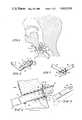
FIG. 1 is a schematic view showing the installation in a patient of the voice prosthesis device in accordance with the present invention;
FIG. 2 is a perspective view of the voice prosthesis device in accordance with the present invention;
FIG. 3 is an end view taken alonglines 3--3 of FIG. 1;
FIG. 4 is an enlarged view showing the passage of air through the one-way valve structure of a voice prosthesis device in accordance with the present invention;
FIG. 5 is a perspective view of the placement tool for positioning the voice prosthesis device in accordance with the present invention in a patient;
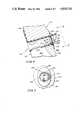
FIG. 6 illustrates a longitudinal sectional view through another one-way valve structure constructed according to the present invention;
FIG. 7 illustrates an end view of the device of FIG. 6, taken generally alongsection lines 7--7 thereof.
FIG. 8 illustrates a longitudinal sectional view through another one-way valve structure constructed according to the present invention; and
FIG. 9 illustrates a longitudinal sectional view of the valve of FIG. 8, with a tool shown in position for insertion of the valve into the wearer.
Referring now to FIGS. 1-5 wherein like numerals have been used to designate the same or similar parts, FIG. 1 shows thevoice prosthesis device 10 in accordance with the present invention positioned in a patient having a total laryngectomy.
As shown in FIGS. 2-4, thevoice prosthesis device 10 includes an elongatedtubular housing 12 which is constructed and composed of a medical grade silicone material having a proximal ortracheal end 14 and a distal oresophageal end 16. Although thehousing 12 has been illustrated as being right circular cylindrical in cross section, other cross sectional shapes, such as right elliptical cylindrical, can be employed. Mounted to theproximal end 14 are retention means in the form of upwardly inclined, angularly separated straps 18 (FIGS. 2 and 3) which may be taped to the neck of the patient (FIG. 1) to assist in retaining and maintaining thevoice prosthesis device 10 in afistula 20, which is a surgical connection between thetracheostoma 21 and theesophagus 22 of the patient. The elongatedtubular housing 12 includes a protective hood in the form of abeveled extension member 25 on thedistal end 16 which extends into theesophagus 22. Thehood 25 shields the end of thehousing 12 against the influx of material flowing down the esophagus. A one-way valve 24 is positioned within and adjacent thedistal end 16 of the cylindrical housing, as will hereinafter be described.
Thecylindrical housing 12 includes also aport 26 positioned between theproximal end 14 and the one-way valve 24.Port 26 permits expelled air from thetracheostoma 21 and thetrachea 23 to enter thetubular housing 12 of the voice prosthesis device and pass through the one-way valve 24 into theesophagus 22 to produce alaryngeal speech in the patient.
The one-way valve 24 is positioned within the tubular housing and includes a valve membrane 28 (FIG. 4) hinged 29 on the interior of the cylindrical housing and adjacent to a valve seat 30 (FIG. 4) provided within thecylindrical housing 12. Thevalve seat 30, which is in the form of an annular seal, cooperates with the hingedvalve membrane 28 to permit the passage or channeling of air from thetrachea 23 into theesophagus 22, as will hereinafter be described, but to block the flow of material from theesophagus 22 into thetrachea 23. It is preferred that thevalve membrane 28 be mounted and hinged 29 on the interior side of thevalve membrane 28 on the bottom thereof and that the valve membrane be opened and closed by a pressure comparable to that necessary to operate a normal larynx, or approximately 35 centimeters of water pressure. Also, it is preferred that a projection 32 (FIG. 4) extend downwardly from the interior of thehousing 12 toward the center of the cylindrical housing, whichprojection 32 reduces the possibility that the pressure-sensitive valve membrane 28 can overlap thevalve seat 30 due to back pressure when thevoice prosthesis device 10 is operating or inadvertently during cleaning of theprosthesis device 10.
Thecylindrical housing 12 further includes aretention collar 34 in the form of an annular flange. Theretention collar 34 is positioned between the distal end of thehousing 12 and theport 26. The retention collar 34 aids in maintaining the position of thedevice 10 in the fistula and in obtaining a seal when the voice prosthesis device is inserted through the fistula because the retention collar abuts and engages the esophageal side of thetracheoesophageal wall 35 to retain and hold the prosthesis device in position. During insertion of the device through a fistula, it has been observed that the retention collar snaps into position against the esophageal tissues when the device has been properly positioned in the patient. When in such a position, the device is firmly retained in position and is not likely to become dislodged.
In FIG. 5, aplacement tool 36 is shown which is particularly useful in engaging thevoice prosthesis device 10 when the device is positioned through thefistula 20 to connect the esophagus and the tracheostoma. Theplacement tool 36 preferably includes an enlarged gripping or handleend 37 adapted to receive a finger or thumb of the patient and aplacement end 38. Theplacement end 38 includes aprojection 40 thereon, theshoulder 39 of which is adapted to cooperate with and engage thevalve seat 30, as will hereinafter be described. When the placement tool is inserted into the elongatedtubular housing 12, theshoulder 39 on theplacement end 38 engages thevalve seat 30 to position the device in the fistula to connect the esophagus and trachea. However, theprojection 40 does not engage or disturb thesensitive valve membrane 28 of the one-way valve means 24 during this operation, as shown in FIG. 4. Thus, during insertion of the voice prosthesis device into the fistula, the patient is insured that thevalve membrane 28 will be in aligned relation with respect to theannular sealing structure 30 and will be in operative condition.
It is preferred that aprojection 32 extend inwardly from adjacent thevalve seat 30 towards the center of the passageway through thehousing 12. Theprojection 32 reduces the possibility that thevalve membrane 28 can overlap thevalve seat 30 during usage of the prosthesis device, cleaning, and placement of the device into the fistula connecting the esophagus and the tracheostoma. During placement, the tendency of voice prosthesis devices is to collapse and be squeezed together and, accordingly, theprojection 32 helps to prevent thevalve membrane 28 from overlapping the annular sealing rim and becoming inoperative. To prevent the squeezing of the valve means 24 during insertion, theplacement tool 36, when positioned within thedistal end 14 of thetubular housing 12, insures that the one-way valve means 24 is maintained in proper aligned position to provide the unique low-pressure operation of the voice prosthesis device.
The voice prosthesis device and one-way valve means mounted therein in accordance with the embodiment of FIGS. 1-5 provides a low-pressure voice prosthesis device whose operative pressure closely approximates the pressure required to operate the normal larynx of an individual and has particular application and use in conjunction with the tracheal valve disclosed in our co-pending application Ser. No. 316,055. It has been observed that the average pressure necessary to operate a normal larynx is about 35 centimeters of water and initial observation of the present invention indicates that a range of about that pressure or less readily moves the valve membrane from the closed to the open position. Such a reduction in the pressure necessary to move the one-way valve membrane from the closed to the open position greatly reduces the strain upon the patient in producing alaryngeal speech and sounds similar to those produced by the patient's former larynx. Alaryngeal speech occurs when a finger (as shown in dotted lines) covers the opening to thetracheostoma 21 and air is directed throughport 26 and into theesophagus 22. Additionally, as shown in FIG. 4, it has been found that when the one-way valve membrane is in the closed position, normal swallowing by the patient will further seat the valve membrane to insure an effective one-way valve in the closed position.
Also, the positioning of the one-way valve means 24 at or adjacent thedistal end 16 of thehousing 12 and the cooperation with thehood 25 thereon protects the valve membrane during its opening and closing excursion or movement from esophageal fluids and other matter. Thehood 25 also acts as a shield which deflects esophageal fluids or swallowed matter around thehousing 12 and thus prevents the downward flow of such swallowed matter from becoming impeded.
FIGS. 6-7 show another embodiment of thevoice prosthesis device 210 in accordance with the present invention positioned in a patient having a total laryngectomy. Thevoice prosthesis device 210 includes an elongatedtubular housing 212 which again is constructed and composed of a biocompatible material having a proximal ortracheal end 214 and a distal oresophageal end 216. Although thehousing 212 has been illustrated as being right circular cylindrical in cross section, other cross sectional shapes, such as right elliptical cylindrical, can be employed. Mounted to theproximal end 214 is a retention means in the form of a single generally vertically upwardly projectingtab 218 which is taped to the neck of the patient to assist in retaining and maintaining thevoice prosthesis device 210 in afistula 220. The elongatedtubular housing 212 includes aprotective hood 225 on thedistal end 216 which extends into theesophagus 222 of the wearer. Thehood 225 shields thedistal end 216 of thehousing 212 against the influx of material flowing down theesophagus 222. A one-way valve 224 is positioned within and adjacent thedistal end 216 of the cylindrical housing.
Thecylindrical housing 212 includes also aport 226 positioned between theproximal end 214 and the one-way valve 224.Port 226 permits expelled air from thetracheostoma 221 and thetrachea 223 to enter thetubular housing 212 of the voice prosthesis device and pass through the one-way valve 224 into theesophagus 222 to produce alaryngeal speech in the patient.
The one-way valve 224 is positioned within the tubular housing and includes acircular valve disk 228 scored at 229 on bothsides 231, 233 along a chord of the circle defined by thedisk 228. The score lines 229 extend to a depth such that a veryflexible region 235 of thedisk 228 material remains between them. Avalve seat 230, which is in the form of a rectangular cross section annular seal, cooperates with thevalve disk 228 to permit the passage or channeling of air from thetrachea 223 into theesophagus 222, but to block the flow of material from theesophagus 222 into thetrachea 223. It is preferred that thevalve disk 228 hinged by thechordal score lines 229 on the bottom region ofvalve seat 230 be opened and closed by a pressure comparable to that necessary to operate a normal larynx, or approximately 25 centimeters of water pressure.
Thecylindrical housing 212 further includes aretention collar 234 in the form of a somewhat elliptical flange. Theretention collar 234 is positioned between thedistal end 216 of thehousing 212 and theport 226. Theretention collar 234 aids in maintaining the position of thedevice 210 in the fistula and in obtaining a seal when the voice prosthesis device is inserted through the fistula because the retention collar abuts and engages theesophageal wall 240 to retain and hold the prosthesis device in position. During insertion of the device through a fistula, theretention collar 234 snaps into position against theesophageal wall 240 when the device has been properly positioned in the patient. When in such a position, the device is firmly retained in position and is not likely to become dislodged.
The voice prosthesis device and one-way valve means mounted therein in accordance with the embodiment of FIGS. 6-7 provides a low-pressure voice prosthesis device whose operative pressure closely approximates the pressure required to operate the normal larynx of an individual and has particular application and use in conjunction with the tracheal valve disclosed in our co-pending application Ser. No. 316,055. It has been observed that the average pressure necessary to operate a normal larynx is about 35 centimeters of water and initial observation of the present invention indicates that a range of about that pressure or less readily moves the valve membrane from the closed to the open position. Such a reduction in the pressure necessary to move the one-way valve disk from the closed to the open position greatly reduces the strain upon the patient in producing alaryngeal speech and sounds similar to those produced by the patient's former larynx. Alaryngeal speech occurs when a finger covers the opening to thetracheostoma 221 and air is directed throughport 226 and into theesophagus 222. Additionally, it has been found that when the one-way valve disk is in the closed position, normal swallowing by the patient will further seat the valve disk to insure an effective one-way valve in the closed position.
Also, the positioning of the one-way valve means 224 at or adjacent thedistal end 216 of thehousing 212 and the cooperation with thehood 225 thereon protects the valve membrane during its opening and closing excursion or movement from esophageal fluids and other matter. Thehood 225 also acts as a shield which deflects esophageal fluids or swallowed matter around thehousing 212 and thus prevents the downward flow of such swallowed matter from becoming impeded.
FIGS. 8-9 show anothervoice prosthesis device 410 in accordance with the present invention positioned in a patient having a total laryngectomy.Device 410 includes an elongatedtubular housing 412 which is constructed from a biocompatible material, such as medical grade silicone, and has a proximal ortracheal end 414 and a distal oresophageal end 416. Again, thehousing 412 can be right circular cylindrical in cross section, or can have other cross sectional shapes, such as right elliptical cylindrical. Mounted to theproximal end 414 are retention means in the form of a single, upwardly extendingstrap 418 which may be taped 419 to the neck of the wearer to assist in retaining and maintaining thevoice prosthesis device 410 in afistula 420. The elongatedtubular housing 412 includes aprotective hood 425 on thedistal end 416 which extends into theesophagus 422. Thehood 425 shields the end of thehousing 412 against the influx of material flowing down the esophagus. A one-way valve 424 is positioned within and adjacent thedistal end 416 of the cylindrical housing, as will hereinafter be described.
Thecylindrical housing 412 in this embodiment does not include a port for expelled air from thetrachea 423 to enter thetubular housing 412 of the voice prosthesis device and pass through the one-way valve 424 into theesophagus 422 to produce alaryngeal speech in the patient. The port is eliminated in this embodiment because it has been found that airflow into the openproximal end 414 ofhousing 412 and through one-way valve 424 is sufficient to produce alaryngeal speech. Thus, in this embodiment the openproximal end 414 serves as the port for entry of expelled air from the lungs of the wearer to enter the wearer's esophagus through one-way valve 424 and produce alaryngeal speech.
The one-way valve 424 is positioned within the tubular housing and includes an elliptical valve disk scored at 429 on bothsides 431, 433 along a chord of the ellipse defined by thedisk 428. Thescore lines 429 exend to a depth such that a veryflexible region 427 of thedisk 428 material remains between them. Avalve seat 430 is provided at the junction of a region of thehousing 412 sidewall of original thickness and a region of the housing sidewall of reducethickness including hood 425.Seat 430 is not perpendicular to the longitudinal axis ofhousing 412 in this embodiment. Rather, the plane ofseat 430 is inclined at an angle of approximately 70° to thelongitudinal axis housing 412. It is believed that this inclination at a non-perpendicular angle to the axis of thehousing 412 effects a further reduction in the pressure necessary to operate one-way valve 424. As with the embodiment of FIGS. 6-7, thedisk 428 is attached to theseat 430 by the application of a small amount of a suitable adhesive betweenvalve seat 430 and the small region of thedisk 428 which is to remain stationary with respect tovalve seat 430.
Thecylindrical housing 412 further includes aretention collar 434 of any suitable shape. Theretention collar 434 is positioned adjacent thedistal end 416 of thehousing 412. Theretention collar 434 aids in maintaining the position of thedevice 410 in the fistula and in obtaining a seal when the voice prosthesis device is inserted through the fistula because the retention collar abuts and engages the esophageal side of thetracheoesophageal wall 435 to retain and hold the prosthesis device in position. During insertion of the device through a fistula, it has been observed that the retention collar snaps into position against the esophageal tissues when the device has been properly positioned in the patient. When in such a position, the device is firmly retained in position and is not likely to become dislodged.
In FIG. 9, aplacement tool 436 is shown which is particularly useful in engaging thevoice prosthesis device 410 for insertion of thedevice 410 through thefistula 420 to connect the esophagus and the tracheostoma. Theplacement tool 436 preferably includes an enlarged gripping or handleend 437 for holding and manipulation by the patient and aplacement end 438. Theplacement end 438 includes aprojection 440 forming with the handle 437 a shoulder 439 which is adapted to cooperate with and engage theproximal end 414 of thehousing 412. When theplacement tool 436 is inserted into the elongatedtubular housing 412, the shoulder 439 engagesproximal end 414. Additionally, the rounded,blunt end 441 provided onplacement end 438 opensvalve 424 to essentially the fully open position and extends to substantially the maximum projection ofhood 425. This extension protects thehood 425 andvalve 424 components during insertion. Additionally, therounded nose 441 of the tool reduces the likelihood of any irritation of the sensitive tissues surrounding the fistula.
The voice prosthesis device and one-way valve means mounted therein in accordance with the embodiment of FIGS. 8-9 provides a low-pressure voice prosthesis device whose operative pressure closely approximates the pressure required to operate the normal larynx of an individual and has particular application and use in conjunction with the tracheal valve disclosed in our co-pending application Ser. No. 316,055. It has been observed that the average pressure necessary to operate a normal larynx is about 35 centimeters of water and initial observation of the present invention indicates that a range of about that pressure or less readily moves the valve membrane from the closed to the open position. Such a reduction in the pressure necessary to move the one-way valve disk 428 from the closed to the open position greatly reduces the strain upon the patient in producing alaryngeal speech and sounds similar to those produced by the patient's former larynx. Alaryngeal speech occurs when air is directed through the openproximal end 414 and into theesophagus 422. It has been found that when the one-way valve disk 428 is in the closed position, normal swallowing pressure will further seat thevalve disk 428 to insure an effective one-way valve in the closed position.
Also, the positioning of the one-way valve means 424 at or adjacent thedistal end 416 of thehousing 412 and the cooperation with thehood 425 protects thevalve disk 428 during its opening and closing excursion from esophageal fluids and other matter. Thehood 425 also acts as a shield which deflects esophageal fluids or swallowed matter around thehousing 412 and thus prevents the downward flow of such swallowed matter from becoming impeded.
While preferred embodiments of the voice prosthesis device and insertion tool have been shown and described above, persons skilled in the art will readily appreciate the various changes and modifications that may be made without departing from the spirit and scope of the present invention, which is defined in the following claims.