US4570873A - Sensor sensitivity reducer for door mounted retractor - Google Patents
Sensor sensitivity reducer for door mounted retractorDownload PDFInfo
- Publication number
- US4570873A US4570873AUS06/690,739US69073985AUS4570873AUS 4570873 AUS4570873 AUS 4570873AUS 69073985 AUS69073985 AUS 69073985AUS 4570873 AUS4570873 AUS 4570873A
- Authority
- US
- United States
- Prior art keywords
- reel
- belt
- door
- pilot pawl
- inertia mass
- Prior art date
- Legal status (The legal status is an assumption and is not a legal conclusion. Google has not performed a legal analysis and makes no representation as to the accuracy of the status listed.)
- Expired - Lifetime
Links
- 230000035945sensitivityEffects0.000titleabstractdescription4
- 239000003638chemical reducing agentSubstances0.000title1
- 230000000903blocking effectEffects0.000claimsabstractdescription23
- 230000001133accelerationEffects0.000claimsabstractdescription19
- 230000004044responseEffects0.000claimsabstractdescription12
- 230000007246mechanismEffects0.000description5
- 230000008901benefitEffects0.000description2
- 238000004804windingMethods0.000description2
- 230000008878couplingEffects0.000description1
- 238000010168coupling processMethods0.000description1
- 238000005859coupling reactionMethods0.000description1
- 230000005484gravityEffects0.000description1
- 230000000452restraining effectEffects0.000description1
Images
Classifications
- B—PERFORMING OPERATIONS; TRANSPORTING
- B60—VEHICLES IN GENERAL
- B60R—VEHICLES, VEHICLE FITTINGS, OR VEHICLE PARTS, NOT OTHERWISE PROVIDED FOR
- B60R22/00—Safety belts or body harnesses in vehicles
- B60R22/34—Belt retractors, e.g. reels
- B60R22/36—Belt retractors, e.g. reels self-locking in an emergency
- B60R22/41—Belt retractors, e.g. reels self-locking in an emergency with additional means for preventing locking during unwinding under predetermined conditions
- B—PERFORMING OPERATIONS; TRANSPORTING
- B60—VEHICLES IN GENERAL
- B60R—VEHICLES, VEHICLE FITTINGS, OR VEHICLE PARTS, NOT OTHERWISE PROVIDED FOR
- B60R22/00—Safety belts or body harnesses in vehicles
- B60R22/34—Belt retractors, e.g. reels
- B60R22/36—Belt retractors, e.g. reels self-locking in an emergency
- B60R22/40—Belt retractors, e.g. reels self-locking in an emergency responsive only to vehicle movement
Definitions
- the inventionrelates to a door mounted seat belt retractor for use in a door mounted passive belt system and functions to decrease the sensitivity of the acceleration locking device.
- a retractor mounted on the vehicle doorincludes a spring biased belt reel for winding one end of a belt having its other end mounted on the vehicle inboard the seat so that the belt will unwind from the reel as the door is being opened.
- the retractoris locked against belt unwinding rotation by a lock bar pivotally mounted for movement into engagement with the reel. Movement of the lock bar into engagement with the reel is obtained by a pilot pawl supported by an inertia sensing weight which is displaced in response to a deceleration of the vehicle.
- the inertia weightlifts the pilot pawl into engagement with one of a plurality of gear teeth carried by the reel so that the initial unwinding rotation of the reel as the occupant is restrained by the belt causes the tooth to further lift the pilot pawl into engagement with the lock bar to engage the lock bar with the reel.
- a blocking armis friction drive coupled to the reel for rotation therewith and has an end which frictionally engages the pilot pawl during belt unwinding rotation induced by opening movement of the door to impose a frictional force on the pilot pawl which substantially increases the level of acceleration force required to actuate the inertia weight and pilot pawl.
- the beltis rewound upon the retractor and the blocking arm is friction driven away from engagement with the pilot pawl so that the pilot pawl is restored to its normal sensitivity condition in readiness for movement into engagement with the gear teeth by the inertia weight in response to sensed condition of vehicle deceleration.
- the object, feature and advantage of the inventionresides in the provision of a blocking arm friction coupled with a door mounted seat belt reel for engagement with a lock bar actuating pilot pawl during belt unwinding rotation induced by opening movement of the door whereby the blocking arm frictionally engages with the pilot pawl to desensitize the pilot pawl against actuation by the level of acceleration experienced during opening movement of the door.
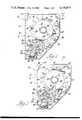
- FIG. 1is a side elevation view of the door mounted seat belt retractor shown in the normal door closed position with the belt fully wound upon the reel and deployed across the occupant torso for restraint;
- FIG. 2is a view similar to FIG. 1 but showing the retractor having experienced a vehicle deceleration in which the inertia weight actuates the pilot pawl which, in turn, actuates the lock bar to the phantom line indicated position to lock the reel against belt unwinding rotation;
- FIG. 3is a view similar to FIG. 1 but showing the belt being unwound from the reel during opening movement of the vehicle door so that a blocking arm friction drive coupled with the reel engages with the pilot pawl to desensitize the pilot pawl to movement by acceleration of the retractor induced by opening movement of the door;
- the door mounted retractor indicated generally at 10includes a frame 12 having a base wall 14 and a pair of laterally spaced apart sidewalls 16 and 18.
- a tie bar 20extends between the sidewalls 16 and 18 to strengthen the frame 12.
- the base wall 14has an aperture 22 for receiving a bolt to mount the frame 12 on the vehicle door.
- a belt reel 24includes a reel shaft 26 having a left-hand end extending through an aperture 28 in the sidewall 16 and a right-hand end extending through an aperture 30 in the sidewall 18.
- the restraint belt 34is suitably attached to the reel shaft 26 and is wound there around.
- the right-hand end of the reel shaft 26has a slot 32 receiving the inner end 33 of a spiral spring 36.
- the outer end of the spiral spring 36is suitably attached to a spring cover 38.
- the spiral spring 36functions to rotate the reel 24 in the counterclockwise belt winding direction of rotation as viewed in FIG. 1.
- a locking mechanismis provided for locking the reel 24 against belt unwinding clockwise rotation.
- a toothed ratchet plate 44is suitably attached to the left-hand end of the reel shaft 26 adjacent to the side wall 16 and has a plurality of circumferentially spaced ratchet teeth 46 which face in the belt unwinding direction of rotation.
- a lock bar 50is pivotally mounted on the sidewall 16 by a pivot pin 52. Lock bar 50 has a tooth 54 which, upon pivoting counterclockwise rotation, is moved into engagement with one of the ratchet teeth 46 to lock the reel 24 against any further belt unwinding rotation as shown in the phantom-line indicated position of FIG. 2.
- the normal rest position of the lock bar 50is shown in FIG. 1 and is established by a stop pin 56 mounted on the side wall and extending into engagement with the tail portion 58 of the lock bar 50.
- an inertia sensitive ball 62is mounted upon the sidewall 16 by a cup member 64 having a conical depression 66 in which the ball 62 is seated.
- the pilot pawl 70is pivotally mounted upon the cup member 64 by a pivot pin 72 and has a cap 76 which seats upon the inertia ball 62.
- the pilot pawl 70also has a tooth 78 which is laterally offset from the pawl 70 as best shown in FIG. 4 so as to underlie the ratchet plate 44 in spaced relation therefrom as shown in FIGS. 1, 3 and 4.
- the inertia of the inertia ball 62causes it to roll up the conical depression 66 and in so doing, lift the pawl 70 upwardly to the position of FIG. 2 in engagement with the one of the ratchet teeth 46.
- the momentum of the occupantis restrained by the belt which, in turn, induces a clockwise unwinding rotation of the belt reel so that the engagement of the pilot pawl tooth 78 with the ratchet tooth 46 induces a lifting movement of the lock bar 50 via a pin 80 which is engaged by a wall of a window 82 provided into pilot pawl 70 so that the lock bar 50 is lifted into engagement with the ratchet tooth 46 to stop any further unwinding rotation of the reel.
- the beltwill be unwound from the door mounted retractor 10 during such door opening movement. If the door is pushed open rapidly, the retractor may experience a level of acceleration sufficient to cause the inertia ball 62 to roll up the conical depression 66 and initiate the sequence of lifting movement of the pilot pawl 70 into engagement of its tooth 78 with the ratchet plate 44 so that the unwinding rotation of the reel will, in turn, energize the further lifting movement of the pilot pawl 70 to engage the lock bar 50 with the ratchet teeth 46 so that the length of the belt will be locked and further opening movement of the door temporarily prevented.
- this conditionis prevented by a blocking arm 86 which is frictionally drive coupled to the reel 24 for rotation therewith.
- This friction drive couplingis provided by spaced apart spring arms 88 and 89 of the blocking arm 86 which grip the left-hand end of the reel shaft 26.
- the end 92 of the blocking arm 86is laterally offset and extends inwardly for movement through an arc between an angled end face 90 of the pilot pawl 70 and a stop abutment 94 which is mounted upon the frame sidewall 16.
- the belt unwinding rotation of the reel 24 induced by unwinding of belt 34 therefrom during opening movement of the doorwill carry the blocking arm 86 in the clockwise direction of rotation to engage its offset end 92 with the angled end face 90 of the pilot pawl 70.
- the pilot pawl 70is subjected to a frictional force acting thereagainst in the direction to oppose its upward lifting movement by the inertia ball 62. Accordingly, a predeterminedly greater level of retractor acceleration must be encountered before the inertia ball 62 will ride up the conical depression 66 and lift the pilot pawl 70 into its FIG. 2 position of engagement with the ratchet teeth 46.
- the inventionprovides a new and improved door mounted retractor in which a blocking arm frictionally drive coupled with the reel engages with the pilot pawl during belt unwinding reel rotation induced by opening movement of the door whereby the retractor blocking mechanism is desensitized and a much larger retractor acceleration must be experienced in order to lock up the belt reel.
- the circumferential spacing between the angled end face 90 of the pilot pawl 70 and the stop abutment 94will determine how much belt is unwound from the retractor before the blocking arm 86 is carried into engagement with the pilot pawl 70. Furthermore, it will be understood that it is desirable to maximize the extent of such belt unwinding permitted so that the pilot pawl will not be desensitized during the normal unwinding of the belt from the reel as occurs, for example, when the vehicle occupant might lean slightly forward in the seat to adjust his seating position.
- the amount of belt unwinding needed to engage the blocking arm with the pilot pawlshould not be so great as to permit opening movement of the door to the extent of obtaining an acceleration level which would initiate the retractor locking sequence prior to the belt having sufficiently unwound to carry the blocking arm into desensitizing engagement with the pilot pawl.
- the extent of door opening movement or occupant movement resulting in desensitizingcan be adjusted to the proper magnitude by adjusting the spacing of the stop abutment 94 relative to the pilot pawl 70.
Landscapes
- Engineering & Computer Science (AREA)
- Mechanical Engineering (AREA)
- Automotive Seat Belt Assembly (AREA)
Abstract
Description
The invention relates to a door mounted seat belt retractor for use in a door mounted passive belt system and functions to decrease the sensitivity of the acceleration locking device.
It is known to provide a seat belt system which is connected to the door so that movement of the door between the open and closed positions will automatically move the seat belt between a restraining position about the occupant when the door is closed and a position away from the occupant when the door is open to permit occupant ingress and egress.
The prior art has recognized that such passive seat belt systems may employ a retractor mounted upon the door and having a vehicle inertia sensitive locking mechanism adapted to lock up the retractor in response to the onset of predetermined vehicle acceleration. The prior art has also recognized that a rapid opening movement of the door may cause the retractor to experience a sufficient level of acceleration to lock up the retractor. Accordingly, many prior art patents have disclosed various devices for entirely blocking out or merely desensitizing the inertia locking mechanism in response to actuation of the door latch or in response to sensing a door open condition.
It would be desirable to provide a door mounted seat belt retractor having an associated device for desensitizing the inertia locking mechanism independently of any inter-connection with the door latch or with a sensor for determining the position of the door.
According to the present invention a retractor mounted on the vehicle door includes a spring biased belt reel for winding one end of a belt having its other end mounted on the vehicle inboard the seat so that the belt will unwind from the reel as the door is being opened. The retractor is locked against belt unwinding rotation by a lock bar pivotally mounted for movement into engagement with the reel. Movement of the lock bar into engagement with the reel is obtained by a pilot pawl supported by an inertia sensing weight which is displaced in response to a deceleration of the vehicle. The inertia weight lifts the pilot pawl into engagement with one of a plurality of gear teeth carried by the reel so that the initial unwinding rotation of the reel as the occupant is restrained by the belt causes the tooth to further lift the pilot pawl into engagement with the lock bar to engage the lock bar with the reel. A blocking arm is friction drive coupled to the reel for rotation therewith and has an end which frictionally engages the pilot pawl during belt unwinding rotation induced by opening movement of the door to impose a frictional force on the pilot pawl which substantially increases the level of acceleration force required to actuate the inertia weight and pilot pawl. As the door is closed, the belt is rewound upon the retractor and the blocking arm is friction driven away from engagement with the pilot pawl so that the pilot pawl is restored to its normal sensitivity condition in readiness for movement into engagement with the gear teeth by the inertia weight in response to sensed condition of vehicle deceleration.
Thus, the object, feature and advantage of the invention resides in the provision of a blocking arm friction coupled with a door mounted seat belt reel for engagement with a lock bar actuating pilot pawl during belt unwinding rotation induced by opening movement of the door whereby the blocking arm frictionally engages with the pilot pawl to desensitize the pilot pawl against actuation by the level of acceleration experienced during opening movement of the door.
These and other features, objects and advantages of the invention will become apparent upon consideration of the description of the preferred embodiment and the appended drawings in which:
FIG. 1 is a side elevation view of the door mounted seat belt retractor shown in the normal door closed position with the belt fully wound upon the reel and deployed across the occupant torso for restraint;
FIG. 2 is a view similar to FIG. 1 but showing the retractor having experienced a vehicle deceleration in which the inertia weight actuates the pilot pawl which, in turn, actuates the lock bar to the phantom line indicated position to lock the reel against belt unwinding rotation;
FIG. 3 is a view similar to FIG. 1 but showing the belt being unwound from the reel during opening movement of the vehicle door so that a blocking arm friction drive coupled with the reel engages with the pilot pawl to desensitize the pilot pawl to movement by acceleration of the retractor induced by opening movement of the door;
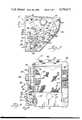
FIG. 4 is a frontal elevation view of the retractor taken in the direction ofarrows 4--4 of FIG. 1.
Referring to FIGS. 1 and 4, it is seen that the door mounted retractor indicated generally at 10 includes aframe 12 having abase wall 14 and a pair of laterally spaced apartsidewalls tie bar 20 extends between thesidewalls frame 12. Thebase wall 14 has anaperture 22 for receiving a bolt to mount theframe 12 on the vehicle door.
As best seen in FIG. 4, abelt reel 24 includes areel shaft 26 having a left-hand end extending through anaperture 28 in thesidewall 16 and a right-hand end extending through anaperture 30 in thesidewall 18. Therestraint belt 34 is suitably attached to thereel shaft 26 and is wound there around.
The right-hand end of thereel shaft 26 has a slot 32 receiving theinner end 33 of aspiral spring 36. The outer end of thespiral spring 36 is suitably attached to aspring cover 38. Thespiral spring 36 functions to rotate thereel 24 in the counterclockwise belt winding direction of rotation as viewed in FIG. 1.
A locking mechanism is provided for locking thereel 24 against belt unwinding clockwise rotation. Atoothed ratchet plate 44 is suitably attached to the left-hand end of thereel shaft 26 adjacent to theside wall 16 and has a plurality of circumferentially spacedratchet teeth 46 which face in the belt unwinding direction of rotation. Alock bar 50 is pivotally mounted on thesidewall 16 by apivot pin 52.Lock bar 50 has atooth 54 which, upon pivoting counterclockwise rotation, is moved into engagement with one of theratchet teeth 46 to lock thereel 24 against any further belt unwinding rotation as shown in the phantom-line indicated position of FIG. 2. The normal rest position of thelock bar 50 is shown in FIG. 1 and is established by astop pin 56 mounted on the side wall and extending into engagement with thetail portion 58 of thelock bar 50.
As best seen in FIGS. 1 and 4, an inertiasensitive ball 62 is mounted upon thesidewall 16 by acup member 64 having aconical depression 66 in which theball 62 is seated. Thepilot pawl 70 is pivotally mounted upon thecup member 64 by apivot pin 72 and has acap 76 which seats upon theinertia ball 62. Thepilot pawl 70 also has atooth 78 which is laterally offset from thepawl 70 as best shown in FIG. 4 so as to underlie theratchet plate 44 in spaced relation therefrom as shown in FIGS. 1, 3 and 4.
When the vehicle, including the door upon which theretractor 10 is mounted, experiences a predetermined level of deceleration as occurs in an emergency stop, the inertia of theinertia ball 62 causes it to roll up theconical depression 66 and in so doing, lift thepawl 70 upwardly to the position of FIG. 2 in engagement with the one of theratchet teeth 46. During such an emergency stop, the momentum of the occupant is restrained by the belt which, in turn, induces a clockwise unwinding rotation of the belt reel so that the engagement of thepilot pawl tooth 78 with theratchet tooth 46 induces a lifting movement of thelock bar 50 via apin 80 which is engaged by a wall of awindow 82 provided intopilot pawl 70 so that thelock bar 50 is lifted into engagement with theratchet tooth 46 to stop any further unwinding rotation of the reel.
When the occupant restraint load is relieved from thebelt 34, the reel will rewind in a counterclockwise direction so that theteeth 46 are disengaged from thetooth 54 oflock bar 50 and from thetooth 78 ofpilot pawl 70. Accordingly, gravity will return thelock bar 50 and thepilot pawl 70 to their normal rest positions of FIG. 1.
It will be understood that when the door is opened by the occupant to enable occupant ingress or egress from the vehicle, the belt will be unwound from the door mountedretractor 10 during such door opening movement. If the door is pushed open rapidly, the retractor may experience a level of acceleration sufficient to cause theinertia ball 62 to roll up theconical depression 66 and initiate the sequence of lifting movement of thepilot pawl 70 into engagement of itstooth 78 with theratchet plate 44 so that the unwinding rotation of the reel will, in turn, energize the further lifting movement of thepilot pawl 70 to engage thelock bar 50 with theratchet teeth 46 so that the length of the belt will be locked and further opening movement of the door temporarily prevented.
As best seen in FIGS. 3 and 4, this condition is prevented by a blockingarm 86 which is frictionally drive coupled to thereel 24 for rotation therewith. This friction drive coupling is provided by spaced apartspring arms arm 86 which grip the left-hand end of thereel shaft 26. As best seen in FIG. 4, theend 92 of the blockingarm 86 is laterally offset and extends inwardly for movement through an arc between anangled end face 90 of thepilot pawl 70 and astop abutment 94 which is mounted upon theframe sidewall 16.
As best seen in FIG. 3, the belt unwinding rotation of thereel 24 induced by unwinding ofbelt 34 therefrom during opening movement of the door will carry the blockingarm 86 in the clockwise direction of rotation to engage itsoffset end 92 with theangled end face 90 of thepilot pawl 70. Accordingly, as best seen in FIG. 3 thepilot pawl 70 is subjected to a frictional force acting thereagainst in the direction to oppose its upward lifting movement by theinertia ball 62. Accordingly, a predeterminedly greater level of retractor acceleration must be encountered before theinertia ball 62 will ride up theconical depression 66 and lift thepilot pawl 70 into its FIG. 2 position of engagement with theratchet teeth 46. During initial rewinding rotation of the reel in the counterclockwise direction upon subsequent closing movement of the door, the blockingarm 86 will rotate therewith in the counterclockwise direction and into engagement with thestop abutment 94 as seen in FIG. 1. As the belt rewinding rotation continues, the apringarms reel shaft 26 so that the blocking arm remains at rest engaging thestop abutment 94. Thus, the range of rotary movement of the blockingarm 86 is limited to an arc of a few degrees.
Thus, it is seen that the invention provides a new and improved door mounted retractor in which a blocking arm frictionally drive coupled with the reel engages with the pilot pawl during belt unwinding reel rotation induced by opening movement of the door whereby the retractor blocking mechanism is desensitized and a much larger retractor acceleration must be experienced in order to lock up the belt reel.
It will be understood that the circumferential spacing between theangled end face 90 of thepilot pawl 70 and thestop abutment 94 will determine how much belt is unwound from the retractor before the blockingarm 86 is carried into engagement with thepilot pawl 70. Furthermore, it will be understood that it is desirable to maximize the extent of such belt unwinding permitted so that the pilot pawl will not be desensitized during the normal unwinding of the belt from the reel as occurs, for example, when the vehicle occupant might lean slightly forward in the seat to adjust his seating position. On the other hand, the amount of belt unwinding needed to engage the blocking arm with the pilot pawl should not be so great as to permit opening movement of the door to the extent of obtaining an acceleration level which would initiate the retractor locking sequence prior to the belt having sufficiently unwound to carry the blocking arm into desensitizing engagement with the pilot pawl. Thus, the extent of door opening movement or occupant movement resulting in desensitizing can be adjusted to the proper magnitude by adjusting the spacing of thestop abutment 94 relative to thepilot pawl 70.
Claims (2)
1. A seat belt retractor adapted for mounting on a vehicle door to wind and unwind the end of a belt having its other end mounted on the vehicle body inboard the occupant so that belt is unwound upon opening the door and rewound upon closing the door comprising:
a frame;
a reel rotatably mounted on the frame and having teeth carried thereby;
a lock bar mounted on the frame for movement into locking engagement with the reel to block belt unwinding rotation of the reel;
an inertia mass mounted on the frame and movable in response to acceleration;
a pilot pawl supported by the inertia mass at a normal position spaced from the teeth and spaced from the lock bar, said pilot pawl being movable by the inertia mass in response to a predetermined rate of acceleration to engage one of the teeth so that belt unwinding reel rotation causes further movement of the pilot pawl to move the lock bar into locking engagement with the reel, and thereby block belt unwinding rotation of the reel; and
a blocking member friction drive coupled to the reel for rotation therewith and frictionally engaging with the pilot pawl upon unwinding rotation of the belt reel indicative of door opening movement to thereby impose a frictional force upon the pilot pawl resisting movement of the pilot pawl into engagement with the teeth by the inertia mass in response to occurrence of the level of acceleration induced by opening movement of the door, said frictional force being overcome upon occurence of a relatively greater level of acceleration acting on the inertia mass to thereby block the reel against further belt unwinding rotation.
2. A seat belt retractor adapted for mounting on a vehicle door to wind and unwind the end of a belt having its other end mounted on the vehicle body inboard the occupant so that belt is unwound upon opening the door and rewound upon closing the door comprising:
a frame;
a reel rotatably mounted on the frame and having teeth carried thereby;
a lock bar mounted on the frame for movement into locking engagement with the reel to block belt unwinding rotation of the reel;
an inertia mass mounted on the frame and movable in response to an acceleration condition;
a pilot pawl pivotally mounted on the frame and supported by the inertia mass at a normal position spaced from the teeth and spaced from the lock bar, said pilot pawl having an angle end face, said pilot pawl being movable by the inertia mass in response to a predetermined rate of acceleration to engage one of the teeth carried by the reel so that belt unwinding reel rotation causes further movement of the pilot pawl to move the lock bar into locking engagement with the reel and thereby block bolt unwinding rotation of the reel; and
a blocking member friction drive coupled to the reel for rotation therewith and having an angled end face frictionally engageable with the angled end face of the pilot pawl upon unwinding rotation of the belt reel indicative of door opening movement so that the blocking member imposes a frictional force upon the pilot pawl resisting movement of the pilot pawl into engagement with the teeth carried by the reel in response to an occurrence of the level of acceleration induced by door opening movement which would otherwise cause the inertia mass to move the pilot pawl so that the retractor is inhibited from locking unwinding of the belt during opening movement of the door; said frictional force being overcome upon occurrence of a relatively greater level of acceleration acting on the inertia mass to thereby block the reel against further belt unwinding rotation.
Priority Applications (1)
| Application Number | Priority Date | Filing Date | Title |
|---|---|---|---|
| US06/690,739US4570873A (en) | 1985-01-11 | 1985-01-11 | Sensor sensitivity reducer for door mounted retractor |
Applications Claiming Priority (1)
| Application Number | Priority Date | Filing Date | Title |
|---|---|---|---|
| US06/690,739US4570873A (en) | 1985-01-11 | 1985-01-11 | Sensor sensitivity reducer for door mounted retractor |
Publications (1)
| Publication Number | Publication Date |
|---|---|
| US4570873Atrue US4570873A (en) | 1986-02-18 |
Family
ID=24773753
Family Applications (1)
| Application Number | Title | Priority Date | Filing Date |
|---|---|---|---|
| US06/690,739Expired - LifetimeUS4570873A (en) | 1985-01-11 | 1985-01-11 | Sensor sensitivity reducer for door mounted retractor |
Country Status (1)
| Country | Link |
|---|---|
| US (1) | US4570873A (en) |
Cited By (16)
| Publication number | Priority date | Publication date | Assignee | Title |
|---|---|---|---|---|
| US4708366A (en)* | 1986-04-11 | 1987-11-24 | Gateway Industries, Inc. | Seat belt retraction apparatus with remote inertia sensor |
| US4725014A (en)* | 1985-07-22 | 1988-02-16 | Ashimori Industry Company, Inc., Ltd. | Automatic locking retractor for a seat belt assembly |
| US4732346A (en)* | 1985-07-12 | 1988-03-22 | Kabushiki Kaisha Tokai-Rika-Denki-Seisakusho | Lock mechanism for webbing retractor |
| US4749142A (en)* | 1985-12-27 | 1988-06-07 | Kabushiki Kaisha Tokai-Rika-Denki-Seisakusho | Webbing retractor |
| US4757954A (en)* | 1987-01-27 | 1988-07-19 | Gateway Industries, Inc. | Block-out device for a retractor |
| USD312987S (en) | 1987-10-26 | 1990-12-18 | Amiel Kuli | Tractor seat belt holder set |
| US4998684A (en)* | 1988-04-15 | 1991-03-12 | Kabushiki Kaisha Tokai-Rika-Denki-Seisakusho | Acceleration sensor for a retractable seat belt |
| US5022601A (en)* | 1984-06-11 | 1991-06-11 | Kabushiki Kaisha Tokai-Rika-Denki-Seisakusho | Locking mechanism for webbing retractor |
| US5261624A (en)* | 1992-05-22 | 1993-11-16 | Alliedsignal Inc. | Safety belt system with noise inhibitor |
| US5301893A (en)* | 1992-08-25 | 1994-04-12 | Takata Inc | Seat belt retractor having a noise suppression mechanism with a blockout cam |
| US5370333A (en)* | 1993-03-31 | 1994-12-06 | Indiana Mills And Manufacturing, Inc. | Delayed locking retractor |
| US5669573A (en)* | 1994-07-07 | 1997-09-23 | Trw Occupant Restraint Systems Gmbh | Belt retractor |
| US20060137138A1 (en)* | 2004-12-27 | 2006-06-29 | Wayne-Dalton Corp. | Winding and anti-drop assembly for door counterbalance system |
| US20090218432A1 (en)* | 2008-02-29 | 2009-09-03 | Kabushiki Kaisha Tokai-Rika-Denki-Seisakusho | Webbing winder |
| US7686061B2 (en)* | 2002-04-24 | 2010-03-30 | Overhead Door Corporation | Winding assembly for door counterbalance system |
| CN107531211A (en)* | 2015-04-20 | 2018-01-02 | Trw汽车股份有限公司 | Webbing retractor |
Citations (9)
| Publication number | Priority date | Publication date | Assignee | Title |
|---|---|---|---|---|
| US3741496A (en)* | 1971-07-13 | 1973-06-26 | Allied Chem | Safety seat belt retractor |
| US3741495A (en)* | 1971-06-16 | 1973-06-26 | Takata Kojyo Co | Automatic locking retractor system with stopper device |
| US4053116A (en)* | 1976-05-21 | 1977-10-11 | Takata Kojyo Co., Ltd. | Retraction locking safety belt retractor |
| US4082236A (en)* | 1976-12-23 | 1978-04-04 | Allied Chemical Corporation | Free pull web sensitive retractor |
| US4181326A (en)* | 1978-01-25 | 1980-01-01 | American Safety Equipment Corporation | Vehicle sensing inertia reel lockup inhibitors |
| US4209186A (en)* | 1978-10-16 | 1980-06-24 | American Safety Equipment Corporation | Lock-up inhibitor for door mounted retractor |
| US4244600A (en)* | 1978-04-18 | 1981-01-13 | Juichiro Takada | Deactivatable locking retractor for vehicle seat belt systems |
| US4293105A (en)* | 1976-12-23 | 1981-10-06 | Allied Chemical Corporation | Bi-level web sensitive retractor |
| US4492349A (en)* | 1981-09-08 | 1985-01-08 | American Safety Equipment Corporation | Programmed pawl control means |
- 1985
- 1985-01-11USUS06/690,739patent/US4570873A/ennot_activeExpired - Lifetime
Patent Citations (9)
| Publication number | Priority date | Publication date | Assignee | Title |
|---|---|---|---|---|
| US3741495A (en)* | 1971-06-16 | 1973-06-26 | Takata Kojyo Co | Automatic locking retractor system with stopper device |
| US3741496A (en)* | 1971-07-13 | 1973-06-26 | Allied Chem | Safety seat belt retractor |
| US4053116A (en)* | 1976-05-21 | 1977-10-11 | Takata Kojyo Co., Ltd. | Retraction locking safety belt retractor |
| US4082236A (en)* | 1976-12-23 | 1978-04-04 | Allied Chemical Corporation | Free pull web sensitive retractor |
| US4293105A (en)* | 1976-12-23 | 1981-10-06 | Allied Chemical Corporation | Bi-level web sensitive retractor |
| US4181326A (en)* | 1978-01-25 | 1980-01-01 | American Safety Equipment Corporation | Vehicle sensing inertia reel lockup inhibitors |
| US4244600A (en)* | 1978-04-18 | 1981-01-13 | Juichiro Takada | Deactivatable locking retractor for vehicle seat belt systems |
| US4209186A (en)* | 1978-10-16 | 1980-06-24 | American Safety Equipment Corporation | Lock-up inhibitor for door mounted retractor |
| US4492349A (en)* | 1981-09-08 | 1985-01-08 | American Safety Equipment Corporation | Programmed pawl control means |
Cited By (18)
| Publication number | Priority date | Publication date | Assignee | Title |
|---|---|---|---|---|
| US5022601A (en)* | 1984-06-11 | 1991-06-11 | Kabushiki Kaisha Tokai-Rika-Denki-Seisakusho | Locking mechanism for webbing retractor |
| US4732346A (en)* | 1985-07-12 | 1988-03-22 | Kabushiki Kaisha Tokai-Rika-Denki-Seisakusho | Lock mechanism for webbing retractor |
| US4725014A (en)* | 1985-07-22 | 1988-02-16 | Ashimori Industry Company, Inc., Ltd. | Automatic locking retractor for a seat belt assembly |
| US4749142A (en)* | 1985-12-27 | 1988-06-07 | Kabushiki Kaisha Tokai-Rika-Denki-Seisakusho | Webbing retractor |
| US4708366A (en)* | 1986-04-11 | 1987-11-24 | Gateway Industries, Inc. | Seat belt retraction apparatus with remote inertia sensor |
| US4757954A (en)* | 1987-01-27 | 1988-07-19 | Gateway Industries, Inc. | Block-out device for a retractor |
| USD312987S (en) | 1987-10-26 | 1990-12-18 | Amiel Kuli | Tractor seat belt holder set |
| US4998684A (en)* | 1988-04-15 | 1991-03-12 | Kabushiki Kaisha Tokai-Rika-Denki-Seisakusho | Acceleration sensor for a retractable seat belt |
| US5261624A (en)* | 1992-05-22 | 1993-11-16 | Alliedsignal Inc. | Safety belt system with noise inhibitor |
| US5301893A (en)* | 1992-08-25 | 1994-04-12 | Takata Inc | Seat belt retractor having a noise suppression mechanism with a blockout cam |
| US5370333A (en)* | 1993-03-31 | 1994-12-06 | Indiana Mills And Manufacturing, Inc. | Delayed locking retractor |
| US5669573A (en)* | 1994-07-07 | 1997-09-23 | Trw Occupant Restraint Systems Gmbh | Belt retractor |
| US7686061B2 (en)* | 2002-04-24 | 2010-03-30 | Overhead Door Corporation | Winding assembly for door counterbalance system |
| US20060137138A1 (en)* | 2004-12-27 | 2006-06-29 | Wayne-Dalton Corp. | Winding and anti-drop assembly for door counterbalance system |
| US7254868B2 (en) | 2004-12-27 | 2007-08-14 | Wayne-Dalton Corp. | winding and anti-drop assembly for door counterbalance system |
| US20090218432A1 (en)* | 2008-02-29 | 2009-09-03 | Kabushiki Kaisha Tokai-Rika-Denki-Seisakusho | Webbing winder |
| US8118249B2 (en) | 2008-02-29 | 2012-02-21 | Kabushiki Kaisha Tokai-Rika-Denki-Seisakusho | Webbing winder |
| CN107531211A (en)* | 2015-04-20 | 2018-01-02 | Trw汽车股份有限公司 | Webbing retractor |
Similar Documents
| Publication | Publication Date | Title |
|---|---|---|
| US4570873A (en) | Sensor sensitivity reducer for door mounted retractor | |
| US4726540A (en) | Variable sensitivity seat belt retractor | |
| US5529258A (en) | Secondary locking mechanism for retractor with pretensioner | |
| US4159848A (en) | Linear locking seat belt retractor | |
| GB2126876A (en) | Integrated weblocker with program pawl retractor | |
| US4394034A (en) | Belt clamp for retractor | |
| CA1054122A (en) | Belt retractor with winding prevention mechanism | |
| US4065072A (en) | Seat belt retractor with winding prevention mechanism | |
| KR100248839B1 (en) | Retractor for seat belt | |
| JPH0237644Y2 (en) | ||
| US4153274A (en) | Winding prevention belt retractor for passive shoulder belt system | |
| US4213652A (en) | Linear locking seat belt retractor | |
| US4083581A (en) | Emergency release systems | |
| US4771854A (en) | Belt winding brake for passive belt retractor | |
| US4164335A (en) | Automatic locking retractor with lock-up delay | |
| US4315639A (en) | Passive seat belt system | |
| US4703950A (en) | Electrical lock-out mechanism for door mounted seat belt retractors | |
| US6155513A (en) | Retractor locking mechanism | |
| US6206316B1 (en) | Belt retractor with force limitation | |
| US3664600A (en) | Inertia reels for safety belts | |
| JPH0347007Y2 (en) | ||
| US4285479A (en) | Inertia release for belt retractor winding prevention mechanism | |
| US4065155A (en) | Belt retractor with winding prevention mechanism | |
| US4429920A (en) | Load transfer system for seat mounted retractor | |
| JPS5828614Y2 (en) | seat belt lock device |
Legal Events
| Date | Code | Title | Description |
|---|---|---|---|
| AS | Assignment | Owner name:GENERAL MOTORS CORPORATION DETROIT, MI A DE CORP Free format text:ASSIGNMENT OF ASSIGNORS INTEREST.;ASSIGNOR:KURTTI, GARY R.;REEL/FRAME:004358/0534 Effective date:19850104 | |
| STCF | Information on status: patent grant | Free format text:PATENTED CASE | |
| FPAY | Fee payment | Year of fee payment:4 | |
| REMI | Maintenance fee reminder mailed | ||
| FPAY | Fee payment | Year of fee payment:8 | |
| SULP | Surcharge for late payment | ||
| FPAY | Fee payment | Year of fee payment:12 |