US4551137A - Flexible sheath assembly for an indwelling catheter - Google Patents
Flexible sheath assembly for an indwelling catheterDownload PDFInfo
- Publication number
- US4551137A US4551137AUS06/433,256US43325682AUS4551137AUS 4551137 AUS4551137 AUS 4551137AUS 43325682 AUS43325682 AUS 43325682AUS 4551137 AUS4551137 AUS 4551137A
- Authority
- US
- United States
- Prior art keywords
- catheter
- sheathing
- flexible
- sheath
- assembly
- Prior art date
- Legal status (The legal status is an assumption and is not a legal conclusion. Google has not performed a legal analysis and makes no representation as to the accuracy of the status listed.)
- Expired - Lifetime
Links
Images

Classifications
- A—HUMAN NECESSITIES
- A61—MEDICAL OR VETERINARY SCIENCE; HYGIENE
- A61M—DEVICES FOR INTRODUCING MEDIA INTO, OR ONTO, THE BODY; DEVICES FOR TRANSDUCING BODY MEDIA OR FOR TAKING MEDIA FROM THE BODY; DEVICES FOR PRODUCING OR ENDING SLEEP OR STUPOR
- A61M25/00—Catheters; Hollow probes
- A61M25/10—Balloon catheters
- A61M25/1027—Making of balloon catheters
- A61M25/1034—Joining of shaft and balloon
- A—HUMAN NECESSITIES
- A61—MEDICAL OR VETERINARY SCIENCE; HYGIENE
- A61M—DEVICES FOR INTRODUCING MEDIA INTO, OR ONTO, THE BODY; DEVICES FOR TRANSDUCING BODY MEDIA OR FOR TAKING MEDIA FROM THE BODY; DEVICES FOR PRODUCING OR ENDING SLEEP OR STUPOR
- A61M25/00—Catheters; Hollow probes
- A61M25/01—Introducing, guiding, advancing, emplacing or holding catheters
- A61M25/0105—Steering means as part of the catheter or advancing means; Markers for positioning
- A61M25/0111—Aseptic insertion devices
- Y—GENERAL TAGGING OF NEW TECHNOLOGICAL DEVELOPMENTS; GENERAL TAGGING OF CROSS-SECTIONAL TECHNOLOGIES SPANNING OVER SEVERAL SECTIONS OF THE IPC; TECHNICAL SUBJECTS COVERED BY FORMER USPC CROSS-REFERENCE ART COLLECTIONS [XRACs] AND DIGESTS
- Y10—TECHNICAL SUBJECTS COVERED BY FORMER USPC
- Y10S—TECHNICAL SUBJECTS COVERED BY FORMER USPC CROSS-REFERENCE ART COLLECTIONS [XRACs] AND DIGESTS
- Y10S206/00—Special receptacle or package
- Y10S206/802—Shirred sausage casing
Definitions
- the present inventionis related generally to the field of sterility devices for catheters and, more specifically, to flexible sheath devices for protecting the sterility of the exposed portions of indwelling catheters.
- U.S. Pat. No. 3,867,937 to Schwartzdiscloses a protective sheath comprising a very thin plastic tubular member which is in a loose sliding fit on the outer diameter of the catheter forward of the rear hub end thereof.
- the protective sheathcollapses as the catheter is inserted to a desired body depth, with the forward end of the sheath contacting the skin adjacent the entrance site.
- the deviceoffers the advantages of a very simple construction, it lacks an airtight seal at the forward end of the sheath.
- this deviceinherently does not prevent the catheter portion residing within the sheath from becoming contaminated by outside bacteria entering through the unsealed area between the catheter and the forward end of the sheath or from bacteria which may be present at the skin entrance site.
- U.S. Pat. No. 4,327,735 to Hampsondiscloses a device similar to the flexible sheath assembly disclosed by Frankenhouser except that the feed tube is adapted to be removed from the assembly once it has served the purpose of guiding the catheter through the interior of the flexible sheath.
- the present inventiondiscloses a flexible sheath assembly which affords all of the advantages of a totally sealed catheter sheath assembly, as disclosed in the Frankenhouser and Hampson reference, but further having a more simplified construction which eliminates the need for a relatively rigid feed tube within the flexible sheath.
- One embodiment of the present inventionis characterized by a flexible sheath assembly for an indwelling catheter.
- the assemblyincludes a front and a rear hub each having a passageway therethrough which is sized to permit passage of the catheter.
- the assemblyfurther includes a flexible sheathing which is sealingly secured to the front and rear hubs.
- the flexible sheathingis capable of being longitudinally expanded from a collapsed position wherein the flexible sheathing is twisted about an axis substantially parallel to the direction of longitudinal expansion of the flexible sheathing. In the collapsed position the flexible sheathing defines a central passageway aligned with the front and rear hub passageways for receiving the catheter therethrough.
- the flexible sheath assemblymaintains the sterility of an otherwise exposed portion of the catheter, thereby permitting the depth of catheter insertion within the body to be adjusted after the catheter has been left indwelling for extended periods.
- FIG. 1is a side elevation view partially in section showing the flexible sheath assembly of the present invention in its longitudinally expanded position disposed over a catheter and attached to a catheter introducer.
- FIG. 2is a longitudinal sectional view showing the flexible sheath assembly of the present invention in its collapsed position.
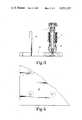
- FIG. 3is a side elevation of a curing fixture for manufacture of the sleeve.
- rear hub assembly 12may be considerably varied without departing from the scope and spirit of the invention.
- hub 23, cap 24 and coupling member 25may alternatively be one integrally formed part, it being understood that means be provided in rear hub assembly 12 for sealing the space between it and catheter 20 while allowing catheter 20 to be passed easily through rear hub assembly 12.
- sheath assembly 10is in its collapsed position as depicted in FIG. 2 until such time as catheter 20 has been successfully passed through the sheath assembly.
- sheathing 13 of sheath assembly 10is completely contracted along axis 29 into a series of tightly packed and twisted folds.
- Sheath assembly 10is preferably provided to the physician in its collapsed position prepackaged in a kit with catheter 20 and introducer 21.
- the flexible sheathing 13is packed tightly and twisted on and about the axis of a mandrel 35 upon which the sheath assembly 10 is received through front hub 11.
- the entire sheath assembly 10, mandrel and fixture 36is then placed inside an oven and heated for the purpose of causing the flexible sheathing to take a set.
- the flexible sheathing 13was made of 0.003 inch thickness polyethylene plastic sleeving. Such flexible sheathing 13 properly sets after being baked for a period of approximately 45 minutes at a temperature of approximately 190 degrees F. After such baking the curing fixture 36 is removed from the oven and allowed to cool to room temperature for 15 minutes before removing the sterility sleeve from the mandrel.
Landscapes
- Health & Medical Sciences (AREA)
- Life Sciences & Earth Sciences (AREA)
- Heart & Thoracic Surgery (AREA)
- Biomedical Technology (AREA)
- Engineering & Computer Science (AREA)
- Anesthesiology (AREA)
- Pulmonology (AREA)
- Biophysics (AREA)
- Hematology (AREA)
- Animal Behavior & Ethology (AREA)
- General Health & Medical Sciences (AREA)
- Public Health (AREA)
- Veterinary Medicine (AREA)
- Child & Adolescent Psychology (AREA)
- Media Introduction/Drainage Providing Device (AREA)
Abstract
Description
1. Field of the Invention
The present invention is related generally to the field of sterility devices for catheters and, more specifically, to flexible sheath devices for protecting the sterility of the exposed portions of indwelling catheters.
2. Description of the Prior Art
It is frequently desirable to adjust the depth of insertion of an indwelling catheter which has already been left indwelling for an extended period of time. One example of such a situation occurs when a balloon-tipped catheter inserted within the heart to measure certain heart activities becomes somehow later dislodged. This may necessitate further insertion of the catheter in order to properly relocate the heart activity sensor. In such situations it is of utmost importance that the sterility of the exposed catheter portion be maintained.
The problem of protecting the sterility of exposed portions of an indwelling catheter has been long and well known in the medical art. Thus, prior art includes several patented device which protect sterility of the exposed portion of an indwelling catheter. An early example, U.S. Pat. No. 3,867,937 to Schwartz, discloses a protective sheath comprising a very thin plastic tubular member which is in a loose sliding fit on the outer diameter of the catheter forward of the rear hub end thereof. The protective sheath collapses as the catheter is inserted to a desired body depth, with the forward end of the sheath contacting the skin adjacent the entrance site. While the device offers the advantages of a very simple construction, it lacks an airtight seal at the forward end of the sheath. Thus, this device inherently does not prevent the catheter portion residing within the sheath from becoming contaminated by outside bacteria entering through the unsealed area between the catheter and the forward end of the sheath or from bacteria which may be present at the skin entrance site.
Two very recent patent references discloses catheter sheath devices which are intended to provide a totally enclosed or sealed environment along a length of the exposed portion of an indwelling catheter, thus permitting later adjustment of the depth of insertion without creating an unacceptable risk of infection. U.S. Pat. No. 4,327,723 to Frankenhouser discloses a shield assembly including front and rear hubs sized to permit movement of the catheter therethrough, a feed tube for connecting the front and rear hubs, and a flexible sheath connecting the front and rear hubs. The front hub is connected to the rear portion of a hollow introducer which serves to facilitate the introduction of the catheter into the body. With this device, a relatively long and rigid inner feed tube is necessary to guide the catheter through the flexible sheath portion of the assembly. The feed tube serves no further use once the catheter is introduced into the body. U.S. Pat. No. 4,327,735 to Hampson discloses a device similar to the flexible sheath assembly disclosed by Frankenhouser except that the feed tube is adapted to be removed from the assembly once it has served the purpose of guiding the catheter through the interior of the flexible sheath.
The present invention discloses a flexible sheath assembly which affords all of the advantages of a totally sealed catheter sheath assembly, as disclosed in the Frankenhouser and Hampson reference, but further having a more simplified construction which eliminates the need for a relatively rigid feed tube within the flexible sheath.
Other reference which may have some relevance are:
______________________________________ U.S. Pat. No. Inventor ______________________________________ 4,250,881 Smith 4,235,232 Spaven et al. 4,160,450 Doherty 4,079,738 Dunn 4,037,600 Poncy 3,991,762 Radford 3,894,540 Bonner 3,825,001 Bennet 3,709,223 Macalalad et al. 3,474,786 Spademan 3,335,723 Waldman 3,185,151 Czorny 3,010,453 Doherty 2,937,643 Elliot 4,062,363 Bonner 4,029,099 Fifield 3,902,500 Dryden 3,648,704 Jackson 3,792,703 Moorhead 3,854,483 Powers 3,898,993 Taniguchi 4,006,743 Kowarski 4,000,739 Stevens ______________________________________
Accordingly, it is an object of the present invention to provide an improved flexible catheter sheath assembly for an indwelling catheter.
This and other objects of and advantages of the present invention will become more apparent in the following figures and detailed description.
One embodiment of the present invention is characterized by a flexible sheath assembly for an indwelling catheter. The assembly includes a front and a rear hub each having a passageway therethrough which is sized to permit passage of the catheter. The assembly further includes a flexible sheathing which is sealingly secured to the front and rear hubs. The flexible sheathing is capable of being longitudinally expanded from a collapsed position wherein the flexible sheathing is twisted about an axis substantially parallel to the direction of longitudinal expansion of the flexible sheathing. In the collapsed position the flexible sheathing defines a central passageway aligned with the front and rear hub passageways for receiving the catheter therethrough. In the longitudinally expanded position the flexible sheath assembly maintains the sterility of an otherwise exposed portion of the catheter, thereby permitting the depth of catheter insertion within the body to be adjusted after the catheter has been left indwelling for extended periods.
FIG. 1 is a side elevation view partially in section showing the flexible sheath assembly of the present invention in its longitudinally expanded position disposed over a catheter and attached to a catheter introducer.
FIG. 2 is a longitudinal sectional view showing the flexible sheath assembly of the present invention in its collapsed position.
FIG. 3 is a side elevation of a curing fixture for manufacture of the sleeve.
FIG. 4 is a fragmentary top plan view of the curing fixture of FIG. 3.
For the purposes of promoting an understanding of the principles of the invention, reference will now be made to the embodiment illustrated in the drawings and specific language will be used to describe the same. It will nevertheless be understood that no limitation of the scope of the invention is thereby intended, such alterations and further modifications in the illustrated device, and such further applications of the principles of the invention as illustrated therein being contemplated as would normally occur to one skilled in the art to which the invention relates.
Referring now to the drawings, the flexible sheath assembly of the present invention is generally designated at 10.Sheath assembly 10 includes front hub 11 andrear hub assembly 12 which are interconnected by a transparentflexible sheathing 13.Flexible sheathing 13 extends between front hub 11 andrear hub assembly 12 and is sealingly secured thereto by O-rings rear hub assembly 12 haverespective passageways catheter 20.Catheter 20 and introducer 21 are of conventional construction and those skilled in the art will readily recognize that no further description thereof is necessary.
Front hub 11 includes asocket portion 28 which is coupled over the distal end of introducer 21. Front hub 11 is made from a deformable plastic or rubber material which permits front hub 11 to be sealingly coupled with introducer 21.Rear hub assembly 12 includeshub 23 andcap 24 which are interconnected bycoupling member 25, which is externally threaded at both ends for coupling with the internally threaded portions ofhub gasket 26 is fitted betweencap 24 andcoupling member 25 and extends partially withinpassageway 18 thereby serving to seal the space betweenrear hub assembly 12 andcatheter 20 while permittingcatheter 20 to be freely passed throughrear hub assembly 12. Whilegasket 26 may be made of any suitable material, it has been found that a silicone rubber gasket is acceptable for this purpose.
It should be noted that the construction ofrear hub assembly 12 may be considerably varied without departing from the scope and spirit of the invention. For example,hub 23,cap 24 andcoupling member 25 may alternatively be one integrally formed part, it being understood that means be provided inrear hub assembly 12 for sealing the space between it andcatheter 20 while allowingcatheter 20 to be passed easily throughrear hub assembly 12.
It is to be understood thatsheath assembly 10 is in its collapsed position as depicted in FIG. 2 until such time ascatheter 20 has been successfully passed through the sheath assembly. In the collapsed position sheathing 13 ofsheath assembly 10 is completely contracted alongaxis 29 into a series of tightly packed and twisted folds.Sheath assembly 10 is preferably provided to the physician in its collapsed position prepackaged in a kit withcatheter 20 and introducer 21. In order forsheath assembly 10 to maintain its collapsed position so thatcatheter 20 may be easily and quickly passed therethrough to perform a catheterization, theflexible sheathing 13 is packed tightly and twisted on and about the axis of amandrel 35 upon which thesheath assembly 10 is received through front hub 11. Theentire sheath assembly 10, mandrel andfixture 36 is then placed inside an oven and heated for the purpose of causing the flexible sheathing to take a set. In one preferred embodiment of the invention theflexible sheathing 13 was made of 0.003 inch thickness polyethylene plastic sleeving. Suchflexible sheathing 13 properly sets after being baked for a period of approximately 45 minutes at a temperature of approximately 190 degrees F. After such baking the curingfixture 36 is removed from the oven and allowed to cool to room temperature for 15 minutes before removing the sterility sleeve from the mandrel.
It is to be noted that even though this process provides a rigidifying set causingsheath assembly 10 to maintain its collapsed position prior to use, theflexible sheathing 13 can later be easily longitudinally expanded so as to shield an otherwise exposed length ofcatheter 20. When thus formed, the tightly packed and twisted folds offlexible sheathing 13 define acentral passageway 36 which is in the shape of the external surface of the mandrel and aligned withhub passageways catheter 20, but smaller than the corresponding diameter ofpassageway 17 at theinterior end 31 thereof. The set in theflexible sheathing 13 in the collapsed portion resiliently maintains the size, shape and straightness of thecentral passageway 36. This permitscatheter 20 to be easily guided throughsheathing 13 to withinpassageway 17 of front hub 11, thus ensuring easy passage ofcatheter 20 through theentire sheath assembly 10.
It may thus be readily appreciated that the present invention disclosed a catheter assembly which completely seals an otherwise exposed portion of an indwelling catheter. The invention has the advantages of a simple construction and method of manufacture thus offering cost savings while also making the assembly simple to use.
While the invention has been illustrated and described in detail in the drawings and foregoing description, the same is to be considered as illustrative and not restrictive in character, it being understood that only the preferred embodiment has been shown and described and that all changes and modifications that come within the spirit of the invention are desired to be protected.
Claims (8)
1. A catheter assembly comprising:
a catheter;
a catheter introducer; and
a flexible sheath assembly including front and rear hubs each having a passageway therethrough, said hub passageways sized to permit passage of said catheter therethrough, and a flexible sheath sealingly secured to said front and rear hubs and capable of longitudinally expanding from a collapsed position wherein said sheath forms a series of tightly packed folds contracted on an axis parallel to the length of said catheter, said sheath in its collapsed position defining a central passageway aligned with said front and rear hub passageways for receiving and guiding said catheter through said sheath during assembling of said catheter assembly, said flexible sheath having a rigidifying set biasing it into said collapsed position.
2. The assembly of claim 1 wherein said flexible sheath in its first position is twisted about said axis and said central passageway is cylindrically shaped.
3. The assembly of claim 2 wherein said rear hub includes sealing means for sealingly attaching said rear hub to said catheter.
4. The assembly of claim 3 wherein said flexible sheath is transparent and is made from a plastic material and wherein said front hub includes means for sealingly attaching said front hub to a catheter introducer.
5. A flexible sheath assembly for an indwelling catheter, comprising:
front and rear hubs each having a passageway therethrough sized to permit movement therethrough of said catheter;
flexible sheathing having first and second ends;
a first O-ring sealingly connecting said first end of said flexible sheathing to said front hub; and
a second O-ring sealingly connecting said second end of said flexible sheathing to said rear hub, said flexible sheathing being capable of longitudinally expanding from a first position wherein said sheathing is twisted about an axis substantially parallel to the length of said sheathing, said sheathing in its first position being contracted along said axis and defining a central passageway aligned with said front and rear hub passageways for directly receiving therethrough said catheter, said flexible sheathing having a rigidifying set biasing it into said first position.
6. A method of making a flexible sheath for a catheter which includes:
attaching hubs to the opposite ends of flexible sheathing;
placing the hubs and flexible sheathing on a mandrel with the hubs close to one another and said sheathing contracted on the mandrel and the mandrel extending between the hubs and defining a central passageway between the hubs;
and causing the flexible sheathing to take a sufficient set in said contracted position so that a catheter can be inserted through said central passageway while said sheathing maintains said contracted position.
7. The method of claim 6 wherein said mandrel is cylindrical and said set is accomplished by heat.
8. The method of claim 7 wherein said flexible sheathing is polyethylene plastic and said heat is placed on said sheathing for 45 minutes at approximately 190 degrees.
Priority Applications (2)
| Application Number | Priority Date | Filing Date | Title |
|---|---|---|---|
| US06/433,256US4551137A (en) | 1982-10-07 | 1982-10-07 | Flexible sheath assembly for an indwelling catheter |
| US06/731,138US4634433A (en) | 1982-10-07 | 1985-05-06 | Flexible sheath assembly for an indwelling catheter |
Applications Claiming Priority (1)
| Application Number | Priority Date | Filing Date | Title |
|---|---|---|---|
| US06/433,256US4551137A (en) | 1982-10-07 | 1982-10-07 | Flexible sheath assembly for an indwelling catheter |
Related Child Applications (1)
| Application Number | Title | Priority Date | Filing Date |
|---|---|---|---|
| US06/731,138ContinuationUS4634433A (en) | 1982-10-07 | 1985-05-06 | Flexible sheath assembly for an indwelling catheter |
Publications (1)
| Publication Number | Publication Date |
|---|---|
| US4551137Atrue US4551137A (en) | 1985-11-05 |
Family
ID=23719455
Family Applications (1)
| Application Number | Title | Priority Date | Filing Date |
|---|---|---|---|
| US06/433,256Expired - LifetimeUS4551137A (en) | 1982-10-07 | 1982-10-07 | Flexible sheath assembly for an indwelling catheter |
Country Status (1)
| Country | Link |
|---|---|
| US (1) | US4551137A (en) |
Cited By (43)
| Publication number | Priority date | Publication date | Assignee | Title |
|---|---|---|---|---|
| US4906232A (en)* | 1988-03-01 | 1990-03-06 | Abbott Laboratories | Intravascular delivery device |
| US5084014A (en)* | 1990-12-13 | 1992-01-28 | Applied Medical Technology, Inc. | Package for initial placement of low profile gastrostomy device and method of placement |
| US5149326A (en)* | 1990-09-21 | 1992-09-22 | Baxter International Inc. | Adjustable catheter contamination shield |
| US5228851A (en)* | 1991-10-01 | 1993-07-20 | Burton Clarence E | Single-use disposable prophylactic elastic sleeve |
| US5239981A (en)* | 1989-11-16 | 1993-08-31 | Effner Biomet Gmbh | Film covering to protect a surgical instrument and an endoscope to be used with the film covering |
| US5306241A (en)* | 1990-08-16 | 1994-04-26 | Samples Charles R | Method of catheterization on and bladder drainage |
| US5334153A (en)* | 1992-10-07 | 1994-08-02 | C. R. Bard, Inc. | Catheter purge apparatus and method of use |
| US5356382A (en)* | 1992-10-23 | 1994-10-18 | Applied Medical Research, Inc. | Percutaneous tract measuring and forming device |
| US5355876A (en)* | 1992-05-06 | 1994-10-18 | Superior Healthcare Group, Inc. | Patient ventilating apparatus with modular components |
| US5645048A (en)* | 1992-05-06 | 1997-07-08 | The Kendall Company | Patient ventilating apparatus with modular components |
| US5836918A (en)* | 1995-06-01 | 1998-11-17 | Dondlinger; Steven C. | Sleeved suction device |
| US6080138A (en)* | 1998-09-23 | 2000-06-27 | Lemke; Christy L. | IV protector |
| US6494855B2 (en) | 2001-05-16 | 2002-12-17 | Scimed Life Systems, Inc. | Draining bodily fluid |
| US6508790B1 (en) | 1999-11-15 | 2003-01-21 | William K. Lawrence | Vascular access sheath |
| US6764519B2 (en) | 2000-05-26 | 2004-07-20 | Scimed Life Systems, Inc. | Ureteral stent |
| US20040199142A1 (en)* | 2001-07-30 | 2004-10-07 | Reilly William K. | Medical line stabilizer |
| US6808510B1 (en) | 1999-10-29 | 2004-10-26 | C.R Bard, Inc. | Multi-lumen catheter and tip configurations for use therewith |
| US20050015076A1 (en)* | 2003-06-27 | 2005-01-20 | Inmed Corporation | Catheter application system |
| US6913625B2 (en) | 2002-03-07 | 2005-07-05 | Scimed Life Systems, Inc. | Ureteral stent |
| US20050159804A1 (en)* | 2004-01-20 | 2005-07-21 | Cook Incorporated | Multiple stitches for attaching stent to graft |
| US20050159803A1 (en)* | 2004-01-20 | 2005-07-21 | Cook Incorporated | Endoluminal prosthetic device |
| US20060229573A1 (en)* | 2005-04-08 | 2006-10-12 | Mckinley Medical L.L.L.P. | Adjustable infusion catheter |
| US20070225687A1 (en)* | 2006-03-10 | 2007-09-27 | House Jamie G | Indwelling urinary catheterization assembley |
| US20080033371A1 (en)* | 2006-06-26 | 2008-02-07 | Updegraff Debra K | Cover for catheter assembly |
| US20080091145A1 (en)* | 2006-10-12 | 2008-04-17 | Jamie Glen House | Catheter assemblies with sized sheaths |
| US20080125750A1 (en)* | 2006-09-27 | 2008-05-29 | Henning Arthur Gaissert | Medical catheter removal |
| US20090036874A1 (en)* | 2007-07-31 | 2009-02-05 | Horowitz Patricia | Disposable covering device and method |
| US20100064456A1 (en)* | 2008-05-06 | 2010-03-18 | Ferlic Michael J | Universal sterilizing tool |
| US20100172794A1 (en)* | 2008-05-06 | 2010-07-08 | Michael J. Ferlic | Universal sterilizing tool |
| USD622376S1 (en)* | 2008-07-31 | 2010-08-24 | Mcfalls Richard | Flexible collapsible protective sleeve for medical tubing |
| US20110106014A1 (en)* | 2009-10-29 | 2011-05-05 | Helm Jr Robert E | Sealed sterile catheter dressings |
| US20110114520A1 (en)* | 2008-07-16 | 2011-05-19 | Coloplast A/S | Package for a urinary catheter |
| US20120191044A1 (en)* | 2011-01-22 | 2012-07-26 | Hideo Koike | Catheter Attachment and Method |
| US8715242B2 (en) | 2011-01-31 | 2014-05-06 | Robert E. HELM, JR. | Snap-seal sterile intravascular catheter-dressing system |
| US9180275B2 (en) | 2011-01-31 | 2015-11-10 | Robert E. Helm | Catheter-dressing systems with integrated flushing mechanisms |
| US9572904B2 (en) | 2008-05-06 | 2017-02-21 | Michael J. Ferlic | Sterilizing device with pinch actuated cap and housing |
| US9895518B2 (en) | 2006-10-09 | 2018-02-20 | Neurofluidics, Inc. | Cerebrospinal fluid purification system |
| US10632237B2 (en) | 2006-10-09 | 2020-04-28 | Minnetronix, Inc. | Tangential flow filter system for the filtration of materials from biologic fluids |
| US10682507B2 (en) | 2009-10-29 | 2020-06-16 | One Iv Solutions, Llc | Catheter extension with integrated circumferentially sealing securement dressing |
| US10850235B2 (en) | 2006-10-09 | 2020-12-01 | Minnetronix, Inc. | Method for filtering cerebrospinal fluid (CSF) including monitoring CSF flow |
| US11147540B2 (en) | 2015-07-01 | 2021-10-19 | Minnetronix, Inc. | Introducer sheath and puncture tool for the introduction and placement of a catheter in tissue |
| US11577060B2 (en) | 2015-12-04 | 2023-02-14 | Minnetronix, Inc. | Systems and methods for the conditioning of cerebrospinal fluid |
| US12290785B2 (en) | 2015-08-05 | 2025-05-06 | Minnetronix, Inc. | Tangential flow filter system for the filtration of materials from biologic fluids |
Citations (5)
| Publication number | Priority date | Publication date | Assignee | Title |
|---|---|---|---|---|
| US3528825A (en)* | 1967-12-04 | 1970-09-15 | Union Carbide Canada Ltd | Shrink wrapped shirred casings |
| US3894540A (en)* | 1973-10-09 | 1975-07-15 | Bonner F J Jun | Catheter |
| US4104774A (en)* | 1975-12-29 | 1978-08-08 | Francesville Drain Tile Corporation | Apparatus for applying filter to a drainage tubing |
| US4241828A (en)* | 1976-07-30 | 1980-12-30 | Johnson & Johnson | Compact sheath package for medical instruments |
| US4327723A (en)* | 1980-05-13 | 1982-05-04 | Arrow International, Inc. | Catheter shield |
- 1982
- 1982-10-07USUS06/433,256patent/US4551137A/ennot_activeExpired - Lifetime
Patent Citations (5)
| Publication number | Priority date | Publication date | Assignee | Title |
|---|---|---|---|---|
| US3528825A (en)* | 1967-12-04 | 1970-09-15 | Union Carbide Canada Ltd | Shrink wrapped shirred casings |
| US3894540A (en)* | 1973-10-09 | 1975-07-15 | Bonner F J Jun | Catheter |
| US4104774A (en)* | 1975-12-29 | 1978-08-08 | Francesville Drain Tile Corporation | Apparatus for applying filter to a drainage tubing |
| US4241828A (en)* | 1976-07-30 | 1980-12-30 | Johnson & Johnson | Compact sheath package for medical instruments |
| US4327723A (en)* | 1980-05-13 | 1982-05-04 | Arrow International, Inc. | Catheter shield |
Cited By (75)
| Publication number | Priority date | Publication date | Assignee | Title |
|---|---|---|---|---|
| US4906232A (en)* | 1988-03-01 | 1990-03-06 | Abbott Laboratories | Intravascular delivery device |
| US5239981A (en)* | 1989-11-16 | 1993-08-31 | Effner Biomet Gmbh | Film covering to protect a surgical instrument and an endoscope to be used with the film covering |
| US5306241A (en)* | 1990-08-16 | 1994-04-26 | Samples Charles R | Method of catheterization on and bladder drainage |
| US5149326A (en)* | 1990-09-21 | 1992-09-22 | Baxter International Inc. | Adjustable catheter contamination shield |
| US5084014A (en)* | 1990-12-13 | 1992-01-28 | Applied Medical Technology, Inc. | Package for initial placement of low profile gastrostomy device and method of placement |
| WO1992010222A1 (en)* | 1990-12-13 | 1992-06-25 | Applied Medical Technology, Inc. | Package for the placement of gastrostomy device |
| US5228851A (en)* | 1991-10-01 | 1993-07-20 | Burton Clarence E | Single-use disposable prophylactic elastic sleeve |
| US5645048A (en)* | 1992-05-06 | 1997-07-08 | The Kendall Company | Patient ventilating apparatus with modular components |
| US5355876A (en)* | 1992-05-06 | 1994-10-18 | Superior Healthcare Group, Inc. | Patient ventilating apparatus with modular components |
| US5334153A (en)* | 1992-10-07 | 1994-08-02 | C. R. Bard, Inc. | Catheter purge apparatus and method of use |
| US5356382A (en)* | 1992-10-23 | 1994-10-18 | Applied Medical Research, Inc. | Percutaneous tract measuring and forming device |
| US5836918A (en)* | 1995-06-01 | 1998-11-17 | Dondlinger; Steven C. | Sleeved suction device |
| US6080138A (en)* | 1998-09-23 | 2000-06-27 | Lemke; Christy L. | IV protector |
| US6808510B1 (en) | 1999-10-29 | 2004-10-26 | C.R Bard, Inc. | Multi-lumen catheter and tip configurations for use therewith |
| US7615034B2 (en) | 1999-10-29 | 2009-11-10 | C. R. Bard, Inc. | Multi-lumen catheter with protective sheath |
| US20040249337A1 (en)* | 1999-10-29 | 2004-12-09 | C. R. Bard, Inc. | Multi-lumen catheter with protective sheath |
| US6508790B1 (en) | 1999-11-15 | 2003-01-21 | William K. Lawrence | Vascular access sheath |
| US6764519B2 (en) | 2000-05-26 | 2004-07-20 | Scimed Life Systems, Inc. | Ureteral stent |
| US20080097275A1 (en)* | 2000-05-26 | 2008-04-24 | Whitmore Willet F Iii | Ureteral Stent |
| US20040249470A1 (en)* | 2000-05-26 | 2004-12-09 | Whitmore Willet F. | Ureteral stent |
| US8088170B2 (en) | 2000-05-26 | 2012-01-03 | Boston Scientific Scimed, Inc. | Ureteral stent |
| US7316663B2 (en) | 2000-05-26 | 2008-01-08 | Boston Scientific Scimed, Inc. | Ureteral stent |
| US6972040B2 (en) | 2001-05-16 | 2005-12-06 | Boston Scientific Scimed, Inc. | Draining bodily fluid |
| US7320710B2 (en) | 2001-05-16 | 2008-01-22 | Boston Scientific Scimed, Inc. | Draining bodily fluid |
| US7749280B2 (en) | 2001-05-16 | 2010-07-06 | Boston Scientific Scimed, Inc. | Draining bodily fluid |
| US6494855B2 (en) | 2001-05-16 | 2002-12-17 | Scimed Life Systems, Inc. | Draining bodily fluid |
| US7361169B2 (en) | 2001-07-30 | 2008-04-22 | Ivy Devices Inc. | Medical line stabilizer |
| US20040199142A1 (en)* | 2001-07-30 | 2004-10-07 | Reilly William K. | Medical line stabilizer |
| US6913625B2 (en) | 2002-03-07 | 2005-07-05 | Scimed Life Systems, Inc. | Ureteral stent |
| US8021434B2 (en) | 2002-03-07 | 2011-09-20 | Boston Scientific Scimed, Inc. | Ureteral stent |
| US20050015076A1 (en)* | 2003-06-27 | 2005-01-20 | Inmed Corporation | Catheter application system |
| US20050159803A1 (en)* | 2004-01-20 | 2005-07-21 | Cook Incorporated | Endoluminal prosthetic device |
| US20050159804A1 (en)* | 2004-01-20 | 2005-07-21 | Cook Incorporated | Multiple stitches for attaching stent to graft |
| US8348988B2 (en) | 2004-01-20 | 2013-01-08 | Cook Medical Technologies, LLC | Endoluminal prosthetic device |
| US20060229573A1 (en)* | 2005-04-08 | 2006-10-12 | Mckinley Medical L.L.L.P. | Adjustable infusion catheter |
| US7662146B2 (en)* | 2006-03-10 | 2010-02-16 | Colorado Catheter Company, Inc. | Indwelling urinary catheterization assembly |
| US8414562B2 (en)* | 2006-03-10 | 2013-04-09 | Adapta Medical, Inc. | Indwelling urinary catheterization assembly |
| US20100145315A1 (en)* | 2006-03-10 | 2010-06-10 | Jamie Glen House | Indwelling Urinary Catheterization Assembly |
| US20070225687A1 (en)* | 2006-03-10 | 2007-09-27 | House Jamie G | Indwelling urinary catheterization assembley |
| US20080033371A1 (en)* | 2006-06-26 | 2008-02-07 | Updegraff Debra K | Cover for catheter assembly |
| US20080125750A1 (en)* | 2006-09-27 | 2008-05-29 | Henning Arthur Gaissert | Medical catheter removal |
| US11065425B2 (en) | 2006-10-09 | 2021-07-20 | Neurofluidics, Inc. | Cerebrospinal fluid purification system |
| US11529452B2 (en) | 2006-10-09 | 2022-12-20 | Minnetronix, Inc. | Tangential flow filter system for the filtration of materials from biologic fluids |
| US10632237B2 (en) | 2006-10-09 | 2020-04-28 | Minnetronix, Inc. | Tangential flow filter system for the filtration of materials from biologic fluids |
| US20200046954A1 (en) | 2006-10-09 | 2020-02-13 | Neurofluidics, Inc. | Cerebrospinal fluid purification system |
| US10398884B2 (en) | 2006-10-09 | 2019-09-03 | Neurofluidics, Inc. | Cerebrospinal fluid purification system |
| US9895518B2 (en) | 2006-10-09 | 2018-02-20 | Neurofluidics, Inc. | Cerebrospinal fluid purification system |
| US10850235B2 (en) | 2006-10-09 | 2020-12-01 | Minnetronix, Inc. | Method for filtering cerebrospinal fluid (CSF) including monitoring CSF flow |
| US12280229B2 (en) | 2006-10-09 | 2025-04-22 | Neurofluidics, Inc. | Cerebrospinal fluid purification system |
| US20080091145A1 (en)* | 2006-10-12 | 2008-04-17 | Jamie Glen House | Catheter assemblies with sized sheaths |
| US20090036874A1 (en)* | 2007-07-31 | 2009-02-05 | Horowitz Patricia | Disposable covering device and method |
| US8808637B2 (en) | 2008-05-06 | 2014-08-19 | Michael J. Ferlic | Universal sterilizing tool |
| US20100064456A1 (en)* | 2008-05-06 | 2010-03-18 | Ferlic Michael J | Universal sterilizing tool |
| US11065353B2 (en) | 2008-05-06 | 2021-07-20 | 1Worldvista Medical, Inc. | Universal sterilizing tool |
| US20100172794A1 (en)* | 2008-05-06 | 2010-07-08 | Michael J. Ferlic | Universal sterilizing tool |
| US9561298B2 (en) | 2008-05-06 | 2017-02-07 | Michael J. Ferlic | Universal sterilizing tool |
| US9572904B2 (en) | 2008-05-06 | 2017-02-21 | Michael J. Ferlic | Sterilizing device with pinch actuated cap and housing |
| US9707308B2 (en) | 2008-05-06 | 2017-07-18 | Michael J. Ferlic | Universal sterilizing tool |
| US8273303B2 (en) | 2008-05-06 | 2012-09-25 | Michael J. Ferlic | Universal sterilizing tool |
| US8252247B2 (en) | 2008-05-06 | 2012-08-28 | Ferlic Michael J | Universal sterilizing tool |
| US11590335B2 (en) | 2008-05-06 | 2023-02-28 | 1Worldvista Medical, Inc. | Sterilizing device with pinch actuated cap and housing |
| US20110114520A1 (en)* | 2008-07-16 | 2011-05-19 | Coloplast A/S | Package for a urinary catheter |
| USD622376S1 (en)* | 2008-07-31 | 2010-08-24 | Mcfalls Richard | Flexible collapsible protective sleeve for medical tubing |
| US10682507B2 (en) | 2009-10-29 | 2020-06-16 | One Iv Solutions, Llc | Catheter extension with integrated circumferentially sealing securement dressing |
| US9808601B2 (en) | 2009-10-29 | 2017-11-07 | Robert E. HELM, JR. | Sealed sterile catheter dressings |
| US11969570B2 (en) | 2009-10-29 | 2024-04-30 | One Iv Solutions, Llc | Catheter extension with integrated circumferentially sealing securement dressing |
| US20110106014A1 (en)* | 2009-10-29 | 2011-05-05 | Helm Jr Robert E | Sealed sterile catheter dressings |
| US8894613B2 (en)* | 2011-01-22 | 2014-11-25 | Hideo Koike | Catheter attachment and method |
| US20120191044A1 (en)* | 2011-01-22 | 2012-07-26 | Hideo Koike | Catheter Attachment and Method |
| US9180275B2 (en) | 2011-01-31 | 2015-11-10 | Robert E. Helm | Catheter-dressing systems with integrated flushing mechanisms |
| US8715242B2 (en) | 2011-01-31 | 2014-05-06 | Robert E. HELM, JR. | Snap-seal sterile intravascular catheter-dressing system |
| US11147540B2 (en) | 2015-07-01 | 2021-10-19 | Minnetronix, Inc. | Introducer sheath and puncture tool for the introduction and placement of a catheter in tissue |
| US12290785B2 (en) | 2015-08-05 | 2025-05-06 | Minnetronix, Inc. | Tangential flow filter system for the filtration of materials from biologic fluids |
| US12364952B2 (en) | 2015-08-05 | 2025-07-22 | Minnetronix, Inc. | Tangential flow filter system for the filtration of materials from biologic fluids |
| US11577060B2 (en) | 2015-12-04 | 2023-02-14 | Minnetronix, Inc. | Systems and methods for the conditioning of cerebrospinal fluid |
Similar Documents
| Publication | Publication Date | Title |
|---|---|---|
| US4551137A (en) | Flexible sheath assembly for an indwelling catheter | |
| US4634433A (en) | Flexible sheath assembly for an indwelling catheter | |
| US5395341A (en) | One piece vessel dilator/catheter sheath introducer | |
| US4327735A (en) | Catheter assembly | |
| US3547119A (en) | Catheter assembly | |
| CA1180245A (en) | Catheter set | |
| US4062363A (en) | Catheter | |
| US4606347A (en) | Inverted balloon catheter having sealed through lumen | |
| ES2220405T3 (en) | ELASTIC WALL ELASTIC HOSE OF ELASTOMERIC MATERIAL. | |
| JPH0428595Y2 (en) | ||
| US5209741A (en) | Surgical access device having variable post-insertion cross-sectional geometry | |
| EP0805702B1 (en) | Dilation catheter | |
| US5205298A (en) | Method and apparatus for use in applying elastomeric coverings to body | |
| EP0550425A3 (en) | Balloon catheter assembly | |
| US20040236366A1 (en) | Non-buckling balloon catheter | |
| DE69420723D1 (en) | BALLOON CATHETER WITH VARIABLE STIFFNESS | |
| CA2030638A1 (en) | Reinforced multiple-lumen catheter | |
| WO1991014391A3 (en) | An endoscope with potential channels and method of using the same | |
| ES2224206T3 (en) | BLOOD GASKET EXPANDED IN SITU FOR A SAFETY CATETER | |
| CA1152837A (en) | Medical instrument | |
| US3084693A (en) | Aseptic catheter | |
| US3908663A (en) | Catheter | |
| US4784655A (en) | External catheter and applicator | |
| EP0549725B1 (en) | Adjustable catheter contamination shield | |
| GB2078114A (en) | Dilator |
Legal Events
| Date | Code | Title | Description |
|---|---|---|---|
| AS | Assignment | Owner name:COOK INCORPORATED 925 SOUTH CURRY PIKE, P.O. BOX 4 Free format text:ASSIGNMENT OF ASSIGNORS INTEREST.;ASSIGNOR:OSBORNE, THOMAS A.;REEL/FRAME:004072/0520 Effective date:19821001 | |
| STCF | Information on status: patent grant | Free format text:PATENTED CASE | |
| FEPP | Fee payment procedure | Free format text:PAYOR NUMBER ASSIGNED (ORIGINAL EVENT CODE: ASPN); ENTITY STATUS OF PATENT OWNER: LARGE ENTITY | |
| FPAY | Fee payment | Year of fee payment:4 | |
| FPAY | Fee payment | Year of fee payment:8 | |
| FPAY | Fee payment | Year of fee payment:12 |