US4534637A - Camera with active optical range finder - Google Patents
Camera with active optical range finderDownload PDFInfo
- Publication number
- US4534637A US4534637AUS06/656,430US65643084AUS4534637AUS 4534637 AUS4534637 AUS 4534637AUS 65643084 AUS65643084 AUS 65643084AUS 4534637 AUS4534637 AUS 4534637A
- Authority
- US
- United States
- Prior art keywords
- light
- camera according
- finder
- optical system
- concave mirror
- Prior art date
- Legal status (The legal status is an assumption and is not a legal conclusion. Google has not performed a legal analysis and makes no representation as to the accuracy of the status listed.)
- Expired - Lifetime
Links
- 230000003287optical effectEffects0.000titleclaimsabstractdescription34
- 239000011521glassSubstances0.000claimsdescription3
- 229920003023plasticPolymers0.000claimsdescription2
- 239000004033plasticSubstances0.000claimsdescription2
- 238000005259measurementMethods0.000description5
- 238000003384imaging methodMethods0.000description3
- 230000007246mechanismEffects0.000description3
- 230000005540biological transmissionEffects0.000description1
- 238000010276constructionMethods0.000description1
- 230000003247decreasing effectEffects0.000description1
- 230000006866deteriorationEffects0.000description1
- 238000004519manufacturing processMethods0.000description1
- 238000002834transmittanceMethods0.000description1
Images
Classifications
- G—PHYSICS
- G02—OPTICS
- G02B—OPTICAL ELEMENTS, SYSTEMS OR APPARATUS
- G02B7/00—Mountings, adjusting means, or light-tight connections, for optical elements
- G02B7/28—Systems for automatic generation of focusing signals
- G02B7/30—Systems for automatic generation of focusing signals using parallactic triangle with a base line
- G02B7/32—Systems for automatic generation of focusing signals using parallactic triangle with a base line using active means, e.g. light emitter
Definitions
- This inventionrelates to cameras, and particularly with view finders that also serve as light projection arrangements for distance measurements between the camera and an object.
- Cameras with conventional automatic focusing mechanismsuse triangulation systems in which imaging optics at one end of the base line cooperate with a movable mirror with other imaging optics at the other end of a base line such that moving the mirror to make the two images coincide allows one to obtain the distance to the object from the angle of the mirror.
- a signalis emitted from the camera and the distance to the object is obtained from the angle of the signal returned from the object.
- range finding mechanisms or automatic focusing mechanismsneed two optical windows, one for projecting light and another for sensing returned light. Furthermore, aside from the window for a taking lens, one more window would be needed for an Alberda view finder, or two more windows for a mark system view finder.
- This inventionis characterized in that the view finder and the light emitting optics have a common objective optics.
- the view finderconsists of an objective optics and an eye piece arranged behind the objective optics.
- the light emitting optics for a distance measurementconsists of the same objective optics, a reflecting mirror which is provided slantly between the objective optics, the eye piece, and a light source positioned outside the optical path of the view finder.
- a part of the light emitted from the light sourceis reflected by the reflecting mirror and directed through the objective optics toward the object to be photographed.
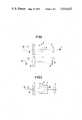
- FIG. 1shows a construction of the view finder of the present invention.
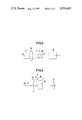
- FIGS. 2, 3 and 4respectively show an embodiment of the view finder optics.
- an objective lens 1consisting of a concave lens and an eye piece lens 2 consisting of a convex lens are arranged coaxially with the optical axis C1 of the view finder so as to constitute the so called Alberda view finder.
- a concave mirror 3consisting of for example a dichroic mirror reflecting the infrared ray but allowing the transmission of the visible light is arranged slantly to the optical axis C1 of the view finder.
- the concave mirror 3is preferably a portion of the ellipsoidal mirror which has a focal point P outside of the optical axis C1 and another focal point Q on the optical axis C1.
- a light sourceconsisting of an infrared light emitting diode 4 for the distance measuring signal is arranged so as to emit the light toward the concave mirror 3.
- a light sensing opticsis arranged in parallel to the view finder optics, whereby the optical axis C1 of the view finder optics is almost parallel to that C2 of the light sensing optics.
- a light sensing element 6is provided in the light sensing optics at the position of the focal point F of the light sensing lens 5.
- the light sensing element 6is arranged near the focal point F in such a manner that angle ⁇ of the reflected light beam L2 of the distance measuring signal is converted into a length ⁇ from the optical axis C2 of the light sensing element 6.
- the distancecan be measured as follows.
- the infrared light emitted from the light source 4 at the point Pis reflected by the concave mirror 3 and converged toward the point Q, whereby due to the negative power of the objective lens, the light is emitted outside of the objective lens 1 as the distance measuring light beam L1, which is converged 2-3 m in front of the objective lens or parallel or diverged with small angle, for example about 5°.
- the light beam L1is reflected from the object and incident upon the light sensing optics.
- ⁇is the distance from the optical axis C2 of the light sensing element 6
- Lis the distance between the optical axis C1 and C2
- fis the focal length of the light sensing lens 5.
- the concave mirror 3reflects the infrared light but transmits the visible light, the object to be photographed can be observed through eye piece with enough visible light. Further, if the mirror 3 is made of very thin glass plate, the quality of the image to be observed is protected from deterioration.
- the second embodiment of the view finder opticswill be explained with reference to FIG. 2.
- the arrangement of the present embodimentis almost similar to that of the first embodiment, whereby the concave mirror 3a is sandwiched between the transparent blocks consisting of glass or plastics.
- the function of the concave mirror 3ais same as that of the concave mirror 3 of the first embodiment, the concave mirror 3a can easily be produced in case of the present embodiment.
- the surface of the blockto be semi-reflective for visible light, and providing the reflecting pattern, for example the distance measuring field mark or field frame, on or near the eye piece lens, such pattern can be observed superimposed in the object field.
- the eye piece lens 2Because, through the eye piece lens 2, the vertual image of such pattern is observed with the aid of the reflection of the imaging beam by the half permeable mirror. Further, by giving a refracting power to a part of the block 7, it is possible to collect the light beam of the light source 4 effectively to the objective lens 1.
- FIG. 3shows the third embodiment.
- the objective lens 1bis supposed to have a positive power and instead of the above concave mirror 3a, a reflecting mirror such as a plane or a convex mirror is used.
- the reflecting mirror 3breflects the infrared light but allows the transmittance of the visible light.
- the objective lens 1bis a convex lens, by constituting the eye piece lens with a convex lens the object field is observed by the eye E of the photographer as an inverted image, so that it is necessary to convert the image to the erecting image by the optics corresponding to the eye piece lens. Further, it must be arranged a negative power lens in front of the light source 4 so as to balance the positive refracting power of the objective lens 1b.
- the objective lens 1dis a negative power concave lens and the eye piece lens 2 is a convex lens, whereby a plane mirror 3d is used as the reflecting mirror.
- a convex lens 10is provided, and the light beam emitted from the LED 4 is converged by the convex lens 10 and reflected by the plane mirror 3d.
- the reflected convergent light beamis compensated by the objective lens 1d consisting of a concave lens into an almost parallel light beam L1, and is directed to the object in the same way as in case of the previous embodiment.
- the present inventioncan reduce the number of the optical windows and realize a compact camera provided with an automatic focusing function by building the light projecting system in the view finder optics.
- the light beam for the distance measurementmay be reflected and directed toward the objective lens by providing the conventional beam splitter with plane surface slantly across the optical axis of the view finder, the light beam emitted from the view finder is divergent due to ordinary negative power of the objective lens.
- the divergent light beam emitted from the light sourceis converted into convergent beam with the refracting or reflecting optics having positive power arranged in the projecting optics.
- the convergent light beamis emitted from the view finder in the state of almost parallel beam by the negative power of the objective lens. Consequently, as the density of energy in the distance measuring beam is increased, the amount of light energy which is reflected from the object is also enough to detect the image position by the light sensing element.
- the position of the object whose distance is measuredcan easily be recognized in the finder field without parallax.
Landscapes
- Physics & Mathematics (AREA)
- General Physics & Mathematics (AREA)
- Optics & Photonics (AREA)
- Automatic Focus Adjustment (AREA)
- Focusing (AREA)
- Viewfinders (AREA)
Abstract
Description
This is a continuation of application Ser. No. 446,954, filed Dec. 6, 1982, now abandoned.
1. Field of the Invention
This invention relates to cameras, and particularly with view finders that also serve as light projection arrangements for distance measurements between the camera and an object.
2. Description of the Prior Art
Cameras with conventional automatic focusing mechanisms use triangulation systems in which imaging optics at one end of the base line cooperate with a movable mirror with other imaging optics at the other end of a base line such that moving the mirror to make the two images coincide allows one to obtain the distance to the object from the angle of the mirror. In another known system, a signal is emitted from the camera and the distance to the object is obtained from the angle of the signal returned from the object. Other than ultrasonic systems, such range finding mechanisms or automatic focusing mechanisms need two optical windows, one for projecting light and another for sensing returned light. Furthermore, aside from the window for a taking lens, one more window would be needed for an Alberda view finder, or two more windows for a mark system view finder. Thus, altogether four or five windows must be provided in autofocus blade-shutter cameras. Recently, very compact cameras have been brought on the market. The space on these cameras is so limited that it is difficult to provide four or five windows on their front surfaces. Moreover, when the base line of the automatic focusing device is made short, the accuracy of the distance measurement is decreased. Therefore, it is difficult to manufacture compact cameras with built in automatic focusing devices.
It is an object of the present invention to provide a view finder which also acts as a light projection optics for a distance measurement system.
It is another object of the present invention to provide a view finder with autofocus optical system which needs less optical windows and smaller space, and is suitable for a ultra-compact camera.
This invention is characterized in that the view finder and the light emitting optics have a common objective optics. The view finder consists of an objective optics and an eye piece arranged behind the objective optics. The light emitting optics for a distance measurement consists of the same objective optics, a reflecting mirror which is provided slantly between the objective optics, the eye piece, and a light source positioned outside the optical path of the view finder.
A part of the light emitted from the light source is reflected by the reflecting mirror and directed through the objective optics toward the object to be photographed.
FIG. 1 shows a construction of the view finder of the present invention.
FIGS. 2, 3 and 4 respectively show an embodiment of the view finder optics.
The present invention will be explained in detail in accordance with the drawings of the embodiments hereof. In FIG. 1, anobjective lens 1 consisting of a concave lens and aneye piece lens 2 consisting of a convex lens are arranged coaxially with the optical axis C1 of the view finder so as to constitute the so called Alberda view finder. Between theobject lens 1 and theeye piece lens 2, aconcave mirror 3 consisting of for example a dichroic mirror reflecting the infrared ray but allowing the transmission of the visible light is arranged slantly to the optical axis C1 of the view finder. Theconcave mirror 3 is preferably a portion of the ellipsoidal mirror which has a focal point P outside of the optical axis C1 and another focal point Q on the optical axis C1. At the point P above theconcave mirror 3, a light source consisting of an infrared light emitting diode 4 for the distance measuring signal is arranged so as to emit the light toward theconcave mirror 3. Further, a light sensing optics is arranged in parallel to the view finder optics, whereby the optical axis C1 of the view finder optics is almost parallel to that C2 of the light sensing optics. In the light sensing optics at the position of the focal point F of the light sensing lens 5, alight sensing element 6 is provided. Thelight sensing element 6 is arranged near the focal point F in such a manner that angle θ of the reflected light beam L2 of the distance measuring signal is converted into a length δ from the optical axis C2 of thelight sensing element 6.
When the light is emitted through the window of the finder optics in this way, the distance can be measured as follows. The infrared light emitted from the light source 4 at the point P is reflected by theconcave mirror 3 and converged toward the point Q, whereby due to the negative power of the objective lens, the light is emitted outside of theobjective lens 1 as the distance measuring light beam L1, which is converged 2-3 m in front of the objective lens or parallel or diverged with small angle, for example about 5°. The light beam L1 is reflected from the object and incident upon the light sensing optics. When the reflected light beam L2 is imaged at a position by δ distant from the optical axis C2 on thelight sensing element 6, the distance D between the camera and the object can be obtained from the relation D=L·f/δ, whereby δ is the distance from the optical axis C2 of thelight sensing element 6, L is the distance between the optical axis C1 and C2, and f is the focal length of the light sensing lens 5. Hereby, because theconcave mirror 3 reflects the infrared light but transmits the visible light, the object to be photographed can be observed through eye piece with enough visible light. Further, if themirror 3 is made of very thin glass plate, the quality of the image to be observed is protected from deterioration.
In the following, the second embodiment of the view finder optics will be explained with reference to FIG. 2. The arrangement of the present embodiment is almost similar to that of the first embodiment, whereby the concave mirror 3a is sandwiched between the transparent blocks consisting of glass or plastics. Though the function of the concave mirror 3a is same as that of theconcave mirror 3 of the first embodiment, the concave mirror 3a can easily be produced in case of the present embodiment. Furthermore, by making the surface of the block to be semi-reflective for visible light, and providing the reflecting pattern, for example the distance measuring field mark or field frame, on or near the eye piece lens, such pattern can be observed superimposed in the object field. Because, through theeye piece lens 2, the vertual image of such pattern is observed with the aid of the reflection of the imaging beam by the half permeable mirror. Further, by giving a refracting power to a part of theblock 7, it is possible to collect the light beam of the light source 4 effectively to theobjective lens 1.
FIG. 3 shows the third embodiment. In case of the present embodiment, theobjective lens 1b is supposed to have a positive power and instead of the above concave mirror 3a, a reflecting mirror such as a plane or a convex mirror is used. Hereby, in the same way as in case of the aboveconcave mirrors 3 and 3a the reflectingmirror 3b reflects the infrared light but allows the transmittance of the visible light. Further, in case theobjective lens 1b is a convex lens, by constituting the eye piece lens with a convex lens the object field is observed by the eye E of the photographer as an inverted image, so that it is necessary to convert the image to the erecting image by the optics corresponding to the eye piece lens. Further, it must be arranged a negative power lens in front of the light source 4 so as to balance the positive refracting power of theobjective lens 1b.
Below, the fourth embodiment will be explained with reference to FIG. 4. In the same way, as in case of the first embodiment, theobjective lens 1d is a negative power concave lens and theeye piece lens 2 is a convex lens, whereby aplane mirror 3d is used as the reflecting mirror. Between the LED 4 and theplane mirror 3d, aconvex lens 10 is provided, and the light beam emitted from the LED 4 is converged by theconvex lens 10 and reflected by theplane mirror 3d. Then, the reflected convergent light beam is compensated by theobjective lens 1d consisting of a concave lens into an almost parallel light beam L1, and is directed to the object in the same way as in case of the previous embodiment.
As described so far, the present invention can reduce the number of the optical windows and realize a compact camera provided with an automatic focusing function by building the light projecting system in the view finder optics. Although the light beam for the distance measurement may be reflected and directed toward the objective lens by providing the conventional beam splitter with plane surface slantly across the optical axis of the view finder, the light beam emitted from the view finder is divergent due to ordinary negative power of the objective lens.
On the other hand, in the present invention the divergent light beam emitted from the light source is converted into convergent beam with the refracting or reflecting optics having positive power arranged in the projecting optics. The convergent light beam is emitted from the view finder in the state of almost parallel beam by the negative power of the objective lens. Consequently, as the density of energy in the distance measuring beam is increased, the amount of light energy which is reflected from the object is also enough to detect the image position by the light sensing element. Further, because a part of the view finder optics is made use of as the distance measuring optics, i.e., the view finder optics and the light projection optics are coaxial, the position of the object whose distance is measured can easily be recognized in the finder field without parallax.
Claims (12)
1. A camera comprising:
(a) light emitting means for emitting light;
(b) finder means for observing an image of an object; said finder means having an objective optical system;
(c) optical means for projecting light produced from said light emitting means toward the object through said objective optical system of said finder means, said optical means being formed so that rays of light emerging from said objective optical system are substantially collimated; and
(d) light receiving means for producing a signal for determining the relationship between the object and the camera by detecting the light from the objective system after reflection from the object.
2. A camera according to claim 1, wherein said optical means defines the light emerging from the objective optical system as lying between a converging pencil of light rays at a distance of 2 meters from the objective optical system and a diverging pencil of rays with an angle of divergence of about 5 degrees.
3. A camera according to claim 2, wherein said objective optical system has a negative power.
4. A camera according to claim 3, wherein said optical means has a concave mirror with its axis inclined with respect to an optical axis of said finder means.
5. A camera according to claim 4, wherein said concave mirror has an ellipsoidal shape with a first focal point on the optical axis of said finder and a second focal point out of the optical axis of said finder means.
6. A camera according to claim 5, wherein the first focal point of said concave mirror lies on the object side of said objective optical system.
7. A camera according to claim 6, wherein said light emitting means is positioned at the second focal point of said concave mirror.
8. A camera according to claim 6, wherein said light emitting means produces infrared light.
9. A camera according to claim 8, wherein said concave mirror is formed to reflect infrared light and to be transparent to visible light.
10. A camera according to claim 4, wherein said concave mirror is positioned in the interior of a light-permeable block made of one of glass and plastic.
11. A camera according to claim 3, wherein said optical means has a plane mirror inclined with an optical axis of said finder means and a lens for converging the light produced from said light emitting means to said plane mirror.
12. A camera according to claim 2, wherein said objective optical system has a positive power.
Applications Claiming Priority (2)
| Application Number | Priority Date | Filing Date | Title |
|---|---|---|---|
| JP56-200325 | 1981-12-12 | ||
| JP56200325AJPS58100840A (en) | 1981-12-12 | 1981-12-12 | camera viewfinder |
Related Parent Applications (1)
| Application Number | Title | Priority Date | Filing Date |
|---|---|---|---|
| US06446954Continuation | 1982-12-06 |
Publications (1)
| Publication Number | Publication Date |
|---|---|
| US4534637Atrue US4534637A (en) | 1985-08-13 |
Family
ID=16422415
Family Applications (1)
| Application Number | Title | Priority Date | Filing Date |
|---|---|---|---|
| US06/656,430Expired - LifetimeUS4534637A (en) | 1981-12-12 | 1984-10-02 | Camera with active optical range finder |
Country Status (2)
| Country | Link |
|---|---|
| US (1) | US4534637A (en) |
| JP (1) | JPS58100840A (en) |
Cited By (33)
| Publication number | Priority date | Publication date | Assignee | Title |
|---|---|---|---|---|
| US4905160A (en)* | 1987-06-02 | 1990-02-27 | Societe Nationale Elf Aquitaine | Device for regulating the operation of a chemical treatment plant, to improve efficiency by attenuation of the variances of the regulating parameters |
| US5341186A (en)* | 1992-01-13 | 1994-08-23 | Olympus Optical Co., Ltd. | Active autofocusing type rangefinder optical system |
| US5715480A (en)* | 1995-08-23 | 1998-02-03 | Olympus Optical Co., Ltd. | Remote control camera using optical signal |
| US5721979A (en)* | 1995-12-25 | 1998-02-24 | Olympus Optical Co., Ltd. | Camera |
| US20080134457A1 (en)* | 2005-02-18 | 2008-06-12 | Irobot Corporation | Autonomous surface cleaning robot for dry cleaning |
| US20080276407A1 (en)* | 2007-05-09 | 2008-11-13 | Irobot Corporation | Compact Autonomous Coverage Robot |
| US20080292748A1 (en)* | 2007-05-25 | 2008-11-27 | Sapporo Breweries Limited | Process for production of an effervescent alcoholic beverage |
| CN100582915C (en)* | 2006-12-06 | 2010-01-20 | 鸿富锦精密工业(深圳)有限公司 | camera |
| US20100011529A1 (en)* | 2006-05-19 | 2010-01-21 | Chikyung Won | Removing debris from cleaning robots |
| US20100037418A1 (en)* | 2005-12-02 | 2010-02-18 | Irobot Corporation | Autonomous Coverage Robots |
| US7706917B1 (en) | 2004-07-07 | 2010-04-27 | Irobot Corporation | Celestial navigation system for an autonomous robot |
| US8253368B2 (en) | 2004-01-28 | 2012-08-28 | Irobot Corporation | Debris sensor for cleaning apparatus |
| US8368339B2 (en) | 2001-01-24 | 2013-02-05 | Irobot Corporation | Robot confinement |
| US8374721B2 (en) | 2005-12-02 | 2013-02-12 | Irobot Corporation | Robot system |
| US8380350B2 (en) | 2005-12-02 | 2013-02-19 | Irobot Corporation | Autonomous coverage robot navigation system |
| US8382906B2 (en) | 2005-02-18 | 2013-02-26 | Irobot Corporation | Autonomous surface cleaning robot for wet cleaning |
| US8386081B2 (en) | 2002-09-13 | 2013-02-26 | Irobot Corporation | Navigational control system for a robotic device |
| US8387193B2 (en) | 2005-02-18 | 2013-03-05 | Irobot Corporation | Autonomous surface cleaning robot for wet and dry cleaning |
| US8390251B2 (en) | 2004-01-21 | 2013-03-05 | Irobot Corporation | Autonomous robot auto-docking and energy management systems and methods |
| US8396592B2 (en) | 2001-06-12 | 2013-03-12 | Irobot Corporation | Method and system for multi-mode coverage for an autonomous robot |
| US8412377B2 (en) | 2000-01-24 | 2013-04-02 | Irobot Corporation | Obstacle following sensor scheme for a mobile robot |
| US8417383B2 (en) | 2006-05-31 | 2013-04-09 | Irobot Corporation | Detecting robot stasis |
| US8428778B2 (en) | 2002-09-13 | 2013-04-23 | Irobot Corporation | Navigational control system for a robotic device |
| US8463438B2 (en) | 2001-06-12 | 2013-06-11 | Irobot Corporation | Method and system for multi-mode coverage for an autonomous robot |
| US8474090B2 (en) | 2002-01-03 | 2013-07-02 | Irobot Corporation | Autonomous floor-cleaning robot |
| US8515578B2 (en) | 2002-09-13 | 2013-08-20 | Irobot Corporation | Navigational control system for a robotic device |
| US8584305B2 (en) | 2005-12-02 | 2013-11-19 | Irobot Corporation | Modular robot |
| US8600553B2 (en) | 2005-12-02 | 2013-12-03 | Irobot Corporation | Coverage robot mobility |
| US8788092B2 (en) | 2000-01-24 | 2014-07-22 | Irobot Corporation | Obstacle following sensor scheme for a mobile robot |
| US8800107B2 (en) | 2010-02-16 | 2014-08-12 | Irobot Corporation | Vacuum brush |
| US8930023B2 (en) | 2009-11-06 | 2015-01-06 | Irobot Corporation | Localization by learning of wave-signal distributions |
| US8972052B2 (en) | 2004-07-07 | 2015-03-03 | Irobot Corporation | Celestial navigation system for an autonomous vehicle |
| US9008835B2 (en) | 2004-06-24 | 2015-04-14 | Irobot Corporation | Remote control scheduler and method for autonomous robotic device |
Families Citing this family (1)
| Publication number | Priority date | Publication date | Assignee | Title |
|---|---|---|---|---|
| JPH01147439A (en)* | 1987-12-02 | 1989-06-09 | Asahi Optical Co Ltd | Automatic parallax correcting device for camera |
Citations (4)
| Publication number | Priority date | Publication date | Assignee | Title |
|---|---|---|---|---|
| US3953863A (en)* | 1972-12-11 | 1976-04-27 | Ernst Leitz G.M.B.H. | Method and apparatus for focusing an objective |
| US4025785A (en)* | 1974-05-13 | 1977-05-24 | Carl Zeiss-Stiftung | Method of and apparatus for the automatic focusing of stereoscopic microscopes |
| US4200380A (en)* | 1977-10-06 | 1980-04-29 | Canon Kabushiki Kaisha | Camera provided with means for giving information about photographing |
| US4358190A (en)* | 1980-09-16 | 1982-11-09 | Fuji Photo Optical Co., Ltd. | Focussing apparatus having blurring indicator |
- 1981
- 1981-12-12JPJP56200325Apatent/JPS58100840A/enactivePending
- 1984
- 1984-10-02USUS06/656,430patent/US4534637A/ennot_activeExpired - Lifetime
Patent Citations (4)
| Publication number | Priority date | Publication date | Assignee | Title |
|---|---|---|---|---|
| US3953863A (en)* | 1972-12-11 | 1976-04-27 | Ernst Leitz G.M.B.H. | Method and apparatus for focusing an objective |
| US4025785A (en)* | 1974-05-13 | 1977-05-24 | Carl Zeiss-Stiftung | Method of and apparatus for the automatic focusing of stereoscopic microscopes |
| US4200380A (en)* | 1977-10-06 | 1980-04-29 | Canon Kabushiki Kaisha | Camera provided with means for giving information about photographing |
| US4358190A (en)* | 1980-09-16 | 1982-11-09 | Fuji Photo Optical Co., Ltd. | Focussing apparatus having blurring indicator |
Cited By (99)
| Publication number | Priority date | Publication date | Assignee | Title |
|---|---|---|---|---|
| US4905160A (en)* | 1987-06-02 | 1990-02-27 | Societe Nationale Elf Aquitaine | Device for regulating the operation of a chemical treatment plant, to improve efficiency by attenuation of the variances of the regulating parameters |
| US5341186A (en)* | 1992-01-13 | 1994-08-23 | Olympus Optical Co., Ltd. | Active autofocusing type rangefinder optical system |
| US5715480A (en)* | 1995-08-23 | 1998-02-03 | Olympus Optical Co., Ltd. | Remote control camera using optical signal |
| US5721979A (en)* | 1995-12-25 | 1998-02-24 | Olympus Optical Co., Ltd. | Camera |
| US8761935B2 (en) | 2000-01-24 | 2014-06-24 | Irobot Corporation | Obstacle following sensor scheme for a mobile robot |
| US8565920B2 (en) | 2000-01-24 | 2013-10-22 | Irobot Corporation | Obstacle following sensor scheme for a mobile robot |
| US8412377B2 (en) | 2000-01-24 | 2013-04-02 | Irobot Corporation | Obstacle following sensor scheme for a mobile robot |
| US8478442B2 (en) | 2000-01-24 | 2013-07-02 | Irobot Corporation | Obstacle following sensor scheme for a mobile robot |
| US8788092B2 (en) | 2000-01-24 | 2014-07-22 | Irobot Corporation | Obstacle following sensor scheme for a mobile robot |
| US9446521B2 (en) | 2000-01-24 | 2016-09-20 | Irobot Corporation | Obstacle following sensor scheme for a mobile robot |
| US9144361B2 (en) | 2000-04-04 | 2015-09-29 | Irobot Corporation | Debris sensor for cleaning apparatus |
| US8368339B2 (en) | 2001-01-24 | 2013-02-05 | Irobot Corporation | Robot confinement |
| US9038233B2 (en) | 2001-01-24 | 2015-05-26 | Irobot Corporation | Autonomous floor-cleaning robot |
| US9582005B2 (en) | 2001-01-24 | 2017-02-28 | Irobot Corporation | Robot confinement |
| US9622635B2 (en) | 2001-01-24 | 2017-04-18 | Irobot Corporation | Autonomous floor-cleaning robot |
| US9167946B2 (en) | 2001-01-24 | 2015-10-27 | Irobot Corporation | Autonomous floor cleaning robot |
| US8686679B2 (en) | 2001-01-24 | 2014-04-01 | Irobot Corporation | Robot confinement |
| US8396592B2 (en) | 2001-06-12 | 2013-03-12 | Irobot Corporation | Method and system for multi-mode coverage for an autonomous robot |
| US9104204B2 (en) | 2001-06-12 | 2015-08-11 | Irobot Corporation | Method and system for multi-mode coverage for an autonomous robot |
| US8463438B2 (en) | 2001-06-12 | 2013-06-11 | Irobot Corporation | Method and system for multi-mode coverage for an autonomous robot |
| US8474090B2 (en) | 2002-01-03 | 2013-07-02 | Irobot Corporation | Autonomous floor-cleaning robot |
| US8516651B2 (en) | 2002-01-03 | 2013-08-27 | Irobot Corporation | Autonomous floor-cleaning robot |
| US9128486B2 (en) | 2002-01-24 | 2015-09-08 | Irobot Corporation | Navigational control system for a robotic device |
| US8515578B2 (en) | 2002-09-13 | 2013-08-20 | Irobot Corporation | Navigational control system for a robotic device |
| US9949608B2 (en) | 2002-09-13 | 2018-04-24 | Irobot Corporation | Navigational control system for a robotic device |
| US8793020B2 (en) | 2002-09-13 | 2014-07-29 | Irobot Corporation | Navigational control system for a robotic device |
| US8428778B2 (en) | 2002-09-13 | 2013-04-23 | Irobot Corporation | Navigational control system for a robotic device |
| US8386081B2 (en) | 2002-09-13 | 2013-02-26 | Irobot Corporation | Navigational control system for a robotic device |
| US8781626B2 (en) | 2002-09-13 | 2014-07-15 | Irobot Corporation | Navigational control system for a robotic device |
| US8390251B2 (en) | 2004-01-21 | 2013-03-05 | Irobot Corporation | Autonomous robot auto-docking and energy management systems and methods |
| US8854001B2 (en) | 2004-01-21 | 2014-10-07 | Irobot Corporation | Autonomous robot auto-docking and energy management systems and methods |
| US8461803B2 (en) | 2004-01-21 | 2013-06-11 | Irobot Corporation | Autonomous robot auto-docking and energy management systems and methods |
| US8749196B2 (en) | 2004-01-21 | 2014-06-10 | Irobot Corporation | Autonomous robot auto-docking and energy management systems and methods |
| US9215957B2 (en) | 2004-01-21 | 2015-12-22 | Irobot Corporation | Autonomous robot auto-docking and energy management systems and methods |
| US8378613B2 (en) | 2004-01-28 | 2013-02-19 | Irobot Corporation | Debris sensor for cleaning apparatus |
| US8456125B2 (en) | 2004-01-28 | 2013-06-04 | Irobot Corporation | Debris sensor for cleaning apparatus |
| US8253368B2 (en) | 2004-01-28 | 2012-08-28 | Irobot Corporation | Debris sensor for cleaning apparatus |
| US8598829B2 (en) | 2004-01-28 | 2013-12-03 | Irobot Corporation | Debris sensor for cleaning apparatus |
| US9486924B2 (en) | 2004-06-24 | 2016-11-08 | Irobot Corporation | Remote control scheduler and method for autonomous robotic device |
| US9008835B2 (en) | 2004-06-24 | 2015-04-14 | Irobot Corporation | Remote control scheduler and method for autonomous robotic device |
| US8594840B1 (en) | 2004-07-07 | 2013-11-26 | Irobot Corporation | Celestial navigation system for an autonomous robot |
| US9229454B1 (en) | 2004-07-07 | 2016-01-05 | Irobot Corporation | Autonomous mobile robot system |
| US7706917B1 (en) | 2004-07-07 | 2010-04-27 | Irobot Corporation | Celestial navigation system for an autonomous robot |
| US8634956B1 (en) | 2004-07-07 | 2014-01-21 | Irobot Corporation | Celestial navigation system for an autonomous robot |
| US8634958B1 (en) | 2004-07-07 | 2014-01-21 | Irobot Corporation | Celestial navigation system for an autonomous robot |
| US9223749B2 (en) | 2004-07-07 | 2015-12-29 | Irobot Corporation | Celestial navigation system for an autonomous vehicle |
| US8972052B2 (en) | 2004-07-07 | 2015-03-03 | Irobot Corporation | Celestial navigation system for an autonomous vehicle |
| US8874264B1 (en) | 2004-07-07 | 2014-10-28 | Irobot Corporation | Celestial navigation system for an autonomous robot |
| US8382906B2 (en) | 2005-02-18 | 2013-02-26 | Irobot Corporation | Autonomous surface cleaning robot for wet cleaning |
| US8739355B2 (en) | 2005-02-18 | 2014-06-03 | Irobot Corporation | Autonomous surface cleaning robot for dry cleaning |
| US8985127B2 (en) | 2005-02-18 | 2015-03-24 | Irobot Corporation | Autonomous surface cleaning robot for wet cleaning |
| US10470629B2 (en) | 2005-02-18 | 2019-11-12 | Irobot Corporation | Autonomous surface cleaning robot for dry cleaning |
| US8774966B2 (en) | 2005-02-18 | 2014-07-08 | Irobot Corporation | Autonomous surface cleaning robot for wet and dry cleaning |
| US8670866B2 (en) | 2005-02-18 | 2014-03-11 | Irobot Corporation | Autonomous surface cleaning robot for wet and dry cleaning |
| US20080134457A1 (en)* | 2005-02-18 | 2008-06-12 | Irobot Corporation | Autonomous surface cleaning robot for dry cleaning |
| US8782848B2 (en) | 2005-02-18 | 2014-07-22 | Irobot Corporation | Autonomous surface cleaning robot for dry cleaning |
| US9445702B2 (en) | 2005-02-18 | 2016-09-20 | Irobot Corporation | Autonomous surface cleaning robot for wet and dry cleaning |
| US8966707B2 (en) | 2005-02-18 | 2015-03-03 | Irobot Corporation | Autonomous surface cleaning robot for dry cleaning |
| US8387193B2 (en) | 2005-02-18 | 2013-03-05 | Irobot Corporation | Autonomous surface cleaning robot for wet and dry cleaning |
| US8392021B2 (en) | 2005-02-18 | 2013-03-05 | Irobot Corporation | Autonomous surface cleaning robot for wet cleaning |
| US9144360B2 (en) | 2005-12-02 | 2015-09-29 | Irobot Corporation | Autonomous coverage robot navigation system |
| US9320398B2 (en) | 2005-12-02 | 2016-04-26 | Irobot Corporation | Autonomous coverage robots |
| US8954192B2 (en) | 2005-12-02 | 2015-02-10 | Irobot Corporation | Navigating autonomous coverage robots |
| US9599990B2 (en) | 2005-12-02 | 2017-03-21 | Irobot Corporation | Robot system |
| US20100037418A1 (en)* | 2005-12-02 | 2010-02-18 | Irobot Corporation | Autonomous Coverage Robots |
| US8978196B2 (en) | 2005-12-02 | 2015-03-17 | Irobot Corporation | Coverage robot mobility |
| US8761931B2 (en) | 2005-12-02 | 2014-06-24 | Irobot Corporation | Robot system |
| US8374721B2 (en) | 2005-12-02 | 2013-02-12 | Irobot Corporation | Robot system |
| US8661605B2 (en) | 2005-12-02 | 2014-03-04 | Irobot Corporation | Coverage robot mobility |
| US8600553B2 (en) | 2005-12-02 | 2013-12-03 | Irobot Corporation | Coverage robot mobility |
| US8584305B2 (en) | 2005-12-02 | 2013-11-19 | Irobot Corporation | Modular robot |
| US9392920B2 (en) | 2005-12-02 | 2016-07-19 | Irobot Corporation | Robot system |
| US8380350B2 (en) | 2005-12-02 | 2013-02-19 | Irobot Corporation | Autonomous coverage robot navigation system |
| US9149170B2 (en) | 2005-12-02 | 2015-10-06 | Irobot Corporation | Navigating autonomous coverage robots |
| US20100011529A1 (en)* | 2006-05-19 | 2010-01-21 | Chikyung Won | Removing debris from cleaning robots |
| US9492048B2 (en) | 2006-05-19 | 2016-11-15 | Irobot Corporation | Removing debris from cleaning robots |
| US8528157B2 (en) | 2006-05-19 | 2013-09-10 | Irobot Corporation | Coverage robots and associated cleaning bins |
| US10244915B2 (en) | 2006-05-19 | 2019-04-02 | Irobot Corporation | Coverage robots and associated cleaning bins |
| US8572799B2 (en) | 2006-05-19 | 2013-11-05 | Irobot Corporation | Removing debris from cleaning robots |
| US9955841B2 (en) | 2006-05-19 | 2018-05-01 | Irobot Corporation | Removing debris from cleaning robots |
| US8418303B2 (en) | 2006-05-19 | 2013-04-16 | Irobot Corporation | Cleaning robot roller processing |
| US8417383B2 (en) | 2006-05-31 | 2013-04-09 | Irobot Corporation | Detecting robot stasis |
| US9317038B2 (en) | 2006-05-31 | 2016-04-19 | Irobot Corporation | Detecting robot stasis |
| CN100582915C (en)* | 2006-12-06 | 2010-01-20 | 鸿富锦精密工业(深圳)有限公司 | camera |
| US20080276407A1 (en)* | 2007-05-09 | 2008-11-13 | Irobot Corporation | Compact Autonomous Coverage Robot |
| US10070764B2 (en) | 2007-05-09 | 2018-09-11 | Irobot Corporation | Compact autonomous coverage robot |
| US9480381B2 (en) | 2007-05-09 | 2016-11-01 | Irobot Corporation | Compact autonomous coverage robot |
| US8239992B2 (en) | 2007-05-09 | 2012-08-14 | Irobot Corporation | Compact autonomous coverage robot |
| US8438695B2 (en) | 2007-05-09 | 2013-05-14 | Irobot Corporation | Autonomous coverage robot sensing |
| US11498438B2 (en) | 2007-05-09 | 2022-11-15 | Irobot Corporation | Autonomous coverage robot |
| US8726454B2 (en) | 2007-05-09 | 2014-05-20 | Irobot Corporation | Autonomous coverage robot |
| US11072250B2 (en) | 2007-05-09 | 2021-07-27 | Irobot Corporation | Autonomous coverage robot sensing |
| US8839477B2 (en) | 2007-05-09 | 2014-09-23 | Irobot Corporation | Compact autonomous coverage robot |
| US10299652B2 (en) | 2007-05-09 | 2019-05-28 | Irobot Corporation | Autonomous coverage robot |
| US20080292748A1 (en)* | 2007-05-25 | 2008-11-27 | Sapporo Breweries Limited | Process for production of an effervescent alcoholic beverage |
| US8930023B2 (en) | 2009-11-06 | 2015-01-06 | Irobot Corporation | Localization by learning of wave-signal distributions |
| US10314449B2 (en) | 2010-02-16 | 2019-06-11 | Irobot Corporation | Vacuum brush |
| US11058271B2 (en) | 2010-02-16 | 2021-07-13 | Irobot Corporation | Vacuum brush |
| US8800107B2 (en) | 2010-02-16 | 2014-08-12 | Irobot Corporation | Vacuum brush |
Also Published As
| Publication number | Publication date |
|---|---|
| JPS58100840A (en) | 1983-06-15 |
Similar Documents
| Publication | Publication Date | Title |
|---|---|---|
| US4534637A (en) | Camera with active optical range finder | |
| JP2913984B2 (en) | Tilt angle measuring device | |
| US3682071A (en) | Automatic focusing device for cameras | |
| US6133988A (en) | Device for the measurement of distances or of the angle of incidence of a light beam | |
| US5109161A (en) | Light emitter and optical system for a distance measuring device | |
| US3515480A (en) | Opto-electronic radiant energy beam range finder | |
| US3552857A (en) | Optical device for the determination of the spacing of an object and its angular deviation relative to an initial position | |
| JPH0533366B2 (en) | ||
| US4429964A (en) | Mirror-reflex camera with electronic rangefinder | |
| JP3120885B2 (en) | Mirror surface measuring device | |
| JPH08327892A (en) | Infrared ray projecting system for range finding | |
| US4533226A (en) | Still or motion picture camera | |
| JP2594438B2 (en) | Distance measuring device | |
| US11754827B2 (en) | Insertion apparatus | |
| US4723142A (en) | Focus detecting device | |
| US5353090A (en) | Camera | |
| JP7403328B2 (en) | surveying equipment | |
| JPS61295533A (en) | Waterproof camera | |
| WO2024195540A1 (en) | Surveying device | |
| SU1767333A1 (en) | Device for determining object spatial attitude | |
| US2401701A (en) | Range finder | |
| WO2025022967A1 (en) | Surveying device | |
| JPH027035B2 (en) | ||
| JPS63284408A (en) | Optical range finder | |
| JPS5921514B2 (en) | Optical system of light wave distance meter |
Legal Events
| Date | Code | Title | Description |
|---|---|---|---|
| STCF | Information on status: patent grant | Free format text:PATENTED CASE | |
| FEPP | Fee payment procedure | Free format text:PAYOR NUMBER ASSIGNED (ORIGINAL EVENT CODE: ASPN); ENTITY STATUS OF PATENT OWNER: LARGE ENTITY | |
| FPAY | Fee payment | Year of fee payment:4 | |
| FPAY | Fee payment | Year of fee payment:8 | |
| FPAY | Fee payment | Year of fee payment:12 |