US4480662A - Hydraulic system valve - Google Patents
Hydraulic system valveDownload PDFInfo
- Publication number
- US4480662A US4480662AUS06/382,607US38260782AUS4480662AUS 4480662 AUS4480662 AUS 4480662AUS 38260782 AUS38260782 AUS 38260782AUS 4480662 AUS4480662 AUS 4480662A
- Authority
- US
- United States
- Prior art keywords
- valve
- vent
- fluid
- plug
- working
- Prior art date
- Legal status (The legal status is an assumption and is not a legal conclusion. Google has not performed a legal analysis and makes no representation as to the accuracy of the status listed.)
- Expired - Fee Related
Links
- 239000012530fluidSubstances0.000claimsabstractdescription79
- 230000002093peripheral effectEffects0.000claimsabstractdescription20
- 238000004891communicationMethods0.000claimsdescription19
- 230000007704transitionEffects0.000description12
- 230000035939shockEffects0.000description8
- 238000005086pumpingMethods0.000description5
- 230000007423decreaseEffects0.000description3
- 238000011144upstream manufacturingMethods0.000description2
- 238000009825accumulationMethods0.000description1
- 230000008602contractionEffects0.000description1
- 238000007599dischargingMethods0.000description1
- 210000003746featherAnatomy0.000description1
- 230000007257malfunctionEffects0.000description1
- 239000000463materialSubstances0.000description1
- 239000003129oil wellSubstances0.000description1
- 238000007789sealingMethods0.000description1
- 230000001052transient effectEffects0.000description1
- 238000013022ventingMethods0.000description1
Images

Classifications
- F—MECHANICAL ENGINEERING; LIGHTING; HEATING; WEAPONS; BLASTING
- F16—ENGINEERING ELEMENTS AND UNITS; GENERAL MEASURES FOR PRODUCING AND MAINTAINING EFFECTIVE FUNCTIONING OF MACHINES OR INSTALLATIONS; THERMAL INSULATION IN GENERAL
- F16K—VALVES; TAPS; COCKS; ACTUATING-FLOATS; DEVICES FOR VENTING OR AERATING
- F16K5/00—Plug valves; Taps or cocks comprising only cut-off apparatus having at least one of the sealing faces shaped as a more or less complete surface of a solid of revolution, the opening and closing movement being predominantly rotary
- F16K5/08—Details
- F16K5/10—Means for additional adjustment of the rate of flow
- F—MECHANICAL ENGINEERING; LIGHTING; HEATING; WEAPONS; BLASTING
- F16—ENGINEERING ELEMENTS AND UNITS; GENERAL MEASURES FOR PRODUCING AND MAINTAINING EFFECTIVE FUNCTIONING OF MACHINES OR INSTALLATIONS; THERMAL INSULATION IN GENERAL
- F16K—VALVES; TAPS; COCKS; ACTUATING-FLOATS; DEVICES FOR VENTING OR AERATING
- F16K11/00—Multiple-way valves, e.g. mixing valves; Pipe fittings incorporating such valves
- F16K11/02—Multiple-way valves, e.g. mixing valves; Pipe fittings incorporating such valves with all movable sealing faces moving as one unit
- F16K11/08—Multiple-way valves, e.g. mixing valves; Pipe fittings incorporating such valves with all movable sealing faces moving as one unit comprising only taps or cocks
- F16K11/085—Multiple-way valves, e.g. mixing valves; Pipe fittings incorporating such valves with all movable sealing faces moving as one unit comprising only taps or cocks with cylindrical plug
- F16K11/0853—Multiple-way valves, e.g. mixing valves; Pipe fittings incorporating such valves with all movable sealing faces moving as one unit comprising only taps or cocks with cylindrical plug having all the connecting conduits situated in a single plane perpendicular to the axis of the plug
- Y—GENERAL TAGGING OF NEW TECHNOLOGICAL DEVELOPMENTS; GENERAL TAGGING OF CROSS-SECTIONAL TECHNOLOGIES SPANNING OVER SEVERAL SECTIONS OF THE IPC; TECHNICAL SUBJECTS COVERED BY FORMER USPC CROSS-REFERENCE ART COLLECTIONS [XRACs] AND DIGESTS
- Y10—TECHNICAL SUBJECTS COVERED BY FORMER USPC
- Y10T—TECHNICAL SUBJECTS COVERED BY FORMER US CLASSIFICATION
- Y10T137/00—Fluid handling
- Y10T137/8593—Systems
- Y10T137/86493—Multi-way valve unit
- Y10T137/86574—Supply and exhaust
- Y10T137/86638—Rotary valve
- Y10T137/86646—Plug type
- Y10T137/86654—For plural lines
- Y—GENERAL TAGGING OF NEW TECHNOLOGICAL DEVELOPMENTS; GENERAL TAGGING OF CROSS-SECTIONAL TECHNOLOGIES SPANNING OVER SEVERAL SECTIONS OF THE IPC; TECHNICAL SUBJECTS COVERED BY FORMER USPC CROSS-REFERENCE ART COLLECTIONS [XRACs] AND DIGESTS
- Y10—TECHNICAL SUBJECTS COVERED BY FORMER USPC
- Y10T—TECHNICAL SUBJECTS COVERED BY FORMER US CLASSIFICATION
- Y10T137/00—Fluid handling
- Y10T137/8593—Systems
- Y10T137/86493—Multi-way valve unit
- Y10T137/86718—Dividing into parallel flow paths with recombining
- Y10T137/86734—With metering feature
- Y—GENERAL TAGGING OF NEW TECHNOLOGICAL DEVELOPMENTS; GENERAL TAGGING OF CROSS-SECTIONAL TECHNOLOGIES SPANNING OVER SEVERAL SECTIONS OF THE IPC; TECHNICAL SUBJECTS COVERED BY FORMER USPC CROSS-REFERENCE ART COLLECTIONS [XRACs] AND DIGESTS
- Y10—TECHNICAL SUBJECTS COVERED BY FORMER USPC
- Y10T—TECHNICAL SUBJECTS COVERED BY FORMER US CLASSIFICATION
- Y10T137/00—Fluid handling
- Y10T137/8593—Systems
- Y10T137/86493—Multi-way valve unit
- Y10T137/86863—Rotary valve unit
- Y10T137/86871—Plug
Definitions
- the present inventionrelates to valves and, more particularly, to valves for use in hydraulic systems.
- a pumping unitforces hydraulic fluid from a tank through an open hydraulic control valve into the bottom of a hydraulic cylinder to raise the piston rod therein which causes the attached bridle and well polish rod to be pulled upwardly. Fluid continues to be pumped into the hydraulic cylinder until an upper limit switch closes the hydraulic control valve and vents the cylinder to the tank. Under these conditions, the weight of the bridle and polish rod pulls the piston down causing fluid to flow out of the hydraulic cylinder and into the tank.
- pilot operated relief valvesare used to control piston rod movement.
- pilot operated valvesoffer two significant disadvantages. Due to close tolerances within the valves, they are subject to malfunction due to the accumulation of foreign material within the valve or due to expansion or contraction resulting from thermal transients to which the valve is exposed.
- the design of these valvesis such that the transition from pressure to vent or vent to pressure positions is rapid, thus producing a sudden hydraulic shock due to the pressure transient. This shock is extremely undesirable in the operation of the hydraulic pumping system.
- U.S. Pat. No. 4,219,049-Skellydiscloses a valve for use in a hydraulic system to feather the hydraulic shock associated with increasing hydraulic fluid flow by suddenly bringing on-line additional hydraulic fluid pumps.
- the Skelly valvecomprises two separate valve body elements which are relatively rotatable on a common shaft.
- a first valve body elementprovides a pair of separated cavities, one of which is connected to a working outlet port and the other to a vent outlet port.
- the other valve body elementhas a plurality of inlet ports connectable to a plurality of separate hydraulic pump outlets. By relative rotation of the valve body elements one or more of the inlet ports can be placed into communication with the cavity connected to the working outlet port to vary the working hydraulic fluid flow.
- U.S. Pat. No. 3,134,405-White et aldiscloses a valve for use in high pressure gas systems to provide a controlled rate of change of pressure differential and avoid shock as the high pressure upstream side of the valve is brought into communication with the lower pressure downstream side of the valve. This is accomplished by providing, in a ball valve, a relatively small diameter bleed passageway extending diametrically through the ball at a substantial angle to the relatively large diameter normal flow bore in the ball such that the small diameter bleed passageway communicates with the valve inlet and outlet ports to gradually equalize upstream and downstream pressure before the relatively large diameter bore allows full flow through the valve between the ports.
- none of the prior art valvesallows sufficiently selective control of the pressure equalizing flow area to permit smooth pressure transitions in all circumstances. It is therefore the purpose of the present invention to overcome previously encountered practical difficulties and to provide an efficient, simple and relatively inexpensive valve for use in hydraulic systems which permits a smooth transition of hydraulic fluid as the valve switches between pressure and vent positions.
- a fluid pressure equalizing valveadapted for use in fluid systems which includes a valve body having a fluid inlet port, a discharge working port and at least one discharge vent port, a valve plug in the valve body having a working passageway and a vent passageway formed therein and communicating with the peripheral wall thereof, the plug being movable with respect to the valve body between a working position wherein the working passageway is aligned with the inlet and working ports and a vent position wherein the vent passageway is aligned with the inlet and/or working port and at least one vent port.
- the valve plugalso includes a plurality of orifice passageways formed therein communicating the peripheral wall of the plug with the vent passageway, the diameter of each orifice passageway being substantially smaller than the diameter of the working passageway, and means preventing fluid flow through the orifice passageways when the plug is in the working and vent positions. At least one of the orifice passageways communicates at least one of the inlet and working ports with the vent port via the vent passageway as the plug moves between its working and vent positions. Means are provided for selectively closing any of the orifice passageways.
- the orifice passagewaysare arranged such that movement of the valve plug between working and vent positions, and vice versa, selectively adds or substracts the number of orifice passageways carrying fluid flow between the inlet and/or working ports and the vent passageway. This, together with the means for selectively closing any of the orifice passageways, provides a high degree of selectivity and control over the vent flow and working flow areas to allow smooth pressure transients.
- removably insertable plug meansare provided for selectively closing the orifice passageways; hydraulic means are provided for moving the valve plug between its first and second positions; and the valve body has an annular configuration for receiving a generally cylindrical valve plug therewithin with the working, vent and orifice passageways thereof communicating with the peripheral wall of the cylindrical plug.
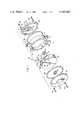
- FIG. 1is an exploded view of the valve of the present invention.
- FIG. 2is a front elevational view of the assembled valve body and valve plug showing the orientation of the working, vent and orifice passageways relative to the ports with the valve plug in its working position.
- FIG. 3is a front elevational view of the assembled valve body and valve plug showing the orientation of the working, vent and orifice passageways relative to the ports with the valve plug in its vent position.
- valve 10represents the fluid pressure equalizing valve of the present invention which is particularly useful to smoothly transition hydrualic fluid flow between working and vent conduits without hydraulic shock.
- Valve 10consists of a valve body 12 which is generally annular in shape and is provided with a hydraulic fluid inlet port 14, a hydraulic fluid discharge working port 16, and hydraulic fluid vent ports 18,20.
- the annular valve bodyencloses a generally circular opening 22 for receiving a generally cylindrical valve plug 24 therein.
- Valve plug 24consists of opposed generally cylindrical faces 26,28 connected by peripheral wall 30 extending therebetween.
- a working fluid flow passageway 32is formed in and extends diametrically through plug 24 and communicates with the peripheral wall 30 via working passageway openings 34,36.
- Vent cavities 38,40Circumferentially spaced from the working passageway openings 34,36 are diametrically opposed, arcuate shaped vent cavities 38,40 formed in peripheral wall 30. These cavities, as will be seen from the discussion which follows, define vent passageways for venting hydraulic fluid to a tank (not shown) or other convenient location.
- a plurality of first and second orifice passageways 42,44extend between openings 43,45 formed in the wall of vent cavities 38,40 and openings 46,48 formed in peripheral wall 30 between working passageway opening 34 and vent cavity 38 and between working passageway opening 36 and vent cavity 40.
- the orifice passagewayswhich are of small diameter relative to the diameter of working passageway 32, may be of the same or of varying diameters, may be of varying cross-sectional shapes, such as circular, oval, triangular, quadrilateral, hexagonal, and the like, and any orifice passageway may be selectively and individually closed by inserting therein an appropriately sized and shaped removable plug 50.
- Valve plug 24is mounted for rotation within valve body 12 in order to move the various passageways into and out of alignment with the various ports, as will be described more fully hereinafter, about axially aligned rotor shaft stubs 52 which project forwardly from face 26 and rearwardly from face 28 of valve plug 24. Rotation of the valve plug about the shaft stubs 52 is facilitated by rotor shaft bearings 54 in which the shaft stubs are received. The shaft bearings 54 are, in turn, received and supported within sockets 56,58 formed in front and rear cover plates 60,62.
- cover plates 60,62fluid-tightly close and are secured to the open ends of valve body 12 in conventional manner, as by the use of screws and threadedly engaging correspondingly threaded apertures 66 in the annular wall of valve body 12.
- Suitable sealing meanssuch as O-rings 68, are provided for affording fluid tight seals between the valve body 12 and cover plates 60,62 to prevent leakage.
- valve plug 24may conveniently rotate within valve body 12 by hand-operated handle means (not shown) but is more conveniently rotated via fluid or electric means.
- a vane 70may extend rearwardly from rear face 28 of valve plug 24 to be received within a recess 72 formed along a circular arc in rear cover plate 62.
- Actuator ports 74,76 formed in the peripheral wall of cover plate 62have one end communicating with recess 72 and the other end opening through the peripheral wall for communicating with a source of hydraulic fluid (not shown).
- vane 70With valve 10 in fully assembled configuration, vane 70 extends into recess 72 and rear face 28 of plug 24 fluid tightly abuts the portion of cover plate 62 surrounding recess 72. In this manner, recess 72 and rear face 28 define a hydraulic chamber 78 for receiving and discharging hydraulic fluid for moving vane 70 along an arcuate path defined by recess 72 and, simultaneously, for causing the rotational movement of plug 24 within valve body 12.
- the pressure equalizing valve of the present inventionis broadly applicable in hydraulic systems, such as pumping systems, for smoothly transitioning the flow of hydraulic fluid between vent and working conduits.
- the configuration of the valveis illustrated in the drawings and its operation will be better understood from the following description.
- Valve plug 24is rotatable within valve body 12, such as by hydraulic means hereinbefore described, between: (1) a fluid working position (FIG. 2) wherein openings 34,36 of working passageway 32 are aligned with inlet port 14 and discharge working port 16, respectively, to allow working fluid under pressure to pass from a source (not shown) through working port 16; and, (2) a fluid vent position (FIG. 3) wherein vent cavity 38 is aligned with circumferentially spaced apart, but closely adjacent, inlet port 14 and vent port 18, and vent cavity 40 is aligned with circumferentially spaced apart, but closely adjacent, discharge working port 16 and vent port 20.
- valve 10as a pressure equalizing valve to avoid hydraulic shock and to smooth fluid flow transitions between working and vent conduits becomes apparent as the change in fluid flow path is traced between valve vent and working positions.
- vent positionshown in FIG. 3
- all flow through inlet and working ports 14,16is vented via vent cavities 38,40 through vent ports 18,20.
- valve plug 24is rotated in a clockwise direction in FIG. 3 from the vent position toward the working position shown in FIG. 2, it can be seen that the first and second orifice passageways 42,44 gradually come into fluid flow communication with the inlet and working ports 14,16 and that a portion of the flow which had been vented directly through vent cavities 38,40 now begins to flow via orifice passageways 42,44 into vent cavities 38,40.
- vent flow through the combination of orifice passageways and vent cavitiesis somewhat smaller than the vent flow discharged directly through the vent cavities alone.
- valve plug 24continues to rotate in a clockwise direction the number of first and second orifice passageways 42,44 which are moved into fluid flow communication with inlet and working ports 14,16 continues to increase and the proportion of vent flow through orifice passageways 42,44 into vent cavities 38,40 increases as the proportion of vent flow directly into the vent cavities 38,40 correspondingly decreases.
- vent cavities 38,40are rotated out of fluid flow communication with ports 14,16 at which time all vent flow is via orifice passageways 42,44.
- the number of first and second orifice passageways 42,44 in fluid flow communication with inlet and working ports 14,16decreases and working passageway 32 gradually rotates into fluid flow communication with ports 14,16 to commence working fluid flow through passageway 32. In this way the flow through working port 16 gradually increases and the transition from vent to working positions continues slowly and without hydraulic shock until the working position of FIG. 2 is reached.
- valve plug 24to substitute smaller diameter orifice passageways for the larger diameter working passageway 32 or vent cavities 38,40 as the conduits for working or vent flow permits close control over the working to vent transition flow, and vice-versa, and allows the transition to occur smoothly. Even more careful and precise control over the transition from working to vent flow, and vice-versa, is achieved by use of the removably insertable plugs 50 to selectively close any combination of first and second orifice passageways.
- the orifice passagewaysmay vary in size and shape and thus in flow carrying capability, it can be seen that selective use of plugs 50 can effectively afford very close control over the flow transition.
- valve of the present inventionmay be used in systems having substantially different operating conditions and be adjusted to accommodate any particular operating conditions while still operating efficiently and effectively.
- speed of valve operationcan be varied to control flow transition.
Landscapes
- Engineering & Computer Science (AREA)
- General Engineering & Computer Science (AREA)
- Mechanical Engineering (AREA)
- Taps Or Cocks (AREA)
Abstract
Description
This application is a continuation-in-part of copending application Ser. No. 368,003, filed Apr. 13, 1982, now abandoned.
The present invention relates to valves and, more particularly, to valves for use in hydraulic systems.
In the operation of hydraulic pumping units useful in oil well applications, the bridle and attached well polish rod move upwardly and downwardly in direct response to the flow of hydraulic fluid into and out of hydraulic cylinders having piston rods therein which are attached to the bridle and well polish rod. Thus, a pumping unit forces hydraulic fluid from a tank through an open hydraulic control valve into the bottom of a hydraulic cylinder to raise the piston rod therein which causes the attached bridle and well polish rod to be pulled upwardly. Fluid continues to be pumped into the hydraulic cylinder until an upper limit switch closes the hydraulic control valve and vents the cylinder to the tank. Under these conditions, the weight of the bridle and polish rod pulls the piston down causing fluid to flow out of the hydraulic cylinder and into the tank.
In most hydraulic pumping systems, pilot operated relief valves are used to control piston rod movement. However, pilot operated valves offer two significant disadvantages. Due to close tolerances within the valves, they are subject to malfunction due to the accumulation of foreign material within the valve or due to expansion or contraction resulting from thermal transients to which the valve is exposed. In addition, the design of these valves is such that the transition from pressure to vent or vent to pressure positions is rapid, thus producing a sudden hydraulic shock due to the pressure transient. This shock is extremely undesirable in the operation of the hydraulic pumping system.
U.S. Pat. No. 4,219,049-Skelly discloses a valve for use in a hydraulic system to feather the hydraulic shock associated with increasing hydraulic fluid flow by suddenly bringing on-line additional hydraulic fluid pumps. The Skelly valve comprises two separate valve body elements which are relatively rotatable on a common shaft. A first valve body element provides a pair of separated cavities, one of which is connected to a working outlet port and the other to a vent outlet port. The other valve body element has a plurality of inlet ports connectable to a plurality of separate hydraulic pump outlets. By relative rotation of the valve body elements one or more of the inlet ports can be placed into communication with the cavity connected to the working outlet port to vary the working hydraulic fluid flow.
U.S. Pat. No. 3,134,405-White et al discloses a valve for use in high pressure gas systems to provide a controlled rate of change of pressure differential and avoid shock as the high pressure upstream side of the valve is brought into communication with the lower pressure downstream side of the valve. This is accomplished by providing, in a ball valve, a relatively small diameter bleed passageway extending diametrically through the ball at a substantial angle to the relatively large diameter normal flow bore in the ball such that the small diameter bleed passageway communicates with the valve inlet and outlet ports to gradually equalize upstream and downstream pressure before the relatively large diameter bore allows full flow through the valve between the ports.
However, none of the prior art valves allows sufficiently selective control of the pressure equalizing flow area to permit smooth pressure transitions in all circumstances. It is therefore the purpose of the present invention to overcome previously encountered practical difficulties and to provide an efficient, simple and relatively inexpensive valve for use in hydraulic systems which permits a smooth transition of hydraulic fluid as the valve switches between pressure and vent positions.
In one aspect of the present invention this is accomplished by providing a fluid pressure equalizing valve adapted for use in fluid systems which includes a valve body having a fluid inlet port, a discharge working port and at least one discharge vent port, a valve plug in the valve body having a working passageway and a vent passageway formed therein and communicating with the peripheral wall thereof, the plug being movable with respect to the valve body between a working position wherein the working passageway is aligned with the inlet and working ports and a vent position wherein the vent passageway is aligned with the inlet and/or working port and at least one vent port. The valve plug also includes a plurality of orifice passageways formed therein communicating the peripheral wall of the plug with the vent passageway, the diameter of each orifice passageway being substantially smaller than the diameter of the working passageway, and means preventing fluid flow through the orifice passageways when the plug is in the working and vent positions. At least one of the orifice passageways communicates at least one of the inlet and working ports with the vent port via the vent passageway as the plug moves between its working and vent positions. Means are provided for selectively closing any of the orifice passageways.
In another aspect of the invention the orifice passageways are arranged such that movement of the valve plug between working and vent positions, and vice versa, selectively adds or substracts the number of orifice passageways carrying fluid flow between the inlet and/or working ports and the vent passageway. This, together with the means for selectively closing any of the orifice passageways, provides a high degree of selectivity and control over the vent flow and working flow areas to allow smooth pressure transients.
In a particularly preferred embodiment of the invention, removably insertable plug means are provided for selectively closing the orifice passageways; hydraulic means are provided for moving the valve plug between its first and second positions; and the valve body has an annular configuration for receiving a generally cylindrical valve plug therewithin with the working, vent and orifice passageways thereof communicating with the peripheral wall of the cylindrical plug.
FIG. 1 is an exploded view of the valve of the present invention.
FIG. 2 is a front elevational view of the assembled valve body and valve plug showing the orientation of the working, vent and orifice passageways relative to the ports with the valve plug in its working position.
FIG. 3 is a front elevational view of the assembled valve body and valve plug showing the orientation of the working, vent and orifice passageways relative to the ports with the valve plug in its vent position.
Referring to the drawings, reference numeral 10 represents the fluid pressure equalizing valve of the present invention which is particularly useful to smoothly transition hydrualic fluid flow between working and vent conduits without hydraulic shock. Valve 10 consists of avalve body 12 which is generally annular in shape and is provided with a hydraulicfluid inlet port 14, a hydraulic fluiddischarge working port 16, and hydraulicfluid vent ports circular opening 22 for receiving a generallycylindrical valve plug 24 therein.Valve plug 24 consists of opposed generallycylindrical faces peripheral wall 30 extending therebetween. A workingfluid flow passageway 32 is formed in and extends diametrically throughplug 24 and communicates with theperipheral wall 30 viaworking passageway openings passageway openings vent cavities peripheral wall 30. These cavities, as will be seen from the discussion which follows, define vent passageways for venting hydraulic fluid to a tank (not shown) or other convenient location. A plurality of first andsecond orifice passageways openings vent cavities openings peripheral wall 30 between working passageway opening 34 andvent cavity 38 and between working passageway opening 36 andvent cavity 40. The orifice passageways, which are of small diameter relative to the diameter ofworking passageway 32, may be of the same or of varying diameters, may be of varying cross-sectional shapes, such as circular, oval, triangular, quadrilateral, hexagonal, and the like, and any orifice passageway may be selectively and individually closed by inserting therein an appropriately sized and shaped removable plug 50.
Valveplug 24 is mounted for rotation withinvalve body 12 in order to move the various passageways into and out of alignment with the various ports, as will be described more fully hereinafter, about axially alignedrotor shaft stubs 52 which project forwardly fromface 26 and rearwardly fromface 28 ofvalve plug 24. Rotation of the valve plug about theshaft stubs 52 is facilitated byrotor shaft bearings 54 in which the shaft stubs are received. Theshaft bearings 54 are, in turn, received and supported withinsockets 56,58 formed in front andrear cover plates valve plug 24 received withinvalve body 12, androtor shaft bearings 54 onshaft stubs 52 received withinsockets 56,58,cover plates valve body 12 in conventional manner, as by the use of screws and threadedly engaging correspondingly threadedapertures 66 in the annular wall ofvalve body 12. Suitable sealing means, such as O-rings 68, are provided for affording fluid tight seals between thevalve body 12 andcover plates
Thevalve plug 24 may conveniently rotate withinvalve body 12 by hand-operated handle means (not shown) but is more conveniently rotated via fluid or electric means. Thus, for example, avane 70 may extend rearwardly fromrear face 28 ofvalve plug 24 to be received within arecess 72 formed along a circular arc inrear cover plate 62.Actuator ports cover plate 62 have one end communicating withrecess 72 and the other end opening through the peripheral wall for communicating with a source of hydraulic fluid (not shown). With valve 10 in fully assembled configuration,vane 70 extends intorecess 72 andrear face 28 ofplug 24 fluid tightly abuts the portion ofcover plate 62 surroundingrecess 72. In this manner, recess 72 andrear face 28 define ahydraulic chamber 78 for receiving and discharging hydraulic fluid for movingvane 70 along an arcuate path defined byrecess 72 and, simultaneously, for causing the rotational movement ofplug 24 withinvalve body 12.
The pressure equalizing valve of the present invention is broadly applicable in hydraulic systems, such as pumping systems, for smoothly transitioning the flow of hydraulic fluid between vent and working conduits. The configuration of the valve is illustrated in the drawings and its operation will be better understood from the following description.
Valveplug 24 is rotatable withinvalve body 12, such as by hydraulic means hereinbefore described, between: (1) a fluid working position (FIG. 2) whereinopenings working passageway 32 are aligned withinlet port 14 anddischarge working port 16, respectively, to allow working fluid under pressure to pass from a source (not shown) through workingport 16; and, (2) a fluid vent position (FIG. 3) whereinvent cavity 38 is aligned with circumferentially spaced apart, but closely adjacent,inlet port 14 andvent port 18, andvent cavity 40 is aligned with circumferentially spaced apart, but closely adjacent,discharge working port 16 andvent port 20.
In the working position shown in FIG. 2 there is no fluid flow communication between either the inlet ordischarge working ports vent cavities orifice passageways discharge working ports Peripheral wall openings orifice passageways vent ports port 14 and workingpassageway 32 is discharged throughdischarge working port 16.
In the vent position shown in FIG. 3 there is no fluid flow communication between the inlet and discharge workingports passageway 32 is out of communication with both the inlet and discharge workingports orifice passageways peripheral wall openings annular valve body 12. All inlet flow through eitherinlet port 14 ordischarge working port 16 is directed byvent cavities vent ports
The functioning of valve 10 as a pressure equalizing valve to avoid hydraulic shock and to smooth fluid flow transitions between working and vent conduits becomes apparent as the change in fluid flow path is traced between valve vent and working positions. As has been indicated, in the vent position shown in FIG. 3 all flow through inlet and workingports vent cavities vent ports ports vent cavities orifice passageways vent cavities ports orifice passageways vent cavities vent cavities vent cavities ports orifice passageways valve plug 24 continues, the number of first and second orifice passageways 42,44 in fluid flow communication with inlet and workingports passageway 32 gradually rotates into fluid flow communication withports passageway 32. In this way the flow through workingport 16 gradually increases and the transition from vent to working positions continues slowly and without hydraulic shock until the working position of FIG. 2 is reached.
In like manner, the flow can be transitioned gradually and without shock from the working position of FIG. 2 back to the vent position of FIG. 3 by rotatingvalve plug 24 in a counter-clockwise direction in FIG. 2. It can be seen that as rotation commences the first and second orifice passageways 42,44 gradually move into fluid flow communication withports orifice passageways cavities ports passageway 32. As counter-clockwise rotation continues the number oforifice passageways ports passageway 32 is rotated out of communication withports ports cavities vent ports valve plug 24 continues, the first and second orifice passageways 42,44 begin to move out of fluid flow communication with the inlet and workingports vent cavities vent ports vent cavities ports
It will be appreciated that the ability to selectively and gradually increase or decrease the flow area for working or vent flow by rotation of valve plug 24 to substitute smaller diameter orifice passageways for the largerdiameter working passageway 32 or ventcavities
Claims (13)
1. A fluid pressure equalizing valve adapted for use in hydraulic systems comprising:
a valve body having a fluid inlet port, a fluid discharge working port and at least one fluid discharge vent port therein;
a valve plug comprising a plug body having a peripheral wall, said plug disposed in said valve body and having a working flow passageway and at least one vent flow passageway formed therein and communicating with said peripheral wall, said plug being movable with respect to said valve body between a first fluid working position wherein said working flow passageway is aligned with said fluid inlet and said fluid discharge working ports to provide fluid flow communication therebetween for passing inlet fluid to the working port and a second fluid vent position wherein said vent flow passageway is aligned with at least one inlet and fluid discharge working ports and said fluid discharge vent port to provide fluid flow communication therebetween for passing inlet fluid to a vent port;
said valve plug including a plurality of orifice passageways formed therein communicating said peripheral wall with said vent flow passageway, the diameter of each said orifice passageway being substantially smaller than the diameter of said working flow passageway, means preventing fluid flow through said orifice passageways when said valve plug is in its first and second positions, at least one of said orifice passageways communicating at least one of said inlet and discharge working ports and said vent port via said vent flow passageway as said valve plug moves between its first and second positions, said orifice passageways being arranged such that said valve plug is movable from its first position to its second position, and vice versa, to selectively subtract or add, respectively, the number of orifice passageways communicating said inlet and working ports with said vent port via said vent flow passageway;
plug means for selectively closing any of said orifice passageways, said plug means being removably insertable in said orifice passageways; and
means for moving said valve plug between is first and second positions.
2. A valve, as claimed in claim 1, wherein the flow areas of at least some of said orifice passageways differ from the flow areas of others of said orifice passageways.
3. A valve, as claimed in claims 1 or 2, wherein said means for moving said valve plug comprises hydraulic means.
4. A valve, as claimed in claim 3, wherein said hydraulic means includes vane means on said valve plug, an elongated vane receiving chamber associated with said valve body, said vane means projecting into and slidable within said chamber, and spaced apart hydraulic fluid ports communicating with said chamber adjacent its ends for providing hydraulic fluid flow into and out of said chamber, whereby said vane slides in said chamber between the ends thereof in response to the force exerted thereon by the hydraulic fluid for moving the valve plug between its first and second positions.
5. A valve, as claimed in claim 1 or 2, wherein said valve body is annular and includes a generally cylindrical peripheral wall surface defining a generally cylindrical opening therewithin, said valve plug is generally cylindrical and rotatable within said valve body about a central axis coaxial with the axis of said valve body between its first and second positions.
6. A valve, as claimed in claim 5, wherein said working passageway extends diametrically through said plug for alignment with diametrically opposed fluid inlet and working ports when said plug is in its first position.
7. A valve, as claimed in claim 5, wherein said vent flow passageway comprises first and second arcuate shaped cavities formed in and circumferentially spaced apart along the peripheral wall of said valve plug.
8. A valve, as claimed in claim 7, wherein said plurality of orifice passageways comprise a first plurality of orifice passageways communicating said first arcuate shaped cavity with the peripheral wall of said plug and a second plurality of orifice passageways communicating said second arcuate shaped cavity with the peripheral wall of said plug.
9. A valve, as claimed in claim 8, wherein said fluid inlet port and a fluid discharge vent port are circumferentially spaced along said annular valve body and sufficiently close that a single arcuate shaped cavity comprising one vent passageway provides fluid flow communication therebetween when said valve plug is in its second position.
10. A valve, as claimed in claim 8, wherein said fluid discharge working port and a fluid discharge vent port are circumferentially spaced apart along said annular valve body and sufficiently close that a single arcuate shaped cavity comprising one vent passageway provides fluid flow communication therebetween when said valve plug is in its second position.
11. A valve, as claimed in claim 5, wherein said valve body includes a pair of cover plates fluid tightly engaging the forwardly and rearwardly facing annular surfaces of said annular valve body.
12. A valve, as claimed in claim 11, including axially aligned shaft stubs projecting forwardly and rearwardly from the opposite faces of said generally cylindrical valve plug along the central axis thereof, said stubs being supported in said cover plates for rotation of said valve plug thereabout.
13. A valve, as claimed in claim 11, including an elongated arc-shaped vane receiving recess formed in one of said cover plates, spaced apart hydraulic fluid inlet and outlet ports formed in said one cover plate communicating with said recess adjacent its ends for providing a hydraulic fluid flow path to and from said recess, a vane projecting from one face of said generally cylindrical valve plug toward said recess-containing cover plate and received within said recess with said one face of said valve plug in fluid tight abutting relation with the portion of said cover plate surrounding said recess to define with said recess a fluid-tight hydraulic chamber for arcuate sliding movement of said vane within said chamber in response to hydraulic fluid force exerted thereon whereby said valve plug rotatably moves between its first and second positions.
Priority Applications (1)
| Application Number | Priority Date | Filing Date | Title |
|---|---|---|---|
| US06/382,607US4480662A (en) | 1982-04-13 | 1982-05-27 | Hydraulic system valve |
Applications Claiming Priority (2)
| Application Number | Priority Date | Filing Date | Title |
|---|---|---|---|
| US36800382A | 1982-04-13 | 1982-04-13 | |
| US06/382,607US4480662A (en) | 1982-04-13 | 1982-05-27 | Hydraulic system valve |
Related Parent Applications (1)
| Application Number | Title | Priority Date | Filing Date |
|---|---|---|---|
| US36800382AContinuation-In-Part | 1982-04-13 | 1982-04-13 |
Publications (1)
| Publication Number | Publication Date |
|---|---|
| US4480662Atrue US4480662A (en) | 1984-11-06 |
Family
ID=27004012
Family Applications (1)
| Application Number | Title | Priority Date | Filing Date |
|---|---|---|---|
| US06/382,607Expired - Fee RelatedUS4480662A (en) | 1982-04-13 | 1982-05-27 | Hydraulic system valve |
Country Status (1)
| Country | Link |
|---|---|
| US (1) | US4480662A (en) |
Cited By (8)
| Publication number | Priority date | Publication date | Assignee | Title |
|---|---|---|---|---|
| US4569371A (en)* | 1984-12-28 | 1986-02-11 | Uop Inc. | Axial multiport rotary valve |
| US4725352A (en)* | 1986-12-15 | 1988-02-16 | Haliotis Peter D | Skimmer-vacuum regulator for swimming pool |
| US4968334A (en)* | 1989-09-08 | 1990-11-06 | Hilton Thomas J | Remotely-controlled multi-port valve having a multi-vane rotating central drum element |
| KR100581496B1 (en)* | 2000-03-28 | 2006-05-23 | 주식회사 만도 | Valve Structure for Shock Absorber |
| WO2021167955A1 (en)* | 2020-02-19 | 2021-08-26 | Medical Instrument Development Laboratories, Inc. | Rotary valve |
| US20220074510A1 (en)* | 2020-09-09 | 2022-03-10 | Hyundai Motor Company | Multi-passage coolant valve |
| US20230078460A1 (en)* | 2021-06-04 | 2023-03-16 | Vitesco Technologies USA, LLC | Multi-port valve assembly |
| US20230359230A1 (en)* | 2022-05-03 | 2023-11-09 | Electra Aero, Inc. | Systems and Methods For Controlling Fluid Flow |
Citations (7)
| Publication number | Priority date | Publication date | Assignee | Title |
|---|---|---|---|---|
| US1810331A (en)* | 1929-01-19 | 1931-06-16 | Wilhjelm Christian | Oil valve |
| US2229931A (en)* | 1938-07-22 | 1941-01-28 | Arthur L Parker | Valve |
| US2853099A (en)* | 1946-05-29 | 1958-09-23 | John E Eitel | Valve operating mechanism for controlling the flow of fluid |
| US3023783A (en)* | 1958-07-21 | 1962-03-06 | Fisher Governor Co | Ball valve |
| US3134405A (en)* | 1961-03-09 | 1964-05-26 | Gen Dynamics Corp | Valve |
| US3821968A (en)* | 1973-01-26 | 1974-07-02 | Acf Ind Inc | Control valve structure having double ports |
| US4219049A (en)* | 1978-07-31 | 1980-08-26 | Michael Skelly | Multiple flow selection valve |
- 1982
- 1982-05-27USUS06/382,607patent/US4480662A/ennot_activeExpired - Fee Related
Patent Citations (7)
| Publication number | Priority date | Publication date | Assignee | Title |
|---|---|---|---|---|
| US1810331A (en)* | 1929-01-19 | 1931-06-16 | Wilhjelm Christian | Oil valve |
| US2229931A (en)* | 1938-07-22 | 1941-01-28 | Arthur L Parker | Valve |
| US2853099A (en)* | 1946-05-29 | 1958-09-23 | John E Eitel | Valve operating mechanism for controlling the flow of fluid |
| US3023783A (en)* | 1958-07-21 | 1962-03-06 | Fisher Governor Co | Ball valve |
| US3134405A (en)* | 1961-03-09 | 1964-05-26 | Gen Dynamics Corp | Valve |
| US3821968A (en)* | 1973-01-26 | 1974-07-02 | Acf Ind Inc | Control valve structure having double ports |
| US4219049A (en)* | 1978-07-31 | 1980-08-26 | Michael Skelly | Multiple flow selection valve |
Cited By (11)
| Publication number | Priority date | Publication date | Assignee | Title |
|---|---|---|---|---|
| US4569371A (en)* | 1984-12-28 | 1986-02-11 | Uop Inc. | Axial multiport rotary valve |
| US4725352A (en)* | 1986-12-15 | 1988-02-16 | Haliotis Peter D | Skimmer-vacuum regulator for swimming pool |
| US4968334A (en)* | 1989-09-08 | 1990-11-06 | Hilton Thomas J | Remotely-controlled multi-port valve having a multi-vane rotating central drum element |
| KR100581496B1 (en)* | 2000-03-28 | 2006-05-23 | 주식회사 만도 | Valve Structure for Shock Absorber |
| WO2021167955A1 (en)* | 2020-02-19 | 2021-08-26 | Medical Instrument Development Laboratories, Inc. | Rotary valve |
| US11261987B2 (en) | 2020-02-19 | 2022-03-01 | Medical Instrument Development Laboratories, Inc. | Rotary valve |
| US20220074510A1 (en)* | 2020-09-09 | 2022-03-10 | Hyundai Motor Company | Multi-passage coolant valve |
| US11614173B2 (en)* | 2020-09-09 | 2023-03-28 | Hyundai Motor Company | Multi-passage coolant valve |
| US20230078460A1 (en)* | 2021-06-04 | 2023-03-16 | Vitesco Technologies USA, LLC | Multi-port valve assembly |
| US20230359230A1 (en)* | 2022-05-03 | 2023-11-09 | Electra Aero, Inc. | Systems and Methods For Controlling Fluid Flow |
| US12271213B2 (en)* | 2022-05-03 | 2025-04-08 | Electra Aero, Inc. | Systems and methods for controlling fluid flow |
Similar Documents
| Publication | Publication Date | Title |
|---|---|---|
| EP0283053B1 (en) | Hydraulic valve arrangement | |
| US4325215A (en) | Hydraulic apparatus | |
| DK169295B1 (en) | Hydraulic steering controller | |
| JPS6132517B2 (en) | ||
| US5328337A (en) | Guided vanes hydraulic power system | |
| US4480662A (en) | Hydraulic system valve | |
| RU2099623C1 (en) | Regulating disk valve with unloading device | |
| JPS5762986A (en) | Variable displacement type vane pump | |
| US2630681A (en) | Rotary pump and motor hydraulic drive having a substantially constant output speed | |
| ES8204510A1 (en) | Rotative hydraulic distributor for a hydraulic actuating system. | |
| KR101299045B1 (en) | A spool valve with reduced cavitation damage | |
| US4281684A (en) | Balanced rotary-faced valve | |
| US3375756A (en) | Multiple- or variable-speed motors notably hydraulic motors with monitoring system and its applications | |
| US4219049A (en) | Multiple flow selection valve | |
| KR100225915B1 (en) | Centrifugal pump with two outlet tubes and one regulator | |
| US4096882A (en) | Control valve | |
| US2054258A (en) | Valve | |
| US4187882A (en) | Diverter-valve apparatus | |
| US2814309A (en) | Hydraulic control valve | |
| EP0379124A3 (en) | Torque-generating steering device with load-sensing capability | |
| CA2095456C (en) | Ball valve with offset through-duct | |
| US2993445A (en) | Pump, in particular for control systems | |
| JP4044283B2 (en) | Swivel gear control device provided with braking valve and control valve | |
| US4130129A (en) | Plug valve | |
| US3443586A (en) | Four-way change-over device for hydraulic installations |
Legal Events
| Date | Code | Title | Description |
|---|---|---|---|
| REMI | Maintenance fee reminder mailed | ||
| LAPS | Lapse for failure to pay maintenance fees | ||
| STCH | Information on status: patent discontinuation | Free format text:PATENT EXPIRED DUE TO NONPAYMENT OF MAINTENANCE FEES UNDER 37 CFR 1.362 | |
| FP | Lapsed due to failure to pay maintenance fee | Effective date:19881106 |