US4452236A - Endoscope with a resilient raising member - Google Patents
Endoscope with a resilient raising memberDownload PDFInfo
- Publication number
- US4452236A US4452236AUS06/375,990US37599082AUS4452236AUS 4452236 AUS4452236 AUS 4452236AUS 37599082 AUS37599082 AUS 37599082AUS 4452236 AUS4452236 AUS 4452236A
- Authority
- US
- United States
- Prior art keywords
- raising member
- treatment tool
- end portion
- raising
- distal end
- Prior art date
- Legal status (The legal status is an assumption and is not a legal conclusion. Google has not performed a legal analysis and makes no representation as to the accuracy of the status listed.)
- Expired - Lifetime
Links
- 238000003780insertionMethods0.000claimsabstractdescription49
- 230000037431insertionEffects0.000claimsabstractdescription49
- 229910045601alloyInorganic materials0.000claimsdescription14
- 239000000956alloySubstances0.000claimsdescription14
- 239000002184metalSubstances0.000claimsdescription13
- 229920003002synthetic resinPolymers0.000claimsdescription6
- 239000000057synthetic resinSubstances0.000claimsdescription6
- 229910004337Ti-NiInorganic materials0.000claimsdescription3
- 229910011209Ti—NiInorganic materials0.000claimsdescription3
- KHYBPSFKEHXSLX-UHFFFAOYSA-NiminotitaniumChemical compound[Ti]=NKHYBPSFKEHXSLX-UHFFFAOYSA-N0.000claimsdescription3
- 238000004140cleaningMethods0.000description10
- 239000007788liquidSubstances0.000description10
- 238000005452bendingMethods0.000description8
- 239000000463materialSubstances0.000description7
- 238000005286illuminationMethods0.000description6
- 238000011109contaminationMethods0.000description3
- 239000004033plasticSubstances0.000description3
- 239000002872contrast mediaSubstances0.000description2
- 230000003287optical effectEffects0.000description2
- 239000013307optical fiberSubstances0.000description2
- 230000001105regulatory effectEffects0.000description2
- 238000004659sterilization and disinfectionMethods0.000description2
- 230000009466transformationEffects0.000description2
- 229920001875EbonitePolymers0.000description1
- YCKRFDGAMUMZLT-UHFFFAOYSA-NFluorine atomChemical compound[F]YCKRFDGAMUMZLT-UHFFFAOYSA-N0.000description1
- 239000004677NylonSubstances0.000description1
- 239000002253acidSubstances0.000description1
- 150000007513acidsChemical class0.000description1
- 230000004323axial lengthEffects0.000description1
- 239000000470constituentSubstances0.000description1
- 230000003247decreasing effectEffects0.000description1
- 230000008021depositionEffects0.000description1
- 230000005489elastic deformationEffects0.000description1
- 239000013013elastic materialSubstances0.000description1
- 230000006355external stressEffects0.000description1
- 229910052731fluorineInorganic materials0.000description1
- 239000011737fluorineSubstances0.000description1
- 210000004051gastric juiceAnatomy0.000description1
- 238000004519manufacturing processMethods0.000description1
- 229910000734martensiteInorganic materials0.000description1
- 239000007769metal materialSubstances0.000description1
- 238000000034methodMethods0.000description1
- 238000003801millingMethods0.000description1
- 231100000252nontoxicToxicity0.000description1
- 230000003000nontoxic effectEffects0.000description1
- 229920001778nylonPolymers0.000description1
- 238000012856packingMethods0.000description1
- 239000004417polycarbonateSubstances0.000description1
- 229920000515polycarbonatePolymers0.000description1
- 239000007787solidSubstances0.000description1
- 239000010935stainless steelSubstances0.000description1
- 229910001220stainless steelInorganic materials0.000description1
- 230000035882stressEffects0.000description1
- 238000002560therapeutic procedureMethods0.000description1
- XLYOFNOQVPJJNP-UHFFFAOYSA-NwaterSubstancesOXLYOFNOQVPJJNP-UHFFFAOYSA-N0.000description1
Images
Classifications
- A—HUMAN NECESSITIES
- A61—MEDICAL OR VETERINARY SCIENCE; HYGIENE
- A61M—DEVICES FOR INTRODUCING MEDIA INTO, OR ONTO, THE BODY; DEVICES FOR TRANSDUCING BODY MEDIA OR FOR TAKING MEDIA FROM THE BODY; DEVICES FOR PRODUCING OR ENDING SLEEP OR STUPOR
- A61M25/00—Catheters; Hollow probes
- A61M25/01—Introducing, guiding, advancing, emplacing or holding catheters
- A61M25/0105—Steering means as part of the catheter or advancing means; Markers for positioning
- A61M25/0133—Tip steering devices
- A61M25/0147—Tip steering devices with movable mechanical means, e.g. pull wires
- A—HUMAN NECESSITIES
- A61—MEDICAL OR VETERINARY SCIENCE; HYGIENE
- A61B—DIAGNOSIS; SURGERY; IDENTIFICATION
- A61B1/00—Instruments for performing medical examinations of the interior of cavities or tubes of the body by visual or photographical inspection, e.g. endoscopes; Illuminating arrangements therefor
- A61B1/00064—Constructional details of the endoscope body
- A61B1/00071—Insertion part of the endoscope body
- A61B1/0008—Insertion part of the endoscope body characterised by distal tip features
- A61B1/00098—Deflecting means for inserted tools
- A—HUMAN NECESSITIES
- A61—MEDICAL OR VETERINARY SCIENCE; HYGIENE
- A61B—DIAGNOSIS; SURGERY; IDENTIFICATION
- A61B1/00—Instruments for performing medical examinations of the interior of cavities or tubes of the body by visual or photographical inspection, e.g. endoscopes; Illuminating arrangements therefor
- A61B1/012—Instruments for performing medical examinations of the interior of cavities or tubes of the body by visual or photographical inspection, e.g. endoscopes; Illuminating arrangements therefor characterised by internal passages or accessories therefor
- A61B1/018—Instruments for performing medical examinations of the interior of cavities or tubes of the body by visual or photographical inspection, e.g. endoscopes; Illuminating arrangements therefor characterised by internal passages or accessories therefor for receiving instruments
- A—HUMAN NECESSITIES
- A61—MEDICAL OR VETERINARY SCIENCE; HYGIENE
- A61M—DEVICES FOR INTRODUCING MEDIA INTO, OR ONTO, THE BODY; DEVICES FOR TRANSDUCING BODY MEDIA OR FOR TAKING MEDIA FROM THE BODY; DEVICES FOR PRODUCING OR ENDING SLEEP OR STUPOR
- A61M25/00—Catheters; Hollow probes
- A61M25/01—Introducing, guiding, advancing, emplacing or holding catheters
- A61M25/0105—Steering means as part of the catheter or advancing means; Markers for positioning
- A61M25/0133—Tip steering devices
- A61M25/0147—Tip steering devices with movable mechanical means, e.g. pull wires
- A61M2025/015—Details of the distal fixation of the movable mechanical means
Definitions
- the present inventionrelates to an endoscope having a treatment tool guide section.
- a conventional endoscopehas a channel for inserting and guiding a treatment tool such as a forceps therethrough.
- a guide unit for guiding the toolis disposed at the opening of the channel. Referring to FIG. 1, this unit has a raising lever housing 2 in a distal end assembly 1 of the endoscope.
- a raising lever 3is pivotal about a shaft 4 in the raising lever housing 2, as shown in FIG. 1.
- a control wire 5 connected to the raising lever 3is pulled or pushed to change a raising angle of the raising lever 3.
- a treatment tool 6is arbitrarily oriented at a desired angle.
- the raising lever 3is pivoted by strongly pulling the control wire 5.
- the raising lever 3returns to the lying position by pushing the control wire 3.
- the force applied to the direction to push the control wire 5is hard to be transmitted, preventing smooth pushing of the control wire 5.
- the raising level 3may not return to the lying position.
- the raising lever 3since the raising lever 3 has a predetermined shape and is not flexible, a portion 6a which is sharply bent is formed when a raising angle is increased.
- the treatment tool 6is often broken at the portion 6a.
- the raising leverbecomes thick and the distal end portion becomes large in the conventional endoscope.
- an object of the present inventionto provide an endoscope which is capable of properly returning a raising member to a non-pulling position when the raising member is not pulled by a control wire, which is capable of preventing sharp bending of a treatment tool and smoothly guiding the treatment tool even if a raising angle is increased, and which has a small distal end portion having the raising member therein.
- an endoscopecomprising: an elongated insertion section which has a distal end portion to be inserted into a body cavity with a raising member housing open to the outside, a proximal end portion to be located outside the body cavity, a longitudinal axis extending from said proximal end portion to said distal end portion, and a treatment tool insertion channel extending from said proximal end portion to said distal end portion along said axis and communicating with said raising member housing; a control section connected to said proximal end portion of said insertion section and having a treatment tool insertion inlet port which communicates with said treatment tool insertion channel; an elastic raising member having an acting portion and a supported portion and adapted to change a guiding direction of the treatment tool as the acting portion pushes the intermediate portion of the tool and raises the same to a desired position, said supported portion being supported by part of said distal end assembly, said acting portion being movable between raised and laid positions and so that said
- FIG. 1is a side sectional view of a treatment tool guide unit used in a conventional endoscope
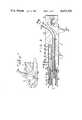
- FIG. 2is a side sectional view of a control section of an endoscope and a portion in the vicinity of a proximal end portion of an insertion section of the endoscope according to one embodiment of the present invention
- FIG. 3is a side sectional view of a portion in the vicinity of a distal end portion of the insertion section of the endoscope shown in FIG. 2;
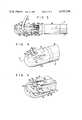
- FIG. 4is a perspective view of the distal end portion of the endoscope shown in FIG. 2;
- FIG. 5is a perspective view of the distal end portion which is partially cut along the line IV--IV in FIG. 4;
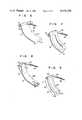
- FIG. 6is a perspective view of a raising member of the endoscope shown in FIG. 2;
- FIGS. 7 to 9are perspective views of raising members according to second to fourth embodiments of the present invention, respectively.
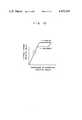
- FIG. 10is a graph for explaining the elongation of an ultraelastic alloy as a function of an external stress.
- a control section 11 of an endoscopehas a control section main body 11a.
- the control section main body 11ahas an eyepiece section 13 having an eyepiece optical system 12 and a treatment tool insertion inlet port 14.
- One end of a universal cord 15is connected to the control section main body 11a.
- the other end of the universal cord 15has a connector (not shown) which is connected to a light source unit (not shown).
- a proximal end portion of an elongated insertion section 16is connected to the control section main body 11a.
- the insertion section 16comprises a flexible tube 17, a bending tube 18 and a distal end assembly 19.
- the bending tube 18is disposed between the distal end of the flexible tube 17 and the proximal end of the distal end assembly 19.
- the bending tube 18is remote-controlled by a control knob (not shown) which is disposed in the control section 11.
- the distal end assembly 19 and part of the insertion section 16 near the distal end assembly 19constitute a distal end portion of the insertion section 16 to be inserted in a body cavity.
- the parts of the bending tube 18 and the flexible tube 17 which are on the distal end portionare inserted in the body cavity.
- a proximal end portion of the flexible tube 17 which is positioned outside the body cavity during examinationconstitutes a proximal end portion.
- a longitudinal axis X of the insertion section 16extends from the proximal end portion to the distal end portion.
- An observation window 21, an illumination window 22 and an air/water supply nozzle 23 oriented toward the outer surface of the observation window 21are disposed on one side surface of the distal end assembly 19, as shown in FIG. 4.
- the distal end of an image guide 24 (FIG. 2) using optical fibersis optically connected to the observation window 21.
- the image guide 24is inserted in the insertion section 16 along the axis X thereof.
- the proximal end of the image guide 24extends into the control section 11 and is optically connected to the eyepiece optical system 12.
- the distal end of a light guide (not shown) using optical fibersis optically connected to the illumination window 22.
- the proximal end of the light guideis connected to the connector of the universal cord 15 through the insertion section 16, the control section main body 11a, and the universal cord 15.
- this light guideis optically connected to a light source (not shown) of the light source unit.
- the illumination windowreceives illumination light.
- the illumination light transmitted through the light guideemerges from the illumination window 22 toward the field of sight in the body cavity.
- a raising member housing 26 having a guide port 25 open to the field of the sight of the observation window 21is formed at a main body 19a of the distal end assembly 19.
- the raising member housing 26communicates with a treatment tool outlet port 28 of the treatment tool insertion channel 27.
- the channel 27extends through the flexible tube 17, the bending tube 18 and the distal end assembly 19 along the axis X of the insertion section 16 and communicates with the treatment tool insertion port 14 of the control section 11.
- Part of the channel 27 which extends in the flexible tube 17 and the bending tube 18is formed by a flexible tube 29 and connecting tubes 30a and 30b.
- a treatment tool 31is inserted from the treatment tool insertion port 14 and is guided into the channel 27.
- the channel 27guides the treatment tool 31 to the raising member housing 26.
- the treatment tool 31varies in accordance with a specific therapy.
- Typical examples of the treatment toolsare a forceps and a tube for a contrast agent.
- the tube for a contrast agentis illustrated in the figure.
- a raising member 32is disposed in the raising member housing 26 to change the direction of the treatment tool 31 extending from the guide port 25.
- the raising member 32is oriented from the outlet port 28 of the channel 27 to the guide port 25.
- the raising member 32is formed by an elongate plate comprising an ultraelastic member such as an elastic alloy. As shown in FIG. 6, one edge 33 of the raising member 32 is bent perpendicularly and the other edge is curled in the same direction of one edge 33 to form a fulcrum portion 34.
- One end 36 of an L-shaped rigid pin 35is rotatably fitted in the fulcrum portion 34.
- An end of a metal control wire 38is connected to the other end 37 of the raising member 32.
- Part of the pin 35is notched and the other end 37 of the pin 35 is located at the notched part of the raising member 32.
- the other end 37 of the pin 35is mounted with a sufficient space within the width of the raising member 32.
- One edge 33 of the raising member 32is fitted in a groove 39 formed on the bottom wall of the raising member housing 26 in the vicinity of the outlet port 28 of the channel 27.
- the edge 33 of the raising member 32defines a supported portion.
- the other edge of the raising member 32is constituted as a free end 41.
- An acting portioncomprising a smooth surface of the free end 41 is disposed perpendicularly to the outlet port 28 of the channel 27.
- the raising member 32comprises a plate-shaped elastic material. However, when it is pulled by the controlled wire 38, the raising member 32 is bent upwards and takes a raised position as indicated by the solid line in FIG. 3. When it is not pulled, the raising member 32 is slightly bent and lies in a laid position as indicated by the alternate long and two dashed line in FIG. 3.
- a stainless steel plate of 0.03 to 0.5 mm thicknessis generally used as the material of the raising member 32.
- An ultraelastic alloyis preferred. The ultraelastic alloy has such an ultraelasticity as will be described below. It is often called "pseudo-elasticity alloy".
- a Ti-Ni type alloyis one of the ultraelastic alloys.
- the metal of this typecan be repeatedly used as a spring in a range wider than other metal materials (FIG. 10).
- the apparent plastic deformation described aboveoccurs by the martensite transformation by the stress.
- the distortionis eliminated by the reverse transformation when the load is eliminated from the metal.
- the distortion range within which the metal may be repeatedly used as the springvaries in accordance with a ratio of constituents of the metal. A metal having an elongation percentage of about 6% can be used.
- a pair of stoppers 42 located on the side of the outlet port 28 of the channel 27are formed in the raising member housing 26.
- the pair of stoppers 42gradually comes in contact with both side edges 32a of the regulating surface of the raising member 32 from its one end to the other end so that the raising member 32 is positioned at a desired position. Further, when the raising member 32 is bent at maximum, the regulating surface of the raising member 32 is completely in tight contact with the stoppers 42.
- the pair of stoppers 42has substantially an arcuated shape to bend the treatment tool 32 optimally.
- a U-shaped groove 43is formed in the end wall of the raising member housing 26 at the side of the channel 27 and between the pair of stoppers 42.
- the center of the groove 43is substantially arcuated along the surfaces of the pair of stoppers 42.
- the depth of the groove 43 from the upper surfaces of the stoppers 42substantially corresponds to the inner diameter of the treatment tool outlet port 28. Therefore, when the raising member 32 is bent at maximum and is in tight contact with the stoppers 42, a treatment tool path having the same width as that of the treatment tool outlet port 28 is formed between the raising member 32 and the groove 43.
- the control wire 38is connected to the projecting end of the free end 41 of the raising member 32 through the pin 35. Since the pin 35 which comprises a highly rigid material is bent in an L shape, the side to which the control wire 38 is connected may not be bent more than the other side when the control wire 38 is pulled strongly. Both sides of the raising member 32 are thus uniformly bent.
- the other end of the control wire 38is guided to the control section 11 through a wire insertion hole 44.
- the wire insertion hole 44is formed by wire guide tubes 45a, 45b and 45c.
- the other end of the control wire 38is connected to a traction control unit 46 disposed in the control section 11.
- the traction control unit 46comprises a rack 47 disposed in the control section main body 11a and a pinion gear 48 meshed therewith.
- the control wire 38is connected to the rack 47.
- the rack 47is movably mounted in a cylinder 49.
- the pinion gear 48is rotated by a control lever 51 disposed outside of the control section 11, the position of the rack 47 is controlled along the axis X of the insertion section 16.
- a packing 52is mounted at the outer periphery of the rack 47 on the side of the control wire 38 to liquid-tightly seal a cylinder chamber 49a of the cylinder 49 from the side of the wire insertion hole 44.
- a cleaning liquid inlet port 53is formed in the cylinder chamber 49a so that the cleaning liquid inlet port 53 communicates with the cylinder 49.
- a gapis formed between the wire insertion hole 44 and the control wire 38 to allow flow of the cleaning liquid.
- the treatment tool 31is inserted from the treatment tool inlet port 14.
- the usershould not pull the control wire 38.
- the userIn the condition in which the raising member 32 lies as shown in the alternate long and two dashed line in FIG. 3, the user must push the treatment tool 31 into the treatment tool insertion channel 27.
- the distal end of the treatment tool 31slides on the surface of the acting portion of the raising member of the raising member housing 26 and projects into the body cavity through the delivery port 25.
- the usercontrols the traction control unit 46 to pull the control wire 38.
- the free end 41 of the raising member 32is bent and raised. Then, the treatment tool 31 is bent and oriented toward a desired direction.
- the usercontrols to position the treatment tool 31 at a desired angle.
- the userwishes to bend the treatment tool 31 at maximum, he pulls the control wire 38 strongly so that the both side edges 32a of the raising member 32 are brought into tight contact with the stoppers 42. Therefore, the raising member 32 is bent with a proper curvature along the arcuated surface of the stoppers 42.
- the treatment tool pathhaving substantially the same width as the treatment tool outlet port 28 is formed between the raising member 32 and the groove 43. Even if the raising member is bent at maximum, the treatment tool 31 is smoothly inserted along the raising member 32 and part of the treatment tool 31 may not be sharply bent, preventing damage of the treatment tool 31.
- the userwishes to release bending of the treatment tool 31, he releases traction force by the traction control unit 46.
- the control wire 38is naturally loosened.
- the raising member 32returns to the position by its elasticity, as indicated by the alternate long and two dashed line in FIG. 3.
- the treatment tool 31restores its original shape by itself.
- the cleaning liquidis supplied to the cylinder chamber 49a through the cleaning liquid inlet port 53. Further, the cleaning liquid is supplied to the raising member housing 26 through the wire insertion hole 44. Contamination causing clogging in the wire insertion hole 44 or the like is washed off, allowing smooth movement of the control wire 38. If a disinfection liquid is used in place of the cleaning liquid, the wire insertion hole 44 and the control wire 38 can be disinfected.
- the control wiresince the elastic member is used as the raising member 32, the control wire need not be pushed strongly to restore the original shape.
- the control wireis only loosened or may be slightly pushed by the weak force to automatically restore the raising member 32 to the lying position easily.
- control wire 38Even when the control wire 38 is not pulled, the raising member 32 is properly restored to the original position, improving the operability of the endoscope. Further, since the control wire 38 need not be pushed, the control wire 38 may be smaller to assure a wider gap between the control wire 38 and the wire insertion hole 44. Therefore, the cleaning liquid flows smoothly, increasing the cleaning efficiency.
- a rotary membersuch as a shaft is not used for the raising member 32 and the raising member 32 is fixed at the distal end assembly 19, movement of the raising member 32 may not be prevented by deposition of contamination and is moved smoothly.
- the raising member 32since the raising member 32 is thinner, it can be stored in a small raising member housing 26. Therefore, the outer diameter and the axial length of the distal end assembly 19 are decreased, resulting in a compact distal end assembly 19. As opposed to the conventional complicated raising member manufactured by milling, the raising member 32 does not require complex procedure, resulting in low cost and easy manufacture.
- the ultraelastic alloywhen used as the material of the raising member 32, plastic deformation does not occur within the elongation range of, for example 6%. Thus, the treatment tool 31 is properly bent with a small curvature.
- This metalcan maintain its elasticity over a long period of time.
- a Ti-Ni type alloy as the ultraelastic alloyhas an excellent resistance to a cleaning/disinfection liquid and to acids such as gastric juice. Further, this alloy is nontoxic to the human body.
- the control wire 38is not limited to a metal one.
- a solid wire or strandmay be used.
- FIG. 7shows a raising member of the endoscope according to a second embodiment of the present invention.
- the material and the like of the raising member in the second embodimentare substantially the same as those in the first embodiment except that a groove 61 is formed to guide the treatment tool smoothly on the surface which extends from one end to the other end (insertion direction of the treatment tool) and which opposes the treatment tool outlet port 28 of the channel 27.
- the treatment tool 31is guided on the groove 61, so that the treatment tool 31 does not deviate from the predetermined route nor swing in a direction perpendicular to the groove 61.
- guiding operationis further improved.
- FIG. 8shows a raising member of the endoscope according to a third embodiment of the present invention.
- the raising member 32has a guide member 72 with a recess 71 formed on the free end 41 of an elastic plate member 32a to guide the treatment tool.
- This guide member 72which comprises a metal or synthetic resin also has the same function as the groove 61.
- a means for fixing the supported portion of the raising member 32 to the distal end assembly 19amay be rivets 73, screws or caulkings, as shown in FIG. 8.
- FIG. 9shows a raising member of the endoscope according to a fourth embodiment of the present invention.
- Elastic metal wires 82are embedded in a raising member main body 81 made of a soft and flexible synthetic resin.
- the metal wires 82extend from one edge 33 of the main body 81 to the other edge 81a of the main body 81.
- a fluorine type synthetic resin or the likewhich has a low friction coefficient may be used as the material of the raising member main body 81 to guide the treatment tool smoother.
- a notched portion(not shown) for positioning the control wire 38 of the pin 35 freely is formed in the stoppers 42.
- the control wire 38is preferably guided through the notched portion.
- the raising member 32need only have elasticity, it may not be formed by a metal.
- a synthetic resinsuch as a nylon, a polycarbonate, a hard rubber may also be used to form a single member which is formed in the same shape as shown in FIGS. 6 to 9.
- the thickness of the raising member 32may not be uniform over the entire length.
- the thickness of the raising member 32may be changed so as to obtain an accurately arcuated shape.
- the control wireneed not be pushed to cause the raising member to restore the original lying shape.
- the control wireis only released for this purpose.
- the raising memberis bent so that part of the treatment tool may not be sharply bent, resulting in smooth insertion of the treatment tool.
- the raising membermay be made of a plate having a small thickness as needed. Therefore, the raising member can be stored in a small raising member housing, resulting in a compact distal end assembly.
Landscapes
- Health & Medical Sciences (AREA)
- Life Sciences & Earth Sciences (AREA)
- Surgery (AREA)
- Engineering & Computer Science (AREA)
- Heart & Thoracic Surgery (AREA)
- Biophysics (AREA)
- Veterinary Medicine (AREA)
- Public Health (AREA)
- General Health & Medical Sciences (AREA)
- Animal Behavior & Ethology (AREA)
- Biomedical Technology (AREA)
- Medical Informatics (AREA)
- Physics & Mathematics (AREA)
- Molecular Biology (AREA)
- Radiology & Medical Imaging (AREA)
- Pathology (AREA)
- Optics & Photonics (AREA)
- Nuclear Medicine, Radiotherapy & Molecular Imaging (AREA)
- Mechanical Engineering (AREA)
- Pulmonology (AREA)
- Anesthesiology (AREA)
- Hematology (AREA)
- Endoscopes (AREA)
- Eye Examination Apparatus (AREA)
Abstract
Description
The present invention relates to an endoscope having a treatment tool guide section.
A conventional endoscope has a channel for inserting and guiding a treatment tool such as a forceps therethrough. A guide unit for guiding the tool is disposed at the opening of the channel. Referring to FIG. 1, this unit has a raising lever housing 2 in adistal end assembly 1 of the endoscope. A raising lever 3 is pivotal about a shaft 4 in the raising lever housing 2, as shown in FIG. 1. A control wire 5 connected to the raising lever 3 is pulled or pushed to change a raising angle of the raising lever 3. Thus, a treatment tool 6 is arbitrarily oriented at a desired angle.
In the conventional device of this type, the raising lever 3 is pivoted by strongly pulling the control wire 5. The raising lever 3 returns to the lying position by pushing the control wire 3. However, the force applied to the direction to push the control wire 5 is hard to be transmitted, preventing smooth pushing of the control wire 5. Especially, when contamination causes clogging at the shaft 4 or awire insertion hole 7, the raising level 3 may not return to the lying position. Further, since the raising lever 3 has a predetermined shape and is not flexible, aportion 6a which is sharply bent is formed when a raising angle is increased. The treatment tool 6 is often broken at theportion 6a. The raising lever becomes thick and the distal end portion becomes large in the conventional endoscope.
It is, therefore, an object of the present invention to provide an endoscope which is capable of properly returning a raising member to a non-pulling position when the raising member is not pulled by a control wire, which is capable of preventing sharp bending of a treatment tool and smoothly guiding the treatment tool even if a raising angle is increased, and which has a small distal end portion having the raising member therein.
In order to achieve the above object of the present invention, there is provided an endoscope comprising: an elongated insertion section which has a distal end portion to be inserted into a body cavity with a raising member housing open to the outside, a proximal end portion to be located outside the body cavity, a longitudinal axis extending from said proximal end portion to said distal end portion, and a treatment tool insertion channel extending from said proximal end portion to said distal end portion along said axis and communicating with said raising member housing; a control section connected to said proximal end portion of said insertion section and having a treatment tool insertion inlet port which communicates with said treatment tool insertion channel; an elastic raising member having an acting portion and a supported portion and adapted to change a guiding direction of the treatment tool as the acting portion pushes the intermediate portion of the tool and raises the same to a desired position, said supported portion being supported by part of said distal end assembly, said acting portion being movable between raised and laid positions and so that said raising member by itself is resiliently returned to the laid position after it is raised; a control wire one end of which is connected to said acting portion of said raising member, the other end of which reaches said control section, and which is inserted in said insertion section along said axis; and a traction control unit, provided in said control section and connected to said control wire, for raising said raising member to change the guiding direction of the treatment tool.
FIG. 1 is a side sectional view of a treatment tool guide unit used in a conventional endoscope;
FIG. 2 is a side sectional view of a control section of an endoscope and a portion in the vicinity of a proximal end portion of an insertion section of the endoscope according to one embodiment of the present invention;
FIG. 3 is a side sectional view of a portion in the vicinity of a distal end portion of the insertion section of the endoscope shown in FIG. 2;
FIG. 4 is a perspective view of the distal end portion of the endoscope shown in FIG. 2;
FIG. 5 is a perspective view of the distal end portion which is partially cut along the line IV--IV in FIG. 4;
FIG. 6 is a perspective view of a raising member of the endoscope shown in FIG. 2;
FIGS. 7 to 9 are perspective views of raising members according to second to fourth embodiments of the present invention, respectively; and
FIG. 10 is a graph for explaining the elongation of an ultraelastic alloy as a function of an external stress.
Referring to FIG. 2, a control section 11 of an endoscope has a control sectionmain body 11a. The control sectionmain body 11a has aneyepiece section 13 having an eyepiece optical system 12 and a treatment tool insertion inlet port 14. One end of auniversal cord 15 is connected to the control sectionmain body 11a. The other end of theuniversal cord 15 has a connector (not shown) which is connected to a light source unit (not shown). A proximal end portion of anelongated insertion section 16 is connected to the control sectionmain body 11a. Theinsertion section 16 comprises aflexible tube 17, abending tube 18 and adistal end assembly 19. Thebending tube 18 is disposed between the distal end of theflexible tube 17 and the proximal end of thedistal end assembly 19. Thebending tube 18 is remote-controlled by a control knob (not shown) which is disposed in the control section 11. Thedistal end assembly 19 and part of theinsertion section 16 near thedistal end assembly 19 constitute a distal end portion of theinsertion section 16 to be inserted in a body cavity. In the above embodiment, the parts of thebending tube 18 and theflexible tube 17 which are on the distal end portion are inserted in the body cavity. A proximal end portion of theflexible tube 17 which is positioned outside the body cavity during examination constitutes a proximal end portion. As shown in FIGS. 2 and 3, a longitudinal axis X of theinsertion section 16 extends from the proximal end portion to the distal end portion. Anobservation window 21, anillumination window 22 and an air/water supply nozzle 23 oriented toward the outer surface of theobservation window 21 are disposed on one side surface of thedistal end assembly 19, as shown in FIG. 4. The distal end of an image guide 24 (FIG. 2) using optical fibers is optically connected to theobservation window 21. Theimage guide 24 is inserted in theinsertion section 16 along the axis X thereof. The proximal end of theimage guide 24 extends into the control section 11 and is optically connected to the eyepiece optical system 12. Further, the distal end of a light guide (not shown) using optical fibers is optically connected to theillumination window 22. The proximal end of the light guide is connected to the connector of theuniversal cord 15 through theinsertion section 16, the control sectionmain body 11a, and theuniversal cord 15. When the connector is connected to a light source unit, this light guide is optically connected to a light source (not shown) of the light source unit. Thus, the illumination window receives illumination light. The illumination light transmitted through the light guide emerges from theillumination window 22 toward the field of sight in the body cavity.
As shown in FIG. 3, a raisingmember housing 26 having aguide port 25 open to the field of the sight of theobservation window 21 is formed at amain body 19a of thedistal end assembly 19. The raisingmember housing 26 communicates with a treatmenttool outlet port 28 of the treatmenttool insertion channel 27.
Thechannel 27 extends through theflexible tube 17, thebending tube 18 and thedistal end assembly 19 along the axis X of theinsertion section 16 and communicates with the treatment tool insertion port 14 of the control section 11. Part of thechannel 27 which extends in theflexible tube 17 and thebending tube 18 is formed by aflexible tube 29 and connectingtubes 30a and 30b. Atreatment tool 31 is inserted from the treatment tool insertion port 14 and is guided into thechannel 27. Thechannel 27 then guides thetreatment tool 31 to the raisingmember housing 26. Thetreatment tool 31 varies in accordance with a specific therapy. Typical examples of the treatment tools are a forceps and a tube for a contrast agent. The tube for a contrast agent is illustrated in the figure.
A raisingmember 32 is disposed in the raisingmember housing 26 to change the direction of thetreatment tool 31 extending from theguide port 25. The raisingmember 32 is oriented from theoutlet port 28 of thechannel 27 to theguide port 25. The raisingmember 32 is formed by an elongate plate comprising an ultraelastic member such as an elastic alloy. As shown in FIG. 6, oneedge 33 of the raisingmember 32 is bent perpendicularly and the other edge is curled in the same direction of oneedge 33 to form afulcrum portion 34. Oneend 36 of an L-shapedrigid pin 35 is rotatably fitted in thefulcrum portion 34. An end of ametal control wire 38 is connected to theother end 37 of the raisingmember 32. Part of thepin 35 is notched and theother end 37 of thepin 35 is located at the notched part of the raisingmember 32. Theother end 37 of thepin 35 is mounted with a sufficient space within the width of the raisingmember 32. Oneedge 33 of the raisingmember 32 is fitted in agroove 39 formed on the bottom wall of the raisingmember housing 26 in the vicinity of theoutlet port 28 of thechannel 27. Theedge 33 of the raisingmember 32 defines a supported portion. Thus, theedge 33 of the raisingmember 32 is inserted in thegroove 39 at part of thehousing 26 and is supported thereby. The other edge of the raisingmember 32 is constituted as afree end 41. An acting portion comprising a smooth surface of thefree end 41 is disposed perpendicularly to theoutlet port 28 of thechannel 27.
As described above, the raisingmember 32 comprises a plate-shaped elastic material. However, when it is pulled by the controlledwire 38, the raisingmember 32 is bent upwards and takes a raised position as indicated by the solid line in FIG. 3. When it is not pulled, the raisingmember 32 is slightly bent and lies in a laid position as indicated by the alternate long and two dashed line in FIG. 3. A stainless steel plate of 0.03 to 0.5 mm thickness is generally used as the material of the raisingmember 32. An ultraelastic alloy is preferred. The ultraelastic alloy has such an ultraelasticity as will be described below. It is often called "pseudo-elasticity alloy". A Ti-Ni type alloy is one of the ultraelastic alloys. When a load is increasingly applied to a material, yielding occurs after linear elastic deformation. In other words, apparent plastic deformation occurs. When the load is eliminated from the material, distortion is also eliminated. As a result, the metal of this type can be repeatedly used as a spring in a range wider than other metal materials (FIG. 10). The apparent plastic deformation described above occurs by the martensite transformation by the stress. The distortion is eliminated by the reverse transformation when the load is eliminated from the metal. The distortion range within which the metal may be repeatedly used as the spring varies in accordance with a ratio of constituents of the metal. A metal having an elongation percentage of about 6% can be used.
A pair ofstoppers 42 located on the side of theoutlet port 28 of thechannel 27 are formed in the raisingmember housing 26. When the raisingmember 32 is bent, the pair ofstoppers 42 gradually comes in contact with both side edges 32a of the regulating surface of the raisingmember 32 from its one end to the other end so that the raisingmember 32 is positioned at a desired position. Further, when the raisingmember 32 is bent at maximum, the regulating surface of the raisingmember 32 is completely in tight contact with thestoppers 42. Thus, the pair ofstoppers 42 has substantially an arcuated shape to bend thetreatment tool 32 optimally.
As shown in FIG. 5, aU-shaped groove 43 is formed in the end wall of the raisingmember housing 26 at the side of thechannel 27 and between the pair ofstoppers 42. The center of thegroove 43 is substantially arcuated along the surfaces of the pair ofstoppers 42.
The depth of thegroove 43 from the upper surfaces of thestoppers 42 substantially corresponds to the inner diameter of the treatmenttool outlet port 28. Therefore, when the raisingmember 32 is bent at maximum and is in tight contact with thestoppers 42, a treatment tool path having the same width as that of the treatmenttool outlet port 28 is formed between the raisingmember 32 and thegroove 43.
Thecontrol wire 38 is connected to the projecting end of thefree end 41 of the raisingmember 32 through thepin 35. Since thepin 35 which comprises a highly rigid material is bent in an L shape, the side to which thecontrol wire 38 is connected may not be bent more than the other side when thecontrol wire 38 is pulled strongly. Both sides of the raisingmember 32 are thus uniformly bent.
The other end of thecontrol wire 38 is guided to the control section 11 through awire insertion hole 44. Thewire insertion hole 44 is formed bywire guide tubes 45a, 45b and 45c.
The other end of thecontrol wire 38 is connected to a traction control unit 46 disposed in the control section 11. The traction control unit 46 comprises a rack 47 disposed in the control sectionmain body 11a and a pinion gear 48 meshed therewith. Thecontrol wire 38 is connected to the rack 47.
The rack 47 is movably mounted in a cylinder 49. When the pinion gear 48 is rotated by acontrol lever 51 disposed outside of the control section 11, the position of the rack 47 is controlled along the axis X of theinsertion section 16.
A packing 52 is mounted at the outer periphery of the rack 47 on the side of thecontrol wire 38 to liquid-tightly seal a cylinder chamber 49a of the cylinder 49 from the side of thewire insertion hole 44. A cleaning liquid inlet port 53 is formed in the cylinder chamber 49a so that the cleaning liquid inlet port 53 communicates with the cylinder 49. A gap is formed between thewire insertion hole 44 and thecontrol wire 38 to allow flow of the cleaning liquid.
The mode of the operation of the endoscope according to the first embodiment of the present invention will be described.
Thetreatment tool 31 is inserted from the treatment tool inlet port 14. When thetreatment tool 31 is guided through the treatmenttool outlet port 28, the user should not pull thecontrol wire 38. In the condition in which the raisingmember 32 lies as shown in the alternate long and two dashed line in FIG. 3, the user must push thetreatment tool 31 into the treatmenttool insertion channel 27. The distal end of thetreatment tool 31 slides on the surface of the acting portion of the raising member of the raisingmember housing 26 and projects into the body cavity through thedelivery port 25. When the distal end of thetreatment tool 31 comes in the field of sight for theobservation window 21, the user controls the traction control unit 46 to pull thecontrol wire 38. Thefree end 41 of the raisingmember 32 is bent and raised. Then, thetreatment tool 31 is bent and oriented toward a desired direction. Thus, with a change in an angle of the raisingmember 32, the user controls to position thetreatment tool 31 at a desired angle.
If the user wishes to bend thetreatment tool 31 at maximum, he pulls thecontrol wire 38 strongly so that the both side edges 32a of the raisingmember 32 are brought into tight contact with thestoppers 42. Therefore, the raisingmember 32 is bent with a proper curvature along the arcuated surface of thestoppers 42. The treatment tool path having substantially the same width as the treatmenttool outlet port 28 is formed between the raisingmember 32 and thegroove 43. Even if the raising member is bent at maximum, thetreatment tool 31 is smoothly inserted along the raisingmember 32 and part of thetreatment tool 31 may not be sharply bent, preventing damage of thetreatment tool 31.
If the user wishes to release bending of thetreatment tool 31, he releases traction force by the traction control unit 46. Thecontrol wire 38 is naturally loosened. Subsequently, the raisingmember 32 returns to the position by its elasticity, as indicated by the alternate long and two dashed line in FIG. 3. Thetreatment tool 31 restores its original shape by itself.
The cleaning liquid is supplied to the cylinder chamber 49a through the cleaning liquid inlet port 53. Further, the cleaning liquid is supplied to the raisingmember housing 26 through thewire insertion hole 44. Contamination causing clogging in thewire insertion hole 44 or the like is washed off, allowing smooth movement of thecontrol wire 38. If a disinfection liquid is used in place of the cleaning liquid, thewire insertion hole 44 and thecontrol wire 38 can be disinfected.
In the above embodiment, since the elastic member is used as the raisingmember 32, the control wire need not be pushed strongly to restore the original shape. The control wire is only loosened or may be slightly pushed by the weak force to automatically restore the raisingmember 32 to the lying position easily.
Even when thecontrol wire 38 is not pulled, the raisingmember 32 is properly restored to the original position, improving the operability of the endoscope. Further, since thecontrol wire 38 need not be pushed, thecontrol wire 38 may be smaller to assure a wider gap between thecontrol wire 38 and thewire insertion hole 44. Therefore, the cleaning liquid flows smoothly, increasing the cleaning efficiency.
Further, since a rotary member such as a shaft is not used for the raisingmember 32 and the raisingmember 32 is fixed at thedistal end assembly 19, movement of the raisingmember 32 may not be prevented by deposition of contamination and is moved smoothly.
Further, since the raisingmember 32 is thinner, it can be stored in a small raisingmember housing 26. Therefore, the outer diameter and the axial length of thedistal end assembly 19 are decreased, resulting in a compactdistal end assembly 19. As opposed to the conventional complicated raising member manufactured by milling, the raisingmember 32 does not require complex procedure, resulting in low cost and easy manufacture.
Further, when the ultraelastic alloy is used as the material of the raisingmember 32, plastic deformation does not occur within the elongation range of, for example 6%. Thus, thetreatment tool 31 is properly bent with a small curvature. This metal can maintain its elasticity over a long period of time. For example, a Ti-Ni type alloy as the ultraelastic alloy has an excellent resistance to a cleaning/disinfection liquid and to acids such as gastric juice. Further, this alloy is nontoxic to the human body.
Thecontrol wire 38 is not limited to a metal one. For example, a solid wire or strand may be used.
FIG. 7 shows a raising member of the endoscope according to a second embodiment of the present invention. The material and the like of the raising member in the second embodiment are substantially the same as those in the first embodiment except that agroove 61 is formed to guide the treatment tool smoothly on the surface which extends from one end to the other end (insertion direction of the treatment tool) and which opposes the treatmenttool outlet port 28 of thechannel 27. Thetreatment tool 31 is guided on thegroove 61, so that thetreatment tool 31 does not deviate from the predetermined route nor swing in a direction perpendicular to thegroove 61. Thus, guiding operation is further improved.
FIG. 8 shows a raising member of the endoscope according to a third embodiment of the present invention. The raisingmember 32 has aguide member 72 with arecess 71 formed on thefree end 41 of an elastic plate member 32a to guide the treatment tool. Thisguide member 72 which comprises a metal or synthetic resin also has the same function as thegroove 61. A means for fixing the supported portion of the raisingmember 32 to thedistal end assembly 19a may berivets 73, screws or caulkings, as shown in FIG. 8.
FIG. 9 shows a raising member of the endoscope according to a fourth embodiment of the present invention.Elastic metal wires 82 are embedded in a raising membermain body 81 made of a soft and flexible synthetic resin. Themetal wires 82 extend from oneedge 33 of themain body 81 to the other edge 81a of themain body 81. A fluorine type synthetic resin or the like which has a low friction coefficient may be used as the material of the raising membermain body 81 to guide the treatment tool smoother.
In order to use the raising members shown in FIGS. 7 to 9 in the same manner as that shown in FIG. 5, a notched portion (not shown) for positioning thecontrol wire 38 of thepin 35 freely is formed in thestoppers 42. Thecontrol wire 38 is preferably guided through the notched portion. With the above arrangement, when the raisingmember 32 is raised at maximum, thepin 35 is fitted in the notched portion and does not interfere with the raising operation.
Since the raisingmember 32 need only have elasticity, it may not be formed by a metal. A synthetic resin such as a nylon, a polycarbonate, a hard rubber may also be used to form a single member which is formed in the same shape as shown in FIGS. 6 to 9.
The thickness of the raisingmember 32 may not be uniform over the entire length. For example, the thickness of the raisingmember 32 may be changed so as to obtain an accurately arcuated shape.
According to the present invention, the control wire need not be pushed to cause the raising member to restore the original lying shape. The control wire is only released for this purpose. Further, in accordance with traction of the control wire, the raising member is bent so that part of the treatment tool may not be sharply bent, resulting in smooth insertion of the treatment tool. The raising member may be made of a plate having a small thickness as needed. Therefore, the raising member can be stored in a small raising member housing, resulting in a compact distal end assembly.
Claims (8)
1. An endoscope comprising: an elongated insertion section which has a distal end portion to be inserted into a body cavity with a raising member housing open to the outside, a proximal end portion to be located outside the body cavity, a longitudinal axis extending from said proximal end portion to said distal end portion, and a treatment tool insertion channel extending from said proximal end portion to said distal end portion along said axis and communicating with said raising member housing; a control section connected to said proximal end portion of said insertion section and having a treatment tool insertion inlet port which communicates with said treatment tool insertion channel; a resilient raising member which includes an elastic plate positioned in said raising member housing and having an acting portion and a supported portion and adapted to change a guiding direction of a treatment tool as the acting portion pushes an intermediate portion of the tool and raises the same to a desired position, said supported portion being supported by part of said distal end portion of the elongated insertion section, said acting portion being movable between raised and lowered positions so that said raising member by itself is resiliently returned to the lowered position after being raised; a control wire, one end of which is connected to said acting portion of said raising member, the other end of which reaches said control section, and which is inserted in said insertion section along said axis; and a traction control unit, provided in said control section and connected to said control wire, for raising said raising member to change the guiding direction of the treatment tool.
2. An endoscope according to claim 1, wherein said raising member is made of an ultraelastic alloy.
3. An endoscope according to claim 2, wherein said ultraelastic alloy is a Ti-Ni type alloy.
4. An endoscope according to claim 1, wherein said acting portion of said raising member has a groove formed therein to guide the treatment tool along the insertion direction of the treatment tool.
5. An endoscope according to claim 1, wherein said elastic plate constitutes the supported portion and a rigid member attached to the elastic plate constitutes the acting portion of said raising member.
6. An endoscope according to claim 1, wherein a stopper is formed in said raising member housing and comes in contact with said raising member to define the guiding direction of the treatment tool when said raising member is raised to the raised position.
7. An endoscope according to claim 1, wherein said raising member is made of an elastic synthetic resin plate.
8. An endoscope comprising: an elongated insertion section which has a distal end portion to be inserted into a body cavity with a raising member housing open to the outside, a proximal end portion to be located outside the body cavity, a longitudinal axis extending from said proximal end portion to said distal end portion, and a treatment tool insertion channel extending from said proximal end portion to said distal end portion along said axis and communicating with said raising member housing; a control section connected to said proximal end portion of said insertion section and having a treatment tool insertion inlet port which communicates with said treatment tool insertion channel; a resilient raising member positioned in said raising member housing and having an acting portion and a supported portion and adapted to change a guiding direction of a treatment tool as the acting portion pushes an intermediate portion of the tool and raises the same to a desired position, said raising member including a main body made of a flexible synthetic resin and an elongate elastic metal member embedded in said main body and extending to the acting portion from the supported portion, said supported portion being supported by part of said distal end portion of the elongated insertion section, said acting portion being movable between raised and lowered positions so that said raising member by itself is resiliently returned to the lowered position after being raised; a control wire, one end of which is connected to said acting portion of said raising member, the other end of which reaches said control section, and a traction control unit, provided in said control section and connected to said control wire, for raising said raising member to change the guiding direction of the treatment tool.
Applications Claiming Priority (2)
| Application Number | Priority Date | Filing Date | Title |
|---|---|---|---|
| JP56072739AJPS57188231A (en) | 1981-05-14 | 1981-05-14 | Treating tool guide apparatus of endoscope |
| JP56-72739 | 1981-05-14 |
Publications (1)
| Publication Number | Publication Date |
|---|---|
| US4452236Atrue US4452236A (en) | 1984-06-05 |
Family
ID=13498021
Family Applications (1)
| Application Number | Title | Priority Date | Filing Date |
|---|---|---|---|
| US06/375,990Expired - LifetimeUS4452236A (en) | 1981-05-14 | 1982-05-07 | Endoscope with a resilient raising member |
Country Status (5)
| Country | Link |
|---|---|
| US (1) | US4452236A (en) |
| EP (1) | EP0066120B1 (en) |
| JP (1) | JPS57188231A (en) |
| AT (1) | ATE18127T1 (en) |
| DE (1) | DE3269316D1 (en) |
Cited By (70)
| Publication number | Priority date | Publication date | Assignee | Title |
|---|---|---|---|---|
| US4593680A (en)* | 1984-01-17 | 1986-06-10 | Olympus Optical Co., Ltd. | Endoscope |
| US4651201A (en)* | 1984-06-01 | 1987-03-17 | Arnold Schoolman | Stereoscopic endoscope arrangement |
| US4696544A (en)* | 1985-11-18 | 1987-09-29 | Olympus Corporation | Fiberscopic device for inspection of internal sections of construction, and method for using same |
| US4736734A (en)* | 1985-07-12 | 1988-04-12 | Olympus Optical Co., Ltd. | Endoscope with variable illumination angle |
| DE4013653A1 (en)* | 1989-05-01 | 1990-11-08 | Machida Endoscope Co Ltd | ENDOSCOPE |
| US5067957A (en)* | 1983-10-14 | 1991-11-26 | Raychem Corporation | Method of inserting medical devices incorporating SIM alloy elements |
| US5190546A (en)* | 1983-10-14 | 1993-03-02 | Raychem Corporation | Medical devices incorporating SIM alloy elements |
| US5231989A (en)* | 1991-02-15 | 1993-08-03 | Raychem Corporation | Steerable cannula |
| US5257618A (en)* | 1990-11-06 | 1993-11-02 | Fuji Photo Optical Co., Ltd. | Endoscope |
| DE4305663A1 (en)* | 1992-08-12 | 1994-02-17 | Vidamed Inc | Medical probe device and method |
| US5343853A (en)* | 1991-09-20 | 1994-09-06 | Fuji Photo Optical Co., Ltd. | Side-looking type electronic endoscope which allows manipulating tool to be inserted thereinto |
| US5385544A (en)* | 1992-08-12 | 1995-01-31 | Vidamed, Inc. | BPH ablation method and apparatus |
| US5409453A (en)* | 1992-08-12 | 1995-04-25 | Vidamed, Inc. | Steerable medical probe with stylets |
| US5421819A (en)* | 1992-08-12 | 1995-06-06 | Vidamed, Inc. | Medical probe device |
| US5435805A (en)* | 1992-08-12 | 1995-07-25 | Vidamed, Inc. | Medical probe device with optical viewing capability |
| US5456662A (en)* | 1993-02-02 | 1995-10-10 | Edwards; Stuart D. | Method for reducing snoring by RF ablation of the uvula |
| US5460167A (en)* | 1993-03-04 | 1995-10-24 | Olympus Optical Co., Ltd. | Endoscope cover with channel |
| US5470308A (en)* | 1992-08-12 | 1995-11-28 | Vidamed, Inc. | Medical probe with biopsy stylet |
| US5514131A (en)* | 1992-08-12 | 1996-05-07 | Stuart D. Edwards | Method for the ablation treatment of the uvula |
| US5542915A (en)* | 1992-08-12 | 1996-08-06 | Vidamed, Inc. | Thermal mapping catheter with ultrasound probe |
| US5556377A (en)* | 1992-08-12 | 1996-09-17 | Vidamed, Inc. | Medical probe apparatus with laser and/or microwave monolithic integrated circuit probe |
| US5569157A (en)* | 1993-05-07 | 1996-10-29 | Olympus Optical Co., Ltd. | Endoscope |
| US5599295A (en)* | 1992-08-12 | 1997-02-04 | Vidamed, Inc. | Medical probe apparatus with enhanced RF, resistance heating, and microwave ablation capabilities |
| US5630794A (en)* | 1992-08-12 | 1997-05-20 | Vidamed, Inc. | Catheter tip and method of manufacturing |
| US5672153A (en)* | 1992-08-12 | 1997-09-30 | Vidamed, Inc. | Medical probe device and method |
| US5720719A (en)* | 1992-08-12 | 1998-02-24 | Vidamed, Inc. | Ablative catheter with conformable body |
| US6152870A (en)* | 1997-06-27 | 2000-11-28 | Richard Wolf Gmbh | Endoscope |
| US20020123698A1 (en)* | 1996-10-11 | 2002-09-05 | Transvascular, Inc. | Systems and methods for directing and snaring guidewires |
| US6682477B2 (en)* | 2000-02-25 | 2004-01-27 | Richard Wolf Gmbh | Hysteroscope |
| US20050222495A1 (en)* | 2004-04-02 | 2005-10-06 | Olympus Corporation | Medical system with over-tube |
| US20050240190A1 (en)* | 2004-04-21 | 2005-10-27 | Gall Kenneth A | Osteosynthetic implants and methods of use and manufacture |
| US20050272974A1 (en)* | 2002-10-29 | 2005-12-08 | Given Imaging Ltd. | In-vivo extendable element device and system, and method of use |
| US20060178657A1 (en)* | 2005-02-09 | 2006-08-10 | Pentax Corporation | Treatment tool for endoscope |
| US20060235271A1 (en)* | 2005-04-15 | 2006-10-19 | Wilson-Cook Medical Inc. | Endoscopic apparatus having an improved elevator |
| US20060287572A1 (en)* | 2003-07-25 | 2006-12-21 | Wimmer Viktor J | Flexible endoscope with longitudinal axial channels |
| US20070197871A1 (en)* | 2006-02-21 | 2007-08-23 | Boston Scientific Scimed, Inc. | Positioning system for manipulating a channel within a medical device |
| US20070265499A1 (en)* | 2006-05-09 | 2007-11-15 | Boston Scientific Scimed, Inc. | Medical device positioning system |
| US20070265494A1 (en)* | 2006-05-10 | 2007-11-15 | Boston Scientific Scimed Inc. | Flexible and retractable endoscope elevator |
| DE19712794B4 (en)* | 1996-03-26 | 2007-11-22 | Pentax Corp. | End construction for a side-view endoscope |
| EP1985246A1 (en)* | 2004-04-13 | 2008-10-29 | Olympus Corporation | Endoscope therapeutic device |
| US20090054727A1 (en)* | 2005-03-31 | 2009-02-26 | Olympus Medical Systems Corp. | Endoscope |
| US20090088631A1 (en)* | 2007-06-28 | 2009-04-02 | W.L. Gore & Associates - Englewood Group (Emd) | Catheter |
| US20090182194A1 (en)* | 2008-01-11 | 2009-07-16 | Boston Scientific Scimed, Inc. | Positioning system for securing a treatment instrument at the end of a medical device |
| US20100145144A1 (en)* | 2006-05-17 | 2010-06-10 | Olympus Medical Systems Corp. | Endoscope |
| US20100280316A1 (en)* | 2007-06-28 | 2010-11-04 | Dietz Dennis R | Catheter |
| US20110237955A1 (en)* | 2008-05-30 | 2011-09-29 | Dietz Dennis R | Real Time Ultrasound Catheter Probe |
| US20130190562A1 (en)* | 2012-01-25 | 2013-07-25 | Paul Smith | Endoscopic instrument having movable distal tool |
| US20130296889A1 (en)* | 2005-05-20 | 2013-11-07 | Neotract, Inc. | Anchor delivery system |
| US8852112B2 (en) | 2007-06-28 | 2014-10-07 | W. L. Gore & Associates, Inc. | Catheter with deflectable imaging device and bendable electrical conductor |
| US20150031947A1 (en)* | 2013-03-08 | 2015-01-29 | Olympus Medical Systems Corp. | Endoscope |
| US20160192983A1 (en)* | 2013-08-13 | 2016-07-07 | Olympus Winter & Ibe Gmbh | Guiding catheter having a stabilizing mechanism and method for inserting a guiding catheter |
| US9456733B2 (en) | 2011-10-31 | 2016-10-04 | Boston Scientific Scimed, Inc. | Endoscopic instrument having a deflectable distal tool |
| US20170156571A1 (en)* | 2014-06-25 | 2017-06-08 | Mackay Memorial Hospital | Ultrathin endoscope auxiliary system and method of use |
| US20180249895A1 (en)* | 2017-03-03 | 2018-09-06 | Boston Scientific Scimed, Inc. | Device tip |
| US20180256142A1 (en)* | 2005-05-20 | 2018-09-13 | Neotract, Inc. | Anchor delivery system |
| US10105132B2 (en) | 2005-05-20 | 2018-10-23 | Neotract, Inc. | Devices, systems and methods for treating benign prostatic hyperplasia and other conditions |
| US10130353B2 (en) | 2012-06-29 | 2018-11-20 | Neotract, Inc. | Flexible system for delivering an anchor |
| US10143461B2 (en) | 2005-05-20 | 2018-12-04 | Neotract, Inc. | Devices, systems and methods for retracting, lifting, compressing, supporting or repositioning tissues or anatomical structures |
| US10195014B2 (en) | 2005-05-20 | 2019-02-05 | Neotract, Inc. | Devices, systems and methods for treating benign prostatic hyperplasia and other conditions |
| US10265061B2 (en) | 2005-05-20 | 2019-04-23 | Neotract, Inc. | Latching anchor device |
| US10292801B2 (en) | 2012-03-29 | 2019-05-21 | Neotract, Inc. | System for delivering anchors for treating incontinence |
| US10299780B2 (en) | 2005-05-20 | 2019-05-28 | Neotract, Inc. | Apparatus and method for manipulating or retracting tissue and anatomical structure |
| US10426509B2 (en) | 2005-05-20 | 2019-10-01 | Neotract, Inc. | Median lobe destruction apparatus and method |
| US10492792B2 (en) | 2005-05-20 | 2019-12-03 | Neotract, Inc. | Devices, systems and methods for treating benign prostatic hyperplasia and other conditions |
| US20200367732A1 (en)* | 2018-02-15 | 2020-11-26 | Olympus Corporation | Endoscope |
| US11234581B2 (en)* | 2014-05-02 | 2022-02-01 | Endochoice, Inc. | Elevator for directing medical tool |
| CN114929083A (en)* | 2020-01-07 | 2022-08-19 | 捷锐士阿希迈公司(以奥林巴斯美国外科技术名义) | One-piece riser for duodenoscope |
| US11672520B2 (en) | 2017-12-23 | 2023-06-13 | Teleflex Life Sciences Limited | Expandable tissue engagement apparatus and method |
| US12268368B2 (en) | 2020-04-30 | 2025-04-08 | Ambu A/S | Medical visualisation device |
| US12440301B2 (en) | 2019-10-30 | 2025-10-14 | Teleflex Life Sciences Llc | System for delivery of a fiducial marker |
Families Citing this family (10)
| Publication number | Priority date | Publication date | Assignee | Title |
|---|---|---|---|---|
| JPS58171104U (en)* | 1982-05-13 | 1983-11-15 | 富士写真光機株式会社 | Endoscope |
| GB2161389B (en)* | 1984-07-05 | 1988-06-08 | Wolf Gmbh Richard | Instrument insert for a uretero-renoscope |
| US4768858A (en)* | 1985-07-08 | 1988-09-06 | Trimedyne, Inc. | Hollow fiberoptic |
| FR2693116B1 (en)* | 1992-07-06 | 1995-04-28 | Technomed Int Sa | Urethral probe and apparatus for the therapeutic treatment of prostate tissue by thermotherapy. |
| US5480382A (en)* | 1989-01-09 | 1996-01-02 | Pilot Cardiovascular Systems, Inc. | Steerable medical device |
| US5304131A (en)* | 1991-07-15 | 1994-04-19 | Paskar Larry D | Catheter |
| US5378234A (en)* | 1993-03-15 | 1995-01-03 | Pilot Cardiovascular Systems, Inc. | Coil polymer composite |
| NL9301018A (en)* | 1993-06-11 | 1995-01-02 | Cordis Europ | Controlled bendable catheter. |
| US9149173B2 (en) | 2006-06-20 | 2015-10-06 | Boston Scientific Scimed, Inc. | Medical device for use in endoscopic procedure |
| WO2017018301A1 (en) | 2015-07-30 | 2017-02-02 | オリンパス株式会社 | Endoscope |
Citations (4)
| Publication number | Priority date | Publication date | Assignee | Title |
|---|---|---|---|---|
| US3561432A (en)* | 1967-07-29 | 1971-02-09 | Olympus Optical Co | Endoscope |
| US3896793A (en)* | 1973-06-19 | 1975-07-29 | Olympus Optical Co | Endoscope with view field altering means |
| US3924608A (en)* | 1973-05-23 | 1975-12-09 | Olympus Optical Co | Endoscope |
| US4190041A (en)* | 1977-09-12 | 1980-02-26 | Machida Endoscope Co., Ltd. | Cleaning device for wire guide tube in an endoscope |
Family Cites Families (6)
| Publication number | Priority date | Publication date | Assignee | Title |
|---|---|---|---|---|
| GB607292A (en)* | 1945-06-21 | 1948-08-27 | Hilger & Watts Ltd | Improvements in or relating to instruments for obtaining access to and viewing cavities, particularly cavities of the human body |
| JPS5820242Y2 (en)* | 1975-11-25 | 1983-04-26 | オリンパス光学工業株式会社 | Naishikiyo |
| JPS5929682Y2 (en)* | 1976-05-27 | 1984-08-25 | 富士写真光機株式会社 | Endoscope forceps operating device |
| JPS5413295U (en)* | 1977-06-30 | 1979-01-27 | ||
| DE2853466C2 (en)* | 1977-12-11 | 1983-03-24 | Kabushiki Kaisha Medos Kenkyusho, Tokyo | endoscope |
| FR2478458A1 (en)* | 1980-03-18 | 1981-09-25 | Commissariat Energie Atomique | Endoscope with shutter at distal end - has metal rod opening or locking shutter to block light, from optical fibre |
- 1981
- 1981-05-14JPJP56072739Apatent/JPS57188231A/enactiveGranted
- 1982
- 1982-05-07USUS06/375,990patent/US4452236A/ennot_activeExpired - Lifetime
- 1982-05-08EPEP82104029Apatent/EP0066120B1/ennot_activeExpired
- 1982-05-08ATAT82104029Tpatent/ATE18127T1/ennot_activeIP Right Cessation
- 1982-05-08DEDE8282104029Tpatent/DE3269316D1/ennot_activeExpired
Patent Citations (5)
| Publication number | Priority date | Publication date | Assignee | Title |
|---|---|---|---|---|
| US3561432A (en)* | 1967-07-29 | 1971-02-09 | Olympus Optical Co | Endoscope |
| US3924608A (en)* | 1973-05-23 | 1975-12-09 | Olympus Optical Co | Endoscope |
| US3896793A (en)* | 1973-06-19 | 1975-07-29 | Olympus Optical Co | Endoscope with view field altering means |
| US4190041A (en)* | 1977-09-12 | 1980-02-26 | Machida Endoscope Co., Ltd. | Cleaning device for wire guide tube in an endoscope |
| US4190041B1 (en)* | 1977-09-12 | 1983-05-24 |
Cited By (142)
| Publication number | Priority date | Publication date | Assignee | Title |
|---|---|---|---|---|
| US5067957A (en)* | 1983-10-14 | 1991-11-26 | Raychem Corporation | Method of inserting medical devices incorporating SIM alloy elements |
| US6306141B1 (en) | 1983-10-14 | 2001-10-23 | Medtronic, Inc. | Medical devices incorporating SIM alloy elements |
| US5597378A (en)* | 1983-10-14 | 1997-01-28 | Raychem Corporation | Medical devices incorporating SIM alloy elements |
| US5190546A (en)* | 1983-10-14 | 1993-03-02 | Raychem Corporation | Medical devices incorporating SIM alloy elements |
| US4593680A (en)* | 1984-01-17 | 1986-06-10 | Olympus Optical Co., Ltd. | Endoscope |
| US4651201A (en)* | 1984-06-01 | 1987-03-17 | Arnold Schoolman | Stereoscopic endoscope arrangement |
| US4736734A (en)* | 1985-07-12 | 1988-04-12 | Olympus Optical Co., Ltd. | Endoscope with variable illumination angle |
| US4696544A (en)* | 1985-11-18 | 1987-09-29 | Olympus Corporation | Fiberscopic device for inspection of internal sections of construction, and method for using same |
| DE4013653A1 (en)* | 1989-05-01 | 1990-11-08 | Machida Endoscope Co Ltd | ENDOSCOPE |
| US5257618A (en)* | 1990-11-06 | 1993-11-02 | Fuji Photo Optical Co., Ltd. | Endoscope |
| US5231989A (en)* | 1991-02-15 | 1993-08-03 | Raychem Corporation | Steerable cannula |
| US5345937A (en)* | 1991-02-15 | 1994-09-13 | Raychem Corporation | Steerable cannula |
| EP1072280A2 (en) | 1991-02-15 | 2001-01-31 | Medtronic, Inc. | Steerable cannula |
| US5343853A (en)* | 1991-09-20 | 1994-09-06 | Fuji Photo Optical Co., Ltd. | Side-looking type electronic endoscope which allows manipulating tool to be inserted thereinto |
| US5720718A (en)* | 1992-08-12 | 1998-02-24 | Vidamed, Inc. | Medical probe apparatus with enhanced RF, resistance heating, and microwave ablation capabilities |
| US5370675A (en)* | 1992-08-12 | 1994-12-06 | Vidamed, Inc. | Medical probe device and method |
| US5421819A (en)* | 1992-08-12 | 1995-06-06 | Vidamed, Inc. | Medical probe device |
| US5435805A (en)* | 1992-08-12 | 1995-07-25 | Vidamed, Inc. | Medical probe device with optical viewing capability |
| DE4305663A1 (en)* | 1992-08-12 | 1994-02-17 | Vidamed Inc | Medical probe device and method |
| US7201731B1 (en) | 1992-08-12 | 2007-04-10 | Lundquist Ingemar H | Treatment device with guidable needle |
| US5470308A (en)* | 1992-08-12 | 1995-11-28 | Vidamed, Inc. | Medical probe with biopsy stylet |
| US5470309A (en)* | 1992-08-12 | 1995-11-28 | Vidamed, Inc. | Medical ablation apparatus utilizing a heated stylet |
| US5514131A (en)* | 1992-08-12 | 1996-05-07 | Stuart D. Edwards | Method for the ablation treatment of the uvula |
| US5531677A (en)* | 1992-08-12 | 1996-07-02 | Vidamed, Inc. | Steerable medical probe with stylets |
| US5542915A (en)* | 1992-08-12 | 1996-08-06 | Vidamed, Inc. | Thermal mapping catheter with ultrasound probe |
| US5554110A (en)* | 1992-08-12 | 1996-09-10 | Vidamed, Inc. | Medical ablation apparatus |
| US5556377A (en)* | 1992-08-12 | 1996-09-17 | Vidamed, Inc. | Medical probe apparatus with laser and/or microwave monolithic integrated circuit probe |
| US6464661B2 (en) | 1992-08-12 | 2002-10-15 | Vidamed, Inc. | Medical probe with stylets |
| US5385544A (en)* | 1992-08-12 | 1995-01-31 | Vidamed, Inc. | BPH ablation method and apparatus |
| US5599294A (en)* | 1992-08-12 | 1997-02-04 | Vidamed, Inc. | Microwave probe device and method |
| US5599295A (en)* | 1992-08-12 | 1997-02-04 | Vidamed, Inc. | Medical probe apparatus with enhanced RF, resistance heating, and microwave ablation capabilities |
| US5607389A (en)* | 1992-08-12 | 1997-03-04 | Vidamed, Inc. | Medical probe with biopsy stylet |
| US5630794A (en)* | 1992-08-12 | 1997-05-20 | Vidamed, Inc. | Catheter tip and method of manufacturing |
| US5672153A (en)* | 1992-08-12 | 1997-09-30 | Vidamed, Inc. | Medical probe device and method |
| US5366490A (en)* | 1992-08-12 | 1994-11-22 | Vidamed, Inc. | Medical probe device and method |
| US6206847B1 (en) | 1992-08-12 | 2001-03-27 | Vidamed, Inc. | Medical probe device |
| US5720719A (en)* | 1992-08-12 | 1998-02-24 | Vidamed, Inc. | Ablative catheter with conformable body |
| US5848986A (en)* | 1992-08-12 | 1998-12-15 | Vidamed, Inc. | Medical probe with electrode guide for transurethral ablation |
| US5895370A (en)* | 1992-08-12 | 1999-04-20 | Vidamed, Inc. | Medical probe (with stylets) device |
| US6022334A (en)* | 1992-08-12 | 2000-02-08 | Vidamed, Inc. | Medical probe device with optic viewing capability |
| US6102886A (en)* | 1992-08-12 | 2000-08-15 | Vidamed, Inc. | Steerable medical probe with stylets |
| US5409453A (en)* | 1992-08-12 | 1995-04-25 | Vidamed, Inc. | Steerable medical probe with stylets |
| US5456662A (en)* | 1993-02-02 | 1995-10-10 | Edwards; Stuart D. | Method for reducing snoring by RF ablation of the uvula |
| US5460167A (en)* | 1993-03-04 | 1995-10-24 | Olympus Optical Co., Ltd. | Endoscope cover with channel |
| US5707344A (en)* | 1993-05-07 | 1998-01-13 | Olympus Optical Co., Ltd. | Endoscope |
| US5569157A (en)* | 1993-05-07 | 1996-10-29 | Olympus Optical Co., Ltd. | Endoscope |
| DE19712794B4 (en)* | 1996-03-26 | 2007-11-22 | Pentax Corp. | End construction for a side-view endoscope |
| US20020123698A1 (en)* | 1996-10-11 | 2002-09-05 | Transvascular, Inc. | Systems and methods for directing and snaring guidewires |
| US7316655B2 (en)* | 1996-10-11 | 2008-01-08 | Medtronic Vascular, Inc. | Systems and methods for directing and snaring guidewires |
| US6152870A (en)* | 1997-06-27 | 2000-11-28 | Richard Wolf Gmbh | Endoscope |
| US6682477B2 (en)* | 2000-02-25 | 2004-01-27 | Richard Wolf Gmbh | Hysteroscope |
| US20050272974A1 (en)* | 2002-10-29 | 2005-12-08 | Given Imaging Ltd. | In-vivo extendable element device and system, and method of use |
| US8066631B2 (en)* | 2003-07-25 | 2011-11-29 | Karl Storz Gmbh & Co. Kg | Flexible endoscope with longitudinal axial channels |
| US20060287572A1 (en)* | 2003-07-25 | 2006-12-21 | Wimmer Viktor J | Flexible endoscope with longitudinal axial channels |
| US20050222495A1 (en)* | 2004-04-02 | 2005-10-06 | Olympus Corporation | Medical system with over-tube |
| US8221306B2 (en) | 2004-04-13 | 2012-07-17 | Olympus Corporation | Endoscope therapeutic device |
| US20100048992A1 (en)* | 2004-04-13 | 2010-02-25 | Olympus Corporation | Endoscope therapeutic device |
| EP1985246A1 (en)* | 2004-04-13 | 2008-10-29 | Olympus Corporation | Endoscope therapeutic device |
| US8118952B2 (en) | 2004-04-21 | 2012-02-21 | Medshape Solutions, Inc. | Osteosynthetic implants and methods of use and manufacture |
| US7985222B2 (en) | 2004-04-21 | 2011-07-26 | Medshape Solutions, Inc. | Osteosynthetic implants and methods of use and manufacture |
| US20050240190A1 (en)* | 2004-04-21 | 2005-10-27 | Gall Kenneth A | Osteosynthetic implants and methods of use and manufacture |
| US20060178657A1 (en)* | 2005-02-09 | 2006-08-10 | Pentax Corporation | Treatment tool for endoscope |
| US7699836B2 (en)* | 2005-02-09 | 2010-04-20 | Hoya Corporation | Treatment tool for endoscope |
| US20090054727A1 (en)* | 2005-03-31 | 2009-02-26 | Olympus Medical Systems Corp. | Endoscope |
| US8246534B2 (en)* | 2005-03-31 | 2012-08-21 | Olympus Medical Systems Corp. | Endoscope |
| AU2006236619B2 (en)* | 2005-04-15 | 2012-02-02 | Cook Medical Technologies Llc | Endoscopic apparatus having an elevator |
| US20060235271A1 (en)* | 2005-04-15 | 2006-10-19 | Wilson-Cook Medical Inc. | Endoscopic apparatus having an improved elevator |
| US7691055B2 (en)* | 2005-04-15 | 2010-04-06 | Wilson-Cook Medical Inc. | Endoscopic apparatus having an improved elevator |
| US10195014B2 (en) | 2005-05-20 | 2019-02-05 | Neotract, Inc. | Devices, systems and methods for treating benign prostatic hyperplasia and other conditions |
| US10945719B2 (en) | 2005-05-20 | 2021-03-16 | Neotract, Inc. | Devices, systems and methods for retracting, lifting, compressing, supporting or repositioning tissues or anatomical structures |
| US10105132B2 (en) | 2005-05-20 | 2018-10-23 | Neotract, Inc. | Devices, systems and methods for treating benign prostatic hyperplasia and other conditions |
| US12201283B2 (en) | 2005-05-20 | 2025-01-21 | Teleflex Life Sciences Llc | Devices, systems and methods for treating benign prostatic hyperplasia and other conditions |
| US10143461B2 (en) | 2005-05-20 | 2018-12-04 | Neotract, Inc. | Devices, systems and methods for retracting, lifting, compressing, supporting or repositioning tissues or anatomical structures |
| US10265061B2 (en) | 2005-05-20 | 2019-04-23 | Neotract, Inc. | Latching anchor device |
| US10299780B2 (en) | 2005-05-20 | 2019-05-28 | Neotract, Inc. | Apparatus and method for manipulating or retracting tissue and anatomical structure |
| US10426509B2 (en) | 2005-05-20 | 2019-10-01 | Neotract, Inc. | Median lobe destruction apparatus and method |
| US11504149B2 (en) | 2005-05-20 | 2022-11-22 | Teleflex Life Sciences Limited | Median lobe destruction apparatus and method |
| US11471148B2 (en) | 2005-05-20 | 2022-10-18 | Teleflex Life Sciences Limited | Devices, systems and methods for treating benign prostatic hyperplasia and other conditions |
| US10492792B2 (en) | 2005-05-20 | 2019-12-03 | Neotract, Inc. | Devices, systems and methods for treating benign prostatic hyperplasia and other conditions |
| US10575844B2 (en) | 2005-05-20 | 2020-03-03 | Neotract, Inc. | Devices, systems and methods for treating benign prostatic hyperplasia and other conditions |
| US20130296889A1 (en)* | 2005-05-20 | 2013-11-07 | Neotract, Inc. | Anchor delivery system |
| US11090036B2 (en) | 2005-05-20 | 2021-08-17 | Neotract, Inc. | Devices, systems and methods for treating benign prostatic hyperplasia and other conditions |
| US10925587B2 (en)* | 2005-05-20 | 2021-02-23 | Neotract, Inc. | Anchor delivery system |
| US20180256142A1 (en)* | 2005-05-20 | 2018-09-13 | Neotract, Inc. | Anchor delivery system |
| US20070197871A1 (en)* | 2006-02-21 | 2007-08-23 | Boston Scientific Scimed, Inc. | Positioning system for manipulating a channel within a medical device |
| US9179825B2 (en) | 2006-02-21 | 2015-11-10 | Boston Scientific Scimed, Inc. | Positioning system for manipulating a channel within a medical device |
| US8795156B2 (en) | 2006-02-21 | 2014-08-05 | Boston Scientific Scimed, Inc. | Methods for manipulating a channel within a medical device |
| US7815564B2 (en) | 2006-02-21 | 2010-10-19 | Boston Scientific Scimed, Inc. | Positioning system for manipulating a channel within a medical device |
| US20110065986A1 (en)* | 2006-02-21 | 2011-03-17 | Boston Scientific Scimed, Inc. | Positioning system for manipulating a channel within a medical device |
| US11937774B2 (en) | 2006-05-09 | 2024-03-26 | Boston Scientific Scimed, Inc. | Medical device positioning system |
| US11284778B2 (en) | 2006-05-09 | 2022-03-29 | Boston Scientific Scimed, Inc. | Medical device positioning system |
| US8870754B2 (en) | 2006-05-09 | 2014-10-28 | Boston Scientific Scimed, Inc. | Medical device positioning system |
| US10561301B2 (en) | 2006-05-09 | 2020-02-18 | Boston Scientific Scimed, Inc. | Medical device positioning system |
| US7753843B2 (en) | 2006-05-09 | 2010-07-13 | Boston Scientific Scimed, Inc. | Medical device positioning system |
| US20070265499A1 (en)* | 2006-05-09 | 2007-11-15 | Boston Scientific Scimed, Inc. | Medical device positioning system |
| US10136796B2 (en) | 2006-05-09 | 2018-11-27 | Boston Scientific Scimed, Inc. | Medical device positioning system |
| US20100240954A1 (en)* | 2006-05-09 | 2010-09-23 | Boston Scientific Scimed, Inc. | Medical device positioning system |
| US20070265494A1 (en)* | 2006-05-10 | 2007-11-15 | Boston Scientific Scimed Inc. | Flexible and retractable endoscope elevator |
| US20100145144A1 (en)* | 2006-05-17 | 2010-06-10 | Olympus Medical Systems Corp. | Endoscope |
| US8465416B2 (en)* | 2006-05-17 | 2013-06-18 | Olympus Medical Systems Corp. | Endoscope |
| US8852112B2 (en) | 2007-06-28 | 2014-10-07 | W. L. Gore & Associates, Inc. | Catheter with deflectable imaging device and bendable electrical conductor |
| US20090088631A1 (en)* | 2007-06-28 | 2009-04-02 | W.L. Gore & Associates - Englewood Group (Emd) | Catheter |
| US8285362B2 (en) | 2007-06-28 | 2012-10-09 | W. L. Gore & Associates, Inc. | Catheter with deflectable imaging device |
| US8864675B2 (en) | 2007-06-28 | 2014-10-21 | W. L. Gore & Associates, Inc. | Catheter |
| US20100280316A1 (en)* | 2007-06-28 | 2010-11-04 | Dietz Dennis R | Catheter |
| US20090182194A1 (en)* | 2008-01-11 | 2009-07-16 | Boston Scientific Scimed, Inc. | Positioning system for securing a treatment instrument at the end of a medical device |
| US8435170B2 (en)* | 2008-01-11 | 2013-05-07 | Boston Scientific Scimed, Inc. | Positioning system for securing a treatment instrument at the end of a medical device |
| US8535232B2 (en) | 2008-05-30 | 2013-09-17 | W. L. Gore & Associates, Inc. | Real time ultrasound catheter probe |
| US20110237955A1 (en)* | 2008-05-30 | 2011-09-29 | Dietz Dennis R | Real Time Ultrasound Catheter Probe |
| US20210267579A1 (en)* | 2008-07-30 | 2021-09-02 | Neotract, Inc. | Anchor delivery system |
| US9456733B2 (en) | 2011-10-31 | 2016-10-04 | Boston Scientific Scimed, Inc. | Endoscopic instrument having a deflectable distal tool |
| US10687691B2 (en) | 2012-01-25 | 2020-06-23 | Boston Scientific Scimed, Inc. | Endoscopic instrument having movable distal tool |
| US9408529B2 (en)* | 2012-01-25 | 2016-08-09 | Boston Scientific Scimed, Inc. | Endoscopic instrument having movable distal tool |
| US20130190562A1 (en)* | 2012-01-25 | 2013-07-25 | Paul Smith | Endoscopic instrument having movable distal tool |
| EP2806909B1 (en)* | 2012-01-25 | 2017-07-05 | Boston Scientific Scimed, Inc. | Endoscopic instrument having movable distal tool |
| US10292801B2 (en) | 2012-03-29 | 2019-05-21 | Neotract, Inc. | System for delivering anchors for treating incontinence |
| US12324576B2 (en) | 2012-06-29 | 2025-06-10 | Teleflex Life Sciences Llc | Flexible system for delivering an anchor |
| US11331093B2 (en) | 2012-06-29 | 2022-05-17 | Teleflex Life Sciences Limited | Flexible system for delivering an anchor |
| US12376842B2 (en) | 2012-06-29 | 2025-08-05 | Teleflex Life Sciences Llc | Flexible system for delivering an anchor |
| US10130353B2 (en) | 2012-06-29 | 2018-11-20 | Neotract, Inc. | Flexible system for delivering an anchor |
| US20150031947A1 (en)* | 2013-03-08 | 2015-01-29 | Olympus Medical Systems Corp. | Endoscope |
| CN104717914B (en)* | 2013-03-08 | 2017-05-17 | 奥林巴斯株式会社 | Endocope |
| CN104717914A (en)* | 2013-03-08 | 2015-06-17 | 奥林巴斯医疗株式会社 | Endocope |
| US11850140B2 (en) | 2013-03-14 | 2023-12-26 | Teleflex Life Sciences Limited | Devices, systems and methods for treating benign prostatic hyperplasia and other conditions |
| US10912637B2 (en) | 2013-03-14 | 2021-02-09 | Neotract, Inc. | Devices, systems and methods for treating benign prostatic hyperplasia and other conditions |
| US12042372B2 (en) | 2013-03-14 | 2024-07-23 | Teleflex Life Sciences Llc | Devices, systems and methods for treating benign prostatic hyperplasia and other conditions |
| US20160192983A1 (en)* | 2013-08-13 | 2016-07-07 | Olympus Winter & Ibe Gmbh | Guiding catheter having a stabilizing mechanism and method for inserting a guiding catheter |
| US12053155B2 (en)* | 2014-05-02 | 2024-08-06 | Endochoice, Inc. | Elevator for directing medical tool |
| US11234581B2 (en)* | 2014-05-02 | 2022-02-01 | Endochoice, Inc. | Elevator for directing medical tool |
| US20170156571A1 (en)* | 2014-06-25 | 2017-06-08 | Mackay Memorial Hospital | Ultrathin endoscope auxiliary system and method of use |
| US12402780B2 (en) | 2017-03-03 | 2025-09-02 | Boston Scientific Scimed, Inc. | Device tip |
| US11751751B2 (en)* | 2017-03-03 | 2023-09-12 | Boston Scientific Scimed, Inc. | Device tip |
| US20180249895A1 (en)* | 2017-03-03 | 2018-09-06 | Boston Scientific Scimed, Inc. | Device tip |
| US20220233059A1 (en)* | 2017-03-03 | 2022-07-28 | Boston Scientific Scimed, Inc. | Device tip |
| US11330965B2 (en)* | 2017-03-03 | 2022-05-17 | Boston Scientific Scimed, Inc. | Device tip |
| US11672520B2 (en) | 2017-12-23 | 2023-06-13 | Teleflex Life Sciences Limited | Expandable tissue engagement apparatus and method |
| US12121228B2 (en) | 2017-12-23 | 2024-10-22 | Teleflex Life Sciences Llc | Expandable tissue engagement apparatus and method |
| US20200367732A1 (en)* | 2018-02-15 | 2020-11-26 | Olympus Corporation | Endoscope |
| US11857162B2 (en)* | 2018-02-15 | 2024-01-02 | Olympus Corporation | Endoscope |
| US12440301B2 (en) | 2019-10-30 | 2025-10-14 | Teleflex Life Sciences Llc | System for delivery of a fiducial marker |
| CN114929083A (en)* | 2020-01-07 | 2022-08-19 | 捷锐士阿希迈公司(以奥林巴斯美国外科技术名义) | One-piece riser for duodenoscope |
| US12268368B2 (en) | 2020-04-30 | 2025-04-08 | Ambu A/S | Medical visualisation device |
Also Published As
| Publication number | Publication date |
|---|---|
| JPS57188231A (en) | 1982-11-19 |
| EP0066120B1 (en) | 1986-02-26 |
| EP0066120A2 (en) | 1982-12-08 |
| DE3269316D1 (en) | 1986-04-03 |
| EP0066120A3 (en) | 1983-01-19 |
| JPS645895B2 (en) | 1989-02-01 |
| ATE18127T1 (en) | 1986-03-15 |
Similar Documents
| Publication | Publication Date | Title |
|---|---|---|
| US4452236A (en) | Endoscope with a resilient raising member | |
| US4245624A (en) | Endoscope with flexible tip control | |
| US6641530B2 (en) | Endoscope with objective lens drive mechanism | |
| US7087010B2 (en) | Endoscope and endoscope system thereof | |
| US5460168A (en) | Endoscope cover assembly and cover-system endoscope | |
| US4353358A (en) | Sigmoidoscope | |
| US5674181A (en) | Endoscope with a detachable tip cover | |
| US8333691B2 (en) | Endoscope comprising a flexible probe | |
| EP0069942B1 (en) | Driving device for an endoscopic-treatment instrument | |
| US4419987A (en) | Laser endoscope | |
| US5820546A (en) | Guiding device for treatment accessories of an endoscope | |
| JP3527561B2 (en) | Endoscope | |
| US4593680A (en) | Endoscope | |
| US6409658B1 (en) | Endoscope with objective lens drive mechanism | |
| US4561428A (en) | Suction controller of endoscopes | |
| CN111970951A (en) | Endoscope and method for attaching elongated member | |
| CN113041476A (en) | Simple adjustable bent catheter | |
| US4589403A (en) | Apparatus for cleaning and sterilizing a guide tube for a forceps-control member operating wire in an endoscope | |
| JP3349804B2 (en) | Endoscope cover with channel | |
| EP0712608A2 (en) | Surgical instrument for operation | |
| US20240374124A1 (en) | Handpiece for a flexible endoscope or for a flexible endoscopic intrument | |
| JP3387594B2 (en) | Endoscope device with endoscope cover | |
| JPH05184534A (en) | Endoscope | |
| JPH0723900A (en) | Endoscope | |
| JPS6357057B2 (en) |
Legal Events
| Date | Code | Title | Description |
|---|---|---|---|
| AS | Assignment | Owner name:OLYMPUS OPTICAL CO. LTD., 43-2, 2-CHOME, HATAGAYA, Free format text:ASSIGNMENT OF ASSIGNORS INTEREST.;ASSIGNOR:UTSUGI, MIKIO;REEL/FRAME:003994/0778 Effective date:19820507 | |
| STCF | Information on status: patent grant | Free format text:PATENTED CASE | |
| FPAY | Fee payment | Year of fee payment:4 | |
| FPAY | Fee payment | Year of fee payment:8 | |
| FEPP | Fee payment procedure | Free format text:PAYOR NUMBER ASSIGNED (ORIGINAL EVENT CODE: ASPN); ENTITY STATUS OF PATENT OWNER: LARGE ENTITY Free format text:PAYER NUMBER DE-ASSIGNED (ORIGINAL EVENT CODE: RMPN); ENTITY STATUS OF PATENT OWNER: LARGE ENTITY | |
| FPAY | Fee payment | Year of fee payment:12 |