US4421068A - Optimization of steam distribution - Google Patents
Optimization of steam distributionDownload PDFInfo
- Publication number
- US4421068A US4421068AUS06/395,408US39540882AUS4421068AUS 4421068 AUS4421068 AUS 4421068AUS 39540882 AUS39540882 AUS 39540882AUS 4421068 AUS4421068 AUS 4421068A
- Authority
- US
- United States
- Prior art keywords
- steam
- header
- pressure
- path
- headers
- Prior art date
- Legal status (The legal status is an assumption and is not a legal conclusion. Google has not performed a legal analysis and makes no representation as to the accuracy of the status listed.)
- Expired - Fee Related
Links
Images


Classifications
- F—MECHANICAL ENGINEERING; LIGHTING; HEATING; WEAPONS; BLASTING
- F01—MACHINES OR ENGINES IN GENERAL; ENGINE PLANTS IN GENERAL; STEAM ENGINES
- F01K—STEAM ENGINE PLANTS; STEAM ACCUMULATORS; ENGINE PLANTS NOT OTHERWISE PROVIDED FOR; ENGINES USING SPECIAL WORKING FLUIDS OR CYCLES
- F01K7/00—Steam engine plants characterised by the use of specific types of engine; Plants or engines characterised by their use of special steam systems, cycles or processes; Control means specially adapted for such systems, cycles or processes; Use of withdrawn or exhaust steam for feed-water heating
- F01K7/16—Steam engine plants characterised by the use of specific types of engine; Plants or engines characterised by their use of special steam systems, cycles or processes; Control means specially adapted for such systems, cycles or processes; Use of withdrawn or exhaust steam for feed-water heating the engines being only of turbine type
- F01K7/18—Steam engine plants characterised by the use of specific types of engine; Plants or engines characterised by their use of special steam systems, cycles or processes; Control means specially adapted for such systems, cycles or processes; Use of withdrawn or exhaust steam for feed-water heating the engines being only of turbine type the turbine being of multiple-inlet-pressure type
- F01K7/20—Control means specially adapted therefor
- F—MECHANICAL ENGINEERING; LIGHTING; HEATING; WEAPONS; BLASTING
- F22—STEAM GENERATION
- F22B—METHODS OF STEAM GENERATION; STEAM BOILERS
- F22B35/00—Control systems for steam boilers
- F22B35/18—Applications of computers to steam-boiler control
Definitions
- the present inventionrelates to a system and process for generating steam and supplying the steam to steam-using devices.
- Steam needed for industrial processesis normally generated by boilers and then distributed via conduits called headers.
- a steam distribution systemoften includes multiple headers at different steam pressures.
- the steamcan be transferred from one header to another via turbines and partially expanded via the turbines to the desired pressure levels.
- some thermal steam energyis converted into mechanical energy and then, via generators, into electrical energy.
- the conversion of heat into electrical energyoccurs with high efficiency, and therefore, partial expansion of steam in turbines and generation of electrical energy, called cogeneration, is very popular.
- the pressure at each headermust be regulated, and the industry practice has often been such that, devices supplying a header are controlled to provide pressure regulation for that header. For example, boilers are regulated to control the pressure at the headers which they supply. Also, turbines have a pressure regulator at their extraction stages. And when a turbine is used to transfer steam from a high-pressure header to a lower pressure header, the pressure regulator is operated to control the pressure at the lower pressure header.
- An object of the present inventionis to provide a system and process to control the pressure at a plurality of steam headers. Another object is to control the pressure while assuring that steam is supplied at the least cost. Still another object is to control the boilers and turbines and other components of a steam supply and distribution system while minimizing the cost of the steam.
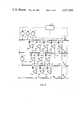
- FIG. 1is a schematic illustration of a steam generation and distribution system.
- FIG. 2is a schematic illustration of the method of the present invention applied to the system of FIG. 1.
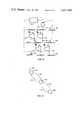
- FIG. 3is a schematic illustration of the network forming the system in FIG. 1.
- FIG. 4is a schematic illustration of another steam generation and distribution system.
- FIG. 5is a schematic illustration of the network forming the system of FIG. 4.
- FIG. 1An exemplary cogeneration system is shown in FIG. 1.
- Three boilers 2, 4 and 6are coupled to supply steam to a high pressure header 10.
- Each of the boilersincludes a control system 7 to control the rate at which the boiler produces steam by controlling, among other things, the flow of fuel to the boiler.
- the header 10is coupled to at least one steam-using device, not shown.
- turbo-generatorsor turbines, 12, 14, 16, 18 and 19 are coupled to the high pressure header 10.
- Three of the turbines 12, 14 and 16have three extraction stages, and each extraction stage is connected to a separate outlet conduit.
- the conduits 21, 22 and 23 from the high pressure extraction stage of each turbineare coupled to supply steam to a first intermediate pressure header 20; the conduits 24, 25 and 26 from the intermediate pressure extraction stage are coupled to supply steam to a second intermediate pressure header 30; and the conduits 27, 28 and 29 from the low pressure extraction stage of each turbine are coupled to a low pressure header 40.
- the headers 20, 30 and 40are each coupled to at least one steam-using device, not shown, to supply steam thereto.
- Turbo-generator 18has its output coupled to the second intermediate pressure header 30 via conduit 31 and the turbo-generator 19 has its output coupled to the low pressure header 49 via conduit 32.
- a boiler 42 having a control system 7is coupled to supply steam at the second intermediate pressure to header 30.
- Pressure regulators 44are interposed in the conduits supplying steam to each turbine and also in the output conduits from the turbines.
- the pressure regulators 44permit the pressures to be controlled at the various locations throughout the system.
- An embodiment of the system and processwill be described hereinafter.
- the turbines 12, 14 and 16have multiple extraction stages and thus each turbine can be thought of as three turbines with the output of one coupled to the input of another. In FIG. 2 this is illustrated so that the three stages of turbine 12 are illustrated respectively as turbines 50, 52 and 54.
- the output 21 of the first turbine 50is coupled to header 20 and also to the input of turbine 52, while the output of turbine 52 is coupled to the header 30 and to the input of turbine 54, and the output of turbine 54 is coupled to header 40.
- turbine 14can be understood as turbines 56, 58 and 60
- turbine 16can be understood as turbines 62, 64 and 66.
- a computer 70is provided to automatically carry out the process which will be described hereinafter.
- the computer 70is coupled to receive signals from a plurality of pressure transducers 72 mounted one in each header.
- the computer 70is also coupled to receive signals from the boiler control systems 7, the pressure regulators 44, and each of the turbines. Also each of the pressure regulators 44 has its own servo system, not shown, which converts signals from the computer 70 into mechanical motion to operate the regulator.
- the system shown in FIG. 2can be conceptualized as the network shown in FIG. 3.
- the headersare indicated as circles or nodes, 10, 20, 30 and 40 and the routes via which steam flows are indicated as lines.
- the elements of the network in FIG. 3will be indicated by the numbers to which they correspond generally in the FIG. 2 system.
- item 21 in the networkrepresents two pressure regulators 44, turbine 50 and conduit 21.
- node 20is connected to node 10 via paths 21, 22 and 23.
- node 40is connected to node 10 via a number of paths such as the major path comprising minor path 27, node 30, and minor path 31, or the minor path 28, node 30, minor path 26, node 20, minor path 23 and node 10.
- the computerselects a particular header in which the pressure has deviated from the predetermined pressure. Let us assume header 40 was selected.
- the computeridentifies each path which begins at the header in question, i.e., header 40, and terminates at a steam supply means, in this case boiler 2, 4, 6 or 42.
- a steam supply meansin this case boiler 2, 4, 6 or 42.
- the computeridentifies each steam transfer means in each path.
- the identified transfer and steam supply meansare turbines 54, and 18, which in fact represent the third extraction stage of turbine 12 and turbine 18, and boiler 6.
- the identified transfer meansis turbine 60, which in fact represents the third extraction stage of turbine 14 and boiler 42.
- the computerdetermines the incremental cost associated with each transfer means and with the supply means in each path. This is accomplished by utilizing information stored in the computer about the operating characteristics of each element of the system and the actual operating level of the element at the time, according to the equations set out above. It should be appreciated that in practice the computations may be far more complicated than suggested by the equations herein, which are merely illustrative.
- the incremental costs associated with each transfer means and supply meansis totalled for each path to generate a path incremental cost for each path.
- the maximum permissible alteration for each transfer and supply meansis determined based upon information about the various elements stored in the computer and about the existing condition of each element. For example, in a simple case, if a certain boiler can supply a maximum of 500 pounds of steam per hour and is presently supplying 450 pounds per hour, the maximum permissible alternative is an increase of 50 pounds per hour. However, as will be discussed below, the maximum permissible alteration can account for additional factors. That is, the present process includes the step of determining the alteration of a particular element necessary to produce a given steam pressure in a particular header, but, before this alteration is actually carried out, the alteration of the element necessary to achieve a predetermined pressure in other headers is also computed. This process is iterative.
- each steam transfer and supply means in the first pathis calculated.
- This calculationincludes a determination of the required pressure in the header in question; a determination of the alterations of each element which can be accomplished without altering the pressure in any header other than the header in question; and a determination of the effect of the permissible alterations upon the pressure of the header in question. If this determination leads to the conclusion that implementation of the alterations of the elements would result in attainment of the required pressure in the first header, then the alterations are carried out.
- the computerselects a new path, for which the path incremental cost is the next lowest, with respect to the first path and repeats step f through h for the new path above for additional alterations until the total of the required alterations is determined to be sufficient to achieve the required pressure in the first header.
- step f through hfor the new path above for additional alterations until the total of the required alterations is determined to be sufficient to achieve the required pressure in the first header.
- it may be necessary to repeat the process for additional pathsand it may be found that even after all paths have been analyzed, it is impossible to alter the elements sufficiently to achieve the required pressure in the first header while satisfying all other constraints. If such is found, the required alterations are implemented, it being recognized that a pressure as close as possible to the required pressure has been achieved.
- FIG. 4there is shown a boiler 100 and three headers 102, 104 and 106.
- Turbines 110 and 112represent the first extraction stages of two turbines, not shown, and the turbines 110 and 112 are coupled between headers 101 and 104.
- Turbines 114 and 116represent the second extraction stages of the two turbines not shown, and turbines 114 and 116 are coupled between the outputs of turbines 110 and 112 and header 106.
- the system in FIG. 4can be conceptualized as the network shown in FIG. 5. Let us assume that the system is operating under the following conditions, and that the actual steam flow is exactly that required.
- gainis the electrical power in Kilowatt hours produced per unit of steam flow in pounds per hour
- Poweris steam flow times gain
- the computerwould first determine the incremental costs according to step (c) above. In this case the incremental "cost” would be the gains associated with the turbines and the “costs” would be negative since the turbines produce power. Since there is only one source of steam, it would be unnecessary to determine the cost associated with producing more steam. Then the computer determines, according to step (d), the permissible alterations for each turbine; and in this example it is assumed that there are no limitations upon permissible alterations. Likewise, according to step (e) it is assumed that no path is excluded. According to step (f) the path having the minimum incremental cost is identified. In this case the path includes turbines 110 and 116.
- step (g)it is determined that the valves 44 associated with turbines 110 and 116 must both be opened to pass an additional 10 pounds of steam per hour. Once these determinations have been made, the steps are implemented according to step (g). Thus, an additional 10 pounds of steam would be routed through turbines 110 and 116, and the total power production is increased by 1200 units.
- the computeragain accomplishes the steps described above.
- the amount of steam flow through turbines 112 and 114would be reduced by 10 pounds per hour.
- the computeroperates to reduce the cost of steam toward an overall least-cost solution.
- the only steam transfer devicesare turbines, it should be understood that other steam transfer devices are within the scope of the invention.
- a pressure reducing valve-desuperheater for cooling steam and reducing its pressureis an appropriate transfer device.
- the only steam suppliers discussed thus farare boilers; however, steam can be supplied to the present system from other sources.
- the present control systemcan be applied to a steam distribution system which receives steam from a header which is not part of the system, and thus the header would be a steam supply means with respect to the control system.
Landscapes
- Engineering & Computer Science (AREA)
- Chemical & Material Sciences (AREA)
- Combustion & Propulsion (AREA)
- Mechanical Engineering (AREA)
- General Engineering & Computer Science (AREA)
- Physics & Mathematics (AREA)
- Thermal Sciences (AREA)
- Control Of Steam Boilers And Waste-Gas Boilers (AREA)
- Control Of Turbines (AREA)
Abstract
Description
______________________________________ Steam Turbine Gain Flow Power ______________________________________ 110 50 50 2500 112 50 20 4000 114 40 100 1000 116 70 50 3500 ______________________________________
Claims (5)
Priority Applications (1)
| Application Number | Priority Date | Filing Date | Title |
|---|---|---|---|
| US06/395,408US4421068A (en) | 1982-07-06 | 1982-07-06 | Optimization of steam distribution |
Applications Claiming Priority (1)
| Application Number | Priority Date | Filing Date | Title |
|---|---|---|---|
| US06/395,408US4421068A (en) | 1982-07-06 | 1982-07-06 | Optimization of steam distribution |
Publications (1)
| Publication Number | Publication Date |
|---|---|
| US4421068Atrue US4421068A (en) | 1983-12-20 |
Family
ID=23562907
Family Applications (1)
| Application Number | Title | Priority Date | Filing Date |
|---|---|---|---|
| US06/395,408Expired - Fee RelatedUS4421068A (en) | 1982-07-06 | 1982-07-06 | Optimization of steam distribution |
Country Status (1)
| Country | Link |
|---|---|
| US (1) | US4421068A (en) |
Cited By (24)
| Publication number | Priority date | Publication date | Assignee | Title |
|---|---|---|---|---|
| US4495899A (en)* | 1984-04-11 | 1985-01-29 | Carberry Victor V | Low pressure relief valve assembly for high pressure boiler |
| EP0119773A3 (en)* | 1983-03-17 | 1985-05-15 | The Babcock & Wilcox Company | Systems for optimizing the performance of a plurality of energy conversion devices |
| US4572110A (en)* | 1985-03-01 | 1986-02-25 | Energy Services Inc. | Combined heat recovery and emission control system |
| US4598668A (en)* | 1985-01-09 | 1986-07-08 | Energy Systems And Service Corp. | Apparatus for efficiently controlling the operation of parallel boiler units |
| US4938173A (en)* | 1986-12-11 | 1990-07-03 | Cubit Limited | Fluid system |
| US6551933B1 (en) | 1999-03-25 | 2003-04-22 | Beaver Creek Concepts Inc | Abrasive finishing with lubricant and tracking |
| US6568989B1 (en) | 1999-04-01 | 2003-05-27 | Beaver Creek Concepts Inc | Semiconductor wafer finishing control |
| US6656023B1 (en) | 1998-11-06 | 2003-12-02 | Beaver Creek Concepts Inc | In situ control with lubricant and tracking |
| US6739947B1 (en) | 1998-11-06 | 2004-05-25 | Beaver Creek Concepts Inc | In situ friction detector method and apparatus |
| US20040115841A1 (en)* | 2001-09-20 | 2004-06-17 | Molnar Charles J. | In situ finishing aid control |
| US20040177614A1 (en)* | 2003-03-10 | 2004-09-16 | Kabushiki Kaisha Toshiba | Steam turbine plant |
| US6986698B1 (en) | 1999-04-01 | 2006-01-17 | Beaver Creek Concepts Inc | Wafer refining |
| US7008300B1 (en) | 2000-10-10 | 2006-03-07 | Beaver Creek Concepts Inc | Advanced wafer refining |
| US7131890B1 (en)* | 1998-11-06 | 2006-11-07 | Beaver Creek Concepts, Inc. | In situ finishing control |
| US7220164B1 (en)* | 2003-12-08 | 2007-05-22 | Beaver Creek Concepts Inc | Advanced finishing control |
| US20080057830A1 (en)* | 1999-04-01 | 2008-03-06 | Molnar Charles J | Advanced workpiece finishing |
| US20080306624A1 (en)* | 2006-12-27 | 2008-12-11 | Molnar Charles J | Advanced finishing control |
| US7572169B1 (en) | 1998-11-06 | 2009-08-11 | Beaver Creek Concepts Inc | Advanced finishing control |
| US7575501B1 (en) | 1999-04-01 | 2009-08-18 | Beaver Creek Concepts Inc | Advanced workpiece finishing |
| US20110294399A1 (en)* | 1998-11-06 | 2011-12-01 | Molnar Charles J | Advanced finishing control |
| US8357286B1 (en) | 2007-10-29 | 2013-01-22 | Semcon Tech, Llc | Versatile workpiece refining |
| US20130189801A1 (en)* | 1998-11-06 | 2013-07-25 | Semcon Tech, Llc | Advanced finishing control |
| US20150107536A1 (en)* | 2012-05-04 | 2015-04-23 | Benoît Janvier | Control system for allocating steam flow through elements |
| US11848220B2 (en) | 2016-12-02 | 2023-12-19 | Applied Materials, Inc. | RFID part authentication and tracking of processing components |
Citations (4)
| Publication number | Priority date | Publication date | Assignee | Title |
|---|---|---|---|---|
| US3387589A (en)* | 1966-09-12 | 1968-06-11 | Vapor Corp | Multiple boiler control system |
| US3576177A (en)* | 1969-11-10 | 1971-04-27 | Raypak Inc | Multiple-boiler temperature control system having boiler sequencing, reverse order firing, and individual boiler modulation with outdoor temperature reset |
| US4069675A (en)* | 1976-03-16 | 1978-01-24 | Measurex Corporation | Method of optimizing the performance of a multi-unit power |
| US4306417A (en)* | 1979-11-28 | 1981-12-22 | Westinghouse Electric Corp. | Multiple boiler steam blending control system for an electric power plant |
- 1982
- 1982-07-06USUS06/395,408patent/US4421068A/ennot_activeExpired - Fee Related
Patent Citations (4)
| Publication number | Priority date | Publication date | Assignee | Title |
|---|---|---|---|---|
| US3387589A (en)* | 1966-09-12 | 1968-06-11 | Vapor Corp | Multiple boiler control system |
| US3576177A (en)* | 1969-11-10 | 1971-04-27 | Raypak Inc | Multiple-boiler temperature control system having boiler sequencing, reverse order firing, and individual boiler modulation with outdoor temperature reset |
| US4069675A (en)* | 1976-03-16 | 1978-01-24 | Measurex Corporation | Method of optimizing the performance of a multi-unit power |
| US4306417A (en)* | 1979-11-28 | 1981-12-22 | Westinghouse Electric Corp. | Multiple boiler steam blending control system for an electric power plant |
Cited By (30)
| Publication number | Priority date | Publication date | Assignee | Title |
|---|---|---|---|---|
| EP0119773A3 (en)* | 1983-03-17 | 1985-05-15 | The Babcock & Wilcox Company | Systems for optimizing the performance of a plurality of energy conversion devices |
| US4495899A (en)* | 1984-04-11 | 1985-01-29 | Carberry Victor V | Low pressure relief valve assembly for high pressure boiler |
| US4598668A (en)* | 1985-01-09 | 1986-07-08 | Energy Systems And Service Corp. | Apparatus for efficiently controlling the operation of parallel boiler units |
| US4572110A (en)* | 1985-03-01 | 1986-02-25 | Energy Services Inc. | Combined heat recovery and emission control system |
| US4938173A (en)* | 1986-12-11 | 1990-07-03 | Cubit Limited | Fluid system |
| US7131890B1 (en)* | 1998-11-06 | 2006-11-07 | Beaver Creek Concepts, Inc. | In situ finishing control |
| US7572169B1 (en) | 1998-11-06 | 2009-08-11 | Beaver Creek Concepts Inc | Advanced finishing control |
| US6656023B1 (en) | 1998-11-06 | 2003-12-02 | Beaver Creek Concepts Inc | In situ control with lubricant and tracking |
| US6739947B1 (en) | 1998-11-06 | 2004-05-25 | Beaver Creek Concepts Inc | In situ friction detector method and apparatus |
| US20130189801A1 (en)* | 1998-11-06 | 2013-07-25 | Semcon Tech, Llc | Advanced finishing control |
| US8353738B2 (en)* | 1998-11-06 | 2013-01-15 | Semcon Tech, Llc | Advanced finishing control |
| US20110294399A1 (en)* | 1998-11-06 | 2011-12-01 | Molnar Charles J | Advanced finishing control |
| US6551933B1 (en) | 1999-03-25 | 2003-04-22 | Beaver Creek Concepts Inc | Abrasive finishing with lubricant and tracking |
| US6986698B1 (en) | 1999-04-01 | 2006-01-17 | Beaver Creek Concepts Inc | Wafer refining |
| US6568989B1 (en) | 1999-04-01 | 2003-05-27 | Beaver Creek Concepts Inc | Semiconductor wafer finishing control |
| US7878882B2 (en) | 1999-04-01 | 2011-02-01 | Charles J. Molnar | Advanced workpiece finishing |
| US7575501B1 (en) | 1999-04-01 | 2009-08-18 | Beaver Creek Concepts Inc | Advanced workpiece finishing |
| US20080057830A1 (en)* | 1999-04-01 | 2008-03-06 | Molnar Charles J | Advanced workpiece finishing |
| US7008300B1 (en) | 2000-10-10 | 2006-03-07 | Beaver Creek Concepts Inc | Advanced wafer refining |
| US7156717B2 (en)* | 2001-09-20 | 2007-01-02 | Molnar Charles J | situ finishing aid control |
| US20040115841A1 (en)* | 2001-09-20 | 2004-06-17 | Molnar Charles J. | In situ finishing aid control |
| US7032384B2 (en)* | 2003-03-10 | 2006-04-25 | Kabushiki Kaisha Toshiba | Steam turbine plant |
| US20040177614A1 (en)* | 2003-03-10 | 2004-09-16 | Kabushiki Kaisha Toshiba | Steam turbine plant |
| US7220164B1 (en)* | 2003-12-08 | 2007-05-22 | Beaver Creek Concepts Inc | Advanced finishing control |
| US20080306624A1 (en)* | 2006-12-27 | 2008-12-11 | Molnar Charles J | Advanced finishing control |
| US7991499B2 (en) | 2006-12-27 | 2011-08-02 | Molnar Charles J | Advanced finishing control |
| US8357286B1 (en) | 2007-10-29 | 2013-01-22 | Semcon Tech, Llc | Versatile workpiece refining |
| US20150107536A1 (en)* | 2012-05-04 | 2015-04-23 | Benoît Janvier | Control system for allocating steam flow through elements |
| US10012380B2 (en)* | 2012-05-04 | 2018-07-03 | Enero Inventions Inc | Control system for allocating steam flow through elements |
| US11848220B2 (en) | 2016-12-02 | 2023-12-19 | Applied Materials, Inc. | RFID part authentication and tracking of processing components |
Similar Documents
| Publication | Publication Date | Title |
|---|---|---|
| US4421068A (en) | Optimization of steam distribution | |
| US5347466A (en) | Method and apparatus for power plant simulation and optimization | |
| EP0098037B1 (en) | Electric power generation systems and methods of operating such systems | |
| US5278772A (en) | Real-time economic load allocation | |
| US5886895A (en) | Plant utility optimizing method and an optimizing system | |
| US4005581A (en) | Method and apparatus for controlling a steam turbine | |
| EP0363979B1 (en) | Waste heat recovery boiler system and method of operating the same | |
| US4887431A (en) | Superheater outlet steam temperature control | |
| US4437313A (en) | HRSG Damper control | |
| US4061533A (en) | Control system for a nuclear power producing unit | |
| EP0079598B1 (en) | Steam turbine bypass system | |
| US4418285A (en) | System and method for controlling a turbine power plant in the single and sequential valve modes with valve dynamic function generation | |
| US5424958A (en) | Real time resource allocation | |
| JP2747543B2 (en) | Method of operating a steam turbine device at low load level | |
| US5045272A (en) | Fluid temperature balancing system | |
| GB2078864A (en) | District heating by combined heat and power | |
| US3523421A (en) | Peaking load steam cycle | |
| JPH0895604A (en) | Optimal operation system of power plant | |
| CA1048662A (en) | Control system for a nuclear power producing unit | |
| JPH07133703A (en) | Control method for power generating plant | |
| JPS5948696A (en) | Steam distribution equipment in nuclear reactor plants | |
| KR800000720B1 (en) | Control system for a nuclear power producing unit | |
| Lausterer | Improved power plant control using a digital process control system | |
| US1803455A (en) | Power plant | |
| JPH0434162B2 (en) |
Legal Events
| Date | Code | Title | Description |
|---|---|---|---|
| AS | Assignment | Owner name:MEASUREX CORPORATION, A CORP. OF CA Free format text:ASSIGNMENT OF ASSIGNORS INTEREST.;ASSIGNOR:ARAL, GURCAN;REEL/FRAME:004021/0901 Effective date:19820701 | |
| FEPP | Fee payment procedure | Free format text:PAYOR NUMBER ASSIGNED (ORIGINAL EVENT CODE: ASPN); ENTITY STATUS OF PATENT OWNER: LARGE ENTITY | |
| MAFP | Maintenance fee payment | Free format text:PAYMENT OF MAINTENANCE FEE, 4TH YEAR, PL 96-517 (ORIGINAL EVENT CODE: M170); ENTITY STATUS OF PATENT OWNER: LARGE ENTITY Year of fee payment:4 | |
| MAFP | Maintenance fee payment | Free format text:PAYMENT OF MAINTENANCE FEE, 8TH YEAR, PL 96-517 (ORIGINAL EVENT CODE: M171); ENTITY STATUS OF PATENT OWNER: LARGE ENTITY Year of fee payment:8 | |
| FEPP | Fee payment procedure | Free format text:MAINTENANCE FEE REMINDER MAILED (ORIGINAL EVENT CODE: REM.); ENTITY STATUS OF PATENT OWNER: LARGE ENTITY | |
| LAPS | Lapse for failure to pay maintenance fees | ||
| FP | Lapsed due to failure to pay maintenance fee | Effective date:19951220 | |
| STCH | Information on status: patent discontinuation | Free format text:PATENT EXPIRED DUE TO NONPAYMENT OF MAINTENANCE FEES UNDER 37 CFR 1.362 |