US4403283A - Extended memory system and method - Google Patents
Extended memory system and methodDownload PDFInfo
- Publication number
- US4403283A US4403283AUS06/173,208US17320880AUS4403283AUS 4403283 AUS4403283 AUS 4403283AUS 17320880 AUS17320880 AUS 17320880AUS 4403283 AUS4403283 AUS 4403283A
- Authority
- US
- United States
- Prior art keywords
- memory
- user program
- group
- addresses
- real
- Prior art date
- Legal status (The legal status is an assumption and is not a legal conclusion. Google has not performed a legal analysis and makes no representation as to the accuracy of the status listed.)
- Expired - Lifetime
Links
Images




Classifications
- G—PHYSICS
- G06—COMPUTING OR CALCULATING; COUNTING
- G06F—ELECTRIC DIGITAL DATA PROCESSING
- G06F12/00—Accessing, addressing or allocating within memory systems or architectures
- G06F12/02—Addressing or allocation; Relocation
- G06F12/0223—User address space allocation, e.g. contiguous or non contiguous base addressing
- G06F12/0292—User address space allocation, e.g. contiguous or non contiguous base addressing using tables or multilevel address translation means
Definitions
- the inventionrelates to systems and methods for efficiently effecting utilization of a memory having 2 N addressable locations by a processor having fewer than N address outputs and to systems and methods for avoiding memory storage problems which result from inadequately regulated memory contention by multiple user programs.
- a problem common to many processorsis that they are capable of generating only a finite number of address bits for addressing memory, hereinafter frequently referred to as "real memory". For example, a 16 bit processor is capable of addressing only 65,536 words of memory.
- a processorit is highly desirable that a processor be able to address "extended memories” having much larger numbers of words, especially in systems in which a plurality of user programs are stored and executed on a time-sharing basis.
- address translatorsare special memory devices which contain extended page addresses of real memory locations. Part of an address generated by the processor (hereinafter referred to as a "logical address”) is utilized to fetch such an extended page address from the address translator.
- the extended page addressis combined with a second part of the logical address to produce an extended address having enough address bits to address each word of the entire real memory.
- Execution of a user programtypically involves three separate types of memory activities, referred to as program execution, input/output execution, and operating system execution. If a system utilizes only a single address translation memory, that address translation memory must be subdivided into three sections, each corresponding to a respective one of the three memory activities.
- the logical address utilized for execution of the operation system program and the input/output routinesrequire utilization of an unduly large proportion of the logical address which the processor is capable of producing, thereby limiting the amount of logical address space available for execution of each user program. (The foregoing approach to extended memory operation is shown in U.S. Pat. No. 4,042,911).
- the number of logical addresses available for execution of user programscan be increased by adding additional address translators for execution of input/output routines and operating system routines. However, this approach is unduly costly.
- a "memory shortage” problemfrequently occurs in computing systems which execute a number of user programs on a time-shared basis.
- the "memory shortage” problemis a consequence of unregulated memory contention among the various time-shared user programs.
- the memory shortage problemarises when a number of user programs are loaded into the computing system without regard for the maximum memory requirements of each such user program.
- a deadlock conditioncan arise when a particular user program occupies a particular amount of the real memory, and is refused an additional amount of memory (needed to complete execution of the particular user program) by a "memory manager routine" because a block of memory sufficiently large to allow the execution of the present user process is unavailable.
- Such a deadlock conditionoften can be relieved only by terminating execution of one or more user programs (which have been loaded into the computing system and are being executed on a time-shared basis). This may occur at arbitrary times, and the possibility of loss of data at such times is high.
- the foregoing problemis further aggravated because a particular user program may run to completion on one occasion but fail on another occasion due to differences in the "mixes" of various user programs which can be executed on a time-shared basis.
- the "software burden" of a computing systemis substantially increased if the operating system includes the capability of collecting fragmented portions of free memory to make them available to a requesting user program.
- Another object of the inventionis to provide an expanded memory system and method which avoid memory shortage problems caused by unregulated memory contention among user programs.
- a further object of the inventionis to provide an expanded memory system which provides maximum logical address space for each user process executed with a minimum amount of address translation memory.
- Another object of the inventionis to provide an expanded memory system and method which ensure that each user program loaded into the system can be executed to completion without likelihood of a shortage of memory interrupting or terminating the execution of that user program.
- the inventionprovides an expanded memory computing system which maps logical addresses produced by execution of a plurality of user programs through a first translation memory into a corresponding plurality of mutually exclusive portions of a real memory.
- the systemalso maps logical addresses produced by execution of I/O operations through a second translation memory into other respective mutually exclusive portions of the real memory.
- the systemincludes a 16 bit processor, a universal dynamic address translator (UDAT) including the first and second translation memories, each including 256 words. Each word includes an 11 bit page address of a page stored in the real memory which includes 262,144 words.
- UDATuniversal dynamic address translator
- Eight upper order addresses produced on an address bus by the processor or by an I/O device connected to the address busperform the function of addressing the translation memories and are utilized to select the desired page addresses.
- the lower order eight bits of addresses produced on the address busselect one of the 256 words of each selected page.
- a system operation programis stored in the lowest order portion of the real memory and is executed without any address translation.
- Various software structures, including a plurality of UDAT images,are stored in the next lowest order portion of the real memory.
- the remaining portion of the real memoryis available for execution of user programs. Mutually exclusive sections of the remaining portion of the real memory are allocated to requesting user programs.
- each user programcan be executed to completion without likelihood of experiencing a shortage of memory if that user program does not attempt to use more memory than has been allocated to it.
- a UDAT image containing the page address of the portion of the real memory exclusively allocated to that user programmust loaded into the first 256 bit translation memory.
- the logical addresses produced by the processor during execution of that user programare then mapped through the first 256 bit translation memory to that exclusively allocated portion of the real memory.
- Logical addresses produced during execution of I/O operationsare mapped through the second 256 bit translation memory, wherein an appropriate UDAT image is stored, to other portions of the real memory, which portions are exclusive of the portions allocated to the user programs.
- Each user programcan share other programs loaded into the system if a share command specifying the programs to be shared is first executed by the system.
- a share routineloads programs to be shared by the present user if there is sufficient available address space in the real memory.
- a COBOL user programincludes a software buffer into which I/O data to be loaded into a disk unit is temporarily stored until the buffer is filled.
- the I/O datais entered into the buffer by mapping logical addresses representing the buffer through a UDAT image, which is previously loaded into the first translation table, to corresponding pages of real memory buffer locations.
- an I/O routineis executed in the next lowest order portion of the real memory, producing logical addresses which address the second translation memory.
- the second translation memorycontains a UDAT image which also contains the real memory page number in which the I/O data is stored.
- the execution of the I/O routinethereby transfers all of the I/O data stored in the buffer portion of the real memory into the disk unit with a single accessing of the disk unit.
- instructions executed in a few reserved pages of the lowest order portion of the real memoryare mapped through the second translation memory to any portion of the real memory, allowing the system operation routine access to a limited sized block of any portion of the real memory.
- FIG. 1is a block diagram of the extended memory comprising system of the present invention.
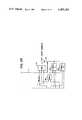
- FIG. 1Ais a block diagram illustrating circuitry included in the memory interface portion of FIG. 1.
- FIGS. 2A and 2B togethershow a detail blocked diagram of the universal address translator (UDAT) block 13 of FIG. 1.
- UDATuniversal address translator
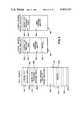
- FIG. 3is a memory map useful in explaining the operation of the extended memory computing system of FIG. 1.
- FIG. 3Ais another memory map useful in explaining the operation of the extended memory computing system.
- FIG. 3Bis another map useful in explaining the operation of the extended memory computing system.
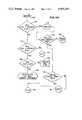
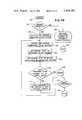
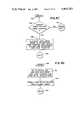
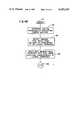
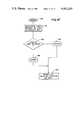
- FIGS. 4A-4Gdisclose flow charts which are useful in explaining the operation of the extended memory system of FIG. 1.
- extended memory system 1includes a main memory 3, which, in the described embodiment of the invention, includes 262,144 words.
- Extended memory system 1also includes a memory interface circuit 7, which is connected to main memory 3 (frequently referred to as real memory 3) by means of a bidirectional bus 5.
- Bus 5is utilized for transferring both addresses and data between main memory 3 and memory interface circuit 7.
- Bus 27conducts various memory control signals from memory interface circuit 7 to real memory 3.
- Processor 9is connected to memory interface circuit 7 by means of bus 17, which conducts data from processor 9 to memory interface circuit 7, and by data bus 19, which conducts data from memory interface circuit 7 to processor 9.
- Address bus 15conducts eight low order address bits from processor 9 to memory interface circuit 7.
- a universal dynamic address translator (UDAT) 13performs the function of translating eight "upper level” address bits (i.e., high order address bits) produced on upper level address bus 11 by processor 9 to produce eleven "extended upper level page addresses".
- Upper level address bus 11has eight conductors for conducting eight upper address bits to inputs of UDAT 13.
- Extended upper level address bus 23includes 11 conductors, which are connected between outputs of UDAT 13 and memory interface circuit 7.
- Processor 9is a "16 bit machine", meaning that it is capable of providing 16 bit address outputs and therefore is capable of directly addressing 65,536 memory locations (i.e., 16 bit memory words).
- the upper eight address bits MAB9-16address one of two tables, referred to as Table A and Table B, respectively, contained in UDAT 13.
- Table Aincludes 256 twelve bit words.
- the first eleven bits of each word, hereinafter referred to as the "translation word”,constitute an extended page address which is inputted to memory interface circuit 7.
- the eight lower level address bits MAB1-8(which address the individual 16 bit words within a page) on bus 15 and the eleven extended upper level address bits on bus 23 constitute an extended 19 bit address.
- the extended 19 bit addressis capable of addressing any 65,536 word portion of the 262,144 word real memory 3, thereby expanding the addressing capability of processor 9.
- FIG. 3Bshows an example of the mapping achieved by means of Table A and Table B.
- Reference numeral 69represents a typical 16 bit logical address produced by processor 9.
- the hexadecimal number "12"represents the value of the upper order eight bits of logical address 69
- the hexadecimal number "34"represents the lower order eight bits of logical address 69.
- hexadecimal number "12”selects the location of Table A in which is stored the real memory page number of real memory address to which logical address 69 is to be mapped.
- Hexadecimal number "34”represents the particular word of that page to which logical address 69 is to be mapped.
- the subject page numberis stored in hexadecimal location 12 of Table A and has the hexadecimal value 0327.
- This numberincludes twelve binary bits, eleven of which are used to designate the real memory page number. These eleven bits are concatenated with the binary equivalent of the hexadecimal number "34" to produce a 19 bit extended address (which is the binary equivalent of hexadecimal "032734").
- Lower address bus 15is connected to outputs of UDAT 13 in order to permit UDAT 13 to operate in a direct memory access (DMA) mode, subsequently explained.
- Data bus 19is connected to the inputs of UDAT 13 to facilitate loading of Table A and Table B of UDAT 13, as subsequently explained.
- I/O devices 21,which may, for example, include a disk unit, a keyboard, a CRT, or various other common I/O devices, are connected to data buses 17 and 19, and also to address buses 11 and 15.
- the system shown in FIG. 1is incorporated into a machine known as the NCR 8200.
- This machineis capable of executing a plurality of user programs, including COBOL programs, on a time-shared basis.
- This 16 bit addresses outputted by processor 9are referred to herein as "logical addresses”.
- Logical addresses produced by processor 9 to effect execution of a particular user programare "mapped" through Table A of UDAT 13 to produce extended 19-bit addresses which are then utilized to address real memory 3.
- Logical addresses produced by processor 9 to effect execution of input/output operationsare mapped through Table B to effect addressing of real memory 3.
- Bus 20conducts certain ones of the I/O control and selection signals from UDAT 13 to I/O devices 21.
- Some of the I/O control signalsprogram certain ones of the registers and counters of UDAT 13, shown in more detail in FIG. 2.
- Some of the I/O control signalsprogram various ones of the I/O devices 21, setting them up to take control of the address and data buses in FIG. 1 when those I/O devices come to the highest priority portion in a conventional priority interrupt system.
- System operation routines required to be executed in order to effect execution of the user programs and input/output routinesare stored in a lower portion (i.e., a portion addressed by low address numbers of main memory 31), and are addressed directly by the logical addresses produced by processor 9, without being mapped through UDAT 13.
- processor 9Every time that processor 9 switches to a different user program, it is necessary to reload Table A of UDAT 13, so that logical addresses produced by processor 9 in order to execute that user program are mapped into a portion of real memory 3 which has been assigned exclusively to that user program.
- a plurality of mutually exclusive portions of real memory 3are exclusively assigned to the respective user programs executed by processor 9, except that certain user processes can be "shared" as subsequently explained.
- the technique of assigning separate mutually exclusive portions of main memory to corresponding user programsavoids the previously mentioned memory shortage problems resulting from computing systems wherein there is inadequately regulated or unregulated memory contention among various user programs.
- the use of lower logical address locations of real memory 3 for executing the system operation routine without mapping and using higher address locations of real memory 3 for executing input/output routines by mapping higher order logical addresses through Table B of UDAT 13 and also using higher order logical address locations for executing a plurality of user programs by mapping logical addresses through Table A into corresponding mutually exclusive portions of real memory 3results in an optimum amount of logical address space being available for execution of each user program by processor 9.
- processor 9allows processor 9 to execute the various time-shared user programs loaded therein "transparently" from the complications of utilizing an extended main memory having a larger number of locations than can be directly addressed by the 16 bit logical addresses produced by processor 9.
- various mutually exclusive portions of main memory 3can be "mapped into” by a logical address space of 65,536 addresses, whereby execution of each user program is “isolated” from execution of each other user program.
- each user programhas its own “dedicated” portion of real memory 3, which dedicated portion may be as large as 65,536 words.
- each user program executed by processor 9can be executed independently of the memory requirements of any other user program executed by processor 9, it is convenient herein to load into the computing system and refer to each user program executed thereby as a "pseudo machine".
- the entire 262,144 words of main memory 3can be used for executing a plurality of user programs, although the logical address space for any one user process is still limited to the 65,536 words which can be addressed by the 16 bit address words produced by processor 9.
- memory interface circuit 7includes address decoders 78, which receive extended upper address bus 23 and lower address bus 15 as inputs.
- the outputs of address decoder 7Bare coupled to bus 5, and select subgroups of dynamic memory chips contained in real memory 3.
- Delay circuit 7Adelays timing and control signals on bus 25 by an amount sufficient to allow UDAT 13 to perform the abovementioned address translation operations. This ensures that timing and control signals produced by processor 9 (which include various read/write, chip select, and enable signals) are applied to main memory 3 in proper synchronization with the extended address signals produced on bus 11 by UDAT 13.
- UDAT 13includes two separately addressable random access memories 13A and 13B.
- memory 13Awill be referred to as “Table A”
- memory 13Bwill be referred to as "Table B”.
- Table A and Table Bcontains 256 twelve bit words, and each is implemented by means of three 256 word by four bit high speed bi-polar Fairchild 93422 random access memory integrated circuit devices.
- Each word contained in Tables A and Bis referred to as a translation word and contains a "page" address, i.e., the address of a "page” in real memory 3.
- Each pageincludes 256 words which are addressable by the eight lower order address bits MAB1-8 conducted by bus 15, also shown in FIG. 1.
- UDAT 13also includes a multiplexer circuit 39 which has a plurality of outputs coupled to corresponding address inputs of Table A and Table B.
- One group of inputs of multiplexer 39are coupled to respective conductors of upper address bus 11, and another set of inputs of multiplexer 39 are coupled to outputs of logical page register 36.
- Multiplexer circuit 39can be implemented by means of a plurality of Texas Instruments 74S157 2-to-1 multiplexer integrated circuits.
- UDAT 13also includes a multiplexer circuit 40 (which can be implemented by means of a plurality of Texas Instruments 74S158 2-to-1 multiplexer integrated circuits), the outputs of which are connected to conductors of bus 23, on which the above-mentioned extended upper address is produced.
- One group of inputs of multiplexer circuit 40are connected to the respective conductors of upper address bus 11.
- Another group of inputs of multiplexer circuit 40are connected to the outputs of the two random access memories constituting Tables A and B, which are connected to the eleven conductors of bus 45.
- the eleven conductors of bus 45are also connected to one group of inputs of multiplexer circuit 37, which may be implemented by means of Texas Instruments 74153 4-to-1 multiplexer integrated circuits.
- the function of the output of multiplexer 37is to provide the above-mentioned I/O control and selection signals on bus 20.
- a "select" inputis applied to multiplexer circuit 40 to determine whether the signals produced by either (1) Table A or Table B or (2) the signals on the right conductors of upper address bus 11 are multiplexed to the eleven conductors of bus 23.
- This select inputis produced by translation control circuitry 38, which includes simple logic circuitry that can be easily implemented by any one skilled in the art who knows the conditions of master mapping register 33 under which foregoing multiplexing operations are to be performed.
- Master mapping register 33(which can be implemented by means of three Texas Instruments 74174 latches integrated circuits) is loaded by means of three conductors of bus 46.
- Bus 46referred to as the "send data" bus, conducts data produced by programmed commands by means of an arithmetic logic unit in processor 9.
- Bus 46is included in I/O bus 18, mentioned above.
- Master mapping register 33includes three latches which define eight possible operating states of UDAT 13, of which only three are pertinent to the present invention.
- a load signal produced by timing and control circuitry 29effects loading of the three latches constituting master mapping register 33.
- UDAT 13includes DMA (direct memory access) address register 30, which may be implemented by means of Texas Instruments 74193 counter/register integrated circuits.
- DMA address registerhas inputs connected to the respective conductors of bus 46.
- the eight lower order bits of DMA address register 30are connected to the respective conductors of lower order address bus 15, and are utilized by UDAT 13, to generate lower order address bits MAB1-8 in one mode of operation wherein UDAT 13 operates as a DMA device.
- the eleven conductors of upper order address bus 11also are connected to DMA address register 30.
- the sixteen terminals of DMA address register 30are connected to one set of inputs of multiplexer 37.
- Block count register 31(which can be implemented by means of Texas Instruments 74S374 integrated circuit latches) has outputs connected to multiplexer 37. Block count register 31 also produces output signals to timing and control circuitry 29. Block 32 of FIG. 2 has outputs connected to inputs of receive data multiplexer 37, and is loaded from bus 46 by means of the above-mentioned load signal produced on conductor 48 by timing and control circuitry 29. Multiplexer 37 allows information in any of the blocks of writing converted to its inputs to be selectively routed to the processor 9, if desired.
- Block 32produces an output on conductor 49 which output is connected to timing and control circuit 29.
- Real memory page address register 35has outputs connected to corresponding inputs of Tables A and B by means of conductors 44. Real memory page address register 35 is loaded either with data from bus 46 or with data from bus 19 by means of multiplexer 34, which can be implemented by means of a Texas Instruments 74157 2-to-1 integrated circuits.
- the "state" loaded into master mapping register 33controls how UDAT 13 maps addresses received from processor 9 onto upper order address bus 11. Addresses received from processor 9 via upper order address bus 11 are categorized as "processor addresses"; these are addresses which are involved with execution of user programs or associated input/output subroutines. Other types of addresses are utilized only for input/output operations, and are referred to as "I/O" addresses. In one of the modes of operation of UDAT 13, processor addresses received on upper order address bus 11 are not translated, and are multiplexed directly onto page address bus 23 by means of multiplexer circuit 40 in response to translation control circuit 38, which in turn responds to a corresponding state stored in master mapping register 33.
- Timing and control circuitry 29generates a "write A" signals and a "write B" signal on conductors 51 and 52, respectively, in order to select either Table A or Table B to effect loading of translation words therein in accordance with the needs of the user program to be executed or the I/O operation to be executed.
- UDAT 13may be loaded in three different ways. First, any individual word or register of either Table A or Table B may be loaded with individual page addresses of a particular memory page of real memory 3. Stated differently, any word of Table A or Table B may be loaded to point to a particular memory "page" of main memory 3. In order to load an individual word or "page register" of Table A or Table B, the address of the desired word is loaded in logical page register 36. This information to be loaded into the selected word location is then inputted via conductor 44 and real memory page address register 35.
- any number of consecutive words or registers of either of Table A or Table Bmay be loaded with consecutive memory addresses of real main memory 3 by specifying an initial page address, and also specifying how many consecutive words or registers of that table (Table A or Table B) are to be loaded, and causing those words or registers to be consecutively loaded with translation words from real memory 3.
- Block counter register 31contains a number which defines how many logical page registers of Table A or Table B are to be loaded in the "increment block loading mode". In this mode, any number of consecutive words or page registers within either Table A or Table B can be loaded with consecutive real memory page addresses.
- the logical page register 36is incremented to select successive logical page addresses of the selected one of Table A and B.
- Real memory page address register 35is a register/counter, so that it can be incremented from the first address loaded into it in order to effect the above described incremented block load operation.
- any number of consecutive registers of Table A or Table Bmay be loaded utilizing direct memory addressing from a table of page addresses stored in the portion of real memory 3 referred to as the "extended resident".
- an initial addresscan be loaded into DMA address register 30 (which is actually a counter/register) by means of bus 46.
- DMA address register circuitry 30when is via conductor 52 incremented by means of timing and control circuitry 29, causing a block of data beginning with the initial address loaded into DMA address register 30 to be loaded into Table A or Table B.
- Thisis the usual method of loading Table A and Table B when processor 9 switches from one user program to another or switches to an input/output routine.
- Datais received from real memory 3 via bus 19, passed through multiplexer 34 and real memory page address register 35 and outputted via bus 44 into the selected one of Table A and Table B.
- Output lines MAB9-16(bus 11) are outputted from DMA address register 30 to effect loading of Table A or Table B in the case where an initial address is loaded in DMA address register 30, as mentioned above.
- DMA address register 30is incremented from that initial address to address a block of successive addresses of real memory 3 in order to load the contents of that block of addresses into the selected one of Table A and Table B.
- address translator 13functions as a DMA device in this mode of operation.
- UDAT 13In one of the operating states of UDAT 13, when user programs are being executed by processor 9, logical addresses produced by processor 9 will be mapped through Table A to real memory 3, and input/output operation logical addresses will be mapped through Table B. In another operating state, when I/O device driver structures or routines are being executed, processor 9 will map logical addresses through Table B and input/output logical addresses will also be mapped through Table B. In a third state, no mapping will be performed for logical addresses outputted by processor 9 except for the addresses of the last eight pages of the resident portion of the pseudo-machine being executed, which addresses are mapped through Table B, allowing system operation routines to address any real memory page in main memory 3.
- addresses produced by processor 9 on address buses 11 and 15can be referred to as "logical address”.
- the addresses actually applied to real memory 3are referred to as "real addresses” or "physical addresses”.
- Each user program executed on a time-shared basis by processor 9 operating in the 65,536 word logical address space of processor 9can be viewed as a separate "pseudo-machine" which is executed without regard for the memory requirements of any other user program executed by processor 9.
- the 65,536 word logical memory space of a first pseudo-machinereferred to as pseudo-machine 1
- memory map 55the 65,536 word logical memory space of a second pseudo-machine
- memory map 56the 65,536 word logical memory space of a second pseudo-machine, referred to as "pseudo-machine 2" is shown by memory map 56.
- Pseudo-machines 1 and 2are said to be operating when their corresponding user programs are being executed in processor 9.
- the memory map of real memory 3is designated in FIG. 3 by reference numeral 54.
- Portion 54A of real memory map 54is mapped through either Table A or Table B but the logical addresses of portion 54A are identical to the real addresses into which those logical addresses are mapped (with one exception, explained subsequently).
- Portion 54A of real memory map 54is referred to as the "resident" portion of real memory 3.
- the resident portion 54Acorresponds to approximately the lowest order 20,000 words of real memory 3. Since the 20,000 words are not mapped (i.e., are not translated by means of either Table A or Table B) they are also included in the logical memory space of pseudo-machine 1 and pseudo-machine 2 (and every other pseudo-machine executed by processor 9) as indicated in memory maps 55 and 56, wherein resident portions 55A and 56A of memory maps 55 and 56, respectively, are also labeled as resident portions thereof.
- the system operation program previously mentionedis stored and executed in resident portion 54A or real memory 3, as are the subsequently mentioned logical I/O routine, physical device driver routines, and various other software structures.
- the resident portion of the logical memory space of any pseudo-machineis unavialable for execution of non-common portions of any pseudo-machine, since the resident portion of the logical memory space is utilized for execution of the "system operation program", which is utilized on execution of all user programs.
- portion 55B of memory map 55is available for execution of the non-common portion of pseudo-machine 1
- portion 56B of memory map 56is available for execution of non-common portions of pseudo-machine 2.
- processor 9executes a user program (i.e., as the corresponding pseudo machine is executed) that pseudo-machine is completely "unaware" that any other pseudo-machine executed on a time-shared basis by processor 9 uses the same real memory 3.
- a pseudo-machinedoes not "share” any portion of the real memory space into which its logical address space is mapped with any other pseudo-machine because, although each pseudo-machine has available to it the entire 65,536 words of logical address space addressable by processor 9, except the approximately 20,000 words constituting the resident portion thereof, those logical addresses are mapped into different, mutually exclusive portions of real memory 3 dedicated to the respective pseudo-machine executed on a time-shared basis by processor 9.
- the real memory space of real memory 3is allocated or dedicated to the various user programs during "initialization" of the system shown in FIG. 1, as subsequently explained with reference to the "size” routine.
- FIG 3Ashows two memory maps 58 and 59, labeled "Table A” and "Table B", respectively.
- Table A and Table Brepresents a 256 word by 11 bit memory addressed by the uper order eight logical addresses outputted by processor 9 when it executes user programs or operation routines or the like.
- Each word of Table A and Table Bcontains the address of a page of real memory 3.
- Table Ais utilized to map each pseudo-machine logical address space into real memory 3
- Table Bis utilized to map the logical space of all I/O software buffers and also, I/O software driver structures into real memory 3.
- COBOL user programstypically contain software tables and software structures such as buffers (a series of contiguous logical memory locations constituting a software register reserved for temporarily storing data transferred to or from an I/O device, especially a disk unit) in the course of execution of a user program, which buffers must be addressable by the above mentioned system operation routine.
- buffersa series of contiguous logical memory locations constituting a software register reserved for temporarily storing data transferred to or from an I/O device, especially a disk unit
- a software buffer of the type described aboveis included in the COBOL user program for assembling a suitably large block of such data, which block of data then is transferred to the disk unit by means of a single execution of a "block I/O" routine stored in the extended resident portion of real memory 3, instead of by means of a large number of excessively time-consuming single-word transfers of that data to the disk unit.
- the COBOL user programmakes certain calculations, creating data which eventually must be stored in the disk unit. Each word of such data is temporarily stored in the above-mentioned buffer of the COBOL user program. Since the 16 bit logical address space of processor 9 (except the resident portion thereof) is translated by mapping via Table A to real memory 3 during execution of a user program, the data is created by the COBOL user program stored in the real memory locations determined by the page addresses stored in the portion of Table A represented by the logical address space received for the buffer. This will be better understood by considering the COBOL user program to be represented by pseudo-machine 1 in FIG. 3.
- Reference numeral 55Crepresents the above-mentioned COBOL buffer, which is addressed by processor 9 when the above-mentioned data is transferred by the COBOL user program (i.e., pseudo-machine 1) to real memory 3.
- These logical addressesare mapped via Table A (which has been loaded with a suitable "UDAT image" corresponding to pseudo-machine 1 before execution of pseudo-machine 1 has begun) to locations of real memory 3 represented by reference numeral 54D in the real memory map 54 of FIG. 3.
- buffer 55CWhen buffer 55C is completely filled by such data (for purposes of explanation it is convenient to refer to buffer 55C in pseudo-machine 1 as being “full” even though actually it is the buffer portion of real memory 3 represented by portion 54D of memory map 55 which is filled with the data), the COBOL user program then makes a request to a routine referred to as the "logical I/O" routine.
- the logical I/O routineis stored in the resident portion of real memory map 54, and also by reference numeral 55D in the memory map of pseudo-machine 1.
- One function of the logical I/O routineis to effect storing of the subject data into buffer 55C.
- a main function of the I/O dispatcheris to translate from a logical A address to a logical B address.
- the physical I/O driverthen uses the B address.
- the I/O driversends out B map addresses.
- the COBOL user programmakes the above request by making a jump from user program area 55B of memory map 55 to the instructions comprising logical I/O routine 55D.
- the logical I/O routinethen causes the block of data "stored" in buffer 55C to be transferred to the disk unit.
- the logical I/O routinecalls a "block I/O" routine stored in portion 54F of the extended resident portion of real memory map 54.
- the block I/O routine 54Feffects the actual transfer of the data temporarily "stored" in buffer 55C to the disk unit. (For convenience, the same reference numerals are utilized to refer to portions of the memory maps and the routines stored in those portions.)
- the block I/O routinewhen the buffer is filled, a signal is sent to the block I/O routine, which calls up the "I/O dispatcher" routine of FIG. 4G.
- the I/O dispatcher routineproduces logical addresses which result in the physical I/O driver routine (subsequently described) sending out "B map” addresses to the disc unit.
- the logical addresses produced by the I/O dispatcherare "B map” logical addresses.
- the "A map” logical addresses produced by the COBOL user programrefer to exactly the same physical memory locations as the B map logical addresses produced by the I/O dispatcher, but the "A map” logical addresses are, in fact, different than the "B map” logical addresses. Therefore, it is necessary that there be a translation from the "A map” logical addresses to the "B map” logical addresses. The same real memory addresses therefore are needed to be loaded into both the ADAT and the BDAT image portions of the extended resident portion of real memory 3.
- Table AIn order to achieve this mapping of logical memory space 55B into portion 54G of real memory map 3, Table A must be first loaded with the ADAT image corresponding to pseudo-machine 1 before pseudo-machine 1 is executed. Similarly, the ADAT image corresponding to pseudo-machine 2 must be loaded into Table A before pseudo machine 2 is executed.
- the software which performs the above mentioned loading of ADAT images into Table Ais called the "UDAT driver" and is stored in the extended resident portion of real memory 3.
- the UDAT driveralso effects the loading of BDAT images into Table B as required to achieve desired mapping of various I/O routines.
- FIG. 4Ashows a flow chart of the routine which is executed by processor 9 to effect execution of the SIZE command.
- the computer softwareenters block 125 in order to begin execution of the SIZE command routine when it is typed into a terminal connected to the system of FIG. 1.
- the first test madeis whether or not an amount of real memory 3 requested for a particular pseudo-machine is greater than the current "size" of the pseudo-machine (i.e., number of pages of real memory required for execution of the pseudo-machine) to which the requested amount of real memory 3 is to be allocated if the request is granted. This is done in block 126. If the requested amount of real memory 3 is greater than the current size of the present pseudo-machine, a subroutine called PMSIZE is called as indicated in block 127.
- PMSIZEa subroutine
- the PMSIZE subroutinefirst performs a test to determine the amount of logical address space available and the amount of real memory address space available.
- the PMSIZE routinecalls a "real memory manager" routine, which performs the function of allocating real memory space to the requesting pseudo-machine.
- the real memory manager routinealso performs other steps necessary to effect the above-mentioned mapping of logical addresses by Table A, as subsequently explained, by calling up the "allocate" subroutine of FIG. 4C.
- the SIZE routineenters decision block 128, and makes a determination of whether there is enough available (i.e., un-allocated) real memory address space to satisfy the present request. If there is not, then the SIZE routine is exited at an error exit 129. (The error exit causes a corresponding status signal to be sent back to the requester, indicating that the attempt to allocate real memory has failed. The requester may terminate the request or wait for enough real memory address space to become available).
- decision block 128directs on software to decision block 130, which makes a determination whether there is enough available logical address space to grant the present "size" request. If there is not enough available logical address space, the software causes an "abort" at label 131, because at this point, there is nothing that can be done to make it possible to grant the present "size” request.
- the SIZE routineenters decision block 132, which "asks" whether the requested amount of real memory is less than the current amount of real memory already allocated to the requesting pseudo-machine. If the answer is "no", this means that the requested amount of real memory for the requesting pseudo-machine is exactly equal to the amount of real memory already allocated to the requesting pseudo-machine; in this trivial case, the software merely exits at point 133.
- the SIZE routineenters decision block 134, which determines if the requested "size" of the logical address space required for the requesting pseudo-machine is less than a predetermined minimum amount (which is approximately 8000 words); if so, that minimum amount is allocated to the requesting pseudo-machine, as indicated in block 135.
- a predetermined minimum amountwhich is approximately 8000 words
- the SIZE routineenters subroutine 136 to "de-allocate" the real memory space made available by the present request.
- Subroutine 136calls up the "de-allocate” subroutine shown in FIG. 4D in order to accomplish this task, wherein the current size and a processor descripter are updated.
- the softwarethen exists from the SIZE routine at label 138.
- a list of assembly language instructions used to implement the flow chart of FIGS. 4A-4G in the NCR 8200 computeris included in Appendix C. Details of the assembly language are available in a publication entitled "Programmer's Reference Manual, NCR 605 EXEC I Operating System" which is available from the NCR Corporation.
- the above-mentioned "real memory manager” routineeffects allocation of requested portions of real memory 3 to a requesting pseudo-machine, and also effects de-allocation of portions of real memory 3 if the amount of real memory presently allocated to a requesting pseudo-machine is greater than the new amount being requested.
- the real memory manager routineincludes both of the above-mentioned "allocate” subroutine of FIG. 4C and the above-mentioned “de-allocate” subroutine of FIG. 4D.
- the real memory manager routinealso maintains (i.e., updates) the previously mentioned "bit map".
- the bit mapis a software structure which simply indicates which pages of real memory 3 are presently assigned to any pseudo-machine or other routine.
- the real memory manageralso maintains and updates a "free page counter" which is a software structure which maintains an updated count of the total number of unallocated pages of real memory 3.
- Appendix Ea list of instructions utilized in the NCR 8200 computer is included in Appendix E, attached hereto.
- the determination of which pages of real memory 3 to allocateis done by means of a subroutine called ALOCPG (listed in Appendix E) which scans the bit map to determine which pages are free, and then selects the necessary number (to satisfy the present SIZE request) of those pages to be allocated). Then, the "allocate" routine is exited at label 149.
- ALOCPGlisted in Appendix E
- the softwareenters the "de-allocate" subroutine of FIG. 4D at label 150.
- the "de-allocate” subroutineperforms the function of de-allocating the desired portion of real memory 3, by updating the bit map, correspondingly incrementing the free page counter, and "erasing" corresponding pages from the ADAT image stored in Table A, by writing an "unmap code” into each "erased” page as indicated in block 153.
- the "de-allocate" subroutinethen is exited at label 154.
- a list of instructions used to accomplish this in the NCR 8200 computeris shown in Appendix E.
- the method of un-mapping each de-allocated pageincludes writing the "unmap code" in the "erased” pages of the ADAT image.
- the system hardwarecontains circuitry which recognizes the unmap code, and prevents mapping of any logical address through any address of Table A or Table B containing the unmap code, and further causes an "abort" operation to occur if the computer software (i.e., any list of instructions executed by processor 9) attempts to map a logical address through a word of Table A containing the unmap code.
- FIG. 4EA flow chart of the above-mentioned ALOCPG (allocate page) subroutine is shown in FIG. 4E. This subroutine is also included in the previously mentioned real memory manager routine.
- the ALOCPG subroutinefirst is entered at label 155 and then determines which logical addresses are to be utilized by the requesting pseudo-machine as it accesses the portion of real memory being requested by that pseudo-machine, as indicated by block 156. These logical addresses may be those which are located just above (i.e., at the next higher order group of address locations) the "resident" area 55A in FIG. 3, or they may be logical addresses located just above any logical address space previously allocated to the requesting pseudo-machine.
- the ALOCPG subroutineAfter the required logical address space required by the requesting pseudo-machine has been determined, the ALOCPG subroutine enters block 157 to determine which available real memory pages are to be allocated for mapping from the logical memory addresses selected in accordance with block 156. As indicated in block 157, the ALOCPG subroutine selects one free page from the bit map for each logical address allocated to the requesting pseudo-machine. Then, as indicated in block 158, each selected real memory page address is written into a corresponding location of the ADAT image (located in the extended resident portion of real memory 3), which location is addressable by the requesting pseudo-machine after the ADAT image is written into Table A). The ALOCPG subroutine is exited at label 159. The list of instructions for implementing the flow chart of FIG. 4E is also included in Appendix E.
- No user program which is not included in a SHARE commandcan be utilized by any other user program.
- the SHARE commandis used to identify the list of user programs or other routines which can be used by other user programs in the system of FIG. 1.
- Each user program that "desires" to share other shared user programs in the system of FIG. 1must list those desired user programs in its own SHARE command.
- the user program with which it is associatedis loaded into real memory 3 and is mapped into the ADAT image of that user program. If the user program is already loaded as a shared program, then that user program is simply mapped into the current pseudo-machine address space.
- the flow chart of FIG. 4Bis a flow chart of a SHARE routine which effects the execution of the above-described SHARE command in the system of FIG. 1.
- the SHARE routineis entered at label 100.
- the SHARE commandis entered by merely typing the command "SHARE", followed by the names of the user programs which the present user program wishes to "share”, into the system via a terminal keyboard.
- the SHARE routinedetermines if any user program names have been typed in to the system of FIG. 1 along with the word "SHARE". If no such user program names have been entered, then all user programs are caused to be released from sharing by the present user program. This is accomplished by a subroutine indicated by block 140, which "unmaps" all such shared programs from the logical address space of the present user program. Further, if no other user programs are sharing the "shared" programs, the subroutine of block 140 also releases them (i.e., erases) from real memory 3. The SHARE routine then is exited via label 104.
- decision block 101causes the SHARE routine to enter block 102, which initializes certain shared program software "structures" pertaining to the present particular user program for the purpose of marking or identifying the present user program as being a "shared" user program.
- the SHARE routineenters blocks 103, which locates and assigns the user programs to be shared with the present user program.
- the software of the system shown in FIG. 1includes a conventional "scheduling" routine for performing the function of determining which user program or which I/O task to perform next. This frequently involves testing a priority list or queue list to determine which of the user programs or I/O tasks waiting to be executed has the highest priority.
- This type of scheduling routineis very common, and can easily be implemented in a wide variety of ways by those skilled in the programming art, and is only briefly indicated in blocks 160 and 161 of the scheduler routine flow chart of FIG. 4F. In the present extended memory computer system, however, user programs are mapped through Table A and I/O tasks are mapped through Table B.
- the present scheduler routinemust perform the function of loading the ADAT image or BDAT image corresponding to the user process or I/O task selected for next execution into the appropriate table (Table A or Table B) of UDAT 13 before the necessary mapping can occur during execution of the selected user program or I/O task.
- the scheduler routinedetermines whether the selected process is a user program or an I/O task, as indicated by decision block 162 in FIG. 4F. If the selected process is a user program, a subroutine called DATDRV is called to write the UDAT image corresponding to that user program into Table A, as indicated by block 165.
- the DATDRV subroutineis called to write the UDAT image corresponding to the selected I/O task into Table B (if necessary) as indicated by block 163. In either case, the DATDRV subroutine sets master mapping register 33 (FIG. 2A) to the state which results in mapping of logical addresses through the proper UDAT table. In either case, the scheduler routine then branches to the selected user program or I/O task.
- the list of instructions used to effect the flow chart of FIG. 4F in the NCR 8200is included in Appendix G, and the list of instructions used to implement the DATDRV subroutine is included in Appendix H.
- a block I/O routineoperates to load a filled software buffer contained in the logical address space of a currently executing COBOL user program into a disk unit (which the COBOL user application believes it is addressing when it addresses the buffer).
- the block I/O routinecalls up a subroutine called the "I/O dispatcher", a flow chart of which is shown in FIG. 4G.
- I/O dispatcherOne function of the I/O dispatcher subroutine is to set up Table B in order to effect mapping of the full COBOL user program buffer via Table B into the selected disk unit.
- the type of I/O access desiredi.e., read, write, rewind, etc.
- the buffer's logical addressesthe number of bytes of data to be transferred from the full buffer to the disk unit, and the identification of the disk unit (or other I/O device) to which the block of data in the full buffer is to be transferred are "known" to the block I/O routine.
- the I/O dispatcherdetermines if the I/O device to which access has been requested is available; if it is not available, a descriptor of that I/O device is placed in a queue list (the details of which are not pertinent to this invention, but can be easily supplied by those skilled in the art), as indicated in block 171.
- the I/O dispatcherthen enters a "pause" loop (indicated by reference numeral 172) and gives up control of processor 9. In this manner, the system waits for the selected I/O device to become available.
- the I/O dispatcherenters block 169 and maps the logical address of the requested I/O device into the corresponding word or words of Table B.
- the logical addresses of the selected I/O devicei.e., the disk unit, which herein includes a conventional disk controller
- Table Bthe same real memory addresses into which the user program previously mapped the logical buffer addresses via Table A.
- the necessary real memory buffer addresseshave, of course, been previously loaded into the BDAT image.
- the I/O dispatcherenters block 170, and sends the "I/O interface block" to a software routine referred to as the "physical I/O driver".
- the I/O interface blockis stored in resident memory.
- the I/O interface blockis simply a portion of memory utilized to communicate between different processes, and in this case, between a user program and an I/O task.
- the physical I/O driveris a list of executable codes which operate through the BDAT.
- the interface block of block 170 in FIG. 4Gincludes the address of the buffer, the size of the buffer, and a function code such as a read disc, write disc, etc. Then the I/O dispatcher pauses, as indicated in block 173.
- the I/O dispatcherAfter a suitable delay, the I/O dispatcher enters block 174 and performs a status check to determine whether the I/O transfer operation was successful. The status information is entered into the I/O interface block and returned to the present user program. Then the I/O dispatcher returns control of processor 9 to the present user program, as indicated in block 175. In decision block 176, the I/O dispatcher re-examines the queue list and re-enters block 169 if there are any more I/O devices available for which there are requests in the queue list. If there are not any such I/O devices available, then the I/O dispatcher halts, as indicated by label 177. A list of instructions implementing the I/O dispatcher in the NCR 8200 computer is included in Appendix A.
- a system generation routine called SYSGENinitially determines the size of real memory 3, stores this information in the object module, and asks the user to type in information pertaining to each peripheral input/output device connected to the system.
- SYSGENis a program which initially produces an "operating system" for a particular system configuration of peripheral devices and terminals. Normally, once SYSGEN is executed, it does not need to be executed again unless the user adds a new piece of equipment to the computing system.
- the SYSGEN programcreates various software structures which define the configuration of the system. This includes creating the real memory locations under which the ADAT and BDAT images can be loaded. This information is utilized by the SYSINT routine, described below, in order to generate the information stored in Table B.
- a list of instructions for the NCR 8200 for accomplishing this functionis indicated by reference numeral 202 and 203 in Appendix A.
- the SYSGEN routineis written in a programming language called TUTOR, details of which are set forth in a document entitled "TUTOR DIRECTIVES", available from NCR Corporation.
- the SYSGEN routinealso creates the ADAT image areas in the object module.
- the list of instructions performing this functionis indicated by reference numberals 204 and 205 in Appendix A.
- start-up routinescan be easily provided by those skilled in the art for various computing systems.
- SYSINTa "start-up" routine, which is called SYSINT, is executed at the beginning of every day (assuming the system is not left on all night).
- the start of day programcauses the real memory manager routine to generate the bit map with all zeros each day, and the bit map is updated as the user programs are loaded from the disc unit into the computing system, using the size and share commands, as required by various users.
- a list of instructions for accomplishing this taskis identified by reference numeral 250 in Appendix B.
- Another task performed by the SYSINT routineis to initialize Table A by loading of translation words into Table A which translation words include the actual addresses of the various input/output devices connected to the computing system.
- Table AA list of instructions for the NCR 8200 which accomplish this function is indicated by reference numeral 251 in Appendix B.
Landscapes
- Engineering & Computer Science (AREA)
- Theoretical Computer Science (AREA)
- Physics & Mathematics (AREA)
- General Engineering & Computer Science (AREA)
- General Physics & Mathematics (AREA)
- Memory System Of A Hierarchy Structure (AREA)
Abstract
Description
1. Field of the Invention
The invention relates to systems and methods for efficiently effecting utilization of a memory having 2N addressable locations by a processor having fewer than N address outputs and to systems and methods for avoiding memory storage problems which result from inadequately regulated memory contention by multiple user programs.
2. Description of the Prior Art
A problem common to many processors is that they are capable of generating only a finite number of address bits for addressing memory, hereinafter frequently referred to as "real memory". For example, a 16 bit processor is capable of addressing only 65,536 words of memory. However, it is highly desirable that a processor be able to address "extended memories" having much larger numbers of words, especially in systems in which a plurality of user programs are stored and executed on a time-sharing basis. A common technique for accomplishing this result is to utilize address translators. Address translators are special memory devices which contain extended page addresses of real memory locations. Part of an address generated by the processor (hereinafter referred to as a "logical address") is utilized to fetch such an extended page address from the address translator. The extended page address is combined with a second part of the logical address to produce an extended address having enough address bits to address each word of the entire real memory. Execution of a user program typically involves three separate types of memory activities, referred to as program execution, input/output execution, and operating system execution. If a system utilizes only a single address translation memory, that address translation memory must be subdivided into three sections, each corresponding to a respective one of the three memory activities. The logical address utilized for execution of the operation system program and the input/output routines require utilization of an unduly large proportion of the logical address which the processor is capable of producing, thereby limiting the amount of logical address space available for execution of each user program. (The foregoing approach to extended memory operation is shown in U.S. Pat. No. 4,042,911). Alternatively, the number of logical addresses available for execution of user programs can be increased by adding additional address translators for execution of input/output routines and operating system routines. However, this approach is unduly costly.
A "memory shortage" problem frequently occurs in computing systems which execute a number of user programs on a time-shared basis. The "memory shortage" problem is a consequence of unregulated memory contention among the various time-shared user programs. The memory shortage problem arises when a number of user programs are loaded into the computing system without regard for the maximum memory requirements of each such user program. A deadlock condition can arise when a particular user program occupies a particular amount of the real memory, and is refused an additional amount of memory (needed to complete execution of the particular user program) by a "memory manager routine" because a block of memory sufficiently large to allow the execution of the present user process is unavailable. Such a deadlock condition often can be relieved only by terminating execution of one or more user programs (which have been loaded into the computing system and are being executed on a time-shared basis). This may occur at arbitrary times, and the possibility of loss of data at such times is high. The foregoing problem is further aggravated because a particular user program may run to completion on one occasion but fail on another occasion due to differences in the "mixes" of various user programs which can be executed on a time-shared basis. Often, when a particular user program's request for additional memory is rejected there is enough total free memory space to satisfy the request, but the available memory is not contiguous. As memory utilization increases above 80%, this type of situation (referred to as "fragmentation") increases dramatically. The "software burden" of a computing system is substantially increased if the operating system includes the capability of collecting fragmented portions of free memory to make them available to a requesting user program. There is an unmet need for a computing system which is capable of optimally utilizing expanded memory with a minimum amount of both hardware and software.
Accordingly, it is an object of the invention to provide an improved system and method for accessing an expanded memory system utilizing an optimum mix of hardware and software.
Another object of the invention is to provide an expanded memory system and method which avoid memory shortage problems caused by unregulated memory contention among user programs.
A further object of the invention is to provide an expanded memory system which provides maximum logical address space for each user process executed with a minimum amount of address translation memory.
Another object of the invention is to provide an expanded memory system and method which ensure that each user program loaded into the system can be executed to completion without likelihood of a shortage of memory interrupting or terminating the execution of that user program.
Briefly, described, and in accordance with one embodiment thereof, the invention provides an expanded memory computing system which maps logical addresses produced by execution of a plurality of user programs through a first translation memory into a corresponding plurality of mutually exclusive portions of a real memory. The system also maps logical addresses produced by execution of I/O operations through a second translation memory into other respective mutually exclusive portions of the real memory. In the described embodiment of the invention, the system includes a 16 bit processor, a universal dynamic address translator (UDAT) including the first and second translation memories, each including 256 words. Each word includes an 11 bit page address of a page stored in the real memory which includes 262,144 words. Eight upper order addresses produced on an address bus by the processor or by an I/O device connected to the address bus perform the function of addressing the translation memories and are utilized to select the desired page addresses. The lower order eight bits of addresses produced on the address bus select one of the 256 words of each selected page. A system operation program is stored in the lowest order portion of the real memory and is executed without any address translation. Various software structures, including a plurality of UDAT images, are stored in the next lowest order portion of the real memory. The remaining portion of the real memory is available for execution of user programs. Mutually exclusive sections of the remaining portion of the real memory are allocated to requesting user programs. Consequently, each user program can be executed to completion without likelihood of experiencing a shortage of memory if that user program does not attempt to use more memory than has been allocated to it. Before any user program can be executed, a UDAT image containing the page address of the portion of the real memory exclusively allocated to that user program must loaded into the first 256 bit translation memory. The logical addresses produced by the processor during execution of that user program are then mapped through the first 256 bit translation memory to that exclusively allocated portion of the real memory. Logical addresses produced during execution of I/O operations are mapped through the second 256 bit translation memory, wherein an appropriate UDAT image is stored, to other portions of the real memory, which portions are exclusive of the portions allocated to the user programs. Each user program can share other programs loaded into the system if a share command specifying the programs to be shared is first executed by the system. In response to a share command, a share routine loads programs to be shared by the present user if there is sufficient available address space in the real memory.
In one mode of operation, a COBOL user program includes a software buffer into which I/O data to be loaded into a disk unit is temporarily stored until the buffer is filled. The I/O data is entered into the buffer by mapping logical addresses representing the buffer through a UDAT image, which is previously loaded into the first translation table, to corresponding pages of real memory buffer locations. When the buffer is filled, an I/O routine is executed in the next lowest order portion of the real memory, producing logical addresses which address the second translation memory. The second translation memory contains a UDAT image which also contains the real memory page number in which the I/O data is stored. The execution of the I/O routine thereby transfers all of the I/O data stored in the buffer portion of the real memory into the disk unit with a single accessing of the disk unit. In another mode of operation, instructions executed in a few reserved pages of the lowest order portion of the real memory are mapped through the second translation memory to any portion of the real memory, allowing the system operation routine access to a limited sized block of any portion of the real memory.
FIG. 1 is a block diagram of the extended memory comprising system of the present invention.
FIG. 1A is a block diagram illustrating circuitry included in the memory interface portion of FIG. 1.
FIGS. 2A and 2B together show a detail blocked diagram of the universal address translator (UDAT)block 13 of FIG. 1.
FIG. 3 is a memory map useful in explaining the operation of the extended memory computing system of FIG. 1.
FIG. 3A is another memory map useful in explaining the operation of the extended memory computing system.
FIG. 3B is another map useful in explaining the operation of the extended memory computing system.
FIGS. 4A-4G disclose flow charts which are useful in explaining the operation of the extended memory system of FIG. 1.
Referring to FIG. 1,extended memory system 1 includes amain memory 3, which, in the described embodiment of the invention, includes 262,144 words.Extended memory system 1 also includes amemory interface circuit 7, which is connected to main memory 3 (frequently referred to as real memory 3) by means of a bidirectional bus 5. Bus 5 is utilized for transferring both addresses and data betweenmain memory 3 andmemory interface circuit 7.Bus 27 conducts various memory control signals frommemory interface circuit 7 toreal memory 3. Processor 9 is connected tomemory interface circuit 7 by means ofbus 17, which conducts data from processor 9 tomemory interface circuit 7, and bydata bus 19, which conducts data frommemory interface circuit 7 to processor 9.Address bus 15 conducts eight low order address bits from processor 9 tomemory interface circuit 7. A universal dynamic address translator (UDAT) 13 performs the function of translating eight "upper level" address bits (i.e., high order address bits) produced on upperlevel address bus 11 by processor 9 to produce eleven "extended upper level page addresses". Upperlevel address bus 11 has eight conductors for conducting eight upper address bits to inputs ofUDAT 13. Extended upperlevel address bus 23 includes 11 conductors, which are connected between outputs ofUDAT 13 andmemory interface circuit 7. Processor 9 is a "16 bit machine", meaning that it is capable of providing 16 bit address outputs and therefore is capable of directly addressing 65,536 memory locations (i.e., 16 bit memory words). As subsequently explained, the upper eight address bits MAB9-16 address one of two tables, referred to as Table A and Table B, respectively, contained inUDAT 13. Table A includes 256 twelve bit words. The first eleven bits of each word, hereinafter referred to as the "translation word", constitute an extended page address which is inputted tomemory interface circuit 7. The eight lower level address bits MAB1-8 (which address the individual 16 bit words within a page) onbus 15 and the eleven extended upper level address bits onbus 23 constitute an extended 19 bit address. The extended 19 bit address is capable of addressing any 65,536 word portion of the 262,144 wordreal memory 3, thereby expanding the addressing capability of processor 9.
FIG. 3B shows an example of the mapping achieved by means of Table A and TableB. Reference numeral 69 represents a typical 16 bit logical address produced by processor 9. The hexadecimal number "12" represents the value of the upper order eight bits oflogical address 69, and the hexadecimal number "34" represents the lower order eight bits oflogical address 69. For example, hexadecimal number "12" selects the location of Table A in which is stored the real memory page number of real memory address to whichlogical address 69 is to be mapped. Hexadecimal number "34" represents the particular word of that page to whichlogical address 69 is to be mapped. In this example, the subject page number is stored inhexadecimal location 12 of Table A and has thehexadecimal value 0327. This number includes twelve binary bits, eleven of which are used to designate the real memory page number. These eleven bits are concatenated with the binary equivalent of the hexadecimal number "34" to produce a 19 bit extended address (which is the binary equivalent of hexadecimal "032734").
The system shown in FIG. 1 is incorporated into a machine known as the NCR 8200. This machine is capable of executing a plurality of user programs, including COBOL programs, on a time-shared basis. This 16 bit addresses outputted by processor 9 are referred to herein as "logical addresses". Logical addresses produced by processor 9 to effect execution of a particular user program are "mapped" through Table A ofUDAT 13 to produce extended 19-bit addresses which are then utilized to addressreal memory 3. Logical addresses produced by processor 9 to effect execution of input/output operations are mapped through Table B to effect addressing ofreal memory 3.Bus 18, referred to an an I/O bus, conducts various I/O control and selection signals toUDAT 13.Bus 20 conducts certain ones of the I/O control and selection signals fromUDAT 13 to I/O devices 21. Some of the I/O control signals program certain ones of the registers and counters ofUDAT 13, shown in more detail in FIG. 2. Some of the I/O control signals program various ones of the I/O devices 21, setting them up to take control of the address and data buses in FIG. 1 when those I/O devices come to the highest priority portion in a conventional priority interrupt system. System operation routines required to be executed in order to effect execution of the user programs and input/output routines are stored in a lower portion (i.e., a portion addressed by low address numbers of main memory 31), and are addressed directly by the logical addresses produced by processor 9, without being mapped throughUDAT 13.
Every time that processor 9 switches to a different user program, it is necessary to reload Table A ofUDAT 13, so that logical addresses produced by processor 9 in order to execute that user program are mapped into a portion ofreal memory 3 which has been assigned exclusively to that user program. In accordance with the present invention, a plurality of mutually exclusive portions ofreal memory 3 are exclusively assigned to the respective user programs executed by processor 9, except that certain user processes can be "shared" as subsequently explained.
As subsequently explained, the technique of assigning separate mutually exclusive portions of main memory to corresponding user programs avoids the previously mentioned memory shortage problems resulting from computing systems wherein there is inadequately regulated or unregulated memory contention among various user programs. As will subsequently become clear, the use of lower logical address locations ofreal memory 3 for executing the system operation routine without mapping and using higher address locations ofreal memory 3 for executing input/output routines by mapping higher order logical addresses through Table B ofUDAT 13 and also using higher order logical address locations for executing a plurality of user programs by mapping logical addresses through Table A into corresponding mutually exclusive portions ofreal memory 3 results in an optimum amount of logical address space being available for execution of each user program by processor 9.
The foregoing system allows processor 9 to execute the various time-shared user programs loaded therein "transparently" from the complications of utilizing an extended main memory having a larger number of locations than can be directly addressed by the 16 bit logical addresses produced by processor 9. Stated differently, in the extended memory system shown in FIG. 1, various mutually exclusive portions ofmain memory 3 can be "mapped into" by a logical address space of 65,536 addresses, whereby execution of each user program is "isolated" from execution of each other user program. In effect, each user program has its own "dedicated" portion ofreal memory 3, which dedicated portion may be as large as 65,536 words. Since each user program executed by processor 9 can be executed independently of the memory requirements of any other user program executed by processor 9, it is convenient herein to load into the computing system and refer to each user program executed thereby as a "pseudo machine". The entire 262,144 words ofmain memory 3 can be used for executing a plurality of user programs, although the logical address space for any one user process is still limited to the 65,536 words which can be addressed by the 16 bit address words produced by processor 9.
As shown in FIG. 1A,memory interface circuit 7 includesaddress decoders 78, which receive extendedupper address bus 23 andlower address bus 15 as inputs. The outputs of address decoder 7B are coupled to bus 5, and select subgroups of dynamic memory chips contained inreal memory 3.
Before describing the operation of the extended memory computing system of FIG. 1, it will be helpful to first explain in detail both the structure and operation ofUDAT 13. Referring now to FIGS. 2A and 2B,UDAT 13 includes two separately addressablerandom access memories memory 13A will be referred to as "Table A" andmemory 13B will be referred to as "Table B". Each of Table A and Table B contains 256 twelve bit words, and each is implemented by means of three 256 word by four bit high speed bi-polar Fairchild 93422 random access memory integrated circuit devices. Each word contained in Tables A and B is referred to as a translation word and contains a "page" address, i.e., the address of a "page" inreal memory 3. Each page includes 256 words which are addressable by the eight lower order address bits MAB1-8 conducted bybus 15, also shown in FIG. 1.UDAT 13 also includes amultiplexer circuit 39 which has a plurality of outputs coupled to corresponding address inputs of Table A and Table B. One group of inputs ofmultiplexer 39 are coupled to respective conductors ofupper address bus 11, and another set of inputs ofmultiplexer 39 are coupled to outputs oflogical page register 36.Multiplexer circuit 39 can be implemented by means of a plurality of Texas Instruments 74S157 2-to-1 multiplexer integrated circuits.UDAT 13 also includes a multiplexer circuit 40 (which can be implemented by means of a plurality of Texas Instruments 74S158 2-to-1 multiplexer integrated circuits), the outputs of which are connected to conductors ofbus 23, on which the above-mentioned extended upper address is produced. One group of inputs ofmultiplexer circuit 40 are connected to the respective conductors ofupper address bus 11. Another group of inputs ofmultiplexer circuit 40 are connected to the outputs of the two random access memories constituting Tables A and B, which are connected to the eleven conductors ofbus 45. The eleven conductors ofbus 45 are also connected to one group of inputs ofmultiplexer circuit 37, which may be implemented by means of Texas Instruments 74153 4-to-1 multiplexer integrated circuits. The function of the output ofmultiplexer 37 is to provide the above-mentioned I/O control and selection signals onbus 20.
A "select" input is applied tomultiplexer circuit 40 to determine whether the signals produced by either (1) Table A or Table B or (2) the signals on the right conductors ofupper address bus 11 are multiplexed to the eleven conductors ofbus 23. This select input is produced bytranslation control circuitry 38, which includes simple logic circuitry that can be easily implemented by any one skilled in the art who knows the conditions ofmaster mapping register 33 under which foregoing multiplexing operations are to be performed.
Master mapping register 33 (which can be implemented by means of three Texas Instruments 74174 latches integrated circuits) is loaded by means of three conductors ofbus 46.Bus 46, referred to as the "send data" bus, conducts data produced by programmed commands by means of an arithmetic logic unit in processor 9.Bus 46 is included in I/O bus 18, mentioned above.Master mapping register 33 includes three latches which define eight possible operating states ofUDAT 13, of which only three are pertinent to the present invention. A load signal produced by timing andcontrol circuitry 29 effects loading of the three latches constitutingmaster mapping register 33.
Real memory page address register 35 has outputs connected to corresponding inputs of Tables A and B by means ofconductors 44. Real memory page address register 35 is loaded either with data frombus 46 or with data frombus 19 by means ofmultiplexer 34, which can be implemented by means of a Texas Instruments 74157 2-to-1 integrated circuits.
The "state" loaded intomaster mapping register 33 controls howUDAT 13 maps addresses received from processor 9 onto upperorder address bus 11. Addresses received from processor 9 via upperorder address bus 11 are categorized as "processor addresses"; these are addresses which are involved with execution of user programs or associated input/output subroutines. Other types of addresses are utilized only for input/output operations, and are referred to as "I/O" addresses. In one of the modes of operation ofUDAT 13, processor addresses received on upperorder address bus 11 are not translated, and are multiplexed directly ontopage address bus 23 by means ofmultiplexer circuit 40 in response totranslation control circuit 38, which in turn responds to a corresponding state stored inmaster mapping register 33.
In another operating state, all processor addresses received on upperorder address bus 11 are utilized to address Table A, which produces 11 bit extended addresses onconductor 45. The extended 11 bit page addresses onconductor 45 are fed throughmultiplexer circuit 40 ontobus 23. (The 12th bit of each word stored in Table A and in Table B is utilized for a "memory protection" function not pertinent to the invention and therefore not discussed herein).
In another operating state, stored inmaster mapping register 33, input/outut addresses on upperorder address bus 11 are multiplexed by means ofmultiplexer circuitry 39 into Table B which effects selection of 11 bit addresses which are multiplexed throughmultiplexing circuit 40 ontopage address bus 23 in order to effect addressing ofmain memory 3. In yet another state of operation, thehighest order 8 pages of a portion of the logical memory space referred to herein as the "resident" memory space (subsequently described), are multiplexed to the address inputs of Table B, which generates the 11 bit page address (i.e., extended upper address signals) signals utilized to addressreal memory 3. The latter feature enables the extended memory computing system of FIG. 1 to execute user programs implemented by means of the well known COBOL programming language, wherein the COBOL user programs can create software "buffers" in the logical address space of the corresponding pseudo-machines.
Timing andcontrol circuitry 29 generates a "write A" signals and a "write B" signal onconductors UDAT 13 may be loaded in three different ways. First, any individual word or register of either Table A or Table B may be loaded with individual page addresses of a particular memory page ofreal memory 3. Stated differently, any word of Table A or Table B may be loaded to point to a particular memory "page" ofmain memory 3. In order to load an individual word or "page register" of Table A or Table B, the address of the desired word is loaded inlogical page register 36. This information to be loaded into the selected word location is then inputted viaconductor 44 and real memorypage address register 35.
Second, any number of consecutive words or registers of either of Table A or Table B may be loaded with consecutive memory addresses of realmain memory 3 by specifying an initial page address, and also specifying how many consecutive words or registers of that table (Table A or Table B) are to be loaded, and causing those words or registers to be consecutively loaded with translation words fromreal memory 3.
Block counter register 31 contains a number which defines how many logical page registers of Table A or Table B are to be loaded in the "increment block loading mode". In this mode, any number of consecutive words or page registers within either Table A or Table B can be loaded with consecutive real memory page addresses. Thelogical page register 36 is incremented to select successive logical page addresses of the selected one of Table A and B. Real memory page address register 35 is a register/counter, so that it can be incremented from the first address loaded into it in order to effect the above described incremented block load operation.
Third, any number of consecutive registers of Table A or Table B may be loaded utilizing direct memory addressing from a table of page addresses stored in the portion ofreal memory 3 referred to as the "extended resident".
In order to load a block of data into Table A or Table B, an initial address can be loaded into DMA address register 30 (which is actually a counter/register) by means ofbus 46. DMAaddress register circuitry 30 when is viaconductor 52 incremented by means of timing andcontrol circuitry 29, causing a block of data beginning with the initial address loaded into DMA address register 30 to be loaded into Table A or Table B. This is the usual method of loading Table A and Table B when processor 9 switches from one user program to another or switches to an input/output routine. Data is received fromreal memory 3 viabus 19, passed throughmultiplexer 34 and real memorypage address register 35 and outputted viabus 44 into the selected one of Table A and Table B. Output lines MAB9-16 (bus 11) are outputted from DMA address register 30 to effect loading of Table A or Table B in the case where an initial address is loaded inDMA address register 30, as mentioned above.DMA address register 30 is incremented from that initial address to address a block of successive addresses ofreal memory 3 in order to load the contents of that block of addresses into the selected one of Table A and Table B. Thus,address translator 13 functions as a DMA device in this mode of operation.
In one of the operating states ofUDAT 13, when user programs are being executed by processor 9, logical addresses produced by processor 9 will be mapped through Table A toreal memory 3, and input/output operation logical addresses will be mapped through Table B. In another operating state, when I/O device driver structures or routines are being executed, processor 9 will map logical addresses through Table B and input/output logical addresses will also be mapped through Table B. In a third state, no mapping will be performed for logical addresses outputted by processor 9 except for the addresses of the last eight pages of the resident portion of the pseudo-machine being executed, which addresses are mapped through Table B, allowing system operation routines to address any real memory page inmain memory 3.
As previously mentioned, the addresses produced by processor 9 onaddress buses 11 and 15 (referred to collectively asaddress bus 11, 15) can be referred to as "logical address". The addresses actually applied toreal memory 3 are referred to as "real addresses" or "physical addresses". Each user program executed on a time-shared basis by processor 9 operating in the 65,536 word logical address space of processor 9 can be viewed as a separate "pseudo-machine" which is executed without regard for the memory requirements of any other user program executed by processor 9.
For example, in FIG. 3, the 65,536 word logical memory space of a first pseudo-machine, referred to aspseudo-machine 1, is shown bymemory map 55. Similarly, the 65,536 word logical memory space of a second pseudo-machine, referred to as "pseudo-machine 2" is shown bymemory map 56. Pseudo-machines 1 and 2 are said to be operating when their corresponding user programs are being executed in processor 9. The memory map ofreal memory 3 is designated in FIG. 3 byreference numeral 54.Portion 54A ofreal memory map 54 is mapped through either Table A or Table B but the logical addresses ofportion 54A are identical to the real addresses into which those logical addresses are mapped (with one exception, explained subsequently).Portion 54A ofreal memory map 54 is referred to as the "resident" portion ofreal memory 3. Theresident portion 54A corresponds to approximately the lowest order 20,000 words ofreal memory 3. Since the 20,000 words are not mapped (i.e., are not translated by means of either Table A or Table B) they are also included in the logical memory space ofpseudo-machine 1 and pseudo-machine 2 (and every other pseudo-machine executed by processor 9) as indicated in memory maps 55 and 56, whereinresident portions
The system operation program previously mentioned is stored and executed inresident portion 54A orreal memory 3, as are the subsequently mentioned logical I/O routine, physical device driver routines, and various other software structures.
A second portion ofreal memory 3, corresponding to the "extended resident"portion 54B ofmemory map 54, includes locations approximately between the 20,000 and 38,000 address locations ofreal memory 3. None of the "extended resident" logical address space of any pseudo-machine operating as a time-shared basis in processor 9 is mapped into any portion ofreal memory 3. In other words, the extended resident portion of the real memory cannot be mapped through either Table A or Table B. Extendedresident portion 54B ofreal memory 3 includes the subsequently mentioned block I/O routine and the UDAT images.
The resident portion of the logical memory space of any pseudo-machine is unavialable for execution of non-common portions of any pseudo-machine, since the resident portion of the logical memory space is utilized for execution of the "system operation program", which is utilized on execution of all user programs. However,portion 55B ofmemory map 55 is available for execution of the non-common portion ofpseudo-machine 1, andportion 56B ofmemory map 56 is available for execution of non-common portions of pseudo-machine 2.
At this point, it should be emphasized that if processor 9 executes a user program (i.e., as the corresponding pseudo machine is executed) that pseudo-machine is completely "unaware" that any other pseudo-machine executed on a time-shared basis by processor 9 uses the samereal memory 3. Stated differently, a pseudo-machine does not "share" any portion of the real memory space into which its logical address space is mapped with any other pseudo-machine because, although each pseudo-machine has available to it the entire 65,536 words of logical address space addressable by processor 9, except the approximately 20,000 words constituting the resident portion thereof, those logical addresses are mapped into different, mutually exclusive portions ofreal memory 3 dedicated to the respective pseudo-machine executed on a time-shared basis by processor 9. (The real memory space ofreal memory 3 is allocated or dedicated to the various user programs during "initialization" of the system shown in FIG. 1, as subsequently explained with reference to the "size" routine.)
FIG 3A shows twomemory maps real memory 3. Table A is utilized to map each pseudo-machine logical address space intoreal memory 3, and Table B is utilized to map the logical space of all I/O software buffers and also, I/O software driver structures intoreal memory 3.
Operation of the system of FIG. 1 perhaps can be better understood by an explanation of how the system operates to effect execution of a plurality of user programs, at least one of which is written in COBOL programming language. COBOL user programs typically contain software tables and software structures such as buffers (a series of contiguous logical memory locations constituting a software register reserved for temporarily storing data transferred to or from an I/O device, especially a disk unit) in the course of execution of a user program, which buffers must be addressable by the above mentioned system operation routine. For example, if the COBOL user program makes a series of computations to be transferred to a disk unit, a software buffer of the type described above is included in the COBOL user program for assembling a suitably large block of such data, which block of data then is transferred to the disk unit by means of a single execution of a "block I/O" routine stored in the extended resident portion ofreal memory 3, instead of by means of a large number of excessively time-consuming single-word transfers of that data to the disk unit. This greatly reduces the amount of time required for transfer of data to and from the disk unit compared to the time which would be required if each word of data were individually transferred to or from the disk unit, since each disk transfer is a very slow operation compared to a transfer toreal memory 3.
Assume that in the foregoing example, the COBOL user program makes certain calculations, creating data which eventually must be stored in the disk unit. Each word of such data is temporarily stored in the above-mentioned buffer of the COBOL user program. Since the 16 bit logical address space of processor 9 (except the resident portion thereof) is translated by mapping via Table A toreal memory 3 during execution of a user program, the data is created by the COBOL user program stored in the real memory locations determined by the page addresses stored in the portion of Table A represented by the logical address space received for the buffer. This will be better understood by considering the COBOL user program to be represented bypseudo-machine 1 in FIG. 3.Reference numeral 55C represents the above-mentioned COBOL buffer, which is addressed by processor 9 when the above-mentioned data is transferred by the COBOL user program (i.e., pseudo-machine 1) toreal memory 3. These logical addresses are mapped via Table A (which has been loaded with a suitable "UDAT image" corresponding topseudo-machine 1 before execution ofpseudo-machine 1 has begun) to locations ofreal memory 3 represented byreference numeral 54D in thereal memory map 54 of FIG. 3.
Whenbuffer 55C is completely filled by such data (for purposes of explanation it is convenient to refer to buffer 55C inpseudo-machine 1 as being "full" even though actually it is the buffer portion ofreal memory 3 represented byportion 54D ofmemory map 55 which is filled with the data), the COBOL user program then makes a request to a routine referred to as the "logical I/O" routine. The logical I/O routine is stored in the resident portion ofreal memory map 54, and also byreference numeral 55D in the memory map ofpseudo-machine 1. One function of the logical I/O routine is to effect storing of the subject data intobuffer 55C.
A main function of the I/O dispatcher is to translate from a logical A address to a logical B address. The physical I/O driver then uses the B address.
The I/O driver sends out B map addresses.
The COBOL user program makes the above request by making a jump fromuser program area 55B ofmemory map 55 to the instructions comprising logical I/O routine 55D. The logical I/O routine then causes the block of data "stored" inbuffer 55C to be transferred to the disk unit. In order to satisfy the request, the logical I/O routine calls a "block I/O" routine stored inportion 54F of the extended resident portion ofreal memory map 54. The block I/O routine 54F effects the actual transfer of the data temporarily "stored" inbuffer 55C to the disk unit. (For convenience, the same reference numerals are utilized to refer to portions of the memory maps and the routines stored in those portions.)
In order to accomplish the block I/O transfer frombuffer 55C to the disk unit, it is necessary for the block I/O routine to map addresses produced thereby through Table B (as all I/O addresses must be mapped in the system of FIG. 1). At this point, it must be understood that the block I/O routine always recognizes a particular group of logical addresses (in this example, those designated byreference numeral 59A of Table B) in FIG. 3A as being the addresses of the disk unit (or, more specifically, the disk controller) into which the data temporarily stored inbuffer 55C is to be transferred. However, that data is actually stored inlocations 54D ofreal memory 3, whereto it was earlier mapped bybuffer 58A of Table A (FIG. 3A). Thus, it is necessary to load Table B with a "BDAT image" whereindisk buffer 59A contains the eleven bit page addresses forbuffer 54D inreal memory 3 before execution of the block I/O routine, so that the logical addresses utilized to transfer the block of data will be mapped throughlogical address locations 59A of Table B toreal locations 54D ofreal memory 3. (Note that UDAT images which are loaded into Table A are hereinafter referred to as "ADAT images" and UDAT images which are loaded into Table B are hereinafter referred to as "BDAT images"). The data actually stored inlocations 54D ofreal memory 3 then will be outputted onto the memory data bus to a disk controller (not shown) and routed to the proper disk locations.
Stated differently, when the buffer is filled, a signal is sent to the block I/O routine, which calls up the "I/O dispatcher" routine of FIG. 4G. The I/O dispatcher routine produces logical addresses which result in the physical I/O driver routine (subsequently described) sending out "B map" addresses to the disc unit. Note that the logical addresses produced by the I/O dispatcher are "B map" logical addresses. Note that the "A map" logical addresses produced by the COBOL user program refer to exactly the same physical memory locations as the B map logical addresses produced by the I/O dispatcher, but the "A map" logical addresses are, in fact, different than the "B map" logical addresses. Therefore, it is necessary that there be a translation from the "A map" logical addresses to the "B map" logical addresses. The same real memory addresses therefore are needed to be loaded into both the ADAT and the BDAT image portions of the extended resident portion ofreal memory 3.
As previously mentioned, each time a different user program (i.e., a different pseudo-machine) is to be executed by processor 9, it is necessary to first load a corresponding UDAT image into Table A, so that the logical address space of the new pseudo-machine (other than the resident portion thereof) will be mapped into a different portion ofreal memory 3 than for any other pseudo-machine. For example,logical memory space 55B ofpseudo-machine 1 in FIG. 3 is mapped intoportion 54G ofreal memory map 3, andlogical memory space 56B of pseudo-machine 2 is mapped intoportion 54H ofreal memory map 54 in FIG. 3. In order to achieve this mapping oflogical memory space 55B intoportion 54G ofreal memory map 3, Table A must be first loaded with the ADAT image corresponding topseudo-machine 1 beforepseudo-machine 1 is executed. Similarly, the ADAT image corresponding to pseudo-machine 2 must be loaded into Table A before pseudo machine 2 is executed. The software which performs the above mentioned loading of ADAT images into Table A is called the "UDAT driver" and is stored in the extended resident portion ofreal memory 3. The UDAT driver also effects the loading of BDAT images into Table B as required to achieve desired mapping of various I/O routines.
In certain instances, it is necessary to temporarily halt execution of a user program in order to allow an I/O operation to occur wherein execution of the same user program will continue after the I/O operation is complete. The above described block I/O operation is an example of such operation. In such instance, it is necessary to switch the state of master mapping register 33 (FIG. 2) ofUDAT 13 so that the logical addresses outputted by processor 9 are mapped through Table B instead of Table A; in such instances, there is, of course, no need to reload Table A.
It should be noted that when a different ADAT image must be loaded into Table A prior to execution of a different user program, only those page addresses stored in Table A which are to be used in execution of the different user program need to be changed. For example, those page addresses in the resident portion of Table A never need to be modified.
In order to efficiently useportion 54C ofmemory map 54, the above-described system avoids memory "contention" problems by mapping the logical address space of the various pseudo-machines into corresponding mutually exclusive portions ofreal memory 3 and by utilizing a memory management scheme which allocates and de-allocates mutually exclusive portions ofreal memory 3 to and from the various user programs. Each user program must initially "announce" to the system of FIG. 1 the amount of memory which will ever be required for execution of that user program. This is done by means of a command called a "SIZE" command. The SIZE command can be executed to allocate a particular amount ofreal memory 3 to a user program either at the time the user program is loaded into the system of FIG. 1 or when the SIZE command is encountered during execution of the user program. The maximum size which can be allocated to a user program is limited to the 65,536 word logical address space of processor 9. FIG. 4A shows a flow chart of the routine which is executed by processor 9 to effect execution of the SIZE command.
In FIG. 4A, the computer software enters block 125 in order to begin execution of the SIZE command routine when it is typed into a terminal connected to the system of FIG. 1. The first test made is whether or not an amount ofreal memory 3 requested for a particular pseudo-machine is greater than the current "size" of the pseudo-machine (i.e., number of pages of real memory required for execution of the pseudo-machine) to which the requested amount ofreal memory 3 is to be allocated if the request is granted. This is done inblock 126. If the requested amount ofreal memory 3 is greater than the current size of the present pseudo-machine, a subroutine called PMSIZE is called as indicated inblock 127. The PMSIZE subroutine first performs a test to determine the amount of logical address space available and the amount of real memory address space available. The PMSIZE routine calls a "real memory manager" routine, which performs the function of allocating real memory space to the requesting pseudo-machine. (The real memory manager routine also performs other steps necessary to effect the above-mentioned mapping of logical addresses by Table A, as subsequently explained, by calling up the "allocate" subroutine of FIG. 4C.) Then the SIZE routine entersdecision block 128, and makes a determination of whether there is enough available (i.e., un-allocated) real memory address space to satisfy the present request. If there is not, then the SIZE routine is exited at anerror exit 129. (The error exit causes a corresponding status signal to be sent back to the requester, indicating that the attempt to allocate real memory has failed. The requester may terminate the request or wait for enough real memory address space to become available).
If there is enough available real memory address space to satisfy the present request,decision block 128 directs on software to decision block 130, which makes a determination whether there is enough available logical address space to grant the present "size" request. If there is not enough available logical address space, the software causes an "abort" atlabel 131, because at this point, there is nothing that can be done to make it possible to grant the present "size" request.
If both of the tests of decision blocks 128 and 130 are "passed" affirmatively, this means that bothreal memory 3 and the "logical memory" have enough address space available to grant the present "size" request. The SIZE routine then is exited atpoint 138 and the software returns to a "command input" point and waits for the user to enter another command via a terminal keyboard (not shown).
Referring again to decision block 126, if the presently requested amount ofreal memory 3 is not greater than the current amount of memory already allocated to the requesting pseudo-machine, then the SIZE routine entersdecision block 132, which "asks" whether the requested amount of real memory is less than the current amount of real memory already allocated to the requesting pseudo-machine. If the answer is "no", this means that the requested amount of real memory for the requesting pseudo-machine is exactly equal to the amount of real memory already allocated to the requesting pseudo-machine; in this trivial case, the software merely exits atpoint 133.
If the presently requested amount of real memory is indeed less than the current "size" of the requesting pseudo-machine, then the SIZE routine entersdecision block 134, which determines if the requested "size" of the logical address space required for the requesting pseudo-machine is less than a predetermined minimum amount (which is approximately 8000 words); if so, that minimum amount is allocated to the requesting pseudo-machine, as indicated inblock 135.
Next, the SIZE routine enterssubroutine 136 to "de-allocate" the real memory space made available by the present request.Subroutine 136 calls up the "de-allocate" subroutine shown in FIG. 4D in order to accomplish this task, wherein the current size and a processor descripter are updated. The software then exists from the SIZE routine atlabel 138. A list of assembly language instructions used to implement the flow chart of FIGS. 4A-4G in the NCR 8200 computer is included in Appendix C. Details of the assembly language are available in a publication entitled "Programmer's Reference Manual, NCR 605 EXEC I Operating System" which is available from the NCR Corporation.
The above-mentioned "real memory manager" routine effects allocation of requested portions ofreal memory 3 to a requesting pseudo-machine, and also effects de-allocation of portions ofreal memory 3 if the amount of real memory presently allocated to a requesting pseudo-machine is greater than the new amount being requested. The real memory manager routine includes both of the above-mentioned "allocate" subroutine of FIG. 4C and the above-mentioned "de-allocate" subroutine of FIG. 4D. The real memory manager routine also maintains (i.e., updates) the previously mentioned "bit map". The bit map is a software structure which simply indicates which pages ofreal memory 3 are presently assigned to any pseudo-machine or other routine. The real memory manager also maintains and updates a "free page counter" which is a software structure which maintains an updated count of the total number of unallocated pages ofreal memory 3.
When the software enters the above-mentioned "allocate" subroutine, then it is necessary to allocate a portion ofreal memory 3 to the requesting pseudo-machine, so block 145 of FIG. 4C is entered. The "allocate" subroutine then determines inblock 146 whether there are enough free (i.e., un-allocated pages inreal memory 3 to satisfy the request. If not, the software makes an error exit atlabel 147. If there are enough free pages in the free page counter, block 148 is entered, wherein available pages ofreal memory 3 are allocated to the requesting user program. The bit map is updated and the free page counter is decremented accordingly. One skilled in the programming art can readily provide a list of instructions to effect the allocating task and the updating task shown inblock 148. However, a list of instructions utilized in the NCR 8200 computer is included in Appendix E, attached hereto. The determination of which pages ofreal memory 3 to allocate is done by means of a subroutine called ALOCPG (listed in Appendix E) which scans the bit map to determine which pages are free, and then selects the necessary number (to satisfy the present SIZE request) of those pages to be allocated). Then, the "allocate" routine is exited atlabel 149.
If the results of execution of the SIZE routine require that a portion ofreal memory 3 be de-allocated from the requesting pseudo-machine (i.e, if the requesting pseudo-machine presently needs less real memory space than is already assigned to the requesting pseudo-machine), then the software enters the "de-allocate" subroutine of FIG. 4D atlabel 150. The "de-allocate" subroutine performs the function of de-allocating the desired portion ofreal memory 3, by updating the bit map, correspondingly incrementing the free page counter, and "erasing" corresponding pages from the ADAT image stored in Table A, by writing an "unmap code" into each "erased" page as indicated inblock 153. The "de-allocate" subroutine then is exited atlabel 154. A list of instructions used to accomplish this in the NCR 8200 computer is shown in Appendix E. As previously mentioned, the method of un-mapping each de-allocated page (indicated in block 153) includes writing the "unmap code" in the "erased" pages of the ADAT image. The system hardware contains circuitry which recognizes the unmap code, and prevents mapping of any logical address through any address of Table A or Table B containing the unmap code, and further causes an "abort" operation to occur if the computer software (i.e., any list of instructions executed by processor 9) attempts to map a logical address through a word of Table A containing the unmap code.
A flow chart of the above-mentioned ALOCPG (allocate page) subroutine is shown in FIG. 4E. This subroutine is also included in the previously mentioned real memory manager routine. The ALOCPG subroutine first is entered atlabel 155 and then determines which logical addresses are to be utilized by the requesting pseudo-machine as it accesses the portion of real memory being requested by that pseudo-machine, as indicated byblock 156. These logical addresses may be those which are located just above (i.e., at the next higher order group of address locations) the "resident"area 55A in FIG. 3, or they may be logical addresses located just above any logical address space previously allocated to the requesting pseudo-machine.
After the required logical address space required by the requesting pseudo-machine has been determined, the ALOCPG subroutine enters block 157 to determine which available real memory pages are to be allocated for mapping from the logical memory addresses selected in accordance withblock 156. As indicated inblock 157, the ALOCPG subroutine selects one free page from the bit map for each logical address allocated to the requesting pseudo-machine. Then, as indicated inblock 158, each selected real memory page address is written into a corresponding location of the ADAT image (located in the extended resident portion of real memory 3), which location is addressable by the requesting pseudo-machine after the ADAT image is written into Table A). The ALOCPG subroutine is exited atlabel 159. The list of instructions for implementing the flow chart of FIG. 4E is also included in Appendix E.
During the process of creating a pseudo-machine (i.e., loading a particular user program into the system of FIG. 1 and setting up the system of FIG. 1 to execute that user program), it is possible to execute a SHARE command, which previously has been referred to herein. Although "implicit" sharing of user programs (wherein a particular user program is loaded only once into a system, even though a plurality of different users may be executing that same user program on a time-shared basis, resulting in a very large amount of memory being allocated to that user program) is known in the prior art, and has the advantages of allowing a particular program or routine to be utilized by a number of different programs, thereby reducing the "software overhead" of the system, implicit sharing systems aggravate the previously described memory shortage problems and reduce system reliability. In accordance with the present invention, a user program can, if desired, be "explicitly" shared with other user programs. A SHARE command is utilized to effect such explicit sharing. No user program which is not included in a SHARE command can be utilized by any other user program. The SHARE command is used to identify the list of user programs or other routines which can be used by other user programs in the system of FIG. 1. Each user program that "desires" to share other shared user programs in the system of FIG. 1 must list those desired user programs in its own SHARE command. When a SHARE command is encountered, the user program with which it is associated is loaded intoreal memory 3 and is mapped into the ADAT image of that user program. If the user program is already loaded as a shared program, then that user program is simply mapped into the current pseudo-machine address space.
The flow chart of FIG. 4B is a flow chart of a SHARE routine which effects the execution of the above-described SHARE command in the system of FIG. 1. The SHARE routine is entered atlabel 100. At this point, it should be noted that the SHARE command is entered by merely typing the command "SHARE", followed by the names of the user programs which the present user program wishes to "share", into the system via a terminal keyboard.
Indecision block 101, the SHARE routine determines if any user program names have been typed in to the system of FIG. 1 along with the word "SHARE". If no such user program names have been entered, then all user programs are caused to be released from sharing by the present user program. This is accomplished by a subroutine indicated byblock 140, which "unmaps" all such shared programs from the logical address space of the present user program. Further, if no other user programs are sharing the "shared" programs, the subroutine ofblock 140 also releases them (i.e., erases) fromreal memory 3. The SHARE routine then is exited vialabel 104.
If one or more user program or other routine or subroutine names have been entered along with the SHARE command,decision block 101 causes the SHARE routine to enterblock 102, which initializes certain shared program software "structures" pertaining to the present particular user program for the purpose of marking or identifying the present user program as being a "shared" user program. Next, the SHARE routine entersblocks 103, which locates and assigns the user programs to be shared with the present user program.
Next, as indicated inblock 105, it is necessary to determine the size of the user program to be shared. This is done in a manner entirely similar to the manner in which the previously described SIZE routine is executed in order to effect the mapping which is required to accomplish explicit sharing of various other programs of the present user program.
It is also necessary to determine if there is enough logical address space available in the present user program, as indicated inblocks decision block 109, i.e., if the user program requested to be shared by the present user program cannot be "fitted" into available real or logical memory space, there is an abort operation, as indicated bydecision block 109 andabort label 108. If the user program requested to be shared has already been loaded, intoreal memory 3, then it is only necessary to map the user program to the UDAT images for those user programs with which the subject user program will be shared. The list of instructions for implementing the flow chart of FIG. 4B in the NCR 8200 computer is included in Appendix D.
The software of the system shown in FIG. 1 includes a conventional "scheduling" routine for performing the function of determining which user program or which I/O task to perform next. This frequently involves testing a priority list or queue list to determine which of the user programs or I/O tasks waiting to be executed has the highest priority. This type of scheduling routine is very common, and can easily be implemented in a wide variety of ways by those skilled in the programming art, and is only briefly indicated inblocks 160 and 161 of the scheduler routine flow chart of FIG. 4F. In the present extended memory computer system, however, user programs are mapped through Table A and I/O tasks are mapped through Table B. Therefore, the present scheduler routine must perform the function of loading the ADAT image or BDAT image corresponding to the user process or I/O task selected for next execution into the appropriate table (Table A or Table B) ofUDAT 13 before the necessary mapping can occur during execution of the selected user program or I/O task. In order to perform this function, the scheduler routine determines whether the selected process is a user program or an I/O task, as indicated bydecision block 162 in FIG. 4F. If the selected process is a user program, a subroutine called DATDRV is called to write the UDAT image corresponding to that user program into Table A, as indicated byblock 165. If the selected process is an I/O task, the DATDRV subroutine is called to write the UDAT image corresponding to the selected I/O task into Table B (if necessary) as indicated byblock 163. In either case, the DATDRV subroutine sets master mapping register 33 (FIG. 2A) to the state which results in mapping of logical addresses through the proper UDAT table. In either case, the scheduler routine then branches to the selected user program or I/O task. The list of instructions used to effect the flow chart of FIG. 4F in the NCR 8200 is included in Appendix G, and the list of instructions used to implement the DATDRV subroutine is included in Appendix H.
As previously mentioned, a block I/O routine operates to load a filled software buffer contained in the logical address space of a currently executing COBOL user program into a disk unit (which the COBOL user application believes it is addressing when it addresses the buffer). When this happens, the block I/O routine calls up a subroutine called the "I/O dispatcher", a flow chart of which is shown in FIG. 4G. This is the only portion of the block I/O routine which pertains to the present invention, and hence, is the only portion flow charted herein. One function of the I/O dispatcher subroutine is to set up Table B in order to effect mapping of the full COBOL user program buffer via Table B into the selected disk unit.
When the computer software enters the I/O dispatcher routine atlabel 167, the type of I/O access desired (i.e., read, write, rewind, etc.), the buffer's logical addresses, the number of bytes of data to be transferred from the full buffer to the disk unit, and the identification of the disk unit (or other I/O device) to which the block of data in the full buffer is to be transferred are "known" to the block I/O routine. Indecision block 168, the I/O dispatcher determines if the I/O device to which access has been requested is available; if it is not available, a descriptor of that I/O device is placed in a queue list (the details of which are not pertinent to this invention, but can be easily supplied by those skilled in the art), as indicated inblock 171. The I/O dispatcher then enters a "pause" loop (indicated by reference numeral 172) and gives up control of processor 9. In this manner, the system waits for the selected I/O device to become available.
If the requested I/O device is available, the I/O dispatcher enters block 169 and maps the logical address of the requested I/O device into the corresponding word or words of Table B. This means that the logical addresses of the selected I/O device (i.e., the disk unit, which herein includes a conventional disk controller) is translated by Table B into the same real memory addresses into which the user program previously mapped the logical buffer addresses via Table A. The necessary real memory buffer addresses have, of course, been previously loaded into the BDAT image.
Next, the I/O dispatcher entersblock 170, and sends the "I/O interface block" to a software routine referred to as the "physical I/O driver". The I/O interface block is stored in resident memory. The I/O interface block is simply a portion of memory utilized to communicate between different processes, and in this case, between a user program and an I/O task. The physical I/O driver is a list of executable codes which operate through the BDAT. The interface block ofblock 170 in FIG. 4G includes the address of the buffer, the size of the buffer, and a function code such as a read disc, write disc, etc. Then the I/O dispatcher pauses, as indicated inblock 173. After a suitable delay, the I/O dispatcher enters block 174 and performs a status check to determine whether the I/O transfer operation was successful. The status information is entered into the I/O interface block and returned to the present user program. Then the I/O dispatcher returns control of processor 9 to the present user program, as indicated inblock 175. Indecision block 176, the I/O dispatcher re-examines the queue list and re-enters block 169 if there are any more I/O devices available for which there are requests in the queue list. If there are not any such I/O devices available, then the I/O dispatcher halts, as indicated bylabel 177. A list of instructions implementing the I/O dispatcher in the NCR 8200 computer is included in Appendix A.
It should be noted that the portions of the attached Appendixes which correspond to the various blocks in the above described flow charts are identified by the same reference numerals used to identify the corresponding blocks in the respective flow charts.
A system generation routine called SYSGEN initially determines the size ofreal memory 3, stores this information in the object module, and asks the user to type in information pertaining to each peripheral input/output device connected to the system. SYSGEN is a program which initially produces an "operating system" for a particular system configuration of peripheral devices and terminals. Normally, once SYSGEN is executed, it does not need to be executed again unless the user adds a new piece of equipment to the computing system. The SYSGEN program creates various software structures which define the configuration of the system. This includes creating the real memory locations under which the ADAT and BDAT images can be loaded. This information is utilized by the SYSINT routine, described below, in order to generate the information stored in Table B. A list of instructions for the NCR 8200 for accomplishing this function is indicated by reference numeral 202 and 203 in Appendix A. The SYSGEN routine is written in a programming language called TUTOR, details of which are set forth in a document entitled "TUTOR DIRECTIVES", available from NCR Corporation. The SYSGEN routine also creates the ADAT image areas in the object module. The list of instructions performing this function is indicated by reference numberals 204 and 205 in Appendix A.
As is well known, computing systems usually require that a "start-up" routine be executed after operating power is applied to the computing system in order to properly initialize the computing systems so that user programs can be executed. Such "start-up" routines can be easily provided by those skilled in the art for various computing systems. In the extended memory system of FIG. 1, a "start-up" routine, which is called SYSINT, is executed at the beginning of every day (assuming the system is not left on all night). The start of day program causes the real memory manager routine to generate the bit map with all zeros each day, and the bit map is updated as the user programs are loaded from the disc unit into the computing system, using the size and share commands, as required by various users. A list of instructions for accomplishing this task is identified by reference numeral 250 in Appendix B. Another task performed by the SYSINT routine is to initialize Table A by loading of translation words into Table A which translation words include the actual addresses of the various input/output devices connected to the computing system. A list of instructions for the NCR 8200 which accomplish this function is indicated by reference numeral 251 in Appendix B.
Although the invention has been described with reference to a particular embodiment thereof, those skilled in the art will be able to make various modifications to the described structure and method without departing from the true spirit and scope of the invention, as set forth in the appended claims.
Claims (12)
1. A method for operating an expanded memory computing system, said method comprising the steps of:
(a) allocating a first portion of a first memory for execution of a first user program;
(b) loading said first user program into said first portion of said first memory;
(c) loading a first group of real addresses of said first portion of said first memory into a second memory;
(d) executing each instruction of said first user program by utilizing a processor to produce a logical address for that instruction, utilizing that logical address to fetch a real address of said first group from said second memory, and utilizing that real address to access a location in said first portion of said first memory;
(e) allocating a second portion of said first memory for execution of a second user program, said first and second portions being mutually exclusive;
(f) loading said second user program into said second portion of said first memory;
(g) loading a second group of real addresses of said second portion of said first memory into said second memory; and
(h) executing each instruction of said second user program by utilizing said processor to produce a logical address for that instruction, utilizing that logical address to fetch a real address of said second group from said second memory and utilizing that real address to access a location in said second portion of said first memory;
said allocating step (a) comprising the steps of:
(i) requesting a first amount of said first memory to be allocated for execution of said first user program; and
(j) determining the amount of said first memory which is unallocated to any user programs and allocating said first amount for execution of said first user program only if said unallocated amount is greater than or equal to said requested first amount; and
said allocating step (e) comprising the steps of:
(k) requesting a second amount of said first memory to be allocated for execution of said second user program; and
(l) determining the amount of said first memory which is unallocated to any user programs and allocating said second amount for execution of said second user program only if said unallocated amount is greater than or equal to said requested second amount.
2. The method of claim 1 also including the steps allocating a plurality of additional portions of said first memory for execution of a plurality of respective additional user programs, each of said first, second, and additional portions being mutually exclusive and with said additional portions being allocated in a manner corresponding to steps (i) and (j).
3. The method of claim 1 wherein steps (e) and (f) are performed prior to step (d).
4. The method of claim 1 wherein at least some of said second group of real addresses are loaded into the same portion of said second memory as said first group of real addresses, said loading of said second group of real addresses including erasing at least part of said first group of addresses from said second memory.
5. The method of claim 1 including the step of creating a bit map in a third portion of said first memory which is arranged in pages, said bit map including a plurality of bits for storing information indicating whether each said page in a predetermined portion of said first memory is allocated for execution of any said user program.
6. The method of claim 5 wherein said allocating steps include utilizing said bit map to select previously unallocated pages of said first memory and storing logical "ones" in locations of said bit map corresponding to said selected pages.
7. A method for operating an expanded memory computing system, said method comprising the steps of:
(a) allocating a first portion of a first memory for execution of a first user program;
(b) loading said first user program into said first portion of said first memory;
(c) loading a first group of real addresses of said first portion of said first memory into a second memory;
(d) executing each instruction of said first user program by utilizing a processor to produce a logical address for that instruction, utilizing that logical address to fetch a real address of said first group from said second memory, and utilizing that real address to access a location in said first portion of said first memory;
(e) allocating a second portion of said first memory for execution of a second user program, said first and second portions being mutually exclusive;
(f) loading said second user program into said second portion of said first memory;
(g) loading a second group of real addresses of said second portion of said first memory into said second memory;
(h) executing each instruction of said second user program by utilizing said processor to produce a logical address for that instruction, utilizing that logical address to fetch a real address of said second group from said second memory and utilizing that real address to access a location in said second portion of said first memory;
(i) writing a system operating program into a third portion of said first memory, said third portion being exclusive of said first and second portions, said third portion being a lowest order portion of said first memory; and
(j) loading an input/output program in a fourth portion of said first memory, loading a third group of real addresses of said fourth portion of said first memory into a third memory, and for each instruction of said input/output program, utilizing said processor to produce a logical address to fetch a real address from said third memory and utilizing that real address to access a location in said fourth portion of said first memory.
8. The method of claim 7 further including the steps of utilizing said processor to produce a first group of logical addresses and utilizing said first group of logical addresses to fetch a fourth group of real addresses, and utilizing said fourth group of real addresses to access said first memory, said first group of logical addresses being included in a predetermined portion of said third portion, of said first memory, said predetermined portion being substantially smaller than said third portion, of said first memory, said fourth group of real addresses including real addresses of any portion of said first memory.
9. The method of claim 7 wherein said first user program is written in a programming language, said method including effecting transfer of data between a disk unit and said processor by loading a fourth group of real addresses in both said second memory and said third memory, utilizing said processor to produce a first group of logical addresses utilizing said first group of logical addresses to fetch a fifth group of real addresses from said second memory in response to instructions of said programming language of said first user program, each of said fifth group of real addresses being exclusive of said second, third, and fourth portions of said first memory, utilizing said fifth group of real addresses to effect writing of said data into locations of said first memory addressed by said fifth group of real addresses, utilizing said processor to produce a second group of logical addresses, utilizing said second group of logical addresses to fetch said fifth group of real addresses from said third memory, and utilizing that fifth group of real addresses to read said data from said first memory and effect transferring of said data to either said processor or said disk unit.
10. The method of claim 9 wherein step (a) includes:
requesting a first amount of said first memory to be allocated for execution of said first user program;
determining the amount of said first memory which is unallocated to any user programs and allocating said first amount for execution of said first user program only if said unallocated amount is greater than or equal to said requested first amount.
11. The method of claim 10 wherein step (a) further includes determining if said first amount is less than a second amount of said first memory presently allocated for execution of said first user program, and if so, allocating said first amount for execution of said first user program and de-allocating an amount of said first memory equal to the difference between said first and second amounts of said first memory.
12. The method of claim 2 wherein execution of said first user program includes loading a third group of real addresses into a portion of said second memory not occupied by said first and second groups of real memory addresses, and executing a third user program, said third user program being executed in a third portion of said first memory, said third portion of said first memory including locations addressable by said third group of real addresses, whereby said first user program shares a program consisting of instructions being addresses included in said third group of real addresses.
Priority Applications (1)
| Application Number | Priority Date | Filing Date | Title |
|---|---|---|---|
| US06/173,208US4403283A (en) | 1980-07-28 | 1980-07-28 | Extended memory system and method |
Applications Claiming Priority (1)
| Application Number | Priority Date | Filing Date | Title |
|---|---|---|---|
| US06/173,208US4403283A (en) | 1980-07-28 | 1980-07-28 | Extended memory system and method |
Publications (1)
| Publication Number | Publication Date |
|---|---|
| US4403283Atrue US4403283A (en) | 1983-09-06 |
Family
ID=22630989
Family Applications (1)
| Application Number | Title | Priority Date | Filing Date |
|---|---|---|---|
| US06/173,208Expired - LifetimeUS4403283A (en) | 1980-07-28 | 1980-07-28 | Extended memory system and method |
Country Status (1)
| Country | Link |
|---|---|
| US (1) | US4403283A (en) |
Cited By (146)
| Publication number | Priority date | Publication date | Assignee | Title |
|---|---|---|---|---|
| US4513371A (en)* | 1982-07-29 | 1985-04-23 | Ncr Corporation | Computer interface apparatus using split-cycle lookahead addressing for faster access to paged memory |
| US4528624A (en)* | 1981-03-25 | 1985-07-09 | International Business Machines Corporation | Method and apparatus for allocating memory space based upon free space in diverse memory devices |
| US4613953A (en)* | 1983-04-22 | 1986-09-23 | Ncr Corporation | Paging register for memory devices |
| US4658350A (en)* | 1981-08-12 | 1987-04-14 | International Business Machines Corp. | Extended addressing apparatus and method for direct storage access devices |
| US4694395A (en)* | 1985-11-25 | 1987-09-15 | Ncr Corporation | System for performing virtual look-ahead memory operations |
| US4720812A (en)* | 1984-05-30 | 1988-01-19 | Racal-Milgo, Inc. | High speed program store with bootstrap |
| US4723223A (en)* | 1984-05-08 | 1988-02-02 | Kabushiki Kaisha Toshiba | Direct memory access controller for reducing access time to transfer information from a disk |
| US4736290A (en)* | 1985-06-18 | 1988-04-05 | International Business Machines Corporation | Microprocessors |
| US4761736A (en)* | 1986-01-02 | 1988-08-02 | Commodore Business Machines, Inc. | Memory management unit for addressing an expanded memory in groups of non-contiguous blocks |
| WO1989001662A1 (en)* | 1987-08-10 | 1989-02-23 | Tandon Corporation | Computer system providing address modification for use also with dma and interrupts |
| US4841432A (en)* | 1981-03-30 | 1989-06-20 | Fanuc Ltd. | Method of reconfiguration of storage areas in an apparatus for cheating NC tapes |
| US4849875A (en)* | 1987-03-03 | 1989-07-18 | Tandon Corporation | Computer address modification system with optional DMA paging |
| US4849876A (en)* | 1986-03-25 | 1989-07-18 | Hitachi, Ltd. | Address translation circuit including two translation buffers |
| EP0229932A3 (en)* | 1985-12-13 | 1989-09-13 | Elettronica San Giorgio- Elsag S.P.A. | High-capacity memory for multiprocessor systems |
| US4891752A (en)* | 1987-03-03 | 1990-01-02 | Tandon Corporation | Multimode expanded memory space addressing system using independently generated DMA channel selection and DMA page address signals |
| US4907190A (en)* | 1986-08-08 | 1990-03-06 | Toshiba Kikai Kabushiki Kaisha | Computer control system and method for effecting sequence controls and servo-controls |
| US4926322A (en)* | 1987-08-03 | 1990-05-15 | Compag Computer Corporation | Software emulation of bank-switched memory using a virtual DOS monitor and paged memory management |
| US4959770A (en)* | 1986-05-23 | 1990-09-25 | Hitachi Ltd. | Data processing system employing two address translators, allowing rapid access to main storage by input/output units |
| US4982321A (en)* | 1987-10-23 | 1991-01-01 | Honeywell Inc. | Dual bus system |
| US4992935A (en)* | 1988-07-12 | 1991-02-12 | International Business Machines Corporation | Bit map search by competitive processors |
| US5029078A (en)* | 1987-06-22 | 1991-07-02 | Mitsubishi Denki K.K. | Program loading method with relocation address |
| US5101339A (en)* | 1987-08-10 | 1992-03-31 | Tandon Corporation | Computer address modification system using writable mapping and page stores |
| US5123098A (en)* | 1989-02-28 | 1992-06-16 | Hewlett-Packard Company | Method for executing programs within expanded memory of a computer system using MS or PC DOS |
| US5161218A (en)* | 1989-11-13 | 1992-11-03 | Chips And Technologies, Inc. | Memory controller for using reserved DRAM addresses for EMS |
| US5175830A (en)* | 1989-06-16 | 1992-12-29 | International Business Machines Corporation | Method for executing overlays in an expanded memory data processing system |
| US5175835A (en)* | 1990-01-10 | 1992-12-29 | Unisys Corporation | Multi-mode DRAM controller |
| US5193171A (en)* | 1989-12-11 | 1993-03-09 | Hitachi, Ltd. | Method of managing space of peripheral storages and apparatus for the same |
| US5247655A (en)* | 1989-11-07 | 1993-09-21 | Chips And Technologies, Inc. | Sleep mode refresh apparatus |
| US5301327A (en)* | 1989-06-30 | 1994-04-05 | Digital Equipment Corporation | Virtual memory management for source-code development system |
| US5305445A (en)* | 1988-10-31 | 1994-04-19 | Kabushiki Kaisha Toshiba | System and method employing extended memory capacity detection |
| US5317706A (en)* | 1989-11-15 | 1994-05-31 | Ncr Corporation | Memory expansion method and apparatus in a virtual memory system |
| WO1994029797A1 (en)* | 1993-06-11 | 1994-12-22 | Vlsi Technology, Inc. | Multiplex address/data bus with multiplex system controller and method therefor |
| US5528768A (en)* | 1989-09-29 | 1996-06-18 | Siemens Aktiengesellschaft | Multiprocessor communication system having a paritioned main memory where individual processors write to exclusive portions of the main memory and read from the entire main memory |
| US5579508A (en)* | 1990-03-08 | 1996-11-26 | Hitachi, Ltd. | Main memory managing method and apparatus in which main memory is partitioned into three distinct areas |
| US5592392A (en)* | 1994-11-22 | 1997-01-07 | Mentor Graphics Corporation | Integrated circuit design apparatus with extensible circuit elements |
| US5603011A (en)* | 1992-12-11 | 1997-02-11 | International Business Machines Corporation | Selective shadowing and paging in computer memory systems |
| US5890218A (en)* | 1990-09-18 | 1999-03-30 | Fujitsu Limited | System for allocating and accessing shared storage using program mode and DMA mode |
| US5950232A (en)* | 1995-07-21 | 1999-09-07 | Nec Corporation | Fetching apparatus for fetching data from a main memory |
| US5987581A (en)* | 1997-04-02 | 1999-11-16 | Intel Corporation | Configurable address line inverter for remapping memory |
| USRE36462E (en)* | 1986-01-16 | 1999-12-21 | International Business Machines Corporation | Method to control paging subsystem processing in virtual memory data processing system during execution of critical code sections |
| US6022094A (en)* | 1995-09-27 | 2000-02-08 | Lexmark International, Inc. | Memory expansion circuit for ink jet print head identification circuit |
| US6141741A (en)* | 1994-07-01 | 2000-10-31 | Sun Microsystems, Inc. | Computer system with a shared address bus and pipelined write operations |
| WO2001016761A3 (en)* | 1999-08-31 | 2001-12-27 | Times N Systems Inc | Efficient page allocation |
| US6366996B1 (en) | 2000-01-24 | 2002-04-02 | Pmc-Sierra, Inc. | Page memory management in non time critical data buffering applications |
| US20020073292A1 (en)* | 1998-01-09 | 2002-06-13 | Hitachi, Limited | Information processing apparatus |
| US20020083110A1 (en)* | 2000-12-27 | 2002-06-27 | Michael Kozuch | Mechanism for providing power management through virtualization |
| US20020083332A1 (en)* | 2000-12-22 | 2002-06-27 | Grawrock David W. | Creation and distribution of a secret value between two devices |
| US20020082824A1 (en)* | 2000-12-27 | 2002-06-27 | Gilbert Neiger | Virtual translation lookaside buffer |
| US20020087877A1 (en)* | 2000-12-28 | 2002-07-04 | Grawrock David W. | Platform and method of creating a secure boot that enforces proper user authentication and enforces hardware configurations |
| US20020144140A1 (en)* | 2001-03-30 | 2002-10-03 | Ellison Carl M. | File checking using remote signing authority via a network |
| US20020143842A1 (en)* | 2001-03-30 | 2002-10-03 | Erik Cota-Robles | Method and apparatus for constructing host processor soft devices independent of the host processor operating system |
| US20020144121A1 (en)* | 2001-03-30 | 2002-10-03 | Ellison Carl M. | Checking file integrity using signature generated in isolated execution |
| US20030037089A1 (en)* | 2001-08-15 | 2003-02-20 | Erik Cota-Robles | Tracking operating system process and thread execution and virtual machine execution in hardware or in a virtual machine monitor |
| US20030084346A1 (en)* | 2001-11-01 | 2003-05-01 | Kozuch Michael A. | Apparatus and method for unilaterally loading a secure operating system within a multiprocessor environment |
| US20030115453A1 (en)* | 2001-12-17 | 2003-06-19 | Grawrock David W. | Connecting a virtual token to a physical token |
| US20030120856A1 (en)* | 2000-12-27 | 2003-06-26 | Gilbert Neiger | Method for resolving address space conflicts between a virtual machine monitor and a guest operating system |
| US20030126453A1 (en)* | 2001-12-31 | 2003-07-03 | Glew Andrew F. | Processor supporting execution of an authenticated code instruction |
| US20030126454A1 (en)* | 2001-12-28 | 2003-07-03 | Glew Andrew F. | Authenticated code method and apparatus |
| US20030126442A1 (en)* | 2001-12-31 | 2003-07-03 | Glew Andrew F. | Authenticated code module |
| US20030163711A1 (en)* | 2002-02-22 | 2003-08-28 | Grawrock David W. | Multi-token seal and unseal |
| US20030163723A1 (en)* | 2002-02-25 | 2003-08-28 | Kozuch Michael A. | Method and apparatus for loading a trustable operating system |
| US20030188113A1 (en)* | 2002-03-29 | 2003-10-02 | Grawrock David W. | System and method for resetting a platform configuration register |
| US20030188165A1 (en)* | 2002-03-29 | 2003-10-02 | Sutton James A. | System and method for execution of a secured environment initialization instruction |
| US20030191943A1 (en)* | 2002-04-05 | 2003-10-09 | Poisner David I. | Methods and arrangements to register code |
| US20030196088A1 (en)* | 2002-04-15 | 2003-10-16 | Poisner David I. | Method and apparatus for communicating securely with a token |
| US20030196100A1 (en)* | 2002-04-15 | 2003-10-16 | Grawrock David W. | Protection against memory attacks following reset |
| US20030196096A1 (en)* | 2002-04-12 | 2003-10-16 | Sutton James A. | Microcode patch authentication |
| US20030196083A1 (en)* | 2002-04-15 | 2003-10-16 | Grawrock David W. | Validation of inclusion of a platform within a data center |
| US20030204693A1 (en)* | 2002-04-30 | 2003-10-30 | Moran Douglas R. | Methods and arrangements to interface memory |
| US20030217250A1 (en)* | 2002-04-16 | 2003-11-20 | Steve Bennett | Control register access virtualization performance improvement in the virtual-machine architecture |
| US20030229794A1 (en)* | 2002-06-07 | 2003-12-11 | Sutton James A. | System and method for protection against untrusted system management code by redirecting a system management interrupt and creating a virtual machine container |
| US20040003324A1 (en)* | 2002-06-29 | 2004-01-01 | Richard Uhlig | Handling faults associated with operation of guest software in the virtual-machine architecture |
| US20040003321A1 (en)* | 2002-06-27 | 2004-01-01 | Glew Andrew F. | Initialization of protected system |
| US20040003273A1 (en)* | 2002-06-26 | 2004-01-01 | Grawrock David W. | Sleep protection |
| US20040003323A1 (en)* | 2002-06-29 | 2004-01-01 | Steve Bennett | Control over faults occurring during the operation of guest software in the virtual-machine architecture |
| US20040010788A1 (en)* | 2002-07-12 | 2004-01-15 | Cota-Robles Erik C. | System and method for binding virtual machines to hardware contexts |
| US20040103281A1 (en)* | 2002-11-27 | 2004-05-27 | Brickell Ernie F. | System and method for establishing trust without revealing identity |
| US20040117318A1 (en)* | 2002-12-16 | 2004-06-17 | Grawrock David W. | Portable token controlling trusted environment launch |
| US20040117593A1 (en)* | 2002-12-12 | 2004-06-17 | Richard Uhlig | Reclaiming existing fields in address translation data structures to extend control over memory acceses |
| US20040117625A1 (en)* | 2002-12-16 | 2004-06-17 | Grawrock David W. | Attestation using both fixed token and portable token |
| US20040128469A1 (en)* | 2002-12-27 | 2004-07-01 | Hall Clifford D. | Mechanism for remapping post virtual machine memory pages |
| US20040128549A1 (en)* | 2002-12-31 | 2004-07-01 | Poisner David I. | Trusted system clock |
| US20040128528A1 (en)* | 2002-12-31 | 2004-07-01 | Poisner David I. | Trusted real time clock |
| US20050060702A1 (en)* | 2003-09-15 | 2005-03-17 | Bennett Steven M. | Optimizing processor-managed resources based on the behavior of a virtual machine monitor |
| US20050069135A1 (en)* | 2003-09-30 | 2005-03-31 | Brickell Ernie F. | Platform and method for establishing trust without revealing identity |
| US20050071840A1 (en)* | 2003-09-15 | 2005-03-31 | Gilbert Neiger | Use of multiple virtual machine monitors to handle privileged events |
| US20050080965A1 (en)* | 2003-09-30 | 2005-04-14 | Bennett Steven M. | Mechanism to control hardware interrupt acknowledgement in a virtual machine system |
| US20050114610A1 (en)* | 2003-11-26 | 2005-05-26 | Robinson Scott H. | Accessing private data about the state of a data processing machine from storage that is publicly accessible |
| US20050133582A1 (en)* | 2003-12-22 | 2005-06-23 | Bajikar Sundeep M. | Method and apparatus for providing a trusted time stamp in an open platform |
| US20050180572A1 (en)* | 2004-02-18 | 2005-08-18 | Graunke Gary L. | Apparatus and method for distributing private keys to an entity with minimal secret, unique information |
| US6934817B2 (en) | 2000-03-31 | 2005-08-23 | Intel Corporation | Controlling access to multiple memory zones in an isolated execution environment |
| US6941458B1 (en) | 2000-03-31 | 2005-09-06 | Intel Corporation | Managing a secure platform using a hierarchical executive architecture in isolated execution mode |
| US6976162B1 (en) | 2000-06-28 | 2005-12-13 | Intel Corporation | Platform and method for establishing provable identities while maintaining privacy |
| US6990579B1 (en) | 2000-03-31 | 2006-01-24 | Intel Corporation | Platform and method for remote attestation of a platform |
| US6996710B1 (en)* | 2000-03-31 | 2006-02-07 | Intel Corporation | Platform and method for issuing and certifying a hardware-protected attestation key |
| US7013484B1 (en) | 2000-03-31 | 2006-03-14 | Intel Corporation | Managing a secure environment using a chipset in isolated execution mode |
| US7082615B1 (en) | 2000-03-31 | 2006-07-25 | Intel Corporation | Protecting software environment in isolated execution |
| US7089418B1 (en) | 2000-03-31 | 2006-08-08 | Intel Corporation | Managing accesses in a processor for isolated execution |
| US7111176B1 (en) | 2000-03-31 | 2006-09-19 | Intel Corporation | Generating isolated bus cycles for isolated execution |
| US20060236371A1 (en)* | 2004-12-29 | 2006-10-19 | Fish Andrew J | Mechanism to determine trust of out-of-band management agents |
| US7142674B2 (en) | 2002-06-18 | 2006-11-28 | Intel Corporation | Method of confirming a secure key exchange |
| US7177967B2 (en) | 2003-09-30 | 2007-02-13 | Intel Corporation | Chipset support for managing hardware interrupts in a virtual machine system |
| US7287197B2 (en) | 2003-09-15 | 2007-10-23 | Intel Corporation | Vectoring an interrupt or exception upon resuming operation of a virtual machine |
| US7305592B2 (en) | 2004-06-30 | 2007-12-04 | Intel Corporation | Support for nested fault in a virtual machine environment |
| US7356817B1 (en) | 2000-03-31 | 2008-04-08 | Intel Corporation | Real-time scheduling of virtual machines |
| US7356735B2 (en) | 2004-03-30 | 2008-04-08 | Intel Corporation | Providing support for single stepping a virtual machine in a virtual machine environment |
| US7395405B2 (en) | 2005-01-28 | 2008-07-01 | Intel Corporation | Method and apparatus for supporting address translation in a virtual machine environment |
| US7490070B2 (en) | 2004-06-10 | 2009-02-10 | Intel Corporation | Apparatus and method for proving the denial of a direct proof signature |
| US20090132734A1 (en)* | 2007-11-21 | 2009-05-21 | Microchip Technology Incorporated | Controller with Indirect Accessible Memory |
| US7610611B2 (en) | 2003-09-19 | 2009-10-27 | Moran Douglas R | Prioritized address decoder |
| US7620949B2 (en) | 2004-03-31 | 2009-11-17 | Intel Corporation | Method and apparatus for facilitating recognition of an open event window during operation of guest software in a virtual machine environment |
| US7636844B2 (en) | 2003-11-17 | 2009-12-22 | Intel Corporation | Method and system to provide a trusted channel within a computer system for a SIM device |
| US7721064B1 (en)* | 2007-07-02 | 2010-05-18 | Oracle America, Inc. | Memory allocation in memory constrained devices |
| US7739521B2 (en) | 2003-09-18 | 2010-06-15 | Intel Corporation | Method of obscuring cryptographic computations |
| US7809957B2 (en) | 2005-09-29 | 2010-10-05 | Intel Corporation | Trusted platform module for generating sealed data |
| US7818808B1 (en) | 2000-12-27 | 2010-10-19 | Intel Corporation | Processor mode for limiting the operation of guest software running on a virtual machine supported by a virtual machine monitor |
| US7840962B2 (en) | 2004-09-30 | 2010-11-23 | Intel Corporation | System and method for controlling switching between VMM and VM using enabling value of VMM timer indicator and VMM timer value having a specified time |
| US8014530B2 (en) | 2006-03-22 | 2011-09-06 | Intel Corporation | Method and apparatus for authenticated, recoverable key distribution with no database secrets |
| US8037314B2 (en) | 2003-12-22 | 2011-10-11 | Intel Corporation | Replacing blinded authentication authority |
| US8146078B2 (en) | 2004-10-29 | 2012-03-27 | Intel Corporation | Timer offsetting mechanism in a virtual machine environment |
| US20140298340A1 (en)* | 2011-12-13 | 2014-10-02 | Hitachi, Ltd. | Virtual machine system, virtualization mechanism, and data management method |
| US8924728B2 (en) | 2004-11-30 | 2014-12-30 | Intel Corporation | Apparatus and method for establishing a secure session with a device without exposing privacy-sensitive information |
| US9842024B1 (en) | 2013-03-15 | 2017-12-12 | Bitmicro Networks, Inc. | Flash electronic disk with RAID controller |
| US9875205B1 (en) | 2013-03-15 | 2018-01-23 | Bitmicro Networks, Inc. | Network of memory systems |
| US9934160B1 (en) | 2013-03-15 | 2018-04-03 | Bitmicro Llc | Bit-mapped DMA and IOC transfer with dependency table comprising plurality of index fields in the cache for DMA transfer |
| US9934045B1 (en) | 2013-03-15 | 2018-04-03 | Bitmicro Networks, Inc. | Embedded system boot from a storage device |
| US9952991B1 (en) | 2014-04-17 | 2018-04-24 | Bitmicro Networks, Inc. | Systematic method on queuing of descriptors for multiple flash intelligent DMA engine operation |
| US9977077B1 (en) | 2013-03-14 | 2018-05-22 | Bitmicro Llc | Self-test solution for delay locked loops |
| US9996419B1 (en) | 2012-05-18 | 2018-06-12 | Bitmicro Llc | Storage system with distributed ECC capability |
| US10013373B1 (en) | 2013-03-15 | 2018-07-03 | Bitmicro Networks, Inc. | Multi-level message passing descriptor |
| US10025736B1 (en) | 2014-04-17 | 2018-07-17 | Bitmicro Networks, Inc. | Exchange message protocol message transmission between two devices |
| US10042792B1 (en) | 2014-04-17 | 2018-08-07 | Bitmicro Networks, Inc. | Method for transferring and receiving frames across PCI express bus for SSD device |
| US10042799B1 (en) | 2013-03-15 | 2018-08-07 | Bitmicro, Llc | Bit-mapped DMA transfer with dependency table configured to monitor status so that a processor is not rendered as a bottleneck in a system |
| US10055150B1 (en) | 2014-04-17 | 2018-08-21 | Bitmicro Networks, Inc. | Writing volatile scattered memory metadata to flash device |
| US10078604B1 (en) | 2014-04-17 | 2018-09-18 | Bitmicro Networks, Inc. | Interrupt coalescing |
| US10082966B1 (en) | 2009-09-14 | 2018-09-25 | Bitmicro Llc | Electronic storage device |
| US10120586B1 (en) | 2007-11-16 | 2018-11-06 | Bitmicro, Llc | Memory transaction with reduced latency |
| US10120694B2 (en) | 2013-03-15 | 2018-11-06 | Bitmicro Networks, Inc. | Embedded system boot from a storage device |
| US10133686B2 (en) | 2009-09-07 | 2018-11-20 | Bitmicro Llc | Multilevel memory bus system |
| US10149399B1 (en) | 2009-09-04 | 2018-12-04 | Bitmicro Llc | Solid state drive with improved enclosure assembly |
| US10180887B1 (en) | 2011-10-05 | 2019-01-15 | Bitmicro Llc | Adaptive power cycle sequences for data recovery |
| US10210084B1 (en) | 2013-03-15 | 2019-02-19 | Bitmicro Llc | Multi-leveled cache management in a hybrid storage system |
| US10423554B1 (en) | 2013-03-15 | 2019-09-24 | Bitmicro Networks, Inc | Bus arbitration with routing and failover mechanism |
| US10489318B1 (en) | 2013-03-15 | 2019-11-26 | Bitmicro Networks, Inc. | Scatter-gather approach for parallel data transfer in a mass storage system |
| US10552050B1 (en) | 2017-04-07 | 2020-02-04 | Bitmicro Llc | Multi-dimensional computer storage system |
| US11397672B2 (en)* | 2017-11-29 | 2022-07-26 | Beijing Memblaze Technology Co., Ltd | Deallocating command processing method and storage device having multiple CPUs thereof |
Citations (8)
| Publication number | Priority date | Publication date | Assignee | Title |
|---|---|---|---|---|
| US3778776A (en)* | 1970-06-11 | 1973-12-11 | Nippon Electric Co | Electronic computer comprising a plurality of general purpose registers and having a dynamic relocation capability |
| US3970999A (en)* | 1975-03-24 | 1976-07-20 | Hewlett-Packard Company | Memory expansion apparatus |
| US4040029A (en)* | 1976-05-21 | 1977-08-02 | Rca Corporation | Memory system with reduced block decoding |
| US4042911A (en)* | 1976-04-30 | 1977-08-16 | International Business Machines Corporation | Outer and asynchronous storage extension system |
| US4053948A (en)* | 1976-06-21 | 1977-10-11 | Ibm Corporation | Look aside array invalidation mechanism |
| US4056848A (en)* | 1976-07-27 | 1977-11-01 | Gilley George C | Memory utilization system |
| US4057848A (en)* | 1974-06-13 | 1977-11-08 | Hitachi, Ltd. | Address translation system |
| US4218743A (en)* | 1978-07-17 | 1980-08-19 | International Business Machines Corporation | Address translation apparatus |
- 1980
- 1980-07-28USUS06/173,208patent/US4403283A/ennot_activeExpired - Lifetime
Patent Citations (8)
| Publication number | Priority date | Publication date | Assignee | Title |
|---|---|---|---|---|
| US3778776A (en)* | 1970-06-11 | 1973-12-11 | Nippon Electric Co | Electronic computer comprising a plurality of general purpose registers and having a dynamic relocation capability |
| US4057848A (en)* | 1974-06-13 | 1977-11-08 | Hitachi, Ltd. | Address translation system |
| US3970999A (en)* | 1975-03-24 | 1976-07-20 | Hewlett-Packard Company | Memory expansion apparatus |
| US4042911A (en)* | 1976-04-30 | 1977-08-16 | International Business Machines Corporation | Outer and asynchronous storage extension system |
| US4040029A (en)* | 1976-05-21 | 1977-08-02 | Rca Corporation | Memory system with reduced block decoding |
| US4053948A (en)* | 1976-06-21 | 1977-10-11 | Ibm Corporation | Look aside array invalidation mechanism |
| US4056848A (en)* | 1976-07-27 | 1977-11-01 | Gilley George C | Memory utilization system |
| US4218743A (en)* | 1978-07-17 | 1980-08-19 | International Business Machines Corporation | Address translation apparatus |
Cited By (216)
| Publication number | Priority date | Publication date | Assignee | Title |
|---|---|---|---|---|
| US4528624A (en)* | 1981-03-25 | 1985-07-09 | International Business Machines Corporation | Method and apparatus for allocating memory space based upon free space in diverse memory devices |
| US4841432A (en)* | 1981-03-30 | 1989-06-20 | Fanuc Ltd. | Method of reconfiguration of storage areas in an apparatus for cheating NC tapes |
| US4658350A (en)* | 1981-08-12 | 1987-04-14 | International Business Machines Corp. | Extended addressing apparatus and method for direct storage access devices |
| US4513371A (en)* | 1982-07-29 | 1985-04-23 | Ncr Corporation | Computer interface apparatus using split-cycle lookahead addressing for faster access to paged memory |
| US4613953A (en)* | 1983-04-22 | 1986-09-23 | Ncr Corporation | Paging register for memory devices |
| US4723223A (en)* | 1984-05-08 | 1988-02-02 | Kabushiki Kaisha Toshiba | Direct memory access controller for reducing access time to transfer information from a disk |
| US4720812A (en)* | 1984-05-30 | 1988-01-19 | Racal-Milgo, Inc. | High speed program store with bootstrap |
| US4736290A (en)* | 1985-06-18 | 1988-04-05 | International Business Machines Corporation | Microprocessors |
| US4694395A (en)* | 1985-11-25 | 1987-09-15 | Ncr Corporation | System for performing virtual look-ahead memory operations |
| US5060186A (en)* | 1985-12-13 | 1991-10-22 | Elettronica San Giorgio-Elsag S.P.A. | High-capacity memory having extended addressing capacity in a multiprocessing system |
| EP0229932A3 (en)* | 1985-12-13 | 1989-09-13 | Elettronica San Giorgio- Elsag S.P.A. | High-capacity memory for multiprocessor systems |
| US4761736A (en)* | 1986-01-02 | 1988-08-02 | Commodore Business Machines, Inc. | Memory management unit for addressing an expanded memory in groups of non-contiguous blocks |
| USRE36462E (en)* | 1986-01-16 | 1999-12-21 | International Business Machines Corporation | Method to control paging subsystem processing in virtual memory data processing system during execution of critical code sections |
| US4849876A (en)* | 1986-03-25 | 1989-07-18 | Hitachi, Ltd. | Address translation circuit including two translation buffers |
| US4959770A (en)* | 1986-05-23 | 1990-09-25 | Hitachi Ltd. | Data processing system employing two address translators, allowing rapid access to main storage by input/output units |
| US4907190A (en)* | 1986-08-08 | 1990-03-06 | Toshiba Kikai Kabushiki Kaisha | Computer control system and method for effecting sequence controls and servo-controls |
| US4849875A (en)* | 1987-03-03 | 1989-07-18 | Tandon Corporation | Computer address modification system with optional DMA paging |
| US4891752A (en)* | 1987-03-03 | 1990-01-02 | Tandon Corporation | Multimode expanded memory space addressing system using independently generated DMA channel selection and DMA page address signals |
| US5029078A (en)* | 1987-06-22 | 1991-07-02 | Mitsubishi Denki K.K. | Program loading method with relocation address |
| US4926322A (en)* | 1987-08-03 | 1990-05-15 | Compag Computer Corporation | Software emulation of bank-switched memory using a virtual DOS monitor and paged memory management |
| US5101339A (en)* | 1987-08-10 | 1992-03-31 | Tandon Corporation | Computer address modification system using writable mapping and page stores |
| WO1989001662A1 (en)* | 1987-08-10 | 1989-02-23 | Tandon Corporation | Computer system providing address modification for use also with dma and interrupts |
| US4982321A (en)* | 1987-10-23 | 1991-01-01 | Honeywell Inc. | Dual bus system |
| US4992935A (en)* | 1988-07-12 | 1991-02-12 | International Business Machines Corporation | Bit map search by competitive processors |
| US5305445A (en)* | 1988-10-31 | 1994-04-19 | Kabushiki Kaisha Toshiba | System and method employing extended memory capacity detection |
| US5123098A (en)* | 1989-02-28 | 1992-06-16 | Hewlett-Packard Company | Method for executing programs within expanded memory of a computer system using MS or PC DOS |
| US5175830A (en)* | 1989-06-16 | 1992-12-29 | International Business Machines Corporation | Method for executing overlays in an expanded memory data processing system |
| US5301327A (en)* | 1989-06-30 | 1994-04-05 | Digital Equipment Corporation | Virtual memory management for source-code development system |
| US5528768A (en)* | 1989-09-29 | 1996-06-18 | Siemens Aktiengesellschaft | Multiprocessor communication system having a paritioned main memory where individual processors write to exclusive portions of the main memory and read from the entire main memory |
| US5247655A (en)* | 1989-11-07 | 1993-09-21 | Chips And Technologies, Inc. | Sleep mode refresh apparatus |
| US5161218A (en)* | 1989-11-13 | 1992-11-03 | Chips And Technologies, Inc. | Memory controller for using reserved DRAM addresses for EMS |
| US5317706A (en)* | 1989-11-15 | 1994-05-31 | Ncr Corporation | Memory expansion method and apparatus in a virtual memory system |
| US5193171A (en)* | 1989-12-11 | 1993-03-09 | Hitachi, Ltd. | Method of managing space of peripheral storages and apparatus for the same |
| US5175835A (en)* | 1990-01-10 | 1992-12-29 | Unisys Corporation | Multi-mode DRAM controller |
| US5579508A (en)* | 1990-03-08 | 1996-11-26 | Hitachi, Ltd. | Main memory managing method and apparatus in which main memory is partitioned into three distinct areas |
| US5890218A (en)* | 1990-09-18 | 1999-03-30 | Fujitsu Limited | System for allocating and accessing shared storage using program mode and DMA mode |
| US5963976A (en)* | 1990-09-18 | 1999-10-05 | Fujitsu Limited | System for configuring a duplex shared storage |
| US5603011A (en)* | 1992-12-11 | 1997-02-11 | International Business Machines Corporation | Selective shadowing and paging in computer memory systems |
| US5793990A (en)* | 1993-06-11 | 1998-08-11 | Vlsi Technology, Inc. | Multiplex address/data bus with multiplex system controller and method therefor |
| WO1994029797A1 (en)* | 1993-06-11 | 1994-12-22 | Vlsi Technology, Inc. | Multiplex address/data bus with multiplex system controller and method therefor |
| US6141741A (en)* | 1994-07-01 | 2000-10-31 | Sun Microsystems, Inc. | Computer system with a shared address bus and pipelined write operations |
| US5592392A (en)* | 1994-11-22 | 1997-01-07 | Mentor Graphics Corporation | Integrated circuit design apparatus with extensible circuit elements |
| US5950232A (en)* | 1995-07-21 | 1999-09-07 | Nec Corporation | Fetching apparatus for fetching data from a main memory |
| US6022094A (en)* | 1995-09-27 | 2000-02-08 | Lexmark International, Inc. | Memory expansion circuit for ink jet print head identification circuit |
| US5987581A (en)* | 1997-04-02 | 1999-11-16 | Intel Corporation | Configurable address line inverter for remapping memory |
| US6684312B1 (en)* | 1998-01-09 | 2004-01-27 | Hitachi, Ltd. | Memory managing method used in adding memory and information processing apparatus |
| US7062627B2 (en) | 1998-01-09 | 2006-06-13 | Hitachi, Ltd. | Memory managing method used in adding memory and information processing apparatus |
| US7080227B2 (en) | 1998-01-09 | 2006-07-18 | Hitachi, Ltd. | Information processing apparatus |
| US20020073292A1 (en)* | 1998-01-09 | 2002-06-13 | Hitachi, Limited | Information processing apparatus |
| US20040054865A1 (en)* | 1998-01-09 | 2004-03-18 | Hitachi, Limited | Information processing apparatus |
| WO2001016761A3 (en)* | 1999-08-31 | 2001-12-27 | Times N Systems Inc | Efficient page allocation |
| US6366996B1 (en) | 2000-01-24 | 2002-04-02 | Pmc-Sierra, Inc. | Page memory management in non time critical data buffering applications |
| US6996710B1 (en)* | 2000-03-31 | 2006-02-07 | Intel Corporation | Platform and method for issuing and certifying a hardware-protected attestation key |
| US7089418B1 (en) | 2000-03-31 | 2006-08-08 | Intel Corporation | Managing accesses in a processor for isolated execution |
| US6934817B2 (en) | 2000-03-31 | 2005-08-23 | Intel Corporation | Controlling access to multiple memory zones in an isolated execution environment |
| US7356817B1 (en) | 2000-03-31 | 2008-04-08 | Intel Corporation | Real-time scheduling of virtual machines |
| US7013484B1 (en) | 2000-03-31 | 2006-03-14 | Intel Corporation | Managing a secure environment using a chipset in isolated execution mode |
| US6957332B1 (en) | 2000-03-31 | 2005-10-18 | Intel Corporation | Managing a secure platform using a hierarchical executive architecture in isolated execution mode |
| US6990579B1 (en) | 2000-03-31 | 2006-01-24 | Intel Corporation | Platform and method for remote attestation of a platform |
| US7082615B1 (en) | 2000-03-31 | 2006-07-25 | Intel Corporation | Protecting software environment in isolated execution |
| US6941458B1 (en) | 2000-03-31 | 2005-09-06 | Intel Corporation | Managing a secure platform using a hierarchical executive architecture in isolated execution mode |
| US7111176B1 (en) | 2000-03-31 | 2006-09-19 | Intel Corporation | Generating isolated bus cycles for isolated execution |
| US6976162B1 (en) | 2000-06-28 | 2005-12-13 | Intel Corporation | Platform and method for establishing provable identities while maintaining privacy |
| US7516330B2 (en) | 2000-06-28 | 2009-04-07 | Intel Corporation | Platform and method for establishing provable identities while maintaining privacy |
| US7215781B2 (en) | 2000-12-22 | 2007-05-08 | Intel Corporation | Creation and distribution of a secret value between two devices |
| US20020083332A1 (en)* | 2000-12-22 | 2002-06-27 | Grawrock David W. | Creation and distribution of a secret value between two devices |
| US7225441B2 (en) | 2000-12-27 | 2007-05-29 | Intel Corporation | Mechanism for providing power management through virtualization |
| US7020738B2 (en) | 2000-12-27 | 2006-03-28 | Intel Corporation | Method for resolving address space conflicts between a virtual machine monitor and a guest operating system |
| US7035963B2 (en) | 2000-12-27 | 2006-04-25 | Intel Corporation | Method for resolving address space conflicts between a virtual machine monitor and a guest operating system |
| US20030120856A1 (en)* | 2000-12-27 | 2003-06-26 | Gilbert Neiger | Method for resolving address space conflicts between a virtual machine monitor and a guest operating system |
| US7313669B2 (en) | 2000-12-27 | 2007-12-25 | Intel Corporation | Virtual translation lookaside buffer |
| US7818808B1 (en) | 2000-12-27 | 2010-10-19 | Intel Corporation | Processor mode for limiting the operation of guest software running on a virtual machine supported by a virtual machine monitor |
| US20020082824A1 (en)* | 2000-12-27 | 2002-06-27 | Gilbert Neiger | Virtual translation lookaside buffer |
| US6907600B2 (en) | 2000-12-27 | 2005-06-14 | Intel Corporation | Virtual translation lookaside buffer |
| US20020083110A1 (en)* | 2000-12-27 | 2002-06-27 | Michael Kozuch | Mechanism for providing power management through virtualization |
| US7117376B2 (en) | 2000-12-28 | 2006-10-03 | Intel Corporation | Platform and method of creating a secure boot that enforces proper user authentication and enforces hardware configurations |
| US20020087877A1 (en)* | 2000-12-28 | 2002-07-04 | Grawrock David W. | Platform and method of creating a secure boot that enforces proper user authentication and enforces hardware configurations |
| US20020144121A1 (en)* | 2001-03-30 | 2002-10-03 | Ellison Carl M. | Checking file integrity using signature generated in isolated execution |
| US7272831B2 (en) | 2001-03-30 | 2007-09-18 | Intel Corporation | Method and apparatus for constructing host processor soft devices independent of the host processor operating system |
| US20020143842A1 (en)* | 2001-03-30 | 2002-10-03 | Erik Cota-Robles | Method and apparatus for constructing host processor soft devices independent of the host processor operating system |
| US7096497B2 (en) | 2001-03-30 | 2006-08-22 | Intel Corporation | File checking using remote signing authority via a network |
| US20020144140A1 (en)* | 2001-03-30 | 2002-10-03 | Ellison Carl M. | File checking using remote signing authority via a network |
| US20030037089A1 (en)* | 2001-08-15 | 2003-02-20 | Erik Cota-Robles | Tracking operating system process and thread execution and virtual machine execution in hardware or in a virtual machine monitor |
| US7191440B2 (en) | 2001-08-15 | 2007-03-13 | Intel Corporation | Tracking operating system process and thread execution and virtual machine execution in hardware or in a virtual machine monitor |
| US7921293B2 (en) | 2001-11-01 | 2011-04-05 | Intel Corporation | Apparatus and method for unilaterally loading a secure operating system within a multiprocessor environment |
| US20030084346A1 (en)* | 2001-11-01 | 2003-05-01 | Kozuch Michael A. | Apparatus and method for unilaterally loading a secure operating system within a multiprocessor environment |
| US7024555B2 (en) | 2001-11-01 | 2006-04-04 | Intel Corporation | Apparatus and method for unilaterally loading a secure operating system within a multiprocessor environment |
| US20030115453A1 (en)* | 2001-12-17 | 2003-06-19 | Grawrock David W. | Connecting a virtual token to a physical token |
| US7103771B2 (en) | 2001-12-17 | 2006-09-05 | Intel Corporation | Connecting a virtual token to a physical token |
| US20030126454A1 (en)* | 2001-12-28 | 2003-07-03 | Glew Andrew F. | Authenticated code method and apparatus |
| US20030126442A1 (en)* | 2001-12-31 | 2003-07-03 | Glew Andrew F. | Authenticated code module |
| US20030126453A1 (en)* | 2001-12-31 | 2003-07-03 | Glew Andrew F. | Processor supporting execution of an authenticated code instruction |
| US20030163711A1 (en)* | 2002-02-22 | 2003-08-28 | Grawrock David W. | Multi-token seal and unseal |
| US7480806B2 (en) | 2002-02-22 | 2009-01-20 | Intel Corporation | Multi-token seal and unseal |
| US8386788B2 (en) | 2002-02-25 | 2013-02-26 | Intel Corporation | Method and apparatus for loading a trustable operating system |
| US7631196B2 (en) | 2002-02-25 | 2009-12-08 | Intel Corporation | Method and apparatus for loading a trustable operating system |
| US20030163723A1 (en)* | 2002-02-25 | 2003-08-28 | Kozuch Michael A. | Method and apparatus for loading a trustable operating system |
| US8407476B2 (en) | 2002-02-25 | 2013-03-26 | Intel Corporation | Method and apparatus for loading a trustable operating system |
| US9361121B2 (en) | 2002-03-29 | 2016-06-07 | Intel Corporation | System and method for execution of a secured environment initialization instruction |
| US20090259845A1 (en)* | 2002-03-29 | 2009-10-15 | Sutton Ii James A | System and method for execution of a secured environment initialization instruction |
| US9990208B2 (en) | 2002-03-29 | 2018-06-05 | Intel Corporation | System and method for execution of a secured environment initialization instruction |
| US8185734B2 (en) | 2002-03-29 | 2012-05-22 | Intel Corporation | System and method for execution of a secured environment initialization instruction |
| US7546457B2 (en) | 2002-03-29 | 2009-06-09 | Intel Corporation | System and method for execution of a secured environment initialization instruction |
| US8645688B2 (en) | 2002-03-29 | 2014-02-04 | Intel Corporation | System and method for execution of a secured environment initialization instruction |
| US10042649B2 (en) | 2002-03-29 | 2018-08-07 | Intel Corporation | System and method for execution of a secured environment initialization instruction |
| US10175994B2 (en) | 2002-03-29 | 2019-01-08 | Intel Corporation | System and method for execution of a secured environment initialization instruction |
| US7028149B2 (en) | 2002-03-29 | 2006-04-11 | Intel Corporation | System and method for resetting a platform configuration register |
| US20030188113A1 (en)* | 2002-03-29 | 2003-10-02 | Grawrock David W. | System and method for resetting a platform configuration register |
| US10031759B2 (en) | 2002-03-29 | 2018-07-24 | Intel Corporation | System and method for execution of a secured environment initialization instruction |
| US20030188165A1 (en)* | 2002-03-29 | 2003-10-02 | Sutton James A. | System and method for execution of a secured environment initialization instruction |
| US7069442B2 (en) | 2002-03-29 | 2006-06-27 | Intel Corporation | System and method for execution of a secured environment initialization instruction |
| US20030191943A1 (en)* | 2002-04-05 | 2003-10-09 | Poisner David I. | Methods and arrangements to register code |
| US20030196096A1 (en)* | 2002-04-12 | 2003-10-16 | Sutton James A. | Microcode patch authentication |
| US7076669B2 (en) | 2002-04-15 | 2006-07-11 | Intel Corporation | Method and apparatus for communicating securely with a token |
| US7058807B2 (en) | 2002-04-15 | 2006-06-06 | Intel Corporation | Validation of inclusion of a platform within a data center |
| US20030196088A1 (en)* | 2002-04-15 | 2003-10-16 | Poisner David I. | Method and apparatus for communicating securely with a token |
| US20030196100A1 (en)* | 2002-04-15 | 2003-10-16 | Grawrock David W. | Protection against memory attacks following reset |
| US20030196083A1 (en)* | 2002-04-15 | 2003-10-16 | Grawrock David W. | Validation of inclusion of a platform within a data center |
| US20030217250A1 (en)* | 2002-04-16 | 2003-11-20 | Steve Bennett | Control register access virtualization performance improvement in the virtual-machine architecture |
| US7127548B2 (en) | 2002-04-16 | 2006-10-24 | Intel Corporation | Control register access virtualization performance improvement in the virtual-machine architecture |
| US7139890B2 (en) | 2002-04-30 | 2006-11-21 | Intel Corporation | Methods and arrangements to interface memory |
| US20030204693A1 (en)* | 2002-04-30 | 2003-10-30 | Moran Douglas R. | Methods and arrangements to interface memory |
| US20030229794A1 (en)* | 2002-06-07 | 2003-12-11 | Sutton James A. | System and method for protection against untrusted system management code by redirecting a system management interrupt and creating a virtual machine container |
| US7142674B2 (en) | 2002-06-18 | 2006-11-28 | Intel Corporation | Method of confirming a secure key exchange |
| US20040003273A1 (en)* | 2002-06-26 | 2004-01-01 | Grawrock David W. | Sleep protection |
| US7392415B2 (en) | 2002-06-26 | 2008-06-24 | Intel Corporation | Sleep protection |
| US20040003321A1 (en)* | 2002-06-27 | 2004-01-01 | Glew Andrew F. | Initialization of protected system |
| US6996748B2 (en) | 2002-06-29 | 2006-02-07 | Intel Corporation | Handling faults associated with operation of guest software in the virtual-machine architecture |
| US7124327B2 (en) | 2002-06-29 | 2006-10-17 | Intel Corporation | Control over faults occurring during the operation of guest software in the virtual-machine architecture |
| US20040003323A1 (en)* | 2002-06-29 | 2004-01-01 | Steve Bennett | Control over faults occurring during the operation of guest software in the virtual-machine architecture |
| US20040003324A1 (en)* | 2002-06-29 | 2004-01-01 | Richard Uhlig | Handling faults associated with operation of guest software in the virtual-machine architecture |
| US20040010788A1 (en)* | 2002-07-12 | 2004-01-15 | Cota-Robles Erik C. | System and method for binding virtual machines to hardware contexts |
| US7296267B2 (en) | 2002-07-12 | 2007-11-13 | Intel Corporation | System and method for binding virtual machines to hardware contexts |
| US7454611B2 (en) | 2002-11-27 | 2008-11-18 | Intel Corporation | System and method for establishing trust without revealing identity |
| US20040103281A1 (en)* | 2002-11-27 | 2004-05-27 | Brickell Ernie F. | System and method for establishing trust without revealing identity |
| US7165181B2 (en) | 2002-11-27 | 2007-01-16 | Intel Corporation | System and method for establishing trust without revealing identity |
| US7073042B2 (en) | 2002-12-12 | 2006-07-04 | Intel Corporation | Reclaiming existing fields in address translation data structures to extend control over memory accesses |
| US20040117593A1 (en)* | 2002-12-12 | 2004-06-17 | Richard Uhlig | Reclaiming existing fields in address translation data structures to extend control over memory acceses |
| US7318235B2 (en) | 2002-12-16 | 2008-01-08 | Intel Corporation | Attestation using both fixed token and portable token |
| US20040117318A1 (en)* | 2002-12-16 | 2004-06-17 | Grawrock David W. | Portable token controlling trusted environment launch |
| US20040117625A1 (en)* | 2002-12-16 | 2004-06-17 | Grawrock David W. | Attestation using both fixed token and portable token |
| US20040128469A1 (en)* | 2002-12-27 | 2004-07-01 | Hall Clifford D. | Mechanism for remapping post virtual machine memory pages |
| US20110131363A1 (en)* | 2002-12-27 | 2011-06-02 | Hall Clifford D | Mechanism for remapping post virtual machine memory pages |
| US8195914B2 (en) | 2002-12-27 | 2012-06-05 | Intel Corporation | Mechanism for remapping post virtual machine memory pages |
| US7900017B2 (en) | 2002-12-27 | 2011-03-01 | Intel Corporation | Mechanism for remapping post virtual machine memory pages |
| US20040128528A1 (en)* | 2002-12-31 | 2004-07-01 | Poisner David I. | Trusted real time clock |
| US20040128549A1 (en)* | 2002-12-31 | 2004-07-01 | Poisner David I. | Trusted system clock |
| US7076802B2 (en) | 2002-12-31 | 2006-07-11 | Intel Corporation | Trusted system clock |
| US9971615B2 (en) | 2003-09-15 | 2018-05-15 | Intel Corporation | Optimizing processor-managed resources based on the behavior of a virtual machine monitor |
| US8079034B2 (en) | 2003-09-15 | 2011-12-13 | Intel Corporation | Optimizing processor-managed resources based on the behavior of a virtual machine monitor |
| US7424709B2 (en) | 2003-09-15 | 2008-09-09 | Intel Corporation | Use of multiple virtual machine monitors to handle privileged events |
| US20050071840A1 (en)* | 2003-09-15 | 2005-03-31 | Gilbert Neiger | Use of multiple virtual machine monitors to handle privileged events |
| US7287197B2 (en) | 2003-09-15 | 2007-10-23 | Intel Corporation | Vectoring an interrupt or exception upon resuming operation of a virtual machine |
| US20050060702A1 (en)* | 2003-09-15 | 2005-03-17 | Bennett Steven M. | Optimizing processor-managed resources based on the behavior of a virtual machine monitor |
| US7739521B2 (en) | 2003-09-18 | 2010-06-15 | Intel Corporation | Method of obscuring cryptographic computations |
| US7610611B2 (en) | 2003-09-19 | 2009-10-27 | Moran Douglas R | Prioritized address decoder |
| US7366305B2 (en) | 2003-09-30 | 2008-04-29 | Intel Corporation | Platform and method for establishing trust without revealing identity |
| US20050069135A1 (en)* | 2003-09-30 | 2005-03-31 | Brickell Ernie F. | Platform and method for establishing trust without revealing identity |
| US7177967B2 (en) | 2003-09-30 | 2007-02-13 | Intel Corporation | Chipset support for managing hardware interrupts in a virtual machine system |
| US7237051B2 (en) | 2003-09-30 | 2007-06-26 | Intel Corporation | Mechanism to control hardware interrupt acknowledgement in a virtual machine system |
| US7302511B2 (en) | 2003-09-30 | 2007-11-27 | Intel Corporation | Chipset support for managing hardware interrupts in a virtual machine system |
| US20050080965A1 (en)* | 2003-09-30 | 2005-04-14 | Bennett Steven M. | Mechanism to control hardware interrupt acknowledgement in a virtual machine system |
| US7636844B2 (en) | 2003-11-17 | 2009-12-22 | Intel Corporation | Method and system to provide a trusted channel within a computer system for a SIM device |
| US9348767B2 (en) | 2003-11-26 | 2016-05-24 | Intel Corporation | Accessing private data about the state of a data processing machine from storage that is publicly accessible |
| US20050114610A1 (en)* | 2003-11-26 | 2005-05-26 | Robinson Scott H. | Accessing private data about the state of a data processing machine from storage that is publicly accessible |
| US9087000B2 (en) | 2003-11-26 | 2015-07-21 | Intel Corporation | Accessing private data about the state of a data processing machine from storage that is publicly accessible |
| US8156343B2 (en) | 2003-11-26 | 2012-04-10 | Intel Corporation | Accessing private data about the state of a data processing machine from storage that is publicly accessible |
| US8037314B2 (en) | 2003-12-22 | 2011-10-11 | Intel Corporation | Replacing blinded authentication authority |
| US9009483B2 (en) | 2003-12-22 | 2015-04-14 | Intel Corporation | Replacing blinded authentication authority |
| US20050133582A1 (en)* | 2003-12-22 | 2005-06-23 | Bajikar Sundeep M. | Method and apparatus for providing a trusted time stamp in an open platform |
| US7802085B2 (en) | 2004-02-18 | 2010-09-21 | Intel Corporation | Apparatus and method for distributing private keys to an entity with minimal secret, unique information |
| US20050180572A1 (en)* | 2004-02-18 | 2005-08-18 | Graunke Gary L. | Apparatus and method for distributing private keys to an entity with minimal secret, unique information |
| US8639915B2 (en) | 2004-02-18 | 2014-01-28 | Intel Corporation | Apparatus and method for distributing private keys to an entity with minimal secret, unique information |
| US7356735B2 (en) | 2004-03-30 | 2008-04-08 | Intel Corporation | Providing support for single stepping a virtual machine in a virtual machine environment |
| US7861245B2 (en) | 2004-03-31 | 2010-12-28 | Intel Corporation | Method and apparatus for facilitating recognition of an open event window during operation of guest software in a virtual machine environment |
| US7620949B2 (en) | 2004-03-31 | 2009-11-17 | Intel Corporation | Method and apparatus for facilitating recognition of an open event window during operation of guest software in a virtual machine environment |
| US7490070B2 (en) | 2004-06-10 | 2009-02-10 | Intel Corporation | Apparatus and method for proving the denial of a direct proof signature |
| US7305592B2 (en) | 2004-06-30 | 2007-12-04 | Intel Corporation | Support for nested fault in a virtual machine environment |
| US7840962B2 (en) | 2004-09-30 | 2010-11-23 | Intel Corporation | System and method for controlling switching between VMM and VM using enabling value of VMM timer indicator and VMM timer value having a specified time |
| US8146078B2 (en) | 2004-10-29 | 2012-03-27 | Intel Corporation | Timer offsetting mechanism in a virtual machine environment |
| US8924728B2 (en) | 2004-11-30 | 2014-12-30 | Intel Corporation | Apparatus and method for establishing a secure session with a device without exposing privacy-sensitive information |
| US20060236371A1 (en)* | 2004-12-29 | 2006-10-19 | Fish Andrew J | Mechanism to determine trust of out-of-band management agents |
| US8533777B2 (en) | 2004-12-29 | 2013-09-10 | Intel Corporation | Mechanism to determine trust of out-of-band management agents |
| US7395405B2 (en) | 2005-01-28 | 2008-07-01 | Intel Corporation | Method and apparatus for supporting address translation in a virtual machine environment |
| US7836275B2 (en) | 2005-01-28 | 2010-11-16 | Intel Corporation | Method and apparatus for supporting address translation in a virtual machine environment |
| US7809957B2 (en) | 2005-09-29 | 2010-10-05 | Intel Corporation | Trusted platform module for generating sealed data |
| US8014530B2 (en) | 2006-03-22 | 2011-09-06 | Intel Corporation | Method and apparatus for authenticated, recoverable key distribution with no database secrets |
| US7721064B1 (en)* | 2007-07-02 | 2010-05-18 | Oracle America, Inc. | Memory allocation in memory constrained devices |
| US10120586B1 (en) | 2007-11-16 | 2018-11-06 | Bitmicro, Llc | Memory transaction with reduced latency |
| US20090132734A1 (en)* | 2007-11-21 | 2009-05-21 | Microchip Technology Incorporated | Controller with Indirect Accessible Memory |
| US8166213B2 (en)* | 2007-11-21 | 2012-04-24 | Microchip Technology Incorporated | Controller with indirect accessible memory |
| US10149399B1 (en) | 2009-09-04 | 2018-12-04 | Bitmicro Llc | Solid state drive with improved enclosure assembly |
| US10133686B2 (en) | 2009-09-07 | 2018-11-20 | Bitmicro Llc | Multilevel memory bus system |
| US10082966B1 (en) | 2009-09-14 | 2018-09-25 | Bitmicro Llc | Electronic storage device |
| US10180887B1 (en) | 2011-10-05 | 2019-01-15 | Bitmicro Llc | Adaptive power cycle sequences for data recovery |
| US20140298340A1 (en)* | 2011-12-13 | 2014-10-02 | Hitachi, Ltd. | Virtual machine system, virtualization mechanism, and data management method |
| US9996419B1 (en) | 2012-05-18 | 2018-06-12 | Bitmicro Llc | Storage system with distributed ECC capability |
| US9977077B1 (en) | 2013-03-14 | 2018-05-22 | Bitmicro Llc | Self-test solution for delay locked loops |
| US9934045B1 (en) | 2013-03-15 | 2018-04-03 | Bitmicro Networks, Inc. | Embedded system boot from a storage device |
| US10423554B1 (en) | 2013-03-15 | 2019-09-24 | Bitmicro Networks, Inc | Bus arbitration with routing and failover mechanism |
| US10042799B1 (en) | 2013-03-15 | 2018-08-07 | Bitmicro, Llc | Bit-mapped DMA transfer with dependency table configured to monitor status so that a processor is not rendered as a bottleneck in a system |
| US10489318B1 (en) | 2013-03-15 | 2019-11-26 | Bitmicro Networks, Inc. | Scatter-gather approach for parallel data transfer in a mass storage system |
| US10210084B1 (en) | 2013-03-15 | 2019-02-19 | Bitmicro Llc | Multi-leveled cache management in a hybrid storage system |
| US9842024B1 (en) | 2013-03-15 | 2017-12-12 | Bitmicro Networks, Inc. | Flash electronic disk with RAID controller |
| US10013373B1 (en) | 2013-03-15 | 2018-07-03 | Bitmicro Networks, Inc. | Multi-level message passing descriptor |
| US10120694B2 (en) | 2013-03-15 | 2018-11-06 | Bitmicro Networks, Inc. | Embedded system boot from a storage device |
| US9875205B1 (en) | 2013-03-15 | 2018-01-23 | Bitmicro Networks, Inc. | Network of memory systems |
| US9934160B1 (en) | 2013-03-15 | 2018-04-03 | Bitmicro Llc | Bit-mapped DMA and IOC transfer with dependency table comprising plurality of index fields in the cache for DMA transfer |
| US9952991B1 (en) | 2014-04-17 | 2018-04-24 | Bitmicro Networks, Inc. | Systematic method on queuing of descriptors for multiple flash intelligent DMA engine operation |
| US10025736B1 (en) | 2014-04-17 | 2018-07-17 | Bitmicro Networks, Inc. | Exchange message protocol message transmission between two devices |
| US10078604B1 (en) | 2014-04-17 | 2018-09-18 | Bitmicro Networks, Inc. | Interrupt coalescing |
| US10042792B1 (en) | 2014-04-17 | 2018-08-07 | Bitmicro Networks, Inc. | Method for transferring and receiving frames across PCI express bus for SSD device |
| US10055150B1 (en) | 2014-04-17 | 2018-08-21 | Bitmicro Networks, Inc. | Writing volatile scattered memory metadata to flash device |
| US10552050B1 (en) | 2017-04-07 | 2020-02-04 | Bitmicro Llc | Multi-dimensional computer storage system |
| US11397672B2 (en)* | 2017-11-29 | 2022-07-26 | Beijing Memblaze Technology Co., Ltd | Deallocating command processing method and storage device having multiple CPUs thereof |
| US12111759B2 (en) | 2017-11-29 | 2024-10-08 | Beijing Memblaze Technology Co., Ltd | Method and storage device for parallelly processing the deallocation command |
Similar Documents
| Publication | Publication Date | Title |
|---|---|---|
| US4403283A (en) | Extended memory system and method | |
| US4742450A (en) | Method to share copy on write segment for mapped files | |
| EP0951675B1 (en) | Object and method for providing efficient multi-user access to shared operating system kernal code using instancing | |
| US4511964A (en) | Dynamic physical memory mapping and management of independent programming environments | |
| US5414848A (en) | Method and apparatus for sharing a common routine stored in a single virtual machine with other virtual machines operating in a preemptive muli-tasking computer system | |
| US8151275B2 (en) | Accessing copy information of MMIO register by guest OS in both active and inactive state of a designated logical processor corresponding to the guest OS | |
| US5701483A (en) | Data acess implementation of device driver interface | |
| US5638535A (en) | Method and apparatus for providing flow control with lying for input/output operations in a computer system | |
| JP2718423B2 (en) | Data processing system with operating system definition file | |
| US6877158B1 (en) | Logical partitioning via hypervisor mediated address translation | |
| JPS6250861B2 (en) | ||
| US5805930A (en) | System for FIFO informing the availability of stages to store commands which include data and virtual address sent directly from application programs | |
| JPH11505653A (en) | Operating system for use with protection domains in a single address space | |
| US5696990A (en) | Method and apparatus for providing improved flow control for input/output operations in a computer system having a FIFO circuit and an overflow storage area | |
| US5918050A (en) | Apparatus accessed at a physical I/O address for address and data translation and for context switching of I/O devices in response to commands from application programs | |
| JPS61190638A (en) | File control system for virtual computer | |
| US5392409A (en) | I/O execution method for a virtual machine system and system therefor | |
| US5924126A (en) | Method and apparatus for providing address translations for input/output operations in a computer system | |
| EP0284981B1 (en) | Addressing in a computer system | |
| JPH06250919A (en) | Computer memory system | |
| EP0403124A2 (en) | Overlay swapping | |
| US5640591A (en) | Method and apparatus for naming input/output devices in a computer system | |
| US6243762B1 (en) | Methods and apparatus for data access and program generation on a multiprocessing computer | |
| WO1990012363A1 (en) | Addressing technique for transparently extending data processing system address space | |
| US20030187906A1 (en) | Allocation of potentially needed resources prior to complete transaction receipt |
Legal Events
| Date | Code | Title | Description |
|---|---|---|---|
| STCF | Information on status: patent grant | Free format text:PATENTED CASE |