US4386860A - High speed label printer - Google Patents
High speed label printerDownload PDFInfo
- Publication number
- US4386860A US4386860AUS06/243,564US24356481AUS4386860AUS 4386860 AUS4386860 AUS 4386860AUS 24356481 AUS24356481 AUS 24356481AUS 4386860 AUS4386860 AUS 4386860A
- Authority
- US
- United States
- Prior art keywords
- supply roll
- label
- printing
- motor
- ribbon
- Prior art date
- Legal status (The legal status is an assumption and is not a legal conclusion. Google has not performed a legal analysis and makes no representation as to the accuracy of the status listed.)
- Expired - Fee Related
Links
Images

Classifications
- G—PHYSICS
- G07—CHECKING-DEVICES
- G07B—TICKET-ISSUING APPARATUS; FARE-REGISTERING APPARATUS; FRANKING APPARATUS
- G07B1/00—Machines for printing and issuing tickets
- B—PERFORMING OPERATIONS; TRANSPORTING
- B41—PRINTING; LINING MACHINES; TYPEWRITERS; STAMPS
- B41J—TYPEWRITERS; SELECTIVE PRINTING MECHANISMS, i.e. MECHANISMS PRINTING OTHERWISE THAN FROM A FORME; CORRECTION OF TYPOGRAPHICAL ERRORS
- B41J2/00—Typewriters or selective printing mechanisms characterised by the printing or marking process for which they are designed
- B41J2/22—Typewriters or selective printing mechanisms characterised by the printing or marking process for which they are designed characterised by selective application of impact or pressure on a printing material or impression-transfer material
- B41J2/23—Typewriters or selective printing mechanisms characterised by the printing or marking process for which they are designed characterised by selective application of impact or pressure on a printing material or impression-transfer material using print wires
- B—PERFORMING OPERATIONS; TRANSPORTING
- B65—CONVEYING; PACKING; STORING; HANDLING THIN OR FILAMENTARY MATERIAL
- B65C—LABELLING OR TAGGING MACHINES, APPARATUS, OR PROCESSES
- B65C11/00—Manually-controlled or manually-operable label dispensers, e.g. modified for the application of labels to articles
- B65C11/02—Manually-controlled or manually-operable label dispensers, e.g. modified for the application of labels to articles having printing equipment
- B—PERFORMING OPERATIONS; TRANSPORTING
- B65—CONVEYING; PACKING; STORING; HANDLING THIN OR FILAMENTARY MATERIAL
- B65C—LABELLING OR TAGGING MACHINES, APPARATUS, OR PROCESSES
- B65C11/00—Manually-controlled or manually-operable label dispensers, e.g. modified for the application of labels to articles
- B65C11/02—Manually-controlled or manually-operable label dispensers, e.g. modified for the application of labels to articles having printing equipment
- B65C11/0289—Manually-controlled or manually-operable label dispensers, e.g. modified for the application of labels to articles having printing equipment using electrical or electro-mechanical means
Definitions
- This inventionrelates to a high speed printing apparatus for high speed intermittent printing on labels fed from a continuous supply roll.
- An object of the present inventionis to provide a high speed label printing apparatus which overcomes the deficiencies of prior art apparatus.
- a further object of this inventionis to provide apparatus for feeding the pre-printed labels from a continuous supply roll in such a manner that a minimal start-up torque is placed on the system drive motor, so that a small drive motor may be employed.
- a supply roll housingholds a supply roll of pre-printed labels upon each of which variable selected indicia are to be printed.
- the supply rollis fed through a guide to a printing station including a dual headed wire printer and platen.
- the platenserves the combined purpose of providing support for the label while it is being printed on and subsequently for peeling a backing strip from the adhesive-coated label.
- the peeled backingis fed to a pair of friction rollers, one of which is driven, to frictionally engage the backing strip, and hence drive the supply of labels past the printer.
- the individual labelsare perforated and have a sensing hole at each end.
- the backing stripis continuous but has holes which align with the holes in the labels.
- a photocelldetects the presence of a hole and generates a detection signal for a control circuit which precisely controls the movement of the labels past the dual headed wire printer.
- the supply roll of pre-printed labelsis freely rotatable about a fixed spindle, and the supply roll housing is designed so that when the friction rollers drive the label backing strip the labels are withdrawn from the supply roll housing.
- the supply rolldue to the momentum, tends to continue to rotate on the fixed spindle so that the outer turns of the supply roll become unravelled about the remainder of the supply roll.
- the drive motor for driving the friction rollersis actuated once again, the unravelled outer turns are freely withdrawn from the supply roll because of their low inertia.
- the supply rollagain begins to rotate on the fixed spindle.
- the start-up torque on the drive motoris kept relatively low and a small motor with excellent control may be employed.
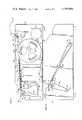
- FIG. 1is a right side elevational view of the label printing apparatus of the present invention with the outer housing of the apparatus removed, illustrating the printing station and the path of the labels;
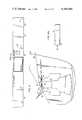
- FIG. 2is a left side elevational view, with the outer housing removed, of the drive portion of the printing apparatus;
- FIG. 3illustrates a pre-printed label of the type which may be used in the printing apparatus of the present invention
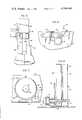
- FIG. 4is an enlarged side elevational view of the printing station including the platen
- FIG. 4Ais a bottom view of the platen 38
- FIG. 5is a view of the dual headed wire printer and metal platen taken along line 5--5 of FIG. 1;
- FIG. 6is an enlarged side elevational view, partially cut away, illustrating the details of the friction rollers for driving the supply roll of labels;
- FIG. 7is an enlarged side elevational view of the supply roll housing with the housing cover 24 removed;
- FIG. 8is a cross-sectional view of the ribbon cartridge and ribbon drive taken along line 8--8 of FIG. 1;
- FIG. 9is a block diagram illustrating the control circuit for controlling the printing apparatus of the present invention.
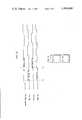
- FIG. 10is a timing diagram illustrating the timing for driving the stepper motor, the print heads, and selected print wires in each of the print heads.
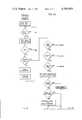
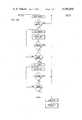
- FIGS. 11A and 11Bare a flow chart for illustrating the program stored in the PROM 126 of FIG. 9.
- FIG. 1is a right side elevational view of the printing apparatus of the present invention.
- a label supply roll housinggenerally designated as 20, holds a supply roll 22 of interconnected detachable labels.
- a label 23is illustrated in FIG. 3.
- Each label 23carries uniform pre-printed indicia and is separable from the succeeding label 23 at a common cut line 29 and a hole 21.
- Each label 23has an adhesive side which is attached to a continuous removable backing strip 25.
- the backing strip 25does not have a cut line 29 but does have a hole 21 which aligns with the hole 21 on the labels.
- the supply roll housing 20includes a label cover 24 and a plurality of spacers 26 for limiting the unravelling of the supply roll 22 during operation.
- the label cover 24is attached to a fixed spindle 31 (FIG. 7) by a latch 28.
- a printing station 40includes a platen 38 which is mounted on the printer housing 27 in opposition to a pair of printing heads 84 and 86 (FIG. 5) for printing on the labels 23.
- the platen 38serves as a support for the label 23 as it is being printed upon by the printing heads 84 and 86 and also serves as a peeling edge for peeling the backing strip 25 from a printed label 23.
- the printing apparatusincludes a device for automatically severing the printed label 23 from the succeeding label 23 after it has been peeled from the backing strip 25.
- a ribbon supply 44supplies the ribbon which the printing heads 84 and 86 impact to print on the label 23.
- the ribbon supply 44is held by a bracket 46 which is mounted to the printer housing 27 by a hinge 48.
- the labels 23are successfully transported past the printing heads 84 and 86 by friction drive means, generally indicated at 50, which engage the backing strip 25 at a location far removed from the platen 38.
- the friction drive means 50includes a freely rotatable urethane roller 52 and a driven urethane roller 54. Urethane rollers are employed instead of the typical drive pinions which grab and crimp the backing 25.
- the drive of the rollers 52 and 54is produced solely by the coefficient of friction between the urethane and the backing 25.
- the backing strip 25is frictionally engaged by the rollers 52 and 54 so that as the driven roller 54 is rotated, the backing strip 25, and hence the labels 23 are withdrawn from the supply roll housing 20.
- a motor 60drives the friction drive roller 54 and the ribbon supply 44 (FIG. 2).
- the motor 60is a DC stepper motor.
- FIG. 2illustrates a left side elevational view of the elements for driving the ribbon supply 44 and the friction drive means 50.
- the motor 60drives a motor shaft 62 on which a pulley 64 is mounted.
- the pulley 64drives a belt 66 which in turn drives the friction drive means 50 and the ribbon supply 44.
- the belt 66drives a pulley 68 which is mounted on a shaft 70 for driving the friction drive roller 54.
- the belt 66also travels around a guide 72 and drives a pulley 74 which is mounted on a ribbon drive shaft 76 for driving the ribbon supply 44.
- a twisting guide 78is provided to twist the belt 66, thereby achieving the desired direction of rotation of the ribbon drive shaft 76.
- FIG. 4is an enlarged view of the printing heads 40 and the platen 38 which supports the label 23 during printing.
- the platen 38is a specially machined metal platen, having a cut out guide portion 39 (FIG. 4A) which is the width of a label for guiding the label 23 so that the label 23 will not wander across the platen 38.
- the platen 38may be made of any material (e.g., plastic) which is hard enough to provide support for the label 23 during the printing operation.
- the platen 38has a flat portion 80 for supporting the label 23 during printing and a curved portion 82 for peeling the backing 25 from the label 23 after printing has been accomplished.
- the relative rigidity of the label 23causes the strip 25 to peel away from the gummed side of the printed label 23.
- the printed label 23is then deflected out of the machine by the label deflector 42.
- FIG. 5is a cross-sectional view taken along line 5--5 of FIG. 1 illustrating the printing heads 84 and 86.
- the printing heads 84 and 86are wire print heads.
- the print heads 84 and 86are held in position by a bracket 88 so that each of the wire print heads 84 and 86 prints one line of indicia on the label 23.
- each of the wire print heads 84 and 86comprises a standard 7 wire solenoid actuated print head.
- the print heads 84 and 86are alternately actuated so as to print first a dot column on one line of the label and then a dot column on the other.
- the dot columns of the two linesare offset by approximately 1/2 dot. In this manner, the wire print heads 84 and 86 can share the same control circuit for actuating the print heads.
- FIG. 6is an enlarged view of the friction drive means 50.
- One end of a bracket 90is pivotally mounted to the printer housing 27 and the freely rotating friction roller 52 is rotatably mounted on the opposite end of bracket 90.
- the bracket 90, and thus the roller 52,are biased towards the driven friction roller 54 by a spring 92.
- the spring 92is connected to the bracket 90 and to a projection 94 extending from the printer housing 27.
- a backing deflector 96is mounted on the printer housing 27 and positioned so as to deflect the backing strip 25 out of the printing apparatus, thereby preventing the backing strip 25 from becoming tangled inside the printing apparatus.
- FIG. 7is a side view of the supply roll housing 20 with the label cover 24 removed.
- the core 98 of the supply roll 22loosely surrounds the fixed spindle 31 and is freely rotatably thereon.
- Several unravelled outer turns 100 of the supply roll 22are confined within the supply roll housing 20 by the spacers 26.
- the orientation of the supply roll 22 and the unravelled outer turns 100 within the supply roll housing 20 which is shown,correspond to a rest position in between the printing of the labels 23. Since the printing operation is intermittent, the motor 60 is selectively and intermittently actuated to rotate the driven friction roller 54 and the ribbon drive shaft 76 (FIG. 1) to withdraw the free end of the roll from the supply.
- FIG. 1is a side view of the supply roll housing 20 with the label cover 24 removed.
- the core 98 of the supply roll 22loosely surrounds the fixed spindle 31 and is freely rotatably thereon.
- Several unravelled outer turns 100 of the supply roll 22are confined within the supply roll housing 20 by the spacer
- FIG. 8is a cross-sectional view of the ribbon supply 44 taken along line 8--8 of FIG. 1.
- the ribbon supply 44includes ribbon cartridges 102 and 104 which are held by the bracket 46. Transport of the ribbon from the ribbon cartridges 102 and 104 is accomplished through the ribbon drive shaft 76.
- the ribbon drive shaft 76is mounted through an aperture 106 in the printer housing 27.
- the ribbon drive shaft 76drivingly engages a cartridge shaft 108 in the ribbon cartridge 102 which in turn drivingly engages a cartridge shaft 110 in the ribbon cartridge 104.
- the ribbon from the cartridge 102is transported in between the wires on wire print head 86 and the label 23.
- the ribbon in the ribbon cartridge 104is transported in between the wires on wire print head 84 and the label 23.
- the ribbon from the ribbon cartridges 102 and 104is positioned at the printing station 40 by ribbon guides 112 and 114.
- FIG. 9is a block diagram of the control circuit for the printing apparatus of the present invention.
- a central processing unit (CPU) 116controls the operation of the control circuit.
- An oscillator 118generates clock signals for the CPU 116 and an address bus 120 and a data bus 122 are connected to the CPU 116.
- a random access memory (RAM) 124is connected to the address bus 120 and the data bus 122 and provides a working memory for the CPU 116.
- a programmable read only memory (PROM) 126is connected to the address bus 120 and the data bus 122 and stores the firmware under which the CPU 116 operates.
- the PROM 126is an erasable programmable read only memory (EPROM).
- An I/O port 128is connected to the data bus 122 and to an external device, and provides data from the external device to the CPU 116.
- the I/O port 128is connected to the model PC4 Parcel Register manufactured by the Orbitran Division of Data Card Corporation, Assignee of the present application.
- a register (REG 1) 130receives timing data from the CPU 116 on the data bus 122 and provides a timing signal as an output.
- a register (REG 2) 132receives and stores character dot matrix data received from the CPU 116 via the data bus 122.
- a buffer circuit 134is connected to the CPU 116 via data bus 122 and to the photocells 34 and 36. The buffer circuit 134 provides label position data to the CPU 116.
- a decoder circuit 136decodes addresses on the address bus 120 in accordance with a control signal from the CPU 116 and selectively enables the RAM 124, the PROM 126, the I/O port 128, the register 130, the register 132 and the buffer circuit 134.
- a printer timing circuit 138receives the timing data stored in the register 130 and provides a wire enable signal (WIRE EN) to the register 132 in accordance with the timing data. The printer timing circuit 138 also provides a timing signal to a step counter 140 which energizes the windings of the stepper motor 60 individually, to selectively advance the stepper motor 60 through its cycle.
- the register 132stores data relating to the character dot matrix which is to be printed on the label.
- the register 132provides a print head select signal (PH) in accordance with the wire enable signal (WIRE EN) from the printer timing circuit 138.
- the head 1 select signal (HD1)is provided to the base of a print head drive transistor 142 for actuating print head 86.
- the print head select signal (PH)is inverted by inverter 144 to become a head 2 select signal (HD2) which is provided to a print head drive transistor 146 for actuating the print head 84.
- the print heads 86 and 84are alternately actuated by the control circuit.
- the register 132also outputs data indicating which of the solenoids on the actuated head is to be turned on during a particular printing cycle (SOL 1-SOL 7).
- the solenoid enable signalsare provided to the base of seven solenoid drive transistors (of which only a first solenoid drive transistor 148 and a seventh solenoid drive transistor 150 are shown) to selectively actuate the desired dot positions on a print head.
- the solenoid drive transistorsare selectively turned on to actuate selected solenoid wires on the print head which is enabled during the particular printing cycle.
- solenoid drive transistor 148if solenoid drive transistor 148 is turned on, it will fire a solenoid 152 if the print head drive transistor 146 is enabled and alternatively will fire a solenoid 154 if the print head drive transistor 142 is enabled.
- solenoid transistor 150if the solenoid transistor 150 is turned on, it will fire a solenoid 156 if the print head drive transistor 146 is enabled and alternatively will fire a solenoid 158 if the print head drive transistor 142 is enabled.
- a printer for printing on two lines of a label 23, using two wire print headscan be achieved using only seven solenoid drive transistors (e.g., 148 and 150).
- FIG. 10is a graph illustrating the timing which is generated by the printer timing circuit 138 of FIG. 9.
- the head 1 select signal(HD1) drives the transistor 142 for 500 microseconds.
- the solenoid enable signalsactuate any or all of the seven wires on print head 86 for 420 microseconds to print one dot column of a character.
- the stepper motor 60is incremented to the next position and the sequence is repeated for print head 84 starting at time T2.
- the dot columns which are printed by the print heads 84 and 86are offset horizontally by one-half of the dot diameter.
- FIGS. 11A and 11Bare flow charts for the CPU 116. After the system is started (START) it is reset (RESET) and the system and the printer are initialized (SYST INIT PRTR INIT). The CPU 116 then determines whether an input is available (INPUT AVAIL). In the preferred embodiment, the model PC4 parcel register is connected to the I/O port 128 and provides data which is to be printed on a label. It is this input which is being searched for by the CPU 116. If an input is not available, then there is a loop back and the step is repeated until an input is obtained.
- the inputis obtained from the I/O port 128 (GET INPUT CHARACTER), and the CPU 116 determines whether the input character is a start of text character (STX). This is essentially a determination of whether the character is a sync character or not. If it is a start of text character, then the CPU 116 loops back to get another character. If it is not a start of text character, then the CPU 116 determines whether it is an end of text character (END OF TEXT). If it is not an end of text character, then the character is saved (SAVE CHARACTER), a check sum is computed (COMPUTE CHECK SUM) and the system loops back to obtain another input character.
- STXstart of text character
- the check sumis used to determine whether the data string or data block which comes from an external device is received correctly.
- the check sumwill be sent at the end of a data block of information and is similar to a parity bit. Once an end of text character is received, the check sum at the end of the block of information is compared with the computed check sum (CHK SUM). If the check sums do not compare, then the system enters an error mode. If the check sums do compare, then the CPU 116 determines whether there is a roll of labels in the printing apparatus (PAPER). If there is no roll, then the system enters an error mode. If there are labels, the CPU 116 then determines whether all of the power circuits in the system are in the correct state (POWER ON).
- PAPERroll of labels in the printing apparatus
- the character stringis then converted into a dot pattern (CONVERT CHARAC STRG TO DOT PATR).
- the character string which is convertedincludes the characters to be printed on an entire label.
- the CPU 116determines whether the door to the apparatus is open (DOOR OPEN). If the door is open then an error mode is set and the system will not operate. This is a safety precaution to insure that the operator will not be injured by the printer. If the door is not open, the CPU 116 then determines whether a label 23 is in position (LABEL IN POSITION) and, if the label 23 is not in position, the label 23 is advanced to the next position (ADVANCE LABEL TO NEXT POSITION). After the label has been advanced to the next position (or if the label is already in position) the stepper motor 60 is started (STEP MOTOR).
- the CPU 116determines whether a hole 21 in the label 23 is still being sensed by the photocell 34 or photocell 36 (HOLE STILL PRESENT). If the hole 21 is still sensed, the system loops back and steps the stepper motor again. The CPU 116 is essentially looking for the leading edge of the hole 21 in the label 23. Once the leading edge has been detected, the stepper motor 60 is again turned on (STEP MOTOR) and the first column of the dot pattern is printed (OUTPUT DOT PATTERN). After outputting the dot pattern, the CPU 116 determines whether a hole 21 is sensed (HOLE PRESENT).
- the CPU 116determines whether the label buffer 134 is empty (END OF LABEL BUFFER). If the label buffer 134 is not empty, the CPU 116 then actuates the stepper motor 60 and outputs another dot pattern. After all necessary indicia has been printed on a label, then one of two situations will occur. If a hole 21 is sensed the CPU 116 will send an acknowledgement signal (SEND ACK) and will return to start (RETURN TO START). If the hole 21 is not sensed but the label buffer 134 is empty, a timer is set (SET TIMER).
- the label 23is then advanced without printing (BLANK OUT) and the CPU 116 checks to see whether a hole 21 is sensed (HOLE PRESENT). If a hole 21 is sensed, then the CPU 116 sends an acknowledgement signal to the external device and returns to start. If the hole 21 is not sensed, the CPU 116 determines whether the timer has timed out (TIMER FINISHED). If the timer has finished, this means that the label 23 is not moving and an error signal is generated. If the timer is not finished, the CPU 116 keeps advancing the label and checking for a hole 21 until the timer times out. Assuming the label finishes advancing to the next hole and the acknowledgement signal has been sent, the program returns to start and a new label 23 may be printed.
- TIMER FINISHEDtimer has timed out
- Indicia to be printed on a label 23is provided via the I/O port 128 to the control circuit of the printing apparatus of the present invention (FIG. 9). This may be by way of the model PC4 Parcel Register system or by any other suitable device for providing indicia to be printed on a label.
- the CPU 116transmits timing data to the register 130 and character dot data to the register 132.
- the printer timing circuit 138controls the timing of the print heads 84 and 86 and the rotation of the stepper motor 60 (FIG. 5).
- the printer timing circuit 138alternately actuates wire printing head 84 and wire printing head 86, selectively enabling the solenoid wires on each of the heads.
- the stepper motor 60drives the driven friction roller 54 by 1/2 dot increments so that the print heads 84 and 86 will print two lines of indicia across a label 23.
- the stepper motorbegins to rotate it withdraws a segment of the unravelled outer turns 100 of supply roll 22 from the supply roll housing 20 (FIG. 7). Since the unravelled outer turns 100 have low inertia, the start-up torque on the stepper motor 60 is very minimal. Gradually the unravelled outer turns 100 are withdrawn and eventually the supply roll 22 begins to rotate.
- the momentum of the supply roll 22causes the supply roll 22 to continue to rotate on the fixed spindle 31 so that the unravelled outer turns 100 are again formed within the confines of the spacers 26 of the supply roll housing 20.
- One of the photocells 34 and 36provides a detection signal when the hole 21 in the label 23 is detected.
- the backing 25is peeled from the label 23 as it moves past the platen 38 and the backing strip 25 is fed between the friction rollers 52 and 54 at a location away from the platen 38 to transport the label supply to the printing station 40.
- the combination of the photocells 34 and 36 and the low inertia supply roll housing 20affords precise control of the positioning of the labels 23 for intermittent printing on preprinted labels. Since in many instances, it is desirable to provide a roll of labels having certain uniform indicia already printed thereon, it is necessary to accurately align these preprinted labels when individualized indicia is to be printed thereon.
- the printing apparatus of the present inventionprovides the precise control necessary for such printing.
- the printing apparatus of the present inventionmay be inplemented in various ways.
- the printerinstead of using the printing apparatus of the present invention as a stand alone printer which is connected via its I/O port 128 to an external device such as the model PC4 parcel register, the printer may be made an integral part of a parcel register system (e.g., the model PC5 parcel register manufactured by the Orbitran Division of Data Card Corporation).
- the printing apparatus of the present inventionis made an integral part of a parcel register system, it is readily operated under the control of the system program of the parcel register system and the control circuit of FIG. 9 is suitably modified accordingly.
- any suitable type of matrix printere.g., an ink jet printer
- any suitable ribbon supplymay be employed in place of the ribbon cartridge in the printing apparatus of the present invention.
Landscapes
- Physics & Mathematics (AREA)
- General Physics & Mathematics (AREA)
- Engineering & Computer Science (AREA)
- Mechanical Engineering (AREA)
- Labeling Devices (AREA)
Abstract
Description
1. Field of the Invention
This invention relates to a high speed printing apparatus for high speed intermittent printing on labels fed from a continuous supply roll.
2. Description of the Prior Art
There exists, in the prior art, label printing apparatus for printing on labels, in which a supply of labels having uniform indicia applied thereto are transported past a printer which then prints selective, variable indicia on each of the labels. Use of such pre-printed labels requires precision control in feeding the labels to the printer. Since each label of the supply roll contains uniform pre-printed information, it is necessary to accurately feed a single label at a time so that printing of the individual indicia will take place on the same portion of every label. In most prior art systems in which labels are intermittently fed to a printer, a large start-up torque is placed on the motor for driving the label supply due to the large inertia of the supply roll. This large start-up torque is applied each time a label is to be printed, thereby requiring that a relatively large motor be used. In addition, such prior art apparatus often fail to accurately position the label for printing on the preselected area of the label. This is, in part, due to the large size of the motor required because of the high start-up torque.
There is therefore a need in the industry for a label printing apparatus which is capable not only of accurately positioning a pre-printed label at a printing station, but which is also capable of transporting a supply of labels into a printing position at high speed without placing a large start-up torque on the drive motor.
An object of the present invention is to provide a high speed label printing apparatus which overcomes the deficiencies of prior art apparatus.
In particular, it is an object of the present invention to provide apparatus for accurately positioning a pre-printed label at a printing station so that selected variable indicia may be printed on the pre-printed label.
A further object of this invention is to provide apparatus for feeding the pre-printed labels from a continuous supply roll in such a manner that a minimal start-up torque is placed on the system drive motor, so that a small drive motor may be employed.
The system of the present invention has a number of novel features, as set forth below. A supply roll housing holds a supply roll of pre-printed labels upon each of which variable selected indicia are to be printed. The supply roll is fed through a guide to a printing station including a dual headed wire printer and platen. The platen serves the combined purpose of providing support for the label while it is being printed on and subsequently for peeling a backing strip from the adhesive-coated label. The peeled backing is fed to a pair of friction rollers, one of which is driven, to frictionally engage the backing strip, and hence drive the supply of labels past the printer. The individual labels are perforated and have a sensing hole at each end. The backing strip is continuous but has holes which align with the holes in the labels. A photocell detects the presence of a hole and generates a detection signal for a control circuit which precisely controls the movement of the labels past the dual headed wire printer. The supply roll of pre-printed labels is freely rotatable about a fixed spindle, and the supply roll housing is designed so that when the friction rollers drive the label backing strip the labels are withdrawn from the supply roll housing. When the friction rollers cease to be driven, the supply roll, due to the momentum, tends to continue to rotate on the fixed spindle so that the outer turns of the supply roll become unravelled about the remainder of the supply roll. Then, when the drive motor for driving the friction rollers is actuated once again, the unravelled outer turns are freely withdrawn from the supply roll because of their low inertia. After a start-up period, the supply roll again begins to rotate on the fixed spindle. Thus, the start-up torque on the drive motor is kept relatively low and a small motor with excellent control may be employed.
These together with other objects and advantages, which will become subsequently apparent, reside in the details of construction and operation as more fully hereinafter described and claimed, reference being had to the accompanying drawings forming a part hereof, wherein like numerals refer to like parts throughout.
FIG. 1 is a right side elevational view of the label printing apparatus of the present invention with the outer housing of the apparatus removed, illustrating the printing station and the path of the labels;
FIG. 2 is a left side elevational view, with the outer housing removed, of the drive portion of the printing apparatus;
FIG. 3 illustrates a pre-printed label of the type which may be used in the printing apparatus of the present invention;
FIG. 4 is an enlarged side elevational view of the printing station including the platen;
FIG. 4A is a bottom view of theplaten 38;
FIG. 5 is a view of the dual headed wire printer and metal platen taken alongline 5--5 of FIG. 1;
FIG. 6 is an enlarged side elevational view, partially cut away, illustrating the details of the friction rollers for driving the supply roll of labels;
FIG. 7 is an enlarged side elevational view of the supply roll housing with thehousing cover 24 removed;
FIG. 8 is a cross-sectional view of the ribbon cartridge and ribbon drive taken alongline 8--8 of FIG. 1;
FIG. 9 is a block diagram illustrating the control circuit for controlling the printing apparatus of the present invention;
FIG. 10 is a timing diagram illustrating the timing for driving the stepper motor, the print heads, and selected print wires in each of the print heads; and
FIGS. 11A and 11B are a flow chart for illustrating the program stored in thePROM 126 of FIG. 9.
FIG. 1 is a right side elevational view of the printing apparatus of the present invention. A label supply roll housing, generally designated as 20, holds asupply roll 22 of interconnected detachable labels.
Alabel 23 is illustrated in FIG. 3. Eachlabel 23 carries uniform pre-printed indicia and is separable from the succeedinglabel 23 at acommon cut line 29 and ahole 21. Eachlabel 23 has an adhesive side which is attached to a continuousremovable backing strip 25. Thebacking strip 25 does not have acut line 29 but does have ahole 21 which aligns with thehole 21 on the labels. Returning to FIG. 1, thesupply roll housing 20 includes alabel cover 24 and a plurality ofspacers 26 for limiting the unravelling of thesupply roll 22 during operation. Thelabel cover 24 is attached to a fixed spindle 31 (FIG. 7) by alatch 28. Thelabels 23 are transported from thesupply roll 22 in a path through a pair ofguides printer housing 27 and past a pair ofphotocells photocells printing station 40 includes aplaten 38 which is mounted on theprinter housing 27 in opposition to a pair ofprinting heads 84 and 86 (FIG. 5) for printing on thelabels 23. Theplaten 38 serves as a support for thelabel 23 as it is being printed upon by theprinting heads backing strip 25 from a printedlabel 23. Peeling takes place due to the rigidity of thelabel 23 and the transport of thebacking strip 25 around the platen. Once thelabel 23 has been printed and peeled from thebacking strip 25, thelabel 23 is deflected by alabel deflector 42 out of the printing apparatus, where it may be manually removed from the printing apparatus by an operator. In an alternative embodiment, the printing apparatus includes a device for automatically severing the printedlabel 23 from the succeedinglabel 23 after it has been peeled from thebacking strip 25. Aribbon supply 44 supplies the ribbon which the printing heads 84 and 86 impact to print on thelabel 23. Theribbon supply 44 is held by abracket 46 which is mounted to theprinter housing 27 by ahinge 48.
Thelabels 23 are successfully transported past the printing heads 84 and 86 by friction drive means, generally indicated at 50, which engage thebacking strip 25 at a location far removed from theplaten 38. In the preferred embodiment, the friction drive means 50 includes a freelyrotatable urethane roller 52 and a drivenurethane roller 54. Urethane rollers are employed instead of the typical drive pinions which grab and crimp thebacking 25. Thus, the drive of therollers backing 25. Thebacking strip 25 is frictionally engaged by therollers roller 54 is rotated, thebacking strip 25, and hence thelabels 23 are withdrawn from thesupply roll housing 20. A pair ofguides printer housing 27, directs thebacking strip 25 into the friction drive means 50. Amotor 60 drives thefriction drive roller 54 and the ribbon supply 44 (FIG. 2). In the preferred embodiment, themotor 60 is a DC stepper motor.
FIG. 2 illustrates a left side elevational view of the elements for driving theribbon supply 44 and the friction drive means 50. Themotor 60 drives amotor shaft 62 on which apulley 64 is mounted. Thepulley 64 drives abelt 66 which in turn drives the friction drive means 50 and theribbon supply 44. In particular, thebelt 66 drives apulley 68 which is mounted on ashaft 70 for driving thefriction drive roller 54. Thebelt 66 also travels around aguide 72 and drives apulley 74 which is mounted on aribbon drive shaft 76 for driving theribbon supply 44. A twistingguide 78 is provided to twist thebelt 66, thereby achieving the desired direction of rotation of theribbon drive shaft 76.
FIG. 4 is an enlarged view of the printing heads 40 and theplaten 38 which supports thelabel 23 during printing. In the preferred embodiment, theplaten 38 is a specially machined metal platen, having a cut out guide portion 39 (FIG. 4A) which is the width of a label for guiding thelabel 23 so that thelabel 23 will not wander across theplaten 38. Theplaten 38 may be made of any material (e.g., plastic) which is hard enough to provide support for thelabel 23 during the printing operation. Theplaten 38 has aflat portion 80 for supporting thelabel 23 during printing and acurved portion 82 for peeling the backing 25 from thelabel 23 after printing has been accomplished. That is, as thebacking strip 25 is drawn thecurved portion 82 of theplaten 38, the relative rigidity of thelabel 23 causes thestrip 25 to peel away from the gummed side of the printedlabel 23. The printedlabel 23 is then deflected out of the machine by thelabel deflector 42.
FIG. 5 is a cross-sectional view taken alongline 5--5 of FIG. 1 illustrating the printing heads 84 and 86. In the preferred embodiment, the printing heads 84 and 86 are wire print heads. The print heads 84 and 86 are held in position by abracket 88 so that each of the wire print heads 84 and 86 prints one line of indicia on thelabel 23. In the preferred embodiment, each of the wire print heads 84 and 86 comprises a standard 7 wire solenoid actuated print head. The print heads 84 and 86 are alternately actuated so as to print first a dot column on one line of the label and then a dot column on the other. The dot columns of the two lines are offset by approximately 1/2 dot. In this manner, the wire print heads 84 and 86 can share the same control circuit for actuating the print heads.
FIG. 6 is an enlarged view of the friction drive means 50. One end of abracket 90 is pivotally mounted to theprinter housing 27 and the freely rotatingfriction roller 52 is rotatably mounted on the opposite end ofbracket 90. Thebracket 90, and thus theroller 52, are biased towards the drivenfriction roller 54 by aspring 92. Thespring 92 is connected to thebracket 90 and to aprojection 94 extending from theprinter housing 27. Abacking deflector 96 is mounted on theprinter housing 27 and positioned so as to deflect thebacking strip 25 out of the printing apparatus, thereby preventing thebacking strip 25 from becoming tangled inside the printing apparatus.
FIG. 7 is a side view of thesupply roll housing 20 with thelabel cover 24 removed. Thecore 98 of thesupply roll 22 loosely surrounds the fixedspindle 31 and is freely rotatably thereon. Several unravelledouter turns 100 of thesupply roll 22 are confined within thesupply roll housing 20 by thespacers 26. The orientation of thesupply roll 22 and the unravelledouter turns 100 within thesupply roll housing 20 which is shown, correspond to a rest position in between the printing of thelabels 23. Since the printing operation is intermittent, themotor 60 is selectively and intermittently actuated to rotate the drivenfriction roller 54 and the ribbon drive shaft 76 (FIG. 1) to withdraw the free end of the roll from the supply. Returning to FIG. 7, when themotor 60 is restarted and the drivenfriction roller 54 is rotated to frictionally drive the backing 25, theconnected labels 23 from the unravelledouter turns 100 of thesupply roll 22 have a low inertia and are freely withdrawn from thesupply roll housing 20. That is, during start-up of themotor 60, thecore 98 of thesupply roll 22 will not be rotated on the fixedspindle 31; instead, the unravelledouter turns 100 will initially be withdrawn from thesupply roll housing 20, thereby placing a minimal start-up torque on themotor 60. Eventually, themotor 60, through the drivenfriction roller 54 will rotate thecore 98 of thesupply roll 22 about the fixedspindle 31. When themotor 60 is turned off at the end of printing alabel 23, thesupply roll 22 due to its momentum will tend to continue to rotate for a time so that unravelledouter turns 100 again unwind within thesupply roll housing 20. This start and stop and unravelling process is repeated for eachlabel 23.
FIG. 8 is a cross-sectional view of theribbon supply 44 taken alongline 8--8 of FIG. 1. Theribbon supply 44 includesribbon cartridges bracket 46. Transport of the ribbon from theribbon cartridges ribbon drive shaft 76. Theribbon drive shaft 76 is mounted through anaperture 106 in theprinter housing 27. Theribbon drive shaft 76 drivingly engages acartridge shaft 108 in theribbon cartridge 102 which in turn drivingly engages a cartridge shaft 110 in theribbon cartridge 104. The ribbon from thecartridge 102 is transported in between the wires onwire print head 86 and thelabel 23. Similarly, the ribbon in theribbon cartridge 104 is transported in between the wires onwire print head 84 and thelabel 23. Referring to FIG. 1, the ribbon from theribbon cartridges printing station 40 by ribbon guides 112 and 114.
FIG. 9 is a block diagram of the control circuit for the printing apparatus of the present invention. A central processing unit (CPU) 116 controls the operation of the control circuit. Anoscillator 118 generates clock signals for theCPU 116 and anaddress bus 120 and adata bus 122 are connected to theCPU 116. A random access memory (RAM) 124 is connected to theaddress bus 120 and thedata bus 122 and provides a working memory for theCPU 116. A programmable read only memory (PROM) 126 is connected to theaddress bus 120 and thedata bus 122 and stores the firmware under which theCPU 116 operates. In the preferred embodiment, thePROM 126 is an erasable programmable read only memory (EPROM). An I/O port 128 is connected to thedata bus 122 and to an external device, and provides data from the external device to theCPU 116. In the preferred embodiment, the I/O port 128 is connected to the model PC4 Parcel Register manufactured by the Orbitran Division of Data Card Corporation, Assignee of the present application. A register (REG 1) 130 receives timing data from theCPU 116 on thedata bus 122 and provides a timing signal as an output. A register (REG 2) 132 receives and stores character dot matrix data received from theCPU 116 via thedata bus 122. Abuffer circuit 134 is connected to theCPU 116 viadata bus 122 and to thephotocells buffer circuit 134 provides label position data to theCPU 116. Adecoder circuit 136 decodes addresses on theaddress bus 120 in accordance with a control signal from theCPU 116 and selectively enables theRAM 124, thePROM 126, the I/O port 128, theregister 130, theregister 132 and thebuffer circuit 134. Aprinter timing circuit 138 receives the timing data stored in theregister 130 and provides a wire enable signal (WIRE EN) to theregister 132 in accordance with the timing data. Theprinter timing circuit 138 also provides a timing signal to astep counter 140 which energizes the windings of thestepper motor 60 individually, to selectively advance thestepper motor 60 through its cycle.
As noted above, theregister 132 stores data relating to the character dot matrix which is to be printed on the label. Theregister 132 provides a print head select signal (PH) in accordance with the wire enable signal (WIRE EN) from theprinter timing circuit 138. Thehead 1 select signal (HD1) is provided to the base of a printhead drive transistor 142 for actuatingprint head 86. In addition, the print head select signal (PH) is inverted byinverter 144 to become ahead 2 select signal (HD2) which is provided to a printhead drive transistor 146 for actuating theprint head 84. Thus, the print heads 86 and 84 are alternately actuated by the control circuit. Theregister 132 also outputs data indicating which of the solenoids on the actuated head is to be turned on during a particular printing cycle (SOL 1-SOL 7). The solenoid enable signals are provided to the base of seven solenoid drive transistors (of which only a firstsolenoid drive transistor 148 and a seventhsolenoid drive transistor 150 are shown) to selectively actuate the desired dot positions on a print head. Thus, the solenoid drive transistors are selectively turned on to actuate selected solenoid wires on the print head which is enabled during the particular printing cycle. For example, ifsolenoid drive transistor 148 is turned on, it will fire asolenoid 152 if the printhead drive transistor 146 is enabled and alternatively will fire asolenoid 154 if the printhead drive transistor 142 is enabled. Similarly, if thesolenoid transistor 150 is turned on, it will fire asolenoid 156 if the printhead drive transistor 146 is enabled and alternatively will fire asolenoid 158 if the printhead drive transistor 142 is enabled. By using the control system of the present invention, a printer for printing on two lines of alabel 23, using two wire print heads, can be achieved using only seven solenoid drive transistors (e.g., 148 and 150).
FIG. 10 is a graph illustrating the timing which is generated by theprinter timing circuit 138 of FIG. 9. At time T1, thehead 1 select signal (HD1) drives thetransistor 142 for 500 microseconds. Also at time T1, the solenoid enable signals actuate any or all of the seven wires onprint head 86 for 420 microseconds to print one dot column of a character. After thehead 1 select signal dissipates, thestepper motor 60 is incremented to the next position and the sequence is repeated forprint head 84 starting at time T2. In the preferred embodiment, the dot columns which are printed by the print heads 84 and 86 are offset horizontally by one-half of the dot diameter.
FIGS. 11A and 11B are flow charts for theCPU 116. After the system is started (START) it is reset (RESET) and the system and the printer are initialized (SYST INIT PRTR INIT). TheCPU 116 then determines whether an input is available (INPUT AVAIL). In the preferred embodiment, the model PC4 parcel register is connected to the I/O port 128 and provides data which is to be printed on a label. It is this input which is being searched for by theCPU 116. If an input is not available, then there is a loop back and the step is repeated until an input is obtained. If an input is available, then the input is obtained from the I/O port 128 (GET INPUT CHARACTER), and theCPU 116 determines whether the input character is a start of text character (STX). This is essentially a determination of whether the character is a sync character or not. If it is a start of text character, then theCPU 116 loops back to get another character. If it is not a start of text character, then theCPU 116 determines whether it is an end of text character (END OF TEXT). If it is not an end of text character, then the character is saved (SAVE CHARACTER), a check sum is computed (COMPUTE CHECK SUM) and the system loops back to obtain another input character. The check sum is used to determine whether the data string or data block which comes from an external device is received correctly. The check sum will be sent at the end of a data block of information and is similar to a parity bit. Once an end of text character is received, the check sum at the end of the block of information is compared with the computed check sum (CHK SUM). If the check sums do not compare, then the system enters an error mode. If the check sums do compare, then theCPU 116 determines whether there is a roll of labels in the printing apparatus (PAPER). If there is no roll, then the system enters an error mode. If there are labels, theCPU 116 then determines whether all of the power circuits in the system are in the correct state (POWER ON). If the systems are not in the correct state, an error mode is entered. If the power circuits are in a correct state, the character string is then converted into a dot pattern (CONVERT CHARAC STRG TO DOT PATR). The character string which is converted includes the characters to be printed on an entire label.
After the character string is converted to a dot pattern, theCPU 116 determines whether the door to the apparatus is open (DOOR OPEN). If the door is open then an error mode is set and the system will not operate. This is a safety precaution to insure that the operator will not be injured by the printer. If the door is not open, theCPU 116 then determines whether alabel 23 is in position (LABEL IN POSITION) and, if thelabel 23 is not in position, thelabel 23 is advanced to the next position (ADVANCE LABEL TO NEXT POSITION). After the label has been advanced to the next position (or if the label is already in position) thestepper motor 60 is started (STEP MOTOR). After thestepper motor 60 has been stepped, theCPU 116 determines whether ahole 21 in thelabel 23 is still being sensed by thephotocell 34 or photocell 36 (HOLE STILL PRESENT). If thehole 21 is still sensed, the system loops back and steps the stepper motor again. TheCPU 116 is essentially looking for the leading edge of thehole 21 in thelabel 23. Once the leading edge has been detected, thestepper motor 60 is again turned on (STEP MOTOR) and the first column of the dot pattern is printed (OUTPUT DOT PATTERN). After outputting the dot pattern, theCPU 116 determines whether ahole 21 is sensed (HOLE PRESENT). If ahole 21 is not sensed, theCPU 116 then determines whether thelabel buffer 134 is empty (END OF LABEL BUFFER). If thelabel buffer 134 is not empty, theCPU 116 then actuates thestepper motor 60 and outputs another dot pattern. After all necessary indicia has been printed on a label, then one of two situations will occur. If ahole 21 is sensed theCPU 116 will send an acknowledgement signal (SEND ACK) and will return to start (RETURN TO START). If thehole 21 is not sensed but thelabel buffer 134 is empty, a timer is set (SET TIMER). Thelabel 23 is then advanced without printing (BLANK OUT) and theCPU 116 checks to see whether ahole 21 is sensed (HOLE PRESENT). If ahole 21 is sensed, then theCPU 116 sends an acknowledgement signal to the external device and returns to start. If thehole 21 is not sensed, theCPU 116 determines whether the timer has timed out (TIMER FINISHED). If the timer has finished, this means that thelabel 23 is not moving and an error signal is generated. If the timer is not finished, theCPU 116 keeps advancing the label and checking for ahole 21 until the timer times out. Assuming the label finishes advancing to the next hole and the acknowledgement signal has been sent, the program returns to start and anew label 23 may be printed.
Referring to drawings, the operation of the printing apparatus of the present invention will be described. Indicia to be printed on alabel 23 is provided via the I/O port 128 to the control circuit of the printing apparatus of the present invention (FIG. 9). This may be by way of the model PC4 Parcel Register system or by any other suitable device for providing indicia to be printed on a label. TheCPU 116 transmits timing data to theregister 130 and character dot data to theregister 132. Theprinter timing circuit 138 controls the timing of the print heads 84 and 86 and the rotation of the stepper motor 60 (FIG. 5). Theprinter timing circuit 138 alternately actuateswire printing head 84 andwire printing head 86, selectively enabling the solenoid wires on each of the heads. Thestepper motor 60 drives the drivenfriction roller 54 by 1/2 dot increments so that the print heads 84 and 86 will print two lines of indicia across alabel 23. When the stepper motor begins to rotate it withdraws a segment of the unravelledouter turns 100 of supply roll 22 from the supply roll housing 20 (FIG. 7). Since the unravelledouter turns 100 have low inertia, the start-up torque on thestepper motor 60 is very minimal. Gradually the unravelledouter turns 100 are withdrawn and eventually thesupply roll 22 begins to rotate. When thestepper motor 60 is halted (after printing a label 23), the momentum of thesupply roll 22 causes thesupply roll 22 to continue to rotate on the fixedspindle 31 so that the unravelledouter turns 100 are again formed within the confines of thespacers 26 of thesupply roll housing 20. One of thephotocells hole 21 in thelabel 23 is detected. As thelabel 23 is being printed, thebacking 25 is peeled from thelabel 23 as it moves past theplaten 38 and thebacking strip 25 is fed between thefriction rollers platen 38 to transport the label supply to theprinting station 40.
The combination of thephotocells supply roll housing 20 affords precise control of the positioning of thelabels 23 for intermittent printing on preprinted labels. Since in many instances, it is desirable to provide a roll of labels having certain uniform indicia already printed thereon, it is necessary to accurately align these preprinted labels when individualized indicia is to be printed thereon. The printing apparatus of the present invention provides the precise control necessary for such printing.
The printing apparatus of the present invention may be inplemented in various ways. For example, instead of using the printing apparatus of the present invention as a stand alone printer which is connected via its I/O port 128 to an external device such as the model PC4 parcel register, the printer may be made an integral part of a parcel register system (e.g., the model PC5 parcel register manufactured by the Orbitran Division of Data Card Corporation). If the printing apparatus of the present invention is made an integral part of a parcel register system, it is readily operated under the control of the system program of the parcel register system and the control circuit of FIG. 9 is suitably modified accordingly. In addition, any suitable type of matrix printer (e.g., an ink jet printer) may be employed. Further, any suitable ribbon supply may be employed in place of the ribbon cartridge in the printing apparatus of the present invention.
The many features and advantages of the invention are apparent from the detailed specification and thus it is intended by the appended claims to cover all such features and advantages of the system which fall within the true spirit and scope of the invention. Further, since numerous modifications and changes will readily occur to those skilled in the art, it is not desired to limit the invention to the exact construction and operation shown and described and, accordingly, all suitable modifications and equivalents may be resorted to, falling within the scope of the invention.
Claims (14)
1. A printing apparatus for selectively printing on labels, having a backing strip, supplied by a continuous supply roll, comprising:
housing means for supporting the supply roll for free rotation about an axis and for limiting the radius of the unravelled outer turns of the supply roll, said housing means comprising:
a printer housing;
a fixed spindle mounted on said printer housing, the supply roll being freely rotatable on said fixed spindle;
at least two spacers extending from said printer housing radially of said fixed spindle so as to limit the radius of the supply roll including the unravelled outer turns of the supply roll; and
a housing cover mounted on said fixed spindle;
sensor means for sensing the position of a label to be printed and for generating a position signal;
control means, operatively connected to said sensor means, for receiving said position signal and for generating an advance signal and a print signal;
printing means, operatively connected to said control means, for printing indicia on a label supplied by the supply roll and for peeling the printed label from the backing;
friction drive means, for frictionally engaging the backing and for transporting the labels past said printing means; and
a motor, operatively connected to said control means, for selectively and intermittently driving said friction drive means in accordance with said advance signal, said housing means holding the supply roll so that the unravelled outer turns of the supply roll abut said at least two spacers prior to the time said motor is driven, said motor having a low start-up torque due to the free rotation of the supply roll in said housing means.
2. A printing apparatus as set forth in claim 1, wherein said friction drive means comprises:
a first roller driven by said motor and a second roller spring urged toward said first roller so that said first and second rollers frictionally engage the backing and are driven to transport the backing.
3. A printing apparatus as set forth in claim 2, wherein said first and second rollers are urethane rollers.
4. A printing apparatus as set forth in claim 1 or 2, wherein said printing means comprises:
a wire printer, operatively connected to said control means, for printing indicia on a label from the supply roll; and
a platen for supporting the label as it is transported past said wire printer and for peeling the printed label from the backing strip as the backing strip is drawn over said platen.
5. A printing apparatus as set forth in claim 4, wherein said wire printer is a stationary dual headed wire printer having first and second print heads which are alternately actuated by said print signal so as to print first and second lines of indicia, respectively, on a label.
6. A printing apparatus as set forth in claim 4, wherein said platen is metal.
7. A printing apparatus as set forth in claim 1, wherein said motor is a DC stepper motor.
8. A printing apparatus as set forth in claim 1, wherein said sensor means comprises a photocell.
9. A printing apparatus as set forth in claim 1, further comprising ribbon supply means driven by said motor.
10. A printing apparatus as set forth in claim 9, wherein said driven ribbon supply means comprises a ribbon drive shaft driven by said motor and first and second ribbon cartridges drivingly connected to said ribbon drive shaft.
11. A printing apparatus as set forth in claim 1, wherein each of the labels has an aperture and wherein said sensor means senses the aperture to sense the position of the label to be printed.
12. A printing apparatus as set forth in claim 1, wherein each of the labels has an aperture and is pre-printed with uniform indicia and wherein said sensor means senses the aperture and provides said position signal to said control means, so that said printing means prints on the same portion of each of the labels.
13. A printing apparatus for selectively printing on labels, having a backing strip, supplied by a continuous supply roll, comprising:
housing means for supporting the supply roll for free rotation about an axis and for limiting the radius of the unravelled outer turns of the supply roll;
sensor means for sensing the position of a label to be printed and for generating a position signal;
control means, operatively connected to said sensor means, for receiving said position signal and for generating an advance signal and a print signal;
a stationary dual headed wire printer having first and second print heads which are alternately actuated by said print signal so as to print first and second lines of indicia, respectively, on a label;
friction drive means, for frictionally engaging the backing and for transporting the labels past said stationary dual headed wire printer;
a motor, operatively connected to said control means, for selectively and intermittently driving said friction drive means in accordance with said advance signal, said housing means holding the supply roll so that the unravelled outer turns of the supply roll are present prior to the time said motor is driven, said motor having a low start-up torque due to the free rotation of the supply roll in said housing means;
a ribbon drive shaft driven by said motor; and
first and second ribbon cartridges drivingly connected to said ribbon drive shaft, said first and second ribbon cartridges associated with said first and second print heads, respectively, the ribbon supplied by said first and second ribbon cartridges being positioned between a label and said first and second print heads, respectively.
14. A printing apparatus for selectively printing on labels, having a backing strip, supplied by a continuous supply roll, comprising:
housing means for supporting the supply roll for free rotation about an axis, said housing means comprising means for limiting the radius of the unravelled outer turns of the supply roll;
sensor means for sensing the position of a label to be printed and for generating a position signal;
control means, operatively connected to said sensor means, for receiving said position signal and for generating an advance signal and a print signal;
printing means, operatively connected to said control means, for printing indicia on a label supplied by the supply roll and for peeling the printed label from the backing;
friction drive means, for frictionally engaging the backing and for transporting the labels past said printing means;
a motor, operatively connected to said control means, for selectively and intermittenly driving said friction drive means in accordance with said advance signal, said housing means holding the supply roll so that the unravelled outer turns of the supply roll abut said limiting means prior to the time said motor is driven, said motor having a low start-up torque due to the free rotation of the supply roll in said housing means; and
ribbon supply means driven by said motor, said ribbon supply means comprising a ribbon drive shaft driven by said motor, and first and second ribbon cartridges drivingly connected to said ribbon drive shaft.
Priority Applications (1)
| Application Number | Priority Date | Filing Date | Title |
|---|---|---|---|
| US06/243,564US4386860A (en) | 1981-03-13 | 1981-03-13 | High speed label printer |
Applications Claiming Priority (1)
| Application Number | Priority Date | Filing Date | Title |
|---|---|---|---|
| US06/243,564US4386860A (en) | 1981-03-13 | 1981-03-13 | High speed label printer |
Publications (1)
| Publication Number | Publication Date |
|---|---|
| US4386860Atrue US4386860A (en) | 1983-06-07 |
Family
ID=22919240
Family Applications (1)
| Application Number | Title | Priority Date | Filing Date |
|---|---|---|---|
| US06/243,564Expired - Fee RelatedUS4386860A (en) | 1981-03-13 | 1981-03-13 | High speed label printer |
Country Status (1)
| Country | Link |
|---|---|
| US (1) | US4386860A (en) |
Cited By (32)
| Publication number | Priority date | Publication date | Assignee | Title |
|---|---|---|---|---|
| US4483633A (en)* | 1983-02-18 | 1984-11-20 | Bell & Howell Company | Matrix print head printer |
| US4502804A (en)* | 1982-09-24 | 1985-03-05 | Willcox Frederick P | Paper feeding and guiding system |
| FR2581029A1 (en)* | 1985-04-24 | 1986-10-31 | Smh Alcatel | LABEL DISPENSER AND POSTAGE MACHINE EQUIPPED WITH THE DISPENSER |
| FR2608810A1 (en)* | 1986-12-19 | 1988-06-24 | Flonic Sa | SYSTEM FOR PROVIDING TICKETS WITH OR WITHOUT STRAIN |
| EP0283096A1 (en)* | 1987-03-17 | 1988-09-21 | Mida S.R.L. | Portable electrical labelling machine |
| EP0191495A3 (en)* | 1985-02-13 | 1989-01-11 | Kabushiki Kaisha Sato | Desk-top thermal printer |
| EP0191493A3 (en)* | 1985-02-13 | 1989-03-01 | Kabushiki Kaisha Sato | Desk-top thermal printer |
| US4844629A (en)* | 1987-09-03 | 1989-07-04 | W. H. Brady Co. | Electronic labeler with printhead and web sensor combined for concurrent travel, and assemblies of identification devices therefor |
| EP0305153A3 (en)* | 1987-08-27 | 1989-08-09 | Latilla Holdings (Guernsey) Limited | Automatic ticket dispenser |
| US4920882A (en)* | 1987-09-03 | 1990-05-01 | W. H. Brady Co. | Electronic labeler with printhead and web sensor combined for concurrent travel, and assemblies of identification devices therefor |
| EP0354815A3 (en)* | 1988-08-12 | 1990-12-05 | Esselte Meto International Produktions Gmbh | Improvements relating to printing systems |
| US4988221A (en)* | 1982-08-17 | 1991-01-29 | Kabushiki Kaisha Sato | Specific data input order for continuous strips of tags including line spacing amount |
| US5069565A (en)* | 1986-06-24 | 1991-12-03 | Jeffrey Ayd | Computer printer for printing labels and tags having vertically orientated tractor feed |
| US5070781A (en)* | 1988-11-23 | 1991-12-10 | Datacard Corporation | Card embossing apparatus and method |
| US5122004A (en)* | 1990-05-17 | 1992-06-16 | Brother Kogyo Kabushiki Kaisha | Printing system with a function of printing on labels |
| US5517915A (en)* | 1992-07-10 | 1996-05-21 | Tohoku Ricoh Co., Ltd. | Thermal printer |
| WO2000059730A1 (en)* | 1999-04-05 | 2000-10-12 | Scriptpro Llc | Label printing assembly for use with a medicament dispensing control workstation |
| US6179030B1 (en) | 1998-07-28 | 2001-01-30 | Automated Systems Technology, L.L.C. | Apparatus and method for configuring, locating, and applying information to a label, and printing and applying labels to articles |
| US6230780B1 (en) | 1998-04-30 | 2001-05-15 | Automated Systems Technology, L.L.C. | Label applicator mechanism and hand-held labeller |
| US20040059463A1 (en)* | 2002-06-24 | 2004-03-25 | Scriptpro Llc | Active control center for use with an automatic dispensing system for prescriptions and the like |
| US20040134049A1 (en)* | 2002-07-11 | 2004-07-15 | Hans-Jurgen Schreiner | Insulation for piezoceramic multilayer actors |
| US20040257202A1 (en)* | 2003-06-19 | 2004-12-23 | Coughlin Michael E. | RFID tag and method of user verification |
| US20040256452A1 (en)* | 2003-06-19 | 2004-12-23 | Coughlin Michael E. | RFID tag and method of user verification |
| US20050035138A1 (en)* | 2003-07-22 | 2005-02-17 | Scriptpro Llc | Fork based transport storage system for pharmaceutical unit of use dispenser |
| US20050102163A1 (en)* | 2003-11-06 | 2005-05-12 | Coughlin Michael E. | Method and system for delivering prescriptions to remote locations for patient retrieval |
| US6910601B2 (en) | 2002-07-08 | 2005-06-28 | Scriptpro Llc | Collating unit for use with a control center cooperating with an automatic prescription or pharmaceutical dispensing system |
| US20050173521A1 (en)* | 2003-06-19 | 2005-08-11 | Coughlin Michael E. | RFID tag and method of user verification |
| US20060005035A1 (en)* | 2004-06-22 | 2006-01-05 | Coughlin Michael E | Keystroke input device for use with an RFID tag and user verification system |
| US20060016824A1 (en)* | 2004-07-22 | 2006-01-26 | Guerra Lawrence E | Fork based transport storage system for pharmaceutical unit of use dispenser |
| US20060182609A1 (en)* | 2004-11-23 | 2006-08-17 | Guerra Lawrence E | Robotic arm for use with pharmaceutical unit of use transport and storage system |
| US7100796B1 (en) | 2003-08-08 | 2006-09-05 | Scriptpro Llc | Apparatus for dispensing vials |
| US20070295449A1 (en)* | 2006-06-02 | 2007-12-27 | Impaxx Machine Systems, Inc. | Devices and methods for applying pressure-sensitive adhesive liner-less labels to articles |
Citations (36)
| Publication number | Priority date | Publication date | Assignee | Title |
|---|---|---|---|---|
| US2161228A (en)* | 1936-08-27 | 1939-06-06 | Littell Machine Co F J | Automatic reel |
| US3108534A (en)* | 1959-09-26 | 1963-10-29 | Ibm | High speed printer |
| US3291414A (en)* | 1965-04-26 | 1966-12-13 | U S Baird Corp | Automatic reel |
| US3467232A (en)* | 1967-08-31 | 1969-09-16 | Burroughs Corp | Dot printing apparatus |
| US3592311A (en)* | 1968-10-02 | 1971-07-13 | Ibm | Wire printing head |
| US3770091A (en)* | 1971-01-06 | 1973-11-06 | Msi Data Corp | Wire type tape printing apparatus |
| US3782520A (en)* | 1971-11-04 | 1974-01-01 | Centronics Data Computer | Resilient head assembly having resilient mount |
| US3819130A (en)* | 1972-10-24 | 1974-06-25 | Minnesota Mining & Mfg | Four-reel magnetic tape cartridge |
| US3833891A (en)* | 1973-03-26 | 1974-09-03 | Centronics Data Computer | High speed matrix printer |
| US3850355A (en)* | 1972-10-13 | 1974-11-26 | Burroughs Corp | Form feed device with variable split |
| US3904011A (en)* | 1973-10-17 | 1975-09-09 | Tele Speed Communications Inc | Printing head for matrix printer |
| US3942620A (en)* | 1974-07-25 | 1976-03-09 | International Business Machines Corporation | Printing mechanism |
| US3995731A (en)* | 1975-06-02 | 1976-12-07 | Ncr Corporation | Multi-ribbon cassette and ribbon drive |
| US4004671A (en)* | 1974-12-16 | 1977-01-25 | Lrc, Inc. | Wire matrix print head |
| US4010835A (en)* | 1975-08-01 | 1977-03-08 | International Business Machines Corporation | Matrix print head |
| US4027590A (en)* | 1973-07-09 | 1977-06-07 | Avery International Corporation | Label, ticket and tag printing machine with interchangeable tape supply and feeder magazines |
| US4030590A (en)* | 1975-10-03 | 1977-06-21 | Ncr Corporation | Spacing and connecting a plurality of print heads |
| US4061219A (en)* | 1972-02-24 | 1977-12-06 | Canon Kabushiki Kaisha | Printing device |
| US4072224A (en)* | 1972-05-24 | 1978-02-07 | The General Electric Company Limited | Printing devices |
| US4079824A (en)* | 1971-10-07 | 1978-03-21 | Xerox Corporation | Double speed dot matrix printhead |
| US4091909A (en)* | 1975-03-05 | 1978-05-30 | Texas Instruments Incorporated | Wire matrix printer printhead assembly |
| US4096578A (en)* | 1976-12-20 | 1978-06-20 | International Business Machines Corporation | Data system with microprocessor featuring multiplexed data transfer and repeat cycle driving arrangement |
| US4109777A (en)* | 1976-08-02 | 1978-08-29 | Research Fuels, Inc. | Ticket printer |
| US4120245A (en)* | 1977-01-10 | 1978-10-17 | Sanitary Scale Company | Label printer |
| US4165191A (en)* | 1975-12-02 | 1979-08-21 | Control Systems Limited | Web feed, web cutting and ribbon feed means for a stationery mosaic printer |
| US4169683A (en)* | 1976-12-30 | 1979-10-02 | Ing. C. Olivetti & C., S.P.A. | High speed wire printing device |
| US4175876A (en)* | 1976-11-15 | 1979-11-27 | Shinshu Seiki Kabushiki Kaisha | Drive mechanism for printer |
| JPS5521243A (en)* | 1978-08-02 | 1980-02-15 | Tokyo Electric Co Ltd | Label issuing device |
| US4192618A (en)* | 1977-03-28 | 1980-03-11 | Lrc, Inc. | High speed ticket printer |
| US4197024A (en)* | 1977-11-30 | 1980-04-08 | Teletype Corporation | Acoustical damping for printer |
| US4200401A (en)* | 1978-05-22 | 1980-04-29 | Ledex, Inc. | Print wire solenoid |
| JPS55148187A (en)* | 1979-05-09 | 1980-11-18 | Tokyo Electric Co Ltd | Label printing device |
| US4240862A (en)* | 1977-07-20 | 1980-12-23 | Shinko Electric Co., Ltd. | Printing system for boarding pass and/or baggage tag |
| US4264396A (en)* | 1977-07-28 | 1981-04-28 | Monarch Marking Systems, Inc. | Labelling machines |
| US4276112A (en)* | 1978-12-07 | 1981-06-30 | Nomax Corporation | Individualized label application system |
| US4279372A (en)* | 1978-09-21 | 1981-07-21 | Giros Marcel A P | Apparatus for limiting the size of turns of a helically formed long product |
- 1981
- 1981-03-13USUS06/243,564patent/US4386860A/ennot_activeExpired - Fee Related
Patent Citations (36)
| Publication number | Priority date | Publication date | Assignee | Title |
|---|---|---|---|---|
| US2161228A (en)* | 1936-08-27 | 1939-06-06 | Littell Machine Co F J | Automatic reel |
| US3108534A (en)* | 1959-09-26 | 1963-10-29 | Ibm | High speed printer |
| US3291414A (en)* | 1965-04-26 | 1966-12-13 | U S Baird Corp | Automatic reel |
| US3467232A (en)* | 1967-08-31 | 1969-09-16 | Burroughs Corp | Dot printing apparatus |
| US3592311A (en)* | 1968-10-02 | 1971-07-13 | Ibm | Wire printing head |
| US3770091A (en)* | 1971-01-06 | 1973-11-06 | Msi Data Corp | Wire type tape printing apparatus |
| US4079824A (en)* | 1971-10-07 | 1978-03-21 | Xerox Corporation | Double speed dot matrix printhead |
| US3782520A (en)* | 1971-11-04 | 1974-01-01 | Centronics Data Computer | Resilient head assembly having resilient mount |
| US4061219A (en)* | 1972-02-24 | 1977-12-06 | Canon Kabushiki Kaisha | Printing device |
| US4072224A (en)* | 1972-05-24 | 1978-02-07 | The General Electric Company Limited | Printing devices |
| US3850355A (en)* | 1972-10-13 | 1974-11-26 | Burroughs Corp | Form feed device with variable split |
| US3819130A (en)* | 1972-10-24 | 1974-06-25 | Minnesota Mining & Mfg | Four-reel magnetic tape cartridge |
| US3833891A (en)* | 1973-03-26 | 1974-09-03 | Centronics Data Computer | High speed matrix printer |
| US4027590A (en)* | 1973-07-09 | 1977-06-07 | Avery International Corporation | Label, ticket and tag printing machine with interchangeable tape supply and feeder magazines |
| US3904011A (en)* | 1973-10-17 | 1975-09-09 | Tele Speed Communications Inc | Printing head for matrix printer |
| US3942620A (en)* | 1974-07-25 | 1976-03-09 | International Business Machines Corporation | Printing mechanism |
| US4004671A (en)* | 1974-12-16 | 1977-01-25 | Lrc, Inc. | Wire matrix print head |
| US4091909A (en)* | 1975-03-05 | 1978-05-30 | Texas Instruments Incorporated | Wire matrix printer printhead assembly |
| US3995731A (en)* | 1975-06-02 | 1976-12-07 | Ncr Corporation | Multi-ribbon cassette and ribbon drive |
| US4010835A (en)* | 1975-08-01 | 1977-03-08 | International Business Machines Corporation | Matrix print head |
| US4030590A (en)* | 1975-10-03 | 1977-06-21 | Ncr Corporation | Spacing and connecting a plurality of print heads |
| US4165191A (en)* | 1975-12-02 | 1979-08-21 | Control Systems Limited | Web feed, web cutting and ribbon feed means for a stationery mosaic printer |
| US4109777A (en)* | 1976-08-02 | 1978-08-29 | Research Fuels, Inc. | Ticket printer |
| US4175876A (en)* | 1976-11-15 | 1979-11-27 | Shinshu Seiki Kabushiki Kaisha | Drive mechanism for printer |
| US4096578A (en)* | 1976-12-20 | 1978-06-20 | International Business Machines Corporation | Data system with microprocessor featuring multiplexed data transfer and repeat cycle driving arrangement |
| US4169683A (en)* | 1976-12-30 | 1979-10-02 | Ing. C. Olivetti & C., S.P.A. | High speed wire printing device |
| US4120245A (en)* | 1977-01-10 | 1978-10-17 | Sanitary Scale Company | Label printer |
| US4192618A (en)* | 1977-03-28 | 1980-03-11 | Lrc, Inc. | High speed ticket printer |
| US4240862A (en)* | 1977-07-20 | 1980-12-23 | Shinko Electric Co., Ltd. | Printing system for boarding pass and/or baggage tag |
| US4264396A (en)* | 1977-07-28 | 1981-04-28 | Monarch Marking Systems, Inc. | Labelling machines |
| US4197024A (en)* | 1977-11-30 | 1980-04-08 | Teletype Corporation | Acoustical damping for printer |
| US4200401A (en)* | 1978-05-22 | 1980-04-29 | Ledex, Inc. | Print wire solenoid |
| JPS5521243A (en)* | 1978-08-02 | 1980-02-15 | Tokyo Electric Co Ltd | Label issuing device |
| US4279372A (en)* | 1978-09-21 | 1981-07-21 | Giros Marcel A P | Apparatus for limiting the size of turns of a helically formed long product |
| US4276112A (en)* | 1978-12-07 | 1981-06-30 | Nomax Corporation | Individualized label application system |
| JPS55148187A (en)* | 1979-05-09 | 1980-11-18 | Tokyo Electric Co Ltd | Label printing device |
Non-Patent Citations (1)
| Title |
|---|
| Wiese, "High Speed . . . Printer", IBM Technical Disclosure Bulletin, vol. 17, No. 12, p. 3550.* |
Cited By (44)
| Publication number | Priority date | Publication date | Assignee | Title |
|---|---|---|---|---|
| US4988221A (en)* | 1982-08-17 | 1991-01-29 | Kabushiki Kaisha Sato | Specific data input order for continuous strips of tags including line spacing amount |
| US4502804A (en)* | 1982-09-24 | 1985-03-05 | Willcox Frederick P | Paper feeding and guiding system |
| US4483633A (en)* | 1983-02-18 | 1984-11-20 | Bell & Howell Company | Matrix print head printer |
| EP0191495A3 (en)* | 1985-02-13 | 1989-01-11 | Kabushiki Kaisha Sato | Desk-top thermal printer |
| EP0191493A3 (en)* | 1985-02-13 | 1989-03-01 | Kabushiki Kaisha Sato | Desk-top thermal printer |
| US4840696A (en)* | 1985-04-24 | 1989-06-20 | Smh Alcatel | Label dispenser and a franking machine equipped with said dispenser |
| FR2581029A1 (en)* | 1985-04-24 | 1986-10-31 | Smh Alcatel | LABEL DISPENSER AND POSTAGE MACHINE EQUIPPED WITH THE DISPENSER |
| EP0202486A1 (en)* | 1985-04-24 | 1986-11-26 | Alcatel Satmam | Label dispenser and franking machine fitted with this dispenser |
| US5069565A (en)* | 1986-06-24 | 1991-12-03 | Jeffrey Ayd | Computer printer for printing labels and tags having vertically orientated tractor feed |
| EP0278189A1 (en)* | 1986-12-19 | 1988-08-17 | Schlumberger Industries | Supplying system for tickets with or without a counter foil |
| FR2608810A1 (en)* | 1986-12-19 | 1988-06-24 | Flonic Sa | SYSTEM FOR PROVIDING TICKETS WITH OR WITHOUT STRAIN |
| US4881462A (en)* | 1987-03-17 | 1989-11-21 | Mida S.R.L. | Portable electrical labelling machine |
| EP0283096A1 (en)* | 1987-03-17 | 1988-09-21 | Mida S.R.L. | Portable electrical labelling machine |
| EP0305153A3 (en)* | 1987-08-27 | 1989-08-09 | Latilla Holdings (Guernsey) Limited | Automatic ticket dispenser |
| US4844629A (en)* | 1987-09-03 | 1989-07-04 | W. H. Brady Co. | Electronic labeler with printhead and web sensor combined for concurrent travel, and assemblies of identification devices therefor |
| US4920882A (en)* | 1987-09-03 | 1990-05-01 | W. H. Brady Co. | Electronic labeler with printhead and web sensor combined for concurrent travel, and assemblies of identification devices therefor |
| AU606741B2 (en)* | 1987-09-03 | 1991-02-14 | W.H. Brady Co. | Electronic labeler with printhead and web sensor combined for concurrent travel, and assemblies of identification devices therefor |
| EP0354815A3 (en)* | 1988-08-12 | 1990-12-05 | Esselte Meto International Produktions Gmbh | Improvements relating to printing systems |
| US5070781A (en)* | 1988-11-23 | 1991-12-10 | Datacard Corporation | Card embossing apparatus and method |
| US5122004A (en)* | 1990-05-17 | 1992-06-16 | Brother Kogyo Kabushiki Kaisha | Printing system with a function of printing on labels |
| US5517915A (en)* | 1992-07-10 | 1996-05-21 | Tohoku Ricoh Co., Ltd. | Thermal printer |
| US6230780B1 (en) | 1998-04-30 | 2001-05-15 | Automated Systems Technology, L.L.C. | Label applicator mechanism and hand-held labeller |
| US6179030B1 (en) | 1998-07-28 | 2001-01-30 | Automated Systems Technology, L.L.C. | Apparatus and method for configuring, locating, and applying information to a label, and printing and applying labels to articles |
| WO2000059730A1 (en)* | 1999-04-05 | 2000-10-12 | Scriptpro Llc | Label printing assembly for use with a medicament dispensing control workstation |
| US6206590B1 (en)* | 1999-04-05 | 2001-03-27 | Scripto Llc | Label printing assembly for use with a medicament dispensing control workstation |
| US20040059463A1 (en)* | 2002-06-24 | 2004-03-25 | Scriptpro Llc | Active control center for use with an automatic dispensing system for prescriptions and the like |
| US6910601B2 (en) | 2002-07-08 | 2005-06-28 | Scriptpro Llc | Collating unit for use with a control center cooperating with an automatic prescription or pharmaceutical dispensing system |
| US20040134049A1 (en)* | 2002-07-11 | 2004-07-15 | Hans-Jurgen Schreiner | Insulation for piezoceramic multilayer actors |
| US7048183B2 (en) | 2003-06-19 | 2006-05-23 | Scriptpro Llc | RFID rag and method of user verification |
| US20040257202A1 (en)* | 2003-06-19 | 2004-12-23 | Coughlin Michael E. | RFID tag and method of user verification |
| US20040256452A1 (en)* | 2003-06-19 | 2004-12-23 | Coughlin Michael E. | RFID tag and method of user verification |
| US7230519B2 (en) | 2003-06-19 | 2007-06-12 | Scriptpro Llc | RFID tag and method of user verification |
| US20050173521A1 (en)* | 2003-06-19 | 2005-08-11 | Coughlin Michael E. | RFID tag and method of user verification |
| US7121427B2 (en) | 2003-07-22 | 2006-10-17 | Scriptpro Llc | Fork based transport storage system for pharmaceutical unit of use dispenser |
| US20050035138A1 (en)* | 2003-07-22 | 2005-02-17 | Scriptpro Llc | Fork based transport storage system for pharmaceutical unit of use dispenser |
| US7100796B1 (en) | 2003-08-08 | 2006-09-05 | Scriptpro Llc | Apparatus for dispensing vials |
| US20050102163A1 (en)* | 2003-11-06 | 2005-05-12 | Coughlin Michael E. | Method and system for delivering prescriptions to remote locations for patient retrieval |
| US20060005035A1 (en)* | 2004-06-22 | 2006-01-05 | Coughlin Michael E | Keystroke input device for use with an RFID tag and user verification system |
| US20060016824A1 (en)* | 2004-07-22 | 2006-01-26 | Guerra Lawrence E | Fork based transport storage system for pharmaceutical unit of use dispenser |
| US7461759B2 (en) | 2004-07-22 | 2008-12-09 | Scriptpro Llc | Fork based transport storage system for pharmaceutical unit of use dispenser |
| US20060182609A1 (en)* | 2004-11-23 | 2006-08-17 | Guerra Lawrence E | Robotic arm for use with pharmaceutical unit of use transport and storage system |
| US7175381B2 (en) | 2004-11-23 | 2007-02-13 | Scriptpro Llc | Robotic arm for use with pharmaceutical unit of use transport and storage system |
| US20070295449A1 (en)* | 2006-06-02 | 2007-12-27 | Impaxx Machine Systems, Inc. | Devices and methods for applying pressure-sensitive adhesive liner-less labels to articles |
| US20100116408A1 (en)* | 2006-06-02 | 2010-05-13 | Impaxx Machine Systems, Inc. | Devices and methods for applying pressure-sensitive adhesive liner-less labels to articles |
Similar Documents
| Publication | Publication Date | Title |
|---|---|---|
| US4386860A (en) | High speed label printer | |
| US5099290A (en) | Continuous paper printer with monitoring time period in which the paper feed speed is lower than when printing | |
| US4089725A (en) | Apparatus and method for transmitting elements to articles | |
| US4630067A (en) | Bar code printer | |
| KR100360608B1 (en) | Paper ejector | |
| US6550512B2 (en) | Labeling machine capable of preventing erroneous attachment of labels on containers | |
| US4844629A (en) | Electronic labeler with printhead and web sensor combined for concurrent travel, and assemblies of identification devices therefor | |
| US5133396A (en) | Label feeding machine | |
| JPS63176165A (en) | Printer for perfector for single sheet | |
| US4802778A (en) | Carriage drive control device in a printing device | |
| JPH08253219A (en) | Label printer | |
| JPH07246738A (en) | Printer | |
| JPS5824489A (en) | Label printer | |
| JP4705278B2 (en) | Printing device | |
| JP4113701B2 (en) | Label printing device | |
| JPH05116407A (en) | Label printer | |
| GB2214133A (en) | Disfiguring used ink ribbons by perforation | |
| JPH09142708A (en) | Sheet discharge device | |
| JP2004082345A (en) | Printing device | |
| JPS59212286A (en) | printing device | |
| JP2003063693A (en) | Paper sheet discriminating device | |
| JP4755895B2 (en) | Labeling system | |
| JPH11268358A (en) | Label printer | |
| JP2005047087A (en) | Label printer | |
| JPS63251266A (en) | Printer |
Legal Events
| Date | Code | Title | Description |
|---|---|---|---|
| AS | Assignment | Owner name:DATA CARD CORPORATION, 11111 BREN RD., WEST, MINNE Free format text:ASSIGNMENT OF 1/2 OF ASSIGNORS INTEREST;ASSIGNORS:PRICE ROBERT J.;TABER BRUCE C.;REEL/FRAME:003872/0570 Effective date:19810312 | |
| CC | Certificate of correction | ||
| MAFP | Maintenance fee payment | Free format text:PAYMENT OF MAINTENANCE FEE, 4TH YEAR, PL 96-517 (ORIGINAL EVENT CODE: M170); ENTITY STATUS OF PATENT OWNER: LARGE ENTITY Year of fee payment:4 | |
| FEPP | Fee payment procedure | Free format text:MAINTENANCE FEE REMINDER MAILED (ORIGINAL EVENT CODE: REM.); ENTITY STATUS OF PATENT OWNER: LARGE ENTITY | |
| LAPS | Lapse for failure to pay maintenance fees | ||
| STCH | Information on status: patent discontinuation | Free format text:PATENT EXPIRED DUE TO NONPAYMENT OF MAINTENANCE FEES UNDER 37 CFR 1.362 | |
| FP | Lapsed due to failure to pay maintenance fee | Effective date:19910609 |