US4378857A - Motor-cycle frame - Google Patents
Motor-cycle frameDownload PDFInfo
- Publication number
- US4378857A US4378857AUS06/225,664US22566481AUS4378857AUS 4378857 AUS4378857 AUS 4378857AUS 22566481 AUS22566481 AUS 22566481AUS 4378857 AUS4378857 AUS 4378857A
- Authority
- US
- United States
- Prior art keywords
- motor
- fork
- piece
- cross
- cycle
- Prior art date
- Legal status (The legal status is an assumption and is not a legal conclusion. Google has not performed a legal analysis and makes no representation as to the accuracy of the status listed.)
- Expired - Fee Related
Links
Images

Classifications
- B—PERFORMING OPERATIONS; TRANSPORTING
- B62—LAND VEHICLES FOR TRAVELLING OTHERWISE THAN ON RAILS
- B62K—CYCLES; CYCLE FRAMES; CYCLE STEERING DEVICES; RIDER-OPERATED TERMINAL CONTROLS SPECIALLY ADAPTED FOR CYCLES; CYCLE AXLE SUSPENSIONS; CYCLE SIDE-CARS, FORECARS, OR THE LIKE
- B62K11/00—Motorcycles, engine-assisted cycles or motor scooters with one or two wheels
- B62K11/02—Frames
- B62K11/04—Frames characterised by the engine being between front and rear wheels
- B—PERFORMING OPERATIONS; TRANSPORTING
- B62—LAND VEHICLES FOR TRAVELLING OTHERWISE THAN ON RAILS
- B62K—CYCLES; CYCLE FRAMES; CYCLE STEERING DEVICES; RIDER-OPERATED TERMINAL CONTROLS SPECIALLY ADAPTED FOR CYCLES; CYCLE AXLE SUSPENSIONS; CYCLE SIDE-CARS, FORECARS, OR THE LIKE
- B62K25/00—Axle suspensions
- B62K25/04—Axle suspensions for mounting axles resiliently on cycle frame or fork
- B62K25/28—Axle suspensions for mounting axles resiliently on cycle frame or fork with pivoted chain-stay
- B62K25/283—Axle suspensions for mounting axles resiliently on cycle frame or fork with pivoted chain-stay for cycles without a pedal crank, e.g. motorcycles
Definitions
- shock absorbersfor dampering forces acting upon the motor-cycle due to its wheels running over obstacles in the road.
- shock absorberspermit a considerable movement of the forks, which will make the steering difficult, as the inclination of the vertical axis, about which the steering head rotates, will change, this also altering the distance between the centers of the motor-cycle wheels.
- the framebe provided with horizontal pivot means for carrying the steering head, and lever means connecting the rear fork with said horizontal pivot, whereby the inclination of the steering head vertical axis will be altered in response to movements at the rear fork.
- the steering head supporting means and the horizontal pivot meansare preferably formed as an integral cross-piece.
- the lever meansmay include a fork-shaped member having tines connected to said rear fork and a shaft connected to said horizontal pivot means, said shaft comprising telescopically displaceable members compressible against the action of resilient means.
- the lever meansmay comprise a first forked link connected to said horizontal pivot means and second links connecting each of the tine members of said rear fork with said first link.
- the first forked linkmay comprise means for attachment to said steering head mounting means, a first of said attachment means being located above said horizontal pivot means and behind said vertical pivot axis, and a second of said attachment means being located below said horizontal pivot means and in front of said vertical pivot axis.
- connection between said first forked link and said second linkmay comprise excenter means.
- the transfer meansmay include fluid pressure actuating means mounted between the main frame member and the rear fork, and pressure fluid actuated means mounted between the main frame and the cross-piece.
- the pressure fluid actuated meansmay be connected directly to said cross-piece, or to a lever extending rearwardly from the cross-piece.
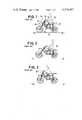
- FIGS. 1-3show a motor-cycle during various load conditions
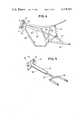
- FIG. 4shows a first embodiment of a frame with lever means connecting the steering head and the rear fork
- FIG. 5shows a schematic, perspective view of the lever means included in FIG. 4,
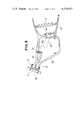
- FIG. 6shows a second embodiment of a frame with a different type of lever means
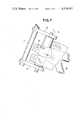
- FIG. 7shows the steering head of FIG. 6 and the front end of the lever means connected thereto
- FIGS. 8 and 9show motor-cycle frames according to the invention, where power transfer means include pressure fluid operated devices.
- FIG. 1shows schematically a conventional motor-cycle used for motocross races, the situation representing conditions when running over level ground.
- the motor-cyclethus has a main frame member 10, which at its front end carries a steering head 11 mounting a front fork 12 connected to handle bars 13.
- a front fork 12By means of those the front fork may be turned in relation to a pivot axis 14, which for reasons explained above will be referred to as being “vertical", although it in reality is slightly inclined in relation to ground level.
- the main frame member 10carries a rear fork 15.
- the front fork 12is provided with shock absorbers, i.e. spring means 16, and at rear fork 15 there are further shock absorbers 17 or spring means.
- shock absorbersi.e. spring means 16, and at rear fork 15 there are further shock absorbers 17 or spring means.
- the shocks to be taken care of by these absorbersmay be considerable and their respective strokes will noticeably influence the position of the rider and of the steering head.
- the center of gravity of motor-cycle and rideris denoted by 18 resulting in an even load upon the shock absorbers.
- FIG. 2intends to simulate the condition during a sudden acceleration.
- the center of gravity 18will be "left behind" the weight of the rider shifting backwards causing an increased compression on the rear shock absorbers 17, while decreasing the load upon the front shock absorbers 16.
- the resulting action on the framewill be a raising of its front portion and the shock absorbers 16 will push the front wheel outwards, increasing the inclination of pivot axis 14.
- FIG. 3intends to show the conditions when the motor-cycle is suddenly braked either by the driver, or by the front wheel hitting a severe obstacle.
- the weight of the rideris shifted forwards, which means an increased load upon the front fork shock absorbers 16, while simultaneously the rear shock absorbers are relieved. This will reduce the angle of the steering head axis in relation to the ground. Similar conditions will occur when running downhill a steep incline.
- the three figuresshow that the angle of inclination of the front fork system will continuously vary due to occasional driving conditions, and also that the distance between the centers of the wheels will vary. This makes the steering more difficult and increases the work to be performed by the rider.
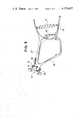
- FIGS. 4 and 5show a first embodiment of the invention.
- the main frame member 20carries the steering head 11, which in a conventional manner includes two brackets 21 ridigly attached to the parallel rods 12 of the front fork and being pivotable about the vertical pivot axis 14, which normally is integral with the main frame member.
- the rear fork 15is, as usual, swingably supported at the rear end of the frame.
- the rear shock absorbers 17are shown in this figure, but their size may be reduced due to the special design of the lever means 22, connecting the rear fork with a cross-head 23 formed by the member 24 supporting the vertical pivot axis 14 and a horizontal pivot 25, which is to be journalled at the front end of the frame.
- FIG. 5will clearly show that a swinging movement of the lever means 22 about pivot 25 will vary the inclination of the steering head axis 14.
- the lever means 22includes a rear, forked portion 26, the tines of which are connected to brackets 27 at the rear fork 15.
- the shaft of the lever meanscomprises two telescopically cooperating parts 28 and 29, of which the former is desinged as a cylinder, enclosing spring means and/or hydraulic or pneumatic shock absorber means of designs well known in the art.
- the rear fork 15will perform swinging movements due to varying driving conditions. These movements will be transferred to cross-piece 23 by the lever means.
- the resiliency of the shaft of the lever meanswill modify the movement and to some degree act as rear shock absorbers.
- FIGS. 6 and 7illustrate a further embodiment of the invention.
- the frame memberis denoted by 30 and a cross-piece carrying the vertical pivot axis 14 and the horizontal pivot 25 is denoted by 31.
- the components of the front forkcarry the same reference numerals as in FIG. 4.
- the lever meanshere includes a first channelshaped link 32, which straddles the top link of the frame 30, and at its forked front end is provided with two pairs of ears 33 and 34, respectively. These are connected to the cross-piece 31 in such a manner that ears 33 will be attached above the horizontal pivot 25 and behind the vertical pivot axis 14, while ears 34 will be attached in front of the vertical axis 11 and below the pivot 25. This will provide a good grip upon the cross-piece and make it easy to transfer movements of the lever means to the cross-piece.
- Two parallel rods 35connect the rear fork 15 with the lever link 32.
- the rear ends of these rodsare attachable to racks 36 at the rear fork, to make possible an adjustment of the length of the lever means.
- a final adjustmentis obtainable by the upper ends of the rods 35 being mounted upon lever link 32 by means of excenters 37, the disk of which is rotatable by means of a handle 38.
- FIG. 8shows a further modification, where the power transfer between the rear fork 15 and the cross piece 31 includes pressure fluid operated devices.
- the main frame 30is generally the same as in FIG. 6, and the same reference numerals are used whenever applicable.
- a double acting hydraulic device 40 operating like a pump to cause fluid pressure variationsis fitted between the main frame 30 and the rear fork 15.
- the deviceis connected to a double acting pressure fluid actuated device 41 by means of conduits 42, 43.
- Angular movements at the rear fork 15will cause fluctuations in the fluid pressure within actuator 40, which will be transferred to the actuated device 41.
- Thisis mounted between the top bar of the main frame and a lever 44, similar to lever 32 of FIG. 6, connected to the cross piece 11. Swinging movements of the rear fork 15, will thus adjust the position of the vertical axis 14 in the same way as previously described.
- a suitable exchange ratiois obtainable.
- FIG. 9includes the same basic components as FIG. 8, and the same reference numerals are used.
- a single acting fluid pump device 45is mounted between the main frame 30 and the rear fork 15. This device is connected to a single-acting actuator 46, connected directly between the main frame 30 and the cross piece by a conduit 47.
- the pistons within devices 45 and 46may be spring loaded to assist return movements between power strokes. In the case of device 45 the rear shock absorber 17 will assist in the return movement.
Landscapes
- Engineering & Computer Science (AREA)
- Mechanical Engineering (AREA)
- Axle Suspensions And Sidecars For Cycles (AREA)
Abstract
Description
The front and rear forks of a motor-cycle are provided with shock absorbers for dampering forces acting upon the motor-cycle due to its wheels running over obstacles in the road. In a motor-cycle intended for motocross races these shock absorbers permit a considerable movement of the forks, which will make the steering difficult, as the inclination of the vertical axis, about which the steering head rotates, will change, this also altering the distance between the centers of the motor-cycle wheels.
In the specification and claims the expression "vertical axis" is used in order to better define from the horizontal pivot, which is a subject matter of the present invention. It should however be remembered that this axis is not strictly vertical, but that it is slightly inclined towards the horizontal plane and that this angle of inclination, with a conventionally designed motor-cycle, will change due to the varying degree of compression of the shock absorbers during different driving conditions above referred to, causing the difficulties with respect to steering.
In order to counteract the tendency of varying inclination of the steering head axis it is now proposed that the frame be provided with horizontal pivot means for carrying the steering head, and lever means connecting the rear fork with said horizontal pivot, whereby the inclination of the steering head vertical axis will be altered in response to movements at the rear fork.
The steering head supporting means and the horizontal pivot means are preferably formed as an integral cross-piece.
The lever means may include a fork-shaped member having tines connected to said rear fork and a shaft connected to said horizontal pivot means, said shaft comprising telescopically displaceable members compressible against the action of resilient means.
Alternatively the lever means may comprise a first forked link connected to said horizontal pivot means and second links connecting each of the tine members of said rear fork with said first link. The first forked link may comprise means for attachment to said steering head mounting means, a first of said attachment means being located above said horizontal pivot means and behind said vertical pivot axis, and a second of said attachment means being located below said horizontal pivot means and in front of said vertical pivot axis.
In order to vary the distance between the rear end of said first forked link and said rear fork the connection between said first forked link and said second link may comprise excenter means.
The transfer means may include fluid pressure actuating means mounted between the main frame member and the rear fork, and pressure fluid actuated means mounted between the main frame and the cross-piece. The pressure fluid actuated means may be connected directly to said cross-piece, or to a lever extending rearwardly from the cross-piece.
FIGS. 1-3 show a motor-cycle during various load conditions,
FIG. 4 shows a first embodiment of a frame with lever means connecting the steering head and the rear fork,
FIG. 5 shows a schematic, perspective view of the lever means included in FIG. 4,
FIG. 6 shows a second embodiment of a frame with a different type of lever means,
FIG. 7 shows the steering head of FIG. 6 and the front end of the lever means connected thereto, and
FIGS. 8 and 9 show motor-cycle frames according to the invention, where power transfer means include pressure fluid operated devices.
FIG. 1 shows schematically a conventional motor-cycle used for motocross races, the situation representing conditions when running over level ground.
The components of a motor-cycle are supposedly well known to anyone familiar with this type of vehicle, and reference will here be made only to components having a direct bearing upon the invention.
The motor-cycle thus has amain frame member 10, which at its front end carries asteering head 11 mounting afront fork 12 connected to handlebars 13. By means of those the front fork may be turned in relation to apivot axis 14, which for reasons explained above will be referred to as being "vertical", although it in reality is slightly inclined in relation to ground level.
At its rear end themain frame member 10 carries arear fork 15.
Thefront fork 12 is provided with shock absorbers, i.e. spring means 16, and atrear fork 15 there arefurther shock absorbers 17 or spring means. The shocks to be taken care of by these absorbers may be considerable and their respective strokes will noticeably influence the position of the rider and of the steering head. For purpose of reference the center of gravity of motor-cycle and rider is denoted by 18 resulting in an even load upon the shock absorbers.
FIG. 2 intends to simulate the condition during a sudden acceleration. During an acceleration the center ofgravity 18 will be "left behind" the weight of the rider shifting backwards causing an increased compression on the rear shock absorbers 17, while decreasing the load upon thefront shock absorbers 16. The resulting action on the frame will be a raising of its front portion and theshock absorbers 16 will push the front wheel outwards, increasing the inclination ofpivot axis 14.
Similar load conditions and alterations in the relative positions of the components will occur when running uphill a steep incline.
FIG. 3 intends to show the conditions when the motor-cycle is suddenly braked either by the driver, or by the front wheel hitting a severe obstacle. The weight of the rider is shifted forwards, which means an increased load upon the front fork shock absorbers 16, while simultaneously the rear shock absorbers are relieved. This will reduce the angle of the steering head axis in relation to the ground. Similar conditions will occur when running downhill a steep incline.
The three figures show that the angle of inclination of the front fork system will continuously vary due to occasional driving conditions, and also that the distance between the centers of the wheels will vary. This makes the steering more difficult and increases the work to be performed by the rider.
In order to reduce the drawbacks above referred to the invention proposes the use of a horizontal pivot for mounting thesteering head 11 and also lever means connecting the pivot with the rear fork.
FIGS. 4 and 5 show a first embodiment of the invention. Themain frame member 20 carries thesteering head 11, which in a conventional manner includes twobrackets 21 ridigly attached to theparallel rods 12 of the front fork and being pivotable about thevertical pivot axis 14, which normally is integral with the main frame member. Therear fork 15 is, as usual, swingably supported at the rear end of the frame. Therear shock absorbers 17 are shown in this figure, but their size may be reduced due to the special design of the lever means 22, connecting the rear fork with across-head 23 formed by themember 24 supporting thevertical pivot axis 14 and ahorizontal pivot 25, which is to be journalled at the front end of the frame.
FIG. 5 will clearly show that a swinging movement of the lever means 22 aboutpivot 25 will vary the inclination of thesteering head axis 14.
The lever means 22 includes a rear, forkedportion 26, the tines of which are connected tobrackets 27 at therear fork 15. The shaft of the lever means comprises two telescopically cooperatingparts
As explained in connection with FIGS. 2 and 3 therear fork 15 will perform swinging movements due to varying driving conditions. These movements will be transferred tocross-piece 23 by the lever means. The resiliency of the shaft of the lever means will modify the movement and to some degree act as rear shock absorbers.
FIGS. 6 and 7 illustrate a further embodiment of the invention.
The frame member is denoted by 30 and a cross-piece carrying thevertical pivot axis 14 and thehorizontal pivot 25 is denoted by 31. The components of the front fork carry the same reference numerals as in FIG. 4.
The lever means here includes a firstchannelshaped link 32, which straddles the top link of theframe 30, and at its forked front end is provided with two pairs ofears cross-piece 31 in such a manner thatears 33 will be attached above thehorizontal pivot 25 and behind thevertical pivot axis 14, whileears 34 will be attached in front of thevertical axis 11 and below thepivot 25. This will provide a good grip upon the cross-piece and make it easy to transfer movements of the lever means to the cross-piece.
Twoparallel rods 35 connect therear fork 15 with thelever link 32. The rear ends of these rods are attachable to racks 36 at the rear fork, to make possible an adjustment of the length of the lever means. A final adjustment is obtainable by the upper ends of therods 35 being mounted uponlever link 32 by means ofexcenters 37, the disk of which is rotatable by means of ahandle 38.
FIG. 8 shows a further modification, where the power transfer between therear fork 15 and thecross piece 31 includes pressure fluid operated devices. Themain frame 30 is generally the same as in FIG. 6, and the same reference numerals are used whenever applicable.
A double actinghydraulic device 40 operating like a pump to cause fluid pressure variations is fitted between themain frame 30 and therear fork 15. The device is connected to a double acting pressure fluid actuateddevice 41 by means ofconduits
Angular movements at therear fork 15 will cause fluctuations in the fluid pressure withinactuator 40, which will be transferred to the actuateddevice 41. This is mounted between the top bar of the main frame and a lever 44, similar to lever 32 of FIG. 6, connected to thecross piece 11. Swinging movements of therear fork 15, will thus adjust the position of thevertical axis 14 in the same way as previously described. By selecting the areas of the pistons working indevices
The embodiment according to FIG. 9 includes the same basic components as FIG. 8, and the same reference numerals are used. A single acting fluid pump device 45 is mounted between themain frame 30 and therear fork 15. This device is connected to a single-acting actuator 46, connected directly between themain frame 30 and the cross piece by aconduit 47. The pistons within devices 45 and 46 may be spring loaded to assist return movements between power strokes. In the case of device 45 therear shock absorber 17 will assist in the return movement.
The examples shown must not be regarded as limiting the invention as it is evident to a man skilled in the art, that the individual components may be designed in various ways to make them perform the desired functions.
Claims (9)
1. A motor-cycle having a frame including a main frame member with a front end and a rear end, means at said front end for mounting a steering head supporting a front fork rotatable about a substantially vertical pivot axis, a rear fork swingably supported at the rear end of said main frame member, and spring means at said front and said rear forks, said frame further including horizontal pivot means for carrying said steering head mounting means at the front end of said main frame, and movement transfer means connecting said rear fork with said horizontal pivot means.
2. The motor-cycle frame according to claim 1, in which said steering head supporting means and said horizontal pivot means are formed as an integral cross-piece.
3. The motor-cycle frame according to claim 2, in which said transfer means includes a fork shaped member having tines connected to said rear fork and a shaft connected to said cross-piece, said shaft comprising telescopically displaceable members compressible against the action of resilient means.
4. The motor-cycle frame according to claim 2, in which said transfer means comprises a first forked link connected to said cross-piece and second links connecting each of the tine members of said rear fork with said first link.
5. The motor-cycle frame according to claim 4, in which said first forked link comprises twin means for attachment to said cross-piece, a first of said attachment means being located above said horizontal pivot means and behind said vertical pivot axis, and a second of said attachment means being located below said horizontal pivot means and in front of said vertical pivot axis.
6. The motor-cycle frame according to claim 4, in which the connection between said first forked link and said second links comprises excenter means for varying the distance between the rear end of said first forked link and said rear fork.
7. The motor-cycle frame according to claim 2, in which said transfer means includes fluid pressure actuating means mounted between the main frame member and said rear fork, and pressure fluid actuated means mounted between said main frame and said cross-piece.
8. The motor-cycle frame according to claim 7, in which said pressure fluid actuated means is connected directly to said cross-piece.
9. The motor-cycle frame according to claim 7, in which said pressure fluid actuated means is connected to a lever extending rearwardly from said cross-piece.
Priority Applications (1)
| Application Number | Priority Date | Filing Date | Title |
|---|---|---|---|
| US06/225,664US4378857A (en) | 1981-01-16 | 1981-01-16 | Motor-cycle frame |
Applications Claiming Priority (1)
| Application Number | Priority Date | Filing Date | Title |
|---|---|---|---|
| US06/225,664US4378857A (en) | 1981-01-16 | 1981-01-16 | Motor-cycle frame |
Publications (1)
| Publication Number | Publication Date |
|---|---|
| US4378857Atrue US4378857A (en) | 1983-04-05 |
Family
ID=22845743
Family Applications (1)
| Application Number | Title | Priority Date | Filing Date |
|---|---|---|---|
| US06/225,664Expired - Fee RelatedUS4378857A (en) | 1981-01-16 | 1981-01-16 | Motor-cycle frame |
Country Status (1)
| Country | Link |
|---|---|
| US (1) | US4378857A (en) |
Cited By (23)
| Publication number | Priority date | Publication date | Assignee | Title |
|---|---|---|---|---|
| US4465156A (en)* | 1982-05-17 | 1984-08-14 | Richardson Robert H | Motorcycle suspension system |
| US4511013A (en)* | 1981-07-23 | 1985-04-16 | Honda Giken Kogyo Kabushiki Kaisha | Rear suspension system for motorcycles |
| US5403028A (en)* | 1993-05-04 | 1995-04-04 | Trimble; Richard H. | Drive wheel suspension system for human powered vehicle |
| US5417445A (en)* | 1988-04-08 | 1995-05-23 | Smart; David G. | Cycles |
| US5474318A (en)* | 1993-09-15 | 1995-12-12 | Castellano; John P. | Long-travel rear suspension system for bicycles |
| US5685553A (en)* | 1994-09-21 | 1997-11-11 | Trek Bicycle Corp. | Suspension for a bicycle having a Y shaped frame |
| US5725227A (en)* | 1995-07-20 | 1998-03-10 | Schwinn Cycling & Fitness Inc. | Suspension system for a bicycle |
| US6109637A (en)* | 1998-04-10 | 2000-08-29 | Great American Bicycle Co., Llc | Bicycle frame with self-damped spring action seat stays |
| US6149173A (en)* | 1998-10-26 | 2000-11-21 | Bynoe; Wayne | Bicycle having jumping capability |
| US6161858A (en)* | 1999-06-14 | 2000-12-19 | Merida Industry Co., Ltd. | Mountain bike frame |
| US6471230B2 (en) | 1998-03-02 | 2002-10-29 | Anthony S. Ellsworth | Bicycle suspension apparatus and related method |
| US6505847B1 (en)* | 2001-10-15 | 2003-01-14 | Paramount Custom Cycles | Frame with built-in suspension |
| US6581950B1 (en) | 1999-09-10 | 2003-06-24 | Anthony S. Ellsworth | Single pivot bicycle suspension apparatus and related methods |
| US6609912B1 (en)* | 1999-11-24 | 2003-08-26 | Honda Giken Kogyo Kabushiki Kaisha | Road simulation apparatus |
| US20050236804A1 (en)* | 2004-03-23 | 2005-10-27 | Alonzo Rolando C | Cycle suspension assembly |
| US20060060405A1 (en)* | 2004-09-17 | 2006-03-23 | Pender Kevin K | Adjustable front wheel assembly for vehicles |
| US20090212529A1 (en)* | 2008-02-26 | 2009-08-27 | Stenberg Eric E | Variable geometry cycle frame |
| US20100327554A1 (en)* | 2009-06-30 | 2010-12-30 | Specialized Bicycle Components, Inc. | Bicycle assembly with gusset |
| US20100327553A1 (en)* | 2009-06-30 | 2010-12-30 | Specialized Bicycle Components, Inc. | Bicycle shock with extension arms |
| US8006993B1 (en) | 2010-05-14 | 2011-08-30 | Specialized Bicycle Components, Inc. | Bicycle frame |
| US8157282B1 (en) | 2005-05-19 | 2012-04-17 | Hutto Arne T | Modularized cycle frame and associated methods |
| CN102556254A (en)* | 2012-02-29 | 2012-07-11 | 胡达广 | Discrete Motorcycle Rear Shock Absorption System |
| US20130015633A1 (en)* | 2011-07-11 | 2013-01-17 | Honda Motor Co., Ltd. | Saddle type vehicle |
Citations (6)
| Publication number | Priority date | Publication date | Assignee | Title |
|---|---|---|---|---|
| DE125454C (en) | 1900-01-01 | |||
| FR890059A (en) | 1942-02-12 | 1944-01-27 | Elastic and removable cycle frame allowing the use of non-rubberized wheels | |
| US2863672A (en)* | 1956-02-10 | 1958-12-09 | Murata Yorimasa | Method and devices of horizontal absorbing of shock on vehicles |
| US3301575A (en)* | 1965-01-04 | 1967-01-31 | Mattel Inc | Suspension for two-wheeled vehicle |
| US3877539A (en)* | 1972-04-05 | 1975-04-15 | Yamaha Motor Co Ltd | Motorcycle shock absorbing rear fork suspension |
| US4162797A (en)* | 1977-10-03 | 1979-07-31 | Mcbride Thomas W | Exercise tricycle |
- 1981
- 1981-01-16USUS06/225,664patent/US4378857A/ennot_activeExpired - Fee Related
Patent Citations (6)
| Publication number | Priority date | Publication date | Assignee | Title |
|---|---|---|---|---|
| DE125454C (en) | 1900-01-01 | |||
| FR890059A (en) | 1942-02-12 | 1944-01-27 | Elastic and removable cycle frame allowing the use of non-rubberized wheels | |
| US2863672A (en)* | 1956-02-10 | 1958-12-09 | Murata Yorimasa | Method and devices of horizontal absorbing of shock on vehicles |
| US3301575A (en)* | 1965-01-04 | 1967-01-31 | Mattel Inc | Suspension for two-wheeled vehicle |
| US3877539A (en)* | 1972-04-05 | 1975-04-15 | Yamaha Motor Co Ltd | Motorcycle shock absorbing rear fork suspension |
| US4162797A (en)* | 1977-10-03 | 1979-07-31 | Mcbride Thomas W | Exercise tricycle |
Cited By (33)
| Publication number | Priority date | Publication date | Assignee | Title |
|---|---|---|---|---|
| US4511013A (en)* | 1981-07-23 | 1985-04-16 | Honda Giken Kogyo Kabushiki Kaisha | Rear suspension system for motorcycles |
| US4465156A (en)* | 1982-05-17 | 1984-08-14 | Richardson Robert H | Motorcycle suspension system |
| US5417445A (en)* | 1988-04-08 | 1995-05-23 | Smart; David G. | Cycles |
| US5403028A (en)* | 1993-05-04 | 1995-04-04 | Trimble; Richard H. | Drive wheel suspension system for human powered vehicle |
| US5474318A (en)* | 1993-09-15 | 1995-12-12 | Castellano; John P. | Long-travel rear suspension system for bicycles |
| US5685553A (en)* | 1994-09-21 | 1997-11-11 | Trek Bicycle Corp. | Suspension for a bicycle having a Y shaped frame |
| US5725227A (en)* | 1995-07-20 | 1998-03-10 | Schwinn Cycling & Fitness Inc. | Suspension system for a bicycle |
| US6471230B2 (en) | 1998-03-02 | 2002-10-29 | Anthony S. Ellsworth | Bicycle suspension apparatus and related method |
| US6109637A (en)* | 1998-04-10 | 2000-08-29 | Great American Bicycle Co., Llc | Bicycle frame with self-damped spring action seat stays |
| US6149173A (en)* | 1998-10-26 | 2000-11-21 | Bynoe; Wayne | Bicycle having jumping capability |
| US6161858A (en)* | 1999-06-14 | 2000-12-19 | Merida Industry Co., Ltd. | Mountain bike frame |
| US6581950B1 (en) | 1999-09-10 | 2003-06-24 | Anthony S. Ellsworth | Single pivot bicycle suspension apparatus and related methods |
| US6609912B1 (en)* | 1999-11-24 | 2003-08-26 | Honda Giken Kogyo Kabushiki Kaisha | Road simulation apparatus |
| US6726483B2 (en) | 1999-11-24 | 2004-04-27 | Honda Giken Kogyo Kabushiki Kaisha | Road simulation apparatus |
| US6505847B1 (en)* | 2001-10-15 | 2003-01-14 | Paramount Custom Cycles | Frame with built-in suspension |
| US20050236804A1 (en)* | 2004-03-23 | 2005-10-27 | Alonzo Rolando C | Cycle suspension assembly |
| US7395892B2 (en)* | 2004-03-23 | 2008-07-08 | David Evans | Cycle suspension assembly |
| US20060060405A1 (en)* | 2004-09-17 | 2006-03-23 | Pender Kevin K | Adjustable front wheel assembly for vehicles |
| US7111861B2 (en)* | 2004-09-17 | 2006-09-26 | Pender Kevin K | Adjustable front wheel assembly for vehicles |
| US8157282B1 (en) | 2005-05-19 | 2012-04-17 | Hutto Arne T | Modularized cycle frame and associated methods |
| US20090212529A1 (en)* | 2008-02-26 | 2009-08-27 | Stenberg Eric E | Variable geometry cycle frame |
| US8181981B2 (en)* | 2008-02-26 | 2012-05-22 | Stenberg Eric E | Variable geometry cycle frame |
| US20100327553A1 (en)* | 2009-06-30 | 2010-12-30 | Specialized Bicycle Components, Inc. | Bicycle shock with extension arms |
| US7954837B2 (en)* | 2009-06-30 | 2011-06-07 | Specialized Bicycle Components, Inc. | Bicycle assembly with gusset |
| US20100327554A1 (en)* | 2009-06-30 | 2010-12-30 | Specialized Bicycle Components, Inc. | Bicycle assembly with gusset |
| US8439383B2 (en) | 2009-06-30 | 2013-05-14 | Specialized Bicycle Components, Inc. | Bicycle shock with extension arms |
| US8006993B1 (en) | 2010-05-14 | 2011-08-30 | Specialized Bicycle Components, Inc. | Bicycle frame |
| US8459680B2 (en) | 2010-05-14 | 2013-06-11 | Specialized Bicycle Components, Inc. | Bicycle frame |
| US8622411B1 (en) | 2010-05-14 | 2014-01-07 | Specialized Bicycle Components, Inc. | Bicycle frame |
| US8801023B2 (en) | 2010-05-14 | 2014-08-12 | Specialized Bicycle Components, Inc. | Bicycle frame |
| US9334011B2 (en) | 2010-05-14 | 2016-05-10 | Specialized Bicycle Components, Inc. | Bicycle frame |
| US20130015633A1 (en)* | 2011-07-11 | 2013-01-17 | Honda Motor Co., Ltd. | Saddle type vehicle |
| CN102556254A (en)* | 2012-02-29 | 2012-07-11 | 胡达广 | Discrete Motorcycle Rear Shock Absorption System |
Similar Documents
| Publication | Publication Date | Title |
|---|---|---|
| US4378857A (en) | Motor-cycle frame | |
| US5599034A (en) | Single arm bicycle suspension fork | |
| EP1109715B1 (en) | Anti-dive front suspension | |
| US4789174A (en) | Suspension bicycle | |
| US5957473A (en) | Rear suspension bicycle | |
| US5772228A (en) | Integrated rear suspension for a bicycle frame | |
| US6102421A (en) | Rear suspension for a bicycle | |
| US5121937A (en) | Suspension bicycle | |
| US4533153A (en) | Front brake system for motorcycles | |
| US5462302A (en) | Double swingarm front suspension for bicycles and motorcycles | |
| CA2538467C (en) | Bicycle with rear suspension | |
| US9845132B2 (en) | Mountain bicycle with rear suspension having neutral braking trajectory | |
| US5452910A (en) | Rear wheel suspension for a bicycle and bicycle equipped therewith | |
| EP1481884B1 (en) | Bicycle rear suspension | |
| US5417305A (en) | Front swing arm suspension system for a motorcycle | |
| EP0086603B1 (en) | Two-wheeled vehicles | |
| JP4011769B2 (en) | Bottom link type front wheel suspension system for motorcycles | |
| EP0149272B1 (en) | Light vehicle front suspensions | |
| US8746721B2 (en) | Motorcycle steering with four-bar linkage | |
| US20020084619A1 (en) | Vehicle front suspension system | |
| US5671936A (en) | Shock absorbing bicycle frame apparatus | |
| EP3385151A1 (en) | Frame mechanism for a vehicle with at least three wheels | |
| JP2002068066A (en) | Vehicle swing arm suspension system | |
| US5810383A (en) | Suspension and steering linkage for a tricycle | |
| US20010015540A1 (en) | Rear suspension for a bicycle |
Legal Events
| Date | Code | Title | Description |
|---|---|---|---|
| MAFP | Maintenance fee payment | Free format text:PAYMENT OF MAINTENANCE FEE, 4TH YEAR, PL 96-517 (ORIGINAL EVENT CODE: M170); ENTITY STATUS OF PATENT OWNER: LARGE ENTITY Year of fee payment:4 | |
| FEPP | Fee payment procedure | Free format text:MAINTENANCE FEE REMINDER MAILED (ORIGINAL EVENT CODE: REM.); ENTITY STATUS OF PATENT OWNER: LARGE ENTITY | |
| LAPS | Lapse for failure to pay maintenance fees | ||
| STCH | Information on status: patent discontinuation | Free format text:PATENT EXPIRED DUE TO NONPAYMENT OF MAINTENANCE FEES UNDER 37 CFR 1.362 | |
| FP | Lapsed due to failure to pay maintenance fee | Effective date:19910407 | |
| AS | Assignment | Owner name:BANKER'S TRUST COMPANY, AS ADMINISTRATIVE AGENT, N Free format text:TERMINATION;ASSIGNOR:DICTAPHONE CORPORATION;REEL/FRAME:011084/0091 Effective date:20000621 |