US4367998A - Manipulators - Google Patents
ManipulatorsDownload PDFInfo
- Publication number
- US4367998A US4367998AUS06/184,304US18430480AUS4367998AUS 4367998 AUS4367998 AUS 4367998AUS 18430480 AUS18430480 AUS 18430480AUS 4367998 AUS4367998 AUS 4367998A
- Authority
- US
- United States
- Prior art keywords
- link
- arm
- assembly
- light
- electric
- Prior art date
- Legal status (The legal status is an assumption and is not a legal conclusion. Google has not performed a legal analysis and makes no representation as to the accuracy of the status listed.)
- Expired - Lifetime
Links
Images





Classifications
- B—PERFORMING OPERATIONS; TRANSPORTING
- B25—HAND TOOLS; PORTABLE POWER-DRIVEN TOOLS; MANIPULATORS
- B25J—MANIPULATORS; CHAMBERS PROVIDED WITH MANIPULATION DEVICES
- B25J3/00—Manipulators of leader-follower type, i.e. both controlling unit and controlled unit perform corresponding spatial movements
- B25J3/04—Manipulators of leader-follower type, i.e. both controlling unit and controlled unit perform corresponding spatial movements involving servo mechanisms
- Y—GENERAL TAGGING OF NEW TECHNOLOGICAL DEVELOPMENTS; GENERAL TAGGING OF CROSS-SECTIONAL TECHNOLOGIES SPANNING OVER SEVERAL SECTIONS OF THE IPC; TECHNICAL SUBJECTS COVERED BY FORMER USPC CROSS-REFERENCE ART COLLECTIONS [XRACs] AND DIGESTS
- Y10—TECHNICAL SUBJECTS COVERED BY FORMER USPC
- Y10S—TECHNICAL SUBJECTS COVERED BY FORMER USPC CROSS-REFERENCE ART COLLECTIONS [XRACs] AND DIGESTS
- Y10S414/00—Material or article handling
- Y10S414/13—Handlers utilizing parallel links
Definitions
- This inventionrelates to a manipulator, and more particularly but not exclusively to a remote-control manipulator for use in a radioactive environment.
- a manipulatorcomprising a master assembly, a slave assembly comprising a pantograph mechanism having a wrist means at one end of an extended link of the mechanism, and drive means including stepping motor means controllable from the master assembly and for displacing the mechanism and the wrist means.
- the wrist meansis displaceable by rotation of rotary members extending along the line of at least some links of the mechanism.
- a jaw assemblymay be connectable to the wrist means and operable by fluid means.
- One form of the manipulator according to the inventionis adapted for handling small items (e.g. 300 grammes), and is compact so that it can be transferred through a port in a biological shield, the port subsequently being closed with a shielding bung.
- small itemse.g. 300 grammes
- the inventionalso includes a jaw assembly for a manipulator of the invention, the jaw mechanism being operable by a fluid circuit having a pressure regulator therein, the pressure regulator comprising a movable obturator arranged to be held against a vent by the action of an electric solenoid, and a sensing means for sensing movement of the obturator.
- meansare provided for varying the electric current to the solenoid so as to produce a corresponding variation in the action of the solenoid on the obturator.
- the inventiontherefore provides a manipulator which is under electrical control so that it is only necessary for the electric cables of the control system to penetrate the biological shield, and uses mechanical mechanisms driven by electric stepping motors in the slave assembly thereof to simplify the electric components used in the radioactive environment.
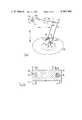
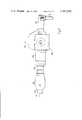
- FIG. 1shows a schematic perspective diagrammatic representation of a slave assembly of a manipulator
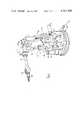
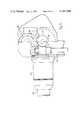
- FIG. 2shows to an enlarged scale a perspective representation of the slave assembly of FIG. 1;
- FIG. 2ashows a fragmentary sectional view on the line IIa--IIa of FIG. 2;
- FIG. 2bshows a fragmentary sectional view on the line IIb--IIb of FIG. 2;
- FIG. 2cshows a fragmentary sectional view on the line IIc--IIc of FIG. 2b;
- FIG. 2dshows a fragmentary sectional view on the line IId--IId of FIG. 2b;
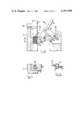
- FIG. 3shows a fragmentary sectional view on the line III--III of FIG. 2;
- FIG. 3ashows a fragmentary sectional view on the line IIIa--IIIa of FIG. 3;
- FIG. 3bshows a fragmentary sectional view on the line IIIb--IIIb of FIG. 3;
- FIG. 3cshows a fragmentary sectional view on the line IIIc--IIIc of FIG. 3;
- FIG. 4shows a fragmentary view in the direction of arrow ⁇ A ⁇ of FIG. 3;
- FIG. 5ashows a fragmentary sectional view on the line Va-Vb of FIG. 4;
- FIG. 5bshows another fragmentary sectional view on the line Va-Vb of FIG. 4;
- FIG. 5cshows a fragmentary sectional view on the line Vc--Vc of FIG. 5b;
- FIG. 5dshows a fragmentary view in the direction of arrow ⁇ B ⁇ of FIG. 5a;
- FIG. 5eshows a fragmentary sectional view on the line Ve--Ve of FIG. 5a;
- FIG. 5fshows a fragmentary sectional view on the line Vf--Vf of FIG. 5a;
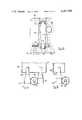
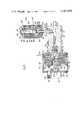
- FIG. 6shows in section part of a fluid circuit for the manipulator of FIGS. 2 to 5f;
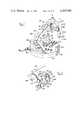
- FIG. 7shows a perspective representation of a master unit for controlling the slave assembly of FIGS. 2 to 6;
- FIG. 8shows to an enlarged scale part of the master unit of FIG. 7;
- FIG. 9shows in block diagrammatic form an electric control circuit for the manipulator of FIGS. 2 to 8.
- the slave assembly showncomprises a linkage 10, having relatively end links 11, 12, and relatively long side links 13, 14 pivotally connected together at ⁇ A ⁇ , ⁇ B ⁇ , ⁇ C ⁇ , and ⁇ D ⁇ to form a four bar chain having opposite links 11 and 12, or 13 and 14, parallel and of equal length.
- Side link 13has an extension 13a which is pivotally attached at ⁇ E ⁇ to a nut 18 on a vertically directed lead screw 19 that provides the vertical drive
- end link 11has an extension 11a which has a wrist 24 at its far end, the length of the end link extension 11a being such as to present the pivotal centre ⁇ X ⁇ of the wrist 24 in line with pivots ⁇ C ⁇ and ⁇ E ⁇ , to arrange that the linkage 10 performs as a pantograph mechanism.
- Pivot ⁇ C ⁇is attached to a nut 26 on a horizontally directed lead screw 27 which provides the horizontal drive of the linkage 10.
- the linkage 10is mounted on a rotatable horizontal base 29, and the base 29 and the respective lead screws 19, 27, are each arranged to be driven by a respective electric stepping motor (not shown).
- the linkage 10is capable of transmitting a pivotal and a rotary movement to the wrist 24 which carries detachable jaw assembly 32 for gripping items, the jaw assembly 32 being of any convenient form but preferably being operable by means of fluid pressure (e.g. pneumatic pressure) conducted through the linkage 10.
- a slave assembly 40which embodies the principles exemplified in FIG. 1, and comprises a rotatable base 42 on which are mounted two posts 43 which rotatably locate a horizontal lead screw 44, and two posts 47 (only one is shown) which support between them a slide member 48.
- a carriage 50 having a recess 51 to clear the forward lead screw post 43is mounted on the lead screw 44 and the slide member 48, so that as shown in FIG. 2a, the lead screw 44 extends through a complementary threaded hole 45 in the carriage 50 and the slide member 48 locates in a recess 49 in the carriage 50.
- An electric stepping motor 52is connected to one end of the lead screw 44 so as to drive the lead screw 44 in a required direction and is secured to the post 43 at that end.
- Two housings 55, 57respectively support a rod 60 on which are pivotally mounted at the lower ends thereof, a double link assembly 61, and a single link assembly 63, the double link assembly 61 and the single link assembly 63 constituting the side link 14, and the longitudinal axis of the rod 60 constituting the pivot ⁇ C ⁇ of FIG. 1.
- a rear link 65 as shown in greater detail in FIG. 2b,is pivotally connected at its lower end on the shouldered peg 67 carried by a slider nut 69 on a vertically extending lead screw 70 which rotatably locates at each end (only the upper end is shown) in a slide member 72 and arranged at the upper end of the lead screw 70 to be driven by an electric stepping motor 71 secured to the slide member 72, the slide member 72 as shown in FIG. 2c providing a supporting right angular guide surface 74 to restrain rotation of the slider nut 69.
- the lower portion of the rear link 65includes a boss 76 from which a shouldered peg 77 protrudes and provides a pivot for a short link 83 which as shown in FIG. 2c is pivotally attached at its other end to the rod 60.
- a stop link 84is pivotally attached to the peg 67 but has a slot 85 which locates about the rod 60, the length of the slot 85 mechanically limiting the vertical and the horizontal movement of the slave assembly 40 to prevent the rear link 65 and the short link 83 becoming too obtuse or acute with respect to each other.
- a rod 79 which constitutes the other portion of the rear link 65is rigidly connected to the boss 76, and in relation to FIG. 1 the rear link 65 constitutes the side link 13, the peg 77 constitutes the pivot ⁇ D ⁇ , the rear link 65 below the boss 76 constitutes the side link extension 13a, and the peg 67 constitutes the pivot ⁇ E ⁇ .
- the upper portion of the double link assembly 61, and the single link assembly 63pivotally support an elbow assembly 90, to which the rear link 65 is pivotally connected by a lug 91 to a peg 92 on the elbow assembly 90.
- a rotatable arm member 95extends at one end from the elbow assembly 90, and at its other end has a wrist assembly 97 to which a jaw assembly 99 is removably attached.
- Conventional gear drivesand located inside the slave assembly 40 transfer the drive from three stepping motors 100, 101 and 102 secured to the underside of the carriage 50 to rotate the arm member 95, to pivot the wrist assembly 97, or to rotate the jaw assembly 99 with respect to the wrist assembly 97 respectively.
- the gripping action of the jaw assembly 99may be arranged by a hydraulic or a pneumatic circuit (not shown).
- a stepping motor 103 secured to the rotatable base 42provides the rotary drive for the rotatable base 42 through a conventional internal and planetary gear combination (not shown).
- a conduit 104carries the electric supplies (not shown) to the rotatable base 42 for the stepping motors 100, 101, 102, and 103.
- actuation of the stepping motor 52turns the horizontal lead screw 44 and moves the carriage 50 which corresponds to moving the pivot ⁇ C ⁇ of FIG. 1
- actuation of the stepping motor 71turns the vertical lead screw 70 which raises the rear link 65 and corresponds to raising the pivots ⁇ E ⁇ and ⁇ D ⁇ of FIG. 1.
- actuation of the stepping motors 100, 101, 102 and 103causes a corresponding movement of the arm member 95, the wrist assembly 97, the jaw assembly 99, or the rotatable base 42 respectively.
- FIGS. 3 to 5fAn example of a gear drive system for a slave assembly is shown in FIGS. 3 to 5f, and referring particularly to FIGS. 3 to 5d, an electric stepping motor 110 is mounted on the underside of the carriage 50 and supports a pinion 111 engaged with a gear 112 which is rigidly joined to a shaft 113 of a worm 114 that is supported in combined thrust and journal bearings 115 at each end thereof.
- the worm 114is engaged with a worm wheel 120 in the arm 55 that is rigidly connected to the rod 60 which is mounted on combined thrust and journal bearings 121.
- a spiral gear 122 fixed to the rod 60engages a spiral gear 123 joined to a shaft 124 which extends through a tubular portion 125 of one side of a front link 126.
- the spiral gears 122, 123transmit a drive but also compensate for any angular movement of the double link assembly 61.
- Another electric stepping motor(not shown) is mounted on the underside of the carriage 50 and arranged in an identical manner to that described in relation to the stepping motor 110 through an identical pinion 111, gear 112, and worm 114 (not shown) to drive a worm wheel 132 mounted on a pair of combined thrust and journal bearings 133 which are mounted on the rod 60.
- the worm wheel 132is joined by a tubular portion 134 to a spiral gear 135 which engages a spiral gear 137 that is joined to a shaft 139 which extends through the tubular portion 125 of the front link 126.
- a worm wheel 144 in the arm 57is mounted on combined thrust and journal bearings 133 which are mounted on the rod 60 and is driven from an electric stepping motor (not shown) in an identical manner to that described in relation to the worm wheels 120 and 132, the worm wheel 144 being joined by a tubular extension to a spiral gear 147 which engages a spiral gear 148 that is joined to a shaft 149 which extends through a tubular portion 150 of the other side of the front link 126.
- a swivel housing 155 which is joined to the tubular portion 125is mounted on a journal bearing 156 located in the arm 55, and a swivel housing 158 which is joined to the tubular portion 150 is mounted on the journal bearing 159, the swivel housings 156, 158 being joined together by an intermediate tube 160 upon which a bearing 161 is mounted for the short link 83 (see FIG. 2b).
- the elbow assembly 90is supported by the tubular portions 125, 150, and comprises a casing 164 and a drive rod 165 mounted at the right hand end thereof with respect to FIG.
- journal bearing 166located in an upper swivel housing 167 connected to the tubular portion 150, and at its left hand end has a spiral gear 168 rigidly mounted thereon and supported in a journal bearing 169, located in an upper swivel housing 170 connected to the tubular portion 125, the spiral gear 168 being arranged to mesh with a spiral gear 171 attached to the shaft 139.
- a spiral gear 172 mounted on bearings 173 on the drive rod 165extends to a bevel gear 174 which engages a corresponding bevel gear 177 mounted inside a bearing 178 inside a bevel gear 179 which is driven by a bevel gear 180 extending from a boss 181 of a pinion 182 mounted on bearings 183 on the drive rod 165.
- the pinion 182is engaged with a compound gear 185 which is mounted on bearings 186 themselves mounted on a stub shaft 187 extending from the casing 164 and cooperating through an idler gear 189 with a gear 190 mounted on bearings 193 on the drive rod 165 and having a spiral gear portion 194 which is engaged with a spiral gear 195 connected to the shaft 149.
- a bevel gear 210is secured to the drive shaft 165 and is engaged with a bevel gear 211 which is mounted inside a bearing 212 in the bevel gear 177.
- the upper swivel housing 167locates in a bearing 215 in the casing 164, and the upper swivel housing 170 locates in a bearing 216 in the casing 164.
- a rear link 220is pivotally connected to a rod 221 in the casing 164, and a stub tube 223 from the casing 164 locates bearings 224 for a tubular spigot 225 from the bevel gear 179 and which is joined to one end of an arm tube 228 of the arm member 95, the arm tube 228 having a fork assembly 229 at its other end.
- a rod 234extends between bearings 235 mounted in the fork assembly 229 and has a pivotal member 236 secured to it, the pivotal member 236 having both a bevel gear portion 237 which engages a bevel gear 238 joined to a tubular extension 239 from the bevel gear 177 and located by a bearing 241 in the fork assembly 229, and a hollow stub portion 240.
- a bevel gear 243 mounted on bearings 244engages a bevel gear 245 located in bearings 246 and joined to a tubular extension 247 from the bevel gear 211, and also engages a bevel gear 248 mounted on bearings 249 on the stub portion 240 and having a tubular extension 250.
- the jaw assembly 99is arranged to be operated by a fluid circuit extending through the hollow stub portion 240, the rod 234, and a tube 256 located at one end in the pivotal member 236 where it is sealed by an ⁇ 0 ⁇ ring seal 257 in an annular groove 258 and at its other end is located in a sleeve 260 mounted as a clearance fit on the drive rod 165, the sleeve 260 having an outlet pipe 261 connected at one end to the tube 256 by an annular groove 262, and by two ducts 263, 264 respectively, in the sleeve 260.
- the jaw assembly 99comprises a housing 280 held on the tubular extension 250 by diametrically opposed pins 281 which locate in a circumferential groove 282 in the tubular extension 250.
- Each pin 281has a slot 283 in which a cam strip 284 extends to effect radial displacement of the pins 281, the cam strip 284 projecting from an annular disc 285 rotatably mounted on a journal portion 286 of the housing 280.
- An inlet port 290 having a frusto-conical peripheryprovides a seating for a corresponding frusto-conical seating 291 in the hollow stub portion 240, and is secured to an annular diaphragm 292 which locates in a slot 293 in the housing 280 so as to bias the inlet port 290 towards the seating 291.
- a hollow cylindrical plunger 294 closed at one endslidably locates in a cylindrical bore 295 in the housing 280, the bore being closed by a flanged spigot 296 through which a rod 297 extends.
- the rod 297has at one end a relieved portion 305 on which a shouldered bush 306 is fixed in abutting relationship with the plunger 294 and provides an end location for a compression spring 307 having its other end held against the flanged spigot 296.
- the rod 297is also relieved at its other end to provide a location for a jaw actuator 310 which has a flat portion 311 that locates in a slot 312 in the rod 297, and is held therein by a rivet 313 and has angled T-shaped ends 314 each of which locates in a correspondingly angled slot 315 defined, as shown in FIG. 5e, between a bridging member 318 respective sides 319 of a cavity 320 in a jaw member 321 so that axial displacement of the jaw actuator 310 with respect to the jaw assembly 99 causes a corresponding transverse displacement of the respective jaw members 321.
- each jaw member 321is pivotally connected by a pin 324 to a respective link 325 which is pivotally connected by a pin 326 to the housing 280.
- diametrically opposite grooves 328 in the annular disc 285enable the annular disc 285 to be rotated so as to rotate the cam strip 284 and thus cause radial displacement of the pins 281 to withdraw them or insert them into the grooves 282.
- Two circumferentially spaced pegs 298 (only one is shown) projecting from the annular disc 285locate about a radially extending peg 299 from the housing 280 to limit the rotation of the annular disc 285.
- two diametrically disposed pins 327project radially from the tubular extension 250 and locate in respective slots 329 in the housing 280.
- the fluid pressure to operate the jaw assembly 99 as shown in FIG. 6 to which reference is made,is provided by an electric pump 330 and a pressure regulator 335 which are connected to the outlet pipe 261 and mounted in a convenient position on the casing 164 (see FIG. 3).
- the pump 330comprises an open-ended pump casing 331 containing an electric solenoid 332 having an electrical lead 336 and which is held against the closed end of the pump casing 331 by a sleeve 333 of an electrical insulating material, the sleeve 333 being retained by a circlip 334 located in the pump casing 331.
- a metal port assembly 338has a cylindrical surface portion 339 which locates in a bore 340 of the solenoid 332 and has a threaded spigot 341 for attachment to a body 342 having a duct 343 therethrough.
- a shouldered bush 346locates in a bore 347 of the port assembly 338 and provides a bore 348 in which a soft iron plunger 349 slidably locates.
- the plunger 349is connected to an apertured plate 352 which locates inside the sleeve 333 and is biased away from the solenoid 332 by three compression springs 354 (only one is shown) each located in a respective tubular housing 356 projecting in equispaced relationship from the plate 352, an aperture 357 in the plate 352 providing a vent for air trapped between the plate 352 and the solenoid 332.
- the plunger 349is of hollow form and has a cylindrical cavity 360 which connects through a stepped duct 361 to a chamber 362 in which a ball 363 of larger diameter than the duct 361 is retained by a pin 364.
- a similar arrangementis provided in the spigot 341 in which a ball 363 locates in a chamber 366 and is retained therein by a pin 367.
- the plunger 349has a frusto-conical end 369 which is locatable in a corresponding frusto-conical cavity 372 in the port assembly 338 and which connects with a duct 374 that leads to the chamber 366.
- a fibrous material 368such as glass fibre is packed into the cavity 360 to act as a filter for air sucked into the pump 330.
- the solenoidis arranged to be energised by an intermittent direct current supply through the electrical lead 336, and thus alternately pulls the plunger 349 towards the cavity 372 against the bias of the springs 354 so as to displace air from the cavity 372 through the chamber 366 into the duct 343, and subsequently releases the plunger 349 so that it can be withdrawn from the cavity 372 by the springs 354 acting against the housings 356, air passing through the cavity 360 and the chamber 362 into the cavity 372.
- the pressure regulator 335comprises a casing 380 containing a solenoid 381 and a coil 382 each held in a bobbin 383.
- An outlet assembly 385has a threaded spigot portion 388 which is secured to the body 342 and has a tubular sleeve 389 which extends through a bore 390 in the bobbin 383 and has two oppositely positioned slots 392 along it.
- a soft iron plunger 394locates inside the sleeve 389 and has a resilient insert 396 of an elastomeric material such as Neoprene, in a cavity 397 so as to be capable of bearing against an opening 398 in an outlet tube 405 which extends from the threaded spigot portion 388, a vent 406 being provided in the outlet assembly 385 to prevent a back pressure developing in the space between the outlet tube 405 and the threaded spigot portion 388.
- a resilient insert 396 of an elastomeric materialsuch as Neoprene
- the plunger 394has an axially extending rod 410 which slides in a guide disc 412 at the end of the sleeve 389 and has a vent 413, the sleeve 389 being retained in the casing 380 by a circlip 414 which locates in a circumferential groove 415 in the outlet tube 405 and is spaced from the casing 380 by a washer 416.
- the solenoid 381is energised by a direct current supply (not shown) having a value to represent a desired air pressure
- the coil 382is energised by an alternating current supply (not shown).
- the insert 396is held against the opening 398 by the action of the solenoid 381 on the plunger 394 until the air pressure in the duct 343 exceeds the pressure exerted on the plunger 394 by the solenoid 381 and thus moves the plunger 394 away from the opening 398 so that air escapes from the opening 398 through the slots 392 and exhausts through the vents 413 and 406.
- This movement of the plunger 394is sensed by a bridge circuit (not shown) from the change in the impedance of the coil 382. If desired the value of the direct current to the solenoid 381 may be changed to produce a higher or lower air pressure in the duct 343.
- the slave assembly of FIGS. 3 to 6is operable as shown in FIG. 7 by means of a master unit 440 which comprises a handle 441 mounted on a linkage 442 having two members 443, 444 respectively.
- the handle 441is rotatably connected to a boss 445 by a rod 446 which passes through a transducer 447, the boss 445 being connected through an arm 448 to a transducer 451 by a rod 449 that is rotatably mounted in a bore 450 in an end 452 of the link member 444.
- the arm 448is joined to one end of a vertical rack 454 that is moved through a gear box assembly 455 with vertical movement of arm 448 so as to drive a transducer 456.
- the gear box assembly 455is mounted on a horizontal rack 460 supported by respective end posts 461 from a table 462 rotatably mounted on a base 463, and is joined to the link member 443 so that horizontal movement of the link member 443 moves the gear box assembly 455 along the horizontal rack 460 which is thus arranged to drive a gear assembly (not shown) in the gear box assembly 455 to rotate a transducer 464.
- a knurled knob 466 on the handle 441is connected to a transducer (not shown) inside the handle 441, and a transducer 468 on the table 462 is arranged to be driven by rotation of the table 462 from an internal gear 470 co-axial with the table 462 and a planetary pinion (not shown) meshed with the internal gear 470 and connected to the transducer 468 so as to drive the transducer with rotation of the table 462.
- Indicator lights 472 on the tableare arranged to be illuminated when a respective transducer 447, 451, 456, 464, 468, or the transducer connected to the knob 466, is being actuated, and each of the aforesaid transducers is shown in greater detail in FIG. 8 to which reference is made.
- a drivefor example in the case of the transducer 447, the rod 446 is connected to a gear wheel 475 which is meshed with a pinion 476 mounted on one end of a shaft 477 upon which a toothed wheel 478 is mounted in an intermediate position along the shaft 477 and a friction drive assembly 479 is attached at the other end of the shaft 477.
- the toothed wheel 478passes near its periphery between a light source 482 and a light detector 483 so that rotation of the toothed wheel 478 causes the beam from the light source 482 to be repeatedly interrupted thus producing a corresponding sequence of electric pulses from the detector 483 each pulse being used to produce a step of the corresponding stepping motor in the slave assembly of FIGS. 3 to 6.
- the friction drive assembly 479comprises an arm 485 having a hollow cylindrical spigot 486 which fits around a boss 487 mounted on the shaft 477, the boss 487 having a friction material (not shown) such as compressed fibreboard around its periphery.
- the rotary movement of the arm 485is restricted by two spaced-apart stops 488, 489 respectively, and a light source 502 and a light detector 503 are positioned so that the beam from the light source 502 is interrupted when the arm 485 is against one stop 488 or 489, and uninterrupted when the arm 485 is against the other stop 489 or 488, and since rotation of the shaft 477 in one direction causes the arm 485 to be held against one of the stops 488 or 489, and rotation of the shaft 477 in the other direction causes the arm 485 to be held against the other stop 489 or 488, the light detector 503 provides a signal which is indicative of the direction of rotation of the shaft 477, the absence of a signal from the light detector 503 indicating rotation of the shaft 477 in
- a rotary switch 505 on the table 462is arranged to supply a variable direct current to control the pressure exerted by the pump 330 (not shown), and the jump 330 is arranged to be actuated by a switch in the form of a trigger 506 pivotable at 507.
- a control circuit for the manipulatoris shown in block diagrammatic form in FIG. 9, and in FIG. 9 a power supply 510 provides a direct current of between -5 V to +5 V to the master unit 440 of FIG. 7, and the outputs from the master unit 440 are supplied to a controller 512 which is itself supplied with a direct current of -15 V to +15 V.
- the controller 512which includes a binary rate multiplier, scalers, and a comparator, provides an output as appropriate to each individual stepping motor of the slave assembly of FIGS. 3 to 6, and also controls the output to the pump 330 and the pressure regulator 335.
- the stepping motorsthemselves are supplied with a 30 volts direct current upon which a 60 volts pulse is superimposed for 0.5 milliseconds each time a respective stepping motor is actuated to make a step, and are each connected to a rsespective torque sensor which provides a feedback signal to the controller 512 when a pre-determined torque has been exceeded by the respective stepping motor. On receipt of the feedback signal the controller 512 cancels the output to the respective stepping motor.
- a suitable stepping motor for the slave assembly of FIG. 2is provided by a Messrs. Calderon Limited, size 08, five phase, ten step, stepping motor.
- the pump 330might operate at about 50 strokes per second at a fluid pressure of about 20 lbs/ins.
- the light source 482 and the light detector 483might comprise a light emitting diode (not shown) and a photo-diode (not shown) respectively.
- the light emitting diode and the photo-diodemight be angularly displaced with respect to each other, with the light emitting diode arranged to direct light on to a reflective toothed periphery of an interruptor member such as the toothed wheel 478 so as to provide a repeatedly interrupted light signal to the photo-diode.
- control circuit of FIG. 9may be programmed to restore the slave assembly of FIG. 2 in a desired datum position on the initiation of a signal from the master unit of FIG. 7, and the control circuit may also be arragned so as to allow movement of a selected one of the stepping motors but to hold the other stepping motors stationary.
- Scaler meansmay be provided in the controller 512 of FIG. 9 to apply a scaling factor when desired to a selected output from the master unit 440 by multiplying or dividing selected pulse outputs from the master unit 440, the respective stepping motor thus being actuated by a pulse output to which the scaling factor has been applied.
- This scaling factorhas one application when increased sensitivity for fine movements of the slave assembly is desired.
- Other variations on the control of the stepping motorsmay be introduced to provide a desired action of the slave assembly.
- nuts engaging the lead screws through a plurality of ballsmay be used.
- the slave assembly of FIGS. 2 to 6is essentially open loop and therefore under visual control although the use of the torque sensors inhibits the stepping motors from being overloaded.
Landscapes
- Engineering & Computer Science (AREA)
- Robotics (AREA)
- Mechanical Engineering (AREA)
- Manipulator (AREA)
Abstract
Description
This invention relates to a manipulator, and more particularly but not exclusively to a remote-control manipulator for use in a radioactive environment.
According to the present invention there is provided a manipulator comprising a master assembly, a slave assembly comprising a pantograph mechanism having a wrist means at one end of an extended link of the mechanism, and drive means including stepping motor means controllable from the master assembly and for displacing the mechanism and the wrist means.
Preferably, the wrist means is displaceable by rotation of rotary members extending along the line of at least some links of the mechanism.
A jaw assembly may be connectable to the wrist means and operable by fluid means.
One form of the manipulator according to the invention is adapted for handling small items (e.g. 300 grammes), and is compact so that it can be transferred through a port in a biological shield, the port subsequently being closed with a shielding bung.
The invention also includes a jaw assembly for a manipulator of the invention, the jaw mechanism being operable by a fluid circuit having a pressure regulator therein, the pressure regulator comprising a movable obturator arranged to be held against a vent by the action of an electric solenoid, and a sensing means for sensing movement of the obturator.
Preferably, means are provided for varying the electric current to the solenoid so as to produce a corresponding variation in the action of the solenoid on the obturator.
There is a specific need for handling items remotely in a radioactive environment, and also to do so without having a portion of the handling equipment extending through a biological shield since this might give rise to impaired radiation shielding at the penetration of the biological shield. Furthermore, because of the inherent difficulties of servicing equipment in a radioactive environment, the reliability of the control system for the handling equipment is of major importance. The invention therefore provides a manipulator which is under electrical control so that it is only necessary for the electric cables of the control system to penetrate the biological shield, and uses mechanical mechanisms driven by electric stepping motors in the slave assembly thereof to simplify the electric components used in the radioactive environment.
The invention will be further described by way of example only with reference to the accompanying drawings in which:
FIG. 1 shows a schematic perspective diagrammatic representation of a slave assembly of a manipulator;
FIG. 2 shows to an enlarged scale a perspective representation of the slave assembly of FIG. 1;
FIG. 2a shows a fragmentary sectional view on the line IIa--IIa of FIG. 2;
FIG. 2b shows a fragmentary sectional view on the line IIb--IIb of FIG. 2;
FIG. 2c shows a fragmentary sectional view on the line IIc--IIc of FIG. 2b;
FIG. 2d shows a fragmentary sectional view on the line IId--IId of FIG. 2b;
FIG. 3 shows a fragmentary sectional view on the line III--III of FIG. 2;
FIG. 3a shows a fragmentary sectional view on the line IIIa--IIIa of FIG. 3;
FIG. 3b shows a fragmentary sectional view on the line IIIb--IIIb of FIG. 3;
FIG. 3c shows a fragmentary sectional view on the line IIIc--IIIc of FIG. 3;
FIG. 4 shows a fragmentary view in the direction of arrow `A` of FIG. 3;
FIG. 5a shows a fragmentary sectional view on the line Va-Vb of FIG. 4;
FIG. 5b shows another fragmentary sectional view on the line Va-Vb of FIG. 4;
FIG. 5c shows a fragmentary sectional view on the line Vc--Vc of FIG. 5b;
FIG. 5d shows a fragmentary view in the direction of arrow `B` of FIG. 5a;
FIG. 5e shows a fragmentary sectional view on the line Ve--Ve of FIG. 5a;
FIG. 5f shows a fragmentary sectional view on the line Vf--Vf of FIG. 5a;
FIG. 6 shows in section part of a fluid circuit for the manipulator of FIGS. 2 to 5f;
FIG. 7 shows a perspective representation of a master unit for controlling the slave assembly of FIGS. 2 to 6;
FIG. 8 shows to an enlarged scale part of the master unit of FIG. 7; and
FIG. 9 shows in block diagrammatic form an electric control circuit for the manipulator of FIGS. 2 to 8.
Referring now to FIG. 1, the slave assembly shown comprises alinkage 10, having relativelyend links 11, 12, and relativelylong side links opposite links Side link 13 has an extension 13a which is pivotally attached at `E` to anut 18 on a vertically directedlead screw 19 that provides the vertical drive, andend link 11 has an extension 11a which has awrist 24 at its far end, the length of the end link extension 11a being such as to present the pivotal centre `X` of thewrist 24 in line with pivots `C` and `E`, to arrange that thelinkage 10 performs as a pantograph mechanism. Pivot `C` is attached to anut 26 on a horizontally directedlead screw 27 which provides the horizontal drive of thelinkage 10. Thelinkage 10 is mounted on a rotatablehorizontal base 29, and thebase 29 and therespective lead screws linkage 10 is capable of transmitting a pivotal and a rotary movement to thewrist 24 which carriesdetachable jaw assembly 32 for gripping items, thejaw assembly 32 being of any convenient form but preferably being operable by means of fluid pressure (e.g. pneumatic pressure) conducted through thelinkage 10.
The direction of movement of the various parts of thelinkage 10 are shown by the arrows, and in operation, rotation of thevertical lead screw 19 displaces thenut 18 and thus the pivot `E`, and causes thelinkage 10 to turn about the pivot `C` thus displacing thewrist 24 vertically but such that the wrist pivot `X` remains on a common line with the pivots `C` and `E`. Similarly, rotation of thehorizontal lead screw 27 causes displacement of thenut 26 and thus of the pivot `C`, and produces a horizontal displacement of the wrist pivot `X` which remains, however, on a common line with the pivots `C` and `E`. Thelinkage 10 can be rotated in a horizontal plane by appropriate rotation of thebase 29, and thewrist 24 can be rotated through 360°, and pivoted to provide a wrist movement in a plane which includes the end link extension 11a.
Referring to FIGS. 2 and 2a, aslave assembly 40 is shown which embodies the principles exemplified in FIG. 1, and comprises arotatable base 42 on which are mounted twoposts 43 which rotatably locate a horizontal lead screw 44, and two posts 47 (only one is shown) which support between them aslide member 48. Acarriage 50 having a recess 51 to clear the forwardlead screw post 43 is mounted on the lead screw 44 and theslide member 48, so that as shown in FIG. 2a, the lead screw 44 extends through a complementary threadedhole 45 in thecarriage 50 and theslide member 48 locates in arecess 49 in thecarriage 50. Anelectric stepping motor 52 is connected to one end of the lead screw 44 so as to drive the lead screw 44 in a required direction and is secured to thepost 43 at that end.
Twohousings rod 60 on which are pivotally mounted at the lower ends thereof, adouble link assembly 61, and asingle link assembly 63, thedouble link assembly 61 and thesingle link assembly 63 constituting theside link 14, and the longitudinal axis of therod 60 constituting the pivot `C` of FIG. 1.
Arear link 65 as shown in greater detail in FIG. 2b, is pivotally connected at its lower end on the shoulderedpeg 67 carried by aslider nut 69 on a vertically extendinglead screw 70 which rotatably locates at each end (only the upper end is shown) in aslide member 72 and arranged at the upper end of thelead screw 70 to be driven by anelectric stepping motor 71 secured to theslide member 72, theslide member 72 as shown in FIG. 2c providing a supporting right angular guide surface 74 to restrain rotation of theslider nut 69. Referring now to FIG. 2d, the lower portion of therear link 65 includes aboss 76 from which a shoulderedpeg 77 protrudes and provides a pivot for ashort link 83 which as shown in FIG. 2c is pivotally attached at its other end to therod 60. Astop link 84 is pivotally attached to thepeg 67 but has aslot 85 which locates about therod 60, the length of theslot 85 mechanically limiting the vertical and the horizontal movement of theslave assembly 40 to prevent therear link 65 and theshort link 83 becoming too obtuse or acute with respect to each other. Referring again to FIG. 2, arod 79 which constitutes the other portion of therear link 65 is rigidly connected to theboss 76, and in relation to FIG. 1 therear link 65 constitutes theside link 13, thepeg 77 constitutes the pivot `D`, therear link 65 below theboss 76 constitutes the side link extension 13a, and thepeg 67 constitutes the pivot `E`.
The upper portion of thedouble link assembly 61, and thesingle link assembly 63 pivotally support anelbow assembly 90, to which therear link 65 is pivotally connected by alug 91 to a peg 92 on theelbow assembly 90. Arotatable arm member 95 extends at one end from theelbow assembly 90, and at its other end has a wrist assembly 97 to which ajaw assembly 99 is removably attached.
Conventional gear drives (not shown) and located inside theslave assembly 40 transfer the drive from three steppingmotors carriage 50 to rotate thearm member 95, to pivot the wrist assembly 97, or to rotate thejaw assembly 99 with respect to the wrist assembly 97 respectively. The gripping action of thejaw assembly 99 may be arranged by a hydraulic or a pneumatic circuit (not shown). A steppingmotor 103 secured to therotatable base 42 provides the rotary drive for therotatable base 42 through a conventional internal and planetary gear combination (not shown). Aconduit 104 carries the electric supplies (not shown) to therotatable base 42 for the steppingmotors
In operation, actuation of the steppingmotor 52 turns the horizontal lead screw 44 and moves thecarriage 50 which corresponds to moving the pivot `C` of FIG. 1, and actuation of the steppingmotor 71 turns thevertical lead screw 70 which raises therear link 65 and corresponds to raising the pivots `E` and `D` of FIG. 1. Similarly, actuation of the steppingmotors arm member 95, the wrist assembly 97, thejaw assembly 99, or therotatable base 42 respectively.
An example of a gear drive system for a slave assembly is shown in FIGS. 3 to 5f, and referring particularly to FIGS. 3 to 5d, anelectric stepping motor 110 is mounted on the underside of thecarriage 50 and supports apinion 111 engaged with agear 112 which is rigidly joined to ashaft 113 of aworm 114 that is supported in combined thrust andjournal bearings 115 at each end thereof. Theworm 114 is engaged with aworm wheel 120 in thearm 55 that is rigidly connected to therod 60 which is mounted on combined thrust andjournal bearings 121. Aspiral gear 122 fixed to therod 60 engages aspiral gear 123 joined to ashaft 124 which extends through atubular portion 125 of one side of afront link 126. The spiral gears 122, 123 transmit a drive but also compensate for any angular movement of thedouble link assembly 61.
Another electric stepping motor (not shown) is mounted on the underside of thecarriage 50 and arranged in an identical manner to that described in relation to the steppingmotor 110 through anidentical pinion 111,gear 112, and worm 114 (not shown) to drive aworm wheel 132 mounted on a pair of combined thrust andjournal bearings 133 which are mounted on therod 60. Theworm wheel 132 is joined by atubular portion 134 to aspiral gear 135 which engages aspiral gear 137 that is joined to ashaft 139 which extends through thetubular portion 125 of thefront link 126.
A worm wheel 144 in thearm 57 is mounted on combined thrust andjournal bearings 133 which are mounted on therod 60 and is driven from an electric stepping motor (not shown) in an identical manner to that described in relation to theworm wheels spiral gear 147 which engages aspiral gear 148 that is joined to ashaft 149 which extends through atubular portion 150 of the other side of thefront link 126.
Aswivel housing 155 which is joined to thetubular portion 125 is mounted on a journal bearing 156 located in thearm 55, and aswivel housing 158 which is joined to thetubular portion 150 is mounted on the journal bearing 159, theswivel housings intermediate tube 160 upon which abearing 161 is mounted for the short link 83 (see FIG. 2b). Theelbow assembly 90 is supported by thetubular portions casing 164 and adrive rod 165 mounted at the right hand end thereof with respect to FIG. 3 in a journal bearing 166 located in anupper swivel housing 167 connected to thetubular portion 150, and at its left hand end has aspiral gear 168 rigidly mounted thereon and supported in a journal bearing 169, located in anupper swivel housing 170 connected to thetubular portion 125, thespiral gear 168 being arranged to mesh with aspiral gear 171 attached to theshaft 139. Aspiral gear 172 mounted onbearings 173 on thedrive rod 165 extends to abevel gear 174 which engages acorresponding bevel gear 177 mounted inside abearing 178 inside abevel gear 179 which is driven by abevel gear 180 extending from aboss 181 of apinion 182 mounted onbearings 183 on thedrive rod 165. Thepinion 182 is engaged with acompound gear 185 which is mounted onbearings 186 themselves mounted on astub shaft 187 extending from thecasing 164 and cooperating through anidler gear 189 with agear 190 mounted onbearings 193 on thedrive rod 165 and having aspiral gear portion 194 which is engaged with aspiral gear 195 connected to theshaft 149.
Abevel gear 210 is secured to thedrive shaft 165 and is engaged with abevel gear 211 which is mounted inside abearing 212 in thebevel gear 177. Theupper swivel housing 167 locates in abearing 215 in thecasing 164, and theupper swivel housing 170 locates in abearing 216 in thecasing 164. Arear link 220 is pivotally connected to a rod 221 in thecasing 164, and astub tube 223 from thecasing 164 locatesbearings 224 for atubular spigot 225 from thebevel gear 179 and which is joined to one end of anarm tube 228 of thearm member 95, thearm tube 228 having afork assembly 229 at its other end.
Arod 234 extends betweenbearings 235 mounted in thefork assembly 229 and has apivotal member 236 secured to it, thepivotal member 236 having both abevel gear portion 237 which engages abevel gear 238 joined to atubular extension 239 from thebevel gear 177 and located by abearing 241 in thefork assembly 229, and ahollow stub portion 240. Abevel gear 243 mounted onbearings 244 engages abevel gear 245 located inbearings 246 and joined to a tubular extension 247 from thebevel gear 211, and also engages abevel gear 248 mounted onbearings 249 on thestub portion 240 and having atubular extension 250.
Thejaw assembly 99 is arranged to be operated by a fluid circuit extending through thehollow stub portion 240, therod 234, and atube 256 located at one end in thepivotal member 236 where it is sealed by an `0`ring seal 257 in anannular groove 258 and at its other end is located in a sleeve 260 mounted as a clearance fit on thedrive rod 165, the sleeve 260 having anoutlet pipe 261 connected at one end to thetube 256 by anannular groove 262, and by twoducts 263, 264 respectively, in the sleeve 260.
Thejaw assembly 99 comprises ahousing 280 held on thetubular extension 250 by diametricallyopposed pins 281 which locate in acircumferential groove 282 in thetubular extension 250. Eachpin 281 has aslot 283 in which acam strip 284 extends to effect radial displacement of thepins 281, thecam strip 284 projecting from anannular disc 285 rotatably mounted on ajournal portion 286 of thehousing 280.
Aninlet port 290 having a frusto-conical periphery provides a seating for a corresponding frusto-conical seating 291 in thehollow stub portion 240, and is secured to anannular diaphragm 292 which locates in aslot 293 in thehousing 280 so as to bias theinlet port 290 towards theseating 291. A hollowcylindrical plunger 294 closed at one end slidably locates in acylindrical bore 295 in thehousing 280, the bore being closed by aflanged spigot 296 through which a rod 297 extends. The rod 297 has at one end a relieved portion 305 on which a shoulderedbush 306 is fixed in abutting relationship with theplunger 294 and provides an end location for a compression spring 307 having its other end held against theflanged spigot 296.
The rod 297 is also relieved at its other end to provide a location for ajaw actuator 310 which has aflat portion 311 that locates in aslot 312 in the rod 297, and is held therein by a rivet 313 and has angled T-shaped ends 314 each of which locates in a correspondinglyangled slot 315 defined, as shown in FIG. 5e, between a bridgingmember 318respective sides 319 of acavity 320 in ajaw member 321 so that axial displacement of thejaw actuator 310 with respect to thejaw assembly 99 causes a corresponding transverse displacement of therespective jaw members 321.
Referring again to FIG. 5 and to FIG. 5d, eachjaw member 321 is pivotally connected by apin 324 to arespective link 325 which is pivotally connected by apin 326 to thehousing 280.
As shown in FIG. 5f, diametricallyopposite grooves 328 in theannular disc 285 enable theannular disc 285 to be rotated so as to rotate thecam strip 284 and thus cause radial displacement of thepins 281 to withdraw them or insert them into thegrooves 282. Two circumferentially spaced pegs 298 (only one is shown) projecting from theannular disc 285 locate about aradially extending peg 299 from thehousing 280 to limit the rotation of theannular disc 285. In order to prevent thejaw assembly 99 itself from rotating when theannular disc 285 is rotated, two diametrically disposed pins 327 (only one is shown) project radially from thetubular extension 250 and locate inrespective slots 329 in thehousing 280.
The fluid pressure to operate thejaw assembly 99 as shown in FIG. 6 to which reference is made, is provided by anelectric pump 330 and apressure regulator 335 which are connected to theoutlet pipe 261 and mounted in a convenient position on the casing 164 (see FIG. 3). Thepump 330 comprises an open-ended pump casing 331 containing anelectric solenoid 332 having anelectrical lead 336 and which is held against the closed end of the pump casing 331 by asleeve 333 of an electrical insulating material, thesleeve 333 being retained by acirclip 334 located in the pump casing 331. A metal port assembly 338 has acylindrical surface portion 339 which locates in a bore 340 of thesolenoid 332 and has a threaded spigot 341 for attachment to abody 342 having aduct 343 therethrough. A shoulderedbush 346 locates in abore 347 of the port assembly 338 and provides abore 348 in which asoft iron plunger 349 slidably locates. Theplunger 349 is connected to anapertured plate 352 which locates inside thesleeve 333 and is biased away from thesolenoid 332 by three compression springs 354 (only one is shown) each located in a respectivetubular housing 356 projecting in equispaced relationship from theplate 352, anaperture 357 in theplate 352 providing a vent for air trapped between theplate 352 and thesolenoid 332.
Theplunger 349 is of hollow form and has acylindrical cavity 360 which connects through a stepped duct 361 to achamber 362 in which aball 363 of larger diameter than the duct 361 is retained by apin 364. A similar arrangement is provided in the spigot 341 in which aball 363 locates in achamber 366 and is retained therein by a pin 367. Theplunger 349 has a frusto-conical end 369 which is locatable in a corresponding frusto-conical cavity 372 in the port assembly 338 and which connects with aduct 374 that leads to thechamber 366. Afibrous material 368 such as glass fibre is packed into thecavity 360 to act as a filter for air sucked into thepump 330.
In operation of thepump 330, the solenoid is arranged to be energised by an intermittent direct current supply through theelectrical lead 336, and thus alternately pulls theplunger 349 towards thecavity 372 against the bias of thesprings 354 so as to displace air from thecavity 372 through thechamber 366 into theduct 343, and subsequently releases theplunger 349 so that it can be withdrawn from thecavity 372 by thesprings 354 acting against thehousings 356, air passing through thecavity 360 and thechamber 362 into thecavity 372.
Thepressure regulator 335 comprises acasing 380 containing asolenoid 381 and acoil 382 each held in abobbin 383. Anoutlet assembly 385 has a threadedspigot portion 388 which is secured to thebody 342 and has atubular sleeve 389 which extends through abore 390 in thebobbin 383 and has two oppositely positionedslots 392 along it. Asoft iron plunger 394 locates inside thesleeve 389 and has aresilient insert 396 of an elastomeric material such as Neoprene, in acavity 397 so as to be capable of bearing against anopening 398 in anoutlet tube 405 which extends from the threadedspigot portion 388, avent 406 being provided in theoutlet assembly 385 to prevent a back pressure developing in the space between theoutlet tube 405 and the threadedspigot portion 388. Theplunger 394 has anaxially extending rod 410 which slides in aguide disc 412 at the end of thesleeve 389 and has avent 413, thesleeve 389 being retained in thecasing 380 by acirclip 414 which locates in acircumferential groove 415 in theoutlet tube 405 and is spaced from thecasing 380 by awasher 416.
In operation of thepressure regulator 335, thesolenoid 381 is energised by a direct current supply (not shown) having a value to represent a desired air pressure, and thecoil 382 is energised by an alternating current supply (not shown). Theinsert 396 is held against theopening 398 by the action of thesolenoid 381 on theplunger 394 until the air pressure in theduct 343 exceeds the pressure exerted on theplunger 394 by thesolenoid 381 and thus moves theplunger 394 away from theopening 398 so that air escapes from theopening 398 through theslots 392 and exhausts through thevents plunger 394 is sensed by a bridge circuit (not shown) from the change in the impedance of thecoil 382. If desired the value of the direct current to thesolenoid 381 may be changed to produce a higher or lower air pressure in theduct 343.
The slave assembly of FIGS. 3 to 6 is operable as shown in FIG. 7 by means of amaster unit 440 which comprises ahandle 441 mounted on a linkage 442 having twomembers handle 441 is rotatably connected to aboss 445 by arod 446 which passes through atransducer 447, theboss 445 being connected through anarm 448 to atransducer 451 by arod 449 that is rotatably mounted in abore 450 in anend 452 of thelink member 444. Thearm 448 is joined to one end of avertical rack 454 that is moved through agear box assembly 455 with vertical movement ofarm 448 so as to drive atransducer 456. Thegear box assembly 455 is mounted on ahorizontal rack 460 supported byrespective end posts 461 from a table 462 rotatably mounted on abase 463, and is joined to thelink member 443 so that horizontal movement of thelink member 443 moves thegear box assembly 455 along thehorizontal rack 460 which is thus arranged to drive a gear assembly (not shown) in thegear box assembly 455 to rotate atransducer 464. Aknurled knob 466 on thehandle 441 is connected to a transducer (not shown) inside thehandle 441, and atransducer 468 on the table 462 is arranged to be driven by rotation of the table 462 from aninternal gear 470 co-axial with the table 462 and a planetary pinion (not shown) meshed with theinternal gear 470 and connected to thetransducer 468 so as to drive the transducer with rotation of the table 462. Indicator lights 472 on the table are arranged to be illuminated when arespective transducer knob 466, is being actuated, and each of the aforesaid transducers is shown in greater detail in FIG. 8 to which reference is made.
In FIG. 8, a drive, for example in the case of thetransducer 447, therod 446 is connected to agear wheel 475 which is meshed with apinion 476 mounted on one end of ashaft 477 upon which atoothed wheel 478 is mounted in an intermediate position along theshaft 477 and afriction drive assembly 479 is attached at the other end of theshaft 477. Thetoothed wheel 478 passes near its periphery between alight source 482 and alight detector 483 so that rotation of thetoothed wheel 478 causes the beam from thelight source 482 to be repeatedly interrupted thus producing a corresponding sequence of electric pulses from thedetector 483 each pulse being used to produce a step of the corresponding stepping motor in the slave assembly of FIGS. 3 to 6. Thefriction drive assembly 479 comprises anarm 485 having a hollowcylindrical spigot 486 which fits around aboss 487 mounted on theshaft 477, theboss 487 having a friction material (not shown) such as compressed fibreboard around its periphery. The rotary movement of thearm 485 is restricted by two spaced-apart stops 488, 489 respectively, and alight source 502 and alight detector 503 are positioned so that the beam from thelight source 502 is interrupted when thearm 485 is against onestop arm 485 is against theother stop shaft 477 in one direction causes thearm 485 to be held against one of thestops shaft 477 in the other direction causes thearm 485 to be held against theother stop light detector 503 provides a signal which is indicative of the direction of rotation of theshaft 477, the absence of a signal from thelight detector 503 indicating rotation of theshaft 477 in the opposite direction. Referring again to FIG. 7, arotary switch 505 on the table 462 is arranged to supply a variable direct current to control the pressure exerted by the pump 330 (not shown), and thejump 330 is arranged to be actuated by a switch in the form of atrigger 506 pivotable at 507.
A control circuit for the manipulator is shown in block diagrammatic form in FIG. 9, and in FIG. 9 apower supply 510 provides a direct current of between -5 V to +5 V to themaster unit 440 of FIG. 7, and the outputs from themaster unit 440 are supplied to a controller 512 which is itself supplied with a direct current of -15 V to +15 V. The controller 512 which includes a binary rate multiplier, scalers, and a comparator, provides an output as appropriate to each individual stepping motor of the slave assembly of FIGS. 3 to 6, and also controls the output to thepump 330 and thepressure regulator 335. The stepping motors themselves are supplied with a 30 volts direct current upon which a 60 volts pulse is superimposed for 0.5 milliseconds each time a respective stepping motor is actuated to make a step, and are each connected to a rsespective torque sensor which provides a feedback signal to the controller 512 when a pre-determined torque has been exceeded by the respective stepping motor. On receipt of the feedback signal the controller 512 cancels the output to the respective stepping motor.
An example of a suitable stepping motor for the slave assembly of FIG. 2 is provided by a Messrs. Calderon Limited, size 08, five phase, ten step, stepping motor. Thepump 330 might operate at about 50 strokes per second at a fluid pressure of about 20 lbs/ins.
Thelight source 482 and thelight detector 483 might comprise a light emitting diode (not shown) and a photo-diode (not shown) respectively. As an alternative to the arrangement shown in FIG. 8, the light emitting diode and the photo-diode might be angularly displaced with respect to each other, with the light emitting diode arranged to direct light on to a reflective toothed periphery of an interruptor member such as thetoothed wheel 478 so as to provide a repeatedly interrupted light signal to the photo-diode.
It will be understood that the control circuit of FIG. 9 may be programmed to restore the slave assembly of FIG. 2 in a desired datum position on the initiation of a signal from the master unit of FIG. 7, and the control circuit may also be arragned so as to allow movement of a selected one of the stepping motors but to hold the other stepping motors stationary.
Scaler means (not shown) may be provided in the controller 512 of FIG. 9 to apply a scaling factor when desired to a selected output from themaster unit 440 by multiplying or dividing selected pulse outputs from themaster unit 440, the respective stepping motor thus being actuated by a pulse output to which the scaling factor has been applied. This scaling factor has one application when increased sensitivity for fine movements of the slave assembly is desired. Other variations on the control of the stepping motors may be introduced to provide a desired action of the slave assembly.
In order to reduce the frictional component of the lead screws, if desired nuts engaging the lead screws through a plurality of balls (not shown) may be used.
The slave assembly of FIGS. 2 to 6 is essentially open loop and therefore under visual control although the use of the torque sensors inhibits the stepping motors from being overloaded.
Although the invention has been described in relation to the use of a pneumatically operated jaw assembly, the manipulator of the invention may be used with alternative jaw assemblies.
Claims (7)
1. A manipulator comprising,
(a) a slave assembly comprising,
(i) first and second relatively short links, the first link being longer than the second link;
(ii) third and fourth relatively long links, the fourth link being longer than the third link, the first link and the second link each being pivotally connected to the third link and to the fourth link to form a four bar chain linkage, the pivotal connections being positioned so that the linkage has opposing members of equal length between pivots and in parallel relationship;
(iii) a portion of the first link extending away from the linkage at the pivotal connection of the first link with the third link;
(iv) a portion of the fourth link extending away from the linkage at the pivotal connection of the fourth link with the second link;
(v) two lead screw means extending in mutually perpendicular relationship in a common plane that includes the four bar chain linkage;
(vi) two nut means, one for each lead screw means, one said nut means being pivotally connected to the extending portion of the fourth link, the other said nut means being pivotally connected to the pivotal connection of the second link with the third link;
(vii) a member for connection to a jaw mechanism and pivotally connected to the extending portion of the first link, the pivotal connections of the jaw connection member and of the extending portion of the fourth link, and the pivotal connection of the second link with the third link, being arranged to lie in a common straight line; and
(viii) two electric stepping motors, one for each lead screw means, for rotating said lead screw means;
(b) a master assembly comprising an electric control means for controlling the electric stepping motors, and
(c) electric connection means for connecting the electric control means to the electric stepping motors.
2. A manipulator as claimed in claim 1, wherein the slave assembly is mounted on a rotatable base, and an electric stepping motor is provided for rotating the base and being controlled by the control means.
3. A manipulator as claimed in claim 1, further comprising rotary members extending substantially parallel to the line of at least some of the said links, the rotary members being drivably connected to the jaw mechanism connection member, and electric stepping motors drivably connected to the rotary members and controlled by the control means.
4. A manipulator as claimed in claim 1, further comprising a detachable jaw mechanism connectable to the jaw mechanism connection member, and fluid means for operating the jaw mechanism.
5. A manipulator as claimed in claim 1, or claim 2, or claim 3, or claim 4, wherein the master assembly further comprises, a manually operable master mechanism for producing movements related to selected displacements of the slave assembly, and transducer means of the control means for producing signal pulses related to said movements of the master mechanism so as to control respective said stepping motor means thereby.
6. A manipulator as claimed in claim 5, wherein the transducer means comprises,
(a) a light source;
(b) a detector for light from said light source so as to provide an electric signal in response to said light;
(c) a toothed wheel positioned relative to the light source and the light detector such that rotation of the wheel causes the teeth thereof to repeatedly interrupt the light from the light source to the detector so that the detector provides corresponding electric signal pulses therefrom; and
(d) means connecting the toothed wheel to the master mechanism such that a respective movement of the master mechanism causes rotation of the toothed wheel.
7. A manipulator as claimed in claim 6, further comprising,
(a) an arm pivotable about an axis;
(b) friction drive means for pivoting the arm, the friction drive means drivably connecting the arm to the toothed wheel so as to pivot the arm as the toothed wheel rotates;
(c) two stops angularly displaced with respect to the axis and disposed one at each side of the arm, for limiting the extent of pivotal movement of the arm;
(d) a light source; and
(e) a light detector for receiving light from said light source, the light source and the light detector being positioned relative to the arm such that light from the light source to the light detector is interrupted when the arm is abutting one of the stops but said light is uninterrupted when the arm is abutting the other of the stops, thereby indicating the pivotal direction of the arm.
Applications Claiming Priority (2)
| Application Number | Priority Date | Filing Date | Title |
|---|---|---|---|
| GB7931801 | 1979-09-13 | ||
| GB7931801 | 1979-09-13 |
Publications (1)
| Publication Number | Publication Date |
|---|---|
| US4367998Atrue US4367998A (en) | 1983-01-11 |
Family
ID=10507807
Family Applications (1)
| Application Number | Title | Priority Date | Filing Date |
|---|---|---|---|
| US06/184,304Expired - LifetimeUS4367998A (en) | 1979-09-13 | 1980-09-05 | Manipulators |
Country Status (4)
| Country | Link |
|---|---|
| US (1) | US4367998A (en) |
| JP (1) | JPS5645390A (en) |
| DE (1) | DE3034292A1 (en) |
| FR (1) | FR2464802B1 (en) |
Cited By (80)
| Publication number | Priority date | Publication date | Assignee | Title |
|---|---|---|---|---|
| US4466307A (en)* | 1980-09-14 | 1984-08-21 | Dainichi Kiko Kabushiki Kaisha | Industrial robot |
| US4551058A (en)* | 1983-07-20 | 1985-11-05 | Robotics, Inc. | Low cost articulating/articulating and rotating wrist mechanism for automatic machine tool and automatic machine tool employing the same |
| WO1986003157A1 (en)* | 1984-11-28 | 1986-06-05 | Avp Robot Ab | Device for carrying and adjusting a tool |
| US4608884A (en)* | 1982-08-03 | 1986-09-02 | Eke Robotersysteme Gmbh | Apparatus for driving two axes of the hand element of an industrial robot |
| US4655675A (en)* | 1983-01-18 | 1987-04-07 | Mitsubishi Denki Kabushiki Kaisha | Articulated robot |
| US4660711A (en)* | 1980-09-26 | 1987-04-28 | Vitro Tec Fideicomiso | Article transference system and apparatus |
| US4671732A (en)* | 1982-11-19 | 1987-06-09 | American Cimflex Corporation | Industrial robot |
| US4787807A (en)* | 1983-09-07 | 1988-11-29 | Hermann Spicher | Apparatus for automatically extracting objects from containers |
| US4893981A (en)* | 1987-03-26 | 1990-01-16 | Kabushiki Kaisha Komatsu Seisakusho | Master/slave type manipulator |
| US4904152A (en)* | 1985-07-26 | 1990-02-27 | Matsushita Electric Industrial Co., Ltd. | Industrial robot |
| US5016328A (en)* | 1990-04-09 | 1991-05-21 | Milliken Research Corporation | Carpet patterning machine and method |
| US5080415A (en)* | 1988-04-22 | 1992-01-14 | Beckman Instruments, Inc. | Robot gripper having auxiliary degree of freedom |
| US5103395A (en)* | 1988-10-07 | 1992-04-07 | Spako David W | System for remote positioning of a radioactive source into a patient including means for protection against improper patient exposure to radiation |
| US5142211A (en)* | 1990-04-16 | 1992-08-25 | Progressive Blasting Systems, Inc. | Five-axis robot |
| WO1997029690A1 (en)* | 1996-02-20 | 1997-08-21 | Computer Motion, Inc. | A method and apparatus for performing minimally invasive cardiac procedures |
| US5762458A (en)* | 1996-02-20 | 1998-06-09 | Computer Motion, Inc. | Method and apparatus for performing minimally invasive cardiac procedures |
| US6063095A (en)* | 1996-02-20 | 2000-05-16 | Computer Motion, Inc. | Method and apparatus for performing minimally invasive surgical procedures |
| FR2787372A1 (en)* | 1998-12-22 | 2000-06-23 | Michel Beffrieu | Robotic gripping mechanism for the manipulation of body parts during motor vehicle assembly, comprises a pneumatic jack powered by an on-board electrical compressor unit |
| WO2000051486A1 (en)* | 1999-03-03 | 2000-09-08 | Computer Motion, Inc. | Method and apparatus for performing minimally invasive surgical procedures |
| US6312435B1 (en)* | 1999-10-08 | 2001-11-06 | Intuitive Surgical, Inc. | Surgical instrument with extended reach for use in minimally invasive surgery |
| US6394998B1 (en) | 1999-01-22 | 2002-05-28 | Intuitive Surgical, Inc. | Surgical tools for use in minimally invasive telesurgical applications |
| US6411082B2 (en) | 2000-02-17 | 2002-06-25 | Control Products, Inc. | Multi-turn, non-contacting rotary shaft position sensor |
| US6463361B1 (en) | 1994-09-22 | 2002-10-08 | Computer Motion, Inc. | Speech interface for an automated endoscopic system |
| US6461372B1 (en) | 1995-06-07 | 2002-10-08 | Sri International | System and method for releasably holding a surgical instrument |
| US20030083673A1 (en)* | 1998-12-08 | 2003-05-01 | Intuitive Surgical, Inc. | Mechanical actuator interface system for robotic surgical tools |
| US20030191455A1 (en)* | 2001-05-01 | 2003-10-09 | Dan Sanchez | Pivot point arm for a robotic system used to perform a surgical procedure |
| US20030195663A1 (en)* | 2001-09-07 | 2003-10-16 | Yulun Wang | Modularity system for computer assisted surgery |
| US6646541B1 (en) | 1996-06-24 | 2003-11-11 | Computer Motion, Inc. | General purpose distributed operating room control system |
| US6714841B1 (en) | 1995-09-15 | 2004-03-30 | Computer Motion, Inc. | Head cursor control interface for an automated endoscope system for optimal positioning |
| US6726699B1 (en) | 2000-08-15 | 2004-04-27 | Computer Motion, Inc. | Instrument guide |
| US20040124964A1 (en)* | 1996-08-06 | 2004-07-01 | Computer Motion, Inc. | General purpose distributed operating room control system |
| US6783524B2 (en) | 2001-04-19 | 2004-08-31 | Intuitive Surgical, Inc. | Robotic surgical tool with ultrasound cauterizing and cutting instrument |
| US6788999B2 (en) | 1992-01-21 | 2004-09-07 | Sri International, Inc. | Surgical system |
| US6793653B2 (en) | 2001-12-08 | 2004-09-21 | Computer Motion, Inc. | Multifunctional handle for a medical robotic system |
| US6804581B2 (en) | 1992-08-10 | 2004-10-12 | Computer Motion, Inc. | Automated endoscope system for optimal positioning |
| US20040236352A1 (en)* | 1997-09-22 | 2004-11-25 | Yulun Wang | Method and apparatus for performing minimally invasive cardiac procedures |
| US6839612B2 (en) | 2001-12-07 | 2005-01-04 | Institute Surgical, Inc. | Microwrist system for surgical procedures |
| US6850817B1 (en) | 1992-01-21 | 2005-02-01 | Sri International | Surgical system |
| US20050023015A1 (en)* | 2003-07-29 | 2005-02-03 | Settimio Argento | Power-assisted multidirectional jackhammer positioner |
| US6852107B2 (en) | 2002-01-16 | 2005-02-08 | Computer Motion, Inc. | Minimally invasive surgical training using robotics and tele-collaboration |
| US20050038416A1 (en)* | 2002-01-16 | 2005-02-17 | Computer Motion, Inc. | Minimally invasive surgical training using robotics and telecollaboration |
| US20050043717A1 (en)* | 1999-10-01 | 2005-02-24 | Computer Motion, Inc. | Heart stabilizer |
| US20050154288A1 (en)* | 1996-06-24 | 2005-07-14 | Computer Motion, Inc. | Method and apparatus for accessing medical data over a network |
| US20050160864A1 (en)* | 2004-01-15 | 2005-07-28 | Glasson Richard O. | Position sensor |
| US20050205710A1 (en)* | 2002-01-23 | 2005-09-22 | Control Products, Inc. | Lead guide for cable extension type position sensors |
| US20050242919A1 (en)* | 1996-08-06 | 2005-11-03 | Intuitive Surgical, Inc. | General purpose distributed operating room control system |
| US20060017431A1 (en)* | 2004-07-21 | 2006-01-26 | Glasson Richard O | Position sensing device and method |
| US7074179B2 (en) | 1992-08-10 | 2006-07-11 | Intuitive Surgical Inc | Method and apparatus for performing minimally invasive cardiac procedures |
| US20060178559A1 (en)* | 1998-11-20 | 2006-08-10 | Intuitive Surgical Inc. | Multi-user medical robotic system for collaboration or training in minimally invasive surgical procedures |
| US7093361B2 (en) | 2002-01-23 | 2006-08-22 | Control Products, Inc. | Method of assembling an actuator with an internal sensor |
| US20070239203A1 (en)* | 2002-12-06 | 2007-10-11 | Intuitive Surgical, Inc. | Flexible wrist for surgical tool |
| US7290476B1 (en) | 1998-10-20 | 2007-11-06 | Control Products, Inc. | Precision sensor for a hydraulic cylinder |
| US20070288044A1 (en)* | 2006-05-12 | 2007-12-13 | Terumo Kabushiki Kaisha | Manipulator |
| US20090192347A1 (en)* | 2005-07-26 | 2009-07-30 | Ams Research Corporation | Methods and Systems for Treatment of Prolapse |
| US20100171332A1 (en)* | 2009-01-02 | 2010-07-08 | Delaware Capital Formation, Inc. | Solenoid Gripper |
| US20100301539A1 (en)* | 2008-04-24 | 2010-12-02 | Toyota Jidosha Kabushiki Kaisha | Power assist apparatus and control method thereof |
| US20110028990A1 (en)* | 1996-12-12 | 2011-02-03 | Intuitive Surgical Operations, Inc. | Multi-Component Telepresence System and Method |
| US20110137322A1 (en)* | 1998-11-20 | 2011-06-09 | Intuitive Surgical Operations | Cooperative Minimally Invasive Telesurgical System |
| US8840628B2 (en) | 1995-06-07 | 2014-09-23 | Intuitive Surgical Operations, Inc. | Surgical manipulator for a telerobotic system |
| US8845681B2 (en) | 1996-11-22 | 2014-09-30 | Intuitive Surgical Operations, Inc. | Rigidly-linked articulating wrist with decoupled motion transmission |
| US8870900B2 (en) | 1999-11-09 | 2014-10-28 | Intuitive Surgical Operations, Inc. | Endoscopic beating-heart stabilizer and vessel occlusion fastener |
| US8911428B2 (en) | 2001-06-29 | 2014-12-16 | Intuitive Surgical Operations, Inc. | Apparatus for pitch and yaw rotation |
| CN104440891A (en)* | 2014-12-23 | 2015-03-25 | 广西大学 | Six-freedom-degree five-connecting-rod movable connecting rod mechanism |
| US8998799B2 (en) | 1996-12-12 | 2015-04-07 | Intuitive Surgical Operations, Inc. | Sterile surgical adaptor |
| US8998930B2 (en) | 2005-12-20 | 2015-04-07 | Intuitive Surgical Operations, Inc. | Disposable sterile surgical adaptor |
| US9005112B2 (en) | 2001-06-29 | 2015-04-14 | Intuitive Surgical Operations, Inc. | Articulate and swapable endoscope for a surgical robot |
| CN104552271A (en)* | 2014-12-23 | 2015-04-29 | 广西大学 | Rotary controllable welding robot |
| CN104552269A (en)* | 2014-12-23 | 2015-04-29 | 广西大学 | Six-freedom-degree controllable mechanism type welding robot |
| CN104626105A (en)* | 2014-12-23 | 2015-05-20 | 广西大学 | Six-freedom-degree controllable mechanism type link mechanism |
| CN104626200A (en)* | 2014-12-23 | 2015-05-20 | 广西大学 | MDOF controllable rocker arm type connection rod mechanism |
| CN104626106A (en)* | 2014-12-23 | 2015-05-20 | 广西大学 | Six-freedom-degree mechanism type movable welding frame |
| CN104626104A (en)* | 2014-12-23 | 2015-05-20 | 广西大学 | Six-freedom-degree movable link mechanism |
| CN104626199A (en)* | 2014-12-23 | 2015-05-20 | 广西大学 | MDOF rocker arm type connection rod mechanism |
| US9119654B2 (en) | 1998-11-20 | 2015-09-01 | Intuitive Surgical Operations, Inc. | Stabilizer for robotic beating-heart surgery |
| US9320568B2 (en) | 1997-11-21 | 2016-04-26 | Intuitive Surgical Operations, Inc. | Sterile surgical drape |
| US9439732B2 (en) | 1996-12-12 | 2016-09-13 | Intuitive Surgical Operations, Inc. | Instrument interface of a robotic surgical system |
| CN106003143A (en)* | 2016-06-13 | 2016-10-12 | 广西大学 | Multi-degree-of-freedom linear driving controllable mechanism type manipulator |
| CN106041901A (en)* | 2016-06-23 | 2016-10-26 | 广西大学 | Three-degree-of-freedom linear driving controllable mechanism type robot palletizer |
| US9532849B2 (en) | 1997-11-21 | 2017-01-03 | Intuitive Surgical Operations, Inc. | Surgical accessory clamp and system |
| CN110253633A (en)* | 2019-06-24 | 2019-09-20 | 中国航空综合技术研究所 | It is a kind of to automatically grab robot palletizer for assembly line |
Families Citing this family (3)
| Publication number | Priority date | Publication date | Assignee | Title |
|---|---|---|---|---|
| DE3617981A1 (en)* | 1986-05-28 | 1987-12-03 | Overbeck Gmbh & Co | Device for holding and/or positioning workpieces and/or tools or the like |
| JPS6389274A (en)* | 1986-09-30 | 1988-04-20 | 株式会社東芝 | Bilateral control device for manipulator |
| CN104552251A (en)* | 2014-12-23 | 2015-04-29 | 广西大学 | Six-freedom-degree rocker arm type connection rod mechanism |
Citations (3)
| Publication number | Priority date | Publication date | Assignee | Title |
|---|---|---|---|---|
| GB973101A (en) | 1960-02-16 | 1964-10-21 | Commissariat Energie Atomique | Remote control apparatus for acting upon dangerous material |
| US3241687A (en)* | 1965-03-10 | 1966-03-22 | Moline Organisation Ltd | Mechanical handling apparatus |
| US3630389A (en)* | 1970-09-30 | 1971-12-28 | Gen Electric | Material-handling apparatus |
Family Cites Families (3)
| Publication number | Priority date | Publication date | Assignee | Title |
|---|---|---|---|---|
| DE2433954B2 (en)* | 1974-07-15 | 1976-07-22 | Siemens AG, 1000 Berlin und 8000 München | HANDLING DEVICE |
| DE2627490B2 (en)* | 1976-06-18 | 1979-12-20 | H.A. Schlatter Ag, Schlieren (Schweiz) | manipulator |
| CH617559GA3 (en)* | 1977-12-29 | 1980-06-13 |
- 1980
- 1980-09-05USUS06/184,304patent/US4367998A/ennot_activeExpired - Lifetime
- 1980-09-11DEDE19803034292patent/DE3034292A1/ennot_activeWithdrawn
- 1980-09-11JPJP12663380Apatent/JPS5645390A/enactivePending
- 1980-09-12FRFR8019771Apatent/FR2464802B1/ennot_activeExpired
Patent Citations (3)
| Publication number | Priority date | Publication date | Assignee | Title |
|---|---|---|---|---|
| GB973101A (en) | 1960-02-16 | 1964-10-21 | Commissariat Energie Atomique | Remote control apparatus for acting upon dangerous material |
| US3241687A (en)* | 1965-03-10 | 1966-03-22 | Moline Organisation Ltd | Mechanical handling apparatus |
| US3630389A (en)* | 1970-09-30 | 1971-12-28 | Gen Electric | Material-handling apparatus |
Cited By (181)
| Publication number | Priority date | Publication date | Assignee | Title |
|---|---|---|---|---|
| US4466307A (en)* | 1980-09-14 | 1984-08-21 | Dainichi Kiko Kabushiki Kaisha | Industrial robot |
| US4660711A (en)* | 1980-09-26 | 1987-04-28 | Vitro Tec Fideicomiso | Article transference system and apparatus |
| US4608884A (en)* | 1982-08-03 | 1986-09-02 | Eke Robotersysteme Gmbh | Apparatus for driving two axes of the hand element of an industrial robot |
| US4671732A (en)* | 1982-11-19 | 1987-06-09 | American Cimflex Corporation | Industrial robot |
| US4655675A (en)* | 1983-01-18 | 1987-04-07 | Mitsubishi Denki Kabushiki Kaisha | Articulated robot |
| US4551058A (en)* | 1983-07-20 | 1985-11-05 | Robotics, Inc. | Low cost articulating/articulating and rotating wrist mechanism for automatic machine tool and automatic machine tool employing the same |
| US4787807A (en)* | 1983-09-07 | 1988-11-29 | Hermann Spicher | Apparatus for automatically extracting objects from containers |
| WO1986003157A1 (en)* | 1984-11-28 | 1986-06-05 | Avp Robot Ab | Device for carrying and adjusting a tool |
| US4718815A (en)* | 1984-11-28 | 1988-01-12 | Avp Robot Ab | Device for carrying and adjusting a tool |
| AU575462B2 (en)* | 1984-11-28 | 1988-07-28 | S-Bolag Tillvaxt Aktiebolag | Device for adjusting and carrying a tool |
| US4904152A (en)* | 1985-07-26 | 1990-02-27 | Matsushita Electric Industrial Co., Ltd. | Industrial robot |
| US4893981A (en)* | 1987-03-26 | 1990-01-16 | Kabushiki Kaisha Komatsu Seisakusho | Master/slave type manipulator |
| US5080415A (en)* | 1988-04-22 | 1992-01-14 | Beckman Instruments, Inc. | Robot gripper having auxiliary degree of freedom |
| US5103395A (en)* | 1988-10-07 | 1992-04-07 | Spako David W | System for remote positioning of a radioactive source into a patient including means for protection against improper patient exposure to radiation |
| US5016328A (en)* | 1990-04-09 | 1991-05-21 | Milliken Research Corporation | Carpet patterning machine and method |
| US5142211A (en)* | 1990-04-16 | 1992-08-25 | Progressive Blasting Systems, Inc. | Five-axis robot |
| US20060142897A1 (en)* | 1992-01-21 | 2006-06-29 | Sri International | Roll-pitch-roll wrist methods for minimally invasive robotic surgery |
| US7890211B2 (en) | 1992-01-21 | 2011-02-15 | Intuitive Surgical Operations, Inc. | Master-slave manipulator system and apparatus |
| US20070276423A1 (en)* | 1992-01-21 | 2007-11-29 | Sri International | Roll-Pitch-Roll Wrist Methods for Minimally Invasive Robotic Surgery |
| US6788999B2 (en) | 1992-01-21 | 2004-09-07 | Sri International, Inc. | Surgical system |
| US7248944B2 (en) | 1992-01-21 | 2007-07-24 | Institute Surgical, Inc | Roll-pitch-roll wrist methods for minimally invasive robotic surgery |
| US6850817B1 (en) | 1992-01-21 | 2005-02-01 | Sri International | Surgical system |
| US6963792B1 (en) | 1992-01-21 | 2005-11-08 | Sri International | Surgical method |
| US6804581B2 (en) | 1992-08-10 | 2004-10-12 | Computer Motion, Inc. | Automated endoscope system for optimal positioning |
| US7025761B2 (en) | 1992-08-10 | 2006-04-11 | Intultive Surgical | Method and apparatus for performing minimally invasive cardiac procedures |
| US20050234433A1 (en)* | 1992-08-10 | 2005-10-20 | Intuitive Surgical, Inc. | Apparatus for performing surgical procedures with a passively flexing robotic assembly |
| US7074179B2 (en) | 1992-08-10 | 2006-07-11 | Intuitive Surgical Inc | Method and apparatus for performing minimally invasive cardiac procedures |
| US20060220784A1 (en)* | 1994-09-22 | 2006-10-05 | Intuitive Surgical, Inc., A Delaware Corporation | General purpose distributed operating room control system |
| US7395249B2 (en) | 1994-09-22 | 2008-07-01 | Intuitive Surgical, Inc. | Speech interface for an automated endoscope system |
| US6965812B2 (en) | 1994-09-22 | 2005-11-15 | Computer Motion, Inc. | Speech interface for an automated endoscopic system |
| US6463361B1 (en) | 1994-09-22 | 2002-10-08 | Computer Motion, Inc. | Speech interface for an automated endoscopic system |
| US7824424B2 (en) | 1995-06-07 | 2010-11-02 | Sri International | System and method for releasably holding a surgical instrument |
| US7204844B2 (en) | 1995-06-07 | 2007-04-17 | Sri, International | System and method for releasably holding a surgical instrument |
| US8012160B2 (en) | 1995-06-07 | 2011-09-06 | Sri International | System and method for releasably holding a surgical instrument |
| US20030130648A1 (en)* | 1995-06-07 | 2003-07-10 | Sri International | System and method for releasably holding a surgical instrument |
| US20110060346A1 (en)* | 1995-06-07 | 2011-03-10 | Sri International, Inc. | Surgical manipulator for a telerobotic system |
| US8840628B2 (en) | 1995-06-07 | 2014-09-23 | Intuitive Surgical Operations, Inc. | Surgical manipulator for a telerobotic system |
| US6461372B1 (en) | 1995-06-07 | 2002-10-08 | Sri International | System and method for releasably holding a surgical instrument |
| US20050283140A1 (en)* | 1995-06-07 | 2005-12-22 | Sri International | System and method for releasably holding a surgical instrument |
| US20070021776A1 (en)* | 1995-06-07 | 2007-01-25 | Sri International | System and method for releasably holding a surgical instrument |
| US6714841B1 (en) | 1995-09-15 | 2004-03-30 | Computer Motion, Inc. | Head cursor control interface for an automated endoscope system for optimal positioning |
| US20060167441A1 (en)* | 1996-02-20 | 2006-07-27 | Intuitive Surgical Inc. | Method and apparatus for performing minimally invasive cardiac procedures |
| US6001108A (en)* | 1996-02-20 | 1999-12-14 | Computer Motion, Inc. | Method and apparatus for performing minimally invasive cardiac procedures |
| US6063095A (en)* | 1996-02-20 | 2000-05-16 | Computer Motion, Inc. | Method and apparatus for performing minimally invasive surgical procedures |
| US7507199B2 (en) | 1996-02-20 | 2009-03-24 | Intuitive Surgical, Inc. | Method and apparatus for performing minimally invasive cardiac procedures |
| US7025064B2 (en)* | 1996-02-20 | 2006-04-11 | Intuitive Surgical Inc | Method and apparatus for performing minimally invasive cardiac procedures |
| US6436107B1 (en) | 1996-02-20 | 2002-08-20 | Computer Motion, Inc. | Method and apparatus for performing minimally invasive surgical procedures |
| US6007550A (en)* | 1996-02-20 | 1999-12-28 | Computer Motion, Inc. | Method and apparatus for performing minimally invasive cardiac procedures |
| US6244809B1 (en) | 1996-02-20 | 2001-06-12 | Computer Motion, Inc. | Method and apparatus for performing minimally invasive cardiac procedures |
| US6905491B1 (en) | 1996-02-20 | 2005-06-14 | Intuitive Surgical, Inc. | Apparatus for performing minimally invasive cardiac procedures with a robotic arm that has a passive joint and system which can decouple the robotic arm from the input device |
| US5762458A (en)* | 1996-02-20 | 1998-06-09 | Computer Motion, Inc. | Method and apparatus for performing minimally invasive cardiac procedures |
| WO1997029690A1 (en)* | 1996-02-20 | 1997-08-21 | Computer Motion, Inc. | A method and apparatus for performing minimally invasive cardiac procedures |
| US7118582B1 (en) | 1996-02-20 | 2006-10-10 | Computer Motion, Inc. | Method and apparatus for performing minimally invasive cardiac procedures |
| US7914521B2 (en) | 1996-02-20 | 2011-03-29 | Intuitive Surgical Operations, Inc. | Method and apparatus for performing minimally invasive cardiac procedures |
| US20030125716A1 (en)* | 1996-02-20 | 2003-07-03 | Yulun Wang | Method and apparatus for performing minimally invasive cardiac procedures |
| US7408439B2 (en) | 1996-06-24 | 2008-08-05 | Intuitive Surgical, Inc. | Method and apparatus for accessing medical data over a network |
| US7097640B2 (en) | 1996-06-24 | 2006-08-29 | Intuitive Surgical, Inc. | Multi-functional surgical control system and switching interface |
| US20060241575A1 (en)* | 1996-06-24 | 2006-10-26 | Yulun Wang | Multi-functional surgical control system switching interface |
| US6646541B1 (en) | 1996-06-24 | 2003-11-11 | Computer Motion, Inc. | General purpose distributed operating room control system |
| US7543588B2 (en) | 1996-06-24 | 2009-06-09 | Intuitive Surgical, Inc. | Multi-functional surgical control system switching interface |
| US20040172011A1 (en)* | 1996-06-24 | 2004-09-02 | Yulun Wang | Multi-functional surgical control system and switching interface |
| US20050154288A1 (en)* | 1996-06-24 | 2005-07-14 | Computer Motion, Inc. | Method and apparatus for accessing medical data over a network |
| US20050242919A1 (en)* | 1996-08-06 | 2005-11-03 | Intuitive Surgical, Inc. | General purpose distributed operating room control system |
| US20040124964A1 (en)* | 1996-08-06 | 2004-07-01 | Computer Motion, Inc. | General purpose distributed operating room control system |
| US7053752B2 (en) | 1996-08-06 | 2006-05-30 | Intuitive Surgical | General purpose distributed operating room control system |
| US7259652B2 (en) | 1996-08-06 | 2007-08-21 | Intuitive Surgical, Inc. | General purpose distributed operating room control system |
| US9402619B2 (en) | 1996-11-22 | 2016-08-02 | Intuitive Surgical Operation, Inc. | Rigidly-linked articulating wrist with decoupled motion transmission |
| US8845681B2 (en) | 1996-11-22 | 2014-09-30 | Intuitive Surgical Operations, Inc. | Rigidly-linked articulating wrist with decoupled motion transmission |
| US20070012135A1 (en)* | 1996-12-12 | 2007-01-18 | Intuitive Surgical Inc. | Surgical robotic tools, data architecture, and use |
| US20110028990A1 (en)* | 1996-12-12 | 2011-02-03 | Intuitive Surgical Operations, Inc. | Multi-Component Telepresence System and Method |
| US9949802B2 (en) | 1996-12-12 | 2018-04-24 | Intuitive Surgical Operations, Inc. | Multi-component telepresence system and method |
| US8998799B2 (en) | 1996-12-12 | 2015-04-07 | Intuitive Surgical Operations, Inc. | Sterile surgical adaptor |
| US9795453B2 (en) | 1996-12-12 | 2017-10-24 | Intuitive Surgical Operations, Inc. | Surgical robotic tools, data architecture, and use |
| US9724163B2 (en) | 1996-12-12 | 2017-08-08 | Intuitive Surgical Operations, Inc. | Disposable sterile surgical adaptor |
| US8608773B2 (en) | 1996-12-12 | 2013-12-17 | Intuitive Surgical Operations, Inc. | Surgical robotic tools, data architecture, and use |
| US9439732B2 (en) | 1996-12-12 | 2016-09-13 | Intuitive Surgical Operations, Inc. | Instrument interface of a robotic surgical system |
| US20040236352A1 (en)* | 1997-09-22 | 2004-11-25 | Yulun Wang | Method and apparatus for performing minimally invasive cardiac procedures |
| US9320568B2 (en) | 1997-11-21 | 2016-04-26 | Intuitive Surgical Operations, Inc. | Sterile surgical drape |
| US9532849B2 (en) | 1997-11-21 | 2017-01-03 | Intuitive Surgical Operations, Inc. | Surgical accessory clamp and system |
| US7290476B1 (en) | 1998-10-20 | 2007-11-06 | Control Products, Inc. | Precision sensor for a hydraulic cylinder |
| US8914150B2 (en) | 1998-11-20 | 2014-12-16 | Intuitive Surgical Operations, Inc. | Cooperative minimally invasive telesurgical system |
| US20060178559A1 (en)* | 1998-11-20 | 2006-08-10 | Intuitive Surgical Inc. | Multi-user medical robotic system for collaboration or training in minimally invasive surgical procedures |
| US9666101B2 (en) | 1998-11-20 | 2017-05-30 | Intuitive Surgical Operations, Inc. | Multi-user medical robotic system for collaboration or training in minimally invasive surgical procedures |
| US8489235B2 (en) | 1998-11-20 | 2013-07-16 | Intuitive Surgical Operations, Inc. | Cooperative minimally invasive telesurgical system |
| US9636186B2 (en) | 1998-11-20 | 2017-05-02 | Intuitive Surgical Operations, Inc. | Multi-user medical robotic system for collaboration or training in minimally invasive surgical procedures |
| US9271798B2 (en) | 1998-11-20 | 2016-03-01 | Intuitive Surgical Operations, Inc. | Multi-user medical robotic system for collaboration or training in minimally invasive surgical procedures |
| US9119654B2 (en) | 1998-11-20 | 2015-09-01 | Intuitive Surgical Operations, Inc. | Stabilizer for robotic beating-heart surgery |
| US8504201B2 (en) | 1998-11-20 | 2013-08-06 | Intuitive Sugrical Operations, Inc. | Cooperative minimally invasive telesurgical system |
| US20110137322A1 (en)* | 1998-11-20 | 2011-06-09 | Intuitive Surgical Operations | Cooperative Minimally Invasive Telesurgical System |
| US9867671B2 (en) | 1998-11-20 | 2018-01-16 | Intuitive Surgical Operations, Inc. | Multi-user medical robotic system for collaboration or training in minimally invasive surgical procedures |
| US8527094B2 (en) | 1998-11-20 | 2013-09-03 | Intuitive Surgical Operations, Inc. | Multi-user medical robotic system for collaboration or training in minimally invasive surgical procedures |
| US8666544B2 (en) | 1998-11-20 | 2014-03-04 | Intuitive Surgical Operations, Inc. | Cooperative minimally invasive telesurgical system |
| US8758352B2 (en) | 1998-12-08 | 2014-06-24 | Intuitive Surgical Operations, Inc. | Mechanical actuator interface system for robotic surgical tools |
| US20030083673A1 (en)* | 1998-12-08 | 2003-05-01 | Intuitive Surgical, Inc. | Mechanical actuator interface system for robotic surgical tools |
| US8142447B2 (en) | 1998-12-08 | 2012-03-27 | Intuitive Surgical Operations Inc. | Mechanical actuator interface system for robotic surgical tools |
| US7524320B2 (en) | 1998-12-08 | 2009-04-28 | Intuitive Surgical, Inc. | Mechanical actuator interface system for robotic surgical tools |
| FR2787372A1 (en)* | 1998-12-22 | 2000-06-23 | Michel Beffrieu | Robotic gripping mechanism for the manipulation of body parts during motor vehicle assembly, comprises a pneumatic jack powered by an on-board electrical compressor unit |
| WO2000037211A1 (en)* | 1998-12-22 | 2000-06-29 | Dawidowicz, Armand | Robotized gripping device for handling body parts in a motor vehicle assembly installation |
| US6936042B2 (en) | 1999-01-22 | 2005-08-30 | Intuitive Surgical | Surgical tools for use in minimally invasive telesurgical applications |
| US6394998B1 (en) | 1999-01-22 | 2002-05-28 | Intuitive Surgical, Inc. | Surgical tools for use in minimally invasive telesurgical applications |
| US20020111621A1 (en)* | 1999-01-22 | 2002-08-15 | Intuitive Surgical, Inc. | Surgical tools for use in minimally invasive telesurgical applications |
| WO2000051486A1 (en)* | 1999-03-03 | 2000-09-08 | Computer Motion, Inc. | Method and apparatus for performing minimally invasive surgical procedures |
| US20050043717A1 (en)* | 1999-10-01 | 2005-02-24 | Computer Motion, Inc. | Heart stabilizer |
| US7217240B2 (en) | 1999-10-01 | 2007-05-15 | Intuitive Surgical, Inc. | Heart stabilizer |
| US6312435B1 (en)* | 1999-10-08 | 2001-11-06 | Intuitive Surgical, Inc. | Surgical instrument with extended reach for use in minimally invasive surgery |
| US8870900B2 (en) | 1999-11-09 | 2014-10-28 | Intuitive Surgical Operations, Inc. | Endoscopic beating-heart stabilizer and vessel occlusion fastener |
| US6411082B2 (en) | 2000-02-17 | 2002-06-25 | Control Products, Inc. | Multi-turn, non-contacting rotary shaft position sensor |
| US6726699B1 (en) | 2000-08-15 | 2004-04-27 | Computer Motion, Inc. | Instrument guide |
| US6783524B2 (en) | 2001-04-19 | 2004-08-31 | Intuitive Surgical, Inc. | Robotic surgical tool with ultrasound cauterizing and cutting instrument |
| US20050021018A1 (en)* | 2001-04-19 | 2005-01-27 | Intuitive Surgical, Inc., A Delaware Corporation | Robotic surgical tool with ultrasound cauterizing and cutting instrument |
| US20030191455A1 (en)* | 2001-05-01 | 2003-10-09 | Dan Sanchez | Pivot point arm for a robotic system used to perform a surgical procedure |
| US8641698B2 (en) | 2001-05-01 | 2014-02-04 | Intuitive Surgical Operations, Inc. | Pivot point arm for robotic system used to perform a surgical procedure |
| US9011415B2 (en) | 2001-05-01 | 2015-04-21 | Intuitive Surgical Operations, Inc. | Pivot point arm for a robotic system used to perform a surgical procedure |
| US10506920B2 (en) | 2001-06-29 | 2019-12-17 | Intuitive Surgical Operations, Inc. | Articulate and swappable endoscope for a surgical robot |
| US11051794B2 (en) | 2001-06-29 | 2021-07-06 | Intuitive Surgical Operations, Inc. | Apparatus for pitch and yaw rotation |
| US8911428B2 (en) | 2001-06-29 | 2014-12-16 | Intuitive Surgical Operations, Inc. | Apparatus for pitch and yaw rotation |
| US10105128B2 (en) | 2001-06-29 | 2018-10-23 | Intuitive Surgical Operations, Inc. | Apparatus for pitch and yaw rotation |
| US9730572B2 (en) | 2001-06-29 | 2017-08-15 | Intuitive Surgical Operations, Inc. | Articulate and swappable endoscope for a surgical robot |
| US9717486B2 (en) | 2001-06-29 | 2017-08-01 | Intuitive Surgical Operations, Inc. | Apparatus for pitch and yaw rotation |
| US9005112B2 (en) | 2001-06-29 | 2015-04-14 | Intuitive Surgical Operations, Inc. | Articulate and swapable endoscope for a surgical robot |
| US20030195662A1 (en)* | 2001-09-07 | 2003-10-16 | Yulun Wang | Modularity system for computer assisted surgery |
| US20030195661A1 (en)* | 2001-09-07 | 2003-10-16 | Yulun Wang | Modularity system for computer assisted surgery |
| US6871117B2 (en) | 2001-09-07 | 2005-03-22 | Intuitive Surgical, Inc. | Modularity system for computer assisted surgery |
| US20030195663A1 (en)* | 2001-09-07 | 2003-10-16 | Yulun Wang | Modularity system for computer assisted surgery |
| US7239940B2 (en) | 2001-09-07 | 2007-07-03 | Intuitive Surgical, Inc | Modularity system for computer assisted surgery |
| US6892112B2 (en) | 2001-09-07 | 2005-05-10 | Computer Motion, Inc. | Modularity system for computer assisted surgery |
| US6728599B2 (en) | 2001-09-07 | 2004-04-27 | Computer Motion, Inc. | Modularity system for computer assisted surgery |
| US6785593B2 (en) | 2001-09-07 | 2004-08-31 | Computer Motion, Inc. | Modularity system for computer assisted surgery |
| US6799088B2 (en) | 2001-09-07 | 2004-09-28 | Computer Motion, Inc. | Modularity system for computer assisted surgery |
| US6836703B2 (en) | 2001-09-07 | 2004-12-28 | Computer Motion, Inc. | Modularity system for computer assisted surgery |
| US6839612B2 (en) | 2001-12-07 | 2005-01-04 | Institute Surgical, Inc. | Microwrist system for surgical procedures |
| US8939891B2 (en) | 2001-12-08 | 2015-01-27 | Intuitive Surgical Operations, Inc. | Multifunctional handle for a medical robotic system |
| US20050043719A1 (en)* | 2001-12-08 | 2005-02-24 | Computer Motion, Inc. | Multifunctional handle for a medical robotic system |
| US8002767B2 (en) | 2001-12-08 | 2011-08-23 | Intuitive Surgical Operations, Inc. | Multifunctional handle for a medical robotic system |
| US6793653B2 (en) | 2001-12-08 | 2004-09-21 | Computer Motion, Inc. | Multifunctional handle for a medical robotic system |
| US7682357B2 (en) | 2002-01-16 | 2010-03-23 | Intuitive Surgical, Inc. | Tele-medicine system that transmits an entire state of a subsystem |
| US9039681B2 (en) | 2002-01-16 | 2015-05-26 | Intuitive Surgical Operations, Inc. | Minimally invasive surgical training using robotics and telecollaboration |
| US20050038416A1 (en)* | 2002-01-16 | 2005-02-17 | Computer Motion, Inc. | Minimally invasive surgical training using robotics and telecollaboration |
| US6951535B2 (en) | 2002-01-16 | 2005-10-04 | Intuitive Surgical, Inc. | Tele-medicine system that transmits an entire state of a subsystem |
| US7413565B2 (en) | 2002-01-16 | 2008-08-19 | Intuitive Surgical, Inc. | Minimally invasive surgical training using robotics and telecollaboration |
| US9786203B2 (en) | 2002-01-16 | 2017-10-10 | Intuitive Surgical Operations, Inc. | Minimally invasive surgical training using robotics and telecollaboration |
| US6852107B2 (en) | 2002-01-16 | 2005-02-08 | Computer Motion, Inc. | Minimally invasive surgical training using robotics and tele-collaboration |
| US7093361B2 (en) | 2002-01-23 | 2006-08-22 | Control Products, Inc. | Method of assembling an actuator with an internal sensor |
| US7100861B2 (en) | 2002-01-23 | 2006-09-05 | Control Products, Inc. | Lead guide for cable extension type position sensors |
| US20050205710A1 (en)* | 2002-01-23 | 2005-09-22 | Control Products, Inc. | Lead guide for cable extension type position sensors |
| US9095317B2 (en) | 2002-12-06 | 2015-08-04 | Intuitive Surgical Operations, Inc. | Flexible wrist for surgical tool |
| US8337521B2 (en) | 2002-12-06 | 2012-12-25 | Intuitive Surgical Operations, Inc. | Flexible wrist for surgical tool |
| US11633241B2 (en) | 2002-12-06 | 2023-04-25 | Intuitive Surgical Operations, Inc. | Flexible wrist for surgical tool |
| US7862580B2 (en) | 2002-12-06 | 2011-01-04 | Intuitive Surgical Operations, Inc. | Flexible wrist for surgical tool |
| US10524868B2 (en) | 2002-12-06 | 2020-01-07 | Intuitive Surgical Operations, Inc. | Flexible wrist for surgical tool |
| US9585641B2 (en) | 2002-12-06 | 2017-03-07 | Intuitive Surgical Operations, Inc. | Flexible wrist for surgical tool |
| US20070239203A1 (en)* | 2002-12-06 | 2007-10-11 | Intuitive Surgical, Inc. | Flexible wrist for surgical tool |
| US8690908B2 (en) | 2002-12-06 | 2014-04-08 | Intuitive Surgical Operations, Inc. | Flexible wrist for surgical tool |
| US8790243B2 (en) | 2002-12-06 | 2014-07-29 | Intuitive Surgical Operations, Inc. | Flexible wrist for surgical tool |
| US20110125166A1 (en)* | 2002-12-06 | 2011-05-26 | Intuitive Surgical Operations, Inc. | Flexible Wrist for Surgical Tool |
| US20050023015A1 (en)* | 2003-07-29 | 2005-02-03 | Settimio Argento | Power-assisted multidirectional jackhammer positioner |
| US20050160864A1 (en)* | 2004-01-15 | 2005-07-28 | Glasson Richard O. | Position sensor |
| US7197974B2 (en) | 2004-01-15 | 2007-04-03 | Control Products Inc. | Position sensor |
| US7609055B2 (en) | 2004-07-21 | 2009-10-27 | Control Products, Inc. | Position sensing device and method |
| US20060017431A1 (en)* | 2004-07-21 | 2006-01-26 | Glasson Richard O | Position sensing device and method |
| US20090192347A1 (en)* | 2005-07-26 | 2009-07-30 | Ams Research Corporation | Methods and Systems for Treatment of Prolapse |
| US8998930B2 (en) | 2005-12-20 | 2015-04-07 | Intuitive Surgical Operations, Inc. | Disposable sterile surgical adaptor |
| US8002784B2 (en)* | 2006-05-12 | 2011-08-23 | Terumo Kabushiki Kaisha | Manipulator |
| US20070288044A1 (en)* | 2006-05-12 | 2007-12-13 | Terumo Kabushiki Kaisha | Manipulator |
| US8226072B2 (en)* | 2008-04-24 | 2012-07-24 | Toyota Jidosha Kabushiki Kaisha | Power assist apparatus with a controlled brake mechanism for positioning a workpiece and control method thereof |
| US20100301539A1 (en)* | 2008-04-24 | 2010-12-02 | Toyota Jidosha Kabushiki Kaisha | Power assist apparatus and control method thereof |
| US8628132B2 (en) | 2009-01-02 | 2014-01-14 | Delaware Captial Formation, Inc. | Solenoid gripper |
| US8186733B2 (en) | 2009-01-02 | 2012-05-29 | Delaware Capital Formation, Inc. | Solenoid gripper |
| US20100171332A1 (en)* | 2009-01-02 | 2010-07-08 | Delaware Capital Formation, Inc. | Solenoid Gripper |
| CN104626106A (en)* | 2014-12-23 | 2015-05-20 | 广西大学 | Six-freedom-degree mechanism type movable welding frame |
| CN104440891A (en)* | 2014-12-23 | 2015-03-25 | 广西大学 | Six-freedom-degree five-connecting-rod movable connecting rod mechanism |
| CN104626199A (en)* | 2014-12-23 | 2015-05-20 | 广西大学 | MDOF rocker arm type connection rod mechanism |
| CN104626104A (en)* | 2014-12-23 | 2015-05-20 | 广西大学 | Six-freedom-degree movable link mechanism |
| CN104626200A (en)* | 2014-12-23 | 2015-05-20 | 广西大学 | MDOF controllable rocker arm type connection rod mechanism |
| CN104626105A (en)* | 2014-12-23 | 2015-05-20 | 广西大学 | Six-freedom-degree controllable mechanism type link mechanism |
| CN104552269A (en)* | 2014-12-23 | 2015-04-29 | 广西大学 | Six-freedom-degree controllable mechanism type welding robot |
| CN104552271A (en)* | 2014-12-23 | 2015-04-29 | 广西大学 | Rotary controllable welding robot |
| CN106003143A (en)* | 2016-06-13 | 2016-10-12 | 广西大学 | Multi-degree-of-freedom linear driving controllable mechanism type manipulator |
| CN106041901A (en)* | 2016-06-23 | 2016-10-26 | 广西大学 | Three-degree-of-freedom linear driving controllable mechanism type robot palletizer |
| CN110253633A (en)* | 2019-06-24 | 2019-09-20 | 中国航空综合技术研究所 | It is a kind of to automatically grab robot palletizer for assembly line |
| CN110253633B (en)* | 2019-06-24 | 2020-12-01 | 中国航空综合技术研究所 | Automatic grabbing stacking robot for assembly line |
Also Published As
| Publication number | Publication date |
|---|---|
| JPS5645390A (en) | 1981-04-25 |
| FR2464802A1 (en) | 1981-03-20 |
| DE3034292A1 (en) | 1981-04-02 |
| FR2464802B1 (en) | 1985-08-16 |
Similar Documents
| Publication | Publication Date | Title |
|---|---|---|
| US4367998A (en) | Manipulators | |
| US3280991A (en) | Position control manipulator | |
| US4047448A (en) | Robot head | |
| EP0048905B1 (en) | An industrial robot | |
| US4329110A (en) | Manipulating device, particularly for industrial robots | |
| US2861699A (en) | Method and apparatus for performing operations at a remote point | |
| EP0278310B1 (en) | Rear-vision mirror for auto-vehicles | |
| GB1372327A (en) | Articulated manipulator | |
| US3428189A (en) | Remote-control manipulator | |
| EP0833096A3 (en) | In-pipe work apparatus | |
| JPS60255381A (en) | manipulator device | |
| GB2206981A (en) | Stepping actuator | |
| CA2102226A1 (en) | Rotary Actuator Device | |
| GB2058009A (en) | Improvements in or relating to manipulators | |
| US4438662A (en) | Automatic control system having manual control engageable at will | |
| CA1080828A (en) | Method and apparatus for generating position or path control programs using force feedback | |
| US4000819A (en) | Control arm for a power manipulator | |
| CN114636758B (en) | Ultrasonic flaw detection equipment for metal steel pipe production and flaw detection method thereof | |
| EP0169419B1 (en) | Improved pneumatic robot wrist | |
| US4904131A (en) | Chuck head for automatic machine tools | |
| US4743170A (en) | Slide valve position indicator and magnetic coupler | |
| US5081876A (en) | Slide valve position indicator and magnetic coupler | |
| EP0108569A1 (en) | Robot wrist and arm | |
| FR2366491A1 (en) | DEVICE FOR TRANSMISSION OF MOVEMENT WITH VARIABLE RATIO, BETWEEN ROTATING ORGANS | |
| KR890000733B1 (en) | Multipulator |
Legal Events
| Date | Code | Title | Description |
|---|---|---|---|
| AS | Assignment | Owner name:UNITED KINGDOM ATOMIC ENERGY AUTHORITY,ENGLAND Free format text:ASSIGNMENT OF ASSIGNORS INTEREST;ASSIGNOR:CAUSER ROY;REEL/FRAME:003799/0292 Effective date:19800822 | |
| STCF | Information on status: patent grant | Free format text:PATENTED CASE | |
| AS | Assignment | Owner name:AEA TECHNOLOGY PLC, UNITED KINGDOM Free format text:TRANSFER BY OPERATION OF LAW;ASSIGNOR:UNITED KINGDOM ATOMIC ENERGY AUTHORITY;REEL/FRAME:008454/0243 Effective date:19970219 |