US4319132A - Purge control for automatic note dispenser - Google Patents
Purge control for automatic note dispenserDownload PDFInfo
- Publication number
- US4319132A US4319132AUS06/103,688US10368879AUS4319132AUS 4319132 AUS4319132 AUS 4319132AUS 10368879 AUS10368879 AUS 10368879AUS 4319132 AUS4319132 AUS 4319132A
- Authority
- US
- United States
- Prior art keywords
- note
- chamber
- dispensing
- operator
- sensing
- Prior art date
- Legal status (The legal status is an assumption and is not a legal conclusion. Google has not performed a legal analysis and makes no representation as to the accuracy of the status listed.)
- Expired - Lifetime
Links
Images
Classifications
- G—PHYSICS
- G07—CHECKING-DEVICES
- G07F—COIN-FREED OR LIKE APPARATUS
- G07F19/00—Complete banking systems; Coded card-freed arrangements adapted for dispensing or receiving monies or the like and posting such transactions to existing accounts, e.g. automatic teller machines
- G07F19/20—Automatic teller machines [ATMs]
- G—PHYSICS
- G07—CHECKING-DEVICES
- G07F—COIN-FREED OR LIKE APPARATUS
- G07F19/00—Complete banking systems; Coded card-freed arrangements adapted for dispensing or receiving monies or the like and posting such transactions to existing accounts, e.g. automatic teller machines
- G07F19/20—Automatic teller machines [ATMs]
- G07F19/202—Depositing operations within ATMs
Definitions
- This inventionpertains to automatic dispensing systems for banknotes, cash, checks, stamps, tickets, and the like and more particularly, to a purge control for an automatic note dispensing system wherein dispensed notes can be automatically recovered in the event of a system or operator error.
- noteis intended to refer not only to bills or banknotes, but also to other negotiable type documents such as checks, airline tickets, food stamps, and the like.
- a further objectis to provide an improved purge control of the type described wherein interlock functions are incorporated to inhibit continued operation of the system, or otherwise declare an error condition, in the event that an improper purge is performed.
- a purge control apparatusfor a note dispensing system having means for dispensing a note into a dispensing chamber and operator-actuatable access means for permitting an operator to gain access to the chamber to remove the note, the apparatus including means for disabling the access means to prevent actuation thereof, whereby the operator is denied access to the chamber, means for discharging the note from the chamber after the access means is disabled, note sensing means for sensing the presence of a note in the chamber, and control means responsive to the note sensing means after the operation of the discharging means to provide a purge complete indication if the note sensing means does not indicate the presence of a note in the chamber.
- a purge control apparatusfor a note dispensing system having means for dispensing a note into a dispensing chamber, the apparatus including movable platform means within the chamber for receiving a dispensed note, means for moving the platform to discharge the note from the chamber in response to a purge signal from the system and for restoring the platform to its initial position, sensing means for sensing the position of the platform and for providing a return indication when the platform has been restored to its initial position, and means responsive to the sensing means for inhibiting further operation of the dispensing means until the return indication is provided.
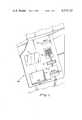
- FIG. 1is a perspective view, partially sectioned, of the customer or operator's panel which permits the operator to make a note dispensing request and to receive dispensed notes.
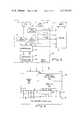
- FIG. 2is a schematic block diagram of a cash dispensing system incorporating the present invention.
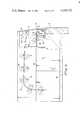
- FIG. 3is a cross-section view taken through the cash dispensing chamber associated with the panel of FIG. 1.
- FIG. 4is a schematic block diagram of the control microprocessor employed in the system to operate the cash dispenser and purge control.
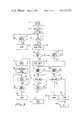
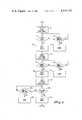
- FIG. 5is a flowchart diagram depicting control firmware stored in the microprocessor for operating the purge control of the present invention.
- FIG. 6is a flowchart diagram depicting additional firmware stored in the microprocessor for controlling the purge subroutine which is a part of the firmware depicted in FIG. 5.
- FIG. 1shows the operator panel 36a which forms the customer or operator interface for the system of the invention.
- the panelincludes a cash or note access door 40 which may be actuated by the operator by raising handle 41 to gain access to the note dispensing chamber to remove any cash or notes therein.
- An instruction screen 42e.g., the face of a cathode ray tube (CRT) is controlled by the system to display step-by-step instructions for walking the operator through each transaction.
- a 10-key keyboard 44provided on the panel 36a enables the operator to enter data which is required to request and complete the transaction.
- a slot 46is provided for presenting a transaction receipt to the customer for those transactions which require a receipt.
- a further slot 48is provided to enable the operator to insert his personal identification card into the panel, enabling a card reader located behind the panel to read the data on the card and feed it to the system in accordance with known system operation procedures.
- the operator panelalso includes a depository station 50 including a deposit slot for receiving an envelope or envelopes inserted by the operator during deposit transactions.
- the operatorinserts an identification card, which includes magnetically encoded data uniquely identifying the operator, into slot 48 of the operator's panel.
- the card readeralerts the system to the upcoming transaction and feeds the data on the card through the system to identify the operator.
- instructionsare displayed on the screen 42 and the operator responds thereto by keying in his personal identification number (PIN) via keyboard 44.
- PINpersonal identification number
- the PINis compared with the data on the identification card to validate the transaction request.
- the operatorutilizes the keyboard 44 to inform the system of the type of transaction desired, the amount involved, etc.
- the systemcauses notes to be dispensed into the dispensing chamber located behind access door 40 and, when signalled by the system, the operator opens the door and removes the cash.
- FIG. 2A general block diagram of the overall system is shown in FIG. 2. The structure and operation of the system is described in detail in U.S. Pat. No. 4,075,460 issued to Richard A. Gorgens, which is incorporated herein by reference.
- the systemcomprises a centralized computer 10 and memory unit 12 which is in communication via data lines 15 with a remote terminal 14 including a cash dispenser 36 and operator panel 36a.
- PIN data keyed into keyboard 22 by the operatoris fed to a PIN signal generator 30 to generate a signal representative of a series of numbers entered by the operator, which signal is denoted by reference character Y.
- a BIT signal generator 32is responsive to PIN signal generator 30 to generate a signal representative of the number of bits in the PIN signal generated by signal generator 30.
- the BIT signalis transferred via one of the lines 15 to the computer 10.
- a transaction data generator 24encodes transaction data entered into keyboard 22 and transmits it to the computer 10 via the lines 15.
- the magnetic card reader 20,which reads the data from the customer identification card inserted into slot 48 (FIG. 1), transmits the card data signal Z to the computer.
- the computercontrols the display device 38 to display operator instructions appropriate to the type of transaction.
- a security devicefor example, microprocessor 34, receives the Y and Z signals from the signal generator 30 and card reader 20, respectively, and in addition receives an X signal from the computer 10 and, upon appropriate validation of all three signals as described in U.S. Pat. No. 4,075,460, issues a dispense signal to cash dispenser 36. This initiates a dispensing operation for dispensing the requested notes into the dispensing chamber associated with the operator panel 36a.
- FIG. 3illustrates the note dispensing system and dispensing chamber utilized in accordance with the invention.
- the dispensing systemcomprises a feed module 52, a transporter module 54, a purge bin 56, and a dispensing chamber 58.
- the feed modulecomprises conventional elements for storing a supply of notes and means for automatically feeding a particular number of notes on command from microprocessor 34 to the feed chute 78 provided in the transporter module 54.
- a plurality of feed rolls 84are positioned along the chute 78 and function during a dispensing operation to feed a note or notes from the module 52 to the dispensing chamber 58.
- the entire dispensing apparatusis contained within a safe, the front wall of which is shown at 53.
- dispensing chamber 58is positioned behind the access door 40 and receives dispensed notes through a slot 61. Dispensed notes fall to the bottom of the chamber and are received on a platform 60 comprising a flat rectangular plate.
- the access door 40is pivotally mounted on the chamber sidewalls by means of a pair of stub shafts on either side of the door, one of which as shown as shaft 62 in FIG. 3.
- Pivot shaft 62includes a sensing arm 64 which is affixed to and rotates with the shaft. Arm 64 activates a sensing switch 66, such as a microswitch, whereupon a control signal DC is generated by the switch 66 indicating that the access door 40 is in the fully closed position as shown. Sensing arm 64 and switch 66 are located inside the area of the safe on the opposite side of the dispensing chamber wall so that they cannot be tampered with by a person outside the safe.
- a sensing switch 66such as a microswitch
- the platform 60which forms the bottom surface of the dispensing chamber, is mounted on a pivot shaft 70 so that it can be pivoted to the opened position shown in dashed lines 60a in FIG. 3.
- a control motor 68also located inside the safe area, is coupled, as by a gear train, to the shaft 70 and is operated by signals from microprocessor 34 in a manner to be described to tilt the platform 60 between the upper (closed) position shown in solid lines and the lower (open) position shown in dashed lines and back again for the purpose of purging the dispensing chamber of notes under predetermined purge conditions to be defined hereinafter.
- a note sensing device 72is provided on the underside of platform 60 and operates through an aperture 73 to sense the presence of a note on the platform.
- Sensing device 72may, for example, be a photo-optical device which reflectively senses any object covering aperture 73. To this end the sensor projects a narrow beam of light through aperture 73 upward into the chamber 58.
- a light receiving aperture positioned immediately adjacent to the projecting aperturewill collect radiation reflected from any object such as a bill or a note located immediately above it, i.e., on the platform 60.
- a photocell provided in sensor 72senses the radiation and generates the output signal NP, indicating the presence of a note.
- NPWhen no note is present, no radiation is sensed and the signal NP assumes a different, i.e., lower, level.
- An alternative sensing techniquewould be to provide a reflective surface on the top wall of the chamber which would reflect a more intense projected beam of light back to the sensing aperture when no note was present in the chamber. Thus, in this latter case, the absence of reflected light, and thus the lower level of NP, would represent the note present condition in a manner opposite to the former arrangement.
- sensing and latching module 74is affixed to the front wall of the apparatus just below the purge platform 60.
- Sensing and latching module 74includes a sensing switch (not shown) similar to switch 66 for providing an output signal PU designating that the platform 60 is in the upper or closed position as shown in solid lines.
- Module 74also includes a latching mechanism (also not shown) for locking access door 40 in the closed position and for generating an output signal DL indicating the latched condition.
- the latching mechanismmay be, for example, a solenoid actuated latch bolt or similar device which is controllable for latching and unlatching the access door in response to remote signals from microprocessor 34.
- the signal DLmay be generated by, for example, a microswitch similar to the switch 66 which is positioned to sense when the latching mechanism is in the latched condition.
- a further sensing switch 76is provided on a flange below the platform 60 and operates to generate an output signal PD when the platform 60 is in its lower or open position, as illustrated by dashed lines 60a in FIG. 3.
- a removable collection bin or tray 56is positioned as shown in FIG. 3 below the dispensing chamber 58 to receive and retain any notes which are discharged from the chamber when the platform 60 is tilted to its lower position, in accordance with the operation of the invention as hereinafter described.
- FIG. 4illustrates the interconnection between microprocessor 34 and the cash dispenser unit 36 insofar as operation of the present invention is concerned.
- the microprocessor 34includes interface sections 34a and 34b, a timing and arithmetic logic unit 34c, a control store section 34d, and a branching and sequence control section 34e.
- the microprocessormay comprise, for example, a standard 8085 microprocessor chip module as manufactured by Intel Corporation.
- the microprocessorreceives the X, Y, and Z signals from the computer 10, PIN signal generator 30, and card reader 20, respectively. If desired, these signals may be combined in a serial data stream, as in a communications link, rather than being transmitted on separate lines.
- the microprocessorgenerates an output signal DN which is transmitted to the computer 10 under certain conditions indicating that the terminal 14 requires manual intervention by a bank employee to service a condition which the system cannot automatically handle.
- microprocessor 34determines, in response to the X, Y, and Z signals, that a cash dispensing operation is to be initiated, it transmits a DIS signal to the cash dispenser unit 36, triggering the latter to begin the feeding of bank notes from the storage module 52 to the dispensing chamber 58.
- Various additional signals associated with control of the note dispensing operationare transmitted between the cash dispenser and the microprocessor via lines 90 and 92. The specific control functions associated with these signals are not pertinent to the present invention and are not described herein.
- Signals required for controlling the purge function in accordance with the present inventionare transmitted from the microprocessor to the cash dispenser via lines 94 and from the cash dispenser to the microprocessor via lines 96.
- the latter signalsinclude the door closed signal DC, the note present signal NP, the door latched signal DL, the platform up signal PU, and the platform down signal PD generated as previously described.
- the control signals generated by the microprocessor and transferred via lines 94include a lock door signal LD, an unlock door signal UD, a lower platform signal LP, and a raise platform signal RP.
- the lock door signal LDfunctions to activate the latching device in latching and sensing module 74 to latch the access door 40.
- the unlock door signal UDdeactivates the latching device to unlatch the access door.
- Lower platform signal LPenergizes motor 68 (FIG. 3) to tilt platform 60 in the counterclockwise direction until the platform down signal PD is generated.
- the raise platform signal RPenergizes drive motor 68 in the opposite direction until the platform up signal PU is generated.
- FIG. 5shows the basic routine for controlling the portion of the note dispensing operation which permits the operator to open the access door and remove the dispensed notes.
- FIG. 6represents the microinstructions employed in the purge subroutine wherein dispensed notes are discharged from the dispensing chamber 58 under specified purge conditions.
- step S1When the microprocessor determines that the dispensing operation is completed, the microprogram advances from the dispense complete step S1 (FIG. 5) to step S2. This causes the microprocessor to issue control signal UD which is supplied to the cash dispenser unit and which deactivates the latching device in sensing and latching module 74, unlatching and thus unlocking the access door 40.
- Program step S1also starts a timer 1, which is internally set up within microprocessor 34 and which may comprise, for example, a counter register in the ALU. The timing interval established by timer 1 is selected to reflect the normal time required for the various mechanical operations within the purge system to take place, i.e., the door locking and unlocking and the purge platform raising and lowering operations.
- step S3Door Unlocked?, in which the signal DL is tested to determine whether the unlocking operation has occurred.
- DLwill indicate the continued presence of the latched condition, so the program branches to step S4 where the state of timer 1 is tested. If the timer has not timed out, the program loops back to step S3.
- the programcontinues to traverse the S3-S4 loop until either DL indicates that the door is unlocked or timer 1 times out. If the latter occurs first, step S22 is entered, signalling that an unresolvable problem has been encountered and that the dispensing apparatus should be shut down. This causes the microprocessor to issue the signal DN to the computer 10, whereupon the latter provides an indication that the terminal 14 requires operator attention and all further dispensing commands are inhibited.
- step S3the program takes the Y exit from step S3 and advances to step S5 whereupon timer 1 is reset and a timer 2 is started.
- the interval set by timer 2establishes a time window during which the operator who has requested the note dispensing operation must open access door 40.
- step S6After the start of timer 2, the program advances to step S6 and thereafter branches to step S7, whereupon it loops back to S6.
- the timing loop including steps S6 and S7continues to be traversed until either the access door is opened or timer 2 times out.
- the programtakes the Y exit from branching step S6 and advances to step S8, whereupon timer 2 is reset and a timer 3 is started.
- the interval established by timer 3defines the length of time which an operator would normally take to remove the notes from the dispensing chamber, once the access door is opened.
- step S8is a branching step in which the NP control signal from the cash dispenser unit is tested.
- the programbranches through S9 to step S10, loops back to step S9 and continues to traverse the S9-S10 loop unti either the signal NP indicates that no note is present in the dispensing chamber or the timer 3 times out. If the notes are removed from platform 60 before timer 3 times out, the program advances through the N exit from branch S9 and enters branching step S11, whereupon the control signal DC is tested to determine whether access door 40 is closed.
- step S11-S12 loopis traversed until either the signal DC indicates that the access door has been closed or timer 3 times out. If the access door is closed before timer 3 times out, the program takes the N exit from step S11 and advances to step S13 in which the timer 3 is reset. Thereafter, step S14 is executed to lock access door 40 and restart timer 1. This causes the microprocessor to issue the LD control signal to the cash dispenser unit to energize the latching device in module 74 to engage the door latch and lock the door 40. The program next enters step S15 whereupon the control signals DC and DL are tested to determine if the door is actually locked. These signals must both be present to indicate that the door is locked.
- step S15The program traverses the S15-S16 loop until either the locking state is established or until timer 1 times out. If the door locks normally, the program exits step S15 through the Y branch and enters step S17, resetting timer 1. Thereafter the program proceeds to step S18, signalling the microprocessor that the dispensed notes have been removed in the normal fashion, that the access door has been locked, and that the system is in condition to perform another dispensing operation.
- step S15the program takes the Y exit from step S16 and executes Down step S23, whereupon the microprocessor issues the DN signal to computer 10, inhibiting further dispensing operations until the locking failure situation is resolved through operator intervention.
- step S7If, during the time that the program was traversing the S6-S7 timing loop, timer 2 times out before the control signal DC indicates that the access door is open, the program takes the Y exit from step S7 and executes the pruge subroutine of step S21 to discharge any notes that may be present in the dispensing chamber into the purge bin 56. Likewise, if during the time that the program is traversing the S9-S10 timing loop, timer 3 times out before the NP signal indicates that the notes have been removed from the platform 60, the program takes the Y branch out of step S10 and enters the purge routine S21 through branching step S20. The purge is executed only if the access door is closed as determined in step S20 by testing the signal DC.
- Down step S19is also executed in the event that the program exits from timing loop S11-S12 via branch Y of step S12. This occurs if the access door is not closed within the period of timer 3.
- the purge subroutine S21is depicted in the flowchart diagram of FIG. 6.
- the first step in the subroutine, P1functions to lock access door 40 and start timer 1.
- the steps P1, P2, P3, and P15operate identically to the previously described locking steps S14, S15, S16, and S23 to either confirm the locking of the access door or to cause the issuance of a DN signal from the microprocessor to inhibit further dispensing operations until the unlocked door condition is resolved by operator intervention.
- step P4the purge program advances to step P4 to reset timer 1 and thence to step P5, whereupon the microprocessor restarts timer 1 and issues the control signal LP to activate platform control motor 68.
- Thiscauses purge platform 60 to be driven counterclockwise to dump any notes thereon into the purge bin 56.
- This dump operationis monitored by the timing loop comprising steps P6-P7 such that if a note is still detected on the platform when timer 1 times out, the system executes step P13 and shuts down. If the purge is successful, the timing loop is exited through branch N of step P6 and step P8 is executed to reset timer 1.
- step P9the program advances to step P9, whereupon timer 1 is restarted and the control signal RP is issued by the microprocessor.
- Thisreverses motor 68 and drives the purge platform 60 is a clockwise direction until the signal PU is produced by the sensing module 74. If this does not occur before timer 1 times out, timing loop P10-P11 is exited via branch Y of step P11 and the system shuts down via step P14, whereupon the DN output is produced by microprocessor 34 inhibiting further operation of the dispensing system until operator intervention resolves the situation.
- step P10If platform 60 closes normally, the program takes exit Y from step P10 and executes step P12 which resets timer 1. Thereafter, the program proceeds to READY step S18 of the main program, thus signalling the completion of the purge operation and indicating that the system is in condition to handle further dispensing operations.
- the system of the inventionprovides a purge control for discharging notes which have been dispensed into an operator accessible dispensing chamber if the access door to the chamber is not operated within a set period of time following the dispensing operation. Furthermore, if the access door is opened but a dispensed note or notes are left in the chamber after a predetermined period of time following the opening of the door, the purge control system also operates to discharge the remaining notes from the chamber before further operation of the dispensing system is permitted.
- the purge controlthus prevents a situation in which notes inadvertently or erroneously left in the dispensing chamber become accessible to an unauthorized operator.
- the interlocks provided on the purge apparatusinhibit continued operation of the dispensing system if a note or other object remains in the dispensing chamber, even after the platform 60 is actuated, or if the platform fails to close properly after a purge cycle is executed.
- a purge control apparatusfor a note dispensing system including means for dispensing a note into a dispensing chamber and operator-actuatable access means for permitting an operator to gain access to the chamber to remove the note.
- the means for dispensingincludes the feed module 52, transporter module 54 (FIG. 3) and the controls therefor which may, for example, include the operator panel 36a and microprocessor 34.
- the operator-actuatable access meansis represented by the chamber access door 40 which may be opened by an operator to gain access to the dispensing chamber 58.
- the systemincorporates means for disabling the access means to prevent actuation thereof, whereby the operator is denied access to the chamber and means for discharging a note from the chamber after the access means is disabled.
- the means for disablingis represented by the latching mechanism 74 and controls therefor which lock the access door to prevent the operator from gaining access to the dispensing chamber.
- the means for dischargingis represented by the purge platform 60 and tilt motor 68, along with the controls related thereto.
- note sensing meansare provided for sensing the presence of a note in the dispensing chamber and control means responsive to the note sensing means after the operation of the discharging means are provided to produce a purge complete indication if the note sensing means does not indicate the presence of a note in the chamber.
- the note sensing meansincludes the sensing device 72 and the control means is represented by the portion of the control microprogram including those instructions which implement the program steps P6, P8, P9, P10, and P12 (FIG. 6).
- a purge control apparatusfor a note dispensing system including means for dispensing a note into a dispensing chamber, including movable platform means within the chamber for receiving a dispensed note and means for moving the platform means to discharge the note from the chamber in response to a purge signal from the system and for restoring the platform to its initial position.
- the dispensing meansis represented by the transporter module 54 (FIG. 3) and the controls associated therewith and the movable platform means is represented by the purge platform 60, while the means for moving the platform means includes the motor 68 and controls associated therewith.
- the systemincorporates sensing means for sensing the position of the platform and for providing a return indication when the platform has been restored to its initial position and means responsive to the sensing means for inhibiting further operation of the dispensing means until the return indication is provided.
- the sensing meansis represented by the sensing switch within module 74 which provides the platform up signal PU, and may additionally be represented by sensing switch 76 which provides the platform down signal PD.
- the PU signalis generated when the platform is restored to its initial (up) position.
- the means responsive to the sensing means for inhibiting further operation of the dispensing meansis represented by the portion of the control microprogram including the instructions which implement the program steps P10, P11, and P14 which operate to inhibit further operation of the dispensing means until the PU signal is generated.
Landscapes
- Business, Economics & Management (AREA)
- Accounting & Taxation (AREA)
- Finance (AREA)
- Physics & Mathematics (AREA)
- General Physics & Mathematics (AREA)
- Financial Or Insurance-Related Operations Such As Payment And Settlement (AREA)
- Control Of Vending Devices And Auxiliary Devices For Vending Devices (AREA)
- Devices For Checking Fares Or Tickets At Control Points (AREA)
Abstract
Description
This invention pertains to automatic dispensing systems for banknotes, cash, checks, stamps, tickets, and the like and more particularly, to a purge control for an automatic note dispensing system wherein dispensed notes can be automatically recovered in the event of a system or operator error.
In banking systems such as that disclosed in our copending application Ser. No. 103,655, filed Dec. 14, 1979 wherein a purge apparatus is provided for recovering dispensed notes from a dispensing chamber in the event of system or operator error, it is desirable that the purge apparatus be reliable and tamper-proof to minimize the possibility of customers receiving unauthorized amounts of cash or from obtaining entry to the system through the purge apparatus.
Accordingly, it is an object of the present invention to provide an improved purge apparatus for a cash or note dispensing system. As used herein the word "note" is intended to refer not only to bills or banknotes, but also to other negotiable type documents such as checks, airline tickets, food stamps, and the like.
A further object is to provide an improved purge control of the type described wherein interlock functions are incorporated to inhibit continued operation of the system, or otherwise declare an error condition, in the event that an improper purge is performed.
To achieve the foregoing objects and in accordance with a first aspect of the invention, a purge control apparatus is provided for a note dispensing system having means for dispensing a note into a dispensing chamber and operator-actuatable access means for permitting an operator to gain access to the chamber to remove the note, the apparatus including means for disabling the access means to prevent actuation thereof, whereby the operator is denied access to the chamber, means for discharging the note from the chamber after the access means is disabled, note sensing means for sensing the presence of a note in the chamber, and control means responsive to the note sensing means after the operation of the discharging means to provide a purge complete indication if the note sensing means does not indicate the presence of a note in the chamber.
In accordance with another aspect of the invention, a purge control apparatus is provided for a note dispensing system having means for dispensing a note into a dispensing chamber, the apparatus including movable platform means within the chamber for receiving a dispensed note, means for moving the platform to discharge the note from the chamber in response to a purge signal from the system and for restoring the platform to its initial position, sensing means for sensing the position of the platform and for providing a return indication when the platform has been restored to its initial position, and means responsive to the sensing means for inhibiting further operation of the dispensing means until the return indication is provided.
The accompanying drawings which are incorporated in and constitute a part of this specification, illustrate a preferred embodiment of the invention and together with a description serve to explain the principles of the invention.
FIG. 1 is a perspective view, partially sectioned, of the customer or operator's panel which permits the operator to make a note dispensing request and to receive dispensed notes.
FIG. 2 is a schematic block diagram of a cash dispensing system incorporating the present invention.
FIG. 3 is a cross-section view taken through the cash dispensing chamber associated with the panel of FIG. 1.
FIG. 4 is a schematic block diagram of the control microprocessor employed in the system to operate the cash dispenser and purge control.
FIG. 5 is a flowchart diagram depicting control firmware stored in the microprocessor for operating the purge control of the present invention.
FIG. 6 is a flowchart diagram depicting additional firmware stored in the microprocessor for controlling the purge subroutine which is a part of the firmware depicted in FIG. 5.
FIG. 1 shows theoperator panel 36a which forms the customer or operator interface for the system of the invention. The panel includes a cash ornote access door 40 which may be actuated by the operator by raisinghandle 41 to gain access to the note dispensing chamber to remove any cash or notes therein. Aninstruction screen 42, e.g., the face of a cathode ray tube (CRT), is controlled by the system to display step-by-step instructions for walking the operator through each transaction. A 10-key keyboard 44 provided on thepanel 36a enables the operator to enter data which is required to request and complete the transaction. Aslot 46 is provided for presenting a transaction receipt to the customer for those transactions which require a receipt. Afurther slot 48 is provided to enable the operator to insert his personal identification card into the panel, enabling a card reader located behind the panel to read the data on the card and feed it to the system in accordance with known system operation procedures. The operator panel also includes adepository station 50 including a deposit slot for receiving an envelope or envelopes inserted by the operator during deposit transactions.
In general, to operate the system, the operator inserts an identification card, which includes magnetically encoded data uniquely identifying the operator, intoslot 48 of the operator's panel. The card reader alerts the system to the upcoming transaction and feeds the data on the card through the system to identify the operator. Thereafter, instructions are displayed on thescreen 42 and the operator responds thereto by keying in his personal identification number (PIN) viakeyboard 44. The PIN is compared with the data on the identification card to validate the transaction request. Thereafter, the operator utilizes thekeyboard 44 to inform the system of the type of transaction desired, the amount involved, etc. When the transaction involves the delivery of cash, the system causes notes to be dispensed into the dispensing chamber located behindaccess door 40 and, when signalled by the system, the operator opens the door and removes the cash.
A general block diagram of the overall system is shown in FIG. 2. The structure and operation of the system is described in detail in U.S. Pat. No. 4,075,460 issued to Richard A. Gorgens, which is incorporated herein by reference. In general, the system comprises acentralized computer 10 andmemory unit 12 which is in communication viadata lines 15 with aremote terminal 14 including acash dispenser 36 andoperator panel 36a. PIN data keyed intokeyboard 22 by the operator is fed to aPIN signal generator 30 to generate a signal representative of a series of numbers entered by the operator, which signal is denoted by reference character Y.
ABIT signal generator 32 is responsive toPIN signal generator 30 to generate a signal representative of the number of bits in the PIN signal generated bysignal generator 30. The BIT signal is transferred via one of thelines 15 to thecomputer 10. Atransaction data generator 24 encodes transaction data entered intokeyboard 22 and transmits it to thecomputer 10 via thelines 15. Themagnetic card reader 20, which reads the data from the customer identification card inserted into slot 48 (FIG. 1), transmits the card data signal Z to the computer. The computer controls thedisplay device 38 to display operator instructions appropriate to the type of transaction.
A security device, for example,microprocessor 34, receives the Y and Z signals from thesignal generator 30 andcard reader 20, respectively, and in addition receives an X signal from thecomputer 10 and, upon appropriate validation of all three signals as described in U.S. Pat. No. 4,075,460, issues a dispense signal tocash dispenser 36. This initiates a dispensing operation for dispensing the requested notes into the dispensing chamber associated with theoperator panel 36a.
FIG. 3 illustrates the note dispensing system and dispensing chamber utilized in accordance with the invention. The dispensing system comprises afeed module 52, atransporter module 54, apurge bin 56, and adispensing chamber 58. The feed module comprises conventional elements for storing a supply of notes and means for automatically feeding a particular number of notes on command frommicroprocessor 34 to thefeed chute 78 provided in thetransporter module 54. A plurality offeed rolls 84 are positioned along thechute 78 and function during a dispensing operation to feed a note or notes from themodule 52 to thedispensing chamber 58. The entire dispensing apparatus is contained within a safe, the front wall of which is shown at 53.
As shown in FIG. 3,dispensing chamber 58 is positioned behind theaccess door 40 and receives dispensed notes through aslot 61. Dispensed notes fall to the bottom of the chamber and are received on a platform 60 comprising a flat rectangular plate. Theaccess door 40 is pivotally mounted on the chamber sidewalls by means of a pair of stub shafts on either side of the door, one of which as shown as shaft 62 in FIG. 3.
Pivot shaft 62 includes asensing arm 64 which is affixed to and rotates with the shaft.Arm 64 activates a sensing switch 66, such as a microswitch, whereupon a control signal DC is generated by the switch 66 indicating that theaccess door 40 is in the fully closed position as shown. Sensingarm 64 and switch 66 are located inside the area of the safe on the opposite side of the dispensing chamber wall so that they cannot be tampered with by a person outside the safe.
The platform 60, which forms the bottom surface of the dispensing chamber, is mounted on a pivot shaft 70 so that it can be pivoted to the opened position shown in dashed lines 60a in FIG. 3. Acontrol motor 68, also located inside the safe area, is coupled, as by a gear train, to the shaft 70 and is operated by signals frommicroprocessor 34 in a manner to be described to tilt the platform 60 between the upper (closed) position shown in solid lines and the lower (open) position shown in dashed lines and back again for the purpose of purging the dispensing chamber of notes under predetermined purge conditions to be defined hereinafter.
Anote sensing device 72 is provided on the underside of platform 60 and operates through an aperture 73 to sense the presence of a note on the platform.Sensing device 72 may, for example, be a photo-optical device which reflectively senses any object covering aperture 73. To this end the sensor projects a narrow beam of light through aperture 73 upward into thechamber 58. A light receiving aperture positioned immediately adjacent to the projecting aperture will collect radiation reflected from any object such as a bill or a note located immediately above it, i.e., on the platform 60. A photocell provided insensor 72 senses the radiation and generates the output signal NP, indicating the presence of a note. When no note is present, no radiation is sensed and the signal NP assumes a different, i.e., lower, level. An alternative sensing technique would be to provide a reflective surface on the top wall of the chamber which would reflect a more intense projected beam of light back to the sensing aperture when no note was present in the chamber. Thus, in this latter case, the absence of reflected light, and thus the lower level of NP, would represent the note present condition in a manner opposite to the former arrangement.
A sensing and latchingmodule 74 is affixed to the front wall of the apparatus just below the purge platform 60. Sensing and latchingmodule 74 includes a sensing switch (not shown) similar to switch 66 for providing an output signal PU designating that the platform 60 is in the upper or closed position as shown in solid lines.Module 74 also includes a latching mechanism (also not shown) for lockingaccess door 40 in the closed position and for generating an output signal DL indicating the latched condition. The latching mechanism may be, for example, a solenoid actuated latch bolt or similar device which is controllable for latching and unlatching the access door in response to remote signals frommicroprocessor 34. The signal DL may be generated by, for example, a microswitch similar to the switch 66 which is positioned to sense when the latching mechanism is in the latched condition. A further sensing switch 76 is provided on a flange below the platform 60 and operates to generate an output signal PD when the platform 60 is in its lower or open position, as illustrated by dashed lines 60a in FIG. 3.
A removable collection bin ortray 56 is positioned as shown in FIG. 3 below the dispensingchamber 58 to receive and retain any notes which are discharged from the chamber when the platform 60 is tilted to its lower position, in accordance with the operation of the invention as hereinafter described.
FIG. 4 illustrates the interconnection betweenmicroprocessor 34 and thecash dispenser unit 36 insofar as operation of the present invention is concerned. Themicroprocessor 34 includesinterface sections arithmetic logic unit 34c, acontrol store section 34d, and a branching andsequence control section 34e. The microprocessor may comprise, for example, a standard 8085 microprocessor chip module as manufactured by Intel Corporation. The microprocessor receives the X, Y, and Z signals from thecomputer 10,PIN signal generator 30, andcard reader 20, respectively. If desired, these signals may be combined in a serial data stream, as in a communications link, rather than being transmitted on separate lines. The microprocessor generates an output signal DN which is transmitted to thecomputer 10 under certain conditions indicating that the terminal 14 requires manual intervention by a bank employee to service a condition which the system cannot automatically handle.
Whenmicroprocessor 34 determines, in response to the X, Y, and Z signals, that a cash dispensing operation is to be initiated, it transmits a DIS signal to thecash dispenser unit 36, triggering the latter to begin the feeding of bank notes from thestorage module 52 to the dispensingchamber 58. Various additional signals associated with control of the note dispensing operation are transmitted between the cash dispenser and the microprocessor vialines
Signals required for controlling the purge function in accordance with the present invention are transmitted from the microprocessor to the cash dispenser vialines 94 and from the cash dispenser to the microprocessor vialines 96. The latter signals include the door closed signal DC, the note present signal NP, the door latched signal DL, the platform up signal PU, and the platform down signal PD generated as previously described. The control signals generated by the microprocessor and transferred vialines 94 include a lock door signal LD, an unlock door signal UD, a lower platform signal LP, and a raise platform signal RP.
The lock door signal LD functions to activate the latching device in latching andsensing module 74 to latch theaccess door 40. The unlock door signal UD deactivates the latching device to unlatch the access door. Lower platform signal LP energizes motor 68 (FIG. 3) to tilt platform 60 in the counterclockwise direction until the platform down signal PD is generated. The raise platform signal RP energizes drivemotor 68 in the opposite direction until the platform up signal PU is generated.
Control of the system for effecting a purge operation is exercised by microinstructions stored incontrol store section 34d of the microprocessor. The microinstructions are represented by the flowchart diagrams of FIGS. 5 and 6. FIG. 5 shows the basic routine for controlling the portion of the note dispensing operation which permits the operator to open the access door and remove the dispensed notes. FIG. 6 represents the microinstructions employed in the purge subroutine wherein dispensed notes are discharged from the dispensingchamber 58 under specified purge conditions.
Referring to FIGS. 3, 5, and 6, operation of the automatic dispensing and purge control system of the invention is hereinafter described.
It can be assumed that during the first portion of the dispensing operation when notes are being fed through dispensingchute 78 into thechamber 58, the platform 60 is in its up position, andaccess door 40 is closed and latched (locked). Thus, the signals DC, DL, and PU will be supplied to the microprocessor from the cash dispenser unit. Since it is also assumed that notes have actually been delivered into the dispensing chamber, the note present signal NP will also be generated at this time.
When the microprocessor determines that the dispensing operation is completed, the microprogram advances from the dispense complete step S1 (FIG. 5) to step S2. This causes the microprocessor to issue control signal UD which is supplied to the cash dispenser unit and which deactivates the latching device in sensing and latchingmodule 74, unlatching and thus unlocking theaccess door 40. Program step S1 also starts atimer 1, which is internally set up withinmicroprocessor 34 and which may comprise, for example, a counter register in the ALU. The timing interval established bytimer 1 is selected to reflect the normal time required for the various mechanical operations within the purge system to take place, i.e., the door locking and unlocking and the purge platform raising and lowering operations.
The program thereafter advances to step S3, Door Unlocked?, in which the signal DL is tested to determine whether the unlocking operation has occurred. Initially, DL will indicate the continued presence of the latched condition, so the program branches to step S4 where the state oftimer 1 is tested. If the timer has not timed out, the program loops back to step S3. The program continues to traverse the S3-S4 loop until either DL indicates that the door is unlocked ortimer 1 times out. If the latter occurs first, step S22 is entered, signalling that an unresolvable problem has been encountered and that the dispensing apparatus should be shut down. This causes the microprocessor to issue the signal DN to thecomputer 10, whereupon the latter provides an indication that the terminal 14 requires operator attention and all further dispensing commands are inhibited.
However, if in step S3 the signal DL indicates that theaccess door 40 is unlatched normally, the program takes the Y exit from step S3 and advances to step S5 whereupontimer 1 is reset and atimer 2 is started. The interval set bytimer 2 establishes a time window during which the operator who has requested the note dispensing operation must openaccess door 40.
After the start oftimer 2, the program advances to step S6 and thereafter branches to step S7, whereupon it loops back to S6. The timing loop including steps S6 and S7 continues to be traversed until either the access door is opened ortimer 2 times out. In the case where the access door is opened before the timer times out, the program takes the Y exit from branching step S6 and advances to step S8, whereupontimer 2 is reset and atimer 3 is started. The interval established bytimer 3 defines the length of time which an operator would normally take to remove the notes from the dispensing chamber, once the access door is opened.
The program advances immediately from step S8 to S9, which is a branching step in which the NP control signal from the cash dispenser unit is tested. The program branches through S9 to step S10, loops back to step S9 and continues to traverse the S9-S10 loop unti either the signal NP indicates that no note is present in the dispensing chamber or thetimer 3 times out. If the notes are removed from platform 60 beforetimer 3 times out, the program advances through the N exit from branch S9 and enters branching step S11, whereupon the control signal DC is tested to determine whetheraccess door 40 is closed.
The S11-S12 loop is traversed until either the signal DC indicates that the access door has been closed ortimer 3 times out. If the access door is closed beforetimer 3 times out, the program takes the N exit from step S11 and advances to step S13 in which thetimer 3 is reset. Thereafter, step S14 is executed to lockaccess door 40 and restarttimer 1. This causes the microprocessor to issue the LD control signal to the cash dispenser unit to energize the latching device inmodule 74 to engage the door latch and lock thedoor 40. The program next enters step S15 whereupon the control signals DC and DL are tested to determine if the door is actually locked. These signals must both be present to indicate that the door is locked. The program traverses the S15-S16 loop until either the locking state is established or untiltimer 1 times out. If the door locks normally, the program exits step S15 through the Y branch and enters step S17, resettingtimer 1. Thereafter the program proceeds to step S18, signalling the microprocessor that the dispensed notes have been removed in the normal fashion, that the access door has been locked, and that the system is in condition to perform another dispensing operation.
If in step S15 the signal DC continues to indicate that the door is not closed or the signal DL continues to indicate that the latch is not engaged prior to thetime timer 1 times out, the program takes the Y exit from step S16 and executes Down step S23, whereupon the microprocessor issues the DN signal tocomputer 10, inhibiting further dispensing operations until the locking failure situation is resolved through operator intervention.
If, during the time that the program was traversing the S6-S7 timing loop,timer 2 times out before the control signal DC indicates that the access door is open, the program takes the Y exit from step S7 and executes the pruge subroutine of step S21 to discharge any notes that may be present in the dispensing chamber into thepurge bin 56. Likewise, if during the time that the program is traversing the S9-S10 timing loop,timer 3 times out before the NP signal indicates that the notes have been removed from the platform 60, the program takes the Y branch out of step S10 and enters the purge routine S21 through branching step S20. The purge is executed only if the access door is closed as determined in step S20 by testing the signal DC.
If the door is not closed, the program branches to Down step S19 and the dispensing system is shut down to await operator intervention. Down step S19 is also executed in the event that the program exits from timing loop S11-S12 via branch Y of step S12. This occurs if the access door is not closed within the period oftimer 3.
The purge subroutine S21 is depicted in the flowchart diagram of FIG. 6. The first step in the subroutine, P1, functions to lockaccess door 40 and starttimer 1. The steps P1, P2, P3, and P15 operate identically to the previously described locking steps S14, S15, S16, and S23 to either confirm the locking of the access door or to cause the issuance of a DN signal from the microprocessor to inhibit further dispensing operations until the unlocked door condition is resolved by operator intervention.
After the access door is locked, the purge program advances to step P4 to resettimer 1 and thence to step P5, whereupon the microprocessor restartstimer 1 and issues the control signal LP to activateplatform control motor 68. This causes purge platform 60 to be driven counterclockwise to dump any notes thereon into thepurge bin 56. This dump operation is monitored by the timing loop comprising steps P6-P7 such that if a note is still detected on the platform whentimer 1 times out, the system executes step P13 and shuts down. If the purge is successful, the timing loop is exited through branch N of step P6 and step P8 is executed to resettimer 1.
Thereafter, the program advances to step P9, whereupontimer 1 is restarted and the control signal RP is issued by the microprocessor. This reversesmotor 68 and drives the purge platform 60 is a clockwise direction until the signal PU is produced by thesensing module 74. If this does not occur beforetimer 1 times out, timing loop P10-P11 is exited via branch Y of step P11 and the system shuts down via step P14, whereupon the DN output is produced bymicroprocessor 34 inhibiting further operation of the dispensing system until operator intervention resolves the situation.
If platform 60 closes normally, the program takes exit Y from step P10 and executes step P12 which resetstimer 1. Thereafter, the program proceeds to READY step S18 of the main program, thus signalling the completion of the purge operation and indicating that the system is in condition to handle further dispensing operations.
Thus, reviewing the above operations, it is seen that the system of the invention provides a purge control for discharging notes which have been dispensed into an operator accessible dispensing chamber if the access door to the chamber is not operated within a set period of time following the dispensing operation. Furthermore, if the access door is opened but a dispensed note or notes are left in the chamber after a predetermined period of time following the opening of the door, the purge control system also operates to discharge the remaining notes from the chamber before further operation of the dispensing system is permitted.
The purge control thus prevents a situation in which notes inadvertently or erroneously left in the dispensing chamber become accessible to an unauthorized operator.
Furthermore, the interlocks provided on the purge apparatus inhibit continued operation of the dispensing system if a note or other object remains in the dispensing chamber, even after the platform 60 is actuated, or if the platform fails to close properly after a purge cycle is executed.
Thus, in summary, it is seen that in accordance with the invention described herein, a purge control apparatus is provided for a note dispensing system including means for dispensing a note into a dispensing chamber and operator-actuatable access means for permitting an operator to gain access to the chamber to remove the note. As illustrated in the examplary embodiment hereinabove described, the means for dispensing includes thefeed module 52, transporter module 54 (FIG. 3) and the controls therefor which may, for example, include theoperator panel 36a andmicroprocessor 34. The operator-actuatable access means is represented by thechamber access door 40 which may be opened by an operator to gain access to the dispensingchamber 58.
Further in accordance with the invention the system incorporates means for disabling the access means to prevent actuation thereof, whereby the operator is denied access to the chamber and means for discharging a note from the chamber after the access means is disabled. As illustrated in the exemplary embodiment hereinabove described, the means for disabling is represented by thelatching mechanism 74 and controls therefor which lock the access door to prevent the operator from gaining access to the dispensing chamber. The means for discharging is represented by the purge platform 60 andtilt motor 68, along with the controls related thereto.
Further in accordance with the invention, as hereinabove described, note sensing means are provided for sensing the presence of a note in the dispensing chamber and control means responsive to the note sensing means after the operation of the discharging means are provided to produce a purge complete indication if the note sensing means does not indicate the presence of a note in the chamber.
As illustrated in the exemplary embodiment hereinabove described, the note sensing means includes thesensing device 72 and the control means is represented by the portion of the control microprogram including those instructions which implement the program steps P6, P8, P9, P10, and P12 (FIG. 6).
Furthermore, in accordance with another aspect of the invention described herein, a purge control apparatus is provided for a note dispensing system including means for dispensing a note into a dispensing chamber, including movable platform means within the chamber for receiving a dispensed note and means for moving the platform means to discharge the note from the chamber in response to a purge signal from the system and for restoring the platform to its initial position.
As illustrated in the exemplary embodiment hereinabove described, the dispensing means is represented by the transporter module 54 (FIG. 3) and the controls associated therewith and the movable platform means is represented by the purge platform 60, while the means for moving the platform means includes themotor 68 and controls associated therewith.
Further in accordance with this aspect of the invention the system incorporates sensing means for sensing the position of the platform and for providing a return indication when the platform has been restored to its initial position and means responsive to the sensing means for inhibiting further operation of the dispensing means until the return indication is provided. As illustrated in the above-described exemplary embodiment, the sensing means is represented by the sensing switch withinmodule 74 which provides the platform up signal PU, and may additionally be represented by sensing switch 76 which provides the platform down signal PD. The PU signal is generated when the platform is restored to its initial (up) position.
The means responsive to the sensing means for inhibiting further operation of the dispensing means is represented by the portion of the control microprogram including the instructions which implement the program steps P10, P11, and P14 which operate to inhibit further operation of the dispensing means until the PU signal is generated.
If will be apparent to those skilled in the art that various modification and variations could be made to the embodiment of the invention as hereinabove described without departing from the spirit and scope of the invention.
Claims (12)
1. A note dispensing system comprising, in combination:
an operator panel including means for allowing an operator to request a note dispensing operation;
a dispensing chamber adjacent to said panel having an access door by which said operator can gain access to said chamber;
means for dispensing at least one note into said chamber in response to a dispensing operation request;
a tiltable plate positioned to receive said note when it is dispensed into said chamber;
security means including means for locking said access door prior to a discharging of said note from said chamber and during a note dispensing operation, and means for unlocking said door upon completion of said operation to permit said operator to open said door to remove said note;
timing means responsive to a lock control signal received from said security means for indicating the occurrence of a set period of time following the unlocking of said door by said security means;
means for tilting said plate to allow gravity to discharge said note from said chamber if said door is not opened within said set period of time; and
means for restoring said plate to its original non-tilted position and for providing an output signal indicative thereof to condition said system for further operation of said dispensing means.
2. Purge control apparatus for a note dispensing system including means for dispensing a note into a dispensing chamber, comprising:
movable platform means within said chamber for receiving a dispensed note;
means for moving said platform means to discharge said note from said chamber in response to a purge signal from said system and for restoring said platform to its initial position;
sensing means for sensing the position of said platform and for providing a return indication when said platform has been restored to its initial position; and
means responsive to said sensing means for inhibiting further operation of said dispensing means until said return indication is provided.
3. The apparatus set forth in claim 2 wherein said movable platform comprises a tiltable plate and said means for moving comprises means for tilting said plate to allow gravity to discharge said note from said chamber.
4. The apparatus set forth in claim 3 further comprising:
return means included in said tilting means for returning said plate to its original position after it has been tilted;
timing means for generating a timeout signal if said sensing means fails to produce said return indication within a predetermined period of time following the actuation of said return means; and
means responsive to said timeout signal for disabling further operation of said dispensing means.
5. A note dispensing system including means for feeding a note into a dispensing chamber in response to a note dispensing request and operator actuatable access means for permitting an operator to gain access to said chamber to remove said note, and means for purging a dispensed note from said chamber in response to a purge condition comprising, in combination:
means responsive to said purging means for disabling said access means to prevent actuation thereof, whereby said operator is denied access to said chamber;
means for reactivating said feeding means after said access means is disabled to dispense any note still present in said feeding means;
a movable platform within said chamber for receiving a dispensed note;
discharging means responsive to said purging means and operable after said reactivation operation for tilting said plate to allow gravity to discharge said note from said chamber;
position sensing means for sensing the position of said platform and for providing an indication that said platform is in a non-tilted position; and
means for inhibiting operation of said means for reactivating said feeding means until said indication is provided, whereby operation of said discharging means is prevented unless said plate is in a non-tilted position.
6. The note dispensing system set forth in claim 5 further comprising means for disabling further operation of said note dispensing system in response to continued absence of said indication that said plate is in a non-tilted position.
7. A note dispensing system including means for dispensing a note into a dispensing chamber and operator-actuatable access means for permitting an operator to gain access to said chamber to remove said note, means for purging a dispensed note from said chamber in response to a purge condition comprising, in combination:
means for disabling said access means to prevent actuation thereof, whereby said operator is denied access to said chamber;
means for discharging said note from said chamber after said access means is disabled;
note sensing means for sensing the presence of a note in said chamber; and
control means responsive to said note sensing means after the operation of said discharging means for issuing a purge complete indication if said note sensing means does not indicate the presence of a note in said chamber and reactivating said discharging means if said note sensing means does indicate the presence of a note in said chamber.
8. The note dispensing system set forth in claim 7 further comprising means for inhibiting further operation of said note dispensing system if said note sensing means continues to indicate the presence of a note in said chamber after said discharging means is reactivated by said control means.
9. The note dispensing system set forth in claim 7 wherein said discharging means comprises:
a movable platform within said chamber for receiving a dispensed note; and
means for moving said platform to discharge said note from said chamber.
10. The note dispensing system set forth in claim 9 wherein said movable platform comprises a tiltable plate and said means for moving comprises means for tilting said plate to allow gravity to discharge said note from said chamber.
11. The note dispensing system set forth in claim 10 wherein said means for tilting said plate includes return means for returning said plate to its original position and wherein said system further comprises:
position sensing means for sensing the position of said plate and for providing a return indication when said plate has been returned to its original position; and
means responsive to said position sensing means for inhibiting operation of said control means until said return indication is provided, whereby said purge complete indication is provided only if said plate is returned to its original position.
12. The note dispensing system set forth in claim 11 wherein said means responsive to said position sensing means further includes:
means responsive to the absence of said return indication for reactivating said return means; and
means responsive to the continued presence of said return indication after said reactivation of said return means for disabling further operation of said dispensing means.
Priority Applications (7)
| Application Number | Priority Date | Filing Date | Title |
|---|---|---|---|
| US06/103,688US4319132A (en) | 1979-12-14 | 1979-12-14 | Purge control for automatic note dispenser |
| CA000363942ACA1156985A (en) | 1979-12-14 | 1980-11-04 | Purge control for automatic note dispenser |
| AU64241/80AAU6424180A (en) | 1979-12-14 | 1980-11-13 | Engaging containers to endless chains |
| AU64341/80AAU534346B2 (en) | 1979-12-14 | 1980-11-13 | Automatic note dispenser |
| DE19803046276DE3046276A1 (en) | 1979-12-14 | 1980-12-09 | Automatic dispenser for e.g. cash, cheques - has tiltable platform positioned within chamber forming purge device associated with microprocessor |
| FR8026452AFR2471941A1 (en) | 1979-12-14 | 1980-12-12 | AUTOMATIC TICKET DISTRIBUTOR WITH RECOVERY CONTROL |
| JP55177079AJPS5854425B2 (en) | 1979-12-14 | 1980-12-15 | Automatic banknote dispensing system equipped with purge control device |
Applications Claiming Priority (1)
| Application Number | Priority Date | Filing Date | Title |
|---|---|---|---|
| US06/103,688US4319132A (en) | 1979-12-14 | 1979-12-14 | Purge control for automatic note dispenser |
Publications (1)
| Publication Number | Publication Date |
|---|---|
| US4319132Atrue US4319132A (en) | 1982-03-09 |
Family
ID=22296531
Family Applications (1)
| Application Number | Title | Priority Date | Filing Date |
|---|---|---|---|
| US06/103,688Expired - LifetimeUS4319132A (en) | 1979-12-14 | 1979-12-14 | Purge control for automatic note dispenser |
Country Status (5)
| Country | Link |
|---|---|
| US (1) | US4319132A (en) |
| JP (1) | JPS5854425B2 (en) |
| AU (1) | AU534346B2 (en) |
| CA (1) | CA1156985A (en) |
| FR (1) | FR2471941A1 (en) |
Cited By (14)
| Publication number | Priority date | Publication date | Assignee | Title |
|---|---|---|---|---|
| US4381445A (en)* | 1980-02-19 | 1983-04-26 | De La Rue Systems Limited | Cash dispenser with reject dump means |
| WO1983003317A1 (en)* | 1982-03-19 | 1983-09-29 | Leif Lundblad | A wall-mounted apparatus for dispensing and/or depositing valuable papers |
| US4423826A (en) | 1981-02-02 | 1984-01-03 | Laurel Bank Machine Company | Note supply container with reject receiver for bank note dispenser |
| US4721229A (en)* | 1985-01-25 | 1988-01-26 | Siemens Aktiengesellschaft | Output stacker for a document processing facility |
| US4784289A (en)* | 1985-11-13 | 1988-11-15 | Tokyo Electric Co., Ltd. | Ticket issuing device for a ticket machine |
| WO1999027488A1 (en)* | 1997-11-25 | 1999-06-03 | Currency Systems International | Commercial currency destruction |
| US5921686A (en)* | 1997-01-16 | 1999-07-13 | Telpar, Inc. | Kiosk printer |
| US20090162184A1 (en)* | 2007-12-20 | 2009-06-25 | Duncan Philip A | Reducing transaction time in a self-service terminal |
| US20110293347A1 (en)* | 2010-05-31 | 2011-12-01 | Toshiba Tec Kabushiki Kaisha | Paper discharge apparatus, paper discharge method, image forming apparatus and image forming method |
| US20120010061A1 (en)* | 2010-07-12 | 2012-01-12 | Toshiba Tec Kabushiki Kaisha | Paper discharge apparatus, paper discharge method, image forming apparatus and image forming method |
| US20140148335A1 (en)* | 2012-11-26 | 2014-05-29 | Seiko Epson Corporation | Ticket production device and ticket production method |
| US20150076973A1 (en)* | 2013-09-19 | 2015-03-19 | Donald A. PIERSON | Furniture for and method of dispensing diapers |
| US9446610B2 (en) | 2013-06-27 | 2016-09-20 | Seiko Epson Corporation | Printing device and method with cutter actuated by displacement of media |
| US9498982B2 (en) | 2013-06-27 | 2016-11-22 | Seiko Epson Corporation | Printing device and method with cutter actuated by displacement of media |
Families Citing this family (1)
| Publication number | Priority date | Publication date | Assignee | Title |
|---|---|---|---|---|
| JPS6237395U (en)* | 1985-08-24 | 1987-03-05 |
Citations (10)
| Publication number | Priority date | Publication date | Assignee | Title |
|---|---|---|---|---|
| US3611293A (en)* | 1968-08-30 | 1971-10-05 | Smiths Industries Ltd | Access-control equipment and item-dispensing systems including such equipment |
| US3675816A (en)* | 1970-06-18 | 1972-07-11 | Digital Security Systems | Currency dispensing apparatus |
| US3685690A (en)* | 1970-07-28 | 1972-08-22 | Docutel Corp | Credit card automatic currency dispenser |
| US3778595A (en)* | 1970-10-17 | 1973-12-11 | Kokuei Kikai Seisakusho Kk | Automatic teller system |
| US3934693A (en)* | 1973-08-16 | 1976-01-27 | Omron Tateisi Electronics Co. | Automatic banking deposit receiving and handling machine |
| US3937925A (en)* | 1974-06-25 | 1976-02-10 | Ibm Corporation | Modular transaction terminal with microprocessor control |
| US3982103A (en)* | 1973-10-12 | 1976-09-21 | Telecredit, Inc. | Credit verification system |
| US4066253A (en)* | 1975-12-02 | 1978-01-03 | Inter Innovation Ab | Apparatus for dispensing banknotes, tickets or the like |
| US4075460A (en)* | 1975-11-28 | 1978-02-21 | Incoterm Corporation | Cash dispensing system |
| US4134537A (en)* | 1977-04-25 | 1979-01-16 | Transaction Technology, Inc. | Transaction terminal |
Family Cites Families (5)
| Publication number | Priority date | Publication date | Assignee | Title |
|---|---|---|---|---|
| GB1295400A (en)* | 1970-05-27 | 1972-11-08 | ||
| JPS49110400A (en)* | 1973-02-19 | 1974-10-21 | ||
| US3880320A (en)* | 1974-02-25 | 1975-04-29 | Diebold Inc | Rotary cash drawer mechanism for currency dispenser |
| US3957173A (en)* | 1974-06-26 | 1976-05-18 | Ncr Corporation | User access compartment for an automated teller machine |
| SE7711413L (en)* | 1977-10-11 | 1979-04-12 | Lundblad Leif | DEVICE FOR DISTRIBUTING BLADES FROM A STORAGE OF BLADES TO AN OUTLET |
- 1979
- 1979-12-14USUS06/103,688patent/US4319132A/ennot_activeExpired - Lifetime
- 1980
- 1980-11-04CACA000363942Apatent/CA1156985A/ennot_activeExpired
- 1980-11-13AUAU64341/80Apatent/AU534346B2/ennot_activeCeased
- 1980-12-12FRFR8026452Apatent/FR2471941A1/ennot_activeWithdrawn
- 1980-12-15JPJP55177079Apatent/JPS5854425B2/ennot_activeExpired
Patent Citations (10)
| Publication number | Priority date | Publication date | Assignee | Title |
|---|---|---|---|---|
| US3611293A (en)* | 1968-08-30 | 1971-10-05 | Smiths Industries Ltd | Access-control equipment and item-dispensing systems including such equipment |
| US3675816A (en)* | 1970-06-18 | 1972-07-11 | Digital Security Systems | Currency dispensing apparatus |
| US3685690A (en)* | 1970-07-28 | 1972-08-22 | Docutel Corp | Credit card automatic currency dispenser |
| US3778595A (en)* | 1970-10-17 | 1973-12-11 | Kokuei Kikai Seisakusho Kk | Automatic teller system |
| US3934693A (en)* | 1973-08-16 | 1976-01-27 | Omron Tateisi Electronics Co. | Automatic banking deposit receiving and handling machine |
| US3982103A (en)* | 1973-10-12 | 1976-09-21 | Telecredit, Inc. | Credit verification system |
| US3937925A (en)* | 1974-06-25 | 1976-02-10 | Ibm Corporation | Modular transaction terminal with microprocessor control |
| US4075460A (en)* | 1975-11-28 | 1978-02-21 | Incoterm Corporation | Cash dispensing system |
| US4066253A (en)* | 1975-12-02 | 1978-01-03 | Inter Innovation Ab | Apparatus for dispensing banknotes, tickets or the like |
| US4134537A (en)* | 1977-04-25 | 1979-01-16 | Transaction Technology, Inc. | Transaction terminal |
Cited By (17)
| Publication number | Priority date | Publication date | Assignee | Title |
|---|---|---|---|---|
| US4381445A (en)* | 1980-02-19 | 1983-04-26 | De La Rue Systems Limited | Cash dispenser with reject dump means |
| US4423826A (en) | 1981-02-02 | 1984-01-03 | Laurel Bank Machine Company | Note supply container with reject receiver for bank note dispenser |
| WO1983003317A1 (en)* | 1982-03-19 | 1983-09-29 | Leif Lundblad | A wall-mounted apparatus for dispensing and/or depositing valuable papers |
| US4721229A (en)* | 1985-01-25 | 1988-01-26 | Siemens Aktiengesellschaft | Output stacker for a document processing facility |
| US4784289A (en)* | 1985-11-13 | 1988-11-15 | Tokyo Electric Co., Ltd. | Ticket issuing device for a ticket machine |
| US5921686A (en)* | 1997-01-16 | 1999-07-13 | Telpar, Inc. | Kiosk printer |
| WO1999027488A1 (en)* | 1997-11-25 | 1999-06-03 | Currency Systems International | Commercial currency destruction |
| US8360309B2 (en)* | 2007-12-20 | 2013-01-29 | Ncr Corporation | Reducing transaction time in a self-service terminal |
| US20090162184A1 (en)* | 2007-12-20 | 2009-06-25 | Duncan Philip A | Reducing transaction time in a self-service terminal |
| US20110293347A1 (en)* | 2010-05-31 | 2011-12-01 | Toshiba Tec Kabushiki Kaisha | Paper discharge apparatus, paper discharge method, image forming apparatus and image forming method |
| US20120010061A1 (en)* | 2010-07-12 | 2012-01-12 | Toshiba Tec Kabushiki Kaisha | Paper discharge apparatus, paper discharge method, image forming apparatus and image forming method |
| US8721207B2 (en)* | 2010-07-12 | 2014-05-13 | Toshiba Tec Kabushiki Kaisha | Paper discharge apparatus, paper discharge method, image forming apparatus and image forming method |
| US20140148335A1 (en)* | 2012-11-26 | 2014-05-29 | Seiko Epson Corporation | Ticket production device and ticket production method |
| US9746875B2 (en)* | 2012-11-26 | 2017-08-29 | Seiko Epson Corporation | Ticket production device and ticket production method |
| US9446610B2 (en) | 2013-06-27 | 2016-09-20 | Seiko Epson Corporation | Printing device and method with cutter actuated by displacement of media |
| US9498982B2 (en) | 2013-06-27 | 2016-11-22 | Seiko Epson Corporation | Printing device and method with cutter actuated by displacement of media |
| US20150076973A1 (en)* | 2013-09-19 | 2015-03-19 | Donald A. PIERSON | Furniture for and method of dispensing diapers |
Also Published As
| Publication number | Publication date |
|---|---|
| AU534346B2 (en) | 1984-01-19 |
| CA1156985A (en) | 1983-11-15 |
| JPS5854425B2 (en) | 1983-12-05 |
| JPS5694467A (en) | 1981-07-30 |
| FR2471941A1 (en) | 1981-06-26 |
Similar Documents
| Publication | Publication Date | Title |
|---|---|---|
| US4340150A (en) | Automatic note dispenser with purge control | |
| US4319132A (en) | Purge control for automatic note dispenser | |
| EP0718810B1 (en) | Cash handling apparatus | |
| US6067530A (en) | Cash management system | |
| EP0157510B1 (en) | Autoteller exchangeable banknote cassette system | |
| US5883371A (en) | Digital deposit and dispensing safe | |
| US5725081A (en) | Digital deposit and dispensing safe | |
| US7766146B2 (en) | Currency receiving/dispensing machine | |
| JPH0252318B2 (en) | ||
| US4655391A (en) | Container having tamper-indicating means | |
| GB2062589A (en) | Cash deposit system | |
| CA1157828A (en) | Automatic note dispenser with purge control | |
| GB2065079A (en) | Note dispensing system | |
| JP2929652B2 (en) | Banknote handling equipment | |
| JP2918317B2 (en) | Automatic teller machine | |
| DE3046276C2 (en) | ||
| JP2013142970A (en) | Coin processing device and money handling device | |
| EP4345780A1 (en) | Valuable medium processing apparatus and processing method | |
| JP2006127249A (en) | Rental locker system | |
| JPH04327666A (en) | Card key device | |
| JPH10261140A (en) | Automatic trading system equipment | |
| JPH056709B2 (en) | ||
| JPH07152841A (en) | Transaction equipment automatic check method | |
| KR20070100276A (en) | Currency deposit and withdrawal device |
Legal Events
| Date | Code | Title | Description |
|---|---|---|---|
| STCF | Information on status: patent grant | Free format text:PATENTED CASE |