US4307288A - Sterilizer - Google Patents
SterilizerDownload PDFInfo
- Publication number
- US4307288A US4307288AUS05/762,176US76217677AUS4307288AUS 4307288 AUS4307288 AUS 4307288AUS 76217677 AUS76217677 AUS 76217677AUS 4307288 AUS4307288 AUS 4307288A
- Authority
- US
- United States
- Prior art keywords
- heating means
- heating
- volume
- predetermined temperature
- block
- Prior art date
- Legal status (The legal status is an assumption and is not a legal conclusion. Google has not performed a legal analysis and makes no representation as to the accuracy of the status listed.)
- Expired - Lifetime
Links
Images
Classifications
- A—HUMAN NECESSITIES
- A61—MEDICAL OR VETERINARY SCIENCE; HYGIENE
- A61L—METHODS OR APPARATUS FOR STERILISING MATERIALS OR OBJECTS IN GENERAL; DISINFECTION, STERILISATION OR DEODORISATION OF AIR; CHEMICAL ASPECTS OF BANDAGES, DRESSINGS, ABSORBENT PADS OR SURGICAL ARTICLES; MATERIALS FOR BANDAGES, DRESSINGS, ABSORBENT PADS OR SURGICAL ARTICLES
- A61L12/00—Methods or apparatus for disinfecting or sterilising contact lenses; Accessories therefor
- A61L12/02—Methods or apparatus for disinfecting or sterilising contact lenses; Accessories therefor using physical phenomena, e.g. electricity, ultrasonics or ultrafiltration
- A61L12/04—Heat
- A—HUMAN NECESSITIES
- A61—MEDICAL OR VETERINARY SCIENCE; HYGIENE
- A61L—METHODS OR APPARATUS FOR STERILISING MATERIALS OR OBJECTS IN GENERAL; DISINFECTION, STERILISATION OR DEODORISATION OF AIR; CHEMICAL ASPECTS OF BANDAGES, DRESSINGS, ABSORBENT PADS OR SURGICAL ARTICLES; MATERIALS FOR BANDAGES, DRESSINGS, ABSORBENT PADS OR SURGICAL ARTICLES
- A61L2/00—Methods or apparatus for disinfecting or sterilising materials or objects other than foodstuffs or contact lenses; Accessories therefor
- A61L2/02—Methods or apparatus for disinfecting or sterilising materials or objects other than foodstuffs or contact lenses; Accessories therefor using physical phenomena
- A61L2/04—Heat
Definitions
- the present inventionrelates to sterilizer devices. Specifically, it is directed to a simple, inexpensive and reliable electrically heated sterilizer for purposes of sterilizing contact lenses and the like.
- Sterilizingis a rather standard industrial and commercial practice employed for purposes of aseptizing various kinds of articles and instruments. Particularly, referring to the field of ophthalmology, it is conventional to sterilize contact lenses, such as of the hydrophilic kind. Heretofore, there have been various types of apparatuses proposed for accomplishing the foregoing.
- Still another heretofore known type of sterilizing apparatuswhich is especially suitable for sterilizing sealed vials that may contain contact lenses is basically set forth in U.S. Pat. No. 3,801,278. As essentially described, such apparatus includes two separated compartments, each having an electrically heated block made of heat conducting material. A single timer mechanism is associated with both heating blocks for purposes of controlling electric power thereto. By this particular arrangement, temperatures of up to 124° C. may be obtained. It is, of course, appreciated that such apparatus overcomes certain of the disadvantages of various prior art sterilizing apparatuses which rely on heated water baths, or steam and vapor. While the foregoing apparatus is somewhat of an improvement over known sterilizers, particularly those for contact lenses and the like, it is not, however, altogether entirely satisfactory.
- a sterilizerparticularly adapted for use in sterilizing articles removably received therein.
- Such sterilizerincludes first thermal insulating means with a receiving cavity formed therein; cover means including a second thermal insulating means and being movable with respect to the first means for selectively covering the cavity; heating means received within the cavity and defining recess means for removably receiving therein an article to be sterilized, the heating means has a preselected volume for relatively slowly dissipating heat; and power control means for selectively applying electrical power to the heating means for heating the heating means, and for automatically cutting off the electrical power to the heating means in response to a first predetermined temperature being reached by the heating means.
- the combination of the heating means and the first and second thermal insulating meansresults in a relatively slow rate of heat loss from the heating means for enabling the temperature of the heating means not to fall below a second predetermined temperature, until a measured period of time has elapsed after the electrical power has been automatically cut off to the heating means.
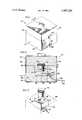
- FIG. 1is a perspective view of the sterilizing apparatus embodying the principles of the present invention
- FIG. 2is a cross-sectional view taken substantially along the section line 2--2 appearing in FIG. 1 illustrating in greater detail certain aspects of the present invention.
- FIG. 3is a fragmentary perspective view illustrating in somewhat greater detail the heating block of this invention and a vial which is removably received therein.
- FIGS. 1 to 3there is illustrated a novel and improved sterilizing apparatus of the present invention being designated in general by reference numeral 10.
- the present inventioncontemplates that the sterilizer 10 be particularly adapted for use in sterilizing vials 12 containing contact lenses (not shown).
- contact lensesnot shown
- other articles, containers, instruments, and the likemay also be sterilized by sterilizer 10 without departing from the spirit and scope of this invention.
- the sterilizing apparatus 10includes base means 14, cover means 16, heating means 18 and power control means 20.
- base means 14it is defined by a casing member 22 made of a suitable material.
- casing member 22has assumed a generally rectangular configuration. Other shapes and sizes for the casing member 22 may, of course, be suitably employed.
- the casing member 22itself securely receives therein thermal insulating block member 24. While in the present embodiment the casing member 22 and block members 24 are disclosed as being made of separate material, it will, however, be pointed out that this invention envisions that the casing member can be similarly fabricated from a suitable insulating material.
- thermal insulating block member 24is fabricated from any conventional type of available thermal insulating material, such as suitable fiber. Instead of a block member air can also be used.
- block member 24serves to significantly inhibit the dissipation of heat in a manner to be afterwards explained.
- the materialshould be selected so that it has a relatively low thermal conductivity. In this manner, it will be able to slow the conductivity of the heat.
- Centrally formed within insulating block member 24is a cavity 26 which is adapted to receive heating means 18. Although a single cavity 26 is disclosed, a plurality of such cavities may be formed. Moreover, the cavities may have any desired configuration. As will be presently explained in greater detail, the thermal properties of thermal insulating block member 24 and its volume with respect to and in combination with the heating means are of significant importance in regulating the rate of temperature decline of the heating means 18.
- cover means 16In connection with cover means 16, it is configured in a similar fashion to the base means 14 so as to substantially cover the latter.
- Cover means 16includes an outer casing member 28 and a block 30 of thermal insulating material snugly received within casing member 28.
- casing member 28 and block 30instead of being constructed separately both can be fabricated such that the casing member is also made from the same insulating type material as the insulating block.
- the cover means 16is removably associated with the base means 14.
- a standard type of hinge device 32operatively interconnects the casing member 22 and casing member 28 so as to enable the casing member 28 to be pivoted between open and closed positions.
- both casing members 22 and 28, respectivelymay have associated therewith any well-known kind of releasable latching mechanism 34 which serves the purpose of removably attaching the cover means 16 to the base means 14, such as depicted in FIG. 2.
- the insulating block member 30is formed with a central relatively shallow recess 36 which is adapted to receive the top portion of vial 12, whenever both the base means 14 and cover means 16 are in their assembled and closed position. It will be understood, of course, that although insulating block 30 is formed with shallow recess 36, such recess need not be formed. On the other hand, of course, the insulating blocks 24 or 30 could also be appropriately constructed so as to completely and suitably receive the vials 12 therein.
- Thermal insulating block member 30is fabricated from a suitable thermal insulation material, preferbly having a low thermal conductivity value. The significance of this will also be subsequently set forth. Also, as will become evident, the insulating block members 24 and 30 should be fabricated from a material which, in addition to being thermally insulating, is suitably electrically insulating. In addition, the casing members 22 and 28 are envisioned to be electrically insulated for reasons made evident.
- FIG. 2taken in conjunction with FIG. 3.
- a heating block 38having a relatively large volume, with respect to the vial 12 and insulating block members 24 and 30, and generally cubical shape.
- the present inventioncontemplates, of course, that the heating block need not necessarily be large so long as it, in conjunction with the insulating material, effectively slows down the rate of dissipation of heat within prescribed limits.
- the heating block 38is sized and configured so as to be easily and loosely fit within cavity 26. In this manner, expansion thereof resulting from generation of heat is somewhat accommodated for.
- block 38has a relatively large volume and the significance of this large volume will be presently mentioned.
- Recess means 40is defined by an appropriately dimensioned opening 42 formed on the top surface of heating block 38. Opening 42 is adapted to removably receive therein vial 12 during the sterilization cycle. Although a single opening 42 is depicted, it is within the spirit of the invention that a plurality of similar openings may also be included. A cutout 44 may be formed along the bottom of the heating block 38.
- heating block 38is comprised of any suitable type of heat conducting material. Accordingly, whenever electric power is supplied to the heating block 38, the latter will be correspondingly heated. In response to heating of block 38 to a sufficient sterilization temperature, the contents of vial 12 can be sterilized.
- the heating block 38is constructed to be relatively large.
- the foregoingis, preferably, done in order to form a heat reservoir which is able to advantageously retain an adequate supply of heat for a prescribed period of time. Since a relatively great quantity of heat is being retained, it will be appreciated, of course, that heat dissipation will correspondingly take longer to occur.
- the present inventioncontemplates that the insulating block members 24 and 30, respectively, have their appropriate volumes and values of thermal conductivity selected such that the dissipation of heat from heating reservoir block 38 is substantially impeded.
- heating block 38in conjunction with a significant reduction in heat flow rate provided by the insulating member blocks 24 and 30, a relatively long period of time is required for the heating block to dissipate a substantial amount of heat. Stated somewhat differently, the rate of temperature reduction of heating block 38 is relatively slowed.
- the rate of temperature reduction from heating block 38occur such that after the temperature value thereof has reached a first predetermined temperature, usually above a sufficient sterilization temperature for contact lenses or the like, it gradually falls to a second or minimum predetermined temperature, usually above the same sterilization temperature, during a preselected period of time.
- a first predetermined temperatureusually above a sufficient sterilization temperature for contact lenses or the like
- a second or minimum predetermined temperatureusually above the same sterilization temperature, during a preselected period of time.
- such minimum temperature valuemay be selected such that it will at least ensure sterilization of contact lenses in vial 12.
- the measured period of timemay be that which at least successfully ensures completion of the sterilization process for contact lenses.
- the selected first or maximum temperature reached by the heating block 38, the volume of the heating block and its thermal properties together with the thermal properties and volume of insulating block members 24 and 30will be appropriately selected consistent with sound engineering practice to achieve the foregoing objective.
- a number of materialsmay be appropriately employed without departing from the spirit and scope of the instant invention.
- sterilizer 10 of the instant inventionpermits conditions under which contact lenses within vials 12 may be sterilized for an appropriate period of time without the necessity of a relatively expensive timer mechanism.
- a relatively inexpensive and simple constructed sterilizercan be constructed in accordance with this invention.
- thermal cutout device 46and power switch 48. Both the thermal cutout 46 and switch 48 are of conventional construction and are designed to control the electric power supplied to heating block 38.
- Thermal cutout device 46is attached, in any suitable manner, to the cutout 44 formed in heating block 38, and functions in the normal fashion to stop the flow of current to block 38, in event the heating block reaches a preselected temperature.
- thermal cutout 46may be received within a cutout area of insulating block member 24 as opposed to cutout 44 in heating block 38.
- the preselected temperature at which thermal cutout 46 functions to stop electrical powermay be a first predetermined temperature which is of such a value that it will be sufficient in conjunction with the heat dissipation rate determined by the volumes and materials of a heating block 38 and insulating block members 24 and 30, to ensure that a second or predetermined minimum temperature value will not be reached until a measured period of time has at least elapsed following the cessation of electrical power to the heating block 38.
- the selected period of timeis designed to ensure sterilization of contact lenses in vial 12.
- lead wires 50are electrically operatively interconnected between thermal cutout 46 and switch 48 in any suitable fashion.
- the switch 48may be connected to a power supply line 52 which supplies electrical power from a suitable source (not shown).
- a suitable sourcenot shown.
- the present inventionenvisons that either a DC or AC source can be utilized. While a switch 48 is shown in the present embodiment, sterilizer 10 may be successfully used without such a switch.
- the vial 12 containing contact lensesis inserted within opening 42.
- Switch 48is actuated so as to permit current to flow to heating block 38.
- Heating block 38will be heated to a preselected temperature value whereupon the thermal cutout 46 cuts off the supply of electrical power thereto. Since the volume of the heating block 38 may be relatively large and functions as a heat reservoir together with the fact that the volume and thermal insulation characteristics of insulating blocks 24 and 30 are appropriately selected, in the manner indicated above, the dissipation of heat from heating block 38 occurs gradually. During this gradual reduction in temperature, sterilization of the lenses in the vial 12 can occur.
- this reduction in temperaturewill be for a predetermined amount of time above a minimum preselected temperature value so as to ensure completion of a sterilization cycle.
- the vials 12may be removed. It will be appreciated that the sterilizer of this invention can be used for dry sterilization or autoclaving.
Landscapes
- Health & Medical Sciences (AREA)
- Epidemiology (AREA)
- Life Sciences & Earth Sciences (AREA)
- Animal Behavior & Ethology (AREA)
- General Health & Medical Sciences (AREA)
- Public Health (AREA)
- Veterinary Medicine (AREA)
- Apparatus For Disinfection Or Sterilisation (AREA)
- Eyeglasses (AREA)
Abstract
Description
Claims (5)
Priority Applications (4)
| Application Number | Priority Date | Filing Date | Title |
|---|---|---|---|
| US05/762,176US4307288A (en) | 1977-01-24 | 1977-01-24 | Sterilizer |
| CA292,075ACA1053874A (en) | 1977-01-24 | 1977-11-30 | Sterilizer |
| GB52259/77AGB1589951A (en) | 1977-01-24 | 1977-12-15 | Sterilizer |
| JP533578AJPS5393690A (en) | 1977-01-24 | 1978-01-23 | Sterilizer |
Applications Claiming Priority (1)
| Application Number | Priority Date | Filing Date | Title |
|---|---|---|---|
| US05/762,176US4307288A (en) | 1977-01-24 | 1977-01-24 | Sterilizer |
Publications (1)
| Publication Number | Publication Date |
|---|---|
| US4307288Atrue US4307288A (en) | 1981-12-22 |
Family
ID=25064316
Family Applications (1)
| Application Number | Title | Priority Date | Filing Date |
|---|---|---|---|
| US05/762,176Expired - LifetimeUS4307288A (en) | 1977-01-24 | 1977-01-24 | Sterilizer |
Country Status (4)
| Country | Link |
|---|---|
| US (1) | US4307288A (en) |
| JP (1) | JPS5393690A (en) |
| CA (1) | CA1053874A (en) |
| GB (1) | GB1589951A (en) |
Cited By (8)
| Publication number | Priority date | Publication date | Assignee | Title |
|---|---|---|---|---|
| US4388521A (en)* | 1981-07-02 | 1983-06-14 | Ryder International Corporation | Modular disinfector device |
| US4808796A (en)* | 1985-06-07 | 1989-02-28 | Electrothermal Engineering Ltd. | Apparatus for monitoring temperature dependent changes |
| US4816648A (en)* | 1987-06-02 | 1989-03-28 | Dusbabek Mark R | Toothbrush sterilizer |
| ES2116200A1 (en)* | 1995-01-25 | 1998-07-01 | Lin Chao Chyun | Thermally insulated container for contact lens treatment |
| US6064041A (en)* | 1997-07-10 | 2000-05-16 | Staffieri; James | Thermal insulating device |
| USD463076S1 (en) | 2000-08-18 | 2002-09-17 | Novalabs, Llc | Household product sanitizer |
| US6558640B1 (en) | 2000-08-18 | 2003-05-06 | Novalabs, Llc | Household product sanitizer |
| CN113985943A (en)* | 2021-11-03 | 2022-01-28 | 江苏金视传奇科技有限公司 | Tableware constant temperature control system based on thing networking |
Families Citing this family (1)
| Publication number | Priority date | Publication date | Assignee | Title |
|---|---|---|---|---|
| JPH0639716Y2 (en)* | 1989-04-25 | 1994-10-19 | 木野 和雄 | General-purpose heating device |
Citations (10)
| Publication number | Priority date | Publication date | Assignee | Title |
|---|---|---|---|---|
| US1780462A (en)* | 1926-08-09 | 1930-11-04 | Samuel M Carmean | Thermostatic control for electric heaters |
| US1946573A (en)* | 1931-04-11 | 1934-02-13 | Vries Jacob De | Sterilizer |
| US2091035A (en)* | 1936-01-20 | 1937-08-24 | S W Farber Inc | Circuit breaking device |
| US2552641A (en)* | 1946-01-12 | 1951-05-15 | Willard L Morrison | Heat insulated container having foamed plastic insulation |
| US2656441A (en)* | 1949-01-15 | 1953-10-20 | Moth King Corp | Thermostatic switch |
| US3801278A (en)* | 1972-03-13 | 1974-04-02 | Sybron Corp | Sterilizing apparatus for hydrophilic contact lenses |
| US3961893A (en)* | 1974-10-17 | 1976-06-08 | Hydrotherm Corporation | Steam disinfector for contact lenses |
| US3977517A (en)* | 1974-07-22 | 1976-08-31 | Bausch & Lomb Incorporated | Contact lens carrying case |
| US3983362A (en)* | 1975-07-18 | 1976-09-28 | Bausch & Lomb Incorporated | Manual switching means for contact lens disinfecting apparatus |
| US4044226A (en)* | 1975-07-18 | 1977-08-23 | Bausch & Lomb Incorporated | Apparatus for disinfection of hydrophilic contact lenses |
- 1977
- 1977-01-24USUS05/762,176patent/US4307288A/ennot_activeExpired - Lifetime
- 1977-11-30CACA292,075Apatent/CA1053874A/ennot_activeExpired
- 1977-12-15GBGB52259/77Apatent/GB1589951A/ennot_activeExpired
- 1978
- 1978-01-23JPJP533578Apatent/JPS5393690A/enactivePending
Patent Citations (10)
| Publication number | Priority date | Publication date | Assignee | Title |
|---|---|---|---|---|
| US1780462A (en)* | 1926-08-09 | 1930-11-04 | Samuel M Carmean | Thermostatic control for electric heaters |
| US1946573A (en)* | 1931-04-11 | 1934-02-13 | Vries Jacob De | Sterilizer |
| US2091035A (en)* | 1936-01-20 | 1937-08-24 | S W Farber Inc | Circuit breaking device |
| US2552641A (en)* | 1946-01-12 | 1951-05-15 | Willard L Morrison | Heat insulated container having foamed plastic insulation |
| US2656441A (en)* | 1949-01-15 | 1953-10-20 | Moth King Corp | Thermostatic switch |
| US3801278A (en)* | 1972-03-13 | 1974-04-02 | Sybron Corp | Sterilizing apparatus for hydrophilic contact lenses |
| US3977517A (en)* | 1974-07-22 | 1976-08-31 | Bausch & Lomb Incorporated | Contact lens carrying case |
| US3961893A (en)* | 1974-10-17 | 1976-06-08 | Hydrotherm Corporation | Steam disinfector for contact lenses |
| US3983362A (en)* | 1975-07-18 | 1976-09-28 | Bausch & Lomb Incorporated | Manual switching means for contact lens disinfecting apparatus |
| US4044226A (en)* | 1975-07-18 | 1977-08-23 | Bausch & Lomb Incorporated | Apparatus for disinfection of hydrophilic contact lenses |
Cited By (10)
| Publication number | Priority date | Publication date | Assignee | Title |
|---|---|---|---|---|
| US4388521A (en)* | 1981-07-02 | 1983-06-14 | Ryder International Corporation | Modular disinfector device |
| US4808796A (en)* | 1985-06-07 | 1989-02-28 | Electrothermal Engineering Ltd. | Apparatus for monitoring temperature dependent changes |
| US4945211A (en)* | 1985-06-07 | 1990-07-31 | Electrothermal Engineering | Apparatus for monitoring temperature dependent changes |
| US4816648A (en)* | 1987-06-02 | 1989-03-28 | Dusbabek Mark R | Toothbrush sterilizer |
| ES2116200A1 (en)* | 1995-01-25 | 1998-07-01 | Lin Chao Chyun | Thermally insulated container for contact lens treatment |
| US6064041A (en)* | 1997-07-10 | 2000-05-16 | Staffieri; James | Thermal insulating device |
| USD463076S1 (en) | 2000-08-18 | 2002-09-17 | Novalabs, Llc | Household product sanitizer |
| US6558640B1 (en) | 2000-08-18 | 2003-05-06 | Novalabs, Llc | Household product sanitizer |
| CN113985943A (en)* | 2021-11-03 | 2022-01-28 | 江苏金视传奇科技有限公司 | Tableware constant temperature control system based on thing networking |
| CN113985943B (en)* | 2021-11-03 | 2022-07-05 | 江苏金视传奇科技有限公司 | Tableware constant temperature control system based on thing networking |
Also Published As
| Publication number | Publication date |
|---|---|
| GB1589951A (en) | 1981-05-20 |
| JPS5393690A (en) | 1978-08-16 |
| CA1053874A (en) | 1979-05-08 |
Similar Documents
| Publication | Publication Date | Title |
|---|---|---|
| US4734560A (en) | Vaporizing unit | |
| US4087675A (en) | Heated mitten | |
| US5248870A (en) | Electric heating device for warming the contents of bottles or other containers | |
| US4307288A (en) | Sterilizer | |
| EP0017323B1 (en) | Contact lens disinfecting unit | |
| US4481410A (en) | Fail safe sterilizing apparatus and a circuit therefor | |
| BR8807226A (en) | APPLIANCE FOR THE STERILIZATION OF OBJECTS, IN PARTICULAR DENTAL AND MEDICAL UTENSILS | |
| US20020031462A1 (en) | Apparatus for heat treatment of portions of milk and other liquid foods for, in particular, bottle-fed infants | |
| JPH0653148B2 (en) | Baby bottle heating and sterilization equipment | |
| US6204485B1 (en) | Toothpaste warmer | |
| US1661354A (en) | Antifreeze container | |
| US4472623A (en) | Contact lens heating device | |
| US4256952A (en) | Drawer type sterilizer unit | |
| US1939715A (en) | Sterilizer | |
| US1550334A (en) | Razor drier | |
| US4302664A (en) | Contact lens aseptor | |
| CN212235346U (en) | Multifunctional sterilizing device | |
| US2527049A (en) | Electric heater | |
| JPH0347650Y2 (en) | ||
| JPS62131222A (en) | Disinfector for contact lens | |
| JPH025424B2 (en) | ||
| RU9586U1 (en) | AIR FRAGRANCE DEVICE | |
| KR200305969Y1 (en) | cold and hot regulation apractical method the tissue custody | |
| CA1284341C (en) | Vaporizing unit | |
| KR870003738Y1 (en) | Dishwasher |
Legal Events
| Date | Code | Title | Description |
|---|---|---|---|
| STCF | Information on status: patent grant | Free format text:PATENTED CASE | |
| AS | Assignment | Owner name:WESLEY-JESSEN INC. Free format text:MERGER;ASSIGNORS:SCHERING LENS, INC. (INTO);W-J (DELAWARE) INC. (CHANGED TO);REEL/FRAME:004078/0690 Effective date:19800923 Owner name:W-J (DELAWARE) INC. Free format text:MERGER;ASSIGNOR:WESLEY-JESSEN INC.;REEL/FRAME:004078/0698 Effective date:19800923 Owner name:SCHERING CORPORATION GALLOPING HILL ROAD, KENILWOR Free format text:ASSIGNMENT OF ASSIGNORS INTEREST.;ASSIGNOR:WESLEY-JESSEN INC., A CORP OF DE;REEL/FRAME:004078/0706 Effective date:19811218 Owner name:WESLEY-JESSEN INC., NEW JERSEY Free format text:MERGER;ASSIGNORS:SCHERING LENS, INC. (INTO);W-J (DELAWARE) INC. (CHANGED TO);REEL/FRAME:004078/0690 Effective date:19800923 Owner name:W-J (DELAWARE) INC., NEW JERSEY Free format text:MERGER;ASSIGNOR:WESLEY-JESSEN INC.;REEL/FRAME:004078/0698 Effective date:19800923 Owner name:SCHERING CORPORATION, NEW JERSEY Free format text:ASSIGNMENT OF ASSIGNORS INTEREST;ASSIGNOR:WESLEY-JESSEN INC., A CORP OF DE;REEL/FRAME:004078/0706 Effective date:19811218 |