US4134463A - Air lift system for large diameter borehole drilling - Google Patents
Air lift system for large diameter borehole drillingDownload PDFInfo
- Publication number
- US4134463A US4134463AUS05/808,872US80887277AUS4134463AUS 4134463 AUS4134463 AUS 4134463AUS 80887277 AUS80887277 AUS 80887277AUS 4134463 AUS4134463 AUS 4134463A
- Authority
- US
- United States
- Prior art keywords
- drilling fluid
- borehole
- plenum means
- conduit
- plenum
- Prior art date
- Legal status (The legal status is an assumption and is not a legal conclusion. Google has not performed a legal analysis and makes no representation as to the accuracy of the status listed.)
- Expired - Lifetime
Links
Images
Classifications
- E—FIXED CONSTRUCTIONS
- E21—EARTH OR ROCK DRILLING; MINING
- E21B—EARTH OR ROCK DRILLING; OBTAINING OIL, GAS, WATER, SOLUBLE OR MELTABLE MATERIALS OR A SLURRY OF MINERALS FROM WELLS
- E21B21/00—Methods or apparatus for flushing boreholes, e.g. by use of exhaust air from motor
- E21B21/01—Arrangements for handling drilling fluids or cuttings outside the borehole, e.g. mud boxes
- E—FIXED CONSTRUCTIONS
- E21—EARTH OR ROCK DRILLING; MINING
- E21B—EARTH OR ROCK DRILLING; OBTAINING OIL, GAS, WATER, SOLUBLE OR MELTABLE MATERIALS OR A SLURRY OF MINERALS FROM WELLS
- E21B43/00—Methods or apparatus for obtaining oil, gas, water, soluble or meltable materials or a slurry of minerals from wells
- E21B43/30—Specific pattern of wells, e.g. optimising the spacing of wells
- E21B43/305—Specific pattern of wells, e.g. optimising the spacing of wells comprising at least one inclined or horizontal well
- E—FIXED CONSTRUCTIONS
- E21—EARTH OR ROCK DRILLING; MINING
- E21B—EARTH OR ROCK DRILLING; OBTAINING OIL, GAS, WATER, SOLUBLE OR MELTABLE MATERIALS OR A SLURRY OF MINERALS FROM WELLS
- E21B7/00—Special methods or apparatus for drilling
- E21B7/28—Enlarging drilled holes, e.g. by counterboring
Definitions
- the present inventionrelates generally to the art of drilling large boreholes in earth formations and, more particularly, to the methods of removing the cuttings from the borehole during the drilling operation.
- a large diameter drill bitis secured to the lower end of a drill stem which is lowered and rotated to cause the bit to operate on the formation being encountered to cut or crush the same.
- Circulation systemsutilizing drilling fluids such as water or mud, are used to cool and clean the bit and to remove the cuttings produced by the drilling operation from the borehole.
- Conventional circulation systemspump the drilling fluid downwardly through the drill stem and the fluid returns upwardly through the annulus area between the drill stem and the wall of the hole being drilled.
- the shortcoming of the conventional circulation systemsis that the removal of the cuttings is not efficient in large boreholes because of the large amount of cuttings produced and because the annulus area is much larger than the interior of the drill stem, thereby reducing the return velocity of the drilling fluid and its lifting capacity.
- the present inventionimproves on both systems by providing an air lift system for creating a more efficient flow through the drilling fluid return.
- the present inventionincludes a plenum provided within the return line of the drilling fluid.
- An air diffusion ringis located at the throat or entryway of the plenum for injecting air into the drilling fluid passing up through the plenum.
- the plenumis in the form of an expanding chamber to enable the flow velocity of the aerated drilling fluid passing therethrough to be constant as the air bubbles expand due to diminishing pressure.
- a primary advantage of the present inventionis that the constant discharge velocity of the drilling fluid passing through the plenum is greatly increased, thereby providing a more efficient overall circulation system.
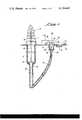
- FIG. 1is a diagrammatic view of a drilling rig and a vertical cross section through an earth formation, illustrating the new and improved circulation system of the present invention
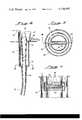
- FIG. 2is an enlarged fragmentary view of the plenum and air diffusion ring of the present invention
- FIG. 3is a sectional view of the diffusion ring taken along lines 3--3 of FIG. 2;
- FIG. 4is a vertical section view of the diffusion ring taken along lines 4--4 of FIG. 3.
- FIG. 1illustrates a drilling rig generally indicated by arrow 10, having a rotary table 11, a drive Kelly 12, and a non-circulating swivel 13.
- a drill stem 14is connected at its upper end to the drive keeley 12 and at its lower end to a large diameter drill bit 15.
- the drill bit 15includes a plurality of roller cutters 16 for contacting and disintegrating the earth formation at the bottom of a borehole 17.
- a slant hole 19is drilled obliquely so that it will intersect the pilot hole 18 near its nether position.
- An air lift system generally indicated by arrow 20is provided to circulate drilling fluid such as water or mud through the borehole 17 to cool the dril bit 15 and mix with the cuttings generated at the face of the borehole 17.
- the air lift system 20includes a reservoir 21 for storing the drilling fluid adjacent the rig 10.
- a pump 22is provided to pump the drilling fluid from the reservoir 21 through a fluid line 23 to the annulus of the borehole 17.
- the drilling fluidcompletely fills the annulus of the borehole 17 and is drawn downwardly past the drill bit 15 to mix with the cuttings generated thereby.
- the drilling fluidis then drawn down through the pilot hole 18 and up through the slant hole 19, transporting with it the cuttings from the face of the borehole 17.
- the air lift systemfurther includes a plenum comprising a tapered transition pipe 24 located near the top of the slant hole 19, which communicates with the throat of a tapered discharge horn 25.
- a bonnet 26is positioned over the discharge horn 25 and is located within a chamber 27 having a discharge pipe 28 feeding into the reservoir 21.
- An air diffusion ring 30is positioned at the throat of the discharge horn 25 to inject air into the drilling fluid passing therethrough.
- An air pump 31is provided to inject outside air into the air diffusion ring 30 via an air conduit 32.
- the tapered discharge horn 25can be in the shape of a hyperboloid of one sheet or a shape similar to that of the end of a bugle or trumpet.
- the shape of the discharge horn 25is such that the velocity of the drilling fluid passing therethrough is constant over the entire length thereof.
- a seal plate 33is positioned around the discharge horn 25 adjacent the top end thereof to cap the top of the slant hole 19.
- the air diffusion ring 30comprises a ported tube 34 connected to the end of the air conduit 32 and extending across the throat of the tapered discharge horn 25.
- a porous ceramic member 35extends around the tube 34 to enable the air existing from the tube 34 to disperse therethrough into the central portion of the discharge horn 25.
- the annular diffusion ring 30extends around the discharge horn 25 with the interior thereof communicating with the tube 34.
- the wall portion of the discharge horn 25, located within the annular ring 30,includes a plurality of ports 36 for allowing air to enter the peripheral portion of the discharge horn 25 to mix with the drilling fluid passing therethrough.
- the borehole 18may, for example, be drilled with a 72 inch diameter bit in the usual manner to a depth of approximately 500 feet.
- the slant hole 19, for example,may be drilled with a 28 inch diameter bit in a direction so as to intersect the pilot hole 18 at approximately the 500 foot level.
- the drill bit 15which may be from 10 to 30 feet in diameter is then secured to the drill stem 14 in order to enlarge the pilot hole 18 to the desired diameter and depth.
- the drill bit 15is rotated by the rotary table 11 driving the kelley 12 and drill stem 14.
- the drilling fluid and the cuttings produced by such enlargementmay pass downwardly into the pilot hole 18 and upwardly through the slant hole 19.
- the drilling fluid containing the cuttingspasses through the plenum formed by the transition pipe 24 and the discharge horn 25.
- the drilling fluidis air lifted (made lighter) by the air injected through the diffusion ring 30.
- the air mixing with this drilling fluidincreases the velocity of the drilling fluid passing through the throat of the discharge horn 25.
- the flow velocityremains constant because of the tapered shape of the discharge horn 25.
- the design of the diffusion ring 30enables air to enter the peripheral and central areas of the drilling fluid flow to ensure that the entire stream of drilling fluid has been injected with air.
- Simple air lift systemshave an efficiency between 38 and 45 percent.
- the efficiency of the present inventioncan be as high as 60 to 65 percent because of: (1) the outside air injection system; and (2) the velocity and friction heads being at a minimum.
- the minimum velocity and friction headsare due to the constant velocity of the drilling fluid through the discharge horn 25.
- the rotary air pump 31can operate at a low pressure and such high volume low pressure blowers are less expensive than higher pressure lower volume air compressors.
- an 18 inch ID circulation swivelcan be eliminated on the drilling rig.
- Such swivels and hoseare very expensive. Instead, a less expensive non-circulation swivel can be utilized for such big hole boring.
- the estimated cost savings for the simple swivelwill more than off-set the cost of drilling a pilot hole and a slant hole.
- a new and improved circulation systemcan now be utilized in large diameter borehole drilling which can operate on less horsepower and enable the system to drill at a faster penetration rate.
Landscapes
- Engineering & Computer Science (AREA)
- Life Sciences & Earth Sciences (AREA)
- Geology (AREA)
- Mining & Mineral Resources (AREA)
- Physics & Mathematics (AREA)
- Environmental & Geological Engineering (AREA)
- Fluid Mechanics (AREA)
- General Life Sciences & Earth Sciences (AREA)
- Geochemistry & Mineralogy (AREA)
- Mechanical Engineering (AREA)
- Earth Drilling (AREA)
Abstract
Description
1. Field of the Invention
The present invention relates generally to the art of drilling large boreholes in earth formations and, more particularly, to the methods of removing the cuttings from the borehole during the drilling operation.
2. Description of the Prior Art
In the drilling of large boreholes in earth formations, a large diameter drill bit is secured to the lower end of a drill stem which is lowered and rotated to cause the bit to operate on the formation being encountered to cut or crush the same. Circulation systems, utilizing drilling fluids such as water or mud, are used to cool and clean the bit and to remove the cuttings produced by the drilling operation from the borehole. Conventional circulation systems pump the drilling fluid downwardly through the drill stem and the fluid returns upwardly through the annulus area between the drill stem and the wall of the hole being drilled. The shortcoming of the conventional circulation systems is that the removal of the cuttings is not efficient in large boreholes because of the large amount of cuttings produced and because the annulus area is much larger than the interior of the drill stem, thereby reducing the return velocity of the drilling fluid and its lifting capacity.
An improved circulation system is described in U.S. Pat. No. 3,208,537 in which an initial small vertical pilot hole extends below the point to which the borehole will later be enlarged and a slant hole is drilled obliquely so that it will intersect the pilot hole near its nether position. The drilling fluid containing the cuttings is then circulated downwardly through the pilot hole and upwardly through the slant hole. An ejector pump is provided in the slant hole to accelerate the upward movement of the drilling fluid therethrough.
The present invention improves on both systems by providing an air lift system for creating a more efficient flow through the drilling fluid return.
In its broadest aspect, the present invention includes a plenum provided within the return line of the drilling fluid. An air diffusion ring is located at the throat or entryway of the plenum for injecting air into the drilling fluid passing up through the plenum. The plenum is in the form of an expanding chamber to enable the flow velocity of the aerated drilling fluid passing therethrough to be constant as the air bubbles expand due to diminishing pressure.
A primary advantage of the present invention is that the constant discharge velocity of the drilling fluid passing through the plenum is greatly increased, thereby providing a more efficient overall circulation system.
The features of the present invention, which are believed to be novel, are set forth with particularity in the appended Claims. The present invention, both as to its organization and manner of operation, together with the further advantages thereof, may best be understood by reference to the following description taken in connection with the accompanying drawings.
FIG. 1 is a diagrammatic view of a drilling rig and a vertical cross section through an earth formation, illustrating the new and improved circulation system of the present invention;
FIG. 2 is an enlarged fragmentary view of the plenum and air diffusion ring of the present invention;
FIG. 3 is a sectional view of the diffusion ring taken alonglines 3--3 of FIG. 2; and
FIG. 4 is a vertical section view of the diffusion ring taken alonglines 4--4 of FIG. 3.
Referring now to the drawings, FIG. 1 illustrates a drilling rig generally indicated byarrow 10, having a rotary table 11, a drive Kelly 12, and a non-circulating swivel 13.
Adrill stem 14 is connected at its upper end to thedrive keeley 12 and at its lower end to a largediameter drill bit 15. Thedrill bit 15 includes a plurality ofroller cutters 16 for contacting and disintegrating the earth formation at the bottom of aborehole 17.
A small diametervertical pilot hole 18, having been previously drilled with a small diameter bit attached to the drill stem, extends below the point to which theborehole 17 is to be enlarged. Aslant hole 19 is drilled obliquely so that it will intersect thepilot hole 18 near its nether position.
An air lift system generally indicated byarrow 20 is provided to circulate drilling fluid such as water or mud through theborehole 17 to cool thedril bit 15 and mix with the cuttings generated at the face of theborehole 17. Theair lift system 20 includes areservoir 21 for storing the drilling fluid adjacent therig 10.
Apump 22 is provided to pump the drilling fluid from thereservoir 21 through afluid line 23 to the annulus of theborehole 17.
As shown in FIG. 1, the drilling fluid completely fills the annulus of theborehole 17 and is drawn downwardly past thedrill bit 15 to mix with the cuttings generated thereby. The drilling fluid is then drawn down through thepilot hole 18 and up through theslant hole 19, transporting with it the cuttings from the face of theborehole 17.
As shown in FIGS. 1 and 2, the air lift system further includes a plenum comprising atapered transition pipe 24 located near the top of theslant hole 19, which communicates with the throat of atapered discharge horn 25. Abonnet 26 is positioned over thedischarge horn 25 and is located within achamber 27 having adischarge pipe 28 feeding into thereservoir 21.
Anair diffusion ring 30 is positioned at the throat of thedischarge horn 25 to inject air into the drilling fluid passing therethrough. Anair pump 31 is provided to inject outside air into theair diffusion ring 30 via anair conduit 32.
Thetapered discharge horn 25 can be in the shape of a hyperboloid of one sheet or a shape similar to that of the end of a bugle or trumpet. The shape of thedischarge horn 25 is such that the velocity of the drilling fluid passing therethrough is constant over the entire length thereof.
Aseal plate 33 is positioned around thedischarge horn 25 adjacent the top end thereof to cap the top of theslant hole 19.
As shown in FIGS. 3 and 4, theair diffusion ring 30 comprises a portedtube 34 connected to the end of theair conduit 32 and extending across the throat of thetapered discharge horn 25. A porousceramic member 35 extends around thetube 34 to enable the air existing from thetube 34 to disperse therethrough into the central portion of thedischarge horn 25.
Theannular diffusion ring 30 extends around thedischarge horn 25 with the interior thereof communicating with thetube 34. The wall portion of thedischarge horn 25, located within theannular ring 30, includes a plurality ofports 36 for allowing air to enter the peripheral portion of thedischarge horn 25 to mix with the drilling fluid passing therethrough.
Referring again to FIG. 1, theborehole 18 may, for example, be drilled with a 72 inch diameter bit in the usual manner to a depth of approximately 500 feet. Theslant hole 19, for example, may be drilled with a 28 inch diameter bit in a direction so as to intersect thepilot hole 18 at approximately the 500 foot level. Thedrill bit 15 which may be from 10 to 30 feet in diameter is then secured to thedrill stem 14 in order to enlarge thepilot hole 18 to the desired diameter and depth. Thedrill bit 15 is rotated by the rotary table 11 driving the kelley 12 anddrill stem 14. As theborehole 17 is being enlarged to the desired depth by thedrill bit 15, the drilling fluid and the cuttings produced by such enlargement may pass downwardly into thepilot hole 18 and upwardly through theslant hole 19. Upon reaching the top of theslant hole 19 the drilling fluid containing the cuttings passes through the plenum formed by thetransition pipe 24 and thedischarge horn 25. Upon passing through the throat of thehorn 25, the drilling fluid is air lifted (made lighter) by the air injected through thediffusion ring 30. The air mixing with this drilling fluid increases the velocity of the drilling fluid passing through the throat of thedischarge horn 25. As the drilling fluid progresses upwardly through thedischarge horn 25, the flow velocity remains constant because of the tapered shape of thedischarge horn 25. Upon exiting through thebonnet 26 into thechamber 27 the drilling fluid is discharged through thepipe 28 back into thereservoir 21.
Various operations such as shale shaking, degassing, etc. (not shown) are performed on the drilling fluid before it is recirculated via thepump 22 back into the annulus of theborehole 17.
It should be noted that the design of thediffusion ring 30 enables air to enter the peripheral and central areas of the drilling fluid flow to ensure that the entire stream of drilling fluid has been injected with air.
Simple air lift systems have an efficiency between 38 and 45 percent. The efficiency of the present invention can be as high as 60 to 65 percent because of: (1) the outside air injection system; and (2) the velocity and friction heads being at a minimum. The minimum velocity and friction heads are due to the constant velocity of the drilling fluid through thedischarge horn 25.
Therotary air pump 31 can operate at a low pressure and such high volume low pressure blowers are less expensive than higher pressure lower volume air compressors.
Moreover, because of the present invention, an 18 inch ID circulation swivel can be eliminated on the drilling rig. Such swivels and hose are very expensive. Instead, a less expensive non-circulation swivel can be utilized for such big hole boring. In fact, the estimated cost savings for the simple swivel will more than off-set the cost of drilling a pilot hole and a slant hole. As a result, a new and improved circulation system can now be utilized in large diameter borehole drilling which can operate on less horsepower and enable the system to drill at a faster penetration rate.
It should be noted that various modifications can be made to the assembly while still remaining within the purview of the following claims. It should also be noted that although the air lift system of the present invention has been described in the preferred embodiment, utilizing a pilot hole and a slant hole return line, the present invention could also be utilized in a well having a reverse circulation system in which the drilling fluid is returned up through the drill stem.
Claims (14)
1. In a large diameter borehole having an annulus area between the drill stem and the wall of the borehole through which drilling fluid is transported to the borehole bottom and a return passageway for the drilling fluid returning from the borehole bottom, an air lift system comprising:
plenum means, located in said return passageway, having an expanding chamber through which the drilling fluid passes, said plenum means comprising a conduit having a tapered horn shape with a throat located at its lower end forming the entrance; and
means, located at the entrance of said plenum means, for diffusing gas into the drilling fluid passing through said plenum means, the plenum means chamber expanding in the direction of fluid flow for enabling the flow velocity of the diffused drilling fluid passing therethrough to be constant, said diffusion means comprising an apertured tube extending across the throat of said tapered conduit, said apertured tube being connected to the discharge of an air pump.
2. The combination of claim 1 wherein said air pump is a high volume, low pressure air blower.
3. The combination of claim 1 wherein said plenum means further comprises a second tapered conduit located in said return passageway immediately below the first tapered conduit.
4. The combination of claim 3 wherein said second tapered conduit opens into the throat of said first tapered conduit.
5. In a large diameter borehole having an annulus area between the drill stem and the wall of the borehole through which drilling fluid is transported downwardly therethrough, said borehole further having a pilot hole extending vertically downwardly below the point to which the borehole is to be enlarged and a slant hole extending obliquely downwardly intersecting the pilot hole near the nether portions thereof, said pilot hole and slant hole forming the return passageway for the drilling fluid, an air lift system comprising:
plenum means, located in said slant hole, having an expanding chamber through which the drilling fluid passes, said plenum means comprising a conduit having a tapered horn shape with a throat located at its lower end forming the entrance; and
means, located at the entrance of said plenum means, for diffusing gas into the drilling fluid passing through said plenum means, the plenum means chamber expanding in the direction of fluid flow for enabling the flow velocity of the diffused drilling fluid passing therethrough to be constant, said diffusing means comprising an apertured tube extending across the throat of said apertured tube being connected to the discharge of an air pump.
6. The combination of claim 5 wherein said air pump is a high volume, low pressure air blower.
7. The combination of claim 5 wherein said plenum means further comprises a second tapered conduit located in said slant hole immediately below the first tapered conduit.
8. The combination of claim 5 wherein said second tapered conduit opens into the throat of said first tapered conduit.
9. In a large diameter borehole having an annulus area between the drill stem and the wall of the borehole through which drilling fluid is transported downwardly therethrough, said borehole further having a pilot hole extending vertically downwardly below the point to which the borehole is to be enlarged and a slant hole extending obliquely downwardly intersecting the pilot hole near the nether portions thereof, said pilot hole and slant hole forming the return passageway for the drilling fluid, an air lift system comprising:
plenum means, located in said slant hole, having an expanding chamber through which the drilling fluid passes, said plenum means comprising a conduit having a tapered horn shape with a throat located at its lower end forming the entrance; and
means, located at the entrance of said plenum means, for diffusing gas into the drilling fluid passing through said plenum means, the plenum means chamber expanding in the direction of fluid flow for enabling the flow velocity of the diffused drilling fluid passing therethrough to be constant, said diffusing means comprising a porous ceramic tube extending across the throat of said tapered conduit, said ceramic tube being in fluid communication with the discharge of an air pump.
10. The combination of claim 9 wherein said air pump is a high volume, low pressure air blower.
11. In a large diameter borehole having an annulus area between the drill stem and the wall of the borehole through which drilling fluid is transported to the borehole bottom and a return passageway for the drilling fluid returning from the borehole bottom, an air lift system comprising:
plenum means, located in said return passageway, having an expanding chamber through which the drilling fluid passes, said plenum means comprising a conduit having a tapered horn shape with a throat located at its lower end forming the entrance; and
means, located at the entrance of said plenum means, for diffusing gas into the drilling fluid passing through said plenum means, the plenum means chamber expanding in the direction of fluid flow for enabling the flow velocity of the diffused drilling fluid passing therethrough to be constant, said diffusing means comprising a porous ceramic tube extending across the throat of said tapered conduit, said ceramic tube being in fluid communication with the discharge of an air pump.
12. The combination of claim 11 wherein said air pump is a high volume, low pressure air blower.
13. In a large diameter borehole having an annulus area between the drill stem and the wall of the borehole through which drilling fluid is transported to the borehole bottom and a return passageway for drilling fluid returning from the borehole bottom, an air lift system comprising:
plenum means, located in said return passageway, having an expanding chamber through which the drilling fluid passes, said plenum means comprising a conduit having a tapered horn shape with a throat located at its lower end forming the entrance; and
means, located at the entrance of said plenum means, for diffusing gas into the drilling fluid passing through said plenum means, the plenum means chamber expanding in the direction of fluid flow for enabling the flow velocity of the diffused drilling fluid passing therethrough to be constant, said diffusing means comprising an annular ring extending around the exterior of the throat of said tapered conduit, the surface of said conduit contiguous to said ring having a plurality of ports extending therethrough to provide fluid communication of the interior of the annular ring with the interior of said conduit, said annular ring being in fluid communication with the discharge of an air pump.
14. In a large diameter borehole having an annulus area between the drill stem and the wall of the borehole through which drilling fluid is transported downwardly therethrough, said borehole further having a pilot hole extending vertically downwardly below the point to which the borehole is to be enlarged and a slant hole extending obliquely downwardly intersecting the pilot hole near the nether portions thereof, said pilot hole and slant hole forming the return passageway for the drilling fluid, an air lift system comprising:
plenum means, located in said slant hole, having an expanding chamber through which the drilling fluid passes, said plenum means comprising a conduit having a tapered horn shape with a throat located at its lower end forming the entrance; and
means, located at the entrance of said plenum means, for diffusing gas into the drilling fluid passing through said plenum means, the plenum means chamber expanding in the direction of fluid flow for enabling the flow velocity of the diffused drilling fluid passing therethrough to be constant, said diffusing means comprising an annular ring extending around the exterior of the throat of said tapered conduit, the surface of said conduit contiguous to said ring having a plurality of ports extending therethrough to provide fluid communication of the interior of the annular ring with the interior of said conduit, said annular ring being in fluid communication with the discharge of an air pump.
Priority Applications (1)
| Application Number | Priority Date | Filing Date | Title |
|---|---|---|---|
| US05/808,872US4134463A (en) | 1977-06-22 | 1977-06-22 | Air lift system for large diameter borehole drilling |
Applications Claiming Priority (1)
| Application Number | Priority Date | Filing Date | Title |
|---|---|---|---|
| US05/808,872US4134463A (en) | 1977-06-22 | 1977-06-22 | Air lift system for large diameter borehole drilling |
Publications (1)
| Publication Number | Publication Date |
|---|---|
| US4134463Atrue US4134463A (en) | 1979-01-16 |
Family
ID=25199988
Family Applications (1)
| Application Number | Title | Priority Date | Filing Date |
|---|---|---|---|
| US05/808,872Expired - LifetimeUS4134463A (en) | 1977-06-22 | 1977-06-22 | Air lift system for large diameter borehole drilling |
Country Status (1)
| Country | Link |
|---|---|
| US (1) | US4134463A (en) |
Cited By (34)
| Publication number | Priority date | Publication date | Assignee | Title |
|---|---|---|---|---|
| US20030089706A1 (en)* | 2001-01-31 | 2003-05-15 | Cem Corporation | Microwave-Assisted Chemical Synthesis Instrument with Fixed Tuning |
| US20030217842A1 (en)* | 2001-01-30 | 2003-11-27 | Cdx Gas, L.L.C., A Texas Limited Liability Company | Method and system for accessing a subterranean zone from a limited surface area |
| US20040031609A1 (en)* | 1998-11-20 | 2004-02-19 | Cdx Gas, Llc, A Texas Corporation | Method and system for accessing subterranean deposits from the surface |
| US20040050552A1 (en)* | 2002-09-12 | 2004-03-18 | Zupanick Joseph A. | Three-dimensional well system for accessing subterranean zones |
| US20040055787A1 (en)* | 1998-11-20 | 2004-03-25 | Zupanick Joseph A. | Method and system for circulating fluid in a well system |
| WO2004025072A1 (en)* | 2002-09-12 | 2004-03-25 | Cdx Gas, L.L.C. | Method and system for controlling pressure in a dual well system |
| US20040108110A1 (en)* | 1998-11-20 | 2004-06-10 | Zupanick Joseph A. | Method and system for accessing subterranean deposits from the surface and tools therefor |
| US20040149432A1 (en)* | 1998-11-20 | 2004-08-05 | Cdx Gas, L.L.C., A Texas Corporation | Method and system for accessing subterranean deposits from the surface |
| US20040206493A1 (en)* | 2003-04-21 | 2004-10-21 | Cdx Gas, Llc | Slot cavity |
| US20040244974A1 (en)* | 2003-06-05 | 2004-12-09 | Cdx Gas, Llc | Method and system for recirculating fluid in a well system |
| US20050087340A1 (en)* | 2002-05-08 | 2005-04-28 | Cdx Gas, Llc | Method and system for underground treatment of materials |
| US20050103490A1 (en)* | 2003-11-17 | 2005-05-19 | Pauley Steven R. | Multi-purpose well bores and method for accessing a subterranean zone from the surface |
| US20050109505A1 (en)* | 2003-11-26 | 2005-05-26 | Cdx Gas, Llc | Method and system for extraction of resources from a subterranean well bore |
| US20050167156A1 (en)* | 2004-01-30 | 2005-08-04 | Cdx Gas, Llc | Method and system for testing a partially formed hydrocarbon well for evaluation and well planning refinement |
| US20050183859A1 (en)* | 2003-11-26 | 2005-08-25 | Seams Douglas P. | System and method for enhancing permeability of a subterranean zone at a horizontal well bore |
| US20050189114A1 (en)* | 2004-02-27 | 2005-09-01 | Zupanick Joseph A. | System and method for multiple wells from a common surface location |
| US6964308B1 (en) | 2002-10-08 | 2005-11-15 | Cdx Gas, Llc | Method of drilling lateral wellbores from a slant well without utilizing a whipstock |
| US6988548B2 (en) | 2002-10-03 | 2006-01-24 | Cdx Gas, Llc | Method and system for removing fluid from a subterranean zone using an enlarged cavity |
| US6991048B2 (en) | 2002-07-12 | 2006-01-31 | Cdx Gas, Llc | Wellbore plug system and method |
| US6991047B2 (en) | 2002-07-12 | 2006-01-31 | Cdx Gas, Llc | Wellbore sealing system and method |
| US7048049B2 (en) | 2001-10-30 | 2006-05-23 | Cdx Gas, Llc | Slant entry well system and method |
| US20060131024A1 (en)* | 2004-12-21 | 2006-06-22 | Zupanick Joseph A | Accessing subterranean resources by formation collapse |
| US20060131026A1 (en)* | 2004-12-22 | 2006-06-22 | Pratt Christopher A | Adjustable window liner |
| US20060201715A1 (en)* | 2003-11-26 | 2006-09-14 | Seams Douglas P | Drilling normally to sub-normally pressured formations |
| US20060201714A1 (en)* | 2003-11-26 | 2006-09-14 | Seams Douglas P | Well bore cleaning |
| US20060266521A1 (en)* | 2005-05-31 | 2006-11-30 | Pratt Christopher A | Cavity well system |
| US20070065241A1 (en)* | 2003-07-08 | 2007-03-22 | Daniel Gerald A | Dry drilling |
| US7207390B1 (en) | 2004-02-05 | 2007-04-24 | Cdx Gas, Llc | Method and system for lining multilateral wells |
| US7373984B2 (en) | 2004-12-22 | 2008-05-20 | Cdx Gas, Llc | Lining well bore junctions |
| US20090143253A1 (en)* | 2007-11-29 | 2009-06-04 | Smith Kevin W | Drilling fluids containing microbubbles |
| US8333245B2 (en) | 2002-09-17 | 2012-12-18 | Vitruvian Exploration, Llc | Accelerated production of gas from a subterranean zone |
| US8376052B2 (en) | 1998-11-20 | 2013-02-19 | Vitruvian Exploration, Llc | Method and system for surface production of gas from a subterranean zone |
| CN107101550A (en)* | 2017-06-30 | 2017-08-29 | 贵州凯星液力传动机械有限公司 | A kind of inclined hole position dimension measurement apparatus and method |
| CN108204213A (en)* | 2018-01-15 | 2018-06-26 | 赵耀耀 | A kind of inflatable drilling and sealing section residue cleaning plant and its application method |
Citations (8)
| Publication number | Priority date | Publication date | Assignee | Title |
|---|---|---|---|---|
| US1604644A (en)* | 1925-04-13 | 1926-10-26 | Ray A Wherrit | Production flow device |
| US1760240A (en)* | 1927-11-07 | 1930-05-27 | Link Belt Co | Heat treating of metals |
| US2062799A (en)* | 1935-09-30 | 1936-12-01 | Sullivan Machinery Co | Air lift pumping apparatus |
| US2537605A (en)* | 1947-08-07 | 1951-01-09 | Standard Oil Dev Co | Drilling bore holes |
| US2849213A (en)* | 1953-11-12 | 1958-08-26 | George E Failing Company | Apparatus for circulating drilling fluid in rotary drilling |
| US3077358A (en)* | 1958-09-18 | 1963-02-12 | Modiano Dr Ing | Well-drilling pipe |
| US3208537A (en)* | 1960-12-08 | 1965-09-28 | Reed Roller Bit Co | Method of drilling |
| US3385382A (en)* | 1964-07-08 | 1968-05-28 | Otis Eng Co | Method and apparatus for transporting fluids |
- 1977
- 1977-06-22USUS05/808,872patent/US4134463A/ennot_activeExpired - Lifetime
Patent Citations (8)
| Publication number | Priority date | Publication date | Assignee | Title |
|---|---|---|---|---|
| US1604644A (en)* | 1925-04-13 | 1926-10-26 | Ray A Wherrit | Production flow device |
| US1760240A (en)* | 1927-11-07 | 1930-05-27 | Link Belt Co | Heat treating of metals |
| US2062799A (en)* | 1935-09-30 | 1936-12-01 | Sullivan Machinery Co | Air lift pumping apparatus |
| US2537605A (en)* | 1947-08-07 | 1951-01-09 | Standard Oil Dev Co | Drilling bore holes |
| US2849213A (en)* | 1953-11-12 | 1958-08-26 | George E Failing Company | Apparatus for circulating drilling fluid in rotary drilling |
| US3077358A (en)* | 1958-09-18 | 1963-02-12 | Modiano Dr Ing | Well-drilling pipe |
| US3208537A (en)* | 1960-12-08 | 1965-09-28 | Reed Roller Bit Co | Method of drilling |
| US3385382A (en)* | 1964-07-08 | 1968-05-28 | Otis Eng Co | Method and apparatus for transporting fluids |
Cited By (81)
| Publication number | Priority date | Publication date | Assignee | Title |
|---|---|---|---|---|
| US8505620B2 (en) | 1998-11-20 | 2013-08-13 | Vitruvian Exploration, Llc | Method and system for accessing subterranean deposits from the surface and tools therefor |
| US7025154B2 (en)* | 1998-11-20 | 2006-04-11 | Cdx Gas, Llc | Method and system for circulating fluid in a well system |
| US20040031609A1 (en)* | 1998-11-20 | 2004-02-19 | Cdx Gas, Llc, A Texas Corporation | Method and system for accessing subterranean deposits from the surface |
| US20090084534A1 (en)* | 1998-11-20 | 2009-04-02 | Cdx Gas, Llc, A Texas Limited Liability Company, Corporation | Method and system for accessing subterranean deposits from the surface and tools therefor |
| US20040055787A1 (en)* | 1998-11-20 | 2004-03-25 | Zupanick Joseph A. | Method and system for circulating fluid in a well system |
| US20080060804A1 (en)* | 1998-11-20 | 2008-03-13 | Cdx Gas, Llc, A Texas Limited Liability Company, Corporation | Method and system for accessing subterranean deposits from the surface and tools therefor |
| US20040108110A1 (en)* | 1998-11-20 | 2004-06-10 | Zupanick Joseph A. | Method and system for accessing subterranean deposits from the surface and tools therefor |
| US20040149432A1 (en)* | 1998-11-20 | 2004-08-05 | Cdx Gas, L.L.C., A Texas Corporation | Method and system for accessing subterranean deposits from the surface |
| US20080121399A1 (en)* | 1998-11-20 | 2008-05-29 | Zupanick Joseph A | Method and system for accessing subterranean deposits from the surface |
| US8297350B2 (en) | 1998-11-20 | 2012-10-30 | Vitruvian Exploration, Llc | Method and system for accessing subterranean deposits from the surface |
| US8434568B2 (en) | 1998-11-20 | 2013-05-07 | Vitruvian Exploration, Llc | Method and system for circulating fluid in a well system |
| US8376052B2 (en) | 1998-11-20 | 2013-02-19 | Vitruvian Exploration, Llc | Method and system for surface production of gas from a subterranean zone |
| US8297377B2 (en)* | 1998-11-20 | 2012-10-30 | Vitruvian Exploration, Llc | Method and system for accessing subterranean deposits from the surface and tools therefor |
| US9551209B2 (en) | 1998-11-20 | 2017-01-24 | Effective Exploration, LLC | System and method for accessing subterranean deposits |
| US20080066903A1 (en)* | 1998-11-20 | 2008-03-20 | Cdx Gas, Llc, A Texas Limited Liability Company | Method and system for accessing subterranean deposits from the surface and tools therefor |
| US20080060807A1 (en)* | 1998-11-20 | 2008-03-13 | Cdx Gas, Llc | Method and system for accessing subterranean deposits from the surface and tools therefor |
| US8813840B2 (en) | 1998-11-20 | 2014-08-26 | Efective Exploration, LLC | Method and system for accessing subterranean deposits from the surface and tools therefor |
| US8511372B2 (en) | 1998-11-20 | 2013-08-20 | Vitruvian Exploration, Llc | Method and system for accessing subterranean deposits from the surface |
| US8469119B2 (en) | 1998-11-20 | 2013-06-25 | Vitruvian Exploration, Llc | Method and system for accessing subterranean deposits from the surface and tools therefor |
| US20080060806A1 (en)* | 1998-11-20 | 2008-03-13 | Cdx Gas, Llc, A Texas Limited Liability Company | Method and system for accessing subterranean deposits from the surface and tools therefor |
| US8291974B2 (en) | 1998-11-20 | 2012-10-23 | Vitruvian Exploration, Llc | Method and system for accessing subterranean deposits from the surface and tools therefor |
| US6964298B2 (en) | 1998-11-20 | 2005-11-15 | Cdx Gas, Llc | Method and system for accessing subterranean deposits from the surface |
| US20050257962A1 (en)* | 1998-11-20 | 2005-11-24 | Cdx Gas, Llc, A Texas Limited Liability Company | Method and system for circulating fluid in a well system |
| US6976533B2 (en) | 1998-11-20 | 2005-12-20 | Cdx Gas, Llc | Method and system for accessing subterranean deposits from the surface |
| US8479812B2 (en) | 1998-11-20 | 2013-07-09 | Vitruvian Exploration, Llc | Method and system for accessing subterranean deposits from the surface and tools therefor |
| US20080060805A1 (en)* | 1998-11-20 | 2008-03-13 | Cdx Gas, Llc | Method and system for accessing subterranean deposits from the surface and tools therefor |
| US8316966B2 (en) | 1998-11-20 | 2012-11-27 | Vitruvian Exploration, Llc | Method and system for accessing subterranean deposits from the surface and tools therefor |
| US8371399B2 (en) | 1998-11-20 | 2013-02-12 | Vitruvian Exploration, Llc | Method and system for accessing subterranean deposits from the surface and tools therefor |
| US8464784B2 (en) | 1998-11-20 | 2013-06-18 | Vitruvian Exploration, Llc | Method and system for accessing subterranean deposits from the surface and tools therefor |
| US8376039B2 (en) | 1998-11-20 | 2013-02-19 | Vitruvian Exploration, Llc | Method and system for accessing subterranean deposits from the surface and tools therefor |
| US20060096755A1 (en)* | 1998-11-20 | 2006-05-11 | Cdx Gas, Llc, A Limited Liability Company | Method and system for accessing subterranean deposits from the surface |
| US6986388B2 (en) | 2001-01-30 | 2006-01-17 | Cdx Gas, Llc | Method and system for accessing a subterranean zone from a limited surface area |
| US20030217842A1 (en)* | 2001-01-30 | 2003-11-27 | Cdx Gas, L.L.C., A Texas Limited Liability Company | Method and system for accessing a subterranean zone from a limited surface area |
| US20030089706A1 (en)* | 2001-01-31 | 2003-05-15 | Cem Corporation | Microwave-Assisted Chemical Synthesis Instrument with Fixed Tuning |
| US7048049B2 (en) | 2001-10-30 | 2006-05-23 | Cdx Gas, Llc | Slant entry well system and method |
| US20050087340A1 (en)* | 2002-05-08 | 2005-04-28 | Cdx Gas, Llc | Method and system for underground treatment of materials |
| US7360595B2 (en) | 2002-05-08 | 2008-04-22 | Cdx Gas, Llc | Method and system for underground treatment of materials |
| US6991047B2 (en) | 2002-07-12 | 2006-01-31 | Cdx Gas, Llc | Wellbore sealing system and method |
| US6991048B2 (en) | 2002-07-12 | 2006-01-31 | Cdx Gas, Llc | Wellbore plug system and method |
| US6942030B2 (en) | 2002-09-12 | 2005-09-13 | Cdx Gas, Llc | Three-dimensional well system for accessing subterranean zones |
| US20040050552A1 (en)* | 2002-09-12 | 2004-03-18 | Zupanick Joseph A. | Three-dimensional well system for accessing subterranean zones |
| US7090009B2 (en) | 2002-09-12 | 2006-08-15 | Cdx Gas, Llc | Three-dimensional well system for accessing subterranean zones |
| US7073595B2 (en) | 2002-09-12 | 2006-07-11 | Cdx Gas, Llc | Method and system for controlling pressure in a dual well system |
| WO2004025072A1 (en)* | 2002-09-12 | 2004-03-25 | Cdx Gas, L.L.C. | Method and system for controlling pressure in a dual well system |
| US7025137B2 (en) | 2002-09-12 | 2006-04-11 | Cdx Gas, Llc | Three-dimensional well system for accessing subterranean zones |
| US20040159436A1 (en)* | 2002-09-12 | 2004-08-19 | Cdx Gas, Llc | Three-dimensional well system for accessing subterranean zones |
| US20050115709A1 (en)* | 2002-09-12 | 2005-06-02 | Cdx Gas, Llc | Method and system for controlling pressure in a dual well system |
| US20050133219A1 (en)* | 2002-09-12 | 2005-06-23 | Cdx Gas, Llc, A Texas Limited Liability Company | Three-dimensional well system for accessing subterranean zones |
| US8333245B2 (en) | 2002-09-17 | 2012-12-18 | Vitruvian Exploration, Llc | Accelerated production of gas from a subterranean zone |
| US6988548B2 (en) | 2002-10-03 | 2006-01-24 | Cdx Gas, Llc | Method and system for removing fluid from a subterranean zone using an enlarged cavity |
| US6964308B1 (en) | 2002-10-08 | 2005-11-15 | Cdx Gas, Llc | Method of drilling lateral wellbores from a slant well without utilizing a whipstock |
| US7264048B2 (en) | 2003-04-21 | 2007-09-04 | Cdx Gas, Llc | Slot cavity |
| US20040206493A1 (en)* | 2003-04-21 | 2004-10-21 | Cdx Gas, Llc | Slot cavity |
| US20040244974A1 (en)* | 2003-06-05 | 2004-12-09 | Cdx Gas, Llc | Method and system for recirculating fluid in a well system |
| US7134494B2 (en) | 2003-06-05 | 2006-11-14 | Cdx Gas, Llc | Method and system for recirculating fluid in a well system |
| US7694752B2 (en)* | 2003-07-08 | 2010-04-13 | British Nuclear Fuels Plc | Dry drilling |
| US20070065241A1 (en)* | 2003-07-08 | 2007-03-22 | Daniel Gerald A | Dry drilling |
| US7100687B2 (en) | 2003-11-17 | 2006-09-05 | Cdx Gas, Llc | Multi-purpose well bores and method for accessing a subterranean zone from the surface |
| US20050103490A1 (en)* | 2003-11-17 | 2005-05-19 | Pauley Steven R. | Multi-purpose well bores and method for accessing a subterranean zone from the surface |
| US7163063B2 (en) | 2003-11-26 | 2007-01-16 | Cdx Gas, Llc | Method and system for extraction of resources from a subterranean well bore |
| US20050183859A1 (en)* | 2003-11-26 | 2005-08-25 | Seams Douglas P. | System and method for enhancing permeability of a subterranean zone at a horizontal well bore |
| US20050109505A1 (en)* | 2003-11-26 | 2005-05-26 | Cdx Gas, Llc | Method and system for extraction of resources from a subterranean well bore |
| US7419223B2 (en) | 2003-11-26 | 2008-09-02 | Cdx Gas, Llc | System and method for enhancing permeability of a subterranean zone at a horizontal well bore |
| US20060201715A1 (en)* | 2003-11-26 | 2006-09-14 | Seams Douglas P | Drilling normally to sub-normally pressured formations |
| US20060201714A1 (en)* | 2003-11-26 | 2006-09-14 | Seams Douglas P | Well bore cleaning |
| US20050167156A1 (en)* | 2004-01-30 | 2005-08-04 | Cdx Gas, Llc | Method and system for testing a partially formed hydrocarbon well for evaluation and well planning refinement |
| US7207395B2 (en) | 2004-01-30 | 2007-04-24 | Cdx Gas, Llc | Method and system for testing a partially formed hydrocarbon well for evaluation and well planning refinement |
| US7207390B1 (en) | 2004-02-05 | 2007-04-24 | Cdx Gas, Llc | Method and system for lining multilateral wells |
| US7222670B2 (en) | 2004-02-27 | 2007-05-29 | Cdx Gas, Llc | System and method for multiple wells from a common surface location |
| US20050189114A1 (en)* | 2004-02-27 | 2005-09-01 | Zupanick Joseph A. | System and method for multiple wells from a common surface location |
| US7353877B2 (en) | 2004-12-21 | 2008-04-08 | Cdx Gas, Llc | Accessing subterranean resources by formation collapse |
| US20060131024A1 (en)* | 2004-12-21 | 2006-06-22 | Zupanick Joseph A | Accessing subterranean resources by formation collapse |
| US7299864B2 (en) | 2004-12-22 | 2007-11-27 | Cdx Gas, Llc | Adjustable window liner |
| US7373984B2 (en) | 2004-12-22 | 2008-05-20 | Cdx Gas, Llc | Lining well bore junctions |
| US20060131026A1 (en)* | 2004-12-22 | 2006-06-22 | Pratt Christopher A | Adjustable window liner |
| US20060266521A1 (en)* | 2005-05-31 | 2006-11-30 | Pratt Christopher A | Cavity well system |
| US7571771B2 (en) | 2005-05-31 | 2009-08-11 | Cdx Gas, Llc | Cavity well system |
| US20090143253A1 (en)* | 2007-11-29 | 2009-06-04 | Smith Kevin W | Drilling fluids containing microbubbles |
| CN107101550A (en)* | 2017-06-30 | 2017-08-29 | 贵州凯星液力传动机械有限公司 | A kind of inclined hole position dimension measurement apparatus and method |
| CN107101550B (en)* | 2017-06-30 | 2019-08-02 | 贵州凯星液力传动机械有限公司 | A kind of inclined hole position dimension measurement method |
| CN108204213A (en)* | 2018-01-15 | 2018-06-26 | 赵耀耀 | A kind of inflatable drilling and sealing section residue cleaning plant and its application method |
Similar Documents
| Publication | Publication Date | Title |
|---|---|---|
| US4134463A (en) | Air lift system for large diameter borehole drilling | |
| US3208537A (en) | Method of drilling | |
| US5775443A (en) | Jet pump drilling apparatus and method | |
| US3534822A (en) | Well circulating device | |
| US7222675B2 (en) | Downhole draw down pump and method | |
| US4509606A (en) | Axial return hammer | |
| US8118103B2 (en) | Downhole draw-down pump and method | |
| US4223747A (en) | Drilling using reverse circulation | |
| US6991048B2 (en) | Wellbore plug system and method | |
| US3419092A (en) | Well drilling method | |
| CA2207648A1 (en) | Method and apparatus for drilling with high-pressure, reduced solid content liquid | |
| MXPA02008570A (en) | Down hole drilling assembly with independent jet pump. | |
| US6899188B2 (en) | Down hole drilling assembly with concentric casing actuated jet pump | |
| WO1991017339A1 (en) | Method and apparatus for drilling and coring | |
| JP3260766B2 (en) | Perforator for pneumatic lifting | |
| US3884299A (en) | Well pump for fluids and vapors | |
| US3360061A (en) | Large well bore drilling apparatus | |
| US4363367A (en) | Large diameter drill bit | |
| CN112096342B (en) | Drilling speed-up tool and method for shaft bottom pressure reduction and leakage stoppage | |
| US5769164A (en) | Wellbore cleaning tool | |
| CN118475755A (en) | Drill pipe and assembly thereof | |
| US2885184A (en) | Retrievable reverse circulation pellet impact drill | |
| JPS5824020A (en) | Construction work for large-diameter hardened layer | |
| US4382470A (en) | Method and well casing | |
| SU744113A1 (en) | Well-drilling arrangement |