Movatterモバイル変換


[0]ホーム

URL:


US4061380A - Rotational strain relief with inline plug - Google Patents

Rotational strain relief with inline plug
Download PDF

Info

Publication number
US4061380A
US4061380AUS05/754,852US75485276AUS4061380AUS 4061380 AUS4061380 AUS 4061380AUS 75485276 AUS75485276 AUS 75485276AUS 4061380 AUS4061380 AUS 4061380A
Authority
US
United States
Prior art keywords
tubular member
bodies
unit
keyboard
display
Prior art date
Legal status (The legal status is an assumption and is not a legal conclusion. Google has not performed a legal analysis and makes no representation as to the accuracy of the status listed.)
Expired - Lifetime
Application number
US05/754,852
Inventor
Joe B. Carnahan
Robert B. Koenig
Current Assignee (The listed assignees may be inaccurate. Google has not performed a legal analysis and makes no representation or warranty as to the accuracy of the list.)
Recognition International Inc
Original Assignee
Recognition Equipment Inc
Priority date (The priority date is an assumption and is not a legal conclusion. Google has not performed a legal analysis and makes no representation as to the accuracy of the date listed.)
Filing date
Publication date
Priority to US05/754,852priorityCriticalpatent/US4061380A/en
Application filed by Recognition Equipment IncfiledCriticalRecognition Equipment Inc
Priority to GB49621/77Aprioritypatent/GB1591447A/en
Publication of US4061380ApublicationCriticalpatent/US4061380A/en
Application grantedgrantedCritical
Priority to NL7713609Aprioritypatent/NL7713609A/en
Priority to CA293,378Aprioritypatent/CA1089945A/en
Priority to DE19772757495prioritypatent/DE2757495A1/en
Priority to DK575977Aprioritypatent/DK575977A/en
Priority to SE7714672Aprioritypatent/SE7714672L/en
Priority to NO774431Aprioritypatent/NO774431L/en
Priority to FR7739075Aprioritypatent/FR2375666A1/en
Priority to JP15662977Aprioritypatent/JPS5389628A/en
Priority to JP1982120662Uprioritypatent/JPS5840434Y2/en
Priority to JP1982120663Uprioritypatent/JPS5840435Y2/en
Assigned to CHEMICAL BANK, A NY BANKING CORP.reassignmentCHEMICAL BANK, A NY BANKING CORP.SECURITY INTEREST (SEE DOCUMENT FOR DETAILS).Assignors: PLEXUS SOFTWARE, INC., RECOGNITION EQUIPMENT INCORPORATED
Assigned to RECOGNITION EQUIPMENT INCORPORATED ("REI"), A CORP. OF DE.reassignmentRECOGNITION EQUIPMENT INCORPORATED ("REI"), A CORP. OF DE.RELEASED BY SECURED PARTY (SEE DOCUMENT FOR DETAILS).Assignors: CHEMICAL BANK, A NY. BANKING CORP.
Assigned to FIRST NATIONAL BANK OF BOSTON, THE, AS AGENTreassignmentFIRST NATIONAL BANK OF BOSTON, THE, AS AGENTSECURITY INTEREST (SEE DOCUMENT FOR DETAILS).Assignors: HYBRID SYSTEMS, INC., RECOGNITION EQUIPMENT (JAPAN), INC., RECOGNITION EQUIPMENT INC.
Assigned to RECOGNITION INTERNATIONAL INC.reassignmentRECOGNITION INTERNATIONAL INC.CHANGE OF NAME (SEE DOCUMENT FOR DETAILS). EFFECTIVE ON 03/12/1993Assignors: RECOGNITION EQUIPMENT INCORPORATED
Anticipated expirationlegal-statusCritical
Expired - Lifetimelegal-statusCriticalCurrent

Links

Images

Classifications

Definitions

Landscapes

Abstract

Disclosed is a tubular structure for rotationally interconnecting two bodies both mechanically and electrically. The tubular member is firmly attached to one member and extends through the other member. Electrical wires extend through the tubular member and out each end and through a central opening in the tube.

Description

FIELD OF THE INVENTION
This invention relates to optical character recognition equipment and more particularly to a total data entry system utilized in a hand-held optical character reader.
PRIOR ART
A small hand-held optical character recognition unit capable of manual scanning of alphanumeric characters is disclosed in U.S. Pat. No. 3,947,817 and entitled "Hand Operated Optical Character Recognition Wand". An optical character recognition unit that can be used in a portable system is disclosed in U.S. patent application Ser. No. 505,931 filed Sept. 13, 1974 and entitled "Character Recognition Unit". The hand-held unit disclosed in the above patent application has been utilized in a portable optical character recognition system which is disclosed in U.S. patent application Ser. No. 729,530 filed Oct. 4, 1976, and entitled "Portable OCR Wand System". The portable system disclosed in the last mentioned patent application is light weight and may be carried from one point to another for such purposes as taking inventory of merchandise or reading labels on stored goods in order to determine the number of goods on hand. One disadvantage of the system is that it is in the form of an attache case and the user must generally stop and place the case on a table or floor while using the wand, if it is desirable to enter data into the system manually by the keyboard in instances where the data on the document or label is such that it cannot be read by the optical character reader. Also, it is inconvenient to view the information which is displayed on the console display unless it is residing flat on a table or other surface.
SUMMARY OF THE INVENTION
In accordance with the present invention, a total data entry optical character recognition wand having both a keyboard and a display mounted on the optical character unit is used in conjunction with a portable character recognition unit which is light weight and which may be carried over the shoulder in a fashion similar to a ladies purse or handbag. The system is battery operated, extremely light weight and may be moved from one point to another without difficulty. In the event the optical character recognition cannot read the data on a label or document, the user simply inputs the information via the keyboard on the wand and verifies the correct input via the display that is also on the wand.
Another feature of the total data entry wand is that it is convenient for use with either the right or left hand. The optical character reading head of the wand is reversible in that it may be rotated 180° for convenient use of the right or left hand.
The basic reading, inputting and displaying features of the wand are entirely within the hand-held unit. The optically read or keyboard inputted information is transmitted to a light weight processing unit, and is there is processed and recorded on magnetic tape for future use.
When the information is properly read, it is recorded on the cassette tape for further processing at a later time. If an item to be read is torn and smudged or is in such a condition that the information cannot be read by the optical unit, but is still humanreadable, the information is entered into the system by the keyboard and this input is verified directly by the display immediately above the keyboard.
Another feature of the invention is that when the wand is to be used for example in the left hand, the read head of the wand can be rotated at a 180°. This is accomplished by lifting the head and rotating it and then allowing it to be seated against the top of the case in which the keyboard and display reside. A strain relief, rotational connection is made within the body of the reader so that the head may be rotated through the 180° without undue wear or harm to the connection between the display, keyboard and the rest of the electronics of the system.
The optical recognition unit includes illumination lamps in the nose portion thereof, which lamps are used to illuminate the material which is to be read. Also, a turn on control is incorporated in the head which turns off power to the basic electronic recognition system when the reader unit is not in use. It is necessary that an infrared signal travel from an emitter-sensor unit to the document and back to the emitter-sensor unit. To accomplish this, a light pipe is utilized in the nose portion of the reader. This light pipe makes it possible to remove the nose portion to change the illumination lamps therein without having electrical connections between the nose portion and the rest of the read head. Without the use of the light pipe, the emitter-sensor unit would have to be in the nose portion thereby requiring electrical connections between the body and the nose portion of the reader.
DESCRIPTION OF THE DRAWING
For a complete understanding of the present invention and the technical advance represented thereby, reference is now made to the following description taken in conjunction with the accompanying drawings in which;
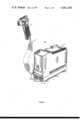
FIG. 1 illustrates a pictoral view of the total data entry hand-held unit and the portable recognition unit;
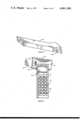
FIG. 2 is a plan view of the hand-held unit;
FIG. 3 is a block diagram of the basic electronics within the head portion of the hand-held unit;
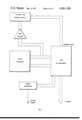
FIG. 4 is a block diagram of the keyboard and display unit;
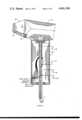
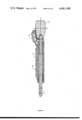
FIG. 5 is a sectional view of the hand-held unit illustrating the rotational interconnection within the body of the hand-held unit;
FIG. 6 is a side view of the hand-held unit;
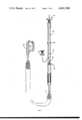
FIG. 7 is an illustration of the rotational unit illustrating the interconnection between the rotational unit, the portable recognition unit and internal circuitry of the hand-held unit;
FIG. 8 is a pictoral view of the light pipe used to transmit the cotnrol signal to and from the writ document;
FIGS. 9a and 9b are top and side views of the light pipe of FIG. 8.
In FIG. 1 is illustrated one embodiment of a total data entry optical character recognition wand and data entry unit according to the present invention. The hand-held unit is attached to the recognition electronics unit 2 by cable 3. The unit includes a provision for a magnetic tape cassette at 4. Switches 5 and 6 are used to turn the switch on and to control other functions of the system. The unit 2 may be provided with a strap connected to connectors 7, one of which is illustrated.
A more detailed drawing of the hand-held unit 1 is shown in FIG. 2. The unit consists of the read head 13 having a nose portion 14 which is attached by the rotating screw 15. Data is entered on keyboard 11 by keys 16. Information input into the system is displayed on the display 12. When the unit is in the process of reading or processing data, the display light 17 turns on showing that the system is busy.
The read head electronics 13 is illustrated in more detail in FIG. 3. The read head includes a 12 by 38 self scanning electronic array onto which is focused, by the lens, information read from the media which may be in the form of a document, or any printed material such as price tags, labels, etc. Lamps DS1 and DS2 illuminate the document for reading. In order to conserve energy and to turn off the power to most of the system while the read head is not actually reading a document, a control circuit is used. The emitter-sensor for the control circuit is illustrated at 19. An infrared signal is emitted from the unit 19, transmitted through the light pipe 18 to the document and reflected back through light pipe to the unit 19 if a document is being read. However, if no document is in the immediate vicinity of the read head, the infrared signal is not reflected, and the unit is not turned on. Such a control system is disclosed in U.S. patent application Ser. No. 729,531 filed Oct. 4, 1976.
During a read cycle, the array is continually scanned and driven by the cell clock driver and the row clock driver through the x and y registers. To synchronize the system, an end of frame signal and an end of line signal goes into a buffer sync logic unit and is sent back to the recognition electronic unit. The video output from the array is also sent back to the recognition unit. The status lamp LED 17 is on when the system is in use and data is being processed. The transmit signal line and the receive signal lines are connected to the transmit-receive unit 19 in order to transmit signals and receive reflections thereof to tell the unit to turn on when a document is being read or comes within the vicinity of the nose of the read unit.
The keyboard and display circuitry is illustrated in block form in FIG. 4. A 4 bit microprocessor is used to take the information keyed in from the keyboard and relay it back to the recognition unit electronics and in turn relay to the display the information which has been entered into the keyboard, read by the read head and processed by the recognition unit. Five lines are needed to go into the keyboard display unit. Battery power, ground and three lines which communicate between the 4 bit microprocessor and the electronics in the recognition unit.
The display and keyboard are standard available units which are commonly used in, for example, hand-held calculation. The four bit microprocessor may be, for example, a Texas Instruments TMS 1200 microprocessor chip.
Communication between the keyboard and display and the recognition unit 2 is accomplished with a serial message format. Recognition unit 2 includes a Fairchild F-8 microprocessor as disclosed in U.S. patent application Ser. No. 729,530, field Oct. 4, l976. The transfer of data from the recognition unit to the Keyboard Display Unit is initiated by raising the data lines to a logic "one". The TMS 1200 located in the Keyboard Display Unit generates eight clock pulses which have a 6 millisecond period to strobe data from the recognition unit to the Keyboard Display Unit. Table 1 list the message codes which are transmitted to the TMS 1200.
              Table 1                                                     ______________________________________                                    Serial Message Format F-8 to TMS 1200                                     Character/Function MSB        LSB                                         ______________________________________                                    0                  1000       0000                                        1                  1000       0001                                        2                  1000       0010                                        3                  1000       0011                                        4                  1000       0100                                        5                  1000       0101                                        6                  1000       0110                                        7                  1000       0111                                        8                  1000       1000                                        9                  1000       1001                                        --                 1000       1010                                        A                  1000       1011                                        F                  1000       1100                                        E                  1000       1101                                        C                  1000       1110                                         (Blank)           1000       1111                                         End of Message    1001       XXXX                                         Recall 1          1010       XXXX                                         Recall 2          1010       XXXX                                        Hold Message in TMS 1200                                                                     1100       1111                                        Release Hold       1100       0000                                        Force Attn Key     1101       1111                                        Release "Attn" Key Force                                                                     1101       0000                                        Blink Display      1110       XXXX                                        Clear Display      1111       XXXX                                        X=Don't Care                                                              ______________________________________
Key stroke data is transmitted in an interrupt mode to the recognition unit with the MSB (most significant bit) being transmitted first. The "ATTN" key code is all "ones" and is used to "wakeup" the system during power-save cycles. The Interrupt Strobe initiates a power ON cycle which maintains power for two seconds after the last keystroke. Table 2 list the various key codes which are transmitted to the recognition unit.
              Table 2                                                     ______________________________________                                    Serial Message Format From TMS 1200 to F-8                                Key Number   MSB           LSB                                            ______________________________________                                    1            0000          0000                                           2            0000          0001                                           3            0000          0010                                           4            0000          0011                                           5            0000          0100                                           6            0000          0101                                           7            0000          0110                                           8            0000          0111                                           9            0000          1000                                           10           0000          1001                                           11           0000          1010                                           12           0000          1011                                           13           0000          1100                                           14           0000          1101                                           15           0000          1110                                           ATTN         1111          1111                                           2nd Level    1111          1110                                           3rd Level    1111          1101                                           ______________________________________
To provide a universal hand-held unit which can be operated with either hand, the read head 13 can be rotated 180° so that it will point in either direction, left as shown in FIG. 5 or right (not illustrated). In order to provide a flexible connection between the keyboard display unit and the rotational shaft 21 through which the cable 3 passes to interconnect the read head with the recognition unit, it is necessary that the interconnection between the rotational unit be flexible to survive the rotation of 180°. This is accomplished by having a plug 22 connected to a receptacle 28 (FIG. 7) on the rotational shaft in the recessed portion thereof. Wires 23 are connected to the plug 22, looped around the rotational shaft and are connected with terminals on the circuit board on which the keyboard and display components are mounted. Five wires are required for the battery connection, (positive and ground) and the three wire input/output and clock data lines which are used to communicate between the keyboard display and the recognition unit 2. On the uppermost portion of shaft 21 is spring 24 which holds the read head 13 in contact with the top portion of the body 20. The lower end of spring 24 rests against and is confined by the circumferential ridge 35 on shaft 21. In order to rotate the read head, the read head is pulled away from the body 20 and rotated. Once the rotation is complete spring 24 will pull the read head back into place and hold it against the body 20. Accidental rotation of the read head is prevented by the display housing which extends up against one side of the read head when the read head is in its lower position. The read head must be pulled above the display before it can be rotated.
A more detailed view of the rotational unit is illustrated in FIG. 7 wherein the plug 22 is shown to mate with the connector 28 in recess 30. The spring 24, not illustrated (see FIG. 5), resides around the shaft at 25, the lead wires 27 extend up into the read head are interconnected to the electronics therein and extend out the other end for connecting with the recognition unit 2 through the cable 3 and plug 26.
It is possible that the cable 3 could be replaced with a receive/transmit unit in the hand-held unit and the recognition control unit. Small data relay transmit/receive units are well known and need not be covered in detail.
A more detailed view of the light pipe used in conjunction with turn on/off circuit is illustrated in FIGS. 8 and 9. FIG. 8 is a pictoral view of the light pipe and FIGS. 9a and 9b are side and top views.
Normally in light pipes of this nature, multifiber optical bundles are used. However, such a light pipe does not lend itself to high volume low cost production. The light pipe illustrated is made by injection molding with acrylic plastic. The light pipe is a homogeneous material as opposed to individual glass fibers. In order to impart a mirror finish to the sides of the light pipe the mold has a 16 microinch finish or better. One advantage of this type of light pipe is that only one inexpensive part is needed to perform the function.
The surfaces of the light pipe are highly polished providing essentially total internal reflection. Therefore, light energy in the pipe is conducted from input to output with relatively low loss. Referring to FIGS. 3 and 5, energy from the emitter/receiver sensor 19 is conducted through the light pipe to the document and reflected energy is transmitted back through the light pipe to the sensor. The sensor is mounted on the main read head frame while the light pipe is in the nose cone. The pipe permits removal of the nose without any electrical connection between the nose and the main read head body. The pipe may be used with any non coherent light where the energy source or receiver is remotely located.
In order to mount the light pipe without the exterior walls coming into contact with a surface which may interfere with the internal reflectivity of wall, mounts 29 are formed on the sides of the light pipe and are used to prevent undesirable contact of the walls with surrounding structures.
The above described invention relates to a total data entry hand-held unit which optically reads data. When the data cannot be read optically, the same unit having a keyboard therein is used to encode data into the system. The encoded data is displayed for verification.
In order to provide for either left hand or right hand use of the unit, the read head may be rotated through 180° so that it points either to the right or left of the keyboard display body. A rotational strain relief unit is provided within the body to permit internal connections with the keyboard and display without damaging the interconnections.
Having described the invention in connection with certain specific embodiments it is to be understood that further modifications may now suggest themselves to those skilled in the art and is intended to cover such modifications as fall within the scope of the appended claims.

Claims (7)

What is claimed is:
1. An interconnect device for mechanically and electrically joining two bodies in a rotational relationship, comprising a tubular member secured to one of said bodies and extending through the other of said bodies, a bias member cooperating with said tubular member to hold said bodies in an abutting relationship and electrical wires extend through said tubular member into each of said bodies in a manner to permit rotation of one of said bodies in relation to the other.
2. The device according to claim 1 wherein the tubular member has a region confined thereon by at least one circumferential ridge and said ridge confines one end of said bias member.
3. The device according to claim 1 wherein the bias member is a spring coiled around the tubular member.
4. The device according to claim 1 wherein said tubular member has a central circumferential portion removed to accommodate the mounting of an electrical connector therein.
5. The device according to claim 4 wherein said connector has a plurality of electrical wires connected thereto which are looped around the tubular member and are secured to electrical terminals.
6. A device for electrically and mechanically interconnecting two bodies comprising a tubular member, a bias member and a plurality of electric conductors, said tubular member rigidly fixed to one of said bodies and extending through the other of said bodies, said bias member positioned around said tubular member and holding said bodies in an abutting relation to one another, and said electric conductors extending from two ends of said tubular member and from a central portion of said tubular member.
7. The device according to claim 6, wherein the tubular member extends through the other of said bodies in a slidable relationship therewith.
US05/754,8521976-12-271976-12-27Rotational strain relief with inline plugExpired - LifetimeUS4061380A (en)

Priority Applications (12)

Application NumberPriority DateFiling DateTitle
US05/754,852US4061380A (en)1976-12-271976-12-27Rotational strain relief with inline plug
GB49621/77AGB1591447A (en)1976-12-271977-11-29Optical character recognition system
NL7713609ANL7713609A (en)1976-12-271977-12-08 OPTICAL CHARACTER RECOGNITION SYSTEM WITH MANUAL INPUT UNIT.
CA293,378ACA1089945A (en)1976-12-271977-12-19Tubular structure for rotationally interconnecting two bodies, both mechanically and electrically
DE19772757495DE2757495A1 (en)1976-12-271977-12-22 OPTICAL CHARACTER RECOGNITION SYSTEM
DK575977ADK575977A (en)1976-12-271977-12-22 OPTICAL DRAWING SYSTEM WITH HAND READER
SE7714672ASE7714672L (en)1976-12-271977-12-22 OPTICAL TEXT READER WITH SCANNING HAND PROBE AND BERBAR ELECTRONICS
NO774431ANO774431L (en)1976-12-271977-12-22 DEVICE FOR OPTICAL DRAWING RECOGNITION
FR7739075AFR2375666A1 (en)1976-12-271977-12-23 OPTICAL CHARACTER READING DEVICE
JP15662977AJPS5389628A (en)1976-12-271977-12-27Optical character recognizing device* full data entry unit* mutual connector* and photoconductor
JP1982120662UJPS5840434Y2 (en)1976-12-271982-08-10 Portable optical character recognition device
JP1982120663UJPS5840435Y2 (en)1976-12-271982-08-10 Portable optical character recognition device

Applications Claiming Priority (1)

Application NumberPriority DateFiling DateTitle
US05/754,852US4061380A (en)1976-12-271976-12-27Rotational strain relief with inline plug

Publications (1)

Publication NumberPublication Date
US4061380Atrue US4061380A (en)1977-12-06

Family

ID=25036637

Family Applications (1)

Application NumberTitlePriority DateFiling Date
US05/754,852Expired - LifetimeUS4061380A (en)1976-12-271976-12-27Rotational strain relief with inline plug

Country Status (2)

CountryLink
US (1)US4061380A (en)
CA (1)CA1089945A (en)

Cited By (11)

* Cited by examiner, † Cited by third party
Publication numberPriority datePublication dateAssigneeTitle
US4414546A (en)*1979-10-161983-11-08Robert G. BoormanApparatus for and methods of identifying horses by scanning their chestnuts
US4472010A (en)*1983-01-311984-09-18Parnello Nicholas GTwist-inhibiting appliance for connecting a cable of a telephone set or the like
US4716291A (en)*1984-05-161987-12-29Matsushita Electric Industrial Co., Ltd.Copying machine
US4772954A (en)*1984-03-011988-09-20Matsushita Electric Industrial Co., Ltd.Copying machine
US4800444A (en)*1986-02-051989-01-24Alps Electric Co., Ltd.Image scanner
US5130520A (en)*1982-01-251992-07-14Symbol Technologies, Inc.Narrow-bodied, single- and twin-windowed portable laser scanning head for reading bar code symbols
US5467458A (en)*1991-05-211995-11-14Sharp Kabushiki KaishaOptical character reader with internal memory and data processor
US5532469A (en)*1982-01-251996-07-02Symbol Technologies, Inc.Hand held bar code reader with input and display device and processor
US6149062A (en)*1988-01-142000-11-21Intermec Ip Corp.Interface with hand-held data capture terminal, proximity and label sensing, and enhanced sensitivity and power efficiency
US6232973B1 (en)*1998-08-072001-05-15Hewlett-Packard CompanyAppliance and method for navigating among multiple captured images and functional menus
US20020005747A1 (en)*2000-07-112002-01-17Mitsubishi Denki Kabushiki KaishaSemiconductor device with signal transfer line

Citations (2)

* Cited by examiner, † Cited by third party
Publication numberPriority datePublication dateAssigneeTitle
US3550061A (en)*1968-01-081970-12-22Eugene G SukupElectrical swivel connector
US3947817A (en)*1974-01-071976-03-30Recognition Equipment IncorporatedHand operated optical character recognition wand

Patent Citations (2)

* Cited by examiner, † Cited by third party
Publication numberPriority datePublication dateAssigneeTitle
US3550061A (en)*1968-01-081970-12-22Eugene G SukupElectrical swivel connector
US3947817A (en)*1974-01-071976-03-30Recognition Equipment IncorporatedHand operated optical character recognition wand

Cited By (11)

* Cited by examiner, † Cited by third party
Publication numberPriority datePublication dateAssigneeTitle
US4414546A (en)*1979-10-161983-11-08Robert G. BoormanApparatus for and methods of identifying horses by scanning their chestnuts
US5130520A (en)*1982-01-251992-07-14Symbol Technologies, Inc.Narrow-bodied, single- and twin-windowed portable laser scanning head for reading bar code symbols
US5532469A (en)*1982-01-251996-07-02Symbol Technologies, Inc.Hand held bar code reader with input and display device and processor
US4472010A (en)*1983-01-311984-09-18Parnello Nicholas GTwist-inhibiting appliance for connecting a cable of a telephone set or the like
US4772954A (en)*1984-03-011988-09-20Matsushita Electric Industrial Co., Ltd.Copying machine
US4716291A (en)*1984-05-161987-12-29Matsushita Electric Industrial Co., Ltd.Copying machine
US4800444A (en)*1986-02-051989-01-24Alps Electric Co., Ltd.Image scanner
US6149062A (en)*1988-01-142000-11-21Intermec Ip Corp.Interface with hand-held data capture terminal, proximity and label sensing, and enhanced sensitivity and power efficiency
US5467458A (en)*1991-05-211995-11-14Sharp Kabushiki KaishaOptical character reader with internal memory and data processor
US6232973B1 (en)*1998-08-072001-05-15Hewlett-Packard CompanyAppliance and method for navigating among multiple captured images and functional menus
US20020005747A1 (en)*2000-07-112002-01-17Mitsubishi Denki Kabushiki KaishaSemiconductor device with signal transfer line

Also Published As

Publication numberPublication date
CA1089945A (en)1980-11-18

Similar Documents

PublicationPublication DateTitle
US4158194A (en)Optical recognition system
US4128298A (en)Wand nose with integral light pipe for wand power turn-on
US4850009A (en)Portable handheld terminal including optical bar code reader and electromagnetic transceiver means for interactive wireless communication with a base communications station
US5047615A (en)Bar code printing or reading apparatus
US4061380A (en)Rotational strain relief with inline plug
US5198650A (en)Hands free/hand held bar code scanner
CA1252891A (en)Portable programmable optical code reader
US4935610A (en)Hand-held bar code reader
US4621189A (en)Hand held data entry apparatus
EP0262943B1 (en)Portable data scanner apparatus
EP0094571B1 (en)Self-contained portable data entry terminal
US5675139A (en)Interface arrangement for use with consumer devices
US5747785A (en)Integrated hand-held bar code processing device capable of automatic scan and data display
US5664229A (en)Accessory for conversion with housing with first connection includes host cable and host connector and second connection including a plug-in modular connector
US8235291B2 (en)PDA compatible text scanner
US20050150959A1 (en)Optical reader
GB1591447A (en)Optical character recognition system
US5745794A (en)System for converting signals into a predetermined data exchange format with plug-in modular connector having voltage, ground, data, and clock terminals for a scanning head
US8474720B2 (en)PDA compatible text scanner
US4782513A (en)Voice prompted bar code reading satellite system
KR940001686B1 (en)Computer system w/plural of memory unit
JP2829959B2 (en) Information transmission device
JPH10303463A (en) LED display element, LED display device, and information communication system
JPH08287109A (en)Data transfer system
JPH01213763A (en)Portable data terminal equipment

Legal Events

DateCodeTitleDescription
ASAssignment

Owner name:CHEMICAL BANK, A NY BANKING CORP.

Free format text:SECURITY INTEREST;ASSIGNORS:RECOGNITION EQUIPMENT INCORPORATED;PLEXUS SOFTWARE, INC.;REEL/FRAME:005323/0509

Effective date:19891119

ASAssignment

Owner name:RECOGNITION EQUIPMENT INCORPORATED ("REI") 2701 EA

Free format text:RELEASED BY SECURED PARTY;ASSIGNOR:CHEMICAL BANK, A NY. BANKING CORP.;REEL/FRAME:005439/0823

Effective date:19900731

ASAssignment

Owner name:FIRST NATIONAL BANK OF BOSTON, THE, AS AGENT, MASS

Free format text:SECURITY INTEREST;ASSIGNORS:RECOGNITION EQUIPMENT INC.;HYBRID SYSTEMS, INC.;RECOGNITION EQUIPMENT (JAPAN), INC.;REEL/FRAME:006344/0298

Effective date:19920326

ASAssignment

Owner name:RECOGNITION INTERNATIONAL INC., TEXAS

Free format text:CHANGE OF NAME;ASSIGNOR:RECOGNITION EQUIPMENT INCORPORATED;REEL/FRAME:006462/0646

Effective date:19930312


[8]ページ先頭

©2009-2025 Movatter.jp