US3973244A - Microcomputer terminal system - Google Patents
Microcomputer terminal systemDownload PDFInfo
- Publication number
- US3973244A US3973244AUS05/553,654US55365475AUS3973244AUS 3973244 AUS3973244 AUS 3973244AUS 55365475 AUS55365475 AUS 55365475AUS 3973244 AUS3973244 AUS 3973244A
- Authority
- US
- United States
- Prior art keywords
- character
- memory
- video
- data
- signal
- Prior art date
- Legal status (The legal status is an assumption and is not a legal conclusion. Google has not performed a legal analysis and makes no representation as to the accuracy of the status listed.)
- Expired - Lifetime
Links
Images




Classifications
- G—PHYSICS
- G09—EDUCATION; CRYPTOGRAPHY; DISPLAY; ADVERTISING; SEALS
- G09G—ARRANGEMENTS OR CIRCUITS FOR CONTROL OF INDICATING DEVICES USING STATIC MEANS TO PRESENT VARIABLE INFORMATION
- G09G1/00—Control arrangements or circuits, of interest only in connection with cathode-ray tube indicators; General aspects or details, e.g. selection emphasis on particular characters, dashed line or dotted line generation; Preprocessing of data
- G09G1/002—Intensity circuits
- G—PHYSICS
- G06—COMPUTING OR CALCULATING; COUNTING
- G06F—ELECTRIC DIGITAL DATA PROCESSING
- G06F13/00—Interconnection of, or transfer of information or other signals between, memories, input/output devices or central processing units
- G06F13/10—Program control for peripheral devices
- G06F13/12—Program control for peripheral devices using hardware independent of the central processor, e.g. channel or peripheral processor
- G—PHYSICS
- G06—COMPUTING OR CALCULATING; COUNTING
- G06F—ELECTRIC DIGITAL DATA PROCESSING
- G06F3/00—Input arrangements for transferring data to be processed into a form capable of being handled by the computer; Output arrangements for transferring data from processing unit to output unit, e.g. interface arrangements
- G06F3/01—Input arrangements or combined input and output arrangements for interaction between user and computer
- G06F3/048—Interaction techniques based on graphical user interfaces [GUI]
- G06F3/0487—Interaction techniques based on graphical user interfaces [GUI] using specific features provided by the input device, e.g. functions controlled by the rotation of a mouse with dual sensing arrangements, or of the nature of the input device, e.g. tap gestures based on pressure sensed by a digitiser
- G06F3/0489—Interaction techniques based on graphical user interfaces [GUI] using specific features provided by the input device, e.g. functions controlled by the rotation of a mouse with dual sensing arrangements, or of the nature of the input device, e.g. tap gestures based on pressure sensed by a digitiser using dedicated keyboard keys or combinations thereof
- G—PHYSICS
- G06—COMPUTING OR CALCULATING; COUNTING
- G06F—ELECTRIC DIGITAL DATA PROCESSING
- G06F3/00—Input arrangements for transferring data to be processed into a form capable of being handled by the computer; Output arrangements for transferring data from processing unit to output unit, e.g. interface arrangements
- G06F3/14—Digital output to display device ; Cooperation and interconnection of the display device with other functional units
- G06F3/153—Digital output to display device ; Cooperation and interconnection of the display device with other functional units using cathode-ray tubes
- G—PHYSICS
- G09—EDUCATION; CRYPTOGRAPHY; DISPLAY; ADVERTISING; SEALS
- G09G—ARRANGEMENTS OR CIRCUITS FOR CONTROL OF INDICATING DEVICES USING STATIC MEANS TO PRESENT VARIABLE INFORMATION
- G09G5/00—Control arrangements or circuits for visual indicators common to cathode-ray tube indicators and other visual indicators
- G09G5/22—Control arrangements or circuits for visual indicators common to cathode-ray tube indicators and other visual indicators characterised by the display of characters or indicia using display control signals derived from coded signals representing the characters or indicia, e.g. with a character-code memory
- G09G5/222—Control of the character-code memory
- G—PHYSICS
- G09—EDUCATION; CRYPTOGRAPHY; DISPLAY; ADVERTISING; SEALS
- G09G—ARRANGEMENTS OR CIRCUITS FOR CONTROL OF INDICATING DEVICES USING STATIC MEANS TO PRESENT VARIABLE INFORMATION
- G09G5/00—Control arrangements or circuits for visual indicators common to cathode-ray tube indicators and other visual indicators
- G09G5/34—Control arrangements or circuits for visual indicators common to cathode-ray tube indicators and other visual indicators for rolling or scrolling
- G09G5/343—Control arrangements or circuits for visual indicators common to cathode-ray tube indicators and other visual indicators for rolling or scrolling for systems having a character code-mapped display memory
Definitions
- the present inventionrelates in general to information terminal systems, and more particularly to a microcomputer terminal system.
- microcomputer terminal systemsemployed microprocessors.
- the microprocessordid not have its own memory, and had to either wait for the completion of the video refresh cycle or had to interrupt the video refresh cycle.
- the microprocessordid not wait for the completion of the video refresh cycle, it interrupted the video display on the cathode ray tube.
- the microprocessorhad to employ the system bus to read stored data.
- the microprocessorhad to interrupt other operations in the system operating from the system bus. Therefore, only one operation could take place at a given time.
- the cursorwas controlled by the microprocessor and the keyboard for placement in the memory for the input/output devices.
- the microprocessordid not have exclusive control over the placement of the cursor in the memory for the input/output devices.
- the microprocessordid not know the location of the cursor at all times. This resulted in more complicated programming procedures.
- An information terminal systemin which the video circuits have a first set of shift registers receiving character data from a memory for the input/output devices and a second set of shift registers receiving character data from the first set of shift registers and advancing character data to a character generator for displaying data on the screen of a cathode ray tube.
- the first set of shift registersreceives the character data to be displayed in the succeeding row on the cathode ray tube screen.
- the first set of shift registerscan delay loading of the character data from the memory to the first set of shift registers to give priority to a microprocessor.
- the microprocessorcan operate at its own rate and obtain priority over the use of the system bus without interrupting the screen refresh cycle or the cathode ray tube display.
- a feature of the present inventionis that the microprocessor has its own memory. Thus, it can store data and read data from its memory without using the system bus. Accordingly, more than one operation can take place at a given time.
- microprocessorhas exclusive control over the cursor location and the placement of the cursor in the memory for the input/output devices. In this manner, the microprocessor knows the location of the cursor at all times to simplify programming procedures.
- keyboardhas direct access to the memory for the input/output devices.
- character data from the keyboardcan enter the memory for the input/output devices without intervention by the microprocessor or the presence of the microprocessor.
- the microprocessorperiodically reads the memory for the input/output devices to find the character data in the memory for the input/output devices and will write the character data in the memory for the input/output devices at the cursor location, which cursor location is at the exclusive control of the microprocessor.
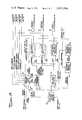
- FIG. 1is a block diagram of a microcomputer terminal system embodying the present invention.
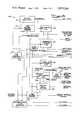
- FIG. 2is a block diagram of a keyboard and data input circuits employed in the microcomputer system shown in FIG. 1.
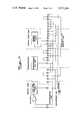
- FIG. 3is a block diagram of a microprocessor and associated circuits employed in the microcomputer terminal system shown in FIG. 1 illustrated with a read only segment of a microcomputer memory.
- FIG. 4is a block diagram of the read/write memory control circuits for the input/output devices employed in the microcomputer system shown in FIG. 1.
- FIG. 5is a block diagram of timing circuits employed in the microcomputer system shown in FIG. 1.
- FIG. 6is a block diagram of video circuits employed in the microcomputer system shown in FIG. 1.
- FIG. 7is a diagrammatic illustration of bus request logic circuits.
- FIG. 1Illustrated in FIG. 1 is a microcomputer terminal system 20 embodying the present invention, which includes a microcomputer 30, input/output devices 35 and a system bus 40.
- the microcomputer 30comprises a microprocessor 41 and a memory 42, which memory 42 includes a read only segment.
- the microprocessor 41is of the type manufactured by Intel Corporation of Santa Clara, California, such as an Intel 8008.
- a programis stored in the read only memory 42 and video display information is stored in the read/write segment of a memory 50.
- the video display information stored in the read/write segment of the memory 50is repeatedly read out of the memory to refresh the video data signals applied to a conventional cathode ray tube display 45 of the input/output devices 35.
- the cathode ray tube displaymay be of the type manufactured by the Miratel Division of Ball Brothers Research Corporation as Model 1M1009.
- the input/output devices 35include a conventional keyboard 46.
- the read/wirte memory 50 for the input/output devices 35is connected to the system bus 40 and to a data input circuit 51 for the keyboard 46 and to a data output video circuit 52 for the cathode ray tube 45.
- the read/write memory (RAM) 50is a 2048X1 bit type with eight integrated circuits connected in parallel for reading and writing 8-bit words and is of the type manufactured by Advanced Memory Systems, Inc. of Santa Clara, California, as the AMS6003.
- the input/output devices 35communicate with the microprocessor 41 through the system bus 40. Additionally, all data between the input/output devices 35 and the microprocessor 41 are communicated through the read/write memory 50.
- the read/write memory 50can be read and written into either by the microprocessor 41 or by the input/output devices 35.
- the keyboardproduces 8-bit bytes of standard ASCII coded alphanumeric or control data to an operator depressing a key on the keyboard 46.
- This dataalong with a strobe signal, is entered into the data input circuit 51, which, in turn, advances the data into the register segment of the read/write memory 50 for storage.
- the data output from the register segment of the memory 50is 8-bit bytes as is the data from the video display segment of the memory 50 to the data output video circuit 52.
- the microprocessor 41reads the data from the register segment of the memory 50 and writes the data into the video display segment of the memory 50 to be read by video circuits 52 for the cathode ray tube 45.
- the input/output devices 35communicate with the microcomputer 30 in 8-bit byte format to either supply or receive data and instructions from the microcomputer 30.
- the keyboard 46produces data and instructions for the microprocessor 41 and the cathode ray tube display 45 receives data and instructions from the microprocessor 41.
- the data and strobe signal stored in the register segment of the memory 50are available to the microprocessor 41 for processing.
- the microprocessor 41As the microprocessor 41 completes a data processing sequence, it writes an ASCII coded alphanumeric character and control information back into the video refresh segment of the memory 50 for display on the cathode ray tube screen 45 through the data output video circuits 52.
- the data output video circuits 52repeatedly read this information out of the video refresh segment of the memory 50, convert the ASCII coded characters into a video signal, use the control information to determine the location at which the character is to be displayed on the cathode ray tube screen 45 and enter a composite video signal to the cathode ray tube display 45.
- the microprocessor 41can read the character data stored in the read only segment of the memory 42 without going through the system bus 40.
- the bus 40can be employed by an input/output device during this event to read or write from the read/write memory 50.
- a 14-bit addressis employed. The address is determined in part by each memory and in part by decoding circuitry.
- a key on the keyboard 46When a key on the keyboard 46 is depressed, it causes a conventional keyboard encoder circuit 60 of the data input circuit 51 (FIG. 2) to produce an 8-bit code in ASCII format.
- This 8-bit codeis buffer stored in keyboard input registers 61 and 62 of the data input circuit 51 for entry to the working register segment of the read/write memory 50.
- the character data stored in the register segment of the memory 50is periodically monitored by the microprocessor 41 and the processing by the microprocessor commences.
- the microprocessor 41enters the character data read from the register segment of the memory 50 into the video display segment of the memory 50 at a location corresponding to the location of a cursor appearing on the cathode ray tube screen 45 simultaneously therewith.
- the microprocessor 41enters the cursor signal into the video display segment of the memory 50 to be read by the video circuits 52 for locating the cursor on the screen of the cathode ray tube display 45.
- the location of the cursor in the video display segment of the memory along with the other information in the video display segment of the memory 50is read by the data output video circuit 52, translated into a video signal and displayed as a dot pattern on the screen of the cathode ray tube 45.
- a keyboard entrymay also be one of 32 control characters.
- a control charactermay involve the relocation of the cursor and moving or erasure of a display segment in the screen of the cathode ray tube display 45. If the control character is a command to erase the entire screen of the cathode ray tube display 45, the microprocessor loads blank characters in all locations of the video display segment of the memory 50 and also changes the cursor location address in the register segment of the memory 50 to the value for home position. Then, during the next video refresh cycle, the data output video circuits pick up this revised information, display a blank screen on the cathode ray tube display 45 and place the cursor at home position.
- all the working registers thereofare 8-bit wide. Certain of the registers hold information used actively by the microprocessor 41 during data processing. Additional registers communicate with the input/output devices 35 and also may communicate with the microprocessor 41.
- cursor address registersin the memory 50 to identify the locations of the cursor on the cathode ray tube display 45. One register identifies the cursor row and another register identifies the cursor column. The cursor address registers are loaded by the microprocessor 41 and are read by the data output video circuits 52. Additionally, there are keyboard input character registers which receive character data from the keyboard 46 through the data input circuits 51. The keyboard registers of the memory 50 are read by the microprocessor 41.
- the keyboard registers of the memory 50contain eight significant bits.
- the standard ASCII alpha-numeric characters, punctuation marks and symbolsare defined by the first seven bits, and the eighth bit is used to identify signals from the numeric upper case codes of selected control characters and codes generated by selected keys while the CTRL (control) key is held depressed.
- the video display segment of the memory 50stores one byte for every character position on the cathode ray tube screen 45.
- the microprocessor 41processes that character and writes it into the video display segment of the memory 50. From there, the stored character data in the video display segment of the memory 50 is read out periodically by the data output video circuits 52, changed into video signals and displayed on the screen of the cathode ray tube display 45.
- the microprocessor 41writes into the video display segment of the read/write memory 50 as needed to alter the display image and the data output video circuits continously read out the character data stored in the video display segment of the memory 50.
- the video display segment of the memory 50stores 1920 bytes of data representing the 80 characters on each of the 24 display lines for the cathode ray tube screen 45.
- An additional 80 bytesare stored in the video display segment of the memory 50 for the 25th line on the cathode ray tube screen 45 to identify the current operating mode.
- Any byte stored in the video display segment of the memory 50is interpreted by the data output video circuits 52 either as a data character or a control code. If a byte is interpreted as a data character, the character is displayed on the screen of the cathode ray tube 45. If a byte is interpreted as a control code, it specifies to the data output video circuits 52 the display effect which applies to all succeeding data characters. Whether a given byte is a control code is determined by its three most significant bits.
- the microprocessor 41performs all program controlled data processing functions. For example, it can read or write data into the read/write memories, communicate with input/output devices, and establish initial operating conditions.
- the input data buffer register 65receives input data from the memory 50 over the system bus 40 for entry into the microprocessor 41.
- the entry into the microprocessor 41is made through a data input selector 75.
- the input data over the system bus 40is generated from the keyboard 46 and enters the system bus 40 through the register memory segment of the memory 50 by way of the data input circuit 51.
- the microprocessor 41sends data over the bus 40.
- output data buffer register 66receives output data from the microprocessor 41 for entry to the system bus 40 through an AND gate 78.
- Address buffer register 67communicates addresses between the microprocessor 41 and the system bus 40 through AND gates 76 and 77.
- a timing and control logic circuit 68synchronizes the data, address and instruction input/output operations with the internal state of the operating cycle of the microprocessor 41 and with the various output commands to the system bus 40.
- the microprocessor 41enters the lower order 8 address bits into the address buffer register 67. Simultaneously, the timing and control logic circuit 68 enters the load strobe into the address buffer register 67.
- the higher order six address bits and two control bits, which define the write operationare loaded into the address buffer register 67 by the microprocessor 41. The higher order bits are clocked into the address buffer register 67 by the timing and control logic circuit 68 by the load strobes.
- the timing and control logic circuit 68supplies enabling signals to the gates 76-78.
- bits 14 and 15are decoded in the timing and control logic circuit 68 to set a flip-flop therein, not shown, that defines the write operation.
- the setting of the write flip-flopis synchronized with the trailing edge of the system memory clock 3 from the bus 40. The trailing edge defines the end of one memory cycle and the beginning of the next memory cycle.
- the output of the write flip-flopis used to generate a microprocessor bus request signal, an address bus enable signal, and a write data command. These signals are used to gate addresses and data from the registers 66 and 67 through the gates 76-78 over the system bus 40 to complete the write operation.
- the microprocessor 41When the microprocessor 41 is performing a read operation, it selects either data from the memory 50 through the system bus 40 or data from the read only sgement of the memory 42, in which case data is read directly from the memory 42 without the use of the system bus 40. Thus, the input/output devices 35 may use the system bus 40 to perform another operation while the microprocessor 41 reads the read only segment of the memory 42.
- the read operationis similar to the write operation.
- the microprocessor 41enters the lower order 8 address bits into the address buffer register 67.
- the timing and control logic circuit 68enters the load strobe into the address buffer register 67.
- the higher order six address bits and two control bits, which define the read operationare loaded into the address buffer register 67 by the microprocessor 41.
- the higher order bitsare clocked into the address buffer register 67 by the timing and control circuit 68 by the load strobes.
- the bits 14 and 15are decoded in the timing and control logic circuit 68 to set a read flip-flop, not shown, which defines the read operation.
- the setting of the read flip-flopis synchronized with the trailing edge of the system memory clock 3 and the state T 2 of the cycle of the microprocessor 41.
- addresss bits 8 through 13are supplied to a read only memory address decoder 80 by the address buffer register 67. If the bits 14 and 15 are decoded by the address decoder 80 into a read only memory address, a read only memory selected signal is generated for entry into the data input selector 75.
- the read only memory selected signalcauses the data input selector 75 to switch to the read only memory data line and causes an output gate (not shown) from the output of the read flip-flop, not shown, to be turned off.
- the read operation command signalssuch as the microprocessor bus request, addresses bus enable, or read command are inhibited by the selected signal produced by the address decoder 80 and applied to the timing and control logic circuit 68 through an inverter circuit 81.
- the program data from the read only memory segment of the memory 42is read by the microprocessor 41 through the data input selector 75.
- read operation command signalsare generated by the timing and control logic circuit 68 and the address buffer register 67 output signals are gated through the gate 76 and 77 to the system bus 40 along with a read command and microprocessor bus request from the timing and control logic circuit 68.
- a read strobeis generated by the timing and control logic circuit 68 and used to load data from the read/write memory 50 into the input data buffer register 65 over the system bus 40.
- the data input selector 75enables data on the system bus 40 to pass through the input data buffer register 65, through the data input selector 75 and into the microprocessor 41 over its input/output lines to complete the read operation.
- Illustrated in FIG. 4are the read and write control circuits for the read/write memory 50.
- Datacan either be written into the memory 50, read out of the memory or the cells of the memory 50 can be refreshed.
- Datacan enter into the memory 50 either from the system bus 40 through a data input selector 90 or from the keyboard 46 through the data input circuit 51 and through the data input selector 90.
- Datacan be read out of the memory 50 either through the system bus 40 and a data output gate 92 or directly to the data output video circuits 52.
- During a refresh cyclethere is no alteration of the data of the read/write memory 50.
- data switching and control circuitsare employed.
- three memory clock pulses, clock 1, clock 2 and clock 3, an address, and a write commandare supplied to the memory 50.
- the clock pulses, clock 1, clock 2 and clock 3,are supplied to the memory 50 through a clock gate 98.
- the addressis supplied over the system bus 40 through an address selector 94.
- a write commandis supplied either from the system bus 40 through an OR gate 95 or from the keyboard 46 and the data input circuit through the OR gate 95. If the data comes from the system bus 40, then the address comes from the system bus 40.
- the data input selector 90 and the write/read memory address selector 94are used to route the data and the address to the memory. The data is entered through the selector 90 and the address is entered through the selector 94.
- the upper three bits (11, 12 and 13) of the address line from the microprocessor 41enter through the system bus 40 and are decoded by an address decoder 96 to generate a select signal.
- the select signaladvances through an OR gate 97 and enables a gate 98 to gate the three clock pulses through the gate 98 to be applied to the memory 50.
- the write commandis routed from the microprocessor 41 through the system bus 40 and through the OR gate 95 to be applied to the memory 50.
- the data input selector 90 and the address selector 94are switched to sense their alternate input signals and the character refresh signal is used to control the gating of the clock pulses.
- the writing of the keyboard datais performed during video refresh cycles.
- the write commandis applied to the memory 50 from the keyboard 46 through the data input circuit 51 (FIG. 2) and through the OR gate 95.
- the input datais produced by the keyboard 46 and enters the memory 50 by way of the data input circuit 51 and the data input selector 90.
- the addressenters the memory 50 for bits 0 through 10 from the system bus 40 and through the address selector 94.
- the character refresh signalpasses through the OR gate 97 to enable the clock gate 98 to gate the three clock pulses for application to the memory 50 through the clock gate 98.
- the data output from the memory 50can either enter the system bus 40 through the data output gate 92 or can go directly to the data output video circuits 52. If the data is to go directly onto the system bus 40, a read address is supplied from the microprocessor 41 through the system bus 40. The data is then decoded and routed in the manner described for the write cycle. More specifically, the upper three bits (11, 12 and 13) of the address line from the micrprocessor 41 enter through the system bus 40 and are decoded by the address decoder 96 to generate a select signal. The select signal advances through the OR gate 97 and enables the clock gate 98.
- the select signal from the address decoder 96is used to gate the clock pulses through the clock gate 98 to be applied to the memory 50.
- the read data command from the system bus 40is used to enable the data output gate 92 for placing the data output from the memory 50 onto the system bus 40.
- the character refresh signal from the video circuitsis used to route the output from a read/write memory address counter 99 to the read/write memory 50 by way of the address selector 94.
- the character refresh signalalso gates the clock pulses through the OR gate 97 and the clock gate circuit 98.
- the output of the memory 50is now loaded directly into one of the video circuit registers of the data output video circuit 52.
- the memory refresh signalis used by way of the OR gate 97 to gate clocks 1, 2 and 3 through the clock gate 98. Additionally, the memory refresh signal is used to route the address bits through the address decoder 96 and the address selector 94 to be applied to the memory 5.
- the timing circuits 100for the microcomputer terminal system 20.
- the timing circuits 100provide the source for the various clock frequencies used in the microcomputer terminal system 20 and also the timing circuits 100 control the refreshing of the dynamic memories stored in the memory 50.
- the timing circuits 100additionally relate to the generation of refresh signals and the use of the refresh signals during refresh cycles.
- the timing circuit 100 ccomprises a crystal oscillator 101.
- the oscillator 101produces clock pulses at the nominal rate of 15.1488 MH z .
- the clock pulses at the nominal rate of 15.1488 MH zgo over the system bus 40 for the system bit clock pulses, which determines the time duration or width of a picture element in the data characters displayed on the screen of the cathode ray tube 45.
- the output of the crystal oscillatoris also received by a divide by ten bit counter circuit 102.
- the output signal of the bit counter 102goes over the system bus 40 as shift clock pulses or character clock pulses and determines the width of the characters displayed on the screen of the cathode ray tube 45.
- the output of the bit counter 102is applied to a vertical drive decoder 103.
- the output of the bit counter 102is also received by a divide by 96 character counter 104.
- the output of the character counter 104goes over the system bus 40 as shift gate pulses and as clock pulses to control the horizontal drive and horizontal blanking of the cathode ray tube display 45.
- the output of the character counter 104is received by a divide by 10 scan line counter 105.
- the output of the scan line counter 105goes over the system bus 40 to be applied to the cathode ray tube display 45 to count scan lines, such as four scan lines.
- the scan line counterapplies an enable signal to a divide by 25 row counter 106.
- the output clock signal of the character counter 104is also applied to the row counter 106.
- the row counter 106is enabled, the clock pulse output therefrom is received by a row counter decoder 107.
- the row counter decoder 107presets the counter of the row counter 106, sends a vertical blanking signal of the system bus 40 for the cathode ray tube display 45, and sends a system reset signal over the system bus 40. Additionally, the row counter 106 sends a video field signal over the system bus 40 for the cathode ray tube display 45.
- the field signaldetermines, during any given field, when the keyboard character code is written into the memory 50.
- the row counter 106also enables the vertical drive decoder 103.
- the vertical drive decoder 103When the vertical drive decoder 103 is enabled, the clock pulse signal output derived from the bit counter 102 and in the output of the vertical drive decoder 103 is applied to the cathode ray tube display 45 over the system bus 40.
- a two-stage, six bit counter or a column address counter 110is employed.
- the input side of the column address counter 110is connected to the output of the character counter 104.
- the ouput of the column address counter 110continuously generates the same refresh addresses, such as the lower six address bits of the memory addresses, for entry onto the system bus 40.
- the lower six addressesdefine one of 64 cell columns within a given register in the read/write memory 50.
- the six bitsare gated out with memory refresh request onto the address bus of the system bus 40 and routed to all the registers of the read/write memory 50.
- the memory refresh request signalis generated by the output of the character counter 104 through a read/write memory refresh control circuit 111 that is operated by the microprocessor bus request.
- the memory refresh signalis also used to enable all read/write memory registers and supply the necessary clock signals so that the same cell columns of the memory 50 are refreshed simultaneously.
- the output of the character counter 104 and the output of the bit counter 102are applied to a read/write memory clock generator 112 to send over the system bus 40 the phase 1 clock pulses and the phase 2 clock pulses.
- the output pulses from the bit counter 102 and the output pulses from the character counter 104are applied to a microprocessor clock generator 113 for generating the clock 1 pulses, the clock 2 pulses and the clock 3 pulses for the system bus 40 and for gating through the clock gate 98 (FIG. 4).
- the keyboard encoder circuit 60 of the data input circuit 51(FIG. 2) generates an 8-bit character code when a key on the keyboard 46 is depressed.
- the output of the key encoder circuit 60is ready to supply a code for writing into the keyboard input character registers 61 and 62.
- the bits 1-4are received by the keyboard input register 61 and bits 5-8 are supplied to the keyboard input register 62.
- the closed key switch contactsare sensed by the keyboard encoder 60.
- the keyboard encoder 60continuously scans all key switch locations and when it senses a closed contact, it responds by producing a 10-bit code representative of the depressed key.
- the scanning rate for the keyboard encoder 60is determined by an oscillator 115 of the data input circuit 51, and the code output of the keyboard encoder 60 is synchronous with a signal pulse character strobe, which character strobe pulse is also derived from the output of the oscillator 115.
- the keyboard encoder circuit 60also produces a key down logic level signal.
- the reset key on the keyboard 46does not generate a code, but simply provides a grounded return switch signal on the reset signal line.
- the 10-bit code output from the keyboard encoder 60consists of an 8-bit word supplied to the read/write memory 50 from the keyboard output registers 61 and 62 through a data input selector 124, and two control bits used by the keyboard 46 and its associated circuitry.
- the 8-bit wordincludes a 7-bit ASCII code and the eighth bit is used to identify input signals from the numeric pad, five upper case codes of selected control characters and 26 codes generated by the selected keys while the CTRL (control) key is depressed.
- the ninth bitis a logic 0 for the ALL CAPS (upper case) key on the keyboard 46.
- the tenth bitis inserted with all codes that represent a repeatable key.
- Bits 6, 7 and 8are routed through a control and capital logic circuit 125 to the keyboard input register circuit 62 for entering into the read/write memory circuit 50 through the data input selector 124.
- the bits 6, 7 and 8are modified through the CTRL (control) and ALL CAPS (upper case) logic circuit 125 by either depressing the CTRL key or depressing the ALL CAPS key of the keyboard 46. If the CTRL key is depressed, bits 6, 7 and 8 are forced to 001 in all codes in which bit 7 is output as a logic 1 level from the keyboard encoder 60. If the ALL CAPS key is depressed, bit 6 is forced to a logic 0 in all codes that represent letters of the alphabet, i.e. those codes in which bit 9 is a logic 0.
- the keyboard input registersreceive both the character code data and the character strobe pulse from the encoder 60, but not concurrently.
- the character strobe pulseis also received by an OR gate 126 and then is stored in a character strobe flip-flop circuit 127.
- the output of the flip-flop circuit 127is connected to one input of an AND gate 128.
- the other input of the AND gate 128receives a write keyboard gate signal, which comes from the system timing circuit 100 (FIG. 5) as a video field signal.
- the video field signaldetermines during any given field when the keyboard character code is written into the memory 50.
- the writing in the memory 50occurs as part of the video refresh cycle once every video scan field.
- the AND gate 128produces a select signal to cause the data input selector 124 to enter the keyboard character code data from the registers 61 and 62 into the read/write memory 50 and also to supply a write command to the memory 50.
- the write addressis supplied from the address counter 99 (FIG. 4) to the memory circuit 50.
- a character code writingmay be repeated in the memory 50. This occurs when a key is depressed at least a predetermined time interval, unless the key by its code is specifically excluded.
- a key down signalis produced by the encoder 60.
- the key down signalactivates a timer 130. After a predetermined time interval has elapsed, a pulse is transmitted through an AND gate 131 when a bit 10 signal is present at the other input of the AND gate 131.
- the bit 10 signalis present when the code stored in the keyboard input registers 61 and 62 is a repeatable code. If it is, a true input is provided to the AND gate 128 through the OR gate 125 and the flip-flop circuit 127.
- the output of the character strobe flip-flopis in a set state. Thereupon, the succeeding write keyboard gate signal on the AND gate 128 causes the character code to be written into the memory 50. If an operator holds the key down in a depressed position, the write cycle will be repeated once every video scan field, provided the write keyboard gate signal is true.
- the cathode ray tube 45has a non-interlaced video raster which is scanned in a horizontal direction from left to right and in a vertical direction from top to bottom.
- Each frameconsists of two fields, A and B, with 263 scan lines per field, of which 250 are visible. The remaining scan lines occur during vertical retrace time.
- the two fieldsare scanned on the cathode ray tube display 45 one after another in such a manner that the 250 visible scan lines in one field physically overlay those of the other field.
- the rate at which the fields are scannedis 60 per second, and they appear to an operator as a single display.
- Each scan lineis divided horizontally into 800 elements, each element representing one bit as it is read out of the video display segment of the read/write memory 50.
- Each alphanumeric charactergenerally occupies an area ten picture elements wide by ten picture elements high. On the area of 10 ⁇ 10 picture elements, or dots, any character may be displayed by producing individual dots from the cathode ray tube beam.
- FIG. 6Illustrated in FIG. 6 is a block diagram of the data output video circuits 52.
- the video circuits 52read binary coded digital information out of the read/write memory 50 and generate therefrom video signals.
- the video signalsalong with horizontal and vertical blanking pulses are applied to the cathode ray tube display 45.
- the video signals and blanking pulsesare combined with horizontal and vertical drive signals, which are supplied from the system timing circuit 100 (FIG. 5) to drive the cathode ray beam.
- It is the vertical drive decoder 103that generates the vertical drive signals for physically overlaying adjacent scan lines for every other scan line on the screen of the cathode ray tube display 45 in a well-known manner.
- the video circuits 52read 80 characters out of the memory 50, and prior to the beginning of every video scan field, the video circuits 52 read such information at the location of the cursor on the screen of the cathode ray tube display 45.
- the line of 80 characters stored in the memory 50starts the video display on the screen of the cathode ray tube.
- the binary coded character datais converted into a video signal by the character generator 152 that represents the character dot pattern on the screen of the cathode ray tube display 45 and is combined with the cursor to produce a video signal as a TTL level video signal.
- the video circuits 52employ a series of registers 150 and 151, which store data output from the memory 50; a character generator 152 that generates the dot pattern for all characters displayed on the screen of the cathode ray tube display 45; and supporting circuits that generate various memory addressing, timing and access control signals.
- a system reset signalis supplied from the row count decoder 107 (FIG. 5) and the row counter 106 of the timing circuits 100 to a timing and control logic circuit 153 (FIG. 6).
- the system reset signalpresets the address counter 99 in preparation for the start of a reading sequence at a specified memory address.
- a memory cycle requestis generated by the timing and control logic circuit 153 and a read command is generated by timing and logic circuit 68 to begin the reading.
- the memory cycle request signalis applied to the memory address selector 94 for entering the memory address in the read/write memory 50.
- the read/write memory 50Six registers of the read/write memory 50 are read out in sequence, with the read/write memory address counter 99 being advanced one counter every time a readout is completed, and a new memory cycle is again generated before each new readout.
- the first two registers of the memory 50 readare those containing the cursor row and column addresses. This data is entered into two registers of a cursor generator 155 and determines the row and character column at which the cursor is to appear on the screen of the cathode ray tube 45 during the succeeding screen field.
- a write operationis now performed at another predetermined location in the memory 50, if a character input from the keyboard encoder 60 is available.
- the write operationhas been heretofore described in detail.
- a register of the memory 50 at the next predetermined locationis read.
- the next locationis read from the register of the memory device 50 and the contents of the register are decoded by a control decoder 156 and stored in a display effects register 157. This data determines whether the display is started with an other-than-normal display effect on the screen of the cathode ray tube 45.
- the page start row addressis read out of a predetermined location in the memory 50 and entered into a scroll register 158. Additionally, the address of the location received by the control decoder 156 has been stored in an adder circuit 160 and is entered into the address counter 99. This completes the initial read/write memory 50 reading sequence and now all preconditions are established for the displaying of the next full video scan field on the screen of the cathode ray tube display 45. The address of the first row of 80 characters to be displayed is contained in the address counter 99 and the reading of display data begins with the next available memory cycle.
- the reading of the first 80 charactersis performed starting with the first available memory cycle after reading of the location in the memory 50 of the page start row address.
- the reading of the first 80 charactersis completed during the vertical retrace period of the screen of the cathode ray tube display 45.
- the 80 charactersare serially loaded into the shift register 150 and from the shift register 150 loaded into the shift register 151.
- each of the 80 charactersis consecutively transferred from the shift register 151 into the character generator 152.
- the output of the character generator 152produces the first (topmost) scan line dot pattern signal for a video output logic circuit 165.
- the video signal, the cursor signal and the blanking circuitare combined for application on the cathode ray tube display 45.
- the combined composite video signal produced by the video logic circuit 165is combined with the vertical and horizontal drive signals for producing an image on the screen of the cathode ray tube display 45. This results in the cathode ray tube display 45 receiving the dot patterns for each of ten scan lines of a data character.
- the character stored in the shift register 151are applied to the control decoder 156.
- the wordis interpreted as a special display effects code.
- the character generator 152does not respond to the display effects register 157 and the data from the display effects register 157 represents special display effects information for entry into the video output logic circuit 165 for application to the cathode ray tube display 45.
- the charactersare recirculated from the output of the shift registers 151 to the input of the shift registers 151. Therefore, at the completion of scan line 1 on the screen of the cathode ray tube display 45, the first scan line dot pattern for each of the 80 characters has been advanced by the character generator 152 to the video output logic circuit 165 and the shift register 151 has fully recirculated the 80 characters. Hence, the contents of the character data are the same as they were before the start of scan line 1.
- the sequence of data to the character generator 152 and the recirculation of data in the shift register 151are repeated.
- the character generator 152produces the dot pattern for scan line 2 of all 80 characters. This sequence is repeated a total of 10 times, whereby the character generator 152 produces the dot pattern for all 10 scan lines for each character.
- the shift register 150is being loaded with the next 80 characters for the second row of the display on the cathode ray tube 45.
- scan line 10 of row 1the recirculation of the data in shift register 152 is stopped and in lieu thereof the data from the shift register 150 is transferred into the shift register 151 in preparation for scan line 11.
- the scan line 11marks the top of the second display row.
- the sequence of recirculating the data of shift register 151, while reloading the shift register 150, and the transfer of data during scan line 10takes place during every video display row on the sceen of the cathode ray tube. This takes place a total of 25 times. Allowing for interruptions by the microprocessor 41 and the read/write memory refresh cycle requests from the timing and control logic 153, the reloading of the shift register 150 takes place during the first 2.5 scan lines of the first display row on the screen of the cathode ray tube display 45. Therefore, during the last 7.5 scan lines of the first row, the shift register 150 is dormant and memory cycles are avilable to other devices.
- the character generator 152(FIG. 6) produces each vertical leg dot signal of a character dot pattern in a plurality of dots extending in the horizontal direction, which in the preferred embodiment is a pair of horizontally aligned dots for each vertical leg dot signal of a character dot pattern.
- a conventional and well-known character generatoris used, employing known techniques for programming internally the character generator in producing the dot pattern signal.
- the character fontwas formed in a stairstep manner employing vertically aligned single column of dots to form the vertical leg of a character.
- the vertical legs of a characterappeared dimmer on the screen of a cathode ray tube than the horizontal parts of a character.
- the horizontally aligned dots of a characterappeared brighter on the screen of a cathode ray tube than the vertically aligned dots of a character.
- the character fontis formed in a stairstep manner employing, however, a plurality of horizontally aligned dots for forming the vertical legs of the character font (FIG. 1). Therefore, each vertical leg includes a plurality of vertical columns of dots adjacent one another to extend the vertical leg in the horizontal direction.
- the character displayed on the screen of the cathode ray tube 45appears as a clear, bold image without making the character appear coarse and without resorting to an expensive cathode ray tube display.
- the vertical legsnow appear on the screen of the cathode ray tube with a brightness approximating the horizontal parts of the character.
- the character finenessis maintained because the stairstep formation of parts are the same as heretofore employed in forming a character font.
- the output of the character generator 152is entered into the video logic circuit 165, where it is combined with the cursor signal, mixed with horizontal and vertical blanking information, and applied to the cathode ray tube display 45 as a video signal to be displayed thereon.
- the area of each dot element forming the character displayed on the screen of the cathode ray tube 45is reduced.
- the dot elements of the video dot pattern signal applied to the cathode ray tube display 45 by the video output circuit 165are subjected to a chopping action. Stated otherwise, the video elements of the video dot pattern signal are reduced so that each dot appearing on the screen of the cathode ray tube display 45 is of a lesser area to provide an image in which the intensity of illumination of a character is less.
- the chopping of each video element of the video dot pattern signal into a half-elementgives the visual effect of a dim character.
- dim characterswere generated by reducing the amplitude of the video signal.
- character dataare stored in the shift registers 150 and 151 from the memory 50 and are entered into the character generator 152 from the shift registers 151 from which is produced a video dot pattern signal.
- the video dot pattern signalis received by the video output circuit 165 in which it is combined with a cursor signal to form a composite video signal for application to the cathode ray tube display 45.
- the control decoder 156senses the character code stored in the shift registers 151.
- the character codeis stored in the memory 50 by the microprocessor 41 for entry into the shift registers 150 and 151.
- the control decoder 156senses a predetermined combination code in the shift registers 151, it enables the AND gates in the video output circuit 165 to gate the video elements of the video dot pattern by applying to the gates of the video output circuit 165 a basic clock frequency pulse found in the video output circuit 165.
- the basic clock frequency pulsesgate the rate at which video elements of the video dot pattern are subjected to the chopping action. This action is in the nature of a pulse width modulation of the video elements of the video dot pattern. Thus, the video elements are reduced from a full width to a half width.
- any of the input/output devices 35 or the microprocessor 41can request a memory cycle, but the requests are ordered in priority.
- the microprocessor 41has the highest priority, followed by the memory refresh system of the timing circuits 100, which is followed by video refresh including keyboard input of the video circuits 52, and lastly the input/output devices.
- the cathode ray tube display 45has priority.
- the microcomputer terminal system 20can be interconnected by means of the system bus 40 to a conventional host computer 200 (FIG. 1) or a telecommunications line 201, which can send data for processing and display on the cathode ray tube display 45, or receive data over the system bus 40.
- a variety of peripheral devicescan be connected to the microcomputer system 20 to expand its data handling capabilities or store programs and data for a particular processing application.
- Typical peripheral devicesare a conventional hard copy printer 202, or an auxiliary memory device 203, such as a disc, cassette, or reel-to-reel tape drive.
- These circuitscan perform thier functions independently while interfacing with the microprocessor 41 or the memory 50 on a priority basis.
- the interface circuitsare well-known circuits for entering data signals from the peripheral devices to a common form compatible to the memory 50 or the microprocessor 41.
- the system bus 40enables the microcomputer system 20 to add circuits to interface with bus 40 for peripheral and additional devices as above mentioned.
- the peripheral devicescan read or write to the read/write memory 50 directly without the intervention of the microprocessor 41.
- more than one microprocessorcan use the system bus 40.
- Each microprocessor, such as the microprocessor 41has its own read only memory and any part or all of the read/write memory 50 can be used in common by the microprocessors.
- various microprocessorscan perform various functions and complement one another on the various functions.
- the subordination of memory cycle requestsis accomplished by a series of interconnections and decoding circuits on each of the various lines.
- the microprocessor 41has top priority in having access to the memory 50. Therefore, the microprocessor bus request is sent out by way of pin A31 to all other circuits.
- the microprocessor 41does not accept any other bus request signals, since it does not subordinate its bus request to others.
- the memory refreshhas the next priority, and, therefore, its bus request signal is sent out over pin A39 to all circuits other than the microprocessor 41.
- the video refresh buswhich is third in priority, is sent out over the pin A40 to all circuits except the microprocessor 41.
- the keyboard character input functionis performed as part of the video refresh cycle and the keyboard input circuits do not need to generate a separate bus request.
- peripheral device bus requestsare subordinated by means of one line, which is connected to all sections serially, starting with pin A48 of a section and ending with pin A38 of another section. With this line, a priority is assigned to each circuit section.
- the bus request logic on each sectionis such that it subordinates its own function to the signal coming in on pin A38 from the previous section. In this manner, the proper subordination is acheived.
- the shift register 151receives the next set of character data from the memory 50.
- This loading of the shift register 151does not have to be at the screen refresh rate, but may be at its convenience. Therefore, the shift registers 151 can delay loading to give priority to the microprocessor 41.
- the microprocessor 41can obtain priority without interrupting the screen refresh cycle of the cathode ray tube display 45. Accordingly, the operation can proceed at a slow rate and allow plenty of time for the microprocessor 41 to use the memory 50.
- the memory 50does not require a rapid read time, allowing greater latitude in the choice of its elements.
- the read/write memorycan be employed, and also the power requirements for the microcomputer terminal system 20 are reduced.
- the use of the system bus 40is kept to a minimum for screen refresh because the memory 50 is read only once for each character rather than once for each scan line of each character. This action leaves additional time for the other devices to use the system bus 40.
- the microprocessor 41can read data from the memory 42 without using the system bus 40. Therefore, it can read data from the memory 42 without interrupting other devices in the system 20. Thus, a plurality of operations can take place within the system 20 at a given time.
- the cursor address registersare always loaded by the microprocessor 41 and are read by the video circuits 52 (FIG. 6).
- the first two registers of the memory 50 read outare those containing the cursor row and column addresses.
- This datais loaded into two registers in the cursor generator 155 (FIG. 6) and determines the row and character column of which the cursor is to appear on the screen of the cathode ray tube during the next character display field.
- the microprocessor 41 operationdoes not control the refresh operation or the recirculation of data through the shift register 152 (FIG. 6). Since the microprocessor 41 controls the cursor, it is always informed of the location of the cursor. This arrangement simplifies the programming of the microprocessor 41.
- the keyboardhas direct access to the memory 50 through the input data selector 90. This is achieved without intervention from the microprocessor 41.
- the address counter 99designates character location in the memory 50 whether or not the microprocessor 41 is present.
- the microprocessor 51periodically reads the memory 50 at a predetermined location to find the character and will write the character at the cursor location in the memory 50.
- the microprocessor 41finds the cursor location in the memory 50 to write the character data in the memory 50 at the cursor location.
- FIG. 1interface circuits between the system bus 40 and the host computer 200 and between the system bus 40 and the auxiliary memory device 203, such as a disc memory.
- the interface circuitsprovide direct memory access in a well-known manner.
- the interface circuitswill read or write data to the auxiliary memory device 203, such as a disc memory and the host computer 200, respectively.
- the direct memory access interface circuitare operated through the system bus 40 by the microprocessor 41.
- the direct memory access interface circuitsread or write data on a noninterfering basis from the read/write memory 50 to the auxiliary memory device 203, such as a disc memory, or from the auxiliary memory device 203, such as a disc memory, to the read/write memory 50.
- the direct memory access interface circuits under instructions from the microprocessor 41perform a gather-write operation. More specifically, it will gather blocks of data from noncontiguous addresses of the read/write memory 50 and write this data in contiguous locations in the auxiliary memory device, such as a disc memory or in the host computer 200. In that manner, selected data from the read/write memory can be stored in the disc memory, such as the auxiliary memory device 203 or in the host computer 200.
- the direct memory access interface circuits under instructions from the microprocessor 41perform a read-scatter operation. More specifically, data stored in the auxiliary memory device 203, such as a disc memory, or in the host computer 200, is read from contiguous disc locations and scattered to noncontiguous locations in the read/write memory 50.
- the cathode ray tube display 45will produce thereon horizontal and vertical lines.
- a circuit with a read/write form memorywill communicate with the system bus 40.
- the microprocessor 41will enter into the form memory data to prescribe the location of each horizontal and vertical line segment to be displayed on the cathode ray tube display 45.
- Video circuits similar to those shown in FIG. 6, for example, generator 152 and video output circuit 165,will apply a video signal on the cathode ray tube display 45 for generating horizontal and vertical lines and mix therewith the composite video signal from the video output circuit 165 for display on the cathode ray tube display 45.
Landscapes
- Engineering & Computer Science (AREA)
- Theoretical Computer Science (AREA)
- Physics & Mathematics (AREA)
- General Physics & Mathematics (AREA)
- General Engineering & Computer Science (AREA)
- Computer Hardware Design (AREA)
- Human Computer Interaction (AREA)
- Radar, Positioning & Navigation (AREA)
- Remote Sensing (AREA)
- Digital Computer Display Output (AREA)
- Controls And Circuits For Display Device (AREA)
- Television Systems (AREA)
Abstract
Description
The present invention relates in general to information terminal systems, and more particularly to a microcomputer terminal system.
Heretofore, microcomputer terminal systems employed microprocessors. The microprocessor did not have its own memory, and had to either wait for the completion of the video refresh cycle or had to interrupt the video refresh cycle. When the microprocessor did not wait for the completion of the video refresh cycle, it interrupted the video display on the cathode ray tube. By failing to have its own memory, the microprocessor had to employ the system bus to read stored data. Thus, each time the microprocessor had to read stored data, it had to interrupt other operations in the system operating from the system bus. Therefore, only one operation could take place at a given time.
In the previously known devices, the cursor was controlled by the microprocessor and the keyboard for placement in the memory for the input/output devices. The microprocessor did not have exclusive control over the placement of the cursor in the memory for the input/output devices. Thus, the microprocessor did not know the location of the cursor at all times. This resulted in more complicated programming procedures.
When the keyboard wrote the cursor location along with the microprocessor, it required microprocessor intervention to get characters from the keyboard to the memory for the input/output devices. Accordingly, the keyboard, in the previously known devices, did not have direct access to the memory for the input/output devices. Consequently, the versatility of the microcomputer system was unduly limited. A patent of interest for digital storage and generation of video signals is the patent to Cole et al., U.S. Pat. No. 3,345,458.
An information terminal system in which the video circuits have a first set of shift registers receiving character data from a memory for the input/output devices and a second set of shift registers receiving character data from the first set of shift registers and advancing character data to a character generator for displaying data on the screen of a cathode ray tube. When the second set of shift registers advances character data to the cathode ray tube, the first set of shift registers receives the character data to be displayed in the succeeding row on the cathode ray tube screen.
In this manner, the first set of shift registers can delay loading of the character data from the memory to the first set of shift registers to give priority to a microprocessor. Thus, the microprocessor can operate at its own rate and obtain priority over the use of the system bus without interrupting the screen refresh cycle or the cathode ray tube display.
A feature of the present invention is that the microprocessor has its own memory. Thus, it can store data and read data from its memory without using the system bus. Accordingly, more than one operation can take place at a given time.
Another feature of the present invention is that the microprocessor has exclusive control over the cursor location and the placement of the cursor in the memory for the input/output devices. In this manner, the microprocessor knows the location of the cursor at all times to simplify programming procedures.
Still another feature of the present invention is that the keyboard has direct access to the memory for the input/output devices. Hence, character data from the keyboard can enter the memory for the input/output devices without intervention by the microprocessor or the presence of the microprocessor.
The microprocessor periodically reads the memory for the input/output devices to find the character data in the memory for the input/output devices and will write the character data in the memory for the input/output devices at the cursor location, which cursor location is at the exclusive control of the microprocessor.
From the foregoing, it is observed that the operational characteristics of the microcomputer terminal system is dependent on the programming for the microprocessor, thereby improving the versatility of the microcomputer terminal system.
FIG. 1 is a block diagram of a microcomputer terminal system embodying the present invention.
FIG. 2 is a block diagram of a keyboard and data input circuits employed in the microcomputer system shown in FIG. 1.
FIG. 3 is a block diagram of a microprocessor and associated circuits employed in the microcomputer terminal system shown in FIG. 1 illustrated with a read only segment of a microcomputer memory.
FIG. 4 is a block diagram of the read/write memory control circuits for the input/output devices employed in the microcomputer system shown in FIG. 1.
FIG. 5 is a block diagram of timing circuits employed in the microcomputer system shown in FIG. 1.
FIG. 6 is a block diagram of video circuits employed in the microcomputer system shown in FIG. 1.
FIG. 7 is a diagrammatic illustration of bus request logic circuits.
Illustrated in FIG. 1 is amicrocomputer terminal system 20 embodying the present invention, which includes amicrocomputer 30, input/output devices 35 and asystem bus 40. Themicrocomputer 30 comprises amicroprocessor 41 and amemory 42, whichmemory 42 includes a read only segment. Themicroprocessor 41 is of the type manufactured by Intel Corporation of Santa Clara, California, such as an Intel 8008. A program is stored in the read onlymemory 42 and video display information is stored in the read/write segment of amemory 50. The video display information stored in the read/write segment of thememory 50 is repeatedly read out of the memory to refresh the video data signals applied to a conventional cathoderay tube display 45 of the input/output devices 35. The cathode ray tube display may be of the type manufactured by the Miratel Division of Ball Brothers Research Corporation as Model 1M1009.
In addition to the cathoderay tube display 45, the input/output devices 35 include aconventional keyboard 46. The read/wirte memory 50 for the input/output devices 35 is connected to thesystem bus 40 and to adata input circuit 51 for thekeyboard 46 and to a dataoutput video circuit 52 for thecathode ray tube 45.
All the memories are conventional and well-known. The read/write memory (RAM) 50 is a 2048X1 bit type with eight integrated circuits connected in parallel for reading and writing 8-bit words and is of the type manufactured by Advanced Memory Systems, Inc. of Santa Clara, California, as the AMS6003.
The input/output devices 35 communicate with themicroprocessor 41 through thesystem bus 40. Additionally, all data between the input/output devices 35 and themicroprocessor 41 are communicated through the read/writememory 50. The read/writememory 50 can be read and written into either by themicroprocessor 41 or by the input/output devices 35.
In the exemplary embodiment, the keyboard produces 8-bit bytes of standard ASCII coded alphanumeric or control data to an operator depressing a key on thekeyboard 46. This data, along with a strobe signal, is entered into thedata input circuit 51, which, in turn, advances the data into the register segment of the read/writememory 50 for storage. The data output from the register segment of thememory 50 is 8-bit bytes as is the data from the video display segment of thememory 50 to the dataoutput video circuit 52. Themicroprocessor 41 reads the data from the register segment of thememory 50 and writes the data into the video display segment of thememory 50 to be read byvideo circuits 52 for thecathode ray tube 45. Thus, the input/output devices 35 communicate with themicrocomputer 30 in 8-bit byte format to either supply or receive data and instructions from themicrocomputer 30. Thekeyboard 46 produces data and instructions for themicroprocessor 41 and the cathoderay tube display 45 receives data and instructions from themicroprocessor 41.
The data and strobe signal stored in the register segment of thememory 50 are available to themicroprocessor 41 for processing. As themicroprocessor 41 completes a data processing sequence, it writes an ASCII coded alphanumeric character and control information back into the video refresh segment of thememory 50 for display on the cathoderay tube screen 45 through the dataoutput video circuits 52. In turn, the dataoutput video circuits 52 repeatedly read this information out of the video refresh segment of thememory 50, convert the ASCII coded characters into a video signal, use the control information to determine the location at which the character is to be displayed on the cathoderay tube screen 45 and enter a composite video signal to the cathoderay tube display 45.
From the foregoing, it is to be observed that themicroprocessor 41 can read the character data stored in the read only segment of thememory 42 without going through thesystem bus 40. Thus, thebus 40 can be employed by an input/output device during this event to read or write from the read/writememory 50.
To gain access to any memory location, a 14-bit address is employed. The address is determined in part by each memory and in part by decoding circuitry. When a key on thekeyboard 46 is depressed, it causes a conventionalkeyboard encoder circuit 60 of the data input circuit 51 (FIG. 2) to produce an 8-bit code in ASCII format. This 8-bit code is buffer stored in keyboard input registers 61 and 62 of thedata input circuit 51 for entry to the working register segment of the read/write memory 50. The character data stored in the register segment of thememory 50 is periodically monitored by themicroprocessor 41 and the processing by the microprocessor commences.
When the keyboard entry is a data character, the character is displayed on the cathoderay tube screen 45. Toward this end, themicroprocessor 41 enters the character data read from the register segment of thememory 50 into the video display segment of thememory 50 at a location corresponding to the location of a cursor appearing on the cathoderay tube screen 45 simultaneously therewith. Themicroprocessor 41 enters the cursor signal into the video display segment of thememory 50 to be read by thevideo circuits 52 for locating the cursor on the screen of the cathoderay tube display 45. The location of the cursor in the video display segment of the memory along with the other information in the video display segment of thememory 50 is read by the dataoutput video circuit 52, translated into a video signal and displayed as a dot pattern on the screen of thecathode ray tube 45.
A keyboard entry may also be one of 32 control characters. A control character may involve the relocation of the cursor and moving or erasure of a display segment in the screen of the cathoderay tube display 45. If the control character is a command to erase the entire screen of the cathoderay tube display 45, the microprocessor loads blank characters in all locations of the video display segment of thememory 50 and also changes the cursor location address in the register segment of thememory 50 to the value for home position. Then, during the next video refresh cycle, the data output video circuits pick up this revised information, display a blank screen on the cathoderay tube display 45 and place the cursor at home position.
In the register segment of the read/write memory 50, all the working registers thereof are 8-bit wide. Certain of the registers hold information used actively by themicroprocessor 41 during data processing. Additional registers communicate with the input/output devices 35 and also may communicate with themicroprocessor 41. There are cursor address registers in thememory 50 to identify the locations of the cursor on the cathoderay tube display 45. One register identifies the cursor row and another register identifies the cursor column. The cursor address registers are loaded by themicroprocessor 41 and are read by the dataoutput video circuits 52. Additionally, there are keyboard input character registers which receive character data from thekeyboard 46 through thedata input circuits 51. The keyboard registers of thememory 50 are read by themicroprocessor 41. The keyboard registers of thememory 50 contain eight significant bits. The standard ASCII alpha-numeric characters, punctuation marks and symbols are defined by the first seven bits, and the eighth bit is used to identify signals from the numeric upper case codes of selected control characters and codes generated by selected keys while the CTRL (control) key is held depressed.
The video display segment of thememory 50 stores one byte for every character position on the cathoderay tube screen 45. When a displayable character is entered by thekeyboard 46, themicroprocessor 41 processes that character and writes it into the video display segment of thememory 50. From there, the stored character data in the video display segment of thememory 50 is read out periodically by the dataoutput video circuits 52, changed into video signals and displayed on the screen of the cathoderay tube display 45. Thus, themicroprocessor 41 writes into the video display segment of the read/write memory 50 as needed to alter the display image and the data output video circuits continously read out the character data stored in the video display segment of thememory 50.
In the exemplary embodiment, the video display segment of thememory 50 stores 1920 bytes of data representing the 80 characters on each of the 24 display lines for the cathoderay tube screen 45. An additional 80 bytes are stored in the video display segment of thememory 50 for the 25th line on the cathoderay tube screen 45 to identify the current operating mode. Any byte stored in the video display segment of thememory 50 is interpreted by the dataoutput video circuits 52 either as a data character or a control code. If a byte is interpreted as a data character, the character is displayed on the screen of thecathode ray tube 45. If a byte is interpreted as a control code, it specifies to the dataoutput video circuits 52 the display effect which applies to all succeeding data characters. Whether a given byte is a control code is determined by its three most significant bits.
Illustrated in FIG. 3 is themicroprocessor 41, its associated circuits and the read only segment of thememory 42. Themicroprocessor 41 performs all program controlled data processing functions. For example, it can read or write data into the read/write memories, communicate with input/output devices, and establish initial operating conditions. The inputdata buffer register 65 receives input data from thememory 50 over thesystem bus 40 for entry into themicroprocessor 41. The entry into themicroprocessor 41 is made through adata input selector 75. The input data over thesystem bus 40 is generated from thekeyboard 46 and enters thesystem bus 40 through the register memory segment of thememory 50 by way of thedata input circuit 51. Themicroprocessor 41 sends data over thebus 40. Toward this end, outputdata buffer register 66 receives output data from themicroprocessor 41 for entry to thesystem bus 40 through an ANDgate 78. Address buffer register 67 communicates addresses between themicroprocessor 41 and thesystem bus 40 through ANDgates logic circuit 68 synchronizes the data, address and instruction input/output operations with the internal state of the operating cycle of themicroprocessor 41 and with the various output commands to thesystem bus 40.
During the write operation and at the state T1 of the microprocessor cycle, themicroprocessor 41 enters thelower order 8 address bits into the address buffer register 67. Simultaneously, the timing and controllogic circuit 68 enters the load strobe into the address buffer register 67. During the state T2 of the microprocessor cycle, the higher order six address bits and two control bits, which define the write operation, are loaded into the address buffer register 67 by themicroprocessor 41. The higher order bits are clocked into the address buffer register 67 by the timing and controllogic circuit 68 by the load strobes. During the state T3 of the microprocessor cycle, eights bits of character data enter theoutput data buffer 66 from themicroprocessor 41, which are clocked into the outputdata buffer register 66 by the load strobes from the timing and controllogic circuit 68. Thus, 14 address bits and 8 character data are available at the buffer registers 66 and 67 through the AND gates 76-78 upon the completion of the state T3.
In order to gate the address and data through the AND gates 76-78 to the system bus, 40, the timing and controllogic circuit 68 supplies enabling signals to the gates 76-78. When the higher order address bits are in the address buffer register 67,bits logic circuit 68 to set a flip-flop therein, not shown, that defines the write operation. The setting of the write flip-flop is synchronized with the trailing edge of thesystem memory clock 3 from thebus 40. The trailing edge defines the end of one memory cycle and the beginning of the next memory cycle. The output of the write flip-flop is used to generate a microprocessor bus request signal, an address bus enable signal, and a write data command. These signals are used to gate addresses and data from theregisters 66 and 67 through the gates 76-78 over thesystem bus 40 to complete the write operation.
When themicroprocessor 41 is performing a read operation, it selects either data from thememory 50 through thesystem bus 40 or data from the read only sgement of thememory 42, in which case data is read directly from thememory 42 without the use of thesystem bus 40. Thus, the input/output devices 35 may use thesystem bus 40 to perform another operation while themicroprocessor 41 reads the read only segment of thememory 42.
During the states T1 and T2 of the microprocessor cycle, the read operation is similar to the write operation. At the state T1 of the microprocessor cycle, themicroprocessor 41 enters thelower order 8 address bits into the address buffer register 67. Simultaneously, the timing and controllogic circuit 68 enters the load strobe into the address buffer register 67. During the state T2 of the microprocessor cycle, the higher order six address bits and two control bits, which define the read operation, are loaded into the address buffer register 67 by themicroprocessor 41. The higher order bits are clocked into the address buffer register 67 by the timing andcontrol circuit 68 by the load strobes.
After the state T2 of the microprocessor cycle, when the higher order address bits are in the address buffer register 67, thebits logic circuit 68 to set a read flip-flop, not shown, which defines the read operation. The setting of the read flip-flop is synchronized with the trailing edge of thesystem memory clock 3 and the state T2 of the cycle of themicroprocessor 41. At the time thebits adress bits 8 through 13 are supplied to a read onlymemory address decoder 80 by the address buffer register 67. If thebits address decoder 80 into a read only memory address, a read only memory selected signal is generated for entry into thedata input selector 75. The read only memory selected signal causes thedata input selector 75 to switch to the read only memory data line and causes an output gate (not shown) from the output of the read flip-flop, not shown, to be turned off. As a consequence thereof, the read operation command signals, such as the microprocessor bus request, adress bus enable, or read command are inhibited by the selected signal produced by theaddress decoder 80 and applied to the timing and controllogic circuit 68 through aninverter circuit 81. Thereupon, the program data from the read only memory segment of thememory 42 is read by themicroprocessor 41 through thedata input selector 75.
If thebits 8 through 13 are not decoded by theaddress decoder 80, read operation command signals are generated by the timing and controllogic circuit 68 and the address buffer register 67 output signals are gated through thegate system bus 40 along with a read command and microprocessor bus request from the timing and controllogic circuit 68. In addition thereto, a read strobe is generated by the timing and controllogic circuit 68 and used to load data from the read/write memory 50 into the inputdata buffer register 65 over thesystem bus 40. In the absence of the read only memory selected signal from theaddress decoder 80, thedata input selector 75 enables data on thesystem bus 40 to pass through the inputdata buffer register 65, through thedata input selector 75 and into themicroprocessor 41 over its input/output lines to complete the read operation.
Illustrated in FIG. 4 are the read and write control circuits for the read/write memory 50. Data can either be written into thememory 50, read out of the memory or the cells of thememory 50 can be refreshed. Data can enter into thememory 50 either from thesystem bus 40 through adata input selector 90 or from thekeyboard 46 through thedata input circuit 51 and through thedata input selector 90. Data can be read out of thememory 50 either through thesystem bus 40 and adata output gate 92 or directly to the dataoutput video circuits 52. During a refresh cycle, there is no alteration of the data of the read/write memory 50.
To regulate the alterations between read, write and refresh cycles, as well as to route data to and from the read/write memory 50, data switching and control circuits are employed. During a write data cycle, three memory clock pulses,clock 1,clock 2 andclock 3, an address, and a write command are supplied to thememory 50. The clock pulses,clock 1,clock 2 andclock 3, are supplied to thememory 50 through aclock gate 98. The address is supplied over thesystem bus 40 through anaddress selector 94. A write command is supplied either from thesystem bus 40 through anOR gate 95 or from thekeyboard 46 and the data input circuit through theOR gate 95. If the data comes from thesystem bus 40, then the address comes from thesystem bus 40. Thedata input selector 90 and the write/readmemory address selector 94 are used to route the data and the address to the memory. The data is entered through theselector 90 and the address is entered through theselector 94.
If the data over thesystem bus 40 is to be entered into thememory 50, the upper three bits (11, 12 and 13) of the address line from themicroprocessor 41 enter through thesystem bus 40 and are decoded by anaddress decoder 96 to generate a select signal. The select signal advances through anOR gate 97 and enables agate 98 to gate the three clock pulses through thegate 98 to be applied to thememory 50. The write command is routed from themicroprocessor 41 through thesystem bus 40 and through theOR gate 95 to be applied to thememory 50.
When the keyboard data enters thememory 50, thedata input selector 90 and theaddress selector 94 are switched to sense their alternate input signals and the character refresh signal is used to control the gating of the clock pulses. The writing of the keyboard data is performed during video refresh cycles. The write command is applied to thememory 50 from thekeyboard 46 through the data input circuit 51 (FIG. 2) and through theOR gate 95. The input data is produced by thekeyboard 46 and enters thememory 50 by way of thedata input circuit 51 and thedata input selector 90. The address enters thememory 50 for bits 0 through 10 from thesystem bus 40 and through theaddress selector 94. The character refresh signal passes through theOR gate 97 to enable theclock gate 98 to gate the three clock pulses for application to thememory 50 through theclock gate 98.
During a read cycle, the data output from thememory 50 can either enter thesystem bus 40 through thedata output gate 92 or can go directly to the dataoutput video circuits 52. If the data is to go directly onto thesystem bus 40, a read address is supplied from themicroprocessor 41 through thesystem bus 40. The data is then decoded and routed in the manner described for the write cycle. More specifically, the upper three bits (11, 12 and 13) of the address line from themicrprocessor 41 enter through thesystem bus 40 and are decoded by theaddress decoder 96 to generate a select signal. The select signal advances through theOR gate 97 and enables theclock gate 98. The select signal from theaddress decoder 96 is used to gate the clock pulses through theclock gate 98 to be applied to thememory 50. The read data command from thesystem bus 40 is used to enable thedata output gate 92 for placing the data output from thememory 50 onto thesystem bus 40.
When the data to be read is for the dataoutput video circuits 52, the character refresh signal from the video circuits is used to route the output from a read/writememory address counter 99 to the read/write memory 50 by way of theaddress selector 94. The character refresh signal also gates the clock pulses through theOR gate 97 and theclock gate circuit 98. The output of thememory 50 is now loaded directly into one of the video circuit registers of the dataoutput video circuit 52.
During a refresh cycle, all data input and output circuits are inactive. Theclocks OR gate 97 togate clocks clock gate 98. Additionally, the memory refresh signal is used to route the address bits through theaddress decoder 96 and theaddress selector 94 to be applied to thememory 5.
Illustrated in FIG. 5 are the timingcircuits 100 for themicrocomputer terminal system 20. The timingcircuits 100 provide the source for the various clock frequencies used in themicrocomputer terminal system 20 and also the timingcircuits 100 control the refreshing of the dynamic memories stored in thememory 50. The timingcircuits 100 additionally relate to the generation of refresh signals and the use of the refresh signals during refresh cycles.
Thetiming circuit 100 ccomprises acrystal oscillator 101. In the exemplary embodiment, theoscillator 101 produces clock pulses at the nominal rate of 15.1488 MHz. The clock pulses at the nominal rate of 15.1488 MHz go over thesystem bus 40 for the system bit clock pulses, which determines the time duration or width of a picture element in the data characters displayed on the screen of thecathode ray tube 45. The output of the crystal oscillator is also received by a divide by ten bitcounter circuit 102. The output signal of thebit counter 102 goes over thesystem bus 40 as shift clock pulses or character clock pulses and determines the width of the characters displayed on the screen of thecathode ray tube 45. Additionally, the output of thebit counter 102 is applied to avertical drive decoder 103.
The output of thebit counter 102 is also received by a divide by 96character counter 104. The output of thecharacter counter 104 goes over thesystem bus 40 as shift gate pulses and as clock pulses to control the horizontal drive and horizontal blanking of the cathoderay tube display 45.
For vertical blanking and vertical drive to be applied to the cathoderay tube display 45, the output of thecharacter counter 104 is received by a divide by 10scan line counter 105. The output of thescan line counter 105 goes over thesystem bus 40 to be applied to the cathoderay tube display 45 to count scan lines, such as four scan lines. On the tenth scan line, the scan line counter applies an enable signal to a divide by 25row counter 106. The output clock signal of thecharacter counter 104 is also applied to therow counter 106. When therow counter 106 is enabled, the clock pulse output therefrom is received by arow counter decoder 107. Therow counter decoder 107 presets the counter of therow counter 106, sends a vertical blanking signal of thesystem bus 40 for the cathoderay tube display 45, and sends a system reset signal over thesystem bus 40. Additionally, therow counter 106 sends a video field signal over thesystem bus 40 for the cathoderay tube display 45. The field signal determines, during any given field, when the keyboard character code is written into thememory 50.
Therow counter 106 also enables thevertical drive decoder 103. When thevertical drive decoder 103 is enabled, the clock pulse signal output derived from thebit counter 102 and in the output of thevertical drive decoder 103 is applied to the cathoderay tube display 45 over thesystem bus 40.
To generate the memory refresh addresses, a two-stage, six bit counter or acolumn address counter 110 is employed. The input side of thecolumn address counter 110 is connected to the output of thecharacter counter 104. The ouput of thecolumn address counter 110 continuously generates the same refresh addresses, such as the lower six address bits of the memory addresses, for entry onto thesystem bus 40. The lower six addresses define one of 64 cell columns within a given register in the read/write memory 50. The six bits are gated out with memory refresh request onto the address bus of thesystem bus 40 and routed to all the registers of the read/write memory 50.
The memory refresh request signal is generated by the output of thecharacter counter 104 through a read/write memory refresh control circuit 111 that is operated by the microprocessor bus request. The memory refresh signal is also used to enable all read/write memory registers and supply the necessary clock signals so that the same cell columns of thememory 50 are refreshed simultaneously.
The output of thecharacter counter 104 and the output of the bit counter 102 are applied to a read/writememory clock generator 112 to send over thesystem bus 40 thephase 1 clock pulses and thephase 2 clock pulses. The output pulses from thebit counter 102 and the output pulses from thecharacter counter 104 are applied to amicroprocessor clock generator 113 for generating theclock 1 pulses, theclock 2 pulses and theclock 3 pulses for thesystem bus 40 and for gating through the clock gate 98 (FIG. 4).
Thekeyboard encoder circuit 60 of the data input circuit 51 (FIG. 2) generates an 8-bit character code when a key on thekeyboard 46 is depressed. The output of thekey encoder circuit 60 is ready to supply a code for writing into the keyboard input character registers 61 and 62. The bits 1-4 are received by thekeyboard input register 61 and bits 5-8 are supplied to thekeyboard input register 62. Whenever a key is depressed, the closed key switch contacts are sensed by thekeyboard encoder 60. Thekeyboard encoder 60 continuously scans all key switch locations and when it senses a closed contact, it responds by producing a 10-bit code representative of the depressed key. The scanning rate for thekeyboard encoder 60 is determined by anoscillator 115 of thedata input circuit 51, and the code output of thekeyboard encoder 60 is synchronous with a signal pulse character strobe, which character strobe pulse is also derived from the output of theoscillator 115. In addition to the 10-bit code and the character strobe pulse, thekeyboard encoder circuit 60 also produces a key down logic level signal. The reset key on thekeyboard 46 does not generate a code, but simply provides a grounded return switch signal on the reset signal line.
The 10-bit code output from thekeyboard encoder 60 consists of an 8-bit word supplied to the read/write memory 50 from the keyboard output registers 61 and 62 through adata input selector 124, and two control bits used by thekeyboard 46 and its associated circuitry. The 8-bit word includes a 7-bit ASCII code and the eighth bit is used to identify input signals from the numeric pad, five upper case codes of selected control characters and 26 codes generated by the selected keys while the CTRL (control) key is depressed. The ninth bit is a logic 0 for the ALL CAPS (upper case) key on thekeyboard 46. The tenth bit is inserted with all codes that represent a repeatable key.
The keyboard input registers receive both the character code data and the character strobe pulse from theencoder 60, but not concurrently. The character strobe pulse is also received by anOR gate 126 and then is stored in a character strobe flip-flop circuit 127. The output of the flip-flop circuit 127 is connected to one input of an ANDgate 128. The other input of the ANDgate 128 receives a write keyboard gate signal, which comes from the system timing circuit 100 (FIG. 5) as a video field signal. The video field signal determines during any given field when the keyboard character code is written into thememory 50. The writing in thememory 50 occurs as part of the video refresh cycle once every video scan field.
When the write keyboard gate signal is present and the character strobe flip-flop circuit 127 is set, the ANDgate 128 produces a select signal to cause thedata input selector 124 to enter the keyboard character code data from theregisters write memory 50 and also to supply a write command to thememory 50. The write address is supplied from the address counter 99 (FIG. 4) to thememory circuit 50.
A character code writing may be repeated in thememory 50. This occurs when a key is depressed at least a predetermined time interval, unless the key by its code is specifically excluded. When a key is depressed in this manner, a key down signal is produced by theencoder 60. The key down signal activates atimer 130. After a predetermined time interval has elapsed, a pulse is transmitted through an ANDgate 131 when abit 10 signal is present at the other input of the ANDgate 131. Thebit 10 signal is present when the code stored in the keyboard input registers 61 and 62 is a repeatable code. If it is, a true input is provided to the ANDgate 128 through theOR gate 125 and the flip-flop circuit 127. The output of the character strobe flip-flop is in a set state. Thereupon, the succeeding write keyboard gate signal on the ANDgate 128 causes the character code to be written into thememory 50. If an operator holds the key down in a depressed position, the write cycle will be repeated once every video scan field, provided the write keyboard gate signal is true.
Thecathode ray tube 45 has a non-interlaced video raster which is scanned in a horizontal direction from left to right and in a vertical direction from top to bottom. Each frame consists of two fields, A and B, with 263 scan lines per field, of which 250 are visible. The remaining scan lines occur during vertical retrace time. The two fields are scanned on the cathoderay tube display 45 one after another in such a manner that the 250 visible scan lines in one field physically overlay those of the other field. The rate at which the fields are scanned is 60 per second, and they appear to an operator as a single display.
Each scan line is divided horizontally into 800 elements, each element representing one bit as it is read out of the video display segment of the read/write memory 50. There are 526 scan lines of 800 elements each, but data is written on a 500 × 800 matrix of picture elements, which constitutes the visible part of every frame. Since every other scan line is overlayed by its adjacent scan line, the matrix, as it appears to the operator, is 250 × 800 elements.
Each alphanumeric character generally occupies an area ten picture elements wide by ten picture elements high. On the area of 10 × 10 picture elements, or dots, any character may be displayed by producing individual dots from the cathode ray tube beam.
Illustrated in FIG. 6 is a block diagram of the dataoutput video circuits 52. Thevideo circuits 52 read binary coded digital information out of the read/write memory 50 and generate therefrom video signals. The video signals along with horizontal and vertical blanking pulses are applied to the cathoderay tube display 45. In the cathoderay tube display 45, the video signals and blanking pulses are combined with horizontal and vertical drive signals, which are supplied from the system timing circuit 100 (FIG. 5) to drive the cathode ray beam. It is the horizontal and vertical drive signals and the horizontal and vertical blanking signals that control the video raster scan lines on the screen of the cathoderay tube display 45. It is thevertical drive decoder 103 that generates the vertical drive signals for physically overlaying adjacent scan lines for every other scan line on the screen of the cathoderay tube display 45 in a well-known manner.
There are two types of information that are read out of thememory 50. Once every ten scan lines on the screen of the cathoderay tube display 45, thevideo circuits 52 read 80 characters out of thememory 50, and prior to the beginning of every video scan field, thevideo circuits 52 read such information at the location of the cursor on the screen of the cathoderay tube display 45. The line of 80 characters stored in thememory 50 starts the video display on the screen of the cathode ray tube. The binary coded character data is converted into a video signal by thecharacter generator 152 that represents the character dot pattern on the screen of the cathoderay tube display 45 and is combined with the cursor to produce a video signal as a TTL level video signal.
Toward this end, the video circuits 52 (FIG. 6) employ a series ofregisters memory 50; acharacter generator 152 that generates the dot pattern for all characters displayed on the screen of the cathoderay tube display 45; and supporting circuits that generate various memory addressing, timing and access control signals.
At the beginning of every video field and during vertical retrace time, a system reset signal is supplied from the row count decoder 107 (FIG. 5) and therow counter 106 of the timingcircuits 100 to a timing and control logic circuit 153 (FIG. 6). The system reset signal presets theaddress counter 99 in preparation for the start of a reading sequence at a specified memory address. Thereupon, a memory cycle request is generated by the timing and controllogic circuit 153 and a read command is generated by timing andlogic circuit 68 to begin the reading. The memory cycle request signal is applied to thememory address selector 94 for entering the memory address in the read/write memory 50.
Six registers of the read/write memory 50 are read out in sequence, with the read/writememory address counter 99 being advanced one counter every time a readout is completed, and a new memory cycle is again generated before each new readout. The first two registers of thememory 50 read are those containing the cursor row and column addresses. This data is entered into two registers of acursor generator 155 and determines the row and character column at which the cursor is to appear on the screen of thecathode ray tube 45 during the succeeding screen field.
A write operation is now performed at another predetermined location in thememory 50, if a character input from thekeyboard encoder 60 is available. The write operation has been heretofore described in detail.
After the write operation is completed at the other predetermined location in thememory 50, a register of thememory 50 at the next predetermined location is read. The next location is read from the register of thememory device 50 and the contents of the register are decoded by acontrol decoder 156 and stored in a display effects register 157. This data determines whether the display is started with an other-than-normal display effect on the screen of thecathode ray tube 45.
The page start row address is read out of a predetermined location in thememory 50 and entered into ascroll register 158. Additionally, the address of the location received by thecontrol decoder 156 has been stored in anadder circuit 160 and is entered into theaddress counter 99. This completes the initial read/write memory 50 reading sequence and now all preconditions are established for the displaying of the next full video scan field on the screen of the cathoderay tube display 45. The address of the first row of 80 characters to be displayed is contained in theaddress counter 99 and the reading of display data begins with the next available memory cycle.
The reading of the first 80 characters is performed starting with the first available memory cycle after reading of the location in thememory 50 of the page start row address. The reading of the first 80 characters is completed during the vertical retrace period of the screen of the cathoderay tube display 45. The 80 characters are serially loaded into theshift register 150 and from theshift register 150 loaded into theshift register 151. When the vertical retrace on the screen of the cathoderay tube display 45 is completed and the scanning of the first video line on the screen of the cathoderay tube display 45 starts, each of the 80 characters is consecutively transferred from theshift register 151 into thecharacter generator 152.
The output of thecharacter generator 152 produces the first (topmost) scan line dot pattern signal for a videooutput logic circuit 165. At the videooutput logic circuit 165, the video signal, the cursor signal and the blanking circuit are combined for application on the cathoderay tube display 45. At the cathoderay tube display 45, the combined composite video signal produced by thevideo logic circuit 165 is combined with the vertical and horizontal drive signals for producing an image on the screen of the cathoderay tube display 45. This results in the cathoderay tube display 45 receiving the dot patterns for each of ten scan lines of a data character. In addition, the character stored in theshift register 151 are applied to thecontrol decoder 156. Depending on whether thebits character generator 152 does not respond to the display effects register 157 and the data from the display effects register 157 represents special display effects information for entry into the videooutput logic circuit 165 for application to the cathoderay tube display 45.
At the time the 80 characters are sequentially presented to thecharacter generator 152, the characters are recirculated from the output of the shift registers 151 to the input of the shift registers 151. Therefore, at the completion ofscan line 1 on the screen of the cathoderay tube display 45, the first scan line dot pattern for each of the 80 characters has been advanced by thecharacter generator 152 to the videooutput logic circuit 165 and theshift register 151 has fully recirculated the 80 characters. Hence, the contents of the character data are the same as they were before the start ofscan line 1.
With the start ofscan line 2, the sequence of data to thecharacter generator 152 and the recirculation of data in theshift register 151 are repeated. Now thecharacter generator 152 produces the dot pattern forscan line 2 of all 80 characters. This sequence is repeated a total of 10 times, whereby thecharacter generator 152 produces the dot pattern for all 10 scan lines for each character. While the dot patterns are generated and the data of theshift register 151 is being recirculated, theshift register 150 is being loaded with the next 80 characters for the second row of the display on thecathode ray tube 45. Duringscan line 10 ofrow 1, the recirculation of the data inshift register 152 is stopped and in lieu thereof the data from theshift register 150 is transferred into theshift register 151 in preparation forscan line 11. Thescan line 11 marks the top of the second display row.
The sequence of recirculating the data ofshift register 151, while reloading theshift register 150, and the transfer of data duringscan line 10 takes place during every video display row on the sceen of the cathode ray tube. This takes place a total of 25 times. Allowing for interruptions by themicroprocessor 41 and the read/write memory refresh cycle requests from the timing andcontrol logic 153, the reloading of theshift register 150 takes place during the first 2.5 scan lines of the first display row on the screen of the cathoderay tube display 45. Therefore, during the last 7.5 scan lines of the first row, theshift register 150 is dormant and memory cycles are avilable to other devices.
The character generator 152 (FIG. 6) produces each vertical leg dot signal of a character dot pattern in a plurality of dots extending in the horizontal direction, which in the preferred embodiment is a pair of horizontally aligned dots for each vertical leg dot signal of a character dot pattern. A conventional and well-known character generator is used, employing known techniques for programming internally the character generator in producing the dot pattern signal.
Heretofore, the character font was formed in a stairstep manner employing vertically aligned single column of dots to form the vertical leg of a character. As a consequence thereof, the vertical legs of a character appeared dimmer on the screen of a cathode ray tube than the horizontal parts of a character. Stated otherwise, the horizontally aligned dots of a character appeared brighter on the screen of a cathode ray tube than the vertically aligned dots of a character.
According to the present invention, the character font is formed in a stairstep manner employing, however, a plurality of horizontally aligned dots for forming the vertical legs of the character font (FIG. 1). Therefore, each vertical leg includes a plurality of vertical columns of dots adjacent one another to extend the vertical leg in the horizontal direction.
In this manner, the character displayed on the screen of thecathode ray tube 45 appears as a clear, bold image without making the character appear coarse and without resorting to an expensive cathode ray tube display. The vertical legs now appear on the screen of the cathode ray tube with a brightness approximating the horizontal parts of the character. The character fineness is maintained because the stairstep formation of parts are the same as heretofore employed in forming a character font.
The output of thecharacter generator 152 is entered into thevideo logic circuit 165, where it is combined with the cursor signal, mixed with horizontal and vertical blanking information, and applied to the cathoderay tube display 45 as a video signal to be displayed thereon.
For optionally reducing the intensity of the image of a character displayed on the cathoderay tube display 45, the area of each dot element forming the character displayed on the screen of thecathode ray tube 45 is reduced. For this purpose, the dot elements of the video dot pattern signal applied to the cathoderay tube display 45 by thevideo output circuit 165 are subjected to a chopping action. Stated otherwise, the video elements of the video dot pattern signal are reduced so that each dot appearing on the screen of the cathoderay tube display 45 is of a lesser area to provide an image in which the intensity of illumination of a character is less. The chopping of each video element of the video dot pattern signal into a half-element gives the visual effect of a dim character. Heretofore, dim characters were generated by reducing the amplitude of the video signal.
As previously described, character data are stored in the shift registers 150 and 151 from thememory 50 and are entered into thecharacter generator 152 from the shift registers 151 from which is produced a video dot pattern signal. The video dot pattern signal is received by thevideo output circuit 165 in which it is combined with a cursor signal to form a composite video signal for application to the cathoderay tube display 45.
In thevideo output circuit 165 are a series of well-known AND gates, not shown. Thecontrol decoder 156 senses the character code stored in the shift registers 151. The character code is stored in thememory 50 by themicroprocessor 41 for entry into the shift registers 150 and 151. When thecontrol decoder 156 senses a predetermined combination code in the shift registers 151, it enables the AND gates in thevideo output circuit 165 to gate the video elements of the video dot pattern by applying to the gates of the video output circuit 165 a basic clock frequency pulse found in thevideo output circuit 165. The basic clock frequency pulses gate the rate at which video elements of the video dot pattern are subjected to the chopping action. This action is in the nature of a pulse width modulation of the video elements of the video dot pattern. Thus, the video elements are reduced from a full width to a half width.
Any of the input/output devices 35 or themicroprocessor 41 can request a memory cycle, but the requests are ordered in priority. Themicroprocessor 41 has the highest priority, followed by the memory refresh system of the timingcircuits 100, which is followed by video refresh including keyboard input of thevideo circuits 52, and lastly the input/output devices. Of the input/output devices, the cathoderay tube display 45 has priority.
Themicrocomputer terminal system 20 can be interconnected by means of thesystem bus 40 to a conventional host computer 200 (FIG. 1) or atelecommunications line 201, which can send data for processing and display on the cathoderay tube display 45, or receive data over thesystem bus 40. A variety of peripheral devices can be connected to themicrocomputer system 20 to expand its data handling capabilities or store programs and data for a particular processing application. Typical peripheral devices are a conventionalhard copy printer 202, or anauxiliary memory device 203, such as a disc, cassette, or reel-to-reel tape drive. These circuits can perform thier functions independently while interfacing with themicroprocessor 41 or thememory 50 on a priority basis. The interface circuits are well-known circuits for entering data signals from the peripheral devices to a common form compatible to thememory 50 or themicroprocessor 41.
Thus, thesystem bus 40 enables themicrocomputer system 20 to add circuits to interface withbus 40 for peripheral and additional devices as above mentioned. The peripheral devices can read or write to the read/write memory 50 directly without the intervention of themicroprocessor 41. Additionally, more than one microprocessor can use thesystem bus 40. Each microprocessor, such as themicroprocessor 41, has its own read only memory and any part or all of the read/write memory 50 can be used in common by the microprocessors. Thus, various microprocessors can perform various functions and complement one another on the various functions.
The subordination of memory cycle requests is accomplished by a series of interconnections and decoding circuits on each of the various lines. Themicroprocessor 41 has top priority in having access to thememory 50. Therefore, the microprocessor bus request is sent out by way of pin A31 to all other circuits. Themicroprocessor 41 does not accept any other bus request signals, since it does not subordinate its bus request to others. The memory refresh has the next priority, and, therefore, its bus request signal is sent out over pin A39 to all circuits other than themicroprocessor 41. The video refresh bus, which is third in priority, is sent out over the pin A40 to all circuits except themicroprocessor 41. The keyboard character input function is performed as part of the video refresh cycle and the keyboard input circuits do not need to generate a separate bus request.
The peripheral device bus requests are subordinated by means of one line, which is connected to all sections serially, starting with pin A48 of a section and ending with pin A38 of another section. With this line, a priority is assigned to each circuit section. The bus request logic on each section is such that it subordinates its own function to the signal coming in on pin A38 from the previous section. In this manner, the proper subordination is acheived.
From the foregoing, it is to be observed that while the shift register 152 (FIG. 6) feeds character data to the cathoderay tube display 45, theshift register 151 receives the next set of character data from thememory 50. This loading of theshift register 151 does not have to be at the screen refresh rate, but may be at its convenience. Therefore, the shift registers 151 can delay loading to give priority to themicroprocessor 41. Thus, themicroprocessor 41 can obtain priority without interrupting the screen refresh cycle of the cathoderay tube display 45. Accordingly, the operation can proceed at a slow rate and allow plenty of time for themicroprocessor 41 to use thememory 50. Thememory 50 does not require a rapid read time, allowing greater latitude in the choice of its elements. Hence, a more economical memory for the read/write memory can be employed, and also the power requirements for themicrocomputer terminal system 20 are reduced. In addition to the foregoing, the use of thesystem bus 40 is kept to a minimum for screen refresh because thememory 50 is read only once for each character rather than once for each scan line of each character. This action leaves additional time for the other devices to use thesystem bus 40.
In view of the fact that the microcomputer has its own memory 42 (FIG. 3), themicroprocessor 41 can read data from thememory 42 without using thesystem bus 40. Therefore, it can read data from thememory 42 without interrupting other devices in thesystem 20. Thus, a plurality of operations can take place within thesystem 20 at a given time.
The cursor address registers are always loaded by themicroprocessor 41 and are read by the video circuits 52 (FIG. 6). The first two registers of thememory 50 read out are those containing the cursor row and column addresses. This data is loaded into two registers in the cursor generator 155 (FIG. 6) and determines the row and character column of which the cursor is to appear on the screen of the cathode ray tube during the next character display field. Themicroprocessor 41 operation does not control the refresh operation or the recirculation of data through the shift register 152 (FIG. 6). Since themicroprocessor 41 controls the cursor, it is always informed of the location of the cursor. This arrangement simplifies the programming of themicroprocessor 41.
As shown in FIG. 6, the keyboard has direct access to thememory 50 through theinput data selector 90. This is achieved without intervention from themicroprocessor 41. Theaddress counter 99 designates character location in thememory 50 whether or not themicroprocessor 41 is present. Themicroprocessor 51 periodically reads thememory 50 at a predetermined location to find the character and will write the character at the cursor location in thememory 50. Themicroprocessor 41 finds the cursor location in thememory 50 to write the character data in thememory 50 at the cursor location. By loading all characters at cursor locations through themicroprocessor 41, the operational characteristics of thesystem 20 become dependent on the programming of themicroprocessor 41. This provides improved versatility for thesystem 20.
In FIG. 1 are shown interface circuits between thesystem bus 40 and thehost computer 200 and between thesystem bus 40 and theauxiliary memory device 203, such as a disc memory. The interface circuits provide direct memory access in a well-known manner. The interface circuits will read or write data to theauxiliary memory device 203, such as a disc memory and thehost computer 200, respectively. The direct memory access interface circuit are operated through thesystem bus 40 by themicroprocessor 41. By instructions from themicroprocessor 41, the direct memory access interface circuits read or write data on a noninterfering basis from the read/write memory 50 to theauxiliary memory device 203, such as a disc memory, or from theauxiliary memory device 203, such as a disc memory, to the read/write memory 50.
The direct memory access interface circuits under instructions from themicroprocessor 41 perform a gather-write operation. More specifically, it will gather blocks of data from noncontiguous addresses of the read/write memory 50 and write this data in contiguous locations in the auxiliary memory device, such as a disc memory or in thehost computer 200. In that manner, selected data from the read/write memory can be stored in the disc memory, such as theauxiliary memory device 203 or in thehost computer 200.
Additionally, the direct memory access interface circuits under instructions from themicroprocessor 41 perform a read-scatter operation. More specifically, data stored in theauxiliary memory device 203, such as a disc memory, or in thehost computer 200, is read from contiguous disc locations and scattered to noncontiguous locations in the read/write memory 50.
To simulate forms on the screen of the cathoderay tube display 45, the cathoderay tube display 45 will produce thereon horizontal and vertical lines. Toward this end, a circuit with a read/write form memory will communicate with thesystem bus 40. Themicroprocessor 41 will enter into the form memory data to prescribe the location of each horizontal and vertical line segment to be displayed on the cathoderay tube display 45. Video circuits similar to those shown in FIG. 6, for example,generator 152 andvideo output circuit 165, will apply a video signal on the cathoderay tube display 45 for generating horizontal and vertical lines and mix therewith the composite video signal from thevideo output circuit 165 for display on the cathoderay tube display 45.
Claims (38)
1. An information terminal system comprising:
a. a memory storing character data;
b. data means for entering character data into said memory;
c. a first set of shift registers receiving character data from said memory for storage therein;
d. a second set of shift registers receiving character data from said first set of shift registers for storage therein;
e. video circuit means receiving character data from said second set of shift registers for producing video signals; and
f. means including a character display receiving said video signals from said video circuit means for displaying a character element.
2. An information terminal system as claimed in claim 1 wherein said first set of shift registers stores a row of character data and said second set of shift registers stores a row of character data, whereby said second set of shift registers advances character data to said video circuit means to display a character element in a first row on said character display while said first set of shift registers receives for storage therein character data for a second row, said character data for said second row to be shifted to said second set of shift registers and to be advanced therefrom to said video circuit means to display a character element in a second row on said character display.
3. An information terminal system as claimed in claim 2 and comprising means connected to said second set of shift registers for circulating the character data stored in said second set of shift registers back into said second set of shift registers until said first set of shift registers transfers the character data stored therein into said second set of shift registers.
4. An information terminal system comprising:
a. a memory for storing character data therein and for storing information as to the location of a cursor signal;
b. means for entering character data into said memory;
c. a microprocessor for entering a cursor signal into said memory;
d. video circuit means receiving a cursor signal and character data from said memory for producing video signals combined with a cursor location signal; and
e. means including a character display receiving said video signals from said video circuit means for displaying a character element at the cursor location.
5. An information terminal system as claimed in claim 4 wherein said memory stores a cursor signal representing a cursor row and a cursor column address, and wherein said video circuit means include a cursor generator responsive to said cursor signal in said memory for producing a cursor location signal for said video signal to locate the row and column of the cursor on said character display.
6. An information terminal system as claimed in claim 5 wherein the cursor signal is entered into said video circuit means prior to the entry of said character data, whereby the row and column location of a character element appears on said character display to begin the character display.
7. An information terminal as claimed in claim 6 wherein said means entering character data into said memory includes a keyboard and data input circuits.
8. An information terminal as claimed in claim 3 and further comprising a microprocessor for entering a cursor signal into said memory, said video circuit means receiving a cursor signal from said memory in addition to said video signals for producing video signals combined with a cursor location signal, said character display being operated for displaying the character element at the cursor location.
9. A computer terminal system comprising:
a. a bus;
b. a microprocessor communicating with said bus;
c. a first memory connected to said microprocessor for reading by said microprocessor;
d. a second memory communicating with said bus to be read by and written into by said microprocessor; and
e. means including input/output devices for writing into and reading from said second memory.
10. A computer terminal system as claimed in claim 9 wherein one of said input/output devices is a keyboard.
11. A computer terminal system as claimed in claim 10 wherein another of said input/output devices is a character display.
12. A computer terminal system as claimed in claim 11 wherein said means including said keyboard enters character data into said second memory, wherein said microprocessor enters a cursor signal into said second memory, wherein said means includes video circuits receiving cursor signals and character data from said second memory for producing video signals combined with a cursor location signal, and wherein said character display receives said video signals from said video circuit for displaying a character element at the cursor location.
13. A computer terminal system as claimed in claim 12 wherein said second memory stores a cursor signal from said microprocessor representing a cursor row and a cursor column address, and wherein said video circuits include a cursor generator responsive to said cursor signal in said second memory for producing a cursor location signal for said video signal to locate the row and column of the cursor on said character display.
14. A computer terminal system as claimed in claim 13 wherein the cursor signal is entered into said video circuits prior to the entry of said character data whereby the row and column location of a character element appears on said character display to begin the character display.
15. A computer terminal system as claimed in claim 9 and comprising another microprocessor communicating with said bus, and a third memory read by said other microprocessor.
16. A computer terminal system as claimed in claim 9 and comprising a peripheral device communicating with said bus, said peripheral device being arranged through said bus for writing into and reading from said second memory.
17. A computer terminal as claimed in claim 16 wherein said peripheral device is a host computer.
18. A computer terminal as claimed in claim 16 wherein said peripheral device is an auxiliary memory device.
19. A computer terminal as claimed in claim 16 wherein said peripheral device is a printer.
20. A computer terminal as claimed in claim 16 wherein said peripheral device is a telecommunication line.
21. An information terminal as claimed in claim 3 and further comprising:
a. a microprocessor communicating with said memory; and
b. a second memory read by said microprocessor.
22. An information terminal as claimed in claim 21 and comprising a bus through which said microprocessor communicates with said first mentioned memory.
23. A character display system comprising:
a. storage means;
b. means entering into said storage means signals representative of character data;
c. a character generator responsive to said storage means for generating a video pattern signal representative of data stored in said storage means, said character generator producing a video pattern signal for a character to be displayed in which the portion of the video pattern signal representing a vertical leg of the character is formed from a plurality of columns aligned horizontally; and
d. means including a character display receiving said video pattern signal and producing on said character display a character in which a vertical leg of the character is formed from a plurality of columns aligned horizontally.
24. A character display system as claimed in claim 23 wherein said character generator generates said video pattern signal for a character to be displayed on said character display in a stair-step formation for the legs and parts of the character.
25. A character display system as claimed in claim 24 in which said video pattern signal is a dot video pattern signal.
26. A character display system as claimed in claim 25 in which said character generator produces a dot video pattern signal for a character to be displayed on said character display in which the portion of the video pattern signal representing a vertical leg of the character is formed from a pair of dot columns aligned horizontally, and the character displayed on said character display has a vertical leg formed from a pair of dot columns aligned horizontally.
27. A character display system comprising:
a. storage means for storing a character code and character data;
b. means entering into said storage means a character code and character data;
c. a character generator responsive to the character data stored in said storage means for producing video elements to form a video pattern signal;
d. a decoder for sensing the character code stored in said storage means;
e. means including a video output circuit responsive to said storage means for producing a composite video signal, said video circuit being responsive to said decoder sensing a predetermined character code in said storage means for reducing in size the video elements of the video signal pattern in said composite video signal; and
f. a character display responsive to said composite video signal with the video elements thereof reduced in size for displaying a character in which each of the visual elements thereof are reduced in area to decrease the intensity of the image of the character displayed thereon.
28. A character display system as claimed in claim 27 in which said video output circuit reduces the size of said video elements by a chopping action.
29. A character display system as claimed in claim 27 in which said video output circuit includes clock pulses and a series of gates, said decoder applying to said gates, said clock pulses in response to sensing said predetermined code stored in said storage means for gating to said character display a composite video signal in which the video elements thereof are gated at the frequency of said clock pulses for reducing in size the video elements of said composite video signal.
30. A character display system as claimed in claim 29 wherein each of said video elements in said video pattern signal is a dot pattern signal and wherein each of the visual elements displayed on said character display has the form of a dot, whereby the area of each dot visual element appearing on said character display is reduced for decreasing the intensity of the image of the character displayed on said character display.
31. A character display system as claimed in claim 29 in which said video elements of said video pattern signal are pulse width modulated by said clock pulses.
32. A computer terminal system comprising:
a. a bus;
b. a microprocessor communicating with said bus;
c. a read/write memory communicating with said bus;
d. means entering data at noncontiguous addresses in said read/write memory;
e. a peripheral device having a disc memory; and
f. a direct memory access interface circuit interconnecting said bus and said peripheral device, said interface circuit in response to signals from said microprocessor over said bus receives data from noncontiguous addresses of said read/write memory and enters said data at contiguous locations in said disc memory for storage therein.
33. A computer terminal as claimed in claim 32 wherein means enters data at contiguous addresses in said disc memory for storage therein and wherein said interface circuit in response to signals from said microprocessor over said bus receives data from contiguous addresses of said memory disc and enters such data from contiguous addresses of said memory disc into noncontiguous locations in said read/write memory.
34. A character display system comprising:
a. first storage means;
b. means entering into said first storage means signals representative of character data;
c. second storage means;
d. means entering into said second storage means signals representative of horizontal and vertical lines;
e. a first character generator responsive to said first storage means for generating a video pattern signal representative of character data stored in said first storage means;
f. a second character generator responsive to said second storage means for generating a video signal representative of horizontal and vertical lines; and
g. means including a character display receiving said video pattern signal representative of character data and receiving said video signal representative of horizontal and vertical lines for producing on said character display a simulation of characters on a form.
35. An informational terminal system as claimed in claim 1 and comprising means for entering control code data into said memory, said first set of shift registers receiving control code data from said memory for storage therein, said second set of shift registers receiving control code data from said first set of shift registers for storage therein, said video circuit means receiving control code data from said second set of shift registers for producing video signals identifying the current operating mode, said means including said character display receiving said video signals for displaying a character element identifying the current operating mode for displaying the current operating code on said character display.
36. An informational terminal system as claimed in claim 35 wherein said character element is displayed within a predetermined area of said character display and said current operating mode is displayed on said character display outside of said predetermined area.
37. An information terminal system comprising:
a. a memory for storing data;
b. data means for entering character data into said memory;
c. means for entering control code data into said memory;
d. video circuit means receiving character data and control code data from said memory for producing video signals representative of character data and representative of the current operating mode; and
e. means including a character display receiving said video signals from said video circuit means for displaying a character element and the current operating mode.
38. An information terminal system as claimed in claim 37 wherein said character element is displayed within a predetermined area of said character display and said current operating mode is displayed on said character display outside of said predetermined area.
Priority Applications (9)
| Application Number | Priority Date | Filing Date | Title |
|---|---|---|---|
| US05/553,654US3973244A (en) | 1975-02-27 | 1975-02-27 | Microcomputer terminal system |
| GB26775/76AGB1517752A (en) | 1975-02-27 | 1975-06-26 | Microcomputer terminal system |
| GB27061/75AGB1517751A (en) | 1975-02-27 | 1975-06-26 | Microcomputer terminal system |
| GB49058/77AGB1517753A (en) | 1975-02-27 | 1975-06-26 | Microcomputer terminal system |
| DE2536616ADE2536616C3 (en) | 1975-02-27 | 1975-08-16 | Circuit arrangement for connecting an input / output device containing an input keyboard and a display device via a bus line to a microprocessor belonging to a microcomputer |
| CH1263175ACH591122A5 (en) | 1975-02-27 | 1975-09-30 | |
| JP50121755AJPS5848927B2 (en) | 1975-02-27 | 1975-10-08 | Microcomputer terminal system |
| US06/040,140USRE30785E (en) | 1975-02-27 | 1979-05-18 | Microcomputer terminal system |
| JP58068243AJPS58203551A (en) | 1975-02-27 | 1983-04-18 | Microcomputer terminal system |
Applications Claiming Priority (1)
| Application Number | Priority Date | Filing Date | Title |
|---|---|---|---|
| US05/553,654US3973244A (en) | 1975-02-27 | 1975-02-27 | Microcomputer terminal system |
Related Child Applications (1)
| Application Number | Title | Priority Date | Filing Date |
|---|---|---|---|
| US06/040,140ReissueUSRE30785E (en) | 1975-02-27 | 1979-05-18 | Microcomputer terminal system |
Publications (1)
| Publication Number | Publication Date |
|---|---|
| US3973244Atrue US3973244A (en) | 1976-08-03 |
Family
ID=24210222
Family Applications (1)
| Application Number | Title | Priority Date | Filing Date |
|---|---|---|---|
| US05/553,654Expired - LifetimeUS3973244A (en) | 1975-02-27 | 1975-02-27 | Microcomputer terminal system |
Country Status (5)
| Country | Link |
|---|---|
| US (1) | US3973244A (en) |
| JP (2) | JPS5848927B2 (en) |
| CH (1) | CH591122A5 (en) |
| DE (1) | DE2536616C3 (en) |
| GB (3) | GB1517752A (en) |
Cited By (35)
| Publication number | Priority date | Publication date | Assignee | Title |
|---|---|---|---|---|
| FR2366644A1 (en)* | 1976-10-04 | 1978-04-28 | Honeywell Inf Systems | VIDEO DISPLAY DEVICE |
| US4110823A (en)* | 1977-02-17 | 1978-08-29 | Xerox Corporation | Soft display word processing system with multiple autonomous processors |
| US4115846A (en)* | 1977-02-22 | 1978-09-19 | Buddy Laine | Reminder system |
| FR2382058A1 (en)* | 1977-02-28 | 1978-09-22 | Honeywell Inf Systems | DISPLAY DEVICE |
| US4137564A (en)* | 1977-08-22 | 1979-01-30 | Burroughs Corporation | Intelligent computer display terminal having EAROM memory |
| US4138719A (en)* | 1974-11-11 | 1979-02-06 | Xerox Corporation | Automatic writing systems and methods of word processing therefor |
| US4142244A (en)* | 1976-04-15 | 1979-02-27 | Ing. C. Olivetti & C., S.P.A. | Programmable electronic computer |
| DE2843609A1 (en)* | 1977-10-20 | 1979-04-26 | Ibm | SCREEN DATA TERMINAL |
| US4161024A (en)* | 1977-12-22 | 1979-07-10 | Honeywell Information Systems Inc. | Private cache-to-CPU interface in a bus oriented data processing system |
| US4167821A (en)* | 1977-03-02 | 1979-09-18 | Educational Computer Corp. | Programmable simulated trainer |
| FR2425108A1 (en)* | 1977-09-27 | 1979-11-30 | Motorola Inc | MOBILE DATA TERMINAL |
| US4193112A (en)* | 1976-01-22 | 1980-03-11 | Racal-Milgo, Inc. | Microcomputer data display communication system with a hardwire editing processor |
| US4198051A (en)* | 1975-11-19 | 1980-04-15 | Bally Manufacturing Corporation | Computerized pin ball machine |
| US4209832A (en)* | 1978-06-13 | 1980-06-24 | Chrysler Corporation | Computer-generated display for a fire control combat simulator |
| US4213189A (en)* | 1977-06-13 | 1980-07-15 | Admiral Corporation | Reactive computer system adaptive to a plurality of program inputs |
| US4235442A (en)* | 1977-08-26 | 1980-11-25 | Fidelity Electronics, Ltd. | Electronic board game system |
| FR2460005A1 (en)* | 1979-06-25 | 1981-01-16 | Honeywell Inf Systems | PROGRAMMABLE VIDEO TERMINAL OF COMPUTER |
| FR2460006A1 (en)* | 1979-06-25 | 1981-01-16 | Honeywell Inf Systems | PROGRAMMING MICROPROCESSOR CALCULATOR TERMINAL |
| FR2471651A1 (en)* | 1979-12-17 | 1981-06-19 | Gerber Scientific Instr Co | METHOD AND APPARATUS FOR RECORDING DATA IN MEMORY AND FOR RECOVERING RECORDED DATA |
| US4296466A (en)* | 1978-01-23 | 1981-10-20 | Data General Corporation | Data processing system including a separate input/output processor with micro-interrupt request apparatus |
| US4296930A (en)* | 1975-11-26 | 1981-10-27 | Bally Manufacturing Corporation | TV Game apparatus |
| DE3134946A1 (en)* | 1980-09-05 | 1982-04-15 | Sony Corp., Tokyo | AUDIO-VISUAL LEARNING SYSTEM |
| EP0055560A3 (en)* | 1980-12-23 | 1982-08-11 | Kabushiki Kaisha Toshiba | Data entry system |
| US4354252A (en)* | 1977-09-27 | 1982-10-12 | Motorola, Inc. | Programmable digital data terminal for mobile radio transceivers |
| US4359223A (en)* | 1979-11-01 | 1982-11-16 | Sanders Associates, Inc. | Interactive video playback system |
| FR2507799A1 (en)* | 1981-06-16 | 1982-12-17 | Sony Corp | MICROCOMPUTER |
| US4475172A (en)* | 1978-05-30 | 1984-10-02 | Bally Manufacturing Corporation | Audio/visual home computer and game apparatus |
| USRE31736E (en)* | 1977-06-13 | 1984-11-13 | Rockwell International Corporation | Reactive computer system adaptive to a plurality of program inputs |
| US4575579A (en)* | 1982-11-30 | 1986-03-11 | International Standard Electric Corporation | Editing arrangement for videotex system with public terminals |
| EP0106441A3 (en)* | 1982-08-30 | 1986-07-30 | Unisys Corporation | Colour video display terminal |
| US4667307A (en)* | 1983-11-14 | 1987-05-19 | Digital Equipment Corporation | Circuit for selecting and locking in operation function circuitry |
| US5034884A (en)* | 1985-03-29 | 1991-07-23 | Hitachi, Ltd. | System providing key scan key address extraction and bitwise signal transmission between input unit and signal processing unit in parallel |
| US5657222A (en)* | 1992-09-29 | 1997-08-12 | Supercomm, Inc. | Revenue sharing system with data capture from video buffer |
| US5978859A (en)* | 1994-09-15 | 1999-11-02 | Nokia Telecommunications Oy | Implementation of timing between a microprocessor and its peripheral devices |
| US7093102B1 (en)* | 2000-03-29 | 2006-08-15 | Intel Corporation | Code sequence for vector gather and scatter |
Families Citing this family (3)
| Publication number | Priority date | Publication date | Assignee | Title |
|---|---|---|---|---|
| NL8002412A (en)* | 1980-04-25 | 1981-11-16 | Philips Nv | MUTUAL TRANSFER OF INFORMATION ABOUT A "LONG DISTANCE VIDEO INTERFACE" (LDVI) CABLE. |
| GB2137382B (en)* | 1983-08-20 | 1985-12-04 | Christopher John Favero Jordan | Computer memories |
| US4595952A (en)* | 1983-11-29 | 1986-06-17 | Rca Corporation | Teletext decoder having a register array for operating on pixel words |
Citations (10)
| Publication number | Priority date | Publication date | Assignee | Title |
|---|---|---|---|---|
| US3345458A (en)* | 1963-10-16 | 1967-10-03 | Rca Corp | Digital storage and generation of video signals |
| US3364473A (en)* | 1964-10-05 | 1968-01-16 | Bunker Ramo | Data display system |
| US3382487A (en)* | 1965-12-27 | 1968-05-07 | Xerox Corp | Dataphone driven remote display system |
| US3423749A (en)* | 1966-03-30 | 1969-01-21 | Ibm | Character positioning control |
| US3593310A (en)* | 1969-05-14 | 1971-07-13 | Dick Co Ab | Display system |
| US3744033A (en)* | 1972-01-21 | 1973-07-03 | Ibm | Text formatting for display |
| US3750133A (en)* | 1971-07-30 | 1973-07-31 | Rca Corp | Home television receiver modified to operate as video terminal |
| US3778775A (en)* | 1971-05-10 | 1973-12-11 | Computek Inc | Microprogrammed terminal |
| US3786429A (en)* | 1971-07-12 | 1974-01-15 | Lexitron Corp | Electronic text display system which simulates a typewriter |
| US3803584A (en)* | 1971-02-16 | 1974-04-09 | Courier Terminal Syst Inc | Display system |
Family Cites Families (5)
| Publication number | Priority date | Publication date | Assignee | Title |
|---|---|---|---|---|
| GB1323048A (en)* | 1971-03-03 | 1973-07-11 | Ibm | Communications control unit |
| JPS4962043A (en)* | 1972-10-18 | 1974-06-15 | ||
| US3798610A (en)* | 1972-12-20 | 1974-03-19 | Ibm | Multiplexed intelligence communications |
| US3921148A (en)* | 1974-03-06 | 1975-11-18 | Ontel Corp | Business machine communication system and data display |
| JPS50123233A (en)* | 1974-03-15 | 1975-09-27 |
- 1975
- 1975-02-27USUS05/553,654patent/US3973244A/ennot_activeExpired - Lifetime
- 1975-06-26GBGB26775/76Apatent/GB1517752A/ennot_activeExpired
- 1975-06-26GBGB49058/77Apatent/GB1517753A/ennot_activeExpired
- 1975-06-26GBGB27061/75Apatent/GB1517751A/ennot_activeExpired
- 1975-08-16DEDE2536616Apatent/DE2536616C3/ennot_activeExpired
- 1975-09-30CHCH1263175Apatent/CH591122A5/xxnot_activeIP Right Cessation
- 1975-10-08JPJP50121755Apatent/JPS5848927B2/ennot_activeExpired
- 1983
- 1983-04-18JPJP58068243Apatent/JPS58203551A/enactivePending
Patent Citations (10)
| Publication number | Priority date | Publication date | Assignee | Title |
|---|---|---|---|---|
| US3345458A (en)* | 1963-10-16 | 1967-10-03 | Rca Corp | Digital storage and generation of video signals |
| US3364473A (en)* | 1964-10-05 | 1968-01-16 | Bunker Ramo | Data display system |
| US3382487A (en)* | 1965-12-27 | 1968-05-07 | Xerox Corp | Dataphone driven remote display system |
| US3423749A (en)* | 1966-03-30 | 1969-01-21 | Ibm | Character positioning control |
| US3593310A (en)* | 1969-05-14 | 1971-07-13 | Dick Co Ab | Display system |
| US3803584A (en)* | 1971-02-16 | 1974-04-09 | Courier Terminal Syst Inc | Display system |
| US3778775A (en)* | 1971-05-10 | 1973-12-11 | Computek Inc | Microprogrammed terminal |
| US3786429A (en)* | 1971-07-12 | 1974-01-15 | Lexitron Corp | Electronic text display system which simulates a typewriter |
| US3750133A (en)* | 1971-07-30 | 1973-07-31 | Rca Corp | Home television receiver modified to operate as video terminal |
| US3744033A (en)* | 1972-01-21 | 1973-07-03 | Ibm | Text formatting for display |
Cited By (37)
| Publication number | Priority date | Publication date | Assignee | Title |
|---|---|---|---|---|
| US4138719A (en)* | 1974-11-11 | 1979-02-06 | Xerox Corporation | Automatic writing systems and methods of word processing therefor |
| US4198051A (en)* | 1975-11-19 | 1980-04-15 | Bally Manufacturing Corporation | Computerized pin ball machine |
| US4296930A (en)* | 1975-11-26 | 1981-10-27 | Bally Manufacturing Corporation | TV Game apparatus |
| US4193112A (en)* | 1976-01-22 | 1980-03-11 | Racal-Milgo, Inc. | Microcomputer data display communication system with a hardwire editing processor |
| US4142244A (en)* | 1976-04-15 | 1979-02-27 | Ing. C. Olivetti & C., S.P.A. | Programmable electronic computer |
| FR2366644A1 (en)* | 1976-10-04 | 1978-04-28 | Honeywell Inf Systems | VIDEO DISPLAY DEVICE |
| US4110823A (en)* | 1977-02-17 | 1978-08-29 | Xerox Corporation | Soft display word processing system with multiple autonomous processors |
| US4115846A (en)* | 1977-02-22 | 1978-09-19 | Buddy Laine | Reminder system |
| FR2382058A1 (en)* | 1977-02-28 | 1978-09-22 | Honeywell Inf Systems | DISPLAY DEVICE |
| US4167821A (en)* | 1977-03-02 | 1979-09-18 | Educational Computer Corp. | Programmable simulated trainer |
| US4213189A (en)* | 1977-06-13 | 1980-07-15 | Admiral Corporation | Reactive computer system adaptive to a plurality of program inputs |
| USRE31736E (en)* | 1977-06-13 | 1984-11-13 | Rockwell International Corporation | Reactive computer system adaptive to a plurality of program inputs |
| US4137564A (en)* | 1977-08-22 | 1979-01-30 | Burroughs Corporation | Intelligent computer display terminal having EAROM memory |
| US4235442A (en)* | 1977-08-26 | 1980-11-25 | Fidelity Electronics, Ltd. | Electronic board game system |
| FR2425108A1 (en)* | 1977-09-27 | 1979-11-30 | Motorola Inc | MOBILE DATA TERMINAL |
| US4354252A (en)* | 1977-09-27 | 1982-10-12 | Motorola, Inc. | Programmable digital data terminal for mobile radio transceivers |
| DE2843609A1 (en)* | 1977-10-20 | 1979-04-26 | Ibm | SCREEN DATA TERMINAL |
| US4161024A (en)* | 1977-12-22 | 1979-07-10 | Honeywell Information Systems Inc. | Private cache-to-CPU interface in a bus oriented data processing system |
| US4296466A (en)* | 1978-01-23 | 1981-10-20 | Data General Corporation | Data processing system including a separate input/output processor with micro-interrupt request apparatus |
| US4475172A (en)* | 1978-05-30 | 1984-10-02 | Bally Manufacturing Corporation | Audio/visual home computer and game apparatus |
| US4209832A (en)* | 1978-06-13 | 1980-06-24 | Chrysler Corporation | Computer-generated display for a fire control combat simulator |
| US4363108A (en)* | 1979-06-25 | 1982-12-07 | Honeywell Information Systems Inc. | Low cost programmable video computer terminal |
| FR2460005A1 (en)* | 1979-06-25 | 1981-01-16 | Honeywell Inf Systems | PROGRAMMABLE VIDEO TERMINAL OF COMPUTER |
| FR2460006A1 (en)* | 1979-06-25 | 1981-01-16 | Honeywell Inf Systems | PROGRAMMING MICROPROCESSOR CALCULATOR TERMINAL |
| US4359223A (en)* | 1979-11-01 | 1982-11-16 | Sanders Associates, Inc. | Interactive video playback system |
| FR2471651A1 (en)* | 1979-12-17 | 1981-06-19 | Gerber Scientific Instr Co | METHOD AND APPARATUS FOR RECORDING DATA IN MEMORY AND FOR RECOVERING RECORDED DATA |
| DE3134946A1 (en)* | 1980-09-05 | 1982-04-15 | Sony Corp., Tokyo | AUDIO-VISUAL LEARNING SYSTEM |
| US4634386A (en)* | 1980-09-05 | 1987-01-06 | Sony Corporation | Audio-visual teaching apparatus |
| EP0055560A3 (en)* | 1980-12-23 | 1982-08-11 | Kabushiki Kaisha Toshiba | Data entry system |
| FR2507799A1 (en)* | 1981-06-16 | 1982-12-17 | Sony Corp | MICROCOMPUTER |
| EP0106441A3 (en)* | 1982-08-30 | 1986-07-30 | Unisys Corporation | Colour video display terminal |
| US4575579A (en)* | 1982-11-30 | 1986-03-11 | International Standard Electric Corporation | Editing arrangement for videotex system with public terminals |
| US4667307A (en)* | 1983-11-14 | 1987-05-19 | Digital Equipment Corporation | Circuit for selecting and locking in operation function circuitry |
| US5034884A (en)* | 1985-03-29 | 1991-07-23 | Hitachi, Ltd. | System providing key scan key address extraction and bitwise signal transmission between input unit and signal processing unit in parallel |
| US5657222A (en)* | 1992-09-29 | 1997-08-12 | Supercomm, Inc. | Revenue sharing system with data capture from video buffer |
| US5978859A (en)* | 1994-09-15 | 1999-11-02 | Nokia Telecommunications Oy | Implementation of timing between a microprocessor and its peripheral devices |
| US7093102B1 (en)* | 2000-03-29 | 2006-08-15 | Intel Corporation | Code sequence for vector gather and scatter |
Also Published As
| Publication number | Publication date |
|---|---|
| JPS51101425A (en) | 1976-09-07 |
| GB1517753A (en) | 1978-07-12 |
| JPS5848927B2 (en) | 1983-11-01 |
| DE2536616B2 (en) | 1978-08-03 |
| CH591122A5 (en) | 1977-09-15 |
| GB1517752A (en) | 1978-07-12 |
| DE2536616C3 (en) | 1981-07-30 |
| DE2536616A1 (en) | 1976-09-09 |
| JPS58203551A (en) | 1983-11-28 |
| GB1517751A (en) | 1978-07-12 |
Similar Documents
| Publication | Publication Date | Title |
|---|---|---|
| US3973244A (en) | Microcomputer terminal system | |
| US4258361A (en) | Display system having modified screen format or layout | |
| US4290063A (en) | Video display terminal having means for altering data words | |
| US4789855A (en) | Device for editing document in colors | |
| US4204206A (en) | Video display system | |
| US4926166A (en) | Display driving system for driving two or more different types of displays | |
| US4228430A (en) | CRT Display apparatus with changeable cursor indicia | |
| US4101879A (en) | Cursor movement control device for screen-segmented display apparatuses | |
| US4203102A (en) | Character display system | |
| US4649377A (en) | Split image display control unit | |
| US4486856A (en) | Cache memory and control circuit | |
| US4419661A (en) | Dual cathode-ray tube display system for text editing | |
| US4342095A (en) | Computer terminal | |
| US4204207A (en) | Video display of images with video enhancements thereto | |
| USRE30785E (en) | Microcomputer terminal system | |
| US4563677A (en) | Digital character display | |
| EP0215984B1 (en) | Graphic display apparatus with combined bit buffer and character graphics store | |
| EP0032942B1 (en) | Video display terminal | |
| US4642625A (en) | Graphic processor for color and positional data of an image to be displayed | |
| US4706076A (en) | Apparatus for displaying images defined by a plurality of lines of data | |
| US4737780A (en) | Display control circuit for reading display data from a video RAM constituted by a dynamic RAM, thereby refreshing memory cells of the video RAM | |
| US6778169B1 (en) | Controller driver for display device and driving method thereof | |
| JPS6249630B2 (en) | ||
| JP2623541B2 (en) | Image processing device | |
| JPS597115B2 (en) | How to create an address |