US3918758A - Remotely releasable self-latching snap hook - Google Patents
Remotely releasable self-latching snap hookDownload PDFInfo
- Publication number
- US3918758A US3918758AUS489840AUS48984074AUS3918758AUS 3918758 AUS3918758 AUS 3918758AUS 489840 AUS489840 AUS 489840AUS 48984074 AUS48984074 AUS 48984074AUS 3918758 AUS3918758 AUS 3918758A
- Authority
- US
- United States
- Prior art keywords
- load
- lever
- hook
- release
- keeper
- Prior art date
- Legal status (The legal status is an assumption and is not a legal conclusion. Google has not performed a legal analysis and makes no representation as to the accuracy of the status listed.)
- Expired - Lifetime
Links
- 238000010276constructionMethods0.000claimsabstractdescription6
- 230000000717retained effectEffects0.000abstractdescription2
- 239000000463materialSubstances0.000description2
- 241000388002Agonus cataphractusSpecies0.000description1
- 241000167857BourreriaSpecies0.000description1
- 230000002452interceptive effectEffects0.000description1
- 239000002184metalSubstances0.000description1
- 238000000034methodMethods0.000description1
- 235000020004porterNutrition0.000description1
- 238000007789sealingMethods0.000description1
- 125000006850spacer groupChemical group0.000description1
Images
Classifications
- B—PERFORMING OPERATIONS; TRANSPORTING
- B66—HOISTING; LIFTING; HAULING
- B66C—CRANES; LOAD-ENGAGING ELEMENTS OR DEVICES FOR CRANES, CAPSTANS, WINCHES, OR TACKLES
- B66C1/00—Load-engaging elements or devices attached to lifting or lowering gear of cranes or adapted for connection therewith for transmitting lifting forces to articles or groups of articles
- B66C1/10—Load-engaging elements or devices attached to lifting or lowering gear of cranes or adapted for connection therewith for transmitting lifting forces to articles or groups of articles by mechanical means
- B66C1/22—Rigid members, e.g. L-shaped members, with parts engaging the under surface of the loads; Crane hooks
- B66C1/34—Crane hooks
- B66C1/36—Crane hooks with means, e.g. spring-biased detents, for preventing inadvertent disengagement of loads
- F—MECHANICAL ENGINEERING; LIGHTING; HEATING; WEAPONS; BLASTING
- F16—ENGINEERING ELEMENTS AND UNITS; GENERAL MEASURES FOR PRODUCING AND MAINTAINING EFFECTIVE FUNCTIONING OF MACHINES OR INSTALLATIONS; THERMAL INSULATION IN GENERAL
- F16B—DEVICES FOR FASTENING OR SECURING CONSTRUCTIONAL ELEMENTS OR MACHINE PARTS TOGETHER, e.g. NAILS, BOLTS, CIRCLIPS, CLAMPS, CLIPS OR WEDGES; JOINTS OR JOINTING
- F16B45/00—Hooks; Eyes
- F16B45/02—Hooks with pivoting or elastically bending closing member
- F16B45/021—Hooks with pivoting or elastically bending closing member the closing member being operable remotely, e.g. by cables, chains or rods
- F—MECHANICAL ENGINEERING; LIGHTING; HEATING; WEAPONS; BLASTING
- F16—ENGINEERING ELEMENTS AND UNITS; GENERAL MEASURES FOR PRODUCING AND MAINTAINING EFFECTIVE FUNCTIONING OF MACHINES OR INSTALLATIONS; THERMAL INSULATION IN GENERAL
- F16B—DEVICES FOR FASTENING OR SECURING CONSTRUCTIONAL ELEMENTS OR MACHINE PARTS TOGETHER, e.g. NAILS, BOLTS, CIRCLIPS, CLAMPS, CLIPS OR WEDGES; JOINTS OR JOINTING
- F16B45/00—Hooks; Eyes
- F16B45/02—Hooks with pivoting or elastically bending closing member
- F16B45/024—Hooks with pivoting or elastically bending closing member and having means biasing the closing member about the pivot
- F16B45/026—Hooks with pivoting or elastically bending closing member and having means biasing the closing member about the pivot and including a coil type spring
Definitions
- a snap hook of economical construction particularly suitable for lifting and conveying loadswherein a load attachment member, such as a ring, may be slipped into a hook opening and retained therein by a spring biased keeper. After the load weight is relieved from the hook manual operation of a pivoted release lever lifts the load ring from the hook opening, and the keeper is simultaneously removed from the hook opening and released. Spring means return the release lever to the relatching position. The release lever is engaged by the load ring when under load and this safety feature prevents accidental release of the load.
- the inventionpertains to load bearing hook devices utilizing spring biased keepers and means for remotely removing the load attachment member from the hook upon removal of the load weight from the hook.
- Snap hooksare commonly used for load carrying and other purposes wherein a keeper, usually spring biased, is located within the hook opening throat to prevent the load carrying cable, ring, or the like, from being accidentally removed from the hook opening. Such keepers require a positive operation of the keeper against a spring force to permit the load ring to be removed from the hook opening.
- the components of the snap hookare formed by low cost production techniques, the operation of the load attachment release means is simple and foolproof and the keeper utilized with the hook meets safety requirements by preventing accidental release of the load attachment member from the hook opening.
- the snap hook in accord with the inventionincludes a hook body having a hook opening defined therein.
- the throat of the hook openingis selectively closed by a pivotally mounted keeper.
- the load attachment membermay be remotely removed from the hook opening by the pivoting of a release lever mounted upon the hook body.
- the release leverincludes a portion which moves through the hook opening from the latched position to the load attachment release position, and the keeper is mounted upon the release lever so as to be removed from the hook opening during operation of the release lever and thereby permit release of the load.
- Spring meansbiases the release lever toward the latched position, and at such position the keeper is located within the hook opening throat andis biased by spring means to a closed position sealing the throat.
- the load attachment membersuch as a load ring, may be easily slipped past the keeper by engaging the keeper and pivoting the same from the throat in the conventional manner known in the snap hook art.
- the mounting of the keeper upon the relase leverprevents the keeper from interfering with the removal of the load ring during release of the ring from the hook opening once the load has been removed from the load ring.
- the majority of the components'in accord with the hook construction in accord with the inventionare formed of plate and sheet material which is readily fabricated by stamping operations, and the construction of the snap hook permits a versatile and safe remotely controllable hook to be manufactured at a relatively inexpensive cost.
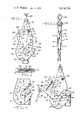
- FIG. 1is an elevational view, partially sectioned, illustrating a snap hook in accord with the invention with the release lever shown in the latched position
- FIG. 2is an elevational view of the hook as taken from the right of FIG. 1,
- FIG. 3is a detail, elevational, sectional view of the snap hook with the release lever shown in the load attachment member release position
- FIG. 4is a sectional view as taken along section IV-IV of FIG. 1, and 1
- FIG. 5is a detail, elevational view showing the keeper being displaced by a load attachment member.
- the snap hook in accord with the inventionincludes a body 10 formed by a pair of similar sheet metal plates 12 maintained in spaced parallel relationship by a plurality of spacer rivets such as at 14.
- the configuration of the plates 12will be appreciated from FIGS. 1 and 2 wherein it will be noted that an offset 16 is formed in the plates so that the upper portion of the hooks are spaced a greater distance apart than the lower portion, FIG. 2.
- the upper portions of the plates 12are each provided with a hole for receiving the support member attachment bolt 18.
- a chain 20, or cable,is usually attached to the bolt 18 for supporting the hook, and the load which is suspended therefrom.
- the chain 20is suspended from any conventional load bearing device such as a crane, derrick, strong-back, etc.
- the lower portion of the plates 12are formed with a hook opening or notch 22 which is inclined in a vertical manner having a throat 24-formed at the upper portion of the opening, and the lower portion defines a load bearing surface 26.
- both plates 12have identical hook openings formed therein wherein the openings together define the opening 22 hereinafter referred to in the singular form.
- the load attachment membermay be in the form of a cable loop, chain link, load ring, or the like.
- a load ring 28is illustrated within the hook opening, FIG. 1, and the load, not shown, is suspended from the load ring in the known manner.
- a load attachment release lever 30 of a flat sheet materialis pivotally mounted between the'plates 12 on the pivot rivet 32.
- the release lever- 30includes an upwardly extending arm portion 34 having a lanyard attachment hole 36 defined thereon.
- the leveralso includes a keeper support arm 38 which normally extends above the hook opening 22 and serves as the support for the keeper finger 40, as will be later described.
- the release leverincludes a downwardly extending load attachment member engaging portion 42 which includes a contoured lifting surface 44, which includes a radius 46 substantially corresponding to the configuration of the hook opening load bearing surface 26 as will be appreciated from FIG. 1.
- the release lever 30is biased to the latched position by a spring, which in the illustrated embodiment, takes the form of a negator spring 48 mounted between plates 12 on pin 50, and anchored to the release arm portion 34 at pin 52.
- the negator spring 48will produce a constant biasing force on the release lever at all locations of the lever.
- the load ring 28is maintained within the hook opening 22 by the keeper 40, which is of a U-shaped crosssectional configuration, FIG. 4, pivotally mounted upon the release lever arm 38 by a pivot pin 58.
- Tension spring 60biases the keeper in a counterclockwise direction, and pivoting of the keeper is limited by engagement of the spring anchor pin 62 with the arm portion 38.
- the other endof the spring 60is anchored to the lever portion 34.
- the keeper finger 40is of sufficient length to substantially extend across the hook opening throat 24 and will prevent the load ring 28 from accidentally being removed from. the hook opening 22 when the release lever 30 is in the latched position.
- the components of the snap hookwill normally be as shown in FIG. 1.
- the negator spring 48will bias the release lever 30 to the maximum clockwise latched position and the spring 60 will bias the keeper 40 to the maximum counterclockwise position.
- the load ring 28is positioned in alignment with opening 22 by placing the ring on the hook nose surface '64, as shown in dotted lines in FIG. 1, which extends beyond the keeper and the ring is pushed against the outer portion of the keeper to pivot the keeper 40 in a clockwise direction about its pivot 58, FIG. 5, which causes an extension of spring 60.
- the keeper 40is displaced suffi ciently from the throat 24 to permit the load ring to be completely received within the hook opening so that it may rest on the load bearing surface 26..
- the hook and load ringare now capable of lifting and supporting the load, and the keeper will prevent the load ring from releasing from the hook opening 22 under any circumstances, while the engagement of the load ring with lever portion 42 prevents the lever 30 from pivoting and removing keeper 40 from the throat 24.
- the counterclockwise pivoting of the release lever 30causes the keeper 40 to When it is desired to remove the load ring 28 from swing away from the throat 24 opening the throat for passage of the load ring thercthrough, and thus the keeper is automatically removed from an operative position during release of the load ring.
- the pivoting movement of the release lever to its load release positionis terminated by engagement of the lever with the stop rivet 56.
- hooks of this typeare particularly suitable withtcargo handling systems wherein the hook will often belocated.
- a snap hook for lifting loadscharacterized by economy of construction and its ability to remotely release the load attachment member and automatically latchcomprising, in combination, abody defined by a pair of spaced,parallel plates, support means defined on said plates, a hook opening defined in said plates for receiving a'load attachment member, said hook opening having a load-bearing portion and an open throat for receiving a load attachment member, a load attachment member release lever pivotally mounted intermediate said plates for movement between load release and latched positions, said lever having a load attachment engageable portion movable through said hook opening from said load-bearing portion toward said throat during'load release movement, a lanyard at-' tached to said lever for moving'said lever fromsaid latched position to said load release position to lift a load attachment member from said hook opening, spring means located between said plates biasing said lever
Landscapes
- Engineering & Computer Science (AREA)
- General Engineering & Computer Science (AREA)
- Mechanical Engineering (AREA)
- Load-Engaging Elements For Cranes (AREA)
Abstract
Description
United States Patent [191 Fournier 1 Nov. 11, 1975 REMOTELY RELEASABLE SELF-LATCHING SNAP HOOK [75] inventor: Paul J. E. Fournier, Jackson, Mich.
22 Filed: July 18,1974
211 Appl. No.: 489,840
[56] References Cited UNITED STATES PATENTS 7/1911 Jordan 294/84 7/1925 Cunningham 24/241 SB 3/1926 Kuffel et :11. 294/83 R 3/1927 Porter 24/241 P 2.490.558 12/1949 Sullivan 294/83 A 2.863.201 12/1958 Craven et a1. 24/233 3.539.217 11/1970 Szekely 294/83 A Primary Examiner-Evon C. Blunk Assistant E.\'amitzer.1ohnny D. Cherry Attorney, Agent, or Firm-Beaman & Beaman 5 7 ABSTRACT A snap hook of economical construction particularly suitable for lifting and conveying loads wherein a load attachment member, such as a ring, may be slipped into a hook opening and retained therein by a spring biased keeper. After the load weight is relieved from the hook manual operation of a pivoted release lever lifts the load ring from the hook opening, and the keeper is simultaneously removed from the hook opening and released. Spring means return the release lever to the relatching position. The release lever is engaged by the load ring when under load and this safety feature prevents accidental release of the load.
3 Claims, 5 Drawing Figures US. Patent Nov. 11, 1975 REMOTELY RELEASABLE SELF-LATCHING SNAP HOOK BACKGROUND OF THE INVENTION The invention pertains to load bearing hook devices utilizing spring biased keepers and means for remotely removing the load attachment member from the hook upon removal of the load weight from the hook.
Snap hooks are commonly used for load carrying and other purposes wherein a keeper, usually spring biased, is located within the hook opening throat to prevent the load carrying cable, ring, or the like, from being accidentally removed from the hook opening. Such keepers require a positive operation of the keeper against a spring force to permit the load ring to be removed from the hook opening.
While conventional snap hooks function well and efficiently, the fact that with the utilization of both hands, the keeper must be manually held back from the hook opening throat while the load ring is removed from the hook opening requires direct access to the hook by the operator. In some uses of load bearing snap hooks it is desirable to remove the load attachment means from the hook opening with one hand even though the hook is remotely located with respect to the operator tending the load and such hooks have not heretofore been available.
SUMMARY OF THE INVENTION It is an object of the invention to provide a snap book which is capable of receiving a load attachment membet, and maintaining the load attachment member within the hook opening by means of a keeper, yet the load attachment member may be removed from the hook opening by a simple remotely produced operation.
In the practice of the invention the components of the snap hook are formed by low cost production techniques, the operation of the load attachment release means is simple and foolproof and the keeper utilized with the hook meets safety requirements by preventing accidental release of the load attachment member from the hook opening.
The snap hook in accord with the invention includes a hook body having a hook opening defined therein. The throat of the hook opening is selectively closed by a pivotally mounted keeper. The load attachment member may be remotely removed from the hook opening by the pivoting of a release lever mounted upon the hook body. The release lever includes a portion which moves through the hook opening from the latched position to the load attachment release position, and the keeper is mounted upon the release lever so as to be removed from the hook opening during operation of the release lever and thereby permit release of the load.
Spring means biases the release lever toward the latched position, and at such position the keeper is located within the hook opening throat andis biased by spring means to a closed position sealing the throat. The load attachment member, such as a load ring, may be easily slipped past the keeper by engaging the keeper and pivoting the same from the throat in the conventional manner known in the snap hook art. The mounting of the keeper upon the relase lever prevents the keeper from interfering with the removal of the load ring during release of the ring from the hook opening once the load has been removed from the load ring.
The majority of the components'in accord with the hook construction in accord with the invention are formed of plate and sheet material which is readily fabricated by stamping operations, and the construction of the snap hook permits a versatile and safe remotely controllable hook to be manufactured at a relatively inexpensive cost.
BRIEF DESCRIPTION OF THE DRAWINGS The aforementioned objects and advantages of the invention will be appreciated from the following description and accompanying drawings wherein:
FIG. 1 is an elevational view, partially sectioned, illustrating a snap hook in accord with the invention with the release lever shown in the latched position,
FIG. 2 is an elevational view of the hook as taken from the right of FIG. 1,
FIG. 3 is a detail, elevational, sectional view of the snap hook with the release lever shown in the load attachment member release position,
FIG. 4 is a sectional view as taken along section IV-IV of FIG. 1, and 1 FIG. 5 is a detail, elevational view showing the keeper being displaced by a load attachment member.
DESCRIPTION OF THE PREFERRED EMBODIMENT The snap hook in accord with the invention includes abody 10 formed by a pair of similarsheet metal plates 12 maintained in spaced parallel relationship by a plurality of spacer rivets such as at 14. The configuration of theplates 12 will be appreciated from FIGS. 1 and 2 wherein it will be noted that anoffset 16 is formed in the plates so that the upper portion of the hooks are spaced a greater distance apart than the lower portion, FIG. 2.
The upper portions of theplates 12 are each provided with a hole for receiving the supportmember attachment bolt 18. Achain 20, or cable, is usually attached to thebolt 18 for supporting the hook, and the load which is suspended therefrom. Thechain 20 is suspended from any conventional load bearing device such as a crane, derrick, strong-back, etc.
The lower portion of theplates 12 are formed with a hook opening ornotch 22 which is inclined in a vertical manner having a throat 24-formed at the upper portion of the opening, and the lower portion defines aload bearing surface 26. Of course, bothplates 12 have identical hook openings formed therein wherein the openings together define the opening 22 hereinafter referred to in the singular form.
The load attachment member may be in the form of a cable loop, chain link, load ring, or the like. For purpose of illustration aload ring 28 is illustrated within the hook opening, FIG. 1, and the load, not shown, is suspended from the load ring in the known manner.
A load attachment release lever 30 of a flat sheet material is pivotally mounted between the'plates 12 on thepivot rivet 32. The release lever- 30 includes an upwardly extendingarm portion 34 having alanyard attachment hole 36 defined thereon. The lever also includes akeeper support arm 38 which normally extends above the hook opening 22 and serves as the support for thekeeper finger 40, as will be later described. Additionally, the release lever includes a downwardly extending load attachmentmember engaging portion 42 which includes acontoured lifting surface 44, which includes aradius 46 substantially corresponding to the configuration of the hook openingload bearing surface 26 as will be appreciated from FIG. 1.
Therelease lever 30 is biased to the latched position by a spring, which in the illustrated embodiment, takes the form of anegator spring 48 mounted betweenplates 12 onpin 50, and anchored to therelease arm portion 34 atpin 52. Thenegator spring 48 will produce a constant biasing force on the release lever at all locations of the lever. A
Pivoting of the release lever in the clockwise direction to the latched position is terminated by engagement of therelease lever portion 42 with thespacing rivet 54 and counterclockwise rotation is limited by stop rivet 56.
Theload ring 28 is maintained within the hook opening 22 by thekeeper 40, which is of a U-shaped crosssectional configuration, FIG. 4, pivotally mounted upon therelease lever arm 38 by apivot pin 58.Tension spring 60 biases the keeper in a counterclockwise direction, and pivoting of the keeper is limited by engagement of thespring anchor pin 62 with thearm portion 38. The other endof thespring 60 is anchored to thelever portion 34. Thekeeper finger 40 is of sufficient length to substantially extend across thehook opening throat 24 and will prevent theload ring 28 from accidentally being removed from. the hook opening 22 when therelease lever 30 is in the latched position.
In use, the components of the snap hook will normally be as shown in FIG. 1. Thenegator spring 48 will bias therelease lever 30 to the maximum clockwise latched position and thespring 60 will bias thekeeper 40 to the maximum counterclockwise position. Theload ring 28 is positioned in alignment with opening 22 by placing the ring on the hook nose surface '64, as shown in dotted lines in FIG. 1, which extends beyond the keeper and the ring is pushed against the outer portion of the keeper to pivot thekeeper 40 in a clockwise direction about itspivot 58, FIG. 5, which causes an extension ofspring 60. Thekeeper 40 is displaced suffi ciently from thethroat 24 to permit the load ring to be completely received within the hook opening so that it may rest on theload bearing surface 26..
The hook and load ring are now capable of lifting and supporting the load, and the keeper will prevent the load ring from releasing from the hook opening 22 under any circumstances, while the engagement of the load ring withlever portion 42 prevents thelever 30 from pivoting and removingkeeper 40 from thethroat 24.
the hook opening 22 the hook will be lowered by its supporting chain until the load rests upon a supporting surface and the load weight is removed from the load ring. Thereupon, the operator pulls thelanyard 66 received within thelanyard hole 36 pivoting the release lever in a counterclockwise direction aboutpivot 32. Such pivoting of thelever 30 causes thelever portion 42 to pass upwardly through the hook opening 22 from the position of FIG. 1 to the position of FIG. 3, lifting theload ring 28 from thebearing support surface 26 and through thethroat 24 whereby the load ring may fall from the hook opening as shown in FIG. 3. As appreciated from FIG. 3, the counterclockwise pivoting of therelease lever 30 causes thekeeper 40 to When it is desired to remove theload ring 28 from swing away from thethroat 24 opening the throat for passage of the load ring thercthrough, and thus the keeper is automatically removed from an operative position during release of the load ring. The pivoting movement of the release lever to its load release position is terminated by engagement of the lever with thestop rivet 56.
After the load ring has been removed from the hook opening 22, the operator releases thelanyard 66 permitting thenegator spring 48 to pivot thelever 30 in a clockwise direction to return the lever to the latched position and the components will then be located as shown in FIG. 1 ready for receiving the next load attachment member. I
It will be appreciated that the operation of the snap hook inaccord with the invention results in a self latching hook which may be remotely operated to remove the load attachment member therefrom. Hooks of this type are particularly suitable withtcargo handling systems wherein the hook will often belocated.
well above the operators reach even though the load has been removed from the hook, and the automatic return of the hook structure to its latched position assures maximum safety in that there is no manual reset- I 1. A snap hook for lifting loads characterized by economy of construction and its ability to remotely release the load attachment member and automatically latchcomprising, in combination, abody defined by a pair of spaced,parallel plates, support means defined on said plates, a hook opening defined in said plates for receiving a'load attachment member, said hook opening having a load-bearing portion and an open throat for receiving a load attachment member, a load attachment member release lever pivotally mounted intermediate said plates for movement between load release and latched positions, said lever having a load attachment engageable portion movable through said hook opening from said load-bearing portion toward said throat during'load release movement, a lanyard at-' tached to said lever for moving'said lever fromsaid latched position to said load release position to lift a load attachment member from said hook opening, spring means located between said plates biasing said lever toward said latched position, a load attachment member keeper mounted on said lever closing said hook opening throat when said lever is' in said latched position and removed from said throat when said lever is in said load release position, said keeper comprising a finger pivotally mounted upon said release lever movable between a throat-closing position and a load attachment member bypass position when said release lever is in said latched position, a nose defined on said body adjacent said open throat extending outwardly beyond saidhook opening and defining a load attachment positioning surface on said body on the opposite side of said keeper with respect to said hook opening load bearing portion when said keeper is in said throat closing position and prior to said keeper being dis- 5 3. In a snap hook for lifting loads as in claim I, abutment pins interposed between said plates limiting pivoting of said lever between said load release and latched imposing a substantially uniform biasing force on said Positionslever at all positions thereof.
Claims (3)
1. A snap hook for lifting loads characterized by economy of construction and its ability to remotely release the load attachment member and automatically latch comprising, in combination, a body defined by a pair of spaced, parallel plates, support means defined on said plates, a hook opening defined in said plates for receiving a load attachment member, said hook opening having a load-bearing portion and an open throat for receiving a load attachment member, a load attachment member release lever pivotally mounted intermediate said plates for movement between load release and latched positions, said lever having a load attachment engageable portion movable through said hook opening from said load-bearing portion toward said throat during load release movement, a lanyard attached to said lever for moving said lever from said latched position to said load release position to lift a load attachment member from said hook opening, spring means located between said plates biasing said lever toward said latched position, a load attachment member keeper mounted on said lever closing said hook opening throat when said lever is in said latched position and removed from said throat when said lever is in said load release position, said keeper comprising a finger pivotally mounted upon said release lever movable between a throat-closing position and a load attachment member bypass position when said release lever is in said latched position, a nose defined on said body adjacent said open throat extending outwardly beyond said hook opening and defining a load attachment positioning surface on said body on the opposite side of said keeper with respect to said hook opening load bearing portion when said keeper is in said throat closing position and prior to said keeper being displaced by a load attachment member during loading of the hook.
2. In a snap hook for lifting loads as in claim 1 wherein said spring means comprises a negator spring imposing a substantially uniform biasing force on said lever at all positions thereof.
3. In a snap hook for lifting loads as in claim 1, abutment pins interposed between said plates limiting pivoting of said lever between said load release and latched positions.
Priority Applications (1)
| Application Number | Priority Date | Filing Date | Title |
|---|---|---|---|
| US489840AUS3918758A (en) | 1974-07-18 | 1974-07-18 | Remotely releasable self-latching snap hook |
Applications Claiming Priority (1)
| Application Number | Priority Date | Filing Date | Title |
|---|---|---|---|
| US489840AUS3918758A (en) | 1974-07-18 | 1974-07-18 | Remotely releasable self-latching snap hook |
Publications (1)
| Publication Number | Publication Date |
|---|---|
| US3918758Atrue US3918758A (en) | 1975-11-11 |
Family
ID=23945483
Family Applications (1)
| Application Number | Title | Priority Date | Filing Date |
|---|---|---|---|
| US489840AExpired - LifetimeUS3918758A (en) | 1974-07-18 | 1974-07-18 | Remotely releasable self-latching snap hook |
Country Status (1)
| Country | Link |
|---|---|
| US (1) | US3918758A (en) |
Cited By (27)
| Publication number | Priority date | Publication date | Assignee | Title |
|---|---|---|---|---|
| US4193627A (en)* | 1978-07-10 | 1980-03-18 | Cranston Machinery Co., Inc. | Lifting hook with safety latch |
| US4213589A (en)* | 1977-09-08 | 1980-07-22 | A. Raymond | Clamp for securing round articles |
| US4379579A (en)* | 1981-12-16 | 1983-04-12 | The B. F. Goodrich Company | Automatic locking and ejecting hook assembly |
| US4471511A (en)* | 1982-03-11 | 1984-09-18 | Rfd Limited | Releasable connector |
| US4767144A (en)* | 1985-06-19 | 1988-08-30 | Hoernberg Gunnar | Hook assembly |
| US4977647A (en)* | 1989-10-27 | 1990-12-18 | D.B. Industries, Inc. | Double locking snap hook |
| US5927431A (en)* | 1997-01-31 | 1999-07-27 | Klein, Jr.; Richard T. | Guarded snap hook |
| EP1101959A1 (en)* | 1999-11-18 | 2001-05-23 | Anthony Stephen Ringrose | Snap-hook device, particularly for mooring boats |
| US6241298B1 (en) | 1997-02-18 | 2001-06-05 | Easylift Limited | Release mechanism |
| WO2003062124A1 (en)* | 2002-01-24 | 2003-07-31 | Dalgarno Stewart | Release hook |
| US20040094982A1 (en)* | 2002-11-18 | 2004-05-20 | Neufeldt Roy E. | Truss hook |
| US20040112936A1 (en)* | 2002-08-29 | 2004-06-17 | Tennessee Rand Co., Inc. | Wire clamp |
| US20060103152A1 (en)* | 2004-11-12 | 2006-05-18 | Jeremy Johnson | Dump box |
| US20060243862A1 (en)* | 2003-08-19 | 2006-11-02 | Donatien Roger | Automatic kitesurf release system |
| US20080156245A1 (en)* | 2006-12-28 | 2008-07-03 | Duarte Helder F | Mooring/vessel snap hook device |
| US20090066099A1 (en)* | 2002-11-18 | 2009-03-12 | Neufeldt Roy E | Truss hook |
| EP1939132A3 (en)* | 2006-12-27 | 2009-04-22 | Pfeifer Holding GmbH & Co. KG | Remote-controlled load holder or hook |
| US20110005453A1 (en)* | 2007-11-01 | 2011-01-13 | Mark Ebbenga | Latch for boat bow |
| US8752254B2 (en) | 2012-02-28 | 2014-06-17 | D B Industries, Llc | Snap hook |
| US20150239712A1 (en)* | 2013-02-21 | 2015-08-27 | Paul Desaulniers | Remote sling release for crane |
| WO2015183101A1 (en)* | 2014-05-30 | 2015-12-03 | Msi As | Lifeboat release and retrieval system (lrrs) |
| US9707419B2 (en) | 2014-10-08 | 2017-07-18 | D B Industries, Llc | Snap hook |
| US9994430B1 (en)* | 2017-03-15 | 2018-06-12 | United States Of America As Represented By The Secretary Of The Navy | Snap-hook with dual-direction loop spring latch |
| US10066660B2 (en) | 2015-10-22 | 2018-09-04 | Reliance Industries, Llc | Rebar snap hook |
| US10458460B1 (en) | 2017-08-22 | 2019-10-29 | Allan A. Fox | Spring-loaded safety latch release for power line hook |
| US20220411063A1 (en)* | 2021-06-25 | 2022-12-29 | Airbus Operations Gmbh | Inflatable suspended ceiling for a vehicle compartment, in particular for a passenger cabin of an aircraft |
| US11565820B2 (en)* | 2019-09-17 | 2023-01-31 | Capewell Aerial Systems Llc | Quick release system |
Citations (7)
| Publication number | Priority date | Publication date | Assignee | Title |
|---|---|---|---|---|
| US998524A (en)* | 1910-10-24 | 1911-07-18 | James W Gordon | Boat-releasing hook. |
| US1546208A (en)* | 1924-10-27 | 1925-07-14 | Wintford P Cunningham | Safety hook |
| US1576197A (en)* | 1925-02-06 | 1926-03-09 | David C Kuffel | Safety hook |
| US1622971A (en)* | 1926-07-21 | 1927-03-29 | Porter George Newton | Safety hook |
| US2490558A (en)* | 1945-09-27 | 1949-12-06 | Frank J Sullivan | Quick release mechanism for parachute cargo harness |
| US2863201A (en)* | 1953-07-07 | 1958-12-09 | Capewell Mfg Company | Ejector snap hook |
| US3539217A (en)* | 1968-10-15 | 1970-11-10 | Otto E Szekely | Self-releasing cargo hook |
- 1974
- 1974-07-18USUS489840Apatent/US3918758A/ennot_activeExpired - Lifetime
Patent Citations (7)
| Publication number | Priority date | Publication date | Assignee | Title |
|---|---|---|---|---|
| US998524A (en)* | 1910-10-24 | 1911-07-18 | James W Gordon | Boat-releasing hook. |
| US1546208A (en)* | 1924-10-27 | 1925-07-14 | Wintford P Cunningham | Safety hook |
| US1576197A (en)* | 1925-02-06 | 1926-03-09 | David C Kuffel | Safety hook |
| US1622971A (en)* | 1926-07-21 | 1927-03-29 | Porter George Newton | Safety hook |
| US2490558A (en)* | 1945-09-27 | 1949-12-06 | Frank J Sullivan | Quick release mechanism for parachute cargo harness |
| US2863201A (en)* | 1953-07-07 | 1958-12-09 | Capewell Mfg Company | Ejector snap hook |
| US3539217A (en)* | 1968-10-15 | 1970-11-10 | Otto E Szekely | Self-releasing cargo hook |
Cited By (43)
| Publication number | Priority date | Publication date | Assignee | Title |
|---|---|---|---|---|
| US4213589A (en)* | 1977-09-08 | 1980-07-22 | A. Raymond | Clamp for securing round articles |
| US4193627A (en)* | 1978-07-10 | 1980-03-18 | Cranston Machinery Co., Inc. | Lifting hook with safety latch |
| US4379579A (en)* | 1981-12-16 | 1983-04-12 | The B. F. Goodrich Company | Automatic locking and ejecting hook assembly |
| US4471511A (en)* | 1982-03-11 | 1984-09-18 | Rfd Limited | Releasable connector |
| US4767144A (en)* | 1985-06-19 | 1988-08-30 | Hoernberg Gunnar | Hook assembly |
| US4977647A (en)* | 1989-10-27 | 1990-12-18 | D.B. Industries, Inc. | Double locking snap hook |
| US5927431A (en)* | 1997-01-31 | 1999-07-27 | Klein, Jr.; Richard T. | Guarded snap hook |
| US6241298B1 (en) | 1997-02-18 | 2001-06-05 | Easylift Limited | Release mechanism |
| EP1101959A1 (en)* | 1999-11-18 | 2001-05-23 | Anthony Stephen Ringrose | Snap-hook device, particularly for mooring boats |
| WO2001036830A1 (en)* | 1999-11-18 | 2001-05-25 | C. Sherman Johnson Company, Inc. | Snap-hook device, particularly for mooring boats |
| US6450558B1 (en) | 1999-11-18 | 2002-09-17 | C. Sherman Johnson Company, Inc. | Snap-hook device for attachment to an object such as a ring or mooring buoy, and release thereof, particularly for boats |
| WO2003062124A1 (en)* | 2002-01-24 | 2003-07-31 | Dalgarno Stewart | Release hook |
| GB2398348A (en)* | 2002-01-24 | 2004-08-18 | Calum John Mackinnon | Release hook |
| US20040112936A1 (en)* | 2002-08-29 | 2004-06-17 | Tennessee Rand Co., Inc. | Wire clamp |
| US20040094982A1 (en)* | 2002-11-18 | 2004-05-20 | Neufeldt Roy E. | Truss hook |
| US7059644B2 (en)* | 2002-11-18 | 2006-06-13 | Neufeldt Roy E | Truss gripping hook |
| US20060208514A1 (en)* | 2002-11-18 | 2006-09-21 | Neufeldt Roy E | Truss hook |
| US7422257B2 (en)* | 2002-11-18 | 2008-09-09 | Neufeldt Roy E | Truss gripping hook |
| US20090066099A1 (en)* | 2002-11-18 | 2009-03-12 | Neufeldt Roy E | Truss hook |
| US20060243862A1 (en)* | 2003-08-19 | 2006-11-02 | Donatien Roger | Automatic kitesurf release system |
| US7762497B2 (en)* | 2003-08-19 | 2010-07-27 | Donatien Roger | Automatic kitesurf release system |
| US20060103152A1 (en)* | 2004-11-12 | 2006-05-18 | Jeremy Johnson | Dump box |
| US7331621B2 (en) | 2004-11-12 | 2008-02-19 | Alltech Manufacturing, Llc | Dump box |
| EP1939132A3 (en)* | 2006-12-27 | 2009-04-22 | Pfeifer Holding GmbH & Co. KG | Remote-controlled load holder or hook |
| US20080156245A1 (en)* | 2006-12-28 | 2008-07-03 | Duarte Helder F | Mooring/vessel snap hook device |
| US7810442B2 (en) | 2006-12-28 | 2010-10-12 | Duarte Helder F | Mooring/vessel snap hook device |
| US20110005453A1 (en)* | 2007-11-01 | 2011-01-13 | Mark Ebbenga | Latch for boat bow |
| US8607418B2 (en)* | 2007-11-01 | 2013-12-17 | Mark Ebbenga | Latch for boat bow |
| US8752254B2 (en) | 2012-02-28 | 2014-06-17 | D B Industries, Llc | Snap hook |
| US9328765B2 (en) | 2012-02-28 | 2016-05-03 | D B Industries, Llc | Snap hook |
| US20150239712A1 (en)* | 2013-02-21 | 2015-08-27 | Paul Desaulniers | Remote sling release for crane |
| US9725284B2 (en)* | 2013-02-21 | 2017-08-08 | Paul Desaulniers | Remote sling release for crane |
| US10358190B2 (en) | 2014-05-30 | 2019-07-23 | Msi As | Lifeboat release and retrieval system (LRRS) |
| WO2015183101A1 (en)* | 2014-05-30 | 2015-12-03 | Msi As | Lifeboat release and retrieval system (lrrs) |
| NO337498B1 (en)* | 2014-05-30 | 2016-04-25 | Msi As | Lifeboat decoupling and attachment system |
| US9707419B2 (en) | 2014-10-08 | 2017-07-18 | D B Industries, Llc | Snap hook |
| US10086221B2 (en) | 2014-10-08 | 2018-10-02 | D B Industries, Llc | Snap hook |
| US10066660B2 (en) | 2015-10-22 | 2018-09-04 | Reliance Industries, Llc | Rebar snap hook |
| US9994430B1 (en)* | 2017-03-15 | 2018-06-12 | United States Of America As Represented By The Secretary Of The Navy | Snap-hook with dual-direction loop spring latch |
| US10458460B1 (en) | 2017-08-22 | 2019-10-29 | Allan A. Fox | Spring-loaded safety latch release for power line hook |
| US11565820B2 (en)* | 2019-09-17 | 2023-01-31 | Capewell Aerial Systems Llc | Quick release system |
| US20220411063A1 (en)* | 2021-06-25 | 2022-12-29 | Airbus Operations Gmbh | Inflatable suspended ceiling for a vehicle compartment, in particular for a passenger cabin of an aircraft |
| US12054236B2 (en)* | 2021-06-25 | 2024-08-06 | Airbus Operations Gmbh | Inflatable suspended ceiling for a vehicle compartment, in particular for a passenger cabin of an aircraft |
Similar Documents
| Publication | Publication Date | Title |
|---|---|---|
| US3918758A (en) | Remotely releasable self-latching snap hook | |
| US5292165A (en) | Lifting hook with a safety latch and capable of being provided with automatic load release function | |
| US4097084A (en) | Lifting grab for cylindrical objects | |
| US4398762A (en) | Pickup device for lifting concrete body | |
| US3132890A (en) | Grapples for lifting apertured items | |
| EP0245927A2 (en) | Helicopter cargo hook | |
| US3741600A (en) | Safety hook | |
| US4206940A (en) | Handling hook assembly | |
| US4050730A (en) | Hook latching device | |
| US2866247A (en) | Safety lock for crane hook | |
| US2673116A (en) | Releasable hoisting device | |
| US4530535A (en) | Cargo hook | |
| US5205600A (en) | Automatic release coupling | |
| US3633960A (en) | Hook for load-carrying device | |
| US4251099A (en) | Automatic release device for lifting slings | |
| US3011821A (en) | Pipe handling tongs | |
| EP0131384A1 (en) | Hoist hook safety device | |
| US3539217A (en) | Self-releasing cargo hook | |
| US4884836A (en) | Plate lifting clamp | |
| US4401334A (en) | Automatic cargo hook | |
| US2429969A (en) | Material lifter | |
| US3431011A (en) | Releasable lumber sling device | |
| US2654631A (en) | Open locking plate lifting clamp | |
| JPH07215658A (en) | Hanging hook device for crane | |
| US3362744A (en) | Device for use with slings, particularly bag slings for use in unit loading |
Legal Events
| Date | Code | Title | Description |
|---|---|---|---|
| AS | Assignment | Owner name:FIRST FIDELITY BANK, NATIONAL ASSOCIATION, NEW JER Free format text:ASSIGNMENT OF ASSIGNORS INTEREST.;ASSIGNOR:KINEDYNE CORPORATION;REEL/FRAME:005449/0292 Effective date:19891208 Owner name:KINEDYNE CORPORATION, NEW JERSEY Free format text:ASSIGNMENT OF ASSIGNORS INTEREST.;ASSIGNOR:AEROQUIP CORPORATION;REEL/FRAME:005449/0285 Effective date:19891208 |