US3766384A - Surgical table - Google Patents
Surgical tableDownload PDFInfo
- Publication number
- US3766384A US3766384AUS00138113AUS3766384DAUS3766384AUS 3766384 AUS3766384 AUS 3766384AUS 00138113 AUS00138113 AUS 00138113AUS 3766384D AUS3766384D AUS 3766384DAUS 3766384 AUS3766384 AUS 3766384A
- Authority
- US
- United States
- Prior art keywords
- leg
- patient
- support
- traction
- image intensifier
- Prior art date
- Legal status (The legal status is an assumption and is not a legal conclusion. Google has not performed a legal analysis and makes no representation as to the accuracy of the status listed.)
- Expired - Lifetime
Links
- 210000002414legAnatomy0.000claimsabstractdescription272
- 210000001624hipAnatomy0.000claimsabstractdescription67
- 210000004394hip jointAnatomy0.000claimsabstractdescription46
- NJPPVKZQTLUDBO-UHFFFAOYSA-NnovaluronChemical compoundC1=C(Cl)C(OC(F)(F)C(OC(F)(F)F)F)=CC=C1NC(=O)NC(=O)C1=C(F)C=CC=C1FNJPPVKZQTLUDBO-UHFFFAOYSA-N0.000claimsabstractdescription35
- 230000000284resting effectEffects0.000claimsabstractdescription22
- 210000003127kneeAnatomy0.000claimsabstractdescription18
- 210000000323shoulder jointAnatomy0.000claimsabstractdescription15
- 230000008859changeEffects0.000claimsabstractdescription14
- 210000003414extremityAnatomy0.000claimsabstractdescription8
- 230000006872improvementEffects0.000claimsdescription8
- 244000309466calfSpecies0.000claimsdescription7
- 210000000629knee jointAnatomy0.000claimsdescription5
- 230000002441reversible effectEffects0.000claimsdescription5
- 230000008878couplingEffects0.000claimsdescription2
- 238000010168coupling processMethods0.000claimsdescription2
- 238000005859coupling reactionMethods0.000claimsdescription2
- 238000000034methodMethods0.000abstractdescription10
- 210000000988bone and boneAnatomy0.000abstractdescription5
- 210000004197pelvisAnatomy0.000abstractdescription5
- 230000009467reductionEffects0.000abstractdescription5
- 210000003423ankleAnatomy0.000abstractdescription4
- 210000001699lower legAnatomy0.000abstractdescription4
- 210000001694thigh boneAnatomy0.000abstractdescription4
- 238000007631vascular surgeryMethods0.000abstractdescription3
- 238000003745diagnosisMethods0.000abstractdescription2
- 206010061876ObstructionDiseases0.000description26
- 230000000712assemblyEffects0.000description15
- 238000000429assemblyMethods0.000description15
- 210000002683footAnatomy0.000description10
- 230000000399orthopedic effectEffects0.000description6
- 239000000463materialSubstances0.000description5
- 238000001356surgical procedureMethods0.000description5
- 230000008901benefitEffects0.000description4
- 229920001342Bakelite®Polymers0.000description3
- 239000004637bakeliteSubstances0.000description3
- 238000005266castingMethods0.000description3
- 210000000689upper legAnatomy0.000description3
- 210000000245forearmAnatomy0.000description2
- 229920006385GeonPolymers0.000description1
- 241001620634RogerSpecies0.000description1
- XAGFODPZIPBFFR-UHFFFAOYSA-NaluminiumChemical compound[Al]XAGFODPZIPBFFR-UHFFFAOYSA-N0.000description1
- 229910052782aluminiumInorganic materials0.000description1
- 210000001217buttockAnatomy0.000description1
- 210000000459calcaneusAnatomy0.000description1
- 238000011109contaminationMethods0.000description1
- 230000009977dual effectEffects0.000description1
- 230000000694effectsEffects0.000description1
- 238000002594fluoroscopyMethods0.000description1
- 208000015181infectious diseaseDiseases0.000description1
- 210000001503jointAnatomy0.000description1
- 210000004072lungAnatomy0.000description1
- 230000004048modificationEffects0.000description1
- 238000012986modificationMethods0.000description1
- 230000000414obstructive effectEffects0.000description1
- 230000001575pathological effectEffects0.000description1
- 210000003689pubic boneAnatomy0.000description1
- 230000005855radiationEffects0.000description1
- 210000002303tibiaAnatomy0.000description1
Images

Classifications
- A—HUMAN NECESSITIES
- A61—MEDICAL OR VETERINARY SCIENCE; HYGIENE
- A61B—DIAGNOSIS; SURGERY; IDENTIFICATION
- A61B6/00—Apparatus or devices for radiation diagnosis; Apparatus or devices for radiation diagnosis combined with radiation therapy equipment
- A61B6/04—Positioning of patients; Tiltable beds or the like
- A—HUMAN NECESSITIES
- A61—MEDICAL OR VETERINARY SCIENCE; HYGIENE
- A61G—TRANSPORT, PERSONAL CONVEYANCES, OR ACCOMMODATION SPECIALLY ADAPTED FOR PATIENTS OR DISABLED PERSONS; OPERATING TABLES OR CHAIRS; CHAIRS FOR DENTISTRY; FUNERAL DEVICES
- A61G13/00—Operating tables; Auxiliary appliances therefor
- A61G13/0036—Orthopaedic operating tables
- A—HUMAN NECESSITIES
- A61—MEDICAL OR VETERINARY SCIENCE; HYGIENE
- A61G—TRANSPORT, PERSONAL CONVEYANCES, OR ACCOMMODATION SPECIALLY ADAPTED FOR PATIENTS OR DISABLED PERSONS; OPERATING TABLES OR CHAIRS; CHAIRS FOR DENTISTRY; FUNERAL DEVICES
- A61G2210/00—Devices for specific treatment or diagnosis
- A61G2210/50—Devices for specific treatment or diagnosis for radiography
Definitions
- ABSTRACTA multi-purpose surgical table and method of use is disclosed, the table having particular use in conjunction with a mobile X-ray image intensification unit.
- the tableprovides an open area free of obstructions for the image intensifier of the image intensification unit to be located beneath the patient, permitting lateral and anterior-posterior views of an injured extremity or trunk of the body without change of position of the patient from an initial supine position on the table,
- the tablehas a sacral rest extending distally of a support pedestal.
- the sacral restis substantially transparent to X-rays and free of any obstruction directly underneath.
- a perineal post substantially transparent to X-raysis mounted on the sacral rest.
- a leg support for the leg to be treatedpivots vertically and horizontally about a pivot point coinciding with the anatomical axis of the hip joint of the injured leg.
- the leg supportextends alongside the outer length :of the leg at a sufficient height from the floor on which the table is resting to allow the image intensifier in its lowest position for anterior-posterior viewing and yet give sufficient clearance for the face of the image intensifier to be positioned closely adjacent or against the skin of the leg of the patient for both anterior-posterior and lateral viewing without movement of the patient or the table.
- the tablehas additional features which allow the two standard views (anterior-posterior and lateral) of the head, neck, spinal column, pelvis, shoulder joint and arm to be obtained without movement of the patient from an initial supine position and without movement of the table.
- the tablein addition, provides a unique non obstructing way of obtaining abduction, adduction and flexion-extension on anatomic centers at the shoulder of an injured arm or at the hip of the injured or well leg, and meansof holding the legs in any degree of such movement.
- the tablealso provides a means of obtaining flexion-extension of the knee on its anatomic center.
- the tableis also useful for diagnosis, reduction of fractures, vascular surgery and other techniques.
- X-ray image intensification techniquesare rapidly replacing the conventional fluoroscopic image due to the low brightness level of the conventional fluoroscopic image which forces the fluoroscopist to darken the room entirely or undergo dark application for a predetermined time so that details are discernible at the low light levels.
- Convention fluoroscopic techniquesunnecessarily expose the patient and doctor to an extremely high radiation dose.
- Mobile X-ray image intensification unitsare manufactured by several companies including Siemens, North American Philips (Norelco)'and others. These X-rays image intensification units are of the type shown in FIGS. 8 and 9 of the drawings and include an X-ray generating tube and image intensifier mounted on respective ends of a C- arc. The X-ray tube and image intensifier are movable from a vertical position to a horizontal position along the C-arc. Additionally the two units may be revolved about the axis of the frame holding the C-arc.
- Orthopedic or extension tableswhich are presently available for use with mobile X-ray image intensification units have many disadvantages evident to the doctor or doctors participating-in a surgical operation. They generally (1) require the patient to be placed in an unnatural position, (2) require the mobile image intensification unit to be located at a point where the doctor or doctors cannot have free access to the patient, (3) have obstructions in the form of supports, extensions, etc. which, during moving of the image intensification unit, are in the path of the image intensifier or X-ray generator, (4) require the patient to be moved from one position to another in order to get the two standard views generally necessary, the anteriorposterior and lateral views.
- This inventionrelates to a multi-purpose table and method of using the table in conjunction'with a mobile image intensification unit, the table enabling the doctor or one under his direction to obtain anterior-posterior and lateral views of the hip, shaft of the thigh bone, bones of the knee, lower leg and ankle, the head, neck, spinal column, pelvis, shoulder and the arm without moving the image intensification unit from an initial set position on the floor of the operating room, without moving the table, and without moving the patient from an initial supine position.
- the tableprovides a sacral rest on which is mounted a perineal post, both extending distally from a support pedestal free underneath of any obstruction for the image intensifier.
- Leg, body and arm supportsare so arranged to permit placing of the intensifier unit underneath closely adjacent or up against the injured area of the patient to be treated without any obstructions.
- the tableis capable of reducing fractures by meehanical means which operate upon anatomical center and axes.
- the image intensifier of the mobile image intensification unitcan always be positioned on the underside of the patient as the table is free of all obstructions underneath.
- the leg and/or arm traction supportsare placed high enough from the floor upon which the table rests for the image intensifier .in its lowest position for anterior-posterior viewing to pass thereunder without contact.
- the supportsare also so located as not to obstruct anterior-posterior or lateral viewing of the injured extremity along any portion thereof.
- the objects of this inventionare to provide a multipurpose table having the following advantages: (1 the standard two X-ray views, that is the anterior-posterior view and the lateral view of the hip, shaft of the thigh bone, bones of the knee, lower leg and ankle, the head, neck, spinal column, pelvis, shoulder joint and arm can be accoinplished without obstruction of the X-ray field, without movement of the mobile image-intensification unit from an initial set position, without movement of the patient from an initial supine position andwithout movement of the table. (2) The image intensifier can 1 be placed below and up-against the skin or support of the injured limb or body of the patient without obstruc--- tion of the X-ray field.
- the mobile image intensification unitcan be placed opposite the surgeon 'and used to obtain X-ray views without obstruction of the X-ray field and without interference withthe work of the surgeon.
- 0b structions to an image intensification unit below the'leg traction supports and hip areaare eliminated-pennit ting the image intensifier to be positioned at any point along the leg or positioned between the legs of thepatient to view the hip joint.
- Obstructions to an image intensification unit below the arm traction supportare eliminated permitting the image intensifier to be positioned at any pointalong the arm or at the shoulder joint to obtain the two standard views of the armor shoulder joint.
- Abduction-adduction' and flexionextension on anatomical centers of the hip of the injured leg or the joint of the injured shouldercan be obtained without obstruction.
- Flexion-extension on the anatomical center of the kneecan be obtained.
- Reversible hip units for the injured leg or leg to be treated and the well leg,are provided, the well leg hip unit providing a greater range of vertical motion.
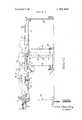
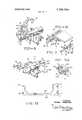
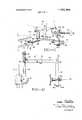
- FIG. 1is a side elevation of the table showing the patient in a supine position with the left and right legs of the patient under traction;
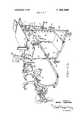
- FIG. 1Ais a perspective view of the table of FIG. 1;
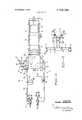
- FIG. 2is a plan view of the table of FIG. 1;
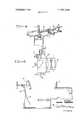
- FIG. 3is a partial cross section of one means of at taching the leg traction supports to the central supporting pedestal of the table for anatomical movement around pivot points coinciding with the hip joints of a patient lying on the table in a supine position;
- FIG. 4is a partial perspective view of the table of FIG. 1 wherein the perineal post has been moved to a second position and wherein the patient is supported by a relatively small island member and a head cup leaving the area beneath the main trunk of the patient free for application of a body or spica cast;
- FIG. 5is a partial plan view of the table of FIG. 1 showing a modified means of connecting the leg traction supports to the central supporting pedestal of the table for movement'about the anatomical centers of the hip of the patient lying on the table in a supine position;
- FIG. 6is a perspective view of the table of FIG. I in conjunction with a mobile image intensification unit, the image intensifier positioned beneath the patient and up against a support for the injured leg of the patient for X-ray viewing; the image intensification unit shown in solid lines for anterior-posterior viewing and in dotted lines for lateral viewing;
- FIG. 7is a perspective view of the table of FIG. 1 with the patient on the table in a supine position and the mobile image intensification unit positioned for lateral viewing of the hip joint (in solid lines) and anterior-posterior viewing of the hip joint (in dotted lines);
- FIG. 8is a partial perspective view of a hip arc unit obtaining anatomic flexion-extens ion of the hip of the well leg;
- FIG. 9is a partial front view of FIG. 8 illustrating the means by which the hip arc unit can be interchanged and used with-either the left or right leg;
- FIG. 10is a side view of the leg traction support for the well leg of the patient and showing a novel flexionextension 'means for the knee of the patient along the anatomic center of the knee;
- FIG. 11is a partial perspective view illustrating a non-obstructing method for obtaining both lateral and vertical viewing of the shoulder joint, upper arm or forearm of a patient;
- FIG. 12is a plan view of the arm traction support of FIG. 11.
- FIG. 13illustrates a modified way of running the leg traction tubes closely adjacent the floor on which the table is resting to the leg pulling means
- FIG. 14illustrates a further modification using leg pulling means mounted on the upper end of an arc for vertical movement about a pivot point substantially coincident with the anatomical axis of the hip joint of th patient;
- FIG. 15illustrates modified hip are units allowing vertical movement about pivot points substantially coincident with the anatomical axes of the hip joints of the patient.
- FIG. 15 Ais a partial cross-section view of the left side of FIG. 15.
- the table of this inventioncomprises central posts 1 surrounded by cover 1A.
- cover 1AAlthough the cover is shown as being round it may be made rectangular or other suitable shape which is nonobstructing.
- the postsare supported from the floor by conventional casters 1B of the type generally used on surgical tables.
- On the top of the postsis rigidly mounted a T-shaped plate 2.
- a pelvic table top 3made of a material such as Bakelite or other material which is substantially transparent to X-rays is secured to the plate 2 and extends distally a predetermined distance generally about 22 inches and is free of any obstruction underneath.
- a perineal post 4preferably a hollow tubular post of aluminum or other material transparent to X-rays, is positioned at the distal end of the sacral rest 3.
- LEG TRACTION SUPPORT ASSEMBLY FOR THE INJURED LEG Leg traction support assemblies for both the injured leg and the well legare mounted for horizontal movement about points substantially coincident with the anatomical axes of the hip joints of the patient lying supine on the table as shown in FIG. 1.
- the leg traction support assembliesare, in parallel position, preferably spaced a predetermined distance apart, the distance preferred related to the radius of the C-arc on which the image intensifier and X-ray generator are mounted.
- pivot points 5 and 6are positioned a proximal distance of about four inches from the perineal post and a mesial distance of about four inches from the perineal post.
- the injured leg traction support assembly 10is shown on the right in FIG. 2.
- the leg traction support assembly 10includes a traction rod 11, adjustable in length, secured at its upper end to a hip arc unit I3.
- a footplate assembly 12To the lower or distal end of the traction tube It is positioned a footplate assembly 12.
- the footplate assembly 12forms no part of this invention. Reference may be made to US. Pat. No. 3, 135,257 for a complete description thereof.
- the footplate of the footplate assemblyis mounted for rotation and horizontal and/or vertical pivot about a point in line with the hip joint of the patient laying in a supine position on the table.
- the rod 11 for the injured legextends along the outer length of the leg a sufficient distancefrom the floor on which the table is resting so that the image intensifier in its lowest position for anterionposterior viewing can pass thereunder without obstruction.
- the rodis also placed beyond the side of the leg and beneath the mid-line of the leg so that the image intensifier can be brought up beneath the leg at any point and into contact with the skin of the leg of the patient (or a support therefor) for anterior-posterior viewing or be brought up against the side of the leg for lateral viewing.
- Traction rod Illis attached at its upper end to hip arc unit 13 which, on turning of handle 14, pivots the rod and leg of the patient vertically about a pivot point substantially coinei dent with the anatomical axis of the hip joint of the injured leg.
- the arc unit 13is relatively narrow along a transverse axis and is smooth on each side and along the top so that the face of the image intensifier can be brought up in the limited space between the hip arc unit 13 and supporting pedestal 1 and its associated cover 1A.
- the are 15 of the hip arc unitshould have a sufficient radius not to protrude above the top surface of the table when the traction rod is lowered but not so large a radius as to prevent passage of the image intensifier beneath the hip of a patient laying on the table.
- Handle 14may be located directly as shown in FIG. 1 with placement of the image intensifier up against the thigh.
- the injured leg of the patient positioned as shown in FIG. 1can be raised or lowered along with the traction rod as desired by turning handle 14.
- the are unit I3 and rod 11are removably clamped onto a vertical tubular support 16 by clamping means 17.
- the tubular supportis in substantial vertical alignment with the pivot point 6.
- tubular support 16is supported on the floor by a conventional caster assembly 18 of the type generally used for surgical tables,'the caster being of the type which can be locked in a fixed position when desired.
- the tubular support 16 and leg traction assembly 10 connected theretoare made to pivot about pivot point 6 by securing the tubular support 16 and leg traction assembly 10 associated therewith to a laterally extending connecting arm 19 attached between the tubular support at the lower end thereof and pivot point 6. It is important that the connecting arm 19 be located at a height from the floor on which the table is resting so that the image intensifier in its lowest position for anterior-posterior viewing can pass thereover without contact.
- the distance between pivot point 6 and tubular support 16 or the length of connecting arm 19should be sufficient to allow clear access for the image intensifier between the tubular. support 16 and the cover 1A of the central pedestal 1. Free access to this area without any obstruction allows the image intensifier to be positioned directly beneath the hip joint of a person lying in a supine position on the table.
- Leg supports 20 of Bakelite or other material substantially transparent to X-raysmay be clamped by clamping means 21 to traction rod 11 to aid in supporting the injured leg of the patient.
- leg traction support assembly 30 for the well legis shown in FIG. 2 on the left side of the table as viewed from the distal end thereof.
- the support assembly illustratedpivots horizontally about pivot point 5 in the same way as the leg traction support assembly have a greater range of movement than the injured leg as will be explained.
- the hip unit 32 shown in FIGS. 1 and 2has the center of flexion of the hip located laterally of the hip joint and in the same horizontal plane as the hip joint. Increased vertical and horizontal movement about a pivot point substantially coincident with the hip joint of the patient laying in a supine position on the table is thus possible.
- the well legcan be raised vertically to substantially a right angle position or lowered until the heel bone of the patient touches the floor on which the table is resting.
- Traction rod 31, adjustable in length,is secured at its proximal or upper end to the hip unit 32 which is capable of pivoting the rod 31 and the footplate assembly 33 vertically about a pivot point 34 (see FIG. 8) substantially coincident with the anatomical center of the hip joint of the patient laying in a supine position on the table.
- the footplate of the footplate assemblyis mounted for rotation and horizontal and/or vertical pivot about a point in line with the hip joint of the well leg.
- the hip unit 32is removably supported on a vertical support 35 provided with casters 36 at its lower end.
- the vertical support 35pivots about pivot point 5 and is attached thereto by a lateral connecting arm 37 as shown in FIG. 3.
- the distance between pivot point 5 and vertical support 35is the same as the distance between pivot point 6 and vertical support 16.
- the distance between the two pivot points and the vertical supportis maintained the same in order that the leg traction support assemblies may be interchanged.
- the leg traction support assembly 10 for the injured leg shown on the right as viewed from the distal end of the tablecan be removed from its vertical support 16 and transferred to the left side for treating the left leg of the patient.
- the well leg traction support assembly 30 shown on the left in FIG. 2canbe unclamped from its vertical support 35 and transferred to the right side.
- connecting arms 19 and 37are pivotally connected to rods 38 and 29 which extend at their opposite ends through clamping means and 41.
- the clamping meansare actuated by turning rods 42 and 43 (seeFIG. l) which extend upward as shown in FIG. 1 to a point just below'the top of the table and are provided with a knob on the top end thereof.
- the surgeon or person under his directionmay, therefore, move either of the leg traction support assemblies laterally outwardly or inwardly about pivot points 5 and 6 and lock or clamp them in position by tightening clamping means 40 and 41 on turning of rods 42 and 43.
- I Additional support for the leg traction assembliesmay be provided at their upper ends by.
- telescoping members 44 and 45pivotally attached at one end to the proximal or upper endsof the respective leg traction support assemblies and-pivotally attached to the central post 1 at their opposite ends as shown in FIG. 2.
- the support rod 47 for hip unit .32is removably clamped by clamping means 46-10 the upper end of vertical support 35.
- Yoke 18is pivotally mounted atop rod 47 for vertical movement about pivot point 34 which is substantially coincident with the anatomical center or axis of the hip joint of the well leg of the patient.
- a linking arm 49is pivotallymountedon the upper surface of yoke 48 for pivot about pivot pin 50.
- Tubular member 51connects withlinking arm 52 which is pivotally mounted to the distal or upper end of traction rod 31 for pivot around pivot pin 53.
- a threaded spindle 54is pivotally secured at its upper end to the rear side of yoke 48 and extends through a block 55 having an internal worm gear in mesh with the threaded spindle, the block pivotally mounted to frame 56 rigidly secured to support rod 47. Turning of handle 57 effects vertical movement of traction rod 31.
- the well leg traction support assemblymay be transferred to the opposite side of the table.
- the hip unit 32is reversible as shown by dotted lines in FIG. 9.
- screw 58 extending through yoke 58 into linking arm 49is loosened and the linking arm pivoted about pin 50, thereby placing the traction rod mounting on the opposite side as shown in dotted lines in FIG. 9.
- Screw 58is then tightened.
- screw 59 extending through linking arm 52 into the upper end of traction rod 31is loosened and pivoted 180 around pivot point 53.
- the traction assemblyis then in position for use with the left leg (referring to FIG. 2) of the patient.
- the well leg traction support assembly 30also provides a means of flexion-extension of the knee of the patient on the anatomic center thereof. This feature is useful when the patient being treated suffers from arthritus or other conditions which stiffen the knees and- /or hip in flexion.
- a calf support rather than the footplate assemblyacts as a base for counter-traction, removing strain from the knee and/or hip joint.
- FIG. 10Means for obtaining flexion-extension of the knee of the patient on its anatomic center is shown in detail in FIG. 10.
- rod 60Into the traction rod 31 is telescopically and adjustably mounted rod 60 clamped in place by clamping means 61. Pivotably attached to the distal end of rod 60 is rod 62 bent as shown in FIG. 16. To the distal end of rod 62 is clamped a footplate assembly of the same type as described previously for the injured leg, the footplate assembly mounted so that the spindle or pivot point thereof is in line with the anatomical axis of the hip joint of the patient laying in a supine position on the table.
- the footplate assemblyis referred to generally as reference numeral 33.
- the rod extending at right angles from the footplate assembly 33is telescopically mounted over rod 62 to adjust the length of the leg of the patient.
- Rod 60can be extended or retracted as necessary to adjust the length thereof to the length of the thigh of the patient.
- Rod 60keeps relatively close to the long axis of the leg and is adjusted in length until the pivot point 63 coincides with the anatomic center of the knee of a patient in supine position on the table with the foot of the patient strapped to the footplate assembly .33.
- Rod 62can be held in a fixed pivoted position by clamping means 64.
- Clamping rod 65is pivotally attached at one end to rod 62.
- a calf support 66shown in FIG. 1, is secured to rod 62 to support the calf of the leg of the patient and act as a base for countertraction, thereby removing strain from the knee and/or hip of the patient.
- FIG. 5An alternate means of mounting the well and injured leg traction support assemblies is shown in FIG. 5.
- Each of the support assembliesis attached to structurally strong arcs 22 and 23 which swing in respective arcs about pivot points and 6 coinciding substantially with the anatomical centers or axes-of the hip joints of the patient laying supine on the table.
- the advantage in mounting the support assemblies in this manneris that it clears all obstructions from beneath the table.
- Modified hip arc unitsmay be used for both the well and injured leg traction support assemblies.
- the are unitshave the same dimensions as arc unit 13. Since the well leg traction support assembly generally must be capable of greater movement in a vertical plane the upper end of the traction rod 60 is removably and slidably attached through sleeve 121.
- Sleeve 121is secured to spindle 121 A which has pins 122, 123 and an internally threaded hollow nut 124 protruding from the vertical side face thereof which mate with holes bored in the inside horizontal face 125 of the arc units.
- the sleeve 121may be secured to the inside face 125 of the arc unit in two or more positions.
- the sleeve 121 and traction tubeare mounted as shown in solid lines in FIG. 15 with pins 122 and 123 secured in holes 126 and 123 and nut 12% extending into hole 127. If the well leg is to be raised to a position higher than that shown in FIG. 1 the sleeve 121 and traction rod are rotated upwardly to mate pins 122 and 123 with holes 129 and 130 in the arc unit. Threaded screw clamps 131 or other suitable means are used to clamp rod 60 in sleeve 121. The integral spindle and sleeve 121a and 121 are secured by threaded screw 131a. The traction rod 60 of the well leg assembly is positioned inwardly toward the mid-line of the table the same distance indicated by FIG. 2, Le. about 2 inches.
- traction rod 60is removed. Screw 131 a is loosened until pins 122 and 123 are free. Sleeve 121 and integral spindle 121 a are transferred and clamped to the inner horizontal face of the opposite arc unit. Traction rod 11 is removed and inserted into sleeve 121 of the opposite arc unit.
- Tractionis generally the primary step taken in reduction of fractures. Traction efficiency depends directly on the degree and character of countertraction. Then traction is applied to the injured leg by the leg traction support assembly 10 an equal amount of countertraction should be applied to the opposite well leg through the leg traction support assembly 30.
- the leg traction support assembliesreferred to generallyby reference numerals 10 and 30, provide a unique non-obstructing way of obtaining abduction-adduction and flexionextension on anatomic centers at the hip of the injured and well legs and means of holding the leg inany clegree of such movement. Further, the leg traction support assembly 30 provides a means of flexion-extension of the knee on its anatomic center.
- FIGS. 13 and 14Alternate means of providing a non-obstructing way of obtaining abduction-adduction and flexionextension on anatomic centers at the hip of the injured leg and also means of providing such movement with the well leg are illustrated in FIGS. 13 and 14.
- traction rods 132 and 133 for both the well and injured legsextend distally from pivot points 5 and 6.
- the traction rodsare positioned at a height from the floor on which the table is resting so that there is no danger, of contact with the lower surface of the image intensi bomb when in its lowest position for anterior-posterior viewing.
- the traction rod 133extends distally a short distance from pivot 5 and then curves inwardly toward the mid-line of the table and then extends distally substantially parallel to the traction rod 132. Both traction rods 132 and 133 are adjustable 'in length.
- Vertical posts 134 and 135are mounted to the distal ends of traction rods 132 and 133 at points in line with pivot points and 6 which are substantially coincident with the axes of the hip joints of the patient.
- On the upper ends of posts 134 and 135are mounted sleeves 136 thru which are extended arcs 137 secured to footplate assemblies 12 (see FIG. 14).
- the footplate assembliesare thus movable in a vertical plane about pivot points substantially coincident with the axes of the hip joints of the patient.
- the distal ends of traction rods 11 and 62may be secured to sleeve 136 through which arcs 137 are extended, the arcs having mounted on the upper end thereof footplate assemblies 12 and 33.
- the support rodsare spaced far enough apart to allow an image intensifier to be brought up beneath the table and between the support rods in direct contact with the skin of the patient or with the underside of a body support which is substantially transparent to X-rays.
- top sections 73 and 74 of Bakelite or other material substantially transparent to X-raysare provided as needed to adequately support the body and head of the patient.
- a head rest 75may be provided and removably attached to the stanchion 72 as shown in FIG. 1 and FIG. 2.
- the upper or proximal portion of the tablethat is the portion having the parallel rods 70 and 71, is primarily for viewing diagnosing and casting of the body from the top of the head to the crotch (symphsis pubis) and for viewing, diagnosing and casting of the arms through an arm traction assembly to be described.
- a tubular neck support(not shown) may be used to hold the neck in hyperextension for lateral viewing thereof to demonstrate to the surgeon viewing an operation to remove or fuse an injured vertebra, which disc to remove or which vertebra to fuse.
- the dual support rods 70 and 71are located sufficiently beneath the mid-line of the body of the patient to allow clear lateral viewing of the trunk, neck and head of the patient laying in a supine position on the table as shown in FIG. 1.
- the rodsare also placed a vertical distance from the floor on which the table is resting sufficient to allow the image intensifier in its lowest position for anterior-posterior viewing to pass thereunder.
- the image intensifierbe as close up against'the body as possible to obtain clear focusing 1 and clear vision either by television or ocular means.
- FIGS. 11 and 12The arm traction support assembly is shown in detail in FIGS. 11 and 12.
- a mountingblock 81is at-, tached to one of the support rods 70 or 71 depending on which side the arm traction support assembly is to be mounted.
- Attached thereto for rotation about pivot point 82 in a horizontal planeis a rotatable member 83 from which rod 84 extends.
- the rod and rotatable memberare held in a predetermined position by clamping means 85.
- the pivot point 82is located so that it will be coincident with the anatomical axis of the shoulder joint of a patient laying in a supine position on the table.
- Rod 84supports the arm traction rod 87 through rod 88.
- the traction rod 87is releasably clamped to rod 88 by clamp 87a and pivots about pivot point 89 which coincides substantially with the anatomical center of 'the shoulder joint of a patient laying in a supine position on the table.
- Rod 88can be clamped in a desired position by clamp 88a.
- Telescoping into traction rod 87is an extension rod 90 clamped by clamping means 91 for adjustment of the length therof.
- a right angle reversing link 92is releasably secured to the outer end of extension rod 90 and is clamped to a vertical rod mounting an arm traction unit 93 by clamp 92a.
- the spindle and pivot point of the arm traction unitare in direct alignment with the anatomical centers of the shoulder joint of the patient and are capable of rotation, vertical or horizontal movement about the pivot point.
- Clamps 93a, 93b and 93ccontrol movement of the traction unit 93 about its spindle and pivot point.
- the arm traction support assemblyshown in FIG. 11 is shown for use with the left arm of the patient laying on the table as shown in FIG. 2.
- the arm traction support assemblycan be detached from block 81 and moved to the opposite side for use with the right arm.
- a typical image ,intensification unitincludes a housing for the electronics of the unit, the housing mounted on suitable'casters for easy movement.
- the X-ray generator 101 and image intensifier l02are mounted on respective ends of a C-arc 103.
- The. C-arc 103is slidably mounted to.
- horizontalcarrying arm104fortravelalong an arciform path.
- the horizontal carrying armis mounted for horizontal movement in housing 105 which is supported by anadjustable vertical supporting column 106.
- the X-ray' generator and image intensifiermounted on the respective ends of the curvedC-arc,
- ' C-arc 103can be tumed'through aboutthe hori zontal carrying arm'104l and the vertical column 106 supporting the whole unit can be adjusted vertically by tion tube of the well leg assembly.
- the well leg of the patient strapped to the well leg support assemblyis lowered and swung inwardly (medially) about its hip joint so that the foot of the well leg is almost under the foot of the injured leg.
- the degree of tractionis not affected as movement of the traction assembly is along anatomic centers.
- the image intensifierbe kept beneath the body of the patient.
- the image intensifieras noted from the drawings, is considerably larger in size than the X-ray generator. By keeping it underneath the patient at all times the surgeon has more freedom of movement than if obstructed by the image intensifier. Further, it is desirable, in order to obtain clear viewing of the particular portion of the body to be treated, that the image intensifier be as close to the skin of the patient as possible. If the image intensifier were above the patient it would be impractical and would hinder the surgeon if the image intensifier were brought down substantially against the skin of the patient. There is also greater danger of contamination and infection if the image intensifier is located directly above the area where the surgeon is working.
- FIG. 6shows the use of the table in obtaining the two standard views of the thigh of an injured leg.
- the mode of operationin general comprises placing a patient with the buttocks on the sacral rest with the crotch of the patient disposed about the perineal post or other means of counter traction.
- the left leg of the patientis the injured leg.
- the traction rod 11 of the injured leg traction support assemblyis adjusted to fit the length of the leg of the patient and the foot of the patient strapped to the foot plate assembly 12.
- the traction rod of. the well leg traction support assembly 30is adjusted to the length of the right leg of the patient and the right foot strapped to the right foot plate assembly 33. If needed a support plate 20 for the injured leg may be placed under the leg of the patient.
- the desired tractionis then placed along the anatomical axes of the left leg of the patient.
- An equal amount of countertractionis also placed on the right'or well leg.
- the image intensifieris preferably positioned opposite the injured leg and moved under the injured leg by lowering the vertical support column 106 to its lowest position, The right or well leg of the patient is then dropped beneath. the level of the left or injured leg and swung inwardly a sufficient distance to allow clear lateral viewing of the injured leg.
- the image intensifier of the image intensificationjunitcan be brought up beneath the injured leg without obstruction and 'positioned directly beneath the injured portion of the left leg, either against the skin of the patient or a support 20.
- the surgeon standing on the side of the table adjacent the injured leghas free, unimpeded movement and access to the injured leg-Should the surgeon desire a lateral view of the injured leg' the intensifier is lowered to its lowest position by lowering the vertical support column 106.
- the horizontal carrying arm 104is extended sufficiently for the image intensifier to pass under the traction rod 11.
- the X-ray generator and image intensifierare then rotated 90 about their axis to the position shown by the dotted lines in FIG. 6.
- the horizontal carrying arm 104is retracted to bring the image intensifier directly up against the skin of the leg of the patient for clear lateral viewing.
- the left or well legis dropped sufficiently so that the central beam of the X-ray generator has an unimpeded path through the center of the injured leg. Both lateral and vertical viewing are accomplished without movement of the patient, without movement of the mobile image intensification unit from an initial set position on the floor of the operating room and without movement of the table.
- FIG. 7shows the mode of operation for anteriorposterior and lateral viewing of the hip joint of a patient.
- the image intensification unitis placed so that access by the surgeon to the injured hip is completely free of any obstruction for both lateral and anteriorposterior viewing.
- the well leg traction support assembly 30is pivoted laterally about pivot point 5 to spread the legs of the patient sufficiently to allow the image intensifier to be brought between the legs for lateral viewing of the hip joint. If necessary the well leg can be flexed at the hip and knee over the intensifier without changing the degree of traction.
- For vertical viewingthe X-ray generator and image intensifier are rotated to the position shown by the dotted lines in FIG. 7. After surgery or reduction of the fracture the surgeon may apply a leg or spica cast without movement of the patient and without obstruction.
- the perineal postis moved approximately 22 inches in a proximal direction as shown in FIG. 4.
- the body supports 73 and 74are not shown in FIG. 4 these can be provided to assist in supporting the body of the patient.
- the support platesare removed laterally without movement of the patient and repaced by an island support plate 111 which is removably secured to vertical support 112.
- a pull out strap 1 10is attached to plate 111. This leaves the entire under portion of the body of the patient free for application of a body cast. After the cast is applied the strap is pulled at the distal end to remove the strap and plate 111.
- the arm traction support assemblyis utilized as shown in FIG. 11 for viewing diagnosing, and reduction of fractures of the forearm, the upper arm or shoulder joint. Casts can'be applied to the arm or shoulder joint and, if desired, joinedto a body cast without encountering any obstructions.
- a support stanchion 113may be freely permit placement of the image intensifier underneath the arm or leg to be viewed. 2.
- the pivot points 5 and 6 for the leg traction support assembliesare restricted in height to permit safe placing of the image intensifier over the hip centerfor X-rays of the hip and trochanters without danger of contact and damage thereto.
- the support tops for the table andthe perineal postextend proximally and distally into the air, respectively, free underneath of any obstruction, thereby allowing the image intensifier to be brought up directly beneath the extremity or body of the patient to be treated.
- Structural meansare provided for keeping the underside of the table free of any and all obstructions which could potentially damage an image intensifier positioned thereunder.
- the leg traction rods of the injured leg or armare placed high enough for the image intensifier to pass thereunder and yet placed beneath the leg of the patient sufficiently to give clearance for both anterior-posterior and lateral viewing.
- Mechanical movements on anatomical axes that correspond to the range of normal or limited pathological joint movementare provided.
- the structural innovations outlinedenable the sur-' geon to (1) keep the patient in the supine position at all times (2) enable placement of the image intensifier to the opposite side of the patient (3) enable positioning of the image intensifier beneath the extremeties for clear distinct viewing and (4) enable clear viewing (both anterior-posterior and lateral) without moving the patient and mobile image intensification unit from its initial set position, or moving the table. Storage or transfer of the table to another surgery or room for storage is easily accomplished by swinging the leg assembly traction units up to the sides of the table.
- the tablecan be condensed to a size approximately 3 by 6 feet.
- the surgical table describedis useful in orthopedic surgeryfreduction of fractures or in general surgical applications where a mobile image intensification unit is desired, such as vascular surgery, heart surgery, lung surgery, location of bullets in the body, etc.
- a surgical table-having particularutility-in conjunction with a mobile image intensification unitwhich' includes an X-ray generator and an image intensifier mounted on the respective ends of a C-arc, an X-ray beam between the X-ray generator and image intensifier when in operation, the table providing an open area beneath the patient for the image intensifier or X-ray generator and permitting lateral and anterior-posterior views of that portion of the body of a patient to be treated in supine position on the table without change of position of the patient, the table having a central support pedestal,-.-a body support extending horizontally and distally from the central pedestal including a sacral rest on the distal end thereof, pelvic engaging means functioning as countertraction means, a leg traction support assembly ,for the legto be treated, and means providing support for'the well leg'of the patient, the improvement comprising providing a leg traction support assembly for the leg tobe treated allowing un-' obstructed viewing of the entire length of the leg of the patient lying on .the table
- the table of claim 1including a pair of spaced apart support rods extending proximally from the central pedestal, means attached to the support rods supporting the head and trunk of the patient on the table in a supine position, the support rods (1) positioned at a sufficient vertical distance from the floor on which the table is resting to allow'the image intensifier or- X-ray generator to pass thereunder without obstruction, 2) spaced apart a sufficient distance laterally of the midlineof the body of the patient to'allow the face" of the image intensifier to be raised up closely adjacent the skin of the portion of the body of the patient to be treated for clear anterior-posterior viewing, and (3 )1positioned at a sufficientdistancebelow the midlineof the body of the patient to allow the face of the image intensifier to be brought laterally closely. adjacent the skin of the patient for clear lateral viewing and to permit application of body casts.
- a surgicaltable'havingparticular utility in con-v junction with amobile image intensificationunitwhich includes an X-ray generator and an image intensifier mounted on the'respective ends of a'C-arc, an X-ray beam passing between the X-ray. generator and image intensifier when in-operation, the table providingan,
- the table'including a central support pedestal, a body support extending horizontally and distally from the central pedestal including a sacral rest onthe distal end thereof, pelvic engaging means functioning as countertraction means, a leg traction support assembly for the leg to be treated, and means providing support for the well leg of the patient, the improvement comprising providing a support for the well leg including (1) a supported hip arc unit including (a) a stationary portion disposed distally of the central support pedestal and mounted for pivotal movement in a horizontal plane about a pivot point substantially coincident with the anatomical axis of the hip of the patient lying in a supine position on the table and (b) a moveable portion moveable in a vertical plane about a pivot point substantially coincident with the anatomical axi
- a surgical tablehaving particular utility in conjunction with a mobile image intensification unit including an X-ray generator and an image intensifier mounted on the respective ends of a C-arc, an X-ray beam passing between the X-ray generator and image intensifier when in operation, the table providing an open area beneath a patient lying in a supine position on the table for the image intensifier or X-ray generator and permitting lateral and anterior-posterior views of.
- the tableincluding a central support pedestal, a body support extending horizontally and distally from the central pedestal including a sacral rest on the distal end thereof, pelvic engaging means functioning as countertraction means, a leg traction support assembly for the leg to be treated and a well leg support assembly for the well leg of the patient, the improvement comprising providing a leg traction support assembly for the leg to be treated and the well leg which includes (l).a floor support extending distally of the central support pedestal with the upper surface thereof being at a height from the floor on which the table is resting to allow the X-ray generator or image intensifier in its lowest position to pass thereover, (2) extensions pivotally connected to the floor support at pivot points beneath and substantially coincident with the 'hip joints of the patient lying in a supine position on the table, (3) vertically extending supports secured to the distal ends of the extensions at substantially equal distances from the midline of the table so that the image intensifier or X
- hip arc unit for the well leg traction supportincludes coupling means variably secured to the hip arc unit to widely extend the range of motion of the rod in a vertical plane and offset toward the midline of the table from the hip are unit so as to bring the traction rod attached theretoinwardly toward the midline of the table.
- the table of claim 7including a calf support secured to the traction rod of the well leg traction support assembly for supporting the calf of the well leg to support and furnish countertraction in a physiological manner when the knee is in flexion.
- the table of claim 7including a leg support secured to the traction rod of the leg to be treated at a desired position to aid in supporting the leg, the leg support being substantially transparent to X-rays.
- a surgical tablehaving particular utility in conjunction with a mobile image intensification unit which includes an X-ray generator and an image intensifier mounted on the respective ends of a C-arc, an X-ray beam passing between the X-ray generator and image intensifier when in operation, the table providing an open, non-obstructed area for the image intensifier or X-ray generator beneath the patient to permit lateral and anterior-posterior views of extremities of the body of thepatient without change in the position of the body of the patient from a supine position on the table, the table having a central support pedestal, a body support extending horizontally and'distally from the central pedestal including a sacral rest on "the distal end thereof, pelvic engaging means functioning as counter traction means, a floor support extending distally from the central support pedestal having its upper surface at a height from the floor on whichthe table is resting such that the X-ray generator or image intensifier in its lowest position can pass thereover without obstruction, the shape of the support being such'as to not interfere with
- A. a leg traction support assembly for the leg tobe treatedincluding: (1) an adjustable-in-le'ngth floor extension at a height from the floor on which the table is resting no higher than the floor support extending laterally and then distally from the floor support and pivotally attached thereto at'a pivot point beneath the hip joint of the leg to be treated substantially coincident with the anatomical axis thereof permitting horizontal movement of the floor extension about the pivot point, (2) a vertically extending support secured to the distal end of the floor extension, (3) a distal arc unit including leg pulling and holding means secured thereto attached to the vertically extending support for movement in a vertical plane about a pivot point substantially coincident with the anatomical axis of the hip joint of the leg to be treated,
- a leg support assembly for the well leg of the patientincluding: (1) an adjustable-in-length floor extension at a height from the floor on which the table is resting no higher than the floor support and adapted to pass over or under the floor extension for the leg to be treated, the floor extension for the well leg extending laterally, then mesially and then distally from the floor support and pivotally attached thereto beneath the hip joint of the well leg substantially coincident with the anatomical axis of the hip joint to permit horizontal movement of the floor extension about the pivot point so as not to obstruct movement of the mobile image intensification unit, (2) a vertically extending support secured to the distal end of the extension, (3) a distal arc unit including leg pulling and holding means secured to the vertical extending support for movement in a vertical plane about a pivot point substantially coincident with the anatomical axis of the hip joint of the well leg.
- an improved arm traction support assemblyfor the arm of the patient to be treated attachable to a support of the table adjacent the arm, the arm traction assembly having utility in conjunction with a mobile image intensification unit including an X-ray generator and an image intensifier mounted on the respective ends of a C-arc, an X-ray beam passing between the X-ray generator and image intensifier during operation, the arm traction support assembly including: A.
- an adjustable-in-length traction rodsecured to the support of the table adjacent the arm to be treated, the traction rod pivotable vertically and horizontally about pivot points substantially coincident with the anatomical axis of the shoulder joint of the arm to be treated so that the traction rod retains the same relation with the arm when the arm is moved either horizontally or vertically, the traction rod extending to the side of and beneath the arm permitting an unobstructed path for the X-ray beam at any point along the arm for either lateral or anterior-posterior viewing, (B) arm pulling and holding means for holding either the arm extended or flexed at the elbow, and (C) counter-traction means.
- the arm traction support assembly of claim 14wherein the traction rod extends (l) alongside the outer length of the arm a sufficient distance to allow the 'face of the image intensifier to be brought up closely beneath the arm or shoulder joint for clear anterior-posterior viewing, (2) a sufficient vertical distance from the floor on which the table is resting to allow the image intensifier or X-ray generator to pass thereunder without obstruction, and (3) a sufficient distance below the arm to allow the face of the image intensifier in lateral position to be brought up closely adjacent the arm for clear lateral viewing thereof and to permit application of casts.
Landscapes
- Health & Medical Sciences (AREA)
- Life Sciences & Earth Sciences (AREA)
- Engineering & Computer Science (AREA)
- Medical Informatics (AREA)
- Biomedical Technology (AREA)
- Animal Behavior & Ethology (AREA)
- General Health & Medical Sciences (AREA)
- Public Health (AREA)
- Veterinary Medicine (AREA)
- Biophysics (AREA)
- Physics & Mathematics (AREA)
- High Energy & Nuclear Physics (AREA)
- Orthopedic Medicine & Surgery (AREA)
- Nuclear Medicine, Radiotherapy & Molecular Imaging (AREA)
- Optics & Photonics (AREA)
- Pathology (AREA)
- Radiology & Medical Imaging (AREA)
- Heart & Thoracic Surgery (AREA)
- Molecular Biology (AREA)
- Surgery (AREA)
- Accommodation For Nursing Or Treatment Tables (AREA)
Abstract
Description
Claims (15)
Applications Claiming Priority (1)
| Application Number | Priority Date | Filing Date | Title |
|---|---|---|---|
| US13811371A | 1971-04-28 | 1971-04-28 |
Publications (1)
| Publication Number | Publication Date |
|---|---|
| US3766384Atrue US3766384A (en) | 1973-10-16 |
Family
ID=22480482
Family Applications (1)
| Application Number | Title | Priority Date | Filing Date |
|---|---|---|---|
| US00138113AExpired - LifetimeUS3766384A (en) | 1971-04-28 | 1971-04-28 | Surgical table |
Country Status (1)
| Country | Link |
|---|---|
| US (1) | US3766384A (en) |
Cited By (83)
| Publication number | Priority date | Publication date | Assignee | Title |
|---|---|---|---|---|
| US3967128A (en)* | 1974-08-20 | 1976-06-29 | Nuclear Associates, Inc. | Infant immobilizing device |
| FR2413073A1 (en)* | 1978-01-03 | 1979-07-27 | Veller Et Cie Ets | Orthopaedic surgical X=ray table - has tilting action with pelvic support and curved rail for locating and clearing X=ray appts. |
| US4291229A (en)* | 1979-12-10 | 1981-09-22 | Patt Kenneth W | Support and restraining device for arthographic examination of the knees |
| WO1986000521A1 (en)* | 1984-07-13 | 1986-01-30 | Unisearch Limited | Leg holding and positioning device |
| AU568765B2 (en)* | 1984-07-13 | 1988-01-07 | Unisearch Limited | Leg holding and positioning device |
| FR2621245A1 (en)* | 1987-10-05 | 1989-04-07 | Tasserit Ets | ORTHOPEDIC OPERATION TABLE FOR MEMBERS AND IN PARTICULAR FOR LOWER LIMBS |
| WO1989005171A3 (en)* | 1987-12-03 | 1989-08-24 | Univ Florida | Apparatus for stereotactic radiosurgery |
| US4885998A (en)* | 1987-03-16 | 1989-12-12 | U.S. Philips Corporation | Patient support system for radiotherapy |
| US5001739A (en)* | 1988-06-06 | 1991-03-19 | Fischer William B | Contoured surgical table |
| US5007425A (en)* | 1988-08-19 | 1991-04-16 | Picker International, Inc. | Patient and coil support structure for magnetic resonance imagers |
| US5027818A (en)* | 1987-12-03 | 1991-07-02 | University Of Florida | Dosimetric technique for stereotactic radiosurgery same |
| US5329924A (en)* | 1991-12-04 | 1994-07-19 | Apogee Medical Products, Inc. | Sequential imaging apparatus |
| US5349956A (en)* | 1991-12-04 | 1994-09-27 | Apogee Medical Products, Inc. | Apparatus and method for use in medical imaging |
| US5522792A (en)* | 1994-08-17 | 1996-06-04 | Osteodyne, Inc. | Hip positioning apparatus |
| US5542423A (en)* | 1991-12-04 | 1996-08-06 | Apogee Medical Products, Inc. | Indexing assembly for joint imaging |
| US5608934A (en)* | 1994-10-06 | 1997-03-11 | Smith & Nephew Dyonics, Inc. | Hip distractor |
| US5899859A (en)* | 1993-04-06 | 1999-05-04 | Fonar Corporation | Multipositional MRI for kinematic studies of movable joints |
| US6003174A (en)* | 1997-09-03 | 1999-12-21 | Kantrowitz; Allen | Radiolucent table extension and method |
| US6044289A (en)* | 1991-12-04 | 2000-03-28 | Bonutti; Peter M. | Apparatus and method for controlling bending of a joint of a patient during imaging |
| FR2804595A1 (en)* | 2000-02-04 | 2001-08-10 | Innothera Topic Int | Device for positioning or repositioning a subject's limb for plethsymograph purposes has a number of fixed supports and a number of moving supports the position of which can be accurately recorded relative to a measurement device |
| US6456684B1 (en) | 1999-07-23 | 2002-09-24 | Inki Mun | Surgical scanning system and process for use thereof |
| US6584630B1 (en) | 2000-04-06 | 2003-07-01 | Ohio Medical Instrument Company, Inc. | Radiolucent surgical table extension assembly and method |
| US6684095B1 (en) | 1991-12-04 | 2004-01-27 | Bonutti 2003 Trust-A | Method of imaging a knee joint in a patient's leg with an imaging unit |
| US20040055089A1 (en)* | 2000-04-06 | 2004-03-25 | Dinkler Charles E. | Variable length radiolucent surgical table extension |
| US20040202289A1 (en)* | 2003-04-10 | 2004-10-14 | Settergren Donald T. | Examination table providing x-ray densitometry |
| US20040234042A1 (en)* | 2003-04-10 | 2004-11-25 | David Lowry Ergun | Examination table providing x-ray imaging |
| US20060185090A1 (en)* | 2005-02-22 | 2006-08-24 | Jackson Roger P | Modular multi-articulated patient support system |
| US20070003022A1 (en)* | 2005-06-29 | 2007-01-04 | Siemens Aktiengesellschaft | Patient table for an X-ray system |
| US20070192960A1 (en)* | 2005-02-22 | 2007-08-23 | Jackson Roger P | Patient positioning support structure |
| US20070238949A1 (en)* | 2006-03-20 | 2007-10-11 | Wang Sharon X | System and method for supporting a patient during medical imaging |
| WO2009096899A1 (en)* | 2008-02-01 | 2009-08-06 | Nanyang Polytechnic | Variable angle limb support |
| US20100154121A1 (en)* | 2008-12-23 | 2010-06-24 | Swain Jr Samuel M | Spica table |
| US20100250823A1 (en)* | 2009-03-30 | 2010-09-30 | Shigeru Suganuma | Pci-express communication system and pci-express communication method |
| US20100298834A1 (en)* | 2007-11-27 | 2010-11-25 | Hildebrandt Bernhardt | Device and apparatus for performing an endoprosthesis implantation |
| US20110099716A1 (en)* | 2005-02-22 | 2011-05-05 | Jackson Roger P | Patient positioning support structure |
| US20110107516A1 (en)* | 2005-02-22 | 2011-05-12 | Jackson Roger P | Patient positioning support structure with trunk translator |
| US20120053490A1 (en)* | 2010-08-31 | 2012-03-01 | Smith Christopher E | Apparatus and method for imaging feet |
| US8132278B1 (en)* | 2010-01-04 | 2012-03-13 | Imp Inc. | Sterile operating table extension |
| US20120240938A1 (en)* | 2011-03-21 | 2012-09-27 | Christo Pamichev | Methods and systems for performing hip joint distraction |
| US8677529B2 (en) | 2007-10-22 | 2014-03-25 | Roger P Jackson | Surgery table apparatus |
| US8683631B2 (en) | 2012-01-26 | 2014-04-01 | American Sterilizer Company | Sacral pad for a medical table |
| CN103917212A (en)* | 2011-09-06 | 2014-07-09 | 马尔科姆·伍顿 | Operating table and accessories |
| US8844077B2 (en) | 2005-02-22 | 2014-09-30 | Roger P. Jackson | Syncronized patient elevation and positioning apparatus positioning support systems |
| US20150135441A1 (en)* | 2013-11-18 | 2015-05-21 | Schaerer Medical Management Ag | Modular Operating Table |
| US9072646B2 (en) | 2010-12-14 | 2015-07-07 | Allen Medical Systems, Inc. | Lateral surgical platform with rotation |
| US9138194B1 (en)* | 2012-06-27 | 2015-09-22 | Joseph McGinley | Apparatus for use to replicate symptoms associated with vascular obstruction secondary to vascular compression |
| US9138188B2 (en) | 2011-07-20 | 2015-09-22 | Joseph C. McGinley | Method for treating and confirming diagnosis of exertional compartment syndrome |
| US9226954B2 (en) | 2011-07-20 | 2016-01-05 | Joseph C. McGinley | Method for treating and confirming diagnosis of exertional compartment syndrome |
| US9265679B2 (en) | 2005-02-22 | 2016-02-23 | Roger P Jackson | Cantilevered patient positioning support structure |
| US9295433B2 (en) | 2005-02-22 | 2016-03-29 | Roger P. Jackson | Synchronized patient elevation and positioning apparatus for use with patient positioning support systems |
| US9301897B2 (en) | 2005-02-22 | 2016-04-05 | Roger P. Jackson | Patient positioning support structure |
| US9308145B2 (en) | 2005-02-22 | 2016-04-12 | Roger P. Jackson | Patient positioning support structure |
| WO2016068819A1 (en)* | 2014-10-30 | 2016-05-06 | Özyalvaç Osman Nuri | Operating table apparatus used for hip fracture surgical fixing operations |
| US9339430B2 (en) | 2006-05-05 | 2016-05-17 | Roger P. Jackson | Patient positioning support apparatus with virtual pivot-shift pelvic pads, upper body stabilization and fail-safe table attachment mechanism |
| US20160151223A1 (en)* | 2014-11-27 | 2016-06-02 | AOD Holdings, LLC | Surgical Leg Positioner |
| CN105722489A (en)* | 2013-10-18 | 2016-06-29 | 迈柯唯有限公司 | X-ray-optimized device for supporting a patient |
| US9402775B2 (en) | 2014-07-07 | 2016-08-02 | Roger P. Jackson | Single and dual column patient positioning and support structure |
| US9468576B2 (en) | 2005-02-22 | 2016-10-18 | Roger P. Jackson | Patient support apparatus with body slide position digitally coordinated with hinge angle |
| US9498397B2 (en) | 2012-04-16 | 2016-11-22 | Allen Medical Systems, Inc. | Dual column surgical support system |
| US20160346148A1 (en)* | 2012-02-07 | 2016-12-01 | Roger P. Jackson | Fail-safe release mechanism for use with patient positioning support apparati |
| US9549863B2 (en) | 2014-07-07 | 2017-01-24 | Roger P. Jackson | Surgical table with pivoting and translating hinge |
| US9642760B2 (en) | 2006-05-05 | 2017-05-09 | Roger P. Jackson | Patient positioning support apparatus with virtual pivot-shift pelvic pads, upper body stabilization and fail-safe table attachment mechanism |
| US9655793B2 (en) | 2015-04-09 | 2017-05-23 | Allen Medical Systems, Inc. | Brake release mechanism for surgical table |
| US9744087B2 (en) | 2005-02-22 | 2017-08-29 | Roger P. Jackson | Patient support apparatus with body slide position digitally coordinated with hinge angle |
| US9778027B1 (en) | 2010-09-30 | 2017-10-03 | Northwest Podiatric Laboratory, Inc. | Apparatus and method for imaging feet |
| US9849054B2 (en) | 2005-02-22 | 2017-12-26 | Roger P. Jackson | Patient positioning support structure |
| US10265236B1 (en) | 2018-09-14 | 2019-04-23 | King Saud University | Hip spica cast application stand |
| US20190192231A1 (en)* | 2017-12-22 | 2019-06-27 | Zimmer, Inc. | Robotically-assisted knee arthroplasty support systems and methods |
| US10363189B2 (en) | 2015-10-23 | 2019-07-30 | Allen Medical Systems, Inc. | Surgical patient support for accommodating lateral-to-prone patient positioning |
| US10485720B2 (en) | 2012-09-18 | 2019-11-26 | Medacta International Sa | Apparatus for positioning the lower limb of a patient during operation, in particular for hip replacement operations with anterior approach, and surgical positioning system comprising said apparatus |
| US10492973B2 (en) | 2015-01-05 | 2019-12-03 | Allen Medical Systems, Inc. | Dual modality prone spine patient support apparatuses |
| US10548793B2 (en) | 2016-06-14 | 2020-02-04 | Allen Medical Systems, Inc. | Pinless loading for spine table |
| US10561559B2 (en) | 2015-10-23 | 2020-02-18 | Allen Medical Systems, Inc. | Surgical patient support system and method for lateral-to-prone support of a patient during spine surgery |
| US10729577B1 (en) | 2019-09-11 | 2020-08-04 | King Saud University | Hip spica cast application device |
| US10857054B2 (en) | 2015-11-13 | 2020-12-08 | Allen Medical Systems, Inc. | Person support apparatuses for subject repositioning |
| US10869798B2 (en) | 2006-05-05 | 2020-12-22 | Warsaw Orthopedic, Inc. | Patient positioning support apparatus with virtual pivot-shift pelvic pads, upper body stabilization and fail-safe table attachment mechanism |
| US11051770B2 (en) | 2005-02-22 | 2021-07-06 | Warsaw Orthopedic, Inc. | Patient positioning support structure |
| USRE48771E1 (en) | 2010-08-31 | 2021-10-12 | Northwest Podiatrie Laboratory, Inc. | Apparatus and method for imaging feet |
| US11202731B2 (en) | 2018-02-28 | 2021-12-21 | Allen Medical Systems, Inc. | Surgical patient support and methods thereof |
| US11213448B2 (en) | 2017-07-31 | 2022-01-04 | Allen Medical Systems, Inc. | Rotation lockout for surgical support |
| US11471354B2 (en) | 2018-08-30 | 2022-10-18 | Allen Medical Systems, Inc. | Patient support with selectable pivot |
| CN116196190A (en)* | 2023-04-27 | 2023-06-02 | 首都医科大学宣武医院 | Auxiliary fixing instrument for lower limb osteotomy and replacement |
| US12011399B2 (en) | 2013-08-28 | 2024-06-18 | Warsaw Orthopedic, Inc. | Patient positioning support apparatus with fail-safe connector attachment mechanism |
Citations (6)
| Publication number | Priority date | Publication date | Assignee | Title |
|---|---|---|---|---|
| GB435995A (en)* | 1934-03-24 | 1935-09-24 | Allen & Hanburys Ltd | Improvements in or relating to surgical and orthopaedic operating tables |
| US2691979A (en)* | 1951-06-13 | 1954-10-19 | William S Watson | Anchor for unilateral traction |
| US3087489A (en)* | 1961-05-01 | 1963-04-30 | Gilbert Herbert | Universal orthopedic traction and holding device |
| US3135257A (en)* | 1961-12-01 | 1964-06-02 | Anderson Roger | Fracture tables |
| US3624396A (en)* | 1969-12-30 | 1971-11-30 | Pelvic Anchor Corp | Orthopedic apparatus for use with image intensification equipment |
| US3654920A (en)* | 1968-06-06 | 1972-04-11 | Armando Staib | Traction devices for orthopedic tables |
- 1971
- 1971-04-28USUS00138113Apatent/US3766384A/ennot_activeExpired - Lifetime
Patent Citations (6)
| Publication number | Priority date | Publication date | Assignee | Title |
|---|---|---|---|---|
| GB435995A (en)* | 1934-03-24 | 1935-09-24 | Allen & Hanburys Ltd | Improvements in or relating to surgical and orthopaedic operating tables |
| US2691979A (en)* | 1951-06-13 | 1954-10-19 | William S Watson | Anchor for unilateral traction |
| US3087489A (en)* | 1961-05-01 | 1963-04-30 | Gilbert Herbert | Universal orthopedic traction and holding device |
| US3135257A (en)* | 1961-12-01 | 1964-06-02 | Anderson Roger | Fracture tables |
| US3654920A (en)* | 1968-06-06 | 1972-04-11 | Armando Staib | Traction devices for orthopedic tables |
| US3624396A (en)* | 1969-12-30 | 1971-11-30 | Pelvic Anchor Corp | Orthopedic apparatus for use with image intensification equipment |
Cited By (186)
| Publication number | Priority date | Publication date | Assignee | Title |
|---|---|---|---|---|
| US3967128A (en)* | 1974-08-20 | 1976-06-29 | Nuclear Associates, Inc. | Infant immobilizing device |
| FR2413073A1 (en)* | 1978-01-03 | 1979-07-27 | Veller Et Cie Ets | Orthopaedic surgical X=ray table - has tilting action with pelvic support and curved rail for locating and clearing X=ray appts. |
| US4291229A (en)* | 1979-12-10 | 1981-09-22 | Patt Kenneth W | Support and restraining device for arthographic examination of the knees |
| WO1986000521A1 (en)* | 1984-07-13 | 1986-01-30 | Unisearch Limited | Leg holding and positioning device |
| GB2176403A (en)* | 1984-07-13 | 1986-12-31 | Unisearch Ltd | Leg holding and positioning device |
| AU568765B2 (en)* | 1984-07-13 | 1988-01-07 | Unisearch Limited | Leg holding and positioning device |
| DE3590315C2 (en)* | 1984-07-13 | 1990-05-31 | Unisearch Ltd., Kensington, Neusuedwales/New South Wales, Au | |
| US4885998A (en)* | 1987-03-16 | 1989-12-12 | U.S. Philips Corporation | Patient support system for radiotherapy |
| US4940218A (en)* | 1987-10-05 | 1990-07-10 | Societe Anonyme Dite: Etablissements Tasserit | Orthopedic operating table for limbs, and in particular for the lower limbs |
| FR2621245A1 (en)* | 1987-10-05 | 1989-04-07 | Tasserit Ets | ORTHOPEDIC OPERATION TABLE FOR MEMBERS AND IN PARTICULAR FOR LOWER LIMBS |
| EP0311482A1 (en)* | 1987-10-05 | 1989-04-12 | Etablissements Tasserit | Orthopaedic operating table for limbs, especially for lower limbs |
| WO1989005171A3 (en)* | 1987-12-03 | 1989-08-24 | Univ Florida | Apparatus for stereotactic radiosurgery |
| US5027818A (en)* | 1987-12-03 | 1991-07-02 | University Of Florida | Dosimetric technique for stereotactic radiosurgery same |
| US5189687A (en)* | 1987-12-03 | 1993-02-23 | University Of Florida Research Foundation, Inc. | Apparatus for stereotactic radiosurgery |
| US5001739A (en)* | 1988-06-06 | 1991-03-19 | Fischer William B | Contoured surgical table |
| US5007425A (en)* | 1988-08-19 | 1991-04-16 | Picker International, Inc. | Patient and coil support structure for magnetic resonance imagers |
| US6697659B1 (en) | 1991-12-04 | 2004-02-24 | Bonutti 2003 Trust-A | Method of imaging a joint in a body of patient |
| US6671537B1 (en) | 1991-12-04 | 2003-12-30 | Bonutti 2003 Trust-A | Apparatus and method for use in medical imaging |
| US7328055B2 (en) | 1991-12-04 | 2008-02-05 | Marctec, Llc | Patient support apparatus |
| US5542423A (en)* | 1991-12-04 | 1996-08-06 | Apogee Medical Products, Inc. | Indexing assembly for joint imaging |
| US5562094A (en)* | 1991-12-04 | 1996-10-08 | Apogee Medical Products, Inc. | Sequential imaging apparatus |
| US5577503A (en)* | 1991-12-04 | 1996-11-26 | Apogee Medical Products, Inc. | Apparatus and method for use in medical imaging |
| US5329924A (en)* | 1991-12-04 | 1994-07-19 | Apogee Medical Products, Inc. | Sequential imaging apparatus |
| US5640958A (en)* | 1991-12-04 | 1997-06-24 | Bonutti; Peter M. | Method of imaging a patient's cervical spine |
| US5743264A (en)* | 1991-12-04 | 1998-04-28 | Bonutti; Peter M. | Method of imaging an ankle of a patient |
| US6882877B2 (en) | 1991-12-04 | 2005-04-19 | Bonutti Research, Inc. | Magnetic resonance imaging system and method |
| US20040220467A1 (en)* | 1991-12-04 | 2004-11-04 | Bonutti Peter M. | Patient support apparatus |
| US6044289A (en)* | 1991-12-04 | 2000-03-28 | Bonutti; Peter M. | Apparatus and method for controlling bending of a joint of a patient during imaging |
| US20040133097A1 (en)* | 1991-12-04 | 2004-07-08 | Bonutti Peter M. | Apparatus and method for use in medical imaging |
| US6684095B1 (en) | 1991-12-04 | 2004-01-27 | Bonutti 2003 Trust-A | Method of imaging a knee joint in a patient's leg with an imaging unit |
| US5349956A (en)* | 1991-12-04 | 1994-09-27 | Apogee Medical Products, Inc. | Apparatus and method for use in medical imaging |
| US5899859A (en)* | 1993-04-06 | 1999-05-04 | Fonar Corporation | Multipositional MRI for kinematic studies of movable joints |
| US5522792A (en)* | 1994-08-17 | 1996-06-04 | Osteodyne, Inc. | Hip positioning apparatus |
| US5608934A (en)* | 1994-10-06 | 1997-03-11 | Smith & Nephew Dyonics, Inc. | Hip distractor |
| US6003174A (en)* | 1997-09-03 | 1999-12-21 | Kantrowitz; Allen | Radiolucent table extension and method |
| US6857778B2 (en) | 1999-07-23 | 2005-02-22 | Inki Mun | Surgical scanning system and process for use thereof |
| US6456684B1 (en) | 1999-07-23 | 2002-09-24 | Inki Mun | Surgical scanning system and process for use thereof |
| FR2804595A1 (en)* | 2000-02-04 | 2001-08-10 | Innothera Topic Int | Device for positioning or repositioning a subject's limb for plethsymograph purposes has a number of fixed supports and a number of moving supports the position of which can be accurately recorded relative to a measurement device |
| US6813788B2 (en) | 2000-04-06 | 2004-11-09 | Schaerer Mayfield Usa, Inc. | Variable length radiolucent surgical table extension |
| US6584630B1 (en) | 2000-04-06 | 2003-07-01 | Ohio Medical Instrument Company, Inc. | Radiolucent surgical table extension assembly and method |
| US20040055089A1 (en)* | 2000-04-06 | 2004-03-25 | Dinkler Charles E. | Variable length radiolucent surgical table extension |
| US20040202289A1 (en)* | 2003-04-10 | 2004-10-14 | Settergren Donald T. | Examination table providing x-ray densitometry |
| US20040234042A1 (en)* | 2003-04-10 | 2004-11-25 | David Lowry Ergun | Examination table providing x-ray imaging |
| US7168854B2 (en)* | 2003-04-10 | 2007-01-30 | General Electric Company | Examination table providing x-ray imaging |
| US7134786B2 (en)* | 2003-04-10 | 2006-11-14 | Ge Medical Systems Global Technology | Examination table providing x-ray densitometry |
| US9295433B2 (en) | 2005-02-22 | 2016-03-29 | Roger P. Jackson | Synchronized patient elevation and positioning apparatus for use with patient positioning support systems |
| US8826475B2 (en) | 2005-02-22 | 2014-09-09 | Roger P. Jackson | Modular multi-articulated patient support system |
| US20070192960A1 (en)* | 2005-02-22 | 2007-08-23 | Jackson Roger P | Patient positioning support structure |
| US9308145B2 (en) | 2005-02-22 | 2016-04-12 | Roger P. Jackson | Patient positioning support structure |
| US7152261B2 (en)* | 2005-02-22 | 2006-12-26 | Jackson Roger P | Modular multi-articulated patient support system |
| US9301897B2 (en) | 2005-02-22 | 2016-04-05 | Roger P. Jackson | Patient positioning support structure |
| US7565708B2 (en) | 2005-02-22 | 2009-07-28 | Jackson Roger P | Patient positioning support structure |
| US12127863B2 (en) | 2005-02-22 | 2024-10-29 | Warsaw Orthopedic, Inc. | Patient positioning support structure |
| US20060185090A1 (en)* | 2005-02-22 | 2006-08-24 | Jackson Roger P | Modular multi-articulated patient support system |
| US12076281B2 (en) | 2005-02-22 | 2024-09-03 | Warsaw Orthopedic, Inc. | Modular multi-articulated patient support system |
| US11679051B2 (en) | 2005-02-22 | 2023-06-20 | Warsaw Orthopedic, Inc. | Patient positioning support structure |
| US11547622B2 (en) | 2005-02-22 | 2023-01-10 | Warsaw Orthopedic, Inc. | Synchronized patient elevation and positioning apparatus for use with patient positioning support systems |
| US20110099716A1 (en)* | 2005-02-22 | 2011-05-05 | Jackson Roger P | Patient positioning support structure |
| US20110107516A1 (en)* | 2005-02-22 | 2011-05-12 | Jackson Roger P | Patient positioning support structure with trunk translator |
| US11051770B2 (en) | 2005-02-22 | 2021-07-06 | Warsaw Orthopedic, Inc. | Patient positioning support structure |
| US8060960B2 (en) | 2005-02-22 | 2011-11-22 | Jackson Roger P | Patient positioning support structure |
| US10881566B2 (en) | 2005-02-22 | 2021-01-05 | Warsaw Orthopedic, Inc. | Patient support apparatus with body slide position digitally coordinated with hinge angle |
| US10835438B2 (en) | 2005-02-22 | 2020-11-17 | Warsaw Orthopedic, Inc. | Modular multi-articulated patient support system |
| US10695252B2 (en) | 2005-02-22 | 2020-06-30 | Warsaw Orthopedic, Inc. | Patient positioning support structure |
| US10500114B2 (en) | 2005-02-22 | 2019-12-10 | Warsaw Orthopedic, Inc. | Synchronized patient elevation and positioning apparatus for use with patient positioning support systems |
| US9849054B2 (en) | 2005-02-22 | 2017-12-26 | Roger P. Jackson | Patient positioning support structure |
| US9757300B2 (en) | 2005-02-22 | 2017-09-12 | Roger P Jackson | Patient positioning support structure |
| US8707484B2 (en) | 2005-02-22 | 2014-04-29 | Roger P. Jackson | Patient positioning support structure |
| US8719979B2 (en) | 2005-02-22 | 2014-05-13 | Roger P. Jackson | Patient positioning support structure |
| US9744087B2 (en) | 2005-02-22 | 2017-08-29 | Roger P. Jackson | Patient support apparatus with body slide position digitally coordinated with hinge angle |
| US9364380B2 (en) | 2005-02-22 | 2016-06-14 | Roger P Jackson | Patient positioning support structure |
| US8826474B2 (en) | 2005-02-22 | 2014-09-09 | Roger P. Jackson | Modular multi-articulated patient support system |
| US8839471B2 (en) | 2005-02-22 | 2014-09-23 | Roger P. Jackson | Patient positioning support structure |
| US8844077B2 (en) | 2005-02-22 | 2014-09-30 | Roger P. Jackson | Syncronized patient elevation and positioning apparatus positioning support systems |
| US8856986B2 (en) | 2005-02-22 | 2014-10-14 | Roger P. Jackson | Patient positioning support structure |
| US8938826B2 (en) | 2005-02-22 | 2015-01-27 | Roger P. Jackson | Patient positioning support structure |
| US8978180B2 (en) | 2005-02-22 | 2015-03-17 | Roger P. Jackson | Modular multi-articulated patient support system |
| US9289342B2 (en) | 2005-02-22 | 2016-03-22 | Roger P. Jackson | Patient positioning support structure |
| US9636266B2 (en) | 2005-02-22 | 2017-05-02 | Roger P. Jackson | Synchronized patient elevation and positioning apparatus for use with patient positioning support systems |
| US9610206B2 (en) | 2005-02-22 | 2017-04-04 | Roger P. Jackson | Patient positioning support structure |
| US9510987B2 (en) | 2005-02-22 | 2016-12-06 | Roger P. Jackson | Patient positioning support structure with trunk translator |
| US9180062B2 (en) | 2005-02-22 | 2015-11-10 | Roger P. Jackson | Patient positioning support structure |
| US9186291B2 (en) | 2005-02-22 | 2015-11-17 | Roger P. Jackson | Patient positioning support structure with trunk translator |
| US9504622B2 (en) | 2005-02-22 | 2016-11-29 | Roger P. Jackson | Patient positioning support structure with trunk translator |
| US9198817B2 (en) | 2005-02-22 | 2015-12-01 | Roger P. Jackson | Patient positioning support structure |
| US9205013B2 (en) | 2005-02-22 | 2015-12-08 | Roger P. Jackson | Patient positioning support structure |
| US9211223B2 (en) | 2005-02-22 | 2015-12-15 | Roger P. Jackson | Patient positioning support structure |
| US9468576B2 (en) | 2005-02-22 | 2016-10-18 | Roger P. Jackson | Patient support apparatus with body slide position digitally coordinated with hinge angle |
| US9226865B2 (en) | 2005-02-22 | 2016-01-05 | Roger P. Jackson | Patient positioning support structure |
| US9456945B2 (en) | 2005-02-22 | 2016-10-04 | Roger P. Jackson | Patient positioning support structure |
| US9265679B2 (en) | 2005-02-22 | 2016-02-23 | Roger P Jackson | Cantilevered patient positioning support structure |
| US20070003022A1 (en)* | 2005-06-29 | 2007-01-04 | Siemens Aktiengesellschaft | Patient table for an X-ray system |
| US7540661B2 (en)* | 2005-06-29 | 2009-06-02 | Siemens Aktiengesellschaft | Patient table for an x-ray system |
| US7676255B2 (en)* | 2006-03-20 | 2010-03-09 | Siemens Medical Solutions Usa, Inc. | System and method for supporting a patient during medical imaging |
| US20070238949A1 (en)* | 2006-03-20 | 2007-10-11 | Wang Sharon X | System and method for supporting a patient during medical imaging |
| US9642760B2 (en) | 2006-05-05 | 2017-05-09 | Roger P. Jackson | Patient positioning support apparatus with virtual pivot-shift pelvic pads, upper body stabilization and fail-safe table attachment mechanism |
| US11464697B2 (en) | 2006-05-05 | 2022-10-11 | Warsaw Orthopedic, Inc. | Patient positioning support apparatus with virtual pivot-shift pelvic pads, upper body stabilization and fail-safe table attachment mechanism |
| US9339430B2 (en) | 2006-05-05 | 2016-05-17 | Roger P. Jackson | Patient positioning support apparatus with virtual pivot-shift pelvic pads, upper body stabilization and fail-safe table attachment mechanism |
| US11918518B2 (en) | 2006-05-05 | 2024-03-05 | Warsaw Orthopedic, Inc. | Patient positioning support apparatus with fail-safe connector attachment mechanism |
| US10869798B2 (en) | 2006-05-05 | 2020-12-22 | Warsaw Orthopedic, Inc. | Patient positioning support apparatus with virtual pivot-shift pelvic pads, upper body stabilization and fail-safe table attachment mechanism |
| US9744089B2 (en) | 2007-10-22 | 2017-08-29 | Roger P. Jackson | Surgery table apparatus |
| US9358170B2 (en) | 2007-10-22 | 2016-06-07 | Roger P Jackson | Surgery table apparatus |
| US8677529B2 (en) | 2007-10-22 | 2014-03-25 | Roger P Jackson | Surgery table apparatus |
| US20100298834A1 (en)* | 2007-11-27 | 2010-11-25 | Hildebrandt Bernhardt | Device and apparatus for performing an endoprosthesis implantation |
| WO2009096899A1 (en)* | 2008-02-01 | 2009-08-06 | Nanyang Polytechnic | Variable angle limb support |
| US20100154121A1 (en)* | 2008-12-23 | 2010-06-24 | Swain Jr Samuel M | Spica table |
| US8001633B2 (en)* | 2008-12-23 | 2011-08-23 | Swain Jr Samuel M | Spica table |
| US20100250823A1 (en)* | 2009-03-30 | 2010-09-30 | Shigeru Suganuma | Pci-express communication system and pci-express communication method |
| US8132278B1 (en)* | 2010-01-04 | 2012-03-13 | Imp Inc. | Sterile operating table extension |
| US11110022B2 (en) | 2010-06-21 | 2021-09-07 | Warsaw Orthopedic, Inc | Patient positioning support structure with trunk translator |
| US10729607B2 (en) | 2010-06-21 | 2020-08-04 | Warsaw Orthopedic, Inc. | Patient positioning support structure with trunk translator |
| US10531998B2 (en) | 2010-06-21 | 2020-01-14 | Warsaw Orthopedic, Inc. | Patient positioning support structure with trunk translator |
| US9937094B2 (en) | 2010-06-21 | 2018-04-10 | Roger P. Jackson | Patient positioning support structure with trunk translator |
| US20120053490A1 (en)* | 2010-08-31 | 2012-03-01 | Smith Christopher E | Apparatus and method for imaging feet |
| US9194696B2 (en) | 2010-08-31 | 2015-11-24 | Northwest Podiatric Laboratory, Inc. | Apparatus and method for imaging feet |
| US8567081B2 (en)* | 2010-08-31 | 2013-10-29 | Northwest Podiatric Laboratory, Inc. | Apparatus and method for imaging feet |
| USRE48771E1 (en) | 2010-08-31 | 2021-10-12 | Northwest Podiatrie Laboratory, Inc. | Apparatus and method for imaging feet |
| US9778027B1 (en) | 2010-09-30 | 2017-10-03 | Northwest Podiatric Laboratory, Inc. | Apparatus and method for imaging feet |
| US9072646B2 (en) | 2010-12-14 | 2015-07-07 | Allen Medical Systems, Inc. | Lateral surgical platform with rotation |
| US20120240938A1 (en)* | 2011-03-21 | 2012-09-27 | Christo Pamichev | Methods and systems for performing hip joint distraction |
| US9138188B2 (en) | 2011-07-20 | 2015-09-22 | Joseph C. McGinley | Method for treating and confirming diagnosis of exertional compartment syndrome |
| US9226954B2 (en) | 2011-07-20 | 2016-01-05 | Joseph C. McGinley | Method for treating and confirming diagnosis of exertional compartment syndrome |
| CN103917212A (en)* | 2011-09-06 | 2014-07-09 | 马尔科姆·伍顿 | Operating table and accessories |
| US8683631B2 (en) | 2012-01-26 | 2014-04-01 | American Sterilizer Company | Sacral pad for a medical table |
| US9233043B2 (en) | 2012-01-26 | 2016-01-12 | American Sterilizer Company | Femur support for a medical table |
| US10206842B2 (en) | 2012-01-26 | 2019-02-19 | American Sterilizer Company | Medical table with leg support |
| US11077006B2 (en) | 2012-01-26 | 2021-08-03 | American Sterilizer Company | Medical table with leg support |
| US20160346148A1 (en)* | 2012-02-07 | 2016-12-01 | Roger P. Jackson | Fail-safe release mechanism for use with patient positioning support apparati |
| US9889054B2 (en) | 2012-02-07 | 2018-02-13 | Warsaw Orthopedic, Inc. | Fail-safe release mechanism for use with patient positioning support apparati |
| US9877883B2 (en)* | 2012-02-07 | 2018-01-30 | Warsaw Orthopedic, Inc. | Fail-safe release mechanism for use with patient positioning support apparati |
| US9561145B2 (en) | 2012-02-07 | 2017-02-07 | Roger P. Jackson | Fail-safe release mechanism for use with patient positioning support apparati |
| US11435776B2 (en) | 2012-02-07 | 2022-09-06 | Warsaw Orthopedic, Inc. | Fail-safe release mechanism for use with patient positioning support apparati |
| US9572734B2 (en)* | 2012-02-07 | 2017-02-21 | Roger P. Jackson | Fail-safe release mechanism for use with patient positioning support apparati |
| US12366880B2 (en) | 2012-02-07 | 2025-07-22 | Warsaw Orthopedic, Inc. | Fail-safe release mechanism for use with patient positioning support apparati |
| US9687399B2 (en)* | 2012-02-07 | 2017-06-27 | Roger P. Jackson | Fail-safe release mechanism for use with patient positioning support apparati |
| US11874685B2 (en) | 2012-02-07 | 2024-01-16 | Warsaw Orthopedic, Inc. | Fail-safe release mechanisms for use with interchangeable patient positioning support structures |
| US9968503B2 (en) | 2012-04-16 | 2018-05-15 | Allen Medical Systems, Inc. | Dual column surgical table having a single-handle unlock for table rotation |
| US11452657B2 (en) | 2012-04-16 | 2022-09-27 | Allen Medical Systems, Inc. | Dual column surgical table having a single-handle unlock for table rotation |
| US11938065B2 (en) | 2012-04-16 | 2024-03-26 | Allen Medical Systems, Inc. | Table top to bracket coupling apparatus for spine surgery table |
| US10993864B2 (en) | 2012-04-16 | 2021-05-04 | Allen Medical Systems, Inc. | Bracket attachment apparatus for dual column surgical table |
| US9498397B2 (en) | 2012-04-16 | 2016-11-22 | Allen Medical Systems, Inc. | Dual column surgical support system |
| US12186242B2 (en) | 2012-04-16 | 2025-01-07 | Allen Medical Systems, Inc. | Dual column surgical table having a single-handle unlock for table rotation |
| US9138194B1 (en)* | 2012-06-27 | 2015-09-22 | Joseph McGinley | Apparatus for use to replicate symptoms associated with vascular obstruction secondary to vascular compression |
| US10485720B2 (en) | 2012-09-18 | 2019-11-26 | Medacta International Sa | Apparatus for positioning the lower limb of a patient during operation, in particular for hip replacement operations with anterior approach, and surgical positioning system comprising said apparatus |
| US12011399B2 (en) | 2013-08-28 | 2024-06-18 | Warsaw Orthopedic, Inc. | Patient positioning support apparatus with fail-safe connector attachment mechanism |
| US12295891B2 (en) | 2013-08-28 | 2025-05-13 | Warsaw Orthopedic, Inc. | Patient positioning support apparatus with fail-safe connector attachment mechanism |
| CN105722489A (en)* | 2013-10-18 | 2016-06-29 | 迈柯唯有限公司 | X-ray-optimized device for supporting a patient |
| US10136863B2 (en) | 2013-10-18 | 2018-11-27 | MAQUET GmbH | X-ray-optimized device for supporting a patient |
| US20150135441A1 (en)* | 2013-11-18 | 2015-05-21 | Schaerer Medical Management Ag | Modular Operating Table |
| US9545351B2 (en)* | 2013-11-18 | 2017-01-17 | Schaerer Medical Management Ag | Modular operating table |
| US9622928B2 (en) | 2014-07-07 | 2017-04-18 | Roger P. Jackson | Radiolucent hinge for a surgical table |
| US10667975B2 (en) | 2014-07-07 | 2020-06-02 | Warsaw Orthopedic, Inc. | Single and dual column patient positioning support structure |
| US9549863B2 (en) | 2014-07-07 | 2017-01-24 | Roger P. Jackson | Surgical table with pivoting and translating hinge |
| US9629766B2 (en) | 2014-07-07 | 2017-04-25 | Roger P. Jackson | Surgical table with patient support having flexible inner frame supported on rigid outer frame |
| US9402775B2 (en) | 2014-07-07 | 2016-08-02 | Roger P. Jackson | Single and dual column patient positioning and support structure |
| US12064380B2 (en) | 2014-07-07 | 2024-08-20 | Warsaw Orthopedic, Inc. | Single and dual column patient positioning support structure |
| US12350203B2 (en) | 2014-07-07 | 2025-07-08 | Warsaw Orthopedic, Inc. | Single and dual column patient positioning support structure |
| US11464698B2 (en) | 2014-07-07 | 2022-10-11 | Warsaw Orthopedic, Inc. | Single and dual column patient positioning support structure |
| WO2016068819A1 (en)* | 2014-10-30 | 2016-05-06 | Özyalvaç Osman Nuri | Operating table apparatus used for hip fracture surgical fixing operations |
| US11547624B2 (en)* | 2014-11-27 | 2023-01-10 | AOD Holdings, LLC | Surgical leg positioner |
| US20160151223A1 (en)* | 2014-11-27 | 2016-06-02 | AOD Holdings, LLC | Surgical Leg Positioner |
| US10751241B2 (en)* | 2014-11-27 | 2020-08-25 | AOD Holdings, LLC | Surgical leg positioner |
| US10492973B2 (en) | 2015-01-05 | 2019-12-03 | Allen Medical Systems, Inc. | Dual modality prone spine patient support apparatuses |
| US9655793B2 (en) | 2015-04-09 | 2017-05-23 | Allen Medical Systems, Inc. | Brake release mechanism for surgical table |
| US10561559B2 (en) | 2015-10-23 | 2020-02-18 | Allen Medical Systems, Inc. | Surgical patient support system and method for lateral-to-prone support of a patient during spine surgery |
| US10792207B2 (en) | 2015-10-23 | 2020-10-06 | Allen Medical Systems, Inc. | Lateral-to-prone spine surgery table |
| US12403055B2 (en) | 2015-10-23 | 2025-09-02 | Allen Medical Systems, Inc. | Surgical patient support for lateral-to-prone patient positioning |
| US10363189B2 (en) | 2015-10-23 | 2019-07-30 | Allen Medical Systems, Inc. | Surgical patient support for accommodating lateral-to-prone patient positioning |
| US11096853B2 (en) | 2015-10-23 | 2021-08-24 | Allen Medical Systems, Inc. | Surgical patient support for accommodating lateral-to-prone patient positioning |
| US10857054B2 (en) | 2015-11-13 | 2020-12-08 | Allen Medical Systems, Inc. | Person support apparatuses for subject repositioning |
| US12433811B2 (en) | 2015-11-13 | 2025-10-07 | Allen Medical Systems, Inc. | Person support apparatuses for subject repositioning |
| US11642269B2 (en) | 2015-11-13 | 2023-05-09 | Allen Medical Systems, Inc. | Person support apparatuses for subject repositioning |
| US10548793B2 (en) | 2016-06-14 | 2020-02-04 | Allen Medical Systems, Inc. | Pinless loading for spine table |
| US12029689B2 (en) | 2017-07-31 | 2024-07-09 | Allen Medical Systems, Inc. | Controls for surgical support apparatus |
| US11752055B2 (en) | 2017-07-31 | 2023-09-12 | Allen Medical Systems, Inc. | Rotation lockout for surgical support |
| US11554068B2 (en) | 2017-07-31 | 2023-01-17 | Allen Medical Systems, Inc. | Rotation lockout for surgical support |
| US11213448B2 (en) | 2017-07-31 | 2022-01-04 | Allen Medical Systems, Inc. | Rotation lockout for surgical support |
| US11039892B2 (en)* | 2017-12-22 | 2021-06-22 | Zimmer, Inc. | Robotically-assisted knee arthroplasty support systems and methods |
| US20190192231A1 (en)* | 2017-12-22 | 2019-06-27 | Zimmer, Inc. | Robotically-assisted knee arthroplasty support systems and methods |
| US12220359B2 (en) | 2018-02-28 | 2025-02-11 | Allen Medical Systems, Inc. | Surgical patient support and methods thereof |
| US11202731B2 (en) | 2018-02-28 | 2021-12-21 | Allen Medical Systems, Inc. | Surgical patient support and methods thereof |
| US11471354B2 (en) | 2018-08-30 | 2022-10-18 | Allen Medical Systems, Inc. | Patient support with selectable pivot |
| US10265236B1 (en) | 2018-09-14 | 2019-04-23 | King Saud University | Hip spica cast application stand |
| US10729577B1 (en) | 2019-09-11 | 2020-08-04 | King Saud University | Hip spica cast application device |
| CN116196190B (en)* | 2023-04-27 | 2023-07-14 | 首都医科大学宣武医院 | A lower limb osteotomy and replacement auxiliary fixation instrument |
| CN116196190A (en)* | 2023-04-27 | 2023-06-02 | 首都医科大学宣武医院 | Auxiliary fixing instrument for lower limb osteotomy and replacement |
Similar Documents
| Publication | Publication Date | Title |
|---|---|---|
| US3766384A (en) | Surgical table | |
| US3745996A (en) | Apparatus for the reduction of bone fractures | |
| US10376287B2 (en) | Hip distraction | |
| US20180200131A1 (en) | Extremity Surgical Positioning Device | |
| US4443005A (en) | Foot support device | |
| US5444882A (en) | Spinal surgery table | |
| US5645079A (en) | Apparatus for mechanically holding, maneuvering and maintaining a body part of a patient during orthopedic surgery | |
| AU2011224480B2 (en) | Limb positioner | |
| AU2006280003B2 (en) | Medical table having controlled movement and method of use | |
| EP3106142B1 (en) | Hip distraction | |
| US4717133A (en) | Leg holding and positioning device | |
| USRE46032E1 (en) | Hip distraction | |
| US20040167455A1 (en) | Patient-receiving surgical device | |
| WO2009062545A1 (en) | Modular device for positioning and immobilisation of a patient's body for surgical operations and corresponding operating table | |
| WO2016068819A1 (en) | Operating table apparatus used for hip fracture surgical fixing operations | |
| US4527787A (en) | X-ray table | |
| US12285370B2 (en) | Lower limb tractor and positioner for hip arthroscopy and osteosynthesis surgery | |
| CN214965749U (en) | Operating table universal support for intraoperative photography | |
| Servant et al. | Positioning patients for surgery | |
| Egund | The axial view of the patello-femoral joint: description of a new radiographic method for routine use | |
| US1549922A (en) | Stretcher for fluoroscopy | |
| US20240298978A1 (en) | Anatomic positioning device | |
| PHILIPS | A SIMPLE COMPLETE DIAGNOSTIC X-RAY UNIT ADAPTED TO ALL POSSIBLE SURGICAL AND MEDICAL NEEDS | |
| AU568765B2 (en) | Leg holding and positioning device | |
| RU52694U1 (en) | DEVICE FOR FUNCTIONAL X-RAY DIAGNOSTIC OF DIAGNOSIS OF HAZARDOUS HIP JOINT, PROXIMAL HIP DEPARTMENT AND LONG JOINT |
Legal Events
| Date | Code | Title | Description |
|---|---|---|---|
| AS | Assignment | Owner name:HAZELTON LABORATORIES CORPORATION, A CORP. OF WA, Free format text:ASSIGNMENT OF ASSIGNORS INTEREST;ASSIGNOR:HEXCEL CORPORATION, A CA CORP.;REEL/FRAME:003947/0944 Effective date:19820108 Owner name:HAZELTON LABORATORIES CORPORATION, A CORP. OF WA,V Free format text:ASSIGNMENT OF ASSIGNORS INTEREST;ASSIGNOR:HEXCEL CORPORATION, A CA CORP.;REEL/FRAME:003947/0944 Effective date:19820108 Owner name:HAZELTON LABORATORIES CORPORATION, 9200 LEESBURG P Free format text:ASSIGNMENT OF ASSIGNORS INTEREST.;ASSIGNOR:HEXCEL CORPORATION, A CA CORP.;REEL/FRAME:003947/0944 Effective date:19820108 | |
| AS | Assignment | Owner name:KIRSCHNER MEDICAL CORPORATION, ("KIRSCHNER"), 10 W Free format text:ASSIGNMENT OF ASSIGNORS INTEREST.;ASSIGNOR:HAZLETON LABORATORIES CORPORATION;REEL/FRAME:004483/0209 Effective date:19851107 | |
| AS | Assignment | Owner name:MARYLAND NATIONAL BANK, 2328 WEST JOPPA RD., LUTHE Free format text:SECURITY INTEREST;ASSIGNOR:KIRSCHNER MEDICAL CORPORATION;REEL/FRAME:005496/0501 Effective date:19870323 |