US3732867A - Bacteriostatic sanitary napkin - Google Patents
Bacteriostatic sanitary napkinDownload PDFInfo
- Publication number
- US3732867A US3732867AUS00708049AUS3732867DAUS3732867AUS 3732867 AUS3732867 AUS 3732867AUS 00708049 AUS00708049 AUS 00708049AUS 3732867D AUS3732867D AUS 3732867DAUS 3732867 AUS3732867 AUS 3732867A
- Authority
- US
- United States
- Prior art keywords
- sanitary napkin
- plastic
- hexachlorophene
- core
- sheet
- Prior art date
- Legal status (The legal status is an assumption and is not a legal conclusion. Google has not performed a legal analysis and makes no representation as to the accuracy of the status listed.)
- Expired - Lifetime
Links
- 230000003385bacteriostatic effectEffects0.000titleclaimsabstractdescription18
- 239000004033plasticSubstances0.000claimsabstractdescription48
- 229920003023plasticPolymers0.000claimsabstractdescription48
- ACGUYXCXAPNIKK-UHFFFAOYSA-NhexachloropheneChemical compoundOC1=C(Cl)C=C(Cl)C(Cl)=C1CC1=C(O)C(Cl)=CC(Cl)=C1ClACGUYXCXAPNIKK-UHFFFAOYSA-N0.000claimsabstractdescription42
- 229960004068hexachloropheneDrugs0.000claimsabstractdescription42
- 230000002745absorbentEffects0.000claimsdescription50
- 239000002250absorbentSubstances0.000claimsdescription50
- 239000000463materialSubstances0.000claimsdescription34
- 210000004914mensesAnatomy0.000claimsdescription22
- 239000000022bacteriostatic agentSubstances0.000claimsdescription16
- 239000000835fiberSubstances0.000claimsdescription13
- 241000894006BacteriaSpecies0.000claimsdescription10
- JFIOVJDNOJYLKP-UHFFFAOYSA-NbithionolChemical compoundOC1=C(Cl)C=C(Cl)C=C1SC1=CC(Cl)=CC(Cl)=C1OJFIOVJDNOJYLKP-UHFFFAOYSA-N0.000claimsdescription10
- 229960002326bithionolDrugs0.000claimsdescription10
- 239000002985plastic filmSubstances0.000claimsdescription8
- 239000007788liquidSubstances0.000claimsdescription4
- 229920000098polyolefinPolymers0.000claimsdescription4
- 230000000843anti-fungal effectEffects0.000abstractdescription5
- 239000010410layerSubstances0.000description20
- 229920000742CottonPolymers0.000description9
- 239000012530fluidSubstances0.000description8
- -1ActamerChemical class0.000description5
- 239000004744fabricSubstances0.000description4
- 230000002175menstrual effectEffects0.000description4
- 238000010186stainingMethods0.000description4
- 239000004698PolyethyleneSubstances0.000description3
- 229920002678cellulosePolymers0.000description3
- 239000001913celluloseSubstances0.000description3
- 150000001875compoundsChemical class0.000description3
- 239000010408filmSubstances0.000description3
- 229920000573polyethylenePolymers0.000description3
- 238000010521absorption reactionMethods0.000description2
- 244000052616bacterial pathogenSpecies0.000description2
- 230000014759maintenance of locationEffects0.000description2
- 238000004519manufacturing processMethods0.000description2
- 239000002356single layerSubstances0.000description2
- 229920001131Pulp (paper)Polymers0.000description1
- ATJFFYVFTNAWJD-UHFFFAOYSA-NTinChemical compound[Sn]ATJFFYVFTNAWJD-UHFFFAOYSA-N0.000description1
- 230000000172allergic effectEffects0.000description1
- 230000002421anti-septic effectEffects0.000description1
- 208000010668atopic eczemaDiseases0.000description1
- 230000004888barrier functionEffects0.000description1
- 238000009395breedingMethods0.000description1
- 230000001488breeding effectEffects0.000description1
- 239000013043chemical agentSubstances0.000description1
- 238000010276constructionMethods0.000description1
- 230000000694effectsEffects0.000description1
- 238000004049embossingMethods0.000description1
- 238000001125extrusionMethods0.000description1
- 239000002657fibrous materialSubstances0.000description1
- 230000001788irregularEffects0.000description1
- 230000007794irritationEffects0.000description1
- 230000005906menstruationEffects0.000description1
- 239000000203mixtureSubstances0.000description1
- 231100000344non-irritatingToxicity0.000description1
- 230000001717pathogenic effectEffects0.000description1
- 210000004197pelvisAnatomy0.000description1
- 229920006255plastic filmPolymers0.000description1
- 230000001681protective effectEffects0.000description1
- 238000011012sanitizationMethods0.000description1
- 239000000126substanceSubstances0.000description1
- 239000010409thin filmSubstances0.000description1
- 229910052718tinInorganic materials0.000description1
- XLYOFNOQVPJJNP-UHFFFAOYSA-NwaterSubstancesOXLYOFNOQVPJJNP-UHFFFAOYSA-N0.000description1
Images
Classifications
- A—HUMAN NECESSITIES
- A61—MEDICAL OR VETERINARY SCIENCE; HYGIENE
- A61F—FILTERS IMPLANTABLE INTO BLOOD VESSELS; PROSTHESES; DEVICES PROVIDING PATENCY TO, OR PREVENTING COLLAPSING OF, TUBULAR STRUCTURES OF THE BODY, e.g. STENTS; ORTHOPAEDIC, NURSING OR CONTRACEPTIVE DEVICES; FOMENTATION; TREATMENT OR PROTECTION OF EYES OR EARS; BANDAGES, DRESSINGS OR ABSORBENT PADS; FIRST-AID KITS
- A61F13/00—Bandages or dressings; Absorbent pads
- A61F13/15—Absorbent pads, e.g. sanitary towels, swabs or tampons for external or internal application to the body; Supporting or fastening means therefor; Tampon applicators
- A61F13/84—Accessories, not otherwise provided for, for absorbent pads
- A61F13/8405—Additives, e.g. for odour, disinfectant or pH control
- A—HUMAN NECESSITIES
- A61—MEDICAL OR VETERINARY SCIENCE; HYGIENE
- A61L—METHODS OR APPARATUS FOR STERILISING MATERIALS OR OBJECTS IN GENERAL; DISINFECTION, STERILISATION OR DEODORISATION OF AIR; CHEMICAL ASPECTS OF BANDAGES, DRESSINGS, ABSORBENT PADS OR SURGICAL ARTICLES; MATERIALS FOR BANDAGES, DRESSINGS, ABSORBENT PADS OR SURGICAL ARTICLES
- A61L15/00—Chemical aspects of, or use of materials for, bandages, dressings or absorbent pads
- A61L15/16—Bandages, dressings or absorbent pads for physiological fluids such as urine or blood, e.g. sanitary towels, tampons
- A61L15/20—Bandages, dressings or absorbent pads for physiological fluids such as urine or blood, e.g. sanitary towels, tampons containing organic materials
- A—HUMAN NECESSITIES
- A61—MEDICAL OR VETERINARY SCIENCE; HYGIENE
- A61L—METHODS OR APPARATUS FOR STERILISING MATERIALS OR OBJECTS IN GENERAL; DISINFECTION, STERILISATION OR DEODORISATION OF AIR; CHEMICAL ASPECTS OF BANDAGES, DRESSINGS, ABSORBENT PADS OR SURGICAL ARTICLES; MATERIALS FOR BANDAGES, DRESSINGS, ABSORBENT PADS OR SURGICAL ARTICLES
- A61L15/00—Chemical aspects of, or use of materials for, bandages, dressings or absorbent pads
- A61L15/16—Bandages, dressings or absorbent pads for physiological fluids such as urine or blood, e.g. sanitary towels, tampons
- A61L15/42—Use of materials characterised by their function or physical properties
- A61L15/46—Deodorants or malodour counteractants, e.g. to inhibit the formation of ammonia or bacteria
- A—HUMAN NECESSITIES
- A61—MEDICAL OR VETERINARY SCIENCE; HYGIENE
- A61F—FILTERS IMPLANTABLE INTO BLOOD VESSELS; PROSTHESES; DEVICES PROVIDING PATENCY TO, OR PREVENTING COLLAPSING OF, TUBULAR STRUCTURES OF THE BODY, e.g. STENTS; ORTHOPAEDIC, NURSING OR CONTRACEPTIVE DEVICES; FOMENTATION; TREATMENT OR PROTECTION OF EYES OR EARS; BANDAGES, DRESSINGS OR ABSORBENT PADS; FIRST-AID KITS
- A61F13/00—Bandages or dressings; Absorbent pads
- A61F13/15—Absorbent pads, e.g. sanitary towels, swabs or tampons for external or internal application to the body; Supporting or fastening means therefor; Tampon applicators
- A61F13/53—Absorbent pads, e.g. sanitary towels, swabs or tampons for external or internal application to the body; Supporting or fastening means therefor; Tampon applicators characterised by the absorbing medium
- A61F13/534—Absorbent pads, e.g. sanitary towels, swabs or tampons for external or internal application to the body; Supporting or fastening means therefor; Tampon applicators characterised by the absorbing medium having an inhomogeneous composition through the thickness of the pad
- A—HUMAN NECESSITIES
- A61—MEDICAL OR VETERINARY SCIENCE; HYGIENE
- A61F—FILTERS IMPLANTABLE INTO BLOOD VESSELS; PROSTHESES; DEVICES PROVIDING PATENCY TO, OR PREVENTING COLLAPSING OF, TUBULAR STRUCTURES OF THE BODY, e.g. STENTS; ORTHOPAEDIC, NURSING OR CONTRACEPTIVE DEVICES; FOMENTATION; TREATMENT OR PROTECTION OF EYES OR EARS; BANDAGES, DRESSINGS OR ABSORBENT PADS; FIRST-AID KITS
- A61F13/00—Bandages or dressings; Absorbent pads
- A61F13/15—Absorbent pads, e.g. sanitary towels, swabs or tampons for external or internal application to the body; Supporting or fastening means therefor; Tampon applicators
- A61F13/53—Absorbent pads, e.g. sanitary towels, swabs or tampons for external or internal application to the body; Supporting or fastening means therefor; Tampon applicators characterised by the absorbing medium
- A61F13/534—Absorbent pads, e.g. sanitary towels, swabs or tampons for external or internal application to the body; Supporting or fastening means therefor; Tampon applicators characterised by the absorbing medium having an inhomogeneous composition through the thickness of the pad
- A61F13/537—Absorbent pads, e.g. sanitary towels, swabs or tampons for external or internal application to the body; Supporting or fastening means therefor; Tampon applicators characterised by the absorbing medium having an inhomogeneous composition through the thickness of the pad characterised by a layer facilitating or inhibiting flow in one direction or plane, e.g. a wicking layer
- A—HUMAN NECESSITIES
- A61—MEDICAL OR VETERINARY SCIENCE; HYGIENE
- A61F—FILTERS IMPLANTABLE INTO BLOOD VESSELS; PROSTHESES; DEVICES PROVIDING PATENCY TO, OR PREVENTING COLLAPSING OF, TUBULAR STRUCTURES OF THE BODY, e.g. STENTS; ORTHOPAEDIC, NURSING OR CONTRACEPTIVE DEVICES; FOMENTATION; TREATMENT OR PROTECTION OF EYES OR EARS; BANDAGES, DRESSINGS OR ABSORBENT PADS; FIRST-AID KITS
- A61F13/00—Bandages or dressings; Absorbent pads
- A61F13/15—Absorbent pads, e.g. sanitary towels, swabs or tampons for external or internal application to the body; Supporting or fastening means therefor; Tampon applicators
- A61F13/53—Absorbent pads, e.g. sanitary towels, swabs or tampons for external or internal application to the body; Supporting or fastening means therefor; Tampon applicators characterised by the absorbing medium
- A61F2013/530131—Absorbent pads, e.g. sanitary towels, swabs or tampons for external or internal application to the body; Supporting or fastening means therefor; Tampon applicators characterised by the absorbing medium being made in fibre but being not pulp
- A—HUMAN NECESSITIES
- A61—MEDICAL OR VETERINARY SCIENCE; HYGIENE
- A61F—FILTERS IMPLANTABLE INTO BLOOD VESSELS; PROSTHESES; DEVICES PROVIDING PATENCY TO, OR PREVENTING COLLAPSING OF, TUBULAR STRUCTURES OF THE BODY, e.g. STENTS; ORTHOPAEDIC, NURSING OR CONTRACEPTIVE DEVICES; FOMENTATION; TREATMENT OR PROTECTION OF EYES OR EARS; BANDAGES, DRESSINGS OR ABSORBENT PADS; FIRST-AID KITS
- A61F13/00—Bandages or dressings; Absorbent pads
- A61F13/15—Absorbent pads, e.g. sanitary towels, swabs or tampons for external or internal application to the body; Supporting or fastening means therefor; Tampon applicators
- A61F13/53—Absorbent pads, e.g. sanitary towels, swabs or tampons for external or internal application to the body; Supporting or fastening means therefor; Tampon applicators characterised by the absorbing medium
- A61F13/534—Absorbent pads, e.g. sanitary towels, swabs or tampons for external or internal application to the body; Supporting or fastening means therefor; Tampon applicators characterised by the absorbing medium having an inhomogeneous composition through the thickness of the pad
- A61F2013/53445—Absorbent pads, e.g. sanitary towels, swabs or tampons for external or internal application to the body; Supporting or fastening means therefor; Tampon applicators characterised by the absorbing medium having an inhomogeneous composition through the thickness of the pad from several sheets
- A—HUMAN NECESSITIES
- A61—MEDICAL OR VETERINARY SCIENCE; HYGIENE
- A61F—FILTERS IMPLANTABLE INTO BLOOD VESSELS; PROSTHESES; DEVICES PROVIDING PATENCY TO, OR PREVENTING COLLAPSING OF, TUBULAR STRUCTURES OF THE BODY, e.g. STENTS; ORTHOPAEDIC, NURSING OR CONTRACEPTIVE DEVICES; FOMENTATION; TREATMENT OR PROTECTION OF EYES OR EARS; BANDAGES, DRESSINGS OR ABSORBENT PADS; FIRST-AID KITS
- A61F13/00—Bandages or dressings; Absorbent pads
- A61F13/15—Absorbent pads, e.g. sanitary towels, swabs or tampons for external or internal application to the body; Supporting or fastening means therefor; Tampon applicators
- A61F13/53—Absorbent pads, e.g. sanitary towels, swabs or tampons for external or internal application to the body; Supporting or fastening means therefor; Tampon applicators characterised by the absorbing medium
- A61F13/534—Absorbent pads, e.g. sanitary towels, swabs or tampons for external or internal application to the body; Supporting or fastening means therefor; Tampon applicators characterised by the absorbing medium having an inhomogeneous composition through the thickness of the pad
- A61F13/537—Absorbent pads, e.g. sanitary towels, swabs or tampons for external or internal application to the body; Supporting or fastening means therefor; Tampon applicators characterised by the absorbing medium having an inhomogeneous composition through the thickness of the pad characterised by a layer facilitating or inhibiting flow in one direction or plane, e.g. a wicking layer
- A61F2013/53765—Absorbent pads, e.g. sanitary towels, swabs or tampons for external or internal application to the body; Supporting or fastening means therefor; Tampon applicators characterised by the absorbing medium having an inhomogeneous composition through the thickness of the pad characterised by a layer facilitating or inhibiting flow in one direction or plane, e.g. a wicking layer characterized by its geometry
- A61F2013/53782—Absorbent pads, e.g. sanitary towels, swabs or tampons for external or internal application to the body; Supporting or fastening means therefor; Tampon applicators characterised by the absorbing medium having an inhomogeneous composition through the thickness of the pad characterised by a layer facilitating or inhibiting flow in one direction or plane, e.g. a wicking layer characterized by its geometry with holes
- A—HUMAN NECESSITIES
- A61—MEDICAL OR VETERINARY SCIENCE; HYGIENE
- A61F—FILTERS IMPLANTABLE INTO BLOOD VESSELS; PROSTHESES; DEVICES PROVIDING PATENCY TO, OR PREVENTING COLLAPSING OF, TUBULAR STRUCTURES OF THE BODY, e.g. STENTS; ORTHOPAEDIC, NURSING OR CONTRACEPTIVE DEVICES; FOMENTATION; TREATMENT OR PROTECTION OF EYES OR EARS; BANDAGES, DRESSINGS OR ABSORBENT PADS; FIRST-AID KITS
- A61F13/00—Bandages or dressings; Absorbent pads
- A61F13/15—Absorbent pads, e.g. sanitary towels, swabs or tampons for external or internal application to the body; Supporting or fastening means therefor; Tampon applicators
- A61F13/84—Accessories, not otherwise provided for, for absorbent pads
- A61F13/8405—Additives, e.g. for odour, disinfectant or pH control
- A61F2013/8447—Additives, e.g. for odour, disinfectant or pH control in using different incompatible substances
- A61F2013/845—Additives, e.g. for odour, disinfectant or pH control in using different incompatible substances being powder embodied in a polymeric matrix
Definitions
- absorbent products in the form of disposable padshave long been used for catamenial purposes.
- Such absorbent padsare relatively bulky, flat and rectangular, and comprise cover fabrics which are sufficiently soft as to be non-irritating, inert to the aqueous fluids associated with menstruation, non-allergic to the portions of the body in contact therewith, and at the same time the fabric must permit the unimpeded passage therethrough of the aqueous menstrual fluids into the more absorbent pad core.
- the coreitself normally comprises loosely integrated fibrous material of predominantly short fibers, such as wood pulp fibers or cotton linters.
- the highly absorbent cores of this typeare not inherently resilient and springy, and lack form stability and shape retention.
- sanitary napkins and the likethere have been employed in the manufacture of sanitary napkins and the like, a number of elements in layer form which are carried by and positioned between the outer soft gauze web or cover and the highly absorbent core pad.
- These elementsinclude absorbent pads of reduced thickness and greater density than that of the central core, perforated or otherwise sheets of non-absorbent material, thin sheets of absorbent material of cellulose material having the consistency of tissue paper, and other means to maintain the desired shape of the napkin assembly during extended use and absorption of the menses.
- an imperforate pad or sheetto insure retention of the fluid by the soft absorbent inner core, preventing the same from reaching the users or wearers clothing.
- the napkinSince the napkin is worn for a period of time, the presence of the menses within the napkin results in undesirable odor, which odor increases in intensity with time. There is the added problem of the presence of the napkin which may serve as a breeding place for harmful bacteria or germs which may be then readily carried into the body through the body orifice.
- the textured materialis made from a water impervious film of plastic, for instance a polyolefin such as polyethylene which has incorporated or dispersed therein a compatible bacteriostatic agent, such as hexachlorophene or bithionol.
- bacteriostatic agentis admixed in dry particulated form with powdered polyethylene in the range of 0.01 percent to 0.05 percent with the mixture being polymerized and extruded as a thin film.
- the film after extrusionis countered to a desired thickness and fed, preferably while still warm, through a pair of embossing rolls which impart to the bacteriostatic plastic film the desired irregular or textured surface.
- the finished productis characterized by an intaglio design which defines a corresponding relief design on opposite sides to texture both sides of the film.
- the relief patternincreases the effective bacteriostatic surface area presented to combat harmful bacteria.
- a catamenial devicesuch as a sanitary napkin which incorporates in perforate sheet, imperforate sheet and/or shredded form, hexachlorophene incorporated plastic as anti-fungal and bacteriostatic components vvithout deleteriously affecting the softness or absorbent qualities of the device.
- a further object of this inventionis to provide an improved sanitary napkin in which the hexachlorophene incorporated plastic components facilitate the passage of the menses to the central absorbent pad core while preventing the staining of the garment of the user.
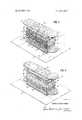
- FIG. 1is an exploded, perspective view of one embodiment of the improved sanitary napkin of the present invention.
- FIG. 2is an exploded, perspective view of yet another embodiment of the improved sanitary napkin of the present invention.
- the present inventionis directed to a catamenial device in the form of a sanitary napkin of generally conventional construction, but incorporates at least a core which contains loosely integrated short absorbent fibers and shredded hexachlorophene or bithionol incorporated plastic.
- the absorbent coreis wrapped or separated from the adjacent layer by a perforated sheet of hexachlorophene or bithionol incorporated plastic material.
- An imperforate moisture layer of hexachlorophene or bithionol incorporated plasticoverlies the absorbent core, on the side remote from the body of the user to prevent staining of the garments.
- the shredded bacteriostatic agent incorporated plasticis randomly distributed through the loosely integrated short absorbent fibers of the core.
- the absorbent corecomprises a plurality of individual pads formed of loosely integrated short absorbent fibers, the pads being separated by a layer of hexachlorophene or bithionol impregnated plastic in chip or shredded fonn.
- FIG. 1shows one embodiment of the improved sanitary napkin of the present invention which is constructed in multiple layer form of napkin elements or components which are conventional in nature, with the exception of those components consisting of hexachlorophene or bithionol incorporated plastic in either perforate sheet, imperforate sheet or shredded form.
- hexachlorophenewill be stated as the bacteriostatic agent although bithionol or others may be substituted therefor.
- the rather large rectangular sheet 12 forming the bottom layercomprises a conventional gauze web of very soft fiber, such as cotton, the web being folded about fold lines 14 to completely enclose or wrap the components subsequent to stacking to form a completed sanitary napkin assembly.
- the remaining componentsare much narrower in width than the outer cover or gauze web 12, and include in the order shown, three thin absorbent tissue strips 18 which have their lateral edges extending beyond the edges of the remaining components, such that when the gauze web or cover 12 is turned upwardly, the edges of the tissues 18, formed of the absorbent cellulose material, turn up also about the sides of the assembly.
- tissue paper strips 18there is provided an absorbent pad 20, of some density, including a pair of longitudinally protruding rounded tips 22.
- the absorbent pad 20which is rather thin in comparison to the highly absorbent core 24 and is formed of flufiy cellulosic material such as cotton, but compressed to a much greater degree than the pads 26 forming the pure cotton segments of core 24.
- a single layer sheet 28 of absorbent materialoverlies pad 20, this sheet being formed of absorbent material such as compressed cotton fabric, the surface of the sheet being indented or embossed if necessary for structural integrity as well as to facilitate the absorption and transfer of the menses from the exterior surface of cover 12 to the highly absorbent core 24.
- the core 24which forms a most important element of the present invention consists, as mentioned previously, of three spaced pads 26, the pads being formed of loosely integrated short absorbent fabric, such as soft cotton, and in all respects similar to the unitary, cotton cellulose, highly absorbent pads forming the core of conventional napkin structures.
- the pads 26are separated by intervening layers 28 of hexachlorophene incorporated plastic in shredded or chipped form.
- additional layers 30 adjacent the outer surface of the outermost pads 26likewise comprise hexachlorophene incorporated or impregnated plastic in chipped or shredded form.
- the pads 26, and the layers 28 and 30,are maintained in position by a U-shaped band 32 formed from a sheet of hexachlorophene impregnated or incorporated plastic, the sheet including uniform perforations 34 to allow the menses to pass therethrough.
- the U- shaped band 32stabilizes the core assembly 20 to maintain the shredded hexachlorophene incorporated plastic material of layers 28 and 30 between and about the outer surfaces of the pads 26, while at the same time providing as great an area as possible for the menses to come into contact with the hexachlorophene to achieve the anti-fungal, bacteriostatic and germ resistant functions of the napkin.
- Overlying band 32is a thin absorbent sheet in tissue form 36 which is identical to sheet 28 which underlies the band.
- an imperforate hexachlorophene incorporated plastic sheet 38which acts as a moisture barrier and prevents further movement of menstrual fluid in a direction away from the body of the user and thereby prevents staining of the garment worn by the user.
- a second absorbent pad cover of higher density than the interior pads 26, pad 40being identical to pad 20 and including rounded projecting ends 42.
- the imperforate sheet 38 and the perforated band 32are provided with the intaglio design in configuration set forth in the referred to Schoonman US. Pat. No. 3,308,488, although in order to provide maximum surface area of the hexachlorophene incorporated plastic to the menstrual fluid, the shredded material forming layers 28 and 30 may comprise chips of similar sheet stock.
- the corebe formed of a plurality of separate pads interspersed with or surrounded by shredded or chipped hexachlorophene incorporated plastic.
- FIG. 2there is shown the present invention in alternate napkin form 10 in which the absorbent core comprises a single unitary pad 26.
- the assemblyconsists of a bottom cover or gauze web 12', cotton tissue sheets 18, the width slightly greater than the width of the remaining components, thin, rather high density absorbent pad 20', thin absorbent sheet 28, perforated wrapper or band 32 formed of hexachlorophene incorporated plastic sheet material which surrounds absorbent pad 26', absorbent strip 36, imperforate sheet 38' of hexachlorophene incorporated plastic and an outer absorbent pad 40 which acts as an outer cover for the assembly.
- the single pad 26' which forms the highly absorbent core of the sanitary napkinconsists of loosely integrated short absorbent fibers, preferably soft cotton, through which are randomly disposed hexachlorophene impregnated plastic sheet material in shredded or chip form as indicated at 44.
- the presence of the hexachlorophene incorporated plastic chips 44act to insure immediate and constant contact between the menstrual fluid absorbed by the pad and the hexachlorophene to reduce or eliminate odor, inhibit the growth of bacteria and germs.
- the sides and ends of the outer cover 12 and 12are wrapped about the components in conventional fashion.
- the sanitary napkins 10 and 10are positioned with the bottom surface of the covers 12 and 12 in contact with the user or wearer in the pelvic region with the outer absorbent pads or covers 40 and 40 being most remote from the wearer.
- the multiple pad core 24 or the unitary pad 26', of the alternate embodimentwhich carry the fiber like shreds or chips of self-sanitizing plastic, perform the major anti-fungal and germ resistant bacteriostatic function of the sanitary napkin.
- the perforated plastic layersare designed to accommodate a free flow of menses to the absorbent pad 26 or 26' and are so placed as to present several layers of odor resistant material.
- the perforated layersassist in the control of odor in combination with the spectrally constructed absorbent pad cores.
- the outer layers of imperforate antiseptic plasticare designed to supply a protective shield against staining any parts of the garments worn; yet, again ofiering additional service in the control of odor.
- the intaglio design of the thin plastic sheet, especially imperforate sheet 38 or 38 and the bands 32 and 32'contribute to the non-directional flow of menses, thereby utilizing all parts of the pad in both eliminating over-saturation of any portion of the pad and reducing to a material effect, unpleasant odor.
- a corecomprising loosely integrated short absorbent fibers and shredded plastic material incorporating a bacteriostatic agent.
- a sanitary napkin as claimed in claim 1further comprising a liquid pervious cover overlying the major surfaces of said core, said cover being formed of plastic sheet material incorporating a bacteriostatic agent therein.
- sanitary napkin as claimed in claim 1 fiirthercomprising an outer layer overlying said core, remote from the body of the wearer during use, said outer layer comprising an imperforate sheet of plastic incorporating a bacteriostatic agent therein.
- sanitary napkinas claimed in claim 1 wherein said core comprises at least two absorbent pads of loosely integrated short absorbent fibers separated by a layer of shredded hexachlorophene incorporated plastic.
- a sanitary napkin as claimed in claim 6further including an outer layer overlying said perforated band comprising a sheet of imperforate hexachlorophene incorporated plastic on the side of said core remote from the body of the wearer during use.
- a sanitary napkin as claimed in claim 8further comprising a thin perforated band of hexachlorophene incorporated plastic material carried by said pad.
- a sanitary napkin as claimed in claim 9further including an outer garment protecting cover formed of imperforate hexachlorophene incorporated plastic material, said cover overlying said perforated band on the side of core remote from the body of the wearer.
- a menses absorbing padcomprising an absorbent core surrounded by a liquid pervious cover
- the improvementcomprising a bacteriostatic material forming a portion of the absorbing pad contacting the menses to kill or inhibit the growth of bacteria, said bacteriostatic material comprising an organic plastic carrier and a bacteriostatic agent molded together said bacteriostatic agent interlacing the molecular structure of the plastic.
- the menses absorbing pad according to claim 1 1wherein said bacteriostatic material is in sheet form, at least one of said sheets being inserted into said core forming a layer thereof, said sheet having means therein to allow menses to pass therethrough, said sheet also contacting the menses to kill or inhibit the growth of bacteria.
Landscapes
- Health & Medical Sciences (AREA)
- Public Health (AREA)
- General Health & Medical Sciences (AREA)
- Engineering & Computer Science (AREA)
- Veterinary Medicine (AREA)
- Epidemiology (AREA)
- Life Sciences & Earth Sciences (AREA)
- Animal Behavior & Ethology (AREA)
- Hematology (AREA)
- Chemical & Material Sciences (AREA)
- Materials Engineering (AREA)
- Vascular Medicine (AREA)
- Heart & Thoracic Surgery (AREA)
- Biomedical Technology (AREA)
- Absorbent Articles And Supports Therefor (AREA)
Abstract
Description
United States Patent 1 Money May 15, 1973 [54] BACTERIOSTATIC SANITARY NAPKIN [76] Inventor: Maxine E. Money, 4187 Patterson Avenue, Winston-Salem, N.C. 27105 [22] Filed: Feb. 26, 1968 [21] Appl. No.: 708,049
[52] U.S. Cl. ..128/290 R [51] Int. Cl. ..A61f 13/16 [58] Field of Search ..128/284, 285, 287,
[56] References Cited UNITED STATES PATENTS 3,490,454 l/l970 Goldfarb et al. ..128/285 2,919,200 12/1959 Dubin et al. ..128/296 UX 3,024,207 3/1962 Shaw et al. ..128/290 X 3,094,494 6/1963 Hopkins et a1 ..128/290 X 3,172,817 3/1965 Leupold et al ..128/290 X 3,308,488 3/1967 Schoonman ..128/296 X 3,340,875 9/1967 Dudley et al. ..128/290 Primary Examiner-Charles F. Rosenbaum Att0mey Sughrue, Rothwell, Mion, Zinn and MacPeak [57] ABSTRACT Employment of hexachlorophene incorporated plastic in perforate sheet, imperforate sheet and shredded form as anti-fungal and bacteriostatic means in sanitary napkins or the like.
13 Claims, 2 Drawing Figures PATENTEB HAY] 5W5 INVENT )h MAXINE ELIZABETH MONEY BACTERIOSTATIC SANITARY NAPKIN Absorbent products in the form of disposable pads have long been used for catamenial purposes. Such absorbent pads are relatively bulky, flat and rectangular, and comprise cover fabrics which are sufficiently soft as to be non-irritating, inert to the aqueous fluids associated with menstruation, non-allergic to the portions of the body in contact therewith, and at the same time the fabric must permit the unimpeded passage therethrough of the aqueous menstrual fluids into the more absorbent pad core.
The core itself normally comprises loosely integrated fibrous material of predominantly short fibers, such as wood pulp fibers or cotton linters. The highly absorbent cores of this type are not inherently resilient and springy, and lack form stability and shape retention.
Further, there have been employed in the manufacture of sanitary napkins and the like, a number of elements in layer form which are carried by and positioned between the outer soft gauze web or cover and the highly absorbent core pad. These elements include absorbent pads of reduced thickness and greater density than that of the central core, perforated or otherwise sheets of non-absorbent material, thin sheets of absorbent material of cellulose material having the consistency of tissue paper, and other means to maintain the desired shape of the napkin assembly during extended use and absorption of the menses. In order to protect the clothing of the user, it is also conventional to include on the side of the napkin assembly remote from the body of the user, an imperforate pad or sheet to insure retention of the fluid by the soft absorbent inner core, preventing the same from reaching the users or wearers clothing.
Since the napkin is worn for a period of time, the presence of the menses within the napkin results in undesirable odor, which odor increases in intensity with time. There is the added problem of the presence of the napkin which may serve as a breeding place for harmful bacteria or germs which may be then readily carried into the body through the body orifice.
It has been proposed to combat the growth of bacteria and to reduce odor by treating the various components of sanitary napkins or the like, especially the outer gauze web or cover with chemical agents. The treatment, however, has resulted in greatly reducing the cappilarity factor of the treated component, while at the same time reducing the softness of the outer sheet with resulting increased irritation to the user. Further, no known treatment has been effective to reduce or inhibit the growth of bacteria, remove or prevent the odor due to the presence of the menses, and provide the necessary pathogenic germ resistance.
There has been developed within recent years, web covers and other impervious sheets formed of plastic material which incorporate bacteriostatic compounds, such as Actamer, sold by the Montsanto Chemical Company, and hexachlorophene such as compound 6-1 1, manufactured by the Sindar Corporation of New York, such compounds being compatible with plastics such as polyolefins including polyethylene, with the resultant product comprising a plastic which effectively kills bacteria outright, or inhibits their growth.
One such material is disclosed in U.S. Pat. No. 3,308,488, entitled Bacteriostatic Drawsheet issued to Richard J. Schoonman, March 14, 1967. In particular, the textured material is made from a water impervious film of plastic, for instance a polyolefin such as polyethylene which has incorporated or dispersed therein a compatible bacteriostatic agent, such as hexachlorophene or bithionol. The bacteriostatic agent is admixed in dry particulated form with powdered polyethylene in the range of 0.01 percent to 0.05 percent with the mixture being polymerized and extruded as a thin film. The film after extrusion is countered to a desired thickness and fed, preferably while still warm, through a pair of embossing rolls which impart to the bacteriostatic plastic film the desired irregular or textured surface. The finished product is characterized by an intaglio design which defines a corresponding relief design on opposite sides to texture both sides of the film. The relief pattern increases the effective bacteriostatic surface area presented to combat harmful bacteria.
It is therefore a primary object of this invention to provide an improved catamenial device, such as a sanitary napkin which incorporates in perforate sheet, imperforate sheet and/or shredded form, hexachlorophene incorporated plastic as anti-fungal and bacteriostatic components vvithout deleteriously affecting the softness or absorbent qualities of the device.
A further object of this invention is to provide an improved sanitary napkin in which the hexachlorophene incorporated plastic components facilitate the passage of the menses to the central absorbent pad core while preventing the staining of the garment of the user.
It is a further object of this invention to provide an improved sanitary napkin which incorporates spaced layers of hexachlorophene incorporated plastic material to more effectively control the odor created by the passage of the menses fluid.
It is a further object of this invention to provide an improved sanitary napkin incorporating a highly effective odor resistant and bacteriostatic agent which is highly effective, and which does not increase appreciably the cost of manufacture of such device.
The foregoing and other objects, features and advantages of the invention will be apparent from the following more particular description of preferred embodiments of the invention, as illustrated in the accompanying drawing.
In the drawing:
FIG. 1 is an exploded, perspective view of one embodiment of the improved sanitary napkin of the present invention.
FIG. 2 is an exploded, perspective view of yet another embodiment of the improved sanitary napkin of the present invention.
In general, the present invention is directed to a catamenial device in the form of a sanitary napkin of generally conventional construction, but incorporates at least a core which contains loosely integrated short absorbent fibers and shredded hexachlorophene or bithionol incorporated plastic. Preferably, the absorbent core is wrapped or separated from the adjacent layer by a perforated sheet of hexachlorophene or bithionol incorporated plastic material. An imperforate moisture layer of hexachlorophene or bithionol incorporated plastic overlies the absorbent core, on the side remote from the body of the user to prevent staining of the garments.
In one form of the invention, the shredded bacteriostatic agent incorporated plastic is randomly distributed through the loosely integrated short absorbent fibers of the core. In another form of the invention, the absorbent core comprises a plurality of individual pads formed of loosely integrated short absorbent fibers, the pads being separated by a layer of hexachlorophene or bithionol impregnated plastic in chip or shredded fonn.
Referring to the drawing, FIG. 1 shows one embodiment of the improved sanitary napkin of the present invention which is constructed in multiple layer form of napkin elements or components which are conventional in nature, with the exception of those components consisting of hexachlorophene or bithionol incorporated plastic in either perforate sheet, imperforate sheet or shredded form. For simplicity, hexachlorophene will be stated as the bacteriostatic agent although bithionol or others may be substituted therefor. In this respect, the rather largerectangular sheet 12 forming the bottom layer comprises a conventional gauze web of very soft fiber, such as cotton, the web being folded aboutfold lines 14 to completely enclose or wrap the components subsequent to stacking to form a completed sanitary napkin assembly. The remaining components are much narrower in width than the outer cover orgauze web 12, and include in the order shown, three thinabsorbent tissue strips 18 which have their lateral edges extending beyond the edges of the remaining components, such that when the gauze web orcover 12 is turned upwardly, the edges of thetissues 18, formed of the absorbent cellulose material, turn up also about the sides of the assembly. Immediately above thetissue paper strips 18, there is provided anabsorbent pad 20, of some density, including a pair of longitudinally protrudingrounded tips 22. Theabsorbent pad 20 which is rather thin in comparison to the highly absorbent core 24 and is formed of flufiy cellulosic material such as cotton, but compressed to a much greater degree than thepads 26 forming the pure cotton segments of core 24. Asingle layer sheet 28 of absorbent material overliespad 20, this sheet being formed of absorbent material such as compressed cotton fabric, the surface of the sheet being indented or embossed if necessary for structural integrity as well as to facilitate the absorption and transfer of the menses from the exterior surface ofcover 12 to the highly absorbent core 24.
The core 24 which forms a most important element of the present invention consists, as mentioned previously, of three spacedpads 26, the pads being formed of loosely integrated short absorbent fabric, such as soft cotton, and in all respects similar to the unitary, cotton cellulose, highly absorbent pads forming the core of conventional napkin structures. However, thepads 26 are separated by interveninglayers 28 of hexachlorophene incorporated plastic in shredded or chipped form. Further,additional layers 30 adjacent the outer surface of theoutermost pads 26 likewise comprise hexachlorophene incorporated or impregnated plastic in chipped or shredded form. Thepads 26, and thelayers U-shaped band 32 formed from a sheet of hexachlorophene impregnated or incorporated plastic, the sheet includinguniform perforations 34 to allow the menses to pass therethrough. In this respect, the U-shaped band 32 stabilizes thecore assembly 20 to maintain the shredded hexachlorophene incorporated plastic material oflayers pads 26, while at the same time providing as great an area as possible for the menses to come into contact with the hexachlorophene to achieve the anti-fungal, bacteriostatic and germ resistant functions of the napkin.
Overlyingband 32 is a thin absorbent sheet intissue form 36 which is identical tosheet 28 which underlies the band. Next in order, is positioned an imperforate hexachlorophene incorporatedplastic sheet 38 which acts as a moisture barrier and prevents further movement of menstrual fluid in a direction away from the body of the user and thereby prevents staining of the garment worn by the user. Finally, in order to complete the assembly, there is provided a second absorbent pad cover of higher density than theinterior pads 26,pad 40 being identical topad 20 and includingrounded projecting ends 42.
Preferably, theimperforate sheet 38 and theperforated band 32 are provided with the intaglio design in configuration set forth in the referred to Schoonman US. Pat. No. 3,308,488, although in order to provide maximum surface area of the hexachlorophene incorporated plastic to the menstrual fluid, the shreddedmaterial forming layers
It is not necessary that the core be formed of a plurality of separate pads interspersed with or surrounded by shredded or chipped hexachlorophene incorporated plastic. Turning to FIG. 2, there is shown the present invention inalternate napkin form 10 in which the absorbent core comprises a singleunitary pad 26. In the order shown, the assembly consists of a bottom cover or gauze web 12',cotton tissue sheets 18, the width slightly greater than the width of the remaining components, thin, rather high density absorbent pad 20', thinabsorbent sheet 28, perforated wrapper orband 32 formed of hexachlorophene incorporated plastic sheet material which surrounds absorbent pad 26',absorbent strip 36, imperforate sheet 38' of hexachlorophene incorporated plastic and an outerabsorbent pad 40 which acts as an outer cover for the assembly. The only difi'erence between the embodiment of FIG, 2 and that of FIG. 1, is the fact that the single pad 26' which forms the highly absorbent core of the sanitary napkin, consists of loosely integrated short absorbent fibers, preferably soft cotton, through which are randomly disposed hexachlorophene impregnated plastic sheet material in shredded or chip form as indicated at 44. Of course, in both embodiments, the presence of the hexachlorophene incorporatedplastic chips 44 act to insure immediate and constant contact between the menstrual fluid absorbed by the pad and the hexachlorophene to reduce or eliminate odor, inhibit the growth of bacteria and germs. Instead of employing a U-shaped band such asband 32 or 32', single layers of hexachlorophene incorporated plastic sheets may be employed between the absorbent core and the remaining components or elements of the assembly; although, it is important that the otherwise imperforate sheets be perforated in the manner shown, so as not to inhibit the movement of fluid to allow the same to contact as much hexachlorophene incorporated plastic material as possible.
After stacking the components in the manner shown for both embodiments, the sides and ends of theouter cover sanitary napkins covers absorbent pad 26 or 26' and are so placed as to present several layers of odor resistant material. The perforated layers assist in the control of odor in combination with the spectrally constructed absorbent pad cores. The outer layers of imperforate antiseptic plastic are designed to supply a protective shield against staining any parts of the garments worn; yet, again ofiering additional service in the control of odor. The intaglio design of the thin plastic sheet, especiallyimperforate sheet bands 32 and 32' contribute to the non-directional flow of menses, thereby utilizing all parts of the pad in both eliminating over-saturation of any portion of the pad and reducing to a material effect, unpleasant odor.
While the invention has been particularly shown and described with reference to preferred embodiments, it will be understood by those skilled in the art that the foregoing and other changes in form and detail may be made therein without departing from the spirit and scope of the invention.
What is claimed is:
1. In a sanitary napkin, a core comprising loosely integrated short absorbent fibers and shredded plastic material incorporating a bacteriostatic agent.
2. A sanitary napkin as claimed in claim 1 wherein said bacteriostatic agent is one selected from the group consisting of hexachlorophene and bithionol.
3. A sanitary napkin as claimed in claim 1 further comprising a liquid pervious cover overlying the major surfaces of said core, said cover being formed of plastic sheet material incorporating a bacteriostatic agent therein.
4. The sanitary napkin as claimed in claim 1 fiirther comprising an outer layer overlying said core, remote from the body of the wearer during use, said outer layer comprising an imperforate sheet of plastic incorporating a bacteriostatic agent therein.
5. The sanitary napkin as claimed in claim 1 wherein said core comprises at least two absorbent pads of loosely integrated short absorbent fibers separated by a layer of shredded hexachlorophene incorporated plastic.
6. The sanitary napkin as claimed in claim 5 wherein said core is surrounded by a perforated band of thin hexachlorophene incorporated plastic material.
7. A sanitary napkin as claimed in claim 6 further including an outer layer overlying said perforated band comprising a sheet of imperforate hexachlorophene incorporated plastic on the side of said core remote from the body of the wearer during use.
8. A sanitary napkin as claimed in claim 1 wherein said core comprises a unitary pad of hexachlorophene incorporated plastic chips randomly mixed with loosely integrated short absorbent fibers.
9. A sanitary napkin as claimed in claim 8 further comprising a thin perforated band of hexachlorophene incorporated plastic material carried by said pad.
10. A sanitary napkin as claimed in claim 9 further including an outer garment protecting cover formed of imperforate hexachlorophene incorporated plastic material, said cover overlying said perforated band on the side of core remote from the body of the wearer.
11. In a menses absorbing pad comprising an absorbent core surrounded by a liquid pervious cover, the improvement comprising a bacteriostatic material forming a portion of the absorbing pad contacting the menses to kill or inhibit the growth of bacteria, said bacteriostatic material comprising an organic plastic carrier and a bacteriostatic agent molded together said bacteriostatic agent interlacing the molecular structure of the plastic.
12. The menses absorbing pad according to claim 11 wherein said plastic comprises a polyolefin.
13. The menses absorbing pad according to claim 1 1 wherein said bacteriostatic material is in sheet form, at least one of said sheets being inserted into said core forming a layer thereof, said sheet having means therein to allow menses to pass therethrough, said sheet also contacting the menses to kill or inhibit the growth of bacteria.
Claims (12)
- 2. A sanitary napkin as claimed in claim 1 wherein said bacteriostatic agent is one selected from the group consisting of hexachlorophene and bithionol.
- 3. A sanitary napkin as claimed in claim 1 further comprising a liquid pervious cover overlying the major surfaces of said core, said cover being formed of plastic sheet material incorporating a bacteriostatic agent therein.
- 4. The sanitary napkin as claimed in claim 1 further comprising an outer layer overlying said core, remote from the body of the wearer during use, said outer layer comprising an imperforate sheet of plastic incorporating a bacteriostatic agent therein.
- 5. The sanitary napkin as claimed in claim 1 wherein said core comprises at least two absorbent pads of loosely integrated short absorbent fibers separated by a layer of shredded hexachlorophene incorporated plastic.
- 6. The sanitary napkin as claimed in claim 5 wherein said core is surrounded by a perforated band of thin hexachlorophene incorporated plastic material.
- 7. A sanitary napkin as claimed in claim 6 further including an outer layer overlying said perforated band comprising a sheet of imperforate hexachlorophene incorporated plastic on the side of said core remote from the body of the wearer during use.
- 8. A sanitary napkin as claimed in claim 1 wherein said core comprises a unitary pad of hexachlorophene incorporated plastic chips randomly mixed with loosely integrated short absorbent fibers.
- 9. A sanitary napkin as claimed in claim 8 further comprising a thin perforated band of hexachlorophene incorporated plastic material carried by said pad.
- 10. A sanitary napkin as claimed in claim 9 further including an outer garment protecting cover formed of imperforate hexachlorophene incorporated plastic material, said cover overlying said perforated band on the side of core remote from the body of the wearer.
- 11. In a menses absorbing pad comprising an absorbent core surrounded by a liquid pervious cover, the improvement comprising a bacteriostatic material forming a portion of the absorbing pad contacting the menses to kill or inhibit the growth of bacteria, said bacteriostatic material comprising an organic plastic carrier and a bacteriostatic agent molded together said bacteriostatic agent interlacing the molecular structure of the plastic.
- 12. The menses absorbing pad according to claim 11 wherein said plastic comprises a polyolefin.
- 13. The menses absorbing pad according to claim 11 wherein said bacteriostatic material is in sheet form, at least one of said sheets being inserted into said core forming a layer thereof, said sheet having means therein to allow menses to pass therethrough, said sheet also contacting the menses to kill or inhibit the growth of bacteria.
Applications Claiming Priority (1)
| Application Number | Priority Date | Filing Date | Title |
|---|---|---|---|
| US70804968A | 1968-02-26 | 1968-02-26 |
Publications (1)
| Publication Number | Publication Date |
|---|---|
| US3732867Atrue US3732867A (en) | 1973-05-15 |
Family
ID=24844182
Family Applications (1)
| Application Number | Title | Priority Date | Filing Date |
|---|---|---|---|
| US00708049AExpired - LifetimeUS3732867A (en) | 1968-02-26 | 1968-02-26 | Bacteriostatic sanitary napkin |
Country Status (1)
| Country | Link |
|---|---|
| US (1) | US3732867A (en) |
Cited By (18)
| Publication number | Priority date | Publication date | Assignee | Title |
|---|---|---|---|---|
| JPS5182997A (en)* | 1975-08-18 | 1976-07-21 | Enzeru Kk | |
| US4069821A (en)* | 1975-08-08 | 1978-01-24 | Colgate-Palmolive Company | Absorbent article |
| US4075279A (en)* | 1975-09-27 | 1978-02-21 | Hoechst Aktiengesellschaft | Process for the manufacture of swellable cellulose ethers |
| US4268340A (en)* | 1973-08-05 | 1981-05-19 | Colgate-Palmolive Company | Method of forming an absorbent article |
| US4547195A (en)* | 1982-07-26 | 1985-10-15 | Kimberly-Clark Corporation | Sanitary napkin with malodor counteractant means |
| US5019063A (en)* | 1989-10-30 | 1991-05-28 | The Procter & Gamble Company | Absorbent articles containing mechanical pulp and polymeric gelling material |
| US5019062A (en)* | 1988-06-23 | 1991-05-28 | The Procter & Gamble Company | Bicomponent material |
| US5423788A (en)* | 1990-10-16 | 1995-06-13 | Kimberly-Clark Corporation | Disposable feminine guard |
| US5480699A (en)* | 1986-09-08 | 1996-01-02 | Flawa Schweizer Verbandstoff-Und Wattefabrieken Ag. Flawil | Pad for applying liquid or semi-solid material |
| US5652049A (en)* | 1993-11-15 | 1997-07-29 | Paragon Trade Brands, Inc. | Antibacterial composite non-woven fabric |
| USH1732H (en)* | 1994-03-10 | 1998-06-02 | Johnson; Theresa Louise | Absorbent articles containing antibacterial agents in the topsheet for odor control |
| EP1046383A3 (en)* | 1987-10-16 | 2000-11-29 | Kimberly-Clark Worldwide, Inc. | Absorbent article |
| US20040127870A1 (en)* | 2002-12-27 | 2004-07-01 | Dipalma Joseph | Thin curved elasticized absorbent article with absorbent concentration profile |
| US20050113771A1 (en)* | 2003-11-26 | 2005-05-26 | Kimberly-Clark Worldwide, Inc. | Odor control in personal care products |
| US7799966B2 (en) | 2000-04-14 | 2010-09-21 | Playtex Products, Inc. | Fibrous absorbent articles having malodor counteractant ability and method of making same |
| CN102552969A (en)* | 2011-12-21 | 2012-07-11 | 深圳市宜丽环保科技有限公司 | Sanitary pad with bacteriostatic and whitening functions |
| EP3187047A1 (en) | 2015-12-30 | 2017-07-05 | Green Impact Holding AG | Wash-durable, absorbent textile with antimicrobial properties and/or improved washability, in particular for reusable sanitary napkin |
| US10646380B2 (en)* | 2016-04-01 | 2020-05-12 | Asalia Vargas | Feminine night pad |
Citations (7)
| Publication number | Priority date | Publication date | Assignee | Title |
|---|---|---|---|---|
| US2919200A (en)* | 1955-03-25 | 1959-12-29 | Steril Plast Inc | Bacteriostatic plastic |
| US3024207A (en)* | 1958-04-10 | 1962-03-06 | Rohm & Haas | Ion-exchange products and methods for making and suing them |
| US3094494A (en)* | 1959-01-26 | 1963-06-18 | Rohm & Haas | Improved ion exchange cellular products |
| US3172817A (en)* | 1959-09-28 | 1965-03-09 | Schickedanz Ver Papierwerk | Method of deodorizing the human body and materials therefor |
| US3308488A (en)* | 1965-05-03 | 1967-03-14 | Richard J Schoonman | Bacteriostatic drawsheet |
| US3340875A (en)* | 1964-02-12 | 1967-09-12 | Scott Paper Co | Deodorized sanitary napkin |
| US3490454A (en)* | 1966-10-21 | 1970-01-20 | United Merchants & Mfg | Catamenial products having a coating of rupturable microcapsules containing medicants |
- 1968
- 1968-02-26USUS00708049Apatent/US3732867A/ennot_activeExpired - Lifetime
Patent Citations (7)
| Publication number | Priority date | Publication date | Assignee | Title |
|---|---|---|---|---|
| US2919200A (en)* | 1955-03-25 | 1959-12-29 | Steril Plast Inc | Bacteriostatic plastic |
| US3024207A (en)* | 1958-04-10 | 1962-03-06 | Rohm & Haas | Ion-exchange products and methods for making and suing them |
| US3094494A (en)* | 1959-01-26 | 1963-06-18 | Rohm & Haas | Improved ion exchange cellular products |
| US3172817A (en)* | 1959-09-28 | 1965-03-09 | Schickedanz Ver Papierwerk | Method of deodorizing the human body and materials therefor |
| US3340875A (en)* | 1964-02-12 | 1967-09-12 | Scott Paper Co | Deodorized sanitary napkin |
| US3308488A (en)* | 1965-05-03 | 1967-03-14 | Richard J Schoonman | Bacteriostatic drawsheet |
| US3490454A (en)* | 1966-10-21 | 1970-01-20 | United Merchants & Mfg | Catamenial products having a coating of rupturable microcapsules containing medicants |
Cited By (20)
| Publication number | Priority date | Publication date | Assignee | Title |
|---|---|---|---|---|
| US4268340A (en)* | 1973-08-05 | 1981-05-19 | Colgate-Palmolive Company | Method of forming an absorbent article |
| US4069821A (en)* | 1975-08-08 | 1978-01-24 | Colgate-Palmolive Company | Absorbent article |
| JPS5182997A (en)* | 1975-08-18 | 1976-07-21 | Enzeru Kk | |
| US4075279A (en)* | 1975-09-27 | 1978-02-21 | Hoechst Aktiengesellschaft | Process for the manufacture of swellable cellulose ethers |
| US4547195A (en)* | 1982-07-26 | 1985-10-15 | Kimberly-Clark Corporation | Sanitary napkin with malodor counteractant means |
| US5480699A (en)* | 1986-09-08 | 1996-01-02 | Flawa Schweizer Verbandstoff-Und Wattefabrieken Ag. Flawil | Pad for applying liquid or semi-solid material |
| EP1046383A3 (en)* | 1987-10-16 | 2000-11-29 | Kimberly-Clark Worldwide, Inc. | Absorbent article |
| US5019062A (en)* | 1988-06-23 | 1991-05-28 | The Procter & Gamble Company | Bicomponent material |
| US5019063A (en)* | 1989-10-30 | 1991-05-28 | The Procter & Gamble Company | Absorbent articles containing mechanical pulp and polymeric gelling material |
| US5423788A (en)* | 1990-10-16 | 1995-06-13 | Kimberly-Clark Corporation | Disposable feminine guard |
| US5652049A (en)* | 1993-11-15 | 1997-07-29 | Paragon Trade Brands, Inc. | Antibacterial composite non-woven fabric |
| USH1732H (en)* | 1994-03-10 | 1998-06-02 | Johnson; Theresa Louise | Absorbent articles containing antibacterial agents in the topsheet for odor control |
| US7799966B2 (en) | 2000-04-14 | 2010-09-21 | Playtex Products, Inc. | Fibrous absorbent articles having malodor counteractant ability and method of making same |
| US20040127870A1 (en)* | 2002-12-27 | 2004-07-01 | Dipalma Joseph | Thin curved elasticized absorbent article with absorbent concentration profile |
| US20050113771A1 (en)* | 2003-11-26 | 2005-05-26 | Kimberly-Clark Worldwide, Inc. | Odor control in personal care products |
| US20100125262A1 (en)* | 2003-11-26 | 2010-05-20 | Kimberly-Clark Worldwide, Inc. | Odor Control in Personal Care Products |
| CN102552969A (en)* | 2011-12-21 | 2012-07-11 | 深圳市宜丽环保科技有限公司 | Sanitary pad with bacteriostatic and whitening functions |
| EP3187047A1 (en) | 2015-12-30 | 2017-07-05 | Green Impact Holding AG | Wash-durable, absorbent textile with antimicrobial properties and/or improved washability, in particular for reusable sanitary napkin |
| WO2017114974A2 (en) | 2015-12-30 | 2017-07-06 | Green Impact Holding Ag | Wash-durable, fluid absorbent substrate with antimicrobial properties and/or improved washability, and hygiene product such as reusable sanitary napkin |
| US10646380B2 (en)* | 2016-04-01 | 2020-05-12 | Asalia Vargas | Feminine night pad |
Similar Documents
| Publication | Publication Date | Title |
|---|---|---|
| US3732867A (en) | Bacteriostatic sanitary napkin | |
| US3762415A (en) | Anti-bacterial menses absorbing pads | |
| US5961505A (en) | Absorbent article exhibiting improved fluid management | |
| US4015604A (en) | Absorbent product with side leakage control means | |
| US5437653A (en) | Absorbent article having two coapertured layers and a method of making the article | |
| US4226237A (en) | Layered absorbent structure | |
| EP0868894B1 (en) | Absorbent article with coiled side walls | |
| US3370590A (en) | Process of preventing undesirable loosening or matting in paper for use in sanitary products and the products thereof | |
| US3987792A (en) | Disposable diaper having improved liquid retention | |
| US2418907A (en) | Sanitary napkin | |
| US7264615B2 (en) | Absorbent insert for use with an outer absorbent garment | |
| EP0835088B1 (en) | An absorbent article, such as a diaper, an incontinence guard, a sanitary napkin or like article | |
| EP0930862B1 (en) | Absorbent article | |
| SE318187B (en) | ||
| GB2558428A (en) | Absorbent article including superabsorbent yarn | |
| JPH11506503A (en) | Articles with soft absorbent pulp sheets | |
| CA1148302A (en) | Disposable product with hydrophobic anti wetback sheet | |
| EP1151735B1 (en) | Absorbent core for use in a sanitary absorbent article and method for manufacturing | |
| KR100810803B1 (en) | Panty Liner | |
| US3088463A (en) | Sanitary napkins | |
| US5962106A (en) | Absorbent product | |
| SK50799A3 (en) | Absorption material having temperature dependent absorption capacity and the use thereof in an absorbent article | |
| EP0117351B1 (en) | Absorptive products | |
| US3329145A (en) | Sanitary napkin having control element with gel-forming material | |
| KR20190117865A (en) | A hygienic band include chinese herb medicine a composite |