US3685690A - Credit card automatic currency dispenser - Google Patents
Credit card automatic currency dispenserDownload PDFInfo
- Publication number
- US3685690A US3685690AUS58888AUS3685690DAUS3685690AUS 3685690 AUS3685690 AUS 3685690AUS 58888 AUS58888 AUS 58888AUS 3685690D AUS3685690D AUS 3685690DAUS 3685690 AUS3685690 AUS 3685690A
- Authority
- US
- United States
- Prior art keywords
- currency
- receipt
- cash drawer
- dispensing system
- transport
- Prior art date
- Legal status (The legal status is an assumption and is not a legal conclusion. Google has not performed a legal analysis and makes no representation as to the accuracy of the status listed.)
- Expired - Lifetime
Links
- 230000004044responseEffects0.000claimsabstractdescription79
- 238000000151depositionMethods0.000claimsdescription7
- 238000009877renderingMethods0.000claimsdescription2
- 230000032258transportEffects0.000abstractdescription50
- 101000661807Homo sapiens Suppressor of tumorigenicity 14 proteinProteins0.000description14
- 230000007246mechanismEffects0.000description7
- 101000710013Homo sapiens Reversion-inducing cysteine-rich protein with Kazal motifsProteins0.000description5
- 101000911772Homo sapiens Hsc70-interacting proteinProteins0.000description4
- 108090000237interleukin-24Proteins0.000description4
- 230000000717retained effectEffects0.000description4
- 238000012795verificationMethods0.000description4
- 125000006850spacer groupChemical group0.000description3
- 101001139126Homo sapiens Krueppel-like factor 6Proteins0.000description2
- 230000003213activating effectEffects0.000description2
- 238000010276constructionMethods0.000description2
- 238000010586diagramMethods0.000description2
- 230000007257malfunctionEffects0.000description2
- 238000000034methodMethods0.000description2
- 238000012986modificationMethods0.000description2
- 230000004048modificationEffects0.000description2
- 238000012545processingMethods0.000description2
- 101500021172Aplysia californica Myomodulin-CProteins0.000description1
- 101000867232Escherichia coli Heat-stable enterotoxin IIProteins0.000description1
- 101000658644Homo sapiens Tetratricopeptide repeat protein 21AProteins0.000description1
- 102100034913Tetratricopeptide repeat protein 21AHuman genes0.000description1
- 230000004913activationEffects0.000description1
- 230000008859changeEffects0.000description1
- UFULAYFCSOUIOV-UHFFFAOYSA-NcysteamineChemical compoundNCCSUFULAYFCSOUIOV-UHFFFAOYSA-N0.000description1
- 230000002349favourable effectEffects0.000description1
- 230000005484gravityEffects0.000description1
- 230000000977initiatory effectEffects0.000description1
- 239000000696magnetic materialSubstances0.000description1
- 238000011022operating instructionMethods0.000description1
- 238000011017operating methodMethods0.000description1
- 238000012163sequencing techniqueMethods0.000description1
- VWDWKYIASSYTQR-UHFFFAOYSA-Nsodium nitrateChemical compound[Na+].[O-][N+]([O-])=OVWDWKYIASSYTQR-UHFFFAOYSA-N0.000description1
Images
Classifications
- G—PHYSICS
- G07—CHECKING-DEVICES
- G07F—COIN-FREED OR LIKE APPARATUS
- G07F19/00—Complete banking systems; Coded card-freed arrangements adapted for dispensing or receiving monies or the like and posting such transactions to existing accounts, e.g. automatic teller machines
- G07F19/20—Automatic teller machines [ATMs]
- G—PHYSICS
- G07—CHECKING-DEVICES
- G07D—HANDLING OF COINS OR VALUABLE PAPERS, e.g. TESTING, SORTING BY DENOMINATIONS, COUNTING, DISPENSING, CHANGING OR DEPOSITING
- G07D11/00—Devices accepting coins; Devices accepting, dispensing, sorting or counting valuable papers
- G07D11/10—Mechanical details
- G—PHYSICS
- G07—CHECKING-DEVICES
- G07D—HANDLING OF COINS OR VALUABLE PAPERS, e.g. TESTING, SORTING BY DENOMINATIONS, COUNTING, DISPENSING, CHANGING OR DEPOSITING
- G07D11/00—Devices accepting coins; Devices accepting, dispensing, sorting or counting valuable papers
- G07D11/10—Mechanical details
- G07D11/14—Inlet or outlet ports
- G—PHYSICS
- G07—CHECKING-DEVICES
- G07F—COIN-FREED OR LIKE APPARATUS
- G07F19/00—Complete banking systems; Coded card-freed arrangements adapted for dispensing or receiving monies or the like and posting such transactions to existing accounts, e.g. automatic teller machines
- G07F19/20—Automatic teller machines [ATMs]
- G07F19/202—Depositing operations within ATMs
Definitions
- Both the original code and the updated 2 271/41, 7; 194/4, DIG, codeare scrambled in accordance with a changing 133/2 key. Scrambling the credit card code after each use thereof minimizes the chance of unauthorized use of 56] References Cited the currency dispenser.
- a storage container for the packets of currencytransports the g 'i 4 3 2? required number of packets by a positive feed drive to 3415348 12 1968 g i "i a cash drawer.
- the cash draweropens to a detent 3039582 4 9 62 j i l94/4 E position which allows the customer to then move the Primary Examiner-Robert B. Reeves Assistant Examiner-Thomas E. Kocovsky Attorney-Richards, Harris & Hubbard drawer to a fully open position to remove his currency. Upon release of the cash drawer, it returns to a partially opened position from which it automatically closes after a preset time limit.
- This inventionrelates to a currency dispenser, and more particularly to a coded document-actuated currency dispenser.
- An object of the present inventionis to provide a coded document activated automatic dispenser. Another object of the present invention is to provide a code actuated automatic currency dispensing machine. A further object of this invention is to provide code scrambling security in a code actuated dispenser. Still another object of this invention is to provide positive feed delivery in automatic dispensing apparatus. A still further object of this invention is to provide controlled, timed, sequential operation of a dispensing drawer in automatic dispensing apparatus.
- a coded documentis presented to the machine by a user. Initially, the machine performs a format check on the document to determine if the machine will properly respond. If the coded document presented is not of the correct format, it will be locked out thereby protecting the machine from an attempt to force an unauthorized document into the mechanism. If the initial check indicates the presented document has the proper format, a gate opens to permit the user to further insert the document into the machine for actuation thereof.
- the documentUpon the acceptance of a coded document by the dispensing apparatus of the present invention, the document proceeds to a first station where scrambled coded information stored thereon is read and sent to unscrambling logic.
- a customers personal identification code as read from the presented documentis checked by comparison with a code manually inserted by the user. If the coded customer identification number and the inserted identification number do not agree, the user is instructed to re-enter his personal code. This operation will be repeated until the customer inserts the correct code or a favorable comparison does not result after three attempts. If on the third attempt the stored code and the entered code do not agree, the coded document is transported to an internal storage bin and not returned to the user.
- an unscramblerAfter the code on the document as presented is read and sent to the unscrambling logic, an unscrambler converts the data into a series of separate, logically arranged data words. These data words, after being checked and updated as explained previously, are rescrambled in accordance with a scrambling key to produce a code arrangement different from the arrangement as read. Upon completion of the rescrambling, the document is recoded with the updated scrambled data.
- the code changing logicalso includes circuitry for generating a different scrambling key for subsequent readings of the same coded documents.
- a positive feed delivery systemremoves the article to be dispensed from a storage container.
- the positive feed systemincludes an adjustable gate for accurately metering the dispensed article. After leaving the storage container through the metering gate, the article is transported between pinch rollers and a series of belted rollers to a dispensing drawer. This drawer is actuated by an energizing signal from circuitry in response to the user removing the presented document from the machine.
- an articleis deposited into the dispensing drawer.
- a signalenergizes an actuator to position the drawer from a retracted, closed position to a partially opened detent position from which it may be drawn to a full open position by the user.
- a timermeasures the time the drawer is in the detent position, and after a preselected interval, as governed by the timer, it returns to the closed position. If, upon initially positioning the drawer to the partially opened detent position, the user does not pull the drawer to the fully open position before the expiration of a preselected time interval, the drawer will be returned to the closed position.
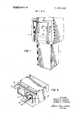
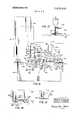
- FIG. 1is a pictorial view of a currency dispenser in accordance with the present invention
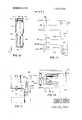
- FIG. 2illustrates a typical credit card for use with the currency dispenser of FIG. 1;
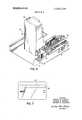
- FIG. 3is a perspective view of a currency packet delivery system and credit card transport system for the dispenser of FIG. 1;
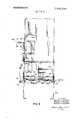
- FIG. 4is a perspective view of the cash drawer for the dispenser of FIG. 1;
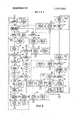
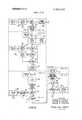
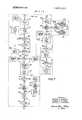
- FIGS. 5 through 7illustrate a flow diagram giving the steps in the operation of the currency dispenser for money delivery to a user of a valid credit card
- FIG. 8is a side view in section of a cash transport for the currency dispenser of FIG. 1;
- FIG. 9is a front view of the cash transport of FIG. 8;
- FIG. 10is a top view of a friction drive roller assembly for feeding currency packets from a storage container to a pinch roller system
- FIG. 11illustrates a portion of the left side of the cash transport as viewed from FIG. 9 showing the friction drive roller actuating mechanism
- FIG. 12is a front view of a metering gate at the outlet port of the container of the cash transport of FIG. 8;
- FIG. 13is a bottom view of a divert door assembly for aborting a packet delivery upon a system malfunction
- FIG. 14is a side view of a printed receipt feed roller for cooperation with the pinch rollers of the cash transport;
- FIG. 15is a side view of a printed receipt feeder assembly of the transport system as illustrated in FIG. 8;
- FIG. 16is an electrical schematic of a logic system for controlling the operation and timing of the cash transport.
- FIG. 17is a schematic of the electronic actuators for operation of the cash transport.
- a free standing currency dispenserincluding a console 10 which houses mechanical operating sections of the system, and in addition customer interface equipment.
- the console 10is mounted on top of an electronic module 12 which houses the system electronics and power supply.
- Ten of these keys, marked 0 through 9,are to enable a user to insert his assigned identification code for verification of his authority to use a credit card presented to the machine through a card gate 16.
- One of the remaining three keysis a clear push button for correcting mistakes made by the user in inserting his assigned identification code.
- the remaining two keysare for selecting one or two currency packages to be dispensed. The amount of currency in each such package is controlled by authorized personnel.
- the front panel of the console 10includes an instruction window display 18 that provides for viewing an illuminated display message drum. As will be explained, the messages on this drum instruct a user in the operation of the currency dispenser.
- the last user interface on the front panel of the console 10is a cash drawer 20 that fits flush with the panel in a closed and locked position.
- a currency dispenser in accordance with the present inventionmay be activated by a standard A size plastic credit card with a stripe 26 of magnetic material located on the backside.
- the magnetic stripeallows up to eighty numeric characters in four rows to be magnetically encoded for use in providing a complete identification and record of each transaction with the currency dispenser.
- a magnetic credit card for use in the system describedcontains the following information:
- the card reader 24As the credit card 22 moves through the card reader 24, each of the above pieces of information is checked at one of several reading stations.
- the card reader illustratedincludes a drive motor 27 activated by a signal from the electronic module 12 and coupled to a series of drive rollers through a belt 28.
- the series of rollerscomprises pinch roller pairs distributed longitudinally along the length of travel of a credit card.
- the card reader 24also includes writing stations for recoding a credit card during completion of a currency dispensing operation.
- a credit cardis transported through the card reader 24 in one direction during a first part of a sequence and then returned to the user through the card gate 16 at the second-to-last step in the completion of a cycle.
- a credit card presented to the machineis retained and not returned to the user.
- a card retained by the machineis transported through the card reader 24 into an internal storage bin 30. This bin is accessible only to authorized persons having access to the inside of the console 10.
- a cash transport 32is activated by a signal from the electronic module 12 to deliver packets of currency to the cash drawer 20. As illustrated in FIG. 3, the cash transport 32 is mounted alongside the card reader 24 on an equipment rack 34 contained within the console 10.
- a cabinet 36having an opening for feeding packets of currency to a money transport system, as will be explained.
- the consolecontains security locks to restrict unauthorized entry into the unit
- the cabinet 36also includes a lock 38 for securing money packets stored within the cabinet.
- Money packets delivered from the cash transport 32 in response to instructions from the electronic module 12are delivered'to the cash drawer included as part of a separate subsystem as illustrated in FIG. 4.
- the cash drawer 20is contained within a housing 40 and moves between a closed position as illustrated in FIG. 1 to a partially opened position as illustrated in FIG. 4
- the housing 40contains a linear motor 48 for forcing the drawer from a closed position to a detent position, as will be explained.
- a latch solenoidUpon receipt of a control signal from the electronic module 12, a latch solenoid is energized and allows a spring 50 to return the drawer 20 to the closed position.
- a latch mechanismgenerally indicated by the numeral 52, locks the drawer 20 in the closed position.
- the display 18instructs a customer to insert his credit card into the card gate 16. This is the first step in a sequence of stepby-step operating instructions leading to a completed transaction.
- a second instruction appearing at the display 18instructs a user to key-in his identification code. This requires that the customers personal identification number he entered by means of the numbered push button keys 14.
- the keyed-in numberis verified with the number magnetically encoded on the stripe 26 of the customers credit card 22. If the wrong keys are accidentally pressed before completing a number, the clear key is provided to allow the user to try again.
- the card reader 24delivers the inserted credit card to the bin 30. (This feature is a safeguard against the use of lost or stolen cards.) In this situation, an instruction will appear at the display 18 telling a customer his card has been retained. A printed receipt is then issued telling the user why his card has not been returned.
- the message Key In Amount Desiredappears in the lighted display 18.
- the usernow selects one of two fixed amounts, prepackaged in the cash transport 32, by means of one of two currencyamount key push buttons 14.
- the requested cash amountis delivered to the cash drawer 20 along with a receipt of the transaction.
- a receiptis printed and issued to a user upon the termination of each transaction whether the transaction has been completed by the dispensing of currency or by a machine detected error. In the latter situation, the receipt explains to the user why currency was not dispensed.
- the electronic module 12Upon delivery of the currency and the receipt to the cash drawer 20, the electronic module 12 generates a signal to automatically open the cash drawer to a detent position for delivery of the cash and receipt to the user.
- the cash drawer 20must be manually extended to facilitate removal of its contents, after which it is automatically retracted and locked by means of the spring 50 and the latch 52.
- the transactionUpon completion of the latching of the drawer 20, the transaction has been completed and the machine is ready for a subsequent transaction.
- a positive response to the inquiry 58advances the sequence of state ST2 to step 60 and then to inquiry 62.
- a yes" response to inquiry 62advances state ST2 to step 64 to cause message No. 7 of Table I to appear at the display 18.
- Step 64also advances the sequence of operation to state STlO; state ST10 will be explained shortly.
- a no response to inquiry 62returns state ST2 to step 56 and in turn to inquiry 58.
- Step 64makes a check to determine the number of times a parity error has produced a yes response to the inquiry 64. If he number of times step 64 has been reached equals an internally set limit, error counter No. l of Table 2, then the machine will terminate the present transaction and shut down. For error counter No. l, on the seventh attempted successive use of the machine which results in a yes response to inquiry 62, the machine will shut down. After each successful completion, however, the error counter will reset to zero.
- a negative response to the parity error inquiry 58advances the sequence of operation to state ST3.
- a 30 second timer, step 66is initiated by the electronic module 12.
- Message No. 2instructs a user to enter his personal identification number into the machine by means of the push button keys 14.
- the sequence of operationadvances to inquiry 68 to detemiine if the 30 second limit of step 66 has been exceeded.
- a no response to inquiry 68advances state ST3 to inquiry 70 to determine if a users identification code has been entered. If the response to inquiry 70 is no," the sequence returns to inquiry 68. Inquiries 68 and 70 are continually repeated until either one or the other produces a yes response.
- Step 78is completed by the electronic module 12 to determine the number of times an incorrect identification code has been entered by the user. This determination is checked by inquiry 80.
- inquiry 80Upon the first entering of an incorrect identification code by a user, inquiry 80 produces a positive response advancing state ST3 to step 82 which starts a 90 second timer. At this time, the user is instructed to re-enter his identification code through the push button keys 14 in response to message No. 3 appearing at the display 18.
- the cycle of operationcontinues at inquiry 84 with the sequence being continuous between step 82 and inquiry 84.'A no response to inquiry 84 advances the sequence to inquiry 86 to determine if an identification code has been entered. Inquiries 84 and 86 are continuously cycled until either one or the other produces a yes" response.
- a yes response to inquiry 84indicates that the ninety second timer 82 has timed out and state ST3 advances to step 88.
- the sequenceadvances to state ST10 and the transaction is terminated.
- message No. 7 of Table Iappears at the display 18.
- Step 88checks to determine how many previous cycles, i.e., previous uses of the machine, have advanced to that point as a result of timing out of the ninety second timer. When the number of times the sequence has advanced to step 88 equals a set error number, the machine will terminate the present transaction and shut down. For a time out error, the machine will shut down after the fourth sequence, error counter No. 6 of Table II, in succession has advanced to step 88 as a result of the 90 second timer timing out.
- a yes response to the inquiry 86advances state ST3 to step 90 wherein the data read from the magnetic stripe 26 and stored in step 56 is unscrambled. After completing the unscrambling step 90, the sequence advances to step 92 where the entered identification code and the unscrambled code are compared. This advances state ST3 to inquiry 94 which is made to determine if the user-entered code and the credit card code favorably compare.
- a no response to the inquiry 94returns state ST3 to step 78. Inquiry is again made and the response this time will be negative, advancing state ST3 to inquiry 96. This being the second attempt to insert the correct identification code, inquiry 96 produces a yes response advancing state ST3 to step 98 which causes the display 18 to flash message No. 3 and return the sequence to the second timer, step 82. The sequence of steps of inquiries 84 through 94 is repeated. Another no response to inquiry 94 again returns the sequence to step 78 and inquiries 80 and 96 are again made. At this time, inquiry 98 will result in a no response advancing state ST3 to step 100. In step 100, the electronic module 12 makes an error limit check to determine how many times state ST3 has advanced to this position.
- step 100When the number of times that state ST3 has advanced to step 100 equals a stored limit, the machine will shut down upon completion of the present transaction.
- the error counter No. 2 of Table IIgives the number of successive times an incorrect I.D. code will shut down the machine.
- the present transactionadvances to state ST10 and message No. 7 of Table I appears at the display 18. If this is not the fourth successive attempt to use the machine, the present transaction will be terminated and the machine will be returned to the initial state.
- step 102the module 12 compares the bank code read from the magnetic stripe 26 of the inserted credit card, after unscrambling, with a bank code stored in the module 12.
- state ST4advances to inquiry 104.
- a no" response to inquiry 104advances the sequence to step 106 and message No. 7 of Table I appears at the display 18.
- Step 106compares the number of times the overall sequence has advanced to that state with a preset limit, error counter 3 of Table II. If the number of times the sequence advances to step 106 does not equal the stored limit, the sequence advances to state ST10 and completes the transaction. If the error limit plus one has been reached, the machine will shut down.
- a yes response to inquiry 104completes state ST4 and advances the sequence to state STS.
- step 108is completed.
- Step 108is a further check on the data read from the magnetic stripe 26.
- Step 108compares the expiration date of the credit card with the calendar date.
- Inquiry 110is made and a positive response advances state STS to step 111 and message No. 4 of Table I appears at the display 18.
- step 111the module 12 determines the number of times the sequence has advanced to this point, error counter 4 of Table II. If the sequence advances to step 111 once more than the number of times as stored in the module 12, the sequence advances to state ST10 and shuts down. If there has been three or less successive sequences advanced to step 111, the present transaction will be completed and the machine returned to the initial state.
- a no response to inquiry 1 10completes state ST and advances the operation to state ST6.
- step 120compares the number of uses made for that day with an established use limit. If the number of uses of the card in the card reader 24 equals the established limit, an inquiry 122 results in a yes" response thereby advancing state ST7 to step 124 and message No. 5 of Table I appears at the display 18.
- step 124the electronic module 12 compares the number of times the sequence has advanced to that point with a stored number, error counter 7 of Table II.
- state ST7advances to step 124 by an amount equal to the stored limit plus one, indicating seven successive uses of the machine have advanced the sequence to step 124, the machine will complete the present transaction by advancing to state ST and then shut down. If less than seven successive uses has advanced the sequence to step 124, the present transaction will be completed through state ST10 and the machine returned to the initial state.
- a no response to inquiry 1122advances state ST7 to step 126 which adds another use to the total number of uses per day and stores this information for subsequent encoding on the magnetic stripe 26.
- step 128compares the number of total uses made of the credit card with the total number of allowed uses. Note that this is not the uses allowed per day, but rather the total number of uses that can be made of a credit card. If the number of total uses remaining equals zero, an inquiry 130 results in a yes" response advancing state ST8 to step 132 and causing message No. 7 of Table I to appear at the display 18. In step 132, the electronic module 12 checks to determine the number of times state ST8 has advanced to this point, error counter 5 of Table II.
- step 144If the number of times step 144 has been reached equals the number stored in the module 12 plus one, the machine will complete the present transaction and shut down. If the limit has not been reached, the present transaction will be completed and the machine returned to the initial state. The present transaction is completed by advancing the sequence from step 144 to state ST10.
- Ano response to the inquiryadvances state ST9 to inquiry 142 which checks the 30 second timer, step 136. If the 30 second timer has timed out, inquiry 142 produces a yes response thereby initiating step 146 which produces a flashing display 18. The message at 18 will be to instruct the user to select the amount of currency desired to be dispensed.
- state ST9advances to the inquiry 148. If an amount of currency to be dispensed has not been selected by the user, inquiry 148 results in a no response thereby returning the sequence to inquiry 140. After a user has selected the amount of currency to be dispensed, the inquiry 148 produces a yes response and state ST9 advances to step 150. Step 150 activates the cash transport 32 to deliver the number of required currency packets to the cash drawer 20. After delivery of the currency packets to the cash drawer 20, state ST9 is completed and the sequence advances to state ST10.
- step 152the electronic module 12 activates a receipt printer to generate a receipt of the transaction. This receipt is transported to the cash drawer 20 in step 154.
- state ST10advances to inquiry 156.
- Inquiry 156is made to determine if state ST10 has been reached through states STl to ST10 in a normal sequence, or whether an error has advanced the sequence, out of order, to state ST10. In the latter situation, when an error has advanced the sequence to state ST10, the sequence advances to inquiry 158. Inquiry 158 is made to determine whether the error requires the capture of the credit card in the reader 24.
- a yes responsewill result from inquiry 158 when (1) three attempts have been made to insert an identification code, all of which were erroneous, (2) the expiration date of the card has passed, or (3) the total number of uses has been reached.
- the result of a yes response to inquiry 158advances the sequence to step 160 wherein the electronic module 12 activates the card reader 24 to deliver the card to the storage bin 30. After completion of step 160, the sequence advances to state ST14, shown in FIG. 7.
- the inquiry 156produces a no response. This completes state ST10 and advances the operation to step 157 of state STII. A no response to the inquiry 158 also completes state ST10 and advances the sequence to state ST11. The only step completed in state ST11 is that of rescrambling the data to be stored on the magnetic stripe 26.
- step 162encodes the magnetic stripe 26 with the scrambled updated data.
- Step 162comprises the entire operation of state ST12; upon completion of the encoding of the credit card, the sequence advances to state ST13.
- step 164the first operation, step 164, reads the encoded card to check the parity and compare the updated data with data stored in memory in the electronic module 12.
- inquiry 166is made to determine if there are any parity errors.
- a parity errorproduces a yes response to inquiry 166 and advances the sequence to step 168.
- Step 168is an error determining step for checking the overall operation of the machine, error counter 9 of Table II.
- the module 12checks to determine how many previous occasions this step has been reached. If it equals a preset number of times plus one, four in this case, the sequence advances to complete the present transaction and the machine shuts down.
- Step 168will be reached if the result of inquiry 168 is positive or if the inquiry to 170 is negative.
- Inquiry 170is made when the inquiry 166 results in a negative answer.
- a positive response to the inquiry 170completes state ST13 and advances the sequence to state ST14, FIG. 7.
- message No. 9 of Table Iappears at the display 18 and a return card step 172 is completed.
- the return card step 172is performed by the card reader 24 giving the user access to his credit card through the card gate 16.
- a second timer of step 174, and a 90 second timer of step 176are activated.
- an inquiry 180is made to determine if the 90 second timer has timed out before the user removes his card. If the inquiry 180 produces a yes" response indicating that the 90 second timer of step 176 has timed out, the remainder of state ST14 is bypassed and the sequence advances to state ST15.
- a no response to the inquiry 180indicates that the 90 second timer is still running and the sequence advances to the inquiry 182.
- Inquiry 182is made to determine if the 30 second timer of step 174 has timed out.
- a yes" response to the inquiry 182advances the sequence to step 184.
- the electronic module 12flashes message No. 9 of Table I on the display 18 in an effort to attract the users attention.
- the sequence of state ST14advances to inquiry 186.
- State ST14also advances to inquiry 186 upon a negative response from the inquiry 182.
- Inquiry 186is made to determine if the user has removed his credit card from the card gate 16. A no" response to this inquiry returns the sequence to inquiry 180. A positive response to the inquiry 186, indicating that the user has removed his credit card, advances the sequence to inquiry 188. Inquiry 188 is also activated upon a positive response to the inquiry 158 of state ST10. A positive response to inquiry 188 causes message No. 11 of Table I to appear at the display 18 and a negative response to this inquiry causes message No. 10 of Table I to appear at the display 18. In either case, state ST14 advances to step 190. In step 190, the electronic module 12 activates the latch 52 and energizes the linear motor 48 to position the cash drawer 20 to the detent position.
- step 192At the same time a thirty second timer of step 192 is activated. Inquiry 194 is made as a check to determine when the timer of step 192 has timed out. A negative response to step 194 advances the sequence of state ST14 to inquiry 196. Inquiry 196 is made to determine if the cash drawer has been extended to facilitate removal of its contents. A no" response to inquiry 196 returns the sequence to inquiry 194. A yes response to inquiry 196 advances the sequence of state ST14 to step 198.
- State ST14also advances to step 198 upon a positive response to the inquiry 194.
- a responseadvances the sequence to step 200 which is a flashing light operation to cause the display 18 to flash either message No. 10 or message No. 11.
- inquiry 202is made to determine if the cash drawer 20 has been extended to remove the contents thereof.
- a no response to the inquiry 202advances the sequence to step 204 which is an error counter operation.
- step 204the electronic module 12 checks to determine in how many successive sequences has the drawer not been opened after advancing to this step. If the step 204 has been activated a number of times equal to a preset value stored in the electronic module 12, error counter 10 of Table II, the system will complete the present transaction and shut down.
- Step 198includes a 5 second timer for timing how long the cash drawer is held in the detent position after being manually extended.
- inquiry 201is made to check the operation of the timer. A no response to the inquiry 201 indicates that the 5 second timer has not timed out and inquiry 201 is continuously made until a positive response results.
- a positive response to the inquiry 201advances the sequence to step 202 which activates the latch 52 to allow the spring 50 to automatically retract the cash drawer 20.
- a latchthen locks the cash drawer 20 until the next transaction.
- an inquiry 204is made. Inquiry 204 is made to determine if any of the error counter steps have been activated. If any of the error counting steps have been activated, the inquiry 204 produces a positive response.
- a positive response to the inquiry 204completes state ST14 and advances the sequence to state ST15.
- the sequence of state ST15is also initiated as the result of a positive response to the inquiry 180 of state ST14.
- state ST15is to display message No. 12 and turn off the display lights.
- This stateincludes inquiry 208 which cycles until the timer of step 206 has timed out. At that time, the inquiry 208 produces a yes response thereby activating step 210 to turn off the display lights.
- State ST15is completed by inquiry 212 and step 214.
- State ST16is a state in which the machine resets itself in preparation for another cycle. Initially, in state ST16, an inquiry 216 is made. A positive response to inquiry 216 activates step 218 and a negative response activates step 220. Both steps 218 and 220 ready the console 10 for inquiry 54 of state STl.
- step 150the cash transport 32 was actuated by a control signal from the module 12 to deliver currency packets to the cash drawer 20.
- FIGS. 8-15there is shown a cash transport system for the delivery of currency packets from the container 36 to the cash drawer 20.
- the container 36is fastened to a housing side plate 230 and includes an outlet port 232 at the front plate.
- a metering gate 234is attached to the container front plate and meters the number of currency packets delivered from the container 36 during one cycle of the friction drive assembly 236.
- the metering gate 23includes a separator plate 238 positionable vertically by means of a retaining bracket 240 fastened to the front plate 242 of the container 36. By vertically adjusting the separator plate 238 with respect to the bottom plate 244 of the container 36, one currency packet at a time will be delivered from the container to the transport system, to be described.
- the continuous rotating friction roller 246 of the assembly 236, also illustrated in FIG. 10,is moved into the position illustrated in FIG. 11 by a solenoid 248 coupled to the left side plate 250 through an extending pin 251.
- the left side plate 250 and the right side plate 252 along with spacer bars 256 and 258comprise a supporting structure for the friction roller 246 and for a drive roller 260.
- Roller 260is supported on a support shaft 262 which also serves as a pivot point for the friction drive assembly.
- Rotation of the friction roller 246 and the drive roller 260is provided by a drive motor 264 coupled to a timing pulley 266 through a timing belt 268.
- the timing pulley 266is attached to the support shaft 262 of the drive roller 260.
- Rotation of the friction roller 246is through a drive gear 270 on the shaft 262 and a drive gear 272 on a shaft 274 supporting the friction roller 246.
- An idler gear 276couples the motion of the drive gear 270 to the drive gear 272 such that when the roller 260 is rotated, the friction roller 246 will also be rotating.
- the friction drive assembly 236In operation of the friction drive assembly 236, energizing the drive motor 264 by a signal from the module 12 causes rotation of the drive roller 260 and the friction roller 246. At this time, the assembly 236 pivots to a counterclockwise position from that illustrated in FIGS. 8 and 11, and the friction roller 246 is rotating freely. Upon the proper energizing signal from the module 12 during step of the state ST9, the solenoid 248 is energized to move the assembly 236 to the position illustrated in FIGS. 8 and 11.
- the friction roller 246now comes in contact with the bottom currency packet in the container 36 causing it to be forced through the metering gate 234 and into contact with the drive rollers 260 and 284.
- As the currency packet reaches the area of the drive roller 260it trips a switch arm 278 of a microswitch 280 supported by the container 36 on a bracket 282. Tripping the microswitch 280 interrupts a circuit to the solenoid 248 thereby causing it to be deenergized.
- the assembly 236now pivots counterclockwise, by the force of gravity, around the shaft 262. Thus, following a command signal from the module 12, one currency packet will be delivered from the container 36.
- the drive roller 260is part of a pinch roller pair including an idler roller 284 urged in contact with the drive roller by means of spring loaded bearing brackets, such as the bracket 286 of FIG. 1 1.
- One such bracketis provided for each end of the shaft 288 supporting the idler roller 284.
- a currency packetAs a currency packet is delivered to the pinch roller pair comprising rollers 260 and 284, it is transported to a second pinch roller pair that includes a drive roller 290 and an idler roller 292.
- the drive roller 290is supported on a shaft 294 which has a timing pulley (not shown) attached thereto that is driven by the motor 264 through the timing belt 268.
- the idler roller 292is spring loaded into contact with the drive roller 290 by means of brackets similar to the bracket 286.
- the sensor assembly 296consists of a sensor lever 298, mounted to pivot about a shaft 306, with a sensor roller 300 supported at its lower end along the path of a currency packet from the container 36.
- a roller 300is supported at the lower end of the sensor lever 298 and is normally in contact with a sensor plate 302.
- the pivot shaft 306is mounted to the support plate 374. With this construction, the lever 298 is free to pivot about the shaft 306 by a currency packet passing between the sensor support 302 and the roller 300.
- the lever 298As a currency packet passes between the sensor roller 300 and the sensor support 302, it pivots the lever 298 about the pivot 306 thereby extending the spring 304. As the lever 298 pivots about the shaft 306, it engages a switch arm 312 as part of a microswitch 314. By adjusting the spaced relationship between the lever 298 and the switch arm 312 of the microswitch 314, a predetermined amount movement of the lever 298 is possible without actuating the microswitch 314. Thus, the excess currency packet assembly 296 may be adjusted to allow one currency packet to pass from the container 36 without tripping the microswitch 314. However, should two currency packets be transported through the first pinch roller pair as a result of a malfunction, the lever 298 will pivot an amount to actuate the microswitch 314.
- Actuating the microswitch 314in turn activates a divert mechanism 316 to divert the currency packets as they pass through the second pinch roller pair into the bottom of a cash dispenser. This prevents dispensing of currency having a greater dollar value than selected by a user.
- the divert mechanism 316comprises a divert door 318 pivoted to the left side plate 230 and the right side plate (not shown) on a pivot shaft 320.
- a solenoid(not shown) attached to a solenoid pin 324 rotates the divert door 318 clockwise about the pivot shaft 320 to divert the currency packets passing through the pinch rollers 290 and 292.
- the microswitch 314After the currency packets have passed the excess packet sensor assembly 296, the microswitch 314 returns to its normal position thereby deenergizing the solenoid supporting the divert door 318. The divert door 318 now returns to its normal level position.
- This third pinch roller pairincludes a drive roller 334 supported on a shaft 336.
- a drive motor 340rotates the roller 334 through a timing belt 342 and a timing pulley 338.
- a currency packetpasses the third pinch roller pair, it is delivered into the cash drawer 20.
- itpasses through the third pinch roller pair, it actuates a microswitch 344 that energizes a solenoid (not shown) to step a counter 346.
- the counter 346maintains a running count of the number of packets of currency delivered from the container 36 to the cash drawer 20.
- a signal from the module 12rotates the friction roller 246 into a position to deliver a currency packet through the metering gate 234 to the first pinch roller pair.
- the microswitch 280actuates the microswitch 280 to deenergize the solenoid 248 to drop the friction roller 246 out of engagement with the currency packets.
- the first friction roller paircontinues transporting the currency packet past the excess packet sensor assembly 296 into the second pinch roller pair.
- the flexible belts 328 and 330pick up the currency packet for movement over the divert door 318 to the third pinch roller pair.
- the third pinch roller pairprovides the final forward motion to a currency packet to be delivered into the cash drawer 20. As the packet passes through the third pinch roller pair, it is counted in the running counter 346.
- step 150 of state ST9Upon the delivery of a currency packet into the cash drawer 20, step 150 of state ST9 is completed and the dispensing sequence advances to step 152 of state STlO.
- Step 152causes a receipt of the transaction to be printed and delivered to the cash drawer 20. This printed receipt is delivered to the cash drawer 20 by the cash transport 32.
- a printed receipt from a receipt printerenters the cash transport 32 through a slot 348 in the side plate 230.
- the receiptpasses over the divert door 318 between the rollers 324 and 326 and the flexible belts 328 and 330.
- a receiptis transported into this position by means of a form feed roller 350 and form feed rollers 354 and 356.
- Rollers 354 and 356rotate in bushings as part of the divert door 318.
- the fomi feed rollersare mounted on axes that are transverse to that of the rollers 324 and 326.
- the receiptenters the transport at right angles to the path of the currency packet delivery.
- the form feed roller 350is driven by the drive motor 264 through miter gears 358 and 360. Miter gear 358 is coupled to the shaft 294 and the miter gear 360 is coupled to a shaft 362; the roller 350 is keyed to the shaft 362.
- the form feed roller 350is supported by a bracket 364 that pivots about the shaft 262. This bracket is spring loaded into the horizontal position by means of a spring 366 attached to the side plate 230. Rotation of the bracket 364 is provided to accommodate the movement of the divert door 318 upon actuation of the divert assembly by closing the microswitch 314.
- a microswitch 368attached to the divert door 318 by means of a bracket 370.
- Actuating the microswitch 368energizes a solenoid 372 attached to the support plate 374 that is positioned from and mounted to the side plate 230 by means of spacer bars 376 and 378.
- the solenoid 372provides power to lift a release plate 380 to disengage feed rollers 382 and 384 from the flexible belt 328.
- feed rollers(not shown) on the opposite side of the release plate 380 engages the flexible belt 330. With the solenoid 372 energized, the feed rollers 382 and 384 are in the position shown thereby providing a space between the flexible belt 328 and the rollers 324 and 326 to permit entry of a printed receipt.
- the solenoid 372is deenergized allowing the release plate 380 to drop and the rollers 382 and 384 again engage the flexible belt 328. This forces the flexible belt into contact with the rollers 324 and 326.
- the printed receiptis then transported to the third pinch roller pair including rollers 332 and 334 for delivery to the cash drawer 20.
- a guide assemblyincluding the bracket 386 is mounted to the support plate 374 by spacers 388 and 390.
- Three parallel receipt guides 392are attached to the bracket 386 to be about one-sixteenth inch above the divert door 318. These guides provide positive direction to a printed receipt.
- each of the guides 392is spring supported by means of springs 394.
- the module 12includes logic circuitry such as schematically illustrated in FIG. 16. This logic circuitry generates voltages to energize the drive motors 264 and 340 along with the various actuating solenoids of the cash transport 32, as illustrated by the schematic of FIG. 17.
- the module 12generates an instruction signal at the terminal 400 of the logic circuit of FIG. 16 to enable the bistable circuit 402 thereby generating a logic ONE signal to the NAND gate 404.
- an instruction signalis produced on the terminals 406; this also results in a logic ONE input to the NAND gate 404.
- This second signal to the NAND gate 404generates a command signal to cause message No. 6 of Table I to appear at the display 18. This instructs a user to select one of two amounts of currency through the packet push button keys 14 on, the front plate of the console 10. By actuating the appropriate packet number push button, the user sets the logic circuitry to deliver either one or two currency packets from the container 36 to the cash drawer 20.
- the usercauses a signal to be generated at the terminal 408 to enable the bistable circuit 410 that produces a logic ONE signal at the input of an OR gate 412. This logic ONE signal is also applied to a bistable circuit 414.
- the userBy actuating the larger dollar value of the two packet push buttons, the user causes a command signal to appear at the terminal 416 to enable the bistable circuit 418 to likewise produce a logic signal level at an input of the OR gate 412.
- a dispense command signal at the terminal 428is applied to a terminal 430 of FIG. 17 to energize the solenoid 248 to move the roller 246 in contact with the bottom currency packet in the container 36.
- the packetis delivered from the container 36 by the roller 246.
- This packetsubsequently actuates a microswitch 280 which generates a signal at a terminal 432 to reset the bistable circuit 426 to deenergize the solenoid 248.
- the transported packetis delivered to the cash drawer 20 and counted by the microswitch 344 as it passes the third pinch roller pair. Actuating the microswitch 344' enables the bistable circuit 434 thereby setting the flip-flop 436. Setting the flip-flop 436 advances a counting circuit consisting of flip-flops 438 and 439. An output from the flip-flop 436 also resets the bistable circuit 434. If only one currency packet is to be delivered from the container 36, advancing the flip-flop 438 changes the state of the bistable circuit 410 and the operating sequence advances to state ST for printing and delivering a transaction receipt to the cash drawer 20.
- the dispense command signal at the terminal 428again energizes the solenoid 248 to deliver a second currency packet from the container 36. This again enables the bistable circuit 434 to set the flip-flop 436 and advance the bundle counter of flip-flops 438 and 439. After the second packet has passed the microswitch 344, the bistable circuit 418 is reset and the output of the NAND gate 420 goes to logic ONE thereby disenabling the bistable circuit 426.
- a double bundle signalappears at the terminals 440 and 442 thereby enabling the bistable circuit 444 to produce a divert command signal at the terminal 446.
- a signal at the terminal 446is applied to the terminal 448 of FIG. 17 thereby energizing a solenoid 450 to rotate the divert door 318 and cause the double bundle to be diverted from along the transport path.
- a double bundle signal at the terminals 440 and 442also resets the flip-flops 452 and 454 to disenable the NAND gate 420 from enabling the bistable circuit 426; this prevents a dispense command signal from being generated at the terminal 428.
- the bistable circuit 414changes states thereby enabling a bistable circuit 456 to produce a cash drawer control signal at a terminal 458 to enable the cash drawer 20 to be unlocked and opened in step of state ST14.
- a signalalso appears at the terminal 460 to advance the operating procedure to the scramble data step of state STl 1.
- a tally signalis generated at the terminal 462 which is applied to terminal 464 of FIG. 17 to energize a solenoid 466 of the counter 346. This advances the running count of the counter 346 as explained.
- a reset signal BI-IRSis applied to various bistable circuits of the logic system. This resets the system for a subsequent operation. This reset signal returns the flip-flops 438 and 439 to a ready state and resets the bistable circuit 456 thereby producing a drawer inhibit signal at the terminal 458. The reset signal also returns the bistable circuit 464 in the tally and packet count section to an initial state. Further, the reset signal returns the flipflops 452 and 454 to the original state and also resets the flip-flop 468.
- the flip-flop 468is part of a timing section that includes a shift register 407 and the bistable circuits 472 and 474.
- each of the flip-flops 438 and 439is connected to an input to the OR gate 476.
- the output of the inverting amplifier 478is coupled to the input of a NAND gate 480.
- the logic circuit of FIG. 16sequences the operation of the cash transport 32 to operate as explained.
- the command signals generated at various output terminals of the circuit of FIG. 16are applied to terminals of the circuit of FIG. 17 to energize and deenergize the transport solenoids.
- a containerfor storing currency to be delivered to the cash drawer through a container outlet port
- currency transport rollersincluding a first pair of pinch rollers and second pair of pinch rollers having flexible belts extending between the pairs of rollers to transport and deposit in the cash drawer currency from said container and including a pair of feed rollers for maintaining the flexible belts in contact with currency being delivered,
- receipt transport rollersmounted transversely to said currency transport rollers for delivery of a receipt of the currency deposited in the cash drawer to said currency transport rollers for depositing in the cash drawer
- control meansfor sequentially energizing said currency transport rollers to activate such rollers to deliver currency from said container to the cash drawer and in turn energizing said receipt roller for delivery of a receipt to the currency transport rollers.
- control meansincludes a first motor for driving said first and second pair of pinch rollers, a second motor for driving said third pair of pinch rollers, and circuit means for energizing said motors in response to a cash dispensing signal.
- control meansincludes means for controlling the position of said feed rollers to release the maintaining pressure on the flexible belts during delivery of a receipt by the receipt transport rollers to the currency transport rollers.
- a containerfor storing currency to be delivered to the cash drawer through a container outlet port
- metering meansat the outlet port of said container for controlling the amount of currency simultaneously delivered through the outlet port
- receipt transport meansfor delivering a receipt of the currency deposited in said cash drawer to said currency transport means for depositing in the cash drawer
- control meansfor sequentially energizing said currency transport means and said receipt transport means to complete delivery of currency and a receipt to the cash drawer.
- control meansincludes means for rendering ineffective the currency transport means during delivery of a receipt thereto by the receipt transport means.
- a containerfor storing currency to be delivered to the cash drawer through a container outlet port
Landscapes
- Physics & Mathematics (AREA)
- General Physics & Mathematics (AREA)
- Business, Economics & Management (AREA)
- Accounting & Taxation (AREA)
- Finance (AREA)
- Financial Or Insurance-Related Operations Such As Payment And Settlement (AREA)
Abstract
Description
Sites atet [151 Manon Karecki et al. [4 1 Aug. 22, 1972 [54] CREDIT C AUTOMATIC [57] i -r C U! "ENCY DISPENSER A currency dispenser automatically delivers a medium [72] Inventors: Marion R. Karecki, Dallas; George of exchange in packets in response to a coded credit R. Chastain, Irving; Thomas R. card presented thereto. The coded credit card is Barnes, Dallas, all of Tex. presented to the currency dispenser and an initial I check is made to determine if the card has the proper [73] Asslgnee Docutel corporanon Dallas format. After checking the credit card format, coded [22] Filed: July 28, 1970 information thereon is evaluated to check the users identity prior to authorizing him to receive cash from [21] Appl' 58888 the machine. When each of several additional checks of the credit card code have been completed, the old [52] US. Cl ..22l/2l8, 194/4 R, 271/57 Code is removed and Substituted wi h a new code The 51 Int. Cl. ..(;07r 11/26 new code contains the some information as the old but 58 Field of Search ..221/9, 10, 12, 13, 206, 194, updated to reflect an additional currency dispensing 221/217, 218, 219, 220, 253, 259; 190/66, transaction. Both the original code and the updated 2 271/41, 7; 194/4, DIG, code are scrambled in accordance with a changing 133/2 key. Scrambling the credit card code after each use thereof minimizes the chance of unauthorized use of 56] References Cited the currency dispenser. When the checks of the credit card code indicate the user is entitled to receive the UNITED STATES PATENTS amount of currency he has selected, a storage container for the packets of currency transports the g 'i 4 3 2? required number of packets by a positive feed drive to 3415348 12 1968 g i "i a cash drawer. The cash drawer opens to a detent 3039582 4 9 62 j i l94/4 E position which allows the customer to then move the Primary Examiner-Robert B. Reeves Assistant Examiner-Thomas E. Kocovsky Attorney-Richards, Harris & Hubbard drawer to a fully open position to remove his currency. Upon release of the cash drawer, it returns to a partially opened position from which it automatically closes after a preset time limit.
22 Claims, 17 Drawing Figures 155 @I-Il P'A'TENTED M1822 I972 INVENTORS: MARION R. KARECK/ THOMAS R. BARNES GEORGE R. CHASTA/N ATTORNEYS I I l I I I l I I I I I I I I I l l I I I I I I I I l l l PAIE'IITED M1822 I912 fiEAD DATA STORE DAT l STATE CK PARITY DISPLAY MESSAGE STATE ST I 4 56STATE 5T2 SHEET 3BF 9 DISPLAY MESSAGE PARITY ERROR COUNT I DISPLAY MESSAGE N0. 2
UN SCRAMBLE DISPL-AY MESSAGE YES 64 I l ERROR DISPLAY' I COUNTER MESSAGE NO.I+I No.7 l
ERROR DISPLAY l COUNTER MESSAGE I NO an NO.-? I
ERROR COUNTER DISPLAY l MESSAGE NO. 5
IN MEMORY v FIG. 5
76 3 l I II8 \INVALID I I COUNT ESE U S E CODE UP ONE I To ONE COU+NITER L AND STORE L- AND STORE I00 J If T I t ERROR DISPLAY I COUNTER I MESSAGE I 5 N0.2+I N0. 7 I T START FLASH I 90 SEC DISPLAY I TIMER LIGHTS I l( DISPLAy ERRoR YES I MESSAGE COUNTER I No.7 No.a+I :I
PATENTEUAUBE? I972 3,685,690
SHEET 0F 9 l DISPLAY MESSAGE I No.1
DISPLAY STATE 8T9 MESSAGE sTARTsTART 90 sEc. 3o sEc. TIMER TIMER i /44- I46 FLASH DISPLAY LIGHTS /50 IIasIIIT --1 SELECTED I ENCODE sTATE STI2 CARD WITH INEW DATA 162 I I DISPLAY STATE STIO l I fiQ D I l STATE STI3 I I I I I I PRINT -I52 I 4 I I RECEIPT l l I I I I I I II E IEI T I I ,6 I I m2: I I I I DATA ERRoR l f 153 l COMPARES couNTER I I I ANY [55 I I NO.9+| l cAPTuRE CAPTURE YES I L .J CARD EoIgIREIa l I L I I STATE sTII I 4 SCRAMBLE INvENToRs. I I DATA l MARION R. KARECK/ I L 1 THOMAS R. BARNES GEORGE R. CHASTA IN ATTORNEYS PATENTEDmszz I972SHEET 5 OF 9 STATE STI4 RESET LECTRONICS AND ERROR COUNTERS TURN OFF DISPLAY LIGHTS K EMH LW mom CND A v 6 m n l r r N T mm Rme T A M EMU0 R 9 w& TC R PS0 R E DM SwT u I DISPLAY MESSAGE YES 6 8 E l M O wJ o E S E Y NO. IO
ERROR COUNTER NO. IO'ISTART 5 SEC. TIMER E Mel LA PmW SEN M 1 W m SE 5 W M F.MM C E V R m 1 N E w 00 A Mm m M T 2 F Wm V Wm NP X mmu 2 m T a l I I l l ||.F l l I l l I I l l ATTORNEYS PATENTEDmszz I972SHEET 6 OF 9 FIG 8 'rwE H 1 OHS:
' MAR/ON R. KARECK/ THOMAS R. BARNES GEORGE R CHASTA/N m mRuE'r PATENTEDnuszz I972SHEET 7 OF 9 PRINTED RECEIPT mam kNm RRS m AAA m m m W ME m m mw MTQ FIG. 9
ATTOHNE YS CREDIT CARD AUTOMATIC CURRENCY DISPENSER This invention relates to a currency dispenser, and more particularly to a coded document-actuated currency dispenser.
Recent studies have shown that attempts are being made by the banking system to influence the general public to use fewer checks in their financial transactions. This is primarily due to the difficulty of handling and processing large amounts of paper. In its place, there appears to be a wider use of credit cards for the completion of daily household and business transac tions. Although there is a continued heavy use of checks and an increasing use of credit cards, we are not likely to become a cashless society in the near future. To provide the required amount of cash to complete some business and personal, transactions, banks, in the past, have opened more and more branches for customer convenience. Unfortunately, the construction and operation of these many branch banks is expensive and unprofitable.
To provide the consumer with a source of ready cash without the expense of branch banking, banks are resorting to the use of automatic currency dispensing machines that make cash available to bank customers on a 24 hour basis.
Heretofore, the available automatic currency dispensing machines lacked compatibility with bank credit cards and the convenience and speed of data processing. With many of the prior currency dispensing machines, the customer was required to yield up his identification card with each use, thereby creating handling problems and costs for the bank which were of equal magnitude with the present day check handling problems and costs. Other available machines required the customer to carry a supply of check-like vouchers, which he and the bank must replenish periodically as required. Again, this presented many of the same problems currently experienced when handling checks. Of prime importance, of course, in the operation of any automatic money dispenser is the security of the stored cash. To be acceptable, an automatic cash dispenser must be essentially tamperproof.
An object of the present invention is to provide a coded document activated automatic dispenser. Another object of the present invention is to provide a code actuated automatic currency dispensing machine. A further object of this invention is to provide code scrambling security in a code actuated dispenser. Still another object of this invention is to provide positive feed delivery in automatic dispensing apparatus. A still further object of this invention is to provide controlled, timed, sequential operation of a dispensing drawer in automatic dispensing apparatus.
In an automatic dispenser, a coded document is presented to the machine by a user. Initially, the machine performs a format check on the document to determine if the machine will properly respond. If the coded document presented is not of the correct format, it will be locked out thereby protecting the machine from an attempt to force an unauthorized document into the mechanism. If the initial check indicates the presented document has the proper format, a gate opens to permit the user to further insert the document into the machine for actuation thereof.
Upon the acceptance of a coded document by the dispensing apparatus of the present invention, the document proceeds to a first station where scrambled coded information stored thereon is read and sent to unscrambling logic. A customers personal identification code as read from the presented document is checked by comparison with a code manually inserted by the user. If the coded customer identification number and the inserted identification number do not agree, the user is instructed to re-enter his personal code. This operation will be repeated until the customer inserts the correct code or a favorable comparison does not result after three attempts. If on the third attempt the stored code and the entered code do not agree, the coded document is transported to an internal storage bin and not returned to the user. When the customer enters an identification code which corresponds to that stored on the document presented, the date of last use, the number of previous uses in the same day, the total number of uses remaining, and the expiration date of the document are all checked. If the result of these checks indicates the user is entitled to receive the article to be dispensed, he is so infonned and the document is recoded, with the data thereon updated to reflect the latest transaction.
After the code on the document as presented is read and sent to the unscrambling logic, an unscrambler converts the data into a series of separate, logically arranged data words. These data words, after being checked and updated as explained previously, are rescrambled in accordance with a scrambling key to produce a code arrangement different from the arrangement as read. Upon completion of the rescrambling, the document is recoded with the updated scrambled data. The code changing logic also includes circuitry for generating a different scrambling key for subsequent readings of the same coded documents.
In an automatic dispenser in accordance with the present invention, after the coded document has been returned to a user, a positive feed delivery system removes the article to be dispensed from a storage container. The positive feed system includes an adjustable gate for accurately metering the dispensed article. After leaving the storage container through the metering gate, the article is transported between pinch rollers and a series of belted rollers to a dispensing drawer. This drawer is actuated by an energizing signal from circuitry in response to the user removing the presented document from the machine.
To complete the automatic dispensing operation of the dispenser in accordance with the present invention, an article is deposited into the dispensing drawer. Initially, a signal energizes an actuator to position the drawer from a retracted, closed position to a partially opened detent position from which it may be drawn to a full open position by the user. After the user has removed the article and releases the drawer, it automatically returns to the partially opened detent position. A timer measures the time the drawer is in the detent position, and after a preselected interval, as governed by the timer, it returns to the closed position. If, upon initially positioning the drawer to the partially opened detent position, the user does not pull the drawer to the fully open position before the expiration of a preselected time interval, the drawer will be returned to the closed position.
A more complete understanding of the invention and its advantages will be apparent from the specification and claims and from the accompanying drawings illustrative of the invention.
Referring to the drawings:
FIG. 1 is a pictorial view of a currency dispenser in accordance with the present invention;
FIG. 2 illustrates a typical credit card for use with the currency dispenser of FIG. 1;
FIG. 3 is a perspective view of a currency packet delivery system and credit card transport system for the dispenser of FIG. 1;
FIG. 4 is a perspective view of the cash drawer for the dispenser of FIG. 1;
FIGS. 5 through 7 illustrate a flow diagram giving the steps in the operation of the currency dispenser for money delivery to a user of a valid credit card;
FIG. 8 is a side view in section of a cash transport for the currency dispenser of FIG. 1;
FIG. 9 is a front view of the cash transport of FIG. 8;
FIG. 10 is a top view of a friction drive roller assembly for feeding currency packets from a storage container to a pinch roller system;
FIG. 11 illustrates a portion of the left side of the cash transport as viewed from FIG. 9 showing the friction drive roller actuating mechanism;
FIG. 12 is a front view of a metering gate at the outlet port of the container of the cash transport of FIG. 8;
FIG. 13 is a bottom view of a divert door assembly for aborting a packet delivery upon a system malfunction;
FIG. 14 is a side view of a printed receipt feed roller for cooperation with the pinch rollers of the cash transport;
FIG. 15 is a side view of a printed receipt feeder assembly of the transport system as illustrated in FIG. 8;
FIG. 16 is an electrical schematic of a logic system for controlling the operation and timing of the cash transport; and
FIG. 17 is a schematic of the electronic actuators for operation of the cash transport.
GENERAL SYSTEM DESCRIPTION Referring to FIG. 1, there is shown a free standing currency dispenser including aconsole 10 which houses mechanical operating sections of the system, and in addition customer interface equipment. In the free standing unit, theconsole 10 is mounted on top of anelectronic module 12 which houses the system electronics and power supply. On the front panel of theconsole 10, there is arranged an array of 13 push button keys 14 for use by a customer to interface with the currency dispenser. Ten of these keys, marked 0 through 9, are to enable a user to insert his assigned identification code for verification of his authority to use a credit card presented to the machine through acard gate 16. One of the remaining three keys is a clear push button for correcting mistakes made by the user in inserting his assigned identification code. The remaining two keys are for selecting one or two currency packages to be dispensed. The amount of currency in each such package is controlled by authorized personnel.
In addition to the 13 push button keys, and thecard gate 16, the front panel of theconsole 10 includes aninstruction window display 18 that provides for viewing an illuminated display message drum. As will be explained, the messages on this drum instruct a user in the operation of the currency dispenser. The last user interface on the front panel of theconsole 10 is acash drawer 20 that fits flush with the panel in a closed and locked position.
Upon presentation of acredit card 22, such as illustrated in FIG. 2, through thecard gate 16 to theconsole 10, it is transported to a plurality of reading stations by acard reader 24 to activate the various systems in a preordered sequence. Typically, a currency dispenser in accordance with the present invention may be activated by a standard A size plastic credit card with astripe 26 of magnetic material located on the backside. The magnetic stripe allows up to eighty numeric characters in four rows to be magnetically encoded for use in providing a complete identification and record of each transaction with the currency dispenser. A magnetic credit card for use in the system described contains the following information:
a. Expiration Date (Year [two digits] and Month [two digits] b. Total Allowed Uses (Up to 999 [three digits] c. Allowed Uses Per Day (Up to nine [one digit] (1. Account Number (Variable from six to 14 digits),
e. Customer Identification Code (six digits),
f. Bank Routing and Transit Number (eight digits),
g. Date Last Used (Month [two digits], Day [two digits] and number of times used per day (one digit),
h. Bank Identification Number (four digits), and
i. Bank Branch Number (three digits).
As thecredit card 22 moves through thecard reader 24, each of the above pieces of information is checked at one of several reading stations. Although many credit card readers are available, the card reader illustrated includes adrive motor 27 activated by a signal from theelectronic module 12 and coupled to a series of drive rollers through abelt 28. The series of rollers comprises pinch roller pairs distributed longitudinally along the length of travel of a credit card. In addition to reading stations responsive to the magnetically coded information on thestripe 26, thecard reader 24 also includes writing stations for recoding a credit card during completion of a currency dispensing operation.
In the normal currency dispensing cycle, a credit card is transported through thecard reader 24 in one direction during a first part of a sequence and then returned to the user through thecard gate 16 at the second-to-last step in the completion of a cycle. Under certain circumstances, a credit card presented to the machine is retained and not returned to the user. A card retained by the machine is transported through thecard reader 24 into aninternal storage bin 30. This bin is accessible only to authorized persons having access to the inside of theconsole 10.
After several verification steps have determined a user is entitled to the currency he has requested, acash transport 32 is activated by a signal from theelectronic module 12 to deliver packets of currency to thecash drawer 20. As illustrated in FIG. 3, thecash transport 32 is mounted alongside thecard reader 24 on anequipment rack 34 contained within theconsole 10.
Currency to be dispensed is stored in acabinet 36 having an opening for feeding packets of currency to a money transport system, as will be explained. Although the console contains security locks to restrict unauthorized entry into the unit, thecabinet 36 also includes alock 38 for securing money packets stored within the cabinet.
Money packets delivered from thecash transport 32 in response to instructions from theelectronic module 12 are delivered'to the cash drawer included as part of a separate subsystem as illustrated in FIG. 4. Thecash drawer 20 is contained within ahousing 40 and moves between a closed position as illustrated in FIG. 1 to a partially opened position as illustrated in FIG. 4
' alongtracks cash drawer 20, thehousing 40 contains alinear motor 48 for forcing the drawer from a closed position to a detent position, as will be explained. Upon receipt of a control signal from theelectronic module 12, a latch solenoid is energized and allows aspring 50 to return thedrawer 20 to the closed position. A latch mechanism, generally indicated by the numeral 52, locks thedrawer 20 in the closed position.
GENERAL SYSTEM OPERATION In operation of theconsole 10 and theelectronic module 12 to dispense currency to a user, thedisplay 18 instructs a customer to insert his credit card into thecard gate 16. This is the first step in a sequence of stepby-step operating instructions leading to a completed transaction.
A second instruction appearing at thedisplay 18 instructs a user to key-in his identification code. This requires that the customers personal identification number he entered by means of the numbered push button keys 14. By operation of theelectronic module 12, the keyed-in number is verified with the number magnetically encoded on thestripe 26 of thecustomers credit card 22. If the wrong keys are accidentally pressed before completing a number, the clear key is provided to allow the user to try again. On the third incorrect attempt at verification, thecard reader 24 delivers the inserted credit card to thebin 30. (This feature is a safeguard against the use of lost or stolen cards.) In this situation, an instruction will appear at thedisplay 18 telling a customer his card has been retained. A printed receipt is then issued telling the user why his card has not been returned.
Following verification, the message Key In Amount Desired" appears in the lighteddisplay 18. The user now selects one of two fixed amounts, prepackaged in thecash transport 32, by means of one of two currencyamount key push buttons 14. The requested cash amount is delivered to thecash drawer 20 along with a receipt of the transaction. A receipt is printed and issued to a user upon the termination of each transaction whether the transaction has been completed by the dispensing of currency or by a machine detected error. In the latter situation, the receipt explains to the user why currency was not dispensed.
Upon delivery of the currency and the receipt to thecash drawer 20, theelectronic module 12 generates a signal to automatically open the cash drawer to a detent position for delivery of the cash and receipt to the user. Thecash drawer 20 must be manually extended to facilitate removal of its contents, after which it is automatically retracted and locked by means of thespring 50 and thelatch 52. Upon completion of the latching of thedrawer 20, the transaction has been completed and the machine is ready for a subsequent transaction.
DETAILED OPERATING SEQUENCE For a detailed operation of the step-by-step sequence of the currency dispenser, reference is made to FIGS. 5 through 7.
In the initial state (STl) of the currency dispenser, message No. l of Table I will appear at thedisplay 18.Electronic module 12 activates aninquiry 54 to determine if a card has been inserted through thegate 16 after the card format has been checked.
TABLE I DISPLAY MESSAGES Insert Card Enter ID. Code Enter ID. Code Again Card Has Expired Uses Per Day Exceeded Select Amount Desired Transaction Not Complete Bank Will contact you 8. Receipt Being Printed 9. RemoveCard 10. Remove Currency andReceipt Remove Receipt 12. Out of Order Upon a positive response from theinquiry 54, the sequence proceeds to state ST2. In state ST2, thecard reader 24 positions the advancing credit card, and themodule 12 completesstep 56 to read the scrambled data from the inserted card, check the parity, and store the data read from thestripe 26. State ST2 continues with theinquiry 58 to determine if a parity error exists. A positive response to theinquiry 58 advances the sequence of state ST2 to step 60 and then toinquiry 62. A yes" response toinquiry 62 advances state ST2 to step 64 to cause message No. 7 of Table I to appear at thedisplay 18.Step 64 also advances the sequence of operation to state STlO; state ST10 will be explained shortly. A no response toinquiry 62 returns state ST2 to step 56 and in turn toinquiry 58.
NwN
A negative response to the parity error"inquiry 58 advances the sequence of operation to state ST3. Inil tially, in state ST3, message No. 2 of Table I appears at thedisplay 18. Simultaneously a 30 second timer,step 66, is initiated by theelectronic module 12. Message No. 2 instructs a user to enter his personal identification number into the machine by means of the push button keys 14. When the user is inserting his personal identification number into the machine, the sequence of operation advances toinquiry 68 to detemiine if the 30 second limit ofstep 66 has been exceeded. A no response toinquiry 68 advances state ST3 toinquiry 70 to determine if a users identification code has been entered. If the response toinquiry 70 is no," the sequence returns toinquiry 68.Inquiries
A positive response frominquiry 70, indicating that a code has been entered, advances state ST3 to step 72 wherein the scrambled coded data, as read from themagnetic stripe 26, is unscrambled. After unscrambling the data from thestripe 26, the sequence advances to step 74 wherein a comparison of the customer-entered identification code with the card identification code is made. Upon completion of thecomparison step 74, theelectronic module 12 advances the sequence toinquiry 76 to determine if the customer-entered code and the code read from themagnetic stripe 26 are identical. A no response toinquiry 76 advances state ST3 to step 78 and causes message No. 3 of Table I to appear at thedisplay 18. State ST3 is also advanced to this same position upon a yes response toinquiry 68 indicating that the thirtysecond timer 66 has timed out.
A yes response toinquiry 84 indicates that the ninetysecond timer 82 has timed out and state ST3 advances to step 88. Upon completion ofstep 88, the sequence advances to state ST10 and the transaction is terminated. As a result of state ST3 advancing to step 88, message No. 7 of Table I appears at thedisplay 18.
A yes response to theinquiry 86 advances state ST3 to step 90 wherein the data read from themagnetic stripe 26 and stored instep 56 is unscrambled. After completing the unscramblingstep 90, the sequence advances to step 92 where the entered identification code and the unscrambled code are compared. This advances state ST3 toinquiry 94 which is made to determine if the user-entered code and the credit card code favorably compare.
A no response to theinquiry 94 returns state ST3 to step 78. Inquiry is again made and the response this time will be negative, advancing state ST3 toinquiry 96. This being the second attempt to insert the correct identification code,inquiry 96 produces a yes response advancing state ST3 to step 98 which causes thedisplay 18 to flash message No. 3 and return the sequence to the second timer,step 82. The sequence of steps ofinquiries 84 through 94 is repeated. Another no response toinquiry 94 again returns the sequence to step 78 andinquiries inquiry 98 will result in a no response advancing state ST3 to step 100. In step 100, theelectronic module 12 makes an error limit check to determine how many times state ST3 has advanced to this position. When the number of times that state ST3 has advanced to step 100 equals a stored limit, the machine will shut down upon completion of the present transaction. For step 100, the error counter No. 2 of Table II gives the number of successive times an incorrect I.D. code will shut down the machine. The present transaction advances to state ST10 and message No. 7 of Table I appears at thedisplay 18. If this is not the fourth successive attempt to use the machine, the present transaction will be terminated and the machine will be returned to the initial state.
A positive response to eitherinquiry 76 orinquiry 94, indicating a valid code has been entered through the push button keys l4, advances the transaction to step 102 of state ST4. Instep 102, themodule 12 compares the bank code read from themagnetic stripe 26 of the inserted credit card, after unscrambling, with a bank code stored in themodule 12. Upon completion ofstep 102, state ST4 advances toinquiry 104. A no" response toinquiry 104 advances the sequence to step 106 and message No. 7 of Table I appears at thedisplay 18. Step 106 compares the number of times the overall sequence has advanced to that state with a preset limit,error counter 3 of Table II. If the number of times the sequence advances to step 106 does not equal the stored limit, the sequence advances to state ST10 and completes the transaction. If the error limit plus one has been reached, the machine will shut down.
A yes response toinquiry 104 completes state ST4 and advances the sequence to state STS. Initially, in state 5T5,step 108 is completed. Step 108 is a further check on the data read from themagnetic stripe 26. Step 108 compares the expiration date of the credit card with the calendar date.Inquiry 110 is made and a positive response advances state STS to step 111 and message No. 4 of Table I appears at thedisplay 18. In step 111, themodule 12 determines the number of times the sequence has advanced to this point,error counter 4 of Table II. If the sequence advances to step 111 once more than the number of times as stored in themodule 12, the sequence advances to state ST10 and shuts down. If there has been three or less successive sequences advanced to step 111, the present transaction will be completed and the machine returned to the initial state. A no response toinquiry 1 10 completes state ST and advances the operation to state ST6.
In state ST6, the first operation,step 112, compares the calendar date with the date of last use as read from themagnetic stripe 26. If the calendar date does not agree with the date of last use, indicating the card has not been used that day,inquiry 114 results in a no response and state ST6 advances to step 116. Step 116 stores the calendar date in a memory of theelectronic module 12 for subsequent encoding on themagnetic stripe 26. Upon completion of storage of the calendar date, state ST6 advances to step 118. Step 118 sets a use counter to 1 and stores this information in a memory for subsequently encoding on themagnetic stripe 26.
A yes response to theinquiry 114, indicating that the card has been previously used on the calendar date, advances the sequence from state ST6 to state ST7. In state ST7,step 120 compares the number of uses made for that day with an established use limit. If the number of uses of the card in thecard reader 24 equals the established limit, an inquiry 122 results in a yes" response thereby advancing state ST7 to step 124 and message No. 5 of Table I appears at thedisplay 18. Instep 124, theelectronic module 12 compares the number of times the sequence has advanced to that point with a stored number,error counter 7 of Table II. If state ST7 advances to step 124 by an amount equal to the stored limit plus one, indicating seven successive uses of the machine have advanced the sequence to step 124, the machine will complete the present transaction by advancing to state ST and then shut down. If less than seven successive uses has advanced the sequence to step 124, the present transaction will be completed through state ST10 and the machine returned to the initial state.
A no response to inquiry 1122 advances state ST7 to step 126 which adds another use to the total number of uses per day and stores this information for subsequent encoding on themagnetic stripe 26.
Upon completion of either step 118 of state ST6 or step 126 of state ST7, the machine operation advances to state ST8, as appears in FIG. 6. Initially, in state ST8,step 128 compares the number of total uses made of the credit card with the total number of allowed uses. Note that this is not the uses allowed per day, but rather the total number of uses that can be made of a credit card. If the number of total uses remaining equals zero, aninquiry 130 results in a yes" response advancing state ST8 to step 132 and causing message No. 7 of Table I to appear at thedisplay 18. Instep 132, theelectronic module 12 checks to determine the number of times state ST8 has advanced to this point,error counter 5 of Table II. If it has advanced to the total number of times allowed, the sequence will advance to state ST10 and complete the present transaction by retaining the card and printing a receipt advising the user his card has been retained. A no response to theinquiry 130 indicates that another use of thecredit card 22 remains and state ST8 advances to step 134. Step 134 reduces the total number of remaining uses by l and advances the sequence to state ST9.
Initially, in state ST9, message No. 6 of Table I appears at thedisplay 18 and the 30 second timer ofstep 136 and the 90 second timer ofstep 138 are activated.Electronic module 12 monitors both the 90 second timer,step 138, and the thirty second timer, step .136, byinquiries Inquiry 140 checks the 90 second timer ofstep 138. If the 90 second timer has timed out,inquiry 140 results in a yes response advancing state ST9 to step 144 and causing message No.7 to appear at thedisplay 18. Step 144 is one of those that checks the operation of the complete system. Instep 144, themodule 12 evaluates the number of times the second timer has timed out,error counter 8 of Table II. If the number of times step 144 has been reached equals the number stored in themodule 12 plus one, the machine will complete the present transaction and shut down. If the limit has not been reached, the present transaction will be completed and the machine returned to the initial state. The present transaction is completed by advancing the sequence fromstep 144 to state ST10.
Ano response to the inquiry advances state ST9 toinquiry 142 which checks the 30 second timer,step 136. If the 30 second timer has timed out,inquiry 142 produces a yes response thereby initiatingstep 146 which produces a flashingdisplay 18. The message at 18 will be to instruct the user to select the amount of currency desired to be dispensed. Upon either a no response to theinquiry 142 or upon completion ofstep 146, state ST9 advances to theinquiry 148. If an amount of currency to be dispensed has not been selected by the user,inquiry 148 results in a no response thereby returning the sequence toinquiry 140. After a user has selected the amount of currency to be dispensed, theinquiry 148 produces a yes response and state ST9 advances to step 150. Step 150 activates thecash transport 32 to deliver the number of required currency packets to thecash drawer 20. After delivery of the currency packets to thecash drawer 20, state ST9 is completed and the sequence advances to state ST10.
Initially, in state ST10, message No. 8 of Table I appears at thedisplay 18 and step 152 is completed. Instep 152, theelectronic module 12 activates a receipt printer to generate a receipt of the transaction. This receipt is transported to thecash drawer 20 instep 154. Upon completion ofstep 154, state ST10 advances toinquiry 156.Inquiry 156 is made to determine if state ST10 has been reached through states STl to ST10 in a normal sequence, or whether an error has advanced the sequence, out of order, to state ST10. In the latter situation, when an error has advanced the sequence to state ST10, the sequence advances toinquiry 158.Inquiry 158 is made to determine whether the error requires the capture of the credit card in thereader 24. A yes response will result frominquiry 158 when (1) three attempts have been made to insert an identification code, all of which were erroneous, (2) the expiration date of the card has passed, or (3) the total number of uses has been reached. The result of a yes response toinquiry 158 advances the sequence to step 160 wherein theelectronic module 12 activates thecard reader 24 to deliver the card to thestorage bin 30. After completion ofstep 160, the sequence advances to state ST14, shown in FIG. 7.
If the sequence of operation of the machine has advanced to state ST through a normal operating cycle, theinquiry 156 produces a no response. This completes state ST10 and advances the operation to step 157 of state STII. A no response to theinquiry 158 also completes state ST10 and advances the sequence to state ST11. The only step completed in state ST11 is that of rescrambling the data to be stored on themagnetic stripe 26.
Upon completion of the scrambling technique, the sequence advances to state ST12 whereinstep 162 encodes themagnetic stripe 26 with the scrambled updated data. Step 162 comprises the entire operation of state ST12; upon completion of the encoding of the credit card, the sequence advances to state ST13.
In state ST13, the first operation,step 164, reads the encoded card to check the parity and compare the updated data with data stored in memory in theelectronic module 12. Upon completion ofstep 164,inquiry 166 is made to determine if there are any parity errors. A parity error produces a yes response toinquiry 166 and advances the sequence to step 168. Step 168 is an error determining step for checking the overall operation of the machine,error counter 9 of Table II. When the state ST13 has reachedstep 168, themodule 12 checks to determine how many previous occasions this step has been reached. If it equals a preset number of times plus one, four in this case, the sequence advances to complete the present transaction and the machine shuts down. Step 168 will be reached if the result ofinquiry 168 is positive or if the inquiry to 170 is negative.Inquiry 170 is made when theinquiry 166 results in a negative answer.
A positive response to theinquiry 170 completes state ST13 and advances the sequence to state ST14, FIG. 7. Upon reaching state ST14, message No. 9 of Table I appears at thedisplay 18 and areturn card step 172 is completed. Thereturn card step 172 is performed by thecard reader 24 giving the user access to his credit card through thecard gate 16. Upon returning thecredit card 22 to thecard gate 16, a second timer of step 174, and a 90 second timer ofstep 176, are activated. Following activation of these timers, aninquiry 180 is made to determine if the 90 second timer has timed out before the user removes his card. If theinquiry 180 produces a yes" response indicating that the 90 second timer ofstep 176 has timed out, the remainder of state ST14 is bypassed and the sequence advances to state ST15.
A no response to theinquiry 180 indicates that the 90 second timer is still running and the sequence advances to theinquiry 182.Inquiry 182 is made to determine if the 30 second timer of step 174 has timed out. A yes" response to theinquiry 182 advances the sequence to step 184. Instep 184, theelectronic module 12 flashes message No. 9 of Table I on thedisplay 18 in an effort to attract the users attention. Upon completion ofstep 184, that is, flashing thedisplay 18, the sequence of state ST14 advances toinquiry 186. State ST14 also advances toinquiry 186 upon a negative response from theinquiry 182.
State ST14 also advances to step 198 upon a positive response to theinquiry 194. Such a response advances the sequence to step 200 which is a flashing light operation to cause thedisplay 18 to flash either message No. 10 or message No. 11. After the flashing operation has commenced,inquiry 202 is made to determine if thecash drawer 20 has been extended to remove the contents thereof. A no response to theinquiry 202 advances the sequence to step 204 which is an error counter operation. Instep 204, theelectronic module 12 checks to determine in how many successive sequences has the drawer not been opened after advancing to this step. If thestep 204 has been activated a number of times equal to a preset value stored in theelectronic module 12, error counter 10 of Table II, the system will complete the present transaction and shut down.
Upon a yes response to theinquiry 202 or upon a completion of thestep 204, state ST14 advances to step 198. Step 198 includes a 5 second timer for timing how long the cash drawer is held in the detent position after being manually extended. Upon starting the 5 second timer ofstep 198,inquiry 201 is made to check the operation of the timer. A no response to theinquiry 201 indicates that the 5 second timer has not timed out andinquiry 201 is continuously made until a positive response results.
A positive response to theinquiry 201 advances the sequence to step 202 which activates thelatch 52 to allow thespring 50 to automatically retract thecash drawer 20. A latch then locks thecash drawer 20 until the next transaction.
Upon completion of thestep 202, aninquiry 204 is made.Inquiry 204 is made to determine if any of the error counter steps have been activated. If any of the error counting steps have been activated, theinquiry 204 produces a positive response.
A positive response to theinquiry 204 completes state ST14 and advances the sequence to state ST15. The sequence of state ST15 is also initiated as the result of a positive response to theinquiry 180 of state ST14.
Initially, message No. 12 of Table I appears at thedisplay 18 and astep 206 is activated to start a six second timer. The entire purpose of state ST15 is to display message No. 12 and turn off the display lights. This state includesinquiry 208 which cycles until the timer ofstep 206 has timed out. At that time, theinquiry 208 produces a yes response thereby activatingstep 210 to turn off the display lights. State ST15 is completed byinquiry 212 and step 214.
If theinquiry 204 results in a negative response, indicating that currency was dispensed without activating any of the error counting steps, the sequence advances to state ST16. State ST16 is a state in which the machine resets itself in preparation for another cycle. Initially, in state ST16, aninquiry 216 is made. A positive response toinquiry 216 activatesstep 218 and a negative response activatesstep 220. Bothsteps console 10 forinquiry 54 of state STl.
CASH DISPENSER In state ST9,step 150, thecash transport 32 was actuated by a control signal from themodule 12 to deliver currency packets to thecash drawer 20. Referring to FIGS. 8-15, there is shown a cash transport system for the delivery of currency packets from thecontainer 36 to thecash drawer 20. Thecontainer 36 is fastened to ahousing side plate 230 and includes anoutlet port 232 at the front plate. Ametering gate 234 is attached to the container front plate and meters the number of currency packets delivered from thecontainer 36 during one cycle of thefriction drive assembly 236.
Themetering gate 234, as best illustrated in FIG. 12, includes aseparator plate 238 positionable vertically by means of a retainingbracket 240 fastened to thefront plate 242 of thecontainer 36. By vertically adjusting theseparator plate 238 with respect to thebottom plate 244 of thecontainer 36, one currency packet at a time will be delivered from the container to the transport system, to be described.
To deliver a currency packet from thecontainer 36, the continuousrotating friction roller 246 of theassembly 236, also illustrated in FIG. 10, is moved into the position illustrated in FIG. 11 by asolenoid 248 coupled to theleft side plate 250 through an extendingpin 251. Theleft side plate 250 and theright side plate 252 along withspacer bars friction roller 246 and for adrive roller 260.Roller 260 is supported on asupport shaft 262 which also serves as a pivot point for the friction drive assembly.
Rotation of thefriction roller 246 and thedrive roller 260 is provided by adrive motor 264 coupled to a timingpulley 266 through atiming belt 268. The timingpulley 266 is attached to thesupport shaft 262 of thedrive roller 260. Rotation of thefriction roller 246 is through a drive gear 270 on theshaft 262 and adrive gear 272 on ashaft 274 supporting thefriction roller 246. Anidler gear 276 couples the motion of the drive gear 270 to thedrive gear 272 such that when theroller 260 is rotated, thefriction roller 246 will also be rotating.
In operation of thefriction drive assembly 236, energizing thedrive motor 264 by a signal from themodule 12 causes rotation of thedrive roller 260 and thefriction roller 246. At this time, theassembly 236 pivots to a counterclockwise position from that illustrated in FIGS. 8 and 11, and thefriction roller 246 is rotating freely. Upon the proper energizing signal from themodule 12 during step of the state ST9, thesolenoid 248 is energized to move theassembly 236 to the position illustrated in FIGS. 8 and 11.
Thefriction roller 246 now comes in contact with the bottom currency packet in thecontainer 36 causing it to be forced through themetering gate 234 and into contact with thedrive rollers drive roller 260, it trips aswitch arm 278 of amicroswitch 280 supported by thecontainer 36 on abracket 282. Tripping themicroswitch 280 interrupts a circuit to thesolenoid 248 thereby causing it to be deenergized. Theassembly 236 now pivots counterclockwise, by the force of gravity, around theshaft 262. Thus, following a command signal from themodule 12, one currency packet will be delivered from thecontainer 36.
Thedrive roller 260 is part of a pinch roller pair including anidler roller 284 urged in contact with the drive roller by means of spring loaded bearing brackets, such as thebracket 286 of FIG. 1 1. One such bracket is provided for each end of theshaft 288 supporting theidler roller 284.
As a currency packet is delivered to the pinch rollerpair comprising rollers idler roller 292. The drive roller 290 is supported on ashaft 294 which has a timing pulley (not shown) attached thereto that is driven by themotor 264 through thetiming belt 268. Theidler roller 292 is spring loaded into contact with the drive roller 290 by means of brackets similar to thebracket 286.
As a currency packet is being delivered from the first pinchroller pairof rollers pair including rollers 290 and 292, it passes an excesspacket sensor assembly 296. Thesensor assembly 296 consists of asensor lever 298, mounted to pivot about a shaft 306, with asensor roller 300 supported at its lower end along the path of a currency packet from thecontainer 36. Aroller 300 is supported at the lower end of thesensor lever 298 and is normally in contact with asensor plate 302. Aspring 304, attached between asupport plate 374 and thesensor lever 298, pivots theentire sensor assembly 296 into the position shown about the pivot shaft 306. The pivot shaft 306 is mounted to thesupport plate 374. With this construction, thelever 298 is free to pivot about the shaft 306 by a currency packet passing between thesensor support 302 and theroller 300.
As a currency packet passes between thesensor roller 300 and thesensor support 302, it pivots thelever 298 about the pivot 306 thereby extending thespring 304. As thelever 298 pivots about the shaft 306, it engages aswitch arm 312 as part of amicroswitch 314. By adjusting the spaced relationship between thelever 298 and theswitch arm 312 of themicroswitch 314, a predetermined amount movement of thelever 298 is possible without actuating themicroswitch 314. Thus, the excesscurrency packet assembly 296 may be adjusted to allow one currency packet to pass from thecontainer 36 without tripping themicroswitch 314. However, should two currency packets be transported through the first pinch roller pair as a result of a malfunction, thelever 298 will pivot an amount to actuate themicroswitch 314.
Actuating themicroswitch 314 in turn activates a divertmechanism 316 to divert the currency packets as they pass through the second pinch roller pair into the bottom of a cash dispenser. This prevents dispensing of currency having a greater dollar value than selected by a user.
The divertmechanism 316 comprises a divertdoor 318 pivoted to theleft side plate 230 and the right side plate (not shown) on apivot shaft 320. A levelingbracket 322, bolted to theside plate 230, sets thedoor 318 in a level position as illustrated. Upon actuating themicroswitch 314, a solenoid (not shown) attached to asolenoid pin 324 rotates the divertdoor 318 clockwise about thepivot shaft 320 to divert the currency packets passing through thepinch rollers 290 and 292.
After the currency packets have passed the excesspacket sensor assembly 296, themicroswitch 314 returns to its normal position thereby deenergizing the solenoid supporting the divertdoor 318. The divertdoor 318 now returns to its normal level position.
During normal operation when a single currency packet passes thesensor assembly 296, it is transported over the divertmechanism 316 onrollers rollers flexible belts idler roller 292 of the second pinch roller pair and theidler roller 332 of a third pinch roller pair. This third pinch roller pair includes adrive roller 334 supported on ashaft 336. Adrive motor 340 rotates theroller 334 through atiming belt 342 and a timingpulley 338.
As a currency packet passes the third pinch roller pair, it is delivered into thecash drawer 20. When it passes through the third pinch roller pair, it actuates amicroswitch 344 that energizes a solenoid (not shown) to step acounter 346. Thecounter 346 maintains a running count of the number of packets of currency delivered from thecontainer 36 to thecash drawer 20.
In the overall operation of thecash transport 32, a signal from themodule 12 rotates thefriction roller 246 into a position to deliver a currency packet through themetering gate 234 to the first pinch roller pair. As the currency packet passes the first pinch roller pair, it actuates themicroswitch 280 to deenergize thesolenoid 248 to drop thefriction roller 246 out of engagement with the currency packets.
The first friction roller pair continues transporting the currency packet past the excesspacket sensor assembly 296 into the second pinch roller pair. Theflexible belts door 318 to the third pinch roller pair. The third pinch roller pair provides the final forward motion to a currency packet to be delivered into thecash drawer 20. As the packet passes through the third pinch roller pair, it is counted in the runningcounter 346.
Upon the delivery of a currency packet into thecash drawer 20,step 150 of state ST9 is completed and the dispensing sequence advances to step 152 of state STlO. Step 152 causes a receipt of the transaction to be printed and delivered to thecash drawer 20. This printed receipt is delivered to thecash drawer 20 by thecash transport 32.
A printed receipt from a receipt printer (not shown) enters thecash transport 32 through aslot 348 in theside plate 230. Upon passing through theside plate 230, the receipt passes over the divertdoor 318 between therollers flexible belts form feed roller 350 andform feed rollers Rollers door 318. The fomi feed rollers are mounted on axes that are transverse to that of therollers
Theform feed roller 350 is driven by thedrive motor 264 through miter gears 358 and 360.Miter gear 358 is coupled to theshaft 294 and themiter gear 360 is coupled to ashaft 362; theroller 350 is keyed to theshaft 362. Theform feed roller 350 is supported by abracket 364 that pivots about theshaft 262. This bracket is spring loaded into the horizontal position by means of aspring 366 attached to theside plate 230. Rotation of thebracket 364 is provided to accommodate the movement of the divertdoor 318 upon actuation of the divert assembly by closing themicroswitch 314.
As a printed receipt passes through theform feed roller 350 and the roller pair including therollers microswitch 368 attached to the divertdoor 318 by means of abracket 370. Actuating themicroswitch 368 energizes asolenoid 372 attached to thesupport plate 374 that is positioned from and mounted to theside plate 230 by means of spacer bars 376 and 378. Thesolenoid 372 provides power to lift arelease plate 380 to disengagefeed rollers 382 and 384 from theflexible belt 328. A similar arrangement of feed rollers (not shown) on the opposite side of therelease plate 380 engages theflexible belt 330. With thesolenoid 372 energized, thefeed rollers 382 and 384 are in the position shown thereby providing a space between theflexible belt 328 and therollers
After the printed receipt has entered the area of therollers solenoid 372 is deenergized allowing therelease plate 380 to drop and therollers 382 and 384 again engage theflexible belt 328. This forces the flexible belt into contact with therollers pair including rollers cash drawer 20.
To guide a printed receipt into the delivery system, a guide assembly including thebracket 386 is mounted to thesupport plate 374 byspacers bracket 386 to be about one-sixteenth inch above the divertdoor 318. These guides provide positive direction to a printed receipt. To allow the divertdoor 318 to pivot during a divert operation, each of theguides 392 is spring supported by means ofsprings 394.
To sequence the operation of thecash transport 32 with the remaining operation of the system, themodule 12 includes logic circuitry such as schematically illustrated in FIG. 16. This logic circuitry generates voltages to energize thedrive motors cash transport 32, as illustrated by the schematic of FIG. 17. During the sequence of operation of state T8, themodule 12 generates an instruction signal at theterminal 400 of the logic circuit of FIG. 16 to enable thebistable circuit 402 thereby generating a logic ONE signal to theNAND gate 404. At the start of the sequence of state ST9, an instruction signal is produced on theterminals 406; this also results in a logic ONE input to theNAND gate 404. This second signal to theNAND gate 404 generates a command signal to cause message No. 6 of Table I to appear at thedisplay 18. This instructs a user to select one of two amounts of currency through the packet push button keys 14 on, the front plate of theconsole 10. By actuating the appropriate packet number push button, the user sets the logic circuitry to deliver either one or two currency packets from thecontainer 36 to thecash drawer 20.
Actuating the smaller dollar value of the two packet push buttons, the user causes a signal to be generated at the terminal 408 to enable thebistable circuit 410 that produces a logic ONE signal at the input of anOR gate 412. This logic ONE signal is also applied to abistable circuit 414. By actuating the larger dollar value of the two packet push buttons, the user causes a command signal to appear at the terminal 416 to enable thebistable circuit 418 to likewise produce a logic signal level at an input of theOR gate 412.
Either of the logic ONE inputs to theOR gate 412 results in one of the inputs to aNAND gate 420 being at the logic ONE level. With two additional logic ONE signals to theNAND gate 420, flip-flops bistable circuit 426 to produce a dispense command signal on aterminal 428.
A dispense command signal at the terminal 428 is applied to a terminal 430 of FIG. 17 to energize thesolenoid 248 to move theroller 246 in contact with the bottom currency packet in thecontainer 36. As explained, the packet is delivered from thecontainer 36 by theroller 246. This packet subsequently actuates amicroswitch 280 which generates a signal at a terminal 432 to reset thebistable circuit 426 to deenergize thesolenoid 248.
The transported packet is delivered to thecash drawer 20 and counted by themicroswitch 344 as it passes the third pinch roller pair. Actuating the microswitch 344' enables thebistable circuit 434 thereby setting the flip-flop 436. Setting the flip-flop 436 advances a counting circuit consisting of flip-flops flop 436 also resets thebistable circuit 434. If only one currency packet is to be delivered from thecontainer 36, advancing the flip-flop 438 changes the state of thebistable circuit 410 and the operating sequence advances to state ST for printing and delivering a transaction receipt to thecash drawer 20.
If the user has selected a two packet push button key, after the first packet has been delivered to thecash drawer 20, the dispense command signal at the terminal 428 again energizes thesolenoid 248 to deliver a second currency packet from thecontainer 36. This again enables thebistable circuit 434 to set the flip-flop 436 and advance the bundle counter of flip-flops microswitch 344, thebistable circuit 418 is reset and the output of theNAND gate 420 goes to logic ONE thereby disenabling thebistable circuit 426.
Should a double bundle be detected by theexcess packet sensor 296, a double bundle signal appears at theterminals bistable circuit 444 to produce a divert command signal at the terminal 446. A signal at the terminal 446 is applied to theterminal 448 of FIG. 17 thereby energizing asolenoid 450 to rotate the divertdoor 318 and cause the double bundle to be diverted from along the transport path.
A double bundle signal at theterminals flops NAND gate 420 from enabling thebistable circuit 426; this prevents a dispense command signal from being generated at the terminal 428.
At the completion of the delivery of the required number of currency packets to thecash drawer 20, and the delivery of a receipt of the transaction, thebistable circuit 414 changes states thereby enabling abistable circuit 456 to produce a cash drawer control signal at a terminal 458 to enable thecash drawer 20 to be unlocked and opened in step of state ST14. A signal also appears at the terminal 460 to advance the operating procedure to the scramble data step ofstate STl 1.
As each of the currency packets passes themicroswitch 344, a tally signal is generated at the terminal 462 which is applied toterminal 464 of FIG. 17 to energize asolenoid 466 of thecounter 346. This advances the running count of thecounter 346 as explained.
During the completion of state ST16, a reset signal BI-IRS is applied to various bistable circuits of the logic system. This resets the system for a subsequent operation. This reset signal returns the flip-flops bistable circuit 456 thereby producing a drawer inhibit signal at the terminal 458. The reset signal also returns thebistable circuit 464 in the tally and packet count section to an initial state. Further, the reset signal returns theflipflops flop 468. The flip-flop 468 is part of a timing section that includes a shift register 407 and thebistable circuits
Throughout the logic diagram of FIG. 16 several interconnecting lines have common signals and are identified by a similar identification code. Interconnecting lines that have the same signal were not interconnected in order to simplify the drawing to the extent possible. Thus, for example, one output of each of the flip-flops OR gate 476. Similarly, the output of the invertingamplifier 478 is coupled to the input of aNAND gate 480.
By appropriate command signals applied to the terminal 400 and theterminals 406, the logic circuit of FIG. 16 sequences the operation of thecash transport 32 to operate as explained. The command signals generated at various output terminals of the circuit of FIG. 16 are applied to terminals of the circuit of FIG. 17 to energize and deenergize the transport solenoids.
The method of unscrambling data in accordance with coding keys and rescrambling data in accordance with other coding keys described herein is described and claimed in the co-pending application Ser. No.
59,146, filed July 29, 1970, of Kenneth S. Goldstein and John D. White.
The cash drawer of the dispensing system described herein is described and claimed in the co-pending application Ser. No. 59,156, filed July 29, 1970, of Marion R. Karecki and Thomas R. Barnes.
A system for sequencing the operation of the cash dispenser described herein is described and claimed in the co-pending application Ser. No. 59,150, filed July 29, 1970, of Thomas R. Barnes, George R. Chastain and Don C. Wetzel.
The card transport and gate control system described herein is described and claimed in the co-pending application Ser. No. 59,241, filed July 29, 1970, of John R. Hicks and William C. Bortzfield.
While only one embodiment of the invention, together with modifications thereof, has been described in detail herein and shown in the accompanying drawings, it will be evident that various modifications are possible without departing from the scope of the invention.
What is claimed is: 1. In a sequence operated currency dispensing system having a cash drawer into which currency and a receipt are delivered, comprising in combination:
a container for storing currency to be delivered to the cash drawer through a container outlet port,
currency transport rollers including a first pair of pinch rollers and second pair of pinch rollers having flexible belts extending between the pairs of rollers to transport and deposit in the cash drawer currency from said container and including a pair of feed rollers for maintaining the flexible belts in contact with currency being delivered,
receipt transport rollers mounted transversely to said currency transport rollers for delivery of a receipt of the currency deposited in the cash drawer to said currency transport rollers for depositing in the cash drawer, and
control means for sequentially energizing said currency transport rollers to activate such rollers to deliver currency from said container to the cash drawer and in turn energizing said receipt roller for delivery of a receipt to the currency transport rollers.
2. In a sequence operated currency dispensing system as set forth inclaim 1 wherein said control means includes a first motor for driving said first and second pair of pinch rollers, a second motor for driving said third pair of pinch rollers, and circuit means for energizing said motors in response to a cash dispensing signal.
3. In a sequence operated currency dispensing system as set forth inclaim 1 including metering means at the outlet port of said container for controlling the amount of currency simultaneously delivered through the outlet port.
4. In a sequence operated currency dispensing system as set forth inclaim 3 wherein said control means includes means for controlling the position of said feed rollers to release the maintaining pressure on the flexible belts during delivery of a receipt by the receipt transport rollers to the currency transport rollers.
5. In a sequence operated currency dispensing system as set forth inclaim 3 including divert means for directing currency from said currency transport rollers when more than a preselected amount of currency passes said metering means.
6. In a sequence operated currency dispensing system as set forth inclaim 5 including means for sensing when an excess amount of currency simultaneously passes said metering means to activate said divert means.
7. In a sequence operated currency dispensing system as set forth inclaim 6 including a feed roller in said container and actuated by said first motor to deliver currency through said metering means to said first pair of pinch rollers.
8. In a sequence operated currency dispensing system having a cash drawer into which currency and a receipt are delivered, comprising in combination:
a container for storing currency to be delivered to the cash drawer through a container outlet port,
metering means at the outlet port of said container for controlling the amount of currency simultaneously delivered through the outlet port,
currency transport means for taking the currency from said container for delivery to and depositing in the cash drawer,
receipt transport means for delivering a receipt of the currency deposited in said cash drawer to said currency transport means for depositing in the cash drawer, and
control means for sequentially energizing said currency transport means and said receipt transport means to complete delivery of currency and a receipt to the cash drawer.
9. In a sequence operated currency dispensing system as set forth inclaim 8 wherein said currency transport means includes pairs of pinch rollers for advancing currency to said cash drawer.
10. In a sequence operated currency dispensing system as set forth inclaim 8 including means for counting the currency delivered from said container to the cash drawer.
11. In a sequence operated currency dispensing system as set forth inclaim 8 including delivery means in said container for advancing currency through said metering means to said currency transport means.
12. In a sequence operated currency dispensing system as set forth inclaim 8 wherein said control means includes means for rendering ineffective the currency transport means during delivery of a receipt thereto by the receipt transport means.
13. In a sequence operated currency dispensing system as set forth inclaim 12 including divert means for directing currency from said currency transport means when more than the established amount of currency passes said metering means simultaneously.
14. In a sequence operated currency dispensing system as set forth inclaim 13 including means for detecting when an excess amount of currency simultaneously passes said metering means to activate said divert means.
15. In a sequence operated currency dispensing system having a cash drawer into which currency and a receipt are delivered, comprising in combination:
a container for storing currency to be delivered to the cash drawer through a container outlet port,
Claims (22)
1. In a sequence operated currency dispensing system having a cash drawer into which currency and a receipt are delivered, comprising in combination: a container for storing currency to be delivered to the cash drawer through a container outlet port, currency transport rollers including a first pair of pinch rollers and second pair of pinch rollers having flexible belts extending between the pairs of rollers to transport and deposit in the cash drawer currency from said container and including a pair of feed rollers for maintaining the flexible belts in contact with currency being delivered, receipt transport rollers mounted transversely to said currency transport rollers for delivery of a receipt of the currency deposited in the cash drawer to said currency transport rollers for depositing in the cash drawer, and control means for sequentially energizing said currency transport rollers to activate such rollers to deliver currency from said container to the cash drawer and in turn energizing said receipt roller for delivery of a receipt to the currency transport rollers.
2. In a sequence operated currency dispensing system as set forth in claim 1 wherein said control means includes a first motor for driving said first and second pair of pinch rollers, a second motor for driving said third pair of pinch rollers, and circuit means for energizing said motors in response to a cash dispensing signal.
3. In a sequence operated currency dispensing system as set forth in claim 1 including metering means at the outlet port of said container for controlling the amount of currency simultaneously delivered through the outlet port.
4. In a sequence operated currency dispensing system as set forth in claim 3 wherein said control means includes means for controlling the position of said feed rollers to release the maintaining pressure on the flexible belts during delivery of a receipt by the receipt transport rollers to the currency transport rollers.
5. In a sequence operated currency dispensing system as set forth in claim 3 including divert means for directing currency from said currency transport rollers when more than a preselected amount of currency passes said metering means.
6. In a sequence operated currency dispensing system as set forth in claim 5 including means for sensing when an excess amount of currency simultaneously passes said metering means to activate said divert means.
7. In a sequence operated currency dispensing system as set forth in claim 6 including a feed roller in said container and actuated by said first motor to deliver currency through said metering means to said first pair of pinch rollers.
8. In a sequence operated currency dispensing system having a cash drawer into which currency and a receipt are delivered, comprising in combination: a container for storing currency to be delivered to the cash drawer through a container outlet port, metering means at the outlet port of said container for controlling the amount of currency simultaneously delivered through the outlet port, currency transport means for taking the currency from said container for delivery to and depositing in the cash drawer, receipt transport means for delivering a receipt of the currency deposited in said cash drawer to said currency transport means for depositing in the cash drawer, and control Means for sequentially energizing said currency transport means and said receipt transport means to complete delivery of currency and a receipt to the cash drawer.
9. In a sequence operated currency dispensing system as set forth in claim 8 wherein said currency transport means includes pairs of pinch rollers for advancing currency to said cash drawer.
10. In a sequence operated currency dispensing system as set forth in claim 8 including means for counting the currency delivered from said container to the cash drawer.
11. In a sequence operated currency dispensing system as set forth in claim 8 including delivery means in said container for advancing currency through said metering means to said currency transport means.
12. In a sequence operated currency dispensing system as set forth in claim 8 wherein said control means includes means for rendering ineffective the currency transport means during delivery of a receipt thereto by the receipt transport means.
13. In a sequence operated currency dispensing system as set forth in claim 12 including divert means for directing currency from said currency transport means when more than the established amount of currency passes said metering means simultaneously.
14. In a sequence operated currency dispensing system as set forth in claim 13 including means for detecting when an excess amount of currency simultaneously passes said metering means to activate said divert means.
15. In a sequence operated currency dispensing system having a cash drawer into which currency and a receipt are delivered, comprising in combination: a container for storing currency to be delivered to the cash drawer through a container outlet port, means receiving currency from said container for transporting to and depositing in the cash drawer, receipt transport means for delivering a printed receipt to said means receiving currency to be transported thereby and deposited in the cash drawer, and control means for energizing said means receiving currency and said receipt transport means to deliver the currency and the printed receipt to the cash drawer.
16. In a sequence operated currency dispensing system as set forth in claim 15 wherein said means receiving currency includes a first pair of pinch rollers and a second pair of pinch rollers having flexible belts extending therebetween to transport the currency and printed receipt to said cash drawer.
17. In a sequence operated currency dispensing system as set forth in claim 16 wherein said receipt transport means includes feed form rollers having axes transverse of the axis of said first and second pinch roller pairs for delivering a printed receipt to said flexible belts.
18. In a sequence operated currency dispensing system as set forth in claim 17 including means for disengaging said flexible belts to permit transporting of the printed receipt to said first and second pinch roller pairs.
19. In a sequence operated currency dispensing system as set forth in claim 15 including a metering gate at the outlet port of said container for controlling the amount of currency simultaneously delivered through the outlet port.
20. In a sequence operated currency dispensing system as set forth in claim 19 including divert means for directing currency from said means receiving currency when more than the established amount of currency simultaneously passes said metering gate.
21. In a sequence operated currency dispensing system as set forth in claim 20 including means for detecting when an excess amount of currency simultaneously passes said metering gate to activate said divert means.
22. In a sequence operated currency dispensing system as set forth in claim 21 including means for counting the currency delivered from said container to the cash drawer.
Applications Claiming Priority (1)
| Application Number | Priority Date | Filing Date | Title |
|---|---|---|---|
| US5888870A | 1970-07-28 | 1970-07-28 |
Publications (1)
| Publication Number | Publication Date |
|---|---|
| US3685690Atrue US3685690A (en) | 1972-08-22 |
Family
ID=22019533
Family Applications (1)
| Application Number | Title | Priority Date | Filing Date |
|---|---|---|---|
| US58888AExpired - LifetimeUS3685690A (en) | 1970-07-28 | 1970-07-28 | Credit card automatic currency dispenser |
Country Status (1)
| Country | Link |
|---|---|
| US (1) | US3685690A (en) |
Cited By (13)
| Publication number | Priority date | Publication date | Assignee | Title |
|---|---|---|---|---|
| US3767080A (en)* | 1970-07-16 | 1973-10-23 | U S C Ind Inc | Money-handling device |
| JPS4963824U (en)* | 1972-09-14 | 1974-06-04 | ||
| US4095781A (en)* | 1976-09-17 | 1978-06-20 | The Mosler Safe Company | Currency dispensing apparatus |
| FR2434433A1 (en)* | 1978-07-24 | 1980-03-21 | Laurel Bank Machine Co | APPARATUS FOR DISPENSING COINS |
| US4319132A (en)* | 1979-12-14 | 1982-03-09 | Honeywell Information Systems Inc. | Purge control for automatic note dispenser |
| US5012953A (en)* | 1987-10-06 | 1991-05-07 | Bostik, Inc. | Method of operating a hot melt dispenser |
| US6318917B1 (en)* | 1997-11-21 | 2001-11-20 | Dresser, Inc. | Gasoline dispensing system and method using a single printer |
| US20110293347A1 (en)* | 2010-05-31 | 2011-12-01 | Toshiba Tec Kabushiki Kaisha | Paper discharge apparatus, paper discharge method, image forming apparatus and image forming method |
| US20120010061A1 (en)* | 2010-07-12 | 2012-01-12 | Toshiba Tec Kabushiki Kaisha | Paper discharge apparatus, paper discharge method, image forming apparatus and image forming method |
| US20120109365A1 (en)* | 2010-10-28 | 2012-05-03 | Apostolos Dalas | Methods and a system for dispensing |
| US9205972B2 (en) | 2012-01-26 | 2015-12-08 | Intralot S.A.—Integrated Lottery Systems and Services | Methods and systems for dispensing |
| US10354058B1 (en)* | 2018-11-21 | 2019-07-16 | Capital One Services, Llc | Systems and methods for safely storing an object |
| US20240071144A1 (en)* | 2022-08-24 | 2024-02-29 | Hoi Ki Vicky LAU | Motor-driven telescopic intelligent auxiliary device for card-issuing machine |
Citations (4)
| Publication number | Priority date | Publication date | Assignee | Title |
|---|---|---|---|---|
| US3039582A (en)* | 1959-04-09 | 1962-06-19 | Universal Match Corp | Subscriber controlled apparatus |
| US3249354A (en)* | 1963-12-23 | 1966-05-03 | Xerox Corp | Multiple sheet detecting device |
| US3415348A (en)* | 1968-01-08 | 1968-12-10 | Eric C. Wahlberg | Package handling apparatus having transportation cost determining means |
| US3458042A (en)* | 1967-07-12 | 1969-07-29 | Luis Mestre | Suction sheet feeder |
- 1970
- 1970-07-28USUS58888Apatent/US3685690A/ennot_activeExpired - Lifetime
Patent Citations (4)
| Publication number | Priority date | Publication date | Assignee | Title |
|---|---|---|---|---|
| US3039582A (en)* | 1959-04-09 | 1962-06-19 | Universal Match Corp | Subscriber controlled apparatus |
| US3249354A (en)* | 1963-12-23 | 1966-05-03 | Xerox Corp | Multiple sheet detecting device |
| US3458042A (en)* | 1967-07-12 | 1969-07-29 | Luis Mestre | Suction sheet feeder |
| US3415348A (en)* | 1968-01-08 | 1968-12-10 | Eric C. Wahlberg | Package handling apparatus having transportation cost determining means |
Cited By (20)
| Publication number | Priority date | Publication date | Assignee | Title |
|---|---|---|---|---|
| US3767080A (en)* | 1970-07-16 | 1973-10-23 | U S C Ind Inc | Money-handling device |
| JPS4963824U (en)* | 1972-09-14 | 1974-06-04 | ||
| US4095781A (en)* | 1976-09-17 | 1978-06-20 | The Mosler Safe Company | Currency dispensing apparatus |
| FR2434433A1 (en)* | 1978-07-24 | 1980-03-21 | Laurel Bank Machine Co | APPARATUS FOR DISPENSING COINS |
| US4319132A (en)* | 1979-12-14 | 1982-03-09 | Honeywell Information Systems Inc. | Purge control for automatic note dispenser |
| US5012953A (en)* | 1987-10-06 | 1991-05-07 | Bostik, Inc. | Method of operating a hot melt dispenser |
| US6318917B1 (en)* | 1997-11-21 | 2001-11-20 | Dresser, Inc. | Gasoline dispensing system and method using a single printer |
| US20110293347A1 (en)* | 2010-05-31 | 2011-12-01 | Toshiba Tec Kabushiki Kaisha | Paper discharge apparatus, paper discharge method, image forming apparatus and image forming method |
| US20120010061A1 (en)* | 2010-07-12 | 2012-01-12 | Toshiba Tec Kabushiki Kaisha | Paper discharge apparatus, paper discharge method, image forming apparatus and image forming method |
| US8721207B2 (en)* | 2010-07-12 | 2014-05-13 | Toshiba Tec Kabushiki Kaisha | Paper discharge apparatus, paper discharge method, image forming apparatus and image forming method |
| US20120271455A1 (en)* | 2010-10-28 | 2012-10-25 | Intralot S.A. - Integrated Lottery Systems And Services | Methods and a system for dispensing |
| US20120109365A1 (en)* | 2010-10-28 | 2012-05-03 | Apostolos Dalas | Methods and a system for dispensing |
| US9262871B2 (en)* | 2010-10-28 | 2016-02-16 | Intralot S.A.—Integrated Lottery Systems and Services | Methods and a system for dispensing |
| US9262870B2 (en)* | 2010-10-28 | 2016-02-16 | Intralot S.A.—Integrated Lottery Systems and Services | Methods and a system for dispensing |
| US9205972B2 (en) | 2012-01-26 | 2015-12-08 | Intralot S.A.—Integrated Lottery Systems and Services | Methods and systems for dispensing |
| US10354058B1 (en)* | 2018-11-21 | 2019-07-16 | Capital One Services, Llc | Systems and methods for safely storing an object |
| US10789349B2 (en) | 2018-11-21 | 2020-09-29 | Capital One Services, Llc | Systems and methods for safely storing an object |
| US11429705B2 (en) | 2018-11-21 | 2022-08-30 | Capital One Services, Llc | Systems and methods for safely storing an object |
| US11768927B2 (en) | 2018-11-21 | 2023-09-26 | Capital One Services, Llc | Systems and methods for safely storing an object |
| US20240071144A1 (en)* | 2022-08-24 | 2024-02-29 | Hoi Ki Vicky LAU | Motor-driven telescopic intelligent auxiliary device for card-issuing machine |
Similar Documents
| Publication | Publication Date | Title |
|---|---|---|
| US3761682A (en) | Credit card automatic currency dispenser | |
| US3662343A (en) | Credit card automatic currency dispenser | |
| US4447714A (en) | Dual-purpose automatic apparatus for dispensing and depositing valuable papers and other documents, such as banknotes, cheques, receipts, vouchers etc. | |
| US3685690A (en) | Credit card automatic currency dispenser | |
| US3957173A (en) | User access compartment for an automated teller machine | |
| US3675816A (en) | Currency dispensing apparatus | |
| US4851651A (en) | Automatic programmer and dispenser of microcircuit cards | |
| US3697729A (en) | Dispensing system and security card for use therewith | |
| US3914579A (en) | Automatic money dispenser | |
| EP0130081B1 (en) | Apparatus for dealing with bills | |
| US3850299A (en) | Card transport and capture mechanism | |
| US4436182A (en) | Apparatus for depositing valuables in envelopes with automatic envelope dispensing | |
| US3629834A (en) | Access-control equipment and item-dispensing systems controlled by credit card | |
| EP0644511A2 (en) | Automated financial system | |
| US3651986A (en) | Credit card automatic currency dispenser | |
| JPS61262995A (en) | Vending machine | |
| JPS59149564A (en) | Automatic transaction system | |
| JPS5819984A (en) | Distributor for sheet-shaped element | |
| US3608690A (en) | Apparatus and methods for registering cash, registering a sale, and automatically dispensing change | |
| JPS61276089A (en) | Paper money transport controller | |
| US3715569A (en) | Credit card automatic currency dispenser | |
| US3072237A (en) | Currency exchange apparatus | |
| US3998155A (en) | Depository system | |
| USRE28701E (en) | Dispensing system and security card for use therewith | |
| US4579213A (en) | Apparatus for an automated vending machine for arbitrarily priced articles |