US3558231A - Machine zero locator - Google Patents
Machine zero locatorDownload PDFInfo
- Publication number
- US3558231A US3558231AUS672572AUS3558231DAUS3558231AUS 3558231 AUS3558231 AUS 3558231AUS 672572 AUS672572 AUS 672572AUS 3558231D AUS3558231D AUS 3558231DAUS 3558231 AUS3558231 AUS 3558231A
- Authority
- US
- United States
- Prior art keywords
- axis
- light
- along
- photodetector
- mirror
- Prior art date
- Legal status (The legal status is an assumption and is not a legal conclusion. Google has not performed a legal analysis and makes no representation as to the accuracy of the status listed.)
- Expired - Lifetime
Links
- 230000033001locomotionEffects0.000description10
- 230000000295complement effectEffects0.000description3
- 230000001427coherent effectEffects0.000description2
- 230000007246mechanismEffects0.000description2
- 238000000034methodMethods0.000description2
- 230000004048modificationEffects0.000description2
- 238000012986modificationMethods0.000description2
- 230000000694effectsEffects0.000description1
- 230000000977initiatory effectEffects0.000description1
Images
Classifications
- G—PHYSICS
- G05—CONTROLLING; REGULATING
- G05B—CONTROL OR REGULATING SYSTEMS IN GENERAL; FUNCTIONAL ELEMENTS OF SUCH SYSTEMS; MONITORING OR TESTING ARRANGEMENTS FOR SUCH SYSTEMS OR ELEMENTS
- G05B19/00—Programme-control systems
- G05B19/02—Programme-control systems electric
- G05B19/18—Numerical control [NC], i.e. automatically operating machines, in particular machine tools, e.g. in a manufacturing environment, so as to execute positioning, movement or co-ordinated operations by means of programme data in numerical form
- G05B19/401—Numerical control [NC], i.e. automatically operating machines, in particular machine tools, e.g. in a manufacturing environment, so as to execute positioning, movement or co-ordinated operations by means of programme data in numerical form characterised by control arrangements for measuring, e.g. calibration and initialisation, measuring workpiece for machining purposes
- G05B19/4015—Numerical control [NC], i.e. automatically operating machines, in particular machine tools, e.g. in a manufacturing environment, so as to execute positioning, movement or co-ordinated operations by means of programme data in numerical form characterised by control arrangements for measuring, e.g. calibration and initialisation, measuring workpiece for machining purposes going to a reference at the beginning of machine cycle, e.g. for calibration
- G—PHYSICS
- G05—CONTROLLING; REGULATING
- G05B—CONTROL OR REGULATING SYSTEMS IN GENERAL; FUNCTIONAL ELEMENTS OF SUCH SYSTEMS; MONITORING OR TESTING ARRANGEMENTS FOR SUCH SYSTEMS OR ELEMENTS
- G05B2219/00—Program-control systems
- G05B2219/30—Nc systems
- G05B2219/37—Measurements
- G05B2219/37275—Laser, interferometer
- G—PHYSICS
- G05—CONTROLLING; REGULATING
- G05B—CONTROL OR REGULATING SYSTEMS IN GENERAL; FUNCTIONAL ELEMENTS OF SUCH SYSTEMS; MONITORING OR TESTING ARRANGEMENTS FOR SUCH SYSTEMS OR ELEMENTS
- G05B2219/00—Program-control systems
- G05B2219/30—Nc systems
- G05B2219/41—Servomotor, servo controller till figures
- G05B2219/41091—Alignment, zeroing, nulling, set parallel to axis
- G—PHYSICS
- G05—CONTROLLING; REGULATING
- G05B—CONTROL OR REGULATING SYSTEMS IN GENERAL; FUNCTIONAL ELEMENTS OF SUCH SYSTEMS; MONITORING OR TESTING ARRANGEMENTS FOR SUCH SYSTEMS OR ELEMENTS
- G05B2219/00—Program-control systems
- G05B2219/30—Nc systems
- G05B2219/50—Machine tool, machine tool null till machine tool work handling
- G05B2219/50031—Zero setting, go to reference with gauge
Definitions
- the purpose of the present machine zero locatoris to find a reference point in space by locating reference positions along the x, y and z axes for the movable machine parts, thereby providing the capability of returning to the reference point at any time during the operation of the machine.
- By using the machine zero locator of the present inventionit is always possible to set the platform in the identical position relative to the machine tool regardless of variations in the mechanical apparatus created by machine growth clue to temperature varia tions.
- the present inventionby utilizing a system including a laser, mirrors and a quad-photodetector relies upon coherent light as a yardstick rather than 'micrometric gears, scribed grids or other mechanical references.
- the locator of the present inventionis capable of sensing deviations in the order of 10 microinches per linear foot of beam under normal shop air conditions thereby providing a far greater degree of accuracy than previous mechanical or optical-mechanical position locating systems.
- the present inventionis directed to a machine tool locator comprising a machine bed including an upright column, first table means movably mounted on said bed for movement along a first axis, second table means movably mounted on said first table means for movement along a second axis transverse to said first axis, tool support means movably mounted on said column for movement along a third axis orthogonal to said first and second axes, laser beam source means mounted on said bed for directing a beam of light along said first axis, first mirror means mounted on said first table means for reflecting said beam of light along a path parallel to said second axis, second mirror means mounted on said tool support 3,558,231 Patented Jan.
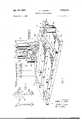
- FIG. 1is a perspective view of a machine having a machine zero locator mounted thereon showing the arrangement for positioning the tool support means and the second table means along the y and z axis respectively relative to said laser beam source;
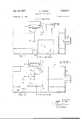
- FIG. 2is a top plan view of the machine shown in FIG. 1 showing the arrangement for determining the position of the first table means and the tool support means along the x and y axis respectively relative to said laser beam source;
- FIG. 3is a top plan view similar to FIG. 2 showing a modified arrangement for determining the position of a second table means along the z axis relative to said laser beam source, and
- FIG. 4is a schematic showing of the photodetector means.
- the machineis generally designated at 10 and is comprised of a base or bed member 12 which is disposed in a generally horizontal plane. Secured to the bed 12 at one side thereof is a vertically extending column 14. The bed 12 is provided with a raised center portion 16 having inwardly converging bevelled side edges 18 and 20 defining a tongue member.
- a first work support table 22is slidably mounted on the bed 12 and is provided with a groove 24 in the underside thereof having a configuration complementary to the tongue 16 on the bed. In this manner the first work support table is guided for movement longitudinally of the machine bed 12 on the axis x.
- the upper surface of the first work support table 22is provided with a raised portion 26 having inwardly converging bevelled side edges 28 and 30 defining a tongue member.
- a second work support table 32is provided with a groove 34 in the lower surface thereof complementary in shape to the tongue member 26 to provide suitable guide means for the movement of the table 32 transverse to the able 22 along the z axis.
- work support tablesmay be driven along perpendicular coordinates relative to a base member by any suitable drive means such as a rack and pinion, a screw and nut arrangement or the like. Since the specific drive means do not form a part of the present invention it is not deemed necessary to show the specific drive train for the table members 22 and 32. Also as is well known in the art the drive members may be controlled during normal operation by an automatic control system such as a numerical control system 65 which controls positioning of 22 through its x axis drive, 32
- the vertical column member 14is provided with a groove 36 having bevelled side edges 38 for the reception of a complementary tongue member 40 formed on the side surface of the vertically movable tool support member 42.
- the specific tool member(not shown) may be mounted on any part of the vertically movable member including the spindle 44 protruding from the side of the tool support member 42.
- the specific drive arrangement for the tool support member 42 for moving the member 42 in a vertical direction along the y axismay be of any suitable form such as the drive arrangement mentioned above.
- a laser support member 46is rigidly secured to the bed 12 and supports a laser source means 48 in a specific predetermined location relative to the three movable parts of the machine, namely the first table 22, the second table 32 and the tool support means 42.
- the laser source 48is arranged so as to direct a beam of coherent light 50 in a direction longitudinally of the bed 12 along the x axis.
- the laser source 48may be of any suitable type.
- a first mirror 52is mounted on the first Work support table 22 and is provided with a reflecting surface disposed at an angle of 45 degress relative to the x axis so that the mirror 52 wil deflect the laser beam 50 at right angles to the x axis along the z axis.
- a second mirror 54 similar to the mirror 52is mounted on the surface of the second work support table 32 and is provided with a reflecting surface disposed at an angle 45 degrees relative to the x axis so as to deflect the laser beam 50 at right angles along the z axis.
- a third mirror 56is mounted on the spindle 44 on the tool support carriage 42 and is disposed with its reflecting surface at an angle of 45 degrees with respect to the z axis so as to deflect the laser beam at right angles to the z axis in a direction opposite to and parallel to the original beam of light 50 emanating from the laser source 48.
- a photodetector support 58mounts a photodetector cell 60 in a rigid manner on the tool support carriage 42 in a position wherein the photosensitive surface of the photodetector means is disposed for reception of the beam of light reflected from the mirror 56.
- the photodetector device 60is a quadphotodetector which has a photosensitive surface, as shown in FIG. 4, divided into four quadrants, A, B, C and D. Each of the quadrants is like a separate photodetector and if the light beam impinging upon the photodetector 60 is perfectly centered both the x and y outputs are zero.
- an output signalindicated by plus or minus voltages or currents, is produced which then may be utilized in a conventional manner to control positioning motors for the Work support tables and the tool support carriage.
- the x and y outputsindicating respectively the horizontal and vertical offset of the beam from the dead-center position, are applied to separate meters which visually indicate the horizontal and vertical offset.
- the platformsare then moved by any convenient means until the meter offset readings are reduced to zero.
- a laser beamis used because of its symmetry and because of the fact that a laser beam does not diverge greatly with distance. Deviations in the order of microinches per linear foot of beam can be sensed by the device under normal shop air conditions. Shrouding the beam brings this down to approximately two microinches per foot.
- the mirror 56is shown as mounted on the cylindrical casing 44 it is obvious that the mirror 56 could be mounted in any suitable location on the tool support carriage 42 as long as the beam of light which is reflected from the mirror 56 will impinge upon the photodetector device 60. In fact, if the photodetector device 60 were to be turned 90 degrees with its sensing element facing the machine bed there would be no need for the mirror 56 since the light beam which is reflected from either the mirror 52 or the mirror 54 would then impinge directly upon the photodetector 60.
- a two-step procedureis utilized.
- the position of the table 22 on the x axis and the position of the carriage 42 on the y axismay be determined simultaneously by means of the arrangement shown in FIG. 2.
- the table 32is shifted to one side so that the mirror 54 will be out of the path of the laser beam 50.
- the table 22 and the carriage 42are then moved along their respective axes of movement until the laser beam 50 is reflected from the mirror 52 to the mirror 56 and then to the photodetector at the exact center point of the four photosensing elements.
- the laser beamstrikes the direct center of the photodetector device there will be no output currents or voltages to the drive motors for the table 22 and the carriage 42 and the positioning will be complete. However, if there is a deviation of the beam of light from the exact center of the photodetector device 60 an appropriate signal will be supplied to the drive means of either the table 22 or the carriage 42 to move one or both of them to the desired position.
- the table 22may be shifted to the left as viewed in FIG. 2 a predetermined distance exactly equal to the distance between the mirrors 52 and 54.
- the table 32is then moved along the z axis until the mirror 54 is positioned in such a manner as to deflect the laser beam 50 to the mirror 56 on the carriage 42 and then to the exact center point of the photodetector device 60. Any deviations in the position of the table 32 from the true position will be compensated for by the signal produced by the photodetector device and supplied to the servo drive for the table 32.
- the locationwill be a function of the x axis location of the table 32. Therefore, when an extremely accurate location of the table 32 is required along the z axis, the arrangement as shown in FIG. 3 may be utilized.
- a second mirror 62is mounted on the surface of the table 32 so that the laser beam 50 will be reflected by the mirrors 54 and 62 along a path opposite to and parallel to the initial path of the light beam 50 as it leaves the laser source 48.
- a second photodetector 64 similar to the photodetector 60may be mounted on the bed of the machine adjacent to the laser source 48 in a position to intercept the laser beam 50 as it is reflected from the mirror 62.
- the position of the table 32may be varied along the x axis without affecting the output of the photodetector 64.
- an output signalwill be provided by the photodetector 64 which will control the servo positioning mechanism for the table 32 along the z axis.
- the laseris extremely suitable for the zero locator of the present invention due to its very small spread along the length of the laser beam. Also the laser beam is visible when interrupted by any surface thereby enabling the various movable elements to be jogged easily and quickly into acquisition range. By using the arrangement of the present invention no mechanical damage results if the motions are driven too far through the zero position and extreme accuracy is obtainable for reasonable size machines.
- the laser and the sensorare available on the machine to check the machine alignment at any time and the present system is completely free of the usual electromechanical sensor prob lems.
- the servo positioning mechanisms for each of the movable elementsmay be of any suitable conventional form.
- a reference point locatorfor positioning relatively movable members at predetermined reference positions with respect to a fixed point located on a base, comprising a first member movably mounted to move along a first axis on said base, a laser beam source means mounted at said fixed point for directing a beam of light at said first member a second member movable relative to said first member along a second axis substantially orthogonal to said first axis, photodetecting means mounted on said second member for indicating the position of an impinging light beam which is directed along said first axis, light reflecting means mounted on said first member for causing said beam of light to be reflected to said photodetecting means when said first member and said second member are at said predetermined reference positions, said photodetecting means responsive to the position of said light beam with respect to the center of its face to produce respective error signals proportional to the first axis and second axis off-center positions of said light beam respectively, and first axis and second axis drive means responsive to respective ones of said first axis and second axis error signals to
- a reference point locatorfor positioning relatively movable members at predetermined reference positions with respect to a fixed point located on a base, comprising a first member movably mounted to move along a first axis on said base, photodetecting means mounted at said fixed point for indicating the position of an impinging light beam, a second member movable relative to said first member along a second axis substantially orthogonal to said first axis, laser beam source means mounted on said second member for directing a beam of light at said first member, light reflecting means mounted on said first member for causing said beam of light to be reflected to said photodetecting means when said first member and said second member are at said predetermined reference positions, said photodetecting means producing respective error signals proportional to the first axis and second axis off-center positions of said light beam with respect to a center position of said light beam, and first axis and second axis servo means responsive to respective ones of said error signals to drive said first and second movable members in directions to reduce the off-center positions of said light beam to zero
- a reference point locator for positioning relatively movable members at predetermined reference positions with respect to a fixed point located on a basecomprising a first member movable along a first axis on said base, a laser light beam source mounted at said fixed point for directing a beam of light at said first member, a second member movable along a second axis substantially orthogonal to said first axis, photodetecting means mounted on said second member for indicating the position of an impinging light beam which is directed along said first axis, light reflecting means mounted on said first member for causing said beam of light to be reflected to said photodetecting means when said first member and said second member are at said predetermined reference positions, and a third member movably mounted for movement with respect to said first and second axes, light reflecting means mounted on said third member at a position to reflect said light beam into said photodetecting means when said third member and said second member are at predetermined reference positions, said photodetecting means responsive to the position of said light beam with respect to the center of its face to produce error signals proportional
- a reference point locator as claimed in claim 3wherein said third member is mounted on said first member and moves along a third axis substantially orthogonal to said first and second axes.
- a reference point locator as claimed in claim 5further comprising light reflective means mounted on said second member in a position for reflecting said light beam reflected by the light reflective means mounted on said first member toward said light sensitive face, said photodetecting means being positioned with its light sensitive face facing in a direction to receive said light beam reflected from the second member mounted light reflective means.
- a reference point locator for positioning relatively movable members at predetermined reference positions with respect to a fixed point located on a basecomprising a first member movably mounted to move along a first axis on said base, a laser light beam source means mounted at said fixed point for directing a beam of light at said first member, a second member movable relative to said first member along a second axis substantially orthogonal to said first axis, first photodetecting means mounted on said second member for indicating the position of an impinging light beam which is directed along said first axis, light reflecting means mounted on said first member for causing said beam of light to be reflected to said first photodetecting means when said first member and said second member are at said predetermined reference positions, a third member movably mounted for movement with respect to said first and second axes, second photodetecting means for indicating the position of an impinging light beam, said second photodetecting means being mounted at a fixed point facing toward said third member, light reflective means mounted on said third member for reflecting said beam of light from said laser source
- a reference point locator as claimed in claim 7wherein said third member is mounted on said first member and moves along a third axis substantially orthogonal to said first and second axes.
- each said photodetecting meansis a quad-photodetector having four light sensitive segments forming a light sensitive face for indicating the position of said light beam with respect to the center of said face.
- a reference point locator as claimed in claim 9further comprising light reflective means mounted on said second member in a position for reflecting said light beam reflected by the light reflective means mounted on said first member toward said light sensitive face of the photodetecting means mounted on said second member, said latter photodetecting means being positioned with its light sensitive face facing in a direction to receive said light beam reflected from the second member mounted light reflective means.
Landscapes
- Engineering & Computer Science (AREA)
- Human Computer Interaction (AREA)
- Manufacturing & Machinery (AREA)
- Physics & Mathematics (AREA)
- General Physics & Mathematics (AREA)
- Automation & Control Theory (AREA)
- Machine Tool Sensing Apparatuses (AREA)
Abstract
Description
Jan. 36, 1971 J. F. BAKEL MACHINE ZERO LOCATOR 2 Sheets-Sheet 1 Filed Oct. :5, 1967 3 SE28 M H EQEMEDZ OP JOKPZOU EUEUEDZ INVENTOR, JO EPH F. BAKEL.
BY L i H S A ORNEY J. F. BAKEL 35553231 MACHINE ZERO LOCATOR Filed Oct 5, 1967 2 Sheets-Sheet :3
-T0 Y AXIS DRIVE -\4I4 TO NUMERICAL CONTROL 65 I 56 al" -TO X AXIS DRIVE I4 TONUMERICAL CONTROL 65 m h I A I; Z
I I ITO z AXIS DRIVE INVENTOR. JO EPH F. BAKEL IS TORNEY 3,558,231 MACHINE ZERO LOCATOR Joseph F. Bakel, Lyndhurst, Va., assignor to General Electric Company, a corporation of New York Filed Oct. 3, 1967, Ser. No. 672,572 Int. Cl. G01b 11/26 US. Cl. 356-152 10 Claims ABSTRACT OF THE DISCLOSURE A three-dimensional zero position locator utilizing a laser, mirrors and a quad-photodetector. Some of the mirrors are mounted on platforms movable relative to the laser source and the quad-photodetector. The platforms are moved until the laser beam reflected from the mirrors lies in the center of the face of the quad detector thereby establishing a fixed point which can always be relocated.
BACKGROUND OF THE INVENTION In the machine tool art the tool and the workpiece are ordinarily movable relative to each other along orthogonal x, y and z coordinates. Certain machine tool operations require that the tool and workpiece be positioned relative to each other with an extremely high degree of accuracy prior to the initiation of the machine tool cycle. Furthermore upon the completion of a machine tool cycle it is necessary to be able to return the machine to the identical starting position for subsequent machine tool cycles.
It is not only necessary to be able to find a constant starting point for a machine tool operation which is automatically controlled but it is also necessary to provide the necessary adjustment for effect created by machine growth, such as that which may be due to temperature variations.
The purpose of the present machine zero locator is to find a reference point in space by locating reference positions along the x, y and z axes for the movable machine parts, thereby providing the capability of returning to the reference point at any time during the operation of the machine. By using the machine zero locator of the present invention it is always possible to set the platform in the identical position relative to the machine tool regardless of variations in the mechanical apparatus created by machine growth clue to temperature varia tions.
The present invention by utilizing a system including a laser, mirrors and a quad-photodetector relies upon coherent light as a yardstick rather than 'micrometric gears, scribed grids or other mechanical references. The locator of the present invention is capable of sensing deviations in the order of 10 microinches per linear foot of beam under normal shop air conditions thereby providing a far greater degree of accuracy than previous mechanical or optical-mechanical position locating systems.
SUMMARY OF THE INVENTION The present invention is directed to a machine tool locator comprising a machine bed including an upright column, first table means movably mounted on said bed for movement along a first axis, second table means movably mounted on said first table means for movement along a second axis transverse to said first axis, tool support means movably mounted on said column for movement along a third axis orthogonal to said first and second axes, laser beam source means mounted on said bed for directing a beam of light along said first axis, first mirror means mounted on said first table means for reflecting said beam of light along a path parallel to said second axis, second mirror means mounted on said tool support 3,558,231 Patented Jan. 26, 1971 'ice means for reflecting said beam of light along a path parallel to said first axis, third mirror means mounted on said second table means for reflecting said beam of light along said second axis to said second mirror means when said second table means is moved to bring said third mirror means into alignment with said laser source means and said first mirror means and said first table means is shifted at increment equal to the distance between said first and third mirror means along said first axis, photodetector means mounted on said tool support means for receiving said beam of light reflected from said second mirror means and producing signal means indicative of the position of said beam of light relative to a predetermined fixed point on said photodetector means and machine position control means responsive to said signal means for driving said work support means and said tool support means to a predetermined zero position.
Other features of the invention will be pointed out in the following description and claims and illustrated in the accompanying drawings, which disclose, by way of example, the principles of the invention and the best mode which has been contemplated of applying those principles.
In the drawings:
FIG. 1 is a perspective view of a machine having a machine zero locator mounted thereon showing the arrangement for positioning the tool support means and the second table means along the y and z axis respectively relative to said laser beam source;
FIG. 2 is a top plan view of the machine shown in FIG. 1 showing the arrangement for determining the position of the first table means and the tool support means along the x and y axis respectively relative to said laser beam source;
FIG. 3 is a top plan view similar to FIG. 2 showing a modified arrangement for determining the position of a second table means along the z axis relative to said laser beam source, and
FIG. 4 is a schematic showing of the photodetector means.
DETAILED DESCRIPTION OF THE INVENTION In FIG. 1 the machine is generally designated at 10 and is comprised of a base orbed member 12 which is disposed in a generally horizontal plane. Secured to thebed 12 at one side thereof is a vertically extendingcolumn 14. Thebed 12 is provided with a raisedcenter portion 16 having inwardly convergingbevelled side edges bed 12 and is provided with a groove 24 in the underside thereof having a configuration complementary to thetongue 16 on the bed. In this manner the first work support table is guided for movement longitudinally of themachine bed 12 on the axis x.
The upper surface of the first work support table 22 is provided with a raisedportion 26 having inwardly convergingbevelled side edges groove 34 in the lower surface thereof complementary in shape to thetongue member 26 to provide suitable guide means for the movement of the table 32 transverse to the able 22 along the z axis.
It is well known in the art that work support tables may be driven along perpendicular coordinates relative to a base member by any suitable drive means such as a rack and pinion, a screw and nut arrangement or the like. Since the specific drive means do not form a part of the present invention it is not deemed necessary to show the specific drive train for thetable members numerical control system 65 which controls positioning of 22 through its x axis drive, 32
through its 2: axis drive and 42 through its y axis drive.
Thevertical column member 14 is provided with agroove 36 having bevelled side edges 38 for the reception of a complementary tongue member 40 formed on the side surface of the vertically movabletool support member 42. The specific tool member (not shown) may be mounted on any part of the vertically movable member including the spindle 44 protruding from the side of thetool support member 42. The specific drive arrangement for thetool support member 42 for moving themember 42 in a vertical direction along the y axis may be of any suitable form such as the drive arrangement mentioned above. Once again since the specific drive arrangement does not form a part of the present invention it is not deemed necessary to set forth the details of such a drive arrangement in the drawings.
Alaser support member 46 is rigidly secured to thebed 12 and supports a laser source means 48 in a specific predetermined location relative to the three movable parts of the machine, namely the first table 22, the second table 32 and the tool support means 42. Thelaser source 48 is arranged so as to direct a beam ofcoherent light 50 in a direction longitudinally of thebed 12 along the x axis. Thelaser source 48 may be of any suitable type.
Afirst mirror 52 is mounted on the first Work support table 22 and is provided with a reflecting surface disposed at an angle of 45 degress relative to the x axis so that themirror 52 wil deflect thelaser beam 50 at right angles to the x axis along the z axis. Asecond mirror 54 similar to themirror 52 is mounted on the surface of the second work support table 32 and is provided with a reflecting surface disposed at an angle 45 degrees relative to the x axis so as to deflect thelaser beam 50 at right angles along the z axis. Athird mirror 56 is mounted on the spindle 44 on thetool support carriage 42 and is disposed with its reflecting surface at an angle of 45 degrees with respect to the z axis so as to deflect the laser beam at right angles to the z axis in a direction opposite to and parallel to the original beam oflight 50 emanating from thelaser source 48.
A photodetector support 58 mounts aphotodetector cell 60 in a rigid manner on thetool support carriage 42 in a position wherein the photosensitive surface of the photodetector means is disposed for reception of the beam of light reflected from themirror 56. Thephotodetector device 60 is a quadphotodetector which has a photosensitive surface, as shown in FIG. 4, divided into four quadrants, A, B, C and D. Each of the quadrants is like a separate photodetector and if the light beam impinging upon thephotodetector 60 is perfectly centered both the x and y outputs are zero. If the beam is off center an output signal, indicated by plus or minus voltages or currents, is produced which then may be utilized in a conventional manner to control positioning motors for the Work support tables and the tool support carriage. Also, the x and y outputs, indicating respectively the horizontal and vertical offset of the beam from the dead-center position, are applied to separate meters which visually indicate the horizontal and vertical offset. The platforms are then moved by any convenient means until the meter offset readings are reduced to zero. A laser beam is used because of its symmetry and because of the fact that a laser beam does not diverge greatly with distance. Deviations in the order of microinches per linear foot of beam can be sensed by the device under normal shop air conditions. Shrouding the beam brings this down to approximately two microinches per foot.
Although themirror 56 is shown as mounted on the cylindrical casing 44 it is obvious that themirror 56 could be mounted in any suitable location on thetool support carriage 42 as long as the beam of light which is reflected from themirror 56 will impinge upon thephotodetector device 60. In fact, if thephotodetector device 60 were to be turned 90 degrees with its sensing element facing the machine bed there would be no need for themirror 56 since the light beam which is reflected from either themirror 52 or themirror 54 would then impinge directly upon thephotodetector 60.
In determining the positions for the three movable elements along their axes of movement a two-step procedure is utilized. The position of the table 22 on the x axis and the position of thecarriage 42 on the y axis may be determined simultaneously by means of the arrangement shown in FIG. 2. According to this method the table 32 is shifted to one side so that themirror 54 will be out of the path of thelaser beam 50. The table 22 and thecarriage 42 are then moved along their respective axes of movement until thelaser beam 50 is reflected from themirror 52 to themirror 56 and then to the photodetector at the exact center point of the four photosensing elements. If the laser beam strikes the direct center of the photodetector device there will be no output currents or voltages to the drive motors for the table 22 and thecarriage 42 and the positioning will be complete. However, if there is a deviation of the beam of light from the exact center of thephotodetector device 60 an appropriate signal will be supplied to the drive means of either the table 22 or thecarriage 42 to move one or both of them to the desired position.
Once the table 22 and thecarriage 42 have been accurately positioned the table 22 may be shifted to the left as viewed in FIG. 2 a predetermined distance exactly equal to the distance between themirrors mirror 54 is positioned in such a manner as to deflect thelaser beam 50 to themirror 56 on thecarriage 42 and then to the exact center point of thephotodetector device 60. Any deviations in the position of the table 32 from the true position will be compensated for by the signal produced by the photodetector device and supplied to the servo drive for the table 32.
In utilizing the arrangement of FIG. 1 for determining the exact location of the table 32 along the z axis the location will be a function of the x axis location of the table 32. Therefore, when an extremely accurate location of the table 32 is required along the z axis, the arrangement as shown in FIG. 3 may be utilized. In this modification asecond mirror 62 is mounted on the surface of the table 32 so that thelaser beam 50 will be reflected by themirrors light beam 50 as it leaves thelaser source 48. Asecond photodetector 64 similar to thephotodetector 60 may be mounted on the bed of the machine adjacent to thelaser source 48 in a position to intercept thelaser beam 50 as it is reflected from themirror 62. Thus, by having the reflecting surfaces of themirrors photodetector 64. However, if there is any unwanted deviations of the position of the table 32 along the z axis an output signal will be provided by thephotodetector 64 which will control the servo positioning mechanism for the table 32 along the z axis.
As mentioned previously the laser is extremely suitable for the zero locator of the present invention due to its very small spread along the length of the laser beam. Also the laser beam is visible when interrupted by any surface thereby enabling the various movable elements to be jogged easily and quickly into acquisition range. By using the arrangement of the present invention no mechanical damage results if the motions are driven too far through the zero position and extreme accuracy is obtainable for reasonable size machines. The laser and the sensor are available on the machine to check the machine alignment at any time and the present system is completely free of the usual electromechanical sensor prob lems. As mentioned previously, the servo positioning mechanisms for each of the movable elements may be of any suitable conventional form.
Obviously, many modifications and variations of the present invention are possible in the light of the above teachings. For example, while the drawings generally show one mirror mounted on any one of the movable members, a plurality of mirrors could be used. Such a plurality may be necessary where the members do not move along axes that are orthogonal to each other, but which may be oblique. It is thus to be understood that as long as the machine members are moving relative to each other within the range of mirror reflected light and without substantial loss of resolution, the above-described principles of the invention are applicable. In this respect, it can be said that the members can move along axes that are substantially orthogonal. It should also be noted that the laser and photodetector can be interchanged to accomplish identical results. Also, the principles of the invention are applicable to rotating members as well as members which move along axes substantially orthogonal. It is, therefore, to be understood, that within the scope of the appended claims, the invention may be practiced otherwise than as specifically described.
What is claimed and desired to be secured by Letters Patent of the United States is:
1. A reference point locator for positioning relatively movable members at predetermined reference positions with respect to a fixed point located on a base, comprising a first member movably mounted to move along a first axis on said base, a laser beam source means mounted at said fixed point for directing a beam of light at said first member a second member movable relative to said first member along a second axis substantially orthogonal to said first axis, photodetecting means mounted on said second member for indicating the position of an impinging light beam which is directed along said first axis, light reflecting means mounted on said first member for causing said beam of light to be reflected to said photodetecting means when said first member and said second member are at said predetermined reference positions, said photodetecting means responsive to the position of said light beam with respect to the center of its face to produce respective error signals proportional to the first axis and second axis off-center positions of said light beam respectively, and first axis and second axis drive means responsive to respective ones of said first axis and second axis error signals to drive the first and second members in directions to reduce the off-center positions of said light beam to zero.
2. A reference point locator for positioning relatively movable members at predetermined reference positions with respect to a fixed point located on a base, comprising a first member movably mounted to move along a first axis on said base, photodetecting means mounted at said fixed point for indicating the position of an impinging light beam, a second member movable relative to said first member along a second axis substantially orthogonal to said first axis, laser beam source means mounted on said second member for directing a beam of light at said first member, light reflecting means mounted on said first member for causing said beam of light to be reflected to said photodetecting means when said first member and said second member are at said predetermined reference positions, said photodetecting means producing respective error signals proportional to the first axis and second axis off-center positions of said light beam with respect to a center position of said light beam, and first axis and second axis servo means responsive to respective ones of said error signals to drive said first and second movable members in directions to reduce the off-center positions of said light beam to zero.
3. A reference point locator for positioning relatively movable members at predetermined reference positions with respect to a fixed point located on a base, comprising a first member movable along a first axis on said base, a laser light beam source mounted at said fixed point for directing a beam of light at said first member, a second member movable along a second axis substantially orthogonal to said first axis, photodetecting means mounted on said second member for indicating the position of an impinging light beam which is directed along said first axis, light reflecting means mounted on said first member for causing said beam of light to be reflected to said photodetecting means when said first member and said second member are at said predetermined reference positions, and a third member movably mounted for movement with respect to said first and second axes, light reflecting means mounted on said third member at a position to reflect said light beam into said photodetecting means when said third member and said second member are at predetermined reference positions, said photodetecting means responsive to the position of said light beam with respect to the center of its face to produce error signals proportional to the respective axis off-center positions of said light beam, and drive means responsive to said error signals to drive said members in directions to reduce the offcenter positions of said light beam to zero.
4. A reference point locator as claimed in claim 3 wherein said third member is mounted on said first member and moves along a third axis substantially orthogonal to said first and second axes.
5. A reference point locator as claimed in claim 3 wherein said photodetecting means is a quad-photodetector having four light sensitive segments forming a light sensitive face for indicating the position of said light beam with respect to the center of said face.
6. A reference point locator as claimed in claim 5 further comprising light reflective means mounted on said second member in a position for reflecting said light beam reflected by the light reflective means mounted on said first member toward said light sensitive face, said photodetecting means being positioned with its light sensitive face facing in a direction to receive said light beam reflected from the second member mounted light reflective means.
7. A reference point locator for positioning relatively movable members at predetermined reference positions with respect to a fixed point located on a base, comprising a first member movably mounted to move along a first axis on said base, a laser light beam source means mounted at said fixed point for directing a beam of light at said first member, a second member movable relative to said first member along a second axis substantially orthogonal to said first axis, first photodetecting means mounted on said second member for indicating the position of an impinging light beam which is directed along said first axis, light reflecting means mounted on said first member for causing said beam of light to be reflected to said first photodetecting means when said first member and said second member are at said predetermined reference positions, a third member movably mounted for movement with respect to said first and second axes, second photodetecting means for indicating the position of an impinging light beam, said second photodetecting means being mounted at a fixed point facing toward said third member, light reflective means mounted on said third member for reflecting said beam of light from said laser source into said second photodetecting means when said third member is at said reference position, said photodetecting means responsive to the position of said light beam with respect to the center of its face to produce error signals proportional to the respective axis off-center positions of said light beam, and drive means responsive to said error signals to drive said members in directions to reduce the off-center positions of said light beam to zero.
8. A reference point locator as claimed in claim 7 wherein said third member is mounted on said first member and moves along a third axis substantially orthogonal to said first and second axes.
9. A reference point locator as claimed in claim 8 wherein each said photodetecting means is a quad-photodetector having four light sensitive segments forming a light sensitive face for indicating the position of said light beam with respect to the center of said face.
'10. A reference point locator as claimed in claim 9 further comprising light reflective means mounted on said second member in a position for reflecting said light beam reflected by the light reflective means mounted on said first member toward said light sensitive face of the photodetecting means mounted on said second member, said latter photodetecting means being positioned with its light sensitive face facing in a direction to receive said light beam reflected from the second member mounted light reflective means.
References CitedUNITED STATES PATENTS 10/1954 Wetzel 356152 3/1955 Senn 356-172 US. Cl. X.R.
Applications Claiming Priority (1)
| Application Number | Priority Date | Filing Date | Title |
|---|---|---|---|
| US67257267A | 1967-10-03 | 1967-10-03 |
Publications (1)
| Publication Number | Publication Date |
|---|---|
| US3558231Atrue US3558231A (en) | 1971-01-26 |
Family
ID=24699119
Family Applications (1)
| Application Number | Title | Priority Date | Filing Date |
|---|---|---|---|
| US672572AExpired - LifetimeUS3558231A (en) | 1967-10-03 | 1967-10-03 | Machine zero locator |
Country Status (1)
| Country | Link |
|---|---|
| US (1) | US3558231A (en) |
Cited By (4)
| Publication number | Priority date | Publication date | Assignee | Title |
|---|---|---|---|---|
| DE2362289A1 (en)* | 1972-12-18 | 1974-06-20 | Oerlikon Buehrle Ag | DEVICE FOR CONTROLLING THE POSITION OF A LASER LIGHT SOURCE EMITTING A LIGHT BEAM |
| US3861807A (en)* | 1972-08-17 | 1975-01-21 | Charles Lescrenier | Position locating and maintaining method and means |
| US5035503A (en)* | 1987-01-23 | 1991-07-30 | Yaacov Sadeh | Electro optically corrected coordinate measuring machine |
| US5148232A (en)* | 1991-01-28 | 1992-09-15 | Intra Corporation | Laser apparatus and method for aligning a crankpin grinding machine |
- 1967
- 1967-10-03USUS672572Apatent/US3558231A/ennot_activeExpired - Lifetime
Cited By (4)
| Publication number | Priority date | Publication date | Assignee | Title |
|---|---|---|---|---|
| US3861807A (en)* | 1972-08-17 | 1975-01-21 | Charles Lescrenier | Position locating and maintaining method and means |
| DE2362289A1 (en)* | 1972-12-18 | 1974-06-20 | Oerlikon Buehrle Ag | DEVICE FOR CONTROLLING THE POSITION OF A LASER LIGHT SOURCE EMITTING A LIGHT BEAM |
| US5035503A (en)* | 1987-01-23 | 1991-07-30 | Yaacov Sadeh | Electro optically corrected coordinate measuring machine |
| US5148232A (en)* | 1991-01-28 | 1992-09-15 | Intra Corporation | Laser apparatus and method for aligning a crankpin grinding machine |
Similar Documents
| Publication | Publication Date | Title |
|---|---|---|
| US4195412A (en) | Installation for controlling the position of a movable part | |
| US3551057A (en) | Laser beam alignment apparatus | |
| US3765764A (en) | Coordinate measuring instrument | |
| US3470377A (en) | Two-axis automatic autocollimator | |
| US4365301A (en) | Positional reference system for ultraprecision machining | |
| US4691446A (en) | Three-dimensional position measuring apparatus | |
| US3079731A (en) | Generation of shaped surfaces | |
| US3481672A (en) | F.m. laser contour mapper | |
| US3715599A (en) | Electro-optical system for controlling the attitude of a stage mounted on a carriage sliding along a parallel bench | |
| US4687980A (en) | X-Y addressable workpiece positioner and mask aligner using same | |
| US3603691A (en) | Laser control for automatic alignment of structures | |
| JPS5916202B2 (en) | Measuring and positioning device using interference fringes | |
| US3457422A (en) | Optical system adapted for rotation of an image to be scanned with reference to a scanning path | |
| US3520607A (en) | Phase sensing laser contour mapper | |
| US4615615A (en) | Laser positioning system | |
| US4977361A (en) | X-Y addressable workpiece positioner and mask aligner using same | |
| US4589746A (en) | Dual-axis, single mirror interferometer measuring system | |
| US3791739A (en) | Interferometer for x-y measurement | |
| US3355590A (en) | Three dimensional surface profiling system using photocell which remains a fixed distance above the surface | |
| GB1492694A (en) | Surface gauging by remote image tracking | |
| US3387109A (en) | Apparatus for effecting optical viewing and marking of a workpiece | |
| GB1149176A (en) | Gaging device | |
| US3558231A (en) | Machine zero locator | |
| US4425537A (en) | X-Y Addressable workpiece positioner and mask aligner using same | |
| GB2170005A (en) | Interferometric multicoordinate measuring device |
Legal Events
| Date | Code | Title | Description |
|---|---|---|---|
| AS | Assignment | Owner name:GENERAL ELECTRIC COMPANY, A CORP. OF NY Free format text:AGREEMENT;ASSIGNORS:GENERAL ELECTRIC COMPANY;GE FANUC AUTOMATION NORTH AMERICA, INC.;REEL/FRAME:005004/0718 Effective date:19880101 Owner name:GE FAUNC AUTOMATION NORTH AMERICA, A CORP. OF DE Free format text:AGREEMENT;ASSIGNORS:GENERAL ELECTRIC COMPANY;GE FANUC AUTOMATION NORTH AMERICA, INC.;REEL/FRAME:005004/0718 Effective date:19880101 |