US3418409A - Method for thickening the end of plastic pipe - Google Patents
Method for thickening the end of plastic pipeDownload PDFInfo
- Publication number
- US3418409A US3418409AUS496327AUS49632765AUS3418409AUS 3418409 AUS3418409 AUS 3418409AUS 496327 AUS496327 AUS 496327AUS 49632765 AUS49632765 AUS 49632765AUS 3418409 AUS3418409 AUS 3418409A
- Authority
- US
- United States
- Prior art keywords
- section
- end portion
- pipe
- plastic pipe
- die
- Prior art date
- Legal status (The legal status is an assumption and is not a legal conclusion. Google has not performed a legal analysis and makes no representation as to the accuracy of the status listed.)
- Expired - Lifetime
Links
- 229920003023plasticPolymers0.000titledescription34
- 239000004033plasticSubstances0.000titledescription34
- 238000000034methodMethods0.000titledescription7
- 230000008719thickeningEffects0.000titledescription4
- 239000000463materialSubstances0.000description8
- 238000010438heat treatmentMethods0.000description4
- 239000012530fluidSubstances0.000description3
- -1poly(vinyl chloride)Polymers0.000description3
- 230000000712assemblyEffects0.000description2
- 238000000429assemblyMethods0.000description2
- 230000015572biosynthetic processEffects0.000description2
- 230000002093peripheral effectEffects0.000description2
- 239000004677NylonSubstances0.000description1
- 239000004698PolyethyleneSubstances0.000description1
- 239000004793PolystyreneSubstances0.000description1
- BZHJMEDXRYGGRV-UHFFFAOYSA-NVinyl chlorideChemical compoundClC=CBZHJMEDXRYGGRV-UHFFFAOYSA-N0.000description1
- XECAHXYUAAWDEL-UHFFFAOYSA-Nacrylonitrile butadiene styreneChemical compoundC=CC=C.C=CC#N.C=CC1=CC=CC=C1XECAHXYUAAWDEL-UHFFFAOYSA-N0.000description1
- 229920000122acrylonitrile butadiene styrenePolymers0.000description1
- 239000004676acrylonitrile butadiene styreneSubstances0.000description1
- 230000004323axial lengthEffects0.000description1
- 239000013013elastic materialSubstances0.000description1
- 230000006870functionEffects0.000description1
- 230000013011matingEffects0.000description1
- 230000004048modificationEffects0.000description1
- 238000012986modificationMethods0.000description1
- 229920001778nylonPolymers0.000description1
- 229920000573polyethylenePolymers0.000description1
- 229920002223polystyrenePolymers0.000description1
- 229920000915polyvinyl chloridePolymers0.000description1
- 239000004800polyvinyl chlorideSubstances0.000description1
- 230000009467reductionEffects0.000description1
- 239000012260resinous materialSubstances0.000description1
- 239000002904solventSubstances0.000description1
- 239000000126substanceSubstances0.000description1
- 238000003466weldingMethods0.000description1
Images
Classifications
- B—PERFORMING OPERATIONS; TRANSPORTING
- B29—WORKING OF PLASTICS; WORKING OF SUBSTANCES IN A PLASTIC STATE IN GENERAL
- B29C—SHAPING OR JOINING OF PLASTICS; SHAPING OF MATERIAL IN A PLASTIC STATE, NOT OTHERWISE PROVIDED FOR; AFTER-TREATMENT OF THE SHAPED PRODUCTS, e.g. REPAIRING
- B29C61/00—Shaping by liberation of internal stresses; Making preforms having internal stresses; Apparatus therefor
- B29C61/02—Thermal shrinking
- B29C61/025—Thermal shrinking for the production of hollow or tubular articles
- B—PERFORMING OPERATIONS; TRANSPORTING
- B29—WORKING OF PLASTICS; WORKING OF SUBSTANCES IN A PLASTIC STATE IN GENERAL
- B29C—SHAPING OR JOINING OF PLASTICS; SHAPING OF MATERIAL IN A PLASTIC STATE, NOT OTHERWISE PROVIDED FOR; AFTER-TREATMENT OF THE SHAPED PRODUCTS, e.g. REPAIRING
- B29C57/00—Shaping of tube ends, e.g. flanging, belling or closing; Apparatus therefor, e.g. collapsible mandrels
Definitions
- This inventionrelates to plastic pipe and more particularly to the forming of a thickened end portion on plastic pipe so that the thickened end portion may be expanded to form a bell end on the plastic pipe.
- the inventionis particularly directed to the forming of a thickened end portion on poly(vinyl chloride) pipe but may also be used to form a thickened end portion on other types of plastic pipe such as polyethylene, nylon, polystyrene, acrylonitrile butadiene styrene, and other types of resinous materials that are capable of providing the desired physical and chemical characteristics.
- the joining of adjacent sections of plastic pipeis most advantageously accomplished by providing a pipe having one end belled.
- the bell end of the pipepreferably has a wall thickness which is at least substantially equal to the wall thickness of the remaining portions of the pipe.
- the most conventional way of forming the bell end on a pipeis to expand the end portion of the pipe which expansion also reduces the wall thickness of the expanded portion. Therefore, to allow for such reduction in wall thickness, it is necessary to provide a pipe with an end portion having a wall of sufficient thickness so that the wall thick ness of the finished bell end will be at least as great as the wall thickness of the other portions of the pipe.
- the primary object of the inventionis to convert a plastic pipe having a substantially uniform wall thickness throughout its axial extent into a plastic pipe having an end portion of increased wall thickness which may be readily expanded to form a bell end.
- the foregoing objectis accomplished in accordance with the instant invention by folding a first section of the end portion of a plastic pipe of uniform wall thickness back upon the next succeeding sections of the end portion so as to form a plastic pipe having an end portion of increased wall thickness.
- the material in the end portion of the pipemay be obtained by heating the pipe to a temperature substantially greater than ambient.
- the presence of these conditions in the end portionallows the end portion to be folded back upon itself so as to provide a plastic pipe having an end portion of increased wall thickness.
- the end portionis then placed in a suitable apparatus and expanded so as to form a bell end on the pipe.
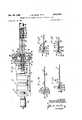
- FIG. 1is a view in side elevation with parts in section of a portion of the apparatus of the instant invention
- FIG. 2is a top plan view of a portion of the apparatus illustrated in FIG. 1;
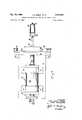
- FIGS. 3-6, inclusive,are views schematically illustrating various stages during the formation of a thickened end portion on a plastic pipe.
- FIGS. 1 and 2there is disclosed in FIGS. 1 and 2 apparatus comprising a fixed base 2 on which the hydraulic means 4 and 6 are mounted.
- a plate 8Securely attached on one side of the base 2, such as by welding, is a plate 8 having an opening 10 which is utilized for the positioning of the desired die in the apparatus.
- Each die 12comprises a plate 14 having a protrusion 16 with an outer surface 18 having a shape corresponding to the shape of the opening 10 so that the die 12 may be properly positioned relative to the plate 8.
- the plates 8 and 14have mating surfaces which are held in contracting relationship by a pair of pivotal stud and nut assemblies 20.
- Secured to the surface 22 of the plate 14is the main portion of the die 12 comprising a die face 24 and four integral side walls 26 which are secured to the plate 14 to form a fluid tight cavity 28.
- the die face 24has a central projection 30 having a generally cylindrical surface 32 and a generally conical surface 34.
- the projection 30extends from an annular recess 36 in the face 24.
- the surfaces of the projection 30 and the recess 36cooperate to turn the first section and the next succeeding sections of the end portion of a plastic pipe back upon themselves so as to form a thickened end portion on the plastic pipe in a manner set forth below.
- the projection 30is further provided with an integral generally cylindrical section 38 which extends toward the plate 14 and is secured in a fluid tight manner within the protrusions 16 of the plate 14.
- the projection 30 and the section 38have a generally cylindrical passageway 40 extending therethrough for a purpose to be described.
- a conduit 42is seated in an opening 44 in one of the side walls 26, and another conduit 46 is seated in an opening 48 in another of the side walls 26.
- Conduits 42 and 46are provided for supplying and removing fluid to the cavity 28 to control the temperature of the surfaces of the die 12.
- the hydraulic means 4comprises a cylinder 50 and extending therefrom a piston 52.
- the hydraulic means 4is positioned on the base 2 so that the piston 52 is aligned with the opening 18 and the passageway 40.
- the piston 52has a generally cylindrical passageway 54 extending therethrough.
- An extension member 56is seated in a recess adjacent the axial extremity of the piston 52 and is secured therein for movement with the piston 52 by any suitable means such as a stop nut 58.
- the member 56comprises a hollow tube having a generally cylindrical surface and extends from the piston 52 through the passageway 40 of the section 38 and the projection 30 and outwardly from the axial extremity of the projection 30.
- the hydraulic means 6comprises a cylinder 60 and a piston 62 which passes through the passageway 54 in the piston 52, through the hollow extension member 56, and extends outwardly from the axial extremity of the extension member 56.
- a body 64having a generally cylindrical outer peripheral surface 66 and a generally cylindrical axial passageway 68 extending therethrough is positioned between the axial extremity of the member 56 and the axial extremity of the piston 62 with the piston 62 passing through the axial passageway 68.
- a pair of washers 70 and 71 and a nut 72which is threaded onto the end of the piston 62 holds the body 64 in an assembled position on the piston 62.
- the body 64comprises an elastic material for a purpose to be described below.
- a die 12 having a projection 30 of the desired sizeis secured to the plate 8 by the pivoted stud and nut assemblies 20.
- the end portion 74 of a plastic pipe 72is placed over the body 64 with the inner surface of the first section 78 of the end portion 74 of the pipe in contact with the generally cylindrical surface 32 of the projection 30.
- the piston 62is moved in an axial direction so as to move the nut 72 and washer 71 toward the stationary washer 70. This movement supplies a force to the body 64 to deform the body in such a manner so as to decrease its axial length and increase its circumferential extent so that the peripheral surface 66 of the body 64 is in tight frictional engagement with the inner surface of the plastic pipe 76.
- the temperatures of the surfaces of the diesPrior to the positioning of the pipe, the temperatures of the surfaces of the dies, particularly those adapted to contact the surface of the plastic pipe 76, have been raised to the desired temperatures by the movement of heated oil through the conduit 42 into the cavity 28 and out of the cavity 28 through the conduit 46.
- the flow of oil through the conduits 42 and 46is controlled so as to maintain the surfaces of the die at the desired temperature.
- FIGS. 3-6, inclusive,illustrate schematically a portion of the plastic pipe 76 as it moves through various stages during the formation of a thickened end portion thereon.
- the initial position of the various elementsis illustrated with the inner surface of the first section 78, between the lines A-B, of the end portion 74 in contact with the generally cylindrical surface 32 of the projection 30,
- the first section 78is held in this relationship against the heated surface 32 until it has been raised to the desired temperature.
- the length of time the first section 28 is held in this relationshipdepends upon many variables such as the radial wall thickness of the pipe, the type of material in the pipe, and the temperature of the die and particularly that of the surface 32.
- the hydraulic means 4is actuated and the piston 52 through the extension member 56 moves the body 64 toward the die 12. Since the body 64 is firmly gripping the inner surface of the pipe 76, the first section 78 is moved over the surface 32 of the projection 30 and the surfaces of the recess 36. The first section 78 follows the contours of these surfaces, and as illustrated in FIG. 4 is turned back upon the next succeeding section 80, between the lines B-C, of the end portion 74.
- the plastic pipe 76is formed from a material that has an elastic memory when at an elevated temperature, that is, the material has a tendency when at an elevated temperature to return to its original dimensions after it has been deformed by the application of a force and after such force is no longer being applied. Therefore, once the first section has been turned and is no longer controlled by the surfaces of the recess 36, it has a tendency to shrink back to its original shape. This causes the inner surface of the first section 78, after this section has been turned, to move substantially into contact with the outer surface of a portion of the next succeeding section 80 of the end portion 74, as illustrated in FIG. 4.
- next succeeding section 80 of the end portion 74moves over the surface 32 of the projection 30 and the surface of the recess 36, it will be raised in temperature so that the successive increments thereof will follow the contours of the surfaces of the projections 30 and the recess 36 and be turned back upon a portion of themselves and the remaining section 82, between the lines C-D, of the end portion 74, as illustrated in FIGS. 5 and 6.
- the rate of movement of the next succeeding section 80 over the surface of the projection 30 and the recess 36is such that the successive increments of the next succeeding section 80 are raised to a temperature less than the temperature to which the first section 78 was raised.
- the temperature of the next succeeding sectionis great enough so that this section also has an elastic memory so that as it is progressively turned it moves snugly into contact with the outer surface of the remaining section 82.
- the movement of the pipe 76is continued until the axial extremity of the turned first section 78 and the end of the remaining section 82, as illustrated by the line D are closely adjacent each other.
- a thickened end portionwas made on a plastic pipe 76 comprising a po1y(vinyl chloride) material.
- the pipehad an inside diameter of 1.25 inches and a radial wall thickness of 0.060 inch.
- the first section 78 and the next succeeding section 80were folded back so that the axial extent of the thickened end portion was 1.687 inches.
- the generally cylindrical surface 32 of the projection 30had an axial extent of 0.306 inch and the radius of curvature of the surfaces of the recess 36 adjacent the surface 32 was approximately 0.102 inch. Heated oil was passed through the cavity 28 so as to raise the temperature of the generally cylindrical surface 32 and the surface of the recess 36 to approximately 250.
- the pipe 72was positioned with the inner surface of the first section 78 in contact with the generally cylindrical surface 32 of the projection 30 for approximately 60 seconds.
- the hydraulic means 4was then actuated so as to move the edge A of the first section 78 from the position illustrated in FIG. 3 to the position illustrated in FIG. 6 in approximately seconds.
- the pipeis removed from the apparatus of the instant invention, and the thickened end portion is then placed in suitable apparatus so as to form a bell end thereon.
- the material in the end portion of the plastic pipe when at an elevated temperaturehas an elastic memory.
- the first section and the next succeeding sectionshave a definite tendency to shrink back to their original diametral dimensions. This tendency brings the inner surfaces of the folded first section and next succeeding section into a contacting relationship with the outer surface of the remaining section.
- this elastic memoryis such that the folded first section and next succeeding section exert compressive forces on the remaining section of the end portion of the pipe. The exertion of these compressive forces functions to join the folded first section and next succeeding section with the remaining section in the formed thickened end portion of the plastic pipe.
- a method for forming an end portion of increased wall thickness on a plastic pipecomprising:
- a method for forming an end portion of increased wall thickness on a plastic pipecomprising:
Landscapes
- Engineering & Computer Science (AREA)
- Manufacturing & Machinery (AREA)
- Physics & Mathematics (AREA)
- Thermal Sciences (AREA)
- Mechanical Engineering (AREA)
- Shaping Of Tube Ends By Bending Or Straightening (AREA)
Description
. Dec 24,1968 .HE E ETAL METHOD FOR THICKENING THE END OF PLASTIC PIPE Filed on. 15, 1965 2 Sheets-Sheet 1 TORS A rmmsv Dec. 24, 1968 J. E. HESSE ETAL 3, 9
METHOD FOR THICKENING THE END OF PLASTIC PIPE Filed Oct. 15, 1965 2 Sheets-Sheet 2 Arm? United States Patent 3,418,409 METHOD FOR THICKENING THE END OF PLASTIC PIPE Jack Elwyn Hesse, St. Augustine, Fla., and John Ostapovich, East Brunswick, N.J., assignors to Johns-Manville Corporation, New York, N.Y., a corporation of New York Filed Oct. 15, 1965, Ser. No. 496,327 2 Claims. (Cl. 264-230) ABSTRACT OF THE DISCLOSURE A method for making a thickened end portion on an elastic memory plastic pipe by heating the end portion of the pipe and turning it back upon itself. Shrinkage of the folded section applies compressive forces on the remaining section of the pipe.
This invention relates to plastic pipe and more particularly to the forming of a thickened end portion on plastic pipe so that the thickened end portion may be expanded to form a bell end on the plastic pipe. The invention is particularly directed to the forming of a thickened end portion on poly(vinyl chloride) pipe but may also be used to form a thickened end portion on other types of plastic pipe such as polyethylene, nylon, polystyrene, acrylonitrile butadiene styrene, and other types of resinous materials that are capable of providing the desired physical and chemical characteristics.
The joining of adjacent sections of plastic pipe, whether by a rubber ring joint or solvent weld joint, is most advantageously accomplished by providing a pipe having one end belled. The bell end of the pipe preferably has a wall thickness which is at least substantially equal to the wall thickness of the remaining portions of the pipe. The most conventional way of forming the bell end on a pipe is to expand the end portion of the pipe which expansion also reduces the wall thickness of the expanded portion. Therefore, to allow for such reduction in wall thickness, it is necessary to provide a pipe with an end portion having a wall of sufficient thickness so that the wall thick ness of the finished bell end will be at least as great as the wall thickness of the other portions of the pipe.
The primary object of the invention is to convert a plastic pipe having a substantially uniform wall thickness throughout its axial extent into a plastic pipe having an end portion of increased wall thickness which may be readily expanded to form a bell end.
The foregoing object is accomplished in accordance with the instant invention by folding a first section of the end portion of a plastic pipe of uniform wall thickness back upon the next succeeding sections of the end portion so as to form a plastic pipe having an end portion of increased wall thickness. To accomplish this result, it is necessary that the material in the end portion of the pipe have sufficient plasticity to allow the end portion to be folded back upon itself. The required plasticity may be obtained by heating the pipe to a temperature substantially greater than ambient. In the preferred embodiment of the invention, it is most desirable for the material in the pipe to have an elastic memory, that is, the material while at elevated temperature has the tendency to return to its original configuration. As explained below, the presence of these conditions in the end portion allows the end portion to be folded back upon itself so as to provide a plastic pipe having an end portion of increased wall thickness. The end portion is then placed in a suitable apparatus and expanded so as to form a bell end on the pipe.
The invention will be more fully understood and further objects and advantages thereof will become apparent ice when reference is made to the following detailed description of a preferred embodiment of the invention and the accompanying drawings in which:
FIG. 1 is a view in side elevation with parts in section of a portion of the apparatus of the instant invention;
FIG. 2 is a top plan view of a portion of the apparatus illustrated in FIG. 1; and
FIGS. 3-6, inclusive, are views schematically illustrating various stages during the formation of a thickened end portion on a plastic pipe.
Referring to the drawings, there is disclosed in FIGS. 1 and 2 apparatus comprising a fixed base 2 on which the hydraulic means 4 and 6 are mounted. Securely attached on one side of the base 2, such as by welding, is a plate 8 having an opening 10 which is utilized for the positioning of the desired die in the apparatus. Each die 12 comprises a plate 14 having a protrusion 16 with an outer surface 18 having a shape corresponding to the shape of the opening 10 so that the die 12 may be properly positioned relative to the plate 8. The plates 8 and 14 have mating surfaces which are held in contracting relationship by a pair of pivotal stud andnut assemblies 20. Secured to thesurface 22 of the plate 14 is the main portion of the die 12 comprising a die face 24 and fourintegral side walls 26 which are secured to the plate 14 to form a fluidtight cavity 28.
The die face 24 has acentral projection 30 having a generallycylindrical surface 32 and a generallyconical surface 34. Theprojection 30 extends from anannular recess 36 in the face 24. The surfaces of theprojection 30 and therecess 36 cooperate to turn the first section and the next succeeding sections of the end portion of a plastic pipe back upon themselves so as to form a thickened end portion on the plastic pipe in a manner set forth below. Theprojection 30 is further provided with an integral generally cylindrical section 38 which extends toward the plate 14 and is secured in a fluid tight manner within the protrusions 16 of the plate 14. Theprojection 30 and the section 38 have a generally cylindrical passageway 40 extending therethrough for a purpose to be described. A conduit 42 is seated in an opening 44 in one of theside walls 26, and another conduit 46 is seated in an opening 48 in another of theside walls 26. Conduits 42 and 46 are provided for supplying and removing fluid to thecavity 28 to control the temperature of the surfaces of the die 12.
The hydraulic means 4 comprises acylinder 50 and extending therefrom apiston 52. The hydraulic means 4 is positioned on the base 2 so that thepiston 52 is aligned with the opening 18 and the passageway 40. Thepiston 52 has a generallycylindrical passageway 54 extending therethrough. Anextension member 56 is seated in a recess adjacent the axial extremity of thepiston 52 and is secured therein for movement with thepiston 52 by any suitable means such as a stop nut 58. Themember 56 comprises a hollow tube having a generally cylindrical surface and extends from thepiston 52 through the passageway 40 of the section 38 and theprojection 30 and outwardly from the axial extremity of theprojection 30. The hydraulic means 6 comprises a cylinder 60 and a piston 62 which passes through thepassageway 54 in thepiston 52, through thehollow extension member 56, and extends outwardly from the axial extremity of theextension member 56. Abody 64 having a generally cylindrical outerperipheral surface 66 and a generally cylindricalaxial passageway 68 extending therethrough is positioned between the axial extremity of themember 56 and the axial extremity of the piston 62 with the piston 62 passing through theaxial passageway 68. A pair ofwashers 70 and 71 and anut 72 which is threaded onto the end of the piston 62 holds thebody 64 in an assembled position on the piston 62. Thebody 64 comprises an elastic material for a purpose to be described below.
In operation, a die 12 having aprojection 30 of the desired size is secured to the plate 8 by the pivoted stud and nut assemblies 20. Theend portion 74 of aplastic pipe 72 is placed over thebody 64 with the inner surface of the first section 78 of theend portion 74 of the pipe in contact with the generallycylindrical surface 32 of theprojection 30. While themember 56 is held stationary, the piston 62 is moved in an axial direction so as to move thenut 72 and washer 71 toward thestationary washer 70. This movement supplies a force to thebody 64 to deform the body in such a manner so as to decrease its axial length and increase its circumferential extent so that theperipheral surface 66 of thebody 64 is in tight frictional engagement with the inner surface of theplastic pipe 76. Prior to the positioning of the pipe, the temperatures of the surfaces of the dies, particularly those adapted to contact the surface of theplastic pipe 76, have been raised to the desired temperatures by the movement of heated oil through the conduit 42 into thecavity 28 and out of thecavity 28 through the conduit 46. The flow of oil through the conduits 42 and 46 is controlled so as to maintain the surfaces of the die at the desired temperature.
FIGS. 3-6, inclusive, illustrate schematically a portion of theplastic pipe 76 as it moves through various stages during the formation of a thickened end portion thereon. In FIG. 3, the initial position of the various elements is illustrated with the inner surface of the first section 78, between the lines A-B, of theend portion 74 in contact with the generallycylindrical surface 32 of theprojection 30, The first section 78 is held in this relationship against theheated surface 32 until it has been raised to the desired temperature. The length of time thefirst section 28 is held in this relationship depends upon many variables such as the radial wall thickness of the pipe, the type of material in the pipe, and the temperature of the die and particularly that of thesurface 32. After the first section 78 has reached the desired temperature, the hydraulic means 4 is actuated and thepiston 52 through theextension member 56 moves thebody 64 toward the die 12. Since thebody 64 is firmly gripping the inner surface of thepipe 76, the first section 78 is moved over thesurface 32 of theprojection 30 and the surfaces of therecess 36. The first section 78 follows the contours of these surfaces, and as illustrated in FIG. 4 is turned back upon the next succeedingsection 80, between the lines B-C, of theend portion 74. In the preferred embodiment of the invention, theplastic pipe 76 is formed from a material that has an elastic memory when at an elevated temperature, that is, the material has a tendency when at an elevated temperature to return to its original dimensions after it has been deformed by the application of a force and after such force is no longer being applied. Therefore, once the first section has been turned and is no longer controlled by the surfaces of therecess 36, it has a tendency to shrink back to its original shape. This causes the inner surface of the first section 78, after this section has been turned, to move substantially into contact with the outer surface of a portion of the next succeedingsection 80 of theend portion 74, as illustrated in FIG. 4. As the next succeedingsection 80 of theend portion 74 moves over thesurface 32 of theprojection 30 and the surface of therecess 36, it will be raised in temperature so that the successive increments thereof will follow the contours of the surfaces of theprojections 30 and therecess 36 and be turned back upon a portion of themselves and theremaining section 82, between the lines C-D, of theend portion 74, as illustrated in FIGS. 5 and 6. In the preferred embodiment of the invention, the rate of movement of the next succeedingsection 80 over the surface of theprojection 30 and therecess 36 is such that the successive increments of the next succeedingsection 80 are raised to a temperature less than the temperature to which the first section 78 was raised. However, the temperature of the next succeeding section is great enough so that this section also has an elastic memory so that as it is progressively turned it moves snugly into contact with the outer surface of theremaining section 82. As illustrated in FIG. 6, the movement of thepipe 76 is continued until the axial extremity of the turned first section 78 and the end of the remainingsection 82, as illustrated by the line D are closely adjacent each other.
In one embodiment of the invention, a thickened end portion was made on aplastic pipe 76 comprising a po1y(vinyl chloride) material. The pipe had an inside diameter of 1.25 inches and a radial wall thickness of 0.060 inch. The first section 78 and the next succeedingsection 80 were folded back so that the axial extent of the thickened end portion Was 1.687 inches. The generallycylindrical surface 32 of theprojection 30 had an axial extent of 0.306 inch and the radius of curvature of the surfaces of therecess 36 adjacent thesurface 32 was approximately 0.102 inch. Heated oil was passed through thecavity 28 so as to raise the temperature of the generallycylindrical surface 32 and the surface of therecess 36 to approximately 250. Thepipe 72 was positioned with the inner surface of the first section 78 in contact with the generallycylindrical surface 32 of theprojection 30 for approximately 60 seconds. The hydraulic means 4 was then actuated so as to move the edge A of the first section 78 from the position illustrated in FIG. 3 to the position illustrated in FIG. 6 in approximately seconds. After the thickened end portion has been formed, the pipe is removed from the apparatus of the instant invention, and the thickened end portion is then placed in suitable apparatus so as to form a bell end thereon.
As explained above, the material in the end portion of the plastic pipe when at an elevated temperature has an elastic memory. Thus, when the first section and the next succeeding sections have been folded back, they have a definite tendency to shrink back to their original diametral dimensions. This tendency brings the inner surfaces of the folded first section and next succeeding section into a contacting relationship with the outer surface of the remaining section. Also, this elastic memory is such that the folded first section and next succeeding section exert compressive forces on the remaining section of the end portion of the pipe. The exertion of these compressive forces functions to join the folded first section and next succeeding section with the remaining section in the formed thickened end portion of the plastic pipe.
While the invention has been described in rather full detail, it will be understood that these details need not be strictly adhered to and that various changes and modifications may suggest themselves to one skilled in the art, all falling within the scope of the invention as defined by the subjoined claims.
What we claim is:
1. A method for forming an end portion of increased wall thickness on a plastic pipe comprising:
(a) providing an elastic memory plastic pipe having a substantially uniform wall thickness throughout its axial extent,
(b) positioning the axial extremity of one end portion of said plastic pipe in a die having a surface contour adapted to fold said axial extremity, a first section of said end portion of said pipe, and the next succeeding section of said end portion back upon themselves,
(c) raising the temperature of said first section of said end portion of said plastic pipe to a temperature substantially greater than ambient,
(d) applying a force moving said pipe toward said die so that said first section and said next succeeding section of said end portion follow said contour of said die and turn back upon themselves,
(e) heating said next succeeding section of the end portion of said plastic pipe to a temperature less than the temperature to which said first section was heated while applying said forces to said pipe,
(f) contacting by shrinkage the outer surface of at least some of the unturned sections of said next succeeding section with the inner surface of the turned first section during said movement of said pipe, and
(g) continuing said movement until a thickened end portion of a predetermined axial extent has been formed.
2. A method for forming an end portion of increased wall thickness on a plastic pipe comprising:
(a) providing an elastic memory plastic pipe having a substantially uniform wall thickness throughout its axial extent,
(b) positioning the axial extremity of one end portion of said plastic pipe in a die having a surface contour adapted to fold said axial extremity, a first section of said end portion of said pipe, and the next succeeding section of said end portion back upon themselves,
(c) heating said die so that the surfaces thereof contacted by said end portion of said pipe are at a temperature substantially greater than ambient,
(d) holding said first section against a surface of said die until said first section has reached a temperature substantially greater than ambient,
(e) applying a force moving said pipe toward said die so that said first section and said next succeeding section of said end portion follow said contour of said die and turn back upon themselves,
(f) contacting by shrinkage the outer surface of at least some of the unturned sections of said next succeeding section with the inner surface of the turned first section during said movement of said pipe, and
(g) continuing said movement until a thickened end portion of a predetermined axial extent has been formed.
ROBERT F.
References Cited UNITED STATES PATENTS 11/1944 Ferla 2530 10/ 1949 Hoopes 222107 3/1959 Murphy 18-56 5/1960 Hamlin 264-230 X 12/1961 Foster 264323 X 10/ 1962 Edwards 264-294 X FOREIGN PATENTS 3/ 1945 France.
2/ 1962 France.
7/ 1950 Great Britain.
3/ 1965 Great Britain.
WHITE, Primary Examiner.
R. R. KUCIA, Assistant Examiner.
U.S. Cl. X.R.
Priority Applications (1)
| Application Number | Priority Date | Filing Date | Title |
|---|---|---|---|
| US496327AUS3418409A (en) | 1965-10-15 | 1965-10-15 | Method for thickening the end of plastic pipe |
Applications Claiming Priority (1)
| Application Number | Priority Date | Filing Date | Title |
|---|---|---|---|
| US496327AUS3418409A (en) | 1965-10-15 | 1965-10-15 | Method for thickening the end of plastic pipe |
Publications (1)
| Publication Number | Publication Date |
|---|---|
| US3418409Atrue US3418409A (en) | 1968-12-24 |
Family
ID=23972144
Family Applications (1)
| Application Number | Title | Priority Date | Filing Date |
|---|---|---|---|
| US496327AExpired - LifetimeUS3418409A (en) | 1965-10-15 | 1965-10-15 | Method for thickening the end of plastic pipe |
Country Status (1)
| Country | Link |
|---|---|
| US (1) | US3418409A (en) |
Cited By (32)
| Publication number | Priority date | Publication date | Assignee | Title |
|---|---|---|---|---|
| US3687167A (en)* | 1970-09-04 | 1972-08-29 | Pacific Western Extruded Produ | Beaded plastic tubing joint and fabrication |
| US3950481A (en)* | 1974-01-24 | 1976-04-13 | Lange George L | Process for inverting an endless belt-type recording belt |
| US4065541A (en)* | 1971-11-18 | 1977-12-27 | Remington Arms Company, Inc. | Method of making plastic cartridge casing |
| US4124675A (en)* | 1978-02-10 | 1978-11-07 | Mcfarlane Richard H | Process of insert molding of teflon tube and plastic body |
| US4140739A (en)* | 1978-02-27 | 1979-02-20 | Cotten Roger C | Method for making flanged tubing |
| US4156710A (en)* | 1974-12-04 | 1979-05-29 | Phillips Petroleum Company | Fabrication of a flange adapter for plastic pipe |
| US4229929A (en)* | 1978-06-05 | 1980-10-28 | Leslie Vajtay | Thermoplastic container |
| US4369159A (en)* | 1978-04-21 | 1983-01-18 | Wavin B.V. | Plastic socket pipe part and method of manufacturing same |
| US4514352A (en)* | 1981-01-16 | 1985-04-30 | Federal Cartridge Corporation | Shotshell casing with partially telescoped basewad |
| US4783303A (en)* | 1985-03-14 | 1988-11-08 | Wirsbo Pex Platzer Schwedenbau Gmbh | Method of processing semifinished products made of cross-linked plastic material |
| US4793506A (en)* | 1987-06-10 | 1988-12-27 | Tri-Tech Systems International Inc. | Closure cap with a seal and method of and apparatus for forming such closure and seal |
| US4811857A (en)* | 1987-06-17 | 1989-03-14 | Tri-Tech Systems International Inc. | Closure system and method of forming and using same |
| US4823967A (en)* | 1987-06-10 | 1989-04-25 | Tri-Tech Systems International Inc. | Closure for container and method for forming the closure |
| US4856667A (en)* | 1987-06-17 | 1989-08-15 | Tri-Tech Systems International Inc. | Container and cap |
| US4872304A (en)* | 1985-12-12 | 1989-10-10 | Tri-Tech Systems International Inc. | Closure cap with a seal and method of and apparatus for forming such closure and seal |
| US4886947A (en)* | 1987-06-17 | 1989-12-12 | Tri-Tech Systems International, Inc. | Closure system and method of forming and using same |
| US4925617A (en)* | 1987-06-10 | 1990-05-15 | Tri-Tech Systems International, Inc. | Method of forming a closure cap with a seal |
| US5100009A (en)* | 1989-05-03 | 1992-03-31 | Tri-Tech Systems International Inc. | Closure and access systems for containers and methods of manufacture and use |
| US5756023A (en)* | 1996-05-30 | 1998-05-26 | United States Brass Corporation | Method of producing reformed crosslinked polyethylene articles |
| US5879723A (en)* | 1996-03-26 | 1999-03-09 | United States Brass Corporation | Automated tube reforming apparatus |
| US5891380A (en)* | 1989-12-28 | 1999-04-06 | Zapata Innovative Closures, Inc. | Tamper evident caps and methods |
| US6062408A (en)* | 1997-04-09 | 2000-05-16 | Dtl Technology Limited Partnership | Wide mouth hot fill container |
| US6237791B1 (en) | 1997-04-09 | 2001-05-29 | Dtl Technology Limited Partnership | Wide mouth hot fill container |
| US6284178B1 (en) | 1999-06-18 | 2001-09-04 | United States Brass Corporation | Methods of producing crosslinked polyethylene products |
| US6361842B1 (en) | 1996-05-30 | 2002-03-26 | United States Brass Corporation | Reformed crosslinked polyethylene articles |
| US20060033230A1 (en)* | 2004-08-10 | 2006-02-16 | Chisholm Brian J | Apparatus and method for reforming the neck finish end surface of a blow molded plastic container |
| US20100000959A1 (en)* | 2004-12-02 | 2010-01-07 | Graham Packaging Company, Lp | Method for reforming a portion of a plastic container to include a transferable element, and the resulting container |
| US20100252952A1 (en)* | 2009-04-07 | 2010-10-07 | Graham Packaging Company, L.P. | Kit and method for converting a refurbishing machine into a reforming apparatus, and resulting apparatus |
| US20110056583A1 (en)* | 2006-10-27 | 2011-03-10 | Robert Raymond Petkovsek | Multi-walled tube and method of manufacture |
| US8506285B2 (en) | 2009-04-07 | 2013-08-13 | Graham Packaging Company, L.P. | Method and apparatus for reforming a portion of a plastic container using induction heating |
| US20150007629A1 (en)* | 2011-11-14 | 2015-01-08 | Futaba Industrial Co., Ltd | Tube end molding method |
| CN105034347A (en)* | 2015-08-14 | 2015-11-11 | 深圳市沃尔核材股份有限公司 | Mould device for thermal shrinkage sealing cap |
Citations (10)
| Publication number | Priority date | Publication date | Assignee | Title |
|---|---|---|---|---|
| US2361933A (en)* | 1940-11-20 | 1944-11-07 | Ferla John | Compression apparatus for producing pipe |
| FR897778A (en)* | 1941-12-05 | 1945-03-30 | Dynamit Nobel Ag | Manufacturing process for reinforced end caps or ends for hollow elements in thermoplastic synthetic materials |
| US2485885A (en)* | 1944-03-21 | 1949-10-25 | Colgate Palmolive Peet Co | Collapsible tube |
| GB639997A (en)* | 1947-02-12 | 1950-07-12 | Communications Patents Ltd | The production of flared or flanged tubes of thermoplastic material |
| US2876496A (en)* | 1955-12-16 | 1959-03-10 | Dade Reagents Inc | Process for making tubes |
| US2936491A (en)* | 1956-12-19 | 1960-05-17 | Amp Inc | Method for increasing the diameter of thermoplastic tubing |
| US3013310A (en)* | 1958-07-08 | 1961-12-19 | Foster Brothers Plastics Ltd | Method of forming flanges on the ends of thermoplastic pipe |
| FR1289844A (en)* | 1961-05-10 | 1962-04-06 | M O Societe D Ameublement De M | Process for molding plastic pots and containers, as well as the processing mold and the products obtained by this process |
| US3059810A (en)* | 1959-09-17 | 1962-10-23 | Illinois Tool Works | Container, and method and machinery for producing same |
| GB986076A (en)* | 1962-04-23 | 1965-03-17 | Baxter Laboratories Inc | Improvements in tube forming |
- 1965
- 1965-10-15USUS496327Apatent/US3418409A/ennot_activeExpired - Lifetime
Patent Citations (10)
| Publication number | Priority date | Publication date | Assignee | Title |
|---|---|---|---|---|
| US2361933A (en)* | 1940-11-20 | 1944-11-07 | Ferla John | Compression apparatus for producing pipe |
| FR897778A (en)* | 1941-12-05 | 1945-03-30 | Dynamit Nobel Ag | Manufacturing process for reinforced end caps or ends for hollow elements in thermoplastic synthetic materials |
| US2485885A (en)* | 1944-03-21 | 1949-10-25 | Colgate Palmolive Peet Co | Collapsible tube |
| GB639997A (en)* | 1947-02-12 | 1950-07-12 | Communications Patents Ltd | The production of flared or flanged tubes of thermoplastic material |
| US2876496A (en)* | 1955-12-16 | 1959-03-10 | Dade Reagents Inc | Process for making tubes |
| US2936491A (en)* | 1956-12-19 | 1960-05-17 | Amp Inc | Method for increasing the diameter of thermoplastic tubing |
| US3013310A (en)* | 1958-07-08 | 1961-12-19 | Foster Brothers Plastics Ltd | Method of forming flanges on the ends of thermoplastic pipe |
| US3059810A (en)* | 1959-09-17 | 1962-10-23 | Illinois Tool Works | Container, and method and machinery for producing same |
| FR1289844A (en)* | 1961-05-10 | 1962-04-06 | M O Societe D Ameublement De M | Process for molding plastic pots and containers, as well as the processing mold and the products obtained by this process |
| GB986076A (en)* | 1962-04-23 | 1965-03-17 | Baxter Laboratories Inc | Improvements in tube forming |
Cited By (38)
| Publication number | Priority date | Publication date | Assignee | Title |
|---|---|---|---|---|
| US3687167A (en)* | 1970-09-04 | 1972-08-29 | Pacific Western Extruded Produ | Beaded plastic tubing joint and fabrication |
| US4065541A (en)* | 1971-11-18 | 1977-12-27 | Remington Arms Company, Inc. | Method of making plastic cartridge casing |
| US3950481A (en)* | 1974-01-24 | 1976-04-13 | Lange George L | Process for inverting an endless belt-type recording belt |
| US4156710A (en)* | 1974-12-04 | 1979-05-29 | Phillips Petroleum Company | Fabrication of a flange adapter for plastic pipe |
| US4124675A (en)* | 1978-02-10 | 1978-11-07 | Mcfarlane Richard H | Process of insert molding of teflon tube and plastic body |
| US4140739A (en)* | 1978-02-27 | 1979-02-20 | Cotten Roger C | Method for making flanged tubing |
| US4369159A (en)* | 1978-04-21 | 1983-01-18 | Wavin B.V. | Plastic socket pipe part and method of manufacturing same |
| US4229929A (en)* | 1978-06-05 | 1980-10-28 | Leslie Vajtay | Thermoplastic container |
| US4514352A (en)* | 1981-01-16 | 1985-04-30 | Federal Cartridge Corporation | Shotshell casing with partially telescoped basewad |
| US4783303A (en)* | 1985-03-14 | 1988-11-08 | Wirsbo Pex Platzer Schwedenbau Gmbh | Method of processing semifinished products made of cross-linked plastic material |
| US4872304A (en)* | 1985-12-12 | 1989-10-10 | Tri-Tech Systems International Inc. | Closure cap with a seal and method of and apparatus for forming such closure and seal |
| US4793506A (en)* | 1987-06-10 | 1988-12-27 | Tri-Tech Systems International Inc. | Closure cap with a seal and method of and apparatus for forming such closure and seal |
| US4823967A (en)* | 1987-06-10 | 1989-04-25 | Tri-Tech Systems International Inc. | Closure for container and method for forming the closure |
| US4925617A (en)* | 1987-06-10 | 1990-05-15 | Tri-Tech Systems International, Inc. | Method of forming a closure cap with a seal |
| US4856667A (en)* | 1987-06-17 | 1989-08-15 | Tri-Tech Systems International Inc. | Container and cap |
| US4811857A (en)* | 1987-06-17 | 1989-03-14 | Tri-Tech Systems International Inc. | Closure system and method of forming and using same |
| US4886947A (en)* | 1987-06-17 | 1989-12-12 | Tri-Tech Systems International, Inc. | Closure system and method of forming and using same |
| US5100009A (en)* | 1989-05-03 | 1992-03-31 | Tri-Tech Systems International Inc. | Closure and access systems for containers and methods of manufacture and use |
| US5891380A (en)* | 1989-12-28 | 1999-04-06 | Zapata Innovative Closures, Inc. | Tamper evident caps and methods |
| US5879723A (en)* | 1996-03-26 | 1999-03-09 | United States Brass Corporation | Automated tube reforming apparatus |
| US5756023A (en)* | 1996-05-30 | 1998-05-26 | United States Brass Corporation | Method of producing reformed crosslinked polyethylene articles |
| US6361842B1 (en) | 1996-05-30 | 2002-03-26 | United States Brass Corporation | Reformed crosslinked polyethylene articles |
| US6126886A (en)* | 1997-04-09 | 2000-10-03 | Dtl Technology Limited Partnership | Wide mouth hot fill container |
| US6237791B1 (en) | 1997-04-09 | 2001-05-29 | Dtl Technology Limited Partnership | Wide mouth hot fill container |
| US6062408A (en)* | 1997-04-09 | 2000-05-16 | Dtl Technology Limited Partnership | Wide mouth hot fill container |
| US6284178B1 (en) | 1999-06-18 | 2001-09-04 | United States Brass Corporation | Methods of producing crosslinked polyethylene products |
| US20060033230A1 (en)* | 2004-08-10 | 2006-02-16 | Chisholm Brian J | Apparatus and method for reforming the neck finish end surface of a blow molded plastic container |
| US7435073B2 (en)* | 2004-08-10 | 2008-10-14 | Graham Packaging Plastic Products, Inc. | Apparatus and method for reforming the neck finish end surface of a blow molded plastic container |
| US8257636B2 (en) | 2004-12-02 | 2012-09-04 | Graham Packaging Company, L.P. | Method for reforming a portion of a plastic container to include a transferable element, and the resulting container |
| US20100000959A1 (en)* | 2004-12-02 | 2010-01-07 | Graham Packaging Company, Lp | Method for reforming a portion of a plastic container to include a transferable element, and the resulting container |
| US20110056583A1 (en)* | 2006-10-27 | 2011-03-10 | Robert Raymond Petkovsek | Multi-walled tube and method of manufacture |
| US20100252952A1 (en)* | 2009-04-07 | 2010-10-07 | Graham Packaging Company, L.P. | Kit and method for converting a refurbishing machine into a reforming apparatus, and resulting apparatus |
| US8506285B2 (en) | 2009-04-07 | 2013-08-13 | Graham Packaging Company, L.P. | Method and apparatus for reforming a portion of a plastic container using induction heating |
| US8734709B2 (en) | 2009-04-07 | 2014-05-27 | Graham Packaging Company, L.P. | Apparatus for reforming a portion of a plastic container |
| US9527239B2 (en) | 2009-04-07 | 2016-12-27 | Graham Packaging Company, L.P. | Method of converting a plastic container refurbishing machine to a plastic container reforming machine |
| US20150007629A1 (en)* | 2011-11-14 | 2015-01-08 | Futaba Industrial Co., Ltd | Tube end molding method |
| US9492860B2 (en)* | 2011-11-14 | 2016-11-15 | Futaba Industrial Co., Ltd | Tube end molding method |
| CN105034347A (en)* | 2015-08-14 | 2015-11-11 | 深圳市沃尔核材股份有限公司 | Mould device for thermal shrinkage sealing cap |
Similar Documents
| Publication | Publication Date | Title |
|---|---|---|
| US3418409A (en) | Method for thickening the end of plastic pipe | |
| US3377659A (en) | Apparatus for forming a bell end on plastic pipe | |
| US4177237A (en) | Method of molding socket of plastic resin tube | |
| US4288058A (en) | Composite mold for making rubber covered rolls and method for making same | |
| US3714311A (en) | Method for forming convoluted tubing | |
| US3152618A (en) | Flexible conduit | |
| US3080891A (en) | Extensible hose | |
| US3857666A (en) | Apparatus for belling ends of conduit or the like | |
| US3495301A (en) | Tube expanding apparatus | |
| US2779976A (en) | Method of making hose | |
| US4150087A (en) | Tube of thermoplastics with thickened end | |
| US3370118A (en) | Corrugating method | |
| US2623837A (en) | Method of making a hose coupling unit | |
| US4500485A (en) | Method for the production of a hose of a shape-cured elastomeric material, such as vulcanized rubber, especially an automotive radiator coolant hose | |
| US2780274A (en) | Method of making flexible corrugated hose | |
| US4474723A (en) | Method and apparatus for providing a plastic pipe part with a socket end | |
| US3294607A (en) | Method of making flexible reinforced conduit | |
| US3290199A (en) | Method of and apparatus for coating pipe couplings | |
| US4131407A (en) | Device for forming tube with thickened socket end | |
| US3247694A (en) | Method and means for forming corrugations on tubing | |
| US3755528A (en) | Method for making tubular articles from a thermoplastic material | |
| US3496964A (en) | Fluid conduit | |
| US2907102A (en) | Cold tube bending | |
| FR2563768B1 (en) | APPARATUS FOR THE MANUFACTURE OF MOLECULARLY ORIENTED PLASTIC PIPES | |
| US3917499A (en) | Method of bonding components made of thermoplastic materials |
Legal Events
| Date | Code | Title | Description |
|---|---|---|---|
| AS | Assignment | Owner name:J-M MANUFACTURING COMPANY COMPANY, INC. 1051 SPERR Free format text:ASSIGNMENT OF ASSIGNORS INTEREST.;ASSIGNOR:HJOHNS-MANVILLE CORPORATION;REEL/FRAME:004193/0215 Effective date:19830415 | |
| AS | Assignment | Owner name:MEGA INTERNATIONAL COMMERCIAL BANK CO., LTD., SILI Free format text:AMENDED AND RESTATED SECURITY AGREEMENT;ASSIGNOR:J-M MANUFACTURING COMPANY, INC.;REEL/FRAME:020288/0762 Effective date:20071221 |