US3293491A - Apparatus for producing charged particles - Google Patents
Apparatus for producing charged particlesDownload PDFInfo
- Publication number
- US3293491A US3293491AUS172962AUS17296262AUS3293491AUS 3293491 AUS3293491 AUS 3293491AUS 172962 AUS172962 AUS 172962AUS 17296262 AUS17296262 AUS 17296262AUS 3293491 AUS3293491 AUS 3293491A
- Authority
- US
- United States
- Prior art keywords
- charged particles
- coils
- electrons
- electrode means
- movement
- Prior art date
- Legal status (The legal status is an assumption and is not a legal conclusion. Google has not performed a legal analysis and makes no representation as to the accuracy of the status listed.)
- Expired - Lifetime
Links
- 239000002245particleSubstances0.000titleclaimsdescription126
- 238000004519manufacturing processMethods0.000claimsdescription27
- 230000003534oscillatory effectEffects0.000claimsdescription16
- 239000007789gasSubstances0.000description50
- 230000004907fluxEffects0.000description36
- 150000002500ionsChemical class0.000description17
- 230000005684electric fieldEffects0.000description9
- 238000004804windingMethods0.000description8
- 230000009471actionEffects0.000description6
- 239000003990capacitorSubstances0.000description4
- 238000005259measurementMethods0.000description4
- 238000004544sputter depositionMethods0.000description4
- 229910001369BrassInorganic materials0.000description3
- 239000010951brassSubstances0.000description3
- 230000005465channelingEffects0.000description3
- 230000001186cumulative effectEffects0.000description3
- 230000000750progressive effectEffects0.000description3
- 229910001220stainless steelInorganic materials0.000description3
- 239000010935stainless steelSubstances0.000description3
- 239000004020conductorSubstances0.000description2
- 238000010276constructionMethods0.000description2
- 230000003247decreasing effectEffects0.000description2
- 230000002401inhibitory effectEffects0.000description2
- 230000002829reductive effectEffects0.000description2
- 238000013459approachMethods0.000description1
- 230000004323axial lengthEffects0.000description1
- 238000006243chemical reactionMethods0.000description1
- 239000012141concentrateSubstances0.000description1
- 238000010790dilutionMethods0.000description1
- 239000012895dilutionSubstances0.000description1
- 238000006073displacement reactionMethods0.000description1
- 230000006872improvementEffects0.000description1
- 230000000977initiatory effectEffects0.000description1
- 239000000463materialSubstances0.000description1
- 230000002787reinforcementEffects0.000description1
- 230000001846repelling effectEffects0.000description1
- 230000000717retained effectEffects0.000description1
- 230000035945sensitivityEffects0.000description1
- 239000000126substanceSubstances0.000description1
Images
Classifications
- H—ELECTRICITY
- H01—ELECTRIC ELEMENTS
- H01J—ELECTRIC DISCHARGE TUBES OR DISCHARGE LAMPS
- H01J41/00—Discharge tubes for measuring pressure of introduced gas or for detecting presence of gas; Discharge tubes for evacuation by diffusion of ions
- H01J41/02—Discharge tubes for measuring pressure of introduced gas or for detecting presence of gas
- H01J41/06—Discharge tubes for measuring pressure of introduced gas or for detecting presence of gas with ionisation by means of cold cathodes
- H—ELECTRICITY
- H01—ELECTRIC ELEMENTS
- H01J—ELECTRIC DISCHARGE TUBES OR DISCHARGE LAMPS
- H01J27/00—Ion beam tubes
- H01J27/02—Ion sources; Ion guns
- H01J27/16—Ion sources; Ion guns using high-frequency excitation, e.g. microwave excitation
- H01J27/18—Ion sources; Ion guns using high-frequency excitation, e.g. microwave excitation with an applied axial magnetic field
- H—ELECTRICITY
- H01—ELECTRIC ELEMENTS
- H01J—ELECTRIC DISCHARGE TUBES OR DISCHARGE LAMPS
- H01J41/00—Discharge tubes for measuring pressure of introduced gas or for detecting presence of gas; Discharge tubes for evacuation by diffusion of ions
- H01J41/12—Discharge tubes for evacuating by diffusion of ions, e.g. ion pumps, getter ion pumps
- H01J41/18—Discharge tubes for evacuating by diffusion of ions, e.g. ion pumps, getter ion pumps with ionisation by means of cold cathodes
- H01J41/20—Discharge tubes for evacuating by diffusion of ions, e.g. ion pumps, getter ion pumps with ionisation by means of cold cathodes using gettering substances
Definitions
- This inventionrelates to apparatus for producing charged particles and more particularly relates to apparatus for providing an efiicient production of charged particles.
- the apparatus constituting the inventionis especially adapted to be used as a source for indicating the number of molecules of gas in an enclosure or as an ion source or a vacuum pump.
- One of the measurementsrelates to the number of molecules of gas in an enclosure. For example, such measurements are necessary in systems for producing various chemicals by controlling the introduction of various elements to an enclosure to obtain a chemical reaction of the diiterent elements in the enclosure.
- a further disadvantage in the equipment of the prior arthas resulted from the secondary emission of electrons from the walls defining the enclosure. These electrons have then been accelerated by the electrodes within the enclosure to produce an ionization of molecules of gas within the enclosure.
- the sparking or sputtering between the electrode and the walls defining the enclosure and the production of charged particles from secondarily emitted electronshave considerably reduced the sensitivity and reliability of the measurements which have been made to indicate the number of charged particles produced from molecules of gas within the enclosure.
- the apparatusproduces charged particles without secondary emission of electrons from the walls contributing to the production.
- the apparatusprovides a pair of electrodes both of which are connected to receive a relatively low voltage in the order of +200 volts and which are disposed a relatively great distance from the walls defining the enclosure. Since the electrodes are at a relatively low voltage and are spaced from the walls defining the enclosure, no sparking or sputtering occurs even when a considerable number of charged particles are present within the enclosure.
- first and second electrodesare disposed in spaced relationship to each other and are provided with a configuration to retain electrons within the electrodes.
- Each of the electrodesis provided with an opening which faces the opening in the other electrode so that the electrons are able to move in a reciprocal path between the electrodes through the openings in the electrodes.
- the positive direct voltage of +200 voltsis applied to the electrodes to retain electrons within the enclosure and to inhibit the movement of the electrons toward the walls defining the enclosure.
- An alternating voltageis also applied to the electrodes in a particular relationship to produce opposing phases on each of the first and second electrodes. This causes the electrons in one of the electrodes to be initially attracted to the second electrode and thereafter to oscillate Within the second electrode during a first half cycle of the alternating voltage. In the next half cycle of the alternating voltage the electrons in the second electrode become attracted to the first electrode and oscillate within the first electrode. During the movement of the electrons between the electrodes and during the oscillatory movement of the electrons within the electrodes in each half cycle of the alternating voltage, the electrons strike molecules of gas within the enclosure with a sufficient force to ionize these molecules. In this way, a cumula tive number of molecules of gas are ionized in the successive half cycles of the alternating voltage.
- the ionization gauge disclosed and claimed in copending application Serial No. 133,407is constructed to channel the movement of electrons between the first and second electrodes so that many of the electrons are not able to strike the electrodes or the walls defining the enclosure. This is obtained by disposing magnetic poles to produce a magnetic field in an axial direction corresponding to the direction of reciprocal movement of the electrons. Furthermore, any electrons secondarily emitted from the Walls defining the enclosure are returned to the walls to prevent such electrons from ionizing molecules of the gas Within the enclosure. In this way, only the electrons produced from the molecules of gas within the enclosure by the movement of charged particles between the first and second electrodes are efficiently used to produce further electrons without any secondary emission of electrons from the electrodes or the walls defining the enclosure.
- the first and second electrodesare constructed to produce a converging force on the charged particles during the movement of the charged particles between the first and second electrodes.
- This converging forceacts on the charged particles to concentrate the charged particles toward the axial line extending between the first and second electrodes.
- each of the first and second electrodesis defined by a coil having a plurality of turns.
- the coilsare disposed in spaced relationship to each other along a common axis corresponding to the direction of reciprocal movement of the electrons.
- the coilsare connected to produce magnetic flux in a phase relationship wherein the flux from one of the coils aids the magnetic fiux from the poles'and the flux from the other coil opposes the magnetic flux from the poles. This produces an increased concentration of magnetic flux adjacent to one of the coils and a decreased concentration of magnetic flux adjacent to the other coil.
- electronsbecome concentrated along the common axial line between the coils by producing a movement of electrons from the coil having the decreased concentration of magnetic flux to the coil having the increased concentration of rnagnetic flux.
- the electronsbecome concentrated during each reciprocal movement by introducing alternating voltages to the coils to obtain an increase of flux at one of the coils in alternate half cycles and an increase of flux at the other coil in the other half cycles.
- coilsas the first and second electrodes is further advantageous in that the coils can be used as electrical elements with a capacitor to define a tuned circuit.
- This tuned circuitcan be provided with a frequency corresponding to that of the alternating voltage applied to the coils to produce the reciprocal movement of the electrons between the coils.
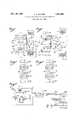
- FIGURE 1is a schematic view, partially in perspective and partially in block form, of an improved ionization gauge constituting one embodiment of the invent-ion;
- FIGURE 2is a schematic view, partially in section and partially in block form, further illustrating the construction of the embodiment shown in FIGURE 1;
- FIGURES 3 and 4are schematic views illustrating the operation of the improved ionization gauge shown in FIGURE 1 in facilitating a controlled and reciprocal movement of charged particles and in spatially concentrating the charged particles during such reciprocal movement;
- FIGURE 5is a schematic view, partially in section and partially in block form, illustrating a second embodiment of the improved ionization gauge constituting this invention.
- an enclosureis formed from an electrical conductor having non-magnetic properties, brass or stainless steel being good examples.
- the enclosure 10may be in the form of a cylinder and is at a suitable reference potential such as ground.
- the enclosure 10'is provided with a conduit 12 to receive molecules of gas from any suitable source (not shown).
- a pair of electrodes preferably formed as coils 14 and 16are disposed within the enclosure 10.
- Each of the coils 14 and 16is preferably disposed to define a cylinder such that the axis of each cylindrical coil corresponds to the axis of the other cylindrical coil.
- Each of the coils 14 and 16may be formed from a plurality of helical turns.
- the coils 14 and 16may be provided with a diameter in the order of 1 /2 inches and with an axial length in the order of V2 inch.
- the electrodes 14 and 16may be separated from each other by a distance in the order of /2 inch.
- Each of the electrodes 14- and 16may be formed from 6 turns of No. 8 wire.
- the coils 14 and 16are connected in an electrical circuit to receive an alternating voltage from a source 18.
- the source 18is connected in a circuit with the primary winding 20 of a transformer generally indicated at 22.
- the source 18is adapted to provide alternating signals at a suitable frequency such as 2 megacycles per second.
- secondary winding 24 of the transformer 22is provided with a center tap which is connected to a source 26 of 4 direct voltage to receive a suitable potential such as +200 volts.
- a capacitor 28is connected across the end terminals of the secondary winding 24 to provide .a parallel resonant circuit which is tuned to the frequency of the alternating voltage from the source 18.
- the upper end terminal of the secondary winding 2-1- in FIGURE 2is also connected to the anode of a diode 30 and to the cathode of a diode 32.
- the cathode of the diode 30 and the anode of the diode 32are connected to the upper terminal of the coil 14 in FIGURE 2.
- connectionsare made from the lower end terminal of the secondary winding 24 in FIGURE 2 to the anode of a diode 34 and to the cathode 'of a diode 36.
- the cathode of the diode 34- and the anode of the diode 36have a common connection with the upper end terminal of the winding 16 in FIGURE 2.
- a leadextends electrically -between the lower end terminals of the coils 14 and 16 in FIGURE 2.
- a capacitor 40is disposed electrically between the upper end terminals of the coils 14 and 16 in FIGURE 2.
- the capacitor 40is provided with a value to produce with the coils 14 and 16 a parallel resonant circuit which is tuned to the frequency of the alternating voltage from the source 18.
- the alternating voltage introduced to the coils 14 and 16may have a peak amplitude in the order of +50 volts although peak amplitures as low as 20 volts or lower or as high as 20 volts or higher may also be used.
- the alternating voltage introduced to the coil 14has a displaced phase relationship relative to the alternating voltage introduced to the coil 16; For optimum efiiciency in the production of electrons and ions from the molecules of gas Within the enclosure 10, the phase displacement between the alternating voltages introduced to the coils 14 and 16 is preferably 180.
- a grid 4-4is disposed between the coils 14, and 16 in equally spaced relationship to the coils in the axial direction.
- the grid 44is provided with a hollow annular configuration and is disposed with its center on the axis defining the coils 14 and 16 and the enclosure 10.
- the grid 44is made from an electrically conductive material having non-magnetic properties, brass or stainless steel being good examples.
- the grid 44is connected to the source 26 of direct voltage to receive a suitable biasing potential such as volts when direct potentials of +200 volts are applied to the coils 14 and 16.
- a grid '50is disposed between the coil 14 and the wall defining the upper face of the enclosure 10.
- the grid 50may be provided with a hollow annular configuration and is disposed with its center on the axis common to the coils 14 and 16.
- the grid 50is made from a suitable material having non-magnetic properties, brass or stainless steel being good examples.
- the grid 50is connected to receive a suitable negative potiential such as l00 volts from the source 26.
- a grid 52 having a construction corresponding to that of the grid 50is disposed between the coil 16 and the bottom wall defining the enclosure 10.
- the grid 52is disposed in axially aligned relationship with the grid 50 and is connected to receive the potential of 100 volts from the source 26.
- the charged particles within the enclosure 10are subjected to a magnetic field as by a pair of magnetic poles 60 and 62.
- the pole 60may constitute a north pole and the pole 62 may constitute a south pole.
- the poles 60 and 62aredisposed at opposite ends of the enclosure 10 along the axis common to the coils 14 and 16 and the walls defining the enclosure 10.
- the poles 60 and 62may be constructed to produce a magnetic field in the order of 100 gauss although the poles may be constructed to produce increased magnetic fields up to 1,000 gauss and higher.
- the poles 60 and 62are preferably formed from permanent magnets, it should be appreciated that the poles may also constitute electromagnets in which magnetic fields are produced by passing an electrical current through coils disposed around the poles.
- the voltage on one of the coilstends to rise at the same time that voltage on the other coil is falling.
- This potential differencecauses the electrons within one of the coils 14 and 16 to be attracted toward the other coil.
- the electronsare attracted from the coil 14 to the coil 16 when the potential on the coil 16 rises above the potential on the coil 14. The electrons become accelerated during their movement from the coil 14 to the coil 16 so that the electrons travel into th space within the.
- the potential on the coil 14rises above the potential on the coil 16. This causes the electrons within the coil 16 to be attracted toward the coil 14.
- the electronsstrike molecules of gas within the coil 14 so as to ionize such molecules.
- the electronstend to oscillate within the coil 14 during the remainder of the half cycles of the alternating voltage. The electrons tend to strike molecules of gas and ionize such molecules during their oscillatory movements within the coil 14.
- the electronsmove in a reciprocal path between the coils 14 and 16 through the axial openings in the coils without tending to strike the turns of wire defining the coils.
- the poles 60 and 62provide such a channeling action on the electrons because the lines of magnetic flux between the poles are in a direction parallel to the axial line common to the coils 14 and 16 and the walls defining the enclosure 10.
- the electronsmay tend to deviate in a direction transverse to the axial direction in spite of the magnetic field produced in the axial direction by the poles 60 and 62. This deviation may result in part from an epicyclic movement of the electrons as indicated at 80 in FIGURE 3.
- the epicyclic movementmay be produced by a combination of the magnetic and electrical fields produced upon the electrons, the electrical field in turn resulting in part from the repelling force produced between adjacent electrons. Because of some tendency for the electrons to deviate from the axial direction, it is desirable to produce other forces for maintaining the movement of the ions in an axial direction between the coils 14 and 16. i
- the coils 14 and 16are also instrumental in insuring that the electrons move in an axial direction in a reciprocal path between the coils without striking the turns of wire defining the coils. This results from the magnetic fields produced by the coils 14 and 16 in each half cycle of the alternating voltage from the source 18.
- currentflows through a circuit including the diode 30, the coil 14, the coil 16, the diode 36* and the secondary winding 24.
- the currentflows downwardly through the coil 14 and upwardly through the coil 16 in FIGURE 2.
- Thiscauses the flux produced by the flow of current through the coil 14 to be in the same direction as the flux passing from the pole 60 to the pole 62.
- the fiux produced by the flow of current through the coil 16is in a direction opposite to the flux passing from the pole 60 to the pole 62.
- the lines of fluxare relatively concentrated within and adjacent to the coil 14 in the positive half cycles of the alternating voltage from the source 18.
- the lines of fluxare somewhat loosely dispersed within and adjacent to the coil 16 because of the opposing eflect of the flux produced by the flow of current through the coil 16 and the flux passing between the poles 60 and 62. Since many of the lines of flux passing through the coil 14 also link the coil 16, the resultant pattern of flux is somewhat convergent from the coil 16 to the coil 14. This is indicated schematically in broken lines at 70 in FIGURE 3.
- the electronsare attracted from the coil 16 to the coil 14 because of the positive voltage on the coil 14 relative to the voltage on the coil 16.
- the electronstravel from the coil 16 to the coil 14, they tend to move in paths corresponding to the lines of flux produced between the coils 14 and 16.
- This concentration of the electronsis instrumental in preventing the electrons from striking the turns of wire defining the coil 14.
- the electronsmove from the coil 14 to the coil 16 because of the positive voltage on the coil 16 relative to the voltage on the coil 14. Since the electrons tend to follow the lines of flux as indicated by the convergent pattern 72, the electrons tend to converge toward the axis common to the coils 14 and 16 as they move from the coil 14 to the coil 16. This causes the electrons to move within the coil 16 without striking the coil when the electrons reach the coil.
- the coils 14 and 16are connected in a parallel resonant circuit with the capacit-or 40.
- This parallel circuitis resonant at a frequency corresponding to the frequency of the alternating voltage from the source 18.
- the operation of the coils 14 and 16 at the fundamental frequencyis enhanced. This insures that the electrons will move in the reciprocal path between the coils 14 and 16 with an optimum amount of concentration in the axial direction. The reason is the harmonics of the fundamental frequency tend to distort the flux produced by the flow of current through the coils 14 and 16.
- the grid 44is instrumental in insuring that the electrons strike molecules of gas with sufiicient force to ionize the molecules. This results from the bias introduced to the grid 44 from the source 26 relative to the positive potential applied to the coils 14 and 16 from the source. This bias causes the electrons to move between the coils 14 and 16 only in the portions of each alternation where the potential has an increased value relative to the value of the potential at the initiation of each alternation. The bias on the grid 44 relative to the potential on the coils 14 and 16 prevents electrons from moving between the coil 14 and 16 during the time that no alternating voltage is introduced to the coils from the source 18.
- the grid 44also prevents the electrons from moving between the coils 14 and 16 during the time that the alternating potential from the source 18 has established a relatively low voltage difference between the coils 14 and 16. In this way, the electrons are able to move between the coils 14 and 16 only as the alternating potential from the source 18 approaches its peak value in each half cycle. Because the electrons are able to move between the coils 14 and 16 only at the peak of the alternating voltage from the source 18, the electrons acquire an optimum amount of energy during their motion between the coils -14 and 16. This insures that the electrons will strike molecules of gas within the coils 14 and 16 with increased probability of ionizing such molecules.
- the grid 44is accordingly instrumental in assuring that the ionization gauge constituting this invention operates efliciently in producing electrons and positive ions from the molecules of gas within the enclosure.
- the grid 44is also instrumental in another important way in assuring that the ionization gauge constituting this invention operates efliciently in ionizing the molecules of gas within the enclosure at an optimum rate. This results from the operation of the grid 44 in each half cycle of the alternating voltage from the source 18 in delaying the movement of the electrons between the coils 14 and 16. This delay causes the electrons to remain an increased length of time within one of the coils 14 and 16 in each half cycle of the alternating voltage. During the time that the electrons remain within each of the coils 14 and 16, they have an oscillatory movement because of the opposing forces produced on the electrons by the coils. Because of their oscillatory movement within each of the coils 14 and 16, the electrons have an increased opportunity to strike molecules of gas and ionize such molecules.
- the positive ions produced from the molecules of gas within the enclosure 10may tend to drift toward the walls defining the enclosure 10 since the grounded potential on the walls defining the enclosure 10 is negative with respect to the positive potential on the coils 14 and 16.
- the positive ionswill generally not strike the wall defining the enclosure 10 with a sufiicient force to produce a significant secondary emission of electrons from such walls. The reason is that the potential difference between the coils 14 and 16 and the walls defining the enclosure 10 is relatively low.
- the openings in the grids 44, 50 and 52are greater than the openings in the coils 14 and 16. Because of the increased openings in the grids 44, 50 and 52, any electrons secondarily emitted from the grids are inhibited from moving in a path which would cause them to join the electrons moving in a reciprocal path between the coils 14 and 16.
- any electrons secondarily emitted from the walls defining the enclosure 10are repelled by the grids 50 and 52 so as to return to the walls. 'In this way, the electrons secondarily emitted from the walls defining the enclosure 10 are prevented from moving into the region within the coils 14 and 16 to join the electrons produced from the molecules of gas within the enclosure. Because of this, only the electrons produced from the molecules of gas within the enclosure 10 are instrumental in producing the ionization of other molecules of gas within the enclosure into electrons and positive ions.
- the apparatus constituting the inventionhas certain important advantages. It provides an efficient production of electrons from the molecules of gas within the enclosure 10. The electrons are produced entirely from the molecules of gas within the enclosure 10 and are not obtained from any secondary emission of electrons from the coils 14 and 16 and the walls defining the enclosure 10. This results in part from the action of the various members in channeling the movement of electrons along substantialy the axial line which extends between the coils 14 and 16. This causes the apparatus constituting this invention to constitute a source of charged particles whereby an improved control is obtained over the production of the charged particles in comparison to the sources now in use.
- the walls defining the enclosure 10cannot be contaminated chemically with positive ions obtained from molecules of the difierent gases within the enclosure 10. Even if the walls defining the enclosure 10 in the apparatus constituting this invention should be contaminated by the molecules of the different gases, this does not afiect the operation of the apparatus since the charged particles in the apparatus are not obtained from the walls.
- the apparatus constituting the inventionmay be used as an ion source or as a vacuum pump in addition to its use as an ionization gauge.
- the apparatus constituting this inventionis used as an ion source, the positive ions produced Within the enclosure 10 from the molecules of gas within the enclosure are channeled through an opening in the enclosue to output apparatus which uses the ions.
- the apparatus constituting this inventionis used as a vacuum pump, the ions produced from the molecules of gas within the enclosure 10 are channeled through the opening in the enclosure and are collected after passing through such opening. Since the ions are Withdrawn from the enclosure, the molecules of gas in the enclosure 10 eventually become considerably reduced in number.
- FIGURE 5A second embodiment of the invention is illustrated in FIGURE 5.
- a plurality of coils 100, 102 and 104are equally spaced in an arcuate direction about an annulus.
- Each of the coils 100, 102 and 104may be formed from a number of turns which are disposed relative to one another to define an arcuate configuration.
- each of the coils 100, 102 and 104constitutes an electrode in a manner similar to the coils 14 and 16 in the embodiment shown in FIGURES 1 to 4, inclusive.
- Grids 106, 108 and 110are respectively disposed between adjacent pairs of the coils 100', 102 and 104.
- the grids 106, 103 and 110are equaly spaced from the adjacent coils 100, 102 and 104 in the arcuate direction and are disposed with their centers on the annulus defined by the coils 100, 102 and 104.
- Each of the grids 106, 108 and 110is constructed in a manner similar to that described above for the grid 44 in the embodiment shown in FIGURES l to 4, inclusive.
- the coils 100, 102 and 104are connected in a particular relationship to receive the alternating voltage from the source '18 and in successive half cycles of the voltage. For example, in a first half cycle of voltage from a source 118 corresponding to the source 18 in FIGURES 1 to 4, inclusive, a positive voltage may be introduced to the coil 102 and a negative voltage may be introduced to the coil 100. This causes the electrons to move from the coil 100 to the coil 102 and to ionize molecules of gas during such movement and during the subsequent oscillatory movements of the electrons within the coil 102.
- the source 118is connected to a rectifier 120 which inverts the negative half cycles of voltage to produce only positive half cycles in the sucessive half cycles of voltage.
- the rectifier 120is in turn connected to a differentiator 122 to produce a sharp triggering signal at the beginning of each half cycle of voltage from the differentiator.
- the signals from the diiferentiator 122are in turn introduced to a ring counter 124 which is constructed in a conventional manner.
- the ring counter 124is responsive to successive pulses from the diiferentiator 122 to introduce a positive voltage in the successive half cycles of the alternating voltage to progressive ones of the coils 100, 102 and 104. Because of this, a positive voltage is introduced from the source 118 to the coil 104 in the second half cycle of voltage from the source 118 and a negative voltage is simultaneously introduced to the coil 102. This causes the electrons to move from the coil 102 to the coil 104 in the second half cycle of the alternating voltage from the source 118 and to ionize molecules of gas during such movement and during the subsequent oscillatory movement of the electrons within the coil 104.
- the coil 100receives a positive voltage and the coil 104 receives a negative voltage.
- the electronsaccordingly move from the coil 104 to the coil 100 and ionize molecules of gas during such movement and during the subsequent oscillatory movement of the electrons within the coil 100.
- the electronsmove in a counterclockwise direction to successive ones of the coils 100, 102 and 104 in the progressive half cycles of voltage from the source 118 and ionize molecules of gas so as to produce a cumulative number of electrons.
- first electrode meansfor obtaining a movement of charged particles toward and away from the first electrode means; second electrode means for obtaining a movement of charged particles toward and away from the second electrode means; the first and second electrodemeans being displaced from each other in a particular direction and being constructed to produce forces on the charged particles, upon the introduction of a voltage to the electrode means and in accordance with the introduction of a voltage to the electrode means, in a direction for obtaining a movement of charged particles between the electrode means and for concentrating the charged particles during the movement of the charged particles between the electrode means; means operatively coupled to the first and second electrode means for introducing alternating voltages to the first and second electrode means in an opposing phase relationship to produce a first force between the electrode means for obtaining a movement of the charged particles between the first and second electrode means at a frequency directly related to the frequency of the alternating voltage and for obtaining an oscillatory movement of the charged particles at the first and second electrode means between each movement
- first electrode meansfor obtaining a movement of charged particles into and out of the first electrode means
- second electrode meansfor obtaining a movement of charged particles into and out of the second electrode means
- the first and second electrode meansbeing displaced from each other in a particular direction to produce first forces on the charged particles in accordance with any differences in the voltages on the first and second electrode means for obtaining a movement of the charged particles from one of the electrode means to the other
- means displaced from the first and second electrode means in a particular directionfor producing a second force on the charged particles in a direction for facilitating a direct movement of the charged particles between the first and second electrode means
- the first and second electrode meansbeing constructed and electrically connected to each other in a particular relationship to pro Jerusalem on the charged particles third forces in accordance with the introduction of voltages to the electrode means wherein the third forces cooperate with the second forces in concentrating the charged particles in a second direction transverse to the particular direction during the movement of the charged particles between the
- meansincluding at least one wall defining a controlled space, means extending from the wall for obtaining the introduction of the plurality of molecules into the controlled space, first and second means disposed within the controlled space and in spaced relationship to each other in a particular direction to produce a field having properties of producing on the charged particles forces directed between the first and second means and converging at a particular one of the first and second means to ob tain a convergence of the charged particles during a movement of the charged particles in a controlled path to the particular one of the first and second means from the other one of the first and second means, means operatively coupled to the first and second means for introducing alternating voltages to the first and second means in a particular phase relationship to obtain a movement of charged particles in the controlled path between the first and second means and to obtain an oscillatory movement of the charged particles between such movements and to obtain the production of further charged particles from the molecules during such movements of the charged particles, and means displaced from the first and
- first electrode meanshaving a hollow configuration defining a first controlled space within the first electrode means
- second electrode meanshaving a hollow configuration de fining a second controlled space within the second electrode means
- the first and second electrode meansbeing disposed in spaced relationship to each other to provide a movement of charged particles between the first and second electrode means and being electrically connected to each other to produce on the charged particles a force converging toward the controlled space of a particular one of the first and second electrode means in accordance with any difference in voltages on the first and second electrode means
- means displaced from the first and second controlled spacesfor introducing the plurality of molecules into the space between the first and second controlled spaces
- means operatively coupled to the first and second electrode meansfor alternately applying potentials to the first and second electrode means to produce a first force on the charged particles for obtaining movement of charged particles between the first and second electrode means and an oscillatory movement of the charged particles during the period between such movements of the charged particles and to obtain the production of further charged particles
- a first coilformed from a first plurality of turns disposed to define a first hollow electrode
- a second coilformed from a first plurality of turns disposed to define a second hollow electrode
- the first and second coilsbeing displaced from each other in a particular direction and being connected to each other to receive a voltage for producing an electrical field between the coils to obtain a movement of charged particles between the coils in accordance with the polarity of the electrical field
- means displaced from the first and second coils in the first directionfor producing a first magnetic field in the particular direction between the coils
- the first and second coilsbeing further connected to produce second magnetic fields of opposite polarities upon a flow of current through the coils wherein the magnetic field produced by one of the coils aids the first magnetic field to produce a concentration of lines of flux and wherein the magnetic field produced by the other coil opposes the first magnetic field to produce a dispersal of the lines of flux, and means operatively
- a first coilformed from a plurality of turns displaced from one another in a particular direction to define a first hollow opening
- a second coilformed from a plurality of turns displaced from one another in the particular direction to define a second hollow opening
- the first and second coilsbeing displaced from each other in the particular direction to produce an electrical field between the coils in the particular direction for producing a movement of the charged particles between the first and second coils through the openings in the coils
- the first and second coilsbeing connected in an opposed rela tionship to obtain the production of magnetic flux in one direction by a particular one of the coils and the production of magnetic flux in an opposite direction by the other coil in accordance with the magnitude and polarity of any flow of current through the coils
- means displaced from the first and second coils in the particular directionfor producing a magnetic field between the first and second coils for a reinforcement of this magnetic field by the flux produced by one of the coils and for
- the combination set forth in claim 6,including, a grid disposed between the first and second coils and constructed to provide for the reciprocal movement of the charged particles through the grid, and means operatively coupled to the grid for introducing a direct voltage of a particular magnitude and polarity relative to the direct voltage introduced to the first and second coils to control the electrical field between the coils for the movement of the charged particles between the coils for alternating voltages approaching peak values in each half cycle.
- each of the first and second coilsis provided with a cylindrical configuration and in which the first and second coils are disposed in spaced relationship to each other along a common axis.
- each of the first and second coilsis provided with an arcuate configuration and in which the first and second coils are disposed in arcuately spaced relationship to each other.
- first meansoperative upon the charged particles upon the movement of the charged particles into the first controlled space for inhibiting the movement of the charged particles out of the first controlled space
- second meansoperative upon the charged particles upon the movement of the charged particles into the second controlled space for inhibiting the movement of the charged particles out of the second controlled space.
- first and second electrode meansare linearly disposed from each other to obtain reciprocal movements of the charged particles between the first and second electrode means in accordance with the alternate applications of potentials to the first and second electrode means.
- first and second electrode meansare angularly displaced from each other to obtain angular movements of the charged particles in a particular direction between the first and second electrode means in accordance with the 14 alternate applications of potentials to the first and second electrode means.
- first and second electrodesare spaced linearly from each other to obtain a reciprocal movement of the charged particles between the first and second electrodes in accordance with the alternate applications of voltages to the first and second electrodes.
- first and second electrodesare annularly displaced from each other to obtain annular movements of the charged particles in a particular and individual direction between the first and second electrodes in accordance with the alternate applications of voltages to the first and second electrodes.
Landscapes
- Chemical & Material Sciences (AREA)
- Engineering & Computer Science (AREA)
- Combustion & Propulsion (AREA)
- Physical Or Chemical Processes And Apparatus (AREA)
Description
vDec. 20, 1966 HANSEN APPARATUS FOR PRODUCING CHARGED PARTICLES Filed Feb. 13, 1962 .Iilisl M) 1: M e mm! 4. 4 w 2 n 6 M 4/ M 0 2W 2 2 v .r 3 C 4 42 3 w 0 M fource 4/ fig m/x a/vrak/ far/n K 6 4041? 2240/4 WM y W a 1 Mi a 4/ 6 w Z w; i a g .d A 4 M w 4 a p. f 3 #u a United States Patent C) Calif.
Filed Feb. 13, 1962, Ser. No. 172,962 14 Claims. (Cl. 315111) This invention relates to apparatus for producing charged particles and more particularly relates to apparatus for providing an efiicient production of charged particles. The apparatus constituting the invention is especially adapted to be used as a source for indicating the number of molecules of gas in an enclosure or as an ion source or a vacuum pump.
As the age of automation progresses, it becomes increasingly important to provide sensitive and reliable measurements to control the automatic operation of various industrial processes. One of the measurements relates to the number of molecules of gas in an enclosure. For example, such measurements are necessary in systems for producing various chemicals by controlling the introduction of various elements to an enclosure to obtain a chemical reaction of the diiterent elements in the enclosure.
As the age of automation progresses, it is also becoming increasingly important to provide systems which operate effectively at vacuum pressures. In these systems, the number of molecules has to be controlled effectively to maintain the vacuum pressure within particular limits. It is also becoming increasingly important to provide systems which are capable of producing ions which are then introduced to other measuring and indicating apparatus for controlling the proper operation of such measuring and indicating apparatus.
Numerous attempts have been made in the past to provide equipment for measuring with precision the number of molecules of gas in an enclosure and also to provide equipment for obtaining an eflicient production of ions and for maintaining a vacuum within an enclosure. Such .ateempts have not been completely satisfactory until recently for various reasons. One reason has been the occurrence of electrical sparking or sputtering between the electrodes in the equipment and the walls defining the housing for the equipment. This sparking or sputtering has occurred because of the high voltages, such as in the order of 2,000 volts, required for use in the equipment and because of the close spacing which has had to be provided between the electrodes and the walls defining the housing.
A further disadvantage in the equipment of the prior art has resulted from the secondary emission of electrons from the walls defining the enclosure. These electrons have then been accelerated by the electrodes within the enclosure to produce an ionization of molecules of gas within the enclosure. The sparking or sputtering between the electrode and the walls defining the enclosure and the production of charged particles from secondarily emitted electrons have considerably reduced the sensitivity and reliability of the measurements which have been made to indicate the number of charged particles produced from molecules of gas within the enclosure.
In copending application Serial No. 133,407 filed by me, apparatus is disclosed and claimed for overcoming the above disadvantages. The apparatus produces charged particles without secondary emission of electrons from the walls contributing to the production. The apparatus provides a pair of electrodes both of which are connected to receive a relatively low voltage in the order of +200 volts and which are disposed a relatively great distance from the walls defining the enclosure. Since the electrodes are at a relatively low voltage and are spaced from the walls defining the enclosure, no sparking or sputtering occurs even when a considerable number of charged particles are present within the enclosure.
In the ionization gauge disclosed and claimed in copending application Serial No. 133,407, first and second electrodes are disposed in spaced relationship to each other and are provided with a configuration to retain electrons within the electrodes. Each of the electrodes is provided with an opening which faces the opening in the other electrode so that the electrons are able to move in a reciprocal path between the electrodes through the openings in the electrodes. The positive direct voltage of +200 volts is applied to the electrodes to retain electrons within the enclosure and to inhibit the movement of the electrons toward the walls defining the enclosure.
An alternating voltage is also applied to the electrodes in a particular relationship to produce opposing phases on each of the first and second electrodes. This causes the electrons in one of the electrodes to be initially attracted to the second electrode and thereafter to oscillate Within the second electrode during a first half cycle of the alternating voltage. In the next half cycle of the alternating voltage the electrons in the second electrode become attracted to the first electrode and oscillate within the first electrode. During the movement of the electrons between the electrodes and during the oscillatory movement of the electrons within the electrodes in each half cycle of the alternating voltage, the electrons strike molecules of gas within the enclosure with a sufficient force to ionize these molecules. In this way, a cumula tive number of molecules of gas are ionized in the successive half cycles of the alternating voltage.
The ionization gauge disclosed and claimed in copending application Serial No. 133,407 is constructed to channel the movement of electrons between the first and second electrodes so that many of the electrons are not able to strike the electrodes or the walls defining the enclosure. This is obtained by disposing magnetic poles to produce a magnetic field in an axial direction corresponding to the direction of reciprocal movement of the electrons. Furthermore, any electrons secondarily emitted from the Walls defining the enclosure are returned to the walls to prevent such electrons from ionizing molecules of the gas Within the enclosure. In this way, only the electrons produced from the molecules of gas within the enclosure by the movement of charged particles between the first and second electrodes are efficiently used to produce further electrons without any secondary emission of electrons from the electrodes or the walls defining the enclosure.
This invention provides an improvement of the ionization gauge disclosed and claimed in copending application Serial No. 133,407. In this invention, the first and second electrodes are constructed to produce a converging force on the charged particles during the movement of the charged particles between the first and second electrodes. This converging force acts on the charged particles to concentrate the charged particles toward the axial line extending between the first and second electrodes. By concentrating the charged particles toward the axial line in each reciprocal movement of the charged particle between the first and second electrodes, the charged particles are prevented from diffusing to the electrodes and from becoming lost. In this way, the charged particles are retained near the axial position to ionize molecules of. gas effectively during the reciprocal movements of the charged particles between the first and second electrodes.
In one embodiment of the invention, each of the first and second electrodes is defined by a coil having a plurality of turns. The coils are disposed in spaced relationship to each other along a common axis corresponding to the direction of reciprocal movement of the electrons. The coils are connected to produce magnetic flux in a phase relationship wherein the flux from one of the coils aids the magnetic fiux from the poles'and the flux from the other coil opposes the magnetic flux from the poles. This produces an increased concentration of magnetic flux adjacent to one of the coils and a decreased concentration of magnetic flux adjacent to the other coil. The
. electrons become concentrated along the common axial line between the coils by producing a movement of electrons from the coil having the decreased concentration of magnetic flux to the coil having the increased concentration of rnagnetic flux. The electrons become concentrated during each reciprocal movement by introducing alternating voltages to the coils to obtain an increase of flux at one of the coils in alternate half cycles and an increase of flux at the other coil in the other half cycles.
The use of coils as the first and second electrodes is further advantageous in that the coils can be used as electrical elements with a capacitor to define a tuned circuit. This tuned circuit can be provided with a frequency corresponding to that of the alternating voltage applied to the coils to produce the reciprocal movement of the electrons between the coils. By connecting the coils in a t-uned circuit, the production of harmonics is minimized and the reciprocal movement of the electrons is controlled at the fundamental frequency of the alternating voltage.
In the drawings:
FIGURE 1 is a schematic view, partially in perspective and partially in block form, of an improved ionization gauge constituting one embodiment of the invent-ion;
FIGURE 2 is a schematic view, partially in section and partially in block form, further illustrating the construction of the embodiment shown in FIGURE 1;
FIGURES 3 and 4 are schematic views illustrating the operation of the improved ionization gauge shown in FIGURE 1 in facilitating a controlled and reciprocal movement of charged particles and in spatially concentrating the charged particles during such reciprocal movement; and
FIGURE 5 is a schematic view, partially in section and partially in block form, illustrating a second embodiment of the improved ionization gauge constituting this invention.
In the embodiment of the invention shown in FIGURES l and 2, an enclosure is formed from an electrical conductor having non-magnetic properties, brass or stainless steel being good examples. Theenclosure 10 may be in the form of a cylinder and is at a suitable reference potential such as ground. The enclosure 10' is provided with aconduit 12 to receive molecules of gas from any suitable source (not shown).
A pair of electrodes preferably formed ascoils enclosure 10. Each of thecoils coils coils electrodes
Thecoils source 18. Thesource 18 is connected in a circuit with the primary winding 20 of a transformer generally indicated at 22. Thesource 18 is adapted to provide alternating signals at a suitable frequency such as 2 megacycles per second. The
secondary winding 24 of thetransformer 22 is provided with a center tap which is connected to a source 26 of 4 direct voltage to receive a suitable potential such as +200 volts.
Acapacitor 28 is connected across the end terminals of the secondary winding 24 to provide .a parallel resonant circuit which is tuned to the frequency of the alternating voltage from thesource 18. The upper end terminal of the secondary winding 2-1- in FIGURE 2 is also connected to the anode of adiode 30 and to the cathode of adiode 32. The cathode of thediode 30 and the anode of thediode 32 are connected to the upper terminal of thecoil 14 in FIGURE 2.
In like manner, connections are made from the lower end terminal of the secondary winding 24 in FIGURE 2 to the anode of adiode 34 and to the cathode 'of adiode 36. The cathode of the diode 34- and the anode of thediode 36 have a common connection with the upper end terminal of the winding 16 in FIGURE 2. A lead extends electrically -between the lower end terminals of thecoils capacitor 40 is disposed electrically between the upper end terminals of thecoils capacitor 40 is provided with a value to produce with thecoils 14 and 16 a parallel resonant circuit which is tuned to the frequency of the alternating voltage from thesource 18.
The alternating voltage introduced to thecoils coil 14 has a displaced phase relationship relative to the alternating voltage introduced to thecoil 16; For optimum efiiciency in the production of electrons and ions from the molecules of gas Within theenclosure 10, the phase displacement between the alternating voltages introduced to thecoils
A grid 4-4 is disposed between thecoils grid 44 is provided with a hollow annular configuration and is disposed with its center on the axis defining thecoils enclosure 10. Thegrid 44 is made from an electrically conductive material having non-magnetic properties, brass or stainless steel being good examples. Thegrid 44 is connected to the source 26 of direct voltage to receive a suitable biasing potential such as volts when direct potentials of +200 volts are applied to thecoils
A grid '50 is disposed between thecoil 14 and the wall defining the upper face of theenclosure 10. Thegrid 50 may be provided with a hollow annular configuration and is disposed with its center on the axis common to thecoils grid 50 is made from a suitable material having non-magnetic properties, brass or stainless steel being good examples. Thegrid 50 is connected to receive a suitable negative potiential such as l00 volts from the source 26. Agrid 52 having a construction corresponding to that of thegrid 50 is disposed between thecoil 16 and the bottom wall defining theenclosure 10. Thegrid 52 is disposed in axially aligned relationship with thegrid 50 and is connected to receive the potential of 100 volts from the source 26.
The charged particles within theenclosure 10 are subjected to a magnetic field as by a pair ofmagnetic poles 60 and 62. Thepole 60 may constitute a north pole and the pole 62 may constitute a south pole. Thepoles 60 and 62 aredisposed at opposite ends of theenclosure 10 along the axis common to thecoils enclosure 10. By way of illustration, thepoles 60 and 62 may be constructed to produce a magnetic field in the order of 100 gauss although the poles may be constructed to produce increased magnetic fields up to 1,000 gauss and higher. Athough thepoles 60 and 62 are preferably formed from permanent magnets, it should be appreciated that the poles may also constitute electromagnets in which magnetic fields are produced by passing an electrical current through coils disposed around the poles.
Some electrons always exist within theenclosure 10. These electrons tend to be attracted into the spaces within thecoils coils coils
Upon the introduction of an alternating voltage from thesource 18 to thecoils coils coil 14 to thecoil 16 when the potential on thecoil 16 rises above the potential on thecoil 14. The electrons become accelerated during their movement from thecoil 14 to thecoil 16 so that the electrons travel into th space within the.
In the next half cycle of the alternating voltage from thesource 18, the potential on thecoil 14 rises above the potential on thecoil 16. This causes the electrons within thecoil 16 to be attracted toward thecoil 14. When the electrons reach thecoil 14, they strike molecules of gas within thecoil 14 so as to ionize such molecules. After the electrons reach thecoil 14, they tend to oscillate within thecoil 14 during the remainder of the half cycles of the alternating voltage. The electrons tend to strike molecules of gas and ionize such molecules during their oscillatory movements within thecoil 14.
In this way, a progressive number of electrons in produced in each successive half cycle of the alternating voltage from thesource 18. As the number of electrons within the enclosure increases, the probability increases that the electrons will strike molecules of gas and ionize molecules. Because of this, a cumulative number of electrons is produced from the molecules of gas in the successive half cycles of the alternating voltage from thesource 18. The electrons are produced from the molecules of gas during the reciprocal movement of th previously produced electrons between thecoils 14 an 16 and during the oscillatory movement of such previously produced electrons within the coils.
The electrons move in a reciprocal path between thecoils poles 60 and 62 in channeling the movement of the electrons in a direction substantially parallel to the axis common to thecoils enclosure 10. Thepoles 60 and 62 provide such a channeling action on the electrons because the lines of magnetic flux between the poles are in a direction parallel to the axial line common to thecoils enclosure 10. It will be appreciated that the electrons may tend to deviate in a direction transverse to the axial direction in spite of the magnetic field produced in the axial direction by thepoles 60 and 62. This deviation may result in part from an epicyclic movement of the electrons as indicated at 80 in FIGURE 3. The epicyclic movement may be produced by a combination of the magnetic and electrical fields produced upon the electrons, the electrical field in turn resulting in part from the repelling force produced between adjacent electrons. Because of some tendency for the electrons to deviate from the axial direction, it is desirable to produce other forces for maintaining the movement of the ions in an axial direction between thecoils
Thecoils coils source 18. In the positive half cycles of the alternating voltage from thesource 18, current flows through a circuit including thediode 30, thecoil 14, thecoil 16, thediode 36* and the secondary winding 24. As will be seen, the current flows downwardly through thecoil 14 and upwardly through thecoil 16 in FIGURE 2. This causes the flux produced by the flow of current through thecoil 14 to be in the same direction as the flux passing from thepole 60 to the pole 62. However, the fiux produced by the flow of current through thecoil 16 is in a direction opposite to the flux passing from thepole 60 to the pole 62.
Since the fluxes produced by the poles 60- and 62 and by the flow of current through thecoil 14 tend to aid each other, the lines of flux are relatively concentrated within and adjacent to thecoil 14 in the positive half cycles of the alternating voltage from thesource 18. However, the lines of flux are somewhat loosely dispersed within and adjacent to thecoil 16 because of the opposing eflect of the flux produced by the flow of current through thecoil 16 and the flux passing between thepoles 60 and 62. Since many of the lines of flux passing through thecoil 14 also link thecoil 16, the resultant pattern of flux is somewhat convergent from thecoil 16 to thecoil 14. This is indicated schematically in broken lines at 70 in FIGURE 3.
During the positive half cycles in which the fiux between thecoils convergent pattern 70, the electrons are attracted from thecoil 16 to thecoil 14 because of the positive voltage on thecoil 14 relative to the voltage on thecoil 16. As the electrons travel from thecoil 16 to thecoil 14, they tend to move in paths corresponding to the lines of flux produced between thecoils convergent pattern 70 of the fiux as the electrons move from thecoil 16 to thecoil 14. This concentration of the electrons is instrumental in preventing the electrons from striking the turns of wire defining thecoil 14.
In the negative half cycles of the alternating voltage from theource 18, current flows through a circuit including thediode 34, thecoil 16, thecoil 14, thediode 32 and the secondary winding 24. As will be seen, the flow of current in thecoil 16 is in a direction to obtain the production of flux which aids the flux passing from thepole 60 to the pole 62. However, the flux produced by the flow of current through thecoil 14 is in a direction to oppose the flux passing from thepole 60 to the pole 62. This causes the flux to have a convergent pattern, as indicated schematically in broken lines at 72 in FIGURE 4. As will be seen, theconvergent pattern 72 in FIGURE 4 is opposite to theconvergent pattern 70 in FIGURE 3.
During the half cycles in which the flux between thecoils convergent pattern 72, the electrons move from thecoil 14 to thecoil 16 because of the positive voltage on thecoil 16 relative to the voltage on thecoil 14. Since the electrons tend to follow the lines of flux as indicated by theconvergent pattern 72, the electrons tend to converge toward the axis common to thecoils coil 14 to thecoil 16. This causes the electrons to move within thecoil 16 without striking the coil when the electrons reach the coil.
It will be seen from the previous discussion that a converging action is produced on the electrons during the movement of the electrons between thecoils coils coils coils
As will be seen in FIGURE 2, thecoils source 18. By electrically connecting thecoils source 18, the operation of thecoils coils coils
Thegrid 44 is instrumental in insuring that the electrons strike molecules of gas with sufiicient force to ionize the molecules. This results from the bias introduced to thegrid 44 from the source 26 relative to the positive potential applied to thecoils coils grid 44 relative to the potential on thecoils coil source 18.
Thegrid 44 also prevents the electrons from moving between thecoils source 18 has established a relatively low voltage difference between thecoils coils source 18 approaches its peak value in each half cycle. Because the electrons are able to move between thecoils source 18, the electrons acquire an optimum amount of energy during their motion between the coils -14 and 16. This insures that the electrons will strike molecules of gas within thecoils grid 44 is accordingly instrumental in assuring that the ionization gauge constituting this invention operates efliciently in producing electrons and positive ions from the molecules of gas within the enclosure.
Thegrid 44 is also instrumental in another important way in assuring that the ionization gauge constituting this invention operates efliciently in ionizing the molecules of gas within the enclosure at an optimum rate. This results from the operation of thegrid 44 in each half cycle of the alternating voltage from thesource 18 in delaying the movement of the electrons between thecoils coils coils coils
The electrons moving in the reciprocal path between thecoils enclosure 10. This results from the positive potential on thecoils enclosure 10. It also results from the considerable distance between the electrodes and the walls defining theenclosure 10. Y
The positive ions produced from the molecules of gas within theenclosure 10 may tend to drift toward the walls defining theenclosure 10 since the grounded potential on the walls defining theenclosure 10 is negative with respect to the positive potential on thecoils enclosure 10 with a sufiicient force to produce a significant secondary emission of electrons from such walls. The reason is that the potential difference between thecoils enclosure 10 is relatively low.
As will be seen, the openings in thegrids coils grids coils
Any electrons secondarily emitted from the walls defining theenclosure 10 are repelled by thegrids enclosure 10 are prevented from moving into the region within thecoils enclosure 10 are instrumental in producing the ionization of other molecules of gas within the enclosure into electrons and positive ions.
The apparatus constituting the invention has certain important advantages. It provides an efficient production of electrons from the molecules of gas within theenclosure 10. The electrons are produced entirely from the molecules of gas within theenclosure 10 and are not obtained from any secondary emission of electrons from thecoils enclosure 10. This results in part from the action of the various members in channeling the movement of electrons along substantialy the axial line which extends between thecoils
Since the electrons are produced entirely from molecules of gas, the walls defining theenclosure 10 cannot be contaminated chemically with positive ions obtained from molecules of the difierent gases within theenclosure 10. Even if the walls defining theenclosure 10 in the apparatus constituting this invention should be contaminated by the molecules of the different gases, this does not afiect the operation of the apparatus since the charged particles in the apparatus are not obtained from the walls.
The apparatus constituting the invention may be used as an ion source or as a vacuum pump in addition to its use as an ionization gauge. When the apparatus constituting this invention is used as an ion source, the positive ions produced Within theenclosure 10 from the molecules of gas within the enclosure are channeled through an opening in the enclosue to output apparatus which uses the ions. When the apparatus constituting this invention is used as a vacuum pump, the ions produced from the molecules of gas within theenclosure 10 are channeled through the opening in the enclosure and are collected after passing through such opening. Since the ions are Withdrawn from the enclosure, the molecules of gas in theenclosure 10 eventually become considerably reduced in number.
A second embodiment of the invention is illustrated in FIGURE 5. In the second embodiment, a plurality ofcoils coils coils coils
Grids 106, 108 and 110 are respectively disposed between adjacent pairs of thecoils adjacent coils coils grid 44 in the embodiment shown in FIGURES l to 4, inclusive.
Thecoils source 118 corresponding to thesource 18 in FIGURES 1 to 4, inclusive, a positive voltage may be introduced to thecoil 102 and a negative voltage may be introduced to the coil 100. This causes the electrons to move from the coil 100 to thecoil 102 and to ionize molecules of gas during such movement and during the subsequent oscillatory movements of the electrons within thecoil 102.
Thesource 118 is connected to arectifier 120 which inverts the negative half cycles of voltage to produce only positive half cycles in the sucessive half cycles of voltage. Therectifier 120 is in turn connected to adifferentiator 122 to produce a sharp triggering signal at the beginning of each half cycle of voltage from the differentiator. The signals from thediiferentiator 122 are in turn introduced to aring counter 124 which is constructed in a conventional manner.
Thering counter 124 is responsive to successive pulses from thediiferentiator 122 to introduce a positive voltage in the successive half cycles of the alternating voltage to progressive ones of thecoils source 118 to thecoil 104 in the second half cycle of voltage from thesource 118 and a negative voltage is simultaneously introduced to thecoil 102. This causes the electrons to move from thecoil 102 to thecoil 104 in the second half cycle of the alternating voltage from thesource 118 and to ionize molecules of gas during such movement and during the subsequent oscillatory movement of the electrons within thecoil 104.
In a third half cycle of the alternating voltage from thesource 118, the coil 100 receives a positive voltage and thecoil 104 receives a negative voltage. The electrons accordingly move from thecoil 104 to the coil 100 and ionize molecules of gas during such movement and during the subsequent oscillatory movement of the electrons within the coil 100. In this way, the electrons move in a counterclockwise direction to successive ones of thecoils source 118 and ionize molecules of gas so as to produce a cumulative number of electrons.
Although this application has been disclosed and illustrated with reference to particular applications, the prin ciples involved are susceptible of numerous other applications which will be apparent to persons skilled in the art. The invention is, therefore, to be limited only as indicated by the scope of the appended claims.
What is claimed is:
1. In combination for obtaining a controlled production of charged particles from a plurality of molecules of a gas, first electrode means for obtaining a movement of charged particles toward and away from the first electrode means; second electrode means for obtaining a movement of charged particles toward and away from the second electrode means; the first and second electrodemeans being displaced from each other in a particular direction and being constructed to produce forces on the charged particles, upon the introduction of a voltage to the electrode means and in accordance with the introduction of a voltage to the electrode means, in a direction for obtaining a movement of charged particles between the electrode means and for concentrating the charged particles during the movement of the charged particles between the electrode means; means operatively coupled to the first and second electrode means for introducing alternating voltages to the first and second electrode means in an opposing phase relationship to produce a first force between the electrode means for obtaining a movement of the charged particles between the first and second electrode means at a frequency directly related to the frequency of the alternating voltage and for obtaining an oscillatory movement of the charged particles at the first and second electrode means between each movement of the charged particles and for obtaining the ion ization of molecules of gas by the charged particles during the movements of the charged particles; means displaced from the first and second electrode means in the particular direction for producing a second force on the charged particles in cooperation with the first force to obtain a concentration of the charged particles during the movement of the charged particles between the electrode means; and means for introducing the plurality of molecules of a gas into the space between the first and second electrode means.
2. In combination for obtaining a controlled production of charged particles from a plurality of molecules of a gas, first electrode means for obtaining a movement of charged particles into and out of the first electrode means, second electrode means for obtaining a movement of charged particles into and out of the second electrode means, the first and second electrode means being displaced from each other in a particular direction to produce first forces on the charged particles in accordance with any differences in the voltages on the first and second electrode means for obtaining a movement of the charged particles from one of the electrode means to the other, means displaced from the first and second electrode means in a particular direction for producing a second force on the charged particles in a direction for facilitating a direct movement of the charged particles between the first and second electrode means, the first and second electrode means being constructed and electrically connected to each other in a particular relationship to pro duce on the charged particles third forces in accordance with the introduction of voltages to the electrode means wherein the third forces cooperate with the second forces in concentrating the charged particles in a second direction transverse to the particular direction during the movement of the charged particles between the electrode means, and means operatively coupled to the first and second electrode means for introducing alternating voltages to the first and second electrode means in a particular phase relationship to obtain the production of the first and third forces by the first and second electrode means for a movement of the charged particles between the first and second electrode means at a frequency directly related to the frequency of the alternating voltage and for a concentration of the charged particles during such movement and for an oscillatory movement of the charged particles at the electrode means between such movements of the charged particles and for the production of further charged particles by the charged particles from the molecules of gas during such movements of the charged particles.
3. In combination for obtaining a controlled production of charged particles from a plurality of molecules, means including at least one wall defining a controlled space, means extending from the wall for obtaining the introduction of the plurality of molecules into the controlled space, first and second means disposed within the controlled space and in spaced relationship to each other in a particular direction to produce a field having properties of producing on the charged particles forces directed between the first and second means and converging at a particular one of the first and second means to ob tain a convergence of the charged particles during a movement of the charged particles in a controlled path to the particular one of the first and second means from the other one of the first and second means, means operatively coupled to the first and second means for introducing alternating voltages to the first and second means in a particular phase relationship to obtain a movement of charged particles in the controlled path between the first and second means and to obtain an oscillatory movement of the charged particles between such movements and to obtain the production of further charged particles from the molecules during such movements of the charged particles, and means displaced from the first and second means in the particular direction for producing a force onthe charged particles upon the movement of the charged particles to the first and second means to retain the charged particles in the space between the first and second means without engaging the first and second means.
4. In combination for obtaining a controlled production of charged particles from a plurality of molecules, first electrode means having a hollow configuration defining a first controlled space within the first electrode means, second electrode means having a hollow configuration de fining a second controlled space within the second electrode means, the first and second electrode means being disposed in spaced relationship to each other to provide a movement of charged particles between the first and second electrode means and being electrically connected to each other to produce on the charged particles a force converging toward the controlled space of a particular one of the first and second electrode means in accordance with any difference in voltages on the first and second electrode means, means displaced from the first and second controlled spaces for introducing the plurality of molecules into the space between the first and second controlled spaces, means operatively coupled to the first and second electrode means for alternately applying potentials to the first and second electrode means to produce a first force on the charged particles for obtaining movement of charged particles between the first and second electrode means and an oscillatory movement of the charged particles during the period between such movements of the charged particles and to obtain the production of further charged particles during such movement of the charged particles, and means operative upon the charged particles and displaced from the first and second electrode means for producing a second force on the charged particles to cooperate with the first force on the charged particles in obtaining a concentration of the charged particles during the movement of the particles between the first and second electrode means.
5. In combination for obtaining a controlled production of charged particles from a plurality of molecules of a gas, a first coil formed from a first plurality of turns disposed to define a first hollow electrode, a second coil formed from a first plurality of turns disposed to define a second hollow electrode, the first and second coils being displaced from each other in a particular direction and being connected to each other to receive a voltage for producing an electrical field between the coils to obtain a movement of charged particles between the coils in accordance with the polarity of the electrical field, means displaced from the first and second coils in the first direction for producing a first magnetic field in the particular direction between the coils, the first and second coils being further connected to produce second magnetic fields of opposite polarities upon a flow of current through the coils wherein the magnetic field produced by one of the coils aids the first magnetic field to produce a concentration of lines of flux and wherein the magnetic field produced by the other coil opposes the first magnetic field to produce a dispersal of the lines of flux, and means operatively coupled to the first and second coils for introducing an alternating voltage to the coils in a particular phase relationship to produce an increase in voltage on one of the coils and a decrease in voltage on the other coil in each half cycle and to obtain the production of the electrical field and the second magnetic field by the coils in accordance with the voltage at each instant and to obtain a movement of the charged particles between the electrodes in each half cycle and a concentration of the charged particles between each movement of the charged articles and an oscillatory movement of the charged particles within the coils between each movement of the charged particles and the production of further charged particles from the molecules of gas during the movements of the charged particles.
6. In combination for obtaining a controlled production of charged particles from a plurality of molecules of a gas, a first coil formed from a plurality of turns displaced from one another in a particular direction to define a first hollow opening, a second coil formed from a plurality of turns displaced from one another in the particular direction to define a second hollow opening, the first and second coils being displaced from each other in the particular direction to produce an electrical field between the coils in the particular direction for producing a movement of the charged particles between the first and second coils through the openings in the coils, the first and second coils being connected in an opposed rela tionship to obtain the production of magnetic flux in one direction by a particular one of the coils and the production of magnetic flux in an opposite direction by the other coil in accordance with the magnitude and polarity of any flow of current through the coils, means displaced from the first and second coils in the particular direction for producing a magnetic field between the first and second coils for a reinforcement of this magnetic field by the flux produced by one of the coils and for a dilution of this magnetic field by the flux produced by the other coil to obtain a concentration of the charged particles during the movement of the charged particles between the first and second coils, an enclosure housing the first and second coils and having walls defining the enclosure, means connected to the first and second coils for introducing a direct voltage to the coils for maintaining the charged particles from the walls defining the enclosure, and means connected to the coils for introducing an alternating voltage to the coils in an opposing phase relationship to produce an alternating electrical field for a reciprocal movement of the charged particles between the first and second coils and for an oscillatory movement of the charged particles within the coils between the reciprocal movements and for the production of further charged particles from the molecules of gas during the reciprocal and oscillatory movements of the charged particles.
7. The combination set forth inclaim 6, including, a grid disposed between the first and second coils and constructed to provide for the reciprocal movement of the charged particles through the grid, and means operatively coupled to the grid for introducing a direct voltage of a particular magnitude and polarity relative to the direct voltage introduced to the first and second coils to control the electrical field between the coils for the movement of the charged particles between the coils for alternating voltages approaching peak values in each half cycle.
8. The combination set forth in claim 7 in which each of the first and second coils is provided with a cylindrical configuration and in which the first and second coils are disposed in spaced relationship to each other along a common axis.
9. The combination set forth in claim 7 in which each of the first and second coils is provided with an arcuate configuration and in which the first and second coils are disposed in arcuately spaced relationship to each other.
10. The combination set forth in claim 3, including,
first means operative upon the charged particles upon the movement of the charged particles into the first controlled space for inhibiting the movement of the charged particles out of the first controlled space, and
second means operative upon the charged particles upon the movement of the charged particles into the second controlled space for inhibiting the movement of the charged particles out of the second controlled space.
11. The combination set forth in claim 3 wherein the first and second electrode means are linearly disposed from each other to obtain reciprocal movements of the charged particles between the first and second electrode means in accordance with the alternate applications of potentials to the first and second electrode means.
12. The combination set forth in claim 3 wherein the first and second electrode means are angularly displaced from each other to obtain angular movements of the charged particles in a particular direction between the first and second electrode means in accordance with the 14 alternate applications of potentials to the first and second electrode means.
13. The combination set forth in claim 1 wherein the first and second electrodes are spaced linearly from each other to obtain a reciprocal movement of the charged particles between the first and second electrodes in accordance with the alternate applications of voltages to the first and second electrodes.
14. The combination set forth in claim 1 wherein the first and second electrodes are annularly displaced from each other to obtain annular movements of the charged particles in a particular and individual direction between the first and second electrodes in accordance with the alternate applications of voltages to the first and second electrodes.
References Cited by the Examiner UNITED STATES PATENTS 2,755,014 7/1956 Westendorp et al. 230-69 2,920,235 1/1960 Bell et al. 315-111 JAMES W. LAWRENCE, Primary Examiner.
GEORGE N. WESTBY, DAVID J. GALVIN,
Examiners.
V. LAFRANCHI, Assistant Examiner.
Claims (1)
1. IN COMBINATION FOR OBTAINING A CONTROLLED PRODUCTION OF A CHARGED PARTICLES FROM A PLURALITY OF MOLECULES OF A GAS, FIRST ELECTRODE MEANS FOR OBTAINING A MOVEMENT OF CHARGED PARTICLES TOWARD AND AWAY FROM THE FIRST ELECTRODE MEANS; SECOND ELECTRODE MEANS FOR OBTAINING A MOVEMENT OF CHARGED PARTICLES TOWARD AND AWAY FROM THE SECOND ELECTRODE MEANS; THE FIRST AND SECOND ELECTRODE MEANS BEING DISPLACED FROM EACH OTHER IN A PARTICULAR DIRECTION AND BEING CONSTRUCTED TO PRODUCE FORCES ON THE CHARGED PARTICLES, UPON THE INTRODUCTION OF A VOLTAGE TO THE ELECTRODE MEANS AND IN ACCORDANCE WITH THE INTRODUCTION OF A VOLTAGAE TO THE ELECTRODE MEANS, IN A DIRECTION FOR OBTAINING A MOVEMENT OF CHARGED PARTICLES BETWEEN THE ELECTRODE MEANS AND FOR CONCENTRATING THE CHARGED PARTICLES DURING THE MOVEMENT OF THE CHARGED PARTICLES BETWEEN THE ELECTRODE MEANS; MEANS OPERATIVELY COUPLED TO FIRST AND SECOND ELECTRODE MEANS FOR INTRODUCING ALTERNATING VOLTAGES TO THE FIRST AND SECOND ELECTRODE MEANS IN AN OPPOSING PHASE RELATIONSHIP TO PRODUCE A FIRST FORCE BETWEEN THE ELECTRODE MEANS FOR OBTAINING A MOVEMENT OF THE CHARGED PARTICLES BETWEEN THE FIRST AND SECOND ELECTRODE MEANS AT A FREQUENCY DIRECTLY RELATED TO THE FREQUENCY OF THE ALTERNATING VOLTAGE AND FOR OBTAINING AN OSCILLATORY MOVEMENT OF THE CHARGED PARTICLES AT THE FIRST AND SECOND ELECTRODE MEANS BETWEEN EACH MOVEMENT OF THE CHARGED PARTICLES AND FOR OBTAINING THE IONIZATION OF MOLECULES OF GAS BY THE CHARGED PARTICLES DURING THE MOVEMENTS OF THE CHARGED PARTICLES; MEANS IN THE PLACED FROM THE FIRST AND SECOND ELECTRODE MEANS IN THE PARTICULAR DIRECTION FOR PRODUCING A SECOND FORCE ON THE CHARGED PARTICLES IN COOPERATION WITH THE FIRST FORCE TO OBTAIN A CONCENTRATION OF THE CHARGED PARTICLES DURING THE MOVEMENT OF THE CHARGED PARTICLES BETWEEN THE ELECTRODE MEANS; AND MEANS FOR INTRODUCING THE PLURALITY OF MOLECULES OF A GAS INTO THE SPACE BETWEEN THE FIRST AND SECOND ELECTRODE MEANS.
Priority Applications (1)
| Application Number | Priority Date | Filing Date | Title |
|---|---|---|---|
| US172962AUS3293491A (en) | 1962-02-13 | 1962-02-13 | Apparatus for producing charged particles |
Applications Claiming Priority (1)
| Application Number | Priority Date | Filing Date | Title |
|---|---|---|---|
| US172962AUS3293491A (en) | 1962-02-13 | 1962-02-13 | Apparatus for producing charged particles |
Publications (1)
| Publication Number | Publication Date |
|---|---|
| US3293491Atrue US3293491A (en) | 1966-12-20 |
Family
ID=22629916
Family Applications (1)
| Application Number | Title | Priority Date | Filing Date |
|---|---|---|---|
| US172962AExpired - LifetimeUS3293491A (en) | 1962-02-13 | 1962-02-13 | Apparatus for producing charged particles |
Country Status (1)
| Country | Link |
|---|---|
| US (1) | US3293491A (en) |
Cited By (1)
| Publication number | Priority date | Publication date | Assignee | Title |
|---|---|---|---|---|
| US4468564A (en)* | 1981-10-21 | 1984-08-28 | Commissariat A L'energie Atomique | Ion source |
Citations (2)
| Publication number | Priority date | Publication date | Assignee | Title |
|---|---|---|---|---|
| US2755014A (en)* | 1953-04-24 | 1956-07-17 | Gen Electric | Ionic vacuum pump device |
| US2920235A (en)* | 1958-07-24 | 1960-01-05 | Persa R Bell | Method and apparatus for producing intense energetic gas discharges |
- 1962
- 1962-02-13USUS172962Apatent/US3293491A/ennot_activeExpired - Lifetime
Patent Citations (2)
| Publication number | Priority date | Publication date | Assignee | Title |
|---|---|---|---|---|
| US2755014A (en)* | 1953-04-24 | 1956-07-17 | Gen Electric | Ionic vacuum pump device |
| US2920235A (en)* | 1958-07-24 | 1960-01-05 | Persa R Bell | Method and apparatus for producing intense energetic gas discharges |
Cited By (1)
| Publication number | Priority date | Publication date | Assignee | Title |
|---|---|---|---|---|
| US4468564A (en)* | 1981-10-21 | 1984-08-28 | Commissariat A L'energie Atomique | Ion source |
Similar Documents
| Publication | Publication Date | Title |
|---|---|---|
| US2331788A (en) | Magnetic induction accelerator | |
| US2456474A (en) | Electric discharge device | |
| US1645304A (en) | X-ray tube | |
| US3293491A (en) | Apparatus for producing charged particles | |
| US3316443A (en) | Magnetic field controlled apparatus with means to oscillate electrons for the ionization of gas molecules | |
| US3796917A (en) | Devices for ionizing residual gases in vacuum systems | |
| Kistemaker et al. | Investigations on a magnetic ion source, I | |
| US2376707A (en) | Space discharge device | |
| US3408526A (en) | Ion source having an annular permanent magnet | |
| GB677981A (en) | Improvements in or relating to magnetic induction accelrators for producing x-rays | |
| US2712097A (en) | High Vacuum Measuring Device | |
| US3371205A (en) | Multipole mass filter with a pulsed ionizing electron beam | |
| US3293490A (en) | Apparatus for obtaining controlled production of charged particles | |
| GB898919A (en) | Improvements in or relating to apparatus for determining the quantity of charged particles of predetermined mass present in a space | |
| US3178578A (en) | Electron pulser for an x-ray tube to produce a pulsed beam of x-rays | |
| GB728900A (en) | Improvements in or relating to electron gun structures for use in cathode ray tubes | |
| US2264274A (en) | Cathode ray tube | |
| US3020440A (en) | Electron beam device | |
| US2723362A (en) | Electron gun of the ion trap type | |
| US2138518A (en) | Gaseous conduction apparatus | |
| GB679348A (en) | Improvements in or relating to cathode ray tubes | |
| US2866097A (en) | Mass separation | |
| US2039101A (en) | Electric discharge device and control apparatus therefor | |
| US3422311A (en) | Electromechanical transducer | |
| US2569924A (en) | Vacuum tube mixing circuits |