US3150938A - Coating composition, method of application, and product thereof - Google Patents
Coating composition, method of application, and product thereofDownload PDFInfo
- Publication number
- US3150938A US3150938AUS34871AUS3487160AUS3150938AUS 3150938 AUS3150938 AUS 3150938AUS 34871 AUS34871 AUS 34871AUS 3487160 AUS3487160 AUS 3487160AUS 3150938 AUS3150938 AUS 3150938A
- Authority
- US
- United States
- Prior art keywords
- coating
- percent
- chromium
- weight
- composition
- Prior art date
- Legal status (The legal status is an assumption and is not a legal conclusion. Google has not performed a legal analysis and makes no representation as to the accuracy of the status listed.)
- Expired - Lifetime
Links
- 239000008199coating compositionSubstances0.000titleclaimsdescription14
- 238000000034methodMethods0.000titleclaimsdescription13
- 238000000576coating methodMethods0.000claimsdescription43
- 239000011248coating agentSubstances0.000claimsdescription34
- 239000000203mixtureSubstances0.000claimsdescription28
- IJGRMHOSHXDMSA-UHFFFAOYSA-NAtomic nitrogenChemical compoundN#NIJGRMHOSHXDMSA-UHFFFAOYSA-N0.000claimsdescription20
- 239000011651chromiumSubstances0.000claimsdescription18
- 238000005474detonationMethods0.000claimsdescription15
- 229910052804chromiumInorganic materials0.000claimsdescription14
- UFGZSIPAQKLCGR-UHFFFAOYSA-Nchromium carbideChemical compound[Cr]#C[Cr]C#[Cr]UFGZSIPAQKLCGR-UHFFFAOYSA-N0.000claimsdescription14
- 229910003470tongbaiteInorganic materials0.000claimsdescription14
- VYZAMTAEIAYCRO-UHFFFAOYSA-NChromiumChemical compound[Cr]VYZAMTAEIAYCRO-UHFFFAOYSA-N0.000claimsdescription13
- 229910052757nitrogenInorganic materials0.000claimsdescription10
- 239000000843powderSubstances0.000claimsdescription9
- QVGXLLKOCUKJST-UHFFFAOYSA-Natomic oxygenChemical compound[O]QVGXLLKOCUKJST-UHFFFAOYSA-N0.000claimsdescription7
- 238000007254oxidation reactionMethods0.000claimsdescription7
- 239000001301oxygenSubstances0.000claimsdescription7
- 229910052760oxygenInorganic materials0.000claimsdescription7
- 230000003647oxidationEffects0.000claimsdescription6
- OKTJSMMVPCPJKN-UHFFFAOYSA-NCarbonChemical compound[C]OKTJSMMVPCPJKN-UHFFFAOYSA-N0.000claimsdescription5
- 229910052799carbonInorganic materials0.000claimsdescription5
- 238000004519manufacturing processMethods0.000claimsdescription3
- 229940107218chromiumDrugs0.000description13
- 235000012721chromiumNutrition0.000description12
- PXHVJJICTQNCMI-UHFFFAOYSA-NnickelSubstances[Ni]PXHVJJICTQNCMI-UHFFFAOYSA-N0.000description12
- 229910000623nickel–chromium alloyInorganic materials0.000description11
- 239000000463materialSubstances0.000description8
- 230000013011matingEffects0.000description6
- 229910052759nickelInorganic materials0.000description6
- 239000011230binding agentSubstances0.000description4
- 238000007747platingMethods0.000description4
- 229910017052cobaltInorganic materials0.000description3
- 239000010941cobaltSubstances0.000description3
- 230000001590oxidative effectEffects0.000description3
- TWNQGVIAIRXVLR-UHFFFAOYSA-Noxo(oxoalumanyloxy)alumaneChemical compoundO=[Al]O[Al]=OTWNQGVIAIRXVLR-UHFFFAOYSA-N0.000description3
- WFKWXMTUELFFGS-UHFFFAOYSA-NtungstenChemical compound[W]WFKWXMTUELFFGS-UHFFFAOYSA-N0.000description3
- 229910052721tungstenInorganic materials0.000description3
- 239000010937tungstenSubstances0.000description3
- 230000001464adherent effectEffects0.000description2
- HSFWRNGVRCDJHI-UHFFFAOYSA-Nalpha-acetyleneNatural productsC#CHSFWRNGVRCDJHI-UHFFFAOYSA-N0.000description2
- 239000012159carrier gasSubstances0.000description2
- -1chromium carbidesChemical class0.000description2
- UOUJSJZBMCDAEU-UHFFFAOYSA-Nchromium(3+);oxygen(2-)Chemical class[O-2].[O-2].[O-2].[Cr+3].[Cr+3]UOUJSJZBMCDAEU-UHFFFAOYSA-N0.000description2
- 125000002534ethynyl groupChemical group[H]C#C*0.000description2
- 230000001788irregularEffects0.000description2
- 229910052751metalInorganic materials0.000description2
- 239000002184metalSubstances0.000description2
- 239000002245particleSubstances0.000description2
- 229910018487Ni—CrInorganic materials0.000description1
- GUTLYIVDDKVIGB-UHFFFAOYSA-Ncobalt atomChemical compound[Co]GUTLYIVDDKVIGB-UHFFFAOYSA-N0.000description1
- 230000000052comparative effectEffects0.000description1
- 230000008602contractionEffects0.000description1
- 238000010790dilutionMethods0.000description1
- 239000012895dilutionSubstances0.000description1
- 239000007789gasSubstances0.000description1
- 238000010438heat treatmentMethods0.000description1
- 150000001247metal acetylidesChemical class0.000description1
- 238000002156mixingMethods0.000description1
- 238000002360preparation methodMethods0.000description1
- 239000002994raw materialSubstances0.000description1
- 230000035939shockEffects0.000description1
- 125000006850spacer groupChemical group0.000description1
- 239000007858starting materialSubstances0.000description1
- UONOETXJSWQNOL-UHFFFAOYSA-Ntungsten carbideChemical compound[W+]#[C-]UONOETXJSWQNOL-UHFFFAOYSA-N0.000description1
Images
Classifications
- C—CHEMISTRY; METALLURGY
- C23—COATING METALLIC MATERIAL; COATING MATERIAL WITH METALLIC MATERIAL; CHEMICAL SURFACE TREATMENT; DIFFUSION TREATMENT OF METALLIC MATERIAL; COATING BY VACUUM EVAPORATION, BY SPUTTERING, BY ION IMPLANTATION OR BY CHEMICAL VAPOUR DEPOSITION, IN GENERAL; INHIBITING CORROSION OF METALLIC MATERIAL OR INCRUSTATION IN GENERAL
- C23C—COATING METALLIC MATERIAL; COATING MATERIAL WITH METALLIC MATERIAL; SURFACE TREATMENT OF METALLIC MATERIAL BY DIFFUSION INTO THE SURFACE, BY CHEMICAL CONVERSION OR SUBSTITUTION; COATING BY VACUUM EVAPORATION, BY SPUTTERING, BY ION IMPLANTATION OR BY CHEMICAL VAPOUR DEPOSITION, IN GENERAL
- C23C4/00—Coating by spraying the coating material in the molten state, e.g. by flame, plasma or electric discharge
- C23C4/04—Coating by spraying the coating material in the molten state, e.g. by flame, plasma or electric discharge characterised by the coating material
- C23C4/06—Metallic material
- C—CHEMISTRY; METALLURGY
- C22—METALLURGY; FERROUS OR NON-FERROUS ALLOYS; TREATMENT OF ALLOYS OR NON-FERROUS METALS
- C22C—ALLOYS
- C22C29/00—Alloys based on carbides, oxides, nitrides, borides, or silicides, e.g. cermets, or other metal compounds, e.g. oxynitrides, sulfides
- C—CHEMISTRY; METALLURGY
- C22—METALLURGY; FERROUS OR NON-FERROUS ALLOYS; TREATMENT OF ALLOYS OR NON-FERROUS METALS
- C22C—ALLOYS
- C22C29/00—Alloys based on carbides, oxides, nitrides, borides, or silicides, e.g. cermets, or other metal compounds, e.g. oxynitrides, sulfides
- C22C29/02—Alloys based on carbides, oxides, nitrides, borides, or silicides, e.g. cermets, or other metal compounds, e.g. oxynitrides, sulfides based on carbides or carbonitrides
- C22C29/06—Alloys based on carbides, oxides, nitrides, borides, or silicides, e.g. cermets, or other metal compounds, e.g. oxynitrides, sulfides based on carbides or carbonitrides based on carbides, but not containing other metal compounds
- C22C29/067—Alloys based on carbides, oxides, nitrides, borides, or silicides, e.g. cermets, or other metal compounds, e.g. oxynitrides, sulfides based on carbides or carbonitrides based on carbides, but not containing other metal compounds comprising a particular metallic binder
- Y—GENERAL TAGGING OF NEW TECHNOLOGICAL DEVELOPMENTS; GENERAL TAGGING OF CROSS-SECTIONAL TECHNOLOGIES SPANNING OVER SEVERAL SECTIONS OF THE IPC; TECHNICAL SUBJECTS COVERED BY FORMER USPC CROSS-REFERENCE ART COLLECTIONS [XRACs] AND DIGESTS
- Y10—TECHNICAL SUBJECTS COVERED BY FORMER USPC
- Y10S—TECHNICAL SUBJECTS COVERED BY FORMER USPC CROSS-REFERENCE ART COLLECTIONS [XRACs] AND DIGESTS
- Y10S428/00—Stock material or miscellaneous articles
- Y10S428/922—Static electricity metal bleed-off metallic stock
- Y10S428/9335—Product by special process
- Y10S428/937—Sprayed metal
- Y—GENERAL TAGGING OF NEW TECHNOLOGICAL DEVELOPMENTS; GENERAL TAGGING OF CROSS-SECTIONAL TECHNOLOGIES SPANNING OVER SEVERAL SECTIONS OF THE IPC; TECHNICAL SUBJECTS COVERED BY FORMER USPC CROSS-REFERENCE ART COLLECTIONS [XRACs] AND DIGESTS
- Y10—TECHNICAL SUBJECTS COVERED BY FORMER USPC
- Y10S—TECHNICAL SUBJECTS COVERED BY FORMER USPC CROSS-REFERENCE ART COLLECTIONS [XRACs] AND DIGESTS
- Y10S428/00—Stock material or miscellaneous articles
- Y10S428/922—Static electricity metal bleed-off metallic stock
- Y10S428/9335—Product by special process
- Y10S428/938—Vapor deposition or gas diffusion
- Y—GENERAL TAGGING OF NEW TECHNOLOGICAL DEVELOPMENTS; GENERAL TAGGING OF CROSS-SECTIONAL TECHNOLOGIES SPANNING OVER SEVERAL SECTIONS OF THE IPC; TECHNICAL SUBJECTS COVERED BY FORMER USPC CROSS-REFERENCE ART COLLECTIONS [XRACs] AND DIGESTS
- Y10—TECHNICAL SUBJECTS COVERED BY FORMER USPC
- Y10S—TECHNICAL SUBJECTS COVERED BY FORMER USPC CROSS-REFERENCE ART COLLECTIONS [XRACs] AND DIGESTS
- Y10S428/00—Stock material or miscellaneous articles
- Y10S428/922—Static electricity metal bleed-off metallic stock
- Y10S428/9335—Product by special process
- Y10S428/94—Pressure bonding, e.g. explosive
- Y—GENERAL TAGGING OF NEW TECHNOLOGICAL DEVELOPMENTS; GENERAL TAGGING OF CROSS-SECTIONAL TECHNOLOGIES SPANNING OVER SEVERAL SECTIONS OF THE IPC; TECHNICAL SUBJECTS COVERED BY FORMER USPC CROSS-REFERENCE ART COLLECTIONS [XRACs] AND DIGESTS
- Y10—TECHNICAL SUBJECTS COVERED BY FORMER USPC
- Y10T—TECHNICAL SUBJECTS COVERED BY FORMER US CLASSIFICATION
- Y10T428/00—Stock material or miscellaneous articles
- Y10T428/12—All metal or with adjacent metals
- Y10T428/12014—All metal or with adjacent metals having metal particles
- Y10T428/12028—Composite; i.e., plural, adjacent, spatially distinct metal components [e.g., layers, etc.]
- Y10T428/12063—Nonparticulate metal component
- Y10T428/12139—Nonmetal particles in particulate component
- Y—GENERAL TAGGING OF NEW TECHNOLOGICAL DEVELOPMENTS; GENERAL TAGGING OF CROSS-SECTIONAL TECHNOLOGIES SPANNING OVER SEVERAL SECTIONS OF THE IPC; TECHNICAL SUBJECTS COVERED BY FORMER USPC CROSS-REFERENCE ART COLLECTIONS [XRACs] AND DIGESTS
- Y10—TECHNICAL SUBJECTS COVERED BY FORMER USPC
- Y10T—TECHNICAL SUBJECTS COVERED BY FORMER US CLASSIFICATION
- Y10T428/00—Stock material or miscellaneous articles
- Y10T428/12—All metal or with adjacent metals
- Y10T428/12493—Composite; i.e., plural, adjacent, spatially distinct metal components [e.g., layers, joint, etc.]
- Y10T428/12986—Adjacent functionally defined components
Definitions
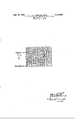
- the sole figure in the drawingis a photomicrograph at 500 diameter magnification showing the base material with the wear and oxidization resistant coating bonded thereto.
- a coating compositionwhich comprises between about 70 and 90 weight percent chromium carbide (Cr C and lower carbides) and between about 30 and weight percent of a nickel-chromium alloy (80 percent nickel-20 percent chromium).
- This materialcan be applied as a coating to various base materials by means of the detonation plating process disclosed in United States Patent No. 2,714,563 or by other high temperature high velocity coating processes, such as the arc torch or jet burner disclosed in application Serial No. 706,099 and now abandoned, filed December 30, 1957, by Gage et al., and in Patent No. 2,861,900, filed May 2, 1955, by G. H. Smith et al.
- the coatings of this material applied by the detonation processwhen using a starting composition of about 85 Weight percent chromium carbide and about weight percent of a nickelchromium alloy (80 percent Nipercent Cr) and an oxygen/carbon atomic ratio of 1.2 and nitrogen dilution of 46 volume percent have a general composition of about 10 weight percent Cr C 15 weight percent nickelchromium alloy, and the remainder 'a mixture of chromium carbides, chromium oxides, and chromium metal.
- This novel coatinghas also withstood severe oxidizing conditions up to at least 1800 F. without failure.
- Prior wear resistant coatings, such as tungsten carbide-cobaltfail due to oxidation above 1000 F.
- the coating starting materialis usually prepared by blending chromium carbide and nickel-chromium alloy powders of desired size suitable for coating (about 325 mesh and finer). A chromium and nickel powder mixture could be sustituted for the nickel-chromium alloy. The particular method of powder preparation used would depend primarily upon economic factors, such as availability of particular raw materials.
- the detonable mixture thus surrounding the coating particlescontained about 46 volume percent nitrogen.
- the detonation mixturewas ignited at a rate of about four times per second and the coating powder was impinged on a metal baseplate to form a dense adherent coating composed of irregular shaped microscopic leaves interlocking and overlapping with each other.
- the coatinghas an average hardness of 800-850 VPN as measured with a 300 gram load and a modulus of rupture of 75,000 p.s.i.
- the detonatable mixture thus surrounding the coating particlescontained about 60 volume percent nitrogen.
- the detonatable mixturewas ignited at a rate of about four times per second, and the coating powder was impinged on a metal baseplate to form a dense adherent coating about 0.0050.096 inch thick composed of irregular shaped microscopic leaves interlocking and overlapping with each other.
- the coatinghad an average hardness of 775-825 VPN as measured with a 300 gram load.
- the coatinghas a modulus of rupture of about 82,000 psi.
- the final coating producthas a general composition of about 30 weight percent Cr C 30 weight percent nickel-chromium alloy, and the remainder a mixture of chromium carbides, chromium oxides and chromium metal.
- Example IIemployed a nitrogen content of about 60 volume percent in the detonation gun barrel. This is the preferred operating condition for applying the high binder content composition on turbine blades since the resulting lower flame temperature aids in retaining an increased amount of binder in the coating product.
- the high binder content composition of the latter exampleresults in a more impact resistant coating and also in a higher modulus of rupture and would be used for applications where those qualities were of paramount importance.
- novel coating compositionmay contain between about 70-90 weight percent chromium carbide and between about 3() weight percent of a nickel-chromium alloy (80 percent nickel-20 percent chromium) without affecting the utility of the coating as disclosed.
- nickel-chromium alloy80 percent nickel-20 percent chromium
- a coating compositionwhich comprises between about and 90 percent by weight of powdered chromium carbide, between about 8 and 24 percent by weight of powdered nickel and the remainder being powdered chromium.
- a coating compositionwhich comprises about 85 percent by weight of powdered chromium carbide, 12 percent by weight of powdered nickel and the remainder being powdered chromium.
- a coating compositionwhich comprises about percent by weight of powdered chromium carbide, 20 percent by weight of powdered nickel and 5 percent by weight of powdered chromium.
- a method of applying a high temperature wear and oxidation resistant coatingwhich comprises introducing a finely divided powder comprising about 75 percent by weight of powdered chromium carbide, about 20 percent by weight of powdered nickel and about 5 percent by weight of powdered chromium into a detonation gun, surrounding such composition with a detonable fuelc-xidant mixture having an oxygen/ carbon atomic ratio of about 1.2 and containing about 60 volume percent nitrogen; igniting such detonable mixture to form a detonation, and impinging the coating composition onto a body to be coated by means of the high temperature high velocity gas stream and shock wave attendant with such detonation.
Landscapes
- Chemical & Material Sciences (AREA)
- Engineering & Computer Science (AREA)
- Materials Engineering (AREA)
- Mechanical Engineering (AREA)
- Metallurgy (AREA)
- Organic Chemistry (AREA)
- Physics & Mathematics (AREA)
- Plasma & Fusion (AREA)
- Chemical Kinetics & Catalysis (AREA)
- Coating By Spraying Or Casting (AREA)
Description
' J. F. PELTON ETAL 3,350,938 comma COMPOSITION METHOD OF APPLICATION AND PRODUCT THEREOF Filed June 9. 1960 Sept. 29 1964 INVENTORS JOHN, F .PELTON JOHN M.KOFFSKEY,JR.
M PM A TTORNE) United States Patent "ice v 3,150,938 COATING COMPOSITION, METHOD OF APPLI- CATION, AND PRODUCT THEREQF John F. Pelton and John M. Kotiskey, 51a, Indianapolis,
Ind., assignors to Union Carbide Corporation, a corporation of New York Y Filed June 9, 1960, Ser. No. 34,871 Claims. (Cl. 29-494) This invention relates to a specific coating composition,
to a method for applying same, and to the coated article so obtained. More particularly, it relates to such a composition capable of producing a coating having excellent high temperature wear and oxidation resistance. 1 There is a need in industry for coating materials that can withstand severe wear conditions at high temperatures. In particular, the aircraft industry requires coatings to protect wear surfaces in turbo-jet engines. The turbine blades, for example, undergo some distortion due to temperature expansion and contraction as well as to high velocity conditions. This distortion creates severe wear conditions on the contact surfaces between turbine blade spacers. Prior wear resistant coating materials, such as tungsten carbide with cobalt binder, have been unable to give adequate protection in this area. The prior coatings could not stand up under the high temperature wear and oxidizing conditions. An aluminum oxide coating, for example, is able to withstand the high temperature oxidizing conditions but its Wear resistance is not quite high enough, especially when mating with itself. It also is too brittle and does not have sufiicient bond strength.
It is accordingly the object of the present invention to provide a powder composition suitable for application by flame-plating techniques which result in coatings having good resistance at high temperatures to wear and oxidation.
The sole figure in the drawing is a photomicrograph at 500 diameter magnification showing the base material with the wear and oxidization resistant coating bonded thereto.
The objects of this invention are accomplished in general by a coating composition which comprises between about 70 and 90 weight percent chromium carbide (Cr C and lower carbides) and between about 30 and weight percent of a nickel-chromium alloy (80 percent nickel-20 percent chromium). This material can be applied as a coating to various base materials by means of the detonation plating process disclosed in United States Patent No. 2,714,563 or by other high temperature high velocity coating processes, such as the arc torch or jet burner disclosed in application Serial No. 706,099 and now abandoned, filed December 30, 1957, by Gage et al., and in Patent No. 2,861,900, filed May 2, 1955, by G. H. Smith et al. The actual composition of the resulting coating will be somewhat dilferent from the above starting composition due to changes brought about by heating during the coating process. For example, the coatings of this material applied by the detonation process, when using a starting composition of about 85 Weight percent chromium carbide and about weight percent of a nickelchromium alloy (80 percent Nipercent Cr) and an oxygen/carbon atomic ratio of 1.2 and nitrogen dilution of 46 volume percent have a general composition of about 10 weight percent Cr C 15 weight percent nickelchromium alloy, and the remainder 'a mixture of chromium carbides, chromium oxides, and chromium metal.
The advantages of these new coating compositions in resisting wear are shown in the following table which contpares relative wear of several coating combinations under high temperature high load conditions. These tests were run to determine the resistance to gross wear caused by galling and scoring. Test conditions were: 500 p.s.i.g. pressure on samples; relative rubbing speed between the 3,150,938 Patented fiept. 29, 1964 TABLE I 7 Comparative Wear for Combinations of Coatings in Mating Relation Loss in Temper- Coating ature at Thickness Test Piece l0- i1nehes/ Mating Materials 7. 2 CrsCz-(Ni-Cr) 7. 6 OraCz-(Ni-Or).. 1, 300 8.2 203 5. 3
3 WC-CraCz-Nll, 300 36 It can be seen from the above table that prior coating combinations of aluminum oxide, tungsten carbide-cobalt, and tungsten carbide-chromium carbide-nickel have excessive total wear at high temperatures and high load. The novel coating of the present invention has comparatively low total wear when mating with aluminum oxide and especially when mating with itself. This last property is quite important since it is most desirable to coat similar mating surfaces with the same material to simplify fabrication and replacement procedures.
This novel coatinghas also withstood severe oxidizing conditions up to at least 1800 F. without failure. Prior wear resistant coatings, such as tungsten carbide-cobalt fail due to oxidation above 1000 F.
The coating starting material is usually prepared by blending chromium carbide and nickel-chromium alloy powders of desired size suitable for coating (about 325 mesh and finer). A chromium and nickel powder mixture could be sustituted for the nickel-chromium alloy. The particular method of powder preparation used would depend primarily upon economic factors, such as availability of particular raw materials.
The following examples describe the application of this novel coating composition to a baseplate by the detonation plating process.
EXAMPLE I.APPLICATION OF AN 85 PERCENT CHRO- MIUM CARBIDE 15 PERCENT NICKEL-CHROMIUM ALLOY COATING Acetylene at 1.5 c.f.m., oxygen at 1.8 c.f.m., and nitrogen at 2.2 c.f.m. were introduced to a detonation gun to form a detonable mixture having an oxygen/ carbon atomic ratio of 1.2. Finely divided coating powder having a composition of 85 weight percent chromium carbide and 15 weight percent nickel-chromium alloy (80 percent nickel-20 percent chromium) suspended in a nitrogen carrier gas stream of 0.6 c.f.m. was introduced at a rate of 30-32 gram/min. to the barrel of the detonation gun. The detonable mixture thus surrounding the coating particles contained about 46 volume percent nitrogen. The detonation mixture was ignited at a rate of about four times per second and the coating powder was impinged on a metal baseplate to form a dense adherent coating composed of irregular shaped microscopic leaves interlocking and overlapping with each other. The coating has an average hardness of 800-850 VPN as measured with a 300 gram load and a modulus of rupture of 75,000 p.s.i.
EXAMPLE II.APPLICATION OF A PERCENT CHRO- MIUM CARBIDE 25 PERCENT NICKEL-CHROMIUM ALLOY COATING Acetylene at 1.13 c.f.m., oxygen at 1.35 c.f.m. and nitrogen at 3.02 c.f.m. were introduced to a detonation gun to form a detonatabie mixture having an oxygen/carbon atomic ratio of 1.2. Finely divided coating powder having a composition of 75 weight percent chromium carbide and 25 weight percent nickel-chromium alloy (80 percent nickel-20 percent chromium) suspended in a nitrogen carrier gas stream of 0.6 c.f.m. was introduced at a rate of 32 grams per minute to the barrel of the detonation gun. The detonatable mixture thus surrounding the coating particles contained about 60 volume percent nitrogen. The detonatable mixture was ignited at a rate of about four times per second, and the coating powder was impinged on a metal baseplate to form a dense adherent coating about 0.0050.096 inch thick composed of irregular shaped microscopic leaves interlocking and overlapping with each other. The coating had an average hardness of 775-825 VPN as measured with a 300 gram load. The coating has a modulus of rupture of about 82,000 psi. The final coating product has a general composition of about 30 weight percent Cr C 30 weight percent nickel-chromium alloy, and the remainder a mixture of chromium carbides, chromium oxides and chromium metal.
It is noted that the above Example II employed a nitrogen content of about 60 volume percent in the detonation gun barrel. This is the preferred operating condition for applying the high binder content composition on turbine blades since the resulting lower flame temperature aids in retaining an increased amount of binder in the coating product. The high binder content composition of the latter example results in a more impact resistant coating and also in a higher modulus of rupture and would be used for applications where those qualities were of paramount importance.
The above examples illustrate the use of the instant novel coating compositions with a detonation gun; however, it should be reiterated that the said compositions can be used with equal success with other flame-plating processes such as the arc torch and the jet burner. The specific coating composition ratios by weight of chromium carbide, chromium, and nickel disclosed represent a definite advance in the art of coatings which have high temperature wear and oxidation resistance.
It is to be understood that the novel coating composition may contain between about 70-90 weight percent chromium carbide and between about 3() weight percent of a nickel-chromium alloy (80 percent nickel-20 percent chromium) without affecting the utility of the coating as disclosed. However, the ratios set forth in xi. the above examples represent the preferred embodiments.
This application is a continuation-in-part application of our application Serial No. 738,299, filed May 28, 1958, and now abandoned.
What is claimed is:
1. A coating composition which comprises between about and 90 percent by weight of powdered chromium carbide, between about 8 and 24 percent by weight of powdered nickel and the remainder being powdered chromium.
2. A coating composition which comprises about 85 percent by weight of powdered chromium carbide, 12 percent by weight of powdered nickel and the remainder being powdered chromium.
3. A coating composition which comprises about percent by weight of powdered chromium carbide, 20 percent by weight of powdered nickel and 5 percent by weight of powdered chromium.
4. A method of applying a high temperature wear and oxidation resistant coating which comprises introducing a finely divided powder comprising about 75 percent by weight of powdered chromium carbide, about 20 percent by weight of powdered nickel and about 5 percent by weight of powdered chromium into a detonation gun, surrounding such composition with a detonable fuelc-xidant mixture having an oxygen/ carbon atomic ratio of about 1.2 and containing about 60 volume percent nitrogen; igniting such detonable mixture to form a detonation, and impinging the coating composition onto a body to be coated by means of the high temperature high velocity gas stream and shock wave attendant with such detonation.
5. An article of manufacture made according to claim 4 wherein the coating in such body has a lamellar structure of interlocking and overlapping microscopic leaves bonded to each other and to said body.
References Cited in the file of this patent UNITED STATES PATENTS 2,067,166 Balke Jan. 12, 1937 2,128,146 Hinnuber Aug. 23, 1938 2,581,252 Goetzel et al. Jan. 1, 1952 2,714,563 Poorman et al. Aug. 2, 1955 2,753,621 Wellborn July 10, 1956 FOREIGN PATENTS 318,524 Switzerland Feb. 28, 1957
Claims (2)
- 4. A METHOD OF APPLYIG A HIGH TEMPERATURE WEAR AND OXIDATION RESISTANT COATING WHICH COMPRISES INTRODUCING A FINELY DIVIDED POWDER COMPRISING ABOUT 75 PERCENT BY WEIGHT OF POWDERED CHROMIUM CARBIDE, ABOUT 20 PERCENT BY WEIGHT OF POWDERED NICKEL AND ABOUT 5 PERCENT BY WEIGHT OF POWDERED CHROMIUM INTO A DETONATION GUN, SUROUNDING SUCH COMPOSITION WITH A DETONABLE FUELOXIDANT MIXTURE HAVING AN OXYGEN/CARBON ATOMIC RATIO OF ABOUT 1.2 AND CONTAINING ABOUT 60 VOLUME PERCENT NITROGEN; IGNITING SUCH DETONABLE MIXTURE TO FORM A DETONATION, AND IMPINGING THE COATING COMPOSITION ONTO A BODY TO BE COATED BY MEANS OF THE HIGH TEMPERATURE HIGH VELOCITY
- 5. AN ARTICLE OF MANUFACTURE MADE ACCORDING TO CLAIM 4 WHEREIN THE COATING IN SUCH BODY HAS A LAMELLAR STRUCTURE OF INTERLOCKING AND OVERLAPPING MICROSCOPIC LEAVES BONDED TO EACH OTHER AND TO SAID BODY.
Priority Applications (4)
| Application Number | Priority Date | Filing Date | Title |
|---|---|---|---|
| GB17661/59AGB886560A (en) | 1958-05-28 | 1959-05-25 | Improvements in and relating to coating alloys and the coating of materials |
| US34871AUS3150938A (en) | 1958-05-28 | 1960-06-09 | Coating composition, method of application, and product thereof |
| FR862907AFR1300784A (en) | 1958-05-28 | 1961-05-25 | Coating composition and method of application |
| GB19913/61AGB929205A (en) | 1958-05-28 | 1961-06-02 | Improvements in and relating to coating compositions |
Applications Claiming Priority (2)
| Application Number | Priority Date | Filing Date | Title |
|---|---|---|---|
| US886560XA | 1958-05-28 | 1958-05-28 | |
| US34871AUS3150938A (en) | 1958-05-28 | 1960-06-09 | Coating composition, method of application, and product thereof |
Publications (1)
| Publication Number | Publication Date |
|---|---|
| US3150938Atrue US3150938A (en) | 1964-09-29 |
Family
ID=61021555
Family Applications (1)
| Application Number | Title | Priority Date | Filing Date |
|---|---|---|---|
| US34871AExpired - LifetimeUS3150938A (en) | 1958-05-28 | 1960-06-09 | Coating composition, method of application, and product thereof |
Country Status (3)
| Country | Link |
|---|---|
| US (1) | US3150938A (en) |
| FR (1) | FR1300784A (en) |
| GB (2) | GB886560A (en) |
Cited By (27)
| Publication number | Priority date | Publication date | Assignee | Title |
|---|---|---|---|---|
| US3230097A (en)* | 1962-05-31 | 1966-01-18 | Gen Electric | Coating composition |
| US3473943A (en)* | 1963-04-10 | 1969-10-21 | Asahi Chemical Ind | Explosive coating of metallic substrates with powder |
| DE1671130B1 (en)* | 1965-01-18 | 1972-05-25 | Union Carbide Corp | METHOD FOR MANUFACTURING OVERCOATS |
| US3881910A (en)* | 1973-08-15 | 1975-05-06 | Union Carbide Corp | Chromium-chromium carbide powder |
| US3941903A (en)* | 1972-11-17 | 1976-03-02 | Union Carbide Corporation | Wear-resistant bearing material and a process for making it |
| DE2603640A1 (en)* | 1975-01-31 | 1976-08-05 | Union Carbide Corp | TWO-LAYER COVER |
| US4075376A (en)* | 1975-04-11 | 1978-02-21 | Eutectic Corporation | Boiler tube coating and method for applying the same |
| US4163071A (en)* | 1977-07-05 | 1979-07-31 | Union Carbide Corp | Method for forming hard wear-resistant coatings |
| US4275124A (en)* | 1978-10-10 | 1981-06-23 | United Technologies Corporation | Carbon bearing MCrAlY coating |
| US4275090A (en)* | 1978-10-10 | 1981-06-23 | United Technologies Corporation | Process for carbon bearing MCrAlY coating |
| US4334927A (en)* | 1980-12-08 | 1982-06-15 | Hyde Glenn F | Piston ring coatings |
| WO1983001917A1 (en)* | 1981-11-27 | 1983-06-09 | Gte Prod Corp | Nickel-chromium carbide powder and sintering method |
| US4471008A (en)* | 1981-08-21 | 1984-09-11 | Mtu Motoren-Und-Turbinen Union Munchen Gmbh | Metal intermediate layer and method of making it |
| US4606948A (en)* | 1984-06-04 | 1986-08-19 | Sherritt Gordon Mines Limited | Process for the production of nickel-chromium/chromium carbide coatings on substrates |
| US4826734A (en)* | 1988-03-03 | 1989-05-02 | Union Carbide Corporation | Tungsten carbide-cobalt coatings for various articles |
| US4902539A (en)* | 1987-10-21 | 1990-02-20 | Union Carbide Corporation | Fuel-oxidant mixture for detonation gun flame-plating |
| US4999255A (en)* | 1989-11-27 | 1991-03-12 | Union Carbide Coatings Service Technology Corporation | Tungsten chromium carbide-nickel coatings for various articles |
| US5006371A (en)* | 1988-02-08 | 1991-04-09 | Air Products And Chemicals, Inc. | Low temperature chemical vapor deposition method for forming tungsten and tungsten carbide |
| US5024901A (en)* | 1988-02-08 | 1991-06-18 | Air Products And Chemicals, Inc. | Method for depositing highly erosive and abrasive wear resistant composite coating system on a substrate |
| US5075129A (en)* | 1989-11-27 | 1991-12-24 | Union Carbide Coatings Service Technology Corporation | Method of producing tungsten chromium carbide-nickel coatings having particles containing three times by weight more chromium than tungsten |
| US5137422A (en)* | 1990-10-18 | 1992-08-11 | Union Carbide Coatings Service Technology Corporation | Process for producing chromium carbide-nickel base age hardenable alloy coatings and coated articles so produced |
| US5223332A (en)* | 1990-05-31 | 1993-06-29 | Praxair S.T. Technology, Inc. | Duplex coatings for various substrates |
| US5419976A (en)* | 1993-12-08 | 1995-05-30 | Dulin; Bruce E. | Thermal spray powder of tungsten carbide and chromium carbide |
| US5839880A (en)* | 1992-03-18 | 1998-11-24 | Hitachi, Ltd. | Bearing unit, drainage pump and hydraulic turbine each incorporating the bearing unit, and method of manufacturing the bearing unit |
| US5906896A (en)* | 1991-07-12 | 1999-05-25 | Praxair S.T. Technology, Inc. | Rotary seal member coated with a chromium carbide-age hardenable nickel base alloy |
| US20090208662A1 (en)* | 2004-11-04 | 2009-08-20 | United Technologies Corporation | Methods for Repairing a Workpiece |
| US20190040960A1 (en)* | 2017-08-07 | 2019-02-07 | Kst Plant Company | Metal seat ball valve apparatus provided with micro-alloying layer, and method for manufacturing same |
Families Citing this family (2)
| Publication number | Priority date | Publication date | Assignee | Title |
|---|---|---|---|---|
| US4666733A (en)* | 1985-09-17 | 1987-05-19 | Electric Power Research Institute | Method of heat treating of wear resistant coatings and compositions useful therefor |
| US8530050B2 (en) | 2007-05-22 | 2013-09-10 | United Technologies Corporation | Wear resistant coating |
Citations (6)
| Publication number | Priority date | Publication date | Assignee | Title |
|---|---|---|---|---|
| US2067166A (en)* | 1933-03-06 | 1937-01-12 | Ramet Corp | Tantalum carbide alloy |
| US2128146A (en)* | 1935-08-07 | 1938-08-23 | Gen Electric | Sintered hard metal alloys |
| US2581252A (en)* | 1947-12-31 | 1952-01-01 | Sintercast Corp America | Powder metallurgy articles |
| US2714563A (en)* | 1952-03-07 | 1955-08-02 | Union Carbide & Carbon Corp | Method and apparatus utilizing detonation waves for spraying and other purposes |
| US2753621A (en)* | 1953-02-11 | 1956-07-10 | Firth Sterling Inc | Sintered carbide compositions and method of making the same |
| CH318524A (en)* | 1952-06-27 | 1957-01-15 | Eisen & Stahlind Ag | Wear-resistant and corrosion-resistant article and method for its manufacture |
- 1959
- 1959-05-25GBGB17661/59Apatent/GB886560A/ennot_activeExpired
- 1960
- 1960-06-09USUS34871Apatent/US3150938A/ennot_activeExpired - Lifetime
- 1961
- 1961-05-25FRFR862907Apatent/FR1300784A/ennot_activeExpired
- 1961-06-02GBGB19913/61Apatent/GB929205A/ennot_activeExpired
Patent Citations (6)
| Publication number | Priority date | Publication date | Assignee | Title |
|---|---|---|---|---|
| US2067166A (en)* | 1933-03-06 | 1937-01-12 | Ramet Corp | Tantalum carbide alloy |
| US2128146A (en)* | 1935-08-07 | 1938-08-23 | Gen Electric | Sintered hard metal alloys |
| US2581252A (en)* | 1947-12-31 | 1952-01-01 | Sintercast Corp America | Powder metallurgy articles |
| US2714563A (en)* | 1952-03-07 | 1955-08-02 | Union Carbide & Carbon Corp | Method and apparatus utilizing detonation waves for spraying and other purposes |
| CH318524A (en)* | 1952-06-27 | 1957-01-15 | Eisen & Stahlind Ag | Wear-resistant and corrosion-resistant article and method for its manufacture |
| US2753621A (en)* | 1953-02-11 | 1956-07-10 | Firth Sterling Inc | Sintered carbide compositions and method of making the same |
Cited By (29)
| Publication number | Priority date | Publication date | Assignee | Title |
|---|---|---|---|---|
| US3230097A (en)* | 1962-05-31 | 1966-01-18 | Gen Electric | Coating composition |
| US3473943A (en)* | 1963-04-10 | 1969-10-21 | Asahi Chemical Ind | Explosive coating of metallic substrates with powder |
| DE1671130B1 (en)* | 1965-01-18 | 1972-05-25 | Union Carbide Corp | METHOD FOR MANUFACTURING OVERCOATS |
| US3941903A (en)* | 1972-11-17 | 1976-03-02 | Union Carbide Corporation | Wear-resistant bearing material and a process for making it |
| US3881910A (en)* | 1973-08-15 | 1975-05-06 | Union Carbide Corp | Chromium-chromium carbide powder |
| DE2603640A1 (en)* | 1975-01-31 | 1976-08-05 | Union Carbide Corp | TWO-LAYER COVER |
| US4075376A (en)* | 1975-04-11 | 1978-02-21 | Eutectic Corporation | Boiler tube coating and method for applying the same |
| US4163071A (en)* | 1977-07-05 | 1979-07-31 | Union Carbide Corp | Method for forming hard wear-resistant coatings |
| US4275124A (en)* | 1978-10-10 | 1981-06-23 | United Technologies Corporation | Carbon bearing MCrAlY coating |
| US4275090A (en)* | 1978-10-10 | 1981-06-23 | United Technologies Corporation | Process for carbon bearing MCrAlY coating |
| US4334927A (en)* | 1980-12-08 | 1982-06-15 | Hyde Glenn F | Piston ring coatings |
| US4471008A (en)* | 1981-08-21 | 1984-09-11 | Mtu Motoren-Und-Turbinen Union Munchen Gmbh | Metal intermediate layer and method of making it |
| WO1983001917A1 (en)* | 1981-11-27 | 1983-06-09 | Gte Prod Corp | Nickel-chromium carbide powder and sintering method |
| US4606948A (en)* | 1984-06-04 | 1986-08-19 | Sherritt Gordon Mines Limited | Process for the production of nickel-chromium/chromium carbide coatings on substrates |
| US4902539A (en)* | 1987-10-21 | 1990-02-20 | Union Carbide Corporation | Fuel-oxidant mixture for detonation gun flame-plating |
| US5006371A (en)* | 1988-02-08 | 1991-04-09 | Air Products And Chemicals, Inc. | Low temperature chemical vapor deposition method for forming tungsten and tungsten carbide |
| US5024901A (en)* | 1988-02-08 | 1991-06-18 | Air Products And Chemicals, Inc. | Method for depositing highly erosive and abrasive wear resistant composite coating system on a substrate |
| US4826734A (en)* | 1988-03-03 | 1989-05-02 | Union Carbide Corporation | Tungsten carbide-cobalt coatings for various articles |
| US4999255A (en)* | 1989-11-27 | 1991-03-12 | Union Carbide Coatings Service Technology Corporation | Tungsten chromium carbide-nickel coatings for various articles |
| US5075129A (en)* | 1989-11-27 | 1991-12-24 | Union Carbide Coatings Service Technology Corporation | Method of producing tungsten chromium carbide-nickel coatings having particles containing three times by weight more chromium than tungsten |
| AU638182B2 (en)* | 1989-11-27 | 1993-06-17 | Union Carbide Coatings Service Technology Corp. | Process for producing tungsten chromium carbide-nickel coatings for various articles |
| US5223332A (en)* | 1990-05-31 | 1993-06-29 | Praxair S.T. Technology, Inc. | Duplex coatings for various substrates |
| US5137422A (en)* | 1990-10-18 | 1992-08-11 | Union Carbide Coatings Service Technology Corporation | Process for producing chromium carbide-nickel base age hardenable alloy coatings and coated articles so produced |
| AU643837B2 (en)* | 1990-10-18 | 1993-11-25 | Union Carbide Coatings Service Technology Corp. | Process for producing chromiun carbide-nickle base age hardenable alloy coatings and coated articles so produced |
| US5906896A (en)* | 1991-07-12 | 1999-05-25 | Praxair S.T. Technology, Inc. | Rotary seal member coated with a chromium carbide-age hardenable nickel base alloy |
| US5839880A (en)* | 1992-03-18 | 1998-11-24 | Hitachi, Ltd. | Bearing unit, drainage pump and hydraulic turbine each incorporating the bearing unit, and method of manufacturing the bearing unit |
| US5419976A (en)* | 1993-12-08 | 1995-05-30 | Dulin; Bruce E. | Thermal spray powder of tungsten carbide and chromium carbide |
| US20090208662A1 (en)* | 2004-11-04 | 2009-08-20 | United Technologies Corporation | Methods for Repairing a Workpiece |
| US20190040960A1 (en)* | 2017-08-07 | 2019-02-07 | Kst Plant Company | Metal seat ball valve apparatus provided with micro-alloying layer, and method for manufacturing same |
Also Published As
| Publication number | Publication date |
|---|---|
| FR1300784A (en) | 1962-08-10 |
| GB886560A (en) | 1962-01-10 |
| GB929205A (en) | 1963-06-19 |
Similar Documents
| Publication | Publication Date | Title |
|---|---|---|
| US3150938A (en) | Coating composition, method of application, and product thereof | |
| US3313633A (en) | High temperature flame spray powder | |
| US3091548A (en) | High temperature coatings | |
| US4124737A (en) | High temperature wear resistant coating composition | |
| US3378392A (en) | High temperature flame spray powder and process | |
| US2964420A (en) | Refractory coated body | |
| US5536022A (en) | Plasma sprayed abradable seals for gas turbine engines | |
| KR100259482B1 (en) | Method for preparing a transition metal-chromium-aluminum-yttrium base coating and a substrate including the same | |
| TW493015B (en) | A process for producing carbide particles dispersed in a MCrAly-based coating | |
| US3864093A (en) | High-temperature, wear-resistant coating | |
| US3719519A (en) | Process of forming protective coatings on metallic surfaces by spraying a combination of powders of a metal alloy,chromium and a ceramic oxide | |
| US5137422A (en) | Process for producing chromium carbide-nickel base age hardenable alloy coatings and coated articles so produced | |
| US4291089A (en) | Composite powders sprayable to form abradable seal coatings | |
| US3071489A (en) | Process of flame spraying a tungsten carbide-chromium carbide-nickel coating, and article produced thereby | |
| US3084064A (en) | Abradable metal coatings and process therefor | |
| US4374173A (en) | Composite powders sprayable to form abradable seal coatings | |
| US5906896A (en) | Rotary seal member coated with a chromium carbide-age hardenable nickel base alloy | |
| US3143383A (en) | Means for preventing fretting erosion | |
| US2972550A (en) | Flame plating using detonation reactants | |
| US3016311A (en) | High temperature coatings and bodies | |
| US3573963A (en) | Method of coating nickel base alloys with a mixture of tungsten and aluminum powders | |
| US5312653A (en) | Niobium carbide alloy coating process for improving the erosion resistance of a metal surface | |
| US3436511A (en) | Coating composition and method of applying | |
| US3505101A (en) | High temperature wear resistant coating and article having such coating | |
| US6815099B1 (en) | Wear resistant coating for brush seal applications |