US3084242A - Electric heater wire - Google Patents
Electric heater wireDownload PDFInfo
- Publication number
- US3084242A US3084242AUS152284AUS15228461AUS3084242AUS 3084242 AUS3084242 AUS 3084242AUS 152284 AUS152284 AUS 152284AUS 15228461 AUS15228461 AUS 15228461AUS 3084242 AUS3084242 AUS 3084242A
- Authority
- US
- United States
- Prior art keywords
- ribbon
- heater
- conductor
- resistance
- heater wire
- Prior art date
- Legal status (The legal status is an assumption and is not a legal conclusion. Google has not performed a legal analysis and makes no representation as to the accuracy of the status listed.)
- Expired - Lifetime
Links
Images
Classifications
- H—ELECTRICITY
- H05—ELECTRIC TECHNIQUES NOT OTHERWISE PROVIDED FOR
- H05B—ELECTRIC HEATING; ELECTRIC LIGHT SOURCES NOT OTHERWISE PROVIDED FOR; CIRCUIT ARRANGEMENTS FOR ELECTRIC LIGHT SOURCES, IN GENERAL
- H05B3/00—Ohmic-resistance heating
- H05B3/40—Heating elements having the shape of rods or tubes
- H05B3/54—Heating elements having the shape of rods or tubes flexible
- H05B3/56—Heating cables
Definitions
- the series thermostat arrangementis also somewhat objectionable due to the additional weight and bulk of the thermostat as well as to their cost.
- the arrangement using a temperature-sensitive heating cableis dis-.
- Another object of the inventionis to provide an im proved flexible heater wire -for an electrically heated fabric inwhicll the heater wire is so constructed that the electrically heated fabric can be used in the normal manner without any danger of becoming overheated.
- a further object of the inventionis to provide an improved flexible heater wire for an electrically heated fabric in which overheat protection is afforded throughout the electrically heated fabric without using overheat thermostats or relay control devices.
- an electric heater wireis constructed of a flexible heating ribbon helically wound around an insulating core with successive convolutions thereof in overlapping engagement.
- the heating ribbonconsists of a ribbon-like metal foil heater conductor and a layer of resistance material in intimate surface contact with the heater conductor.
- the layer of resistance materialis essentially an electrical insulator at normal operating temperatures and at higher temperatures becomes an electrical conductor which will permit the flow of appreciable electric current therethrough between successive convolutions of the heater conductor.
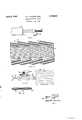
- FIGURE 3is a schematic representation of an electric blanket control circuit using the heater wire.
- FIGURE 4.is a crossrsectional view of a modified form of heater .Wire.
- the flexible heater wire ltlconsists. of a core llwhich may be formed. of glass fiber strands, a temperaturepensitive heating ribbon 12 helically wound in overlapping relation over the core 11, and a-ninsulating sheath 13 which maybe a polyvinyl chloride materialclosely surrounding the heatingribbon 12.
- the heating ribbon 12consists of an outer heater conductor 14 and an inner layer 15 of; temperaturesensitive resistance material adhering to the inner surfaceof the conductor 14.
- the conductor 14may be a strip of metal-foil such ascopper foil having the required electrical resistance necessary to expend the desired power when connected to an electric power supply.
- the material of the layer 15is selected toghave a relatively high resistance in comparison to theresistance of the conductor. 14 ,at the normal-operating temperatures of the conductor .14., In addition, the material 'ofrthelayer 15- is selected to exhibit a largepdecrease in resistance when itstemperature is ,raisedto an abnormal temperatureat whichthe heater wire would-scorch-anelectrically heated fabric in which it ,is used. These electrical properties must. remain stable throughout the life of the fabric in which the heater wire is used and must not be afiected by severe flexing and folding of theheater wire.
- One resistance material which may be used for the layer 15is silver-sulphide.
- the layer. 15also may be a coating upon the conductor 14 of a, dispersion of temperaturesensitive semi-conductive materialsuch as finely divided indium-antimonide in a silicone alkyd resin.
- FIGURE 3illustrates the use of the heater wire 10 in an electric blanket control circuit
- the reference numeral 20indicates the outline of an electric blanket having the heater wire 101'dlSlllblllI6d over it.
- the ends of the heater wire 10are connected through a connector assembly 213:0.
- a thermostatic.control22which may be. of the. type-disclosed in United States Patent No. 2,835,- 767, granted on May 20, 1958, tom-Robert, D. Graf and Leo L. Weber.
- the control 22is shown diagrammatically as comprising a bimetal member 23, a heater 24 and the contacts 25.
- One of the contacts 25is carried by the free end of bimetal member 23 and the other is connected to the heater 24.
- a plug 26 having terminals 27 and 28is provided for connecting the control circuit to a suitable source of power such as the usual l lS vol-t, cycle alternating current.
- the thermostatic control 22functions in a well known manner to control the normal temperature of the blanket 20 in relation to the ambient room temperature.
- contacts 25are closed by the bimetal member 23 to supply electric current through the heater 24 to the blanket heater wire 19.
- heater 24sufiiciently heats the bimetal member 23 to cause the contacts 25 to open.
- the bimetal member 23then cools to reclose the contacts 25 and will continue to alternately open and close the contacts 25 in response to heat supplied by the heater 24 and the ambient room temperature.
- the adjusting screw 29permits manual adjustment of the bimetal member 23 to obtain the desired blanket temperature.
- the heater wire 10will operate at a te1nperature of 110 to 150 F. at which the resistance of the inner layer is considerably greater than that of the heater conductor 14.
- the inner layer 15is essentially an electrical insulator at these temperatures and substantially all the heater Wire current passes lengthwise through the heater conductor 14.
- the substantial rise in temperature of the layer 15 in the localized sectionis accompanied by a substantial drop in resistance to a value of resistance on the same order as the resistance of the heater conductor 14.
- the inner layer 15then shuts the coils or convolutions of the heater conductor 14 and the conductive path of the heater wire 10 becomes a closed cylinder in the overheated area.
- the layer of temperature-sensitive resistance materialcould be applied as an overall coating 15a to both sides of the heater conductor 14a as shown in FIGURE 4. Since two layers of temperature-sensitive resistance material would appear between the convolutions of the heater conductors 14a, each layer 15a would have one-half the thickness of the layer 15 shown in FIGURE 2.
- the heater wire of this inventionConventional methods of manufacture may be used for the production of the heater wire of this invention.
- copper foilmay be plated with silver and the silver then may be converted to silver-sulphide by treatment with heated sulphur vapor or hydrogen sulphide.
- a coating of semi-conductor particles in a resin basemay be applied to a continuous strip of metal foil by passing the foil through an agitated solution of the coating material and then through a vertical oven to cure the resin.
- Other known methods for applying semiconductor resistance material to metal foilmay also be used.
- the heating ribbon 12is tightly wound about the core 11 with an overlap of preferably 50 percent so that a considerable portion of each convolution of the ribbon 12 is in intimate surface contact with the successive convolution.
- the insulating sheath 13may be applied over tails herein illustrated and :described since the same may be carried out in other ways falling within the scope of the invention as claimed.
- An electric heater wire for use in electrically heated fabricscomprising a flexible electrically insulating core; a ribbon helically wound about said core with successive convolutions thereof in overlapping relation; a portion of each convolution of said ribbon being in intimate surface contact with the successive convolution; said ribbon including a flexible ribbon-like heater conductor of metal foil and a substantially uniform layer of flexible resistance material in continuous intimate surface contact with said heater conductor; at least a portion of said layer of resistance material being disposed between and separating successive convolutions of said heater conductor; said resistance material having a high negative temperature coefficient of resistance so as to be essentially an electrical insulator at normal operating temperatures and at a higher temperature becoming an electrical conductor of low resistance value which will permit the flow of appreciable electric current therethrough between successive convolutions of said heater conductor; and a tubular sheath of insulating material closely surrounding said ribbon.
- An electric heater wire according to claim 1 wherein said resistance materialis essentially an electrical insulator at a temperature of about F. and becomes appreciably conductive at a temperature materially greater 7 than 110 F. but below 300 F.
Landscapes
- Resistance Heating (AREA)
- Surface Heating Bodies (AREA)
Description
April 2, 1963 B. T. VOGLER ETAL ELECTRIC HEATER WIRE Filed Nov. 14, 1961 I l I 1 I l l I INVEIVTORS BENJAMIN T. VOGLER BY DAVlD L.WEBB
AGENT United States Patent 3,084,242 ELECTRECHEATER wit-2E Bentanrin T, Vogler and David L. Webb, Mount Airy, N.C., assignors to EsaexWire Corporation Filed Nov. 14, test, set. N0. 152cm 4 Claims. (Cl. 219-46) This invention relates to electric heating wire and more particularly to flexible electric heating wire used in electrically heated fabrics such as electric blankets.
Various means have been proposed heretofore to pro.-v
tect electrically heated blankets from overheating when the blanket is bunched or folded upon itself while energized. One practice for preventing the overheating of an electric blanket has been to place a series of thermostats throughout the body of the blanket and connect the. thermostats in series relation with the electric heating.
rolling of the blanket upon itself, the prior arrangements did not always function to the entire. satisfaction of the user. The series thermostat arrangement is also somewhat objectionable due to the additional weight and bulk of the thermostat as well as to their cost. The arrangement using a temperature-sensitive heating cable is dis-.
advantageous in requiring the use of an expensive and sensitive relay.
It is, therefore, a principal object of this invention .to provide an improved flexible heater wire -for electrically heated fabrics in which the heater wire is so constructed that it automatically controls the maximum temperature reached by localized sections of the electrically heated fabric without deenergization of the electricallyheated fabric.
Another object of the invention is to provide an im proved flexible heater wire -for an electrically heated fabric inwhicll the heater wire is so constructed that the electrically heated fabric can be used in the normal manner without any danger of becoming overheated.
A further object of the inventionis to provide an improved flexible heater wire for an electrically heated fabric in which overheat protection is afforded throughout the electrically heated fabric without using overheat thermostats or relay control devices.
According to one form of this invention suitable for use in electrically heated fabrics, an electric heater wire is constructed of a flexible heating ribbon helically wound around an insulating core with successive convolutions thereof in overlapping engagement. The heating ribbon consists of a ribbon-like metal foil heater conductor and a layer of resistance material in intimate surface contact with the heater conductor. The layer of resistance material is essentially an electrical insulator at normal operating temperatures and at higher temperatures becomes an electrical conductor which will permit the flow of appreciable electric current therethrough between successive convolutions of the heater conductor. Thus, upon overheating of a localized section of the heater wire, the resulting reduction in resistance will limit the amount of heat expended therein thereby aut0- matically limiting the maximum temperature of the heater wire.
Other objects, advantages and features of the invention will be apparent from consideration of the following Both o-fthese arrangements functionv 3,084,242 Patented Apr. 2, 1963 of the heater wire shown with the insulating sheath removed;
'FIGURE 3 is a schematic representation of an electric blanket control circuit using the heater wire; and
FIGURE 4. is a crossrsectional view of a modified form of heater .Wire.
Referring to FIGURES 1 and 2, the flexible heater wire ltlconsists. of a core llwhich may be formed. of glass fiber strands, atemperaturepensitive heating ribbon 12 helically wound in overlapping relation over the core 11, and a-ninsulatingsheath 13 which maybe a polyvinyl chloride materialclosely surrounding theheatingribbon 12.. Theheating ribbon 12 consists of anouter heater conductor 14 and aninner layer 15 of; temperaturesensitive resistance material adhering to the inner surfaceof theconductor 14. Theconductor 14 may be a strip of metal-foil such ascopper foil having the required electrical resistance necessary to expend the desired power when connected to an electric power supply. The material of thelayer 15 is selected toghave a relatively high resistance in comparison to theresistance of the conductor. 14 ,at the normal-operating temperatures of the conductor .14., In addition, the material 'ofrthelayer 15- is selected to exhibit a largepdecrease in resistance when itstemperature is ,raisedto an abnormal temperatureat whichthe heater wire would-scorch-anelectrically heated fabric in which it ,is used. These electrical properties must. remain stable throughout the life of the fabric in which the heater wire is used and must not be afiected by severe flexing and folding of theheater wire. One resistance material which may be used for thelayer 15 is silver-sulphide. The layer. 15 also may be a coating upon theconductor 14 of a, dispersion of temperaturesensitive semi-conductive materialsuch as finely divided indium-antimonide in a silicone alkyd resin.
FIGURE 3 illustrates the use of theheater wire 10 in an electric blanket control circuit; The reference numeral 20 indicates the outline of an electric blanket having the heater wire 101'dlSlllblllI6d over it. The ends of theheater wire 10 are connected through a connector assembly 213:0. a thermostatic.control22which may be. of the. type-disclosed in United States Patent No. 2,835,- 767, granted on May 20, 1958, tom-Robert, D. Graf and Leo L. Weber. Thecontrol 22 is shown diagrammatically as comprising abimetal member 23, aheater 24 and the contacts 25. One of the contacts 25 is carried by the free end ofbimetal member 23 and the other is connected to theheater 24. Aplug 26 havingterminals
Thethermostatic control 22 functions in a well known manner to control the normal temperature of the blanket 20 in relation to the ambient room temperature. At ambient room temperatures requiring heat, contacts 25 are closed by thebimetal member 23 to supply electric current through theheater 24 to the blanket heater wire 19. After some time,heater 24 sufiiciently heats thebimetal member 23 to cause the contacts 25 to open. Thebimetal member 23 then cools to reclose the contacts 25 and will continue to alternately open and close the contacts 25 in response to heat supplied by theheater 24 and the ambient room temperature. The adjusting screw 29 permits manual adjustment of thebimetal member 23 to obtain the desired blanket temperature.
Normally, theheater wire 10 will operate at a te1nperature of 110 to 150 F. at which the resistance of the inner layer is considerably greater than that of theheater conductor 14. Theinner layer 15 is essentially an electrical insulator at these temperatures and substantially all the heater Wire current passes lengthwise through theheater conductor 14. When a localized section of the blanket becomes overheated, the substantial rise in temperature of thelayer 15 in the localized section is accompanied by a substantial drop in resistance to a value of resistance on the same order as the resistance of theheater conductor 14. In the localized section of increased temperature, theinner layer 15 then shuts the coils or convolutions of theheater conductor 14 and the conductive path of theheater wire 10 becomes a closed cylinder in the overheated area. This results in a substantial decrease in resistance of the overheated section and the latter will expend heat at a much lower rate since the heater wire current remain-s substantially constant, being determined by the total resistance of theentire heater wire 10. Thus, an increase in blanket temperature resulting from a folding or rolling of a section of the blanket 20 is automatically compensated for by a decrease in the heating efiect at that section. For most Lfabric materials used in electric blankets, the maximum temperature of theheating ribbon 12 should not exceed about 300 F.
From the foregoing, it will be seen that the layer of temperature-sensitive resistance material could be applied as anoverall coating 15a to both sides of the heater conductor 14a as shown in FIGURE 4. Since two layers of temperature-sensitive resistance material would appear between the convolutions of the heater conductors 14a, eachlayer 15a would have one-half the thickness of thelayer 15 shown in FIGURE 2.
Conventional methods of manufacture may be used for the production of the heater wire of this invention. For example, copper foil may be plated with silver and the silver then may be converted to silver-sulphide by treatment with heated sulphur vapor or hydrogen sulphide. A coating of semi-conductor particles in a resin base may be applied to a continuous strip of metal foil by passing the foil through an agitated solution of the coating material and then through a vertical oven to cure the resin. Other known methods for applying semiconductor resistance material to metal foil may also be used. Theheating ribbon 12 is tightly wound about the core 11 with an overlap of preferably 50 percent so that a considerable portion of each convolution of theribbon 12 is in intimate surface contact with the successive convolution. The insulatingsheath 13 may be applied over tails herein illustrated and :described since the same may be carried out in other ways falling within the scope of the invention as claimed.
What is claimed is:
1. An electric heater wire for use in electrically heated fabrics comprising a flexible electrically insulating core; a ribbon helically wound about said core with successive convolutions thereof in overlapping relation; a portion of each convolution of said ribbon being in intimate surface contact with the successive convolution; said ribbon including a flexible ribbon-like heater conductor of metal foil and a substantially uniform layer of flexible resistance material in continuous intimate surface contact with said heater conductor; at least a portion of said layer of resistance material being disposed between and separating successive convolutions of said heater conductor; said resistance material having a high negative temperature coefficient of resistance so as to be essentially an electrical insulator at normal operating temperatures and at a higher temperature becoming an electrical conductor of low resistance value which will permit the flow of appreciable electric current therethrough between successive convolutions of said heater conductor; and a tubular sheath of insulating material closely surrounding said ribbon.
2. An electric heater wire according to claim 1 wherein said resistance material is essentially an electrical insulator at a temperature of about F. and becomes appreciably conductive at a temperature materially greater 7 than 110 F. but below 300 F.
References Cited'in the file of this patent UNITED STATES PATENTS 1,948,616 Fischer Feb. 27, 1934 2,782,290 Lannan et a1. Feb. 19, 1957 2,914,645 Wallace Nov. 24, 1959 3,009,127 Flanagan Nov. 14, 1961
Claims (1)
1. AN ELECTRIC HEATER WIRE FOR USE IN ELECTRICALLY HEATED FABRICS COMPRISING A FLEXIBLE ELECTRICALLY INSULATING CORE; A RIBBON HELICALLY WOUND ABOUT SAID CORE WITH SUCCESSIVE CONVOLUTIONS THEREOF IN OVERLAPPING RELATION; A PORTION OF EACH CONVOLUTION OF SAID RIBBON BEING IN INTIMATE SURFACE CONTACT WITH THE SUCCESSIVE CONVOLUTION; SAID RIBBON INCLUDING A FLEXIBLE RIBBON-LIKE HEATER CONDUCTOR OF METAL FOIL AND A SUBSTANTIALLY UNIFORM LAYER OF FLEXIBLE RESISTANCE MATERIAL IN CONTINUOUS INTIMATE SURFACE CONTACT WITH SAID HEATER CONDUCTOR; AT LEAST A PORTION OF SAID LAYER OF RESISTANCE MATERIAL BEING DISPOSED BETWEEN AND SEPARATING SUCCESSIVE CONVOLUTIONS OF SAID HEATER CONDUCTOR; SAID RESISTANCE MATERIAL HAVING A HIGH NEGATIVE TEMPERATURE COEFFICIENT OF RESISTANCE SO AS TO BE ESSENTIALLY AN ELECTRICAL INSULATOR AT NORMAL OPERATING TEMPERATURES AND AT A HIGHER TEMPERATURE BECOMING AN ELECTRICAL CONDUCTOR OF LOW RESISTANCE VALUE WHICH WILL PERMIT THE FLOW OF APPRECIABLE ELECTRIC CURRENT THERETHROUGH BETWEEN SUCCESSIVE CONVOLUTIONS OF SAID HEATER CONDUCTOR; AND A TUBULAR SHEATH OF INSULATING MATERIAL CLOSELY SURROUNDING SAID RIBBON.
Priority Applications (1)
| Application Number | Priority Date | Filing Date | Title |
|---|---|---|---|
| US152284AUS3084242A (en) | 1961-11-14 | 1961-11-14 | Electric heater wire |
Applications Claiming Priority (1)
| Application Number | Priority Date | Filing Date | Title |
|---|---|---|---|
| US152284AUS3084242A (en) | 1961-11-14 | 1961-11-14 | Electric heater wire |
Publications (1)
| Publication Number | Publication Date |
|---|---|
| US3084242Atrue US3084242A (en) | 1963-04-02 |
Family
ID=22542267
Family Applications (1)
| Application Number | Title | Priority Date | Filing Date |
|---|---|---|---|
| US152284AExpired - LifetimeUS3084242A (en) | 1961-11-14 | 1961-11-14 | Electric heater wire |
Country Status (1)
| Country | Link |
|---|---|
| US (1) | US3084242A (en) |
Cited By (14)
| Publication number | Priority date | Publication date | Assignee | Title |
|---|---|---|---|---|
| US3691498A (en)* | 1971-03-24 | 1972-09-12 | Mc Graw Edison Co | Resin impregnated transformer coil assembly |
| US4441017A (en)* | 1983-03-02 | 1984-04-03 | Minnesota Mining And Manufacturing Company | Flexible strip heater |
| US4586624A (en)* | 1984-08-07 | 1986-05-06 | Bondico, Inc. | Method and device for heat sealing thermoplastics materials |
| US20100268216A1 (en)* | 2009-04-17 | 2010-10-21 | Kim Manwaring | Inductively heated multi-mode ultrasonic surgical tool |
| US8617151B2 (en) | 2009-04-17 | 2013-12-31 | Domain Surgical, Inc. | System and method of controlling power delivery to a surgical instrument |
| US8858544B2 (en) | 2011-05-16 | 2014-10-14 | Domain Surgical, Inc. | Surgical instrument guide |
| US8915909B2 (en) | 2011-04-08 | 2014-12-23 | Domain Surgical, Inc. | Impedance matching circuit |
| US8932279B2 (en) | 2011-04-08 | 2015-01-13 | Domain Surgical, Inc. | System and method for cooling of a heated surgical instrument and/or surgical site and treating tissue |
| US9078655B2 (en) | 2009-04-17 | 2015-07-14 | Domain Surgical, Inc. | Heated balloon catheter |
| US9107666B2 (en) | 2009-04-17 | 2015-08-18 | Domain Surgical, Inc. | Thermal resecting loop |
| US9131977B2 (en) | 2009-04-17 | 2015-09-15 | Domain Surgical, Inc. | Layered ferromagnetic coated conductor thermal surgical tool |
| US9265556B2 (en) | 2009-04-17 | 2016-02-23 | Domain Surgical, Inc. | Thermally adjustable surgical tool, balloon catheters and sculpting of biologic materials |
| US9526558B2 (en) | 2011-09-13 | 2016-12-27 | Domain Surgical, Inc. | Sealing and/or cutting instrument |
| US10357306B2 (en) | 2014-05-14 | 2019-07-23 | Domain Surgical, Inc. | Planar ferromagnetic coated surgical tip and method for making |
Citations (4)
| Publication number | Priority date | Publication date | Assignee | Title |
|---|---|---|---|---|
| US1948616A (en)* | 1929-07-27 | 1934-02-27 | Siemens Ag | Cable for communication circuits |
| US2782290A (en)* | 1954-09-28 | 1957-02-19 | Westinghouse Electric Corp | Temperature responsive control device |
| US2914645A (en)* | 1958-03-06 | 1959-11-24 | Gen Electric | Blanket overheat protector |
| US3009127A (en)* | 1959-03-18 | 1961-11-14 | Texas Instruments Inc | Temperature-sensitive electrical control element |
- 1961
- 1961-11-14USUS152284Apatent/US3084242A/ennot_activeExpired - Lifetime
Patent Citations (4)
| Publication number | Priority date | Publication date | Assignee | Title |
|---|---|---|---|---|
| US1948616A (en)* | 1929-07-27 | 1934-02-27 | Siemens Ag | Cable for communication circuits |
| US2782290A (en)* | 1954-09-28 | 1957-02-19 | Westinghouse Electric Corp | Temperature responsive control device |
| US2914645A (en)* | 1958-03-06 | 1959-11-24 | Gen Electric | Blanket overheat protector |
| US3009127A (en)* | 1959-03-18 | 1961-11-14 | Texas Instruments Inc | Temperature-sensitive electrical control element |
Cited By (48)
| Publication number | Priority date | Publication date | Assignee | Title |
|---|---|---|---|---|
| US3691498A (en)* | 1971-03-24 | 1972-09-12 | Mc Graw Edison Co | Resin impregnated transformer coil assembly |
| US4441017A (en)* | 1983-03-02 | 1984-04-03 | Minnesota Mining And Manufacturing Company | Flexible strip heater |
| US4586624A (en)* | 1984-08-07 | 1986-05-06 | Bondico, Inc. | Method and device for heat sealing thermoplastics materials |
| US8523852B2 (en) | 2009-04-17 | 2013-09-03 | Domain Surgical, Inc. | Thermally adjustable surgical tool system |
| US8617151B2 (en) | 2009-04-17 | 2013-12-31 | Domain Surgical, Inc. | System and method of controlling power delivery to a surgical instrument |
| US20100268209A1 (en)* | 2009-04-17 | 2010-10-21 | Kim Manwaring | Inductively heated snare |
| US20100268206A1 (en)* | 2009-04-17 | 2010-10-21 | Kim Manwaring | Method of treatment with multi-mode surgical tool |
| US20100268207A1 (en)* | 2009-04-17 | 2010-10-21 | Kim Manwaring | Adjustable ferromagnetic coated conductor thermal surgical tool |
| US11123127B2 (en) | 2009-04-17 | 2021-09-21 | Domain Surgical, Inc. | System and method of controlling power delivery to a surgical instrument |
| US20100268212A1 (en)* | 2009-04-17 | 2010-10-21 | Kim Manwaring | Method for inductively heating a surgical implement |
| US8292879B2 (en) | 2009-04-17 | 2012-10-23 | Domain Surgical, Inc. | Method of treatment with adjustable ferromagnetic coated conductor thermal surgical tool |
| US8372066B2 (en) | 2009-04-17 | 2013-02-12 | Domain Surgical, Inc. | Inductively heated multi-mode surgical tool |
| US8377052B2 (en) | 2009-04-17 | 2013-02-19 | Domain Surgical, Inc. | Surgical tool with inductively heated regions |
| US8414569B2 (en) | 2009-04-17 | 2013-04-09 | Domain Surgical, Inc. | Method of treatment with multi-mode surgical tool |
| US8419724B2 (en) | 2009-04-17 | 2013-04-16 | Domain Surgical, Inc. | Adjustable ferromagnetic coated conductor thermal surgical tool |
| US8425503B2 (en) | 2009-04-17 | 2013-04-23 | Domain Surgical, Inc. | Adjustable ferromagnetic coated conductor thermal surgical tool |
| US8430870B2 (en) | 2009-04-17 | 2013-04-30 | Domain Surgical, Inc. | Inductively heated snare |
| US8491578B2 (en) | 2009-04-17 | 2013-07-23 | Domain Surgical, Inc. | Inductively heated multi-mode bipolar surgical tool |
| US8506561B2 (en) | 2009-04-17 | 2013-08-13 | Domain Surgical, Inc. | Catheter with inductively heated regions |
| US8523851B2 (en) | 2009-04-17 | 2013-09-03 | Domain Surgical, Inc. | Inductively heated multi-mode ultrasonic surgical tool |
| US10213247B2 (en) | 2009-04-17 | 2019-02-26 | Domain Surgical, Inc. | Thermal resecting loop |
| US20100268214A1 (en)* | 2009-04-17 | 2010-10-21 | Kim Manwaring | Surgical tool with inductively heated regions |
| US8523850B2 (en) | 2009-04-17 | 2013-09-03 | Domain Surgical, Inc. | Method for heating a surgical implement |
| US20100268208A1 (en)* | 2009-04-17 | 2010-10-21 | Kim Manwaring | Surgical scalpel with inductively heated regions |
| US20100268216A1 (en)* | 2009-04-17 | 2010-10-21 | Kim Manwaring | Inductively heated multi-mode ultrasonic surgical tool |
| US10639089B2 (en) | 2009-04-17 | 2020-05-05 | Domain Surgical, Inc. | Thermal surgical tool |
| US9078655B2 (en) | 2009-04-17 | 2015-07-14 | Domain Surgical, Inc. | Heated balloon catheter |
| US9107666B2 (en) | 2009-04-17 | 2015-08-18 | Domain Surgical, Inc. | Thermal resecting loop |
| US9131977B2 (en) | 2009-04-17 | 2015-09-15 | Domain Surgical, Inc. | Layered ferromagnetic coated conductor thermal surgical tool |
| US10441342B2 (en) | 2009-04-17 | 2019-10-15 | Domain Surgical, Inc. | Multi-mode surgical tool |
| US9220557B2 (en) | 2009-04-17 | 2015-12-29 | Domain Surgical, Inc. | Thermal surgical tool |
| US9265556B2 (en) | 2009-04-17 | 2016-02-23 | Domain Surgical, Inc. | Thermally adjustable surgical tool, balloon catheters and sculpting of biologic materials |
| US9265554B2 (en) | 2009-04-17 | 2016-02-23 | Domain Surgical, Inc. | Thermally adjustable surgical system and method |
| US9265553B2 (en) | 2009-04-17 | 2016-02-23 | Domain Surgical, Inc. | Inductively heated multi-mode surgical tool |
| US9265555B2 (en) | 2009-04-17 | 2016-02-23 | Domain Surgical, Inc. | Multi-mode surgical tool |
| US9320560B2 (en) | 2009-04-17 | 2016-04-26 | Domain Surgical, Inc. | Method for treating tissue with a ferromagnetic thermal surgical tool |
| US10405914B2 (en) | 2009-04-17 | 2019-09-10 | Domain Surgical, Inc. | Thermally adjustable surgical system and method |
| US9549774B2 (en) | 2009-04-17 | 2017-01-24 | Domain Surgical, Inc. | System and method of controlling power delivery to a surgical instrument |
| US9730749B2 (en) | 2009-04-17 | 2017-08-15 | Domain Surgical, Inc. | Surgical scalpel with inductively heated regions |
| US10149712B2 (en) | 2009-04-17 | 2018-12-11 | Domain Surgical, Inc. | Layered ferromagnetic coated conductor thermal surgical tool |
| US8915909B2 (en) | 2011-04-08 | 2014-12-23 | Domain Surgical, Inc. | Impedance matching circuit |
| US9149321B2 (en) | 2011-04-08 | 2015-10-06 | Domain Surgical, Inc. | System and method for cooling of a heated surgical instrument and/or surgical site and treating tissue |
| US8932279B2 (en) | 2011-04-08 | 2015-01-13 | Domain Surgical, Inc. | System and method for cooling of a heated surgical instrument and/or surgical site and treating tissue |
| US8858544B2 (en) | 2011-05-16 | 2014-10-14 | Domain Surgical, Inc. | Surgical instrument guide |
| US9526558B2 (en) | 2011-09-13 | 2016-12-27 | Domain Surgical, Inc. | Sealing and/or cutting instrument |
| US11266459B2 (en) | 2011-09-13 | 2022-03-08 | Domain Surgical, Inc. | Sealing and/or cutting instrument |
| US10357306B2 (en) | 2014-05-14 | 2019-07-23 | Domain Surgical, Inc. | Planar ferromagnetic coated surgical tip and method for making |
| US11701160B2 (en) | 2014-05-14 | 2023-07-18 | Domain Surgical, Inc. | Planar ferromagnetic coated surgical tip and method for making |
Similar Documents
| Publication | Publication Date | Title |
|---|---|---|
| US3410984A (en) | Flexible electrically heated personal warming device | |
| US3084242A (en) | Electric heater wire | |
| US5801914A (en) | Electrical safety circuit with a breakable conductive element | |
| US2782290A (en) | Temperature responsive control device | |
| US4309597A (en) | Blanket wire utilizing positive temperature coefficient resistance heater | |
| US4271350A (en) | Blanket wire utilizing positive temperature coefficient resistance heater | |
| US3143640A (en) | Sheet-type heater and overheat protection device | |
| US3628093A (en) | Thermostat overheat protection system for an electric appliance such as a blanket | |
| US2862097A (en) | Electrically heated fabrics | |
| US2421953A (en) | Electric heating pad control | |
| US3375477A (en) | Overheat detector for electric blankets and the like | |
| US3222497A (en) | Electrically heated bedcover | |
| US4278874A (en) | Heating circuits | |
| US3814899A (en) | Overtemperature control system | |
| CA1244863A (en) | Electric blanket or pad having improved positive temperature coefficient heater circuit | |
| US3418454A (en) | Electric bedcover overtemperature control system | |
| US2765391A (en) | Quick heat electric heating unit | |
| US2914645A (en) | Blanket overheat protector | |
| US20050252910A1 (en) | Electrical heating cable | |
| WO1985002086A1 (en) | Ptc heating wire | |
| US2611854A (en) | Control circuit with temperature and/or humidity compensation | |
| US2588926A (en) | Temperature responsive control circuit | |
| US2959662A (en) | Thermosensitive protective system for electrically heated fabrics | |
| GB2110910A (en) | Electrical strip heater element | |
| US1379356A (en) | Electrically-heated coat |