US2952269A - Removable core-type valve - Google Patents
Removable core-type valveDownload PDFInfo
- Publication number
- US2952269A US2952269AUS549285AUS54928555AUS2952269AUS 2952269 AUS2952269 AUS 2952269AUS 549285 AUS549285 AUS 549285AUS 54928555 AUS54928555 AUS 54928555AUS 2952269 AUS2952269 AUS 2952269A
- Authority
- US
- United States
- Prior art keywords
- valve
- stem
- casing
- core
- lever
- Prior art date
- Legal status (The legal status is an assumption and is not a legal conclusion. Google has not performed a legal analysis and makes no representation as to the accuracy of the status listed.)
- Expired - Lifetime
Links
- 239000012530fluidSubstances0.000description6
- 238000007789sealingMethods0.000description5
- 239000000203mixtureSubstances0.000description2
- ZPEZUAAEBBHXBT-WCCKRBBISA-N(2s)-2-amino-3-methylbutanoic acid;2-amino-3-methylbutanoic acidChemical compoundCC(C)C(N)C(O)=O.CC(C)[C@H](N)C(O)=OZPEZUAAEBBHXBT-WCCKRBBISA-N0.000description1
- 101000793686Homo sapiens AzurocidinProteins0.000description1
- 239000002253acidSubstances0.000description1
- 150000007513acidsChemical class0.000description1
- 238000006243chemical reactionMethods0.000description1
- 238000004140cleaningMethods0.000description1
- 230000006866deteriorationEffects0.000description1
- 230000004151fermentationEffects0.000description1
- 238000000855fermentationMethods0.000description1
- 239000012535impuritySubstances0.000description1
- 229920003023plasticPolymers0.000description1
- 239000013049sedimentSubstances0.000description1
- 238000007493shaping processMethods0.000description1
- 239000000126substanceSubstances0.000description1
- 239000012780transparent materialSubstances0.000description1
Images
Classifications
- F—MECHANICAL ENGINEERING; LIGHTING; HEATING; WEAPONS; BLASTING
- F16—ENGINEERING ELEMENTS AND UNITS; GENERAL MEASURES FOR PRODUCING AND MAINTAINING EFFECTIVE FUNCTIONING OF MACHINES OR INSTALLATIONS; THERMAL INSULATION IN GENERAL
- F16K—VALVES; TAPS; COCKS; ACTUATING-FLOATS; DEVICES FOR VENTING OR AERATING
- F16K31/00—Actuating devices; Operating means; Releasing devices
- F16K31/44—Mechanical actuating means
- F16K31/52—Mechanical actuating means with crank, eccentric, or cam
- F16K31/528—Mechanical actuating means with crank, eccentric, or cam with pin and slot
- F16K31/5286—Mechanical actuating means with crank, eccentric, or cam with pin and slot comprising a sliding valve
- Y—GENERAL TAGGING OF NEW TECHNOLOGICAL DEVELOPMENTS; GENERAL TAGGING OF CROSS-SECTIONAL TECHNOLOGIES SPANNING OVER SEVERAL SECTIONS OF THE IPC; TECHNICAL SUBJECTS COVERED BY FORMER USPC CROSS-REFERENCE ART COLLECTIONS [XRACs] AND DIGESTS
- Y10—TECHNICAL SUBJECTS COVERED BY FORMER USPC
- Y10T—TECHNICAL SUBJECTS COVERED BY FORMER US CLASSIFICATION
- Y10T137/00—Fluid handling
- Y10T137/5109—Convertible
- Y10T137/5196—Unit orientable in a single location between plural positions
- Y—GENERAL TAGGING OF NEW TECHNOLOGICAL DEVELOPMENTS; GENERAL TAGGING OF CROSS-SECTIONAL TECHNOLOGIES SPANNING OVER SEVERAL SECTIONS OF THE IPC; TECHNICAL SUBJECTS COVERED BY FORMER USPC CROSS-REFERENCE ART COLLECTIONS [XRACs] AND DIGESTS
- Y10—TECHNICAL SUBJECTS COVERED BY FORMER USPC
- Y10T—TECHNICAL SUBJECTS COVERED BY FORMER US CLASSIFICATION
- Y10T137/00—Fluid handling
- Y10T137/8593—Systems
- Y10T137/86493—Multi-way valve unit
- Y10T137/86831—Selective opening of plural ports
Definitions
- Another objectis to provide a valve so constructed that it may at any time be taken apart and thoroughly cleansed without disturbing the connection of the valve with the conduit or conduits it is serving. Another object is to provide a valve of a composition which will not be affected -by the acids or other chemical substances of the lluids passing through the valve. A still further object is to provide a valve of such transparency that the inner condition of and the ilow through the valve may be visually checked at all times without separating or removing the valve.
- Fig. 1is a side elevational view of a valve embodying the invention and with a portion thereof broken away in order better to illustrate the interior mechanism thereof;
- Fig. 2is a substantially corresponding plan view of the device, the middle portion thereof being cut away on line 2-2 of Fig. 1;
- Fig. 3is taken on line 3--3 of Fig. 1 in the direction of the arrows;
- Fig. 4is like Fig. 2 and includes an additional feature hereinafter fully described;
- FIGs. 5-8illustrate a somewhat modified form of the invention
- Fig. 9is like Fig. 5, showing additional features the importance of which is hereinafter fully explained.
- Fig. lshows another important feature of the invention.
- a valve casing 1as illustrated in Figs. 1-3 of the drawings, is made vfrom transparent material having an inlet passage 2 and an axially alined outlet passage 3.
- the main portion 4 of the casingis tubular in shape and of a size to provide therein a seat for a valve support body 6, which hereinafter is referred to as the core of the device, and gaskets 7, 8 are seated in grooves of the core for contact with the seat 5 to provide therein leak-proof joints.
- the coreis shown recessed from one side thereof to provide therein a cylindrical socket 9 in axial alinement with the inlet passage 2 and of the same diameter.
- a cylindrical valve ⁇ stem 12is seatable in the inlet passage and it extends into the socket, substantially as indicated in the drawings.
- the valve stemis, as indicated in Fig. 2, inwardly movable inits seat to open passages 25, 26 from the inlet 2 to the outlet 3 in the manner which will now bedescribed.
- a narrow slot 15is sunk into the core to provide a Patented Sept. 13, 1960 guide for a valve actuating lever 16 which at the outer end thereof for convenience is tted with a knob 17.
- the cylindrical valve stem 12is at the inner end thereof shown recessed to provide inclined faces 18, 19, see Fig. 3, and the inner end of the lever is perforated to form a non-round opening 20 of a shape iittingly to seat on this cut-back or non-round portion 'of the stem.
- the leveris iirst lowered into the guide slot 15 whereupon the valve stem is pushed inwardly into engagement with the perforation of the lever.
- the groove in which the lever is seatedis, at the upper end thereof, outwardly llared, substantially as indicated at 22 in Fig. 3, to provide space ⁇ for oscillating movement of the lever through an arc of about 90, in moving correspondingly to rotate the valve stem.
- the shaping of the inter-engaging lever and valve stem surfacesinsures correct positioning of the stem within the core.
- a pin 23is seatable in the core v6 to extend into a helical groove 24 of the valve stem for the purpose of controlling axial adjustment thereof during the swinging movement of the lever 16 to rotate the stem.
- the length and inclination of the grooveare calculated to afford movement of the stem into the position indicated in Fig. 2, thereby to open passages 4for lluid through the inlet passages 2 and through the spaces 25, 26 within the casing 1 to the outlet 3. While the valve remains in this position, it is seen that the fluid is free to llow through the spaces 25, 26 to the outlet.
- this type of valveis primarily designed -for use in the food industry where alimentary fluids are caused to llow through conduits under low pressure. Since such lluids are mostly subject to fairly rapid deterioration it is important that the valve be so designed and constructed that every part thereof may be readily accessible for cleansing. It is for this purpose necessary, while the valve is in open position, to be able to lift the entire core assembly out of the casing, to remove the pin 23 therefrom and to withdraw the valve stern from the core. This may readily be done while the valve is in open position. The lever 16 may now be removed from itsv slot in the core. Every part of the valve may then easily be cleaned and quickly reassembled and all this may be done without disconnecting the valve from the conduit.
- the casingmay, as shown in the drawings, be made with a bottom outlet 30 for the purpose of simplifying the cleansing operation.
- a bottom outlet 30for the purpose of simplifying the cleansing operation.
- the leverWhen such outlet is provided it is, as yabove described, merely required to swing the lever to move the valve stem into the valve opening position of Fig. 2, whereupon the stern supporting assembly may be lifted out of the casing as a whole without j removing the casing from the conduit. All sediments or Y to place screw threads. in the cap for engagement with;
- an additional outlet passage 35extends from one side of the casing 36.
- the valvemay othenwse remain as above described.
- Such additional *outletwill be found of'advantage in cases where it is: required to direct the llclw of the fluid through both outlet pasages to separate conduits. It may in other cases be found important to be able to attach the discharge conduit 4to one of the outlets rather than to the other. In such cases, it is merely required to place a suitable closure cap 37 on the outlet which is not to be used. It is for this purpose necessary suitable screw threads 3S on the ends of the valve outlets securely to lock the cap in position. And it will be necessary also to place a gasket 39 in the cap to eliminate all dan-ger of leakage.
- FIG. -8A different methodof converting the device of the invention into a three-way valve is illustrated in Figs. -8 of the drawings.
- the casing 40is' in this modiiied form made cylindrical in shape and of a diameter fittingly to receive therein a cylindrical valve support body, or core 41.
- the valve stem 42is, like ythe stern 17;, seatable in the inlet passage t3 for extension into a socket 44 of the core.
- the valve sternis at 45 shown helically grooved to receive the end cf the pin 46 and a lever @7 is seated in a flaring slot 43 of the support body to rotate the Valve stem, all substantially ias above described.
- valve stem supporting core 4lis in this case mounted for rotation within the Vcasing but locked against rotation by the stem while the valve remains in the position shown in Figs. 5 and 6 of the drawings. Fluid is now free to 'flow through the passages 50, 51 and 52 in either direction while the passage 43 remains closed. When it is required to change the direction of the flow it is merely necessary to swing the lever 47 to draw the valve stem entirely into the core which then becomes released for rotating movement to direct the flow through the passages ⁇ 43, S@ or 43, 52 ⁇ as may be required. The stem is then advanced to enter the outlet passage 50 or 5'2 whichever i-s to be closed.
- the core bodyis for convenient rotation shown fitted with a somewhat cupshaped hand grip 55 in which the knob 49 of the lever 47 ncstles when the lever is swung into the valve stem withdrawing position indicated in Fig. 7.
- a projection 56is placed on the upper rim of the core for contact with stops 57 of the casing correctly to limit rotative movement ⁇ of the core.
- gaskets 64, 65may be depended upon to retain the core assembly in position without the casing, it may in some cases be found advantageous to provide means for locking the core assembly in set position. This may be done by placing -a cap '7d in the lower outlet passage 66 of the casing. A threaded recess is for this purpose sunk into the bottom surface of the core and a threaded stud 7l of the cap is seatable therein to draw the core assembly downward into correct alinernent of the valve stem with the yadjacent passage of the casing.
- the lower surface of the coreis for this purpose shown fitted with spherical knobs 67 which come to rest against the inner surface 68 of the casing. It is to be understood that this means of interlocking the parts is not limited to the structure shown in Fig. 9 but may be embodied in every form of the valve.
- the valve sternmay, as indicated at 75 in Fig. 2, be recessed from the inner end thereof in order to reduce the weight thereof and it may, as shown at 76, in Fig. l0, even be made tubular. lt becomes necessary in this case to provide a closure for the end of the stem and an arcuate disk 77 is for this purpose shown seated in the end of the stem.
- the stemis throughout the drawings vshown grooved to lreceive suitable gaskets 1l), 1l and the gasket '78, seated in the groove 79 of Fig. 10,
- dis in this case shown extended to form a cover for the disk 77.
- a device of the character describedcomprising, a casing having axially alined cylindrical passages at the ends thereof, a cylindrical valve stem having a helical groove in the surface thereof, a support for said stem seatable in the casing, the support having a cylindrical recess therein of a size to receive the valve stem, an element of the support extending into said groove, and manually operable means in the support for rotating the valve stern, the element in the groove impanting axial movement to the stem during rotation thereof to cause the stem to enter one of said passages.
- therstem rotating meansincludes a slot in the support at right angles to Ithe stern axis, the upper end of the slot being outwardly flared, and A.a lever seatable in the slot and engaging the end of the stem, swinging movement of the lever within the limits of the space within the liaring slot imparting rotation to the stem.
- a device as set forth in claim 2in which the element is detachable from the support to release the stem for withdrawal therefrom thereby to release the lever for removal from the support.
- a valvewhich includes: a hollow casing, said casing having ⁇ at least two passages leading into the interior thereof, at least one of said passages being cylindrical; a support for a valve stem mounted within said casing, generally between said passages, said support including a cylindrical recess open at one side of said support opposite said cylindrical passage, the axis of said recess being aligned with the axis of said passage, said support extending to the outside of said casing; means forming a seal between said support and said casing so as to seal the interior of said casing; a Valve stem positioned within said recess, said valve stem being cylindrical and tting within said recess so as to form a seal therewith, said valve stem including a helical groove formed on the exterior thereof within said recess and a non-round portion positioned within said recess remote from the open end thereof; pin means mounted on said support so as to extend into said recess and said groove; slot means formed in said casing so as to lead from the exterior thereof to said recess;
- a valve as defined Iin claim 4 Vincluding sealing means held upon the end of said valve -stern remote from said non-round end, said sealing means forming a seal with therinterior of said recess at all times, said sealing means being capable of forming a seal with, the interior of said passage when said Valve stem is moved so as to extend within said passage.
- sealing meanscomprise: two sealing members, each of said members having at least-a portion located in a groove extending Iaround said valve stern, one of Asaid sealing-members forming a seal with the interior of said valve stem at all times and being capable of forming a seal with the interior of said passage when said valve stem is moved so as to extend within said passage.
- said supportis rotatably mounted within said valve casing, and including at least one other passage leading into the interior of said casing. 5
Landscapes
- Engineering & Computer Science (AREA)
- General Engineering & Computer Science (AREA)
- Mechanical Engineering (AREA)
- Lift Valve (AREA)
Description
Sept. 13, 1960 T. A. sTEHLlN l 2,952,269
REMOVABLE CORE-TYPE vALv'E i Filed Nov. 28, 1955 5 Sheets-Sheet l IE5/Eames griff/LIN,
INVENTOR,
finan/sg Sept. 13, 1950 T. A. sTEHLl'N 2,952,269
vREMOVABLE CORE-TYPE VALVE Filed Nov. 28, 1955 5 Sheets-Sheet 2 .IE Q
1N VEN TOR.' 5006,95 ..4 .57E/lz M f,
sept. 13, 1960 T. A. STHL'IN 2,952,269
REMOVABLE CORE-TYPE VALVE Filed Nov. 28, 1955 3 Sheets-Sheet 5 fil/E00 @es .44. Sr-EHL M4,
1N V EN To@ MQW@ United States Patent G REMOVABLE CORE-TYPE VALVE Theodore A. Stehlin, '54 Grace Walk, Pasadena 2, Calif.
Filed Nov. 28, 1955, Ser. No.r 549,285
9 Claims. (Cl. 137-270) This invention relates to valves and has particular reference to an improved type of valve for use in the food industry.
One of the most pressing valve problems confronting the food industry is the instability of the iluids passing through and settling in the valves. Residue of such lluids remaining inv the valves for short periods of time will by fermentation or otherwise quickly be subjected to such chemical transformation that additional fluid subsequently passing through the valve will be affected thereby.
Itis in view of this the object of the present invention to provide a valve so constructed that it may at any time be taken apart and thoroughly cleansed without disturbing the connection of the valve with the conduit or conduits it is serving. Another object is to provide a valve of a composition which will not be affected -by the acids or other chemical substances of the lluids passing through the valve. A still further object is to provide a valve of such transparency that the inner condition of and the ilow through the valve may be visually checked at all times without separating or removing the valve.
These and other objects of the invention will be apparent upon perusal of the following detailed description and by referring to the accompanying drawings, of which:
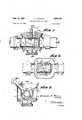
Fig. 1 is a side elevational view of a valve embodying the invention and with a portion thereof broken away in order better to illustrate the interior mechanism thereof;
Fig. 2 is a substantially corresponding plan view of the device, the middle portion thereof being cut away on line 2-2 of Fig. 1;
Fig. 3 is taken online 3--3 of Fig. 1 in the direction of the arrows;
Fig. 4 is like Fig. 2 and includes an additional feature hereinafter fully described;
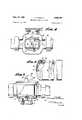
Figs. 5-8 illustrate a somewhat modified form of the invention;
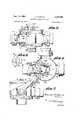
Fig. 9 is like Fig. 5, showing additional features the importance of which is hereinafter fully explained.
Fig. l shows another important feature of the invention.
Avalve casing 1, as illustrated in Figs. 1-3 of the drawings, is made vfrom transparent material having aninlet passage 2 and an axiallyalined outlet passage 3. Themain portion 4 of the casing is tubular in shape and of a size to provide therein a seat for avalve support body 6, which hereinafter is referred to as the core of the device, andgaskets 7, 8 are seated in grooves of the core for contact with theseat 5 to provide therein leak-proof joints. The core is shown recessed from one side thereof to provide therein acylindrical socket 9 in axial alinement with theinlet passage 2 and of the same diameter. A cylindrical valve`stem 12 is seatable in the inlet passage and it extends into the socket, substantially as indicated in the drawings. The valve stem is, as indicated in Fig. 2, inwardly movable inits seat to openpassages inlet 2 to theoutlet 3 in the manner which will now bedescribed.
` Anarrow slot 15 is sunk into the core to provide a Patented Sept. 13, 1960 guide for a valve actuatinglever 16 which at the outer end thereof for convenience is tted with a knob 17. Thecylindrical valve stem 12 is at the inner end thereof shown recessed to provideinclined faces non-round opening 20 of a shape iittingly to seat on this cut-back or non-round portion 'of the stem. In practice, the lever is iirst lowered into theguide slot 15 whereupon the valve stem is pushed inwardly into engagement with the perforation of the lever. The groove in which the lever is seated is, at the upper end thereof, outwardly llared, substantially as indicated at 22 in Fig. 3, to provide space `for oscillating movement of the lever through an arc of about 90, in moving correspondingly to rotate the valve stem. The shaping of the inter-engaging lever and valve stem surfaces insures correct positioning of the stem within the core.
Apin 23 is seatable in the core v6 to extend into ahelical groove 24 of the valve stem for the purpose of controlling axial adjustment thereof during the swinging movement of thelever 16 to rotate the stem. The length and inclination of the groove are calculated to afford movement of the stem into the position indicated in Fig. 2, thereby to open passages 4for lluid through theinlet passages 2 and through thespaces casing 1 to theoutlet 3. While the valve remains in this position, it is seen that the fluid is free to llow through thespaces
As above pointed out, this type of valve is primarily designed -for use in the food industry where alimentary fluids are caused to llow through conduits under low pressure. Since such lluids are mostly subject to fairly rapid deterioration it is important that the valve be so designed and constructed that every part thereof may be readily accessible for cleansing. It is for this purpose necessary, while the valve is in open position, to be able to lift the entire core assembly out of the casing, to remove thepin 23 therefrom and to withdraw the valve stern from the core. This may readily be done while the valve is in open position. Thelever 16 may now be removed from itsv slot in the core. Every part of the valve may then easily be cleaned and quickly reassembled and all this may be done without disconnecting the valve from the conduit.
The casing may, as shown in the drawings, be made with abottom outlet 30 for the purpose of simplifying the cleansing operation. When such outlet is provided it is, as yabove described, merely required to swing the lever to move the valve stem into the valve opening position of Fig. 2, whereupon the stern supporting assembly may be lifted out of the casing as a whole without j removing the casing from the conduit. All sediments or Y to place screw threads. in the cap for engagement with;
impurities may then be removed from the irmer wall of the casing and will be discharged through thebottom outlet 30. The core assembly is now reseated in the casing and it is important to note that no great care is needed correctly to seat the assembly. Should thecasing 1 inadvertently have been reversed, it is merely found that the stem, in closing the valve, will enter theoutlet passage 3. The' valve will function perfectly in either position.
Referring now to Fig. 4, it is noticed that anadditional outlet passage 35 extends from one side of thecasing 36. The valve may othenwse remain as above described. Such additional *outlet will be found of'advantage in cases where it is: required to direct the llclw of the fluid through both outlet pasages to separate conduits. It may in other cases be found important to be able to attach the discharge conduit 4to one of the outlets rather than to the other. In such cases, it is merely required to place a suitable closure cap 37 on the outlet which is not to be used. It is for this purpose necessary suitable screw threads 3S on the ends of the valve outlets securely to lock the cap in position. And it will be necessary also to place a gasket 39 in the cap to eliminate all dan-ger of leakage.
A different methodof converting the device of the invention into a three-way valve is illustrated in Figs. -8 of the drawings. Thecasing 40 is' in this modiiied form made cylindrical in shape and of a diameter fittingly to receive therein a cylindrical valve support body, orcore 41. The valve stem 42 is, like ythe stern 17;, seatable in the inlet passage t3 for extension into asocket 44 of the core. The valve stern is at 45 shown helically grooved to receive the end cf thepin 46 and a lever @7 is seated in aflaring slot 43 of the support body to rotate the Valve stem, all substantially ias above described.
The valve stem supporting core 4l is in this case mounted for rotation within the Vcasing but locked against rotation by the stem while the valve remains in the position shown in Figs. 5 and 6 of the drawings. Fluid is now free to 'flow through thepassages 50, 51 and 52 in either direction while thepassage 43 remains closed. When it is required to change the direction of the flow it is merely necessary to swing thelever 47 to draw the valve stem entirely into the core which then becomes released for rotating movement to direct the flow through the passages` 43, S@ or 43, 52 `as may be required. The stem is then advanced to enter the outlet passage 50 or 5'2 whichever i-s to be closed. The core body is for convenient rotation shown fitted with a somewhatcupshaped hand grip 55 in which theknob 49 of thelever 47 ncstles when the lever is swung into the valve stem withdrawing position indicated in Fig. 7. Aprojection 56 is placed on the upper rim of the core for contact withstops 57 of the casing correctly to limit rotative movement `of the core.
ln conduits for unstable fluids, such as mostly found in the food industry, it is of great advantage to be able to cheek on uids periodically. The casings as well as the core assembly within the casing is for this reason preferably made from suitable transparent plastic compositions, Complete check on the flow through the valve may then be made `at any time without interrupting the tiow through the conduit. It is also found advantageous, as indicated in Fig. 9, slightly to lower the outlet passage o0 relative to theinlet passage 61 and downwardly to slant theupper surface 62 of the lower portion of the core o3 to insure complete draining through theoutlet passage 60 of .any uid that may Iremain after the ow through the valve is discontinued. This feature is also shown in Fig. 1 of .the drawings.
While thegaskets lower outlet passage 66 of the casing. A threaded recess is for this purpose sunk into the bottom surface of the core and a threaded stud 7l of the cap is seatable therein to draw the core assembly downward into correct alinernent of the valve stem with the yadjacent passage of the casing. The lower surface of the core is for this purpose shown fitted withspherical knobs 67 which come to rest against theinner surface 68 of the casing. It is to be understood that this means of interlocking the parts is not limited to the structure shown in Fig. 9 but may be embodied in every form of the valve.
The valve stern may, as indicated at 75 in Fig. 2, be recessed from the inner end thereof in order to reduce the weight thereof and it may, as shown at 76, in Fig. l0, even be made tubular. lt becomes necessary in this case to provide a closure for the end of the stem and anarcuate disk 77 is for this purpose shown seated in the end of the stem. The stem is throughout the drawings vshown grooved to lreceive suitable gaskets 1l), 1l and the gasket '78, seated in the groove 79 of Fig. 10,
d is in this case shown extended to form a cover for thedisk 77. When the stem is removed from the detached core for cleaning, it is merely required to pull the gasket out of its seat to release the disk for removal and every part may then be thoroughly cleaned.
I claim:
l. A device of the character described comprising, a casing having axially alined cylindrical passages at the ends thereof, a cylindrical valve stem having a helical groove in the surface thereof, a support for said stem seatable in the casing, the support having a cylindrical recess therein of a size to receive the valve stem, an element of the support extending into said groove, and manually operable means in the support for rotating the valve stern, the element in the groove impanting axial movement to the stem during rotation thereof to cause the stem to enter one of said passages.
2. A device as set forth in claim l in which therstem rotating means includes a slot in the support at right angles to Ithe stern axis, the upper end of the slot being outwardly flared, and A.a lever seatable in the slot and engaging the end of the stem, swinging movement of the lever within the limits of the space within the liaring slot imparting rotation to the stem.
3. A device as set forth inclaim 2 in which the element is detachable from the support to release the stem for withdrawal therefrom thereby to release the lever for removal from the support.
4. A valve which includes: a hollow casing, said casing having `at least two passages leading into the interior thereof, at least one of said passages being cylindrical; a support for a valve stem mounted within said casing, generally between said passages, said support including a cylindrical recess open at one side of said support opposite said cylindrical passage, the axis of said recess being aligned with the axis of said passage, said support extending to the outside of said casing; means forming a seal between said support and said casing so as to seal the interior of said casing; a Valve stem positioned within said recess, said valve stem being cylindrical and tting within said recess so as to form a seal therewith, said valve stem including a helical groove formed on the exterior thereof within said recess and a non-round portion positioned within said recess remote from the open end thereof; pin means mounted on said support so as to extend into said recess and said groove; slot means formed in said casing so as to lead from the exterior thereof to said recess; lever means having a non-round opening in an end thereof extending through said slot means in said support, said lever means being movable with respect to said support, within said slot means, said non-round opening in said lever means fitting over and slightly engaging said non-round portion of said Valve stem so that when said lever means is moved motion is transmitted to said valve stem, causing said valve stemv to move from within said recess so as to extend within said passage so as to form a seal therewith.
5. A valve as defined Iin claim 4 Vincluding sealing means held upon the end of said valve -stern remote from said non-round end, said sealing means forming a seal with therinterior of said recess at all times, said sealing means being capable of forming a seal with, the interior of said passage when said Valve stem is moved so as to extend within said passage.
6. A valve as dened inclaim 5 wherein said sealing means comprise: two sealing members, each of said members having at least-a portion located in a groove extending Iaround said valve stern, one of Asaid sealing-members forming a seal with the interior of said valve stem at all times and being capable of forming a seal with the interior of said passage when said valve stem is moved so as to extend within said passage.
7. A valve as defined inclaim 4 wherein said two .passages are in alignment with one another.
8; A valve as defined in claim 7 wherein said.l two passages are of the same diameter as said Avalve stem. 9. A valve as defined inclaim 8 wherein said support is rotatably mounted Within said valve casing, and including at least one other passage leading into the interior of said casing. 5
References Cited in the file of this patent UNITED STATES PATENTS 1,441,784 Clayton Jan. 9,v1923 10 6 Weisgerber July 19, 1938 Stoehrer Apr. 1, 1942 Kuenhold Sept. 16, 1947 Buchanan Dec. 13, 1949 Schmidt Mar. 21, 1950 Wolf Nov. 28, 1950 Giauque Dec. 15, 1953 Stehlin Feb. 23, 1954 Guelson Ian. 31, 1956
Priority Applications (1)
| Application Number | Priority Date | Filing Date | Title |
|---|---|---|---|
| US549285AUS2952269A (en) | 1955-11-28 | 1955-11-28 | Removable core-type valve |
Applications Claiming Priority (1)
| Application Number | Priority Date | Filing Date | Title |
|---|---|---|---|
| US549285AUS2952269A (en) | 1955-11-28 | 1955-11-28 | Removable core-type valve |
Publications (1)
| Publication Number | Publication Date |
|---|---|
| US2952269Atrue US2952269A (en) | 1960-09-13 |
Family
ID=24192376
Family Applications (1)
| Application Number | Title | Priority Date | Filing Date |
|---|---|---|---|
| US549285AExpired - LifetimeUS2952269A (en) | 1955-11-28 | 1955-11-28 | Removable core-type valve |
Country Status (1)
| Country | Link |
|---|---|
| US (1) | US2952269A (en) |
Cited By (12)
| Publication number | Priority date | Publication date | Assignee | Title |
|---|---|---|---|---|
| DE2940681A1 (en)* | 1979-10-08 | 1981-04-16 | Klein, Schanzlin & Becker Ag, 6710 Frankenthal | AXIAL SHUT-OFF VALVE |
| US4516753A (en)* | 1983-06-15 | 1985-05-14 | Thomsen Jack W | Faucet device with replaceable valve cartridge |
| US5636656A (en)* | 1992-09-25 | 1997-06-10 | R.T.C. Limited | Tapping device for a keg tap |
| US20060142730A1 (en)* | 2002-04-26 | 2006-06-29 | Millipore Corporation | Disposable, sterile fluid transfer device |
| US20060169940A1 (en)* | 2005-02-02 | 2006-08-03 | Vat Holding Ag | Vacuum valve |
| US20090229671A1 (en)* | 2007-11-16 | 2009-09-17 | Millipore Corporation | Fluid transfer device |
| US20100158759A1 (en)* | 2008-12-18 | 2010-06-24 | Millipore Corporation | Device For The Transfer Of A Medium |
| US20100154569A1 (en)* | 2008-12-18 | 2010-06-24 | Millipore Corporation | Device For The Transfer Of A Medium |
| US20100326212A1 (en)* | 2003-12-23 | 2010-12-30 | Millipore Corporation | Disposable, pre-sterilized fluid receptacle sampling device |
| US8544497B2 (en) | 2009-10-30 | 2013-10-01 | Emd Millipore Corporation | Fluid transfer device and system |
| US20160201824A1 (en)* | 2015-01-08 | 2016-07-14 | Marion Mixers, Inc. | Zero pocket valve |
| US12181061B2 (en)* | 2021-10-26 | 2024-12-31 | Goodrich Corporation | Valve assembly |
Citations (10)
| Publication number | Priority date | Publication date | Assignee | Title |
|---|---|---|---|---|
| US1441784A (en)* | 1920-06-03 | 1923-01-09 | Clayton James | Valve |
| US2124359A (en)* | 1935-07-08 | 1938-07-19 | J R Pemberton | Stopcock |
| US2237014A (en)* | 1940-04-18 | 1941-04-01 | Stoehrer Carl | Beverage dispensing system |
| US2427530A (en)* | 1939-03-21 | 1947-09-16 | Monmouth Products Company | Humidifying system water feed device |
| US2490944A (en)* | 1946-01-08 | 1949-12-13 | J D Buchanan | Reciprocating valve |
| US2501635A (en)* | 1945-04-19 | 1950-03-21 | Crane Co | Rotary plug valve |
| US2531759A (en)* | 1947-10-21 | 1950-11-28 | Reed Roller Bit Co | Valve |
| US2662721A (en)* | 1948-05-08 | 1953-12-15 | Crane Co | Valve |
| US2670173A (en)* | 1948-07-06 | 1954-02-23 | St West Inc | Quick-acting shutoff valve having renewable valve seat |
| US2732848A (en)* | 1956-01-31 | Guelson |
- 1955
- 1955-11-28USUS549285Apatent/US2952269A/ennot_activeExpired - Lifetime
Patent Citations (10)
| Publication number | Priority date | Publication date | Assignee | Title |
|---|---|---|---|---|
| US2732848A (en)* | 1956-01-31 | Guelson | ||
| US1441784A (en)* | 1920-06-03 | 1923-01-09 | Clayton James | Valve |
| US2124359A (en)* | 1935-07-08 | 1938-07-19 | J R Pemberton | Stopcock |
| US2427530A (en)* | 1939-03-21 | 1947-09-16 | Monmouth Products Company | Humidifying system water feed device |
| US2237014A (en)* | 1940-04-18 | 1941-04-01 | Stoehrer Carl | Beverage dispensing system |
| US2501635A (en)* | 1945-04-19 | 1950-03-21 | Crane Co | Rotary plug valve |
| US2490944A (en)* | 1946-01-08 | 1949-12-13 | J D Buchanan | Reciprocating valve |
| US2531759A (en)* | 1947-10-21 | 1950-11-28 | Reed Roller Bit Co | Valve |
| US2662721A (en)* | 1948-05-08 | 1953-12-15 | Crane Co | Valve |
| US2670173A (en)* | 1948-07-06 | 1954-02-23 | St West Inc | Quick-acting shutoff valve having renewable valve seat |
Cited By (30)
| Publication number | Priority date | Publication date | Assignee | Title |
|---|---|---|---|---|
| DE2940681A1 (en)* | 1979-10-08 | 1981-04-16 | Klein, Schanzlin & Becker Ag, 6710 Frankenthal | AXIAL SHUT-OFF VALVE |
| US4516753A (en)* | 1983-06-15 | 1985-05-14 | Thomsen Jack W | Faucet device with replaceable valve cartridge |
| US5636656A (en)* | 1992-09-25 | 1997-06-10 | R.T.C. Limited | Tapping device for a keg tap |
| US9482351B2 (en) | 2002-04-26 | 2016-11-01 | Emd Millipore Corporation | Disposable, sterile fluid transfer device |
| US20060142730A1 (en)* | 2002-04-26 | 2006-06-29 | Millipore Corporation | Disposable, sterile fluid transfer device |
| US8579871B2 (en) | 2002-04-26 | 2013-11-12 | Emd Millipore Corporation | Disposable, sterile fluid transfer device |
| US8562572B2 (en) | 2002-04-26 | 2013-10-22 | Emd Millipore Corporation | Disposable, sterile fluid transfer device |
| US20110197989A1 (en)* | 2002-04-26 | 2011-08-18 | Millipore Corporation | Disposable, sterile fluid transfer device |
| US8517998B2 (en) | 2002-04-26 | 2013-08-27 | Emd Millipore Corporation | Disposable, sterile fluid transfer device |
| US8646342B2 (en) | 2003-12-23 | 2014-02-11 | Emd Millipore Corporation | Disposable, pre-sterilized fluid receptacle sampling device |
| US8549935B2 (en) | 2003-12-23 | 2013-10-08 | Emd Millipore Corporation | Disposable, pre-sterilized fluid receptacle sampling device |
| US20100326212A1 (en)* | 2003-12-23 | 2010-12-30 | Millipore Corporation | Disposable, pre-sterilized fluid receptacle sampling device |
| US20060169940A1 (en)* | 2005-02-02 | 2006-08-03 | Vat Holding Ag | Vacuum valve |
| US7481417B2 (en)* | 2005-02-02 | 2009-01-27 | Vat Holding Ag | Vacuum valve |
| US8690120B2 (en)* | 2007-11-16 | 2014-04-08 | Emd Millipore Corporation | Fluid transfer device |
| US10247312B2 (en) | 2007-11-16 | 2019-04-02 | Emd Millipore Corporation | Fluid transfer device |
| US20090229671A1 (en)* | 2007-11-16 | 2009-09-17 | Millipore Corporation | Fluid transfer device |
| US20100158759A1 (en)* | 2008-12-18 | 2010-06-24 | Millipore Corporation | Device For The Transfer Of A Medium |
| US9028779B2 (en) | 2008-12-18 | 2015-05-12 | Emd Millipore Corporation | Device for the transfer of a medium |
| US9120585B2 (en) | 2008-12-18 | 2015-09-01 | Emd Millipore Corporation | Device for the transfer of a medium |
| US9150825B2 (en) | 2008-12-18 | 2015-10-06 | Emd Millipore Corporation | Device for the transfer of a medium |
| US9279100B2 (en) | 2008-12-18 | 2016-03-08 | Emd Millipore Corporation | Device for the transfer of a medium |
| US9296983B2 (en) | 2008-12-18 | 2016-03-29 | Emd Millipore Corporation | Device for the transfer of a medium |
| US8539988B2 (en) | 2008-12-18 | 2013-09-24 | Emd Millipore Corporation | Device for the transfer of a medium |
| US20100154569A1 (en)* | 2008-12-18 | 2010-06-24 | Millipore Corporation | Device For The Transfer Of A Medium |
| US8544497B2 (en) | 2009-10-30 | 2013-10-01 | Emd Millipore Corporation | Fluid transfer device and system |
| US8915264B2 (en) | 2009-10-30 | 2014-12-23 | Emd Millipore Corporation | Fluid transfer device and system |
| US8919365B2 (en) | 2009-10-30 | 2014-12-30 | Emd Millipore Corporation | Fluid transfer device and system |
| US20160201824A1 (en)* | 2015-01-08 | 2016-07-14 | Marion Mixers, Inc. | Zero pocket valve |
| US12181061B2 (en)* | 2021-10-26 | 2024-12-31 | Goodrich Corporation | Valve assembly |
Similar Documents
| Publication | Publication Date | Title |
|---|---|---|
| US2952269A (en) | Removable core-type valve | |
| US3443789A (en) | Plug valve | |
| US3062496A (en) | Piston valve | |
| US3234958A (en) | Valve for washing machines | |
| US2830261A (en) | Combination valve and conductivity cell assembly | |
| US1966809A (en) | Control head | |
| US1503132A (en) | Valve | |
| US2057231A (en) | Faucet | |
| CN102226474B (en) | Water quality sampling union lock valve | |
| US1931797A (en) | Orifice fitting | |
| US2230434A (en) | Valve | |
| US1102791A (en) | Strainer. | |
| US3804365A (en) | Flush bottom tank valve | |
| US1958988A (en) | Valve | |
| CN208719454U (en) | With the ball valve for opening and closing device | |
| US2123477A (en) | Valve | |
| US2786645A (en) | Line seating conical valves | |
| US2839081A (en) | Swing spout combination faucet | |
| US666383A (en) | Self-closing cock for water or other fluids. | |
| US1379389A (en) | Valve | |
| US2986370A (en) | Valve | |
| US1721233A (en) | Twin strainer and valve for water mains and the like | |
| US3075541A (en) | Alternating seating faucet valve | |
| US2461812A (en) | Pop-up waste valve | |
| US1612406A (en) | Control means for fluid flow |