US2707826A - Method of making cold welded wire joints - Google Patents
Method of making cold welded wire jointsDownload PDFInfo
- Publication number
- US2707826A US2707826AUS274098AUS27409852AUS2707826AUS 2707826 AUS2707826 AUS 2707826AUS 274098 AUS274098 AUS 274098AUS 27409852 AUS27409852 AUS 27409852AUS 2707826 AUS2707826 AUS 2707826A
- Authority
- US
- United States
- Prior art keywords
- wires
- welding
- metal
- pressure
- electrical
- Prior art date
- Legal status (The legal status is an assumption and is not a legal conclusion. Google has not performed a legal analysis and makes no representation as to the accuracy of the status listed.)
- Expired - Lifetime
Links
- 238000004519manufacturing processMethods0.000titledescription5
- 238000003466weldingMethods0.000description39
- 229910052751metalInorganic materials0.000description28
- 239000002184metalSubstances0.000description28
- 238000000034methodMethods0.000description9
- 239000004020conductorSubstances0.000description8
- 238000005304joiningMethods0.000description8
- 229910052782aluminiumInorganic materials0.000description7
- XAGFODPZIPBFFR-UHFFFAOYSA-NaluminiumChemical compound[Al]XAGFODPZIPBFFR-UHFFFAOYSA-N0.000description7
- 230000000694effectsEffects0.000description7
- 239000007790solid phaseSubstances0.000description7
- RYGMFSIKBFXOCR-UHFFFAOYSA-NCopperChemical compound[Cu]RYGMFSIKBFXOCR-UHFFFAOYSA-N0.000description6
- 229910052802copperInorganic materials0.000description5
- 239000010949copperSubstances0.000description5
- 238000007373indentationMethods0.000description5
- 150000002739metalsChemical class0.000description5
- 238000005476solderingMethods0.000description4
- 239000011248coating agentSubstances0.000description2
- 238000000576coating methodMethods0.000description2
- 239000000615nonconductorSubstances0.000description2
- 238000004140cleaningMethods0.000description1
- 230000003247decreasing effectEffects0.000description1
- 238000010438heat treatmentMethods0.000description1
- 239000000463materialSubstances0.000description1
- 229910001092metal group alloyInorganic materials0.000description1
- 238000012986modificationMethods0.000description1
- 230000004048modificationEffects0.000description1
- TWNQGVIAIRXVLR-UHFFFAOYSA-Noxo(oxoalumanyloxy)alumaneChemical compoundO=[Al]O[Al]=OTWNQGVIAIRXVLR-UHFFFAOYSA-N0.000description1
- 238000007790scrapingMethods0.000description1
- 230000011664signalingEffects0.000description1
- 238000006467substitution reactionMethods0.000description1
Images
Classifications
- B—PERFORMING OPERATIONS; TRANSPORTING
- B23—MACHINE TOOLS; METAL-WORKING NOT OTHERWISE PROVIDED FOR
- B23K—SOLDERING OR UNSOLDERING; WELDING; CLADDING OR PLATING BY SOLDERING OR WELDING; CUTTING BY APPLYING HEAT LOCALLY, e.g. FLAME CUTTING; WORKING BY LASER BEAM
- B23K20/00—Non-electric welding by applying impact or other pressure, with or without the application of heat, e.g. cladding or plating
- B23K20/02—Non-electric welding by applying impact or other pressure, with or without the application of heat, e.g. cladding or plating by means of a press ; Diffusion bonding
- B—PERFORMING OPERATIONS; TRANSPORTING
- B23—MACHINE TOOLS; METAL-WORKING NOT OTHERWISE PROVIDED FOR
- B23K—SOLDERING OR UNSOLDERING; WELDING; CLADDING OR PLATING BY SOLDERING OR WELDING; CUTTING BY APPLYING HEAT LOCALLY, e.g. FLAME CUTTING; WORKING BY LASER BEAM
- B23K2101/00—Articles made by soldering, welding or cutting
- B23K2101/32—Wires
- Y—GENERAL TAGGING OF NEW TECHNOLOGICAL DEVELOPMENTS; GENERAL TAGGING OF CROSS-SECTIONAL TECHNOLOGIES SPANNING OVER SEVERAL SECTIONS OF THE IPC; TECHNICAL SUBJECTS COVERED BY FORMER USPC CROSS-REFERENCE ART COLLECTIONS [XRACs] AND DIGESTS
- Y10—TECHNICAL SUBJECTS COVERED BY FORMER USPC
- Y10S—TECHNICAL SUBJECTS COVERED BY FORMER USPC CROSS-REFERENCE ART COLLECTIONS [XRACs] AND DIGESTS
- Y10S228/00—Metal fusion bonding
- Y10S228/904—Wire bonding
- Y—GENERAL TAGGING OF NEW TECHNOLOGICAL DEVELOPMENTS; GENERAL TAGGING OF CROSS-SECTIONAL TECHNOLOGIES SPANNING OVER SEVERAL SECTIONS OF THE IPC; TECHNICAL SUBJECTS COVERED BY FORMER USPC CROSS-REFERENCE ART COLLECTIONS [XRACs] AND DIGESTS
- Y10—TECHNICAL SUBJECTS COVERED BY FORMER USPC
- Y10T—TECHNICAL SUBJECTS COVERED BY FORMER US CLASSIFICATION
- Y10T29/00—Metal working
- Y10T29/49—Method of mechanical manufacture
- Y10T29/49826—Assembling or joining
- Y10T29/49908—Joining by deforming
Definitions
- the present inventionrelates to pressure welding, such as cold pressure welding, and more particularly to a method of and means for joining a pair of metal wires of ductile cold-weldable metal, such as for making connections between electrical conductors in telephone cables or other electrical devices.
- soldering of aluminuminvolves great difficulties which are well known.
- an object of the present inventionis the provision of a simple method of and means for cold welding the ends of a pair of metal wires or conductors to effect an efiicient and low-resistance electrical connection.
- a more specific object of the inventionis to provide a simple method of and means for joining electrical wires of comparatively small diameter, such as the electrical conductors in telephone cable joints and equivalent electrical devices.
- Figure 1is a vertical cross-section through a tool assembly for cold welding together the ends of a pair of metal wires in accordance with this invention, the parts being shown in their position prior to welding;
- Figure 2is a sectional view taken on line 2--2 of Fig ure 1;
- Figures 3 and 4are side and plan views, respectively, the former being shown partly in section, of a wire joint obtained by means of the tool according to Figures 1 and 2;
- Figure 5shows a final wire joint or electrical connection according to the invention.
- the inventionis especially applicable to cold pressure welding, that is, the welding of two wires substantially by pressure and without the supply of external heat, it will be understood that some heat may be used, such as by heating the welding tools or preheating the wires provided, however, that welding is eifected predominantly by the plastic flow of the metals at the surfaces being joined as a result of the applied welding pressure.
- the method of making cold-welded wire joints according to the inventionis especially applicable to the joining of wires of comparatively small diameters, such as the electrical conductors in cable joints or other electrical apparatus, it will be understood that the invention may be used with equal advantage for joining wires of greater diameter, where a single spot weld or a series of spot welds are sufficient in providing the desired joint or connection.
- pre-cleaningmay, however, be dispensed with, in that the applied welding pressure may be sufficient to crack and destroy the thin oxide film so as to allow of a merging or interlacing of the metals of the adjoining surfaces at the weld spot to effect an intimate and solid phase welding bond.
- the metal of the adjoining surfaces at the Weld spotwill be caused to flow laterally of the initial longitudinal contacting line of the wires, as a result or the round or curved shape of the contacting surfaces, thus causing a merging or intimate welding together of the metals in such a manner as to form a solid phase welding bond.
- the minimum total percentage reduction at the weld spot or the final gap g, Figure 3, between the tools necessary to insure good weldingdepends upon the characteristics of the material, being about in the case of copper and about 60% in the case of aluminum, the exact value depending upon the desired mechanical strength of the joint and efficiency of the electrical connection.
- the minimum percentage reductionmay be equal to or exceed the upper limit, that is, 60% in the case of aluminum, and 80% for copper, in the interest of obtaining an efiicient and low-resistance electrical connection between the wires.
- the thickness of the metal or gap g at the weld spot or indentations 16 and 17, Fig. 3may be very thin, the metal around the indentations or depressions 16 and 17 will insure both a good electrical connection and a reasonably strong mechanical joint between the wires.
- FIG. 1 and 2a jig or tool assembly cooperating with the tool members or pins 1 3 and 14, all being advantageously incorporated in a hand press or other pressure producing device.
- a welding toolcomprising lower and upper anvils or jig halves 20 and 21, the latter being removably mounted upon the former with the dowels 22 and 23 serving to insure proper align ment of the anvils.
- the dowelsmay be press fitted in the lower anvil 2i ⁇ and form a sliding fit with the upper anvil 21.
- Both anvilsare furthermore provided with centrally aligned vertical bores 24 and 25, respectively, having a diameter equal to the diameter of the pressure pins 12 and 13, to allow the latter to slide freely but snugly within said bores.
- the anvils 20 and 21are furthermore provided at their adjoining surfaces with opposed and centrally aligned horizontal grooves or recesses 26 and 27 intersecting the bores 24 and 25 and having a depth and width equal to the diameter of the wires and 11, whereby the latter fit closely and snugly therein in superposed relation, in the manner shown in the drawing.
- the wires 10 and 11will be located and contained in proper position during welding, substan tially without any likelihood of slipping or dislocation during welding, while the reduced diameter of the welding tips 14 and or pressure applying surfaces of the pins 12 and 13 compared with the diameter of the bores 24 and will enable the metal at the welding or pressure spot to flow laterally of the initial contacting line and radially outwardly and beyond the weld area of the wires so as to produce a solid phase Weld or joint of a shape as shown in Figures 3 and 4.
- the diameter d of the circular pressure applying area of the welding tips 14 and 15should be about equal or of the order of the diameter D of the wires to be welded.
- the percentage reduction of the metal at the weld spot or thickness of the gap gmay be controlled in any suitable manner, such as by a pair of outer heads 30 and 31 of the pins 12 and 1.3, respectively, acting as stops or abutments upon engaging the outer faces of the anvils 20 and 21.
- the inventionis especially suitable for making electrical con nections or joints between electrical wires such as used in telephone cables or the like.
- the inventionreplaces the present electrical connections made by means of soldering or clamping, especially in the case of aluminum conductors, being more and more used in place of copper as a conducting material for the reasons pointed out hcreinabove.
- the inventionpresents advantages of providing a more constant and elficient electrical connection between the wires as a result of the intimate connection of the metals into a solid phase weld or bond, especially when using a relativcly high percentage reduction at the weld. This, in turn, enables the making of aluminum wire joints of a low electrical resistance and having other desirable electrical characteristics comparable or equal to copper wire joints as used heretofore.
- Figure 5illustrates a completed wire joint of the type according to the invention with the adjoining portions 10a and 11a of the wires adjacent to the weld being twisted to provide added mechanical strength and to relieve the joint or weld proper, in the manner pointed out above.
- This combination of twist and pressurewith reference to a specific illustrative device. It will be apparent, however, that variations and modifications, as Well as the substitution of equivalent elements and steps for those shown and described herein, may be made without departing from the broader scope and spirit of the invention as set forth in the appended claims.
- the specification and drawingare according- 1y to be regarded in an illustrative rather than in a limiting sense.
- a method of joining a pair of cold pressure weldable members of substantially circular cross-sectioncomprising superimposing said members with the portions to be joined contacting each other at an interface of relatively limited area, applying to opposed circular welding areas of the contacting portions having a diaineter of the order of the diameter of said members a pressure in a direction substantially at right angle to the common tangential plane of the contacting members, to effect indentations of said members at said areas and to distort the metal thereof at and adjacent to the interface to change the same from its initial limited area into an extended lateral area and to produce circular projections by the displaced metal extending beyond the outer confines of said members, thereby to create an intensive metal flow at the extended interface sufiicient to weld said members by a solid phase welding bond.
- a method of joining a pair of cold pressure weldable members of substantially circular cross-sectioncomprising arranging said members with the portions to be joined contacting each other at an interface of relatively limited area, applying to opposed circular welding areas of the contacting portions having a diameter of the order of the diameter of said members a pressure in a direction substantially at right angle to the common tangential plane of the contacting members, to effect indentations of said members and to distort the metal thereof at and near the interface to change the same from its initial limited area into an extended lateral area, and continuing the pressure application until the combined cross-sectional.
- metal thickness at said welding areasis at least about of the total initial metal thickness, to produce a circular projection by the displaced metal extending beyond the outer confines of said members and to create an intensive metal flow at the extended interface sufiicient to Weld said members by a solid phase welding bond.
- a method of joining a pair of wires of cold pressure weldable metalcomprising arranging the portions of the wires to be joined in aligned contacting relation so as to engage one another at a substantially linear interface, applying to opposed circular areas of the contacting wires having a diameter of the order of the diameter of the wires a pressure substantially in a direction at right angle to the common tangential plane of the contacting wires, to effect indentations of said wires at said areas and to distort the metal at and near the interface to change the same from its initial linear configuration into an extended lateral area and to produce circular projections by the displaced metal extending beyond the outer confines of said wires, thereby to create an intensive interfacial metal flow at the extended interface conducive to welding said wires by a solid phase welding bond.
Landscapes
- Engineering & Computer Science (AREA)
- Mechanical Engineering (AREA)
- Connections Effected By Soldering, Adhesion, Or Permanent Deformation (AREA)
Description
May 10, 1955 A. B. SOWTER METHOD OF MAKING COLD WELDED WIRE JOINTS Filed Feb. .29, 1952 INVENTOR 4NI'HUNYBAGNOA DJ'a/Vfffi.
ATTO RN EY United States atent fiice 1 2,707,826 METHOD OF MAKING COLD WELDED WIRE JOINTS Anthony Bagnold Sowter, Wembley, England, assignor to The General Electric Company Limited, London, England Application February 29, 1952, Serial No. 274,098 Claims priority, application Great Britain March 16, 1951 3 Claims. (Cl. 29-4701) The present invention relates to pressure welding, such as cold pressure welding, and more particularly to a method of and means for joining a pair of metal wires of ductile cold-weldable metal, such as for making connections between electrical conductors in telephone cables or other electrical devices.
According to known methods of making electrical wire joints, the end portions of two wires to be joined are bent at right angles and twisted together, allowing the ends of the wires to lie together straight and parallel to one another. A connection is then made by soldering the ends to effect a low resistance electrical connection between the wires. While, when copper is used, soldering techniques, though cumbersome and requiring considerable time, or simple mechanical clamping may be satisfactory for certain purposes and applications, soldering of aluminum involves great difficulties which are well known. Clamping, on the other hand, has been found unsatisfactory since, even if the wires are cleaned to remove the oxide coating from the aluminum surface, the coating will build up again with time, thus causing the electrical connection to deteriorate, since aluminum oxide is a non-conductor or electrical insulator. Other dithculties encountered in making constant and low-resistance wire joints between telephone wires or other electrical conductors are well known.
While it has already been proposed to join the ends of two rods, wires, etc. by cold pressure welding, such as by flattening the wire ends to bejoined before or during welding, as described in my pending patent applications Serial Nos. 138,535, filed January 14, 1950, entitled Means for Cold Pressure Welding, 165,904, filed June 3, 1950, entitled Means for and Method of Making Wire Joints by Cold Pressure Welding, and 227,358, filed May 21, 1951, entitled Joining of Wires by Pressure Welding, the previous techniques become more and more unsuitable and finally impractical as the diameter of the wires is decreased to smaller values as used, among others, in telephone cables and other electrical signalling or lowcurrent devices.
Accordingly, an object of the present invention is the provision of a simple method of and means for cold welding the ends of a pair of metal wires or conductors to effect an efiicient and low-resistance electrical connection.
A more specific object of the invention is to provide a simple method of and means for joining electrical wires of comparatively small diameter, such as the electrical conductors in telephone cable joints and equivalent electrical devices.
The above and further objects and novel aspects of the invention will be better understood from the following detailed description, considered in conjunction with the accompanying drawing, forming part of this specification, and wherein: 7
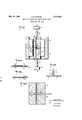
Figure 1 is a vertical cross-section through a tool assembly for cold welding together the ends of a pair of metal wires in accordance with this invention, the parts being shown in their position prior to welding;
Figure 2 is a sectional view taken online 2--2 of Fig ure 1;
Figures 3 and 4 are side and plan views, respectively, the former being shown partly in section, of a wire joint obtained by means of the tool according to Figures 1 and 2; and
Figure 5 shows a final wire joint or electrical connection according to the invention.
Like reference characters identify like parts in the several views of the drawing.
While the invention is especially applicable to cold pressure welding, that is, the welding of two wires substantially by pressure and without the supply of external heat, it will be understood that some heat may be used, such as by heating the welding tools or preheating the wires provided, however, that welding is eifected predominantly by the plastic flow of the metals at the surfaces being joined as a result of the applied welding pressure.
Furthermore, while the method of making cold-welded wire joints according to the invention is especially applicable to the joining of wires of comparatively small diameters, such as the electrical conductors in cable joints or other electrical apparatus, it will be understood that the invention may be used with equal advantage for joining wires of greater diameter, where a single spot weld or a series of spot welds are sufficient in providing the desired joint or connection.
More specifically, in carrying the invention into effect as illustrated by the drawing, Figures 1 and 2, twowires pins 12' and 13 having taperingwelding tips wires
Upon bringing thetools
In the case of pure electric conductors, where mechanical strength is of secondary importance or obtained byother means, such as by twisting the wires in the manner shown in Figure 5, the minimum percentage reduction may be equal to or exceed the upper limit, that is, 60% in the case of aluminum, and 80% for copper, in the interest of obtaining an efiicient and low-resistance electrical connection between the wires. Furthermore, even though the thickness of the metal or gap g at the weld spot orindentations 16 and 17, Fig. 3, may be very thin, the metal around the indentations ordepressions 16 and 17 will insure both a good electrical connection and a reasonably strong mechanical joint between the wires.
In order to locate and hold the wires in properly aligned position during welding and to prevent slipping,
while allowing of a ready lateral metal fiow at the weld spot to enable merging of the metals and welding in the manner described, there is shown in Figures 1 and 2 a jig or tool assembly cooperating with the tool members or pins 1 3 and 14, all being advantageously incorporated in a hand press or other pressure producing device.
There is shown for this purpose a welding tool comprising lower and upper anvils orjig halves dowels upper anvil 21. Both anvils are furthermore provided with centrally aligned vertical bores 24 and 25, respectively, having a diameter equal to the diameter of thepressure pins
Theanvils recesses 26 and 27 intersecting the bores 24 and 25 and having a depth and width equal to the diameter of the wires and 11, whereby the latter fit closely and snugly therein in superposed relation, in the manner shown in the drawing.
As a result, thewires welding tips 14 and or pressure applying surfaces of thepins
For practical results it has been found that the diameter d of the circular pressure applying area of thewelding tips outer heads pins 12 and 1.3, respectively, acting as stops or abutments upon engaging the outer faces of theanvils
As pointed out, the invention, without being limited thereto, is especially suitable for making electrical con nections or joints between electrical wires such as used in telephone cables or the like. In this respect, the invention replaces the present electrical connections made by means of soldering or clamping, especially in the case of aluminum conductors, being more and more used in place of copper as a conducting material for the reasons pointed out hcreinabove. Furthermore, the invention presents advantages of providing a more constant and elficient electrical connection between the wires as a result of the intimate connection of the metals into a solid phase weld or bond, especially when using a relativcly high percentage reduction at the weld. This, in turn, enables the making of aluminum wire joints of a low electrical resistance and having other desirable electrical characteristics comparable or equal to copper wire joints as used heretofore.
Figure 5 illustrates a completed wire joint of the type according to the invention with theadjoining portions
I claim:
1. A method of joining a pair of cold pressure weldable members of substantially circular cross-section comprising superimposing said members with the portions to be joined contacting each other at an interface of relatively limited area, applying to opposed circular welding areas of the contacting portions having a diaineter of the order of the diameter of said members a pressure in a direction substantially at right angle to the common tangential plane of the contacting members, to effect indentations of said members at said areas and to distort the metal thereof at and adjacent to the interface to change the same from its initial limited area into an extended lateral area and to produce circular projections by the displaced metal extending beyond the outer confines of said members, thereby to create an intensive metal flow at the extended interface sufiicient to weld said members by a solid phase welding bond.
2. A method of joining a pair of cold pressure weldable members of substantially circular cross-section comprising arranging said members with the portions to be joined contacting each other at an interface of relatively limited area, applying to opposed circular welding areas of the contacting portions having a diameter of the order of the diameter of said members a pressure in a direction substantially at right angle to the common tangential plane of the contacting members, to effect indentations of said members and to distort the metal thereof at and near the interface to change the same from its initial limited area into an extended lateral area, and continuing the pressure application until the combined cross-sectional. metal thickness at said welding areas is at least about of the total initial metal thickness, to produce a circular projection by the displaced metal extending beyond the outer confines of said members and to create an intensive metal flow at the extended interface sufiicient to Weld said members by a solid phase welding bond.
3. A method of joining a pair of wires of cold pressure weldable metal comprising arranging the portions of the wires to be joined in aligned contacting relation so as to engage one another at a substantially linear interface, applying to opposed circular areas of the contacting wires having a diameter of the order of the diameter of the wires a pressure substantially in a direction at right angle to the common tangential plane of the contacting wires, to effect indentations of said wires at said areas and to distort the metal at and near the interface to change the same from its initial linear configuration into an extended lateral area and to produce circular projections by the displaced metal extending beyond the outer confines of said wires, thereby to create an intensive interfacial metal flow at the extended interface conducive to welding said wires by a solid phase welding bond.
References Cited in the file of this patent UNITED STATES PATENTS 697,648 McCallum Apr. 15, 1902 1,560,820 Hunter Nov. 10, 1925 1,618,764 Lunn Feb. 22, 1927 1,738,592 Leonard Dec. 10, 1929 2,522,408 Sowter Sept. 12, 1950 OTHER REFERENCES Welding Journal (pp. 149l52), February 1949.
Applications Claiming Priority (1)
| Application Number | Priority Date | Filing Date | Title |
|---|---|---|---|
| GB2707826X | 1951-03-16 |
Publications (1)
| Publication Number | Publication Date |
|---|---|
| US2707826Atrue US2707826A (en) | 1955-05-10 |
Family
ID=10913851
Family Applications (1)
| Application Number | Title | Priority Date | Filing Date |
|---|---|---|---|
| US274098AExpired - LifetimeUS2707826A (en) | 1951-03-16 | 1952-02-29 | Method of making cold welded wire joints |
Country Status (1)
| Country | Link |
|---|---|
| US (1) | US2707826A (en) |
Cited By (8)
| Publication number | Priority date | Publication date | Assignee | Title |
|---|---|---|---|---|
| US2821616A (en)* | 1955-08-15 | 1958-01-28 | Louis H Spott | Method and apparatus for making honeycomb material |
| US2894323A (en)* | 1953-02-20 | 1959-07-14 | Gen Electric Co Ltd | Pressure welding |
| US2909951A (en)* | 1955-05-10 | 1959-10-27 | Kelsey Hayes Co | Method and apparatus for uniting tubular members |
| US3053124A (en)* | 1959-11-16 | 1962-09-11 | Cavitron Ultrasonics Inc | Ultrasonic welding |
| US3101635A (en)* | 1960-07-05 | 1963-08-27 | Kulicke And Soffa Mfg Company | Fine wire bonding tool |
| US3146492A (en)* | 1957-12-18 | 1964-09-01 | Jerome H Lemelson | Apparatus for making a lenticular display sheet |
| US3234628A (en)* | 1962-11-26 | 1966-02-15 | Cornell Dubilier Electric | Capacitor manufacture |
| US4029252A (en)* | 1976-05-17 | 1977-06-14 | General Electric Company | Apparatus for making a copper-aluminum transition joint |
Citations (5)
| Publication number | Priority date | Publication date | Assignee | Title |
|---|---|---|---|---|
| US697648A (en)* | 1901-07-29 | 1902-04-15 | William A Mccallum | Mechanism for recessing trolley-wires. |
| US1560820A (en)* | 1923-04-02 | 1925-11-10 | Pittsburgh Annealing Box Compa | Apparatus for welding metal |
| US1618764A (en)* | 1926-09-03 | 1927-02-22 | Pullman Car And Mfg Corp | Process of spot welding of aluminum |
| US1738592A (en)* | 1925-12-08 | 1929-12-10 | Leonardrooke Co | Welding apparatus |
| US2522408A (en)* | 1949-10-25 | 1950-09-12 | Gen Electric Co Ltd | Cold pressure welding |
- 1952
- 1952-02-29USUS274098Apatent/US2707826A/ennot_activeExpired - Lifetime
Patent Citations (5)
| Publication number | Priority date | Publication date | Assignee | Title |
|---|---|---|---|---|
| US697648A (en)* | 1901-07-29 | 1902-04-15 | William A Mccallum | Mechanism for recessing trolley-wires. |
| US1560820A (en)* | 1923-04-02 | 1925-11-10 | Pittsburgh Annealing Box Compa | Apparatus for welding metal |
| US1738592A (en)* | 1925-12-08 | 1929-12-10 | Leonardrooke Co | Welding apparatus |
| US1618764A (en)* | 1926-09-03 | 1927-02-22 | Pullman Car And Mfg Corp | Process of spot welding of aluminum |
| US2522408A (en)* | 1949-10-25 | 1950-09-12 | Gen Electric Co Ltd | Cold pressure welding |
Cited By (9)
| Publication number | Priority date | Publication date | Assignee | Title |
|---|---|---|---|---|
| US2894323A (en)* | 1953-02-20 | 1959-07-14 | Gen Electric Co Ltd | Pressure welding |
| US2909951A (en)* | 1955-05-10 | 1959-10-27 | Kelsey Hayes Co | Method and apparatus for uniting tubular members |
| US2821616A (en)* | 1955-08-15 | 1958-01-28 | Louis H Spott | Method and apparatus for making honeycomb material |
| US3146492A (en)* | 1957-12-18 | 1964-09-01 | Jerome H Lemelson | Apparatus for making a lenticular display sheet |
| US3053124A (en)* | 1959-11-16 | 1962-09-11 | Cavitron Ultrasonics Inc | Ultrasonic welding |
| US3101635A (en)* | 1960-07-05 | 1963-08-27 | Kulicke And Soffa Mfg Company | Fine wire bonding tool |
| US3149510A (en)* | 1960-07-05 | 1964-09-22 | Kulicke & Soffa Mfg Co | Fine wire manipulator and bonding instrument for transistors |
| US3234628A (en)* | 1962-11-26 | 1966-02-15 | Cornell Dubilier Electric | Capacitor manufacture |
| US4029252A (en)* | 1976-05-17 | 1977-06-14 | General Electric Company | Apparatus for making a copper-aluminum transition joint |
Similar Documents
| Publication | Publication Date | Title |
|---|---|---|
| US2387154A (en) | Method of joining bus bars | |
| US6125533A (en) | Insulated wire termination, method, and machine | |
| US3592993A (en) | Method of joining aluminum to aluminum | |
| US2707826A (en) | Method of making cold welded wire joints | |
| JP2003505822A (en) | Battery pole connection cable | |
| US2698548A (en) | Method of pressure welding | |
| JPS62501693A (en) | Method of heating joining metal elements | |
| WO2018088189A1 (en) | Production method for conductive member having wire strand joining section, and conductive member having wire strand joining section | |
| US3634649A (en) | Apparatus for and method of joining stranded cable | |
| EP3609023B1 (en) | Method and device for making an electrical connection and an electrical line | |
| US2734933A (en) | klosin | |
| US3648014A (en) | Method of joining copper braid to aluminum and the joint formed thereby | |
| JPS5918832B2 (en) | Electrical transition components and motors | |
| US3083452A (en) | Fusion-pressure joining of aluminum members | |
| US3374530A (en) | Process for the joinder of metallic members | |
| US1606894A (en) | Electric welding | |
| US7355142B2 (en) | Resistance welding electrode, welded copper flex lead, and method for making same | |
| DE2646233A1 (en) | WELDING MACHINE | |
| US2707824A (en) | Method of making cold-weld joints | |
| US2068639A (en) | Electrical rail bond | |
| US2509020A (en) | Electrical contact member and method of making the same | |
| US2753428A (en) | Method and apparatus for butt welding pipe sections | |
| US3444347A (en) | Method for solder reflow connection of insulated conductors | |
| US1256117A (en) | Process of making chain-links. | |
| US2604570A (en) | Electric connection and method for producing the same |