US2594086A - Table supported abdominal retractor - Google Patents
Table supported abdominal retractorDownload PDFInfo
- Publication number
- US2594086A US2594086AUS158981AUS15898150AUS2594086AUS 2594086 AUS2594086 AUS 2594086AUS 158981 AUS158981 AUS 158981AUS 15898150 AUS15898150 AUS 15898150AUS 2594086 AUS2594086 AUS 2594086A
- Authority
- US
- United States
- Prior art keywords
- retractor
- ring
- retracting
- side arms
- retracting elements
- Prior art date
- Legal status (The legal status is an assumption and is not a legal conclusion. Google has not performed a legal analysis and makes no representation as to the accuracy of the status listed.)
- Expired - Lifetime
Links
- 230000003187abdominal effectEffects0.000titledescription6
- 210000003813thumbAnatomy0.000description10
- 206010052428WoundDiseases0.000description6
- 208000027418Wounds and injuryDiseases0.000description5
- 210000000056organAnatomy0.000description3
- 210000001835visceraAnatomy0.000description3
- 230000035939shockEffects0.000description2
- 230000015572biosynthetic processEffects0.000description1
- 238000010276constructionMethods0.000description1
- 238000004519manufacturing processMethods0.000description1
- 230000004048modificationEffects0.000description1
- 238000012986modificationMethods0.000description1
- 210000004303peritoneumAnatomy0.000description1
- 230000000284resting effectEffects0.000description1
- 230000001954sterilising effectEffects0.000description1
- 238000004659sterilization and disinfectionMethods0.000description1
Images


Classifications
- A—HUMAN NECESSITIES
- A61—MEDICAL OR VETERINARY SCIENCE; HYGIENE
- A61B—DIAGNOSIS; SURGERY; IDENTIFICATION
- A61B17/00—Surgical instruments, devices or methods
- A61B17/02—Surgical instruments, devices or methods for holding wounds open, e.g. retractors; Tractors
- A61B17/0293—Surgical instruments, devices or methods for holding wounds open, e.g. retractors; Tractors with ring member to support retractor elements
Definitions
- This inventionrelates to surgical retractors and more particularly to an abdominal retractor which comprises means for firmly supporting a plurality of independently adjustable retracting elements above an operating table so as to hold the edges of a wound and the viscera or other organs away from the field of operation.
- One object of this inventionis to provide a retractor ofthe above nature in which the retracting elements do not depend upon each other or upon their engagement with the patient for their proper support, thus avoiding movement of the retracting elements which might cause shock tothe patient and which would be a source of annoyance to the surgeon.
- Another objectis to provide a retractor of the above nature which may be employed to retract any part of the wound or the organs therein in one direction without requiring the retraction of another part in the opposite direction.
- Another objectis to provide a retractor of the above nature in which, if desired, the retracting elements may all be adjusted as a unit in both horizontal and vertical directions.
- Another objectis to provide a retractor of the above nature in which each of the retracting elements may be easily adjusted either radially or circumferentially of the wound at any time without disturbing the positions of any of the other retracting elements.
- Another objectis to provide a retractor of the above nature which may be readily installed, adjusted, and removed, and which will not be likely to change its adjustment accidentally, whereby the retractor will require a minimum of attention from the operating surgeon and the minimum number of assistants will be required.
- a further objectis to provide a retractor of the above nature which will be simple in construction, inexpensive to manufacture, easy to install and manipulate having universal adjustment, and very efficient and durable in use.
- the invention herein disclosedconstitutes an improvement in the retractor disclosed in my copending application entitled Self-Supporting Surgical Retractor, S. N 92,602, now Patent Number 2,586,488 granted February 19, 1952, filed May 11, 1949, in respect to the hinged side supporting arms and the circumferential adjustability of the retractor elements, not shown in said copending application.
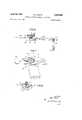
- Fig. 1is a perspective view of the improved retractor.
- Fig. 2is a plan view of the same as it would appear when attached to the side rails of an operating table.
- Fig. 3is a front view of the same, showing the retractor as it would appear when the retracting elements are removed, and showing the side rail clamps in cross-section.
- Fig. 4is a fragmentary view, on an enlarged scale, taken on the line 4-4 of Fig. 2, showing the manner in which the side arms are connected to the ring.
- V Fig. 5is a partial perspective view showing an end portion of one of the side arms and the pivot pin therein.
- Fig. 6is a cross-sectional view on an enlarged scale, taken substantially on the line 66 of Fig. 2, showing the manner in which the retracting elements are attached to the supporting ring.
- - Fig. '7is a fragmentary perspective view of the same.
- Fig. 8is a perspective view showing one of the slotted brackets for attaching the clamping elements to the supporting ring.
- the improved retractorcomprises a supporting ring [0 which is of flat circular shape and of uniform rectangular cross-section.
- a supporting ring [0which is of flat circular shape and of uniform rectangular cross-section.
- the inner end of each of said side armsbeing formed with a notch l3 in which the enlarged flat-sided base M of a pivot pin [5 is swingably secured by means of a horizontal cross pin it.
- the lower surface of the supporting ring II]is provided at diametrically opposite points with a pair of lugs I! which are apertured in a direction radially of said ring and attached thereto by means of rivets Hi.
- the lugs l!are adapted to receive the pivot pins l5 which may be firmly secured therein by thumb screws [8. l
- the side arms II l 2are curved outwardly and downwardly from the pivot pins l5 and are adapted to be attached to the side rails 20, 2
- the clamps 23 24are so shaped as to be freely slidable in a longitudinal direction upon the side rails 20, 2
- a plurality of angular retracting elements 26each of which comprises a longitudinally slotted horizontal upper base portion or arm 21, and a depending concave hook portion 28 at one end of said arm.
- Each of the retracting elements 26is provided with a U-shaped bracket 29 in the form of a flat rectangular block having a deep rectangular slot 30 in one edge thereof, and athreaded stud 3
- extends upwardly through the slot in the retractor arm 21 and is provided with a knurled thumb nut 32, whereby each of the retracting elements 26 may be adjustably clamped to its respective U-shaped bracket 29.
- the slots 30are adaptedto receive the outer edge of the ring H] and are so proportioned that the brackets 29 will be slidable circumferentially on said ring. Further, the slots 36 have divergent outer end surfaces 33 which will facilitate the application of the brackets to said ring Ill.
- each of said bracketsis provided with a short upstanding pin 34 engaged in the slot of the arm 27 adjacent the threaded stud 3
- the retractor herein disclosedwill be applied to the operating table 22 after the patient P has first been prepared for the operation and is resting on said table in the position indicated in dotted lines in Fig. 3.
- the first step in applying the retractorwill be to insert the lower ends of the pair of side arms I, I2 into the C-shaped clamps 23, 24 which embrace the side rails 26, 2
- the vertical apertures in the clamps 23, 24provide sufiicient clearance to permit the curved side arms I I, I2 to be slid equal distances therein for adjusting the supporting ring In in a vertical direction, after which the thumb screws 25 may be tightened so as to hold the retractor securely at the desired elevated position.
- Lateral tilting adjustment of the supporting ring lmay, of course, be obtained by moving either one of the side arms l2 vertically in its respective clamp 23 or 24, whereas tilting of the ring II] in a direction longitudinally of the table 22 may be permitted by the manipulation of the thumb screws I9.
- the supporting ring Inmay be easily adjusted laterally, longitudinally, and vertically, and tilted either laterally or longitudinally so that it will occupy the precise position desired by the surgeon, in which position it will be firmly held by the thumb screws I9 and 25.
- the retracting elements 26will be inserted in the wound and applied to the ring H1 in the positions desired, the brackets 29 being slipped over the outer edge of the ring l6 so that the arms 21 of said retracting elements are disposed above said ring.
- the slotted formation of the retracting element arms 2'!will now permit each element to be slid outwardly so as to provide the desired degree of retraction, after which the respective thumb nuts 32 will be tightened.
- the upstanding pins 34 on the brackets 29will, of course, prevent undesirable rotation of said brackets during manipulation of the thumb nuts 32, and will aid in maintaining the slotted arms 21 and brackets 29 in proper relationship at all times.
- the retracting elements 26may be adjusted laterally in order to afford the desired support to the organs or to the edges of the open wound.
- retracting elements 26may be applied, removed, or adjusted at any time during the course of the operation, and if desired, may be replaced with retracting elements which are longer or shorter, or of a different type, thus filling the needs of the moment.
- each of the retracting elementsmay be independently adjusted and held in a definite position withv relation to the operation table. Further, the retracting elements cannot accidentally change their positions and the force exerted by one retracting element will be independent of the force exerted by any of the other retracting elements. Moreover, the patient will be spared the shocks which might be caused by accidental movement of a retractor in contact with the peritoneum which frequently occurred when the retracting elements were held by an assistant.
- each of the retracting elementsmay have a substantially universal adjustment with respect to the operating table, while avoiding any changes of position or adjustment excepting as desired by the surgeon.
- the retractorWhen the retractor is no longer needed, it may be readily removed from the clamps 23, 24 after first loosening the thumbscrews 25.
- 2may then be swung about the crosspins I6 and folded under the supporting ring
- a continuous, integral, circular supporting ringa plurality of retracting elements movably mounted upon said ring, a pair of side arms attached by fiexible joints to opposite portions of said ring, and a pair of adjustable clamps on said side arms for securing said side arms to a support.
- a circular supporting ringmeans detachably mounting said ring upon the side rails of an operating table, a plurality of angular retracting elements, each having a longitudinally slotted horizontal upper section, and a depending curved section for engaging the internal organs or sides of the incision made in the patient, a bracket having a horizontal slot embracing said ring, said bracket having a vertical threaded stud extending upwardly through the slot in the upper section of said retracting element, and a thumb nut on said stud for clamp-- ing said retracting element and said bracket in radial or circumferentially adjusted position upon said ring.
- brackethas an upstanding locking pin spaced from said stud and located in the slot of said upper section of the retracting element to prevent undesirable rotation of said bracket about a vertical axis.
Landscapes
- Health & Medical Sciences (AREA)
- Life Sciences & Earth Sciences (AREA)
- Surgery (AREA)
- Heart & Thoracic Surgery (AREA)
- Engineering & Computer Science (AREA)
- Biomedical Technology (AREA)
- Nuclear Medicine, Radiotherapy & Molecular Imaging (AREA)
- Medical Informatics (AREA)
- Molecular Biology (AREA)
- Animal Behavior & Ethology (AREA)
- General Health & Medical Sciences (AREA)
- Public Health (AREA)
- Veterinary Medicine (AREA)
- Surgical Instruments (AREA)
Description
April 22, 1952 D. P. SMITH 2,594,086
TABLE SUPPORTED ABDOMINAL RETRACTOR Filed April 29, 1950 3 Sheets-Sheet 1.
IN VEN TOR. DAV/0 I? SMITH ATTX April 22, 1952 p, sMlTH 2,594,086
TABLE SUPPORTED ABDOMINAL. RETRACTOR Filed April 29, 1950 5 Sheets-Sheet 2 INVENTOR: DAV/D I? SMITH ATTX April 22, 1952 D. P. SMITH 2,594,086
TABLE SUPPORTED ABDOMINAL RETRACTOR Filed April 29, 1950 3 Sheets-Sheet 3 4 INVENTOR. DAV/0 PSM/TH ATTX Patented Apr. 22, 1952 OFFICE TABLE SUPPORTED ABDOMINAL RETRACTOR David P. Smith, Meriden, Conn. Application April 29, 1950, Serial No. 158,981 c Claims. (o1.12s-20) This invention relates to surgical retractors and more particularly to an abdominal retractor which comprises means for firmly supporting a plurality of independently adjustable retracting elements above an operating table so as to hold the edges of a wound and the viscera or other organs away from the field of operation.
One object of this invention is to provide a retractor ofthe above nature in which the retracting elements do not depend upon each other or upon their engagement with the patient for their proper support, thus avoiding movement of the retracting elements which might cause shock tothe patient and which would be a source of annoyance to the surgeon.
Another object is to provide a retractor of the above nature which may be employed to retract any part of the wound or the organs therein in one direction without requiring the retraction of another part in the opposite direction.
Another object is to provide a retractor of the above nature in which, if desired, the retracting elements may all be adjusted as a unit in both horizontal and vertical directions.
Another object is to provide a retractor of the above nature in which each of the retracting elements may be easily adjusted either radially or circumferentially of the wound at any time without disturbing the positions of any of the other retracting elements.
Another object is to provide a retractor of the above nature which may be readily installed, adjusted, and removed, and which will not be likely to change its adjustment accidentally, whereby the retractor will require a minimum of attention from the operating surgeon and the minimum number of assistants will be required.
A further object is to provide a retractor of the above nature which will be simple in construction, inexpensive to manufacture, easy to install and manipulate having universal adjustment, and very efficient and durable in use.
With these and other objects in view there has been illustrated on the accompanying drawing one form in which the invention may conveniently be embodied in practice. e
The invention herein disclosed constitutes an improvement in the retractor disclosed in my copending application entitled Self-Supporting Surgical Retractor, S. N 92,602, now Patent Number 2,586,488 granted February 19, 1952, filed May 11, 1949, in respect to the hinged side supporting arms and the circumferential adjustability of the retractor elements, not shown in said copending application.
In the drawing,
Fig. 1 is a perspective view of the improved retractor.
Fig. 2 is a plan view of the same as it would appear when attached to the side rails of an operating table.
Fig. 3 is a front view of the same, showing the retractor as it would appear when the retracting elements are removed, and showing the side rail clamps in cross-section.
Fig. 4 is a fragmentary view, on an enlarged scale, taken on the line 4-4 of Fig. 2, showing the manner in which the side arms are connected to the ring.
V Fig. 5 is a partial perspective view showing an end portion of one of the side arms and the pivot pin therein.
Fig. 6 is a cross-sectional view on an enlarged scale, taken substantially on the line 66 of Fig. 2, showing the manner in which the retracting elements are attached to the supporting ring.
- Fig. '7 is a fragmentary perspective view of the same.
Fig. 8 is a perspective view showing one of the slotted brackets for attaching the clamping elements to the supporting ring.
Referring now to the drawing, in which like reference numerals denote corresponding parts throughout the several views, the improved retractor comprises a supporting ring [0 which is of flat circular shape and of uniform rectangular cross-section. In order to support the ring I0, provision is made of a pair of outwardly-extending side arms ll, I2, the inner end of each of said side arms being formed with a notch l3 in which the enlarged flat-sided base M of a pivot pin [5 is swingably secured by means of a horizontal cross pin it.
The lower surface of the supporting ring II] is provided at diametrically opposite points with a pair of lugs I! which are apertured in a direction radially of said ring and attached thereto by means of rivets Hi. The lugs l! are adapted to receive the pivot pins l5 which may be firmly secured therein by thumb screws [8. l
The side arms II l 2 are curved outwardly and downwardly from the pivot pins l5 and are adapted to be attached to theside rails 20, 2| of an operating table 22 by means of a pair of C-shaped clamps clamps 23 24 are so shaped as to be freely slidable in a longitudinal direction upon theside rails 20, 2| and are vertically apertured in such a manner that the side arms ll, l2 may be adjustably held therein and securely clamped against the outer faces of theside rails 20, 2| bythumb screws 25.
In order to hold a wound open and retain the internal organs of the body away from the field of operation, provision is made of a plurality ofangular retracting elements 26, each of which comprises a longitudinally slotted horizontal upper base portion orarm 21, and a dependingconcave hook portion 28 at one end of said arm. Each of the retractingelements 26 is provided with aU-shaped bracket 29 in the form of a flat rectangular block having a deeprectangular slot 30 in one edge thereof, and athreaded stud 3| attached to its upper surface.
The stud 3| extends upwardly through the slot in theretractor arm 21 and is provided with aknurled thumb nut 32, whereby each of the retractingelements 26 may be adjustably clamped to itsrespective U-shaped bracket 29.
Theslots 30 are adaptedto receive the outer edge of the ring H] and are so proportioned that thebrackets 29 will be slidable circumferentially on said ring. Further, the slots 36 have divergentouter end surfaces 33 which will facilitate the application of the brackets to said ring Ill.
In order to prevent any substantial turning movement of the U-shaped brackets with respect to the retractingelements 26, the upper surface of each of said brackets is provided with a shortupstanding pin 34 engaged in the slot of thearm 27 adjacent the threaded stud 3|.
Manner of use In use, the retractor herein disclosed will be applied to the operating table 22 after the patient P has first been prepared for the operation and is resting on said table in the position indicated in dotted lines in Fig. 3.
The first step in applying the retractor will be to insert the lower ends of the pair of side arms I, I2 into the C-shaped clamps side rails 26, 2|, after which thethumbscrews 25 will be tightened so as to clamp said side arms securely against said rails.
It will be noted that the curvature of the side arms |2 will permit the supporting ring ||l to be swung either to the right or to the left prior to the tightening of thethumb screws 25, this movement being obtained by inserting the side arms l2 through theclamps
Moreover, the vertical apertures in theclamps thumb screws 25 may be tightened so as to hold the retractor securely at the desired elevated position. Lateral tilting adjustment of the supporting ring l may, of course, be obtained by moving either one of the side arms l2 vertically in itsrespective clamp
Thus, the supporting ring In may be easily adjusted laterally, longitudinally, and vertically, and tilted either laterally or longitudinally so that it will occupy the precise position desired by the surgeon, in which position it will be firmly held by the thumb screws I9 and 25.
After an incision or opening has been made in the patients body, the retractingelements 26 will be inserted in the wound and applied to the ring H1 in the positions desired, thebrackets 29 being slipped over the outer edge of the ring l6 so that thearms 21 of said retracting elements are disposed above said ring. The slotted formation of the retracting element arms 2'! will now permit each element to be slid outwardly so as to provide the desired degree of retraction, after which therespective thumb nuts 32 will be tightened.
Theupstanding pins 34 on thebrackets 29 will, of course, prevent undesirable rotation of said brackets during manipulation of thethumb nuts 32, and will aid in maintaining the slottedarms 21 andbrackets 29 in proper relationship at all times.
Inasmuch as thebrackets 29 are slidable around the periphery of the supporting ring H), the retractingelements 26 may be adjusted laterally in order to afford the desired support to the organs or to the edges of the open wound.
It will be understood that any of theretracting elements 26 may be applied, removed, or adjusted at any time during the course of the operation, and if desired, may be replaced with retracting elements which are longer or shorter, or of a different type, thus filling the needs of the moment.
It will be noted that the invention herein disclosed provides a means whereby each of the retracting elements may be independently adjusted and held in a definite position withv relation to the operation table. Further, the retracting elements cannot accidentally change their positions and the force exerted by one retracting element will be independent of the force exerted by any of the other retracting elements. Moreover, the patient will be spared the shocks which might be caused by accidental movement of a retractor in contact with the peritoneum which frequently occurred when the retracting elements were held by an assistant.
One advantage of the invention herein disclosed is that each of the retracting elements may have a substantially universal adjustment with respect to the operating table, while avoiding any changes of position or adjustment excepting as desired by the surgeon.
When the retractor is no longer needed, it may be readily removed from theclamps thumbscrews 25. The side arms |2 may then be swung about the crosspins I6 and folded under the supporting ring |0 so that the retractor will have a compact form which may be readily inserted into an autoclave for sterilization.
Inasmuch as the retractor may be compactly folded, it will ordinarily be unnecessary to detach the side arms I I, I2 from the supporting ring H1, or to loosen the thumbscrews l9 excepting for purposes of adjustment. While there has been disclosed in this specification one form in which the invention may be embodied, it is to be understood that this form is shown for the purpose of illustration only, and that the invention is not to be limited to the specific disclosure but may be modified and embodied in various other forms without departing from its spirit. In short, the invention includes all the modifications and embodiments coming within the scope of the following claims.
Having thus fully described the invention, what is claimed as new and for which it is desired to secure Letters Patent, is:
1. In a surgical retractor, a continuous, integral, circular supporting ring, a plurality of retracting elements movably mounted upon said ring, a pair of side arms attached by fiexible joints to opposite portions of said ring, anda pair of adjustable clamps on said side arms for securing said side arms to a support.
2. The invention as defined in claim 1, in which said side arms are curved outwardly and downwardly from said supporting ring and are vertically slidable in said clamps, whereby said ring may be adjusted by vertical sliding movements of said arms in said clamps.
3. The invention as defined in claim 1, wherein said side arms are flexibly attached to said supporting ring by devices which comprise crosspins secured in transverse positions in the end portions of the respective arms.
4. The invention as defined in claim 1, wherein said side arms are attached to said supporting ring by pivot pins swingably supported upon end portions of the respective side arms, and means releasably securing said pivot pins to said supporting ring in positions extending radially of said ring.
5. In a surgical retractor, a circular supporting ring, means detachably mounting said ring upon the side rails of an operating table, a plurality of angular retracting elements, each having a longitudinally slotted horizontal upper section, and a depending curved section for engaging the internal organs or sides of the incision made in the patient, a bracket having a horizontal slot embracing said ring, said bracket having a vertical threaded stud extending upwardly through the slot in the upper section of said retracting element, and a thumb nut on said stud for clamp-- ing said retracting element and said bracket in radial or circumferentially adjusted position upon said ring.
6. The invention as defined in claim 5 in which said bracket has an upstanding locking pin spaced from said stud and located in the slot of said upper section of the retracting element to prevent undesirable rotation of said bracket about a vertical axis.
DAVID P. SMITH.
REFERENCES CITED The following references are of record in the file of this patent:
UNITED STATES PATENTS Number Name Date 1,747,799 Straus Feb. 18, 1930 1,839,726 Arnold Jan. 5, 1932 OTHER REFERENCES
Priority Applications (1)
| Application Number | Priority Date | Filing Date | Title |
|---|---|---|---|
| US158981AUS2594086A (en) | 1950-04-29 | 1950-04-29 | Table supported abdominal retractor |
Applications Claiming Priority (1)
| Application Number | Priority Date | Filing Date | Title |
|---|---|---|---|
| US158981AUS2594086A (en) | 1950-04-29 | 1950-04-29 | Table supported abdominal retractor |
Publications (1)
| Publication Number | Publication Date |
|---|---|
| US2594086Atrue US2594086A (en) | 1952-04-22 |
Family
ID=22570563
Family Applications (1)
| Application Number | Title | Priority Date | Filing Date |
|---|---|---|---|
| US158981AExpired - LifetimeUS2594086A (en) | 1950-04-29 | 1950-04-29 | Table supported abdominal retractor |
Country Status (1)
| Country | Link |
|---|---|
| US (1) | US2594086A (en) |
Cited By (69)
| Publication number | Priority date | Publication date | Assignee | Title |
|---|---|---|---|---|
| US2893378A (en)* | 1956-07-26 | 1959-07-07 | Cooper Robert Lee | Surgical retractor apparatus |
| US2969059A (en)* | 1958-11-25 | 1961-01-24 | Meek Cicero Parker | Mouth gag |
| US3040739A (en)* | 1959-07-17 | 1962-06-26 | Herman R Grieshaber | Surgical retractor |
| US3394700A (en)* | 1965-12-24 | 1968-07-30 | Yamamoto Hideo | Circular surgical retractor apparatus |
| US4099521A (en)* | 1975-06-16 | 1978-07-11 | Nestor Engineering Associates, Inc. | Surgical retractor adjustable mounting apparatus |
| DE3021194A1 (en)* | 1979-06-07 | 1980-12-18 | Codman & Shurtleff | SURGICAL RETRACTOR ARRANGEMENT |
| US4457300A (en)* | 1982-06-07 | 1984-07-03 | Ohio Medical Instrument Co., Inc. | Surgical retractor |
| US4617916A (en)* | 1984-11-08 | 1986-10-21 | Minnesota Scientific, Inc. | Retractor apparatus |
| US4718151A (en)* | 1984-11-08 | 1988-01-12 | Minnesota Scientific, Inc. | Retractor apparatus |
| US4805599A (en)* | 1987-06-25 | 1989-02-21 | Cedar Surgical, Inc. | Framework for supporting surgical instruments at a surgical wound |
| US4949707A (en)* | 1984-11-08 | 1990-08-21 | Minnesota Scientific, Inc. | Retractor apparatus |
| DE4118220C1 (en)* | 1991-06-04 | 1992-11-05 | Ralf Cand.Med. 4350 Recklinghausen De Herwig | Surgical retractor with annular frame - which has round cross=section and fastening clamps, each with mating semi-circular recess |
| US5284129A (en)* | 1992-08-28 | 1994-02-08 | Codman & Shurtleff, Inc. | Swivel ring surgical retractor |
| DE4331277C1 (en)* | 1993-09-15 | 1995-02-23 | Fuerniss Gmbh | Surgical retraction device |
| US5704900A (en)* | 1995-10-20 | 1998-01-06 | Minnesota Scientific, Inc. | Method and apparatus for peritoneal distension |
| EP0875205A1 (en)* | 1997-05-02 | 1998-11-04 | United States Surgical Corporation | Surgical retractor |
| US5947896A (en)* | 1996-04-26 | 1999-09-07 | United States Surgical Corporation | Heart stabilizer apparatus and method for use |
| US5967973A (en)* | 1996-04-26 | 1999-10-19 | United States Surgical | Surgical retractor and method of surgery |
| US6030340A (en)* | 1997-12-19 | 2000-02-29 | United States Surgical | Surgical retractor |
| US6071235A (en)* | 1996-04-26 | 2000-06-06 | Genzyme Corporation | Coronary stabilizing retractor with occluding means |
| US6102853A (en)* | 1998-01-23 | 2000-08-15 | United States Surgical Corporation | Surgical instrument |
| US6200263B1 (en) | 1998-01-23 | 2001-03-13 | United States Surgical Corporation | Surgical instrument holder |
| US6306085B1 (en) | 1996-09-20 | 2001-10-23 | United States Surgical Corporation | Surgical apparatus and method |
| US6475142B1 (en) | 1999-11-12 | 2002-11-05 | Genzyme Corporation | Curved stabilization arm for use with surgical retractor and tissue stabilization device and methods related thereto |
| US20030009081A1 (en)* | 1999-07-08 | 2003-01-09 | Chase Medical, Lp | Device and method for isolating a surface of a beating heart during surgery |
| US20030073998A1 (en)* | 2000-08-01 | 2003-04-17 | Endius Incorporated | Method of securing vertebrae |
| US6599240B2 (en) | 2000-12-20 | 2003-07-29 | Genzyme Corporation | Segmented arm assembly for use with a surgical retractor and instruments and methods related thereto |
| US20030153927A1 (en)* | 2001-05-15 | 2003-08-14 | Endius Incorporated | Structure for receiving surgical instruments |
| US20030216619A1 (en)* | 2001-07-13 | 2003-11-20 | Paul Scirica | Surgical instrument |
| US20040073091A1 (en)* | 2002-08-23 | 2004-04-15 | Minnesota Scientific, Inc. | Stabilized table rail clamp |
| US20040127773A1 (en)* | 2002-12-31 | 2004-07-01 | Ethicon, Inc. | Curved rack retractor |
| US20040186353A1 (en)* | 2001-08-10 | 2004-09-23 | Palermo Thomas J | Vascular retractor and methods of using same |
| US20040230100A1 (en)* | 2003-05-16 | 2004-11-18 | Shluzas Alan E. | Access device for minimally invasive surgery |
| US20050075540A1 (en)* | 2003-08-26 | 2005-04-07 | Shluzas Alan E. | Minimally invasive access device and method |
| US20050084355A1 (en)* | 2003-10-17 | 2005-04-21 | Don Zoran | Apparatus and method for damping vibration in a machine tool |
| US6887198B2 (en)* | 2001-10-05 | 2005-05-03 | Burns P. Phillips | Gooseneck surgical retractor positioner and method of its use |
| US20050203347A1 (en)* | 2004-03-12 | 2005-09-15 | Guido Fehling | Anal retractor |
| US20050245942A1 (en)* | 2003-08-26 | 2005-11-03 | Dipoto Gene P | Adjustable height access device for treating the spine of a patient |
| US20050251192A1 (en)* | 2004-03-31 | 2005-11-10 | Shluzas Alan E | Access device having discrete visualization locations |
| US20060084900A1 (en)* | 2004-10-15 | 2006-04-20 | Schule Edgar F | Method and apparatus for attaching accessories to a surgical fixture |
| US20060195017A1 (en)* | 2004-11-22 | 2006-08-31 | Shluzas Alan E | Expandable device for providing access to the spine |
| US7985247B2 (en) | 2000-08-01 | 2011-07-26 | Zimmer Spine, Inc. | Methods and apparatuses for treating the spine through an access device |
| US20120065475A1 (en)* | 2002-11-19 | 2012-03-15 | J. Donald Hill | Methods, systems, and apparatus for performing minimally invasive coronary artery bypass graft surgery |
| US8192463B2 (en) | 2007-05-24 | 2012-06-05 | Mcloughlin Joseph | Surgical retractor and related methods |
| US20130131456A1 (en)* | 2003-09-25 | 2013-05-23 | Nuvasive, Inc. | Surgical Access System and Related Methods |
| US8540746B2 (en) | 1998-08-20 | 2013-09-24 | Zimmer Spine, Inc. | Cannula for receiving surgical instruments |
| US8663100B2 (en) | 2002-10-08 | 2014-03-04 | Nuvasive, Inc. | Surgical access system and related methods |
| US20140073857A1 (en)* | 2011-10-05 | 2014-03-13 | Mark A. Dodson | Modular Retractor And Related Method |
| US8672840B2 (en) | 2002-06-26 | 2014-03-18 | Nuvasive, Inc. | Surgical access system and related methods |
| US8696559B2 (en) | 2003-02-27 | 2014-04-15 | Nuvasive, Inc. | Surgical access system and related methods |
| US20140114139A1 (en)* | 2012-10-24 | 2014-04-24 | Blackstone Medical, Inc. | Retractor device and method |
| US8738123B2 (en) | 2001-09-25 | 2014-05-27 | Nuvasive, Inc. | System and methods for performing surgical procedures and assessments |
| US8747307B2 (en) | 2003-01-16 | 2014-06-10 | Nuvasive, Inc. | Surgical access system and related methods |
| US8790406B1 (en) | 2011-04-01 | 2014-07-29 | William D. Smith | Systems and methods for performing spine surgery |
| US8812116B2 (en) | 2001-07-11 | 2014-08-19 | Nuvasive, Inc. | System and methods for determining nerve proximity, direction, and pathology during surgery |
| US8844536B1 (en) | 2010-08-24 | 2014-09-30 | Pro Med Instruments Gmbh | Locking apparatus for a head fixation device |
| US20140371541A1 (en)* | 2012-03-13 | 2014-12-18 | Globus Medical, Inc. | System and Method Retracting Body Tissue |
| US9014776B2 (en) | 1998-12-23 | 2015-04-21 | Nuvasive, Inc. | Surgical access and nerve surveillance |
| USD737437S1 (en) | 2013-08-05 | 2015-08-25 | Joseph McLoughlin | Surgical retractor |
| US9198765B1 (en) | 2011-10-31 | 2015-12-01 | Nuvasive, Inc. | Expandable spinal fusion implants and related methods |
| US9216126B2 (en) | 2012-08-28 | 2015-12-22 | Pro Med Instruments Gmbh | Table adapter with joint assembly |
| US9314152B2 (en) | 2003-09-25 | 2016-04-19 | Nuvasive, Inc. | Surgical access system and related methods |
| US9402692B2 (en) | 2011-10-02 | 2016-08-02 | Pro Med Instruments Gmbh | Head fixation device and apparatus for securing components thereto |
| US9622732B2 (en) | 2004-10-08 | 2017-04-18 | Nuvasive, Inc. | Surgical access system and related methods |
| CN106880383A (en)* | 2017-03-24 | 2017-06-23 | 中山市智辉科技服务有限公司 | Movable retractor for surgical operation |
| US9693761B2 (en) | 2012-10-24 | 2017-07-04 | Blackstone Medical, Inc. | Retractor device and method |
| US9743853B2 (en) | 1999-11-24 | 2017-08-29 | Nuvasive, Inc. | Electromyography system |
| US10682196B2 (en) | 2011-10-02 | 2020-06-16 | Pro Med Instruments Gmbh | Head fixation device and apparatus for securing components thereto |
| US11793504B2 (en) | 2011-08-19 | 2023-10-24 | Nuvasive, Inc. | Surgical retractor system and methods of use |
Citations (2)
| Publication number | Priority date | Publication date | Assignee | Title |
|---|---|---|---|---|
| US174799A (en)* | 1876-03-14 | Improvement in gas-lighting apparatus | ||
| US1839726A (en)* | 1930-08-01 | 1932-01-05 | Hubert R Arnold | Circular retractor |
- 1950
- 1950-04-29USUS158981Apatent/US2594086A/ennot_activeExpired - Lifetime
Patent Citations (2)
| Publication number | Priority date | Publication date | Assignee | Title |
|---|---|---|---|---|
| US174799A (en)* | 1876-03-14 | Improvement in gas-lighting apparatus | ||
| US1839726A (en)* | 1930-08-01 | 1932-01-05 | Hubert R Arnold | Circular retractor |
Cited By (176)
| Publication number | Priority date | Publication date | Assignee | Title |
|---|---|---|---|---|
| US2893378A (en)* | 1956-07-26 | 1959-07-07 | Cooper Robert Lee | Surgical retractor apparatus |
| US2969059A (en)* | 1958-11-25 | 1961-01-24 | Meek Cicero Parker | Mouth gag |
| US3040739A (en)* | 1959-07-17 | 1962-06-26 | Herman R Grieshaber | Surgical retractor |
| US3394700A (en)* | 1965-12-24 | 1968-07-30 | Yamamoto Hideo | Circular surgical retractor apparatus |
| US4099521A (en)* | 1975-06-16 | 1978-07-11 | Nestor Engineering Associates, Inc. | Surgical retractor adjustable mounting apparatus |
| DE3021194A1 (en)* | 1979-06-07 | 1980-12-18 | Codman & Shurtleff | SURGICAL RETRACTOR ARRANGEMENT |
| FR2458269A1 (en)* | 1979-06-07 | 1981-01-02 | Codman & Shurtleff | SURGICAL RETRACTOR ASSEMBLY |
| US4254763A (en)* | 1979-06-07 | 1981-03-10 | Codman & Shurtleff, Inc. | Surgical retractor assembly |
| US4457300A (en)* | 1982-06-07 | 1984-07-03 | Ohio Medical Instrument Co., Inc. | Surgical retractor |
| US4949707A (en)* | 1984-11-08 | 1990-08-21 | Minnesota Scientific, Inc. | Retractor apparatus |
| US4718151A (en)* | 1984-11-08 | 1988-01-12 | Minnesota Scientific, Inc. | Retractor apparatus |
| US4617916A (en)* | 1984-11-08 | 1986-10-21 | Minnesota Scientific, Inc. | Retractor apparatus |
| US4805599A (en)* | 1987-06-25 | 1989-02-21 | Cedar Surgical, Inc. | Framework for supporting surgical instruments at a surgical wound |
| DE4118220C1 (en)* | 1991-06-04 | 1992-11-05 | Ralf Cand.Med. 4350 Recklinghausen De Herwig | Surgical retractor with annular frame - which has round cross=section and fastening clamps, each with mating semi-circular recess |
| US5284129A (en)* | 1992-08-28 | 1994-02-08 | Codman & Shurtleff, Inc. | Swivel ring surgical retractor |
| DE4331277C1 (en)* | 1993-09-15 | 1995-02-23 | Fuerniss Gmbh | Surgical retraction device |
| US5704900A (en)* | 1995-10-20 | 1998-01-06 | Minnesota Scientific, Inc. | Method and apparatus for peritoneal distension |
| US5947896A (en)* | 1996-04-26 | 1999-09-07 | United States Surgical Corporation | Heart stabilizer apparatus and method for use |
| US5967973A (en)* | 1996-04-26 | 1999-10-19 | United States Surgical | Surgical retractor and method of surgery |
| US6213940B1 (en) | 1996-04-26 | 2001-04-10 | United States Surgical Corporation | Surgical retractor including coil spring suture mount |
| US6537212B2 (en) | 1996-04-26 | 2003-03-25 | United States Surgical Corporation | Surgical retractor |
| US6071235A (en)* | 1996-04-26 | 2000-06-06 | Genzyme Corporation | Coronary stabilizing retractor with occluding means |
| US6709389B2 (en) | 1996-09-20 | 2004-03-23 | United States Surgical Corporation | Surgical apparatus and method |
| US6306085B1 (en) | 1996-09-20 | 2001-10-23 | United States Surgical Corporation | Surgical apparatus and method |
| US5967974A (en)* | 1997-05-02 | 1999-10-19 | United States Surgical Corporation | Surgical retractor |
| EP0875205A1 (en)* | 1997-05-02 | 1998-11-04 | United States Surgical Corporation | Surgical retractor |
| US6030340A (en)* | 1997-12-19 | 2000-02-29 | United States Surgical | Surgical retractor |
| US20040215064A1 (en)* | 1998-01-23 | 2004-10-28 | Person Wayne C. | Surgical instrument holder |
| US7294104B2 (en) | 1998-01-23 | 2007-11-13 | United States Surgical Corporation | Surgical instrument holder |
| US6264605B1 (en) | 1998-01-23 | 2001-07-24 | United States Surgical Corporation | Surgical instrument |
| US6565508B2 (en) | 1998-01-23 | 2003-05-20 | United States Surgical Corporation | Surgical instrument |
| US6102853A (en)* | 1998-01-23 | 2000-08-15 | United States Surgical Corporation | Surgical instrument |
| US7744530B2 (en) | 1998-01-23 | 2010-06-29 | Tyco Healthcare Group Lp | Surgical instrument holder |
| US6610009B2 (en) | 1998-01-23 | 2003-08-26 | United States Surgical Corporation | Surgical instrument holder |
| US6200263B1 (en) | 1998-01-23 | 2001-03-13 | United States Surgical Corporation | Surgical instrument holder |
| EP0980674A3 (en)* | 1998-07-13 | 2000-03-01 | United States Surgical Corporation | surgical retractor |
| EP1481639A1 (en)* | 1998-07-13 | 2004-12-01 | United States Surgical Corporation | Surgical retractor |
| US8540746B2 (en) | 1998-08-20 | 2013-09-24 | Zimmer Spine, Inc. | Cannula for receiving surgical instruments |
| US9014776B2 (en) | 1998-12-23 | 2015-04-21 | Nuvasive, Inc. | Surgical access and nerve surveillance |
| US20030009081A1 (en)* | 1999-07-08 | 2003-01-09 | Chase Medical, Lp | Device and method for isolating a surface of a beating heart during surgery |
| US6740029B2 (en) | 1999-07-08 | 2004-05-25 | Chase Medical, L.P. | Device and method for isolating a surface of a beating heart during surgery |
| US6475142B1 (en) | 1999-11-12 | 2002-11-05 | Genzyme Corporation | Curved stabilization arm for use with surgical retractor and tissue stabilization device and methods related thereto |
| US9743853B2 (en) | 1999-11-24 | 2017-08-29 | Nuvasive, Inc. | Electromyography system |
| US20050021030A1 (en)* | 2000-08-01 | 2005-01-27 | Endius Incorporated | Method of securing vertebrae |
| US9101353B2 (en) | 2000-08-01 | 2015-08-11 | Zimmer Spine, Inc. | Method of securing vertebrae |
| US20030073998A1 (en)* | 2000-08-01 | 2003-04-17 | Endius Incorporated | Method of securing vertebrae |
| US20040236317A1 (en)* | 2000-08-01 | 2004-11-25 | Davison Thomas W. | Method of securing vertebrae |
| US8777997B2 (en) | 2000-08-01 | 2014-07-15 | Zimmer Spine, Inc. | Method for securing vertebrae |
| US8277486B2 (en) | 2000-08-01 | 2012-10-02 | Zimmer Spine, Inc. | System for performing a procedure at a spinal location |
| US20050033297A1 (en)* | 2000-08-01 | 2005-02-10 | Davison Thomas W. | Method of securing vertebrae |
| US8864785B2 (en) | 2000-08-01 | 2014-10-21 | Zimmer Spine, Inc. | Method for securing vertebrae |
| US7699877B2 (en) | 2000-08-01 | 2010-04-20 | Zimmer Spine, Inc. | Method of securing vertebrae |
| US7722530B2 (en) | 2000-08-01 | 2010-05-25 | Zimmer Spine, Inc. | Method of securing vertebrae |
| US20050113833A1 (en)* | 2000-08-01 | 2005-05-26 | Davison Thomas W. | Method of securing vertebrae |
| US9622735B2 (en) | 2000-08-01 | 2017-04-18 | Zimmer Spine, Inc. | Method for securing vertebrae |
| US7985247B2 (en) | 2000-08-01 | 2011-07-26 | Zimmer Spine, Inc. | Methods and apparatuses for treating the spine through an access device |
| US7056321B2 (en) | 2000-08-01 | 2006-06-06 | Endius, Incorporated | Method of securing vertebrae |
| US7850695B2 (en) | 2000-08-01 | 2010-12-14 | Zimmer Spine, Inc. | Method of securing vertebrae |
| US20040082960A1 (en)* | 2000-08-01 | 2004-04-29 | Davison Thomas W. | Method of securing vertebrae |
| US6599240B2 (en) | 2000-12-20 | 2003-07-29 | Genzyme Corporation | Segmented arm assembly for use with a surgical retractor and instruments and methods related thereto |
| US20050149106A1 (en)* | 2001-05-15 | 2005-07-07 | Dipoto Gene P. | Cannula for receiving surgical instruments |
| US20030153927A1 (en)* | 2001-05-15 | 2003-08-14 | Endius Incorporated | Structure for receiving surgical instruments |
| US7766930B2 (en) | 2001-05-15 | 2010-08-03 | Zimmer Spine, Inc. | Cannula for receiving surgical instruments |
| US7985218B2 (en) | 2001-05-15 | 2011-07-26 | Zimmer Spine, Inc. | Structure for receiving surgical instruments |
| US7144393B2 (en) | 2001-05-15 | 2006-12-05 | Dipoto Gene P | Structure for receiving surgical instruments |
| US20070142857A1 (en)* | 2001-05-15 | 2007-06-21 | Dipoto Gene P | Structure for receiving surgical instruments |
| US8007492B2 (en) | 2001-05-15 | 2011-08-30 | Zimmer Spine, Inc. | Cannula for receiving surgical instruments |
| US9456783B2 (en) | 2001-07-11 | 2016-10-04 | Nuvasive, Inc. | System and methods for determining nerve proximity, direction and pathology during surgery |
| US9931077B2 (en) | 2001-07-11 | 2018-04-03 | Nuvasive, Inc. | System and methods for determining nerve proximity, direction and pathology during surgery |
| US10716509B2 (en) | 2001-07-11 | 2020-07-21 | Nuvasive, Inc. | System and methods for determining nerve proximity, direction and pathology during surgery |
| US9037250B2 (en) | 2001-07-11 | 2015-05-19 | Nuvasive, Inc. | System and methods for determining nerve proximity, direction and pathology during surgery |
| US8812116B2 (en) | 2001-07-11 | 2014-08-19 | Nuvasive, Inc. | System and methods for determining nerve proximity, direction, and pathology during surgery |
| US7137949B2 (en) | 2001-07-13 | 2006-11-21 | United States Surgical Corporation | Surgical instrument |
| US20030216619A1 (en)* | 2001-07-13 | 2003-11-20 | Paul Scirica | Surgical instrument |
| US20040186353A1 (en)* | 2001-08-10 | 2004-09-23 | Palermo Thomas J | Vascular retractor and methods of using same |
| US8738123B2 (en) | 2001-09-25 | 2014-05-27 | Nuvasive, Inc. | System and methods for performing surgical procedures and assessments |
| US8768450B2 (en) | 2001-09-25 | 2014-07-01 | Nuvasive, Inc. | System and methods for performing surgical procedures and assessments |
| US10507120B2 (en) | 2001-09-25 | 2019-12-17 | Nuvasive, Inc. | Systems and methods for performing surgical procedures and assessments |
| US8977352B2 (en) | 2001-09-25 | 2015-03-10 | Nuvasive, Inc. | Systems and methods for performing surgical procedures and assessments |
| US6887198B2 (en)* | 2001-10-05 | 2005-05-03 | Burns P. Phillips | Gooseneck surgical retractor positioner and method of its use |
| US9848861B2 (en) | 2002-06-26 | 2017-12-26 | Nuvasive, Inc. | Surgical access system and related methods |
| US10980524B2 (en) | 2002-06-26 | 2021-04-20 | Nuvasive, Inc. | Surgical access system and related methods |
| US8915846B2 (en) | 2002-06-26 | 2014-12-23 | Nuvasive, Inc. | Surgical access system and related methods |
| US9833227B2 (en) | 2002-06-26 | 2017-12-05 | Nuvasive, Inc. | Surgical access system and related methods |
| US10251633B2 (en) | 2002-06-26 | 2019-04-09 | Nuvasive, Inc. | Surgical access system and related methods |
| US9826968B2 (en) | 2002-06-26 | 2017-11-28 | Nuvasive, Inc. | Surgical access system and related methods |
| US8672840B2 (en) | 2002-06-26 | 2014-03-18 | Nuvasive, Inc. | Surgical access system and related methods |
| US8708899B2 (en) | 2002-06-26 | 2014-04-29 | Nuvasive, Inc. | Surgical access system and related methods |
| US9750490B2 (en) | 2002-06-26 | 2017-09-05 | Nuvasive, Inc. | Surgical access system and related methods |
| US7156806B2 (en) | 2002-08-23 | 2007-01-02 | Minnesota Scientific, Inc. | Stabilized table rail clamp |
| US20040073091A1 (en)* | 2002-08-23 | 2004-04-15 | Minnesota Scientific, Inc. | Stabilized table rail clamp |
| US8679006B2 (en) | 2002-10-08 | 2014-03-25 | Nuvasive, Inc. | Surgical access system and related methods |
| US8956283B2 (en) | 2002-10-08 | 2015-02-17 | Nuvasive, Inc. | Surgical access system and related methods |
| US9572562B2 (en) | 2002-10-08 | 2017-02-21 | Nuvasive, Inc. | Surgical access system and related methods |
| US9204871B2 (en) | 2002-10-08 | 2015-12-08 | Nuvasive, Inc. | Surgical access system and related methods |
| US8663100B2 (en) | 2002-10-08 | 2014-03-04 | Nuvasive, Inc. | Surgical access system and related methods |
| US10695044B2 (en) | 2002-10-08 | 2020-06-30 | Nuvasive, Inc. | Surgical access system and related methods |
| US9820729B2 (en) | 2002-10-08 | 2017-11-21 | Nuvasive, Inc. | Surgical access system and related methods |
| US20120065475A1 (en)* | 2002-11-19 | 2012-03-15 | J. Donald Hill | Methods, systems, and apparatus for performing minimally invasive coronary artery bypass graft surgery |
| US8828033B2 (en)* | 2002-11-19 | 2014-09-09 | J. Donald Hill | Methods, systems, and apparatus for performing minimally invasive coronary artery bypass graft surgery |
| US20040127773A1 (en)* | 2002-12-31 | 2004-07-01 | Ethicon, Inc. | Curved rack retractor |
| US9301743B2 (en) | 2003-01-16 | 2016-04-05 | Nuvasive, Inc. | Surgical access system and related methods |
| US11219440B2 (en) | 2003-01-16 | 2022-01-11 | Nuvasive, Inc. | Surgical access system and related methods |
| US9795371B2 (en) | 2003-01-16 | 2017-10-24 | Nuvasive, Inc. | Surgical access system and related methods |
| US8747307B2 (en) | 2003-01-16 | 2014-06-10 | Nuvasive, Inc. | Surgical access system and related methods |
| US8753270B2 (en) | 2003-01-16 | 2014-06-17 | Nuvasive, Inc. | Surgical access system and related methods |
| US10357238B2 (en) | 2003-01-16 | 2019-07-23 | Nuvasive, Inc. | Surgical access system and related methods |
| US8696559B2 (en) | 2003-02-27 | 2014-04-15 | Nuvasive, Inc. | Surgical access system and related methods |
| US9468405B2 (en) | 2003-02-27 | 2016-10-18 | Nuvasive, Inc. | Surgical access system and related methods |
| US20040230100A1 (en)* | 2003-05-16 | 2004-11-18 | Shluzas Alan E. | Access device for minimally invasive surgery |
| US7645232B2 (en) | 2003-05-16 | 2010-01-12 | Zimmer Spine, Inc. | Access device for minimally invasive surgery |
| US20050075540A1 (en)* | 2003-08-26 | 2005-04-07 | Shluzas Alan E. | Minimally invasive access device and method |
| US20050273132A1 (en)* | 2003-08-26 | 2005-12-08 | Shluzas Alan E | Access systems and methods for minimally invasive surgery |
| US20050273131A1 (en)* | 2003-08-26 | 2005-12-08 | Shluzas Alan E | Access systems and methods for minimally invasive surgery |
| US20050273133A1 (en)* | 2003-08-26 | 2005-12-08 | Shluzas Alan E | Access systems and methods for minimally invasive surgery |
| US7179225B2 (en) | 2003-08-26 | 2007-02-20 | Shluzas Alan E | Access systems and methods for minimally invasive surgery |
| US7976464B2 (en) | 2003-08-26 | 2011-07-12 | Zimmer Spine, Inc. | Access systems and methods for minimally invasive surgery |
| US20050245942A1 (en)* | 2003-08-26 | 2005-11-03 | Dipoto Gene P | Adjustable height access device for treating the spine of a patient |
| US20060271057A1 (en)* | 2003-08-26 | 2006-11-30 | Shluzas Alan E | Minimally invasive access device and method |
| US7226451B2 (en) | 2003-08-26 | 2007-06-05 | Shluzas Alan E | Minimally invasive access device and method |
| US7736305B2 (en) | 2003-08-26 | 2010-06-15 | Zimmer Spine, Inc. | Adjustable height access device for treating the spine of a patient |
| US7691120B2 (en) | 2003-08-26 | 2010-04-06 | Zimmer Spine, Inc. | Access systems and methods for minimally invasive surgery |
| US10357233B2 (en)* | 2003-09-25 | 2019-07-23 | Nuvasive, Inc. | Surgical access system and related methods |
| US8753271B1 (en) | 2003-09-25 | 2014-06-17 | Nuvasive, Inc. | Surgical access system and related methods |
| US8945004B2 (en) | 2003-09-25 | 2015-02-03 | Nuvasive, Inc. | Surgical access system and related methods |
| US9974531B2 (en) | 2003-09-25 | 2018-05-22 | Nuvasive, Inc. | Surgical access system and related methods |
| US8942801B2 (en) | 2003-09-25 | 2015-01-27 | Nuvasive, Inc. | Surgical access system and related methods |
| US9788822B2 (en) | 2003-09-25 | 2017-10-17 | Nuvasive, Inc. | Surgical access system and related methods |
| US8628469B2 (en) | 2003-09-25 | 2014-01-14 | Nuvasive, Inc. | Surgical access system and related methods |
| US9265493B2 (en) | 2003-09-25 | 2016-02-23 | Nuvasive, Inc. | Surgical access system and related methods |
| US8821396B1 (en) | 2003-09-25 | 2014-09-02 | Nuvasive, Inc. | Surgical access system and related methods |
| US9314152B2 (en) | 2003-09-25 | 2016-04-19 | Nuvasive, Inc. | Surgical access system and related methods |
| US20130131456A1 (en)* | 2003-09-25 | 2013-05-23 | Nuvasive, Inc. | Surgical Access System and Related Methods |
| US8764649B2 (en) | 2003-09-25 | 2014-07-01 | Nuvasive, Inc. | Surgical access system and related methods |
| US8556808B2 (en)* | 2003-09-25 | 2013-10-15 | Nuvasive, Inc. | Surgical access system and related methods |
| US20170156580A1 (en)* | 2003-09-25 | 2017-06-08 | Nuvasive, Inc. | Surgical access system and related methods |
| US9610071B2 (en) | 2003-09-25 | 2017-04-04 | Nuvasive, Inc. | Surgical access system and related methods |
| US10653308B2 (en) | 2003-10-17 | 2020-05-19 | Nuvasive, Inc. | Surgical access system and related methods |
| US20050084355A1 (en)* | 2003-10-17 | 2005-04-21 | Don Zoran | Apparatus and method for damping vibration in a machine tool |
| US20050203347A1 (en)* | 2004-03-12 | 2005-09-15 | Guido Fehling | Anal retractor |
| US7182730B2 (en)* | 2004-03-12 | 2007-02-27 | Fehling Ag | Anal retractor |
| US20060069404A1 (en)* | 2004-03-31 | 2006-03-30 | Shluzas Alan E | Access device having discrete visualization locations |
| US20050251192A1 (en)* | 2004-03-31 | 2005-11-10 | Shluzas Alan E | Access device having discrete visualization locations |
| US11723644B2 (en) | 2004-10-08 | 2023-08-15 | Nuvasive, Inc. | Surgical access system and related methods |
| US9622732B2 (en) | 2004-10-08 | 2017-04-18 | Nuvasive, Inc. | Surgical access system and related methods |
| US7836532B2 (en) | 2004-10-15 | 2010-11-23 | Pro Med Instruments Gmbh | Method and apparatus for attaching accessories to a surgical fixture |
| US20060084900A1 (en)* | 2004-10-15 | 2006-04-20 | Schule Edgar F | Method and apparatus for attaching accessories to a surgical fixture |
| US20060195017A1 (en)* | 2004-11-22 | 2006-08-31 | Shluzas Alan E | Expandable device for providing access to the spine |
| US8192463B2 (en) | 2007-05-24 | 2012-06-05 | Mcloughlin Joseph | Surgical retractor and related methods |
| US8523770B2 (en) | 2007-05-24 | 2013-09-03 | Joseph McLoughlin | Surgical retractor and related methods |
| US8844536B1 (en) | 2010-08-24 | 2014-09-30 | Pro Med Instruments Gmbh | Locking apparatus for a head fixation device |
| US8790406B1 (en) | 2011-04-01 | 2014-07-29 | William D. Smith | Systems and methods for performing spine surgery |
| US9949840B1 (en) | 2011-04-01 | 2018-04-24 | William D. Smith | Systems and methods for performing spine surgery |
| US12256916B2 (en) | 2011-08-19 | 2025-03-25 | Nuvasive, Inc. | Surgical retractor system and methods of use |
| US11793504B2 (en) | 2011-08-19 | 2023-10-24 | Nuvasive, Inc. | Surgical retractor system and methods of use |
| US10682196B2 (en) | 2011-10-02 | 2020-06-16 | Pro Med Instruments Gmbh | Head fixation device and apparatus for securing components thereto |
| US9402692B2 (en) | 2011-10-02 | 2016-08-02 | Pro Med Instruments Gmbh | Head fixation device and apparatus for securing components thereto |
| US9161745B2 (en)* | 2011-10-05 | 2015-10-20 | Mark A. Dodson | Modular retractor and related method |
| US10130349B2 (en) | 2011-10-05 | 2018-11-20 | Mark A. Dodson | Modular refractor and related method |
| US20140073857A1 (en)* | 2011-10-05 | 2014-03-13 | Mark A. Dodson | Modular Retractor And Related Method |
| US10799228B2 (en) | 2011-10-05 | 2020-10-13 | Mark A. Dodson | Modular retractor and related method |
| US9655744B1 (en) | 2011-10-31 | 2017-05-23 | Nuvasive, Inc. | Expandable spinal fusion implants and related methods |
| US9198765B1 (en) | 2011-10-31 | 2015-12-01 | Nuvasive, Inc. | Expandable spinal fusion implants and related methods |
| US9770237B2 (en)* | 2012-03-13 | 2017-09-26 | Globus Medical Inc. | System and method for retracting body tissue |
| US20220354480A1 (en)* | 2012-03-13 | 2022-11-10 | Globus Medical, Inc. | System and method for retracting body tissue |
| US20240215969A1 (en)* | 2012-03-13 | 2024-07-04 | Globus Medical, Inc. | System and method for retracting body tissue |
| US20140371541A1 (en)* | 2012-03-13 | 2014-12-18 | Globus Medical, Inc. | System and Method Retracting Body Tissue |
| US12213659B2 (en)* | 2012-03-13 | 2025-02-04 | Globus Medical, Inc. | System and method for retracting body tissue |
| US11944287B2 (en)* | 2012-03-13 | 2024-04-02 | Globus Medical, Inc. | System and method for retracting body tissue |
| US9216126B2 (en) | 2012-08-28 | 2015-12-22 | Pro Med Instruments Gmbh | Table adapter with joint assembly |
| US20140114139A1 (en)* | 2012-10-24 | 2014-04-24 | Blackstone Medical, Inc. | Retractor device and method |
| US9855027B2 (en)* | 2012-10-24 | 2018-01-02 | Blackstone Medical, Inc. | Retractor device and method |
| US9693761B2 (en) | 2012-10-24 | 2017-07-04 | Blackstone Medical, Inc. | Retractor device and method |
| USD737437S1 (en) | 2013-08-05 | 2015-08-25 | Joseph McLoughlin | Surgical retractor |
| CN106880383B (en)* | 2017-03-24 | 2019-06-14 | 中山市智辉科技服务有限公司 | Movable retractor for surgical operation |
| CN106880383A (en)* | 2017-03-24 | 2017-06-23 | 中山市智辉科技服务有限公司 | Movable retractor for surgical operation |
Similar Documents
| Publication | Publication Date | Title |
|---|---|---|
| US2594086A (en) | Table supported abdominal retractor | |
| US2586488A (en) | Table supported surgical retractor | |
| US4457300A (en) | Surgical retractor | |
| US2473266A (en) | Self-retaining abdominal retractor | |
| US3766910A (en) | Disposable delicate tissue retractor | |
| US3040739A (en) | Surgical retractor | |
| US2701562A (en) | Instrument for retracting the walls of an incision | |
| US2696963A (en) | Portable intravenous fluid carrier | |
| US3168093A (en) | Abdominal retractor device | |
| US3572326A (en) | Chest wall retractor | |
| US5603692A (en) | Drop foot splint | |
| US5284129A (en) | Swivel ring surgical retractor | |
| US3221743A (en) | System and apparatus for positioning and securing surgical implements | |
| US4796846A (en) | Retaining device for a surgical instrument | |
| US2630801A (en) | Corrective splint for deformed feet | |
| US4373709A (en) | Surgical limb holder | |
| US3773287A (en) | Hand grips for nursing bottles | |
| US4421108A (en) | Surgical retractor holder | |
| US4683882A (en) | Endrotracheal tube holder | |
| US3196865A (en) | Self-retaining retractor | |
| US2893378A (en) | Surgical retractor apparatus | |
| US2628051A (en) | Adjustable support | |
| US3753557A (en) | Support for leg during knee surgery | |
| US2541516A (en) | Retractor means for surgical use | |
| US1199553A (en) | Surgical-accessory-supporting appliance. |