US2582873A - Flexible spindle for rotary power tools - Google Patents
Flexible spindle for rotary power toolsDownload PDFInfo
- Publication number
- US2582873A US2582873AUS744394AUS74439447AUS2582873AUS 2582873 AUS2582873 AUS 2582873AUS 744394 AUS744394 AUS 744394AUS 74439447 AUS74439447 AUS 74439447AUS 2582873 AUS2582873 AUS 2582873A
- Authority
- US
- United States
- Prior art keywords
- spindle
- sections
- cylindrical portions
- spindle sections
- relative
- Prior art date
- Legal status (The legal status is an assumption and is not a legal conclusion. Google has not performed a legal analysis and makes no representation as to the accuracy of the status listed.)
- Expired - Lifetime
Links
- 230000006378damageEffects0.000description8
- 230000035939shockEffects0.000description5
- 238000010276constructionMethods0.000description4
- 239000012858resilient materialSubstances0.000description4
- 230000000717retained effectEffects0.000description4
- 208000027418Wounds and injuryDiseases0.000description3
- 208000014674injuryDiseases0.000description3
- KUVIULQEHSCUHY-XYWKZLDCSA-NBeclometasoneChemical compoundC1CC2=CC(=O)C=C[C@]2(C)[C@]2(Cl)[C@@H]1[C@@H]1C[C@H](C)[C@@](C(=O)COC(=O)CC)(OC(=O)CC)[C@@]1(C)C[C@@H]2OKUVIULQEHSCUHY-XYWKZLDCSA-N0.000description1
- 230000006978adaptationEffects0.000description1
- 230000015556catabolic processEffects0.000description1
- 238000001816coolingMethods0.000description1
- 238000013016dampingMethods0.000description1
- 230000007812deficiencyEffects0.000description1
- 230000006698inductionEffects0.000description1
- 238000003780insertionMethods0.000description1
- 230000037431insertionEffects0.000description1
- 238000005461lubricationMethods0.000description1
- 238000012423maintenanceMethods0.000description1
- 239000000463materialSubstances0.000description1
- 229920000136polysorbatePolymers0.000description1
- 230000002265preventionEffects0.000description1
- 238000004904shorteningMethods0.000description1
- 101150008563spir geneProteins0.000description1
Images
Classifications
- B—PERFORMING OPERATIONS; TRANSPORTING
- B24—GRINDING; POLISHING
- B24B—MACHINES, DEVICES, OR PROCESSES FOR GRINDING OR POLISHING; DRESSING OR CONDITIONING OF ABRADING SURFACES; FEEDING OF GRINDING, POLISHING, OR LAPPING AGENTS
- B24B41/00—Component parts such as frames, beds, carriages, headstocks
- B24B41/04—Headstocks; Working-spindles; Features relating thereto
- Y—GENERAL TAGGING OF NEW TECHNOLOGICAL DEVELOPMENTS; GENERAL TAGGING OF CROSS-SECTIONAL TECHNOLOGIES SPANNING OVER SEVERAL SECTIONS OF THE IPC; TECHNICAL SUBJECTS COVERED BY FORMER USPC CROSS-REFERENCE ART COLLECTIONS [XRACs] AND DIGESTS
- Y10—TECHNICAL SUBJECTS COVERED BY FORMER USPC
- Y10T—TECHNICAL SUBJECTS COVERED BY FORMER US CLASSIFICATION
- Y10T403/00—Joints and connections
- Y10T403/65—Scarf
- Y—GENERAL TAGGING OF NEW TECHNOLOGICAL DEVELOPMENTS; GENERAL TAGGING OF CROSS-SECTIONAL TECHNOLOGIES SPANNING OVER SEVERAL SECTIONS OF THE IPC; TECHNICAL SUBJECTS COVERED BY FORMER USPC CROSS-REFERENCE ART COLLECTIONS [XRACs] AND DIGESTS
- Y10—TECHNICAL SUBJECTS COVERED BY FORMER USPC
- Y10T—TECHNICAL SUBJECTS COVERED BY FORMER US CLASSIFICATION
- Y10T403/00—Joints and connections
- Y10T403/66—Interfitted members with external bridging piece
- Y—GENERAL TAGGING OF NEW TECHNOLOGICAL DEVELOPMENTS; GENERAL TAGGING OF CROSS-SECTIONAL TECHNOLOGIES SPANNING OVER SEVERAL SECTIONS OF THE IPC; TECHNICAL SUBJECTS COVERED BY FORMER USPC CROSS-REFERENCE ART COLLECTIONS [XRACs] AND DIGESTS
- Y10—TECHNICAL SUBJECTS COVERED BY FORMER USPC
- Y10T—TECHNICAL SUBJECTS COVERED BY FORMER US CLASSIFICATION
- Y10T403/00—Joints and connections
- Y10T403/71—Rod side to plate or side
- Y10T403/7152—Lapped rod ends
Definitions
- This inventionrelates to portable rotary power tools and more particularly to a flexible driving shaft or spindle for tools of that general character, such as rotary grinders, whereby the vibrations occurring during operation of the tools may be eliminated, deadened or absorbed so as to prevent damage to the gears. bearings, ⁇ wires and other parts thereof.
- Another object of thev present inventionis to provide a flexible driving shaft or spindle for portable motor driven rotary tools, such as grinders, adapted to deaden or absorb operational vibrations for the prevention of damage and undue wear to gears, bearings and other parts thereof.
- a further object of the present inventionis to' provide a flexible, multipart driving shaft or spindle for rotary power tools, such as grinders. adapted to deaden or absorb operational vibrations. the component parts of the shaft being maintained in proper axial relationship upon relative rotation therebetween, and axial pressure of the shaft against the bearings. gears and other parts being therebyeliminated.
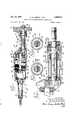
- Figure 1is a longitudinal sectional view with some parts in elevation, illustrating a portable electrically driven grinder embodying one form of flexible shaft or spindlecomprising my invention
- Fig. 2is an enlarged longitudinal sectional view of the flexible shaft portion of the tool and related parts embodying the present invention
- Fig. 3is a transverse sectional view taken on the line 3-3 of Fig. 2 looking in the direction of the arrows;
- Fig. 4is a transverse sectional view taken on the line 4 4 of Fig. 2 looking in the direction of the arrows;
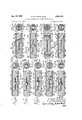
- Fig. 5is a longitudinal sectional view of a second form of flexible shaft comprising the present invention.
- Fig. 6is a transverse sectional view of the second form of flexible shaft taken on the line 6 6 of Fig. 5 looking in the direction of the arrows;
- Fig. 7is a longitudinal sectional view of a third form of flexible shaft comprising the present invention.
- Fig. 8is a transverse sectional view of the third form of flexible shaft taken on the line 8-8 of Fig. 7 looking in the direction of the arrows;
- Fig. 9is a longitudinal sectional of the fourth form of exible shaft comprising the present invention.
- Fig. 10is a transverse sectional view of the fourth form of flexible shaft taken on the line Ill- I0 of Fig. 9 looking in the direction of the arrows;
- Fig. 11is a longitudinal sectional view of a fifth form of flexible shaft comprising the present invention.
- Fig. 12is atransverse sectional view of the fifth form of flexible shaft taken on the line I2.l2 of Fig. 11 looking in the direction of the arrows;
- Fig. 13is a longitudinal sectional view of a sixth form of flexible shaft comprising the present invention.
- Fig. 14is a transverse sectional view of the sixth form of flexible shaft taken on the line I 4-I4 of Fig. 13 looking in the direction of the arrows;
- Fig. 15is a longitudinal sectional View of a seventh form of flexible shaft comprising the present invention.
- Fig. 16is a transverse sectional view of the seventh form of exible shaft taken on the line IB-IG of Fig. 15 and looking in the direction of the arrows;
- Fig. 17is a longitudinal sectional view of an eighth form of exible shaft comprising the present invention.
- Fig. 18is a transverse sectional view of the
- Fig. 19is a longitudinal sectional view of la ninth form of flexible shaft comprising the -Vpresent invention.
- Fig. 20is a transverse sectional view of the ninth form of flexible shaft taken on the line 20-20 in Fig. 19 looking in the direction of the arrows;
- Fig. 21is a longitudinal sectional view of a tenth form of exible shaft comprising the present invention.
- Fig. 22is a transverse sectional view of the tenth form of flexible shaft taken on the line 22-22 of Fig. 21 looking in the direction of the arrows.
- FIG. 1one preferred embodiment of flexible driving shaft or spindle comprising the present invention is illustrated therein applied to a portable, electrically driven, rotary grinder of conventional type.
- the grindercomprises a high frequency induction type electric motor 30 having a stator 3
- the rotor 33is xedly secured on a-rotor shaft 34, the respective ends of the shaft 34 projecting beyond the rotor 33 and being journaled in ball bearing units 36 and 31.
- the motor 30is electrically connected at its rearward end to current supply wires 38 of a cable 39 through a switch device 40 which includes a manually operable actuating member 4
- the cable 39extends to the switch 40 through the open end of a cylindrical handle member 43 covered by a rubber sleeve 44.
- a fan 45which serves to force cooling air, drawn in through casing openings 46. over the motor 30.
- the forward end of the rotor shaft 34is formed with gear teeth 41 which mesh with a to permit free rotation of the driving collar 60 relative to the clamp nut 56.
- an oil wick unit 62is mounted in the spindle casing 54 and affords proper lubrication of the forward end of a spindle retaining sleeve 12 and the forward bearing 53.
- is mounted on the clamp nut 56 and extends over the upper portion of the grinding wheel 58.
- are similar to each other in construction, their opposite ends being completely cylindrical, and their adjacent portions 64 and 66, respectively, being substantially half cylindrical and overlapping veach other in parallel relationship, thus complementing each rpinion gear 48 and this pinion gear is ilxed on the inner end of a ilexible driving shaft or spindle 49, which comprises the present invention.
- the flexible driving spindle 49comprises an inner or rearwardl section 50 and a forward section 5
- a spindle casing 54extending forwardly from its mounting on the center plate 35 of the motor casing 32.
- the bearing 53is retained within' the open end of the spindle casing 54 by a clamp nut 56 and a lock nut 51, each threadedly secured on the outer end of the spindle casing.
- a grinding wheel 58is secured on the forward end of the spindle section 6
- the rearward face vof the driving collar 68is provided with annular grooves 60a and ribs 60h which are adapted to receive and to be received within annular ribs 56a and grooves 56h, respectively, formed on the forward opposed face of the clamp nut 56, the clearance between the respective ribs and grooves being sufcient other to form a substantially complete cylindrical section at the central portion of the spindle.
- the half cylindrical portions 64 and 66are provided at their ends with radially directed transverse ribs or lugs 61 and 63, respectively, which project into transverse recesses 69 and 10, respectively, formed in the half cylindrica1 portions 66 and 64, respectively, adjacent the full cylindrical portions of the spindle sections 5D and 5
- the space formed between the two half cylindrical portions 64 and 66 and extending axially between the ribs 61 and 68 and diametrically from one side of the spindle to the other,is substantially iilled by a pad 1
- the overall operable length of the ilexible spindle 49in contrast to certain prior art structures, remains the same, the ilexibility of the spindle being accomplished solely by a non-lengthening relative rotational movement between the inner and outer spindle sections 50 and 5
- FIGs. 5 and 6there is illustrated a second embodiment of a flexible driving spindle comprising the present invention, which is similar in construction to the rst form above described.
- This embodimentcomprises spindle sections 80 and 8
- is provided with a radially directed transverse rib 82 which is received within a transverse recess 83 in the half cylindrical portion of the spindle section 80, there being suilicient clearance be'- tween the end face of the rib and the bottom of the recess to permit relative rotary movement therebetween.
- on each side of the rib 82are lled by pads 84 and 85, respectively, of rubber or other resilient material similar to the pad of the rst embodiment.
- are retained in assembled relation by a sleeve 86 which permits limited relative rotative movement between the sections.
- the outer sides of the rib 82 adjacent the sleeve 86are cut away as at 82a and 82h, as shown in Fig. 6, to provide clearance for relative rotational movement between the spindle sections during operation of the tool.
- 'I'he engagefent of the rib 82 in the recess 83serves to prevent relative axial movement between the spindle sections 80 and 8
- FIG. 7 and 8A third embodiment of the invention is shown in Figs. 7 and 8.
- are also formed with half cylindrical portions which overlap each other in parallel relationship, and these half cylindrical portions are provided with aligned hemispherical recesses 92 and 93, respectively, formed therein at the central portion thereof.
- These hemispherical rerecesses 92 and 93form a socket and are adapted to receive a retaining ball 94 which serves to prevent relative axial movement between the spindle sections 90 and 9
- is substantially filled by a pad 95 of rubber or other resilient material,
- the fourth form of the invention shown in Figs. 9 and v10is also quite similar to that of Figs. 7 and 8.
- are each provided with axially extending and transversely-curved recesses ⁇
- 03are in alignment and provide a cylindrical socket in which is received a cylindrical retaining roller
- 05 of rubber or other resilient materialis positioned in the space formed between the half cylindrical portions of the spindle sections
- These partsare likewise retained in assembled condition by a sleeve
- the fth embodiment of the present invention illustrated in Figs. 11 and 12 of the drawingsis quite similar to the form illustrated in Figs. 7 and 8 but is particularly adaptable to tools having spindles of smaller diameter.
- the half cylindrical portions of the spindle sections 0are provided with aligned hemispherical recesses
- the plurality of balls and recessesailord a strong retaining means for a spindle of a reduced diameter.
- 8is positioned in the space formed between the half cylindrical portions of the spindle sections I
- 0 and and partsare maintained in assembled relation by a sleeve
- FIG. 13 and 14A sixth form of the invention is illustrated in Figs. 13 and 14 which is similar in operation to the forms above described.
- This embodimentcomprises spindle sections
- 25is positioned in the clearance space between the half cylin drical portions of the spindle sections
- 24are cut away as at
- Figs. 15 and 16is an adaptation o! the form shown in Figs. 13 and14 to a spindle having a relatively smaller diameter.
- are provided with aligned and radially extending circular'recesses
- and theykare cut away on their outery sides
- 55is positioned in the space between the hal! cylindrical portions and extends longitudinally between the pins
- the parts of this embodimentare likewise maintained in assembled condition by a sleeve
- 55The rivets
- the last embodiment shown in Figs. 21 and 22comprises spindle sections
- are each provided with annular grooves
- 55are in alignment with annular grooves
- 55thus provide annular channels in which are inserted wire rings
- 55is provided by openings
- a ilex- 5 ible, multipart, rotary spindlecomprising a spindle section adapted to be drivingly connected with the tool member, a spindle section adapted to be operably connected with the the motor, each of said spindle sectionshaving an axiallyextending portion and said axially extending portions being 'disposed in overlapping but spaced relationship, a rubber pad positioned in the space between said overlapping spindle portions and adapted to' transmit driving torque from one spmcue section m me other' and to permit umxted relative rotation therebetween. and means for l preventing axial movement of said spindle sections relative to each other comprising a recess in one of said overlapping spindle portions and a projecting member on theJ other overlapping spindle portion extending into said recess.
- a iiexible, multipart, rotary spindlecomprising a spindle section adapted to be drivingly connected with the tool member. a spindle sec ⁇ tion adapted to be operablyconnectedwith the motor, each oi said spindle sections having an axially extending half-cylindrical portion and .saidhali-cylindrical portions being disposed in overlappingbut spaced relationship with their ilat faces opposed to each other, a resilient torque transmitting means comprising a rubber pad positioned between and in engagement with the opposed faces of said half-cylindrical portions and adapted to permit limited rotation of one spindle section relative to the other, and positive locking means for preventing axial movementoi said spindle sections relative to.
- each other upon relative rotation therebetweencomprising a radially directed recessin the iiat face oi one of said overlapping spindle portions extending transversely relative to the axis oi said spindle and a transversely extending 'member projecting from the face of the other overlapping spindle portion and extending into said recess.
- a flexible, multipart. rotary spmdlecomprising a spindle section adapted to be drivingly connectedwith the tool member, a spindle section adapted to be operably connected with 'the between which a rubber motor, each of said spindle sections having an axially extending and substantially half-cylindrical portion and said half-cylindrical portions being disposed in overlapping but spaced relationship with their at faces opposed to each other, a pad of compressible ⁇ resilient material disposed between and in engagement with the opposed faces of said half-cylindrical portions, said pad being adapted to transmit driving torque from one spindle section to the other while permitting limited relative rotation therebetween and said pad also being adapted to absorb operational vibrations of the tool member, sleeve means disposed concentrically around said half-cylindrical portions for retaining the same in assembled overlapping relation, at least one of said half-cylindrical portions having
- the device of claim 3further characterized in that said half-cylindrical portions are provided with a pair of aligned recesses in the opposed nat-faces thereof, said locking element is interengaged in said recesses, and said locking element is shaped relative to said recesses to permit limited relative rotative movement between the spindle sections.
- the device cf claim 3further characterized in that said half-cylindrical portions are provided with opposed aligned rounded recesses forming a rounded socket therebetween, said pad is provided with an aperture in alignment with said recesses, and said locking element comprises a rounded member positioned in said socket and extending ⁇ through said aperture.
Landscapes
- Engineering & Computer Science (AREA)
- Mechanical Engineering (AREA)
- Finish Polishing, Edge Sharpening, And Grinding By Specific Grinding Devices (AREA)
Description
G. B. LARSON ET AL 2 SHEETS-SHEET l www Jan. l5, 1952 FLEXIBLE SPINDLE FOR ROTARY POWER TOOLS Filed April 28, 1947 Jan. l5, 1952 G, B, LARSQN ET AL 2,582,873
FLEXIBLE SPINDLE FOR ROTARY POWER TOOLS Filed April 28, 1947 2 SHEETS--SHEET 2 Zarsam BY Jmejr/zam, 00M@ @,MQLM
JNVENToRs E www QN mvmww K Nmwhwm/.QITV Mo, QQ
Patented Jan. 15, 1952 FLEXIBLE SPINDLE FOR ROTARY 4 POWER TOOLS Gilbert B. Larson. Geneva, and James A. Perham, Aurora, IIL, assignors to Independent Pneumatic Tool Company, Chicago, Ill., a corpora- V tion of Delaware Application April 28, 1947, Serial No. 744,394
1o claims. l
This invention relates to portable rotary power tools and more particularly to a flexible driving shaft or spindle for tools of that general character, such as rotary grinders, whereby the vibrations occurring during operation of the tools may be eliminated, deadened or absorbed so as to prevent damage to the gears. bearings, `wires and other parts thereof.
It is well-recognized that the vibrations which occur in portable rotary power tools of the type having a motor for driving a spindle or shaft at a high rate of speed cause injury to the gears, bearings and other parts thereof. These vibrations tend to be somewhat more severe in rotary grinders and the results injury causes frequent breakdown of the tools, thereby increasing their operating costs and shortening their operable life. Some attempts have been made to eliminate such vibrations by one means or another but such attempts on the whole have not been entirely successful or commercially satisfactory. Some of these structures failed to sulciently reduce the vibrations to a satisfactory minimum while others, although approximating their intended purpose, possessed inherent structural deficiencies which rendered them also commercially unacceptable.
It is, therefore, one of the objects of the present invention to provide a flexible drive means for rotary tools, such as grinders, by means of which the vibrations occurring during application of the' tools to the work may be deadened or absorbed so as to prevent damage to various parts thereof.
Another object of thev present invention is to provide a flexible driving shaft or spindle for portable motor driven rotary tools, such as grinders, adapted to deaden or absorb operational vibrations for the prevention of damage and undue wear to gears, bearings and other parts thereof.
A further object of the present invention is to' provide a flexible, multipart driving shaft or spindle for rotary power tools, such as grinders. adapted to deaden or absorb operational vibrations. the component parts of the shaft being maintained in proper axial relationship upon relative rotation therebetween, and axial pressure of the shaft against the bearings. gears and other parts being therebyeliminated.
Other objects and advantages o! the present invention will become apparent as this description progresses, reference being had to the accompanying drawings. in which:
Figure 1 is a longitudinal sectional view with some parts in elevation, illustrating a portable electrically driven grinder embodying one form of flexible shaft or spindlecomprising my invention;
Fig. 2 is an enlarged longitudinal sectional view of the flexible shaft portion of the tool and related parts embodying the present invention;
Fig. 3 is a transverse sectional view taken on the line 3-3 of Fig. 2 looking in the direction of the arrows;
Fig. 4 is a transverse sectional view taken on theline 4 4 of Fig. 2 looking in the direction of the arrows;
Fig. 5 is a longitudinal sectional view of a second form of flexible shaft comprising the present invention; i
Fig. 6 is a transverse sectional view of the second form of flexible shaft taken on theline 6 6 of Fig. 5 looking in the direction of the arrows;
Fig. 7 is a longitudinal sectional view of a third form of flexible shaft comprising the present invention;
Fig. 8 is a transverse sectional view of the third form of flexible shaft taken on the line 8-8 of Fig. 7 looking in the direction of the arrows;
Fig. 9 is a longitudinal sectional of the fourth form of exible shaft comprising the present invention;
Fig. 10 is a transverse sectional view of the fourth form of flexible shaft taken on the line Ill- I0 of Fig. 9 looking in the direction of the arrows;
Fig. 11 is a longitudinal sectional view of a fifth form of flexible shaft comprising the present invention; I
Fig. 12 is atransverse sectional view of the fifth form of flexible shaft taken on the line I2.l2 of Fig. 11 looking in the direction of the arrows;
Fig. 13 is a longitudinal sectional view of a sixth form of flexible shaft comprising the present invention;
Fig. 14 is a transverse sectional view of the sixth form of flexible shaft taken on the line I 4-I4 of Fig. 13 looking in the direction of the arrows;
Fig. 15 is a longitudinal sectional View of a seventh form of flexible shaft comprising the present invention; v
Fig. 16 is a transverse sectional view of the seventh form of exible shaft taken on the line IB-IG of Fig. 15 and looking in the direction of the arrows;
Fig. 17 is a longitudinal sectional view of an eighth form of exible shaft comprising the present invention.
Fig. 18 is a transverse sectional view of the |8|8 of Fig.y 17 looking in the direction of vthe arrows;
Fig. 19 is a longitudinal sectional view of la ninth form of flexible shaft comprising the -Vpresent invention;
Fig. 20 is a transverse sectional view of the ninth form of flexible shaft taken on the line 20-20 in Fig. 19 looking in the direction of the arrows;
Fig. 21 is a longitudinal sectional view of a tenth form of exible shaft comprising the present invention; and
Fig. 22 is a transverse sectional view of the tenth form of flexible shaft taken on the line 22-22 of Fig. 21 looking in the direction of the arrows.
Referring now more particularly to Figs. 1 to 4, inclusive, of the drawings, one preferred embodiment of flexible driving shaft or spindle comprising the present invention is illustrated therein applied to a portable, electrically driven, rotary grinder of conventional type. although it is to be understood that the present invention may be applied to other rotary power tools driven by other power means, such as a pneumatic motor, for the accomplishment of similar objects. The grinder comprisesa high frequency induction type electric motor 30 having astator 3| secured within a cylindrical casing 32 and a rotor 33 mounted in the usual manner within thestator 3|. The rotor 33 is xedly secured on a-rotor shaft 34, the respective ends of the shaft 34 projecting beyond the rotor 33 and being journaled inball bearing units ball bearing unit 36 is mounted in anintegral cross plate 32a of the casing 32 and the forward bearingunit 31 is supported in a. center plate 35 secured in the forward end of the casing. The motor 30 is electrically connected at its rearward end to current supply wires 38 of acable 39 through aswitch device 40 which includes a manually operable actuatingmember 4| slidably mounted in the handle portion 42 in the conventional manner. Thecable 39 extends to theswitch 40 through the open end of acylindrical handle member 43 covered by a rubber sleeve 44. On the rotor shaft 34 between thebearing unit 31 and the motor 30 there is secured a fan 45 which serves to force cooling air, drawn in throughcasing openings 46. over the motor 30.
The forward end of the rotor shaft 34 is formed with gear teeth 41 which mesh with a to permit free rotation of the driving collar 60 relative to theclamp nut 56. Rearwardly of thebearing 53, anoil wick unit 62 is mounted in thespindle casing 54 and affords proper lubrication of the forward end of aspindle retaining sleeve 12 and the forward bearing 53. Awheel guard 6| is mounted on theclamp nut 56 and extends over the upper portion of the grinding wheel 58.
As shown more specifically in Figs. 2 to 4, inclusive, of the drawings, the rear and front spindle sections 50 and 5| are similar to each other in construction, their opposite ends being completely cylindrical, and their adjacent portions 64 and 66, respectively, being substantially half cylindrical and overlapping veach other in parallel relationship, thus complementing each rpinion gear 48 and this pinion gear is ilxed on the inner end of a ilexible driving shaft orspindle 49, which comprises the present invention. Theflexible driving spindle 49 comprises an inner or rearwardl section 50 and a forward section 5|, which spindle sections are journaled inball bearings
and outer ends of aspindle casing 54 extending forwardly from its mounting on the center plate 35 of the motor casing 32.- Thebearing 53 is retained within' the open end of thespindle casing 54 by aclamp nut 56 and a lock nut 51, each threadedly secured on the outer end of the spindle casing.
A grinding wheel 58 is secured on the forward end of thespindle section 6| for rotation therewith by a nut 59 which serves to clamp the wheel against a driving collar 60 keyed to the yspindle section 5|. The rearward face vof the driving collar 68 is provided withannular grooves 60a and ribs 60h which are adapted to receive and to be received within annular ribs 56a and grooves 56h, respectively, formed on the forward opposed face of theclamp nut 56, the clearance between the respective ribs and grooves being sufcient other to form a substantially complete cylindrical section at the central portion of the spindle. The half cylindrical portions 64 and 66 are provided at their ends with radially directed transverse ribs or lugs 61 and 63, respectively, which project intotransverse recesses 69 and 10, respectively, formed in the half cylindrica1 portions 66 and 64, respectively, adjacent the full cylindrical portions of the spindle sections 5D and 5|. By the foregoing Yinterengagement of the ribs 61 and 68 in therecesses 69 and 10, relative axial movement between the spindle sections 50 and 5| is prevented. There is, however, sufcient clearance between the top faces of the ribs 61 and 68 and the bottoms of therecesses 69 and 10 to permit the necessary relative rotation between the spindle sections.
The space formed between the two half cylindrical portions 64 and 66 and extending axially between the ribs 61 and 68 and diametrically from one side of the spindle to the other, is substantially iilled by apad 1| of rubber or other resilient material capable of absorbing or deadening operational shocks and rotational vibra.-v
limited rotary movement in either direction between the two spindle sections.
Thus, when the motor 30 is operated, the grinding wheel 58 is rotated through the rotation of the rotor shaft 34, the gear 41, the pinion 48 and the flexiblemultipart spindle 49, the driving torque of the inner spindle section 50 being transmitted to the outer or forward spindle 'section 5| through therubber pad 1|. With this construction, when the grinding wheel 58 is applied to the work to be ground, the consequent shocks and rotational vibrations that would normally be transmitted up into the tool so as to damage the gears, bearings and other parts, are considerably deadened and absorbed by the flexiblerubber drive pad 1|, `and. little or no shock and vibration passes on up into the tool through the inner spindle section 50. Because of the compressibility and resiliency of the pad 1l, slight relative rotational movement of one of the spindle sections with respect to the other is permitted so that the vibratory rotation .is absorbed by the rubber pad in a damping action. Consequently, the damage to the gears, bearings and other parts normally resulting from such shocks and vibration is eliminated, thereby reducing the overall maintenance and repair expense of the tool and extending its operable life.
Upon relative rotative movement between the spindle sections 50 and 5| and under all degrees of vibration and shock, the overall operable length of theilexible spindle 49, in contrast to certain prior art structures, remains the same, the ilexibility of the spindle being accomplished solely by a non-lengthening relative rotational movement between the inner and outer spindle sections 50 and 5|. No axial pressure or thrust on the various gears and bearings is built up and, consequently, injury to such parts which would normally result from such elongation, is also eliminated. While the ribs 61 and 68 and therecesses 69 and 10 of the spindle sections 50 and serve as a positive means for preventing relative axial movement therebetween, the rubber pad because of its high frictional engagement with the spindle sections.. also serves to prevent such relative axial movement and under certain operating conditions the positive interengaging means could be eliminated with satisfactory results.
In Figs. 5 and 6 there is illustrated a second embodiment of a flexible driving spindle comprising the present invention, which is similar in construction to the rst form above described. This embodiment comprisesspindle sections 80 and 8| having complete cylindrical portions at their opposite ends and half cylindrical portions at their adjacent ends which overlap each other in parallel relationship. The spindle section 8| is provided with a radially directedtransverse rib 82 which is received within atransverse recess 83 in the half cylindrical portion of thespindle section 80, there being suilicient clearance be'- tween the end face of the rib and the bottom of the recess to permit relative rotary movement therebetween. The spaces that are formed between the half cylindrical portions of thespindle sections 80 and 8| on each side of therib 82 are lled bypads 84 and 85, respectively, of rubber or other resilient material similar to the pad of the rst embodiment. As in the rst form, thespindle sections 80 and 8| are retained in assembled relation by asleeve 86 which permits limited relative rotative movement between the sections.
The outer sides of therib 82 adjacent thesleeve 86 are cut away as at 82a and 82h, as shown in Fig. 6, to provide clearance for relative rotational movement between the spindle sections during operation of the tool. 'I'he engagefent of therib 82 in therecess 83 serves to prevent relative axial movement between thespindle sections 80 and 8| while the rubber pad 84, as in the iirst form, serves to transmit the driving torque from the spindle section'80 to the spindle section 8| and further serves to deaden and ablsorb the rotational vibrations occurring when the grinding wheel 58 is applied to the work.
A third embodiment of the invention is shown in Figs. 7 and 8. In this form thespindle sections 90 and 9| are also formed with half cylindrical portions which overlap each other in parallel relationship, and these half cylindrical portions are provided with alignedhemispherical recesses 92 and 93, respectively, formed therein at the central portion thereof. These hemispherical rerecesses 92 and 93 form a socket and are adapted to receive a retainingball 94 which serves to prevent relative axial movement between thespindle sections 90 and 9|, similar to the ribs of the above described forms. 'Ihe space formed between the half cylindrical portions of thespindle sections 90 and 9| is substantially filled by apad 95 of rubber or other resilient material,
6 there being a. circular opening through the center of this pad through which the retaininglball 94 may extend from onerecess 92 to the other recess 93. The above described parts are maintained in operable relation by a sleeve 96 which is adapted to rotate with the spindle sections and 9| but to permit limited relative rotation between those sections. The operation of this third form is substantially the same as that of the first two forms, the construction providing for slight relative rotation between thespindle sections 90 and 9| and relative axial movement therebetween being prevented.
The fourth form of the invention shown in Figs. 9 and v10 is also quite similar to that of Figs. 7 and 8. The half cylindrical portions of the spindle sections |00 and l0| are each provided with axially extending and transversely-curved recesses \|02 and |03, respectively. 'Ihese recesses |02 and |03 are in alignment and provide a cylindrical socket in which is received a cylindrical retaining roller |04 which serves to prevent relative axial movement between the spindle sections |00 and |0|. A pad |05 of rubber or other resilient material is positioned in the space formed between the half cylindrical portions of the spindle sections |00 and |0| and is provided with a central opening through which the cylindrical retaining roller |04 may extend from one recess |02 to the other recess 03. These parts are likewise retained in assembled condition by a sleeve |06 which rotates with the spindle sections |00 and |0| but permits slight relative rotation therebetween.
The fth embodiment of the present invention illustrated in Figs. 11 and 12 of the drawings is quite similar to the form illustrated in Figs. 7 and 8 but is particularly adaptable to tools having spindles of smaller diameter. In this form the half cylindrical portions of the spindle sections 0 and are provided with aligned hemispherical recesses |I2 and ||3 and ||4 and H5, respectively, into which are received retaining balls I I6 and which serve to prevent relative axial movement between the spindle sections ||0 and The plurality of balls and recesses ailord a strong retaining means for a spindle of a reduced diameter. A rubber pad ||8 is positioned in the space formed between the half cylindrical portions of the spindle sections I| 0 and |I| and extends axially between the balls ||6 and ||l and transversely ofthe spindle sections from side to side. The spindle sections ||0 and and parts are maintained in assembled relation by a sleeve ||B which permits limited relative rotation between the spindle sections.
A sixth form of the invention is illustrated in Figs. 13 and 14 which is similar in operation to the forms above described. This embodiment comprises spindle sections |20 and |2| having half cylindrical portions provided with aligned and radially extending circular recesses |22 and |23 in which are received a transverse cylindrical retaining pin |24 which serves to prevent relative axial movement between the spindle sections |20 and I2 I. A rubber pad |25 is positioned in the clearance space between the half cylin drical portions of the spindle sections |20 and |2| and has a central opening through which the retaining pin |24 may project from the recess |22 into the recess |23. As shown in Fig. 14, the outer sides of the retaining pin |24 are cut away as at |24a so as to permit limited relative rotational movement between the spindle sections |20 and |2|.
i 7 4 e next pmbodiment illustrated in Figs. 15 and 16 is an adaptation o! the form shown in Figs. 13 and14 to a spindle having a relatively smaller diameter. In this embodiment the halt, cylindrical portions or the spindle sections |55 and |5| are provided with aligned and radially extending circular'recesses |52 and |55 and |55 and |55, respectively, in which are received re. taining pins |55 and |51, respectively. The re` 'taining pins |55 and l|51 sei-veto prevent relative axial movement between the spindle sections |55 and |5| and theyk are cut away on their outery sides |55a and`|31a to permit slight relative rotational movement between thel spindle sections. A rubber pad |55 is positioned in the space between the hal! cylindrical portions and extends longitudinally between the pins |55 and |51 and from side to side of the spindle sections |55 and |5|. The parts of this embodiment are likewise maintained in assembled condition by a sleeve |55 which permits slight relative rotational |5| during tool operation. i,
'I'he eighth embodiment of the invention which is shown' in Figs. 17 and 18 of the drawings is` similar to that of Figs. 13 and 14, except that the movement between the spindle sections |55 and retaining pin |50 projects entirely through I ber pad |55 is confined within the space between,`
the hal! 'cylindrical portions of the spindle sections |45 and |55 and is provided with a circular central opening through which the pin |55 may extend. 'I'he pin |55 is held within the openings |5| and |52 and thespindle sections are retained in assembled condition by a sleeve |55.' Although the pin |55 extends entirely through the spindle sections, the operation of this embodiment is the same as those previously described.
The last two embodiments of the invention shown in Figs. 19 and 20 and in Figs. 21 and 22, respectivily. are somewhat different from the embodiments above described 'in that relative i' axial movement of the spindle sections is re strained by engagement of the retaining means with the sleeve rather than between the sections themselves. In the embodiments shown in Figs. ,19 and 20 the spindle sections |50 and |5| are provided with diametrically extending holes |52 and formed in the respective i'ull cylindrical ends of the spindle sections.v The holes |52 and |55 are adapted to receive rivet pins |55 and |55, respectively, which extend therethrough and through aligned openings |56. |55'and |51, |51. respectively, in a retaining sleeve |55. The rivets |55 and |55 are provided with enlarged heads which serve to retain the pins in operable position. As shown in Fig. 20 the holes |52 and |55 are somewhat larger than the-diameter of the rivets |54 and |55 so as to permit relative rota-` tive movement between the spindle sections |55 and |5I.. As in the other embodiments. a rubber pad |55 is positioned in the space between the half cylindrical portions of the spindle sections-|55 and |5| and serves to absorb the rotational vibrations occurring durlng engagement of the grinding wheel with the work.
The last embodiment shown in Figs. 21 and 22 comprises spindle sections |55 and |5| having half cylindrical portions pad `|55 is confined. Spindle sections |55 and |5| are each provided with annular grooves |55 and |55 in the outer peripheries of the spindle sectionsl55 and |5I. respectively. These annular grooves |55 and |55 are in alignment with annular grooves |55 and |55 formed in the inner periphery oi a retaining sleeve |51. The aligned grooves |55 and |55 and |54 and |55 thus provide annular channels in which are inserted wire rings |55 and |55, respectively, these wire rings serving to prevent .relative axial movement of the spindle sections |55 and |5| relative to each other and relative to the sleeve 51. As shown in Fig. 22, access to the annular grooves for insertion of th'e wire rings |55 and |55 is provided by openings |15 in the. sleeve |51.
. Although-there have beenshown in the drawings and described above a number of embodiments o1' the present invention. it is apparent that modiilcations may be made in the structural details thereof without departing from the spir and scope of the. appended claims.
We claim: f l. In a rotary, motor-,driven tool having a tool member for engagement with the work. a ilex- 5 ible, multipart, rotary spindle comprising a spindle section adapted to be drivingly connected with the tool member, a spindle section adapted to be operably connected with the the motor, each of said spindle sectionshaving an axiallyextending portion and said axially extending portions being 'disposed in overlapping but spaced relationship, a rubber pad positioned in the space between said overlapping spindle portions and adapted to' transmit driving torque from one spmcue section m me other' and to permit umxted relative rotation therebetween. and means for l preventing axial movement of said spindle sections relative to each other comprising a recess in one of said overlapping spindle portions and a projecting member on theJ other overlapping spindle portion extending into said recess.
2. In a portable rotary, motor driven tool` having a tool member for engagement with the work, a iiexible, multipart, rotary spindle comprising a spindle section adapted to be drivingly connected with the tool member. a spindle sec` tion adapted to be operablyconnectedwith the motor, each oi said spindle sections having an axially extending half-cylindrical portion and .saidhali-cylindrical portions being disposed in overlappingbut spaced relationship with their ilat faces opposed to each other, a resilient torque transmitting means comprising a rubber pad positioned between and in engagement with the opposed faces of said half-cylindrical portions and adapted to permit limited rotation of one spindle section relative to the other, and positive locking means for preventing axial movementoi said spindle sections relative to.
each other upon relative rotation therebetween comprising a radially directed recessin the iiat face oi one of said overlapping spindle portions extending transversely relative to the axis oi said spindle and a transversely extending 'member projecting from the face of the other overlapping spindle portion and extending into said recess.
3. In a portable rotary, motor driven tool having a tool member for engagement with the work, a flexible, multipart. rotary spmdle comprising a spindle section adapted to be drivingly connectedwith the tool member, a spindle section adapted to be operably connected with 'the between which a rubber motor, each of said spindle sections having an axially extending and substantially half-cylindrical portion and said half-cylindrical portions being disposed in overlapping but spaced relationship with their at faces opposed to each other, a pad of compressible `resilient material disposed between and in engagement with the opposed faces of said half-cylindrical portions, said pad being adapted to transmit driving torque from one spindle section to the other while permitting limited relative rotation therebetween and said pad also being adapted to absorb operational vibrations of the tool member, sleeve means disposed concentrically around said half-cylindrical portions for retaining the same in assembled overlapping relation, at least one of said half-cylindrical portions having a recess therein, and a rigid non-resilient locking element extending transversely of said half-cylindrical portions and coacting with said recess and the other of saidhalf-cylindrical Aportions for preventing relative axial movement between said spindle sections when said half-cylindrical portions are in said assembled overlapping relation.
4. The device ofclaim 3 further characterized in that said half-cylindrical portions are provided with opposed aligned recesses and said locking element is interengaged in said recesses.
5. The device ofclaim 3 further characterized in that said half-cylindrical portions are provided with a pair of aligned recesses in the opposed nat-faces thereof, said locking element is interengaged in said recesses, and said locking element is shaped relative to said recesses to permit limited relative rotative movement between the spindle sections.
6. 'I'he device ofclaim 3 further characterized in that said half-cylindrical portions are provided with opposed aligned rounded recesses forming a rounded socket therebetween and said locking element comprises a rounded member positioned in said socket.
7. The device cf claim 3 further characterized in that said half-cylindrical portions are provided with opposed aligned rounded recesses forming a rounded socket therebetween, said pad is provided with an aperture in alignment with said recesses, and said locking element comprises a rounded member positioned in said socket and extending `through said aperture.
8. The device ofclaim 3 further characterized in that said half-cylindrical portions are provided with aligned substantially hemispherical recesses defining a socket therebetween and said `locking element comprises a retaining ball dis- REFERENCES CITED The following references are of record in the le of this patent:
UNITED STATES PATENTS Number Name Date 210,268 Replogle Nov. 26, 1878 1,039,342 Wheelock Sept. 24, 1912 1,548,629 Pfander Aug. 4, 1925 2,100,232 Barry Nov. 23, 1937 2,112,695 Forss Mar. 29, 1938 2,259,797 Cohen Oct. 21, 1941 FOREIGN PATENTS Number Country Date 798,315 France 1936
Priority Applications (1)
| Application Number | Priority Date | Filing Date | Title |
|---|---|---|---|
| US744394AUS2582873A (en) | 1947-04-28 | 1947-04-28 | Flexible spindle for rotary power tools |
Applications Claiming Priority (1)
| Application Number | Priority Date | Filing Date | Title |
|---|---|---|---|
| US744394AUS2582873A (en) | 1947-04-28 | 1947-04-28 | Flexible spindle for rotary power tools |
Publications (1)
| Publication Number | Publication Date |
|---|---|
| US2582873Atrue US2582873A (en) | 1952-01-15 |
Family
ID=24992554
Family Applications (1)
| Application Number | Title | Priority Date | Filing Date |
|---|---|---|---|
| US744394AExpired - LifetimeUS2582873A (en) | 1947-04-28 | 1947-04-28 | Flexible spindle for rotary power tools |
Country Status (1)
| Country | Link |
|---|---|
| US (1) | US2582873A (en) |
Cited By (7)
| Publication number | Priority date | Publication date | Assignee | Title |
|---|---|---|---|---|
| US2742769A (en)* | 1953-02-16 | 1956-04-24 | Baldwin Lima Hamilton Corp | Coupling |
| US3692370A (en)* | 1971-09-23 | 1972-09-19 | John R Hasz | Damping means for increasing the minimum dynamic stiffness of a shaft |
| US5852949A (en)* | 1996-07-30 | 1998-12-29 | Thermo Fibertek Inc. | Segmented screw traversing mechanism |
| US6186879B1 (en)* | 1997-03-10 | 2001-02-13 | Atlas Copco Tools Ab | Rotary power tool with an extended output shaft |
| US20080071214A1 (en)* | 2006-09-19 | 2008-03-20 | Locke Christopher B | System and method for locating fluid leaks at a drape of a reduced pressure delivery system |
| EP2944421A1 (en)* | 2014-05-16 | 2015-11-18 | Schaudt Mikrosa GmbH | Damping device for a spindle of a grinding machine, and grinding machine including a damping device |
| US20170058927A1 (en)* | 2015-08-28 | 2017-03-02 | The Boeing Company | Non-Linear Scarf Joint |
Citations (7)
| Publication number | Priority date | Publication date | Assignee | Title |
|---|---|---|---|---|
| US210268A (en)* | 1878-11-26 | Improvement in mill-spindles | ||
| US1039342A (en)* | 1911-06-28 | 1912-09-24 | Etta W Wheelock | Coupling for rotary tools. |
| US1548629A (en)* | 1923-10-01 | 1925-08-04 | William C Durant | Cushion coupling |
| FR798315A (en)* | 1935-11-26 | 1936-05-14 | So-called "cardan" motion transmission system allowing play to be taken up | |
| US2100232A (en)* | 1936-05-19 | 1937-11-23 | Philco Radio & Television Corp | Flexible coupling for radio volume control or the like |
| US2112695A (en)* | 1934-07-23 | 1938-03-29 | Independent Pneumatic Tool Co | Portable electric tool |
| US2259797A (en)* | 1938-12-08 | 1941-10-21 | Maurice M Cohen | Manicuring tool holder |
- 1947
- 1947-04-28USUS744394Apatent/US2582873A/ennot_activeExpired - Lifetime
Patent Citations (7)
| Publication number | Priority date | Publication date | Assignee | Title |
|---|---|---|---|---|
| US210268A (en)* | 1878-11-26 | Improvement in mill-spindles | ||
| US1039342A (en)* | 1911-06-28 | 1912-09-24 | Etta W Wheelock | Coupling for rotary tools. |
| US1548629A (en)* | 1923-10-01 | 1925-08-04 | William C Durant | Cushion coupling |
| US2112695A (en)* | 1934-07-23 | 1938-03-29 | Independent Pneumatic Tool Co | Portable electric tool |
| FR798315A (en)* | 1935-11-26 | 1936-05-14 | So-called "cardan" motion transmission system allowing play to be taken up | |
| US2100232A (en)* | 1936-05-19 | 1937-11-23 | Philco Radio & Television Corp | Flexible coupling for radio volume control or the like |
| US2259797A (en)* | 1938-12-08 | 1941-10-21 | Maurice M Cohen | Manicuring tool holder |
Cited By (10)
| Publication number | Priority date | Publication date | Assignee | Title |
|---|---|---|---|---|
| US2742769A (en)* | 1953-02-16 | 1956-04-24 | Baldwin Lima Hamilton Corp | Coupling |
| US3692370A (en)* | 1971-09-23 | 1972-09-19 | John R Hasz | Damping means for increasing the minimum dynamic stiffness of a shaft |
| US5852949A (en)* | 1996-07-30 | 1998-12-29 | Thermo Fibertek Inc. | Segmented screw traversing mechanism |
| US6186879B1 (en)* | 1997-03-10 | 2001-02-13 | Atlas Copco Tools Ab | Rotary power tool with an extended output shaft |
| US20080071214A1 (en)* | 2006-09-19 | 2008-03-20 | Locke Christopher B | System and method for locating fluid leaks at a drape of a reduced pressure delivery system |
| EP2944421A1 (en)* | 2014-05-16 | 2015-11-18 | Schaudt Mikrosa GmbH | Damping device for a spindle of a grinding machine, and grinding machine including a damping device |
| US20150328744A1 (en)* | 2014-05-16 | 2015-11-19 | Schaudt Mikrosa Gmbh | Damping device for a spindle of a grinding machine and grinding machine comprising a damping device |
| US9694462B2 (en)* | 2014-05-16 | 2017-07-04 | Schaudt Mikrosa Gmbh | Damping device for a spindle of a grinding machine and grinding machine comprising a damping device |
| US20170058927A1 (en)* | 2015-08-28 | 2017-03-02 | The Boeing Company | Non-Linear Scarf Joint |
| US10294970B2 (en)* | 2015-08-28 | 2019-05-21 | The Boeing Company | Non-linear scarf joint |
Similar Documents
| Publication | Publication Date | Title |
|---|---|---|
| US3720269A (en) | Portable torque and impulse transmitting machine | |
| US2273626A (en) | Two-speed sander | |
| US3688522A (en) | Overload clutch permitting torque transmission during overload | |
| US2582873A (en) | Flexible spindle for rotary power tools | |
| CN100578041C (en) | Vibration damping device and transmission device with such a vibration damping device | |
| US3457438A (en) | Double insulated hand tool with insulating shaft couplings | |
| US2348025A (en) | Clutch and brake mechanism | |
| US2542154A (en) | Torque transmitting and cushioning means | |
| US2341497A (en) | Impact tool | |
| CN102441832A (en) | Rotary tools | |
| US3396593A (en) | Transmission and clutch for rotary tool | |
| US2967315A (en) | Hand-propelled polishing machine | |
| US2350631A (en) | Portable hand-held electric tool | |
| US2170036A (en) | Small electric machine tool | |
| US2753965A (en) | Impact tools | |
| US2285639A (en) | Impact clutch | |
| US2399622A (en) | Work gripping device | |
| US3686895A (en) | Damped shaft coupling | |
| US3456743A (en) | Portable power tools | |
| US2842994A (en) | Rotary impact wrench | |
| US2489102A (en) | Compound tool | |
| US1581699A (en) | Surfacing machine | |
| US2112695A (en) | Portable electric tool | |
| US1259132A (en) | Portable electric tool. | |
| US2274778A (en) | Rotary power tool |