US2499470A - Amusement device - Google Patents
Amusement deviceDownload PDFInfo
- Publication number
- US2499470A US2499470AUS2499470DAUS2499470AUS 2499470 AUS2499470 AUS 2499470AUS 2499470D AUS2499470D AUS 2499470DAUS 2499470 AUS2499470 AUS 2499470A
- Authority
- US
- United States
- Prior art keywords
- carriage
- track
- car
- truck
- secured
- Prior art date
- Legal status (The legal status is an assumption and is not a legal conclusion. Google has not performed a legal analysis and makes no representation as to the accuracy of the status listed.)
- Expired - Lifetime
Links
- 238000010276constructionMethods0.000description4
- 238000005096rolling processMethods0.000description2
- 239000011521glassSubstances0.000description1
- 238000004519manufacturing processMethods0.000description1
Images
Classifications
- A—HUMAN NECESSITIES
- A63—SPORTS; GAMES; AMUSEMENTS
- A63G—MERRY-GO-ROUNDS; SWINGS; ROCKING-HORSES; CHUTES; SWITCHBACKS; SIMILAR DEVICES FOR PUBLIC AMUSEMENT
- A63G7/00—Up-and-down hill tracks; Switchbacks
Definitions
- the present inventionrelates to new and useful improvements in amusement devices, and more particularly to devices of this character wherein persons may travel in a carriage along a continuous track.
- An important object of the present inventionis to provide a spherical member supported on the carriage to simulate a bowling ball, and the track is constructed to simulate a bowling alley with tenpins positioned therein and in the path of the ball to be struck thereby as the carriage moves over the track.
- a further object of the inventionis to provide a power-operated carriage for moving over the track and on which a spherical passenger car is mounted for rotary movement, together with control means operated by the passengers of the car to swing or rotate the car to simulate a ball-rolling movement.
- a further object of the inventionis to provide a device of this character of a highly entertaining and amusing nature, and which at the same time is simple and practical in construction, relatively inexpensive to manufacture, and otherwise well adapted for the purposes for which the same is intended.
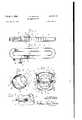
- Figure 1is a side elevational view of the track with the carriage mounted in position thereon.
- Figure 2is a top plan view.
- Figure 3is an enlarged fragmentary side elevational view, showing-the counterbalanced tenpins mounted in position beneath the track in the path of the spherical car.
- Figure 4is a side elevational view showing the car in position when striking the tenpins.
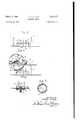
- Figure 5is a horizontal sectional view of the car.
- Figure 6is a sectional view taken on a line 66 of Figure 5.
- Figure 7is a fragmentary side elevational view of the car showing the drive connection for rotating the same.
- Figure 8is an enlarged fragmentary sectional tion, the numeral 5 designates the track generally which is composed of a pair of relatively long runs 6 arranged in spaced relation and having their adjacent ends interconnected by curved runs to form a track of oval form.
- the track 5is supported in an elevated position upon posts I in a substantially horizontal plane.
- a car designed generally at 8is mounted for traveling on the rails, the car including a truck 9 having front and rear pairs of wheels Ill and l I journaled thereon for traveling on the rails.-
- the wheelsare preferably of flanged construction.
- each front wheelTo the inside of each front wheel is secured a bevel gear I2 driven by a similar gear 13 secured to one end of the shaft l4 of an electric motor l5, one of the motors being mounted at each side of the frame 9.
- a carriage I6is provided with trunnions l1 projecting outwardly at diametrically opposite sides and are journaled in bearing brackets l8 at the sides of the truck 9.
- the inner ends of the trunnions Hare journaled in bearings l9 in the sides of the car, and secured to each trunnion is a bevel gear 20 which is driven by a similar gear 2
- a control bar 22having pins 23 projecting laterally at each end thereof for slidable movement through openings 24 in the sides of the car.
- the gear 20is provided with a pair of arcuate slots 25 and into which the pins 23 are adapted to enter when pressure is applied to the bar 22 in a direction to project the pins into the slot.
- the pinsare retracted by means of a coil spring 26 positioned between the bar and the bearing l9.
- the carriage IEwill b ro tated by the gears 20 and 2
- a seat 21is mounted in the carriage l6 for one or more occupants, and a counterbalancing weight 28 is secured in the car beneath the seat to normally maintain the seat in an upright position.
- the front of the carriageis provided with a hinged door 29 conforming to the curvature of the car and including a glass window 30.
- Positioned below the rails 6 at one portion thereof is an upstanding rack 3
- the upper ends of the tenpins 32are disposed in the path of the carriage l6 during its movement over the tracks 5.
- a loading platform 34by means of which passengers may enter the carriage E6, the passengers being secured on the seat 2'1 by straps 34 and the passengers may brace themselves by a footrest 35 secured in the car; After the passengers have entered the car, the door 29 may be secured against accidental opening movement by a comventional form of catch 36.
- a control switch 31is mounted on a part of the loading platform 34 for control by an attendant, the switch being connected to a suitable source of current 38.
- the switch 31is closed, whereby the motors 15 will be operated to drive the car 8 along the rails 6 of the track.
- the ball 16will strike the tenpins in a manner simulatin the knocking down of the pins by a bowling ball.
- the bottoms of the tenpinsare counterbalanced or provided with a weight 39 to return the pins to an upright position.
- the carriage 16may be rotated on the trunnions H by an occupant of the car pressing the bar 22 to cause an engagement of the pins 23 in the slots 25 of the gear 20. Accordingly, by operating the control bar 22, the carriage 16 may be completely rotated or may be caused to swing backwardly and forwardly, under control of the passengers of the car.
- An amusement devicecomprising a looped track disposed in-a horizontal plane, said track having a pair of relatively long runs arranged in spaced relation,,curved runs interconnecting the adjacent ends of said long runs, a truck mounted for travel along said track, a spherical carriage for receiving an occupant supported on said truck andmounted for rotation about a horizontal axis extending laterally of thetruck, means for propelling said truck along said track, said means comprising a pair of front wheels mountedon said,
- clutch meansdisposed inwardly of and spaced'from each'of the beveled gears on said carriage and mounted for extensile and contractile movement through the adjacent. side of said carriage into and out of locking engagement with the adjacent one of said carriage beveled gears, and manually actuable means disposed within said carriage and operatively connected to each of said clutch means for effecting the extensile and contractile movement of the latter.
- An amusement devicecomprising a looped track disposed in. a horizontal plane, said track having a pair of relatively long runs arranged in spaced relation, curved runs interconnectin the adjacent ends of said long runs, a truck mounted for travel along said track, a spherical carriage for receiving an occupant supported on said'truck and mountedfor rotation about a horizontal axis extending laterally of the truck, means for propelling said truck along said track, and means for rotating said carriage about a horizontal axis at the will of the occupant, said last named means comprising a pair of bevel gears secured to opposite sides of said carriage, a driving gear 0peratively engaging each of said bevel gears, amotor mounted on each side of said truck and operatively connected to each of said driving gears to rotate the latter, a clutch.
Landscapes
- Seats For Vehicles (AREA)
Description
March 7, 1950 H. D. DUNCAN ZA-QQA'YQ AMUSEMENT DEVICE Filed May 24, 1946 k 2 Sheets-Sheet l INVEN OR HAROLD D DUNCAN ATTORNEYS March 7, 195% H. D. DUNCAN AMUSEMENT DEVICE 2 Sheets-Sheet 2 Filed May 24, 1946 Hag/k?! INVENTOR HKROLD D DUNCAN a BY v Q I I I 4 fl ATTO R N EY'S Patented Mar. 7, i950 UNITED STATES PATENT OFFICE 2 Claims.
The present invention relates to new and useful improvements in amusement devices, and more particularly to devices of this character wherein persons may travel in a carriage along a continuous track.
An important object of the present invention is to provide a spherical member supported on the carriage to simulate a bowling ball, and the track is constructed to simulate a bowling alley with tenpins positioned therein and in the path of the ball to be struck thereby as the carriage moves over the track.
A further object of the invention is to provide a power-operated carriage for moving over the track and on which a spherical passenger car is mounted for rotary movement, together with control means operated by the passengers of the car to swing or rotate the car to simulate a ball-rolling movement.
A further object of the invention is to provide a device of this character of a highly entertaining and amusing nature, and which at the same time is simple and practical in construction, relatively inexpensive to manufacture, and otherwise well adapted for the purposes for which the same is intended.
Other objects and advantages reside in the details of construction and operation as more fully hereinafter described and claimed, reference being had to the accompanying drawings forming part hereof, wherein like numerals refer to like parts throughout, and in which:
Figure 1 is a side elevational view of the track with the carriage mounted in position thereon.
Figure 2 is a top plan view.
Figure 3 is an enlarged fragmentary side elevational view, showing-the counterbalanced tenpins mounted in position beneath the track in the path of the spherical car.
Figure 4 is a side elevational view showing the car in position when striking the tenpins.
Figure 5 is a horizontal sectional view of the car.
Figure 6 is a sectional view taken on a line 66 of Figure 5.
Figure 7 is a fragmentary side elevational view of the car showing the drive connection for rotating the same.
Figure 8 is an enlarged fragmentary sectional tion, thenumeral 5 designates the track generally which is composed of a pair of relativelylong runs 6 arranged in spaced relation and having their adjacent ends interconnected by curved runs to form a track of oval form. Thetrack 5 is supported in an elevated position upon posts I in a substantially horizontal plane.
A car designed generally at 8 is mounted for traveling on the rails, the car including atruck 9 having front and rear pairs of wheels Ill and l I journaled thereon for traveling on the rails.- The wheels are preferably of flanged construction.
To the inside of each front wheel is secured a bevel gear I2 driven by asimilar gear 13 secured to one end of the shaft l4 of an electric motor l5, one of the motors being mounted at each side of theframe 9.
.A carriage I6 is provided with trunnions l1 projecting outwardly at diametrically opposite sides and are journaled in bearing brackets l8 at the sides of thetruck 9. The inner ends of the trunnions H are journaled in bearings l9 in the sides of the car, and secured to each trunnion is abevel gear 20 which is driven by a similar gear 2| secured to the opposite end of the motor shaft M, thegear 20 being constantly driven during movement of the car 8 on thetracks 6.
Mounted on the inside of the carriage I6 is acontrol bar 22 havingpins 23 projecting laterally at each end thereof for slidable movement through openings 24 in the sides of the car. Thegear 20 is provided with a pair ofarcuate slots 25 and into which thepins 23 are adapted to enter when pressure is applied to thebar 22 in a direction to project the pins into the slot. The pins are retracted by means of acoil spring 26 positioned between the bar and the bearing l9.
Accordingly, by the actuation of thebar 22 by an occupant of the carriage l6 to cause thepins 23 to enter theslot 25, the carriage IE will b ro tated by thegears 20 and 2| to simulate a rolling movement of the ball orcarriage 16 along the tracks.
Aseat 21 is mounted in the carriage l6 for one or more occupants, and a counterbalancingweight 28 is secured in the car beneath the seat to normally maintain the seat in an upright position.
The front of the carriage is provided with a hingeddoor 29 conforming to the curvature of the car and including aglass window 30.
Positioned below therails 6 at one portion thereof is an upstanding rack 3| in which a plurality oftenpins 32 is pivotally mounted, as in- 3 dicated at 33, for vertical swinging movement. The upper ends of thetenpins 32 are disposed in the path of the carriage l6 during its movement over thetracks 5.
At one side of thetrack 5 is constructed aloading platform 34 by means of which passengers may enter the carriage E6, the passengers being secured on the seat 2'1 bystraps 34 and the passengers may brace themselves by a footrest 35 secured in the car; After the passengers have entered the car, thedoor 29 may be secured against accidental opening movement by a comventional form ofcatch 36.
Acontrol switch 31 is mounted on a part of theloading platform 34 for control by an attendant, the switch being connected to a suitable source of current 38.
In the operation of the device, after the pas,- sengers have been secured in position in thecarriage 16, theswitch 31 is closed, whereby themotors 15 will be operated to drive the car 8 along therails 6 of the track. As the carriage passes over thetenpins 32, theball 16 will strike the tenpins in a manner simulatin the knocking down of the pins by a bowling ball. The bottoms of the tenpins are counterbalanced or provided with aweight 39 to return the pins to an upright position.
If desired, thecarriage 16 may be rotated on the trunnions H by an occupant of the car pressing thebar 22 to cause an engagement of thepins 23 in theslots 25 of thegear 20. Accordingly, by operating thecontrol bar 22, thecarriage 16 may be completely rotated or may be caused to swing backwardly and forwardly, under control of the passengers of the car.
It is believed that the details of construction, manner of use and advantages of the device will be readily understood from the foregoing without further detailed explanation.
It is to be understood, however, that even though I have herein shown and described a preferred embodiment of my invention, the same is susceptible of certain changes fully comprehended by the spirit of the invention as herein described, and the scope of the app-ended claims.
Having thus described my invention, what I claim is:
1. An amusement device comprising a looped track disposed in-a horizontal plane, said track having a pair of relatively long runs arranged in spaced relation,,curved runs interconnecting the adjacent ends of said long runs, a truck mounted for travel along said track, a spherical carriage for receiving an occupant supported on said truck andmounted for rotation about a horizontal axis extending laterally of thetruck, means for propelling said truck along said track, said means comprising a pair of front wheels mountedon said,
truck engaging said track, a pair of rear wheels mounted on said truck engaging said track,.a beveled gear secured to, the inside surface .of'each of-said front wheels, a driving gear operatively engaging each of said beveled gears, anda motor mounted on eachside of said truck operatively connected to each of the driving gears to rotate the latter, and means for rotating said carriage about a horizontal axis at the will of the occupant, said last named means comprising a pair of beveled gears secured to opposite sides of said carriage, a second driving gear operatively connected to each of said motors and in meshing engagement with the adjacent one of the beveled gears on said carriage, a. clutch means disposed inwardly of and spaced'from each'of the beveled gears on said carriage and mounted for extensile and contractile movement through the adjacent. side of said carriage into and out of locking engagement with the adjacent one of said carriage beveled gears, and manually actuable means disposed within said carriage and operatively connected to each of said clutch means for effecting the extensile and contractile movement of the latter.
2. An amusement device comprising a looped track disposed in. a horizontal plane, said track having a pair of relatively long runs arranged in spaced relation, curved runs interconnectin the adjacent ends of said long runs, a truck mounted for travel along said track, a spherical carriage for receiving an occupant supported on said'truck and mountedfor rotation about a horizontal axis extending laterally of the truck, means for propelling said truck along said track, and means for rotating said carriage about a horizontal axis at the will of the occupant, said last named means comprising a pair of bevel gears secured to opposite sides of said carriage, a driving gear 0peratively engaging each of said bevel gears, amotor mounted on each side of said truck and operatively connected to each of said driving gears to rotate the latter, a clutch. means disposed inwardly of and spaced from each of said beveled gears and mounted, for extensile and contractile movement through the adjacent side of said carriage into and out of locking engagement with theadjacent beveled gear, andmanually actuable means disposed Within said carriage and operatively connectedto each of said clutch means for effecting the extensile. and contractile movement of the latter.
HAROLD D. DUNCAN.
REFERENCES CITED The following referencesare oiirecord'in the file of this patent:
UNITED STATES PATWTS Number Name Date 492,882 Adsit et al. Mar. '7, 1893 728,246 Kraemer May 19, 1903 815,211 Pattee et al Mar. 13, 1906 995,945 Beerhold June. 20, 1911 1,748,210 Custer Feb. 25, 1939 2,135,230 Courtney Nov. 1, 1938 FOREIGN PATENTS Number Country Date 49,262 Netherlands Aug. 16, 1940
Publications (1)
| Publication Number | Publication Date |
|---|---|
| US2499470Atrue US2499470A (en) | 1950-03-07 |
Family
ID=3436931
Family Applications (1)
| Application Number | Title | Priority Date | Filing Date |
|---|---|---|---|
| US2499470DExpired - LifetimeUS2499470A (en) | Amusement device |
Country Status (1)
| Country | Link |
|---|---|
| US (1) | US2499470A (en) |
Cited By (20)
| Publication number | Priority date | Publication date | Assignee | Title |
|---|---|---|---|---|
| US2630409A (en)* | 1949-10-06 | 1953-03-03 | Du Pont | Paint and varnish remover |
| US3037299A (en)* | 1960-11-14 | 1962-06-05 | Thomas L Telford | Bowler trainer device |
| US3873085A (en)* | 1972-07-18 | 1975-03-25 | Nakamura Seisakujo Kk | Spectator-stand with central display section and individually rotatable capsules movable relative to display section |
| FR2599988A1 (en)* | 1986-06-16 | 1987-12-18 | Borjon Gilbert | Carousel with spherical moving objects |
| US4906000A (en)* | 1988-05-09 | 1990-03-06 | Verstraeten Achiel | Automatic skittle game |
| AT393358B (en)* | 1989-06-08 | 1991-10-10 | Waagner Biro Ag | Movement device for visitors to a fairground |
| GB2249729A (en)* | 1990-10-10 | 1992-05-20 | Kevin Keegan | Game apparatus |
| US5791254A (en)* | 1995-11-03 | 1998-08-11 | Meteoro Amusement Corporation | Full range of motion roller coaster |
| WO1998058718A1 (en)* | 1997-06-20 | 1998-12-30 | Meteoro Amusement Corporation | Modularized amusement ride and training simulation device |
| US5974978A (en)* | 1996-06-19 | 1999-11-02 | Brown; Gerrett W. | Stabilized lightweight equipment transport system |
| US6098549A (en)* | 1996-11-01 | 2000-08-08 | Meteoro Corporation | Modularized amusement ride and training simulation device |
| US6227121B1 (en) | 1995-11-03 | 2001-05-08 | Metero Amusement Corporation | Modularized amusement ride and training simulation device |
| US6402624B1 (en) | 1998-11-18 | 2002-06-11 | Versa Corporation | Amusement ride without hubs and spokes |
| WO2003082421A3 (en)* | 2002-03-22 | 2004-01-08 | David V Threlkel | Amusement ride |
| US20060111196A1 (en)* | 2004-11-24 | 2006-05-25 | Henry Jeffery W | Rollable carrier ride |
| US20080230012A1 (en)* | 2005-12-01 | 2008-09-25 | Jw Pet Company, Inc. | Animal Entertainment Device |
| US20110203527A1 (en)* | 2005-12-01 | 2011-08-25 | J.W. Pet Company, Inc. | Small animal habitat |
| US8096892B2 (en) | 2002-03-25 | 2012-01-17 | Water Ride Concepts, Inc. | Control system for water amusement devices |
| US8641542B2 (en) | 2009-09-04 | 2014-02-04 | William J. Kitchen | Stationary track with gimbaled rider carriages amusement ride |
| EP3615157A1 (en)* | 2017-04-25 | 2020-03-04 | Universal City Studios LLC | Annular motion simulation amusement park attraction |
Citations (7)
| Publication number | Priority date | Publication date | Assignee | Title |
|---|---|---|---|---|
| NL49262C (en)* | ||||
| US492882A (en)* | 1893-03-07 | And charles | ||
| US728246A (en)* | 1902-09-24 | 1903-05-19 | Franklin W Kremer | Exhibition apparatus. |
| US815211A (en)* | 1905-05-25 | 1906-03-13 | Herbert H Pattee | Amusement-vehicle. |
| US995945A (en)* | 1911-03-24 | 1911-06-20 | Bernhard Berhold | Amusement device. |
| US1748210A (en)* | 1929-02-25 | 1930-02-25 | Custer Levitt Luzern | Amusement apparatus |
| US2135230A (en)* | 1938-11-01 | Railway amusement apparatus |
- 0
- USUS2499470Dpatent/US2499470A/ennot_activeExpired - Lifetime
Patent Citations (7)
| Publication number | Priority date | Publication date | Assignee | Title |
|---|---|---|---|---|
| NL49262C (en)* | ||||
| US492882A (en)* | 1893-03-07 | And charles | ||
| US2135230A (en)* | 1938-11-01 | Railway amusement apparatus | ||
| US728246A (en)* | 1902-09-24 | 1903-05-19 | Franklin W Kremer | Exhibition apparatus. |
| US815211A (en)* | 1905-05-25 | 1906-03-13 | Herbert H Pattee | Amusement-vehicle. |
| US995945A (en)* | 1911-03-24 | 1911-06-20 | Bernhard Berhold | Amusement device. |
| US1748210A (en)* | 1929-02-25 | 1930-02-25 | Custer Levitt Luzern | Amusement apparatus |
Cited By (28)
| Publication number | Priority date | Publication date | Assignee | Title |
|---|---|---|---|---|
| US2630409A (en)* | 1949-10-06 | 1953-03-03 | Du Pont | Paint and varnish remover |
| US3037299A (en)* | 1960-11-14 | 1962-06-05 | Thomas L Telford | Bowler trainer device |
| US3873085A (en)* | 1972-07-18 | 1975-03-25 | Nakamura Seisakujo Kk | Spectator-stand with central display section and individually rotatable capsules movable relative to display section |
| FR2599988A1 (en)* | 1986-06-16 | 1987-12-18 | Borjon Gilbert | Carousel with spherical moving objects |
| US4906000A (en)* | 1988-05-09 | 1990-03-06 | Verstraeten Achiel | Automatic skittle game |
| AT393358B (en)* | 1989-06-08 | 1991-10-10 | Waagner Biro Ag | Movement device for visitors to a fairground |
| GB2249729A (en)* | 1990-10-10 | 1992-05-20 | Kevin Keegan | Game apparatus |
| GB2249729B (en)* | 1990-10-10 | 1994-11-16 | Kevin Keegan | Game apparatus |
| US5791254A (en)* | 1995-11-03 | 1998-08-11 | Meteoro Amusement Corporation | Full range of motion roller coaster |
| US6227121B1 (en) | 1995-11-03 | 2001-05-08 | Metero Amusement Corporation | Modularized amusement ride and training simulation device |
| US6386115B2 (en) | 1995-11-03 | 2002-05-14 | Meteoro Amusement Corporation | Modularized amusement ride and training simulation device |
| US6606953B2 (en)* | 1995-11-03 | 2003-08-19 | Meteoro Amusement Corporation | Amusement ride |
| US5974978A (en)* | 1996-06-19 | 1999-11-02 | Brown; Gerrett W. | Stabilized lightweight equipment transport system |
| US6098549A (en)* | 1996-11-01 | 2000-08-08 | Meteoro Corporation | Modularized amusement ride and training simulation device |
| WO1998058718A1 (en)* | 1997-06-20 | 1998-12-30 | Meteoro Amusement Corporation | Modularized amusement ride and training simulation device |
| US6402624B1 (en) | 1998-11-18 | 2002-06-11 | Versa Corporation | Amusement ride without hubs and spokes |
| WO2003082421A3 (en)* | 2002-03-22 | 2004-01-08 | David V Threlkel | Amusement ride |
| US8096892B2 (en) | 2002-03-25 | 2012-01-17 | Water Ride Concepts, Inc. | Control system for water amusement devices |
| US20060111196A1 (en)* | 2004-11-24 | 2006-05-25 | Henry Jeffery W | Rollable carrier ride |
| US7497784B2 (en) | 2004-11-24 | 2009-03-03 | Water Ride Concepts, Inc. | Rollable carrier ride |
| US20080230012A1 (en)* | 2005-12-01 | 2008-09-25 | Jw Pet Company, Inc. | Animal Entertainment Device |
| USD636538S1 (en) | 2005-12-01 | 2011-04-19 | J. W. Pet Company, Inc. | Small animal habitat |
| US20110203527A1 (en)* | 2005-12-01 | 2011-08-25 | J.W. Pet Company, Inc. | Small animal habitat |
| US8360007B2 (en)* | 2005-12-01 | 2013-01-29 | J.W. Pet Company, Inc. | Animal entertainment device |
| US8397678B2 (en) | 2005-12-01 | 2013-03-19 | J.W. Pet Company, Inc. | Small animal habitat |
| US8641542B2 (en) | 2009-09-04 | 2014-02-04 | William J. Kitchen | Stationary track with gimbaled rider carriages amusement ride |
| EP3615157A1 (en)* | 2017-04-25 | 2020-03-04 | Universal City Studios LLC | Annular motion simulation amusement park attraction |
| EP3615157B1 (en)* | 2017-04-25 | 2025-08-13 | Universal City Studios LLC | Annular motion simulation amusement park attraction |
Similar Documents
| Publication | Publication Date | Title |
|---|---|---|
| US2499470A (en) | Amusement device | |
| US4128964A (en) | Transfer mechanism intended for use in toys | |
| US3562950A (en) | Track,train and amusement accessory means driven by said train | |
| US1440661A (en) | Amusement device | |
| US1783268A (en) | Amusement ride and car therefor | |
| US872253A (en) | Amusement apparatus. | |
| US2065107A (en) | Apparatus for parking and delivering vehicles | |
| US2655116A (en) | Tilting track amusement apparatus | |
| US2196093A (en) | Amusement ride | |
| US2498450A (en) | Pleasure railway | |
| US2364699A (en) | Amusement or instruction device | |
| US2672709A (en) | Toy vehicle lift | |
| US3613306A (en) | Toy airplane and trackway | |
| US3546809A (en) | Multiple speed toy vehicle | |
| US3667154A (en) | Toy school bus and station device therefor | |
| US1358305A (en) | Amusement device | |
| US1399577A (en) | Pleasure-railway | |
| US1128890A (en) | Amusement apparatus. | |
| US1365984A (en) | Amusement device | |
| US2137839A (en) | Amusement device | |
| US2017099A (en) | Amusement device | |
| US2109539A (en) | Amusement device | |
| US1748210A (en) | Amusement apparatus | |
| US2109041A (en) | Amusement apparatus | |
| US1286848A (en) | Swing. |