US2317717A - Automatic fluid temperature regulator - Google Patents
Automatic fluid temperature regulatorDownload PDFInfo
- Publication number
- US2317717A US2317717AUS243573AUS24357338AUS2317717AUS 2317717 AUS2317717 AUS 2317717AUS 243573 AUS243573 AUS 243573AUS 24357338 AUS24357338 AUS 24357338AUS 2317717 AUS2317717 AUS 2317717A
- Authority
- US
- United States
- Prior art keywords
- valve
- bellows
- pressure
- fluid
- casing
- Prior art date
- Legal status (The legal status is an assumption and is not a legal conclusion. Google has not performed a legal analysis and makes no representation as to the accuracy of the status listed.)
- Expired - Lifetime
Links
- 239000012530fluidSubstances0.000titledescription38
- XLYOFNOQVPJJNP-UHFFFAOYSA-NwaterSubstancesOXLYOFNOQVPJJNP-UHFFFAOYSA-N0.000description28
- 238000002156mixingMethods0.000description26
- 238000005192partitionMethods0.000description9
- 230000001276controlling effectEffects0.000description7
- 210000002445nippleAnatomy0.000description4
- 230000000694effectsEffects0.000description3
- 230000001105regulatory effectEffects0.000description3
- 239000000463materialSubstances0.000description2
- 238000007665saggingMethods0.000description2
- RYGMFSIKBFXOCR-UHFFFAOYSA-NCopperChemical compound[Cu]RYGMFSIKBFXOCR-UHFFFAOYSA-N0.000description1
- 241000353097Molva molvaSpecies0.000description1
- 206010053615Thermal burnDiseases0.000description1
- 239000002131composite materialSubstances0.000description1
- 230000006835compressionEffects0.000description1
- 238000007906compressionMethods0.000description1
- 230000009977dual effectEffects0.000description1
- 238000004519manufacturing processMethods0.000description1
Images
Classifications
- G—PHYSICS
- G05—CONTROLLING; REGULATING
- G05D—SYSTEMS FOR CONTROLLING OR REGULATING NON-ELECTRIC VARIABLES
- G05D23/00—Control of temperature
- G05D23/01—Control of temperature without auxiliary power
- G05D23/13—Control of temperature without auxiliary power by varying the mixing ratio of two fluids having different temperatures
- G05D23/1306—Control of temperature without auxiliary power by varying the mixing ratio of two fluids having different temperatures for liquids
- G05D23/132—Control of temperature without auxiliary power by varying the mixing ratio of two fluids having different temperatures for liquids with temperature sensing element
- G05D23/134—Control of temperature without auxiliary power by varying the mixing ratio of two fluids having different temperatures for liquids with temperature sensing element measuring the temperature of mixed fluid
- G05D23/136—Control of temperature without auxiliary power by varying the mixing ratio of two fluids having different temperatures for liquids with temperature sensing element measuring the temperature of mixed fluid with pressure equalizing means
- Y—GENERAL TAGGING OF NEW TECHNOLOGICAL DEVELOPMENTS; GENERAL TAGGING OF CROSS-SECTIONAL TECHNOLOGIES SPANNING OVER SEVERAL SECTIONS OF THE IPC; TECHNICAL SUBJECTS COVERED BY FORMER USPC CROSS-REFERENCE ART COLLECTIONS [XRACs] AND DIGESTS
- Y10—TECHNICAL SUBJECTS COVERED BY FORMER USPC
- Y10T—TECHNICAL SUBJECTS COVERED BY FORMER US CLASSIFICATION
- Y10T137/00—Fluid handling
- Y10T137/8593—Systems
- Y10T137/87153—Plural noncommunicating flow paths
- Y—GENERAL TAGGING OF NEW TECHNOLOGICAL DEVELOPMENTS; GENERAL TAGGING OF CROSS-SECTIONAL TECHNOLOGIES SPANNING OVER SEVERAL SECTIONS OF THE IPC; TECHNICAL SUBJECTS COVERED BY FORMER USPC CROSS-REFERENCE ART COLLECTIONS [XRACs] AND DIGESTS
- Y10—TECHNICAL SUBJECTS COVERED BY FORMER USPC
- Y10T—TECHNICAL SUBJECTS COVERED BY FORMER US CLASSIFICATION
- Y10T137/00—Fluid handling
- Y10T137/8593—Systems
- Y10T137/87571—Multiple inlet with single outlet
- Y10T137/87676—With flow control
- Y10T137/87684—Valve in each inlet
- Y10T137/87692—With common valve operator
- Y—GENERAL TAGGING OF NEW TECHNOLOGICAL DEVELOPMENTS; GENERAL TAGGING OF CROSS-SECTIONAL TECHNOLOGIES SPANNING OVER SEVERAL SECTIONS OF THE IPC; TECHNICAL SUBJECTS COVERED BY FORMER USPC CROSS-REFERENCE ART COLLECTIONS [XRACs] AND DIGESTS
- Y10—TECHNICAL SUBJECTS COVERED BY FORMER USPC
- Y10T—TECHNICAL SUBJECTS COVERED BY FORMER US CLASSIFICATION
- Y10T137/00—Fluid handling
- Y10T137/8593—Systems
- Y10T137/87917—Flow path with serial valves and/or closures
- Y10T137/88054—Direct response normally closed valve limits direction of flow
Definitions
- Another objectis to provide a bellows type I thermostat arranged in the flow of fluid of the mixing chamber wherein the sensitiveness of the thermostat may be most efiectively utilized, in combination with means to counteract variations in fluid pressure on the thermostat.
- Another objectis to provide resilient means normally adapted to maintain the valves controlling the inlets of the mixing chamber in a predetermined position, but adapted to compress to relieve strain upon the thermostat incident to adjustment of the thermostat to change the temperature of the fluids produced from hot to cold.
- Another and highly important objectis the provision of pressure balancing and regulating means adapted to maintain fluids entering the mixing chamber under equal pressure to insure exclusive control of the mixing valves by the thermostat and manual control thereof.
- Another objectis to provide an indicator for regulating the operation of the thermostat and a dial embodying means to variably limit the manipulation of the indicator and thereby establish a desired maximum temperature of the flow emitted from the mixing chamber 01' the device.
- Still another objectis to provide check valves ill at one of their ends.
- Fig. 2is a sectional view taken on lines 2-2 of Fig. 1;
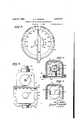
- Fig. 3is an elevation of the dial and indicator by which the thermostat is regulated
- Fig. 4is an end elevation of the casing in which the apparatus is located;
- Figs. 5 and 6are sectional'views taken on corresp ondin'gly numbered lines of Fig. l.
- Idesignates a composite casing comprising a lower portion of two U shaped sections, 8 and'9, each having a flange Flanges I 0 of respective sections are secured together as by screws H.
- the outer opposite ends of each sectionare closed by walls l2.
- the upper edge of each lower portion of the casingis flanged as at [3 through which screws I4 extend to secure the lower por.- tions 8 and 9 of the casing to a flange l5 integral with the edges of an upper inverted U-shaped casing section l6.
- End walls l1 and I8close opposite ends of the casing section l6.
- An inlet chamber I9is formed in each lower casing section 8 and 9 adjacent its end l2 by a horizontal closure 2! connecting the upper opposite edges of the sides of the U-shaped sections and which separate the lower portions 8 and 9 from the upper portion l6 ofthe casing, and a transverse partition 2
- each casing section forming the floor of the inlet chambersis formed with an opening into which a tube 23 is threaded. Intermediate the ends of each tube the bore is restricted to provide an upwardly facing valve seat 24 on which a check valve 25 is normally seated.
- a valve stem 26extends downwardly from each to prevent back flow of the fluid when the tap j controlling flow of fluid in the outlet pipe is closed and the device is inoperative.
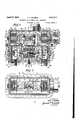
- FIG. 1is a sectional view of the mixing device of my invention:
- each check valve 25is maintained in coaxial alignment with the tubes 23 by guides 21 integral with respective tubes.
- a spring 25aencircles each stem 26 between the guide 21 and a nut 26a threaded on the lower end of the stem to resiliently maintain the valve on its'seat.
- the tubes 23are longitudinally-slotted as at 28 for a purpose about to be described.
- the outermost end of each tubeis internally threaded to receive, respectively, hot and cold fluid inlet pipes 29 and 30. The hot and cold fluids entering tubes 23 under pressure will raise valves 25 against the tension of spring 251': and flow into the respective inlet chambers l9 through the slots 28.
- each inlet chamber ISthe fluid flows through ports 35 in respective partitions 2
- the bellows 32extend into each pressure control chamber and the outer ends thereof are secured to an and the nular flanged members 33 mounted on respective valve stems 33 and 43 which extend axially through the bellows.
- Stem'43is hollow to receive a coaxial, diametrically reduced extension 4
- valve stems 33 and 43'extend through respective ports 35 and have secured to their ends by suitable means within the respective inlet chambers l3, poppet type valves 42 adapted to close ports 35.
- a helical spring 43encircles the valve stems 33 and 43 within the bellows 32' and bears at its opposite ends against the annular flanged members 33 to normally urge valves 42 into mixing chamber 41.
- valve inserts 43A cross bar 52 extends between opposite sides of the'frame and between the tubular projection.
- a hole 54is bored through cross bar 52 in axial alignment with the bores of the valve inserts 43.
- a valve stem 55is slidably carried in hole 54 and has-integrally formed with one end thereof a conical cold water ,valve 55, adapted to coact with one of seats 53 to control the ingress of cold water 0n the opposite end of valve stem 55 a conical hot water valve 51 is threaded to similarlycontrol the ingress of hot water into the mixing chamber.
- a helical spring 53encircles the stem between valve 55 and bar 52 to normally retain valve 51 against the guide.
- Valves 55 and 51are adapted to seat on the respective valve seats 53 by movement of frame 5
- the i'rame'5lis supported movably within the upper casing section
- the bellows 32are I adapted to be compressed by fluid pressure against either end thereof adjacent the respective ports 35, but are composed of a flrm material to resist sagging whereby they support the dual valve assembly just above described. 7
- the spring 43normally resists the tendency of the valves to close in response to the pressure fluid entering the pressurecontrol chambers and 31 through ports 35, but may be compressed by pressure exerted against both bellows 32. It will also be observed that where the pressures of the hot and cold fluid streams is diflerent, the excess pressure of one stream exerted on one of the bellows will collapse the bellows nearest er, causing the valve 42 controlling that portto move towardclosed position and simultaneously wall II of the upper casing section. A nut adjacent the port in which the pressure is greatmoving the other valve to a more widely opened the pressure control chambers 33 and 31 into the mixing chamber 41 formed by the walls of the upper casing section l5. The upper end of each tubular projection 45 is closed as at 43.
- a valve insert 43is threaded into. relative y aligned openings in adjacent walls of the tubular projections, each insert being formed with a conical valve seat 53. Hot and cold water is chamber 41 from the the respective tubula'r projections 43 and inserts 43.
- the end I -12 and easing 1 in order that its rotation will uis supported ancing bellows 53 at one end of the frame and a thermostatic bellows 53 at its opposite end.
- circular plate 53is threaded into one end 5
- a balancing bellows 53above alluded to,'is secured to the periphery of plate 53 by any suitable means
- the opposite end of bellows 53is similarly secured to the periphery of another plate 33 having a central hub 33 extending through the adjacent end 31 is threaded on the outer end of hub 33 to secure immovably the end .ofthe bellows adjacent end wall
- Hub 33is formed with a central bore comprising a vent 53 communicating the area within the bellows 53 with the atmosphere. While the bellows may be extended and contracted onits axis, it is composed of a material which resists sagging so as to support the end of the frame 5
- a hub 53 of a circular plate 13is threaded into the end 52 of frame 5
- the 0D- posite end of bellows 33is attached to the periphery of a circular plate 1
- Bellows 33is filled with a fluid wall I3 is formedwith an outwardly extended nipple 12 to encase the thermostatic control mechanism about to be described.
- the end of the bore of nipple 12 adjacent the interior of the casingis formed with a pair of longitudinally-arranged key ways 13. with which keys 14 formed integrally with the periphery of a hollow central boss 15 of plate 1
- the bore 15 of the hubis threaded to receive the end of a control shaft'11. Shaft. 11 is held against axial movement relative to the nipple move the boss 15 and plate 1
- An indicator 88(Fig. 3) is secured to the'outer end of shaft 11, by which the shaft may be rotated to effect adjustment of the thermostat 88 as hereinafter described.
- a dial 81encircles the shaft under indicator 88 and has delineated on one segment of its edge zones and degrees to indicate the range of temperatures of the fluid the apparatus is adapted to produce.
- a stop .88is threaded in the dial by suitable means intermediate its center and periphery at the end of the range of movement of the indicator effective" to produce cold water.
- Another stop 88is threadedinto an opening at the opposite end of the'eflectlve range of movement of the indicator.
- a series of threaded openings 88are bored in the dial in an are having a center coinciding with and spaced from the center of the dial a distance equal to the distance of the stops 88 and 88 therefrom, and on radii, respectively, of the degree calibrations of the'higher temperatures as delineated on the face of the dial. Stop 88 may be threaded into any .of the openings 88 to vary the range of movement ofthe indicator and coincidentally, the temperatures available in the fluid flow from pipe 85.
- This variation inthe limit of movement of the indicator to the points on the dial designating the higher temperatureis a feature principally adapted for use where the device is employed by children to prevent inadvertent movement of indicator 88 for production of temperatures in the water flowing from the device which might scald the user.
- the operation of my inventionis briefly described as follows:
- the mixeris installed with the usual hot and cold water pipes 28 and 88, threaded into respective tubes 23. Water flowing into the tubes will raise the check valves 25- and flow through slots 28 and into the pressure controi chambers 38 and 31, respectively, through 4 ports 85.
- Valves 42will normally be disposed in approximately the same degree of opemposition to permit an equal volume of water to flow into each pressure control chamber, As above noted, however, if the pressures of hot and cold water streams are diflerent, the excess pressure of the fluid will cause the bellows 32 against which the fluid flows, to contract slightly and coincidentally more widely open the other valve with the result that the'passages through the respective ports 88 will be restricted and. enlarged to.
- the cold water valve 58will, however, be 'wide open to permit the water of the temperature indicated on the dial to pass from the mixing chamber into the outlet pipe 85 and thence to a. place of use.
- the boss 15 and plate ll of the thermostatwill be moved by such manipulation of the indicator to widely open the hot water valve 51 and partially shut 011 the entrance of the cold water into the mixing chamber from chamber 31.
- Hot water entering the mixing chamberwill immediately affect the thermostat so as to cause expansion of the bellows 88 and thereby return the frame 5
- a mix ing devicecomprising a minimum number of parts substantially free in operation from friction, in which the pressure of hot and cold fluid entering the mixing chamber is substantially equalized to insure against variations in the influence of pressure of the fluid on the inlet control valves, and including means to counteract the effect of variations in pressure of the fluid within the mixing chamber, on the thermostat, whereby fluids of extreme temperatures may be mixed effectively and the temperatures of the mixed fluid positively controlled at all times, de-
- the thermostat mechanismis constructed and arranged so thatwith the indicator in a position movable independently of one another throughout their range of movement, and resilient means to resist compression of said bellows.
- valve meansmovable independently of one another throughout their range of movement and actuated by said bellows for controlling passage of hot and cold fluids
- a casingwalls in said casing-forming a pressure control chamber and a mixing chamber, a partition dividing said pressure control chamber, means communicating said mixing chamberand said pressure control chamber at each side of said partition, 9, hot water conduit and a cold water conduit communicated with said pressure extending through said ports, respectively, the
- a casingmeans forming a mixing chamber and a pair of pressure control chambers within said casing, said casing having a pair of ports opening into pressure control chambers, respectively, means of communication between each 01!
- said mixing chamberhavingan outlet opening, means to direct fluid under different pressures into said pressure control chambers, respectively, through said inlet openings, means in said pressure control chambers to limit to a predetermined maximum value: and equalize pressure of the fluid within said last-named chambers, and means controlled by the temperature of fluid in said mixing chamber to vary the quantity of fluids admitted into said mixing with one another, a pair of valve stems con- I nected to the outer ends of said bellows, respectively, and movable with respect to each other, said stems extending through ports in the walls at opposite sides of said bellows, and valve means secured to-each of said valve stems to control said ports, said bellows being movable toward collapsed position in response to pressure of fluid entering said ports thereagainst to control said valve means.
- casingcomprising ported partitions therein valve means controlling a pair of said ports com municating-said pressure control chamber andsaid mixingchamber, means within said pressure control chamber actuated by the pressure of fluid thereagainst to vary the position of said first-named valve means independent of one another, and a thermostat within said mixing chamber controlling the position of said second valve means.
- a casinghaving partitions therein forming a pressure control chamber and a fluid inlet chamber at each side of said pressure control chamber,
- a casing inclosing pressure control mechanismsaid casin having apair oi inlet openings therein, a valve for each oi said inlet openings, and means' operable in response to pressure within said casing to urge both of said valves toward closed position when the pressure of fluid entering said casing through the openings controlled thereby, respectively, reaches a predetermined value, said last-named means being eiiective upon actuation to alleviate the urge upon one of said valves in response to movement oi the other of said valves toward closed position.
Landscapes
- Physics & Mathematics (AREA)
- General Physics & Mathematics (AREA)
- Engineering & Computer Science (AREA)
- Automation & Control Theory (AREA)
- Multiple-Way Valves (AREA)
- Temperature-Responsive Valves (AREA)
Description
" April 1943. c. VTBAUMANV 1 AUTOMATIC FLUID TEMPERATURE REGULATOR Filed Dec; 2, 1938 2sheeis sheet 2 O O IN VENTOR I AN E uummmi: Q BY 1 ATTORNEY & l 30 v Patented Apr. 27, 1943 AUTOMATIC FLUID TEMPERATURE REGULATOR Carl V. Bauman, Three Rivers, Calif.
. Application December 2, 1938, Serial No. 243,573
9 Claims. (01. 236-12) Another object is to provide a bellows type I thermostat arranged in the flow of fluid of the mixing chamber wherein the sensitiveness of the thermostat may be most efiectively utilized, in combination with means to counteract variations in fluid pressure on the thermostat.
Another object is to provide resilient means normally adapted to maintain the valves controlling the inlets of the mixing chamber in a predetermined position, but adapted to compress to relieve strain upon the thermostat incident to adjustment of the thermostat to change the temperature of the fluids produced from hot to cold.
Another and highly important object is the provision of pressure balancing and regulating means adapted to maintain fluids entering the mixing chamber under equal pressure to insure exclusive control of the mixing valves by the thermostat and manual control thereof.
Another object is to provide an indicator for regulating the operation of the thermostat and a dial embodying means to variably limit the manipulation of the indicator and thereby establish a desired maximum temperature of the flow emitted from the mixing chamber 01' the device.
Still another object is to provide check valves ill at one of their ends.
Fig. 2 is a sectional view taken on lines 2-2 of Fig. 1;
Fig. 3 is an elevation of the dial and indicator by which the thermostat is regulated;
Fig. 4 is an end elevation of the casing in which the apparatus is located;
Figs. 5 and 6 are sectional'views taken on corresp ondin'gly numbered lines of Fig. l.
Referring to'the drawings in detail, the numerals of which indicate similar parts through out the several views, I designates a composite casing comprising a lower portion of two U shaped sections, 8 and'9, each having a flange Flanges I 0 of respective sections are secured together as by screws H. The outer opposite ends of each section are closed by walls l2. The upper edge of each lower portion of the casing is flanged as at [3 through which screws I4 extend to secure the lower por.-tions 8 and 9 of the casing to a flange l5 integral with the edges of an upper inverted U-shaped casing section l6. End walls l1 and I8 close opposite ends of the casing section l6. An inlet chamber I9 is formed in eachlower casing section 8 and 9 adjacent its end l2 by ahorizontal closure 2!! connecting the upper opposite edges of the sides of the U-shaped sections and which separate thelower portions 8 and 9 from the upper portion l6 ofthe casing, and atransverse partition 2| intermediate the ends of each lower section.
Thebottom 22 of each casing section forming the floor of the inlet chambers is formed with an opening into which atube 23 is threaded. Intermediate the ends of each tube the bore is restricted to provide an upwardly facingvalve seat 24 on which acheck valve 25 is normally seated.
, Avalve stem 26 extends downwardly from each to prevent back flow of the fluid when the tap j controlling flow of fluid in the outlet pipe is closed and the device is inoperative.
Other objects and salient features of my invention suchas economy and simplicity of construc- Fig. 1 is a sectional view of the mixing device of my invention:
.As above noted, the open ends of the lower 1 admitted into themixing chambers closure 23 of the respective U-shaped members, the annular edge 3| of one end of each of a pair ofbellows 32 are clamped, being spaced apart bygasket 33 having a radial opening therethrough, which provides avent 34 for the interior of the bellows, communicating with the area outside the casing. From each inlet chamber IS the fluid flows throughports 35 inrespective partitions 2| into hot and coldpressure control chambers respective partitions 2| clamped ends 3| of the bellows, which ends centrally dividethe area between thepartitions 2| of the joined lower casing sections. Thebellows 32 extend into each pressure control chamber and the outer ends thereof are secured to an and the nular flangedmembers 33 mounted onrespective valve stems other valve stem 33, whereby said stems are maintained in axial alignment. The opp site ends ofvalve stems 33 and 43' extend throughrespective ports 35 and have secured to their ends by suitable means within the respective inlet chambers l3,poppet type valves 42 adapted toclose ports 35. Ahelical spring 43 encircles the valve stems 33 and 43 within the bellows 32' and bears at its opposite ends against the annular flangedmembers 33 to normally urgevalves 42 intomixing chamber 41.
bore ofvalve inserts 43. Across bar 52 extends between opposite sides of the'frame and between the tubular projection. Ahole 54 is bored throughcross bar 52 in axial alignment with the bores of thevalve inserts 43. A valve stem 55 is slidably carried inhole 54 and has-integrally formed with one end thereof a conical cold water ,valve 55, adapted to coact with one of seats 53 to control the ingress of cold water 0n the opposite end of valve stem 55 a conicalhot water valve 51 is threaded to similarlycontrol the ingress of hot water into the mixing chamber. A helical spring 53 encircles the stem between valve 55 andbar 52 to normally retainvalve 51 against the guide.Valves 55 and 51 are adapted to seat on the respective valve seats 53 by movement offrame 5| in a direction parallel to valve stem 55 as will be hereinafter more in detail described, but are prevented from seating simultaneously due to the fact that the leng h of the stem 55 andvalves 55 and 51 is less than the distance between the'valve seats 53.
The i'rame'5l is supported movably within the upper casing section |5 by means of a balapart and in open position. Thebellows 32 are I adapted to be compressed by fluid pressure against either end thereof adjacent therespective ports 35, but are composed of a flrm material to resist sagging whereby they support the dual valve assembly just above described. 7
Thespring 43 normally resists the tendency of the valves to close in response to the pressure fluid entering the pressurecontrol chambers and 31 throughports 35, but may be compressed by pressure exerted against bothbellows 32. It will also be observed that where the pressures of the hot and cold fluid streams is diflerent, the excess pressure of one stream exerted on one of the bellows will collapse the bellows nearest er, causing thevalve 42 controlling that portto move towardclosed position and simultaneously wall II of the upper casing section. A nut adjacent the port in which the pressure is greatmoving the other valve to a more widely opened thepressure control chambers mixing chamber 41 formed by the walls of the upper casing section l5. The upper end of eachtubular projection 45 is closed as at 43. Avalve insert 43 is threaded into. relative y aligned openings in adjacent walls of the tubular projections, each insert being formed with a conical valve seat 53. Hot and cold water ischamber 41 from the therespective tubula'r projections 43 andinserts 43.
A rectangular floating frame highly sensitive to expansion by heat. The end I -12 and easing 1 in order that its rotation will u is supported ancing bellows 53 at one end of the frame and a thermostatic bellows 53 at its opposite end. A
circular plate 53 is threaded into oneend 5| of the frame by an integralcentral hub 54,
threaded into theadjacent flange 5| at one end of the frame. One end of a balancing bellows 53, above alluded to,'is secured to the periphery of plate 53 by any suitable means The opposite end of bellows 53 is similarly secured to the periphery of anotherplate 33 having acentral hub 33 extending through theadjacent end 31 is threaded on the outer end ofhub 33 to secure immovably the end .ofthe bellows adjacent end wall |1.Hub 33 is formed with a central bore comprising a vent 53 communicating the area within the bellows 53 with the atmosphere. While the bellows may be extended and contracted onits axis, it is composed of a material which resists sagging so as to support the end of theframe 5| to which it is attached.
A hub 53 of acircular plate 13 is threaded into theend 52 offrame 5|, to the periphery of which athermostatic bellows 33 is attached. The 0D- posite end ofbellows 33 is attached to the periphery of a circular plate 1| which is disposed adjacent the end wall ll of. thetop portion l3 of the casing 1. Bellows 33 is filled with a fluid wall I3 is formedwith an outwardly extendednipple 12 to encase the thermostatic control mechanism about to be described.
The end of the bore ofnipple 12 adjacent the interior of the casing is formed with a pair of longitudinally-arrangedkey ways 13. with whichkeys 14 formed integrally with the periphery of a hollowcentral boss 15 of plate 1|, coact, whereby the boss may be moved axially withinnipple 12 to extend or contract this thermostatic bellows 53 while theengagement ot'the key 14 with thekey ways 13 prevents rotation of the boss. Thebore 15 of the hub is threaded to receive the end of a control shaft'11. Shaft. 11 is held against axial movement relative to the nipple move theboss 15 and plate 1| axially as noted above. byanannular flange 13 integral with the of the desired predetermined temperature to the point of use.
An indicator 88 (Fig. 3) is secured to the'outer end ofshaft 11, by which the shaft may be rotated to effect adjustment of thethermostat 88 as hereinafter described. Adial 81 encircles the shaft underindicator 88 and has delineated on one segment of its edge zones and degrees to indicate the range of temperatures of the fluid the apparatus is adapted to produce. A stop .88 is threaded in the dial by suitable means intermediate its center and periphery at the end of the range of movement of the indicator effective" to produce cold water. Anotherstop 88 is threadedinto an opening at the opposite end of the'eflectlve range of movement of the indicator. A series of threadedopenings 88 are bored in the dial in an are having a center coinciding with and spaced from the center of the dial a distance equal to the distance of thestops Stop 88 may be threaded into any .of theopenings 88 to vary the range of movement ofthe indicator and coincidentally, the temperatures available in the fluid flow frompipe 85. This variation inthe limit of movement of the indicator to the points on the dial designating the higher temperature is a feature principally adapted for use where the device is employed by children to prevent inadvertent movement ofindicator 88 for production of temperatures in the water flowing from the device which might scald the user.
The operation of my invention is briefly described as follows: The mixer is installed with the usual hot andcold water pipes 28 and 88, threaded intorespective tubes 23. Water flowing into the tubes will raise the check valves 25- and flow through slots 28 and into thepressure controi chambers ports 85.Valves 42 will normally be disposed in approximately the same degree of opemposition to permit an equal volume of water to flow into each pressure control chamber, As above noted, however, if the pressures of hot and cold water streams are diflerent, the excess pressure of the fluid will cause thebellows 32 against which the fluid flows, to contract slightly and coincidentally more widely open the other valve with the result that the'passages through therespective ports 88 will be restricted and. enlarged to. a degree suflicient to equalize the pressures in each pres:sure control chamber vent 84 throughgasket 88 between the adjoining ends of the/bellows, atmospheric pressure will be maintained withinthe bore of bellows, thereby insuring that their operation will be affected only by'the pressure of the water flowing thereagainst. The water. in eachchamber spring 58 fully extended. Thus with such adjustment the hot water entering'the tubular projection will be prevented from flowing into mixingchamber 41. Thecold water valve 58 will, however, be 'wide open to permit the water of the temperature indicated on the dial to pass from the mixing chamber into theoutlet pipe 85 and thence to a. place of use. Shouldindicator 88 be moved clockwise to a, zone ondial 81 indicating a higher temperature, theboss 15 and plate ll of the thermostat will be moved by such manipulation of the indicator to widely open thehot water valve 51 and partially shut 011 the entrance of the cold water into the mixing chamber fromchamber 31. Hot water entering the mixing chamber will immediately affect the thermostat so as to cause expansion of thebellows 88 and thereby return theframe 5| slightly to theleft to partially close thehot water valve 51, i. e., a distance suiflcient to admit throughvalve 51, hot water in an amount whereby the temperature indicated ondial 81 is temperature desired.
I Similar adjustments of the thermostat will affect similar changes in the temperature of the water mixed within the chamber. Increases in pressure of the water within mixingchamber 41 which tends to compress the thermostatic bellows 88 and thereby influence-the disposition of theframe 5| andvalves
It will be observed that I have provided a mix ing device comprising a minimum number of parts substantially free in operation from friction, in which the pressure of hot and cold fluid entering the mixing chamber is substantially equalized to insure against variations in the influence of pressure of the fluid on the inlet control valves, and including means to counteract the effect of variations in pressure of the fluid within the mixing chamber, on the thermostat, whereby fluids of extreme temperatures may be mixed effectively and the temperatures of the mixed fluid positively controlled at all times, de-
sired changes in temperature of'the fluid being effected substantially instantaneously.
While I have described but one embodiment of my invention, it will be understood that numer- -ous changes in size, design, shape, and number Patent is:
upwardly into the boreof the respectivetubular projections 48.
The thermostat mechanism is constructed and arranged so thatwith the indicator in a position movable independently of one another throughout their range of movement, and resilient means to resist compression of said bellows.
hot and cold water, and valve means movable independently of one another throughout their range of movement and actuated by said bellows for controlling passage of hot and cold fluids,
respectively through said first-named means.
3. In a device of the character described, a casing, walls in said casing-forming a pressure control chamber and a mixing chamber, a partition dividing said pressure control chamber, means communicating said mixing chamberand said pressure control chamber at each side of said partition, 9, hot water conduit and a cold water conduit communicated with said pressure extending through said ports, respectively, the
- ends of said bellows opposite to the ends thereof control chamber at opposite sides of said partition, respectively,- independently movable valve means controlling flow into said pressure control chamber through said conduits respectively, means in said pressure control chamber actuated by pressure thereagainst of fluid entering said control chamber from said hot andcold water conduits to urge both of said valve means toward closed position simultaneously.
4. In a deviceoi the character described, walls forming a pressure control chamber, a pair of bellows joined at one end and communicated connected to the casing being attached to said valve stems respectively, resilient means to urge said valve stems apart, said bellows being operable to move said valves alternately and simultaneously toward closed position in response to variations in pressure of fluid flowing into said pressure control chamber through said ports, respectively, to equalize pressure of fluid flowing through said outlet ports;
'7. In a device of the character described, a casing, means forming a mixing chamber and a pair of pressure control chambers within said casing, said casing having a pair of ports opening into pressure control chambers, respectively, means of communication between each 01! said pressure, control chambers and said mixing chamber, said mixing chamber havingan outlet opening, means to direct fluid under different pressures into said pressure control chambers, respectively, through said inlet openings, means in said pressure control chambers to limit to a predetermined maximum value: and equalize pressure of the fluid within said last-named chambers, and means controlled by the temperature of fluid in said mixing chamber to vary the quantity of fluids admitted into said mixing with one another, a pair of valve stems con- I nected to the outer ends of said bellows, respectively, and movable with respect to each other, said stems extending through ports in the walls at opposite sides of said bellows, and valve means secured to-each of said valve stems to control said ports, said bellows being movable toward collapsed position in response to pressure of fluid entering said ports thereagainst to control said valve means.
5. In a device of the character described, a
casing comprising ported partitions therein valve means controlling a pair of said ports com municating-said pressure control chamber andsaid mixingchamber, means within said pressure control chamber actuated by the pressure of fluid thereagainst to vary the position of said first-named valve means independent of one another, and a thermostat within said mixing chamber controlling the position of said second valve means.
6. In a device of the character described, a casing having partitions therein forming a pressure control chamber and a fluid inlet chamber at each side of said pressure control chamber,
chamber from said control chambers, respectively.
8. In a device of the character described, a casing inclosing pressure control mechanism, said casin having apair oi inlet openings therein, a valve for each oi said inlet openings, and means' operable in response to pressure within said casing to urge both of said valves toward closed position when the pressure of fluid entering said casing through the openings controlled thereby, respectively, reaches a predetermined value, said last-named means being eiiective upon actuation to alleviate the urge upon one of said valves in response to movement oi the other of said valves toward closed position.
9. In a device oi the character described, walls forming a pressure control chamber, separate
Priority Applications (1)
| Application Number | Priority Date | Filing Date | Title |
|---|---|---|---|
| US243573AUS2317717A (en) | 1938-12-02 | 1938-12-02 | Automatic fluid temperature regulator |
Applications Claiming Priority (1)
| Application Number | Priority Date | Filing Date | Title |
|---|---|---|---|
| US243573AUS2317717A (en) | 1938-12-02 | 1938-12-02 | Automatic fluid temperature regulator |
Publications (1)
| Publication Number | Publication Date |
|---|---|
| US2317717Atrue US2317717A (en) | 1943-04-27 |
Family
ID=22919278
Family Applications (1)
| Application Number | Title | Priority Date | Filing Date |
|---|---|---|---|
| US243573AExpired - LifetimeUS2317717A (en) | 1938-12-02 | 1938-12-02 | Automatic fluid temperature regulator |
Country Status (1)
| Country | Link |
|---|---|
| US (1) | US2317717A (en) |
Cited By (22)
| Publication number | Priority date | Publication date | Assignee | Title |
|---|---|---|---|---|
| US2456094A (en)* | 1943-01-23 | 1948-12-14 | John A Victoreen | Method and apparatus for regulating water temperature |
| US2511094A (en)* | 1946-02-12 | 1950-06-13 | Walter H Barkas | Pressure-compensated mixing valve |
| US2553769A (en)* | 1947-01-02 | 1951-05-22 | Dole Valve Co | Double mixing valve |
| US2558962A (en)* | 1947-01-02 | 1951-07-03 | Dole Valve Co | Fluid valve structure |
| US2620133A (en)* | 1949-05-28 | 1952-12-02 | Dole Valve Co | Mixing valve |
| US2803261A (en)* | 1953-02-02 | 1957-08-20 | Westinghouse Electric Corp | Velocity responsive controls |
| US2876788A (en)* | 1956-08-16 | 1959-03-10 | Fairchild Engine & Airplane | Pressure-responsive valves |
| US2880752A (en)* | 1953-04-23 | 1959-04-07 | Buensod Stacey Inc | Air conditioning apparatus |
| US2903009A (en)* | 1956-01-12 | 1959-09-08 | Tacchi Percy George | Valves for mixing fluids at different temperatures |
| US2977989A (en)* | 1959-01-03 | 1961-04-04 | Mcynell & Sons Ltd | Mixing valves for controlling the mixing of hot and cold fluids |
| DE3030765A1 (en)* | 1980-08-14 | 1982-03-04 | Friedrich Grohe Armaturenfabrik Gmbh & Co, 5870 Hemer | ELECTRONICALLY CONTROLLED MIXING VALVE |
| US5033671A (en)* | 1989-03-09 | 1991-07-23 | Matsushita Electric Industrial Co., Ltd. | Hot-water and cold-water mixing device |
| US5251667A (en)* | 1992-10-20 | 1993-10-12 | Emerson Electric Co. | Three-way solenoid operated control valve |
| WO1996008947A3 (en)* | 1994-09-15 | 1996-08-15 | Kohler Co | Mixing valve |
| US6543478B2 (en)* | 1998-10-02 | 2003-04-08 | Lawler Manufacturing Co., Inc. | Thermostatic mixing valve |
| USD494252S1 (en) | 1998-10-02 | 2004-08-10 | Lawler Manufacturing Company, Inc. | Mixing valve |
| US6823892B1 (en)* | 1999-09-21 | 2004-11-30 | Masco Corporation Of Indiana | Automatic valve for the stabilization of a thermostatic mixing device |
| US20080119799A1 (en)* | 2006-10-30 | 2008-05-22 | Bradley Fixtures Corporation | Eyewash system |
| USD618342S1 (en) | 2007-10-29 | 2010-06-22 | Bradley Fixtures Corporation | Tank for eyewash system |
| US9504970B2 (en) | 2011-10-22 | 2016-11-29 | Magarl, Llc | Methods and apparatus for creating turbulence in a thermostatic mixing valve |
| USD886236S1 (en) | 2018-05-16 | 2020-06-02 | Bradley Fixtures Corporation | Housing for multiple valves |
| US11060628B2 (en) | 2018-05-16 | 2021-07-13 | Bradley Fixtures Corporation | Housing for multiple mixing valves |
- 1938
- 1938-12-02USUS243573Apatent/US2317717A/ennot_activeExpired - Lifetime
Cited By (34)
| Publication number | Priority date | Publication date | Assignee | Title |
|---|---|---|---|---|
| US2456094A (en)* | 1943-01-23 | 1948-12-14 | John A Victoreen | Method and apparatus for regulating water temperature |
| US2511094A (en)* | 1946-02-12 | 1950-06-13 | Walter H Barkas | Pressure-compensated mixing valve |
| US2553769A (en)* | 1947-01-02 | 1951-05-22 | Dole Valve Co | Double mixing valve |
| US2558962A (en)* | 1947-01-02 | 1951-07-03 | Dole Valve Co | Fluid valve structure |
| US2620133A (en)* | 1949-05-28 | 1952-12-02 | Dole Valve Co | Mixing valve |
| US2803261A (en)* | 1953-02-02 | 1957-08-20 | Westinghouse Electric Corp | Velocity responsive controls |
| US2880752A (en)* | 1953-04-23 | 1959-04-07 | Buensod Stacey Inc | Air conditioning apparatus |
| US2903009A (en)* | 1956-01-12 | 1959-09-08 | Tacchi Percy George | Valves for mixing fluids at different temperatures |
| US2876788A (en)* | 1956-08-16 | 1959-03-10 | Fairchild Engine & Airplane | Pressure-responsive valves |
| US2977989A (en)* | 1959-01-03 | 1961-04-04 | Mcynell & Sons Ltd | Mixing valves for controlling the mixing of hot and cold fluids |
| DE3030765A1 (en)* | 1980-08-14 | 1982-03-04 | Friedrich Grohe Armaturenfabrik Gmbh & Co, 5870 Hemer | ELECTRONICALLY CONTROLLED MIXING VALVE |
| US5033671A (en)* | 1989-03-09 | 1991-07-23 | Matsushita Electric Industrial Co., Ltd. | Hot-water and cold-water mixing device |
| US5251667A (en)* | 1992-10-20 | 1993-10-12 | Emerson Electric Co. | Three-way solenoid operated control valve |
| WO1996008947A3 (en)* | 1994-09-15 | 1996-08-15 | Kohler Co | Mixing valve |
| US8579206B2 (en) | 1998-10-02 | 2013-11-12 | Magarl, Llc | Thermostatic mixing valve |
| US6543478B2 (en)* | 1998-10-02 | 2003-04-08 | Lawler Manufacturing Co., Inc. | Thermostatic mixing valve |
| US6851440B2 (en)* | 1998-10-02 | 2005-02-08 | Lawler Manufacturing Company, Inc. | Method of mixing fluids using a valve |
| US20050028876A1 (en)* | 1998-10-02 | 2005-02-10 | Kline Kevin B. | Method of mixing fluids using a valve |
| US7191954B2 (en) | 1998-10-02 | 2007-03-20 | Magarl, Llc | Method of mixing fluids using a valve |
| US20070246549A1 (en)* | 1998-10-02 | 2007-10-25 | Kline Kevin B | Thermostatic mixing valve |
| USD762818S1 (en) | 1998-10-02 | 2016-08-02 | Magarl, Llc | Mixing valve body |
| US9218006B2 (en) | 1998-10-02 | 2015-12-22 | Magarl, Llc | Thermostatic mixing valve |
| USD494252S1 (en) | 1998-10-02 | 2004-08-10 | Lawler Manufacturing Company, Inc. | Mixing valve |
| US6823892B1 (en)* | 1999-09-21 | 2004-11-30 | Masco Corporation Of Indiana | Automatic valve for the stabilization of a thermostatic mixing device |
| US7857795B2 (en) | 2006-10-30 | 2010-12-28 | Bradley Fixtures Corporation | Eyewash system |
| US20080119799A1 (en)* | 2006-10-30 | 2008-05-22 | Bradley Fixtures Corporation | Eyewash system |
| USD618342S1 (en) | 2007-10-29 | 2010-06-22 | Bradley Fixtures Corporation | Tank for eyewash system |
| US9504970B2 (en) | 2011-10-22 | 2016-11-29 | Magarl, Llc | Methods and apparatus for creating turbulence in a thermostatic mixing valve |
| US10376849B2 (en) | 2011-10-22 | 2019-08-13 | Magarl, Llc | Methods and apparatus for creating turbulence in a thermostatic mixing valve |
| USD886236S1 (en) | 2018-05-16 | 2020-06-02 | Bradley Fixtures Corporation | Housing for multiple valves |
| USD917013S1 (en) | 2018-05-16 | 2021-04-20 | Bradley Fixtures Corporation | Housing for multiple valves |
| US11060628B2 (en) | 2018-05-16 | 2021-07-13 | Bradley Fixtures Corporation | Housing for multiple mixing valves |
| USD958937S1 (en) | 2018-05-16 | 2022-07-26 | Bradley Fixtures Corporation | Housing for multiple valves |
| US11920691B2 (en) | 2018-05-16 | 2024-03-05 | Bradley Fixtures LLC | Housing for multiple mixing valves |
Similar Documents
| Publication | Publication Date | Title |
|---|---|---|
| US2317717A (en) | Automatic fluid temperature regulator | |
| US1869663A (en) | Thermostatic mixing means | |
| US3929283A (en) | Thermostatic mixing apparatus and a related method for regulating temperature | |
| US3084901A (en) | Pressure compensated valve | |
| US3897903A (en) | Thermally regulated central heating system | |
| US2823695A (en) | Hot water system and controls therefor | |
| US1996330A (en) | Fluid control unit | |
| US2193581A (en) | Mixing valve | |
| JP2004512588A (en) | Thermostatic mixing valve | |
| US3610279A (en) | Mixing valve construction, system and method | |
| US3219325A (en) | Mixing valve | |
| US1990653A (en) | Automatic temperature control for fluid mixtures | |
| US2507954A (en) | Thermostatic mixing valve | |
| US3482777A (en) | Modulating valve construction | |
| US3265303A (en) | Temperature regulating valve | |
| US1195722A (en) | Thermostatic water-heater | |
| US2335761A (en) | Thermostatic mixing valve | |
| US4164321A (en) | Thermostatic mixing valve for two fluids | |
| US1939970A (en) | Thermostatic controlled mixing valve | |
| US2714488A (en) | Mixing valve | |
| US2269259A (en) | Mixing device | |
| US2578796A (en) | Thermostatic controlled pressure operated mixing faucet | |
| US3901261A (en) | Valve for mixing hot and cold water | |
| US2997239A (en) | Thermostatic mixing valve | |
| US3352489A (en) | Thermostatic mixing valve |