US1650247A - Electrical voting apparatus - Google Patents
Electrical voting apparatusDownload PDFInfo
- Publication number
- US1650247A US1650247AUS1650247DAUS1650247AUS 1650247 AUS1650247 AUS 1650247AUS 1650247D AUS1650247D AUS 1650247DAUS 1650247 AUS1650247 AUS 1650247A
- Authority
- US
- United States
- Prior art keywords
- switch
- station
- main
- locking
- voting
- Prior art date
- Legal status (The legal status is an assumption and is not a legal conclusion. Google has not performed a legal analysis and makes no representation as to the accuracy of the status listed.)
- Expired - Lifetime
Links
- 239000004020conductorSubstances0.000description22
- 230000001276controlling effectEffects0.000description6
- 230000000994depressogenic effectEffects0.000description4
- 230000007935neutral effectEffects0.000description3
- 238000010276constructionMethods0.000description2
- 241001527902AratusSpecies0.000description1
- 241000168036Populus albaSpecies0.000description1
- 230000004075alterationEffects0.000description1
- 230000007547defectEffects0.000description1
- 239000005337ground glassSubstances0.000description1
- 238000000034methodMethods0.000description1
- 230000011664signalingEffects0.000description1
Images

Classifications
- G—PHYSICS
- G07—CHECKING-DEVICES
- G07C—TIME OR ATTENDANCE REGISTERS; REGISTERING OR INDICATING THE WORKING OF MACHINES; GENERATING RANDOM NUMBERS; VOTING OR LOTTERY APPARATUS; ARRANGEMENTS, SYSTEMS OR APPARATUS FOR CHECKING NOT PROVIDED FOR ELSEWHERE
- G07C13/00—Voting apparatus
- H—ELECTRICITY
- H04—ELECTRIC COMMUNICATION TECHNIQUE
- H04H—BROADCAST COMMUNICATION
- H04H60/00—Arrangements for broadcast applications with a direct linking to broadcast information or broadcast space-time; Broadcast-related systems
- H04H60/29—Arrangements for monitoring broadcast services or broadcast-related services
- H04H60/33—Arrangements for monitoring the users' behaviour or opinions
Definitions
- This inventionrelates to a voting apparatus.
- voting apparatusesIn voting apparatuses, 'as heretofore constructed, it has been a common custom ⁇ to provide mechanically movable members for making a permanent record. This has necessitated elaborate and delicate mechanism for eachvoter, or in other words, for each substation operated lby a voter.
- This inventionis designed to overcome the defects noted above, and objects of such in- Vention are, therefore, to provide a novel form of voting apparatus in which the means for forming a permanent record does not require mechanically movable members, but is actuated through the .medium of light in a manner to permit ready photographing of the record to thus secure a permanent record.
- a further main objectis to provide a voting apparatus in which each substation is equipped with individual indicating means' for temporarily recording the manner in which the voter has voted, so that he need not memorize his mode of voting, but may, by visible means, directly ascertain it from a glance at his substation.
- vthis .inventionis designed to provide a novel manner of forming a permanent photographic record of the individual votes by the use of lamps andy Without requiringjany enunciator or mechanically movable or electro-magnetic mechanism. y j
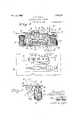
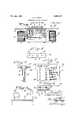
- Figurel 3is a sectional view on the'line 3-3 of Figure l. i.
- Figure 4is a sectional view on the line 4-4 of Figure 3.
- Figure 5is a view of the locking slide.
- Figure 6is a detail sectional view Ashowing one of the individual lamps employed at each substation. f'
- Figure 7is a'ace view of the permanent record board.
- Figure 8 -is a section on the line 8 8 of Figure 7.
- Figure 9is a side elevation of the permanent record apparatus.
- Figure l0is a diagrammatic view showing theA wiring system employed' in the entire votmgvcapparatus.l Y
- a main station Mis provided preferably at the clerks desk, and that a plurality of substations indicated by the reference characters S and J, and are provided for the individual voter, the draw- 95 ing showing only twosubstatons, although it is intended that the requisite number for a complete voting body be provided.
- a main indicating station Iis provided, and it is intended that this station, which may be in the'form of an ⁇ indicating board, be displayed to the entire assembly and mounted in the assembly room.
- a permanent record station Pis also provided, and this station may be located in a room remote from the assembly room.
- the main portion of the apparatusis supplied from a pair ot mains 2 and 3, a separate source of steady current being supplied purpose hereinafter to appear.
- the mains 2 and 3may be either direct or alternating current mains.
- a main supply conductor 5extends and is controlled by the locking switch 6 in the main station M. This main leads to the several substations, as indicated at S and J.
- the conductor 5is connected by means of the conductor 7 with a contact 8 ofthe release switch 9, the other contact 1() of such release switch'being connected to one side of the release coil 12 hereinafter described in detail.y
- This release coilhas its opposite side connected to the return conductor 11 by means ot the conductor 53.
- the conductor 7extends to one side of the locking coil 13
- the other side of the locking coil -is connected by means of vthe conductor 14 with the return lead 11.
- button or switch indicated at 15and the nay button or switch indicated at 16 whenever such release 'coil is energized.
- the locking coil 13locks all the buttons 9, 15 and 16 against operation when the locking coil is ydeen'ergized as described in greater detail herein after.
- each vsubstationis provided with a key controlled switch 17, one of whose contacts 18 is connected b means of the conductor 19 to a supply lea 20 extending to the main 2.
- the other contact 21 ot the key controlled switchis connected to a plate 22 forming oner ol: the contacts for each of the buttons 15 and 16.
- the plate 22is connected with the main 2.
- the aye button 15is pro-vided with a second contact 23 which is connected tol an individual indicating lamp 24 in the substation, and thence is connected by means of the conductor 25 to the permanent record station, the indicating station, and to devices in the main station M.
- a conductor 28leads from the conductor 25 to one side of the coil of a relay 29 associated with the main station M, lthe other side of the coil of the relay being connected to the main 3.
- the relay 29closes a circuit including the battery 4, a fixed resistance 30, and a milliammeter 31.
- the button 16is adapted to connect the plate 22 with a stationary fcontact 32, such contact being connected to a lamp 33 at the individual substation and thence by means of a conductor 34 to the lamp 35 of the permanent record station and to a lamp 36 of the indicating station, the otherside of the lamps 35 and 36 being connected to the main 3.
- the conductor 34i-s connected by means of a wire 37 to one side of the coil of a relay 38, the other side of such relay coil being connected tothe main 3.
- the armature or" this relaycontrols a local circuit including the battery 4, a ixed resistance 39 and a milli-amineter 40.
- the substationseach control their individual lamps 26 or 35'indicating ayel or nay at the permanent record station and their lamps 27 and 36 at the indicating station I, and also their relays 29 and 38 at the main station M.
- Each relay 2,9cuts in parallel a fixed rei sistance 30 in the local circuit including they battery 4 and the inilli-ammeter 31, so that the deflection of the ammeter accurately totals the vote Jfor the ayes. In a similar manner, the dellection of the ammeter 40 totals the nay Votes.
- the indicating station Ihas a definite number of lights 27 or 3G illuminated corresponding to the voting at the individual substations.
- the permanent record station l?has a delinite Vnumber of lights 26 or 35 illuminated cor- .responding also to the voting at the individual substations.
- the clerkopensY the main ⁇ switch 6 thus deenergizing all of the locking coils and locking the substations against any further voting or alteration of the votes ⁇ made. as will be hereinafter described.
- the clerk 1,650aat' closes the switch 41.
- the other side of the flood lightis connected by means of the conductor 44 Vwith the main 3.
- This flood lightilluminates a plate, hereinafter described, in the per manent record station and also is a signal to the operator at such station to make a permanentrecord.
- the clerkopens the switch 41 and closes the switch 45.
- the switch 45connects the main 2 by means of the conductor 46 with one side of the -coil ofeach of the relays 47.
- the other side of the coils of these relaysare connected by means of the ⁇ M opens the 6.
- the apparatusis now in condition for b conductors 48 to the ret-urn lead 11.
- the relays 47are energized and their armatures individually close circuits includin their corresponding release coils 12.
- the armature 49connects the conductor 5.0 from one ⁇ side of the release coil 12 to the conductor 51, such latter conductor being connecte-d to the lead and thence to the main 2.
- the other side of the release coil l2is connected by means of conductors 52 and 53 to the return lead 11, and such lead 11 connects in turn with the main 3.
- Thismechanismcomprises a shaped like a bell crank top plate 54 which may be mounted at the voters desk, for instance.
- This top platecarries a'frame provided with a base member 55 upon which'the locking coil 13 and release coil 12 are mounted.
- These coils or magnetsare each provided with armatures lever.
- the release coil 12has an armature 56 extending over its upper end and provided with a downwardly extending arm 57.
- This downwardly extending armcontacts with a downwardly extending arm 58 of a slide 59.
- This slide 59is apertured or slotted, as indicated at 60 to accommodate the button ⁇ 9.
- lltis also slotted, as indicated at 61 and ⁇ 62 to receive the reduced portions of the spacing sleeves 63.
- this slide 59is provided with enlarged apertures 64land 65 which are equipped with flat rear fac'es, as shown in Figure 2. These flat faces normally work against the conical portions 66 and 67 of the buttons 15 and 16 and retain them locking plate,
- buttons or switches 9, 15 and 16it will be seen from reference to Figure 3, that they are provided with a U- shaped Contact member 76 which engages the stationary Contact members. Further, it will e seen that a spring 77 is provided for urging the buttons upwardly.
- This lampmay be of the usual switch board type of lamp provided with contacts 80 on its cylindrical sides which engage suitable retaining and contacting clips.
- the permanent record apparatusconsists of an opaque plate 81, as shown in Figures either black or of a neutral color.
- the namessuch as indicated by the reference character 82 in Figure 7, are printedv or otherwise formed. These names are preferably white or other contrasting color to that of the body ofthe plate.
- the plate 81is provided withwinsignia such as the letters N and Y cut therethrough. These letters are indicated by reference characters llO
- This opaque plateis preferably y A83 and 84.Y Above the cut letters are the titles Aye and Nay indicated by the reference characters 85 and 86, such legends being printed or otherwise formed upon the outer face of the opaque plate.
- each of the letters 83 and 84are positioned compartments 87 and 88 within which the lamps 85 and 26 are mounted. Further, it will be seen from Figure 8 that a ground glass plate 89 is mounted within the cabinet 90 and is spaced rearwardly a slight distance from the opaque plate 81. This causes the cut letters to appearv black or neutral when the lamps 35 and 26 are not lighted. However, when these lamps are lighted they cause the cut lettersl 83 and 84 to be brilliantly illuminated and to be thus susceptible of photographing by ordinary means.
- the ⁇ cabinet 90is mounted upon any suitable stand, such as indica-ted by the reference character 91 'in Figure 9, and a camera orl photostatic apparatus 92 is mounted upon -such stand and faces the plate 81.
- the flood light 43When the flood light 43 is lighted, it is a signal for the operator lin the permanent record Station to photograph the plate 81. This iood light also illuminates the plate and causes the printed names and the legends Aye and Nay to standout. Further, the letters 83 and 84, cut through the plate, are illuminated in accordance with the voting by means of the lamps 35 and 26, the unilluminated letters ,appearing black or neutral and failing to register in the print made by the ⁇ photographic apparatus.
- the votersare each provided with separate keys, such as v'indicated at 93 in Figure "3, and lthey insert theirrespective keys in the locks of their substations and thus close the ykey controlled switches. Thereafter, the individual voter depresses the appropriate key '15 or 16, corresponding to his vote. If a mistake has been made prior to the final'registering of the vote, it may be rectified -by pressing the release key 9 at the substation.
- the clerkopens the switch 6 and closes the switch 41. This locks all ⁇ of the substations against further ⁇ voting and,-at thesame time, illuminates the iiood light inthe permanent substation P signalling to the operator at such station that the vote is complete.
- the permanent record operatorthen takes a picture of the 4() indicate tothe clerk at the main stationv the totals of the vote so that he is apprized of the way the vote is going at all stages of the voting.
- the operatoropens the switch 41 and A closes the switch 45.
- This switchthrough the medium of the relays 47, permits the energization of the release coils which reset all of the keys at the several substations.
- a voting apparatusthe combination of a permanent record station having an opaque plate with insignia cut therethrough with lamps back of said plate and photographic means in front of Said plate, said plate'l having names thereon corresponding to said insignia, said permanent record station having a fioodlight adapted to illuminate said plate, a plurality of substations each having a plurality of locking switches cont-rolling said indicating means and ,the said lamps, said substations each having electromagnetic means for releasingI said locking switches and for resetting said switches, and main switches for controlling said electromagnetic means and said iood light.
- a voting apparatusthe combination of an indicating station having a plurality of indicating means, a plurality of substations each having a pluralityl of locking and a main switch for controlling said relays.
Landscapes
- Health & Medical Sciences (AREA)
- General Health & Medical Sciences (AREA)
- Social Psychology (AREA)
- Engineering & Computer Science (AREA)
- Signal Processing (AREA)
- Physics & Mathematics (AREA)
- General Physics & Mathematics (AREA)
- Audible And Visible Signals (AREA)
Description
3 6%/ f/Q V /5 59 7 q (03 54! Nw., H92., L5M;
, A. G. TURQK ELECTRICAL VOTING APPARATUS Filed Jan. 21., 192e s 'Smets-sheet 2 l ,fro y. l gz?" 5E Nimm@ NZSMHTH N @Rm/MN f @REENE WHW@ A. G. TURCK ELECTRICAL VOTING APBARATUS FiledJan.2l. 1926 5 SheetS-Shee. 5
LOCK
COH.
Patented Nov. 22, 1927.
vSTATES PATENT OFFICE.
ALBERT G. TURCK, 0F MILWAUKEE, WISCONSIN, SSIGNOR T0 .AMERICAN SIGNAL CORPORATIUN, 0F WASHINGTON, DISTRICT 0F COLUMBIA, A CORPORATIQN OF DELAWARE. i
ELECTRICAL VOTING APPARATUS.
Application led. January 21, 1926. Serial No. 82,757.
This invention relates to a voting apparatus.
In voting apparatuses, 'as heretofore constructed, it has been a common custom `to provide mechanically movable members for making a permanent record. This has necessitated elaborate and delicate mechanism for eachvoter, or in other words, for each substation operated lby a voter.
Further, it has heretofore been customary to require each voter to remember the manner in which he has voted, without any individual indicating means at his substation for temporarily recording the manner in which he has voted.
This invention is designed to overcome the defects noted above, and objects of such in- Vention are, therefore, to provide a novel form of voting apparatus in which the means for forming a permanent record does not require mechanically movable members, but is actuated through the .medium of light in a manner to permit ready photographing of the record to thus secure a permanent record. A further main object is to provide a voting apparatus in which each substation is equipped with individual indicating means' for temporarily recording the manner in which the voter has voted, so that he need not memorize his mode of voting, but may, by visible means, directly ascertain it from a glance at his substation.
`More speoilically, vthis .invention is designed to provide a novel manner of forming a permanent photographic record of the individual votes by the use of lamps andy Without requiringjany enunciator or mechanically movable or electro-magnetic mechanism. y j
Further objects are to provide'a voting apparatus in which the operation 'of the individual y substations is controlled from a main switch, in which the releasing or resetting of the several substation switches is controlled from 'a main switch while still permitting individual resetting of the substations up to the time that the locking mechanism operates. l
lvi ed, for instance at `nlanent record.
idea
Further objects are to provide a voting ap aratus l1n which a main station is prothe clerks desk, with means for controlling the substations, and i with means for indicating the total ofthe votes, and to provide such an apparatus with algeneral indicating board exposed V,to the View of the assembly, and with a permanent record board which may be located at a remote point. and is equipped with means which both signals the operator of the permanent record apparatus and also prepares such apparatus for the making of the per- An embodiment 'of the invention is shown 1n 'the accompanying drawings, in which Figure l is an elevation partly in section of the mechanism at one of the substations. Figure 2 is a view looking at the top plate at the substation from its under side, such view corresponding to a 'section on the line 2-2 of Figure l.
Figure 4 is a sectional view on the line 4-4 of Figure 3.
Figure 5 is a view of the locking slide. Figure 6 is a detail sectional view Ashowing one of the individual lamps employed at each substation. f'
Figure 7 is a'ace view of the permanent record board. f
Figure 8 -is a section on theline 8 8 of Figure 7.' Figure 9 is a side elevation of the permanent record apparatus. c
Figure l0 is a diagrammatic view showing theA wiring system employed' in the entire votmgvcapparatus.l Y
Referring first to Figure l0, the general of the manner of operating the apparatus may be most readily had. From this ligure, it will be seen that a main station M is provided preferably at the clerks desk, and that a plurality of substations indicated by the reference characters S and J, and are provided for the individual voter, the draw- 95 ing showing only twosubstatons, although it is intended that the requisite number for a complete voting body be provided. Further, it will be seen that a main indicating station I is provided, and it is intended that this station, which may be in the'form of an` indicating board, be displayed to the entire assembly and mounted in the assembly room.
by a battery 4 for a Further, it will be seen that a permanent record station P is also provided, and this station may be located in a room remote from the assembly room. The main portion of the apparatus is supplied from apair ot mains mains contact 8 oftherelease switch 9, the other contact 1() of such release switch'being connected to one side of therelease coil 12 hereinafter described in detail.y This release coil has its opposite side connected to the return conductor 11 by means ot theconductor 53. Thus, when the release button or switch is depressed, the release coil'is energized.
Further, it will be noted that the conductor 7 extends to one side of thelocking coil 13 The other side of the locking coil -is connected by means of vthe conductor 14 with the return lead 11. As will appear hereinafter, button or switch indicated at 15, and the nay button or switch indicated at 16 whenever such release 'coil is energized. It is also to be understood that thelocking coil 13 locks all thebuttons
-Each vsubstation is provided with a key controlledswitch 17, one of whosecontacts 18 is connected b means of theconductor 19 to asupply lea 20 extending to the main 2. The other contact 21 ot the key controlled switch is connected to aplate 22 forming oner ol: the contacts for each of thebuttons plate 22 is connected with the main 2. Theaye button 15 is pro-vided with asecond contact 23 which is connected tol anindividual indicating lamp 24 in the substation, and thence is connected by means of theconductor 25 to the permanent record station, the indicating station, and to devices in the main station M. For example, in following theconductor 25 in Figure 10, it will be seen that it extends to the the release coil releases theaye lamp 26 of the permanent record station and thence to the main 3, and also extends to the lamp 27 of the indicating station and thence to the main 3. Further, aconductor 28 leads from theconductor 25 to one side of the coil of arelay 29 associated with the main station M, lthe other side of the coil of the relay being connected to the main 3. Thus, when thebutton 15 isdepressed, the clamps Y26 and 27 are lighted and therelay 29 is energized.
Therelay 29 closes a circuit including the battery 4, afixed resistance 30, and amilliammeter 31. Thebutton 16 is adapted to connect theplate 22 with astationary fcontact 32, such contact being connected to alamp 33 at the individual substation and thence by means of aconductor 34 to thelamp 35 of the permanent record station and to a lamp 36 of the indicating station, the otherside of thelamps 35 and 36 being connected to the main 3. Further, it will be seen that theconductor 34 i-s connected by means of awire 37 to one side of the coil of arelay 38, the other side of such relay coil being connected tothe main 3. The armature or" this relay controls a local circuit including the battery 4, a ixedresistance 39 and a milli-amineter 40.
From the descriptionthus far given, it is apparentpthat the substations each control theirindividual lamps 26 or 35'indicating ayel or nay at the permanent record station and their lamps 27 and 36 at the indicating station I, and also theirrelays
It is clear, therefore, that for the closing of eachswitch 15, a certain fixed Value ot current is allowed to pass through themilliammeter 31, and that as the number of closedswitches 15 increases, the corresponding rik) number of additional indications will be given by the milli-ammeter 31, thus totaling the caye vote.
Eachrelay fixed rei sistance 30 in the local circuit including they battery 4 and the inilli-ammeter 31, so that the deflection of the ammeter accurately totals the vote Jfor the ayes. In a similar manner, the dellection of theammeter 40 totals the nay Votes.
In addition to this, the indicating station I has a definite number of lights 27 or 3G illuminated corresponding to the voting at the individual substations. Further, the permanent record station l? has a delinite Vnumber oflights
After the voting has been completed, the clerk opensY the main `switch 6 thus deenergizing all of the locking coils and locking the substations against any further voting or alteration of the votes `made. as will be hereinafter described. Thereafter, the clerk 1,650, aat' closes the switch 41. This connects themalin 2, through the mediuml of theconductor 42, with aflood light 43 in the permanent record station P. The other side of the flood light is connected by means of theconductor 44 Vwith the main 3. This flood light illuminates a plate, hereinafter described, in the per manent record station and also is a signal to the operator at such station to make a permanentrecord. After the permanent record has been made, as will hereinafter appear, the clerk opens the switch 41 and closes theswitch 45. Theswitch 45 connects the main 2 by means of the conductor 46 with one side of the -coil ofeach of therelays 47. The other side of the coils of these relays are connected by means of the `M opens the 6. The apparatus is now in condition forb conductors 48 to the ret-urn lead 11. Thus therelays 47 are energized and their armatures individually close circuits includin their corresponding release coils 12. For example, referring to station S in Figure x10, it will be seen that thearmature 49 connects the conductor 5.0 from one` side of therelease coil 12 to theconductor 51, such latter conductor being connecte-d to the lead and thence to the main 2. The other side of the release coil l2 is connected by means ofconductors switch 45, as will be hereinafter described.
Therefore, the clerk in the main station switch and closes the switch another cycle of operation.
The details of construction of the parts will now be described. The construction of the substation mechanism is shown in Figures 1 to 5. Thismechanism comprises a shaped like a bell cranktop plate 54 which may be mounted at the voters desk, for instance. This top plate carries a'frame provided with abase member 55 uponwhich'the locking coil 13 andrelease coil 12 are mounted. These coils or magnets are each provided with armatures lever. For instance, therelease coil 12 has anarmature 56 extending over its upper end and provided with a downwardly extending arm 57. This downwardly extending arm contacts with a downwardly extending arm 58 of aslide 59. Thisslide 59 is apertured or slotted, as indicated at 60 to accommodate the button `9. llt is also slotted, as indicated at 61 and`62 to receive the reduced portions of the spacingsleeves 63. Further, thisslide 59 is provided with enlarged apertures 64land 65 which are equipped with flat rear fac'es, as shown in Figure 2. These flat faces normally work against theconical portions buttons
in elevated position. However, when one of the buttons is depressed, the conical portion slides through the appropriate aperture and theslide 59 snaps forwardly under the action of thespring 68 to thus temporarily hold the button depressed. Tf, however, the other b utton depressed, the conical portion thereof slides theslide 59 rearwardly and thus releases the first button. Further, l
tures formed in the locking sli-de 69. This g locking slide is shown in greater detail in Figure 5 from which it will be seen that the apertures are formed with anenlarged portion 70 and with a restrictedportion 71. Further, this slide is guided by means ofslots sleeves 63. This slide is urged towards locking position by means of a spring or other suitable member. llt is moved to un position by means of the arm 74 of thearmature 75 of the locking coil ormagnet 13.
Referring to the buttons orswitches Contact member 76 which engages the stationary Contact members. Further, it will e seen that aspring 77 is provided for urging the buttons upwardly. Y
Referring to the individual signal lamps,
- indicated generally by thereference characters transparent member 78, for example, a
lThis lamp may be of the usual switch board type of lamp provided withcontacts 80 on its cylindrical sides which engage suitable retaining and contacting clips.
The permanent record apparatus consists of anopaque plate 81, as shown in Figures either black or of a neutral color. Upon the names, such as indicated by thereference character 82 in Figure 7, are printedv or otherwise formed. These names are preferably white or other contrasting color to that of the body ofthe plate. Further, theplate 81 is provided withwinsignia such as the letters N and Y cut therethrough. These letters are indicated by reference characters llO This opaque plate is preferably y A83 and 84.Y Above the cut letters are the titles Aye and Nay indicated by thereference characters
As shown in Figure 8, behind each of theletters compartments lamps ground glass plate 89 is mounted within thecabinet 90 and is spaced rearwardly a slight distance from theopaque plate 81. This causes the cut letters to appearv black or neutral when thelamps
The`cabinet 90 is mounted upon any suitable stand, such as indica-ted by the reference character 91 'in Figure 9, and a camera orlphotostatic apparatus 92 is mounted upon -such stand and faces theplate 81.
When theflood light 43 is lighted, it is a signal for the operator lin the permanent record Station to photograph theplate 81. This iood light also illuminates the plate and causes the printed names and the legends Aye and Nay to standout. Further, theletters lamps
The detailed operation of the device has been given above and it is not believed neci essary to repeat this description in connection with the specific elements described above. However, it may be briefly stated that the procedure in voting is as follows: The clerk at the main station M closes the switch '6 and thus energizes and releases the locking magnets or coils, and releases the locking devices at the several substations.-
The voters are each provided with separate keys, such as v'indicated at 93 in Figure "3, and lthey insert theirrespective keys in the locks of their substations and thus close the ykey controlled switches. Thereafter, the individual voter depresses the appropriate key '15 or 16, corresponding to his vote. If a mistake has been made prior to the final'registering of the vote, it may be rectified -by pressing therelease key 9 at the substation. After the voting is complete, the clerk opens the switch 6 and closes the switch 41. This locks all`of the substations against further `voting and,-at thesame time, illuminates the iiood light inthe permanent substation P signalling to the operator at such station that the vote is complete. The permanent record operator then takes a picture of the 4() indicate tothe clerk at the main stationv the totals of the vote so that he is apprized of the way the vote is going at all stages of the voting.
After the permanent record has been made, the operator opens the switch 41 and A closes theswitch 45. This switch, through the medium of therelays 47, permits the energization of the release coils which reset all of the keys at the several substations.
Thereafter, the operator opens theswitch 45 and closes the switch 6, thus placing the apparatus in condition for a subsequent cycle of voting.
Although the invention has been described in considerable detail, such description is intended as illustrative rather than limiting as the invention may be variously embodied and as the scope of such invention is to be [determined as claimed.
I claim:
1./In a voting apparatus, the combination of a permanent record station having an opaque plate with insignia cut therethrough with lamps back of said plate and photographic means in front of Said plate, said plate'l having names thereon corresponding to said insignia, said permanent record station having a fioodlight adapted to illuminate said plate, a plurality of substations each having a plurality of locking switches cont-rolling said indicating means and ,the said lamps, said substations each having electromagnetic means for releasingI said locking switches and for resetting said switches, and main switches for controlling said electromagnetic means and said iood light.
2. In a voting apparatus, the combination of an indicating station having a plurality of indicating means, a plurality of substations each having a pluralityl of locking and a main switch for controlling said relays.
8. In a. voting apparatus, the combination of an indicating station having a plurality of indicating means, a plurality of substations each having a plurality of locking switches controlling said indicating means,
sai subst-ations having an electromagnetiently controlling the releasing coil ah such cally operated releasing device'for releasing substation.
said switches and having an electromagnetilin testlmony that l claim the foregolngli 10 cally operated locking means for locking said have hereunto set my hand at Milwaukee, in.
= switches, a main 'svvitchcontrolling said the county of Milwaukee and State of Wise electromagnetic locking meanss and. a ieleasconsin.,r
ing switch at each substation for inepcndu `All'aBElE'll G. TURCK.
Publications (1)
| Publication Number | Publication Date |
|---|---|
| US1650247Atrue US1650247A (en) | 1927-11-22 |
Family
ID=3413871
Family Applications (1)
| Application Number | Title | Priority Date | Filing Date |
|---|---|---|---|
| US1650247DExpired - LifetimeUS1650247A (en) | Electrical voting apparatus |
Country Status (1)
| Country | Link |
|---|---|
| US (1) | US1650247A (en) |
Cited By (7)
| Publication number | Priority date | Publication date | Assignee | Title |
|---|---|---|---|---|
| US2419583A (en)* | 1945-01-20 | 1947-04-29 | Bell Telephone Labor Inc | Testing and indicating system |
| US2494419A (en)* | 1950-01-10 | Totalizator | ||
| US3108743A (en)* | 1963-10-29 | naugle | ||
| US3190014A (en)* | 1964-03-31 | 1965-06-22 | Aircraft Armaments Inc | Teaching aid |
| US3199230A (en)* | 1963-05-17 | 1965-08-10 | Robert W Sylvester | Student teaching device |
| US3281823A (en)* | 1966-10-25 | Foresman, jrvote indicator system | ||
| US3751831A (en)* | 1971-03-10 | 1973-08-14 | Seele P Gebhardt | Apparatus for evaluating pupils replies |
- 0
- USUS1650247Dpatent/US1650247A/ennot_activeExpired - Lifetime
Cited By (7)
| Publication number | Priority date | Publication date | Assignee | Title |
|---|---|---|---|---|
| US2494419A (en)* | 1950-01-10 | Totalizator | ||
| US3108743A (en)* | 1963-10-29 | naugle | ||
| US3281823A (en)* | 1966-10-25 | Foresman, jrvote indicator system | ||
| US2419583A (en)* | 1945-01-20 | 1947-04-29 | Bell Telephone Labor Inc | Testing and indicating system |
| US3199230A (en)* | 1963-05-17 | 1965-08-10 | Robert W Sylvester | Student teaching device |
| US3190014A (en)* | 1964-03-31 | 1965-06-22 | Aircraft Armaments Inc | Teaching aid |
| US3751831A (en)* | 1971-03-10 | 1973-08-14 | Seele P Gebhardt | Apparatus for evaluating pupils replies |
Similar Documents
| Publication | Publication Date | Title |
|---|---|---|
| US2333002A (en) | Device for games of numbers | |
| US1650247A (en) | Electrical voting apparatus | |
| US3823308A (en) | Credit card verifier | |
| US2230486A (en) | Selector mechanism | |
| US4023014A (en) | Credit card verifier | |
| US3108743A (en) | naugle | |
| US2895121A (en) | Read-out apparatus for movable indicating mechanisms | |
| US2232582A (en) | Control device for radio receivers and the like | |
| US1420879A (en) | Voting apparatus | |
| US1219053A (en) | Voting apparatus. | |
| US1281901A (en) | Registering apparatus for voting or the like. | |
| US2241663A (en) | System of communication | |
| US540090A (en) | Electric passenger register and recorder | |
| US940444A (en) | Visual-signal apparatus. | |
| US3281823A (en) | Foresman, jrvote indicator system | |
| US1364170A (en) | Indicator for telephone-exchange systems | |
| US1623950A (en) | Indicating device | |
| US3021392A (en) | Automatic telephone dialing system | |
| US2412516A (en) | Registration indicator system | |
| US2238894A (en) | Automatic and manual radio control apparatus | |
| US944003A (en) | Electric signal system. | |
| US3645013A (en) | Teaching machine using electrically conductive training cards | |
| US424268A (en) | Hv ailadlt cor | |
| US1026779A (en) | Annunciator or indicator. | |
| US2643168A (en) | Device fob checking the sale of |