US1644257A - Breast pump - Google Patents
Breast pumpDownload PDFInfo
- Publication number
- US1644257A US1644257AUS655245AUS65524523AUS1644257AUS 1644257 AUS1644257 AUS 1644257AUS 655245 AUS655245 AUS 655245AUS 65524523 AUS65524523 AUS 65524523AUS 1644257 AUS1644257 AUS 1644257A
- Authority
- US
- United States
- Prior art keywords
- breast
- appliance
- pressure
- milk
- pump
- Prior art date
- Legal status (The legal status is an assumption and is not a legal conclusion. Google has not performed a legal analysis and makes no representation as to the accuracy of the status listed.)
- Expired - Lifetime
Links
- 210000000481breastAnatomy0.000titledescription105
- 239000008267milkSubstances0.000description32
- 210000004080milkAnatomy0.000description32
- 235000013336milkNutrition0.000description32
- 238000005086pumpingMethods0.000description17
- 230000010349pulsationEffects0.000description16
- 230000009975flexible effectEffects0.000description12
- 210000002445nippleAnatomy0.000description9
- 241001125879GobioSpecies0.000description3
- 230000000306recurrent effectEffects0.000description3
- 230000009286beneficial effectEffects0.000description2
- 230000006835compressionEffects0.000description2
- 238000007906compressionMethods0.000description2
- 238000011109contaminationMethods0.000description2
- 230000000694effectsEffects0.000description2
- QSHDDOUJBYECFT-UHFFFAOYSA-NmercuryChemical compound[Hg]QSHDDOUJBYECFT-UHFFFAOYSA-N0.000description2
- 229910052753mercuryInorganic materials0.000description2
- OHYPPUOVSUINHM-UHFFFAOYSA-N4-(methylamino)phenol;sulfuric acidChemical compoundOS(O)(=O)=O.CNC1=CC=C(O)C=C1OHYPPUOVSUINHM-UHFFFAOYSA-N0.000description1
- 102000004726ConnectinHuman genes0.000description1
- 108010002947ConnectinProteins0.000description1
- 208000024818Nipple diseaseDiseases0.000description1
- 208000036366Sensation of pressureDiseases0.000description1
- 238000010276constructionMethods0.000description1
- 239000011521glassSubstances0.000description1
- 230000005764inhibitory processEffects0.000description1
- 239000000463materialSubstances0.000description1
- 238000012986modificationMethods0.000description1
- 230000004048modificationEffects0.000description1
- 238000005192partitionMethods0.000description1
- 230000000630rising effectEffects0.000description1
- 230000028327secretionEffects0.000description1
- 230000035939shockEffects0.000description1
- 230000004936stimulating effectEffects0.000description1
- 210000000707wristAnatomy0.000description1
Images
Classifications
- A—HUMAN NECESSITIES
- A61—MEDICAL OR VETERINARY SCIENCE; HYGIENE
- A61M—DEVICES FOR INTRODUCING MEDIA INTO, OR ONTO, THE BODY; DEVICES FOR TRANSDUCING BODY MEDIA OR FOR TAKING MEDIA FROM THE BODY; DEVICES FOR PRODUCING OR ENDING SLEEP OR STUPOR
- A61M1/00—Suction or pumping devices for medical purposes; Devices for carrying-off, for treatment of, or for carrying-over, body-liquids; Drainage systems
- A61M1/06—Milking pumps
- A61M1/062—Pump accessories
- A61M1/068—Pump accessories having means for simultaneous feeding, e.g. with rubber nipple for feeding
- A—HUMAN NECESSITIES
- A61—MEDICAL OR VETERINARY SCIENCE; HYGIENE
- A61M—DEVICES FOR INTRODUCING MEDIA INTO, OR ONTO, THE BODY; DEVICES FOR TRANSDUCING BODY MEDIA OR FOR TAKING MEDIA FROM THE BODY; DEVICES FOR PRODUCING OR ENDING SLEEP OR STUPOR
- A61M1/00—Suction or pumping devices for medical purposes; Devices for carrying-off, for treatment of, or for carrying-over, body-liquids; Drainage systems
- A61M1/06—Milking pumps
- A—HUMAN NECESSITIES
- A61—MEDICAL OR VETERINARY SCIENCE; HYGIENE
- A61M—DEVICES FOR INTRODUCING MEDIA INTO, OR ONTO, THE BODY; DEVICES FOR TRANSDUCING BODY MEDIA OR FOR TAKING MEDIA FROM THE BODY; DEVICES FOR PRODUCING OR ENDING SLEEP OR STUPOR
- A61M1/00—Suction or pumping devices for medical purposes; Devices for carrying-off, for treatment of, or for carrying-over, body-liquids; Drainage systems
- A61M1/06—Milking pumps
- A61M1/069—Means for improving milking yield
- A61M1/0693—Means for improving milking yield with programmable or pre-programmed sucking patterns
- A61M1/06935—Means for improving milking yield with programmable or pre-programmed sucking patterns imitating the suckling of an infant
- A—HUMAN NECESSITIES
- A61—MEDICAL OR VETERINARY SCIENCE; HYGIENE
- A61M—DEVICES FOR INTRODUCING MEDIA INTO, OR ONTO, THE BODY; DEVICES FOR TRANSDUCING BODY MEDIA OR FOR TAKING MEDIA FROM THE BODY; DEVICES FOR PRODUCING OR ENDING SLEEP OR STUPOR
- A61M1/00—Suction or pumping devices for medical purposes; Devices for carrying-off, for treatment of, or for carrying-over, body-liquids; Drainage systems
- A61M1/06—Milking pumps
- A61M1/069—Means for improving milking yield
- A61M1/0697—Means for improving milking yield having means for massaging the breast
Definitions
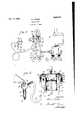
- Fig. 1is V side elevationof the apparatus
- Fig. 2is a view, partly. in section, suction pump and milk receiver
- FIG. 11designates a base on which the apparatus'is'preferably mounted.
- 11is an electric motor and 12 a of the casing containing a reduction gearing of any suitable construction.
- Supported on the easingare a pair of upright spaced supports 13 having bearings at the top for gudgeons 14;, 15 formed on the head 16 of a pump cyl-, inder 17 which is thus pivot-ally supported on the gear casing 12.
- the cylinder 17contains a piston 18 having a rod 19 connected by a pitman 20 to a wrist pin 20 eccentri cally arranged on a disc 21 on the outside of casing 12, the shaft 22 of which disc is rotated at a relatively slow speed by motor 11 through reducing gearing (not shown) of any suitable type in casing 12.
- chamber 26is provided with a flaring mouth piece or breast appliance 27 to fit over the breast.
- the mouth piecehas a tubular extension 28 projecting preferably within the chamber to a point below the .air'exit nipple 25.
- a milk outlet nipple 29From the bottom of the vacuum chamber projects a milk outlet nipple 29 on which is arranged a tapered valve tube 30 of flex ible material such as rubber, the lower end of which is slit at 31.
- the vacuum chamber and its mouth piece and nipplesare made ,of glass, the mouth piece being fused into the chamber so as to form therewith a single integral structure which obviously may be very easily cleaned and sterilized.
- the valve tubemay be removed and cleaned, and also tube 24, when necessary, so that all parts subject to contamination may be kept in sanitary condition.
- the inventionis not, however, limited spring on the valve.
- the other hollow udgeon 15is an elbow fitting 132 formed wit a artition 33 having a small orifice 34 theret rough and beyond the partition is a coiled spring 35 hearing on a ball valve.36 seating over an orifice 37in the end of a bonnet 38 which is threaded on the end of fitting 32 for the purpose of adjusting the pressure of the
- a vacuum gauge 39is arranged on the head of the pump cylinder to indicate the vacuum developed in the apparatus by the pump.
- the pump cylinder 17is clamped between the head 16 and a lower open head on ring 40 by means of bolts 41.
- the pump structuremay be readily disassembled, as will be seen, and the parts cleaned when necessary.
- the operation of the apparatusis as follows: The pump at its down strokes creates suction impulses which are transmitted to the breast through tube 24 and the vacuum The intensity of these impulses may be-varied while the machine is in operation, by turning the bonnet 38 so as to adjust the compression of spring 35.
- the valveis set at first toproduce a very low vacuum, say one or two inches PATENT 0FFICE.-
- the vacuumis then gradually in creased to a maximum'of from five to nine inches, the normal suck of healthy infants.
- the number of such strokes per mmutemay be varied by changing the speed of the motol through a suitable rheostat indicated dia grammatically at 42.
- the suction impulses to imitate the sucking of an infantwill vary from 40 to 80 per minute.
- the milkis drawn through the mouth piece 27 which has an air-tight fit around the breast and into the chamber 26 below the air exit nipple 25, so that no milk will enter the air line, the milk passing downwardly into the valve tube 30.
- the capacity of the pump cylinder 17is considerably greater than would be required simply to provide the desired suction on the breast, and the valve 36 will be so adjusted that a certain amount of air is drawn into the cylinder on the suction strokeof piston 18. On the return stroke of the piston, the ball valve 36 will close,
- the valve 30acts not only to discharge the h milk (in the embodiment of the invention shown) but as an automatic vent to limit the amount of back pressure.
- the breast appliance 27has a smooth conical inner surface against which the breast is drawn on the vacuum pulsation preventing undue distension and bringing about a compression like the action of an infants lips, the breast being repelled from the conical surface by the pressure pulsation.
- the pulsating actionhas therefore a massaging effect on the breast which is often beneficial.
- the course of the milk through the apparatusis short so that the possibility of contamination 1S minimized.
- the suction impulsesare uniform, the maximum intensity as well as the duration and frequency of the suction impulses beingthe fame, subject, of course, to adjustment for different patients.
- the breast applianceis connected with the pumpby flexible tubing so that it may be easily held against the breast with a slight pressure, which is not affected by the pump movement as would be the case with a hand operated device in which the breast appliance and exhauster were rigidly connected.
- the machinecan be successfully used on patients having inverted nipples.
- the machinecan be used also on engorged breasts, caked breasts and fissured or cracked nipples effectively and without pain by reducing the maximum vacuum intensity from, for example, nine inches of mercury, which is the average for normal cases, to as low as two and one-half inches if necessary.
- a p 1In a breast pump, the combination of a vacuum chamber having a valved milk outlet, a breast appliance unobstructedly con nected with the chamber, and means for producing alternate suction and pressure impulses in the vacuum chamber and breast appliance comprising a reciprocatin pump aving one valveless connection with the valcuum chamber and a separate valved air in et.
- a vacuum chamberhaving a valved milk outlet
- a breast applianceunobstructedly connected with the chamber
- means for pro- ,ducing alternate suction and pressure impulses in the vacuum chamber and breast appliancecomprising a pump cylinder, a piston in the cylinder, means for reciprocating the piston, a valveless tubular connection between the cylinder and the vacuum chamber, a separate air inlet to the cylinder, and a valve in said inlet permitting a restricted flow of air to enter'on the suction stroke of the piston.
- a breast pumping apparatusthe combination of a breast appliance formed to fit over the breast, means providing a chamber to receive milk from the breast appliance and mechanism for alternately reducing the air pressure in the breast appliance below and increasing it above atmospheric pressure in recurrent pulsations.
- a breast pumping apparatusIn a breast pumping apparatus, the combination of a breast appliance formed to fit over the breast, means providing a chamber to receive milk from the breast appllance, and mechanism comprising a vacuumand pressure pump and motor for driving the same for alternately reducing the air pressure in the breast appliance below and increasing it above atmospheric pressure in recurrent pulsations of uniform fre- J quency and intensity.
- a breast pumping apparatusthe combination of'a breast appliance formed to fit over the breast, means providing a chamber to receive milk from pliance, mechanism comprising a vacuum and pressure pump and motor for driving the same for alternately reducing the air pressure in the breast appliance below and increasing it above atmospheric pressure in recurrent pulsations of uniform frequency and intensity, and means for varying the intensity of the vacuum produced.
- a breast pumping apparatusthe combination of a breast appliance formed to fit over the breast, means providing a chamber in unobstructed communication with and arranged to receive milk from the breast appliance, air pumping mechanism operating to alternately produce a vacuum and a pressure above atmospheric pressure, and a flexible valveless tube for operatively connecting the breast appliance and chamber with said air pumping mechanism.
- a rigid breast appliance to fit over the breasthaving an inner smooth conical surface
- means providing a chamber to receive milk from the breast appli ancemechanism for alternately reducing the air pressure in this breast ap liance below and increasing it above atmosp eric pressure in recurring pulsations which draw the and repel it from said conical surface
- a flexible tubeby means of which the breast appliance is operatively connected withthe aforesaid mechanism, and means for varying the intensity of the vacuum produced.
- a rigid breast appliance to fit over the breasthaving an inner smooth conical surface
- means providing a chamber to receive milk from the breast appliancemeans providing a chamber to receive milk from the breast appliance
- a rigid breast applianceformed to fit over the breast for' a substantial distance beyond the nipple and support the same against distension, said appliance having an inner smooth conical surface, means providing a chamber to receivemilk from the breast appliance, motor driven mechanism for alternately reducing below atmospheric pressure and increasing the air on the vacuum stroke of the pump,
- a rigid breastappliance to fit 'over the breasthaving an inner. smooth conical surface
- mechanism com rising a vacuum and pressure pumpan a motor for driving the same for alternately reducing the air ressure in the breast appliance below an increasing it above atmospheric pressure in recurring pulsations of uniform fre uency and intensity, which draw the reast against and repel it from said conical surface
- a flexible tubeby means of which the breast appliance is operatively connected with the aforesaid mechanism, and means whereby the intensity of the vacuum may a be adjusted.
- a rigid breast appliance to fit over the breast having an inner smooth conical surfacemeans providing a. chamber to receive milk mechanism comprising a vacuum and pres sure ump, and a motor for driving the same for a ternately reducing the airpressure in the breast appliance below and increasing it above atmospheric pressure in recurring pulsations of uniform frequency and intensity, which draw the breast against and repel it from said conical surface, a flexible tube by means of which the-breast appliance is operatively connected with the aforesaid mechanism, means whereby the intensity of the vacuum may be adjusted, and means prov ding a vent for excess air during pressure pulsations.
- abreast appliancethereon, mechanism comprising an air pump and motor for driving the same for exhausting the airfrom said milk receiver and breast appliance in re? curring pulsations of uniform frequency and intensity, a valve for admitting regulatable amounts of air into the apparatus during the suction pulsations, and a flexible tube operatively connecting said receiver and breast appliance with the pump.
- a breast pumping apparatusthe combination of a milk receiver having a substantially conical breast appliance thereon formed to fit over the breast for a substantial distance beyond the nipple and support the same against distension, mechanism comprising an air pump and milk receiver having a motor forfrom the breast appliance, v
- combination of a breast appliance formed to fit over the breastmeans providlng a eham'-.
- a reciprocating vacuum and pressure pumpoperativel connected with said breast appliance and c amber, and means for admitting air in regulatable quantities into the I pump on the vacuum stroke, so that pressure" above atmosphere is created in the breast appliance on the alternate pump.
- a breast pumping apparatusthe combination of means to fit over the breast and receive milk drawn therefrom provided with an automatically opened outlet to reduce pressure in said means, and mechanism for alternately evacuating and creating a tervals of higher pressure to limit such pressure, and means for varying the intensity of such suction impulses.
Landscapes
- Health & Medical Sciences (AREA)
- Heart & Thoracic Surgery (AREA)
- Biomedical Technology (AREA)
- Vascular Medicine (AREA)
- Engineering & Computer Science (AREA)
- Anesthesiology (AREA)
- Pediatric Medicine (AREA)
- Hematology (AREA)
- Life Sciences & Earth Sciences (AREA)
- Animal Behavior & Ethology (AREA)
- General Health & Medical Sciences (AREA)
- Public Health (AREA)
- Veterinary Medicine (AREA)
- External Artificial Organs (AREA)
Description
Oct. 4 1927.
E. LASKER BREAST PUMP Filed Aug. 2, 1923 Patented Oct. 4, 1927.
UNITED JSTATES EDWARD LASKER, OF CHICAGO, ILLINOIS.
BREAST rumr.
Application filed August 2, 1928. Serial No. 655,245.
Fig. 1 is V side elevationof the apparatus,
and
Fig. 2 is a view, partly. in section, suction pump and milk receiver,
Referring to the drawing, designates a base on which the apparatus'is'preferably mounted. 11 is an electric motor and 12 a of the casing containing a reduction gearing of any suitable construction. Supported on the easing are a pair of upright spacedsupports 13 having bearings at the top forgudgeons 14;, 15 formed on thehead 16 of a pump cyl-,inder 17 which is thus pivot-ally supported on thegear casing 12. Thecylinder 17 contains apiston 18 having arod 19 connected by apitman 20 to awrist pin 20 eccentri cally arranged on adisc 21 on the outside ofcasing 12, theshaft 22 of which disc is rotated at a relatively slow speed by motor 11 through reducing gearing (not shown) of any suitable type incasing 12. Thegudgeons 14,
and into thegudgeon 14 is fitted a nipple 23 for a flexible tube 2 1, the other end of which is attached to anipple 25 on a preferablyglobular vacuum chamber 26. The
Preferably the vacuum chamber and its mouth piece and nipples are made ,of glass, the mouth piece being fused into the chamber so as to form therewith a single integral structure which obviously may be very easily cleaned and sterilized. The valve tube may be removed and cleaned, and alsotube 24, when necessary, so that all parts subject to contamination may be kept in sanitary condition. The invention is not, however, limited spring on the valve.
' chamber.
15 are tubular and communicate with the interior of the pump cylinder to the exact structure of the milk receiver which may be modified as to form.
Fixed 1n the otherhollow udgeon 15 is an elbow fitting 132 formed wit a artition 33 having asmall orifice 34 theret rough and beyond the partition is a coiledspring 35 hearing on a ball valve.36 seating over an orifice 37in the end of a bonnet 38 which is threaded on the end of fitting 32 for the purpose of adjusting the pressure of the Preferably avacuum gauge 39 is arranged on the head of the pump cylinder to indicate the vacuum developed in the apparatus by the pump. Thepump cylinder 17 is clamped between thehead 16 and a lower open head onring 40 by means ofbolts 41. The pump structure may be readily disassembled, as will be seen, and the parts cleaned when necessary.
. The operation of the apparatus is as follows: The pump at its down strokes creates suction impulses which are transmitted to the breast throughtube 24 and the vacuum The intensity of these impulses may be-varied while the machine is in operation, by turning the bonnet 38 so as to adjust the compression ofspring 35. In practice the valve is set at first toproduce a very low vacuum, say one or two inches PATENT 0FFICE.-
of mercury, inorder to avoid shock to the patient likely to cause inhibition of milk flow. The vacuum is then gradually in creased to a maximum'of from five to nine inches, the normal suck of healthy infants. The number of such strokes per mmute may be varied by changing the speed of the motol through a suitable rheostat indicated dia grammatically at 42. Ordinarily the suction impulses to imitate the sucking of an infant will vary from 40 to 80 per minute. The milk is drawn through themouth piece 27 which has an air-tight fit around the breast and into thechamber 26 below theair exit nipple 25, so that no milk will enter the air line, the milk passing downwardly into thevalve tube 30. The capacity of thepump cylinder 17 is considerably greater than would be required simply to provide the desired suction on the breast, and the valve 36 will be so adjusted that a certain amount of air is drawn into the cylinder on thesuction strokeof piston 18. On the return stroke of the piston, the ball valve 36 will close,
throughtube 24 tovacuum chamber 26, thus and this air must be expelled creating a positive back pressure in the breast appliance, and, together with the weight of the milk, bringingabout the discharge of the milk throughslit 31 into some suitable vessel in which it may be collected.
Thevalve 30 acts not only to discharge the h milk (in the embodiment of the invention shown) but as an automatic vent to limit the amount of back pressure. Thebreast appliance 27 has a smooth conical inner surface against which the breast is drawn on the vacuum pulsation preventing undue distension and bringing about a compression like the action of an infants lips, the breast being repelled from the conical surface by the pressure pulsation. The pulsating action has therefore a massaging effect on the breast which is often beneficial. The course of the milk through the apparatus is short so that the possibility of contamination 1S minimized. Between each suction impulse there is a period of rest at substantially atmospheric pressure or at a pressure which may be increased slightly above atmospheric pressure. It will be understood, however, that the invention is not limited to the particular means shown for producing the intermittent suction impulses. In fact, the invention includes all modifications within the scope of the appended claims.
As the pump is operated by a motor the suction impulses are uniform, the maximum intensity as well as the duration and frequency of the suction impulses beingthe fame, subject, of course, to adjustment for different patients. Between each suction impulse there is a period of rest at atmospheric pressure, or slightly above. The breast appliance is connected with the pumpby flexible tubing so that it may be easily held against the breast with a slight pressure, which is not affected by the pump movement as would be the case with a hand operated device in which the breast appliance and exhauster were rigidly connected. The intermittent, regular and even suction and pressure impulses, the latter resulting from back pressure of air during the periods of discharge of milk from the vacuum chamber,
' have a massaging effect which has been found very beneficial in stimulating milk secretion and have even produced milk flow from breasts considered dry. The machine can be successfully used on patients having inverted nipples. The machine can be used also on engorged breasts, caked breasts and fissured or cracked nipples effectively and without pain by reducing the maximum vacuum intensity from, for example, nine inches of mercury, which is the average for normal cases, to as low as two and one-half inches if necessary.
I claim: a p 1. In a breast pump, the combination of a vacuum chamber having a valved milk outlet, a breast appliance unobstructedly con nected with the chamber, and means for producing alternate suction and pressure impulses in the vacuum chamber and breast appliance comprising a reciprocatin pump aving one valveless connection with the valcuum chamber and a separate valved air in et.
2. In a breast pump, the combination of a vacuum chamber having a valved milk outlet, a breast appliance unobstructedly connected with the chamber, and means for pro- ,ducing alternate suction and pressure impulses in the vacuum chamber and breast appliance comprising a pump cylinder, a piston in the cylinder, means for reciprocating the piston, a valveless tubular connection between the cylinder and the vacuum chamber, a separate air inlet to the cylinder, and a valve in said inlet permitting a restricted flow of air to enter'on the suction stroke of the piston.
3. In a breast pumping apparatus, the combination of a breast appliance formed to fit over the breast, means providing a chamber to receive milk from the breast appliance and mechanism for alternately reducing the air pressure in the breast appliance below and increasing it above atmospheric pressure in recurrent pulsations.
4:. In a breast pumping apparatus, the combination of a breast appliance formed to fit over the breast, means providing a chamber to receive milk from the breast appllance, and mechanism comprising a vacuumand pressure pump and motor for driving the same for alternately reducing the air pressure in the breast appliance below and increasing it above atmospheric pressure in recurrent pulsations of uniform fre- J quency and intensity.
5. In a breast pumping apparatus, the combination of'a breast appliance formed to fit over the breast, means providing a chamber to receive milk from pliance, mechanism comprising a vacuum and pressure pump and motor for driving the same for alternately reducing the air pressure in the breast appliance below and increasing it above atmospheric pressure in recurrent pulsations of uniform frequency and intensity, and means for varying the intensity of the vacuum produced.
6. In a breast pumping apparatus, the combination of a breast appliance formed to fit over the breast, means providing a chamber in unobstructed communication with and arranged to receive milk from the breast appliance, air pumping mechanism operating to alternately produce a vacuum and a pressure above atmospheric pressure, and a flexible valveless tube for operatively connecting the breast appliance and chamber with said air pumping mechanism.
7. In a breast pumping apparatus. the
the breast appump.
' breast against combination of a breast appliance formed to fit over the breast, means providing a chamber in unobstructed vcommunication with and arranged to receive milk from the breast appliance, air pumping mechanism comprising a reciprocating vacuum' and pressure pump, a motor todrive the same and means for admitting outside air tothe um End a flexible tube operatively connect ng the chamber and breast appliance to the 8. In a breast pumping apparatus, the combination of a rigid breast appliance to fit over the breast having an inner smooth conical surface, means roviding a. chamber to receive milk from t e breast appliance, mechanism for alternately reducing the air pressure in this breast appliance below and increasing it above atmos heric pressure in recurring pulsations whic draw the breast against and repel it from said conical surface, and a flexible tube by means of which the breast appliance is operatively connected with the aforesaid mechanism.
9. In a breast pumping apparatus, the combination of a rigid breast appliance to fit over the breast having an inner smooth conical surface, means providing a chamber to receive milk from the breast appli ance, mechanism for alternately reducing the air pressure in this breast ap liance below and increasing it above atmosp eric pressure in recurring pulsations which draw the and repel it from said conical surface, a flexible tube by means of which the breast appliance is operatively connected withthe aforesaid mechanism, and means for varying the intensity of the vacuum produced.
10. In a breast pumping apparatus, the combination of a rigid breast appliance to fit over the breast having an inner smooth conical surface, means providing a chamber to receive milk from the breast appliance, mechanism for alternately reducing the air pressure inthis breast appliance below and increasing it above atmospheric pressurein recurring pulsations which draw the. breast against and repel it from said conical surface, a flexible tube by means of which the breast appliance is operatively connected with. the aforesaid mechanism, and means providing a vent for excess air during the pressure pulsations.
11. In abreast pumping apparatus, the combination of a rigid breast appliance formed to fit over the breast for' a substantial distance beyond the nipple and support the same against distension, said appliance having an inner smooth conical surface, means providing a chamber to receivemilk from the breast appliance, motor driven mechanism for alternately reducing below atmospheric pressure and increasing the air on the vacuum stroke of the pump,
pressure in the breast appliance in recurring pulsations which draw the breast against and release it from said conical surface, means whereby the patient may. vary the in tensity of the vacuum to suit the condition of thebreastduring the operation of the apparatus, and aflexible tube by means of which the breast ap liance is operativel} connected with the aoreSaid mechanism.
12. In a breast pumping apparatus, the combination of a rigid breastappliance to fit 'over the breast having an inner. smooth conical surface, means roviding a chamber to receive milk from the breast appliance, mechanism com rising a vacuum and pressure pump, an a motor for driving the same for alternately reducing the air ressure in the breast appliance below an increasing it above atmospheric pressure in recurring pulsations of uniform fre uency and intensity, which draw the reast against and repel it from said conical surface, a flexible tube by means of which the breast appliance is operatively connected with the aforesaid mechanism, and means whereby the intensity of the vacuum may a be adjusted.
13. -In a breast pumping apparatus, the combination of a rigid breast appliance to fit over the breast having an inner smooth conical surface, means providing a. chamber to receive milk mechanism comprising a vacuum and pres sure ump, and a motor for driving the same for a ternately reducing the airpressure in the breast appliance below and increasing it above atmospheric pressure in recurring pulsations of uniform frequency and intensity, which draw the breast against and repel it from said conical surface, a flexible tube by means of which the-breast appliance is operatively connected with the aforesaid mechanism, means whereby the intensity of the vacuum may be adjusted, and means prov ding a vent for excess air during pressure pulsations.
14. In a breast pumping apparatus, the combination ofabreast appliance thereon, mechanism comprising an air pump and motor for driving the same for exhausting the airfrom said milk receiver and breast appliance in re? curring pulsations of uniform frequency and intensity, a valve for admitting regulatable amounts of air into the apparatus during the suction pulsations, and a flexible tube operatively connecting said receiver and breast appliance with the pump.
15. In a breast pumping apparatus, the combination of a milk receiver having a substantially conical breast appliance thereon formed to fit over the breast for a substantial distance beyond the nipple and support the same against distension, mechanism comprising an air pump and milk receiver having a motor forfrom the breast appliance, v
driving the same for exhausting the air from Said milk receiver and breast appliance in recurring pulsations of uniform :fre uency and intensit a flexible tube operative connectin sai receiver and breast app iance vwith t e pump, and means on a stationary part of the apparatus whereby the patient may vary the intensity of the vacuum to suit the condition of the breast while the apparatus is in operation.
16. In a breast pumplng apparatus,.the
combination of a breast appliance formed to fit over the breast, means providlng a eham'-.
ber to receive milk from the breast appliance, a reciprocating vacuum and pressure pump operativel connected with said breast appliance and c amber, and means for admitting air in regulatable quantities into the I pump on the vacuum stroke, so that pressure" above atmosphere is created in the breast appliance on the alternate pump.
strokes of the 17. In a breast pumping apparatus, the combination of means to fit over the breast and receive milk drawn therefrom provided with an automatically opened outlet to reduce pressure in said means, and mechanism for alternately evacuating and creating a tervals of higher pressure to limit such pressure, and means for varying the intensity of such suction impulses.
EDWARD LASKER.
permitting the escape ing mechanism 1
Priority Applications (1)
| Application Number | Priority Date | Filing Date | Title |
|---|---|---|---|
| US655245AUS1644257A (en) | 1923-08-02 | 1923-08-02 | Breast pump |
Applications Claiming Priority (1)
| Application Number | Priority Date | Filing Date | Title |
|---|---|---|---|
| US655245AUS1644257A (en) | 1923-08-02 | 1923-08-02 | Breast pump |
Publications (1)
| Publication Number | Publication Date |
|---|---|
| US1644257Atrue US1644257A (en) | 1927-10-04 |
Family
ID=24628110
Family Applications (1)
| Application Number | Title | Priority Date | Filing Date |
|---|---|---|---|
| US655245AExpired - LifetimeUS1644257A (en) | 1923-08-02 | 1923-08-02 | Breast pump |
Country Status (1)
| Country | Link |
|---|---|
| US (1) | US1644257A (en) |
Cited By (15)
| Publication number | Priority date | Publication date | Assignee | Title |
|---|---|---|---|---|
| US3236231A (en)* | 1962-12-27 | 1966-02-22 | Mary Lee Way Corp | Facial uplift apparatus employing vacuum cups |
| US5007899A (en)* | 1988-02-29 | 1991-04-16 | Isg/Ag | Drive unit adapted for use with manual piston pump |
| US5049126A (en)* | 1990-02-16 | 1991-09-17 | Isg/Ag | Breast pump with nipple stimulating insert |
| US5601531A (en)* | 1995-02-16 | 1997-02-11 | Medela, Incorporated | Breast pump assembly and method of using same |
| US5941847A (en)* | 1998-02-06 | 1999-08-24 | Medela Holding Ag | Breast shield with vacuum isolation element |
| US6257847B1 (en) | 1995-08-03 | 2001-07-10 | Medela, Inc. | Diaphragm pump and pump for double-breast pumping |
| US6481986B1 (en) | 1995-08-03 | 2002-11-19 | Medela Holding Ag | Vacuum adjustment mechanism particularly adapted for a breastpump |
| US6585720B2 (en)* | 1996-03-15 | 2003-07-01 | Colocare Holdings Pty Ltd | Colostomy pump and aid |
| US6652484B1 (en) | 1995-05-02 | 2003-11-25 | Medela, Inc. | Foot-powered breastmilk pump with removable piston pump |
| US6676631B1 (en) | 1999-12-10 | 2004-01-13 | Medela Holding Ag | Vacuum and rate control for a breastpump |
| US6749582B2 (en) | 2002-04-30 | 2004-06-15 | The First Years Inc. | Pumping breast milk |
| US20080243061A1 (en)* | 2004-04-30 | 2008-10-02 | Britto James J | Pump apparatus |
| EP2388026A1 (en)* | 2010-05-17 | 2011-11-23 | Alexander Tritsch-Olian | Device for breast-feeding an infant |
| US8398584B2 (en) | 2009-01-16 | 2013-03-19 | Learning Curve Brands, Inc. | Breast pump and method of use |
| EP4029433A1 (en) | 2021-01-18 | 2022-07-20 | Volkan Görkem Büyükyildiz | Method of monitoring intake of breast milk by an infant |
- 1923
- 1923-08-02USUS655245Apatent/US1644257A/ennot_activeExpired - Lifetime
Cited By (22)
| Publication number | Priority date | Publication date | Assignee | Title |
|---|---|---|---|---|
| US3236231A (en)* | 1962-12-27 | 1966-02-22 | Mary Lee Way Corp | Facial uplift apparatus employing vacuum cups |
| US5007899A (en)* | 1988-02-29 | 1991-04-16 | Isg/Ag | Drive unit adapted for use with manual piston pump |
| US5049126A (en)* | 1990-02-16 | 1991-09-17 | Isg/Ag | Breast pump with nipple stimulating insert |
| US5601531A (en)* | 1995-02-16 | 1997-02-11 | Medela, Incorporated | Breast pump assembly and method of using same |
| US5797875A (en)* | 1995-02-16 | 1998-08-25 | Medela, Incorporated | Breast pump assembly and method of using same |
| US6652484B1 (en) | 1995-05-02 | 2003-11-25 | Medela, Inc. | Foot-powered breastmilk pump with removable piston pump |
| US6997897B1 (en) | 1995-08-03 | 2006-02-14 | Medela Holding Ag | Diaphragm pump and pump for double-breast pumping |
| US6257847B1 (en) | 1995-08-03 | 2001-07-10 | Medela, Inc. | Diaphragm pump and pump for double-breast pumping |
| US6481986B1 (en) | 1995-08-03 | 2002-11-19 | Medela Holding Ag | Vacuum adjustment mechanism particularly adapted for a breastpump |
| US7255681B1 (en) | 1995-08-03 | 2007-08-14 | Medela Holding Ag | Diaphragm pump and pump for double-breast pumping |
| US6585720B2 (en)* | 1996-03-15 | 2003-07-01 | Colocare Holdings Pty Ltd | Colostomy pump and aid |
| US5941847A (en)* | 1998-02-06 | 1999-08-24 | Medela Holding Ag | Breast shield with vacuum isolation element |
| US6676631B1 (en) | 1999-12-10 | 2004-01-13 | Medela Holding Ag | Vacuum and rate control for a breastpump |
| US6749582B2 (en) | 2002-04-30 | 2004-06-15 | The First Years Inc. | Pumping breast milk |
| US8591458B2 (en) | 2002-04-30 | 2013-11-26 | Tomy International, Inc. | Pumping breast milk |
| US20080243061A1 (en)* | 2004-04-30 | 2008-10-02 | Britto James J | Pump apparatus |
| US8079975B2 (en) | 2004-04-30 | 2011-12-20 | The First Years Inc. | Pump apparatus |
| US8398584B2 (en) | 2009-01-16 | 2013-03-19 | Learning Curve Brands, Inc. | Breast pump and method of use |
| US8900182B2 (en) | 2009-01-16 | 2014-12-02 | Tomy International, Inc. | Breast pump and method of use |
| EP2388026A1 (en)* | 2010-05-17 | 2011-11-23 | Alexander Tritsch-Olian | Device for breast-feeding an infant |
| WO2011144984A1 (en)* | 2010-05-17 | 2011-11-24 | Alexander Tritsch-Olian | Device for breastfeeding a baby |
| EP4029433A1 (en) | 2021-01-18 | 2022-07-20 | Volkan Görkem Büyükyildiz | Method of monitoring intake of breast milk by an infant |
Similar Documents
| Publication | Publication Date | Title |
|---|---|---|
| US1644257A (en) | Breast pump | |
| US5049126A (en) | Breast pump with nipple stimulating insert | |
| US6706012B2 (en) | Apparatus for expressing milk | |
| US3822703A (en) | Breast pump | |
| US6273868B1 (en) | Breast pump | |
| US2113253A (en) | Therapeutic apparatus | |
| US9603982B2 (en) | Highly efficient breastpump and system for expressing breastmilk | |
| US20040158199A1 (en) | Apparatus for expressing milk | |
| FR2380784A1 (en) | Suction pump for human milk - has hollow cup and squeeze bulb for peristaltic action, combined with suction bottle | |
| GB660283A (en) | An appliance for stimulating the process of lactation | |
| JPH08336588A (en) | Mother's milk pump | |
| US841146A (en) | Pneumatic massage apparatus. | |
| US1846596A (en) | Pulsating irrigator | |
| JPH04231964A (en) | Mammary pump for milk | |
| US2208089A (en) | Breast pump | |
| US2162076A (en) | Breast pump device | |
| CN111001054B (en) | Bionic Breast Pump | |
| WO1990000413A1 (en) | Breastpump | |
| US2087491A (en) | Pulsator | |
| SU1745262A1 (en) | Device for breast milk aspiration | |
| CN210331244U (en) | Electric breast pump | |
| CN219764105U (en) | breast pump | |
| SU1250223A1 (en) | Teat cup | |
| US1010203A (en) | Milking-machine. | |
| US1307539A (en) | Milking appakattts |