US1303149A - august - Google Patents
augustDownload PDFInfo
- Publication number
- US1303149A US1303149AUS1303149DAUS1303149AUS 1303149 AUS1303149 AUS 1303149AUS 1303149D AUS1303149D AUS 1303149DAUS 1303149 AUS1303149 AUS 1303149A
- Authority
- US
- United States
- Prior art keywords
- soil
- cylinder
- earth
- heat
- shaft
- Prior art date
- Legal status (The legal status is an assumption and is not a legal conclusion. Google has not performed a legal analysis and makes no representation as to the accuracy of the status listed.)
- Expired - Lifetime
Links
- 239000002689soilSubstances0.000description43
- 238000000034methodMethods0.000description21
- 239000002245particleSubstances0.000description19
- 238000011282treatmentMethods0.000description15
- 230000008569processEffects0.000description9
- 241000894006BacteriaSpecies0.000description7
- 230000000694effectsEffects0.000description4
- 239000007789gasSubstances0.000description4
- 241000239290AraneaeSpecies0.000description3
- 239000000446fuelSubstances0.000description3
- 230000000266injurious effectEffects0.000description3
- 241000251131SphyrnaSpecies0.000description2
- 238000006243chemical reactionMethods0.000description2
- 238000002485combustion reactionMethods0.000description2
- 230000006378damageEffects0.000description2
- 238000010438heat treatmentMethods0.000description2
- 239000007788liquidSubstances0.000description2
- 238000003756stirringMethods0.000description2
- 239000000725suspensionSubstances0.000description2
- 235000013311vegetablesNutrition0.000description2
- 102100022704Amyloid-beta precursor proteinHuman genes0.000description1
- 239000004215Carbon black (E152)Substances0.000description1
- 101000823051Homo sapiens Amyloid-beta precursor proteinProteins0.000description1
- 101000654298Homo sapiens N-terminal kinase-like proteinProteins0.000description1
- 102100031703N-terminal kinase-like proteinHuman genes0.000description1
- 230000009471actionEffects0.000description1
- 230000004075alterationEffects0.000description1
- DZHSAHHDTRWUTF-SIQRNXPUSA-Namyloid-beta polypeptide 42Chemical compoundC([C@@H](C(=O)N[C@@H](C)C(=O)N[C@@H](CCC(O)=O)C(=O)N[C@@H](CC(O)=O)C(=O)N[C@H](C(=O)NCC(=O)N[C@@H](CO)C(=O)N[C@@H](CC(N)=O)C(=O)N[C@@H](CCCCN)C(=O)NCC(=O)N[C@@H](C)C(=O)N[C@H](C(=O)N[C@@H]([C@@H](C)CC)C(=O)NCC(=O)N[C@@H](CC(C)C)C(=O)N[C@@H](CCSC)C(=O)N[C@@H](C(C)C)C(=O)NCC(=O)NCC(=O)N[C@@H](C(C)C)C(=O)N[C@@H](C(C)C)C(=O)N[C@@H]([C@@H](C)CC)C(=O)N[C@@H](C)C(O)=O)[C@@H](C)CC)C(C)C)NC(=O)[C@H](CC=1C=CC=CC=1)NC(=O)[C@@H](NC(=O)[C@H](CC(C)C)NC(=O)[C@H](CCCCN)NC(=O)[C@H](CCC(N)=O)NC(=O)[C@H](CC=1N=CNC=1)NC(=O)[C@H](CC=1N=CNC=1)NC(=O)[C@@H](NC(=O)[C@H](CCC(O)=O)NC(=O)[C@H](CC=1C=CC(O)=CC=1)NC(=O)CNC(=O)[C@H](CO)NC(=O)[C@H](CC(O)=O)NC(=O)[C@H](CC=1N=CNC=1)NC(=O)[C@H](CCCNC(N)=N)NC(=O)[C@H](CC=1C=CC=CC=1)NC(=O)[C@H](CCC(O)=O)NC(=O)[C@H](C)NC(=O)[C@@H](N)CC(O)=O)C(C)C)C(C)C)C1=CC=CC=C1DZHSAHHDTRWUTF-SIQRNXPUSA-N0.000description1
- 230000008859changeEffects0.000description1
- 230000008021depositionEffects0.000description1
- 230000001066destructive effectEffects0.000description1
- 239000012634fragmentSubstances0.000description1
- 229930195733hydrocarbonNatural products0.000description1
- 150000002430hydrocarbonsChemical class0.000description1
- 239000011810insulating materialSubstances0.000description1
- 230000001151other effectEffects0.000description1
- 230000001105regulatory effectEffects0.000description1
- 230000000284resting effectEffects0.000description1
- 239000007787solidSubstances0.000description1
- 239000004575stoneSubstances0.000description1
- XLYOFNOQVPJJNP-UHFFFAOYSA-NwaterSubstancesOXLYOFNOQVPJJNP-UHFFFAOYSA-N0.000description1
Images




Classifications
- A—HUMAN NECESSITIES
- A01—AGRICULTURE; FORESTRY; ANIMAL HUSBANDRY; HUNTING; TRAPPING; FISHING
- A01B—SOIL WORKING IN AGRICULTURE OR FORESTRY; PARTS, DETAILS, OR ACCESSORIES OF AGRICULTURAL MACHINES OR IMPLEMENTS, IN GENERAL
- A01B77/00—Machines for lifting and treating soil
Definitions
- the aim and object of my inventionis to produce a process of treating the soil, so as to destroy the-organisms that feed upon the bacteria, thus allowing the fertilizing bacteria to more freely multiply and thereby improve the productivity of the soil.
- My inventionalso convprises a machine suited foremployment 1n the field or within the area of'any other piece of ground that is to be cultivated to carry. out the process referred to.
- the treatment of the soilis efl'ect'ed according to my invention by breaking up the earth in the ground to be treated, lifting the broken earth into and passing it through a continually rotating cylinder raised above the surface of ground, disintegrating the earth within the cylinder into a fine state of division (or suspension) so that its particles shall be separated from. each other injecting a stream of radiant heat (such as a flame produced by a jet of gas and air) through the cylinder in a direction opposite'to that in which the particles of disintegrated earth are passing, so that thepart-icles of the soil are individually and uniformly acted upon by the heat, this treatment being maintained for a period whose duration is not long enough to insure that quite all the moisture.
- a stream of radiant heatsuch as a flame produced by a jet of gas and air
- the machine for carrying out my processis adapted to move over the land by its own power or tobe drawn thereover by tractivemeans and formsthe subjectmatter of a separate application filed as a division hereof on the 25th day of March. 1919, Serial uniformly attacked by the heat, fewer thermal unlts are required to do the work, and
- No.284,969It is of the type comprising means to break up the earth in the ground, a rotating cylinder in which the soil is treated, and means for projecting a streamof burning combustible into the rotating" understood from the following description reference being had to the accompanying drawings) being designed to carry into practical effect the process hereinbefore referred to.
- Fig. 2, and Fig. 2are plan views thereof;
- Fig. 3 and Fig. 3show a longitudinal section, Fig. 3* being a continuation of Fig. 3;
- Fig. 4 and Fig. 4are sectional plan views thereof;
- Fig. 5is a cross section on the line C C of Fig. 3
- the machinecomprises a frame 1 provided with steering Wheels 2 and driving wheels 3' which are driven by chain gearing or the like from a countershaft such as 22, which in turn is driven by a first motion shaft '5 and second motion shaft 22'from a prime mover mounted on the frame, such prime mover being conveniently an internal combustion engine
- a suitable share 7is carried by a hanger 8 and stay rods 9, at the front of the frame adapted to break up the earth in the ground to be treated. Behind the share 7 is arranged a trough 1O sloping upward and a lifting 'conveyer 11 driven by gearing from the countersha'ft 22, ,and-
- a hop er or chute 14carried by the. frame 1. T rough this chute the broken earth falls into the front end of a rotating cylinder 15 such-cylinder being raised above the surface of the ground.
- cuttersare set in such a way as to cause the earth to travel toward the rear end of the cylinder, and at the same time break up or partly disintegrate the clods or pieces of earth.
- Breakers or disintegrators 25are also secured to the said central shaft 17 at spaced intervals apart inside the cylinder 15 such breakers also rotating in the opposite direction to the cylinder and adapted to disintegrate the earth Within the cylinder into a fine state of division or suspension so i that its particles shall be separated from each other.
- the said heatersare also set in such a way as to cause the earth to travel along the cylinder or barrel 15.
- This cylinder 15 together with its central shaft 17slopes downwardly when in operation-to- Ward the rear of the machine, and this slope together with the action of the breakers 25 causes the disintegrated soil to travel toward the rear end of the cylinder 15.
- the plane of inclination of the cylinder and shaftcan be varied so as to enable the time taken by the earth to travel through the cylinder to be adjusted at will, and the means for adjusting the inclination will be described presently.
- a stream of radiant heatis projected, such as a flame produced by a jet 30 of gas and air.
- This stream of heattravels in a direction opposite to that in which the particles of disintegrated soil are pass ing, so that the individual particles of the soil are individually and uniformly acted upon by the heat and the heated soil before quite all the moisture is evaporated out of it, is delivered at the end of the cylinder 15 opposite to that at which it was fed in, and over substantially the place in the ground from whence it was removed.
- the rotating cylinder 15is inclosed within an outer non-rotating jacket 32 made of inner and outer concentric casings the-space between which is packed with heat insulating material 33 to conserve the heat, the annular space 34: between the jacket and the cylinder forming a flue, along which the stream of heat (after being projected forwardly into the cylinder and into and around the particles of soil which are be ing passed therethrough), travels back to the end of the cylinder where the jet is.
- the rearward end of the ackethas a hood 37 by means of which a part of the heat passing through the jacketed space will enter the inside of the cylinder 15 again so that a constant circulation of the heat through the cylinderand back through the jacketed space 34 is set up.
- the outside of the cylinder 15(inside the jacketed space) is furnished with non-continuous helical vanes 3.8 to induce a current of heat to travel back through the said jacket and then by means of the hood is diverted into the cylinder again.
- the bearings 18 for the front end of the shaft 17 and the non rotating jacket at its front endare carried on a frame or bracket which is fulcrumed at 22 and on the trunnion 26, the axis of the trunnion 26 being coincident with the axis of the shaft 22 so that the inclination of the shaft '17 and the cylinder 15 together with the outer jacket 32 can beadjusted without disturbing the driving gear 19, 21 and 24.
- the jacket 32is provided with a yoke 27 which carries a plate upon which isJ mounted the bearing 18 in which the rear end of the shaft is journaled, and to this yoke is pivoted an upstanding screwed spindle 28.
- a hand wheel 29On this screwed spindle is mounted a hand wheel 29 having a screw threaded center boss whose threads mesh with the threads on the spindle 28, the said hand wheel resting upon a bracket sup-- ported by the main frame 1 so that by turning the hand wheel in 'one'direction or the other, the jacket together with the cylinder 15, the shaft 17, and their accessory parts is raised or lowered on the fulcrum 26"to vary the inclination, as may be required to regulate the speed at which the earth is passed through the cylinder.
- the steering wheels 2 at the front end of the frame 1are turned by worm and worm wheel gearing from a shaft 40 having a hand wheel 41 conveniently arranged adjacent to the seat 42 for the driver, and means are provided by which the front end of the frame can be raised or lowered so asto determine the depth of soil which is broken up by the plow share. This is effected in the following manner.
- the carriage or fork 43 in which the axle of the steering wheels 2 is mountedis provided with a screw threaded pillar 44 which forms the steering axis.
- a screw threaded pillar 44Upon this screw threaded pillar 44 is mounted a nut 45 tov which the worm wheel 46 is solidly keyed, the nut being journaled in a bearing member 47 se-.
- va sliding clutch member 48which can be slipped by means of a lever either toward oraway from the counterpart end of the .nut45, the opposing faces of the clutch and thefnut having coacting projections and interd'ental spaces.
- the nut 45When however the clutch 48 is-engaged, the nut 45 (when the steering ,hand wheel 41 is turned) revolves the sp'lined clutch 48 and this turning of ,theclutch turns the steering pillar 44,, thereby turning the wheels 2 and steering the machine.
- the clutchis operated by a hand lever 50 arranged near the drivers seat 42, the said lever operating the clutch through the rod 51, bell crank 52 and link 53.
- Another hand lever 54is also arranged near the drivers seat which operates through a rod 55 lever 56 and other gear a clutch 57 on the first motion shaft 5 for throwing all the moving parts of the apparatus into and out of the heated air for combustion.
- Liquid fuel con tained in the tank 63is led by pipes 64 to the hydrocarbon burner 30, and a fan ('35 driven from the first motion shaft 5 by a belt 69 draws air through the radiatorfiil by way of the mouthpiece 66 and pipe 67 to the said burner 30 where it mixes with the jet of burning liquid fuel to support conibustion.
- the tank for the supply of fuel to the engineis indicated at 68.
- the breakerscomprise arms 25 radiating from a boss 70 secured to the shaft 17 and.
- the arms 25are pivoted to the boss 70 by means of stop hinges 72 so arranged as toallow the armsto freely turn rearwardly on their hinge pins.
- the arms with their hammer headsare however kept radial by centrifugal force so long as the shaft 17 revolves, but the stop hinges allow the said headed'arms to give rearwardly should they strike any solid obstruction such as a stone, and thus allow the obstruction to pass them. lit is proposed that the'cylinder and the shaft inside it shall turn at a speed of about 430 revolutions per minute in opposite directions.
- the mode of operationis as follows : The inclination of the cylinder 15 with its cen- .tral shaft 17 having been adjusted so as to cause the earth to travel longitudinally through the cylinder at the desired rate of speed, and the burner 30' having been lighted so as to inject a stream of radiant heat or burning combustibleTintoi the cylinder 15 and thus heat the individual particles of soil passing therethrough, the whole vehicle is traversed over the field or other area of ground which is to be cultivated, the driver ill V the ground, and the stirring arms 23 inside it first attack the clods or pieces of earth and partly disintegrate them; then as the broken earth travels through the cylinder 15 it is attacked by the heaters 25vwhich thoroughly disintegrate the soil and get it fine enough for its individual particles to be efficiently and uniformly heated by the flame or stream of radiant heat which is projected into or among them by the burner 30, and finally the treated soil is delivered from the rear end of the cylinder 15 over substantially the place in the ground from whence it was removed.
- the temperature attained by the soil during its passage through the cylinder 15is determined partly by the intensity of the flame and partly by the period during which the particles are under treatment by the heat, and this period can be regulated by varying the inclination of the rotating cylinder 15 so that the treat ment shall be maintained for a period whose duration is not long enough to insure that quite all the moisture is evaporated out of the soil. If this condition be maintained, then it follows that the disintegrated soil cannot be raised above the temperature of 100 centigrade and therefore no burning or scorching of the soil will take place, as its temperature will be maintained below that at which the whole of the useful bacteria are destroyed. It will be now understood that this apparatus carries my process into practical effect, the soil within the rotating cylinder 15 being reduced fine.
- the method of treating soil to improve its productivitywhich consists in passing it through a confined space at a level above the surface of the ground, getting the soil during its passage through said space fine enough for its individual particles to be efiiciently and uniformly heated by a stream of radiant heat which is projected into them, and the conversion of part of the moisture in the soil into steam, which steam effects the destruction of the injurious organisms without however destroying the vegetable matter in the soil, or the whole of the fertilizing bacteria.
Landscapes
- Life Sciences & Earth Sciences (AREA)
- Engineering & Computer Science (AREA)
- Mechanical Engineering (AREA)
- Soil Sciences (AREA)
- Environmental Sciences (AREA)
- Fertilizers (AREA)
Description
J. R. C. AUGUST. METHOD ron THE TREATMENT or SOIL.
V APPLICATION mu) NOV. 21. 1918. 1,303
Patented May6, 1919.
BID-F 9 SHEETS-SHEET l- 1. R. 0. AUGUST.
METHOD FOR THE TREATMENT OF SOIL.
APFLIQAUON FILED NOV. 21. I918.
Patented May 6, 1919.
9 SHEETS-SHEET 2.
III
J. H. C. AUGUST.
METHOD FOR THE TREATMENT OF SOIL,
APPI ICATIONHLED NOV. 21.1918.
Patented .May 6, 1919.
9SHEETSSHEET 3 Pa] H w n N. ll 00 o 0 lnlTTlllllla TTITITIT I n /w E 9 N. T f
TBJ \\.n. I... .3 v
Y w M Ex m \bM g T 3 e j G i 2 4 N\ J. R; c. AUQUST. METHOD FOR THE TREATMENT OF SOIL APPLICATION FILED NOV. 2|, Hi3- 1,303,149, Patented May 6, '1919.
9SHEETS-SHEET 4. v l
I T T Yll'q'T-sses I I J. R. C. AUGUST.
METHOD FOR THE TREATMENT OF SOIL. APPLICATION HLED NOV. 2|. r918.
Patented May 6, 1919.
v 9 SHEETS-SHEET 5.
J. R. C. AUGUST. METHOD FOR THE TREATMENT OF son.
APPLICATION FILED NOV. 21.15MB.
1,303,149. Patented May 6,1919.
9 SHEET$ .SHEET 6.
'0. AUGUST.
Patented May 6, 1919.
i '1?" T N TEIF v- N L N R k WIFessas fiiaqb J. R. C. AUGUST. METHOD ron me TREAiMENT or sou.
APPLICATION FILED NOV. 2| 19l8. 1,303,149. Patented May 6, 1919'.
9 SHEETSSHEET B- 1. R. 0. AUGUST.
METHOD FOR THE TREATMENT OF SOIb.
APPLICATI ON FILED NOV.2l. IQIB. I
Patented May 6, 1919.
9 SHEETS-SHEET 9.
" 'aaoaiae,
UNITED STATES PATENT ornron JQHANNES ROBERT CAR-L AUGUST, 0F HALIFAX, ENGLAND.
METHOD FORTI'IE TREATMENT OF SOIL.
Specification of Letters Patent.
Patented May-6, 1919..
Application filed November 21, 1918. Serial No. 263,510.
To'aZZ whom it may concern Be it known that I, Jormnnns Bonner CARL AUGUST, a subject of the King of Great Britain, residing at Halifax, Yorkshire, in the Kingdom of England, have invented certain new and useful Improvements intain improvements in the treatment of arable, that is agricultural or horticultural soil to improve its productivity.
In any process of this'kind it is of great importance to so treat the soil that all the ments. Accordingly the aim and object of my invention is to produce a process of treating the soil, so as to destroy the-organisms that feed upon the bacteria, thus allowing the fertilizing bacteria to more freely multiply and thereby improve the productivity of the soil. My invention also convprises a machine suited foremployment 1n the field or within the area of'any other piece of ground that is to be cultivated to carry. out the process referred to.
The treatment of the soil is efl'ect'ed according to my invention by breaking up the earth in the ground to be treated, lifting the broken earth into and passing it through a continually rotating cylinder raised above the surface of ground, disintegrating the earth within the cylinder into a fine state of division (or suspension) so that its particles shall be separated from. each other injecting a stream of radiant heat (such as a flame produced by a jet of gas and air) through the cylinder in a direction opposite'to that in which the particles of disintegrated earth are passing, so that thepart-icles of the soil are individually and uniformly acted upon by the heat, this treatment being maintained for a period whose duration is not long enough to insure that quite all the moisture.
and however long the heat supplied. Wonsequently the pulverized soii cannot be raised above the said temperature of 103 so long as some moistureis present 111 the soil, and
therefore no burning or scorching of the soil will take place, and the heat of the soil will always be maintained at a temperature be- 4 low that at which the whole of the useful bacteria are destroyed. Some of the useful bacteria are no doubt killed by my process, but those that are left soon multiply in the absence of the destructive organisms, all of which are destroyed by my system. When heating partly broken blocks or masses of earth by apparatus proposed prior to my invention, so many thermal units are required toperform the operation and the heating of the soil is not uniform because the interior portion of the partly broken blocks will receive much less heat than the exterior sur- .faces,but by my process of disintegrating the earth into a fine state of divisionand suspcnslon each particle is individually and the desired result is more quickly achieved.
process therefore involves getting the soil in the rotating cylinder fine enough for its individual particles to be eliiciently heat-- ed by the flame which is projected. into them and the conversion of part of the moisture inthe soil .into steam, which steam eifects the destruction of the injurious organisms wlthout however destroying the vegetable matter in the soil, or the Whole of the fer tilizing bacteria. i
' These other effects while not at the moment obvious, may show themselves as the result of further experience. v
The machine for carrying out my process is adapted to move over the land by its own power or tobe drawn thereover by tractivemeans and formsthe subjectmatter of a separate application filed as a division hereof on the 25th day of March. 1919, Serial uniformly attacked by the heat, fewer thermal unlts are required to do the work, and
No.284,969. It is of the type comprising means to break up the earth in the ground, a rotating cylinder in which the soil is treated, and means for projecting a streamof burning combustible into the rotating" understood from the following description reference being had to the accompanying drawings) being designed to carry into practical effect the process hereinbefore referred to.
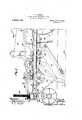
In these drawings Figure 1, and Fig. 1 which is a continuation of Fig. 1 show a side elevation of the complete machine;
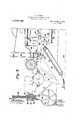
Fig. 2, and Fig. 2 are plan views thereof;
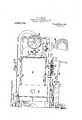
Fig. 3 and Fig. 3 show a longitudinal section, Fig. 3* being a continuation of Fig. 3;
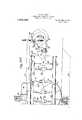
Fig. 4 and Fig. 4 are sectional plan views thereof;
Fig. 5 is a cross section on the line C C of Fig. 3
The machine comprises aframe 1 provided withsteering Wheels 2 and driving wheels 3' which are driven by chain gearing or the like from a countershaft such as 22, which in turn is driven by a first motion shaft '5 and second motion shaft 22'from a prime mover mounted on the frame, such prime mover being conveniently an internal combustion engine A suitable share 7 is carried by a hanger 8 and stay rods 9, at the front of the frame adapted to break up the earth in the ground to be treated. Behind the share 7 is arranged a trough 1O sloping upward and a lifting 'conveyer 11 driven by gearing from thecountersha'ft 22, ,and-
adapted to feed the earth that has been broken up by the share to a hop er orchute 14. carried by the.frame 1. T rough this chute the broken earth falls into the front end of arotating cylinder 15 such-cylinder being raised above the surface of the ground.
.Such cylinder is by means ofspiders 16 mounted freely on acentral shaft 17 journaled inbearings 18 and adapted to be driven by abevel wheel 19 secured to theboss 20 of-one of the spiders from. a bevel wheel 21 on the countershaft22 which is operated by the prime mover 6. Thiscentral shaft 17 runs freely through thebushes 20 of thespiders 16 in thecylinder 15, and has stirring or cuttingarms 23 inside thecylinder at the end where the broken earth is fed into it and the saidshaft 17 is driven by abevel wheel 24 which gears with the bevel wheel 21 on thecountershaft 22 in such manner that thecentral shaft 17 rotates in the opposite direction to thecylinder 15. These cutters are set in such a way as to cause the earth to travel toward the rear end of the cylinder, and at the same time break up or partly disintegrate the clods or pieces of earth. Breakers ordisintegrators 25 are also secured to the saidcentral shaft 17 at spaced intervals apart inside thecylinder 15 such breakers also rotating in the opposite direction to the cylinder and adapted to disintegrate the earth Within the cylinder into a fine state of division or suspension so i that its particles shall be separated from each other. The said heaters are also set in such a way as to cause the earth to travel along the cylinder orbarrel 15. Thiscylinder 15 together with itscentral shaft 17 slopes downwardly when in operation-to- Ward the rear of the machine, and this slope together with the action of thebreakers 25 causes the disintegrated soil to travel toward the rear end of thecylinder 15. The plane of inclination of the cylinder and shaft can be varied so as to enable the time taken by the earth to travel through the cylinder to be adjusted at will, and the means for adjusting the inclination will be described presently. Into the rear end of thecylinder 15 toward which the disintegrated earth is passing, a stream of radiant heat is projected, such as a flame produced by ajet 30 of gas and air. This stream of heat travels in a direction opposite to that in which the particles of disintegrated soil are pass ing, so that the individual particles of the soil are individually and uniformly acted upon by the heat and the heated soil before quite all the moisture is evaporated out of it, is delivered at the end of thecylinder 15 opposite to that at which it was fed in, and over substantially the place in the ground from whence it was removed.
The rotatingcylinder 15 is inclosed within an outernon-rotating jacket 32 made of inner and outer concentric casings the-space between which is packed withheat insulating material 33 to conserve the heat, the annular space 34: between the jacket and the cylinder forming a flue, along which the stream of heat (after being projected forwardly into the cylinder and into and around the particles of soil which are be ing passed therethrough), travels back to the end of the cylinder where the jet is.
This is for the purpose of keeping up the temperature of the inner surfaces of thecylinder 15, preventing the deposition of 'water thereon from the expanding steam heat is led. into thespace 34 by the bafilef The rearward end of the acket has ahood 37 by means of which a part of the heat passing through the jacketed space will enter the inside of thecylinder 15 again so that a constant circulation of the heat through the cylinderand back through the jacketedspace 34 is set up. The outside of the cylinder 15 (inside the jacketed space) is furnished with non-continuous helical vanes 3.8 to induce a current of heat to travel back through the said jacket and then by means of the hood is diverted into the cylinder again.
Thebearings 18 for the front end of theshaft 17 and the non rotating jacket at its front end are carried on a frame or bracket which is fulcrumed at 22 and on the trunnion 26, the axis of the trunnion 26 being coincident with the axis of theshaft 22 so that the inclination of the shaft '17 and thecylinder 15 together with theouter jacket 32 can beadjusted without disturbing thedriving gear yoke 27 which carries a plate upon which isJ mounted thebearing 18 in which the rear end of the shaft is journaled, and to this yoke is pivoted an upstanding screwedspindle 28. On this screwed spindle is mounted ahand wheel 29 having a screw threaded center boss whose threads mesh with the threads on thespindle 28, the said hand wheel resting upon a bracket sup-- ported by themain frame 1 so that by turning the hand wheel in 'one'direction or the other, the jacket together with thecylinder 15, theshaft 17, and their accessory parts is raised or lowered on the fulcrum 26"to vary the inclination, as may be required to regulate the speed at which the earth is passed through the cylinder.
Thesteering wheels 2 at the front end of theframe 1 are turned by worm and worm wheel gearing from ashaft 40 having ahand wheel 41 conveniently arranged adjacent to theseat 42 for the driver, and means are provided by which the front end of the frame can be raised or lowered so asto determine the depth of soil which is broken up by the plow share. This is effected in the following manner. The carriage orfork 43 in which the axle of thesteering wheels 2 is mounted, is provided with a screw threadedpillar 44 which forms the steering axis. Upon this screw threadedpillar 44 is mounted anut 45 tov which theworm wheel 46 is solidly keyed, the nut being journaled in a bearing member 47 se-. cured to the frame orchassis 1, so that it can freely revolve but is incapable of longitudinal movement independent of the bearing member 47. Below thenut 45 there is splined on to the screwedpillar 44 va slidingclutch member 48 which can be slipped by means of a lever either toward oraway from the counterpart end of the .nut45, the opposing faces of the clutch and thefnut having coacting projections and interd'ental spaces. When the clutch 48 is disengaged as shown in Fig. 3 and thesteering wheel 41 is; turned, thenut 45 revolves on the screw-'44 by the operationof theworm 49 andworm wheel 46, thereby raising or lowering the front of the machine as desired. When however the clutch 48 is-engaged, the nut 45 (when the steering ,hand wheel 41 is turned) revolves the sp'lined clutch 48 and this turning of ,theclutch turns thesteering pillar 44,, thereby turning thewheels 2 and steering the machine. The clutch is operated by ahand lever 50 arranged near thedrivers seat 42, the said lever operating the clutch through therod 51, bell crank 52 andlink 53. Anotherhand lever 54 is also arranged near the drivers seat which operates through arod 55 lever 56 and other gear a clutch 57 on thefirst motion shaft 5 for throwing all the moving parts of the apparatus into and out of the heated air for combustion. Liquid fuel con tained in thetank 63 is led by pipes 64 to thehydrocarbon burner 30, and a fan ('35 driven from thefirst motion shaft 5 by abelt 69 draws air through the radiatorfiil by way of themouthpiece 66 andpipe 67 to the saidburner 30 where it mixes with the jet of burning liquid fuel to support conibustion. The tank for the supply of fuel to the engine is indicated at 68.
The breakers comprisearms 25 radiating from a boss 70 secured to theshaft 17 and.
provided with hammer heads 71 at the outer ends such heads (and also the arms) having beveled sides converging toward the front edges so as to cut or back through the earth and dash it to pieces, in fact reduce it to a line state of division. Thearms 25 are pivoted to the boss 70 by means of stop hinges 72 so arranged as toallow the armsto freely turn rearwardly on their hinge pins. The arms with their hammer heads are however kept radial by centrifugal force so long as theshaft 17 revolves, but the stop hinges allow the said headed'arms to give rearwardly should they strike any solid obstruction such as a stone, and thus allow the obstruction to pass them. lit is proposed that the'cylinder and the shaft inside it shall turn at a speed of about 430 revolutions per minute in opposite directions.
The mode of operation is as follows :The inclination of thecylinder 15 with its cen- .tral shaft 17 having been adjusted so as to cause the earth to travel longitudinally through the cylinder at the desired rate of speed, and the burner 30' having been lighted so as to inject a stream of radiant heat or burning combustibleTintoi thecylinder 15 and thus heat the individual particles of soil passing therethrough, the whole vehicle is traversed over the field or other area of ground which is to be cultivated, the driver ill V the ground, and the stirringarms 23 inside it first attack the clods or pieces of earth and partly disintegrate them; then as the broken earth travels through thecylinder 15 it is attacked by the heaters 25vwhich thoroughly disintegrate the soil and get it fine enough for its individual particles to be efficiently and uniformly heated by the flame or stream of radiant heat which is projected into or among them by theburner 30, and finally the treated soil is delivered from the rear end of thecylinder 15 over substantially the place in the ground from whence it was removed. The temperature attained by the soil during its passage through thecylinder 15 is determined partly by the intensity of the flame and partly by the period during which the particles are under treatment by the heat, and this period can be regulated by varying the inclination of therotating cylinder 15 so that the treat ment shall be maintained for a period whose duration is not long enough to insure that quite all the moisture is evaporated out of the soil. If this condition be maintained, then it follows that the disintegrated soil cannot be raised above the temperature of 100 centigrade and therefore no burning or scorching of the soil will take place, as its temperature will be maintained below that at which the whole of the useful bacteria are destroyed. It will be now understood that this apparatus carries my process into practical effect, the soil within the rotatingcylinder 15 being reduced fine. enough for its individual particles to be efficiently and uniformly heated by the stream of burningcylinder 15 when the stream of disintegrated earth and the stream of radiant heat from theburner 30 are passing through it in opposite directions, might be compared or likened to a heated fine meshsieve, the stream of radiant heat being representative of the heated wires .of the sieve and the particles of earth being representative of the holes in the sieve, and this comparisonser'ves.
to illustrate that the heat percolatcs uniformly between and around every particle of the earth so that all the particles are individually acted upon by the heat. Furthermore fewer thermal units are required to perform the operation than is the case with known apparatus which attempt to apply a flame or radiant heat to fragments or clods of earth constituting a layer of turned over earth lying upon the surface of the ground itself. v
The nature of the invention and the manner of carrying it into practical effect will now be apparent. It must be understood however that I do not limitmyself to the precise details of the apparatus described, as alterations can be made which while they might change the appearance of the machine, would not involve a departure from the scope of the invention herein set forth.
I declare that what I claim is 1. The method of treating soil to improve its productivity, which consists in breaking up the earth in the ground to be treated,
lifting the broken earth into and passing it through a confined space at a level above the surface of the ground, disintegrating the earth within said space into a fine state of division so that its particles shall be separated from each other, injecting a stream of radiant heat through said space in a direction opposite to that in which the particles of disintegrated earth are passing, such treatment being maintained for a period whose duration is not long enough to insure that quite all the moisture is evaporated out of the soil, and finally delivering the treated soil over substantially the place in the ground from whence it was removed.
2. The method of treating soil to improve its productivity, which consists in passing it through a confined space at a level above the surface of the ground, getting the soil during its passage through said space fine enough for its individual particles to be efiiciently and uniformly heated by a stream of radiant heat which is projected into them, and the conversion of part of the moisture in the soil into steam, which steam effects the destruction of the injurious organisms without however destroying the vegetable matter in the soil, or the whole of the fertilizing bacteria.
3. The method of treating arable soil which consists in finely disintegrating the soil and causing the particles to travel a long circuitous path Within a short confined space in countercurrent with a supply of heated gases, and continuing said treatment I in a confined space in Contact with St countercurrent of heated gases for a very short time sufficient to destroy injurious organ- In Witness whereof I have hereunto signed my name this 22d day of @ctobel', 1918, in the presence, of two subscribing witnesses.
JONNES ROBERT CARL AUGUST. Witnesses:
ROBERT KENWORTHY, WHZLIAM Fox.
Publications (1)
| Publication Number | Publication Date |
|---|---|
| US1303149Atrue US1303149A (en) | 1919-05-06 |
Family
ID=3370686
Family Applications (1)
| Application Number | Title | Priority Date | Filing Date |
|---|---|---|---|
| US1303149DExpired - LifetimeUS1303149A (en) | august |
Country Status (1)
| Country | Link |
|---|---|
| US (1) | US1303149A (en) |
Cited By (5)
| Publication number | Priority date | Publication date | Assignee | Title |
|---|---|---|---|---|
| US2602388A (en)* | 1945-07-27 | 1952-07-08 | Burr B Elliott | Method of treating soil |
| US2691927A (en)* | 1948-12-24 | 1954-10-19 | Marion G Denton | Self-propelled ground working and clearing machine |
| US2693746A (en)* | 1949-02-28 | 1954-11-09 | Klein William | Apparatus for preparing soil for planting |
| US2775174A (en)* | 1950-12-01 | 1956-12-25 | Charles H Everett | Soil treating and weed destroying apparatus |
| US2785613A (en)* | 1954-04-14 | 1957-03-19 | Sr Louis T Staats | Apparatus for soil preparation |
- 0
- USUS1303149Dpatent/US1303149A/ennot_activeExpired - Lifetime
Cited By (5)
| Publication number | Priority date | Publication date | Assignee | Title |
|---|---|---|---|---|
| US2602388A (en)* | 1945-07-27 | 1952-07-08 | Burr B Elliott | Method of treating soil |
| US2691927A (en)* | 1948-12-24 | 1954-10-19 | Marion G Denton | Self-propelled ground working and clearing machine |
| US2693746A (en)* | 1949-02-28 | 1954-11-09 | Klein William | Apparatus for preparing soil for planting |
| US2775174A (en)* | 1950-12-01 | 1956-12-25 | Charles H Everett | Soil treating and weed destroying apparatus |
| US2785613A (en)* | 1954-04-14 | 1957-03-19 | Sr Louis T Staats | Apparatus for soil preparation |
Similar Documents
| Publication | Publication Date | Title |
|---|---|---|
| US2775174A (en) | Soil treating and weed destroying apparatus | |
| EP0588833B1 (en) | Treating biomass material | |
| US6655082B1 (en) | Soil disinfecting device | |
| US1303149A (en) | august | |
| US1240481A (en) | Process of and machine for treating earthy material. | |
| US1303150A (en) | august | |
| US2563926A (en) | Soil elevating and treating machine | |
| US2986841A (en) | Earth working and treating apparatus | |
| CN210580087U (en) | A spiral compression densification straw returning machine | |
| US7513077B2 (en) | Method and system for disinfection and aeration of soil | |
| US2966128A (en) | Machine for conditioning soil | |
| US2234534A (en) | Palmetto cutting and root exterminating machine | |
| US1444794A (en) | Apparatus for treating the soil | |
| US1725190A (en) | Apparatus for preparing the soil for stimulated crop growth | |
| US1906127A (en) | Weed and foul seed destroying machine | |
| US1018513A (en) | Quaking-grass destroyer. | |
| US1635612A (en) | Agricultural machine | |
| US3393462A (en) | Disposal | |
| US610612A (en) | John jas | |
| US4239030A (en) | Field burner apparatus | |
| US1209848A (en) | Apparatus for treating the soil. | |
| GB113860A (en) | Improved Method of and Apparatus for the Treatment of Soil. | |
| US1419953A (en) | Cultivating implement | |
| GB120587A (en) | An Improved Machine for Drying or Torrefying Soil. | |
| US617112A (en) | Apparatus for preparing soil for planting |