US12144940B2 - Aspiration catheter systems and methods of use - Google Patents
Aspiration catheter systems and methods of useDownload PDFInfo
- Publication number
- US12144940B2 US12144940B2US18/297,450US202318297450AUS12144940B2US 12144940 B2US12144940 B2US 12144940B2US 202318297450 AUS202318297450 AUS 202318297450AUS 12144940 B2US12144940 B2US 12144940B2
- Authority
- US
- United States
- Prior art keywords
- catheter
- distal end
- embolus
- distal
- advancement element
- Prior art date
- Legal status (The legal status is an assumption and is not a legal conclusion. Google has not performed a legal analysis and makes no representation as to the accuracy of the status listed.)
- Active
Links
Images





Classifications
- A—HUMAN NECESSITIES
- A61—MEDICAL OR VETERINARY SCIENCE; HYGIENE
- A61M—DEVICES FOR INTRODUCING MEDIA INTO, OR ONTO, THE BODY; DEVICES FOR TRANSDUCING BODY MEDIA OR FOR TAKING MEDIA FROM THE BODY; DEVICES FOR PRODUCING OR ENDING SLEEP OR STUPOR
- A61M25/00—Catheters; Hollow probes
- A61M25/01—Introducing, guiding, advancing, emplacing or holding catheters
- A61M25/0105—Steering means as part of the catheter or advancing means; Markers for positioning
- A61M25/0133—Tip steering devices
- A—HUMAN NECESSITIES
- A61—MEDICAL OR VETERINARY SCIENCE; HYGIENE
- A61B—DIAGNOSIS; SURGERY; IDENTIFICATION
- A61B17/00—Surgical instruments, devices or methods
- A61B17/12—Surgical instruments, devices or methods for ligaturing or otherwise compressing tubular parts of the body, e.g. blood vessels or umbilical cord
- A61B17/12022—Occluding by internal devices, e.g. balloons or releasable wires
- A61B17/12099—Occluding by internal devices, e.g. balloons or releasable wires characterised by the location of the occluder
- A61B17/12109—Occluding by internal devices, e.g. balloons or releasable wires characterised by the location of the occluder in a blood vessel
- A—HUMAN NECESSITIES
- A61—MEDICAL OR VETERINARY SCIENCE; HYGIENE
- A61B—DIAGNOSIS; SURGERY; IDENTIFICATION
- A61B17/00—Surgical instruments, devices or methods
- A61B17/22—Implements for squeezing-off ulcers or the like on inner organs of the body; Implements for scraping-out cavities of body organs, e.g. bones; for invasive removal or destruction of calculus using mechanical vibrations; for removing obstructions in blood vessels, not otherwise provided for
- A—HUMAN NECESSITIES
- A61—MEDICAL OR VETERINARY SCIENCE; HYGIENE
- A61M—DEVICES FOR INTRODUCING MEDIA INTO, OR ONTO, THE BODY; DEVICES FOR TRANSDUCING BODY MEDIA OR FOR TAKING MEDIA FROM THE BODY; DEVICES FOR PRODUCING OR ENDING SLEEP OR STUPOR
- A61M25/00—Catheters; Hollow probes
- A61M25/01—Introducing, guiding, advancing, emplacing or holding catheters
- A—HUMAN NECESSITIES
- A61—MEDICAL OR VETERINARY SCIENCE; HYGIENE
- A61M—DEVICES FOR INTRODUCING MEDIA INTO, OR ONTO, THE BODY; DEVICES FOR TRANSDUCING BODY MEDIA OR FOR TAKING MEDIA FROM THE BODY; DEVICES FOR PRODUCING OR ENDING SLEEP OR STUPOR
- A61M25/00—Catheters; Hollow probes
- A61M25/01—Introducing, guiding, advancing, emplacing or holding catheters
- A61M25/0105—Steering means as part of the catheter or advancing means; Markers for positioning
- A61M25/0108—Steering means as part of the catheter or advancing means; Markers for positioning using radio-opaque or ultrasound markers
- A—HUMAN NECESSITIES
- A61—MEDICAL OR VETERINARY SCIENCE; HYGIENE
- A61M—DEVICES FOR INTRODUCING MEDIA INTO, OR ONTO, THE BODY; DEVICES FOR TRANSDUCING BODY MEDIA OR FOR TAKING MEDIA FROM THE BODY; DEVICES FOR PRODUCING OR ENDING SLEEP OR STUPOR
- A61M25/00—Catheters; Hollow probes
- A61M25/01—Introducing, guiding, advancing, emplacing or holding catheters
- A61M25/09—Guide wires
- A—HUMAN NECESSITIES
- A61—MEDICAL OR VETERINARY SCIENCE; HYGIENE
- A61B—DIAGNOSIS; SURGERY; IDENTIFICATION
- A61B17/00—Surgical instruments, devices or methods
- A61B17/22—Implements for squeezing-off ulcers or the like on inner organs of the body; Implements for scraping-out cavities of body organs, e.g. bones; for invasive removal or destruction of calculus using mechanical vibrations; for removing obstructions in blood vessels, not otherwise provided for
- A61B2017/22079—Implements for squeezing-off ulcers or the like on inner organs of the body; Implements for scraping-out cavities of body organs, e.g. bones; for invasive removal or destruction of calculus using mechanical vibrations; for removing obstructions in blood vessels, not otherwise provided for with suction of debris
- A—HUMAN NECESSITIES
- A61—MEDICAL OR VETERINARY SCIENCE; HYGIENE
- A61B—DIAGNOSIS; SURGERY; IDENTIFICATION
- A61B17/00—Surgical instruments, devices or methods
- A61B17/22—Implements for squeezing-off ulcers or the like on inner organs of the body; Implements for scraping-out cavities of body organs, e.g. bones; for invasive removal or destruction of calculus using mechanical vibrations; for removing obstructions in blood vessels, not otherwise provided for
- A61B2017/22082—Implements for squeezing-off ulcers or the like on inner organs of the body; Implements for scraping-out cavities of body organs, e.g. bones; for invasive removal or destruction of calculus using mechanical vibrations; for removing obstructions in blood vessels, not otherwise provided for after introduction of a substance
- A—HUMAN NECESSITIES
- A61—MEDICAL OR VETERINARY SCIENCE; HYGIENE
- A61M—DEVICES FOR INTRODUCING MEDIA INTO, OR ONTO, THE BODY; DEVICES FOR TRANSDUCING BODY MEDIA OR FOR TAKING MEDIA FROM THE BODY; DEVICES FOR PRODUCING OR ENDING SLEEP OR STUPOR
- A61M25/00—Catheters; Hollow probes
- A61M2025/0004—Catheters; Hollow probes having two or more concentrically arranged tubes for forming a concentric catheter system
Definitions
- the present disclosurerelates generally to medical methods and devices for the treatment of acute ischemic stroke. More particularly, the present disclosure relates to methods and systems for effectively locating and removing cerebral occlusions.
- Acute ischemic strokeis the sudden blockage of adequate blood flow to a section of the brain, usually caused by emboli lodging or thrombus forming in situ in one of the blood vessels supplying the brain. If this blockage is not quickly resolved, ischemia may lead to permanent neurologic deficit or death.
- the timeframe for effective treatment of strokeis within 3 hours for intravenous (IV) thrombolytic therapy and 6 hours for site-directed intra-arterial thrombolytic therapy or up to 8 hours for interventional recanalization of a blocked cerebral artery. Re-perfusing the ischemic brain after this time period has no overall benefit to the patient, and may in fact cause harm due to the increased risk of intracranial hemorrhage from fibrinolytic use.
- Endovascular treatment of acute strokeis comprised of either the intra-arterial administration of thrombolytic drugs such as recombinant tissue plasminogen activator (rtPA), mechanical removal of the blockage, or a combination of the two.
- thrombolytic drugssuch as recombinant tissue plasminogen activator (rtPA)
- rtPAtissue plasminogen activator
- these interventional treatmentsmust occur within hours of the onset of symptoms.
- Both intra-arterial (IA) thrombolytic therapy and interventional thrombectomyinvolve accessing the blocked cerebral artery via endovascular techniques and devices.
- IA thrombolytic therapyhas the limitation in that it may take several hours of infusion to effectively dissolve the clot.
- Interventional thrombectomy therapieshave involved capturing and removing the clot using snares, coils or temporary stents (also known as retrievable stent devices), and suctioning the clot with or without adjunct disruption of the clot.
- Retrievable stent devicesare also used to restore flow quickly to the vessel during the intervention.
- Hybrid proceduresare also used, combining retrievable stent devices and aspiration via the guide catheter or via intermediate catheters to aid in the removal of the clot and reduce the risk of distal emboli.
- balloons or stentshave been used to create a patent lumen through the clot when clot removal or dissolution was not possible.
- Guide catheters or guide sheathsare used to guide interventional devices to access the cerebral anatomy and the target anatomy from an arterial access site, typically the femoral artery.
- devicesare used in a nested fashion, namely, a guidewire inside a microcatheter inside an intermediate catheter and are advanced as an assembly to the target site in a stepwise fashion with the inner, most atraumatic elements advancing distally first and providing support for advancement of the outer elements.
- the length of each element of the coaxial assemblagetakes into account the length of the guide, the length of proximal connectors on the catheters, and the length needed to extend from the distal end.
- Some exemplary issues with current technologyinclude the ability to locate the interventional device at the site of the occlusion and optimized aspiration of the clot in a first attempt, while minimizing the chance of liberating emboli.
- a system of removing an embolus in a cerebral vessel of a patient with an assembled system of devicesincluding a catheter having a catheter lumen and a distal end; and a catheter advancement element extending through the catheter lumen.
- the catheter advancement elementcomprises a lumen having a distal opening and a tapered distal end region.
- the tapered distal end region of the catheter advancement elementextends distal to the distal end of the catheter.
- the assembled system of devicesis configured for advancement together towards an occlusion site in a cerebral vessel of a patient visible on angiogram.
- the occlusion siteincludes an angiographic limit of contrast and an embolus downstream of the angiographic limit of contrast.
- the catheter advancement element tapered distal end regionhas a flexibility and taper configured to be delivered to a location past the angiographic limit of contrast without crossing the embolus.
- the assembled system of devicescan further include a guidewire having a distal end positioned within the lumen of the catheter advancement element and located a distance proximal to the distal opening of the catheter advancement element during advancement of the assembled system of devices together.
- the guidewireis extendable out the distal opening of the catheter advancement element for navigation.
- the distal end region of the catheter advancement elementcan taper distally from a first outer diameter to a second outer diameter that is smaller than the first outer diameter.
- the catheter advancement elementcan further include a proximal portion extending proximally from the catheter advancement element to outside the body of the patient. The proximal portion can have a single lumen that communicates with the lumen of the catheter advancement element.
- the tapered distal end regioncan be formed of a material having a material hardness of about Shore 62A and Shore 35D that transitions proximally towards increasingly harder materials.
- the tapered distal end regioncan taper over a length of 2 cm to 5 cm.
- the tapered distal end regioncan taper over a length of 0.05 cm to 2 cm.
- the tapered distal end regioncan taper along a distance that is between 1 cm and 3 cm.
- the first outer diametercan be at least 1.5 times the second outer diameter.
- the distal opening from the lumen of the catheter advancement elementcan have an inner diameter between 0.018′′ and 0.024′′.
- the second outer diameteris about 0.026′′ up to about 0.040′′.
- the first outer diametercan be about 0.062′′ up to about 0.080′′.
- the catheter advancement elementcan include at least one radiopaque marker along its length.
- the catheter advancementcan include at least one radiopaque marker identifying the tapered distal end region of the catheter advancement element.
- a first radiopaque markercan be disposed near the first outer diameter and a second radiopaque marker can be disposed near the second outer diameter.
- the cathetercan include a flexible distal luminal portion and a proximal tether element extending proximally from a point of attachment near a proximal end of the flexible distal luminal portion.
- the proximal tether elementcan extend proximally to outside the body of the patient.
- An outer diameter of the proximal tether element near the point of attachmentcan be smaller than an outer diameter of the distal luminal portion near the point of attachment.
- the embolushas a proximal face, and the tapered distal end region can be configured to deflect upon contact with the proximal face of the embolus.
- the tapered distal end regioncan have a distal-facing contact surface sized to apply a force per unit area of about 2 N/mm 2 to about 4 N/mm 2 upon an applied force of 1 N.
- the taper of the distal end regioncan have a length of about 1 cm to about 5 cm from a proximal outer diameter between 1.58 mm and 2.03 mm to a distal outer diameter that is about 0.79 mm at the distal opening.
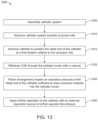
- a method of removing an embolus in a cerebral vessel of a patientincluding assembling a system of devices and advancing the assembled system of devices together towards an occlusion site in a cerebral vessel of a patient visible on angiogram, the occlusion site having an angiographic limit of contrast and an embolus downstream of the angiographic limit of contrast.
- the assembled system of devicesincludes a catheter having a catheter lumen and a distal end and a catheter advancement element extending through the catheter lumen. A tapered distal end region of the catheter advancement element extends distal to the distal end of the catheter.
- the methodfurther includes advancing the catheter advancement element to a location past the angiographic limit of contrast without crossing the embolus, advancing the catheter over the catheter advancement element to position the distal end of the catheter at a treatment site located past the angiographic limit of contrast, and applying aspiration to the catheter.
- Advancing the catheter advancement elementcan include positioning a distal end of the catheter advancement element between a portion of the embolus and a vessel wall.
- Advancing the cathetercan include positioning the distal end of the catheter at a proximal face of the embolus. Positioning the distal end of the catheter at the proximal face of the embolus can compress the embolus.
- Advancing the cathetercan include advancing the distal end of the catheter through a soft clot material proximal of the embolus to reach the proximal face of the embolus.
- Advancing the cathetercan include positioning the distal end of the catheter past a proximal face of the embolus without crossing the embolus.
- Advancing the catheter advancement elementcan include positioning a distal end of the catheter advancement element without crossing the embolus with the distal end of the catheter advancement element.
- Advancing the cathetercan include positioning the distal end of the catheter past the angiographic limit of contrast until resistance is felt indicating a proximal face of the embolus.
- the step of advancing the catheter advancement elementcan include advancing a distal end of the catheter advancement element as far as possible without buckling of the catheter advancement element.
- the step of advancing the catheter advancement elementcan include interrogating the treatment site to locate a proximal face of the embolus.
- the step of advancing the catheter advancement elementcan include using the tapered distal end region of the catheter advancement element to dissect past a soft clot material at a proximal face of the embolus and probe denser material of the embolus.
- the methodcan further include remove the catheter advancement element after the catheter is at the treatment site.
- the methodcan further include capturing occlusive material while applying the aspiration at, within, or through the distal end of the catheter.
- the methodcan further include injecting contrast agent into the cerebral vessel to visualize the occlusion site by angiogram.
- the contrast agentcan form a plurality of visible zones.
- a first zone of the plurality of visible zonescan include a high contrast region located proximal to the angiographic limit of contrast.
- the high contrast regioncan identify blood flow through the cerebral vessel.
- a second zone of the plurality of visible zonescan include a low contrast region located distal to the angiographic limit of contrast.
- the low contrast regioncan infiltrate slowly or minimally with contrast.
- the low contrast regioncan identify a location of the embolus and/or soft clot material proximal of the location of the embolus.
- the step of advancing the catheter advancement elementcan include positioning a distal end of the catheter advancement element past the low contrast region and positioning the distal end of the catheter can include positioning the distal end of the catheter past the low contrast region.
- the distal end region of the catheter advancement elementcan taper distally from a first outer diameter to a second outer diameter that is smaller than the first outer diameter.
- the catheter advancement elementcan further include a proximal portion extending proximally from the catheter advancement element to outside the body of the patient.
- the proximal portioncan have a single lumen that communicates with a lumen of the catheter advancement element.
- the distal end regioncan be formed of a material having a material hardness of about Shore 62A and Shore 35D that transitions proximally towards increasingly harder materials.
- the distal end regioncan taper over a length of 2 cm to 5 cm.
- the distal end regioncan taper over a length of 0.05 cm to 2 cm.
- the distal end regioncan taper along a distance that is between 1 cm and 3 cm.
- a guidewirecan be positioned within the lumen of the catheter advancement element such that a distal end of the guidewire is within the catheter advancement element during the step of advancing the assembled system of devices together and is extendable from the catheter advancement element when needed for navigation.
- the first outer diametercan be at least 1.5 times the second outer diameter.
- a distal opening from the lumen of the catheter advancement elementcan have an inner diameter between 0.018′′ and 0.024′′.
- the second outer diametercan be about 0.026′′ up to about 0.040′′.
- the first outer diametercan be about 0.062′′ up to about 0.080′′.
- the catheter advancement elementcan include at least one radiopaque marker along its length.
- the catheter advancement elementcan include at least one radiopaque marker identifying the distal end region of the catheter advancement element.
- a first radiopaque markercan be disposed near the first outer diameter and a second radiopaque marker can be disposed near the second outer diameter.
- the cathetercan include a flexible distal luminal portion and a proximal tether element extending proximally from a point of attachment near a proximal end of the flexible distal luminal portion, the proximal tether element extending proximally to outside the body of the patient.
- An outer diameter of the proximal tether element at the point of attachmentcan be smaller than an outer diameter of the distal luminal portion at the point of attachment.
- the assembled system of devicescan further include a guidewire positioned within the lumen of the catheter advancement element during the advancing step. The guidewire can be positioned within the lumen of the catheter advancement element such that a distal end of the guidewire protrudes from a distal end of the catheter advancement element during at least one of the advancing steps.
- a method of removing an embolus in a cerebral vessel of a patientincluding assembling a system of devices and advancing the assembled system of devices together towards an occlusion site in a cerebral vessel of a patient visible on angiogram, the occlusion site having an angiographic limit of contrast and an embolus downstream of the angiographic limit of contrast.
- the assembled system of devicesincludes a catheter having a catheter lumen and a distal end; and a catheter advancement element extending through the catheter lumen. A tapered distal end region of the catheter advancement element extends distal to the distal end of the catheter.
- the methodfurther includes advancing the catheter advancement element to a location past the angiographic limit of contrast without crossing the embolus; advancing the catheter to position the distal end of the catheter at a treatment site located past the angiographic limit of contrast; and applying aspiration to the catheter.
- the methodcan further include withdrawing the catheter advancement element relative to the catheter.
- the methodcan further include automatically creating vacuum within the catheter due to withdrawing the catheter advancement element.
- the vacuum automatically createdcan occur prior to applying aspiration to the catheter.
- the step of advancing the cathetercan include advancing the catheter to a first location and then allowing the distal end of the catheter to passively move in a distal direction to the treatment site driven by release of forces stored in the system of device due to withdrawing the catheter advancement element. Allowing the distal end of the catheter to passively advance in the distal direction seats the distal end of the catheter against a proximal face of the embolus.
- the methodcan further include applying a force on the catheter to advance the catheter to the first location. The force can be applied manually or automatically.
- the first locationcan be past the angiographic limit of contrast.
- the methodcan further include automatically creating vacuum within the catheter due to withdrawing the catheter advancement element.
- the vacuum automatically createdcan occur prior to applying aspiration to the catheter.
- the step of advancing the catheter advancement elementcan include positioning a distal end of the catheter advancement element between a portion of the embolus and a vessel wall.
- the step of advancing the cathetercan include positioning the distal end of the catheter at a proximal face of the embolus. Positioning the distal end of the catheter at the proximal face of the embolus can compress the embolus.
- the step of advancing the cathetercan include advancing the distal end of the catheter through a soft clot material proximal of the embolus to reach the proximal face of the embolus.
- the step of advancing the cathetercan include positioning the distal end of the catheter past a proximal face of the embolus without crossing the embolus.
- the step of advancing the catheter advancement elementcan include advancing a distal end of the catheter advancement element as far as possible without buckling of the catheter advancement element.
- the distal end region of the catheter advancement elementcan taper distally from a first outer diameter to a second outer diameter that is smaller than the first outer diameter.
- the catheter advancement elementcan further include a proximal portion extending proximally from the catheter advancement element to outside the body of the patient, the proximal portion having a single lumen that communicates with a lumen of the catheter advancement element.
- the distal end regioncan taper over a length of 2 cm to 5 cm.
- the distal end regioncan taper over a length of 0.05 cm to 2 cm.
- the distal end regioncan taper along a distance that is between 1 cm and 3 cm.
- a guidewirecan be positioned within the lumen of the catheter advancement element such that a distal end of the guidewire is within the catheter advancement element during the step of advancing the assembled system of devices together and is extendable from the catheter advancement element when needed for navigation.
- the first outer diametercan be at least 1.5 times the second outer diameter.
- the methodcan further include removing the catheter advancement element before the catheter is at the treatment site.
- the methodcan further include capturing occlusive material at, within, or through the distal end of the catheter while removing the catheter advancement element.
- the step of capturing occlusive material at, within, or through the distal end of the cathetercan occur before the step of applying aspiration to the catheter.
- the step of applying aspiration to the cathetercan be performed through a rotating hemostatic valve (RHV) of a base sheath through which the system of devices is positioned.
- the step of applying aspiration to the cathetercan be performed by removing the catheter advancement element.
- the methodcan further include a second step of applying aspiration to the catheter that is performed through an RHV of a base sheath through which the system of devices is positioned.
- the methodcan further include injecting contrast agent into the cerebral vessel to visualize the occlusion site by angiogram.
- the contrast agentcan form a plurality of visible zones having a high contrast region located proximal to the angiographic limit of contrast.
- the high contrast regioncan identify blood flow through the cerebral vessel.
- the plurality of visible zonecan also include a low contrast region located distal to the angiographic limit of contrast.
- the low contrast regioncan infiltrate slowly or minimally with contrast and identify a location of the embolus and/or soft clot material proximal of the location of the embolus.
- Advancing the catheter advancement elementcan include positioning a distal end of the catheter advancement element past the low contrast region.
- Positioning the distal end of the cathetercan include positioning the distal end of the catheter past the low contrast region.
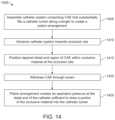
- a method of treating a cerebral vessel of a patientincluding assembling a system of devices and advancing the assembled system of devices together towards an occlusion site having occlusive material lodged in a cerebral vessel of a patient.
- the assembled system of devicesincludes a catheter having a catheter lumen and a distal end; and a catheter advancement element extending through the catheter lumen.
- a tapered distal end region of the catheter advancement elementextends distal to the distal end of the catheter.
- the catheter advancement elementsubstantially fills the catheter lumen along a length to create a piston arrangement.
- the methodincludes advancing the catheter to position the distal end of the catheter at a first location relative to the occlusion site; withdrawing the catheter advancement element through the catheter lumen with a velocity that the piston arrangement creates an aspiration pressure at the distal end of the catheter sufficient to draw the occlusive material into the catheter lumen; and applying further aspiration to the catheter with an external aspiration source to further aspirate the embolus.
- the occlusive materialcan include dense embolus and less dense clot.
- the step of withdrawing the catheter advancement elementcan cause the catheter to advance and seat the distal end of the catheter against a proximal face of the embolus.
- the step of withdrawing the catheter advancement elementcan cause the catheter to move in a distal direction towards the occlusion site driven by release of forces stored in the system of devices during delivery.
- a combination of the aspiration pressure from withdrawing the catheter advancement element and distal motion of the cathetercan cause the portion of the occlusive material to enter the catheter lumen.
- the step of withdrawing the catheter advancement elementcan occur prior to applying the further aspiration to the catheter with the external aspiration source.
- the occlusive materialcan include dense embolus and less dense clot.
- the methodcan further include removing the catheter advancement element before the distal end of the catheter is at the embolus. Withdrawing the catheter advancement element from the catheter lumen can include capturing occlusive material at, within, or through the distal end of the catheter while removing the catheter advancement element.
- the step of applying further aspiration to the cathetercan be performed through an RHV of a base sheath through which the system of devices is positioned.
- a clearance between the catheter advancement element and the catheter lumencan be less than about 0.006′′ along the length to create the piston arrangement.
- the length to create the piston arrangementcan be at least 10 cm of the catheter length.
- the distal end region of the catheter advancement elementcan taper along a distance that is between 5 mm and 40 mm.
- the distal end region of the catheter advancement elementcan taper along a distance that is between 10 mm and 30 mm.
- the tapered distal end region of the catheter advancement elementcan taper from a first outer diameter to a second outer diameter at a distal tip.
- the first outer diametercan be at least 1.5 times the second outer diameter.
- a method of treating a cerebral vessel of a patientincluding assembling a system of devices and advancing the assembled system of devices together towards an occlusion site in a cerebral vessel of a patient visible on angiogram and positioning the tapered distal end region within occlusive material at the occlusion site.
- the assembled system of devicesincludes a catheter having a catheter lumen and a distal end; and a catheter advancement element extending through the catheter lumen.
- a tapered distal end region of the catheter advancement elementextends distal to the distal end of the catheter.
- the catheter advancement elementsubstantially fills the catheter lumen along a length to create a piston arrangement.
- the methodincludes withdrawing the catheter advancement element through the catheter lumen causing the piston arrangement to create an aspiration pressure at the distal end of the catheter sufficient to draw a portion of the occlusive material into the catheter lumen.
- the occlusive materialcan include dense embolus and less dense clot.
- the step of withdrawing the catheter advancement elementcan cause the distal end of the catheter to advance and seat against a proximal face of the embolus.
- the step of withdrawing the catheter advancement elementcan cause the distal end of the catheter to move in a distal direction towards the occlusion site driven by release of forces stored in the system of devices during delivery.
- a combination of the aspiration pressure from withdrawing the catheter advancement element and distal motion of the distal end of the cathetercauses the portion of the occlusive material to enter the catheter lumen.
- the methodcan further include a step of applying further aspiration to the catheter with an external aspiration source following the step of withdrawing the catheter advancement element.
- the step of applying further aspiration to the cathetercan be performed through an RHV of a base sheath through which the system of devices is positioned.
- the methodcan further include removing the catheter advancement element before the distal end of the catheter is at a face of the embolus.
- a clearance between the catheter advancement element and the catheter lumencan be less than about 0.006′′ along the length to create the piston arrangement.
- the length to create the piston arrangementcan be at least 10 cm of the catheter length.
- the distal end region of the catheter advancement elementcan taper along a distance that is between 5 mm and 40 mm.
- the distal end region of the catheter advancement elementcan taper along a distance that is between 10 mm and 30 mm.
- the tapered distal end region of the catheter advancement elementcan taper from a first outer diameter to a second outer diameter at a distal tip.
- the first outer diametercan be at least 1.5 times the second outer diameter.
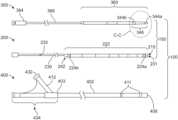
- FIG. 1 Ashows a catheter system for accessing an occlusion site in a cerebral vessel
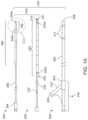
- FIG. 1 Bshows the catheter system of FIG. 1 A assembled
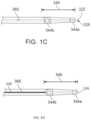
- FIG. 1 Cis a detail view of a distal end region of a catheter advancement element
- FIG. 1 Dis a detail view of a distal end region of a catheter advancing element having a rescue guidewire parked proximal of the distal opening;
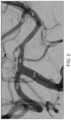
- FIG. 2shows an angiogram of a native artery with antegrade bloodflow
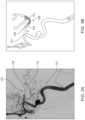
- FIG. 3 Ashows an angiogram of an occlusion site in a cerebral vessel
- FIG. 3 Bshows a schematic of the angiogram of FIG. 3 A showing an embolus and soft clot material proximal to the embolus;
- FIG. 3 Cis a detailed view of the angiogram of FIG. 3 A ;
- FIG. 4 A- 4 Dshow schematics illustrating the development of an occlusion site of a cerebral vessel
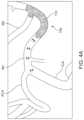
- FIG. 5 Ashows an angiogram of a catheter system advanced towards an occlusion site in a cerebral vessel
- FIG. 5 Bshows the angiogram of FIG. 5 A in schematic
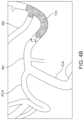
- FIG. 6 Ashows an angiogram of the catheter system of FIG. 5 A advanced further into the cerebral vessel
- FIG. 6 Bshows the angiogram of FIG. 6 A in schematic
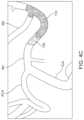
- FIG. 7 Ashows an angiogram of the catheter system of FIG. 5 A positioned with distal tip markers aligned
- FIG. 7 Bshows the angiogram of FIG. 7 A in schematic
- FIG. 8 Ashows an angiogram of the catheter system of FIG. 5 A with the catheter advancement element withdrawn
- FIG. 8 Bshows the angiogram of FIG. 8 A in schematic
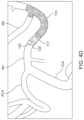
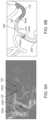
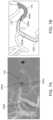
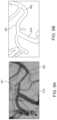
- FIG. 9 Ashows an angiogram of the previously occlusive site of the cerebral vessel of FIG. 5 A after removal of the embolus;
- FIG. 9 Bis the angiogram of FIG. 9 A in schematic
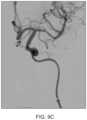
- FIG. 9 Cshows an angiogram of the previously occlusive site after removal of the embolus
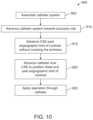
- FIG. 10is a flow diagram of a method of aspiration embolectomy in a cerebral vessel
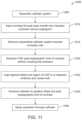
- FIG. 11is a flow diagram of an interrelated implementation of a method of aspiration embolectomy in a cerebral vessel
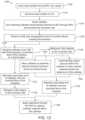
- FIG. 12is a flow diagram of an interrelated implementation of a method of aspiration embolectomy in a cerebral vessel
- FIG. 13is a flow diagram of an interrelated implementation of a method of aspiration embolectomy in a cerebral vessel
- FIG. 14is a flow diagram of an interrelated implementation of a method of aspiration embolectomy in a cerebral vessel
- FIGS. 15 A- 15 Dshow schematics of a method for removing an embolus using a catheter system that generates a piston effect
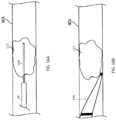
- FIG. 16 Ashows a schematic of a conventional guidewire centered by a microcatheter and penetrating an embolus
- FIG. 16 Bshows a schematic of a catheter advancement element positioned within a vessel and the tapered distal tip region deflecting upon reaching a proximal face of an embolus
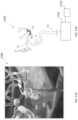
- FIG. 17 Ashows an implementation of a test rig for assessing deflection of a tapered distal tip region upon reaching a proximal face of an embolus
- FIG. 17 Bis a schematic of an implementation of a test rig.
- One of the major drawbacks to current acute stroke intervention proceduresis the amount of time required to restore blood perfusion to the brain. This time includes the time it takes to access the occlusive site or sites in the cerebral artery, and the time it takes to completely remove the occlusion from the artery. Typically, more than one attempt is made to completely remove the occlusion and each attempt is associated with potential procedural risk due to device advancement in the delicate cerebral vasculature. Reducing the number of attempts as well as reducing the time required to exchange devices for additional attempts are important factors in minimizing the overall time to perform a successful stroke intervention.
- Angiographyis an industry standard for imaging vascular anatomy within the body. Angiography involves injection of contrast media and use of x-ray fluoroscopic imaging to visualize internal anatomy of the vasculature to evaluate blood flow, constrictions, or blockage, and to plan an appropriate treatment. Contrast media is introduced prior to or during imaging (intra-arterially or intravenously). The presence of the contrast media blocks or limits the ability of the x-rays to pass through. As a result, any region that temporarily contains the contrast media changes its appearance on the images. The x-ray angiography provides high resolution imaging showing the vasculature anatomical details.
- Computed tomographyis an imaging technique that combines data from serial x-ray slices to produce detailed 2D and 3D images of structures in the body.
- Computed tomography angiographyuses CT with contrast to visualize blood flow in arterial and venous vessels throughout the body.
- CTAcombines the use of x-rays with computerized analysis of the images. Beams of x-rays are passed from a rotating device through the area of interest from several different angles to create cross-sectional images, which are assembled by computer into a three-dimensional picture of the area.
- Magnetic resonance angiographyuses magnetic resonance imagining (MRI) to image blood vessels.
- MRAis divided into two categories depending on whether contrast media is used to enhance the image.
- Gadoliniumis a paramagnetic contrast material that can be given prior to imaging to make the MRI images even clearer. Gadolinium alters magnetic properties of nearby hydrogen nuclei to enhance the quality of the MR images.
- MROmay use flow-related enhancement (e.g., 2D and 3D time-of-flight sequences), in which most of the signal on an image is due to blood that has recently moved into that plane.
- MRAmay also use fast low angle shot magnetic resonance imaging (FLASH MRI).
- Digital subtraction angiographyis an imaging method that permits direct visualization of the vasculature in skeletal or dense soft tissue environment.
- the target tissueis exposed to x-ray or MRI to obtain a first set of images.
- a contrast mediais administered into the vasculature and additional x-ray or MRI are performed.
- the first set of imagesis overlaid and subtracted from the second set of images acquired using contrast allowing for visualization of the vascular structure free of the surrounding tissue.
- Imaging techniquesinclude Positron Emission Tomography (PET), Ultrasound imaging, and Optical imaging.
- Photoacoustic imaging (PAI)is based on exciting a tissue of interest by a pulsed laser and thermal excitation of locally absorbed light leading to an expansion of the tissue and subsequent generation of ultrasonic waves.
- Ultrasonic transducersdetect the emitted ultrasonic waves that are converted into images.
- Trans-cranial Doppler (TCD)is a non-invasive technique that involves the use of a low-frequency transducer probe to insonate specific areas of the cranium that are relatively thin. Cerebral blood flow velocity and vessel pulsatility may be monitored through an intact skull.
- Contrast mediatypically includes iodine, or more rarely barium-sulphate, which absorb external x-rays resulting in decreased exposure on the x-ray detector.
- Iodinated contrastis typically used for angiography and CTA and is typically divided into two types: ionic and non-ionic.
- ionic contrast mediainclude sodium methylglucamine diatrizoate (Renografin 76).
- non-ionic mediainclude iohexol 240, lopromide 240, iohexol 300, iopromide 300, iohexol 350, iopromide 370, iodixanol 270, iopromide 320.
- Iopromideis sold under the brand name ULTRAVIST
- iohexolis sold under the brand name OMINIPAQUE
- iodixanolis sold under the brand name VISIOPAQUE.
- Newer iodinated contrast mediainclude low-osmolar ionic (LOCM) and iso-osmolar (IOCM). Iodinated LOCM, most of which are nonionic media, are associated with less discomfort and lower incidence of adverse effects. Magnetic resonance imaging uses gadolinium-based contrast media.
- contrast mediais considered generally safe, patients may experience allergic reactions and relatively severe adverse reactions do occur. Repeated x-ray imaging increases the overall radiation exposure to patients and medical staff. Thus, there is a need to reduce the number of attempts and time required to perform a successful stroke intervention that, in turn, results in fewer contrast media injections and lowers radiation exposure of medical staff and patients.
- An embolusis a term that can be used to describe a thrombus (a clot of blood) that formed at a first blood vessel location (e.g., a coronary vessel), breaks loose, and travels through the circulation to a second blood vessel location (e.g., a cerebral vessel). Not every embolus originates as a thrombus (e.g., a foreign object or a gas), but once a thrombus travels from its place of origin it becomes an embolus.
- a thrombuse.g., a foreign object or a gas
- the emboluslodges within the second vessel location and disrupts and/or blocks blood flow distal to the embolus creating an occlusion within the second vessel location.
- the emboluscan be relatively dense. This relatively dense embolus material that traveled through the circulation from another location to create an occlusion in a new vessel is sometimes referred to as an organized embolus.
- Blood cellscan accumulate at the proximal face of the embolus where there is disrupted or stagnated blood flow.
- the blood cellsaccumulate and form in situ a very soft and fluid-like thrombotic clot region in front of or proximal to the embolus.
- This soft thrombotic clotcan become denser over time, but is generally less dense than the adjacent embolus.
- an occlusion site within a vesselcan have zones of different consistency (e.g., dense vs. soft or organized vs. disorganized).
- Contrast mediainteracts with these zones of different consistency in different ways. Contrast media may partly or fully infiltrate the disorganized in situ clot material, but generally does not infiltrate the dense embolus where flow is fully occluded creating different visible zones on angiogram.
- an angiograminvolves the use of x-rays to visualize the contrast media injected into the vasculature. Blood vessels normally cannot be seen in an x-ray. The contrast media injected into the vessels flows through the vessels substantially replacing the blood and absorbs the x-rays. Blood vessels containing the contrast media shows up on the x-ray as a high contrast region. These high contrast zones can look very dark on an x-ray (or very light if the x-ray image is inverted).
- An occlusion site in a vesselmay be located on the angiogram due to the lack of contrast media infiltration.
- contrast mediamay not infiltrate a dense embolus that completely occludes a vessel or may only minimally infiltrate the embolus. This creates an angiographic limit of contrast that is visible on the angiogram.
- a high contrast regionmay be located proximal (upstream) to the angiographic limit of contrast and the embolus (with or without soft clot material accumulated at the proximal face) may be located distal (downstream) to the angiographic limit of contrast.
- the soft clot material accumulated at the proximal face of the embolusmay form another visible zone on the angiogram that is distinguishable from the high contrast region and the low contrast region.
- Contrast mediamay partially infiltrate this soft clot material and appear as a diffuse contrast region with a hazy appearance due to incomplete penetration of the contrast media that may include a combination of slow flowing blood and clot. This diffuse contrast region is distinguishable from the high contrast region and the low contrast region.
- the embolusmay be located immediately adjacent the distal-most limit of the contrast agent visible by angiogram or the embolus may be much deeper than the contrast limit.
- the surgeoncannot define a target location for engagement by a catheter. Surgeons tend to err on the side of caution and advance the aspiration catheter to a location that can be confirmed by imaging as proximal of the embolus.
- placing the aspiration catheter at or near the angiographic limit of contrastmay be too far away from the dense embolus to effectively remove it with aspiration-only embolectomy.
- the proximal face of the embolus, as well as the distal end of the embolus,are often not identifiable angiographically because the proximal face and the distal end are located within regions where contrast cannot penetrate.
- the shape of the embolusmay be irregular and uneven which provides a further challenge in consistently seating or nesting a catheter distal end onto the embolus.
- a prior CT scanmay be useful to identify the locations of the proximal and distal margins of the embolus as well as the length of the embolus.
- additional information about the location of the distal end of the emboluscan be seen on an angiogram due to collateral retrograde flow of contrast.
- the methods described hereinprovide techniques for the user to optimally place treatment systems with respect to the embolus in view of these embolus visualization challenges.
- one-pass embolectomyIn addition to reducing procedure time and achieving blood flow restoration more quickly, one-pass embolectomy also lowers the overall radiation exposure of medical staff and patients and reduces the need for multiple contrast injections.
- a novel structureis desirable to extend the range of applications of a conventional catheter to these novel treatment approaches.
- a catheter advancement elementhaving a tapered distal end region with a flexibility, shape, and taper length configured to be delivered to a location past the angiographic limit of contrast so as to atraumatically probe and find a true proximal face of an embolus without crossing the embolus.
- Thisis not achieved with conventional catheter systems as they may have improper flexibility, are formed of improper materials, or have improper shape and/or taper length resulting in conventional catheter systems embedding into the embolus or, if more force is applied, penetrating clear through and/or displacing the embolus distally.
- the catheter systems described hereinincludes a catheter advancement element capable of probing and/or slipping under the proximal face of the embolus.
- the catheter systems described hereinhelp locate the embolus in the novel manner of the methods provided herein.
- the catheter advancement element described hereincan pass through the disorganized thrombus or diffuse contrast region proximal to an embolus to atraumatically probe the true face of the organized embolus. Surgeons can observe the flexible tapered distal tip region of the catheter advancement element and the presence of deflection and/or buckling while maintaining a natural arc of the device.
- the distal tip region of the catheter advancement elementprobes the embolus so that pressure on the embolus is small and due to the extremely flexible tip does not cross the embolus.
- the probing of the embolus with the catheter advancement elementallows the surgeon to more safely find the true proximal face of the embolus so that the aspiration catheter can be advanced over the catheter advancement element to an optimal suctioning location relative to the embolus.
- the aspiration catheter and the catheter advancement elementcan be positioned tip-to-tip with both tip markers nearly aligned with one another and past the angiographic limit of contrast. Further, due to the structure of the catheter advancement element relative to the aspiration catheter, withdrawal of the aspiration catheter can create a piston effect initiating vacuum of the thrombus and embolus into the aspiration catheter without use of a separate vacuum source. The piston effect aspiration caused by withdrawal of the catheter advancement element through the aspiration catheter lumen can create distal advancement forces on the aspiration catheter as thrombotic material is aspirated into the aspiration catheter and removed from the vessel.
- the novel methods described hereinallow for the aspiration catheter to ride out these distal advancement forces caused by withdrawal of the catheter advancement element so that the distal tip of the aspiration catheter passively moves further toward and against the embolus.
- the aspiration catheterengages the intact embolus, rather than the disorganized thrombotic material within the diffuse contrast region proximal to the embolus. Full aspiration can then be initiated to achieve a consistent first pass reperfusion and ingestion of the thrombotic material and the embolus within the aspiration catheter.
- the catheter advancement elementis capable of allowing even aspiration catheters of conventional designs and sizing to achieve such results.
- embolusor “embolus material” or “embolic material” or “embolic region” refers to material within a zone of an occlusion site that is more dense or a relatively hard consistency that is preferably placed in contact with a distal end of an aspiration catheter to successfully perform aspiration embolectomy.
- the embolusis a thrombus (a clot of blood) or other material that formed at a first blood vessel location (e.g., a coronary vessel), breaks loose, and travels through the circulation to a second blood vessel location.
- the “proximal face” of the embolus as used hereingenerally refers to a contour of the embolus on an upstream side of the occlusion that is available for capture by the aspiration catheter advanced towards the embolus from an upstream direction.
- in situ thrombusor “thrombus material” or “thrombotic material” or “thrombotic region” or “in situ clot material” or “clot material” refers to material within a zone of an occlusion site that accumulates in situ proximal the site of the embolus and is often less dense or relatively soft and fluid-like.
- organized thrombusrefers to in situ thrombus material or clot material that accumulates proximal to the site of embolus and is more dense and less fluid-like than the in situ clot material.
- an occlusionor “an occlusion site” or “occlusive material” refers to the blockage that occurred as a result of an embolus lodging within a vessel and disrupting blood flow through the vessel.
- the occlusion or occlusive materialcan include both thrombus and embolus.
- references to “angiogram” or “angiographic”is not limited to any particular form of imaging of the vessel and occlusion site and is intended to refer to any type of imaging technique used to identify an occlusion within a vessel.
- reference to “contrast agent” or “contrast media” or just “contrast”is not limited to any particular agent used for imaging of the vessel and identification of an occlusion site and is intended to refer to any material for use in any type of imaging technique that aids in identifying an occlusion within a vessel.
- the angiogramprovides the user with a roadmap through the vasculature to the treatment site.
- the catheter systems described hereincan be used for treating various neurovascular pathologies, such as acute ischemic stroke (AIS).
- AISacute ischemic stroke
- the systems described hereinprovide quick and simple single-operator access to distal target anatomy, in particular tortuous anatomy of the cerebral vasculature at a single point of manipulation.
- the medical methods, devices and systems described hereinallow for navigating complex, tortuous anatomy to perform rapid and safe aspiration and removal of cerebral occlusions for the treatment of acute ischemic stroke.
- the medical methods, devices and systems described hereincan also be used to deliver intracranial medical devices, with or without aspiration for the removal of cerebral occlusions in the treatment of acute ischemic stroke.
- the systems described hereincan be particularly useful for the treatment of AIS whether a user intends to perform aspiration alone as a frontline treatment for AIS. Further, the extreme flexibility and deliverability of the distal access catheter systems described herein allow the catheters to take the shape of the tortuous anatomy rather than exert straightening forces creating new anatomy.
- the distal access catheter systems described hereincan pass through tortuous loops while maintaining the natural curves of the anatomy therein decreasing the risk of vessel straightening.
- the distal access catheter systems described hereincan thereby create a safe conduit through the neurovasculature maintaining the natural tortuosity of the anatomy for other catheters to traverse (e.g. larger bore aspiration catheters).
- the catheter systems described hereinmay be used to deliver working devices to a target vessel of a coronary anatomy or other vasculature anatomy.
- distal access catheteror “aspiration catheter” is used herein that the catheter can be used for aspiration, the delivery of fluids to a treatment site or as a support catheter, or distal access providing a conduit that facilitates and guides the delivery or exchange of other devices such as a guidewire or interventional devices such as stent retrievers.
- the access systems described hereinmay also be useful for access to other parts of the body outside the vasculature.
- FIGS. 1 A- 1 Billustrate an implementation of a distal access system 100 including devices for accessing and removing a cerebral occlusion to treat acute ischemic stroke.
- FIG. 1 Ais an exploded view of an implementation of a catheter system and
- FIG. 1 Bis an assembled view of the catheter system of FIG. 1 A .
- FIG. 1 Cis a detailed view of the catheter advancement element of FIG. 1 A taken along circle C-C.
- FIG. 1 Dis a detailed view of a catheter advancement element having a parked guidewire 500 in the lumen 368 having a distal end of the guidewire 500 positioned proximal to the distal opening 326 of the lumen 368 .
- the distal access system 100is capable of providing quick and simple access to distal target anatomy, particularly the tortuous anatomy of the cerebral vasculature.
- the system 100can be a single operator system such that each of the components and systems can be delivered and used together by one operator through a single point of manipulation requiring minimal hand movements.
- all wire and catheter manipulationscan occur at or in close proximity to a single rotating hemostatic valve (RHV) or more than a single RHV co-located in the same device.
- RVVrotating hemostatic valve
- the system 100can include one or more catheter systems 150 , each having a catheter 200 and a catheter advancement element 300 .
- the catheter system 150is configured to be advanced through an access guide sheath 400 .
- the catheter 200is configured to be received through the guide sheath 400 and is designed to have exceptional deliverability.
- the catheter 200can, but need not, be a spined, distal access catheter co-axial with a lumen of the guide sheath 400 thereby providing a step-up in inner diameter within the conduit.
- the catheter 200can be delivered using a catheter advancement element 300 inserted through a lumen 223 of the catheter 200 .
- the flexibility and deliverability of the distal access catheter 200allow the catheter 200 to take the shape of the tortuous anatomy and avoids exerting straightening forces creating new anatomy.
- the distal access catheter 200is capable of this even in the presence of the catheter advancement element 300 extending through its lumen.
- the flexibility and deliverability of the catheter advancement element 300is on par or better than the flexibility and deliverability of the distal luminal portion 222 of the distal access catheter 200 in that both are configured to reach the middle cerebral artery (MCA) circulation without straightening out the curves of the anatomy along the way.
- MCAmiddle cerebral artery
- the system 100can be a distal access system that can create a variable length from point of entry at the percutaneous arteriotomy (e.g. the femoral artery or other point of entry) to the target control point of the distal catheter.
- Conventional distal access systems for stroke interventiontypically include a long guide sheath or guide catheter placed through a shorter “introducer” sheath (e.g. 11-30 cm in length) at the groin.
- the long guide sheathis typically positioned in the ICA to support neurovascular interventions including stroke embolectomy (sometimes referred to as “thrombectomy”). For added support, these can be advanced up to the bony terminal petrous and rarely into the cavernous or clinoid or supraclinoid terminal ICA when possible.
- an additional cathetermay be inserted through the long guide catheter.
- These cathetersare typically large-bore aspiration catheters that can be, for example 130 cm in length or longer.
- the distal access systems 100 described hereincan be shorter, for example, only 115 cm in length when taken as a system as measured from the access point, typically the common femoral artery.
- the single operatorcan use the systems described herein by inserting them through a single rotating hemostatic valve (RHV) 434 on the guide sheath 400 or more than one RHV co-located in the same device such as a dual-headed RHV.
- RHVrotating hemostatic valve
- the distal access system 100can include an access guide sheath 400 having a body 402 through which a working lumen extends from a proximal hemostasis valve 434 coupled to a proximal end region 403 of the body 402 to a distal opening 408 of a distal end region.
- the working lumenis configured to receive the catheter 200 therethrough such that a distal end of the catheter 200 can extend beyond a distal end of the sheath 400 through the distal opening 408 .
- the guide sheath 400can be used to deliver the catheters described herein as well as any of a variety of working devices known in the art.
- the working devicescan be configured to provide thrombotic treatments and can include large-bore catheters, aspiration embolectomy (sometimes referred to as thrombectomy), advanced catheters, wires, balloons, retrievable structures such as coil-tipped retrievable stents “stent retriever”.
- aspiration embolectomysometimes referred to as thrombectomy
- advanced catheterswires, balloons
- retrievable structuressuch as coil-tipped retrievable stents “stent retriever”.
- the sheath body 402can extend from a proximal furcation or rotating hemostatic valve (RHV) 434 at a proximal end region 403 to a distal end 408 of the body 402 .
- the proximal RHV 434may include one or more lumens molded into a connector body to connect to the working lumen of the body 402 of the guide sheath 400 .
- the working lumencan receive the catheter 200 and/or any of a variety of working devices for delivery to a target anatomy.
- the RHV 434can be constructed of thick-walled polymer tubing or reinforced polymer tubing.
- the RHV 434allows for the introduction of devices through the guide sheath 400 into the vasculature, while preventing or minimizing blood loss and preventing air introduction into the guide sheath 400 .
- the RHV 434can be integral to the guide sheath 400 or the guide sheath 400 can terminate on a proximal end in a female Luer adaptor to which a separate hemostasis valve component, such as a passive seal valve, a Tuohy-Borst valve or RHV may be attached.
- the RHV 434can have an adjustable opening that is open large enough to allow removal of devices that have adherent clot on the distal end 408 without causing the clot to dislodge at the RHV 434 during removal.
- the RHV 434can be removable such as when a device is being removed from the sheath 400 to prevent clot dislodgement at the RHV 434 .
- the RHV 434can be a dual RHV or a multi-head RHV.
- the RHV 434can form a Y-connector on the proximal end 403 of the sheath 400 such that the first port of the RHV 434 can be used for insertion of a working catheter into the working lumen of the sheath 400 and a second port into arm 412 can be used for another purpose.
- a syringe or other devicecan be connected at arm 412 via a connector 432 to deliver a forward drip, a flush line for contrast agent or saline injections through the body 402 with or without a catheter toward the distal end 408 and into the target anatomy.
- Arm 412can also connect to a vacuum source.
- the vacuum sourcecan be an active source of aspiration such as an aspiration pump, a regular or locking syringe, a hand-held aspirator, hospital suction, or the like, configured to draw suction through the working lumen.
- the vacuum sourceis a locking syringe (for example a VacLok Syringe) attached to a flow controller. The user can pull the plunger on the syringe back into a locked position while the connection to the flow line is closed prior to an embolectomy step of the procedure.
- the usermay open the connection to the aspiration syringe. This allows for a maximum communication of aspiration force being applied through the working lumen of the sheath 400 and any catheter extending through the sheath 400 that in turn is in communication with the vessel at its distal end.
- a single user at the single, shared sourcecan apply the aspiration in a rapid fashion.
- the arm 412can be connected to a vacuum source that is a pump configured to apply a constant or variable aspiration pressure through the working lumen of the guide sheath 400 .
- the single, shared source of aspirationis sufficient to draw aspiration through the entire system 100 , even when multiple aspiration catheters 200 are nested within one another through the working lumen of the guide sheath 400 .
- the arm 412can also allow the guide sheath 400 to be flushed with saline or radiopaque contrast agent during a procedure.
- the working lumencan extend from the distal end 408 to a working proximal port of the proximal end region 403 of the sheath body 402 .
- Contrast agentcan be injected through the guide sheath 400 into the vessel to visualize the occlusion site by angiogram.
- the guide sheath 400can be positioned so that at least a portion is positioned within the carotid artery.
- the contrast agentmay be injected through the sheath 400 once positioned in this location.
- Contrast agentcan also be injected through one or more catheters inserted through the guide sheath 400 .
- a baseline angiogramcan be obtained, for example in the anterior/posterior (AP) and/or lateral views, prior to device insertion to assess occlusion location by injection of contrast media through the sheath 400 with fluoroscopic visualization.
- APanterior/posterior
- Fluoroscopic visualizationmay continue as the catheter system is advanced and subsequent angiograms can be captured periodically and particularly after every attempt to retrieve the embolus to assess reperfusion.
- the baseline angiogram imagecan be superimposed, such as with digital subtraction angiography, so that the vasculature and/or occlusion site are visible while the catheter system is advanced.
- the catheter advancement element 300can be withdrawn and removed from the system.
- a vacuum sourcesuch as a pump, may be connected to the sheath 400 and activated to direct aspiration to the distal end of the catheter 200 .
- the aspirationmay be applied for a period of time (e.g., between about 30 seconds up to about 3 minutes, preferably about 2 minutes) to allow for capture and engulfment of the embolus in the catheter 200 .
- the flow rate of aspirationmay vary and in one example can be between about 25 inches Hg (inHg) (12.279 psi) up to about 28 inHg (13.752 psi).
- the pumpis allowed to run to build up a vacuum outside of the patient over a first period prior to applying the vacuum to the vessel, for example, by turning a flow control switch to an “on” position.
- the pumpis turned on at a particular flow rate and is applied to the vessel immediately allowing for the build-up of vacuum through the system.
- the catheter 200can be slowly withdrawn.
- the aspiration sourcecan be disconnected from the sheath 400 and a confirmatory angiogram performed.
- the angiogramcan be performed by injecting contrast agent through the aspiration catheter 200 still positioned through the working lumen of the sheath 400 .
- the angiogramcan also be performed through the guide sheath 400 after complete removal of the aspiration catheter 200 from the guide sheath 400 .
- the vacuum sourcecan increase in aspiration level when the flow rate is slow and decrease when the flow rate is increased. In this manner, the force is greatest when the catheter is clogged or partially clogged, but decreases to a minimal level when there is free flow to ensure protection from distal emboli but limit the volume of aspirated blood. In this manner, the system can optimize the embolus aspiration while limiting the amount of blood aspirated.
- the vacuum sourcecan include a vacuum gauge. When the flow in the catheter 200 is blocked or restricted, the pump can create a higher level of vacuum. In this example, the aspiration force may be configured to rise when higher vacuum is detected.
- the vacuum gaugemay be incorporated into the RHV or the Luer or proximal end of the guide sheath 400 .
- the guide sheath 400includes one or more radiopaque markers 411 .
- the radiopaque markers 411can be disposed near the distal end 408 .
- a pair of radiopaque bandsmay be provided.
- the radiopaque markers 411 or markers of any of the system componentscan be swaged, painted, embedded, or otherwise disposed in or on the body.
- the radiopaque markersinclude a barium polymer, tungsten polymer blend, tungsten-filled or platinum-filled marker that maintains flexibility of the devices and improves transition along the length of the component and its resistance to kinking.
- the radiopaque markersare a tungsten-loaded PEBAX or polyurethane that is heat welded to the component.
- the guide sheath markers 411are shown in the figures as rings around a circumference of one or more regions of the body 402 . However, the markers 411 can have other shapes or create a variety of patterns that provide orientation to an operator regarding the position of the distal opening 408 within the vessel. Accordingly, an operator may visualize a location of the distal opening 408 under fluoroscopy to confirm that the distal opening 408 is directed toward a target anatomy where a catheter 200 is to be delivered.
- radiopaque marker(s) 411allow an operator to rotate the body 402 of the guide sheath 400 at an anatomical access point, e.g., a groin of a patient, such that the distal opening provides access to an ICA by subsequent working device(s), e.g., catheters and wires advanced to the ICA.
- the radiopaque marker(s) 411include platinum, gold, tantalum, tungsten or any other substance visible under an x-ray fluoroscope. Any of the various components of the systems described herein can incorporate radiopaque markers.
- the catheter 200can include a relatively flexible, distal luminal portion 222 coupled to a stiffer, kink-resistant proximal extension or proximal control element 230 .
- control elementas used herein can refer to a proximal region configured for a user to cause pushing movement in a distal direction as well as pulling movement in a proximal direction.
- the control elements described hereinmay also be referred to as spines, tethers, push wires, push tubes, or other elements having any of a variety of configurations.
- the proximal control element 230can be a hollow or tubular element.
- the proximal control element 230can also be solid and have no inner lumen, such as a solid rod, ribbon or other solid wire type element.
- the proximal control elements described hereinare configured to move its respective component (to which it may be attached or integral) in a bidirectional manner through a lumen.
- a single, inner lumen 223extends through the luminal portion 222 between a proximal end and a distal end of the luminal portion 222 (the lumen 223 is visible in FIG. 8 A ).
- a proximal opening 242 into the lumen 223can be located near where the proximal control element 230 coupled with the distal luminal portion 222 .
- the proximal opening 242 into the lumen 223is at a proximal end region of the catheter 200 .
- a distal opening 231 from the lumen 223can be located near or at the distal-most end 215 of the luminal portion 222 .
- the inner lumen 223 of the catheter 200can have a first inner diameter and the working lumen of the guide sheath 400 can have a second, larger inner diameter.
- the lumen 223 of the catheter 200can be configured to be fluidly connected and contiguous with the working lumen of the sheath 400 such that fluid flow into and/or out of the system 100 is possible, such as by applying suction from a vacuum source coupled to the system 100 at a proximal end.
- the combination of sheath 400 and catheter 200can be continuously in communication with the bloodstream during aspiration at the proximal end with advancement and withdrawal of catheter 200 .
- the distal luminal portion 222 of the catheter 200can have a plurality of radiopaque markings 224 .
- a first radiopaque marker 224 acan be located near the distal-most end 215 to aid in navigation and proper positioning of the distal-most end 215 under fluoroscopy.
- a proximal region of the catheter 200may have one or more proximal radiopaque markers 224 b so that the overlap region 348 can be visualized as the relationship between a radiopaque marker 411 on the guide sheath 400 and the radiopaque marker 224 b on the catheter 200 .
- the proximal region of the catheter 200may also have one or more radiopaque markings providing visualization, for example, near the proximal opening 242 into the single lumen 223 of the catheter 200 as will be described in more detail below.
- the two radiopaque markersare distinct to minimize confusion of the fluoroscopic image, for example the catheter proximal marker 224 b may be a single band and the marker 411 on the guide sheath 400 may be a double band and any markers on a working device delivered through the distal access system can have another type of band or mark.
- the radiopaque markers 224 of the distal luminal portion 222can be relatively flexible such that they do not affect the overall flexibility of the distal luminal portion 222 near the distal end region.
- the radiopaque markers 224can be tungsten-loaded or platinum-loaded markers that are relatively flexible compared to other types of radiopaque markers used in devices where flexibility is not paramount.
- the radiopaque markercan be a band of tungsten-loaded PEBAX having a durometer of Shore 35D.
- the proximal control element 230can include one or more markers 232 to indicate the overlap between the distal luminal portion 222 of the catheter 200 and the sheath body 402 as well as the overlap between the distal luminal portion 222 of the catheter 200 and other interventional devices that may extend through the distal luminal portion 222 .
- At least a first markcan be an RHV proximity marker positioned so that when the mark is aligned with the sheath proximal hemostasis valve 434 during insertion of the catheter 200 through the guide sheath 400 , the catheter 200 is positioned at the distal-most position with the minimal overlap length needed to create the seal between the catheter 200 and the working lumen.
- At least a second mark 232can be a Fluoro-saver marker that can be positioned on the control element 230 and located a distance away from the distal-most end 215 of the distal luminal portion 222 . In some implementations, a mark 232 can be positioned about 100 cm away from the distal-most end 215 of the distal luminal portion 222 .
- the catheter advancement element 300is described herein in reference to catheter 200 it can be used to advance other catheters and it is not intended to be limiting to its use.
- the catheter advancement element 300can be used to deliver a 5MAX Reperfusion Catheter (Penumbra, Inc. Alameda, CA), REACT aspiration catheter (Medtronic), or Euro Plus aspiration catheter (Terumo) for clot removal in patients with acute ischemic stroke or other reperfusion catheters known in the art.
- the catheter advancement element 300can include a non-expandable, flexible elongate body 360 coupled to a proximal portion 366 .
- the catheter advancement element 300 and the catheter 200 described hereinmay be configured for rapid exchange or over-the-wire methods.
- the flexible elongate body 360can be a tubular portion extending the entire length of the catheter advancement element 300 and can have a proximal opening from the lumen 368 of the flexible elongate body 360 that is configured to extend outside the patient's body during use.
- the tubular portioncan have a proximal opening positioned such that the proximal opening remains inside the patient's body during use.
- the proximal portion 366can be a proximal element coupled to a distal tubular portion 360 and extending proximally therefrom. A proximal opening from the tubular portion 360 can be positioned near where the proximal element 366 couples to the tubular portion 360 . Alternatively, the proximal portion 366 can be a proximal extension of the tubular portion 360 having a length that extends to a proximal opening near a proximal terminus of the catheter advancement element 300 (i.e. outside a patient's body).
- a luer 364can be coupled to the proximal portion 366 at the proximal end region so that tools such as a guidewire can be advanced through the lumen 368 of the catheter advancement element 300 .
- a syringe or other componentcan be coupled to the luer 364 in order to draw a vacuum and/or inject fluids through the lumen 368 .
- the syringe coupled to the luer 364can also be used to close off the lumen of the catheter advancement element 300 to maximize the piston effect described elsewhere herein.
- the configuration of the proximal portion 366can vary.
- the proximal portion 366is simply a proximal extension of the flexible elongate body 360 that does not change significantly in structure but changes significantly in flexibility.
- the proximal portion 366transitions from the very flexible distal regions of the catheter advancement element 300 towards less flexible proximal regions of the catheter advancement element 300 .
- the proximal portion 366provides a relatively stiff proximal end suitable for manipulating and torqueing the more distal regions of the catheter advancement element 300 .
- the proximal portion 366is a hypotube. The hypotube may be exposed or may be coated by a polymer.
- the proximal portion 366may be a tubular polymer portion reinforced by a coiled ribbon or braid.
- the proximal portion 366can have the same outer diameter as the flexible elongate body or can have a smaller outer diameter as the flexible elongate body.
- the proximal portion 366need not include a lumen.
- the proximal portion 366can be a solid rod, ribbon, or wire have no lumen extending through it that couples to the tubular elongate body 360 .
- the proximal portion 366is described herein as having a lumen, it should be appreciated that the proximal portion 366 can also be solid and have no lumen.
- the proximal portion 366is generally less flexible than the elongate body 360 and can transition to be even more stiff towards the proximal-most end of the proximal portion 366 .
- the catheter advancement element 300can have an extremely soft and flexible distal end region 346 that transitions proximally to a stiff proximal portion 366 well suited for pushing and/or torqueing the distal elongate body 360 .
- the elongate body 360can be received within and extended through the internal lumen 223 of the distal luminal portion 222 of the catheter 200 (see FIG. 1 B ).
- the elongate body 360 or tubular portioncan have an outer diameter.
- the outer diameter of the tubular portioncan have at least one snug point.
- a difference between the inner diameter of the catheter 200 and the outer diameter of the tubular portion at the snug pointcan be no more than about 0.015′′ (0.381 mm), or can be no more than about 0.010′′ (0.254 mm), for example, from about 0.003′′ (0.0762 mm) up to about 0.012′′ (0.3048 mm), preferably about 0.005′′ (0.127 mm) to about 0.010′′ (0.254 mm), and more preferably about 0.007′′ (0.1778 mm) to about 0.009′′ (0.2286 mm).
- the catheter advancement element 300can also include a distal end region 346 located distal to the at least one snug point of the tubular portion.
- the distal end region 346can have a length and taper along at least a portion of the length.
- the distal end region 346 of the catheter advancement element 300can be extended beyond the distal end of the catheter 200 as shown in FIG. 1 B .
- the proximal portion 366 of the catheter advancement element 300 or proximal extensionis coupled to a proximal end region of the elongate body 360 and extends proximally therefrom.
- the proximal portion 366can be less flexible than the elongate body 360 and configured for bidirectional movement of the elongate body 360 of the catheter advancement element 300 within the luminal portion 222 of the catheter 200 , as well as for movement of the catheter system 100 as a whole.
- the elongate body 360can be inserted in a coaxial fashion through the internal lumen 223 of the luminal portion 222 .
- the outer diameter of at least a region of the elongate body 360can be sized to substantially fill at least a portion of the internal lumen 223 of the luminal portion 222 .
- the overall length of the catheter advancement element 300(e.g. between the proximal end through to the distal-most tip) can vary, but generally is long enough to extend through the support catheter 200 plus at least a distance beyond the distal end of the support catheter 200 while at least a length of the proximal portion 366 remains outside the proximal end of the guide sheath 400 and outside the body of the patient.
- the overall length of the catheter advancement element 300is about 145 to about 150 cm and has a working length of about 140 cm to about 145 cm from a proximal tab or hub to the distal-most end 325 .
- the elongate body 360can have a length that is at least as long as the luminal portion 222 of the catheter 200 although the elongate body 360 can be shorter than the luminal portion 222 so long as at least a minimum length remains inside the luminal portion 222 when a distal portion of the elongate body 360 is extended distal to the distal end of the luminal portion 222 to form a snug point or snug region with the catheter.
- this minimum length of the elongate body 360 that remains inside the luminal portion 222 when the distal end region 346 is positioned at its optimal advancement configurationis at least about 5 cm, at least about 6 cm, at least about 7 cm, at least about 8 cm, at least about 9 cm, at least about 10 cm, at least about 11 cm, or at least about 12 cm up to about 50 cm.
- the shaft length of the distal luminal portion 222can be about 35 cm up to about 75 cm and shorter than a working length of the guide sheath and the insert length of the elongate body 360 can be at least about 45 cm, 46 cm, 47 cm, 48 cm, 48.5 cm, 49 cm, 49.5 cm up to about 85 cm.
- the length of the elongate body 360can allow for the distal end of the elongate body 360 to reach cerebrovascular targets or occlusions within, for example, segments of the internal carotid artery including the cervical (C1), petrous (C2), lacerum (C3), cavernous (C4), clinoid (C5), ophthalmic (C6), and communicating (C7) segments of the internal carotid artery (ICA) as well as branches off these segments including the M1 or M2 segments of the middle cerebral artery (MCA), anterior cerebral artery (ACA), anterior temporal branch (ATB), and/or posterior cerebral artery (PCA).
- MCAmiddle cerebral artery
- ACAanterior cerebral artery
- ATBanterior temporal branch
- PCAposterior cerebral artery
- the distal end region of the elongate body 360can reach these distal target locations while the proximal end region of the elongate body 360 remains proximal to or below the level of severe turns along the path of insertion.
- the entry location of the catheter systemcan be in the femoral artery and the target occlusion location can be distal to the right common carotid artery, such as within the M1 segment of the middle cerebral artery on the right side.
- the proximal end region of the elongate body 360 where it transitions to the proximal portion 366can remain within a vessel that is proximal to severely tortuous anatomy such as the carotid siphon, the right common carotid artery, the brachiocephalic trunk, the take-off into the brachiocephalic artery from the aortic arch, the aortic arch as it transitions from the descending aorta.
- the lengths described herein for the distal luminal portion 222also can apply to the elongate body 360 of the catheter advancement element.
- the proximal portion 366can have a length that varies as well. In some implementations, the proximal portion 366 is about 90 cm up to about 95 cm.
- the distal portion extending distal to the distal end of the luminal portion 222can include distal end region 346 that protrudes a length beyond the distal end of the luminal portion 222 during use of the catheter advancement element 300 .
- the distal end region 346 of the elongate body 360that is configured to protrude distally from the distal end of the luminal portion 222 during advancement of the catheter 200 through the tortuous anatomy of the cerebral vessels, as will be described in more detail below.
- the proximal portion 366 coupled to and extending proximally from the elongate body 360can align generally side-by-side with the proximal control element 230 of the catheter 200 .
- the arrangement between the elongate body 360 and the luminal portion 222can be maintained during advancement of the catheter 200 through the tortuous anatomy to reach the target location for treatment in the distal vessels and aids in preventing the distal end of the catheter 200 from catching on tortuous branching vessels, as will be described in more detail below.
- the elongate body 360can have a region of relatively uniform outer diameter extending along at least a portion of its length and the distal end region 346 tapers down from the uniform outer diameter.
- the outer diameter of the elongate body 360can include a step-down at a location along its length, for example, a step-down in outer diameter at a proximal end region where the elongate body 360 couples to the proximal portion 366 .
- the difference between the inner diameter of catheter 200 and the outer diameter of the elongate body 360 along at least a portion of its length, such as at least 10 cm of its length, preferably at least 15 cm of its lengthcan be no more than about 0.015′′ (0.381 mm), such as within a range of about 0.003′′-0.015′′ (0.0762 mm-0.381 mm) or between 0.006′′-0.010′′ (0.1524 mm-0.254 mm).
- the clearance between the catheter 200 and the elongate body 360can result in a space on opposite sides that is no more than about 0.008′′ (0.2032 mm), or can be no more than about 0.005′′ (0.127 mm), for example, from about 0.001′′ up to about 0.006′′ (0.0254 mm-0.1524 mm), preferably about 0.002′′ to about 0.005′′ (0.0508 mm-0.127 mm), and more preferably about 0.003′′ to about 0.005′′ (0.0762 mm-0.0508 mm).
- the catheter advancement element 300has a large outer diameter and a relatively small inner diameter, particularly when a guidewire extends into or through the lumen of the catheter advancement element 300 .
- the lumen of the catheter advancement element 300 substantially filled by the guidewire and/or liquidcreates a closed system with the catheter 200 .
- the catheter advancement element 300substantially fills or is substantially occlusive to the catheter 200 creating a piston arrangement within the catheter lumen. Withdrawing the occlusive catheter advancement element 300 through the catheter lumen creates an internal vacuum like a plunger in a syringe barrel.
- the internal vacuum created within the distal end region of the catheter 200can draw embolic material towards and/or through the distal end 215 of the catheter 200 positioned at or near the face of the embolus 115 .
- a syringe or flushcan be coupled to the luer 364 prior to withdrawal of the catheter advancement element 300 from the catheter lumen.
- the syringe coupled to the luer 364 of the catheter advancement element 300closes the system and maximizes the piston effect upon withdrawal.
- the internal vacuumcan begin to clear clot material proximal to the embolus or draw the embolus itself into the distal end of the catheter even before external aspiration is applied at the proximal RHV of the base sheath.
- the catheter system as it is advanced through the tortuous neuroanatomycan store energy or forces, for example, in the compression of the catheter 200 before the catheter advancement element 300 is withdrawn.
- the extreme tortuosity of the intracerebral vasculature, particularly around the bony structures of the skullcan require more severe force to traverse in combination with the dramatic transition in the size between vessels to reach the occlusion site, such as the large aorta and 1-3 mm sized target vessel, can cause stored forces or energy in a catheter. Withdrawal of the catheter advancement element 300 can release this stored energy causing distally-directed movement of the distal catheter portion 222 .
- a usermay exploit the distally-directed movement of the distal catheter portion 222 towards the embolus 115 to atraumatically nest, seat, and/or embed the distal end 215 of the catheter 200 with the proximal face of the embolus 115 for optimum positioning of the catheter 200 relative to the embolus.
- Withdrawing the catheter advancement element 300 through the catheter lumencan achieve a more successful one-pass embolectomy by creating an initial internal vacuum within the distal end region of the catheter 200 alone or in combination with the distally-directed movements of the distal catheter portion 222 .
- Various movements of the catheter 200 and/or the catheter advancement element 300 during use of the systemfor example withdrawal of the catheter advancement element to achieve the piston effect, can be performed manually or automatically.
- the elongate body 360can have an overall shape profile from proximal end to distal end that transitions from a first outer diameter having a first length to a tapering outer diameter having a second length.
- the first length of this first outer diameter regioni.e. the snug-fitting region between the distal luminal portion 222 and the elongate body 360
- the snug-fitting regioncan extend from the proximal tab or luer 364 substantially to the tapered distal end region 346 which depending on the length of the catheter advancement element 300 , can be up to about 170 cm.
- the length of the tapering outer diameter of the distal end region 346can be between 1 cm and 4 cm. In other implementations, the length of the tapering outer diameter can be over a length of 0.5 cm to 2 cm. In still other implementations, the length of the tapering outer diameter can be over a length of 2 cm to 5 cm.
- the distal end region 346 of the elongate body 360can also be shaped with or without a taper. When the catheter advancement element 300 is inserted through the catheter 200 , this distal end region 346 is configured to extend beyond and protrude out through the distal-most end 215 of the luminal portion 222 whereas the more proximal region of the body 360 (i.e. the first length described above) remains within the luminal portion 222 .
- the distal-most end 215 of the luminal portion 222can be blunt and have no change in the dimension of the outer diameter whereas the distal end region 346 can be tapered providing an overall elongated tapered geometry of the catheter system.
- the outer diameter of the elongate body 360also approaches the inner diameter of the luminal portion 222 such that the step-up from the elongate body 360 to the outer diameter of the luminal portion 222 is minimized Minimizing this step-up prevents issues with the lip formed by the distal end of the luminal portion 222 catching on the tortuous neurovasculature, such as around the carotid siphon near the ophthalmic artery branch, when the distal end region 346 in combination with the distal end region of the catheter 200 bends and curves along within the vascular anatomy.
- the inner diameter of the luminal portion 222can be at least about 0.052′′ (1.321 mm), about 0.054′′ (1.372 mm) and the maximum outer diameter of the elongate body 360 can be about 0.048′′ (1.219 mm) such that the difference between them is about 0.006′′ (0.1524 mm). In some implementations, the inner diameter of the luminal portion 222 can be about 0.070′′ (1.778 mm) and the maximum outer diameter of the elongate body 360 can be about 0.062′′ (1.575 mm) such that the difference between them is about 0.008′′ (0.2032 mm).
- the inner diameter of the luminal portion 222can be about 0.088′′ (2.235 mm) and the maximum outer diameter of the elongate body 360 can be about 0.080′′ (2.032 mm) such that the difference between them is about 0.008′′ (0.2032 mm). In some implementations, the inner diameter of the luminal portion 222 can be about 0.072′′ (1.829 mm) and the maximum outer diameter of the elongate body 360 is about 0.070′′ (1.778 mm) such that the difference between them is only 2 thousandths of an inch (0.002′′/0.0508 mm).
- the maximum outer diameter of the elongate body 360is about 0.062′′ (1.575 mm) such that the difference between them is about 0.010′′ (0.254 mm).
- the luminal portion 222 and the elongate body 360 extending through it in co-axial fashionare flexible enough to navigate the tortuous anatomy leading to the level of M1 or M2 arteries without kinking and without damaging the vessel.
- the length of the tapered distal end region 346can vary. In some implementations, the length of the distal end region 346 can be in a range of between about 0.50 cm to about 4.0 cm from the distal-most end of the elongate body 360 or between about 1.0 cm to about 3.0 cm. In other implementations, the length of the distal end region 346 is between 2.0 cm to about 2.5 cm. In some implementations, the length of the distal end region 346 varies depending on the inner diameter of the catheter 200 with which the catheter advancement element 300 is to be used. For example, the length of the distal end region 346 can be as shorter (e.g.
- the distal end region 346can be a constant taper from the larger outer diameter of the elongate body 360 (e.g. the distal end of the marker 344 b ) down to a second smaller outer diameter at the distal-most terminus (e.g. the proximal end of the marker 344 a ) as shown in FIG. 1 C .
- the constant taper of the distal end region 346can be from about 0.048′′ outer diameter down to about 0.031′′ (0.787 mm) outer diameter over a length of about 1 cm. In some implementations, the constant taper of the distal end region 346 can be from 0.062′′ (1.575 mm) outer diameter to about 0.031′′ (0.787 mm) outer diameter over a length of about 2 cm. In still further implementations, the constant taper of the distal end region 346 can be from 0.080′′ (2.032 mm) outer diameter to about 0.031′′ (0.787 mm) outer diameter over a length of about 2.5 cm.
- the length of the constant taper of the distal end region 346can vary, for example, between 0.8 cm to about 2.5 cm, or between 1 cm and 3 cm, or between 2.0 cm and 2.5 cm.
- the angle of the tapercan vary depending on the outer diameter of the elongate body 360 .
- the angle of the tapercan be between 0.9 to 1.6 degrees relative to horizontal.
- the angle of the tapercan be between 2-3 degrees from a center line of the elongate body 360 .
- the length of the taper of the distal end region 346can be between about 5 mm to 20 mm or about 20 mm to about 50 mm.
- the elongate body 360 of the catheter advancement element 300can have a lumen 368 when an inner diameter that does not change over the length of the elongate body even in the presence of the tapering of the distal end region 346 .
- the inner diameter of the lumen 368 extending through the tubular portion of the catheter advancement element 300can remain uniform and the wall thickness of the distal end region 346 can decrease to provide the taper.
- the wall thicknesscan thin distally along the length of the taper.
- the material properties in combination with wall thickness, angle, length of the tapercan all contribute to the overall maximum flexibility of the distal-most end of the distal end region 346 .
- the catheter advancement element 300undergoes a transition in flexibility from the distal-most end towards the snug point where it achieves an outer diameter that is no more than about 0.010′′ (0.254 mm) different from the inner diameter of the catheter 200 .
- the length of the tapercan also vary depending on the anatomy of the target region.
- the distal end region 346can achieve its soft, atraumatic and flexible characteristic due to a material property other than due to a change in outer dimension to facilitate endovascular navigation to an embolus in tortuous anatomy. Additionally or alternatively, the distal end region 346 of the elongate body 360 can have a transition in flexibility along its length. The most flexible region of the distal end region 346 can be its distal terminus. Moving along the length of the distal end region 346 from the distal terminus towards a region proximal to the distal terminus.
- the distal end region 346can be formed of a material having a Shore material hardness of no more than 35D or about 62A and transitions proximally to be less flexible near where it is formed of a material having a material hardness of no more than 55D and 72D up to the proximal portion 366 , which can be a stainless steel hypotube, or a combination of a material property and tapered shape.
- the materials used to form the regions of the elongate body 360can include PEBAX (such as PEBAX 25D, 35D, 55D, 69D, 72D) or a blend of PEBAX (such as a mix of 25D and 35D, 25D and 55D, 25D and 72D, 35D and 55D, 35D and 72D, 55D and 72D, where the blend ratios may range from 0.1% up to 50% for each PEBAX durometer), with a lubricious additive compound, such as Mobilize (Compounding Solutions, Lewiston, Maine).
- the material used to form a region of the elongate body 360can be Tecothane 62A.
- incorporation of a lubricious additive directly into the polymer elongate bodymeans incorporation of a separate lubricious liner, such as a Teflon liner, is unnecessary. This allows for a more flexible element that can navigate the distal cerebral anatomy and is less likely to kink Similar materials can be used for forming the distal luminal portion 222 of the catheter 200 providing similar advantages.
- the flexibility of the distal end region 346can be achieved by a combination of flexible lubricious materials and tapered shapes.
- the length of the distal end region 346can be kept shorter than 2 cm-3 cm, but maintain optimum deliverability due to a change in flexible material from distal-most end 325 towards a more proximal region a distance away from the distal-most end 325 .
- the elongate body 360is formed of PEBAX (polyether block amide) embedded silicone designed to maintain the highest degree of flexibility.
- the wall thickness of the distal end of the luminal portion 222can also be made thin enough such that the lip formed by the distal end of the luminal portion 222 relative to the elongate body 360 is minimized.
- the elongate body 360has a benefit over a microcatheter in that it can have a relatively large outer diameter that is just 0.003′′-0.010′′ (0.0762 mm-0.254 mm) smaller than the inner diameter of the distal luminal portion 222 of the catheter 200 and still maintaining a high degree of flexibility for navigating tortuous anatomy.
- the gap between the two componentsis too tight (e.g. less than about 0.003′′ (0.0762 mm)
- the force needed to slide the catheter advancement element 300 relative to the catheter 200can result in damage to one or both of the components and increases risk to the patient during the procedure.
- the gapresults in too tight of a fit to provide optimum relative sliding.
- the gap between the two componentsis too loose (e.g.
- the distal end of the catheter 200forms a lip that is prone to catch on branching vessels during advancement through tortuous neurovasculature, such as around the carotid siphon where the ophthalmic artery branches off and the piston effect of withdrawal of the elongate body 360 can be decreased or lost.
- the gap in ID/OD between the elongate body 360 and the distal luminal portion 222can be in this size range (e.g. 0.003′′-0.015′′ (0.0762 mm-0.381 mm) or between 0.006′′-0.010′′ (0.152 mm-0.254 mm)) along a majority of their lengths.
- the elongate body 360can have a relatively uniform outer diameter that is between about 0.048′′ (1.219 mm) to about 0.080′′ (2.032 mm) from a proximal end region to a distal end region up to a point where the taper of the distal end region 346 begins.
- the distal luminal portion 222 of the catheter 200can have a relatively uniform inner diameter that is between about 0.054′′ (1.372 mm) to about 0.088′′ (2.235 mm) from a proximal end region to a distal end region.
- the difference between their respective inner and outer diameters along a majority of their lengthscan be within this gap size range of 0.003′′ to 0.015′′ (0.0762 mm-0.381 mm).
- the distal end region 346 of the elongate body 360 that is taperedwill have a larger gap size relative to the inner diameter of the distal luminal portion 222 .
- this tapered distal end region 346is configured to extend distal to the distal end of the catheter 200 such that the region of the elongate body 360 having an outer diameter sized to match the inner diameter of the distal luminal portion 222 is positioned within the lumen of the catheter 200 such that it can minimize the lip at the distal end of the catheter 200 .
- the elongate body 360can be formed of various materials that provide a suitable flexibility and lubricity.
- Example materialsinclude high density polyethylene, 77A PEBAX, 33D PEBAX, 42D PEBAX, 46D PEBAX, 54D PEBAX, 69D PEBAX, 72D PEBAX, 90D PEBAX, and mixtures thereof or equivalent stiffness and lubricity material.
- the elongate body 360is an unreinforced, non-torqueing catheter having a relatively large outer diameter designed to fill the lumen it is inserted through and a relatively small inner diameter to minimize any gaps at a distal-facing end of the device.
- At least a portion of the elongate body 360can be reinforced to improve navigation and torqueing (e.g. braided reinforcement layer).
- the flexibility of the elongate body 360can increase towards the distal end region 346 such that the distal region of the elongate body 360 is softer, more flexible, and articulates and bends more easily than a more proximal region.
- a more proximal region of the elongate bodycan have a bending stiffness that is flexible enough to navigate tortuous anatomy such as the carotid siphon without kinking.
- the braid reinforcement layercan terminate a distance proximal to the distal end region 346 .
- the distance from the end of the braid to the distal-most end 325can be about 10 cm to about 15 cm or from about 4 cm to about 10 cm or from about 4 cm up to about 15 cm.
- the elongate body 360can be generally tubular along at least a portion of its length such that it has a single lumen 368 extending parallel to a longitudinal axis of the catheter advancement element 300 (see FIG. 1 A- 1 D ).
- the single lumen 368 of the elongate body 360is sized to accommodate a guidewire, however use of the catheter advancement element 300 generally eliminates the need for a guidewire lead.
- the assembled systemincludes no guidewire. Guidewires are designed to be exceptionally flexible so that they deflect to navigate the severe turns of the anatomy.
- guidewireshave a stiffness along their longitudinal axis and/or are small enough in outer diameter that they find their own paths through an embolus rather than slipping around the embolus. In some cases, these guidewires can cause perforations and/or dissections of the vessel itself. Thus, even though the guidewire may have an outer diameter at its distal tip region that is small and very flexible at the distal tip, guidewires typically are incapable of atraumatically probing an embolus. Guidewires do not deflect upon encountering the dense proximal face of the embolus. Instead, guidewires embed and penetrate an embolus.
- the catheter advancement element 300has a softness, taper, and sizing that finds and/or creates space to slide between a portion of the embolus and the vessel wall rather than penetrating through it like a guidewire does. Methods of using the catheter advancement element 300 without a guidewire or with a rescue guidewire 500 parked within the lumen 368 (see FIG. 1 D ) to deliver a catheter to distal regions of the brain, such as at a true proximal face of an embolus, are described in more detail below.
- a guidewirecan extend through the single lumen 368 generally concentrically from a proximal opening to a distal opening 326 at the distal end 325 of the catheter advancement element 300 through which the guidewire can extend.
- the proximal openingis at the proximal end of the catheter advancement element 300 such that the catheter advancement element 300 is configured for over-the-wire (OTW) methodologies.
- the proximal openingis a rapid exchange opening through a wall of the catheter advancement element 300 such that the catheter advancement element 300 is configured for rapid exchange rather than or in addition to OTW.
- the proximal openingextends through the sidewall of the elongate body 360 and is located a distance away from a proximal tab 364 and distal to the proximal portion 366 .
- the proximal openingcan be located a distance of about 10 cm from the distal end region 346 up to about 20 cm from the distal end region 346 .
- the proximal openingcan be located near a region where the elongate body 360 is joined to the proximal portion 366 , for example, just distal to an end of the hypotube.
- the proximal openingis located more distally such as about 10 cm to about 18 cm from the distal-most end of the elongate body 360 .
- a proximal opening that is located closer to the distal end region 346allows for easier removal of the catheter advancement element 300 from the catheter 200 leaving the guidewire in place for a “rapid exchange” type of procedure. Rapid exchanges can rely on only a single person to perform the exchange.
- the catheter advancement element 300can be readily substituted for another device using the same guidewire that remains in position.
- the single lumen 368 of the elongate body 360can be configured to receive a guidewire in the range of 0.014′′ (0.356 mm) and 0.018′′ (0.457 mm) diameter, or in the range of between 0.014′′ and 0.022′′ (0.356 mm-0.559 mm).
- the inner luminal diameter of the elongate body 360can be between 0.020′′ and 0.024′′ (0.508 mm-0.610 mm).
- the guidewire, the catheter advancement element 300 , and the catheter 200can all be assembled co-axially for insertion through the working lumen of the guide sheath 400 .
- the inner diameter of the lumen 368 of the elongate body 360can be 0.019′′ to about 0.021′′ (0.483 mm-0.533 mm).
- the distal opening from the lumen 368can have an inner diameter that is between about 0.018′′ to about 0.024′′ (0.457 mm-0.610 mm).
- the region near the distal end region 346can be tapered such that the outer diameter tapers over a length of about 1 cm to about 4 cm.
- the distal taper lengthis about 2.5 cm.
- the distal taperis over a length of about 2 cm to about 5 cm, or about 0.5 cm to 2 cm, or about 1 cm to about 3 cm.
- the larger outer diametercan be at least about 1.5 times, 2 times, 2.5 times, or about 3 times larger than the smaller outer diameter.
- the distal end region 346can taper along a distance from a first outer diameter to a second outer diameter, the first outer diameter being at least 1.5 times the second outer diameter.
- the distal end region 346tapers from about 0.080′′ (2.032 mm) to about 0.031′′ (0.787 mm).
- the smaller outer diameter at a distal end of the tapercan be about 0.026′′ (0.66 mm) up to about 0.040′′ (1.016 mm) and the larger outer diameter proximal to the taper is about 0.062′′ (1.575 mm) up to about 0.080′′ (2.032 mm).
- the distal end region 346can be formed of a material having a material hardness (e.g. 62A and 35D) that transitions proximally towards increasingly harder materials having (e.g. 55D and 72D) up to the proximal portion 366 .
- a first segment of the elongate body 360 including the distal end region 346can be formed of a material having a material hardness of 35D and a length of about 10 cm to about 12.5 cm.
- the first segment of the elongate body 360 including the distal end region 346can be formed of a material having a material hardness of 62A and a length of about 10 cm to about 12.5 cm.
- a second segment of the elongate body 360can be formed of a material having a material hardness of 55D and have a length of about 5 cm to about 8 cm.
- a third segment of the elongate body 360can be formed of a material having a material hardness of 72D can be about 25 cm to about 35 cm in length. The three segments combined can form an insert length of the elongate body 360 from where the proximal portion 366 couples to the elongate body 360 to the terminus of the distal end region 346 that can be about 49 cm in length.
- a flexible distal tapered embolus-probing tip sectionhaving a length in the range of 1 cm to 5 cm and that tapers from a proximal outer diameter in the range of 1.58 mm-2.03 mm to a distal outer diameter in the range of 0.66 mm-0.79 mm, the atraumatic tip preferably being radiopaque, that the tapered tip region has a flexibility allowing it to deflect generally away from a dense embolus towards the vessel wall.
- the deflectionoccurs upon advancement of the catheter advancement element through the vessel on encountering a resistance to further axial motion from a generally organized or dense embolus within a flexible vessel having an inner diameter about 2-5 mm for an embolus located in the MCA or larger inner diameter up to about 8 mm for an embolus located proximal to the MCA such as within the ICA.
- the tip regionis arranged to deflect away from the proximal face of the embolus towards the vessel wall and, in some instances, to move at least partially under the proximal face of the embolus so that between about 0 mm to about 3 cm of the embolus-probing tip section extends between the obstacle and the vessel wall upon application of an additional force to urge the embolus-probing tip section against the embolus.
- FIG. 16 Aillustrates a conventional guidewire GW extending through and centered by a microcatheter M.
- the guidewire GWhas a tip region embedded within and penetrating an embolus 115 .
- FIG. 16 B(and also FIG. 15 B ) illustrates the tapered distal tip region 346 of a catheter advancement element probing the embolus 115 so that the tip deflects and slips between the proximal face of the embolus 115 and the vessel wall.
- the distal end region of the guidewirehas a profile that is much smaller compared to the profile of the distal tip region 346 of the catheter advancement element.
- the outer diameter of the guidewirealso stays small moving proximally along its length compared to the catheter advancement element that enlarges to an even larger outer diameter moving proximally just a few centimeters. In turn, the force per unit area for the guidewire is much higher compared to the catheter advancement element.
- a guidewire used in the neurovasculature, particularly at the level of the MCAmay have an outer diameter at the distal end that is 0.014′′ (0.36 mm) and have a distal-facing contact area that is about 1.50 ⁇ 10 ⁇ 4 square inch (0.100 mm 2 ).
- the outer diameter of the distal end of the catheter advancement elementcan be about 0.031′′ (0.79 mm) and the inner diameter of the distal end of the catheter advancement element can be about 0.021′′ (0.53 mm).
- the distal-facing contact area for the catheter advancement elementcan be about 8.00 ⁇ 10 4 square inch (0.5 mm 2 ) if the lumen is filled with a column of fluid and/or a guidewire.
- the distal-facing contact area for the catheter advancement elementcan be about 4.20 ⁇ 10 ⁇ 4 square inch (0.27 mm 2 ) for just the annular distal-facing surface without a column of fluid or guidewire within the lumen.
- the force per unit area of the guidewireis significantly greater (i.e., about 2 to 5 times greater) than the force per unit area of the catheter advancement element.
- the force per unit area of a 0.014′′ guidewire for 1 N forceis about 6,700 N/square inch (10 N/mm 2 ) whereas the force per unit area of the catheter advancement element is about 1,300 N/square inch (2 N/mm 2 ) to about 2,400 N/square inch (4 N/mm 2 ).
- the profile of the catheter advancement elementincluding the greater outer diameter as the distal end, the relatively short taper to an even larger outer diameter, and its high flexibility results in the catheter advancement element being incapable of penetrating the embolus and instead deflecting away from the proximal face of the embolus upon encountering one within a vessel.
- Guidewirespenetrate an embolus or vessel wall.
- the catheter advancement elementin contrast, probes and deflects away from the embolus, finds any space and wedges into a final resting spot without penetrating the embolus or the vessel wall.
- tip regionIt is desirable to have a specially constructed tip region to ensure the tip region will deflect relative to an embolus, not penetrate the embolus, when encountering it within the vessel.
- the tip regionwill deflect until it finds a path or space. This is achieved by having a sufficient degree of flexibility of the fully polymeric distal tip region that includes a taper over a length so that the tip region deflects readily upon coming into contact with the proximal face of an embolus.
- the flexibility and shape of the tapered tip regionresults in the tip region, which is protruding from the aspiration catheter during advancement through the vessel, passing through less organized or less dense thrombotic material until the tip region encounters the true proximal face of the embolus.
- the tip regionthen deflects away from the organized or dense portion of the embolus so that, for example, it wedges between the embolus and the vessel wall.
- the tip regionis constructed to find the path of least resistance in an atraumatic manner without being so flexible or prone to bending that it folds over onto itself and cannot be advanced.
- the distal-most tip of the tip regioncan have a smooth, relatively rounded shape having a low friction outer surface that tends to encourage deflection of the tip region relative to the proximal face of the embolus.
- the distal tipcan also be radiopaque due to embedding a material within the polymer as described in more detail below.
- FIG. 17 Aillustrates an implementation of a test rig 1705
- FIG. 17 Bis a schematic of the test rig 1705 in FIG. 17 A
- the test rig 1705can include a 3D printed model of clear silicone material based on a CT/MRI scan data of an actual human patient that is configured to be connected to a pump 1710 for delivering a liquid from a source 1715 to simulate the endovascular environment.
- the vessels modeled by the test rig 1705can vary, including, but not limited to femoral artery, abdominal aortic artery, renal artery, aortic artery, subclavian artery, carotid artery, and intracranial arteries.
- the intracranial arteries of the test rig 1705can include various sized vessels including the internal carotid artery ICA, the carotid siphon CS, the terminal bifurcation TB of the ICA, and the middle cerebral artery MCA.
- a dummy embolus DE formed of a suitable materialcan be positioned within the vessel model, for example, within the MCA as shown in FIG. 17 B , to simulate an actual embolus.
- the materialcan include a moldable, compressible polymeric material that can be compressed into a small plug shape suitable for insertion into a vessel of interest on the test rig 1705 .
- FIGS. 17 A- 17 Billustrate the dummy embolus DE positioned within the MCA of the test rig 1705 distal to the terminal bifurcation TB of the ICA.
- the larger vessels of the test rig 1705can have an internal diameter of about 10 mm that decreases down to about 5 mm ID and towards the most narrow vessels about 2 mm inner diameter.
- the model vessel containing the dummy embolus DEcan have an inner diameter of about 2 mm up to about 3 mm and can taper along its length although smaller or larger vessels can also be used.
- the dummy embolus DEcan be compressed into a plug that has a maximum outer diameter that substantially matches the inner diameter of the vessel being obstructed by the dummy embolus DE.
- the material of the dummy embolus DEcan have an outer diameter prior to being compressed that is about 6 mm to about 8 mm and a length of about 5 mm.
- the length of the dummy embolus DEcan increase upon being compressed into the smaller diameter plug or can be trimmed after compressing to have a particular length.
- the dummy embolus DE once compressedcan be positioned within the target vessel.
- the dummy embolus DE once positioned in the target vesselcan fully or partially block fluid flow through the model and past the dummy embolus DE.
- the dummy embolus DEcan have a density at its proximal face that is comparable to a typical embolus treated in this part of the cerebral vasculature and used to observe the degree of deflection a distal tip region 346 of a catheter advancement element positioned distal to the aspiration catheter 200 being advanced.
- the material of the dummy embolus DEcan be selected so as to have different consistencies to emulate the different types of emboli that might be encountered.
- the test rig 1705provides a way to assess whether the distal tip region 346 of the catheter advancement element will deflect or embed within the dummy embolus DE.
- the test rig 1705can also assess the impact of a guidewire positioned within the lumen of the catheter advancement element, for example so the distal end of the guidewire is positioned proximal to the distal opening from the lumen, on the deflection of the distal tip region 346 upon encountering the different dummy emboli DE.
- a guidewirepositioned within the lumen of the catheter advancement element, for example so the distal end of the guidewire is positioned proximal to the distal opening from the lumen, on the deflection of the distal tip region 346 upon encountering the different dummy emboli DE.
- Those of skill in the artmay have alternative test rigs incorporating alternative real or synthetic embolus test subjects including other materials shaped to form an obstruction in the vessel.
- the catheter advancement element 300can incorporate a reinforcement layer.
- the reinforcement layercan be a braid or other type of reinforcement to improve the torquability of the catheter advancement element 300 and help to bridge the components of the catheter advancement element 300 having such differences in flexibility.
- the reinforcement layercan bridge the transition from the rigid, proximal portion 366 to the flexible elongate body 360 .
- the reinforcement layercan be a braid positioned between inner and outer layers of PEBAX.
- the reinforcement layercan terminate a distance proximal to the distal end region 346 .
- the distal end region 346can be formed of a material having a material hardness of at most about 35D.
- the first segmentcan be unreinforced polymer having a length of about 4 cm up to about 12.5 cm without metal reinforcement.
- the third segment of the elongate body 360 located proximal to the first segmentcan include the reinforcement layer and can extend a total of about 37 cm up to the unreinforced distal segment.
- a proximal end region of the reinforcement layercan overlap with a distal end region of the proximal portion 366 such that a small overlap of hypotube and reinforcement exists near the transition between the proximal portion 366 and the elongate body 360 .
- An entry port for a procedural guidewirecan be positioned a distance away from the distal-most end of the elongate body 360 .
- the entry/exit portcan be about 18 cm from the distal-most end creating a rapid exchange wire entry/exit segment.
- the outer diameter of the elongate body 360 within the first two segmentscan be about 0.080′′-0.082′′ (2.032 mm-2.083 mm) whereas the third segment proximal to this rapid exchange wire entry/exit segment can have a step-down in outer diameter such as about 0.062′′-0.064′′ (1.575 mm-1.626 mm).
- the tubular portion of the catheter advancement element 300can have an outer diameter that has at least one snug point.
- a difference between the outer diameter at the snug point and the inner diameter of the lumen at the distal end of the distal, catheter portioncan be no more than about 0.015′′ (0.381 mm), or can be no more than about 0.010′′ (0.254 mm).
- the at least one snug point of this tubular portioncan be a point along the length of the tubular portion.
- the at least one snug point of this tubular portioncan have a length that is at least about 5 cm up to about 50 cm, including for example, at least about 6 cm, at least about 7 cm, at least about 8 cm, at least about 9 cm, at least about 10 cm, at least about 11 cm, or at least about 12 cm up to about 50 cm. This length need not be uniform such that the length need not be snug along its entire length.
- the snug point regioncan include ridges, grooves, slits, or other surface features.
- the entire catheter advancement element 300can be a tubular element configured to receive a guidewire through both the proximal portion 366 as well as the elongate body 360 .
- the proximal portion 366can be a hypotube or tubular element having a lumen that communicates with the lumen 368 extending through the elongate body 360 (shown in FIG. 1 C ).
- the proximal portion 366can be a skived hypotube of stainless steel coated with PTFE having an outer diameter of 0.026′′ (0.660 mm). In other implementations, the outer diameter can be between 0.024′′ (0.610 mm) and 0.030′′ (0.762 mm).
- the proximal portion 366can be a skived hypotube coupled to a proximal hub or luer 364 .
- the proximal portion 366can extend eccentric or concentric to the distal luminal portion 222 .
- the proximal portion 366can be a stainless steel hypotube.
- the proximal portion 366can be a solid metal wire that is round or oval cross-sectional shape.
- the proximal portion 366can be a flattened ribbon of wire having a rectangular cross-sectional shape.
- the ribbon of wirecan be curved into a circular, oval, c-shape, or quarter circle, or other cross-sectional shape along an arc.
- the proximal portion 366can have any of variety of cross-sectional shapes whether or not a lumen extends therethrough, including a circular, oval, C-shaped, D-shape, or other shape.
- the proximal portion 366is a hypotube having a D-shape such that an inner-facing side is flat and an outer-facing side is rounded.
- the rounded side of the proximal portion 366can be shaped to engage with a correspondingly rounded inner surface of the sheath 400 .
- the hypotubecan have a lubricious coating such as PTFE.
- the hypotubecan have an inner diameter of about 0.021′′ (0.533 mm), an outer diameter of about 0.0275′′ (0.699 mm), and an overall length of about 94 cm providing a working length for the catheter advancement element 300 that is about 143 cm. Including the proximal luer 364 , the catheter advancement element 300 can have an overall length of about 149 cm.
- the hypotubecan be a tapered part with a length of about 100 mm, starting proximal with a thickness of 0.3 mm and ending with a thickness of 0.10 mm to 0.15 mm.
- the elongate body 360can be a solid element coupled to the proximal portion 366 having no guidewire lumen.
- the proximal portion 366is shown in FIG. 1 A as having a smaller outer diameter compared to the outer diameter of the elongate body 360 .
- the proximal portion 366need not step down in outer diameter and can also have the same outer diameter as the outer diameter as the elongate body 360 .
- the proximal portion 366can incorporate a hypotube or other stiffening element that is coated by one or more layers of polymer resulting in a proximal portion 366 having substantially the same outer diameter as the elongate body 360 .
- At least a portion of the solid elongate body 360can be formed of or embedded with or attached to a malleable material that skives down to a smaller dimension at a distal end.
- the distal end region 346can be shaped to a desired angle or shape similar to how a guidewire may be used.
- the malleable length of the elongate body 360can be at least about 1 cm, 3 cm, 5 cm, and up to about 10 cm, 15 cm, or longer. In some implementations, the malleable length can be about 1%, 2%, 5%, 10%, 20%, 25%, 50% or more of the total length of the elongate body 360 .
- the catheter advancement element 300can have a working length of about 140 cm to about 143 cm and the elongate body 360 can have an insert length of about 49 cm.
- the insert lengthcan be the PEBAX portion of the elongate body 360 that is about 49.5 cm.
- the malleable length of the elongate body 360can be between about 0.5 cm to about 25 cm or more.
- the shape changecan be a function of a user manually shaping the malleable length prior to insertion or the distal end region 346 can be pre-shaped at the time of manufacturing into a particular angle or curve.
- the shape changecan be a reversible and actuatable shape change such that the distal end region 346 forms the shape upon activation by a user such that the distal end region 346 can be used in a straight format until a shape change is desired by the user.
- the catheter advancement element 300can also include a forming mandrel extending through the lumen of the elongate body 360 such that a physician at the time of use can mold the distal end region 346 into a desired shape.
- the moldable distal end region 346can be incorporated onto an elongate body 360 that has a guidewire lumen.
- the elongate body 360can extend along the entire length of the catheter 200 , including the distal luminal portion 222 and the proximal extension 230 or the elongate body 360 can incorporate the proximal portion 366 that aligns generally side-by-side with the proximal extension 230 of the catheter 200 .
- the proximal portion 366 of the elongate body 360can be positioned co-axial with or eccentric to the elongate body 360 .
- the proximal portion 366 of the elongate body 360can have a lumen extending through it. Alternatively, the portion 366 can be a solid rod or ribbon having no lumen.
- the elongate body 360can have one or more radiopaque markers 344 along its length.
- the one or more markers 344can vary in size, shape, and location.
- One or more markers 344can be incorporated along one or more parts of the catheter advancement element 300 , such as a tip-to-tip marker, a tip-to-taper marker, an RHV proximity marker, a Fluoro-saver marker, or other markers providing various information regarding the relative position of the catheter advancement element 300 and its components.
- a tip-to-tip markersuch as a tip-to-tip marker, a tip-to-taper marker, an RHV proximity marker, a Fluoro-saver marker, or other markers providing various information regarding the relative position of the catheter advancement element 300 and its components.
- a distal end regioncan have a first radiopaque marker 344 a and a second radiopaque marker 344 b can be located to indicate the border between the tapering of the distal end region 346 and the more proximal region of the elongate body 360 having a uniform or maximum outer diameter. This provides a user with information regarding an optimal extension of the distal end region 346 relative to the distal end of the luminal portion 222 to minimize the lip at this distal end of the luminal portion 222 for advancement through tortuous anatomy.
- the second radiopaque marker 344 bcan be located to indicate the region where the relative flexibilities of the elongate body 360 (or the distal end region 346 of the elongate body 360 ) and the distal end of the luminal portion 222 are substantially the same.
- the marker materialmay be a platinum/iridium band, a tungsten, platinum, or tantalum-impregnated polymer, or other radiopaque marker that does not impact the flexibility of the distal end region 346 and elongate body 360 .
- the radiopaque markersare extruded PEBAX loaded with tungsten for radiopacity.
- the proximal marker bandcan be about 2.0 mm wide and the distal marker band can be about 2.5 mm wide to provide discernable information about the distal end region 346 .
- the catheter 200 and catheter advancement element 300can be advanced as a single unit through the both turns of the carotid siphon. Both turns can be traversed in a single smooth pass or throw to a target in a cerebral vessel without the step-wise adjustment of their relative extensions and without relying on the conventional step-wise advancement technique with conventional microcatheters.
- the catheter 200 having the catheter advancement element 300 extending through itallows a user to advance them in unison in the same relative position from the first bend of the siphon through the second bend beyond the terminal cavernous carotid artery into the ACA and MCA. Importantly, the advancement of the two components can be performed in a single smooth movement through both bends without any change of hand position.
- the catheter advancement element 300can be in a juxtapositioned relative to the catheter 200 that provides an optimum relative extension between the two components for single smooth advancement.
- the catheter advancement element 300can be positioned through the lumen of the catheter 200 such that its distal end region 346 extends just beyond a distal-most end 215 of the catheter 200 .
- the distal end region 346 of the catheter advancement element 300eliminates the stepped transition between the inner member and the outer catheter 200 thereby avoiding issues with catching on branching vessels within the region of the vasculature such that the catheter 200 may easily traverse the multiple angulated turns of the carotid siphon.
- the optimum relative extensioncan be the distal end region 346 of the elongate body 360 extending just distal to a distal-most end 215 of the catheter 200 .
- a length of the distal end region 346 extending distal to the distal-most end 215 of the catheter 200 during advancementcan be between 0.5 cm and about 4 cm.
- This juxtapositioncan be a locked engagement with a mechanical element or simply by a user holding the two components together.
- the mechanical locking elementcan be a fixed or removable mechanical element configured to connect to one or more of the catheter 200 , the catheter advancement element 300 , and the guidewire 500 .
- the mechanical locking elementcan be slidable along at least a length of the system components when coupled so that the mechanical attachment is adjustable.
- the mechanical locking elementcan be a disposable feature or reusable for connecting to at least a portion of the shaft or a more proximal portion of the component such as the luer or hub at a proximal end of the component.
- the mechanical locking elementcan be clamped onto the catheter and the catheter advancement element in a desired relative position so that the two can be advanced together without the relative position being inadvertently changed.
- the relative positioncan be changed, if desired, while the mechanical locking element is clamped onto the catheter and the catheter advancement element.
- the mechanical locking elementcan be additionally clamped onto a region of the guidewire extending through the catheter advancement element such that the relative position of all three components can be maintained during advancement until a relative sliding motion is desired.
- the clamping position of the mechanical locking elementcan be changed from engaging with a first combination of components (e.g., the catheter, catheter advancement element, and the guidewire) to a different combination of components (e.g., the catheter advancement element and the guidewire) depending on what phase of the method is being performed.
- the guidewireis held fixed relative to the catheter advancement element via a rotating hemostatic valve coupled to the proximal hub and the catheter advancement element is held fixed to the catheter by a separate mechanical locking element.
- the proximal portions of each of the catheter 200 and the catheter advancement element 300are configured to be held at a single point by a user.
- the single pointcan be between just a forefinger and thumb of the user.
- the componentscan be advanced together with a guidewire, over a guidewire pre-positioned, or without any guidewire at all.
- the guidewirecan be pre-assembled with the catheter advancement element 300 and catheter 200 such that the guidewire extends through a lumen of the catheter advancement element 300 , which is loaded through a lumen of the catheter 200 , all prior to insertion into the patient.
- the pre-assembled componentscan be simultaneously inserted into the sheath 400 and advanced together up through and past the turns of the carotid siphon.
- a guidewiremay be located within the lumen 368 of the catheter advancement element 300 and parked proximal of the tapered distal end region 346 or proximal of the distal tip for potential use in the event the catheter advancement element without a guidewire does not reach the target location.
- a distal tip of the guidewirecan be positioned about 5 cm to about 40 cm, or about 20 cm to about 30 cm proximal of the distal end region 346 of the catheter advancement element 300 . At this location the guidewire does not interfere with the performance or function of the catheter advancement element.
- the guidewirecan be positioned within the lumen of the catheter advancement element such that the distal end of the guidewire is within the catheter advancement element during the step of advancing the assembled system of devices together and is extendable from the catheter advancement element out the distal opening 326 when needed for navigation.
- a rescue guidewireis parked within the lumen of the catheter advancement element with a distal end of the guidewire about 0 cm to about 40 cm proximal or about 5 cm to about 35 cm proximal or about 7 cm to about 30 cm of the distal end of the catheter advancement element, preferably about 10 cm proximal of the distal end of the catheter advancement element.
- the guidewire at this parked positioncan provide additional support for the proximal portion of the system without affecting the flexibility and performance of the distal portion of the system.
- FIG. 1 Dillustrates a rescue guidewire 500 parked within the lumen 368 of the catheter advancement element 300 .
- the distal end of the guidewire 500can be positioned inside the lumen 368 approximately flush with (0 cm) the distal opening 326 of the catheter advancement element during advancement through the vasculature.
- the distal end of the guidewire 500can be positioned inside the lumen 368 a distance proximal from the distal opening 326 of the catheter advancement element during advancement through the vasculatures.
- the distance between the distal end of the parked guidewire 500 and the distal opening 326can be at least about 1.5 cm, at least about 3 cm, at least about 5 cm, at least about 10 cm, at least about 15 cm, at least about 20 cm, at least about 25 cm, at least about 30 cm, up to about 40 cm proximal to the distal opening 326 .
- Positioning the distal end of the parked guidewire 500 closer to the distal opening 326 of the catheter advancement elemente.g., 1.5 cm to about 3 cm proximal to the distal opening 326 ) such that it extends within the lumen 368 of the distal tip region 346 can support or stiffen the distal tip region 346 and also support the more proximal regions of the catheter advancement element 300 .
- a surgeonmay desire to position the distal end of the guidewire closer to the distal opening 326 to increase stiffness of the distal end region of the catheter advancement element 300 .
- Positioning the distal end of the parked guidewire 500 further away from the distal opening 326 of the catheter advancement elemente.g., greater than 5 cm up to about 40 cm proximal to the distal opening 326 , preferably about 10 cm) avoids changing the flexibility characteristics of the distal tip region 346 while still supporting the more proximal regions of the catheter advancement element 300 .
- the tubular portion 360 of the catheter advancement element 300can have a radiopaque marker band embedded within or positioned over a wall of the tubular portion 360 near the distal end region 346 .
- a first radiopaque marker band 344 acan be found at the distal end of the tapered distal end region 346 and a second radiopaque marker band 344 b can be found at the proximal end of the tapered distal end region 346 .
- the proximal radiopaque marker band 344 bcan have a proximal edge, a distal edge, and a width between the proximal and distal edges.
- the proximal edge of the radiopaque marker band 344 bcan align substantially with the distal end of the distal, catheter portion 222 such that the radiopaque marker band 344 b remains external to the lumen 223 of the distal, catheter portion 222 .
- At least a portion of the radiopaque marker band 344 bcan be positioned at the snug point, or the point of the catheter advancement element 300 where the outer diameter is no more than about 0.010′′ (0.254 mm), preferably between about 0.006′′ and 0.008′′ (0.152 mm-0.203 mm) smaller than the inner diameter of the catheter 200 it is positioned within.
- the at least one snug point of the tubular portion 360can be located proximal to the distal end region 346 and can be where the taper of the distal end region 346 substantially ends. This allows for full extension of the tapered distal end region 346 outside the distal end of the catheter 200 and the snug point aligned substantially within the distal opening 231 from the lumen 223 of the distal, catheter portion 222 thereby minimizing any distal-facing lip that might be created by the catheter 200 .
- the snug pointcan be located along at least a portion of a length of the outer diameter of the tubular portion 360 that has a length of at least about 5 cm up to about 10 cm, the outer diameter being substantially uniform or non-uniform.
- the use of the catheter advancement element 300 with the tapered distal end region 346allows for delivery of large bore aspiration catheters, even full-length “over-the-wire” catheters or catheters such as those described herein having a proximal extension.
- the catheter advancement element 300can include a pair of radiopaque markers 344 a , 344 b configured to aid the operator in delivery of the system.
- the distal marker 344 a near the distal-most end 325 of the catheter advancement element 300can be differentiated from the distal marker 224 a on the catheter 200 by its characteristic appearance under fluoroscopy as well as by simply jogging back and forth the atraumatic catheter advancement element 300 to understand the relationship and positioning of the catheter advancement element 300 relative to the catheter 200 .
- the second marker 344 b on the catheter advancement element 300 that is proximal to the distal-most tip marker 344 acan delineate the taper of the distal end region 346 , i.e. where the outer diameter of the catheter advancement element 300 has a sufficient size to reduce the “lip” of the transition between the catheter advancement element 300 and the catheter 200 through which it is inserted and configured to deliver.
- the markersaid in positioning the catheter advancement element 300 relative to the distal end 215 of the aspiration catheter 200 such that the tip 215 of the catheter 200 is aligned with the taper of the catheter advancement element 300 and the best alignment is facilitated.
- the relationship between the distal tip marker 224 of the aspiration catheter 200is at or ideally just proximal to the taper marker 344 b of the catheter advancement element 300 (i.e. the proximal marker identifying the start of the taper) is identifiable with the tandem marker system.
- the paired elements 224 , 344 bare in a “tip-to-taper” position.
- the relative extension between the catheter advancement element 300 and the catheter 200can be adjusted at the insertion of the system into the RHV. However, the relative extension can become altered with advancement through the sheath or guide catheter.
- the aspiration catheter 200 and the catheter advancement element 300can be adjusted to that the tip-to-taper position is assumed as the system traverses the often tortuous proximal vessel (e.g. the cervical internal carotid artery) towards more distal targets.
- the system of the aspiration catheter 200 and the catheter advancement element 300can be locked into their relative extension so that the juxtaposition of the catheter advancement element 300 and the aspiration catheter 200 is maintained.
- the catheter advancement element 300can be adjusted to assume the proper position relative to the catheter before advancement resumes.
- the optimum relative extension between the distal marker 224 of the catheter 200 to the taper marker 344 b on the catheter advancement element 300can be maintained through as much of the anatomy as possible to maximize the delivery capability of the catheter advancement element 300 to navigate both tortuosity and to avoid side branches such as the ophthalmic artery.
- a desired sitee.g., proximal to, at, or distal to the radiographic limit of contrast 120
- the catheter advancement element 300can be held fixed and the aspiration catheter 200 advanced over the catheter advancement element 300 towards the embolus 115 , but without crossing the embolus 115 with the catheter 200 .
- the catheter advancement element 300can be withdrawn proximally and the catheter 200 allowed to ride momentum of stored forces distally towards the embolus 115 as described elsewhere herein.
- the withdrawal step of the catheter advancement element 300can be performed manually or automatically.
- the catheter advancement element 300is designed specifically such that the catheter 200 can be delivered without a need for a guidewire. This ability to deliver the catheter 200 without a guidewire (or with a guidewire located within the lumen 368 of the catheter advancement element 300 and parked proximal of the tapered distal end region 346 and/or proximal of the distal opening 326 for potential use) and without crossing the embolus is based, in part, upon the smooth transitions between the outer diameter of the catheter advancement element 300 and the catheter 200 as well as the smooth transition in flexibility between the two. When the catheter advancement element 300 is bent into an arc of greater than 180 degrees, the softness and flexibility creates a smooth arc without severe bends or kinks in the geometry of the catheter.
- the catheter advancement element 300seeks the larger lumens and goes where the majority of blood flow goes as opposed to into the smaller branch arteries.
- the distal end region 346 of the catheter advancement element 300can facilitate a strong preference to seek out the larger vessels during advancement into the distal vessels.
- This propensity to stay within the main channelallows for the advancement of large bore catheters without the aid of a guidewire.
- the propensity to follow the main channels of blood flowaligns with acute ischemic stroke pathophysiology where major emboli tend to follow these same routes to a point where the embolus lodges and interrupts antegrade blood flow.
- these major channelsare often ideal for placement of access catheters as these conduit arteries allow for smaller catheters to pass into specific target arteries for therapeutic intervention.
- Standard neurovascular interventionand nearly all endovascular intervention, is predicated on the concept that a guidewire leads a catheter to a target location.
- the guidewiresare typically pre-shaped and often find side-branches of off-target locations where the guidewire will bunch or prolapse causing time-consuming nuisances during interventions that often require repeated redirection of the guidewire by the operator to overcome.
- this propensity of a guidewire to enter side-branchescan be dangerous.
- Guidewiresare typically 0.014′′ to 0.018′′ (0.356 mm-0.457 mm) in the neuroanatomy and will find and often traumatize small branches that accommodate this size, which can lead to small bleeds or dissections and occlusion. In a sensitive area like the brain these events can be catastrophic.
- guidewiresare also designed to cross the embolus, primarily for the purpose of securing the guidewire to provide support for delivery of a catheter over the guidewire.
- crossing the embolus with the guidewirecan increase a risk of dislodging embolic debris, which travels distal to the occlusion site.
- the catheter advancement element 300 described hereinpreferentially stays in the larger lumen of a conduit vessel.
- an embolusis driven to certain anatomies because of the blood flow that the arterial system draws in the cerebral anatomy.
- the catheter advancement element 300tends to traverse a path identical to the path an embolus will take, particularly an embolus driven from a location such as cardiac or carotid etiology.
- the catheter advancement element 300delivers to the largest lumen within the anatomy even in light of the highly tortuous anatomy and curves being navigated.
- the catheter advancement element 300can preferentially take the larger lumen at a bifurcation while also following the current of the greatest blood flow thereby maintaining the general direction and angulations of the parent vessel.
- the Circle of Willisis fed by two vertebral and two carotid conduit arteries. As these four arteries are the access points to the cerebral anatomy—the course of the catheter advancement element 300 can be identified and has been validated in standard cerebral anatomy models.
- FIG. 2shows an angiogram of native arteries with antegrade blood flow.
- the contrast mediahas replaced the blood and absorbs the x-rays to provide a visible image of the arteries.
- the catheter advancement elementcan guide the large-bore catheter to the M1 segment of the middle cerebral artery (MCA) bypassing the anterior communicating artery (ACA) and anterior temporal branch (ATB).
- MCAmiddle cerebral artery
- ACAanterior communicating artery
- ATBanterior temporal branch
- the catheter advancement element 300tends to navigate the turns and deliver to the largest offspring from a parent artery, for example, ICA to M1 segment of the MCA.
- the M2 level branching of the M1can be variable, but is often seen to have two major M2 branches (superior and inferior) and, depending on the anatomy, which can vary significantly between patients, may be seen to bifurcate “equally” or “unequally.” If the caliber of the M2 branching is of similar size and angulation, the catheter advancement element 300 may take one of the two branches. If the target for catheter placement is not in a favorable angulation or size of artery, the catheter advancement element 300 may be curved (e.g. via shaping of a malleable distal tip) and directed or a guidewire may be used.
- a back-and-forth motionmay aid in selecting one branch then the other while still avoid the need or use of a guidewire or a curved distal tip of the catheter advancement element.
- the back-and-forth motioncan allow for the catheter advancement element to be directed into either branch of the M2.
- the catheter advancement elementeven when initially straight, achieves some curvature that aids in directing it into a branch vessel.
- main channels such as the ICA, the middle cerebral artery and its tributaries in the anterior circulationwill naturally be the pathway of preference for the described catheter advancement element and subsequence large-bore catheter delivery (via access from the ICA).
- a similar phenomenoncan occur in the posterior circulation, which is accessed via the vertebral arteries arising from the subclavian arteries on the right and the left.
- the catheter advancement elementwill take the main channels in this circulation as well by traversing the vertebral arteries to the basilar artery and to the major tributaries of the basilar: the posterior cerebral artery and superior cerebellar arteries in the posterior circulation.
- Navigation using the catheter advancement elementcan provide maximal deliverability with minimal vascular trauma.
- Catheterscan cause “razoring” effects in a curved vessel because the blunt end of a large bore catheter can tend to take the greater curve in rounding a vessel when pushed by the operator. This blunt end can gouge or “razor” the greater curve with its sharp edge increasing the risk for dissection along an anatomic plane within the multilayered mid- or large-sized artery or vein (see, e.g. Catheter Cardiovasc. Interv. 2014 February; 83(2):211-20).
- the catheter advancement elementcan serve to minimize the edge of these catheters.
- the specifics of the catheter advancement element in proper alignment within the large bore catheter(the “tip-to-taper” position noted by the distal tip marker) relative to the taper marker of the catheter advancement element maximize the likelihood that razoring and hang-up on the ophthalmic artery are avoided during manual advancement of the catheter system.
- the taper marker of the catheter advancement elementcan be positioned at or past the take-off of the ophthalmic artery to minimize these deleterious effects and allows the large-bore catheter to pass the ophthalmic artery without incident. In a relatively straight segment, which is common after passing the siphon, the large-bore catheter can be advanced over the catheter advancement element, which serves still as a guiding element to the target.
- the transition between the catheter advancement element and the distal edge of the large-bore catheteris insignificant, especially compared to the step changes present with a typical microcatheter or guidewire, which do not prevent hang-ups on branches such as the ophthalmic artery.
- the catheter advancement elementallows for maneuvering of the large-bore catheter clear to the face of the embolus without use of a microcatheter or guidewire and without crossing and/or fragmenting the embolus in any way.
- the systems described hereincan incorporate relatively large bore catheters that are delivered without disturbing the target embolus, reducing the risk for stroke and downstream effects from fragmentation of the embolus, and having improved efficiency.
- the systems described hereinare single-operator systems allowing the operator to work at a single RHV and, in the case of spined components, can manipulate all the elements being used to navigate the anatomy with single-handed “pinches.” This can be referred to as “monopoint.”
- FIG. 2shows an angiogram of native arteries with antegrade blood flow.
- the contrast mediahas replaced the blood and absorbs the x-rays to provide a visible image of the arteries as described above.
- This angiogramcan provide a “roadmap” for navigating the vasculature with a catheter system.
- FIG. 3 Ashows an angiogram including an artery having an occlusion site 105 . The angiogram of FIG.
- FIGS. 3 A as well as the angiograms of FIGS. 2 , 3 C, 9 A, and 9 Care all positive fluoroscopy images.
- the presence of contrast mediaappears darker and the absence of contrast media appears lighter.
- the darker regions where the contrast media is present and has absorbed the x-raysare referred to herein as high contrast regions 101 .
- the lighter regions where there is minimal contrast media infiltrationare referred to herein as diffuse contrast regions 110 .
- Even lighter regions where there is no contrast media infiltrationare referred to herein as low contrast regions 130 .
- FIGS. 5 A, 6 A, 7 A, and 8 Aare negative fluoroscopy images of angiograms. In these angiograms, lighter regions represent the presence of contrast media and darker regions represent minimal or no contrast media infiltration.
- the angiogram of FIG. 3 A showing the roadmapmay be overlaid over the fluoroscopic images throughout the procedure to identify the contrast regions when contrast is no longer present.
- FIG. 3 Bis a schematic representation of the angiogram of FIG. 3 A .
- FIG. 3 Cis a detailed view of the occlusion site 105 shown in the angiogram of FIG. 3 A .
- the angiogram of FIG. 3 Cshows a high contrast region 101 in a vessel upstream of an occlusion site 105 , a diffuse contrast region 110 , an angiographic limit of contrast 120 , and a low contrast region 130 .
- the occlusion site 105can have zones differing in cellular organization, make-up, and/or density that are infiltrated or penetrated by the contrast media to different degrees. As shown in the schematic of FIG.
- the contrast mediamay not infiltrate the denser embolus 115 of the occlusion site 105 and to a lesser degree may not infiltrate the soft clot material 125 creating the angiographic limit of contrast 120 that is visible on angiogram.
- the embolus 115may be located within the low contrast region 130 distal (or downstream) to the angiographic limit of contrast 120 .
- FIGS. 4 A- 4 Dare schematics illustrating the development of the occlusion site 105 within the cerebral vessel upon lodgement of the embolus 115 near the bifurcation between the M1 and M2 segments of the middle cerebral arteries (see FIG. 4 A ).
- FIG. 4 Ashows the direction of blood flow from the ICA to the M1 towards the occlusion site 105 . Blood flow becomes static in the area proximal to the embolus 115 (see FIG. 4 B ).
- Soft clot material 125can accumulate in situ upstream or proximal of the embolus 115 (see FIG. 4 C ) due to the static blood flow.
- the contrast agentdoes not infiltrate the soft clot material 125 that accumulates in situ at the upstream margins of the embolus 115 where flow slows or stagnates.
- the soft clot material 125is indistinguishable in the angiogram from the denser embolus 115 and no diffuse contrast region 110 is present. Rather, both the soft clot material 125 and the embolus 115 are part of the low contrast region 130 of the angiogram.
- this soft clot material 125may be slowly or minimally infiltrated by the contrast media at the margins of the embolus 115 creating a diffuse contrast region 110 on the angiogram proximal to the angiographic limit of contrast 120 .
- the soft clot material 125may develop over time into more organized thrombus 117 (see FIG. 4 D ).
- the contrast mediamay infiltrate the newer soft clot material 125 , but not infiltrate the older, denser, organized thrombus 117 .
- the angiographic limit of contrast 120may be distal to a soft clot material 125 and proximal to the organized thrombus 117 such that both the organized thrombus 117 and the embolus 115 are part of the low contrast region 130 .
- the visualization of the angiographic limit of contrast 120can be a reference point for optimal positioning of an aspiration catheter to enable one-pass embolectomy. Locating a distal opening of an aspiration catheter at or within the material of the embolus 115 instead of at or within the soft clot material 125 that accumulates proximal or upstream to the embolus 115 can improve the rate of one-pass embolectomy by allowing the aspiration catheter to aspirate or grasp and remove the embolus 115 .
- FIG. 5 Ais an angiogram (negative image) showing an occlusion site 105 in a cerebral vessel of a patient and a system of devices 100 for distal access that are positioned in proximity to the occlusion site 105 .
- FIG. 5 Bis a schematic illustration of the angiogram of FIG. 5 A .
- FIG. 5 Bshows the system of devices 100 can include a catheter 200 having a distal-most end 215 having a distal marker 224 a .
- the system of devices 100can include a catheter advancement element 300 configured to extend through the catheter so that a distal-most end 325 of the catheter advancement element 300 extends out the distal opening 231 and distal to the distal-most end 215 of the catheter 200 .
- the distal-most end 325 of the catheter advancement element 300can be identified under fluoroscopy by the distal marker 344 a and a proximal edge of the tapered distal end region 346 identified by the proximal marker 344 b .
- the system of devices 100can be advanced as an assembled system with the catheter advancement element 300 extending through the catheter lumen 223 , out the distal opening 231 , and a distal end region 346 projecting beyond the distal-most end 215 of the catheter 200 and the trio of markers 344 a , 344 b , 224 a visible on the angiogram roadmap.
- FIGS. 5 A and 5 Bshow the distal end region 346 of the catheter advancement element 300 traversing from the ICA into the M1 while the catheter 200 is advanced together with the catheter advancement element 300 .
- the distal end region 346 of the catheter advancement element 300can be tapered, soft and flexible so that it can be used to locate a desired location past the angiographic limit of contrast 120 for application of aspiration by the aspiration catheter 200 .
- the softness, tapering, and sizing of the catheter advancement element 300 distal end region 346allows for the distal most end of the distal end region 346 to pass through the soft clot material 125 and probe the embolus 115 without crossing the embolus.
- the distal end region 346can find and/or create space in or beside the embolus 115 or slide between at least a portion of the embolus 115 and the vessel wall (see FIGS.
- the catheter advancement element 300can be advanced to position the distal-most end 325 of the catheter advancement element 300 without crossing the embolus 115 . Unlike a guidewire, the catheter advancement element 300 is unlikely to cross the embolus 115 due to the extremely flexible distal tip region and the tapered walls of the distal tapered region 346 . Instead the tapered distal region 346 finds a natural resting point or stopping point where further advancement is prevented or difficult. If the tapered distal end region 346 of the catheter advancement element is advanced beyond this natural stopping point and further advancing pressure is applied, the catheter advancement element can begin to buckle and/or prolapse giving the feedback that the desired advancement has been achieved.
- this bucklingis between the markers 344 a and 344 b the buckling can be seen angiographically as the marker 344 b moving distally without corresponding motion of the marker 344 a .
- the contact between the tapered distal end region 346 and the embolus or dense clot materialcan provide feedback, for example, tactile feedback to a user handling the tools manually, that the natural resting place has been reached. If the user attempts to advance the tapered distal end region 346 of the catheter advancement element 300 beyond the natural stopping point this can result in traumatizing or fragmenting of the embolus.
- Crossing the embolusas used herein is means that at least some portion of the device crosses to a downstream or distal side of the embolus relative to the site of insertion. Crossing the embolus increases the risk of embolic material being knocked loose from the embolus and traveling downstream to create new occlusion sites.
- the catheter advancement element 300can be advanced as far as possible without buckling of the catheter advancement element 300 . Instead of crossing the embolus, the catheter advancement element can interrogate the treatment site to locate a proximal face of the embolus 115 while maintaining structural integrity of both the catheter advancement element 300 and the embolus 115 .
- the tapered distal end region 346 of the catheter advancement element 300can be used to dissect past or separate the soft clot material 125 accumulated at the proximal face of the embolus 115 and to probe the denser material of the embolus 115 .
- FIG. 6 Ais an angiogram that shows an occlusion site 105 that forms a low contrast region.
- the distal marker 344 a of the catheter advancement element 300is visible and positioned beyond the angiographic limit of contrast 120 within the low contrast region.
- FIG. 6 Billustrates that the distal-most end 325 of the catheter advancement element 300 has advanced past the soft clot material 125 proximal to the embolus 115 and abuts against a proximal face of the embolus 115 .
- the distal end region 346 of the catheter advancement element 300has found the proximal face without crossing the embolus 115 .
- the position of the proximal marker 344 b and the marker 224 of the catheter 200confirm that no buckling of the catheter advancement element 300 has occurred and the pressure applied by the system on the embolus 115 is relatively small.
- the distal-most end 325has passed between the soft clot material and the vessel wall.
- the catheter advancement element 300can be fixed by a user to remain in this position shown in FIG. 6 B and the catheter 200 advanced over it to the treatment site, past the angiographic limit of contrast, and/or until the two components are tip-to-tip and distal markers 344 a , 224 a aligned.
- FIGS. 7 A- 7 Bshow the catheter 200 advanced over the catheter advancement element 300 and both components advanced past the angiographic limit of contrast 120 .
- the distal end 215 of the catheter 200 guided by the catheter advancement element 300finds a resting point at a treatment site that is located past the angiographic limit of contrast 120 .
- the catheter 200can be advanced through the soft clot material 125 to position the distal end 215 of the catheter near or at a proximal face of the embolus 115 ( FIG. 7 B ). In some implementations, the catheter 200 can be advanced until resistance is felt by a user indicating the distal end 215 is positioned at the proximal face of the embolus 115 . The catheter 200 can be advanced so that the distal end 215 of the catheter 200 is urged against the proximal face of the embolus 115 slightly compressing the embolus 115 . The catheter 200 can be positioned so that the distal end 215 of the catheter 200 is located past the proximal face of the embolus 115 , but without crossing the embolus 115 .
- the catheter advancement element 300can be withdrawn and aspiration pressure applied to capture occlusive material at, within, or through the distal end 215 of the catheter 200 ( FIGS. 8 A- 8 B ).
- the catheter 200can be advanced to seat with the embolus 115 as the catheter advancement element 300 is withdrawn.
- the catheter 200can be advanced using the catheter advancement element 300 for navigation to a location that is a distance away from the proximal face of the embolus 115 (e.g., near the angiographic limit of contrast 120 ).
- the distal catheter portion 222can become compressed during advancement through the tortuous anatomy.
- stored energy or compressive forces within the catheter systemget released causing the distal catheter portion 222 to move distally.
- the catheter 200can be allowed to ride the forward momentum as the forces are released moving the distal end of the catheter towards the embolus 115 .
- the useradvances the distal end marker 344 a of the catheter 200 under angiography past the angiographic limit of contrast as shown in FIGS. 7 A and 7 B and then additional forward movement can occur passively during removal of the catheter advancement element 300 to achieve the position shown in FIG. 8 B .
- a usermay advance the distal end of the catheter 200 only as far as where the contrast ends or can advance the distal end right up to a location that appears to be the proximal face of the embolus.
- the cathetermay gently seat itself near or against the proximal face of the embolus. If the distal end of the catheter is advanced to a more distal site (e.g., against the proximal face of the embolus) and allowed to ride the momentum, the catheter may embed itself into the embolus and/or compress the embolus slightly. This creates a better seal between the embolus and the distal end of the catheter to more effectively aspirate and engulf the embolus.
- a more proximal sitee.g., proximal to or at the angiographic contrast limit
- the forward catheter movement during removal of the catheter advancement element 300can be supplemented by user applied force (manually or automatically) and facilitated by the internal vacuum generated by the withdrawal of the occlusive catheter advancement element 300 and the piston arrangement or “plunger” effect described elsewhere herein.
- Engulfment of the embolus 115can create additional space for the catheter to advance into as more embolic material is engulfed by the distal end of the catheter.
- the withdrawal of the catheter advancement element 300creates a feed-forward mechanism of embolus engulfment involving distal motion of the catheter and internal vacuum within the catheter that can occur prior to applying external vacuum at the proximal RHV of the base sheath.
- the catheter advancement elementcan simultaneously create distal motion of the catheter due to release of stored forces and internal vacuum within the catheter.
- the internal vacuumcan, in turn, cause more distal motion of the catheter.
- the distal motion of the cathetercan be due to both the catheter passively riding the momentum of the stored forces, and also an active drawing of the catheter towards the embolus due to the internal vacuum.
- the catheter advancement elementcan be used to deliver the catheter to a position relative to the angiographic limit of contrast and the catheter allowed to nest with the target embolus located beyond this position and without the presence of the catheter advancement element (or guidewire) by virtue of the distal motion and internal vacuum created upon removal of the catheter advancement element.
- the catheter advancement elementfunctions not only to deliver the catheter to a distal location near the embolus more safely than a guidewire, but also to automatically trigger or actuate forward motion of and suction through the catheter when it is withdrawn to more optimally seat the catheter with the embolus and successfully capture the embolus to achieve one-pass aspiration embolectomy.
- FIGS. 9 A- 9 Cillustrate complete removal of the embolus and resolution of the occlusion site.
- FIG. 10is a flow diagram showing an implementation of a method 900 of using the catheter systems described herein to remove an embolus in a cerebral vessel of a patient.
- the catheter system 150can be assembled so the tapered distal end region 346 of the catheter advancement element 300 extends distal to the distal end 215 of the aspiration catheter 200 (box 905 ).
- the assembled catheter system 150can be advanced together, for example, through the internal carotid artery, towards an occlusion site 105 in a cerebral vessel of a patient that is visible on angiogram (box 910 ).
- Advancing the assembled system togethercan include advancing the aspiration catheter 200 and the catheter advancement element 300 simultaneously in a fixed relationship.
- the assembled systemcan be advanced together past a certain part of the anatomy, such as beyond the petrous portion of the ICA, the carotid siphon, the origin of the ophthalmic artery, or other areas, and then advanced in a stepwise manner with the tapered distal end region 346 remaining distal to the distal end 215 of the aspiration catheter 200 during the stepwise advancement.
- the occlusion site 105can include the angiographic limit of contrast 120 and an embolus 115 downstream of the angiographic limit of contrast 120 .
- the catheter advancement element (CAE) 300can be advanced to a location past the angiographic limit of contrast 120 without crossing the embolus 115 (box 915 ).
- the catheter 200can be advanced over the catheter advancement element 300 to position the distal end 215 of the catheter 200 at a treatment site located past the angiographic limit of contrast 120 (box 920 ). Aspiration can be applied to the catheter 200 (box 925 ).
- Advancing the catheter advancement element 300 in the method of FIG. 10can include positioning the distal end 325 of the catheter advancement element 300 between a portion of the embolus 115 and the vessel wall. Advancing the catheter advancement element 300 can include positioning the distal end 325 of the catheter advancement element 300 without crossing the embolus 115 with the distal end 325 of the catheter advancement element 300 . Advancing the catheter advancement element 300 can include positioning the distal end 325 of the catheter advancement element 300 as far as possible without buckling of the catheter advancement element 300 . Advancing the catheter advancement element 300 can include interrogating the treatment site to locate the proximal face of the embolus 115 .
- Advancing the catheter advancement element 300can include using the tapered distal end region 346 of the catheter advancement element 300 to dissect past the soft clot material 125 at the proximal face of the embolus 115 and to probe denser material of the embolus 115 .
- Advancing the catheter 200 in the method of FIG. 10can include positioning the distal end 215 of the catheter 200 at a proximal face of the embolus 115 , for example, through soft clot material 125 proximal of the embolus 115 to reach the proximal face. Positioning the distal end 215 of the catheter 200 at the proximal face of the embolus 115 can compress the embolus 115 . Advancing the catheter 200 can also include positioning the distal end 215 of the catheter 200 past the proximal face of the embolus 115 without crossing the embolus 115 . Advancing the catheter 200 can also include positioning the distal end 215 of the catheter 200 past the angiographic limit of contrast 120 until resistance is felt indicating the proximal face of the embolus 115 .
- the catheter 200can be advanced over the catheter advancement element 300 and the catheter advancement element 300 removed after the catheter 200 is at the treatment site.
- the catheter advancement element 300can be removed prior to or during catheter advancement to the treatment site described in more detail below.
- the catheter 200can be advanced over the catheter advancement element 300 to a location at or near the angiographic limit of contrast 120 followed by withdrawal of the catheter advancement element 300 , which allows the catheter 200 to advance further distally to toward the embolus 115 .
- the act of withdrawing the catheter advancement element 300particularly when the anatomy to reach the treatment site is very tortuous, can improve the chances of first-pass aspiration embolectomy by causing the distal catheter portion 222 to ride forward into the face of the embolus 115 .
- This forward motion of the catheter 200 upon withdrawal of the catheter advancement element 300may be caused by forces stored in the catheter 200 during navigation through the tortuous anatomy of the catheter system 150 .
- the stored forcescan be released upon withdrawal of the catheter advancement element 300 through the lumen 223 of the catheter 200 to automatically or passively drive the catheter 200 distal end 215 distally towards the embolus 115 . Allowing the distal end 215 of the aspiration catheter 200 to ride the momentum of the forces released results in the distal end 215 of the catheter 200 nesting with or embedding in the proximal face of the embolus 115 in a natural and automatic manner without any external force applied by a user to advance the catheter 200 (although some manual pressure can be applied).
- the stored forces discussed abovemay be described as tension, energy, forces, or axial compression occurring in the catheter during delivery due to friction during advancement through the anatomy.
- the passive forward motion due to release of stored forces in the cathetercan advance the distal end 215 of the catheter 200 forward from a few millimeters to a few centimeters.
- the passive forward motionmay be between about 2 mm and about 30 mm.
- the useravoids the typical technique of actively pulling back on the proximal end of the catheter to maintain the position of the distal end 215 of the catheter during withdrawal of the catheter advancement element.
- catheter advancement element 300and subsequently the catheter 200 advanced between the embolus and the vessel wall, it should be understood that this is only one example of the position of the distal-most ends of the catheter system.
- the distal-most end 325 of the catheter advancement element 300can alternatively be used to probe softer areas of the embolus that are not along the vessel wall and burrow partially into the embolus, rather than between the embolus and the vessel wall, to guide advancement of the catheter 200 .
- the catheter distal end 215can be engaged with a proximal face of the embolus 115 , embedded into a face of the embolus 115 , or embedded into the bulk of the embolus 115 . Further, when the catheter 200 external diameter is substantially matched to the inner diameter of the vessel at the location of the embolus, the catheter distal end 215 can be advanced to partially engulf or surround a portion of the embolus 115 .
- Withdrawing the catheter advancement element 300 relative to the catheter 200can create an immediate vacuum within the distal end region of the catheter 200 without any external aspiration being applied to the catheter system at the proximal end region (e.g., through the RHV of the base sheath).
- the plunger effectis due, in part, to the size difference between the outer diameter of the catheter advancement element 300 and the inner diameter of the catheter 200 .
- the tolerance between the componentsis small enough (e.g., between about 0.003′′ and 0.015′′ (0.0762 mm-0.381 mm)) that the catheter advancement element 300 , particularly when the guidewire and/or liquid within the lumen of the catheter advancement element 300 or a syringe, RHV, or other closed component is coupled at the proximal luer 364 of the catheter advancement element 300 creates a closed system, acts like a plunger in a syringe upon withdrawal of the catheter advancement element.
- the internal vacuum createddraws embolic material towards or into the distal end 215 of the catheter 200 and also helps to drive the catheter forward.
- the creation of an internal vacuum in combination with the catheter 200 being passively driven in a distal direction towards the embolus 115can improve outcomes of aspiration-only embolectomy.
- the method of FIG. 10can include a step of injecting contrast agent into the cerebral vessel to visualize the occlusion site by angiogram.
- the contrast agentcan form a plurality of visible zones.
- a first zonecan be a high contrast region located proximal to the angiographic limit of contrast.
- the high contrast regioncan identify blood flow through the cerebral vessel.
- a second zonecan be a low contrast region located distal to the angiographic limit of contrast.
- the low contrast regioncan infiltrate slowly or minimally with contrast agent.
- the low contrast regioncan identify a location of the embolus and/or soft clot material proximal of the location of the embolus.
- a diffuse contrast regionmay be located between the high contrast region and the low contrast region indicating softer or less dense clot material.
- the catheter advancement element 300can be positioned so that the distal-most end 325 is past the low contrast region and the distal-most end 215 of the catheter 200 is positioned past the low contrast region.
- FIG. 11is a flow diagram showing another method 1000 of using the catheter systems described herein.
- the catheter system 100can be assembled (box 1005 ).
- the base sheath 400 of the catheter system 100can be advanced from a femoral access site to the level of the carotid artery.
- the catheter advancement element 300can be assembled with the catheter 200 such that the tapered distal end region 346 extends distal to the distal end 215 of the aspiration catheter 200 .
- Contrastcan be injected through the base sheath 400 and the occlusion site 105 visualized by angiogram (box 1010 ).
- the assembled catheter system 150can be advanced together towards the occlusion site (box 1015 ).
- the occlusion site 105can include the angiographic limit of contrast 120 and an embolus 115 downstream of the angiographic limit of contrast 120 .
- the catheter advancement element 300can be advanced to a location past the angiographic limit of contrast 120 without crossing the embolus 115 (box 1020 ).
- the tapered distal end region 346 of the catheter advancement element 300can be urged to seat with a proximal face of the embolus 115 .
- the tapered distal end region 346can also be urged between the embolus 115 and the vessel wall (box 1030 ) to enlarge and/or create space between the embolus 115 and the vessel wall.
- the catheter 200can be advanced to position the distal end 215 of the catheter 200 at a treatment site located past the angiographic limit of contrast 120 (box 1040 ). Aspiration can be applied through the catheter 200 (box 1045 ).
- aspirationhas been described as being applied after the catheter 200 is positioned at the treatment site
- another methodstarts application of aspiration as the catheter 200 is being advanced to position the distal end 215 at the treatment site.
- an actual spaceexists between the embolus 115 and the vessel wall.
- the catheter advancement element 300can find this space.
- there is no actual space that exists and the tapered distal end region 346 of the catheter advancement element 300can create the space between the embolus 115 and the vessel wall. For example, it can peel or bluntly dissect between the vessel wall and at least a portion of the embolus 115 .
- the separation of at least a portion the embolus 115 (e.g., a proximal portion) from the vessel wallcan improve aspiration of the embolus.
- This peeling or blunt dissection of the portion of the embolus 115 from the vessel wallcan reduce adherence of the embolus to the vessel wall and increase the likelihood of a first-pass aspiration because the adhesion of the embolus 115 to the vessel wall is loosened by the catheter advancement element 300 .
- the tapered distal end region 346 of the catheter advancement element 300seats with a proximal face of the embolus 115 .
- the distal end region 346 of the catheter advancement element 300can be advanced to being positioned within the soft clot material 125 proximal to the proximal face of the embolus 115 , within the embolus 115 , or distally past the face of the embolus 115 .
- the catheter advancement element 300does not cross the embolus.
- the softness and taper of the distal end region 346can prevent the catheter advancement element 300 from crossing the embolus 115 unlike a guidewire.
- the soft clot material 125may be visible on an angiogram or other imaging technique and distinguishable from both the high contrast region and low contrast region as a diffuse contrast region located between the high contrast region and the low contrast region.
- the catheter advancement elementmay be advanced to a location relative to the diffuse contrast region or to the interface between the diffuse contrast region and the low contrast region.
- the catheter advancement elementmay be advanced to the interface between where the soft clot material is located (i.e., diffuse contrast region) or beyond the soft clot material that may indicate the location of the embolus (i.e., low contrast region).
- the tapered distal end region of the catheter advancement elementis very soft and flexible so that it naturally or automatically stops approximately at or millimeters beyond the interface between the soft clot material and the embolus.
- the tapered distal end region of the catheter advancement elementcan advance beyond the proximal face of the embolus finding or creating a space between at least a portion of the embolus and the vessel wall. If the tapered distal end region of the catheter advancement element is advanced beyond this natural stopping point and further advancing pressure is applied by a user, the catheter advancement element can begin to buckle and/or prolapse giving the user feedback that the desired advancement has been achieved. This resistance can be felt by a user prior to actual buckling.
- the tapered catheter advancement elementcan provide the user with tactile feedback of the position of the distal end region of the tapered catheter advancement element with respect to the interface between the soft clot material and the embolus.
- the markers on the catheter advancement element alone or in combination with the markers of the cathetercan also confirm by angiogram the lack of buckling.
- Advancing the catheter in the method of FIG. 11can include positioning the distal end 215 of the catheter 200 at a proximal face of the embolus 115 , for example, through soft clot material 125 proximal of the embolus 115 to reach the proximal face. Positioning the distal end 215 of the catheter 200 at the proximal face of the embolus 115 can compress the embolus 115 . Advancing the catheter 200 can also include positioning the distal end 215 of the catheter 200 past the proximal face of the embolus 115 without crossing the embolus 115 .
- Advancing the catheter 200can also include positioning the distal end 215 of the catheter 200 past the angiographic limit of contrast 120 until resistance is felt indicating the proximal face of the embolus 115 .
- the catheter 200may also be advanced employing the forward motion caused by release of forces in the catheter system upon withdrawal of the catheter advancement element 300 back through the catheter lumen, as described elsewhere herein.
- the tapered catheter advancement element 300can be advanced together with the aspiration catheter 200 through the internal carotid artery with the tapered distal end region 346 of the catheter advancement element 300 positioned distal of the distal end 215 of the aspiration catheter 200 .
- the tapered catheter advancement element 300can then be advanced with respect to the aspiration catheter 200 into or beside the embolus 115 to an aspiration location. Most often, the tapered catheter advancement element 300 can be advanced to the final aspiration location without the use of a guidewire.
- a guidewiremay be positioned within the lumen of the tapered catheter advancement element 300 and parked proximal of the tapered distal end region 346 for potential use in the event that the tapered catheter advancement element 300 without the guidewire does not reach the embolus 115 .
- the guidewiremay help to close the catheter system 150 such that withdrawal of the catheter advancement element 300 creates automatic aspiration through the catheter 200 as described elsewhere herein.
- the guidewiremay be removed prior to withdrawal of the catheter advancement element 300 .
- FIGS. 7 A- 7 Bshow the distal end 215 of the catheter 200 as seen by the marker band 224 a has been brought up over the tapered catheter advancement element 300 to a location within or past the soft clot material.
- FIGS. 8 A- 8 Bshow the distal end 215 of the catheter 200 as seen by the marker band 224 a advanced distally due to released forces in the catheter past the interface between the soft clot material 125 and the embolus 115 and the catheter partially surrounds the proximal end of the embolus, also referred to as the embolus tail.
- the distal end 215 of the aspiration catheter 200can be advanced beyond the soft clot material 125 , within the embolus 115 , or beyond the diffuse contrast region 110 , but does not cross the embolus 115 .
- the distal end 215 of the aspiration catheter 200can be advanced to a location that is past the soft clot material 125 and proximal to the location of the embolus 115 .
- the distal end 215 of the aspiration catheter 200can be advanced to a location that is past the soft clot material 125 and past at least a portion of the embolus 115 .
- Advancing the distal end 215 of the aspiration catheter 200 past at least a portion of the embolus 115may compress the embolus 115 slightly between where the embolus 115 is still adhered to the vessel wall and the distal end 215 of the catheter 200 .
- the distal end 215 of the aspiration catheter 200 while it can advance beyond at least a portion of the embolus 115preferably does not cross the embolus 115 .
- the aspiration catheter 200need not be advanced over the tapered catheter advancement element 300 held fixed at the RHV to reach the face of the embolus 115 .
- the catheter advancement element 300can be withdrawn relative to the catheter 200 prior to the catheter 200 reaching the proximal face of the embolus 115 .
- the catheter advancement element 300is designed to have a soft, flexible tapered distal end region 346 that remains available outside the aspiration catheter 200 during advancement to interrogate the embolus 115 .
- forcesmay be stored in the catheter 200 during navigation of the catheter system through the tortuous anatomy.
- the relatively stiff proximal end region of the catheter advancement element 300 and the very flexible distal end region 346 of the catheter advancement element 300generates forces in the catheter 200 differently than, for example, a guidewire or microcatheter would.
- the stored forces or forward load on the aspiration catheter 200can be released upon proximal withdrawal of the catheter advancement element 300 through the lumen 223 of the catheter 200 .
- the aspiration catheter 200can be actively pulled back during withdrawal of the catheter advancement element 300 to prevent this distal travel of the catheter 200 distal end.
- the catheter 200 proximal endis held fixed during withdrawal of the catheter advancement element 300 allowing the catheter 200 to ride the forward momentum towards the embolus 115 .
- the aspiration catheter 200may be positioned a distance proximal to the proximal face of the embolus 115 , such as within the soft clot material.
- the aspiration catheter 200can be positioned at or distal to the angiographic limit of contrast 120 .
- the aspiration catheter 200can be positioned tip-to-tip with the catheter advancement element 300 prior to removal of the catheter advancement element.
- the aspiration catheter 200can also be positioned a distance proximal to the tip of the catheter advancement element 300 .
- the distance proximalcan vary between a few millimeters to a few centimeters depending on the user preference or the tortuosity of the vasculature and the potential energy of the catheter system prior to withdrawal of the catheter advancement element.
- the catheter 200can be allowed to ride the momentum of release upon withdrawal of the catheter advancement element 300 to seat or nest the distal end 215 of the catheter 200 against the proximal face of the embolus 115 .
- the act of proximal withdrawal of the catheter advancement element 300can cause the aspiration catheter 200 to travel distally, in some instances multi-centimeter distances, closer to the embolus 115 without any distal force needing be applied by a user on the aspiration catheter 200 (although some additional manual force may be provided, if desired).
- the force of this catheter movementis relatively low such that the aspiration catheter 200 can naturally find the proximal face of the embolus 115 safely and with good contact between the catheter 200 and the embolus 115 , but without the catheter 200 (or anything else) crossing the embolus 115 .
- First-pass aspirationis more likely when the catheter 200 is allowed to ride forward and seat during withdrawal of the catheter advancement element 300 .
- This natural seating with the embolus 115occurs passively or automatically without the surgeon needing to know exactly where the proximal face of the embolus 115 is.
- the fresh, soft clot material 125 that accumulates at the proximal face of the embolus 115is typically unorganized and not dense enough to prevent the aspiration catheter 200 from traversing through it.
- the aspiration catheter 200has a soft distal end 215 and the distal force driving the catheter 200 forward is low enough that the motion does not damage the vessel nor does it cause the catheter 200 to cross the embolus 115 .
- a surgeonmay also apply a small amount of force to encourage further distal travel of the catheter 200 toward the embolus 115 allowing for the natural seating with the embolus 115 to occur.
- Naturally seating on, against, or around the emboluscan provide for a less traumatic advancement of the catheter 200 than relying solely on manually advancing the catheter 200 distally.
- the usermay want a slight compression of the embolus 115 against the distal end 215 of the catheter 200 as it travels distally.
- the catheter 200can ride the forward momentum until it runs into organized or more dense embolus 115 or until it reaches a bifurcation, or a smaller vessel where it cannot pass.
- the natural advancement of the catheter 200can find the optimum embolic aspiration site in an atraumatic manner without a user applying distally-directed force and without needing to advance the catheter 200 over the catheter advancement element 300 .
- all of thiscan be performed without any component (e.g., guidewire or catheter advancement element or catheter) crossing the embolus. If the catheter distal end does not reach the occlusion site either with or without the catheter advancement element, the first catheter can be fixed in place, the catheter advancement element removed and a smaller catheter can be inserted to the occlusion site.
- the occlusive materialcan be captured at, within, or through the distal end 215 of the aspiration catheter 200 while applying aspiration from an external aspiration source, for example, an aspiration source coupled to the RHV 434 of the base sheath 400 .
- the occlusive materialcan also be captured during proximal withdrawal of the catheter advancement element 300 .
- the tubular portion of the catheter advancement elementcan have an outer diameter that forms a relatively snug tolerance with the aspiration catheter.
- a difference between the outer diameter at a snug point of the tubular portion and the inner diameter of the lumen at the distal end of the distal, catheter portioncan be no more than about 0.015′′, for example, between about 0.003′′ and 0.015′′.
- the catheter advancement element 300is generally removed before any external aspiration is applied through the lumen 223 of the aspiration catheter 200 .
- a vacuumis automatically created at the distal end of the catheter 200 .
- the catheter advancement elementacts like a plunger in a syringe.
- the catheter advancement element 300can be positioned at its distal-most position relative to an embolus 115 and the aspiration catheter 200 can be advanced to a location at or beyond the angiographic limit of contrast 120 , the catheter advancement element 300 can be withdrawn proximally back into the lumen 223 of the aspiration catheter 200 .
- the snug region between the two tubesalso moves proximally.
- the proximal motion of the catheter advancement element 300 relative to the aspiration catheter 200can, like the plunger in a syringe, automatically create a suction force at the distal opening of the aspiration catheter 200 without any external aspiration being applied at the proximal end of the catheter system.
- the act of withdrawing the catheter advancement element 300 relative to the catheter 200can simultaneously drive the catheter 200 distally towards the embolus 115 and automatically create a vacuum at the distal end of the catheter 200 to immediately start capturing or pulling embolic material towards the lumen 223 of the catheter 200 as the catheter 200 is urged toward and seating against the embolus 115 .
- Eachimproves the success of first-pass embolectomy.
- the vacuum automatically generatedmay or may not be sufficient to aspirate the entire embolus 115 into the lumen 223 of the aspiration catheter 200 .
- the automatic generation of vacuum within the catheter 200 caused by withdrawal of the catheter advancement element 300 relative to the catheter 200can cause at least a portion of the embolus to be pulled into the lumen 223 of the catheter 200 before an aspiration source is connected to the proximal hemostasis valve 434 of the base sheath 400 .
- FIG. 12is a flow diagram showing another method 1100 of using the catheter systems described herein to remove an embolus in a cerebral vessel of a patient.
- a base sheath 400is inserted into a vessel (Box 1105 ).
- the vesselcan be the common femoral artery and the base sheath 400 may be an 8 Fr long sheath inserted over a guidewire.
- the base sheath 400is advanced until a distal end region 408 of the base sheath is positioned distal to the common carotid artery such as within the ICA (Box 1110 ).
- FIG. 15 Aalso illustrates the base sheath 400 advanced until a distal end region of the base sheath is positioned within the ICA.
- the base sheath 400may be back bled and placed on continuous flush with an RHV.
- the base sheath 400can be advanced over a guidewire until its distal tip is in the mid- to lower cervical ICA.
- the aspiration catheter 200(which may be preloaded with matching catheter advancement element (CAE) 300 ) is inserted into the base sheath 400 (Box 1115 ) and advanced out through the distal end of the base sheath 400 .
- the catheter 200 and catheter advancement element 300can be inserted as a unit or individually in a nested fashion.
- the aspiration cathetermay be an 0.070′′ (1.778 mm) or an 0.088′′ (2.235 mm) aspiration catheter having a suitably sized catheter advancement element positioned within its lumen so that a snug point between the two components is created.
- the catheter advancement element 300 and the aspiration catheter 200may be advanced together towards the occlusion site 105 .
- the assembled system of devicemay have the tapered distal end region of the catheter advancement element extending distal to the distal end of the catheter.
- FIG. 15 Ashows an aspiration catheter 200 having a catheter advancement element with a tapered distal end region 346 extending distal to the distal end of the catheter 200 advanced out the distal end of the base sheath 400 positioned within the ICA.
- the assembled system of devicecan be advanced together towards the occlusion site in the cerebral vessel of the patient.
- the occlusion sitemay be visible on angiogram and can include an angiographic limit of contrast and an embolus downstream of the angiographic limit of contrast.
- FIG. 15 Aalso shows the embolus 115 downstream of the angiographic limit of contrast 120 within the M1.
- the catheter advancement element 300is advanced to a target location that is past the angiographic contrast limit 120 (Box 1120 ) without crossing the embolus.
- FIG. 15 Billustrates the distal end region 346 of the catheter advancement element 300 advanced past the angiographic contrast limit 120 and through the soft clot material 125 upstream of the embolus 115 .
- the distal-most end 325 of the catheter advancement element 300passively probes to find and/or create space beside the embolus 115 or between at least a portion of the embolus 115 and the vessel wall.
- This technique of passive probing to find and/or create a spaceis referred to as the Hand Under the Pillow (HUP) technique.
- the cathetermay be advanced to position the distal end of the catheter at a treatment site located past the angiographic limit of contrast and aspiration applied to the catheter.
- the catheter advancement element 300can be held fixed relative to the occlusion site 105 and the aspiration catheter 200 advanced, manually or automatically, over it towards a proximal face of the embolus to a first location (Box 1125 ).
- the first locationmay be a distance away from the proximal face of the embolus 115 .
- the distal end of the catheter 200can be seated onto the proximal face of the embolus (Box 1127 ) and then withdraw the catheter advancement element 300 relative to the occlusion site 105 (Box 1130 ).
- the withdrawal of the catheter advancement element 300can cause the catheter to passively advance into the embolus or to compress the embolus.
- the catheter advancement element 300is withdrawn relative to the occlusion site 105 (Box 1132 ) and the aspiration catheter 200 is allowed to advance passively towards the embolus 115 driven by stored forces in the catheter system 150 (Box 1135 ).
- the aspiration catheter 200may advance passively, with or without any user force being applied.
- Withdrawal of the catheter advancement element 300 so that the distal end region 346 enters the lumen 223 of the aspiration catheter 200can simultaneously create an internal vacuum within a region of the aspiration catheter lumen 223 causing embolic material to be drawn toward or into the distal end 215 of the catheter 200 (Box 1140 ).
- the vacuumcan be created automatically without any external aspiration being applied at the RHV of the base sheath.
- FIG. 15 Cillustrates the catheter advancement element 300 withdrawn proximally (arrow P) relative to the catheter 200 so that the distal marker 344 a is now inside the lumen of the catheter 200 a distance proximal to the distal end 215 of the catheter 200 .
- the catheter 200in turn, has passively advanced (arrow D) into the embolus 115 so that at least a portion of the embolus 115 is inside the lumen of the catheter 200 .
- the distal end 215 of the aspiration catheter 200is urged against the embolus 115 compressing it by the release of stored forces in the catheter 200 .
- the RHV on the base sheath 400can be sealed and external aspiration initiated through the same RHV such as via a side-arm (Box 1150 ).
- the embolus 115can be aspirated from the patient through the catheter 200 via the aspiration pressure alone.
- FIG. 15 Dillustrates the embolus 115 inside the catheter 200 after delivering aspiration pressure through the system.
- the catheter 200 having the embolus corked at the distal opening of the cathetercan be slowly withdrawn, for example towards a lumen of a larger bore catheter and/or the base sheath, as aspiration is applied to effect embolus removal.
- FIG. 13is a flow diagram showing another method 1300 of using the catheter systems described herein to perform aspiration-only embolectomy.
- a base sheath 400 of the catheter system 100can be advanced from a femoral access site to the level of the carotid artery and contrast can be injected through the catheter system 100 to visualize the occlusion site 105 by angiogram (box 1015 ).
- the catheter system 150can be assembled so that the tapered distal end region 346 of the catheter advancement element 300 extends distal to the distal end 215 of the aspiration catheter 200 (Box 1305 ).
- the catheter advancement elementcan substantially fill the lumen 223 of the catheter 200 along a length to create a piston arrangement.
- the length to create the piston arrangementis at least about 10 cm of the catheter length.
- the lengthcan be about 4 mm to about 75 cm.
- the assembled catheter system 150can be advanced together towards an occlusion site in a cerebral vessel of a patient (Box 1310 ).
- the occlusion site 105can include occlusive material lodged in the cerebral vessel, which may include embolus 115 and soft clot material 125 upstream of the embolus.
- the tapered distal end region of the catheter advancement elementcan be positioned within occlusive material at the occlusion site.
- the cathetercan be advanced to position the distal end of the catheter at a first location proximal to the occlusion site (Box 1315 ).
- a syringemay be coupled to the luer 364 of the catheter advancement element prior to its withdrawal from the catheter lumen.
- the syringecloses the lumen 368 and thus, the system thereby maximizing the piston effect upon withdrawal.
- the catheter advancement element 300can be withdrawn through the catheter lumen (Box 1332 ).
- the catheter advancement element 300can be withdrawn with a velocity, such as at a velocity of about 4 cm per second up to about 165 cm per second, or at a velocity of about 8 cm per second up to about 75 cm per second, that the piston arrangement creates an aspiration pressure at the distal end region of the catheter sufficient to draw occlusive material into the catheter lumen (Box 1340 ).
- the withdrawal stepcan be performed manually or automatically. Further aspiration can be applied to the catheter with an external aspiration source to further aspirate the embolus ( 1350 ).
- FIG. 14is a flow diagram of an interrelated method 1400 of treating a cerebral vessel of a patient.
- a system of devices having a catheter and a catheter advancement element CAEcan be assembled where the catheter advancement element substantially fills the catheter lumen along a length to create a piston arrangement (Box 1405 ).
- the length to create the piston arrangementcan be at least about 10 cm of the catheter length.
- the catheter systemcan be advanced towards an occlusion site (Box 1410 ).
- the occlusion sitecan be in a cerebral vessel of a patient that is visible on angiogram.
- the tapered distal end region of the catheter advancement elementcan be positioned within occlusive material at the occlusion site (Box 1415 ).
- a syringemay be coupled to the luer of the catheter advancement element prior to its withdrawal from the catheter lumen to maximize the piston effect upon withdrawal.
- the catheter advancement elementcan be withdrawn through the catheter lumen (Box 1420 ).
- the piston arrangementcan create an aspiration pressure at the distal end of the catheter sufficient to draw a portion of the occlusive material into the catheter lumen (Box 1425 ).
- the occlusive materialcan include dense embolus and less dense clot. Withdrawing the catheter advancement element can cause the catheter to advance and seat the distal end of the catheter against a proximal face of the embolus. The withdrawing can cause the catheter to move in a distal direction towards the occlusion site driven by the release of forces stored in the system of devices during delivery.
- a combination of the aspiration pressure from withdrawing the catheter advancement element and the distal motion of the cathetercan cause the portion of the occlusive material to enter the catheter lumen.
- the withdrawal stepcan be performed manually or automatically.
- Further aspirationcan be applied to the catheter with an external aspiration source following the withdrawal of the catheter advancement element from the catheter lumen.
- the external aspiration sourcecan be applied through an RHV of a base sheath through which the system of devices is positioned.
- the catheter advancement elementcan be removed before the distal end of the catheter is at a face of the embolus.
- the initial aspiration of occlusive material during withdrawal of the catheter advancement elementcan be described as facilitated engagement as the withdrawal facilitates improved embolus engagement with the catheter. Further aspiration from an external aspiration source may be applied to further aspirate the embolus.
- the distal end of the catheter 200can be placed close to the embolus in the occlusive material for efficient aspiration. Aspiration without the distal end of the catheter 200 against the embolus can cause vessel collapse or “suck down” which can prevent successful embolus aspiration.
- An outer diameter of the catheter 200can be sized close to a vessel size to maximize efficiency of aspiration.
- a nested system of successively larger catheter sizesmay be desirable to use to create a family of aspiration catheters all working from a single point of operation via the single RHV.
- the nested catheter systemallows the user to attempt to reach the occlusion with a first larger bore catheter and then if the larger bore catheter does not reach the treatment site, the smaller bore catheter can be advanced for aspiration.
- An example of a system of nested cathetersis described in U.S. Patent Publication No. 2020/0289136, filed on Jun. 2, 2020, which is incorporated herein by reference in its entirety.
- the velocity at which the catheter advancement element 300 is withdrawn from the catheter lumencan be constant.
- the velocity of the catheter advancement element 300 withdrawalcan change so that the catheter advancement element 300 accelerates through the catheter lumen.
- the catheter advancement element 300can be withdrawn a first distance through the catheter lumen at an initial velocity and accelerate to a second velocity along a second distance.
- the second velocitycan be greater than the first velocity.
- the change in velocitycan be small along the first distance and become greater along the second distance.
- the initial withdrawal of the catheter advancement element 300can be slow and steady.
- the accelerationcan initially be at a high rate or at a low rate, but soon approaches zero once the initial velocity is achieved over the first distance.
- the catheter advancement element 300can be withdrawn very quickly the second distance.
- the accelerationcan be at a high rate or at a low rate before it approaches zero once the second velocity is achieved over the second distance.
- the acceleration of the catheter advancement element withdrawal over the second distancecan be constant.
- the acceleration of the catheter advancement element withdrawal over the second distancecan also change.
- the rate of change in accelerationsuch as an increase in acceleration with increased distance of withdrawal of the catheter advancement element 300 , can provide an additional impact force or jerk on the occlusive material. This method differs from a typical practice of removing coaxial system elements slowly and in a manner so as not to disrupt the position of the other system elements.
- One or more components of the catheters described hereinmay include or be made from a variety of materials including one or more of a metal, metal alloy, polymer, a metal-polymer composite, ceramics, hydrophilic polymers, polyacrylamide, polyethers, polyamides, polyethylenes, polyurethanes, copolymers thereof, polyvinyl chloride (PVC), PEO, PEO-impregnated polyurethanes such as Hydrothane, Tecophilic polyurethane, Tecothane, PEO soft segmented polyurethane blended with Tecoflex, thermoplastic starch, PVP, and combinations thereof, and the like, or other suitable materials.
- PVCpolyvinyl chloride
- PEOPEO-impregnated polyurethanes
- HydrothaneTecophilic polyurethane
- TecothaneTecothane
- PEO soft segmented polyurethane blended with Tecoflexthermoplastic starch, PVP, and combinations thereof, and the like, or other suitable materials.
- suitable metals and metal alloysinclude stainless steel, such as 304V, 304L, and 316LV stainless steel; mild steel; nickel-titanium alloy such as linear-elastic and/or super-elastic nitinol; other nickel alloys such as nickel-chromium-molybdenum alloys (e.g., UNS: N06625 such as INCONEL® 625, UNS: N06022 such as HASTELLOY® C-22®, UNS: N10276 such as HASTELLOY® C276®, other HASTELLOY® alloys, and the like), nickel-copper alloys (e.g., UNS: N04400 such as MONEL® 400, NICKELVAC® 400, NICORROS® 400, and the like), nickel-cobalt-chromium-molybdenum alloys (e.g., UNS: R30035 such as MP35-N® and the like), nickel-molybdenum alloys (e.g.,
- Inner liner materials of the catheters described hereincan include low friction polymers such as PTFE (polytetrafluoroethylene) or FEP (fluorinated ethylene propylene), PTFE with polyurethane layer (Tecoflex). Reinforcement layer materials of the catheters described herein can be incorporated to provide mechanical integrity for applying torque and/or to prevent flattening or kinking such as metals including stainless steel, Nitinol, Nitinol braid, helical ribbon, helical wire, cut stainless steel, or the like, or stiff polymers such as PEEK.
- low friction polymerssuch as PTFE (polytetrafluoroethylene) or FEP (fluorinated ethylene propylene), PTFE with polyurethane layer (Tecoflex).
- Reinforcement layer materials of the catheters described hereincan be incorporated to provide mechanical integrity for applying torque and/or to prevent flattening or kinking such as metals including stainless steel, Nitinol, Nitinol braid,
- Reinforcement fiber materials of the catheters described hereincan include various high tenacity polymers like Kevlar, polyester, meta-para-aramide, PEEK, single fiber, multi-fiber bundles, high tensile strength polymers, metals, or alloys, and the like.
- Outer jacket materials of the catheters described hereincan provide mechanical integrity and can be contracted of a variety of materials such as polyethylene, polyurethane, PEBAX, nylon, Tecothane, and the like.
- Other coating materials of the catheters described hereininclude paralene, Teflon, silicone, polyimide-polytetrafluoroethylene, and the like.
- the inner linermay further include different surface finishes, such as dimples, bumps, ridges, troughs.
- the surface finishesmay be randomly disposed, linearly disposed, spirally disposed, or otherwise disposed using a specific pattern along the length of the catheter. It is further contemplated that the inner liner may include a mixture of different surface finishes, for example, one section may have dimples, another section may have troughs, etc. Additionally, the surface finish may be incorporated along the entire length of the catheter or only in sections of the catheter. It is also contemplated that the inner liner may further include an electrosprayed layer, whereby materials could be incorporated into the inner liner. Examples of materials can include low friction materials as described above.
- the electrosprayed or electrospun layermay incorporate a beneficial agent that becomes free from the coating when exposed to blood, or to compression from a clot
- the beneficial agentmay be a tissue plasminogen activator (tPA) or heparin encased in alginate.
- Implementationsdescribe catheters and delivery systems and methods to deliver catheters to target anatomies.
- a target vessel of a neurovascular anatomysuch as a cerebral vessel
- the implementationsare not so limited and certain implementations may also be applicable to other uses.
- the catheterscan be adapted for delivery to different neuroanatomies, such as subclavian, vertebral, carotid vessels as well as to the coronary anatomy or peripheral vascular anatomy, to name only a few possible applications.
- the systems described hereinare described as being useful for treating a particular condition or pathology, that the condition or pathology being treated may vary and are not intended to be limiting.
- distalmay indicate a first direction away from a reference point.
- proximalmay indicate a location in a second direction opposite to the first direction.
- the reference point used hereinmay be the operator such that the terms “proximal” and “distal” are in reference to an operator using the device.
- a region of the device that is closer to an operatormay be described herein as “proximal” and a region of the device that is further away from an operator may be described herein as “distal”.
- proximal and distalmay also be used herein to refer to anatomical locations of a patient from the perspective of an operator or from the perspective of an entry point or along a path of insertion from the entry point of the system.
- a location that is proximalmay mean a location in the patient that is closer to an entry point of the device along a path of insertion towards a target and a location that is distal may mean a location in a patient that is further away from an entry point of the device along a path of insertion towards the target location.
- such termsare provided to establish relative frames of reference, and are not intended to limit the use or orientation of the catheters and/or delivery systems to a specific configuration described in the various implementations.
- phrases such as “at least one of” or “one or more of”may occur followed by a conjunctive list of elements or features.
- the term “and/or”may also occur in a list of two or more elements or features. Unless otherwise implicitly or explicitly contradicted by the context in which it is used, such a phrase is intended to mean any of the listed elements or features individually or any of the recited elements or features in combination with any of the other recited elements or features.
- the phrases “at least one of A and B;” “one or more of A and B;” and “A and/or B”are each intended to mean “A alone, B alone, or A and B together.”
- a similar interpretationis also intended for lists including three or more items.
- phrases “at least one of A, B, and C;” “one or more of A, B, and C;” and “A, B, and/or C”are each intended to mean “A alone, B alone, C alone, A and B together, A and C together, B and C together, or A and B and C together.”
- the catheter system disclosed hereinmay be packaged together in a single package, where the catheters and catheter advancement element are packaged in a coil tube.
- the finished packagewould be sterilized using sterilization methods such as Ethylene oxide or radiation and labeled and boxed. Instructions for use may also be provided in-box or through an internet link printed on the label.
Landscapes
- Health & Medical Sciences (AREA)
- Life Sciences & Earth Sciences (AREA)
- Animal Behavior & Ethology (AREA)
- Veterinary Medicine (AREA)
- Public Health (AREA)
- Engineering & Computer Science (AREA)
- Biomedical Technology (AREA)
- Heart & Thoracic Surgery (AREA)
- General Health & Medical Sciences (AREA)
- Anesthesiology (AREA)
- Hematology (AREA)
- Pulmonology (AREA)
- Biophysics (AREA)
- Surgery (AREA)
- Vascular Medicine (AREA)
- Nuclear Medicine, Radiotherapy & Molecular Imaging (AREA)
- Medical Informatics (AREA)
- Molecular Biology (AREA)
- Reproductive Health (AREA)
- Orthopedic Medicine & Surgery (AREA)
- Media Introduction/Drainage Providing Device (AREA)
- Surgical Instruments (AREA)
Abstract
Description
Claims (27)
Priority Applications (2)
| Application Number | Priority Date | Filing Date | Title |
|---|---|---|---|
| US18/297,450US12144940B2 (en) | 2020-10-09 | 2023-04-07 | Aspiration catheter systems and methods of use |
| US18/911,081US20250108190A1 (en) | 2020-10-09 | 2024-10-09 | Aspiration catheter systems and methods of use |
Applications Claiming Priority (3)
| Application Number | Priority Date | Filing Date | Title |
|---|---|---|---|
| US202063089987P | 2020-10-09 | 2020-10-09 | |
| US17/497,713US20220111177A1 (en) | 2020-10-09 | 2021-10-08 | Aspiration catheter systems and methods of use |
| US18/297,450US12144940B2 (en) | 2020-10-09 | 2023-04-07 | Aspiration catheter systems and methods of use |
Related Parent Applications (1)
| Application Number | Title | Priority Date | Filing Date |
|---|---|---|---|
| US17/497,713ContinuationUS20220111177A1 (en) | 2020-10-09 | 2021-10-08 | Aspiration catheter systems and methods of use |
Related Child Applications (1)
| Application Number | Title | Priority Date | Filing Date |
|---|---|---|---|
| US18/911,081ContinuationUS20250108190A1 (en) | 2020-10-09 | 2024-10-09 | Aspiration catheter systems and methods of use |
Publications (2)
| Publication Number | Publication Date |
|---|---|
| US20230263995A1 US20230263995A1 (en) | 2023-08-24 |
| US12144940B2true US12144940B2 (en) | 2024-11-19 |
Family
ID=81079220
Family Applications (3)
| Application Number | Title | Priority Date | Filing Date |
|---|---|---|---|
| US17/497,713PendingUS20220111177A1 (en) | 2020-10-09 | 2021-10-08 | Aspiration catheter systems and methods of use |
| US18/297,450ActiveUS12144940B2 (en) | 2020-10-09 | 2023-04-07 | Aspiration catheter systems and methods of use |
| US18/911,081PendingUS20250108190A1 (en) | 2020-10-09 | 2024-10-09 | Aspiration catheter systems and methods of use |
Family Applications Before (1)
| Application Number | Title | Priority Date | Filing Date |
|---|---|---|---|
| US17/497,713PendingUS20220111177A1 (en) | 2020-10-09 | 2021-10-08 | Aspiration catheter systems and methods of use |
Family Applications After (1)
| Application Number | Title | Priority Date | Filing Date |
|---|---|---|---|
| US18/911,081PendingUS20250108190A1 (en) | 2020-10-09 | 2024-10-09 | Aspiration catheter systems and methods of use |
Country Status (3)
| Country | Link |
|---|---|
| US (3) | US20220111177A1 (en) |
| EP (1) | EP4225167A4 (en) |
| WO (1) | WO2022076893A1 (en) |
Families Citing this family (7)
| Publication number | Priority date | Publication date | Assignee | Title |
|---|---|---|---|---|
| US11065019B1 (en) | 2015-02-04 | 2021-07-20 | Route 92 Medical, Inc. | Aspiration catheter systems and methods of use |
| WO2022035890A1 (en)* | 2020-08-11 | 2022-02-17 | Silk Road Medical,Inc. | Balloon catheter for transcarotid procedures |
| EP4319660A1 (en) | 2021-04-07 | 2024-02-14 | Expanse Technology Partners, LLC | Aspiration catheter |
| WO2023147460A1 (en) | 2022-01-27 | 2023-08-03 | Contego Medical, Inc. | Thrombectomy and aspiration system and methods of use |
| USD1041651S1 (en) | 2022-03-16 | 2024-09-10 | Route 92 Medical, Inc. | Catheter clip |
| EP4518772A1 (en)* | 2022-05-04 | 2025-03-12 | Route 92 Medical, Inc. | Methods and devices for treating vascular disease |
| US20240407794A1 (en)* | 2023-06-09 | 2024-12-12 | Imperative Care, Inc. | Devices and methods for accessing a neurovascular site |
Citations (957)
| Publication number | Priority date | Publication date | Assignee | Title |
|---|---|---|---|---|
| US2623520A (en) | 1950-03-08 | 1952-12-30 | Jr Joseph C Bamford | Hypodermic needle |
| US2730101A (en) | 1954-02-23 | 1956-01-10 | Roy D Hoffman | Teat bistoury with expansible cutter knives |
| US3612050A (en) | 1969-04-01 | 1971-10-12 | David S Sheridan | Intravascular catheters |
| US3631848A (en) | 1968-09-04 | 1972-01-04 | Us Catheter & Instr Corp | Extensible catheter |
| US3949757A (en) | 1974-05-13 | 1976-04-13 | Sabel George H | Catheter for atrio-ventricular pacemaker |
| US3996938A (en) | 1975-07-10 | 1976-12-14 | Clark Iii William T | Expanding mesh catheter |
| US4013080A (en) | 1974-10-03 | 1977-03-22 | Froning Edward C | Cannula connector and direction indicator means for injection system |
| US4020829A (en) | 1975-10-23 | 1977-05-03 | Willson James K V | Spring guide wire with torque control for catheterization of blood vessels and method of using same |
| US4033331A (en) | 1975-07-17 | 1977-07-05 | Guss Stephen B | Cardiac catheter and method of using same |
| US4174715A (en) | 1977-03-28 | 1979-11-20 | Hasson Harrith M | Multi-pronged laparoscopy forceps |
| GB2020557A (en) | 1978-05-13 | 1979-11-21 | Ruesch Gmbh & Co Kg Willy | Medical instrument for removing foreign bodies |
| US4319580A (en) | 1979-08-28 | 1982-03-16 | The Board Of Regents Of The University Of Washington | Method for detecting air emboli in the blood in an intracorporeal blood vessel |
| US4323071A (en) | 1978-04-24 | 1982-04-06 | Advanced Catheter Systems, Inc. | Vascular guiding catheter assembly and vascular dilating catheter assembly and a combination thereof and methods of making the same |
| US4406656A (en) | 1981-06-01 | 1983-09-27 | Brack Gillium Hattler | Venous catheter having collapsible multi-lumens |
| EP0117940A2 (en) | 1982-12-06 | 1984-09-12 | Cook Incorporated | Expandable blood clot filter |
| US4571240A (en) | 1983-08-12 | 1986-02-18 | Advanced Cardiovascular Systems, Inc. | Catheter having encapsulated tip marker |
| US4610662A (en) | 1981-11-24 | 1986-09-09 | Schneider Medintag Ag | Method for the elimination or the enlargement of points of constriction in vessels carrying body fluids |
| US4619263A (en) | 1984-05-30 | 1986-10-28 | Advanced Cardiovascular Systems, Inc. | Adjustable rotation limiter device for steerable dilatation catheters |
| US4676249A (en) | 1986-05-19 | 1987-06-30 | Cordis Corporation | Multi-mode guidewire |
| US4723549A (en) | 1986-09-18 | 1988-02-09 | Wholey Mark H | Method and apparatus for dilating blood vessels |
| US4728319A (en) | 1986-03-20 | 1988-03-01 | Helmut Masch | Intravascular catheter |
| US4739768A (en) | 1986-06-02 | 1988-04-26 | Target Therapeutics | Catheter for guide-wire tracking |
| US4762128A (en) | 1986-12-09 | 1988-08-09 | Advanced Surgical Intervention, Inc. | Method and apparatus for treating hypertrophy of the prostate gland |
| US4771777A (en) | 1987-01-06 | 1988-09-20 | Advanced Cardiovascular Systems, Inc. | Perfusion type balloon dilatation catheter, apparatus and method |
| US4784636A (en) | 1987-04-30 | 1988-11-15 | Schneider-Shiley (U.S.A.) Inc. | Balloon atheroectomy catheter |
| US4790812A (en) | 1985-11-15 | 1988-12-13 | Hawkins Jr Irvin F | Apparatus and method for removing a target object from a body passsageway |
| US4795434A (en) | 1987-09-10 | 1989-01-03 | C. R. Bard, Inc. | Apparatus for positioning a sensor in vivo |
| US4794928A (en) | 1987-06-10 | 1989-01-03 | Kletschka Harold D | Angioplasty device and method of using the same |
| US4799496A (en) | 1987-06-03 | 1989-01-24 | Lake Region Manufacturing Company, Inc. | Guide wire handle |
| US4834709A (en) | 1986-03-26 | 1989-05-30 | Sherwood Medical Company | Preformable catheter |
| US4840690A (en) | 1986-08-25 | 1989-06-20 | Becton, Dickinson And Company | Method of constructing a blood flow conduit |
| US4863431A (en) | 1988-03-03 | 1989-09-05 | Vaillancourt Vincent L | Catheter assembly |
| US4865581A (en) | 1987-05-29 | 1989-09-12 | Retroperfusion Systems, Inc. | Retroperfusion control apparatus, system and method |
| US4873978A (en) | 1987-12-04 | 1989-10-17 | Robert Ginsburg | Device and method for emboli retrieval |
| US4873979A (en) | 1986-03-18 | 1989-10-17 | Khalil Hanna | Micro-surgical instrument for use as gripper of scissors |
| US4883460A (en) | 1988-04-25 | 1989-11-28 | Zanetti Paul H | Technique for removing deposits from body vessels |
| US4887613A (en) | 1987-11-23 | 1989-12-19 | Interventional Technologies Inc. | Cutter for atherectomy device |
| US4898575A (en) | 1987-08-31 | 1990-02-06 | Medinnovations, Inc. | Guide wire following tunneling catheter system and method for transluminal arterial atherectomy |
| US4900303A (en) | 1978-03-10 | 1990-02-13 | Lemelson Jerome H | Dispensing catheter and method |
| US4921484A (en) | 1988-07-25 | 1990-05-01 | Cordis Corporation | Mesh balloon catheter device |
| US4921479A (en) | 1987-10-02 | 1990-05-01 | Joseph Grayzel | Catheter sheath with longitudinal seam |
| US4921478A (en) | 1988-02-23 | 1990-05-01 | C. R. Bard, Inc. | Cerebral balloon angioplasty system |
| US4923462A (en) | 1987-03-17 | 1990-05-08 | Cordis Corporation | Catheter system having a small diameter rotatable drive member |
| US4946443A (en) | 1987-10-27 | 1990-08-07 | Cordis Corporation | Catheter introducer |
| US4946440A (en) | 1988-10-05 | 1990-08-07 | Hall John E | Evertible membrane catheter and method of use |
| US4994067A (en) | 1989-02-17 | 1991-02-19 | American Biomed, Inc. | Distal atherectomy catheter |
| US4994033A (en) | 1989-05-25 | 1991-02-19 | Schneider (Usa) Inc. | Intravascular drug delivery dilatation catheter |
| US4998919A (en) | 1987-10-31 | 1991-03-12 | Schnepp Pesch Wolfram | Thrombectomy apparatus |
| US5011490A (en) | 1989-12-07 | 1991-04-30 | Medical Innovative Technologies R&D Limited Partnership | Endoluminal tissue excision catheter system and method |
| US5011488A (en) | 1988-12-07 | 1991-04-30 | Robert Ginsburg | Thrombus extraction system |
| EP0427429A2 (en) | 1989-10-25 | 1991-05-15 | C.R. Bard, Inc. | Occluding catheter for treating cerebral arteries |
| US5053008A (en) | 1990-11-21 | 1991-10-01 | Sandeep Bajaj | Intracardiac catheter |
| US5059178A (en) | 1988-08-03 | 1991-10-22 | Ya Wang D | Method of percutaneously removing a thrombus from a blood vessel by using catheters and system for removing a thrombus from a blood vessel by using catheters |
| US5102415A (en) | 1989-09-06 | 1992-04-07 | Guenther Rolf W | Apparatus for removing blood clots from arteries and veins |
| US5103827A (en) | 1990-12-14 | 1992-04-14 | Medasonics, Inc. | Apparatus for and a method of distinguishing ultrasound signals returned from bubbles and particles moving in a fluid from signals due to ultrasound transducer motion |
| US5108419A (en) | 1990-08-16 | 1992-04-28 | Evi Corporation | Endovascular filter and method for use thereof |
| US5135484A (en) | 1990-05-09 | 1992-08-04 | Pioneering Technologies, Inc. | Method of removing plaque from vessels |
| US5152277A (en) | 1987-07-23 | 1992-10-06 | Terumo Kabushiki Kaisha | Catheter tube |
| US5161534A (en) | 1991-09-05 | 1992-11-10 | C. R. Bard, Inc. | Tool for manipulating a medical guidewire |
| US5163906A (en) | 1988-09-27 | 1992-11-17 | Schneider (Europe) Ag | Dilatation catheter and method for widening of strictures |
| US5185004A (en) | 1991-06-03 | 1993-02-09 | Danforth Biomedical, Inc. | Turn-limiting proximal adaptor for steerable catheter systems |
| US5188621A (en) | 1991-08-26 | 1993-02-23 | Target Therapeutics Inc. | Extendable guidewire assembly |
| US5200248A (en) | 1990-02-20 | 1993-04-06 | The Procter & Gamble Company | Open capillary channel structures, improved process for making capillary channel structures, and extrusion die for use therein |
| US5207648A (en) | 1990-12-14 | 1993-05-04 | The Kendall Company | Multilumen catheter |
| US5211651A (en) | 1989-08-18 | 1993-05-18 | Evi Corporation | Catheter atherotome |
| US5217705A (en) | 1987-09-25 | 1993-06-08 | Neorx Corporation | Method of diagnosing blood clots using fibrin-binding proteins |
| US5219332A (en) | 1992-11-30 | 1993-06-15 | Merit Medical Systems, Inc. | Rotation tool for medical guidewire |
| US5243997A (en) | 1992-09-14 | 1993-09-14 | Interventional Technologies, Inc. | Vibrating device for a guide wire |
| WO1993017750A1 (en) | 1992-02-28 | 1993-09-16 | Scimed Life Systems, Inc. | Intravascular catheter and method for use thereof |
| US5250060A (en) | 1992-06-26 | 1993-10-05 | Carbo Paul L | Angioplasty apparatus |
| US5257979A (en) | 1992-07-27 | 1993-11-02 | Ravindar Jagpal | Instrument for catheterization |
| US5267960A (en) | 1990-03-19 | 1993-12-07 | Omnitron International Inc. | Tissue engaging catheter for a radioactive source wire |
| US5269297A (en) | 1992-02-27 | 1993-12-14 | Angiosonics Inc. | Ultrasonic transmission apparatus |
| WO1994002194A1 (en) | 1992-07-27 | 1994-02-03 | Medtronic, Inc. | Catheter with flexible side port entry and method of making and using same |
| US5303714A (en) | 1990-11-09 | 1994-04-19 | Boston Scientific Corporation | Guidewire for crossing occlusions in blood vessels |
| US5308318A (en) | 1993-05-07 | 1994-05-03 | Plassche Jr Walter M | Easy-exchange drainage catheter system with integral obturator channel |
| US5312338A (en) | 1992-11-30 | 1994-05-17 | Merit Medical Systems, Inc. | Rotation tool for medical guidewire |
| US5312356A (en) | 1989-05-22 | 1994-05-17 | Target Therapeutics | Catheter with low-friction distal segment |
| US5318032A (en) | 1992-02-05 | 1994-06-07 | Devices For Vascular Intervention | Guiding catheter having soft tip |
| USRE34633E (en) | 1987-11-13 | 1994-06-07 | Cook Incorporated | Balloon guide |
| US5324262A (en) | 1993-02-09 | 1994-06-28 | Cathco, Inc. | Introducer sheath with expandable outer tube and method of use |
| US5325868A (en) | 1993-05-04 | 1994-07-05 | Kimmelstiel Carey D | Self-gripping medical wire torquer |
| US5328471A (en) | 1990-02-26 | 1994-07-12 | Endoluminal Therapeutics, Inc. | Method and apparatus for treatment of focal disease in hollow tubular organs and other tissue lumens |
| US5338300A (en) | 1992-08-19 | 1994-08-16 | Scimed Life Systems, Inc. | Performance enhancement adaptor for intravascular balloon catheter |
| US5352197A (en) | 1992-03-18 | 1994-10-04 | The Spectranetics Corporation | Turn limiter for a catheter with twistable tip |
| US5364358A (en) | 1991-11-05 | 1994-11-15 | Cardio-Search Limited | Device for controlling the inflation of a balloon catheter |
| US5370623A (en) | 1993-03-01 | 1994-12-06 | Kreamer; Jeffry W. | Catheter with protective cover and method of catheterization |
| US5380284A (en) | 1993-08-13 | 1995-01-10 | Don Michael; T. Anthony | Obstruction dissolution catheter with variably expanding blocking balloons and method of use |
| US5385562A (en) | 1990-10-29 | 1995-01-31 | Scimed Life Systems, Inc. | Guide catheter system for an angioplasty balloon catheter |
| WO1995005209A1 (en) | 1993-08-18 | 1995-02-23 | Technology Development Center | Treatment chamber catheter |
| US5392778A (en) | 1993-08-11 | 1995-02-28 | B. Braun Medical, Inc. | Guidewire torque device for single-hand manipulation |
| US5395383A (en) | 1991-10-18 | 1995-03-07 | Ethicon, Inc. | Adhesion barrier applicator |
| US5413575A (en) | 1994-04-19 | 1995-05-09 | Innovative Medical Technologies, Ltd. | Multifunction electrocautery tool |
| US5423331A (en) | 1988-11-03 | 1995-06-13 | Ramsey Foundation | One-handed angioplasty steering device and method |
| US5429605A (en) | 1994-01-26 | 1995-07-04 | Target Therapeutics, Inc. | Microballoon catheter |
| US5437632A (en) | 1993-06-02 | 1995-08-01 | Target Therapeutics, Inc. | Variable stiffness balloon catheter |
| US5438993A (en) | 1987-10-28 | 1995-08-08 | Medical Parameters, Inc. | Guidewire advancement system |
| US5441051A (en) | 1995-02-09 | 1995-08-15 | Hileman; Ronald E. | Method and apparatus for the non-invasive detection and classification of emboli |
| US5443454A (en) | 1992-12-09 | 1995-08-22 | Terumo Kabushiki Kaisha | Catheter for embolectomy |
| US5454795A (en) | 1994-06-27 | 1995-10-03 | Target Therapeutics, Inc. | Kink-free spiral-wound catheter |
| US5465716A (en) | 1993-11-22 | 1995-11-14 | Avitall; Boaz | Catheter control handle |
| US5466222A (en) | 1994-03-30 | 1995-11-14 | Scimed Life Systems, Inc. | Longitudinally collapsible and exchangeable catheter |
| US5476450A (en) | 1993-11-04 | 1995-12-19 | Ruggio; Joseph M. | Apparatus and method for aspirating intravascular, pulmonary and cardiac obstructions |
| US5484407A (en) | 1993-06-24 | 1996-01-16 | Osypka; Peter | Catheter with steerable distal end |
| US5484412A (en) | 1994-04-19 | 1996-01-16 | Pierpont; Brien E. | Angioplasty method and means for performing angioplasty |
| US5484418A (en) | 1991-12-13 | 1996-01-16 | Endovascular Technologies, Inc. | Dual valve reinforced sheath and method |
| US5485667A (en) | 1994-03-03 | 1996-01-23 | Kleshinski; Stephen J. | Method for attaching a marker to a medical instrument |
| US5490859A (en) | 1992-11-13 | 1996-02-13 | Scimed Life Systems, Inc. | Expandable intravascular occlusion material removal devices and methods of use |
| US5492530A (en) | 1994-02-07 | 1996-02-20 | Cathco, Inc. | Method for accessing the coronary arteries from the radial or brachial artery in the arm |
| US5496294A (en) | 1994-07-08 | 1996-03-05 | Target Therapeutics, Inc. | Catheter with kink-resistant distal tip |
| US5499975A (en) | 1989-01-31 | 1996-03-19 | Cook Incorporated | Smooth transitioned dilator-sheath assembly and method |
| US5501694A (en) | 1992-11-13 | 1996-03-26 | Scimed Life Systems, Inc. | Expandable intravascular occlusion material removal devices and methods of use |
| US5522836A (en) | 1994-06-27 | 1996-06-04 | Target Therapeutics, Inc. | Electrolytically severable coil assembly with movable detachment point |
| US5527292A (en) | 1990-10-29 | 1996-06-18 | Scimed Life Systems, Inc. | Intravascular device for coronary heart treatment |
| JP3026200U (en) | 1995-12-22 | 1996-07-02 | 日本シャーウッド株式会社 | Assembly of vasodilator and sheath tube |
| US5533967A (en) | 1992-12-01 | 1996-07-09 | Cardiac Pathways Corporation | Steerable catheter with adjustable bend location and method |
| US5538512A (en) | 1993-02-25 | 1996-07-23 | Zenzon; Wendy J. | Lubricious flow directed catheter |
| US5542936A (en) | 1995-03-20 | 1996-08-06 | Razi; Dean M. | Sheath for introducing catheter |
| US5542937A (en) | 1994-06-24 | 1996-08-06 | Target Therapeutics, Inc. | Multilumen extruded catheter |
| US5546958A (en) | 1994-03-31 | 1996-08-20 | Lake Region Manufacturing Company, Inc. | Guidewire extension system with tactile connection indication |
| US5549119A (en) | 1994-09-13 | 1996-08-27 | Cordis Corporation | Vibrating tip catheter |
| US5549626A (en) | 1994-12-23 | 1996-08-27 | New York Society For The Ruptured And Crippled Maintaining The Hospital For Special Surgery | Vena caval filter |
| US5549601A (en) | 1994-10-11 | 1996-08-27 | Devices For Vascular Intervention, Inc. | Delivery of intracorporeal probes |
| US5558635A (en) | 1994-12-06 | 1996-09-24 | Medtronic, Inc. | Exchangeable guide system |
| US5571122A (en) | 1992-11-09 | 1996-11-05 | Endovascular Instruments, Inc. | Unitary removal of plaque |
| US5573520A (en) | 1991-09-05 | 1996-11-12 | Mayo Foundation For Medical Education And Research | Flexible tubular device for use in medical applications |
| US5578009A (en) | 1994-07-20 | 1996-11-26 | Danforth Biomedical Incorporated | Catheter system with push rod for advancement of balloon along guidewire |
| US5591194A (en) | 1994-02-18 | 1997-01-07 | C. R. Bard, Inc. | Telescoping balloon catheter and method of use |
| US5599326A (en) | 1994-12-20 | 1997-02-04 | Target Therapeutics, Inc. | Catheter with multi-layer section |
| US5599307A (en) | 1993-07-26 | 1997-02-04 | Loyola University Of Chicago | Catheter and method for the prevention and/or treatment of stenotic processes of vessels and cavities |
| US5603698A (en) | 1993-04-13 | 1997-02-18 | Boston Scientific Corporation | Prosthesis delivery system |
| US5628754A (en) | 1995-08-01 | 1997-05-13 | Medtronic, Inc. | Stent delivery guide catheter |
| US5643254A (en) | 1994-03-03 | 1997-07-01 | Target Therapeutics, Inc. | Endovascular embolic device detachment detection method |
| US5658263A (en) | 1995-05-18 | 1997-08-19 | Cordis Corporation | Multisegmented guiding catheter for use in medical catheter systems |
| US5658309A (en) | 1995-05-01 | 1997-08-19 | C. R. Bard, Inc. | Guidewire/inflation tube locking apparatus and method of use |
| US5658264A (en) | 1994-11-10 | 1997-08-19 | Target Therapeutics, Inc. | High performance spiral-wound catheter |
| US5662622A (en) | 1995-04-04 | 1997-09-02 | Cordis Corporation | Intravascular catheter |
| US5667499A (en) | 1994-10-04 | 1997-09-16 | Scimed Life Systems, Inc. | Guide catheter unibody |
| US5676659A (en) | 1993-11-12 | 1997-10-14 | Medtronic, Inc. | Small diameter, high torque catheter |
| US5682894A (en) | 1996-04-26 | 1997-11-04 | Orr; Gregory C. | Guide wire |
| US5693029A (en) | 1995-07-10 | 1997-12-02 | World Medical Manufacturing Corporation | Pro-cell intra-cavity therapeutic agent delivery device |
| US5702373A (en) | 1995-08-31 | 1997-12-30 | Target Therapeutics, Inc. | Composite super-elastic alloy braid reinforced catheter |
| US5702439A (en) | 1990-08-28 | 1997-12-30 | Scimed Life Systems, Inc. | Balloon catheter with distal guide wire lumen |
| US5707376A (en) | 1992-08-06 | 1998-01-13 | William Cook Europe A/S | Stent introducer and method of use |
| US5720764A (en) | 1994-06-11 | 1998-02-24 | Naderlinger; Eduard | Vena cava thrombus filter |
| US5730734A (en) | 1996-11-14 | 1998-03-24 | Scimed Life Systems, Inc. | Catheter systems with interchangeable parts |
| US5749858A (en) | 1993-06-24 | 1998-05-12 | Schneider (Europe) A.G. | Method of using an aspiration catheter |
| US5766191A (en) | 1992-04-07 | 1998-06-16 | Johns Hopkins University | Percutaneous mechanical fragmentation catheter system |
| US5776142A (en) | 1996-12-19 | 1998-07-07 | Medtronic, Inc. | Controllable stent delivery system and method |
| US5776141A (en) | 1995-08-28 | 1998-07-07 | Localmed, Inc. | Method and apparatus for intraluminal prosthesis delivery |
| US5794629A (en) | 1996-11-27 | 1998-08-18 | The Regents Of The University Of California | Method for treating ischemic brain stroke |
| WO1998038930A1 (en) | 1997-03-06 | 1998-09-11 | Percusurge, Inc. | Catheter system for containing and removing vascular occlusions |
| US5810874A (en) | 1996-02-22 | 1998-09-22 | Cordis Corporation | Temporary filter catheter |
| US5810869A (en) | 1996-11-18 | 1998-09-22 | Localmed, Inc. | Methods for loading coaxial catheters |
| US5814064A (en) | 1997-03-06 | 1998-09-29 | Scimed Life Systems, Inc. | Distal protection device |
| US5817101A (en) | 1997-03-13 | 1998-10-06 | Schneider (Usa) Inc | Fluid actuated stent delivery system |
| US5827229A (en) | 1995-05-24 | 1998-10-27 | Boston Scientific Corporation Northwest Technology Center, Inc. | Percutaneous aspiration thrombectomy catheter system |
| US5827242A (en) | 1996-06-21 | 1998-10-27 | Medtronic, Inc. | Reinforced catheter body and method for its fabrication |
| US5833650A (en) | 1995-06-05 | 1998-11-10 | Percusurge, Inc. | Catheter apparatus and method for treating occluded vessels |
| US5836955A (en) | 1995-07-14 | 1998-11-17 | C.R. Bard, Inc. | Wound closure apparatus and method |
| US5836868A (en) | 1992-11-13 | 1998-11-17 | Scimed Life Systems, Inc. | Expandable intravascular occlusion material removal devices and methods of use |
| US5836926A (en) | 1996-05-13 | 1998-11-17 | Schneider (Usa) Inc | Intravascular catheter |
| US5843002A (en) | 1996-06-10 | 1998-12-01 | Baxter International Inc. | Guide wire dispenser apparatus and method |
| US5843103A (en) | 1997-03-06 | 1998-12-01 | Scimed Life Systems, Inc. | Shaped wire rotational atherectomy device |
| US5846251A (en) | 1996-07-22 | 1998-12-08 | Hart; Charles C. | Access device with expandable containment member |
| US5851210A (en) | 1997-03-21 | 1998-12-22 | Torossian; Richard | Stent delivery system and method |
| US5851189A (en) | 1996-05-24 | 1998-12-22 | B. Braun Medical, Inc. | Torque device for angioplasty guidewire |
| US5876367A (en) | 1996-12-05 | 1999-03-02 | Embol-X, Inc. | Cerebral protection during carotid endarterectomy and downstream vascular protection during other surgeries |
| US5882329A (en) | 1997-02-12 | 1999-03-16 | Prolifix Medical, Inc. | Apparatus and method for removing stenotic material from stents |
| US5882334A (en) | 1995-12-04 | 1999-03-16 | Target Therapeutics, Inc. | Balloon/delivery catheter assembly with adjustable balloon positioning |
| US5885209A (en) | 1996-02-02 | 1999-03-23 | Green; Anthony D. | Endoscopic working channel and method of making same |
| US5891114A (en) | 1997-09-30 | 1999-04-06 | Target Therapeutics, Inc. | Soft-tip high performance braided catheter |
| US5895399A (en) | 1996-07-17 | 1999-04-20 | Embol-X Inc. | Atherectomy device having trapping and excising means for removal of plaque from the aorta and other arteries |
| US5897567A (en) | 1993-04-29 | 1999-04-27 | Scimed Life Systems, Inc. | Expandable intravascular occlusion material removal devices and methods of use |
| US5899892A (en) | 1996-05-31 | 1999-05-04 | Scimed Life Systems, Inc. | Catheter having distal fiber braid |
| US5899890A (en) | 1996-06-21 | 1999-05-04 | Medtronic, Inc. | Flow-directed catheter system and method of use |
| US5908407A (en) | 1997-07-25 | 1999-06-01 | Neuroperfusion, Inc. | Retroperfusion catheter apparatus and method |
| JPH11146883A (en) | 1997-08-04 | 1999-06-02 | Gynecare Inc | Electrosurgical operation appliance and method using the same |
| US5910154A (en) | 1997-05-08 | 1999-06-08 | Embol-X, Inc. | Percutaneous catheter and guidewire having filter and medical device deployment |
| US5911725A (en) | 1997-08-22 | 1999-06-15 | Boury; Harb N. | Intraluminal retrieval catheter |
| US5913848A (en) | 1996-06-06 | 1999-06-22 | Luther Medical Products, Inc. | Hard tip over-the-needle catheter and method of manufacturing the same |
| US5916192A (en) | 1991-01-11 | 1999-06-29 | Advanced Cardiovascular Systems, Inc. | Ultrasonic angioplasty-atherectomy catheter and method of use |
| US5921952A (en) | 1997-08-14 | 1999-07-13 | Boston Scientific Corporation | Drainage catheter delivery system |
| US5928260A (en) | 1997-07-10 | 1999-07-27 | Scimed Life Systems, Inc. | Removable occlusion system for aneurysm neck |
| US5928192A (en) | 1997-07-24 | 1999-07-27 | Embol-X, Inc. | Arterial aspiration |
| US5935122A (en) | 1991-12-13 | 1999-08-10 | Endovascular Technologies, Inc. | Dual valve, flexible expandable sheath and method |
| US5935139A (en) | 1996-05-03 | 1999-08-10 | Boston Scientific Corporation | System for immobilizing or manipulating an object in a tract |
| US5938645A (en) | 1995-05-24 | 1999-08-17 | Boston Scientific Corporation Northwest Technology Center Inc. | Percutaneous aspiration catheter system |
| WO1999045835A2 (en) | 1998-03-13 | 1999-09-16 | Arteria Medical Science, Inc. | Protective device and method against embolization in carotid angioplasty |
| US5957882A (en) | 1991-01-11 | 1999-09-28 | Advanced Cardiovascular Systems, Inc. | Ultrasound devices for ablating and removing obstructive matter from anatomical passageways and blood vessels |
| US5972019A (en) | 1996-07-25 | 1999-10-26 | Target Therapeutics, Inc. | Mechanical clot treatment device |
| US5976093A (en) | 1990-12-17 | 1999-11-02 | Cardiovascular Imaging Systems, Inc. | Vascular catheter having low-profile distal end |
| US5976178A (en) | 1996-11-07 | 1999-11-02 | Vascular Science Inc. | Medical grafting methods |
| US5997508A (en) | 1996-03-28 | 1999-12-07 | Medtronic, Inc. | Expandable percutaneous introducer sheath |
| US6004310A (en) | 1998-06-17 | 1999-12-21 | Target Therapeutics, Inc. | Multilumen catheter shaft with reinforcement |
| US6007530A (en) | 1995-02-09 | 1999-12-28 | C.R. Bard, Inc. | Angioplasty catheter for expanding and/or opening up blood vessels |
| US6013085A (en) | 1997-11-07 | 2000-01-11 | Howard; John | Method for treating stenosis of the carotid artery |
| US6022336A (en) | 1996-05-20 | 2000-02-08 | Percusurge, Inc. | Catheter system for emboli containment |
| US6030349A (en) | 1998-02-23 | 2000-02-29 | Cartika Medical, Inc. | Medical guide wire torquer |
| US6030369A (en) | 1997-07-03 | 2000-02-29 | Target Therapeutics Inc. | Micro catheter shaft |
| US6033388A (en) | 1998-04-10 | 2000-03-07 | Medtronic Ave, Inc. | Catheter introducer with thin walled sheath |
| WO2000016705A1 (en) | 1998-09-21 | 2000-03-30 | Angioguard, Inc. | Vascular filter system |
| US6044845A (en) | 1998-02-03 | 2000-04-04 | Salient Interventional Systems, Inc. | Methods and systems for treating ischemia |
| US6053904A (en) | 1996-04-05 | 2000-04-25 | Robert M. Scribner | Thin wall catheter introducer system |
| US6066149A (en) | 1997-09-30 | 2000-05-23 | Target Therapeutics, Inc. | Mechanical clot treatment device with distal filter |
| US6071263A (en) | 1992-03-02 | 2000-06-06 | Kirkman; Thomas R. | Apparatus and method for retaining a catheter in a blood vessel in a fixed position |
| WO2000032266A1 (en) | 1998-12-03 | 2000-06-08 | Benedini, Roberto | Endovascular system for the treatment of stenoses of the carotid and catheter for this system |
| US6074398A (en) | 1998-01-13 | 2000-06-13 | Datascope Investment Corp. | Reduced diameter stent/graft deployment catheter |
| US6090072A (en) | 1992-10-15 | 2000-07-18 | Scimed Life Systems, Inc. | Expandable introducer sheath |
| US6090118A (en) | 1998-07-23 | 2000-07-18 | Mcguckin, Jr.; James F. | Rotational thrombectomy apparatus and method with standing wave |
| US6106530A (en) | 1997-01-24 | 2000-08-22 | Terumo Kabushiki Kaisha | Stent delivery device |
| US6110139A (en) | 1997-10-21 | 2000-08-29 | Loubser; Paul Gerhard | Retrograde perfusion monitoring and control system |
| US6117141A (en) | 1998-01-05 | 2000-09-12 | Asahi Kogaku Kogyo Kabushiki Kaisha | Endoscopic drainage tube holder |
| US6120480A (en) | 1997-10-28 | 2000-09-19 | Medtronic Ave, Inc. | Catheter introducer |
| US6135991A (en) | 1997-03-06 | 2000-10-24 | Percusurge, Inc. | Aspiration method |
| US6139524A (en) | 1998-10-16 | 2000-10-31 | Scimed Life Systems, Inc. | Stent delivery system with perfusion |
| US6142987A (en) | 1999-08-03 | 2000-11-07 | Scimed Life Systems, Inc. | Guided filter with support wire and methods of use |
| US6142958A (en) | 1998-12-23 | 2000-11-07 | Radi Medical Systems Ab | Sensor and guide wire assembly |
| US6146373A (en) | 1997-10-17 | 2000-11-14 | Micro Therapeutics, Inc. | Catheter system and method for injection of a liquid embolic composition and a solidification agent |
| US6146415A (en) | 1999-05-07 | 2000-11-14 | Advanced Cardiovascular Systems, Inc. | Stent delivery system |
| US6146396A (en) | 1999-03-05 | 2000-11-14 | Board Of Regents, The University Of Texas System | Declotting method and apparatus |
| US6146370A (en) | 1999-04-07 | 2000-11-14 | Coaxia, Inc. | Devices and methods for preventing distal embolization from the internal carotid artery using flow reversal by partial occlusion of the external carotid artery |
| US6152912A (en) | 1997-06-10 | 2000-11-28 | Target Therapeutics, Inc. | Optimized high performance spiral-wound vascular catheter |
| US6152909A (en) | 1996-05-20 | 2000-11-28 | Percusurge, Inc. | Aspiration system and method |
| US6156005A (en) | 1997-10-23 | 2000-12-05 | Schneider (Europe) Gmbh | Ballon catheter for stent implantation |
| US6159230A (en) | 1997-10-23 | 2000-12-12 | Samuels; Shaun L. W. | Expandable lumen device and method of use |
| US6159195A (en) | 1998-02-19 | 2000-12-12 | Percusurge, Inc. | Exchange catheter and method of use |
| US6161547A (en) | 1999-01-15 | 2000-12-19 | Coaxia, Inc. | Medical device for flow augmentation in patients with occlusive cerebrovascular disease and methods of use |
| WO2000076390A2 (en) | 1999-06-14 | 2000-12-21 | Arteria Medical Science, Inc. | Methods and low profile apparatus for reducing embolization during treatment of carotid artery disease |
| US6165199A (en) | 1999-01-12 | 2000-12-26 | Coaxia, Inc. | Medical device for removing thromboembolic material from cerebral arteries and methods of use |
| US6165167A (en) | 1997-06-10 | 2000-12-26 | Schneider (Europe) Gmbh | Rapid exchange catheter system |
| US6168579B1 (en) | 1999-08-04 | 2001-01-02 | Scimed Life Systems, Inc. | Filter flush system and methods of use |
| US6171295B1 (en) | 1999-01-20 | 2001-01-09 | Scimed Life Systems, Inc. | Intravascular catheter with composite reinforcement |
| US6176844B1 (en) | 1997-05-22 | 2001-01-23 | Peter Y. Lee | Catheter system for the isolation of a segment of blood vessel |
| WO2001015767A1 (en) | 1999-08-27 | 2001-03-08 | Corazon Technologies, Inc. | Catheter devices and methods for their use in the treatment of calcified vascular occlusions |
| US6203561B1 (en) | 1999-07-30 | 2001-03-20 | Incept Llc | Integrated vascular device having thrombectomy element and vascular filter and methods of use |
| US6206868B1 (en) | 1998-03-13 | 2001-03-27 | Arteria Medical Science, Inc. | Protective device and method against embolization during treatment of carotid artery disease |
| US6210370B1 (en) | 1997-01-10 | 2001-04-03 | Applied Medical Resources Corporation | Access device with expandable containment member |
| US6221049B1 (en) | 1998-01-13 | 2001-04-24 | Lumend, Inc. | Methods and apparatus for crossing vascular occlusions |
| US6221038B1 (en) | 1996-11-27 | 2001-04-24 | Pharmasonics, Inc. | Apparatus and methods for vibratory intraluminal therapy employing magnetostrictive transducers |
| US6228052B1 (en) | 1996-02-29 | 2001-05-08 | Medtronic Inc. | Dilator for introducer system having injection port |
| US6228046B1 (en) | 1997-06-02 | 2001-05-08 | Pharmasonics, Inc. | Catheters comprising a plurality of oscillators and methods for their use |
| US6238430B1 (en) | 1999-02-26 | 2001-05-29 | Vascular Architects, Inc. | Catheter assembly with controlled release endoluminal prosthesis and method for placing |
| US6240231B1 (en) | 1997-12-22 | 2001-05-29 | Micrus Corporation | Variable stiffness fiber optic shaft |
| US6238412B1 (en) | 1997-11-12 | 2001-05-29 | William Dubrul | Biological passageway occlusion removal |
| US6238402B1 (en) | 1996-11-27 | 2001-05-29 | Boston Scientific Corporation | Pull back stent delivery system with pistol grip retraction handle |
| US6254628B1 (en) | 1996-12-09 | 2001-07-03 | Micro Therapeutics, Inc. | Intracranial stent |
| US6258052B1 (en) | 1997-11-13 | 2001-07-10 | Lumend, Inc. | Guidewire and catheter with rotating and reciprocating symmetrical or asymmetrical distal tip |
| US6258115B1 (en) | 1997-04-23 | 2001-07-10 | Artemis Medical, Inc. | Bifurcated stent and distal protection system |
| US6258080B1 (en) | 1997-07-01 | 2001-07-10 | Target Therapeutics, Inc. | Kink-free spiral-wound catheter |
| US6270477B1 (en) | 1996-05-20 | 2001-08-07 | Percusurge, Inc. | Catheter for emboli containment |
| US20010014790A1 (en) | 1999-06-14 | 2001-08-16 | Gerald R. Heller | Adjustable length conversion adapter for dilatation catheters |
| WO2001058365A1 (en) | 2000-02-09 | 2001-08-16 | Boston Scientific Limited | Method for detecting separation of a vasoocclusion device |
| US6277139B1 (en) | 1999-04-01 | 2001-08-21 | Scion Cardio-Vascular, Inc. | Vascular protection and embolic material retriever |
| US6287319B1 (en) | 1999-03-30 | 2001-09-11 | Amed Systems, Inc. | Cannula with balloon tip |
| US6295989B1 (en) | 1997-02-06 | 2001-10-02 | Arteria Medical Science, Inc. | ICA angioplasty with cerebral protection |
| US6295990B1 (en) | 1998-02-03 | 2001-10-02 | Salient Interventional Systems, Inc. | Methods and systems for treating ischemia |
| US20010027310A1 (en) | 2000-02-28 | 2001-10-04 | David M. Crompton | Guide catheter with lubricious inner liner |
| US20010031980A1 (en) | 1996-02-02 | 2001-10-18 | Kathleen M. Olster | Clot capture coil |
| US6306106B1 (en) | 2000-06-19 | 2001-10-23 | Advanced Cardiovascular Systems, Inc. | Diagnostic sheath for reduced embolic risk |
| US6306163B1 (en) | 1998-08-04 | 2001-10-23 | Advanced Cardiovascular Systems, Inc. | Assembly for collecting emboli and method of use |
| US6309379B1 (en) | 1991-05-23 | 2001-10-30 | Lloyd K. Willard | Sheath for selective delivery of multiple intravascular devices and methods of use thereof |
| US20010044600A1 (en) | 2000-05-17 | 2001-11-22 | Elkins John I. | Closed catheter suction system |
| US20010044598A1 (en) | 1998-03-13 | 2001-11-22 | Nicola A. Pisano | Apparatus and methods for reducing embolization during treatment of carotid artery disease |
| US20010049486A1 (en) | 1999-12-31 | 2001-12-06 | Evans Michael A. | Method and system for re-infusing filtered bodily aspirates |
| US20010049517A1 (en) | 1997-03-06 | 2001-12-06 | Gholam-Reza Zadno-Azizi | Method for containing and removing occlusions in the carotid arteries |
| US20010051811A1 (en) | 1990-08-06 | 2001-12-13 | Possis Medical, Inc. | Thrombectomy catheter and system |
| US6346116B1 (en) | 1999-08-03 | 2002-02-12 | Medtronic Ave, Inc. | Distal protection device |
| US20020026145A1 (en) | 1997-03-06 | 2002-02-28 | Bagaoisan Celso J. | Method and apparatus for emboli containment |
| US6355027B1 (en) | 1999-06-09 | 2002-03-12 | Possis Medical, Inc. | Flexible microcatheter |
| US20020035347A1 (en) | 1997-03-06 | 2002-03-21 | Bagaoisan Celso J. | Aspiration catheter |
| US6361545B1 (en) | 1997-09-26 | 2002-03-26 | Cardeon Corporation | Perfusion filter catheter |
| US6364900B1 (en) | 1999-07-14 | 2002-04-02 | Richard R. Heuser | Embolism prevention device |
| US6364894B1 (en) | 2000-06-12 | 2002-04-02 | Cordis Corporation | Method of making an angioplasty balloon catheter |
| US6368316B1 (en) | 1998-06-11 | 2002-04-09 | Target Therapeutics, Inc. | Catheter with composite stiffener |
| US6368344B1 (en) | 1999-12-16 | 2002-04-09 | Advanced Cardiovascular Systems, Inc. | Stent deployment system with reinforced inner member |
| US6368338B1 (en) | 1999-03-05 | 2002-04-09 | Board Of Regents, The University Of Texas | Occlusion method and apparatus |
| US6368355B1 (en) | 1998-05-13 | 2002-04-09 | Renan Uflacker | Stent or graft support structure for treating bifurcated vessels having different diameter portions and methods of use and implantation |
| WO2002032495A1 (en) | 2000-10-17 | 2002-04-25 | Arteria Medical Science, Inc. | Puncture resistant branch artery occlusion device and methods of use |
| US6379325B1 (en) | 1996-04-24 | 2002-04-30 | The Regents Of The University Of California | Opto-acoustic transducer for medical applications |
| US6383172B1 (en) | 1999-04-02 | 2002-05-07 | Coaxia, Inc. | Retrograde venous perfusion with isolation of cerebral circulation |
| US20020055747A1 (en) | 2000-11-09 | 2002-05-09 | Metamorphic Surgical Devices, Llc | Apparatus for capturing objects beyond an operative site utilizing a capture device delivered on a medical guide wire |
| US20020062133A1 (en) | 1999-05-07 | 2002-05-23 | Paul Gilson | Embolic protection device |
| US6394976B1 (en) | 2000-01-31 | 2002-05-28 | Intraluminal Therapeutics, Inc. | Catheter for controlling the advancement of a guide wire |
| US20020072705A1 (en) | 2000-12-08 | 2002-06-13 | Vrba Anthony C. | Balloon catheter with radiopaque distal tip |
| US20020077600A1 (en) | 2000-12-19 | 2002-06-20 | Laksen Sirimanne | Percutaneous catheter assembly |
| US6413235B1 (en) | 1998-03-13 | 2002-07-02 | Arteria Medical Science, Inc. | Protective device against embolization in carotid angioplasty |
| US20020087076A1 (en) | 2000-11-14 | 2002-07-04 | C-I-Medic Co., Ltd. | Catheter assemble |
| US20020095174A1 (en) | 1999-11-15 | 2002-07-18 | Scimed Life Systems, Inc. | Guidewire filter and methods of use |
| WO2002055146A1 (en) | 2001-01-09 | 2002-07-18 | Microvention, Inc. | Embolectomy catheters and method for treatment |
| US6423086B1 (en) | 1995-11-07 | 2002-07-23 | Embol-X, Inc. | Cannula with associated filter and methods of use during cardiac surgery |
| EP1226795A2 (en) | 2001-01-25 | 2002-07-31 | Jennifer L. Pavlovic | Filter device |
| US6428531B1 (en) | 1997-10-21 | 2002-08-06 | The Regents Of The University Of California | Photoacoustic removal of occlusions from blood vessels |
| US20020111648A1 (en) | 1999-08-27 | 2002-08-15 | Kusleika Richard S. | Slideable vascular filter |
| US20020111666A1 (en) | 2001-02-15 | 2002-08-15 | Scimed Life Systems, Inc. | Stent delivery catheter positioning device |
| US20020123765A1 (en) | 2000-06-29 | 2002-09-05 | Concentric Medical, Inc. | Systems, methods and devices for removing obstructions from a blood vessel |
| US20020128679A1 (en) | 2001-03-08 | 2002-09-12 | Embol-X, Inc. | Cerebral protection during carotid endarterectomy and methods of use |
| US6451005B1 (en) | 2000-02-09 | 2002-09-17 | Terumo Kabushiki Kaisha | Catheter |
| US20020133111A1 (en) | 2001-03-19 | 2002-09-19 | Shadduck John H. | Neuro-thrombectomy catheter and method of use |
| US6454775B1 (en) | 1999-12-06 | 2002-09-24 | Bacchus Vascular Inc. | Systems and methods for clot disruption and retrieval |
| US20020138094A1 (en) | 1999-02-12 | 2002-09-26 | Thomas Borillo | Vascular filter system |
| US6458151B1 (en) | 1999-09-10 | 2002-10-01 | Frank S. Saltiel | Ostial stent positioning device and method |
| US20020143362A1 (en) | 1997-09-26 | 2002-10-03 | Macoviak John A. | Cerebral embolic protection assembly and method of use |
| JP2002291756A (en) | 2001-04-03 | 2002-10-08 | Next:Kk | Atheroma removing and stent indwelling device, stent recovery device, and operating device thereof |
| US6464664B1 (en) | 1996-04-26 | 2002-10-15 | Medtronic, Inc. | Method for using intravascular balloon occlusion device |
| US20020151922A1 (en) | 1998-05-13 | 2002-10-17 | Michael Hogendijk | Apparatus and methods for removing emboli during a surgical procedure |
| US20020151927A1 (en) | 2001-04-03 | 2002-10-17 | Nareak Douk | Temporary intraluminal filter guidewire and methods of use |
| US6468219B1 (en) | 2000-04-24 | 2002-10-22 | Philip Chidi Njemanze | Implantable telemetric transcranial doppler device |
| US20020156460A1 (en) | 2001-04-20 | 2002-10-24 | Scimed Life Systems, Inc | Microcatheter with improved distal tip and transitions |
| WO2002085092A2 (en) | 2001-04-16 | 2002-10-31 | Don Michael T Anthony | Angioplasty device and method |
| US6475195B1 (en) | 1991-01-23 | 2002-11-05 | Jan Voda | Angioplasty guide catheter |
| US6475244B2 (en) | 1997-09-24 | 2002-11-05 | Atrium Medical Corporation | Tunneling device |
| US20020165571A1 (en) | 2000-08-21 | 2002-11-07 | Stephen Hebert | Manipulatable delivery catheter for occlusive devices (ll) |
| US20020165574A1 (en) | 2001-05-01 | 2002-11-07 | Velocimed. | Emboli protection devices and related methods of use |
| US20020165598A1 (en) | 2001-05-01 | 2002-11-07 | Velocimed | Emboli Protection devices and related methods of use |
| US20020169472A1 (en) | 2001-04-03 | 2002-11-14 | Nareak Douk | Guidewire apparatus for temporary distal embolic protection |
| US6482217B1 (en) | 1998-04-10 | 2002-11-19 | Endicor Medical, Inc. | Neuro thrombectomy catheter |
| US6482172B1 (en) | 2000-02-09 | 2002-11-19 | Jeffrey J. Thramann | Flow-by channel catheter and method of use |
| US20020173785A1 (en) | 2000-03-31 | 2002-11-21 | Medtronic, Inc. | System and method for positioning implantable medical devices within coronary veins |
| US20020173815A1 (en) | 1998-05-13 | 2002-11-21 | Michael Hogendijk | Apparatus and methods for reducing embolization during treatment of carotid artery disease |
| US6485466B2 (en) | 1999-11-30 | 2002-11-26 | Scimed Life Systems, Inc. | Apparatus and method for steering a guidewire and connecting to an extension guidewire |
| US6485501B1 (en) | 2000-08-11 | 2002-11-26 | Cordis Corporation | Vascular filter system with guidewire and capture mechanism |
| US6485500B1 (en) | 2000-03-21 | 2002-11-26 | Advanced Cardiovascular Systems, Inc. | Emboli protection system |
| US20020177899A1 (en) | 1999-11-03 | 2002-11-28 | Eum Jay J. | Method of loading a stent on a delivery catheter |
| US20020177869A1 (en) | 2001-05-22 | 2002-11-28 | Scimed Life Systems, Inc. | Catheter accessory devices and methods of use |
| US20020183783A1 (en) | 2001-06-04 | 2002-12-05 | Shadduck John H. | Guidewire for capturing emboli in endovascular interventions |
| US6508824B1 (en) | 2000-02-18 | 2003-01-21 | Transvascular, Inc. | Catheter-based methods for enlarging blood vessels to facilitate the formation of penetration tracts, fistulas and/or blood flow channels |
| US6511471B2 (en) | 2000-12-22 | 2003-01-28 | Biocardia, Inc. | Drug delivery catheters that attach to tissue and methods for their use |
| US20030023263A1 (en) | 2001-07-24 | 2003-01-30 | Incept Llc | Apparatus and methods for aspirating emboli |
| US6514261B1 (en) | 1998-09-30 | 2003-02-04 | Impra, Inc. | Delivery mechanism for implantable stent |
| US6514273B1 (en) | 2000-03-22 | 2003-02-04 | Endovascular Technologies, Inc. | Device for removal of thrombus through physiological adhesion |
| US6517520B2 (en) | 2000-12-21 | 2003-02-11 | Ethicon Endo Surgery, Inc. | Peripherally inserted catheter with flushable guide-tube |
| US6524303B1 (en) | 2000-09-08 | 2003-02-25 | Stereotaxis, Inc. | Variable stiffness magnetic catheter |
| US20030040762A1 (en) | 2001-08-22 | 2003-02-27 | Gerald Dorros | Apparatus and methods for treating stroke and controlling cerebral flow characteristics |
| US6527746B1 (en) | 2000-08-03 | 2003-03-04 | Ev3, Inc. | Back-loading catheter |
| WO2003018085A2 (en) | 2001-08-22 | 2003-03-06 | Arteria Medical Science, Inc. | Apparatus and methods for treating stroke and controlling cerebral flow characteristics |
| US20030050600A1 (en) | 2001-05-01 | 2003-03-13 | Velocimed, L.L.C. | Emboli protection devices and related methods of use |
| US6533800B1 (en) | 2001-07-25 | 2003-03-18 | Coaxia, Inc. | Devices and methods for preventing distal embolization using flow reversal in arteries having collateral blood flow |
| US6537241B1 (en) | 1997-08-08 | 2003-03-25 | Twin Star Medical, Inc. | System and method for site specific therapy |
| US6537295B2 (en) | 2001-03-06 | 2003-03-25 | Scimed Life Systems, Inc. | Wire and lock mechanism |
| US6540712B1 (en) | 1998-03-13 | 2003-04-01 | Arteria Medical Science, Inc. | Methods and low profile apparatus for reducing embolization during treatment of carotid artery disease |
| US6540768B1 (en) | 2000-02-09 | 2003-04-01 | Cordis Corporation | Vascular filter system |
| US20030065353A1 (en) | 2000-11-22 | 2003-04-03 | Danforth Biomedical, Inc, A California Corporation | Radially-expandable tubular elements for use in the construction of medical devices |
| US6544276B1 (en) | 1996-05-20 | 2003-04-08 | Medtronic Ave. Inc. | Exchange method for emboli containment |
| US20030069468A1 (en) | 1997-10-09 | 2003-04-10 | Bolling Steven F. | Implantable heart assist system and method of applying same |
| US6549800B1 (en) | 1996-04-25 | 2003-04-15 | Johns Hopkins Unversity School Of Medicine | Methods for in vivo magnetic resonance imaging |
| US6551302B1 (en) | 1997-09-24 | 2003-04-22 | Michael J. Rosinko | Steerable catheter with tip alignment and surface contact detector |
| US6551273B1 (en) | 2000-08-23 | 2003-04-22 | Scimed Life Systems, Inc. | Catheter having a shaft keeper |
| US20030078562A1 (en) | 2001-01-17 | 2003-04-24 | Transvascular, Inc. | Methods and apparatus for acute or chronic delivery of substances or apparatus to extravascular treatment sites |
| US6554820B1 (en) | 2000-03-08 | 2003-04-29 | Scimed Life Systems, Inc. | Composite flexible tube for medical applications |
| US6555057B1 (en) | 1998-02-25 | 2003-04-29 | Coaxia, Inc. | Intravascular methods and apparatus for isolation and selective cooling of the cerebral vasculature during surgical procedures |
| US6554827B2 (en) | 2000-12-11 | 2003-04-29 | Scimed Life Systems, Inc. | Radio frequency ablation system |
| US6558377B2 (en) | 2000-07-26 | 2003-05-06 | Kyu-Ho Lee | Embolic material detachment detection system and method and assembly for embolic treatments |
| US6558405B1 (en) | 2000-08-29 | 2003-05-06 | Advanced Cardiovascular Systems, Inc. | Embolic filter |
| US6562052B2 (en) | 1995-08-24 | 2003-05-13 | Sutura, Inc. | Suturing device and method |
| US6562049B1 (en) | 2000-03-01 | 2003-05-13 | Cook Vascular Incorporated | Medical introducer apparatus |
| US6579264B1 (en) | 1998-10-13 | 2003-06-17 | Vygon | Device for putting a catheter tube into place in a vein |
| US6579484B1 (en) | 1999-12-16 | 2003-06-17 | Advanced Cardiovascular Systems, Inc. | Co-extruded taper shaft |
| US6579260B2 (en) | 1997-04-15 | 2003-06-17 | Terumo Kabushiki Kaisha | Balloon for medical tube and medical tube equipped with the same |
| US6579246B2 (en) | 1999-12-22 | 2003-06-17 | Sarcos, Lc | Coronary guidewire system |
| US6582390B1 (en) | 2000-11-08 | 2003-06-24 | Endovascular Technologies, Inc. | Dual lumen peel-away sheath introducer |
| US6582448B1 (en) | 2000-12-21 | 2003-06-24 | Advanced Cardiovascular Systems, Inc. | Vessel occlusion device for embolic protection system |
| US6582440B1 (en) | 1996-12-26 | 2003-06-24 | Misonix Incorporated | Non-clogging catheter for lithotrity |
| US6582396B1 (en) | 1998-05-13 | 2003-06-24 | Arteria Medical Science, Inc. | Puncture resistant balloon for use in carotid artery procedures and methods of use |
| US20030120208A1 (en) | 2001-11-08 | 2003-06-26 | Houser Russell A. | Rapid exchange catheter with stent deployment, therapeutic infusion, and lesion sampling features |
| US6589262B1 (en) | 2000-03-31 | 2003-07-08 | Medamicus, Inc. | Locking catheter introducing system |
| US20030130577A1 (en) | 2001-07-13 | 2003-07-10 | Board Of Regents, The University Of Texas System | Introducer sheath |
| US6592616B1 (en) | 2000-04-28 | 2003-07-15 | Advanced Cardiovascular Systems, Inc. | System and device for minimizing embolic risk during an interventional procedure |
| US20030135193A1 (en) | 1999-12-08 | 2003-07-17 | Peter Hilgers | Disposable element for a device for carrying out a medical treatment using a liquid |
| US20030135198A1 (en) | 1999-07-23 | 2003-07-17 | Tfx Medical Extrusion Products | Catheter device having multi-lumen reinforced shaft and method of manufacture for same |
| US20030135232A1 (en) | 2001-04-03 | 2003-07-17 | Nareak Douk | Guidewire apparatus for temporary distal embolic protection |
| US6595980B1 (en) | 2001-02-23 | 2003-07-22 | Coaxia, Inc. | Devices and methods for preventing distal embolization using flow reversal by occlusion of the brachiocephalic artery |
| US6596011B2 (en) | 2001-06-12 | 2003-07-22 | Cordis Corporation | Emboli extraction catheter and vascular filter system |
| US20030153942A1 (en) | 2002-02-12 | 2003-08-14 | Scimed Life Systems, Inc. | Embolic protection device |
| US6610077B1 (en) | 2001-01-23 | 2003-08-26 | Endovascular Technologies, Inc. | Expandable emboli filter and thrombectomy device |
| US6612999B2 (en) | 2001-12-06 | 2003-09-02 | Cardiac Pacemakers, Inc. | Balloon actuated guide catheter |
| US6616681B2 (en) | 2000-10-05 | 2003-09-09 | Scimed Life Systems, Inc. | Filter delivery and retrieval device |
| US6622367B1 (en) | 1998-02-03 | 2003-09-23 | Salient Interventional Systems, Inc. | Intravascular device and method of manufacture and use |
| US6623491B2 (en) | 2001-01-18 | 2003-09-23 | Ev3 Peripheral, Inc. | Stent delivery system with spacer member |
| US6623518B2 (en) | 2001-02-26 | 2003-09-23 | Ev3 Peripheral, Inc. | Implant delivery system with interlock |
| US20030186203A1 (en) | 2002-03-28 | 2003-10-02 | Aboud Emad T. | Method and apparatus for surgical training |
| US20030191492A1 (en) | 2002-04-05 | 2003-10-09 | Scimed Life Systems, Inc. | Radial coil expandable medical wire |
| US6632236B2 (en) | 1999-03-12 | 2003-10-14 | Arteria Medical Science, Inc. | Catheter having radially expandable main body |
| US6635070B2 (en) | 2001-05-21 | 2003-10-21 | Bacchus Vascular, Inc. | Apparatus and methods for capturing particulate material within blood vessels |
| US6638245B2 (en) | 2001-06-26 | 2003-10-28 | Concentric Medical, Inc. | Balloon catheter |
| US6638243B2 (en) | 1995-10-06 | 2003-10-28 | Target Therapeutics, Inc. | Balloon catheter with delivery side holes |
| US6641573B1 (en) | 1999-03-25 | 2003-11-04 | Arteria Medical Science, Inc. | Device and method of guide wire balloon inflation and deflation to prevent cerebral embolization during carotid stenting |
| WO2003090831A2 (en) | 2002-04-25 | 2003-11-06 | Arteria Medical Science, Inc. | Infusion catheter having an atraumatic tip |
| US6645160B1 (en) | 2000-03-17 | 2003-11-11 | Christian M. Heesch | Guide support catheter |
| US20030212384A1 (en)* | 2002-05-10 | 2003-11-13 | Hayden Scott William | Expandable interventional system |
| US20030212304A1 (en) | 2002-03-16 | 2003-11-13 | Lattouf Omar M. | Systems and method for practicing counter-cardiac retrograde perfusion |
| US6652480B1 (en) | 1997-03-06 | 2003-11-25 | Medtronic Ave., Inc. | Methods for reducing distal embolization |
| US6656152B2 (en) | 2001-11-16 | 2003-12-02 | Ad-Tech Medical Instrument Corp. | Drug delivery catheter assembly with inflatable balloon |
| US6663650B2 (en) | 2000-06-29 | 2003-12-16 | Concentric Medical, Inc. | Systems, methods and devices for removing obstructions from a blood vessel |
| US20030233038A1 (en) | 1994-11-03 | 2003-12-18 | Hassett James A. | Guiding introducer system for use in medical procedures in the left ventricle |
| US6673025B1 (en) | 1993-12-01 | 2004-01-06 | Advanced Cardiovascular Systems, Inc. | Polymer coated guidewire |
| US20040006365A1 (en) | 2002-05-13 | 2004-01-08 | Salviac Limited | Embolic protection system |
| US20040006344A1 (en) | 2002-07-02 | 2004-01-08 | Nguyen Thanh Van | Expandable percutaneous sheath |
| US6676637B1 (en) | 1998-02-06 | 2004-01-13 | Possis Medical, Inc. | Single operator exchange fluid jet thrombectomy method |
| US6679893B1 (en) | 2000-11-16 | 2004-01-20 | Chestnut Medical Technologies, Inc. | Grasping device and method of use |
| US20040015151A1 (en) | 2002-07-22 | 2004-01-22 | Chambers Technologies, Llc | Catheter with flexible tip and shape retention |
| WO2004006803A1 (en) | 2002-07-12 | 2004-01-22 | Ev3 Inc. | Device to create proximal stasis |
| US6682505B2 (en) | 1999-03-12 | 2004-01-27 | Arteria Medical Science, Inc. | Catheter for removing emboli from saphenous vein grafts and native coronary arteries |
| US20040019322A1 (en) | 2002-07-23 | 2004-01-29 | Hoffmann Gerard Von | Intracranial aspiration catheter |
| US6685672B1 (en) | 2000-07-13 | 2004-02-03 | Edwards Lifesciences Corporation | Multi-balloon drug delivery catheter for angiogenesis |
| US6685722B1 (en) | 1998-05-01 | 2004-02-03 | Microvention, Inc. | Embolectomy catheters and methods for treating stroke and other small vessel thromboembolic disorders |
| US6689144B2 (en) | 2002-02-08 | 2004-02-10 | Scimed Life Systems, Inc. | Rapid exchange catheter and methods for delivery of vaso-occlusive devices |
| US6692473B2 (en) | 2001-05-24 | 2004-02-17 | John A. St. Cyr | Dual lumen adjustable length cannulae for liquid perfusion or lavage |
| US6695865B2 (en) | 2000-03-20 | 2004-02-24 | Advanced Bio Prosthetic Surfaces, Ltd. | Embolic protection device |
| US6695858B1 (en) | 1998-02-10 | 2004-02-24 | Artemis Medical, Inc. | Medical device and methods for use |
| US6702834B1 (en) | 1999-12-30 | 2004-03-09 | Advanced Cardiovascular Systems, Inc. | Embolic protection devices |
| US6702782B2 (en) | 2001-06-26 | 2004-03-09 | Concentric Medical, Inc. | Large lumen balloon catheter |
| US6711436B1 (en) | 1997-08-08 | 2004-03-23 | Duke University | Compositions, apparatus and methods for facilitating surgical procedures |
| US20040059243A1 (en) | 2002-09-23 | 2004-03-25 | Volcano Therapeutics, Inc. | Thermography catheters allowing for rapid exchange and methods of use |
| US6716183B2 (en) | 1999-04-30 | 2004-04-06 | Applied Medical Resources Corporation | Guidewire |
| US6719717B1 (en) | 2000-03-17 | 2004-04-13 | Advanced Research & Technology Institute, Inc. | Thrombectomy treatment system and method |
| US6723064B2 (en) | 2001-03-21 | 2004-04-20 | Advanced Medical Applications, Inc. | Ultrasonic catheter drug delivery method and device |
| US6726675B1 (en) | 1998-03-11 | 2004-04-27 | Navicath Ltd. | Remote control catheterization |
| US6730104B1 (en) | 2000-06-29 | 2004-05-04 | Concentric Medical, Inc. | Methods and devices for removing an obstruction from a blood vessel |
| US6733517B1 (en) | 2001-06-13 | 2004-05-11 | Alsius Corporation | Angling introducer sheath for catheter having temperature control system |
| US6740104B1 (en) | 1998-05-15 | 2004-05-25 | Advanced Cardiovascular Systems, Inc. | Enhanced catheter with alignment means |
| US6749627B2 (en) | 2001-01-18 | 2004-06-15 | Ev3 Peripheral, Inc. | Grip for stent delivery system |
| US20040116878A1 (en) | 2002-12-16 | 2004-06-17 | Byrd Charles L. | Bilumen guide catheters for accessing cardiac sites |
| US20040122360A1 (en) | 2002-12-23 | 2004-06-24 | Waldhauser Steven L. | Steerable catheter |
| US6755847B2 (en) | 2001-10-05 | 2004-06-29 | Scimed Life Systems, Inc. | Emboli capturing device and method of manufacture therefor |
| US6755812B2 (en) | 2001-12-11 | 2004-06-29 | Cardiac Pacemakers, Inc. | Deflectable telescoping guide catheter |
| US6758854B1 (en) | 1997-05-09 | 2004-07-06 | St. Jude Medical | Splittable occlusion balloon sheath and process of use |
| US6761708B1 (en) | 2000-10-31 | 2004-07-13 | Advanced Cardiovascular Systems, Inc. | Radiopaque marker for a catheter and method of making |
| US20040138608A1 (en) | 1998-02-25 | 2004-07-15 | Barbut Denise R. | Method and system for selective or isolated integrate cerebral perfusion and cooling |
| US6764464B2 (en) | 2000-12-06 | 2004-07-20 | Rex Medical, L.P. | Introducer sheath with retainer |
| EP1440663A1 (en) | 2003-01-22 | 2004-07-28 | Nipro Corporation | Thrombus suction catheter with improved suction and crossing |
| US20040153118A1 (en) | 2003-01-30 | 2004-08-05 | Clubb Thomas L. | Embolic filters having multiple layers and controlled pore size |
| US20040153049A1 (en) | 2002-10-10 | 2004-08-05 | Hewitt Todd J. | Wire braid-reinforced microcatheter |
| US6773448B2 (en) | 2002-03-08 | 2004-08-10 | Ev3 Inc. | Distal protection devices having controllable wire motion |
| US20040193177A1 (en) | 2003-03-31 | 2004-09-30 | Houghton Michael J. | Modified delivery device for coated medical devices |
| US20040210194A1 (en) | 1998-02-06 | 2004-10-21 | Bonnette Michael John | Thrombectomy catheter device having a self-sealing hemostasis valve |
| US20040220611A1 (en) | 2002-08-01 | 2004-11-04 | Medcity Medical Innovations, Inc. | Embolism protection devices |
| US20040230285A1 (en) | 1999-10-12 | 2004-11-18 | Gifford Hanson S. | Methods and devices for protecting a passageway in a body when advancing devices through the passageway |
| US20040236215A1 (en) | 2003-03-14 | 2004-11-25 | Terumo Kabushiki Kaisha | Catheter |
| US6824545B2 (en) | 2000-06-29 | 2004-11-30 | Concentric Medical, Inc. | Systems, methods and devices for removing obstructions from a blood vessel |
| US6824550B1 (en) | 2000-04-06 | 2004-11-30 | Norbon Medical, Inc. | Guidewire for crossing occlusions or stenosis |
| US6824553B1 (en) | 1995-04-28 | 2004-11-30 | Target Therapeutics, Inc. | High performance braided catheter |
| US20040243102A1 (en) | 1994-02-14 | 2004-12-02 | Scimed Life Systems, Inc. | Guide catheter having selected flexural modulus segments |
| US6827730B1 (en) | 1998-01-13 | 2004-12-07 | Endovascular Technologies, Inc. | Reduced diameter stent/graft deployment catheter |
| US20040254602A1 (en) | 2003-03-28 | 2004-12-16 | Lehe Cathleen Von | Double ended intravascular medical device |
| US20050004553A1 (en) | 2003-07-02 | 2005-01-06 | Medtronic Ave, Inc. | Sheath catheter having variable over-the-wire length and methods of use |
| US20050004523A1 (en) | 2003-07-02 | 2005-01-06 | Cook Incorporated | Small gauge needle catheterization apparatus |
| US20050021152A1 (en) | 2003-07-22 | 2005-01-27 | Ogle Matthew F. | Medical articles incorporating surface capillary fiber |
| US20050021002A1 (en) | 2003-06-10 | 2005-01-27 | Deckman Robert K. | Catheter systems and methods for crossing vascular occlusions |
| US20050021075A1 (en) | 2002-12-30 | 2005-01-27 | Bonnette Michael J. | Guidewire having deployable sheathless protective filter |
| US20050027236A1 (en) | 2003-07-30 | 2005-02-03 | Medtronic Ave, Inc. | Aspiration catheter having a variable over-the-wire length and methods of use |
| US20050049574A1 (en) | 2003-09-02 | 2005-03-03 | Velocimed Dmc, Inc. | Devices and methods for crossing a chronic total occlusion |
| US6866669B2 (en) | 2001-10-12 | 2005-03-15 | Cordis Corporation | Locking handle deployment mechanism for medical device and method |
| US20050059957A1 (en) | 2003-01-17 | 2005-03-17 | Campbell Carey V. | Catheter assembly |
| US20050065498A1 (en) | 2003-09-22 | 2005-03-24 | Scimed Life Systems, Inc. | Microcatheter with sleeved guidewire port |
| US20050065467A1 (en) | 2003-09-24 | 2005-03-24 | Greg Pudelko | Bi-directional catheter assembly and method therefor |
| US6879854B2 (en) | 1996-09-13 | 2005-04-12 | Scimed Life Systems, Inc. | Guide wire insertion and re-insertion tools and methods of use |
| US6878151B2 (en) | 2001-09-27 | 2005-04-12 | Scimed Life Systems, Inc. | Medical retrieval device |
| US20050085746A1 (en) | 2003-10-16 | 2005-04-21 | Adams Leland R. | Retractable sheath introducer |
| US20050085847A1 (en) | 2003-07-22 | 2005-04-21 | Galdonik Jason A. | Fiber based embolism protection device |
| US6884235B2 (en) | 2000-12-06 | 2005-04-26 | Rex Medical, L.P. | Introducer sheath with retainer and radiopaque insert |
| US20050090802A1 (en) | 2003-04-28 | 2005-04-28 | Connors John J.Iii | Flexible sheath with varying durometer |
| US20050103332A1 (en) | 2003-11-17 | 2005-05-19 | Bruce Gingles | Airway exchange catheter |
| US6902540B2 (en) | 2001-08-22 | 2005-06-07 | Gerald Dorros | Apparatus and methods for treating stroke and controlling cerebral flow characteristics |
| WO2005051206A1 (en) | 2003-11-21 | 2005-06-09 | Vnus Medical Technologies, Inc. | Method and apparatus for treating a carotid artery |
| US6905505B2 (en) | 1996-07-26 | 2005-06-14 | Kensey Nash Corporation | System and method of use for agent delivery and revascularizing of grafts and vessels |
| US20050131453A1 (en) | 1998-03-13 | 2005-06-16 | Parodi Juan C. | Apparatus and methods for reducing embolization during treatment of carotid artery disease |
| US20050154349A1 (en) | 2003-08-08 | 2005-07-14 | Playtex Products, Inc. | Manual breast pump |
| US6926658B2 (en) | 2000-02-01 | 2005-08-09 | Novoste Corporation | Radiation delivery catheter for use with an intraluminal radiation treatment system |
| US6929634B2 (en) | 2001-08-22 | 2005-08-16 | Gore Enterprise Holdings, Inc. | Apparatus and methods for treating stroke and controlling cerebral flow characteristics |
| US20050182386A1 (en) | 2004-02-17 | 2005-08-18 | Steen Aggerholm | Catheter with stiffening element |
| WO2005084130A2 (en) | 2004-03-04 | 2005-09-15 | Y Med Inc. | Stent delivery devices |
| US20050209674A1 (en) | 2003-09-05 | 2005-09-22 | Kutscher Tuvia D | Balloon assembly (V) |
| US20050209559A1 (en) | 2004-03-19 | 2005-09-22 | Medtronic Vascular, Inc. A Delaware Corporation | Apparatus and methods for the treatment of chronic total occlusions |
| US20050209675A1 (en) | 2004-03-02 | 2005-09-22 | Ton Dai T | Corewire actuated delivery system with fixed distal stent-carrying extension |
| US20050209631A1 (en) | 2004-03-06 | 2005-09-22 | Galdonik Jason A | Steerable device having a corewire within a tube and combination with a functional medical component |
| US6949104B2 (en) | 2002-05-31 | 2005-09-27 | Jack Griffis | Guide wire steering handle |
| US6951570B2 (en) | 2001-07-02 | 2005-10-04 | Rubicon Medical, Inc. | Methods, systems, and devices for deploying a filter from a filter device |
| US20050228479A1 (en) | 2001-11-29 | 2005-10-13 | Cook Incorporated | Medical device delivery system |
| US6958059B2 (en) | 1996-05-20 | 2005-10-25 | Medtronic Ave, Inc. | Methods and apparatuses for drug delivery to an intravascular occlusion |
| US6960189B2 (en) | 2002-03-29 | 2005-11-01 | Gore Enterprise Holdings | Proximal catheter assembly allowing for natural and suction-assisted aspiration |
| US20050245892A1 (en) | 2002-09-20 | 2005-11-03 | Flowmedica, Inc. | Apparatus and method for inserting an intra-aorta catheter through a delivery sheath |
| US6969395B2 (en) | 2002-08-07 | 2005-11-29 | Boston Scientific Scimed, Inc. | Electroactive polymer actuated medical devices |
| US6972030B2 (en) | 2002-09-17 | 2005-12-06 | Lee Don W | Stent with combined distal protection device |
| US20050277976A1 (en) | 2004-05-27 | 2005-12-15 | Galdonik Jason A | Emboli filter export system |
| US6977068B1 (en) | 1997-07-24 | 2005-12-20 | The Australian National University | Method for detection of fibrin clots |
| US20060020165A1 (en) | 2004-07-26 | 2006-01-26 | Medtronic Xomed, Inc. | Disposable endoscope sheath having adjustable length |
| US20060030835A1 (en) | 2004-06-29 | 2006-02-09 | Sherman Darren R | Catheter shaft tubes and methods of making |
| US20060030876A1 (en) | 2002-10-29 | 2006-02-09 | Peacock James C Iii | Embolic filter device and related systems and methods |
| US7001400B1 (en) | 1999-03-04 | 2006-02-21 | Abbott Laboratories | Articulating suturing device and method |
| US7004931B2 (en) | 2002-03-29 | 2006-02-28 | Gore Enterprise Holdings, Inc. | Proximal catheter assembly having a self-limiting aspiration valve |
| US7004924B1 (en) | 1998-02-11 | 2006-02-28 | Nxstage Medical, Inc. | Methods, systems, and kits for the extracorporeal processing of blood |
| US7004952B2 (en) | 1995-08-24 | 2006-02-28 | Sutura, Inc. | Suturing device and method for sealing an opening in a blood vessel for other biological structure |
| US20060047301A1 (en) | 2004-09-02 | 2006-03-02 | Ogle Matthew F | Emboli removal system with oxygenated flow |
| US20060058837A1 (en) | 2004-09-10 | 2006-03-16 | Arani Bose | System and method for treating ischemic stroke |
| US20060058838A1 (en) | 2004-09-10 | 2006-03-16 | Arani Bose | System and method for treating ischemic stroke |
| US20060064036A1 (en) | 2004-09-21 | 2006-03-23 | Cook Incorporated | Variable flexibility wire guide |
| EP1639951A1 (en) | 2004-09-24 | 2006-03-29 | Terumo Kabushiki Kaisha | Intravascular foreign matter suction assembly |
| US7022100B1 (en) | 1999-09-03 | 2006-04-04 | A-Med Systems, Inc. | Guidable intravascular blood pump and related methods |
| US20060079787A1 (en) | 2004-09-30 | 2006-04-13 | Whiting James S | Transmembrane access systems and methods |
| US7029488B2 (en) | 2001-08-22 | 2006-04-18 | Gore Enterprise Holdings, Inc. | Mechanical thrombectomy device for use in cerebral vessels |
| US7033325B1 (en) | 1989-12-19 | 2006-04-25 | Scimed Life Systems, Inc. | Guidewire with multiple radiopaque marker sections |
| US20060089618A1 (en) | 2004-10-21 | 2006-04-27 | Mcferran Sean | Catheter with a pre-shaped distal tip |
| US7037267B1 (en) | 1999-11-10 | 2006-05-02 | David Lipson | Medical diagnostic methods, systems, and related equipment |
| US20060095062A1 (en) | 2004-11-01 | 2006-05-04 | Medical Components, Inc. | Universal catheter tunneler |
| US20060100530A1 (en) | 2000-11-28 | 2006-05-11 | Allez Physionix Limited | Systems and methods for non-invasive detection and monitoring of cardiac and blood parameters |
| US7052500B2 (en) | 2001-10-19 | 2006-05-30 | Scimed Life Systems, Inc. | Embolus extractor |
| US7056328B2 (en) | 2002-09-18 | 2006-06-06 | Arnott Richard J | Apparatus for capturing objects beyond an operative site utilizing a capture device delivered on a medical guide wire |
| US20060129091A1 (en) | 2004-12-10 | 2006-06-15 | Possis Medical, Inc. | Enhanced cross stream mechanical thrombectomy catheter with backloading manifold |
| US7063714B2 (en) | 2001-08-22 | 2006-06-20 | Gore Enterprise Holdings, Inc. | Apparatus and methods for treating stroke and controlling cerebral flow characteristics |
| US20060135961A1 (en) | 2004-12-17 | 2006-06-22 | Biocardia, Inc. | Steerable guide catheters and methods for their use |
| US20060155367A1 (en) | 2005-01-07 | 2006-07-13 | Hines Richard A | Micro-pleated stent assembly |
| US20060173440A1 (en) | 2001-01-17 | 2006-08-03 | Medtronic Vascular, Inc. | Microcatheter Devices and Methods for Targeted Substance Delivery |
| US20060195137A1 (en) | 2000-06-29 | 2006-08-31 | Concentric Medical, Inc. A Delaware Corporation | Systems, methods and devices for removing obstructions from a blood vessel |
| US20060200191A1 (en) | 1996-05-20 | 2006-09-07 | Gholam-Reza Zadno-Azizi | Method and apparatuses for treating an intravascular occlusion |
| US20060200047A1 (en) | 2004-03-06 | 2006-09-07 | Galdonik Jason A | Steerable device having a corewire within a tube and combination with a functional medical component |
| US7108677B2 (en) | 2000-05-31 | 2006-09-19 | Kerberos Proximal Solutions, Inc. | Embolization protection system for vascular procedures |
| US20060217664A1 (en) | 2004-11-15 | 2006-09-28 | Hattler Brack G | Telescoping vascular dilator |
| US7115138B2 (en) | 2002-09-04 | 2006-10-03 | Boston Scientific Scimed, Inc. | Sheath tip |
| US7118539B2 (en) | 2002-02-26 | 2006-10-10 | Scimed Life Systems, Inc. | Articulating guide wire for embolic protection and methods of use |
| WO2006111944A1 (en) | 2005-04-18 | 2006-10-26 | Salviac Limited | A filter catheter |
| US20060247755A1 (en) | 2005-04-20 | 2006-11-02 | Dharmendra Pal | Internal joint for medical devices, and methods of making the internal joint |
| US20060259063A1 (en) | 2005-04-25 | 2006-11-16 | Bates Brian L | Wire guides having distal anchoring devices |
| US20060258987A1 (en) | 2005-05-10 | 2006-11-16 | Cook Incorporated | Catheter stiffening member |
| US20060264759A1 (en) | 2005-05-20 | 2006-11-23 | Moehring Mark A | System and method for grading microemboli monitored by a multi-gate doppler ultrasound system |
| WO2006127929A2 (en) | 2005-05-23 | 2006-11-30 | Abbott Laboratories | Catheter having plurality of stiffening members |
| US20060271098A1 (en) | 2003-10-28 | 2006-11-30 | Peacock James C Iii | Embolic filter device and related systems and methods |
| US7144386B2 (en) | 2001-06-29 | 2006-12-05 | Ab Korkor Medical, Inc. | Catheter introducer having an expandable tip |
| WO2006132434A1 (en) | 2005-06-08 | 2006-12-14 | Johnson & Johnson Kabushiki Kaisha | Aspiration catheter |
| US7150712B2 (en) | 2000-11-07 | 2006-12-19 | Buehlmann Eric L | Target tissue localization assembly and method |
| US7152605B2 (en) | 1998-11-06 | 2006-12-26 | Ev3 Endovascular, Inc. | Adjustable left atrial appendage implant deployment system |
| US20070005084A1 (en) | 2004-06-16 | 2007-01-04 | Clague Cynthia T | Minimally invasive coring vein harvester |
| US20070016132A1 (en) | 2004-05-27 | 2007-01-18 | Oepen Randolf V | Catheter having plurality of stiffening members |
| US7166120B2 (en) | 2002-07-12 | 2007-01-23 | Ev3 Inc. | Catheter with occluding cuff |
| US7166088B2 (en) | 2003-01-27 | 2007-01-23 | Heuser Richard R | Catheter introducer system |
| US20070021778A1 (en) | 2005-06-24 | 2007-01-25 | Abbott Laboratories Abbott Vascular Devices | Apparatus and method for delivering a closure element |
| US7169165B2 (en) | 2001-01-16 | 2007-01-30 | Boston Scientific Scimed, Inc. | Rapid exchange sheath for deployment of medical devices and methods of use |
| US7172621B2 (en) | 2004-09-24 | 2007-02-06 | Laurence Theron | Method of performing protected angioplasty and stenting at a carotid bifurcation |
| US20070043333A1 (en) | 2002-10-03 | 2007-02-22 | Scimed Life Systems, Inc. | Method for forming a medical device with a polymer coated inner lumen |
| US20070060908A1 (en) | 2005-08-18 | 2007-03-15 | Webster Mark W L | Thrombectomy catheter |
| US20070060944A1 (en) | 2005-08-18 | 2007-03-15 | Boldenow Gregory A | Tracking aspiration catheter |
| US20070060888A1 (en) | 2005-09-06 | 2007-03-15 | Kerberos Proximal Solutions, Inc. | Methods and apparatus for assisted aspiration |
| US20070073264A1 (en) | 2003-09-26 | 2007-03-29 | The Trustees Of The University Of Pennsylvania | Methods, compositions and apparatus for delivering heterologous molecules to cells |
| US20070106211A1 (en) | 2005-10-26 | 2007-05-10 | Medtronic Vascular, Inc. | Catheter having oval aspiration lumen and method of making |
| US7223253B2 (en) | 2002-07-29 | 2007-05-29 | Gore Enterprise Holdings, Inc. | Blood aspiration system and methods of use |
| US7229463B2 (en) | 1999-07-30 | 2007-06-12 | Angioguard, Inc. | Vascular filter system for cardiopulmonary bypass |
| US20070135733A1 (en) | 2005-12-09 | 2007-06-14 | Soukup Thomas M | Handle and articulator system and method |
| US7242977B2 (en) | 2003-09-23 | 2007-07-10 | Cardiac Pacemakers, Inc. | Catheter lead placement system and method |
| US20070173784A1 (en) | 1999-10-22 | 2007-07-26 | Peter Johansson | Methods for enhancing fluid flow through an obstructed vascular site, and systems and kits for use in practicing the same |
| US20070185521A1 (en) | 2005-12-05 | 2007-08-09 | Cook Incorporated | Rapid exchange assembly |
| US20070185501A1 (en) | 2006-02-03 | 2007-08-09 | Martin Brian B | Devices for restoring blood flow within blocked vasculature |
| US20070185522A1 (en) | 2003-01-21 | 2007-08-09 | Gareth Davies | Dilator |
| US20070191820A1 (en) | 2006-02-13 | 2007-08-16 | Ivan Vasilievich Maksimovich | Method of transluminal laser revascularization of cerebral blood vessels having atherosclerotic lesions |
| US20070198028A1 (en) | 2004-08-23 | 2007-08-23 | Phenox Gmbh | Device for the Removal of Thrombi |
| US20070197956A1 (en) | 2006-02-23 | 2007-08-23 | Possis Medical, Inc. | Dual lumen aspiration catheter system |
| WO2007098494A1 (en) | 2006-02-22 | 2007-08-30 | Hansen Medical, Inc. | System and apparatus for measuring distal forces on a working instrument |
| US20070208302A1 (en) | 2006-01-26 | 2007-09-06 | Webster Mark W | Deflection control catheters, support catheters and methods of use |
| US20070227543A1 (en) | 2006-04-03 | 2007-10-04 | Cory Peichel | Suction catheter for endotube and methods of manufacture and operation thereof |
| US20070239261A1 (en) | 2006-04-07 | 2007-10-11 | Arani Bose | Aneurysm occlusion system and method |
| US20070250096A1 (en) | 2006-04-25 | 2007-10-25 | Terumo Kabushiki Kaisha | Thrombectomy catheter |
| US20070250040A1 (en) | 2006-04-19 | 2007-10-25 | Medtronic Vascular, Inc. | Composite laminated catheter with flexible segment and method of making same |
| US20070260219A1 (en) | 2006-05-03 | 2007-11-08 | Howard Root | Coaxial guide catheter for interventional cardiology procedures |
| US20070260115A1 (en) | 1998-02-24 | 2007-11-08 | Brock David L | Flexible instrument |
| US7306585B2 (en) | 2004-09-30 | 2007-12-11 | Engineering Resources Group, Inc. | Guide catheter |
| US7316678B2 (en) | 2003-03-28 | 2008-01-08 | Kensey Nash Corporation | Catheter with associated extension lumen |
| WO2008006111A2 (en) | 2006-07-07 | 2008-01-10 | The Spectranetics Corporation | Single lumen support catheter for rapid exchange and over the wire use |
| US20080027379A1 (en) | 2006-07-28 | 2008-01-31 | Taylor Medical, Inc. | Catheter components formed of polymer with particles or fibers |
| JP2008503249A (en) | 2004-06-17 | 2008-02-07 | ゴア エンタープライズ ホールディングス,インコーポレイティド | Catheter assembly |
| US20080033525A1 (en) | 2004-03-04 | 2008-02-07 | Yoav Shaked | Vessel treatment devices |
| US7329278B2 (en) | 1999-11-17 | 2008-02-12 | Corevalve, Inc. | Prosthetic valve for transluminal delivery |
| CN101121055A (en) | 2006-08-11 | 2008-02-13 | 美第克特株式会社 | Indwelling catheter, hollow needle, and indwelling needle assembly |
| DE102006039236A1 (en) | 2006-08-21 | 2008-02-28 | Variomed Ag | Apparatus and method for reducing or removing stenoses |
| US20080058839A1 (en) | 2006-02-07 | 2008-03-06 | Nobles Anthony A | Reverse tapered guidewire and method of use |
| US20080082109A1 (en) | 2006-09-08 | 2008-04-03 | Hansen Medical, Inc. | Robotic surgical system with forward-oriented field of view guide instrument navigation |
| US20080082107A1 (en) | 2006-07-21 | 2008-04-03 | John Miller | Devices and methods for removing obstructions from a cerebral vessel |
| US20080086110A1 (en) | 2004-11-19 | 2008-04-10 | Galdonik Jason A | Extendable Device On An Aspiration Catheter |
| US20080097251A1 (en) | 2006-06-15 | 2008-04-24 | Eilaz Babaev | Method and apparatus for treating vascular obstructions |
| US7367982B2 (en) | 1996-07-26 | 2008-05-06 | Kensey Nash Corporation | Method for opening a lumen in an occluded blood vessel |
| US7374564B2 (en) | 2002-10-08 | 2008-05-20 | Brown Joe D | Apparatus and method for causing deflection of a surgical instrument |
| US20080119890A1 (en) | 2002-06-14 | 2008-05-22 | Ev3 Inc. | Rapid exchange catheters usable with embolic protection devices |
| US7381200B2 (en) | 2003-05-06 | 2008-06-03 | Asahi Intecc Co., Ltd. | Infusion device |
| US20080140010A1 (en) | 2006-09-13 | 2008-06-12 | Wilson-Cook Medical Inc. | Medical catheter with stress riser at access port to reduce rupture force |
| JP3142466U (en) | 2008-04-03 | 2008-06-12 | 川澄化学工業株式会社 | Thrombus suction catheter device |
| US20080167678A1 (en) | 2007-01-05 | 2008-07-10 | Hesham Morsi | Embolectomy Catheter |
| US20080172066A9 (en) | 2005-07-29 | 2008-07-17 | Galdonik Jason A | Embolectomy procedures with a device comprising a polymer and devices with polymer matrices and supports |
| US20080177245A1 (en) | 2007-01-16 | 2008-07-24 | Reviveflow Corporation | Arterial-venous switching |
| US20080183128A1 (en) | 2007-01-24 | 2008-07-31 | John Morriss | Methods, devices and systems for treatment and/or diagnosis of disorders of the ear, nose and throat |
| US20080195140A1 (en) | 2006-12-08 | 2008-08-14 | Cook Incorporated | Delivery system for an embolic protection device |
| US20080200946A1 (en) | 2007-02-16 | 2008-08-21 | Reverse Medical Corporation | Occlusion device and method of use |
| US20080234723A1 (en) | 2007-03-01 | 2008-09-25 | Boston Scientific Scimed Inc. | Microcatheter introducer sheath |
| US20080243222A1 (en) | 2007-04-02 | 2008-10-02 | Cook Incorporated | High flex introducer assembly |
| US20080262350A1 (en) | 2005-11-18 | 2008-10-23 | Imarx Therapeutics, Inc. | Ultrasound Apparatus and Method to Treat an Ischemic Stroke |
| US20080262472A1 (en) | 2007-04-17 | 2008-10-23 | Medtronic Vascular, Inc. | Catheter With Reinforcing Layer Having Variable Strand Construction |
| US20080262506A1 (en) | 2001-06-27 | 2008-10-23 | Salviac Limited | Catheter |
| US7449010B1 (en) | 2002-07-15 | 2008-11-11 | Motoya Hayase | Material removal catheter and method |
| US20080281248A1 (en) | 2007-04-02 | 2008-11-13 | University Of Pittsburgh - Of The Commonwealth System Of Higher Education | Removal of contrast agents from blood |
| WO2008144587A2 (en) | 2007-05-18 | 2008-11-27 | Boston Scientific Scimed, Inc. | Medical implant detachment systems |
| US20080294111A1 (en) | 2007-01-24 | 2008-11-27 | Access Scientific, Inc. | Access device |
| US20080312639A1 (en) | 2007-06-13 | 2008-12-18 | Jan Weber | Hardened polymeric lumen surfaces |
| US7476232B2 (en) | 2005-03-04 | 2009-01-13 | Boston Scientific Scimed, Inc. | Access catheter having dilation capability and related methods |
| US20090018525A1 (en) | 2007-07-13 | 2009-01-15 | Cook Incorporated | Tapered catheter devices |
| WO2009012473A2 (en) | 2007-07-18 | 2009-01-22 | Silk Road Medical, Inc. | Methods and systems for establishing retrograde carotid arterial blood flow |
| US20090024089A1 (en) | 2007-04-25 | 2009-01-22 | Levine Jonathan A | Long tapered dilator |
| US20090030400A1 (en) | 2007-07-25 | 2009-01-29 | Arani Bose | System and method for intracranial access |
| US20090082800A1 (en) | 2007-09-21 | 2009-03-26 | Insera Therapeutics Llc | Distal Embolic Protection Devices With A Variable Thickness Microguidewire And Methods For Their Use |
| US7524303B1 (en) | 2004-06-21 | 2009-04-28 | T. Anthony Don Michael | Arterial obstruction treatment kit |
| US20090124956A1 (en) | 2006-09-28 | 2009-05-14 | Swetlin Brian J | Polyester compositions, methods of manufacturing said compositions, and articles made therefrom |
| US7534250B2 (en) | 2002-06-28 | 2009-05-19 | Cook Critical Care | Introducer sheath |
| US7537568B2 (en) | 1998-11-11 | 2009-05-26 | Spentech, Inc. | Doppler ultrasound method and apparatus for monitoring blood flow |
| US7549974B2 (en) | 2002-06-01 | 2009-06-23 | The Board Of Trustees Of The Leland Stanford Junior University | Device and method for medical interventions of body lumens |
| US20090163891A1 (en) | 2007-12-20 | 2009-06-25 | Bayer Schering Pharma Ag | Catheter having a core wire and a low profile bond |
| US20090165881A1 (en) | 2007-12-31 | 2009-07-02 | Tegg Troy T | Catheter shaft and method of manufacture |
| US7558622B2 (en) | 2006-05-24 | 2009-07-07 | Bao Tran | Mesh network stroke monitoring appliance |
| US20090198172A1 (en) | 2008-02-05 | 2009-08-06 | Garrison Michi E | Interventional sheath with retention features |
| WO2009100210A1 (en) | 2008-02-05 | 2009-08-13 | Silk Road Medical, Inc. | Interventional catheter system and methods |
| US20090209857A1 (en) | 2007-11-06 | 2009-08-20 | Frank Secretain | Method and system for identifying and quantifying particles in flow systems |
| US20090227992A1 (en) | 2006-02-02 | 2009-09-10 | Releaf Medical Ltd | Shock-Wave Generating Device, Such as for the Treatment of Calcific Aortic Stenosis |
| US20090234321A1 (en) | 2008-03-12 | 2009-09-17 | James Edward Shapland | Visualization of coronary vein procedure |
| US20090247987A1 (en) | 2007-11-29 | 2009-10-01 | Chevalier Jr Raymond | Drainage Catheter |
| US20090264865A1 (en) | 2006-12-11 | 2009-10-22 | Goodman Co., Ltd. | Insertion assisting tool for catheter, catheter assembly, and catheter set |
| US20090270800A1 (en) | 2008-04-24 | 2009-10-29 | Medtronic Vascular, Inc. | Aspiration Catheter Having Selectively Deformable Tip |
| US7615042B2 (en) | 2004-06-03 | 2009-11-10 | Corindus Ltd. | Transmission for a remote catheterization system |
| US20090281379A1 (en) | 2008-05-12 | 2009-11-12 | Xlumena, Inc. | System and method for transluminal access |
| CN101588835A (en) | 2006-12-19 | 2009-11-25 | 迈科洛斯血管腔内治疗公司 | Long nose manipulatable catheter |
| US7625207B2 (en) | 2006-12-15 | 2009-12-01 | Kimberly-Clark Worldwide, Inc. | Yankauer suction device with sleeve and wiper |
| US20090299393A1 (en) | 2007-12-26 | 2009-12-03 | Lazarus Effect, Inc. | Retrieval systems and methods for use thereof |
| US20090312786A1 (en) | 2008-06-12 | 2009-12-17 | Terumo Medical Corporation | Guide Sheath Dilator And Method Of Using The Same |
| US20100004607A1 (en) | 2006-07-21 | 2010-01-07 | Scott Wilson | Devices and methods for accessing a cerebral vessel |
| US20100022948A1 (en) | 2008-06-13 | 2010-01-28 | Cardiosolutions | Steerable Catheter and Dilator and System and Method for Implanting a Heart Implant |
| US20100030141A1 (en) | 2006-12-20 | 2010-02-04 | Israel Chermoni | rapid-exchange catheter |
| US20100030186A1 (en) | 2008-07-31 | 2010-02-04 | Boston Scientific Scimed, Inc. | Extendable aspiration catheter |
| US20100042118A1 (en) | 2008-08-13 | 2010-02-18 | Garrison Michi E | Suture delivery device |
| US20100049168A1 (en) | 2008-08-20 | 2010-02-25 | Cook Incorporated | Introducer sheath having dual reinforcing elements |
| US20100057051A1 (en) | 2008-08-26 | 2010-03-04 | Cook Incorporated | Introducer sheath with encapsulated reinforcing member |
| US20100063479A1 (en) | 2008-09-10 | 2010-03-11 | Boston Scientific Scimed, Inc. | Small profile, tubular component design and method of manufacture |
| US20100063480A1 (en) | 2008-09-10 | 2010-03-11 | Boston Scientific Scimed, Inc. | Medical devices and tapered tubular members for use in medical devices |
| WO2010039456A1 (en) | 2008-09-23 | 2010-04-08 | Cook Incorporated | Catheter tip assembly |
| US20100094330A1 (en) | 2001-05-01 | 2010-04-15 | Barbut Denise R | Devices and methods for preventing distal embolization using flow reversal and perfusion augmentation within the cerebral vasculature |
| US20100114017A1 (en) | 2002-07-23 | 2010-05-06 | Reverse Medical Corporation | Systems and methods for removing obstructive matter from body lumens and treating vascular defects |
| US20100125322A1 (en) | 2008-11-14 | 2010-05-20 | Abbott Cardiovascular Systems Inc. | Stent delivery catheter system with high tensile stength |
| US7731683B2 (en) | 1999-12-22 | 2010-06-08 | Boston Scientific Scimed, Inc. | Endoluminal occlusion-irrigation catheter with aspiration capabilities and methods of use |
| US20100145308A1 (en) | 2008-12-10 | 2010-06-10 | Boston Scientific Scimed, Inc. | Medical devices with a slotted tubular member having improved stress distribution |
| WO2010075445A1 (en) | 2008-12-23 | 2010-07-01 | Silk Road Medical, Inc. | Methods and systems for treatment of acute ischemic stroke |
| US20100185216A1 (en) | 2008-08-13 | 2010-07-22 | Garrison Michi E | Suture delivery device |
| US7766820B2 (en) | 2002-10-25 | 2010-08-03 | Nmt Medical, Inc. | Expandable sheath tubing |
| US20100204684A1 (en) | 2009-01-13 | 2010-08-12 | Garrison Michi E | Methods and systems for performing neurointerventional procedures |
| US20100204672A1 (en) | 2009-02-12 | 2010-08-12 | Penumra, Inc. | System and method for treating ischemic stroke |
| US20100211050A1 (en) | 2007-05-16 | 2010-08-19 | Coloplast A/S | Coupling arrangement for a telescopic device |
| US20100217235A1 (en) | 2007-02-15 | 2010-08-26 | Thorstenson Chad A | Catheter and method of manufacture |
| US7785286B2 (en) | 2006-03-30 | 2010-08-31 | Volcano Corporation | Method and system for imaging, diagnosing, and/or treating an area of interest in a patient's body |
| US20100228269A1 (en) | 2009-02-27 | 2010-09-09 | Garrison Michi E | Vessel closure clip device |
| US7803136B2 (en) | 2006-06-05 | 2010-09-28 | Schatz Richard A | Myocardial injector |
| US7806906B2 (en) | 2001-03-12 | 2010-10-05 | Don Michael T Anthony | Vascular filter with improved strength and flexibility |
| US20100256600A1 (en) | 2009-04-04 | 2010-10-07 | Ferrera David A | Neurovascular otw pta balloon catheter and delivery system |
| US7815626B1 (en) | 1998-06-12 | 2010-10-19 | Target Therapeutics, Inc. | Catheter with knit section |
| US20100268029A1 (en) | 2009-04-21 | 2010-10-21 | Xlumena, Inc. | Methods and apparatus for advancing a device from one body lumen to another |
| US7837692B2 (en) | 1999-01-28 | 2010-11-23 | Salviac Limited | Catheter with an expandable end portion |
| US20100312141A1 (en) | 2009-05-08 | 2010-12-09 | Broncus Technologies, Inc. | Tissue sampling devices, systems and methods |
| US7850654B2 (en) | 2003-04-24 | 2010-12-14 | St. Jude Medical Puerto Rico B.V. | Device and method for positioning a closure device |
| US7850642B2 (en) | 2004-03-05 | 2010-12-14 | Hansen Medical, Inc. | Methods using a robotic catheter system |
| US20100318097A1 (en) | 2007-10-17 | 2010-12-16 | Mindframe, Inc. | Acute stroke revascularization/recanalization systems processes and products thereby |
| US7854746B2 (en) | 2003-10-13 | 2010-12-21 | C. R. Bard, Inc. | Retrieval catheter |
| US20110009875A1 (en) | 2009-07-08 | 2011-01-13 | Concentric Medical, Inc. | Embolic obstruction retrieval devices and methods |
| US20110015482A1 (en) | 2003-02-19 | 2011-01-20 | Boston Scientific Scimed, Inc. | Guidewire Locking Device and Method |
| WO2011011493A1 (en) | 2009-07-23 | 2011-01-27 | Neurointerventional Therapeutics, Inc. | System and method for removing a blood clot |
| US20110022149A1 (en) | 2007-06-04 | 2011-01-27 | Cox Brian J | Methods and devices for treatment of vascular defects |
| US20110034986A1 (en) | 2007-07-18 | 2011-02-10 | Chou Tony M | Systems and methods for treating a carotid artery |
| US20110046709A1 (en) | 2009-08-18 | 2011-02-24 | Abbott Cardiovascular Systems, Inc. | Methods for implanting a stent using a guide catheter |
| US7905891B2 (en) | 2006-07-05 | 2011-03-15 | Wilson-Cook Medical Inc. | Suction clip |
| US7905877B1 (en) | 2006-05-12 | 2011-03-15 | Micrus Design Technology, Inc. | Double helix reinforced catheter |
| US20110082373A1 (en) | 2009-06-04 | 2011-04-07 | Gurley John C | Methods and apparatus for the detection of cardiopulmonary defects |
| US7927309B2 (en) | 2007-05-29 | 2011-04-19 | Cordis Corporation | Expandable sheath introducer |
| US20110106200A1 (en) | 2009-10-29 | 2011-05-05 | Medtronic, Inc. | Stroke risk monitoring system including implantable medical device |
| US20110112567A1 (en) | 2009-09-11 | 2011-05-12 | Onset Medical Corporation | Expandable cerebrovascular sheath and method of use |
| US20110125181A1 (en) | 2008-07-22 | 2011-05-26 | Eamon Brady | Clot capture systems and associated methods |
| US20110152760A1 (en) | 2009-12-22 | 2011-06-23 | Cook Incorporated | Deployment and Dilation With An Expandable Roll Sock Delivery System |
| US7967789B2 (en) | 2002-10-29 | 2011-06-28 | Medtronic, Inc. | Indexing cell delivery catheter |
| US20110160833A1 (en) | 2007-07-11 | 2011-06-30 | Carlos Gonzalez | Implantable graft assembly |
| US7972298B2 (en) | 2004-03-05 | 2011-07-05 | Hansen Medical, Inc. | Robotic catheter system |
| US7972308B2 (en) | 2003-04-25 | 2011-07-05 | Ad-Tech Medical Instrument Corp. | Intracranial catheter assembly for precise treatment of brain tissue |
| US20110172678A1 (en) | 2005-07-06 | 2011-07-14 | Percutaneous Systems, Inc. | Methods and apparatus for deploying ureteral stents |
| US7988646B2 (en) | 2007-06-26 | 2011-08-02 | Mark Taber | Catheter apparatus and methods for treating vasculatures |
| US20110213297A1 (en)* | 2007-12-20 | 2011-09-01 | Vortex Medical, Inc. | Systems and Methods for Removing Undesirable Material Within a Circulatory System During a Surgical Procedure |
| US20110230859A1 (en) | 2008-07-14 | 2011-09-22 | Lumen Biomedical, Inc. | Aspiration catheters for thrombus removal |
| US20110238041A1 (en) | 2010-03-24 | 2011-09-29 | Chestnut Medical Technologies, Inc. | Variable flexibility catheter |
| US20110238083A1 (en) | 2005-07-01 | 2011-09-29 | Hansen Medical, Inc. | Robotic catheter system and methods |
| US8029533B2 (en) | 2008-04-04 | 2011-10-04 | Accessclosure, Inc. | Apparatus and methods for sealing a vascular puncture |
| US20110245751A1 (en) | 2002-01-24 | 2011-10-06 | The John Hopkins University | Methods and devices for percutaneous and surgical interventions |
| US8043279B2 (en) | 2002-06-26 | 2011-10-25 | Terumo Kabushiki Kaisha | Catheter and medical tube |
| US20110264133A1 (en) | 2010-03-01 | 2011-10-27 | Tyco Healthcare Group Lp | Introducer sheaths, thrombus collection devices and associated methods |
| US8052640B2 (en) | 2006-02-01 | 2011-11-08 | The Cleveland Clinic Foundation | Method and apparatus for increasing blood flow through an obstructed blood vessel |
| US8052636B2 (en) | 2004-03-05 | 2011-11-08 | Hansen Medical, Inc. | Robotic catheter system and methods |
| US8066757B2 (en) | 2007-10-17 | 2011-11-29 | Mindframe, Inc. | Blood flow restoration and thrombus management methods |
| US8084246B2 (en) | 2003-12-22 | 2011-12-27 | John Wayne Cancer Institute | Method and apparatus for in vivo surveillance of circulating biological components |
| WO2012009518A1 (en) | 2010-07-16 | 2012-01-19 | Neurointerventional Therapeutics, Inc. | Guidewire and catheter system and method for treating a blood clot |
| US8114032B2 (en) | 2001-05-06 | 2012-02-14 | Stereotaxis, Inc. | Systems and methods for medical device advancement and rotation |
| US20120040858A1 (en) | 2010-08-13 | 2012-02-16 | Morehouse School Of Medicine | Biomarkers for stroke |
| US20120065490A1 (en) | 2007-12-13 | 2012-03-15 | Board Of Trustees Of The University Of Arkansas | Device and method for in vivo detection of clots within circulatory vessels |
| US20120065479A1 (en) | 2010-04-26 | 2012-03-15 | Lahiji Rosa R | Ultrasound patch |
| US20120071856A1 (en) | 2010-09-22 | 2012-03-22 | Goldfarb Eric A | Medical Device and Method for Treatment of a Sinus Opening |
| US20120071838A1 (en) | 2010-09-22 | 2012-03-22 | Control Medical Technology, Llc | Rapid exchange aspiration catheters with lumens configured for optimized flow |
| WO2012035633A1 (en) | 2010-09-16 | 2012-03-22 | 株式会社グッドマン | Catheter and catheter assembly |
| US20120078140A1 (en) | 2005-06-24 | 2012-03-29 | Penumbra, Inc. | Method and Apparatus for Removing Blood Clots and Tissue from the Patient's Head |
| USRE43300E1 (en) | 1996-12-02 | 2012-04-03 | Abbott Cardiovascular Systems Inc. | Apparatus having stabilization members for percutaneously performing surgery and methods of use |
| WO2012047803A2 (en) | 2010-10-04 | 2012-04-12 | Reverse Medical Corporation | Distal access aspiration guide catheder |
| US20120095485A1 (en) | 2010-10-18 | 2012-04-19 | Cully Edward H | Systems and methods for percutaneous occlusion crossing |
| US20120101561A1 (en) | 2010-10-20 | 2012-04-26 | Stryker Nv Operations Limited | Stent delivery catheter with rapid exchange capabilities |
| US20120109044A1 (en) | 2001-04-27 | 2012-05-03 | Cormend Technologies, Llc | Prevention of myocardial infraction induced ventricular expansion and remodeling |
| US8172831B2 (en) | 2008-09-02 | 2012-05-08 | Abbott Cardiovascular Systems Inc. | Catheter configured for incremental rotation |
| US20120116350A1 (en) | 2010-07-07 | 2012-05-10 | Reverse Medical Corporation | Translation dilator and stand alone vascular guide catheter |
| US20120123466A1 (en) | 2010-11-12 | 2012-05-17 | Stryker Nv Operations, Ltd. | Axially variable radial pressure cages for clot capture |
| US20120148175A1 (en) | 2010-12-08 | 2012-06-14 | Biotronik Ag | High-pressure-tight slide bearing device for minimally-invasive instruments |
| US20120150147A1 (en) | 2010-12-08 | 2012-06-14 | Penumbra, Inc. | System and method for treating ischemic stroke |
| US8211023B2 (en) | 2006-08-11 | 2012-07-03 | Koninklijke Philips Electronics N.V. | Ultrasound system for cerebral blood flow monitoring |
| US20120172918A1 (en) | 2010-12-30 | 2012-07-05 | Claret Medical, Inc. | Method of Accessing the Left Common Carotid Artery |
| US20120179097A1 (en) | 2011-01-06 | 2012-07-12 | Cully Edward H | Methods and apparatus for an adjustable stiffness catheter |
| US8221348B2 (en) | 2005-07-07 | 2012-07-17 | St. Jude Medical, Cardiology Division, Inc. | Embolic protection device and methods of use |
| US8235968B2 (en) | 2004-04-13 | 2012-08-07 | Gyrus Acmi, Inc. | Atraumatic ureteral access sheath |
| US8252014B2 (en) | 2004-03-03 | 2012-08-28 | Innovational Holdings Llc. | Rapid exchange balloon catheter with braided shaft |
| US8252010B1 (en) | 2009-07-28 | 2012-08-28 | Seshadri Raju | Thrombectomy removal method |
| US8257302B2 (en) | 2005-05-10 | 2012-09-04 | Corindus, Inc. | User interface for remote control catheterization |
| US20120271281A1 (en) | 2009-11-26 | 2012-10-25 | Coloplast A/S | Telescopic Device |
| US20120277671A1 (en) | 2006-12-29 | 2012-11-01 | Fuentes Allan M | Dual braid reinforcement deflectable device |
| US20120296275A1 (en) | 2011-05-16 | 2012-11-22 | Vivasure Medical Limited | Sheath-dilator system and uses thereof |
| US20120310212A1 (en) | 2011-06-01 | 2012-12-06 | Fischell Innovations Llc | Carotid sheath with flexible distal section |
| US20120310319A1 (en) | 2010-12-21 | 2012-12-06 | Tieu Tai D | Stent |
| US20120330196A1 (en) | 2005-06-24 | 2012-12-27 | Penumbra Inc. | Methods and Apparatus for Removing Blood Clots and Tissue from the Patient's Head |
| US20130006225A1 (en) | 2009-08-05 | 2013-01-03 | Rocin Laboratories, Inc. | Twin-type cannula assemblies for hand-held power-assisted tissue aspiration instruments |
| US20130006174A1 (en) | 2011-06-30 | 2013-01-03 | Cordis Corporation | Medical tubing for catheters |
| US20130018318A1 (en) | 2011-07-15 | 2013-01-17 | Cook Medical Technologies Llc | Introducer sheath with braided filament securement mechanism |
| US20130035628A1 (en) | 2011-08-05 | 2013-02-07 | Garrison Michi E | Methods and systems for treatment of acute ischemic stroke |
| US20130046285A1 (en) | 2005-10-27 | 2013-02-21 | Boston Scientific Scimed, Inc. | Elongate Medical Device with Continuous Reinforcement Member |
| US20130053792A1 (en) | 2011-08-24 | 2013-02-28 | Ablative Solutions, Inc. | Expandable catheter system for vessel wall injection and muscle and nerve fiber ablation |
| EP2069528B1 (en) | 2007-02-05 | 2013-03-27 | Region Nordjylland | A method for diagnosing atherosclerotic plaques by measurement of cd36 |
| US8419786B2 (en) | 2000-05-22 | 2013-04-16 | Orbusneich Medical, Inc. | Self-expanding stent |
| US20130116701A1 (en) | 2011-11-09 | 2013-05-09 | Boston Scientific Scimed, Inc. | Guide extension catheter |
| US20130131691A1 (en) | 2009-06-03 | 2013-05-23 | Medrad, Inc. | Rapid exchange fluid jet catheter and method |
| US20130158578A1 (en) | 2010-09-03 | 2013-06-20 | University Of Washington | Neurosurgical devices and associated systems and methods |
| US20130158507A1 (en) | 2011-12-20 | 2013-06-20 | Cook Medical Technologies Llc | Biliary System Catheter |
| US20130172851A1 (en) | 2011-06-30 | 2013-07-04 | Tyco Healthcare Group Lp | Distal access aspiration guide catheter |
| US20130184735A1 (en) | 2012-01-12 | 2013-07-18 | Fischell Innovations Llc | Carotid sheath with entry and tracking rapid exchange dilators and method of use |
| US20130197621A1 (en) | 2010-08-12 | 2013-08-01 | Silk Road Medical, Inc. | Systems and methods for treating a carotid artery |
| US20130226276A1 (en) | 2012-02-23 | 2013-08-29 | Covidien Lp | Methods and apparatus for luminal stenting |
| CN103284775A (en) | 2013-06-04 | 2013-09-11 | 加奇生物科技(上海)有限公司 | Encephalic thrombosis removing device |
| US8535272B2 (en) | 2009-06-02 | 2013-09-17 | St. Jude Medical, Atrial Fibrillation Division, Inc. | Sealing member for a catheter |
| US8545552B2 (en) | 2010-02-26 | 2013-10-01 | Silk Road Medical, Inc. | Systems and methods for transcatheter aortic valve treatment |
| US20130274783A1 (en) | 2010-11-15 | 2013-10-17 | Jason B. Wynberg | Percutaneous renal access system |
| US20130281788A1 (en) | 2011-08-05 | 2013-10-24 | Silk Road Medical, Inc. | Methods and systems for treatment of acute ischemic stroke |
| US8600477B2 (en) | 2004-08-16 | 2013-12-03 | Corinduc, Inc. | Image-guided navigation for catheter-based interventions |
| US8609426B2 (en) | 2005-11-16 | 2013-12-17 | James H Silver | Sensors for detecting substances indicative of stroke, ischemia, infection or inflammation |
| WO2014008489A1 (en) | 2012-07-04 | 2014-01-09 | Cibiem, Inc. | Devices and systems for carotid body ablation |
| US20140012281A1 (en) | 2012-07-09 | 2014-01-09 | Boston Scientific Scimed, Inc. | Expandable guide extension catheter |
| US20140018773A1 (en) | 2012-07-13 | 2014-01-16 | Boston Scientific Scimed, Inc. | Guide extension catheter |
| US20140018732A1 (en) | 2011-01-10 | 2014-01-16 | Spotlight Technology Partners Llc | Apparatus and Methods for Accessing and Treating a Body Cavity, Lumen, or Ostium |
| US20140025043A1 (en) | 2012-07-17 | 2014-01-23 | Boston Scientific Scimed, Inc. | Guide extension catheter |
| US20140025004A1 (en) | 2012-07-19 | 2014-01-23 | Boston Scientific Scimed, Inc. | Guide extension catheter with trackable tip and related methods of use |
| US20140039461A1 (en) | 2012-08-01 | 2014-02-06 | Boston Scientific Scimed, Inc. | Guide extension catheters and methods for manufacturing the same |
| US8663259B2 (en) | 2010-05-13 | 2014-03-04 | Rex Medical L.P. | Rotational thrombectomy wire |
| US20140081243A1 (en) | 2012-09-17 | 2014-03-20 | Boston Scientific Scimed, Inc. | Collarless guide extension catheter |
| US8682411B2 (en) | 2007-01-22 | 2014-03-25 | Cvdevices, Llc | Devices, systems and methods for epicardial cardiac monitoring system |
| US20140088510A1 (en) | 2003-05-27 | 2014-03-27 | Bard Access Systems, Inc. | Methods and Apparatus for Inserting Multi-Lumen Split-Tip Catheters Into a Blood Vessel |
| US8690907B1 (en) | 2013-03-15 | 2014-04-08 | Insera Therapeutics, Inc. | Vascular treatment methods |
| US20140114287A1 (en) | 2012-10-22 | 2014-04-24 | Medtronic Ardian Luxembourg S.A.R.L. | Catheters with enhanced flexibility and associated devices, systems, and methods |
| US8725249B2 (en) | 2008-12-09 | 2014-05-13 | Nephera Ltd. | Stimulation of the urinary system |
| US20140155908A1 (en) | 2012-11-20 | 2014-06-05 | Inceptus Medical LLC | Methods And Apparatus For Treating Embolism |
| US20140155932A1 (en) | 2011-05-17 | 2014-06-05 | Carag Ag | Occluder |
| US20140155783A1 (en) | 2011-02-18 | 2014-06-05 | Guided Delivery Systems Inc. | Systems and methods for variable stiffness tethers |
| US20140180246A1 (en) | 2011-08-03 | 2014-06-26 | Venous Therapy, Inc. | Assemblies, systems, and methods for infusing therapeutic agents into the body |
| US8764779B2 (en) | 2010-05-13 | 2014-07-01 | Rex Medical, L.P. | Rotational thrombectomy wire |
| US8764813B2 (en) | 2008-12-23 | 2014-07-01 | Cook Medical Technologies Llc | Gradually self-expanding stent |
| US20140207043A1 (en) | 2013-01-22 | 2014-07-24 | Alcyone Lifesciences, Inc. | Systems and methods for shunting fluid |
| JP2014138756A (en) | 2012-12-18 | 2014-07-31 | Sumitomo Bakelite Co Ltd | Medical instrument |
| US8795305B2 (en) | 2011-05-23 | 2014-08-05 | Lazarus Effect, Inc. | Retrieval systems and methods for use thereof |
| US8801670B2 (en) | 2008-02-27 | 2014-08-12 | Entellus Medical, Inc. | Apparatus and method for accessing a sinus cavity |
| US20140236120A1 (en) | 2013-02-19 | 2014-08-21 | Leo Lee Tsai | Adjustable stiffness catheter |
| US8814892B2 (en) | 2010-04-13 | 2014-08-26 | Mivi Neuroscience Llc | Embolectomy devices and methods for treatment of acute ischemic stroke condition |
| US20140249508A1 (en) | 2013-03-01 | 2014-09-04 | Boston Scientific Scimed, Inc. | Guide extension catheter with a retractable wire |
| US20140257186A1 (en) | 2013-03-06 | 2014-09-11 | Marshall Kerr | Antimicrobial introducer and needle |
| US20140257018A1 (en) | 2013-03-07 | 2014-09-11 | Circulite, Inc. | Malleable cannula |
| US20140276920A1 (en) | 2013-03-13 | 2014-09-18 | The Spectranetics Corporation | System and method of ablative cutting and pulsed vacuum aspiration |
| US20140276618A1 (en) | 2013-03-15 | 2014-09-18 | Qxmedical, Llc | Boosting Catheter and Related Systems and Methods |
| US20140276923A1 (en) | 2013-03-12 | 2014-09-18 | Volcano Corporation | Vibrating catheter and methods of use |
| US20140273920A1 (en) | 2011-08-18 | 2014-09-18 | Rivada Research, Llc. | Method and System for Providing Enhanced Location Based Information for Wireless Handsets |
| US20140288525A1 (en) | 2012-07-10 | 2014-09-25 | Panasonic Corporation | Control apparatus and control method of insertion apparatus, insertion apparatus having control apparatus, control program for insertion apparatus, and controlling integrated electronic circuit of insertion apparatus |
| US20140296769A1 (en) | 2013-03-28 | 2014-10-02 | Silk Road Medical, Inc. | Methods and Systems for Establishing Retrograde Carotid Arterial Blood Flow |
| US20140296868A1 (en) | 2013-03-29 | 2014-10-02 | Silk Road Medical, Inc. | Systems and methods for aspirating from a body lumen |
| US20140296889A1 (en) | 2011-10-04 | 2014-10-02 | Angioworks Medical B.V. | Devices and methods for percutaneous endarterectomy |
| US8876776B2 (en) | 2006-06-30 | 2014-11-04 | Cvdevices, Llc | Engagement catheter systems and devices and methods of using the same |
| US20140343537A1 (en) | 2013-05-20 | 2014-11-20 | Christian S. Eversull | Catheters with intermediate layers and methods for making them |
| US20140358178A1 (en) | 2013-08-16 | 2014-12-04 | Sequent Medical Inc. | Filamentary devices for treatment of vascular defects |
| US20140358123A1 (en) | 2013-05-30 | 2014-12-04 | Terumo Kabushiki Kaisha | Treatment method using catheter assembly and catheter assembly |
| US20140371709A1 (en) | 2013-05-08 | 2014-12-18 | Michael P. Allen | Device and methods for transvascular tumor embolization with integrated flow regulation |
| WO2014203336A1 (en) | 2013-06-18 | 2014-12-24 | 住友ベークライト株式会社 | Medical device and method for manufacturing medical device |
| EP2821094A1 (en) | 2008-05-06 | 2015-01-07 | Corindus Inc. | Catheter system |
| US8932286B2 (en) | 2011-02-04 | 2015-01-13 | Nathan Andrew Terry | Apparatus and method for electrosurgical suction |
| US8932320B1 (en) | 2013-07-29 | 2015-01-13 | Insera Therapeutics, Inc. | Methods of aspirating thrombi |
| US20150025562A1 (en) | 2013-07-16 | 2015-01-22 | Reverse Medical Corporation | Microcatheter with Modified PTFE Liner |
| US8961549B2 (en) | 2010-11-18 | 2015-02-24 | John Miller Conn | Retrograde entry antegrade placement for femoral artery access |
| US8961533B2 (en) | 2010-09-17 | 2015-02-24 | Hansen Medical, Inc. | Anti-buckling mechanisms and methods |
| CN104394785A (en) | 2012-04-17 | 2015-03-04 | 印第安维尔斯医疗公司 | Steerable endoluminal punch |
| US8974411B2 (en) | 2008-05-21 | 2015-03-10 | Becton, Dickinson And Company | Conical diffuser tip |
| WO2015042368A2 (en) | 2013-09-19 | 2015-03-26 | W.L. Gore & Associates, Inc. | Dilator systems and methods |
| US8996095B2 (en) | 2012-01-31 | 2015-03-31 | Boston Scientific Scimed, Inc. | Guide extension catheter |
| US20150105729A1 (en) | 2013-10-16 | 2015-04-16 | Medwerks, Llc | Atraumatic Medical Device |
| US9014786B2 (en) | 2005-05-11 | 2015-04-21 | Eyoca Medical Ltd. | Device and method for opening vascular obstructions |
| US20150119859A1 (en) | 2013-10-24 | 2015-04-30 | St. Jude Medical, Cardiology Division, Inc. | Flexible catheter shaft and method of manufacture |
| US9023070B2 (en) | 2010-05-13 | 2015-05-05 | Rex Medical, L.P. | Rotational thrombectomy wire coupler |
| US20150126861A1 (en) | 2013-11-07 | 2015-05-07 | The Board Of Trustees Of The Leland Stanford Junior University | Wearable ultrasonic device for circulating tumor cell detection |
| US20150133978A1 (en) | 2013-11-11 | 2015-05-14 | Cook Medical Technologies Llc | Devices and methods for modifying veins and other bodily vessels |
| US20150151090A1 (en) | 2012-06-08 | 2015-06-04 | GMedix, Inc | Coaxial guide coil for interventional cardiology procedures |
| US20150165160A1 (en) | 2013-12-13 | 2015-06-18 | Dolcera Information Technology Services Private Limited | Drainage catheter |
| US20150174368A1 (en)* | 2013-12-23 | 2015-06-25 | Silk Road Medical, Inc. | Transcarotid Neurovascular Catheter |
| CN104739486A (en) | 2015-03-12 | 2015-07-01 | 湖南瑞康通科技发展有限公司 | Thrombus cutting system |
| US20150196210A1 (en) | 2014-01-15 | 2015-07-16 | Medtronic Vascular Galway | Catheter For Providing Vascular Pressure Measurements |
| US9107691B2 (en) | 2010-10-19 | 2015-08-18 | Distal Access, Llc | Apparatus for rotating medical devices, systems including the apparatus, and associated methods |
| US20150245848A1 (en) | 2014-03-03 | 2015-09-03 | The Spectranetics Corporation | Dilator sheath set |
| US9126018B1 (en) | 2014-09-04 | 2015-09-08 | Silk Road Medical, Inc. | Methods and devices for transcarotid access |
| US20150265802A1 (en) | 2014-03-20 | 2015-09-24 | Terumo Kabushiki Kaisha | Catheter assembly |
| US9144383B2 (en) | 2007-12-13 | 2015-09-29 | The Board Of Trustees Of The University Of Arkansas | Device and method for in vivo noninvasive magnetic manipulation of circulating objects in bioflows |
| US20150282821A1 (en) | 2014-04-08 | 2015-10-08 | Incuvate, Llc | Systems and methods for management of thrombosis |
| US20150327843A1 (en) | 2014-05-16 | 2015-11-19 | Silk Road Medical, Inc. | Vessel access and closure assist system and method |
| US20150327919A1 (en) | 2014-05-13 | 2015-11-19 | Acclarent, Inc. | Apparatus and Method for Treating Disorders of the Ear, Nose and Throat |
| US20150335857A1 (en) | 2014-05-21 | 2015-11-26 | Asahi Intecc Co., Ltd. | Catheter |
| US9199057B2 (en) | 2010-12-15 | 2015-12-01 | Coloplast A/S | Urinary catheter assembly |
| US20150352330A1 (en) | 2014-06-09 | 2015-12-10 | Boston Scientific Scimed, Inc. | Deliver assist device for guide catheter |
| US9211132B2 (en) | 2012-06-27 | 2015-12-15 | MicoVention, Inc. | Obstruction removal system |
| US9220562B2 (en) | 2011-04-08 | 2015-12-29 | Covidien Lp | Flexible microwave catheters for natural or artificial lumens |
| US9233230B2 (en) | 2011-09-09 | 2016-01-12 | Nordic Med-Com Ab | Catheter introducer assembly |
| US20160008025A1 (en) | 2013-03-15 | 2016-01-14 | Avinger, Inc. | Tissue collection device for catheter |
| US20160015935A1 (en) | 2014-07-15 | 2016-01-21 | Stryker Corporation | Vascular access system and method of use |
| US20160022964A1 (en) | 2014-07-28 | 2016-01-28 | Mayank Goyal | System and methods for intracranial vessel access |
| US9259228B2 (en) | 2006-06-15 | 2016-02-16 | Microvention, Inc. | Embolization device constructed from expansile polymer |
| US9278201B2 (en) | 2009-06-15 | 2016-03-08 | Perflow Medical Ltd. | Method and apparatus for allowing blood flow through an occluded vessel |
| US20160066931A1 (en) | 2014-09-10 | 2016-03-10 | Vascular Solutions, Inc. | Capture assembly and method |
| US20160081825A1 (en) | 2012-01-04 | 2016-03-24 | Rapid Medical Ltd. | Heat-treated braided intravascular devices and methods |
| US9295817B2 (en) | 2004-11-18 | 2016-03-29 | Silk Road Medical, Inc. | Endoluminal delivery of anesthesia |
| US20160096002A1 (en) | 2014-10-07 | 2016-04-07 | Qxmedical, Llc | Segmented Catheter Structure and Improved Catheter Tip and Related Systems, Methods, and Devices |
| US20160100819A1 (en) | 2007-12-21 | 2016-04-14 | Microvention, Inc. | System And Method For Locating Detachment Zone Of A Detachable Implant |
| US9314268B2 (en) | 2007-04-05 | 2016-04-19 | W.L. Gore & Associates, Inc. | Implant recovery device |
| US20160121081A1 (en) | 2013-07-09 | 2016-05-05 | Goodman Co., Ltd. | Catheter |
| US20160129221A1 (en) | 2014-11-07 | 2016-05-12 | Boston Scientific Scimed, Inc. | Medical device having an atraumatic distal tip |
| US20160135829A1 (en) | 2014-11-13 | 2016-05-19 | Angiodynamics, Inc. | Systems and methods for en bloc removal of undesirable material from passageways |
| US20160136398A1 (en) | 2014-10-31 | 2016-05-19 | Cerevasc, Llc | Methods and systems for treating hydrocephalus |
| US20160144157A1 (en) | 2014-11-21 | 2016-05-26 | Microvention, Inc. | Reinforced Balloon Catheter |
| US20160143661A1 (en) | 2014-11-20 | 2016-05-26 | Medtronic, Inc. | Delivery system assemblies for implantable medical devices |
| US9351993B2 (en) | 2012-06-14 | 2016-05-31 | Microvention, Inc. | Polymeric treatment compositions |
| US20160166266A1 (en) | 2014-12-16 | 2016-06-16 | Penumbra Inc. | Methods and Devices for Removal of Thromboembolic Material |
| US20160166265A1 (en) | 2014-12-16 | 2016-06-16 | Penumbra Inc. | Methods and Devices for Removal of Thromboembolic Material |
| US9370639B2 (en) | 2013-03-12 | 2016-06-21 | Cook Medical Technologies, LLC | Variable stiffness catheter |
| US9375223B2 (en) | 2009-10-06 | 2016-06-28 | Cardioprolific Inc. | Methods and devices for endovascular therapy |
| US9381278B2 (en) | 2012-04-18 | 2016-07-05 | Microvention, Inc. | Embolic devices |
| US20160199620A1 (en) | 2015-01-09 | 2016-07-14 | Mivi Neuroscience Inc. | Medical guidewires for tortuous vessels |
| US20160199204A1 (en) | 2015-01-12 | 2016-07-14 | Microvention, Inc. | Stent |
| US20160206322A1 (en) | 2007-07-27 | 2016-07-21 | Microvention, Inc. | Detachable Coil Incorporating Stretch Resistance |
| US20160220396A1 (en) | 2011-09-09 | 2016-08-04 | Isis Innovation Limited | Stent and method of inserting a stent into a delivery catheter |
| US20160220741A1 (en) | 2014-03-21 | 2016-08-04 | Route 92 Medical, Inc. | Rapid aspiration thrombectomy system and method |
| US9408916B2 (en) | 2013-09-19 | 2016-08-09 | Microvention, Inc. | Polymer films |
| US9414819B2 (en) | 2004-08-25 | 2016-08-16 | Microvention, Inc. | Thermal detachment system for implantable devices |
| US20160242893A1 (en) | 2015-02-25 | 2016-08-25 | Microvention, Inc. | Stent And Filter |
| US20160242764A1 (en) | 2015-02-24 | 2016-08-25 | Silk Road Medical, Inc. | Suture Delivery Device |
| CN105920720A (en) | 2016-06-14 | 2016-09-07 | 河南亚都实业有限公司 | Suction catheter for thrombolysis and suction of thrombotic substance |
| US20160256611A1 (en) | 2015-03-04 | 2016-09-08 | Microvention, Inc. | Drug Delivery Device |
| US9439791B2 (en) | 2012-03-16 | 2016-09-13 | Microvention, Inc. | Stent and stent delivery device |
| US9445828B2 (en) | 2012-07-05 | 2016-09-20 | Cognition Medical Corp. | Methods, devices, and systems for postconditioning with clot removal |
| US9445927B2 (en) | 2007-10-19 | 2016-09-20 | Celonova Biosciences, Inc. | Implantable and lumen-supporting stents and related methods of manufacture and use |
| US20160270806A1 (en) | 2009-10-06 | 2016-09-22 | Cardioprolific Inc. | Methods and devices for endovascular therapy |
| US20160296690A1 (en) | 2015-04-10 | 2016-10-13 | Silk Road Medical, Inc. | Methods and systems for establishing retrograde carotid arterial blood flow |
| CN106039526A (en) | 2016-07-07 | 2016-10-26 | 王子亮 | Catheter system for trans-radial cerebro vascular interventional diagnosis and treatment |
| US20160317288A1 (en) | 2015-04-30 | 2016-11-03 | Silk Road Medical, Inc. | Systems and methods for transcatheter aortic valve treatment |
| US9486221B2 (en) | 2007-12-21 | 2016-11-08 | Microvision, Inc. | Hydrogel filaments for biomedical uses |
| US9486611B2 (en) | 2012-08-17 | 2016-11-08 | Boston Scientific Scimed, Inc. | Guide extension catheter |
| US9504476B2 (en) | 2012-10-01 | 2016-11-29 | Microvention, Inc. | Catheter markers |
| US20160345904A1 (en) | 2015-05-29 | 2016-12-01 | Microvention, Inc. | Catheter Circuit |
| US20160346502A1 (en) | 2015-06-01 | 2016-12-01 | Boston Scientific Scimed, Inc. | Guide extension catheter |
| US20160346508A1 (en) | 2015-05-29 | 2016-12-01 | Covidien Lp | Catheter distal tip configuration |
| US20160361459A1 (en) | 2015-06-11 | 2016-12-15 | Microvention, Inc. | Polymers |
| US9526505B2 (en) | 1999-06-02 | 2016-12-27 | Microvention, Inc. | Intracorporeal occlusive device and method |
| US9533344B2 (en) | 2005-11-17 | 2017-01-03 | Microvention, Inc. | Three-dimensional complex coil |
| US9539022B2 (en) | 2012-11-28 | 2017-01-10 | Microvention, Inc. | Matter conveyance system |
| US9539122B2 (en) | 2001-07-20 | 2017-01-10 | Microvention, Inc. | Aneurysm treatment device and method of use |
| US20170007277A1 (en) | 2015-07-10 | 2017-01-12 | Warsaw Orthopedic, Inc. | Nerve and soft tissue removal device |
| US9546236B2 (en) | 2013-09-19 | 2017-01-17 | Terumo Corporation | Polymer particles |
| US20170020540A1 (en) | 2015-07-24 | 2017-01-26 | Route 92 Medical, Inc. | Anchoring delivery system and methods |
| US20170027604A1 (en) | 2013-04-25 | 2017-02-02 | Michael P. Wallace | Methods and devices for removing obstructing material from the human body |
| US20170028170A1 (en) | 2015-07-28 | 2017-02-02 | Andrew Ho, M.D., Inc. | Guide catheter extension device and methods of use for cardiology procedures |
| US9561125B2 (en) | 2010-04-14 | 2017-02-07 | Microvention, Inc. | Implant delivery device |
| US9561121B2 (en) | 2012-01-04 | 2017-02-07 | Rapid Medical Ltd. | Devices and methods for assisting medical treatments |
| US20170035436A1 (en) | 2015-08-07 | 2017-02-09 | Microvention, Inc. | Complex Coil And Manufacturing Techniques |
| US20170042548A1 (en) | 2015-08-11 | 2017-02-16 | Microvention, Inc. | System And Method For Implant Delivery |
| US20170056061A1 (en) | 2015-09-01 | 2017-03-02 | Mivi Neuroscience Inc. | Thrombectomy devices and treatment of acute ischemic stroke with thrombus engagement |
| US20170072165A1 (en) | 2015-09-11 | 2017-03-16 | Cathera, Inc. | Catheter shaft and associated devices, systems, and methods |
| US20170079819A1 (en) | 2015-09-18 | 2017-03-23 | Microvention, Inc. | Releasable Delivery System |
| US20170079817A1 (en) | 2015-09-18 | 2017-03-23 | Microvention, Inc. | Implant Retention, Detachment, And Delivery System |
| US20170079820A1 (en) | 2015-09-18 | 2017-03-23 | Microvention, Inc. | Pushable Implant Delivery System |
| US20170079812A1 (en) | 2015-09-18 | 2017-03-23 | Microvention, Inc. | Vessel Prosthesis |
| US20170087340A1 (en) | 2015-09-28 | 2017-03-30 | Microvention, Inc. | Guidewire With Torque Transmission Element |
| US9615832B2 (en) | 2006-04-07 | 2017-04-11 | Penumbra, Inc. | Aneurysm occlusion system and method |
| US9622753B2 (en) | 2001-07-20 | 2017-04-18 | Microvention, Inc. | Aneurysm treatment device and method of use |
| US9655633B2 (en) | 2004-09-10 | 2017-05-23 | Penumbra, Inc. | System and method for treating ischemic stroke |
| US9655989B2 (en) | 2012-10-15 | 2017-05-23 | Microvention, Inc. | Polymeric treatment compositions |
| US20170143938A1 (en) | 2015-11-23 | 2017-05-25 | Mivi Neuroscience, Inc. | Catheter systems for applying effective suction in remote vessels and thrombectomy procedures facilitated by catheter systems |
| US20170147765A1 (en) | 2015-11-19 | 2017-05-25 | Penumbra, Inc. | Systems and methods for treatment of stroke |
| US9688788B2 (en) | 2013-11-08 | 2017-06-27 | Terumo Corporation | Polymer particles |
| US9693852B2 (en) | 2013-03-15 | 2017-07-04 | Microvention, Inc. | Embolic protection device |
| US20170189033A1 (en) | 2016-01-06 | 2017-07-06 | Microvention, Inc. | Occlusive Embolic Coil |
| WO2017118818A1 (en) | 2016-01-07 | 2017-07-13 | Robocath | Robotizable module for driving an elongated flexible medical member, medical robot and system including such a module |
| US9717500B2 (en) | 2009-04-15 | 2017-08-01 | Microvention, Inc. | Implant delivery system |
| US20170224355A1 (en) | 2016-02-10 | 2017-08-10 | Microvention, Inc. | Devices for Vascular Occlusion |
| US20170224953A1 (en) | 2016-02-10 | 2017-08-10 | Microvention, Inc. | Intravascular Treatment Site Access |
| US20170231647A1 (en) | 2014-10-16 | 2017-08-17 | Creo Medical Limited | Surgical snare |
| US20170239447A1 (en) | 2016-02-24 | 2017-08-24 | Incept, Llc | Neurovascular catheter extension segment |
| US20170252043A1 (en) | 2016-03-03 | 2017-09-07 | Boston Scientific Scimed, Inc. | Guide extension catheter with expandable balloon |
| US20170259037A1 (en) | 2016-03-14 | 2017-09-14 | Covidien Lp | Compound curve navigation catheter |
| US20170265869A1 (en) | 2014-08-07 | 2017-09-21 | Perflow Medical Ltd. | Aneurysm treatment device and method |
| US9770251B2 (en) | 2012-08-13 | 2017-09-26 | Microvention, Inc. | Shaped removal device |
| US20170333060A1 (en) | 2016-05-19 | 2017-11-23 | Justin P. Panian | Catheter assembly for blood clots removal |
| US20170348514A1 (en) | 2016-06-01 | 2017-12-07 | Microvention, Inc. | Reinforced Balloon Catheter |
| US20170354421A1 (en) | 2016-06-10 | 2017-12-14 | Microvention, Inc. | Vessel Occluder |
| US20170360450A1 (en) | 2008-07-15 | 2017-12-21 | Penumbra, Inc. | Embolic coil implant system and implantation method |
| US20170367857A1 (en) | 2009-09-22 | 2017-12-28 | Penumbra Inc. | Manual actuation system for deployment of implant |
| US20170367713A1 (en) | 2016-05-18 | 2017-12-28 | Microvention, Inc. | Embolic Containment |
| US20180008439A9 (en) | 2010-12-13 | 2018-01-11 | Microvention, Inc. | Stent |
| US20180014840A1 (en) | 2016-07-12 | 2018-01-18 | Cardioprolific Inc. | Methods and devices for clots and tissue removal |
| US20180028209A1 (en) | 2015-02-06 | 2018-02-01 | Rapid Medical Ltd. | Systems and methods for intravascular obstruction removal |
| US20180055516A1 (en) | 2016-08-26 | 2018-03-01 | Microvention, Inc. | Embolic compositions |
| US9907880B2 (en) | 2015-03-26 | 2018-03-06 | Microvention, Inc. | Particles |
| US20180064453A1 (en) | 2015-02-04 | 2018-03-08 | Route 92 Medical, Inc. | Rapid aspiration thrombectomy system and method |
| US20180193042A1 (en) | 2017-01-10 | 2018-07-12 | Route 92 Medical, Inc. | Aspiration catheter systems and methods of use |
| US20180207399A1 (en) | 2017-01-20 | 2018-07-26 | Route 92 Medical, Inc. | Single Operator Intracranial Medical Device Delivery Systems and Methods of Use |
| US20180242978A1 (en) | 2015-07-24 | 2018-08-30 | Route 92 Medical, Inc. | Methods of intracerebral implant delivery |
| US20180339130A1 (en) | 2017-05-24 | 2018-11-29 | Mivi Neuroscience, Inc. | Suction catheter systems for applying effective aspiration in remote vessels, especially cerebral arteries |
| US20190133744A1 (en) | 2013-03-15 | 2019-05-09 | Insera Therapeutics, Inc. | Methods of treating a thrombus in a vein using cyclical aspiration patterns |
| US10299944B2 (en) | 2012-09-24 | 2019-05-28 | Arterius Limited | Method of producing a tube for use in the formation of a stent, and such tube |
| US20190224456A1 (en) | 2018-01-24 | 2019-07-25 | University Of Maryland, Baltimore | Graded stiffness guidewire |
| US10441301B2 (en) | 2014-06-13 | 2019-10-15 | Neuravi Limited | Devices and methods for removal of acute blockages from blood vessels |
| US20190351182A1 (en) | 2018-05-17 | 2019-11-21 | Route 92 Medical, Inc. | Aspiration catheter systems and methods of use |
| US10485956B2 (en) | 2016-06-08 | 2019-11-26 | Medtronic Vascular, Inc. | Guide extension catheter with grooved push member segment |
| US20200009301A1 (en) | 2018-07-06 | 2020-01-09 | Imperative Care, Inc. | Vacuum transfer tool for extendable catheter |
| US20200060722A1 (en) | 2018-08-21 | 2020-02-27 | Medtronic Vascular, Inc. | Guide extension catheter assemblies, systems and methods of use |
| US20200086089A1 (en) | 2018-09-17 | 2020-03-19 | Seigla Medical, Inc. | Systems, methods and apparatus for guiding and supporting catheters such as stent delivery catheters |
| WO2020061240A1 (en) | 2018-09-19 | 2020-03-26 | Corindus, Inc. | Robotic assisted movements of elongated medical devices |
| US10667871B2 (en) | 2014-09-30 | 2020-06-02 | Auris Health, Inc. | Configurable robotic surgical system with virtual rail and flexible endoscope |
| US20200179661A1 (en) | 2018-02-20 | 2020-06-11 | Crossliner, Llc | Intravascular delivery system and method for percutaneous coronary intervention |
| WO2020132003A1 (en) | 2018-12-19 | 2020-06-25 | Marblehead Medical Llc | Internal carotid artery thrombectomy devices and methods |
| US20200253670A1 (en) | 2019-02-08 | 2020-08-13 | Auris Health, Inc. | Robotically controlled clot manipulation and removal |
| US20200289136A1 (en) | 2018-05-17 | 2020-09-17 | Route 92 Medical, Inc. | Aspiration catheter systems and methods of use |
| WO2021007346A1 (en) | 2019-07-09 | 2021-01-14 | Juad Nextgen Neuroend, Llc | Apparatus, systems and methods for transvascular access to the brain |
| WO2021011554A1 (en) | 2019-07-15 | 2021-01-21 | Corindus, Inc. | Systems, apparatus and methods for robotic interventional procedures using a plurality of elongated medical devices |
| US20210059713A1 (en) | 2018-04-19 | 2021-03-04 | Avinger, Inc. | Occlusion-crossing devices |
| US20210128183A1 (en) | 2019-10-31 | 2021-05-06 | Neuravi Limited | Thrombectomy and stenting system |
| US20210212707A1 (en) | 2015-02-04 | 2021-07-15 | Route 92 Medical, Inc. | Aspiration catheter systems and methods of use |
| US20210275197A1 (en)* | 2020-03-05 | 2021-09-09 | Neuravi Limited | Expandable mouth aspirating clot retrieval catheter |
| US20210298773A1 (en) | 2020-03-31 | 2021-09-30 | DePuy Synthes Products, Inc. | Catheter funnel extension |
| US20210330332A1 (en) | 2016-07-22 | 2021-10-28 | Route 92 Medical, Inc. | Endovascular interventions in neurovascular anatomy |
| US20220080156A1 (en) | 2018-09-17 | 2022-03-17 | Seigla Medical, Inc. | Systems, methods and apparatus for guiding and supporting catheters and methods of manufacture |
| CN114391960A (en) | 2021-07-26 | 2022-04-26 | 微亚医疗科技(苏州)有限公司 | Instrument Manipulation Box Assembly for Vascular Intervention Robot |
| US11400255B1 (en) | 2018-11-15 | 2022-08-02 | Route 92 Medical, Inc. | Aspiration catheter systems and methods of use |
Family Cites Families (1)
| Publication number | Priority date | Publication date | Assignee | Title |
|---|---|---|---|---|
| CN113164181A (en)* | 2018-08-24 | 2021-07-23 | 尼尔拉维有限公司 | Device for managing acute ischemic events |
- 2021
- 2021-10-08WOPCT/US2021/054280patent/WO2022076893A1/ennot_activeCeased
- 2021-10-08USUS17/497,713patent/US20220111177A1/enactivePending
- 2021-10-08EPEP21878662.2Apatent/EP4225167A4/enactivePending
- 2023
- 2023-04-07USUS18/297,450patent/US12144940B2/enactiveActive
- 2024
- 2024-10-09USUS18/911,081patent/US20250108190A1/enactivePending
Patent Citations (1237)
| Publication number | Priority date | Publication date | Assignee | Title |
|---|---|---|---|---|
| US2623520A (en) | 1950-03-08 | 1952-12-30 | Jr Joseph C Bamford | Hypodermic needle |
| US2730101A (en) | 1954-02-23 | 1956-01-10 | Roy D Hoffman | Teat bistoury with expansible cutter knives |
| US3631848A (en) | 1968-09-04 | 1972-01-04 | Us Catheter & Instr Corp | Extensible catheter |
| US3612050A (en) | 1969-04-01 | 1971-10-12 | David S Sheridan | Intravascular catheters |
| US3949757A (en) | 1974-05-13 | 1976-04-13 | Sabel George H | Catheter for atrio-ventricular pacemaker |
| US4013080A (en) | 1974-10-03 | 1977-03-22 | Froning Edward C | Cannula connector and direction indicator means for injection system |
| US3996938A (en) | 1975-07-10 | 1976-12-14 | Clark Iii William T | Expanding mesh catheter |
| US4033331A (en) | 1975-07-17 | 1977-07-05 | Guss Stephen B | Cardiac catheter and method of using same |
| US4020829A (en) | 1975-10-23 | 1977-05-03 | Willson James K V | Spring guide wire with torque control for catheterization of blood vessels and method of using same |
| US4174715A (en) | 1977-03-28 | 1979-11-20 | Hasson Harrith M | Multi-pronged laparoscopy forceps |
| US4900303A (en) | 1978-03-10 | 1990-02-13 | Lemelson Jerome H | Dispensing catheter and method |
| US4323071B1 (en) | 1978-04-24 | 1990-05-29 | Advanced Cardiovascular System | |
| US4323071A (en) | 1978-04-24 | 1982-04-06 | Advanced Catheter Systems, Inc. | Vascular guiding catheter assembly and vascular dilating catheter assembly and a combination thereof and methods of making the same |
| GB2020557A (en) | 1978-05-13 | 1979-11-21 | Ruesch Gmbh & Co Kg Willy | Medical instrument for removing foreign bodies |
| US4319580A (en) | 1979-08-28 | 1982-03-16 | The Board Of Regents Of The University Of Washington | Method for detecting air emboli in the blood in an intracorporeal blood vessel |
| US4406656A (en) | 1981-06-01 | 1983-09-27 | Brack Gillium Hattler | Venous catheter having collapsible multi-lumens |
| US4610662A (en) | 1981-11-24 | 1986-09-09 | Schneider Medintag Ag | Method for the elimination or the enlargement of points of constriction in vessels carrying body fluids |
| EP0117940A2 (en) | 1982-12-06 | 1984-09-12 | Cook Incorporated | Expandable blood clot filter |
| US4571240A (en) | 1983-08-12 | 1986-02-18 | Advanced Cardiovascular Systems, Inc. | Catheter having encapsulated tip marker |
| US4619263A (en) | 1984-05-30 | 1986-10-28 | Advanced Cardiovascular Systems, Inc. | Adjustable rotation limiter device for steerable dilatation catheters |
| US4790812A (en) | 1985-11-15 | 1988-12-13 | Hawkins Jr Irvin F | Apparatus and method for removing a target object from a body passsageway |
| US4873979A (en) | 1986-03-18 | 1989-10-17 | Khalil Hanna | Micro-surgical instrument for use as gripper of scissors |
| US4728319A (en) | 1986-03-20 | 1988-03-01 | Helmut Masch | Intravascular catheter |
| US4834709A (en) | 1986-03-26 | 1989-05-30 | Sherwood Medical Company | Preformable catheter |
| US4676249A (en) | 1986-05-19 | 1987-06-30 | Cordis Corporation | Multi-mode guidewire |
| US4739768A (en) | 1986-06-02 | 1988-04-26 | Target Therapeutics | Catheter for guide-wire tracking |
| US4739768B2 (en) | 1986-06-02 | 1995-10-24 | Target Therapeutics Inc | Catheter for guide-wire tracking |
| US4739768B1 (en) | 1986-06-02 | 1994-11-15 | Target Therapeutics Inc | Catheter for guide-wire tracking |
| US4840690A (en) | 1986-08-25 | 1989-06-20 | Becton, Dickinson And Company | Method of constructing a blood flow conduit |
| US4723549A (en) | 1986-09-18 | 1988-02-09 | Wholey Mark H | Method and apparatus for dilating blood vessels |
| US4762128A (en) | 1986-12-09 | 1988-08-09 | Advanced Surgical Intervention, Inc. | Method and apparatus for treating hypertrophy of the prostate gland |
| US4771777A (en) | 1987-01-06 | 1988-09-20 | Advanced Cardiovascular Systems, Inc. | Perfusion type balloon dilatation catheter, apparatus and method |
| US4923462A (en) | 1987-03-17 | 1990-05-08 | Cordis Corporation | Catheter system having a small diameter rotatable drive member |
| US4784636A (en) | 1987-04-30 | 1988-11-15 | Schneider-Shiley (U.S.A.) Inc. | Balloon atheroectomy catheter |
| US4865581A (en) | 1987-05-29 | 1989-09-12 | Retroperfusion Systems, Inc. | Retroperfusion control apparatus, system and method |
| US4799496A (en) | 1987-06-03 | 1989-01-24 | Lake Region Manufacturing Company, Inc. | Guide wire handle |
| US4794928A (en) | 1987-06-10 | 1989-01-03 | Kletschka Harold D | Angioplasty device and method of using the same |
| US5152277A (en) | 1987-07-23 | 1992-10-06 | Terumo Kabushiki Kaisha | Catheter tube |
| US4898575A (en) | 1987-08-31 | 1990-02-06 | Medinnovations, Inc. | Guide wire following tunneling catheter system and method for transluminal arterial atherectomy |
| US4795434A (en) | 1987-09-10 | 1989-01-03 | C. R. Bard, Inc. | Apparatus for positioning a sensor in vivo |
| US5217705A (en) | 1987-09-25 | 1993-06-08 | Neorx Corporation | Method of diagnosing blood clots using fibrin-binding proteins |
| US4921479A (en) | 1987-10-02 | 1990-05-01 | Joseph Grayzel | Catheter sheath with longitudinal seam |
| US4946443A (en) | 1987-10-27 | 1990-08-07 | Cordis Corporation | Catheter introducer |
| US5438993A (en) | 1987-10-28 | 1995-08-08 | Medical Parameters, Inc. | Guidewire advancement system |
| US4998919A (en) | 1987-10-31 | 1991-03-12 | Schnepp Pesch Wolfram | Thrombectomy apparatus |
| USRE34633E (en) | 1987-11-13 | 1994-06-07 | Cook Incorporated | Balloon guide |
| US4887613A (en) | 1987-11-23 | 1989-12-19 | Interventional Technologies Inc. | Cutter for atherectomy device |
| US4873978A (en) | 1987-12-04 | 1989-10-17 | Robert Ginsburg | Device and method for emboli retrieval |
| US4921478A (en) | 1988-02-23 | 1990-05-01 | C. R. Bard, Inc. | Cerebral balloon angioplasty system |
| US4863431A (en) | 1988-03-03 | 1989-09-05 | Vaillancourt Vincent L | Catheter assembly |
| US4883460A (en) | 1988-04-25 | 1989-11-28 | Zanetti Paul H | Technique for removing deposits from body vessels |
| US4921484A (en) | 1988-07-25 | 1990-05-01 | Cordis Corporation | Mesh balloon catheter device |
| US5059178A (en) | 1988-08-03 | 1991-10-22 | Ya Wang D | Method of percutaneously removing a thrombus from a blood vessel by using catheters and system for removing a thrombus from a blood vessel by using catheters |
| US5163906A (en) | 1988-09-27 | 1992-11-17 | Schneider (Europe) Ag | Dilatation catheter and method for widening of strictures |
| US4946440A (en) | 1988-10-05 | 1990-08-07 | Hall John E | Evertible membrane catheter and method of use |
| US5423331A (en) | 1988-11-03 | 1995-06-13 | Ramsey Foundation | One-handed angioplasty steering device and method |
| US5011488A (en) | 1988-12-07 | 1991-04-30 | Robert Ginsburg | Thrombus extraction system |
| US5499975A (en) | 1989-01-31 | 1996-03-19 | Cook Incorporated | Smooth transitioned dilator-sheath assembly and method |
| US4994067A (en) | 1989-02-17 | 1991-02-19 | American Biomed, Inc. | Distal atherectomy catheter |
| US5312356A (en) | 1989-05-22 | 1994-05-17 | Target Therapeutics | Catheter with low-friction distal segment |
| US4994033A (en) | 1989-05-25 | 1991-02-19 | Schneider (Usa) Inc. | Intravascular drug delivery dilatation catheter |
| US5211651A (en) | 1989-08-18 | 1993-05-18 | Evi Corporation | Catheter atherotome |
| US5102415A (en) | 1989-09-06 | 1992-04-07 | Guenther Rolf W | Apparatus for removing blood clots from arteries and veins |
| EP0427429A2 (en) | 1989-10-25 | 1991-05-15 | C.R. Bard, Inc. | Occluding catheter for treating cerebral arteries |
| US5011490A (en) | 1989-12-07 | 1991-04-30 | Medical Innovative Technologies R&D Limited Partnership | Endoluminal tissue excision catheter system and method |
| US7033325B1 (en) | 1989-12-19 | 2006-04-25 | Scimed Life Systems, Inc. | Guidewire with multiple radiopaque marker sections |
| US5200248B1 (en) | 1990-02-20 | 1999-02-09 | Procter & Gamble | Open capillary channel structures improved process for making capillary channel structures and extrusion die for use therein |
| US5200248A (en) | 1990-02-20 | 1993-04-06 | The Procter & Gamble Company | Open capillary channel structures, improved process for making capillary channel structures, and extrusion die for use therein |
| US5328471A (en) | 1990-02-26 | 1994-07-12 | Endoluminal Therapeutics, Inc. | Method and apparatus for treatment of focal disease in hollow tubular organs and other tissue lumens |
| US5267960A (en) | 1990-03-19 | 1993-12-07 | Omnitron International Inc. | Tissue engaging catheter for a radioactive source wire |
| US5135484A (en) | 1990-05-09 | 1992-08-04 | Pioneering Technologies, Inc. | Method of removing plaque from vessels |
| US20010051811A1 (en) | 1990-08-06 | 2001-12-13 | Possis Medical, Inc. | Thrombectomy catheter and system |
| US6805684B2 (en) | 1990-08-06 | 2004-10-19 | Possis Medical, Inc. | Thrombectomy catheter and system |
| US5108419A (en) | 1990-08-16 | 1992-04-28 | Evi Corporation | Endovascular filter and method for use thereof |
| US5702439A (en) | 1990-08-28 | 1997-12-30 | Scimed Life Systems, Inc. | Balloon catheter with distal guide wire lumen |
| US5876375A (en) | 1990-10-29 | 1999-03-02 | Scimed Life Systems, Inc. | Guide catheter system for an angioplasty balloon catheter |
| US5385562A (en) | 1990-10-29 | 1995-01-31 | Scimed Life Systems, Inc. | Guide catheter system for an angioplasty balloon catheter |
| US5527292A (en) | 1990-10-29 | 1996-06-18 | Scimed Life Systems, Inc. | Intravascular device for coronary heart treatment |
| US5843051A (en) | 1990-10-29 | 1998-12-01 | Scimed Life Systems, Inc. | Intravascular device for coronary heart treatment |
| US5303714A (en) | 1990-11-09 | 1994-04-19 | Boston Scientific Corporation | Guidewire for crossing occlusions in blood vessels |
| US5053008A (en) | 1990-11-21 | 1991-10-01 | Sandeep Bajaj | Intracardiac catheter |
| US5207648A (en) | 1990-12-14 | 1993-05-04 | The Kendall Company | Multilumen catheter |
| US5103827A (en) | 1990-12-14 | 1992-04-14 | Medasonics, Inc. | Apparatus for and a method of distinguishing ultrasound signals returned from bubbles and particles moving in a fluid from signals due to ultrasound transducer motion |
| US5976093A (en) | 1990-12-17 | 1999-11-02 | Cardiovascular Imaging Systems, Inc. | Vascular catheter having low-profile distal end |
| US6234971B1 (en) | 1990-12-17 | 2001-05-22 | Cardiovascular Imaging Systems, Inc. | Vascular catheter having low-profile distal end |
| US5997523A (en) | 1990-12-17 | 1999-12-07 | Cardiovascular Imaging Systems, Inc. | Vascular catheter having low-profile distal end |
| US5916192A (en) | 1991-01-11 | 1999-06-29 | Advanced Cardiovascular Systems, Inc. | Ultrasonic angioplasty-atherectomy catheter and method of use |
| US5957882A (en) | 1991-01-11 | 1999-09-28 | Advanced Cardiovascular Systems, Inc. | Ultrasound devices for ablating and removing obstructive matter from anatomical passageways and blood vessels |
| US6929632B2 (en) | 1991-01-11 | 2005-08-16 | Advanced Cardiovascular Systems, Inc. | Ultrasonic devices and methods for ablating and removing obstructive matter from anatomical passageways and blood vessels |
| US6475195B1 (en) | 1991-01-23 | 2002-11-05 | Jan Voda | Angioplasty guide catheter |
| US6309379B1 (en) | 1991-05-23 | 2001-10-30 | Lloyd K. Willard | Sheath for selective delivery of multiple intravascular devices and methods of use thereof |
| US5185004A (en) | 1991-06-03 | 1993-02-09 | Danforth Biomedical, Inc. | Turn-limiting proximal adaptor for steerable catheter systems |
| US5188621A (en) | 1991-08-26 | 1993-02-23 | Target Therapeutics Inc. | Extendable guidewire assembly |
| US5161534A (en) | 1991-09-05 | 1992-11-10 | C. R. Bard, Inc. | Tool for manipulating a medical guidewire |
| US5573520A (en) | 1991-09-05 | 1996-11-12 | Mayo Foundation For Medical Education And Research | Flexible tubular device for use in medical applications |
| US5395383A (en) | 1991-10-18 | 1995-03-07 | Ethicon, Inc. | Adhesion barrier applicator |
| US5364358A (en) | 1991-11-05 | 1994-11-15 | Cardio-Search Limited | Device for controlling the inflation of a balloon catheter |
| US5935122A (en) | 1991-12-13 | 1999-08-10 | Endovascular Technologies, Inc. | Dual valve, flexible expandable sheath and method |
| US6197016B1 (en) | 1991-12-13 | 2001-03-06 | Endovascular Technologies, Inc. | Dual valve, flexible expandable sheath and method |
| US5484418A (en) | 1991-12-13 | 1996-01-16 | Endovascular Technologies, Inc. | Dual valve reinforced sheath and method |
| US5318032A (en) | 1992-02-05 | 1994-06-07 | Devices For Vascular Intervention | Guiding catheter having soft tip |
| US5269297A (en) | 1992-02-27 | 1993-12-14 | Angiosonics Inc. | Ultrasonic transmission apparatus |
| WO1993017750A1 (en) | 1992-02-28 | 1993-09-16 | Scimed Life Systems, Inc. | Intravascular catheter and method for use thereof |
| US6071263A (en) | 1992-03-02 | 2000-06-06 | Kirkman; Thomas R. | Apparatus and method for retaining a catheter in a blood vessel in a fixed position |
| US5352197A (en) | 1992-03-18 | 1994-10-04 | The Spectranetics Corporation | Turn limiter for a catheter with twistable tip |
| US5766191A (en) | 1992-04-07 | 1998-06-16 | Johns Hopkins University | Percutaneous mechanical fragmentation catheter system |
| US5250060A (en) | 1992-06-26 | 1993-10-05 | Carbo Paul L | Angioplasty apparatus |
| US5257979A (en) | 1992-07-27 | 1993-11-02 | Ravindar Jagpal | Instrument for catheterization |
| WO1994002194A1 (en) | 1992-07-27 | 1994-02-03 | Medtronic, Inc. | Catheter with flexible side port entry and method of making and using same |
| US5707376A (en) | 1992-08-06 | 1998-01-13 | William Cook Europe A/S | Stent introducer and method of use |
| US5338300A (en) | 1992-08-19 | 1994-08-16 | Scimed Life Systems, Inc. | Performance enhancement adaptor for intravascular balloon catheter |
| US5243997A (en) | 1992-09-14 | 1993-09-14 | Interventional Technologies, Inc. | Vibrating device for a guide wire |
| US6090072A (en) | 1992-10-15 | 2000-07-18 | Scimed Life Systems, Inc. | Expandable introducer sheath |
| US5571122A (en) | 1992-11-09 | 1996-11-05 | Endovascular Instruments, Inc. | Unitary removal of plaque |
| US5501694A (en) | 1992-11-13 | 1996-03-26 | Scimed Life Systems, Inc. | Expandable intravascular occlusion material removal devices and methods of use |
| US5490859A (en) | 1992-11-13 | 1996-02-13 | Scimed Life Systems, Inc. | Expandable intravascular occlusion material removal devices and methods of use |
| US5836868A (en) | 1992-11-13 | 1998-11-17 | Scimed Life Systems, Inc. | Expandable intravascular occlusion material removal devices and methods of use |
| US5312338A (en) | 1992-11-30 | 1994-05-17 | Merit Medical Systems, Inc. | Rotation tool for medical guidewire |
| US5219332A (en) | 1992-11-30 | 1993-06-15 | Merit Medical Systems, Inc. | Rotation tool for medical guidewire |
| US5533967A (en) | 1992-12-01 | 1996-07-09 | Cardiac Pathways Corporation | Steerable catheter with adjustable bend location and method |
| US5443454A (en) | 1992-12-09 | 1995-08-22 | Terumo Kabushiki Kaisha | Catheter for embolectomy |
| US5324262A (en) | 1993-02-09 | 1994-06-28 | Cathco, Inc. | Introducer sheath with expandable outer tube and method of use |
| US5538512A (en) | 1993-02-25 | 1996-07-23 | Zenzon; Wendy J. | Lubricious flow directed catheter |
| US5370623A (en) | 1993-03-01 | 1994-12-06 | Kreamer; Jeffry W. | Catheter with protective cover and method of catheterization |
| US5603698A (en) | 1993-04-13 | 1997-02-18 | Boston Scientific Corporation | Prosthesis delivery system |
| US5897567A (en) | 1993-04-29 | 1999-04-27 | Scimed Life Systems, Inc. | Expandable intravascular occlusion material removal devices and methods of use |
| US5325868A (en) | 1993-05-04 | 1994-07-05 | Kimmelstiel Carey D | Self-gripping medical wire torquer |
| US5308318A (en) | 1993-05-07 | 1994-05-03 | Plassche Jr Walter M | Easy-exchange drainage catheter system with integral obturator channel |
| US5749849A (en) | 1993-06-02 | 1998-05-12 | Target Therapeutics, Inc. | Variable stiffness balloon catheter |
| US5437632A (en) | 1993-06-02 | 1995-08-01 | Target Therapeutics, Inc. | Variable stiffness balloon catheter |
| US5749858A (en) | 1993-06-24 | 1998-05-12 | Schneider (Europe) A.G. | Method of using an aspiration catheter |
| US5484407A (en) | 1993-06-24 | 1996-01-16 | Osypka; Peter | Catheter with steerable distal end |
| US5599307A (en) | 1993-07-26 | 1997-02-04 | Loyola University Of Chicago | Catheter and method for the prevention and/or treatment of stenotic processes of vessels and cavities |
| US5392778A (en) | 1993-08-11 | 1995-02-28 | B. Braun Medical, Inc. | Guidewire torque device for single-hand manipulation |
| US5380284A (en) | 1993-08-13 | 1995-01-10 | Don Michael; T. Anthony | Obstruction dissolution catheter with variably expanding blocking balloons and method of use |
| WO1995005209A1 (en) | 1993-08-18 | 1995-02-23 | Technology Development Center | Treatment chamber catheter |
| US5476450A (en) | 1993-11-04 | 1995-12-19 | Ruggio; Joseph M. | Apparatus and method for aspirating intravascular, pulmonary and cardiac obstructions |
| US5676659A (en) | 1993-11-12 | 1997-10-14 | Medtronic, Inc. | Small diameter, high torque catheter |
| US5465716A (en) | 1993-11-22 | 1995-11-14 | Avitall; Boaz | Catheter control handle |
| US6673025B1 (en) | 1993-12-01 | 2004-01-06 | Advanced Cardiovascular Systems, Inc. | Polymer coated guidewire |
| US5429605A (en) | 1994-01-26 | 1995-07-04 | Target Therapeutics, Inc. | Microballoon catheter |
| US5492530A (en) | 1994-02-07 | 1996-02-20 | Cathco, Inc. | Method for accessing the coronary arteries from the radial or brachial artery in the arm |
| US20040243102A1 (en) | 1994-02-14 | 2004-12-02 | Scimed Life Systems, Inc. | Guide catheter having selected flexural modulus segments |
| US5591194A (en) | 1994-02-18 | 1997-01-07 | C. R. Bard, Inc. | Telescoping balloon catheter and method of use |
| US5485667A (en) | 1994-03-03 | 1996-01-23 | Kleshinski; Stephen J. | Method for attaching a marker to a medical instrument |
| US5643254A (en) | 1994-03-03 | 1997-07-01 | Target Therapeutics, Inc. | Endovascular embolic device detachment detection method |
| US5466222A (en) | 1994-03-30 | 1995-11-14 | Scimed Life Systems, Inc. | Longitudinally collapsible and exchangeable catheter |
| US5546958A (en) | 1994-03-31 | 1996-08-20 | Lake Region Manufacturing Company, Inc. | Guidewire extension system with tactile connection indication |
| US5484412A (en) | 1994-04-19 | 1996-01-16 | Pierpont; Brien E. | Angioplasty method and means for performing angioplasty |
| US5413575A (en) | 1994-04-19 | 1995-05-09 | Innovative Medical Technologies, Ltd. | Multifunction electrocautery tool |
| US5720764A (en) | 1994-06-11 | 1998-02-24 | Naderlinger; Eduard | Vena cava thrombus filter |
| US5542937A (en) | 1994-06-24 | 1996-08-06 | Target Therapeutics, Inc. | Multilumen extruded catheter |
| US5695483A (en) | 1994-06-27 | 1997-12-09 | Target Therapeutics Inc. | Kink-free spiral-wound catheter |
| US5876386A (en) | 1994-06-27 | 1999-03-02 | Target Therapeutics, Inc. | Kink-free spiral-wound catheter |
| US5522836A (en) | 1994-06-27 | 1996-06-04 | Target Therapeutics, Inc. | Electrolytically severable coil assembly with movable detachment point |
| US5454795A (en) | 1994-06-27 | 1995-10-03 | Target Therapeutics, Inc. | Kink-free spiral-wound catheter |
| US5496294A (en) | 1994-07-08 | 1996-03-05 | Target Therapeutics, Inc. | Catheter with kink-resistant distal tip |
| US5578009A (en) | 1994-07-20 | 1996-11-26 | Danforth Biomedical Incorporated | Catheter system with push rod for advancement of balloon along guidewire |
| US5549119A (en) | 1994-09-13 | 1996-08-27 | Cordis Corporation | Vibrating tip catheter |
| US5667499A (en) | 1994-10-04 | 1997-09-16 | Scimed Life Systems, Inc. | Guide catheter unibody |
| US5549601A (en) | 1994-10-11 | 1996-08-27 | Devices For Vascular Intervention, Inc. | Delivery of intracorporeal probes |
| US20030233038A1 (en) | 1994-11-03 | 2003-12-18 | Hassett James A. | Guiding introducer system for use in medical procedures in the left ventricle |
| US6053903A (en) | 1994-11-10 | 2000-04-25 | Target Therapeutics, Inc. | High performance spiral-wound catheter |
| US5853400A (en) | 1994-11-10 | 1998-12-29 | Target Therapeutics, Inc. | High performance spiral-wound catheter |
| US5658264A (en) | 1994-11-10 | 1997-08-19 | Target Therapeutics, Inc. | High performance spiral-wound catheter |
| US5795341A (en) | 1994-11-10 | 1998-08-18 | Target Therapeutics, Inc. | High performance spiral-wound catheter |
| US5558635A (en) | 1994-12-06 | 1996-09-24 | Medtronic, Inc. | Exchangeable guide system |
| US5599326A (en) | 1994-12-20 | 1997-02-04 | Target Therapeutics, Inc. | Catheter with multi-layer section |
| US5549626A (en) | 1994-12-23 | 1996-08-27 | New York Society For The Ruptured And Crippled Maintaining The Hospital For Special Surgery | Vena caval filter |
| US5441051A (en) | 1995-02-09 | 1995-08-15 | Hileman; Ronald E. | Method and apparatus for the non-invasive detection and classification of emboli |
| US6007530A (en) | 1995-02-09 | 1999-12-28 | C.R. Bard, Inc. | Angioplasty catheter for expanding and/or opening up blood vessels |
| US5542936A (en) | 1995-03-20 | 1996-08-06 | Razi; Dean M. | Sheath for introducing catheter |
| US5662622A (en) | 1995-04-04 | 1997-09-02 | Cordis Corporation | Intravascular catheter |
| US6824553B1 (en) | 1995-04-28 | 2004-11-30 | Target Therapeutics, Inc. | High performance braided catheter |
| US5658309A (en) | 1995-05-01 | 1997-08-19 | C. R. Bard, Inc. | Guidewire/inflation tube locking apparatus and method of use |
| US5658263A (en) | 1995-05-18 | 1997-08-19 | Cordis Corporation | Multisegmented guiding catheter for use in medical catheter systems |
| US5938645A (en) | 1995-05-24 | 1999-08-17 | Boston Scientific Corporation Northwest Technology Center Inc. | Percutaneous aspiration catheter system |
| US5827229A (en) | 1995-05-24 | 1998-10-27 | Boston Scientific Corporation Northwest Technology Center, Inc. | Percutaneous aspiration thrombectomy catheter system |
| US5833650A (en) | 1995-06-05 | 1998-11-10 | Percusurge, Inc. | Catheter apparatus and method for treating occluded vessels |
| US5693029A (en) | 1995-07-10 | 1997-12-02 | World Medical Manufacturing Corporation | Pro-cell intra-cavity therapeutic agent delivery device |
| US5836955A (en) | 1995-07-14 | 1998-11-17 | C.R. Bard, Inc. | Wound closure apparatus and method |
| US5628754A (en) | 1995-08-01 | 1997-05-13 | Medtronic, Inc. | Stent delivery guide catheter |
| US7004952B2 (en) | 1995-08-24 | 2006-02-28 | Sutura, Inc. | Suturing device and method for sealing an opening in a blood vessel for other biological structure |
| US6562052B2 (en) | 1995-08-24 | 2003-05-13 | Sutura, Inc. | Suturing device and method |
| US5776141A (en) | 1995-08-28 | 1998-07-07 | Localmed, Inc. | Method and apparatus for intraluminal prosthesis delivery |
| US5702373A (en) | 1995-08-31 | 1997-12-30 | Target Therapeutics, Inc. | Composite super-elastic alloy braid reinforced catheter |
| US6638243B2 (en) | 1995-10-06 | 2003-10-28 | Target Therapeutics, Inc. | Balloon catheter with delivery side holes |
| US6423086B1 (en) | 1995-11-07 | 2002-07-23 | Embol-X, Inc. | Cannula with associated filter and methods of use during cardiac surgery |
| US6022340A (en) | 1995-12-04 | 2000-02-08 | Target Therapeutics Inc. | Ballon/delivery catheter assembly with adjustable balloOn positioning |
| US5882334A (en) | 1995-12-04 | 1999-03-16 | Target Therapeutics, Inc. | Balloon/delivery catheter assembly with adjustable balloon positioning |
| JP3026200U (en) | 1995-12-22 | 1996-07-02 | 日本シャーウッド株式会社 | Assembly of vasodilator and sheath tube |
| US5885209A (en) | 1996-02-02 | 1999-03-23 | Green; Anthony D. | Endoscopic working channel and method of making same |
| US20010031980A1 (en) | 1996-02-02 | 2001-10-18 | Kathleen M. Olster | Clot capture coil |
| US5810874A (en) | 1996-02-22 | 1998-09-22 | Cordis Corporation | Temporary filter catheter |
| US6228052B1 (en) | 1996-02-29 | 2001-05-08 | Medtronic Inc. | Dilator for introducer system having injection port |
| US5997508A (en) | 1996-03-28 | 1999-12-07 | Medtronic, Inc. | Expandable percutaneous introducer sheath |
| US6053904A (en) | 1996-04-05 | 2000-04-25 | Robert M. Scribner | Thin wall catheter introducer system |
| US6379325B1 (en) | 1996-04-24 | 2002-04-30 | The Regents Of The University Of California | Opto-acoustic transducer for medical applications |
| US6549800B1 (en) | 1996-04-25 | 2003-04-15 | Johns Hopkins Unversity School Of Medicine | Methods for in vivo magnetic resonance imaging |
| US6464664B1 (en) | 1996-04-26 | 2002-10-15 | Medtronic, Inc. | Method for using intravascular balloon occlusion device |
| US5682894A (en) | 1996-04-26 | 1997-11-04 | Orr; Gregory C. | Guide wire |
| US5935139A (en) | 1996-05-03 | 1999-08-10 | Boston Scientific Corporation | System for immobilizing or manipulating an object in a tract |
| US5836926A (en) | 1996-05-13 | 1998-11-17 | Schneider (Usa) Inc | Intravascular catheter |
| US20060200191A1 (en) | 1996-05-20 | 2006-09-07 | Gholam-Reza Zadno-Azizi | Method and apparatuses for treating an intravascular occlusion |
| US6152909A (en) | 1996-05-20 | 2000-11-28 | Percusurge, Inc. | Aspiration system and method |
| US6569148B2 (en) | 1996-05-20 | 2003-05-27 | Medtronic Ave, Inc. | Methods for emboli containment |
| US6022336A (en) | 1996-05-20 | 2000-02-08 | Percusurge, Inc. | Catheter system for emboli containment |
| US6958059B2 (en) | 1996-05-20 | 2005-10-25 | Medtronic Ave, Inc. | Methods and apparatuses for drug delivery to an intravascular occlusion |
| US6270477B1 (en) | 1996-05-20 | 2001-08-07 | Percusurge, Inc. | Catheter for emboli containment |
| US6544276B1 (en) | 1996-05-20 | 2003-04-08 | Medtronic Ave. Inc. | Exchange method for emboli containment |
| US5851189A (en) | 1996-05-24 | 1998-12-22 | B. Braun Medical, Inc. | Torque device for angioplasty guidewire |
| US5899892A (en) | 1996-05-31 | 1999-05-04 | Scimed Life Systems, Inc. | Catheter having distal fiber braid |
| US5913848A (en) | 1996-06-06 | 1999-06-22 | Luther Medical Products, Inc. | Hard tip over-the-needle catheter and method of manufacturing the same |
| US5916208A (en) | 1996-06-06 | 1999-06-29 | Luther Medical Products, Inc. | Hard tip over-the-needle catheter and method of manufacturing the same |
| US5843002A (en) | 1996-06-10 | 1998-12-01 | Baxter International Inc. | Guide wire dispenser apparatus and method |
| US5827242A (en) | 1996-06-21 | 1998-10-27 | Medtronic, Inc. | Reinforced catheter body and method for its fabrication |
| US5899890A (en) | 1996-06-21 | 1999-05-04 | Medtronic, Inc. | Flow-directed catheter system and method of use |
| US5895399A (en) | 1996-07-17 | 1999-04-20 | Embol-X Inc. | Atherectomy device having trapping and excising means for removal of plaque from the aorta and other arteries |
| US5997557A (en) | 1996-07-17 | 1999-12-07 | Embol-X, Inc. | Methods for aortic atherectomy |
| US6010522A (en) | 1996-07-17 | 2000-01-04 | Embol-X, Inc. | Atherectomy device having trapping and excising means for removal of plaque from the aorta and other arteries |
| US5846251A (en) | 1996-07-22 | 1998-12-08 | Hart; Charles C. | Access device with expandable containment member |
| US5972019A (en) | 1996-07-25 | 1999-10-26 | Target Therapeutics, Inc. | Mechanical clot treatment device |
| US7367982B2 (en) | 1996-07-26 | 2008-05-06 | Kensey Nash Corporation | Method for opening a lumen in an occluded blood vessel |
| US6905505B2 (en) | 1996-07-26 | 2005-06-14 | Kensey Nash Corporation | System and method of use for agent delivery and revascularizing of grafts and vessels |
| US6879854B2 (en) | 1996-09-13 | 2005-04-12 | Scimed Life Systems, Inc. | Guide wire insertion and re-insertion tools and methods of use |
| US5976178A (en) | 1996-11-07 | 1999-11-02 | Vascular Science Inc. | Medical grafting methods |
| US5730734A (en) | 1996-11-14 | 1998-03-24 | Scimed Life Systems, Inc. | Catheter systems with interchangeable parts |
| US5810869A (en) | 1996-11-18 | 1998-09-22 | Localmed, Inc. | Methods for loading coaxial catheters |
| US6238402B1 (en) | 1996-11-27 | 2001-05-29 | Boston Scientific Corporation | Pull back stent delivery system with pistol grip retraction handle |
| US6221038B1 (en) | 1996-11-27 | 2001-04-24 | Pharmasonics, Inc. | Apparatus and methods for vibratory intraluminal therapy employing magnetostrictive transducers |
| US5794629A (en) | 1996-11-27 | 1998-08-18 | The Regents Of The University Of California | Method for treating ischemic brain stroke |
| USRE43300E1 (en) | 1996-12-02 | 2012-04-03 | Abbott Cardiovascular Systems Inc. | Apparatus having stabilization members for percutaneously performing surgery and methods of use |
| US5876367A (en) | 1996-12-05 | 1999-03-02 | Embol-X, Inc. | Cerebral protection during carotid endarterectomy and downstream vascular protection during other surgeries |
| US6551268B1 (en) | 1996-12-05 | 2003-04-22 | Embol-X, Inc. | Cerebral protection during carotid endarterectomy and downstream vascular protection during other surgeries |
| US6074357A (en) | 1996-12-05 | 2000-06-13 | Embol-X, Inc. | Cerebral protection during carotid endarterectomy and downstream vascular protection during other surgeries |
| US6254628B1 (en) | 1996-12-09 | 2001-07-03 | Micro Therapeutics, Inc. | Intracranial stent |
| US5776142A (en) | 1996-12-19 | 1998-07-07 | Medtronic, Inc. | Controllable stent delivery system and method |
| US6582440B1 (en) | 1996-12-26 | 2003-06-24 | Misonix Incorporated | Non-clogging catheter for lithotrity |
| US6210370B1 (en) | 1997-01-10 | 2001-04-03 | Applied Medical Resources Corporation | Access device with expandable containment member |
| US6106530A (en) | 1997-01-24 | 2000-08-22 | Terumo Kabushiki Kaisha | Stent delivery device |
| US6391044B1 (en) | 1997-02-03 | 2002-05-21 | Angioguard, Inc. | Vascular filter system |
| US6295989B1 (en) | 1997-02-06 | 2001-10-02 | Arteria Medical Science, Inc. | ICA angioplasty with cerebral protection |
| US5882329A (en) | 1997-02-12 | 1999-03-16 | Prolifix Medical, Inc. | Apparatus and method for removing stenotic material from stents |
| US5941869A (en) | 1997-02-12 | 1999-08-24 | Prolifix Medical, Inc. | Apparatus and method for controlled removal of stenotic material from stents |
| US20010049517A1 (en) | 1997-03-06 | 2001-12-06 | Gholam-Reza Zadno-Azizi | Method for containing and removing occlusions in the carotid arteries |
| US6454741B1 (en) | 1997-03-06 | 2002-09-24 | Medtronic Percusurge, Inc. | Aspiration method |
| US5814064A (en) | 1997-03-06 | 1998-09-29 | Scimed Life Systems, Inc. | Distal protection device |
| US20020035347A1 (en) | 1997-03-06 | 2002-03-21 | Bagaoisan Celso J. | Aspiration catheter |
| US6652480B1 (en) | 1997-03-06 | 2003-11-25 | Medtronic Ave., Inc. | Methods for reducing distal embolization |
| US7033344B2 (en) | 1997-03-06 | 2006-04-25 | Medtronic Vascular, Inc. | Methods for reducing distal embolization |
| WO1998038930A1 (en) | 1997-03-06 | 1998-09-11 | Percusurge, Inc. | Catheter system for containing and removing vascular occlusions |
| US6849068B1 (en) | 1997-03-06 | 2005-02-01 | Medtronic Ave, Inc. | Aspiration catheter |
| US6663652B2 (en) | 1997-03-06 | 2003-12-16 | John M. K. Daniel | Distal protection device and method |
| US20010044632A1 (en) | 1997-03-06 | 2001-11-22 | Scimed Life Systems, Inc. | Distal protection device and method |
| US6135991A (en) | 1997-03-06 | 2000-10-24 | Percusurge, Inc. | Aspiration method |
| US20020016565A1 (en) | 1997-03-06 | 2002-02-07 | Gholam-Reza Zadno-Azizi | Catheter system for emboli containment |
| US20020026145A1 (en) | 1997-03-06 | 2002-02-28 | Bagaoisan Celso J. | Method and apparatus for emboli containment |
| US5843103A (en) | 1997-03-06 | 1998-12-01 | Scimed Life Systems, Inc. | Shaped wire rotational atherectomy device |
| US6805692B2 (en) | 1997-03-06 | 2004-10-19 | Medtronic Ave, Inc. | Aspiration method |
| US5817101A (en) | 1997-03-13 | 1998-10-06 | Schneider (Usa) Inc | Fluid actuated stent delivery system |
| US5851210A (en) | 1997-03-21 | 1998-12-22 | Torossian; Richard | Stent delivery system and method |
| US6579260B2 (en) | 1997-04-15 | 2003-06-17 | Terumo Kabushiki Kaisha | Balloon for medical tube and medical tube equipped with the same |
| US6258115B1 (en) | 1997-04-23 | 2001-07-10 | Artemis Medical, Inc. | Bifurcated stent and distal protection system |
| US20030065356A1 (en) | 1997-05-08 | 2003-04-03 | Embol-X, Inc. | Methods of protecting a patient from embolization during surgery |
| US5910154A (en) | 1997-05-08 | 1999-06-08 | Embol-X, Inc. | Percutaneous catheter and guidewire having filter and medical device deployment |
| US5911734A (en) | 1997-05-08 | 1999-06-15 | Embol-X, Inc. | Percutaneous catheter and guidewire having filter and medical device deployment capabilities |
| US6758854B1 (en) | 1997-05-09 | 2004-07-06 | St. Jude Medical | Splittable occlusion balloon sheath and process of use |
| US6176844B1 (en) | 1997-05-22 | 2001-01-23 | Peter Y. Lee | Catheter system for the isolation of a segment of blood vessel |
| US6228046B1 (en) | 1997-06-02 | 2001-05-08 | Pharmasonics, Inc. | Catheters comprising a plurality of oscillators and methods for their use |
| US6152912A (en) | 1997-06-10 | 2000-11-28 | Target Therapeutics, Inc. | Optimized high performance spiral-wound vascular catheter |
| US6165167A (en) | 1997-06-10 | 2000-12-26 | Schneider (Europe) Gmbh | Rapid exchange catheter system |
| US6258080B1 (en) | 1997-07-01 | 2001-07-10 | Target Therapeutics, Inc. | Kink-free spiral-wound catheter |
| US6030369A (en) | 1997-07-03 | 2000-02-29 | Target Therapeutics Inc. | Micro catheter shaft |
| US5928260A (en) | 1997-07-10 | 1999-07-27 | Scimed Life Systems, Inc. | Removable occlusion system for aneurysm neck |
| US5928192A (en) | 1997-07-24 | 1999-07-27 | Embol-X, Inc. | Arterial aspiration |
| US6977068B1 (en) | 1997-07-24 | 2005-12-20 | The Australian National University | Method for detection of fibrin clots |
| US5908407A (en) | 1997-07-25 | 1999-06-01 | Neuroperfusion, Inc. | Retroperfusion catheter apparatus and method |
| US6277115B1 (en) | 1997-08-04 | 2001-08-21 | Ethicon, Inc. | Apparatus and method for treating body tissues |
| JPH11146883A (en) | 1997-08-04 | 1999-06-02 | Gynecare Inc | Electrosurgical operation appliance and method using the same |
| US6537241B1 (en) | 1997-08-08 | 2003-03-25 | Twin Star Medical, Inc. | System and method for site specific therapy |
| US6711436B1 (en) | 1997-08-08 | 2004-03-23 | Duke University | Compositions, apparatus and methods for facilitating surgical procedures |
| US5921952A (en) | 1997-08-14 | 1999-07-13 | Boston Scientific Corporation | Drainage catheter delivery system |
| US5911725A (en) | 1997-08-22 | 1999-06-15 | Boury; Harb N. | Intraluminal retrieval catheter |
| US6475244B2 (en) | 1997-09-24 | 2002-11-05 | Atrium Medical Corporation | Tunneling device |
| US6551302B1 (en) | 1997-09-24 | 2003-04-22 | Michael J. Rosinko | Steerable catheter with tip alignment and surface contact detector |
| US6361545B1 (en) | 1997-09-26 | 2002-03-26 | Cardeon Corporation | Perfusion filter catheter |
| US20020143362A1 (en) | 1997-09-26 | 2002-10-03 | Macoviak John A. | Cerebral embolic protection assembly and method of use |
| US6066149A (en) | 1997-09-30 | 2000-05-23 | Target Therapeutics, Inc. | Mechanical clot treatment device with distal filter |
| US5891114A (en) | 1997-09-30 | 1999-04-06 | Target Therapeutics, Inc. | Soft-tip high performance braided catheter |
| US6165163A (en) | 1997-09-30 | 2000-12-26 | Target Therapeutics, Inc. | Soft-tip performance braided catheter |
| US20030069468A1 (en) | 1997-10-09 | 2003-04-10 | Bolling Steven F. | Implantable heart assist system and method of applying same |
| US6146373A (en) | 1997-10-17 | 2000-11-14 | Micro Therapeutics, Inc. | Catheter system and method for injection of a liquid embolic composition and a solidification agent |
| US6110139A (en) | 1997-10-21 | 2000-08-29 | Loubser; Paul Gerhard | Retrograde perfusion monitoring and control system |
| US6428531B1 (en) | 1997-10-21 | 2002-08-06 | The Regents Of The University Of California | Photoacoustic removal of occlusions from blood vessels |
| US6159230A (en) | 1997-10-23 | 2000-12-12 | Samuels; Shaun L. W. | Expandable lumen device and method of use |
| US6156005A (en) | 1997-10-23 | 2000-12-05 | Schneider (Europe) Gmbh | Ballon catheter for stent implantation |
| US6120480A (en) | 1997-10-28 | 2000-09-19 | Medtronic Ave, Inc. | Catheter introducer |
| US6013085A (en) | 1997-11-07 | 2000-01-11 | Howard; John | Method for treating stenosis of the carotid artery |
| US6238412B1 (en) | 1997-11-12 | 2001-05-29 | William Dubrul | Biological passageway occlusion removal |
| US6258052B1 (en) | 1997-11-13 | 2001-07-10 | Lumend, Inc. | Guidewire and catheter with rotating and reciprocating symmetrical or asymmetrical distal tip |
| US6240231B1 (en) | 1997-12-22 | 2001-05-29 | Micrus Corporation | Variable stiffness fiber optic shaft |
| US6117141A (en) | 1998-01-05 | 2000-09-12 | Asahi Kogaku Kogyo Kabushiki Kaisha | Endoscopic drainage tube holder |
| US6074398A (en) | 1998-01-13 | 2000-06-13 | Datascope Investment Corp. | Reduced diameter stent/graft deployment catheter |
| US6827730B1 (en) | 1998-01-13 | 2004-12-07 | Endovascular Technologies, Inc. | Reduced diameter stent/graft deployment catheter |
| US6221049B1 (en) | 1998-01-13 | 2001-04-24 | Lumend, Inc. | Methods and apparatus for crossing vascular occlusions |
| US6436087B1 (en) | 1998-02-03 | 2002-08-20 | Salient Interventional Systems, Inc. | Methods and systems for treating ischemia |
| US6481439B1 (en) | 1998-02-03 | 2002-11-19 | Salient Interventional Systems, Inc. | Methods and systems for treating ischemia |
| US6435189B1 (en) | 1998-02-03 | 2002-08-20 | Salient Interventional Systems, Inc. | Methods and systems for treating ischemia |
| US6622367B1 (en) | 1998-02-03 | 2003-09-23 | Salient Interventional Systems, Inc. | Intravascular device and method of manufacture and use |
| US6044845A (en) | 1998-02-03 | 2000-04-04 | Salient Interventional Systems, Inc. | Methods and systems for treating ischemia |
| US6295990B1 (en) | 1998-02-03 | 2001-10-02 | Salient Interventional Systems, Inc. | Methods and systems for treating ischemia |
| US20040210194A1 (en) | 1998-02-06 | 2004-10-21 | Bonnette Michael John | Thrombectomy catheter device having a self-sealing hemostasis valve |
| US6755803B1 (en) | 1998-02-06 | 2004-06-29 | Possis Medical, Inc. | Single operator exchange fluid jet thrombectomy device |
| US6676637B1 (en) | 1998-02-06 | 2004-01-13 | Possis Medical, Inc. | Single operator exchange fluid jet thrombectomy method |
| US6695858B1 (en) | 1998-02-10 | 2004-02-24 | Artemis Medical, Inc. | Medical device and methods for use |
| US7004924B1 (en) | 1998-02-11 | 2006-02-28 | Nxstage Medical, Inc. | Methods, systems, and kits for the extracorporeal processing of blood |
| US6159195A (en) | 1998-02-19 | 2000-12-12 | Percusurge, Inc. | Exchange catheter and method of use |
| US6030349A (en) | 1998-02-23 | 2000-02-29 | Cartika Medical, Inc. | Medical guide wire torquer |
| US20070260115A1 (en) | 1998-02-24 | 2007-11-08 | Brock David L | Flexible instrument |
| US6555057B1 (en) | 1998-02-25 | 2003-04-29 | Coaxia, Inc. | Intravascular methods and apparatus for isolation and selective cooling of the cerebral vasculature during surgical procedures |
| US20040138608A1 (en) | 1998-02-25 | 2004-07-15 | Barbut Denise R. | Method and system for selective or isolated integrate cerebral perfusion and cooling |
| US6726675B1 (en) | 1998-03-11 | 2004-04-27 | Navicath Ltd. | Remote control catheterization |
| US6423032B2 (en) | 1998-03-13 | 2002-07-23 | Arteria Medical Science, Inc. | Apparatus and methods for reducing embolization during treatment of carotid artery disease |
| US6905490B2 (en) | 1998-03-13 | 2005-06-14 | Gore Enterprise Holdings, Inc. | Apparatus and methods for reducing embolization during treatment of carotid artery disease |
| US20010044598A1 (en) | 1998-03-13 | 2001-11-22 | Nicola A. Pisano | Apparatus and methods for reducing embolization during treatment of carotid artery disease |
| US20020087119A1 (en) | 1998-03-13 | 2002-07-04 | Arteria Medical Science, Inc. | Apparatus and methods for reducing embolization during treatment of carotid artery disease |
| US6413235B1 (en) | 1998-03-13 | 2002-07-02 | Arteria Medical Science, Inc. | Protective device against embolization in carotid angioplasty |
| US6540712B1 (en) | 1998-03-13 | 2003-04-01 | Arteria Medical Science, Inc. | Methods and low profile apparatus for reducing embolization during treatment of carotid artery disease |
| US6206868B1 (en) | 1998-03-13 | 2001-03-27 | Arteria Medical Science, Inc. | Protective device and method against embolization during treatment of carotid artery disease |
| US20050131453A1 (en) | 1998-03-13 | 2005-06-16 | Parodi Juan C. | Apparatus and methods for reducing embolization during treatment of carotid artery disease |
| WO1999045835A2 (en) | 1998-03-13 | 1999-09-16 | Arteria Medical Science, Inc. | Protective device and method against embolization in carotid angioplasty |
| US6482217B1 (en) | 1998-04-10 | 2002-11-19 | Endicor Medical, Inc. | Neuro thrombectomy catheter |
| US7842055B2 (en) | 1998-04-10 | 2010-11-30 | Ev3 Endovascular, Inc. | Neuro thrombectomy catheter |
| US6033388A (en) | 1998-04-10 | 2000-03-07 | Medtronic Ave, Inc. | Catheter introducer with thin walled sheath |
| US6685722B1 (en) | 1998-05-01 | 2004-02-03 | Microvention, Inc. | Embolectomy catheters and methods for treating stroke and other small vessel thromboembolic disorders |
| US20040133232A1 (en) | 1998-05-01 | 2004-07-08 | Microvention, Inc. | Embolectomy catheters and methods for treating stroke and other small vessel thromboembolic disorders |
| US7691121B2 (en)* | 1998-05-01 | 2010-04-06 | Microvention, Inc. | Embolectomy catheters and methods for treating stroke and other small vessel thromboembolic disorders |
| US6908474B2 (en) | 1998-05-13 | 2005-06-21 | Gore Enterprise Holdings, Inc. | Apparatus and methods for reducing embolization during treatment of carotid artery disease |
| US6582396B1 (en) | 1998-05-13 | 2003-06-24 | Arteria Medical Science, Inc. | Puncture resistant balloon for use in carotid artery procedures and methods of use |
| US20020151922A1 (en) | 1998-05-13 | 2002-10-17 | Michael Hogendijk | Apparatus and methods for removing emboli during a surgical procedure |
| US6368355B1 (en) | 1998-05-13 | 2002-04-09 | Renan Uflacker | Stent or graft support structure for treating bifurcated vessels having different diameter portions and methods of use and implantation |
| US6645222B1 (en) | 1998-05-13 | 2003-11-11 | Arteria Medical Science, Inc. | Puncture resistant branch artery occlusion device and methods of use |
| US20020173815A1 (en) | 1998-05-13 | 2002-11-21 | Michael Hogendijk | Apparatus and methods for reducing embolization during treatment of carotid artery disease |
| US6936060B2 (en) | 1998-05-13 | 2005-08-30 | Arteria Medical Sciences, Inc. | Apparatus and methods for removing emboli during a surgical procedure |
| US7927347B2 (en) | 1998-05-13 | 2011-04-19 | Gore Enterprise Holdings, Inc. | Apparatus and methods for reducing embolization during treatment of carotid artery disease |
| US6740104B1 (en) | 1998-05-15 | 2004-05-25 | Advanced Cardiovascular Systems, Inc. | Enhanced catheter with alignment means |
| US7909812B2 (en) | 1998-06-11 | 2011-03-22 | Target Therapeutics, Inc. | Catheter with composite stiffener |
| US7104979B2 (en) | 1998-06-11 | 2006-09-12 | Target Therapeutics, Inc. | Catheter with composite stiffener |
| US6368316B1 (en) | 1998-06-11 | 2002-04-09 | Target Therapeutics, Inc. | Catheter with composite stiffener |
| US7815626B1 (en) | 1998-06-12 | 2010-10-19 | Target Therapeutics, Inc. | Catheter with knit section |
| US8181324B2 (en) | 1998-06-12 | 2012-05-22 | Target Therapeutics, Inc. | Catheter with knit section |
| US6004310A (en) | 1998-06-17 | 1999-12-21 | Target Therapeutics, Inc. | Multilumen catheter shaft with reinforcement |
| US6090118A (en) | 1998-07-23 | 2000-07-18 | Mcguckin, Jr.; James F. | Rotational thrombectomy apparatus and method with standing wave |
| US6306163B1 (en) | 1998-08-04 | 2001-10-23 | Advanced Cardiovascular Systems, Inc. | Assembly for collecting emboli and method of use |
| WO2000016705A1 (en) | 1998-09-21 | 2000-03-30 | Angioguard, Inc. | Vascular filter system |
| US6514261B1 (en) | 1998-09-30 | 2003-02-04 | Impra, Inc. | Delivery mechanism for implantable stent |
| US6579264B1 (en) | 1998-10-13 | 2003-06-17 | Vygon | Device for putting a catheter tube into place in a vein |
| US6139524A (en) | 1998-10-16 | 2000-10-31 | Scimed Life Systems, Inc. | Stent delivery system with perfusion |
| US7152605B2 (en) | 1998-11-06 | 2006-12-26 | Ev3 Endovascular, Inc. | Adjustable left atrial appendage implant deployment system |
| US7537568B2 (en) | 1998-11-11 | 2009-05-26 | Spentech, Inc. | Doppler ultrasound method and apparatus for monitoring blood flow |
| US7083594B2 (en) | 1998-12-03 | 2006-08-01 | Invatec S.R.L. | Endovascular system for the treatment of stenoses of the carotid and catheter for this system |
| US20050273051A1 (en) | 1998-12-03 | 2005-12-08 | Invatec S.R.I | Endovascular system for the treatment of stenoses of the carotid and catheter for this system |
| WO2000032266A1 (en) | 1998-12-03 | 2000-06-08 | Benedini, Roberto | Endovascular system for the treatment of stenoses of the carotid and catheter for this system |
| US7384412B2 (en) | 1998-12-03 | 2008-06-10 | Invatec S.R.L. | Endovascular system for the treatment of stenoses of the carotid and catheter for this system |
| US6595953B1 (en) | 1998-12-03 | 2003-07-22 | Gioacchino Coppi | Endovascular system for the treatment of stenoses of the carotid and catheter for this system |
| US6142958A (en) | 1998-12-23 | 2000-11-07 | Radi Medical Systems Ab | Sensor and guide wire assembly |
| US6165199A (en) | 1999-01-12 | 2000-12-26 | Coaxia, Inc. | Medical device for removing thromboembolic material from cerebral arteries and methods of use |
| US6161547A (en) | 1999-01-15 | 2000-12-19 | Coaxia, Inc. | Medical device for flow augmentation in patients with occlusive cerebrovascular disease and methods of use |
| US20020156455A1 (en) | 1999-01-15 | 2002-10-24 | Denise Barbut | Medical device for flow augmentation in patients with occlusive cerebrovascular disease and methods of use |
| US6171295B1 (en) | 1999-01-20 | 2001-01-09 | Scimed Life Systems, Inc. | Intravascular catheter with composite reinforcement |
| US7837692B2 (en) | 1999-01-28 | 2010-11-23 | Salviac Limited | Catheter with an expandable end portion |
| US20020138094A1 (en) | 1999-02-12 | 2002-09-26 | Thomas Borillo | Vascular filter system |
| US6238430B1 (en) | 1999-02-26 | 2001-05-29 | Vascular Architects, Inc. | Catheter assembly with controlled release endoluminal prosthesis and method for placing |
| US7001400B1 (en) | 1999-03-04 | 2006-02-21 | Abbott Laboratories | Articulating suturing device and method |
| US6146396A (en) | 1999-03-05 | 2000-11-14 | Board Of Regents, The University Of Texas System | Declotting method and apparatus |
| US6368338B1 (en) | 1999-03-05 | 2002-04-09 | Board Of Regents, The University Of Texas | Occlusion method and apparatus |
| US6632236B2 (en) | 1999-03-12 | 2003-10-14 | Arteria Medical Science, Inc. | Catheter having radially expandable main body |
| US6682505B2 (en) | 1999-03-12 | 2004-01-27 | Arteria Medical Science, Inc. | Catheter for removing emboli from saphenous vein grafts and native coronary arteries |
| US6605074B2 (en) | 1999-03-16 | 2003-08-12 | Medtronic Ave, Inc. | Method for containing and removing occlusions in the carotid arteries |
| US6790204B2 (en) | 1999-03-16 | 2004-09-14 | Medtronic Vascular, Inc. | Method for containing and removing occlusions in the carotid arteries |
| US6641573B1 (en) | 1999-03-25 | 2003-11-04 | Arteria Medical Science, Inc. | Device and method of guide wire balloon inflation and deflation to prevent cerebral embolization during carotid stenting |
| US6287319B1 (en) | 1999-03-30 | 2001-09-11 | Amed Systems, Inc. | Cannula with balloon tip |
| US6277139B1 (en) | 1999-04-01 | 2001-08-21 | Scion Cardio-Vascular, Inc. | Vascular protection and embolic material retriever |
| US6383172B1 (en) | 1999-04-02 | 2002-05-07 | Coaxia, Inc. | Retrograde venous perfusion with isolation of cerebral circulation |
| US6623471B1 (en) | 1999-04-07 | 2003-09-23 | Coaxia, Inc. | Devices and methods for preventing distal embolization from the internal carotid artery using flow reversal by partial occlusion of the external carotid artery |
| US6626886B1 (en) | 1999-04-07 | 2003-09-30 | Coaxia, Inc. | Devices and methods for preventing distal embolization during interventional procedures |
| US7374561B2 (en) | 1999-04-07 | 2008-05-20 | Coaxia, Inc. | Devices and methods for preventing distal embolization during interventional procedures |
| US6146370A (en) | 1999-04-07 | 2000-11-14 | Coaxia, Inc. | Devices and methods for preventing distal embolization from the internal carotid artery using flow reversal by partial occlusion of the external carotid artery |
| US6716183B2 (en) | 1999-04-30 | 2004-04-06 | Applied Medical Resources Corporation | Guidewire |
| US6146415A (en) | 1999-05-07 | 2000-11-14 | Advanced Cardiovascular Systems, Inc. | Stent delivery system |
| US20020062133A1 (en) | 1999-05-07 | 2002-05-23 | Paul Gilson | Embolic protection device |
| US9526505B2 (en) | 1999-06-02 | 2016-12-27 | Microvention, Inc. | Intracorporeal occlusive device and method |
| US6355027B1 (en) | 1999-06-09 | 2002-03-12 | Possis Medical, Inc. | Flexible microcatheter |
| US20010014790A1 (en) | 1999-06-14 | 2001-08-16 | Gerald R. Heller | Adjustable length conversion adapter for dilatation catheters |
| WO2000076390A2 (en) | 1999-06-14 | 2000-12-21 | Arteria Medical Science, Inc. | Methods and low profile apparatus for reducing embolization during treatment of carotid artery disease |
| US6364900B1 (en) | 1999-07-14 | 2002-04-02 | Richard R. Heuser | Embolism prevention device |
| US20030135198A1 (en) | 1999-07-23 | 2003-07-17 | Tfx Medical Extrusion Products | Catheter device having multi-lumen reinforced shaft and method of manufacture for same |
| US7229463B2 (en) | 1999-07-30 | 2007-06-12 | Angioguard, Inc. | Vascular filter system for cardiopulmonary bypass |
| US6203561B1 (en) | 1999-07-30 | 2001-03-20 | Incept Llc | Integrated vascular device having thrombectomy element and vascular filter and methods of use |
| US7235061B2 (en) | 1999-08-03 | 2007-06-26 | Boston Scientific Scimed, Inc. | Guided filter with support wire and methods of use |
| US6142987A (en) | 1999-08-03 | 2000-11-07 | Scimed Life Systems, Inc. | Guided filter with support wire and methods of use |
| US6346116B1 (en) | 1999-08-03 | 2002-02-12 | Medtronic Ave, Inc. | Distal protection device |
| US6168579B1 (en) | 1999-08-04 | 2001-01-02 | Scimed Life Systems, Inc. | Filter flush system and methods of use |
| US6620148B1 (en) | 1999-08-04 | 2003-09-16 | Scimed Life Systems, Inc. | Filter flush system and methods of use |
| WO2001015767A1 (en) | 1999-08-27 | 2001-03-08 | Corazon Technologies, Inc. | Catheter devices and methods for their use in the treatment of calcified vascular occlusions |
| US20020111648A1 (en) | 1999-08-27 | 2002-08-15 | Kusleika Richard S. | Slideable vascular filter |
| US7022100B1 (en) | 1999-09-03 | 2006-04-04 | A-Med Systems, Inc. | Guidable intravascular blood pump and related methods |
| US6458151B1 (en) | 1999-09-10 | 2002-10-01 | Frank S. Saltiel | Ostial stent positioning device and method |
| US20040230285A1 (en) | 1999-10-12 | 2004-11-18 | Gifford Hanson S. | Methods and devices for protecting a passageway in a body when advancing devices through the passageway |
| US20070173784A1 (en) | 1999-10-22 | 2007-07-26 | Peter Johansson | Methods for enhancing fluid flow through an obstructed vascular site, and systems and kits for use in practicing the same |
| US20020177899A1 (en) | 1999-11-03 | 2002-11-28 | Eum Jay J. | Method of loading a stent on a delivery catheter |
| US7037267B1 (en) | 1999-11-10 | 2006-05-02 | David Lipson | Medical diagnostic methods, systems, and related equipment |
| US20020183782A1 (en) | 1999-11-15 | 2002-12-05 | Scimed Life Systems, Inc. | Guidewire filter and methods of use |
| US20020095174A1 (en) | 1999-11-15 | 2002-07-18 | Scimed Life Systems, Inc. | Guidewire filter and methods of use |
| US7329278B2 (en) | 1999-11-17 | 2008-02-12 | Corevalve, Inc. | Prosthetic valve for transluminal delivery |
| US6485466B2 (en) | 1999-11-30 | 2002-11-26 | Scimed Life Systems, Inc. | Apparatus and method for steering a guidewire and connecting to an extension guidewire |
| US6511470B1 (en) | 1999-11-30 | 2003-01-28 | Scimed Life Systems, Inc. | Apparatus and method for steering a guidewire and connecting to an extension guidewire |
| US6454775B1 (en) | 1999-12-06 | 2002-09-24 | Bacchus Vascular Inc. | Systems and methods for clot disruption and retrieval |
| US20030135193A1 (en) | 1999-12-08 | 2003-07-17 | Peter Hilgers | Disposable element for a device for carrying out a medical treatment using a liquid |
| US6579484B1 (en) | 1999-12-16 | 2003-06-17 | Advanced Cardiovascular Systems, Inc. | Co-extruded taper shaft |
| US6368344B1 (en) | 1999-12-16 | 2002-04-09 | Advanced Cardiovascular Systems, Inc. | Stent deployment system with reinforced inner member |
| US8152782B2 (en) | 1999-12-22 | 2012-04-10 | Boston Scientific Scimed, Inc. | Endoluminal occlusion-irrigation catheter with aspiration capabilities and methods of use |
| US7731683B2 (en) | 1999-12-22 | 2010-06-08 | Boston Scientific Scimed, Inc. | Endoluminal occlusion-irrigation catheter with aspiration capabilities and methods of use |
| US6579246B2 (en) | 1999-12-22 | 2003-06-17 | Sarcos, Lc | Coronary guidewire system |
| US6702834B1 (en) | 1999-12-30 | 2004-03-09 | Advanced Cardiovascular Systems, Inc. | Embolic protection devices |
| US20010049486A1 (en) | 1999-12-31 | 2001-12-06 | Evans Michael A. | Method and system for re-infusing filtered bodily aspirates |
| US6394976B1 (en) | 2000-01-31 | 2002-05-28 | Intraluminal Therapeutics, Inc. | Catheter for controlling the advancement of a guide wire |
| US6926658B2 (en) | 2000-02-01 | 2005-08-09 | Novoste Corporation | Radiation delivery catheter for use with an intraluminal radiation treatment system |
| US6451005B1 (en) | 2000-02-09 | 2002-09-17 | Terumo Kabushiki Kaisha | Catheter |
| US6540768B1 (en) | 2000-02-09 | 2003-04-01 | Cordis Corporation | Vascular filter system |
| WO2001058365A1 (en) | 2000-02-09 | 2001-08-16 | Boston Scientific Limited | Method for detecting separation of a vasoocclusion device |
| US6482172B1 (en) | 2000-02-09 | 2002-11-19 | Jeffrey J. Thramann | Flow-by channel catheter and method of use |
| US6508824B1 (en) | 2000-02-18 | 2003-01-21 | Transvascular, Inc. | Catheter-based methods for enlarging blood vessels to facilitate the formation of penetration tracts, fistulas and/or blood flow channels |
| US20010027310A1 (en) | 2000-02-28 | 2001-10-04 | David M. Crompton | Guide catheter with lubricious inner liner |
| US6562049B1 (en) | 2000-03-01 | 2003-05-13 | Cook Vascular Incorporated | Medical introducer apparatus |
| US6554820B1 (en) | 2000-03-08 | 2003-04-29 | Scimed Life Systems, Inc. | Composite flexible tube for medical applications |
| US6645160B1 (en) | 2000-03-17 | 2003-11-11 | Christian M. Heesch | Guide support catheter |
| US6719717B1 (en) | 2000-03-17 | 2004-04-13 | Advanced Research & Technology Institute, Inc. | Thrombectomy treatment system and method |
| US6695865B2 (en) | 2000-03-20 | 2004-02-24 | Advanced Bio Prosthetic Surfaces, Ltd. | Embolic protection device |
| US6485500B1 (en) | 2000-03-21 | 2002-11-26 | Advanced Cardiovascular Systems, Inc. | Emboli protection system |
| US6514273B1 (en) | 2000-03-22 | 2003-02-04 | Endovascular Technologies, Inc. | Device for removal of thrombus through physiological adhesion |
| US6589262B1 (en) | 2000-03-31 | 2003-07-08 | Medamicus, Inc. | Locking catheter introducing system |
| US7497844B2 (en) | 2000-03-31 | 2009-03-03 | Medtronic, Inc. | System and method for positioning implantable medical devices within coronary veins |
| US20020173785A1 (en) | 2000-03-31 | 2002-11-21 | Medtronic, Inc. | System and method for positioning implantable medical devices within coronary veins |
| US6824550B1 (en) | 2000-04-06 | 2004-11-30 | Norbon Medical, Inc. | Guidewire for crossing occlusions or stenosis |
| US6468219B1 (en) | 2000-04-24 | 2002-10-22 | Philip Chidi Njemanze | Implantable telemetric transcranial doppler device |
| US6592616B1 (en) | 2000-04-28 | 2003-07-15 | Advanced Cardiovascular Systems, Inc. | System and device for minimizing embolic risk during an interventional procedure |
| US20010044600A1 (en) | 2000-05-17 | 2001-11-22 | Elkins John I. | Closed catheter suction system |
| US8419786B2 (en) | 2000-05-22 | 2013-04-16 | Orbusneich Medical, Inc. | Self-expanding stent |
| US7108677B2 (en) | 2000-05-31 | 2006-09-19 | Kerberos Proximal Solutions, Inc. | Embolization protection system for vascular procedures |
| US6364894B1 (en) | 2000-06-12 | 2002-04-02 | Cordis Corporation | Method of making an angioplasty balloon catheter |
| US6306106B1 (en) | 2000-06-19 | 2001-10-23 | Advanced Cardiovascular Systems, Inc. | Diagnostic sheath for reduced embolic risk |
| US20020123765A1 (en) | 2000-06-29 | 2002-09-05 | Concentric Medical, Inc. | Systems, methods and devices for removing obstructions from a blood vessel |
| US6730104B1 (en) | 2000-06-29 | 2004-05-04 | Concentric Medical, Inc. | Methods and devices for removing an obstruction from a blood vessel |
| US6824545B2 (en) | 2000-06-29 | 2004-11-30 | Concentric Medical, Inc. | Systems, methods and devices for removing obstructions from a blood vessel |
| US6663650B2 (en) | 2000-06-29 | 2003-12-16 | Concentric Medical, Inc. | Systems, methods and devices for removing obstructions from a blood vessel |
| US7285126B2 (en) | 2000-06-29 | 2007-10-23 | Concentric Medical, Inc. | Systems, methods and devices for removing obstructions from a blood vessel |
| US20060195137A1 (en) | 2000-06-29 | 2006-08-31 | Concentric Medical, Inc. A Delaware Corporation | Systems, methods and devices for removing obstructions from a blood vessel |
| US6685672B1 (en) | 2000-07-13 | 2004-02-03 | Edwards Lifesciences Corporation | Multi-balloon drug delivery catheter for angiogenesis |
| US6558377B2 (en) | 2000-07-26 | 2003-05-06 | Kyu-Ho Lee | Embolic material detachment detection system and method and assembly for embolic treatments |
| US6527746B1 (en) | 2000-08-03 | 2003-03-04 | Ev3, Inc. | Back-loading catheter |
| US6485501B1 (en) | 2000-08-11 | 2002-11-26 | Cordis Corporation | Vascular filter system with guidewire and capture mechanism |
| US20020165571A1 (en) | 2000-08-21 | 2002-11-07 | Stephen Hebert | Manipulatable delivery catheter for occlusive devices (ll) |
| US6551273B1 (en) | 2000-08-23 | 2003-04-22 | Scimed Life Systems, Inc. | Catheter having a shaft keeper |
| US6558405B1 (en) | 2000-08-29 | 2003-05-06 | Advanced Cardiovascular Systems, Inc. | Embolic filter |
| US6524303B1 (en) | 2000-09-08 | 2003-02-25 | Stereotaxis, Inc. | Variable stiffness magnetic catheter |
| US7229464B2 (en) | 2000-10-05 | 2007-06-12 | Scimed Life Systems, Inc. | Filter delivery and retrieval device |
| US6616681B2 (en) | 2000-10-05 | 2003-09-09 | Scimed Life Systems, Inc. | Filter delivery and retrieval device |
| WO2002032495A1 (en) | 2000-10-17 | 2002-04-25 | Arteria Medical Science, Inc. | Puncture resistant branch artery occlusion device and methods of use |
| US6761708B1 (en) | 2000-10-31 | 2004-07-13 | Advanced Cardiovascular Systems, Inc. | Radiopaque marker for a catheter and method of making |
| US7150712B2 (en) | 2000-11-07 | 2006-12-19 | Buehlmann Eric L | Target tissue localization assembly and method |
| US6582390B1 (en) | 2000-11-08 | 2003-06-24 | Endovascular Technologies, Inc. | Dual lumen peel-away sheath introducer |
| US20020055747A1 (en) | 2000-11-09 | 2002-05-09 | Metamorphic Surgical Devices, Llc | Apparatus for capturing objects beyond an operative site utilizing a capture device delivered on a medical guide wire |
| US20020087076A1 (en) | 2000-11-14 | 2002-07-04 | C-I-Medic Co., Ltd. | Catheter assemble |
| US6679893B1 (en) | 2000-11-16 | 2004-01-20 | Chestnut Medical Technologies, Inc. | Grasping device and method of use |
| US20030065353A1 (en) | 2000-11-22 | 2003-04-03 | Danforth Biomedical, Inc, A California Corporation | Radially-expandable tubular elements for use in the construction of medical devices |
| US20060100530A1 (en) | 2000-11-28 | 2006-05-11 | Allez Physionix Limited | Systems and methods for non-invasive detection and monitoring of cardiac and blood parameters |
| US7905856B2 (en) | 2000-12-06 | 2011-03-15 | Rex Medical, L.P. | Introducer sheath with retainer |
| US6884235B2 (en) | 2000-12-06 | 2005-04-26 | Rex Medical, L.P. | Introducer sheath with retainer and radiopaque insert |
| US6764464B2 (en) | 2000-12-06 | 2004-07-20 | Rex Medical, L.P. | Introducer sheath with retainer |
| US20020072705A1 (en) | 2000-12-08 | 2002-06-13 | Vrba Anthony C. | Balloon catheter with radiopaque distal tip |
| US6554827B2 (en) | 2000-12-11 | 2003-04-29 | Scimed Life Systems, Inc. | Radio frequency ablation system |
| US20020077600A1 (en) | 2000-12-19 | 2002-06-20 | Laksen Sirimanne | Percutaneous catheter assembly |
| US7048758B2 (en) | 2000-12-21 | 2006-05-23 | Advanced Cardiovascular Systems, Inc. | Vessel occlusion device for embolic protection system |
| US6582448B1 (en) | 2000-12-21 | 2003-06-24 | Advanced Cardiovascular Systems, Inc. | Vessel occlusion device for embolic protection system |
| US6517520B2 (en) | 2000-12-21 | 2003-02-11 | Ethicon Endo Surgery, Inc. | Peripherally inserted catheter with flushable guide-tube |
| US6511471B2 (en) | 2000-12-22 | 2003-01-28 | Biocardia, Inc. | Drug delivery catheters that attach to tissue and methods for their use |
| WO2002055146A1 (en) | 2001-01-09 | 2002-07-18 | Microvention, Inc. | Embolectomy catheters and method for treatment |
| US7842065B2 (en) | 2001-01-16 | 2010-11-30 | Boston Scientific Scimed, Inc. | Rapid exchange sheath for deployment of medical devices and methods of use |
| US7169165B2 (en) | 2001-01-16 | 2007-01-30 | Boston Scientific Scimed, Inc. | Rapid exchange sheath for deployment of medical devices and methods of use |
| US20060173440A1 (en) | 2001-01-17 | 2006-08-03 | Medtronic Vascular, Inc. | Microcatheter Devices and Methods for Targeted Substance Delivery |
| US20030078562A1 (en) | 2001-01-17 | 2003-04-24 | Transvascular, Inc. | Methods and apparatus for acute or chronic delivery of substances or apparatus to extravascular treatment sites |
| US6623491B2 (en) | 2001-01-18 | 2003-09-23 | Ev3 Peripheral, Inc. | Stent delivery system with spacer member |
| US6749627B2 (en) | 2001-01-18 | 2004-06-15 | Ev3 Peripheral, Inc. | Grip for stent delivery system |
| US6610077B1 (en) | 2001-01-23 | 2003-08-26 | Endovascular Technologies, Inc. | Expandable emboli filter and thrombectomy device |
| EP1226795A2 (en) | 2001-01-25 | 2002-07-31 | Jennifer L. Pavlovic | Filter device |
| US20020111666A1 (en) | 2001-02-15 | 2002-08-15 | Scimed Life Systems, Inc. | Stent delivery catheter positioning device |
| US6837881B1 (en) | 2001-02-23 | 2005-01-04 | Coaxia, Inc. | Devices and methods for preventing distal embolization using flow reversal by partial occlusion of the brachiocephalic artery |
| US6595980B1 (en) | 2001-02-23 | 2003-07-22 | Coaxia, Inc. | Devices and methods for preventing distal embolization using flow reversal by occlusion of the brachiocephalic artery |
| US6623518B2 (en) | 2001-02-26 | 2003-09-23 | Ev3 Peripheral, Inc. | Implant delivery system with interlock |
| US6991642B2 (en) | 2001-03-06 | 2006-01-31 | Scimed Life Systems, Inc. | Wire and lock mechanism |
| US6537295B2 (en) | 2001-03-06 | 2003-03-25 | Scimed Life Systems, Inc. | Wire and lock mechanism |
| US20020128679A1 (en) | 2001-03-08 | 2002-09-12 | Embol-X, Inc. | Cerebral protection during carotid endarterectomy and methods of use |
| US7806906B2 (en) | 2001-03-12 | 2010-10-05 | Don Michael T Anthony | Vascular filter with improved strength and flexibility |
| US20020133111A1 (en) | 2001-03-19 | 2002-09-19 | Shadduck John H. | Neuro-thrombectomy catheter and method of use |
| US6723064B2 (en) | 2001-03-21 | 2004-04-20 | Advanced Medical Applications, Inc. | Ultrasonic catheter drug delivery method and device |
| US6706055B2 (en) | 2001-04-03 | 2004-03-16 | Medtronic Ave Inc. | Guidewire apparatus for temporary distal embolic protection |
| JP2002291756A (en) | 2001-04-03 | 2002-10-08 | Next:Kk | Atheroma removing and stent indwelling device, stent recovery device, and operating device thereof |
| US6911036B2 (en) | 2001-04-03 | 2005-06-28 | Medtronic Vascular, Inc. | Guidewire apparatus for temporary distal embolic protection |
| US20030135232A1 (en) | 2001-04-03 | 2003-07-17 | Nareak Douk | Guidewire apparatus for temporary distal embolic protection |
| US20020169472A1 (en) | 2001-04-03 | 2002-11-14 | Nareak Douk | Guidewire apparatus for temporary distal embolic protection |
| US20020151927A1 (en) | 2001-04-03 | 2002-10-17 | Nareak Douk | Temporary intraluminal filter guidewire and methods of use |
| WO2002085092A2 (en) | 2001-04-16 | 2002-10-31 | Don Michael T Anthony | Angioplasty device and method |
| US20020156460A1 (en) | 2001-04-20 | 2002-10-24 | Scimed Life Systems, Inc | Microcatheter with improved distal tip and transitions |
| US20120109044A1 (en) | 2001-04-27 | 2012-05-03 | Cormend Technologies, Llc | Prevention of myocardial infraction induced ventricular expansion and remodeling |
| US20020165598A1 (en) | 2001-05-01 | 2002-11-07 | Velocimed | Emboli Protection devices and related methods of use |
| US20020165574A1 (en) | 2001-05-01 | 2002-11-07 | Velocimed. | Emboli protection devices and related methods of use |
| US7867216B2 (en) | 2001-05-01 | 2011-01-11 | St. Jude Medical, Cardiology Division, Inc. | Emboli protection device and related methods of use |
| US7422579B2 (en) | 2001-05-01 | 2008-09-09 | St. Jude Medical Cardiology Divison, Inc. | Emboli protection devices and related methods of use |
| US7604612B2 (en) | 2001-05-01 | 2009-10-20 | St. Jude Medical, Cardiology Division, Inc. | Emboli protection devices and related methods of use |
| US7374560B2 (en) | 2001-05-01 | 2008-05-20 | St. Jude Medical, Cardiology Division, Inc. | Emboli protection devices and related methods of use |
| US20100094330A1 (en) | 2001-05-01 | 2010-04-15 | Barbut Denise R | Devices and methods for preventing distal embolization using flow reversal and perfusion augmentation within the cerebral vasculature |
| US20030050600A1 (en) | 2001-05-01 | 2003-03-13 | Velocimed, L.L.C. | Emboli protection devices and related methods of use |
| US8114032B2 (en) | 2001-05-06 | 2012-02-14 | Stereotaxis, Inc. | Systems and methods for medical device advancement and rotation |
| US6635070B2 (en) | 2001-05-21 | 2003-10-21 | Bacchus Vascular, Inc. | Apparatus and methods for capturing particulate material within blood vessels |
| US20020177869A1 (en) | 2001-05-22 | 2002-11-28 | Scimed Life Systems, Inc. | Catheter accessory devices and methods of use |
| US6692473B2 (en) | 2001-05-24 | 2004-02-17 | John A. St. Cyr | Dual lumen adjustable length cannulae for liquid perfusion or lavage |
| US20020183783A1 (en) | 2001-06-04 | 2002-12-05 | Shadduck John H. | Guidewire for capturing emboli in endovascular interventions |
| US6596011B2 (en) | 2001-06-12 | 2003-07-22 | Cordis Corporation | Emboli extraction catheter and vascular filter system |
| US6733517B1 (en) | 2001-06-13 | 2004-05-11 | Alsius Corporation | Angling introducer sheath for catheter having temperature control system |
| US6702782B2 (en) | 2001-06-26 | 2004-03-09 | Concentric Medical, Inc. | Large lumen balloon catheter |
| US7766049B2 (en) | 2001-06-26 | 2010-08-03 | Concentric Medical, Inc. | Balloon catheter |
| US6638245B2 (en) | 2001-06-26 | 2003-10-28 | Concentric Medical, Inc. | Balloon catheter |
| US20080262506A1 (en) | 2001-06-27 | 2008-10-23 | Salviac Limited | Catheter |
| US7144386B2 (en) | 2001-06-29 | 2006-12-05 | Ab Korkor Medical, Inc. | Catheter introducer having an expandable tip |
| US6951570B2 (en) | 2001-07-02 | 2005-10-04 | Rubicon Medical, Inc. | Methods, systems, and devices for deploying a filter from a filter device |
| US20030130577A1 (en) | 2001-07-13 | 2003-07-10 | Board Of Regents, The University Of Texas System | Introducer sheath |
| US9622753B2 (en) | 2001-07-20 | 2017-04-18 | Microvention, Inc. | Aneurysm treatment device and method of use |
| US9539122B2 (en) | 2001-07-20 | 2017-01-10 | Microvention, Inc. | Aneurysm treatment device and method of use |
| US20030023263A1 (en) | 2001-07-24 | 2003-01-30 | Incept Llc | Apparatus and methods for aspirating emboli |
| US7458980B2 (en) | 2001-07-25 | 2008-12-02 | Coaxia, Inc. | Devices and methods for preventing distal embolization using flow reversal in arteries having collateral blood flow |
| US20070198049A1 (en) | 2001-07-25 | 2007-08-23 | Coaxia, Inc. | Devices and methods for preventing distal embolization using flow reversal in arteries having collateral blood flow |
| US6840949B2 (en) | 2001-07-25 | 2005-01-11 | Coaxia, Inc. | Devices and methods for preventing distal embolization using flow reversal in arteries having collateral blood flow |
| US6533800B1 (en) | 2001-07-25 | 2003-03-18 | Coaxia, Inc. | Devices and methods for preventing distal embolization using flow reversal in arteries having collateral blood flow |
| US7063714B2 (en) | 2001-08-22 | 2006-06-20 | Gore Enterprise Holdings, Inc. | Apparatus and methods for treating stroke and controlling cerebral flow characteristics |
| WO2003018085A2 (en) | 2001-08-22 | 2003-03-06 | Arteria Medical Science, Inc. | Apparatus and methods for treating stroke and controlling cerebral flow characteristics |
| US6902540B2 (en) | 2001-08-22 | 2005-06-07 | Gerald Dorros | Apparatus and methods for treating stroke and controlling cerebral flow characteristics |
| US6929634B2 (en) | 2001-08-22 | 2005-08-16 | Gore Enterprise Holdings, Inc. | Apparatus and methods for treating stroke and controlling cerebral flow characteristics |
| US7029488B2 (en) | 2001-08-22 | 2006-04-18 | Gore Enterprise Holdings, Inc. | Mechanical thrombectomy device for use in cerebral vessels |
| US20030040762A1 (en) | 2001-08-22 | 2003-02-27 | Gerald Dorros | Apparatus and methods for treating stroke and controlling cerebral flow characteristics |
| US6878151B2 (en) | 2001-09-27 | 2005-04-12 | Scimed Life Systems, Inc. | Medical retrieval device |
| US6755847B2 (en) | 2001-10-05 | 2004-06-29 | Scimed Life Systems, Inc. | Emboli capturing device and method of manufacture therefor |
| US6866669B2 (en) | 2001-10-12 | 2005-03-15 | Cordis Corporation | Locking handle deployment mechanism for medical device and method |
| US7052500B2 (en) | 2001-10-19 | 2006-05-30 | Scimed Life Systems, Inc. | Embolus extractor |
| US20030120208A1 (en) | 2001-11-08 | 2003-06-26 | Houser Russell A. | Rapid exchange catheter with stent deployment, therapeutic infusion, and lesion sampling features |
| US7229431B2 (en) | 2001-11-08 | 2007-06-12 | Russell A. Houser | Rapid exchange catheter with stent deployment, therapeutic infusion, and lesion sampling features |
| US6656152B2 (en) | 2001-11-16 | 2003-12-02 | Ad-Tech Medical Instrument Corp. | Drug delivery catheter assembly with inflatable balloon |
| US20050228479A1 (en) | 2001-11-29 | 2005-10-13 | Cook Incorporated | Medical device delivery system |
| US6612999B2 (en) | 2001-12-06 | 2003-09-02 | Cardiac Pacemakers, Inc. | Balloon actuated guide catheter |
| US6755812B2 (en) | 2001-12-11 | 2004-06-29 | Cardiac Pacemakers, Inc. | Deflectable telescoping guide catheter |
| US20110245751A1 (en) | 2002-01-24 | 2011-10-06 | The John Hopkins University | Methods and devices for percutaneous and surgical interventions |
| US6689144B2 (en) | 2002-02-08 | 2004-02-10 | Scimed Life Systems, Inc. | Rapid exchange catheter and methods for delivery of vaso-occlusive devices |
| US20030153942A1 (en) | 2002-02-12 | 2003-08-14 | Scimed Life Systems, Inc. | Embolic protection device |
| US7118539B2 (en) | 2002-02-26 | 2006-10-10 | Scimed Life Systems, Inc. | Articulating guide wire for embolic protection and methods of use |
| US6773448B2 (en) | 2002-03-08 | 2004-08-10 | Ev3 Inc. | Distal protection devices having controllable wire motion |
| US20030212304A1 (en) | 2002-03-16 | 2003-11-13 | Lattouf Omar M. | Systems and method for practicing counter-cardiac retrograde perfusion |
| US20030186203A1 (en) | 2002-03-28 | 2003-10-02 | Aboud Emad T. | Method and apparatus for surgical training |
| US7004931B2 (en) | 2002-03-29 | 2006-02-28 | Gore Enterprise Holdings, Inc. | Proximal catheter assembly having a self-limiting aspiration valve |
| US7033336B2 (en) | 2002-03-29 | 2006-04-25 | Gore Enterprise Holdings, Inc. | Proximal catheter assembly having a relief valve |
| US6960189B2 (en) | 2002-03-29 | 2005-11-01 | Gore Enterprise Holdings | Proximal catheter assembly allowing for natural and suction-assisted aspiration |
| US6855136B2 (en) | 2002-04-03 | 2005-02-15 | Gore Enterprise Holdings, Inc. | Infusion catheter having an atraumatic tip |
| US20030191492A1 (en) | 2002-04-05 | 2003-10-09 | Scimed Life Systems, Inc. | Radial coil expandable medical wire |
| WO2003090831A2 (en) | 2002-04-25 | 2003-11-06 | Arteria Medical Science, Inc. | Infusion catheter having an atraumatic tip |
| US20030212384A1 (en)* | 2002-05-10 | 2003-11-13 | Hayden Scott William | Expandable interventional system |
| US20040006365A1 (en) | 2002-05-13 | 2004-01-08 | Salviac Limited | Embolic protection system |
| US6949104B2 (en) | 2002-05-31 | 2005-09-27 | Jack Griffis | Guide wire steering handle |
| US7549974B2 (en) | 2002-06-01 | 2009-06-23 | The Board Of Trustees Of The Leland Stanford Junior University | Device and method for medical interventions of body lumens |
| US20150080939A1 (en) | 2002-06-14 | 2015-03-19 | Covidien Lp | Rapid exchange catheters usable with embolic protection devices |
| US8361105B2 (en) | 2002-06-14 | 2013-01-29 | Covidien Lp | Rapid exchange catheters usable with embolic protection devices |
| US7717934B2 (en) | 2002-06-14 | 2010-05-18 | Ev3 Inc. | Rapid exchange catheters usable with embolic protection devices |
| US20080119890A1 (en) | 2002-06-14 | 2008-05-22 | Ev3 Inc. | Rapid exchange catheters usable with embolic protection devices |
| US20080188888A1 (en) | 2002-06-14 | 2008-08-07 | Ev3 Inc. | Rapid exchange catheters usable with embolic protection devices |
| US8801749B2 (en) | 2002-06-14 | 2014-08-12 | Covidien Lp | Rapid exchange catheters usable with embolic protection devices |
| US8043279B2 (en) | 2002-06-26 | 2011-10-25 | Terumo Kabushiki Kaisha | Catheter and medical tube |
| US7534250B2 (en) | 2002-06-28 | 2009-05-19 | Cook Critical Care | Introducer sheath |
| US20040006344A1 (en) | 2002-07-02 | 2004-01-08 | Nguyen Thanh Van | Expandable percutaneous sheath |
| US20070213765A1 (en) | 2002-07-12 | 2007-09-13 | Adams Daniel O | Device to create proximal stasis |
| WO2004006803A1 (en) | 2002-07-12 | 2004-01-22 | Ev3 Inc. | Device to create proximal stasis |
| US7166120B2 (en) | 2002-07-12 | 2007-01-23 | Ev3 Inc. | Catheter with occluding cuff |
| US7232452B2 (en) | 2002-07-12 | 2007-06-19 | Ev3 Inc. | Device to create proximal stasis |
| US7449010B1 (en) | 2002-07-15 | 2008-11-11 | Motoya Hayase | Material removal catheter and method |
| US20040015151A1 (en) | 2002-07-22 | 2004-01-22 | Chambers Technologies, Llc | Catheter with flexible tip and shape retention |
| US7115134B2 (en) | 2002-07-22 | 2006-10-03 | Chambers Technology, Llc. | Catheter with flexible tip and shape retention |
| US8231600B2 (en) | 2002-07-23 | 2012-07-31 | Onset Medical Corporation | Intracranial aspiration catheter |
| US7309334B2 (en) | 2002-07-23 | 2007-12-18 | Von Hoffmann Gerard | Intracranial aspiration catheter |
| US20040019322A1 (en) | 2002-07-23 | 2004-01-29 | Hoffmann Gerard Von | Intracranial aspiration catheter |
| US8425549B2 (en) | 2002-07-23 | 2013-04-23 | Reverse Medical Corporation | Systems and methods for removing obstructive matter from body lumens and treating vascular defects |
| US20100114017A1 (en) | 2002-07-23 | 2010-05-06 | Reverse Medical Corporation | Systems and methods for removing obstructive matter from body lumens and treating vascular defects |
| US7223253B2 (en) | 2002-07-29 | 2007-05-29 | Gore Enterprise Holdings, Inc. | Blood aspiration system and methods of use |
| US20040220611A1 (en) | 2002-08-01 | 2004-11-04 | Medcity Medical Innovations, Inc. | Embolism protection devices |
| US6969395B2 (en) | 2002-08-07 | 2005-11-29 | Boston Scientific Scimed, Inc. | Electroactive polymer actuated medical devices |
| US7115138B2 (en) | 2002-09-04 | 2006-10-03 | Boston Scientific Scimed, Inc. | Sheath tip |
| US6972030B2 (en) | 2002-09-17 | 2005-12-06 | Lee Don W | Stent with combined distal protection device |
| US7056328B2 (en) | 2002-09-18 | 2006-06-06 | Arnott Richard J | Apparatus for capturing objects beyond an operative site utilizing a capture device delivered on a medical guide wire |
| US20050245892A1 (en) | 2002-09-20 | 2005-11-03 | Flowmedica, Inc. | Apparatus and method for inserting an intra-aorta catheter through a delivery sheath |
| US20040059243A1 (en) | 2002-09-23 | 2004-03-25 | Volcano Therapeutics, Inc. | Thermography catheters allowing for rapid exchange and methods of use |
| US20070043333A1 (en) | 2002-10-03 | 2007-02-22 | Scimed Life Systems, Inc. | Method for forming a medical device with a polymer coated inner lumen |
| US7374564B2 (en) | 2002-10-08 | 2008-05-20 | Brown Joe D | Apparatus and method for causing deflection of a surgical instrument |
| US7507229B2 (en) | 2002-10-10 | 2009-03-24 | Micro Therapeutics, Inc. | Wire braid-reinforced microcatheter |
| US20040153049A1 (en) | 2002-10-10 | 2004-08-05 | Hewitt Todd J. | Wire braid-reinforced microcatheter |
| US7766820B2 (en) | 2002-10-25 | 2010-08-03 | Nmt Medical, Inc. | Expandable sheath tubing |
| US20060030876A1 (en) | 2002-10-29 | 2006-02-09 | Peacock James C Iii | Embolic filter device and related systems and methods |
| US7967789B2 (en) | 2002-10-29 | 2011-06-28 | Medtronic, Inc. | Indexing cell delivery catheter |
| US20040116878A1 (en) | 2002-12-16 | 2004-06-17 | Byrd Charles L. | Bilumen guide catheters for accessing cardiac sites |
| US6945956B2 (en) | 2002-12-23 | 2005-09-20 | Medtronic, Inc. | Steerable catheter |
| US20040122360A1 (en) | 2002-12-23 | 2004-06-24 | Waldhauser Steven L. | Steerable catheter |
| US20050021075A1 (en) | 2002-12-30 | 2005-01-27 | Bonnette Michael J. | Guidewire having deployable sheathless protective filter |
| US20050059957A1 (en) | 2003-01-17 | 2005-03-17 | Campbell Carey V. | Catheter assembly |
| US20070185522A1 (en) | 2003-01-21 | 2007-08-09 | Gareth Davies | Dilator |
| EP1440663A1 (en) | 2003-01-22 | 2004-07-28 | Nipro Corporation | Thrombus suction catheter with improved suction and crossing |
| US7250042B2 (en) | 2003-01-22 | 2007-07-31 | Nipro Corporation | Thrombus suction catheter with improved suction and crossing |
| US7166088B2 (en) | 2003-01-27 | 2007-01-23 | Heuser Richard R | Catheter introducer system |
| US20040153118A1 (en) | 2003-01-30 | 2004-08-05 | Clubb Thomas L. | Embolic filters having multiple layers and controlled pore size |
| US7220271B2 (en) | 2003-01-30 | 2007-05-22 | Ev3 Inc. | Embolic filters having multiple layers and controlled pore size |
| US20110015482A1 (en) | 2003-02-19 | 2011-01-20 | Boston Scientific Scimed, Inc. | Guidewire Locking Device and Method |
| US20040236215A1 (en) | 2003-03-14 | 2004-11-25 | Terumo Kabushiki Kaisha | Catheter |
| US8523801B2 (en) | 2003-03-28 | 2013-09-03 | Kensey Nash Corporation | Catheter with associated extension lumen |
| US8251978B2 (en) | 2003-03-28 | 2012-08-28 | Kensey Nash Corporation | Catheter with associated extension lumen |
| US7316678B2 (en) | 2003-03-28 | 2008-01-08 | Kensey Nash Corporation | Catheter with associated extension lumen |
| US7972294B2 (en) | 2003-03-28 | 2011-07-05 | Kensey Nash Corporation | Catheter with associated extension lumen |
| US20040254602A1 (en) | 2003-03-28 | 2004-12-16 | Lehe Cathleen Von | Double ended intravascular medical device |
| US20040193177A1 (en) | 2003-03-31 | 2004-09-30 | Houghton Michael J. | Modified delivery device for coated medical devices |
| US7850654B2 (en) | 2003-04-24 | 2010-12-14 | St. Jude Medical Puerto Rico B.V. | Device and method for positioning a closure device |
| US7972308B2 (en) | 2003-04-25 | 2011-07-05 | Ad-Tech Medical Instrument Corp. | Intracranial catheter assembly for precise treatment of brain tissue |
| US20050090802A1 (en) | 2003-04-28 | 2005-04-28 | Connors John J.Iii | Flexible sheath with varying durometer |
| US7381200B2 (en) | 2003-05-06 | 2008-06-03 | Asahi Intecc Co., Ltd. | Infusion device |
| US20140088510A1 (en) | 2003-05-27 | 2014-03-27 | Bard Access Systems, Inc. | Methods and Apparatus for Inserting Multi-Lumen Split-Tip Catheters Into a Blood Vessel |
| US20050021002A1 (en) | 2003-06-10 | 2005-01-27 | Deckman Robert K. | Catheter systems and methods for crossing vascular occlusions |
| US20050004523A1 (en) | 2003-07-02 | 2005-01-06 | Cook Incorporated | Small gauge needle catheterization apparatus |
| US20050004553A1 (en) | 2003-07-02 | 2005-01-06 | Medtronic Ave, Inc. | Sheath catheter having variable over-the-wire length and methods of use |
| US20050021152A1 (en) | 2003-07-22 | 2005-01-27 | Ogle Matthew F. | Medical articles incorporating surface capillary fiber |
| US20080109088A1 (en) | 2003-07-22 | 2008-05-08 | Lumen Biomedical Inc. | Fiber based embolism protection device |
| US20050085847A1 (en) | 2003-07-22 | 2005-04-21 | Galdonik Jason A. | Fiber based embolism protection device |
| US7879062B2 (en) | 2003-07-22 | 2011-02-01 | Lumen Biomedical, Inc. | Fiber based embolism protection device |
| US20050027236A1 (en) | 2003-07-30 | 2005-02-03 | Medtronic Ave, Inc. | Aspiration catheter having a variable over-the-wire length and methods of use |
| US20050154349A1 (en) | 2003-08-08 | 2005-07-14 | Playtex Products, Inc. | Manual breast pump |
| US20050049574A1 (en) | 2003-09-02 | 2005-03-03 | Velocimed Dmc, Inc. | Devices and methods for crossing a chronic total occlusion |
| US20050209674A1 (en) | 2003-09-05 | 2005-09-22 | Kutscher Tuvia D | Balloon assembly (V) |
| US20050065498A1 (en) | 2003-09-22 | 2005-03-24 | Scimed Life Systems, Inc. | Microcatheter with sleeved guidewire port |
| US8636714B2 (en) | 2003-09-22 | 2014-01-28 | Boston Scientific Scimed, Inc. | Microcatheter with sleeved guidewire port |
| US7242977B2 (en) | 2003-09-23 | 2007-07-10 | Cardiac Pacemakers, Inc. | Catheter lead placement system and method |
| US20050065467A1 (en) | 2003-09-24 | 2005-03-24 | Greg Pudelko | Bi-directional catheter assembly and method therefor |
| US20090312699A1 (en) | 2003-09-24 | 2009-12-17 | Greatbach Ltd. | Bi-directional catheter assembly and method therefor |
| US20070073264A1 (en) | 2003-09-26 | 2007-03-29 | The Trustees Of The University Of Pennsylvania | Methods, compositions and apparatus for delivering heterologous molecules to cells |
| US7854746B2 (en) | 2003-10-13 | 2010-12-21 | C. R. Bard, Inc. | Retrieval catheter |
| US20050085746A1 (en) | 2003-10-16 | 2005-04-21 | Adams Leland R. | Retractable sheath introducer |
| US20060271098A1 (en) | 2003-10-28 | 2006-11-30 | Peacock James C Iii | Embolic filter device and related systems and methods |
| US20050103332A1 (en) | 2003-11-17 | 2005-05-19 | Bruce Gingles | Airway exchange catheter |
| US9662118B2 (en) | 2003-11-21 | 2017-05-30 | Silk Road Medical, Inc. | Method and apparatus for treating a carotid artery |
| US20050154344A1 (en) | 2003-11-21 | 2005-07-14 | Chang David W. | Method and apparatus for treating a carotid artery |
| US20090018455A1 (en) | 2003-11-21 | 2009-01-15 | Silk Road Medical, Inc. | Method and apparatus for treating a carotid artery |
| US20160271315A1 (en) | 2003-11-21 | 2016-09-22 | Silk Road Medical, Inc. | Method and Apparatus for Treating a Carotid Artery |
| WO2005051206A1 (en) | 2003-11-21 | 2005-06-09 | Vnus Medical Technologies, Inc. | Method and apparatus for treating a carotid artery |
| US7998104B2 (en) | 2003-11-21 | 2011-08-16 | Silk Road Medical, Inc. | Method and apparatus for treating a carotid artery |
| US8343089B2 (en) | 2003-11-21 | 2013-01-01 | Silk Road Medical, Inc. | Method and apparatus for treating a carotid artery |
| US8870805B2 (en) | 2003-11-21 | 2014-10-28 | Silk Road Medical, Inc. | Method and apparatus for treating a carotid artery |
| US9526504B2 (en) | 2003-11-21 | 2016-12-27 | Silk Road Medical, Inc. | Method and apparatus for treating a carotid artery |
| US8414516B2 (en) | 2003-11-21 | 2013-04-09 | Silk Road Medical, Inc. | Method and apparatus for treating a carotid artery |
| US8084246B2 (en) | 2003-12-22 | 2011-12-27 | John Wayne Cancer Institute | Method and apparatus for in vivo surveillance of circulating biological components |
| US20050182386A1 (en) | 2004-02-17 | 2005-08-18 | Steen Aggerholm | Catheter with stiffening element |
| US20050209675A1 (en) | 2004-03-02 | 2005-09-22 | Ton Dai T | Corewire actuated delivery system with fixed distal stent-carrying extension |
| US8252014B2 (en) | 2004-03-03 | 2012-08-28 | Innovational Holdings Llc. | Rapid exchange balloon catheter with braided shaft |
| WO2005084130A2 (en) | 2004-03-04 | 2005-09-15 | Y Med Inc. | Stent delivery devices |
| US20080033525A1 (en) | 2004-03-04 | 2008-02-07 | Yoav Shaked | Vessel treatment devices |
| US7850642B2 (en) | 2004-03-05 | 2010-12-14 | Hansen Medical, Inc. | Methods using a robotic catheter system |
| US8052636B2 (en) | 2004-03-05 | 2011-11-08 | Hansen Medical, Inc. | Robotic catheter system and methods |
| US7972298B2 (en) | 2004-03-05 | 2011-07-05 | Hansen Medical, Inc. | Robotic catheter system |
| US20050209631A1 (en) | 2004-03-06 | 2005-09-22 | Galdonik Jason A | Steerable device having a corewire within a tube and combination with a functional medical component |
| US8092483B2 (en) | 2004-03-06 | 2012-01-10 | Medtronic, Inc. | Steerable device having a corewire within a tube and combination with a functional medical component |
| US20060200047A1 (en) | 2004-03-06 | 2006-09-07 | Galdonik Jason A | Steerable device having a corewire within a tube and combination with a functional medical component |
| US20050209559A1 (en) | 2004-03-19 | 2005-09-22 | Medtronic Vascular, Inc. A Delaware Corporation | Apparatus and methods for the treatment of chronic total occlusions |
| US8235968B2 (en) | 2004-04-13 | 2012-08-07 | Gyrus Acmi, Inc. | Atraumatic ureteral access sheath |
| US20070016132A1 (en) | 2004-05-27 | 2007-01-18 | Oepen Randolf V | Catheter having plurality of stiffening members |
| US20050277976A1 (en) | 2004-05-27 | 2005-12-15 | Galdonik Jason A | Emboli filter export system |
| US7615042B2 (en) | 2004-06-03 | 2009-11-10 | Corindus Ltd. | Transmission for a remote catheterization system |
| US20070005084A1 (en) | 2004-06-16 | 2007-01-04 | Clague Cynthia T | Minimally invasive coring vein harvester |
| JP2008503249A (en) | 2004-06-17 | 2008-02-07 | ゴア エンタープライズ ホールディングス,インコーポレイティド | Catheter assembly |
| US7524303B1 (en) | 2004-06-21 | 2009-04-28 | T. Anthony Don Michael | Arterial obstruction treatment kit |
| US20060030835A1 (en) | 2004-06-29 | 2006-02-09 | Sherman Darren R | Catheter shaft tubes and methods of making |
| US20060020165A1 (en) | 2004-07-26 | 2006-01-26 | Medtronic Xomed, Inc. | Disposable endoscope sheath having adjustable length |
| US8600477B2 (en) | 2004-08-16 | 2013-12-03 | Corinduc, Inc. | Image-guided navigation for catheter-based interventions |
| US20070198028A1 (en) | 2004-08-23 | 2007-08-23 | Phenox Gmbh | Device for the Removal of Thrombi |
| US9414819B2 (en) | 2004-08-25 | 2016-08-16 | Microvention, Inc. | Thermal detachment system for implantable devices |
| US20160317156A1 (en) | 2004-08-25 | 2016-11-03 | Microvention, Inc. | Thermal Detachment System For Implantable Devices |
| US20060047301A1 (en) | 2004-09-02 | 2006-03-02 | Ogle Matthew F | Emboli removal system with oxygenated flow |
| US8460312B2 (en) | 2004-09-10 | 2013-06-11 | Penumbra, Inc. | System and method for treating ischemic stroke |
| US20060058838A1 (en) | 2004-09-10 | 2006-03-16 | Arani Bose | System and method for treating ischemic stroke |
| US7931659B2 (en) | 2004-09-10 | 2011-04-26 | Penumbra, Inc. | System and method for treating ischemic stroke |
| US9119656B2 (en) | 2004-09-10 | 2015-09-01 | Penumbra, Inc. | System and method for treating ischemic stroke |
| US8366735B2 (en) | 2004-09-10 | 2013-02-05 | Penumbra, Inc. | System and method for treating ischemic stroke |
| US20060058837A1 (en) | 2004-09-10 | 2006-03-16 | Arani Bose | System and method for treating ischemic stroke |
| US20110172700A1 (en) | 2004-09-10 | 2011-07-14 | Penumbra, Inc. | System and method for treating ischemic stroke |
| US20060058836A1 (en) | 2004-09-10 | 2006-03-16 | Arani Bose | System and method for treating ischemic stroke |
| US9655633B2 (en) | 2004-09-10 | 2017-05-23 | Penumbra, Inc. | System and method for treating ischemic stroke |
| US20060064036A1 (en) | 2004-09-21 | 2006-03-23 | Cook Incorporated | Variable flexibility wire guide |
| US20060069381A1 (en) | 2004-09-24 | 2006-03-30 | Terumo Kabushiki Kaisha | Intravascular foreign matter suction assembly |
| EP1639951A1 (en) | 2004-09-24 | 2006-03-29 | Terumo Kabushiki Kaisha | Intravascular foreign matter suction assembly |
| JP2006087643A (en) | 2004-09-24 | 2006-04-06 | Terumo Corp | Apparatus for sucking foreign substance from blood vessel |
| US7172621B2 (en) | 2004-09-24 | 2007-02-06 | Laurence Theron | Method of performing protected angioplasty and stenting at a carotid bifurcation |
| US7736355B2 (en) | 2004-09-24 | 2010-06-15 | Terumo Kabushiki Kaisha | Intravascular foreign matter suction assembly |
| US7306585B2 (en) | 2004-09-30 | 2007-12-11 | Engineering Resources Group, Inc. | Guide catheter |
| US20060079787A1 (en) | 2004-09-30 | 2006-04-13 | Whiting James S | Transmembrane access systems and methods |
| JP2008517652A (en) | 2004-10-21 | 2008-05-29 | ボストン サイエンティフィック リミテッド | Catheter with pre-shaped distal tip |
| US20060089618A1 (en) | 2004-10-21 | 2006-04-27 | Mcferran Sean | Catheter with a pre-shaped distal tip |
| US20060095062A1 (en) | 2004-11-01 | 2006-05-04 | Medical Components, Inc. | Universal catheter tunneler |
| US20060217664A1 (en) | 2004-11-15 | 2006-09-28 | Hattler Brack G | Telescoping vascular dilator |
| US20170368296A1 (en) | 2004-11-18 | 2017-12-28 | Silk Road Medical, Inc. | Endoluminal Delivery Of Anesthesia |
| US9669183B2 (en) | 2004-11-18 | 2017-06-06 | Silk Road Medical, Inc. | Endoluminal delivery of anesthesia |
| US9295817B2 (en) | 2004-11-18 | 2016-03-29 | Silk Road Medical, Inc. | Endoluminal delivery of anesthesia |
| US20080086110A1 (en) | 2004-11-19 | 2008-04-10 | Galdonik Jason A | Extendable Device On An Aspiration Catheter |
| US20060129091A1 (en) | 2004-12-10 | 2006-06-15 | Possis Medical, Inc. | Enhanced cross stream mechanical thrombectomy catheter with backloading manifold |
| US20060135961A1 (en) | 2004-12-17 | 2006-06-22 | Biocardia, Inc. | Steerable guide catheters and methods for their use |
| US7402151B2 (en) | 2004-12-17 | 2008-07-22 | Biocardia, Inc. | Steerable guide catheters and methods for their use |
| US20060155367A1 (en) | 2005-01-07 | 2006-07-13 | Hines Richard A | Micro-pleated stent assembly |
| US7476232B2 (en) | 2005-03-04 | 2009-01-13 | Boston Scientific Scimed, Inc. | Access catheter having dilation capability and related methods |
| WO2006111944A1 (en) | 2005-04-18 | 2006-10-26 | Salviac Limited | A filter catheter |
| US20060247755A1 (en) | 2005-04-20 | 2006-11-02 | Dharmendra Pal | Internal joint for medical devices, and methods of making the internal joint |
| US20060259063A1 (en) | 2005-04-25 | 2006-11-16 | Bates Brian L | Wire guides having distal anchoring devices |
| US8257302B2 (en) | 2005-05-10 | 2012-09-04 | Corindus, Inc. | User interface for remote control catheterization |
| US20060258987A1 (en) | 2005-05-10 | 2006-11-16 | Cook Incorporated | Catheter stiffening member |
| US9014786B2 (en) | 2005-05-11 | 2015-04-21 | Eyoca Medical Ltd. | Device and method for opening vascular obstructions |
| US20060264759A1 (en) | 2005-05-20 | 2006-11-23 | Moehring Mark A | System and method for grading microemboli monitored by a multi-gate doppler ultrasound system |
| US7771358B2 (en) | 2005-05-20 | 2010-08-10 | Spentech, Inc. | System and method for grading microemboli monitored by a multi-gate doppler ultrasound system |
| WO2006127929A2 (en) | 2005-05-23 | 2006-11-30 | Abbott Laboratories | Catheter having plurality of stiffening members |
| WO2006132434A1 (en) | 2005-06-08 | 2006-12-14 | Johnson & Johnson Kabushiki Kaisha | Aspiration catheter |
| US20120078140A1 (en) | 2005-06-24 | 2012-03-29 | Penumbra, Inc. | Method and Apparatus for Removing Blood Clots and Tissue from the Patient's Head |
| US20120330196A1 (en) | 2005-06-24 | 2012-12-27 | Penumbra Inc. | Methods and Apparatus for Removing Blood Clots and Tissue from the Patient's Head |
| US20070021778A1 (en) | 2005-06-24 | 2007-01-25 | Abbott Laboratories Abbott Vascular Devices | Apparatus and method for delivering a closure element |
| US20110238083A1 (en) | 2005-07-01 | 2011-09-29 | Hansen Medical, Inc. | Robotic catheter system and methods |
| US20110172678A1 (en) | 2005-07-06 | 2011-07-14 | Percutaneous Systems, Inc. | Methods and apparatus for deploying ureteral stents |
| US8221348B2 (en) | 2005-07-07 | 2012-07-17 | St. Jude Medical, Cardiology Division, Inc. | Embolic protection device and methods of use |
| US20080172066A9 (en) | 2005-07-29 | 2008-07-17 | Galdonik Jason A | Embolectomy procedures with a device comprising a polymer and devices with polymer matrices and supports |
| US8758325B2 (en) | 2005-08-18 | 2014-06-24 | Medtronic, Inc. | Rapid exchange catheter |
| US20070060911A1 (en) | 2005-08-18 | 2007-03-15 | Lumen Biomedical, Inc. | Rapid exchange catheter |
| US20070060944A1 (en) | 2005-08-18 | 2007-03-15 | Boldenow Gregory A | Tracking aspiration catheter |
| US20070060908A1 (en) | 2005-08-18 | 2007-03-15 | Webster Mark W L | Thrombectomy catheter |
| US8021351B2 (en) | 2005-08-18 | 2011-09-20 | Medtronic Vascular, Inc. | Tracking aspiration catheter |
| US7938820B2 (en) | 2005-08-18 | 2011-05-10 | Lumen Biomedical, Inc. | Thrombectomy catheter |
| US20070060888A1 (en) | 2005-09-06 | 2007-03-15 | Kerberos Proximal Solutions, Inc. | Methods and apparatus for assisted aspiration |
| US20070106211A1 (en) | 2005-10-26 | 2007-05-10 | Medtronic Vascular, Inc. | Catheter having oval aspiration lumen and method of making |
| US20130046285A1 (en) | 2005-10-27 | 2013-02-21 | Boston Scientific Scimed, Inc. | Elongate Medical Device with Continuous Reinforcement Member |
| US8609426B2 (en) | 2005-11-16 | 2013-12-17 | James H Silver | Sensors for detecting substances indicative of stroke, ischemia, infection or inflammation |
| US9533344B2 (en) | 2005-11-17 | 2017-01-03 | Microvention, Inc. | Three-dimensional complex coil |
| US20170072452A1 (en) | 2005-11-17 | 2017-03-16 | Microvention, Inc. | Three-dimensional complex coil |
| US20080262350A1 (en) | 2005-11-18 | 2008-10-23 | Imarx Therapeutics, Inc. | Ultrasound Apparatus and Method to Treat an Ischemic Stroke |
| US20070185521A1 (en) | 2005-12-05 | 2007-08-09 | Cook Incorporated | Rapid exchange assembly |
| US20070135733A1 (en) | 2005-12-09 | 2007-06-14 | Soukup Thomas M | Handle and articulator system and method |
| US20070208302A1 (en) | 2006-01-26 | 2007-09-06 | Webster Mark W | Deflection control catheters, support catheters and methods of use |
| US20140228808A1 (en) | 2006-01-26 | 2014-08-14 | Otira Medical | Deflection Control Catheters, Support Catheters and Methods of Use |
| US8052640B2 (en) | 2006-02-01 | 2011-11-08 | The Cleveland Clinic Foundation | Method and apparatus for increasing blood flow through an obstructed blood vessel |
| US20090227992A1 (en) | 2006-02-02 | 2009-09-10 | Releaf Medical Ltd | Shock-Wave Generating Device, Such as for the Treatment of Calcific Aortic Stenosis |
| US20070185501A1 (en) | 2006-02-03 | 2007-08-09 | Martin Brian B | Devices for restoring blood flow within blocked vasculature |
| US20080058839A1 (en) | 2006-02-07 | 2008-03-06 | Nobles Anthony A | Reverse tapered guidewire and method of use |
| US20070191820A1 (en) | 2006-02-13 | 2007-08-16 | Ivan Vasilievich Maksimovich | Method of transluminal laser revascularization of cerebral blood vessels having atherosclerotic lesions |
| WO2007098494A1 (en) | 2006-02-22 | 2007-08-30 | Hansen Medical, Inc. | System and apparatus for measuring distal forces on a working instrument |
| US20070197956A1 (en) | 2006-02-23 | 2007-08-23 | Possis Medical, Inc. | Dual lumen aspiration catheter system |
| US7785286B2 (en) | 2006-03-30 | 2010-08-31 | Volcano Corporation | Method and system for imaging, diagnosing, and/or treating an area of interest in a patient's body |
| US20070227543A1 (en) | 2006-04-03 | 2007-10-04 | Cory Peichel | Suction catheter for endotube and methods of manufacture and operation thereof |
| US9615832B2 (en) | 2006-04-07 | 2017-04-11 | Penumbra, Inc. | Aneurysm occlusion system and method |
| US20070239261A1 (en) | 2006-04-07 | 2007-10-11 | Arani Bose | Aneurysm occlusion system and method |
| US20170172581A1 (en) | 2006-04-07 | 2017-06-22 | Penumbra, Inc. | Aneursym occlusion system and method |
| US8308712B2 (en) | 2006-04-19 | 2012-11-13 | Medronic Vascular, Inc. | Composite laminated catheter with flexible segment and method of making same |
| US20070250040A1 (en) | 2006-04-19 | 2007-10-25 | Medtronic Vascular, Inc. | Composite laminated catheter with flexible segment and method of making same |
| US20070250096A1 (en) | 2006-04-25 | 2007-10-25 | Terumo Kabushiki Kaisha | Thrombectomy catheter |
| USRE46116E1 (en) | 2006-05-03 | 2016-08-23 | Vascular Solutions, Inc. | Coaxial guide catheter for interventional cardiology procedures |
| US8048032B2 (en) | 2006-05-03 | 2011-11-01 | Vascular Solutions, Inc. | Coaxial guide catheter for interventional cardiology procedures |
| US20120165756A1 (en) | 2006-05-03 | 2012-06-28 | Vascular Solutions, Inc. | Coaxial guide catheter for interventional cardiology procedures |
| US8292850B2 (en) | 2006-05-03 | 2012-10-23 | Vascular Solutions, Inc. | Coaxial guide catheter for interventional cardiology procedures |
| US8142413B2 (en) | 2006-05-03 | 2012-03-27 | Vascular Solutions, Inc. | Coaxial guide catheter for interventional cardiology procedures |
| USRE45776E1 (en) | 2006-05-03 | 2015-10-27 | Vascular Solutions, Inc. | Coaxial guide catheter for interventional cardiology procedures |
| USRE45760E1 (en) | 2006-05-03 | 2015-10-20 | Vascular Solutions, Inc. | Coaxial guide catheter for interventional cardiology procedures |
| US20070260219A1 (en) | 2006-05-03 | 2007-11-08 | Howard Root | Coaxial guide catheter for interventional cardiology procedures |
| USRE45380E1 (en) | 2006-05-03 | 2015-02-17 | Vascular Solutions, Inc. | Coaxial guide catheter for interventional cardiology procedures |
| US7905877B1 (en) | 2006-05-12 | 2011-03-15 | Micrus Design Technology, Inc. | Double helix reinforced catheter |
| US8702680B2 (en) | 2006-05-12 | 2014-04-22 | DePuy Synthes Products, LLC | Double helix reinforced catheter |
| US7558622B2 (en) | 2006-05-24 | 2009-07-07 | Bao Tran | Mesh network stroke monitoring appliance |
| US7803136B2 (en) | 2006-06-05 | 2010-09-28 | Schatz Richard A | Myocardial injector |
| US9259228B2 (en) | 2006-06-15 | 2016-02-16 | Microvention, Inc. | Embolization device constructed from expansile polymer |
| US20080097251A1 (en) | 2006-06-15 | 2008-04-24 | Eilaz Babaev | Method and apparatus for treating vascular obstructions |
| US9724103B2 (en) | 2006-06-15 | 2017-08-08 | Microvention, Inc. | Embolization device constructed from expansile polymer |
| US9877731B2 (en) | 2006-06-15 | 2018-01-30 | Microvention, Inc. | Embolization device constructed from expansile polymer |
| US9451963B2 (en) | 2006-06-15 | 2016-09-27 | Microvention, Inc. | Embolization device constructed from expansile polymer |
| US8876776B2 (en) | 2006-06-30 | 2014-11-04 | Cvdevices, Llc | Engagement catheter systems and devices and methods of using the same |
| US7905891B2 (en) | 2006-07-05 | 2011-03-15 | Wilson-Cook Medical Inc. | Suction clip |
| WO2008006111A2 (en) | 2006-07-07 | 2008-01-10 | The Spectranetics Corporation | Single lumen support catheter for rapid exchange and over the wire use |
| US20080082107A1 (en) | 2006-07-21 | 2008-04-03 | John Miller | Devices and methods for removing obstructions from a cerebral vessel |
| US20100004607A1 (en) | 2006-07-21 | 2010-01-07 | Scott Wilson | Devices and methods for accessing a cerebral vessel |
| US20080027379A1 (en) | 2006-07-28 | 2008-01-31 | Taylor Medical, Inc. | Catheter components formed of polymer with particles or fibers |
| CN101121055A (en) | 2006-08-11 | 2008-02-13 | 美第克特株式会社 | Indwelling catheter, hollow needle, and indwelling needle assembly |
| US8211023B2 (en) | 2006-08-11 | 2012-07-03 | Koninklijke Philips Electronics N.V. | Ultrasound system for cerebral blood flow monitoring |
| DE102006039236A1 (en) | 2006-08-21 | 2008-02-28 | Variomed Ag | Apparatus and method for reducing or removing stenoses |
| US20080082109A1 (en) | 2006-09-08 | 2008-04-03 | Hansen Medical, Inc. | Robotic surgical system with forward-oriented field of view guide instrument navigation |
| US20080140010A1 (en) | 2006-09-13 | 2008-06-12 | Wilson-Cook Medical Inc. | Medical catheter with stress riser at access port to reduce rupture force |
| US20090124956A1 (en) | 2006-09-28 | 2009-05-14 | Swetlin Brian J | Polyester compositions, methods of manufacturing said compositions, and articles made therefrom |
| US20080195140A1 (en) | 2006-12-08 | 2008-08-14 | Cook Incorporated | Delivery system for an embolic protection device |
| US20090264865A1 (en) | 2006-12-11 | 2009-10-22 | Goodman Co., Ltd. | Insertion assisting tool for catheter, catheter assembly, and catheter set |
| US7625207B2 (en) | 2006-12-15 | 2009-12-01 | Kimberly-Clark Worldwide, Inc. | Yankauer suction device with sleeve and wiper |
| CN101588835A (en) | 2006-12-19 | 2009-11-25 | 迈科洛斯血管腔内治疗公司 | Long nose manipulatable catheter |
| US20100030141A1 (en) | 2006-12-20 | 2010-02-04 | Israel Chermoni | rapid-exchange catheter |
| US20120277671A1 (en) | 2006-12-29 | 2012-11-01 | Fuentes Allan M | Dual braid reinforcement deflectable device |
| US20080167678A1 (en) | 2007-01-05 | 2008-07-10 | Hesham Morsi | Embolectomy Catheter |
| US20080177245A1 (en) | 2007-01-16 | 2008-07-24 | Reviveflow Corporation | Arterial-venous switching |
| US8682411B2 (en) | 2007-01-22 | 2014-03-25 | Cvdevices, Llc | Devices, systems and methods for epicardial cardiac monitoring system |
| US20080183128A1 (en) | 2007-01-24 | 2008-07-31 | John Morriss | Methods, devices and systems for treatment and/or diagnosis of disorders of the ear, nose and throat |
| US20130165873A1 (en) | 2007-01-24 | 2013-06-27 | Acclarent, Inc. | Methods, devices and systems for treating and/or diagnosis of disorders of the ear, nose and throat |
| US20080294111A1 (en) | 2007-01-24 | 2008-11-27 | Access Scientific, Inc. | Access device |
| EP2069528B1 (en) | 2007-02-05 | 2013-03-27 | Region Nordjylland | A method for diagnosing atherosclerotic plaques by measurement of cd36 |
| US20100217235A1 (en) | 2007-02-15 | 2010-08-26 | Thorstenson Chad A | Catheter and method of manufacture |
| US20080200946A1 (en) | 2007-02-16 | 2008-08-21 | Reverse Medical Corporation | Occlusion device and method of use |
| US20080234723A1 (en) | 2007-03-01 | 2008-09-25 | Boston Scientific Scimed Inc. | Microcatheter introducer sheath |
| US20080281248A1 (en) | 2007-04-02 | 2008-11-13 | University Of Pittsburgh - Of The Commonwealth System Of Higher Education | Removal of contrast agents from blood |
| US20080243222A1 (en) | 2007-04-02 | 2008-10-02 | Cook Incorporated | High flex introducer assembly |
| US9314268B2 (en) | 2007-04-05 | 2016-04-19 | W.L. Gore & Associates, Inc. | Implant recovery device |
| US20080262472A1 (en) | 2007-04-17 | 2008-10-23 | Medtronic Vascular, Inc. | Catheter With Reinforcing Layer Having Variable Strand Construction |
| US20090024089A1 (en) | 2007-04-25 | 2009-01-22 | Levine Jonathan A | Long tapered dilator |
| US20100211050A1 (en) | 2007-05-16 | 2010-08-19 | Coloplast A/S | Coupling arrangement for a telescopic device |
| WO2008144587A2 (en) | 2007-05-18 | 2008-11-27 | Boston Scientific Scimed, Inc. | Medical implant detachment systems |
| US7927309B2 (en) | 2007-05-29 | 2011-04-19 | Cordis Corporation | Expandable sheath introducer |
| US20110022149A1 (en) | 2007-06-04 | 2011-01-27 | Cox Brian J | Methods and devices for treatment of vascular defects |
| US20080312639A1 (en) | 2007-06-13 | 2008-12-18 | Jan Weber | Hardened polymeric lumen surfaces |
| US7988646B2 (en) | 2007-06-26 | 2011-08-02 | Mark Taber | Catheter apparatus and methods for treating vasculatures |
| US20110160833A1 (en) | 2007-07-11 | 2011-06-30 | Carlos Gonzalez | Implantable graft assembly |
| US20090018525A1 (en) | 2007-07-13 | 2009-01-15 | Cook Incorporated | Tapered catheter devices |
| WO2009012473A3 (en) | 2007-07-18 | 2009-04-23 | Silk Road Medical Inc | Methods and systems for establishing retrograde carotid arterial blood flow |
| US9259215B2 (en) | 2007-07-18 | 2016-02-16 | Silk Road Medical, Inc. | Systems and methods for treating a carotid artery |
| US8157760B2 (en) | 2007-07-18 | 2012-04-17 | Silk Road Medical, Inc. | Methods and systems for establishing retrograde carotid arterial blood flow |
| US20090024072A1 (en) | 2007-07-18 | 2009-01-22 | Enrique Criado | Methods and systems for establishing retrograde carotid arterial blood flow |
| WO2009012473A2 (en) | 2007-07-18 | 2009-01-22 | Silk Road Medical, Inc. | Methods and systems for establishing retrograde carotid arterial blood flow |
| US9789242B2 (en) | 2007-07-18 | 2017-10-17 | Silk Road Medical, Inc. | Methods and systems for establishing retrograde carotid arterial blood flow |
| US9655755B2 (en) | 2007-07-18 | 2017-05-23 | Silk Road Medical, Inc. | Systems and methods for treating a carotid artery |
| US20190269538A1 (en) | 2007-07-18 | 2019-09-05 | Silk Road Medical, Inc. | Systems and methods for treating a carotid artery |
| US20170354523A1 (en) | 2007-07-18 | 2017-12-14 | Silk Road Medical, Inc. | Systems And Methods For Treating A Carotid Artery |
| US20110034986A1 (en) | 2007-07-18 | 2011-02-10 | Chou Tony M | Systems and methods for treating a carotid artery |
| US20090030400A1 (en) | 2007-07-25 | 2009-01-29 | Arani Bose | System and method for intracranial access |
| US20160206322A1 (en) | 2007-07-27 | 2016-07-21 | Microvention, Inc. | Detachable Coil Incorporating Stretch Resistance |
| US20090082800A1 (en) | 2007-09-21 | 2009-03-26 | Insera Therapeutics Llc | Distal Embolic Protection Devices With A Variable Thickness Microguidewire And Methods For Their Use |
| US9034007B2 (en) | 2007-09-21 | 2015-05-19 | Insera Therapeutics, Inc. | Distal embolic protection devices with a variable thickness microguidewire and methods for their use |
| US8066757B2 (en) | 2007-10-17 | 2011-11-29 | Mindframe, Inc. | Blood flow restoration and thrombus management methods |
| US20100318097A1 (en) | 2007-10-17 | 2010-12-16 | Mindframe, Inc. | Acute stroke revascularization/recanalization systems processes and products thereby |
| US9445927B2 (en) | 2007-10-19 | 2016-09-20 | Celonova Biosciences, Inc. | Implantable and lumen-supporting stents and related methods of manufacture and use |
| US20090209857A1 (en) | 2007-11-06 | 2009-08-20 | Frank Secretain | Method and system for identifying and quantifying particles in flow systems |
| US20090247987A1 (en) | 2007-11-29 | 2009-10-01 | Chevalier Jr Raymond | Drainage Catheter |
| US20120065490A1 (en) | 2007-12-13 | 2012-03-15 | Board Of Trustees Of The University Of Arkansas | Device and method for in vivo detection of clots within circulatory vessels |
| US9451884B2 (en) | 2007-12-13 | 2016-09-27 | Board Of Trustees Of The University Of Arkansas | Device and method for in vivo detection of clots within circulatory vessels |
| US9144383B2 (en) | 2007-12-13 | 2015-09-29 | The Board Of Trustees Of The University Of Arkansas | Device and method for in vivo noninvasive magnetic manipulation of circulating objects in bioflows |
| US20110213297A1 (en)* | 2007-12-20 | 2011-09-01 | Vortex Medical, Inc. | Systems and Methods for Removing Undesirable Material Within a Circulatory System During a Surgical Procedure |
| US20090163891A1 (en) | 2007-12-20 | 2009-06-25 | Bayer Schering Pharma Ag | Catheter having a core wire and a low profile bond |
| US8734374B2 (en) | 2007-12-20 | 2014-05-27 | Angiodynamics, Inc. | Systems and methods for removing undesirable material within a circulatory system during a surgical procedure |
| US20170007264A1 (en) | 2007-12-21 | 2017-01-12 | Microvention, Inc. | Implantation devices including hydrogel filaments |
| US20160100819A1 (en) | 2007-12-21 | 2016-04-14 | Microvention, Inc. | System And Method For Locating Detachment Zone Of A Detachable Implant |
| US9486221B2 (en) | 2007-12-21 | 2016-11-08 | Microvision, Inc. | Hydrogel filaments for biomedical uses |
| US20090299393A1 (en) | 2007-12-26 | 2009-12-03 | Lazarus Effect, Inc. | Retrieval systems and methods for use thereof |
| US20090165881A1 (en) | 2007-12-31 | 2009-07-02 | Tegg Troy T | Catheter shaft and method of manufacture |
| WO2009100210A1 (en) | 2008-02-05 | 2009-08-13 | Silk Road Medical, Inc. | Interventional catheter system and methods |
| US20170361072A1 (en) | 2008-02-05 | 2017-12-21 | Silk Road Medical, Inc. | Interventional Catheter System And Methods |
| US20090198172A1 (en) | 2008-02-05 | 2009-08-06 | Garrison Michi E | Interventional sheath with retention features |
| WO2009099764A1 (en) | 2008-02-05 | 2009-08-13 | Silk Road Medical, Inc. | Interventional sheath with retention features |
| US20090254166A1 (en) | 2008-02-05 | 2009-10-08 | Chou Tony M | Interventional catheter system and methods |
| US9669191B2 (en) | 2008-02-05 | 2017-06-06 | Silk Road Medical, Inc. | Interventional catheter system and methods |
| US8801670B2 (en) | 2008-02-27 | 2014-08-12 | Entellus Medical, Inc. | Apparatus and method for accessing a sinus cavity |
| US20090234321A1 (en) | 2008-03-12 | 2009-09-17 | James Edward Shapland | Visualization of coronary vein procedure |
| JP3142466U (en) | 2008-04-03 | 2008-06-12 | 川澄化学工業株式会社 | Thrombus suction catheter device |
| US8029533B2 (en) | 2008-04-04 | 2011-10-04 | Accessclosure, Inc. | Apparatus and methods for sealing a vascular puncture |
| US20090270800A1 (en) | 2008-04-24 | 2009-10-29 | Medtronic Vascular, Inc. | Aspiration Catheter Having Selectively Deformable Tip |
| EP2821094A1 (en) | 2008-05-06 | 2015-01-07 | Corindus Inc. | Catheter system |
| US20090281379A1 (en) | 2008-05-12 | 2009-11-12 | Xlumena, Inc. | System and method for transluminal access |
| US8974411B2 (en) | 2008-05-21 | 2015-03-10 | Becton, Dickinson And Company | Conical diffuser tip |
| US20090312786A1 (en) | 2008-06-12 | 2009-12-17 | Terumo Medical Corporation | Guide Sheath Dilator And Method Of Using The Same |
| US20100022948A1 (en) | 2008-06-13 | 2010-01-28 | Cardiosolutions | Steerable Catheter and Dilator and System and Method for Implanting a Heart Implant |
| US8070694B2 (en) | 2008-07-14 | 2011-12-06 | Medtronic Vascular, Inc. | Fiber based medical devices and aspiration catheters |
| US9662129B2 (en) | 2008-07-14 | 2017-05-30 | Medtronic Inc. | Aspiration catheters for thrombus removal |
| US20120253313A1 (en) | 2008-07-14 | 2012-10-04 | Medtronic Inc. | Aspiration catheters for thrombus removal |
| US9532792B2 (en) | 2008-07-14 | 2017-01-03 | Medtronic, Inc. | Aspiration catheters for thrombus removal |
| US10058339B2 (en) | 2008-07-14 | 2018-08-28 | Medtronic, Inc. | Aspiration catheters for thrombus removal |
| US20110230859A1 (en) | 2008-07-14 | 2011-09-22 | Lumen Biomedical, Inc. | Aspiration catheters for thrombus removal |
| US20170360450A1 (en) | 2008-07-15 | 2017-12-21 | Penumbra, Inc. | Embolic coil implant system and implantation method |
| US20110125181A1 (en) | 2008-07-22 | 2011-05-26 | Eamon Brady | Clot capture systems and associated methods |
| US8465456B2 (en) | 2008-07-31 | 2013-06-18 | Boston Scientific Scimed, Inc. | Extendable aspiration catheter |
| US20100030186A1 (en) | 2008-07-31 | 2010-02-04 | Boston Scientific Scimed, Inc. | Extendable aspiration catheter |
| US20160128688A1 (en) | 2008-08-13 | 2016-05-12 | Silk Road Medical, Inc. | Suture Delivery Device |
| US20100185216A1 (en) | 2008-08-13 | 2010-07-22 | Garrison Michi E | Suture delivery device |
| US20100042118A1 (en) | 2008-08-13 | 2010-02-18 | Garrison Michi E | Suture delivery device |
| US8574245B2 (en) | 2008-08-13 | 2013-11-05 | Silk Road Medical, Inc. | Suture delivery device |
| US20100049168A1 (en) | 2008-08-20 | 2010-02-25 | Cook Incorporated | Introducer sheath having dual reinforcing elements |
| US20100057051A1 (en) | 2008-08-26 | 2010-03-04 | Cook Incorporated | Introducer sheath with encapsulated reinforcing member |
| US8172831B2 (en) | 2008-09-02 | 2012-05-08 | Abbott Cardiovascular Systems Inc. | Catheter configured for incremental rotation |
| US8708954B2 (en) | 2008-09-02 | 2014-04-29 | Abbott Cardiovascular Systems Inc. | Agent delivery catheters |
| US20100063479A1 (en) | 2008-09-10 | 2010-03-11 | Boston Scientific Scimed, Inc. | Small profile, tubular component design and method of manufacture |
| US20100063480A1 (en) | 2008-09-10 | 2010-03-11 | Boston Scientific Scimed, Inc. | Medical devices and tapered tubular members for use in medical devices |
| WO2010039456A1 (en) | 2008-09-23 | 2010-04-08 | Cook Incorporated | Catheter tip assembly |
| US20100125322A1 (en) | 2008-11-14 | 2010-05-20 | Abbott Cardiovascular Systems Inc. | Stent delivery catheter system with high tensile stength |
| US8725249B2 (en) | 2008-12-09 | 2014-05-13 | Nephera Ltd. | Stimulation of the urinary system |
| US20100145308A1 (en) | 2008-12-10 | 2010-06-10 | Boston Scientific Scimed, Inc. | Medical devices with a slotted tubular member having improved stress distribution |
| WO2010075445A1 (en) | 2008-12-23 | 2010-07-01 | Silk Road Medical, Inc. | Methods and systems for treatment of acute ischemic stroke |
| US20110087147A1 (en) | 2008-12-23 | 2011-04-14 | Garrison Michi E | Methods and systems for treatment of acute ischemic stroke |
| US20100217276A1 (en) | 2008-12-23 | 2010-08-26 | Garrison Michi E | Methods and systems for treatment of acute ischemic stroke |
| US8764813B2 (en) | 2008-12-23 | 2014-07-01 | Cook Medical Technologies Llc | Gradually self-expanding stent |
| US20100204684A1 (en) | 2009-01-13 | 2010-08-12 | Garrison Michi E | Methods and systems for performing neurointerventional procedures |
| US20100204672A1 (en) | 2009-02-12 | 2010-08-12 | Penumra, Inc. | System and method for treating ischemic stroke |
| US20100228269A1 (en) | 2009-02-27 | 2010-09-09 | Garrison Michi E | Vessel closure clip device |
| US20100256600A1 (en) | 2009-04-04 | 2010-10-07 | Ferrera David A | Neurovascular otw pta balloon catheter and delivery system |
| US20170281192A1 (en) | 2009-04-15 | 2017-10-05 | Microvention, Inc. | Implant delivery system |
| US9717500B2 (en) | 2009-04-15 | 2017-08-01 | Microvention, Inc. | Implant delivery system |
| US20100268029A1 (en) | 2009-04-21 | 2010-10-21 | Xlumena, Inc. | Methods and apparatus for advancing a device from one body lumen to another |
| US20100312141A1 (en) | 2009-05-08 | 2010-12-09 | Broncus Technologies, Inc. | Tissue sampling devices, systems and methods |
| US8535272B2 (en) | 2009-06-02 | 2013-09-17 | St. Jude Medical, Atrial Fibrillation Division, Inc. | Sealing member for a catheter |
| US20130131691A1 (en) | 2009-06-03 | 2013-05-23 | Medrad, Inc. | Rapid exchange fluid jet catheter and method |
| US20110082373A1 (en) | 2009-06-04 | 2011-04-07 | Gurley John C | Methods and apparatus for the detection of cardiopulmonary defects |
| US20170246014A1 (en) | 2009-06-15 | 2017-08-31 | Perflow Medical Ltd. | Method and apparatus for allowing blood flow through an occluded vessel |
| US9510855B2 (en) | 2009-06-15 | 2016-12-06 | Perflow Medical Ltd. | Method and apparatus for allowing blood flow through an occluded vessel |
| US20170035446A1 (en) | 2009-06-15 | 2017-02-09 | Perflow Medical Ltd. | Method and apparatus for allowing blood flow through an occluded vessel |
| US9278201B2 (en) | 2009-06-15 | 2016-03-08 | Perflow Medical Ltd. | Method and apparatus for allowing blood flow through an occluded vessel |
| US20110009875A1 (en) | 2009-07-08 | 2011-01-13 | Concentric Medical, Inc. | Embolic obstruction retrieval devices and methods |
| WO2011011493A1 (en) | 2009-07-23 | 2011-01-27 | Neurointerventional Therapeutics, Inc. | System and method for removing a blood clot |
| US8252010B1 (en) | 2009-07-28 | 2012-08-28 | Seshadri Raju | Thrombectomy removal method |
| US20130006225A1 (en) | 2009-08-05 | 2013-01-03 | Rocin Laboratories, Inc. | Twin-type cannula assemblies for hand-held power-assisted tissue aspiration instruments |
| US20110046709A1 (en) | 2009-08-18 | 2011-02-24 | Abbott Cardiovascular Systems, Inc. | Methods for implanting a stent using a guide catheter |
| US20110112567A1 (en) | 2009-09-11 | 2011-05-12 | Onset Medical Corporation | Expandable cerebrovascular sheath and method of use |
| US20170367857A1 (en) | 2009-09-22 | 2017-12-28 | Penumbra Inc. | Manual actuation system for deployment of implant |
| US20160270806A1 (en) | 2009-10-06 | 2016-09-22 | Cardioprolific Inc. | Methods and devices for endovascular therapy |
| US20160367274A1 (en) | 2009-10-06 | 2016-12-22 | Cardioprolific Inc. | Methods and devices for endovascular therapy |
| US9375223B2 (en) | 2009-10-06 | 2016-06-28 | Cardioprolific Inc. | Methods and devices for endovascular therapy |
| US20160367275A1 (en) | 2009-10-06 | 2016-12-22 | Cardioprolific Inc. | Methods and devices for endovascular therapy |
| US20110106200A1 (en) | 2009-10-29 | 2011-05-05 | Medtronic, Inc. | Stroke risk monitoring system including implantable medical device |
| US20120271281A1 (en) | 2009-11-26 | 2012-10-25 | Coloplast A/S | Telescopic Device |
| US20110152760A1 (en) | 2009-12-22 | 2011-06-23 | Cook Incorporated | Deployment and Dilation With An Expandable Roll Sock Delivery System |
| US20170209260A1 (en) | 2010-02-26 | 2017-07-27 | Silk Road Medical, Inc. | Systems and methods for transcatheter aortic valve treatment |
| US8545552B2 (en) | 2010-02-26 | 2013-10-01 | Silk Road Medical, Inc. | Systems and methods for transcatheter aortic valve treatment |
| US20110264133A1 (en) | 2010-03-01 | 2011-10-27 | Tyco Healthcare Group Lp | Introducer sheaths, thrombus collection devices and associated methods |
| US20110238041A1 (en) | 2010-03-24 | 2011-09-29 | Chestnut Medical Technologies, Inc. | Variable flexibility catheter |
| US8814892B2 (en) | 2010-04-13 | 2014-08-26 | Mivi Neuroscience Llc | Embolectomy devices and methods for treatment of acute ischemic stroke condition |
| US9597101B2 (en) | 2010-04-13 | 2017-03-21 | Mivi Neuroscience, Inc. | Embolectomy devices and methods for treatment of acute ischemic stroke condition |
| US20170164964A1 (en) | 2010-04-13 | 2017-06-15 | Mivi Neuroscience, Inc. | Embolectomy devices and methods for treatment of acute ischemic stroke condition |
| US9561125B2 (en) | 2010-04-14 | 2017-02-07 | Microvention, Inc. | Implant delivery device |
| US20170100126A1 (en) | 2010-04-14 | 2017-04-13 | Microvention, Inc. | Implant delivery device |
| US20120065479A1 (en) | 2010-04-26 | 2012-03-15 | Lahiji Rosa R | Ultrasound patch |
| US9023070B2 (en) | 2010-05-13 | 2015-05-05 | Rex Medical, L.P. | Rotational thrombectomy wire coupler |
| US8663259B2 (en) | 2010-05-13 | 2014-03-04 | Rex Medical L.P. | Rotational thrombectomy wire |
| US8764779B2 (en) | 2010-05-13 | 2014-07-01 | Rex Medical, L.P. | Rotational thrombectomy wire |
| US9282992B2 (en) | 2010-05-13 | 2016-03-15 | Rex Medical, L.P. | Rotational thrombectomy wire |
| US20120116350A1 (en) | 2010-07-07 | 2012-05-10 | Reverse Medical Corporation | Translation dilator and stand alone vascular guide catheter |
| WO2012009518A1 (en) | 2010-07-16 | 2012-01-19 | Neurointerventional Therapeutics, Inc. | Guidewire and catheter system and method for treating a blood clot |
| US9623228B2 (en) | 2010-08-12 | 2017-04-18 | Silk Road Medical, Inc. | Systems and methods for treating a carotid artery |
| US20130197621A1 (en) | 2010-08-12 | 2013-08-01 | Silk Road Medical, Inc. | Systems and methods for treating a carotid artery |
| US20120040858A1 (en) | 2010-08-13 | 2012-02-16 | Morehouse School Of Medicine | Biomarkers for stroke |
| US20130158578A1 (en) | 2010-09-03 | 2013-06-20 | University Of Washington | Neurosurgical devices and associated systems and methods |
| WO2012035633A1 (en) | 2010-09-16 | 2012-03-22 | 株式会社グッドマン | Catheter and catheter assembly |
| US8961533B2 (en) | 2010-09-17 | 2015-02-24 | Hansen Medical, Inc. | Anti-buckling mechanisms and methods |
| US20120071838A1 (en) | 2010-09-22 | 2012-03-22 | Control Medical Technology, Llc | Rapid exchange aspiration catheters with lumens configured for optimized flow |
| US20120071856A1 (en) | 2010-09-22 | 2012-03-22 | Goldfarb Eric A | Medical Device and Method for Treatment of a Sinus Opening |
| US20140046297A1 (en) | 2010-10-04 | 2014-02-13 | Coviden Lp | Distal Access Aspiration Guide Catheter |
| WO2012047803A2 (en) | 2010-10-04 | 2012-04-12 | Reverse Medical Corporation | Distal access aspiration guide catheder |
| CN103648574A (en) | 2010-10-04 | 2014-03-19 | 科维蒂恩有限合伙公司 | Distal Access Suction Guide Catheter |
| CN103260689A (en) | 2010-10-18 | 2013-08-21 | W.L.戈尔及同仁股份有限公司 | Systems and methods for percutaneous occlusion crossing |
| US20120095485A1 (en) | 2010-10-18 | 2012-04-19 | Cully Edward H | Systems and methods for percutaneous occlusion crossing |
| US9107691B2 (en) | 2010-10-19 | 2015-08-18 | Distal Access, Llc | Apparatus for rotating medical devices, systems including the apparatus, and associated methods |
| US20120101561A1 (en) | 2010-10-20 | 2012-04-26 | Stryker Nv Operations Limited | Stent delivery catheter with rapid exchange capabilities |
| US8540759B2 (en) | 2010-10-20 | 2013-09-24 | Stryker Corporation | Stent delivery catheter with rapid exchange capabilities |
| US20120123466A1 (en) | 2010-11-12 | 2012-05-17 | Stryker Nv Operations, Ltd. | Axially variable radial pressure cages for clot capture |
| US20130274783A1 (en) | 2010-11-15 | 2013-10-17 | Jason B. Wynberg | Percutaneous renal access system |
| US8961549B2 (en) | 2010-11-18 | 2015-02-24 | John Miller Conn | Retrograde entry antegrade placement for femoral artery access |
| US20120148175A1 (en) | 2010-12-08 | 2012-06-14 | Biotronik Ag | High-pressure-tight slide bearing device for minimally-invasive instruments |
| US20120150147A1 (en) | 2010-12-08 | 2012-06-14 | Penumbra, Inc. | System and method for treating ischemic stroke |
| US20180008439A9 (en) | 2010-12-13 | 2018-01-11 | Microvention, Inc. | Stent |
| US9867725B2 (en) | 2010-12-13 | 2018-01-16 | Microvention, Inc. | Stent |
| US20180036155A1 (en) | 2010-12-13 | 2018-02-08 | Microvention, Inc. | Stent |
| US9199057B2 (en) | 2010-12-15 | 2015-12-01 | Coloplast A/S | Urinary catheter assembly |
| US20120310319A1 (en) | 2010-12-21 | 2012-12-06 | Tieu Tai D | Stent |
| US20120172918A1 (en) | 2010-12-30 | 2012-07-05 | Claret Medical, Inc. | Method of Accessing the Left Common Carotid Artery |
| US20120179097A1 (en) | 2011-01-06 | 2012-07-12 | Cully Edward H | Methods and apparatus for an adjustable stiffness catheter |
| US20140018732A1 (en) | 2011-01-10 | 2014-01-16 | Spotlight Technology Partners Llc | Apparatus and Methods for Accessing and Treating a Body Cavity, Lumen, or Ostium |
| US8932286B2 (en) | 2011-02-04 | 2015-01-13 | Nathan Andrew Terry | Apparatus and method for electrosurgical suction |
| US20140155783A1 (en) | 2011-02-18 | 2014-06-05 | Guided Delivery Systems Inc. | Systems and methods for variable stiffness tethers |
| US9220562B2 (en) | 2011-04-08 | 2015-12-29 | Covidien Lp | Flexible microwave catheters for natural or artificial lumens |
| US20120296275A1 (en) | 2011-05-16 | 2012-11-22 | Vivasure Medical Limited | Sheath-dilator system and uses thereof |
| US20140155932A1 (en) | 2011-05-17 | 2014-06-05 | Carag Ag | Occluder |
| US8795305B2 (en) | 2011-05-23 | 2014-08-05 | Lazarus Effect, Inc. | Retrieval systems and methods for use thereof |
| US20120310212A1 (en) | 2011-06-01 | 2012-12-06 | Fischell Innovations Llc | Carotid sheath with flexible distal section |
| US20130172851A1 (en) | 2011-06-30 | 2013-07-04 | Tyco Healthcare Group Lp | Distal access aspiration guide catheter |
| US20130006174A1 (en) | 2011-06-30 | 2013-01-03 | Cordis Corporation | Medical tubing for catheters |
| US20130018318A1 (en) | 2011-07-15 | 2013-01-17 | Cook Medical Technologies Llc | Introducer sheath with braided filament securement mechanism |
| US20140180246A1 (en) | 2011-08-03 | 2014-06-26 | Venous Therapy, Inc. | Assemblies, systems, and methods for infusing therapeutic agents into the body |
| US20190046218A1 (en) | 2011-08-05 | 2019-02-14 | Route 92 Medical, Inc. | Methods and systems for treatment of acute ischemic stroke |
| US20130035628A1 (en) | 2011-08-05 | 2013-02-07 | Garrison Michi E | Methods and systems for treatment of acute ischemic stroke |
| US20200187965A1 (en) | 2011-08-05 | 2020-06-18 | Route 92 Medical, Inc. | Methods and systems for treatment of acute ischemic stroke |
| US20210052296A1 (en) | 2011-08-05 | 2021-02-25 | Route 92 Medical, Inc. | Methods and systems for treatment of acute ischemic stroke |
| US20190008534A1 (en) | 2011-08-05 | 2019-01-10 | Route 92 Medical, Inc. | Methods and systems for treatment of acute ischemic stroke |
| US20200337716A1 (en) | 2011-08-05 | 2020-10-29 | Route 92 Medical, Inc. | Methods and systems for treatment of acute ischemic stroke |
| US20210045758A1 (en) | 2011-08-05 | 2021-02-18 | Route 92 Medical, Inc. | Methods and systems for treatment of acute ischemic stroke |
| US10327790B2 (en) | 2011-08-05 | 2019-06-25 | Route 92 Medical, Inc. | Methods and systems for treatment of acute ischemic stroke |
| US20130281788A1 (en) | 2011-08-05 | 2013-10-24 | Silk Road Medical, Inc. | Methods and systems for treatment of acute ischemic stroke |
| US20140273920A1 (en) | 2011-08-18 | 2014-09-18 | Rivada Research, Llc. | Method and System for Providing Enhanced Location Based Information for Wireless Handsets |
| US20130053792A1 (en) | 2011-08-24 | 2013-02-28 | Ablative Solutions, Inc. | Expandable catheter system for vessel wall injection and muscle and nerve fiber ablation |
| US20160220396A1 (en) | 2011-09-09 | 2016-08-04 | Isis Innovation Limited | Stent and method of inserting a stent into a delivery catheter |
| US9233230B2 (en) | 2011-09-09 | 2016-01-12 | Nordic Med-Com Ab | Catheter introducer assembly |
| US20140296889A1 (en) | 2011-10-04 | 2014-10-02 | Angioworks Medical B.V. | Devices and methods for percutaneous endarterectomy |
| US20170215902A1 (en) | 2011-10-05 | 2017-08-03 | Penumbra, Inc. | System and method for treating ischemic stroke |
| US20130116701A1 (en) | 2011-11-09 | 2013-05-09 | Boston Scientific Scimed, Inc. | Guide extension catheter |
| US20130158507A1 (en) | 2011-12-20 | 2013-06-20 | Cook Medical Technologies Llc | Biliary System Catheter |
| US9561121B2 (en) | 2012-01-04 | 2017-02-07 | Rapid Medical Ltd. | Devices and methods for assisting medical treatments |
| US20160081825A1 (en) | 2012-01-04 | 2016-03-24 | Rapid Medical Ltd. | Heat-treated braided intravascular devices and methods |
| US20130184735A1 (en) | 2012-01-12 | 2013-07-18 | Fischell Innovations Llc | Carotid sheath with entry and tracking rapid exchange dilators and method of use |
| US9764118B2 (en) | 2012-01-31 | 2017-09-19 | Boston Scientific Scimed, Inc. | Guide extension catheter |
| US8996095B2 (en) | 2012-01-31 | 2015-03-31 | Boston Scientific Scimed, Inc. | Guide extension catheter |
| US20130226276A1 (en) | 2012-02-23 | 2013-08-29 | Covidien Lp | Methods and apparatus for luminal stenting |
| US20170172766A1 (en) | 2012-03-16 | 2017-06-22 | Microvention, Inc. | Stent And Stent Delivery Device |
| US9439791B2 (en) | 2012-03-16 | 2016-09-13 | Microvention, Inc. | Stent and stent delivery device |
| US20160361180A1 (en) | 2012-03-16 | 2016-12-15 | Microvention, Inc. | Stent And Stent Delivery Device |
| CN104394785A (en) | 2012-04-17 | 2015-03-04 | 印第安维尔斯医疗公司 | Steerable endoluminal punch |
| US9381278B2 (en) | 2012-04-18 | 2016-07-05 | Microvention, Inc. | Embolic devices |
| US20150151090A1 (en) | 2012-06-08 | 2015-06-04 | GMedix, Inc | Coaxial guide coil for interventional cardiology procedures |
| US20160243157A1 (en) | 2012-06-14 | 2016-08-25 | Microvention, Inc. | Polymeric treatment compositions |
| US9351993B2 (en) | 2012-06-14 | 2016-05-31 | Microvention, Inc. | Polymeric treatment compositions |
| US20160058459A1 (en) | 2012-06-27 | 2016-03-03 | Microvention, Inc. | Obstruction Removal System |
| US9211132B2 (en) | 2012-06-27 | 2015-12-15 | MicoVention, Inc. | Obstruction removal system |
| WO2014008489A1 (en) | 2012-07-04 | 2014-01-09 | Cibiem, Inc. | Devices and systems for carotid body ablation |
| US9445828B2 (en) | 2012-07-05 | 2016-09-20 | Cognition Medical Corp. | Methods, devices, and systems for postconditioning with clot removal |
| US20140012281A1 (en) | 2012-07-09 | 2014-01-09 | Boston Scientific Scimed, Inc. | Expandable guide extension catheter |
| US9827047B2 (en) | 2012-07-10 | 2017-11-28 | Panasonic Intellectual Property Management Co., Ltd. | Control apparatus and control method of insertion apparatus, insertion apparatus having control apparatus, control program for insertion apparatus, and controlling integrated electronic circuit of insertion apparatus |
| US20140288525A1 (en) | 2012-07-10 | 2014-09-25 | Panasonic Corporation | Control apparatus and control method of insertion apparatus, insertion apparatus having control apparatus, control program for insertion apparatus, and controlling integrated electronic circuit of insertion apparatus |
| US20140018773A1 (en) | 2012-07-13 | 2014-01-16 | Boston Scientific Scimed, Inc. | Guide extension catheter |
| US20140025043A1 (en) | 2012-07-17 | 2014-01-23 | Boston Scientific Scimed, Inc. | Guide extension catheter |
| US20140025004A1 (en) | 2012-07-19 | 2014-01-23 | Boston Scientific Scimed, Inc. | Guide extension catheter with trackable tip and related methods of use |
| US20160346509A1 (en) | 2012-08-01 | 2016-12-01 | Boston Scientific Scimed, Inc. | Guide extension catheters and methods for manufacturing the same |
| US20140039461A1 (en) | 2012-08-01 | 2014-02-06 | Boston Scientific Scimed, Inc. | Guide extension catheters and methods for manufacturing the same |
| US9770251B2 (en) | 2012-08-13 | 2017-09-26 | Microvention, Inc. | Shaped removal device |
| US9486611B2 (en) | 2012-08-17 | 2016-11-08 | Boston Scientific Scimed, Inc. | Guide extension catheter |
| US20140081243A1 (en) | 2012-09-17 | 2014-03-20 | Boston Scientific Scimed, Inc. | Collarless guide extension catheter |
| US9352123B2 (en) | 2012-09-17 | 2016-05-31 | Boston Scientific Scime, Inc. | Collarless guide extension catheter |
| US10299944B2 (en) | 2012-09-24 | 2019-05-28 | Arterius Limited | Method of producing a tube for use in the formation of a stent, and such tube |
| US9764111B2 (en) | 2012-10-01 | 2017-09-19 | Microvention, Inc. | Catheter markers |
| US9504476B2 (en) | 2012-10-01 | 2016-11-29 | Microvention, Inc. | Catheter markers |
| US9655989B2 (en) | 2012-10-15 | 2017-05-23 | Microvention, Inc. | Polymeric treatment compositions |
| US20170216484A1 (en) | 2012-10-15 | 2017-08-03 | Microvention, Inc. | Polymeric treatment compositions |
| US20140114287A1 (en) | 2012-10-22 | 2014-04-24 | Medtronic Ardian Luxembourg S.A.R.L. | Catheters with enhanced flexibility and associated devices, systems, and methods |
| US20140155908A1 (en) | 2012-11-20 | 2014-06-05 | Inceptus Medical LLC | Methods And Apparatus For Treating Embolism |
| US20170079680A1 (en) | 2012-11-28 | 2017-03-23 | Microvention, Inc. | Matter conveyance system |
| US9539022B2 (en) | 2012-11-28 | 2017-01-10 | Microvention, Inc. | Matter conveyance system |
| JP2014138756A (en) | 2012-12-18 | 2014-07-31 | Sumitomo Bakelite Co Ltd | Medical instrument |
| US20140207043A1 (en) | 2013-01-22 | 2014-07-24 | Alcyone Lifesciences, Inc. | Systems and methods for shunting fluid |
| US20140236120A1 (en) | 2013-02-19 | 2014-08-21 | Leo Lee Tsai | Adjustable stiffness catheter |
| US20140249508A1 (en) | 2013-03-01 | 2014-09-04 | Boston Scientific Scimed, Inc. | Guide extension catheter with a retractable wire |
| US20140257186A1 (en) | 2013-03-06 | 2014-09-11 | Marshall Kerr | Antimicrobial introducer and needle |
| US20140257018A1 (en) | 2013-03-07 | 2014-09-11 | Circulite, Inc. | Malleable cannula |
| US9370639B2 (en) | 2013-03-12 | 2016-06-21 | Cook Medical Technologies, LLC | Variable stiffness catheter |
| US20140276923A1 (en) | 2013-03-12 | 2014-09-18 | Volcano Corporation | Vibrating catheter and methods of use |
| US20140276920A1 (en) | 2013-03-13 | 2014-09-18 | The Spectranetics Corporation | System and method of ablative cutting and pulsed vacuum aspiration |
| US9883885B2 (en) | 2013-03-13 | 2018-02-06 | The Spectranetics Corporation | System and method of ablative cutting and pulsed vacuum aspiration |
| US20140276618A1 (en) | 2013-03-15 | 2014-09-18 | Qxmedical, Llc | Boosting Catheter and Related Systems and Methods |
| US10124146B2 (en) | 2013-03-15 | 2018-11-13 | Qxmedical, Llc | Boosting catheter and related systems and methods |
| US20160008572A1 (en) | 2013-03-15 | 2016-01-14 | Qxmedical, Llc | Boosting Catheter and Related Systems and Methods |
| US9693852B2 (en) | 2013-03-15 | 2017-07-04 | Microvention, Inc. | Embolic protection device |
| US20190133744A1 (en) | 2013-03-15 | 2019-05-09 | Insera Therapeutics, Inc. | Methods of treating a thrombus in a vein using cyclical aspiration patterns |
| US9144662B2 (en) | 2013-03-15 | 2015-09-29 | Qxmedical, Llc | Boosting catheter and related systems and methods |
| US20160008025A1 (en) | 2013-03-15 | 2016-01-14 | Avinger, Inc. | Tissue collection device for catheter |
| US8690907B1 (en) | 2013-03-15 | 2014-04-08 | Insera Therapeutics, Inc. | Vascular treatment methods |
| US20170265983A1 (en) | 2013-03-15 | 2017-09-21 | Microvention, Inc. | Embolic Protection Device |
| US20140296769A1 (en) | 2013-03-28 | 2014-10-02 | Silk Road Medical, Inc. | Methods and Systems for Establishing Retrograde Carotid Arterial Blood Flow |
| US20140296868A1 (en) | 2013-03-29 | 2014-10-02 | Silk Road Medical, Inc. | Systems and methods for aspirating from a body lumen |
| US20180008294A1 (en) | 2013-03-29 | 2018-01-11 | Silk Road Medical, Inc. | Systems and methods for aspirating from a body lumen |
| US9693789B2 (en) | 2013-03-29 | 2017-07-04 | Silk Road Medical, Inc. | Systems and methods for aspirating from a body lumen |
| US20170027604A1 (en) | 2013-04-25 | 2017-02-02 | Michael P. Wallace | Methods and devices for removing obstructing material from the human body |
| US20140371709A1 (en) | 2013-05-08 | 2014-12-18 | Michael P. Allen | Device and methods for transvascular tumor embolization with integrated flow regulation |
| US20140343537A1 (en) | 2013-05-20 | 2014-11-20 | Christian S. Eversull | Catheters with intermediate layers and methods for making them |
| US20140358123A1 (en) | 2013-05-30 | 2014-12-04 | Terumo Kabushiki Kaisha | Treatment method using catheter assembly and catheter assembly |
| CN103284775A (en) | 2013-06-04 | 2013-09-11 | 加奇生物科技(上海)有限公司 | Encephalic thrombosis removing device |
| WO2014203336A1 (en) | 2013-06-18 | 2014-12-24 | 住友ベークライト株式会社 | Medical device and method for manufacturing medical device |
| US20160121081A1 (en) | 2013-07-09 | 2016-05-05 | Goodman Co., Ltd. | Catheter |
| US20150025562A1 (en) | 2013-07-16 | 2015-01-22 | Reverse Medical Corporation | Microcatheter with Modified PTFE Liner |
| US8932320B1 (en) | 2013-07-29 | 2015-01-13 | Insera Therapeutics, Inc. | Methods of aspirating thrombi |
| US20140358178A1 (en) | 2013-08-16 | 2014-12-04 | Sequent Medical Inc. | Filamentary devices for treatment of vascular defects |
| WO2015042368A2 (en) | 2013-09-19 | 2015-03-26 | W.L. Gore & Associates, Inc. | Dilator systems and methods |
| US9408916B2 (en) | 2013-09-19 | 2016-08-09 | Microvention, Inc. | Polymer films |
| US20160311990A1 (en) | 2013-09-19 | 2016-10-27 | Microvention, Inc. | Polymer films |
| US9546236B2 (en) | 2013-09-19 | 2017-01-17 | Terumo Corporation | Polymer particles |
| US9803043B2 (en) | 2013-09-19 | 2017-10-31 | Terumo Corporation | Polymer particles |
| US20170283536A1 (en) | 2013-09-19 | 2017-10-05 | Terumo Corporation | Polymer particles |
| US20150105729A1 (en) | 2013-10-16 | 2015-04-16 | Medwerks, Llc | Atraumatic Medical Device |
| US20150119859A1 (en) | 2013-10-24 | 2015-04-30 | St. Jude Medical, Cardiology Division, Inc. | Flexible catheter shaft and method of manufacture |
| US20150126861A1 (en) | 2013-11-07 | 2015-05-07 | The Board Of Trustees Of The Leland Stanford Junior University | Wearable ultrasonic device for circulating tumor cell detection |
| US9688788B2 (en) | 2013-11-08 | 2017-06-27 | Terumo Corporation | Polymer particles |
| US20150133978A1 (en) | 2013-11-11 | 2015-05-14 | Cook Medical Technologies Llc | Devices and methods for modifying veins and other bodily vessels |
| US20150165160A1 (en) | 2013-12-13 | 2015-06-18 | Dolcera Information Technology Services Private Limited | Drainage catheter |
| US20210069467A1 (en) | 2013-12-23 | 2021-03-11 | Route 92 Medical, Inc. | Methods and systems for treatment of acute ischemic stroke |
| US20170368309A1 (en) | 2013-12-23 | 2017-12-28 | Route 92 Medical, Inc. | Methods And Systems For Treatment Of Acute Ischemic Stroke |
| US20170274180A1 (en) | 2013-12-23 | 2017-09-28 | Route 92 Medical, Inc. | Methods And Systems For Treatment Of Acute Ischemic Stroke |
| US20170281204A1 (en) | 2013-12-23 | 2017-10-05 | Route 92 Medical, Inc. | Methods and systems for treatment of acute ischemic stroke |
| US20180133436A1 (en) | 2013-12-23 | 2018-05-17 | Route 92 Medical, Inc. | Methods And Systems For Treatment Of Acute Ischemic Stroke |
| US20150173782A1 (en) | 2013-12-23 | 2015-06-25 | Silk Road Medical, Inc. | Methods and Systems for Treatment of Acute Ischemic Stroke |
| US20150174368A1 (en)* | 2013-12-23 | 2015-06-25 | Silk Road Medical, Inc. | Transcarotid Neurovascular Catheter |
| US9265512B2 (en) | 2013-12-23 | 2016-02-23 | Silk Road Medical, Inc. | Transcarotid neurovascular catheter |
| US9861783B2 (en) | 2013-12-23 | 2018-01-09 | Silk Road Medical, Inc. | Transcarotid neurovascular catheter |
| WO2015100178A1 (en) | 2013-12-23 | 2015-07-02 | Silk Road Medical, Inc. | Methods and systems for treatment of acute ischemic stroke |
| US20200345981A1 (en) | 2013-12-23 | 2020-11-05 | Route 92 Medical, Inc. | Methods and systems for treatment of acute ischemic stroke |
| US9561345B2 (en) | 2013-12-23 | 2017-02-07 | Route 92 Medical, Inc. | Methods and systems for treatment of acute ischemic stroke |
| US9492637B2 (en) | 2013-12-23 | 2016-11-15 | Silk Road Medical, Inc. | Transcarotid neurovascular catheter |
| US20150196210A1 (en) | 2014-01-15 | 2015-07-16 | Medtronic Vascular Galway | Catheter For Providing Vascular Pressure Measurements |
| US20150245848A1 (en) | 2014-03-03 | 2015-09-03 | The Spectranetics Corporation | Dilator sheath set |
| US20150265802A1 (en) | 2014-03-20 | 2015-09-24 | Terumo Kabushiki Kaisha | Catheter assembly |
| US9681882B2 (en) | 2014-03-21 | 2017-06-20 | Route 92 Medical, Inc. | Rapid aspiration thrombectomy system and method |
| US20160367272A1 (en)* | 2014-03-21 | 2016-12-22 | Route 92 Medical, Inc. | Rapid aspiration thrombectomy system and method |
| US20160220741A1 (en) | 2014-03-21 | 2016-08-04 | Route 92 Medical, Inc. | Rapid aspiration thrombectomy system and method |
| US9820761B2 (en) | 2014-03-21 | 2017-11-21 | Route 92 Medical, Inc. | Rapid aspiration thrombectomy system and method |
| WO2015157330A1 (en) | 2014-04-08 | 2015-10-15 | Incuvate, Llc | Systems and methods for management of thrombosis |
| US10192230B2 (en) | 2014-04-08 | 2019-01-29 | Incuvate, Llc | Systems and methods for management of thrombosis |
| US20150282821A1 (en) | 2014-04-08 | 2015-10-08 | Incuvate, Llc | Systems and methods for management of thrombosis |
| US9433427B2 (en) | 2014-04-08 | 2016-09-06 | Incuvate, Llc | Systems and methods for management of thrombosis |
| US20150327919A1 (en) | 2014-05-13 | 2015-11-19 | Acclarent, Inc. | Apparatus and Method for Treating Disorders of the Ear, Nose and Throat |
| US20150327843A1 (en) | 2014-05-16 | 2015-11-19 | Silk Road Medical, Inc. | Vessel access and closure assist system and method |
| US20150335857A1 (en) | 2014-05-21 | 2015-11-26 | Asahi Intecc Co., Ltd. | Catheter |
| US20150352330A1 (en) | 2014-06-09 | 2015-12-10 | Boston Scientific Scimed, Inc. | Deliver assist device for guide catheter |
| US10441301B2 (en) | 2014-06-13 | 2019-10-15 | Neuravi Limited | Devices and methods for removal of acute blockages from blood vessels |
| US20160015935A1 (en) | 2014-07-15 | 2016-01-21 | Stryker Corporation | Vascular access system and method of use |
| US10456552B2 (en) | 2014-07-28 | 2019-10-29 | Mayank Goyal | System and methods for intracranial vessel access |
| US20160022964A1 (en) | 2014-07-28 | 2016-01-28 | Mayank Goyal | System and methods for intracranial vessel access |
| US20170265869A1 (en) | 2014-08-07 | 2017-09-21 | Perflow Medical Ltd. | Aneurysm treatment device and method |
| US9126018B1 (en) | 2014-09-04 | 2015-09-08 | Silk Road Medical, Inc. | Methods and devices for transcarotid access |
| US9662480B2 (en) | 2014-09-04 | 2017-05-30 | Silk Road Medical, Inc. | Methods and devices for transcarotid access |
| US20170354803A1 (en) | 2014-09-04 | 2017-12-14 | Silk Road Medical, Inc. | Methods and Devices for Transcarotid Access |
| US9241699B1 (en) | 2014-09-04 | 2016-01-26 | Silk Road Medical, Inc. | Methods and devices for transcarotid access |
| US9399118B2 (en) | 2014-09-04 | 2016-07-26 | Silk Road Medical, Inc. | Methods and devices for transcarotid access |
| US20160066931A1 (en) | 2014-09-10 | 2016-03-10 | Vascular Solutions, Inc. | Capture assembly and method |
| US10667871B2 (en) | 2014-09-30 | 2020-06-02 | Auris Health, Inc. | Configurable robotic surgical system with virtual rail and flexible endoscope |
| US20160096002A1 (en) | 2014-10-07 | 2016-04-07 | Qxmedical, Llc | Segmented Catheter Structure and Improved Catheter Tip and Related Systems, Methods, and Devices |
| US20170231647A1 (en) | 2014-10-16 | 2017-08-17 | Creo Medical Limited | Surgical snare |
| US20160136398A1 (en) | 2014-10-31 | 2016-05-19 | Cerevasc, Llc | Methods and systems for treating hydrocephalus |
| US20160129221A1 (en) | 2014-11-07 | 2016-05-12 | Boston Scientific Scimed, Inc. | Medical device having an atraumatic distal tip |
| US20160135829A1 (en) | 2014-11-13 | 2016-05-19 | Angiodynamics, Inc. | Systems and methods for en bloc removal of undesirable material from passageways |
| US20160143661A1 (en) | 2014-11-20 | 2016-05-26 | Medtronic, Inc. | Delivery system assemblies for implantable medical devices |
| US20160144157A1 (en) | 2014-11-21 | 2016-05-26 | Microvention, Inc. | Reinforced Balloon Catheter |
| US20160166266A1 (en) | 2014-12-16 | 2016-06-16 | Penumbra Inc. | Methods and Devices for Removal of Thromboembolic Material |
| US20160166265A1 (en) | 2014-12-16 | 2016-06-16 | Penumbra Inc. | Methods and Devices for Removal of Thromboembolic Material |
| US20160199620A1 (en) | 2015-01-09 | 2016-07-14 | Mivi Neuroscience Inc. | Medical guidewires for tortuous vessels |
| US20160199204A1 (en) | 2015-01-12 | 2016-07-14 | Microvention, Inc. | Stent |
| US20210138194A1 (en) | 2015-02-04 | 2021-05-13 | Route 92 Medical, Inc. | Rapid aspiration thrombectomy system and method |
| US20210212707A1 (en) | 2015-02-04 | 2021-07-15 | Route 92 Medical, Inc. | Aspiration catheter systems and methods of use |
| US20200215306A1 (en) | 2015-02-04 | 2020-07-09 | Route 92 Medical, Inc. | Rapid aspiration thrombectomy system and method |
| US20190366042A1 (en) | 2015-02-04 | 2019-12-05 | Route 92 Medical, Inc. | Rapid aspiration thrombectomy system and method |
| US20190366043A1 (en) | 2015-02-04 | 2019-12-05 | Route 92 Medical, Inc. | Rapid aspiration thrombectomy system and method |
| US11576691B2 (en) | 2015-02-04 | 2023-02-14 | Route 92 Medical, Inc. | Aspiration catheter systems and methods of use |
| US20200046939A1 (en) | 2015-02-04 | 2020-02-13 | Route 92 Medical, Inc. | Rapid aspiration thrombectomy system and method |
| US20220047285A1 (en) | 2015-02-04 | 2022-02-17 | Route 92 Medical, Inc. | Aspiration catheter systems and methods of use |
| US20180064453A1 (en) | 2015-02-04 | 2018-03-08 | Route 92 Medical, Inc. | Rapid aspiration thrombectomy system and method |
| US20200164178A1 (en) | 2015-02-04 | 2020-05-28 | Route 92 Medical, Inc. | Rapid aspiration thrombectomy system and method |
| US20180116684A1 (en) | 2015-02-04 | 2018-05-03 | Route 92 Medical, Inc. | Rapid aspiration thrombectomy system and method |
| US20210138193A1 (en) | 2015-02-04 | 2021-05-13 | Route 92 Medical, Inc. | Rapid aspiration thrombectomy system and method |
| US20200046940A1 (en) | 2015-02-04 | 2020-02-13 | Route 92 Medical, Inc. | Rapid aspiration thrombectomy system and method |
| US20200016369A1 (en) | 2015-02-04 | 2020-01-16 | Route 92 Medical, Inc. | Rapid aspiration thrombectomy system and method |
| US11065019B1 (en) | 2015-02-04 | 2021-07-20 | Route 92 Medical, Inc. | Aspiration catheter systems and methods of use |
| US20210338256A1 (en) | 2015-02-04 | 2021-11-04 | Route 92 Medical, Inc. | Aspiration catheter systems and methods of use |
| US20180028209A1 (en) | 2015-02-06 | 2018-02-01 | Rapid Medical Ltd. | Systems and methods for intravascular obstruction removal |
| US20160242764A1 (en) | 2015-02-24 | 2016-08-25 | Silk Road Medical, Inc. | Suture Delivery Device |
| US20160242893A1 (en) | 2015-02-25 | 2016-08-25 | Microvention, Inc. | Stent And Filter |
| US20160256611A1 (en) | 2015-03-04 | 2016-09-08 | Microvention, Inc. | Drug Delivery Device |
| CN104739486A (en) | 2015-03-12 | 2015-07-01 | 湖南瑞康通科技发展有限公司 | Thrombus cutting system |
| US9907880B2 (en) | 2015-03-26 | 2018-03-06 | Microvention, Inc. | Particles |
| US20160296690A1 (en) | 2015-04-10 | 2016-10-13 | Silk Road Medical, Inc. | Methods and systems for establishing retrograde carotid arterial blood flow |
| US20160317288A1 (en) | 2015-04-30 | 2016-11-03 | Silk Road Medical, Inc. | Systems and methods for transcatheter aortic valve treatment |
| US20160345904A1 (en) | 2015-05-29 | 2016-12-01 | Microvention, Inc. | Catheter Circuit |
| US20160346508A1 (en) | 2015-05-29 | 2016-12-01 | Covidien Lp | Catheter distal tip configuration |
| US20160346502A1 (en) | 2015-06-01 | 2016-12-01 | Boston Scientific Scimed, Inc. | Guide extension catheter |
| US20160361459A1 (en) | 2015-06-11 | 2016-12-15 | Microvention, Inc. | Polymers |
| US20170007277A1 (en) | 2015-07-10 | 2017-01-12 | Warsaw Orthopedic, Inc. | Nerve and soft tissue removal device |
| US20180242978A1 (en) | 2015-07-24 | 2018-08-30 | Route 92 Medical, Inc. | Methods of intracerebral implant delivery |
| US20170020540A1 (en) | 2015-07-24 | 2017-01-26 | Route 92 Medical, Inc. | Anchoring delivery system and methods |
| US20180028205A1 (en) | 2015-07-24 | 2018-02-01 | Route 92 Medical, Inc. | Anchoring delivery system and methods |
| US20170028170A1 (en) | 2015-07-28 | 2017-02-02 | Andrew Ho, M.D., Inc. | Guide catheter extension device and methods of use for cardiology procedures |
| US20170035436A1 (en) | 2015-08-07 | 2017-02-09 | Microvention, Inc. | Complex Coil And Manufacturing Techniques |
| US20170042548A1 (en) | 2015-08-11 | 2017-02-16 | Microvention, Inc. | System And Method For Implant Delivery |
| US20170056061A1 (en) | 2015-09-01 | 2017-03-02 | Mivi Neuroscience Inc. | Thrombectomy devices and treatment of acute ischemic stroke with thrombus engagement |
| US20170072165A1 (en) | 2015-09-11 | 2017-03-16 | Cathera, Inc. | Catheter shaft and associated devices, systems, and methods |
| US20170079819A1 (en) | 2015-09-18 | 2017-03-23 | Microvention, Inc. | Releasable Delivery System |
| US20170079817A1 (en) | 2015-09-18 | 2017-03-23 | Microvention, Inc. | Implant Retention, Detachment, And Delivery System |
| US20170079820A1 (en) | 2015-09-18 | 2017-03-23 | Microvention, Inc. | Pushable Implant Delivery System |
| US20170079812A1 (en) | 2015-09-18 | 2017-03-23 | Microvention, Inc. | Vessel Prosthesis |
| US20170087340A1 (en) | 2015-09-28 | 2017-03-30 | Microvention, Inc. | Guidewire With Torque Transmission Element |
| US20170147765A1 (en) | 2015-11-19 | 2017-05-25 | Penumbra, Inc. | Systems and methods for treatment of stroke |
| US20170143938A1 (en) | 2015-11-23 | 2017-05-25 | Mivi Neuroscience, Inc. | Catheter systems for applying effective suction in remote vessels and thrombectomy procedures facilitated by catheter systems |
| US20170189033A1 (en) | 2016-01-06 | 2017-07-06 | Microvention, Inc. | Occlusive Embolic Coil |
| WO2017118818A1 (en) | 2016-01-07 | 2017-07-13 | Robocath | Robotizable module for driving an elongated flexible medical member, medical robot and system including such a module |
| US20170224350A1 (en) | 2016-02-10 | 2017-08-10 | Microvention, Inc. | Devices for Vascular Occlusion |
| US20170224355A1 (en) | 2016-02-10 | 2017-08-10 | Microvention, Inc. | Devices for Vascular Occlusion |
| US20170224953A1 (en) | 2016-02-10 | 2017-08-10 | Microvention, Inc. | Intravascular Treatment Site Access |
| US10183146B2 (en) | 2016-02-24 | 2019-01-22 | Incept, Llc | Method of making an enhanced flexibility neurovascular catheter |
| US20170252536A1 (en) | 2016-02-24 | 2017-09-07 | Incept, Llc | Enhanced flexibility neurovascular catheter |
| US20170239440A1 (en) | 2016-02-24 | 2017-08-24 | Incept, Llc | Enhanced flexibility neurovascular catheter with tensile support |
| US20170238950A1 (en) | 2016-02-24 | 2017-08-24 | Incept, Llc | Method of pulsatile neurovascular aspiration with telescoping catheter |
| US20170239447A1 (en) | 2016-02-24 | 2017-08-24 | Incept, Llc | Neurovascular catheter extension segment |
| US20170252043A1 (en) | 2016-03-03 | 2017-09-07 | Boston Scientific Scimed, Inc. | Guide extension catheter with expandable balloon |
| US20170259037A1 (en) | 2016-03-14 | 2017-09-14 | Covidien Lp | Compound curve navigation catheter |
| US20170367713A1 (en) | 2016-05-18 | 2017-12-28 | Microvention, Inc. | Embolic Containment |
| US20170333060A1 (en) | 2016-05-19 | 2017-11-23 | Justin P. Panian | Catheter assembly for blood clots removal |
| US20170348514A1 (en) | 2016-06-01 | 2017-12-07 | Microvention, Inc. | Reinforced Balloon Catheter |
| US10485956B2 (en) | 2016-06-08 | 2019-11-26 | Medtronic Vascular, Inc. | Guide extension catheter with grooved push member segment |
| US20170354421A1 (en) | 2016-06-10 | 2017-12-14 | Microvention, Inc. | Vessel Occluder |
| CN105920720A (en) | 2016-06-14 | 2016-09-07 | 河南亚都实业有限公司 | Suction catheter for thrombolysis and suction of thrombotic substance |
| CN106039526A (en) | 2016-07-07 | 2016-10-26 | 王子亮 | Catheter system for trans-radial cerebro vascular interventional diagnosis and treatment |
| US20180014840A1 (en) | 2016-07-12 | 2018-01-18 | Cardioprolific Inc. | Methods and devices for clots and tissue removal |
| US20210330332A1 (en) | 2016-07-22 | 2021-10-28 | Route 92 Medical, Inc. | Endovascular interventions in neurovascular anatomy |
| US20180055516A1 (en) | 2016-08-26 | 2018-03-01 | Microvention, Inc. | Embolic compositions |
| US20180193042A1 (en) | 2017-01-10 | 2018-07-12 | Route 92 Medical, Inc. | Aspiration catheter systems and methods of use |
| US20210259718A1 (en) | 2017-01-10 | 2021-08-26 | Route 92 Medical, Inc. | Aspiration catheter systems and methods of use |
| US11020133B2 (en) | 2017-01-10 | 2021-06-01 | Route 92 Medical, Inc. | Aspiration catheter systems and methods of use |
| US20200038628A1 (en) | 2017-01-20 | 2020-02-06 | Route 92 Medical, Inc. | Single operator intracranial medical device delivery systems and methods of use |
| US20180207399A1 (en) | 2017-01-20 | 2018-07-26 | Route 92 Medical, Inc. | Single Operator Intracranial Medical Device Delivery Systems and Methods of Use |
| US20180361114A1 (en) | 2017-01-20 | 2018-12-20 | Route 92 Medical, Inc. | Single Operator Intracranial Medical Device Delivery Systems and Methods of Use |
| US20180339130A1 (en) | 2017-05-24 | 2018-11-29 | Mivi Neuroscience, Inc. | Suction catheter systems for applying effective aspiration in remote vessels, especially cerebral arteries |
| US20190224456A1 (en) | 2018-01-24 | 2019-07-25 | University Of Maryland, Baltimore | Graded stiffness guidewire |
| US20200179661A1 (en) | 2018-02-20 | 2020-06-11 | Crossliner, Llc | Intravascular delivery system and method for percutaneous coronary intervention |
| US20210059713A1 (en) | 2018-04-19 | 2021-03-04 | Avinger, Inc. | Occlusion-crossing devices |
| US20200289136A1 (en) | 2018-05-17 | 2020-09-17 | Route 92 Medical, Inc. | Aspiration catheter systems and methods of use |
| US20190351182A1 (en) | 2018-05-17 | 2019-11-21 | Route 92 Medical, Inc. | Aspiration catheter systems and methods of use |
| US20200023160A1 (en) | 2018-05-17 | 2020-01-23 | Route 92 Medical, Inc. | Aspiration catheter systems and methods of use |
| US20200009301A1 (en) | 2018-07-06 | 2020-01-09 | Imperative Care, Inc. | Vacuum transfer tool for extendable catheter |
| US20200060722A1 (en) | 2018-08-21 | 2020-02-27 | Medtronic Vascular, Inc. | Guide extension catheter assemblies, systems and methods of use |
| US20220080156A1 (en) | 2018-09-17 | 2022-03-17 | Seigla Medical, Inc. | Systems, methods and apparatus for guiding and supporting catheters and methods of manufacture |
| US20200086089A1 (en) | 2018-09-17 | 2020-03-19 | Seigla Medical, Inc. | Systems, methods and apparatus for guiding and supporting catheters such as stent delivery catheters |
| WO2020061240A1 (en) | 2018-09-19 | 2020-03-26 | Corindus, Inc. | Robotic assisted movements of elongated medical devices |
| US11400255B1 (en) | 2018-11-15 | 2022-08-02 | Route 92 Medical, Inc. | Aspiration catheter systems and methods of use |
| WO2020132003A1 (en) | 2018-12-19 | 2020-06-25 | Marblehead Medical Llc | Internal carotid artery thrombectomy devices and methods |
| US20200253670A1 (en) | 2019-02-08 | 2020-08-13 | Auris Health, Inc. | Robotically controlled clot manipulation and removal |
| WO2021007346A1 (en) | 2019-07-09 | 2021-01-14 | Juad Nextgen Neuroend, Llc | Apparatus, systems and methods for transvascular access to the brain |
| WO2021011554A1 (en) | 2019-07-15 | 2021-01-21 | Corindus, Inc. | Systems, apparatus and methods for robotic interventional procedures using a plurality of elongated medical devices |
| US20210128183A1 (en) | 2019-10-31 | 2021-05-06 | Neuravi Limited | Thrombectomy and stenting system |
| US20210275197A1 (en)* | 2020-03-05 | 2021-09-09 | Neuravi Limited | Expandable mouth aspirating clot retrieval catheter |
| US20210298773A1 (en) | 2020-03-31 | 2021-09-30 | DePuy Synthes Products, Inc. | Catheter funnel extension |
| CN114391960A (en) | 2021-07-26 | 2022-04-26 | 微亚医疗科技(苏州)有限公司 | Instrument Manipulation Box Assembly for Vascular Intervention Robot |
Non-Patent Citations (172)
| Title |
|---|
| "2007 International Stroke Conference: Abstracts." Stroke, vol. 38, No. 2, 2007, pp. 454-607. Web. Downloaded Jun. 13, 2017. |
| "2012 Buyer's Guide: Microcatheters." Endovascular Today, 2012, pp. 48-51. |
| "2017 Buyer's Guide: Microcatheters." Endovascular Today, http://evtoday.com/buyers-guide/chart.asp?id=25. Accessed on Oct. 10, 2017. 11 pages. |
| "Asahi Fubuki Catheter Dilator Kit." Asahi-Intecc USA Medical. 2017. Web. Accessed Oct. 2, 2017. 3 pages. www.asahi-inteccusa-medical.com/medical-product/fubuki-dilator-kit/. Accessed Oct. 2, 2017. |
| Adami, M.D., et al., (2002). "Use of the Parodi Anti-Embolism System in Carotid Stenting: Italian Trial Results" J Endovasc Ther, 9:147-154. |
| Alexandrescu et al. (2006) "Filter-protected carotid stenting via a minimal cervical access with transitory aspirated reversed flow during initial passage of the target lesion." J. Endovasc. Ther. 13(2):196-20. |
| Alvarez et al. (2008). "Transcervical carotid stenting with flow reversal is safe in octogenarians: A preliminary safety study" J. Vasc. Surg. 47:96-100. |
| Arslanian, R., M. Gounis, and J. Chueh. "Pump or Syringe? Evaluation of Aspiration Efficacy with Neurovascular Catheters," (Oral Presentation, SNIS 2018), 2 pages. Web. Date accessed Feb. 10, 2020. |
| Bates M.D., et al. (2003). "Reversal of the Direction of Internal Carotid Artery Blood Flow by Occlusion of the Common and External Carotid Arteries in a Swine Model" Catherization and Cardiovascular Intervention 60:270-275. |
| Bates, M.D., et al. (2004). "Internal Carotid Artery Flow Arrest/Reversal Cerebral Protection Techniques" The West Virginal Medical Journal, vol. 99:60-63. |
| Bergeron et al. (1999). "Percutaneous stenting of the internal carotid artery: the European CAST | Study" J. Endovasc. Surg. 6:155-159. |
| Bergeron et al. (2008). MEET Presentation, Cannes, French Riviera "Why I do not use routine femoral access for CAS." 12 pages. |
| Bergeron P. et al. (1996). "Recurrent Carotid Disease: Will Stents be an alternative to surgery?" J Endovasc Surg; 3: 76-79. |
| Bourekas, E. C., A. P. Slivka, et al. (2004). "Intraarterial thrombolytic therapy within 3 hours of the onset of stroke." Neurosurgery 54(1): 39-44; discussion 44-6. |
| Caldwell, J. (2021). "Aspiration thrombectomy using a novel 088 catheter and specialized delivery catheter." Journal of NeuroInterventional Surgery, Published Online First: Dec. 14, 2021. 5 pages. doi: 10.1136/neurintsurg-2021-018318. |
| Chang, D.W. et al. (2004). "A new approach to carotid angioplasty and stenting with transcervical occlusion and protective shunting: Why it may be a better carotid artery intervention" (J Vasc Surg 2004; 39:994-1002.). |
| Chang, M.D., "Carotid Angioplasty And Stenting Using Transcervical Occlusion And Protective Shunting Via A Mini Incision In The Neck: A New Technique For Difficult Femoral Access Or Filter Placement May Be The Better Carotid Artery Intervention" 30th Global: Vascular and Endovascular Issues, Techniques and Horizons Symposium, New York, NY, Nov. 20-23, 2003; XXVII 6.1-XXVII 6.2. |
| Cohen et al., "A reappraisal of the common carotid artery as an access site in interventional procedures for acute stroke therapies", Case Reports, Journal of Clinical Neuroscience 19 (2012) pp. 323-326. |
| Coppi et al. (2005). "PRIAMUS Proximal flow blockage cerebral protection during carotid stenting: Results from a multicenter Italian regiStry" J. Cardiovasc. Surg. 46:219-227. |
| Criado et al. (1997) "Evolving indications for and early results of carotid artery stenting" Am. J. Surg.; 174:111-114. |
| Criado et al. (2004). "Transcervical carotid artery angioplasty and stenting with carotid flow reversal: Surgical technique" J. Vasc. Surg. 18:257-261. |
| Criado et al. (2004). "Transcervical carotid stenting with internal carotid artery flow reversal: Feasibility and preliminary results" J. Vasc. Surg. 40:476-483. |
| Criado, et al. (2007). "Transcervical carotid stenting with carotid artery flow reversal: 3-year follow-up of 103 stents." J Vasc Surg 46(5): 864-9. |
| Criado, F.J., et al. (2000). Access strategies for carotid artery intervention. J Invasive Cardiol, 12(1): p. 61-8. |
| Criado, M.D., et al. (2004) "Carotid angioplasty with internal carotid artery flow reversal is well tolerated in the awake patient" Journal of Vascular Surgery, 40(1):92-7. |
| Delgado Almandoz, Josser E., et al. "Comparison of clinical outcomes in patients with acute ischemic strokes treated with mechanical thrombectomy using either Solumbra or ADAPT techniques." Journal of NeuroInterventional Surgery, vol. 8, 2016, pp. 1123-1128. |
| Diederich et al. (2004) "First Clinical experiences with an endovascular clamping system for neuroprotection during carotid stenting" Eur. J. Vasc. Endovasc. Surg. 28:629-633. |
| Diethrich et al., (1996). "Percutaneous techniques for endoluminal carotid interventions" J. Endovasc. Surg. 3:182-202. |
| Diethrich, E. B. (2004). The Direct Cervical Carotid Artery Approach. Carotid Artery Stenting: Current Practice and Techniques. N. Al-Mubarak, G. S. Roubin, S. Iyer and J. Vitek. Philadephia, Lippincott Williams & Wilkins: Chapter 11. pp. 124-136. |
| Fargen KM. (2021). "A unifying theory explaining venous sinus stenosis and recurrent stenosis following venous sinus stenting in patients with idiopathic intracranial hypertension." Journal of NeuroInterventional Surgery, 13(7):587-592. doi: 10.1136/neurintsurg-2020-017208. PMID: 33579755. |
| Farooq, Vasim et al. "Forward and Back Aspiration during ST-Elevation Myocardial Infarction: a Feasibility Study." EuroIntervention, vol. 11, No. 14, 2016, pp. 1639-1648. |
| Farooq, Vasim et al. "The Use of A Guide Catheter Extension System as an Aid During Transradial Percutaneous Coronary Intervention of Coronary Artery Bypass Grafts." Catheterization and Cardiovascular Interventions, vol. 78, No. 6, 2011, pp. 847-863. |
| Feldman. (1987)."Transcatheter Aspiration of a Thrombus in an Aortocoronary Saphenous Vein Graft," American Journal of Cardiology, 60(4):379-380. |
| Feldtman, R. W., C. J. Buckley, et al. (2006). "How I do it: cervical access for carotid artery stenting." Am J Surg 192(6): 779-81. |
| Fiorella, D., M. Kelly, et al. (2008). "Endovascular Treatment of Cerebral Aneurysms." Endovascular Today Jun. 2008. pp. 53-64. |
| Fischell, Tim et al. (2021). "A Next-Generation Guide Extension System for Percutaneous Coronary Intervention" Cardiovascular Revascularization Medicine 2021. 32:50-55. Publ. Web Dec. 23, 2020. |
| Frazee, J. G. and X. Luo (1999). "Retrograde transvenous perfusion." Crit Care Clin 15(4): 777-88, vii. |
| Frazee, J. G., X. Luo, et al. (1998). "Retrograde transvenous neuroperfusion: a back door treatment for stroke." Stroke 29(9): 1912-6. |
| Friedrich, Benjamin, et al. "Distance to Thrombus in Acute Middle Cerebral Artery Occlusion." Stroke, vol. 46, No. 3, 2015, pp. 692-696. |
| Frölich AM, et al. (2020, Epub Sep. 3, 2020). "The novel Tenzing 7 delivery catheter designed to deliver intermediate catheters to the face of embolus without crossing: clinical performance predicted in anatomically challenging model." J NeuroIntervent Surg, 5 pages. doi:10.1136/ neurintsurg-2020-016412. |
| Goldstein (2007). "Acute Ischemic Stroke Treatment in 2007" Circ 116:1504-1514. |
| Goyal, M. et al. (Mar. 12, 2015, e-published Feb. 11, 2015). "Randomized Assessment of Rapid Endovascular Treatment of Ischemic Stroke." N Engl J Med, 372(11):1019-1030. |
| Gray et al. (2007) "The CAPTURE registry: Results of carotid stenting with embolic protection in the post approval setting" Cath. Cardovasc. Interven. 69:341-348. |
| Guidezilla Guide Extension Catheter, Boston Scientific 510k Submission, Feb. 19, 2013, 5 pages. Web. Accessed Oct. 23, 2017. |
| Heart and Stroke Foundation of Canada. "Vacuum cleaner sucks up strokes." ScienceDaily, Jun. 8, 2010, 4 pages, www.sciencedaily.com/releases/2010/06/100608162240.htm. |
| Henry, et al. (1999). "Carotid Stenting With Cerebral Protection: First Clinical Experience Using the PercuSurge GuardWire System" J. Endovasc. Surg. 6:321-331. |
| Hoffer et al. (2003). "Percutaneous Arterial Closure Devices" J. Vasc. Interv. Radiol. 14:865-885. |
| Hopf-Jensen, S. (Nov. 2016, e-published Jul. 1, 2016) "Impact and Effectiveness of Dual Aspiration Technique in Stent-Assisted Mechanical Thrombectomy: Recent Improvements in Acute Stroke Management," Cardiovasc Intervent Radiol, 39:1620-1628. |
| Howell, M., K. Doughtery, et al. (2002). "Percutaneous repair of abdominal aortic aneurysms using the AneuRx stent graft and the percutaneous vascular surgery device." Catheter Cardiovasc Interv 55(3): 281-7. |
| Jankowitz, Brian, et al. "Manual Aspiration Thrombectomy Adjunctive Endovascular Recanalization Technique in Acute Stroke Interventions." Stroke, vol. 43, No. 5, 2012, pp. 1408-1411. |
| Kayan, Y. and J. Delgado, "Neurointerventional Treatment of Acute Stroke in 2015 at Abbott Northwestern Hospital," (Nov. 16, 2015). 75 pages. (https://www.slideshare.net/AllinaHealth/neurointerventional-treatment-of-acute-stroke-in-2015-at-abbott-northwestern-hospital). |
| Koebbe, C. J., E. Veznedaroglu, et al. (2006). "Endovascular management of intracranial aneurysms: current experience and future advances." Neurosurgery 59(5 Suppl 3): S93-102; discussion S3-13. |
| Kopeck, Rachel. "Penumbra, Inc. Launches 5MAX™ ACE—The Newest Clot Extraction Device to Treat Acute Ischemic Stroke Patients." Penumbra Inc., Jul. 8, 2013, 3 pages, http://www.penumbrainc.com/news/penumbra-inc-launches-5max-ace-the-newest-clot-extraction-device-to-treat-acute-ischemic-stroke-patients/. |
| Lin et al. (2005) "Protected carotid artery stenting and angioplasty via transfemoral versus transcervical approaches." Vasc. Endovasc. Surg. 39(6):499-503. |
| Lo et al. (2005) "Advantages and indications of transcervical carotid artery stenting with carotid flow reversal" J. Cardovasc. Surg (Torino). 46(3):229-239. |
| Luebke, T et al. (2007) "Meta-analysis of randomized trials comparing carotid endarterectomy and endovascular treatment." Eur. J. Vasc. Endovasc. Surg. 34:470-479. |
| Macdonald, S. (2006) "Is there any evidence that cerebral protection is beneficial?" J. Cardiovasc. Surg. 47:127-36. |
| Mas et al. (2006). "Endarterectomy versus stenting in patients with symptomatic severe carotid stenosis" NEJM 355:1660-71. |
| Matas et al. (2007). "Transcervical carotid stenting with flow reversal protection: Experience in high-risk patients" J. Vasc. Surg. 46:49-54. |
| Mayfield Brain & Spine. (Jun. 2017). Stroke Care Enters New Era with World's First Use of Robot-Assisted Endovascular Neurosurgery by Mayfield and TriHealth Neuroscience Institute. Mayfield Clinic. Retrieved Aug. 22, 2023, from https://mayfieldclinic.com/mc_pr/pr_17june.htm 2 pages. |
| Merit Medical Systems Acquired Distal Access's SPINR Platform, Jul. 15, 2015, Digital Access, LLC; Merit Medical Systems, 5 pages. Web. Accessed Oct. 23, 2017. |
| Mokin, Maxim, et al. "Primary stentriever versus combined stentriever plus aspiration thrombectomy approaches: in vitro stroke model comparison." Journal of NeuroInterventional Surgery, vol. 7, 2015, pp. 453-457. |
| MomaPresn (AET). Biamino, G. MO.MA as a distal protective device, University of Leipzig, Heart Center Department of Clinical and Interventional, Angiology Leipzig, Germany, 2002. 37 pages. |
| Narsinh, K.H. et al. (2022, first published online Aug. 16, 2021). "Robotics for neuroendovascular intervention: Background and primer." The Neuroradiology Journal. 2022;35(1):25-35. doi:10.1177/19714009211034829. |
| Nesbit, G. M., G. Luh, et al. (2004). "New and future endovascular treatment strategies for acute ischemic stroke." J Vasc Interv Radiol 15(1 Pt 2): S103-10. |
| Nicholson, P. et al. (2019). "Venous sinus stenting for idiopathic intracranial hypertension: a systematic review and meta-analysis." Journal of Neurointerventional Surgery, 11(4):380-385. doi: 10.1136/neurintsurg-2018-014172. PMID: 30166333. |
| Nii, K., K. Kazekawa, et al. (2006). "Direct carotid puncture for the endovascular treatment of anterior circulation aneurysms." AJNR Am J Neuroradiol 27(7): 1502-4. |
| Ohki, M.D., et al., "Efficacy of a proximal occlusion catheter with reversal of flow in the prevention of embolic events during carotid artery stenting: An experimental analysis" (J Vasc Surg 2001; 33:504-9). |
| Ouriel, K., R. K. Greenberg, et al. (2001). "Hemodynamic conditions at the carotid bifurcation during protective common carotid occlusion." J Vasc Surg 34(4): 577-80. |
| Parodi (2005). "Is flow reversal the best method of protection during carotid stenting?" J Endovasc. Ther. 12:166-170. |
| Parodi et al. (2000). "Initial evaluation of carotid angioplasty and stenting with three different cerebral protection devices" J. Vasc. Surg. 32:1127-1136. |
| Parodi, J. C., L. M. Ferreira, et al. (2005). "Cerebral protection during carotid stenting using flow reversal." J Vasc Surg 41(3): 416-22. |
| Patel, Tejas et al. (2014) "Balloon-Assisted Tracking: A Must-Know Technique to Overcome Difficult Anatomy During Transradial Approach," Catheter Cardiovasc. Interv. 83(2):211-220. |
| Paullus WS, Pait TG, Rhoton Al Jr. Microsurgical exposure of the petrous portion of the carotid artery. J Neurosurg. 1977;47(5):713-726. (Year: 1977). |
| PCT/US2023/20868, May 3, 2023, WO 2023/215402. |
| PCT/US2023/20871, May 3, 2023, WO 2023/215403. |
| PCT/US2023/23574, May 3, 2023, WO 2023/230259. |
| PCT/US2023/27404, Jul. 11, 2023, WO 2024/015382. |
| PCT/US2023/64454, Mar. 15, 2023, WO 2023/178189. |
| Pena, Carlos. "Letter to Sequent Medical Inc Re: K150894, Trade/Device Name: VIA™ 21 Microcatheter." Department of Health & Human Services, Aug. 28, 2015, 14 pages. |
| Penumbra, Inc., "Penumbra, Inc. Completes Pivotal Stroke Trial of Intracranial Revascularization," Press Release, (2007). Web. Accessed Jun. 14, 2017. 2 pages. |
| Penumbra, Inc., "The Penumbra Pivotal Stroke Trial: Safety and Effectiveness of a New Generation of Mechanical Devices for Clot Removal in Intracranial Large Vessel Occlusive Disease," Stroke 2009, 40:2761-2768. Web. Downloaded Jun. 15, 2017. |
| Pereira, V.M. et al. (2020, e-published Mar. 3, 2020). "First-in-human, robotic-assisted neuroendovascular intervention." Journal of Neurointerventional Surgery, 12(4), 338-340. https://doi.org/10.1136/neurintsurg-2019-015671.rep. |
| Perez-Arjona, E. A., Z. DelProsto, et al. (2004). "Direct percutaneous carotid artery stenting with distal protection: technical case report." Neurol Res 26(3): 338-41. |
| Pipinos et al. (2005). "Transcervical approach with protective flow reversal for carotid angioplasty and stenting" J. Endovasc. Ther. 12:446-453. |
| Pipinos et al. (2006). "Transcervical carotid stenting with flow reversal for neuroprotection: Technique, results, advantages, and limitations" 14(5):245-255. |
| Powers, W.J., et al. (2015, e-published online before print Jun. 29, 2015). "2015 AHA/ASA Focused Update of the 2013 Guidelines for the Early Management of Patients With Acute Ischemic Stroke Regarding Endovascular Treatment: A Guideline for Healthcare Professionals From the American Heart Association/American Stroke Association Powers et al. on behalf of the American Heart Association Stroke Council Stroke." Stroke. 46:3020-3035. |
| Reeder et al., "Aspiration Thrombectomy for Removal of Coronary Thrombus," American Journal of Cardiology. (Jul. 1, 1992) 70:107-110 (Abstract only). |
| Reekers, J. A. (1998). "A balloon protection sheath to prevent peripheral embolization during aortoiliac endovascular procedures." Cardiovasc Intervent Radiol 21(5): 431-3. |
| Reimers et al. (2005). "Proximal endovascular flow blockage for cerebral protection during carotid artery stenting: Results froma prospective multicenter registry" J. Endovasc. Ther. 12:156-165. |
| Request for Ex Parte Reexamination Transmittal Form and Request for Ex Parte Reexamination pursuant to 37 CFR 1.150 of U.S. Pat. No. 9,820,761 issued Nov. 21, 2017. Request filed May 11, 2018 and assigned U.S. Appl. No. 90/014,136. 35 pages. |
| Ribo et al. (2006). "Transcranial doppler monitoring of transcervical carotid stenting with flow reversal protection: a novel carotid revascularization technique" 27:2846-2849 (originally published online Sep. 28, 2006). |
| Ribo, M., C. Molina, et al. (2008). "Buying Time for Recanalization in Acute Stroke: Arterial Blood Infusion Beyond the Occluding Clot as a Neuroprotective Strategy." J Neuroimaging. 4 pages. |
| Ross, I. B. and G. D. Luzardo (2006). "Direct access to the carotid circulation by cut down for endovascular neuro-interventions." Surg Neurol 65(2): 207-11; discussion 211. |
| Saver, J.L. et al. (Jun. 11, 2015, e-published Apr. 17, 2015). "Stent-Retriever Thrombectomy after Intravenous t-PA vs. t-PA Alone in Stroke." N Engl J Med, 372(24):2285-2295. |
| Seidel, A. et al. (2005). "Relationship between the diameter of great saphenous vein and body mass index," J Vasc Bras, vol. 4, No. 3, p. 265-269. |
| Simon et al., Hydrodynamic comparison of the Penumbra system and commonly available syringes in forced-suction thrombectomy, J. Neuro Intervent Surg 2014, 6, pp. 205-211. Web. Downloaded Oct. 18, 2017. |
| Simon, S. et al. (2014, e-published Nov. 14, 2013) "Exploring the efficacy of cyclic vs static aspiration in a cerebral thrombectomy model: an initial proof of concept study." J. NeuroIntervent Surg 6: 677-683. Web. Date accessed Oct. 18, 2017. |
| Spinnaker® Elite™ Flow Directed Catheters Go with the Flow. Indications for Use. 2 page. Web. Aug. 27, 2019. |
| Spinnaker® Elite™ Flow Directed Catheters Go with the Flow. Promotional Brochure. 1 page. Web. Aug. 27, 2019. |
| Spiotta et al., Evolution of thrombectomy approaches and devices for acute stroke: a technical review, J. Neuro Intervent Surg 2015, 7, pp. 2-7. Web. Downloaded Oct. 18, 2017. |
| Stecker et al., (2002). "Stent placement in common carotid and internal carotid artery stenoses with use of an open transcervical approach in a patient with previous endarterectomy" J. Vasc. Interv. Radiol. 13:413-417. |
| Stejskal, et al. "Experience of 500 Cases of Neurophysiological Monitoring in Carotid Endarterectomy", Acta Neurochir, 2007, 149:681-689. |
| Stryker. (n.d.). Instructions For Use of the Surpass Evolve Flow Diverter System. Stryker Neurovascular. Retrieved [Jul. 31, 2023], from https://www.stryker.com/content/dam/stryker/neurovascular/products/surpass-evolve-flow-diverter/downloads/US_Surpass%20Evolve%20DFU%20.pdf, 1 page. |
| Stys, Adam T. et al. "A Novel Application of GuideLiner Catheter for Thrombectomy in Acute Myocardial Infarction: A Case Series." Journal of Invasive Cardiology, vol. 25, No. 11, 2013, pp. E254-E259. 6 pages. (http://www.invasivecardiology.com/issue/4284). |
| Tekle, W. G. & Hassan, A. E. (2021). "Intracranial Atherosclerotic Disease: Current Concepts in Medical and Surgical Management." Neurology, 97 (20 Suppl 2), S145-S157. |
| Theron, et al. "New Triple Coaxial Catheter System for Carotid Angioplasty with Cerebral Protection" AJNR 11:869-874, Sep./Oct. 1990 0195-6108/90/1106-0869 @ American Society of Neurology. |
| Trevo ProVue Retriever. Stryker Trevo® ProVue™ Retrieval System (bu Concentric Medical®). (2016) Web. Apr. 13, 2018. 2 pages. |
| Turk, Aquilla S et al. (2014, e-published Apr. 27, 2013) "Initial clinical experience with the ADAPT technique: A direct aspiration first pass technique for stroke thrombectomy." J NeuroIntervent Surg 2014;6:231-237. doi:10.1136/neurintsurg-2013-010713. Web. Accessed Sep. 26, 2018. |
| U.S. Appl. No. 16/584,351, filed Sep. 26, 2019, US 2020-0038628. |
| U.S. Appl. No. 16/584,351, filed Sep. 26, 2019. |
| U.S. Appl. No. 16/596,535, filed Oct. 8, 2019, US 2020-0046940. |
| U.S. Appl. No. 16/890,962, filed Jun. 2, 2020, US 2020-0289136. |
| U.S. Appl. No. 16/890,962, filed Jun. 2, 2020. |
| U.S. Appl. No. 16/925,708, filed Jul. 10, 2020, US 2020-0337716. |
| U.S. Appl. No. 17/011,448, filed Sep. 3, 2020, US 2021-0052296. |
| U.S. Appl. No. 17/011,448, filed Sep. 3, 2020. |
| U.S. Appl. No. 17/089,495, filed Nov. 4, 2020, US 2021-0045758. |
| U.S. Appl. No. 17/089,495, filed Nov. 4, 2020. |
| U.S. Appl. No. 17/093,401, filed Nov. 9, 2020, US 2021-0069467. |
| U.S. Appl. No. 17/093,401, filed Nov. 9, 2020. |
| U.S. Appl. No. 17/152,581, filed Jan. 19, 2021, US 2021-0138194. |
| U.S. Appl. No. 17/319,943, filed May 13, 2021, US 2021-0259718. |
| U.S. Appl. No. 17/319,943, filed May 13, 2021. |
| U.S. Appl. No. 17/481,639, filed Sep. 22, 2021, US 2022-0175565. |
| U.S. Appl. No. 17/497,713, filed Oct. 8, 2021, US 2022-0111177. |
| U.S. Appl. No. 17/497,713, filed Oct. 8, 2021. |
| U.S. Appl. No. 17/545,885, filed Dec. 8, 2021, US 2022-0096103. |
| U.S. Appl. No. 17/545,885, filed Dec. 8, 2021. |
| U.S. Appl. No. 17/849,379, filed Jun. 24, 2022, US 2022-0313292. |
| U.S. Appl. No. 17/849,379, filed Jun. 24, 2022. |
| U.S. Appl. No. 17/859,955, filed Jul. 7, 2022, US 2022-0338888. |
| U.S. Appl. No. 17/859,955, filed Jul. 7, 2022. |
| U.S. Appl. No. 17/883,295, filed Aug. 8, 2022, US 2022-0370767. |
| U.S. Appl. No. 17/883,295, filed Aug. 8, 2022. |
| U.S. Appl. No. 17/883,430, filed Aug. 8, 2022, US 2022-0370761. |
| U.S. Appl. No. 17/981,164, filed Nov. 4, 2022, US 2023-0059721. |
| U.S. Appl. No. 17/981,164, filed Nov. 4, 2022. |
| U.S. Appl. No. 18/065,527, filed Dec. 13, 2022, US 2023-0248366. |
| U.S. Appl. No. 18/065,527, filed Dec. 13, 2022. |
| U.S. Appl. No. 18/067,666, filed Dec. 16, 2022, US 2023-0122587. |
| U.S. Appl. No. 18/159,491, filed Jan. 25, 2023, US 2023-0165597. |
| U.S. Appl. No. 18/159,491, filed Jan. 25, 2023. |
| U.S. Appl. No. 18/184,495, filed Mar. 15, 2023, US 2023-0293851. |
| U.S. Appl. No. 18/184,495, filed Mar. 15, 2023. |
| U.S. Appl. No. 18/185,710, filed Mar. 17, 2023, US 2023-0277805. |
| U.S. Appl. No. 18/185,710, filed Mar. 17, 2023. |
| U.S. Appl. No. 18/297,429, filed Apr. 7, 2023, US 2023-0241347. |
| U.S. Appl. No. 18/297,443, filed Apr. 7, 2023, US 2023-0241348. |
| U.S. Appl. No. 18/297,443, filed Apr. 7, 2023. |
| U.S. Appl. No. 18/309,173, filed Apr. 28, 2023, US 2023-0277806. |
| U.S. Appl. No. 18/309,173, filed Apr. 28, 2023. |
| U.S. Appl. No. 18/311,797, filed May 3, 2023, US 2023-0355255. |
| U.S. Appl. No. 18/311,797, filed May 3, 2023. |
| U.S. Appl. No. 18/311,802, filed May 3, 2023, US 2023-0355413. |
| U.S. Appl. No. 18/311,802, filed May 3, 2023. |
| U.S. Appl. No. 18/323,756, filed May 25, 2023, US 2023-0380915. |
| U.S. Appl. No. 18/323,756, filed May 25, 2023. |
| U.S. Appl. No. 18/350,533, filed Jul. 11, 2023, US 2024-0016633. |
| U.S. Appl. No. 18/350,533, filed Jul. 11, 2023. |
| U.S. Appl. No. 18/369,695, filed Sep. 18, 2023, US 2024-0009425. |
| U.S. Appl. No. 18/369,695, filed Sep. 18, 2023. |
| U.S. Appl. No. 18/485,168, filed Oct. 11, 2023, US 2024-0042170. |
| U.S. Appl. No. 18/485,168, filed Oct. 11, 2023. |
| U.S. Appl. No. 18/514,553, filed Nov. 20, 2023, US 2024-0082542. |
| U.S. Appl. No. 18/514,553, filed Nov. 20, 2023. |
| U.S. Appl. No. 18/625,031, filed Apr. 2, 2024. |
| Vijaywargiya et al. "Anatomical study of petrous and cavernous parts of internal carotid artery". Anatomy and Cell Biology 2017;50: 163-170. (Year: 2017). |
| Vuong, S. M. et al. (2017). "Application of emerging technologies to improve access to ischemic stroke care." Neurosurgical Focus, 42(4), E8. 7 pages. https://doi.org/10.3171/2017.1.FOCUS16520. |
| Webb et al. (1999). "Retrieval and Analysis of Particulate Debris After Saphenous Vein Graft Intervention," Journal of the American College of Cardiology, 34(2);468-475. |
| Yoo et al. (2012). "The Penumbra Stroke System: a technical review." Journal of NeuroInterventional Surgery. 4:199-205 (2012). Web. Downloaded Jun. 15, 2017. |
| Zuckerman, Bram. "Letter to Cathera Inc: Re K151638, Trade/Device Name: Phenom™ Catheters." Department of Health & Human Services, Nov. 13, 2015, 6 pages. |
Also Published As
| Publication number | Publication date |
|---|---|
| WO2022076893A1 (en) | 2022-04-14 |
| US20230263995A1 (en) | 2023-08-24 |
| EP4225167A1 (en) | 2023-08-16 |
| US20220111177A1 (en) | 2022-04-14 |
| US20250108190A1 (en) | 2025-04-03 |
| EP4225167A4 (en) | 2024-10-09 |
Similar Documents
| Publication | Publication Date | Title |
|---|---|---|
| US12144940B2 (en) | Aspiration catheter systems and methods of use | |
| US12295595B2 (en) | Aspiration catheter systems and methods of use | |
| US20230277806A1 (en) | Aspiration catheter systems and methods of use | |
| US20200289136A1 (en) | Aspiration catheter systems and methods of use | |
| US20230380915A1 (en) | Robotic drive system for facilitating treatments of the neurovasculature and methods of use | |
| US20230355255A1 (en) | Methods and devices for treating vascular disease | |
| US20240016633A1 (en) | Devices for accessing and treating venous sinuses and methods of use | |
| WO2022115254A1 (en) | Vasculature navigation systems and methods | |
| HK40015940B (en) | Single operator intracranial medical device delivery systems and methods of use | |
| HK40015940A (en) | Single operator intracranial medical device delivery systems and methods of use |
Legal Events
| Date | Code | Title | Description |
|---|---|---|---|
| FEPP | Fee payment procedure | Free format text:ENTITY STATUS SET TO UNDISCOUNTED (ORIGINAL EVENT CODE: BIG.); ENTITY STATUS OF PATENT OWNER: SMALL ENTITY | |
| FEPP | Fee payment procedure | Free format text:ENTITY STATUS SET TO SMALL (ORIGINAL EVENT CODE: SMAL); ENTITY STATUS OF PATENT OWNER: SMALL ENTITY | |
| AS | Assignment | Owner name:ROUTE 92 MEDICAL, INC., CALIFORNIA Free format text:ASSIGNMENT OF ASSIGNORS INTEREST;ASSIGNORS:CHOU, TONY M.;ENGLISH, JOEY;KIM, WARREN T.;AND OTHERS;SIGNING DATES FROM 20211030 TO 20211122;REEL/FRAME:063839/0443 | |
| STPP | Information on status: patent application and granting procedure in general | Free format text:SPECIAL NEW | |
| STPP | Information on status: patent application and granting procedure in general | Free format text:NON FINAL ACTION MAILED | |
| STPP | Information on status: patent application and granting procedure in general | Free format text:RESPONSE TO NON-FINAL OFFICE ACTION ENTERED AND FORWARDED TO EXAMINER | |
| STPP | Information on status: patent application and granting procedure in general | Free format text:FINAL REJECTION MAILED | |
| STPP | Information on status: patent application and granting procedure in general | Free format text:RESPONSE AFTER FINAL ACTION FORWARDED TO EXAMINER | |
| STPP | Information on status: patent application and granting procedure in general | Free format text:ADVISORY ACTION MAILED | |
| STPP | Information on status: patent application and granting procedure in general | Free format text:DOCKETED NEW CASE - READY FOR EXAMINATION | |
| STPP | Information on status: patent application and granting procedure in general | Free format text:NOTICE OF ALLOWANCE MAILED -- APPLICATION RECEIVED IN OFFICE OF PUBLICATIONS | |
| STPP | Information on status: patent application and granting procedure in general | Free format text:AWAITING TC RESP., ISSUE FEE NOT PAID | |
| STPP | Information on status: patent application and granting procedure in general | Free format text:PUBLICATIONS -- ISSUE FEE PAYMENT VERIFIED | |
| STCF | Information on status: patent grant | Free format text:PATENTED CASE |