US11978445B1 - Confidence scoring for selecting tones and text of voice browsing conversations - Google Patents
Confidence scoring for selecting tones and text of voice browsing conversationsDownload PDFInfo
- Publication number
- US11978445B1 US11978445B1US17/217,994US202117217994AUS11978445B1US 11978445 B1US11978445 B1US 11978445B1US 202117217994 AUS202117217994 AUS 202117217994AUS 11978445 B1US11978445 B1US 11978445B1
- Authority
- US
- United States
- Prior art keywords
- user
- computer system
- input features
- confidence score
- dialog act
- Prior art date
- Legal status (The legal status is an assumption and is not a legal conclusion. Google has not performed a legal analysis and makes no representation as to the accuracy of the status listed.)
- Active, expires
Links
Images

Classifications
- G—PHYSICS
- G10—MUSICAL INSTRUMENTS; ACOUSTICS
- G10L—SPEECH ANALYSIS TECHNIQUES OR SPEECH SYNTHESIS; SPEECH RECOGNITION; SPEECH OR VOICE PROCESSING TECHNIQUES; SPEECH OR AUDIO CODING OR DECODING
- G10L15/00—Speech recognition
- G10L15/22—Procedures used during a speech recognition process, e.g. man-machine dialogue
- G—PHYSICS
- G06—COMPUTING OR CALCULATING; COUNTING
- G06F—ELECTRIC DIGITAL DATA PROCESSING
- G06F40/00—Handling natural language data
- G06F40/30—Semantic analysis
- G06F40/35—Discourse or dialogue representation
Definitions
- Voice browsingis a process by which users request information not by strokes of a keyboard, or by gestures with a mouse or touchscreen, but with one or more utterances that are spoken aloud to a computer system operating a conversational agent.
- a voice browseris a system or a process that presents an interactive voice interface to a user by spoken words and other sounds, e.g., a vocal equivalent of a web browser, and engages a user in a conversation in pursuit of a goal.
- Information that may be requested by voice browsingis limited only by a number or type of input/output devices that are provided on a voice browsing system or available to a voice browsing process.
- audio informationmay be presented to a user via a speaker, and visual information may be presented to the user on a display.
- Voice browsing experiencesprovide users with a number of advantages over traditional browsing experiences which require manual operation of an input/output device. For example, voice browsing experiences enable users to receive information regarding desired items or content in a hands-free manner, and in any number of environments. Conversations with voice browsing systems or processes are limited, however, in that most voice browsing systems or processes are presently unable to determine a mood of a user (or a mood of a conversation with the user), or assess a likelihood that a conversation will accomplish a goal or otherwise result in a successful outcome, based on utterances received from the user. Nor may such systems or processes presently select one or more words or a tone of a dialog act to be presented to the user based a mood of the user, or a likelihood that a conversation will achieve a goal of the user or otherwise result in a successful outcome.
- dialog acts, or questions, presented to a user of the computer systemmay be critically important in assisting the user in this endeavor.
- voice browsing experiencescan currently improve upon many aspects of conversations between humans, some voice browsing systems or processes may cause a user to abandon or abort the goal, or to otherwise experience an unacceptably low level of satisfaction, by failing to accurately gauge a mood of a conversation or to recognize and respond when the conversation is running at risk of missing its target.
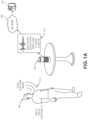
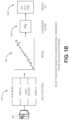
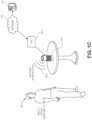
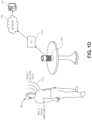
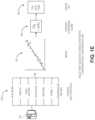
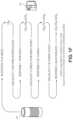
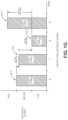
- FIGS. 1 A through 1 Gare views of aspects of one system for scoring conversational confidence in accordance with implementations of the present disclosure.
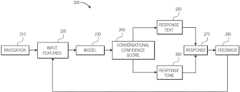
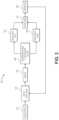
- FIG. 2is a flow diagram of one system for scoring conversational confidence in accordance with implementations of the present disclosure.
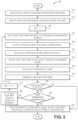
- FIG. 3is a flow chart of one process for scoring conversational confidence in accordance with implementations of the present disclosure.
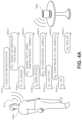
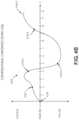
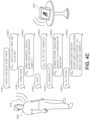
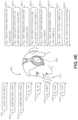
- FIGS. 4 A through 4 Fare views of aspects of one system for scoring conversational confidence in accordance with implementations of the present disclosure.
- FIGS. 5 A and 5 Bare views of aspects of one system for scoring conversational confidence in accordance with implementations of the present disclosure.
- FIG. 6is a view of aspects of one system for scoring conversational confidence in accordance with implementations of the present disclosure.
- FIG. 7is a view of aspects of one system for scoring conversational confidence in accordance with implementations of the present disclosure.
- FIG. 8is a view of aspects of one system for scoring conversational confidence in accordance with implementations of the present disclosure.
- the present disclosureis directed to confidence scoring for selecting tones, text or other acts in voice browsing conversations. More specifically, the systems and methods that calculate a score indicative of how well or how poorly a conversation in a voice browsing experience is advancing toward a goal of a user, and adjusting text or tones of dialog acts returned to the user, or selecting one or more parameters or attributes of auxiliary acts to be presented to the user, accordingly based on such scores.
- a userinitiates a conversation in a voice browsing experience, such as by providing an utterance or invocation to a computer system, which may include but need not be limited to a smart speaker, a mobile device or an automobile
- a computer systemwhich may include but need not be limited to a smart speaker, a mobile device or an automobile
- input featuresare identified from the utterance or invocation, or based on any information that may be known regarding the user or the computer system.
- the input featuresmay include or be identified based on words included in the utterances or invocation, as well as whether any of such words have a negative context or connotation, and any other factors.
- the input featuresare provided to a model, e.g., a linear model, such as a linear regression model, or a machine learning model, that returns a confidence score (or a goal success estimate) indicative of a level of confidence that the conversation will achieve a goal of the user, or will otherwise have a successful outcome.
- a modele.g., a linear model, such as a linear regression model, or a machine learning model, that returns a confidence score (or a goal success estimate) indicative of a level of confidence that the conversation will achieve a goal of the user, or will otherwise have a successful outcome.
- a confidence scoree.g., a linear model, such as a linear regression model, or a machine learning model, that returns a confidence score (or a goal success estimate) indicative of a level of confidence that the conversation will achieve a goal of the user, or will otherwise have a successful outcome.
- one or more input featuresmay be identified or updated based on the feedback received from the user, and additional or updated input features may be provided to the model to calculate an updated confidence score, which may indicate a change in a mood of the user, or of the conversation, thereby causing a change in a level of confidence that the conversation will achieve the goal or otherwise end successfully.
- Text or tones of dialog acts that are to be presented to a user, or parameters of auxiliary actsmay be selected based on confidence scores, which may be recalculated based on responses received from the user, at every turn of a conversation until the conversation is concluded.
- FIGS. 1 A through 1 Gviews of aspects of one system for scoring conversational confidence in accordance with implementations of the present disclosure are shown.
- a user 106 of a smart speaker (or a mobile device, an automobile, or any other computer device) 102provides an utterance 111 - 1 , viz., “Alexa, play some music!” to the smart speaker 102 .
- the smart speaker 102may process the audio signals to determine whether such signals include a “wake word,” or a predetermined word or set of words (e.g., a phrase) that, when recognized within audio data captured by the smart speaker 102 , activates the smart speaker 102 and causes the smart speaker 102 to execute one or more applications or functions based on other aspects of the audio signals. After confirming that a wake word is detected in the audio signals, the smart speaker 102 processes such signals and any other information or data that may be known, predicted or determined regarding the user 106 or the utterance 111 - 1 , or conditions under which the utterance 111 - 1 was provided by the user 106 .
- a wake wordor a predetermined word or set of words (e.g., a phrase) that, when recognized within audio data captured by the smart speaker 102 , activates the smart speaker 102 and causes the smart speaker 102 to execute one or more applications or functions based on other aspects of the audio signals.
- the smart speaker 102processes such signals and any other
- the smart speaker 102then transmits data 113 - 1 including the audio signals or any other descriptors of the utterance 111 - 1 to a server 120 (or any other computer device) over a network 199 , for processing or interpretation of any speech included therein.
- the network 199may include the Internet, in whole or in part.
- the data 113 - 1may include a time or a date at which the utterance 111 - 1 was provided by the user 106 , a location of the smart speaker 102 , or any characteristics of the utterance 111 - 1 , including but not limited to frequencies or wavelengths of the words included therein, a rate of speech of the user 106 , a number of arguments or other terms included in the utterance 111 - 1 , or any other attributes of the utterance 111 - 1 , the user 106 or the smart speaker 102 .
- the server 120may execute one or more speech recognition modules for recognizing and interpreting the utterance 111 - 1 within the data 113 - 1 .
- portions of the data 113 - 1may be compared with portions of sounds (e.g., sub-word units or phonemes) or sequences of such sounds to identify words of the utterance 111 - 1 , including but not limited to a wake word, and to recognize any commands, viz., a request for music, expressed within the utterance 111 - 1 .
- soundse.g., sub-word units or phonemes
- the server 120may process the data 113 - 1 to generate a set of input features 125 - 1 (e.g., metadata) regarding the utterance 111 - 1 , the user 106 or the smart speaker 102 .
- the input features 125 - 1may include variables or values that represent one or more attributes of the utterance 111 - 1 , including an interpretation of the text of the utterance 111 - 1 (e.g., a command to play music), an identifier of the user 106 , a history of utterances received from the user 106 , as well as a number of turns of the conversation so far, viz., zero.
- the set of input features 125 - 1is provided to a model 130 that is trained to output or otherwise calculate a confidence score (or a goal success estimate) 140 - 0 , or CS 0 , that is indicative of a mood of the user 106 , or the conversation, or representative of a likelihood that the conversation will advance toward a goal, e.g., the identification of media or other content (or one or more items) preferred by the user 106 .
- the model 130may be a linear model, such as a linear regression model, or a machine learning model, or any other model.
- the model 130may express a relationship between a set of observed values and a set of regressors or other input variables, and may include any number of weights or coefficients applied to any of such regressors.
- a set of text and/or a tone of a dialog act 145 - 1 , or DA 1 , to be presented to the user 106are selected.
- the text or the tone of the dialog act 145 - 1may be selected to most closely align with a mood of the user 106 , or to appropriately respond to or address one or more words of the utterance 111 - 1 , which may be negative or adverse in nature.
- the confidence score 140 - 0may be a baseline confidence score, having a value of 100, or another nominal value, that is selected as the initial confidence score for the invocation, independent of the model 130 .
- parameters of an auxiliary act to accompany the dialog act 145 - 1may be selected based on the confidence score 140 - 0 .
- the smart speaker 102is outfitted or configured with a display
- one or more images or other visible featuresmay be selected based on the confidence score 140 - 0 , and shown on the display at approximately the same time that the dialog act 145 - 1 is presented to the user 106 .
- the smart speaker 102is outfitted or configured with one or more lights, e.g., LED lights, one or more of such lights or patterns, or frequencies, wavelengths, colors or other attributes of light to be emitted therefrom at specific times, or at approximately the same time that the dialog act 145 - 1 is presented to the user 106 , may be selected based on the confidence score 140 - 0 .
- an auxiliary actmay be presented to the user 106 by any other device or system associated with the user 106 , e.g., a mobile device (not shown) of the user 106 , which may receive data for presenting the auxiliary act from the server 120 over the network 199 .
- the server 120transmits data for causing the smart speaker 102 to present the dialog act 145 - 1 , e.g., “Anything in particular?” to the user 106 .
- the smart speaker 102Upon receiving the data, the smart speaker 102 presents one or more audio signals 150 - 1 corresponding to the dialog act 145 - 1 .
- the user 106in response to the dialog act 145 - 1 , the user 106 provides an utterance 111 - 2 , viz., “I really like 1970s rock,” to the smart speaker 102 .
- the smart speaker 102Upon capturing audio signals including the utterance 111 - 2 , the smart speaker 102 transmits data 113 - 2 including the audio signals or any other descriptors of the utterance 111 - 2 to the server 120 for processing or interpretation.
- the data 113 - 2may include any characteristics of the utterance 111 - 2 , e.g., frequencies or wavelengths, a rate of speech, a number of arguments or other terms, or any other attributes of the utterance 111 - 2 , the user 106 or the smart speaker 102 .
- the data 113 - 2may include one or more parameters of an auxiliary act that is to be presented to the user 106 at the same time as the dialog act 145 - 1 .
- the data 113 - 2may include one or more images, lights or other visible features to be shown on the display, at approximately the same time that the dialog act 145 - 1 is presented to the user 106 .
- the server 120may process the data 113 - 2 to generate an updated set of input features 125 - 2 regarding the utterance 111 - 2 , the user 106 , the smart speaker 102 or the conversation.
- the set of input features 125 - 2may include an interpretation of the text of the utterance 111 - 2 (e.g., an identification of a genre or an era of music), the identifier of the user 106 , a history of utterances received from the user 106 , viz., the utterances 111 - 1 , 111 - 2 .
- the set of input features 125 - 2may further include a number of turns of the conversation so far, viz., one, as well as a history of the conversation, which may include or identify features of the utterances 111 - 1 , 111 - 2 or the dialog acts or auxiliary acts previously presented to the user 106 .
- the set of input features 125 - 2may be generated in its entirety upon receiving the data 113 - 2 , e.g., independent of the set of input features 125 - 1 .
- the set of input features 125 - 2may include one or more input features other than the input features of the set 125 - 1 , or may include revisions to any of the input features of the set 125 - 1 .
- the set of input features 125 - 2is provided to the model 130 , and a confidence score 140 - 1 , or CS 1 , indicative of a mood of the user 106 , or the conversation, or representative of a likelihood that the conversation will advance toward the goal, is updated in view of the utterance 111 - 2 .
- the confidence score 140 - 1may be calculated independent of the confidence score 140 - 0 .
- the confidence score 140 - 1may be calculated as an increase or a decrease over the confidence score 140 - 0 , e.g., by an amount or by a percentage of the confidence score 140 - 0 .
- the confidence score 140 - 1may be calculated in any other manner, such as based on weights that are respectively applied to the set of input features 125 - 2 .
- a value of the confidence score 140 - 1may be less than or greater than a value of the confidence score 140 - 0 .
- the model 130may be trained or configured to account for a duration of a conversation, and to degrade a value of a confidence score calculated thereby on account of conversational friction that may result from errors in processing utterances, recognizing words, or delays in arriving at an appropriate selection or outcome for the user.
- a set of text and/or a tone of another dialog act 145 - 2 , or DA 2 , to be presented to the user 106are selected.
- the text or the tone of the dialog act 145 - 2may be selected to reflect an improvement of or a deterioration in the mood of the user 106 , or to appropriately respond to or address one or more words of the utterance 111 - 2 , which may be negative or adverse in nature.
- the processes by which confidence scores are calculated based on feedback received from the user 106 , and used to select sets of text or tones of dialog acts to be presented to the user 106may be repeated at each turn of a conversation between the user 106 and the smart speaker 102 , as long as the conversation continues.
- the confidence score CS 1may be calculated as a sum of the confidence score CS 0 and a change ⁇ CS 1 calculated based on the response “1970s rock” received in reply to the dialog act 145 - 1 .
- the dialog act 145 - 2viz., “Great!
- a confidence score CS 2may be calculated as a sum of the confidence score CS 1 and a change ⁇ CS 2 calculated based on the response “no thanks” received in reply to the dialog act 145 - 2 , which may be interpreted as having a substantially negative connotation.
- a set of text and a tone of a dialog act 145 - 3viz., “So sorry! AC/DC?” may be selected based on the confidence score CS 2 , such as to address the substantially negative connotation of the response “no thanks.”
- a response to the dialog act 145 - 3viz., “Back in Black!” is received by the smart speaker 102 from the user 106 .
- a confidence score CS 3may be calculated as a sum of the confidence score CS 2 and a change ⁇ CS 3 calculated based on the response “Back in Black!” received in reply to the dialog act 145 - 3 , which may be interpreted as having a substantially positive connotation.
- a bar graphdepicts values of the confidence scores 140 - 0 , 140 - 1 , 140 - 2 , 140 - 3 calculated during the conversation between the user 106 and the smart speaker 102 .
- the bar graphshows values of the confidence scores 140 - 0 , 140 - 1 , 140 - 2 , 140 - 3 calculated through the turns of the conversation with respect to ranges, e.g., a high confidence, a medium confidence and a low confidence.
- the confidence scorewhen a confidence score is calculated, the confidence score may be mapped to one of the ranges, and a set of text or a tone of a dialog act, or an auxiliary act, may be selected based on the mapped range, e.g., a high confidence set of text or tone, a medium confidence set of text or tone, or a low confidence set of text or tone.
- the confidence scoresmay be mapped to any number of ranges, and need not be limited to three of such ranges, e.g., high, low or medium.
- the confidence scoresmay be calculated based on a baseline confidence score (or goal success estimate) at an outset of a conversation, such that each of the changes in the confidence scores may be reduced in value, or degraded, on account of conversational friction that may result from errors in processing utterances, recognizing words, or delays in arriving at an appropriate selection or outcome for the user.
- a confidence scoremay have its greatest value when a conversation begins, and may be reduced in value over time, such as where each of the change ⁇ CS 1 , the change ⁇ CS 2 and the change ⁇ CS 3 has a negative value.
- a confidence scoremay be calculated independently at every turn of a conversation, rather than based on a change from a previous score.
- a voice browsing conversationis typically represented or modeled as a sequence of turns in a context, and responses provided by a user in each of the turns is used to refine an identified or predicted goal of the user, which may be represented as a set of one or more constraints. For example, where a user is interested in listening to music, a system operating a conversational agent may learn that the customer likes '90s hip hop but dislikes country, that the user prefers music with upbeat or energetic moods to laid back or depressed moods, or that the user is a fan of Adele but not a fan of Shania Twain. A system operating the conversational agent, or another system in communication with that system, may maintain a set of search results (e.g., candidate search results) that are consistent with such constraints, and in furtherance of that goal.
- search resultse.g., candidate search results
- the systemmay present a user with one or more dialog acts, or any accompanying auxiliary acts.
- one dialog actmay be to present a sample of media to a user, e.g., audio or visual media, and may be presented as a question with language such as, “You might like this,” followed by the playing of the sample.
- dialog actmay be to recommend one or more selected genres to the user, and may be presented as a question with language such as “How'd you like some techno?”
- Other dialog actsmay involve a request for a confirmation of information identified in audio data previously received from the user, which may be presented as a question with language such as, “You'd like to hear Soundgarden, right?” or a request for additional information from the user, which may be presented as a question with language such as “Do you have anything in mind?” or “Can you think of a mood or tempo you'd prefer?”
- Still other dialog actsmay involve a suggestion of a mood, which may be presented as a question with language such as “Feel like something chill?
- the systemmay determine whether to execute another dialog act, e.g., to ask another question, to begin playing a selected media file, or to take another action.
- an invocation 210may be received from a user, in the form of an utterance represented in audio data captured by a computer system (e.g., a smart speaker, a mobile device, an automobile, or others).
- the invocation 210may be processed to identify one or more input features 220 regarding the user, the computer system, or the invocation 210 .
- the input features 220may include an interpretation of an utterance that included the invocation 210 , e.g., text embodied in the audio data that may be automatically recognized and interpreted by the computer system that received the invocation 210 , or another computer system in communication with the computer system that received the invocation 210 .
- the input features 220may also include interpretations of any other utterances received from the user.
- the input features 220may further identify any words or terms having a negative connotation or interpretation within an utterance that included the invocation 210 , as well as a number of words or terms having negative connotations or interpretations in utterances previously received from the user.
- negative words or terms within the invocation 210e.g., in feedback most recently received from the user, may be weighted more strongly than negative words or terms within other feedback previously received from the user.
- the input features 220may also identify a number of content samples previously presented to the user, or any neutral feedback previously received from the user, e.g., “next.”
- the input features 220may also include an indication as to how much feedback received from the user was relied upon in prior searches for content, and whether any personalized data, e.g., preferences of the user, or purchasing or listening histories of the user, was relied upon in one or more searches for content samples.
- the input features 220are provided as inputs to a model 230 that is trained to output or otherwise calculate a confidence score (or goal success estimate) 240 for a conversation begun by the invocation 210 .
- the model 230may be programmed to apply weights to the various input features 220 that may be selected on any basis.
- the confidence score 240may be indicative of a level of confidence that the conversation will achieve a goal of the user, or will otherwise have a successful outcome.
- a set of text 250 for inclusion in a response to be presented to the usere.g., a dialog act, and a tone 260 of the response, are selected based on the confidence score 240 .
- the confidence score 240may be used to identify one or more auxiliary acts to be presented to the user, e.g., visible responses such as the display of images or lights, or any other acts.
- Code for presenting a response 270 to the useris transmitted to the computer system that received the invocation 210 .
- any feedback 280 received from the usere.g., one or more utterances, may be processed to identify additional input features 220 , or to revise any previously identified input features 220 .
- a new set of input features 220may be provided to the model 230 , and a new confidence score 240 may be generated based on outputs received from the model 230 .
- a confidence score(or a goal success estimate) may be calculated and updated at each turn in a conversation.
- the confidence scoremay represent a measure of how well a goal-oriented conversation is proceeding, at each turn, or a likelihood that the conversation will result in a success with respect to the goal.
- FIG. 3a flow chart of one process 300 for scoring conversational confidence in accordance with implementations of the present disclosure is shown.
- an invocation to initiate a conversationis received from a user.
- the invocationis included in one or more utterances represented in audio data captured by one or more microphones or other sensors provided on a computer system, such as a smart speaker, a mobile device, or an automobile.
- the invocationmay be a general or specific command spoken by the user, such as “help me find some music,” or “recommend some music.”
- the one or more utterancesmay include or be preceded by a “wake word,” or a predetermined word or set of words (e.g., a phrase) that, when recognized within audio data captured by such sensors, activates a computer system and causes the computer system to execute one or more applications or functions based on other aspects of the audio data.
- a balance of the audio data, other than a wake wordmay be processed to identify one or more phonemes or words of the utterance and to determine that the utterance includes the invocation. Audio data including the invocation may be further processed to derive an intent or a desired action associated with the invocation, as well as any pertinent pieces of information that may allow the system or another service to act in response to the intent or to otherwise execute the action.
- the invocationmay be recognized as such by the computer system that captured the audio data in which the utterances including the invocation were represented.
- the audio data or one or more representations thereofmay be transmitted by one computer system that captured the audio data, e.g., a smart speaker, to another computer system, e.g., a computer server, over one or more networks.
- a wake wordmay be recognized within audio data by the computer system that captured the audio data, before transmitting the audio data or one or more audio representations thereof to another computer system.
- one or more input featuresare identified based on the invocation and the user.
- the input featuresmay include any data directly obtained from the user, e.g., during the conversation, as well as any other information or data that may be indirectly associated with the user, or regarding the user, which may be stored in a profile of the user, or associated with the computer system that captured the audio data.
- the input featuresmay include an interpretation of the invocation or audio data in which the invocation was represented, e.g., by a natural language understanding (or “NLU”) processing module, or interpretations of prior utterances received from the user, either in the current conversation or in one or more prior conversations.
- NLUnatural language understanding
- the input featuresmay include an identifier of any negative comments received from the user, either in the current conversation or in any prior conversations.
- the input featuresmay include any other information or data regarding the user, or a computer system from which audio data representing the invocation was received.
- the set of input featuresis provided to a confidence scoring model as an input i.
- the confidence scoring modelmay be any type or form of algorithm, system or technique executed by the computer system that captured the audio data including the invocation, or another computer system, that is trained to receive the input features, which may include or represent any information or data directly or indirectly relating to the user, and to calculate a score or measure indicative of an understanding as to how well the conversation is progressing toward a goal, e.g., an identification of music or other media content of interest to the user, or an identification of an item of interest to the user.
- the set of featuresmay also include an indication as to whether any information regarding preferences of the user, e.g., content or items previously requested or desired by the user, is available.
- an output iis received from the confidence scoring model in response to the input provided thereto at box 325 .
- a confidence score iis calculated based on the output i received from the confidence scoring model at box 330 .
- the confidence score imay be qualitative or quantitative in nature, and may have any value or be within any range.
- the confidence scoring modelmay be programmed or configured to weight one or more of the input features differently than one or more other input features. For example, in some implementations, a most recent utterance or set of words received from the user may be weighted more strongly than less recent utterances or sets of words received from the user. Likewise, in some implementations, a negative utterance may be ranked more strongly than a neutral or a positive utterance.
- the confidence scoremay be mapped to one or more discrete values or ranges, e.g., a high value or range, a medium value or range, or a low value or range, or any other value or range.
- a baseline confidence scoree.g., a value of 100, or another nominal value, may be selected as the initial confidence score for the invocation, independent of the confidence scoring model.
- a set of text i and a tone iare selected based on the confidence score i.
- the set of text imay include a preamble, or an introductory word or set of words, as well as a prefix and/or a suffix.
- the confidence score irepresents a trajectory of the conversation
- a set of text or a tone that are consistent with that trajectorymay be selected accordingly. For example, after a user has initiated a conversation, the set of text i and the tone i may be selected to sound excited and optimistic, or curious and interested, based on the confidence score i.
- parameters of an auxiliary actmay also be selected based on the confidence score i.
- data for presenting an image or another visual effect, e.g., the display of lights, by one or more output devices or features of a smart speaker or another computer systemmay be selected based on the confidence score i.
- the set of text i or the tone imay be selected based on a value of the confidence score, or a range of values in which the confidence score i falls.
- a computer deviceintends to express a specific message or to communicate for a specific purpose, e.g., to request information, to propose media content, or to apologize or express regret
- a plurality of dialog actshaving various sets of text or tones may be identified or retrieved.
- a predetermined number of different ways of expressing messages or communicating for purposessuch as “what would you like to hear today,” “how about this,” or “I'm sorry,” or like phrases, may be stored in one or more data stores.
- each of the plurality of dialog actscorresponds to a different level of confidence
- a value of a confidence score, or a range in which the value of the confidence score fallsmay be determined and used to select one of the different ways for expressing such messages or communicating for such purposes.
- the set of text i or the tone i selected at box 340may be a high-confidence set of text or tone for expressing the apology if the confidence score i has a high value, a medium-confidence set of text i or the tone i for expressing the apology if the confidence score i has a medium value or a low-confidence set of text i or the tone i for expressing the apology if the confidence score i has a low value.
- auxiliary acts associated with each of such dialog actsmay be stored in one or more data stores, and one of such auxiliary acts may be selected to accompany a dialog act based on a value of the confidence score i, or a range in which the value of the confidence score i falls.
- a dialog act iis presented to the user.
- the dialog act imay include the set of text i selected at box 340 , in any number of arguments, and in the tone i selected at box 340 .
- a set of audio data corresponding to the dialog act imay be transmitted to a smart speaker or another computer system that captured audio data including the invocation at box 310 , and the computer system may output the audio data corresponding to the dialog act i to the user.
- the dialog act imay be accompanied by one or more samples of content, e.g., music or other media.
- a set of other data including parameters for presenting an auxiliary acte.g., the presentation of one or more visual effects by a display, one or more lights or other features, may be transmitted to the smart speaker or the other computer system.
- the feedback iis received from the user in response to the dialog act i.
- the feedback imay include one or more additional utterances, expressed in audio data captured by the smart speaker or other computer system that presented the dialog act i to the user.
- audio feedback provided by the usermay be processed to determine whether a goal identified from the invocation i has been met, according to one or more metrics (e.g., success metrics), or on any other basis. For example, where a user plays a selection of media (e.g., music) for at least a threshold period of time following the dialog act i, or elects to purchase an item after hearing the dialog act i, the conversation may be presumed to have been successful. Alternatively, where the user does not play the selected media for at least the threshold period of time, or does not elect to purchase an item, the conversation may be presumed to have been unsuccessful.
- mediae.g., music
- the processadvances to box 360 , where whether the user has terminated the conversation is determined. If the customer has not terminated the conversation, then the process advances to box 365 , where the set of input features is updated based on the feedback i received from the user at box 350 .
- the set of input featuresmay be updated to include an interpretation of the feedback i according to NLU, as well as one or more identifiers of any negative terms included in the feedback i.
- the set of input featuresmay also include an indication as to whether the dialog act i included one or more samples of content, e.g., music or other media, or whether the feedback i marks a pivot or change in opinion of a preference of the user.
- the set of input featuresmay further include an indication as to how many dialog acts have been presented to the user, viz., the value of the step variable i, or how many sets of feedback, have been received from the user.
- a value of the step variable iis incremented by one, or is set to equal i+1, before returning to box 325 , where the set of input features is provided to the confidence scoring model as an input i.
- the processadvances to box 375 , where the confidence scoring model is trained based on the input features, the i dialog acts presented to the user, the feedback received from the user in response to the i dialog acts, and an outcome of the conversation, and the process ends.
- conversational confidence scoresmay be calculated at each turn of a conversation, e.g., based on each utterance received from a user, and used to predict a dialog act, an auxiliary act or another response that may be provided to the user in an effort to advance the conversation toward a goal.
- the conversational confidence scoremay be a measure of confidence in how well a conversation is progressing toward a goal, such as the identification of media content or any other item that is preferred by a user, in a voice browsing experience.
- FIGS. 4 A through 4 Fviews of aspects of one system for scoring conversational confidence in accordance with implementations of the present disclosure are shown.
- a user 406 Ainitiates a conversation with a smart speaker 402 A or another computer system by providing audio signals including one or more utterances 411 A of spoken words to the smart speaker 402 A.
- the user 406 Aspeaks an utterance including an invocation 413 A of “Alexa, help me find a playlist.”
- the smart speaker 402 Amay process the utterances 411 A to recognize a wake word, viz., “Alexa,” followed by a command, viz., “find,” and a target of the command, viz., “a playlist,” within the audio signals.
- the smart speaker 402 AUpon capturing audio data corresponding to the utterances 411 A and recognizing the command and target therein, the smart speaker 402 A identifies one or more input features, and calculates a confidence score based on the input features.
- the input featuresmay include an abstraction of content of the utterances 411 A, as determined by NLU processing, or any other utterances previously received from the user 406 A.
- the input featuresmay further indicate whether any of the utterances 411 A includes words of a negative nature or context, such as “I hate that,” “that song stinks,” “no way,” or others, or whether any other utterances previously received from the user 406 A have included negative words.
- the input featuresmay also indicate whether any samples of media have been previously provided to the user, or whether any neutral feedback or commands have been received from the user 406 A, such as “next” or “another track.”
- the input featuresmay further indicate whether any information or data regarding the user 406 A is available to personalize a search for content, e.g., a purchasing history, a listening history, or any other information or data regarding preferences of the user 406 A, or how much information or data was previously used to identify content for the user 406 A. Any other information or data regarding the user 406 A or the smart speaker 402 A may be included in one or more input features, or may be used to identify one or more input features.
- the input features identified based on the invocation 413 Amay be used to calculate a confidence score for the conversation between the user 406 A and the smart speaker 402 A.
- the confidence scoremay be calculated in any manner, based on the input features.
- the input featuresmay be provided to a linear model, or a linear regression model, as inputs, and the confidence score may be calculated based on outputs received in response to such inputs.
- the linear modelmay include one or more weights or other coefficients for each of a plurality of input features, or types of input features.
- the input featuresmay be provided to a machine learning model trained to generate a confidence score as inputs, and the confidence score may be calculated based on outputs received in response to such inputs.
- the confidence scoremay be calculated using any other type or form of model, and the individual input features may be weighted, as necessary.
- the confidence score calculated in response to the invocation 413 Amay be a baseline value that may be increased or decreased, as necessary, based on content of one or more subsequent responses received from the user 406 A.
- the confidence scoremay be then used to select a set of text to be included in a dialog act to be presented to the user 406 A by the smart speaker 402 A in reply to the invocation 413 A, or a tone or duration of the dialog act, e.g., a number of words or arguments.
- the text or the tone of the dialog actmay be selected to keep the user 406 A interested in the conversation, and to indicate that the smart speaker 402 A is positively engaged in achieving a goal, viz., the identification of music, on behalf of the user 406 A.
- the confidence scoremay be mapped to a discrete value or range of values, e.g., a high confidence score, a medium confidence score, or a low confidence score, and a set of text and a tone of a dialog act may be selected to correspond to the value or range of values corresponding to the calculated confidence score.
- a dialog act 445 A- 1 , or DA 1viz., “Alright. Any particular type of music?” is presented to the user 406 A by the smart speaker 402 A.
- the user 406 AUpon hearing the dialog act 445 A- 1 , the user 406 A provides a response 415 A- 1 , or R 1 , to the smart speaker 402 A, viz., “uh, grunge,” and identifies a genre of music of interest to the user 406 A.
- the content of the response 415 A- 1 received from the user 406 Amay be processed, e.g., by NLU processing, and used to update the input features based on an abstraction of content of the response 415 A- 1 .
- a searchmay be performed subject to constraints identified from any of the input features, including but not limited to contents of the invocation 413 A or the response 415 A- 1 .
- a confidence scoremay be calculated based on updated or additional input features determined from feedback received from the user 406 A in response to dialog acts. For example, a set of text and a tone of a dialog act 445 A- 2 , or DA 2 , viz., “Grunge. Got it. Here's something recent” and an audio sample in the genre identified by the user 406 A, or “ ⁇ sample 1>,” may be selected based on the newly calculated confidence score.
- the dialog act 445 A- 2is presented by the smart speaker 402 A to the user 406 A, and a response 415 A- 2 , or R 2 , viz., “more options,” is received by the smart speaker 402 A from the user 406 A.
- the content of the response 415 A- 2 received from the user 406 Amay be processed, e.g., by NLU processing, and used to update the input features based on an abstraction of content of the response 415 A- 2 .
- the response 415 A- 2 of “more options”indicates that the genre requested by the user 406 A remains accurate and relevant, and is not negative.
- the content of the response 415 A- 2 received from the user 406 Amay be used to update the input features accordingly, and a confidence score may be calculated or a search for other content within the genre may be performed based on the updated input features.
- a set of text and a tone of a dialog act 445 A- 3 , or DA 3 , viz., “OK, here's another,” and an additional audio sample, or “ ⁇ sample 2>,”may be selected based on the confidence score.
- the dialog act 445 A- 3is presented by the smart speaker 402 A to the user 406 A, and a response 415 A- 3 , or R 3 , viz., “I hate that,” is received by the smart speaker 402 A from the user 406 A.
- the content of the response 415 A- 3 received from the user 406 A in reply to the dialog act 445 A- 3may be identified as strongly negative, and the input features may be updated accordingly.
- a confidence scoremay be calculated or a search for other content within the genre may be performed based on the updated input features, and a set of text and a tone of a dialog act 445 A- 4 , or DA 4 , viz., “Sorry! Maybe try this?” and an additional audio sample, or “ ⁇ sample 3>,” may be selected based on the confidence score.
- the dialog act 445 A- 4is presented by the smart speaker 402 A to the user 406 A, and a response 415 A- 4 , or R 4 , viz., “yes!,” is received by the smart speaker 402 A from the user 406 A.
- the content of the response 415 A- 4 received from the user 406 A in reply to the dialog act 445 A- 4may be identified as positive, and the input features may be updated accordingly.
- a confidence scoremay be calculated based on the updated input features, and a set of text and a tone of a dialog act 445 A- 5 , or DA 5 , viz., “Rock on!” may be selected based on the confidence score.
- the dialog act 445 A- 5may be presented to the user 406 A by the smart speaker 402 A, and the conversation may be deemed terminated without any further response from the user 406 A.
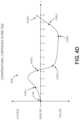
- a plot 440 A of the confidence scores as a function of time, or CS(t), during the conversation between the user 406 A and the smart speaker 402 A of FIG. 4 Ais shown.
- the value of the confidence score at time to, or CS(to)is a baseline value, e.g., a value of 100, or another nominal value.
- the values of the confidence score CS(t) during the conversationrepresent a conversational trajectory, or a turn-by-turn quality of the conversation, and indicate whether the conversation is likely to result in a successful outcome according to one or more metrics, e.g., a playing of selected media for at least a predetermined period of time, or a purchase of an item.
- the conversationmay be said to be trending toward a successful outcome.
- the value of the confidence score CS(t)is recalculated and remains trending toward a successful outcome as the smart speaker 402 A presents the dialog act 445 A- 2 and sample to the user 406 A, given the identified genre and information or data that is known regarding the user 406 A.
- the value of the confidence score CS(t)begins to fall sharply below the baseline value, and the dialog act 445 A- 3 is presented to the user 406 A.
- the set of text and the tone of the dialog act 445 A- 4are specifically selected to avoid causing the user 406 A to grow tired or disinterested in the conversation.
- the set of text or the tone of the dialog act 445 A- 4may be selected based on text or tones of dialog acts that are known to have led to successful outcomes in the past, either with the user 406 A or in conversations having one or more similar input features.
- the value of the confidence score CS(t)increases above the baseline value, until the conversation ends with a response 415 A- 5 consistent with one or more metrics, and the conversation is terminated.
- calculating confidence scores at each turn, or at every utterance or set of audio data received from a usermay increase a likelihood that a voice browsing experience ends in a successful outcome.
- a user 406 Binitiates a conversation with a smart speaker 402 B or another computer system by providing one or more utterances 411 B including an invocation 413 B of “Alexa, how about some tunes?” to the smart speaker 402 B.
- Input featuresmay be identified or calculated upon determining that the utterances 411 B include a command, and a confidence score is calculated based on such input features.
- An initial dialog act 445 B- 1 , or DA 1of “happy to help! What are you after?” is selected based on the confidence score and presented to the user 406 B, who identifies a mood in a response 415 B- 1 , or R 1 , viz., “upbeat new!” to the dialog act 445 B- 1 .
- sets of text and tones of a dialog act 445 B- 2 or DA 2(“Upbeat new music. Perfect. Maybe you'd like New Rock?” and a sample)
- a dialog act 445 B- 3 or DA 3(“OK, try this” and a sample)
- a dialog act 445 B- 4 or DA 4(“So many options! Should we narrow it to Alternative?
- a response 415 B- 1 or R 1a response 415 B- 2 or R 2 (“Nope”) and a response 415 B- 3 or R 3 (“Nonetheless not.”), which continue to drop in value.
- a response 415 B- 4 or R 4 (“No. Techno.”) to the dialog act 445 B- 4indicates a preference for a genre that is different than either of the genres recommended in the dialog act 445 B- 4 , and a substantially low confidence score is calculated, a set of text and a tone of a dialog act 415 B- 5 or DA 5 , viz., “I'm afraid I can't find any techno. Here's something from your listening history.
- the smart speaker 402 Bidentifies a sample that is known to be preferred, or was known to have been preferred by the user 406 B, and presents the dialog act 445 B- 5 to the user 406 B.
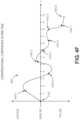
- a plot 440 B of the confidence scores as a function of time, or CS(t), during the conversation between the user 406 B and the smart speaker 402 B of FIG. 4 Cis shown.
- Values of the confidence score CS(t)are calculated based on input features derived from feedback received from the user 406 B, beginning with a baseline value upon receiving the invocation 413 B and rising toward values corresponding to a successful outcome in response to the initial response 415 B- 1 of the user 406 B before falling based on the responses 415 B- 2 , 415 B- 3 , 415 B- 4 received from the user 406 B.
- the value of the confidence score CS(t)increases with the identification of a genre by the user 406 B in the response 415 B- 5 , thereby indicating that the user 406 B remains interested in the conversation, until content from a listening history of the user 406 B is presented in the dialog act 445 B- 5 , and the conversation ends with a response 415 B- 6 consistent with one or more metrics, and the conversation is terminated.
- confidence scores calculated at each turn, or at every utterance or set of audio data received from a usermay indicate that a conversation is unlikely to end in a successful outcome.
- a user 406 Cinitiates a conversation with a set of headphones 402 C or another computer system by providing one or more utterances 411 C including an invocation 413 C of “Alexa, got any music?” to the headphones 402 C.
- the headphones 402 C and the user 406 Cexchange dialog acts and responses, including a dialog act 445 C- 1 or DA 1 (“Tons of tracks. What are you looking for?”), a dialog act 445 C- 2 or DA 2 (“I didn't quite catch that.
- the headphones 402 C and the user 406 Ccontinue to exchange dialog acts and responses after the genre is identified, including a dialog act 445 C- 4 or DA 4 (“Pop. Great! Let's play a few. Tell me what you think!” and a sample), a dialog act 445 C- 5 or DA 5 (“Alright. Something more laid back? Upbeat?”), a dialog act 445 C- 6 or DA 6 (“Great. More energy. How's this?” and a sample), or a dialog act 445 C- 7 or DA 7 (“Sorry.
- a dialog act 445 C- 4 or DA 4(“Pop. Great! Let's play a few. Tell me what you think!” and a sample)
- a dialog act 445 C- 5 or DA 5(“Alright. Something more laid back? Upbeat?”
- a dialog act 445 C- 6 or DA 6(“Great. More energy. How's this?” and a sample)
- a dialog act 445 C- 7 or DA 7(“Sorry
- Another response 415 C- 7 or R 7 (“Stop”) of the user 406 Cincludes an express command to terminate the conversation, and prompts a dialog act 445 C- 8 or DA 8 (“OK. Hope to chat again soon.”) having a set of text and a tone that was selected based on a confidence score calculated following the response 415 C- 7 , in order to politely acknowledge the command.
- a plot 440 C of the confidence scores as a function of time, or CS(t), during the conversation between the user 406 C and the headphones 402 C of FIG. 4 Eis shown.
- Values of the confidence score CS(t)are calculated based on input features derived from feedback received from the user 406 C, beginning with a baseline value upon receiving the invocation 413 C and rising following the initial response 415 C- 1 of the user 406 C before generally descending following each of the responses 415 C- 2 , 415 C- 3 , 415 C- 4 , 415 C- 5 , 415 C- 6 until a response 415 C- 7 terminates the conversation in a successful manner.
- models for calculating the values of the confidence scoresmay be trained or configured to account for a duration of a conversation, and to degrade values of confidence scores calculated thereby on account of conversational friction that may result from errors in processing utterances, recognizing words, or delays in arriving at an appropriate selection or outcome for the user.
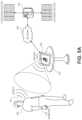
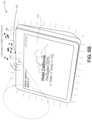
- FIGS. 5 A and 5 Bviews of aspects of one system for scoring conversational confidence in accordance with implementations of the present disclosure is shown.
- a user 506engages in a conversation with a computer device (e.g., a smart speaker) 502 or another computer system that is connected to one or more external computer systems 520 over a network 599 .
- the computer device 502includes one or more audio capture components, e.g., a microphone, as well as a camera 555 or another imaging device, and any number of components such as processors, memory components or storage devices.
- the computer device 502may execute one or more wake word detection modules, ASR modules or NLU modules or other programs or applications for processing audio signals 511 (e.g., speech) provided by the user 506 , e.g., to detect, recognize or interpret words represented within the audio signals 511 , or to execute one or more commands embodied in such words.
- the external computer systems 520may be programmed or configured to execute any of the same modules, programs or applications as the computer device 502 , or one or more other modules, programs or applications.
- Input featuresmay be identified or obtained based on any data directly or indirectly related to the user 506 .
- one or more input featuresmay be derived from sounds included in the audio signals 511 , including one or more spoken words, as well as frequencies or wavelengths, speech rates or other aspects of the audio signals 511 , which may be processed to identify one or more characteristics of the user 506 , such as an emotional state of the user 506 .
- One or more input featuresmay also be derived from images of the user 506 captured by the camera 555 , which may also be processed to identify one or more characteristics of the user 506 .
- the user 506is wearing, carrying or adjacent to one or more wearable sensors 515 (e.g., a band including one or more of such sensors that is worn about a wrist or other body part of the user 506 ), information or data captured by the wearable sensors 515 , such as body temperature, motion, heart rates, tone of voice, fitness metrics or others may also be used to derive one or more input features.
- information or data captured by the wearable sensors 515such as body temperature, motion, heart rates, tone of voice, fitness metrics or others may also be used to derive one or more input features.
- the user 506may be identified based on the audio signals 511 , images captured by the camera 555 , or information or data captured by the wearable sensors 515 , other attributes regarding the user 506 may be identified and used to derive one or more input features. For example, as is shown in FIG.
- one or more attributes of the user 506may be identified in one or more records stored by the computer device 502 or the external computer systems 520 .
- Any information or data captured or stored by the computer device 502 or the external computer systems 520may be processed, by the computer device 502 or the external computer systems 520 , to derive one or more input features of the user 506 or a conversation with the user, or to update one or more input features that have been derived, and to calculate a conversational confidence score based on such input features.
- Confidence scores calculated for a conversationmay be used to select text or tone of a dialog act, or an auxiliary act to accompany the dialog act, which may be presented by the computer device 502 in any number of ways.
- the computer device 502may present dialog acts (viz., “How about some soft rock?” or samples of audio content (viz., a portion of the 1977 song “Hotel California,” by The Eagles) to the user 506 via a speaker 554 .
- the computer device 502may present auxiliary acts to the user 506 via the display 518 .
- Such auxiliary actsmay involve the display of images or other visual content, including text of a dialog act or other media content being presented to the user 506 via the speaker 554 , a title of media content being played by the speaker 554 , or any other information or data regarding the media content (e.g., a year in which the media content was first produced, an artist or group responsible for playing the media content, or authors or creators of the media content), along with any other information or data, e.g., a time or a date, a location of the computer device 502 , a temperature in the location of the computer device 502 , or others.
- the images or the visual contentmay be selected based on the confidence scores calculated for the conversation, in order to advance the conversation toward a stated goal.
- output features of a computer devicemay be utilized to enhance a level of accuracy or relevance of information or data received from a user.
- the computer device or systemmay reply with a dialog act having a form of a question such as “I'm sorry, could you please repeat that?” or “Say again?”
- the computer device or systemmay display one or more sets of text indicative of the most accurate predictions as to the spoken text included in the response received from the user, along with a dialog act such as “Please see the display.
- the computer device or systemmay cause such sets of text to be displayed on a mobile device of the user, and may present a dialog act such as “Please look at your phone. Did you mean one of those?” Conversations between a computer device or system and a user may utilize any number of additional computer devices or systems and their respective features in accordance with embodiments of the present disclosure.
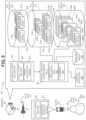
- FIG. 6is a conceptual diagram of how an utterance spoken by a user is processed, in order to allow a system to capture and execute commands, e.g., spoken commands that may follow a wake word.
- the various components shown in FIG. 6may be located on the same physical device, or on different physical devices. Communication between various components illustrated in FIG. 6 may occur directly or across a network.
- An audio capture componentsuch as a microphone of device 602 , captures audio 611 corresponding to a spoken utterance from a user 606 .
- the device 602using a wake word detection module 621 , may then process the audio, or audio data corresponding to the audio, to determine if a keyword (such as a wake word) is detected in the audio.
- the devicesends audio data 613 corresponding to the utterance to a server 620 that includes an ASR module 650 .
- the audio data 613may be output from an acoustic front end (AFE) 656 located on the device 602 prior to transmission. Or the audio data 613 may be in a different form for processing by a remote AFE 656 , such as the AFE 656 located with the ASR module 650 .
- AFEacoustic front end
- the wake word detection module 621works in conjunction with other components of the device, for example, a microphone to detect keywords in the input audio 611 .
- the device 602may convert input audio 611 into audio data 613 , and process the audio data with the wake word detection module 621 to determine whether speech is detected, and, if so, if the audio data comprising speech matches an audio signature and/or model corresponding to a particular keyword.
- the device 602may use various techniques to determine whether audio data includes speech. Some implementations may apply voice activity detection (or “VAD”) techniques. Such techniques may determine whether speech is present in an audio input based on various quantitative aspects of the audio input, such as the spectral slope between one or more frames of the audio input; the energy levels of the audio input in one or more spectral bands; the signal-to-noise ratios of the audio input in one or more spectral bands; or other quantitative aspects. In other implementations, the device 602 may implement a limited classifier configured to distinguish speech from background noise. The classifier may be implemented by techniques such as linear classifiers, support vector machines, and decision trees.
- Hidden Markov Modelor “HMM” or Gaussian Mixture Model (or “GMM”) techniques may be applied to compare the audio input to one or more acoustic models in speech storage, which acoustic models may include models corresponding to speech, noise (such as environmental noise or background noise), or silence. Still other techniques may be used to determine whether speech is present in the audio input.
- HMMHidden Markov Model
- GMMGaussian Mixture Model
- the device 602may use the wake word detection module 621 to perform wake word detection to determine when a user intends to speak a command to the device 602 .
- This processmay also be referred to as keyword detection, with the wake word being a specific example of a keyword.
- keyword detectionis typically performed without performing linguistic analysis, textual analysis or semantic analysis. Instead, incoming audio (or audio data) is analyzed to determine if specific characteristics of the audio match preconfigured acoustic waveforms, audio signatures, or other data to determine if the incoming audio “matches” stored audio data corresponding to a keyword.
- the wake word detection module 621may compare audio data to stored models or data to detect a wake word.
- One approach for wake word detectionapplies general large vocabulary continuous speech recognition (or “LVCSR”) systems to decode the audio signals, with wake word searching conducted in the resulting lattices or confusion networks. LVCSR decoding may require relatively high computational resources.
- Another approach for wake word spottingbuilds HMMs for each key wake word and non-wake word speech signals, respectively.
- the non-wake word speechincludes other spoken words, background noise, etc.
- Viterbi decodingis used to search the best path in the decoding graph, and the decoding output is further processed to make the decision on keyword presence.
- the wake word spotting systemmay be built on DNN or recursive neural network (or “RNN”) structures directly, without HMM involved.
- RNNrecursive neural network
- Such a systemmay estimate the posteriors of wake words with context information, either by stacking frames within a context window for DNN, or using RNN. Following-on, posterior threshold tuning or smoothing is applied for decision making.
- Other techniques for wake word detectionsuch as those known in the art, may also be used.
- the local device 602may “wake” and begin transmitting audio data 613 corresponding to input audio 611 to the server(s) 620 for speech processing.
- Audio data 613 corresponding to the input audio 611may be sent to a server 620 for routing to a recipient device or may be sent to the server for speech processing for interpretation of the included speech (e.g., for purposes of executing a command in the speech, or for other purposes).
- the audio data 613may include data corresponding to the wake word, or the portion of the audio data corresponding to the wake word may be removed by the local device 602 prior to sending. Further, a local device 602 may “wake” upon detection of speech or spoken audio above a threshold.
- an automatic speech recognition (or “ASR”) module 650may convert the audio data 613 into text.
- the ASR module 650transcribes audio data into text data representing the words of the speech contained in the audio data.
- the text datamay then be used by other components for various purposes, such as executing system commands, inputting data, etc.
- a spoken utterance in the audio datais input to a processor configured to perform ASR, which then interprets the utterance based on the similarity between the utterance and pre-established language models 654 a - 654 n stored in an ASR model knowledge base (ASR Models Storage 652 ).
- ASR Models Storage 652ASR Models Storage 652 .
- an ASR processmay compare the input audio data with models for sounds (e.g., sub-word units or phonemes) and sequences of sounds to identify words that match the sequence of sounds spoken in the utterance of the audio data.
- the different ways in which a spoken utterance may be interpretedmay each be assigned a probability or a confidence score representing the likelihood that a particular set of words matches those spoken in the utterance.
- the confidence scoremay be based on a number of factors including, for example, the similarity of the sound in the utterance to models for language sounds (e.g., an acoustic model 653 a - 653 n stored in an ASR Models Storage 652 ), and the likelihood that a particular word which matches the sounds would be included in the sentence at the specific location (e.g., using a language or grammar model).
- each potential textual interpretation of the spoken utterance (hypothesis)is associated with a confidence score.
- the ASR module 650Based on the considered factors and the assigned confidence score, the ASR module 650 outputs the most likely text recognized in the audio data.
- the ASR module 650may also output multiple hypotheses in the form of a lattice or an N-best list with each hypothesis corresponding to a confidence score or other score (such as probability scores, etc.).
- the device or devices performing ASR processingmay include an acoustic front end (or “AFE”) 656 and a speech recognition engine 658 .
- the acoustic front end (AFE) 656transforms the audio data from the microphone into data for processing by the speech recognition engine.
- the speech recognition engine 658compares the speech recognition data with acoustic models 653 , language models 654 , and other data models and information for recognizing the speech conveyed in the audio data.
- the AFE 656may reduce noise in the audio data and divide the digitized audio data into frames representing time intervals for which the AFE 656 determines a number of values, called features, representing the qualities of the audio data, along with a set of those values, called a feature vector, representing the features or qualities of the audio data within the frame.
- featuresrepresenting the qualities of the audio data
- feature vectorrepresenting the features or qualities of the audio data within the frame.
- Many different featuresmay be determined, as known in the art, and each feature represents some quality of the audio that may be useful for ASR processing.
- a number of approachesmay be used by the AFE 656 to process the audio data, such as mel-frequency cepstral coefficients (or “MFCC”), perceptual linear predictive (or “PLP”) techniques, neural network feature vector techniques, linear discriminant analysis, semi-tied covariance matrices, or other approaches known to those of skill in the art.
- MFCCmel-frequency cepstral coefficients
- PLPperceptual linear predictive
- the speech recognition engine 658may process the output from the AFE 656 with reference to information stored in speech or model storage ( 652 ).
- post front-end processed data(such as feature vectors) may be received by the device executing ASR processing from another source besides the internal AFE.
- the device 602may process audio data into feature vectors (for example using an on-device AFE 656 ) and transmit that information to a server across a network for ASR processing.
- Feature vectorsmay arrive at the server encoded, in which case they may be decoded prior to processing by the processor executing the speech recognition engine 658 .
- the speech recognition engine 658attempts to match received feature vectors to language phonemes and words as known in the stored acoustic models 653 and language models 654 .
- the speech recognition engine 658computes recognition scores for the feature vectors based on acoustic information and language information.
- the acoustic informationis used to calculate an acoustic score representing a likelihood that the intended sound represented by a group of feature vectors matches a language phoneme.
- the language informationis used to adjust the acoustic score by considering what sounds and/or words are used in context with each other, thereby improving the likelihood that an ASR process will output speech results that make sense grammatically.
- the specific models usedmay be general models or may be models corresponding to a particular domain, such as music, banking, etc.
- the speech recognition engine 658may use a number of techniques to match feature vectors to phonemes, for example using HMMs to determine probabilities that feature vectors may match phonemes. Sounds received may be represented as paths between states of an HMM and multiple paths may represent multiple possible text matches for the same sound.
- the ASR resultsmay be sent by the speech recognition engine 658 to other processing components, which may be local to the device performing ASR and/or distributed across the network(s).
- ASR results in the form of a single textual representation of the speech, an N-best list including multiple hypotheses and respective scores, lattice, etc.may be sent to a server, such as server 620 , for NLU processing, such as conversion of the text into commands for execution, either by the device 602 , by the server 620 , or by another device (such as a server running a specific application like a search engine, etc.).
- a device performing NLU processing 660may include various components, including potentially dedicated processor(s), memory, storage, etc.
- an NLU componentmay include a named entity recognition (or “NER”) module 662 which is used to identify portions of query text that correspond to a named entity that may be recognizable by the system.
- NERnamed entity recognition
- a downstream process called named entity resolutionactually links a text portion to an actual specific entity known to the system.
- the systemmay utilize gazetteer information ( 684 a , 684 b , 684 c . . . 684 n ) stored in entity library storage 682 .
- Gazetteer informationmay be used for entity resolution, for example matching ASR results with different entities (such as song titles, user names, etc.). Gazetteers may be linked to users (for example, a particular gazetteer may be associated with a specific user's list or collection of other user contacts), may be linked to certain domains (such as communication), or may be organized in a variety of other ways.
- a NLU processtakes textual input (such as processed from ASR 650 based on the utterance input audio 611 ) and attempts to make a semantic interpretation of the text. That is, a NLU process determines the meaning behind the text based on the individual words and then implements that meaning.
- NLU processing 660interprets a text string to derive an intent or a desired action from the user as well as the pertinent pieces of information in the text that allow a device (e.g., device 602 ) or other service, such as a music service, to complete that action.
- the NLU processmay determine that the user intended to initiate a music session using the device 602 and to hear music matching the entity “Foo Fighters” (which may involve a downstream command processor 690 linked with a communication session application).
- a NLUmay process several textual inputs related to the same utterance. For example, if the ASR 650 outputs N text segments (as part of an N-best list), the NLU may process all N outputs to obtain NLU results.
- a NLU processmay be configured to parse and tag or otherwise annotate text as part of NLU processing. For example, for the text “Play some Macklemore,” “play” may be tagged as a command (to begin the presentation of music or other media) and “Macklemore” may be tagged as a specific entity and target of the command (and an identifier of an entity corresponding to “Macklemore” may be included in the annotated result). For the text “Call Mom, “call” may be tagged as a command (e.g., to execute a phone call), and “Mom” may be tagged as a specific entity and target of the command (and an identifier of an entity corresponding to “Mom” may be included in the annotated result). Further, the NLU process may be used to provide answer data in response to queries, for example, using the knowledge base 672 .
- an NLU process 660may be configured to determine a “domain” of the utterance so as to determine and narrow down which services offered by the endpoint device (e.g., server 620 or device 602 ) may be relevant.
- an endpoint devicemay offer services relating to interactions with a communication service, a contact list service, a calendar/scheduling service, a music player service, etc.
- Words in a single text querymay implicate more than one service, and some services may be functionally linked (e.g., both a communication service and a calendar service may utilize data from the contact list).
- the name entity recognition (or “NER”) module 662receives a query in the form of ASR results and attempts to identify relevant grammars and lexical information that may be used to construe meaning. To do so, the NER module 662 may begin by identifying potential domains that may relate to the received query.
- the NLU storage 673includes a database of devices ( 674 a - 674 n ) identifying domains associated with specific devices. For example, the device 602 may be associated with domains for music, communication sessions, calendaring, contact lists, and device-specific communications, but not video.
- the entity librarymay include database entries about specific services on a specific device, either indexed by Device ID, User ID, or Household ID, or some other indicator.
- a domainmay represent a discrete set of activities having a common theme, such as “music,” “communication session,” “shopping,” “calendaring,” etc.
- each domainmay be associated with a particular language model and/or grammar database ( 676 a , 676 b . . . 676 n ), a particular set of intents/actions ( 678 a , 678 b - 678 n ), and a particular personalized lexicon ( 686 ).
- Each gazetteer ( 684 a - 684 n )may include domain-indexed lexical information associated with a particular user and/or device.
- the Gazetteer A( 684 a ) includes domain-index lexical information 686 aa , 686 ab - 686 an .
- a user's music-domain lexical informationmight include album titles, artist names, and song names, for example, whereas a user's contact-list lexical information might include the names of contacts, identifiers for devices associated with those contacts, device characteristics, etc. Since every user's music collection and contact list is presumably different, this personalized information improves entity resolution.
- a querymay be processed applying the rules, models, and information applicable to each identified domain. For example, if a query potentially implicates both communications and music, the query may, substantially in parallel, be NLU processed using the grammar models and lexical information for communications, and will be processed using the grammar models and lexical information for music. The responses based on the query produced by each set of models is scored, with the overall highest ranked result from all applied domains ordinarily selected to be the correct result.
- An intent classification (or “IC”) module 664parses the query to determine an intent or intents for each identified domain, wherein the intent corresponds to the action to be performed that is responsive to the query.
- Each domainis associated with a particular set of intents/actions ( 678 a - 678 n ) of words linked to intents. For example, a music intent may link words and phrases such as “quiet,” “volume off,” and “mute” to a “mute” intent.
- the IC module 664identifies potential intents for each identified domain by comparing words in the query to the words and phrases in the set of intents actions 678 for that domain.
- the determination of an intent by the IC moduleis performed using a set of rules or templates that are processed against the incoming text to identify a matching intent.
- the NER 662In order to generate a particular interpreted response, the NER 662 applies the grammar models and lexical information associated with the respective domain to actually recognize and mention one or more entities in the text of the query. In this manner, the NER 662 identifies “slots” (i.e., particular words in query text) that may be needed for later command processing. Depending on the complexity of the NER 662 , it may also label each slot with a type of varying levels of specificity (such as noun, place, city, artist name, song name, or the like).
- Each grammar model 676includes the names of entities (i.e., nouns) commonly found in speech about the particular domain (i.e., generic terms), whereas the lexical information 686 from the gazetteer 684 is personalized to the user(s) and/or the device.
- a grammar model associated with a music domain, a communication session domain or a shopping domainmay include a database of words commonly used when people discuss music, communication sessions or shopping, respectively, and/or constraints to include with music, communication sessions or shopping, respectively.
- the intents identified by the IC module 664are linked to domain-specific grammar frameworks (included in 676 ) with “slots” or “fields” to be filled.
- Each slot or fieldcorresponds to a portion of the query text that the system believes corresponds to an entity.
- a grammar framework or frameworks 676may correspond to sentence structures such as “Play ⁇ Artist Name ⁇ ,” “Play ⁇ Album Name ⁇ ,” “Play ⁇ Song Name ⁇ ,” “Play ⁇ Song Name ⁇ by ⁇ Artist Name ⁇ ,” etc.
- these frameworkswould ordinarily not be structured as sentences, but rather based on associating slots with grammatical tags.
- the NER module 662may parse the query to identify words as subject, object, verb, preposition, etc., based on grammar rules and/or models, prior to recognizing named entities.
- the identified verbmay be used by the IC module 664 to identify intent, which is then used by the NER module 662 to identify frameworks.
- a framework for an intent of “play”may specify a list of slots or fields applicable to play the identified “object” and any object modifier (e.g., a prepositional phrase), such as ⁇ Artist Name ⁇ , ⁇ Album Name ⁇ , ⁇ Song name ⁇ , etc.
- the NER module 662searches the corresponding fields in the domain-specific and personalized lexicon(s), attempting to match words and phrases in the query tagged as a grammatical object or object modifier with those identified in the database(s).
- This processincludes semantic tagging, which is the labeling of a word or combination of words according to their type or semantic meaning. Parsing may be performed using heuristic grammar rules, or an NER model may be constructed using techniques such as hidden Markov models, maximum entropy models, log linear models, conditional random fields (CRF), and the like.
- a query of “play Man in the Box by Alice in Chains”might be parsed and tagged as ⁇ Verb ⁇ : “Play,” ⁇ Object ⁇ : “Man in the Box,” ⁇ Object Preposition ⁇ : “by,” and ⁇ Object Modifier ⁇ : “Alice in Chains.”
- “Play”may be identified as a verb based on a word database associated with the music domain, which the IC module 664 will determine corresponds to the “play music” intent. Even if no determination has been made as to the meaning of “Man in the Box” and “Alice in Chains,” but, based on grammar rules and models, it may be determined that the text of these phrases relates to the grammatical objects (i.e., entity) of the query.
- the frameworks linked to the intentare then used to determine what database fields should be searched to determine the meaning of these phrases, such as searching a user's gazetteer for similarity with the framework slots.
- a framework for “play music intent”might indicate to attempt to resolve the identified object based on ⁇ Artist Name ⁇ , ⁇ Album Name ⁇ , and ⁇ Song name ⁇
- another framework for the same intentmight indicate to attempt to resolve the object modifier based on ⁇ Artist Name ⁇ , and resolve the object based on ⁇ Album Name ⁇ and ⁇ Song Name ⁇ linked to the identified ⁇ Artist Name ⁇ .
- the NER module 662may search the database of generic words associated with the domain (in the storage 673 ).
- the NER module 662may search the domain vocabulary for the word “songs.”
- generic wordsmay be checked before the gazetteer information, or both may be tried, potentially producing two different results.
- the comparison process used by the NER module 662may classify (i.e., score) how closely a database entry compares to a tagged query word or phrase, how closely the grammatical structure of the query corresponds to the applied grammatical framework, and based on whether the database indicates a relationship between an entry and information identified to fill other slots of the framework.
- the NER module 662may also use contextual operational rules to fill slots. For example, if a user had previously requested to pause a particular song and thereafter requested that the voice-controlled device to “please un-pause my music,” the NER module 662 may apply an inference-based rule to fill a slot associated with the name of the song that the user currently wishes to play, namely, a song that was playing at the time that the user requested to pause the music.
- the results of NLU processingmay be tagged to attribute meaning to the query. So, for instance, “play Long Road by Pearl Jam” might produce a result of: ⁇ domain ⁇ Music, ⁇ intent ⁇ Play Music, ⁇ artist name ⁇ “Pearl Jam,” ⁇ media type ⁇ song, and ⁇ song title ⁇ “Long Road.” As another example, “play songs by Pearl Jam” might produce: ⁇ domain ⁇ Music, ⁇ intent ⁇ Play Music, ⁇ artist name ⁇ “Pearl Jam,” and ⁇ media type ⁇ song.
- the output from the NLU processingmay then be sent to a command processor 690 , which may be located on a same or separate server 620 as part of system 600 .
- the destination command processor 690may be determined based on the NLU output. For example, if the NLU output includes a command to play music, or to establish a communication session, the destination command processor 690 may be a music application or a communication application, such as one located on device 602 or in another device associated with the user.
- FIG. 7is a block diagram conceptually illustrating a local device 702 that may be used with the described system.
- FIG. 8is a block diagram conceptually illustrating example components of a remote device, such as a remote server 820 that may assist with ASR, NLU processing, or command processing. Multiple such servers 820 may be included in the system, such as one server(s) 820 for training ASR models, one server(s) for performing ASR, one server(s) 820 for performing NLU, etc. In operation, each of these devices (or groups of devices) may include computer-readable and computer-executable instructions that reside on the respective device 702 / 820 ), as will be discussed further below.
- Each of these devices 702 / 820may include one or more controllers/processors 704 / 804 , that may each include a central processing unit (or “CPU”) for processing data and computer-readable instructions, and a memory 706 / 806 for storing data and instructions of the respective device.
- the memories 706 / 806may individually include volatile random access memory (RAM), non-volatile read only memory (ROM), non-volatile magnetoresistive (MRAM) and/or other types of memory.
- Each devicemay also include a data storage component 708 / 808 , for storing data and controller/processor-executable instructions.
- Each data storage componentmay individually include one or more non-volatile storage types such as magnetic storage, optical storage, solid-state storage, etc.
- Each devicemay also be connected to removable or external non-volatile memory and/or storage (such as a removable memory card, memory key drive, networked storage, etc.) through respective input/output device interfaces 732 / 832
- Computer instructions for operating each device 702 / 820 and its various componentsmay be executed by the respective device's controller(s)/processor(s) 704 / 804 , using the memory 706 / 806 as temporary “working” storage at runtime.
- a device's computer instructionsmay be stored in a non-transitory manner in non-volatile memory 706 / 806 , storage 708 / 808 , or an external device(s).
- some or all of the executable instructionsmay be embedded in hardware or firmware on the respective device in addition to or instead of software.
- Each device 702 / 820includes input/output device interfaces 732 / 832 .
- a variety of componentsmay be connected through the input/output device interfaces, as will be discussed further below.
- each device 702 / 820may include an address/data bus 724 / 824 for conveying data among components of the respective device.
- Each component within a device 702 / 820may also be directly connected to other components in addition to (or instead of) being connected to other components across the bus 724 / 824 .
- the device 702may include a display 718 , which may comprise a touch interface 719 .
- the device 702may be “headless” and may primarily rely on spoken commands for input.
- the device 702may be configured with a visual indicator, such as an LED or similar illumination element, that may change color, flash, or otherwise provide visual indications by the device 702 .
- the device 702may also include input/output device interfaces 732 that connect to a variety of components such as an audio output component such as a speaker 754 , an imaging device such as a camera 755 , a wired headset or a wireless headset, and/or other components capable of outputting audio.
- the device 702may also include an audio capture component.
- the audio capture componentmay be, for example, a microphone 753 or array of microphones, a wired headset or a wireless headset, etc.
- the microphone 753may be configured to capture audio, such as phrases or utterances from a user.
- approximate distance to a sound's point of originmay be determined using, for example, acoustic localization based on time and amplitude differences between sounds captured by different microphones of the array.
- the device 702(using microphone 753 , wake word detection module 720 , ASR module 750 , etc.) may be configured to determine audio data corresponding to detected audio data.
- the device 702(using input/output device interfaces 732 , antenna 752 , etc.) may also be configured to transmit the audio data to server 820 for further processing or to process the data using internal components such as a wake word detection module 720 .
- the input/output device interfaces 732may connect to one or more networks 799 / 805 via a wireless local area network (WLAN) (such as Wi-Fi) radio, Bluetooth, and/or wireless network radio, such as a radio capable of communication with a wireless communication network such as a Long-Term Evolution (LTE) network, WiMAX network, 3G network, 5G network, etc.
- WLANwireless local area network
- LTELong-Term Evolution
- WiMAX3G network
- 5G network5G network
- the device 702 and/or server 820may include an ASR module 750 / 850 .
- the ASR module 750 in device 702may be of limited or extended capabilities or may not be included in the device 702 .
- the ASR module(s)may include the language models stored in the ASR model storage component, and perform the automatic speech recognition process. If limited speech recognition is included on the device 702 , the ASR module 750 may be configured to identify a limited number of words, such as keywords detected by the device, whereas extended speech recognition may be configured to recognize a much larger range of words.
- the device 702 and/or server 820may include a limited or extended NLU module 760 / 860 .
- the NLU module in device 702may be of limited or extended capabilities, or may not be included on the device 702 .
- the NLU module(s)may comprise the name entity recognition module, the intent classification module and/or other components, as discussed above.
- the NLU module(s)may also include a stored knowledge base and/or entity library, or those storages may be separately located.
- the device 702 and/or server 820may also include a command processor 790 / 890 that is configured to execute commands/functions associated with a spoken command as described above.
- the device 702may include a wake word detection module 720 , which may be a separate component or may be included in an ASR module 750 .
- the wake word detection module 720receives audio signals and detects occurrences of a particular expression (such as a configured keyword) in the audio. This may include detecting a change in frequencies over a specific period of time where the change in frequencies results in a specific audio signature that the system recognizes as corresponding to the keyword.
- Keyword detectionmay include analyzing individual directional audio signals, such as those processed post-beamforming if applicable. Other techniques known in the art of keyword detection (also known as keyword spotting) may also be used.
- the device 702may be configured collectively to identify a set of the directional audio signals in which the wake expression is detected or in which the wake expression is likely to have occurred.
- the wake word detection module 720receives captured audio and processes the audio to determine whether the audio corresponds to particular keywords recognizable by the device 702 and/or system.
- the storage 708may store data relating to keywords and functions to enable the wake word detection module 720 to perform the algorithms and methods described above.
- the locally stored speech modelsmay be pre-configured based on known information, prior to the device 702 being configured to access the network by the user. For example, the models may be language and/or accent specific to a region where the user device is shipped or predicted to be located, or to the user himself/herself, based on a user profile, etc. In an aspect, the models may be pre-trained using speech or audio data of the user from another device.
- the usermay own another user device that the user operates via spoken commands, and this speech data may be associated with a user profile.
- the speech data from the other user devicemay then be leveraged and used to train the locally stored speech models of the device 702 prior to the user device 702 being delivered to the user or configured to access the network by the user.
- the wake word detection module 720may access the storage 708 and compare the captured audio to the stored models and audio sequences using audio comparison, pattern recognition, keyword spotting, audio signature, and/or other audio processing techniques.
- the servermay include a model training component 870 .
- the model training componentmay be used to train the classifiers or models discussed above.
- each of the devicesmay include different components for performing different aspects of the speech processing.
- the multiple devicesmay include overlapping components.
- the components of the devices 702 and server 820are exemplary, and may be located as a stand-alone device or may be included, in whole or in part, as a component of a larger device or system.
- Disjunctive languagesuch as the phrase “at least one of X, Y, or Z,” or “at least one of X, Y and Z,” unless specifically stated otherwise, is otherwise understood with the context as used in general to present that an item, term, etc., may be either X, Y, or Z, or any combination thereof (e.g., X, Y, and/or Z).
- Disjunctive languageis not generally intended to, and should not, imply that certain implementations require at least one of X, at least one of Y, or at least one of Z to each be present.
- a device configured toare intended to include one or more recited devices. Such one or more recited devices can also be collectively configured to carry out the stated recitations.
- a processor configured to carry out recitations A, B and Ccan include a first processor configured to carry out recitation A working in conjunction with a second processor configured to carry out recitations B and C.
Landscapes
- Engineering & Computer Science (AREA)
- Physics & Mathematics (AREA)
- Computational Linguistics (AREA)
- Health & Medical Sciences (AREA)
- Audiology, Speech & Language Pathology (AREA)
- Acoustics & Sound (AREA)
- Human Computer Interaction (AREA)
- Multimedia (AREA)
- Theoretical Computer Science (AREA)
- Artificial Intelligence (AREA)
- General Health & Medical Sciences (AREA)
- General Engineering & Computer Science (AREA)
- General Physics & Mathematics (AREA)
- User Interface Of Digital Computer (AREA)
Abstract
Description
Voice browsing is a process by which users request information not by strokes of a keyboard, or by gestures with a mouse or touchscreen, but with one or more utterances that are spoken aloud to a computer system operating a conversational agent. A voice browser is a system or a process that presents an interactive voice interface to a user by spoken words and other sounds, e.g., a vocal equivalent of a web browser, and engages a user in a conversation in pursuit of a goal. Information that may be requested by voice browsing is limited only by a number or type of input/output devices that are provided on a voice browsing system or available to a voice browsing process. During a voice browsing experience, audio information may be presented to a user via a speaker, and visual information may be presented to the user on a display.
Voice browsing experiences provide users with a number of advantages over traditional browsing experiences which require manual operation of an input/output device. For example, voice browsing experiences enable users to receive information regarding desired items or content in a hands-free manner, and in any number of environments. Conversations with voice browsing systems or processes are limited, however, in that most voice browsing systems or processes are presently unable to determine a mood of a user (or a mood of a conversation with the user), or assess a likelihood that a conversation will accomplish a goal or otherwise result in a successful outcome, based on utterances received from the user. Nor may such systems or processes presently select one or more words or a tone of a dialog act to be presented to the user based a mood of the user, or a likelihood that a conversation will achieve a goal of the user or otherwise result in a successful outcome.
The selection of dialog acts, or questions, presented to a user of the computer system, or an order in which such dialog acts or questions are presented, may be critically important in assisting the user in this endeavor. In this regard, while voice browsing experiences can currently improve upon many aspects of conversations between humans, some voice browsing systems or processes may cause a user to abandon or abort the goal, or to otherwise experience an unacceptably low level of satisfaction, by failing to accurately gauge a mood of a conversation or to recognize and respond when the conversation is running at risk of missing its target.
As is set forth in greater detail below, the present disclosure is directed to confidence scoring for selecting tones, text or other acts in voice browsing conversations. More specifically, the systems and methods that calculate a score indicative of how well or how poorly a conversation in a voice browsing experience is advancing toward a goal of a user, and adjusting text or tones of dialog acts returned to the user, or selecting one or more parameters or attributes of auxiliary acts to be presented to the user, accordingly based on such scores. When a user initiates a conversation in a voice browsing experience, such as by providing an utterance or invocation to a computer system, which may include but need not be limited to a smart speaker, a mobile device or an automobile, one or more input features are identified from the utterance or invocation, or based on any information that may be known regarding the user or the computer system. The input features may include or be identified based on words included in the utterances or invocation, as well as whether any of such words have a negative context or connotation, and any other factors.
The input features are provided to a model, e.g., a linear model, such as a linear regression model, or a machine learning model, that returns a confidence score (or a goal success estimate) indicative of a level of confidence that the conversation will achieve a goal of the user, or will otherwise have a successful outcome. Once a confidence score has been calculated, a set of text or a tone for a dialog act, or parameters of an auxiliary act to accompany the dialog act, may be selected based on the confidence score. Data for presenting the dialog act and the auxiliary act is transmitted to the computer system that captured the utterance or invocation. Subsequently, when the user provides feedback in response to the dialog act or the auxiliary act, one or more input features may be identified or updated based on the feedback received from the user, and additional or updated input features may be provided to the model to calculate an updated confidence score, which may indicate a change in a mood of the user, or of the conversation, thereby causing a change in a level of confidence that the conversation will achieve the goal or otherwise end successfully. Text or tones of dialog acts that are to be presented to a user, or parameters of auxiliary acts, may be selected based on confidence scores, which may be recalculated based on responses received from the user, at every turn of a conversation until the conversation is concluded.
Referring toFIGS.1A through1G , views of aspects of one system for scoring conversational confidence in accordance with implementations of the present disclosure are shown. As is shown inFIG.1A , auser 106 of a smart speaker (or a mobile device, an automobile, or any other computer device)102 provides an utterance111-1, viz., “Alexa, play some music!” to thesmart speaker 102. Upon receiving audio signals including the utterance111-1, thesmart speaker 102 may process the audio signals to determine whether such signals include a “wake word,” or a predetermined word or set of words (e.g., a phrase) that, when recognized within audio data captured by thesmart speaker 102, activates thesmart speaker 102 and causes thesmart speaker 102 to execute one or more applications or functions based on other aspects of the audio signals. After confirming that a wake word is detected in the audio signals, thesmart speaker 102 processes such signals and any other information or data that may be known, predicted or determined regarding theuser 106 or the utterance111-1, or conditions under which the utterance111-1 was provided by theuser 106.
Thesmart speaker 102 then transmits data113-1 including the audio signals or any other descriptors of the utterance111-1 to a server120 (or any other computer device) over anetwork 199, for processing or interpretation of any speech included therein. Thenetwork 199 may include the Internet, in whole or in part. The data113-1 may include a time or a date at which the utterance111-1 was provided by theuser 106, a location of thesmart speaker 102, or any characteristics of the utterance111-1, including but not limited to frequencies or wavelengths of the words included therein, a rate of speech of theuser 106, a number of arguments or other terms included in the utterance111-1, or any other attributes of the utterance111-1, theuser 106 or thesmart speaker 102. Upon receiving the data113-1, theserver 120 may execute one or more speech recognition modules for recognizing and interpreting the utterance111-1 within the data113-1. For example, portions of the data113-1 may be compared with portions of sounds (e.g., sub-word units or phonemes) or sequences of such sounds to identify words of the utterance111-1, including but not limited to a wake word, and to recognize any commands, viz., a request for music, expressed within the utterance111-1.
As is shown inFIG.1B , upon receiving the data113-1, theserver 120 may process the data113-1 to generate a set of input features125-1 (e.g., metadata) regarding the utterance111-1, theuser 106 or thesmart speaker 102. In some implementations, the input features125-1 may include variables or values that represent one or more attributes of the utterance111-1, including an interpretation of the text of the utterance111-1 (e.g., a command to play music), an identifier of theuser 106, a history of utterances received from theuser 106, as well as a number of turns of the conversation so far, viz., zero. The set of input features125-1 is provided to amodel 130 that is trained to output or otherwise calculate a confidence score (or a goal success estimate)140-0, or CS0, that is indicative of a mood of theuser 106, or the conversation, or representative of a likelihood that the conversation will advance toward a goal, e.g., the identification of media or other content (or one or more items) preferred by theuser 106. Themodel 130 may be a linear model, such as a linear regression model, or a machine learning model, or any other model. For example, themodel 130 may express a relationship between a set of observed values and a set of regressors or other input variables, and may include any number of weights or coefficients applied to any of such regressors.
Based on the confidence score140-0, or CS0, a set of text and/or a tone of a dialog act145-1, or DA1, to be presented to theuser 106 are selected. The text or the tone of the dialog act145-1 may be selected to most closely align with a mood of theuser 106, or to appropriately respond to or address one or more words of the utterance111-1, which may be negative or adverse in nature. In some implementations, the confidence score140-0 may be a baseline confidence score, having a value of 100, or another nominal value, that is selected as the initial confidence score for the invocation, independent of themodel 130. In some implementations, such as where thesmart speaker 102 is outfitted or configured with displays, lights, haptic feedback features or other output devices, parameters of an auxiliary act to accompany the dialog act145-1 may be selected based on the confidence score140-0. For example, where thesmart speaker 102 is outfitted or configured with a display, one or more images or other visible features may be selected based on the confidence score140-0, and shown on the display at approximately the same time that the dialog act145-1 is presented to theuser 106. As another example, where thesmart speaker 102 is outfitted or configured with one or more lights, e.g., LED lights, one or more of such lights or patterns, or frequencies, wavelengths, colors or other attributes of light to be emitted therefrom at specific times, or at approximately the same time that the dialog act145-1 is presented to theuser 106, may be selected based on the confidence score140-0. Alternatively, an auxiliary act may be presented to theuser 106 by any other device or system associated with theuser 106, e.g., a mobile device (not shown) of theuser 106, which may receive data for presenting the auxiliary act from theserver 120 over thenetwork 199.
As is shown inFIG.1C , theserver 120 transmits data for causing thesmart speaker 102 to present the dialog act145-1, e.g., “Anything in particular?” to theuser 106. Upon receiving the data, thesmart speaker 102 presents one or more audio signals150-1 corresponding to the dialog act145-1. As is shown inFIG.1D , in response to the dialog act145-1, theuser 106 provides an utterance111-2, viz., “I really like 1970s rock,” to thesmart speaker 102. Upon capturing audio signals including the utterance111-2, thesmart speaker 102 transmits data113-2 including the audio signals or any other descriptors of the utterance111-2 to theserver 120 for processing or interpretation. The data113-2 may include any characteristics of the utterance111-2, e.g., frequencies or wavelengths, a rate of speech, a number of arguments or other terms, or any other attributes of the utterance111-2, theuser 106 or thesmart speaker 102. In some implementations, the data113-2 may include one or more parameters of an auxiliary act that is to be presented to theuser 106 at the same time as the dialog act145-1. For example, where thesmart speaker 102 is outfitted or configured with a display or another output device, the data113-2 may include one or more images, lights or other visible features to be shown on the display, at approximately the same time that the dialog act145-1 is presented to theuser 106.
As is shown inFIG.1E , upon receiving the data113-2, theserver 120 may process the data113-2 to generate an updated set of input features125-2 regarding the utterance111-2, theuser 106, thesmart speaker 102 or the conversation. For example, the set of input features125-2 may include an interpretation of the text of the utterance111-2 (e.g., an identification of a genre or an era of music), the identifier of theuser 106, a history of utterances received from theuser 106, viz., the utterances111-1,111-2. The set of input features125-2 may further include a number of turns of the conversation so far, viz., one, as well as a history of the conversation, which may include or identify features of the utterances111-1,111-2 or the dialog acts or auxiliary acts previously presented to theuser 106. In some implementations, the set of input features125-2 may be generated in its entirety upon receiving the data113-2, e.g., independent of the set of input features125-1. In some other implementations, the set of input features125-2 may include one or more input features other than the input features of the set125-1, or may include revisions to any of the input features of the set125-1.
The set of input features125-2 is provided to themodel 130, and a confidence score140-1, or CS1, indicative of a mood of theuser 106, or the conversation, or representative of a likelihood that the conversation will advance toward the goal, is updated in view of the utterance111-2. In some implementations, the confidence score140-1 may be calculated independent of the confidence score140-0. In some other implementations, the confidence score140-1 may be calculated as an increase or a decrease over the confidence score140-0, e.g., by an amount or by a percentage of the confidence score140-0. Alternatively, the confidence score140-1 may be calculated in any other manner, such as based on weights that are respectively applied to the set of input features125-2.
Depending on the input features125-2, a value of the confidence score140-1 may be less than or greater than a value of the confidence score140-0. In some implementations, themodel 130 may be trained or configured to account for a duration of a conversation, and to degrade a value of a confidence score calculated thereby on account of conversational friction that may result from errors in processing utterances, recognizing words, or delays in arriving at an appropriate selection or outcome for the user.
Based on the confidence score140-1, or CS1, a set of text and/or a tone of another dialog act145-2, or DA2, to be presented to theuser 106 are selected. The text or the tone of the dialog act145-2 may be selected to reflect an improvement of or a deterioration in the mood of theuser 106, or to appropriately respond to or address one or more words of the utterance111-2, which may be negative or adverse in nature.
The processes by which confidence scores are calculated based on feedback received from theuser 106, and used to select sets of text or tones of dialog acts to be presented to theuser 106, may be repeated at each turn of a conversation between theuser 106 and thesmart speaker 102, as long as the conversation continues. For example, as is shown inFIG.1F , the confidence score CS1may be calculated as a sum of the confidence score CS0and a change ΔCS1calculated based on the response “1970s rock” received in reply to the dialog act145-1. The dialog act145-2, viz., “Great! How about Rush?” selected by theserver 120 based on the confidence score CS1is presented to theuser 106 by thesmart speaker 102, and a response received from theuser 106, viz., “no thanks,” is received by thesmart speaker 102. A confidence score CS2may be calculated as a sum of the confidence score CS1and a change ΔCS2calculated based on the response “no thanks” received in reply to the dialog act145-2, which may be interpreted as having a substantially negative connotation. A set of text and a tone of a dialog act145-3, viz., “So sorry! AC/DC?” may be selected based on the confidence score CS2, such as to address the substantially negative connotation of the response “no thanks.”
As is further shown inFIG.1F , a response to the dialog act145-3, viz., “Back in Black!” is received by thesmart speaker 102 from theuser 106. A confidence score CS3may be calculated as a sum of the confidence score CS2and a change ΔCS3calculated based on the response “Back in Black!” received in reply to the dialog act145-3, which may be interpreted as having a substantially positive connotation.
As is shown inFIG.1G , a bar graph depicts values of the confidence scores140-0,140-1,140-2,140-3 calculated during the conversation between theuser 106 and thesmart speaker 102. The bar graph shows values of the confidence scores140-0,140-1,140-2,140-3 calculated through the turns of the conversation with respect to ranges, e.g., a high confidence, a medium confidence and a low confidence. In some implementations, when a confidence score is calculated, the confidence score may be mapped to one of the ranges, and a set of text or a tone of a dialog act, or an auxiliary act, may be selected based on the mapped range, e.g., a high confidence set of text or tone, a medium confidence set of text or tone, or a low confidence set of text or tone. Alternatively, the confidence scores may be mapped to any number of ranges, and need not be limited to three of such ranges, e.g., high, low or medium.
In some implementations, the confidence scores (or goal success estimates) may be calculated based on a baseline confidence score (or goal success estimate) at an outset of a conversation, such that each of the changes in the confidence scores may be reduced in value, or degraded, on account of conversational friction that may result from errors in processing utterances, recognizing words, or delays in arriving at an appropriate selection or outcome for the user. In such implementations, a confidence score may have its greatest value when a conversation begins, and may be reduced in value over time, such as where each of the change ΔCS1, the change ΔCS2and the change ΔCS3has a negative value. Alternatively, in some implementations, a confidence score may be calculated independently at every turn of a conversation, rather than based on a change from a previous score.
A voice browsing conversation is typically represented or modeled as a sequence of turns in a context, and responses provided by a user in each of the turns is used to refine an identified or predicted goal of the user, which may be represented as a set of one or more constraints. For example, where a user is interested in listening to music, a system operating a conversational agent may learn that the customer likes '90s hip hop but dislikes country, that the user prefers music with upbeat or energetic moods to laid back or depressed moods, or that the user is a fan of Adele but not a fan of Shania Twain. A system operating the conversational agent, or another system in communication with that system, may maintain a set of search results (e.g., candidate search results) that are consistent with such constraints, and in furtherance of that goal.
At each turn, the system may present a user with one or more dialog acts, or any accompanying auxiliary acts. For example, one dialog act may be to present a sample of media to a user, e.g., audio or visual media, and may be presented as a question with language such as, “You might like this,” followed by the playing of the sample. Another dialog act may be to recommend one or more selected genres to the user, and may be presented as a question with language such as “How'd you like some techno?” Other dialog acts may involve a request for a confirmation of information identified in audio data previously received from the user, which may be presented as a question with language such as, “You'd like to hear Soundgarden, right?” or a request for additional information from the user, which may be presented as a question with language such as “Do you have anything in mind?” or “Can you think of a mood or tempo you'd prefer?” Still other dialog acts may involve a suggestion of a mood, which may be presented as a question with language such as “Feel like something chill? Or something peppy?” or a request to identify or describe other people who are present with or around the user, which may be presented as a question with language such as “Who are we hanging out with today? Friends? Family?” With each response received from the user, the system may determine whether to execute another dialog act, e.g., to ask another question, to begin playing a selected media file, or to take another action.
Referring toFIG.2 , a flow diagram of onesystem 200 for scoring conversational confidence in accordance with implementations of the present disclosure is shown. As is shown inFIG.2 , aninvocation 210 may be received from a user, in the form of an utterance represented in audio data captured by a computer system (e.g., a smart speaker, a mobile device, an automobile, or others). Theinvocation 210 may be processed to identify one or more input features220 regarding the user, the computer system, or theinvocation 210. In some implementations, the input features220 may include an interpretation of an utterance that included theinvocation 210, e.g., text embodied in the audio data that may be automatically recognized and interpreted by the computer system that received theinvocation 210, or another computer system in communication with the computer system that received theinvocation 210. The input features220 may also include interpretations of any other utterances received from the user.
In some implementations, the input features220 may further identify any words or terms having a negative connotation or interpretation within an utterance that included theinvocation 210, as well as a number of words or terms having negative connotations or interpretations in utterances previously received from the user. In some implementations, negative words or terms within theinvocation 210, e.g., in feedback most recently received from the user, may be weighted more strongly than negative words or terms within other feedback previously received from the user.
In some implementations, the input features220 may also identify a number of content samples previously presented to the user, or any neutral feedback previously received from the user, e.g., “next.” The input features220 may also include an indication as to how much feedback received from the user was relied upon in prior searches for content, and whether any personalized data, e.g., preferences of the user, or purchasing or listening histories of the user, was relied upon in one or more searches for content samples.
Once the input features220 have been identified, the input features220 are provided as inputs to amodel 230 that is trained to output or otherwise calculate a confidence score (or goal success estimate)240 for a conversation begun by theinvocation 210. Themodel 230 may be programmed to apply weights to the various input features220 that may be selected on any basis. Theconfidence score 240 may be indicative of a level of confidence that the conversation will achieve a goal of the user, or will otherwise have a successful outcome. Subsequently, a set oftext 250 for inclusion in a response to be presented to the user, e.g., a dialog act, and atone 260 of the response, are selected based on theconfidence score 240. In some implementations, theconfidence score 240 may be used to identify one or more auxiliary acts to be presented to the user, e.g., visible responses such as the display of images or lights, or any other acts.
Code for presenting aresponse 270 to the user, including the set oftext 250 and in thetone 260, or any other parameters of any auxiliary acts, is transmitted to the computer system that received theinvocation 210. In reply to theresponse 270, anyfeedback 280 received from the user, e.g., one or more utterances, may be processed to identify additional input features220, or to revise any previously identified input features220. A new set of input features220 may be provided to themodel 230, and anew confidence score 240 may be generated based on outputs received from themodel 230.
As is discussed above, in a voice browsing experience, a confidence score (or a goal success estimate) may be calculated and updated at each turn in a conversation. The confidence score may represent a measure of how well a goal-oriented conversation is proceeding, at each turn, or a likelihood that the conversation will result in a success with respect to the goal. Referring toFIG.3 , a flow chart of oneprocess 300 for scoring conversational confidence in accordance with implementations of the present disclosure is shown. Atbox 310, an invocation to initiate a conversation is received from a user. In some implementations, the invocation is included in one or more utterances represented in audio data captured by one or more microphones or other sensors provided on a computer system, such as a smart speaker, a mobile device, or an automobile. For example, the invocation may be a general or specific command spoken by the user, such as “help me find some music,” or “recommend some music.” In some implementations, the one or more utterances may include or be preceded by a “wake word,” or a predetermined word or set of words (e.g., a phrase) that, when recognized within audio data captured by such sensors, activates a computer system and causes the computer system to execute one or more applications or functions based on other aspects of the audio data. For example, a balance of the audio data, other than a wake word, may be processed to identify one or more phonemes or words of the utterance and to determine that the utterance includes the invocation. Audio data including the invocation may be further processed to derive an intent or a desired action associated with the invocation, as well as any pertinent pieces of information that may allow the system or another service to act in response to the intent or to otherwise execute the action.
In some implementations, the invocation may be recognized as such by the computer system that captured the audio data in which the utterances including the invocation were represented. In some other implementations, the audio data or one or more representations thereof may be transmitted by one computer system that captured the audio data, e.g., a smart speaker, to another computer system, e.g., a computer server, over one or more networks. In some other implementations, a wake word may be recognized within audio data by the computer system that captured the audio data, before transmitting the audio data or one or more audio representations thereof to another computer system.
Atbox 315, one or more input features are identified based on the invocation and the user. The input features may include any data directly obtained from the user, e.g., during the conversation, as well as any other information or data that may be indirectly associated with the user, or regarding the user, which may be stored in a profile of the user, or associated with the computer system that captured the audio data.
For example, in some implementations, the input features may include an interpretation of the invocation or audio data in which the invocation was represented, e.g., by a natural language understanding (or “NLU”) processing module, or interpretations of prior utterances received from the user, either in the current conversation or in one or more prior conversations. In some implementations, the input features may include an identifier of any negative comments received from the user, either in the current conversation or in any prior conversations. The input features may include any other information or data regarding the user, or a computer system from which audio data representing the invocation was received.
Atbox 320, a value of a step variable i is set equal to one, or i=1. Atbox 325, the set of input features is provided to a confidence scoring model as an input i. The confidence scoring model may be any type or form of algorithm, system or technique executed by the computer system that captured the audio data including the invocation, or another computer system, that is trained to receive the input features, which may include or represent any information or data directly or indirectly relating to the user, and to calculate a score or measure indicative of an understanding as to how well the conversation is progressing toward a goal, e.g., an identification of music or other media content of interest to the user, or an identification of an item of interest to the user. The set of features may also include an indication as to whether any information regarding preferences of the user, e.g., content or items previously requested or desired by the user, is available.
Atbox 330, an output i is received from the confidence scoring model in response to the input provided thereto atbox 325. Atbox 335, a confidence score i is calculated based on the output i received from the confidence scoring model atbox 330. The confidence score i may be qualitative or quantitative in nature, and may have any value or be within any range. In some implementations, the confidence scoring model may be programmed or configured to weight one or more of the input features differently than one or more other input features. For example, in some implementations, a most recent utterance or set of words received from the user may be weighted more strongly than less recent utterances or sets of words received from the user. Likewise, in some implementations, a negative utterance may be ranked more strongly than a neutral or a positive utterance.
Furthermore, in some implementations, the confidence score may be mapped to one or more discrete values or ranges, e.g., a high value or range, a medium value or range, or a low value or range, or any other value or range. Alternatively, in some implementations, upon receiving the invocation, a baseline confidence score, e.g., a value of 100, or another nominal value, may be selected as the initial confidence score for the invocation, independent of the confidence scoring model.
Atbox 340, a set of text i and a tone i are selected based on the confidence score i. In some implementations, the set of text i may include a preamble, or an introductory word or set of words, as well as a prefix and/or a suffix. To the extent that the confidence score i represents a trajectory of the conversation, a set of text or a tone that are consistent with that trajectory may be selected accordingly. For example, after a user has initiated a conversation, the set of text i and the tone i may be selected to sound excited and optimistic, or curious and interested, based on the confidence score i. Subsequently, where feedback in the form of further utterances is received from the user, and confidence scores are calculated based on such feedback, sets of text or tones may be selected accordingly based on such confidence scores, in order to more correlate with the trajectory of the conversation. In some implementations, parameters of an auxiliary act may also be selected based on the confidence score i. For example, data for presenting an image or another visual effect, e.g., the display of lights, by one or more output devices or features of a smart speaker or another computer system may be selected based on the confidence score i.
In some implementations, the set of text i or the tone i may be selected based on a value of the confidence score, or a range of values in which the confidence score i falls. Where a computer device intends to express a specific message or to communicate for a specific purpose, e.g., to request information, to propose media content, or to apologize or express regret, a plurality of dialog acts having various sets of text or tones may be identified or retrieved. For example, in some implementations, a predetermined number of different ways of expressing messages or communicating for purposes such as “what would you like to hear today,” “how about this,” or “I'm sorry,” or like phrases, may be stored in one or more data stores. Where each of the plurality of dialog acts corresponds to a different level of confidence, a value of a confidence score, or a range in which the value of the confidence score falls (e.g., high confidence, medium confidence or low confidence) may be determined and used to select one of the different ways for expressing such messages or communicating for such purposes. For example, where a dialog act expressing an apology is determined to be necessary in order to advance a conversation toward a goal, and three sets of text or tones for expressing the apology are stored in one or more data stores, the set of text i or the tone i selected atbox 340 may be a high-confidence set of text or tone for expressing the apology if the confidence score i has a high value, a medium-confidence set of text i or the tone i for expressing the apology if the confidence score i has a medium value or a low-confidence set of text i or the tone i for expressing the apology if the confidence score i has a low value. Similarly, multiple auxiliary acts associated with each of such dialog acts may be stored in one or more data stores, and one of such auxiliary acts may be selected to accompany a dialog act based on a value of the confidence score i, or a range in which the value of the confidence score i falls.
Atbox 345, a dialog act i is presented to the user. The dialog act i may include the set of text i selected atbox 340, in any number of arguments, and in the tone i selected atbox 340. For example, a set of audio data corresponding to the dialog act i may be transmitted to a smart speaker or another computer system that captured audio data including the invocation atbox 310, and the computer system may output the audio data corresponding to the dialog act i to the user. In some implementations, the dialog act i may be accompanied by one or more samples of content, e.g., music or other media. In some implementations, a set of other data including parameters for presenting an auxiliary act, e.g., the presentation of one or more visual effects by a display, one or more lights or other features, may be transmitted to the smart speaker or the other computer system.
Atbox 350, feedback i is received from the user in response to the dialog act i. The feedback i may include one or more additional utterances, expressed in audio data captured by the smart speaker or other computer system that presented the dialog act i to the user.
Atbox 355, whether the conversation has succeeded is determined. For example, upon receiving the dialog act i including the set of text i and the tone i selected atbox 340, audio feedback provided by the user may be processed to determine whether a goal identified from the invocation i has been met, according to one or more metrics (e.g., success metrics), or on any other basis. For example, where a user plays a selection of media (e.g., music) for at least a threshold period of time following the dialog act i, or elects to purchase an item after hearing the dialog act i, the conversation may be presumed to have been successful. Alternatively, where the user does not play the selected media for at least the threshold period of time, or does not elect to purchase an item, the conversation may be presumed to have been unsuccessful.
If the conversation has not been determined to be a success, then the process advances tobox 360, where whether the user has terminated the conversation is determined. If the customer has not terminated the conversation, then the process advances tobox 365, where the set of input features is updated based on the feedback i received from the user atbox 350. For example, the set of input features may be updated to include an interpretation of the feedback i according to NLU, as well as one or more identifiers of any negative terms included in the feedback i. The set of input features may also include an indication as to whether the dialog act i included one or more samples of content, e.g., music or other media, or whether the feedback i marks a pivot or change in opinion of a preference of the user. The set of input features may further include an indication as to how many dialog acts have been presented to the user, viz., the value of the step variable i, or how many sets of feedback, have been received from the user.
Atbox 370, a value of the step variable i is incremented by one, or is set to equal i+1, before returning tobox 325, where the set of input features is provided to the confidence scoring model as an input i.
If the conversation is determined to have been a success atbox 355, or if the user is determined to have terminated the conversation atbox 360, then the process advances tobox 375, where the confidence scoring model is trained based on the input features, the i dialog acts presented to the user, the feedback received from the user in response to the i dialog acts, and an outcome of the conversation, and the process ends.
As is discussed above, conversational confidence scores may be calculated at each turn of a conversation, e.g., based on each utterance received from a user, and used to predict a dialog act, an auxiliary act or another response that may be provided to the user in an effort to advance the conversation toward a goal. The conversational confidence score may be a measure of confidence in how well a conversation is progressing toward a goal, such as the identification of media content or any other item that is preferred by a user, in a voice browsing experience. Referring toFIGS.4A through4F , views of aspects of one system for scoring conversational confidence in accordance with implementations of the present disclosure are shown.
As is shown inFIG.4A , auser 406A initiates a conversation with asmart speaker 402A or another computer system by providing audio signals including one ormore utterances 411A of spoken words to thesmart speaker 402A. In particular, theuser 406A speaks an utterance including aninvocation 413A of “Alexa, help me find a playlist.” Thesmart speaker 402A may process theutterances 411A to recognize a wake word, viz., “Alexa,” followed by a command, viz., “find,” and a target of the command, viz., “a playlist,” within the audio signals.
Upon capturing audio data corresponding to theutterances 411A and recognizing the command and target therein, thesmart speaker 402A identifies one or more input features, and calculates a confidence score based on the input features. For example, the input features may include an abstraction of content of theutterances 411A, as determined by NLU processing, or any other utterances previously received from theuser 406A. The input features may further indicate whether any of theutterances 411A includes words of a negative nature or context, such as “I hate that,” “that song stinks,” “no way,” or others, or whether any other utterances previously received from theuser 406A have included negative words. The input features may also indicate whether any samples of media have been previously provided to the user, or whether any neutral feedback or commands have been received from theuser 406A, such as “next” or “another track.” The input features may further indicate whether any information or data regarding theuser 406A is available to personalize a search for content, e.g., a purchasing history, a listening history, or any other information or data regarding preferences of theuser 406A, or how much information or data was previously used to identify content for theuser 406A. Any other information or data regarding theuser 406A or thesmart speaker 402A may be included in one or more input features, or may be used to identify one or more input features.
In some implementations of the present disclosure, the input features identified based on theinvocation 413A may be used to calculate a confidence score for the conversation between theuser 406A and thesmart speaker 402A.
The confidence score may be calculated in any manner, based on the input features. In some implementations, the input features may be provided to a linear model, or a linear regression model, as inputs, and the confidence score may be calculated based on outputs received in response to such inputs. In such implementations, the linear model may include one or more weights or other coefficients for each of a plurality of input features, or types of input features. In some implementations, the input features may be provided to a machine learning model trained to generate a confidence score as inputs, and the confidence score may be calculated based on outputs received in response to such inputs. In some other implementations, the confidence score may be calculated using any other type or form of model, and the individual input features may be weighted, as necessary. In some implementations, the confidence score calculated in response to theinvocation 413A may be a baseline value that may be increased or decreased, as necessary, based on content of one or more subsequent responses received from theuser 406A.
The confidence score may be then used to select a set of text to be included in a dialog act to be presented to theuser 406A by thesmart speaker 402A in reply to theinvocation 413A, or a tone or duration of the dialog act, e.g., a number of words or arguments. The text or the tone of the dialog act may be selected to keep theuser 406A interested in the conversation, and to indicate that thesmart speaker 402A is positively engaged in achieving a goal, viz., the identification of music, on behalf of theuser 406A. In some implementations, the confidence score may be mapped to a discrete value or range of values, e.g., a high confidence score, a medium confidence score, or a low confidence score, and a set of text and a tone of a dialog act may be selected to correspond to the value or range of values corresponding to the calculated confidence score.
As is further shown inFIG.4A , using the confidence score, adialog act 445A-1, or DA1, viz., “Alright. Any particular type of music?” is presented to theuser 406A by thesmart speaker 402A. Upon hearing thedialog act 445A-1, theuser 406A provides aresponse 415A-1, or R1, to thesmart speaker 402A, viz., “uh, grunge,” and identifies a genre of music of interest to theuser 406A. The content of theresponse 415A-1 received from theuser 406A may be processed, e.g., by NLU processing, and used to update the input features based on an abstraction of content of theresponse 415A-1. For example, in some implementations, a search may be performed subject to constraints identified from any of the input features, including but not limited to contents of theinvocation 413A or theresponse 415A-1.
As is also shown inFIG.4A , a confidence score may be calculated based on updated or additional input features determined from feedback received from theuser 406A in response to dialog acts. For example, a set of text and a tone of adialog act 445A-2, or DA2, viz., “Grunge. Got it. Here's something recent” and an audio sample in the genre identified by theuser 406A, or “<sample 1>,” may be selected based on the newly calculated confidence score. The dialog act445A-2 is presented by thesmart speaker 402A to theuser 406A, and aresponse 415A-2, or R2, viz., “more options,” is received by thesmart speaker 402A from theuser 406A. The content of theresponse 415A-2 received from theuser 406A may be processed, e.g., by NLU processing, and used to update the input features based on an abstraction of content of theresponse 415A-2. For example, theresponse 415A-2 of “more options” indicates that the genre requested by theuser 406A remains accurate and relevant, and is not negative.
The content of theresponse 415A-2 received from theuser 406A may be used to update the input features accordingly, and a confidence score may be calculated or a search for other content within the genre may be performed based on the updated input features. A set of text and a tone of adialog act 445A-3, or DA3, viz., “OK, here's another,” and an additional audio sample, or “<sample 2>,” may be selected based on the confidence score. The dialog act445A-3 is presented by thesmart speaker 402A to theuser 406A, and aresponse 415A-3, or R3, viz., “I hate that,” is received by thesmart speaker 402A from theuser 406A. The content of theresponse 415A-3 received from theuser 406A in reply to thedialog act 445A-3 may be identified as strongly negative, and the input features may be updated accordingly.
As is shown inFIG.4A , a confidence score may be calculated or a search for other content within the genre may be performed based on the updated input features, and a set of text and a tone of adialog act 445A-4, or DA4, viz., “Sorry! Maybe try this?” and an additional audio sample, or “<sample 3>,” may be selected based on the confidence score. The dialog act445A-4 is presented by thesmart speaker 402A to theuser 406A, and aresponse 415A-4, or R4, viz., “yes!,” is received by thesmart speaker 402A from theuser 406A. The content of theresponse 415A-4 received from theuser 406A in reply to thedialog act 445A-4 may be identified as positive, and the input features may be updated accordingly. A confidence score may be calculated based on the updated input features, and a set of text and a tone of adialog act 445A-5, or DA5, viz., “Rock on!” may be selected based on the confidence score. The dialog act445A-5 may be presented to theuser 406A by thesmart speaker 402A, and the conversation may be deemed terminated without any further response from theuser 406A.
As is shown inFIG.4B , aplot 440A of the confidence scores as a function of time, or CS(t), during the conversation between theuser 406A and thesmart speaker 402A ofFIG.4A is shown. For example, upon receiving theinvocation 413A, the conversation begins, and the value of the confidence score at time to, or CS(to), is a baseline value, e.g., a value of 100, or another nominal value. The values of the confidence score CS(t) during the conversation represent a conversational trajectory, or a turn-by-turn quality of the conversation, and indicate whether the conversation is likely to result in a successful outcome according to one or more metrics, e.g., a playing of selected media for at least a predetermined period of time, or a purchase of an item.
With values of the confidence score CS(t) increasing above the baseline value, the conversation may be said to be trending toward a successful outcome. After thedialog act 445A-1 is presented to theuser 406A, and theresponse 415A-1 identifying the genre is received from theuser 406A, the value of the confidence score CS(t) is recalculated and remains trending toward a successful outcome as thesmart speaker 402A presents thedialog act 445A-2 and sample to theuser 406A, given the identified genre and information or data that is known regarding theuser 406A. In view of theresponse 415A-2 to thedialog act 445A-2 received from theuser 406A, the value of the confidence score CS(t) begins to fall sharply below the baseline value, and thedialog act 445A-3 is presented to theuser 406A.
Based on thenegative response 415A-3 to thedialog act 445A-3, the set of text and the tone of thedialog act 445A-4, and the sample of content included therein, are specifically selected to avoid causing theuser 406A to grow tired or disinterested in the conversation. For example, the set of text or the tone of thedialog act 445A-4 may be selected based on text or tones of dialog acts that are known to have led to successful outcomes in the past, either with theuser 406A or in conversations having one or more similar input features. In view of thefavorable response 415A-4 by theuser 406A to thedialog act 445A-4, the value of the confidence score CS(t) increases above the baseline value, until the conversation ends with aresponse 415A-5 consistent with one or more metrics, and the conversation is terminated.
Similarly, as is shown inFIG.4C , calculating confidence scores at each turn, or at every utterance or set of audio data received from a user, may increase a likelihood that a voice browsing experience ends in a successful outcome. As is shown inFIG.4C , auser 406B initiates a conversation with a smart speaker402B or another computer system by providing one ormore utterances 411B including aninvocation 413B of “Alexa, how about some tunes?” to the smart speaker402B. Input features may be identified or calculated upon determining that theutterances 411B include a command, and a confidence score is calculated based on such input features.
Aninitial dialog act 445B-1, or DA1, of “happy to help! What are you after?” is selected based on the confidence score and presented to theuser 406B, who identifies a mood in aresponse 415B-1, or R1, viz., “upbeat new!” to thedialog act 445B-1. Subsequently, sets of text and tones of adialog act 445B-2 or DA2(“Upbeat new music. Perfect. Maybe you'd like New Rock?” and a sample), adialog act 445B-3 or DA3(“OK, try this” and a sample), and adialog act 445B-4 or DA4(“So many options! Should we narrow it to Alternative? Or maybe Pop?”), are selected and presented to theuser 406B, based on confidence scores calculated following theresponse 415B-1 or R1, aresponse 415B-2 or R2(“Nope”) and aresponse 415B-3 or R3(“Definitely not.”), which continue to drop in value. After aresponse 415B-4 or R4(“No. Techno.”) to thedialog act 445B-4 indicates a preference for a genre that is different than either of the genres recommended in thedialog act 445B-4, and a substantially low confidence score is calculated, a set of text and a tone of adialog act 415B-5 or DA5, viz., “I'm afraid I can't find any techno. Here's something from your listening history. You might like this,” and a sample are selected and presented to theuser 406B. In view of the difficulty in identifying an acceptable sample for the user, the smart speaker402B identifies a sample that is known to be preferred, or was known to have been preferred by theuser 406B, and presents thedialog act 445B-5 to theuser 406B.
As is shown inFIG.4D , aplot 440B of the confidence scores as a function of time, or CS(t), during the conversation between theuser 406B and the smart speaker402B ofFIG.4C is shown. Values of the confidence score CS(t) are calculated based on input features derived from feedback received from theuser 406B, beginning with a baseline value upon receiving theinvocation 413B and rising toward values corresponding to a successful outcome in response to theinitial response 415B-1 of theuser 406B before falling based on theresponses 415B-2,415B-3,415B-4 received from theuser 406B. The value of the confidence score CS(t) increases with the identification of a genre by theuser 406B in theresponse 415B-5, thereby indicating that theuser 406B remains interested in the conversation, until content from a listening history of theuser 406B is presented in thedialog act 445B-5, and the conversation ends with aresponse 415B-6 consistent with one or more metrics, and the conversation is terminated.
As is further shown inFIG.4E , confidence scores calculated at each turn, or at every utterance or set of audio data received from a user, may indicate that a conversation is unlikely to end in a successful outcome. As is shown inFIG.4E , auser 406C initiates a conversation with a set ofheadphones 402C or another computer system by providing one ormore utterances 411C including aninvocation 413C of “Alexa, got any music?” to theheadphones 402C. Theheadphones 402C and theuser 406C exchange dialog acts and responses, including adialog act 445C-1 or DA1(“Tons of tracks. What are you looking for?”), adialog act 445C-2 or DA2(“I didn't quite catch that. As I said, what are you looking for?”), and adialog act 445B-3 or DA3(“Oops, I missed that. What are you looking for?”), having sets of text and tones selected based on confidence scores calculated followingidentical responses 415C-1,415C-2 or R1, R2(“Something with lyrics.”), or and anotherresponse 415C-3 or R3(“Pop”) that identifies a genre.
Theheadphones 402C and theuser 406C continue to exchange dialog acts and responses after the genre is identified, including adialog act 445C-4 or DA4(“Pop. Great! Let's play a few. Tell me what you think!” and a sample), adialog act 445C-5 or DA5(“Alright. Something more laid back? Upbeat?”), adialog act 445C-6 or DA6(“Great. More energy. How's this?” and a sample), or adialog act 445C-7 or DA7(“Sorry. Try this?” and a sample) having sets of text and tones selected based on confidence scores calculated following anegative response 415C-4 or R4(“No”), aresponse 415C-5 or R5(“Upbeat”) identifying a mood, and anothernegative response 415C-6 or R6(“Nope.”). Anotherresponse 415C-7 or R7(“Stop”) of theuser 406C includes an express command to terminate the conversation, and prompts adialog act 445C-8 or DA8(“OK. Hope to chat again soon.”) having a set of text and a tone that was selected based on a confidence score calculated following theresponse 415C-7, in order to politely acknowledge the command.
As is shown inFIG.4F , aplot 440C of the confidence scores as a function of time, or CS(t), during the conversation between theuser 406C and theheadphones 402C ofFIG.4E is shown. Values of the confidence score CS(t) are calculated based on input features derived from feedback received from theuser 406C, beginning with a baseline value upon receiving theinvocation 413C and rising following theinitial response 415C-1 of theuser 406C before generally descending following each of theresponses 415C-2,415C-3,415C-4,415C-5,415C-6 until aresponse 415C-7 terminates the conversation in a successful manner.
Although each of theplots FIGS.4B,4D and4F indicate that values of the confidence scores may increase or decrease over time, in some implementations, models for calculating the values of the confidence scores may be trained or configured to account for a duration of a conversation, and to degrade values of confidence scores calculated thereby on account of conversational friction that may result from errors in processing utterances, recognizing words, or delays in arriving at an appropriate selection or outcome for the user.
Data from which input features may be identified may be captured or otherwise obtained from any source, and dialog acts or other acts (e.g., auxiliary acts) may be presented to users in any manner. Referring toFIGS.5A and5B , views of aspects of one system for scoring conversational confidence in accordance with implementations of the present disclosure is shown.
As is shown inFIG.5A , auser 506 engages in a conversation with a computer device (e.g., a smart speaker)502 or another computer system that is connected to one or moreexternal computer systems 520 over anetwork 599. Thecomputer device 502 includes one or more audio capture components, e.g., a microphone, as well as acamera 555 or another imaging device, and any number of components such as processors, memory components or storage devices. Thecomputer device 502 may execute one or more wake word detection modules, ASR modules or NLU modules or other programs or applications for processing audio signals511 (e.g., speech) provided by theuser 506, e.g., to detect, recognize or interpret words represented within the audio signals511, or to execute one or more commands embodied in such words. Additionally, theexternal computer systems 520 may be programmed or configured to execute any of the same modules, programs or applications as thecomputer device 502, or one or more other modules, programs or applications.
Input features may be identified or obtained based on any data directly or indirectly related to theuser 506. For example, one or more input features may be derived from sounds included in theaudio signals 511, including one or more spoken words, as well as frequencies or wavelengths, speech rates or other aspects of theaudio signals 511, which may be processed to identify one or more characteristics of theuser 506, such as an emotional state of theuser 506. One or more input features may also be derived from images of theuser 506 captured by thecamera 555, which may also be processed to identify one or more characteristics of theuser 506. Additionally, where theuser 506 is wearing, carrying or adjacent to one or more wearable sensors515 (e.g., a band including one or more of such sensors that is worn about a wrist or other body part of the user506), information or data captured by thewearable sensors 515, such as body temperature, motion, heart rates, tone of voice, fitness metrics or others may also be used to derive one or more input features. Moreover, where theuser 506 may be identified based on theaudio signals 511, images captured by thecamera 555, or information or data captured by thewearable sensors 515, other attributes regarding theuser 506 may be identified and used to derive one or more input features. For example, as is shown inFIG.5A , upon identifying theuser 506, one or more attributes of theuser 506, including but not limited to a history of items that are known or believed to have been purchased (or used or owned) by theuser 506, or a history of content that is known or believed to have been listened to or preferred by theuser 506, may be identified in one or more records stored by thecomputer device 502 or theexternal computer systems 520.
Any information or data captured or stored by thecomputer device 502 or theexternal computer systems 520 may be processed, by thecomputer device 502 or theexternal computer systems 520, to derive one or more input features of theuser 506 or a conversation with the user, or to update one or more input features that have been derived, and to calculate a conversational confidence score based on such input features.
Confidence scores calculated for a conversation may be used to select text or tone of a dialog act, or an auxiliary act to accompany the dialog act, which may be presented by thecomputer device 502 in any number of ways. For example, as is shown inFIG.5B , thecomputer device 502 may present dialog acts (viz., “How about some soft rock?” or samples of audio content (viz., a portion of the1977 song “Hotel California,” by The Eagles) to theuser 506 via aspeaker 554. Additionally, where thecomputer device 502 is outfitted with one or more other output devices, such as adisplay 518, thecomputer device 502 may present auxiliary acts to theuser 506 via thedisplay 518. Such auxiliary acts may involve the display of images or other visual content, including text of a dialog act or other media content being presented to theuser 506 via thespeaker 554, a title of media content being played by thespeaker 554, or any other information or data regarding the media content (e.g., a year in which the media content was first produced, an artist or group responsible for playing the media content, or authors or creators of the media content), along with any other information or data, e.g., a time or a date, a location of thecomputer device 502, a temperature in the location of thecomputer device 502, or others. The images or the visual content may be selected based on the confidence scores calculated for the conversation, in order to advance the conversation toward a stated goal.
Moreover, in some implementations, output features of a computer device may be utilized to enhance a level of accuracy or relevance of information or data received from a user. For example, in some implementations, where a response provided by a computer device from a user is not clear, the computer device or system may reply with a dialog act having a form of a question such as “I'm sorry, could you please repeat that?” or “Say again?” In some other implementations, however, where the computer device or system includes a display, the computer device or system may display one or more sets of text indicative of the most accurate predictions as to the spoken text included in the response received from the user, along with a dialog act such as “Please see the display. Did you mean one of these?” In still other implementations, the computer device or system may cause such sets of text to be displayed on a mobile device of the user, and may present a dialog act such as “Please look at your phone. Did you mean one of those?” Conversations between a computer device or system and a user may utilize any number of additional computer devices or systems and their respective features in accordance with embodiments of the present disclosure.
The wakeword detection module 621 works in conjunction with other components of the device, for example, a microphone to detect keywords in theinput audio 611. For example, thedevice 602 may convertinput audio 611 into audio data613, and process the audio data with the wakeword detection module 621 to determine whether speech is detected, and, if so, if the audio data comprising speech matches an audio signature and/or model corresponding to a particular keyword.
Thedevice 602 may use various techniques to determine whether audio data includes speech. Some implementations may apply voice activity detection (or “VAD”) techniques. Such techniques may determine whether speech is present in an audio input based on various quantitative aspects of the audio input, such as the spectral slope between one or more frames of the audio input; the energy levels of the audio input in one or more spectral bands; the signal-to-noise ratios of the audio input in one or more spectral bands; or other quantitative aspects. In other implementations, thedevice 602 may implement a limited classifier configured to distinguish speech from background noise. The classifier may be implemented by techniques such as linear classifiers, support vector machines, and decision trees. In still other implementations, Hidden Markov Model (or “HMM”) or Gaussian Mixture Model (or “GMM”) techniques may be applied to compare the audio input to one or more acoustic models in speech storage, which acoustic models may include models corresponding to speech, noise (such as environmental noise or background noise), or silence. Still other techniques may be used to determine whether speech is present in the audio input.
Once speech is detected in theinput audio 611 received by the device602 (or separately from speech detection), thedevice 602 may use the wakeword detection module 621 to perform wake word detection to determine when a user intends to speak a command to thedevice 602. This process may also be referred to as keyword detection, with the wake word being a specific example of a keyword. Specifically, keyword detection is typically performed without performing linguistic analysis, textual analysis or semantic analysis. Instead, incoming audio (or audio data) is analyzed to determine if specific characteristics of the audio match preconfigured acoustic waveforms, audio signatures, or other data to determine if the incoming audio “matches” stored audio data corresponding to a keyword.
Thus, the wakeword detection module 621 may compare audio data to stored models or data to detect a wake word. One approach for wake word detection applies general large vocabulary continuous speech recognition (or “LVCSR”) systems to decode the audio signals, with wake word searching conducted in the resulting lattices or confusion networks. LVCSR decoding may require relatively high computational resources. Another approach for wake word spotting builds HMMs for each key wake word and non-wake word speech signals, respectively. The non-wake word speech includes other spoken words, background noise, etc. There can be one or more HMMs built to model the non-wake word speech characteristics, which are named filler models. Viterbi decoding is used to search the best path in the decoding graph, and the decoding output is further processed to make the decision on keyword presence. This approach can be extended to include discriminative information by incorporating hybrid deep neural network (or “DNN”)-HMM decoding framework. In another implementation, the wake word spotting system may be built on DNN or recursive neural network (or “RNN”) structures directly, without HMM involved. Such a system may estimate the posteriors of wake words with context information, either by stacking frames within a context window for DNN, or using RNN. Following-on, posterior threshold tuning or smoothing is applied for decision making. Other techniques for wake word detection, such as those known in the art, may also be used.
Once the wake word is detected, thelocal device 602 may “wake” and begin transmitting audio data613 corresponding to input audio611 to the server(s)620 for speech processing. Audio data613 corresponding to theinput audio 611 may be sent to aserver 620 for routing to a recipient device or may be sent to the server for speech processing for interpretation of the included speech (e.g., for purposes of executing a command in the speech, or for other purposes). The audio data613 may include data corresponding to the wake word, or the portion of the audio data corresponding to the wake word may be removed by thelocal device 602 prior to sending. Further, alocal device 602 may “wake” upon detection of speech or spoken audio above a threshold. Upon receipt by the server(s)620, an automatic speech recognition (or “ASR”)module 650 may convert the audio data613 into text. TheASR module 650 transcribes audio data into text data representing the words of the speech contained in the audio data. The text data may then be used by other components for various purposes, such as executing system commands, inputting data, etc. A spoken utterance in the audio data is input to a processor configured to perform ASR, which then interprets the utterance based on the similarity between the utterance and pre-established language models654a-654nstored in an ASR model knowledge base (ASR Models Storage652). For example, an ASR process may compare the input audio data with models for sounds (e.g., sub-word units or phonemes) and sequences of sounds to identify words that match the sequence of sounds spoken in the utterance of the audio data.
The different ways in which a spoken utterance may be interpreted (e.g., different hypotheses) may each be assigned a probability or a confidence score representing the likelihood that a particular set of words matches those spoken in the utterance. The confidence score may be based on a number of factors including, for example, the similarity of the sound in the utterance to models for language sounds (e.g., an acoustic model653a-653nstored in an ASR Models Storage652), and the likelihood that a particular word which matches the sounds would be included in the sentence at the specific location (e.g., using a language or grammar model). Thus, each potential textual interpretation of the spoken utterance (hypothesis) is associated with a confidence score. Based on the considered factors and the assigned confidence score, theASR module 650 outputs the most likely text recognized in the audio data. TheASR module 650 may also output multiple hypotheses in the form of a lattice or an N-best list with each hypothesis corresponding to a confidence score or other score (such as probability scores, etc.).
The device or devices performing ASR processing may include an acoustic front end (or “AFE”)656 and aspeech recognition engine 658. The acoustic front end (AFE)656 transforms the audio data from the microphone into data for processing by the speech recognition engine. Thespeech recognition engine 658 compares the speech recognition data with acoustic models653, language models654, and other data models and information for recognizing the speech conveyed in the audio data. TheAFE 656 may reduce noise in the audio data and divide the digitized audio data into frames representing time intervals for which theAFE 656 determines a number of values, called features, representing the qualities of the audio data, along with a set of those values, called a feature vector, representing the features or qualities of the audio data within the frame. Many different features may be determined, as known in the art, and each feature represents some quality of the audio that may be useful for ASR processing. A number of approaches may be used by theAFE 656 to process the audio data, such as mel-frequency cepstral coefficients (or “MFCC”), perceptual linear predictive (or “PLP”) techniques, neural network feature vector techniques, linear discriminant analysis, semi-tied covariance matrices, or other approaches known to those of skill in the art.
Thespeech recognition engine 658 may process the output from theAFE 656 with reference to information stored in speech or model storage (652). Alternatively, post front-end processed data (such as feature vectors) may be received by the device executing ASR processing from another source besides the internal AFE. For example, thedevice 602 may process audio data into feature vectors (for example using an on-device AFE656) and transmit that information to a server across a network for ASR processing. Feature vectors may arrive at the server encoded, in which case they may be decoded prior to processing by the processor executing thespeech recognition engine 658.
Thespeech recognition engine 658 attempts to match received feature vectors to language phonemes and words as known in the stored acoustic models653 and language models654. Thespeech recognition engine 658 computes recognition scores for the feature vectors based on acoustic information and language information. The acoustic information is used to calculate an acoustic score representing a likelihood that the intended sound represented by a group of feature vectors matches a language phoneme. The language information is used to adjust the acoustic score by considering what sounds and/or words are used in context with each other, thereby improving the likelihood that an ASR process will output speech results that make sense grammatically. The specific models used may be general models or may be models corresponding to a particular domain, such as music, banking, etc.
Thespeech recognition engine 658 may use a number of techniques to match feature vectors to phonemes, for example using HMMs to determine probabilities that feature vectors may match phonemes. Sounds received may be represented as paths between states of an HMM and multiple paths may represent multiple possible text matches for the same sound.
Following ASR processing, the ASR results may be sent by thespeech recognition engine 658 to other processing components, which may be local to the device performing ASR and/or distributed across the network(s). For example, ASR results in the form of a single textual representation of the speech, an N-best list including multiple hypotheses and respective scores, lattice, etc., may be sent to a server, such asserver 620, for NLU processing, such as conversion of the text into commands for execution, either by thedevice 602, by theserver 620, or by another device (such as a server running a specific application like a search engine, etc.).
A device performing NLU processing660 (e.g., server620) may include various components, including potentially dedicated processor(s), memory, storage, etc. As shown inFIG.6 , an NLU component may include a named entity recognition (or “NER”)module 662 which is used to identify portions of query text that correspond to a named entity that may be recognizable by the system. A downstream process called named entity resolution actually links a text portion to an actual specific entity known to the system. To perform named entity resolution, the system may utilize gazetteer information (684a,684b,684c. . .684n) stored inentity library storage 682. The gazetteer information may be used for entity resolution, for example matching ASR results with different entities (such as song titles, user names, etc.). Gazetteers may be linked to users (for example, a particular gazetteer may be associated with a specific user's list or collection of other user contacts), may be linked to certain domains (such as communication), or may be organized in a variety of other ways.
Generally, a NLU process takes textual input (such as processed fromASR 650 based on the utterance input audio611) and attempts to make a semantic interpretation of the text. That is, a NLU process determines the meaning behind the text based on the individual words and then implements that meaning.NLU processing 660 interprets a text string to derive an intent or a desired action from the user as well as the pertinent pieces of information in the text that allow a device (e.g., device602) or other service, such as a music service, to complete that action. For example, if a spoken utterance is processed usingASR 650 and outputs the text “Let me hear a song from Foo Fighters,” the NLU process may determine that the user intended to initiate a music session using thedevice 602 and to hear music matching the entity “Foo Fighters” (which may involve adownstream command processor 690 linked with a communication session application).
A NLU may process several textual inputs related to the same utterance. For example, if theASR 650 outputs N text segments (as part of an N-best list), the NLU may process all N outputs to obtain NLU results.
A NLU process may be configured to parse and tag or otherwise annotate text as part of NLU processing. For example, for the text “Play some Macklemore,” “play” may be tagged as a command (to begin the presentation of music or other media) and “Macklemore” may be tagged as a specific entity and target of the command (and an identifier of an entity corresponding to “Macklemore” may be included in the annotated result). For the text “Call Mom, “call” may be tagged as a command (e.g., to execute a phone call), and “Mom” may be tagged as a specific entity and target of the command (and an identifier of an entity corresponding to “Mom” may be included in the annotated result). Further, the NLU process may be used to provide answer data in response to queries, for example, using theknowledge base 672.
To correctly perform NLU processing of speech input, anNLU process 660 may be configured to determine a “domain” of the utterance so as to determine and narrow down which services offered by the endpoint device (e.g.,server 620 or device602) may be relevant. For example, an endpoint device may offer services relating to interactions with a communication service, a contact list service, a calendar/scheduling service, a music player service, etc. Words in a single text query may implicate more than one service, and some services may be functionally linked (e.g., both a communication service and a calendar service may utilize data from the contact list).
The name entity recognition (or “NER”)module 662 receives a query in the form of ASR results and attempts to identify relevant grammars and lexical information that may be used to construe meaning. To do so, theNER module 662 may begin by identifying potential domains that may relate to the received query. TheNLU storage 673 includes a database of devices (674a-674n) identifying domains associated with specific devices. For example, thedevice 602 may be associated with domains for music, communication sessions, calendaring, contact lists, and device-specific communications, but not video. In addition, the entity library may include database entries about specific services on a specific device, either indexed by Device ID, User ID, or Household ID, or some other indicator.
In NLU processing, a domain may represent a discrete set of activities having a common theme, such as “music,” “communication session,” “shopping,” “calendaring,” etc. As such, each domain may be associated with a particular language model and/or grammar database (676a,676b. . .676n), a particular set of intents/actions (678a,678b-678n), and a particular personalized lexicon (686). Each gazetteer (684a-684n) may include domain-indexed lexical information associated with a particular user and/or device. For example, the Gazetteer A (684a) includes domain-index lexical information686aa,686ab-686an. A user's music-domain lexical information might include album titles, artist names, and song names, for example, whereas a user's contact-list lexical information might include the names of contacts, identifiers for devices associated with those contacts, device characteristics, etc. Since every user's music collection and contact list is presumably different, this personalized information improves entity resolution.
As noted above, in traditional NLU processing, a query may be processed applying the rules, models, and information applicable to each identified domain. For example, if a query potentially implicates both communications and music, the query may, substantially in parallel, be NLU processed using the grammar models and lexical information for communications, and will be processed using the grammar models and lexical information for music. The responses based on the query produced by each set of models is scored, with the overall highest ranked result from all applied domains ordinarily selected to be the correct result.
An intent classification (or “IC”)module 664 parses the query to determine an intent or intents for each identified domain, wherein the intent corresponds to the action to be performed that is responsive to the query. Each domain is associated with a particular set of intents/actions (678a-678n) of words linked to intents. For example, a music intent may link words and phrases such as “quiet,” “volume off,” and “mute” to a “mute” intent. TheIC module 664 identifies potential intents for each identified domain by comparing words in the query to the words and phrases in the set of intents actions678 for that domain. Traditionally, the determination of an intent by the IC module is performed using a set of rules or templates that are processed against the incoming text to identify a matching intent.
In order to generate a particular interpreted response, theNER 662 applies the grammar models and lexical information associated with the respective domain to actually recognize and mention one or more entities in the text of the query. In this manner, theNER 662 identifies “slots” (i.e., particular words in query text) that may be needed for later command processing. Depending on the complexity of theNER 662, it may also label each slot with a type of varying levels of specificity (such as noun, place, city, artist name, song name, or the like). Each grammar model676 includes the names of entities (i.e., nouns) commonly found in speech about the particular domain (i.e., generic terms), whereas the lexical information686 from the gazetteer684 is personalized to the user(s) and/or the device. For instance, a grammar model associated with a music domain, a communication session domain or a shopping domain may include a database of words commonly used when people discuss music, communication sessions or shopping, respectively, and/or constraints to include with music, communication sessions or shopping, respectively.
The intents identified by theIC module 664 are linked to domain-specific grammar frameworks (included in676) with “slots” or “fields” to be filled. Each slot or field corresponds to a portion of the query text that the system believes corresponds to an entity. For example, if “Play music” is an identified intent, a grammar framework or frameworks676 may correspond to sentence structures such as “Play {Artist Name},” “Play {Album Name},” “Play {Song Name},” “Play {Song Name} by {Artist Name},” etc. However, to make resolution more flexible, these frameworks would ordinarily not be structured as sentences, but rather based on associating slots with grammatical tags.
For example, theNER module 662 may parse the query to identify words as subject, object, verb, preposition, etc., based on grammar rules and/or models, prior to recognizing named entities. The identified verb may be used by theIC module 664 to identify intent, which is then used by theNER module 662 to identify frameworks. A framework for an intent of “play” may specify a list of slots or fields applicable to play the identified “object” and any object modifier (e.g., a prepositional phrase), such as {Artist Name}, {Album Name}, {Song name}, etc. TheNER module 662 then searches the corresponding fields in the domain-specific and personalized lexicon(s), attempting to match words and phrases in the query tagged as a grammatical object or object modifier with those identified in the database(s).
This process includes semantic tagging, which is the labeling of a word or combination of words according to their type or semantic meaning. Parsing may be performed using heuristic grammar rules, or an NER model may be constructed using techniques such as hidden Markov models, maximum entropy models, log linear models, conditional random fields (CRF), and the like.
For instance, a query of “play Man in the Box by Alice in Chains” might be parsed and tagged as {Verb}: “Play,” {Object}: “Man in the Box,” {Object Preposition}: “by,” and {Object Modifier}: “Alice in Chains.” At this point in the process, “Play” may be identified as a verb based on a word database associated with the music domain, which theIC module 664 will determine corresponds to the “play music” intent. Even if no determination has been made as to the meaning of “Man in the Box” and “Alice in Chains,” but, based on grammar rules and models, it may be determined that the text of these phrases relates to the grammatical objects (i.e., entity) of the query.
The frameworks linked to the intent are then used to determine what database fields should be searched to determine the meaning of these phrases, such as searching a user's gazetteer for similarity with the framework slots. A framework for “play music intent” might indicate to attempt to resolve the identified object based on {Artist Name}, {Album Name}, and {Song name}, and another framework for the same intent might indicate to attempt to resolve the object modifier based on {Artist Name}, and resolve the object based on {Album Name} and {Song Name} linked to the identified {Artist Name}. If the search of the gazetteer does not resolve the slot or field using gazetteer information, theNER module 662 may search the database of generic words associated with the domain (in the storage673). For example, if a query was “play songs by Heart,” after failing to determine an album name or song name called “songs” by “Heart,” theNER module 662 may search the domain vocabulary for the word “songs.” In the alternative, generic words may be checked before the gazetteer information, or both may be tried, potentially producing two different results.
The comparison process used by theNER module 662 may classify (i.e., score) how closely a database entry compares to a tagged query word or phrase, how closely the grammatical structure of the query corresponds to the applied grammatical framework, and based on whether the database indicates a relationship between an entry and information identified to fill other slots of the framework.
TheNER module 662 may also use contextual operational rules to fill slots. For example, if a user had previously requested to pause a particular song and thereafter requested that the voice-controlled device to “please un-pause my music,” theNER module 662 may apply an inference-based rule to fill a slot associated with the name of the song that the user currently wishes to play, namely, a song that was playing at the time that the user requested to pause the music.
The results of NLU processing may be tagged to attribute meaning to the query. So, for instance, “play Long Road by Pearl Jam” might produce a result of: {domain} Music, {intent} Play Music, {artist name} “Pearl Jam,” {media type} song, and {song title} “Long Road.” As another example, “play songs by Pearl Jam” might produce: {domain} Music, {intent} Play Music, {artist name} “Pearl Jam,” and {media type} song.
The output from the NLU processing (which may include tagged text, commands, etc.) may then be sent to acommand processor 690, which may be located on a same orseparate server 620 as part ofsystem 600. Thedestination command processor 690 may be determined based on the NLU output. For example, if the NLU output includes a command to play music, or to establish a communication session, thedestination command processor 690 may be a music application or a communication application, such as one located ondevice 602 or in another device associated with the user.
Each of thesedevices 702/820 may include one or more controllers/processors 704/804, that may each include a central processing unit (or “CPU”) for processing data and computer-readable instructions, and amemory 706/806 for storing data and instructions of the respective device. Thememories 706/806 may individually include volatile random access memory (RAM), non-volatile read only memory (ROM), non-volatile magnetoresistive (MRAM) and/or other types of memory. Each device may also include adata storage component 708/808, for storing data and controller/processor-executable instructions. Each data storage component may individually include one or more non-volatile storage types such as magnetic storage, optical storage, solid-state storage, etc. Each device may also be connected to removable or external non-volatile memory and/or storage (such as a removable memory card, memory key drive, networked storage, etc.) through respective input/output device interfaces732/832.
Computer instructions for operating eachdevice 702/820 and its various components may be executed by the respective device's controller(s)/processor(s)704/804, using thememory 706/806 as temporary “working” storage at runtime. A device's computer instructions may be stored in a non-transitory manner innon-volatile memory 706/806,storage 708/808, or an external device(s). Alternatively, some or all of the executable instructions may be embedded in hardware or firmware on the respective device in addition to or instead of software.
Eachdevice 702/820 includes input/output device interfaces732/832. A variety of components may be connected through the input/output device interfaces, as will be discussed further below. Additionally, eachdevice 702/820 may include an address/data bus724/824 for conveying data among components of the respective device. Each component within adevice 702/820 may also be directly connected to other components in addition to (or instead of) being connected to other components across the bus724/824.
Referring to thedevice 702 ofFIG.7 , thedevice 702 may include adisplay 718, which may comprise atouch interface 719. Alternatively, thedevice 702 may be “headless” and may primarily rely on spoken commands for input. As a way of indicating to a user that a connection between another device has been opened, relay constraint notification, etc., thedevice 702 may be configured with a visual indicator, such as an LED or similar illumination element, that may change color, flash, or otherwise provide visual indications by thedevice 702. Thedevice 702 may also include input/output device interfaces732 that connect to a variety of components such as an audio output component such as aspeaker 754, an imaging device such as acamera 755, a wired headset or a wireless headset, and/or other components capable of outputting audio. Thedevice 702 may also include an audio capture component. The audio capture component may be, for example, amicrophone 753 or array of microphones, a wired headset or a wireless headset, etc. Themicrophone 753 may be configured to capture audio, such as phrases or utterances from a user. If an array of microphones is included, approximate distance to a sound's point of origin may be determined using, for example, acoustic localization based on time and amplitude differences between sounds captured by different microphones of the array. The device702 (usingmicrophone 753, wakeword detection module 720,ASR module 750, etc.) may be configured to determine audio data corresponding to detected audio data. The device702 (using input/output device interfaces732,antenna 752, etc.) may also be configured to transmit the audio data toserver 820 for further processing or to process the data using internal components such as a wakeword detection module 720.
For example, via the antenna(s), the input/output device interfaces732 may connect to one ormore networks 799/805 via a wireless local area network (WLAN) (such as Wi-Fi) radio, Bluetooth, and/or wireless network radio, such as a radio capable of communication with a wireless communication network such as a Long-Term Evolution (LTE) network, WiMAX network, 3G network, 5G network, etc. A wired connection such as Ethernet may also be supported. Through the network(s)799/805, the speech processing system may be distributed across a networked environment.
Thedevice 702 and/orserver 820 may include anASR module 750/850. TheASR module 750 indevice 702 may be of limited or extended capabilities or may not be included in thedevice 702. The ASR module(s) may include the language models stored in the ASR model storage component, and perform the automatic speech recognition process. If limited speech recognition is included on thedevice 702, theASR module 750 may be configured to identify a limited number of words, such as keywords detected by the device, whereas extended speech recognition may be configured to recognize a much larger range of words.
Thedevice 702 and/orserver 820 may include a limited orextended NLU module 760/860. The NLU module indevice 702 may be of limited or extended capabilities, or may not be included on thedevice 702. The NLU module(s) may comprise the name entity recognition module, the intent classification module and/or other components, as discussed above. The NLU module(s) may also include a stored knowledge base and/or entity library, or those storages may be separately located.
Thedevice 702 and/orserver 820 may also include acommand processor 790/890 that is configured to execute commands/functions associated with a spoken command as described above.
Thedevice 702 may include a wakeword detection module 720, which may be a separate component or may be included in anASR module 750. The wakeword detection module 720 receives audio signals and detects occurrences of a particular expression (such as a configured keyword) in the audio. This may include detecting a change in frequencies over a specific period of time where the change in frequencies results in a specific audio signature that the system recognizes as corresponding to the keyword. Keyword detection may include analyzing individual directional audio signals, such as those processed post-beamforming if applicable. Other techniques known in the art of keyword detection (also known as keyword spotting) may also be used. In some implementations, thedevice 702 may be configured collectively to identify a set of the directional audio signals in which the wake expression is detected or in which the wake expression is likely to have occurred.
The wakeword detection module 720 receives captured audio and processes the audio to determine whether the audio corresponds to particular keywords recognizable by thedevice 702 and/or system. Thestorage 708 may store data relating to keywords and functions to enable the wakeword detection module 720 to perform the algorithms and methods described above. The locally stored speech models may be pre-configured based on known information, prior to thedevice 702 being configured to access the network by the user. For example, the models may be language and/or accent specific to a region where the user device is shipped or predicted to be located, or to the user himself/herself, based on a user profile, etc. In an aspect, the models may be pre-trained using speech or audio data of the user from another device. For example, the user may own another user device that the user operates via spoken commands, and this speech data may be associated with a user profile. The speech data from the other user device may then be leveraged and used to train the locally stored speech models of thedevice 702 prior to theuser device 702 being delivered to the user or configured to access the network by the user. The wakeword detection module 720 may access thestorage 708 and compare the captured audio to the stored models and audio sequences using audio comparison, pattern recognition, keyword spotting, audio signature, and/or other audio processing techniques.
The server may include a model training component870. The model training component may be used to train the classifiers or models discussed above.
As noted above, multiple devices may be employed in a single speech processing system. In such a multi-device system, each of the devices may include different components for performing different aspects of the speech processing. The multiple devices may include overlapping components. The components of thedevices 702 andserver 820, as illustrated inFIGS.7 and8 , are exemplary, and may be located as a stand-alone device or may be included, in whole or in part, as a component of a larger device or system.
Although the disclosure has been described herein using exemplary techniques, components, and/or processes for implementing the systems and methods of the present disclosure, it should be understood by those skilled in the art that other techniques, components, and/or processes or other combinations and sequences of the techniques, components, and/or processes described herein may be used or performed that achieve the same function(s) and/or result(s) described herein and which are included within the scope of the present disclosure.
It should be understood that, unless otherwise explicitly or implicitly indicated herein, any of the features, characteristics, alternatives or modifications described regarding a particular implementation herein may also be applied, used, or incorporated with any other implementation described herein, and that the drawings and detailed description of the present disclosure are intended to cover all modifications, equivalents and alternatives to the various implementations as defined by the appended claims. Moreover, with respect to the one or more methods or processes of the present disclosure described herein, including but not limited to the process represented in the flow chart ofFIG.3 , orders in which such methods or processes are presented are not intended to be construed as any limitation on the claimed inventions, and any number of the method or process steps or boxes described herein can be combined in any order and/or in parallel to implement the methods or processes described herein. Also, the drawings herein are not drawn to scale.
Conditional language, such as, among others, “can,” “could,” “might,” or “may,” unless specifically stated otherwise, or otherwise understood within the context as used, is generally intended to convey in a permissive manner that certain implementations could include, or have the potential to include, but do not mandate or require, certain features, elements and/or steps. In a similar manner, terms such as “include,” “including” and “includes” are generally intended to mean “including, but not limited to.” Thus, such conditional language is not generally intended to imply that features, elements and/or steps are in any way required for one or more implementations or that one or more implementations necessarily include logic for deciding, with or without user input or prompting, whether these features, elements and/or steps are included or are to be performed in any particular implementation.
Disjunctive language such as the phrase “at least one of X, Y, or Z,” or “at least one of X, Y and Z,” unless specifically stated otherwise, is otherwise understood with the context as used in general to present that an item, term, etc., may be either X, Y, or Z, or any combination thereof (e.g., X, Y, and/or Z). Thus, such disjunctive language is not generally intended to, and should not, imply that certain implementations require at least one of X, at least one of Y, or at least one of Z to each be present.
Unless otherwise explicitly stated, articles such as “a” or “an” should generally be interpreted to include one or more described items. Accordingly, phrases such as “a device configured to” are intended to include one or more recited devices. Such one or more recited devices can also be collectively configured to carry out the stated recitations. For example, “a processor configured to carry out recitations A, B and C” can include a first processor configured to carry out recitation A working in conjunction with a second processor configured to carry out recitations B and C.
Language of degree used herein, such as the terms “about,” “approximately,” “generally,” “nearly” or “substantially” as used herein, represent a value, amount, or characteristic close to the stated value, amount, or characteristic that still performs a desired function or achieves a desired result. For example, the terms “about,” “approximately,” “generally,” “nearly” or “substantially” may refer to an amount that is within less than 10% of, within less than 5% of, within less than 1% of, within less than 0.1% of, and within less than 0.01% of the stated amount.
Although the invention has been described and illustrated with respect to illustrative implementations thereof, the foregoing and various other additions and omissions may be made therein and thereto without departing from the spirit and scope of the present disclosure.
Claims (15)
1. A system comprising:
a server having at least one data store and at least one computer processor, wherein the server is configured to communicate over one or more networks, and
wherein the server is programmed with one or more sets of instructions that, when executed by the processor, cause the server to at least:
receive first data corresponding to at least a first utterance from a smart speaker over the one or more networks, wherein the first data is derived at least in part from at least a first audio signal of a user captured by the smart speaker;
determine that the first utterance comprises a first word having a negative context and a first invocation to initiate a first conversation;
identify a first set of input features based at least in part on the first utterance, wherein each of the first set of input features relates to at least one of the user, the first utterance or the smart speaker, and wherein the first word has the negative context and is a first input feature of the first set of input features;
assign a first weight to the first input feature and a second weight to one of an identifier of the user, an identifier of the smart speaker or at least one of a time or a date, and wherein the first weight is greater than the second weight; and
calculate a first confidence score based at least in part on the first set of input features assigned the first weight and the second weight;
select, based at least in part on the first confidence score, at least one of:
a first set of text of a first dialog act;
a first tone of the first dialog act; or
a first duration of the first dialog act;
generate second data for presenting the first dialog act to the user; and
transmit the second data to the smart speaker over the one or more networks.
2. The system ofclaim 1 , wherein the one or more sets of instructions, when executed, further cause the server to at least:
determine that the first confidence score is within one of a first range, a second range or a third range,
wherein the at least one of the first set of text, the first tone or the first duration is selected based at least in part on the one of the first range, the second range or the third range.
3. The system ofclaim 1 , wherein the one or more sets of instructions, when executed, further cause the server to at least:
receive third data corresponding to at least a second utterance from the smart speaker, wherein the third data is derived at least in part from at least a second audio signal of the user captured by the smart speaker; and
identify at least a second word included in the second utterance;
identify a second set of input features, wherein the second set of input features comprises:
the first set of input features; and
at least the second word of the second utterance;
calculate a second confidence score based at least in part on the second set of input features;
select, based at least in part on the second confidence score, at least one of:
a second set of text of a second dialog act;
a second tone of the second dialog act; or
a second duration of the second dialog act;
generate fourth data for presenting the second dialog act to the user; and
transmit the fourth data to the smart speaker over the one or more networks.
4. The system ofclaim 1 , wherein the one or more sets of instructions, when executed, further cause the server to at least:
identify the user based at least in part on the first data; and
determine a preference of the user, wherein the preference of the user is one of the first set of input features, and
wherein the first confidence score is calculated based at least in part on the preference of the user.
5. A method comprising:
receiving, by a first computer system, first data corresponding to at least a first utterance from a second computer system, wherein the first data is derived at least in part from at least a first audio signal of a first user captured by the second computer system;
determining, by the first computer system, that the first utterance comprises a first invocation to initiate a first conversation;
identifying, by the first computer system, a first set of input features, wherein each of the first set of input features relates to at least one of the first user, the first utterance or the second computer system, and wherein the first set of input features comprises at least a first word of the first utterance, an identifier of the first user, an identifier of the second computer system, or at least one of a time or a date at which the first audio signal was captured;
determining that at least the first word has a negative context;
assigning a first weight to the first word and a second weight to one of the identifier of the first user, the identifier of the second computer system or the at least one of the time or the date, and wherein the first weight is greater than the second weight;
calculating, by the first computer system, a first confidence score based at least in part on a sum of the first set of input features assigned the first weight and the second weight;
selecting, by the first computer system based at least in part on the first confidence score, at least one of:
a first set of text of a first dialog act;
a first tone of the first dialog act; or
a first duration of the first dialog act;
generating, by the first computer system, second data for presenting the first dialog act to the first user; and
transmitting, by the first computer system, the second data to the second computer system.
6. The method ofclaim 5 , further comprising:
determining that the first confidence score is within one of a plurality of ranges of confidence scores,
wherein the at least one of the first set of text, the first tone or the first duration is selected based at least in part on the one of the plurality of ranges of confidence scores.
7. The method ofclaim 5 , further comprising:
receiving, by the first computer system, third data corresponding to at least a second utterance from the second computer system, wherein the third data is derived at least in part from at least a second audio signal of the first user captured by the second computer system; and
identifying, by the first computer system, at least a second word included in the second utterance;
identifying, by the first computer system, a second set of input features, wherein the second set of input features comprises:
the first set of input features; and
at least the second word of the second utterance;
calculating, by the first computer system, a second confidence score based at least in part on the second set of input features;
selecting, by the first computer system based at least in part on the second confidence score, at least one of:
a second set of text of a second dialog act;
a second tone of the second dialog act; or
a second duration of the second dialog act;
generating, by the first computer system, fourth data for presenting the second dialog act to the first user; and
transmitting, by the first computer system, the fourth data to the second computer system.
8. The method ofclaim 5 , further comprising:
selecting, by the first computer system based at least in part on the second confidence score, at least one media file,
wherein the second dialog act comprises a preamble, a prefix, the at least one media file and a suffix.
9. The method ofclaim 5 , wherein calculating the first confidence score comprises:
identifying, by the first computer system, the first user based at least in part on the first data; and
determining, by the first computer system, a preference of the first user, wherein the preference of the first user is one of the first set of input features, and
wherein the first confidence score is calculated based at least in part on the preference of the first user.
10. The method ofclaim 5 , wherein calculating the first confidence score comprises:
providing, by the first computer system, at least the first set of input features to a machine learning model as inputs, wherein the machine learning model is trained to calculate a score indicative of a probability that a conversation will achieve a goal;
receiving, by the first computer system, at least one output from the machine learning model; and
calculating, by the first computer system, the first confidence score based at least in part on the at least one output.
11. The method ofclaim 5 , wherein the second computer system is at least a portion of at least one of:
a smart speaker;
a mobile device; or
an automobile.
12. A computer system comprising:
at least one memory component;
at least one computer processor;
at least one microphone; and
at least one speaker,
wherein the at least one memory component is programmed with one or more sets of instructions that, when executed by the at least one computer processor, cause the computer system to at least:
capture, by the at least one microphone, at least a first audio signal of a first user;
determine that the first audio signal comprises a first invocation to initiate a first conversation;
identify a first set of input features, wherein each of the first set of input features relates to at least one of the first user or the first audio signal, and wherein the first set of input features comprises at least a first word of the first invocation, an identifier of the first user, or at least one of a time or a date at which the first audio signal was captured;
determine that at least the first word has a negative context;
assigning a first weight to the first word and a second weight to one of the identifier of the first user or the at least one of the time or the date, and wherein the first weight is greater than the second weight;
calculate a first confidence score based at least in part on the first set of input features assigned the first weight and the second weight;
select, based at least in part on the first confidence score, at least one of:
a first set of text of a first dialog act;
a first tone of the first dialog act; or
a first duration of the first dialog act;
generate data for presenting the first dialog act to the first user; and
cause, by the at least one speaker, the first dialog act to be presented to the first user.
13. The computer system ofclaim 12 , wherein the one or more sets of instructions, when executed, further cause the computer system to at least:
determine that the first confidence score is within one of a first range, a second range or a third range; and
select the at least one of the first set of text, the first tone or the first duration based at least in part on the one of the first range, the second range or the third range.
14. The computer system ofclaim 12 , wherein the one or more sets of instructions, when executed, further cause the computer system to at least:
capture, by the at least one microphone, at least a second audio signal of the first user;
identify at least one word included in the second audio signal;
identify a second set of input features, wherein the second set of input features comprises:
the first set of input features; and
the at least one word;
calculate a second confidence score based at least in part on the second set of input features;
select, based at least in part on the second confidence score, at least one of:
a second set of text of a second dialog act;
a second tone of the second dialog act; or
a second duration of the second dialog act;
generate data for presenting the second dialog act to the first user; and
cause, by the at least one speaker, the second dialog act to be presented to the first user.
15. The computer system ofclaim 12 , wherein the computer system is at least a portion of at least one of:
a smart speaker;
a mobile device; or
an automobile.
Priority Applications (1)
| Application Number | Priority Date | Filing Date | Title |
|---|---|---|---|
| US17/217,994US11978445B1 (en) | 2021-03-30 | 2021-03-30 | Confidence scoring for selecting tones and text of voice browsing conversations |
Applications Claiming Priority (1)
| Application Number | Priority Date | Filing Date | Title |
|---|---|---|---|
| US17/217,994US11978445B1 (en) | 2021-03-30 | 2021-03-30 | Confidence scoring for selecting tones and text of voice browsing conversations |
Publications (1)
| Publication Number | Publication Date |
|---|---|
| US11978445B1true US11978445B1 (en) | 2024-05-07 |
Family
ID=90928823
Family Applications (1)
| Application Number | Title | Priority Date | Filing Date |
|---|---|---|---|
| US17/217,994Active2042-03-26US11978445B1 (en) | 2021-03-30 | 2021-03-30 | Confidence scoring for selecting tones and text of voice browsing conversations |
Country Status (1)
| Country | Link |
|---|---|
| US (1) | US11978445B1 (en) |
Cited By (3)
| Publication number | Priority date | Publication date | Assignee | Title |
|---|---|---|---|---|
| US20220284499A1 (en)* | 2021-03-02 | 2022-09-08 | Viralspace, LLC | Feature-level recommendations for content items |
| US20230306207A1 (en)* | 2022-03-22 | 2023-09-28 | Charles University, Faculty Of Mathematics And Physics | Computer-Implemented Method Of Real Time Speech Translation And A Computer System For Carrying Out The Method |
| US20240194196A1 (en)* | 2022-12-13 | 2024-06-13 | Honeywell International Inc. | System and method for real-time feedback of remote collaborative communication |
Citations (41)
| Publication number | Priority date | Publication date | Assignee | Title |
|---|---|---|---|---|
| US20170102915A1 (en)* | 2015-10-13 | 2017-04-13 | Google Inc. | Automatic batch voice commands |
| US9679568B1 (en)* | 2012-06-01 | 2017-06-13 | Google Inc. | Training a dialog system using user feedback |
| US20170337199A1 (en) | 2016-05-17 | 2017-11-23 | Google Inc. | Automatically augmenting message exchange threads based on tone of message |
| US20170364519A1 (en) | 2016-06-15 | 2017-12-21 | International Business Machines Corporation | Automated Answer Scoring Based on Combination of Informativity and Specificity Metrics |
| US20180114531A1 (en)* | 2016-06-20 | 2018-04-26 | A9.Com, Inc. | Using voice information to influence importance of search result categories |
| US20180232435A1 (en)* | 2017-02-13 | 2018-08-16 | Kabushiki Kaisha Toshiba | Dialogue system, a dialogue method and a method of adapting a dialogue system |
| US20180315415A1 (en)* | 2017-04-26 | 2018-11-01 | Soundhound, Inc. | Virtual assistant with error identification |
| US20180322131A1 (en) | 2016-02-08 | 2018-11-08 | Ebay Inc. | System and Method for Content-Based Media Analysis |
| US10127908B1 (en) | 2016-11-11 | 2018-11-13 | Amazon Technologies, Inc. | Connected accessory for a voice-controlled device |
| US20180330721A1 (en)* | 2017-05-15 | 2018-11-15 | Apple Inc. | Hierarchical belief states for digital assistants |
| US20180329998A1 (en)* | 2017-05-15 | 2018-11-15 | Apple Inc. | Optimizing dialogue policy decisions for digital assistants using implicit feedback |
| US20190103127A1 (en)* | 2017-10-04 | 2019-04-04 | The Toronto-Dominion Bank | Conversational interface personalization based on input context |
| US20190115027A1 (en)* | 2017-10-12 | 2019-04-18 | Google Llc | Turn-based reinforcement learning for dialog management |
| US20190130904A1 (en)* | 2017-10-26 | 2019-05-02 | Hitachi, Ltd. | Dialog system with self-learning natural language understanding |
| US10360265B1 (en)* | 2016-08-29 | 2019-07-23 | A9.Com, Inc. | Using a voice communications device to answer unstructured questions |
| US10388274B1 (en)* | 2016-03-31 | 2019-08-20 | Amazon Technologies, Inc. | Confidence checking for speech processing and query answering |
| US20190318724A1 (en)* | 2018-04-16 | 2019-10-17 | Google Llc | Adaptive interface in a voice-based networked system |
| US20190371303A1 (en) | 2018-06-03 | 2019-12-05 | Apple Inc. | Providing semantically relevant answers to questions |
| US20200043485A1 (en)* | 2018-08-03 | 2020-02-06 | International Business Machines Corporation | Dynamic adjustment of response thresholds in a dialogue system |
| US20200105273A1 (en)* | 2018-09-27 | 2020-04-02 | International Business Machines Corporation | Routing Voice Commands to Virtual Assistants |
| US10614800B1 (en) | 2019-08-19 | 2020-04-07 | Voicify, LLC | Development of voice and other interaction applications |
| US20200184959A1 (en) | 2018-12-10 | 2020-06-11 | Amazon Technologies, Inc. | Generating input alternatives |
| US20200333875A1 (en)* | 2019-04-17 | 2020-10-22 | Samsung Electronics Co., Ltd. | Method and apparatus for interrupt detection |
| US10839159B2 (en) | 2018-09-28 | 2020-11-17 | Apple Inc. | Named entity normalization in a spoken dialog system |
| US10885091B1 (en) | 2017-12-12 | 2021-01-05 | Amazon Technologies, Inc. | System and method for content playback |
| US20210019357A1 (en) | 2019-07-17 | 2021-01-21 | Avanade Holdings Llc | Analytics-driven recommendation engine |
| US20210042657A1 (en) | 2019-08-09 | 2021-02-11 | Oracle International Corporation | Third-Party Analytics Service with Virtual Assistant Interface |
| US20210049996A1 (en)* | 2019-08-16 | 2021-02-18 | Lg Electronics Inc. | Voice recognition method using artificial intelligence and apparatus thereof |
| US20210082420A1 (en)* | 2019-03-01 | 2021-03-18 | Google Llc | Dynamically adapting assistant responses |
| US20210110821A1 (en) | 2019-10-10 | 2021-04-15 | Samsung Electronics Co., Ltd. | Electronic apparatus and method for controlling electronic apparatus |
| US10984780B2 (en) | 2018-05-21 | 2021-04-20 | Apple Inc. | Global semantic word embeddings using bi-directional recurrent neural networks |
| US10992764B1 (en) | 2018-12-11 | 2021-04-27 | Amazon Technologies, Inc. | Automatic user profiling using video streaming history |
| US20210142791A1 (en) | 2019-11-07 | 2021-05-13 | Accenture Global Solutions Limited | System and Method for Intent Discovery from Multimedia Conversation |
| US11012575B1 (en) | 2018-02-15 | 2021-05-18 | Amazon Technologies, Inc. | Selecting meetings based on input requests |
| US20210326756A1 (en) | 2020-04-07 | 2021-10-21 | The Regents Of The University Of California | Methods of providing trained hyperdimensional machine learning models having classes with reduced elements and related computing systems |
| US20210357172A1 (en)* | 2020-05-12 | 2021-11-18 | Apple Inc. | Reducing description length based on confidence |
| US11204787B2 (en) | 2017-01-09 | 2021-12-21 | Apple Inc. | Application integration with a digital assistant |
| US20220107979A1 (en)* | 2020-10-02 | 2022-04-07 | PolyAI Limited | Systems and methods for conversing with a user |
| US20220148580A1 (en)* | 2020-11-12 | 2022-05-12 | Samsung Electronics Co., Ltd. | Methods and systems for predicting non-default actions against unstructured utterances |
| US20220262348A1 (en) | 2021-02-12 | 2022-08-18 | Oracle International Corporation | Voice communication analysis system |
| US11587567B2 (en)* | 2021-03-21 | 2023-02-21 | International Business Machines Corporation | User utterance generation for counterfactual analysis and improved conversation flow |
- 2021
- 2021-03-30USUS17/217,994patent/US11978445B1/enactiveActive
Patent Citations (43)
| Publication number | Priority date | Publication date | Assignee | Title |
|---|---|---|---|---|
| US9679568B1 (en)* | 2012-06-01 | 2017-06-13 | Google Inc. | Training a dialog system using user feedback |
| US20200082829A1 (en)* | 2012-06-01 | 2020-03-12 | Google Llc | Training a dialog system using user feedback |
| US20170102915A1 (en)* | 2015-10-13 | 2017-04-13 | Google Inc. | Automatic batch voice commands |
| US20180322131A1 (en) | 2016-02-08 | 2018-11-08 | Ebay Inc. | System and Method for Content-Based Media Analysis |
| US10388274B1 (en)* | 2016-03-31 | 2019-08-20 | Amazon Technologies, Inc. | Confidence checking for speech processing and query answering |
| US20170337199A1 (en) | 2016-05-17 | 2017-11-23 | Google Inc. | Automatically augmenting message exchange threads based on tone of message |
| US20170364519A1 (en) | 2016-06-15 | 2017-12-21 | International Business Machines Corporation | Automated Answer Scoring Based on Combination of Informativity and Specificity Metrics |
| US20180114531A1 (en)* | 2016-06-20 | 2018-04-26 | A9.Com, Inc. | Using voice information to influence importance of search result categories |
| US10360265B1 (en)* | 2016-08-29 | 2019-07-23 | A9.Com, Inc. | Using a voice communications device to answer unstructured questions |
| US10127908B1 (en) | 2016-11-11 | 2018-11-13 | Amazon Technologies, Inc. | Connected accessory for a voice-controlled device |
| US11204787B2 (en) | 2017-01-09 | 2021-12-21 | Apple Inc. | Application integration with a digital assistant |
| US20180232435A1 (en)* | 2017-02-13 | 2018-08-16 | Kabushiki Kaisha Toshiba | Dialogue system, a dialogue method and a method of adapting a dialogue system |
| US20180315415A1 (en)* | 2017-04-26 | 2018-11-01 | Soundhound, Inc. | Virtual assistant with error identification |
| US20180329998A1 (en)* | 2017-05-15 | 2018-11-15 | Apple Inc. | Optimizing dialogue policy decisions for digital assistants using implicit feedback |
| US20180330721A1 (en)* | 2017-05-15 | 2018-11-15 | Apple Inc. | Hierarchical belief states for digital assistants |
| US20190103127A1 (en)* | 2017-10-04 | 2019-04-04 | The Toronto-Dominion Bank | Conversational interface personalization based on input context |
| US20190115027A1 (en)* | 2017-10-12 | 2019-04-18 | Google Llc | Turn-based reinforcement learning for dialog management |
| US20190130904A1 (en)* | 2017-10-26 | 2019-05-02 | Hitachi, Ltd. | Dialog system with self-learning natural language understanding |
| US10885091B1 (en) | 2017-12-12 | 2021-01-05 | Amazon Technologies, Inc. | System and method for content playback |
| US11012575B1 (en) | 2018-02-15 | 2021-05-18 | Amazon Technologies, Inc. | Selecting meetings based on input requests |
| US20190318724A1 (en)* | 2018-04-16 | 2019-10-17 | Google Llc | Adaptive interface in a voice-based networked system |
| US10984780B2 (en) | 2018-05-21 | 2021-04-20 | Apple Inc. | Global semantic word embeddings using bi-directional recurrent neural networks |
| US20190371303A1 (en) | 2018-06-03 | 2019-12-05 | Apple Inc. | Providing semantically relevant answers to questions |
| US10789944B2 (en) | 2018-06-03 | 2020-09-29 | Apple Inc. | Providing semantically relevant answers to questions |
| US20200043485A1 (en)* | 2018-08-03 | 2020-02-06 | International Business Machines Corporation | Dynamic adjustment of response thresholds in a dialogue system |
| US20200105273A1 (en)* | 2018-09-27 | 2020-04-02 | International Business Machines Corporation | Routing Voice Commands to Virtual Assistants |
| US10839159B2 (en) | 2018-09-28 | 2020-11-17 | Apple Inc. | Named entity normalization in a spoken dialog system |
| US20200184959A1 (en) | 2018-12-10 | 2020-06-11 | Amazon Technologies, Inc. | Generating input alternatives |
| US10992764B1 (en) | 2018-12-11 | 2021-04-27 | Amazon Technologies, Inc. | Automatic user profiling using video streaming history |
| US20210082420A1 (en)* | 2019-03-01 | 2021-03-18 | Google Llc | Dynamically adapting assistant responses |
| US20200333875A1 (en)* | 2019-04-17 | 2020-10-22 | Samsung Electronics Co., Ltd. | Method and apparatus for interrupt detection |
| US20210019357A1 (en) | 2019-07-17 | 2021-01-21 | Avanade Holdings Llc | Analytics-driven recommendation engine |
| US20210042657A1 (en) | 2019-08-09 | 2021-02-11 | Oracle International Corporation | Third-Party Analytics Service with Virtual Assistant Interface |
| US20210049996A1 (en)* | 2019-08-16 | 2021-02-18 | Lg Electronics Inc. | Voice recognition method using artificial intelligence and apparatus thereof |
| US10614800B1 (en) | 2019-08-19 | 2020-04-07 | Voicify, LLC | Development of voice and other interaction applications |
| US20210110821A1 (en) | 2019-10-10 | 2021-04-15 | Samsung Electronics Co., Ltd. | Electronic apparatus and method for controlling electronic apparatus |
| US20210142791A1 (en) | 2019-11-07 | 2021-05-13 | Accenture Global Solutions Limited | System and Method for Intent Discovery from Multimedia Conversation |
| US20210326756A1 (en) | 2020-04-07 | 2021-10-21 | The Regents Of The University Of California | Methods of providing trained hyperdimensional machine learning models having classes with reduced elements and related computing systems |
| US20210357172A1 (en)* | 2020-05-12 | 2021-11-18 | Apple Inc. | Reducing description length based on confidence |
| US20220107979A1 (en)* | 2020-10-02 | 2022-04-07 | PolyAI Limited | Systems and methods for conversing with a user |
| US20220148580A1 (en)* | 2020-11-12 | 2022-05-12 | Samsung Electronics Co., Ltd. | Methods and systems for predicting non-default actions against unstructured utterances |
| US20220262348A1 (en) | 2021-02-12 | 2022-08-18 | Oracle International Corporation | Voice communication analysis system |
| US11587567B2 (en)* | 2021-03-21 | 2023-02-21 | International Business Machines Corporation | User utterance generation for counterfactual analysis and improved conversation flow |
Cited By (5)
| Publication number | Priority date | Publication date | Assignee | Title |
|---|---|---|---|---|
| US20220284499A1 (en)* | 2021-03-02 | 2022-09-08 | Viralspace, LLC | Feature-level recommendations for content items |
| US20230306207A1 (en)* | 2022-03-22 | 2023-09-28 | Charles University, Faculty Of Mathematics And Physics | Computer-Implemented Method Of Real Time Speech Translation And A Computer System For Carrying Out The Method |
| US12056457B2 (en)* | 2022-03-22 | 2024-08-06 | Charles University, Faculty Of Mathematics And Physics | Computer-implemented method of real time speech translation and a computer system for carrying out the method |
| US20240194196A1 (en)* | 2022-12-13 | 2024-06-13 | Honeywell International Inc. | System and method for real-time feedback of remote collaborative communication |
| US12367876B2 (en)* | 2022-12-13 | 2025-07-22 | Honeywell International, Inc. | System and method for real-time feedback of remote collaborative communication |
Similar Documents
| Publication | Publication Date | Title |
|---|---|---|
| US12080281B2 (en) | Generating input alternatives | |
| US11508361B2 (en) | Sentiment aware voice user interface | |
| US11514901B2 (en) | Anchored speech detection and speech recognition | |
| US20220044680A1 (en) | Privacy mode based on speaker identifier | |
| US11580991B2 (en) | Speaker based anaphora resolution | |
| US11211058B1 (en) | Disambiguation in automatic speech processing | |
| US11361763B1 (en) | Detecting system-directed speech | |
| US12249332B2 (en) | Proactive command framework | |
| US20230089285A1 (en) | Natural language understanding | |
| US10210862B1 (en) | Lattice decoding and result confirmation using recurrent neural networks | |
| US10453117B1 (en) | Determining domains for natural language understanding | |
| US20210027798A1 (en) | User presence detection | |
| US10917758B1 (en) | Voice-based messaging | |
| US20230110205A1 (en) | Alternate natural language input generation | |
| US20230032575A1 (en) | Processing complex utterances for natural language understanding | |
| US11776542B1 (en) | Selecting dialog acts using controlled randomness and offline optimization | |
| CN113168832A (en) | Alternate Response Generation | |
| US11978445B1 (en) | Confidence scoring for selecting tones and text of voice browsing conversations | |
| US11862149B2 (en) | Learning how to rewrite user-specific input for natural language understanding | |
| US12430097B2 (en) | System command processing | |
| US11626106B1 (en) | Error attribution in natural language processing systems |
Legal Events
| Date | Code | Title | Description |
|---|---|---|---|
| FEPP | Fee payment procedure | Free format text:ENTITY STATUS SET TO UNDISCOUNTED (ORIGINAL EVENT CODE: BIG.); ENTITY STATUS OF PATENT OWNER: LARGE ENTITY | |
| STCF | Information on status: patent grant | Free format text:PATENTED CASE |