US11836234B2 - Matching an user taken image with access control apparatus references for physical access control - Google Patents
Matching an user taken image with access control apparatus references for physical access controlDownload PDFInfo
- Publication number
- US11836234B2 US11836234B2US17/962,923US202217962923AUS11836234B2US 11836234 B2US11836234 B2US 11836234B2US 202217962923 AUS202217962923 AUS 202217962923AUS 11836234 B2US11836234 B2US 11836234B2
- Authority
- US
- United States
- Prior art keywords
- lock device
- image
- template
- video
- portable key
- Prior art date
- Legal status (The legal status is an assumption and is not a legal conclusion. Google has not performed a legal analysis and makes no representation as to the accuracy of the status listed.)
- Active
Links
Images



Classifications
- G—PHYSICS
- G06—COMPUTING OR CALCULATING; COUNTING
- G06F—ELECTRIC DIGITAL DATA PROCESSING
- G06F21/00—Security arrangements for protecting computers, components thereof, programs or data against unauthorised activity
- G06F21/30—Authentication, i.e. establishing the identity or authorisation of security principals
- G06F21/31—User authentication
- G06F21/32—User authentication using biometric data, e.g. fingerprints, iris scans or voiceprints
- G—PHYSICS
- G06—COMPUTING OR CALCULATING; COUNTING
- G06V—IMAGE OR VIDEO RECOGNITION OR UNDERSTANDING
- G06V10/00—Arrangements for image or video recognition or understanding
- G06V10/70—Arrangements for image or video recognition or understanding using pattern recognition or machine learning
- G06V10/74—Image or video pattern matching; Proximity measures in feature spaces
- G06V10/75—Organisation of the matching processes, e.g. simultaneous or sequential comparisons of image or video features; Coarse-fine approaches, e.g. multi-scale approaches; using context analysis; Selection of dictionaries
- G06V10/751—Comparing pixel values or logical combinations thereof, or feature values having positional relevance, e.g. template matching
- G—PHYSICS
- G06—COMPUTING OR CALCULATING; COUNTING
- G06V—IMAGE OR VIDEO RECOGNITION OR UNDERSTANDING
- G06V40/00—Recognition of biometric, human-related or animal-related patterns in image or video data
- G06V40/10—Human or animal bodies, e.g. vehicle occupants or pedestrians; Body parts, e.g. hands
- G06V40/16—Human faces, e.g. facial parts, sketches or expressions
- G—PHYSICS
- G07—CHECKING-DEVICES
- G07C—TIME OR ATTENDANCE REGISTERS; REGISTERING OR INDICATING THE WORKING OF MACHINES; GENERATING RANDOM NUMBERS; VOTING OR LOTTERY APPARATUS; ARRANGEMENTS, SYSTEMS OR APPARATUS FOR CHECKING NOT PROVIDED FOR ELSEWHERE
- G07C9/00—Individual registration on entry or exit
- G07C9/00174—Electronically operated locks; Circuits therefor; Nonmechanical keys therefor, e.g. passive or active electrical keys or other data carriers without mechanical keys
- G07C9/00182—Electronically operated locks; Circuits therefor; Nonmechanical keys therefor, e.g. passive or active electrical keys or other data carriers without mechanical keys operated with unidirectional data transmission between data carrier and locks
- G—PHYSICS
- G07—CHECKING-DEVICES
- G07C—TIME OR ATTENDANCE REGISTERS; REGISTERING OR INDICATING THE WORKING OF MACHINES; GENERATING RANDOM NUMBERS; VOTING OR LOTTERY APPARATUS; ARRANGEMENTS, SYSTEMS OR APPARATUS FOR CHECKING NOT PROVIDED FOR ELSEWHERE
- G07C9/00—Individual registration on entry or exit
- G07C9/00174—Electronically operated locks; Circuits therefor; Nonmechanical keys therefor, e.g. passive or active electrical keys or other data carriers without mechanical keys
- G07C9/00563—Electronically operated locks; Circuits therefor; Nonmechanical keys therefor, e.g. passive or active electrical keys or other data carriers without mechanical keys using personal physical data of the operator, e.g. finger prints, retinal images, voicepatterns
- G—PHYSICS
- G07—CHECKING-DEVICES
- G07C—TIME OR ATTENDANCE REGISTERS; REGISTERING OR INDICATING THE WORKING OF MACHINES; GENERATING RANDOM NUMBERS; VOTING OR LOTTERY APPARATUS; ARRANGEMENTS, SYSTEMS OR APPARATUS FOR CHECKING NOT PROVIDED FOR ELSEWHERE
- G07C9/00—Individual registration on entry or exit
- G07C9/20—Individual registration on entry or exit involving the use of a pass
- G07C9/22—Individual registration on entry or exit involving the use of a pass in combination with an identity check of the pass holder
- G07C9/25—Individual registration on entry or exit involving the use of a pass in combination with an identity check of the pass holder using biometric data, e.g. fingerprints, iris scans or voice recognition
- G07C9/257—Individual registration on entry or exit involving the use of a pass in combination with an identity check of the pass holder using biometric data, e.g. fingerprints, iris scans or voice recognition electronically
- G—PHYSICS
- G07—CHECKING-DEVICES
- G07C—TIME OR ATTENDANCE REGISTERS; REGISTERING OR INDICATING THE WORKING OF MACHINES; GENERATING RANDOM NUMBERS; VOTING OR LOTTERY APPARATUS; ARRANGEMENTS, SYSTEMS OR APPARATUS FOR CHECKING NOT PROVIDED FOR ELSEWHERE
- G07C9/00—Individual registration on entry or exit
- G07C9/20—Individual registration on entry or exit involving the use of a pass
- G07C9/27—Individual registration on entry or exit involving the use of a pass with central registration
- H—ELECTRICITY
- H04—ELECTRIC COMMUNICATION TECHNIQUE
- H04L—TRANSMISSION OF DIGITAL INFORMATION, e.g. TELEGRAPHIC COMMUNICATION
- H04L9/00—Cryptographic mechanisms or cryptographic arrangements for secret or secure communications; Network security protocols
- H04L9/08—Key distribution or management, e.g. generation, sharing or updating, of cryptographic keys or passwords
- H04L9/0816—Key establishment, i.e. cryptographic processes or cryptographic protocols whereby a shared secret becomes available to two or more parties, for subsequent use
- H04L9/0819—Key transport or distribution, i.e. key establishment techniques where one party creates or otherwise obtains a secret value, and securely transfers it to the other(s)
- H04L9/0822—Key transport or distribution, i.e. key establishment techniques where one party creates or otherwise obtains a secret value, and securely transfers it to the other(s) using key encryption key
- H—ELECTRICITY
- H04—ELECTRIC COMMUNICATION TECHNIQUE
- H04W—WIRELESS COMMUNICATION NETWORKS
- H04W12/00—Security arrangements; Authentication; Protecting privacy or anonymity
- H04W12/04—Key management, e.g. using generic bootstrapping architecture [GBA]
- H04W12/047—Key management, e.g. using generic bootstrapping architecture [GBA] without using a trusted network node as an anchor
- H04W12/0471—Key exchange
- H—ELECTRICITY
- H04—ELECTRIC COMMUNICATION TECHNIQUE
- H04W—WIRELESS COMMUNICATION NETWORKS
- H04W12/00—Security arrangements; Authentication; Protecting privacy or anonymity
- H04W12/06—Authentication
- H—ELECTRICITY
- H04—ELECTRIC COMMUNICATION TECHNIQUE
- H04W—WIRELESS COMMUNICATION NETWORKS
- H04W12/00—Security arrangements; Authentication; Protecting privacy or anonymity
- H04W12/60—Context-dependent security
- H04W12/68—Gesture-dependent or behaviour-dependent
- G—PHYSICS
- G07—CHECKING-DEVICES
- G07C—TIME OR ATTENDANCE REGISTERS; REGISTERING OR INDICATING THE WORKING OF MACHINES; GENERATING RANDOM NUMBERS; VOTING OR LOTTERY APPARATUS; ARRANGEMENTS, SYSTEMS OR APPARATUS FOR CHECKING NOT PROVIDED FOR ELSEWHERE
- G07C9/00—Individual registration on entry or exit
- G07C9/00174—Electronically operated locks; Circuits therefor; Nonmechanical keys therefor, e.g. passive or active electrical keys or other data carriers without mechanical keys
- G07C9/00182—Electronically operated locks; Circuits therefor; Nonmechanical keys therefor, e.g. passive or active electrical keys or other data carriers without mechanical keys operated with unidirectional data transmission between data carrier and locks
- G07C2009/0019—Electronically operated locks; Circuits therefor; Nonmechanical keys therefor, e.g. passive or active electrical keys or other data carriers without mechanical keys operated with unidirectional data transmission between data carrier and locks the keyless data carrier having only one limited data transmission rangs
- G—PHYSICS
- G07—CHECKING-DEVICES
- G07C—TIME OR ATTENDANCE REGISTERS; REGISTERING OR INDICATING THE WORKING OF MACHINES; GENERATING RANDOM NUMBERS; VOTING OR LOTTERY APPARATUS; ARRANGEMENTS, SYSTEMS OR APPARATUS FOR CHECKING NOT PROVIDED FOR ELSEWHERE
- G07C9/00—Individual registration on entry or exit
- G07C9/00174—Electronically operated locks; Circuits therefor; Nonmechanical keys therefor, e.g. passive or active electrical keys or other data carriers without mechanical keys
- G07C9/00182—Electronically operated locks; Circuits therefor; Nonmechanical keys therefor, e.g. passive or active electrical keys or other data carriers without mechanical keys operated with unidirectional data transmission between data carrier and locks
- G07C2009/0023—Electronically operated locks; Circuits therefor; Nonmechanical keys therefor, e.g. passive or active electrical keys or other data carriers without mechanical keys operated with unidirectional data transmission between data carrier and locks with encription of the transmittted data signal
- G—PHYSICS
- G07—CHECKING-DEVICES
- G07C—TIME OR ATTENDANCE REGISTERS; REGISTERING OR INDICATING THE WORKING OF MACHINES; GENERATING RANDOM NUMBERS; VOTING OR LOTTERY APPARATUS; ARRANGEMENTS, SYSTEMS OR APPARATUS FOR CHECKING NOT PROVIDED FOR ELSEWHERE
- G07C2209/00—Indexing scheme relating to groups G07C9/00 - G07C9/38
- G07C2209/60—Indexing scheme relating to groups G07C9/00174 - G07C9/00944
- G07C2209/63—Comprising locating means for detecting the position of the data carrier, i.e. within the vehicle or within a certain distance from the vehicle
Definitions
- the inventionrelates to a method, a security device, a computer program and a computer program product for matching an image with templates for access control.
- Lockshave evolved from traditional mechanical locks to electronic locks. Electronic locks are becoming increasingly popular for several reasons, such as flexibility, control and auditing capabilities.
- WO 2009/128854 A1discloses physical access control using dynamic inputs from a portable communications device.
- WO 2016/092302 A1discloses flexible security system for cash-in-transit.
- EP 1 693 801 A2discloses biometric-based systems and methods for identity verification.
- a method for enabling access control for access to a physical space secured by a lock devicecomprising the steps of: obtaining at least one image captured using a first camera of a portable key device; receiving a template decryption key from a lock device over a short-range communication link; obtaining a credential associated with the lock device; matching the at least one image with a plurality of templates, each template being associated with a lock device, which comprises obtaining the plurality of templates by decrypting encrypted templates using the template decryption key; and wherein a positive match is a necessary condition for opening the lock device.
- the at least one imagemay be in the form of a video comprising a plurality of sequential images.
- the methodmay further comprise the steps of: obtaining movement data captured using movement sensors of the portable key device; and comparing a plurality of movements derived from the video in a time period with the obtained movement data over the same time period; wherein it is a necessary condition for opening the lock device that the movements detected in the video correspond to the obtained movement data.
- the methodmay further comprise the step of: identifying a sequential light code from the video; wherein it is a necessary condition for opening the lock device that the light code matches a predetermined code.
- the methodmay further comprise the step of: storing at least part of the at least one image to form part of an audit trail.
- the methodmay further comprise the steps of: obtaining at least one face image captured using a second camera of the portable key device; and performing face recognition based on the at least one face image; wherein it is a necessary condition for opening the lock device that the face recognition is successful.
- the step of storingmay comprise storing at least part of the at least one face image.
- the methodmay further comprise the step of: authenticating the portable key device.
- the step of authenticatingmay be performed after the step of matching, when there is a positive match.
- the step of authenticatingmay be is performed prior to the step of matching.
- a security devicefor enabling access control for access to a physical space secured by a lock device.
- the security devicecomprises: a processor; and a memory storing instructions that, when executed by the processor, cause the security device to: obtain at least one image captured using a first camera of a portable key device; receive a template decryption key from a lock device over a short-range communication link; obtain a credential associated with the lock device; match the at least one image with a plurality of templates, each template being associated with a lock device, which comprises obtaining the plurality of templates by decrypting encrypted templates using the template decryption key; and wherein a positive match is a necessary condition for opening the lock device.
- a computer programfor enabling access control for access to a physical space secured by a lock device.
- the computer programcomprising computer program code which, when run on an security device causes the security device to: obtain at least one image captured using a first camera of a portable key device; receive a template decryption key from a lock device over a short-range communication link; obtain a credential associated with the lock device; match the at least one image with a plurality of templates, each template being associated with a lock device, which comprises obtaining the plurality of templates by decrypting encrypted templates using the template decryption key; and wherein a positive match is a necessary condition for opening the lock device.
- a computer program productcomprising a computer program according to the third aspect and a computer readable means on which the computer program is stored.
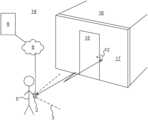
- FIG. 1is a schematic drawing illustrating an environment in which embodiments presented herein can be applied;
- FIGS. 2 A-Bare schematic diagrams illustrating the portable key device of FIG. 1 ;
- FIGS. 3 A-Dare schematic diagrams illustrating embodiments of where a security device according to embodiments presented herein can be implemented
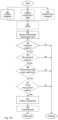
- FIGS. 4 A-Bare schematic diagrams illustrating methods for enabling access control for access to a physical space secured by a lock device according to various embodiments
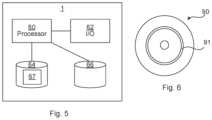
- FIG. 5is a schematic diagram illustrating components of the security device of FIGS. 3 A-D ;
- FIG. 6shows one example of a computer program product 90 comprising computer readable means.
- FIG. 1is a schematic diagram showing an environment in which embodiments presented herein can be applied.
- Access to a physical space 16is restricted by a physical barrier 15 which is selectively unlockable.
- the physical barrier 15stands between the restricted physical space 16 and an accessible physical space 14 .
- the accessible physical space 14can be a restricted physical space in itself, but in relation to this physical barrier 15 , the accessible physical space 14 is accessible.
- the barrier 15can be a door, gate, hatch, cabinet door, drawer, window, etc.
- a lock device 12is provided in order to control access to the physical space 16 , by selectively unlocking the barrier 15 .
- the lock device 12is an electronically controllable lock.
- the lock device 12can be provided in the structure 17 surrounding the barrier 15 (as shown) or the lock device 12 can be provided in the barrier 15 itself (not shown).
- the lock device 12is controllable to be in a locked state or in an unlocked state.
- the lock device 12In order to evaluate whether a user 5 is to be granted access, the lock device 12 communicates with a portable key device 2 over a wireless interface. This allows selective unlocking of the lock device 12 based on the communication with the portable key device 2 . In this way when a user approaches with a portable key device 2 , an evaluation takes place to determine whether access should be granted or not. Additionally, the access control is conditioned on the user being in the vicinity of the lock device, which is verified using a camera of the portable key device, as described below. When the lock device 12 grants access, the lock device 12 is set in an unlocked state.
- Setting the lock device 12 in an unlocked statecan be implemented in a number of different ways.
- the lock device 12evaluates the key, the lock device 12 can set itself in the unlocked state. If the key is evaluated in a remote host system, this can imply transmitting a signal to a lock controller over a wire-based communication, e.g. using a serial interface (e.g. RS485, RS232), Universal Serial Bus (USB), Ethernet, or even a simple electric connection, or alternatively using a wireless interface.
- a serial interfacee.g. RS485, RS232), Universal Serial Bus (USB), Ethernet, or even a simple electric connection, or alternatively using a wireless interface.
- the barrier 15can be opened and when the lock device 12 is in a locked state, the barrier 15 cannot be opened. In this way, access to a restricted physical space 16 is controlled by the lock device 12 .
- the barrier 15can be triggered to be opened e.g. using a door opener.
- the portable key device 2can be implemented as a software application (also known as app) executing in a smart phone or other portable computing device.
- the portable key device 2can optionally communicate with a central server 6 over a communication network 8 , which can be a wide area network, such as the Internet, accessed e.g. via WiFi or a cellular network.
- the lock device 12can communicate with the central server 6 over the communication network 8 .
- a camera of the portable key device 2is used to capture one or more images or videos of the environment of the lock device 12 .
- the user 5directs the camera of the portable key device 2 such that its field of view 3 encompasses the lock device 12 and/or the barrier 15 .
- the captured image(s)are then compared against one or more image templates, where each image template is associated with a particular lock device 12 .
- the matchingis known in the art per se, and can e.g. be performed by a transform to align the images and subsequent correlation. Alternatively or additionally, the matching is based on identifying objects in the images and comparing the identified objects, and/or spatial relationships between identified objects.
- the portable key device 2is determined to be in the vicinity of the lock device 12 in question.
- This image matchingcan be combined with conventional access control procedures as known in the art per se, e.g. with authentication of the portable key device and authorisation based on communication between the lock device 12 and the portable key device 2 .
- the authenticationcan occur before or after the image matching as shown, respectively, in FIG. 4 A and FIG. 4 B below.
- FIGS. 2 A-Bare schematic diagrams illustrating the portable key device 2 of FIG. 1 .
- FIG. 2 Aa front facing camera 10 a of the portable key device 2 is shown.
- This front facing camera 10 acan be used to capture images of a face of a user, which images can be used for face recognition as described below.
- FIG. 2 Ba rear facing camera 10 b is shown.
- the rear facing camera 10 bcan be used to capture images of the surroundings of the lock device, to verify that a user is at a location of a particular lock device.
- FIGS. 3 A-Dare schematic diagrams illustrating embodiments of where a security device 1 according to embodiments presented herein can be implemented.
- the security device 1is the device that compares captured images against templates to determine whether the portable key device is in the vicinity of the lock device.
- the security device 1is shown implemented in the portable key device 2 .
- the portable key device 2is thus the host device for the security device 1 in this implementation.
- the security device 1is shown implemented in the lock device 12 .
- the lock device 12is thus the host device for the security device 1 in this implementation.
- the security device 1is shown implemented in server 6 .
- the server 6is thus the host device for the security device 1 in this implementation.
- the security device 1is shown implemented as a stand-alone device.
- the security device 1thus does not have a host device in this implementation.
- FIGS. 4 A-Bare schematic diagrams illustrating methods for enabling access control for access to a physical space secured by a lock device according to various embodiments. The method is performed in the security device, which in turn can form part or various host devices or be a stand-alone device as shown in FIGS. 3 A-D .
- a conditional stepis a step where the method forks in two different possible paths.
- An optional stepis a step that does not need to be performed.
- FIG. 4 AFirst, embodiments illustrated by FIG. 4 A will be described.
- the security deviceobtains at least one image captured using a first camera of a portable key device.
- the first cameracan e.g. be the rear facing camera 10 b of FIG. 2 B .
- the userhas previously been informed to capture images containing the lock device and/or barrier secured by the lock device. Hence, the at least one image has been captured in a vicinity of the lock device.
- the at least one imagecan be one or more still images and/or the at least one image can be in the form of a video comprising a plurality of sequential images.
- the security deviceobtains movement data captured using movement sensors of the portable key device. This step is only performed if the at least one image is in the form of a video.
- the movement sensorscan e.g. be implemented using accelerometers and/or gyroscope sensors.
- the movement datais captured by the portable key device at the same time as the video is captured.
- the security deviceobtains at least one face image captured using a second camera of the portable key device.
- the second cameracan e.g. be the front facing camera 10 a of FIG. 2 A .
- the face image(s)can be captured at the same time as the at least one image captured in step 40 .
- a receive template decryption key step 42the security device receives a template decryption key from a lock device over a short-range communication link.
- the security devicestores at least part of the at least one image to form part of an audit trail.
- thiscan comprise storing at least part of the at least one face image.
- the audit trailis greatly improved.
- Each audit trail entrythen forms a proof of presence.
- the entry in the audit trailis also tied to a physical person.
- a conditional image(s) match step 44the security device matches the at least one image with a plurality of templates.
- Each templateis an image template being associated with a lock device.
- the conditional image(s) match step 44comprises obtaining the plurality of templates by decrypting encrypted templates using the template decryption key. In other words, this comprises decrypting encrypted template data using the template decryption key received form the lock device. Since the decryption key is only received from the lock device, the encrypted template data (i.e. encrypted plurality of templates) can be safely stored in the key device without an attacker being able to read the template data (i.e. decrypted versions of the plurality of templates).
- the decrypted template datacan be deleted, to prevent an attacker having access to the portable key device from gaining access to decrypted template data.
- the decrypted datacan e.g. only be available in transient memory (e.g. RAM) to further improve security.
- the methodends in a denied state. Otherwise, the method ends in an affirmative state or continues to any of the optional steps 45 , 46 , 47 , 43 , or 50 .
- the security devicecompares a plurality of movements over a time period derived from the video with the obtained movement data over the same time period. This comparison relates to a several movements over the time period. When the movements detected in the video do not correspond to the obtained movement data, the method ends in a denied state. Otherwise, the method ends in an affirmative state or continues to any of the optional steps 46 , 47 , 43 , or 50 .
- This comparison of the two sources of movement datagreatly improves certainty of whether the portable key device is actually in the vicinity of the lock device.
- movement data derived from a video captured using the second camerais used to further ensure that the video data is not fake.
- the security deviceidentifies a sequential light code from the video.
- the methodends in a denied state. Otherwise, the method ends in an affirmative state or continues to any of the optional steps 47 , 43 or 50 .
- the light codecan be provided by the lock device, e.g. using a LED (Light Emitting Diode) or other light source. In this way, certainty that the video is captured in real-time by the portable key device is further increased.
- the light codecan be any suitable modulation of light over time, e.g. a blinking pattern, which is recordable in the video captured by the portable key device.
- the light coderepresents an alphanumerical or binary code that is also provided from the lock device to the portable key device over radio. This code can optionally be unique to each key exchange session with the lock to prevent replay attacks of this light code.
- conditional face recognition match step 47the security device performs face recognition based on the at least one face image.
- face recognitionis not successful, the method ends in a denied state. Otherwise, the method ends in an affirmative state or continues to any of the optional steps 43 or 40 .
- face recognitionties also a person to the location of the lock device, further improving security.
- the security deviceobtains a credential associated with the lock device. If this step is performed, the security device can form part of the portable key device or the server. When multiple credentials for multiple lock devices are used by the portable key device, the lock identified in step 44 allows the appropriate credential to be obtained, to match the lock device in question.
- the appropriate credentialcan be obtained from memory of the portable key device or from the server, when the security device forms part of the server. When the security device forms part of the server, the appropriate credential can be obtained from the server itself or from another database with which the server can communicate.
- the security deviceauthenticates the portable key device as known in the art per se, e.g. using BLE, NFC or any other suitable current or future authentication procedure. The authentication is based on the credential obtained in step 43 .
- the lockcan be opened, conditional on the conventional access control prior to or after this method.
- a positive matchis a necessary condition for opening the lock device.
- FIG. 4 BOnly new or modified steps compared with those shown in FIG. 4 A will be described.
- FIG. 4 Bthe optional authentication step 50 is performed before the matching steps 44 - 47 . Specifically, the authentication step 50 here takes place prior to the obtain image(s) step 40 .
- FIG. 5is a schematic diagram illustrating components of the security device 1 of FIGS. 3 A-D . It is to be noted that one or more of the mentioned components can be shared with the host device, when present.
- a processor 60is provided using any combination of one or more of a suitable central processing unit (CPU), multiprocessor, microcontroller, digital signal processor (DSP), etc., capable of executing software instructions 67 stored in a memory 64 , which can thus be a computer program product.
- the processor 60could alternatively be implemented using an application specific integrated circuit (ASIC), field programmable gate array (FPGA), etc.
- the processor 60can be configured to execute the method described with reference to FIGS. 4 A-B above.
- the memory 64can be any combination of random access memory (RAM) and/or read only memory (ROM).
- the memory 64also comprises persistent storage, which, for example, can be any single one or combination of magnetic memory, optical memory, solid-state memory or even remotely mounted memory.
- a data memory 66is also provided for reading and/or storing data during execution of software instructions in the processor 60 .
- the data memory 66can be any combination of RAM and/or ROM.
- the security device 1further comprises an I/O interface 62 for communicating with external and/or internal entities.
- the I/O interface 62also includes a user interface.
- Other components of the security device 1are omitted in order not to obscure the concepts presented herein.
- FIG. 6shows one example of a computer program product 90 comprising computer readable means.
- a computer program 91can be stored, which computer program can cause a processor to execute a method according to embodiments described herein.
- the computer program productis an optical disc, such as a CD (compact disc) or a DVD (digital versatile disc) or a Blu-Ray disc.
- the computer program productcould also be embodied in a memory of a device, such as the computer program product 64 of FIG. 5 .
- the computer program 91is here schematically shown as a track on the depicted optical disk, the computer program can be stored in any way which is suitable for the computer program product, such as a removable solid state memory, e.g. a Universal Serial Bus (USB) drive.
- USBUniversal Serial Bus
Landscapes
- Engineering & Computer Science (AREA)
- Physics & Mathematics (AREA)
- General Physics & Mathematics (AREA)
- Theoretical Computer Science (AREA)
- Computer Security & Cryptography (AREA)
- Computer Networks & Wireless Communication (AREA)
- Health & Medical Sciences (AREA)
- General Health & Medical Sciences (AREA)
- Signal Processing (AREA)
- Software Systems (AREA)
- Computer Vision & Pattern Recognition (AREA)
- Multimedia (AREA)
- Human Computer Interaction (AREA)
- Medical Informatics (AREA)
- General Engineering & Computer Science (AREA)
- Artificial Intelligence (AREA)
- Computing Systems (AREA)
- Databases & Information Systems (AREA)
- Evolutionary Computation (AREA)
- Oral & Maxillofacial Surgery (AREA)
- Computer Hardware Design (AREA)
- Life Sciences & Earth Sciences (AREA)
- Animal Behavior & Ethology (AREA)
- Social Psychology (AREA)
- Lock And Its Accessories (AREA)
- Telephone Function (AREA)
Abstract
Description
This application is a continuation of U.S. patent application Ser. No. 17/272,002 filed on Feb. 26, 2021, which is a national stage application under 35 U.S.C. 371 and claims the benefit of PCT Application No. PCT/EP2019/074915 having an international filing date of Sep. 17, 2019, which designated the United States, which PCT application claimed the benefit of Swedish Patent Application No. 1851103-0 filed Sep. 18, 2018, the disclosure of each of which are incorporated herein by reference.
The invention relates to a method, a security device, a computer program and a computer program product for matching an image with templates for access control.
Locks have evolved from traditional mechanical locks to electronic locks. Electronic locks are becoming increasingly popular for several reasons, such as flexibility, control and auditing capabilities.
An attacker attempting to get access to a space secured by a mechanical lock of course needs to be by the lock to e.g. attempt to pick the lock.
With electronic locks that are network connected, attacks are not geographically limited to the vicinity of the lock.
WO 2009/128854 A1 discloses physical access control using dynamic inputs from a portable communications device. WO 2016/092302 A1 discloses flexible security system for cash-in-transit.EP 1 693 801 A2 discloses biometric-based systems and methods for identity verification.
It is an object to reduce the risk of an offsite attacker or hacker controlling access to a physical space.
According to a first aspect, it is provided a method for enabling access control for access to a physical space secured by a lock device. The method is performed in a security device and comprises the steps of: obtaining at least one image captured using a first camera of a portable key device; receiving a template decryption key from a lock device over a short-range communication link; obtaining a credential associated with the lock device; matching the at least one image with a plurality of templates, each template being associated with a lock device, which comprises obtaining the plurality of templates by decrypting encrypted templates using the template decryption key; and wherein a positive match is a necessary condition for opening the lock device.
The at least one image may be in the form of a video comprising a plurality of sequential images. The method may further comprise the steps of: obtaining movement data captured using movement sensors of the portable key device; and comparing a plurality of movements derived from the video in a time period with the obtained movement data over the same time period; wherein it is a necessary condition for opening the lock device that the movements detected in the video correspond to the obtained movement data.
The method may further comprise the step of: identifying a sequential light code from the video; wherein it is a necessary condition for opening the lock device that the light code matches a predetermined code.
The method may further comprise the step of: storing at least part of the at least one image to form part of an audit trail.
The method may further comprise the steps of: obtaining at least one face image captured using a second camera of the portable key device; and performing face recognition based on the at least one face image; wherein it is a necessary condition for opening the lock device that the face recognition is successful.
The step of storing may comprise storing at least part of the at least one face image.
The method may further comprise the step of: authenticating the portable key device.
The step of authenticating may be performed after the step of matching, when there is a positive match.
The step of authenticating may be is performed prior to the step of matching.
According to a second aspect, it is provided a security device for enabling access control for access to a physical space secured by a lock device. The security device comprises: a processor; and a memory storing instructions that, when executed by the processor, cause the security device to: obtain at least one image captured using a first camera of a portable key device; receive a template decryption key from a lock device over a short-range communication link; obtain a credential associated with the lock device; match the at least one image with a plurality of templates, each template being associated with a lock device, which comprises obtaining the plurality of templates by decrypting encrypted templates using the template decryption key; and wherein a positive match is a necessary condition for opening the lock device.
According to a third aspect, it is provided a computer program for enabling access control for access to a physical space secured by a lock device. The computer program comprising computer program code which, when run on an security device causes the security device to: obtain at least one image captured using a first camera of a portable key device; receive a template decryption key from a lock device over a short-range communication link; obtain a credential associated with the lock device; match the at least one image with a plurality of templates, each template being associated with a lock device, which comprises obtaining the plurality of templates by decrypting encrypted templates using the template decryption key; and wherein a positive match is a necessary condition for opening the lock device.
According to a fourth aspect, it is provided a computer program product comprising a computer program according to the third aspect and a computer readable means on which the computer program is stored.
Generally, all terms used in the claims are to be interpreted according to their ordinary meaning in the technical field, unless explicitly defined otherwise herein. All references to “a/an/the element, apparatus, component, means, step, etc.” are to be interpreted openly as referring to at least one instance of the element, apparatus, component, means, step, etc., unless explicitly stated otherwise. The steps of any method disclosed herein do not have to be performed in the exact order disclosed, unless explicitly stated.
The invention is now described, by way of example, with reference to the accompanying drawings, in which:
The invention will now be described more fully hereinafter with reference to the accompanying drawings, in which certain embodiments of the invention are shown. This invention may, however, be embodied in many different forms and should not be construed as limited to the embodiments set forth herein; rather, these embodiments are provided by way of example so that this disclosure will be thorough and complete, and will fully convey the scope of the invention to those skilled in the art. Like numbers refer to like elements throughout the description. Embodiments presented herein are based on the realisation that images from a camera can be used to verify that a user is in the vicinity of a particular lock device. This can be used to reduce the risk of an offsite attacker or hacker controlling access to a physical space. Optionally, the images can also be used for a greatly improved audit trail.
In order to evaluate whether auser 5 is to be granted access, thelock device 12 communicates with aportable key device 2 over a wireless interface. This allows selective unlocking of thelock device 12 based on the communication with theportable key device 2. In this way when a user approaches with a portablekey device 2, an evaluation takes place to determine whether access should be granted or not. Additionally, the access control is conditioned on the user being in the vicinity of the lock device, which is verified using a camera of the portable key device, as described below. When thelock device 12 grants access, thelock device 12 is set in an unlocked state.
Setting thelock device 12 in an unlocked state can be implemented in a number of different ways. In the case when thelock device 12 evaluates the key, thelock device 12 can set itself in the unlocked state. If the key is evaluated in a remote host system, this can imply transmitting a signal to a lock controller over a wire-based communication, e.g. using a serial interface (e.g. RS485, RS232), Universal Serial Bus (USB), Ethernet, or even a simple electric connection, or alternatively using a wireless interface. When thelock device 12 is in an unlocked state, thebarrier 15 can be opened and when thelock device 12 is in a locked state, thebarrier 15 cannot be opened. In this way, access to a restrictedphysical space 16 is controlled by thelock device 12.
Alternatively or additionally, when access is granted, thebarrier 15 can be triggered to be opened e.g. using a door opener.
The portablekey device 2 can be implemented as a software application (also known as app) executing in a smart phone or other portable computing device. The portablekey device 2 can optionally communicate with acentral server 6 over a communication network8, which can be a wide area network, such as the Internet, accessed e.g. via WiFi or a cellular network.
Optionally, also thelock device 12 can communicate with thecentral server 6 over the communication network8.
In embodiments presented herein, a camera of the portablekey device 2 is used to capture one or more images or videos of the environment of thelock device 12. Theuser 5 directs the camera of the portablekey device 2 such that its field ofview 3 encompasses thelock device 12 and/or thebarrier 15. The captured image(s) are then compared against one or more image templates, where each image template is associated with aparticular lock device 12. The matching is known in the art per se, and can e.g. be performed by a transform to align the images and subsequent correlation. Alternatively or additionally, the matching is based on identifying objects in the images and comparing the identified objects, and/or spatial relationships between identified objects. When the image(s) matches alock device 12, the portablekey device 2 is determined to be in the vicinity of thelock device 12 in question. This image matching can be combined with conventional access control procedures as known in the art per se, e.g. with authentication of the portable key device and authorisation based on communication between thelock device 12 and the portablekey device 2. The authentication can occur before or after the image matching as shown, respectively, inFIG.4A andFIG.4B below.
InFIG.2A , afront facing camera 10aof the portablekey device 2 is shown. Thisfront facing camera 10acan be used to capture images of a face of a user, which images can be used for face recognition as described below.
InFIG.2B , arear facing camera 10bis shown. Therear facing camera 10bcan be used to capture images of the surroundings of the lock device, to verify that a user is at a location of a particular lock device.
InFIG.3A , thesecurity device 1 is shown implemented in the portablekey device 2. The portablekey device 2 is thus the host device for thesecurity device 1 in this implementation.
InFIG.3B , thesecurity device 1 is shown implemented in thelock device 12. Thelock device 12 is thus the host device for thesecurity device 1 in this implementation.
InFIG.3C , thesecurity device 1 is shown implemented inserver 6. Theserver 6 is thus the host device for thesecurity device 1 in this implementation.
InFIG.3D , thesecurity device 1 is shown implemented as a stand-alone device. Thesecurity device 1 thus does not have a host device in this implementation.
In the following, a conditional step is a step where the method forks in two different possible paths. An optional step is a step that does not need to be performed.
First, embodiments illustrated byFIG.4A will be described.
In an obtain image(s)step 40, the security device obtains at least one image captured using a first camera of a portable key device. The first camera can e.g. be the rear facingcamera 10bofFIG.2B . The user has previously been informed to capture images containing the lock device and/or barrier secured by the lock device. Hence, the at least one image has been captured in a vicinity of the lock device.
The at least one image can be one or more still images and/or the at least one image can be in the form of a video comprising a plurality of sequential images.
In an optional obtainmovement data step 41, the security device obtains movement data captured using movement sensors of the portable key device. This step is only performed if the at least one image is in the form of a video. The movement sensors can e.g. be implemented using accelerometers and/or gyroscope sensors. The movement data is captured by the portable key device at the same time as the video is captured.
In an optional obtain face image(s)step 40′, the security device obtains at least one face image captured using a second camera of the portable key device. The second camera can e.g. be the front facingcamera 10aofFIG.2A . The face image(s) can be captured at the same time as the at least one image captured instep 40.
In a receive template decryptionkey step 42, the security device receives a template decryption key from a lock device over a short-range communication link.
In anoptional store step 49, the security device stores at least part of the at least one image to form part of an audit trail. Whenstep 40′ is performed, this can comprise storing at least part of the at least one face image. By storing images in the audit trail, the audit trail is greatly improved. Each audit trail entry then forms a proof of presence. Moreover, by storing the face image, the entry in the audit trail is also tied to a physical person.
In a conditional image(s)match step 44, the security device matches the at least one image with a plurality of templates. Each template is an image template being associated with a lock device. The conditional image(s)match step 44 comprises obtaining the plurality of templates by decrypting encrypted templates using the template decryption key. In other words, this comprises decrypting encrypted template data using the template decryption key received form the lock device. Since the decryption key is only received from the lock device, the encrypted template data (i.e. encrypted plurality of templates) can be safely stored in the key device without an attacker being able to read the template data (i.e. decrypted versions of the plurality of templates). As soon as the decrypted template data has been used, it can be deleted, to prevent an attacker having access to the portable key device from gaining access to decrypted template data. The decrypted data can e.g. only be available in transient memory (e.g. RAM) to further improve security.
When a match is not determined, the method ends in a denied state. Otherwise, the method ends in an affirmative state or continues to any of theoptional steps
In an optional conditional movements matchstep 45, the security device compares a plurality of movements over a time period derived from the video with the obtained movement data over the same time period. This comparison relates to a several movements over the time period. When the movements detected in the video do not correspond to the obtained movement data, the method ends in a denied state. Otherwise, the method ends in an affirmative state or continues to any of theoptional steps
In an optional conditional sequential light code matches step46 the security device identifies a sequential light code from the video. When the light code does not match the predetermined code, the method ends in a denied state. Otherwise, the method ends in an affirmative state or continues to any of theoptional steps
In an optional conditional facerecognition match step 47 the security device performs face recognition based on the at least one face image. When the face recognition is not successful, the method ends in a denied state. Otherwise, the method ends in an affirmative state or continues to any of theoptional steps
In an obtaincredential step 43, the security device obtains a credential associated with the lock device. If this step is performed, the security device can form part of the portable key device or the server. When multiple credentials for multiple lock devices are used by the portable key device, the lock identified instep 44 allows the appropriate credential to be obtained, to match the lock device in question. The appropriate credential can be obtained from memory of the portable key device or from the server, when the security device forms part of the server. When the security device forms part of the server, the appropriate credential can be obtained from the server itself or from another database with which the server can communicate.
In anoptional authenticate step 50, the security device authenticates the portable key device as known in the art per se, e.g. using BLE, NFC or any other suitable current or future authentication procedure. The authentication is based on the credential obtained instep 43.
When the method ends in the affirmative state, the lock can be opened, conditional on the conventional access control prior to or after this method. In other words, a positive match is a necessary condition for opening the lock device.
When the method ends in a denied state, the lock cannot be opened.
It is to be noted that there may be alternative procedures for opening the lock, e.g. with an electronic and/or mechanical master key overriding the methods described herein. In other words, whenever the term ‘necessary’ is used herein, it is to be as construed as applicable only in the context of the presented method.
Looking now toFIG.4B , only new or modified steps compared with those shown inFIG.4A will be described.
InFIG.4B , theoptional authentication step 50 is performed before the matching steps44-47. Specifically, theauthentication step 50 here takes place prior to the obtain image(s)step 40.FIG.5 is a schematic diagram illustrating components of thesecurity device 1 ofFIGS.3A-D . It is to be noted that one or more of the mentioned components can be shared with the host device, when present. Aprocessor 60 is provided using any combination of one or more of a suitable central processing unit (CPU), multiprocessor, microcontroller, digital signal processor (DSP), etc., capable of executingsoftware instructions 67 stored in amemory 64, which can thus be a computer program product. Theprocessor 60 could alternatively be implemented using an application specific integrated circuit (ASIC), field programmable gate array (FPGA), etc. Theprocessor 60 can be configured to execute the method described with reference toFIGS.4A-B above.
Thememory 64 can be any combination of random access memory (RAM) and/or read only memory (ROM). Thememory 64 also comprises persistent storage, which, for example, can be any single one or combination of magnetic memory, optical memory, solid-state memory or even remotely mounted memory.
Adata memory 66 is also provided for reading and/or storing data during execution of software instructions in theprocessor 60. Thedata memory 66 can be any combination of RAM and/or ROM.
Thesecurity device 1 further comprises an I/O interface 62 for communicating with external and/or internal entities. Optionally, the I/O interface 62 also includes a user interface. Other components of thesecurity device 1 are omitted in order not to obscure the concepts presented herein.
Here now follows a list of embodiments from another perspective, enumerated with roman numerals.
- i. A method for enabling access control for access to a physical space secured by a lock device, the method being performed in a security device and comprising the steps of:
- obtaining at least one image captured using a first camera of a portable key device;
- matching the at least one image with a plurality of templates, each template being associated with a lock device; and
- wherein a positive match is a necessary condition for opening the lock device.
- ii. The method according to embodiment i, wherein the at least one image is in the form of a video comprising a plurality of sequential images.
- iii. The method according to embodiment ii, further comprising the steps of:
- obtaining movement data captured using movement sensors of the portable key device; and
- comparing movements derived from the video with the obtained movement data;
- wherein it is a necessary condition for opening the lock device that the movements detected in the video correspond to the obtained movement data.
- iv. The method according to embodiment ii or iii, wherein the method further comprising the step of:
- identifying a sequential light code from the video;
- wherein it is a necessary condition for opening the lock device that the light code matches a predetermined code.
- v. The method may further comprise the step of:
- obtaining a credential associated with the lock device.
- vi. The method according to embodiment v, further comprising the step of:
- receiving a template decryption key from a lock device over a short range communication link;
- wherein the step of matching comprises decrypting encrypted template data using the template decryption key.
- vii. The method according to any one of the preceding embodiments, further comprising the step of:
- storing at least part of the at least one image to form part of an audit trail.
- viii. The method according to any one of the preceding embodiments, further comprising the step of:
- authenticating the portable key device.
- ix. The method according to embodiment viii, wherein the step of authenticating is performed after the step of matching, when there is a positive match.
- x. The method according to embodiment viii, wherein the step of authenticating is performed prior to the step of matching.
- xi. The method according to any one of the preceding embodiments, further comprising the steps of:
- obtaining at least one face image captured using a second camera of the portable key device; and
- performing face recognition based on the at least one face image;
- wherein it is a necessary condition for opening the lock device that the face recognition is successful.
- xii. The method according to embodiment xi when dependent on embodiment vii, wherein the step of storing comprises storing at least part of the at least one face image.
- xiii. A security device for enabling access control for access to a physical space secured by a lock device, the security device comprising:
- a processor; and
- a memory storing instructions that, when executed by the processor, cause the security device to:
- obtain at least one image captured using a first camera of a portable key device;
- match the at least one image with a plurality of templates, each template being associated with a lock device; and
- wherein a positive match is a necessary condition for opening the lock device.
- xiv. A computer program for enabling access control for access to a physical space secured by a lock device, the computer program comprising computer program code which, when run on an security device causes the security device to:
- obtain at least one image captured using a first camera of a portable key device;
- match the at least one image with a plurality of templates, each template being associated with a lock device; and
- wherein a positive match is a necessary condition for opening the lock device.
- xv. A computer program product comprising a computer program according to embodiment xiv and a computer readable means on which the computer program is stored.
- i. A method for enabling access control for access to a physical space secured by a lock device, the method being performed in a security device and comprising the steps of:
The invention has mainly been described above with reference to a few embodiments. However, as is readily appreciated by a person skilled in the art, other embodiments than the ones disclosed above are equally possible within the scope of the invention, as defined by the appended patent claims.
Claims (12)
1. A security device for enabling access control for access to a physical space secured by a lock device, the security device comprising:
a processor; and
a memory storing instructions that, when executed by the processor, cause the security device to:
obtain at least one image captured using a first camera of a portable key device held by a user, wherein the at least one image is in the form of a video comprising a plurality of sequential images;
obtain movement data captured using movement sensors of the portable key device;
match the at least one image with a plurality of templates, each template being associated with a lock device; and
compare movements derived from the video with the obtained movement data;
wherein it is a necessary condition for opening the lock device that there is a positive match between an image and a template, and it is a necessary condition for opening the lock device that the movements detected in the video correspond to the obtained movement data.
2. A non-transitory computer readable medium storing a computer program for enabling access control for access to a physical space secured by a lock device, the computer program comprising computer program code which, when run on a security device, causes the security device to:
obtain at least one image captured using a first camera of a portable key device held by a user, wherein the at least one image is in the form of a video comprising a plurality of sequential images;
obtain movement data captured using movement sensors of the portable key device;
match the at least one image with a plurality of templates, each template being associated with a lock device; and
compare movements derived from the video with the obtained movement data;
wherein it is a necessary condition for opening the lock device that there is a positive match between an image and a template, and it is a necessary condition for opening the lock device that the movements detected in the video correspond to the obtained movement data.
3. A method for enabling access control for access to a physical space secured by a lock device, the method being performed in a security device and comprising:
obtaining at least one image captured using a first camera of a portable key device held by a user, wherein the at least one image is in the form of a video comprising a plurality of sequential images;
obtaining movement data captured using movement sensors of the portable key device;
matching the at least one image with a plurality of templates, each template being associated with a lock device; and
comparing movements derived from the video with the obtained movement data;
wherein it is a necessary condition for opening the lock device that there is a positive match between an image and a template, and it is a necessary condition for opening the lock device that the movements detected in the video correspond to the obtained movement data.
4. The method according toclaim 3 , wherein the method further comprises:
identifying a sequential light code from the video;
wherein it is a necessary condition for opening the lock device that the light code matches a predetermined code.
5. The method according toclaim 3 , further comprising:
obtaining a credential associated with the lock device.
6. The method according toclaim 5 , further comprising:
receiving a template decryption key from a lock device over a short range communication link;
wherein the matching comprises decrypting encrypted template data using the template decryption key.
7. The method according toclaim 3 , further comprising:
storing at least part of the at least one image to form part of an audit trail.
8. The method according to anyclaim 3 , further comprising:
authenticating the portable key device.
9. The method according toclaim 8 , wherein the authenticating is performed after the matching, when there is a positive match.
10. The method according toclaim 8 , wherein the authenticating is performed prior to the matching.
11. The method according toclaim 3 , further comprising:
obtaining at least one face image captured using a second camera of the portable key device; and
performing face recognition based on the at least one face image;
wherein it is a necessary condition for opening the lock device that the face recognition is successful.
12. The method according toclaim 9 , wherein the storing comprises storing at least part of the at least one face image.
Priority Applications (1)
| Application Number | Priority Date | Filing Date | Title |
|---|---|---|---|
| US17/962,923US11836234B2 (en) | 2018-09-18 | 2022-10-10 | Matching an user taken image with access control apparatus references for physical access control |
Applications Claiming Priority (5)
| Application Number | Priority Date | Filing Date | Title |
|---|---|---|---|
| SE1851103-0 | 2018-09-18 | ||
| SE1851103 | 2018-09-18 | ||
| PCT/EP2019/074915WO2020058294A1 (en) | 2018-09-18 | 2019-09-17 | Matching an user taken image with access control apparatus references for physical access control |
| US202117272002A | 2021-02-26 | 2021-02-26 | |
| US17/962,923US11836234B2 (en) | 2018-09-18 | 2022-10-10 | Matching an user taken image with access control apparatus references for physical access control |
Related Parent Applications (2)
| Application Number | Title | Priority Date | Filing Date |
|---|---|---|---|
| US17/272,002ContinuationUS11468719B2 (en) | 2018-09-18 | 2019-09-17 | Matching an user taken image with access control apparatus references for physical access control |
| PCT/EP2019/074915ContinuationWO2020058294A1 (en) | 2018-09-18 | 2019-09-17 | Matching an user taken image with access control apparatus references for physical access control |
Publications (2)
| Publication Number | Publication Date |
|---|---|
| US20230030707A1 US20230030707A1 (en) | 2023-02-02 |
| US11836234B2true US11836234B2 (en) | 2023-12-05 |
Family
ID=68051765
Family Applications (2)
| Application Number | Title | Priority Date | Filing Date |
|---|---|---|---|
| US17/272,002ActiveUS11468719B2 (en) | 2018-09-18 | 2019-09-17 | Matching an user taken image with access control apparatus references for physical access control |
| US17/962,923ActiveUS11836234B2 (en) | 2018-09-18 | 2022-10-10 | Matching an user taken image with access control apparatus references for physical access control |
Family Applications Before (1)
| Application Number | Title | Priority Date | Filing Date |
|---|---|---|---|
| US17/272,002ActiveUS11468719B2 (en) | 2018-09-18 | 2019-09-17 | Matching an user taken image with access control apparatus references for physical access control |
Country Status (4)
| Country | Link |
|---|---|
| US (2) | US11468719B2 (en) |
| EP (1) | EP3853751A1 (en) |
| CN (1) | CN112740206A (en) |
| WO (1) | WO2020058294A1 (en) |
Families Citing this family (7)
| Publication number | Priority date | Publication date | Assignee | Title |
|---|---|---|---|---|
| US11997193B2 (en)* | 2017-03-29 | 2024-05-28 | Yunding Network Technology (Beijing) Co., Ltd. | Secure communication method and smart lock system based thereof |
| US11468719B2 (en) | 2018-09-18 | 2022-10-11 | Assa Abloy Ab | Matching an user taken image with access control apparatus references for physical access control |
| US11900744B2 (en)* | 2019-03-22 | 2024-02-13 | Eingot Llc | Virtual intercom system |
| US10685516B1 (en)* | 2019-03-22 | 2020-06-16 | Eingot Llc | Virtual intercom system |
| US11639617B1 (en) | 2019-04-03 | 2023-05-02 | The Chamberlain Group Llc | Access control system and method |
| SE546807C2 (en)* | 2021-10-15 | 2025-02-25 | Assa Abloy Ab | Determining when to establish a communication channel for access control |
| CN115546936A (en)* | 2022-09-09 | 2022-12-30 | 深圳海翼智新科技有限公司 | Control method and device of smart door lock, smart door lock and storage medium |
Citations (17)
| Publication number | Priority date | Publication date | Assignee | Title |
|---|---|---|---|---|
| US20050168321A1 (en)* | 2004-01-29 | 2005-08-04 | Fitzgibbon James J. | Image recognition facilitated movable barrier operations method and apparatus |
| EP1693801A2 (en) | 2005-02-16 | 2006-08-23 | David Schaufele | Biometric-based systems and methods for identity verification |
| US20070103548A1 (en)* | 2002-10-15 | 2007-05-10 | Revolutionary Concepts, Inc. | Audio-video communication system for receiving person at entrance |
| WO2009128854A1 (en) | 2008-04-15 | 2009-10-22 | Sony Ericsson Mobile Communications Ab | Physical access control using dynamic inputs from a portable communications device |
| US20130127591A1 (en) | 2011-11-20 | 2013-05-23 | International Business Machines Corporation | Secure facilities access |
| US20160036594A1 (en) | 2014-07-30 | 2016-02-04 | Master Lock Company | Wireless key management for authentication |
| US20160105644A1 (en)* | 2013-03-15 | 2016-04-14 | Vardr Pty. Ltd. | Cameras and networked security systems and methods |
| WO2016092302A1 (en) | 2014-12-10 | 2016-06-16 | Robert Edmund Todd | Flexible security system for cash-in-transit |
| US20160300410A1 (en)* | 2015-04-10 | 2016-10-13 | Jaguar Land Rover Limited | Door Access System for a Vehicle |
| US20170061750A1 (en) | 2015-09-02 | 2017-03-02 | Vivint, Inc. | Home automation communication system |
| US20170256110A1 (en) | 2014-01-23 | 2017-09-07 | Apple Inc. | Electronic Device Operation Using Remote User Biometrics |
| US20180357400A1 (en) | 2015-12-09 | 2018-12-13 | Samsung Electronics Co., Ltd. | Electronic device and method for providing user information |
| US20190279151A1 (en) | 2018-03-12 | 2019-09-12 | P3 Ventures LLC | Camera and systems for integrated, secure, and verifiable home services |
| US20190295344A1 (en) | 2018-03-20 | 2019-09-26 | VIZpin, Inc. | System for managing mobile devices |
| US20200028672A1 (en) | 2017-03-29 | 2020-01-23 | Yunding Network Technology (Beijing) Co., Ltd. | Secure communication method and smart lock system based thereof |
| WO2020058294A1 (en) | 2018-09-18 | 2020-03-26 | Assa Abloy Ab | Matching an user taken image with access control apparatus references for physical access control |
| US20200366670A1 (en) | 2017-09-12 | 2020-11-19 | Peter Alexander Cordiner | A system and method for authenticating a user |
Family Cites Families (3)
| Publication number | Priority date | Publication date | Assignee | Title |
|---|---|---|---|---|
| KR101719653B1 (en)* | 2010-09-16 | 2017-03-24 | 엘지전자 주식회사 | Mobile Terminal, Electronic System And Method Of Transferring And receiving Data Using The Same |
| EP3147869A1 (en)* | 2015-09-25 | 2017-03-29 | Assa Abloy AB | Determining access in a scenario of a plurality of locks |
| CN106951772A (en)* | 2017-03-01 | 2017-07-14 | 普联技术有限公司 | A kind of application program based on image recognition forbids management method and system |
- 2019
- 2019-09-17USUS17/272,002patent/US11468719B2/enactiveActive
- 2019-09-17WOPCT/EP2019/074915patent/WO2020058294A1/ennot_activeCeased
- 2019-09-17EPEP19773381.9Apatent/EP3853751A1/enactivePending
- 2019-09-17CNCN201980058790.XApatent/CN112740206A/enactivePending
- 2022
- 2022-10-10USUS17/962,923patent/US11836234B2/enactiveActive
Patent Citations (19)
| Publication number | Priority date | Publication date | Assignee | Title |
|---|---|---|---|---|
| US20070103548A1 (en)* | 2002-10-15 | 2007-05-10 | Revolutionary Concepts, Inc. | Audio-video communication system for receiving person at entrance |
| US20050168321A1 (en)* | 2004-01-29 | 2005-08-04 | Fitzgibbon James J. | Image recognition facilitated movable barrier operations method and apparatus |
| EP1693801A2 (en) | 2005-02-16 | 2006-08-23 | David Schaufele | Biometric-based systems and methods for identity verification |
| WO2009128854A1 (en) | 2008-04-15 | 2009-10-22 | Sony Ericsson Mobile Communications Ab | Physical access control using dynamic inputs from a portable communications device |
| US20130127591A1 (en) | 2011-11-20 | 2013-05-23 | International Business Machines Corporation | Secure facilities access |
| US20160105644A1 (en)* | 2013-03-15 | 2016-04-14 | Vardr Pty. Ltd. | Cameras and networked security systems and methods |
| US20170256110A1 (en) | 2014-01-23 | 2017-09-07 | Apple Inc. | Electronic Device Operation Using Remote User Biometrics |
| US20160036594A1 (en) | 2014-07-30 | 2016-02-04 | Master Lock Company | Wireless key management for authentication |
| WO2016092302A1 (en) | 2014-12-10 | 2016-06-16 | Robert Edmund Todd | Flexible security system for cash-in-transit |
| US20160300410A1 (en)* | 2015-04-10 | 2016-10-13 | Jaguar Land Rover Limited | Door Access System for a Vehicle |
| US20170061750A1 (en) | 2015-09-02 | 2017-03-02 | Vivint, Inc. | Home automation communication system |
| US20180357400A1 (en) | 2015-12-09 | 2018-12-13 | Samsung Electronics Co., Ltd. | Electronic device and method for providing user information |
| US20200028672A1 (en) | 2017-03-29 | 2020-01-23 | Yunding Network Technology (Beijing) Co., Ltd. | Secure communication method and smart lock system based thereof |
| US20200366670A1 (en) | 2017-09-12 | 2020-11-19 | Peter Alexander Cordiner | A system and method for authenticating a user |
| US20190279151A1 (en) | 2018-03-12 | 2019-09-12 | P3 Ventures LLC | Camera and systems for integrated, secure, and verifiable home services |
| US20190295344A1 (en) | 2018-03-20 | 2019-09-26 | VIZpin, Inc. | System for managing mobile devices |
| WO2020058294A1 (en) | 2018-09-18 | 2020-03-26 | Assa Abloy Ab | Matching an user taken image with access control apparatus references for physical access control |
| US20220051496A1 (en) | 2018-09-18 | 2022-02-17 | Assa Abloy Ab | Matching an user taken image with access control apparatus references for physical access control |
| US11468719B2 (en)* | 2018-09-18 | 2022-10-11 | Assa Abloy Ab | Matching an user taken image with access control apparatus references for physical access control |
Non-Patent Citations (9)
| Title |
|---|
| "International Application Serial No. PCT US2019 030536, Response to Written Opinion filed Jul. 16, 2020 to Written Opinion dated Dec. 12, 2019", 8 pgs. |
| "U.S. Appl. No. 17/272,002, Preliminary Amendment filed Feb. 26, 2021", 6 pgs. |
| "U.S. Appl. No. 17/272,002, Response filed Mar. 14, 2022 to Non Final Office Action dated Dec. 14, 2021", 8 pgs. |
| International Preliminary Report on Patentability for International (PCT) Patent Application No. PCT/EP2019/074915, dated Dec. 3, 2020, 17 pages. |
| International Search Report and Written Opinion for International (PCT) Patent Application No. PCT/EP2019/074915, dated Dec. 12, 2019, 13 pages. |
| Notice of Allowance for U.S. Appl. No. 17/272,002, dated Jun. 16, 2022 10 pages. |
| Official Action for Sweden Patent Application No. 1851103-0, dated Apr. 15, 2019, 9 pages. |
| Official Action for U.S. Appl. No. 17/272,002, dated Dec. 14, 2021 13 pages. |
| Second Written Opinion for International (PCT) Patent Application No. PCT/EP2019/074915, dated Sep. 9, 2020, 8 pages. |
Also Published As
| Publication number | Publication date |
|---|---|
| EP3853751A1 (en) | 2021-07-28 |
| US20230030707A1 (en) | 2023-02-02 |
| CN112740206A (en) | 2021-04-30 |
| US11468719B2 (en) | 2022-10-11 |
| US20220051496A1 (en) | 2022-02-17 |
| WO2020058294A1 (en) | 2020-03-26 |
Similar Documents
| Publication | Publication Date | Title |
|---|---|---|
| US11836234B2 (en) | Matching an user taken image with access control apparatus references for physical access control | |
| AU2016273888B2 (en) | Controlling physical access to secure areas via client devices in a networked environment | |
| US20240259205A1 (en) | User identification proofing using a combination of user responses to system turing tests using biometric methods | |
| US11657140B2 (en) | Device handoff identification proofing using behavioral analytics | |
| US11574045B2 (en) | Automated ID proofing using a random multitude of real-time behavioral biometric samplings | |
| US20240211561A1 (en) | Automated transparent login without saved credentials or passwords | |
| US9953151B2 (en) | System and method identifying a user to an associated device | |
| US20110291798A1 (en) | Wireless Encrypted Control of Physical Access Systems | |
| CN114120487B (en) | Automobile digital key management method, system, equipment and storage medium | |
| US20140143860A1 (en) | Two tier verification system and method | |
| KR101345018B1 (en) | Teminal and security certification system therewith | |
| US9111084B2 (en) | Authentication platform and related method of operation | |
| Kumar et al. | Real time door security system with three point authentication | |
| CN113935744B (en) | Device anti-counterfeiting method and device | |
| KR101407443B1 (en) | User authentication system and method using near field communication | |
| KR20210069276A (en) | System and method for secured open and close for smart safe | |
| KR102041925B1 (en) | Visitor Certification System based on Wireless Body Area Network and Method thereof | |
| US12272197B2 (en) | Controlling access based on a machine-learning model | |
| US12354426B2 (en) | Auto-programming door and camera relationships for a security system | |
| US20220375288A1 (en) | Enabling remote unlock of a lock | |
| JP2023048093A (en) | System and method for verifying user identity based on chain of events | |
| WO2023138759A1 (en) | Physical access using cloud transaction | |
| KR20230127426A (en) | Smart safe authentication method and system using the same |
Legal Events
| Date | Code | Title | Description |
|---|---|---|---|
| FEPP | Fee payment procedure | Free format text:ENTITY STATUS SET TO UNDISCOUNTED (ORIGINAL EVENT CODE: BIG.); ENTITY STATUS OF PATENT OWNER: LARGE ENTITY | |
| AS | Assignment | Owner name:ASSA ABLOY AB, SWEDEN Free format text:ASSIGNMENT OF ASSIGNORS INTEREST;ASSIGNORS:EINBERG, FREDRIK;LINDERSSON, FREDRIK;SIGNING DATES FROM 20210215 TO 20210218;REEL/FRAME:061418/0878 | |
| STPP | Information on status: patent application and granting procedure in general | Free format text:DOCKETED NEW CASE - READY FOR EXAMINATION | |
| STPP | Information on status: patent application and granting procedure in general | Free format text:RESPONSE TO NON-FINAL OFFICE ACTION ENTERED AND FORWARDED TO EXAMINER | |
| STPP | Information on status: patent application and granting procedure in general | Free format text:NOTICE OF ALLOWANCE MAILED -- APPLICATION RECEIVED IN OFFICE OF PUBLICATIONS | |
| STPP | Information on status: patent application and granting procedure in general | Free format text:PUBLICATIONS -- ISSUE FEE PAYMENT RECEIVED | |
| STPP | Information on status: patent application and granting procedure in general | Free format text:PUBLICATIONS -- ISSUE FEE PAYMENT VERIFIED | |
| STCF | Information on status: patent grant | Free format text:PATENTED CASE |