US11729636B1 - Network clustering determination - Google Patents
Network clustering determinationDownload PDFInfo
- Publication number
- US11729636B1 US11729636B1US17/207,333US202117207333AUS11729636B1US 11729636 B1US11729636 B1US 11729636B1US 202117207333 AUS202117207333 AUS 202117207333AUS 11729636 B1US11729636 B1US 11729636B1
- Authority
- US
- United States
- Prior art keywords
- cluster
- data
- network
- network element
- multiple ues
- Prior art date
- Legal status (The legal status is an assumption and is not a legal conclusion. Google has not performed a legal analysis and makes no representation as to the accuracy of the status listed.)
- Active, expires
Links
Images

Classifications
- H—ELECTRICITY
- H04—ELECTRIC COMMUNICATION TECHNIQUE
- H04W—WIRELESS COMMUNICATION NETWORKS
- H04W24/00—Supervisory, monitoring or testing arrangements
- H04W24/02—Arrangements for optimising operational condition
- G—PHYSICS
- G06—COMPUTING OR CALCULATING; COUNTING
- G06N—COMPUTING ARRANGEMENTS BASED ON SPECIFIC COMPUTATIONAL MODELS
- G06N20/00—Machine learning
- H—ELECTRICITY
- H04—ELECTRIC COMMUNICATION TECHNIQUE
- H04W—WIRELESS COMMUNICATION NETWORKS
- H04W16/00—Network planning, e.g. coverage or traffic planning tools; Network deployment, e.g. resource partitioning or cells structures
- H04W16/18—Network planning tools
- H—ELECTRICITY
- H04—ELECTRIC COMMUNICATION TECHNIQUE
- H04W—WIRELESS COMMUNICATION NETWORKS
- H04W4/00—Services specially adapted for wireless communication networks; Facilities therefor
- H04W4/02—Services making use of location information
- H04W4/029—Location-based management or tracking services
Definitions
- Modern terrestrial telecommunication systemsinclude heterogeneous mixtures of second, third, fourth and fifth generation (2G, 3G, 4G and 5G) cellular-wireless access technologies, which can be cross-compatible and can operate collectively to provide data communication services.
- Global Systems for Mobile(GSM) is an example of 2G telecommunications technologies; Universal Mobile Telecommunications System (UMTS) is an example of 3G telecommunications technologies; and Long Term Evolution (LTE), including LTE Advanced, and Evolved High-Speed Packet Access (HSPA+) are examples of 4G telecommunications technologies.
- Telecommunications systemsalso include fifth generation (5G) cellular-wireless access technologies to provide improved bandwidth and decreased response times to a multitude of devices that may be connected to a network.
- 5Gfifth generation
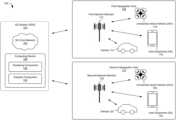
- FIG. 1depicts an example network environment in which example devices can connect to a telecommunication network to implement the clustering techniques described herein.
- FIG. 2depicts an example system architecture for a fifth generation (5G) telecommunication network.
- 5Gfifth generation
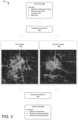
- FIG. 3depicts another example network environment in which an example computing device implements the clustering techniques described herein.
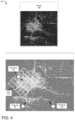
- FIG. 4depicts another example network environment in which an example computing device implements the clustering techniques described herein.
- FIG. 5depicts a block diagram of an example training component for training a machine learned model to implement the techniques described herein.
- FIG. 6depicts a flowchart of an example process for clustering input data using an example computing device.
- FIG. 7depicts an example system architecture for a user equipment.
- a machine learned modelcan cluster cells based on a combination of network data, user equipment data, location data, and map data. Clusters output from the machine learned model can be compared to each other to identify an underperforming cell, to generate recommendations that improve performance of a cell, and/or to determine performance benchmarks for cells or networks across different geographical regions.
- the machine learned modelreceives data representing user and network attributes in different geographic regions, and outputs clusters of cells that can be further processed in various ways to improve throughput or overall quality of networks in the different geographical regions.
- the machine learned modelcan cluster cells based on network configuration data (e.g., bandwidth, security, antennae height, or antennae type, etc.), network user data (e.g., type of user session: FTP, call, etc.), location data (e.g., position of each user relative to a network antennae, location of the network relative to a coordinate system, etc.), and/or geographical data (e.g., elevation of a user equipment (UE) relative to network antennae, map data showing one or more of: a road, a building, a highway, urban area, residential area, etc.).
- the modelcan identify a percentage distribution of samples, or cells, in one or more clusters.
- a same or different modelcan compare clusters one to another to identify improvements for a network
- an output from the machine learned modelcan be used to identify network parameters that improve throughput to multiple UEs in communication with the network.
- the network parameters determined by the machine learned model to provide peak throughputcan include one or more of: a bandwidth, a Time Division Duplex (TDD) ratio configuration, a frequency, a transmission power, or a beamforming Precoding Matrix Indicator (PMI), a location, a signal strength, or a signal-to-noise ratio, just to name a few.
- the network parametersare usable to transmit data between the one or more UEs and the network with optimal efficiency and accuracy.
- the modelmay also or instead generate network recommendations that optimize network performance (e.g., increases the Quality of Signal versus not implementing the model).
- the recommendationscan be communicated to engineering teams in different regions thereby enabling an engineering team in one city, state, or country to implement network improvements based on data associated with another engineering team in a different city, state, or country.
- the data output by the modelcan be stored in a database or server and made available remotely over a computer network for access by humans or other machine learned models responsible for designing and/or managing a telecommunication network (e.g., mitigating interference, maintaining equipment, etc.).
- the modelcan act as a recommendation engine that outputs recommendations based at least in part on detecting one or more similarities between cells.
- the modelmay determine a difference between a first signal quality associated with a first cell and a second signal quality of a second cell, and output parameters that optimize the first cell or the second cell having the lower signal quality.
- this exampleidentifies a difference in signal quality, comparing other features of cells is also contemplated including using one or more clustering algorithms as discussed throughout this disclosure.
- a computing devicecan implement a clustering component to receive input data representing one or more of: network configuration data, network user data, location data and/or map data.
- the clustering componentcan implement one or more clustering techniques (e.g., k-means, k-medians, k-prototype, expectation maximization (EM), hierarchical clustering, etc.) to cluster the input data.
- the clustering componentrepresents a machine learned model that processes the input data independent of flattening and/or weighing the input data (e.g., the model can implement a k-prototype algorithm or similar algorithm that enables clustering of numerical data and categorical data).
- the clustering techniques employed by the modelare based at least in part on least dissimilarity between cells.
- the clustering componentcan, in various examples, determine an output indicating a first cluster and a second cluster different from the first cluster.
- the first clustermay be associated with a first distribution of multiple UEs in a first geographical region (e.g., county, city, etc.)
- the second clustermay be associated with a second distribution of multiple UEs in a second geographical region (e.g., county, city, etc.).
- the first cluster and the second clustermay be associated with a same geographical region.
- the clustering componentcan be configured to output a predetermined number of clusters, and determine a distribution of cells and/or multiple user equipment (UEs) in each cluster.
- the computing devicecan implement an analysis component to compare data associated with each cluster and/or to identify similarities among the clusters and the cell(s) associated therewith.
- comparing data of the clusterscan be based on assigning bins (e.g., geographical areas) to each cluster and comparing attributes of the cells and/or UEs in each bin.
- the modelcan identify bins without a cell and assign one or more cells to the empty bin thereby enabling the model to compare additional bins of different clusters.
- data output by the clustering component and/or the analysis componentcan be used generate recommendations that improve performance of a cell or network.
- a network elemente.g., a cell, an antennae, a transceiver, etc.
- the computing devicecan generate network parameters that cause the overall throughput in the second cluster to improve based on network data associated with the first cluster.
- the first clustermay be associated with a city different from a city associated with the second cluster.
- a telecommunication networkcan be designed (e.g., by an engineering team or machine learned model) with consideration to network equipment selection like radio, antenna etc., location selection and associated aspects like height of antenna, angle of antenna position etc., network parameters, features, strategies etc. from another geographical area that generally would not have been considered due to lack of available data.
- the clustering techniquesmay also or instead be used to determine performance benchmarks for cells or networks across different geographical regions. For example, by identifying how similarly configured networks perform in different areas (e.g., independent of seasonality, land use, etc.), a network in a first location can be used to set more realistic and achievable benchmarks for performance of the network in the first location or a second location. In some examples, performance benchmarks for cells or networks can be made for different times in the future (e.g., over a lifetime of the equipment providing services by the network). Using the clustering techniques as described herein, a computing device can generate, identify, or otherwise determine network modification that improve network quality and performance.
- the clustering techniquesmay include implementing a system to request, receive, and aggregate data (e.g., network data, user data, location data, and the like) associated with specific locations within a network.
- the systemmay employ a computing device configured to facilitate an exchange of data between user equipment (UE) and network equipment.
- UEuser equipment
- the data usable to determine network qualitycan be received by the computing device to ascertain network configurations that minimize interference and/or maximize throughput.
- FIG. 1depicts an example network environment 100 in which example devices can connect to a telecommunication network to implement the clustering techniques described herein.
- a 5G system 102comprises a 5G core network 104 and a computing device 106 that is configured to exchange data with devices located in a first geographic area 108 and/or a second geographic area 110 (e.g., an area served by a cell, an area defined by a map, and so on).
- a first geographic area 108e.g., an area served by a cell, an area defined by a map, and so on.
- a second geographic area 110e.g., an area served by a cell, an area defined by a map, and so on.
- first geographic area 108comprising a first network element 112 associated with one or more of: a vehicle 114 , a UE 116 , or an Unmanned Aerial Vehicle (UAV) 118
- second geographic area 110comprising a second network element 120 associated with one or more of: a vehicle 122 , a UE 124 , or a UAV 126 .
- UAVUnmanned Aerial Vehicle
- the first network element 112 and the second network element 120can represent an antennae or other component of the 5G network 104 configured to transmit and/or receive wireless communications with one or more devices (e.g., vehicles, UEs, and/or UAVs).
- the computing device 106comprises a clustering component 128 and an analysis component 130 to implement the clustering techniques described herein. Though described separately in FIG. 1 for ease of discussion, the clustering component 128 and the analysis component 130 (and the functionality associated therewith) may, in some examples, be included in a single component, such as a machine learned model.
- the clustering component 128may implement a machine learned model trained to cluster various types of input data from different sources.
- the machine learned modelmay receive user data from the devices (the aforementioned vehicle(s), UE(s), and/or UAV(s)) associated with the first network element 112 and/or the second network element 120 , network configuration data from different network elements, location data from a map source, and the like. Training a machine learned model such as the clustering component 128 to improve cluster predictions is described in FIG. 5 , and elsewhere.
- the analysis component 130represents functionality to process the clusters output by the clustering component 128 and determine parameters that improve overall performance (e.g., reduce interference and maximize throughput) of the 5G core network 104 (e.g., performance of the first network element 112 and/or the second network element 120 ).
- overall performancee.g., reduce interference and maximize throughput
- the computing device 106By implementing the computing device 106 , data can be received and processed thereby enabling network improvements to be designed into new or existing networks.
- the vehicle 110can comprise a vehicle that requires a driver, a semi-autonomous vehicle, or an autonomous vehicle that does not require a driver for navigation, and includes a device to wirelessly connect to the 5G core network 104 .
- the UE 116represents any device that can wirelessly connect to the 5G core network 104 , and in some examples may include a mobile phone such as a smart phone or other cellular phone, a personal digital assistant (PDA), a personal computer (PC) such as a laptop, desktop, or workstation, a media player, a tablet, a gaming device, a smart watch, a hotspot, or any other type of computing or communication device.
- a mobile phonesuch as a smart phone or other cellular phone
- PDApersonal digital assistant
- PCpersonal computer
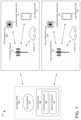
- An example architecture for the UE 116is illustrated in greater detail in FIG. 7 .
- the UAV 114represents a device included in an unmanned aerial vehicle that can wirelessly connect to the 5G core network 104 .
- one or more UAVscan cause potential interference between an antennae and one or more UEs, UAVS, vehicles, etc.
- the computing device 106can initiate clustering techniques that compare clusters one to another.
- the analysis component 130can determine network parameters that reduce or eliminate the potential interference (parameters for the first network element 112 and/or the second network element 120 ).
- the network parameterscan represent one or more of: downlink power, uplink power, number of downlink transmitters, number of uplink transmitters, numbers of concurrently connected users, cell radius, and so on.
- the analysis component 130can, in some examples, compare cluster data associated with different clusters to identify the network parameters that, if implemented, causes the 5G network 104 to operate at peak throughput (e.g., upload throughput, download throughput, or a combination thereof) for future communications with UEs and the like.
- Example network parameterscan include, but are not limited to: a location, a signal strength, a beam Precoding Matrix Indicator (PMI) number, a frequency, a power, or a signal-to-noise ratio to transmit data between the one or more UEs and the 5G core network 104 . Additional details of the clustering component 128 and the analysis component 130 are described in FIG. 3 , and elsewhere.
- the 5G system 104can represent functionality to provide communications between the computing device 106 , the first network element 112 , and the second network element 120 , and can include one or more radio access networks (RANs), as well as one or more core networks linked to the RANs.
- the UE 116can wirelessly connect to the first network element (e.g., a base station or other access point of a RAN), and in turn be connected to the 5G core network 104 .
- the RANs and/or core networkscan be compatible with one or more radio access technologies, wireless access technologies, protocols, and/or standards.
- wireless and radio access technologiescan include fifth generation (5G) technology, Long Term Evolution (LTE)/LTE Advanced technology, other fourth generation (4G) technology, High-Speed Data Packet Access (HSDPA)/Evolved High-Speed Packet Access (HSPA+) technology, Universal Mobile Telecommunications System (UMTS) technology, Global System for Mobile Communications (GSM) technology, WiFi® technology, and/or any other previous or future generation of radio access technology.
- 5Gfifth generation
- LTELong Term Evolution
- 4Gfourth generation
- HSDPAHigh-Speed Data Packet Access
- HSPA+High-Speed Packet Access
- UMTSUniversal Mobile Telecommunications System
- GSMGlobal System for Mobile Communications
- WiFi®Wireless Fidelity
- the 5G core network 104can represent a service-based architecture that includes multiple types of network functions that process control plane data and/or user plane data to implement communications for the vehicle 110 , the UE 116 , and/or the UAV 114 .
- the network functions of the 5G core network 104can include an Access and Mobility Management Function (AMF), a Session Management Function (SMF), a User Plane Function (UPF), a Policy Control Function (PCF), and/or other network functions implemented in software and/or hardware, just to name a few. Examples of network functions are also discussed in relation to FIG. 2 , and elsewhere.
- AMFAccess and Mobility Management Function
- SMFSession Management Function
- UPFUser Plane Function
- PCFPolicy Control Function
- FIG. 2depicts an example system architecture for a fifth generation (5G) telecommunication network.
- the telecommunication networkcan comprise the 5G core network 104 in FIG. 1 that includes a service-based system architecture in which different types of network functions (NFs) 202 operate alone and/or together to implement services.
- NFsnetwork functions
- NFs 202Standards for 5G communications define many types of NFs 202 that can be present in 5G telecommunication networks (e.g., the 5G core network 104 ), including an Authentication Server Function (AUSF), Access and Mobility Management Function (AMF), Data Network (DN), Unstructured Data Storage Function (UDSF), Network Exposure Function (NEF), Network Repository Function (NRF), Network Slice Selection Function (NSSF), Policy Control Function (PCF), Session Management Function (SMF), Unified Data Management (UDM), Unified Data Repository (UDR), User Plane Function (UPF), Application Function (AF), User Equipment (UE), (Radio) Access Network ((R)AN), 5G-Equipment Identity Register (5G-EIR), Network Data Analytics Function (NWDAF), Charging Function (CHF), Service Communication Proxy (SCP), Security Edge Protection Proxy (SEPP), Non-3GPP InterWorking Function (N3IWF), Trusted Non-3GPP Gateway Function (TNGF), and Wireline Access Gateway Function (W-AGF),
- One or more of the NFs 202 of the 5G core network 104can be implemented as network applications that execute within containers (not shown).
- 5G NFs 202can execute as hardware elements, software elements, and/or combinations of the two within telecommunication network(s), and accordingly many types of 5G NFs 202 can be implemented as software and/or as virtualized functions that execute on cloud servers or other computing devices.
- Network applications that can execute within containerscan also include any other type of network function, application, entity, module, element, or node.
- FIG. 3depicts another example network environment 300 in which an example computing device implements the techniques described herein.
- the computing device 106 in FIG. 1can implement the clustering component 128 to generate a first cluster 302 associated with the first geographic area 108 and a second cluster 304 associated with the second geographic area 110 .
- FIG. 3illustrates various datapoints representing devices (e.g., UEs, vehicles, UAVs, and the like) in the first cluster 302 and the second cluster 304 .
- the first cluster 302 or the second cluster 304can indicate distances and/or angles of the devices relative to a network element.
- the clustering component 128can determine a distance, an angle, and/or an elevation between each UE and the respective network element (e.g., an antennae) relative to a coordinate system to normalize the distances and angles for processing by the analysis component 130 .
- the clustering component 128can determine a first direction of signals output by the first antennae relative to the environment, determine a second direction of signals output by a second antennae relative to the environment, and associate the first direction of signals output by the first antennae and the second direction of signals output by a second antennae with a coordinate system. Accordingly, information describing a spatial relationship between the devices and the network element may be determined relative to the coordinate system.
- the clustering component 128can receive input data 306 indicative of network configuration data, network user data, location data, and/or map data.
- the network configuration datamay comprise one or more of: bandwidth, security, antennae height, or antennae type, just to name a few.
- the network user datamay indicate an access type for one or more UEs such as whether a UE is using a file transfer protocol (FTP) , a voice call protocol, or other data protocol for file transfer, streaming, browsing, voice over data, emailing, gaming and the like.
- FTPfile transfer protocol
- voice call protocolor other data protocol for file transfer
- the network user datamay indicate one or more of: a transmission control protocol (TCP), an internet protocol (IP), a user datagram protocol (UDP), a simple mail transport protocol (SMTP), a file transfer protocol (FTP), a hyper text transfer protocol (HTTP), a hyper text transfer protocol secure (HTTPS), and the like.
- TCPtransmission control protocol
- IPinternet protocol
- UDPuser datagram protocol
- SMTPsimple mail transport protocol
- FTPfile transfer protocol
- HTTPhyper text transfer protocol
- HTTPShyper text transfer protocol secure
- the network user datamay also or instead indicate an access rate, an average download speed, and/or an average upload speed associated with one or more UEs.
- the location datamay be associated with a UE, a network element, or a combination thereof.
- the location datacan comprise positions of the multiple UEs relative to the network element, a position of the network element in the environment, and the like.
- the input data 306can represent one or more of: frequency channel, frequency band, frequency bandwidth, wireless technology, node, cell, sector, sector bandwidth capacity, antennae height relative to ground, antennae height relative to sea level, angle of antennae relative to the ground, angle of antennae relative to true North, land information, antennae type, deployment infrastructure, signal strength to user equipment, Quality of Signal to user equipment, transmit power, transmit frequency, antennae size, antennae weight, master controller type, number of data streams assigned to user equipment, number of network elements within a threshold distance, number of additional network elements within a threshold distance of the network element, distance to the additional network element, angle to the additional network element, elevation between user equipment and the network element, elevation between the network element and the additional network element, amount of data transferred between the network element and one or more user equipment, time to generate the network configuration data, user coverage classification, user equipment type, user equipment operating system, user application type, user equipment usage data, an amount of predicted data usage at a future time, backhaul capacity, manufacturer of the network element, or manufacturer of cables associated with the
- the first cluster 302 and the second cluster 304are associated with map data indicating a street, highway, and other map features.
- the clustering component 128can determine a cluster type for the first cluster 302 and the second cluster 304 based at least in part on the map data.
- Example cluster typescan be based at least in part on geographical information system (GIS) data and indicate at least one of: dense urban, urban, suburban, rural, barren, highway, forest, roadway, park, educational campus, airport, or commercial area, though other types are contemplated.
- GISgeographical information system
- the analysis component 130can perform functionality based at least in part on determining that the first cluster type and the second cluster type are a same cluster type.
- the analysis component 130can compare, as a comparison, signal levels, signal quality, (or other network metrics like downlink throughput, uplink throughput, latency, volume of data, amount of call attempts, success, failures, amount of handovers, mean-opinion-score (MOS), signal to interference plus noise ratio (SINR), modulation and coding scheme (MCS), signal strength, UE transmit power, and so on) of multiple UEs in the first cluster 302 with signal levels (or corresponding network metrics) of multiple UEs in the second cluster 304 .
- the analysis component 130can determine, based at least in part on the comparison, output data 308 indicative of the network parameters associated with peak throughput for the multiple UEs of the first cluster 302 or the second cluster 304 .
- the clustering component 128can apply one or more clustering algorithms to the input data 306 .
- the clustering component 128can cluster the input data 306 based at least in part on a statistical model (e.g., hierarchical clustering), a machine learned model (algorithms such as k-means, k-medians, k-prototype, etc.), or a combination thereof
- the analysis component 130can implement functionality to identify, determine, and compare data associated with the first cluster 302 and the second cluster 304 . For instance, the analysis component 130 can determine a first distribution of the multiple UEs in the first cluster 302 and a second distribution of different multiple UEs in the second cluster, and determine, based at least in part on the first distribution and the second distribution, network parameters associated with peak throughput for the multiple UEs in the first cluster 302 and/or the multiple UEs in the second cluster 304 .
- the first distributionindicates a first numerical value (e.g., a percentage, a classification, etc.) of the multiple UEs in the first cluster 302 and the second distribution indicates a second numerical value (e.g., a percentage, a classification, etc.) of the multiple UEs in the second cluster 304 .
- the first cluster 302can be associated with a first numerical value indicative of a percentage distribution of the multiple UEs in a first cluster and a second numerical value indicative of a classification distribution of the multiple UEs in the second cluster 304 .
- the analysis component 130can assign a first set of bins to represent geographical areas of the first cluster and assign a second set of bins to represent geographical areas of the second cluster.
- the analysis component 130can compare, as a comparison, a number of UEs in the first set of bins with a number of UEs in the second set of bins, and determining the network parameters associated with network design (e.g., network element height, network element type, network element angle, etc.) and/or network performance (e.g., peek throughput, signal quality, drop rate, and so on) based at least in part on the comparison. Further discussion of determining bins can be found in FIG. 4 , and elsewhere.
- the computing device 106can implement a first clustering algorithm to generate an initial cluster(s) based on the input data 306 .
- the first clustering algorithmcan represent a hybrid unsupervised machine learning algorithm, such as K-prototype, to cluster numerical data and categorical data associated with the input data 306 .
- the computing device 106e.g., the clustering component 128 and/or the analysis component 130
- the first clustering algorithm or the second clustering algorithmcan comprise one or more of: a k-means, a k-medians, or a k-prototype algorithm.
- the computing device 106can store the output data 308 (along with associated metadata describing the cluster) in a database or other memory which enables cluster data determined over time to be searched and/or accessed based on user-specified network characteristics, network parameters, and the like (e.g., such as via a user interface on a display device).
- the network parameters determined by the computing device 106 to provide peak throughputcan include one or more of: a bandwidth, a Time Division Duplex (TDD) ratio configuration, a frequency, a transmission power, or a beamforming Precoding Matrix Indicator (PMI), a location, a signal strength, or a signal-to-noise ratio, just to name a few.
- the network parameterscan be applied to network elements to operate the network with optimal efficiency and accuracy.
- FIG. 4depicts another example network environment 400 in which an example computing device implements the clustering techniques described herein.
- the computing device 106 in FIG. 1can perform clustering techniques usable in the 5G system 102 such as showing detail of a cluster 402 determined by the clustering component 128 .
- the cluster 402comprises antennae 404 , antennae 406 , and antennae 408 , each of which includes an arrow to indicate a direction of signals output by the respective antennae.
- the direction of signals output by the respective antennaecan be normalized to a common coordinate system to enable location data, position data, and so on, associated with each antennae to be processed.
- FIG. 4further illustrates the antennae 404 comprising a set of bins 410 (e.g., geographical areas corresponding to a vicinity of the antennae 404 ). Though not shown, the antennae 406 and the antennae 408 may also be associated with a respective set of bins.
- Each bin in the set of bins 410comprises a number of UEs.
- the analysis component 130can compare, as a comparison, attributes of the cells and/or UEs in the first set of bins with attributes of the cells and/or UEs in the second set of bins, and determining the network parameters associated with network design (e.g., network element height, network element type, network element angle, etc.) and/or network performance (e.g., peek throughput, signal quality, drop rate, and so on) based at least in part on the comparison.
- network designe.g., network element height, network element type, network element angle, etc.
- network performancee.g., peek throughput, signal quality, drop rate, and so on
- the clustering component 128can determine a size of the set of bins and/or a number of bins in the set of bins based at least in part on cluster type of the cluster 402 .
- a cluster typemay be based on a type of map data and include an urban area, rural area, or other land based data. In an urban cluster type, for instance, more bins and/or bins of a smaller size may be used compared with a number of size of bins in a rural cluster type.
- determining a number of bins or a size of the bins in the set of bins 410can be based at least in part on a strength of signal associated with the cluster 402 .
- an output by the clustering component 128 and/or the analysis component 130can be based at least in part on the number of bins or the size of the bins in the set of bins 410 .
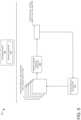
- FIG. 5depicts a block diagram of an example training component for training a machine learned model to implement the techniques described herein.
- a computing devicee.g., the computing device 106
- the training component 502 of a computing devicemay be executed by a processor to train a machine learned model (e.g., the clustering component 128 and/or the analysis component 130 ) based on training data 504 .
- the training data 504may include a wide variety of data, such as image data, video data, map data, location data, network data, sensor data, etc., that is associated with a value (e.g., a desired classification, inference, prediction, etc.). Such values may generally be referred to as a “ground truth.”
- the training data 504may be used for clustering data and, as such, may include an image of a telecommunication network that is associated with one or more classifications or determinations.
- such a classificationmay be based on user input (e.g., user input indicating that the image depicts a specific type of cluster) or may be based on the output of another machine learned model.
- labeled classifications(or more generally, the labeled output associated with training data) may be referred to as ground truth.
- the computing device implementing the training component 502may receive (e.g., retrieve) data from a data store, such as a database.
- the computing devicemay receive data from one or more vehicles, UEs, UAVs, or other equipment accessing the network.
- the training data 504may also or instead represent a ground truth of all clusters associated with a network in an environment.
- a ground truthmay comprise data describing an expected association between the various types of input data 506 .
- Ground truth datamay be compared against an output (e.g., cluster values associated with a cluster) of a model for use in training.
- the input data 506can be input to a machine learned clustering component 508 (e.g., the clustering component 128 ).
- the input data 506can comprise network data associated with different regions in which each region is associated with a cluster value.
- the input data 506can comprise location(s) of UEs, network elements, and so on relative to a map, as discussed herein.
- FIG. 5illustrates input data at times t 1 , t 2 , t 3 , t 4 , . . . tn (where n is an integer greater than 1).
- the machine learned clustering component 508provides an output 510 indicative of one or more clusters (e.g., clusters based on the input data 506 ) associated with one or more regions of the network. For example, the machine learned clustering component 508 may determine one or more cluster value(s) for a region(s) distinct from each other, for instance.
- the output 510 from the machine learned clustering component 508can be compared against the training data 504 (e.g., ground truth representing clustered data) for use in training. For instance, based at least in part on the comparison, parameter(s) associated with the machine learned clustering component 508 can be augmented, altered, and/or updated. In some examples, operations performed by the machine learned clustering component 508 may be performed on another system, such as a centralized computing device accessing one or more processor(s), and results of the training may be transferred to one or more computing devices that operate in the network.
- the training data 504e.g., ground truth representing clustered data
- parameter(s) associated with the machine learned clustering component 508can be augmented, altered, and/or updated.
- operations performed by the machine learned clustering component 508may be performed on another system, such as a centralized computing device accessing one or more processor(s), and results of the training may be transferred to one or more computing devices that operate in the network.
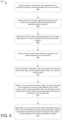
- FIG. 6is a flowchart of an example process 600 for clustering input data using an example computing device. Some or all of the process 600 may be performed by one or more components, tool, or modules in FIGS. 1 - 5 , as described herein. For example, some or all of process 600 may be performed by the computing device 106 .
- the processmay include receiving network configuration data associated with a telecommunication network associated with an environment.
- a computing device of a fifth generation system that includes a fifth generation core networkcan receive data describing a configuration of the network.
- the operation 602may include the computing device 106 receiving bandwidth, security, antennae height, or antennae type information associated with one or more antennas in the network.
- the operation 602may include the computing device 106 receiving one or more of the input data 306 .
- the network configuration datacan comprise one or more of: a signal frequency identifier used by a network element to communicate with a UE (e.g., 700 Mhz, 850 Mhz, etc.), a set of frequency channels representing a contiguous resource (e.g., PCS band, AWS band, etc.), a wireless technology (e.g., 5G, LTE, CDMA, GSM, etc.), a node (e.g., a group of a cell or sector which share common resources such as a tower, a baseband, a backhaul, etc.), cell, sector, sector bandwidth capacity, network element height, etc.
- a signal frequency identifierused by a network element to communicate with a UE
- a set of frequency channels representing a contiguous resourcee.g., PCS band, AWS band, etc.
- a wireless technologye.g., 5G, LTE, CDMA, GSM, etc.
- a nodee.g.,
- the network configuration datamay identify a deployment infrastructure (e.g., equipment installation type tower, street pole, building rooftop, in a building, etc.), an angle of the network element relative to true North, and/or land use information.
- a deployment infrastructuree.g., equipment installation type tower, street pole, building rooftop, in a building, etc.
- the deployment infrastructuremay identify an angle of the equipment and/or network element relative to a geographic coordinate system (e.g., an angle relative to true North), a height of the equipment and/or the network element relative to the ground, and so on.
- the processmay include receiving network user data indicating an access type for multiple user equipment (UEs) associated with the telecommunication network.
- the operation 604may include receiving user data indicating one or more of: signal strength measured at the UE, signal to noise ratio measured at the UE, UE type, UE operating system, a type of application used in a network communication session, times and/or amounts of data communication, or data seasonality (e.g., events or times associated with higher data activity such as around a stadium with many UEs).
- the processmay include receiving first location data indicating positions of the multiple UEs relative to a network element of the telecommunication network.
- the operation 606may include receiving a distance and/or an angle between the multiple UEs and a network element.
- the first location datamay include a height of the UEs relative to sea level, and/or relative to the network element.
- the processmay include receiving second location data indicating a position of the network element in the environment.
- the second location datamay include receiving an angle of a signal output by a network element, an angle of signals relative to the ground, and so on.
- the second location datamay include a height of the network element relative to sea level, relative to another network element, and/or relative to one or more UEs.
- the processmay include inputting the network configuration data, the network user data, the first location data, and the second location data into a machine learned model.
- the operation 610may include the computing device 106 receiving the network configuration data, the network user data, the first location data, and the second location data (also referred to collectively as “input data”).
- the input datamay be input into the clustering component 128 and/or the analysis component 130 .
- the processmay include receiving, from the machine learned model, an output indicating a first cluster and a second cluster different from the first cluster, in which the first cluster is associated with a first distribution of the multiple UEs and the second cluster associated with a second distribution of the multiple UEs.
- the operation 612may include the computing device 106 receiving the output data 308 from the analysis component 130 .
- the processmay include determining, by the machine learned model and based at least in part on the first distribution and the second distribution, network parameters associated with peak throughput for the multiple UEs associated with the telecommunication network.
- the network parameterscan include one or more of: a location, a signal strength, a beam Precoding Matrix Indicator (PMI) number, a frequency, a power, or a signal-to-noise ratio associated with a UE or a base station associated with the network.
- the network parameters determined by the computing device 106can be used to improve service to the one or more UEs accessing the network (relative to not implementing the clustering techniques by computing device 106 , for example).
- the operation 614may include the computing device 106 storing the output data in storage (e.g., a database, a memory, and so on).
- the machine learned modelcan determine the network parameters associated with network design (e.g., network element height, network element type, network element angle, etc.) and/or network performance (e.g., peek throughput, signal quality, drop rate, and so on) the first distribution and the second distribution.
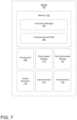
- FIG. 7depicts an example system architecture for a device 700 , in accordance with various examples.
- the device 700can include memory 702 storing a call setup manager 704 , and other components and data 706 .
- the device 700is also shown to comprise processor(s) 708 , removeable storage 710 , non-removable storage 712 , output device(s) 714 , input device(s) 716 , and/or transceiver(s) 718 .
- the device 700can be implemented as the computing device 106 , the vehicle 114 , the UE 116 , and/or the UAV 118 , just to name a few.
- the memory 702can include system memory, which may be volatile (such as RAM), non-volatile (such as ROM, flash memory, etc.) or some combination of the two.
- the memory 702can further include non-transitory computer-readable media, such as volatile and nonvolatile, removable and non-removable media implemented in any method or technology for storage of information, such as computer readable instructions, data structures, program modules, or other data.
- System memory, removable storage, and non-removable storageare all examples of non-transitory computer-readable media.
- non-transitory computer-readable mediaexamples include, but are not limited to, RAM, ROM, EEPROM, flash memory or other memory technology, CD-ROM, digital versatile discs (DVD) or other optical storage, magnetic cassettes, magnetic tape, magnetic disk storage or other magnetic storage devices, or any other non-transitory medium which can be used to store desired information and which can be accessed by the UE 116 . Any such non-transitory computer-readable media may be part of the UE 116 .
- the call setup manager 704can send and/or receive messages including SIP messages associated with the network functions shown in FIG. 2 .
- the call setup manager 704can facilitate the exchange of messages between the device 700 and other components and/or devices associated with the 5G core network 104 .
- the other components and data 706can be utilized by the device 700 to perform or enable performing any action taken by the device 700 .
- the components and data 706can include a UE platform, operating system, and applications, and data utilized by the platform, operating system, and applications.
- the components and data 706can include the clustering component 128 , the analysis component 130 , and/or the training component 502 .
- the processor(s) 708can be a central processing unit (CPU), a graphics processing unit (GPU), or both CPU and GPU, or any other type of processing unit or component known in the art.
- Each of the one or more processor(s) 708may have numerous arithmetic logic units (ALUs) that perform arithmetic and logical operations, as well as one or more control units (CUs) that extract instructions and stored content from processor cache memory, and then executes these instructions by calling on the ALUs, as necessary, during program execution.
- the processor(s) 708is configured to retrieve and execute instructions from the memory 702 .
- the device 700also includes additional data storage devices (removable and/or non-removable) such as, for example, magnetic disks, optical disks, or tape. Such additional storage is illustrated in FIG. 7 by removable storage 710 and non-removable storage 712 .
- Tangible computer-readable mediacan include volatile and non-volatile, removable and non-removable media implemented in any method or technology for storage of information, such as computer readable instructions, data structures, program modules, or other data.
- the memory 702 , the removable storage 710 and the non-removable storage 712are all examples of computer-readable storage media.
- Computer-readable storage mediainclude, but are not limited to, RAM, ROM, EEPROM, flash memory or other memory technology, CD-ROM, digital versatile discs (DVD), content-addressable memory (CAM), or other optical storage, magnetic cassettes, magnetic tape, magnetic disk storage or other magnetic storage devices, or any other medium which can be used to store the desired information and which can be accessed by the device 700 . Any such tangible computer-readable media can be part of the device 700 .
- the memory 702 , the removable storage 710 , and/or the non-removable storage 712may in some cases include storage media used to transfer or distribute instructions, applications, and/or data.
- the 702 , the removable storage 710 , and/or the non-removable storage 712may include data storage that is accessed remotely, such as network-attached storage that the device 700 accesses over some type of data communications network.
- any or all of the memory 702 , the removable storage 710 , and/or the non-removable storage 712may store programming instructions that, when executed, implement some or all of the function functionality described herein.
- the output device(s) 714can include any sort of output devices known in the art, such as a display, speakers, a vibrating mechanism, printers, and/or a tactile feedback mechanism. Output device(s) 714 can also include ports for one or more peripheral devices, such as headphones, peripheral speakers, and/or a peripheral display.
- the input device(s) 716can include any sort of input devices known in the art.
- input devices 716can include a microphone, a keyboard/keypad, and/or a touch-sensitive display, such as the touch-sensitive display screen described above.
- a keyboard/keypadcan be a push button numeric dialing pad, a multi-key keyboard, or one or more other types of keys or buttons, and can also include a joystick-like controller, designated navigation buttons, or any other type of input mechanism.
- the device 700also includes one or more wired or wireless transceiver(s) 718 .
- the transceiver(s) 718can include an antennae, a network interface card (NIC), a network adapter, a LAN adapter, or a physical, virtual, or logical address to connect to various networks, devices, or components illustrated in figures herein.
- the transceiver(s) 718can utilize multiple-input/multiple-output (MIMO) technology.
- MIMOmultiple-input/multiple-output
- the transceiver(s) 718can comprise any sort of wireless transceivers capable of engaging in wireless, radio frequency (RF) communication.
- RFradio frequency
- the transceiver(s) 718can also include other wireless modems, such as a modem for engaging in Wi-Fi, WiMAX, BLUETOOTH®, infrared communication, and the like.
- the transceiver(s) 718can be compatible with multiple radio access technologies, such as 5G radio access technologies and 4G/LTE radio access technologies. Accordingly, the transceiver(s) 718 can, in some examples, allow the computing device 106 to connect to the 5G system 102 described herein.
- FIG. 6illustrates example processes illustrated as logical flow graphs, each operation of which represents a sequence of operations that can be implemented in hardware, software, or a combination thereof.
- the operationsrepresent computer-executable instructions stored on one or more computer-readable storage media that, when executed by one or more processors, perform the recited operations.
- computer-executable instructionsinclude routines, programs, objects, components, data structures, and the like that perform particular functions or implement particular abstract data types.
- softwaremay be stored and distributed in various ways and using different means, and the particular software storage and execution configurations described above may be varied in many different ways.
- software implementing the techniques described abovemay be distributed on various types of computer-readable media, not limited to the forms of memory that are specifically described.
Landscapes
- Engineering & Computer Science (AREA)
- Computer Networks & Wireless Communication (AREA)
- Signal Processing (AREA)
- Software Systems (AREA)
- Theoretical Computer Science (AREA)
- Computer Vision & Pattern Recognition (AREA)
- Evolutionary Computation (AREA)
- Medical Informatics (AREA)
- Data Mining & Analysis (AREA)
- Physics & Mathematics (AREA)
- Computing Systems (AREA)
- General Engineering & Computer Science (AREA)
- General Physics & Mathematics (AREA)
- Mathematical Physics (AREA)
- Artificial Intelligence (AREA)
- Mobile Radio Communication Systems (AREA)
Abstract
Description
Modern terrestrial telecommunication systems include heterogeneous mixtures of second, third, fourth and fifth generation (2G, 3G, 4G and 5G) cellular-wireless access technologies, which can be cross-compatible and can operate collectively to provide data communication services. Global Systems for Mobile (GSM) is an example of 2G telecommunications technologies; Universal Mobile Telecommunications System (UMTS) is an example of 3G telecommunications technologies; and Long Term Evolution (LTE), including LTE Advanced, and Evolved High-Speed Packet Access (HSPA+) are examples of 4G telecommunications technologies. Telecommunications systems also include fifth generation (5G) cellular-wireless access technologies to provide improved bandwidth and decreased response times to a multitude of devices that may be connected to a network.
The detailed description is set forth with reference to the accompanying figures. In the figures, the left-most digit(s) of a reference number identifies the figure in which the reference number first appears. The use of the same reference numbers in different figures indicates similar or identical items or features.
This application relates to techniques for clustering network elements of a telecommunications network. For instance, a machine learned model can cluster cells based on a combination of network data, user equipment data, location data, and map data. Clusters output from the machine learned model can be compared to each other to identify an underperforming cell, to generate recommendations that improve performance of a cell, and/or to determine performance benchmarks for cells or networks across different geographical regions.
Generally, the machine learned model (also referred to as “the model”) receives data representing user and network attributes in different geographic regions, and outputs clusters of cells that can be further processed in various ways to improve throughput or overall quality of networks in the different geographical regions. The machine learned model can cluster cells based on network configuration data (e.g., bandwidth, security, antennae height, or antennae type, etc.), network user data (e.g., type of user session: FTP, call, etc.), location data (e.g., position of each user relative to a network antennae, location of the network relative to a coordinate system, etc.), and/or geographical data (e.g., elevation of a user equipment (UE) relative to network antennae, map data showing one or more of: a road, a building, a highway, urban area, residential area, etc.). For instance, the model can identify a percentage distribution of samples, or cells, in one or more clusters. As explained further below, a same or different model can compare clusters one to another to identify improvements for a network regardless of where the network is geographically located.
In some examples, an output from the machine learned model can be used to identify network parameters that improve throughput to multiple UEs in communication with the network. In some examples, the network parameters determined by the machine learned model to provide peak throughput can include one or more of: a bandwidth, a Time Division Duplex (TDD) ratio configuration, a frequency, a transmission power, or a beamforming Precoding Matrix Indicator (PMI), a location, a signal strength, or a signal-to-noise ratio, just to name a few. In various examples, the network parameters are usable to transmit data between the one or more UEs and the network with optimal efficiency and accuracy.
The model may also or instead generate network recommendations that optimize network performance (e.g., increases the Quality of Signal versus not implementing the model). In some instances, the recommendations can be communicated to engineering teams in different regions thereby enabling an engineering team in one city, state, or country to implement network improvements based on data associated with another engineering team in a different city, state, or country. Additionally or alternatively, the data output by the model can be stored in a database or server and made available remotely over a computer network for access by humans or other machine learned models responsible for designing and/or managing a telecommunication network (e.g., mitigating interference, maintaining equipment, etc.).
In various examples, the model can act as a recommendation engine that outputs recommendations based at least in part on detecting one or more similarities between cells. By way of example and not limitation, the model may determine a difference between a first signal quality associated with a first cell and a second signal quality of a second cell, and output parameters that optimize the first cell or the second cell having the lower signal quality. Though this example identifies a difference in signal quality, comparing other features of cells is also contemplated including using one or more clustering algorithms as discussed throughout this disclosure.
In some examples, a computing device can implement a clustering component to receive input data representing one or more of: network configuration data, network user data, location data and/or map data. The clustering component can implement one or more clustering techniques (e.g., k-means, k-medians, k-prototype, expectation maximization (EM), hierarchical clustering, etc.) to cluster the input data. In some examples, the clustering component represents a machine learned model that processes the input data independent of flattening and/or weighing the input data (e.g., the model can implement a k-prototype algorithm or similar algorithm that enables clustering of numerical data and categorical data). In some examples, the clustering techniques employed by the model are based at least in part on least dissimilarity between cells.
The clustering component can, in various examples, determine an output indicating a first cluster and a second cluster different from the first cluster. In such examples, the first cluster may be associated with a first distribution of multiple UEs in a first geographical region (e.g., county, city, etc.), and the second cluster may be associated with a second distribution of multiple UEs in a second geographical region (e.g., county, city, etc.). However, in other examples, the first cluster and the second cluster may be associated with a same geographical region.
In various examples, the clustering component can be configured to output a predetermined number of clusters, and determine a distribution of cells and/or multiple user equipment (UEs) in each cluster. The computing device can implement an analysis component to compare data associated with each cluster and/or to identify similarities among the clusters and the cell(s) associated therewith. In such examples, comparing data of the clusters can be based on assigning bins (e.g., geographical areas) to each cluster and comparing attributes of the cells and/or UEs in each bin. To improve accuracy of an output, the model can identify bins without a cell and assign one or more cells to the empty bin thereby enabling the model to compare additional bins of different clusters.
In some examples, data output by the clustering component and/or the analysis component can be used generate recommendations that improve performance of a cell or network. For instance, a network element (e.g., a cell, an antennae, a transceiver, etc.) of a first cluster may be associated with higher network performance and quality than another network element of a second cluster. Accordingly, the computing device can generate network parameters that cause the overall throughput in the second cluster to improve based on network data associated with the first cluster. By way of example and not limitation, the first cluster may be associated with a city different from a city associated with the second cluster. By implementing the clustering techniques described herein, a telecommunication network can be designed (e.g., by an engineering team or machine learned model) with consideration to network equipment selection like radio, antenna etc., location selection and associated aspects like height of antenna, angle of antenna position etc., network parameters, features, strategies etc. from another geographical area that generally would not have been considered due to lack of available data.
The clustering techniques may also or instead be used to determine performance benchmarks for cells or networks across different geographical regions. For example, by identifying how similarly configured networks perform in different areas (e.g., independent of seasonality, land use, etc.), a network in a first location can be used to set more realistic and achievable benchmarks for performance of the network in the first location or a second location. In some examples, performance benchmarks for cells or networks can be made for different times in the future (e.g., over a lifetime of the equipment providing services by the network). Using the clustering techniques as described herein, a computing device can generate, identify, or otherwise determine network modification that improve network quality and performance.
The clustering techniques may include implementing a system to request, receive, and aggregate data (e.g., network data, user data, location data, and the like) associated with specific locations within a network. For example, the system may employ a computing device configured to facilitate an exchange of data between user equipment (UE) and network equipment. In some examples, the data usable to determine network quality can be received by the computing device to ascertain network configurations that minimize interference and/or maximize throughput.
In some examples, thefirst network element 112 and thesecond network element 120 can represent an antennae or other component of the5G network 104 configured to transmit and/or receive wireless communications with one or more devices (e.g., vehicles, UEs, and/or UAVs). Thecomputing device 106 comprises aclustering component 128 and ananalysis component 130 to implement the clustering techniques described herein. Though described separately inFIG.1 for ease of discussion, theclustering component 128 and the analysis component130 (and the functionality associated therewith) may, in some examples, be included in a single component, such as a machine learned model.
In some examples, theclustering component 128 may implement a machine learned model trained to cluster various types of input data from different sources. For example, the machine learned model may receive user data from the devices (the aforementioned vehicle(s), UE(s), and/or UAV(s)) associated with thefirst network element 112 and/or thesecond network element 120, network configuration data from different network elements, location data from a map source, and the like. Training a machine learned model such as theclustering component 128 to improve cluster predictions is described inFIG.5 , and elsewhere.
In various examples, theanalysis component 130 represents functionality to process the clusters output by theclustering component 128 and determine parameters that improve overall performance (e.g., reduce interference and maximize throughput) of the 5G core network104 (e.g., performance of thefirst network element 112 and/or the second network element120). By implementing thecomputing device 106, data can be received and processed thereby enabling network improvements to be designed into new or existing networks.
Thevehicle 110 can comprise a vehicle that requires a driver, a semi-autonomous vehicle, or an autonomous vehicle that does not require a driver for navigation, and includes a device to wirelessly connect to the5G core network 104.
TheUE 116 represents any device that can wirelessly connect to the5G core network 104, and in some examples may include a mobile phone such as a smart phone or other cellular phone, a personal digital assistant (PDA), a personal computer (PC) such as a laptop, desktop, or workstation, a media player, a tablet, a gaming device, a smart watch, a hotspot, or any other type of computing or communication device. An example architecture for theUE 116 is illustrated in greater detail inFIG.7 .
TheUAV 114 represents a device included in an unmanned aerial vehicle that can wirelessly connect to the5G core network 104. In some examples, one or more UAVs can cause potential interference between an antennae and one or more UEs, UAVS, vehicles, etc. To mitigate the potential interference, thecomputing device 106 can initiate clustering techniques that compare clusters one to another. Based on clusters output by theclustering component 128, theanalysis component 130 can determine network parameters that reduce or eliminate the potential interference (parameters for thefirst network element 112 and/or the second network element120). In some examples, the network parameters can represent one or more of: downlink power, uplink power, number of downlink transmitters, number of uplink transmitters, numbers of concurrently connected users, cell radius, and so on.
Theanalysis component 130 can, in some examples, compare cluster data associated with different clusters to identify the network parameters that, if implemented, causes the5G network 104 to operate at peak throughput (e.g., upload throughput, download throughput, or a combination thereof) for future communications with UEs and the like. Example network parameters can include, but are not limited to: a location, a signal strength, a beam Precoding Matrix Indicator (PMI) number, a frequency, a power, or a signal-to-noise ratio to transmit data between the one or more UEs and the5G core network 104. Additional details of theclustering component 128 and theanalysis component 130 are described inFIG.3 , and elsewhere.
In various examples, the5G system 104 can represent functionality to provide communications between thecomputing device 106, thefirst network element 112, and thesecond network element 120, and can include one or more radio access networks (RANs), as well as one or more core networks linked to the RANs. For instance, theUE 116 can wirelessly connect to the first network element (e.g., a base station or other access point of a RAN), and in turn be connected to the5G core network 104. The RANs and/or core networks can be compatible with one or more radio access technologies, wireless access technologies, protocols, and/or standards. For example, wireless and radio access technologies can include fifth generation (5G) technology, Long Term Evolution (LTE)/LTE Advanced technology, other fourth generation (4G) technology, High-Speed Data Packet Access (HSDPA)/Evolved High-Speed Packet Access (HSPA+) technology, Universal Mobile Telecommunications System (UMTS) technology, Global System for Mobile Communications (GSM) technology, WiFi® technology, and/or any other previous or future generation of radio access technology. In this way, the5G system 102 is compatible to operate with other radio technologies including those of other service providers.
In some examples, the5G core network 104 can represent a service-based architecture that includes multiple types of network functions that process control plane data and/or user plane data to implement communications for thevehicle 110, theUE 116, and/or theUAV 114. The network functions of the5G core network 104 can include an Access and Mobility Management Function (AMF), a Session Management Function (SMF), a User Plane Function (UPF), a Policy Control Function (PCF), and/or other network functions implemented in software and/or hardware, just to name a few. Examples of network functions are also discussed in relation toFIG.2 , and elsewhere.
One or more of the NFs202 of the5G core network 104 can be implemented as network applications that execute within containers (not shown). 5G NFs202 can execute as hardware elements, software elements, and/or combinations of the two within telecommunication network(s), and accordingly many types of 5G NFs202 can be implemented as software and/or as virtualized functions that execute on cloud servers or other computing devices. Network applications that can execute within containers can also include any other type of network function, application, entity, module, element, or node.
In some examples, theclustering component 128 can determine a first direction of signals output by the first antennae relative to the environment, determine a second direction of signals output by a second antennae relative to the environment, and associate the first direction of signals output by the first antennae and the second direction of signals output by a second antennae with a coordinate system. Accordingly, information describing a spatial relationship between the devices and the network element may be determined relative to the coordinate system.
In various examples, theclustering component 128 can receiveinput data 306 indicative of network configuration data, network user data, location data, and/or map data. For example, the network configuration data may comprise one or more of: bandwidth, security, antennae height, or antennae type, just to name a few. The network user data may indicate an access type for one or more UEs such as whether a UE is using a file transfer protocol (FTP) , a voice call protocol, or other data protocol for file transfer, streaming, browsing, voice over data, emailing, gaming and the like. For instance, the network user data may indicate one or more of: a transmission control protocol (TCP), an internet protocol (IP), a user datagram protocol (UDP), a simple mail transport protocol (SMTP), a file transfer protocol (FTP), a hyper text transfer protocol (HTTP), a hyper text transfer protocol secure (HTTPS), and the like. The network user data may also or instead indicate an access rate, an average download speed, and/or an average upload speed associated with one or more UEs. The location data may be associated with a UE, a network element, or a combination thereof. For example, the location data can comprise positions of the multiple UEs relative to the network element, a position of the network element in the environment, and the like.
Generally, theinput data 306 can represent one or more of: frequency channel, frequency band, frequency bandwidth, wireless technology, node, cell, sector, sector bandwidth capacity, antennae height relative to ground, antennae height relative to sea level, angle of antennae relative to the ground, angle of antennae relative to true North, land information, antennae type, deployment infrastructure, signal strength to user equipment, Quality of Signal to user equipment, transmit power, transmit frequency, antennae size, antennae weight, master controller type, number of data streams assigned to user equipment, number of network elements within a threshold distance, number of additional network elements within a threshold distance of the network element, distance to the additional network element, angle to the additional network element, elevation between user equipment and the network element, elevation between the network element and the additional network element, amount of data transferred between the network element and one or more user equipment, time to generate the network configuration data, user coverage classification, user equipment type, user equipment operating system, user application type, user equipment usage data, an amount of predicted data usage at a future time, backhaul capacity, manufacturer of the network element, or manufacturer of cables associated with the network element. In various examples, theinput data 306 can be associated with or otherwise received from multiple data sources and/or data types.
As shown inFIG.3 , the first cluster302 and the second cluster304 are associated with map data indicating a street, highway, and other map features. In some examples, theclustering component 128 can determine a cluster type for the first cluster302 and the second cluster304 based at least in part on the map data. Example cluster types can be based at least in part on geographical information system (GIS) data and indicate at least one of: dense urban, urban, suburban, rural, barren, highway, forest, roadway, park, educational campus, airport, or commercial area, though other types are contemplated. Theanalysis component 130 can perform functionality based at least in part on determining that the first cluster type and the second cluster type are a same cluster type. For instance, based at least in part on the first cluster type and the second cluster type being the same cluster type, theanalysis component 130 can compare, as a comparison, signal levels, signal quality, (or other network metrics like downlink throughput, uplink throughput, latency, volume of data, amount of call attempts, success, failures, amount of handovers, mean-opinion-score (MOS), signal to interference plus noise ratio (SINR), modulation and coding scheme (MCS), signal strength, UE transmit power, and so on) of multiple UEs in the first cluster302 with signal levels (or corresponding network metrics) of multiple UEs in the second cluster304. In such examples, theanalysis component 130 can determine, based at least in part on the comparison,output data 308 indicative of the network parameters associated with peak throughput for the multiple UEs of the first cluster302 or the second cluster304.
Generally, theclustering component 128 can apply one or more clustering algorithms to theinput data 306. For instance, theclustering component 128 can cluster theinput data 306 based at least in part on a statistical model (e.g., hierarchical clustering), a machine learned model (algorithms such as k-means, k-medians, k-prototype, etc.), or a combination thereof
Generally, theanalysis component 130 can implement functionality to identify, determine, and compare data associated with the first cluster302 and the second cluster304. For instance, theanalysis component 130 can determine a first distribution of the multiple UEs in the first cluster302 and a second distribution of different multiple UEs in the second cluster, and determine, based at least in part on the first distribution and the second distribution, network parameters associated with peak throughput for the multiple UEs in the first cluster302 and/or the multiple UEs in the second cluster304. In some examples, the first distribution indicates a first numerical value (e.g., a percentage, a classification, etc.) of the multiple UEs in the first cluster302 and the second distribution indicates a second numerical value (e.g., a percentage, a classification, etc.) of the multiple UEs in the second cluster304. That is, the first cluster302 can be associated with a first numerical value indicative of a percentage distribution of the multiple UEs in a first cluster and a second numerical value indicative of a classification distribution of the multiple UEs in the second cluster304.
In various examples, theanalysis component 130 can assign a first set of bins to represent geographical areas of the first cluster and assign a second set of bins to represent geographical areas of the second cluster. In such examples, theanalysis component 130 can compare, as a comparison, a number of UEs in the first set of bins with a number of UEs in the second set of bins, and determining the network parameters associated with network design (e.g., network element height, network element type, network element angle, etc.) and/or network performance (e.g., peek throughput, signal quality, drop rate, and so on) based at least in part on the comparison. Further discussion of determining bins can be found inFIG.4 , and elsewhere.
In some examples, the computing device106 (e.g., theclustering component 128 and/or the analysis component130) can implement a first clustering algorithm to generate an initial cluster(s) based on theinput data 306. The first clustering algorithm can represent a hybrid unsupervised machine learning algorithm, such as K-prototype, to cluster numerical data and categorical data associated with theinput data 306. The computing device106 (e.g., theclustering component 128 and/or the analysis component130) can implement a second clustering algorithm to determine the first cluster302 and the second cluster304 based at least in part on the initial cluster(s). In various examples, the first clustering algorithm or the second clustering algorithm can comprise one or more of: a k-means, a k-medians, or a k-prototype algorithm.
In various examples, thecomputing device 106 can store the output data308 (along with associated metadata describing the cluster) in a database or other memory which enables cluster data determined over time to be searched and/or accessed based on user-specified network characteristics, network parameters, and the like (e.g., such as via a user interface on a display device).
In some examples, the network parameters determined by thecomputing device 106 to provide peak throughput can include one or more of: a bandwidth, a Time Division Duplex (TDD) ratio configuration, a frequency, a transmission power, or a beamforming Precoding Matrix Indicator (PMI), a location, a signal strength, or a signal-to-noise ratio, just to name a few. In various examples, the network parameters can be applied to network elements to operate the network with optimal efficiency and accuracy.
As shown inFIG.4 , the cluster402 comprisesantennae 404,antennae 406, andantennae 408, each of which includes an arrow to indicate a direction of signals output by the respective antennae. In some examples, the direction of signals output by the respective antennae can be normalized to a common coordinate system to enable location data, position data, and so on, associated with each antennae to be processed.FIG.4 further illustrates theantennae 404 comprising a set of bins410 (e.g., geographical areas corresponding to a vicinity of the antennae404). Though not shown, theantennae 406 and theantennae 408 may also be associated with a respective set of bins.
Each bin in the set ofbins 410 comprises a number of UEs. Theanalysis component 130 can compare, as a comparison, attributes of the cells and/or UEs in the first set of bins with attributes of the cells and/or UEs in the second set of bins, and determining the network parameters associated with network design (e.g., network element height, network element type, network element angle, etc.) and/or network performance (e.g., peek throughput, signal quality, drop rate, and so on) based at least in part on the comparison.
In some examples, theclustering component 128 can determine a size of the set of bins and/or a number of bins in the set of bins based at least in part on cluster type of the cluster402. A cluster type may be based on a type of map data and include an urban area, rural area, or other land based data. In an urban cluster type, for instance, more bins and/or bins of a smaller size may be used compared with a number of size of bins in a rural cluster type.
In various examples, determining a number of bins or a size of the bins in the set ofbins 410 can be based at least in part on a strength of signal associated with the cluster402. In such examples, an output by theclustering component 128 and/or theanalysis component 130 can be based at least in part on the number of bins or the size of the bins in the set ofbins 410.
Thetraining component 502 of a computing device may be executed by a processor to train a machine learned model (e.g., theclustering component 128 and/or the analysis component130) based ontraining data 504. Thetraining data 504 may include a wide variety of data, such as image data, video data, map data, location data, network data, sensor data, etc., that is associated with a value (e.g., a desired classification, inference, prediction, etc.). Such values may generally be referred to as a “ground truth.” To illustrate, thetraining data 504 may be used for clustering data and, as such, may include an image of a telecommunication network that is associated with one or more classifications or determinations. In some examples, such a classification may be based on user input (e.g., user input indicating that the image depicts a specific type of cluster) or may be based on the output of another machine learned model. In some examples, such labeled classifications (or more generally, the labeled output associated with training data) may be referred to as ground truth.
In some examples, the computing device implementing thetraining component 502 may receive (e.g., retrieve) data from a data store, such as a database. In some examples, the computing device may receive data from one or more vehicles, UEs, UAVs, or other equipment accessing the network. Thetraining data 504 may also or instead represent a ground truth of all clusters associated with a network in an environment. For example, a ground truth may comprise data describing an expected association between the various types ofinput data 506. Ground truth data may be compared against an output (e.g., cluster values associated with a cluster) of a model for use in training.
Theinput data 506 can be input to a machine learned clustering component508 (e.g., the clustering component128). In various examples, theinput data 506 can comprise network data associated with different regions in which each region is associated with a cluster value. In some examples, theinput data 506 can comprise location(s) of UEs, network elements, and so on relative to a map, as discussed herein.FIG.5 illustrates input data at times t1, t2, t3, t4, . . . tn (where n is an integer greater than 1).
In some examples, the machine learned clustering component508 provides an output510 indicative of one or more clusters (e.g., clusters based on the input data506) associated with one or more regions of the network. For example, the machine learned clustering component508 may determine one or more cluster value(s) for a region(s) distinct from each other, for instance.
In some examples, the output510 from the machine learned clustering component508 can be compared against the training data504 (e.g., ground truth representing clustered data) for use in training. For instance, based at least in part on the comparison, parameter(s) associated with the machine learned clustering component508 can be augmented, altered, and/or updated. In some examples, operations performed by the machine learned clustering component508 may be performed on another system, such as a centralized computing device accessing one or more processor(s), and results of the training may be transferred to one or more computing devices that operate in the network.
At operation602, the process may include receiving network configuration data associated with a telecommunication network associated with an environment. By way of example and not limitation, a computing device of a fifth generation system that includes a fifth generation core network can receive data describing a configuration of the network. In some examples, the operation602 may include thecomputing device 106 receiving bandwidth, security, antennae height, or antennae type information associated with one or more antennas in the network. In some examples, the operation602 may include thecomputing device 106 receiving one or more of theinput data 306. By way of example and not limitation, the network configuration data can comprise one or more of: a signal frequency identifier used by a network element to communicate with a UE (e.g., 700 Mhz, 850 Mhz, etc.), a set of frequency channels representing a contiguous resource (e.g., PCS band, AWS band, etc.), a wireless technology (e.g., 5G, LTE, CDMA, GSM, etc.), a node (e.g., a group of a cell or sector which share common resources such as a tower, a baseband, a backhaul, etc.), cell, sector, sector bandwidth capacity, network element height, etc. In various examples, the network configuration data may identify a deployment infrastructure (e.g., equipment installation type tower, street pole, building rooftop, in a building, etc.), an angle of the network element relative to true North, and/or land use information. For instance, the deployment infrastructure may identify an angle of the equipment and/or network element relative to a geographic coordinate system (e.g., an angle relative to true North), a height of the equipment and/or the network element relative to the ground, and so on.
Atoperation 604, the process may include receiving network user data indicating an access type for multiple user equipment (UEs) associated with the telecommunication network. In some examples, theoperation 604 may include receiving user data indicating one or more of: signal strength measured at the UE, signal to noise ratio measured at the UE, UE type, UE operating system, a type of application used in a network communication session, times and/or amounts of data communication, or data seasonality (e.g., events or times associated with higher data activity such as around a stadium with many UEs).
Atoperation 606, the process may include receiving first location data indicating positions of the multiple UEs relative to a network element of the telecommunication network. In some examples, theoperation 606 may include receiving a distance and/or an angle between the multiple UEs and a network element. In some examples, the first location data may include a height of the UEs relative to sea level, and/or relative to the network element.
Atoperation 608, the process may include receiving second location data indicating a position of the network element in the environment. In some examples, the second location data may include receiving an angle of a signal output by a network element, an angle of signals relative to the ground, and so on. In some examples, the second location data may include a height of the network element relative to sea level, relative to another network element, and/or relative to one or more UEs.
Atoperation 610, the process may include inputting the network configuration data, the network user data, the first location data, and the second location data into a machine learned model. In some examples, theoperation 610 may include thecomputing device 106 receiving the network configuration data, the network user data, the first location data, and the second location data (also referred to collectively as “input data”). In various example, the input data may be input into theclustering component 128 and/or theanalysis component 130.
At operation612, the process may include receiving, from the machine learned model, an output indicating a first cluster and a second cluster different from the first cluster, in which the first cluster is associated with a first distribution of the multiple UEs and the second cluster associated with a second distribution of the multiple UEs. In some examples, the operation612 may include thecomputing device 106 receiving theoutput data 308 from theanalysis component 130.
Atoperation 614, the process may include determining, by the machine learned model and based at least in part on the first distribution and the second distribution, network parameters associated with peak throughput for the multiple UEs associated with the telecommunication network. In various examples, the network parameters can include one or more of: a location, a signal strength, a beam Precoding Matrix Indicator (PMI) number, a frequency, a power, or a signal-to-noise ratio associated with a UE or a base station associated with the network. In various examples, the network parameters determined by thecomputing device 106 can be used to improve service to the one or more UEs accessing the network (relative to not implementing the clustering techniques by computingdevice 106, for example). In some examples, theoperation 614 may include thecomputing device 106 storing the output data in storage (e.g., a database, a memory, and so on). In other examples, the machine learned model can determine the network parameters associated with network design (e.g., network element height, network element type, network element angle, etc.) and/or network performance (e.g., peek throughput, signal quality, drop rate, and so on) the first distribution and the second distribution.
In various examples, thememory 702 can include system memory, which may be volatile (such as RAM), non-volatile (such as ROM, flash memory, etc.) or some combination of the two. Thememory 702 can further include non-transitory computer-readable media, such as volatile and nonvolatile, removable and non-removable media implemented in any method or technology for storage of information, such as computer readable instructions, data structures, program modules, or other data. System memory, removable storage, and non-removable storage are all examples of non-transitory computer-readable media. Examples of non-transitory computer-readable media include, but are not limited to, RAM, ROM, EEPROM, flash memory or other memory technology, CD-ROM, digital versatile discs (DVD) or other optical storage, magnetic cassettes, magnetic tape, magnetic disk storage or other magnetic storage devices, or any other non-transitory medium which can be used to store desired information and which can be accessed by theUE 116. Any such non-transitory computer-readable media may be part of theUE 116.
In some examples, thecall setup manager 704 can send and/or receive messages including SIP messages associated with the network functions shown inFIG.2 . For instance, thecall setup manager 704 can facilitate the exchange of messages between the device700 and other components and/or devices associated with the5G core network 104.
The other components anddata 706 can be utilized by the device700 to perform or enable performing any action taken by the device700. The components anddata 706 can include a UE platform, operating system, and applications, and data utilized by the platform, operating system, and applications. In some examples, the components anddata 706 can include theclustering component 128, theanalysis component 130, and/or thetraining component 502.
In various examples, the processor(s)708 can be a central processing unit (CPU), a graphics processing unit (GPU), or both CPU and GPU, or any other type of processing unit or component known in the art. Each of the one or more processor(s)708 may have numerous arithmetic logic units (ALUs) that perform arithmetic and logical operations, as well as one or more control units (CUs) that extract instructions and stored content from processor cache memory, and then executes these instructions by calling on the ALUs, as necessary, during program execution. The processor(s)708 is configured to retrieve and execute instructions from thememory 702.
The device700 also includes additional data storage devices (removable and/or non-removable) such as, for example, magnetic disks, optical disks, or tape. Such additional storage is illustrated inFIG.7 byremovable storage 710 andnon-removable storage 712. Tangible computer-readable media can include volatile and non-volatile, removable and non-removable media implemented in any method or technology for storage of information, such as computer readable instructions, data structures, program modules, or other data. Thememory 702, theremovable storage 710 and thenon-removable storage 712 are all examples of computer-readable storage media. Computer-readable storage media include, but are not limited to, RAM, ROM, EEPROM, flash memory or other memory technology, CD-ROM, digital versatile discs (DVD), content-addressable memory (CAM), or other optical storage, magnetic cassettes, magnetic tape, magnetic disk storage or other magnetic storage devices, or any other medium which can be used to store the desired information and which can be accessed by the device700. Any such tangible computer-readable media can be part of the device700.
Thememory 702, theremovable storage 710, and/or thenon-removable storage 712 may in some cases include storage media used to transfer or distribute instructions, applications, and/or data. In some cases, the702, theremovable storage 710, and/or thenon-removable storage 712 may include data storage that is accessed remotely, such as network-attached storage that the device700 accesses over some type of data communications network.
In various examples, any or all of thememory 702, theremovable storage 710, and/or thenon-removable storage 712 may store programming instructions that, when executed, implement some or all of the function functionality described herein.
In various example, the output device(s)714 can include any sort of output devices known in the art, such as a display, speakers, a vibrating mechanism, printers, and/or a tactile feedback mechanism. Output device(s)714 can also include ports for one or more peripheral devices, such as headphones, peripheral speakers, and/or a peripheral display. The input device(s)716 can include any sort of input devices known in the art. For example,input devices 716 can include a microphone, a keyboard/keypad, and/or a touch-sensitive display, such as the touch-sensitive display screen described above. A keyboard/keypad can be a push button numeric dialing pad, a multi-key keyboard, or one or more other types of keys or buttons, and can also include a joystick-like controller, designated navigation buttons, or any other type of input mechanism.
As illustrated inFIG.7 , the device700 also includes one or more wired or wireless transceiver(s)718. For example, the transceiver(s)718 can include an antennae, a network interface card (NIC), a network adapter, a LAN adapter, or a physical, virtual, or logical address to connect to various networks, devices, or components illustrated in figures herein. To increase throughput when exchanging wireless data, the transceiver(s)718 can utilize multiple-input/multiple-output (MIMO) technology. The transceiver(s)718 can comprise any sort of wireless transceivers capable of engaging in wireless, radio frequency (RF) communication. The transceiver(s)718 can also include other wireless modems, such as a modem for engaging in Wi-Fi, WiMAX, BLUETOOTH®, infrared communication, and the like. In some examples, the transceiver(s)718 can be compatible with multiple radio access technologies, such as 5G radio access technologies and 4G/LTE radio access technologies. Accordingly, the transceiver(s)718 can, in some examples, allow thecomputing device 106 to connect to the5G system 102 described herein.
The various techniques described herein may be implemented in hardware, software, or a combination thereof. For instance,FIG.6 illustrates example processes illustrated as logical flow graphs, each operation of which represents a sequence of operations that can be implemented in hardware, software, or a combination thereof. In the context of software, the operations represent computer-executable instructions stored on one or more computer-readable storage media that, when executed by one or more processors, perform the recited operations. Generally, computer-executable instructions include routines, programs, objects, components, data structures, and the like that perform particular functions or implement particular abstract data types.
Other architectures may be used to implement the described functionality and are intended to be within the scope of this disclosure. Furthermore, although specific distributions of responsibilities are defined above for purposes of discussion, the various functions and responsibilities might be distributed and divided in different ways, depending on circumstances.
Similarly, software may be stored and distributed in various ways and using different means, and the particular software storage and execution configurations described above may be varied in many different ways. Thus, software implementing the techniques described above may be distributed on various types of computer-readable media, not limited to the forms of memory that are specifically described.
Although the subject matter has been described in language specific to structural features and/or methodological acts, it is to be understood that the subject matter is not necessarily limited to the specific features or acts described above. Rather, the specific features and acts described above are disclosed as example embodiments.
While one or more examples of the techniques described herein have been described, various alterations, additions, permutations and equivalents thereof are included within the scope of the techniques described herein.
In the description of examples, reference is made to the accompanying drawings that form a part hereof, which show by way of illustration specific examples of the claimed subject matter. It is to be understood that other examples can be used and that changes or alterations, such as structural changes, can be made. Such examples, changes or alterations are not necessarily departures from the scope with respect to the intended claimed subject matter. While the steps herein can be presented in a certain order, in some cases the ordering can be changed so that certain inputs are provided at different times or in a different order without changing the function of the systems and methods described. The disclosed procedures could also be executed in different orders. Additionally, various computations that are herein need not be performed in the order disclosed, and other examples using alternative orderings of the computations could be readily implemented. In addition to being reordered, the computations could also be decomposed into sub-computations with the same results.
Claims (20)
1. A method comprising:
receiving network configuration data associated with a telecommunication network associated with an environment, the network configuration data identifying a deployment infrastructure including an angle of a network element of the telecommunication network relative to a geographic coordinate system;
receiving network user data indicating an access type for multiple user equipment (UEs) associated with the telecommunication network;
receiving first location data indicating positions of the multiple UEs relative to the network element;
receiving second location data indicating a position of the network element in the environment;
inputting the network configuration data, the network user data, the first location data, and the second location data into a machine learned model;
receiving, from the machine learned model, an output indicating, in a common coordinate system, a first cluster and a second cluster different from the first cluster, the first cluster associated with a first distribution of the multiple UEs and the second cluster associated with a second distribution of the multiple UEs, the common coordinate system generated by normalizing the geographic coordinate system; and
determining, by the machine learned model and based at least in part on the first distribution and the second distribution, network parameters associated with peak throughput for the multiple UEs associated with the telecommunication network.
2. The method ofclaim 1 , wherein:
the network configuration data comprises one or more of: bandwidth, security, antenna height, or antenna type;
the access type for the multiple UEs comprises one or more of: a transmission control protocol (TCP), an internet protocol (IP), a user datagram protocol (UDP), a simple mail transport protocol (SMTP), a file transfer protocol (FTP), a hyper text transfer protocol (HTTP), or a hyper text transfer protocol secure (HTTPS);
the first location data indicating the positions of the multiple UEs relative to the network element comprise a distance between a UE of the multiple UEs and the network element, and an angle of each respective UE relative to the network element;
the second location data indicates a position of the network element relative to a map coordinate system representing the environment; and
the first distribution indicates a first percentage of the multiple UEs in the first cluster and the second distribution indicates a second percentage of the multiple UEs in the second cluster.
3. The method ofclaim 1 , further comprising:
assigning a first set of bins to represent geographical areas of the first cluster;
assigning a second set of bins to represent geographical areas of the second cluster;
comparing, as a comparison, a number of UEs in the first set of bins with a number of UEs in the second set of bins; and
determining, by the machine learned model and based at least in part on the comparison, the network parameters associated with peak throughput for the multiple UEs associated with the telecommunication network.
4. The method ofclaim 1 , wherein:
the network element is an antenna; and
the first cluster or the second cluster indicates a distance between a UE of the multiple UEs and the antenna and an angle of the UE relative to the antenna.
5. The method ofclaim 4 , wherein the antenna is a first antenna, and the method further comprising:
determining a first direction of signals output by the first antenna relative to the environment;
determining a second direction of signals output by a second antenna of the telecommunication network relative to the environment;
associating the first direction of signals output by the first antenna and the second direction of signals output by the second antenna with the common coordinate system; and
determining the angle of the UE relative to the common coordinate system.
6. The method ofclaim 1 , wherein:
the network configuration data is associated with a first data source;
the network user data is associated with a second data source;
the first location data is associated with a third data source;
the second location data is associated with a fourth data source; and
the first data source, the second data source, the third data source, and the fourth data source are different data sources.
7. The method ofclaim 1 , further comprising:
determining, based at least in part on map data, a first cluster type for the first cluster and a second cluster type for the second cluster;
determining that the first cluster type and the second cluster type are a same cluster type;
based at least in part on the first cluster type and the second cluster type being the same cluster type, comparing, as a comparison, signal levels of the multiple UEs in the first cluster with signal levels of the multiple UEs in the second cluster; and
determining the network parameters associated with peak throughput for the multiple UEs is further based at least in part on the comparison.
8. A system comprising:
one or more processors; and
memory storing computer-executable instructions that, when executed by the one or more processors, cause the system to perform operations comprising:
receiving, by a machine learned model, input data comprising two or more of:
network data representing attributes of a first network element associated with a telecommunication network, the network data including network configuration data identifying a deployment infrastructure including an angle of the first network element relative to a geographic coordinate system;
position data representing positions of multiple user equipment (UEs) relative to the first network element and a position of the first network element relative to a coordinate system;
user data representing an access type or an access rate of a UE associated with the telecommunication network; or
map data representing features of an environment of the telecommunication network;
determining, by the machine learned model, a first numerical value indicative of a percentage distribution of the multiple UEs in a first cluster in a common coordinate system and a second numerical value indicative of a percentage distribution of the multiple UEs in a second cluster in the common coordinate system, the second cluster different from the first cluster, the common coordinate system generated by normalizing the geographic coordinate system; and
determining, by the machine learned model and based at least in part on the first numerical value and the second numerical value, network parameters associated with peak throughput for the multiple UEs associated with the telecommunication network.
9. The system ofclaim 8 , the operations further comprising:
determining, by the machine learned model, a first set of bins to represent first geographical areas of the first cluster;
determining, by the machine learned model, a second set of bins to represent second geographical areas of the second cluster; and
determining, by the machine learned model and based at least in part on the first set of bins or the second set of bins, the network parameters associated with peak throughput for the multiple UEs associated with the telecommunication network.
10. The system ofclaim 9 , the operations further comprising:
comparing, as a comparison, a number of UEs in the first set of bins with a number of UEs in the second set of bins; and
determining, by the machine learned model and based at least in part on the comparison, the network parameters associated with peak throughput for the multiple UEs associated with the telecommunication network.
11. The system ofclaim 9 , the operations further comprising:
determining, based at least in part on map data, a first cluster type for the first cluster and a second cluster type for the second cluster; and
determining a size of the first set of bins or the second set of bins based at least in part on the first cluster type or the second cluster type.
12. The system ofclaim 11 , wherein the first cluster type or the second cluster type is based at least in part on geographical information system (GIS) data and indicates at least one of: dense urban, urban, suburban, rural, barren, highway, forest, roadway, park, educational campus, airport, or commercial area.
13. The system ofclaim 9 , the operations further comprising:
determining a number of bins in the first set of bins or the second set of bins based at least in part on a first strength of signal associated with the first cluster and a second strength of signal associated with the second cluster; and
determining the first numerical value and the second numerical value is further based at least in part on the number of bins in the first set of bins or the second set of bins.
14. The system ofclaim 8 , wherein:
the position data further comprises an elevation of the UE relative to the first network element;
the network data further indicates an average download speed or an average upload speed for a UE of the multiple UEs associated with the telecommunication network; and
the map data indicates a city or region associated with the first network element.
15. The system ofclaim 8 , the operations further comprising:
normalizing the input data into initial clusters based at least in part on a first clustering algorithm; and
determining, based at least in part on a second clustering algorithm processing the initial clusters, the first cluster and the second cluster.
16. A method comprising:
receiving first data associated with a first network element of a telecommunication network, the first data including first network configuration data identifying a deployment infrastructure associated with the first network element including an angle of the first network element relative to a geographic coordinate system, the first network element associated with first multiple user equipment (UEs);
receiving second data associated with a second network element of the telecommunication network, the second data including second network configuration data identifying a deployment infrastructure associated with the second network element including an angle of the second network element relative to the geographic coordinate system, the second network element different from the first network element and associated with a second multiple user equipment (UEs);
inputting the first data and the second data into a machine learned model;
receiving, from the machine learned model and based at least in part on the first data and the second data, an output indicating, in a common coordinate system, a first cluster and a second cluster different from the first cluster, the first cluster associated with a first distribution of the first multiple UEs and the second cluster associated with a second distribution of the second multiple UEs, the common coordinate system generated by normalizing the geographic coordinate system;
determining, by the machine learned model and based at least in part on the first distribution and the second distribution, a similarity between the first network element and the second network element; and
determining, by the machine learned model and based at least in part on the similarity, a parameter for the first network element or the second network element to cause peak throughput for the first multiple UEs or the second multiple UEs.
17. The method ofclaim 16 , wherein the first cluster is associated with a first city and the second cluster is associated with a second city different from the first city.
18. The method ofclaim 16 , wherein:
the first data indicates user access data, positions of the first multiple UEs relative to the first network element, and an angle of a UE of the first multiple UEs relative to the first network element; and
the second data indicates user access data, positions of the first multiple UEs relative to the second network element, and an angle of a UE of the second multiple UEs relative to the second network element.
19. The method ofclaim 16 , wherein the parameter comprises one or more of: a frequency channel, a frequency band, a frequency bandwidth, or a wireless protocol.
20. The method ofclaim 16 , wherein the first network element is a first antenna and the second network element is a second antenna different from the first antenna.
Priority Applications (1)
| Application Number | Priority Date | Filing Date | Title |
|---|---|---|---|
| US17/207,333US11729636B1 (en) | 2021-03-19 | 2021-03-19 | Network clustering determination |
Applications Claiming Priority (1)
| Application Number | Priority Date | Filing Date | Title |
|---|---|---|---|
| US17/207,333US11729636B1 (en) | 2021-03-19 | 2021-03-19 | Network clustering determination |
Publications (1)
| Publication Number | Publication Date |
|---|---|
| US11729636B1true US11729636B1 (en) | 2023-08-15 |
Family
ID=87560300
Family Applications (1)
| Application Number | Title | Priority Date | Filing Date |
|---|---|---|---|
| US17/207,333Active2041-07-29US11729636B1 (en) | 2021-03-19 | 2021-03-19 | Network clustering determination |
Country Status (1)
| Country | Link |
|---|---|
| US (1) | US11729636B1 (en) |
Cited By (3)
| Publication number | Priority date | Publication date | Assignee | Title |
|---|---|---|---|---|
| US20220345913A1 (en)* | 2021-04-21 | 2022-10-27 | EXFO Solutions SAS | Injecting analytics into Network Repository Function (NRF) for automated management of 5G core |
| US20230105365A1 (en)* | 2021-10-01 | 2023-04-06 | At&T Intellectual Property I, L.P. | Data clustering for network traffic modeling |
| US20230196131A1 (en)* | 2021-12-22 | 2023-06-22 | Verizon Patent And Licensing Inc. | Systems and methods for determining time-series feature importance of a model |
Citations (9)
| Publication number | Priority date | Publication date | Assignee | Title |
|---|---|---|---|---|
| US6236365B1 (en)* | 1996-09-09 | 2001-05-22 | Tracbeam, Llc | Location of a mobile station using a plurality of commercial wireless infrastructures |
| US20060268733A1 (en)* | 2005-05-09 | 2006-11-30 | Adaptive Spectrum And Signal Alignment, Inc. | DSL system estimation and control |
| US20080005298A1 (en)* | 2006-06-30 | 2008-01-03 | Xslent, Llc | Network clustering technology |
| US20120093078A1 (en)* | 2004-04-02 | 2012-04-19 | Perlman Stephen G | System and methods for planned evolution and obsolescence of multiuser spectrum |
| US20160359697A1 (en)* | 2015-06-05 | 2016-12-08 | Cisco Technology, Inc. | Mdl-based clustering for application dependency mapping |
| US20180146340A1 (en)* | 2016-02-19 | 2018-05-24 | Yahoo Japan Corporation | Determination device through clustering analysis of position history data, method, and non-transitory computer readable storage medium |
| US20200022006A1 (en)* | 2018-07-11 | 2020-01-16 | Netscout Systems, Inc | Optimizing radio cell quality for capacity and quality of service using machine learning techniques |
| US20200314826A1 (en)* | 2019-03-29 | 2020-10-01 | At&T Intellectual Property I, L.P. | Adaptive beam sweeping for 5g or other next generation network |
| US20220051139A1 (en)* | 2018-12-28 | 2022-02-17 | Telefonaktiebolaget Lm Ericsson (Publ) | Wireless device, a network node and methods therein for training of a machine learning model |
- 2021
- 2021-03-19USUS17/207,333patent/US11729636B1/enactiveActive
Patent Citations (9)
| Publication number | Priority date | Publication date | Assignee | Title |
|---|---|---|---|---|
| US6236365B1 (en)* | 1996-09-09 | 2001-05-22 | Tracbeam, Llc | Location of a mobile station using a plurality of commercial wireless infrastructures |
| US20120093078A1 (en)* | 2004-04-02 | 2012-04-19 | Perlman Stephen G | System and methods for planned evolution and obsolescence of multiuser spectrum |
| US20060268733A1 (en)* | 2005-05-09 | 2006-11-30 | Adaptive Spectrum And Signal Alignment, Inc. | DSL system estimation and control |
| US20080005298A1 (en)* | 2006-06-30 | 2008-01-03 | Xslent, Llc | Network clustering technology |
| US20160359697A1 (en)* | 2015-06-05 | 2016-12-08 | Cisco Technology, Inc. | Mdl-based clustering for application dependency mapping |
| US20180146340A1 (en)* | 2016-02-19 | 2018-05-24 | Yahoo Japan Corporation | Determination device through clustering analysis of position history data, method, and non-transitory computer readable storage medium |
| US20200022006A1 (en)* | 2018-07-11 | 2020-01-16 | Netscout Systems, Inc | Optimizing radio cell quality for capacity and quality of service using machine learning techniques |
| US20220051139A1 (en)* | 2018-12-28 | 2022-02-17 | Telefonaktiebolaget Lm Ericsson (Publ) | Wireless device, a network node and methods therein for training of a machine learning model |
| US20200314826A1 (en)* | 2019-03-29 | 2020-10-01 | At&T Intellectual Property I, L.P. | Adaptive beam sweeping for 5g or other next generation network |
Non-Patent Citations (2)
| Title |
|---|
| Altrad, Load Balancing Based on Clustering Methods for LTE Networks, Cyber Journals: Multidisciplinary Journals in Science and Technology, Journal of Selected Areas in Telecommunications (JSAT), February Edition, 2013, vol. 3, Issue 2, 6 pages. |
| Shahraki, et al. "Clustering objectives in wireless sensor networks: A survey and research direction analysis" https://doi.org/10.1016/j.comnet.2020.107376; Accepted Jun. 19, 2020, Department of Informatics, University of Oslo, Oslo, Norway, 18 pages. |
Cited By (4)
| Publication number | Priority date | Publication date | Assignee | Title |
|---|---|---|---|---|
| US20220345913A1 (en)* | 2021-04-21 | 2022-10-27 | EXFO Solutions SAS | Injecting analytics into Network Repository Function (NRF) for automated management of 5G core |
| US12245054B2 (en)* | 2021-04-21 | 2025-03-04 | EXFO Solutions SAS | Injecting analytics into network repository function (NRF) for automated management of 5G core |
| US20230105365A1 (en)* | 2021-10-01 | 2023-04-06 | At&T Intellectual Property I, L.P. | Data clustering for network traffic modeling |
| US20230196131A1 (en)* | 2021-12-22 | 2023-06-22 | Verizon Patent And Licensing Inc. | Systems and methods for determining time-series feature importance of a model |
Similar Documents
| Publication | Publication Date | Title |
|---|---|---|
| CN113498139B (en) | Data analytics for multi-access edge computing | |
| US11496230B2 (en) | Systems and methods for mapping resource blocks to network slices | |
| US11729636B1 (en) | Network clustering determination | |
| US20240323265A1 (en) | Service delivery with joint network and cloud resource management | |
| CN108900355B (en) | A satellite-to-ground multi-level edge network resource allocation method | |
| US11496939B2 (en) | System and method for frequency object enablement in self-organizing networks | |
| US11212768B2 (en) | Densifying a mobility network by siting antennas with demand zone planning, in a communications network | |
| EP4542953A1 (en) | Method and apparatus for determining artificial intelligence (ai) model | |
| US12323875B2 (en) | Location clustering and routing for 5G drive testing | |
| US20240333603A1 (en) | Apparatus, method, and computer program | |
| US12028726B2 (en) | Network testing determination | |
| US12388905B2 (en) | Apparatus, methods, and computer programs | |
| US11622322B1 (en) | Systems and methods for providing satellite backhaul management over terrestrial fiber | |
| US11395151B2 (en) | Analyzing a communication network device, based on coverage analyses associated with decommissioning the communication network device, to determine next actions for 5G rollout | |
| Kaur et al. | OCTRA‐5G: osmotic computing based task scheduling and resource allocation framework for 5G | |
| Wang et al. | Location-partition-based channel allocation and power control methods for C-V2X communication networks | |
| CN117459409A (en) | A method and device for determining artificial intelligence AI model | |
| Xu et al. | Supervised machine learning in 5g nsa networks for coverage and performance analysis | |
| US12302120B1 (en) | Geospatial telecommunications network coverage balancing using network cell boundaries | |
| US11277318B2 (en) | Analyzing a communication network device, based on capacity analyses associated with decommissioning the communication network device, to determine next actions | |
| US20240406069A1 (en) | Network slicing based on service type | |
| US20220400431A1 (en) | Electronic device and method for wireless communication, and computer-readable storage medium | |
| WO2025175841A1 (en) | Model training method, model deployment method, and communication method and apparatus | |
| WO2025129856A1 (en) | Electronic device for federated learning server, and electronic device for core network | |
| Yu et al. | Intelligent Detection of Network Coverage Problems Based on the Clustering Algorithm |
Legal Events
| Date | Code | Title | Description |
|---|---|---|---|
| FEPP | Fee payment procedure | Free format text:ENTITY STATUS SET TO UNDISCOUNTED (ORIGINAL EVENT CODE: BIG.); ENTITY STATUS OF PATENT OWNER: LARGE ENTITY | |
| STCF | Information on status: patent grant | Free format text:PATENTED CASE |