US11627061B1 - Packet capture using VXLAN encapsulation - Google Patents
Packet capture using VXLAN encapsulationDownload PDFInfo
- Publication number
- US11627061B1 US11627061B1US17/680,214US202217680214AUS11627061B1US 11627061 B1US11627061 B1US 11627061B1US 202217680214 AUS202217680214 AUS 202217680214AUS 11627061 B1US11627061 B1US 11627061B1
- Authority
- US
- United States
- Prior art keywords
- session
- packets
- network element
- vxlan
- captured
- Prior art date
- Legal status (The legal status is an assumption and is not a legal conclusion. Google has not performed a legal analysis and makes no representation as to the accuracy of the status listed.)
- Active
Links
- 238000005538encapsulationMethods0.000titledescription13
- 238000000034methodMethods0.000claimsabstractdescription62
- 238000013481data captureMethods0.000claimsabstractdescription12
- 230000005641tunnelingEffects0.000claimsdescription23
- 238000004891communicationMethods0.000description18
- 238000005516engineering processMethods0.000description13
- 230000006870functionEffects0.000description9
- 238000010586diagramMethods0.000description7
- 230000003287optical effectEffects0.000description6
- 230000008569processEffects0.000description5
- 230000009466transformationEffects0.000description5
- 230000001413cellular effectEffects0.000description4
- 230000006855networkingEffects0.000description4
- 230000002093peripheral effectEffects0.000description4
- 238000012545processingMethods0.000description4
- 238000000844transformationMethods0.000description4
- 238000013500data storageMethods0.000description3
- 238000007726management methodMethods0.000description3
- 230000007246mechanismEffects0.000description3
- 239000004065semiconductorSubstances0.000description3
- 239000004744fabricSubstances0.000description2
- 239000000835fiberSubstances0.000description2
- 230000008901benefitEffects0.000description1
- 230000005540biological transmissionEffects0.000description1
- 239000003990capacitorSubstances0.000description1
- 230000008859changeEffects0.000description1
- 238000013501data transformationMethods0.000description1
- 230000001419dependent effectEffects0.000description1
- 238000004519manufacturing processMethods0.000description1
- 230000005055memory storageEffects0.000description1
- 238000012986modificationMethods0.000description1
- 230000004048modificationEffects0.000description1
- 238000012544monitoring processMethods0.000description1
- 230000002085persistent effectEffects0.000description1
- 229920001690polydopaminePolymers0.000description1
- 230000009467reductionEffects0.000description1
- 239000007787solidSubstances0.000description1
- 230000003068static effectEffects0.000description1
- 229920000638styrene acrylonitrilePolymers0.000description1
- 238000006467substitution reactionMethods0.000description1
- 230000001360synchronised effectEffects0.000description1
- 238000012546transferMethods0.000description1
- 230000001131transforming effectEffects0.000description1
- 238000013024troubleshootingMethods0.000description1
Images



Classifications
- H—ELECTRICITY
- H04—ELECTRIC COMMUNICATION TECHNIQUE
- H04L—TRANSMISSION OF DIGITAL INFORMATION, e.g. TELEGRAPHIC COMMUNICATION
- H04L43/00—Arrangements for monitoring or testing data switching networks
- H04L43/08—Monitoring or testing based on specific metrics, e.g. QoS, energy consumption or environmental parameters
- H04L43/0805—Monitoring or testing based on specific metrics, e.g. QoS, energy consumption or environmental parameters by checking availability
- H04L43/0811—Monitoring or testing based on specific metrics, e.g. QoS, energy consumption or environmental parameters by checking availability by checking connectivity
- H—ELECTRICITY
- H04—ELECTRIC COMMUNICATION TECHNIQUE
- H04L—TRANSMISSION OF DIGITAL INFORMATION, e.g. TELEGRAPHIC COMMUNICATION
- H04L12/00—Data switching networks
- H04L12/28—Data switching networks characterised by path configuration, e.g. LAN [Local Area Networks] or WAN [Wide Area Networks]
- H04L12/46—Interconnection of networks
- H04L12/4633—Interconnection of networks using encapsulation techniques, e.g. tunneling
- H—ELECTRICITY
- H04—ELECTRIC COMMUNICATION TECHNIQUE
- H04L—TRANSMISSION OF DIGITAL INFORMATION, e.g. TELEGRAPHIC COMMUNICATION
- H04L12/00—Data switching networks
- H04L12/28—Data switching networks characterised by path configuration, e.g. LAN [Local Area Networks] or WAN [Wide Area Networks]
- H04L12/46—Interconnection of networks
- H04L12/4641—Virtual LANs, VLANs, e.g. virtual private networks [VPN]
- H—ELECTRICITY
- H04—ELECTRIC COMMUNICATION TECHNIQUE
- H04L—TRANSMISSION OF DIGITAL INFORMATION, e.g. TELEGRAPHIC COMMUNICATION
- H04L43/00—Arrangements for monitoring or testing data switching networks
- H04L43/02—Capturing of monitoring data
- H04L43/028—Capturing of monitoring data by filtering
- H—ELECTRICITY
- H04—ELECTRIC COMMUNICATION TECHNIQUE
- H04L—TRANSMISSION OF DIGITAL INFORMATION, e.g. TELEGRAPHIC COMMUNICATION
- H04L43/00—Arrangements for monitoring or testing data switching networks
- H04L43/06—Generation of reports
- H04L43/062—Generation of reports related to network traffic
- H—ELECTRICITY
- H04—ELECTRIC COMMUNICATION TECHNIQUE
- H04L—TRANSMISSION OF DIGITAL INFORMATION, e.g. TELEGRAPHIC COMMUNICATION
- H04L43/00—Arrangements for monitoring or testing data switching networks
- H04L43/12—Network monitoring probes
Definitions
- a computing service providermay want to capture packets for a variety of reasons, such as to investigate network connectivity issues. Troubleshooting network connectivity issues may be difficult to perform given the complexity of many networks, for example in a data center. It is with respect to these considerations and others that the disclosure made herein is presented.
- Network diagnostics in a datacentercan be difficult and costly. There may be multiple routers/switches, containers, and end hosts involved, and it may be difficult to identify issues such as diagnosing where and if any packet loss is occurring. In a distributed computing environment, packet tracing can be a processing and labor-intensive task, and can cause significant latencies.
- VXLAN encapsulation technologyallows a network packet to be encapsulated as the payload of another packet.
- VXLAN technologymay be used to in the context of virtual networks, particularly in cloud environments.
- the VXLAN standardis defined under RFC7348.
- data packets passing through a network element or elements of interest in a given sessioncan be copied and transmitted using VXLAN encapsulation to a separate storage server for recording.
- VXLAN encapsulationAs the packets are fully encapsulated within a VXLAN session, they can be sent to the storage server and recorded at the storage server exactly as they were sent or received on the wire at the network element of interest. Because the recording of the data packets is taking place at a separate storage server and not at the network element of interest, the performance impact for the data capture may be reduced as compared to existing capture methods in which the network element of interest is responsible for storing the data packets.
- the disclosed embodimentsallow for a simplified interface for operators to retrieve captured data.
- data centersmay operate more efficiently, and reduction or loss of services provided by service providers may be reduced, thus minimizing downtime and impact to end users and providing for greater operational efficiency for service providers.
- FIG. 1is a diagram illustrating a data center in accordance with the present disclosure
- FIG. 2 Ais a diagram illustrating further details of a packet capture service in accordance with the present disclosure
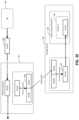
- FIG. 2 Bis a diagram illustrating further details of a packet capture service in accordance with the present disclosure
- FIG. 2 Cis a diagram illustrating further details of a packet capture service in accordance with the present disclosure
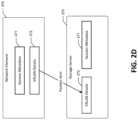
- FIG. 2 Dis a diagram illustrating further details of a packet capture service in accordance with the present disclosure
- FIG. 2 Eis a diagram illustrating further details of a packet capture service in accordance with the present disclosure
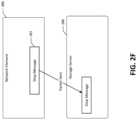
- FIG. 2 Fis a diagram illustrating further details of a packet capture service in accordance with the present disclosure.
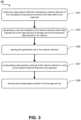
- FIG. 3is a flowchart depicting an example procedure for capturing packet data in accordance with the present disclosure
- FIG. 4is a flowchart depicting an example procedure for capturing packet data in accordance with the present disclosure
- FIG. 5is an example computing device in accordance with the present disclosure.
- a network elementmay be an endpoint in a network that may send and/or receive network traffic and can include applications, network devices, computing devices, virtual machines, containers, and the like.
- IPInternet Protocol
- the network element of interestcan easily pick out the IP addresses and ports for which the packet capture should take place on a session, in a way that an operator attempting to create, e.g., a tcpdump filter in advance cannot.
- SIPRECSession Recording Protocol
- RFC6341Session Recording Protocol
- the present disclosuredescribes various embodiments for packet capture using encapsulation technology that addresses the shortcomings noted above.
- Some embodimentsuse VXLAN encapsulation.
- the session or sessions for a network element of interest for which diagnostic packet capture is desiredmay be identified.
- Various methods to identify the network elementmay be used, including, but not limited to, source IP address, SIP call-ID, or destination username.
- a storage servicemay be identified for storing the desired diagnostic packet capture, which is further described below.
- the network elementmay send a message to the storage service indicating the VXLAN details (e.g., VXLAN ID, source port) on which the session will be transmitted to the storage service as well as metadata about the session (e.g., SIP call-ID, source/destination users).
- VXLAN detailse.g., VXLAN ID, source port
- metadata about the sessione.g., SIP call-ID, source/destination users.
- Packets received at the network element of interest pertaining to the sessionmay be copied and encapsulated within a VXLAN session and sent to the storage service.
- the lower-level networking informatione.g., layers 2, 3, and 4
- the VXLAN sessionmatches the session indicated by the message sent when the session started.
- An identical processmay be implemented when the network element of interest sends out a packet pertaining to the session. This allows changes to the packet (e.g., re-writing of network data, application layer processing) to be recorded in the packet capture.
- a session involving two endpoints communicating with the network element of interestwill have four streams sent to the storage server within the VXLAN session—packets received from element A, packets sent to element A, packet received from element B, and packets sent to element B.
- updates to the metadatacan be sent to the storage service.
- the network element of interestmay send a stop message to the storage service.
- the encapsulated packetsmay be matched to a known session being recorded, using the information provided in the start message (e.g., VXLAN ID, source port).
- the packetsmay then be de-encapsulated and stored (e.g., written to disk) using an appropriate identifier that allows both the packets and the provided metadata to be retrieved.
- the storage servicecan link the streams by the identifying information that allowed the session to be identified. For example, if a session is identified by SIP username, the storage service may link all streams with a common SIP username and start time.
- the storage servicemay be configured to apply load balancing as well as fault tolerance mechanisms such as redundancy.
- the storage servicemay be implemented as a single physical device or multiple devices. Network operators may then access the packet capture from the storage service without having to access the network elements of interest.
- MECmobile edge computing
- 4G, 5G, or other cellular networkis a type of edge computing that uses cellular networks and 5G and enables a data center to extend cloud services to local deployments using a distributed architecture that provide federated options for local and remote data and control management.
- MEC architecturesmay be implemented at cellular base stations or other edge nodes and enable operators to host content closer to the edge of the network, delivering high-bandwidth, low-latency applications to end users.
- the cloud provider's footprintmay be co-located at a carrier site (e.g., carrier data center), allowing for the edge infrastructure and applications to run closer to the end user via the 5G network.
- FIG. 1illustrates one example of a general computing environment in which the embodiments described herein may be implemented.
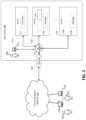
- FIG. 1illustrates a data center 100 that is configured to provide computing resources to users 100 a , 100 b , or 100 c (which may be referred herein singularly as “a user 100 ” or in the plural as “the users 100 ”) via user computers 102 a , 102 b , and 102 c (which may be referred herein singularly as “a computer 102 ” or in the plural as “the computers 102 ”) via a communications network 130 .
- the computing resources provided by the data center 100may include various types of resources, such as computing resources, data storage resources, data communication resources, and the like.
- Each type of computing resourcemay be general-purpose or may be available in a number of specific configurations.
- computing resourcesmay be available as virtual machines or containers.
- the virtual machines or containersmay be configured to execute applications, including Web servers, application servers, media servers, database servers, and the like.
- Data storage resourcesmay include file storage devices, block storage devices, and the like.
- Each type or configuration of computing resourcemay be available in different configurations, such as the number of processors, and size of memory and/or storage capacity.
- the resourcesmay in some embodiments be offered to clients in units referred to as instances or containers, such as container instances, virtual machine instances, or storage instances.
- a virtual computing instancemay be referred to as a virtual machine and may, for example, comprise one or more servers with a specified computational capacity (which may be specified by indicating the type and number of CPUs, the main memory size and so on) and a specified software stack (e.g., a particular version of an operating system, which may in turn run on top of a hypervisor).
- a specified computational capacitywhich may be specified by indicating the type and number of CPUs, the main memory size and so on
- a specified software stacke.g., a particular version of an operating system, which may in turn run on top of a hypervisor.
- Data center 100may include servers 116 a , 116 b , and 116 c (which may be referred to herein singularly as “a server 116 ” or in the plural as “the servers 116 ”) that provide computing resources available as virtual machines or containers 118 a and 118 b (which may be referred to herein singularly as “a virtual machine 118 ” or in the plural as “the virtual machines 118 ” or as “a container 118 ” or in the plural as “the containers 118 ”).
- the virtual machines or containers 118may be configured to execute applications such as Web servers, application servers, media servers, database servers, and the like. Other resources that may be provided include data storage resources (not shown on FIG. 1 ) and may include file storage devices, block storage devices, and the like.
- Servers 116may also execute functions that manage and control allocation of resources in the data center, such as a controller 115 . Controller 115 may be a fabric controller or another type of program configured to manage the allocation of virtual machines or containers on servers 116
- communications network 130may, for example, be a publicly accessible network of linked networks and may be operated by various entities, such as the Internet. In other embodiments, communications network 130 may be a private network, such as a corporate network that is wholly or partially inaccessible to the public.
- Computers 102may be computers utilized by users 100 .
- Computer 102 a , 102 b or 102 cmay be a server, a desktop or laptop personal computer, a tablet computer, a smartphone, a set-top box, or any other computing device capable of accessing data center 100 .
- User computer 102 a or 102 bmay connect directly to the Internet (e.g., via a cable modem).
- User computer 102 cmay be internal to the data center 100 and may connect directly to the resources in the data center 100 via internal networks. Although only three user computers 102 a , 102 b , and 102 c are depicted, it should be appreciated that there may be multiple user computers.
- Computers 102may also be utilized to configure aspects of the computing resources provided by data center 100 .
- data center 100may provide a Web interface through which aspects of its operation may be configured through the use of a Web browser application program executing on user computer 102 .
- a stand-alone application program executing on user computer 102may be used to access an application programming interface (API) exposed by data center 100 for performing the configuration operations.
- APIapplication programming interface
- Servers 116may be configured to provide the computing resources described above.
- One or more of the servers 116may be configured to execute a manager 120 a or 120 b (which may be referred herein singularly as “a manager 120 ” or in the plural as “the managers 120 ”) configured to execute the virtual machines.
- the managers 120may be a virtual machine monitor (VMM), fabric controller, or another type of program configured to enable the execution of virtual machines or containers 118 on servers 116 , for example.
- VMMvirtual machine monitor
- a network device 111may be utilized to interconnect the servers 116 a and 116 b .
- Network device 111may comprise one or more switches, routers, or other network devices.
- Network device 111may also be connected to gateway 140 , which is connected to communications network 130 .
- Network device 111may facilitate communications within networks in data center 100 , for example, by forwarding packets or other data communications as appropriate based on characteristics of such communications (e.g., header information including source and/or destination addresses, protocol identifiers, etc.) and/or the characteristics of the private network (e.g., routes based on network topology, etc.).
- characteristics of such communicationse.g., header information including source and/or destination addresses, protocol identifiers, etc.
- the characteristics of the private networke.g., routes based on network topology, etc.
- FIG. 1has been greatly simplified and that many more networks and networking devices may be utilized to interconnect the various computing systems disclosed herein. These network topologies and devices should be apparent to those skilled in the art.
- data center 100 described in FIG. 1is merely illustrative and that other implementations might be utilized. Additionally, it should be appreciated that the functionality disclosed herein might be implemented in software, hardware or a combination of software and hardware. Other implementations should be apparent to those skilled in the art. It should also be appreciated that a server, gateway, or other computing device may comprise any combination of hardware or software that can interact and perform the described types of functionality, including without limitation desktop or other computers, database servers, network storage devices and other network devices, PDAs, tablets, smartphone, Internet appliances, television-based systems (e.g., using set top boxes and/or personal/digital video recorders), and various other consumer products that include appropriate communication capabilities. In addition, the functionality provided by the illustrated modules may in some embodiments be combined in fewer modules or distributed in additional modules. Similarly, in some embodiments the functionality of some of the illustrated modules may not be provided and/or other additional functionality may be available.
- the disclosed embodimentsmay be implemented in a mobile edge computing (MEC) environment implemented in conjunction with a 4G, 5G, or other cellular network.
- the MEC environmentmay include at least some of the components and functionality described in FIG. 1 above.
- components of a 5G networkmay include network functions such as a Session Management Function (SMF), Policy Control Function (PCF), and N7 interface.
- a radio access network (RAN)may comprise 5G-capable UEs, a base station gNodeB that communicates with an Access and Mobility Management Function (AMF) in a 5G Core (5GC) network.
- the 5G networkmay further comprise a User Plane Function (UPF) and Policy Charging Function (PCF).
- UPFUser Plane Function
- PCFPolicy Charging Function
- a capture manager 210 and scalable capture storage service 250may orchestrate the packet captures, report status of the captures, and manage the capture files.
- the capture manager 200may leverage capture definitions 205 to provide a declarative capture utility.
- the use of capture definitions 205may allow administrators and operators to integrate capture tasks into deployment orchestrators and start the capture tasks at deployment time.
- an input toolmay be provided that enables a user to create, invoke, and delete packet captures.
- the input toolmay also be configured to enable the user to retrieve captured data.
- the capture definitions 205may be used to specify the target network elements 230 , 235 and allow the user to specify filters and capture limits such as capture duration as well as to specify the capture directory path and other additional metadata.
- a rule manager 212may be implemented that is configured to generate capture rules 220 based on the capture definitions and send the rules 220 to network elements of interest 230 , 235 .
- a capture monitor 214may be implemented for monitoring network elements and network traffic.
- the capture monitor 214may be configured to watch for status updates on the network elements and update the associated rules if needed.
- the storage manager 216may be configured to manage the storage service 250 used for persisting captured data packets received from data packet streams 240 , 245 .
- the storage manager 216may provide a mechanism to match the encapsulated streams to a session being recorded using the information provided in the start message (e.g., VXLAN ID, source port).
- the packetsmay then be de-encapsulated and stored using an identifier that allows both the packets and the provided metadata to be retrieved.
- Original packet 262may include a payload 260 and header 261 .
- the original packet 262may be encapsulated as payload 263 of VXLAN packet 265 .
- VXLAN packet 265may include a VXLAN header 264 that may include the VXLAN ID.
- FIG. 2 Cillustrates further detail in an example with packet 266 that has source and destination information at layers 2, 3, and 4, and application layer data, prior to encapsulation.
- Encapsulated packet 267includes packet 266 as well as the VXLAN header 268 which includes the VXLAN ID 269 .
- the original packet 266pay be recorded at the storage server after de-encapsulation.
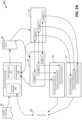
- FIG. 2 Dillustrates an example packet capture initialization process where network element 270 sends data to storage server 275 .
- the network element 270may recognize that a diagnostic packet capture should be initiated. For example, the network element 270 may have received a rule indicating that packets for a specified communication session should be captured. Once the network element 270 is aware that packet capture is required, VXLAN details 272 and session metadata 271 may be sent to the storage server 275 .
- FIG. 2 Eillustrates packet capture on an example stream where network element of interest 281 receives packet 280 from node A 286 .
- the network element 281may recognize that packet capture is required and encapsulate packet 280 from node A 286 and send the encapsulated packet 282 to storage server 285 .
- Storage server 285may de-encapsulate the received packet 280 and record the packet in Stream 1 ( 284 ) in packet capture session 1 ( 283 ).
- FIG. 2 Fillustrates an example packet capture termination process where network element 289 sends data to storage server 290 .
- the network element 289may recognize that a diagnostic packet capture should be terminated. Once the network element is aware that packet capture is to be terminated, a stop message 291 may be sent to the storage server 290 .
- the computing environmentcomprises a plurality of computing devices.
- the network trafficmay be associated with a target application, end point, or other network element.
- Such an operational proceduremay provide for capturing network traffic and can be provided by one or more components illustrated in FIGS. 1 and 2 .
- the operational proceduremay be implemented in a system comprising one or more computing devices. It should be understood by those of ordinary skill in the art that the operations of the methods disclosed herein are not necessarily presented in any particular order and that performance of some or all of the operations in an alternative order(s) is possible and is contemplated. The operations have been presented in the demonstrated order for ease of description and illustration. Operations may be added, omitted, performed together, and/or performed simultaneously, without departing from the scope of the appended claims.
- the logical operations described hereinare implemented (1) as a sequence of computer implemented acts or program modules running on a computing system such as those described herein) and/or (2) as interconnected machine logic circuits or circuit modules within the computing system.
- the implementationis a matter of choice dependent on the performance and other requirements of the computing system. Accordingly, the logical operations may be implemented in software, in firmware, in special purpose digital logic, and any combination thereof.
- routine 300is described as running on a system, it can be appreciated that the routine 300 and other operations described herein can be executed on an individual computing device or several devices.
- operation 301illustrates receiving, by a packet capture service executing in the virtualized computing environment, a data capture definition identifying a network element of the virtualized computing environment and data traffic to be captured.
- the data traffic to be capturedcomprises packets received by the network element or packets sent from the network element.
- Operation 301may be followed by operation 303 .
- Operation 303illustrates based on the data capture definition, generating, by the packet capture service, a rule that indicates to the network element which data packets are to be captured and a storage service for storing the data packets to be captured.
- the storage serviceis an endpoint of the virtualized computing environment and configured to store the data packets to be captured.
- Operation 303may be followed by operation 305 .
- Operation 305illustrates sending the generated rule to the network element.
- the generated ruleis usable to configure the network element to identify the data packets to be captured.
- Operation 305may be followed by operation 307 .
- Operation 307illustrates based on the generated rule, encapsulating, by the network element, data packets received at the network element or sent by the network element that are to be captured.
- the data packetsare encapsulated within a Virtual Extensible Local Area Network (VXLAN) session to include session information for the VXLAN session.
- VXLANVirtual Extensible Local Area Network
- Operation 307may be followed by operation 309 .
- Operation 309illustrates sending the encapsulated packets to the storage service.
- the storage serviceis configured to de-encapsulate the encapsulated packets and store the de-encapsulated packets.
- the de-encapsulated packetsare stored so as to enable retrieval of the de-encapsulated packets based on the session information for the VXLAN session.
- operation 401illustrates sending, by a packet capture service to a computing device executing in the computing environment, a rule indicative of data traffic to be captured.
- the data trafficis associated with the computing device.
- Operation 401may be followed by operation 403 .
- Operation 403illustrates sending, by the computing device to a storage service, a message indicating a tunneling session by which the data traffic that is to be captured will be transmitted to the storage service.
- the tunneling sessionis implemented using an encapsulation protocol.
- Operation 403may be followed by operation 405 .
- Operation 405illustrates encapsulating, by the computing device, packets received at or sent by the computing device that are to be captured in accordance with the rule.
- the packetsare encapsulated for the tunneling session and including session information for the tunneling session.
- Operation 405may be followed by operation 407 .
- Operation 407illustrates sending, by the computing device, the encapsulated packets to the storage service.
- Operation 407may be followed by operation 409 .
- Operation 409illustrates matching, by the storage service, the encapsulated packets to the tunneling session.
- Operation 409may be followed by operation 411 .
- Operation 411illustrates de-encapsulating, by the storage service, the encapsulated packets and storing the de-encapsulated packets using an identifier usable to selectively retrieve the stored de-encapsulated packets.
- Networks established by or on behalf of a user to provide one or more services (such as various types of cloud-based computing or storage) accessible via the Internet and/or other networks to a distributed set of clientsmay be referred to as a service provider.
- a networkmay include one or more data centers such as data center 100 illustrated in FIG. 1 , which are configured to host physical and/or virtualized computer servers, storage devices, networking equipment and the like, that may be used to implement and distribute the infrastructure and services offered by the service provider.
- a server that implements a portion or all of one or more of the technologies described herein, including the techniques to implement the capturing of network trafficmay include a general-purpose computer system that includes or is configured to access one or more computer-accessible media.
- FIG. 5illustrates such a general-purpose computing device 500 .
- computing device 500includes one or more processors 510 a , 510 b , and/or 510 n (which may be referred herein singularly as “a processor 510 ” or in the plural as “the processors 510 ”) coupled to a system memory 520 via an input/output (I/O) interface 530 .
- Computing device 500further includes a network interface 540 coupled to I/O interface 530 .
- computing device 500may be a uniprocessor system including one processor 510 or a multiprocessor system including several processors 510 (e.g., two, four, eight, or another suitable number).
- Processors 510may be any suitable processors capable of executing instructions.
- processors 510may be general-purpose or embedded processors implementing any of a variety of instruction set architectures (ISAs), such as the x56, PowerPC, SPARC, or MIPS ISAs, or any other suitable ISA.
- ISAsinstruction set architectures
- each of processors 510may commonly, but not necessarily, implement the same ISA.
- System memory 520may be configured to store instructions and data accessible by processor(s) 510 .
- system memory 520may be implemented using any suitable memory technology, such as static random access memory (SRAM), synchronous dynamic RAM (SDRAM), nonvolatile/Flash-type memory, or any other type of memory.
- SRAMstatic random access memory
- SDRAMsynchronous dynamic RAM
- program instructions and data implementing one or more desired functions, such as those methods, techniques and data described above,are shown stored within system memory 520 as code 525 and data 526 .
- I/O interface 530may be configured to coordinate I/O traffic between the processor 510 , system memory 520 , and any peripheral devices in the device, including network interface 540 or other peripheral interfaces.
- I/O interface 530may perform any necessary protocol, timing, or other data transformations to convert data signals from one component (e.g., system memory 520 ) into a format suitable for use by another component (e.g., processor 510 ).
- I/O interface 530may include support for devices attached through various types of peripheral buses, such as a variant of the Peripheral Component Interconnect (PCI) bus standard or the Universal Serial Bus (USB) standard, for example.
- PCIPeripheral Component Interconnect
- USBUniversal Serial Bus
- I/O interface 530may be split into two or more separate components. Also, in some embodiments some or all of the functionality of I/O interface 530 , such as an interface to system memory 520 , may be incorporated directly into processor 510 .
- Network interface 540may be configured to allow data to be exchanged between computing device 500 and other device or devices 560 attached to a network or network(s) 550 , such as other computer systems or devices as illustrated in FIGS. 1 through 4 , for example.
- network interface 540may support communication via any suitable wired or wireless general data networks, such as types of Ethernet networks, for example.
- network interface 540may support communication via telecommunications/telephony networks such as analog voice networks or digital fiber communications networks, via storage area networks such as Fibre Channel SANs or via any other suitable type of network and/or protocol.
- system memory 520may be one embodiment of a computer-accessible medium configured to store program instructions and data as described above for FIGS. 1 - 4 for implementing embodiments of the corresponding methods and apparatus.
- program instructions and/or datamay be received, sent or stored upon different types of computer-accessible media.
- a computer-accessible mediummay include non-transitory storage media or memory media, such as magnetic or optical media, e.g., disk or DVD/CD coupled to computing device 500 via I/O interface 530 .
- a non-transitory computer-accessible storage mediummay also include any volatile or non-volatile media, such as RAM (e.g.
- a computer-accessible mediummay include transmission media or signals such as electrical, electromagnetic or digital signals, conveyed via a communication medium such as a network and/or a wireless link, such as may be implemented via network interface 540 .
- a communication mediumsuch as a network and/or a wireless link, such as may be implemented via network interface 540 .
- Portions or all of multiple computing devices, such as those illustrated in FIG. 5may be used to implement the described functionality in various embodiments; for example, software components running on a variety of different devices and servers may collaborate to provide the functionality.
- portions of the described functionalitymay be implemented using storage devices, network devices, or special-purpose computer systems, in addition to or instead of being implemented using general-purpose computer systems.
- the term “computing device,” as used herein,refers to at least all these types of devices and is not limited to these types of devices.
- Computer-readable media as discussed hereinmay refer to a mass storage device, such as a solid-state drive, a hard disk or CD-ROM drive. However, it should be appreciated by those skilled in the art that computer-readable media can be any available computer storage media that can be accessed by a computing device.
- computer storage mediamay include volatile and non-volatile, removable and non-removable media implemented in any method or technology for storage of information such as computer-readable instructions, data structures, program modules or other data.
- computer mediaincludes, but is not limited to, RAM, ROM, EPROM, EEPROM, flash memory or other solid state memory technology, CD-ROM, digital versatile disks (“DVD”), HD-DVD, BLU-RAY, or other optical storage, magnetic cassettes, magnetic tape, magnetic disk storage or other magnetic storage devices, or any other medium which can be used to store the desired information and which can be accessed by the computing devices discussed herein.
- DVDdigital versatile disks
- HD-DVDhigh definition digital versatile disks
- BLU-RAYblue ray
- computer storage mediumdoes not include waves, signals, and/or other transitory and/or intangible communication media, per se.
- Encoding the software modules presented hereinalso may transform the physical structure of the computer-readable media presented herein.
- the specific transformation of physical structuremay depend on various factors, in different implementations of this description. Examples of such factors may include, but are not limited to, the technology used to implement the computer-readable media, whether the computer-readable media is characterized as primary or secondary storage, and the like.
- the computer-readable mediais implemented as semiconductor-based memory
- the software disclosed hereinmay be encoded on the computer-readable media by transforming the physical state of the semiconductor memory.
- the softwaremay transform the state of transistors, capacitors, or other discrete circuit elements constituting the semiconductor memory.
- the softwarealso may transform the physical state of such components in order to store data thereupon.
- the computer-readable media disclosed hereinmay be implemented using magnetic or optical technology.
- the software presented hereinmay transform the physical state of magnetic or optical media, when the software is encoded therein. These transformations may include altering the magnetic characteristics of particular locations within given magnetic media. These transformations also may include altering the physical features or characteristics of particular locations within given optical media, to change the optical characteristics of those locations. Other transformations of physical media are possible without departing from the scope and spirit of the present description, with the foregoing examples provided only to facilitate this discussion.
- the disclosed computing devicesmay not include all of the illustrated components shown in FIG. 8 , may include other components that are not explicitly shown in FIG. 8 , or may utilize an architecture completely different than that shown in FIG. 8 .
- any reference to “first,” “second,” etc. items and/or abstract concepts within the descriptionis not intended to and should not be construed to necessarily correspond to any reference of “first,” “second,” etc. elements of the claims.
- items and/or abstract conceptssuch as, for example, individual computing devices and/or operational states of the computing cluster may be distinguished by numerical designations without such designations corresponding to the claims or even other paragraphs of the Summary and/or Detailed Description.
- any designation of a “first operational state” and “second operational state” of the computing cluster within a paragraph of this disclosureis used solely to distinguish two different operational states of the computing cluster within that specific paragraph—not any other paragraph and particularly not the claims.
- Clause 1A method for capturing network traffic in a virtualized computing environment comprising a plurality of network elements that are configured to send or receive network traffic in the virtualized computing environment, the method comprising:
- a packet capture serviceexecuting in the virtualized computing environment, a data capture definition identifying a network element of the virtualized computing environment and data traffic to be captured, wherein the data traffic to be captured comprises packets received by the network element or packets sent from the network element;
- the packet capture servicebased on the data capture definition, generating, by the packet capture service, a rule that indicates to the network element which data packets are to be captured and a storage service for storing the data packets to be captured, wherein the storage service is an endpoint of the virtualized computing environment and configured to store the data packets to be captured;
- VXLANVirtual Extensible Local Area Network
- the storage serviceconfigured to de-encapsulate the encapsulated packets and store the de-encapsulated packets, wherein the de-encapsulated packets are stored so as to enable retrieval of the de-encapsulated packets based on the session information for the VXLAN session.
- Clause 2The method of clause 1, wherein the data packets to be captured are identified based on one or more of source IP address, SIP call-ID, or destination username.
- Clause 3The method of any of clauses 1-2, wherein the VXLAN information includes a VXLAN ID.
- Clause 4The method of any of clauses 1-3, wherein the VXLAN information comprises a source port.
- Clause 5The method of any of clauses 1-4, further comprising sending, by the network element to the storage service, metadata for the VXLAN session to be transmitted to the storage service.
- Clause 6The method of any of clauses 1-5, wherein the metadata comprises SIP call-ID or source/destination users.
- Clause 7The method of clauses 1-6, further comprising sending, by the network element to the storage service, a stop message when the VXLAN session is to be terminated.
- Clause 8The method of any of clauses 1-7, further comprising matching, at the storage service, the encapsulated packets to the VXLAN session based on information provided to the storage service in a start message.
- a method for capturing network traffic in a computing environment comprising a plurality of computing devicescomprising:
- de-encapsulatingby the storage service, the encapsulated packets and storing the de-encapsulated packets using an identifier usable to selectively retrieve the stored de-encapsulated packets.
- Clause 10The system of clause 9, wherein the tunneling session is a VXLAN session, and wherein the message indicating the tunneling session comprises a VXLAN ID or source port.
- Clause 11The system of any of clauses 9 and 10, wherein the data traffic that is to be captured is identified be one or more of a source IP address, SIP call-ID, or destination username.
- Clause 12The system of any clauses 9-11, further comprising capturing packets received at or sent by a second computing device on a same logical session.
- Clause 13The system of any clauses 9-12, further comprising linking capture streams for the computing device and the second computing device.
- Clause 14The system of any clauses 9-13, further comprising sending, to the storage service, updates to the tunneling session when changes are made to the packets that are to be captured.
- Clause 15The system of any clauses 9-14, further comprising sending a stop message to the storage service when packet capture is to be terminated.
- a memorystoring computer-executable instructions thereupon which, when executed by the processor, cause the system to perform operations comprising:
- the storage systemis configured to:
- Clause 17The computer-readable storage medium of clause 16, wherein the data packets to be captured at the network element are identified based on one or more of source IP address, SIP call-ID, or destination username.
- Clause 18The computer-readable storage medium of any of clauses 16 and 17, the memory storing computer-executable instructions thereupon which, when executed by the processor, cause the system to perform operations comprising:
- VXLAN informationfor a session to be received by the storage system; wherein the VXLAN information comprises a VXLAN ID or source port.
- Clause 19The computer-readable storage medium of any of the clauses 16-18, the memory storing computer-executable instructions thereupon which, when executed by the processor, cause the system to perform operations comprising:
- Clause 20The computer-readable storage medium of any of the clauses 16-19, wherein the storage system is configured to match the encapsulated packets to the VXLAN session based on the information provided to the storage system in a start message.
Landscapes
- Engineering & Computer Science (AREA)
- Computer Networks & Wireless Communication (AREA)
- Signal Processing (AREA)
- Environmental & Geological Engineering (AREA)
- Computer Security & Cryptography (AREA)
- Data Exchanges In Wide-Area Networks (AREA)
Abstract
Description
In many cases, a computing service provider may want to capture packets for a variety of reasons, such as to investigate network connectivity issues. Troubleshooting network connectivity issues may be difficult to perform given the complexity of many networks, for example in a data center. It is with respect to these considerations and others that the disclosure made herein is presented.
Network diagnostics in a datacenter can be difficult and costly. There may be multiple routers/switches, containers, and end hosts involved, and it may be difficult to identify issues such as diagnosing where and if any packet loss is occurring. In a distributed computing environment, packet tracing can be a processing and labor-intensive task, and can cause significant latencies.
The disclosed embodiments describe technologies for packet capture using packet encapsulation. Some embodiments use VXLAN encapsulation technology, which allows a network packet to be encapsulated as the payload of another packet. VXLAN technology may be used to in the context of virtual networks, particularly in cloud environments. The VXLAN standard is defined under RFC7348.
In an embodiment, data packets passing through a network element or elements of interest in a given session can be copied and transmitted using VXLAN encapsulation to a separate storage server for recording. As the packets are fully encapsulated within a VXLAN session, they can be sent to the storage server and recorded at the storage server exactly as they were sent or received on the wire at the network element of interest. Because the recording of the data packets is taking place at a separate storage server and not at the network element of interest, the performance impact for the data capture may be reduced as compared to existing capture methods in which the network element of interest is responsible for storing the data packets. In addition, in networks containing many network elements of interest, the disclosed embodiments allow for a simplified interface for operators to retrieve captured data.
By providing such a mechanism for capturing data packets, data centers may operate more efficiently, and reduction or loss of services provided by service providers may be reduced, thus minimizing downtime and impact to end users and providing for greater operational efficiency for service providers.
This Summary is provided to introduce a selection of concepts in a simplified form that are further described below in the Detailed Description. This Summary is not intended to identify key features or essential features of the claimed subject matter, nor is it intended that this Summary be used to limit the scope of the claimed subject matter. Furthermore, the claimed subject matter is not limited to implementations that solve any or all disadvantages noted in any part of this disclosure.
The Detailed Description is described with reference to the accompanying figures. In the description detailed herein, references are made to the accompanying drawings that form a part hereof, and that show, by way of illustration, specific embodiments or examples. The drawings herein are not drawn to scale. Like numerals represent like elements throughout the several figures.
The following Detailed Description describes technologies for capturing data packets using packet encapsulation. Typical packet capture methods involve writing packets to disk for a network element of interest. As used herein, a network element may be an endpoint in a network that may send and/or receive network traffic and can include applications, network devices, computing devices, virtual machines, containers, and the like.
Existing packet capture methods typically cause a significant performance impact and may use substantial amounts of disk space on a network element that is not optimized for this purpose. Some existing packet capture methods may involve port mirroring, where all packets passing through a network port (e.g., on a network switch) are copied and sent to another device for recording. However, port mirroring can cause issues such as performance impact on the network, difficulty in identifying the relevant packets, and recording of unnecessary data. Both of the above methods have two additional drawbacks. First, they fail to take advantage of the application layer logic of the network element of interest. For example, in a voice over IP (VoIP) call, the media ports and Internet Protocol (IP) addresses in use cannot typically be determined ahead of time but are determined on the fly as part of the application-level processing. As a result, the network element of interest can easily pick out the IP addresses and ports for which the packet capture should take place on a session, in a way that an operator attempting to create, e.g., a tcpdump filter in advance cannot. Second, in a distributed network, there may be a variety of network elements on which packet capture may be desirable. For example, some users may operate a large number of media servers. It can be inefficient for a network operator to have to determine on which physical instance packet capture may be required and then retrieve and aggregate the captures.
Another method of packet capture suitable in VoIP networks is Session Recording Protocol (SIPREC) defined under RFC6341. However, SIPREC does not store the packet as it was sent or received at the network element of interest. Instead, the networking layers are rewritten as part of the process of forwarding packets to the SIPREC recording server. As a result, this method may not be suitable for many types of problem diagnoses.
The present disclosure describes various embodiments for packet capture using encapsulation technology that addresses the shortcomings noted above. Some embodiments use VXLAN encapsulation. In an embodiment, the session or sessions for a network element of interest for which diagnostic packet capture is desired may be identified. Various methods to identify the network element may be used, including, but not limited to, source IP address, SIP call-ID, or destination username. A storage service may be identified for storing the desired diagnostic packet capture, which is further described below.
When starting a communication session which the network element of interest recognizes as requiring diagnostic packet capture, the network element may send a message to the storage service indicating the VXLAN details (e.g., VXLAN ID, source port) on which the session will be transmitted to the storage service as well as metadata about the session (e.g., SIP call-ID, source/destination users).
Packets received at the network element of interest pertaining to the session may be copied and encapsulated within a VXLAN session and sent to the storage service. By encapsulating the packets, the lower-level networking information (e.g., layers 2, 3, and 4) is preserved as it was received. The VXLAN session matches the session indicated by the message sent when the session started.
An identical process may be implemented when the network element of interest sends out a packet pertaining to the session. This allows changes to the packet (e.g., re-writing of network data, application layer processing) to be recorded in the packet capture. As a result, a session involving two endpoints communicating with the network element of interest will have four streams sent to the storage server within the VXLAN session—packets received from element A, packets sent to element A, packet received from element B, and packets sent to element B.
When changes are made to the session (e.g., call transfer), updates to the metadata can be sent to the storage service. When the session is terminated, the network element of interest may send a stop message to the storage service.
When the VXLAN encapsulated packets reach the storage service, the encapsulated packets may be matched to a known session being recorded, using the information provided in the start message (e.g., VXLAN ID, source port). The packets may then be de-encapsulated and stored (e.g., written to disk) using an appropriate identifier that allows both the packets and the provided metadata to be retrieved.
If multiple network elements of interest are conducting packet capture on the same logical session, the storage service can link the streams by the identifying information that allowed the session to be identified. For example, if a session is identified by SIP username, the storage service may link all streams with a common SIP username and start time.
The storage service may be configured to apply load balancing as well as fault tolerance mechanisms such as redundancy. The storage service may be implemented as a single physical device or multiple devices. Network operators may then access the packet capture from the storage service without having to access the network elements of interest.
While the examples described herein include the use of VXLAN tunneling and encapsulation, it should be understood that the disclosed techniques may be implemented using other tunneling technologies.
One example where such a packet capture service can be implemented is a mobile edge computing (MEC) environment implemented in conjunction with a 4G, 5G, or other cellular network. MEC is a type of edge computing that uses cellular networks and 5G and enables a data center to extend cloud services to local deployments using a distributed architecture that provide federated options for local and remote data and control management. MEC architectures may be implemented at cellular base stations or other edge nodes and enable operators to host content closer to the edge of the network, delivering high-bandwidth, low-latency applications to end users. For example, the cloud provider's footprint may be co-located at a carrier site (e.g., carrier data center), allowing for the edge infrastructure and applications to run closer to the end user via the 5G network.
Referring toFIG.1 ,communications network 130 may, for example, be a publicly accessible network of linked networks and may be operated by various entities, such as the Internet. In other embodiments,communications network 130 may be a private network, such as a corporate network that is wholly or partially inaccessible to the public.
Computers102 may also be utilized to configure aspects of the computing resources provided bydata center 100. For example,data center 100 may provide a Web interface through which aspects of its operation may be configured through the use of a Web browser application program executing on user computer102. Alternatively, a stand-alone application program executing on user computer102 may be used to access an application programming interface (API) exposed bydata center 100 for performing the configuration operations.
Servers116 may be configured to provide the computing resources described above. One or more of the servers116 may be configured to execute a manager120aor120b(which may be referred herein singularly as “a manager120” or in the plural as “the managers120”) configured to execute the virtual machines. The managers120 may be a virtual machine monitor (VMM), fabric controller, or another type of program configured to enable the execution of virtual machines or containers118 on servers116, for example.
It should be appreciated that although the embodiments disclosed above are discussed in the context of virtual machines and containers, other types of implementations can be utilized with the concepts and technologies disclosed herein.
In theexample data center 100 shown inFIG.1 , anetwork device 111 may be utilized to interconnect theservers Network device 111 may comprise one or more switches, routers, or other network devices.Network device 111 may also be connected togateway 140, which is connected tocommunications network 130.Network device 111 may facilitate communications within networks indata center 100, for example, by forwarding packets or other data communications as appropriate based on characteristics of such communications (e.g., header information including source and/or destination addresses, protocol identifiers, etc.) and/or the characteristics of the private network (e.g., routes based on network topology, etc.). It will be appreciated that, for the sake of simplicity, various aspects of the computing systems and other devices of this example are illustrated without showing certain conventional details. Additional computing systems and other devices may be interconnected in other embodiments and may be interconnected in different ways.
It should be appreciated that the network topology illustrated inFIG.1 has been greatly simplified and that many more networks and networking devices may be utilized to interconnect the various computing systems disclosed herein. These network topologies and devices should be apparent to those skilled in the art.
It should also be appreciated thatdata center 100 described inFIG.1 is merely illustrative and that other implementations might be utilized. Additionally, it should be appreciated that the functionality disclosed herein might be implemented in software, hardware or a combination of software and hardware. Other implementations should be apparent to those skilled in the art. It should also be appreciated that a server, gateway, or other computing device may comprise any combination of hardware or software that can interact and perform the described types of functionality, including without limitation desktop or other computers, database servers, network storage devices and other network devices, PDAs, tablets, smartphone, Internet appliances, television-based systems (e.g., using set top boxes and/or personal/digital video recorders), and various other consumer products that include appropriate communication capabilities. In addition, the functionality provided by the illustrated modules may in some embodiments be combined in fewer modules or distributed in additional modules. Similarly, in some embodiments the functionality of some of the illustrated modules may not be provided and/or other additional functionality may be available.
The disclosed embodiments may be implemented in a mobile edge computing (MEC) environment implemented in conjunction with a 4G, 5G, or other cellular network. The MEC environment may include at least some of the components and functionality described inFIG.1 above. Additionally, components of a 5G network may include network functions such as a Session Management Function (SMF), Policy Control Function (PCF), and N7 interface. A radio access network (RAN) may comprise 5G-capable UEs, a base station gNodeB that communicates with an Access and Mobility Management Function (AMF) in a 5G Core (5GC) network. The 5G network may further comprise a User Plane Function (UPF) and Policy Charging Function (PCF).
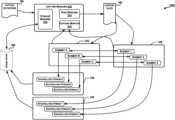
Referring toFIG.2A , disclosed herein is anexample architecture 200 for packet capture according to an embodiment. Acapture manager 210 and scalablecapture storage service 250 may orchestrate the packet captures, report status of the captures, and manage the capture files.
Thecapture manager 200 may leveragecapture definitions 205 to provide a declarative capture utility. The use ofcapture definitions 205 may allow administrators and operators to integrate capture tasks into deployment orchestrators and start the capture tasks at deployment time.
In some embodiments, an input tool may be provided that enables a user to create, invoke, and delete packet captures. The input tool may also be configured to enable the user to retrieve captured data.
Thecapture definitions 205 may be used to specify thetarget network elements
Arule manager 212 may be implemented that is configured to generatecapture rules 220 based on the capture definitions and send therules 220 to network elements ofinterest
Acapture monitor 214 may be implemented for monitoring network elements and network traffic. The capture monitor214 may be configured to watch for status updates on the network elements and update the associated rules if needed.
Thestorage manager 216 may be configured to manage thestorage service 250 used for persisting captured data packets received from data packet streams240,245. Thestorage manager 216 may provide a mechanism to match the encapsulated streams to a session being recorded using the information provided in the start message (e.g., VXLAN ID, source port). The packets may then be de-encapsulated and stored using an identifier that allows both the packets and the provided metadata to be retrieved.
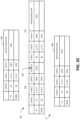
Turning toFIG.2B , illustrated is an example of packet capture using VXLAN encapsulation according to an embodiment.Original packet 262 may include apayload 260 andheader 261. Theoriginal packet 262 may be encapsulated aspayload 263 ofVXLAN packet 265.VXLAN packet 265 may include aVXLAN header 264 that may include the VXLAN ID.FIG.2C illustrates further detail in an example withpacket 266 that has source and destination information atlayers packet 267 includespacket 266 as well as theVXLAN header 268 which includes theVXLAN ID 269. Theoriginal packet 266 pay be recorded at the storage server after de-encapsulation.
Turning now toFIG.3 , illustrated is an example operational procedure for capturing network traffic in a computing environment in accordance with the present disclosure. In an embodiment, the computing environment comprises a plurality of computing devices. In an embodiment, the network traffic may be associated with a target application, end point, or other network element. Such an operational procedure may provide for capturing network traffic and can be provided by one or more components illustrated inFIGS.1 and2 . The operational procedure may be implemented in a system comprising one or more computing devices. It should be understood by those of ordinary skill in the art that the operations of the methods disclosed herein are not necessarily presented in any particular order and that performance of some or all of the operations in an alternative order(s) is possible and is contemplated. The operations have been presented in the demonstrated order for ease of description and illustration. Operations may be added, omitted, performed together, and/or performed simultaneously, without departing from the scope of the appended claims.
It should also be understood that the illustrated methods can end at any time and need not be performed in their entireties. Some or all operations of the methods, and/or substantially equivalent operations, can be performed by execution of computer-readable instructions included on a computer-storage media, as defined herein. The term “computer-readable instructions,” and variants thereof, as used in the description and claims, is used expansively herein to include routines, applications, application modules, program modules, programs, components, data structures, algorithms, and the like. Computer-readable instructions can be implemented on various system configurations, including single-processor or multiprocessor systems, minicomputers, mainframe computers, personal computers, hand-held computing devices, microprocessor-based, programmable consumer electronics, combinations thereof, and the like.
It should be appreciated that the logical operations described herein are implemented (1) as a sequence of computer implemented acts or program modules running on a computing system such as those described herein) and/or (2) as interconnected machine logic circuits or circuit modules within the computing system. The implementation is a matter of choice dependent on the performance and other requirements of the computing system. Accordingly, the logical operations may be implemented in software, in firmware, in special purpose digital logic, and any combination thereof. Thus, although the routine300 is described as running on a system, it can be appreciated that the routine300 and other operations described herein can be executed on an individual computing device or several devices.
Referring toFIG.3 ,operation 301 illustrates receiving, by a packet capture service executing in the virtualized computing environment, a data capture definition identifying a network element of the virtualized computing environment and data traffic to be captured. In an embodiment, the data traffic to be captured comprises packets received by the network element or packets sent from the network element.
Referring toFIG.4 , illustrated is another example operational procedure for capturing network traffic in a computing environment. Such an operational procedure may provide for capturing network traffic and can be provided by services shown inFIGS.1 and2 . The operational procedure may be implemented in a system comprising one or more computing devices. Referring toFIG.4 ,operation 401 illustrates sending, by a packet capture service to a computing device executing in the computing environment, a rule indicative of data traffic to be captured. In an embodiment, the data traffic is associated with the computing device.
The various aspects of the disclosure are described herein with regard to certain examples and embodiments, which are intended to illustrate but not to limit the disclosure. It should be appreciated that the subject matter presented herein may be implemented as a computer process, a computer-controlled apparatus, or a computing system or an article of manufacture, such as a computer-readable storage medium. While the subject matter described herein is presented in the general context of program modules that execute on one or more computing devices, those skilled in the art will recognize that other implementations may be performed in combination with other types of program modules. Generally, program modules include routines, programs, components, data structures and other types of structures that perform particular tasks or implement particular abstract data types.
Those skilled in the art will also appreciate that the subject matter described herein may be practiced on or in conjunction with other computer system configurations beyond those described herein, including multiprocessor systems. The embodiments described herein may also be practiced in distributed computing environments, where tasks are performed by remote processing devices that are linked through a communications network. In a distributed computing environment, program modules may be located in both local and remote memory storage devices.
Networks established by or on behalf of a user to provide one or more services (such as various types of cloud-based computing or storage) accessible via the Internet and/or other networks to a distributed set of clients may be referred to as a service provider. Such a network may include one or more data centers such asdata center 100 illustrated inFIG.1 , which are configured to host physical and/or virtualized computer servers, storage devices, networking equipment and the like, that may be used to implement and distribute the infrastructure and services offered by the service provider.
In some embodiments, a server that implements a portion or all of one or more of the technologies described herein, including the techniques to implement the capturing of network traffic may include a general-purpose computer system that includes or is configured to access one or more computer-accessible media.FIG.5 illustrates such a general-purpose computing device 500. In the illustrated embodiment,computing device 500 includes one ormore processors system memory 520 via an input/output (I/O)interface 530.Computing device 500 further includes anetwork interface 540 coupled to I/O interface 530.
In various embodiments,computing device 500 may be a uniprocessor system including one processor510 or a multiprocessor system including several processors510 (e.g., two, four, eight, or another suitable number). Processors510 may be any suitable processors capable of executing instructions. For example, in various embodiments, processors510 may be general-purpose or embedded processors implementing any of a variety of instruction set architectures (ISAs), such as the x56, PowerPC, SPARC, or MIPS ISAs, or any other suitable ISA. In multiprocessor systems, each of processors510 may commonly, but not necessarily, implement the same ISA.
In one embodiment, I/O interface 530 may be configured to coordinate I/O traffic between the processor510,system memory 520, and any peripheral devices in the device, includingnetwork interface 540 or other peripheral interfaces. In some embodiments, I/O interface 530 may perform any necessary protocol, timing, or other data transformations to convert data signals from one component (e.g., system memory520) into a format suitable for use by another component (e.g., processor510). In some embodiments, I/O interface 530 may include support for devices attached through various types of peripheral buses, such as a variant of the Peripheral Component Interconnect (PCI) bus standard or the Universal Serial Bus (USB) standard, for example. In some embodiments, the function of I/O interface 530 may be split into two or more separate components. Also, in some embodiments some or all of the functionality of I/O interface 530, such as an interface tosystem memory 520, may be incorporated directly into processor510.
In some embodiments,system memory 520 may be one embodiment of a computer-accessible medium configured to store program instructions and data as described above forFIGS.1-4 for implementing embodiments of the corresponding methods and apparatus. However, in other embodiments, program instructions and/or data may be received, sent or stored upon different types of computer-accessible media. A computer-accessible medium may include non-transitory storage media or memory media, such as magnetic or optical media, e.g., disk or DVD/CD coupled tocomputing device 500 via I/O interface 530. A non-transitory computer-accessible storage medium may also include any volatile or non-volatile media, such as RAM (e.g. SDRAM, DDR SDRAM, RDRAM, SRAM, etc.), ROM, etc., that may be included in some embodiments ofcomputing device 500 assystem memory 520 or another type of memory. Further, a computer-accessible medium may include transmission media or signals such as electrical, electromagnetic or digital signals, conveyed via a communication medium such as a network and/or a wireless link, such as may be implemented vianetwork interface 540. Portions or all of multiple computing devices, such as those illustrated inFIG.5 , may be used to implement the described functionality in various embodiments; for example, software components running on a variety of different devices and servers may collaborate to provide the functionality. In some embodiments, portions of the described functionality may be implemented using storage devices, network devices, or special-purpose computer systems, in addition to or instead of being implemented using general-purpose computer systems. The term “computing device,” as used herein, refers to at least all these types of devices and is not limited to these types of devices.
Various storage devices and their associated computer-readable media provide non-volatile storage for the computing devices described herein. Computer-readable media as discussed herein may refer to a mass storage device, such as a solid-state drive, a hard disk or CD-ROM drive. However, it should be appreciated by those skilled in the art that computer-readable media can be any available computer storage media that can be accessed by a computing device.
By way of example, and not limitation, computer storage media may include volatile and non-volatile, removable and non-removable media implemented in any method or technology for storage of information such as computer-readable instructions, data structures, program modules or other data. For example, computer media includes, but is not limited to, RAM, ROM, EPROM, EEPROM, flash memory or other solid state memory technology, CD-ROM, digital versatile disks (“DVD”), HD-DVD, BLU-RAY, or other optical storage, magnetic cassettes, magnetic tape, magnetic disk storage or other magnetic storage devices, or any other medium which can be used to store the desired information and which can be accessed by the computing devices discussed herein. For purposes of the claims, the phrase “computer storage medium,” “computer-readable storage medium” and variations thereof, does not include waves, signals, and/or other transitory and/or intangible communication media, per se.
Encoding the software modules presented herein also may transform the physical structure of the computer-readable media presented herein. The specific transformation of physical structure may depend on various factors, in different implementations of this description. Examples of such factors may include, but are not limited to, the technology used to implement the computer-readable media, whether the computer-readable media is characterized as primary or secondary storage, and the like. For example, if the computer-readable media is implemented as semiconductor-based memory, the software disclosed herein may be encoded on the computer-readable media by transforming the physical state of the semiconductor memory. For example, the software may transform the state of transistors, capacitors, or other discrete circuit elements constituting the semiconductor memory. The software also may transform the physical state of such components in order to store data thereupon.
As another example, the computer-readable media disclosed herein may be implemented using magnetic or optical technology. In such implementations, the software presented herein may transform the physical state of magnetic or optical media, when the software is encoded therein. These transformations may include altering the magnetic characteristics of particular locations within given magnetic media. These transformations also may include altering the physical features or characteristics of particular locations within given optical media, to change the optical characteristics of those locations. Other transformations of physical media are possible without departing from the scope and spirit of the present description, with the foregoing examples provided only to facilitate this discussion.
In light of the above, it should be appreciated that many types of physical transformations take place in the disclosed computing devices in order to store and execute the software components and/or functionality presented herein. It is also contemplated that the disclosed computing devices may not include all of the illustrated components shown inFIG.8 , may include other components that are not explicitly shown inFIG.8 , or may utilize an architecture completely different than that shown inFIG.8 .
Although the various configurations have been described in language specific to structural features and/or methodological acts, it is to be understood that the subject matter defined in the appended representations is not necessarily limited to the specific features or acts described. Rather, the specific features and acts are disclosed as example forms of implementing the claimed subject matter.
Conditional language used herein, such as, among others, “can,” “could,” “might,” “may,” “e.g.,” and the like, unless specifically stated otherwise, or otherwise understood within the context as used, is generally intended to convey that certain embodiments include, while other embodiments do not include, certain features, elements, and/or steps. Thus, such conditional language is not generally intended to imply that features, elements, and/or steps are in any way required for one or more embodiments or that one or more embodiments necessarily include logic for deciding, with or without author input or prompting, whether these features, elements, and/or steps are included or are to be performed in any particular embodiment. The terms “comprising,” “including,” “having,” and the like are synonymous and are used inclusively, in an open-ended fashion, and do not exclude additional elements, features, acts, operations, and so forth. Also, the term “or” is used in its inclusive sense (and not in its exclusive sense) so that when used, for example, to connect a list of elements, the term “or” means one, some, or all of the elements in the list.
While certain example embodiments have been described, these embodiments have been presented by way of example only, and are not intended to limit the scope of the inventions disclosed herein. Thus, nothing in the foregoing description is intended to imply that any particular feature, characteristic, step, module, or block is necessary or indispensable. Indeed, the novel methods and systems described herein may be embodied in a variety of other forms; furthermore, various omissions, substitutions and changes in the form of the methods and systems described herein may be made without departing from the spirit of the inventions disclosed herein. The accompanying claims and their equivalents are intended to cover such forms or modifications as would fall within the scope and spirit of certain of the inventions disclosed herein.
It should be appreciated any reference to “first,” “second,” etc. items and/or abstract concepts within the description is not intended to and should not be construed to necessarily correspond to any reference of “first,” “second,” etc. elements of the claims. In particular, within this Summary and/or the following Detailed Description, items and/or abstract concepts such as, for example, individual computing devices and/or operational states of the computing cluster may be distinguished by numerical designations without such designations corresponding to the claims or even other paragraphs of the Summary and/or Detailed Description. For example, any designation of a “first operational state” and “second operational state” of the computing cluster within a paragraph of this disclosure is used solely to distinguish two different operational states of the computing cluster within that specific paragraph—not any other paragraph and particularly not the claims.
In closing, although the various techniques have been described in language specific to structural features and/or methodological acts, it is to be understood that the subject matter defined in the appended representations is not necessarily limited to the specific features or acts described. Rather, the specific features and acts are disclosed as example forms of implementing the claimed subject matter.
The disclosure presented herein also encompasses the subject matter set forth in the following clauses:
Clause 1: A method for capturing network traffic in a virtualized computing environment comprising a plurality of network elements that are configured to send or receive network traffic in the virtualized computing environment, the method comprising:
receiving, by a packet capture service executing in the virtualized computing environment, a data capture definition identifying a network element of the virtualized computing environment and data traffic to be captured, wherein the data traffic to be captured comprises packets received by the network element or packets sent from the network element;
based on the data capture definition, generating, by the packet capture service, a rule that indicates to the network element which data packets are to be captured and a storage service for storing the data packets to be captured, wherein the storage service is an endpoint of the virtualized computing environment and configured to store the data packets to be captured;
sending the generated rule to the network element, the generated rule being usable to configure the network element to identify the data packets to be captured;
based on the generated rule, encapsulating, by the network element, data packets received at the network element or sent by the network element that are to be captured, the data packets encapsulated within a Virtual Extensible Local Area Network (VXLAN) session to include session information for the VXLAN session; and
sending the encapsulated packets to the storage service, the storage service configured to de-encapsulate the encapsulated packets and store the de-encapsulated packets, wherein the de-encapsulated packets are stored so as to enable retrieval of the de-encapsulated packets based on the session information for the VXLAN session.
Clause 2: The method ofclause 1, wherein the data packets to be captured are identified based on one or more of source IP address, SIP call-ID, or destination username.
Clause 3: The method of any of clauses 1-2, wherein the VXLAN information includes a VXLAN ID.
Clause 4: The method of any of clauses 1-3, wherein the VXLAN information comprises a source port.
Clause 5: The method of any of clauses 1-4, further comprising sending, by the network element to the storage service, metadata for the VXLAN session to be transmitted to the storage service.
Clause 6: The method of any of clauses 1-5, wherein the metadata comprises SIP call-ID or source/destination users.
Clause 7: The method of clauses 1-6, further comprising sending, by the network element to the storage service, a stop message when the VXLAN session is to be terminated.
Clause 8: The method of any of clauses 1-7, further comprising matching, at the storage service, the encapsulated packets to the VXLAN session based on information provided to the storage service in a start message.
Clause 9: A method for capturing network traffic in a computing environment comprising a plurality of computing devices, the method comprising:
sending, by a packet capture service to a computing device executing in the computing environment, a rule indicative of data traffic to be captured, the data traffic associated with the computing device;
sending, by the computing device to a storage service, a message indicating a tunneling session by which the data traffic that is to be captured will be transmitted to the storage service, the tunneling session implemented using an encapsulation protocol;
encapsulating, by the computing device, packets received at or sent by the computing device that are to be captured in accordance with the rule, the packets encapsulated for the tunneling session and including session information for the tunneling session;
sending, by the computing device, the encapsulated packets to the storage service;
matching, by the storage service, the encapsulated packets to the tunneling session; and
de-encapsulating, by the storage service, the encapsulated packets and storing the de-encapsulated packets using an identifier usable to selectively retrieve the stored de-encapsulated packets.
Clause 10: The system of clause 9, wherein the tunneling session is a VXLAN session, and wherein the message indicating the tunneling session comprises a VXLAN ID or source port.
Clause 11: The system of any of clauses 9 and 10, wherein the data traffic that is to be captured is identified be one or more of a source IP address, SIP call-ID, or destination username.
Clause 12: The system of any clauses 9-11, further comprising capturing packets received at or sent by a second computing device on a same logical session.
Clause 13: The system of any clauses 9-12, further comprising linking capture streams for the computing device and the second computing device.
Clause 14: The system of any clauses 9-13, further comprising sending, to the storage service, updates to the tunneling session when changes are made to the packets that are to be captured.
Clause 15: The system of any clauses 9-14, further comprising sending a stop message to the storage service when packet capture is to be terminated.
Clause 16: A system comprising:
a processor;
a storage system; and
a memory storing computer-executable instructions thereupon which, when executed by the processor, cause the system to perform operations comprising:
receiving a data capture definition defining a network element and data traffic that is to be captured for the network element;
based on the data capture definition, generating a rule that indicates to the network element which data packets are to be captured at the network element;
sending the generated rule to the network element, the generated rule being usable to configure the network element to:
selectively identify data packets to be captured;
encapsulate packets received at or sent by the network element that are to be captured as defined by the rule, the packets encapsulated within a VXLAN session including session information for the VXLAN session; and
send the encapsulated packets to the storage system;
wherein the storage system is configured to:
match the encapsulated packets to the VXLAN session;
de-encapsulate the encapsulated packets; and
store the de-encapsulated packets using an identifier usable to selectively retrieve the stored de-encapsulated packets.
Clause 17: The computer-readable storage medium of clause 16, wherein the data packets to be captured at the network element are identified based on one or more of source IP address, SIP call-ID, or destination username.
Clause 18: The computer-readable storage medium of any of clauses 16 and 17, the memory storing computer-executable instructions thereupon which, when executed by the processor, cause the system to perform operations comprising:
receiving, from the network element, VXLAN information for a session to be received by the storage system; wherein the VXLAN information comprises a VXLAN ID or source port.
Clause 19: The computer-readable storage medium of any of the clauses 16-18, the memory storing computer-executable instructions thereupon which, when executed by the processor, cause the system to perform operations comprising:
receiving, from the network element, metadata for a session to be transmitted to the storage system; wherein the metadata comprises SIP call-ID or source/destination users.
Clause 20: The computer-readable storage medium of any of the clauses 16-19, wherein the storage system is configured to match the encapsulated packets to the VXLAN session based on the information provided to the storage system in a start message.
Claims (20)
1. A method for capturing network traffic in a virtualized computing environment comprising a plurality of network elements that are configured to send or receive network traffic in the virtualized computing environment, the method comprising:
receiving, by a packet capture service executing in the virtualized computing environment, a data capture definition identifying a network element of the virtualized computing environment and data traffic to be captured, wherein the data traffic to be captured comprises packets received by the network element or packets sent from the network element;
based on the data capture definition, generating, by the packet capture service, a rule that indicates to the network element which data packets are to be captured and a storage service for storing the data packets to be captured, wherein the storage service is an endpoint of the virtualized computing environment, comprising one or more devices, and configured to store the data packets to be captured;
sending the generated rule to the network element, the generated rule being usable to configure the network element to identify the data packets to be captured;
based on the generated rule, encapsulating, by the network element, data packets received at the network element or sent by the network element that are to be captured, the data packets encapsulated within a Virtual Extensible Local Area Network (VXLAN) session to include session information for the VXLAN session; and
sending the encapsulated packets to the storage service, the storage service configured to de-encapsulate the encapsulated packets and store the de-encapsulated packets, wherein the de-encapsulated packets are stored so as to enable retrieval of the de-encapsulated packets based on the session information for the VXLAN session.
2. The method ofclaim 1 , wherein the data packets to be captured are identified based on one or more of source IP address, SIP call-ID, or destination username.
3. The method ofclaim 1 , wherein the VXLAN information includes a VXLAN ID.
4. The method ofclaim 1 , wherein the VXLAN information comprises a source port.
5. The method ofclaim 1 , further comprising sending, by the network element to the storage service, metadata for the VXLAN session to be transmitted to the storage service.
6. The method ofclaim 5 , wherein the metadata comprises SIP call-ID or source/destination users.
7. The method ofclaim 1 , further comprising sending, by the network element to the storage service, a stop message when the VXLAN session is to be terminated.
8. The method ofclaim 1 , further comprising matching, at the storage service, the encapsulated packets to the VXLAN session based on information provided to the storage service in a start message.
9. A method for capturing network traffic in a computing environment comprising a plurality of computing devices, the method comprising:
sending, by a packet capture service to a computing device executing in the computing environment, a rule indicative of data traffic to be captured, the data traffic associated with the computing device;
sending, by the computing device to a storage service, a message indicating a tunneling session by which the data traffic that is to be captured will be transmitted to the storage service, the tunneling session implemented using a Virtual Extensible Local Area Network (VXLAN);
encapsulating, by the computing device, packets received at or sent by the computing device that are to be captured in accordance with the rule, the packets encapsulated for the tunneling session and including session information for the tunneling session;
sending, by the computing device, the encapsulated packets to the storage service;
matching, by the storage service, the encapsulated packets to the tunneling session; and
de-encapsulating, by the storage service, the encapsulated packets and storing the de-encapsulated packets using an identifier usable to selectively retrieve the stored de-encapsulated packets.
10. The method ofclaim 9 , wherein the tunneling session is a VXLAN session, and wherein the message indicating the tunneling session comprises a VXLAN ID or source port.
11. The method ofclaim 10 , wherein the data traffic that is to be captured is identified be one or more of a source IP address, SIP call-ID, or destination username.
12. The method ofclaim 9 , further comprising capturing packets received at or sent by a second computing device on a same logical session.
13. The method ofclaim 12 , further comprising linking capture streams for the computing device and the second computing device.
14. The method ofclaim 13 , further comprising sending, to the storage service, updates to the tunneling session when changes are made to the packets that are to be captured.
15. The method ofclaim 9 , further comprising sending a stop message to the storage service when packet capture is to be terminated.
16. A system comprising:
a processor;
a storage system; and
a memory storing computer-executable instructions thereupon which, when executed by the processor, cause the system to perform operations comprising:
receiving a data capture definition defining a network element and data traffic that is to be captured for the network element;
based on the data capture definition, generating a rule that indicates to the network element which data packets are to be captured at the network element;
sending the generated rule to the network element, the generated rule being usable to configure the network element to:
selectively identify data packets to be captured;
encapsulate packets received at or sent by the network element that are to be captured as defined by the rule, the packets encapsulated within a VXLAN session including session information for the VXLAN session; and
send the encapsulated packets to the storage system;
wherein the storage system is configured to:
match the encapsulated packets to the VXLAN session;
de-encapsulate the encapsulated packets; and
store the de-encapsulated packets using an identifier usable to selectively retrieve the stored de-encapsulated packets.
17. The system ofclaim 16 , wherein the data packets to be captured at the network element are identified based on one or more of source IP address, SIP call-ID, or destination username.
18. The system ofclaim 16 , the memory storing computer-executable instructions thereupon which, when executed by the processor, cause the system to perform operations comprising:
receiving, from the network element, VXLAN information for a session to be received by the storage system; wherein the VXLAN information comprises a VXLAN ID or source port.
19. The system ofclaim 16 , the memory storing computer-executable instructions thereupon which, when executed by the processor, cause the system to perform operations comprising:
receiving, from the network element, metadata for a session to be transmitted to the storage system; wherein the metadata comprises SIP call-ID or source/destination users.
20. The system ofclaim 19 , wherein the storage system is configured to match the encapsulated packets to the VXLAN session based on the information provided to the storage system in a start message.
Priority Applications (3)
| Application Number | Priority Date | Filing Date | Title |
|---|---|---|---|
| US17/680,214US11627061B1 (en) | 2022-02-24 | 2022-02-24 | Packet capture using VXLAN encapsulation |
| PCT/US2022/051033WO2023163771A1 (en) | 2022-02-24 | 2022-11-28 | Packet capture using vxlan encapsulation |
| US18/181,481US12010006B2 (en) | 2022-02-24 | 2023-03-09 | Packet capture using VXLAN encapsulation |
Applications Claiming Priority (1)
| Application Number | Priority Date | Filing Date | Title |
|---|---|---|---|
| US17/680,214US11627061B1 (en) | 2022-02-24 | 2022-02-24 | Packet capture using VXLAN encapsulation |
Related Child Applications (1)
| Application Number | Title | Priority Date | Filing Date |
|---|---|---|---|
| US18/181,481ContinuationUS12010006B2 (en) | 2022-02-24 | 2023-03-09 | Packet capture using VXLAN encapsulation |
Publications (1)
| Publication Number | Publication Date |
|---|---|
| US11627061B1true US11627061B1 (en) | 2023-04-11 |
Family
ID=84923245
Family Applications (2)
| Application Number | Title | Priority Date | Filing Date |
|---|---|---|---|
| US17/680,214ActiveUS11627061B1 (en) | 2022-02-24 | 2022-02-24 | Packet capture using VXLAN encapsulation |
| US18/181,481ActiveUS12010006B2 (en) | 2022-02-24 | 2023-03-09 | Packet capture using VXLAN encapsulation |
Family Applications After (1)
| Application Number | Title | Priority Date | Filing Date |
|---|---|---|---|
| US18/181,481ActiveUS12010006B2 (en) | 2022-02-24 | 2023-03-09 | Packet capture using VXLAN encapsulation |
Country Status (2)
| Country | Link |
|---|---|
| US (2) | US11627061B1 (en) |
| WO (1) | WO2023163771A1 (en) |
Citations (27)
| Publication number | Priority date | Publication date | Assignee | Title |
|---|---|---|---|---|
| US20140269705A1 (en)* | 2013-03-15 | 2014-09-18 | International Business Machines Corporation | Heterogeneous overlay network translation for domain unification |
| US20160065465A1 (en)* | 2014-08-29 | 2016-03-03 | Metaswitch Networks Limited | Packet recording |
| US20160359913A1 (en)* | 2015-06-05 | 2016-12-08 | Cisco Technology, Inc. | Conditional policies |
| US20160373335A1 (en)* | 2014-03-05 | 2016-12-22 | Huawei Technologies Co., Ltd. | Method and apparatus for network diagnosis processing |
| US20170093681A1 (en)* | 2015-09-28 | 2017-03-30 | Juniper Networks, Inc. | Providing application metadata using export protocols in computer networks |
| US20170250907A1 (en)* | 2016-02-29 | 2017-08-31 | Cisco Technology, Inc. | System and method for dataplane-signaled packet capture in ipv6 environment |
| US20180109471A1 (en)* | 2016-10-13 | 2018-04-19 | Alcatel-Lucent Usa Inc. | Generalized packet processing offload in a datacenter |
| US20190028376A1 (en)* | 2017-07-24 | 2019-01-24 | Cisco Technology, Inc. | System and method for providing scalable flow monitoring in a data center fabric |
| US20190028342A1 (en)* | 2017-07-20 | 2019-01-24 | Vmware Inc. | Methods and apparatus to configure switches of a virtual rack |
| US20190036845A1 (en)* | 2016-04-27 | 2019-01-31 | New H3C Technologies Co., Ltd | Packet forwarding |
| US20190334880A1 (en)* | 2018-04-26 | 2019-10-31 | Vmware, Inc. | Packet capture in software-defined networking (sdn) environments |
| US10469461B1 (en)* | 2017-10-11 | 2019-11-05 | Juniper Networks, Inc. | Securing end-to-end virtual machine traffic |
| US20200106744A1 (en)* | 2018-09-28 | 2020-04-02 | Juniper Networks, Inc. | Intent-based policy generation for virtual networks |
| US20200162589A1 (en)* | 2018-11-16 | 2020-05-21 | Cisco Technology, Inc. | Intent based network data path tracing and instant diagnostics |
| US20200162319A1 (en)* | 2018-11-20 | 2020-05-21 | Cisco Technology, Inc. | Switch triggered traffic tracking |
| US20200328966A1 (en)* | 2017-12-26 | 2020-10-15 | Huawei Technologies Co., Ltd. | Packet processing method and apparatus |
| US20200389417A1 (en)* | 2019-02-13 | 2020-12-10 | Cisco Technology, Inc. | Forecasting sdn fabric saturation and machine learning-based flow admission control |
| US10873794B2 (en)* | 2017-03-28 | 2020-12-22 | Cisco Technology, Inc. | Flowlet resolution for application performance monitoring and management |
| US20200403826A1 (en)* | 2019-06-21 | 2020-12-24 | Amazon Technologies, Inc. | Monitoring network traffic using traffic mirroring |
| US10944641B1 (en)* | 2019-11-01 | 2021-03-09 | Cisco Technology, Inc. | Systems and methods for application traffic simulation using captured flows |
| US20210119827A1 (en)* | 2019-10-18 | 2021-04-22 | Juniper Networks, Inc. | Port mirroring over evpn vxlan |
| US20210234715A1 (en)* | 2020-01-27 | 2021-07-29 | International Business Machines Corporation | Consistent provision of member node group information on virtual overlay network |
| US20210266333A1 (en)* | 2020-02-21 | 2021-08-26 | International Business Machines Corporation | Characterizing unique network flow sessions for network security |
| US20210400029A1 (en)* | 2020-06-22 | 2021-12-23 | Vmware, Inc. | Path selection for data packets encrypted based on an ipsec protocol |
| US20210409294A1 (en)* | 2020-06-30 | 2021-12-30 | Juniper Networks, Inc. | Application flow monitoring |
| US20220038368A1 (en)* | 2020-07-29 | 2022-02-03 | Vmware, Inc. | Flow tracing operation in container cluster |
| US20220272110A1 (en)* | 2019-03-04 | 2022-08-25 | Airgap Networks Inc. | Systems and methods of creating network singularities and detecting unauthorized communications |
Family Cites Families (19)
| Publication number | Priority date | Publication date | Assignee | Title |
|---|---|---|---|---|
| US20170374032A1 (en)* | 2016-06-24 | 2017-12-28 | Varmour Networks, Inc. | Autonomic Protection of Critical Network Applications Using Deception Techniques |
| EP3281377B1 (en)* | 2015-04-10 | 2020-09-09 | Telefonaktiebolaget LM Ericsson (publ) | Methods and devices for access control of data flows in software defined networking system |
| US10834265B1 (en)* | 2015-06-15 | 2020-11-10 | Thousandeyes, Inc. | Monitoring voice-over-IP performance over the internet |
| US10117211B2 (en)* | 2016-03-17 | 2018-10-30 | T-Mobile Usa, Inc. | Communication session registration- and subsidiary-request processing |
| US10230628B2 (en)* | 2016-04-18 | 2019-03-12 | Cisco Technology, Inc. | Contract-defined execution of copy service |
| US10725833B2 (en)* | 2016-10-28 | 2020-07-28 | Nicira, Inc. | Monitoring and optimizing interhost network traffic |
| US9906401B1 (en)* | 2016-11-22 | 2018-02-27 | Gigamon Inc. | Network visibility appliances for cloud computing architectures |
| US10326817B2 (en)* | 2016-12-20 | 2019-06-18 | Cisco Technology, Inc. | System and method for quality-aware recording in large scale collaborate clouds |
| US10931545B2 (en)* | 2017-11-29 | 2021-02-23 | Gigamon Inc. | Policy-based sampling of network flows at a network visibility node |
| WO2019135249A1 (en)* | 2018-01-05 | 2019-07-11 | Telefonaktiebolaget Lm Ericsson (Publ) | Data center failure management in an sdn deployment using border gateway node control |
| US10917318B2 (en)* | 2018-09-21 | 2021-02-09 | Microsoft Technology Licensing, Llc | Packet capture via packet tagging |
| US10749900B2 (en)* | 2018-09-28 | 2020-08-18 | The Mitre Corporation | Deploying session initiation protocol application network security |
| US11316879B2 (en)* | 2019-01-23 | 2022-04-26 | Vmware, Inc. | Security protection for a host computer in a computer network using cross-domain security-relevant information |
| US11150963B2 (en)* | 2019-02-28 | 2021-10-19 | Cisco Technology, Inc. | Remote smart NIC-based service acceleration |
| US11606258B2 (en)* | 2019-04-23 | 2023-03-14 | Red Hat, Inc. | Determining network topology based on packet traffic |
| US11405427B2 (en)* | 2020-01-23 | 2022-08-02 | Cisco Technology, Inc. | Multi-domain policy orchestration model |
| US11252064B2 (en)* | 2020-07-01 | 2022-02-15 | Hewlett Packard Enterprise Development Lp | System and method for monitoring ingress/egress packets at a network device |
| CN115918139A (en)* | 2020-11-16 | 2023-04-04 | 瞻博网络公司 | Active assurance of network slicing |
| US12184680B2 (en)* | 2021-12-15 | 2024-12-31 | Arista Networks, Inc. | Session slicing of mirrored packets |
- 2022
- 2022-02-24USUS17/680,214patent/US11627061B1/enactiveActive
- 2022-11-28WOPCT/US2022/051033patent/WO2023163771A1/ennot_activeCeased
- 2023
- 2023-03-09USUS18/181,481patent/US12010006B2/enactiveActive
Patent Citations (28)
| Publication number | Priority date | Publication date | Assignee | Title |
|---|---|---|---|---|
| US20140269705A1 (en)* | 2013-03-15 | 2014-09-18 | International Business Machines Corporation | Heterogeneous overlay network translation for domain unification |
| US20160373335A1 (en)* | 2014-03-05 | 2016-12-22 | Huawei Technologies Co., Ltd. | Method and apparatus for network diagnosis processing |
| US20160065465A1 (en)* | 2014-08-29 | 2016-03-03 | Metaswitch Networks Limited | Packet recording |
| US20160359913A1 (en)* | 2015-06-05 | 2016-12-08 | Cisco Technology, Inc. | Conditional policies |
| US20170093681A1 (en)* | 2015-09-28 | 2017-03-30 | Juniper Networks, Inc. | Providing application metadata using export protocols in computer networks |
| US20170250907A1 (en)* | 2016-02-29 | 2017-08-31 | Cisco Technology, Inc. | System and method for dataplane-signaled packet capture in ipv6 environment |
| US20190036845A1 (en)* | 2016-04-27 | 2019-01-31 | New H3C Technologies Co., Ltd | Packet forwarding |
| US20180109471A1 (en)* | 2016-10-13 | 2018-04-19 | Alcatel-Lucent Usa Inc. | Generalized packet processing offload in a datacenter |
| US10873794B2 (en)* | 2017-03-28 | 2020-12-22 | Cisco Technology, Inc. | Flowlet resolution for application performance monitoring and management |
| US20190028342A1 (en)* | 2017-07-20 | 2019-01-24 | Vmware Inc. | Methods and apparatus to configure switches of a virtual rack |
| US20190028376A1 (en)* | 2017-07-24 | 2019-01-24 | Cisco Technology, Inc. | System and method for providing scalable flow monitoring in a data center fabric |
| US20200204473A1 (en)* | 2017-07-24 | 2020-06-25 | Cisco Technology, Inc. | System and method for providing scalable flow monitoring in a data center fabric |
| US10469461B1 (en)* | 2017-10-11 | 2019-11-05 | Juniper Networks, Inc. | Securing end-to-end virtual machine traffic |
| US20200328966A1 (en)* | 2017-12-26 | 2020-10-15 | Huawei Technologies Co., Ltd. | Packet processing method and apparatus |
| US20190334880A1 (en)* | 2018-04-26 | 2019-10-31 | Vmware, Inc. | Packet capture in software-defined networking (sdn) environments |
| US20200106744A1 (en)* | 2018-09-28 | 2020-04-02 | Juniper Networks, Inc. | Intent-based policy generation for virtual networks |
| US20200162589A1 (en)* | 2018-11-16 | 2020-05-21 | Cisco Technology, Inc. | Intent based network data path tracing and instant diagnostics |
| US20200162319A1 (en)* | 2018-11-20 | 2020-05-21 | Cisco Technology, Inc. | Switch triggered traffic tracking |
| US20200389417A1 (en)* | 2019-02-13 | 2020-12-10 | Cisco Technology, Inc. | Forecasting sdn fabric saturation and machine learning-based flow admission control |
| US20220272110A1 (en)* | 2019-03-04 | 2022-08-25 | Airgap Networks Inc. | Systems and methods of creating network singularities and detecting unauthorized communications |
| US20200403826A1 (en)* | 2019-06-21 | 2020-12-24 | Amazon Technologies, Inc. | Monitoring network traffic using traffic mirroring |
| US20210119827A1 (en)* | 2019-10-18 | 2021-04-22 | Juniper Networks, Inc. | Port mirroring over evpn vxlan |
| US10944641B1 (en)* | 2019-11-01 | 2021-03-09 | Cisco Technology, Inc. | Systems and methods for application traffic simulation using captured flows |
| US20210234715A1 (en)* | 2020-01-27 | 2021-07-29 | International Business Machines Corporation | Consistent provision of member node group information on virtual overlay network |
| US20210266333A1 (en)* | 2020-02-21 | 2021-08-26 | International Business Machines Corporation | Characterizing unique network flow sessions for network security |
| US20210400029A1 (en)* | 2020-06-22 | 2021-12-23 | Vmware, Inc. | Path selection for data packets encrypted based on an ipsec protocol |
| US20210409294A1 (en)* | 2020-06-30 | 2021-12-30 | Juniper Networks, Inc. | Application flow monitoring |
| US20220038368A1 (en)* | 2020-07-29 | 2022-02-03 | Vmware, Inc. | Flow tracing operation in container cluster |
Also Published As
| Publication number | Publication date |
|---|---|
| US20230403217A1 (en) | 2023-12-14 |
| US12010006B2 (en) | 2024-06-11 |
| WO2023163771A1 (en) | 2023-08-31 |
Similar Documents
| Publication | Publication Date | Title |
|---|---|---|
| US11907749B2 (en) | RDMA with virtual address space | |
| US11601354B2 (en) | Distributed packet capture | |
| US10917318B2 (en) | Packet capture via packet tagging | |
| US11709749B1 (en) | Diagnostic data collection for kubernetes | |
| US11822983B2 (en) | Controller for off-cluster operations | |
| US11916739B2 (en) | Mitigation of physical network misconfigurations for clustered nodes | |
| US20220330015A1 (en) | Commit sets in a kubernetes environment | |
| US11627061B1 (en) | Packet capture using VXLAN encapsulation | |
| US12445377B2 (en) | Metadata enhancement for packet capture using VXLAN encapsulation | |
| US20240235997A9 (en) | Metadata enhancement for packet capture using vxlan encapsulation | |
| US12284114B2 (en) | Dynamic steering for http calls | |
| US11893373B2 (en) | Exposure and de-duplication of input parameters for complex Helm chart deployment | |
| US12238066B2 (en) | Edge gateways in disaggregated networks | |
| US20220382596A1 (en) | Event synchronization in a clustered environment using a distributed timer | |
| US12418477B2 (en) | Smart switch for offloading high bandwidth flows in a software defined network | |
| US12143314B2 (en) | Pooling smart NICs for network disaggregation | |
| WO2023038697A1 (en) | Dynamic steering for http calls | |
| US20250004805A1 (en) | Dynamic allocation to disaggregated sdn appliances/switches | |
| WO2022250843A1 (en) | Event synchronization in a clustered environment using a distributed timer |
Legal Events
| Date | Code | Title | Description |
|---|---|---|---|
| FEPP | Fee payment procedure | Free format text:ENTITY STATUS SET TO UNDISCOUNTED (ORIGINAL EVENT CODE: BIG.); ENTITY STATUS OF PATENT OWNER: LARGE ENTITY | |
| STCF | Information on status: patent grant | Free format text:PATENTED CASE |