US11477223B2 - Systems and methods for analyzing cybersecurity events - Google Patents
Systems and methods for analyzing cybersecurity eventsDownload PDFInfo
- Publication number
- US11477223B2 US11477223B2US16/742,975US202016742975AUS11477223B2US 11477223 B2US11477223 B2US 11477223B2US 202016742975 AUS202016742975 AUS 202016742975AUS 11477223 B2US11477223 B2US 11477223B2
- Authority
- US
- United States
- Prior art keywords
- events
- data
- event
- real time
- engine
- Prior art date
- Legal status (The legal status is an assumption and is not a legal conclusion. Google has not performed a legal analysis and makes no representation as to the accuracy of the status listed.)
- Active, expires
Links
- 238000000034methodMethods0.000titleclaimsabstractdescription50
- 238000004458analytical methodMethods0.000claimsabstractdescription13
- 230000002596correlated effectEffects0.000claimsdescription36
- 239000013598vectorSubstances0.000claimsdescription34
- 238000012544monitoring processMethods0.000claimsdescription18
- 230000000875corresponding effectEffects0.000claimsdescription11
- 230000008569processEffects0.000claimsdescription9
- 238000012545processingMethods0.000claimsdescription7
- 230000004044responseEffects0.000claims1
- 230000000694effectsEffects0.000abstractdescription12
- 238000001514detection methodMethods0.000abstractdescription8
- 230000002547anomalous effectEffects0.000abstractdescription4
- 230000002688persistenceEffects0.000abstractdescription3
- 230000002265preventionEffects0.000abstractdescription3
- 230000003542behavioural effectEffects0.000description11
- 230000006399behaviorEffects0.000description10
- 238000004590computer programMethods0.000description8
- 238000004891communicationMethods0.000description6
- 239000008186active pharmaceutical agentSubstances0.000description5
- 238000010586diagramMethods0.000description5
- 230000003287optical effectEffects0.000description4
- 238000000605extractionMethods0.000description3
- 238000011835investigationMethods0.000description3
- 238000005067remediationMethods0.000description3
- 230000008901benefitEffects0.000description2
- 230000001010compromised effectEffects0.000description2
- 238000010276constructionMethods0.000description2
- 230000006870functionEffects0.000description2
- 238000012549trainingMethods0.000description2
- 230000009471actionEffects0.000description1
- 238000013459approachMethods0.000description1
- 239000000969carrierSubstances0.000description1
- 230000008859changeEffects0.000description1
- 238000007418data miningMethods0.000description1
- 238000011842forensic investigationMethods0.000description1
- 230000003993interactionEffects0.000description1
- 238000010606normalizationMethods0.000description1
- 238000012913prioritisationMethods0.000description1
- 230000000644propagated effectEffects0.000description1
- 238000012552reviewMethods0.000description1
- 239000004065semiconductorSubstances0.000description1
- 238000012546transferMethods0.000description1
- 230000009466transformationEffects0.000description1
- 238000000844transformationMethods0.000description1
Images

Classifications
- H—ELECTRICITY
- H04—ELECTRIC COMMUNICATION TECHNIQUE
- H04L—TRANSMISSION OF DIGITAL INFORMATION, e.g. TELEGRAPHIC COMMUNICATION
- H04L63/00—Network architectures or network communication protocols for network security
- H04L63/14—Network architectures or network communication protocols for network security for detecting or protecting against malicious traffic
- H04L63/1408—Network architectures or network communication protocols for network security for detecting or protecting against malicious traffic by monitoring network traffic
- H04L63/1425—Traffic logging, e.g. anomaly detection
- H—ELECTRICITY
- H04—ELECTRIC COMMUNICATION TECHNIQUE
- H04L—TRANSMISSION OF DIGITAL INFORMATION, e.g. TELEGRAPHIC COMMUNICATION
- H04L63/00—Network architectures or network communication protocols for network security
- H04L63/14—Network architectures or network communication protocols for network security for detecting or protecting against malicious traffic
- H04L63/1441—Countermeasures against malicious traffic
Definitions
- the present disclosurerelates to providing systems and methods for detecting network traffic behaviors in real time. More particularly, the disclosure relates to systems and methods for providing enhanced cybersecurity analysis by collecting and correlating network traffic data from one or more networks.
- Known cybersecurity systemscommonly analyze activity in a computer network representing suspicious or potentially malicious occurrences.
- Analytical techniquessuch as detecting signatures of known cyber threats or retrieving predictions from an analytic model are common.
- Behavioral modelsare a subset of analytic models that identify activity associated with known tactics, techniques, and procedures of cyber attackers.
- a common problem with these approachesis that they do not perfectly distinguish cyber threats that require action and remediation from other benign activity within a network.
- Determining the root cause of detected eventscan require data gathering and forensic investigation that is prohibitively costly at scale.
- analystsoften lack sufficient information about whether observed behaviors are simply unusual for their environments or are otherwise associated with broader malicious campaigns affecting the community at large.
- Another disadvantage of using traditional threat intelligence sharingis the need for active reporting, which also means that the time between when an incident occurs and when it is reported can be very long. For example, in known systems, an event within a network indicating that a system has been compromised can be shared only after the cyber threats are reported. These indicators require someone with cyber expertise to search for anything that may match the reported malicious behavior. As such, manual searching can be slow and expensive from a resource standpoint. Furthermore, only large enterprises that have employees with the proper skill set to ensure that an enterprise's networks are properly protected from malicious actors can afford or implement these traditional methods.
- a method of analyzing cybersecurity events in at least one network environmentcomprises the steps of: receiving data originating from the at least one network; processing the received data to identify a plurality of events; analyzing the plurality of events to determine groups of correlated events based on a similarity metric; and creating a record of the correlated events.
- the dataoriginates from two different networks within the at least one network environment.
- the datais one of metadata, packet capture, summary data, and log data.
- the methodfurther comprises the step of adding contextual data to one or more of the plurality of events describing the circumstances by which the event was produced.
- the methodfurther comprises generating a feature vector describing at least one of the plurality of events and its corresponding contextual data.
- the methodcomprises the step of analyzing the plurality of events takes place remotely from the step of receiving the data.
- the methodfurther comprises the step of sending the correlated events to a monitoring system for analysis by a user.
- the methodfurther comprises the step of applying at least one of a tag and a rating along with each of the corresponding correlated events that produces an alert sent to the monitoring system.
- the stepsmay be stored on a non-transitory machine-readable medium for providing instructions to a processor to perform the steps.
- the similarity metricis a mathematical measure between a feature vector of two of the plurality of events.
- a cybersecurity system for analyzing events in a network environmentcomprises at least one analytic engine for processing network traffic data originating from the network environment to produce events; at least one correlation engine adapted and configured to receive events from the at least one analytic engine, determine groups of related events based on a similarity metric, and identify a trend of related events; and a storage unit for storing the related events.
- the systemfurther comprises an enrichment engine for adding contextual data to one or more of the plurality of events describing the circumstances by which the event was produced.
- the correlation engineis further adapted and configured to generate a feature vector describing at least one of the plurality of events and its corresponding contextual data.
- at least one correlation engineis located remotely from the at least one analytic engine.
- the similarity metricis a mathematical measure between a feature vector of two of the related events.
- a further embodiment of a cybersecurity system for monitoring a network environmentcomprises: at least one analytic engine adapted and configured to process data to produce events; at least one correlation engine adapted and configured to receive events from the at least one analytic engine, determine groups of related events based on a similarity metric, and identify a trend of related events; and a storage unit for storing the related events, wherein the data originates from two networks within the at least one network environment.
- the systemfurther comprises an enrichment engine for adding contextual data to one or more of the plurality of events describing the circumstances by which the event was produced.
- the correlation engineis further adapted and configured to generate a feature vector describing at least one of the plurality of events and its corresponding contextual data.
- the at least one correlation engineis located remotely from the at least one analytic engine.
- the similarity metricis a mathematical measure between the feature vector of two of the related events.
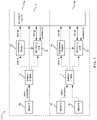
- FIG. 1is a block diagram of a cybersecurity system according to an embodiment of the present invention
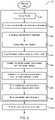
- FIG. 2is a flow chart of a method of analyzing cybersecurity events according to an embodiment of the present invention.
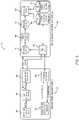
- FIG. 3is a diagram of how data travels through a network traffic analysis platform in communication with a cloud-based data architecture according to an embodiment of the present invention.
- Systems and methods for the detection, identification, and analysis of cybersecurity events in order to support prevention of the persistence of threats, malware or other harmful eventsare provided.
- the systems and methods of the present inventionalso enable a user to find similar anomalous network traffic within a single network or across multiple networks.
- the embodiments hereinidentify correlated activity and can help analysts more quickly investigate potential threats within a network, by providing broader contextual information about how those threats relate to other activity within the network or across a sector or country.
- the embodimentsprovide a means by which analysts may share investigative outcomes and other information about the specific events that have been correlated. This shared information may help bring attention to events that appeared benign on their own, but that may also warrant further investigation and remediation when viewed within a broader context.
- the methods and systems hereinuse analytic models to identify anomalous traffic using network traffic metadata.
- the methodsextract a feature set that describes the behavior of the network traffic.
- a similarity or distance metricis defined that measures the similarity or dissimilarity of these feature sets.
- data mining techniquesare employed, such as locality sensitive hashing, which is applied to the behavior-based features to find pairs or groups of similar events which are considered correlated. Network events are thus analyzed to identify similar behaviors across the one or multiple networks. Data is shared in real time across networks to allow for collaboration and trend identification.
- Embodiments hereinallow cybersecurity analysts to find similar traffic behaviors across multiple computer networks. These systems utilize data sharing data between networks sending that data to resources in the cloud. The system efficiently finds highly correlated traffic and alerts the user that these correlations exist. When an analyst examines a specific alert, they will be able to view a list of alerts that are considered correlated to the alert that exists on the network at their company or enterprise. Further, embodiments herein provide identification of a “trend” of correlated events, which can lead to more effective triage and prioritization of these events than would be possible by examining them individually.
- the priority of the remaining eventscan be immediately elevated, allowing for rapid investigation and remediation across potentially multiple network environments.
- the methods and systems hereinenable data to be shared in real time across networks to allow for collaboration and trend identification.
- FIG. 1is a block diagram of an embodiment of a cybersecurity system according to the present invention.
- the system 10is illustrated as an aggregate of two sub-systems 10 a and 10 b having corresponding networks 8 a and 8 b - 8 c , respectively.
- subsystem 10 adata and/or metadata related to cybersecurity events originates from one network than one network
- subsystem 10 bshows data originating from multiple networks 8 b and 8 c .
- the systems and methods of the present inventionmay be implemented in either subsystem context or both, as provided in the exemplary system 10 of FIG. 1 .
- one or more analytic engines 12process data or metadata originating from one or more networks 8 a - 8 c , also known as networks environments.
- the networkmay be, for example, a physical computer network, a virtual network such as a cloud network, or a hybrid network, or combination thereof.
- the datais fed into the analytic engine 12 , and may consist of, for example, packet capture, summary data (such as Cisco Netflow or other proprietary formats), log data (Zeek or endpoint logs), or others.
- the analytic engine 12may be physically co-located within the networks 8 a - c or may be physically remote, such as in a cloud or virtual environment.
- the analytic engine 12may also consist of a single computer, a cluster of computers, or a distributed computational system.
- the corresponding analytic engine 12Based on the data received from one or a plurality of the networks 8 a - c , the corresponding analytic engine 12 produces events or data records that represent the occurrence of certain types of activity of interest.
- the eventsmay represent activity matching a fixed or predetermined rule set (e.g., malware signatures); anomalous activity in comparison to a model of “normal” network activity; suspicious or noteworthy behaviors according to one or more models or detection algorithms including behavioral models and behavioral detection algorithms.
- the analytic engine(s) 12processes data from the networks 8 a - c of a large number of enterprises within a commercial sector, geographical region, nation, or government.
- FIG. 1illustrates that the events are passed to all three simultaneously. However, it is envisioned that one, two or three of these paths may occur in embodiments of the systems and methods herein. The data may also travel along these paths serially or simultaneously.
- the eventspass through the enrichment engine 14 , which adds additional contextual data describing the circumstances by which the event was produced.
- additional contextual datadescribing the circumstances by which the event was produced.
- Thismay include: information about any rules or signatures responsible for producing the event; characteristics or statistics of the input data (e.g., network traffic data) that caused the event to be produced; IPs, hostnames, or domain names associated with the network traffic; additional predictions or outputs of the model or algorithms producing the event; or other relevant general characteristics of the respective network 8 a - 8 c or input data.
- the contextual data added by the enrichment engine 14is drawn from one or more data sources external to the analytic engine 12 .
- This additional datamay be queried from the data sources using existing contextual data for the event (e.g., domain registrar data may be looked up using domains associated with the event).
- FIG. 1illustrates an embodiment in which the data is transmitted by the analytic engine 12 to the enrichment engine 14 , which gathers the additional data and adds it to the event or event record.
- the additional datamay be gathered and added to the event by the analytic engine 12 itself.
- the additional data enrichmentmay include scoring or additional predictions by way of a scoring engine or other device (not shown), whether by applying rules to existing contextual data or by processing this existing contextual data with additional analytic models.
- eventsare transmitted along one or more of three paths on its way to the correlation engine 18 . These paths are either directly to the correlation engine 18 by the analytic engine 12 , or through one or both of the enrichment engine 14 and monitoring unit 16 .
- the monitoring unit 16is a device or system that ultimately provides and displays correlated data information to an analyst or user at an enterprise.
- the correlation engine 18is a computer or computational system. In some embodiments, the correlation engine 18 may be physically co-located with an analytic engine 12 . In other embodiments, the correlation engine 18 may be physically remote from one or more of the analytic engines 12 .
- the correlation engine 18is configured to perform one or more operations or processes for finding pairs or groups of related events.
- the correlation engine 18further processes the event to generate a feature vector, such as an array of numbers, letters, or symbols, describing the event and its optional contextual data.
- This feature vectormay be further transformed by one or more mathematical operations to form a transformed feature vector.
- the feature vector and transformed feature vectormay be generated by other computational components, for example, by the analytic engine 12 or by a separate feature extraction engine (not shown) and then added to the event prior to the event being transmitted to the correlation engine 18 .
- the correlation engine 18is equipped with a similarity (or distance) metric, which is a mathematical measure of the similarity (or dissimilarity) between two feature vectors.
- a supervised or unsupervised learning algorithmmay be used to tune parameters of the feature transformations and/or similarity metric.
- a body of training datamay be collected comprising a number of events representing behaviors of known malware examples. These events may be labeled by the known malware family of each malware example and used to train a distance metric by one of several supervised metric learning algorithms that are well known in the art. In some embodiments, this training data may be collected automatically by the monitoring unit 16 .
- the correlation engine 18adds each incoming event, including its optional contextual data and/or feature vector, to one or more data stores using a data structure that enables efficient search for events whose feature vectors are similar according to the distance or similarity metric.
- the data storecould comprise a tree-based structure, such as K-D tree or ball tree, or a hash structure with hashes produced by locality sensitive hashing.
- cluster centroids or other cluster parametersare stored, and the new incoming event is used to update these clustering parameters, either in online fashion, or by storing the event along with others and updating the cluster parameters in batches. For each new event arriving at the correlation engine 18 , the correlation engine 18 searches its data store for one or more other, similar events.
- two eventsmay be defined as correlated in a number of ways.
- a thresholdmay be defined or predetermined by a user such that two events are said to be correlated if the similarity or distance metric with the new event falls above or below the threshold.
- the incoming eventcan be assigned to a cluster, and said to be correlated to all the other events in that cluster. Its similarity or distance from several clusters can also be evaluated and a threshold can be defined, where the event is said to be correlated with all the events in the cluster(s) whose similarity or distance falls above/below that threshold. Records of these correlations are stored by the correlation engine 18 for later use.
- information about each incoming event and its corresponding correlated eventsis transmitted back to the analytic engine 12 and/or to the monitoring unit 16 associated with the correlated events.
- This informationcan include any relevant contextual information, features, and identifiers.
- eventsreceive ratings, tags, comments, and other metadata from the analytic engine 12 or monitoring system 16 , either algorithmically or by human interaction. These metadata may be transmitted to the correlation engine 18 and distributed to other analytic engines 12 or monitoring systems 16 associated with each event's correlated events.
- ratings or tags that are applied to one or more of a group of correlated eventsmay be used to produce alerts that are sent to the monitoring systems associated with other events in the group.
- FIG. 2is a flow chart of one embodiment of a method of analyzing cybersecurity events according to the present invention.
- the method 20includes steps S 1 -S 20 .
- Events originating from data, such as network traffic data,are produced by the analytic engine 12 .
- the eventsare queried at S 1 , and then the correlation engine 18 takes these events as input, performs a series of operations namely steps S 2 -S 9 , to identify like events, and stores pairings of like events for future use and display to users.
- S 2network features and behavioral features are extracted.
- any number of relevant features of different feature typesare normalized and transformed into a single representative feature type.
- the details of the eventare used to create feature hashes.
- the feature vectoris hashed using multiple hashing functions that preserve the locality of feature vectors.
- the event and its corresponding feature vectorare inserted into a hash table.
- candidate correlated eventsare found by looking up events that have the same hash in the hash table.
- a distance measureis used to calculate a numeric distance between the feature vectors of the candidate events.
- candidate events within the hash tableare filtered to those below a threshold distance to determine the correlated events.
- the pairings of events that meet the correlation criteriaare stored in a table for later access by users.
- the correlationsare presented to user for each event in the monitoring system 16 . This process is repeated for each event.
- FIG. 3is a diagram of data travelling through a network architecture according to embodiments of the systems and methods of the present invention.
- the components provided in the diagramare connected to and in communication with the other components as indicated by the lines and arrows.
- the cybersecurity system 30has a network traffic analysis platform 32 , hereinafter analysis platform 32 , connected to a behavioral correlation platform 34 , according to an exemplary embodiment of the present invention. While only one analysis platform 32 is illustrated in FIG. 4 , embodiments of the present invention may include a plurality of analysis platforms 32 that all connect to a single behavioral correlation platform 34 .
- the analysis platform(s) 32 and the behavioral correlation platform 34may communicate and/or connect through the same REST API server 42 .
- the platform 32contains a distributed analytics engine 36 . In the embodiment illustrated in FIG.
- the distributed analytics engine 36may be, for example, a multi-node analytics module such as an Apache SparkTM cluster.
- the distributed analytics engine 36performs distributed computing, and in an embodiment, a number of Apache SparkTM applications as well, that provide network detection analytics that produce events in the system 30 .
- eventsWhen events are processed in the system 30 , they are consumed by an event enrichment microservice 38 that performs a number of enrichments on the domains, such as looking up additional information about domains that are used. After the events are enriched by the event enrichment microservice 38 , they are provided to an anonymization microservice 40 that anonymizes the events by removing specific and sensitive data, such as company, entity or enterprise data. This step prevents users from one company from identifying the source of an event from another company or entity. Events are then sent via a REST API server 42 to the behavioral correlation platform 34 , or, cloud-based correlation architecture, such as one provided on Amazon AWS. From the REST API server 42 , events are then placed into a queue 44 . In an embodiment, AWS SQS is used for performing the queuing service.
- a feature extraction container 46consumes events from the queue 44 and performs the feature extraction, normalization, and the feature hashing steps. Then, the event, with its corresponding feature vectors and hashes, are placed into another queue 48 .
- a correlation engine 50consumes this data and performs the correlations of events, which includes reading and writing data to one or two separate databases, as discussed above. These two databases may include: 1) a scalable distributed key value store 52 , such as a Redis key value store, which is used to store the events and their hashes; and 2) a scalable distributed relational database 54 , or RDS database 54 such as PostgreSQL, that contains the correlated event data.
- the monitoring system 58In order to retrieve and present the correlated event data, the monitoring system 58 requests data from a threat event microservice 56 , which queries the correlation REST API server 42 .
- the monitoring system 58may use a number of APIs to get data from that stack as well as to get data from the behavioral correlation platform 34 .
- Correlated eventsare returned from the RDS database 54 , then through the threat event microservice 56 , which are ultimately provided and displayed to an analyst or user via the monitoring system 58 .
- the subject matter described hereincan be implemented in digital electronic circuitry, or in computer software, firmware, or hardware, including the structural means disclosed in this specification and structural equivalents thereof, or in combinations of them.
- the subject matter described hereincan be implemented as one or more computer program products, such as one or more computer programs tangibly embodied in an information carrier (e.g., in a machine readable storage device), or embodied in a propagated signal, for execution by, or to control the operation of, data processing apparatus (e.g., a programmable processor, a computer, or multiple computers).
- a computer program(also known as a program, software, software application, or code) can be written in any form of programming language, including compiled or interpreted languages, and it can be deployed in any form, including as a stand-alone program or as a module, component, subroutine, or other unit suitable for use in a computing environment.
- a computer programdoes not necessarily correspond to a file.
- a programcan be stored in a portion of a file that holds other programs or data, in a single file dedicated to the program in question, or in multiple coordinated files (e.g., files that store one or more modules, sub programs, or portions of code).
- a computer programcan be deployed to be executed on one computer or on multiple computers at one site or distributed across multiple sites and interconnected by a communication network.
- processors suitable for the execution of a computer programinclude, by way of example, both general and special purpose microprocessors, and any one or more processor of any kind of digital computer.
- a processorwill receive instructions and data from a read only memory or a random access memory or both.
- the essential elements of a computerare a processor for executing instructions and one or more memory devices for storing instructions and data.
- a computerwill also include, or be operatively coupled to receive data from or transfer data to, or both, one or more mass storage devices for storing data, e.g., magnetic, magneto optical disks, or optical disks.
- Information carriers suitable for embodying computer program instructions and datainclude all forms of nonvolatile memory, including by way of example semiconductor memory devices, (e.g., EPROM, EEPROM, and flash memory devices); magnetic disks, (e.g., internal hard disks or removable disks); magneto optical disks; and optical disks (e.g., CD and DVD disks).
- semiconductor memory devicese.g., EPROM, EEPROM, and flash memory devices
- magnetic diskse.g., internal hard disks or removable disks
- magneto optical diskse.g., CD and DVD disks
- optical diskse.g., CD and DVD disks.
- the processor and the memorycan be supplemented by, or incorporated in, special purpose logic circuitry.
- the subject matter described hereincan be implemented in a computing system that includes a back end component (e.g., a data server), a middleware component (e.g., an application server), or a front end component (e.g., a client computer mobile device, wearable device, having a graphical user interface or a web browser through which a user can interact with an implementation of the subject matter described herein), or any combination of such back end, middleware, and front end components.
- the components of the systemcan be interconnected by any form or medium of digital data communication, e.g., a communication network. Examples of communication networks include a local area network (“LAN”) and a wide area network (“WAN”), e.g., the Internet.
- LANlocal area network
- WANwide area network
Landscapes
- Engineering & Computer Science (AREA)
- Computer Security & Cryptography (AREA)
- Computer Hardware Design (AREA)
- Computing Systems (AREA)
- General Engineering & Computer Science (AREA)
- Computer Networks & Wireless Communication (AREA)
- Signal Processing (AREA)
- Information Retrieval, Db Structures And Fs Structures Therefor (AREA)
- Data Exchanges In Wide-Area Networks (AREA)
Abstract
Description
Claims (14)
Priority Applications (4)
| Application Number | Priority Date | Filing Date | Title |
|---|---|---|---|
| US16/742,975US11477223B2 (en) | 2020-01-15 | 2020-01-15 | Systems and methods for analyzing cybersecurity events |
| PCT/US2021/013152WO2021146226A1 (en) | 2020-01-15 | 2021-01-13 | Systems and methods for analyzing cybersecurity events |
| US17/958,625US11997122B2 (en) | 2020-01-15 | 2022-10-03 | Systems and methods for analyzing cybersecurity events |
| US18/649,824US20240291843A1 (en) | 2020-01-15 | 2024-04-29 | Systems and methods for analyzing cybersecurity events |
Applications Claiming Priority (1)
| Application Number | Priority Date | Filing Date | Title |
|---|---|---|---|
| US16/742,975US11477223B2 (en) | 2020-01-15 | 2020-01-15 | Systems and methods for analyzing cybersecurity events |
Related Child Applications (1)
| Application Number | Title | Priority Date | Filing Date |
|---|---|---|---|
| US17/958,625ContinuationUS11997122B2 (en) | 2020-01-15 | 2022-10-03 | Systems and methods for analyzing cybersecurity events |
Publications (2)
| Publication Number | Publication Date |
|---|---|
| US20210218764A1 US20210218764A1 (en) | 2021-07-15 |
| US11477223B2true US11477223B2 (en) | 2022-10-18 |
Family
ID=76763478
Family Applications (3)
| Application Number | Title | Priority Date | Filing Date |
|---|---|---|---|
| US16/742,975Active2040-10-10US11477223B2 (en) | 2020-01-15 | 2020-01-15 | Systems and methods for analyzing cybersecurity events |
| US17/958,625ActiveUS11997122B2 (en) | 2020-01-15 | 2022-10-03 | Systems and methods for analyzing cybersecurity events |
| US18/649,824PendingUS20240291843A1 (en) | 2020-01-15 | 2024-04-29 | Systems and methods for analyzing cybersecurity events |
Family Applications After (2)
| Application Number | Title | Priority Date | Filing Date |
|---|---|---|---|
| US17/958,625ActiveUS11997122B2 (en) | 2020-01-15 | 2022-10-03 | Systems and methods for analyzing cybersecurity events |
| US18/649,824PendingUS20240291843A1 (en) | 2020-01-15 | 2024-04-29 | Systems and methods for analyzing cybersecurity events |
Country Status (2)
| Country | Link |
|---|---|
| US (3) | US11477223B2 (en) |
| WO (1) | WO2021146226A1 (en) |
Cited By (2)
| Publication number | Priority date | Publication date | Assignee | Title |
|---|---|---|---|---|
| US20220385692A1 (en)* | 2021-05-25 | 2022-12-01 | IronNet Cybersecurity, Inc. | Identification of invalid advertising traffic |
| US11997122B2 (en) | 2020-01-15 | 2024-05-28 | IronNet Cybersecurity, Inc. | Systems and methods for analyzing cybersecurity events |
Families Citing this family (2)
| Publication number | Priority date | Publication date | Assignee | Title |
|---|---|---|---|---|
| US11425005B2 (en)* | 2020-11-10 | 2022-08-23 | Fleet Defender, Inc. | Controller area network anomaly detection |
| US20230098165A1 (en)* | 2021-09-27 | 2023-03-30 | Microsoft Technology Licensing, Llc | Smart alert correlation for cloud services |
Citations (12)
| Publication number | Priority date | Publication date | Assignee | Title |
|---|---|---|---|---|
| US20040260947A1 (en)* | 2002-10-21 | 2004-12-23 | Brady Gerard Anthony | Methods and systems for analyzing security events |
| US20090234784A1 (en)* | 2005-10-28 | 2009-09-17 | Telecom Italia S.P.A. | Method of Providing Selected Content Items to a User |
| US20100050260A1 (en)* | 2008-08-25 | 2010-02-25 | Hitachi Information Systems, Ltd. | Attack node set determination apparatus and method, information processing device, attack dealing method, and program |
| US20150067852A1 (en)* | 2013-08-28 | 2015-03-05 | International Business Machines Corporation | Malicious Activity Detection of a Processing Thread |
| US20170373950A1 (en)* | 2015-01-27 | 2017-12-28 | Nokia Solutions And Networks Oy | Traffic flow monitoring |
| US20180367553A1 (en)* | 2017-06-15 | 2018-12-20 | Bae Systems Information And Electronic Systems Integration Inc. | Cyber warning receiver |
| US20190354457A1 (en)* | 2018-05-21 | 2019-11-21 | Oracle International Corporation | Anomaly detection based on events composed through unsupervised clustering of log messages |
| US10491453B2 (en)* | 2012-12-04 | 2019-11-26 | International Business Machines Corporation | Correlating computing network events |
| US20200089877A1 (en)* | 2016-06-16 | 2020-03-19 | Nippon Telegraph And Telephone Corporation | Malicious event detection device, malicious event detection method, and malicious event detection program |
| US20200106797A1 (en)* | 2015-12-15 | 2020-04-02 | Flying Cloud Technologies, Inc. | Data Surveillance for Privileged Assets on a Computer Network |
| US20200314127A1 (en)* | 2019-03-27 | 2020-10-01 | Microsoft Technology Licensing, Llc | Dynamic monitoring, detection of emerging computer events |
| US20210044563A1 (en)* | 2019-08-06 | 2021-02-11 | International Business Machines Corporation | In-line cognitive network security plugin device |
Family Cites Families (8)
| Publication number | Priority date | Publication date | Assignee | Title |
|---|---|---|---|---|
| US7684320B1 (en)* | 2006-12-22 | 2010-03-23 | Narus, Inc. | Method for real time network traffic classification |
| US9462008B2 (en)* | 2014-05-16 | 2016-10-04 | Cisco Technology, Inc. | Identifying threats based on hierarchical classification |
| US9306965B1 (en)* | 2014-10-21 | 2016-04-05 | IronNet Cybersecurity, Inc. | Cybersecurity system |
| KR102059688B1 (en)* | 2015-01-13 | 2019-12-27 | 한국전자통신연구원 | Cyber blackbox system and method thereof |
| US10536357B2 (en)* | 2015-06-05 | 2020-01-14 | Cisco Technology, Inc. | Late data detection in data center |
| WO2019075338A1 (en)* | 2017-10-12 | 2019-04-18 | Charles River Analytics, Inc. | Cyber vaccine and predictive-malware-defense methods and systems |
| US20190266257A1 (en)* | 2018-02-28 | 2019-08-29 | Laserlike, Inc. | Vector similarity search in an embedded space |
| US11477223B2 (en) | 2020-01-15 | 2022-10-18 | IronNet Cybersecurity, Inc. | Systems and methods for analyzing cybersecurity events |
- 2020
- 2020-01-15USUS16/742,975patent/US11477223B2/enactiveActive
- 2021
- 2021-01-13WOPCT/US2021/013152patent/WO2021146226A1/ennot_activeCeased
- 2022
- 2022-10-03USUS17/958,625patent/US11997122B2/enactiveActive
- 2024
- 2024-04-29USUS18/649,824patent/US20240291843A1/enactivePending
Patent Citations (12)
| Publication number | Priority date | Publication date | Assignee | Title |
|---|---|---|---|---|
| US20040260947A1 (en)* | 2002-10-21 | 2004-12-23 | Brady Gerard Anthony | Methods and systems for analyzing security events |
| US20090234784A1 (en)* | 2005-10-28 | 2009-09-17 | Telecom Italia S.P.A. | Method of Providing Selected Content Items to a User |
| US20100050260A1 (en)* | 2008-08-25 | 2010-02-25 | Hitachi Information Systems, Ltd. | Attack node set determination apparatus and method, information processing device, attack dealing method, and program |
| US10491453B2 (en)* | 2012-12-04 | 2019-11-26 | International Business Machines Corporation | Correlating computing network events |
| US20150067852A1 (en)* | 2013-08-28 | 2015-03-05 | International Business Machines Corporation | Malicious Activity Detection of a Processing Thread |
| US20170373950A1 (en)* | 2015-01-27 | 2017-12-28 | Nokia Solutions And Networks Oy | Traffic flow monitoring |
| US20200106797A1 (en)* | 2015-12-15 | 2020-04-02 | Flying Cloud Technologies, Inc. | Data Surveillance for Privileged Assets on a Computer Network |
| US20200089877A1 (en)* | 2016-06-16 | 2020-03-19 | Nippon Telegraph And Telephone Corporation | Malicious event detection device, malicious event detection method, and malicious event detection program |
| US20180367553A1 (en)* | 2017-06-15 | 2018-12-20 | Bae Systems Information And Electronic Systems Integration Inc. | Cyber warning receiver |
| US20190354457A1 (en)* | 2018-05-21 | 2019-11-21 | Oracle International Corporation | Anomaly detection based on events composed through unsupervised clustering of log messages |
| US20200314127A1 (en)* | 2019-03-27 | 2020-10-01 | Microsoft Technology Licensing, Llc | Dynamic monitoring, detection of emerging computer events |
| US20210044563A1 (en)* | 2019-08-06 | 2021-02-11 | International Business Machines Corporation | In-line cognitive network security plugin device |
Cited By (3)
| Publication number | Priority date | Publication date | Assignee | Title |
|---|---|---|---|---|
| US11997122B2 (en) | 2020-01-15 | 2024-05-28 | IronNet Cybersecurity, Inc. | Systems and methods for analyzing cybersecurity events |
| US20220385692A1 (en)* | 2021-05-25 | 2022-12-01 | IronNet Cybersecurity, Inc. | Identification of invalid advertising traffic |
| US11856023B2 (en)* | 2021-05-25 | 2023-12-26 | IronNet Cybersecurity, Inc. | Identification of invalid advertising traffic |
Also Published As
| Publication number | Publication date |
|---|---|
| US11997122B2 (en) | 2024-05-28 |
| US20240291843A1 (en) | 2024-08-29 |
| US20210218764A1 (en) | 2021-07-15 |
| WO2021146226A1 (en) | 2021-07-22 |
| US20230033117A1 (en) | 2023-02-02 |
Similar Documents
| Publication | Publication Date | Title |
|---|---|---|
| Noor et al. | A machine learning-based FinTech cyber threat attribution framework using high-level indicators of compromise | |
| US11997122B2 (en) | Systems and methods for analyzing cybersecurity events | |
| Patgiri et al. | An investigation on intrusion detection system using machine learning | |
| US10909241B2 (en) | Event anomaly analysis and prediction | |
| US20200389495A1 (en) | Secure policy-controlled processing and auditing on regulated data sets | |
| US20210019674A1 (en) | Risk profiling and rating of extended relationships using ontological databases | |
| Jaseena et al. | Issues, challenges, and solutions: big data mining | |
| US11269995B2 (en) | Chain of events representing an issue based on an enriched representation | |
| US12063229B1 (en) | System and method for associating cybersecurity intelligence to cyberthreat actors through a similarity matrix | |
| Xiao et al. | From patching delays to infection symptoms: Using risk profiles for an early discovery of vulnerabilities exploited in the wild | |
| EP4575859A2 (en) | Automatically grouping malware based on artifacts | |
| Negoita et al. | Enhanced security using elasticsearch and machine learning | |
| Kozik et al. | Pattern extraction algorithm for NetFlow‐based botnet activities detection | |
| Vinayakumar et al. | Improved DGA domain names detection and categorization using deep learning architectures with classical machine learning algorithms | |
| Santanna et al. | Booter blacklist: Unveiling DDoS-for-hire websites | |
| CN113572781A (en) | Method for collecting network security threat information | |
| Liao et al. | An Intelligent Cyber Threat Classification System | |
| Punna et al. | Responsive Mechanism for Cloud Offloading Data Intrusion Detection Using Spark—Machine Learning Model | |
| Villanueva-Miranda et al. | Detecting malware activity using public search data | |
| Andrade et al. | Application of big data analytic in cybersecurity | |
| Sopuru et al. | Modeling A malware detection and categorization system based on seven network flow-based features | |
| CN113343231A (en) | Data acquisition system of threat information based on centralized management and control | |
| Makkar et al. | Network intrusion detection in an enterprise: unsupervised analytical methodology | |
| Muse et al. | Online Log Analysis (OLA) for Malicious User Activities | |
| Chen et al. | A study on security trend based on news analysis |
Legal Events
| Date | Code | Title | Description |
|---|---|---|---|
| AS | Assignment | Owner name:IRONNET CYBERSECURITY, INC., MARYLAND Free format text:ASSIGNMENT OF ASSIGNORS INTEREST;ASSIGNORS:LOWNEY, MICHAEL;SCHAFER, PHILLIP BAKER;CONN, ALEXANDER MICHAEL;AND OTHERS;SIGNING DATES FROM 20200109 TO 20200114;REEL/FRAME:051517/0952 | |
| FEPP | Fee payment procedure | Free format text:ENTITY STATUS SET TO UNDISCOUNTED (ORIGINAL EVENT CODE: BIG.); ENTITY STATUS OF PATENT OWNER: LARGE ENTITY | |
| STPP | Information on status: patent application and granting procedure in general | Free format text:NON FINAL ACTION MAILED | |
| STPP | Information on status: patent application and granting procedure in general | Free format text:RESPONSE TO NON-FINAL OFFICE ACTION ENTERED AND FORWARDED TO EXAMINER | |
| STPP | Information on status: patent application and granting procedure in general | Free format text:FINAL REJECTION MAILED | |
| STPP | Information on status: patent application and granting procedure in general | Free format text:RESPONSE AFTER FINAL ACTION FORWARDED TO EXAMINER | |
| STPP | Information on status: patent application and granting procedure in general | Free format text:NOTICE OF ALLOWANCE MAILED -- APPLICATION RECEIVED IN OFFICE OF PUBLICATIONS | |
| STPP | Information on status: patent application and granting procedure in general | Free format text:PUBLICATIONS -- ISSUE FEE PAYMENT RECEIVED | |
| STPP | Information on status: patent application and granting procedure in general | Free format text:PUBLICATIONS -- ISSUE FEE PAYMENT VERIFIED | |
| STCF | Information on status: patent grant | Free format text:PATENTED CASE | |
| AS | Assignment | Owner name:FERROUS INVESTORS LP, DISTRICT OF COLUMBIA Free format text:SECURITY INTEREST;ASSIGNORS:IRONNET CYBERSECURITY, INC.;IRONCAD LLC;REEL/FRAME:065194/0555 Effective date:20231011 | |
| AS | Assignment | Owner name:ITC GLOBAL ADVISORS, LLC, DISTRICT OF COLUMBIA Free format text:SECURITY INTEREST;ASSIGNORS:IRONNET CYBERSECURITY, INC.;IRONCAD LLC;REEL/FRAME:066759/0535 Effective date:20240221 Owner name:FERROUS INVESTORS LP, DISTRICT OF COLUMBIA Free format text:SECURITY INTEREST;ASSIGNORS:IRONNET CYBERSECURITY, INC.;IRONCAD LLC;REEL/FRAME:066759/0535 Effective date:20240221 Owner name:IRONCAD LLC, VIRGINIA Free format text:RELEASE BY SECURED PARTY;ASSIGNOR:FERROUS INVESTORS LP, AS SECURED PARTY;REEL/FRAME:066759/0501 Effective date:20240221 Owner name:IRONNET CYBERSECURITY, INC., VIRGINIA Free format text:RELEASE BY SECURED PARTY;ASSIGNOR:FERROUS INVESTORS LP, AS SECURED PARTY;REEL/FRAME:066759/0501 Effective date:20240221 |