RELATED APPLICATIONThe present application claims priority to U.S. Provisional Application 62/915,006, filed on Oct. 14, 2019, and incorporates that application in its entirety by reference.
FIELDThe present invention relates to sleep, and more particularly to detecting sleep sounds such as snoring and apneas in a noisy environment.
BACKGROUNDModern beds are much improved from being wooden slabs upon which mattresses may be placed. A modern bed may be adjustable in configuration, with the ability to move the head and/or foot portion of the mattress to different positions. Modern beds may also include various heaters, power supplies, fans and other elements to enable such improvements. Additionally, modern bedrooms are also noisy environments, with everything from white noise machines, to fans, to heaters, and other sources of noise and vibration.
BRIEF DESCRIPTION OF THE FIGURESThe present invention is illustrated by way of example, and not by way of limitation, in the figures of the accompanying drawings and in which like reference numerals refer to similar elements and in which:
FIG. 1 is a block diagram of one embodiment of the environment in which the improved sleep noise detection system may be used.
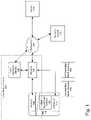
FIG. 2 is a block diagram of one embodiment of the sleep noise detection system.
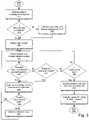
FIG. 3 is an overview flowchart of one embodiment of using the sleep noise detection system.
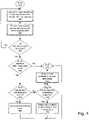
FIG. 4 is a flowchart of one embodiment of a detection cycle.
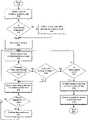
FIG. 5 is a flowchart of one embodiment of updating baselines.
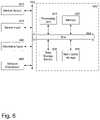
FIG. 6 is a block diagram of one embodiment of a computer system which may be used with the present system.
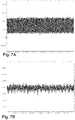
FIG. 7A illustrates an exemplary signal from a piezoelectric sensor with a bed fan turned on.
FIG. 7B illustrates an exemplary signal from the piezoelectric sensor, with a bed fan turned off.
DETAILED DESCRIPTIONOne way to analyze sleep is to utilize one or more sensors in a bed, or associated with a bed, to detect user motion and/or user noises. In one embodiment, a piezoelectric sensor may be placed under a mattress to detect such motions. The data from the piezoelectric sensor may be analyzed, in one embodiment in accordance with co-pending application U.S. application Ser. No. 16/601,567 entitled “Sleep Detection and Analysis System,” filed on Oct. 14, 2019 (Our Ref. 8689P233), and incorporated herein by reference. Although the piezoelectric sensor senses tiny motions and vibrations, the data may be analyzed to identify respiration as well as sleep sounds. Sleep sounds, in this context refers to incidents of apnea and snoring. Although the term “sleep sound” is used, the detection of such sounds may be accomplished through analysis of motion data, rather than microphone recording, in one embodiment. In another embodiment, data from a microphone and from motion sensors may be combined to detect sleep sounds.
However, in a modern bedroom, there are a large number of noise sources, including fans and motors within the bed itself, external IoT controlled devices, external controlled devices such as air conditioners and heaters, and uncontrolled noise sources. In one embodiment, this is particularly acute for smart beds, which provide heating and cooling built into the bed itself, creating in-situ noise sources. Noise, in this context, encompasses not just sounds but also vibrations and other motions which are imparted to the sleeping area by external devices and environmental effects rather than the user's respiration and heartbeat. When using the sensor system detecting motion, vibration, and/or sound, noise sources may cause false positives (indications of problematic sleep sounds when there are none) and false negatives (failure to detect sleep sounds when they are present, due to the noise).
The present system ensures that such external noise sources do not taint the data, to reduce false positives and false negatives, and provides a more accurate record of the user's sleep sounds. Additionally, the present system, in one embodiment, may be used to track changes in sound patterns from the user and from the environment. This may lead to early warning of health issues, as well as issues with the devices in the bedroom.
The following detailed description of embodiments of the invention makes reference to the accompanying drawings in which like references indicate similar elements, showing by way of illustration specific embodiments of practicing the invention. Description of these embodiments is in sufficient detail to enable those skilled in the art to practice the invention. One skilled in the art understands that other embodiments may be utilized, and that logical, mechanical, electrical, functional and other changes may be made without departing from the scope of the present invention. The following detailed description is, therefore, not to be taken in a limiting sense, and the scope of the present invention is defined only by the appended claims.
FIG. 1 is a block diagram of one embodiment of the environment in which the improved sleep noise detection system may be used. The system includes a sleep analyticssystem including sensors120,receiver130,server160, andanalytics engine170. In one embodiment, the client portion105 of the sleep analytics system100 is located in a user's home and includes thesensors120 andreceiver130.
In one embodiment, thereceiver130 is coupled tosensors120 in thebed150 via a cable. In another embodiment the connection may be wireless, such as low power Bluetooth (BLE), Wi-Fi, or another type of wireless connection. In one embodiment,receiver130 also may be coupled to acontroller140, which controlsbed150. In one embodiment, this connection is a wired connection. Alternatively, it may be a wireless connection.
In one embodiment, thesensors120 may include one or more sensors positioned inbed150 which are used to measure the user's sleep parameters, which in one embodiment includes sleep phase, heartbeat, and respiration including respiratory events. In one embodiment,sensors120 may include sensors which are not inbed150 but positioned in the room in which thebed150 is located. In one embodiment, one or more these additional sensors may be built intoreceiver130. In one embodiment, there may be external sensors which may be coupled toreceiver130 either via wires or wirelessly. Thereceiver130 collects data from the one or more sensors, for transmission to theserver160.
In one embodiment, thebed150 may be a smart bed including bed adjustment features155, such as air conditioners, heaters, fans and other heating and/or cooling systems, as well as motors and other position adjustment elements. In one embodiment,controller140 controls these bed adjustment features155. These bed adjustment features155 however impart noise to the system, which may impact the ability ofsensors120 to accurately evaluate the user's sleep. In addition to the bed adjustment features155, other noise sources may be IoT controllednoise sources190, anduncontrolled noise sources195. An IoT controlled noise source, for example, may be a network connected room heating or air conditioning system, white noise machine, or other sources of vibration or noise in the room which may be controlled remotely via a network.Uncontrolled noise sources195 may be those sources which cannot be controlled via a network, which may include non-networked heating or air conditioning system, white noise machine, or other sources of vibration or noise in the room. Additionally,uncontrolled noise sources195 may include external noise sources such as vehicles driving by, birds or other animal noises, noise from nearby residences or commercial facilities, and other neighborhood noises. In one embodiment, the present system attempts to address the impact of all of these noise sources on the sensor data, to provide a more accurate reflection of the user's sleep parameters, including respiratory incidents.
In one embodiment, thereceiver130 is coupled to theserver160 via anetwork150. The server portion includesserver160 andanalytics engine170, which in one embodiment are located off-site, removed from the user. In another embodiment, the server may be a local system, such as a computer system running an application. Thenetwork150 may be the Internet, and thereceiver130 may send data to the server via a wireless network, such as Wi-Fi or the cellular network. In one embodiment,server160 andanalytics engine170 may be on the same physical device. In one embodiment, server and/oranalytics engine170 may include a plurality of devices. In one embodiment, one or both of theserver170 and theanalytics engine170 may be using cloud computing and may be implemented as a distributed system. In one embodiment, a portion of the analytics and/or preprocessing of the data may be performed on thereceiver130 and/oruser computer device180, while another portion may be done onremote analytics engine170.
FIG. 2 is a block diagram of one embodiment of the sleep noise detection system. Theuser side elements210 in one embodiment may be included in the bed, receiver, and user environment, as discussed above. Theanalysis engine250 may be implemented in a server, including a processor and memory. In one embodiment the server may be a cloud-based server where the processing is performed by one or more distributed processors, and the data is stored in a cloud data structure. However, the detectors, logics, and controls of theanalysis engine250 are implemented by a processing system.
Theuser side elements210 can include one or more offans212,motors214, heaters/coolers216, power supplies218. These elements are present in smart beds, to provide controls for comfort and to improve sleep.
User side elements210 further include in one embodiment one ormore sensors220. Thesensors220, in one embodiment, include a motion sensor. The motion sensor may be a piezoelectric pressure sensor. The sensors may further include a temperature sensor, a microphone to detect audio data, a humidity sensor, light sensor, and other sensors.Sensors220 may be embedded within the bed frame, a mattress, in a sensor pod positioned under or over the mattress, or off the bed. In one embodiment,sensors220 may be distributed in multiple locations.
Timers225 control the timing of various actions, and in one embodiment, control the periodic sensing, data processing, and other activities as will be described below.
Data collector230 in one embodiment collects data from the various sensors and controlled devices. In one embodiment, thedata collector230 pre-processes the data so that pre-processed data is sent to theanalysis engine250. In one embodiment,data collector230 receives data from a plurality of sensors and devices, each with a time stamp. In one embodiment,data collector230 combines the data from the plurality of sensors and devices. The data is stored in the buffer/memory235, in one embodiment.
Noise source controller240 in one embodiment controls the controllable noise sources, which include noise sources such as thefans212,motors214, heater/coolers216, and other portions of the bed, as well as external noise sources which can be controlled via a network. In one embodiment, for external noise sources, thenoise source controller240 interfaces with IoT (internet of things) controls243. Thenoise source controller240 may turn off noise sources periodically, or in response to a detection of an event, as will be described below.
FIGS. 7A and 7B illustrate the significant impact that a bed fan or similar noise source has on the data received from a piezoelectric sensor. As can be seen inFIG. 7A, the noise from the fan in the bed overwhelms the signal, and it is difficult to discern the presence of any useful data. In contrast, when the fan is off, as shown inFIG. 7B, it is easy to discern the heart rate pulses (the prominent spikes) in the periodic undulation of approximately 5 second period of respiration. By supplementing the real-time measurements with environmental noise impacts with the sampled data without those noise sources, a more accurate determination of sleep parameters can be made. Therefore,noise source controller240 can be used to turn off noise sources. In one embodiment, this is done periodically, to build a baseline of data without the noise. In one embodiment, this is done after an event is detected, which should be verified.
Theuser side elements210 further include acommunication logic247 to send data to theanalysis engine250. In one embodiment, thecommunication logic247 also may send instructions to theuser side elements210. In one embodiment, theanalysis engine250 determines when the controllable noise sources should be turned off, to either set a baseline or validate an identified event. In one embodiment, thecommunication logic247 is also used to communicate between the receiver associated with the system and the user's mobile device or other device which is used to interface the user with the system.
Theuser interface245 in one embodiment includes basic user interface features on the receiver. These basic user interface features may include one or more buttons and/or LEDs, or a small display screen. In one embodiment, theuser side elements210 further include a mobile application running on the user's mobile device, which interfaces with the receiver. Such a mobile application provides abetter user interface245 enabling the user to see the collected data and results of the associated analysis.
Theanalysis engine250 in one embodiment is a computer including a processor and memory, or a plurality of processors and distributed memories.
Theanalysis engine250 includes a sender/receiver255 to receive data from theuser side elements210, and send data to theuser side elements210. In one embodiment, the receiver/sender255 sends data to the user's mobile device as well, and receives data from the user's mobile device.
Theanalysis engine250 includes a buffer andmemory260, to store data from the user side elements. This data, in one embodiment, is preprocessed data. In one embodiment, this is raw data. In one embodiment, thecommunications logic247 sends both types of data, and both are stored inmemory260.
Sleepcharacteristic logic265 analyzes the data from the sensors, to identify various sleep characteristics.Sleep characteristics265 include sleep phase, sleep position, sleep sounds, sleep events such as apnea events, or snoring events.
User side element controls270 send control signals to the user side elements. In one embodiment, those control signals may include signals to adjust the bed configuration, to turn on or off noise sources, to adjust how frequently the sensor collects data, how frequently sensor data is sent to theanalysis engine250, etc.
Base level identifiers275 identify base level of signals for various configurations. Base levels, in one embodiment, are a baseline signal which is received under various circumstances when there is no sleep event occurring. In one embodiment, the system identifies a plurality of baseline levels, for various configurations of the bed and the controllable noise sources.
Continuous updating logic280 continuously updates the baseline data, as additional data is received. In one embodiment, thecontinuous updating logic280 reprocesses the data as new information is received, to have accurate baseline information about the environment and the user.
Adaptive timers285 set timing for the noise source controller to turn off the controllable noise sources. The adaptive timers in one embodiment set timing based on a likelihood that sleep sounds or sleep events have been detected. In one embodiment, theadaptive timers285 are adjusted based on a variety of factors including sleep position, sleep phase, sensor data, and/or analyzed sleep sound data. In one embodiment, theadaptive timers285 further are adjusted based on this user's analyzed data results. For example, while all users are more likely to snore or have apnea events while sleeping on their back, some users may have a significant impact on their sleep sounds based on season, temperature, time of day, and other factors. In one embodiment, theadaptive timers285 may adjust the timing for turning off the noise sources based on such additional factors. In one embodiment,adaptive timers285 may also take into account the potential impact of turning off the noise sources on the user's sleep quality. For example, suddenly turning off a white noise machine when the user is in a light sleep phase may trigger the user to wake, which may not be a good outcome. Therefore, in one embodiment, theadaptive timers285 may adjust the timing of such actions to maximize the ability to detect sleep events, and minimize the disruption to the user's sleep.
Confidence interval logic290 assigns a confidence interval for the identification of sleep events, and determines whether the confidence interval is above a threshold. In one embodiment, the system has a base threshold between 75% and 95% to minimize false positives and false negatives. If the accuracy/confidence interval is not above the threshold, the system continues to sample the data. In one embodiment, this process may exit if after a set number of samplings no increase in accuracy are obtained.
Adjustor andalert systems295 in one embodiment, utilize the determinations of theanalysis engine250 to send control signals to theuser side elements210. In one embodiment, the control signals may be used to adjust the environment of the user. For example, the bed may be adjusted to address a sleep issue detected. In one embodiment, the system may adjust one or more of the bed configurations, including angles of bed parts, temperature, air flow, etc., or exterior systems including the white noise machine, thermostat, lights, etc. In one embodiment, the adjustor andalert system295 may also be used to adjust the system to enhance the user's sleep, even if no sleep event is detected. For example, a user hovering on the edge of deep sleep may do better if the temperature is lowered. The system may therefore utilize the adjustor andalert system295 to lower the ambient temperature of the room in which the user is sleeping.
In one embodiment, the control signals may be used to send an alert to wake the user, or to trigger them to adjust their sleep position to address a detected issue. In one embodiment, the alert system may send an alert to a third party, if necessary.
FIG. 3 is an overview flowchart of one embodiment of using the sleep noise detection system. The process starts atblock310. In one embodiment, the process starts when the sensor system is activated. In one embodiment, this may be after it is initially set up, or after it has been unplugged, or powered down.
At block315, the process initializes the sleep noise detection system. In one embodiment, this includes ensuring that the connections between the sensor and the receiver, and the controller and the receiver, and any IoT systems have been successfully established. In one embodiment, initialization further includes adjusting the bed to a baseline position, if the bed is unoccupied. In one embodiment, for a configurable bed, the default position may be flat. In one embodiment, the default position may be the user's default position, if that is known. Many users find a bed configuration they prefer, and then program that as their default position.
Atblock320, the process determines whether there is already a baseline for the system. A baseline is a prior analyzed data set of the noise profile of the sleeping area including the bed adjustment parts, IoT controlled noise sources, and uncontrolled noise sources. In one embodiment, the baseline depends on the location of the user, e.g. if the user is in a new room, or new house, the system needs to set a new baseline, because it will have different environmental sound factors. In one embodiment, the system utilizes a movement sensor to determine whether the system has been physically moved to a new location. If so, in one embodiment, the system resets the baseline for the environmental factors. In one embodiment, global positioning system (GPS) or other location data is used to determine whether the system has been moved. In one embodiment, the location data may be obtained from the user device associated with the system.
If there is no existing baseline, which in one embodiment means that the sensor system was either newly initialized or moved since a baseline was set up, atblock325 sensor data is collected with devices switched on and off. In one embodiment, sensor data may be collected for a variety of available configurations of the noise sources as well as the bed geometry. For example, in a system in which the bed has a heater, and a cooler, and the bed geometry may include a raised head, and raised feet, and there is a separate white noise machine, the following sets of data may be collected as part of the baseline:
For each bed configuration:
- baseline sound value with heater on/off, no user on bed
- baseline sound value with heater on/off, user on bed
- baseline sound value with cooler on/off, no user on bed
- baseline sound value with cooler on/off, user on bed
- baseline sound value with fan at setting1,2,3, n, no user on bed
- baseline sound value with fan at setting1,2,3, n, user on bed
- baseline sound value with motor on/off, no user on bed
- baseline sound value with motor on/off, user on bed
- baseline sound value with white noise machine on/off, no user on bed
- baseline sound value with white noise machine on/off, user on bed
In one embodiment, the system further evaluates baselines for the various combinations of the above. Of course, if there are additional noise sources those can also be taken into account. In one embodiment, the baselines are built up over time. The process then continues to block330. If there are existing baselines, the process continues directly to block330.
At block330, the process detects the user on the bed. In one embodiment, a pressure sensor or similar simple sensor is used to detect the user's presence on the bed. In one embodiment, in response to this detection the sample rate of the sensors is increased to collect user data.
At block335, sensor data is collected. In one embodiment, if no baseline data is yet present, the baseline data is updated with the user on the bed. In one embodiment, this is done when the user is not yet asleep, to ensure that there are no sleep sounds (e.g. apneas and snoring).
Atblock340, the process determines whether a potential snore or respiratory event is detected, and if so, whether the potential is above a threshold. In one embodiment, the analysis of the sensor data enables the system to extract heartrate, respiration, as well as apnea and snore data (when present). Such data is assigned a probability, in one embodiment, ranging between 1% and 99%. In one embodiment, if the probability that a snore is detected is above 50% (or 75%) the process continues to block350. Otherwise, the process, atblock345 determines whether it is time to collect sensor data, for accuracy. In one embodiment, the system periodically performs such a test even if the potential of a sleep sound is below the threshold. If it is time for testing, the process continues to block350.
If it is not time for testing, atblock365 the process determines whether the sleep period is over. If not, the process returns to block335 to continue collecting sensor data. If the sleep period is over, atblock370 the baseline data sets are updated based on the analyzed new collected data, in one embodiment. By continuously updating the baseline, the system can evaluate these updates to determine whether they are indicative of an issue, and if necessary, atblock375 triggering an alert. The process then ends atblock380.
If the system determines that it's time to do a more controlled analysis, because the potential respiratory event/snore threshold is above a limit, or a timer indicates that it should be done, the process atblock350 cycles the noise making devices and collects sensor data. In one embodiment, the cycling of noise making devices attempts to eliminate the extraneous noise sources for more accurate recording. In one embodiment, the cycling may be rapid enough to not impact the temperature or other controls. In one embodiment, the cycle time may be sub-5-seconds. In one embodiment, the cycle time may be between 1 second and 30 seconds. In one embodiment, the length of the cycle may depend on the evaluation of the collected data.
Atblock355, the process determines whether this more accurate data indicates that an adjustment should be made, or an alert sent. If so, the detected issue is addressed, atblock360. The process then returns to continue collecting sensor data.
Of course, though this is shown as a flowchart, in one embodiment it is implemented as an interrupt-driven system, such that the data collection is continuous, and the evaluation is triggered by timers and interrupts. Additionally, the ordering of the evaluations checking is arbitrary. For this flowchart, and the below flowchart, unless the processes are dependent on each other, the ordering of the blocks in the flowchart may be altered, without departing from the invention.
FIG. 4 is a flowchart of one embodiment of a detection cycle. The process starts atblock410. In one embodiment, this process corresponds to blocks350-360 inFIG. 3.
Returning toFIG. 4, atblock420, the system turns on/off in rapid burst the noisemaking devices in the environment that can be controlled by the system. This includes the bed adjustment parts as well as IoT controlled noise sources, in one embodiment. At each cycle, atblock425, the sensor data is sampled to obtain “clean” sensor data without influence from external noise sources. In one embodiment, the cycling of these systems is rapid enough that the user should not experience any changes in their sleep environment as a result. In one embodiment, if there are noise sources which are not controlled (for example central heating or cooling in the room) in one embodiment, the system determines when such noise sources are off, and times the cycling during those periods. The system uses the sampled sensor data to identify sleep sounds, including apneas and/or snoring. In one embodiment, the identification is assigned a confidence interval.
Atblock430, the process determines whether the confidence interval for the identification is above a threshold. In one embodiment, the system has a base threshold between 75% and 95% to minimize false positives and false negatives. If the accuracy/confidence interval is not above the threshold, the system continues to sample the data. In one embodiment, this process may exit if after a set number of samplings no increase in accuracy are obtained. For example, if the accuracy does not increase above the prior threshold after three additional samples, the process may go directly to block435, even if the confidence interval is below the threshold.
Atblock435, the process determines whether a sleep sound was identified. The sleep sound may be indication of an apnea, snoring, or another respiratory issue. For example, mouth breathing may be identified as well.
If no such issue is identified, this process ends atblock440. This means the process returns to block335, to continue monitoring.
If an issue is identified, the process determines atblock440 whether a bed adjustment is available and useful in this situation. If so, atblock460 the bed is adjusted. For example, for snoring, it is known that raising the bed can stop someone from snoring. Similarly, for apnea it is known that turning to the side can improve such breathing issues. Therefore, a bed adjustment, if available, may be used to resolve the issue. The process then ends.
If a bed adjustment is not available and/or not useful, atblock445 the process determines whether the issue is urgent requiring immediate attention. If so, at block455 the user may be woken via an alarm and may be alerted to the issue. In one embodiment, this path is only taken if failing to wake the user may result in endangering the user's health. Otherwise, a user notification is prepared to inform the user after sleep, atblock450. The process then ends.
FIG. 5 is a flowchart of one embodiment of updating baselines. The process starts atblock510.
Atblock520, each noise source (e.g. system within the sleep environment that makes noise or other vibrations) is identified. In one embodiment, this includes in-bed devices and external IoT devices. In one embodiment, this may also include external non-IoT devices, which are either identified by the user, or identified based on their signal.
Atblock530, the bed geometries are identified. In one embodiment, bed geometries include the configurations of the bed. In one embodiment, for a smoothly moving bed which may have thousands of configurations, a set-wise set of possible geometries are identified. In one embodiment, the set of geometries are constrained by the geometries used by the user. That is, if the user does not for example ever elevate the foot of the bed higher than the head of the bed, those geometries may be excluded from further evaluation.
Atblock540, the initial baselines are built for the occupied and unoccupied bed for noise/vibrations. As noted above, this may be done by cycling the various noise sources individually, and in combination.
Atblock550, in one embodiment, user specific baselines are set. In one embodiment, the user specific baselines include the user's impact on the bed and may be different for each user occupying the bed. In one embodiment, a user specific baseline also includes the user's standard heartrate, respiration, and sleep sounds as recorded over the sleep cycle.
Atblock560, the process updates the baselines, based on sensor data collected. In one embodiment, updating occurs after each sleep session. In one embodiment, updating occurs after a certain number of sleep sessions. In one embodiment, updating only occurs when the difference between the baseline and the currently recorded data is above a threshold.
Atblock570, the process determines whether the change in the baseline indicates a potential issue. In one embodiment, a potential issue may be a potential issue for the user, e.g. the pattern of change over time in the user's heart rate, respiration, or sleep sounds indicates that the user is developing a problem, such as sleep apnea or even just a sinus infection which changes the user's breathing. The potential issue may be one for the noise sources, e.g. the motors in the bed or coils in the cooler becoming less efficient.
Atblock580, the appropriate entity is alerted about the potential issue. In one embodiment, the user may be alerted about his or her own sleep pattern changes which indicates a potential problem. In one embodiment, the user may be alerted about issues with the noise sources as well. The alert may suggest for example that the user replace the motor or clean the coils. In one embodiment, the alert may also be to a retailer and/or manufacturer, as appropriate. For example, if the system is under warranty, the manufacturer may be alerted that a warranty service should be scheduled or that a replacement part should be sent. In one embodiment, cumulative data over time may also be provided to a manufacturer. This is useful in monitoring the performance of high-end beds over time in real-world environments. The process then ends atblock590.
FIG. 6 is a block diagram of one embodiment of a computer system that may be used with the present invention. It will be apparent to those of ordinary skill in the art, however that other alternative systems of various system architectures may also be used.
The data processing system illustrated inFIG. 6 includes a bus or other internal communication means640 for communicating information, and aprocessing unit610 coupled to thebus640 for processing information. Theprocessing unit610 may be a central processing unit (CPU), a digital signal processor (DSP), or another type ofprocessing unit610.
The system further includes, in one embodiment, a random-access memory (RAM) or other volatile storage device620 (referred to as memory), coupled tobus640 for storing information and instructions to be executed byprocessor610.Main memory620 may also be used for storing temporary variables or other intermediate information during execution of instructions by processingunit610.
The system also comprises in one embodiment a read only memory (ROM)650 and/orstatic storage device650 coupled tobus640 for storing static information and instructions forprocessor610. In one embodiment, the system also includes adata storage device630 such as a magnetic disk or optical disk and its corresponding disk drive, or Flash memory or other storage which is capable of storing data when no power is supplied to the system.Data storage device630 in one embodiment is coupled tobus640 for storing information and instructions.
The system may further be coupled to anoutput device670, such as a cathode ray tube (CRT) or a liquid crystal display (LCD) coupled tobus640 throughbus660 for outputting information. Theoutput device670 may be a visual output device, an audio output device, and/or tactile output device (e.g. vibrations, etc.)
Aninput device675 may be coupled to thebus660. Theinput device675 may be an alphanumeric input device, such as a keyboard including alphanumeric and other keys, for enabling a user to communicate information and command selections toprocessing unit610. An additionaluser input device680 may further be included. One suchuser input device680 iscursor control device680, such as a mouse, a trackball, stylus, cursor direction keys, or touch screen, may be coupled tobus640 throughbus660 for communicating direction information and command selections toprocessing unit610, and for controlling movement ondisplay device670.
Another device, which may optionally be coupled tocomputer system600, is anetwork device685 for accessing other nodes of a distributed system via a network. Thecommunication device685 may include any of a number of commercially available networking peripheral devices such as those used for coupling to an Ethernet, token ring, Internet, or wide area network, personal area network, wireless network or other method of accessing other devices. Thecommunication device685 may further be a null-modem connection, or any other mechanism that provides connectivity between thecomputer system600 and the outside world.
Note that any or all of the components of this system illustrated inFIG. 6 and associated hardware may be used in various embodiments of the present invention.
It will be appreciated by those of ordinary skill in the art that the particular machine that embodies the present invention may be configured in various ways according to the particular implementation. The control logic or software implementing the present invention can be stored inmain memory620,mass storage device630, or other storage medium locally or remotely accessible toprocessor610.
It will be apparent to those of ordinary skill in the art that the system, method, and process described herein can be implemented as software stored inmain memory620 or readonly memory650 and executed byprocessor610. This control logic or software may also be resident on an article of manufacture comprising a computer readable medium having computer readable program code embodied therein and being readable by themass storage device630 and for causing theprocessor610 to operate in accordance with the methods and teachings herein.
The present invention may also be embodied in a handheld or portable device containing a subset of the computer hardware components described above. For example, the handheld device may be configured to contain only thebus640, theprocessor610, andmemory650 and/or620.
The handheld device may be configured to include a set of buttons or input signaling components with which a user may select from a set of available options. These could be considered input device #1675 or input device #2680. The handheld device may also be configured to include anoutput device670 such as a liquid crystal display (LCD) or display element matrix for displaying information to a user of the handheld device. Conventional methods may be used to implement such a handheld device. The implementation of the present invention for such a device would be apparent to one of ordinary skill in the art given the disclosure of the present invention as provided herein.
The present invention may also be embodied in a special purpose appliance including a subset of the computer hardware components described above, such as a kiosk or a vehicle. For example, the appliance may include aprocessing unit610, adata storage device630, abus640, andmemory620, and no input/output mechanisms, or only rudimentary communications mechanisms, such as a small touch-screen that permits the user to communicate in a basic manner with the device. In general, the more special-purpose the device is, the fewer of the elements need be present for the device to function. In some devices, communications with the user may be through a touch-based screen, or similar mechanism. In one embodiment, the device may not provide any direct input/output signals but may be configured and accessed through a website or other network-based connection throughnetwork device685.
It will be appreciated by those of ordinary skill in the art that any configuration of the particular machine implemented as the computer system may be used according to the particular implementation. The control logic or software implementing the present invention can be stored on any machine-readable medium locally or remotely accessible toprocessor610. A machine-readable medium includes any mechanism for storing information in a form readable by a machine (e.g. a computer). For example, a machine-readable medium includes read-only memory (ROM), random access memory (RAM), magnetic disk storage media, optical storage media, flash memory devices, or other storage media which may be used for temporary or permanent data storage. In one embodiment, the control logic may be implemented as transmittable data, such as electrical, optical, acoustical or other forms of propagated signals (e.g. carrier waves, infrared signals, digital signals, etc.).
In the foregoing specification, the invention has been described with reference to specific exemplary embodiments thereof. It will, however, be evident that various modifications and changes may be made thereto without departing from the broader spirit and scope of the invention as set forth in the appended claims. The specification and drawings are, accordingly, to be regarded in an illustrative rather than a restrictive sense.