RELATED APPLICATIONSBenefit is claimed under 35 U.S.C. 119(a)-(d) to Foreign application Serial No. 3291/CHE/2015 filed in India entitled “CONTAINER-AWARE APPLICATION DEPENDENCY IDENTIFICATION”, on Jun. 29, 2015, by VMware, Inc., which is herein incorporated in its entirety by reference for all purposes.
BACKGROUNDThe importance of understanding application dependency in virtualized environments has been recognized. For example, datacenter migration preplanning typically includes considering application dependency to ensure applications that depend on each other are migrated together. VMware® Application Dependency Planner is a commercially available tool providing application discovery and dependency mapping for virtual environments.
Applications may also be deployed in hybrid environments in which some applications run in VMs, other applications run in physical servers, and still other applications run in operating system (0S)-less containers. OS-less containers implement operating systemlevel virtualization, where an abstraction layer is provided on top of the kernel of an operating system on a host computer and the abstraction layer supports multiple OS-less containers each including an application. Each OS-less container runs as an isolated process in userspace on the host operating system and shares the kernel with other containers, and the OS-less containers rely on the kernel's functionality to make use of resource isolation (CPU, memory, block I/O, network, etc.) and separate namespaces and to completely isolate the application's view of the operating environments. Traditional techniques for determining application dependency based on network traffic are unable to identify application dependencies involving OS-less containers. The internal container network and private internet protocol (IP) addresses for each of the OS-less containers is typically hidden, while network traffic from the containers all use the same public IP address and port number associated with the virtual Ethernet bridge to which the containers are connected. As a result, traditional techniques are unable to distinguish between multiple OS-less containers and the applications running therein.
SUMMARYOne embodiment provides a computer-implemented method of identifying application dependencies in a hybrid environment in which one or more applications run in operating system (OS)-less containers. The method generally includes monitoring network traffic at one or more host computer systems, where OS-less containers run in at least one of the host computer systems. The method further includes monitoring network traffic at virtual bridges to which the OS-less containers are attached, and identifying network dependencies based on the monitored network traffic at the host computer systems and the monitored network traffic at the virtual bridges. In addition, the method includes determining the application dependencies based on the identified network dependencies.
Further embodiments include a non-transitory computer-readable storage medium storing instructions that when executed by a computer system cause the computer system to perform the method set forth above, and a computer system programmed to carry out the method set forth above.
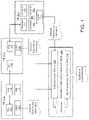
BRIEF DESCRIPTION OF THE DRAWINGSFIG. 1 illustrates an approach for identifying application dependencies and generating an application dependency graph, according to an embodiment.
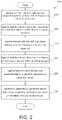
FIG. 2 illustrates a method for determining application dependencies in a hybrid environment, according to an embodiment.
FIG. 3 illustrates components of a system in which an embodiment may be implemented.
DETAILED DESCRIPTIONEmbodiments presented herein provide techniques for determining application dependencies in a hybrid environment in which applications run in virtual machines (VMs) and physical servers, as well as in operating system (OS)-less containers. In one embodiment, agents running inside OS-less container host systems, which may be VMs or physical machines, monitor both network traffic at the host systems and network traffic at virtual bridges to which the OS-less containers are attached. The agents then identify network dependencies based on the two types of monitored network traffic and transmit the network dependency information to a central server. As used herein, network dependency refers to dependency of an application on a remote service at a certain interne protocol (IP) address and port, or vice versa. By considering both the network traffic at the host system level and the network traffic at the virtual bridge level, which indicates incoming and outgoing connections to/from particular OS-less containers connected to the bridge, the agents are able to identify network dependencies involving applications running in physical machines, VMs, and distinct OS-less containers. It should be understood that such network dependencies each indicate that an application is initiating or serving a request for/from a certain IP address and port number, but this is only half of an application dependency as the other application which is serving or initiating the same request, respectively, is not explicitly indicated. In order to determine application dependencies, network dependencies from multiple agents in different machines (physical and/or virtual) are collected in a central server and analyzed to identify, based on the network dependencies, the applications that depend on each other. For example, network data obtained from a Transmission Control Protocol (TCP) dump of one virtual bridge that is connected to OS-less containers and similar data obtained from another virtual bridge may be collected at the central server to identify dependencies between applications running in the containers. The identified application dependencies may then be displayed to a user via a user interface to, e.g., assist in datacenter migration.
Reference will now be made in detail to several embodiments, examples of which are illustrated in the accompanying figures. It is noted that wherever practicable similar or like reference numbers may be used in the figures and may indicate similar or like functionality. The figures depict embodiments for purposes of illustration only. One skilled in the art will readily recognize from the following description that alternative embodiments of the structures and method illustrated herein may be employed without departing from the principles described herein.
FIG. 1 illustrates an approach for identifying network dependencies of applications and generating an application dependency graph, according to an embodiment. As shown, applications111-113 and114-115 run inVMs1012and1013, respectively, while OS-less containers121-124 run inVM1011. Each of theVMs1011-3is a virtualization of a complete computer system with processors, memory, networking, storage, and/or BIOS. VMs1011-3run on a virtualization layer (also referred to as a “hypervisor”) that abstracts processor, memory, storage, and/or networking resources into multiple virtual machines (e.g., VMs1011-3) that run side-by-side on the same physical host computer. That is, the virtualization software partitions the physical host computer into multiple secure and portable virtual machines that run on the same physical computer. In one embodiment, virtualization software may be installed directly on the server hardware and inserts a virtualization layer between the hardware and the operating system. Alternatively, the virtualization software may run on top of a conventional operating system in the server. Although depicted asVMs1011-3inFIG. 1, it should be understood that techniques disclosed herein are applicable to physical machines as well, i.e., that any ofVMs1011-3could instead be a physical machine.
In contrast to VMs. OS-less containers121-124 implement operating system-level virtualization in which an abstraction layer is provided on top of the kernel of an operating system. As discussed, the abstraction layer supports multiple OS-less containers121-124, each including an application and running as an isolated process in userspace on the operating system of VM1011while sharing the kernel with other containers. By using OS-less containers, resources can be isolated, services restricted, and processes provisioned to have a private view of the operating system with their own process ID space, file system structure, and network interfaces. Multiple containers may share the same kernel, but each container can be constrained to only use a defined amount of resources such as CPU, memory and I/O.
Illustratively, applications111-112 depend on each other, as doapplications112 and114.Application115 and an application miming insideOS-less container121 depend on each other as well. Further, applications running in OS-less containers123-124 also depend on each other. In order to identify dependencies of the applications, and in particular dependencies involving applications running in OS-less containers121-124, an applicationnetwork monitoring agent1201-3is registered to each of the VMs1011-3(e.g., whenever a new VM is deployed or a VM without a monitoring agent is identified). Applicationnetwork monitoring agent1201-3is responsible for identifying network dependencies of applications by monitoring network packets. In one embodiment,agents1201-3first discover the list of services running in VMs1011-3and network dependencies of the same. Then, if any of the services are OS-less container daemons that manage containers, which is the case for VM1011,agent1201further identifies OS-less container services that are running and the external ports used by the container services to accept requests, the internal ports used by the container services to process requests, and the local IP addresses of the container services. Using a TCP dump from virtual Ethernetbridge126 to which containers121-124 are connected,agent1201captures network packet details fromvirtual bridge126, which is used to identify network dependencies involving applications in OS-less containers. Such network dependencies, as well as network dependencies identified byagent1201, are sent to applicationdependency generator server130, which stores and analyzes the network dependencies to determine application dependencies.
As shown, applicationdependency generator server130 is a web application which includes adata collection service132 responsible for receiving network dependency information fromagents1201-3and storing such information in a database, as well as an applicationdependency generator service134 responsible for determining application dependencies using the stored network dependency information. In one embodiment, the stored information may include a list of registeredagents1201-3, a list of VMs in the datacenter, a list of the VMs running OS-less containers, a list of the containers present inside the VMs running OS-less containers and their mappings to the corresponding VMs, a list of applications running inside the VMs or OS-less containers or physical machines, and network communication details from one application to another. In another embodiment,dependency generator service134 may determine application dependencies by generating a hash map which has from Internet protocol (IP) address, to IP address, and port number as keys and application names as values, and identifying each pair of applications associated with the same key in the hash map as being dependent on each other, as discussed in greater detail below.Dependency generator service134 may further create an application dependency graph that indicates all application dependencies in the datacenter.
For example, assume thatapplication115 is an Apache Tomcat® web server application that depends on a Python™ web application running in OS-lesscontainer121. Then, the dependency between the Tomcat®application115 and the Python™ webapplication running container121 may be determined in one embodiment as follows.Agent1203discovers applications running in VM1013by executing the Linux® command “netstat-nlpt,” example output of which is shown in Table 1, andagent1203identifies from such output a list of processes, which will serve client requests, and their listening port numbers.Agent1203may also check for a Docker® OS-less container daemon service that manages containers using, e.g., the command “ps-aux|grep docker.” However, no such service will be identified because no such service is running inVM1012.
| TABLE 1 |
|
| Proto | Recv-Q | Send-Q | Local Address | Foreign Address | State | PID/Program name |
|
| tcp | 0 | 0 | 0.0.0.0:22 | 0.0.0.0:* | LISTEN | 15020/sshd |
| tcp6 | 0 | 0 | :::8080 | :::* | LISTEN | 15191/java |
|
Agent1203further obtains the process descriptions for the processes using the command “ps-aux|grep pid.” An example response to such a command is shown in Table 2.
| TABLE 2 |
| |
| smannam 15191 0.2 8.3 1393336 85140 ? Sl |
| 22:35 0:05 /usr/bin/java - |
| Djava.util.logging.config.file=/home/smannam/apache- |
| tomcat-7.0.57/conf/logging.properties - |
| Djava.util.logging.manager=org.apache.juli.ClassLoaderL |
| ogManager |
| Djava.endorsed.dirs=/home/smannam/apache-tomcat- |
| 7.0.57/endorsed -classpath /home/smannam/apache- |
| tomcat- |
| 7.0.57/bin/bootstrap.jar:/home/smannam/apache-tomcat- |
| 7.0.57/bin/tomcat-juli.jar |
| Dcatalina.base=/home/smannam/apache-tomcat-7.0.57 |
| -Dcatalina.home=/home/smannam/apache-tomcat- |
| 7.0.57 - |
| Djava.io.tmpdir=/home/smannam/apache- |
| tomcat-7.0.57/temp |
| org.apache.catalina.startup.Bootstrap start |
| |
By parsing the information in Tables 1 and 2,
agent1203is able to identify that
VM1012has a Tomcat® process running at port
8080. By continuously monitoring all network connections opened by the Tomcat® process,
agent1203can identify network dependencies involving this process. For example,
agent1203may use the command “netstat-ntupc|grep pid|prep-v listeningport” for this purpose, with pid being the process ID of the Tomcat® process. The response to such a command, an example of which is shown in Table 3, will include connections opened by this process.
| TABLE 3 |
|
| Local Address | Foreign Address | State | PID/Program name |
|
| 10.112.73.92:51969 | 10.112.73.157:49153 | ESTABLISHED | 15191/java |
|
From such a response,
agent1203can identify that the Tomcat® process has a dependency on a service running on 10.112.73.157 and listening at port
49153. It should be understood that, at this point,
agent1203is unaware what the other service is. However, once a network dependency is identified,
agent1203pushes this information to
dependency generator server130 in, e.g., the XML format shown in Table 4.
| <from-ip>10.112.73.92</from-ip> |
| <to-ip>10.112.73.157</to-ip> |
| <port>49153</port> |
| <app-name>tomcat</app-name> |
| <isRequestInitator>true</isRequestInitiator> |
Turning toVM1011,agent1201running therein identifies services running inVM1011in a similar manner as that discussed above with respect toagent1203. In particular,agent1201may check for network services running inVM1011using the netstat command “netstat-nlpt.” As the Python™ web application is running inOS-less container121,agent1201will not identify any network services with the netstat command.Agent1201further checks for a Docker® OS-less container daemon service using the command “ps-aux|grep docker.” Onceagent1203identifies that such a service is running inVM1011,agent1201further identifies all container processes and their ports using the command “docker ps.” The response to this command, an example of which is shown in Table 5, will list Docker® container processes running and the port numbers at which requests are expected.
| TABLE 5 |
|
| CONTAINER ID | IMAGE | COMMAND | CREATED | STATUS | PORTS | NAMES |
|
| 7e8eb5fa447a | python webapp | python app.py | 4 hours ago | Up 4 hours | 0.0.0.0:49153- | condescending_mccarthy |
| | | | | >5000/tcp |
|
By parsing such a response,
agent1201can identify OS-less container services and ports assigned to the same. In particular,
agent1201may identify the external and internal ports used by the OS-less container process, which in this example are 49153 and 5000, respectively. Then,
agent1201may obtain the IP address of the OS-less container services using the command “Docker inspect—format ‘{{.NetworkSettings.IPAddress}}’ container_id,” an example response to which may be “171.17.0.2.” Thereafter,
agent1201may capture, from
virtual bridge126, the network packets for each such OS-less container service using the TCP dump command “Tcpdump-I docker0|grep container_ip,” an example response to which may be:
| |
| 02:10:25.814181 IP 10.112.73.92.51969> |
| 172.17.0.2.5000: Flags [F.], seq 202 |
| 02:10:25.814206 IP 172.17.0.2.5000 > |
| 10.112.73.92.51969: Flags [.], ack 203 |
| |
Agent1201is able to identify incoming and outgoing requests from the service by examining the port number in the packets. In this case, the port number used by the packets is a listening port number, indicating an incoming request which originated from 10.112.73.92 at port
51995.
Agent1201then reports to
server130 the public address of the machine (physical or virtual) in which the OS-less containers are running and the public port that the OS-container service is using. For example, the report may be made in the XML, format shown in Table 6.
| <from-ip>10.112.73.92</from-ip> |
| <to-ip>10.112.73.157</to-ip> |
| <port>49153</port> |
| <app-name>python webapp</app-name> |
| <isRequestInitator>false</isRequestInitiator> |
Using both this information and the information obtained from
VM1013, illustrated in Table 4, application
dependency generator service134 can identify that the Tomcat® service running in
VM1013depends on the Python™ webapp service running in the OS-less container in
VM1011. It will be understood that
agent1201can also identify network dependencies of OS-less container services in a similar manner by examining outgoing network packet details from
virtual bridge126.
FIG. 2 illustrates amethod200 for determining application dependency in a hybrid environment, according to an embodiment. As shown,method200 begins atstep210, whereagents1201-3monitor network traffic at host computer systems, at least one of which runs OS-less containers. It should be understood that the host computer systems may be virtual or physical machines. In one embodiment,agents1201-3first identify services running on the hosts using, e.g., the “netstat-nlpt” command.Agents1201-3then identify, for each service, the corresponding listening port and process ID, using whichagents1201-3may obtain the process descriptions of the services using, e.g., the “ps-aux|grep pid” command and name the service accordingly.Agents1201-3then monitor network traffic by continuously monitoring each service using, e.g., the command “netstat-ntupc|grep pid” to identify incoming and outgoing connections.Agents1201-3will be able to differentiate incoming and outgoing connections by examining the port numbers used. If the port numbers are the same as listening port numbers, then the connections are incoming connections. Otherwise, the connections are outgoing connections from the service.
Atstep220,agents1201-3identify network dependencies based on the monitored network traffic at the host computer systems. As discussed,agents1201-3are able to identify network dependencies of services and other systems which are dependent on the services using the network traffic information collected atstep210. For example,agents1201-3may identify network dependencies by examining connections opened by the services.
Atstep230,agents1201-3monitor network traffic at virtual bridges to which the OS-less containers are attached. In one embodiment,agents1201-3first identify OS-less container daemon processes that manage OS-less containers using, e.g., the “ps-aux|grep daemon” command. If an OS-less container daemon is running,agents1201-3then identify a list of container services using, e.g., the “docker ps” command in the case of Docker® containers. Assuming such container services are running,agents1201-3further identify, for each container service, the external port used on the host system to accept service requests and the internal port used by the container service to process the same. In addition,agents1201-3obtain the assigned local IP address for each container service using, e.g., the command “Docker inspect—format ‘{{.NetworkSettings.IPAddress}}’ container_id.”Agents1201-3then capture network packet details from virtual bridges using, e.g., the TCP dump command “tcpdump-i docker0.”
Atstep240,agents1201-3identify network dependencies based on the monitored network traffic at the virtual bridges. The captured TCP dump discussed above provides incoming and outgoing packet details, using whichagents1201-3may identify the list of network dependencies for each OS-less container service.Agents1201-3may also be able to distinguish between incoming and outgoing connections by examining the port numbers used by the network packets. If a packet has a listening port number, then the packet is associated with an incoming connection request. Otherwise, the packet is associated with an outgoing connection request from the service.Agents1201-3are thus able to identify systems which are dependent on the OS-less container services and dependencies of the same services.
Atstep250,agents1201-3transmit the identified network dependencies to applicationdependency generator server130. The identified network dependencies may be transmitted and stored in any format. Further, it should be understood that the transmitting of network dependencies may occur on a continual basis as new network dependencies are identified, rather than as one of a sequence of linear steps as shown inmethod300. The following XML format ma be used to transmit newly identified dependencies in one embodiment:
| <from-ip>address 1</from-ip> |
| <to-ip>address 2</to-ip> |
| <port>port number</port> |
| <app-name>application name</app-name> |
| <isRequestInitator>Boolean value</isRequestInitiator> |
In such a case, a database table with “from IP,” “to IP,” “port,” “application name,” and “is initiator” fields may then be updated with the transmitted values.
Atstep260, applicationdependency generator service134 determines application dependencies based on the identified network dependencies. After identified network dependencies are received by applicationdependency generator server130,dependency generator service134 is responsible for analyzing the network dependencies and determining application dependencies. As discussed, the network dependencies records each indicate that an application is initiating or serving a request for/from a certain IP address and port number, but this is only half of an application dependency as the other application which is serving or initiating the same request, respectively, is not explicitly specified. Accordingly,dependency generator service134 matches network dependency records indicating applications initiating requests with corresponding network dependency records indicating other applications serving the same requests to determine that those applications have dependency relationships with each other.
In one embodiment,dependency generator service134 generates an application dependency graph based on a hash map constructed with the network dependency information. In such a case,dependency generator service134 may construct the hash map with the key being the “from IP,” “to IP,” and “port number” of the network dependencies that are stored by applicationdependency generator server130, and the value being the corresponding applications. Doing so essentially groups the applications by the key “from IP,” “to IP,” and “port number.” After such processing, each key should be associated with two values: one is a service provider application and the other a service requestor application. For example, one key-value pairing may be {([VM1 IP, VM2 IP, Port], [Web_app, Post-gres_db])}, which indicates that the “Web_app” and “Post-gres_db” have a dependency.Dependency generator service134 is thus able to generate the application dependency graph that indicates all application dependencies based on such hash map entries. The dependencies may further be displayed to a user via, e.g., a graphical user interface.
FIG. 3 illustrates components of asystem300 in which an embodiment may be implemented. As shown, thesystem300 includes ahost computers1001-Nand100Min communication with aserver128.Host computers1001-Nare configured to deliver virtualization-based distributed services to information technology environments.Host computers1001-Nmay be constructed on conventional hardware platforms that include one or more central processing units, memory, and physical network interface cards (e.g., PNICs161-162). As shownhost computer100Mis a physical server which may also include conventional hardware platforms, as it should be understood that techniques disclosed herein may be employed with physical computer systems that do not host virtual machines. For conciseness, the physical computer system embodiment, which works in a similar manner as the VM embodiment, will not be described in detail.
Illustratively,host computers1001-Neach provides a virtualization layer (e.g., hypervisor140) that abstracts processor, memory, storage, and/or networking resources into multiple virtual machines (e.g., VMs1011-N) that run side-by-side on the samephysical host computer1001-N. That is, the virtualization software partitionsphysical host computers1001-Ninto multiple secure and portable virtual machines that run on the same physical servers. As discussed, each of the VMs (e.g., VMs1011-N) represents a complete system with processors, memory, networking, storage, and/or BIOS. As shown, each of theVMs1011-Nfurther includes a software-based virtual network adapter (e.g., VMC141) that is logically connected to a physical network adapter (e.g., PNIC161) included in the host computer, which provides network access for the virtual machine, via avirtual switch150, which as shown is a dislibuted virtual switch spanningmultiple host computers1001-N.
Illustratively, a guest OS runs inVMs101Nand applications run on the guest OS. In contrast, OS-less containers (e.g., container121) run inVMs1011and applications run in the OS-less containers. As discussed, OS-less containers such ascontainer121 implement operating systemlevel virtualization, where an abstraction layer is provided on top of the kernel of an operating system (not shown). The abstraction layer supports multiple OS-less containers each including an application, and each OS-less container runs as an isolated process in userspace on the host operating system and shares the kernel with other containers. Illustratively, avirtual Ethernet bridge180 connected toVNIC141 and the OS-less containers is responsible for forwarding packets between the network interfaces attached to bridge180. When an OS-less container (e.g., container121) is created, the abstraction layer that supports the OS-less containers also creates a pair of virtual Ethernet (vEth) interfaces, one of which is assigned to the new OS-less container's network namespace and the other of which is connected to bridge180. The pair of vEths are tunnel drivers that act as a bidirectional pipe, with traffic entering one vEth in the pair exiting the other vEth.
As also shown, an application network monitoring agent (e.g., agent1201) runs m each ofVMs1011-N. In one embodiment, these agents are configured to monitor network traffic at host computer systems (which would beVMs1011-Nin this case), identify network dependencies based on the monitored network traffic at the host computer systems, further monitor network traffic at virtual bridges to which OS-less containers are attached, identify network dependencies based on the monitored network traffic at the virtual bridges, and transmit the identified network dependencies to applicationdependency generator server130, according tomethod200 discussed above with respect toFIG. 2. In turn, applicationdependency generator service134 determines application dependencies based on the identified network dependencies by, e.g., constructing a hash map with the network dependency information and identifying pairs of applications which have a dependency relationship, as discussed above.
Advantageously, techniques disclosed herein permit application dependencies to be identified in a hybrid environment in which applications run in virtual machines (VMs) and physical servers, as well as in operating system (OS)-less containers. By knowing such application dependencies, cloud administrators can better plan for datacenter work load migrations. At the same time, application downtime due to partial datacenter migrations in which applications that are depended upon are not migrated can be avoided. Further, the maintenance period for a datacenter can be determined in advance and the user alerted to the application downtime. In addition, disaster recovery of applications can be planned earlier while accounting for application dependencies.
The various embodiments described herein may employ various computer-implemented operations involving data stored in computer systems. For example, these operations may require physical manipulation of physical quantities usually, though not necessarily, these quantities may take the form of electrical or magnetic signals where they, or representations of them, are capable of being stored, transferred, combined, compared, or otherwise manipulated. Further, such manipulations are often referred to in terms, such as producing, identifying, determining, or comparing. Any operations described herein that form part of one or more embodiments of the invention may be useful machine operations. In addition, one or more embodiments of the invention also relate to a device or an apparatus for performing these operations. The apparatus may be Specially constructed for specific required purposes, or it may be a general purpose computer selectively activated or configured by a computer program stored in the computer. In particular, Various general purpose machines may be used with computer programs written in accordance with the teachings herein, or it may be more convenient to construct a more specialized apparatus to perform the required operations.
The various embodiments described herein may be practiced with other computer system configurations including hand-held devices, microprocessor systems, microprocessor-based or programmable consumer electronics, minicomputers, mainframe computers, and the like.
One or more embodiments of the present invention may be implemented as one or more computer programs or as one or more computer program modules embodied in one or more computer readable media. The term computer readable medium refers to any data storage device that can store data which can thereafter be input to a computer system computer readable media may be based on any existing or subsequently developed technology for embodying computer programs in a manner that enables them to be read by a computer. Examples of a computer readable medium include a hard drive, network attached storage (NAS), read-only memory, random-access memory (e.g., a flash memory device), a CD (Compact Discs), CD-ROM, a CD-R, or a CD-RW, a DVD (Digital Versatile Disc), a magnetic tape, and other optical and non-optical data storage devices. The computer readable medium can also be distributed over a network coupled computer system so that the computer readable code is stored and executed in a distributed fashion.
Although one or more embodiments of the present invention have been described in some detail for clarity of understanding, it will be apparent that certain changes and modifications may be made within the scope of the claims. Accordingly, the described embodiments are to be considered as illustrative and not restrictive, and the scope of the claims is not to be limited to details given herein, but may be modified within the scope and equivalents of the claims. In the claims, elements and/or steps do not imply any particular order of operation, unless explicitly stated in the claims.
In addition, while described virtualization methods have generally assumed that virtual machines present interfaces consistent with a particular hardware system, persons of ordinary skill in the art will recognize that the methods described may be used in conjunction with virtualizations that do not correspond directly to any particular hardware system. Virtualization systems in accordance with the various embodiments, implemented as hosted embodiments non-hosted embodiments, or as embodiments that tend to blur distinctions between the two, are all envisioned. Furthermore, various virtualization operations may be wholly or partially implemented in hardware. For example, a hardware implementation may employ a look-up table for modification of storage access requests to secure non-disk data.
Many variations, modifications, additions, and improvements are possible, regardless the degree of virtualization. The virtualization software can therefore include components of a host, console, or guest operating system that performs virtualization functions. Plural instances may be provided for components, operations or structures described herein as a single instance. Finally, boundaries between various components, operations and data stores are somewhat arbitrary, and particular operations are illustrated in the context of specific illustrative configurations. Other allocations of functionality are envisioned and may fall within the scope of the invention(s). In general, structures and functionality presented as separate components in exemplary configurations may be implemented as a combined structure or component. Similarly, structures and functionality presented as a single component may be implemented as separate components. These and other variations, modifications, additions, and improvements may fall within the scope of the appended claims(s).