US11411805B1 - System and method for detecting root cause of an exception error in a task flow in a distributed network - Google Patents
System and method for detecting root cause of an exception error in a task flow in a distributed networkDownload PDFInfo
- Publication number
- US11411805B1 US11411805B1US17/372,903US202117372903AUS11411805B1US 11411805 B1US11411805 B1US 11411805B1US 202117372903 AUS202117372903 AUS 202117372903AUS 11411805 B1US11411805 B1US 11411805B1
- Authority
- US
- United States
- Prior art keywords
- server
- message
- acknowledgement data
- communication
- received
- Prior art date
- Legal status (The legal status is an assumption and is not a legal conclusion. Google has not performed a legal analysis and makes no representation as to the accuracy of the status listed.)
- Active
Links
Images

Classifications
- H—ELECTRICITY
- H04—ELECTRIC COMMUNICATION TECHNIQUE
- H04L—TRANSMISSION OF DIGITAL INFORMATION, e.g. TELEGRAPHIC COMMUNICATION
- H04L41/00—Arrangements for maintenance, administration or management of data switching networks, e.g. of packet switching networks
- H04L41/06—Management of faults, events, alarms or notifications
- H04L41/0631—Management of faults, events, alarms or notifications using root cause analysis; using analysis of correlation between notifications, alarms or events based on decision criteria, e.g. hierarchy, tree or time analysis
- H—ELECTRICITY
- H04—ELECTRIC COMMUNICATION TECHNIQUE
- H04L—TRANSMISSION OF DIGITAL INFORMATION, e.g. TELEGRAPHIC COMMUNICATION
- H04L41/00—Arrangements for maintenance, administration or management of data switching networks, e.g. of packet switching networks
- H04L41/06—Management of faults, events, alarms or notifications
- H04L41/0604—Management of faults, events, alarms or notifications using filtering, e.g. reduction of information by using priority, element types, position or time
- H04L41/0627—Management of faults, events, alarms or notifications using filtering, e.g. reduction of information by using priority, element types, position or time by acting on the notification or alarm source
- H—ELECTRICITY
- H04—ELECTRIC COMMUNICATION TECHNIQUE
- H04L—TRANSMISSION OF DIGITAL INFORMATION, e.g. TELEGRAPHIC COMMUNICATION
- H04L41/00—Arrangements for maintenance, administration or management of data switching networks, e.g. of packet switching networks
- H04L41/06—Management of faults, events, alarms or notifications
- H04L41/0631—Management of faults, events, alarms or notifications using root cause analysis; using analysis of correlation between notifications, alarms or events based on decision criteria, e.g. hierarchy, tree or time analysis
- H04L41/064—Management of faults, events, alarms or notifications using root cause analysis; using analysis of correlation between notifications, alarms or events based on decision criteria, e.g. hierarchy, tree or time analysis involving time analysis
- H—ELECTRICITY
- H04—ELECTRIC COMMUNICATION TECHNIQUE
- H04L—TRANSMISSION OF DIGITAL INFORMATION, e.g. TELEGRAPHIC COMMUNICATION
- H04L41/00—Arrangements for maintenance, administration or management of data switching networks, e.g. of packet switching networks
- H04L41/06—Management of faults, events, alarms or notifications
- H04L41/0686—Additional information in the notification, e.g. enhancement of specific meta-data
- H—ELECTRICITY
- H04—ELECTRIC COMMUNICATION TECHNIQUE
- H04L—TRANSMISSION OF DIGITAL INFORMATION, e.g. TELEGRAPHIC COMMUNICATION
- H04L43/00—Arrangements for monitoring or testing data switching networks
- H04L43/10—Active monitoring, e.g. heartbeat, ping or trace-route
- H04L43/106—Active monitoring, e.g. heartbeat, ping or trace-route using time related information in packets, e.g. by adding timestamps
- H—ELECTRICITY
- H04—ELECTRIC COMMUNICATION TECHNIQUE
- H04L—TRANSMISSION OF DIGITAL INFORMATION, e.g. TELEGRAPHIC COMMUNICATION
- H04L43/00—Arrangements for monitoring or testing data switching networks
- H04L43/12—Network monitoring probes
- H—ELECTRICITY
- H04—ELECTRIC COMMUNICATION TECHNIQUE
- H04L—TRANSMISSION OF DIGITAL INFORMATION, e.g. TELEGRAPHIC COMMUNICATION
- H04L41/00—Arrangements for maintenance, administration or management of data switching networks, e.g. of packet switching networks
- H04L41/14—Network analysis or design
- H04L41/147—Network analysis or design for predicting network behaviour
- H—ELECTRICITY
- H04—ELECTRIC COMMUNICATION TECHNIQUE
- H04L—TRANSMISSION OF DIGITAL INFORMATION, e.g. TELEGRAPHIC COMMUNICATION
- H04L43/00—Arrangements for monitoring or testing data switching networks
- H04L43/08—Monitoring or testing based on specific metrics, e.g. QoS, energy consumption or environmental parameters
- H04L43/0876—Network utilisation, e.g. volume of load or congestion level
Definitions
- the present disclosurerelates generally to data processing, and more specifically to a system and method for detecting root cause of an exception error in a task flow in a distributed network.
- the distributed networkmay include a first server that may be configured to verify user login credentials to enable the user to enter their user portal on the web application, a second server that may be configured to retrieve user information to be displayed on the user's portal, a third server that may be configured to store the user information, and other servers.
- the other serversmay perform other steps to enable the user to access their account and view their information.
- a plurality of serversmay communicate with each other and exchange messages to enable the user to access their account, and view their information. In some cases, a server may not receive a message as expected.
- a first servermay send a message to a second server to retrieve particular user information, e.g., a residential address, a phone number, a document, etc.
- the second serverdoes not respond to the received message.
- the first serverreports an exception error because the first server does not receive the requested user information as expected from the second server.
- the disclosed systemis configured to detect the root cause of such exception errors. Accordingly, the disclosed system provides a practical application of detecting the root cause of exception errors in a distributed network.
- the system for detecting a root cause of an exception error in a distributed networkcomprises a processor and a memory.
- the processorreceives communication data that comprises a plurality of messages being transmitted between a plurality of servers in a distributed network, where the plurality of servers comprises a first server, a second server, and a third server.
- the processorreceives communication acknowledgement data that indicates whether each message from among the plurality of messages is being received by a respective server from among the plurality of servers.
- the communication acknowledgement datacomprises a first acknowledgement data that indicates whether the second server received a first message from the first server, and a second acknowledgement data that indicates whether the second server received a second message from the third server.
- the processordetermines whether each message from among the plurality of messages is received by a respective server from among the plurality of servers based at least in part upon the communication acknowledgement data.
- the processordetermines, from the first acknowledgement data, that the second server has received the first message from the first server.
- the processordetermines, from the second acknowledgement data, that the second server has reported an exception error that indicates that the second server did not receive the second message from the third server, and that the third server did not send the second message to the second server.
- the processordetermines that the third server is associated with the root cause of the exception error in response to determining that the third server did not send the second message to the second server.
- the memoryis operably coupled with the processor. The memory is operable to store the communication data and the communication acknowledgement data.
- the disclosed systemprovides several practical applications and technical advantages, which include: 1) technology that detects a server that reports an exception error by implementing an exception monitoring module in each server from among a plurality of servers in a distributed network, and implementing an exception listener module in a central server that is configured to receive communications exchanged between the plurality of servers; 2) technology that identifies servers that are in direct communication with the server that reported the exception error, e.g., by implementing a multi-layer detection module; 3) technology that determines the health of communications among the servers, i.e., determines whether each message transmitted between each pair of servers is successfully received or failed, e.g., based on acknowledgement messages that indicate whether each message is received or not; 4) technology that generates a communication matrix whose elements indicate successful and failed messages between the servers, where the successful messages are indicated by logic number “1” and the failed messages are indicated by logic number “0”; 5) technology that, using the communication matrix, identifies the earliest failed message based on determining the sequence associated with the messages and the
- the disclosed systemmay improve the current data processing, distributed system monitoring, and fault detection technologies by detecting a root cause of an exception error in a task flow in a distributed system. Accordingly, the disclosed system may be integrated into a practical application of improving processing and memory storage capacity utilization for detecting the root cause of the exception error that would otherwise be spent using the current technology. For example, by detecting the root cause of the exception error, the disclosed system may report the root cause to an operator, and the root cause that has led to the exception error can be addressed and perhaps resolved.
- the disclosed systemmay further be integrated into an additional practical application of improving the underlying operations of computer systems in the distributed network (e.g., servers, databases, etc.) that are tasked to carry out steps to grant a user request, such as to access an account and retrieve particular information from the account.
- the computer systems in the distributed networkcontinue to communicate with other computer systems which lead to more failed messages reported by the computer systems. This leads the processors and memories of the computer systems to have to process multiple failed messages, which leads to reducing the efficiency of utilizing the processing resources and storage capacity of these computer systems.
- the disclosed systemupon detecting the earliest failed message, processes the earliest failed message and detects a root cause of the earliest failed message.
- the disclosed systemmay pause the undergoing task flow, thus, preventing other servers to report failed messages as a consequence of the earliest failed message. Accordingly, the disclosed system improves the processing resources and storage capacity utilization in the computer systems of the distributed network more efficiently.
- the disclosed systemmay further be integrated into an additional practical application of improving network communication between the computer systems of the distributed network. For example, by detecting the root cause of the exception error, and reporting the root cause of the exception error, the root cause can be addressed earlier compared to the current technology, and thus, the network communication bandwidth among the computer systems is not wasted.
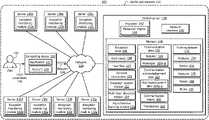
- FIG. 1illustrates an embodiment of a system configured to detect a root cause of an exception error in a task flow in a distributed network
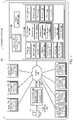
- FIG. 2illustrates an example operational flow of the system of FIG. 1 to detect a root cause of an exception error in a task flow in a distributed network
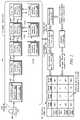
- FIG. 3illustrates an example flowchart of a method to detect a root cause of an exception error in a task flow in a distributed network.
- system 100 to detect a root cause of an exception error in a task flow in a distributed networkare described in FIG. 1 .
- operational flow 200 of the system 100 to detect a root cause of an exception error in a task flow in a distributed networkare described in FIG. 2 .
- method 300 to detect a root cause of an exception error in a task flow in a distributed networkare described in FIG. 3 .
- FIG. 1illustrates one embodiment of a system 100 that is configured for detecting a root cause 108 of an exception error 106 in a task flow 112 in a distributed network 116 .
- system 100comprises a central server 140 .
- system 100further comprises a network 110 , computing device 120 , and one or more servers 130 .
- Network 110enables the communication between components of the system 100 .
- Central server 140comprises a processor 142 in signal communication with a memory 148 .
- Memory 148stores software instructions 150 that when executed by the processor 142 , cause the processor 142 to execute one or more functions described herein.
- system 100may not have all of the components listed and/or may have other elements instead of, or in addition to, those listed above.
- Network 110may be any suitable type of wireless and/or wired network, including, but not limited to, all or a portion of the Internet, an Intranet, a private network, a public network, a peer-to-peer network, the public switched telephone network, a cellular network, a local area network (LAN), a metropolitan area network (MAN), a wide area network (WAN), and a satellite network.
- the network 110may be configured to support any suitable type of communication protocol as would be appreciated by one of ordinary skill in the art.
- Computing device 120is generally any device that is configured to process data and interact with users 102 .
- Examples of the computing device 120include, but are not limited to, a personal computer, a desktop computer, a workstation, a server, a laptop, a tablet computer, a mobile phone (such as a smartphone), etc.
- the computing device 120may include a user interface, such as a display, a microphone, keypad, or other appropriate terminal equipment usable by user 102 .
- the computing device 120may include a hardware processor, memory, and/or circuitry configured to perform any of the functions or actions of the computing device 120 described herein.
- a software application designed using software codemay be stored in the memory and executed by the processor to perform the functions of the computing device 120 .
- Application 122can be accessed from the computing device 12 .
- the computing device 120stores and/or comprises the application 122 .
- the application 122may be a software, mobile, or web application 122 .
- the user 120can access the application 122 from a screen of the computing device 120 .
- the application 122may be associated with an organization that provides services and/or products to users 102 .
- the user 102may use the application 122 to log into their account 124 , access their account 124 , view their account information, etc.
- the process of enabling the user 102 to access and/or view their account informationmay be referred to as the task flow 112 .
- one or more stepsmay be performed by one or more servers 130 in the distributed network 116 . This process is described further below in conjunction with the operational flow 200 described in FIG. 2 .
- Each of the servers 130 a to 130 gis generally any device that is configured to process data and/or store data used by one or more components of the system 100 .
- Each of the servers 130 a to 130 gmay be a different server 130 .
- each of the servers 130 a to 130 gmay include a computer system, such as a desktop computer, a workstation, a computing system, and/or the like.
- each of the servers 130 a to 130 gmay include a database or a storage architecture, such as a network-attached storage cloud, a storage area network, a storage assembly, computer storage disk, computer memory unit, computer-readable non-transitory storage media directly (or indirectly) coupled to one or more components of the system 100 .
- the servers 130 a - gmay form a distributed network or network 116 . Other servers 130 may be included in the distributed network 116 .
- Each of the servers 130 a to 130 gmay include a user interface, such as a display, a microphone, keypad, or other appropriate terminal equipment usable by a user.
- Each of the servers 130 a to 130 gmay include a hardware processor, memory, and/or circuitry configured to perform any of the functions or actions of each of the servers 130 a to 130 g described herein.
- a different software application designed using software codemay be stored in the memory and executed by the processor to perform the functions of each of the servers 130 a to 130 g.
- various messagesmay be exchanged among the servers 130 .
- an exception monitoring module 132may be installed in each of the servers 130 a to 130 g .
- the communications transmitted among the servers 130are monitored by exception monitoring modules 132 .
- the exception monitoring module 132 installed in a particular server 130may be implemented by a processor of the particular server 130 executing software instructions stored in a memory of the particular server 130 .
- the exception monitoring module 132is configured to monitor the incoming and outgoing communications of the server 130 .
- the exception monitoring modules 132 a to 132 gare instances of the exception monitoring module 132 .
- the exception monitoring module 132 ais installed in the server 130 a
- exception monitoring module 132 bis installed in the server 132 b
- exception monitoring module 132 cis installed in the server 132 c
- exception monitoring module 132 dis installed in the server 132 d
- exception monitoring module 132 eis installed in the server 132 e
- the exception monitoring module 132 fis installed in the server 130 f
- exception monitoring module 132 gis installed in the server 132 g .
- the distributed network 116may include other servers 130 .
- any number of servers 130may include exception monitoring modules 132 in the distributed network 116 .
- the user 102may input their login credentials 126 in the application 122 .
- the application 122sends a request 104 to the server 130 a to verify the login credentials 126 .
- the server 130 amay include a middleware system that is configured to verify the login credentials 126 .
- the server 130 amay verify the login credentials 126 by determining whether the login credentials 126 match login credentials previously set by the user 102 , and stored in a memory of the server 130 a .
- the server 130 asends a first message 160 to the server 130 b that indicates the login credentials 126 are valid.
- the server 130 bmay allow the user 102 to enter their account portal on the application 122 .
- the server 130 bmay include a User Interface (UI) application module that allows the user 102 to enter their account portal on the application 122 .
- UIUser Interface
- the server 130 bsends a second message 160 to the server 130 c to retrieve the requested user information from servers 130 d and 130 e.
- the server 130 csends a third message 160 to the servers 130 d and 130 e to retrieve the requested user information.
- the server 130 cmay include a middleware system that is configured to retrieve user information from one or more servers 130 .
- the server 130 dmay include a database that is configured to store a first set of user information.
- server 130 emay include a database that is configured to store a second set of user information.
- the exception monitoring modules 132 a to 132 emonitor and record the messages 160 being exchanged between the servers 130 a to 130 e .
- the exception monitoring modules 132 a to 132 eforward the recorded messages 160 to the exception listener module 152 that is stored in the memory 148 of central server 140 .
- the exception monitoring modules 132 a to 132 emay forward the messages 160 to the central server 140 in real-time, periodically (e.g., every minute, every two minutes, etc.), and/or on-demand.
- the detection engine 144is triggered to detect the root cause 108 of the exception error 106 .
- the detection engine 144uses the communication data 158 that includes the request 104 and messages 160 to detect the root cause 108 of the exception error 106 . This process is described in detail in conjunction with the operational flow 200 described in FIG. 2 .
- Central server 140is generally a server or any other device configured to process data and communicate with computing devices (e.g., computing device 120 and servers 130 ), databases, etc., via the network 110 .
- the central server 140is generally configured to oversee the operations of the detection engine 144 , as described further below in conjunction with the operational flow 200 of system 100 described in FIG. 2 .
- Processor 142comprises one or more processors operably coupled to the memory 148 .
- the processor 142is any electronic circuitry, including, but not limited to, state machines, one or more central processing unit (CPU) chips, logic units, cores (e.g., a multi-core processor), field-programmable gate array (FPGAs), application-specific integrated circuits (ASICs), or digital signal processors (DSPs).
- the processor 142may be a programmable logic device, a microcontroller, a microprocessor, or any suitable combination of the preceding.
- the one or more processorsare configured to process data and may be implemented in hardware or software.
- the processor 142may be 8-bit, 16-bit, 32-bit, 64-bit, or of any other suitable architecture.
- the processor 142may include an arithmetic logic unit (ALU) for performing arithmetic and logic operations, processor 142 registers the supply operands to the ALU and store the results of ALU operations, and a control unit that fetches instructions from memory and executes them by directing the coordinated operations of the ALU, registers and other components.
- the one or more processorsare configured to implement various instructions.
- the one or more processorsare configured to execute instructions (e.g., software instructions 150 ) to implement the detection engine 144 .
- processor 142may be a special-purpose computer designed to implement the functions disclosed herein.
- the processor 142is implemented using logic units, FPGAs, ASICs, DSPs, or any other suitable hardware.
- the processor 142is configured to operate as described in FIGS. 1-3 .
- the processor 142may be configured to perform one or more steps of method 300 as described in FIG. 3 .
- Network interface 146is configured to enable wired and/or wireless communications (e.g., via network 110 ).
- the network interface 146is configured to communicate data between the server 140 and other devices (e.g., computing device 120 and servers 130 ), databases, systems, or domains.
- the network interface 146may comprise a WIFI interface, a local area network (LAN) interface, a wide area network (WAN) interface, a modem, a switch, or a router.
- the processor 142is configured to send and receive data using the network interface 146 .
- the network interface 146may be configured to use any suitable type of communication protocol as would be appreciated by one of ordinary skill in the art.
- Memory 148may be volatile or non-volatile and may comprise a read-only memory (ROM), random-access memory (RAM), ternary content-addressable memory (TCAM), dynamic random-access memory (DRAM), and static random-access memory (SRAM).
- ROMread-only memory
- RAMrandom-access memory
- TCAMternary content-addressable memory
- DRAMdynamic random-access memory
- SRAMstatic random-access memory
- Memory 148may be implemented using one or more disks, tape drives, solid-state drives, and/or the like.
- Memory 148is operable to store the software instructions 150 , exception listener module 152 , multi-layer detection module 154 , asynchronous learning module 156 , communication data 158 , exception error 106 , root cause 108 (of the exception error 106 ), task flow 112 , communication matrix 166 , timestamps 168 , training dataset 172 , features 174 , features 178 , vector 176 , vector 180 , and/or any other data or instructions.
- the software instructions 150may comprise any suitable set of instructions, logic, rules, or code operable to execute the processor 142 .
- Detection engine 144may be implemented by the processor 142 executing the software instructions 150 , and is generally configured to detect a root cause 108 of an exception error 106 in a task flow 112 in the distributed network 116 .
- the detection engine 144detects the root cause 108 of an exception error 106 in a task flow 112 by executing the exception listener module 152 and multi-layer detection module 154 .
- the detection engine 144detects the root cause 108 of an exception error 106 in a task flow 112 by executing the asynchronous learning module 156 .
- the operations of the detection engine 144is described below in conjunction with the operational flow 200 of the system 100 described in FIG. 1 .
- FIG. 2illustrates an example operational flow 200 of system 100 of FIG. 1 for detecting a root cause 108 of an exception error 106 in a task flow 112 .
- the operational flow 200begins when the user 102 requests to login to their account 124 , access their account 124 , perform an action on their account 124 , or any other task on the application 122 .
- one or more stepsmay be performed by one or more servers 130 in the distributed network 116 .
- the taskis to allow the user 102 to login to their account 124 , and access a particular data associated with the account 124 .
- the one or more steps that the servers 130 perform to enable the user 102 to login to their account 124 , and access the particular datamay be referred to as the task flow 112 .
- the task flow 112is to enable the user 102 to login to their account 124 , and access the particular data.
- the task flow 112may be to enable the user 102 to perform any task on the application 122 .
- the user 102inputs their login credential 126 to the application 122 similar to that described in FIG. 1 .
- the application 122sends the request 104 to the server 130 a to verify the login credentials 126 of the user 102 . If the server 130 a verifies the login credentials 126 (similar to that described in FIG. 1 ), the server 130 a sends the message 160 a to the server 130 b to allow the user 102 to log into the their account 124 , similar to that described in FIG. 1 .
- the user 102may be able to access their account portal on the application 122 , and view their account 124 on the screen of the computing device 120 .
- the server 130 bsends a message 160 b to the server 130 c to retrieve the requested user information from servers 130 e and 130 d , assuming that a first set of requested user information is stored in server 130 e , and a second set of requested user information is stored in server 130 d .
- the server 130 csends a message 160 c to the server 130 e , and a message 160 d to the server 130 d to retrieve the requested user information.
- any combination of servers 130may communicate messages 160 to one another.
- server 130 f and 130 gmay send and receive messages 160 to and from servers 130 e and 130 d , respectively.
- each of the servers 130 a to 130 gstores or associated with an instance of the exception monitoring module 132 .
- Each exception monitoring module 132forwards incoming and outgoing messages 160 with respect to its corresponding server 130 to the exception listener module 152 via the network 110 .
- the exception monitoring module 132 aforwards the message 160 a
- the exception monitoring module 132 bforwards the message 160 b
- the exception monitoring module 132 cforwards the messages 160 b and 160 c
- the exception monitoring module 132 dforwards the messages 160 d and 160 e
- the exception monitoring module 132 eforwards the message 160 c to the exception listener module 152 .
- Each exception monitoring module 132also forwards acknowledgement data 164 to the exception monitoring module 152 .
- Each acknowledgement data 164indicates whether a server 130 received a message 160 from another server 130 .
- the server 130 csends a first acknowledgement data 164 a (see FIG. 1 ) that indicates the server 130 c received the message 160 b from the server 130 d , and sends a second acknowledgement data 164 b (see FIG. 1 ) that indicates the server 130 c did not receive the message 160 f from server 130 e to the originating server 130 and/or the central server 140 .
- Each of the other servers 130may send other acknowledgement data 164 (e.g., acknowledgement data 164 c - g ) to a corresponding originating server 130 (that sends a message 160 ) and/or the central server 140 .
- the server 130 csince the server 130 c did not receive any message 160 from the server 130 e as expected, the server 130 c reports the exception error 106 .
- the exception monitoring module 132 cdetects the exception error 106 , and forwards it to the exception listener module 152 . In this manner, the exception monitoring modules 132 a to 132 g send the messages 160 a - g , the communication acknowledgement data 162 , and the request 104 to the exception listener module 152 .
- the communication acknowledgement data 162includes the acknowledgement data 164 a - g .
- Each of the acknowledgement data 164 a - gmay be represented by a login number “1” or “0.”
- the exception listener module 152 and/or the detection engine 144stores the messages 160 a - g , the communication acknowledgement data 162 , and the request 104 in the communication data 158 .
- the exception listener module 152may include code that is configured to collect the communication data 158 and/or any other data, and determine whether an exception error 108 is included in the communication data 158 based on the communication acknowledgement data 162 .
- the detection engine 144executes the exception listener module 152 by executing the software instructions 150 .
- the exception listener module 152forwards the communication data 158 to the multi-layer detection module 154 and the asynchronous learning module 156 .
- the process of detecting the root cause 108 of the exception error 106 by the asynchronous learning module 156is described further below.
- the detection engine 144executes the multi-layer detection module 154 by executing the software instructions 150 .
- the multi-layer detection module 154includes code that is configured to 1) identify servers 130 that are interacting with the server 130 c that reported the exception error 106 ; and 2) determine the health of the communications among the server 130 c and the surrounding servers 130 that the server 130 c (that reported the exception error 106 ) is interacting, as described below.
- the multi-layer detection module 154identifies that the server 130 c has reported the exception error 106 , and the server 130 c is interacting with the servers 130 b , 130 d , and 130 e .
- the multi-layer detection module 154determines the health of the communication among the server 130 c and its surrounding servers 130 b , 130 d , and 130 e .
- the multi-layer detection module 154executes query statements to identify successful and failed communication (or messages 160 ) among the servers 130 c , 130 b , 130 d , and 130 e.
- the message 160 b from the server 130 b to 130 cis received (as indicated in the communication acknowledgement data 162 ), the result of this query statement is indicated by login “1” or “true.” In other words, the result of this query statement and/or corresponding acknowledgement data 164 indicates that the message 160 b was successfully received by the server 130 c.
- the multi-layer detection module 154identifies successful and failed communications among the servers 130 a - g.
- the multi-layer detection module 154forwards this information, i.e., result of the query statements to the detection engine 144 .
- the detection engine 144generates the communication matrix 166 using the received data from the multi-layer detection module 152 .
- the communication matrix 166includes indications that specify the successful and failed communications among the servers 130 .
- “1”indicates a successful communication
- “0”indicates a failed communication
- “NA”indicates Non-Applicable communication.
- the first rowindicates the communications from the server 130 b to servers 130 c to 130 e .
- the first row of the communication matrix 166indicates that the server 130 b sends a message 160 to the server 130 c successfully, as indicated by “1.”
- the second rowindicates that the server 130 c did not send a message 160 to the server 130 b (as indicated by “0”) and that the server 130 c sent messages 160 to the servers 130 d and 130 e (as indicated by “1”).
- the second rowindicates that the communication from the server 130 c to server 130 b failed.
- the third rowindicates that the server 130 d sends a message 160 to the server 130 c successfully, as indicated by “1.”
- the fourth rowindicates that the communication from the server 130 e to the server 130 c failed, as indicated by “0.”
- the detection engine 144determines a timestamp 168 associated with each communication including messages 160 and communication acknowledgement data 162 transmitted between the servers 130 .
- the detection engine 144determines, from the communication matrix 166 and the timestamps 168 of the messages 160 and communication acknowledgement data 162 , the sequence and order of the communications transmitted between the server 130 .
- the detection engine 144determines that the server 130 c is supposed to receive the message 160 f from the server 130 e , before sending the message 160 g to the server 130 b . In other words, the detection engine 144 determines that the timestamps 168 of failed communications (as indicated by “0” in the communication matrix 166 ), and determines that the first timestamp 168 of the failed communication from the server 130 e to server 130 c is before (or recorded before) the second timestamp 168 of the failed communication from the server 130 c to server 130 b.
- the detection engine 144determines the root cause 108 of the exception error 106 by identifying the earliest failed communication (or failed message 160 ) and its originating server 130 .
- the detection engine 144may be implemented by an object-oriented programming language, and treat each element of the communication matrix 166 as an object.
- the detection engine 144may also treat each element of the communication data 158 and timestamps 168 as objects.
- the detection engine 144determines the correlations and associations between the elements of the communication matrix 166 , communication data 158 , and timestamps 168 .
- the detection engine 144uses this information to identify the root cause 108 of the exception error 106 .
- the detection engine 144determines that communications that were supposed to originate from servers 130 c and 130 e failed. Based on the timestamps 168 of the communications between the servers 130 and the communication matrix 166 , the detection engine 144 determines that the communication that was supposed to originate from the server 130 e failed before the communication originated from the server 130 c .
- the detection engine 144determines that the server 130 c is not a root cause 108 of the exception error 106 , for example, because the communications between the server 130 c and server 130 d are successful as indicated by “1” in the communication matrix 166 , and there is at least one communication (i.e., from the server 130 e to server 130 c ) that failed before the communication between the server 130 c and server 130 b.
- the detection engine 144determines that the root cause 108 of the exception error 108 is the server 130 e because the failed communication that was supposed to originate from the server 130 e is the earliest failed communication, and has led to failure in one or more communications or failures in delivering messages 160 .
- the detection engine 144determines that the root cause 108 of the exception error 108 is the server 130 e even though the server 130 c reported the exception error 108 .
- the detection engine 144may determine that the server 130 e is the root cause 108 of the exception error 108 , due to a failure in the server 130 e , the server 130 e being shut down, an error in network communication between the server 130 e and other servers 130 , etc.
- the server 130 bmay also report a second exception error 108 because the server 130 b did not receive the message 160 g as expected according to the example task flow 112 of the operational flow 200 .
- the detection engine 144 , exception listener module 152 , and/or the multi-layer detection module 154may detect the second exception error 108 in addition to the first exception error 108 described above.
- the detection engine 144may determine that the cause of the server 130 b reporting the second exception error 108 is that the server 130 c did not send the message 160 g to the server 130 d .
- the detection engine 144may determine, based on the communication matrix 166 , communication data 158 , and timestamps 168 , that the second exception error 108 is reported after the first exception error 108 .
- the root cause 108 of the first exception error 108is the same root cause 108 of the second exception error 108 .
- an exception error 106may be due to a server 130 not sending a message 160 as expected according to the task flow 112 , e.g., because of a failure in the sending server 130 .
- an exception error 106may be due to a server 130 not receiving a message 160 as expected according to the task flow 112 , e.g., because of a failure in the receiving server 130 .
- an exception error 106may be due to a failure in network communication between servers 130 . In the example of FIG.
- the detection engine 144may determine that the network communication between the servers 130 b , 130 c , 130 d , 130 e , and 130 f is operational because these servers 130 b - f can transmit other messages 160 , e.g., 160 b , 160 c , 160 d , and 160 e to one another.
- the detection engine 144may be configured to detect the root cause 108 of a chain or series of related exception errors 106 .
- the exception listener module 152forwards the communication data 158 to the asynchronous learning module 156 .
- the detection engine 144may execute the asynchronous learning module 156 to learn the pattern of the communication data 158 , as described below.
- the detection engine 144may execute the asynchronous learning module 156 by executing the software instructions 150 .
- the detection engine 144may execute the asynchronous learning module 156 in parallel or after one or more other software modules described above, e.g., multi-layer detection module 154 .
- the asynchronous learning module 156may be implemented by a machine learning algorithm.
- the asynchronous learning module 156may comprise support vector machine, neural network, random forest, k-means clustering, etc.
- the asynchronous learning module 156may be implemented by a plurality of neural network (NN) layers, Convolutional NN (CNN) layers, Long-Short-Term-Memory (LSTM) layers, Bi-directional LSTM layers, Recurrent NN (RNN) layers, and the like.
- NNneural network
- CNNConvolutional NN
- LSTMLong-Short-Term-Memory
- RNNRecurrent NN
- the asynchronous learning module 156may be implemented by Natural Language Processing (NLP). In another example, the asynchronous learning module 156 may be implemented by data feed processing, where the data may be in a form of text, code, among others.
- the detection engine 144 and/or the asynchronous learning module 156uses the generated communication matrix 166 , communication data 158 , and timestamps 168 as a training dataset 172 .
- the detection engine 144 and/or the asynchronous learning module 156may feed the communication matrix 166 , communication data 158 , and timestamps 168 to an NLP algorithm to determine the associations and correlations between the components of the communication matrix 166 , communication data 158 , and timestamps 168 .
- the detection engine 144 and/or the asynchronous learning module 156extract features 174 of the communication matrix 166 , communication data 158 , and timestamps 168 .
- the features 174may be represented by a vector 176 that comprises a set of numerical values.
- the detection engine 144 and/or the asynchronous learning module 156uses the features 174 and vector 176 to predict a root cause 108 of another exception error 106 that is reported by a server 130 during another task flow 112 .
- a server 130For example, assume that the same or another user 102 wants to access their account 124 at another time.
- a similar process as described above with respect to performing one or more stepsis carried out by the servers 130 , and the exception monitoring modules 132 forward a second set of communication data 158 to the exception listener module 152 .
- a second exception error 108is reported by a server 130 , as indicated in the second set of communication data 158 .
- the detection engine 144 and/or the asynchronous learning module 156extract features 178 from the second set of communication data 158 , timestamps 168 associated with the second set of communication data 158 .
- the features 178may be represented by a vector 180 that comprises a set of numerical values.
- the detection engine 144 and/or the asynchronous learning module 156compares the vector 176 (from the training dataset 172 ) with the vector 180 .
- the detection engine 144 and/or the asynchronous learning module 156compares the reference data (i.e., vector 180 that represents the first set of communication data 158 , timestamps 168 , and communication matrix 166 ) labelled with the root cause 108 and exception error 106 with the incoming data (i.e., vector 176 that represents the second set of communication data 158 and timestamps 168 ) that is not labelled with a root cause 108 or an exception error 106 .
- the detection engine 144 and/or the asynchronous learning module 156determines a similarity score between these vectors 176 and 180 . For example, to determine the similarity score between the vectors 176 and 180 , the detection engine 144 and/or the asynchronous learning module 156 may calculate a dot product of the vectors 176 and 180 , calculate a Euclidean distance between the vectors 176 and 180 , and/or the like.
- the detection engine 144 and/or the asynchronous learning module 156determines that the vector 176 corresponds to the vector 180 if more than a threshold number of numerical values of the vector 176 (e.g., more than 80%, 85%, etc.) is within a threshold range (e.g., ⁇ 5%, ⁇ 10%, etc.) of counterpart numerical values of the vector 180 , and thus, the similarity score between the vectors 176 and 180 is more than a threshold percentage (e.g., more than 80%, 85%, etc.).
- a threshold number of numerical values of the vector 176e.g., more than 80%, 85%, etc.
- a threshold rangee.g., ⁇ 5%, ⁇ 10%, etc.
- the detection engine 144 and/or the asynchronous learning module 156determines that the vector 176 corresponds to the vector 180 , the detection engine 144 and/or the asynchronous learning module 156 predicts that the root cause 108 of the second exception error 106 is the same root cause 108 that is indicated in the reference data, i.e., training dataset 172 , as identified in the example operational flow 200 . Otherwise, the detection engine 144 may determine the root cause 108 of the second exception error 106 by implementing the multi-layer detection module 154 , and generating a second communication matrix 166 , similar to that described above.
- the detection engine 144 and/or the asynchronous learning module 156may add different scenarios of different task flows 112 , different communication data 158 , and timestamps 168 to the training dataset 172 and grow the training dataset 172 .
- the detection engine 144 and/or the asynchronous learning module 156may be given a new set of communication data 158 and asked to predict whether an exception error 106 is indicated in the new set of communication data 158 , and if so, predict the root cause 108 of the exception error 106 .
- the detection engine 144 and/or the asynchronous learning module 156may feed the new set of communication data 158 and its timestamps 168 to the NLP algorithm, extract its features, and produce a vector that represents the features.
- the detection engine 144 and/or the asynchronous learning module 156may perform vector comparison between the newly produced vector and each of the vectors associated with the reference data stored in the training dataset 172 , similar to that described above.
- the detection engine 144 and/or the asynchronous learning module 156determines that the root cause 108 of the exception error 106 is the same as the root cause 108 associated with a particular reference data in the training dataset 172 , if the detection engine 144 and/or the asynchronous learning module 156 determines the vector similarity score between their vectors is more than a threshold percentage, e.g., more than 80%, 85%, etc.
- the detection engine 144 and/or the asynchronous learning module 156may identify a root cause 108 of an exception error 106 based on a set of rules 182 that the detection engine 144 and/or the asynchronous learning module 156 generates during generating the communication matrix 166 and identifying the root cause 108 of the exception error 106 .
- the rules 182may indicate to identify the failed communications between the servers 130 , determine timestamps 168 of the failed communications, and identify that the root cause 108 of the exception error 106 is the originating server 130 associated with the earliest failed communication (e.g., failed message 160 ) recorded by an exception monitoring module 132 .
- each of the components of the reference datae.g., the training dataset 172 , historical communication data 158 , historical timestamps 168 , and other historical data
- the incoming datai.e., communication data 158 , timestamps 168 , and other new data
- the detection engine 144 and/or the asynchronous learning module 156may then compare a value or content of each of the components of the reference data with a counterpart element of the incoming data.
- the detection engine 144 and/or the asynchronous learning module 156may identify that the new root cause 108 of the new exception error 106 is the same as the root cause 108 of the exception error 106 that is indicated in the training dataset 172 if more than a threshold number of elements of the reference data (i.e., the training dataset 172 ) is the same or within the threshold range of the counterpart element of the incoming data (i.e., communication data 158 , timestamps 168 , etc.).
- the detection engine 144upon receiving the exception error 106 and detecting the earliest failed message 160 , may pause the undergoing task flow 112 , thus, preventing other servers 130 to report failed messages 160 as a consequence of the earliest failed message 160 .
- the detection engine 144upon receiving the first exception error 106 and detecting the earliest failed message 160 , may allow the undergoing task flow 112 to continue, and in case another exception error 106 is reported by the same or another server 130 , determine the correlation between two or more exception errors 106 and failed messages 160 by processing the communication data 158 , timestamps 168 , and communication matrix 166 , similar to that described above.
- FIG. 3illustrates an example flowchart of a method 300 for detecting a root cause 108 of an exception error 106 in a task flow 112 in a distributed network 116 . Modifications, additions, or omissions may be made to method 300 .
- Method 300may include more, fewer, or other steps. For example, steps may be performed in parallel or in any suitable order. While at times discussed as the system 100 , processor 142 , detection engine 144 , exception listener module 152 , multi-layer detection module 154 , asynchronous learning module 156 , or components of any of thereof performing steps, any suitable system or components of the system may perform one or more steps of the method 300 .
- one or more steps of method 300may be implemented, at least in part, in the form of software instructions 150 of FIG. 1 , stored on non-transitory, tangible, machine-readable media (e.g., memory 148 of FIG. 1 ) that when run by one or more processors (e.g., processor 142 of FIG. 1 ) may cause the one or more processors to perform steps 302 - 314 .
- processorse.g., processor 142 of FIG. 1
- the method 300begins at step 302 where the detection engine 144 (e.g., via the exception listener module 152 ) receives the communication data 158 that comprises a plurality of messages 160 that are being transmitted between a plurality of servers 130 in a distributed network 116 .
- the exception listener module 152may receive the communication data 158 from the exception monitoring modules 132 that are installed and stored in the plurality of servers 130 , similar to that described in FIGS. 1 and 2 .
- the detection engine 144may receive the communication data 158 in real-time, periodically (e.g., every five seconds, every minute, every two minutes, etc.), and/or on-demand (e.g., triggered when receipt of a request 104 is detected).
- the communication data 152may include a user request 104 to perform a task, such as accessing an account 124 , and messages 160 to perform a task flow 112 to accomplish the task by the servers 130 .
- the detection engine 144may execute the exception listener module 152 to receive the communication data 158 .
- the exception listener module 152receives communication acknowledgement data 162 that is associated with the communication data 158 .
- the exception listener module 152may receive the communication acknowledgement data 162 in parallel with the communication data 152 .
- the communication data 158may further include the communication acknowledgement data 162 .
- the communication acknowledgement data 162may include acknowledgement data 164 that indicates whether each message 160 is being received by a respective server 130 , similar to that described in FIGS. 1 and 2 .
- the detection engine 144determines whether any server 130 from among the plurality of servers 130 reports an exception error 106 . In this process, the detection engine 144 (e.g., via the exception listener module 152 and/or the multi-layer detection module 154 ) determines whether each message 160 is received by a respective server 130 based on the communication acknowledgement data 162 .
- the exception listener module 152may determine that a server 130 reported an exception error 106 in response to determining that the acknowledgement data 164 indicates that a first server 130 did not receive a particular message 160 from a second server 130 , and that the second server 130 did not send the particular message 160 .
- the exception listener module 152determines that the server 130 reported the exception error 106 because the server 130 did not receive a message 160 as expected according to the task flow 112 , similar to that described in FIGS. 1 and 2 .
- the detection engine 144may determine, from a first acknowledgement data 164 , that a second server 130 has received a first message 160 from a first server 130 .
- the detection engine 144may determine, from a second acknowledgement data 164 , that the second server 130 has reported an exception error 106 that indicates the second server 130 did not receive the second message 160 from the third server 130 , and that the third server 130 did not send the second message 160 to the second server 130 . If the detection engine 144 determines that at least one server 130 reports an exception error 106 , method 300 proceeds to step 308 . Otherwise, method 300 terminates.
- the detection engine 144(e.g., via the multi-layer detection module 154 ) identifies one or more servers 130 that are directly interacting with the server 130 that reported the exception error 106 . For example, the detection engine 144 identifies one or more servers 130 that send and/or receive messages 160 to and/or from the server 130 that reported the exception error 106 .
- the detection engine 144(e.g., via the multi-layer detection module 154 ) identifies one or more failed message 160 that is not received by a respective server 130 from among the one or more servers 130 .
- the multi-layer detection module 154executes query statements to identify the successful and failed messages 160 , similar to that described in FIGS. 1 and 2 .
- the failed messages 160may be referred to the messages 160 that were not sent and/or received.
- the detection engine 144identifies a particular server 130 from among the one or more servers 130 that is associated with the earliest failed message 160 .
- the detection engine 144may generate the communication matrix 166 , and identify the particular server 130 that is associated with the earliest failed message 160 , similar to that described in FIGS. 1 and 2 .
- the detection engine 144determines that the particular server 130 is associated with a root cause 108 of the exception error 106 , similar to that described in FIGS. 1 and 2 .
Landscapes
- Engineering & Computer Science (AREA)
- Computer Networks & Wireless Communication (AREA)
- Signal Processing (AREA)
- Health & Medical Sciences (AREA)
- Cardiology (AREA)
- General Health & Medical Sciences (AREA)
- Debugging And Monitoring (AREA)
Abstract
Description
The present disclosure relates generally to data processing, and more specifically to a system and method for detecting root cause of an exception error in a task flow in a distributed network.
System stability testing and diagnosis in a distributed network of computing devices is a challenging problem. Computing devices in a distributed network can fail due to many possible causes. It is challenging to detect a cause of a failure in the distributed network. Currently, in case of a failure, the computing devices in the distributed network undergo manual inspection by operators. This process is time-consuming and error-prone. Current technology is not configured to provide a reliable and efficient solution to detect the root cause of an exception error reported by a device in a distributed network.
Current technology is not configured to provide a reliable and efficient solution to detect the root cause of an exception error reported by a device in a distributed network. This disclosure contemplates systems and methods for detecting the root cause of an exception error in a task flow in a distributed network.
For example, assume that a user wants to access their account from a web application. To enable the user to access their account, a series of steps may be performed by a series of servers in the distributed network. The distributed network may include a first server that may be configured to verify user login credentials to enable the user to enter their user portal on the web application, a second server that may be configured to retrieve user information to be displayed on the user's portal, a third server that may be configured to store the user information, and other servers. The other servers may perform other steps to enable the user to access their account and view their information. In the distributed network, a plurality of servers may communicate with each other and exchange messages to enable the user to access their account, and view their information. In some cases, a server may not receive a message as expected. For example, assume that a first server may send a message to a second server to retrieve particular user information, e.g., a residential address, a phone number, a document, etc. Also, assume that the second server does not respond to the received message. In this example, the first server reports an exception error because the first server does not receive the requested user information as expected from the second server. The disclosed system is configured to detect the root cause of such exception errors. Accordingly, the disclosed system provides a practical application of detecting the root cause of exception errors in a distributed network.
In one embodiment, the system for detecting a root cause of an exception error in a distributed network comprises a processor and a memory. The processor receives communication data that comprises a plurality of messages being transmitted between a plurality of servers in a distributed network, where the plurality of servers comprises a first server, a second server, and a third server. The processor receives communication acknowledgement data that indicates whether each message from among the plurality of messages is being received by a respective server from among the plurality of servers. The communication acknowledgement data comprises a first acknowledgement data that indicates whether the second server received a first message from the first server, and a second acknowledgement data that indicates whether the second server received a second message from the third server. The processor determines whether each message from among the plurality of messages is received by a respective server from among the plurality of servers based at least in part upon the communication acknowledgement data. The processor determines, from the first acknowledgement data, that the second server has received the first message from the first server. The processor determines, from the second acknowledgement data, that the second server has reported an exception error that indicates that the second server did not receive the second message from the third server, and that the third server did not send the second message to the second server. The processor determines that the third server is associated with the root cause of the exception error in response to determining that the third server did not send the second message to the second server. The memory is operably coupled with the processor. The memory is operable to store the communication data and the communication acknowledgement data.
The disclosed system provides several practical applications and technical advantages, which include: 1) technology that detects a server that reports an exception error by implementing an exception monitoring module in each server from among a plurality of servers in a distributed network, and implementing an exception listener module in a central server that is configured to receive communications exchanged between the plurality of servers; 2) technology that identifies servers that are in direct communication with the server that reported the exception error, e.g., by implementing a multi-layer detection module; 3) technology that determines the health of communications among the servers, i.e., determines whether each message transmitted between each pair of servers is successfully received or failed, e.g., based on acknowledgement messages that indicate whether each message is received or not; 4) technology that generates a communication matrix whose elements indicate successful and failed messages between the servers, where the successful messages are indicated by logic number “1” and the failed messages are indicated by logic number “0”; 5) technology that, using the communication matrix, identifies the earliest failed message based on determining the sequence associated with the messages and the acknowledgement messages exchanged between the servers; 6) and technology that determines that the root cause of the exception error is associated with the server that is associated with the earliest failed message.
As such, the disclosed system may improve the current data processing, distributed system monitoring, and fault detection technologies by detecting a root cause of an exception error in a task flow in a distributed system. Accordingly, the disclosed system may be integrated into a practical application of improving processing and memory storage capacity utilization for detecting the root cause of the exception error that would otherwise be spent using the current technology. For example, by detecting the root cause of the exception error, the disclosed system may report the root cause to an operator, and the root cause that has led to the exception error can be addressed and perhaps resolved.
The disclosed system may further be integrated into an additional practical application of improving the underlying operations of computer systems in the distributed network (e.g., servers, databases, etc.) that are tasked to carry out steps to grant a user request, such as to access an account and retrieve particular information from the account. For example, using the current technology where the root cause of the exception error has remained undetected, the computer systems in the distributed network continue to communicate with other computer systems which lead to more failed messages reported by the computer systems. This leads the processors and memories of the computer systems to have to process multiple failed messages, which leads to reducing the efficiency of utilizing the processing resources and storage capacity of these computer systems. In contrast, upon detecting the earliest failed message, the disclosed system processes the earliest failed message and detects a root cause of the earliest failed message. Upon detecting the earliest failed message, the disclosed system may pause the undergoing task flow, thus, preventing other servers to report failed messages as a consequence of the earliest failed message. Accordingly, the disclosed system improves the processing resources and storage capacity utilization in the computer systems of the distributed network more efficiently.
The disclosed system may further be integrated into an additional practical application of improving network communication between the computer systems of the distributed network. For example, by detecting the root cause of the exception error, and reporting the root cause of the exception error, the root cause can be addressed earlier compared to the current technology, and thus, the network communication bandwidth among the computer systems is not wasted.
Certain embodiments of this disclosure may include some, all, or none of these advantages. These advantages and other features will be more clearly understood from the following detailed description taken in conjunction with the accompanying drawings and claims.
For a more complete understanding of this disclosure, reference is now made to the following brief description, taken in connection with the accompanying drawings and detailed description, wherein like reference numerals represent like parts.
As described above, previous technologies fail to provide efficient and reliable solutions to detect a root cause of an exception error in a task flow in a distributed network. This disclosure provides various systems and methods to detect a root cause of an exception error in a task flow in a distributed network. In one embodiment,system 100 to detect a root cause of an exception error in a task flow in a distributed network are described inFIG. 1 . In one embodiment,operational flow 200 of thesystem 100 to detect a root cause of an exception error in a task flow in a distributed network are described inFIG. 2 . In one embodiment,method 300 to detect a root cause of an exception error in a task flow in a distributed network are described inFIG. 3 .
Example System for Detecting a Root Cause of an Exception Error in a Task Flow in a Distributed Network
System Components
The process of enabling theuser 102 to access and/or view their account information may be referred to as thetask flow 112. To enable theuser 102 to access theiraccount 124, one or more steps may be performed by one ormore servers 130 in the distributednetwork 116. This process is described further below in conjunction with theoperational flow 200 described inFIG. 2 .
Each of theservers 130ato130gis generally any device that is configured to process data and/or store data used by one or more components of thesystem 100. Each of theservers 130ato130gmay be adifferent server 130. In some examples, each of theservers 130ato130gmay include a computer system, such as a desktop computer, a workstation, a computing system, and/or the like. In some examples, each of theservers 130ato130gmay include a database or a storage architecture, such as a network-attached storage cloud, a storage area network, a storage assembly, computer storage disk, computer memory unit, computer-readable non-transitory storage media directly (or indirectly) coupled to one or more components of thesystem 100. Theservers 130a-gmay form a distributed network ornetwork 116.Other servers 130 may be included in the distributednetwork 116.
Each of theservers 130ato130gmay include a user interface, such as a display, a microphone, keypad, or other appropriate terminal equipment usable by a user. Each of theservers 130ato130gmay include a hardware processor, memory, and/or circuitry configured to perform any of the functions or actions of each of theservers 130ato130gdescribed herein. For example, a different software application designed using software code may be stored in the memory and executed by the processor to perform the functions of each of theservers 130ato130g.
In acomplex task flow 112, various messages may be exchanged among theservers 130. To monitor the messages (i.e., communications) transmitted among theservers 130, an exception monitoring module132 may be installed in each of theservers 130ato130g. Thus, the communications transmitted among theservers 130 are monitored by exception monitoring modules132.
The exception monitoring module132 installed in aparticular server 130 may be implemented by a processor of theparticular server 130 executing software instructions stored in a memory of theparticular server 130. The exception monitoring module132 is configured to monitor the incoming and outgoing communications of theserver 130. Theexception monitoring modules 132ato132gare instances of the exception monitoring module132.
In the example ofFIG. 1 , theexception monitoring module 132ais installed in theserver 130a,exception monitoring module 132bis installed in theserver 132b,exception monitoring module 132cis installed in theserver 132c,exception monitoring module 132dis installed in theserver 132d,exception monitoring module 132eis installed in theserver 132e, theexception monitoring module 132fis installed in theserver 130f, andexception monitoring module 132gis installed in theserver 132g. The distributednetwork 116 may includeother servers 130. Thus, any number ofservers 130 may include exception monitoring modules132 in the distributednetwork 116.
In an example operation, assume that theuser 102 wants to access theiraccount 124. To this end, theuser 102 may input theirlogin credentials 126 in theapplication 122. In response, theapplication 122 sends arequest 104 to theserver 130ato verify thelogin credentials 126. Theserver 130amay include a middleware system that is configured to verify thelogin credentials 126. Theserver 130amay verify thelogin credentials 126 by determining whether thelogin credentials 126 match login credentials previously set by theuser 102, and stored in a memory of theserver 130a. In response to verifying thelogin credentials 126, theserver 130asends a first message160 to theserver 130bthat indicates thelogin credentials 126 are valid.
In response to receiving the first message160, theserver 130bmay allow theuser 102 to enter their account portal on theapplication 122. Theserver 130bmay include a User Interface (UI) application module that allows theuser 102 to enter their account portal on theapplication 122. Now that theuser 102 has been allowed to log into theiraccount 124, assume that theuser 102 wants to view particular account information, such as a file that they stored in theiraccount 124 last month, residential address, phone number, and/or any other user information available on theaccount 124. To this end, theserver 130bsends a second message160 to theserver 130cto retrieve the requested user information fromservers
In response, theserver 130csends a third message160 to theservers server 130cmay include a middleware system that is configured to retrieve user information from one ormore servers 130. Theserver 130dmay include a database that is configured to store a first set of user information. Similarly,server 130emay include a database that is configured to store a second set of user information.
At every step in this process, theexception monitoring modules 132ato132emonitor and record the messages160 being exchanged between theservers 130ato130e. Theexception monitoring modules 132ato132eforward the recorded messages160 to theexception listener module 152 that is stored in thememory 148 ofcentral server 140. In some embodiments, theexception monitoring modules 132ato132emay forward the messages160 to thecentral server 140 in real-time, periodically (e.g., every minute, every two minutes, etc.), and/or on-demand.
Assume that the third message160 is not received successfully by theserver 130d. Thus, theserver 130dreports anexception error 106 that indicates the third message160 is not received. Thus, thedetection engine 144 is triggered to detect the root cause108 of theexception error 106. Thedetection engine 144 uses thecommunication data 158 that includes therequest 104 and messages160 to detect the root cause108 of theexception error 106. This process is described in detail in conjunction with theoperational flow 200 described inFIG. 2 .
Central Server
Detection Engine
In one embodiment, thedetection engine 144 detects the root cause108 of anexception error 106 in atask flow 112 by executing theexception listener module 152 andmulti-layer detection module 154.
In one embodiment, thedetection engine 144 detects the root cause108 of anexception error 106 in atask flow 112 by executing theasynchronous learning module 156.
The operations of thedetection engine 144 is described below in conjunction with theoperational flow 200 of thesystem 100 described inFIG. 1 .
Example Operational Flow for Detecting a Root Cause of an Exception Error in a Task Flow
In one embodiment, theoperational flow 200 begins when theuser 102 requests to login to theiraccount 124, access theiraccount 124, perform an action on theiraccount 124, or any other task on theapplication 122. To enable theuser 102 to perform a task on theapplication 122, one or more steps may be performed by one ormore servers 130 in the distributednetwork 116.
In the example ofFIG. 2 , assume that the task is to allow theuser 102 to login to theiraccount 124, and access a particular data associated with theaccount 124. The one or more steps that theservers 130 perform to enable theuser 102 to login to theiraccount 124, and access the particular data may be referred to as thetask flow 112. In the example ofFIG. 2 , thetask flow 112 is to enable theuser 102 to login to theiraccount 124, and access the particular data. In another example, thetask flow 112 may be to enable theuser 102 to perform any task on theapplication 122.
Theuser 102 inputs theirlogin credential 126 to theapplication 122 similar to that described inFIG. 1 . In response to receiving thelogin credentials 126, theapplication 122 sends therequest 104 to theserver 130ato verify thelogin credentials 126 of theuser 102. If theserver 130averifies the login credentials126 (similar to that described inFIG. 1 ), theserver 130asends themessage 160ato theserver 130bto allow theuser 102 to log into the theiraccount 124, similar to that described inFIG. 1 . For example, theuser 102 may be able to access their account portal on theapplication 122, and view theiraccount 124 on the screen of thecomputing device 120. For example, assume that theuser 102 wants to access particular information from theiraccount 124, such as a file that they stored in theiraccount 124 last month, residential address, phone number, and/or any other user information available on theaccount 124. To this end, theserver 130bsends amessage 160bto theserver 130cto retrieve the requested user information fromservers server 130e, and a second set of requested user information is stored inserver 130d. In response, theserver 130csends amessage 160cto theserver 130e, and amessage 160dto theserver 130dto retrieve the requested user information. Assume that theserver 130cretrieves the second set of requested information from theserver 130din amessage 160e. Also, assume that theserver 130cdoes not receive the first set of requested information from theserver 130e. For example, assume that theserver 130cdoes not receive themessage 160ffrom theserver 130e. Consequently,server 130cdoes not send a message160gto theserver 130b, because theserver 130cdid not receive the requested information from theserver 130e. In parallel or in sequence, to enable theuser 102 to retrieve the particular data from theiraccount 124, any combination ofservers 130 may communicate messages160 to one another. For example,server servers
Accessing Communication Data Communicated Among the Servers
As described inFIG. 1 , each of theservers 130ato130gstores or associated with an instance of the exception monitoring module132. Each exception monitoring module132 forwards incoming and outgoing messages160 with respect to itscorresponding server 130 to theexception listener module 152 via thenetwork 110.
In the example ofFIG. 2 , theexception monitoring module 132aforwards themessage 160a, theexception monitoring module 132bforwards themessage 160b, theexception monitoring module 132cforwards themessages exception monitoring module 132dforwards themessages exception monitoring module 132eforwards themessage 160cto theexception listener module 152.
Each exception monitoring module132 also forwards acknowledgement data164 to theexception monitoring module 152. Each acknowledgement data164 indicates whether aserver 130 received a message160 from anotherserver 130. In the example ofFIG. 2 , theserver 130csends afirst acknowledgement data 164a(seeFIG. 1 ) that indicates theserver 130creceived themessage 160bfrom theserver 130d, and sends a second acknowledgement data164b(seeFIG. 1 ) that indicates theserver 130cdid not receive themessage 160ffromserver 130eto the originatingserver 130 and/or thecentral server 140. Each of theother servers 130 may send other acknowledgement data164 (e.g., acknowledgement data164c-g) to a corresponding originating server130 (that sends a message160) and/or thecentral server 140.
In the example ofFIG. 2 , since theserver 130cdid not receive any message160 from theserver 130eas expected, theserver 130creports theexception error 106. Theexception monitoring module 132cdetects theexception error 106, and forwards it to theexception listener module 152. In this manner, theexception monitoring modules 132ato132gsend the messages160a-g, thecommunication acknowledgement data 162, and therequest 104 to theexception listener module 152.
Thecommunication acknowledgement data 162 includes the acknowledgement data164a-g. Each of the acknowledgement data164a-gmay be represented by a login number “1” or “0.” Theexception listener module 152 and/or thedetection engine 144 stores the messages160a-g, thecommunication acknowledgement data 162, and therequest 104 in thecommunication data 158.
Determining Whether an Exception Error is Reported by a Server
Theexception listener module 152 may include code that is configured to collect thecommunication data 158 and/or any other data, and determine whether an exception error108 is included in thecommunication data 158 based on thecommunication acknowledgement data 162. Thedetection engine 144 executes theexception listener module 152 by executing thesoftware instructions 150.
Theexception listener module 152 forwards thecommunication data 158 to themulti-layer detection module 154 and theasynchronous learning module 156. The process of detecting the root cause108 of theexception error 106 by theasynchronous learning module 156 is described further below.
Thedetection engine 144 executes themulti-layer detection module 154 by executing thesoftware instructions 150. Themulti-layer detection module 154 includes code that is configured to 1) identifyservers 130 that are interacting with theserver 130cthat reported theexception error 106; and 2) determine the health of the communications among theserver 130cand the surroundingservers 130 that theserver 130c(that reported the exception error106) is interacting, as described below.
In the example ofFIG. 2 , themulti-layer detection module 154 identifies that theserver 130chas reported theexception error 106, and theserver 130cis interacting with theservers multi-layer detection module 154 determines the health of the communication among theserver 130cand its surroundingservers multi-layer detection module 154 executes query statements to identify successful and failed communication (or messages160) among theservers
For example, to identify the successful communications between theserver multi-layer detection module 154 searches logs that comprise thecommunication data 158, messages160 andacknowledgement data 162 exchanged between theserver server 130bto130care successful, themulti-layer detection module 154 executes a query statement, such as “search from logs where server=“server 130b” && matchstring=“server 130btoserver 130cintegration success.” Since in the example ofFIG. 2 , themessage 160bfrom theserver 130bto130cis received (as indicated in the communication acknowledgement data162), the result of this query statement is indicated by login “1” or “true.” In other words, the result of this query statement and/or corresponding acknowledgement data164 indicates that themessage 160bwas successfully received by theserver 130c.
In another example, to determine whether communications from theserver 130cto130bare successful, themulti-layer detection module 154 executes a query statement, such as “search from logs where server=“server 130b” && matchstring=“server 130ctoserver 130bintegration success.” Since in the example ofFIG. 2 , the communication from theserver 130cto130bis not received (as indicated in the communication acknowledgement data162), the result of this query statement is indicated by login “0” or “false.” In other words, the result of this query statement and/or corresponding acknowledgement data164 indicates that the message160gwas never sent by theserver 130c.
In another example, to determine whether communications from theserver 130eto and130care successful, themulti-layer detection module 154 executes a query statement, such as “search from logs where server=“server 130e” && matchstring=“server 130etoserver 130cintegration success.” Since in the example ofFIG. 2 , the communication from theserver 130eto130cis not received (as indicated in the communication acknowledgement data162), the result of this query statement is indicated by login “0” or “false.” In other words, the result of this query statement and/or corresponding acknowledgement data164 indicates that themessage 160fwas never sent by theserver 130e.
In a similar manner, themulti-layer detection module 154 identifies successful and failed communications among theservers 130a-g.
Generating a Communication Matrix
Themulti-layer detection module 154 forwards this information, i.e., result of the query statements to thedetection engine 144. Thedetection engine 144 generates thecommunication matrix 166 using the received data from themulti-layer detection module 152.
Thecommunication matrix 166 includes indications that specify the successful and failed communications among theservers 130. In thecommunication matrix 166, “1” indicates a successful communication, “0” indicates a failed communication, and “NA” indicates Non-Applicable communication.
In the example of the first row of thecommunication matrix 166, the first row indicates the communications from theserver 130btoservers 130cto130e. The first row of thecommunication matrix 166 indicates that theserver 130bsends a message160 to theserver 130csuccessfully, as indicated by “1.” In the example of the second row of thecommunication matrix 166, the second row indicates that theserver 130cdid not send a message160 to theserver 130b(as indicated by “0”) and that theserver 130csent messages160 to theservers server 130ctoserver 130bfailed. In the example of the third row of thecommunication matrix 166, the third row indicates that theserver 130dsends a message160 to theserver 130csuccessfully, as indicated by “1.” In the example of the fourth row of thecommunication matrix 166, the fourth row indicates that the communication from theserver 130eto theserver 130cfailed, as indicated by “0.”
Thedetection engine 144 determines atimestamp 168 associated with each communication including messages160 andcommunication acknowledgement data 162 transmitted between theservers 130. Thedetection engine 144 determines, from thecommunication matrix 166 and thetimestamps 168 of the messages160 andcommunication acknowledgement data 162, the sequence and order of the communications transmitted between theserver 130.
In the example ofFIG. 2 , thedetection engine 144 determines that theserver 130cis supposed to receive themessage 160ffrom theserver 130e, before sending the message160gto theserver 130b. In other words, thedetection engine 144 determines that thetimestamps 168 of failed communications (as indicated by “0” in the communication matrix166), and determines that thefirst timestamp 168 of the failed communication from theserver 130etoserver 130cis before (or recorded before) thesecond timestamp 168 of the failed communication from theserver 130ctoserver 130b.
Identifying the Root Cause of the Exception Error
Thedetection engine 144 determines the root cause108 of theexception error 106 by identifying the earliest failed communication (or failed message160) and its originatingserver 130. To this end, thedetection engine 144 may be implemented by an object-oriented programming language, and treat each element of thecommunication matrix 166 as an object. Thedetection engine 144 may also treat each element of thecommunication data 158 andtimestamps 168 as objects. Thedetection engine 144 determines the correlations and associations between the elements of thecommunication matrix 166,communication data 158, and timestamps168. Thedetection engine 144 uses this information to identify the root cause108 of theexception error 106.
In the example ofFIG. 2 , thedetection engine 144 determines that communications that were supposed to originate fromservers timestamps 168 of the communications between theservers 130 and thecommunication matrix 166, thedetection engine 144 determines that the communication that was supposed to originate from theserver 130efailed before the communication originated from theserver 130c. In this example, thedetection engine 144 determines that theserver 130cis not a root cause108 of theexception error 106, for example, because the communications between theserver 130candserver 130dare successful as indicated by “1” in thecommunication matrix 166, and there is at least one communication (i.e., from theserver 130etoserver 130c) that failed before the communication between theserver 130candserver 130b.
Thedetection engine 144 determines that the root cause108 of the exception error108 is theserver 130ebecause the failed communication that was supposed to originate from theserver 130eis the earliest failed communication, and has led to failure in one or more communications or failures in delivering messages160.
In the example ofFIG. 2 , thedetection engine 144 determines that the root cause108 of the exception error108 is theserver 130eeven though theserver 130creported the exception error108.
Thedetection engine 144 may determine that theserver 130eis the root cause108 of the exception error108, due to a failure in theserver 130e, theserver 130ebeing shut down, an error in network communication between theserver 130eandother servers 130, etc.
In one embodiment, theserver 130bmay also report a second exception error108 because theserver 130bdid not receive the message160gas expected according to the example task flow112 of theoperational flow 200. Thus, thedetection engine 144,exception listener module 152, and/or themulti-layer detection module 154 may detect the second exception error108 in addition to the first exception error108 described above. Thedetection engine 144 may determine that the cause of theserver 130breporting the second exception error108 is that theserver 130cdid not send the message160gto theserver 130d. Thedetection engine 144 may determine, based on thecommunication matrix 166,communication data 158, and timestamps168, that the second exception error108 is reported after the first exception error108. Thus, the root cause108 of the first exception error108 is the same root cause108 of the second exception error108.
In one example, anexception error 106 may be due to aserver 130 not sending a message160 as expected according to thetask flow 112, e.g., because of a failure in the sendingserver 130. In another example, anexception error 106 may be due to aserver 130 not receiving a message160 as expected according to thetask flow 112, e.g., because of a failure in the receivingserver 130. In another example, anexception error 106 may be due to a failure in network communication betweenservers 130. In the example ofFIG. 2 , thedetection engine 144 may determine that the network communication between theservers servers 130b-fcan transmit other messages160, e.g.,160b,160c,160d, and160eto one another.
In this manner, thedetection engine 144 may be configured to detect the root cause108 of a chain or series ofrelated exception errors 106.
Identifying the Root Cause of the Exception Error Based on a Pattern of the Communication Matrix
As described above, theexception listener module 152 forwards thecommunication data 158 to theasynchronous learning module 156. Thedetection engine 144 may execute theasynchronous learning module 156 to learn the pattern of thecommunication data 158, as described below.
Thedetection engine 144 may execute theasynchronous learning module 156 by executing thesoftware instructions 150. Thedetection engine 144 may execute theasynchronous learning module 156 in parallel or after one or more other software modules described above, e.g.,multi-layer detection module 154. Theasynchronous learning module 156 may be implemented by a machine learning algorithm. For example, theasynchronous learning module 156 may comprise support vector machine, neural network, random forest, k-means clustering, etc. Theasynchronous learning module 156 may be implemented by a plurality of neural network (NN) layers, Convolutional NN (CNN) layers, Long-Short-Term-Memory (LSTM) layers, Bi-directional LSTM layers, Recurrent NN (RNN) layers, and the like. In another example, theasynchronous learning module 156 may be implemented by Natural Language Processing (NLP). In another example, theasynchronous learning module 156 may be implemented by data feed processing, where the data may be in a form of text, code, among others. Thedetection engine 144 and/or theasynchronous learning module 156 uses the generatedcommunication matrix 166,communication data 158, and timestamps168 as atraining dataset 172.
In a training process, thedetection engine 144 and/or theasynchronous learning module 156 may feed thecommunication matrix 166,communication data 158, and timestamps168 to an NLP algorithm to determine the associations and correlations between the components of thecommunication matrix 166,communication data 158, and timestamps168. In this operation, thedetection engine 144 and/or theasynchronous learning module 156 extract features174 of thecommunication matrix 166,communication data 158, and timestamps168. Thefeatures 174 may be represented by avector 176 that comprises a set of numerical values.
Thedetection engine 144 and/or theasynchronous learning module 156 uses thefeatures 174 andvector 176 to predict a root cause108 of anotherexception error 106 that is reported by aserver 130 during anothertask flow 112. For example, assume that the same or anotheruser 102 wants to access theiraccount 124 at another time. A similar process as described above with respect to performing one or more steps is carried out by theservers 130, and the exception monitoring modules132 forward a second set ofcommunication data 158 to theexception listener module 152. Also assume that a second exception error108 is reported by aserver 130, as indicated in the second set ofcommunication data 158.
Thedetection engine 144 and/or theasynchronous learning module 156 extract features178 from the second set ofcommunication data 158,timestamps 168 associated with the second set ofcommunication data 158. Thefeatures 178 may be represented by avector 180 that comprises a set of numerical values.
Thedetection engine 144 and/or theasynchronous learning module 156 compares the vector176 (from the training dataset172) with thevector 180. In this process, thedetection engine 144 and/or theasynchronous learning module 156 compares the reference data (i.e.,vector 180 that represents the first set ofcommunication data 158,timestamps 168, and communication matrix166) labelled with the root cause108 andexception error 106 with the incoming data (i.e.,vector 176 that represents the second set ofcommunication data 158 and timestamps168) that is not labelled with a root cause108 or anexception error 106.
In comparing thevector 176 withvector 180, thedetection engine 144 and/or theasynchronous learning module 156 determines a similarity score between thesevectors vectors detection engine 144 and/or theasynchronous learning module 156 may calculate a dot product of thevectors vectors
Thedetection engine 144 and/or theasynchronous learning module 156 determines that thevector 176 corresponds to thevector 180 if more than a threshold number of numerical values of the vector176 (e.g., more than 80%, 85%, etc.) is within a threshold range (e.g., ±5%, ±10%, etc.) of counterpart numerical values of thevector 180, and thus, the similarity score between thevectors detection engine 144 and/or theasynchronous learning module 156 determines that thevector 176 corresponds to thevector 180, thedetection engine 144 and/or theasynchronous learning module 156 predicts that the root cause108 of thesecond exception error 106 is the same root cause108 that is indicated in the reference data, i.e.,training dataset 172, as identified in the exampleoperational flow 200. Otherwise, thedetection engine 144 may determine the root cause108 of thesecond exception error 106 by implementing themulti-layer detection module 154, and generating asecond communication matrix 166, similar to that described above.
In this manner, thedetection engine 144 and/or theasynchronous learning module 156 may add different scenarios of different task flows112,different communication data 158, and timestamps168 to thetraining dataset 172 and grow thetraining dataset 172.
In a testing process, thedetection engine 144 and/or theasynchronous learning module 156 may be given a new set ofcommunication data 158 and asked to predict whether anexception error 106 is indicated in the new set ofcommunication data 158, and if so, predict the root cause108 of theexception error 106.
Thedetection engine 144 and/or theasynchronous learning module 156 may feed the new set ofcommunication data 158 and itstimestamps 168 to the NLP algorithm, extract its features, and produce a vector that represents the features.
Thedetection engine 144 and/or theasynchronous learning module 156 may perform vector comparison between the newly produced vector and each of the vectors associated with the reference data stored in thetraining dataset 172, similar to that described above.
Thedetection engine 144 and/or theasynchronous learning module 156 determines that the root cause108 of theexception error 106 is the same as the root cause108 associated with a particular reference data in thetraining dataset 172, if thedetection engine 144 and/or theasynchronous learning module 156 determines the vector similarity score between their vectors is more than a threshold percentage, e.g., more than 80%, 85%, etc.
In another embodiment, thedetection engine 144 and/or theasynchronous learning module 156 may identify a root cause108 of anexception error 106 based on a set ofrules 182 that thedetection engine 144 and/or theasynchronous learning module 156 generates during generating thecommunication matrix 166 and identifying the root cause108 of theexception error 106.
Therules 182 may indicate to identify the failed communications between theservers 130, determinetimestamps 168 of the failed communications, and identify that the root cause108 of theexception error 106 is the originatingserver 130 associated with the earliest failed communication (e.g., failed message160) recorded by an exception monitoring module132.
In this rule-based approach, each of the components of the reference data (e.g., thetraining dataset 172,historical communication data 158,historical timestamps 168, and other historical data) and the incoming data (i.e.,communication data 158,timestamps 168, and other new data) is treated as an object. Thedetection engine 144 and/or theasynchronous learning module 156 may then compare a value or content of each of the components of the reference data with a counterpart element of the incoming data.
Thedetection engine 144 and/or theasynchronous learning module 156 may identify that the new root cause108 of thenew exception error 106 is the same as the root cause108 of theexception error 106 that is indicated in thetraining dataset 172 if more than a threshold number of elements of the reference data (i.e., the training dataset172) is the same or within the threshold range of the counterpart element of the incoming data (i.e.,communication data 158,timestamps 168, etc.).
In one embodiment, thedetection engine 144, upon receiving theexception error 106 and detecting the earliest failed message160, may pause the undergoingtask flow 112, thus, preventingother servers 130 to report failed messages160 as a consequence of the earliest failed message160.
In one embodiment, thedetection engine 144, upon receiving thefirst exception error 106 and detecting the earliest failed message160, may allow the undergoingtask flow 112 to continue, and in case anotherexception error 106 is reported by the same or anotherserver 130, determine the correlation between two ormore exception errors 106 and failed messages160 by processing thecommunication data 158,timestamps 168, andcommunication matrix 166, similar to that described above.
Example Method for Detecting a Root Cause of an Exception Error in a Task Flow in a Distributed Network
Themethod 300 begins atstep 302 where the detection engine144 (e.g., via the exception listener module152) receives thecommunication data 158 that comprises a plurality of messages160 that are being transmitted between a plurality ofservers 130 in a distributednetwork 116. For example, theexception listener module 152 may receive thecommunication data 158 from the exception monitoring modules132 that are installed and stored in the plurality ofservers 130, similar to that described inFIGS. 1 and 2 . Thedetection engine 144 may receive thecommunication data 158 in real-time, periodically (e.g., every five seconds, every minute, every two minutes, etc.), and/or on-demand (e.g., triggered when receipt of arequest 104 is detected). Thecommunication data 152 may include auser request 104 to perform a task, such as accessing anaccount 124, and messages160 to perform atask flow 112 to accomplish the task by theservers 130. Thedetection engine 144 may execute theexception listener module 152 to receive thecommunication data 158.
Atstep 304, theexception listener module 152 receivescommunication acknowledgement data 162 that is associated with thecommunication data 158. In one example, theexception listener module 152 may receive thecommunication acknowledgement data 162 in parallel with thecommunication data 152. Thus, thecommunication data 158 may further include thecommunication acknowledgement data 162. Thecommunication acknowledgement data 162 may include acknowledgement data164 that indicates whether each message160 is being received by arespective server 130, similar to that described inFIGS. 1 and 2 .
Atstep 306, the detection engine144 (e.g., via theexception listener module 152 and/or the multi-layer detection module154) determines whether anyserver 130 from among the plurality ofservers 130 reports anexception error 106. In this process, the detection engine144 (e.g., via theexception listener module 152 and/or the multi-layer detection module154) determines whether each message160 is received by arespective server 130 based on thecommunication acknowledgement data 162. For example, theexception listener module 152 may determine that aserver 130 reported anexception error 106 in response to determining that the acknowledgement data164 indicates that afirst server 130 did not receive a particular message160 from asecond server 130, and that thesecond server 130 did not send the particular message160. In this example, theexception listener module 152 determines that theserver 130 reported theexception error 106 because theserver 130 did not receive a message160 as expected according to thetask flow 112, similar to that described inFIGS. 1 and 2 . For example, thedetection engine 144 may determine, from a first acknowledgement data164, that asecond server 130 has received a first message160 from afirst server 130. In another example, thedetection engine 144 may determine, from a second acknowledgement data164, that thesecond server 130 has reported anexception error 106 that indicates thesecond server 130 did not receive the second message160 from thethird server 130, and that thethird server 130 did not send the second message160 to thesecond server 130. If thedetection engine 144 determines that at least oneserver 130 reports anexception error 106,method 300 proceeds to step308. Otherwise,method 300 terminates.
Atstep 308, the detection engine144 (e.g., via the multi-layer detection module154) identifies one ormore servers 130 that are directly interacting with theserver 130 that reported theexception error 106. For example, thedetection engine 144 identifies one ormore servers 130 that send and/or receive messages160 to and/or from theserver 130 that reported theexception error 106.
Atstep 310, the detection engine144 (e.g., via the multi-layer detection module154) identifies one or more failed message160 that is not received by arespective server 130 from among the one ormore servers 130. In this process, themulti-layer detection module 154 executes query statements to identify the successful and failed messages160, similar to that described inFIGS. 1 and 2 . The failed messages160 may be referred to the messages160 that were not sent and/or received.
Atstep 312, thedetection engine 144 identifies aparticular server 130 from among the one ormore servers 130 that is associated with the earliest failed message160. For example, thedetection engine 144 may generate thecommunication matrix 166, and identify theparticular server 130 that is associated with the earliest failed message160, similar to that described inFIGS. 1 and 2 .
Atstep 314, thedetection engine 144 determines that theparticular server 130 is associated with a root cause108 of theexception error 106, similar to that described inFIGS. 1 and 2 .
While several embodiments have been provided in the present disclosure, it should be understood that the disclosed systems and methods might be embodied in many other specific forms without departing from the spirit or scope of the present disclosure. The present examples are to be considered as illustrative and not restrictive, and the intention is not to be limited to the details given herein. For example, the various elements or components may be combined or integrated with another system or certain features may be omitted, or not implemented.
In addition, techniques, systems, subsystems, and methods described and illustrated in the various embodiments as discrete or separate may be combined or integrated with other systems, modules, techniques, or methods without departing from the scope of the present disclosure. Other items shown or discussed as coupled or directly coupled or communicating with each other may be indirectly coupled or communicating through some interface, device, or intermediate component whether electrically, mechanically, or otherwise. Other examples of changes, substitutions, and alterations are ascertainable by one skilled in the art and could be made without departing from the spirit and scope disclosed herein.
To aid the Patent Office, and any readers of any patent issued on this application in interpreting the claims appended hereto, applicants note that they do not intend any of the appended claims to invoke 35 U.S.C. § 112(f) as it exists on the date of filing hereof unless the words “means for” or “step for” are explicitly used in the particular claim.
Claims (17)
1. A system for detecting a root cause of an exception error in a distributed network, comprising:
a processor configured to:
receive communication data that comprises a plurality of messages being transmitted between a plurality of servers in a distributed network, wherein the plurality of servers comprises a first server, a second server, and a third server;
receive communication acknowledgement data that indicates whether each message from among the plurality of messages is being received by a respective server from among the plurality of servers, wherein:
the communication acknowledgement data comprises:
a first acknowledgement data that indicates whether the second server received a first message from the first server, and
a second acknowledgement data that indicates whether the second server received a second message from the third server;
determine whether each message from among the plurality of messages is received by a respective server from among the plurality of servers based at least in part upon the communication acknowledgement data;
determine, from the first acknowledgement data, that the second server has received the first message from the first server;
determine, from the second acknowledgement data, that the second server has reported an exception error that indicates the second server did not receive the second message from the third server, and that the third server did not send the second message to the second server; and
determine that the third server is associated with the root cause of the exception error in response to determining that the third server did not send the second message to the second server; and
a memory, operably coupled with the processor, and operable to store the communication data and the communication acknowledgement data;
wherein:
the plurality of servers further comprises a fourth server;
the communication acknowledgement data further comprises a third acknowledgement data that indicates whether the third server received a third message from the fourth server;
the second acknowledgement data is associated with a first timestamp;
the third acknowledgement data is associated with a second timestamp; and
the processor is further configured to:
determine, from the communication acknowledgement data, that the third server has not received the third message from the fourth server;
determine whether the second timestamp is before the first timestamp;
in response to determining that the second timestamp is before the first timestamp, determine that the fourth server is associated with the root cause of the exception error.
2. The system ofclaim 1 , wherein the processor is further configured to determine that the second server is not associated with the root cause of the exception error in response to determining that the second server has received the first message from the first server.
3. The system ofclaim 1 , wherein the receiving the communication data is in response to the first server receiving a request to perform a task, wherein the task comprises logging into an account, accessing an account, or creating an account.
4. The system ofclaim 1 , further comprising:
the first server configured to send the first message to the second server;
the second server configured to receive the first message from the first server, and the second message from the third server; and
the third server configured to send the second message to the second server.
5. The system ofclaim 1 , wherein the processor is configured to, in response to determining that the first timestamp is before the second timestamp, determine that the third server is associated with the root cause of the exception error.
6. The system ofclaim 1 , wherein:
the determining, from the first acknowledgement data, that the second server has received the first message from the first server, comprises determining that the first acknowledgement data is represented by a logic number “1”, and
the determining, from the second acknowledgement data, that the second server has reported the exception error that indicates the second server did not receive the second message from the third server, comprises determining that the second acknowledgement data is represented by a logic number “0”.
7. A method for detecting a root cause of an exception error in a distributed network, comprising:
receiving communication data that comprises a plurality of messages being transmitted between a plurality of servers in a distributed network, wherein the plurality of servers comprises a first server, a second server, and a third server;
receiving communication acknowledgement data that indicates whether each message from among the plurality of messages is being received by a respective server from among the plurality of servers, wherein:
the communication acknowledgement data comprises:
a first acknowledgement data that indicates whether the second server received a first message from the first server, and
a second acknowledgement data that indicates whether the second server received a second message from the third server;
determining whether each message from among the plurality of messages is received by a respective server from among the plurality of servers based at least in part upon the communication acknowledgement data;
determining, from the first acknowledgement data, that the second server has received the first message from the first server;
determining, from the second acknowledgement data, that the second server has reported an exception error that indicates the second server did not receive the second message from the third server, and that the third server did not send the second message to the second server; and
determining that the third server is associated with the root cause of the exception error in response to determining that the third server did not send the second message to the second server;
wherein:
the plurality of servers further comprises a fourth server;
the communication acknowledgement data further comprises a third acknowledgement data that indicates whether the third server received a third message from the fourth server;
the second acknowledgement data is associated with a first timestamp;
the third acknowledgement data is associated with a second timestamp; and
the processor is further configured to:
determine, from the communication acknowledgement data, that the third server has not received the third message from the fourth server;
determine whether the second timestamp is before the first timestamp;
in response to determining that the second timestamp is before the first timestamp, determine that the fourth server is associated with the root cause of the exception error.
8. The method ofclaim 7 , further comprising determining that the second server is not associated with the root cause of the exception error in response to determining that the second server has received the first message from the first server.
9. The method ofclaim 7 , wherein the receiving the communication data is in response to the first server receiving a request to perform a task, wherein the task comprises logging into an account, accessing an account, or creating an account.
10. The method ofclaim 7 , wherein:
the first server is configured to send the first message to the second server;
the second server is configured to receive the first message from the first server, and the second message from the third server; and
the third server is configured to send the second message to the second server.
11. The method ofclaim 7 , further comprising, in response to determining that the first timestamp is before the second timestamp, determining that the third server is associated with the root cause of the exception error.
12. The method ofclaim 7 , wherein:
the determining, from the first acknowledgement data, that the second server has received the first message from the first server, comprises determining that the first acknowledgement data is represented by a logic number “1”, and
the determining, from the second acknowledgement data, that the second server has reported the exception error that indicates the second server did not receive the second message from the third server, comprises determining that the second acknowledgement data is represented by a logic number “0”.
13. A computer program comprising executable instructions stored in a non-transitory computer-readable medium that when executed by a processor causes the processor to:
receive communication data that comprises a plurality of messages being transmitted between a plurality of servers in a distributed network, wherein the plurality of servers comprises a first server, a second server, and a third server;
receive communication acknowledgement data that indicates whether each message from among the plurality of messages is being received by a respective server from among the plurality of servers, wherein:
the communication acknowledgement data comprises:
a first acknowledgement data that indicates whether the second server received a first message from the first server, and
a second acknowledgement data that indicates whether the second server received a second message from the third server;
determine whether each message from among the plurality of messages is received by a respective server from among the plurality of servers based at least in part upon the communication acknowledgement data;
determine, from the first acknowledgement data, that the second server has received the first message from the first server;
determine, from the second acknowledgement data, that the second server has reported an exception error that indicates the second server did not receive the second message from the third server, and that the third server did not send the second message to the second server; and
determine that the third server is associated with the root cause of the exception error in response to determining that the third server did not send the second message to the second server;
wherein:
the plurality of servers further comprises a fourth server;
the communication acknowledgement data further comprises a third acknowledgement data that indicates whether the third server received a third message from the fourth server;
the second acknowledgement data is associated with a first timestamp;
the third acknowledgement data is associated with a second timestamp; and
the processor is further configured to:
determine, from the communication acknowledgement data, that the third server has not received the third message from the fourth server;
determine whether the second timestamp is before the first timestamp;
in response to determining that the second timestamp is before the first timestamp, determine that the fourth server is associated with the root cause of the exception error.
14. The computer program ofclaim 13 , wherein the instructions when executed by the processor, further cause the processor to determine that the second server is not associated with the root cause of the exception error in response to determining that the second server has received the first message from the first server.
15. The computer program ofclaim 13 , wherein the receiving the communication data is in response to the first server receiving a request to perform a task, wherein the task comprises logging into an account, accessing an account, or creating an account.
16. The computer program ofclaim 13 , wherein:
the first server is configured to send the first message to the second server;
the second server is configured to receive the first message from the first server, and the second message from the third server; and
the third server is configured to send the second message to the second server.
17. The computer program ofclaim 13 , wherein the processor is configured to, in response to determining that the first timestamp is before the second timestamp, determine that the third server is associated with the root cause of the exception error.
Priority Applications (1)
| Application Number | Priority Date | Filing Date | Title |
|---|---|---|---|
| US17/372,903US11411805B1 (en) | 2021-07-12 | 2021-07-12 | System and method for detecting root cause of an exception error in a task flow in a distributed network |
Applications Claiming Priority (1)
| Application Number | Priority Date | Filing Date | Title |
|---|---|---|---|
| US17/372,903US11411805B1 (en) | 2021-07-12 | 2021-07-12 | System and method for detecting root cause of an exception error in a task flow in a distributed network |
Publications (1)
| Publication Number | Publication Date |
|---|---|
| US11411805B1true US11411805B1 (en) | 2022-08-09 |
Family
ID=82705844
Family Applications (1)
| Application Number | Title | Priority Date | Filing Date |
|---|---|---|---|
| US17/372,903ActiveUS11411805B1 (en) | 2021-07-12 | 2021-07-12 | System and method for detecting root cause of an exception error in a task flow in a distributed network |
Country Status (1)
| Country | Link |
|---|---|
| US (1) | US11411805B1 (en) |
Citations (65)
| Publication number | Priority date | Publication date | Assignee | Title |
|---|---|---|---|---|
| US6640145B2 (en) | 1999-02-01 | 2003-10-28 | Steven Hoffberg | Media recording device with packet data interface |
| US6732111B2 (en) | 1998-03-03 | 2004-05-04 | Siebel Systems, Inc. | Method, apparatus, system, and program product for attaching files and other objects to a partially replicated database |
| US6747957B1 (en)* | 2000-04-28 | 2004-06-08 | Cisco Technology, Inc. | Network availability monitor |
| US20040199627A1 (en)* | 2003-03-03 | 2004-10-07 | Thomas Frietsch | Methods and computer program products for carrying out fault diagnosis in an it network |
| US20050201274A1 (en)* | 2004-03-15 | 2005-09-15 | Roch Guerin | Method and system for path change root-cause identification in packet networks |
| US7076778B2 (en) | 1997-02-27 | 2006-07-11 | Siebel Systems, Inc. | Method and apparatus for upgrading a software application in the presence of user modifications |
| US7287192B1 (en)* | 1999-09-23 | 2007-10-23 | Computer Associates Think, Inc. | Identifying a failed device in a network |
| US20100042744A1 (en)* | 2008-08-18 | 2010-02-18 | Moshiur Rahman | Method and apparatus for providing alarm correlation for a gateway router |
| US7685083B2 (en) | 2002-02-01 | 2010-03-23 | John Fairweather | System and method for managing knowledge |
| US7702624B2 (en) | 2004-02-15 | 2010-04-20 | Exbiblio, B.V. | Processing techniques for visual capture data from a rendered document |
| US20100100357A1 (en)* | 2008-10-20 | 2010-04-22 | International Business Machines Corporation | Information Collection and Storage for Single Core Chips to 'N Core Chips |
| US8073742B2 (en) | 2000-03-31 | 2011-12-06 | Siebel Systems, Inc. | User interface for a complex order processing system |
| US8073777B2 (en) | 1997-09-26 | 2011-12-06 | Verizon Business Global Llc | Integrated business systems for web based telecommunications management |
| US8172682B2 (en) | 1994-10-12 | 2012-05-08 | Igt | Computer network and method for changing the pay schedules of gaming devices |
| US8209738B2 (en) | 2007-05-31 | 2012-06-26 | The Board Of Trustees Of The University Of Illinois | Analysis of distributed policy rule-sets for compliance with global policy |
| US8255995B2 (en) | 2005-12-16 | 2012-08-28 | Cisco Technology, Inc. | Methods and apparatus providing computer and network security utilizing probabilistic policy reposturing |
| US8533851B2 (en) | 1996-08-30 | 2013-09-10 | Intertrust Technologies Corporation | Systems and methods for secure transaction management and electronic rights protection |
| US8635376B2 (en) | 2006-02-22 | 2014-01-21 | Emulex Design & Manufacturing Corporation | Computer system input/output management |
| US8713631B1 (en) | 2012-12-25 | 2014-04-29 | Kaspersky Lab Zao | System and method for detecting malicious code executed by virtual machine |
| US8713062B2 (en) | 2000-09-01 | 2014-04-29 | Op40 Holdings, Inc. | Server system and method for discovering digital assets in enterprise information systems |
| US8788569B2 (en) | 2006-03-31 | 2014-07-22 | British Telecommunications Public Limited Company | Server computer system running versions of an application simultaneously |
| US8793363B2 (en) | 2008-01-15 | 2014-07-29 | At&T Mobility Ii Llc | Systems and methods for real-time service assurance |
| US8826077B2 (en) | 2007-12-28 | 2014-09-02 | International Business Machines Corporation | Defining a computer recovery process that matches the scope of outage including determining a root cause and performing escalated recovery operations |
| US8843386B2 (en) | 2000-05-22 | 2014-09-23 | Verizon Patent And Licensing Inc. | Method and system for realizing an avatar in a management operations center implemented in a global ecosystem of interrelated services |
| US8904181B1 (en) | 2001-03-23 | 2014-12-02 | David P. Felsher | System and method for secure three-party communications |
| US8924346B2 (en) | 2011-09-09 | 2014-12-30 | Oracle International Corporation | Idempotence for database transactions |
| US8924269B2 (en) | 2006-05-13 | 2014-12-30 | Sap Ag | Consistent set of interfaces derived from a business object model |
| US20150032500A1 (en) | 2009-01-15 | 2015-01-29 | International Business Machines Corporation | Method for creating and expressing risk-extended business process models |
| US20150081559A1 (en) | 2005-01-21 | 2015-03-19 | Robin Dua | Near-field communication (nfc) method, apparatus, and system with biometric authentication |
| US20150193630A1 (en) | 2002-03-16 | 2015-07-09 | The Paradigm Alliance, Inc. | Method, system, and program for an improved enterprise spatial system |
| US20150281287A1 (en) | 2009-11-20 | 2015-10-01 | Alert Enterprise, Inc. | Policy/rule engine, multi-compliance framework and risk remediation |
| US9154383B2 (en) | 2012-12-31 | 2015-10-06 | Johnson Manuel-Devadoss | System and method to extend the capabilities of a web browser of a web application issue root cause determination techniques |
| US20150339673A1 (en) | 2014-10-28 | 2015-11-26 | Brighterion, Inc. | Method for detecting merchant data breaches with a computer network server |
| US20160055489A1 (en) | 1998-12-18 | 2016-02-25 | Applications In Iternet Time LLC | Integrated change management unit |
| US9286471B2 (en) | 2011-10-11 | 2016-03-15 | Citrix Systems, Inc. | Rules based detection and correction of problems on mobile devices of enterprise users |
| US9294386B2 (en) | 1998-06-15 | 2016-03-22 | Intel Corporation | Apparatus and computer program product for handling network packets using a pipeline of elements |
| US9298535B2 (en) | 2011-04-07 | 2016-03-29 | Siemens Healthcare Diagnostics Inc. | Methods for hierarchically identifying root cause errors |
| US20160140743A1 (en) | 2012-09-07 | 2016-05-19 | Splunk Inc. | Graphical Display of Event Data Using Pull-Down Menus |
| US9477749B2 (en) | 2012-03-02 | 2016-10-25 | Clarabridge, Inc. | Apparatus for identifying root cause using unstructured data |
| US9514387B2 (en) | 2013-09-17 | 2016-12-06 | Google Inc. | System and method of monitoring and measuring cluster performance hosted by an IAAS provider by means of outlier detection |
| US20160359914A1 (en)* | 2015-06-05 | 2016-12-08 | Cisco Technology, Inc. | Determining the chronology and causality of events |
| US20170005887A1 (en)* | 2013-03-15 | 2017-01-05 | Thousandeyes, Inc. | Cross-layer troubleshooting of application delivery |
| US20170091008A1 (en) | 2015-09-29 | 2017-03-30 | International Business Machines Corporation | Detecting and analyzing performance anomalies of client-server based applications |
| US20170251985A1 (en) | 2016-02-12 | 2017-09-07 | Newton Howard | Detection Of Disease Conditions And Comorbidities |
| US9767302B2 (en) | 2005-12-29 | 2017-09-19 | Nextlabs, Inc. | Detecting behavioral patterns and anomalies using activity profiles |
| US20180089188A1 (en) | 2016-09-26 | 2018-03-29 | Splunk Inc. | Hash bucketing of data |
| US9940330B2 (en) | 2003-04-11 | 2018-04-10 | Vmware, Inc. | System and method for converting a physical disk to a virtual disk |
| US20180246942A1 (en) | 2015-09-21 | 2018-08-30 | Splunk Inc. | Schedule modification of data collection requests sent to external data sources |
| US20190052549A1 (en) | 2016-05-06 | 2019-02-14 | Enterpriseweb Llc | Systems and methods for domain-driven design and execution of metamodels |
| US10318366B2 (en)* | 2015-09-04 | 2019-06-11 | International Business Machines Corporation | System and method for relationship based root cause recommendation |
| US10333798B2 (en) | 2013-04-11 | 2019-06-25 | Oracle International Corporation | Seasonal trending, forecasting, anomaly detection, and endpoint prediction of thread intensity statistics |
| US20190220776A1 (en)* | 2018-01-17 | 2019-07-18 | Mentor Graphics Corporation | Multi-Stage Machine Learning-Based Chain Diagnosis |
| US20190223007A1 (en)* | 2017-10-09 | 2019-07-18 | Phillips Connect Technologies Llc | Traffic management of proprietary data in a network |
| US20190312775A1 (en)* | 2018-04-06 | 2019-10-10 | Cisco Technology, Inc. | Cloud management connectivity assurance |
| US10536356B2 (en) | 2015-09-21 | 2020-01-14 | Splunk Inc. | Generating and displaying topology map time-lapses of cloud computing resources |
| US10592562B2 (en) | 2016-09-26 | 2020-03-17 | Splunk Inc. | Cloud deployment of a data fabric service system |
| US10621068B2 (en) | 2016-03-07 | 2020-04-14 | Revdebug.Com Sp. Z O.O. | Software code debugger for quick detection of error root causes |
| US10621203B2 (en) | 2007-01-26 | 2020-04-14 | Information Resources, Inc. | Cross-category view of a dataset using an analytic platform |
| US10681060B2 (en) | 2015-05-05 | 2020-06-09 | Balabit S.A. | Computer-implemented method for determining computer system security threats, security operations center system and computer program product |
| US10693900B2 (en) | 2017-01-30 | 2020-06-23 | Splunk Inc. | Anomaly detection based on information technology environment topology |
| US10810071B2 (en) | 2013-06-25 | 2020-10-20 | Purdue Research Foundation | Systems and methods of detecting power bugs |
| US10855712B2 (en) | 2017-01-31 | 2020-12-01 | Splunk Inc. | Detection of anomalies in a time series using values of a different time series |
| US11153325B1 (en)* | 2020-04-30 | 2021-10-19 | Splunk Inc. | Server-based restricted access storage |
| US11252052B1 (en)* | 2020-11-13 | 2022-02-15 | Accenture Global Solutions Limited | Intelligent node failure prediction and ticket triage solution |
| US20220103417A1 (en)* | 2020-09-25 | 2022-03-31 | Juniper Networks, Inc. | Hypothesis driven diagnosis of network systems |
- 2021
- 2021-07-12USUS17/372,903patent/US11411805B1/enactiveActive
Patent Citations (65)
| Publication number | Priority date | Publication date | Assignee | Title |
|---|---|---|---|---|
| US8172682B2 (en) | 1994-10-12 | 2012-05-08 | Igt | Computer network and method for changing the pay schedules of gaming devices |
| US8533851B2 (en) | 1996-08-30 | 2013-09-10 | Intertrust Technologies Corporation | Systems and methods for secure transaction management and electronic rights protection |
| US7076778B2 (en) | 1997-02-27 | 2006-07-11 | Siebel Systems, Inc. | Method and apparatus for upgrading a software application in the presence of user modifications |
| US8073777B2 (en) | 1997-09-26 | 2011-12-06 | Verizon Business Global Llc | Integrated business systems for web based telecommunications management |
| US6732111B2 (en) | 1998-03-03 | 2004-05-04 | Siebel Systems, Inc. | Method, apparatus, system, and program product for attaching files and other objects to a partially replicated database |
| US9294386B2 (en) | 1998-06-15 | 2016-03-22 | Intel Corporation | Apparatus and computer program product for handling network packets using a pipeline of elements |
| US20160055489A1 (en) | 1998-12-18 | 2016-02-25 | Applications In Iternet Time LLC | Integrated change management unit |
| US6640145B2 (en) | 1999-02-01 | 2003-10-28 | Steven Hoffberg | Media recording device with packet data interface |
| US7287192B1 (en)* | 1999-09-23 | 2007-10-23 | Computer Associates Think, Inc. | Identifying a failed device in a network |
| US8073742B2 (en) | 2000-03-31 | 2011-12-06 | Siebel Systems, Inc. | User interface for a complex order processing system |
| US6747957B1 (en)* | 2000-04-28 | 2004-06-08 | Cisco Technology, Inc. | Network availability monitor |
| US8843386B2 (en) | 2000-05-22 | 2014-09-23 | Verizon Patent And Licensing Inc. | Method and system for realizing an avatar in a management operations center implemented in a global ecosystem of interrelated services |
| US8713062B2 (en) | 2000-09-01 | 2014-04-29 | Op40 Holdings, Inc. | Server system and method for discovering digital assets in enterprise information systems |
| US8904181B1 (en) | 2001-03-23 | 2014-12-02 | David P. Felsher | System and method for secure three-party communications |
| US7685083B2 (en) | 2002-02-01 | 2010-03-23 | John Fairweather | System and method for managing knowledge |
| US20150193630A1 (en) | 2002-03-16 | 2015-07-09 | The Paradigm Alliance, Inc. | Method, system, and program for an improved enterprise spatial system |
| US20040199627A1 (en)* | 2003-03-03 | 2004-10-07 | Thomas Frietsch | Methods and computer program products for carrying out fault diagnosis in an it network |
| US9940330B2 (en) | 2003-04-11 | 2018-04-10 | Vmware, Inc. | System and method for converting a physical disk to a virtual disk |
| US7702624B2 (en) | 2004-02-15 | 2010-04-20 | Exbiblio, B.V. | Processing techniques for visual capture data from a rendered document |
| US20050201274A1 (en)* | 2004-03-15 | 2005-09-15 | Roch Guerin | Method and system for path change root-cause identification in packet networks |
| US20150081559A1 (en) | 2005-01-21 | 2015-03-19 | Robin Dua | Near-field communication (nfc) method, apparatus, and system with biometric authentication |
| US8255995B2 (en) | 2005-12-16 | 2012-08-28 | Cisco Technology, Inc. | Methods and apparatus providing computer and network security utilizing probabilistic policy reposturing |
| US9767302B2 (en) | 2005-12-29 | 2017-09-19 | Nextlabs, Inc. | Detecting behavioral patterns and anomalies using activity profiles |
| US8635376B2 (en) | 2006-02-22 | 2014-01-21 | Emulex Design & Manufacturing Corporation | Computer system input/output management |
| US8788569B2 (en) | 2006-03-31 | 2014-07-22 | British Telecommunications Public Limited Company | Server computer system running versions of an application simultaneously |
| US8924269B2 (en) | 2006-05-13 | 2014-12-30 | Sap Ag | Consistent set of interfaces derived from a business object model |
| US10621203B2 (en) | 2007-01-26 | 2020-04-14 | Information Resources, Inc. | Cross-category view of a dataset using an analytic platform |
| US8209738B2 (en) | 2007-05-31 | 2012-06-26 | The Board Of Trustees Of The University Of Illinois | Analysis of distributed policy rule-sets for compliance with global policy |
| US8826077B2 (en) | 2007-12-28 | 2014-09-02 | International Business Machines Corporation | Defining a computer recovery process that matches the scope of outage including determining a root cause and performing escalated recovery operations |
| US8793363B2 (en) | 2008-01-15 | 2014-07-29 | At&T Mobility Ii Llc | Systems and methods for real-time service assurance |
| US20100042744A1 (en)* | 2008-08-18 | 2010-02-18 | Moshiur Rahman | Method and apparatus for providing alarm correlation for a gateway router |
| US20100100357A1 (en)* | 2008-10-20 | 2010-04-22 | International Business Machines Corporation | Information Collection and Storage for Single Core Chips to 'N Core Chips |
| US20150032500A1 (en) | 2009-01-15 | 2015-01-29 | International Business Machines Corporation | Method for creating and expressing risk-extended business process models |
| US20150281287A1 (en) | 2009-11-20 | 2015-10-01 | Alert Enterprise, Inc. | Policy/rule engine, multi-compliance framework and risk remediation |
| US9298535B2 (en) | 2011-04-07 | 2016-03-29 | Siemens Healthcare Diagnostics Inc. | Methods for hierarchically identifying root cause errors |
| US8924346B2 (en) | 2011-09-09 | 2014-12-30 | Oracle International Corporation | Idempotence for database transactions |
| US9286471B2 (en) | 2011-10-11 | 2016-03-15 | Citrix Systems, Inc. | Rules based detection and correction of problems on mobile devices of enterprise users |
| US9477749B2 (en) | 2012-03-02 | 2016-10-25 | Clarabridge, Inc. | Apparatus for identifying root cause using unstructured data |
| US20160140743A1 (en) | 2012-09-07 | 2016-05-19 | Splunk Inc. | Graphical Display of Event Data Using Pull-Down Menus |
| US8713631B1 (en) | 2012-12-25 | 2014-04-29 | Kaspersky Lab Zao | System and method for detecting malicious code executed by virtual machine |
| US9154383B2 (en) | 2012-12-31 | 2015-10-06 | Johnson Manuel-Devadoss | System and method to extend the capabilities of a web browser of a web application issue root cause determination techniques |
| US20170005887A1 (en)* | 2013-03-15 | 2017-01-05 | Thousandeyes, Inc. | Cross-layer troubleshooting of application delivery |
| US10333798B2 (en) | 2013-04-11 | 2019-06-25 | Oracle International Corporation | Seasonal trending, forecasting, anomaly detection, and endpoint prediction of thread intensity statistics |
| US10810071B2 (en) | 2013-06-25 | 2020-10-20 | Purdue Research Foundation | Systems and methods of detecting power bugs |
| US9514387B2 (en) | 2013-09-17 | 2016-12-06 | Google Inc. | System and method of monitoring and measuring cluster performance hosted by an IAAS provider by means of outlier detection |
| US20150339673A1 (en) | 2014-10-28 | 2015-11-26 | Brighterion, Inc. | Method for detecting merchant data breaches with a computer network server |
| US10681060B2 (en) | 2015-05-05 | 2020-06-09 | Balabit S.A. | Computer-implemented method for determining computer system security threats, security operations center system and computer program product |
| US20160359914A1 (en)* | 2015-06-05 | 2016-12-08 | Cisco Technology, Inc. | Determining the chronology and causality of events |
| US10318366B2 (en)* | 2015-09-04 | 2019-06-11 | International Business Machines Corporation | System and method for relationship based root cause recommendation |
| US20180246942A1 (en) | 2015-09-21 | 2018-08-30 | Splunk Inc. | Schedule modification of data collection requests sent to external data sources |
| US10536356B2 (en) | 2015-09-21 | 2020-01-14 | Splunk Inc. | Generating and displaying topology map time-lapses of cloud computing resources |
| US20170091008A1 (en) | 2015-09-29 | 2017-03-30 | International Business Machines Corporation | Detecting and analyzing performance anomalies of client-server based applications |
| US20170251985A1 (en) | 2016-02-12 | 2017-09-07 | Newton Howard | Detection Of Disease Conditions And Comorbidities |
| US10621068B2 (en) | 2016-03-07 | 2020-04-14 | Revdebug.Com Sp. Z O.O. | Software code debugger for quick detection of error root causes |
| US20190052549A1 (en) | 2016-05-06 | 2019-02-14 | Enterpriseweb Llc | Systems and methods for domain-driven design and execution of metamodels |
| US20180089188A1 (en) | 2016-09-26 | 2018-03-29 | Splunk Inc. | Hash bucketing of data |
| US10592562B2 (en) | 2016-09-26 | 2020-03-17 | Splunk Inc. | Cloud deployment of a data fabric service system |
| US10693900B2 (en) | 2017-01-30 | 2020-06-23 | Splunk Inc. | Anomaly detection based on information technology environment topology |
| US10855712B2 (en) | 2017-01-31 | 2020-12-01 | Splunk Inc. | Detection of anomalies in a time series using values of a different time series |
| US20190223007A1 (en)* | 2017-10-09 | 2019-07-18 | Phillips Connect Technologies Llc | Traffic management of proprietary data in a network |
| US20190220776A1 (en)* | 2018-01-17 | 2019-07-18 | Mentor Graphics Corporation | Multi-Stage Machine Learning-Based Chain Diagnosis |
| US20190312775A1 (en)* | 2018-04-06 | 2019-10-10 | Cisco Technology, Inc. | Cloud management connectivity assurance |
| US11153325B1 (en)* | 2020-04-30 | 2021-10-19 | Splunk Inc. | Server-based restricted access storage |
| US20220103417A1 (en)* | 2020-09-25 | 2022-03-31 | Juniper Networks, Inc. | Hypothesis driven diagnosis of network systems |
| US11252052B1 (en)* | 2020-11-13 | 2022-02-15 | Accenture Global Solutions Limited | Intelligent node failure prediction and ticket triage solution |
Similar Documents
| Publication | Publication Date | Title |
|---|---|---|
| US12020140B1 (en) | Systems and methods for ensuring resilience in generative artificial intelligence pipelines | |
| CN109542781B (en) | Blockchain consensus algorithm testing method, device, computing device and storage medium | |
| US20250077655A1 (en) | Cybersecurity incident response techniques utilizing artificial intelligence | |
| US20230367636A1 (en) | System and method for determining memory resource configuration for network nodes to operate in a distributed computing network | |
| US12326801B2 (en) | System and method for generating non-fungible token-based test suites from design diagrams | |
| US11893426B2 (en) | Systems and methods for routing data payloads through a plurality of microservices using machine learning | |
| US20230061280A1 (en) | Root cause analysis for deterministic machine learning model | |
| US11775473B2 (en) | Seamless data movement and metadata management in a hybrid cloud setting using a configurable micro services based architecture | |
| US12254116B2 (en) | System and method for detecting and obfuscating confidential information in task logs | |
| US20250247420A1 (en) | System and method for detecting and countering malicious code | |
| US20250190763A1 (en) | Automated System for Detecting Likelihood of Falsified Outputs from Large Language Models (LLM) | |
| US20230370959A1 (en) | Systems and methods for retrieving ran information | |
| US20220345473A1 (en) | Anomaly detection in computing computing system events | |
| Mehra et al. | Event-driven architectures for real-time error resolution in high-frequency trading systems | |
| US20230367887A1 (en) | System and method for updating a distributed ledger of a blockchain based on detecting anomalies in blockchain transactions | |
| US11438251B1 (en) | System and method for automatic self-resolution of an exception error in a distributed network | |
| US11892937B2 (en) | Developer test environment with containerization of tightly coupled systems | |
| US11411805B1 (en) | System and method for detecting root cause of an exception error in a task flow in a distributed network | |
| US20240031243A1 (en) | System and method for predicting anomalous requests and preventing anomalous interactions in a network | |
| US20250094154A1 (en) | System and method for addressing software code update failure | |
| US12294601B2 (en) | Detection of anomalous behavior on online platforms using machine learning techniques | |
| US12028203B2 (en) | Self-resolution of exception errors in a distributed network | |
| US12095795B2 (en) | Failure-tolerant system and method for establishing consensus among blocks within a blockchain network | |
| US12314124B2 (en) | System and method for resolving a system alarm | |
| US20250284619A1 (en) | Dynamic Application Programming Interface Validation System |
Legal Events
| Date | Code | Title | Description |
|---|---|---|---|
| FEPP | Fee payment procedure | Free format text:ENTITY STATUS SET TO UNDISCOUNTED (ORIGINAL EVENT CODE: BIG.); ENTITY STATUS OF PATENT OWNER: LARGE ENTITY | |
| STCF | Information on status: patent grant | Free format text:PATENTED CASE |