US11336560B2 - Gateway using multicast to unicast conversion - Google Patents
Gateway using multicast to unicast conversionDownload PDFInfo
- Publication number
- US11336560B2 US11336560B2US16/513,654US201916513654AUS11336560B2US 11336560 B2US11336560 B2US 11336560B2US 201916513654 AUS201916513654 AUS 201916513654AUS 11336560 B2US11336560 B2US 11336560B2
- Authority
- US
- United States
- Prior art keywords
- multicast
- unicast
- network
- recipient device
- content
- Prior art date
- Legal status (The legal status is an assumption and is not a legal conclusion. Google has not performed a legal analysis and makes no representation as to the accuracy of the status listed.)
- Active, expires
Links
- 238000006243chemical reactionMethods0.000titledescription138
- 230000015654memoryEffects0.000claimsdescription23
- 238000000034methodMethods0.000claimsdescription23
- 230000005540biological transmissionEffects0.000claimsdescription13
- 230000000903blocking effectEffects0.000claims2
- 238000003860storageMethods0.000description14
- 238000005516engineering processMethods0.000description10
- 239000000126substanceSubstances0.000description10
- 238000004891communicationMethods0.000description9
- 238000009434installationMethods0.000description9
- 230000008520organizationEffects0.000description6
- 238000012545processingMethods0.000description6
- 238000012546transferMethods0.000description6
- 238000004590computer programMethods0.000description4
- 230000008878couplingEffects0.000description4
- 238000010168coupling processMethods0.000description4
- 238000005859coupling reactionMethods0.000description4
- 230000003287optical effectEffects0.000description4
- 230000008569processEffects0.000description4
- 238000012552reviewMethods0.000description4
- 230000008859changeEffects0.000description3
- 230000007246mechanismEffects0.000description3
- 230000006855networkingEffects0.000description3
- 238000001914filtrationMethods0.000description2
- 238000010348incorporationMethods0.000description2
- 239000004973liquid crystal related substanceSubstances0.000description2
- 230000002093peripheral effectEffects0.000description2
- 230000004044responseEffects0.000description2
- RYGMFSIKBFXOCR-UHFFFAOYSA-NCopperChemical compound[Cu]RYGMFSIKBFXOCR-UHFFFAOYSA-N0.000description1
- 240000000594Heliconia bihaiSpecies0.000description1
- 108700026140MAC combinationProteins0.000description1
- 244000230712Narcissus tazettaSpecies0.000description1
- 244000172730Rubus fruticosusSpecies0.000description1
- 230000009471actionEffects0.000description1
- 230000003044adaptive effectEffects0.000description1
- 230000008901benefitEffects0.000description1
- 235000021029blackberryNutrition0.000description1
- 239000010949copperSubstances0.000description1
- 229910052802copperInorganic materials0.000description1
- 239000000835fiberSubstances0.000description1
- 230000006870functionEffects0.000description1
- 230000003993interactionEffects0.000description1
- 238000004519manufacturing processMethods0.000description1
- 238000012986modificationMethods0.000description1
- 230000004048modificationEffects0.000description1
- 238000005457optimizationMethods0.000description1
- 230000003068static effectEffects0.000description1
- 239000004557technical materialSubstances0.000description1
- 238000013519translationMethods0.000description1
- 230000000007visual effectEffects0.000description1
Images







Classifications
- H—ELECTRICITY
- H04—ELECTRIC COMMUNICATION TECHNIQUE
- H04L—TRANSMISSION OF DIGITAL INFORMATION, e.g. TELEGRAPHIC COMMUNICATION
- H04L45/00—Routing or path finding of packets in data switching networks
- H04L45/16—Multipoint routing
- H—ELECTRICITY
- H04—ELECTRIC COMMUNICATION TECHNIQUE
- H04L—TRANSMISSION OF DIGITAL INFORMATION, e.g. TELEGRAPHIC COMMUNICATION
- H04L12/00—Data switching networks
- H04L12/02—Details
- H04L12/16—Arrangements for providing special services to substations
- H04L12/18—Arrangements for providing special services to substations for broadcast or conference, e.g. multicast
- H04L12/1886—Arrangements for providing special services to substations for broadcast or conference, e.g. multicast with traffic restrictions for efficiency improvement, e.g. involving subnets or subdomains
Definitions
- Entitiesfrom large organizations to individuals, have implemented computer networks at varying sizes and levels of security.
- computer networkshave allowed entities to connect digital devices and to allow digital devices to share images, files, video, streaming content, and other data with one another.
- TCP/IPTransmission Control Protocol/Internet Protocol
- devicesare assigned unique network addresses used to identify their locations on the network. The location can in turn be used to identify the device as a source or destination of network traffic, and can be appended to a portion of traffic to and from the device.
- the unique network address of a deviceis typically either statically or dynamically assigned to the device.
- Devices coupled to a network including more general protocolsusually communicate to one another by broadcasting messages to all devices on a network, multicasting messages to a plurality of devices on the network, or unicasting messages to a single device on the network. It would be desirable to efficiently manage such communications.
- a multicast frame directed to a plurality of devices coupled to a networkcan be received, where the plurality of devices comprising at least one intended recipient device and at least one unintended recipient device.
- a destination unicast address corresponding to an intended recipient devicecan be identified.
- the multicast framecan be converted into a unicast frame directed to the intended recipient device, the unicast frame configured with the destination unicast address.
- the unicast framecan be blocked from accessing the unintended recipient device.
- the unicast framecan be provided to the intended recipient device.
- Various implementationsprovide for incorporation of the systems and methods into a user space of a kernel of a network access device and/or incorporation with multicast Domain Name Server (mDNS) protocols.
- mDNSmulticast Domain Name Server
- Various implementationsallow the intended recipient device to be taken from one or more of: a plurality of devices associated with a particular network user, plurality of devices associated with a user profile associated with a plurality of network users, plurality of devices associated with a particular network private pre-shared key (PPSK), and a plurality of devices associated with a particular virtual local area network (VLAN).
- the systemis configured to convert all multicasts to the intended recipient device into unicasts to the intended recipient device.
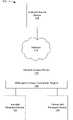
- FIG. 1shows an example of a network environment, according to some implementations.
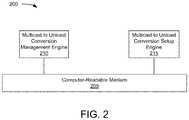
- FIG. 2shows an example of a multicast to unicast conversion engine, according to some implementations.
- FIG. 3shows an example of a multicast to unicast conversion management engine, according to some implementations.
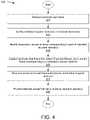
- FIG. 4shows an example of a flowchart of a method for performing multicast to unicast conversion, according to some implementations.
- FIG. 5shows an example of a multicast to unicast setup engine, according to some implementations.
- FIG. 6shows an example of a flowchart of a method for setting up multicast to unicast conversion, according to some implementations.
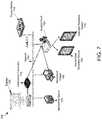
- FIG. 7shows an example of a network environment, according to some implementations.
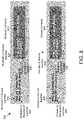
- FIG. 8shows an example of a screen of a conversion of a multicast frame into a series of unicast frames, according to some implementations.
- FIG. 9shows an example of a screen of a conversion of a multicast frame into a unicast frame for a particular device, according to some implementations.
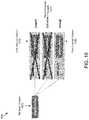
- FIG. 10shows an example of a screen of a conversion of a multicast frame into a unicast frame for a particular user, according to some implementations.
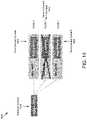
- FIG. 11shows an example of a screen of a conversion of a multicast frame into a unicast frame for a particular user associated with a plurality of devices, according to some implementations.
- FIG. 12shows an example of a screen of a conversion of a multicast frame into a unicast frame for a user profile associated with a plurality of users, according to some implementations.
- FIG. 13shows an example of a screen of a conversion of a multicast frame into a unicast frame for a particular private pre-shared key (PPSK), according to some implementations.
- PPSKprivate pre-shared key
- FIG. 14shows an example of a screen of a conversion of a multicast frame into a unicast frame for a particular virtual local area network (VLAN), according to some implementations.
- VLANvirtual local area network
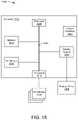
- FIG. 15shows an example of a digital device, according to some embodiments.
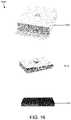
- FIG. 16shows examples of a plurality of network access devices, according to some embodiments.
- FIG. 1shows an example of a network environment 100 , according to some implementations.
- the network environment 100may include a multicast source device 105 , a network 110 , a network access device 115 , an intended recipient device 125 , and an unintended recipient device 130 .
- the network environment 100can allow for content to be provided from the multicast source device 105 to the intended recipient device 125 and/or the unintended recipient device 130 .
- the network environment 100can allow for multicast to unicast conversion techniques as described in this paper.
- the multicast source device 105is coupled to the network 110 .
- the multicast source device 105can include an engine and/or a datastore.
- An “engine,” as used herein,can include a dedicated or shared processor and, typically, firmware or software modules that are executed by the processor. Depending upon implementation-specific or other considerations, an engine can be centralized or its functionality distributed. An engine can include special purpose hardware, firmware, or software embodied in a computer-readable medium for execution by the processor.
- the term enginecan refer to, be part of, or include an Application Specific Integrated Circuit (ASIC); an electronic circuit; a combinational logic circuit; a field programmable gate array (FPGA); a processor (shared, dedicated, or group) that executes code; other suitable hardware components that provide the described functionality; or a combination of some or all of the above, such as in a system-on-chip.
- ASICApplication Specific Integrated Circuit
- FPGAfield programmable gate array
- processorshared, dedicated, or group
- the term enginecan include memory (shared, dedicated, or group) that stores code executed by the processor.
- codecan include software, firmware, and/or microcode, and can refer to programs, routines, functions, classes, and/or objects.
- sharedmeans that some or all code from multiple engines can be executed using a single (shared) processor.
- some or all code from multiple enginescan be stored by a single (shared) memory.
- groupmeans that some or all code from a single engine can be executed using a group of processors or a group of execution engines. For example, multiple cores and/or multiple threads of a processor can be considered to be execution engines.
- execution enginescan be grouped across a processor, across multiple processors, and across processors in multiple locations, such as multiple servers in a parallel processing arrangement.
- a “datastore,” as used herein,can be implemented, for example, as software embodied in a physical computer-readable medium on a general- or specific-purpose machine, in firmware, in hardware, in a combination thereof, or in an applicable known or convenient device or system.
- Datastores described in this paperare intended, if applicable, to include any organization of data, including tables, comma-separated values (CSV) files, traditional databases (e.g., SQL), or other known or convenient organizational formats.
- a database management systemcan be used to manage the datastore.
- the DBMScan be thought of as part of the datastore or as part of the multicast source device 105 , or as a separate functional unit (not shown).
- a DBMSis typically implemented as an engine that controls organization, storage, management, and retrieval of data in a database. DBMSs frequently provide the ability to query, backup and replicate, enforce rules, provide security, do computation, perform change and access logging, and automate optimization.
- DBMSsinclude Alpha Five, DataEase, Oracle database, IBM DB2, Adaptive Server Enterprise, FileMaker, Firebird, Ingres, Informix, Mark Logic, Microsoft Access, InterSystems Cache, Microsoft SQL Server, Microsoft Visual FoxPro, MonetDB, MySQL, PostgreSQL, Progress, SQLite, Teradata, CSQL, OpenLink Virtuoso, Daffodil DB, and OpenOffice.org Base, to name several.
- Database serverscan store databases, as well as the DBMS and related engines. Any of the datastores described in this paper could presumably be implemented as database servers. It should be noted that there are two logical views of data in a database, the logical (external) view and the physical (internal) view. In this paper, the logical view is generally assumed to be data found in a report, while the physical view is the data stored in a physical storage medium and available to a specifically programmed processor. With most DBMS implementations, there is one physical view and an almost unlimited number of logical views for the same data.
- a DBMStypically includes a modeling language, data structure, database query language, and transaction mechanism.
- the modeling languageis used to define the schema of each database in the DBMS, according to the database model, which can include a hierarchical model, network model, relational model, object model, or some other applicable known or convenient organization.
- An optimal structurecan vary depending upon application requirements (e.g., speed, reliability, maintainability, scalability, and cost).
- One of the more common models in use todayis the ad hoc model embedded in SQL.
- Data structurescan include fields, records, files, objects, and any other applicable known or convenient structures for storing data.
- a database query languagecan enable users to query databases, and can include report writers and security mechanisms to prevent unauthorized access.
- a database transaction mechanismideally ensures data integrity, even during concurrent user accesses, with fault tolerance.
- DBMSscan also include a metadata repository; metadata is data that describes other data.
- the multicast source device 105can include a digital device and/or a computer system, as discussed in this paper. In some implementations, the multicast source device 105 can have some or all of the elements of the digital device 1500 , shown in FIG. 15 .
- the multicast source device 105can include a memory and a processor.
- the multicast source device 105can be configured similarly to a digital device 1500 , shown in FIG. 15 .
- the multicast source device 105can include an operating system (OS) and/or one or more applications.
- the OScan include hardware and/or software to manage the hardware of the multicast source device 105 and provide services for applications on the user device 104 .
- Examples of OSs running on the multicast source device 105can include Android OSs, BSD, iOS, Linux, Mac OS X, Microsoft Windows, Windows Phone, and z/OS.
- the OS and/or applications on the multicast source device 105can manage access to the network 110 .
- the applications on the multicast source device 105can include application software which helps the multicast source device 105 perform tasks beyond the operation of the multicast source device 105 .
- the OS and/or the applications on the multicast source device 105can provide network access for the multicast source device 105 .
- the OS and/or applications on the multicast source device 105can allow the multicast source device 105 to access information not stored on the multicast source device 105 .
- the network accesscan include access to the network 110 .
- the network accesscan be managed by OS routines, by applications involving interactions with a user (e.g., web browsers, email clients, shared directories accessible over the network 110 ), or other components of the multicast source device 105 .
- aspects of the network accesscan be managed by a user of the multicast source device 105 .
- Some aspects of the network access of the multicast source device 105can also be managed by an Information Technology (IT) administrator who manages other portions of the network 110 .
- ITInformation Technology
- the network addresscan be managed by security applications that execute on the multicast source device 105 .
- the multicast source device 105can include a desktop computer, a laptop computer, a mobile phone, a mobile phone with data capabilities (e.g., a “Smartphone”), a tablet computing device, or other digital device.
- desktop and laptop computersinclude Macintosh® computers running some version of Mac OS X and Windows® computers manufactured by an Original Equipment Manufacturer (OEM).
- OEMOriginal Equipment Manufacturer
- mobile phones and tablet computing devicesinclude Android® devices, devices running a version of iOS®, Blackberries®, and other devices.
- the multicast source device 105can be a participant in a Bring Your Own Device (BYOD) scheme.
- BYODBring Your Own Device
- the multicast source device 105is configured to use general network-addressing protocols.
- the multicast source device 105can use dynamic network-addressing protocols, such as Transmission Control Protocol/Internet Protocol (TCP/IP) protocols.
- TCP/IPTransmission Control Protocol/Internet Protocol
- the multicast source device 105may have a TCP/IP or other dynamic network address that identifies the location of the multicast source device 105 in the network environment 100 .
- the dynamic network addressmay also include a device identifier of the multicast source device 105 .
- Each data packet coming from the multicast source device 105can have the network address of the multicast source device 105 appended thereto.
- Each data packet going to the multicast source device 105can have the network address of the multicast source device 105 appended thereto.
- the general network-addressing protocols of the multicast source device 105can, in some embodiments, be compatible with a service, such as the Bonjour® service.
- the multicast source device 105may provide multicasts to other devices in the network environment 100 .
- a “multicast,” as used herein,may include a message, advertisement, or other communication to a plurality of devices coupled to the network 110 .
- a multicastcan be referred to as a medium access control (MAC) address that has a group bit set.
- MACmedium access control
- a multicast MAC service data unity (MSDU)is one with a multicast destination address
- MPDUmulticast MAC protocol data unity
- control frameis one with a multicast receiver address.
- the multicastmay have device-level source and destination addresses, and network-layer source and destination addresses.
- the device-level source address of a multicastcan include the device-level address (e.g., a L2 address such as a MAC identifier) of the source of the multicast (e.g., the device-level address of multicast source device 105 ).
- the device-level destination address of a multicastcan include device-level addresses of all devices in a network environment (e.g., device-level addresses of all of the devices in the network environment 100 ).
- the network-level source address of a multicastcan include the network-level address (e.g., a L3 address such as TCP/IP address) of the source of the multicast (e.g., the network-level address of multicast source device 105 ).
- the network-level destination address of a multicastcan include a network-level address of a destination device in a network environment (e.g., the network-level address of the intended recipient device 125 ).
- a “unicast,” as used herein,may include a message, advertisement, or other communication to a device coupled to the network 110 .
- a unicast framecan be referred to as a frame addressed to a single recipient, not a broadcast or multicast frame.
- a synonym for “unicast” in 802.11is “directed address”).
- the unicastmay have device-level source and destination addresses, and network-layer source and destination addresses.
- the device-level source address of a unicastcan include the device-level address of the source of the unicast.
- the device-level destination address of a unicastcan include device-level addresses of intended destinations of the unicast.
- the network-level source address of a unicastcan include the network-level address of the source of the unicast.
- the network-level destination address of a unicastcan include a network-level address of a destination device in a network environment.
- the network 110is coupled to the multicast source device 105 and the network access device 115 .
- the network 110includes a networked system including several computer systems coupled together, such as the Internet, or a device for coupling components of a single computer, such as a bus.
- the term “Internet” as used in this paperrefers to a network of networks using certain protocols, such as the TCP/IP protocol, and possibly other protocols such as the hypertext transfer protocol (HTTP) for hypertext markup language (HTML) documents making up the World Wide Web (the web).
- HTTPhypertext transfer protocol
- HTMLhypertext markup language
- a web serverwhich is one type of content server, is typically at least one computer system, which operates as a server computer system and is configured to operate with the protocols of the web and is coupled to the Internet.
- the physical connections of the Internet and the protocols and communication procedures of the Internet and the webare well known to those of skill in the relevant art.
- the network 110broadly includes, as understood from relevant context, anything from a minimalist coupling of the components illustrated in the example of FIG. 1 , to every component of the Internet and networks coupled to the Internet.
- the network 110is administered by a service provider, such as an Internet Service Provider (ISP).
- ISPInternet Service Provider
- the network 110may include technologies such as Ethernet, 802.11, worldwide interoperability for microwave access (WiMAX), 3G, 4G, CDMA, GSM, LTE, digital subscriber line (DSL), etc.
- the network 110may further include networking protocols such as multiprotocol label switching (MPLS), transmission control protocol/Internet protocol (TCP/IP), User Datagram Protocol (UDP), hypertext transport protocol (HTTP), simple mail transfer protocol (SMTP), file transfer protocol (FTP), and the like.
- the data exchanged over network 110can be represented using technologies and/or formats including hypertext markup language (HTML) and extensible markup language (XML).
- all or some linkscan be encrypted using conventional encryption technologies such as secure sockets layer (SSL), transport layer security (TLS), and Internet Protocol security (IPsec).
- SSLsecure sockets layer
- TLStransport layer security
- IPsecInternet Protocol security
- the network 110includes a wired network using wires for at least some communications.
- the network 110comprises a wireless network.
- a “wireless network,” as used in this papermay include any computer network communicating at least in part without the use of electrical wires.
- the network 110includes technologies such as Ethernet, 802.11, worldwide interoperability for microwave access (WiMAX), 3G, 4G, CDMA, GSM, LTE, digital subscriber line (DSL), etc.
- the network 110can further include networking protocols such as multiprotocol label switching (MPLS), transmission control protocol/Internet protocol (TCP/IP), User Datagram Protocol (UDP), hypertext transport protocol (HTTP), simple mail transfer protocol (SMTP), file transfer protocol (FTP), and the like.
- MPLSmultiprotocol label switching
- TCP/IPtransmission control protocol/Internet protocol
- UDPUser Datagram Protocol
- HTTPhypertext transport protocol
- SMTPsimple mail transfer protocol
- FTPfile transfer protocol
- the data exchanged over the network 110can be represented using technologies and/or formats including hypertext markup language (HTML) and extensible markup language (XML).
- HTMLhypertext markup language
- XMLextensible markup language
- all or some linkscan be encrypted using conventional encryption technologies such as secure sockets layer (SSL), transport layer security (TLS), and Internet Protocol security (IPsec).
- SSLsecure sockets layer
- TLStransport layer security
- IPsecInternet Protocol security
- the wireless network of the network 110is compatible with the 802.11 protocols specified by the Institute of Electrical and Electronics Engineers (IEEE).
- the wireless network of the network 110is compatible with the 802.3 protocols specified by the IEEE.
- IEEE 802.3 compatible protocols of the network 110may include local area network technology with some wide area network applications. Physical connections are typically made between nodes and/or infrastructure devices (hubs, switches, routers) by various types of copper or fiber cable.
- the IEEE 802.3 compatible technologycan support the IEEE 802.1 network architecture of the network 110 .
- the network 110can include trusted resources administered by a security device such as a switch, a firewall, a router, or a gateway.
- trusted resourcesare secure resources that are available in areas administered by the security device but are unavailable outside the areas administered by the security device. It is noted that a device can be able to access the trusted resources without directly being coupled to the trusted network, e.g., by establishing a logical or virtual presence on the trusted resources.
- the trusted resourcescan include resources of a LAN, a WAN, or a MAN, or portions thereof.
- the trusted resourcescan include portions of the Internet. For instance, the trusted resources can include secure portions of Internet-accessible resources (e.g., cloud-based resources).
- the trusted resources of the network 110can have a geographical component. That is, the trusted resources can be limited to a specified geographical locale, such as a hospital, a community, a school, an organization, or a particular office building, for instance.
- the trusted resourcesin various embodiments, can be managed by a common entity, such as an organization that has multiple locations. For instance, the trusted resources can comprise a common network maintained by multiple offices of a specific organization, such as a corporation.
- the resourcescan be limited to a class of devices seeking to access a trusted resource. For example, the resources can include a network of iPhones® (or other devices) trying to access a resource available only to iPhones®. As another example, the trusted resources can be limited to a class of devices having a common processing power and/or a common network capability.
- the network 110can include untrusted resources.
- the untrusted resourcescan, in some implementations, include portions of the Internet. Access to the untrusted resources may or may not be administered by the security device that administers trusted resources of the network 110 .
- the network access device 115is coupled to the network 110 , to the intended recipient device 125 , and to the unintended recipient device 130 .
- the network access device 115can provide the intended recipient device 125 and the unintended recipient device 130 with access to resources of the network 110 .
- the network access device 115can, in some implementations, provide network security for one or more of the intended recipient device 125 and the unintended recipient device 130 .
- the network access device 115can maintain trusted resources of the network 110 .
- the network access device 115can be configured as an access point, a router, a switch, a firewall, or a gateway. In some implementations, the network access device 115 can be implemented as one or more of the devices shown in FIG. 16 .
- the network access device 115comprises a multicast to unicast conversion engine 120 .
- the multicast to unicast conversion engine 120receives multicasts from the multicast source device 105 .
- the multicast to unicast conversion engine 120further converts the multicasts to unicasts to be directed to the intended recipient device 125 .
- the multicast to unicast conversion engine 120also blocks the multicasts from being directed to the unintended recipient device 130 .
- the multicast to unicast conversion engine 120allows network administrators to better control devices using multicast protocols, including devices using multicast Domain Name Server (mDNS) protocols.
- the multicast to unicast conversion engine 120further allows per-device or other per-destination filtering of network traffic from devices using multicast protocols.
- devicese.g., the intended recipient device 125 and/or the unintended recipient device 130
- link-layeri.e., layer-2
- the multicast to unicast conversion engine 120can use this capability to restrict visibility of messages from the multicast to unicast conversion engine 120 to only one device and/or to select devices.
- the multicast to unicast conversion engine 120implements multicast to unicast conversion in a user space of a kernel of the network access device 115 .
- various implementations of the multicast to unicast conversion engine 120are able to access network control information (including authorized users of the network 110 ) and to maintain multicast to unicast conversion code, particularly if the kernel of the network access device 115 is to be updated, with e.g., new versions of the operating system.
- implementing multicast to unicast conversion in the user space of the kernel of the network access device 115can also allow the kernel of the network access device 115 to filter traffic to particular users, particular devices, particular groups of users and/or devices, etc.
- mDNS trafficis a small component of overall network traffic, and that the code for conversion from multicasts to unicasts need not be in the forwarding path of networking traffic.
- Such an interfacecan enable a transparent proxy for the multicast to unicast conversion engine 120 .
- implementing the multicast to unicast conversion in a user space of the kernel of the multicast to unicast conversion engine 120can allow the operating system of the multicast to unicast conversion engine 120 to be used in wire mode and still perform per-user filtering.
- the multicast to unicast conversion engine 120will receive all multicast frames on the wired network, convert them to unicast (i.e., in L2) frames for transmission through the network access device 115 , and proper operation will depend on having L2 multicast frames blocked by the network access device 115 .
- FIG. 2further shows implementations of the multicast to unicast conversion engine 120 in greater detail.
- the intended recipient device 125is coupled to the multicast to unicast conversion engine 120 .
- the intended recipient device 125can represent an intended recipient of a multicast from the multicast source device 105 .
- the intended recipient device 125can include an engine and/or a datastore.
- the intended recipient device 125can include a digital device and/or a computer system, as discussed in this paper.
- the intended recipient device 125is configured to use general network-addressing protocols.
- the intended recipient device 125may receive unicasts from other devices in the network environment 100 .
- the intended recipient device 125can represent one or more of: a particular device or particular devices, one or more devices associated with a particular user, one or more devices associated with a particular user profile for the network 110 , one or more devices associated with a particular private pre-shared key (PPSK), and/or one or more devices associated with a particular virtual local area network (VLAN).
- FIGS. 8-14show examples of how the intended recipient device 125 can represent one or more of: a particular device or particular devices, one or more devices associated with a particular user, one or more devices associated with a particular user profile for the network 110 , one or more devices associated with a particular private pre-shared key (PPSK), and/or one or more devices associated with a particular virtual local area network (VLAN).
- the unintended recipient device 130is coupled to the multicast to unicast conversion engine 120 .
- the unintended recipient device 130can represent an intended recipient of a multicast from the multicast source device 105 .
- the unintended recipient device 130can include an engine and/or a datastore.
- the unintended recipient device 130can include a digital device and/or a computer system, as discussed in this paper.
- the unintended recipient device 130is configured to use general network-addressing protocols.
- the unintended recipient device 130may receive unicasts from other devices in the network environment 100 .
- the unintended recipient device 130can represent an unintended recipient of a multicast from the multicast source device 105 . More specifically, the unintended recipient device 130 can represent one or more devices that would normally receive a multicast from the multicast source device 105 , but are not intended as recipients to the multicast.
- FIG. 2shows an example of a multicast to unicast conversion engine 200 , according to some implementations.
- some or all of the multicast to unicast conversion engine 200can correspond to some or all of the multicast to unicast conversion engine 120 , shown in FIG. 1 .
- the multicast to unicast conversion engine 200includes a computer-readable medium 205 , a multicast to unicast conversion management engine 210 , and a multicast to unicast conversion setup engine 215 .
- One or more of the multicast to unicast conversion management engine 210 and the multicast to unicast conversion setup engine 215can include an “engine,” as described herein.
- the computer-readable medium 205is coupled to the multicast to unicast conversion management engine 210 and the multicast to unicast conversion setup engine 215 .
- the computer-readable medium 205can include a “computer-readable medium,” examples of which are given herein.
- the computer-readable medium 205can also couple the components (e.g., the multicast to unicast conversion management engine 210 and the multicast to unicast conversion setup engine 215 ) of the multicast to unicast conversion engine 200 to external devices, such portions of the network access device 115 , shown in FIG. 1 .
- the multicast to unicast conversion management engine 210is coupled to the computer-readable medium 205 .
- the multicast to unicast conversion management engine 210manages multicast to unicast conversion for the multicast to unicast conversion engine 200 .
- the multicast to unicast conversion management engine 210can receive a multicast from a multicast source device (e.g., the multicast source device 105 , shown in FIG. 1 ).
- the multicast to unicast conversion management engine 210can also convert the multicast into a unicast for an intended recipient device (e.g., the intended recipient device 125 , shown in FIG. 1 ).
- the multicast to unicast conversion management engine 210can block the unicast from reaching an unintended recipient device (e.g., the unintended recipient device 130 , shown in FIG. 1 ).
- the multicast to unicast conversion management engine 210is configured to execute at least portions in a user space of a kernel of the multicast to unicast conversion engine 200 .
- the multicast to unicast conversion setup engine 215is coupled to the computer-readable medium 205 .
- the multicast to unicast conversion setup engine 215can instruct the multicast to unicast conversion management engine 210 to monitor network traffic for multicasts.
- the multicast to unicast conversion setup engine 215can also set up multicast to unicast conversion for all multicasts in a network (e.g., the network 110 , shown in FIG. 1 ).
- FIG. 3shows an example of a multicast to unicast conversion management engine 300 , according to some implementations.
- some or all of the multicast to unicast conversion management engine 300can correspond to some or all of the multicast to unicast conversion management engine 210 , shown in FIG. 2 .
- FIG. 3shows an example of a multicast to unicast conversion management engine 300 , according to some implementations.
- some or all of the multicast to unicast conversion management engine 300can correspond to some or all of the multicast to unicast conversion management engine 210 , shown in FIG. 2 .
- FIG. 3shows an example of a multicast to unicast conversion management engine 300 , according to some implementations.
- some or all of the multicast to unicast conversion management engine 300can correspond to some or all of the multicast to unicast conversion management engine 210 , shown in FIG. 2 .
- FIG. 3shows an example of a multicast to unicast conversion management engine 300 , according to some implementations.
- the multicast to unicast conversion management engine 300can include a computer-readable medium 305 , a multicast frame receiving engine 310 , an intended destination management engine 315 , a destination unicast engine 320 , a multicast frame expansion engine 325 , unintended recipient device frame removal engine 330 , an intended recipient device frame providing engine 335 , a device datastore 340 , and a destination unicast datastore 345 .
- One or more of the multicast frame receiving engine 310 , the intended destination management engine 315 , the destination unicast engine 320 , the multicast frame expansion engine 325 , the unintended recipient device frame removal engine 330 , and the intended recipient device frame providing engine 335can include an “engine,” as described herein.
- One or more of the device datastore 340 and the destination unicast datastore 345can include a “datastore,” as described herein.
- some or all of the multicast to unicast conversion management engine 300resides in a user space of a kernel of a network access device, such as the network access device 115 shown in FIG. 1 .
- the computer-readable medium 305is coupled to the multicast frame receiving engine 310 , the intended destination management engine 315 , the destination unicast engine 320 , the multicast frame expansion engine 325 , the unintended recipient device frame removal engine 330 , the intended recipient device frame providing engine 335 , the device datastore 340 , and the destination unicast datastore 345 .
- the computer-readable medium 305can include a “computer-readable medium,” examples of which are given herein.
- the computer-readable medium 305can couple components (e.g., the multicast frame receiving engine 310 , the intended destination management engine 315 , the destination unicast engine 320 , the multicast frame expansion engine 325 , the unintended recipient device frame removal engine 330 , the intended recipient device frame providing engine 335 , the device datastore 340 , and the destination unicast datastore 345 ) of the multicast to unicast conversion management engine 300 to external devices, such as portions of the multicast to unicast conversion engine 200 , shown in FIG. 2 .
- componentse.g., the multicast frame receiving engine 310 , the intended destination management engine 315 , the destination unicast engine 320 , the multicast frame expansion engine 325 , the unintended recipient device frame removal engine 330 , the intended recipient device frame providing engine 335 , the device datastore 340 , and the destination unicast datastore 345 .
- the multicast frame receiving engine 310is coupled to the computer-readable medium 305 .
- the multicast frame receiving engine 310can receive multicast frames from a network.
- the multicast frame receiving engine 310can be incorporated as part of a network interface of a multicast to unicast conversion engine (e.g., the multicast to unicast conversion engine 120 in FIG. 1 and/or the multicast to unicast conversion engine 200 in FIG. 2 ).
- the multicast frame receiving engine 310can monitor the network interface for the presence of multicasts. Attributes of network traffic that can be monitored include L2 and L3 information in the header of specific packets to the multicast frame receiving engine 310 .
- the multicast frame receiving engine 310can receive data formatted as a multicast from a multicast source device (e.g., the multicast source device 105 , shown in FIG. 1 ).
- the intended destination management engine 315is coupled to the computer-readable medium 305 .
- the intended destination management engine 315can review portions of traffic (e.g., headers of packets) from a network, such as the network 110 .
- the intended destination management engine 315can further extract network address information, such as L2 (e.g., destination MAC addresses) and/or L3 (e.g., destination TCP/IP addresses) to determine where network traffic is to be directed.
- the intended destination management engine 315can correlate extracted network location information with devices in the device datastore 340 .
- the intended destination management engine 315can identify one or more intended destination devices (e.g., the intended recipient device 125 , shown in FIG. 1 ) of the network traffic using the correlation.
- the destination unicast engine 320is coupled to the computer-readable medium 305 .
- the destination unicast engine 320can identify one or more destination unicast addresses for the multicast frames.
- the destination unicast engine 320can look up unicast addresses corresponding to the one or more intended destination devices.
- the destination unicast engine 320can look up unicast addresses stored in the destination unicast datastore 345 .
- at least portions of the unicast addressesmay correspond to network addresses of the intended destination devices. For instance, at least portions of the unicast addresses may have L2 or L3 information corresponding to L2 or L3 network addresses of the intended destination devices.
- the multicast frame expansion engine 325is coupled to the computer-readable medium 305 .
- the multicast frame expansion engine 325can create a plurality of unicast frames for a given multicast frame.
- the multicast frame expansion engine 325can further copy the payload of the given multicast frame into the payloads of each of the plurality of unicast frames.
- the multicast frame expansion engine 325can further provide the unicast address of recipient device(s) into the header of each of the plurality of unicast frames.
- the multicast frame expansion engine 325can expand a multicast packet into a series of unicast frames, each of the series of frames corresponding to a destination unicast address.
- the resulting set of expanded framescan comprise a series of unicast frames directed to all devices in the network. More specifically, the resulting set of expanded frames can include unicast frames directed to intended devices on the network and unicast frames directed to unintended devices on the network.
- the multicast frame expansion engine 325is configured to create the plurality of unicast frames for the given multicast frame in a user space of a kernel of the multicast to unicast conversion management engine 300 .
- the unintended recipient device frame removal engine 330is coupled to the computer-readable medium 305 .
- the unintended recipient device frame removal engine 330can remove unicast frames directed toward one or more unintended recipient devices.
- the unintended recipient device frame removal engine 330can remove unicast frames directed toward the unintended recipient device 130 , shown in FIG. 1 .
- the unintended recipient device frame removal engine 330can delete unwanted unicast frames, while in various implementations, the unintended recipient device frame removal engine 330 can cache the unwanted unicast frames in a specified location. It is noted the unintended recipient device frame removal engine 330 can filter the unicast frames in other ways as well.
- the unintended recipient device frame removal engine 330is configured to remove unintended frames in the user space of the kernel of the multicast to unicast conversion management engine 300 .
- the intended recipient device frame providing engine 335is coupled to the computer-readable medium 305 .
- the intended recipient device frame providing engine 335can provide the unicast frames to one or more intended recipient devices.
- the intended recipient device frame providing engine 335can provide to the intended recipient device 125 (shown in FIG. 1 ) the unicast frames directed toward the intended recipient device 125 .
- the intended recipient device frame providing engine 335can also cache and/or otherwise store the unicast frames directed toward intended recipient devices in various implementations.
- the device datastore 340is coupled to the computer-readable medium 305 .
- the device datastore 340can store a list of devices on a network (e.g., devices on the network 110 , shown in FIG. 1 ). The list of devices can also have an entry for a network address (e.g., L2 and/or L3 address) for each device.
- the destination unicast datastore 345is coupled to the computer-readable medium 305 .
- the destination unicast datastore 345can include a list of intended recipient devices to which unicasts are directed.
- the list of intended recipient devicescan include network addresses of intended recipient devices.
- FIG. 4shows an example of a flowchart 400 of a method for performing multicast to unicast conversion, according to some implementations.
- the flowchart 400is discussed in conjunction with the multicast to unicast conversion management engine 300 . It is noted the flowchart 400 can include fewer or additional blocks without departing from the scope and substance of the inventive concepts herein.
- the multicast frame receiving engine 310receives a multicast data frame.
- the multicast frame receiving engine 310can receive a multicast data frame from a multicast source device (e.g., the multicast source device 105 shown in FIG. 1 ).
- the multicast data framemay include, as part of its header, L2 information about a plurality of devices coupled to a network (e.g., the network 110 shown in FIG. 1 ).
- the multicast data framemay also include, as part of its header, L3 information about intended recipient devices (e.g., the intended recipient device 125 ) to which the multicast data frame is to be directed.
- the multicast data framemay further include data as part of its payload. Examples of data include content that is to be directed toward the intended recipient devices.
- the multicast data framecan include images, sounds, video, or streaming content to be sent to the intended recipient device.
- the intended destination management engine 315identifies one or more intended recipient devices of the multicast data frame.
- the intended destination management engine 315can review the header of the multicast data frame to identify an intended recipient device that the multicast data frame was directed to.
- the intended destination management engine 315can identify a network address, such as a L3 address, of the intended recipient device.
- the intended destination management engine 315can identify a TCP/IP address of the intended recipient device, in various implementations.
- the intended destination management engine 315can provide the identified one or more intended recipient devices to the destination unicast engine 320 .
- the destination unicast engine 320identifies a destination unicast address corresponding to each of the one or more intended recipient devices.
- the destination unicast engine 320can look up the each destination unicast address of identified one or more recipient devices from the device datastore 340 .
- the destination unicast engine 320can provide each destination unicast address to the multicast frame expansion engine 325 .
- the multicast frame expansion engine 325expands the multicast data frame into a series of unicast data frames, each of the unicast data frames corresponding to a destination unicast address.
- the multicast frame expansion engine 325can create a set of unicast data frames corresponding to the multicast data frame.
- Each of the set of unicast data framescan have, as its payload, contents that correspond to the contents of the multicast data frame.
- Each of the set of unicast data framescan have, as its header, the destination unicast address of the intended recipient device(s) the unicast data frames is directed to.
- the multicast frame expansion engine 325can provide the set of unicast data frames to one or more of the unintended recipient device frame removal engine 330 and the intended recipient device frame providing engine 335 .
- the unintended recipient device frame removal engine 330drops non-intended unicast frames directed to unintended recipient devices.
- the unintended recipient device frame removal engine 330can review the header of each of the set of unicast data frames.
- the unintended recipient device frame removal engine 330can further look up, in the destination unicast datastore 345 , whether each of the set of unicast data frames is directed toward one or more intended recipient devices.
- the unintended recipient device frame removal engine 330can further drop, i.e., block, unicast data frames directed toward unintended recipient devices.
- the intended recipient device frame providing engine 335provides the intended unicast frames to the intended recipient devices.
- the intended recipient device frame providing engine 335can review the header of each of the set of unicast data frames.
- the intended recipient device frame providing engine 335can further look up, in the destination unicast datastore 345 , whether each of the set of unicast data frames is directed toward one or more intended recipient devices.
- the intended recipient device frame providing engine 335can further allow unicast data frames directed toward intended recipient devices to go to those intended recipient devices.
- FIG. 5shows an example of a multicast to unicast conversion setup engine 500 , according to some implementations.
- some or all of the multicast to unicast conversion setup engine 500can correspond to some or all of the multicast to unicast conversion setup engine 215 , shown in FIG. 2 .
- the multicast to unicast conversion setup engine 500includes a computer-readable medium 505 , a network access device installation engine 510 , an intended recipient identification engine 515 , a network address identification engine 520 , and a multicast to unicast conversion management engine configuration engine 525 .
- One or more of the computer-readable medium 505 , the network access device installation engine 510 , the intended recipient identification engine 515 , the network address identification engine 520 , and the multicast to unicast conversion management engine configuration engine 525can include an “engine,” as described herein.
- the computer-readable medium 505is coupled to the network access device installation engine 510 , the intended recipient identification engine 515 , the network address identification engine 520 , and the multicast to unicast conversion management engine configuration engine 525 .
- the computer-readable medium 505can include a “computer-readable medium,” examples of which are given herein.
- the computer-readable medium 505can couple components (e.g., the network access device installation engine 510 , the intended recipient identification engine 515 , the network address identification engine 520 , and the multicast to unicast conversion management engine configuration engine 525 ) of the multicast to unicast conversion setup engine 500 to external devices, such as portions of the multicast to unicast conversion engine 200 , shown in FIG. 2 .
- the network access device installation engine 510is coupled to the computer-readable medium 505 .
- the network access device installation engine 510can install an access point on a network.
- the network access device installation engine 510can install the network access device 115 on the network 110 , both shown in FIG. 1 .
- the network access device installation engine 510can configure portions of the network access device (e.g., drivers and/or applications executing on the network access device) to send and receive data passing through the network.
- the intended recipient identification engine 515is coupled to the computer-readable medium 505 .
- the intended recipient identification engine 515can identify devices that can serve as intended recipient devices on the network. For instance, the intended recipient identification engine 515 can identify particular devices that are to receive unicasts based on converted multicasts.
- the intended recipient identification engine 515can also identify one or more of: a particular device or particular devices, one or more devices associated with a particular user, one or more devices associated with a particular user profile for the network 110 , one or more devices associated with a particular private pre-shared key (PPSK), and/or one or more devices associated with a particular virtual local area network (VLAN).
- PPSKprivate pre-shared key
- VLANvirtual local area network
- the network address identification engine 520is coupled to the computer-readable medium 505 .
- the network address identification engine 520can identify a network address of a device on the network.
- the network address identification engine 520can, in implementations, identify L2 and/or L3 network address information of the intended recipient device 125 and/or the unintended recipient device 130 , shown in FIG. 1 .
- the multicast to unicast conversion management engine configuration engine 525is coupled to the computer-readable medium 505 .
- the multicast to unicast conversion management engine configuration engine 525can configure a multicast to unicast conversion management engine (e.g., the multicast to unicast conversion management engine 210 in FIG. 2 and/or the multicast to unicast conversion management engine 300 in FIG. 3 ) to convert multicasts to unicasts directed to intended recipient devices.
- the multicast to unicast conversion management engine configuration engine 525can interact with drivers and/or applications on the multicast to unicast conversion management engine to redirect network traffic to intended recipient devices.
- FIG. 6shows an example of a flowchart 600 of a method for setting up multicast to unicast conversion, according to some implementations.
- the flowchart 600is discussed in conjunction with the multicast to unicast conversion setup engine 500 . It is noted the flowchart 600 can include fewer or additional blocks without departing from the scope and substance of the inventive concepts herein.
- the network access device installation engine 510installs a network access device on the network.
- the intended recipient identification engine 515identifies one or more intended recipient devices on the network.
- the network address identification engine 520identifies one or more network addresses associated with the one or more intended recipient devices on the network.
- the multicast to unicast conversion management engine configuration engine 525configures a multicast to unicast conversion management engine to convert multicasts to the one or more intended recipient devices into unicasts to the one or more network addresses of the one or more intended recipient devices.
- FIG. 7shows an example of a network environment 700 , according to some implementations.
- the network environment 700includes a display 705 , a networked television 710 , a router/switch 715 , a network 720 , a networked server 725 , a networked printer 730 , an access point 735 , an unintended recipient device 740 , and an intended recipient device 745 .
- one or more of the elements of the network environment 700may correspond to one or more of the elements of the network environment 100 , shown in FIG. 1 .
- the display 705is coupled to the network 720 .
- the display 705can include any device that provides images or video to a user.
- the display 705can comprise a Cathode Ray Tube (CRT), a plasma display, a Liquid Crystal Display (LCD), or a Light Emitting Diode (LED) display, in various embodiments.
- the display 705displays content (e.g., images, video, web pages, documents) provided by the networked television 710 .
- the display 705can be coupled to a storage device that provides the display 705 with content.
- the display 705can be coupled to hard disk drives, magnetic media, optical disks (e.g., Compact Disk Read-Only Memory (CD-ROM), Digital Versatile Disks (DVDs)), or other media.
- CD-ROMCompact Disk Read-Only Memory
- DVDsDigital Versatile Disks
- the networked television 710is coupled to the network 720 via the access point 735 .
- the networked television 710can include any device that receives content over the network 720 and provides the content to other devices coupled to the network 720 .
- the networked television 710may or may not be coupled to the display 705 .
- the networked television 710is linked to an Internet television service, such as Google® television, Apple® television, or Roku®.
- the networked television 710can include hardware and/or software that implements protocols of the Internet television service.
- the networked television 710receives requests for content from one or more of the other devices coupled to the network 720 (e.g., the networked server 725 , the networked printer 730 , the unintended recipient device 740 , or the intended recipient device 745 ).
- the networked television 710can further satisfy the request with content from the Internet using the router/switch 715 .
- the networked television 710is configured to multicast the content to the other devices coupled to the network 720 . More specifically, in response to a request for content from one of the other devices coupled to the network 720 , the networked television 710 can multicast the content to all of the other devices coupled to the network 720 .
- the multicastcan be in the form of a multicast data packet as discussed in this paper.
- the router/switch 715is coupled to the network 720 through the access point 735 .
- the router/switch 715connects the network 720 to the Internet.
- the router/switch 715can translate protocols used to communicate over the network 720 to protocols used to communicate over the Internet.
- the router/switch 715can provide security for the network 720 . More specifically, the router/switch 715 can protect portions of the network 720 from malicious incoming traffic, and can prevent malicious outgoing traffic from leaving the network 720 . Though FIG.
- FIG. 7shows the router/switch 715 as separate from the access point 735 , it is noted that in various implementations, the functionalities of the router/switch 715 can be incorporated into the access point 735 or vice versa. Moreover, though the discussion herein discusses a multicast to unicast conversion engine (e.g., the multicast to unicast conversion engine 120 shown in FIG. 1 ) as residing within the access point 735 , it is noted that in various implementations, a multicast to uncast conversion engine may reside within the router/switch 715 .
- a multicast to unicast conversion enginee.g., the multicast to unicast conversion engine 120 shown in FIG. 1
- the network 720is coupled, through the access point 735 , to the networked television 710 , the router/switch 715 , the networked server 725 , the networked printer 730 , the unintended recipient device 740 , and the intended recipient device 745 .
- the network 720may correspond to some or all of the portions of the network 110 shown in FIG. 1 .
- the network 720may have some or all of elements of the network 110 , discussed in the context of FIG. 1 .
- the network 720can comprise a trusted network having trusted resources, as discussed herein.
- the network 720can also facilitate transfer of content between the networked television 710 and the other devices coupled to the network 720 .
- the networked server 725is coupled to the network 720 via the access point 735 .
- the networked server 725can provide services for the other devices coupled to the network 720 .
- the networked server 725can provide services for one or more of the networked television 710 , the router/switch 715 , the networked printer 730 , the access point 735 , the unintended recipient device 740 , and the intended recipient device 745 .
- the networked printer 730is coupled to the network 720 .
- the networked printer 730may print files, documents, content, etc. for the other devices coupled to the network 720 .
- the access point 735is coupled to the network 720 via the access point 735 .
- the access point 735can provide the unintended recipient device 740 and the intended recipient device 745 with access to the network 720 .
- the access point 735can connect the unintended recipient device 740 and the intended recipient device 745 to one or more of the networked television 710 , the router/switch 715 , the networked server 724 , the networked printer 730 , and the Internet.
- the access point 735can correspond to the network access device 115 , shown in FIG. 1 .
- the unintended recipient device 740is coupled to the network 720 via the access point 735 .
- the unintended recipient device 740can comprise any digital device, as described herein.
- the unintended recipient device 740can receive data from devices, such as the networked television 710 , the router/switch 715 , the networked server 725 , the networked printer 730 , and the intended recipient device 745 .
- the intended recipient device 745is coupled to the network 720 via the access point 735 .
- the intended recipient device 745can comprise any digital device, as described herein.
- the intended recipient device 745can receive data from devices, such as the networked television 710 , the router/switch 715 , the networked server 725 , the networked printer 730 , and the unintended recipient device 740 .
- each of the devices coupled to the network 720can maintain its own network address, such as a dynamic IP address, that provides a network location for the device.
- a dynamic IP addressprovides a network location for the device.
- one or more of the networked television 710 , the router/switch 715 , the networked server 725 , the networked printer 730 , the access point 735 , the unintended recipient device 740 , and the intended recipient device 745can maintain its own network address.
- network addressingother than dynamic IP addressing can be possible in various implementations without departing from the scope and substance of the inventive concepts described herein.
- one or more of the devices in the network environment 100can send messages to other devices.
- the messagesmay take the form of multicasts to all the devices in the network environment 700 .
- the networked television 710can provide multicasts to the other devices in the network environment 100 .
- An example of a multicastis a packet from one of the devices in the network environment 700 that is intended for all other devices in the network environment 700 .
- Another example of a multicastis content of a particular television station (e.g., “Channel 5 ”) that comes from the networked television 710 and is intended for the intended recipient device 745 but not intended for the other devices in the network environment 700 .
- Yet another example of a multicastis resources from the networked server 725 that is intended for the intended recipient device 745 but not intended for the other devices in the network environment 700 .
- the messagesmay also take the form of unicasts to one or more of the devices in the network environment 700 .
- the administrator of the network 720may not want specific networked television content intended for only the intended recipient device 745 to go to devices other than the intended recipient device 745 .
- Providing, for example, the unintended recipient device 740 with content intended for the intended recipient device 745may unduly constrain the network 720 by unnecessarily providing multicasts to devices other than the intended recipient device 745 .
- Providing such content to the unintended recipient device 740may also interfere with the privacy and/or security of the intended recipient device 745 by allowing the unintended recipient device 740 to receive content that is intended for the intended recipient device 745 .
- the networked television 710can receive from the intended recipient device 745 a request for content, such as a request for a specific channel of television programming.
- a request for contentsuch as a request for a specific channel of television programming.
- the networked television 710can obtain the requested content from the Internet, through the access point 735 and the router/switch 715 .
- the networked television 710can then multicast the requested content to all of the devices on the network environment 700 .
- the networked television 710can provide the multicast to the access point 735 .
- the multicast to unicast conversion engine in the access point 735can convert the multicast to a unicast that is directed to the intended recipient device 745 .
- the requested content from the networked television 710need not go to other devices on the network 720 . More specifically, the requested content need not go to the networked printer 730 or the unintended recipient device 740 . Rather, the requested content can be provided to the intended recipient device 745 .
- Such a unicastcan, in various implementations, save network resources and can improve the security and/or data privacy of the network 720 .
- a multicast to unicast conversion for content to a single devicei.e., a unicast to the intended recipient device 745
- various implementationsmay involve a multicast to unicast conversion for content to a single device associated with a particular user, content to a plurality of devices associated with a particular user, content to a user profile associated with a plurality of users and/or devices, content to a particular private pre-shared key (PPSK), or content to a particular VLAN.
- PPSKprivate pre-shared key
- FIG. 8shows an example of a screen 800 of a conversion of a multicast frame into a series of unicast frames, according to some implementations.
- the screen 800includes a multicast frame 805 and a unicast frame 810 .
- the multicast frame 805includes a multicast L2 source identifier 815 , a multicast L2 destination identifier 820 , a multicast L3 source identifier 825 , a multicast L3 destination identifier 830 , and multicast contents 835 .
- the multicast L2 source identifier 815identifies a L2 network address (e.g., a MAC address) of a source of a multicast.
- the multicast L2 destination identifier 820can identify a L2 network address (e.g., a MAC address) of a destination related to the multicast.
- the multicast L2 destination identifier 820corresponds to the identifier of all of the devices that are to receive the multicast.
- the multicast L3 source identifier 825can identify a L3 network address (e.g., an IP address) of a source of the multicast.
- the multicast L3 destination identifier 830can identify a L3 network address (e.g., an IP address) of the destination related to the multicast.
- the multicast contents 835can identify the contents of the multicast. In this example, the contents of the multicast can correspond to data from a Bonjour®-compatible router or wireless device.
- the unicast frame 810includes a unicast L2 source identifier 840 , a unicast L2 destination identifier 845 , a unicast L3 source identifier 850 , a unicast L3 destination identifier 855 , and unicast contents 860 .
- the unicast L2 source identifier 840identifies a L2 network address (e.g., a MAC address) of a source of a unicast.
- the unicast L2 destination identifier 845can identify a L2 network address (e.g., a MAC address) of a destination related to the unicast.
- the unicast L2 destination identifier 845corresponds to the MAC address of the devices that are to receive the unicast.
- the unicast L3 source identifier 850can identify a L3 network address (e.g., an IP address) of a source of the unicast.
- the unicast L3 destination identifier 855can identify a L3 network address (e.g., an IP address) of the destination related to the multicast.
- the unicast contents 860can identify the contents of the unicast.
- a multicast to unicast conversion engine(e.g., the multicast to unicast conversion engine 120 of FIG. 1 ) can convert the multicast frame 805 into the unicast frame 810 using the techniques described in this paper. More specifically, the multicast to unicast conversion engine can change the multicast L2 destination identifier 820 into the unicast L2 destination identifier 845 . The other contents of the multicast frame 805 need not change. Such a conversion can facilitate numerous advantages, including maximizing network efficiency and network security.
- FIG. 9shows an example of a screen 900 of a conversion of a multicast frame into a unicast frame for a particular device, according to some implementations.
- the screen 900includes multicast content 905 , first unicast content 910 , second unicast content 915 , and third unicast content 920 .
- the multicast content 905can include content formatted as a multicast. More specifically, the multicast content 905 can be directed to a plurality of devices in a network, such as the network 720 shown in FIG. 7 . In a specific implementation, the multicast content 905 includes a multicast from a Bonjour®-compatible router or a Bonjour®-compatible device (e.g., the networked television 710 shown in FIG. 7 ). It is noted the multicast content 905 can also include other forms of content without departing from the scope and substance of the inventive concepts described herein.
- each of the first unicast content 910 , the second unicast content 915 , and the third unicast content 920can include content formatted as a unicast. That is, each of the first unicast content 910 , the second unicast content 915 , and the third unicast content 920 can include content directed to a single device in the network.
- the multicast content 905can correspond to a multicast from the networked television 710 (shown in FIG. 7 ).
- the first unicast content 910 and the second unicast content 915can correspond to content directed to the unintended recipient device 740 (shown in FIG. 7 ) and/or other unintended recipient devices.
- the third unicast content 920can correspond to content directed to the intended recipient device 745 (shown in FIG. 7 ).
- a multicast to unicast conversion enginee.g., a multicast to unicast conversion engine in the access point 735
- the multicast to unicast conversion enginecan also block the first unicast content 910 and the second unicast content 915 from accessing unintended recipient devices, while allowing the third unicast content 920 to access the intended recipient device 745 .
- FIG. 10shows an example of a screen 1000 of a conversion of a multicast frame into a unicast frame for a particular user, according to some implementations.
- the screen 1000includes multicast content 1005 , first unicast content 1010 , second unicast content 1015 , and third unicast content 1020 .
- the multicast content 1005can include content formatted as a multicast. More specifically, the multicast content 1005 can be directed to a plurality of devices on a network, such as the network 720 , shown in FIG. 7 . In a specific implementation, the multicast content 1005 includes a multicast from a Bonjour®-compatible router or a Bonjour®-compatible device (e.g., the networked television 710 shown in FIG. 7 ). It is noted the multicast content 1005 can also include other forms of content without departing from the scope and substance of the inventive concepts described herein.
- each of the first unicast content 1010 , the second unicast content 1015 , and the third unicast content 1020can include content formatted as a unicast. That is, each of the first unicast content 1010 , the second unicast content 1015 , and the third unicast content 1020 can include content directed to a single device in the network.
- the multicast content 1005can correspond to a multicast from the networked television 710 (shown in FIG. 7 ).
- the first unicast content 1010can correspond to content directed to devices for a first user (“mgast”) on a network (e.g., the network 720 shown in FIG. 7 ).
- the second unicast content 1015can correspond to content directed to devices for a second user (“dflynn”) on the network.
- the third unicast content 1020can correspond to content directed to devices for a third user (“lwang”) on the network.
- a multicast to unicast conversion engine(e.g., a multicast to unicast conversion engine in the access point 735 ) can convert the multicast content 1005 into unicast content.
- the multicast to unicast conversion enginecan also block the first unicast content 1010 and the second unicast content 1015 from accessing unintended recipients and/or intended recipient devices, while allowing the third unicast content 1020 to access intended recipients and/or intended recipient devices.
- FIG. 11shows an example of a screen 1100 of a conversion of a multicast frame into a unicast frame for a particular user associated with a plurality of devices, according to some implementations.
- the screen 1100includes multicast content 1105 , first unicast content 1110 , second unicast content 1115 , and third unicast content 1120 .
- the multicast content 1105can include content formatted as a multicast. More specifically, the multicast content 1105 can be directed to a plurality of devices on a network, such as the network 720 , shown in FIG. 7 . In a specific implementation, the multicast content 1105 includes a multicast from a Bonjour®-compatible router or a Bonjour®-compatible device (e.g., the networked television 710 shown in FIG. 7 ). It is noted the multicast content 1105 can also include other forms of content without departing from the scope and substance of the inventive concepts described herein.
- each of the first unicast content 1110 , the second unicast content 1115 , and the third unicast content 1120can include content formatted as a unicast. That is, each of the first unicast content 1110 , the second unicast content 1115 , and the third unicast content 1120 can include content directed to a single device in the network.
- the multicast content 1105can correspond to a multicast from the networked television 710 (shown in FIG. 7 ).
- the first unicast content 1110can correspond to content directed to devices for a first user (“lwang”) on a network (e.g., the network 720 shown in FIG. 7 ).
- the second unicast content 1115can correspond to content directed to devices for a second user (“dflynn”) on the network.
- the third unicast content 1120can correspond to content directed to devices for the first user (“lwang”) on the network.
- a multicast to unicast conversion enginee.g., a multicast to unicast conversion engine in the access point 735
- the multicast to unicast conversion enginecan also block the second unicast content 1115 , while allowing the first unicast content 1110 and the third unicast content 1120 to access intended recipients and/or intended recipient devices.
- FIG. 12shows an example of a screen 1200 of a conversion of a multicast frame into a unicast frame for a user profile associated with a plurality of users, according to some implementations.
- the screen 1200includes multicast content 1205 , first unicast content 1210 , second unicast content 1215 , and third unicast content 1220 .
- the multicast content 1205can include content formatted as a multicast. More specifically, the multicast content 1205 can be directed to a plurality of devices on a network, such as the network 720 , shown in FIG. 7 . In a specific implementation, the multicast content 1205 includes a multicast from a Bonjour®-compatible router or a Bonjour®-compatible device (e.g., the networked television 710 shown in FIG. 7 ). It is noted the multicast content 1205 can also include other forms of content without departing from the scope and substance of the inventive concepts described herein.
- each of the first unicast content 1210 , the second unicast content 1215 , and the third unicast content 1220can include content formatted as a unicast. That is, each of the first unicast content 1210 , the second unicast content 1215 , and the third unicast content 1220 can include content directed to a single device in the network.
- the multicast content 1205can correspond to a multicast from the networked television 710 (shown in FIG. 7 ).
- the first unicast content 1210can correspond to content directed to devices for a first user profile (“UP #1”) on a network (e.g., the network 720 shown in FIG. 7 ).
- the second unicast content 1215can correspond to content directed to devices for a second user profile (“UP #2”) on the network.
- the third unicast content 1220can correspond to content directed to devices for a first profile (“UP #1”).
- a multicast to unicast conversion enginee.g., a multicast to unicast conversion engine in the access point 735
- the multicast to unicast conversion enginecan also block the second unicast content 1215 , while allowing the first unicast content 1210 and the third unicast content 1220 to access intended recipients and/or intended recipient devices.
- FIG. 13shows an example of a screen 1300 of a conversion of a multicast frame into a unicast frame for a particular private pre-shared key (PPSK), according to some implementations.
- the screen 1300includes multicast content 1305 , first unicast content 1310 , second unicast content 1315 , and third unicast content 1320 .
- the multicast content 1305can include content formatted as a multicast. More specifically, the multicast content 1305 can be directed to a plurality of devices on a network, such as the network 720 , shown in FIG. 7 . In a specific implementation, the multicast content 1305 includes a multicast from a Bonjour®-compatible router or a Bonjour®-compatible device (e.g., the networked television 710 shown in FIG. 7 ). It is noted the multicast content 1305 can also include other forms of content without departing from the scope and substance of the inventive concepts described herein.
- each of the first unicast content 1310 , the second unicast content 1315 , and the third unicast content 1320can include content formatted as a unicast. That is, each of the first unicast content 1310 , the second unicast content 1315 , and the third unicast content 1320 can include content directed to a single device in the network.
- the multicast content 1305can correspond to a multicast from the networked television 710 (shown in FIG. 7 ).
- the first unicast content 1310can correspond to content directed to devices for a first PPSK (“PPSK 1”) on a network (e.g., the network 720 shown in FIG. 7 ).
- the second unicast content 1315can correspond to content directed to devices for a second PPSK (“PPSK 2”) on the network.
- the third unicast content 1320can correspond to content directed to devices for a third PPSK (“PPSK 3”) on the network.
- a multicast to unicast conversion engine(e.g., a multicast to unicast conversion engine in the access point 735 ) can convert the multicast content 1305 into unicast content.
- the multicast to unicast conversion enginecan also block the first unicast content 1310 and the second unicast content 1315 , while allowing the third unicast content 1320 to access intended recipients and/or intended recipient devices.
- FIG. 14shows an example of a screen of a conversion of a multicast frame into a unicast frame for a particular virtual local area network (VLAN), according to some implementations.
- the screen 1400includes multicast content 1405 , first unicast content 1410 , second unicast content 1415 , and third unicast content 1420 .
- the multicast content 1405can include content formatted as a multicast. More specifically, the multicast content 1405 can be directed to a plurality of devices on a network, such as the network 720 , shown in FIG. 7 . In a specific implementation, the multicast content 1405 includes a multicast from a Bonjour®-compatible router or a Bonjour®-compatible device (e.g., the networked television 710 shown in FIG. 7 ). It is noted the multicast content 1405 can also include other forms of content without departing from the scope and substance of the inventive concepts described herein.
- each of the first unicast content 1410 , the second unicast content 1415 , and the third unicast content 1420can include content formatted as a unicast. That is, each of the first unicast content 1410 , the second unicast content 1415 , and the third unicast content 1420 can include content directed to a single device in the network.
- the multicast content 1405can correspond to a multicast from a networked television 710 (shown in FIG. 7 ).
- the first unicast content 1410can correspond to content directed to devices on a first VLAN (“VLAN 1”), on a network (e.g., the network 720 shown in FIG. 7 ).
- the second unicast content 1415can correspond to content directed to devices on a second VLAN (“VLAN 2”) on the network.
- the third unicast content 1420can correspond to content directed to devices on the first VLAN (“VLAN 1”).
- a multicast to unicast conversion engine(e.g., a multicast to unicast conversion engine in the access point 735 ) can convert the multicast content 1405 into unicast content.
- the multicast to unicast conversion enginecan also block the second unicast content 1415 , while allowing the first unicast content 1410 and the third unicast content 1420 to access intended recipients and/or intended recipient devices.
- FIG. 15shows an example of a digital device 1500 .
- the digital device 1500can be a conventional computer system that can be used as a client computer system, such as a wireless client or a workstation, or a server computer system.
- the digital device 1500includes a computer 1502 , I/O devices 1504 , and a display device 1506 .
- the computer 1502can include a processor 1508 , a communications interface 1510 , memory 1512 , a display controller 1514 , non-volatile storage 1516 , and an I/O controller 1518 .
- the computer 1502is coupled to or includes the I/O devices 1504 and/or the display device 1506 .
- the computer 1502interfaces to external systems through the communications interface 1510 , which can include a modem or network interface. It will be appreciated that the communications interface 1510 can be considered to be part of the digital device 1500 or a part of the computer 1502 .
- the communications interface 1510can be an analog modem, ISDN modem, cable modem, token ring interface, satellite transmission interface (e.g. “direct PC”), or other interfaces for coupling a computer system to other computer systems, in various implementations.
- the processor 1508can include any processor.
- the processor 1508can include a microprocessor, such as an Intel Pentium® microprocessor or Motorola® power PC microprocessor.
- the memory 1512can be coupled to the processor 1508 by a bus 1520 .
- the memory 1512can be Dynamic Random Access Memory (DRAM) and can also include Static RAM (SRAM).
- the bus 1520can couple the processor 1508 to the memory 1512 , also to the non-volatile storage 1516 , to the display controller 1514 , and/or to the I/O controller 1518 .
- the I/O devices 1504can include any devices used to provide input to the digital device 1500 or to facilitate outputs from the digital device 1500 .
- the I/O device 1505can include one or more of: a keyboard, disk drives, printers, a scanner, and other input and output devices, including a mouse or other pointing device.
- the display controller 1514can control a display on the display device 1506 , which can be, for example, a cathode ray tube (CRT) or liquid crystal display (LCD).
- CTRcathode ray tube
- LCDliquid crystal display
- the non-volatile storage 1516can include any form of non-volatile storage.
- the non-volatile storage 1516can include one or more of: magnetic hard disk, an optical disk, or another form of storage for large amounts of data. Some of this data is often written, by a direct memory access process, into memory 1512 during execution of software in the computer 1502 .
- machine-readable mediumor “computer-readable medium,” as used in this paper, can include any type of storage device that is accessible by the processor 1508 and also encompasses a carrier wave that encodes a data signal.
- the digital device 1500is one example of many possible computer systems which have different architectures.
- personal computers based on an Intel® processor and/or microprocessorcan have multiple buses, one of which can be an I/O bus for the peripherals and one that directly connects the processor 1508 and the memory 1512 (often referred to as a memory bus).
- the busesare connected together through bridge components that perform any necessary translation due to differing bus protocols.
- Network computersare another type of computer system that can be used in conjunction with the teachings provided herein.
- Network computersdo not usually include a hard disk or other mass storage, and the executable programs are loaded from a network connection into the memory 312 for execution by the processor 308 .
- a Web TV systemwhich is known in the art, is also considered to be a computer system, but it can lack some of the features shown in FIG. 3 , such as certain input or output devices.
- a typical computer systemwill usually include at least a processor, memory, and a bus coupling the memory to the processor.
- FIG. 16shows examples of a plurality of network access devices 1600 , according to some embodiments.
- the network access devices 1600can include an access point 1605 , a router 1610 , and a switch 1615 .
- One or more of the access point 1605 , the router 1610 , and the switch 1615can contain at least portions of the systems and modules described herein. More specifically, in various implementations, one or more of the access point 1605 , the router 1610 , and the switch 1615 may correspond to the network access device 115 , shown in FIG. 1 .
- one or more of the access point 1605 , the router 1610 , and the switch 1615can include the multicast to unicast conversion engine 120 , shown in FIG. 1 and described in greater detail herein.
- the apparatuscan be specially constructed for the required purposes, or it can comprise a general purpose computer selectively activated or reconfigured by a computer program stored in the computer.
- a computer programmay be stored in a computer-readable storage medium, such as, but is not limited to, read-only memories (ROMs), random access memories (RAMs), EPROMs, EEPROMs, magnetic or optical cards, any type of disk including floppy disks, optical disks, CD-ROMs, and magnetic-optical disks, or any type of media suitable for storing electronic instructions, and each coupled to a computer system bus.
- implementationsallow editors to create professional productions using themes and based on a wide variety of amateur and professional content gathered from numerous sources.
Landscapes
- Engineering & Computer Science (AREA)
- Computer Networks & Wireless Communication (AREA)
- Signal Processing (AREA)
- Data Exchanges In Wide-Area Networks (AREA)
Abstract
Description
Claims (20)
Priority Applications (1)
| Application Number | Priority Date | Filing Date | Title |
|---|---|---|---|
| US16/513,654US11336560B2 (en) | 2013-03-15 | 2019-07-16 | Gateway using multicast to unicast conversion |
Applications Claiming Priority (4)
| Application Number | Priority Date | Filing Date | Title |
|---|---|---|---|
| US201361801516P | 2013-03-15 | 2013-03-15 | |
| US14/216,566US9769056B2 (en) | 2013-03-15 | 2014-03-17 | Gateway using multicast to unicast conversion |
| US15/673,216US10355977B2 (en) | 2013-03-15 | 2017-08-09 | Gateway using multicast to unicast conversion |
| US16/513,654US11336560B2 (en) | 2013-03-15 | 2019-07-16 | Gateway using multicast to unicast conversion |
Related Parent Applications (1)
| Application Number | Title | Priority Date | Filing Date |
|---|---|---|---|
| US15/673,216ContinuationUS10355977B2 (en) | 2013-03-15 | 2017-08-09 | Gateway using multicast to unicast conversion |
Publications (2)
| Publication Number | Publication Date |
|---|---|
| US20200044958A1 US20200044958A1 (en) | 2020-02-06 |
| US11336560B2true US11336560B2 (en) | 2022-05-17 |
Family
ID=51533749
Family Applications (3)
| Application Number | Title | Priority Date | Filing Date |
|---|---|---|---|
| US14/216,566Active2035-10-22US9769056B2 (en) | 2013-03-15 | 2014-03-17 | Gateway using multicast to unicast conversion |
| US15/673,216ActiveUS10355977B2 (en) | 2013-03-15 | 2017-08-09 | Gateway using multicast to unicast conversion |
| US16/513,654Active2034-04-01US11336560B2 (en) | 2013-03-15 | 2019-07-16 | Gateway using multicast to unicast conversion |
Family Applications Before (2)
| Application Number | Title | Priority Date | Filing Date |
|---|---|---|---|
| US14/216,566Active2035-10-22US9769056B2 (en) | 2013-03-15 | 2014-03-17 | Gateway using multicast to unicast conversion |
| US15/673,216ActiveUS10355977B2 (en) | 2013-03-15 | 2017-08-09 | Gateway using multicast to unicast conversion |
Country Status (1)
| Country | Link |
|---|---|
| US (3) | US9769056B2 (en) |
Families Citing this family (11)
| Publication number | Priority date | Publication date | Assignee | Title |
|---|---|---|---|---|
| US7739383B1 (en) | 1999-10-22 | 2010-06-15 | Nomadix, Inc. | Systems and methods for dynamic bandwidth management on a per subscriber basis in a communications network |
| JP5292297B2 (en) | 2006-09-29 | 2013-09-18 | ノマディックス インコーポレイテッド | System and method for inserting content |
| US20110030037A1 (en) | 2009-07-07 | 2011-02-03 | Vadim Olshansky | Zone migration in network access |
| US9414095B1 (en) | 2015-04-10 | 2016-08-09 | Ses S.A. | Linear video distribution methods, systems, and devices |
| US10750432B2 (en)* | 2016-10-25 | 2020-08-18 | Blackberry Limited | Group-addressed transmission of information relating to an access network |
| US11070465B2 (en) | 2019-05-13 | 2021-07-20 | 128 Technology, Inc. | Distribution of multicast information in a routing system |
| US11304259B2 (en) | 2019-11-22 | 2022-04-12 | Cisco Technology, Inc. | Efficient multicast communication suitable for use in local private 3GPP networks |
| US11477115B2 (en) | 2020-06-24 | 2022-10-18 | Juniper Networks, Inc. | Layer-2 network extension over layer-3 network using encapsulation |
| CN113079481A (en)* | 2021-04-12 | 2021-07-06 | 深圳市车可讯科技有限公司 | Method and device for realizing internet surfing of android Internet of things equipment |
| US20230080458A1 (en)* | 2021-09-16 | 2023-03-16 | RG Nets, Inc. | Per-Subscriber Virtual Segmentation of an Active Ethernet Network on Multi-Tenant Properties |
| CN115550736B (en)* | 2022-12-02 | 2023-05-05 | 浙江宇视科技有限公司 | Acquisition and transmission method, device, electronic equipment and medium of video privacy area |
Citations (75)
| Publication number | Priority date | Publication date | Assignee | Title |
|---|---|---|---|---|
| US5845091A (en) | 1996-02-15 | 1998-12-01 | Bay Networks, Inc. | Forwarding of internetwork packets to a destination network via a selected one of a plurality of paths |
| US6006018A (en) | 1995-10-03 | 1999-12-21 | International Business Machines Corporation | Distributed file system translator with extended attribute support |
| US6243581B1 (en) | 1998-12-11 | 2001-06-05 | Nortel Networks Limited | Method and system for seamless roaming between wireless communication networks with a mobile terminal |
| US6243758B1 (en) | 1996-06-06 | 2001-06-05 | Nec Corporation | Internetwork multicast routing using flag bits indicating selective participation of mobile hosts in group activities within scope |
| US20010044309A1 (en) | 1997-01-08 | 2001-11-22 | Abraham Bar | Internet distributed real-time wireless location database |
| US20020069117A1 (en) | 2000-12-01 | 2002-06-06 | Carothers Christopher D. | Peer-to-peer electronic marketplace and systems and methods for conducting transactions therein |
| US20020099666A1 (en) | 2000-11-22 | 2002-07-25 | Dryer Joseph E. | System for maintaining the security of client files |
| US20020116463A1 (en) | 2001-02-20 | 2002-08-22 | Hart Matthew Thomas | Unwanted e-mail filtering |
| US20020138632A1 (en) | 2001-03-22 | 2002-09-26 | International Business Machines Corporation | System and method for providing positional authentication for client-server systems |
| US20020144111A1 (en) | 2000-06-09 | 2002-10-03 | Aull Kenneth W. | System and method for cross directory authentication in a public key infrastructure |
| US20030055818A1 (en) | 2001-05-04 | 2003-03-20 | Yaroslav Faybishenko | Method and system of routing messages in a distributed search network |
| US20030061388A1 (en) | 2001-09-27 | 2003-03-27 | Cleghorn Monica Rose | System and method for providing connectivity between two different networks using different protocols |
| US20030220116A1 (en) | 2002-04-23 | 2003-11-27 | Axis Ab | Method and apparatus for determining the position of a portable device |
| US20040093340A1 (en) | 2002-11-08 | 2004-05-13 | Edmondson Peter S. | Security and safety management of commodity chemical and product information |
| US20040100983A1 (en) | 2002-11-26 | 2004-05-27 | Shinsuke Suzuki | Packet forwarding equipment |
| US6751677B1 (en) | 1999-08-24 | 2004-06-15 | Hewlett-Packard Development Company, L.P. | Method and apparatus for allowing a secure and transparent communication between a user device and servers of a data access network system via a firewall and a gateway |
| US20040166874A1 (en) | 2002-11-14 | 2004-08-26 | Nadarajah Asokan | Location related information in mobile communication system |
| US20040196858A1 (en) | 2003-02-07 | 2004-10-07 | Kirk Tsai | Intermediary network system and method for facilitating message exchange between wireless networks |
| US20050010692A1 (en) | 2003-03-18 | 2005-01-13 | Qualcomm Incorporated | Internetworking between a first network and a second network |
| US6847609B1 (en) | 1999-06-29 | 2005-01-25 | Adc Telecommunications, Inc. | Shared management of a network entity |
| US20050022006A1 (en) | 2002-06-26 | 2005-01-27 | Bass Michael S. | Systems and methods for managing web user information |
| US20050066200A1 (en) | 2000-02-22 | 2005-03-24 | Microsoft Corporation | Authentication methods and systems for accessing networks, authentication methods and systems for accessing the internet |
| US20050138204A1 (en) | 1999-06-10 | 2005-06-23 | Iyer Shanker V. | Virtual private network having automatic reachability updating |
| US20050141465A1 (en) | 2003-12-24 | 2005-06-30 | Hitachi, Ltd. | Wireless communication system for detecting location of the node |
| US6976087B1 (en) | 2000-11-24 | 2005-12-13 | Redback Networks Inc. | Service provisioning methods and apparatus |
| US20060037071A1 (en) | 2004-07-23 | 2006-02-16 | Citrix Systems, Inc. | A method and systems for securing remote access to private networks |
| US20060075472A1 (en) | 2004-06-28 | 2006-04-06 | Sanda Frank S | System and method for enhanced network client security |
| US7032022B1 (en) | 1999-06-10 | 2006-04-18 | Alcatel | Statistics aggregation for policy-based network |
| US20070156670A1 (en) | 2005-12-29 | 2007-07-05 | Blue Jungle | Techniques of optimizing policies in an information management system |
| US20070208744A1 (en) | 2006-03-01 | 2007-09-06 | Oracle International Corporation | Flexible Authentication Framework |
| US20070223490A1 (en) | 2006-03-23 | 2007-09-27 | Hitachi Communication Technologies, Ltd. | Passive optical network (PON) system |
| US20080034401A1 (en) | 2006-07-18 | 2008-02-07 | Santera Systems, Inc. | Network Security Policy Mediation |
| US20080098212A1 (en) | 2006-10-20 | 2008-04-24 | Helms William L | Downloadable security and protection methods and apparatus |
| US7370351B1 (en) | 2001-03-22 | 2008-05-06 | Novell, Inc. | Cross domain authentication and security services using proxies for HTTP access |
| US20080186896A1 (en) | 2007-02-07 | 2008-08-07 | Robert Fanfelle | Wireless multicast proxy |
| US20080307523A1 (en) | 2007-06-08 | 2008-12-11 | Gm Global Technology Operations, Inc. | Federated ontology index to enterprise knowledge |
| US20080316104A1 (en) | 2005-12-08 | 2008-12-25 | Electronics And Telecommunications Research Instit | Apparatus and Method for Computing Location of a Moving Beacon Using Received Signal Strength and Multi-Frequencies |
| US20090058653A1 (en) | 2007-09-05 | 2009-03-05 | Geissler Randolph K | Hospital inventory management including radio tag(s) and additional tranceiver(s) |
| US7506054B1 (en) | 1999-07-02 | 2009-03-17 | Cisco Technology, Inc. | Local authentication of a client at a network device |
| US20090103534A1 (en)* | 2005-04-18 | 2009-04-23 | France Telecom | Method and System for Transmitting a Multicast Stream Over a Data Exchange Network |
| US20090172789A1 (en) | 2007-12-27 | 2009-07-02 | Hewlett-Packard Development Company, L.P. | Policy Based, Delegated Limited Network Access Management |
| US20090228969A1 (en) | 2002-10-31 | 2009-09-10 | Microsoft Corporation | Selective Cross-Realm Authentication |
| US20090328178A1 (en) | 2008-06-27 | 2009-12-31 | Microsoft Corporation | Techniques to perform federated authentication |
| US20100024008A1 (en) | 2003-12-10 | 2010-01-28 | Chris Hopen | Managing Resource Allocations |
| US20100042735A1 (en) | 2004-03-10 | 2010-02-18 | Microsoft Corporation | Cross-domain authentication |
| US20100074418A1 (en) | 2008-06-05 | 2010-03-25 | Todd Poremba | Emergency services selective router interface translator |
| US7774828B2 (en) | 2003-03-31 | 2010-08-10 | Alcatel-Lucent Usa Inc. | Methods for common authentication and authorization across independent networks |
| US20100250735A1 (en) | 2009-03-27 | 2010-09-30 | Bank Of America Corporation | Monitoring an enterprise network for determining specified computing device usage |
| US20100277309A1 (en) | 2009-04-29 | 2010-11-04 | Healthsense, Inc. | Position detection |
| US20110093919A1 (en) | 2007-01-04 | 2011-04-21 | Naeslund Mats | Method and Apparatus for Determining an Authentication Procedure |
| US20110093434A1 (en) | 2009-10-16 | 2011-04-21 | Infosys Technologies Limited | Method and system for searching documents in local area network |
| CN102055769A (en) | 2010-12-29 | 2011-05-11 | 北京理工大学 | Multi- trust domain authentication system under lattice-based grid environment |
| US7974234B2 (en) | 2004-10-22 | 2011-07-05 | Alcatel Lucent | Method of authenticating a mobile network node in establishing a peer-to-peer secure context between a pair of communicating mobile network nodes |
| US20110235635A1 (en) | 2010-03-26 | 2011-09-29 | Verizon Patent And Licensing, Inc. | Internet protocol multicast on passive optical networks |
| US20110283104A1 (en) | 2010-05-11 | 2011-11-17 | Microsoft Corporation | Domain Access System |
| US8064583B1 (en) | 2005-04-21 | 2011-11-22 | Seven Networks, Inc. | Multiple data store authentication |
| US8151323B2 (en) | 2006-04-12 | 2012-04-03 | Citrix Systems, Inc. | Systems and methods for providing levels of access and action control via an SSL VPN appliance |
| US20120155462A1 (en)* | 2010-12-15 | 2012-06-21 | International Business Machines Corporation | Processing Multicast Messages In A Data Processing System |
| US20120198064A1 (en) | 2011-01-31 | 2012-08-02 | Cisco Technology, Inc. | Using context labels to scale mac tables on computer network edge devices |
| US20120226814A1 (en) | 2007-12-20 | 2012-09-06 | Brian Stucker | Topology hiding of a network for an administrative interface between networks |
| US20120264402A1 (en) | 2011-04-18 | 2012-10-18 | Aicent, Inc. | Method of and system for utilizing a first network authentication result for a second network |
| US20130007239A1 (en) | 2011-06-30 | 2013-01-03 | Mugdha Agarwal | Systems and methods for transparent layer 2 redirection to any service |
| US8428601B2 (en) | 2009-05-07 | 2013-04-23 | Airvana Network Solutions, Inc. | Wireless network inter-technology handoffs |
| US20130136123A1 (en) | 2011-11-30 | 2013-05-30 | International Business Machines Corporation | Method and apparatus for implementing a flexible virtual local area network |
| US20130185446A1 (en) | 2011-11-07 | 2013-07-18 | Huawei Technologies Co., Ltd. | Method and device for connecting to virtual private network across domains |
| US20130225199A1 (en) | 2012-02-29 | 2013-08-29 | RetailNext, Inc. | Method and system for wifi-based identification of person tracks |
| US20140095525A1 (en) | 2012-09-28 | 2014-04-03 | Oracle International Corporation | Tactical query to continuous query conversion |
| US20140098713A1 (en)* | 2012-10-10 | 2014-04-10 | Sonos, Inc. | Methods and apparatus for multicast optimization |
| US20140127992A1 (en) | 2012-11-02 | 2014-05-08 | Google Inc. | Seamless tethering setup between phone and laptop using peer-to-peer mechanisms |
| US8745716B2 (en) | 2010-11-17 | 2014-06-03 | Sequent Software Inc. | System and method for providing secure data communication functionality to a variety of applications on a portable communication device |
| US20150126213A1 (en) | 2013-11-01 | 2015-05-07 | Gfi Software Ip S.A.R.L. | System for Mapping an Indoor Space Using Wireless Network and Method |
| US20150341765A1 (en) | 2014-05-21 | 2015-11-26 | Verizon Patent And Licensing Inc. | Floor identification for emergency calls |
| US20160014025A1 (en) | 2013-03-14 | 2016-01-14 | Hangzhou H3C Technologies Co., Ltd. | Generating a host route |
| US9311462B1 (en) | 2011-03-04 | 2016-04-12 | Zynga Inc. | Cross platform social networking authentication system |
| US20160183037A1 (en) | 2014-07-07 | 2016-06-23 | Wojciech Maciej Grohman | Building Network Hub with Occupancy Awareness |
- 2014
- 2014-03-17USUS14/216,566patent/US9769056B2/enactiveActive
- 2017
- 2017-08-09USUS15/673,216patent/US10355977B2/enactiveActive
- 2019
- 2019-07-16USUS16/513,654patent/US11336560B2/enactiveActive
Patent Citations (75)
| Publication number | Priority date | Publication date | Assignee | Title |
|---|---|---|---|---|
| US6006018A (en) | 1995-10-03 | 1999-12-21 | International Business Machines Corporation | Distributed file system translator with extended attribute support |
| US5845091A (en) | 1996-02-15 | 1998-12-01 | Bay Networks, Inc. | Forwarding of internetwork packets to a destination network via a selected one of a plurality of paths |
| US6243758B1 (en) | 1996-06-06 | 2001-06-05 | Nec Corporation | Internetwork multicast routing using flag bits indicating selective participation of mobile hosts in group activities within scope |
| US20010044309A1 (en) | 1997-01-08 | 2001-11-22 | Abraham Bar | Internet distributed real-time wireless location database |
| US6243581B1 (en) | 1998-12-11 | 2001-06-05 | Nortel Networks Limited | Method and system for seamless roaming between wireless communication networks with a mobile terminal |
| US20050138204A1 (en) | 1999-06-10 | 2005-06-23 | Iyer Shanker V. | Virtual private network having automatic reachability updating |
| US7032022B1 (en) | 1999-06-10 | 2006-04-18 | Alcatel | Statistics aggregation for policy-based network |
| US6847609B1 (en) | 1999-06-29 | 2005-01-25 | Adc Telecommunications, Inc. | Shared management of a network entity |
| US7506054B1 (en) | 1999-07-02 | 2009-03-17 | Cisco Technology, Inc. | Local authentication of a client at a network device |
| US6751677B1 (en) | 1999-08-24 | 2004-06-15 | Hewlett-Packard Development Company, L.P. | Method and apparatus for allowing a secure and transparent communication between a user device and servers of a data access network system via a firewall and a gateway |
| US20050066200A1 (en) | 2000-02-22 | 2005-03-24 | Microsoft Corporation | Authentication methods and systems for accessing networks, authentication methods and systems for accessing the internet |
| US20020144111A1 (en) | 2000-06-09 | 2002-10-03 | Aull Kenneth W. | System and method for cross directory authentication in a public key infrastructure |
| US20020099666A1 (en) | 2000-11-22 | 2002-07-25 | Dryer Joseph E. | System for maintaining the security of client files |
| US6976087B1 (en) | 2000-11-24 | 2005-12-13 | Redback Networks Inc. | Service provisioning methods and apparatus |
| US20020069117A1 (en) | 2000-12-01 | 2002-06-06 | Carothers Christopher D. | Peer-to-peer electronic marketplace and systems and methods for conducting transactions therein |
| US20020116463A1 (en) | 2001-02-20 | 2002-08-22 | Hart Matthew Thomas | Unwanted e-mail filtering |
| US7370351B1 (en) | 2001-03-22 | 2008-05-06 | Novell, Inc. | Cross domain authentication and security services using proxies for HTTP access |
| US20020138632A1 (en) | 2001-03-22 | 2002-09-26 | International Business Machines Corporation | System and method for providing positional authentication for client-server systems |
| US20030055818A1 (en) | 2001-05-04 | 2003-03-20 | Yaroslav Faybishenko | Method and system of routing messages in a distributed search network |
| US20030061388A1 (en) | 2001-09-27 | 2003-03-27 | Cleghorn Monica Rose | System and method for providing connectivity between two different networks using different protocols |
| US20030220116A1 (en) | 2002-04-23 | 2003-11-27 | Axis Ab | Method and apparatus for determining the position of a portable device |
| US20050022006A1 (en) | 2002-06-26 | 2005-01-27 | Bass Michael S. | Systems and methods for managing web user information |
| US20090228969A1 (en) | 2002-10-31 | 2009-09-10 | Microsoft Corporation | Selective Cross-Realm Authentication |
| US20040093340A1 (en) | 2002-11-08 | 2004-05-13 | Edmondson Peter S. | Security and safety management of commodity chemical and product information |
| US20040166874A1 (en) | 2002-11-14 | 2004-08-26 | Nadarajah Asokan | Location related information in mobile communication system |
| US20040100983A1 (en) | 2002-11-26 | 2004-05-27 | Shinsuke Suzuki | Packet forwarding equipment |
| US20040196858A1 (en) | 2003-02-07 | 2004-10-07 | Kirk Tsai | Intermediary network system and method for facilitating message exchange between wireless networks |
| US20050010692A1 (en) | 2003-03-18 | 2005-01-13 | Qualcomm Incorporated | Internetworking between a first network and a second network |
| US7774828B2 (en) | 2003-03-31 | 2010-08-10 | Alcatel-Lucent Usa Inc. | Methods for common authentication and authorization across independent networks |
| US20100024008A1 (en) | 2003-12-10 | 2010-01-28 | Chris Hopen | Managing Resource Allocations |
| US20050141465A1 (en) | 2003-12-24 | 2005-06-30 | Hitachi, Ltd. | Wireless communication system for detecting location of the node |
| US20100042735A1 (en) | 2004-03-10 | 2010-02-18 | Microsoft Corporation | Cross-domain authentication |
| US20060075472A1 (en) | 2004-06-28 | 2006-04-06 | Sanda Frank S | System and method for enhanced network client security |
| US20060037071A1 (en) | 2004-07-23 | 2006-02-16 | Citrix Systems, Inc. | A method and systems for securing remote access to private networks |
| US7974234B2 (en) | 2004-10-22 | 2011-07-05 | Alcatel Lucent | Method of authenticating a mobile network node in establishing a peer-to-peer secure context between a pair of communicating mobile network nodes |
| US20090103534A1 (en)* | 2005-04-18 | 2009-04-23 | France Telecom | Method and System for Transmitting a Multicast Stream Over a Data Exchange Network |
| US8064583B1 (en) | 2005-04-21 | 2011-11-22 | Seven Networks, Inc. | Multiple data store authentication |
| US20080316104A1 (en) | 2005-12-08 | 2008-12-25 | Electronics And Telecommunications Research Instit | Apparatus and Method for Computing Location of a Moving Beacon Using Received Signal Strength and Multi-Frequencies |
| US20070156670A1 (en) | 2005-12-29 | 2007-07-05 | Blue Jungle | Techniques of optimizing policies in an information management system |
| US20070208744A1 (en) | 2006-03-01 | 2007-09-06 | Oracle International Corporation | Flexible Authentication Framework |
| US20070223490A1 (en) | 2006-03-23 | 2007-09-27 | Hitachi Communication Technologies, Ltd. | Passive optical network (PON) system |
| US8151323B2 (en) | 2006-04-12 | 2012-04-03 | Citrix Systems, Inc. | Systems and methods for providing levels of access and action control via an SSL VPN appliance |
| US20080034401A1 (en) | 2006-07-18 | 2008-02-07 | Santera Systems, Inc. | Network Security Policy Mediation |
| US20080098212A1 (en) | 2006-10-20 | 2008-04-24 | Helms William L | Downloadable security and protection methods and apparatus |
| US20110093919A1 (en) | 2007-01-04 | 2011-04-21 | Naeslund Mats | Method and Apparatus for Determining an Authentication Procedure |
| US20080186896A1 (en) | 2007-02-07 | 2008-08-07 | Robert Fanfelle | Wireless multicast proxy |
| US20080307523A1 (en) | 2007-06-08 | 2008-12-11 | Gm Global Technology Operations, Inc. | Federated ontology index to enterprise knowledge |
| US20090058653A1 (en) | 2007-09-05 | 2009-03-05 | Geissler Randolph K | Hospital inventory management including radio tag(s) and additional tranceiver(s) |
| US20120226814A1 (en) | 2007-12-20 | 2012-09-06 | Brian Stucker | Topology hiding of a network for an administrative interface between networks |
| US20090172789A1 (en) | 2007-12-27 | 2009-07-02 | Hewlett-Packard Development Company, L.P. | Policy Based, Delegated Limited Network Access Management |
| US20100074418A1 (en) | 2008-06-05 | 2010-03-25 | Todd Poremba | Emergency services selective router interface translator |
| US20090328178A1 (en) | 2008-06-27 | 2009-12-31 | Microsoft Corporation | Techniques to perform federated authentication |
| US20100250735A1 (en) | 2009-03-27 | 2010-09-30 | Bank Of America Corporation | Monitoring an enterprise network for determining specified computing device usage |
| US20100277309A1 (en) | 2009-04-29 | 2010-11-04 | Healthsense, Inc. | Position detection |
| US8428601B2 (en) | 2009-05-07 | 2013-04-23 | Airvana Network Solutions, Inc. | Wireless network inter-technology handoffs |
| US20110093434A1 (en) | 2009-10-16 | 2011-04-21 | Infosys Technologies Limited | Method and system for searching documents in local area network |
| US20110235635A1 (en) | 2010-03-26 | 2011-09-29 | Verizon Patent And Licensing, Inc. | Internet protocol multicast on passive optical networks |
| US20110283104A1 (en) | 2010-05-11 | 2011-11-17 | Microsoft Corporation | Domain Access System |
| US8745716B2 (en) | 2010-11-17 | 2014-06-03 | Sequent Software Inc. | System and method for providing secure data communication functionality to a variety of applications on a portable communication device |
| US20120155462A1 (en)* | 2010-12-15 | 2012-06-21 | International Business Machines Corporation | Processing Multicast Messages In A Data Processing System |
| CN102055769A (en) | 2010-12-29 | 2011-05-11 | 北京理工大学 | Multi- trust domain authentication system under lattice-based grid environment |
| US20120198064A1 (en) | 2011-01-31 | 2012-08-02 | Cisco Technology, Inc. | Using context labels to scale mac tables on computer network edge devices |
| US9311462B1 (en) | 2011-03-04 | 2016-04-12 | Zynga Inc. | Cross platform social networking authentication system |
| US20120264402A1 (en) | 2011-04-18 | 2012-10-18 | Aicent, Inc. | Method of and system for utilizing a first network authentication result for a second network |
| US20130007239A1 (en) | 2011-06-30 | 2013-01-03 | Mugdha Agarwal | Systems and methods for transparent layer 2 redirection to any service |
| US20130185446A1 (en) | 2011-11-07 | 2013-07-18 | Huawei Technologies Co., Ltd. | Method and device for connecting to virtual private network across domains |
| US20130136123A1 (en) | 2011-11-30 | 2013-05-30 | International Business Machines Corporation | Method and apparatus for implementing a flexible virtual local area network |
| US20130225199A1 (en) | 2012-02-29 | 2013-08-29 | RetailNext, Inc. | Method and system for wifi-based identification of person tracks |
| US20140095525A1 (en) | 2012-09-28 | 2014-04-03 | Oracle International Corporation | Tactical query to continuous query conversion |
| US20140098713A1 (en)* | 2012-10-10 | 2014-04-10 | Sonos, Inc. | Methods and apparatus for multicast optimization |
| US20140127992A1 (en) | 2012-11-02 | 2014-05-08 | Google Inc. | Seamless tethering setup between phone and laptop using peer-to-peer mechanisms |
| US20160014025A1 (en) | 2013-03-14 | 2016-01-14 | Hangzhou H3C Technologies Co., Ltd. | Generating a host route |
| US20150126213A1 (en) | 2013-11-01 | 2015-05-07 | Gfi Software Ip S.A.R.L. | System for Mapping an Indoor Space Using Wireless Network and Method |
| US20150341765A1 (en) | 2014-05-21 | 2015-11-26 | Verizon Patent And Licensing Inc. | Floor identification for emergency calls |
| US20160183037A1 (en) | 2014-07-07 | 2016-06-23 | Wojciech Maciej Grohman | Building Network Hub with Occupancy Awareness |
Non-Patent Citations (10)
| Title |
|---|
| Bolla, R. et al., "A Distributed Routing and Access Control Scheme for ATM Networks," IEEE International Conference on Communications, vol. 1, pp. 44-50, May 1994. |
| Chen, Qiong et al., "A Cross-Authentication Model for Heterogeneous Domains in Active Networks," IFIP International Conference on Network and Parallel Computing Workshops, pp. 140-143, Sep. 18, 2007. |
| Deng, Yueming et al., "Trust-Based Fast Inter-Domain Secure Handoff over Heterogeneous Wireless Networks," 7th International Conference on Wireless Communications, Networking and Mobile Computing (WiCOM), pp. 1-5, Oct. 2011. |
| European Patent Application No. 13832735.8, Search Report dated Aug. 1, 2016. |
| European Patent Application No. 17151065.4, Search Report dated Mar. 7, 2017. |
| International Application No. PCT/US2013/057692, International Search Report and Written Opinion dated May 1, 2014. |
| Long, M. et al., "Localised Authentication for Inter-Network Roaming Across Wireless LANs," IEE Proceedings—Communications, vol. 151, No. 5, pp. 496-500, Oct. 24, 2004. |
| Seggelmann, R. et al., "Transport Layer Security (TLS) and Datagram Transport Layer Security (DTLS) Heartbeat Extension," Request for Comments (RFC) 6520, ISSN 2070-1721, Feb. 2012. |
| Wan, Changsheng et al., "A Message Source Authentication Scheme for Inter-Domain Routing Protocols," 6th International Conference on Networked Computing, pp. 1-4, May 11, 2010. |
| Winter, S. et al., "Transport Layer Security (TLS) Encryption for RADIUS," Request for Comments (RFC) 6614, ISSN 2070-1721, May 2012. |
Also Published As
| Publication number | Publication date |
|---|---|
| US20170339046A1 (en) | 2017-11-23 |
| US9769056B2 (en) | 2017-09-19 |
| US20140281027A1 (en) | 2014-09-18 |
| US20200044958A1 (en) | 2020-02-06 |
| US10355977B2 (en) | 2019-07-16 |
Similar Documents
| Publication | Publication Date | Title |
|---|---|---|
| US11336560B2 (en) | Gateway using multicast to unicast conversion | |
| US11336696B2 (en) | Control access to domains, servers, and content | |
| US11159576B1 (en) | Unified policy enforcement management in the cloud | |
| US11856041B2 (en) | Distributed routing and load balancing in a dynamic service chain | |
| US12052310B2 (en) | Origin server cloaking using virtual private cloud network environments | |
| US11848949B2 (en) | Dynamic distribution of unified policies in a cloud-based policy enforcement system | |
| US10230802B2 (en) | Providing stateless network services | |
| US11374905B2 (en) | Methods and systems for efficient cyber protections of mobile devices | |
| US8495200B2 (en) | Computerized system and method for handling network traffic | |
| US12015619B2 (en) | Dynamic routing of access request streams in a unified policy enforcement system | |
| US11777993B2 (en) | Unified system for detecting policy enforcement issues in a cloud-based environment | |
| US11799832B2 (en) | Cyber protections of remote networks via selective policy enforcement at a central network | |
| US11483279B2 (en) | Domain name system as an authoritative source for multipath mobility policy | |
| CN115883316A (en) | Generate application-based proxy auto-configuration | |
| WO2022165061A1 (en) | Unified policy enforcement management in the cloud | |
| Edgeworth et al. | Cisco Intelligent WAN (IWAN) |
Legal Events
| Date | Code | Title | Description |
|---|---|---|---|
| AS | Assignment | Owner name:AEROHIVE NETWORKS, INC., CALIFORNIA Free format text:ASSIGNMENT OF ASSIGNORS INTEREST;ASSIGNORS:GAST, MATTHEW STUART;WANG, LIANG;SIGNING DATES FROM 20140317 TO 20140620;REEL/FRAME:049770/0235 | |
| FEPP | Fee payment procedure | Free format text:ENTITY STATUS SET TO UNDISCOUNTED (ORIGINAL EVENT CODE: BIG.); ENTITY STATUS OF PATENT OWNER: LARGE ENTITY | |
| STPP | Information on status: patent application and granting procedure in general | Free format text:DOCKETED NEW CASE - READY FOR EXAMINATION | |
| AS | Assignment | Owner name:EXTREME NETWORKS, INC., CALIFORNIA Free format text:ASSIGNMENT OF ASSIGNORS INTEREST;ASSIGNOR:AEROHIVE NETWORKS, INC.;REEL/FRAME:052473/0843 Effective date:20200130 | |
| STPP | Information on status: patent application and granting procedure in general | Free format text:RESPONSE TO NON-FINAL OFFICE ACTION ENTERED AND FORWARDED TO EXAMINER | |
| STPP | Information on status: patent application and granting procedure in general | Free format text:NON FINAL ACTION MAILED | |
| STPP | Information on status: patent application and granting procedure in general | Free format text:RESPONSE TO NON-FINAL OFFICE ACTION ENTERED AND FORWARDED TO EXAMINER | |
| STPP | Information on status: patent application and granting procedure in general | Free format text:FINAL REJECTION MAILED | |
| STPP | Information on status: patent application and granting procedure in general | Free format text:RESPONSE AFTER FINAL ACTION FORWARDED TO EXAMINER | |
| STPP | Information on status: patent application and granting procedure in general | Free format text:NOTICE OF ALLOWANCE MAILED -- APPLICATION RECEIVED IN OFFICE OF PUBLICATIONS | |
| STPP | Information on status: patent application and granting procedure in general | Free format text:PUBLICATIONS -- ISSUE FEE PAYMENT VERIFIED | |
| STCF | Information on status: patent grant | Free format text:PATENTED CASE | |
| AS | Assignment | Owner name:BANK OF MONTREAL, NEW YORK Free format text:AMENDED SECURITY AGREEMENT;ASSIGNORS:EXTREME NETWORKS, INC.;AEROHIVE NETWORKS, INC.;REEL/FRAME:064782/0971 Effective date:20230818 |