US11314764B2 - Automated scalable contextual data collection and extraction system - Google Patents
Automated scalable contextual data collection and extraction systemDownload PDFInfo
- Publication number
- US11314764B2 US11314764B2US16/919,231US202016919231AUS11314764B2US 11314764 B2US11314764 B2US 11314764B2US 202016919231 AUS202016919231 AUS 202016919231AUS 11314764 B2US11314764 B2US 11314764B2
- Authority
- US
- United States
- Prior art keywords
- data
- processor
- knowledge graph
- context
- dataset
- Prior art date
- Legal status (The legal status is an assumption and is not a legal conclusion. Google has not performed a legal analysis and makes no representation as to the accuracy of the status listed.)
- Active
Links
Images
Classifications
- G—PHYSICS
- G06—COMPUTING OR CALCULATING; COUNTING
- G06F—ELECTRIC DIGITAL DATA PROCESSING
- G06F16/00—Information retrieval; Database structures therefor; File system structures therefor
- G06F16/20—Information retrieval; Database structures therefor; File system structures therefor of structured data, e.g. relational data
- G06F16/25—Integrating or interfacing systems involving database management systems
- G06F16/254—Extract, transform and load [ETL] procedures, e.g. ETL data flows in data warehouses
- G—PHYSICS
- G06—COMPUTING OR CALCULATING; COUNTING
- G06F—ELECTRIC DIGITAL DATA PROCESSING
- G06F16/00—Information retrieval; Database structures therefor; File system structures therefor
- G06F16/20—Information retrieval; Database structures therefor; File system structures therefor of structured data, e.g. relational data
- G06F16/25—Integrating or interfacing systems involving database management systems
- G06F16/258—Data format conversion from or to a database
- G—PHYSICS
- G06—COMPUTING OR CALCULATING; COUNTING
- G06F—ELECTRIC DIGITAL DATA PROCESSING
- G06F16/00—Information retrieval; Database structures therefor; File system structures therefor
- G06F16/90—Details of database functions independent of the retrieved data types
- G06F16/901—Indexing; Data structures therefor; Storage structures
- G06F16/9024—Graphs; Linked lists
- G—PHYSICS
- G06—COMPUTING OR CALCULATING; COUNTING
- G06N—COMPUTING ARRANGEMENTS BASED ON SPECIFIC COMPUTATIONAL MODELS
- G06N5/00—Computing arrangements using knowledge-based models
- G06N5/02—Knowledge representation; Symbolic representation
- G06N5/022—Knowledge engineering; Knowledge acquisition
- H—ELECTRICITY
- H04—ELECTRIC COMMUNICATION TECHNIQUE
- H04L—TRANSMISSION OF DIGITAL INFORMATION, e.g. TELEGRAPHIC COMMUNICATION
- H04L63/00—Network architectures or network communication protocols for network security
- H04L63/04—Network architectures or network communication protocols for network security for providing a confidential data exchange among entities communicating through data packet networks
- H04L63/0407—Network architectures or network communication protocols for network security for providing a confidential data exchange among entities communicating through data packet networks wherein the identity of one or more communicating identities is hidden
- H04L63/0421—Anonymous communication, i.e. the party's identifiers are hidden from the other party or parties, e.g. using an anonymizer
- G—PHYSICS
- G06—COMPUTING OR CALCULATING; COUNTING
- G06F—ELECTRIC DIGITAL DATA PROCESSING
- G06F21/00—Security arrangements for protecting computers, components thereof, programs or data against unauthorised activity
- G06F21/60—Protecting data
- G06F21/62—Protecting access to data via a platform, e.g. using keys or access control rules
- G06F21/6218—Protecting access to data via a platform, e.g. using keys or access control rules to a system of files or objects, e.g. local or distributed file system or database
- G—PHYSICS
- G06—COMPUTING OR CALCULATING; COUNTING
- G06N—COMPUTING ARRANGEMENTS BASED ON SPECIFIC COMPUTATIONAL MODELS
- G06N20/00—Machine learning
- G—PHYSICS
- G06—COMPUTING OR CALCULATING; COUNTING
- G06N—COMPUTING ARRANGEMENTS BASED ON SPECIFIC COMPUTATIONAL MODELS
- G06N3/00—Computing arrangements based on biological models
- G06N3/02—Neural networks
- G06N3/04—Architecture, e.g. interconnection topology
- G06N3/045—Combinations of networks
- G06N3/0454—
- G—PHYSICS
- G06—COMPUTING OR CALCULATING; COUNTING
- G06N—COMPUTING ARRANGEMENTS BASED ON SPECIFIC COMPUTATIONAL MODELS
- G06N3/00—Computing arrangements based on biological models
- G06N3/02—Neural networks
- G06N3/04—Architecture, e.g. interconnection topology
- G06N3/047—Probabilistic or stochastic networks
- G—PHYSICS
- G06—COMPUTING OR CALCULATING; COUNTING
- G06N—COMPUTING ARRANGEMENTS BASED ON SPECIFIC COMPUTATIONAL MODELS
- G06N5/00—Computing arrangements using knowledge-based models
- G06N5/04—Inference or reasoning models
- G06N5/046—Forward inferencing; Production systems
Definitions
- the disclosurerelates to the field of automated data extraction, particularly to extraction of data from richly formatted data across different modalities while preserving the context of the data.
- Richly formatted datacontinues to pose a problem to the field of machine learning. While unstructured text may be analyzed using natural language processing models without heeding to the overall structure of the body of text, the structure and layout of richly formatted text may be as important to the context as the content itself. Another problem encountered when processing richly formatted data with machine learning is the multimodal nature of the data, for example, images, audio, and video may exist as supplementary data.
- What is neededis a system that can take gather multimodal data, whether it is richly formatted data or unstructured data, and process the gathered data, all the while preserving the context of the data source that may be inherent in its formatting or its type.
- a contextual data collection and extractionaccesses a plurality of richly formatted data sources, and extracts information based on user-provided context.
- the systemmay be configured to work across different modalities, and may even cross-reference information from the different modalities to supplement and enrich data extracted from other modalities.
- the systemmay also be configured to store extracted data as data, which may be utilized to analyze phase transitions.
- the systemmay also collectively analyze the data from multiple sources in context, and act as a Data Loss Prevention monitor to ensure that no data leakage has occurred, that may not have been obvious from singly evaluating the data sources.
- a system for contextual data collection and extractioncomprising an extraction engine comprising a memory, a processor, and a plurality of programming instructions stored in the memory thereof and operable on the processor thereof, wherein the programmable instructions, when operating on the processor, cause the processor to: receive a context target from a user for desired information to extract, connect to a data source providing a richly formatted dataset, retrieve the richly formatted dataset, process the richly formatted dataset and extract information from a plurality of linguistic modalities within the richly formatted dataset relating at least in part to the context provided by the user, and transform the extracted data into a graph and time series-based dataset; and a knowledge base construction service comprising a memory, a processor, and a plurality of programming instructions stored in the memory thereof and operable on the processor thereof, wherein the programmable instructions, when operating on the processor, cause the processor to retrieve the graph and time series-based dataset, create a knowledge base for storing the graph and time series-based dataset, and store
- a previously created knowledge baseis retrieved to store newly extracted information.
- data extracted from a first modalityis be used to augment data in a second modality.
- the systemfurther comprises a proxy connection service comprising a memory, a processor, and a plurality of programming instructions stored in the memory thereof and operable on the processor thereof, wherein the programmable instructions, when operating on the processor, cause the processor to determine that an intermediate proxy connection is required based at least in part on connection status in connecting to a data source.
- the proxy connection servicedetermines an optimal proxy network to use as the intermediate proxy connection based at least on successfully connecting to a target data source.
- a data marker in labeled datais used by the system to identify and label previously unlabeled similar data.
- the systemfurther comprises a phase transition analyzer comprising a proxy connection service comprising a memory, a processor, and a plurality of programming instructions stored in the memory thereof and operable on the processor thereof, wherein the programmable instructions, when operating on the processor, cause the processor to: retrieve a knowledge base from the data store, and perform a plurality of graph analysis and transformations on the knowledge base to identify data transitions over time.
- a previously created knowledge baseis monitored for unwanted data exfiltration.
- a method for contextual data collection and extractioncomprising the steps of: (a) receiving a context target from a user for desired information to extract, using a extraction engine; (b) connecting to a data source providing a richly formatted dataset, using the extraction engine; (c) retrieving the richly formatted dataset, using the extraction engine; (d) processing the richly formatted dataset and extract information from a plurality of linguistic modalities within the richly formatted dataset relating at least in part to the context provided by the user, using the extraction engine; (e) transforming the extracted data into a graph and time series-based dataset, using the extraction engine; (f) retrieving the graph and time series-based dataset, using a knowledge base construction service; (g) creating a knowledge base for storing the graph and time series-based dataset, using the knowledge base construction service; and (h) storing the knowledge base in a data store for later reference, using the knowledge base construction service.
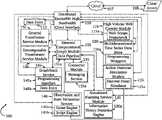
- FIG. 1is a diagram of an exemplary architecture of a business operating system according to an embodiment of the invention.
- FIG. 2is a diagram of an exemplary architecture of a distributed system for rapid, large volume, search and retrieval of unstructured or loosely structured information found on sources such as the World Wide Web, according to a preferred embodiment of the invention.
- FIG. 3is a block diagram of an exemplary system for contextual data collection and extraction according to various embodiments of the invention.
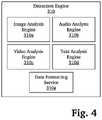
- FIG. 4is a block diagram of an exemplary extraction engine according to various embodiments of the invention.
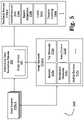
- FIG. 5is a block diagram of an exemplary system employing a system for contextual data extraction according to various embodiments of the invention.
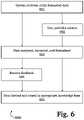
- FIG. 6is a flow diagram illustrating a method for knowledge base construction according to various embodiments of the invention.
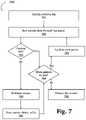
- FIG. 7is a flow diagram illustrating a method for parser testing according to various embodiments of the invention.
- FIG. 8is a flow diagram illustrating a method for utilizing data fingerprinting to match unlabeled data according to various embodiments of the invention.
- FIG. 9is a block diagram illustrating an exemplary hardware architecture of a computing device used in various embodiments of the invention.
- FIG. 10is a block diagram illustrating an exemplary logical architecture for a client device, according to various embodiments of the invention.
- FIG. 11is a block diagram illustrating an exemplary architectural arrangement of clients, servers, and external services, according to various embodiments of the invention.
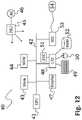
- FIG. 12is another block diagram illustrating an exemplary hardware architecture of a computing device used in various embodiments of the invention.
- the inventorhas conceived, and reduced to practice, a system and method for contextual data collection and extraction.
- Devices that are in communication with each otherneed not be in continuous communication with each other, unless expressly specified otherwise.
- devices that are in communication with each othermay communicate directly or indirectly through one or more communication means or intermediaries, logical or physical.
- stepsmay be performed simultaneously despite being described or implied as occurring non-simultaneously (e.g., because one step is described after the other step).
- the illustration of a process by its depiction in a drawingdoes not imply that the illustrated process is exclusive of other variations and modifications thereto, does not imply that the illustrated process or any of its steps are necessary to one or more of the aspects, and does not imply that the illustrated process is preferred.
- stepsare generally described once per aspect, but this does not mean they must occur once, or that they may only occur once each time a process, method, or algorithm is carried out or executed. Some steps may be omitted in some aspects or some occurrences, or some steps may be executed more than once in a given aspect or occurrence.
- FIG. 1is a diagram of an exemplary architecture of a business operating system 100 according to an embodiment of the invention.
- Directed computational graph module 155retrieves one or more streams of data from a plurality of sources, which includes, but is not limited to, a plurality of physical sensors, network service providers, web based questionnaires and surveys, monitoring of electronic infrastructure, crowd sourcing campaigns, and human input device information.
- a plurality of sourceswhich includes, but is not limited to, a plurality of physical sensors, network service providers, web based questionnaires and surveys, monitoring of electronic infrastructure, crowd sourcing campaigns, and human input device information.
- datamay be split into two identical streams in a specialized pre-programmed data pipeline 155 a , wherein one sub-stream may be sent for batch processing and storage while the other sub-stream may be reformatted for transformation pipeline analysis.
- the datamay be then transferred to a general transformer service module 160 for linear data transformation as part of analysis or the decomposable transformer service module 150 for branching or iterative transformations that are part of analysis.
- Directed computational graph module 155represents all data as directed graphs where the transformations are nodes and the result messages between transformations edges of the graph.
- High-volume web crawling module 115may use multiple server hosted preprogrammed web spiders which, while autonomously configured, may be deployed within a web scraping framework 115 a of which SCRAPYTM is an example, to identify and retrieve data of interest from web based sources that are not well tagged by conventional web crawling technology.
- Multiple dimension time series data store module 120may receive streaming data from a large plurality of sensors that may be of several different types.
- Multiple dimension time series data store module 120may also store any time series data encountered by system 100 such as, but not limited to, environmental factors at insured client infrastructure sites, component sensor readings and system logs of some or all insured client equipment, weather and catastrophic event reports for regions an insured client occupies, political communiques and/or news from regions hosting insured client infrastructure and network service information captures (such as, but not limited to, news, capital funding opportunities and financial feeds, and sales, market condition), and service related customer data.
- Multiple dimension time series data store module 120may accommodate irregular and high-volume surges by dynamically allotting network bandwidth and server processing channels to process the incoming data.
- programming wrappers 120 afor languages—examples of which may include, but are not limited to, C++, PERL, PYTHON, and ERLANGTM—allows sophisticated programming logic to be added to default functions of multidimensional time series database 120 without intimate knowledge of the core programming, greatly extending breadth of function.
- Data retrieved by multidimensional time series database 120 and high-volume web crawling module 115may be further analyzed and transformed into task-optimized results by directed computational graph 155 and associated general transformer service 160 and decomposable transformer service 150 modules.
- graph stack service module 145represents data in graphical form influenced by any pre-determined scripted modifications 145 a and stores it in a graph-based data store 145 b such as GIRAPHTM or a key-value pair type data store REDISTM, or RIAKTM, among others, any of which are suitable for storing graph-based information.
- Results of the transformative analysis processmay then be combined with further client directives, additional business rules and practices relevant to the analysis and situational information external to the data already available in automated planning service module 130 , which also runs powerful information theory-based predictive statistics functions and machine learning algorithms 130 a to allow future trends and outcomes to be rapidly forecast based upon the current system derived results and choosing each a plurality of possible business decisions. Then, using all or most available data, automated planning service module 130 may propose business decisions most likely to result in favorable business outcomes with a usably high level of certainty.
- action outcome simulation module 125with a discrete event simulator programming module 125 a coupled with an end user-facing observation and state estimation service 140 , which is highly scriptable 140 b as circumstances require and has a game engine 140 a to more realistically stage possible outcomes of business decisions under consideration, allows business decision makers to investigate the probable outcomes of choosing one pending course of action over another based upon analysis of the current available data.
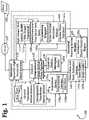
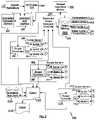
- FIG. 2is a diagram of an exemplary architecture of a distributed system 200 for rapid, large volume, search and retrieval of unstructured or loosely structured information found on sources such as the World Wide Web, according to a preferred embodiment of the invention.
- scrape campaign requestswhich are comprised of a plurality of scrape agent (spider) configuration parameters as well as scrape campaign control directives, may be entered from a connected computer terminal 220 or by terminal-like commands issued by external software applications 210 using a built in command line interface 230 .
- similar scrape campaign requestsmay enter the system through an HTTP REST-based API using JSON-compliant instructions 240 .
- Scrape campaign parametersenter a distributed scrape campaign controller module 250 , where they are formalized and stored in a scrape request data store 270 as one or more scrape campaign-related spider configurations 272 , 273 , 274 and associated scrape campaign control directives 271 .
- Scrape campaignsremain persistently stored until a command to run one or more of them is received through command line interface 230 or HTTP-based API 240 , at which time request parameters 271 , 272 , etc. for a campaign are retrieved by distributed scrape campaign controller module 250 from scrape request data store 270 .
- Persistent storage of scrape campaign request parametersalso allows the same scrape campaign to be run multiple times and used as a starting point for design of similar scrape campaigns.
- distributed scrape campaign controller module 250Upon receipt of a command to run a specific scrape campaign and retrieval of that scrape campaign's configuration and control parameters, coordinates the scrape campaign in regards to the number of spiders 282 , 283 , 284 to be used, and the number of distributed scrape servers 280 , 290 , 2100 to be used based upon the control directives for that campaign. Distributed scrape campaign controller module 250 then sends appropriate instructions to scrape servers 280 , 290 , 2100 to initiate and run the requested scrape campaign.
- scrape controller module 250which directs the scrape servers 280 , 290 , 2100 accordingly to initiate and run the requested multipage or multisite scrape campaign.
- scrape controller module 281 , 291 , 2101 of each scrape server 280 , 290 , 2110executes the required scrapes.
- Scrape controller module 280 290 , 2110hosts the programming for the spiders into which it loads scrape campaign spider configuration parameters sent to scrape server 280 , 290 , 2110 from distributed scrape campaign controller module 250 using the co-sent scrape campaign control directives to determine the number of spider instances 282 , 283 , 284 to create and the resource usage priority each spider is given on the server. It is possible that all spider 282 , 283 , 284 instances on a given scrape server 280 will be scraping the same web target; however, the invention does not require this and is instead set up to make efficient use of scrape server resources.
- a single scrape server 290 ; 2110may execute spiders scraping different web targets 292 , 293 , 294 ; 2102 , 2103 , 2104 and the spiders scraping a single web target 282 , 283 , 293 ; 292 , 2102 ; 294 , 2103 may be distributed across multiple servers 280 ; 290 ; 2100 .
- Scrape controller module 281 , 291 , 2101 of each scrape server 280 , 290 , 2100monitors the progress and operational status of the spiders it has executed and returns that information back to distributed scrape controller module 250 .
- Both the progress and operational datawhich may be acquired from a request data store monitor 260 , are stored as log data 275 in scrape request store 270 and is made available to the authors of the scrape campaign during its operation, which may result in directives being issued that change one or more aspects of the scrape campaign.
- the inventionis designed to allow such mid-campaign parameter changes without downtime or loss of collected, intermediate, data.
- Results of the scrapes returned to scrape controller module 281 , 291 , 2100 by individual spiders 282 , 283 , 284 , 292 , 293 , 294 , 2102 , 2103 , 2104are sent to persistence service server 2120 , which aggregates the data from individual scrape server spiders 282 , 283 , 284 , 292 , 293 , 294 , 2102 , 2103 , 2104 , and performs any transformations pre-designed by the authors of the scrape campaign prior to outputting the data in a format determined by the authors of the campaign. This may involve sending the output to external software applications 2130 for further processing.
- the datamay also be processed for storage by persistence service server 2120 and sent to a persistence data store for more permanent archival.
- the core distributed scrape campaign systemdistributes load across a pool of scrape servers, coordinates the number of spiders employed within a scrape campaign, and prioritizes allotment of scrape server resources among spiders, it does not internally manage or control spider web page and link follow restrictions, crawling frequencies, and so forth. Individual spiders must implement suitable controls and crawling orchestration (which is external to the distributed scrape campaign system). All of these considerations are part of the scrape campaign spider configuration parameters that are received from the authors of scrape campaigns 210 , 220 by distributed scrape campaign controller module 250 . This is done to give the authors of the scrape maximal flexibility in the behavior of the spiders during a scrape campaign while allowing the use of a robust yet easily deployed spider programming interface.
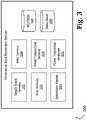
- FIG. 3is a block diagram of an exemplary system 300 for contextual data collection and extraction according to various embodiments of the invention.
- System 300may comprise graph stack service 145 , directed computational graph (DCG) module 155 , an extraction engine 310 , knowledge base construction (KBC) service 320 , a proxy connection service 321 , multidimensional time-series data store (MDTSDS) 120 for collecting and storing graph and time-series, and a data store 330 .
- DCGdirected computational graph
- KBCknowledge base construction
- MDTSDSmultidimensional time-series data store
- Extraction engine 310may be configured to use processes of business operating system 100 , such as connector module 135 , web crawler 115 , and multidimensional time series data store 120 to connect to data sources to extract data, which may be richly formatted data, structured data, unstructured data, and the like. Extraction engine 310 may be configured to not only work across different modalities of data and preserve context across the different modalities, but data extracted from the various modalities may be used to augment data from one modality to another. Extracted data from the same modality from different sources may also be able to augment one another. During the extraction process, extraction engine 310 may take into consideration user-provided context. The context may then be used by extraction engine 310 to refine the types of the data that is extracted. Once data has been extracted, the data may be subjected to external feedback as a means for quality assurance for the extracted data. Some sources are listed below in FIG. 5 .
- extraction engine 310Another capability of extraction engine 310 is tagging extracted data with relevant timestamp data and store the data as time-series data. This may be useful for classifying data in phases so that transitions over time may be captured using graph edge analysis. This may be useful, for example, for tracking development in expert judgement in particular fields overtime, as well as let interested parties explore data from specific time periods.
- extraction engine 310may comprise an image analysis engine 310 a , an audio analysis engine 310 b , a video analysis engine 310 c , a text analysis engine 310 d , and data formatting service 310 e .
- Image analysis engine 310 amay be configured to analyze images using image recognition models. Images may include, but is not limited to, pictures, charts and graphs, tables, and the like. Data from images may be extracted and may then processed by data formatting service 310 e , so that the data may conform to any preset standards for usage in a knowledge base.
- Audio analysis engine 310 bmay be configured to use audio analysis models to process audio data, for example, performing general speech-to-text operations or to analyze tonal cues in voice recordings. This may provide additional insight by cross referencing the tones and inflections with presented facts, for example, it may reveal whether or not certain statements can be considered truthful or not. Data extracted from audio may then be processed by data formatting service 310 e , so that the data may conform to any preset standards for usage in a knowledge base.
- Video analysis engine 310 cmay be configured to use video analysis models to process videos, and capture information from videos. For example, analyzing body language to glean concealed information or perform lip-reading analysis as a means to increase accuracy of speech dictation.
- Text analysis engine 310 dmay be configured to use natural language processing (NLP) models to analyze text-based data, which may include, system logs, news articles, blog posts, tabular data, and the like. Text analysis engine 310 d may contain an extensible collection of parsers that may be utilized to parse text data in a known format.
- NLPnatural language processing
- Data formatting service 310 emay be configured to user graph stack service 145 to clean and formalize data gathered by other processes of extraction engine 310 and convert the data into a graph representation to ensure that the data conforms to any preset standards for compatibility with knowledge bases that are in use by system 300 .
- Knowledge base construction service 320may be configured to assemble and maintain extracted and processed data.
- Knowledge basesmay be divided in context collections provided by a user, for example, a knowledge base may be based on a particular company, a technical field of interest, financial data, and the like.
- KBC service 320may update existing knowledge bases with the newly extracted data, or create a new knowledge base if a suitable knowledge base doesn't exit.
- Knowledge basesmay be stored in system 300 in data store 330 .
- knowledge basesmay also be actively monitored and evaluated, for example, by using DCG module 155 with the associated transformer modules 150 , 160 and observation and state estimation service 140 , to locate information originating from multiple sources that, when evaluated collectively, are valuable.
- PIIPersonally Identifiable Information
- UUIDUniversal Unique Identifier
- DLPdistributed Data Loss Prevention
- Proxy connection service 321may be configured to automatically connect to a proxy network to facilitate anonymous connections to data sources. This may be useful in cases, for instance, in which a particular data source aggressively blocks web crawlers from accessing pages, when bypassing a firewall is required, to conceal one's true identity, and the like. Proxy connection service 321 may automatically determine when a proxy connection is required and may automatically determine optimal proxy networks to use.
- Phase transition analyzer 322may be configured to use DCG module 155 along with the associated transformer modules 155 to analyze graph and time-series data for shifts and changes in data over time, for example, changes in lingo in a particular field or development that changes understanding of a subject overtime. This may provide useful, for instance, when considering data sources from particular time periods, especially if the field of interest has undergone significant change over time.
- FIG. 5is a block diagram of an exemplary system 500 employing a system for contextual data extraction 300 according to various embodiments of the invention.
- System 300may connect to a plurality of data sources 505 a - n , which may comprise richly formatted data sources, structured data sources, unstructured data sources, system logs, repositories, and the like.
- data sources 505 a - nmay require connection via one or more proxy networks 515 a - n , which may comprise botnets 515 a , TOR networks 515 b , residential networks 515 c , data centers 515 d , and mobile devices 515 e .
- System 300may also take into consideration feedback from a plurality of feedback sources 510 a - n , which may include, crowd-sourced data 510 a , expert judgement 510 b , generative adversarial networks (GAN's) 510 c , transfer learning 510 d , and the like as a means for quality assurance for extracted data.
- GAN'sgenerative adversarial networks
- FIG. 6is a flow diagram illustrating a method 600 for knowledge base construction according to various embodiments of the invention.
- system 300retrieves richly formatted data from a plurality of sources, which may include, local storage, cloud storage, web pages, and the like.
- sourceswhich may include, local storage, cloud storage, web pages, and the like.
- a usermay provide the system with context to refine types of data that are extracted, for instance, financial data for a particular company.
- the systemanalyzes the richly formatted data using the various functions of extraction engine 310 , extracts the relevant information, and formalizes the data.
- the systemmay receive feedback regarding the data from a variety of sources, a few of which are disclosed above in FIG. 5 .
- the datais labeled, and stored in an appropriate knowledge base. If no knowledge base exists, the system may create a new knowledge base to store the data.
- FIG. 7is a flow diagram illustrating a method 700 for parser testing according to various embodiments of the invention.
- systemreceives a log from services commonly used in the art, for example, system logs from APACHE, NGINX, M, CISCO ASA, SQUID, BLUECOAT, PALOALTONETWORKS, and the like.
- the logis tested with a first log parser. If the log is of substantial size, a portion of the log may be used to test the parser.
- the systemdetermines that the parsing has failed with the first parser, for example, if the output is incorrect, the system checks to see if there are anymore parsers to test at decision block 704 . If there are more parsers, a second parser may be selected at step 705 . The testing process starts again with the second parser. If there are no more parsers at decision block 704 , a list of parsers that passed is presented to the user at step 708 , and the user may pick one or more parsers for the system to use. The system may dynamically arrange the parsers in a particular order, for example, based on a score automatically generated by the system for the quality and usefulness the output is determined to be by the system. In some embodiments, a threshold may be preset so that if a quality score surpasses the threshold, the system automatically parsers to parse the logs.
- the systemfurther evaluates the output at step 706 to determine the quality and usefulness of the output.
- the outputmay also be scored at this step.
- the present parser choiceis stored on a list to be presented to the user at step 708 , along with a store.
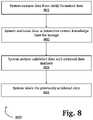
- FIG. 8is a flow diagram illustrating a method 800 for utilizing data fingerprinting to match unlabeled data according to various embodiments of the invention.
- system 300extracts data from a source of richly formatted data.
- the systemdetermines which knowledge base to the store the extracted data.
- the systemdiscovers a knowledge base with unlabeled and incomplete data that contains identical data markers.
- the previously unlabeled datais labeled, and may be moved to an appropriate knowledge base.
- previously unlabeled financial information containing incomplete stock pricingmay be matched with historical stocks pricing of a known company during known time-periods.
- the systemmay automatically associate the two bodies of data during graph analysis of the datasets.
- the systemmay then populate the incomplete dataset with any additional information, label the data, fixed any mislabeling, and the like.
- the techniques disclosed hereinmay be implemented on hardware or a combination of software and hardware. For example, they may be implemented in an operating system kernel, in a separate user process, in a library package bound into network applications, on a specially constructed machine, on an application-specific integrated circuit (ASIC), or on a network interface card.
- ASICapplication-specific integrated circuit
- Software/hardware hybrid implementations of at least some of the aspects disclosed hereinmay be implemented on a programmable network-resident machine (which should be understood to include intermittently connected network-aware machines) selectively activated or reconfigured by a computer program stored in memory.
- a programmable network-resident machinewhich should be understood to include intermittently connected network-aware machines
- Such network devicesmay have multiple network interfaces that may be configured or designed to utilize different types of network communication protocols.
- a general architecture for some of these machinesmay be described herein in order to illustrate one or more exemplary means by which a given unit of functionality may be implemented.
- At least some of the features or functionalities of the various aspects disclosed hereinmay be implemented on one or more general-purpose computers associated with one or more networks, such as for example an end-user computer system, a client computer, a network server or other server system, a mobile computing device (e.g., tablet computing device, mobile phone, smartphone, laptop, or other appropriate computing device), a consumer electronic device, a music player, or any other suitable electronic device, router, switch, or other suitable device, or any combination thereof.
- at least some of the features or functionalities of the various aspects disclosed hereinmay be implemented in one or more virtualized computing environments (e.g., network computing clouds, virtual machines hosted on one or more physical computing machines, or other appropriate virtual environments).
- Computing device 10may be, for example, any one of the computing machines listed in the previous paragraph, or indeed any other electronic device capable of executing software- or hardware-based instructions according to one or more programs stored in memory.
- Computing device 10may be configured to communicate with a plurality of other computing devices, such as clients or servers, over communications networks such as a wide area network a metropolitan area network, a local area network, a wireless network, the Internet, or any other network, using known protocols for such communication, whether wireless or wired.
- communications networkssuch as a wide area network a metropolitan area network, a local area network, a wireless network, the Internet, or any other network, using known protocols for such communication, whether wireless or wired.
- computing device 10includes one or more central processing units (CPU) 12 , one or more interfaces 15 , and one or more busses 14 (such as a peripheral component interconnect (PCI) bus).
- CPU 12may be responsible for implementing specific functions associated with the functions of a specifically configured computing device or machine.
- a computing device 10may be configured or designed to function as a server system utilizing CPU 12 , local memory 11 and/or remote memory 16 , and interface(s) 15 .
- CPU 12may be caused to perform one or more of the different types of functions and/or operations under the control of software modules or components, which for example, may include an operating system and any appropriate applications software, drivers, and the like.
- CPU 12may include one or more processors 13 such as, for example, a processor from one of the Intel, ARM, Qualcomm, and AMD families of microprocessors.
- processors 13may include specially designed hardware such as application-specific integrated circuits (ASICs), electrically erasable programmable read-only memories (EEPROMs), field-programmable gate arrays (FPGAs), and so forth, for controlling operations of computing device 10 .
- ASICsapplication-specific integrated circuits
- EEPROMselectrically erasable programmable read-only memories
- FPGAsfield-programmable gate arrays
- a local memory 11such as non-volatile random access memory (RAM) and/or read-only memory (ROM), including for example one or more levels of cached memory
- RAMnon-volatile random access memory
- ROMread-only memory
- Memory 11may be used for a variety of purposes such as, for example, caching and/or storing data, programming instructions, and the like. It should be further appreciated that CPU 12 may be one of a variety of system-on-a-chip (SOC) type hardware that may include additional hardware such as memory or graphics processing chips, such as a QUALCOMM SNAPDRAGONTM or SAMSUNG EXYNOSTM CPU as are becoming increasingly common in the art, such as for use in mobile devices or integrated devices.
- SOCsystem-on-a-chip
- processoris not limited merely to those integrated circuits referred to in the art as a processor, a mobile processor, or a microprocessor, but broadly refers to a microcontroller, a microcomputer, a programmable logic controller, an application-specific integrated circuit, and any other programmable circuit.
- interfaces 15are provided as network interface cards (NICs).
- NICscontrol the sending and receiving of data packets over a computer network; other types of interfaces 15 may for example support other peripherals used with computing device 10 .
- the interfacesthat may be provided are Ethernet interfaces, frame relay interfaces, cable interfaces, DSL interfaces, token ring interfaces, graphics interfaces, and the like.
- interfacesmay be provided such as, for example, universal serial bus (USB), Serial, Ethernet, FIREWIRETM, THUNDERBOLTTM, PCI, parallel, radio frequency (RF), BLUETOOTHTM, near-field communications (e.g., using near-field magnetics), 802.11 (WiFi), frame relay, TCP/IP, ISDN, fast Ethernet interfaces, Gigabit Ethernet interfaces, Serial ATA (SATA) or external SATA (ESATA) interfaces, high-definition multimedia interface (HDMI), digital visual interface (DVI), analog or digital audio interfaces, asynchronous transfer mode (ATM) interfaces, high-speed serial interface (HSSI) interfaces, Point of Sale (POS) interfaces, fiber data distributed interfaces (FDDIs), and the like.
- USBuniversal serial bus
- RFradio frequency
- BLUETOOTHTMnear-field communications
- near-field communicationse.g., using near-field magnetics
- WiFiwireless FIREWIRETM
- Such interfaces 15may include physical ports appropriate for communication with appropriate media. In some cases, they may also include an independent processor (such as a dedicated audio or video processor, as is common in the art for high-fidelity A/V hardware interfaces) and, in some instances, volatile and/or non-volatile memory (e.g., RAM).
- an independent processorsuch as a dedicated audio or video processor, as is common in the art for high-fidelity A/V hardware interfaces
- volatile and/or non-volatile memorye.g., RAM
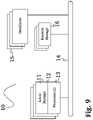
- FIG. 9illustrates one specific architecture for a computing device 10 for implementing one or more of the aspects described herein, it is by no means the only device architecture on which at least a portion of the features and techniques described herein may be implemented.
- architectures having one or any number of processors 13may be used, and such processors 13 may be present in a single device or distributed among any number of devices.
- a single processor 13handles communications as well as routing computations, while in other aspects a separate dedicated communications processor may be provided.
- different types of features or functionalitiesmay be implemented in a system according to the aspect that includes a client device (such as a tablet device or smartphone running client software) and server systems (such as a server system described in more detail below).
- the system of an aspectmay employ one or more memories or memory modules (such as, for example, remote memory block 16 and local memory 11 ) configured to store data, program instructions for the general-purpose network operations, or other information relating to the functionality of the aspects described herein (or any combinations of the above).
- Program instructionsmay control execution of or comprise an operating system and/or one or more applications, for example.
- Memory 16 or memories 11 , 16may also be configured to store data structures, configuration data, encryption data, historical system operations information, or any other specific or generic non-program information described herein.
- At least some network device aspectsmay include nontransitory machine-readable storage media, which, for example, may be configured or designed to store program instructions, state information, and the like for performing various operations described herein.
- nontransitory machine-readable storage mediainclude, but are not limited to, magnetic media such as hard disks, floppy disks, and magnetic tape; optical media such as CD-ROM disks; magneto-optical media such as optical disks, and hardware devices that are specially configured to store and perform program instructions, such as read-only memory devices (ROM), flash memory (as is common in mobile devices and integrated systems), solid state drives (SSD) and “hybrid SSD” storage drives that may combine physical components of solid state and hard disk drives in a single hardware device (as are becoming increasingly common in the art with regard to personal computers), memristor memory, random access memory (RAM), and the like.
- ROMread-only memory
- flash memoryas is common in mobile devices and integrated systems
- SSDsolid state drives
- hybrid SSDhybrid SSD
- such storage meansmay be integral and non-removable (such as RAM hardware modules that may be soldered onto a motherboard or otherwise integrated into an electronic device), or they may be removable such as swappable flash memory modules (such as “thumb drives” or other removable media designed for rapidly exchanging physical storage devices), “hot-swappable” hard disk drives or solid state drives, removable optical storage discs, or other such removable media, and that such integral and removable storage media may be utilized interchangeably.
- swappable flash memory modulessuch as “thumb drives” or other removable media designed for rapidly exchanging physical storage devices
- hot-swappablehard disk drives or solid state drives
- removable optical storage discsor other such removable media
- program instructionsinclude both object code, such as may be produced by a compiler, machine code, such as may be produced by an assembler or a linker, byte code, such as may be generated by for example a JAVATM compiler and may be executed using a Java virtual machine or equivalent, or files containing higher level code that may be executed by the computer using an interpreter (for example, scripts written in Python, Perl, Ruby, Groovy, or any other scripting language).
- interpreterfor example, scripts written in Python, Perl, Ruby, Groovy, or any other scripting language.
- systemsmay be implemented on a standalone computing system.
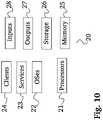
- FIG. 10there is shown a block diagram depicting a typical exemplary architecture of one or more aspects or components thereof on a standalone computing system.
- Computing device 20includes processors 21 that may run software that carry out one or more functions or applications of aspects, such as for example a client application 24 .
- Processors 21may carry out computing instructions under control of an operating system 22 such as, for example, a version of MICROSOFT WINDOWSTM operating system, APPLE macOSTM or iOSTM operating systems, some variety of the Linux operating system, ANDROIDTM operating system, or the like.
- an operating system 22such as, for example, a version of MICROSOFT WINDOWSTM operating system, APPLE macOSTM or iOSTM operating systems, some variety of the Linux operating system, ANDROIDTM operating system, or the like.
- one or more shared services 23may be operable in system 20 , and may be useful for providing common services to client applications 24 .
- Services 23may for example be WINDOWSTM services, user-space common services in a Linux environment, or any other type of common service architecture used with operating system 21 .
- Input devices 28may be of any type suitable for receiving user input, including for example a keyboard, touchscreen, microphone (for example, for voice input), mouse, touchpad, trackball, or any combination thereof.
- Output devices 27may be of any type suitable for providing output to one or more users, whether remote or local to system 20 , and may include for example one or more screens for visual output, speakers, printers, or any combination thereof.
- Memory 25may be random-access memory having any structure and architecture known in the art, for use by processors 21 , for example to run software.
- Storage devices 26may be any magnetic, optical, mechanical, memristor, or electrical storage device for storage of data in digital form (such as those described above, referring to FIG. 9 ). Examples of storage devices 26 include flash memory, magnetic hard drive, CD-ROM, and/or the like.
- systemsmay be implemented on a distributed computing network, such as one having any number of clients and/or servers.
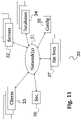
- FIG. 11there is shown a block diagram depicting an exemplary architecture 30 for implementing at least a portion of a system according to one aspect on a distributed computing network.
- any number of clients 33may be provided.
- Each client 33may run software for implementing client-side portions of a system; clients may comprise a system 20 such as that illustrated in FIG. 10 .
- any number of servers 32may be provided for handling requests received from one or more clients 33 .
- Clients 33 and servers 32may communicate with one another via one or more electronic networks 31 , which may be in various aspects any of the Internet, a wide area network, a mobile telephony network (such as CDMA or GSM cellular networks), a wireless network (such as WiFi, WiMAX, LTE, and so forth), or a local area network (or indeed any network topology known in the art; the aspect does not prefer any one network topology over any other).
- Networks 31may be implemented using any known network protocols, including for example wired and/or wireless protocols.
- servers 32may call external services 37 when needed to obtain additional information, or to refer to additional data concerning a particular call. Communications with external services 37 may take place, for example, via one or more networks 31 .
- external services 37may comprise web-enabled services or functionality related to or installed on the hardware device itself. For example, in one aspect where client applications 24 are implemented on a smartphone or other electronic device, client applications 24 may obtain information stored in a server system 32 in the cloud or on an external service 37 deployed on one or more of a particular enterprise's or user's premises.
- clients 33 or servers 32may make use of one or more specialized services or appliances that may be deployed locally or remotely across one or more networks 31 .
- one or more databases 34may be used or referred to by one or more aspects. It should be understood by one having ordinary skill in the art that databases 34 may be arranged in a wide variety of architectures and using a wide variety of data access and manipulation means.
- one or more databases 34may comprise a relational database system using a structured query language (SQL), while others may comprise an alternative data storage technology such as those referred to in the art as “NoSQL” (for example, HADOOP CASSANDRATM, GOOGLE BIGTABLETM, and so forth).
- SQLstructured query language
- variant database architecturessuch as column-oriented databases, in-memory databases, clustered databases, distributed databases, or even flat file data repositories may be used according to the aspect. It will be appreciated by one having ordinary skill in the art that any combination of known or future database technologies may be used as appropriate, unless a specific database technology or a specific arrangement of components is specified for a particular aspect described herein. Moreover, it should be appreciated that the term “database” as used herein may refer to a physical database machine, a cluster of machines acting as a single database system, or a logical database within an overall database management system.
- security and configuration managementare common information technology (IT) and web functions, and some amount of each are generally associated with any IT or web systems. It should be understood by one having ordinary skill in the art that any configuration or security subsystems known in the art now or in the future may be used in conjunction with aspects without limitation, unless a specific security 36 or configuration system 35 or approach is specifically required by the description of any specific aspect.
- ITinformation technology
- FIG. 12shows an exemplary overview of a computer system 40 as may be used in any of the various locations throughout the system. It is exemplary of any computer that may execute code to process data. Various modifications and changes may be made to computer system 40 without departing from the broader scope of the system and method disclosed herein.
- Central processor unit (CPU) 41is connected to bus 42 , to which bus is also connected memory 43 , nonvolatile memory 44 , display 47 , input/output (I/O) unit 48 , and network interface card (NIC) 53 .
- I/O unit 48may, typically, be connected to keyboard 49 , pointing device 50 , hard disk 52 , and real-time clock 51 .
- NIC 53connects to network 54 , which may be the Internet or a local network, which local network may or may not have connections to the Internet. Also shown as part of system 40 is power supply unit 45 connected, in this example, to a main alternating current (AC) supply 46 . Not shown are batteries that could be present, and many other devices and modifications that are well known but are not applicable to the specific novel functions of the current system and method disclosed herein.
- ACalternating current
- functionality for implementing systems or methods of various aspectsmay be distributed among any number of client and/or server components.
- various software modulesmay be implemented for performing various functions in connection with the system of any particular aspect, and such modules may be variously implemented to run on server and/or client components.
Landscapes
- Engineering & Computer Science (AREA)
- Theoretical Computer Science (AREA)
- Databases & Information Systems (AREA)
- General Engineering & Computer Science (AREA)
- General Physics & Mathematics (AREA)
- Data Mining & Analysis (AREA)
- Physics & Mathematics (AREA)
- Computer Security & Cryptography (AREA)
- Computing Systems (AREA)
- Software Systems (AREA)
- Evolutionary Computation (AREA)
- Computational Linguistics (AREA)
- Artificial Intelligence (AREA)
- Mathematical Physics (AREA)
- Computer Networks & Wireless Communication (AREA)
- Computer Hardware Design (AREA)
- Signal Processing (AREA)
- Information Retrieval, Db Structures And Fs Structures Therefor (AREA)
- Information Transfer Between Computers (AREA)
Abstract
Description
| Application No. | Date Filed | Title |
| Current | Herewith | AUTOMATED SCALABLE CONTEXTUAL |
| application | DATA COLLECTION AND EXTRACTION | |
| SYSTEM | ||
| Is a continuation of: | ||
| 15/905,041 | Feb. 26, 2018 | AUTOMATED SCALABLE CONTEXTUAL |
| DATA COLLECTION AND EXTRACTION | ||
| SYSTEM | ||
| which is a continuation-in-part of: | ||
| 15/237,625 | Aug. 15, 2016 | DETECTION MITIGATION AND |
| Patent: | Issue Date: | REMEDIATION OF CYBERATTACKS |
| 10,248,910 | Apr. 2, 2019 | EMPLOYING AN ADVANCED CYBER- |
| DECISION PLATFORM | ||
| which is a continuation-in-part of: | ||
| 15/206,195 | Jul. 8, 2016 | ACCURATE AND DETAILED MODELING |
| OF SYSTEMS WITH LARGE COMPLEX | ||
| DATASETS USING A DISTRIBUTED | ||
| SIMULATION ENGINE | ||
| which is a continuation-in-part of: | ||
| 15/186,453 | Jun. 18, 2016 | SYSTEM FOR AUTOMATED CAPTURE |
| AND ANALYSIS OF BUSINESS | ||
| INFORMATION FOR RELIABLE BUSINESS | ||
| VENTURE OUTCOME PREDICTION | ||
| which is a continuation-in-part of: | ||
| 15/166,158 | May 26, 2016 | SYSTEM FOR AUTOMATED CAPTURE |
| AND ANALYSIS OF BUSINESS | ||
| INFORMATION FOR SECURITY AND | ||
| CLIENT-FACING INFRASTRUCTURE | ||
| RELIABILITY | ||
| which is a continuation-in-part of: | ||
| 15/141,752 | Apr. 28, 2016 | SYSTEM FOR FULLY INTEGRATED |
| CAPTURE, AND ANALYSIS OF BUSINESS | ||
| INFORMATION RESULTING IN | ||
| PREDICTIVE DECISION MAKING AND | ||
| SIMULATION | ||
| which is a continuation-in-part of: | ||
| 15/091,563 | Apr. 5, 2016 | SYSTEM FOR CAPTURE, ANALYSIS AND |
| Patent: | Issue Date: | STORAGE OF TIME SERIES DATA FROM |
| 10,204,147 | Feb. 12, 2019 | SENSORS WITH HETEROGENEOUS |
| REPORT INTERVAL PROFILES | ||
| and is also a continuation-in-part of: | ||
| 14/986,536 | Dec. 31, 2015 | DISTRIBUTED SYSTEM FOR LARGE |
| Patent: | Issue Date: | VOLUME DEEP WEB DATA |
| 10,210,255 | Feb. 19, 2019 | EXTRACTION |
| and is also a continuation-in-part of: | ||
| 14/925,974 | Oct. 28, 2015 | RAPID PREDICTIVE ANALYSIS OF VERY |
| LARGE DATA SETS USING THE | ||
| DISTRIBUTED COMPUTATIONAL | ||
| GRAPH | ||
| the entire specification of each of which is incorporated herein by reference. | ||
Claims (16)
Priority Applications (2)
| Application Number | Priority Date | Filing Date | Title |
|---|---|---|---|
| US16/919,231US11314764B2 (en) | 2015-10-28 | 2020-07-02 | Automated scalable contextual data collection and extraction system |
| US17/002,425US11243973B2 (en) | 2015-10-28 | 2020-08-25 | Automated scalable contextual data collection and extraction system |
Applications Claiming Priority (10)
| Application Number | Priority Date | Filing Date | Title |
|---|---|---|---|
| US14/925,974US20170124464A1 (en) | 2015-10-28 | 2015-10-28 | Rapid predictive analysis of very large data sets using the distributed computational graph |
| US14/986,536US10210255B2 (en) | 2015-12-31 | 2015-12-31 | Distributed system for large volume deep web data extraction |
| US15/091,563US10204147B2 (en) | 2016-04-05 | 2016-04-05 | System for capture, analysis and storage of time series data from sensors with heterogeneous report interval profiles |
| US15/141,752US10860962B2 (en) | 2015-10-28 | 2016-04-28 | System for fully integrated capture, and analysis of business information resulting in predictive decision making and simulation |
| US15/166,158US20170124501A1 (en) | 2015-10-28 | 2016-05-26 | System for automated capture and analysis of business information for security and client-facing infrastructure reliability |
| US15/186,453US20170124497A1 (en) | 2015-10-28 | 2016-06-18 | System for automated capture and analysis of business information for reliable business venture outcome prediction |
| US15/206,195US20170124492A1 (en) | 2015-10-28 | 2016-07-08 | System for automated capture and analysis of business information for reliable business venture outcome prediction |
| US15/237,625US10248910B2 (en) | 2015-10-28 | 2016-08-15 | Detection mitigation and remediation of cyberattacks employing an advanced cyber-decision platform |
| US15/905,041US10706063B2 (en) | 2015-10-28 | 2018-02-26 | Automated scalable contextual data collection and extraction system |
| US16/919,231US11314764B2 (en) | 2015-10-28 | 2020-07-02 | Automated scalable contextual data collection and extraction system |
Related Parent Applications (1)
| Application Number | Title | Priority Date | Filing Date |
|---|---|---|---|
| US15/905,041ContinuationUS10706063B2 (en) | 2015-10-28 | 2018-02-26 | Automated scalable contextual data collection and extraction system |
Related Child Applications (1)
| Application Number | Title | Priority Date | Filing Date |
|---|---|---|---|
| US17/002,425ContinuationUS11243973B2 (en) | 2015-10-28 | 2020-08-25 | Automated scalable contextual data collection and extraction system |
Publications (2)
| Publication Number | Publication Date |
|---|---|
| US20210056117A1 US20210056117A1 (en) | 2021-02-25 |
| US11314764B2true US11314764B2 (en) | 2022-04-26 |
Family
ID=64692592
Family Applications (3)
| Application Number | Title | Priority Date | Filing Date |
|---|---|---|---|
| US15/905,041Active2035-12-16US10706063B2 (en) | 2015-10-28 | 2018-02-26 | Automated scalable contextual data collection and extraction system |
| US16/919,231ActiveUS11314764B2 (en) | 2015-10-28 | 2020-07-02 | Automated scalable contextual data collection and extraction system |
| US17/002,425ActiveUS11243973B2 (en) | 2015-10-28 | 2020-08-25 | Automated scalable contextual data collection and extraction system |
Family Applications Before (1)
| Application Number | Title | Priority Date | Filing Date |
|---|---|---|---|
| US15/905,041Active2035-12-16US10706063B2 (en) | 2015-10-28 | 2018-02-26 | Automated scalable contextual data collection and extraction system |
Family Applications After (1)
| Application Number | Title | Priority Date | Filing Date |
|---|---|---|---|
| US17/002,425ActiveUS11243973B2 (en) | 2015-10-28 | 2020-08-25 | Automated scalable contextual data collection and extraction system |
Country Status (1)
| Country | Link |
|---|---|
| US (3) | US10706063B2 (en) |
Families Citing this family (13)
| Publication number | Priority date | Publication date | Assignee | Title |
|---|---|---|---|---|
| JP6611679B2 (en)* | 2016-06-30 | 2019-11-27 | 株式会社日立製作所 | Data generation method and computer system |
| JP6866095B2 (en)* | 2016-09-26 | 2021-04-28 | キヤノン株式会社 | Learning device, image identification device, learning method, image identification method and program |
| US11954111B2 (en)* | 2019-03-29 | 2024-04-09 | Innoplexus Ag | System and method for executing service request |
| CN110188182B (en)* | 2019-05-31 | 2023-10-27 | 中国科学院深圳先进技术研究院 | Model training method, dialogue generating method, device, equipment and medium |
| CN110599401A (en)* | 2019-08-19 | 2019-12-20 | 中国科学院电子学研究所 | Remote sensing image super-resolution reconstruction method, processing device and readable storage medium |
| CN111191141B (en)* | 2020-01-06 | 2023-05-23 | 蚂蚁胜信(上海)信息技术有限公司 | Text recommendation method and device |
| JP7403340B2 (en)* | 2020-02-17 | 2023-12-22 | 株式会社日立製作所 | A system that determines whether an object recognition model can be used. |
| CN111385365B (en)* | 2020-03-23 | 2022-09-30 | 广州极晟网络技术有限公司 | Processing method and device for reported data, computer equipment and storage medium |
| US12438916B2 (en)* | 2020-05-13 | 2025-10-07 | Qomplx Llc | Intelligent automated planning system for large-scale operations |
| US11381604B2 (en) | 2020-08-03 | 2022-07-05 | Bank Of America Corporation | Resilient self-detection of malicious exfiltration of sensitive data |
| CN114285764A (en)* | 2021-12-30 | 2022-04-05 | 北京天融信网络安全技术有限公司 | Packet capturing method and device and storage medium |
| US11971900B2 (en)* | 2022-02-04 | 2024-04-30 | Bank Of America Corporation | Rule-based data transformation using edge computing architecture |
| US20250292330A1 (en)* | 2024-03-14 | 2025-09-18 | Goldman Sachs & Co. LLC | Multimodal foundation model for time series data |
Citations (8)
| Publication number | Priority date | Publication date | Assignee | Title |
|---|---|---|---|---|
| US20050000165A1 (en)* | 2001-10-23 | 2005-01-06 | Greg Dischinat | Weather strip for doors |
| US7171515B2 (en)* | 2001-05-22 | 2007-01-30 | Fujitsu Limited | Storage unit with improved performance by purging unnecessary data and transferring data with high probability of future hits to a segment buffer |
| US7853582B2 (en)* | 2004-08-31 | 2010-12-14 | Gopalakrishnan Kumar C | Method and system for providing information services related to multimodal inputs |
| US20110119613A1 (en)* | 2007-06-04 | 2011-05-19 | Jin Zhu | Method, apparatus and computer program for managing the processing of extracted data |
| US20140359552A1 (en)* | 2011-09-19 | 2014-12-04 | Tata Consultancy Services Limited | Computer Platform for Development and Deployment of Sensor Data Based Applications and Services |
| US20160006629A1 (en)* | 2013-07-07 | 2016-01-07 | George Ianakiev | Appliance clearinghouse with orchestrated logic fusion and data fabric - architecture, system and method |
| US9253015B2 (en)* | 2010-07-09 | 2016-02-02 | Attila Technologies, Llc | Transparent proxy architecture for multi-path data connections |
| US20180039890A1 (en)* | 2016-08-03 | 2018-02-08 | Electronics And Telecommunications Research Institute | Adaptive knowledge base construction method and system |
- 2018
- 2018-02-26USUS15/905,041patent/US10706063B2/enactiveActive
- 2020
- 2020-07-02USUS16/919,231patent/US11314764B2/enactiveActive
- 2020-08-25USUS17/002,425patent/US11243973B2/enactiveActive
Patent Citations (9)
| Publication number | Priority date | Publication date | Assignee | Title |
|---|---|---|---|---|
| US7171515B2 (en)* | 2001-05-22 | 2007-01-30 | Fujitsu Limited | Storage unit with improved performance by purging unnecessary data and transferring data with high probability of future hits to a segment buffer |
| US20050000165A1 (en)* | 2001-10-23 | 2005-01-06 | Greg Dischinat | Weather strip for doors |
| US7853582B2 (en)* | 2004-08-31 | 2010-12-14 | Gopalakrishnan Kumar C | Method and system for providing information services related to multimodal inputs |
| US20110119613A1 (en)* | 2007-06-04 | 2011-05-19 | Jin Zhu | Method, apparatus and computer program for managing the processing of extracted data |
| US9253015B2 (en)* | 2010-07-09 | 2016-02-02 | Attila Technologies, Llc | Transparent proxy architecture for multi-path data connections |
| US20140359552A1 (en)* | 2011-09-19 | 2014-12-04 | Tata Consultancy Services Limited | Computer Platform for Development and Deployment of Sensor Data Based Applications and Services |
| US10216485B2 (en) | 2011-09-19 | 2019-02-26 | Tata Consultancy Services Limited | Computer platform for development and deployment of sensor data based applications and services |
| US20160006629A1 (en)* | 2013-07-07 | 2016-01-07 | George Ianakiev | Appliance clearinghouse with orchestrated logic fusion and data fabric - architecture, system and method |
| US20180039890A1 (en)* | 2016-08-03 | 2018-02-08 | Electronics And Telecommunications Research Institute | Adaptive knowledge base construction method and system |
Also Published As
| Publication number | Publication date |
|---|---|
| US10706063B2 (en) | 2020-07-07 |
| US11243973B2 (en) | 2022-02-08 |
| US20210056117A1 (en) | 2021-02-25 |
| US20180373766A1 (en) | 2018-12-27 |
| US20210109946A1 (en) | 2021-04-15 |
Similar Documents
| Publication | Publication Date | Title |
|---|---|---|
| US11314764B2 (en) | Automated scalable contextual data collection and extraction system | |
| US12407735B2 (en) | Inclusion of time-series geospatial markers in analyses employing a cyber-decision platform | |
| US11546380B2 (en) | System and method for creation and implementation of data processing workflows using a distributed computational graph | |
| US11171847B2 (en) | Highly scalable distributed connection interface for data capture from multiple network service sources | |
| US11687527B2 (en) | System and method for analysis of graph databases using intelligent reasoning systems | |
| US12225049B2 (en) | System and methods for integrating datasets and automating transformation workflows using a distributed computational graph | |
| US10884999B2 (en) | Distributable model with biases contained within distributed data | |
| US20180247321A1 (en) | Platform for management of marketing campaigns across multiple distribution mediums | |
| US11960978B2 (en) | System and method for removing biases within a distributable model | |
| US11636549B2 (en) | Cybersecurity profile generated using a simulation engine | |
| US20170124490A1 (en) | Inclusion of time series geospatial markers in analyses employing an advanced cyber-decision platform | |
| US20220043806A1 (en) | Parallel decomposition and restoration of data chunks | |
| US20210258349A1 (en) | System and method for data extraction, processing, and management across multiple communication platforms | |
| WO2019165456A1 (en) | Automated scalable contextual data collection and extraction system | |
| US20200004905A1 (en) | System and methods for complex it process annotation, tracing, analysis, and simulation | |
| WO2020167539A1 (en) | System and method for complex it process annotation, tracing, analysis, and simulation | |
| US20180130077A1 (en) | Automated selection and processing of financial models | |
| US11755957B2 (en) | Multitemporal data analysis | |
| WO2019071055A1 (en) | IMPROVING A DISTRIBUABLE DISTRIBUTED DATA MODEL | |
| WO2019071057A1 (en) | Improving a distributable model with biases contained within distributed data |
Legal Events
| Date | Code | Title | Description |
|---|---|---|---|
| FEPP | Fee payment procedure | Free format text:ENTITY STATUS SET TO UNDISCOUNTED (ORIGINAL EVENT CODE: BIG.); ENTITY STATUS OF PATENT OWNER: SMALL ENTITY | |
| FEPP | Fee payment procedure | Free format text:ENTITY STATUS SET TO SMALL (ORIGINAL EVENT CODE: SMAL); ENTITY STATUS OF PATENT OWNER: SMALL ENTITY | |
| AS | Assignment | Owner name:QOMPLX, INC., VIRGINIA Free format text:CHANGE OF ADDRESS;ASSIGNOR:QOMPLX, INC.;REEL/FRAME:054298/0094 Effective date:20201027 | |
| STPP | Information on status: patent application and granting procedure in general | Free format text:APPLICATION DISPATCHED FROM PREEXAM, NOT YET DOCKETED | |
| STPP | Information on status: patent application and granting procedure in general | Free format text:DOCKETED NEW CASE - READY FOR EXAMINATION | |
| STPP | Information on status: patent application and granting procedure in general | Free format text:NON FINAL ACTION MAILED | |
| STPP | Information on status: patent application and granting procedure in general | Free format text:RESPONSE TO NON-FINAL OFFICE ACTION ENTERED AND FORWARDED TO EXAMINER | |
| STPP | Information on status: patent application and granting procedure in general | Free format text:NOTICE OF ALLOWANCE MAILED -- APPLICATION RECEIVED IN OFFICE OF PUBLICATIONS | |
| STPP | Information on status: patent application and granting procedure in general | Free format text:PUBLICATIONS -- ISSUE FEE PAYMENT VERIFIED | |
| STCF | Information on status: patent grant | Free format text:PATENTED CASE | |
| AS | Assignment | Owner name:QOMPLX, INC., VIRGINIA Free format text:ASSIGNMENT OF ASSIGNORS INTEREST;ASSIGNORS:CRABTREE, JASON;SELLERS, ANDREW;SIGNING DATES FROM 20180223 TO 20180226;REEL/FRAME:064427/0938 | |
| AS | Assignment | Owner name:QPX, LLC., NEW YORK Free format text:PATENT ASSIGNMENT AGREEMENT TO ASSET PURCHASE AGREEMENT;ASSIGNOR:QOMPLX, INC.;REEL/FRAME:064674/0407 Effective date:20230810 | |
| AS | Assignment | Owner name:QPX LLC, NEW YORK Free format text:CORRECTIVE ASSIGNMENT TO CORRECT THE RECEIVING PARTY PREVIOUSLY RECORDED AT REEL: 064674 FRAME: 0408. ASSIGNOR(S) HEREBY CONFIRMS THE ASSIGNMENT;ASSIGNOR:QOMPLX, INC.;REEL/FRAME:064966/0863 Effective date:20230810 | |
| AS | Assignment | Owner name:QOMPLX LLC, NEW YORK Free format text:CHANGE OF NAME;ASSIGNOR:QPX LLC;REEL/FRAME:065036/0449 Effective date:20230824 | |
| FEPP | Fee payment procedure | Free format text:ENTITY STATUS SET TO UNDISCOUNTED (ORIGINAL EVENT CODE: BIG.); ENTITY STATUS OF PATENT OWNER: LARGE ENTITY | |
| AS | Assignment | Owner name:QOMPLX LLC, VIRGINIA Free format text:CHANGE OF ADDRESS;ASSIGNOR:QOMPLX LLC;REEL/FRAME:069083/0279 Effective date:20241001 |