US11190479B2 - Detection of aberrant domain registration and resolution patterns - Google Patents
Detection of aberrant domain registration and resolution patternsDownload PDFInfo
- Publication number
- US11190479B2 US11190479B2US15/602,563US201715602563AUS11190479B2US 11190479 B2US11190479 B2US 11190479B2US 201715602563 AUS201715602563 AUS 201715602563AUS 11190479 B2US11190479 B2US 11190479B2
- Authority
- US
- United States
- Prior art keywords
- metrics
- outliers
- time series
- dimensions
- generating
- Prior art date
- Legal status (The legal status is an assumption and is not a legal conclusion. Google has not performed a legal analysis and makes no representation as to the accuracy of the status listed.)
- Active, expires
Links
Images
Classifications
- H04L61/1511—
- H—ELECTRICITY
- H04—ELECTRIC COMMUNICATION TECHNIQUE
- H04L—TRANSMISSION OF DIGITAL INFORMATION, e.g. TELEGRAPHIC COMMUNICATION
- H04L63/00—Network architectures or network communication protocols for network security
- H04L63/14—Network architectures or network communication protocols for network security for detecting or protecting against malicious traffic
- H04L63/1408—Network architectures or network communication protocols for network security for detecting or protecting against malicious traffic by monitoring network traffic
- H04L63/1425—Traffic logging, e.g. anomaly detection
- H—ELECTRICITY
- H04—ELECTRIC COMMUNICATION TECHNIQUE
- H04L—TRANSMISSION OF DIGITAL INFORMATION, e.g. TELEGRAPHIC COMMUNICATION
- H04L61/00—Network arrangements, protocols or services for addressing or naming
- H04L61/45—Network directories; Name-to-address mapping
- H04L61/4505—Network directories; Name-to-address mapping using standardised directories; using standardised directory access protocols
- H04L61/4511—Network directories; Name-to-address mapping using standardised directories; using standardised directory access protocols using domain name system [DNS]
- H—ELECTRICITY
- H04—ELECTRIC COMMUNICATION TECHNIQUE
- H04L—TRANSMISSION OF DIGITAL INFORMATION, e.g. TELEGRAPHIC COMMUNICATION
- H04L63/00—Network architectures or network communication protocols for network security
- H04L63/14—Network architectures or network communication protocols for network security for detecting or protecting against malicious traffic
- H04L63/1441—Countermeasures against malicious traffic
- H04L63/1458—Denial of Service
- H—ELECTRICITY
- H04—ELECTRIC COMMUNICATION TECHNIQUE
- H04L—TRANSMISSION OF DIGITAL INFORMATION, e.g. TELEGRAPHIC COMMUNICATION
- H04L2101/00—Indexing scheme associated with group H04L61/00
- H04L2101/60—Types of network addresses
- H04L2101/618—Details of network addresses
- H04L61/6018—
Definitions
- a serversuch as a Domain Name System (DNS) server, may receive a very large number of queries in a day. For example, a server may receive in excess of one million data queries in a day. The ability to detect anomalies or aberrant behavior within those queries may be useful in detecting miscreant or suspicious domain usage, registry promotions, channel bifurcation and/or consolidation, renewal forecasting, the general context/landscape of a registry, distributed denial of service (DDoS) attacks, and the like.
- a registry promotionrefers to an incentive, such as a pricing discount, for registrants to acquire services or products such as domain names.
- channel bifurcation and/or consolidationrefers to the merging or separation of sales channels in a distribution taxonomy.
- renewal forecastingrefers to a method for predicting if an asset, such as a domain name, will be renewed by the current registrant.
- the general context/landscape of a registryrefers to an entity that provides services around a database that facilitate the registration/deletion/maintenance of all domain names and associated registrant information for a top level domain in the DNS and provides access to third party entities to interact with the database.
- a method for detecting a predetermined behavior during a domain name registration or a domain resolution activityincludes identifying one or more dimensions to be tracked. One or more metrics for each dimension is/are identified. A first time series for each of the metrics is generated. One or more first outliers in at least one of the first time series is detected. One or more sets of metrics is generated, each set including a combination of two or more of the metrics. A second time series for each of the metrics in the one or more sets of metrics is generated. One or more second outliers in at least one of the second time series is/are detected.
- a systemis also disclosed.
- the systemincludes a processing system and a memory system.
- the processing systemincludes one or more processors.
- the memory systemincludes one or more computer-readable media.
- the one or more computer-readable mediacontain instructions that, when executed by the processing system, cause the processing system to perform operations.
- the operationsinclude identifying one or more dimensions to be tracked.
- One or more metrics for each dimensionis/are identified.
- a first time series for each of the metricsis generated.
- One or more first outliers in at least one of the first time seriesis detected.
- One or more sets of metricsis generated, each set including a combination of two or more of the metrics.
- a second time series for each of the metrics in the one or more sets of metricsis generated.
- One or more second outliers in at least one of the second time seriesis/are detected.
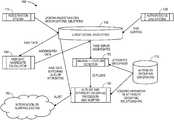
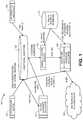
- FIG. 1is a diagram illustrating an example of a system for detecting a predetermined behavior during a domain name registration and/or domain resolution activity, consistent with certain disclosed embodiments;
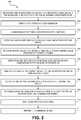
- FIG. 2is a flow diagram illustrating an example of a method for detecting a predetermined behavior during a domain name registration and/or domain resolution activity, consistent with certain disclosed embodiments.
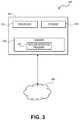
- FIG. 3is a diagram illustrating an example of a hardware system for performing at least a portion of one or more of the methods disclosed herein, consistent with certain disclosed embodiments.
- FIG. 1is a diagram illustrating an example of a system 100 for detecting a predetermined behavior during a domain name registration and/or domain resolution activity, consistent with certain disclosed embodiments.
- a domain resolution activityrefers to the processes and interactions involving the communication between DNS clients and DNS servers during the resolution of names requested in a DNS query.
- the predetermined behaviormay be or include anomalies and/or aberrant behavior that may signal an outlier or outlier event.
- an anomaly and/or aberrant behaviorrefers to behavior that diverges from readily predictable patterns.
- an “outlier” or “outlier event”refers to an event that is statistically significant based on prior observations.
- the system 100may use a combination of clipping levels and time series outlier detection algorithms to identify potential outlier events.
- a clipping levelrefers to a threshold level, determined a priori, that an event must exceed to meet an outlier event criteria.
- an outlier detection algorithmrefers to a deterministic technique that can quantitatively state if a data point is statistically different from a previously observed population.
- the structure of the grouped dimensions for outliersmay be used to coalesce outliers to the appropriate type of outlier event.
- the specific outlier groupings according to outlier eventmay be used to identify the candidate set of domains in question.
- the system 100may include a registration system 110 , such as a DNS registration system.
- the registration system 110may be configured to transmit domain registrations, modifications, and/or deletions to a longitudinal data store 120 , which is a system, such as a database, that tracks the same type of information on the same subjects at multiple points in time.
- the system 100may also include an authoritative domain name system (“DNS”) 130 .
- DNSauthoritative domain name system
- the authoritative domain name system 130may transmit data from and/or representing DNS queries to the longitudinal data store 120 .
- the system 100may also include a periodic aggregate calculator 140 .
- the longitudinal data store 120may transmit raw data (e.g., raw data related to DNS queries) to the periodic aggregate calculator 140 , and the periodic aggregate calculator 140 may then transmit aggregated data back to the longitudinal data store 120 .
- the raw data and/or the aggregated datamay be or include at least portions of the domain registrations, modifications, and/or deletions, the DNS queries, or a combination thereof, which were originally received and/or processed by the authoritative domain name system 130 .
- the system 100may also include an anomaly/outlier detector 150 .
- the longitudinal data store 120may transmit time series aggregates to the anomaly/outlier detector 150 .
- the time series aggregatesmay be based at least partially upon the aggregated data.
- a time series aggregaterefers to the combination of multiple time series into a higher level “meta” time series (e.g., if a user summed all the character distributions for a specific length, the user would get the overall length count).
- the anomaly/outlier detector 150may be applied upon the time series aggregates.
- the system 100may also include an outlier and attribute grouping processor and alerter 160 .
- the anomaly/outlier detector 150may detect outliers in the time series aggregates and transmit the outliers to the outlier and attribute grouping processor and alerter 160 .
- the anomaly/outlier detector 150may detect the outliers by comparing the current measurement against a historical corpus or time series of measurements and determining that the current measurement is X standard deviations (e.g., 2 or 3 standard deviations) above or below of the previous observations.
- the outlier and attribute grouping processor and alerter 160may aggregate/combine outlier events in a manner that produces a concise and meaningful outlier event notification. This may be done by running the outliers through an a priori defined taxonomy.
- the system 100may also include an attribute grouping dimensions device 170 .
- the attribute grouping dimensions device 170may transmit attribute groupings to the anomaly/outlier detector 150 and may transmit a codified hierarchy of attribute grouping relationships to the outlier and attribute grouping processor and alerter 160 .
- attribute groupingsrefer to a taxonomy of measurement types defined a priori that structures various metrics/dimensions being measured.
- the attribute groupingsmay be user-defined and/or explicitly encoded into the attribute grouping dimensions device 170 .
- the longitudinal data store 120may also transmit raw data matching outlier attributes to the outlier and attribute grouping processor and alerter 160 in response to a specific measurement type/dimension requested by the outlier and attribute grouping processor and alerter 160 .
- the system 100may also include a notification or alerting system 180 .
- the outlier and attribute grouping processor and alerter 160may transmit an alert to the notification or alerting system 180 when an outlier is detected.
- the notification or alerting system 180may then notify a user (e.g., via email, Netcool, etc.).
- FIG. 2is a flow diagram illustrating an example of a method 200 for detecting a predetermined behavior during a domain name registration and/or domain resolution activity, consistent with certain disclosed embodiments.
- the method 200may be used to address one or more technical (e.g., network) questions and/or problems.
- the technical questions/problemsmay be or include miscreant or suspicious domain usage (e.g., domain generation algorithms, spam, malware), registrar promotions (e.g., pricing discounts), channel bifurcation and/or consolidation (e.g., mergers, acquisitions, restructuring), domain name renewal forecasting, general context/landscape of a registry, DDoS detection and mitigation, patterns in domain name registration activity (e.g., additions or deletions of a top-level domain (“TLD”)), Internet outages and/or censorship activity, or a combination thereof.
- miscreant or suspicious domain usagerefers to, for example, phishing domains, malware domains used in command and control infrastructures, spam domains, and the like.
- a domain name registryrefers to a database of all domain names and the associated registrant information in the top level domains of the Domain Name System (DNS) of the Internet that allow third party entities to request administrative control of a domain name. It can provide authoritative DNS resolution services for the domains/TLD it operates.
- DNSDomain Name System
- the method 200may include identifying one or more dimensions that may be tracked longitudinally for anomalies in relation to a particular technical question/problem, as at 201 .
- a dimensionrefers to an attribute pertaining to something of interest and that can be used to quantitatively describe the underlying subject.
- tracking longitudinallyrefers to retaining measurements for various dimensions of a subject in some form of data to facilitate time series collection and analysis.
- the dimensionsmay be identified and/or tracked by programs written against registry services (e.g., either registration or DNS resolution) to “drink from the firehouse” and measure the various dimensions of interest for an underlying subject and insert/store those into the longitudinal data store.
- registry servicese.g., either registration or DNS resolution
- the technical question/problemmay be to identify anomalies or aberrant behavior in registrar activity for a group of TLDs operated by a registry operator.
- this exampleis focused on domain registrations, while resolution pattern detection would follow a similar process but with different dimensions.
- a non-exhaustive list of dimensions that are relevant to the particular technical question/problem in this exampleincludes:
- the method 200may also include identifying metrics for each dimension (e.g., 1a-1g), as at 202 .
- a metricgenerally refers to a quantitative measurement of a property of the underlying entity.
- a metricmay be identified by a time series of values in a specific time granularity (e.g., minute, hour, day, week, month, quarter, year, etc.) where the value is (e.g., in the case of 1a), the number of new registrations per registrar, or the 7-day average of the number of new registrations per registrar, or the logarithm of the new registrations per registrar, or the percent difference of the current value (today) from its previous value (yesterday), or its value a quarter, or a week, or a year ago.
- a dimension such as 1acan be expressed in a variety of ways (i.e., metrics).
- dimension 1amay have 20 metrics: 2a-1 to 2a-20.
- dimension 1bmay have 200 metrics: 2b-1 to 2b-200.
- dimension 1cmay have 64 metrics: 2c-1 to 2c-64.
- Dimensions 1d and 1eeach include a single metric: 2d-1 and 2e-1.
- Dimension 1gmay have 37 metrics: 2g-1 to 2g-37, assuming permissible characters in a domain are letters a-z and numbers 0-9 and “-”. Thus, in this example, 343 metrics (e.g., 20+200+64+1+1+20+37) may be identified.
- the metricsmay be defined as all possible combinations of instances across all dimensions. In this embodiment, this would result in 189,440,000 metrics as a possible starting point. Single dimension instances may be excluded, according to a fixed or adaptive threshold on the latest value. In other words, the 189,440,000 metrics difficult to process. The number may be reduced by eliminating potential combinations of the metrics either by hardcoded rules or algorithms.
- An example of applying a fixed thresholdwould be to ignore Registrar_3412 (introduced below) from the dimension “new registrations per registrar” if the current value for new registrations for Registrar_3412 is below a given threshold (e.g., 100 ).
- An example of applying an adaptive thresholdwould be one that makes reference to the time series' prior values and its derived statistics, (e.g., “filter if the current values is less than 150% of the median value over the past 25 days”).
- the method 200may also include generating a first time series for each of the metrics, as at 203 .
- Thismay include collecting, processing, and aggregating raw data to a desired time granularity, for each of the metrics, to generate the time series for each of the metrics.
- a time seriesrefers to a series of values of a quantity obtained at successive times (e.g., with equal intervals between measurements).
- the metricscan be generated from raw data of new registrations that have at least the following fields: Domain_name, Registrar, Time_of_registration, and Country_of_registrant. Given a desired time granularity (e.g., hourly, daily, weekly, monthly, or combination thereof), the raw data can be aggregated into a time series of the desired granularity.
- the datamay be aggregated daily.
- 343 time series of values(e.g., one for each metric) may be generated on a daily basis.
- the new daily valuesmay be appended to each time series.
- the time seriesmay be referred to as:
- the method 200may also include detecting one or more first outliers (also referred to as outlier events) in the time series, as at 204 .
- an outlier detection algorithmmay examine each of the 343 time series seeking to identify whether the latest value(s), or the most recent value(s), of the time series is/are anomalous or aberrant compared to the prior values of the time series.
- the valuesmay be anomalous or aberrant when the most recent metric is statistically different from the previously-observed metrics.
- Multiple outlier detection algorithmsare known, and any of them may be used as the outlier detection algorithm.
- Illustrative outlier detection algorithmsmay be or include ARIMA, simple moving average, Holt-Winters, etc.
- Outlier eventsmay be identified for none, some, or all of the time series for the 343 metrics.
- a list of dimension, metric, time, and valuemay be the output of step 204 .
- the outputmay be or include the following outlier events O-1 to O-14:
- the metricsmay be filtered according to a fixed or adaptive threshold on the latest value.
- the latest valuerefers to the most current or recent value in the time series.
- An example of applying a fixed thresholdwould be to ignore the metric “number of new registrations of length 5 from Registrar_3412” (introduced below) if the current value for “number of new registrations of length 5 from Registrar_3412” is below a given threshold (e.g., 10).
- An example of an adaptive thresholdwould be one that makes reference to the time series' prior values and its derived statistics (e.g., “filter if the current values is less than 150% of the median value over the past 25 days” for the metric “number of new registrations of length 5 from Registrar_3412”).
- the operation 204 of the method 200may include detecting level shifts.
- level shiftrefers to abrupt changes (e.g., steps, jumps, shifts) in the mean level of a time series, such as a plus or minus 20% change in the mean level. It may be considered as a special case of the statistical method known as change detection or change point detection.
- the method 200may also include filtering and/or collating a time value, and/or a metric value for each of the first outliers, as at 205 .
- the outliersmay optionally be filtered first, with a dimension-specific fixed or adaptive filter or a combination thereof.
- the outlier for the dimension “new registrations per registrar”may be filtered out if the metric value is ⁇ 100, meaning that of the new registrations for a registrar that are ⁇ 100, the user may ignore the outlier event for further processing.
- Collating the outliersmay include grouping them by dimension and/or metric.
- the output of the optional filteringmay be collated as follows:
- the method 200may also include generating one or more sets of metrics (e.g., 6-1 to 6-N), each set including a combination of two or more metrics from all of the possible combinations of metrics, as at 206 .
- each metricmay be from a different dimension.
- each of the “new registrations per registrar”with “new registrations per domain length (e.g., 3 metrics) PLUS each of the “new registrations per registrar” (e.g., 4 metrics) with “average number of vowels per registration (e.g., 1 metric) PLUS each of the “new registrations per registrar (e.g., 4 metrics) with “number of occurrences of a character in new registrations” (e.g., 4 metrics) PLUS each of the “new registrations per domain length” (e.g., 3 metrics) with “average number of vowels per registration (e.g., 1 metric) PLUS each of “new registrations per domain length” (e.g., 3 metrics) with “number of occurrences of a character in new registrations” (e.g., 4 metrics) PLUS “average number of vowels per registrations” (e.g., 1 metric) with each of “number of occurrences of a character in new registrations” (e.g., 4 metrics) PLUS “
- the first two of the metric combinations 6-1 to 6-139may be a time series for:
- the method 200may also include generating a second time series for each of the metrics in the one or more sets of metrics (e.g., 6-1 to 6-N), as at 207 . More particularly, this may include collecting, processing, and aggregating raw data to the desired time granularity (e.g., the same granularity as used in step 203 ) for each of the metrics (e.g., 6-1 to 6-N) to generate the second time series for each of the metrics.
- the metrics 6-1 to 6-Nmay be filtered to a smaller subset of M metrics where M ⁇ N based on a predetermined hierarchy of dimension significance. The hierarchy may be specific to the technical question/problem in step 201 .
- the list 6-1 to 6-Nmay be filtered to only include metrics that include, for example:
- ranke.g. 1 and 2 in this case
- An arbitrary subset of dimensions(e.g., 1 and 4)
- the goal of the optional filteringis to reduce the number of metrics to be explored for outlier detection and to focus on the subset of outliers that may be of higher interest for the technical question/problem.
- the ranking of dimensionsprovides a mathematical tool for prioritizing the dimensional combinations to be evaluated.
- the method 200may also include detecting one or more second outliers in each of the second time series (e.g., similar to step 204 ), as at 208 .
- the followingmay be a second outlier in the output of step 208 : new registrations with Registrar_123 for length 5 and length 6 and higher-than-normal occurrences of letters “a” and “i”, Jan. 1, 2017, 5655.
- the goal of steps 205 - 208is to reduce the overall space of metric combinations compared to the case of doing outlier detection on multi-dimensional time series at step 203 .
- the method 200may also include filtering and/or ordering the second outliers with a fixed filter, an adaptive filter, or a combination thereof, as at 209 .
- the second outliersmay be filtered out if the metric value is ⁇ 100, meaning that new registrations with Registrar_123 for length 5 and length 6 and higher-than-normal occurrences of letters “a” and “i”, Jan. 1, 2017, 85 may be ignored for further processing.
- An adaptive filtermakes reference to the second time series' prior values and its derived statistics, for example, “filter out if the outlier value is less than 150% of the median value over the past 25 days.”
- the method 200may also include presenting/displaying the output of step 209 , as at 210 .
- the output of step 209may be presented/displayed in the form of a dashboard automatically generated report or email, including any or all of the following: a list of outliers, one or more graphs of the time series associated with the outliers, highlighting the outliers, or a combination thereof.
- the methodmay also include performing a remedial action in response to detecting, filtering, and/or displaying the second outliers, as at 211 .
- the remedial actionmay be or include a Distributed Denial of Service (DDoS).
- DDoSDistributed Denial of Service
- the remedial actionmay include applying a filter to limit/block traffic matching that pattern.
- Another examplemay be on domain registrations. If one or more registrations are observed with strange character distributions at a specific length from a specific registrar, those domains may warrant additional investigation from a security analytics team as potential miscreant domain candidates.
- FIG. 3is a diagram illustrating an example of a hardware system 300 for performing at least a portion of one or more of the method 200 disclosed herein, consistent with certain disclosed embodiments.
- the example hardware system 300includes example system components that may be used. The components and arrangement, however, may be varied.
- the example hardware system 300may include a computer 301 .
- the computer 301may include a processor 310 , a memory 320 , a storage 330 , and input/output (I/O) devices (not pictured).
- the computer 301may be implemented in various ways and can be configured to perform any of the embodiments described above.
- the computer 301can be a general purpose computer of an end user such as, for example, a desktop computer, a laptop, a tablet device, a mobile device (e.g., a smartphone), etc.
- the computer 301can be a computing device such as, for example, a data base server (e.g., a domain name registry), a web server, a mainframe computer, etc.
- a data base servere.g., a domain name registry
- the computer 301may be standalone or may be part of a subsystem, which may, in turn, be part of a larger system.
- the computer 301can be at least a portion of the system 100 (e.g., the longitudinal data store 120 , the periodic aggregate calculator 140 , the anomaly/outlier detector 150 , the outlier and attribute grouping processor and alerter 160 , the attribute grouping dimensions device 170 , and/or the notification or alerting device 180 ) shown and described in FIG. 1 .
- the processor 310may include one or more known processing devices, such as a microprocessor from the Intel CoreTM family manufactured by IntelTM, the PhenomTM family manufactured by AMDTM, or the like.
- the memory 320may include one or more storage devices configured to store information and/or instructions used by the processor 310 to perform certain functions and operations related to the disclosed embodiments.
- the storage 330may include a volatile or non-volatile, magnetic, semiconductor, tape, optical, removable, non-removable, or other type of computer-readable medium used as a storage device.
- the storage 330can include, for example, domain name records, DNS firewall customer IP addresses, and/or IP address blocks, etc.
- the memory 320may include one or more programs or subprograms including instructions that may be loaded from the storage 330 or elsewhere that, when executed by the computer 301 , perform various procedures, operations, or processes consistent with disclosed embodiments.
- the memory 320may include an outlier detection program 325 for performing at least a portion of the method 200 .
- the memory 320may also include other programs that perform other functions, operations, and processes, such as programs that provide communication support, Internet access, etc.
- the outlier detection program 325may be embodied as a single program, or alternatively, may include multiple sub-programs that, when executed, operate together to perform the function of the outlier detection program 325 according to disclosed embodiments.
- the computer 301may communicate over a link with a network 340 to, for example, the registration system 110 , the authoritative domain name system 130 , the notification or alerting system 180 , a user's computer, or a combination thereof.
- the linkmay be a direct communication link, a local area network (LAN), a wide area network (WAN), or other suitable connection.
- the network 340may include the internet, as well as other networks, which may be connected to various systems and devices.
- the computer 301may include one or more input/output (I/O) devices (not pictured) that allow data to be received and/or transmitted by the computer 301 .
- the I/O devicesmay also include one or more digital and/or analog communication I/O devices that allow the computer 301 to communicate with other machines and devices.
- the I/O devicesmay also include input devices such as a keyboard or a mouse, and may include output devices such as a display or a printer.
- the computer 301may receive data from external machines and devices and output data to external machines and devices via I/O devices.
- the configuration and number of input and/or output devices incorporated in I/O devicesmay vary as appropriate for various embodiments. Example uses of the hardware system 300 can be described by way of example with reference to the embodiments described above.
Landscapes
- Engineering & Computer Science (AREA)
- Computer Security & Cryptography (AREA)
- Computer Networks & Wireless Communication (AREA)
- Signal Processing (AREA)
- Computer Hardware Design (AREA)
- Computing Systems (AREA)
- General Engineering & Computer Science (AREA)
- Debugging And Monitoring (AREA)
Abstract
Description
- New registrations per registrar or registrar family
- New registrations per registrant's country
- New registrations per domain length
- Average number of vowels for new registrations
- Average number of consonants for new registrations
- Deleted names per registrar or registrar family
- Number of occurrences of a character in new registrations
- Registration history (e.g., including, but not limited to, constraints on renewals, transfers, registrar, pricing data, registration data, and/or registration time) of a registrar
- Traffic (e.g., including, but not limited to, constraints on DNS requests, DNS requests by type, distinct Qnames, distinct recursive IP addresses, specific Qname labels, actual traffic received, geographical source or other IP-oriented aggregation (e.g., ASN, /24 CIDR, BGP prefix) of such traffic, and/or the use of mechanisms to distinguish human from machine traffic)
- WHOIS information (e.g., including, but not limited to, constraints on geographical properties, physical contact addresses, email addresses, and/or privatization status)
- Content or topical markers (e.g., including, but not limited to, constraints on subject matter of domain or pages within, participation in domain parking or pay-per-click programs, and/or whether content exists)
- Geographical markers (e.g., including, but not limited to, constraints on natural language of hosted content, WHOIS country of registration, generalizations drawn from choice of registrar or web-host, and/or IP geolocation outcomes)
- Routing (e.g., including, but not limited to, constraints on whether the domain redirects to another domain and/or latency in reaching the domain)
- Aftermarket pricing data (e.g., including, but not limited to, constraints on the prior sales of a domain in aftermarket marketplaces and the associated sales values)
- TLD information (e.g., including, but not limited to, constraints on TLD, classification of TLD ad ccTLD or gTLD, TLD base size, age of TLD in marketplace, and/or TLD pricing information)
- Security information (e.g., including, but not limited to, constraints on appearance of domain on blacklists or safe browsing lists)
- Any other domain property not explicitly listed above
| Outlier Event | Measurement Type | Subject | Date | Value |
| O1 | New registrations per registrar | Registrar_2345 | Jan. 1, 2017 | 1278 |
| O2 | New registrations per registrar | Registrar_123 | Jan. 1, 2017 | 10295 |
| O3 | New registrations per registrar | Registrar_26 | Jan. 1, 2017 | 129 |
| O4 | New registrations per registrar | Registrar_263 | Jan. 1, 2017 | 19 |
| O5 | New registrations per registrar | Registrar_1234 | Jan. 2, 2017 | 20295 |
| O6 | New registrations per domain length | 5 | Jan. 1, 2017 | 15002 |
| O7 | New registrations per domain length | 5 | Jan. 2, 2017 | 6371 |
| O8 | New registrations per domain length | 7 | Jan. 2, 2017 | 3661 |
| O9 | New registrations per domain length | 6 | Jan. 2, 2017 | 6897 |
| O10 | Avg number of vowels per registration | Jan. 1, 2017 | 3.678 | |
| O11 | Number of occurrences of a character in | a | Jan. 1, 2017 | 1.5 |
| new registrations | ||||
| O12 | Number of occurrences of a character in | e | Jan. 1, 2017 | 1.3 |
| new registrations | ||||
| O13 | Number of occurrences of a character in | o | Jan. 1, 2017 | 1.1 |
| new registrations | ||||
| O14 | Number of occurrences of a character in | i | Jan. 1, 2017 | 1.4 |
| new registrations | ||||
- New registrations per registrar with4 distinct values for registrar:
- Registrar_2345
- Registrar_123
- Registrar_26
- Registrar_1234
- New registrations per domain length with3 distinct values for domain length:
- 5
- 6
- 7
- Average number of vowels per registrations
- Number of occurrences of a character in new registrations with4 distinct values for the character:
- “a”
- “e”
- “o”
- “i”
- New registrations per registrar with4 distinct values for registrar:
- new registrations for registrar Registrar_2345 of length 5
- new registrations for registrar Registrar_2345 of length 6
- new registrations for registrar Registrar_2345 of length 7
- or another of the time series may be an average number of vowels for new registrations by Registrar_2345
Claims (20)
Priority Applications (2)
| Application Number | Priority Date | Filing Date | Title |
|---|---|---|---|
| US15/602,563US11190479B2 (en) | 2017-05-23 | 2017-05-23 | Detection of aberrant domain registration and resolution patterns |
| EP18173829.5AEP3407572A1 (en) | 2017-05-23 | 2018-05-23 | Detection of aberrant domain registration and resolution patterns |
Applications Claiming Priority (1)
| Application Number | Priority Date | Filing Date | Title |
|---|---|---|---|
| US15/602,563US11190479B2 (en) | 2017-05-23 | 2017-05-23 | Detection of aberrant domain registration and resolution patterns |
Publications (2)
| Publication Number | Publication Date |
|---|---|
| US20180343229A1 US20180343229A1 (en) | 2018-11-29 |
| US11190479B2true US11190479B2 (en) | 2021-11-30 |
Family
ID=62567218
Family Applications (1)
| Application Number | Title | Priority Date | Filing Date |
|---|---|---|---|
| US15/602,563Active2039-01-31US11190479B2 (en) | 2017-05-23 | 2017-05-23 | Detection of aberrant domain registration and resolution patterns |
Country Status (2)
| Country | Link |
|---|---|
| US (1) | US11190479B2 (en) |
| EP (1) | EP3407572A1 (en) |
Families Citing this family (4)
| Publication number | Priority date | Publication date | Assignee | Title |
|---|---|---|---|---|
| US10015134B2 (en)* | 2011-12-29 | 2018-07-03 | Verisign, Inc. | Methods and systems for creating new domains |
| US20210042398A1 (en)* | 2019-08-08 | 2021-02-11 | Pulsepoint, Inc. | Validation of Properties of a User Device in a Network |
| EP4111669A2 (en)* | 2020-05-21 | 2023-01-04 | Huawei Technologies Co., Ltd. | Domain name system (dns) services for variable-length address (vla) networks |
| US11689500B2 (en)* | 2021-01-26 | 2023-06-27 | Proofpoint, Inc. | Systems and methods for IP mass host verification |
Citations (8)
| Publication number | Priority date | Publication date | Assignee | Title |
|---|---|---|---|---|
| US20140165198A1 (en) | 2012-10-23 | 2014-06-12 | Verint Systems Ltd. | System and method for malware detection using multidimensional feature clustering |
| US20150058977A1 (en)* | 2013-08-26 | 2015-02-26 | Micheal Thompson | Health monitor based distributed denial of service attack mitigation |
| US20160110362A1 (en) | 2014-10-20 | 2016-04-21 | International Business Machines Corporation | Automatic enumeration of data analysis options and rapid analysis of statistical models |
| US20160352767A1 (en)* | 2014-01-24 | 2016-12-01 | Hewlett Packard Enterprise Development Lp | Identifying deviations in data |
| US20160359701A1 (en)* | 2015-06-05 | 2016-12-08 | Cisco Technology, Inc. | Parallel coordinate charts for flow exploration |
| US20170109395A1 (en)* | 2015-10-14 | 2017-04-20 | The Climate Corporation | Computer-generated accurate yield map data using expert filters and spatial outlier detection |
| US20180173110A1 (en)* | 2016-12-15 | 2018-06-21 | Taiwan Semiconductor Manufacturing Co., Ltd. | Noise Reduction for Overlay Control |
| US20190124099A1 (en)* | 2015-10-29 | 2019-04-25 | Taras Matselyukh | Anomaly detection in a data stream |
- 2017
- 2017-05-23USUS15/602,563patent/US11190479B2/enactiveActive
- 2018
- 2018-05-23EPEP18173829.5Apatent/EP3407572A1/ennot_activeWithdrawn
Patent Citations (8)
| Publication number | Priority date | Publication date | Assignee | Title |
|---|---|---|---|---|
| US20140165198A1 (en) | 2012-10-23 | 2014-06-12 | Verint Systems Ltd. | System and method for malware detection using multidimensional feature clustering |
| US20150058977A1 (en)* | 2013-08-26 | 2015-02-26 | Micheal Thompson | Health monitor based distributed denial of service attack mitigation |
| US20160352767A1 (en)* | 2014-01-24 | 2016-12-01 | Hewlett Packard Enterprise Development Lp | Identifying deviations in data |
| US20160110362A1 (en) | 2014-10-20 | 2016-04-21 | International Business Machines Corporation | Automatic enumeration of data analysis options and rapid analysis of statistical models |
| US20160359701A1 (en)* | 2015-06-05 | 2016-12-08 | Cisco Technology, Inc. | Parallel coordinate charts for flow exploration |
| US20170109395A1 (en)* | 2015-10-14 | 2017-04-20 | The Climate Corporation | Computer-generated accurate yield map data using expert filters and spatial outlier detection |
| US20190124099A1 (en)* | 2015-10-29 | 2019-04-25 | Taras Matselyukh | Anomaly detection in a data stream |
| US20180173110A1 (en)* | 2016-12-15 | 2018-06-21 | Taiwan Semiconductor Manufacturing Co., Ltd. | Noise Reduction for Overlay Control |
Non-Patent Citations (2)
| Title |
|---|
| Extended European Search Report dated Sep. 21, 2018, EP Application No. 18 17 3829.5, pp. 1-8. |
| Roolvink, Stephan, "Detecting Attacks Involving DNS Servers—A Netflow Data Based Approach"; Dec. 15, 2008 (Dec. 15, 2008). pp. i-75, XP055507291. Retrieved from the Internet: URL:http://www.utwente.nl/en/eemcs/dacs/assignments/completed/master/reports/2008-roolvink.pdf. |
Also Published As
| Publication number | Publication date |
|---|---|
| US20180343229A1 (en) | 2018-11-29 |
| EP3407572A1 (en) | 2018-11-28 |
Similar Documents
| Publication | Publication Date | Title |
|---|---|---|
| US9137093B1 (en) | Analyzing requests for data made by users that subscribe to a provider of network connectivity | |
| US8909760B2 (en) | Domain popularity scoring | |
| US11190479B2 (en) | Detection of aberrant domain registration and resolution patterns | |
| KR102317823B1 (en) | Methods and apparatus to compensate impression data for misattribution and/or non-coverage by a database proprietor | |
| US20150365305A1 (en) | Domain name system traffic analysis | |
| US20170372330A1 (en) | Determining client system attributes | |
| US20160232563A1 (en) | Methods and apparatus to de-duplicate impression information | |
| CN111541796A (en) | CDN access flow scheduling method, device, communication system and storage medium | |
| JP5986082B2 (en) | Reply to the estimated value of search keywords for all accounts | |
| WO2015102803A1 (en) | Methods and apparatus to de-duplicate impression information related applications | |
| US20150201031A1 (en) | Dynamic normalization of internet traffic | |
| KR20150030652A (en) | Methods and apparatus to determine impressions using distributed demographic information | |
| KR20110095874A (en) | How to provide users with customized information based on trend identification | |
| JP2007018508A (en) | Technique for displaying impression in document delivered over computer network | |
| US8190611B1 (en) | Categorizing web sites based on content-temporal locality | |
| EP3776432A1 (en) | Processor systems to estimate audience sizes and impression counts for different frequency intervals | |
| US20200058037A1 (en) | Reporting of media consumption metrics | |
| Kline et al. | On the structure and characteristics of user agent string | |
| US20160210341A1 (en) | Capacity planning for database replication latency | |
| CN104202418A (en) | Method and system for recommending commercial content distribution network for content provider | |
| Gonzalez et al. | User profiling by network observers | |
| CN106789147B (en) | Flow analysis method and device | |
| US20160286420A1 (en) | Technique for data traffic analysis | |
| EP2988455A1 (en) | Domain name system traffic analysis | |
| US10819732B1 (en) | Computing device, software application, and computer-implemented method for system-specific real-time threat monitoring |
Legal Events
| Date | Code | Title | Description |
|---|---|---|---|
| STPP | Information on status: patent application and granting procedure in general | Free format text:DOCKETED NEW CASE - READY FOR EXAMINATION | |
| AS | Assignment | Owner name:VERISIGN, INC., VIRGINIA Free format text:ASSIGNMENT OF ASSIGNORS INTEREST;ASSIGNORS:LABROU, YANNIS;OKUBO, TOMOFUMI;OSTERWEIL, ERIC;AND OTHERS;SIGNING DATES FROM 20170802 TO 20170828;REEL/FRAME:043435/0782 | |
| STPP | Information on status: patent application and granting procedure in general | Free format text:NON FINAL ACTION MAILED | |
| STPP | Information on status: patent application and granting procedure in general | Free format text:RESPONSE TO NON-FINAL OFFICE ACTION ENTERED AND FORWARDED TO EXAMINER | |
| STPP | Information on status: patent application and granting procedure in general | Free format text:ADVISORY ACTION MAILED | |
| STPP | Information on status: patent application and granting procedure in general | Free format text:DOCKETED NEW CASE - READY FOR EXAMINATION | |
| STPP | Information on status: patent application and granting procedure in general | Free format text:FINAL REJECTION MAILED | |
| STPP | Information on status: patent application and granting procedure in general | Free format text:RESPONSE AFTER FINAL ACTION FORWARDED TO EXAMINER | |
| STPP | Information on status: patent application and granting procedure in general | Free format text:NON FINAL ACTION MAILED | |
| STPP | Information on status: patent application and granting procedure in general | Free format text:RESPONSE TO NON-FINAL OFFICE ACTION ENTERED AND FORWARDED TO EXAMINER | |
| STPP | Information on status: patent application and granting procedure in general | Free format text:NOTICE OF ALLOWANCE MAILED -- APPLICATION RECEIVED IN OFFICE OF PUBLICATIONS | |
| STPP | Information on status: patent application and granting procedure in general | Free format text:AWAITING TC RESP, ISSUE FEE PAYMENT VERIFIED | |
| STPP | Information on status: patent application and granting procedure in general | Free format text:PUBLICATIONS -- ISSUE FEE PAYMENT VERIFIED | |
| STCF | Information on status: patent grant | Free format text:PATENTED CASE | |
| CC | Certificate of correction | ||
| MAFP | Maintenance fee payment | Free format text:PAYMENT OF MAINTENANCE FEE, 4TH YEAR, LARGE ENTITY (ORIGINAL EVENT CODE: M1551); ENTITY STATUS OF PATENT OWNER: LARGE ENTITY Year of fee payment:4 |