CROSS REFERENCE TO RELATED APPLICATIONThe present application claims the filing benefits of U.S. provisional application Ser. No. 62/613,837, filed Jan. 5, 2018, which is hereby incorporated herein by reference in its entirety.
FIELD OF THE INVENTIONThe present disclosure relates generally to radar assemblies for motor vehicles and, more particularly, to a radar assembly with multifunction sensing functionality.
BACKGROUND OF THE INVENTIONThis section provides background information related to the present disclosure which is not necessarily prior art.
Passengers can interact with vehicle controllers with a myriad of user interface and sensing technologies in cabins of current vehicles. These user interface and sensing technologies include switches and buttons, capacitive touch sensors, speech recognition, vision/cameras, and touchscreens. Each of these technologies has developed based on specialized detection abilities. For example, buttons and switches or corresponding capacitive touch sensors can easily be utilized in a cabin of a vehicle to allow passengers to operate vehicle functions, such as window regulators, power side mirrors, infotainment systems, and heating, ventilation and air conditioning systems. Yet, numerous buttons and switches or capacitive touch sensors commonly found on vehicles can add weight to the vehicle and take up valuable space in the cabin.
While speech recognition systems are increasingly also used to allow passengers of the vehicle to provide input to control operations of the vehicle, other sounds in the cabin, such as road noise and loud music can reduce the effectiveness of such systems. Furthermore, speech recognition systems typically utilize at least one microphone or even complicated arrays of microphones that must be packaged and wired in the vehicle.
In general, such conventional technologies can be effective at recognizing user intentions and commands in various ways; however, their implementation can often lead to complex systems with many necessary parts and complicated control methodologies due to the need to process inputs from the various user interface and sensing systems. Thus, user interface and sensing systems which are currently available could be improved.
SUMMARY OF THE INVENTIONThis section provides a general summary of the present disclosure and is not a comprehensive disclosure of its full scope or all of its features, aspects and objectives.
Accordingly, it is an aspect of the present disclosure to provide a radar assembly with multifunction sensing functionality for a vehicle. The radar assembly includes at least one radar transmit antenna for transmitting radar waves in a cabin of the vehicle and exterior areas outside the cabin. The radar assembly also includes at least one radar receive antenna for receiving the radar waves in the cabin of the vehicle after reflection from at least one of the exterior areas and the cabin and passengers in the vehicle in a plurality of hotspot zones. A timing controller includes at least one processing control input and at least one timing control output that is electrically coupled to at least one radar transmit antenna for generating a transmit output signal utilized for the transmission of the radar waves. The timing controller also includes at least one timing control input electrically coupled to at least one radar receive antenna for receiving a receive input signal corresponding to the radar waves received by at least one radar receive antenna. A memory unit is electrically coupled to the timing controller for storing a plurality of stored parameters and data corresponding to radar waves received by at least one radar receive antenna. A control or microcontroller is electrically coupled to the processing control input of the timing controller and storing a series of instructions and electrically coupled to a vehicle communication bus for communicating with a plurality of vehicle controllers. The microcontroller is configured to execute the series of instructions to operate the timing controller. The microcontroller processes the data corresponding to the radar waves received by at least one radar receive antenna to scan the cabin and exterior areas for detecting motion and gestures made by the passenger in the plurality of hotspot zones.
According to another aspect of the disclosure, a system for multifunction sensing in a vehicle is also provided. The system includes a radar assembly with multifunction sensing functionality including at least one radar transmit antenna for transmitting radar waves in a cabin of the vehicle and exterior areas outside the cabin. The radar assembly also includes at least one radar receive antenna for receiving the radar waves in the cabin of the vehicle after reflection from at least one of the exterior areas and the cabin and passengers in the vehicle in a plurality of hotspot zones. A plurality of markers representing button controls are disposed in at least one of the cabin of the vehicle and the exterior areas. The radar assembly includes a microcontroller electrically coupled to at least one radar transmit antenna and at least one radar receive antenna and storing a series of instructions. The microcontroller is in communication with a plurality of vehicle controllers and is configured to execute the series of instructions to operate at least one radar transmit antenna for the transmission of the radar waves. The microcontroller is also configured to recognize the plurality of markers and process data corresponding to the radar waves received by the at least one radar receive antenna for detecting motion and gestures made by the passenger in the plurality of hotspot zones. The microcontroller is also configured to identify the motion and gestures made by the passenger adjacent to the plurality of markers. Additionally, the microcontroller is configured to correlate the motion and gestures made by the passenger to a plurality of marker operations associated with the plurality of markers. The microcontroller is also configured to communicate a plurality of marker control commands corresponding to the plurality of marker operations to the plurality of vehicle controllers in response to correlating the motion and gestures made by the passenger to the plurality of marker operations.
It is another aspect of the present disclosure to provide a method of sensing user interactions using a radar assembly with multifunction sensing functionality in a vehicle. The method includes the step of operating a timing controller using a microcontroller electrically coupled to the timing controller. The next step of the method is generating a transmit output signal utilized for the transmission of radar waves using at least one timing control output of the timing controller. Next, the method includes the step of transmitting radar waves in a cabin of the vehicle and exterior areas outside the cabin using at least one radar transmit antenna to scan the cabin and exterior areas. The method proceeds with the step of receiving the radar waves in the cabin of the vehicle after reflection from at least one of the exterior areas and the cabin and passengers in the vehicle in a plurality of hotspot zones using at least one radar receive antenna. The method continues by receiving a receive input signal corresponding to the radar waves received by at least one radar receive antenna using at least one timing control input of the timing controller. The method also includes the step of storing a plurality of stored parameters and data corresponding to radar waves received by the at least one radar receive antenna using a memory unit electrically coupled to the timing controller. The method continues with the step of processing the data corresponding to the radar waves received by at least one radar receive antenna using the microcontroller. Next, detecting motion and gestures made by the passenger in the plurality of hotspot zones using the microcontroller. The method then includes the step of communicating with a plurality of vehicle controllers in response to detecting the motion and gestures made by the passenger in the plurality of hotspot zones.
The system and radar assembly for multifunction sensing according to the present disclosure provides numerous benefits, which are especially attractive to the passenger of the vehicle. As radar technology improves, ability to recognize precise gestures in higher resolution allows for combining numerous interfaces into a single integrated unit or radar assembly to sense human interfacing requests.
These and other aspects and areas of applicability will become apparent from the description provided herein. The description and specific examples in this summary are intended for purpose of illustration only and are not intended to limit the scope of the present disclosure.
BRIEF DESCRIPTION OF THE DRAWINGSOther advantages of the present disclosure will be readily appreciated, as the same becomes better understood by reference to the following detailed description when considered in connection with accompanying drawings wherein:
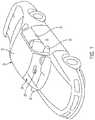
FIG. 1 is a perspective view of an example motor vehicle equipped with a radar assembly according to aspects of the disclosure;
FIG. 2 is an enlarged perspective view of the radar assembly ofFIG. 1 according to aspects of the disclosure;
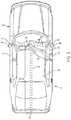
FIG. 3 is a top view of the vehicle ofFIG. 1 illustrating radar waves from the radar assembly ofFIG. 2 according to aspects of the disclosure;
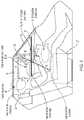
FIG. 4 is a partial cross-section of the vehicle ofFIG. 1 illustrating a plurality of hotspot zones in a cabin of the vehicle and outside the cabin according to aspects of the disclosure;
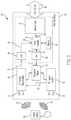
FIG. 5 is a block diagram of a system including the radar assembly ofFIG. 2 and a plurality of markers according to aspects of the disclosure;
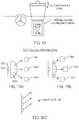
FIGS. 6A and 6B illustrate a partial enlarged view of a portion of the cabin of a conventional vehicle and the vehicle according to aspects of the disclosure, respectively;
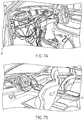
FIGS. 7A and 7B illustrate a partial view of the cabin of a conventional vehicle and the vehicle according to aspects of the disclosure, respectively;
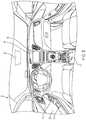
FIG. 8 illustrates the cabin of the vehicle including a touchscreen according to aspects of the disclosure;
FIG. 9 illustrates that the radar assembly can replace numerous other conventional sensing technologies according to aspects of the disclosure;
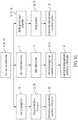
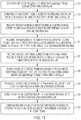
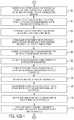
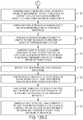
FIGS. 10, 11, and 12A-1 to 12B-2 are flow charts illustrating steps of a method of sensing user interactions using a radar assembly with multifunction sensing functionality according to aspects of the disclosure;
FIG. 13 illustrates an interior rearview mirror and a screen that calibrates using the interior rearview mirror according to aspects of the disclosure;
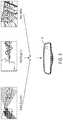
FIGS. 14A-14C illustrates radar focusing lenses and radar beam steering with and without lenses according to aspects of the disclosure; and
FIG. 15 illustrates an interior rearview mirror that directs radar at different zones according to aspects of the disclosure.
DETAILED DESCRIPTION OF THE PREFERRED EMBODIMENTSIn the following description, details are set forth to provide an understanding of the present disclosure. In some instances, certain circuits, structures and techniques have not been described or shown in detail in order not to obscure the disclosure.
In general, a radar assembly with multifunction sensing functionality and a corresponding system constructed in accordance with the teachings of the present disclosure will now be disclosed. A method of sensing user interactions using the radar assembly with multifunction sensing functionality constructed in accordance with the teachings of the present disclosure will also be disclosed. The example embodiments are provided so that this disclosure will be thorough, and will fully convey the scope to those who are skilled in art. Numerous specific details are set forth such as examples of specific components, devices, and methods, to provide a thorough understanding of embodiments of the present disclosure. It will be apparent to those skilled in art that specific details need not be employed, that example embodiments may be embodied in many different forms and that neither should be construed to limit the scope of the disclosure. In some example embodiments, well-known processes, well-known device structures, and well-known technologies are described in detail.
Referring initially toFIG. 1, anexample motor vehicle20 is shown to include an exterior22 and an interior defining acabin24. Thevehicle20 includes awindshield26 and an interiorrearview mirror assembly28 attached thereto. Thevehicle20 can additionally include side mirrors30 mounted to the exterior22 onside doors32 of thevehicle20. Thecabin24 of thevehicle20 can define numerous surfaces for user interface controls (e.g., window controls on an arm rest).
Thevehicle20 includes asystem34 for multifunction sensing. Thesystem34 includes aradar assembly28 with multifunction sensing functionality. According to an aspect, theradar assembly28 can be disposed at or in therearview mirror assembly28 of thevehicle20, as best shown inFIG. 2 (such as in the mirror head of the mirror assembly and behind the mirror reflective element, such as a prismatic mirror reflective element or an electro-optic or electrochromic mirror reflective element, and encased by the plastic mirror casing). In other words, theradar assembly28 is a combination rearview mirror integrated with radar sensing capability. By integrating the radar sensing with the rear view mirror, theradar assembly28 can be concealed within the rear view mirror unit, while also providing a pre-existing mounting point at a vantage point within thecabin24 to allow for radar sensing for scanning and mapping thecabin24, as well as zones exterior22 to thecabin24, as best shown inFIGS. 3 and 4. However, it should be understood that theradar assembly28 could be separate from therearview mirror assembly28.
As shown inFIG. 5, theradar assembly28 includes at least one radar transmitantenna36 for transmitting radar waves38 in thecabin24 of thevehicle20 and atexterior areas40 outside the cabin24 (e.g., near the side mirrors30 or at the rear of the vehicle20). Theradar assembly28 also includes at least one radar receiveantenna42 for receiving the radar waves38 in thecabin24 of thevehicle20 after reflection from at least one of theexterior areas40 and from in thecabin24 and passengers in thevehicle20 in a plurality ofhotspot zones44.
The at least one radar transmitantenna36 can be configured to emit continuously modulated radiation, ultra-wideband radiation, or sub-millimeter-frequency radiation (e.g., frequencies forming part of the ISM frequency band about 24 GHz). The continuously emitted radiation by at least one radar transmitantenna36, or continuous wave (CW) radar, known in art to use Doppler radar, is employed in the radar assembly and system with multifunction sensing functionality. The modulated emitted radiation by at least one radar transmitantenna36, or frequency modulated continuous wave (FMCW) radar, also known in art to use Doppler radar, may also be employed in the radar assembly and system with multifunction sensing functionality. Also, the system may be configured for use of pulsed based time-of-flight radar techniques.
Theradar assembly28 includes atiming controller46 having at least oneprocessing control input48 and at least onetiming control output50 that is electrically coupled to at least one radar transmitantenna36 for generating a transmit output signal52 utilized for the transmission of the radar waves38. Thetiming controller46 also includes at least one timing control input54 electrically coupled to at least one radar receiveantenna42 for receiving a receiveinput signal56 corresponding to the radar waves38 received by at least one radar receiveantenna42. Amemory unit58 is electrically coupled to thetiming controller46 for storing a plurality of stored parameters and data corresponding to radar waves38 received by at least one radar receiveantenna42.
Theradar assembly28 also includes a transmit radio frequency amplifier60 electrically coupled to at least one radar transmitantenna36 for receiving and amplifying the transmit output signal52 for at least one radar transmitantenna36. Similarly, a receive radio frequency mixer andamplifier64 is electrically coupled to the at least one radar receiveantenna42 for receiving and amplifying the radar waves38 reflected from at least one of theexterior areas40 and thecabin24 and passengers in thevehicle20. The receive radio frequency mixer andamplifier64 outputs the receiveinput signal56 corresponding to the radar waves38 received by at least one radar receiveantenna42. Additionally, the transmit radio frequency amplifier60 is electrically coupled to the receive radio frequency mixer andamplifier64 for outputting a mixer output68 to the receive radio frequency mixer andamplifier64.
In addition, theradar assembly28 also includes atransceiver chipset72 including a transceiver input74 coupled to thetiming controller46 and a plurality of transceiver outputs70 electrically coupled to the transmit radio frequency amplifier60 and the receive radio frequency mixer andamplifier64. Thetransceiver chipset72 transmits the transmit output signal52 to the transmit radio frequency amplifier60 and controls the transmit radio frequency amplifier60 and the receive radio frequency mixer andamplifier64.
Because thetiming controller46 operates with digital signals, theradar assembly28 also includes a digital to analog converter78 electrically coupled to at least onetiming control output50 and to the transceiver input74 for converting the transmit output signal52 from thetiming controller46 to an analog transmit output signal52. An analog todigital converter80 is electrically coupled to at least one timing control input54 and to the receive radio frequency mixer andamplifier64 for converting analog receivedradar signal76 to the receiveinput signal56.
Theradar assembly28 includes a control or microcontroller82 electrically coupled to theprocessing control input48 of thetiming controller46 and storing a series of instructions and electrically coupled to a vehicle communication bus84 (e.g., controller area network or I2C) for communicating with a plurality of vehicle controllers (not shown). The microcontroller82 is configured to execute the series of instructions to operate thetiming controller46. The microcontroller82 processes the data corresponding to the radar waves38 received by at least one radar receiveantenna42 to scan thecabin24 andexterior areas40 for detecting motion and gestures made by the passenger in the plurality ofhotspot zones44. For example, the microcontroller82 can execute instructions to perform signal processing calculations on the received reflection and transmitted radiation signals (i.e., mixed signals) to implement the various detection techniques (e.g., CW Radar, FMCW Radar, time of flight, Doppler) to detect motion made by an occupant in the cabin of the vehicle. The microcontroller may then determine whether the detected motion matches a select gesture from a set of gestures. That is, the microcontroller82 may compare the detected motion against stored data representing any number of gestures (i.e., a database of gesture data). When the microcontroller82 successfully matches the detected motion with data representing a gesture, the microcontroller82 may then determine that the occupant of the vehicle made the matched gesture. The database may be stored in non-volatile memory accessible by the microcontroller82 and may include any number of gestures. The microcontroller82 may use a threshold to determine if the detected motion matches a stored gesture. That is, in some examples, the detected motion must satisfy the threshold criteria (i.e., similarity to the stored gesture) before the microcontroller successfully matches the detected motion to the stored gesture. Thus, theradar assembly28 can detect different gestures (i.e., hand movements) to operate different controls of thevehicle20. Pre-established gesture zones can be mapped so hand gestures are only recognized when thehand21 enters these regions and/or thesystem34 can track thehands21 within the cabin24 (FIG. 4). Also, since radar can penetrate non-metallic materials, it can recognize gestures at theexterior22 of thevehicle20, for example adjacent to an exterior22 surface of the passenger window, or even at the rear of the vehicle20 (FIG. 3).
The at least one radar transmitantenna36 can be configured to emit and detect continuous wave (CW) radar with the radar assembly and system with multifunction sensing functionality illustratively including one radar transmitantenna36 and one radar receiveantenna42. With such a configuration, the radar assembly and system with multifunction sensing functionality is operable to detect a speed/velocity of the object/user21 using the Doppler Radar principles (i.e., processing by a signal processor such as the microcontroller82 of the received reflected CW radar signal to determine frequency shifts of an emitted continuous wave indicative of the speed of the object or user or hand21). The at least one radar transmitantenna36 can be also configured to emit frequency modulated continuous wave (FMCW) radar, with the radar assembly and system with multifunction sensing functionality illustratively including one radar transmitantenna36 and one radar receiveantenna42 in accordance with another embodiment. With such a configuration, the radar assembly and system with multifunction sensing functionality is operable to detect a gesture/motion of the object/user21 using the Frequency Modulated Radar techniques (i.e., processing by a signal processor such as the microcontroller82 of the reflected FMCW radar signal to determine frequency shifts indicative of the speed (Doppler frequency) and distance (beat frequency) of the object or user or hand21). Alternatively, the radar assembly and system with multifunction sensing functionality configured for FMCW radar can be configured to include at least one radar receiveantenna42 forming an antenna array for determining angle information of the reflected radar waves38. Also, multiple radar transmitantenna36 may be provided.
Thesystem34 can also include a plurality of markers86 (FIGS. 4, 5, and 6B) representing button controls that are disposed in at least one of thecabin24 of thevehicle20 and theexterior areas40. The plurality of markers86 may, for example, be constructed with radar absorption properties having certain radar scattering or reflectivity properties as compared to the material adjacent to the marker, such as aplastic arm rest23 orheadrest25 orconsole27, or a metal sheet panel forming part of a vehicle door, to make the detection of the motion and gestures made by the passenger adjacent the plurality of markers86 more apparent to the microcontroller82 (i.e., to help ensure21 that the reflectivity of the background does not overpower the reflectivity of thehand21 thereby rendering thehand21 undetectable). So, the microcontroller82 of theradar assembly28 can be programmed to recognize certain zones that represent button controls. For example, the lock/unlock buttons and power window controls normally located on a door arm rest panel23 (FIG. 6A) can be replaced with a sticker, or other marker86 (FIG. 6B) which is recognized by thesystem34 as being one of the plurality ofhotspot zones44 correlated with avehicle20 function. A touch of the marker86, or hover above the zone by a user or passenger can be recognized by thesystem34 as representing a button push, such as a window open command. When the radar assembly and system is configured to detect distance (e.g., when configured using FMCW radar detection techniques) to and within the hotspot zones44 (e.g., distances and angles representing the limits of thehotspot zones44, such as d1, d2, d3, d4, d5, d6 and θ (theta) illustratively shown inFIG. 3 andFIG. 4) from theradar assembly28, a baseline distance can be pre-established by the microcontroller82 and stored in memory58 (e.g., a distance without ahand21 present in the hotspot zone44). For example, a natural vehicle background can be used to establish a baseline reference distance, such asarmrest23, ahead rest25, acenter console27, or other interior vehicle surfaces. When ahand21 or finger is moved into thehotspot zone44, the microcontroller82 can register a change in the distance measurement compared to the baseline reference distance indicative of an intent to by the user to initiate a command represented by thehotspot zone44. For example, a detected distance change of 10 mm closer than the baseline reference distance can indicate that a finger has been placed on the marker86 representing a button push. If ahand21 is moved over thehotspot zone44 but not within it, for example ahand21 is moved at 300 mm above the marker86, the microcontroller82 can register a change in the distance measurement compared to the baseline reference distance, but since it is above a threshold distance defining thehotspot zone44, the microcontroller82 will not register the motion as indicative of an intent to by the user to initiate a command represented by thehotspot zone44, thereby avoiding false detections. The radar assembly and system can also be configured to employ motion only based detection (i.e., detection a motion into thehotspot zone44 and a motion out of thehotspot zone44 for example) using Radar Doppler techniques, and measure the time between such motions to determine the intent to activate a command represented by thehotspot zone44. In another embodiment, both motion and distance can be utilized to determine activation intents withinpredefined hotspot zones44. As a result, the physical button (FIG. 6A), and wiring thereto (FIG. 7A) can be eliminated and thecabin24 complexity and aesthetics (FIG. 7B) can advantageously be enhanced. Virtual buttons (i.e., the plurality of markers86) can also be positioned at theexterior22 of thevehicle20, for example on the top of theside door32 panel for access control, of even on the back of the trunk to signal a trunk open command.
Consequently, the microcontroller82 is further configured to identify the plurality of hotspot zones44 (e.g., areas around each of the plurality of markers86) and identify the plurality of markers86. Since theradar assembly28 can be configured to detect radar signals containing information about distance, angle and/or velocity of thehand21, multiple hotspot zones44 (e.g., volumes) at different locations can be pre-established, as illustrated inFIG. 4, where eachhotspot zone44 can be correlated to a different vehicle function. The microcontroller82 is also configured to identify the motion and gestures made by the passenger adjacent the plurality of markers86 and correlate the motion and gestures made by the passenger to a plurality of marker operations associated with the plurality of markers86. For example, the system can determine that the motion or gesture is at a particular marker and can correlate that determined motion or gesture with the marker operation associated with that marker. That is, each gesture performed at a particular marker may be associated with one or more corresponding marker operations (i.e., operations to accomplish an action or task associated with the gesture). The microcontroller82 can be configured to communicate one or more of a plurality of marker control commands corresponding to the respective or particular one of the plurality of marker operations to one or more of the plurality of vehicle controllers in response to correlating the motion and gestures made by the passenger to the particular or respective marker operation of the plurality of marker operations. The plurality of marker operations can include locking and unlocking and opening a window of thevehicle20 and closing the window of thevehicle20 and starting an engine of thevehicle20 and opening a gas tank of thevehicle20. However, it should be understood that the plurality of marker operations can include various other functions of thevehicle20.
As best shown inFIG. 8, thecabin24 may also include at least one touchscreen88 that defines a plurality of regions (i.e., areas of the touchscreen88). Thus, area of around the touchscreen88 can be one of the plurality ofhotspot zones44 and the microcontroller82 can further be configured to identify the motion and gestures made by the passenger adjacent to at least one touchscreen88. The microcontroller82 can correlate the motion and gestures made by the passenger to a plurality of touchscreen operations associated with the plurality of regions of the touchscreen88. The microcontroller82 can then communicate a plurality of touchscreen control commands corresponding to the plurality of touchscreen operations to the plurality of vehicle controllers in response to correlating the motion and gestures made by the passenger to the plurality of touchscreen operations. Much like the marker operations, the plurality of touchscreen operations can include increasing volume and changing a channel (e.g., a radio station of a head unit), for example; however, others are contemplated. As a result, the touchscreen88 can even be replaced with a normal screen (i.e., a display without touch capability), since thesystem34 can correlate objects on the screen (i.e., the plurality of regions of the touchscreen88) and a one of the plurality ofhotspot zones44 can be located where a passenger or user's finger can touch or hover.
The plurality ofhotspot zones44 can include a facial hotspot zone44 (i.e., near a face of the passenger). As a result, the microcontroller82 can further be configured to identify the face of the passenger and identify a plurality of facial features of the face of the passenger and motion and gestures of the plurality of facial features made by the passenger in thefacial hotspot zone44. As with the plurality of marker and touchscreen operations, the microcontroller82 can be configured to correlate the motion and gestures of the plurality of facial features made by the passenger to a plurality of voice operations associated with the motion and gestures of the plurality of facial features. The microcontroller82 can also communicate a plurality of voice control commands corresponding to the plurality of voice operations to the plurality of vehicle controllers in response to correlating the motion and gestures of the plurality of facial features made by the passenger to the plurality of voice operations. Therefore,conventional systems34 for voice recognition can be replaced with gesture recognition of facial features as a result of the higher resolution provided by theradar assembly28 disclosed herein. As a result, voice commands can be recognized despite road noise, loud music, etc. by mouthing the commands. The plurality of voice operations may, for example, include locking and unlocking and opening a window of thevehicle20 and closing the window of thevehicle20 and starting an engine of thevehicle20 and opening a gas tank of thevehicle20 and increasing radio volume and changing a channel. Nevertheless, it should be understood that other operations are possible. Consequently, theradar assembly28 can replace numerous other conventional sensing technologies as shown inFIG. 9.
Thus, the system can detect a motion of an occupant in the vehicle at or near a target zone where a gesture is likely to occur. The system determines whether or not the detected motion corresponds to a particular gesture, such as via comparing the detected motion to stored gestures that are associated with the target zone (with each stored gesture associated with a particular control operation for controlling a respective accessory or feature or function). Responsive to determining that the detected motion corresponds to a particular gesture, with that particular gesture correlated with or associated with a particular operation or function, the system generates an output associated with the determined particular gesture, such as a control output to control an accessory of the vehicle in accordance with the particular gesture and associated operation or function.
As best shown inFIGS. 10, 11, and 12A-1 to 12B-2, a method of sensing user interactions using theradar assembly28 with multifunction sensing functionality in thevehicle20 is also provided. The method includes the step of100 operating atiming controller46 using a microcontroller82 electrically coupled to thetiming controller46. The next step of the method is102 generating a transmit output signal52 utilized for the transmission of radar waves38 using at least onetiming control output50 of thetiming controller46.
Next, the method includes the step of104 transmitting radar waves38 in acabin24 of thevehicle20 andexterior areas40 outside thecabin24 using at least one radar transmitantenna36 to scan thecabin24 andexterior areas40. Specifically, the method can include the step of106 converting the transmit output signal52 from thetiming controller46 to an analog version of the transmit output signal52 using a digital to analog converter78 electrically coupled to at least onetiming control output50 and to the transceiver input74. Next,108 controlling the transmit radio frequency amplifier60 and the receive radio frequency mixer andamplifier64 using thetransceiver chipset72. The method can also include110 transmitting the transmit output signal52 to the transmit radio frequency amplifier60 using atransceiver chipset72 coupled to thetiming controller46. The method can then include the step of112 receiving and amplifying the transmit output signal52 for at least one radar transmitantenna36 using a transmit radio frequency amplifier60 electrically coupled to at least one radar transmitantenna36.
The method proceeds with the step of114 receiving the radar waves38 in thecabin24 of thevehicle20 after reflection from at least one of theexterior areas40 and from in thecabin24 and from passengers in thevehicle20 at a plurality ofhotspot zones44 using at least one radar receiveantenna42. The method continues by116 receiving a receiveinput signal56 corresponding to the radar waves38 received by the at least one radar receiveantenna42 using at least one timing control input54 of thetiming controller46. In more detail, the method can also include the step of118 receiving and amplifying the radar waves38 reflected from at least one of theexterior areas40 and thecabin24 and passengers in thevehicle20 using a receive radio frequency mixer andamplifier64 electrically coupled to at least one radar receiveantenna42. The method can also continue by120 outputting the receiveinput signal56 corresponding to the radar waves38 received by at least one radar receiveantenna42 using the using a receive radio frequency mixer andamplifier64. The method additionally can continue with the step of122 converting analog receivedradar signal76 to the receiveinput signal56 using an analog todigital converter80 electrically coupled to at least one timing control input54 and to the receive radio frequency mixer andamplifier64. The method can further include the step of124 outputting a mixer output68 to the receive radio frequency mixer andamplifier64 using the transmit radio frequency amplifier60. The method proceeds with the step of126 storing a plurality of stored parameters and data corresponding to radar waves38 received by at least one radar receiveantenna42 using amemory unit58 electrically coupled to thetiming controller46. The step of126 storing a plurality of stored parameters and data corresponding to radar waves38 received by at least one radar receiveantenna42 using amemory unit58 can include storing at least one of a distance and angle from at least one radar receiveantenna42 to ahotspot zone44. The step of126 storing a plurality of stored parameters and data corresponding to radar waves38 received by at least one radar receiveantenna42 using amemory unit58 can further include storing at least one of a distance and angle from at least one radar receiveantenna42 to an interior vehicle surface representing a distal limit of ahotspot zone44. The step of126 storing a plurality of stored parameters and data corresponding to radar waves38 received by at least one radar receiveantenna42 using amemory unit58 can further include storing a distance from at least one radar receiveantenna42 to a baseline reference distance representing a distal limit of ahotspot zone44. The step of126 storing a plurality of stored parameters and data corresponding to radar waves38 received by at least one radar receiveantenna42 using amemory unit58 can include storing a baseline radar signature of the interior of thevehicle cabin24 without any passengers or objects to establish a baseline radar reference map.
The method continues with the step of128 processing the data corresponding to the radar waves38 received by at least one radar receiveantenna42 using the microcontroller82. The step of128 processing the data corresponding to the radar waves38 received by at least one radar receiveantenna42 using the microcontroller82 can include detecting a change in distance between the baseline reference distance and an object, such as ahand21 or finger, in thehotspot zone44. The step of128 processing the data corresponding to the radar waves38 received by at least one radar receiveantenna42 using the microcontroller82 can include detecting a change in the baseline radar signature of thecabin24, and more particularly detecting a change in the baseline radar signature of thehotspot zone44. Next,130 detecting motion and gestures made by the passenger in the plurality ofhotspot zones44 using the microcontroller82. The method then includes the step of132 communicating with a plurality of vehicle controllers in response to detecting the motion and gestures made by the passenger in the plurality ofhotspot zones44.
As indicated above, thesystem34 can include the plurality of markers86. So, the method can include134 identifying the plurality ofhotspot zones44 using the microcontroller82. Next,136 identifying a plurality of markers86 representing button controls or user inputs or user actuatable input devices disposed in at least one of thecabin24 of thevehicle20 and theexterior areas40 using the microcontroller82. The method can continue with the step of138 identifying the motion and gestures made by the passenger adjacent the plurality of markers86 using the microcontroller82. The method can also include the step of140 correlating the motion and gestures made by the passenger to a plurality of marker operations associated with the plurality of markers86 using the microcontroller82. The method can continue by142 communicating a plurality of marker control commands corresponding to the plurality of marker operations to the plurality of vehicle controllers in response to correlating the motion and gestures made by the passenger to the plurality of marker operations using the microcontroller82.
Since thesystem34 can include at least one touchscreen88, the method can include the steps of144 identifying the motion and gestures made by the passenger adjacent to at least one touchscreen88 defining a plurality of regions using themicrocontroller82 and146 correlating the motion and gestures made by the passenger to a plurality of touchscreen operations associated with the plurality of regions of the touchscreen88 using the microcontroller82. The method can then include the step of148 communicating a plurality of touchscreen control commands corresponding to the plurality of touchscreen operations to the plurality of vehicle controllers in response to correlating the motion and gestures made by the passenger to the plurality of touchscreen operations using the microcontroller82.
Furthermore, the method may include the step of150 identifying a face of the passenger in afacial hotspot zone44 using the microcontroller82. Next,152 identifying a plurality of facial features of the face of the passenger and motion and gestures of the plurality of facial features made by the passenger in thefacial hotspot zone44 using the microcontroller82. The method then proceeds with the step of154 correlating the motion and gestures of the plurality of facial features made by the passenger to a plurality of voice operations associated with the motion and gestures of the plurality of facial features using the microcontroller82. Then, the method can include the step of156 communicating a plurality of voice control commands corresponding to the plurality of voice operations to the plurality of vehicle controllers in response to correlating the motion and gestures of the plurality of facial features made by the passenger to the plurality of voice operations using the microcontroller82.
Referring now toFIG. 13, in some examples, a screen located below the interior rearview mirror assembly28 (e.g., touchscreen88) is tagged or marked in a similar manner as the other markers for calibration with the radar system in themirror28 to compensate for when the driver adjusts the mirror's orientation. That is, the tags or marks located on or within the screen88 allow the controller to determine the current orientation of therearview mirror28. In response to determining the orientation of therearview mirror28, the controller may adjust processing of both the transmitted and received radar signals (to compensate for or to accommodate a change in the orientation of the rearview mirror28). The controller may also or otherwise accommodate a change in the orientation of the rearview mirror by adjusting the position ofhotspot zones44 and/or by adjusting the display of the screen (so that the displayed inputs are at different locations at the screen depending on adjustment and orientation of the mirror). The system may include a controller that detects gesture in area in front of the screen and updates the screen's display accordingly (based on the orientation of the rearview mirror28). Properly calibrating the radar unit and mirror position relative to the screen (or calibrating the screen relative to the radar unit and mirror position) ensures that the user's actions correspond to a display on the screen. For example, an image of a rotatable knob may be virtually rotated by a user making a rotating gesture in front of the displayed knob. The system and controller can detect and identify such gestures irrespective of a mirror adjustment that may be made by a driver of the vehicle to obtain the desired rearward field of view at the mirror reflective element.
Referring now toFIGS. 14A-14C, different radar lenses, for example lenses made of plastic, may be tuned for known detection zones. The lens may be curved (FIG. 14A) or stepped (FIG. 14B) in the vertical and horizontal directions depending on where the detection zone is so the field of view is increased. In some examples, no lens is provided (FIG. 14C) and instead radar beam steering is used to focus the radar waves toward or at a known detection zone.FIG. 15 depicts therearview mirror28 using radar lenses (such as lenses of the types shown, for example, inFIGS. 14A-14C) to focus TX and/or RX signals directed at different zones. For example, the radar signals may be directed at hotspot zones or at the touchscreen88. The radar signals may detect the mouth of a passenger. Therearview mirror28 may detect motion adjacent a screen (e.g., the touchscreen88) and change the screen in response to the sensed motion.
Clearly, changes may be made to what is described and illustrated herein without departing from the scope defined in accompanying claims. The system and radar assembly may be operable for any kind of vehicle operation or user input within the motor vehicle, for example and advantageously improves upon conventional sensing solutions.
The foregoing description of the embodiments has been provided for purposes of illustration and description. It is not intended to be exhaustive or to limit the disclosure. Individual elements or features of a particular embodiment are generally not limited to that particular embodiment, but, where applicable, are interchangeable and can be used in a selected embodiment, even if not specifically shown or described. The same may also be varied in many ways. Such variations are not to be regarded as a departure from the disclosure, and all such modifications are intended to be included within the scope of the disclosure. Those skilled in art will recognize that concepts disclosed in association with the example user-activated, non-contact power closure member system can likewise be implemented into many other systems to control one or more operations and/or functions.
The terminology used herein is for the purpose of describing particular example embodiments only and is not intended to be limiting. As used herein, the singular forms “a,” “an,” and “the” may be intended to include the plural forms as well, unless the context clearly indicates otherwise. The terms “comprises,” “comprising,” “including,” and “having,” are inclusive and therefore specify the presence of stated features, integers, steps, operations, elements, and/or components, but do not preclude the presence or addition of one or more other features, integers, steps, operations, elements, components, and/or groups thereof. The method steps, processes, and operations described herein are not to be construed as necessarily requiring their performance in the particular order discussed or illustrated, unless specifically identified as an order of performance. It is also to be understood that additional or alternative steps may be employed.
When an element or layer is referred to as being “on,” “engaged to,” “connected to,” or “coupled to” another element or layer, it may be directly on, engaged, connected or coupled to the other element or layer, or intervening elements or layers may be present. In contrast, when an element is referred to as being “directly on,” “directly engaged to,” “directly connected to,” or “directly coupled to” another element or layer, there may be no intervening elements or layers present. Other words used to describe the relationship between elements should be interpreted in a like fashion (e.g., “between” versus “directly between,” “adjacent” versus “directly adjacent,” etc.). As used herein, the term “and/or” includes any and all combinations of one or more of the associated listed items.
Although the terms first, second, third, etc. may be used herein to describe various elements, components, regions, layers and/or sections, these elements, components, regions, layers and/or sections should not be limited by these terms. These terms may be only used to distinguish one element, component, region, layer or section from another region, layer or section. Terms such as “first,” “second,” and other numerical terms when used herein do not imply a sequence or order unless clearly indicated by the context. Thus, a first element, component, region, layer or section discussed below could be termed a second element, component, region, layer or section without departing from the teachings of the example embodiments.
Spatially relative terms, such as “inner,” “outer,” “beneath,” “below,” “lower,” “above,” “upper,” “top”, “bottom”, and the like, may be used herein for ease of description to describe one element's or feature's relationship to another element(s) or feature(s) as illustrated in the figures. Spatially relative terms may be intended to encompass different orientations of the device in use or operation in addition to the orientation depicted in the figures. For example, if the device in the figures is turned over, elements described as “below” or “beneath” other elements or features would then be oriented “above” the other elements or features. Thus, the example term “below” can encompass both an orientation of above and below. The device may be otherwise oriented (rotated degrees or at other orientations) and the spatially relative descriptions used herein interpreted accordingly.